



The fastest way to make copper-blonde look expensive on cool skin is to steal some of the orange out of it. Pure pumpkin tones can fight pink or blue undertones and make the face look flushed in the wrong way, while a softer blend of beige, rose, champagne, and smoky gold tends to sit much closer to the skin. That’s why the strongest blonde copper hair color ideas for cool skin tones usually look airy, not loud.
Silver jewelry is the better clue than gold.
If silver tends to flatter you more than yellow metal, you’re usually working with skin that likes cooler warmth rather than blazing warmth. That doesn’t mean copper is off the table. It means the copper needs a little discipline: a beige root shadow, a pearl gloss, a rose-tinted highlight, or a champagne finish that keeps the red-orange side from taking over.
And no, these shades are not all the same. Some are low-commitment glosses that fade softly. Some are high-contrast ribbons that shine under daylight. A few lean editorial and a little edgy. The trick is choosing the one that looks like it grew there instead of arriving in one loud swipe.
1. Strawberry Blonde With a Smoky Root Melt for Cool Skin Tones
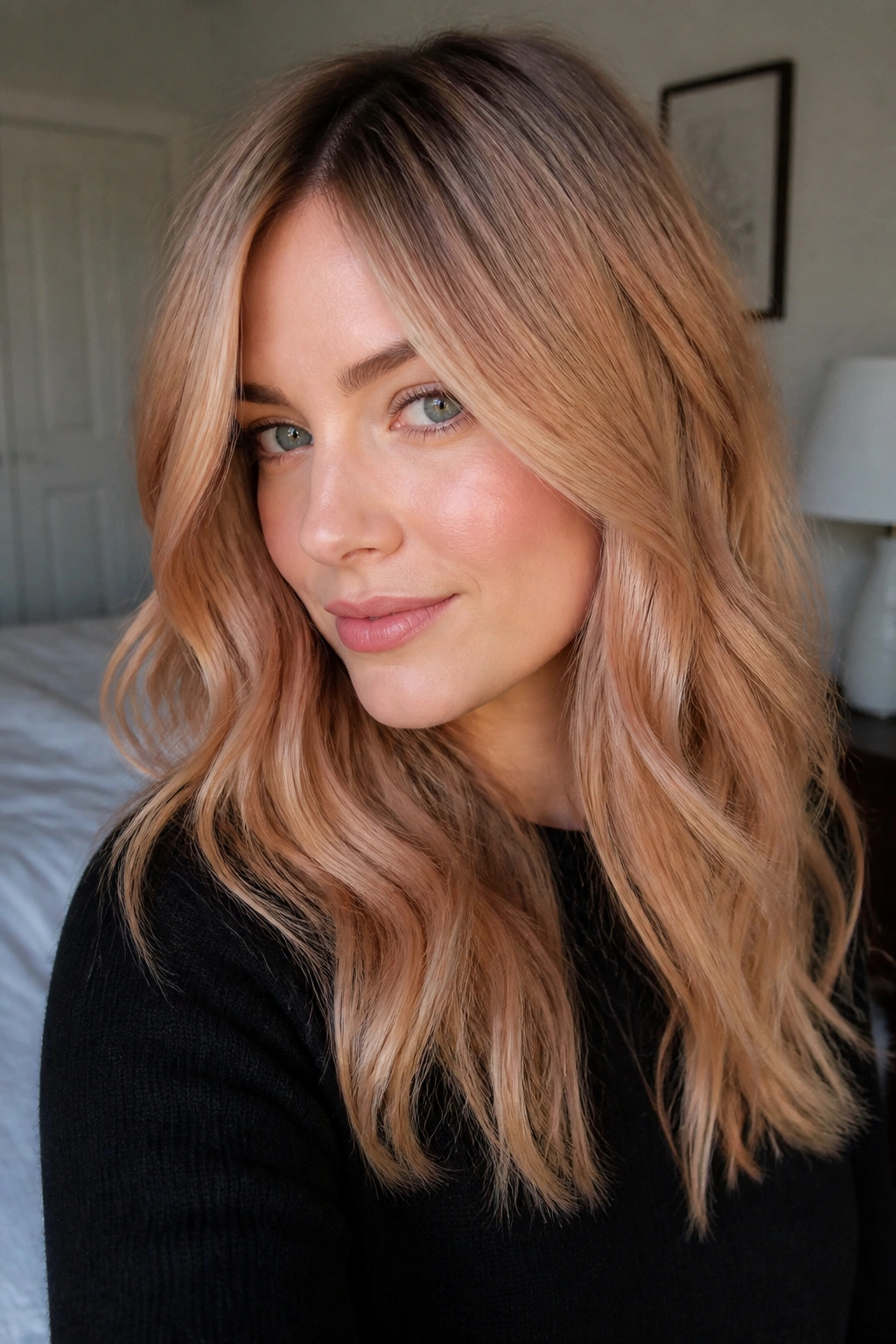
Strawberry blonde is one of those colors that sounds sweet and looks sharper in real life. On cool skin, it works best when the red is diluted by beige and the root stays a shade or two deeper, almost smoky at the scalp. That tiny bit of depth keeps the face from getting washed out and gives the whole color a softer edge.
Why It Works on Cool Undertones
The charm is in the blend, not the brightness. A level 8 to 9 strawberry blonde with a muted root melt gives you warmth near the face, but the cooler base keeps it from drifting into brass. It also looks better as it grows out, which matters if you do not want to live at the salon.
- Ask for soft micro-highlights rather than chunky streaks.
- Keep the root at a neutral beige-brown, not a harsh dark shadow.
- Use a rose-gold gloss if the red starts reading too orange.
- Save this look for wavy or layered cuts if you want the color to move.
Best part: it flatters cool skin without shouting for attention.
2. Beige Copper Balayage on a Level 7 Base
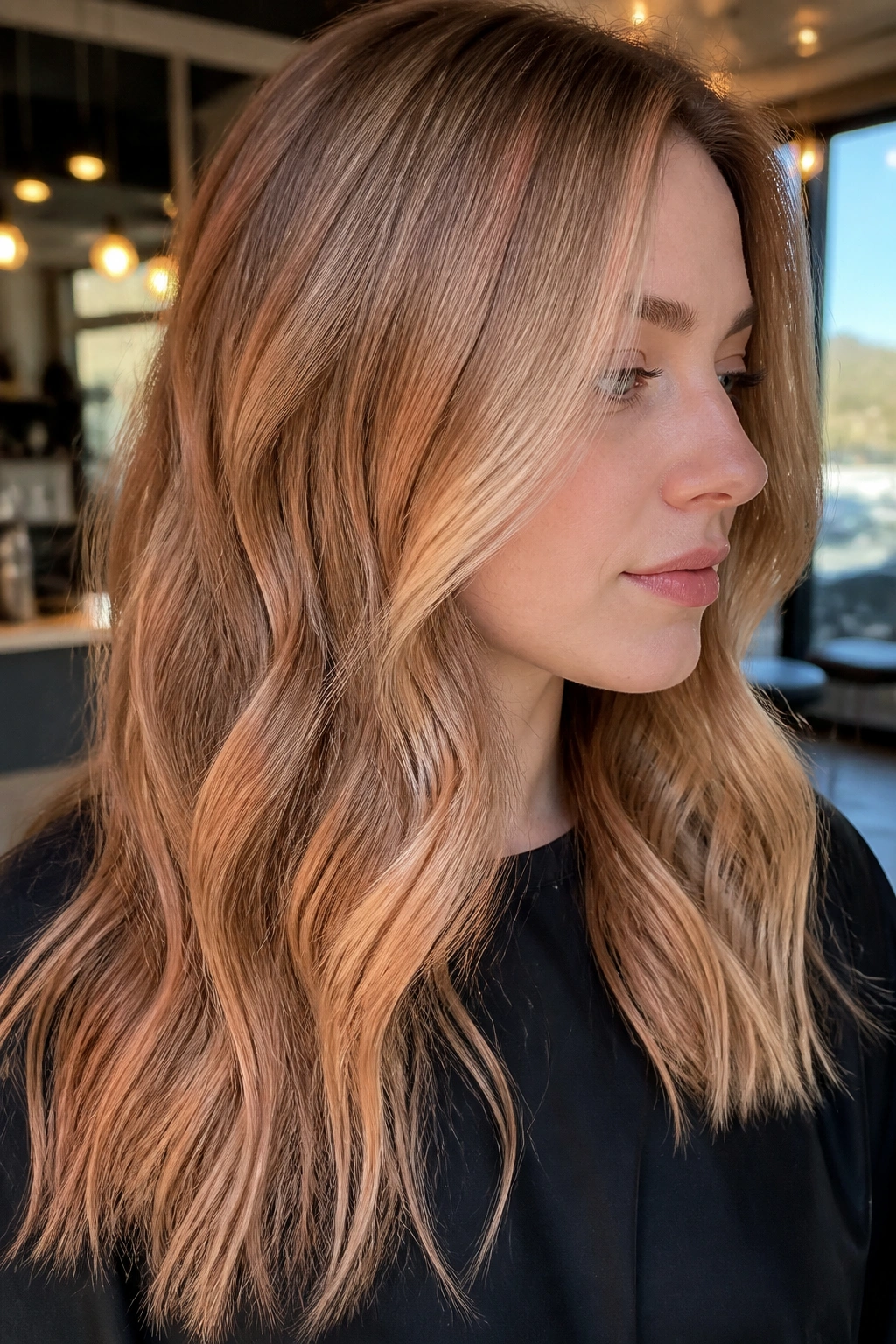
Beige copper balayage is the easiest way to sneak warmth onto cool skin without a fight. The beige tone acts like a buffer, so the copper reads polished instead of fiery. On a level 7 base, the result has enough contrast to show dimension, but not so much that it looks streaky.
A good balayage here should be hand-painted in soft ribbons, especially around the face and through the top layer. The lighter pieces should not jump straight to orange. They should look like sunlight got filtered through cream and rose. That’s the whole trick.
This one also behaves well on medium-length hair because the color can taper through the ends. On long, one-length hair, it can fall flat if the balayage is too even. A little irregularity helps. A few brighter pieces at the crown, a few softer ones in the back. Done.
3. Peach Champagne Blonde With Soft Face Framing
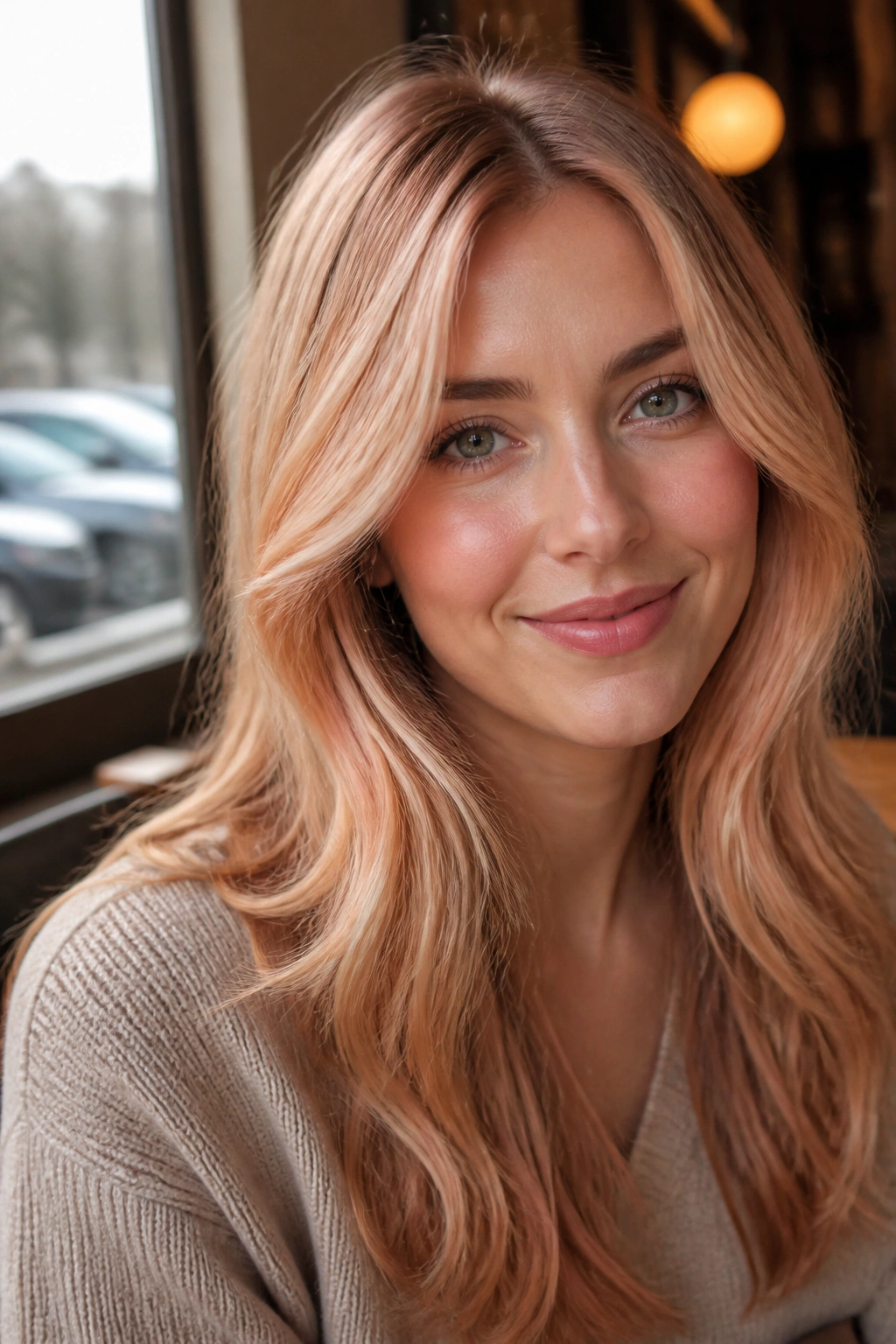
Can peach and cool skin actually get along? Yes, if the peach is kept sheer and the champagne side stays cool enough to stop it from looking like candy. That’s the balancing act. Too much coral and the color turns loud. Too much gold and it loses the clean finish that cool skin likes.
How to Ask for It
Tell your colorist you want a champagne blonde base with a whisper of peach through the face-framing pieces. That usually points them toward a gloss, not a heavy permanent shift. The front sections should be brighter by one to two levels, with the rest of the hair staying soft and creamy.
If your hair is naturally pale blonde, this can be a tiny change with a big payoff. If your hair is darker, the peach will show better after lifting, but it should still stay translucent. Think veil, not paint. That distinction matters.
A clean blowout makes this color sing. So does a simple bend with a curling iron—nothing too tight, nothing too uniform.
4. Rosy Copper Money Piece With Creamy Ends
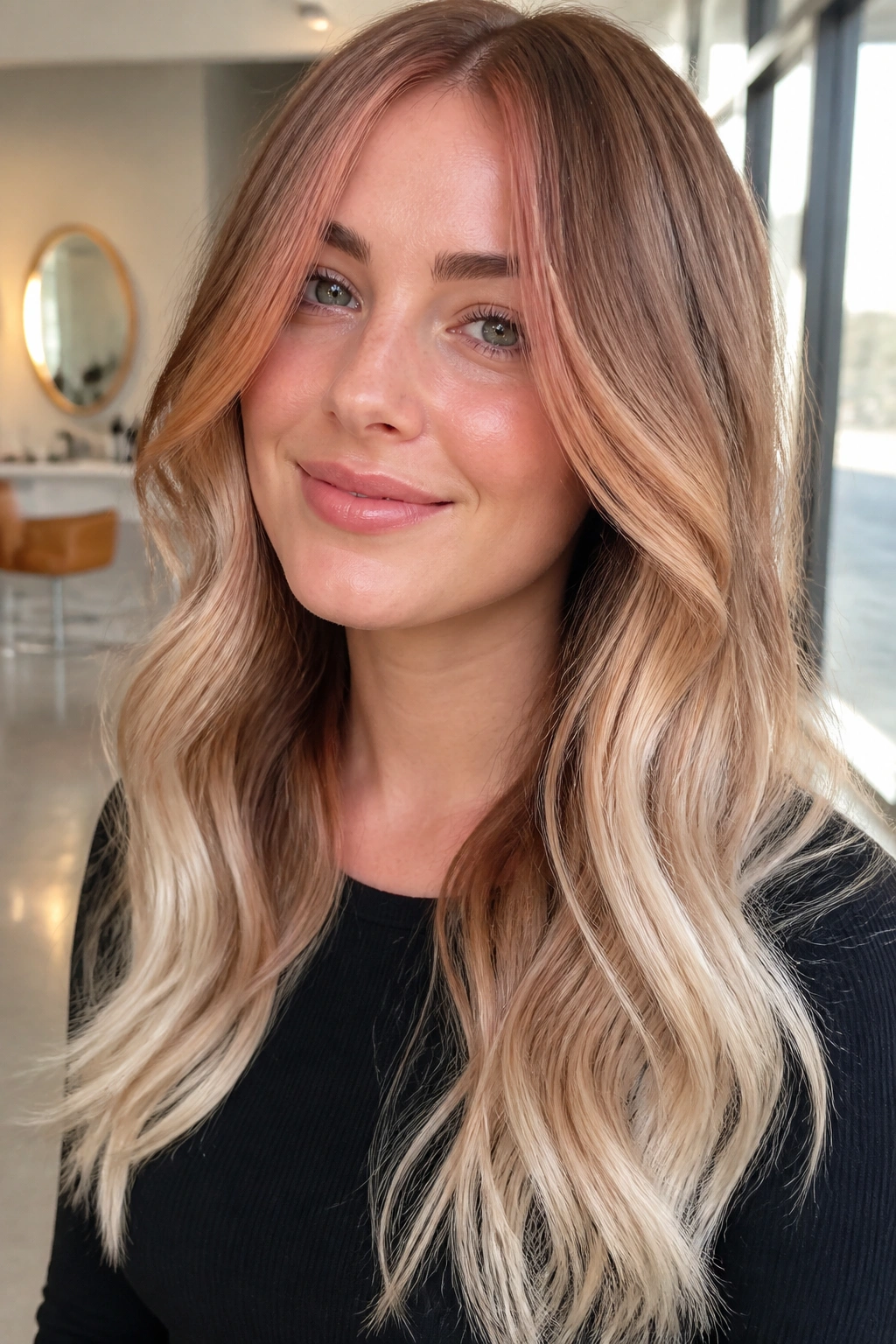
A money piece is the fastest place to add copper when you want the face to glow without committing the whole head. On cool skin, rosy copper is better than orange copper because it echoes the pink and blue in the face instead of arguing with it. Creamy ends keep the look from getting heavy.
This is the kind of color that works when you want brightness near the cheekbones and a softer frame everywhere else. The front sections can be lifted a touch higher than the rest, then glazed with a rose-copper toner. The mid-lengths and ends stay creamier, almost vanilla at the tips.
Placement Notes That Matter
- Put the brightest pieces from temple to cheekbone.
- Leave the crown softer so the color does not look helmet-like.
- Keep the ends one shade lighter than the front panel.
- Ask for a gloss that fades pink-beige, not orange-gold.
It’s a small shift. Still worth it.
5. Ashy Copper Ribbon Highlights on Medium Blonde
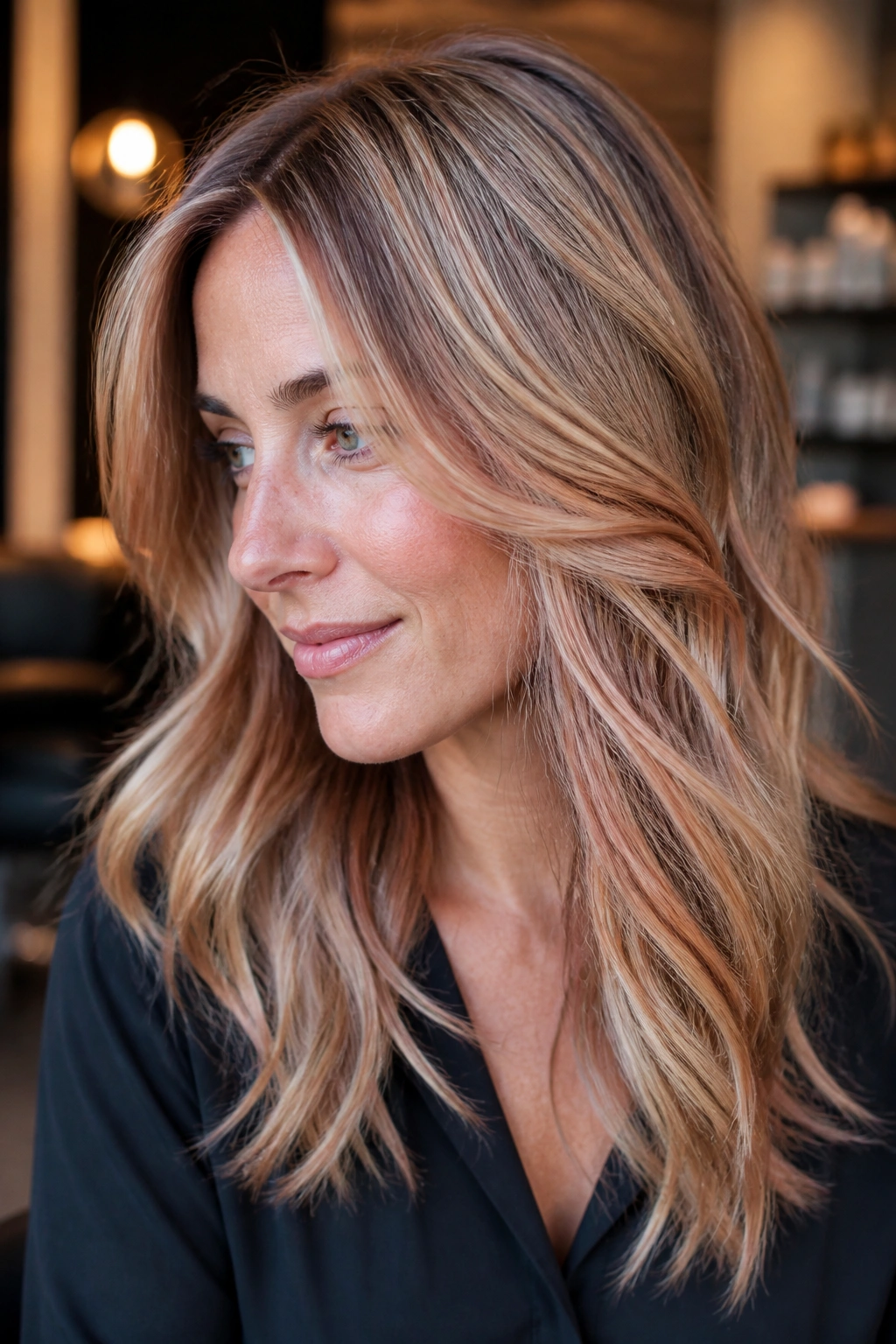
Ashy copper sounds contradictory, and that is exactly why it works so well. The ash keeps the copper from turning brassy, while the copper stops the ash from looking flat or muddy. On cool skin, that tension looks intentional and expensive-looking, especially on medium blonde hair that already has a little beige in it.
What Makes the Ribbons Work
The highlights should be narrow enough to look woven through the hair, not striped across it. I like this on layered cuts because the movement reveals the lighter and darker pieces as you turn your head. On blunt cuts, it can still work, but the ribbons need to be a touch finer.
A colorist might use foil placement around the part and temple, then hand-paint softer pieces through the back. That keeps the front bright without turning the whole head pale. It also means less maintenance between appointments.
Pro tip: if the copper gets too warm, ask for a smoky beige gloss instead of trying to fix it with a purple shampoo. Purple is for yellow; this is a different problem.
6. Venetian Blonde With a Sheer Copper Gloss
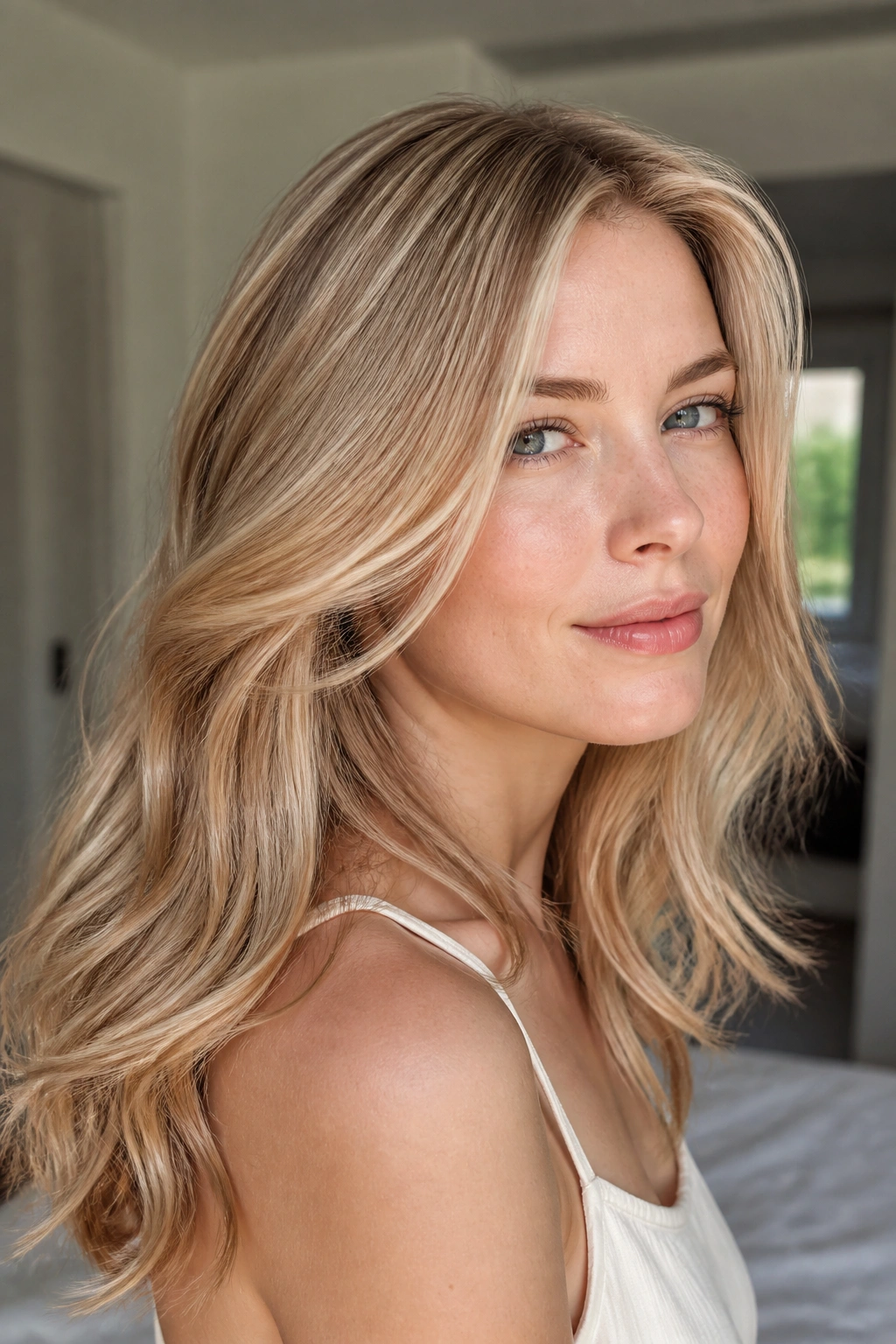
Venetian blonde has always sat in that lovely middle place between blonde and red. The version I like for cool skin is sheer, not saturated—more like a copper glaze over pale gold than a full-on red-blonde. It has enough warmth to wake up the complexion, but it still feels airy.
The payoff is movement. Light catches the lighter strands, while the copper threads sit just underneath and show through when the hair shifts. On cool skin, that subtlety is the whole point. You get color, not costume.
This is also one of the better choices if you already have naturally light hair and want to lean warmer without committing to a bold transformation. A demi-permanent gloss can do a lot here. So can a toner with rose and beige in it. Keep the formula soft and the finish glossy, and the color stays elegant rather than brassy.
7. Rose Gold Blonde Lob With a Shadow Root
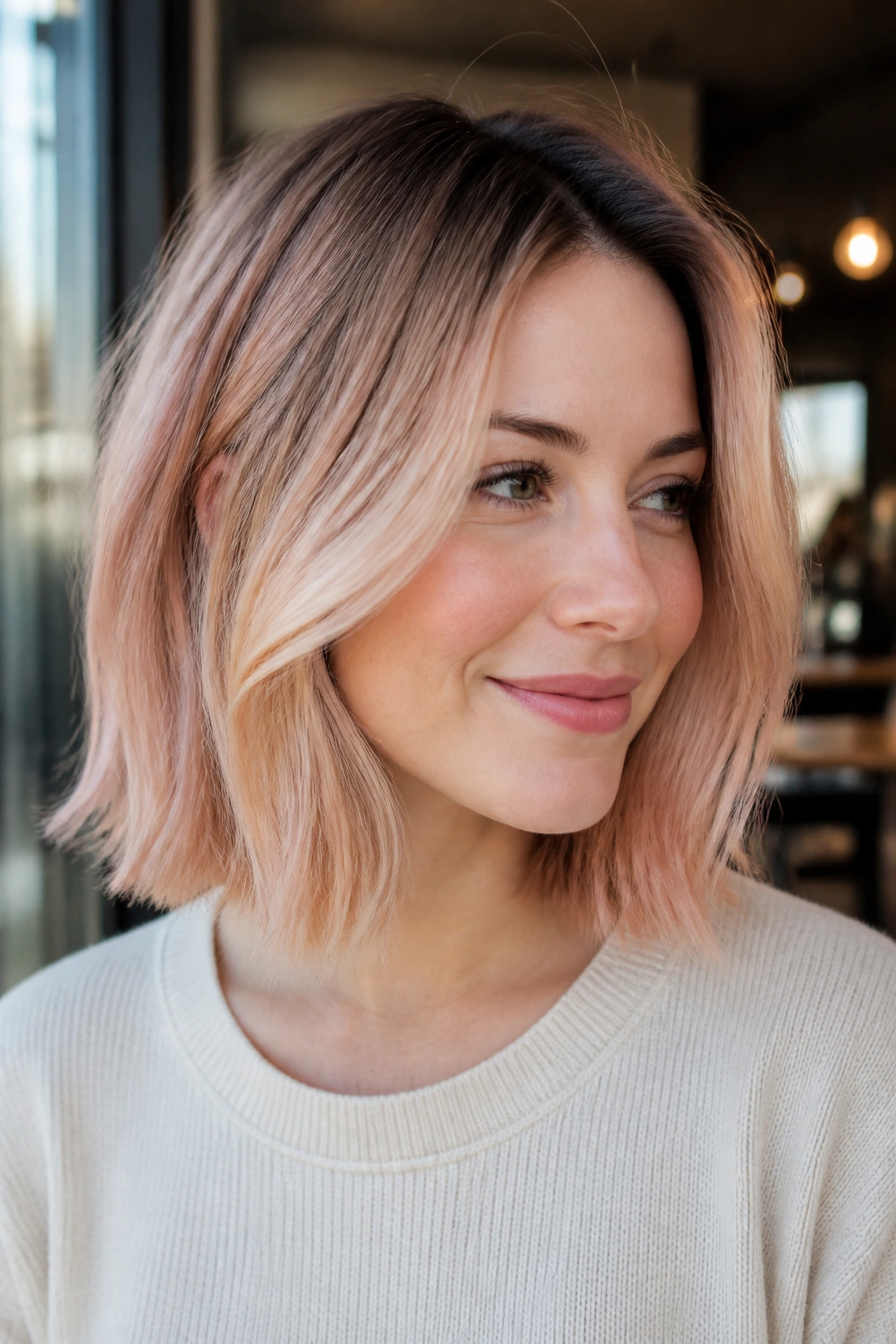
A rose gold lob is one of those styles that looks polished without trying too hard. The bob length keeps the color crisp, and the shadow root gives it enough depth to flatter cool skin instead of bleaching it out. The rose element softens the warmth and keeps the whole thing from reading too yellow.
This color likes clean lines. A lob that hits somewhere between the jaw and collarbone gives the rose gold room to show its different tones. Straight hair makes it sleek; loose waves make it a little more romantic. Either way, the shadow root matters because it keeps the top from looking flat against pale skin.
I’d choose this if you want a shade that feels modern but not loud. It is a good compromise for people who love copper but don’t want to look like they dipped their head in orange dye. The root keeps it believable. The rose keeps it flattering.
8. Apricot Blonde Pixie With Soft Texture
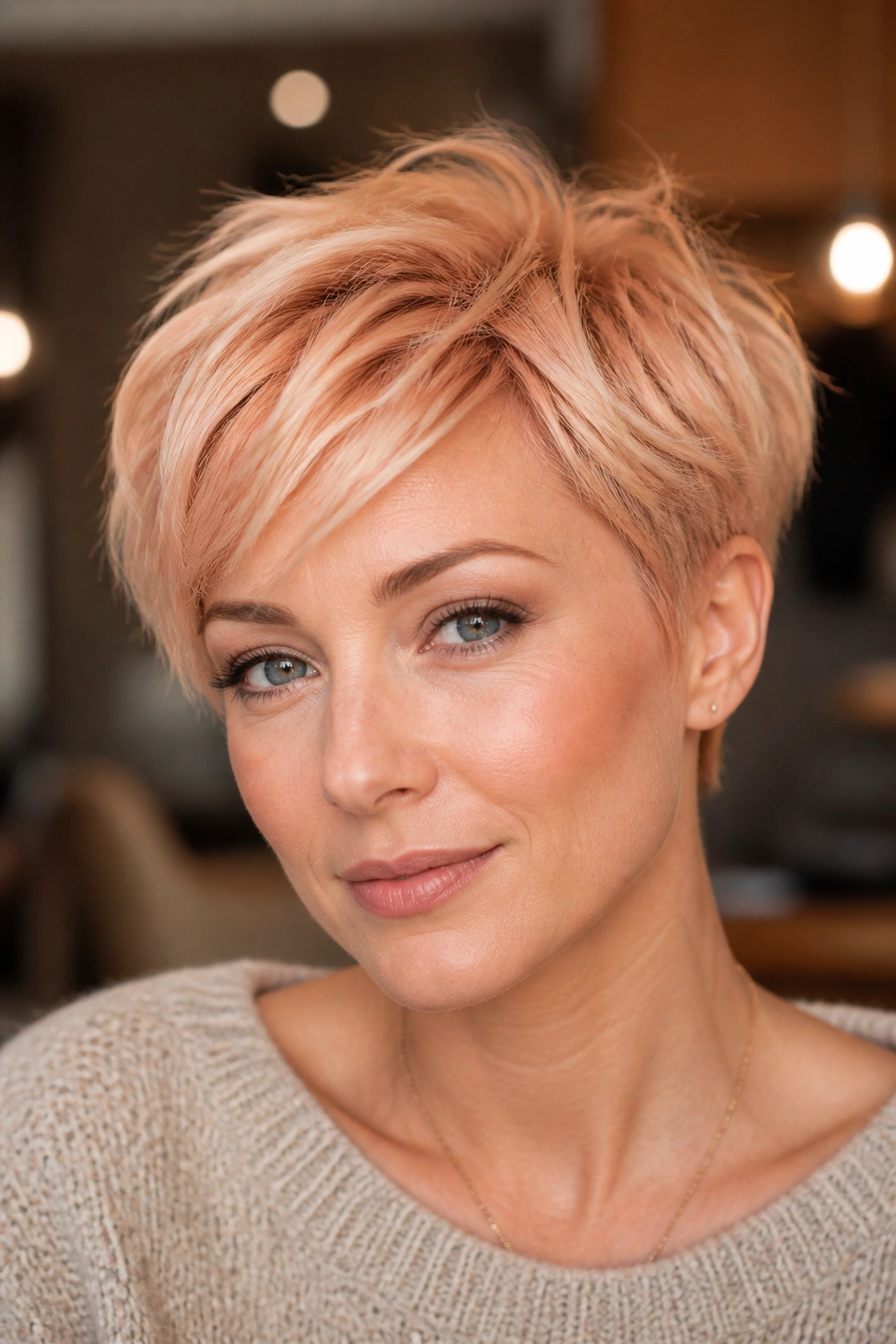
Short hair can wear warmth in a way long hair sometimes can’t. A pixie with apricot blonde tones gives cool skin a quick hit of brightness right near the eyes and cheekbones, which is often where the face needs it most. The cut does half the work, so the color can stay light and airy.
Why This Cut Loves This Shade
Textured pixies show color shifts fast. A little apricot at the top, a paler cream through the sides, and a touch of beige at the root can make the whole cut feel fuller. That matters on fine hair, where one flat tone often looks thin.
- Keep the apricot soft and pastel, not neon.
- Leave the sides a touch cooler so the top stays the star.
- Ask for piecey styling rather than a smooth helmet finish.
- This is a smart choice if you want low styling time.
It fades quickly, sure. Short hair colors often do. But it also grows out in a forgiving way.
9. Champagne Copper Waves With a Cool Beige Base
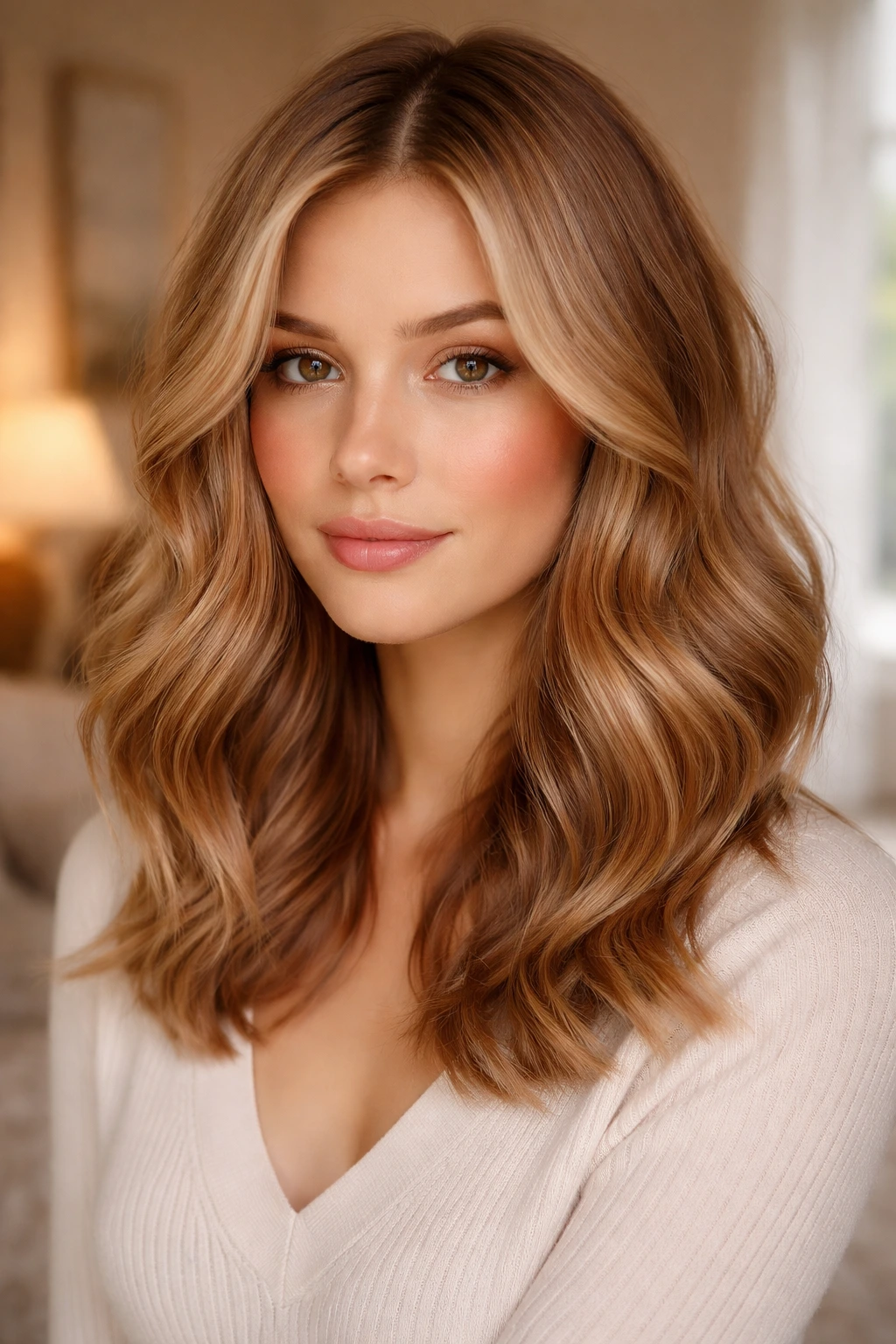
Champagne copper is one of the safest ways to bring warmth to cool skin because champagne already has a cool, sparkling feel. Pair it with a beige base and the copper starts to read soft and luminous instead of hot. Waves make it even better, since the bend in the hair catches the lighter pieces and breaks up the color.
This look needs dimension. If the entire head is one even copper shade, it can go flat fast. Beige at the root, champagne through the mid-lengths, and slightly brighter copper along the top layer create a better result. It looks especially good on medium to long hair where the wave pattern can show all that movement.
A large-barrel iron works better here than tight curls. The goal is relaxed bend, not pageant hair. Let the waves fall apart a little. That messiness helps the color look expensive, which is a nicer outcome than perfect shine anyway.
10. Copper Butter Blonde With Curtain Bangs
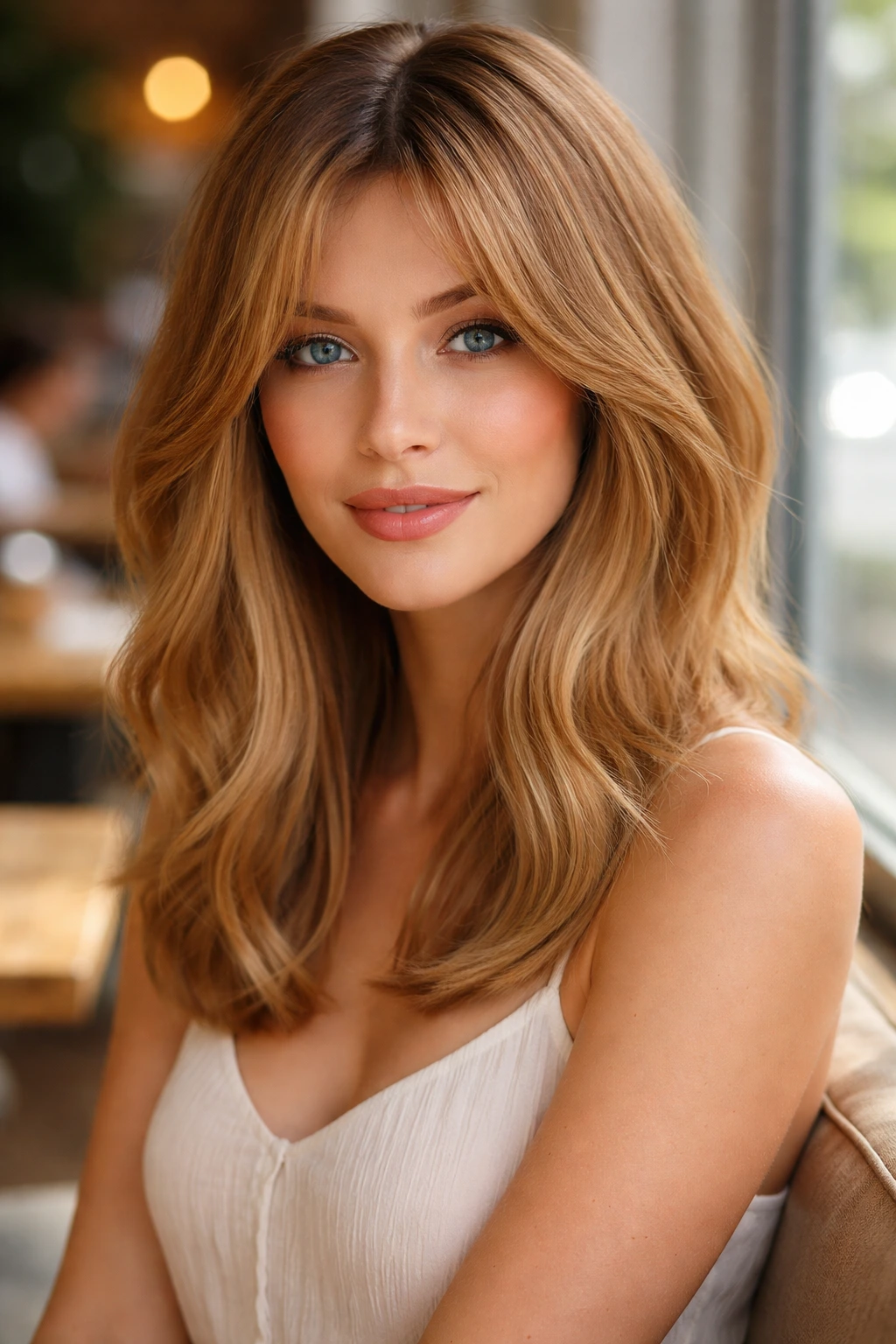
Copper butter blonde sounds rich because it is. The “butter” part matters more than people think; it keeps the copper creamy and soft, which is exactly what cool skin tends to tolerate best. Curtain bangs help by breaking up the color around the face so the warmth never sits in one thick block.
This shade is especially good when you want a touch of red but not a full redhead moment. The copper should sit in the mid-tones, not blaze at the ends. A soft golden-beige base under it gives the butter part its depth. If the bangs are lighter, even better. They create a little halo effect without making the face look overly warm.
I like this on shoulder-length cuts, but it also works on longer layers. The bangs need a bit of styling, though. If they sit too straight and stiff, the whole look gets boxy. A round brush and a minute of patience fix that.
11. Muted Ginger Blonde on a Long Shag
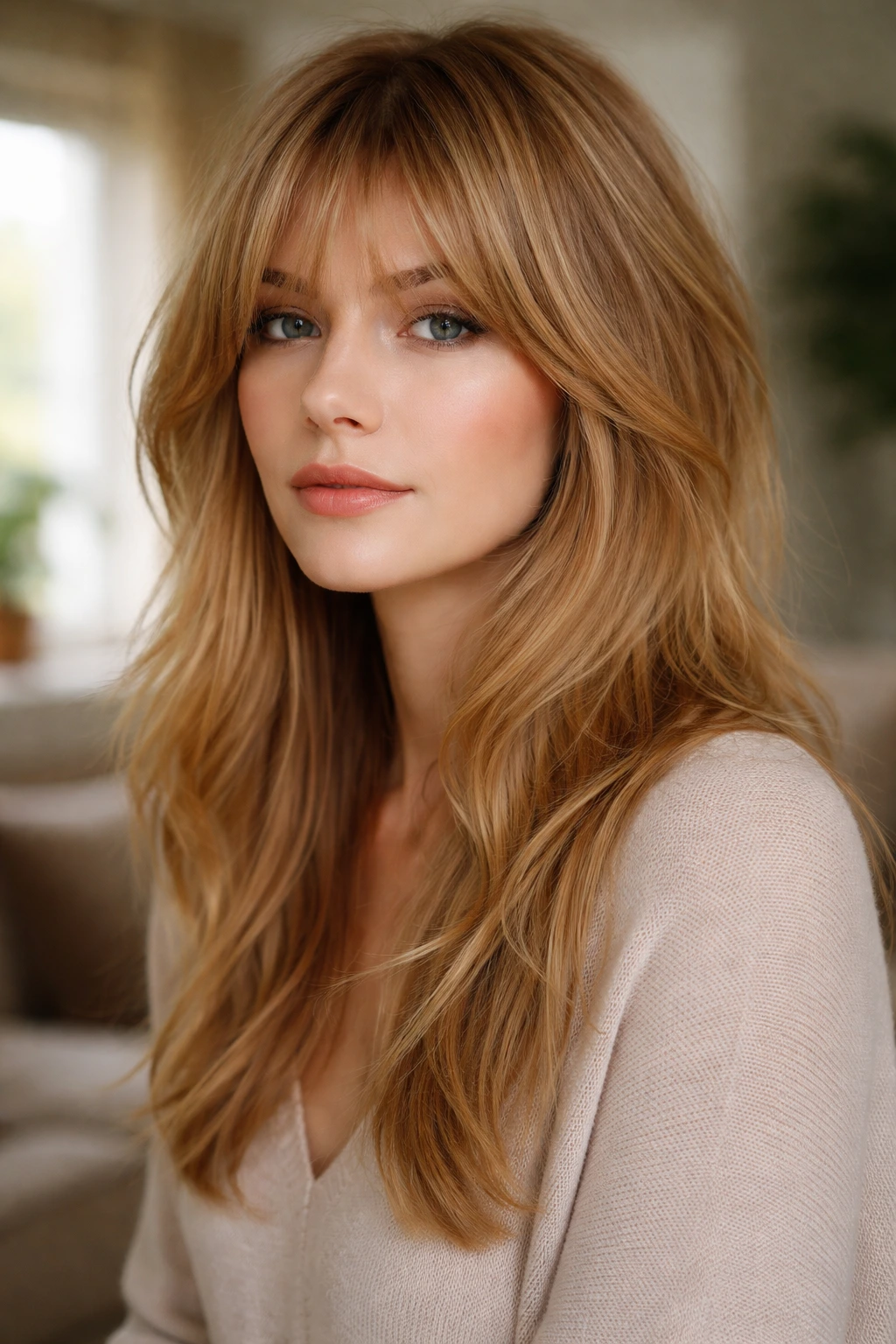
Muted ginger blonde is for people who like the idea of ginger but not the brightness. On cool skin, that restraint matters. The shag cut helps too, because the texture breaks up the color and keeps it from feeling heavy. Long layers, soft fringe, and a muted copper base can look almost smoky in low light.
Unlike a classic redhead shade, this version should live in the strawberry-copper zone. Less orange. More beige. A tiny bit of root shadow makes the layers stand apart, which is useful if you want the shag to look airy rather than thick. The color can be brushed through the ends and left softer under the top layers.
This one has attitude without the hassle of a vivid shade. It still needs toning, though. If the orange gets too strong, the whole thing loses its charm fast.
12. Platinum Blonde With a Copper Veil
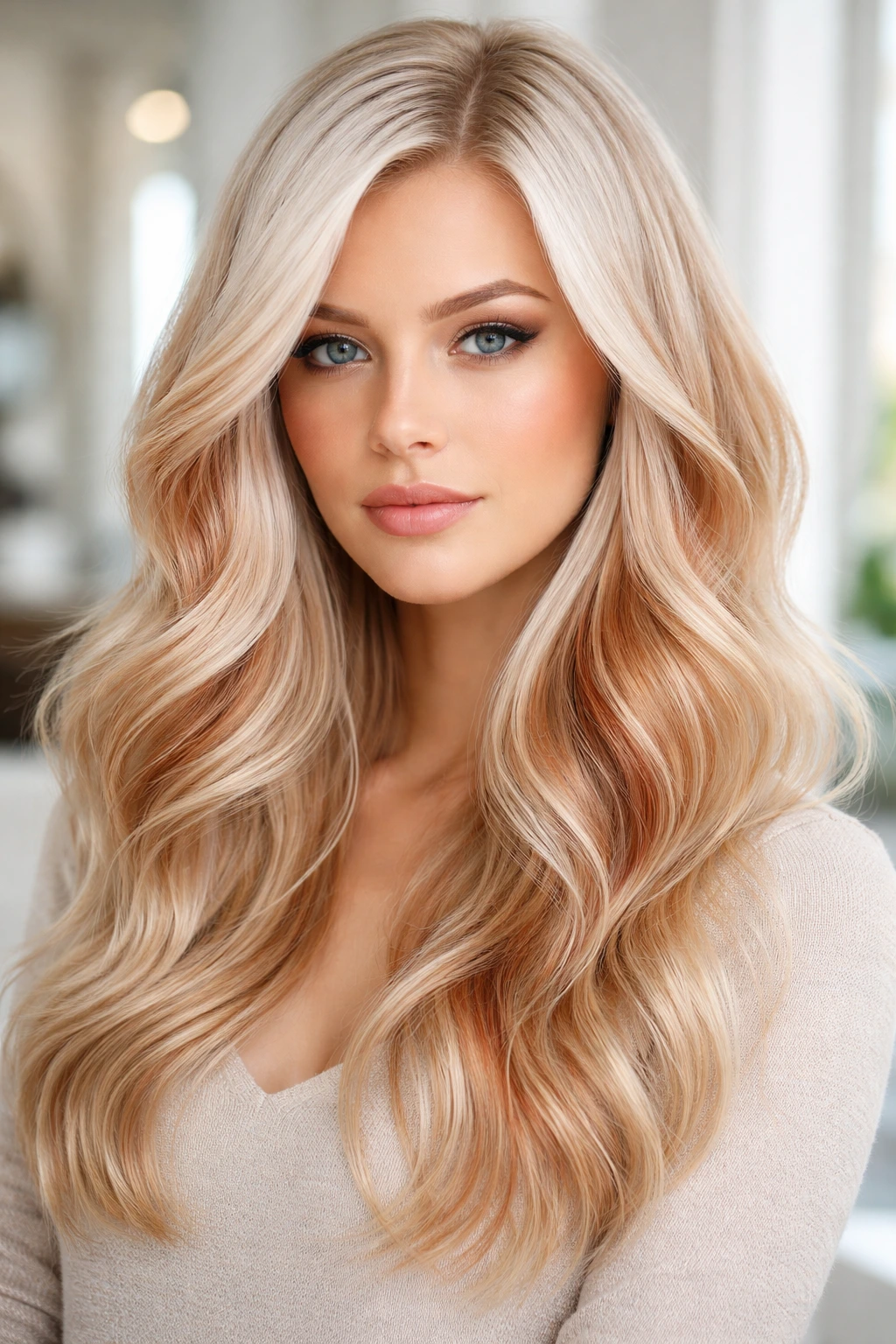
Platinum and copper sounds like a clash until you see how good the contrast can look on cool skin. The platinum keeps the face bright and crisp, while the copper veil adds warmth in a way that feels deliberate. Used lightly, the copper sits like a transparent filter over the lengths instead of a solid color.
How to Keep the Contrast Clean
The key is placement. The platinum should stay strongest near the top and around the light-catching sections. The copper works better as a veil through the mid-lengths and a few interior layers, where it can peek out instead of dominating. If the copper lands too heavily on the surface, the whole thing gets muddy.
- Ask for airy highlights first, then a copper glaze.
- Keep the copper inside the hair, not just on top.
- Use a cool platinum toner to hold the contrast.
- This suits people who like high drama with clean edges.
It is striking. No question about that.
13. Cinnamon Copper Bob With Piecey Ends
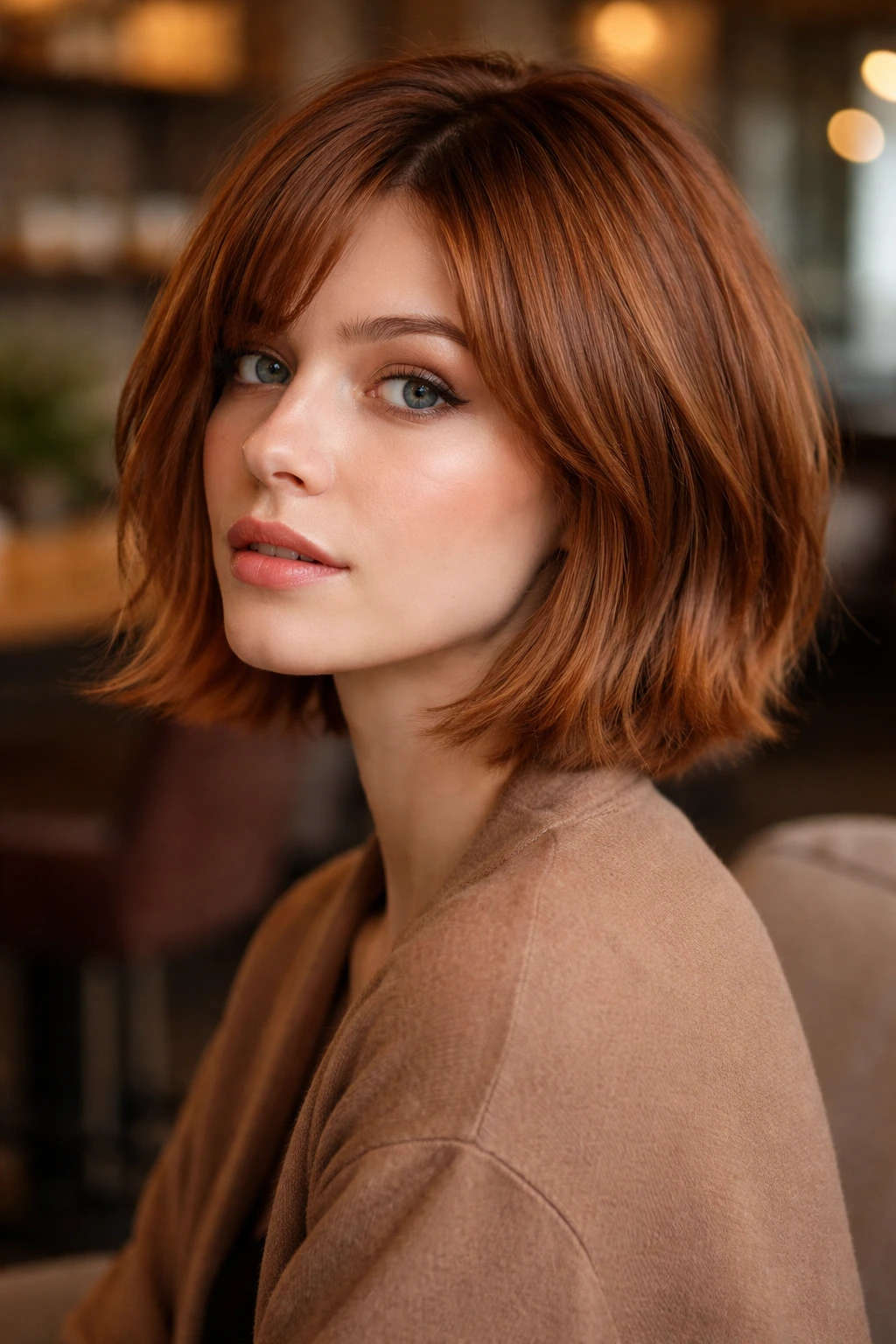
A bob can carry deeper copper better than longer hair because the shape keeps the color contained. Cinnamon copper has enough spice to feel interesting, but on cool skin it needs a smoky finish so it doesn’t turn too orange. Piecey ends keep the cut from looking solid and helmet-like.
The best version sits around the jaw or just below it. That length frames the face nicely and lets the hair swing a little as you move. The cinnamon tone should be richest at the middle of the strand, then softened at the ends with a beige glaze. Piecey styling matters here because it breaks up the color blocks.
This is a good choice if you want something bolder than strawberry blonde but not as bright as a true copper. It has edge. It also has enough softness to work with a cool complexion, which is why it doesn’t feel as harsh as some ginger shades can.
14. Peach Sorbet Blonde for Curly Hair
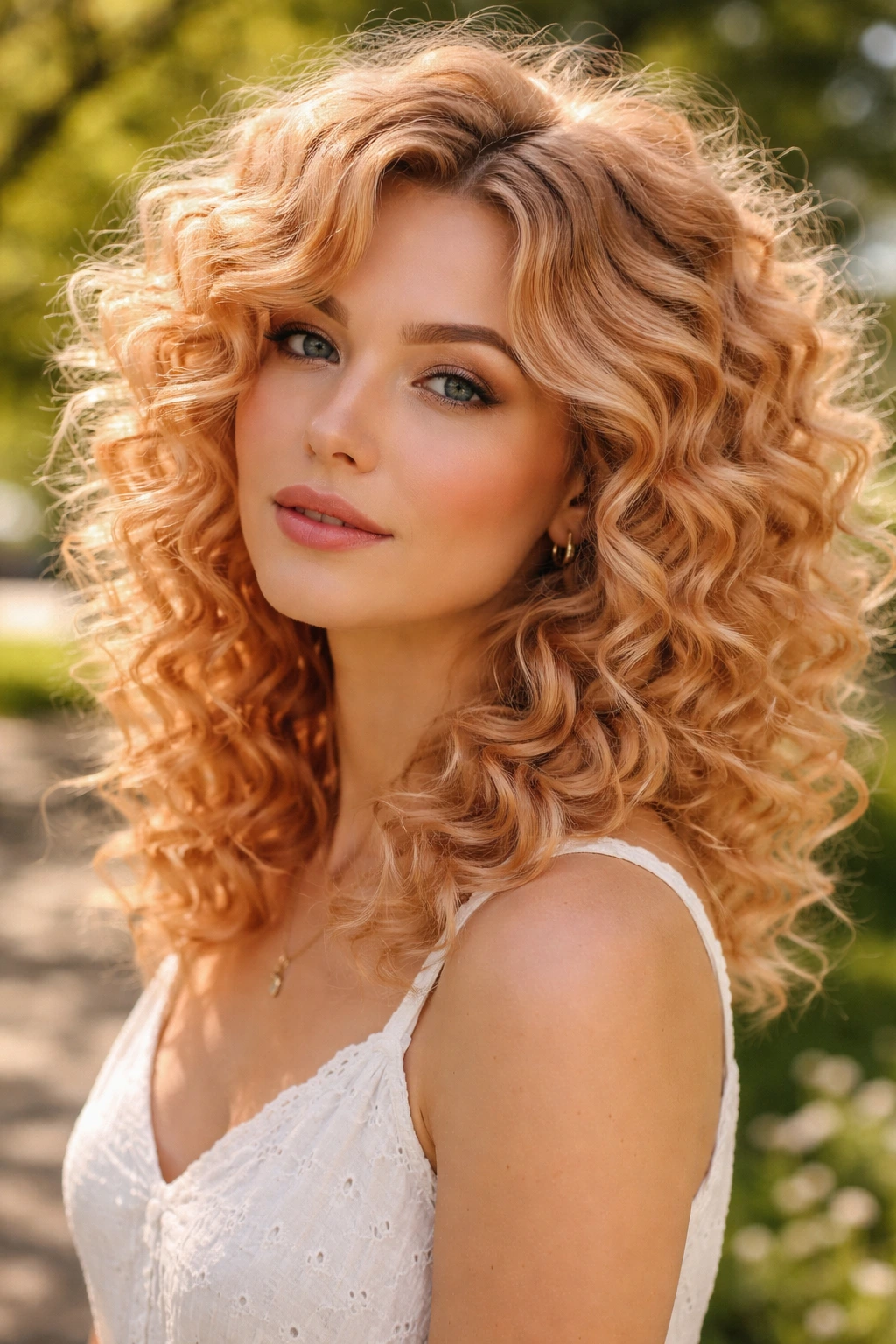
Curly hair and peach sorbet blonde get along better than people expect. The curl pattern scatters the light, so the color does not sit as one flat tone; it flickers. That matters on cool skin, because a soft peach reads sweet and lifted instead of heavy. The look should feel almost whipped.
A good curly version keeps the roots a bit deeper and the outer layers brighter. That gives the curls shape and prevents the crown from puffing out into one big warm cloud. A peach gloss over blonde highlights usually works better than a full lift-and-tone approach here, unless the hair is already light.
Air-drying can make the color look even gentler. So can a diffuse dry with a little cream. I would avoid over-smoothing it. Curly texture gives the color its life, and too much polish can flatten that out fast.
15. Straw-Copper Bronde Melt
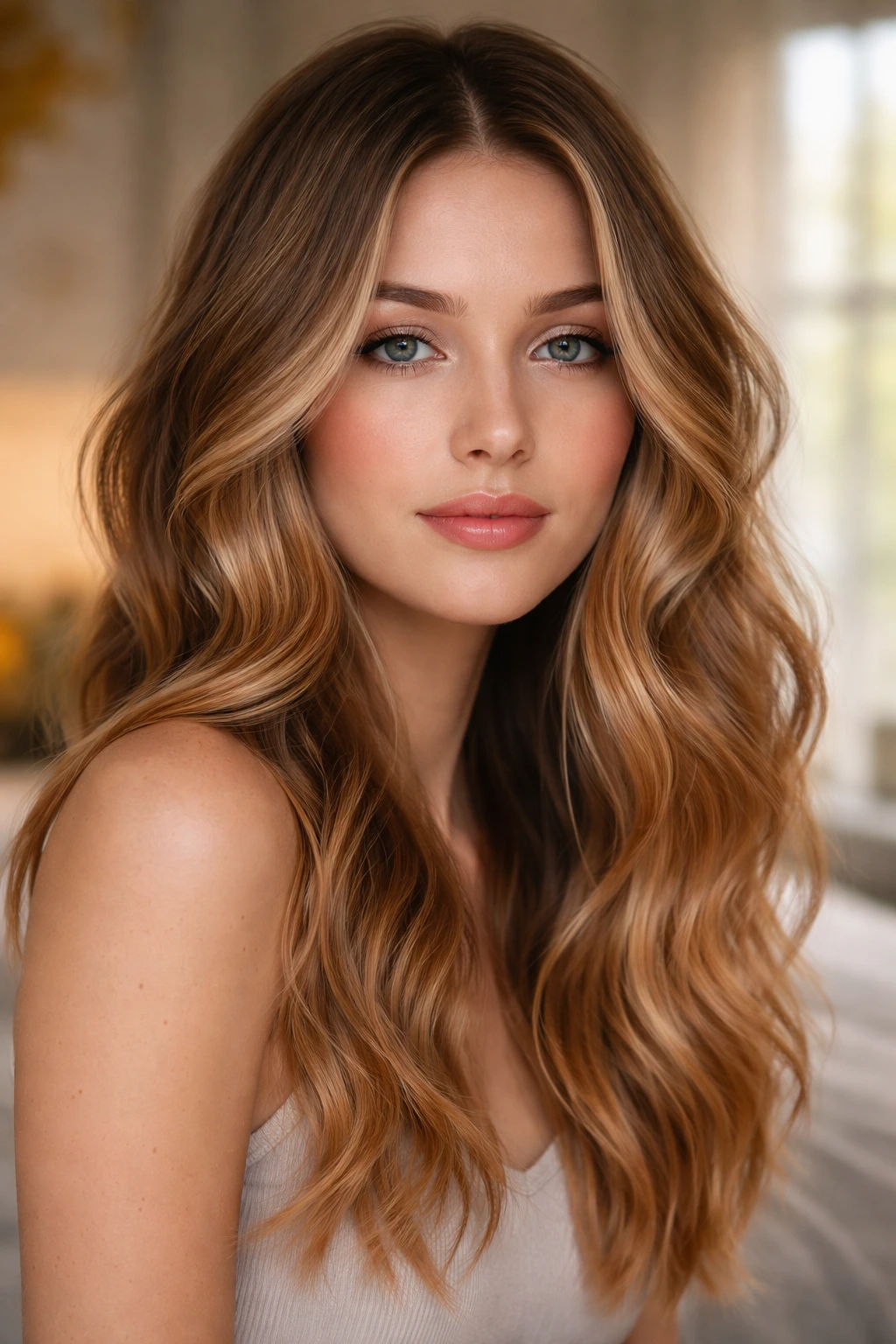
Bronde is the obvious home for people who want something between blonde and brunette, but straw-copper bronde adds a fresher note. The straw part keeps it light; the copper part keeps it from looking dull. On cool skin, that melt is useful because it avoids both the icy flatness of ash and the heat of bright copper.
This shade should move gradually from root to end. Darker beige at the root, tawny blonde in the middle, and a soft copper-straw finish at the ends. The transition is what makes it believable. If the change is too sharp, the color starts to look patched.
It’s also forgiving. A bronde melt grows out well, which is a real bonus if you do not like frequent salon visits. Styling with a soft wave helps, but even straight hair shows the dimension. The tones do the work on their own.
16. Blush Copper Highlights on Dark Blonde
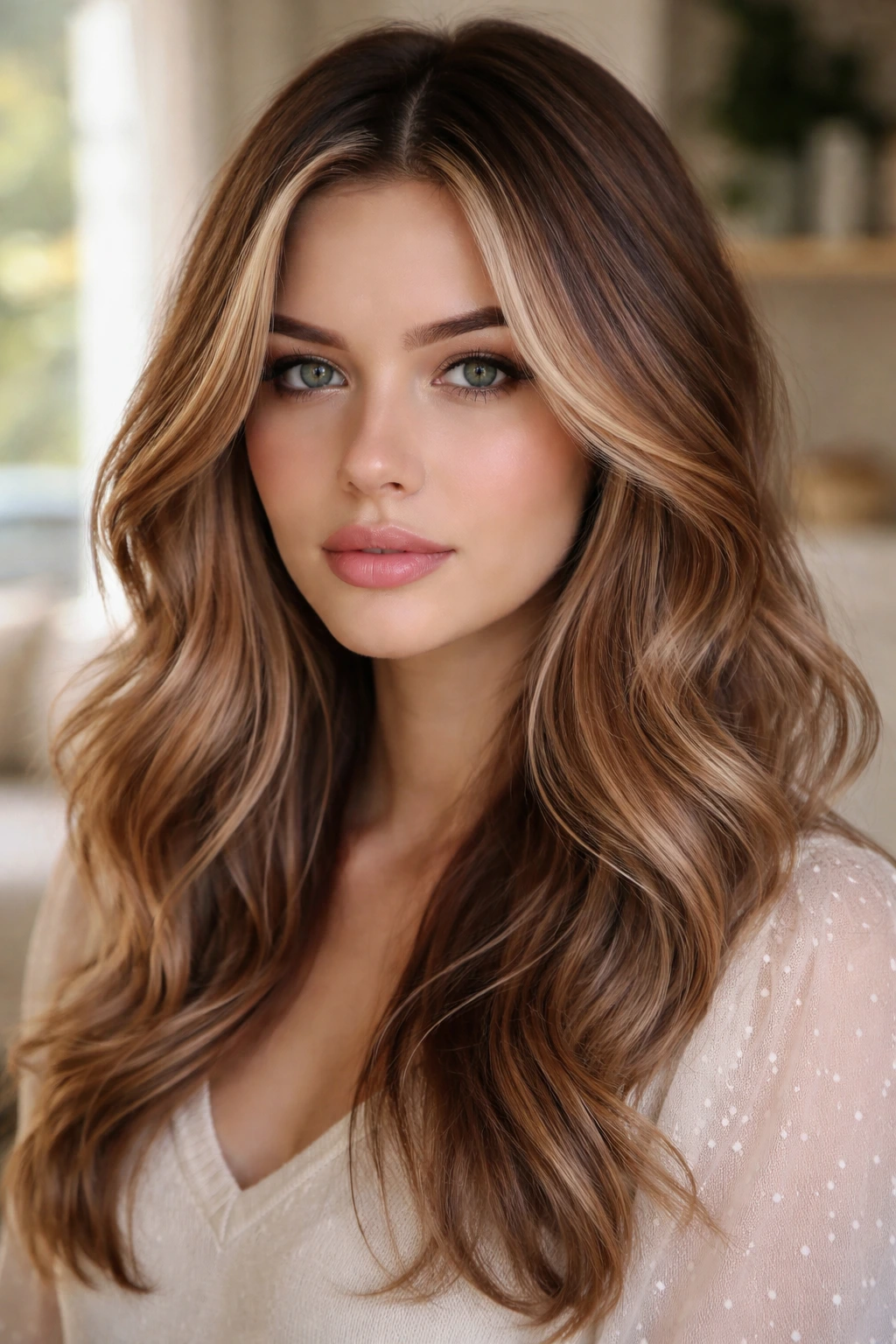
Blush copper has a pretty, pink-leaning warmth that cool skin can handle much better than hot orange. On dark blonde hair, the highlights don’t need to be thick. They just need to be placed where the light naturally hits—around the part, through the face frame, and a few pieces in the top layer.
Placement That Keeps It Fresh
The best versions look airy, almost like tinted sunlight. The highlights should be lifted enough to show the blush tone, but not so light that they lose depth. A little contrast helps the color look dimensional instead of chalky.
A salon formula might include a rose-beige gloss over narrow foils. That keeps the result soft and wearable. If you want more edge, the face-framing pieces can go a shade brighter than the rest. That tiny shift changes the mood without changing the whole head.
Blush copper is one of my favorites for cool skin because it feels flattering without trying to fake warmth it doesn’t have.
17. Sandy Strawberry Blonde With Face-Framing Pieces
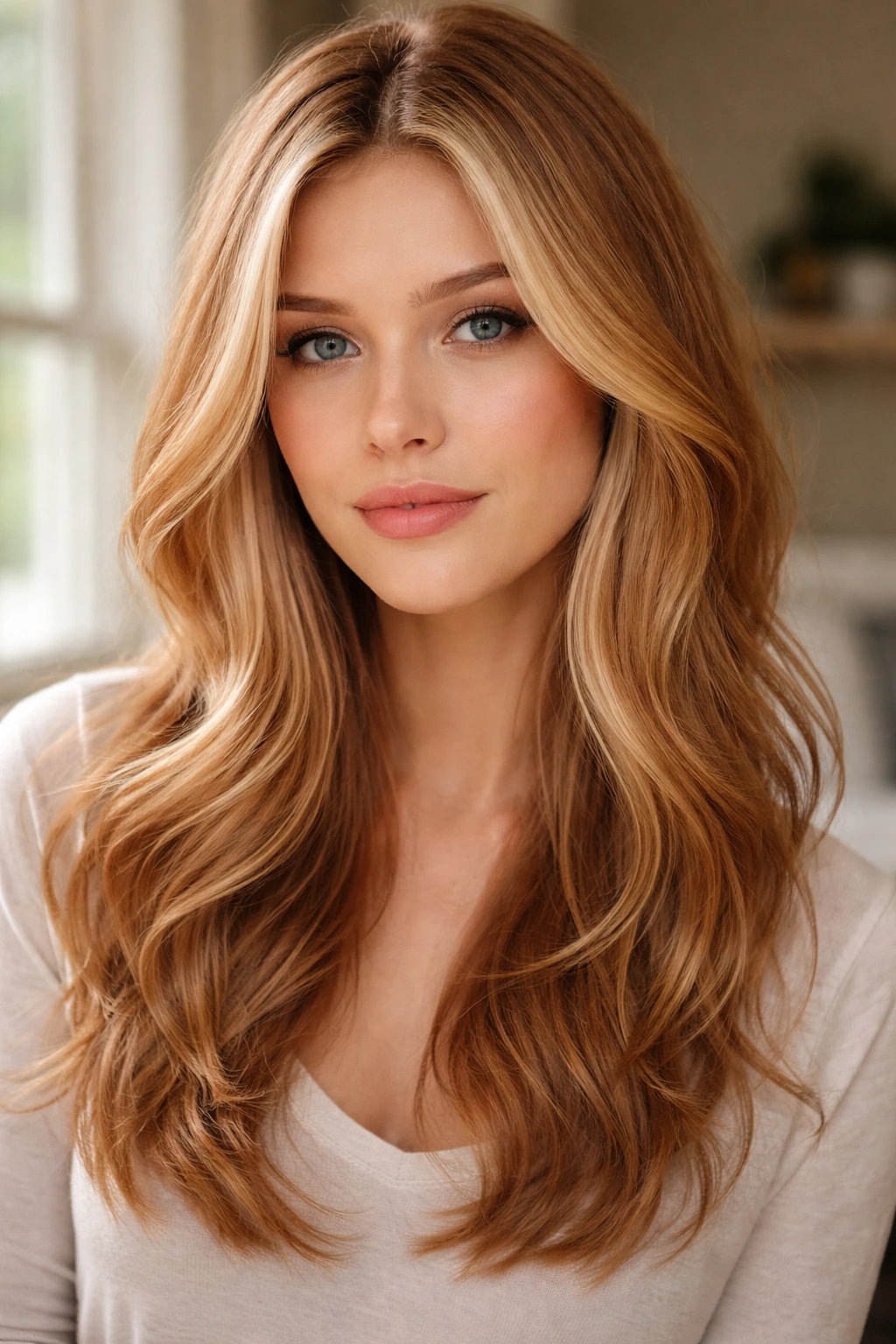
Sandy strawberry blonde is the kind of color that looks calm on cool skin. It’s not aggressively red. It’s not icy either. The sandy base gives the strawberry pieces somewhere to land, and the face-framing highlights bring a little brightness right where you want it.
This works especially well if you wear your hair in loose layers. The front pieces can be kept lighter, while the back stays a bit darker and softer. That difference keeps the face frame from looking pasted on. It also makes the cut feel more expensive, even if the maintenance is pretty easy.
If your natural hair is light brown or dark blonde, this is a smart halfway shade. It gives you warmth without asking for a full color overhaul. A neutral gloss can keep the strawberry from going too red, which is the main thing to watch.
18. Coral Copper Layers on Fine Hair
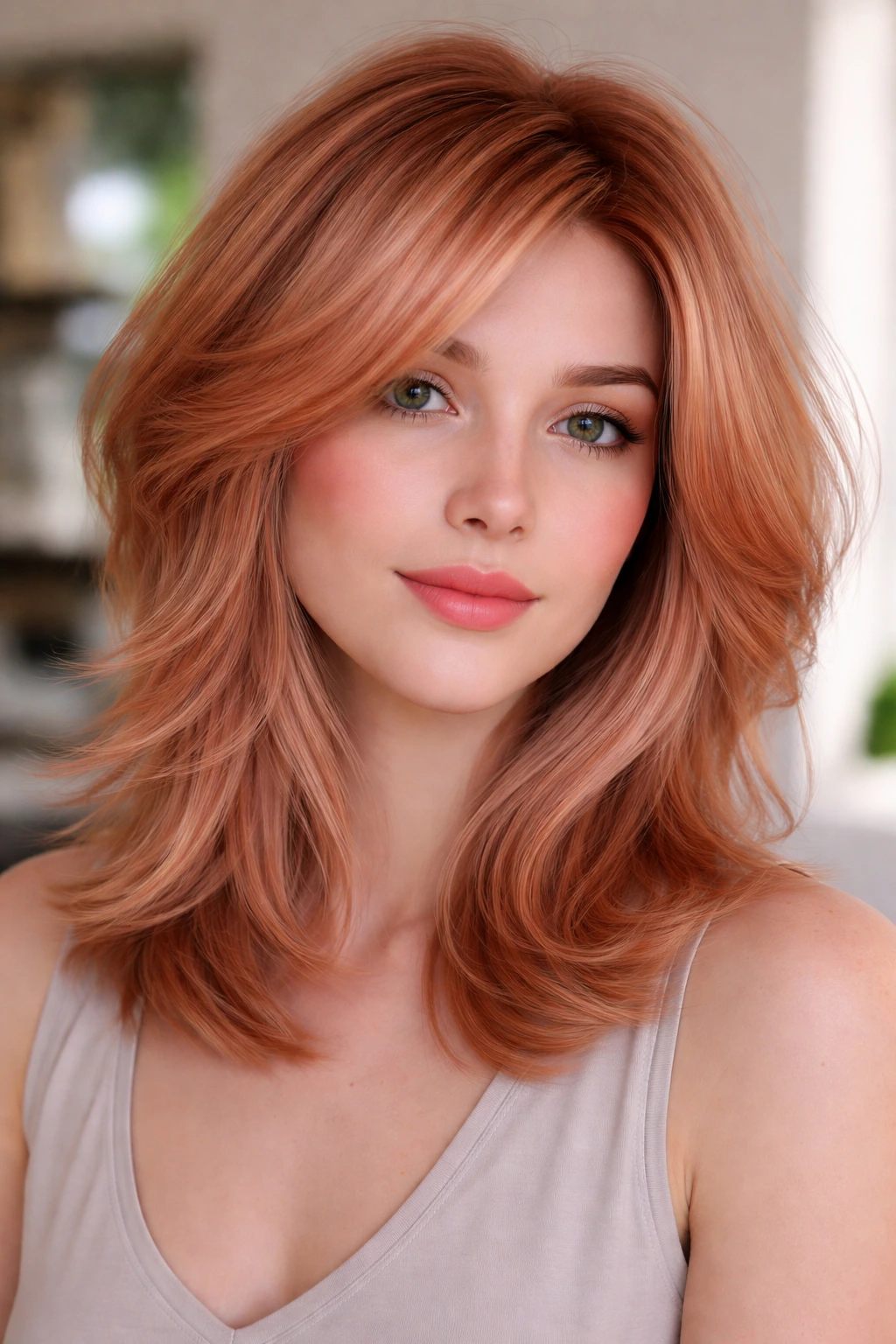
Fine hair needs color that creates the illusion of more hair, not less. Coral copper can do that if the placement is handled with restraint. On cool skin, the coral should stay softened—more peach-red than neon orange—so it doesn’t overpower the face.
Layers help because they give the color somewhere to break and shift. If the ends are too heavy, the look can go flat. Light layering around the crown and through the sides gives coral copper room to breathe. It also keeps the hair from looking dense in only one part and thin everywhere else.
I like this one on shoulder-grazing cuts. The shape lets the color show from different angles without feeling too busy. It’s lively. A little bit cheeky, honestly. But it still has enough softness to work on a cool complexion if the coral is kept in check.
19. Cool Peach Blonde With a Micro Root Smudge
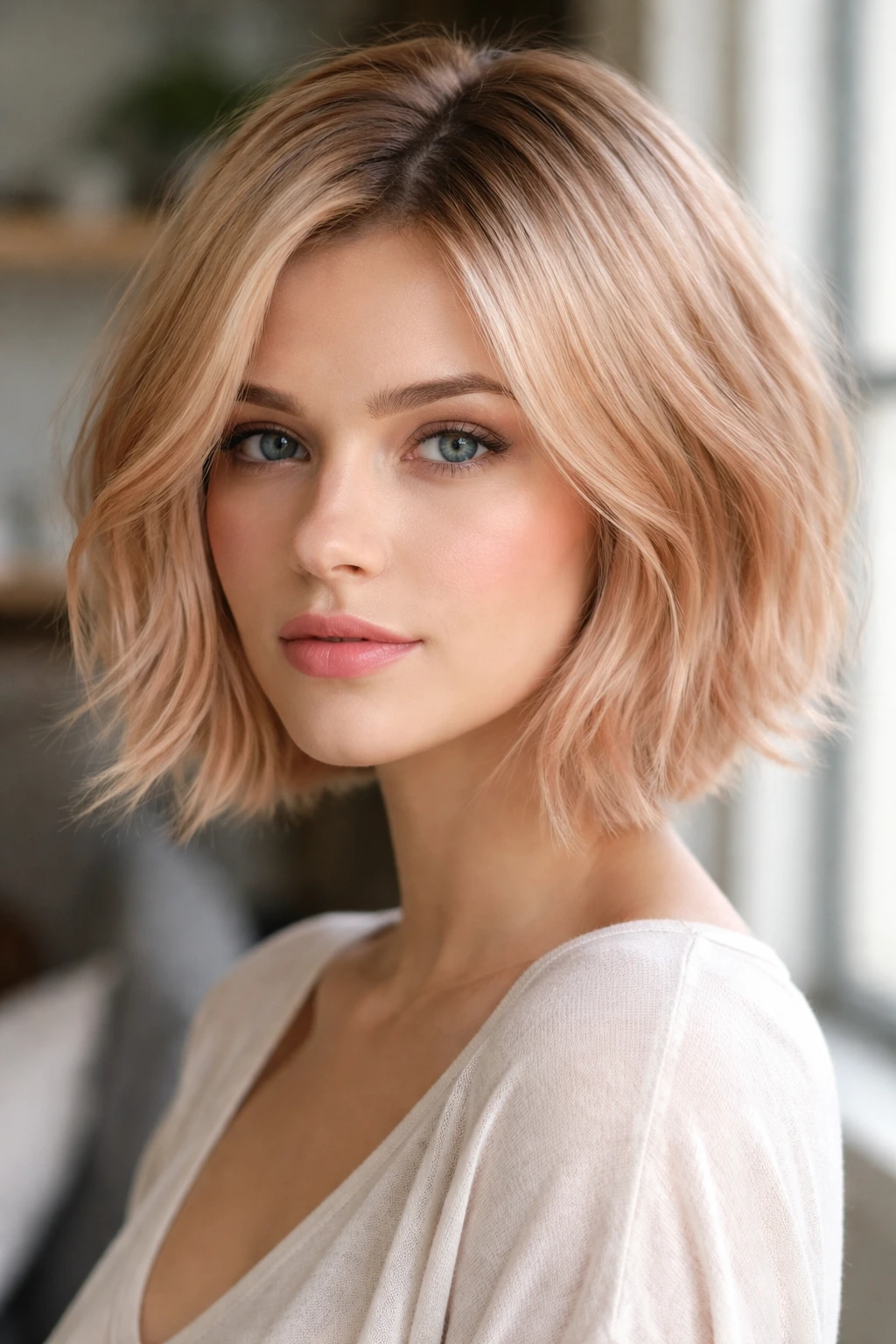
A micro root smudge is one of those tiny salon details that makes a huge difference. It keeps cool peach blonde from looking freshly dyed in a way that can feel harsh against cool skin. The root stays just a touch deeper, then the peach blonde begins a fraction lower, where it can look softer and more blended.
Why the Small Root Shift Matters
Without that smudge, peach blonde can sit too high and look boxy. With it, the color seems to melt out of the scalp and into the rest of the hair. That makes the whole thing feel more natural, even if the shade itself is playful.
- Keep the root smudge neutral-beige, not dark brown.
- Ask for peach that leans dusty, not coral.
- Use this on pixies, lobs, and soft bobs.
- Best for people who want a color that fades quietly.
This is a good pick if you hate obvious regrowth lines. It buys you time.
20. Rusted Rose Blonde on Shoulder-Length Cuts
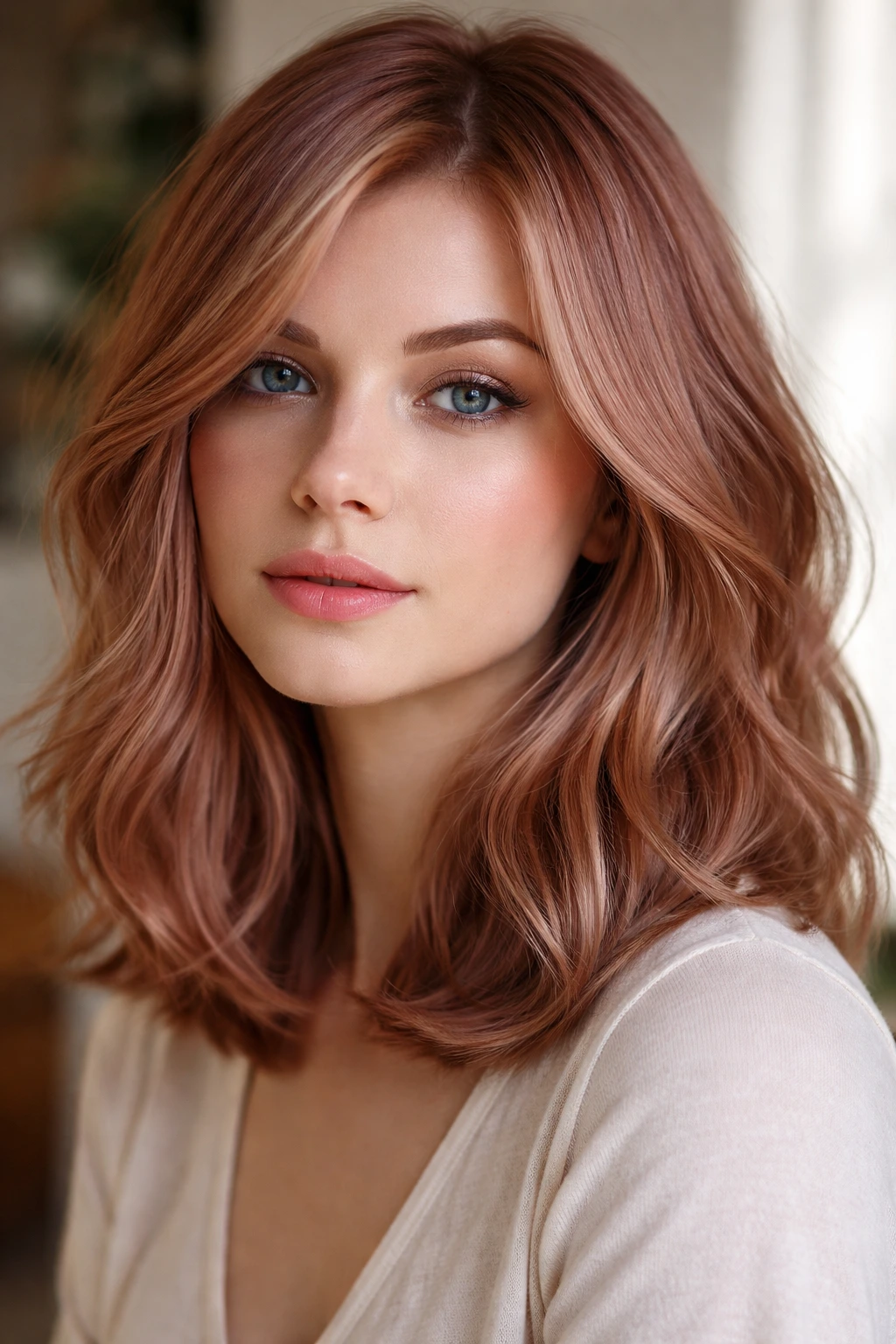
Rusted rose blonde is moodier than strawberry and less bright than copper. That makes it a nice fit for cool skin when you want something a little deeper. Shoulder-length cuts work especially well because the color has enough length to show its rose side without becoming too heavy.
The shade should feel muted, almost dusty, with a faint rust tone underneath. That sounds darker than it looks. In sunlight, the rose comes through. Indoors, the rust gives the hair some depth. The haircut matters here because shoulder-length layers let the color move instead of sitting as one block.
I’d pick this if you like colors that feel a little grown-up and a little artsy. It is not a loud shade. It has presence, though. And cool skin often looks better with that kind of softened drama than with bright warm tones that leave no room for the face itself.
21. Copper Cashmere Blonde for Long Straight Hair
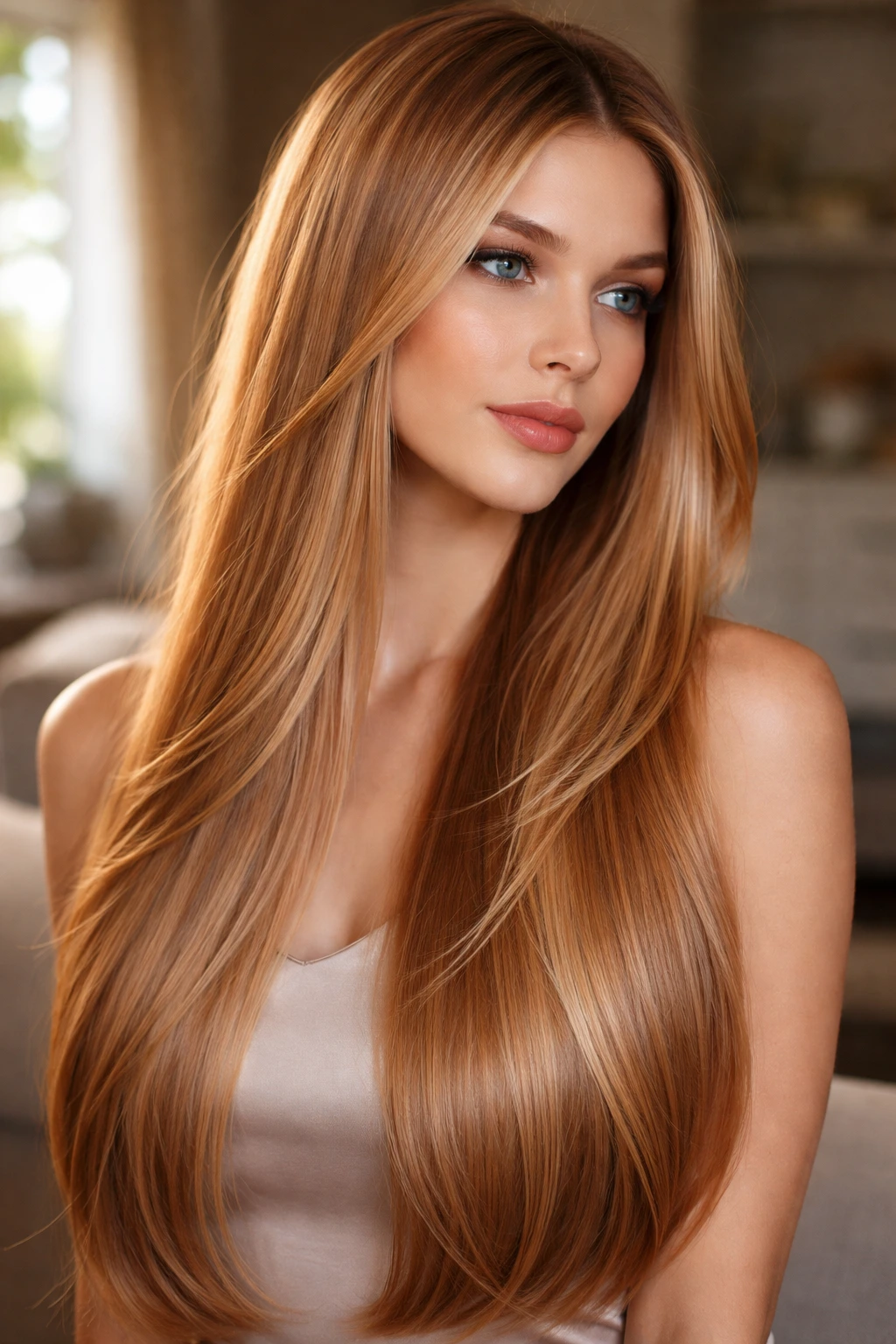
Straight hair can make copper shades look sharper, so copper cashmere is a clever way to soften that edge. The cashmere part means the copper should feel plush, muted, and slightly beige around the edges. On cool skin, that keeps the warmth from reading too hard.
This is a very different look from chunky highlights. Think smooth ribbons, subtle shifts, and a glossy finish that makes the hair move like fabric. Long straight hair benefits from that kind of treatment because every tonal change shows. A flat iron can make it look sleek, but a loose bend often looks better. There’s more depth in it.
The color is elegant when it stays restrained. If it starts to lean orange, it loses the cashmere feeling fast. A toned beige gloss or a soft neutral glaze helps keep the shine cool enough to flatter the face.
22. Soft Ember Blonde With Airy Layers
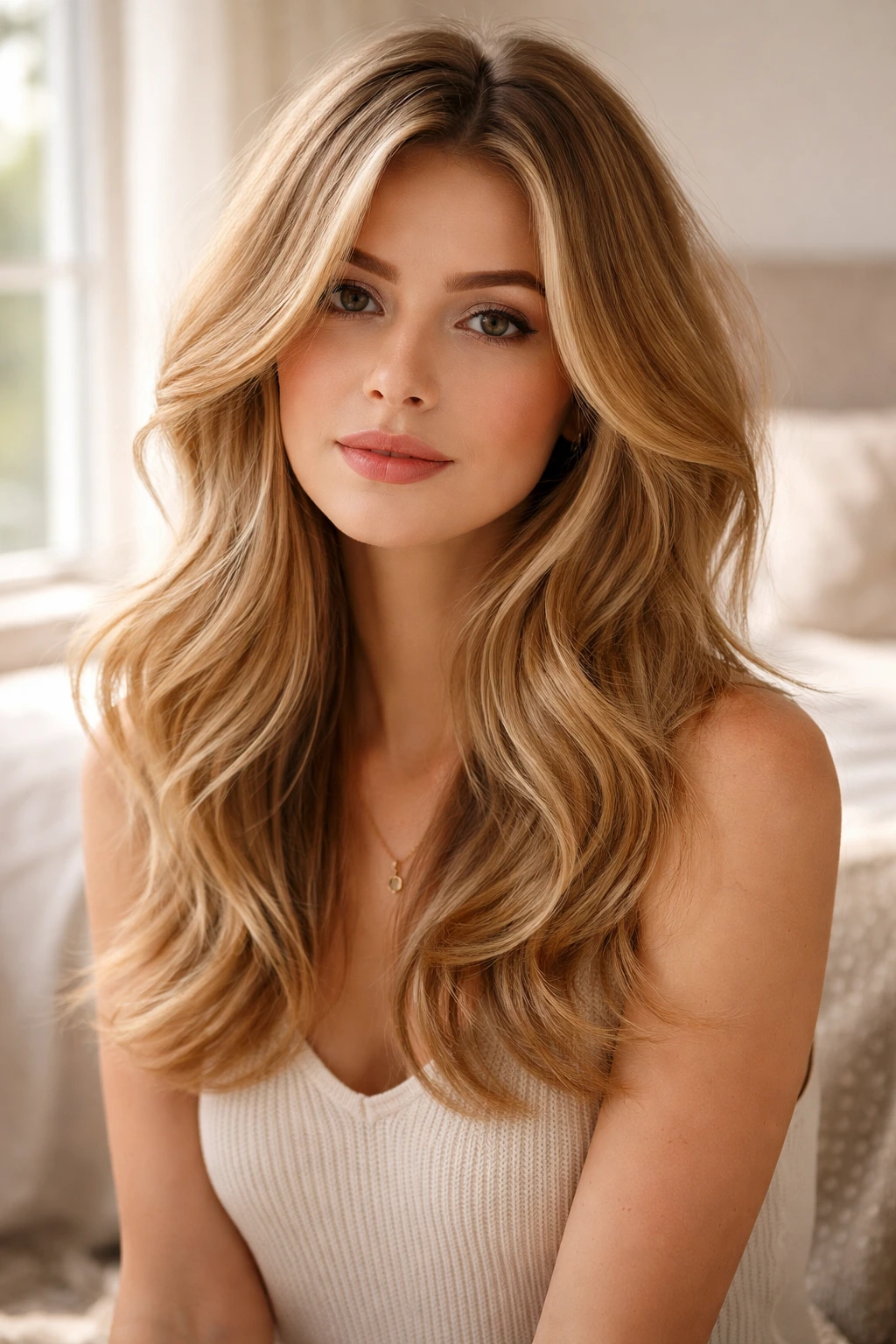
Ember blonde sounds fiery, but the soft version is more about glow than heat. That matters on cool skin. The ember tone should be muted with beige and cream so it gives warmth without the harsh orange edge that can make the complexion look pinker than it is.
Airy layers are a good match because they break the color into pieces. The top layers catch the brighter tones, while the lower layers hold the depth. The result is dimensional, not flat. It also gives the hair a lifted feel, which suits people who want warmth without density.
This is one of those shades that looks better when it is not too perfect. A little texture helps. So does a rough-dry and a soft wave. I’d keep the gloss gentle and let the layers do the heavy lifting.
23. Champagne Strawberry Blonde for Wavy Hair
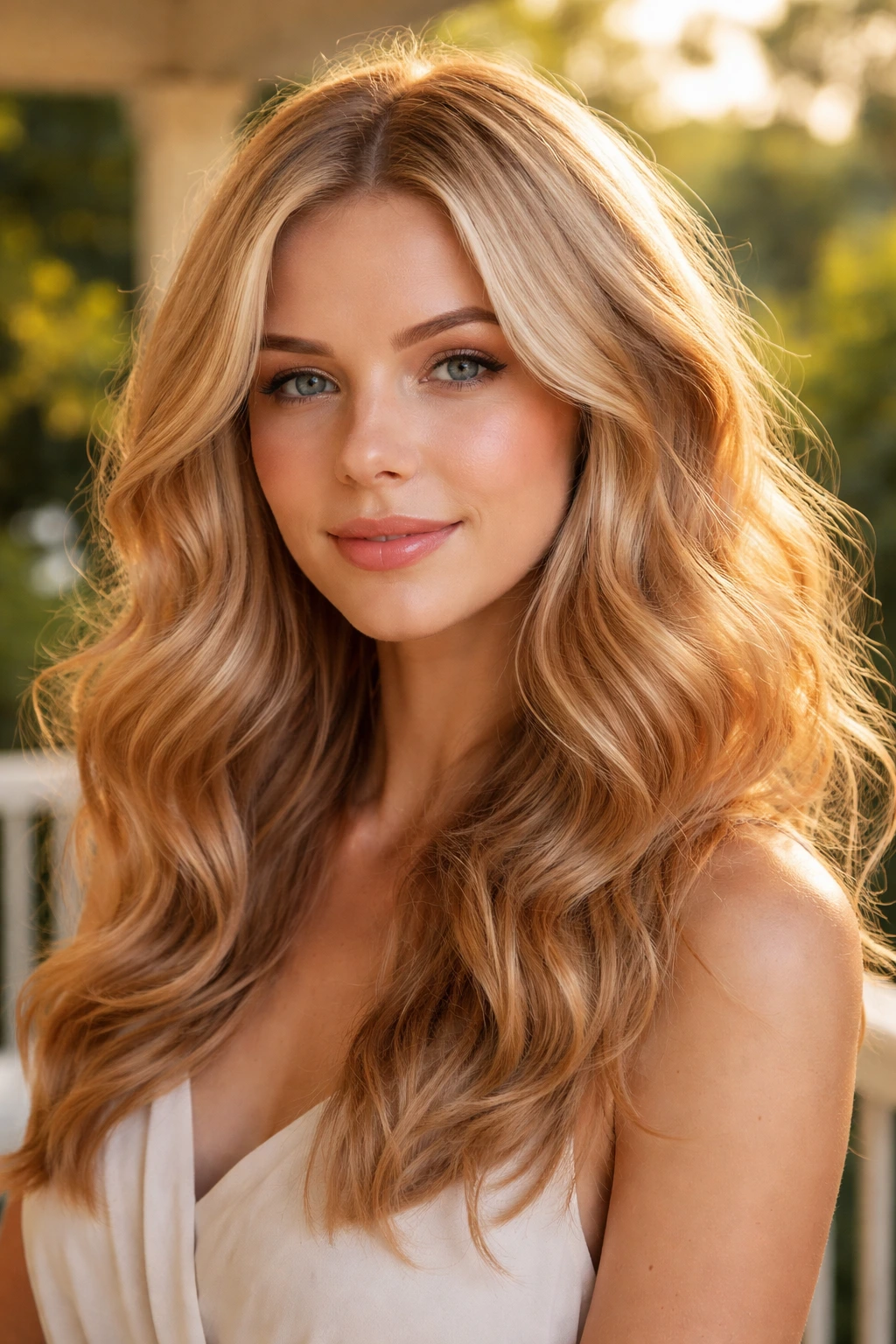
Wavy hair makes champagne strawberry blonde look almost sunlit, which is why this shade works so well on cool skin. The champagne gives the color a clean, bright base, while the strawberry adds a little warmth around the cheeks and crown. The waves pull both tones forward as the hair moves.
The key is keeping the strawberry light. Too much red and the color stops feeling airy. Too much champagne and it can go pale in a way that drains the face. Somewhere between the two is the sweet spot. A gloss that leans pearl-rose usually lands there.
This is a nice choice if you want a soft romantic finish without going full copper. It looks good on loose, brushed-out waves. It can also work on air-dried hair, which is a bonus if you like low-effort styling that still looks finished.
24. Pale Copper Gloss Over Vanilla Blonde
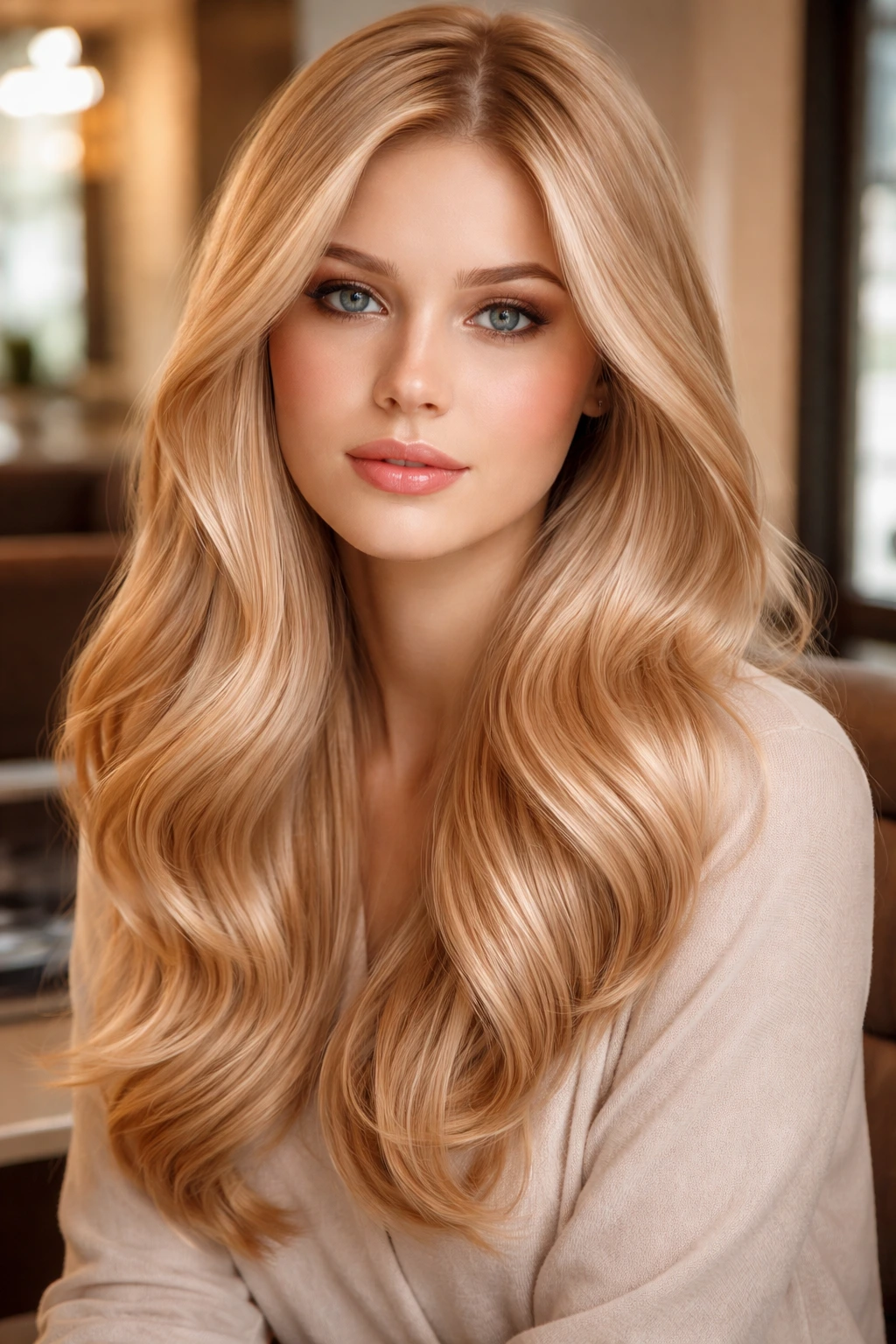
A pale copper gloss is a smart first step if you’re nervous about warmth. Vanilla blonde gives the shade a creamy base, and the gloss adds just enough copper to stop it from looking flat. On cool skin, this is one of the least risky ways to bring red-gold color into the picture.
A Low-Commitment Way to Test Copper
The beauty of a gloss is that it fades softer than permanent color. That means if you love the warmth, you can deepen it later. If you don’t, it slips out without leaving a hard line. That alone makes it worth considering.
- Choose vanilla blonde if your hair is already light.
- Ask for a sheer copper glaze, not a full dye job.
- Keep the finish glossy and translucent.
- Refresh it when the shine starts to dull, not when the color disappears.
This is the shade I’d hand to someone who wants to try copper without making a dramatic leap.
25. Dimensional Cool Copper Blonde With a Toned Beige Finish
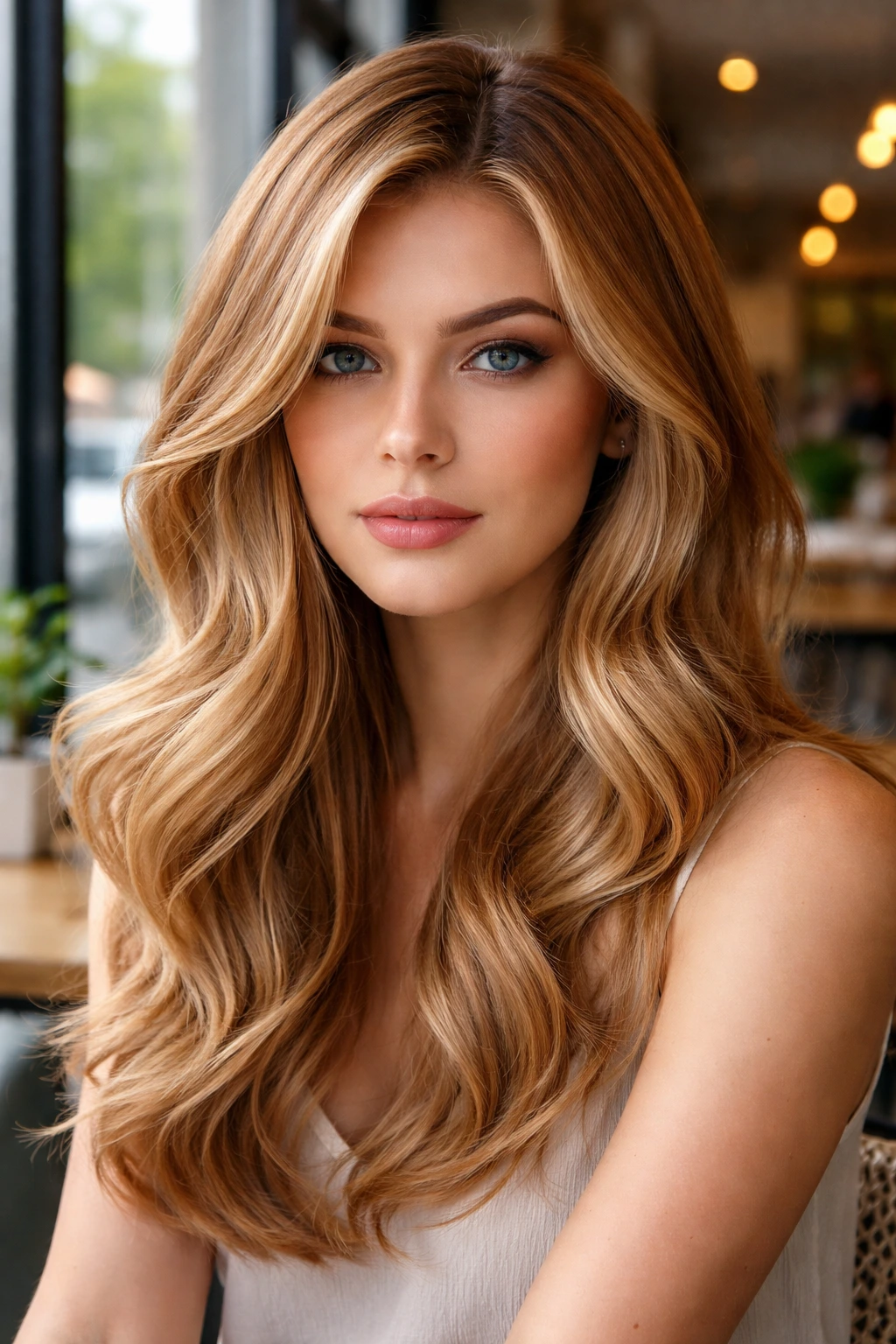
If you want one copper-blonde look that plays nicely with cool skin and still feels rich, this is the one I’d put at the top of the pile. Dimensional cool copper blonde relies on contrast: lighter beige pieces, copper ribbons, and a toned finish that keeps the whole thing from slipping into orange. It is polished without being stiff.
The beige finish matters more than people think. It gives the copper somewhere to rest, which makes the color feel smoother at the hairline and softer through the lengths. That’s a big deal on cool skin, because hard warmth can make the face look red before it looks radiant. This version avoids that trap.
I also like it because it gives you room to adjust. You can go brighter at the front, deeper at the ends, or a little rosier through the mids. The shape of the haircut matters, too—layers show off the dimension, while a blunt cut gives it a cleaner edge. Either way, the tone stays the same: copper, but softened.
Pick the version that lets the blonde and copper share the job. When one side takes over, the whole look feels off. When they balance, the result has that easy glow cool skin usually loves.
