



Blue blonde hair color ideas can look icy, smoky, pearl-soft, or sharp enough to stop traffic, but the versions that flatter cool skin tones all have one thing in common: they keep warmth out of the picture. If your skin leans pink, rosy, blue-red, or neutral-cool, a blonde that carries ash, silver, blue-violet, or a whisper of navy usually reads cleaner than a sunny gold.
That sounds simple. It isn’t, really. Blue pigment is unforgiving on hair that is too dark, too porous, or too warm underneath, which is why the prettiest blue-blonde shades usually start on a pale base around level 9 or 10 and then get softened with gloss, toner, or careful placement.
Porosity matters. A lot.
The ends of the hair grab color faster than the roots, and that’s exactly why some blue blondes look crisp at the top and muddy at the bottom if nobody plans for fade. The good versions use that to their advantage: face-framing pieces for brightness, shadow roots for grow-out, ribbon lights for movement, and sheer overlays when the goal is more frost than full color.
1. Icy Blue Platinum Blonde
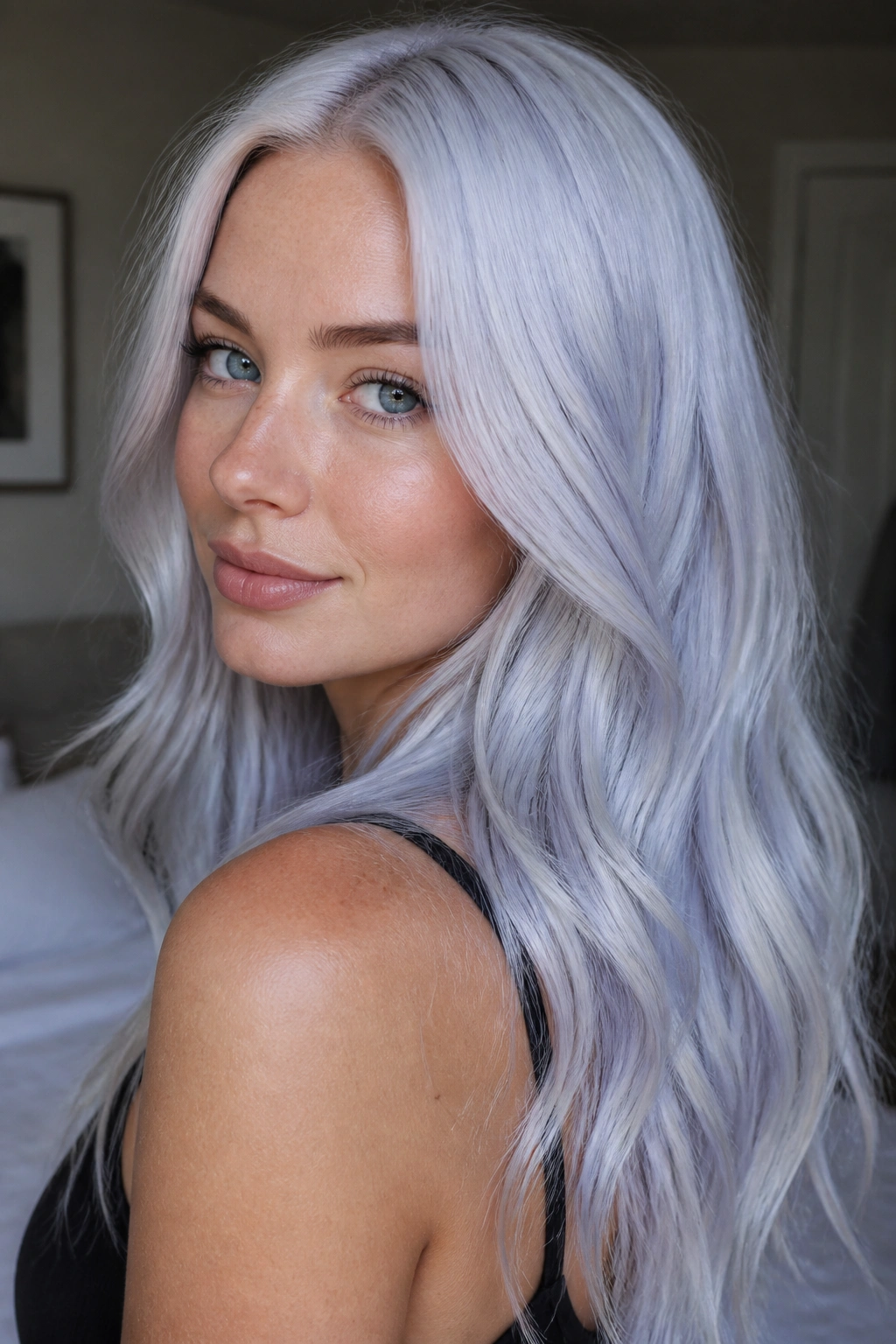
This is the coldest look in the bunch, and it suits cool skin tones because it keeps the whole face in the same temperature family. Think almost-white platinum with a blue-violet gloss over the top, the kind of finish that looks clean instead of yellow even under indoor light.
Why It Flatters Cool Skin
The trick here is not a loud blue. It’s the absence of warmth. On fair cool skin, icy blue platinum keeps the complexion from looking sallow, and on deeper cool skin it can make the contrast feel deliberate instead of harsh.
Ask for a level 10 platinum base with a sheer blue-violet toner rather than a heavy dye deposit. A dense blue can go flat fast. A gloss keeps the blonde looking bright while leaving just enough cool reflection to feel special.
- Best on hair that can lift cleanly to pale yellow.
- Works especially well on straight hair and soft waves.
- Needs purple shampoo, but not every wash.
- If the hair is already porous, ask for a diluted glaze.
A short note from experience: this shade looks expensive when the tone is controlled. If the blue starts to feel chalky, it loses the point.
2. Frosted Baby Blue Money Piece
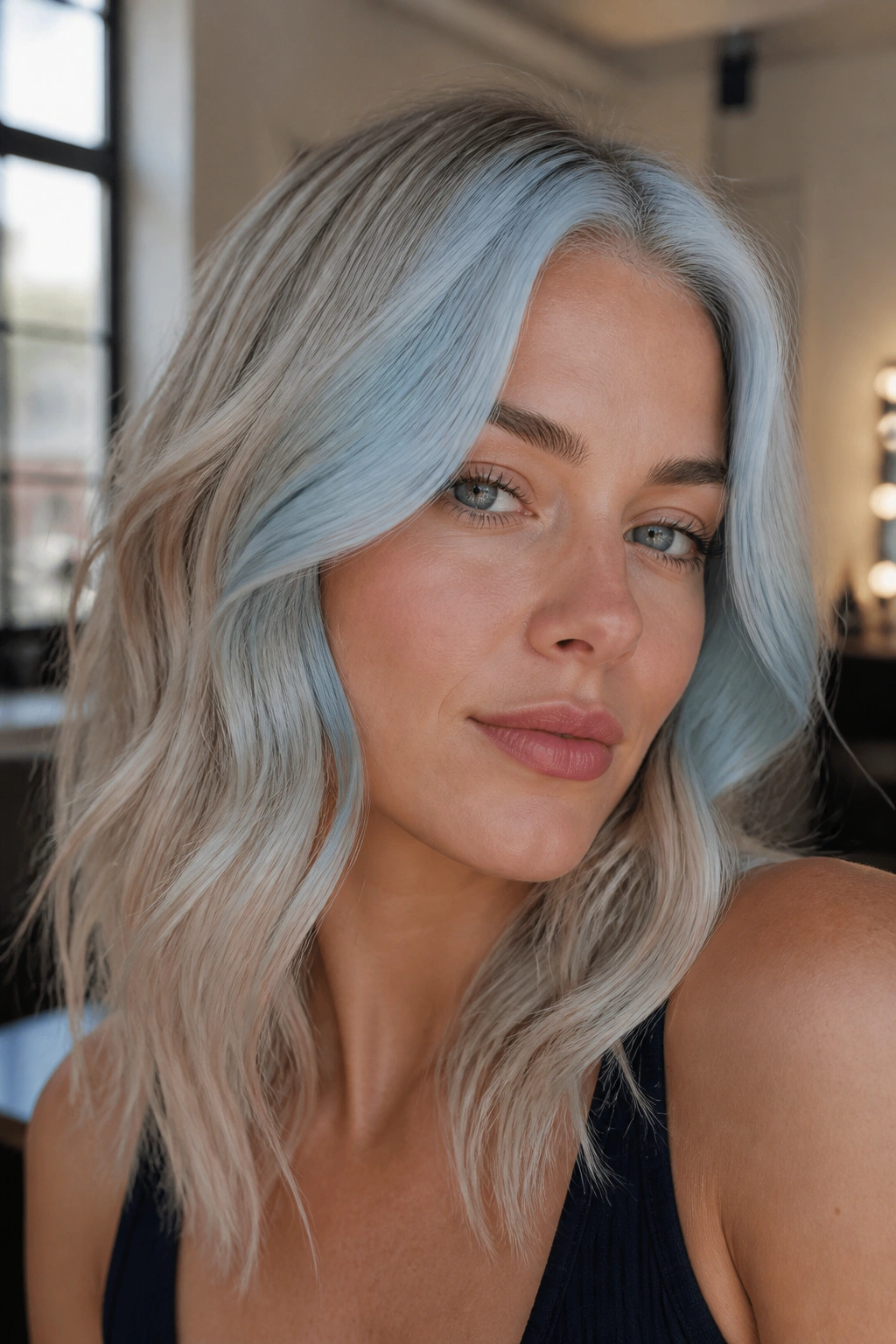
Want the blue effect without covering your whole head? A baby-blue money piece does the job. The face-framing strips brighten the eyes and give cool skin tones a little more contrast, especially when the rest of the blonde stays icy or neutral.
The placement matters more than people think. Keep the blue pieces around the temples and front hairline, usually about 1 to 1½ inches wide, so the color shows when the hair moves but does not take over the entire style.
A baby blue money piece also fades in a flattering way. It softens into a pale frost instead of turning brassy, which means the grow-out can still look intentional for a while. That’s a nice change from all-over color, which can start looking tired much sooner.
If your hair is fine, this is a smart place to start. It gives you a visible blue-blonde statement without the weight of a full-head commitment.
3. Smoky Steel Blonde
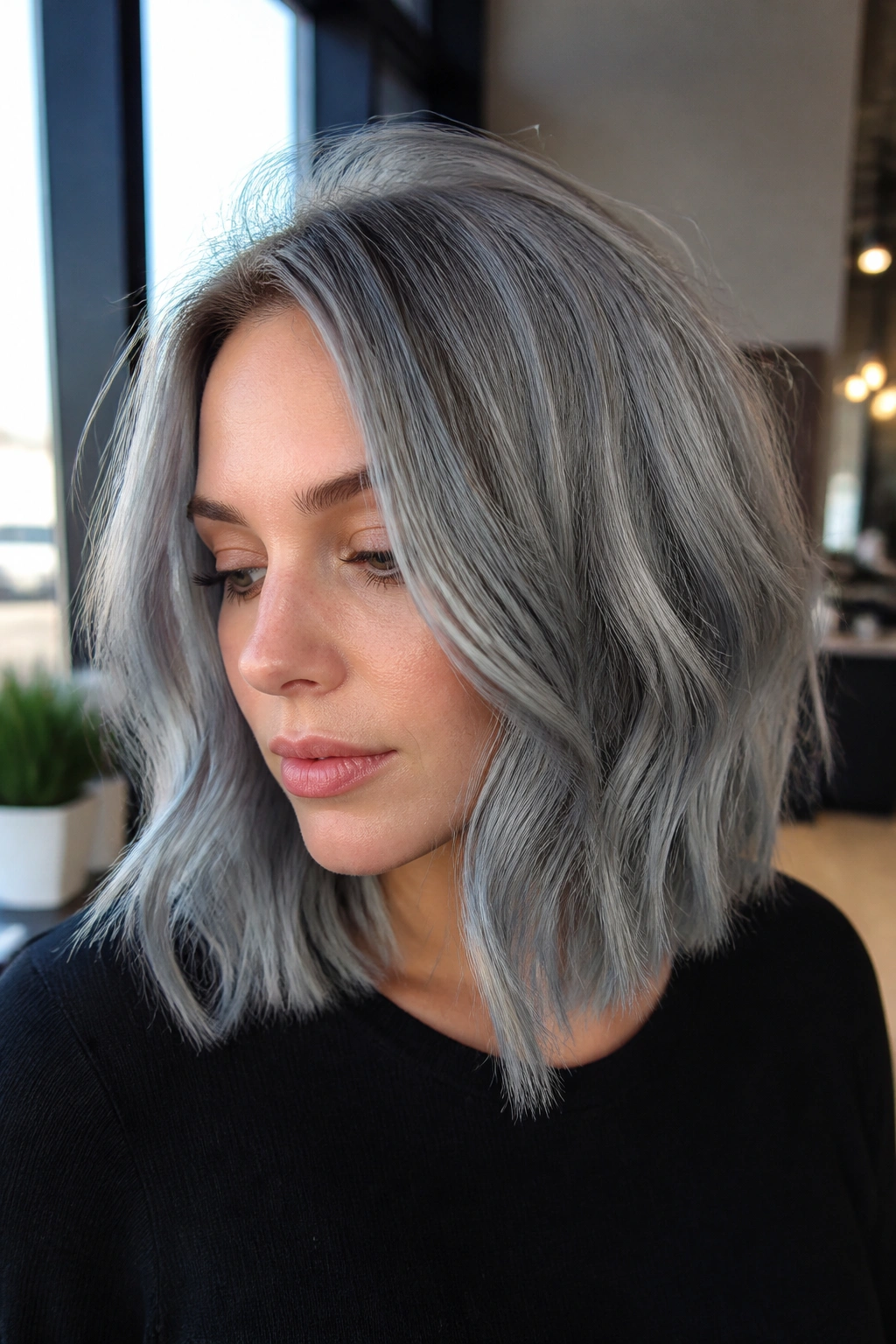
Smoky steel blonde sits between silver and blue, and that middle ground is what makes it so wearable. It has enough blue-gray in it to suit cool skin, but not so much that the hair starts looking like paint.
What Makes It Different
Silver blonde can look bright and glossy. Steel blonde feels quieter, a little moodier, and more modern in a way that works well on medium or deeper cool skin tones. The shade catches light as a soft gray-blue rather than a mirrored white.
Where It Works Best
- On shoulder-length cuts with blunt ends.
- On layered lobs that move a bit.
- On hair that has already been lifted to pale yellow or white.
- On people who want cool tones without obvious pastel color.
The best version uses a smoky blue toner with a touch of ash, not a flat gray dye. That gives the blonde dimension. If you want the color to read even more expensive, keep the roots slightly shadowed so the steel tone has something to float against.
4. Midnight Shadow Root into Blue Ends
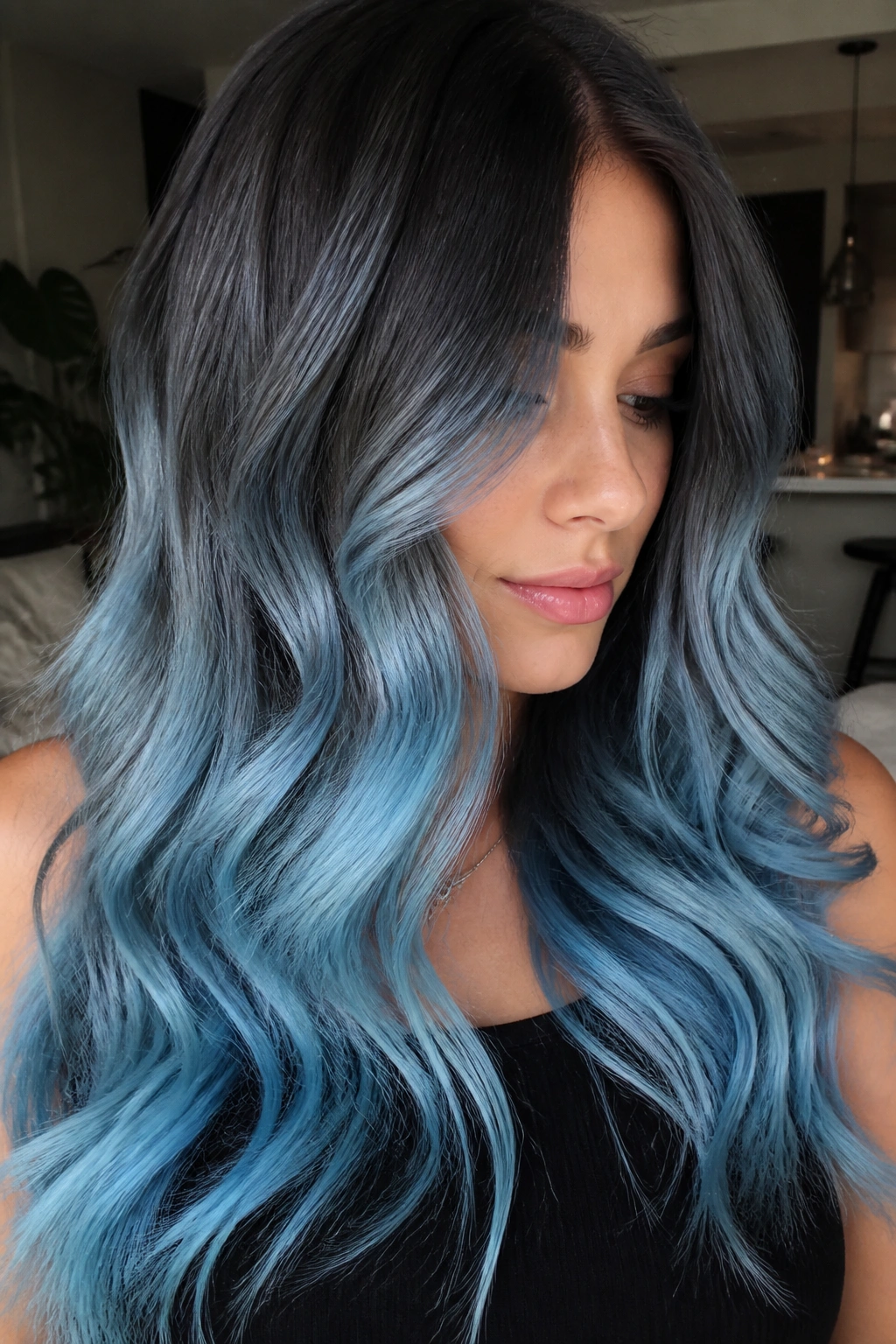
A dark root melt can make blue blonde feel softer, not harsher. That surprises some people, because shadow roots get treated like a grow-out trick, but they can also make the blue at the ends look richer by giving it a frame.
Here’s the part people get wrong: the root should not be a blunt line. It needs to melt through a cool brown, graphite, or blue-black shade before the blonde starts to turn icy. That transition keeps the color from looking striped.
This style is especially good on long hair, curls, and waves. The movement makes the darker root disappear into the mid-lengths, and the blue ends read like a deliberate finish instead of an afterthought. It also buys you time between salon visits, which matters if you do not enjoy living in the toner chair.
Best for:
- Long layered cuts
- Medium to thick hair
- People who like contrast
- Anyone who wants less obvious regrowth
Blue ends can go dark quickly on porous hair, so keep the deposit sheer. Heavy blue is where this look starts to feel flat.
5. Pearl Blonde with Blue Veil
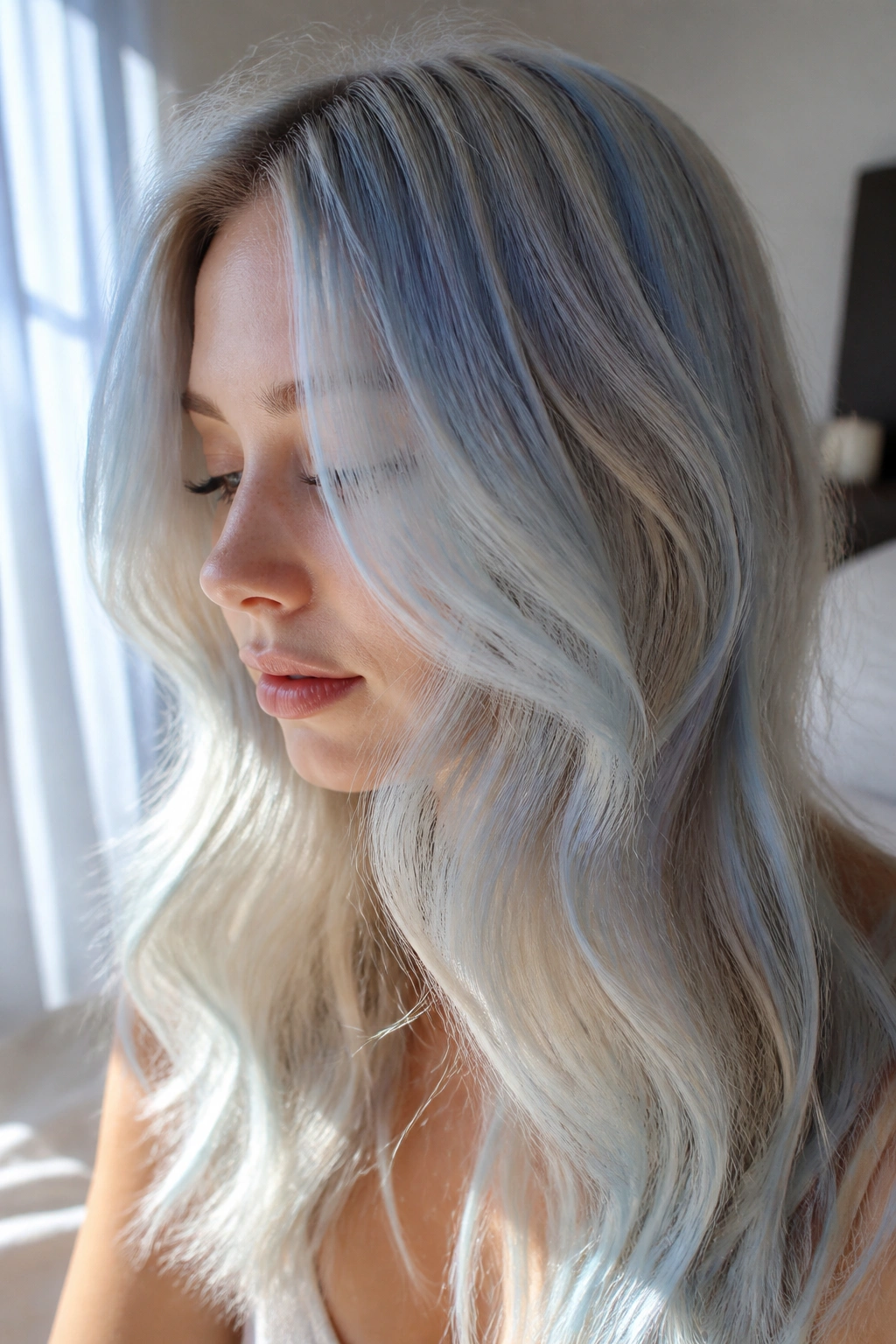
Pearl blonde already has that soft, luminous quality, and a blue veil gives it a colder edge without making it loud. This is one of the easiest blue blonde hair color ideas for cool skin tones if you want something elegant instead of dramatic.
The finish should feel airy. You want the blue to sit on top of the pearl, not bury it. A transparent gloss, blue-silver toner, or a pastel rinse can create that effect without flattening the hair’s shine.
This shade is especially kind to fine hair. Heavy color can make fine strands look thicker but duller; pearl with a blue veil keeps the light bouncing. It also photographs well in window light because the blue is soft enough to read as reflection rather than pigment.
And that’s the charm. It looks like someone spent time on it, but not in an obvious way.
6. Arctic Blue Balayage
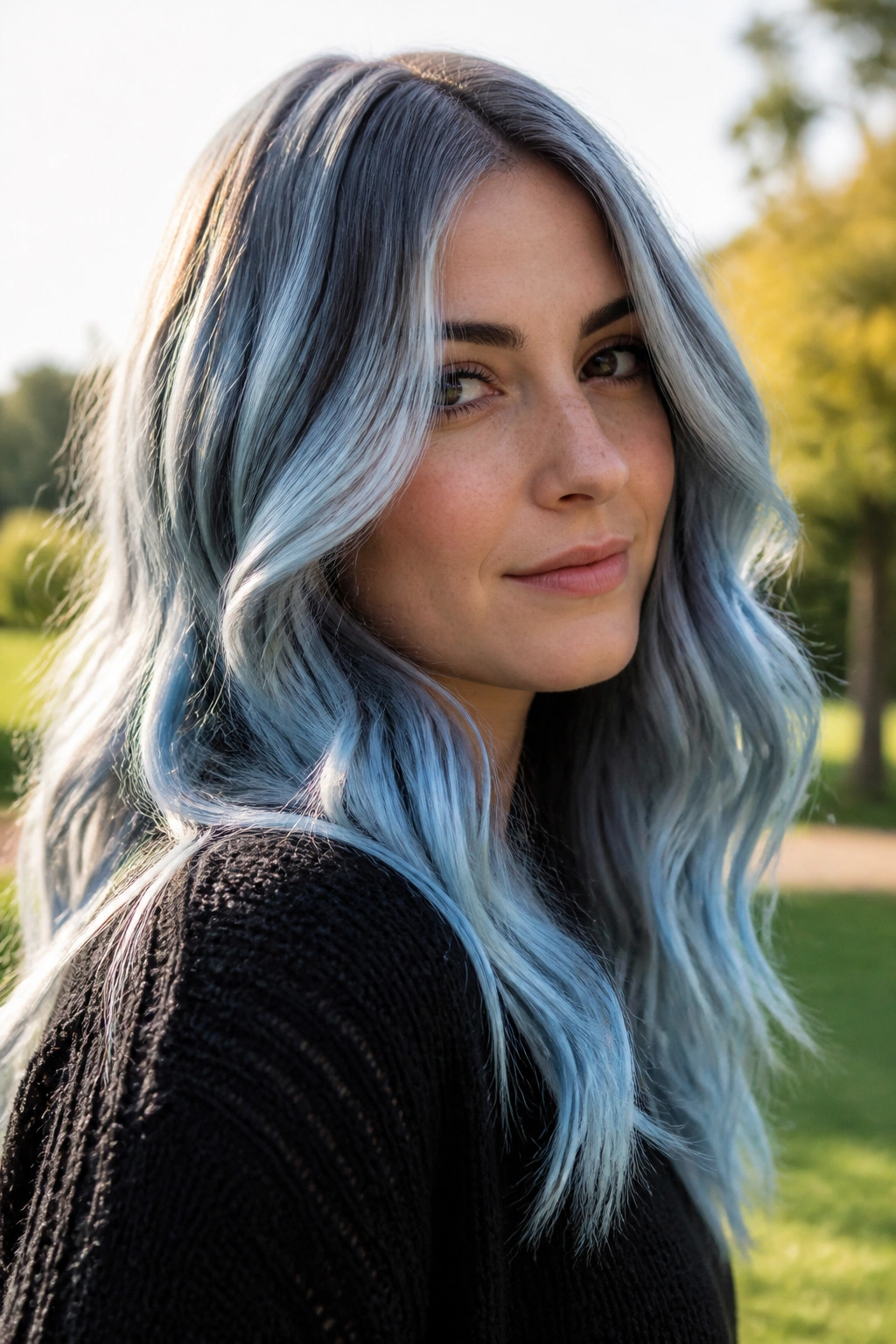
Unlike foils that create crisp stripes, balayage gives you hand-painted movement, and that matters with blue blonde. Blue can look too neat if it is packed into a hard pattern. Balayage keeps the color floating through the hair instead.
Where to Paint the Blue
Place the cooler blue pieces around the mid-lengths, face frame, and outer surface of the hair. The underlayer can stay lighter and more neutral, which stops the look from becoming too heavy.
Why It Flatters Cool Skin
A cool balayage works because the blue sits beside blonde instead of sitting on top of every strand. That means the skin still reads as the star, not the hair color. On cool undertones, that balance tends to look polished without going stark.
Good signs to ask for:
- A level 9 or 10 blonde canvas
- Sheer blue ribbons, not solid panels
- Soft root blur for grow-out
- A cool gloss over the lightest pieces
This is the kind of look that gets better as it softens. The first day is clean; the second and third week often look even better.
7. Denim-Tinted Beige Blonde
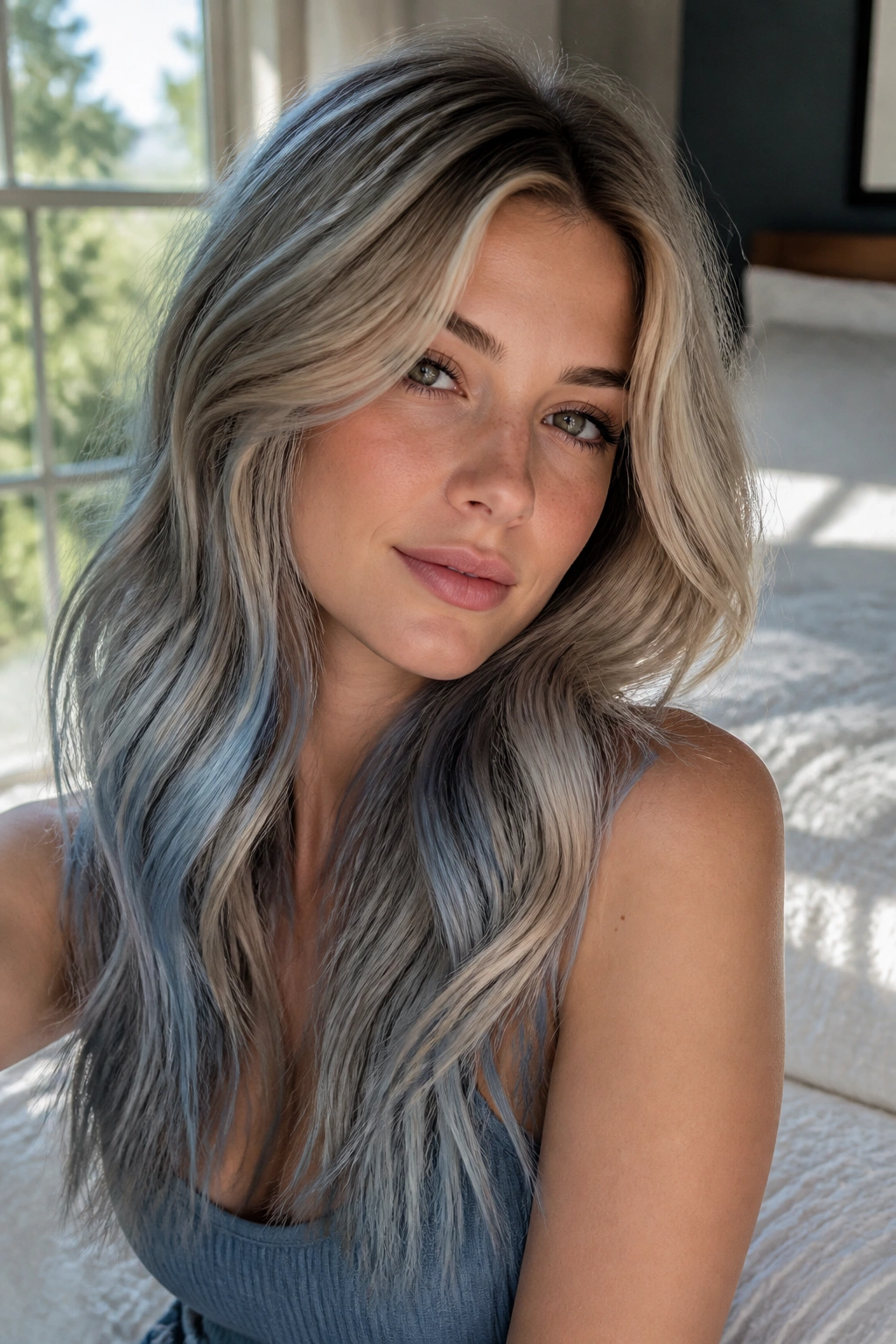
Denim blonde is a smart choice if you like cool hair but hate anything too shiny or too pastel. Beige keeps the blonde wearable, while the denim tint cools it down just enough to suit pink or blue-undertone skin.
Why does it work so well? Beige gives the color some depth. Pure blue on blonde can look stark on the wrong base, but a beige foundation makes the blue feel lived-in, almost like a favorite pair of jeans that has faded in a good way.
This shade is also one of the easiest to style day to day. Loose bends, a clean blowout, or air-dried texture all work. The color does not need perfect symmetry because the denim cast softens rough edges.
If you want blue blonde that doesn’t scream for attention, this is a solid place to land. It still reads cool. It just doesn’t shout about it.
8. Blue-Black Shadow Melt on Blonde
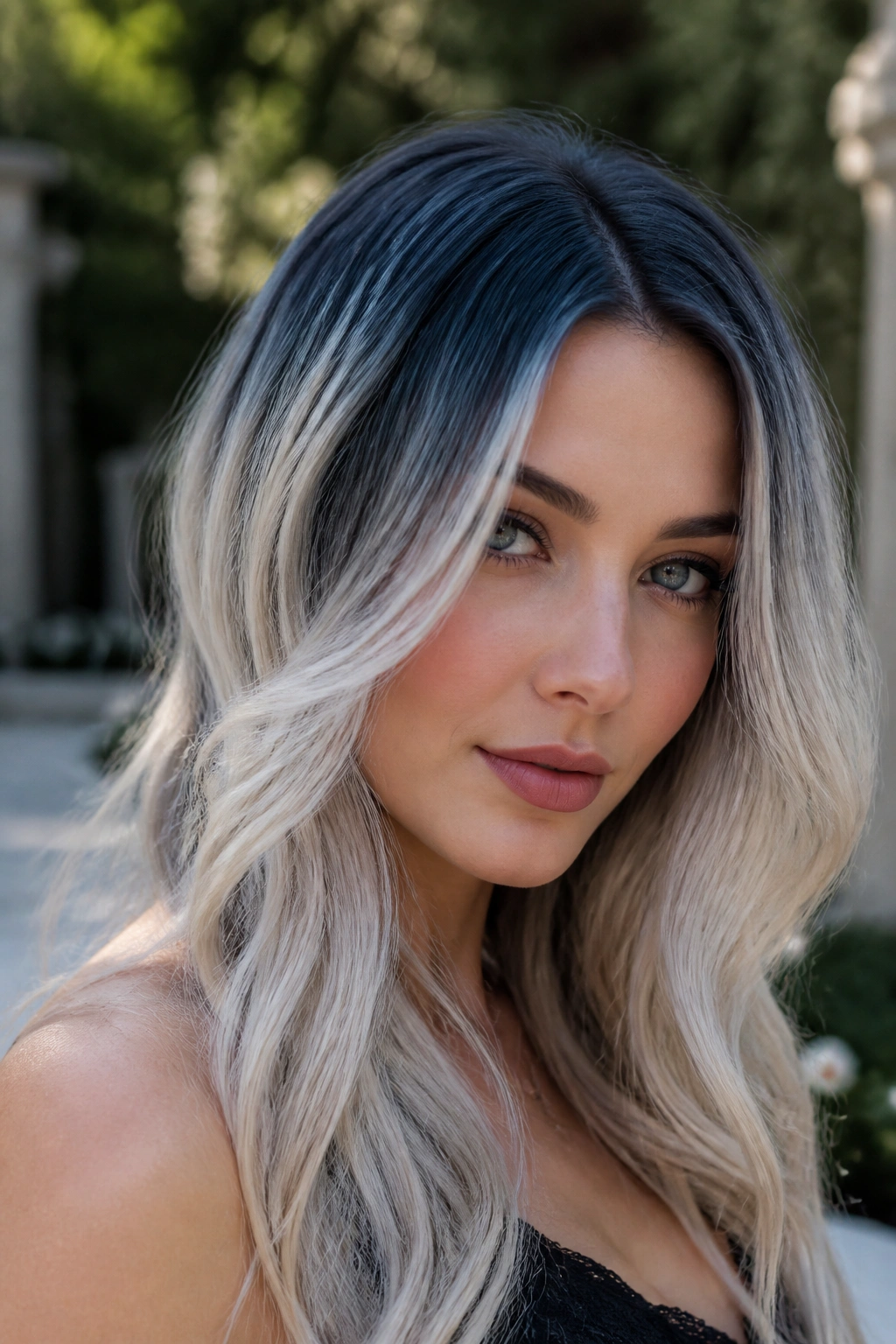
A blue-black root melt sounds intense, but on cool skin it can be exactly the thing that makes pale blonde feel grounded. The darker root gives the hair weight, and the blue undertone keeps it from looking flat or muddy.
This style works because of contrast. Pale blonde on its own can wash some cool skin tones out, especially if the face is very fair. A blue-black melt acts like a frame, adding shape around the face and making the ends look brighter by comparison.
It’s a good option for longer cuts and fuller textures. Short pixies can get lost in the dark root unless the color placement is very deliberate. On waves, though, the transition feels expensive in the plain, practical sense of the word.
One warning. The line between blue-black and true black is thin. If the root turns ink-heavy, the blue effect gets swallowed. Keep the root deep, not dense.
9. Silver Ice Blonde with Cobalt Lowlights
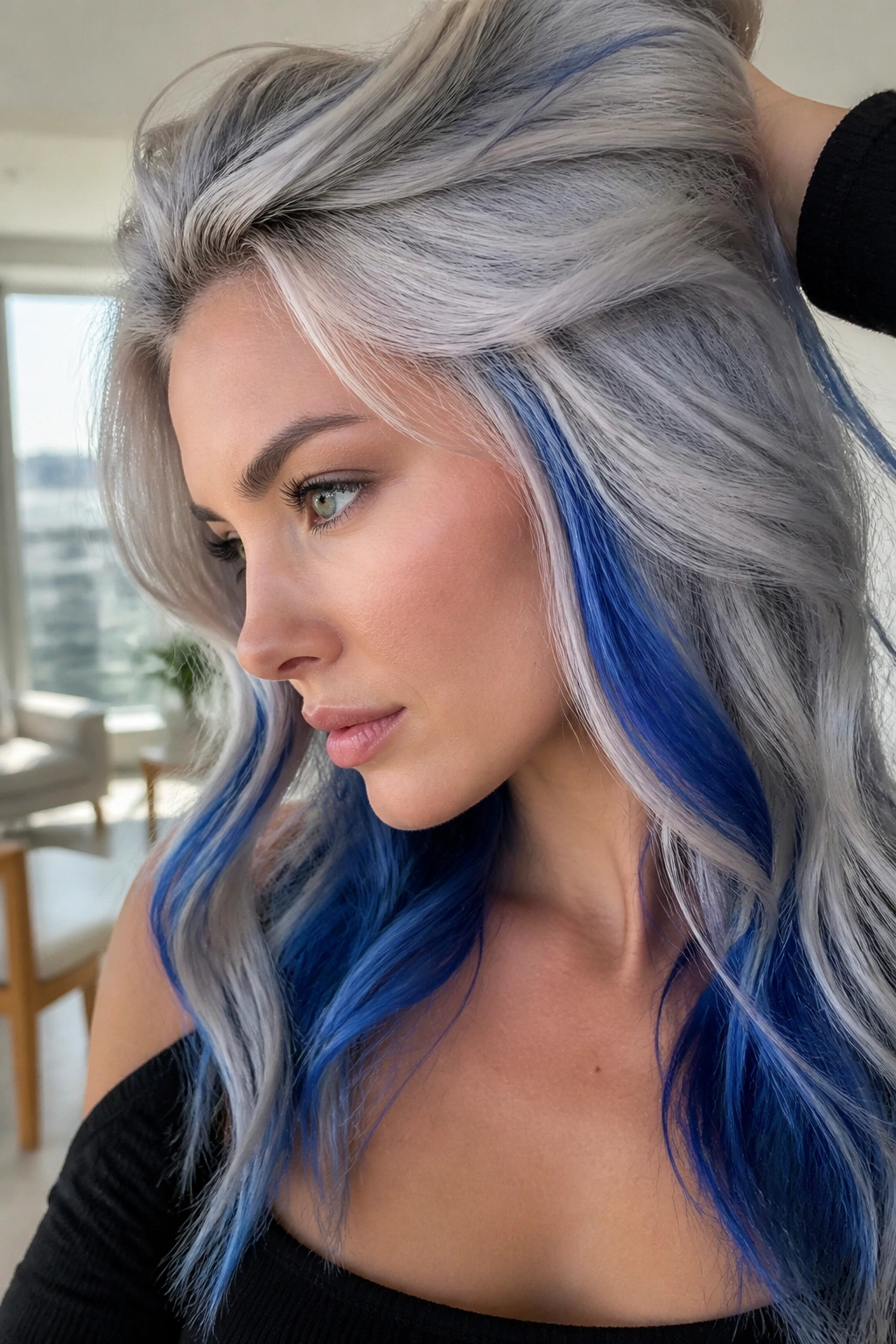
Cobalt lowlights inside silver blonde are for people who want the blue to show in motion, not just at first glance. The silver gives the overall look brightness, and the cobalt pieces hide underneath it like little flashes of color.
Why Lowlights Work Here
Most people think highlights are the answer when they want dimension. Sometimes lowlights are better. A few cobalt panels placed under the top layer keep the blonde from looking too flat, especially on very straight hair where every line can get a little severe.
Where to Place Them
- Under the crown for depth
- Near the nape for movement
- Around the face only if you want a stronger statement
- Scattered through thick hair to break up heaviness
The cobalt should not be everywhere. Three to five ribbons in the right places can do more than a full head of blue. That restraint is what keeps the shade cool and expensive-looking instead of costume-like.
10. Blue Champagne Blonde
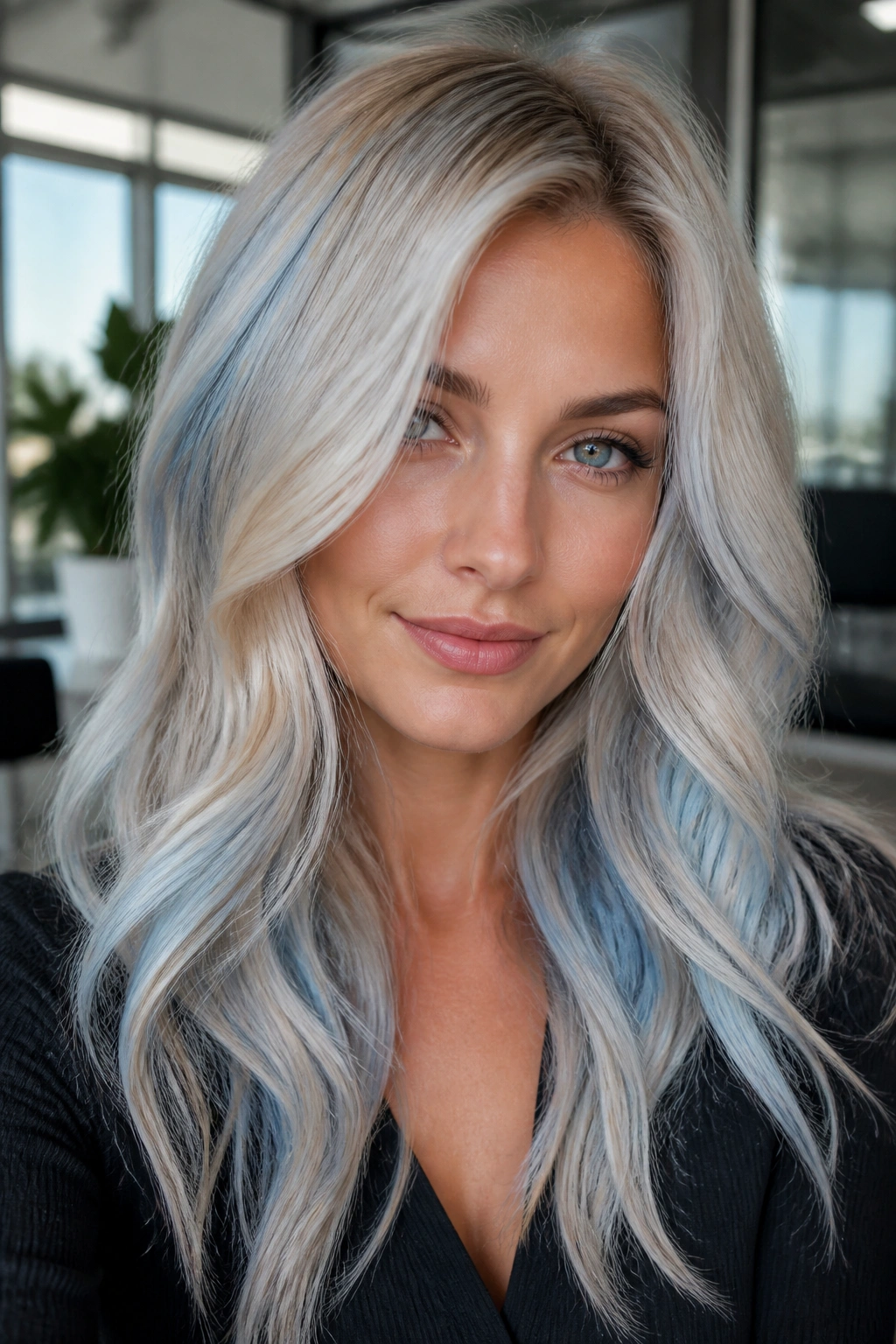
Champagne blonde usually leans warm, which is why the blue version is so useful for cool skin tones. It keeps the softness of champagne while dropping the peach and gold that can make cool complexions look off.
The trick is a translucent blue glaze over a pale beige or neutral-blonde base. You still get softness. You just lose the warmth that champagne sometimes carries too far.
This is one of the nicer options for someone who wants a blonde that feels polished in office light and still interesting in daylight. The color is subtle enough to wear with simple makeup, but it has enough cool tone to keep the face from looking washed out.
Ask for a sheer finish. Not opaque. Not violet. Sheer blue-beige is the point here, and that balance is what makes the look feel wearable instead of icy in a harsh way.
11. Pastel Blue Tip Melt
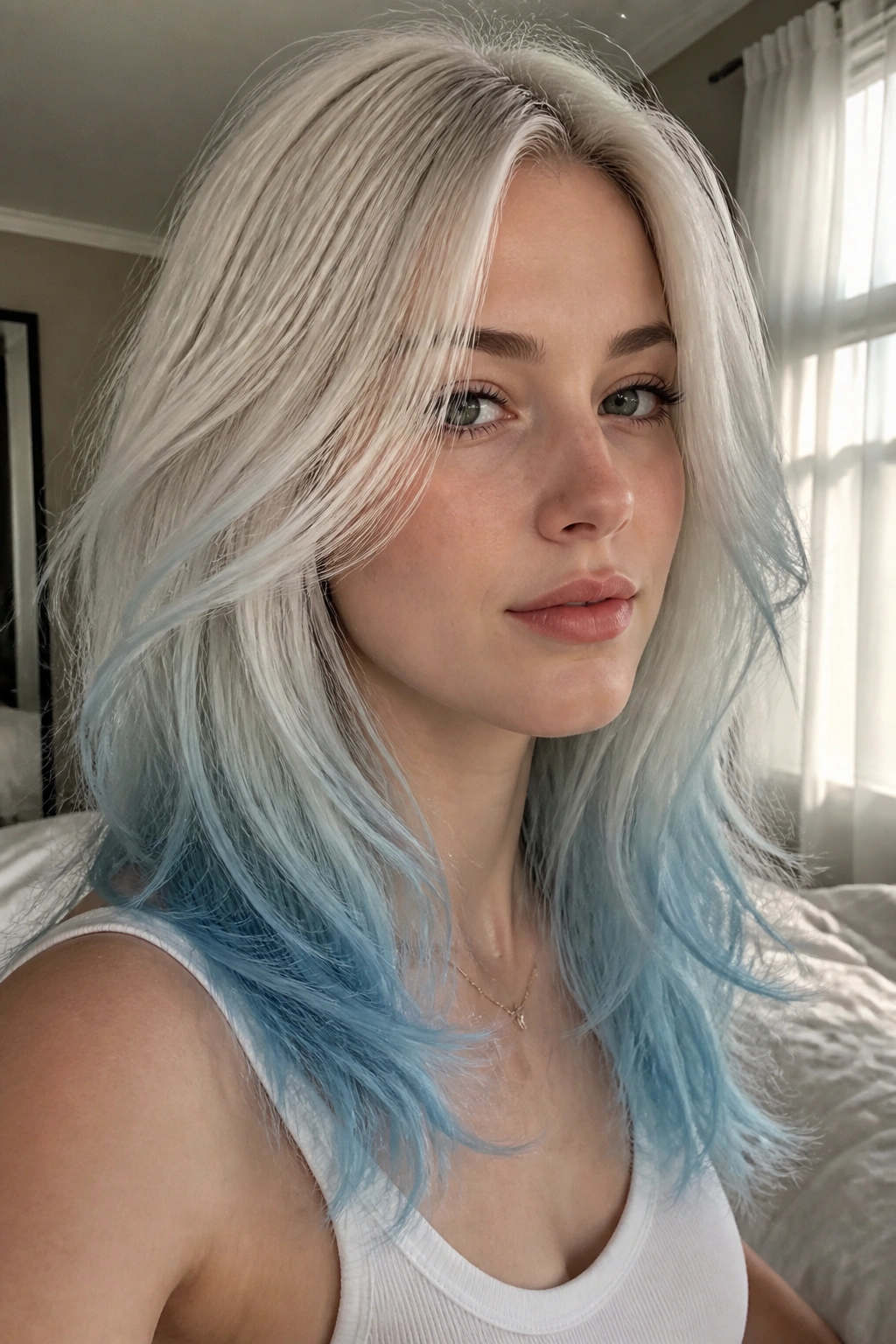
Pastel blue tips work best when the rest of the hair is bright and pale enough to support them. The fade from blonde to blue should feel soft, almost watercolor-like, with the color concentrated at the ends and feathered upward just a little.
This is a good choice for layered cuts because the ends are already doing different things. Straight across blunt ends can make the blue line feel too hard unless you soften it with a melt. On shaggy layers, though, the pastel movement looks easy and airy.
The shade is also kind to people who like color but need to keep the root area natural. The blue sits away from the scalp, so grow-out is less stressful. Still, porous ends can grab the pigment darker than expected, and that can turn a pastel tip into a dusty navy after a few washes.
Keep it light. That is the whole point.
12. Glacier Blonde with Navy Ribbon Lights
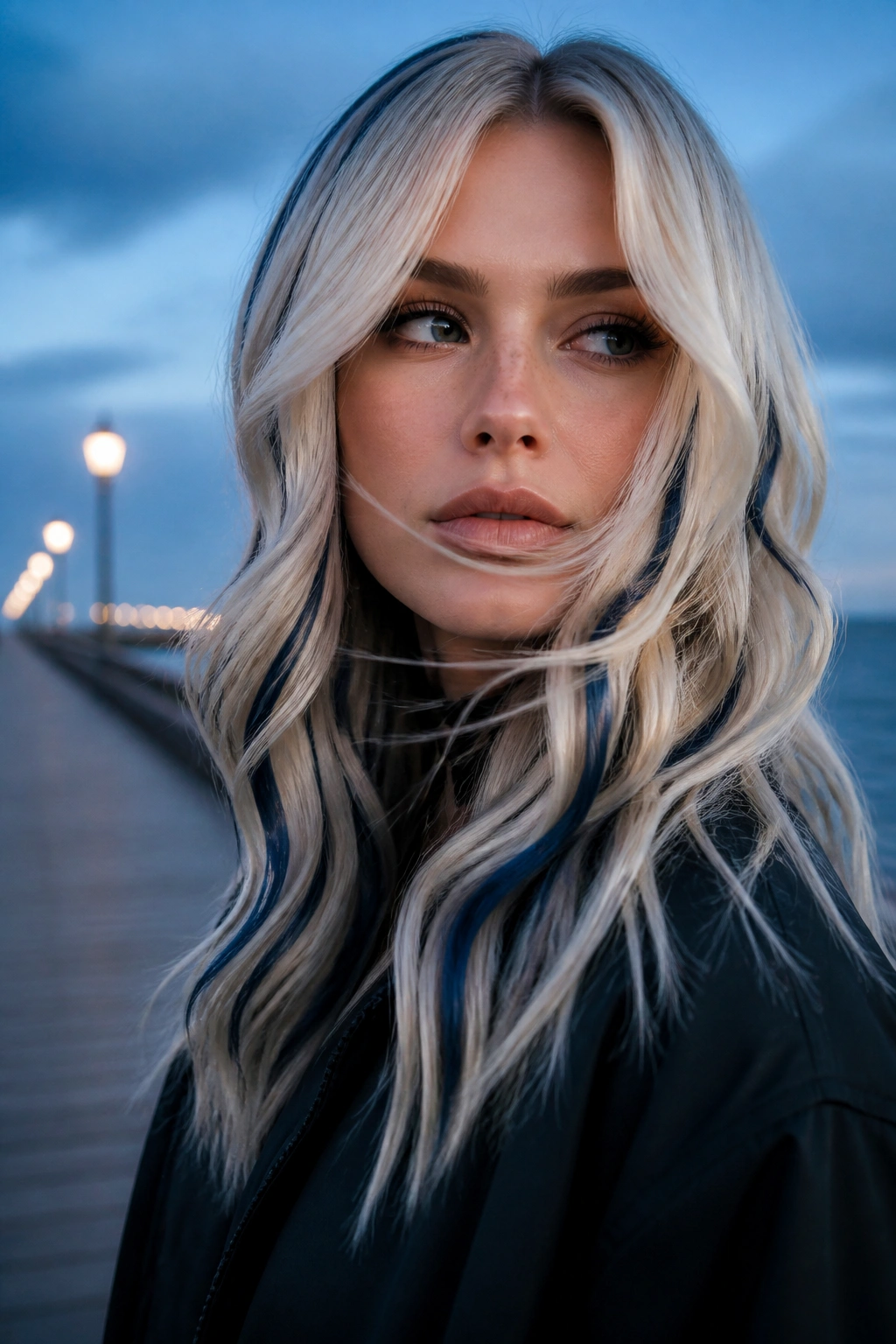
Glacier blonde with navy ribbons is one of the bolder blue blonde hair color ideas for cool skin tones, and I like it because it does not apologize for being cool. The glacier base keeps things pale and bright, while the navy strips give the style structure.
Why Navy Works on Blonde
Navy is stronger than baby blue, but on a pale blonde base it reads as a deep cool accent rather than a dark block. It gives the eye somewhere to land, which is useful if your hair is thick or very long and needs visual break-up.
Best Placement Notes
- Put the navy through the mid-lengths, not the roots.
- Keep the ribbons thinner near the face.
- Concentrate the darkest pieces underneath for movement.
- Leave some untouched blonde between the ribbons so the pattern breathes.
This look feels especially strong on waves because the navy appears and disappears as the hair moves. On very straight hair, keep the ribbons softer and more spaced out, or the contrast can start to feel harsh fast.
13. Smudged Blue Root on Cream Blonde
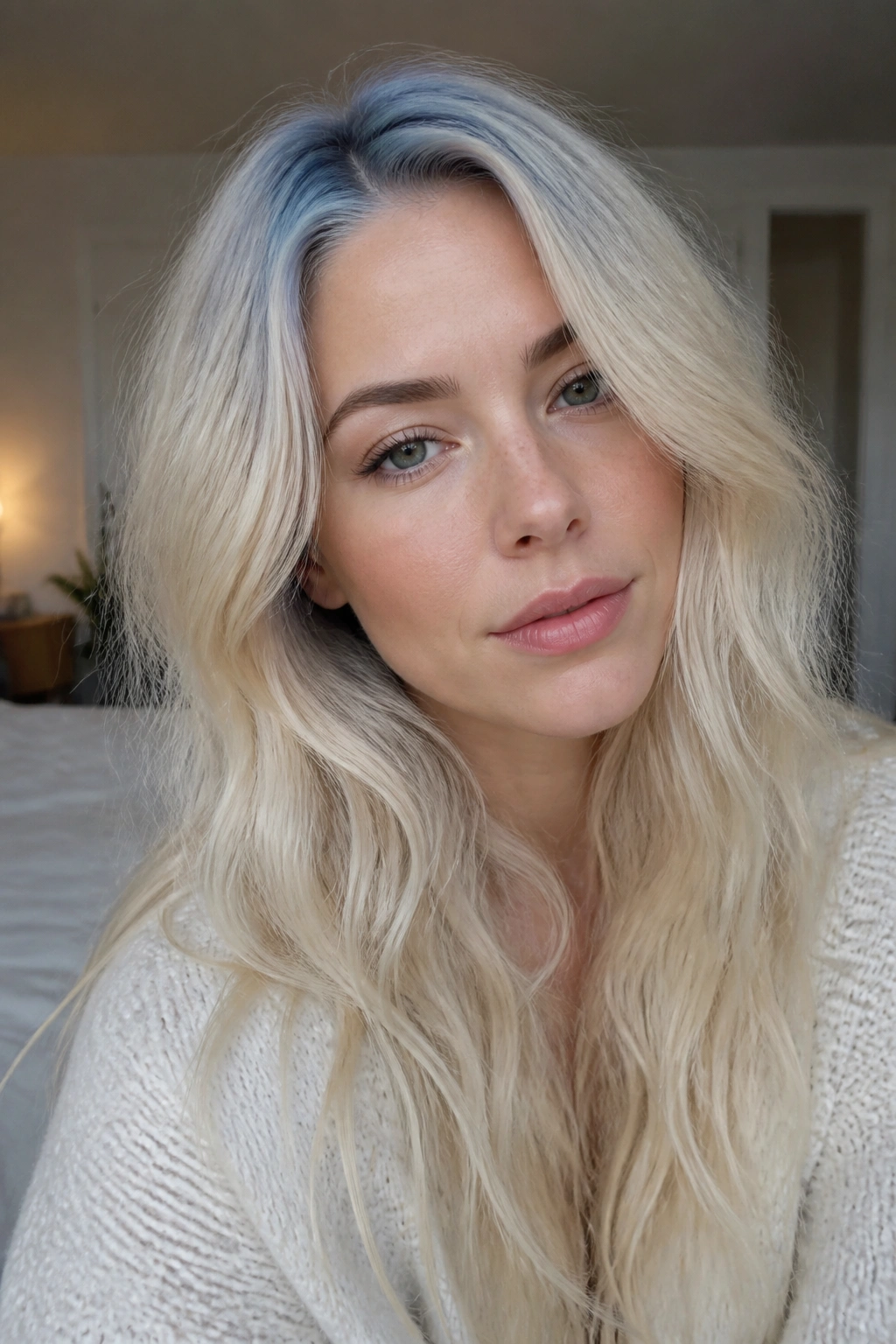
A smudged blue root is not the same thing as a dark root, and that difference matters. The smudge sits softer, almost hazy, so the transition into cream blonde feels more like smoke than shadow.
Unlike a hard root melt, this look is about blur. The blue at the scalp area should be pale, diluted, and slightly translucent so it does not create a heavy band. That makes it easier on cool skin tones, especially when the face is very fair or the eyebrows are light.
It is a clever choice for anyone who wants the hair to look intentional at the root but not obviously dyed. The cream lengths stay bright, and the smudge gives the style a little shape when the hair is up or tucked behind the ears.
One detail worth asking for: a root blend that stops about half an inch from the scalp line. That tiny gap can stop the color from looking dense.
14. Opal Blonde with Blue Reflects
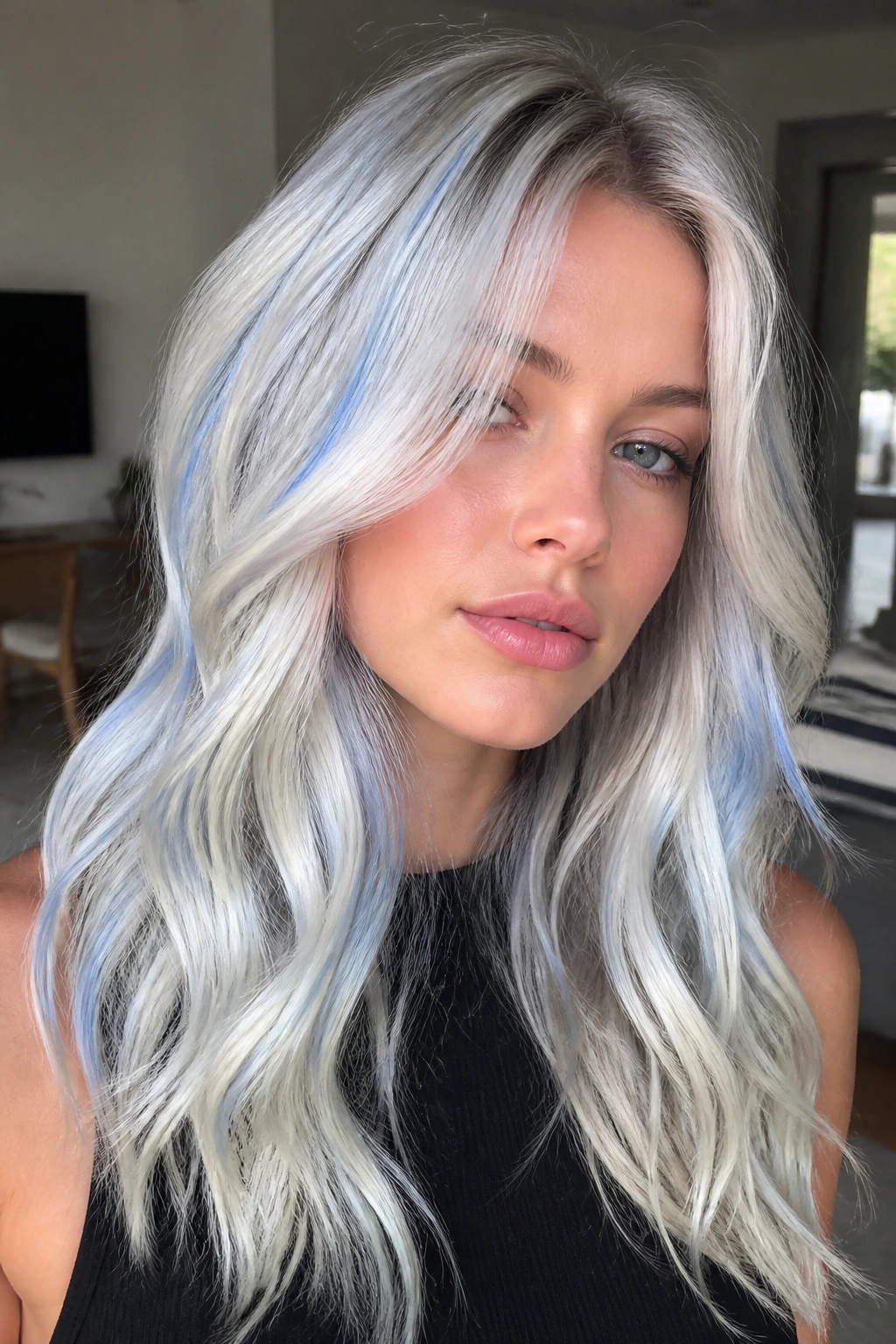
Opal blonde is for people who like hair color that shifts as they move. The base stays pale and pearly, but blue reflects flash in the light, so the shade looks different from one angle to the next.
What gives opal its charm is the mix of tones. A little silver, a little blue, a little pearl. None of them should dominate. The effect is softer than full blue and less obvious than a vivid pastel, which makes it a lovely fit for cool skin tones that need brightness without a hard edge.
The Color Formula Behind the Shimmer
- Pale blonde base at level 10
- Sheer blue-violet gloss
- Silver or pearl toner for reflection
- Minimal pigment load so the shine stays visible
This look is one of those styles that can feel understated in a mirror and much richer in natural light. That small shift is the whole appeal.
15. Cool Cream Blonde with Sky-Blue Face Frame
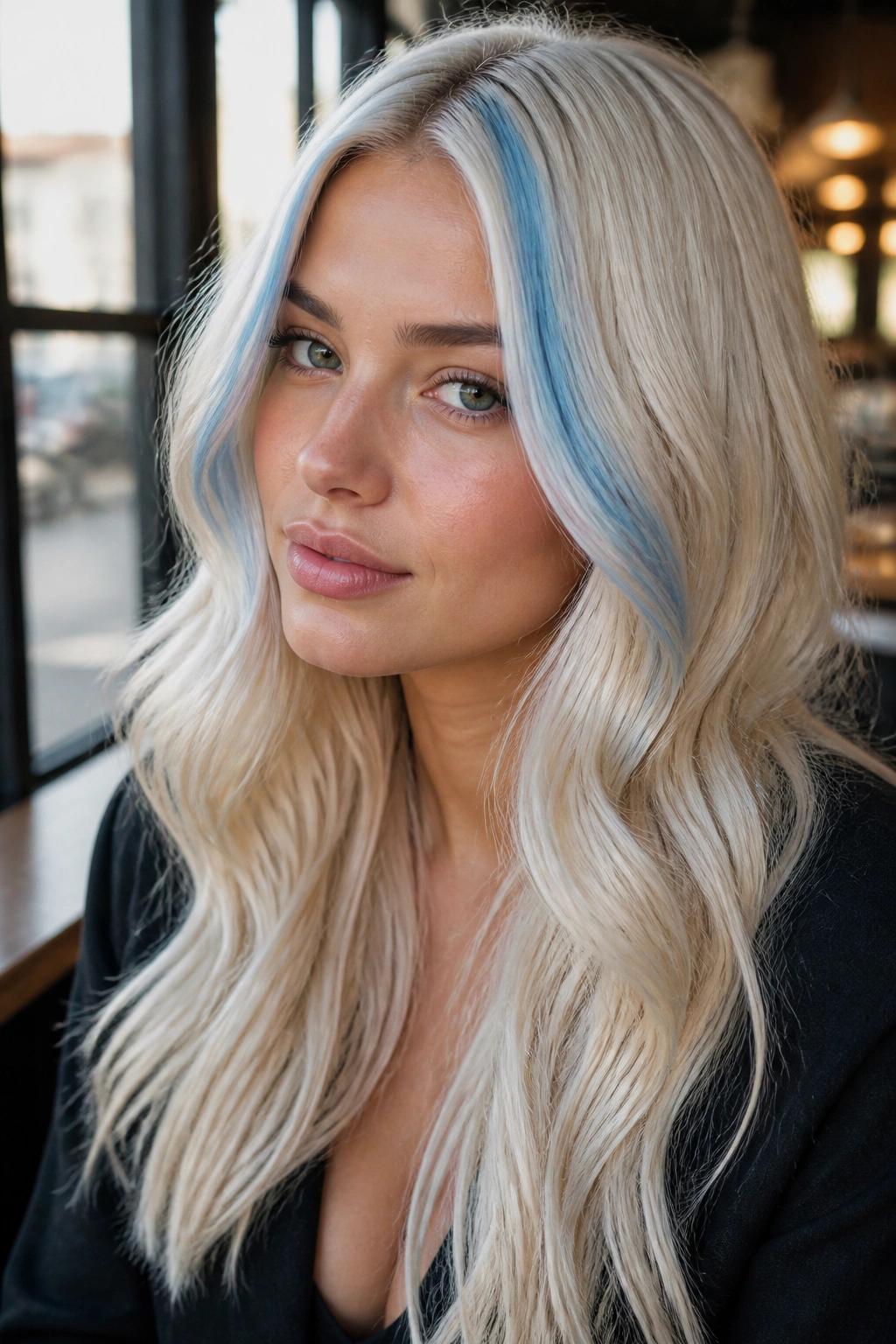
A thin sky-blue face frame can change the whole mood of cream blonde in about five minutes. The rest of the hair stays soft and wearable, while those front pieces pull the eye straight to the face.
For cool skin tones, this works because the blue sits exactly where the skin needs a little color balance. It brings out pale eyes, cool-toned makeup, and clean brows without needing a full-head transformation.
Keep the face frame narrow. Half an inch to an inch on each side is often enough. If the pieces get too wide, the style can start reading costume-like, especially on shorter haircuts. On long hair, though, a slightly broader frame can be beautiful if the rest of the blonde stays clean and creamy.
Small detail. Big difference.
16. Steel Gray Blonde with Blue Smoke
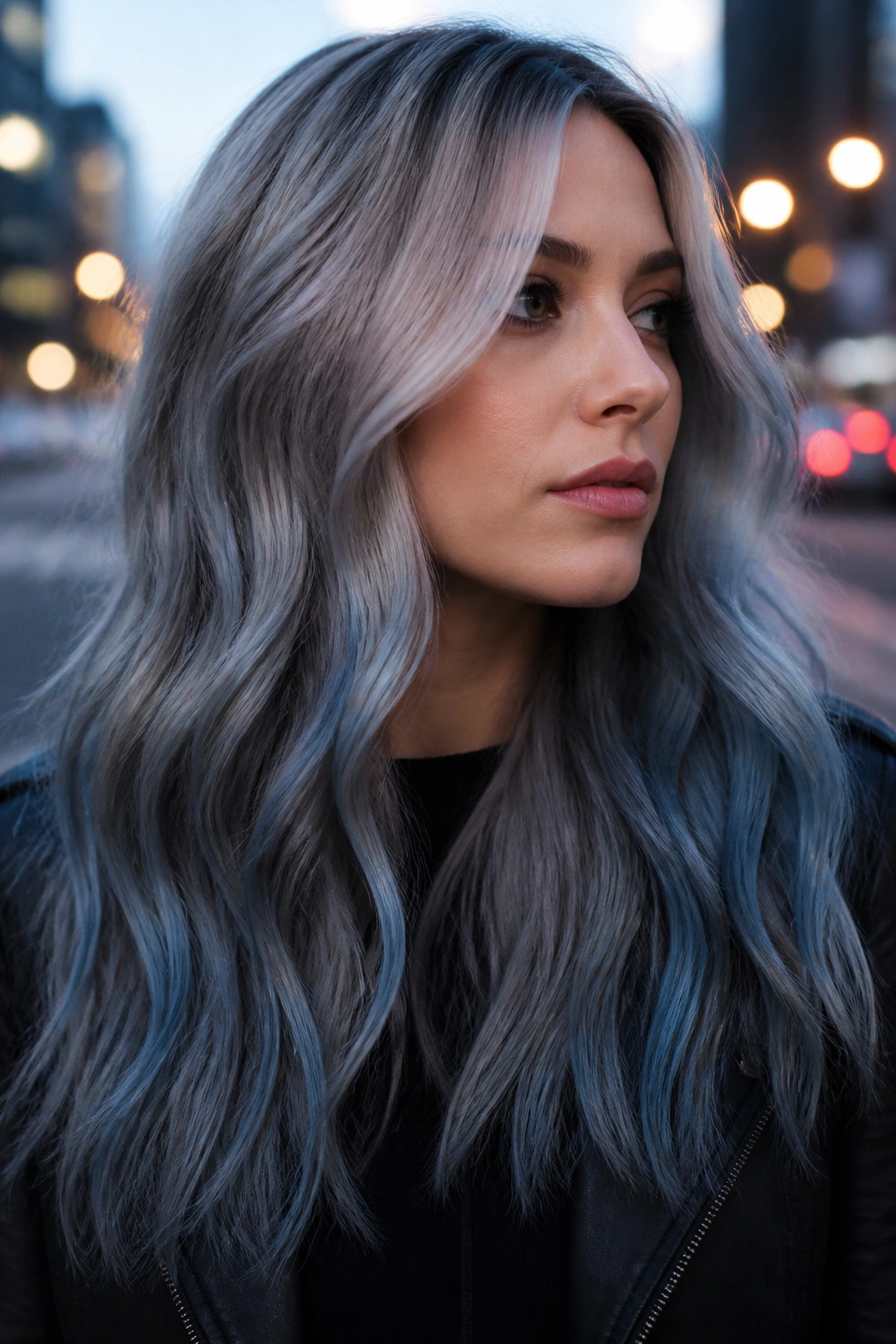
If icy platinum feels too bright, steel gray blonde gives you a quieter cousin of the same family. The blue smoke effect softens the gray so the whole shade still feels cool, but not flat.
This is one of my favorites for medium-length hair that has a little texture. The smoke-like finish can hide a bit of uneven lift, which is useful if your pre-lightening was not perfect. It also suits cool skin tones that look best in muted color rather than bright white.
A good steel gray blonde should never look like a solid gray helmet. There needs to be movement in the tone, with some pieces reading blue-gray and others reading silver. That variation keeps the hair from looking dense.
If you like cool clothes, especially black, white, charcoal, or denim, this shade fits right in. It’s calm, sharp, and easy to wear.
17. Moonlit Vanilla Blonde with Blue Sheen
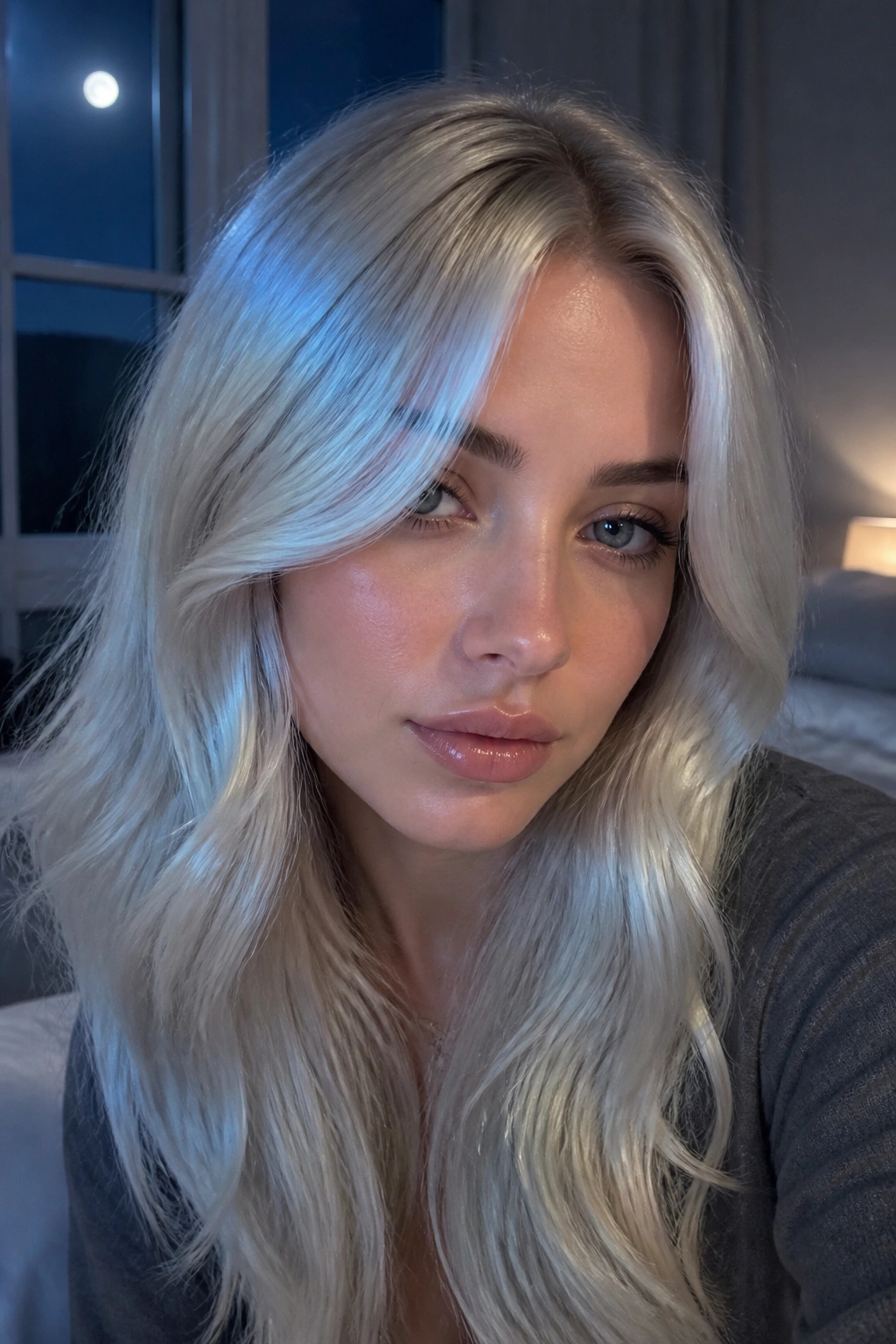
Moonlit vanilla blonde is what happens when a soft blonde gets cooled down just enough to suit a blue-toned complexion. The vanilla base keeps warmth in check, and the blue sheen keeps it from drifting into yellow.
The appeal here is subtlety. You do not see blue as a hard color. You notice it as a shift in reflection, the way moonlight can make something look cooler than it really is. That makes the shade useful for people who want a flattering blonde without a strong fashion color.
It also works on a wider range of cuts than people expect. Long layers, shoulder-length waves, even a blunt bob can carry it well because the sheen does not depend on dramatic placement. The hair just needs to be light enough and clean enough for the blue cast to sit on top.
This is one of those shades that looks tame in the salon chair and richer after a few days of settling. Oddly enough, that is part of the charm.
18. Dusty Blue Mushroom Blonde
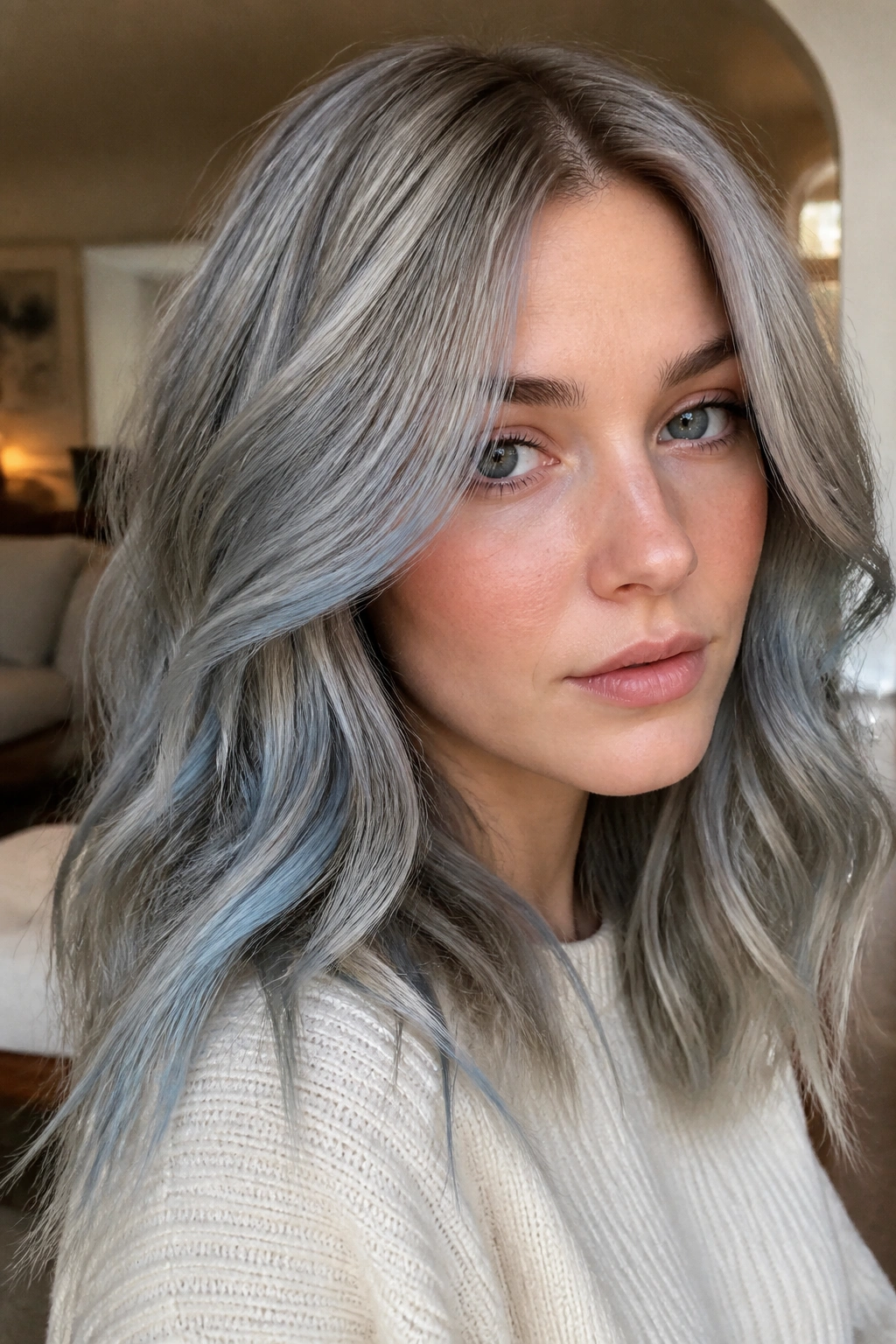
Dusty blue mushroom blonde brings together ash, taupe, and a cooled blue cast. It is earthy, but not warm. That matters, because cool skin tones can look washed out beside gold-heavy shades, while this one keeps the whole palette aligned.
What to Tell Your Colorist
- Ask for a mushroom base with cool beige notes.
- Add a dusty blue glaze, not a bright pastel.
- Keep the lightest pieces around the face and crown.
- Leave some depth underneath so the color doesn’t flatten.
This shade is a nice middle path for anyone who wants something softer than steel but less fragile than pearl. It has enough mood to feel interesting in daylight and enough quietness to wear with simple makeup.
A dusty finish also hides fade better than a clean pastel. That makes it useful if you do not want to babysit your hair every week.
19. Ice Queen Blonde with Sapphire Pieces
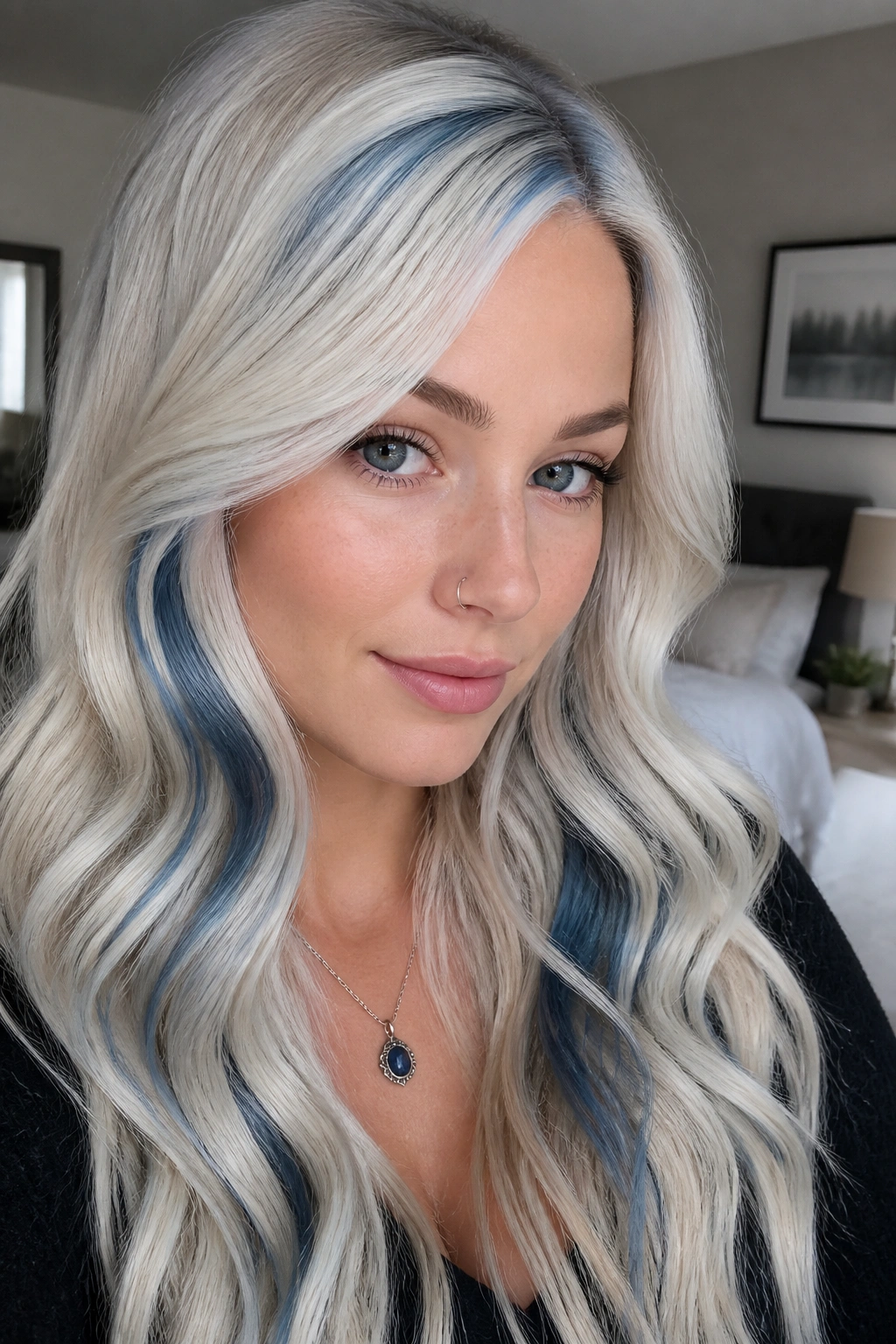
Sapphire pieces inside pale blonde turn the whole look into a colder, richer version of classic platinum. The jewel tone does the heavy lifting, so the blonde around it can stay bright and airy.
Unlike soft blue veils, sapphire reads as intentional color. That makes it the right choice for someone who wants the blue to be seen, not guessed. Cool skin tones benefit because the richness of the blue gives the complexion contrast without pulling warmth into the hair.
Where Sapphire Should Land
Place the darker pieces where the hair moves: under the part, through the mid-lengths, near the sides of the face if you want more drama. Thick hair can take more of it. Fine hair usually needs fewer, stronger placements.
A tiny amount goes a long way. If the sapphire overwhelms the blonde, the look stops feeling icy and starts feeling dark. Keep the pale pieces dominant.
20. Smoky Lilac-Blue Blonde
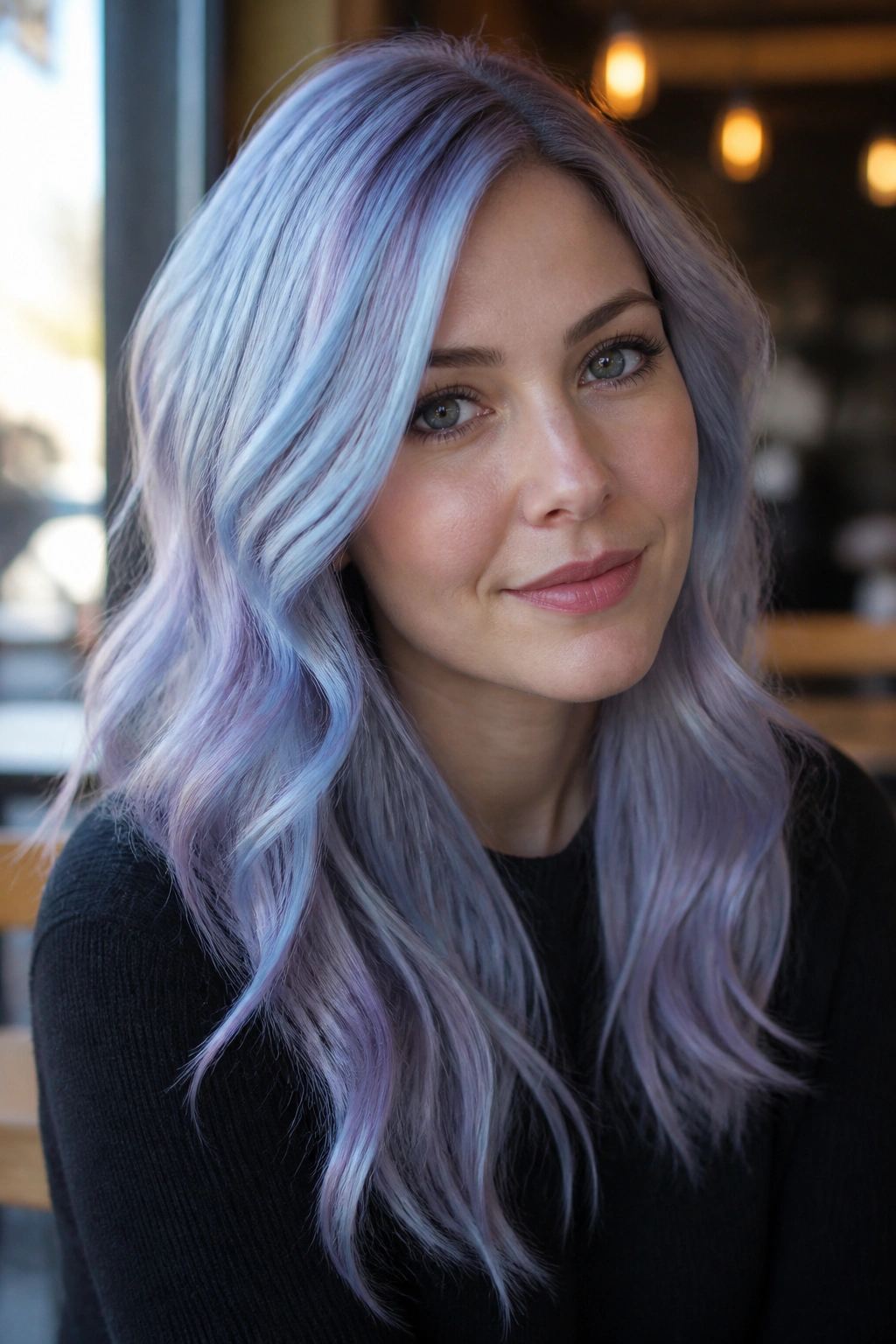
Smoky lilac-blue is the softer cousin of pure blue blonde, and for some cool skin tones it’s the easiest one to wear. The lilac warms the blue just a touch, but not enough to make the hair look warm. It still stays firmly in cool territory.
Why choose this over a sharper blue? Because lilac-blue can be gentler around the face. If your skin is pale, pink, or prone to redness, the slightly softened tone keeps the hair from creating too much contrast. It looks a little less severe than steel and a little less pastel than baby blue.
This shade also fades in a nice way. As the pigment softens, it often turns into a misty silver-lilac rather than a weird greenish cast. That is a practical win, and a rare one.
If you want color that feels pretty but not sugary, this is one of the smarter choices.
21. Transparent Blue Blonde Gloss
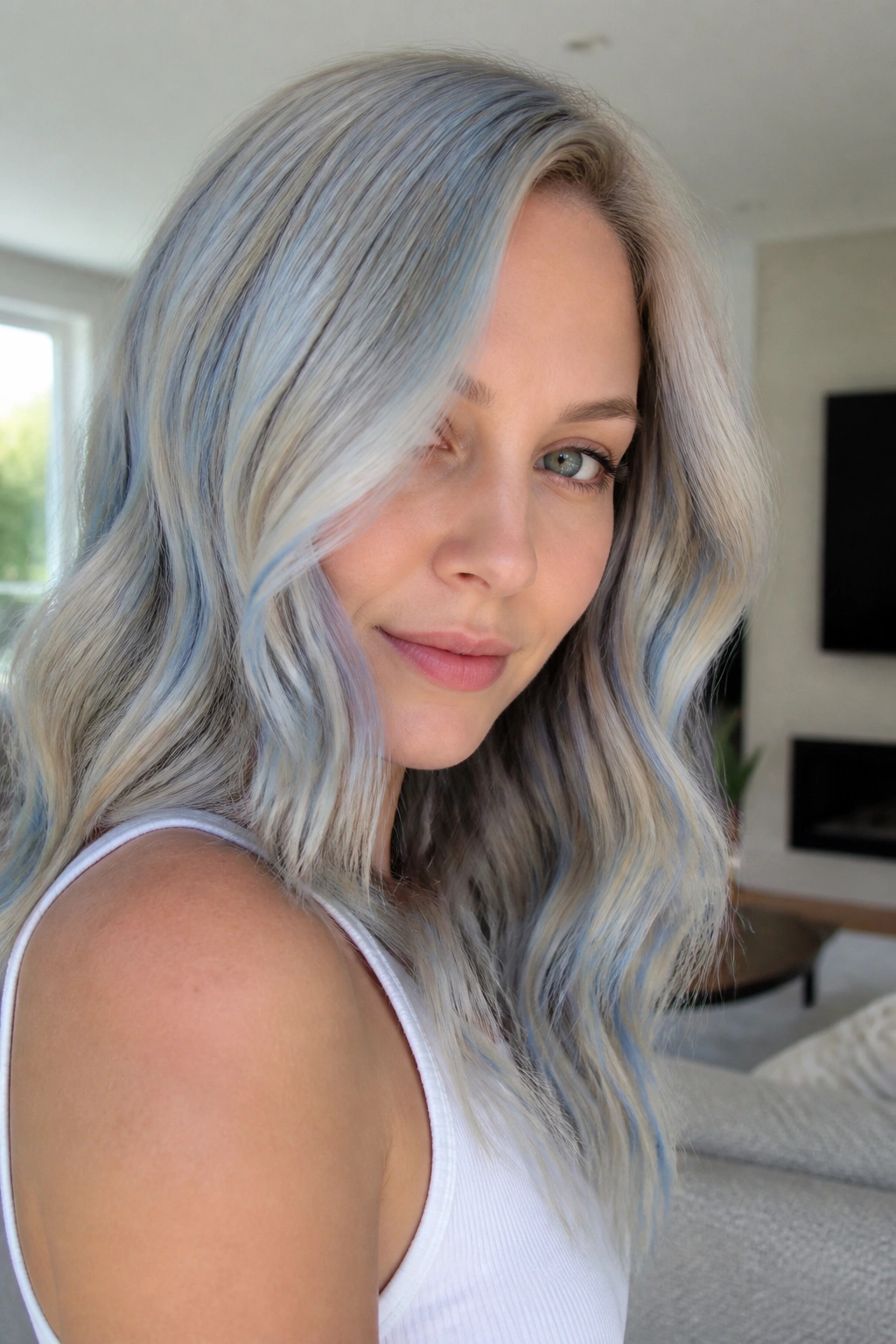
A transparent blue gloss is the easiest way to try the look without fully committing to color. The hair stays blonde, but the gloss adds a cool veil that changes the tone just enough to read blue in certain light.
This is less about saturation and more about finish. The gloss should make the blonde look colder, cleaner, and a little more reflective. On cool skin tones, that tiny shift can be enough to make the complexion look more even and the eyes a bit sharper.
It’s also one of the most useful options after a heavy highlight service. If the blonde is a little too yellow or a little too flat, a blue gloss can fix the temperature without flattening the hair. The effect won’t last forever. It usually softens over a few weeks, which is fine, because that makes it easy to refresh or change direction.
Sometimes the quietest color choice is the smartest one.
22. Polar Blonde with Blue Underlayer
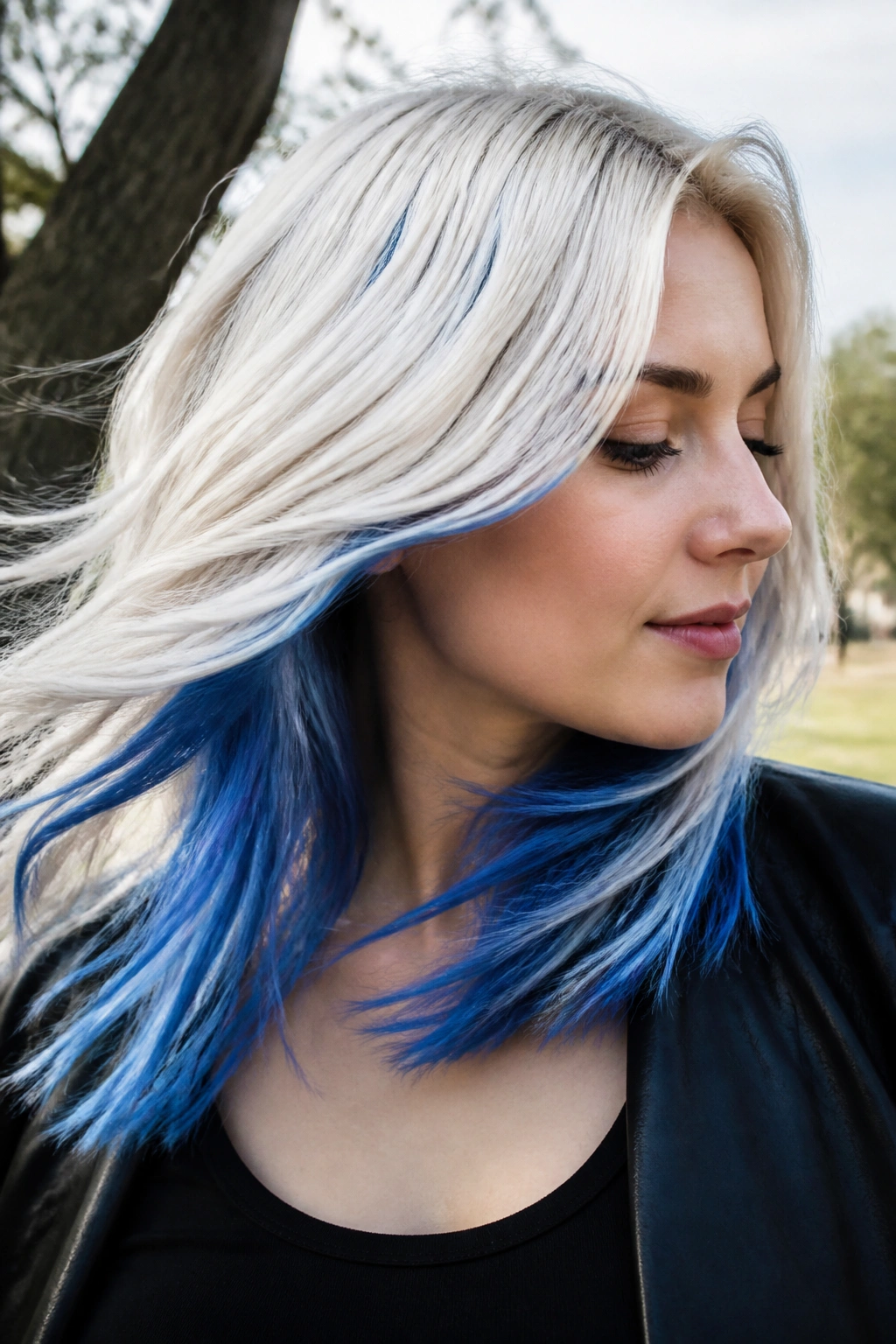
Blue underlayers are a sneaky good idea. The top stays polar blonde, almost arctic in tone, while the blue lives underneath where it shows only when the hair moves, flips, or gets tucked behind the ear.
That hidden placement makes the style wearable for people who want color but need some restraint. It’s also flattering for cool skin tones because the visible blonde stays bright around the face, while the blue appears as depth instead of a full curtain of pigment.
This one works especially well with braids, buns, and half-up styles. The underlayer peeks through in ribbons, which gives the hair a little surprise without making it hard to dress for everyday life. On layered cuts, the effect is even better because different lengths reveal different amounts of blue.
If you want something playful but still clean, this is one of the most practical blue blonde hair color ideas on the list.
Final Thoughts
Blue blonde works when the tone is chosen with some care, not when the color is pushed as bright as possible. Cool skin tones usually look best when the blonde stays icy, pearly, smoky, or silver-blue rather than golden or peachy.
The smartest move is to bring references that show both the front and the back of the color. One photo in daylight, one indoors, and one on a model with a similar skin tone will tell you more than a dozen vague inspiration shots.
If you’re torn between shades, start with placement before pigment. A blue money piece, gloss, or underlayer gives you room to see how the color sits against your face before you commit to a full head of cobalt, denim, or steel. That little bit of restraint usually pays off.
