



Sandy blonde hair color can look stunning on cool skin tones, but only when the blonde stays on the smoky side of the line. The minute the shade turns sunny, buttery, or peachy, it starts fighting the skin instead of framing it, and that’s when people say the color feels “off” without always knowing why.
Cool skin usually carries pink, red, or blue undertones. That doesn’t mean you need an icy white blonde, and it doesn’t mean you need to avoid softness. The sweet spot is a sandy blonde that leans ash, beige, pearl, taupe, or silver-beige — muted enough to flatter the skin, but not so flat that the hair looks dull.
I’ve always thought the best blondes for cool complexions have a little restraint in them. They don’t shout. They sit there with depth at the root, softness through the mid-lengths, and a clean finish at the ends, which is exactly why toner matters so much here. One wash too many, one warm gloss too far, and the whole tone can drift into brassy territory.
So if you’re trying to find a blonde that feels wearable, polished, and friendly to pink or porcelain skin, start with shades that keep the warmth quiet. The first one is the cleanest place to begin.
1. Icy Sandy Beige Blonde
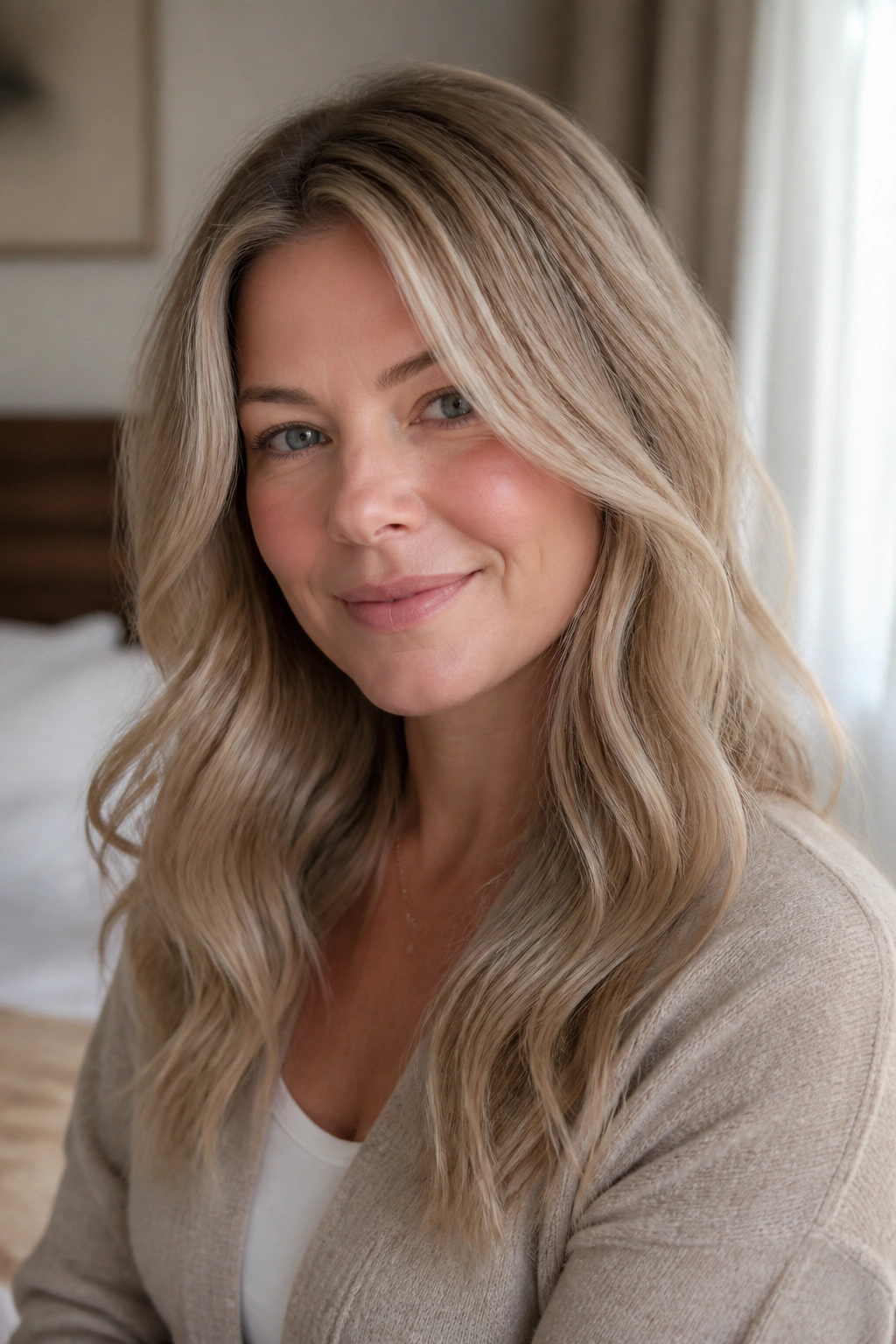
This is the shade I reach for when someone wants blonde that looks bright but not yellow. Icy sandy beige blonde sits between pearl and ash, which keeps it flattering on cool skin without making the face look washed out.
Why It Works on Cool Skin
The beige softens the icy edge, so the hair still has movement instead of looking flat. That matters a lot if your skin is fair with pink undertones, because a stark platinum can make the face feel harsh. A level 9 or 10 lift with a beige-ash gloss usually gives the right balance.
Ask for this if you like a clean blonde that still has a little softness at the root. It works best on medium to light bases, and it looks especially nice when the ends are kept a shade lighter than the crown.
- Best on cool fair or rosy skin
- Reads soft in daylight, crisp indoors
- Needs toning every 6 to 8 weeks
- Flatters straight, wavy, and loose curly hair
Pro tip: keep the root shadow one shade deeper than the mids. It gives the blonde a little depth and stops the whole look from turning chalky.
2. Ash-Sand Balayage
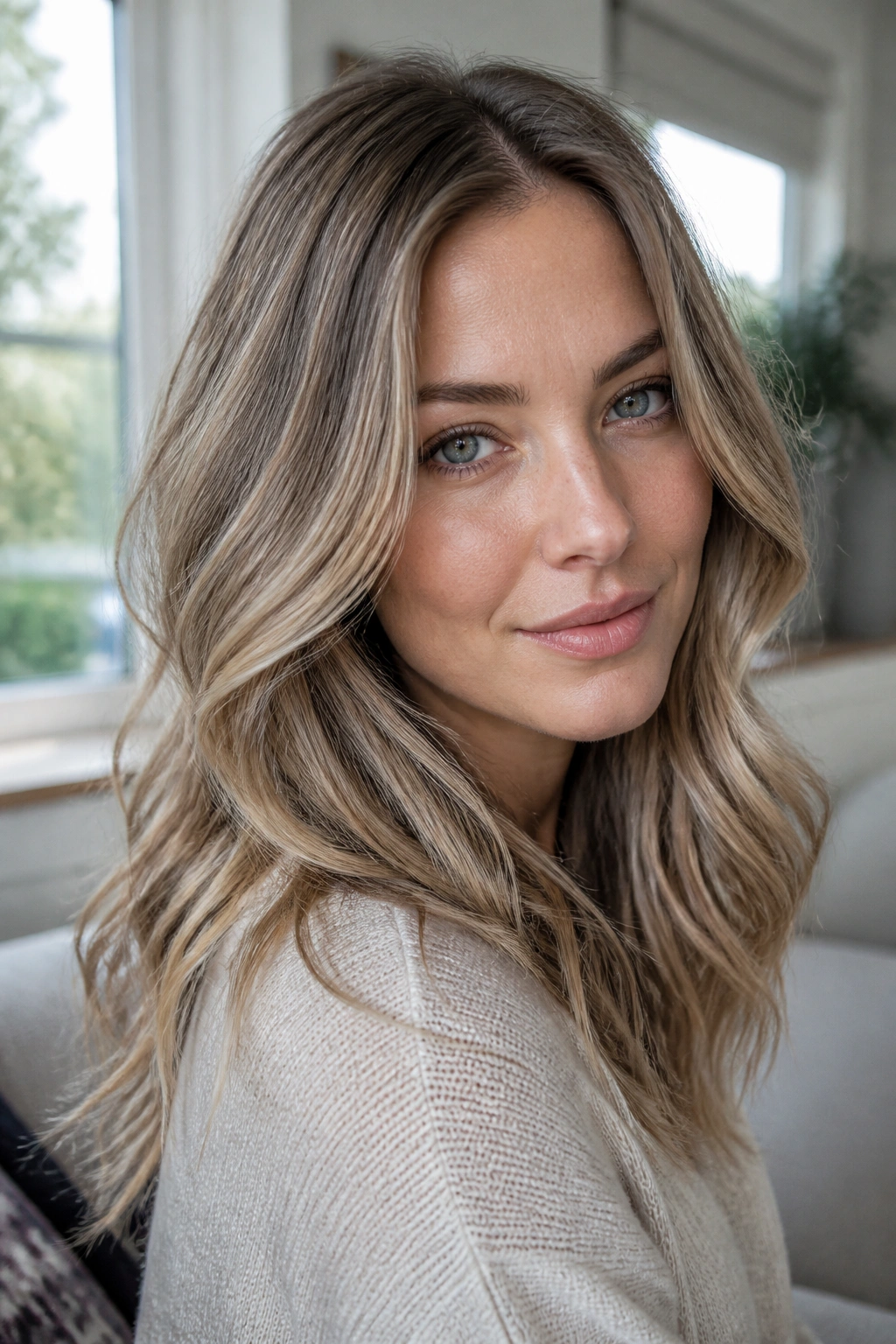
Ash-sand balayage is for anyone who likes the idea of blonde but hates obvious lines of grow-out. The color is hand-painted in soft ribbons, with ash at the base and sandy beige through the length, so the effect feels lived-in rather than striped.
The best part is how forgiving it is. A balayage like this can move through several washes before it starts to feel tired, which is a relief if you do not want a salon visit every few weeks. It also works well on hair that already has a medium brown or dark blonde base, because the ash tones keep the lift from looking too warm.
I like this version for cool skin tones with a little more contrast in the face. Dark brows, pale skin, and smoky blonde ribbons can look sharp in a good way, not severe. Keep the highlights fine near the face and a touch wider through the back; that keeps the finish airy.
3. Pearl Sand Blonde
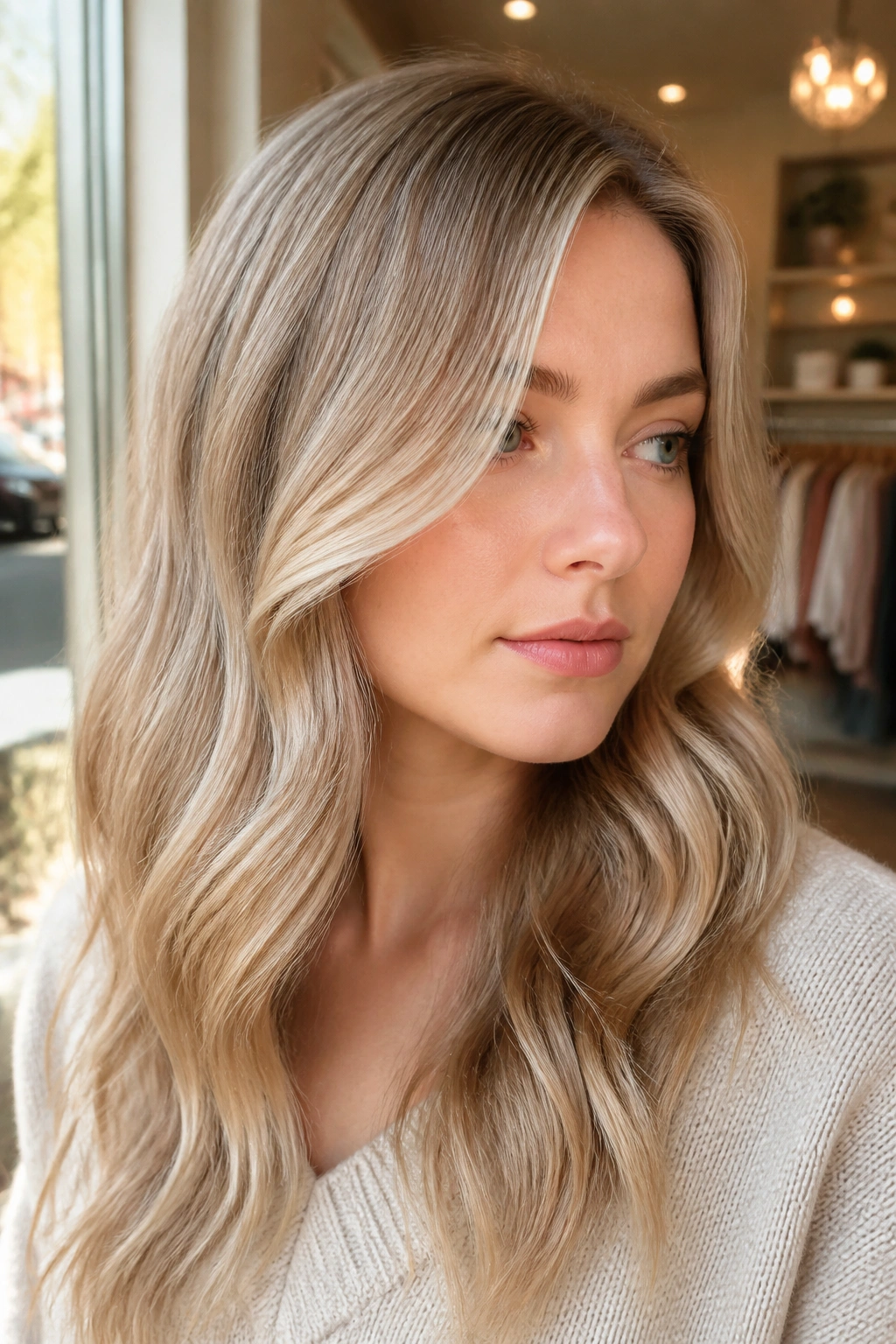
Why does pearl sand blonde look so expensive on cool skin? Because it catches light in a soft, reflective way instead of going brassy. The pearl note adds that smooth, almost satin finish people often want but can’t always name.
The Color Theory Behind It
Pearl blonde usually lives in the pale beige-violet family. The violet side helps cancel yellow, while the beige keeps the color wearable. On cool skin, that matters. Too much silver can look flat, but too much gold can pull orange.
This shade is gorgeous if your hair lifts cleanly and your skin leans porcelain or pink. It’s not the easiest blonde to keep clean, though. A violet shampoo once a week and a light gloss between salon visits help keep the tone soft instead of brassy.
How to Wear It
A pearl sand blonde looks best with loose waves or a smooth blowout. The finish matters. When the hair is rough and overtextured, the pearl note can disappear a little, and you lose what makes the shade special.
4. Smoky Mushroom Blonde
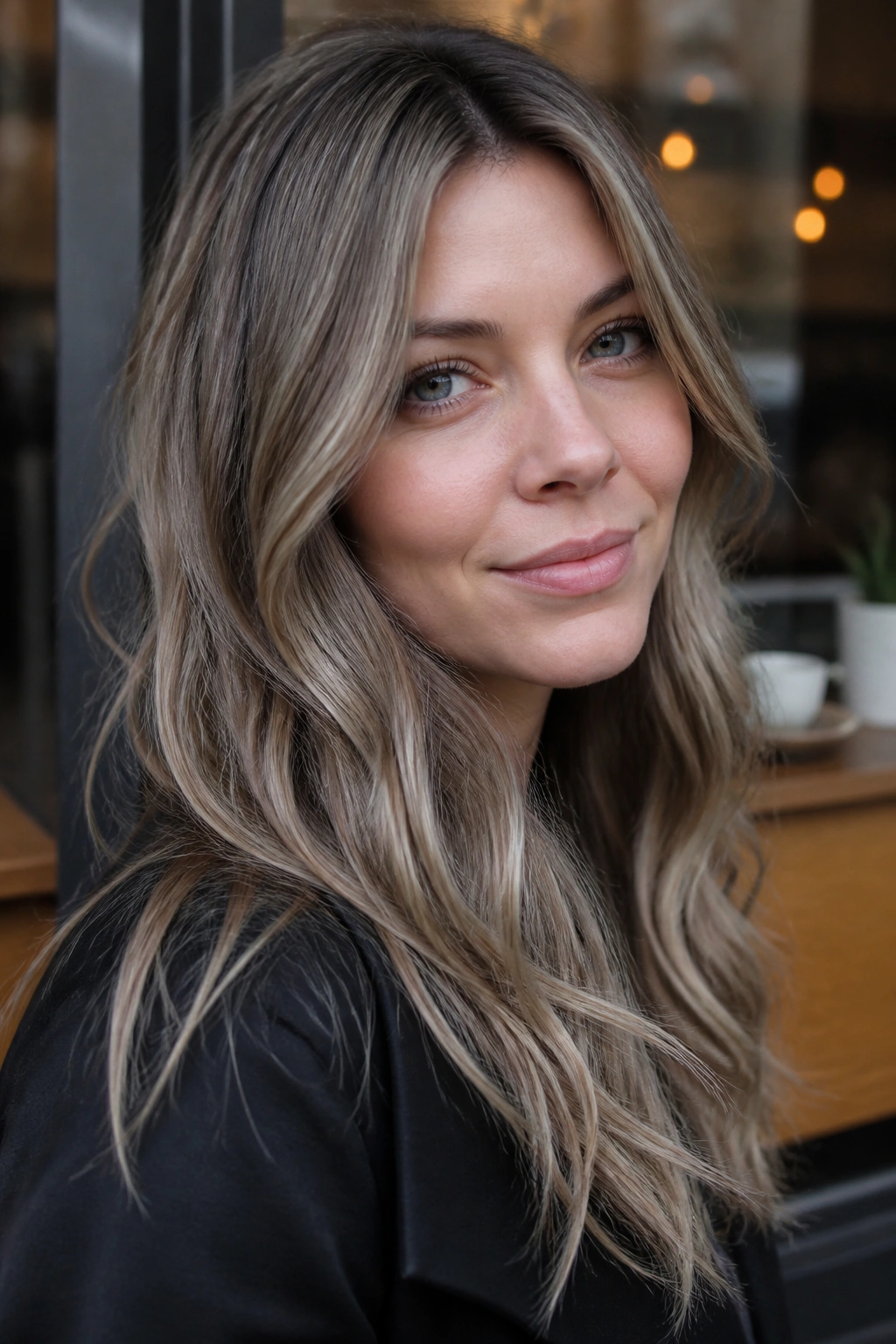
Smoky mushroom blonde is the one I’d pick for someone who keeps saying, “I want blonde, but I don’t want to look like I’m trying too hard.” The mix of taupe, ash brown, and muted sand gives the hair a cooler, earthy finish that sits well next to blue or pink undertones.
It’s especially good if your natural base is darker. Instead of fighting your base color, the shade works with it, which makes the grow-out easier and the overall look more believable. I also like it on fuller hair because the smoke-toned lowlights create shape without needing chunky contrast.
Best Details to Ask For
- Level 7 to 8 sandy pieces through the top
- Ash lowlights around the interior
- A soft beige glaze, not gold
- No bright yellow ends
That last point matters. If the ends get too warm, the whole mushroom effect disappears and you’re left with a generic beige blonde. Keep it muted.
5. Cool Champagne Sand
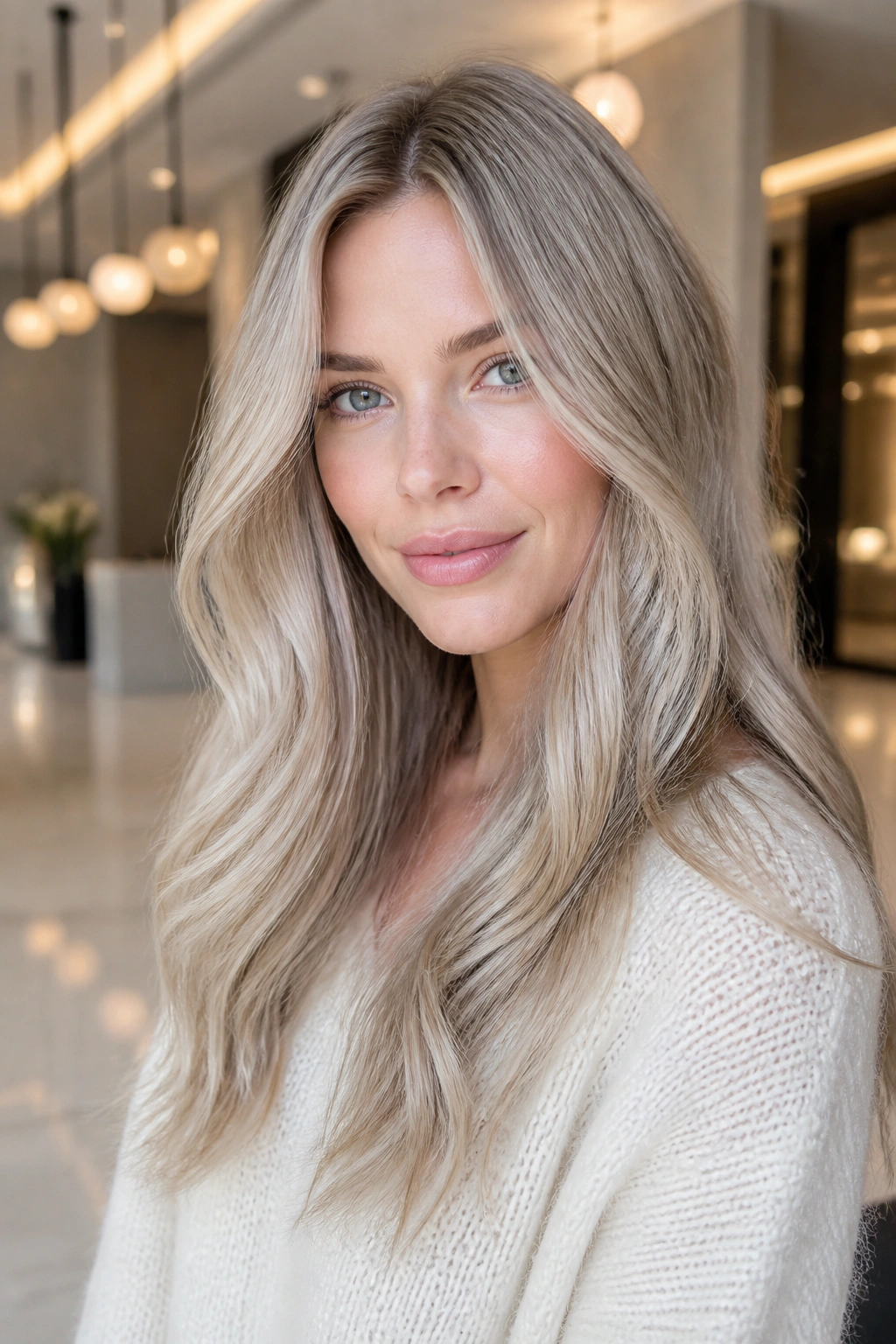
Champagne blonde usually gets described as warm, and that’s exactly why I like a cooler version for this topic. Cool champagne sand keeps the pale, sparkling feel of champagne but strips out the honey and gold that can clash with cool skin.
It works well when you want a little glam. Not glittery. Just polished. The color has enough reflect to make hair look glossy, but the base stays pale beige with a soft silver edge, so it doesn’t fight your complexion.
This is one of those shades that looks best when the hair is in good condition. Split ends make champagne tones look tired fast, and dry hair tends to show warmth more than healthy hair does. A bond-building mask and a clear gloss can help the shade stay smooth between appointments.
I’d call this a smart choice for someone who likes soft makeup, brushed-up brows, and a blonde that feels dressy without going yellow.
6. Beige-Taupe Blonde
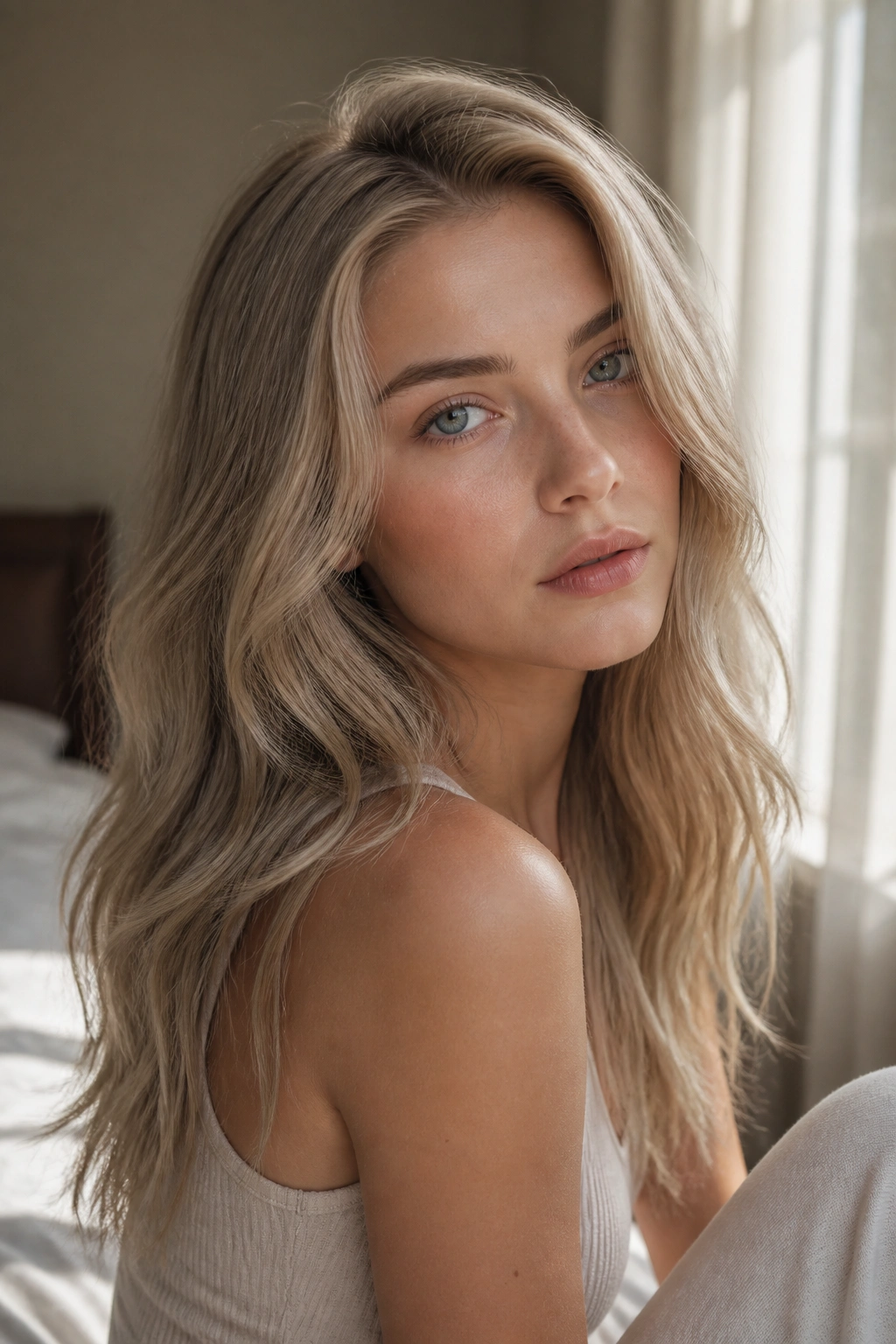
Beige-taupe blonde is a quieter color, and that is its strength. It does not rely on high brightness. Instead, it leans on muted beige and cool taupe tones that sit neatly beside cool skin.
The shade is a good match if you’re not chasing a dramatic blonde moment. It’s also kind to fine hair, because the color doesn’t need a lot of contrast to look finished. A silky blowout or gentle bend in the mid-lengths is enough.
What Makes It Different
Unlike brighter blondes, beige-taupe blonde doesn’t ask the eye to work hard. The tone is soft from root to end, which gives the hair a calm, blended look. That makes it useful for people with a lot of natural highlights already in their hair, since the color can tuck into those lighter pieces instead of sitting on top of them.
If you like understated color with a little polish, this is a strong pick.
7. Frosted Sandy Lob
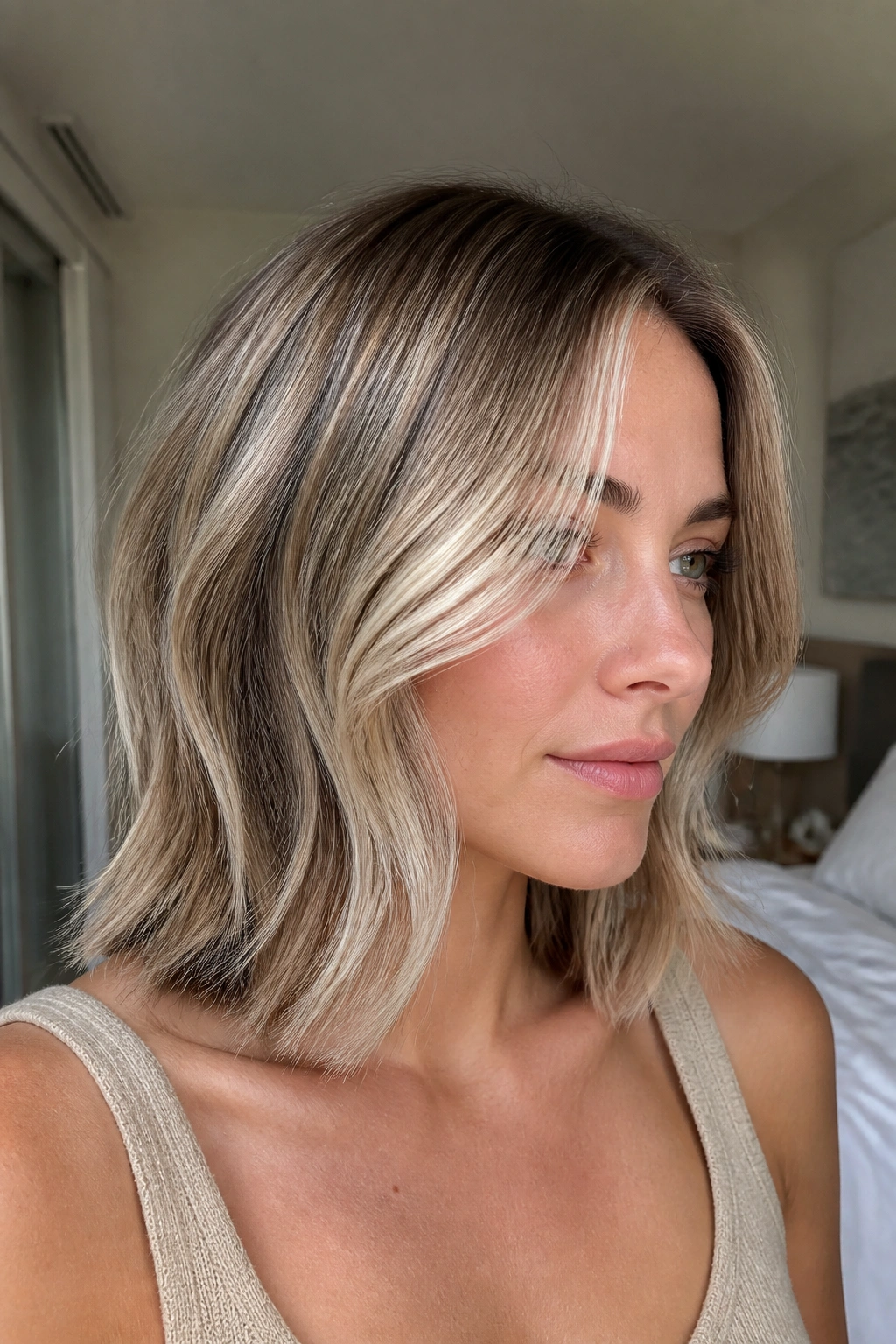
A frosted sandy lob works because the cut does half the work for you. The lob — that collarbone-length shape — gives sandy blonde a crisp edge, and the frosted tone keeps the whole thing cool enough for pink or porcelain skin.
The color itself should stay light around the face and slightly deeper underneath. That little bit of depth stops the cut from looking too flat, which is a common issue with one-tone blonde on a blunt shape. It also makes the hair look fuller, which I appreciate on finer textures.
Styling Note
A soft bend with a 1-inch curling iron is usually enough. You don’t want tight curls here. The shade reads best when the light can move across it in thin ribbons.
If you wear a lot of black, gray, navy, or white, this one fits right in. It has that crisp, cool energy without looking severe.
8. Silver-Infused Sandy Blonde
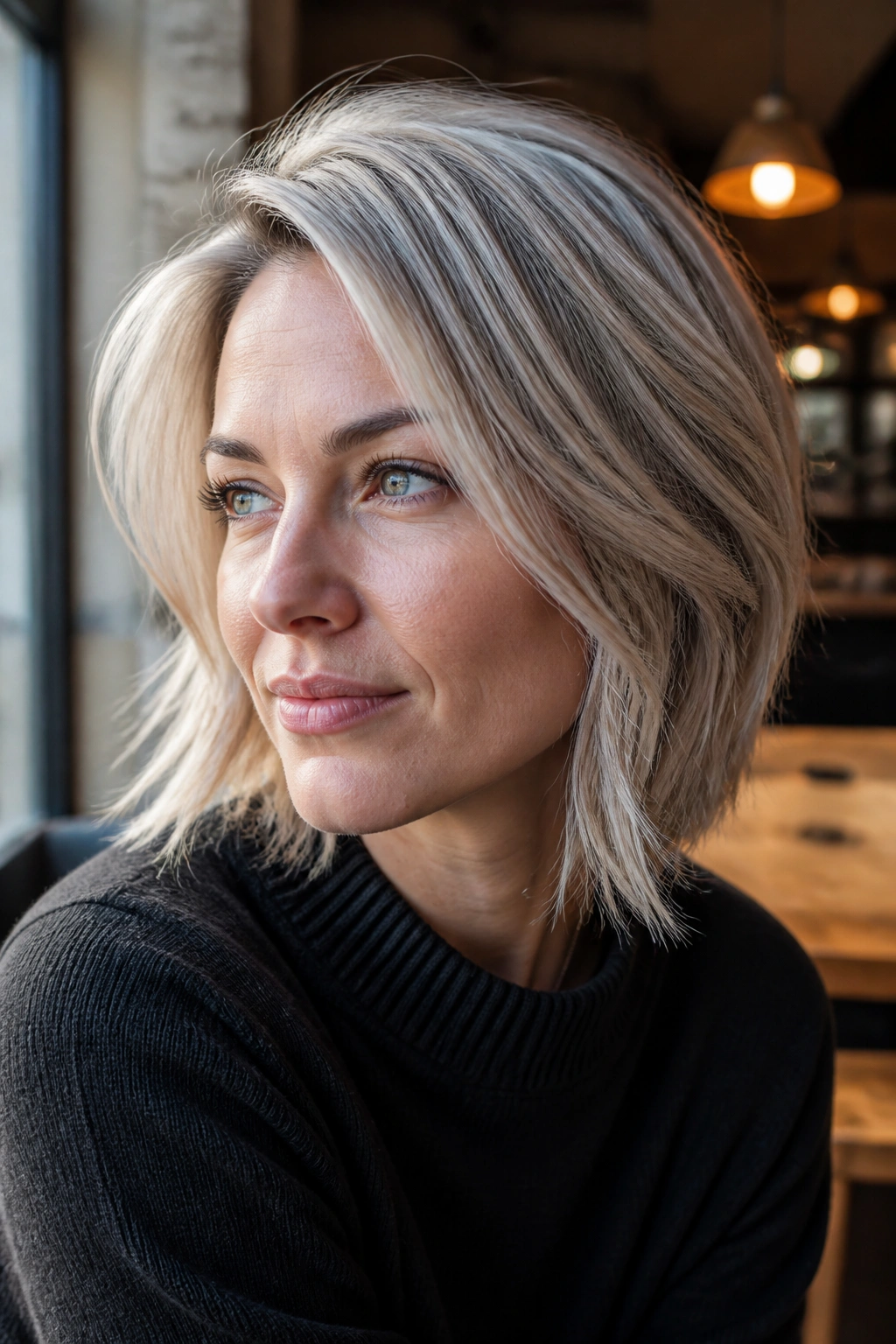
This shade sits closer to the icy end of the blonde family, but it still keeps a sandy base so it doesn’t go flat. Silver-infused sandy blonde is sharp, reflective, and a little edgy, which makes it a nice fit for cool skin that can handle a high-contrast look.
It’s especially flattering when your skin has pink undertones and your eyes are light or bright. The silver note brings out that clarity. If the hair is lifted cleanly and toned with a pale beige-silver gloss, the result can look almost metallic in certain light.
That said, it is not a lazy color. Silver tones fade fast, and hard water can wreck the finish quicker than people expect. A filter shower head and a sulfate-free shampoo help more than most people think.
I’d choose this shade for short to medium-length hair, or for anyone who likes a fashion-forward blonde that feels cool rather than sunny.
9. Soft Sand with Shadow Roots
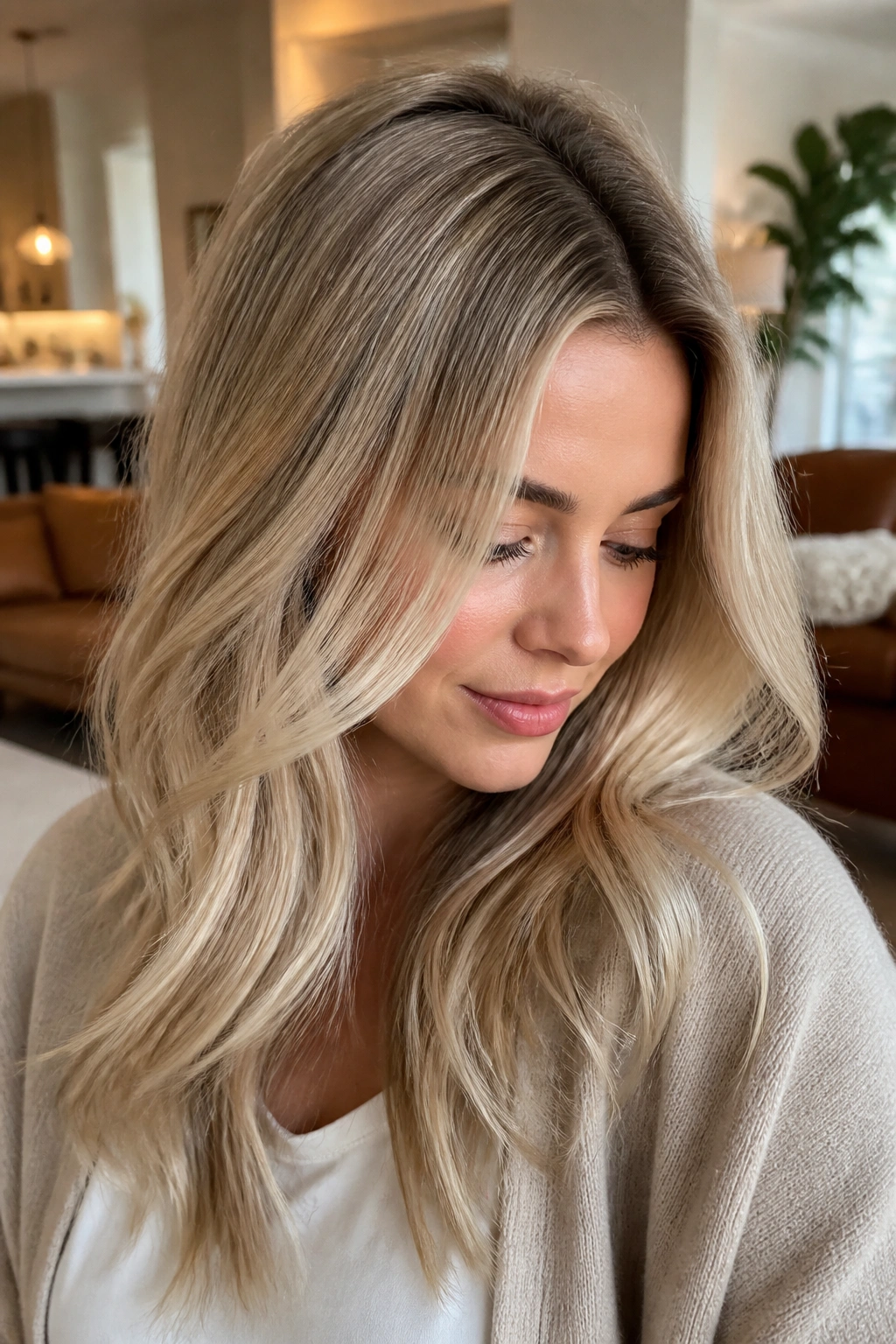
Soft sand with shadow roots is the most practical idea in the whole group, and I mean that as a compliment. The root shadow keeps the blonde from starting too high on the head, which gives the color a more natural fall and a much easier grow-out.
For cool skin tones, this matters because a little darkness near the scalp helps the sandy blonde look grounded. Without that base, pale blonde can float above the face in a way that feels disconnected. With it, the color looks tailored.
How to Ask for It
- Root shadow one to two levels deeper than the mids
- Sandy beige through the body of the hair
- Lighter ends for movement
- A soft glaze, not a bright gloss
This shade is a good fit if you color your hair to save time as much as to change your look. It grows out politely. That’s the real draw.
10. Creamy Neutral Sandy Blonde
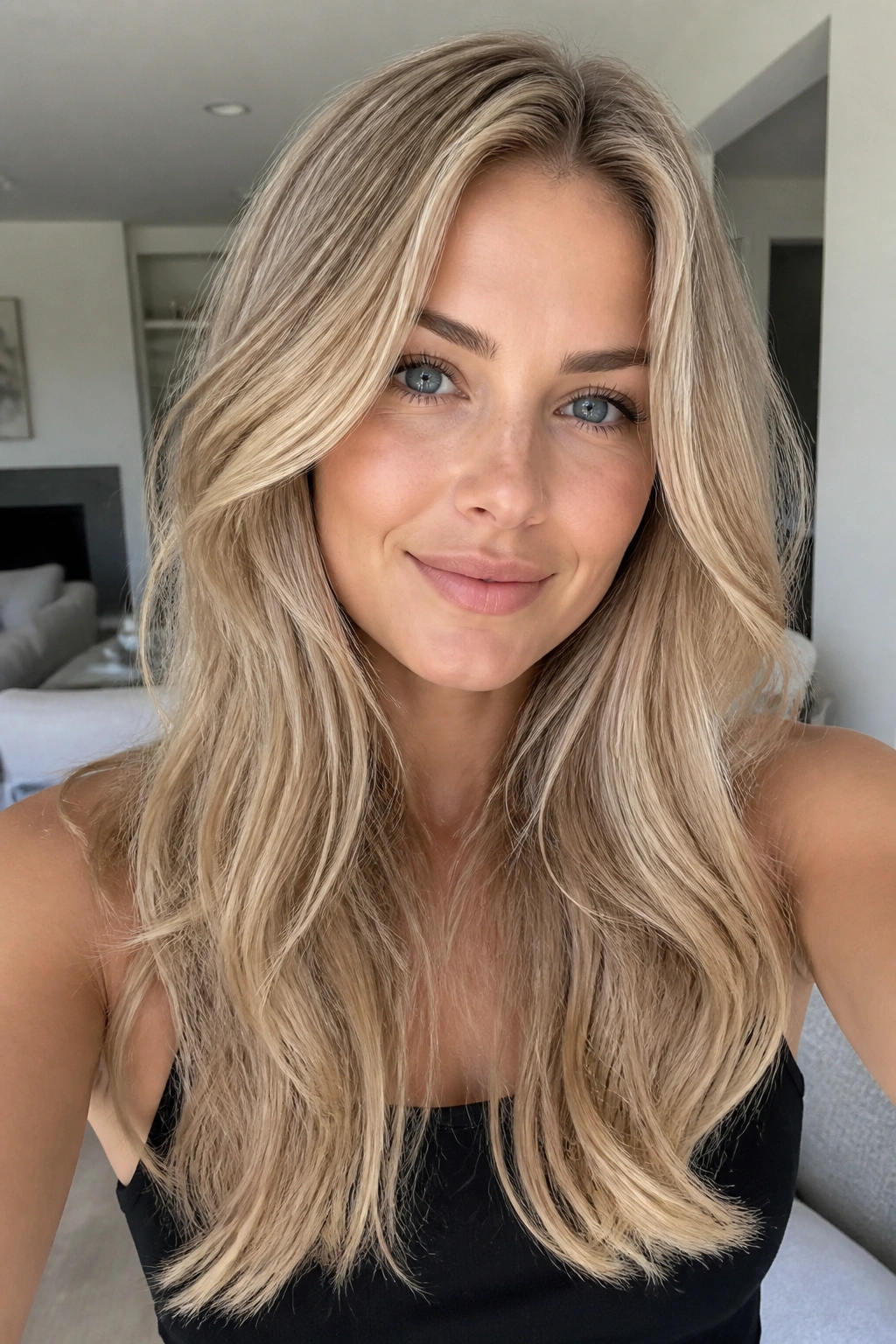
Creamy neutral sandy blonde is the bridge between ash and beige. It gives you softness without drifting into warmth, which makes it one of the safest options for cool skin that still wants a little richness.
The tone is useful on hair that tends to grab color unevenly. Some strands hold ash, others hold gold, and a neutral sandy gloss can smooth the whole head into one balanced blonde. I’ve always liked this shade on people who say they want “natural” but mean “polished enough that people notice.”
A round brush blowout suits it well. So does a smooth air-dry with a little cream through the ends. The finish should feel soft to the eye, not fluffy.
If your wardrobe leans cream, charcoal, silver, navy, or black, this shade will settle in easily.
11. Scandinavian Sand Blonde
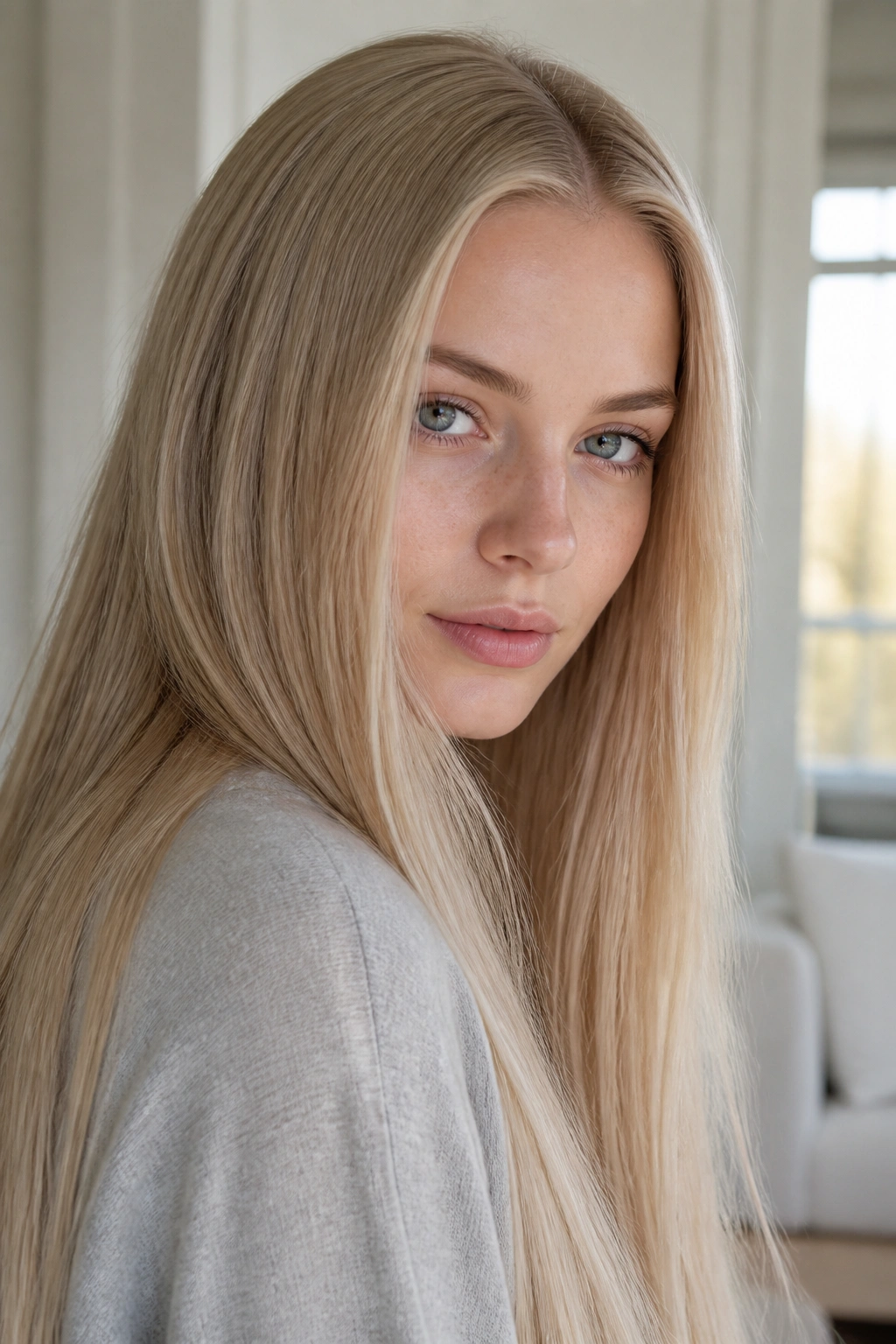
Scandinavian sand blonde is pale, airy, and precise. It’s not just light for the sake of being light. The tone stays cool through the length, which is what keeps it from clashing with fair skin that has pink or blue undertones.
This is a high-maintenance blonde, and I’d rather be honest about that than dress it up. The lighter the base, the faster yellow shows up. Toning shampoo, regular glossing, and a careful heat routine are not optional here. Skip those, and the color loses its crisp edge fast.
Still, when it’s done well, it has a clean, polished look that’s hard to beat. It works especially well on straight hair or soft waves, where the pale strands can sit close together without breaking up too much.
Best For
- Cool fair skin
- Natural levels 7 to 9
- People who like a very light blonde
- Anyone comfortable with upkeep
12. Cool Bronde with Sandy Ends
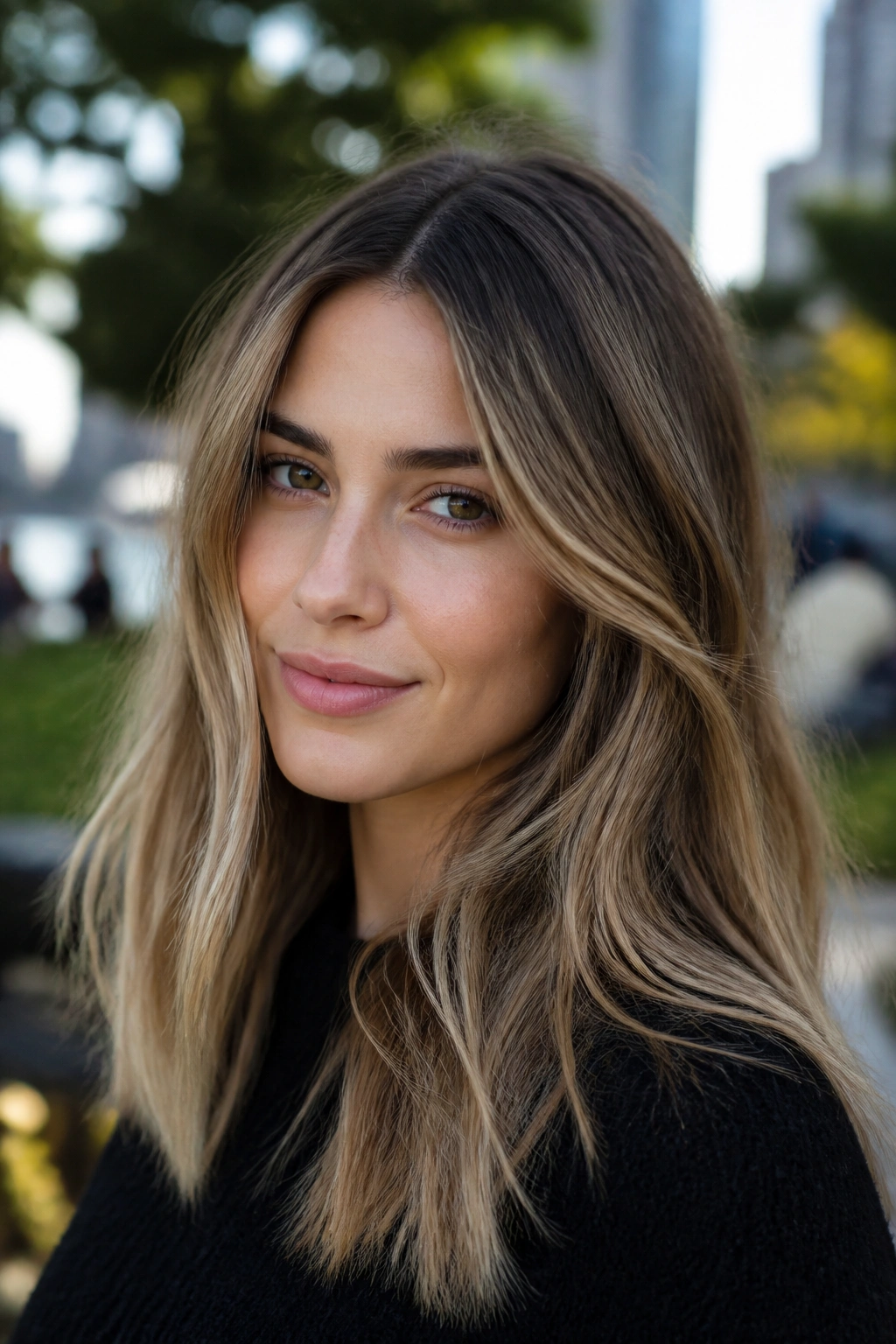
Not everyone wants full blonde, and that’s fine. Cool bronde with sandy ends keeps the roots deeper and the ends lighter, which gives cool skin a little warmth through the palette without crossing into brass.
This is a smart option if your natural hair is dark blonde or light brown. The blend feels smoother than a full bleach-out, and the cooler sandy ends stop the color from looking heavy. I like it on layered cuts because the movement helps the dimension show.
The key is contrast, but not too much. Keep the root area smoky, not black-looking, and let the ends lift to a beige-sand tone instead of orange-beige. That difference sounds small, but it changes the whole feel of the hair.
If you want a blonde-adjacent color that still feels easy to wear, this is one of the most useful ideas on the list.
13. Sandy Blonde Money Piece
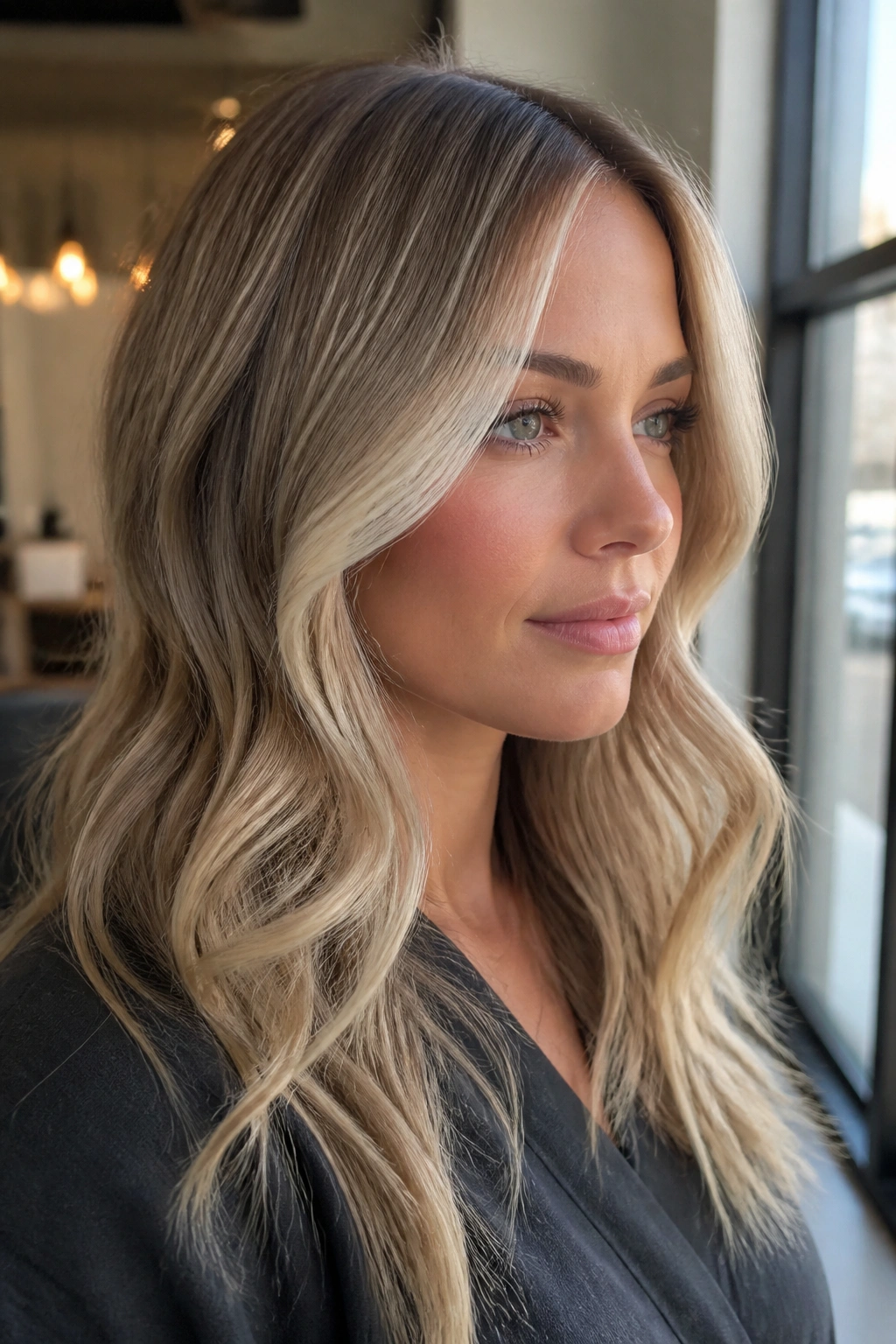
A sandy blonde money piece gives you brightness exactly where the face needs it. The front sections are lifted a little more than the rest, which helps cool skin look awake without forcing the entire head into a brighter shade.
Why It’s So Effective
The money piece works because the eye lands on the lightest sections first. On cool skin, that front brightness should stay pale beige or pearl, not gold. If it goes warm, the frame around the face can look harsh, especially around the temples and cheekbones.
This is one of my favorite options for someone who wants a color refresh without a full transformation. A few face-framing foils can change the whole mood of the haircut.
- Keep the front pieces one level lighter
- Blend the roots softly into the crown
- Tone the face frame with ash-beige
- Style with a middle or soft off-center part
It’s small, but it works.
14. Dimensional Ash Sand Waves
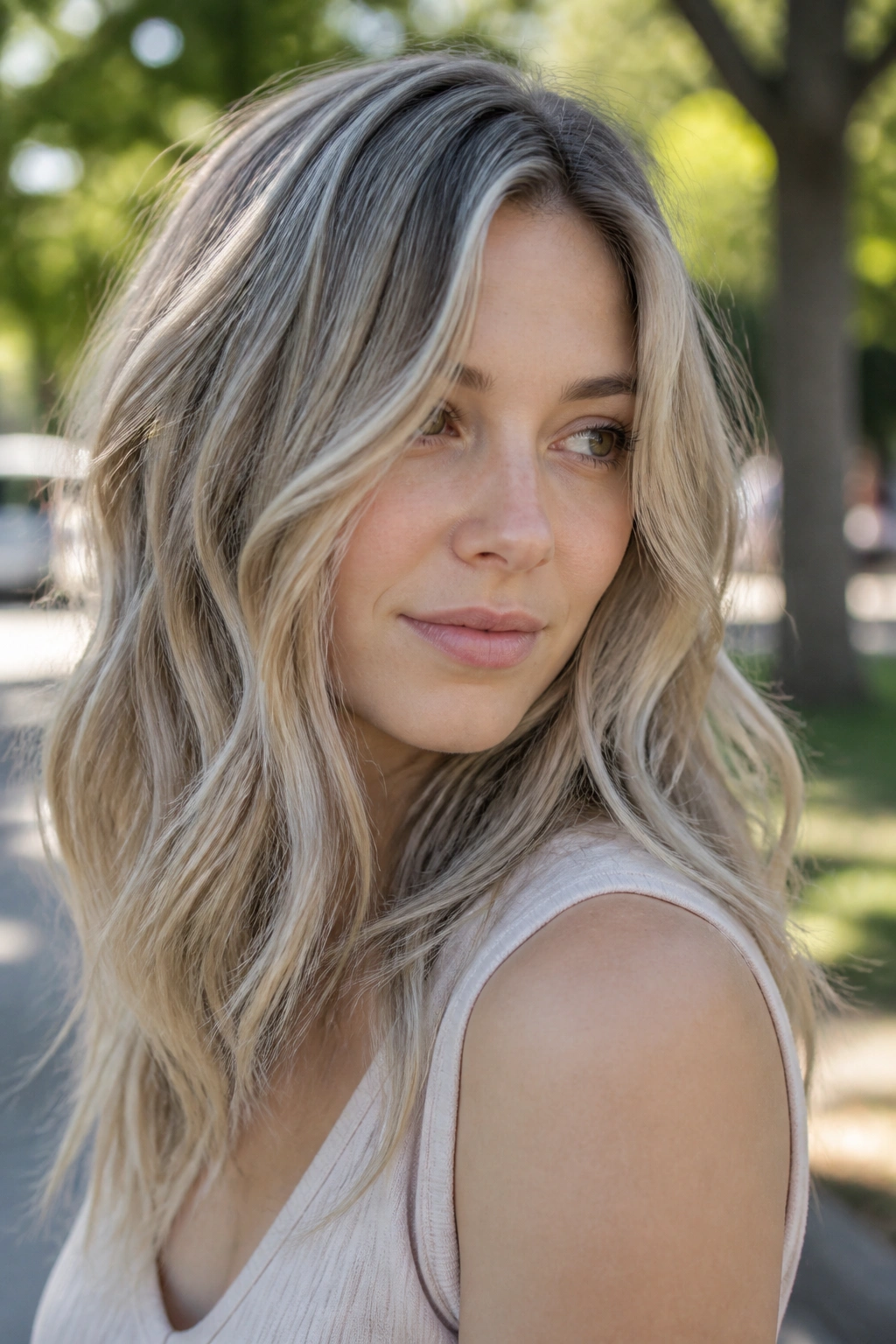
Dimensional ash sand waves are for people who want movement, not just color. The shade mixes lighter sandy ribbons with cooler ash lowlights, so the waves have depth when the hair bends and shifts.
I like this on medium to thick hair because the dimension keeps the ends from looking bulky. On one-tone blonde, thicker hair can sometimes read heavy. Here, the variation gives the eye places to rest.
The trick is not to make the highlights too chunky. Thin, scattered pieces look softer and more expensive in person. When the wave pattern hits the light, the ash-sand blend shows a little edge, then softens again as the hair moves.
If your cool skin tone pairs with fuller hair and you want the color to look alive instead of flat, this is a solid pick.
15. Cashmere Sand Blonde
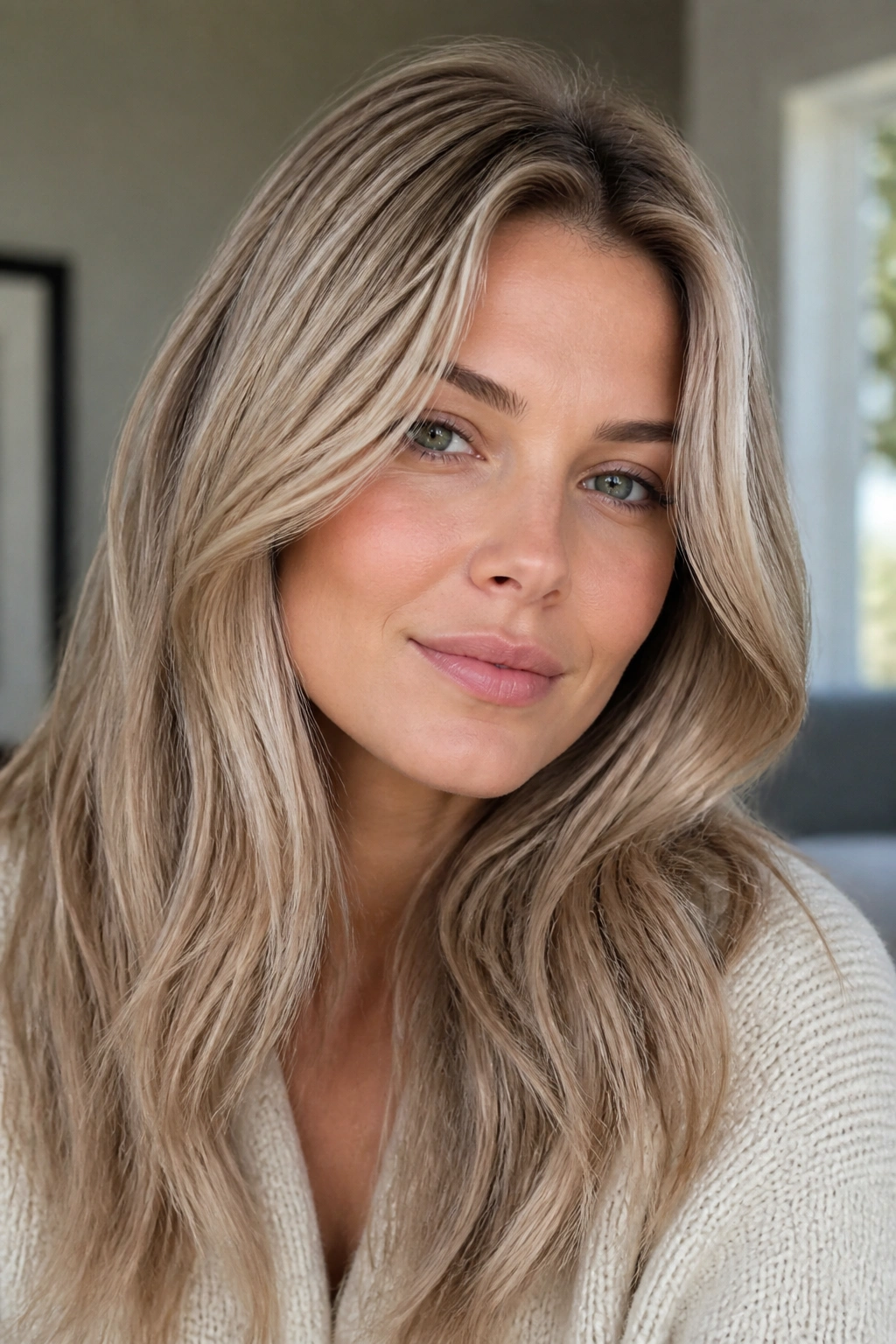
Cashmere sand blonde feels plush without being loud. The tone is creamy, muted, and a touch smoky, almost like a soft knit sweater in hair form. That makes it easy on cool skin, especially if your complexion sits between fair and light-medium.
The shade works because it doesn’t force brightness. Some blondes try to do too much. This one stays gentle. You get softness around the face, a blended mid-tone through the length, and just enough lightness to keep the hair from sinking into the background.
I’d wear this with loose bends, a low bun, or a smooth half-up style. It’s one of those colors that looks better when the hair moves a little.
Watch For
If the gloss warms up too much, cashmere sand can turn beige-gold and lose its cool edge. That’s easy to fix, but it does mean you should keep toner appointments on schedule.
16. Sandy Blonde with Smoky Lowlights
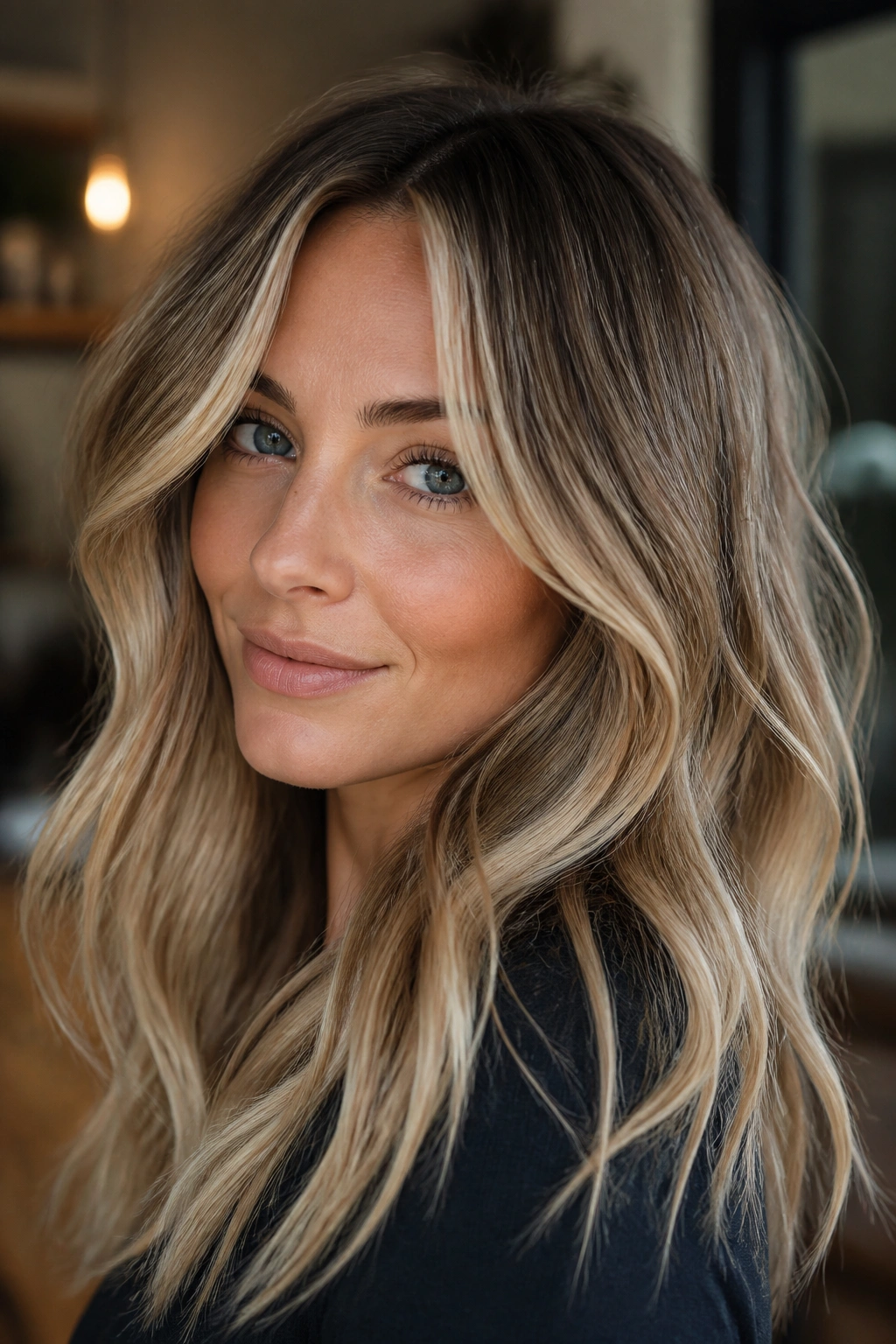
Bright blonde can flatten out fast on cool skin when there’s no depth underneath it. Sandy blonde with smoky lowlights fixes that problem by dropping deeper strands through the interior, which gives the color shape and keeps the blonde from looking washed out.
This is a smart choice if your hair is fine but plentiful, or if you’ve gone too light before and missed the contrast. The smoky lowlights let the lighter pieces pop without needing a big contrast jump. They also help when you wear your hair in curls or waves, because the darker ribbons make the bends read more clearly.
You’ll want the lowlights to stay cool brown or ash taupe, not chocolate warm. That one choice controls the whole mood.
If your skin is cool and your hair has been feeling a little “too much blonde,” this is the correction I’d make first.
17. Driftwood Blonde
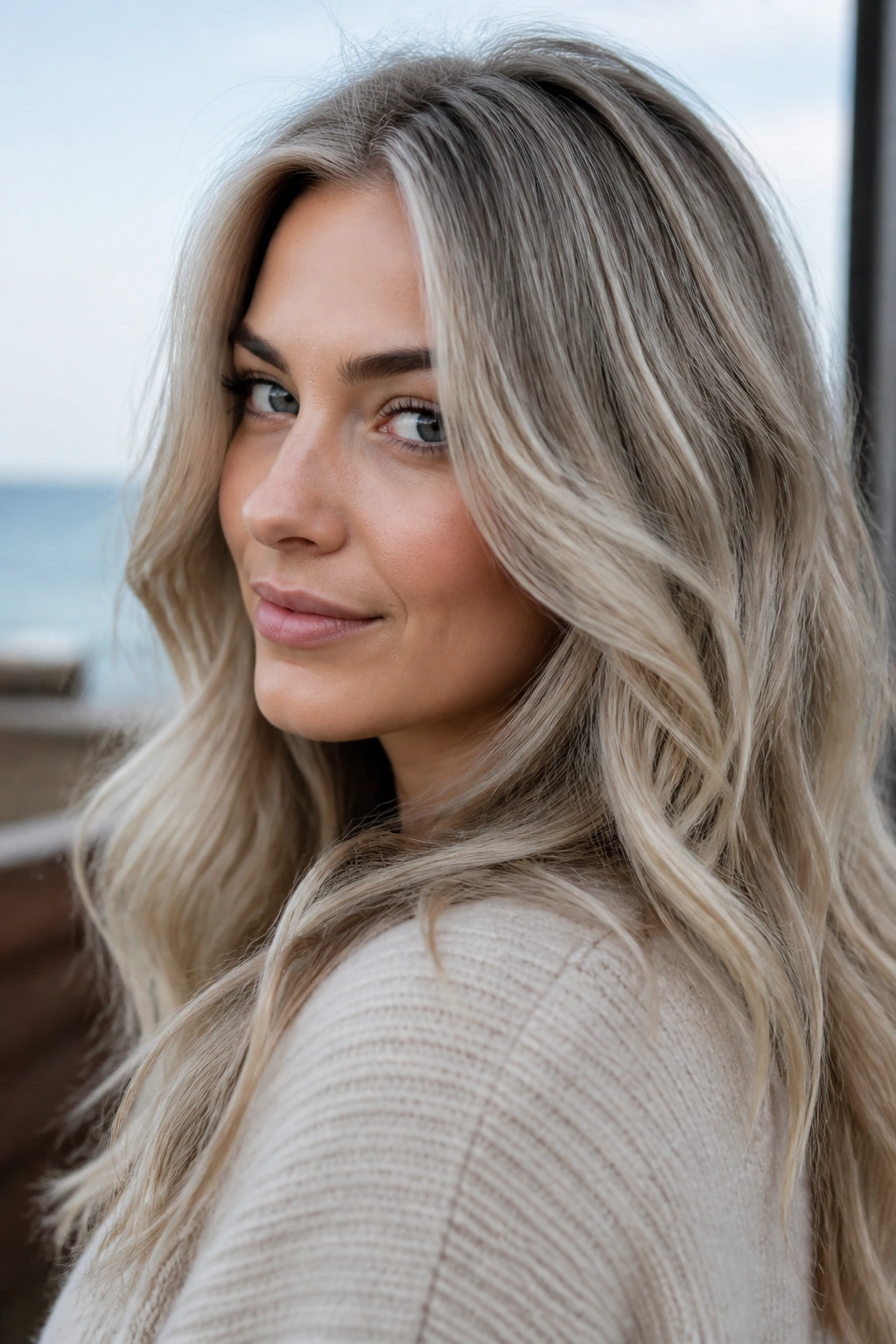
Driftwood blonde has a weathered, beach-worn feel, but it is much cooler than people expect. The color mixes gray-beige, ash blonde, and a soft sandy base, which gives it a muted finish that works beautifully on cool skin.
I like this shade on wavy hair because the texture suits the tone. Driftwood blonde does not need to look glossy and polished all the time. It can be a little rough around the edges, and that actually helps. The color feels modern without trying too hard.
What to Tell Your Colorist
Ask for a soft beige base with ash and taupe ribbons. Keep the highlights fine, especially near the crown, or the whole thing can look streaky. A matte finish cream can help if your hair gets fluffy after drying.
This is a good color if you prefer denim, linen, gray tees, and low-key makeup. It has that easy, worn-in feel that makes sense with a simple wardrobe.
18. Opal Sand Blonde
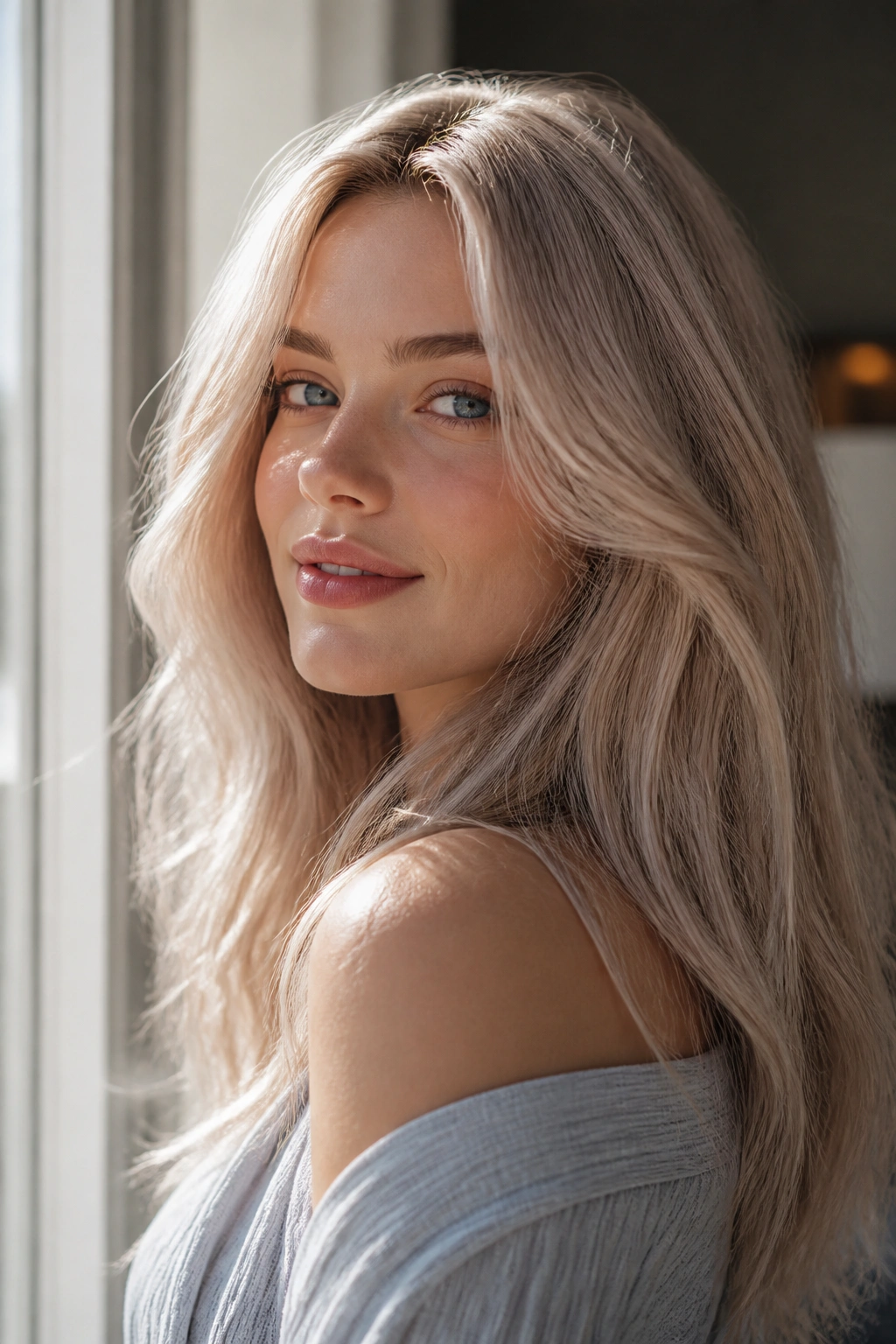
Opal sand blonde has a faint color shift that makes it more interesting than plain beige blonde. The base stays sandy, but the toner can add a whisper of pearl, mauve, or silver reflect, which gives cool skin a softer glow.
It’s not a loud fantasy color. It just has that faint shimmer you notice when the light changes. That makes it ideal for someone who wants a little personality in the blonde without going pastel.
The shade looks nicest on healthy hair, since shine is part of the point. If the hair is porous, the opal effect can disappear fast, and the color turns patchy. A protein-moisture balance matters here more than people think.
I’d choose this for medium-length hair with movement. On a blunt cut, it can feel too refined. On soft waves, it looks like the color is changing as you move.
19. Dusty Beige Blonde
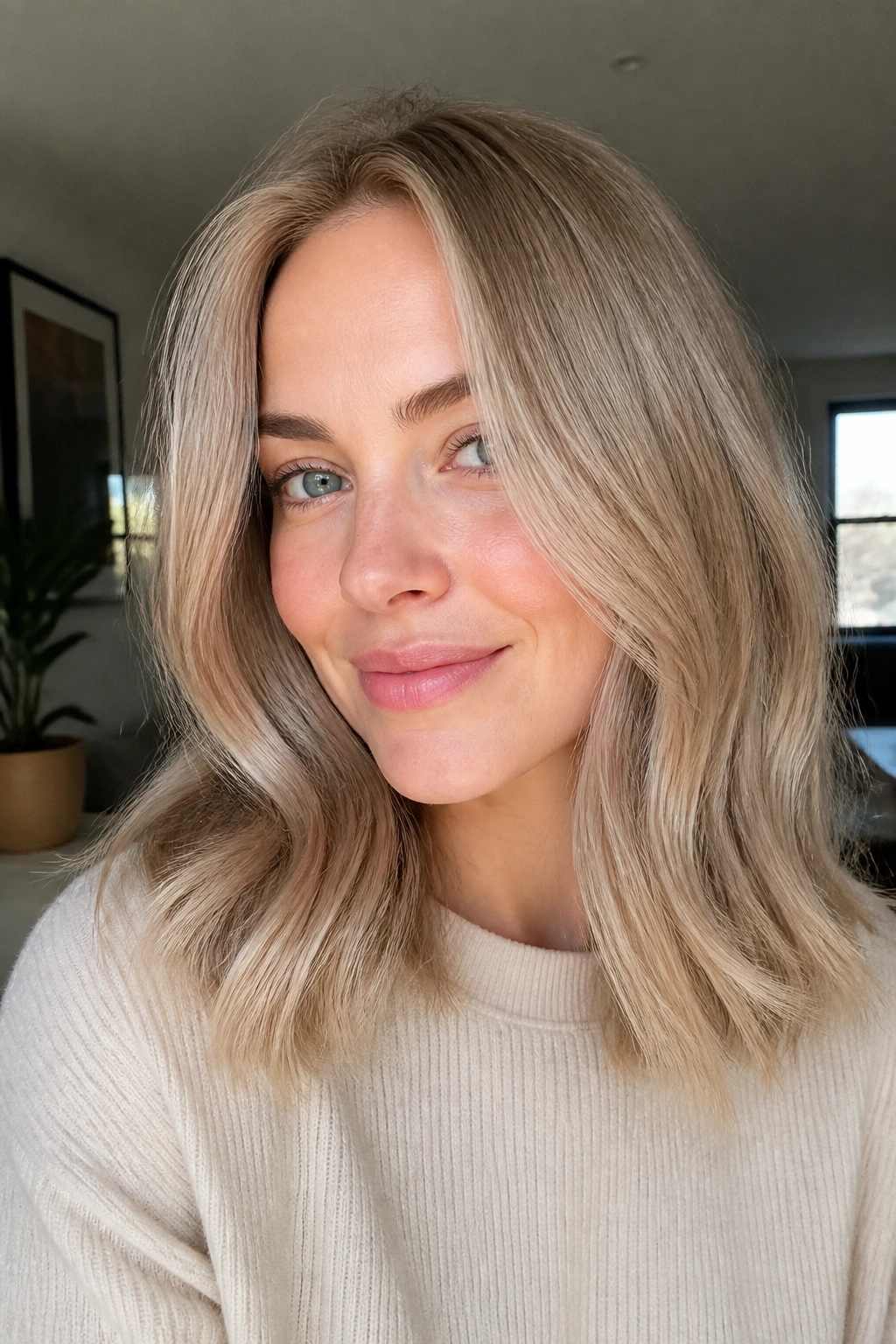
Dusty beige blonde is one of the most forgiving shades for cool skin. It has less brightness than platinum, less warmth than honey, and just enough beige to keep it wearable.
This is the blonde I suggest when someone wants to look lighter but still wants the color to sit close to the natural undertone of their skin. It softens redness instead of competing with it. That alone can make a face look calmer.
A dusty beige blonde also ages well between appointments. It fades toward a soft neutral rather than a loud yellow, which makes it easier to live with. That is a small thing until you have worn a warm blonde for six weeks and want to throw it out the window.
If you want a low-drama blonde that stays refined as it grows, this one deserves a serious look.
20. Airy Sand Melt
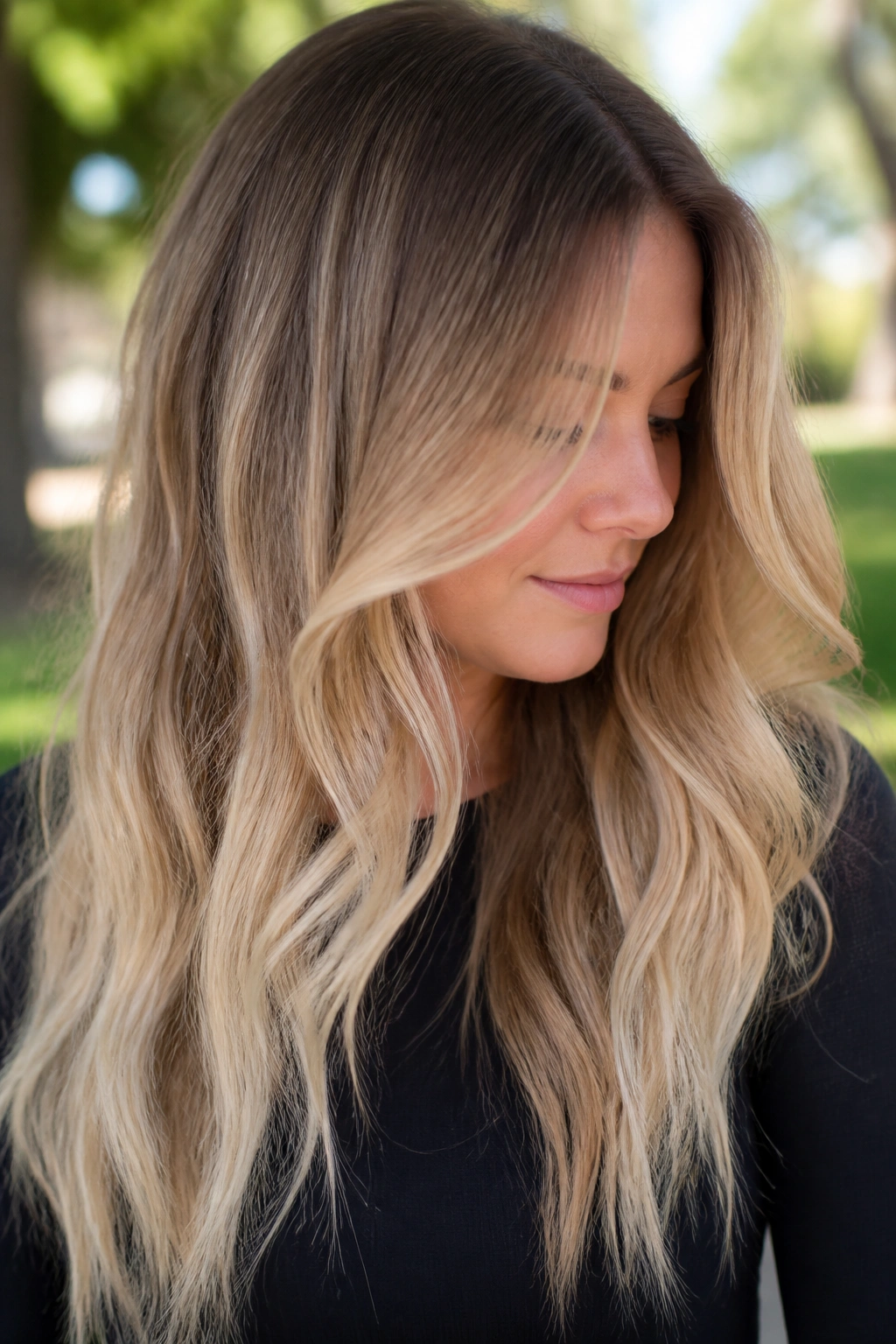
An airy sand melt is all about the blend. The roots stay deeper, the mids soften into beige, and the ends drift lighter in a way that looks seamless rather than striped. On cool skin, that gradual fade keeps the face from being overwhelmed by one flat tone.
I think this shade works especially well on longer hair because there’s room for the melt to happen. On shorter cuts, the gradation can feel abrupt. On shoulder-length or longer hair, it has room to breathe.
How It Differs From Standard Balayage
Balayage often spotlights hand-painted pieces. A sand melt is softer and more blurred, with fewer obvious lines. That makes it a nice match for people who want blonde that feels expensive but not fussy.
If you usually air-dry your hair, this is a friendly choice. The blend hides a lot.
21. Soft Platinum Sand
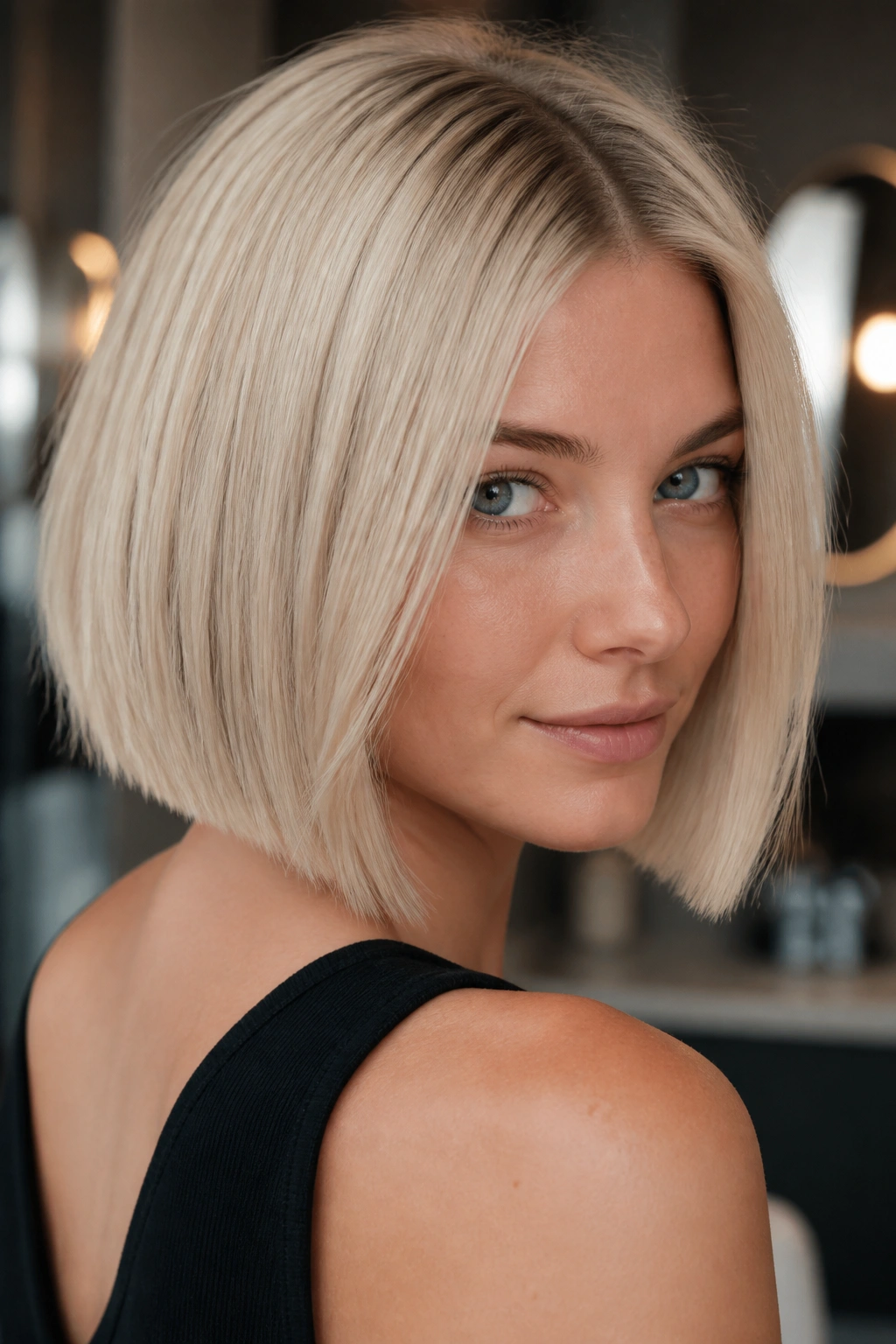
Soft platinum sand is for cool skin that can handle brightness but still needs a little beige in the mix. It is lighter than most sandy blondes, though not as stark as true platinum. That slight beige cushion makes a big difference on the face.
I like this best on hair that lifts evenly and on cuts with a clean shape. A blunt bob, a polished lob, or a sleek long cut all make the color look intentional. On overly layered hair, the shade can break apart and start to feel a little wispy.
The upkeep is real. Brass shows fast, and light roots show fast too. If you enjoy regular salon visits and want a pale blonde that still sits softly on the skin, this is one of the prettiest versions.
It’s the shade I’d pick when I want cool, bright, and refined all in one.
22. Satin Sand Ribbon Highlights
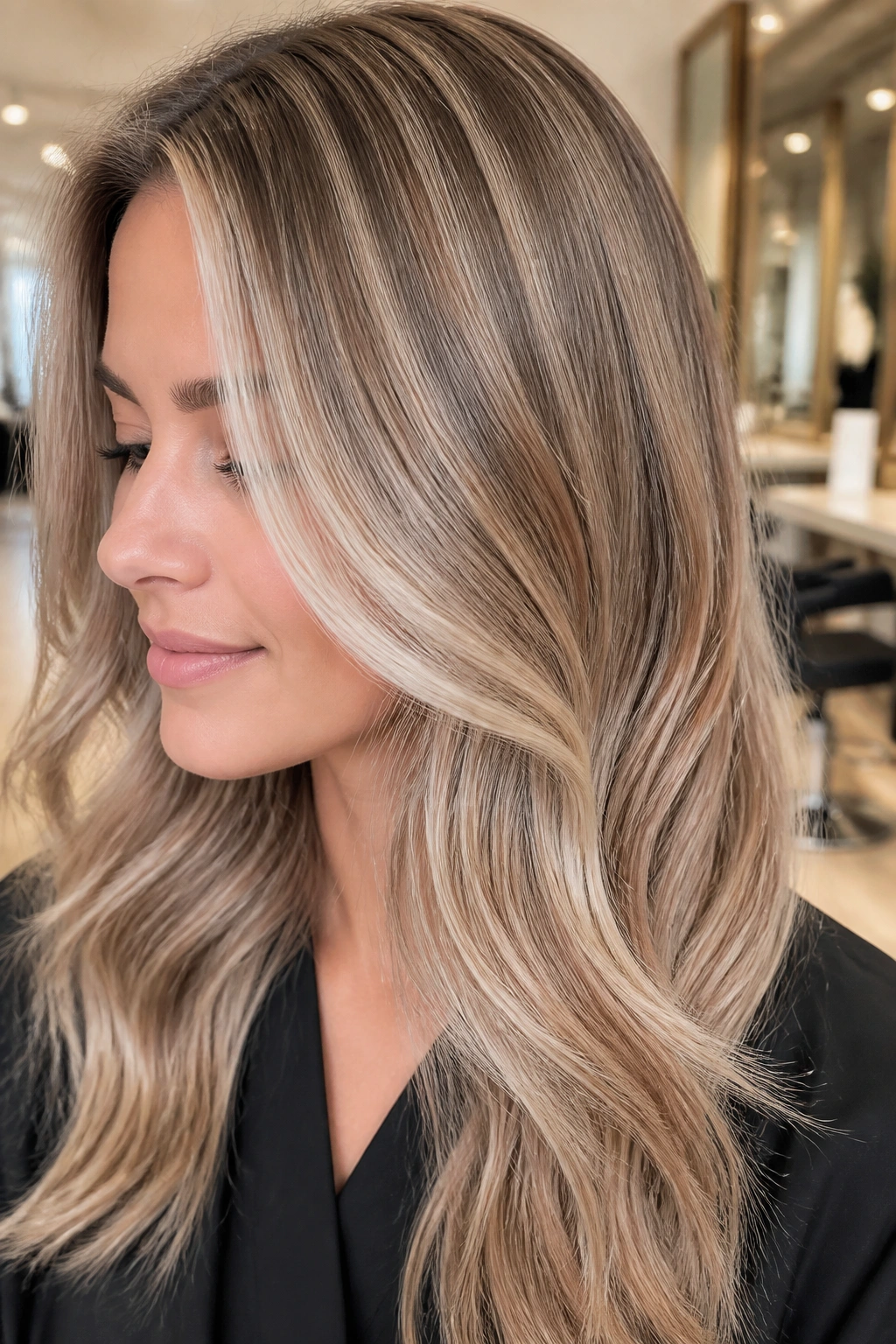
Satin sand ribbon highlights are thin, smooth highlights placed in delicate strips instead of chunky sections. That matters because cool skin usually looks better with soft light distribution than with bold streaks.
The ribbon effect keeps the color moving. On straight hair, the highlights create a subtle sheen. On waves, they twist around each bend and make the whole style look fuller. I like this approach when the client wants brightness but not obvious contrast.
Best Place to Use It
- Around the face for a soft glow
- Through the top layers for lift
- On the ends for motion
- Mixed with a cool beige gloss to keep warmth out
This is a good option if you love a clean, polished finish. It has a smoothness that chunky foils can’t always match.
23. Pale Sand with Lilac Gloss
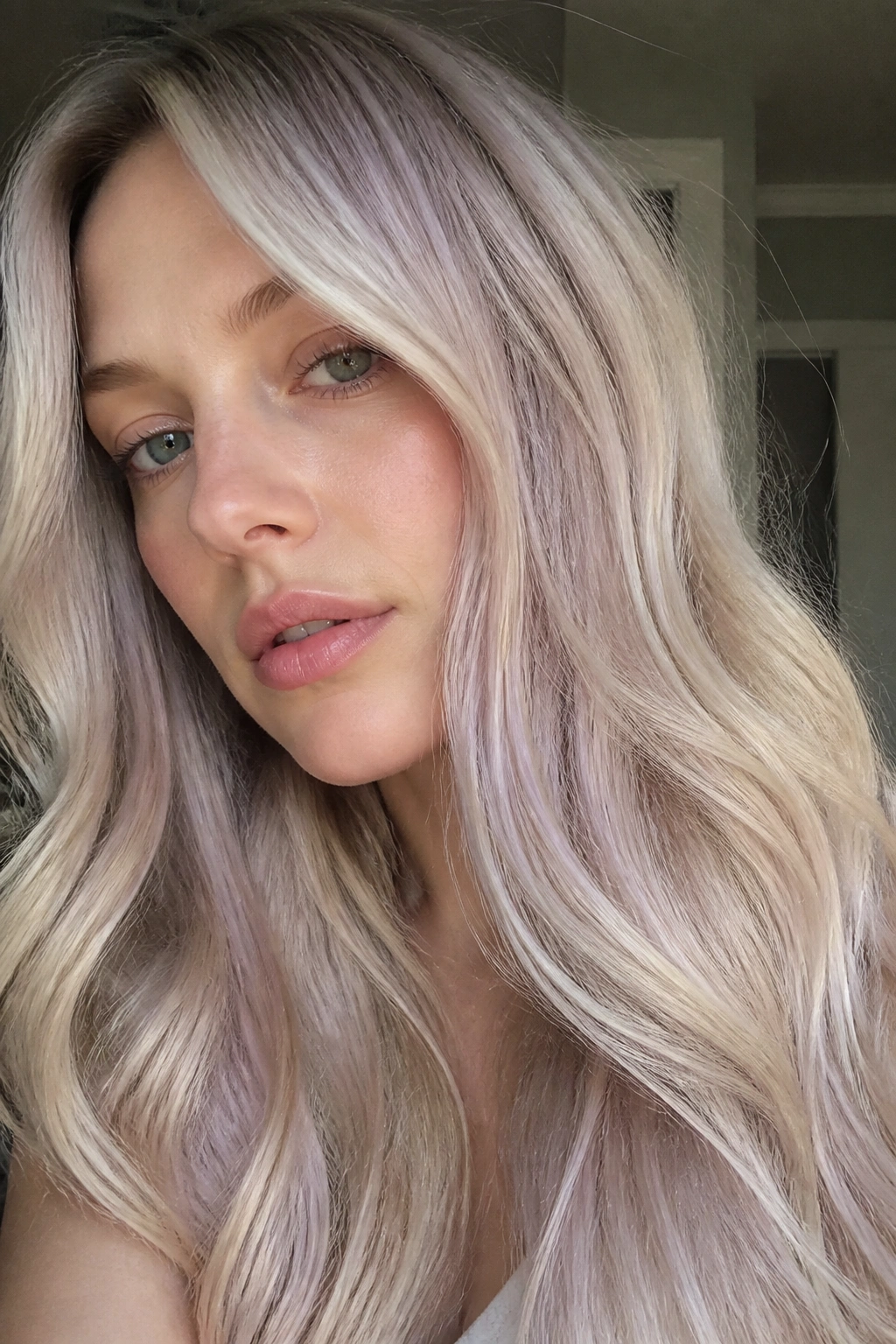
Pale sand with lilac gloss is a clever choice for hair that tends to turn yellow no matter what you do. The lilac tint cancels warmth and leaves the blonde looking fresher, while the sandy base keeps it from looking icy or blue.
This one is especially good after a lightening service, when the hair needs a tonal reset. A lilac gloss is not meant to last forever. It’s a maintenance move. But when the brass starts creeping in, it can be the fastest way to restore a cool finish.
I wouldn’t use it on very dark hair unless the lift is already there. The gloss is the finishing touch, not the main event.
If your skin is cool and your blonde keeps getting too yellow between appointments, this is one of the smartest tweaks you can make.
24. Cool Sand Pixie
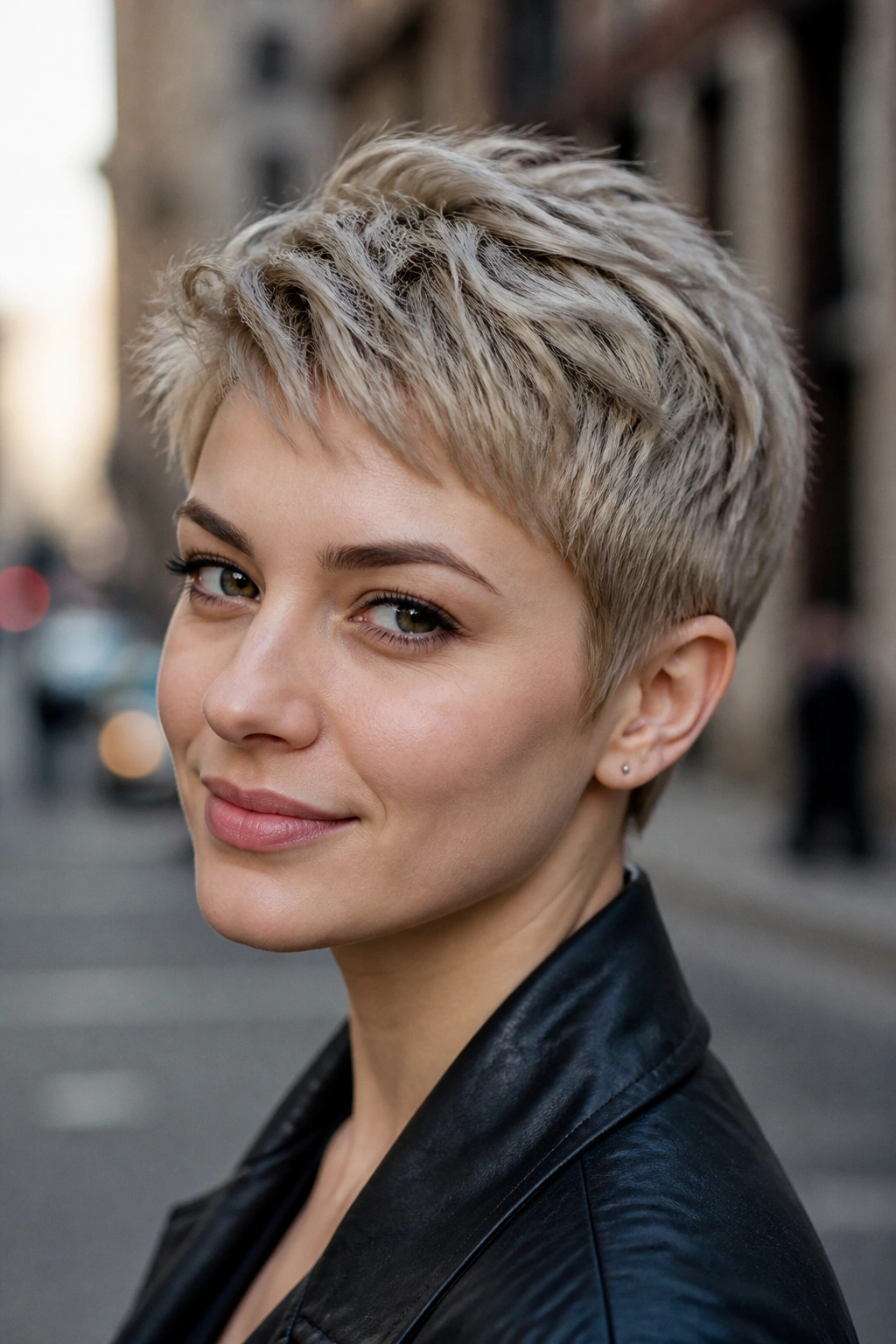
A cool sand pixie proves that sandy blonde does not need length to work. On a short cut, the tone shows off texture, direction, and shape in a clean way, which is a nice match for cool skin that benefits from crisp color.
The best thing about a pixie in this shade is how little weight it carries. The blonde sits close to the head, and the sandy ash tone keeps it light without turning harsh. A little piecey styling paste through the top can bring out the dimension fast.
This is also a good color if your hair is fine and you want it to look fuller. Short hair with a cool sandy tone can appear thicker because the color variation stays concentrated.
If you like minimal fuss and sharp shape, this may be the easiest idea in the whole list to wear.
25. Rooted Sand Blonde with Micro-Babylights
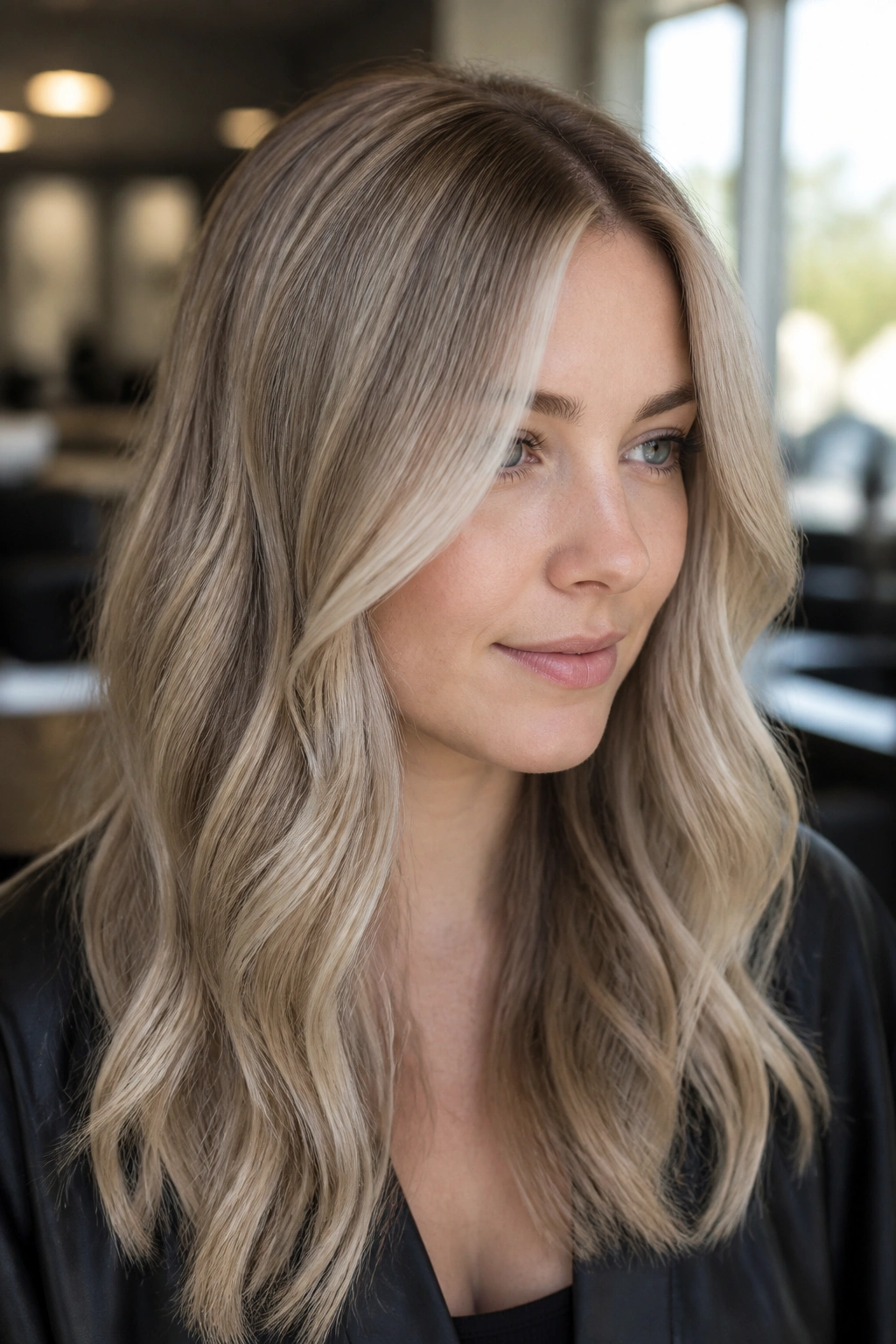
Rooted sand blonde with micro-babylights is the subtle one, and I mean that in the best way. Tiny babylights are woven close to the root, then melted into a sandy beige finish, so the color looks soft from every angle.
This is a dream for cool skin if you want brightness without big contrast. The tiny highlights mimic the way hair lightens naturally in the sun, except the tone stays cooler and cleaner than sun-bleached warmth. It grows out in a gentle way, which helps the color stay pretty for longer.
What Makes It Different
The micro-babylight placement is the trick. Because the highlights are so fine, the hair doesn’t get that striped or chunky look. Instead, you get a faint shimmer across the head, like the blonde is woven into the base rather than sitting on top of it.
That’s a lovely place to end the list because it captures what sandy blonde does best on cool skin: it softens, it brightens, and it stays believable.
Final Thoughts
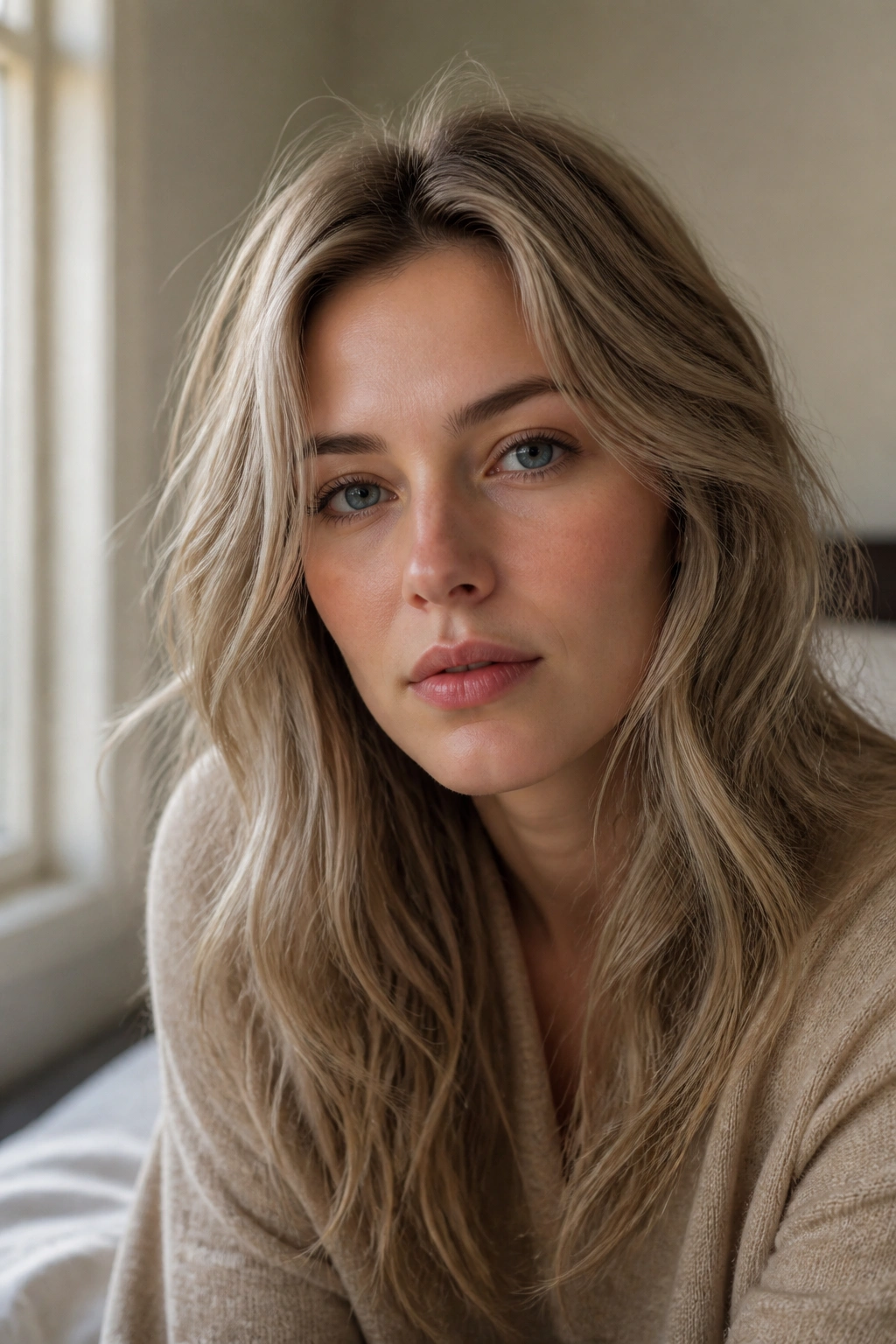
Cool skin tones usually look best in sandy blondes that stay a little ashier than instinct might suggest. If the shade feels too yellow in the swatch, it will probably feel too yellow on your face, too.
I’d pay close attention to the root area first. A soft shadow root, a beige-ash gloss, or a muted lowlight can change the whole result without making the blonde look heavy. That tiny bit of restraint is what keeps the color flattering instead of frosted in a harsh way.
If you’re stuck between two shades, pick the one that looks a touch cooler in the bowl. Sandy blonde wears better when it leans pale beige, pearl, taupe, or silver-beige — not honey, not brass, not obvious gold.
