



Grey blonde hair color can look razor-sharp on cool skin tones when the ash stays clean and the warmth stays out.
Warmth is the trap. A blonde that leans honey, gold, or copper can make pink undertones look blotchy and make pale skin look tired, while a cool blonde with silver, pearl, smoke, or violet in the mix keeps the face looking fresher. The difference is bigger than most people expect, especially in daylight.
The shades that work best are usually built on a pale yellow base, then toned until the yellow disappears without turning the hair flat or muddy. That part matters. A grey blonde is not one single color, but a whole family of ash, pearl, mushroom, slate, and icy finishes that behave differently on short hair, long hair, curls, and straight cuts.
So the sweet spot is choosing the right kind of cool, not the iciest thing on the wall. Some people need silver ribbons. Some need a smoky root shadow. Some need a soft mushroom blonde that still lets the skin do the talking. The ideas below move through all of those, from barely-there shimmer to near-white frost.
1. Icy Platinum Grey Blonde
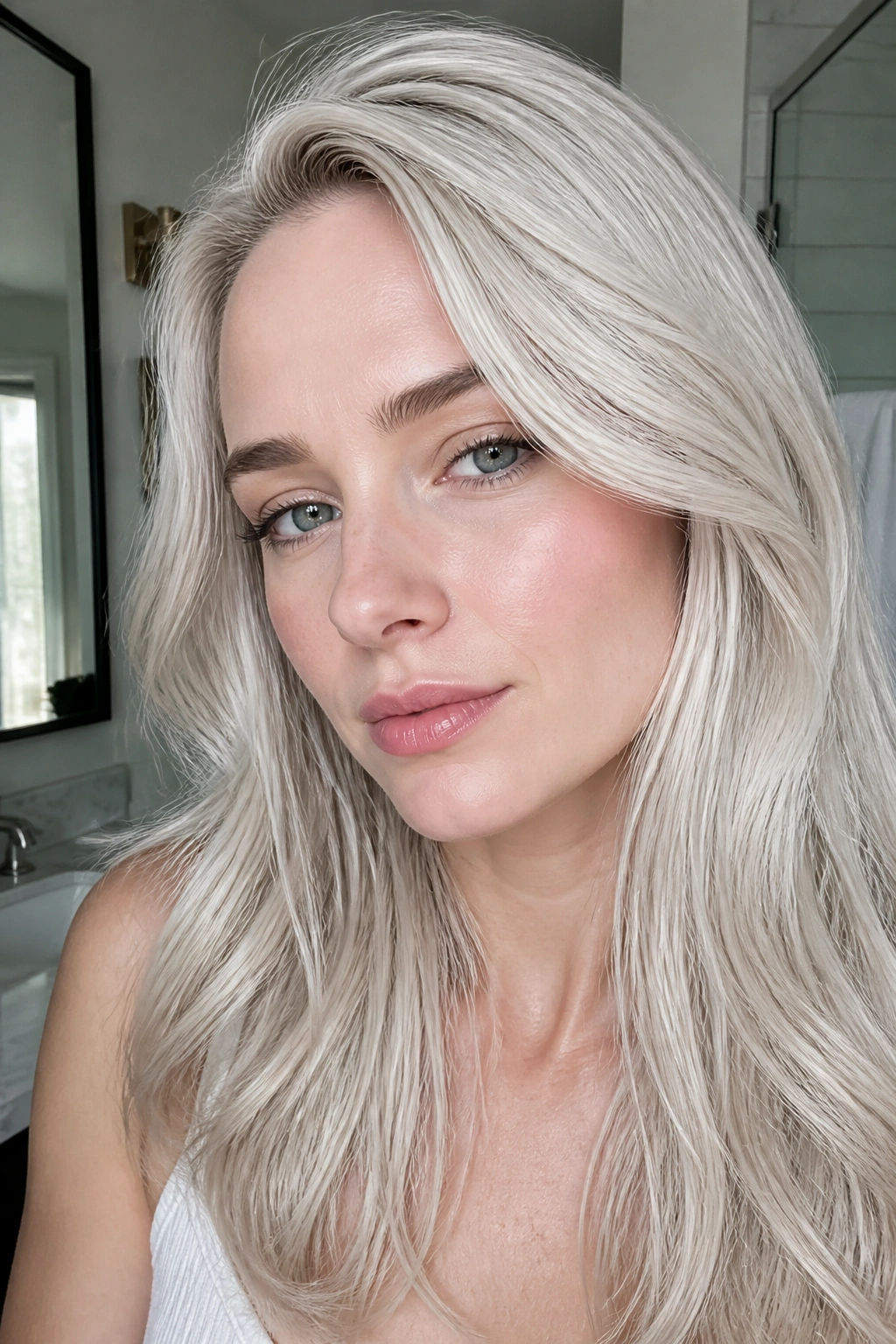
Icy platinum grey blonde is the one people picture when they hear “cool blonde,” and for good reason. It sits so close to white that it makes cool skin look crisp instead of washed out, especially if your complexion leans porcelain, pink, or rosy beige.
Why It Reads So Clean on Cool Undertones
The shade works because it strips away almost every warm note. A level 10 lift with a violet or blue-violet toner is usually what gets you there, and that clean base is what keeps the color from drifting yellow after a few washes. If you go too warm, the whole effect falls apart fast.
- Best for fair to light cool skin.
- Needs toner refreshes every 3 to 4 weeks.
- Looks strongest on blunt bobs, long waves, and sharp pixies.
- Can get dry fast, so bond care matters.
Ask for a soft shadow root no wider than half an inch. That tiny bit of depth keeps the color from looking like a helmet and gives the grow-out somewhere to land.
2. Silver Ash Balayage
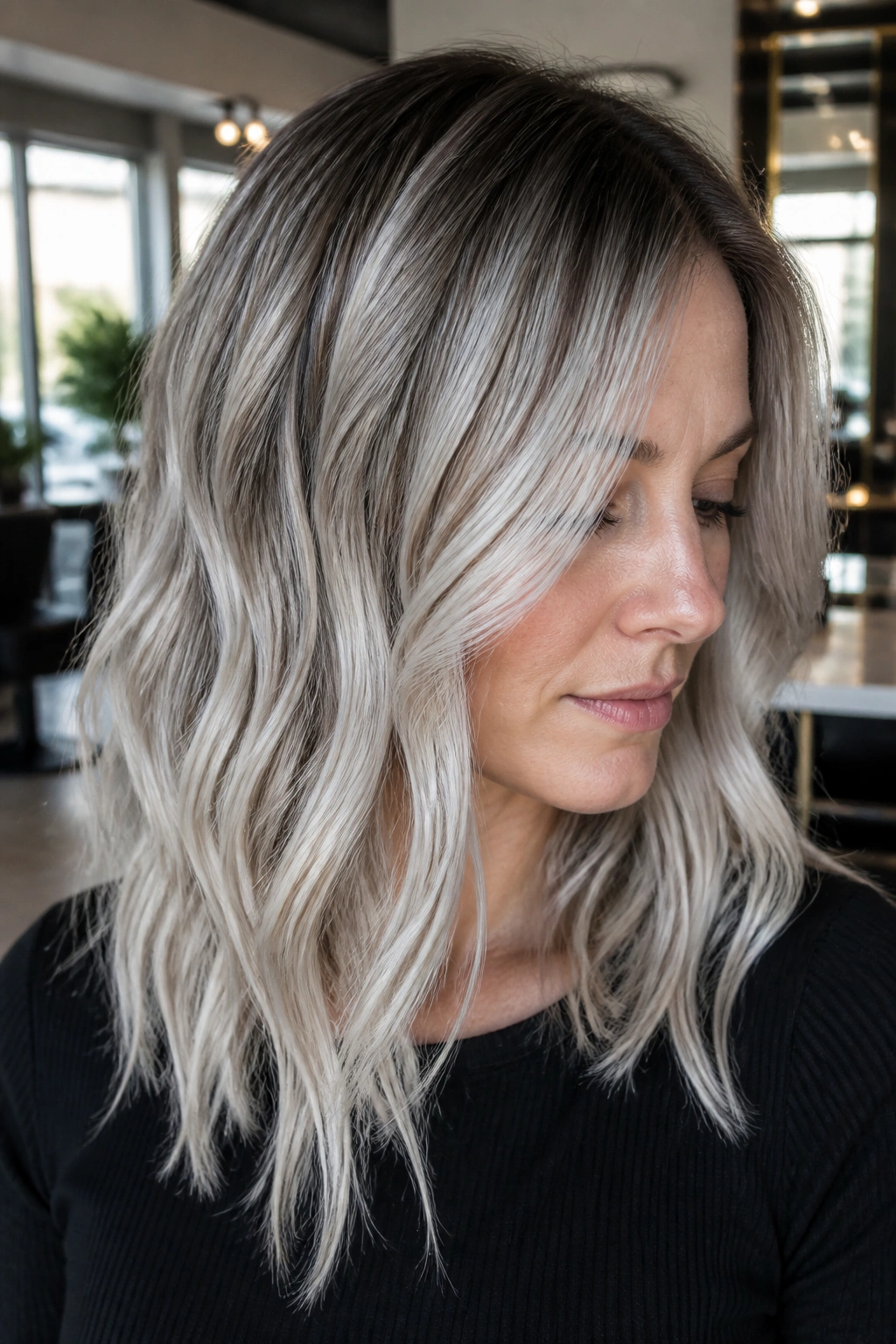
Silver ash balayage doesn’t shout. It slides in like smoke across a darker blonde or light brunette base, and that’s exactly why it feels easier to wear than all-over platinum.
The hand-painted ribbons usually live through the mid-lengths and ends, which gives the hair movement without flattening the whole head into one pale shade. On medium cool skin tones, the contrast is nice. Not harsh. Nice.
This is the version I’d point people toward if they want grey blonde hair color ideas that still look lived-in. The roots can stay close to your natural level, and the silver ash pieces do the brightening work around the face and through the waves.
A blunt cut can make it look polished. Loose bends make it feel softer. Either way, the finish is cool without being icy to the point of looking severe.
3. Mushroom Grey Blonde
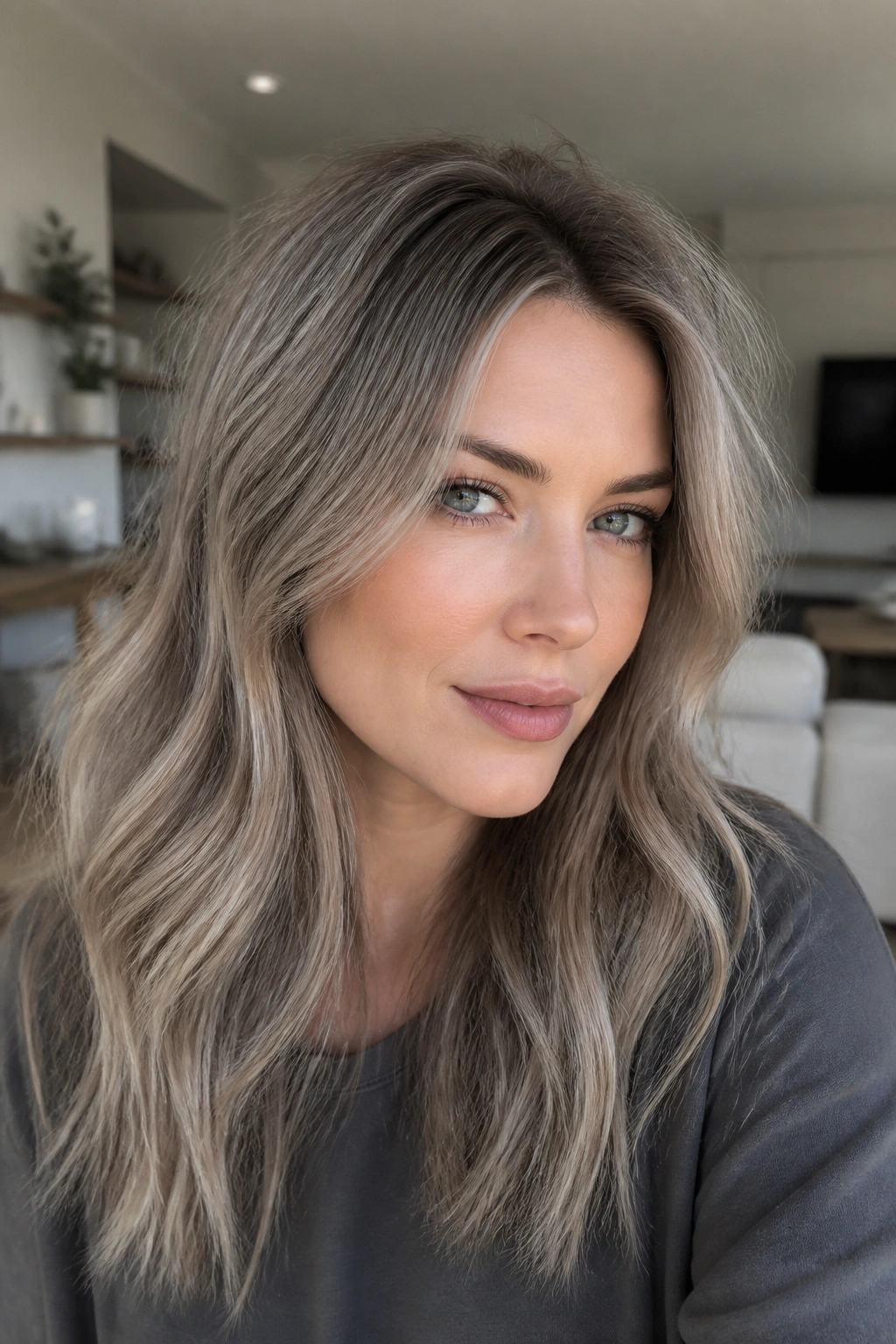
Ever seen a blonde that looks soft, earthy, and a little expensive without crossing into warm? That’s mushroom grey blonde.
What Makes It Different
The color sits between taupe, ash, and beige, so it flatters cool skin tones that don’t want a stark silver finish. It’s especially good if your undertones lean neutral-cool and you still want some depth near the roots. A mushroom shade usually looks best on a level 7 to 8 base, where the dimension can still show.
How to Ask for It
- Keep the beige muted.
- Add ash to the toner.
- Leave the root a shade deeper.
- Finish with a matte or soft-gloss glaze.
This shade is a quiet winner on shaggy lobs and layered cuts. It has enough shadow to keep the face from going flat, which is a problem with many cooler blondes when the hair is very fine.
4. Pearl Smoke Blonde
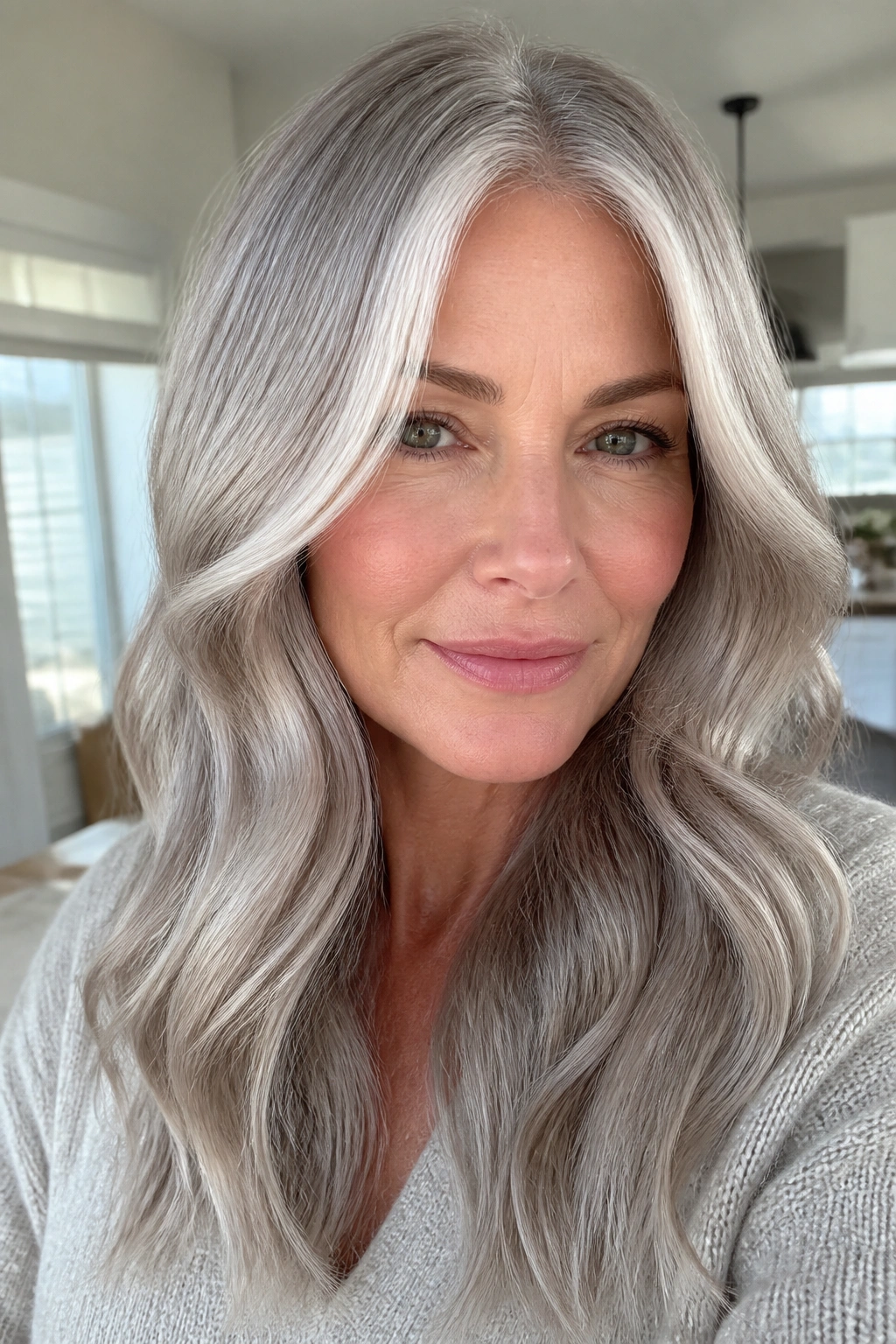
Pearl smoke blonde is for the person who wants shimmer more than drama. It has that pale, milky finish that looks almost luminous on cool skin, especially if you have blue, pink, or rose undertones.
The trick is restraint. Too much silver and it turns stark. Too much beige and it loses the point. The best version has a pearl glaze over a smoky blonde base, so the color looks glossy, not dusty. That glossy part matters.
I like this shade on medium-length hair with a slight wave because it catches movement without needing chunky highlights. On straight hair, it reads clean and elegant. On curls, it gets a little softer and more dimensional.
If you want a blonde that looks expensive in dim light and still makes sense in daylight, this is one of the most reliable choices.
5. Smoky Beige Blonde
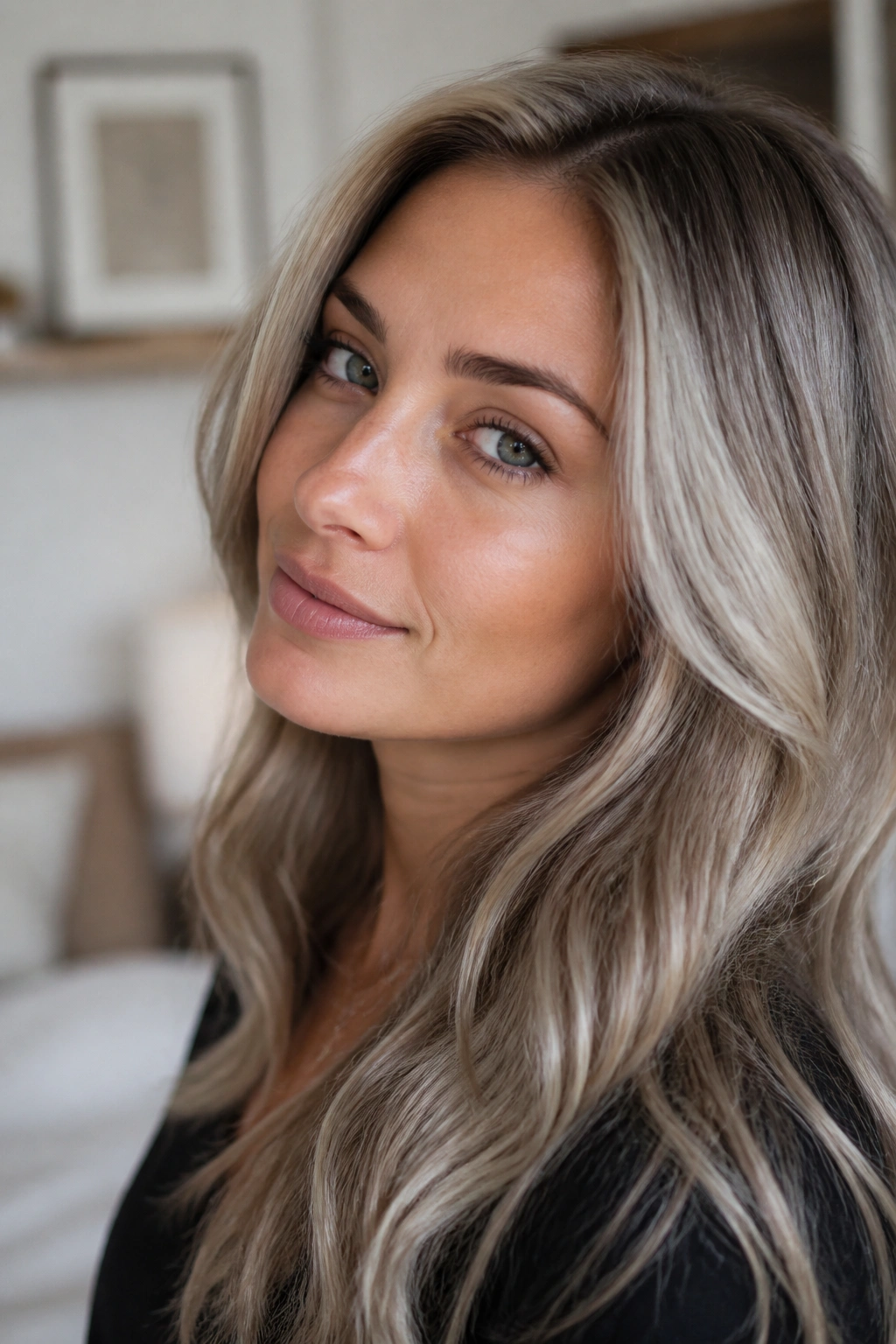
Smoky beige blonde is the shade for people who want cool-toned blonde hair without going icy. It has just enough beige to keep the color wearable, but the smoke keeps it from tipping warm.
That balance is useful for cool skin tones that can handle softness. Some complexions look too sharp beside silver or platinum. This shade gives them a little breathing room.
The key is not to let the beige go golden. A beige toner with ash mixed in is what keeps the finish grounded. If the toner drifts warm, the whole look starts reading sandy instead of grey blonde.
This one works nicely on long layers, collarbone cuts, and anything with face-framing pieces. It’s also a smart choice if you want something that fades a little more gracefully than a very pale platinum. Less maintenance. Less panic at the sink.
6. Dove Grey Money Piece
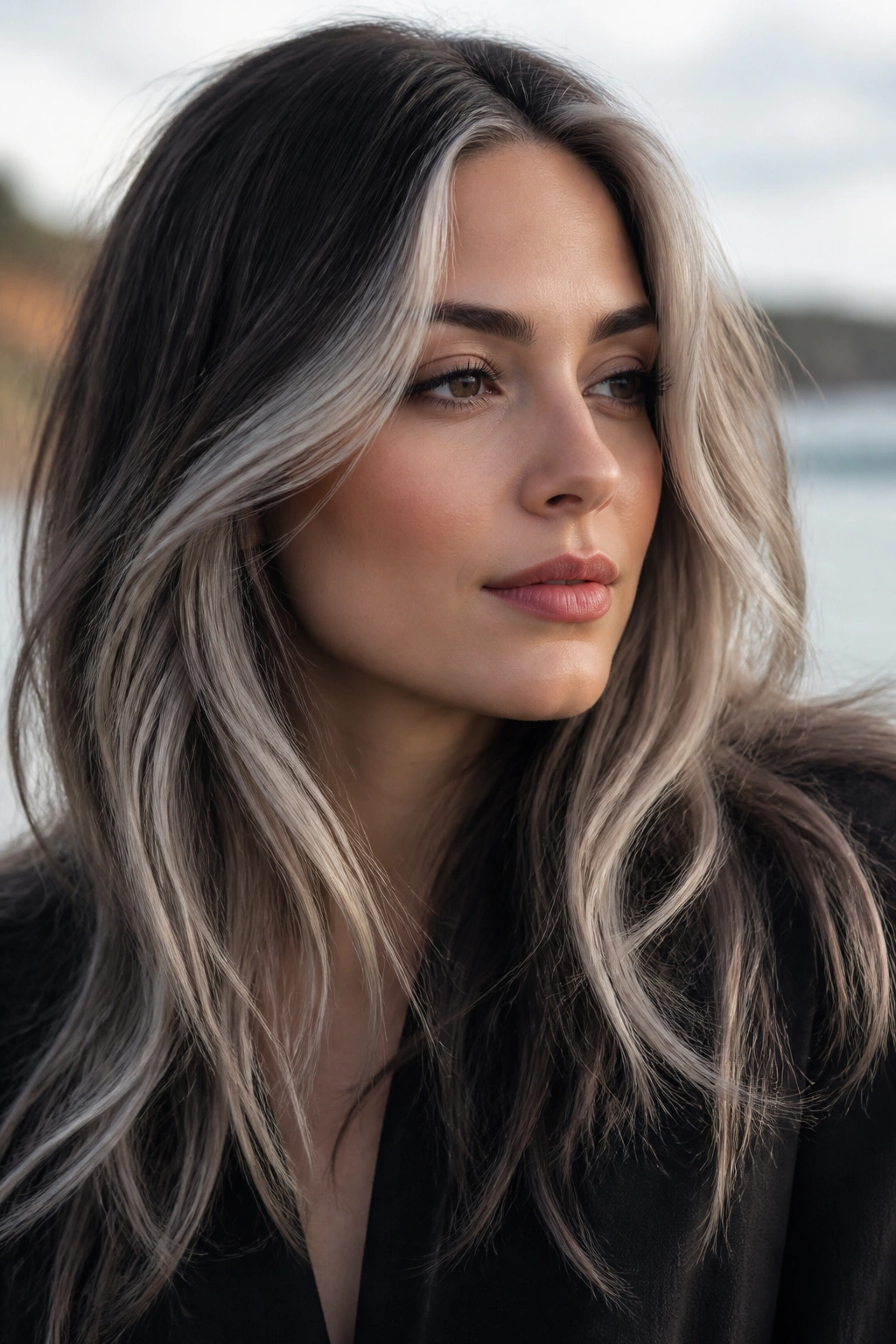
A dove grey money piece is the fastest way to brighten cool skin without changing the whole head. The face-framing sections sit right around the temples, cheekbones, and jawline, so the effect is immediate.
Think of it as targeted brightness. The rest of the hair can stay darker, ashier, or more dimensional, while the money piece gives you that pale grey blonde edge near the face. This placement is especially flattering if your features disappear under one flat blonde shade.
It’s also practical. Grow-out is softer because the lighter pieces are concentrated in one spot, and that means fewer awkward weeks between salon visits. If your hair is dark or medium brown underneath, the contrast can look sharp in a good way.
This is a strong option for ponytail wearers too. Even pulled back, the lighter front sections keep the color from feeling hidden.
7. Steel Blonde Bob
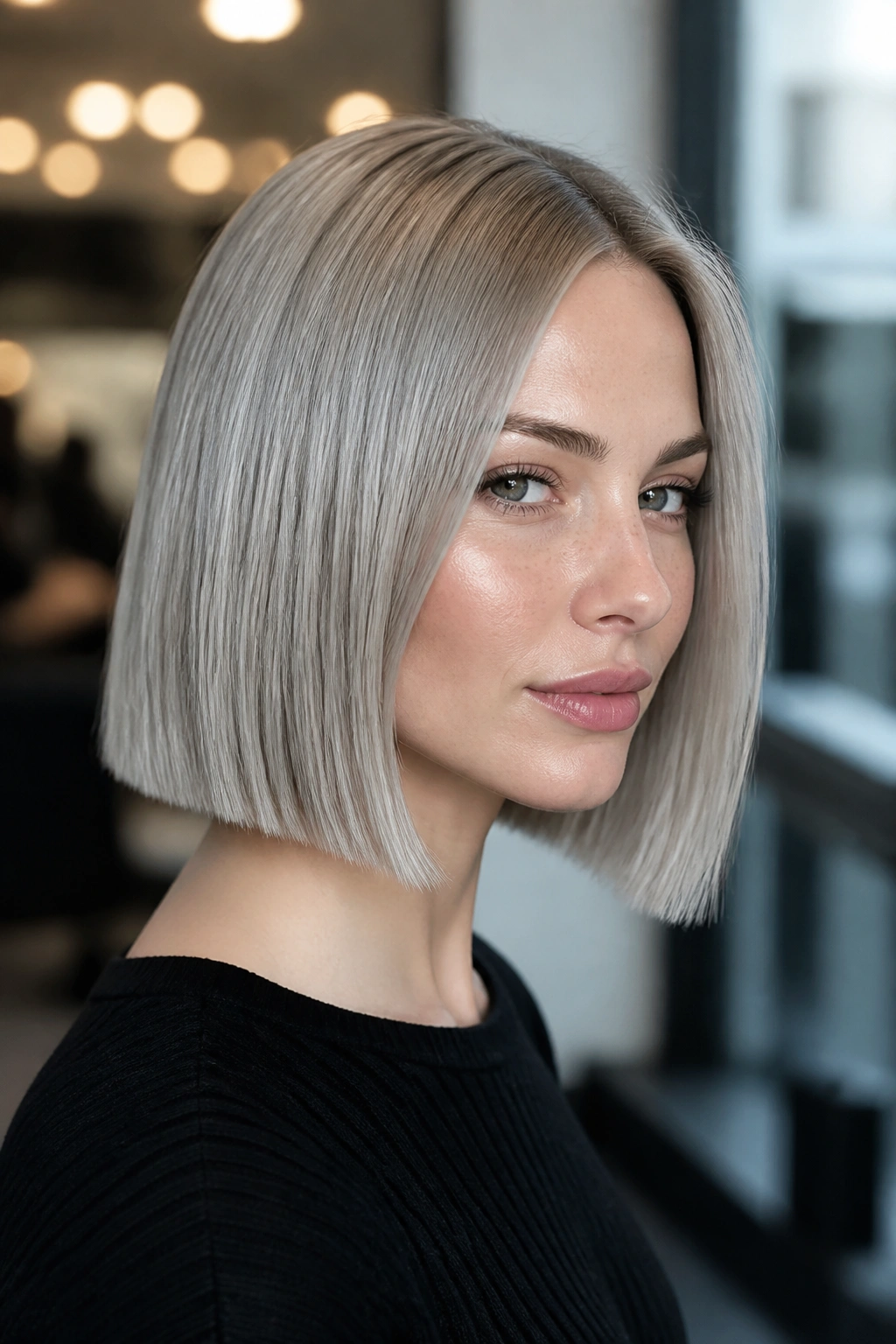
Steel blonde and a bob were made for each other. The sharp cut gives the color a clean frame, and the metallic tone keeps the whole thing from looking too soft or girly if that is not your thing.
Steel blonde sits a little deeper than platinum and a little cooler than beige ash. On cool skin, that makes it feel sleek instead of flat. It also looks especially good when the hair is straightened or blown smooth, because the surface sheen shows off the metallic cast.
What to Watch for
- Ask for shine, not warmth.
- Keep the ends dusted every 6 to 8 weeks.
- Use a heat protectant before flat-ironing.
- A side part can make the color look more graphic.
There’s a reason this shade shows up on short, polished cuts. It has edge.
8. Frosted Face-Framing Layers
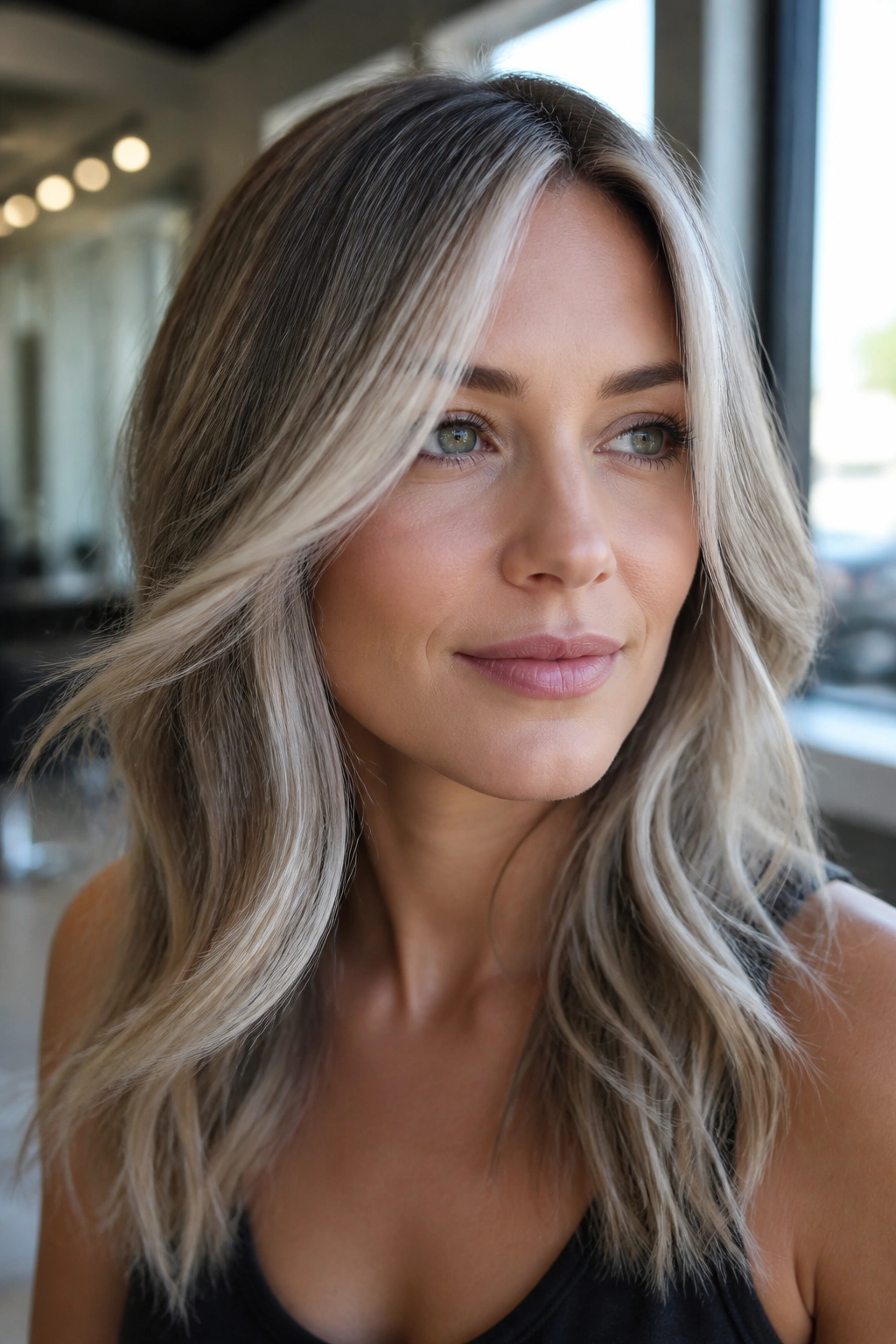
Frosted face-framing layers are the friendlier cousin of full grey blonde. Instead of covering everything, the lighter pieces sit around the front and through the top layer, which gives cool skin a lifted look without a heavy commitment.
The important part is placement. If the frosted pieces are too chunky, the color can feel dated. If they’re too tiny, you lose the point. A mix of fine and medium-weave highlights around the cheekbones usually gives the cleanest result.
This shade makes sense on layered cuts, curtain bangs, and wavy textures because the movement breaks up the light. It’s also one of the easiest ways to test whether a grey blonde palette suits you before going all in.
Honestly, this is the shade I’d suggest to people who want to flirt with silver but still keep some softness in their hair.
9. Ash Champagne Blonde
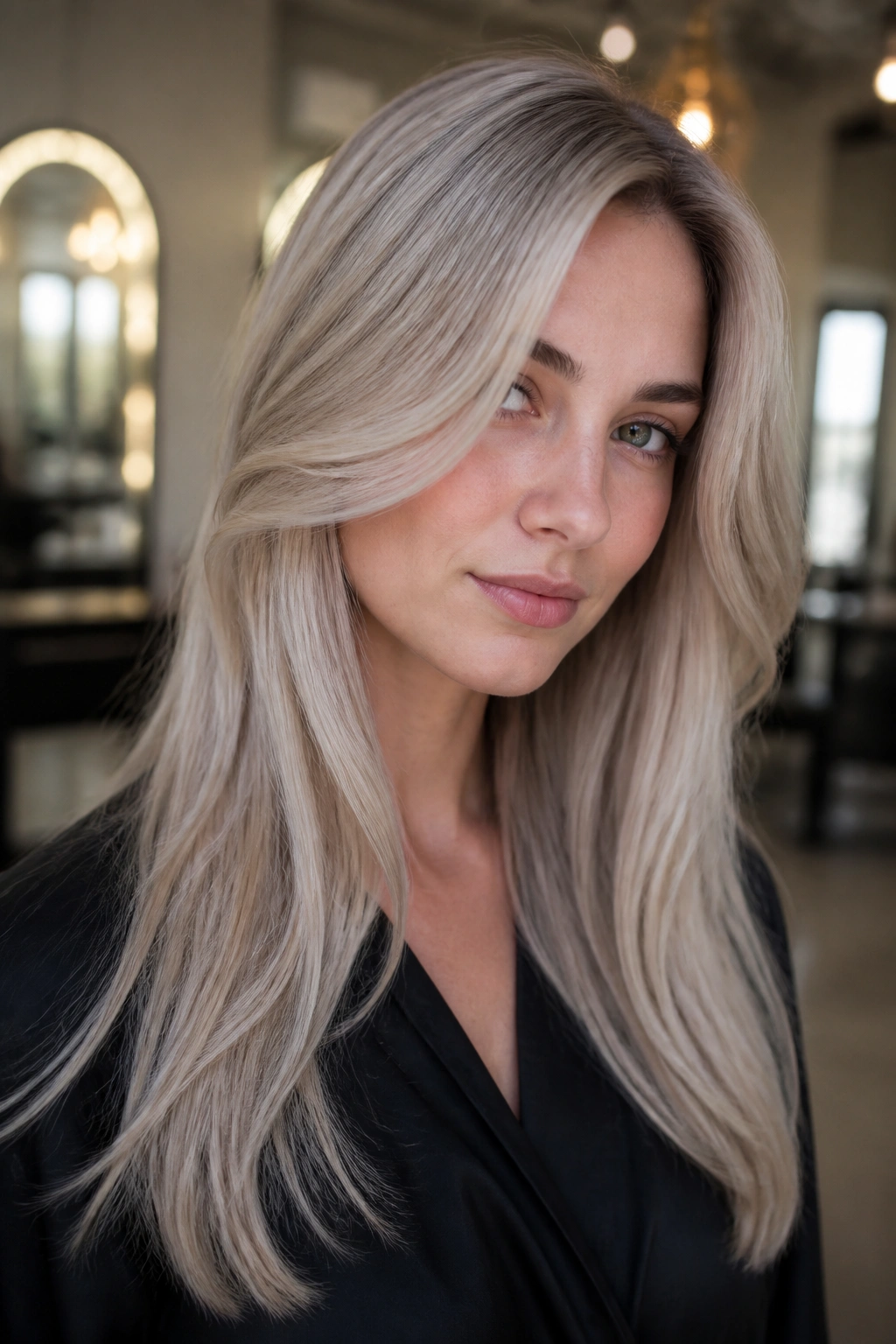
Ash champagne blonde is the cooler, calmer version of champagne blonde. The sparkle is still there, but the warmth gets pulled back so the color doesn’t turn gold on cool skin tones.
It’s a nice middle ground for people who want something brighter than mushroom blonde and less severe than silver. The tone usually looks best when the blonde is lifted enough to show translucence, then toned with ash and pearl so the shine stays soft.
The shade works well on medium cool skin because it gives the complexion a little glow without pushing into peach or brass. That glow matters. Too much ash can make the face look drained, and this shade avoids that problem.
A lob, a long bob, or shoulder-length waves suits it especially well. It has movement, but it still reads polished.
10. Metallic Charcoal Blonde Melt
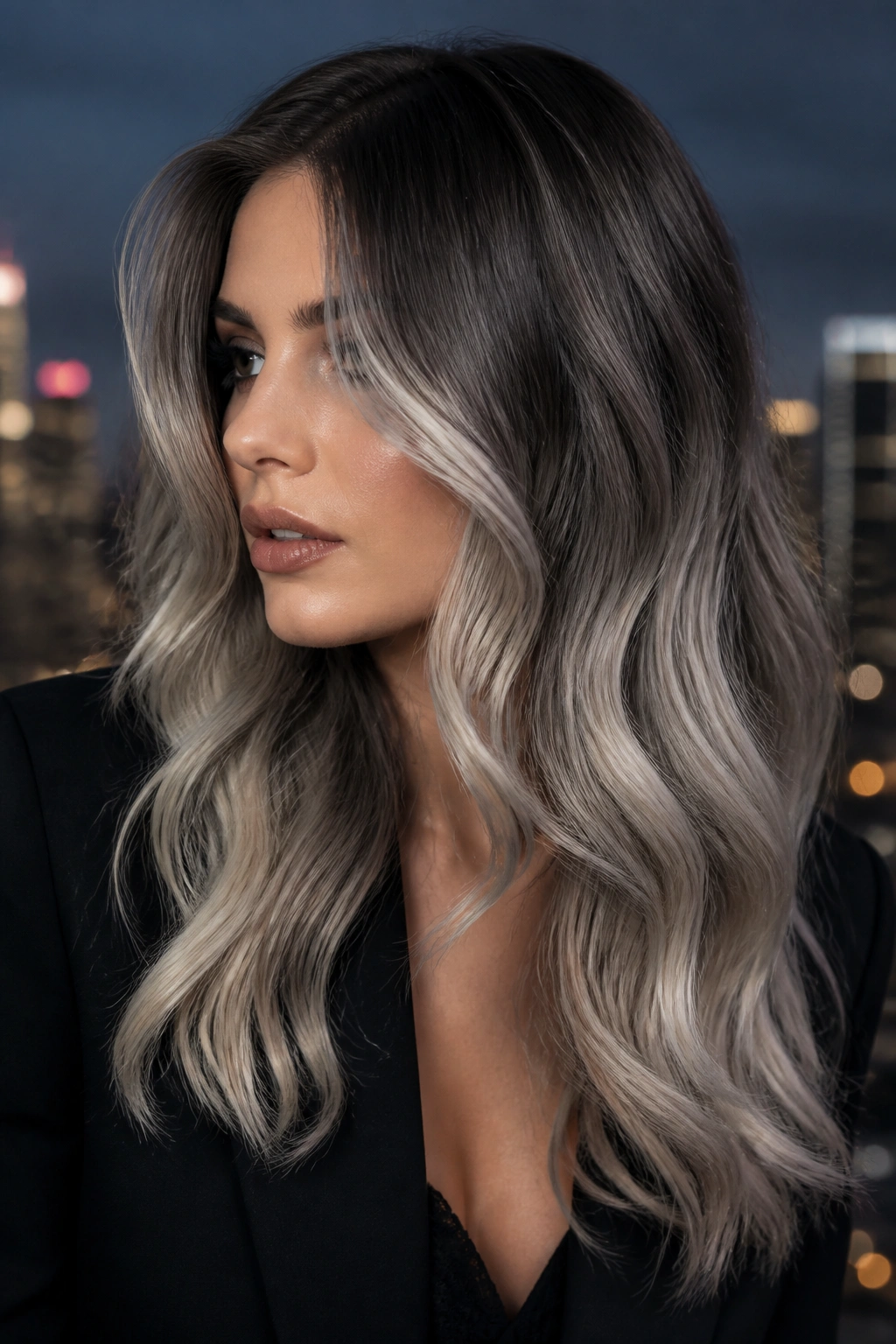
Metallic charcoal blonde melt is the dramatic one in the group. It starts deeper at the root, slides through smoky charcoal, and lands in a cool blonde finish that looks almost brushed with metal.
This is not a shy color. It works best on cool skin with some natural contrast in the features—dark brows, clear eyes, or a stronger bone structure. If your face can handle a little edge, this shade gives you a lot back.
The melt part matters because it softens the grow-out. Instead of a hard line, the color shifts gradually from dark to light, which makes the whole look feel more expensive and less obvious. That sounds dramatic, and it is. But it’s also practical.
Wavy hair shows the transition best. Straight hair turns the contrast into a cleaner line, which can be striking if that’s the mood.
11. Moonlit White Blonde
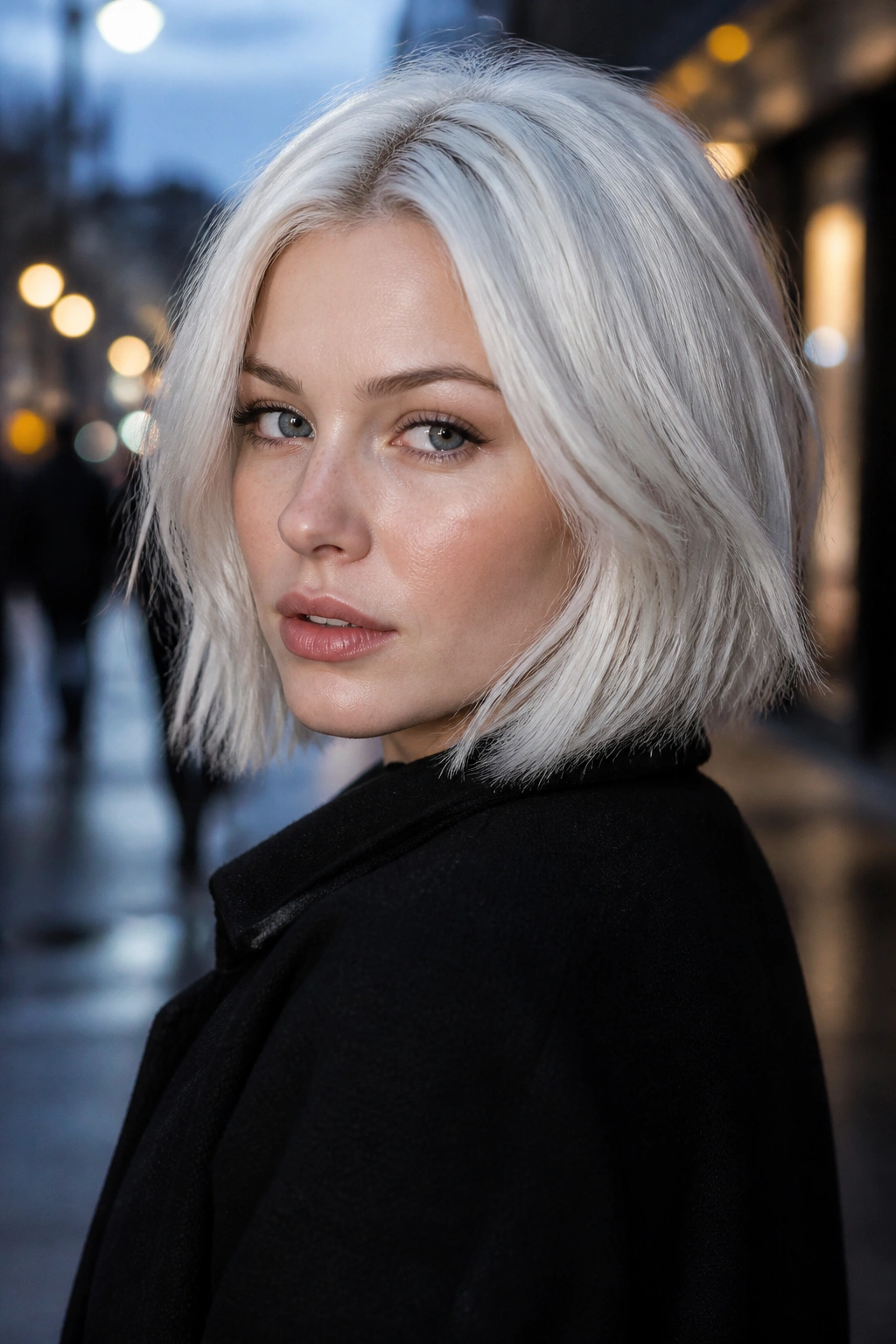
Moonlit white blonde lives close to ice, but the silver veil keeps it from looking flat. It has that pale, reflective quality that can look stunning on very fair cool skin, especially when the complexion is clear and even.
This shade is not forgiving. If the lift is patchy, you’ll see it. If the toner fades, you’ll see that too. That is why the base needs to be even before the white tone goes on. Hair that has been overprocessed often looks hollow in this color, so bond care and careful timing matter.
The payoff is a clean, almost lunar finish that feels crisp in any light. It can look beautiful on long lengths, but it’s even sharper on short cuts where the shape does some of the work for you.
If you love an almost-white blonde and your skin leans cool, this is one of the boldest ways to wear it.
12. Soft Slate Blonde Ombré
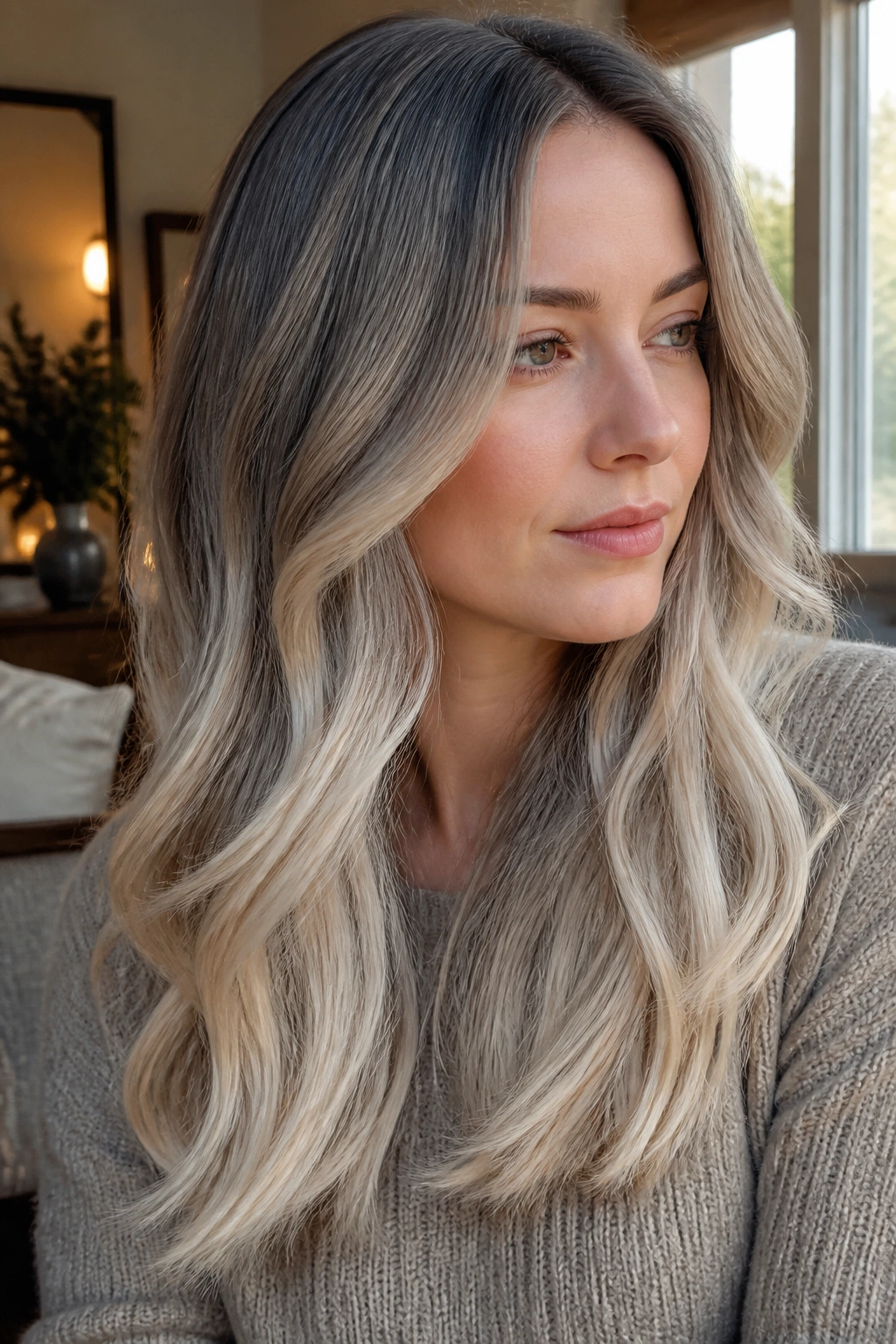
Soft slate blonde ombré is for people who want the cooler end of grey blonde without making the roots disappear. The top stays deeper, usually slate or smoky taupe, while the ends lighten into muted blonde.
The ombré effect gives the hair a longer visual line. That can be flattering on cool skin because it keeps the color from overpowering the face. It also means the grow-out is less dramatic, which is always a relief.
This shade works especially well on long hair, where the transition has room to breathe. On shorter cuts, the fade can get lost unless the layers are intentional. A soft slate root with a lighter ash end is the sweet spot.
There’s a nice calmness to this one. It feels modern without trying too hard.
13. Cool Taupe Blonde
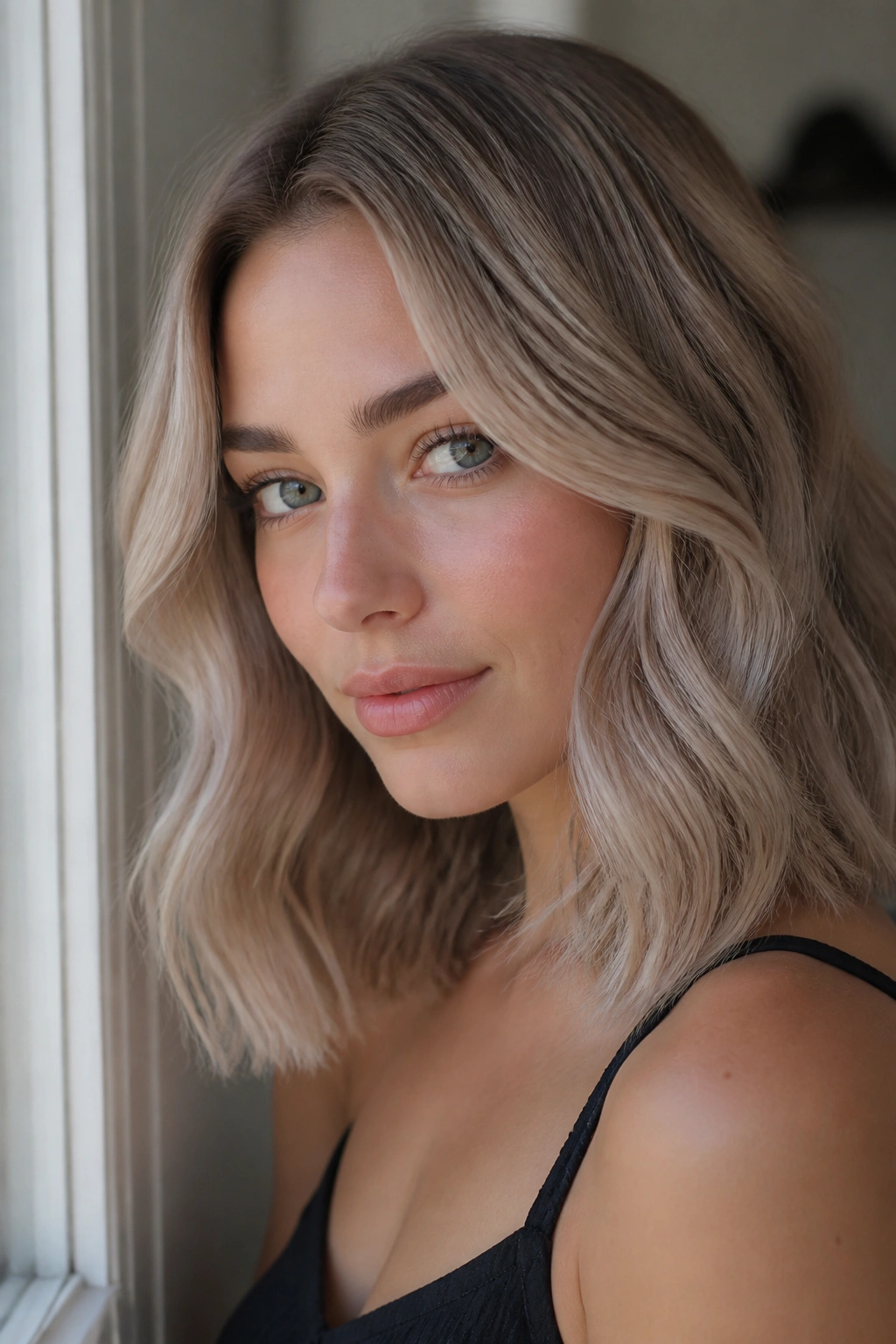
Cool taupe blonde is the answer for people who want grey blonde hair color ideas that feel wearable every day. It is muted, soft, and a little dusty in the best way, with enough beige to keep the hair from looking metallic.
On cool skin tones, taupe keeps the face balanced. It does not shout silver. It does not slide into warmth. That middle ground makes it useful for people with a cooler olive cast or a neutral complexion that still gets red easily.
The shade looks especially good with loose waves, because the bends let the muted tones show up in layers. Straight hair can make it look more uniform, which is fine if you want a cleaner finish.
I’d call this one understated, not boring. There’s a difference.
14. Vanilla Ash Blonde
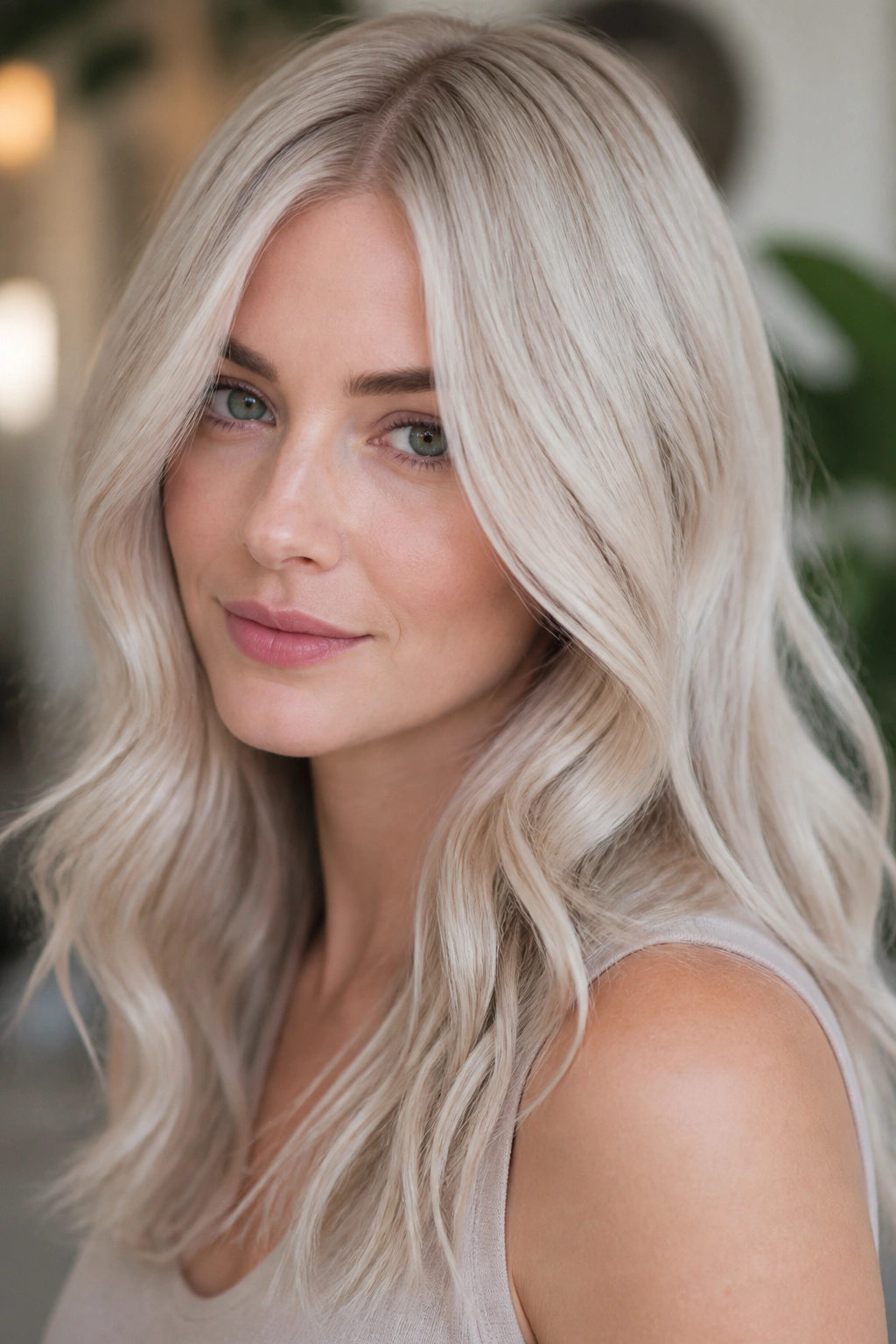
Vanilla ash blonde sounds softer than it is. The “vanilla” keeps the blonde creamy, while the ash reins it in so the color doesn’t go buttery or yellow.
That balance is useful if you like blonde hair that still feels light and airy. Pure silver can be a bit hard on some cool skin tones, especially around the eyes. This shade gives the face a little softness while staying clearly cool.
The trick is a pale blonde base with an ash gloss on top. The gloss keeps the warmth from creeping back in between appointments, which is where many blondes start to go off track.
It looks lovely on curtain bangs, shoulder-length layers, and any cut that needs a little roundness. The color is gentle, but not weak.
15. Glacier Blonde with Root Shadow
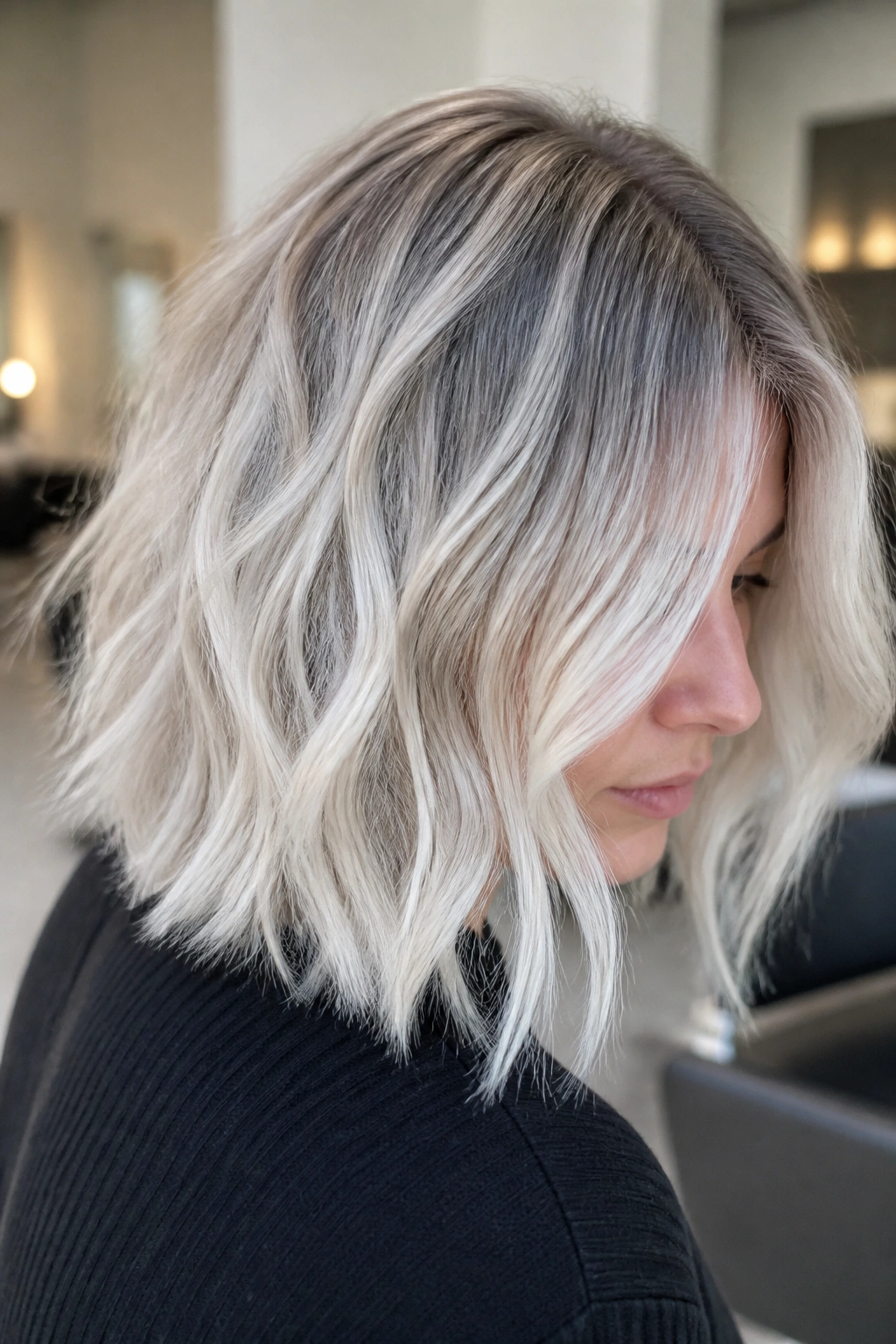
Glacier blonde with root shadow is one of the smartest choices if you want a pale grey blonde without constant salon visits. The root shadow keeps the top deeper for longer, while the ends stay icy and light.
That contrast makes the face look brighter. It also keeps the color from turning too monochrome. Cool skin tones usually benefit from that kind of depth because the hair and skin have more shape against each other.
How to Wear It Well
A blunt cut makes the shadow root look clean. Layered hair makes the icy ends move more. Both work.
- Ask for a soft root melt, not a hard line.
- Keep the shadow close to your natural base.
- Refresh the toner on the ends every 4 to 6 weeks.
- Use purple shampoo sparingly so the blonde does not go dull.
There’s a reason this shade stays popular with people who love pale hair but hate upkeep. It behaves better than it looks.
16. Smoke Blonde Pixie
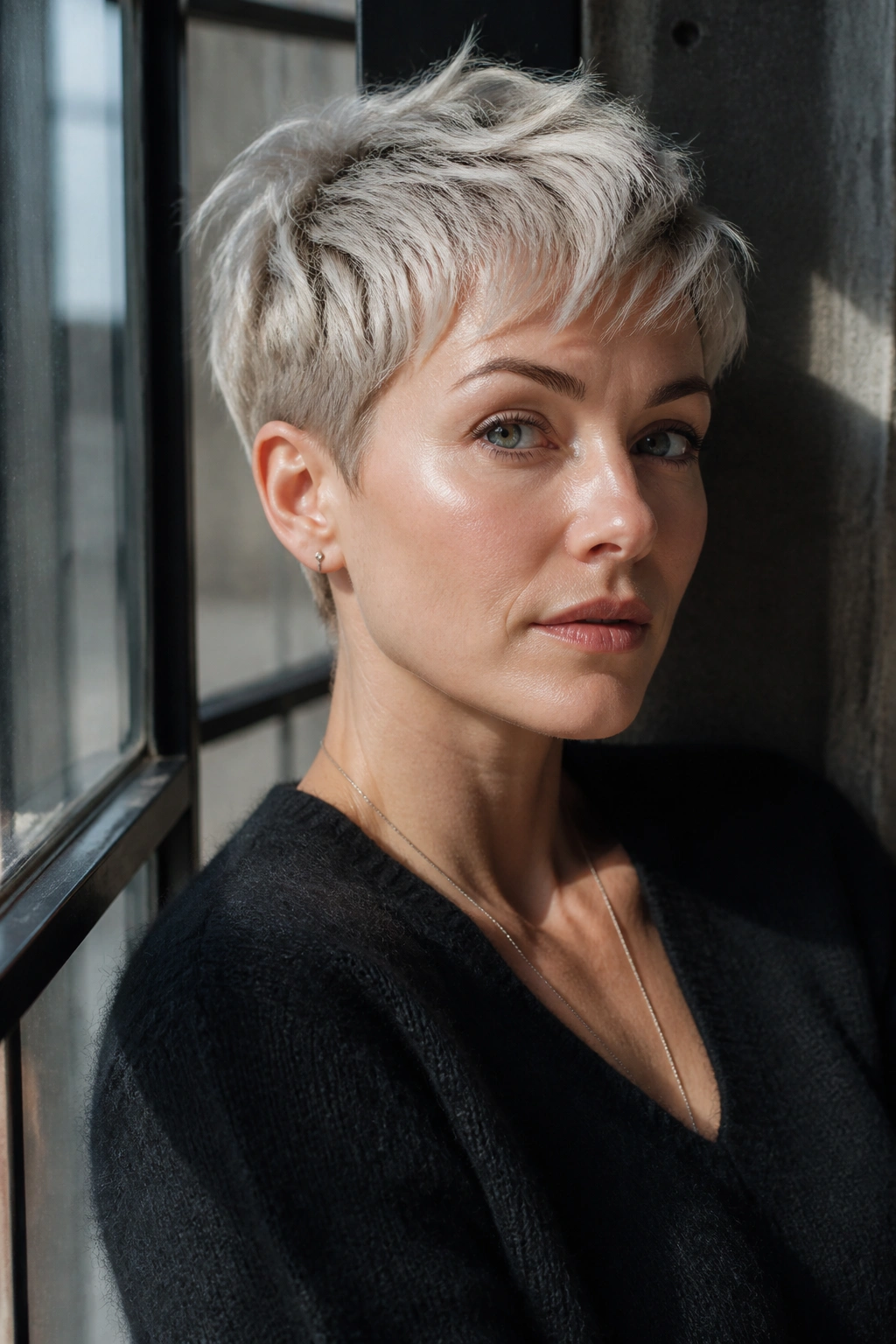
A smoke blonde pixie is short, sharp, and easy to style, which is a nice change if you’re tired of long blonde routines. The smoky tone keeps the cut from looking flat, and the cropped shape gives the color real edge.
This is one of those shades that depends on texture. A little lift at the roots, a little piecey definition on top, and the color suddenly has life. Without that, it can go a bit same-y. A dab of matte paste on dry hair helps separate the layers and show the tonal changes.
Cool skin tones tend to like the contrast here because the short cut puts the face front and center. If your eyes and brows already carry a lot of expression, the hair doesn’t need to do all the work.
It’s also fast. That alone matters.
17. Foggy Blonde Ribbons
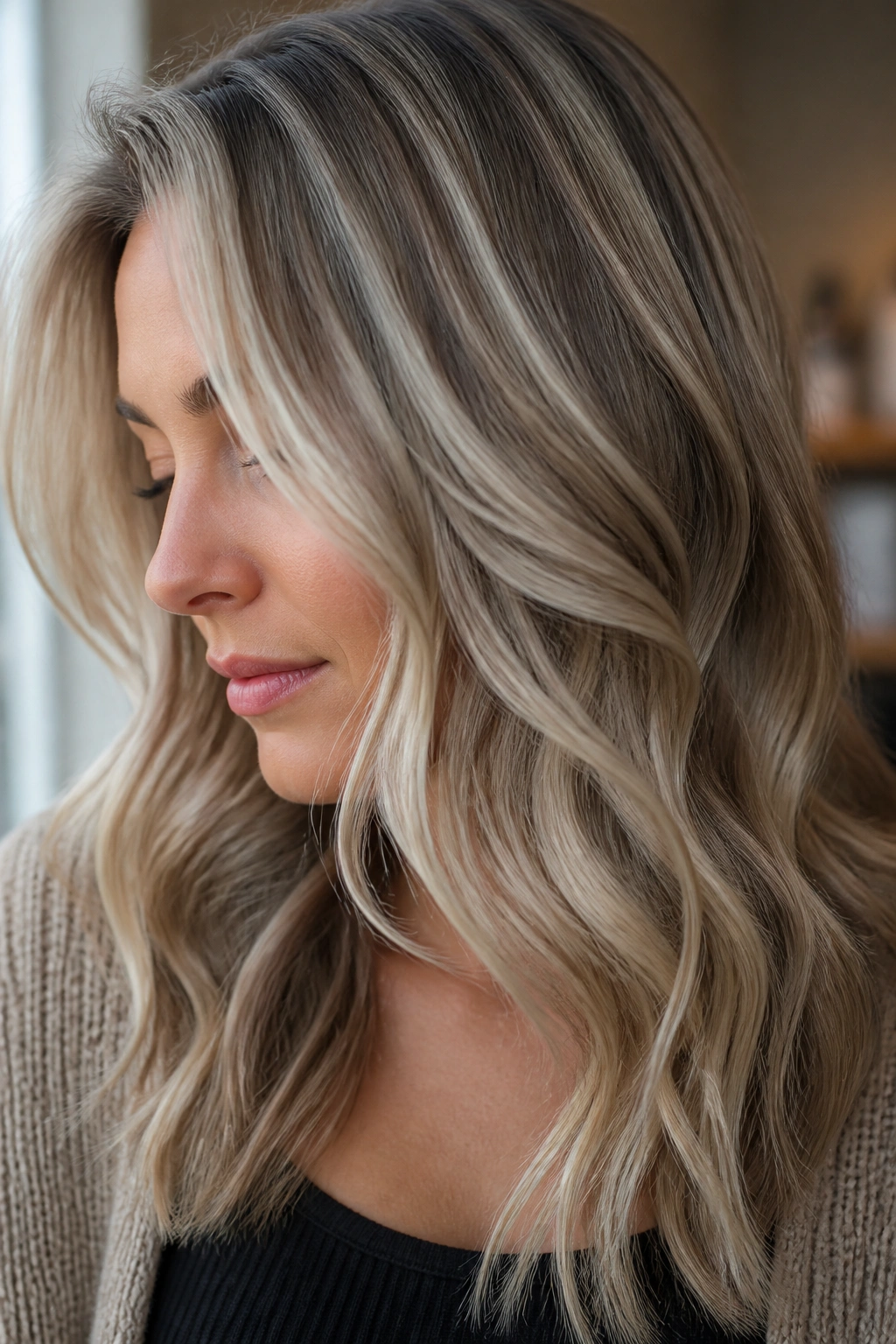
Foggy blonde ribbons are subtle, and that’s the point. Instead of one solid blonding plan, the color is built from thin ribbons in ash, pearl, and grey-beige tones through a darker base.
The effect is soft focus. It flatters cool skin because the tone never gets too yellow, but it also avoids the washed-out look that some all-over silvers can create. The ribbons should stay fine enough to blend, not stripe.
This shade is especially good on people with medium-density hair, because the interwoven strands create a fuller look. It works on straight styles, but I think it’s even better in loose bends where the ribbons move in and out of view.
If you want grey blonde hair color ideas that feel low-key and expensive, this is one of the most wearable ones.
18. Arctic Balayage on Brunette Base
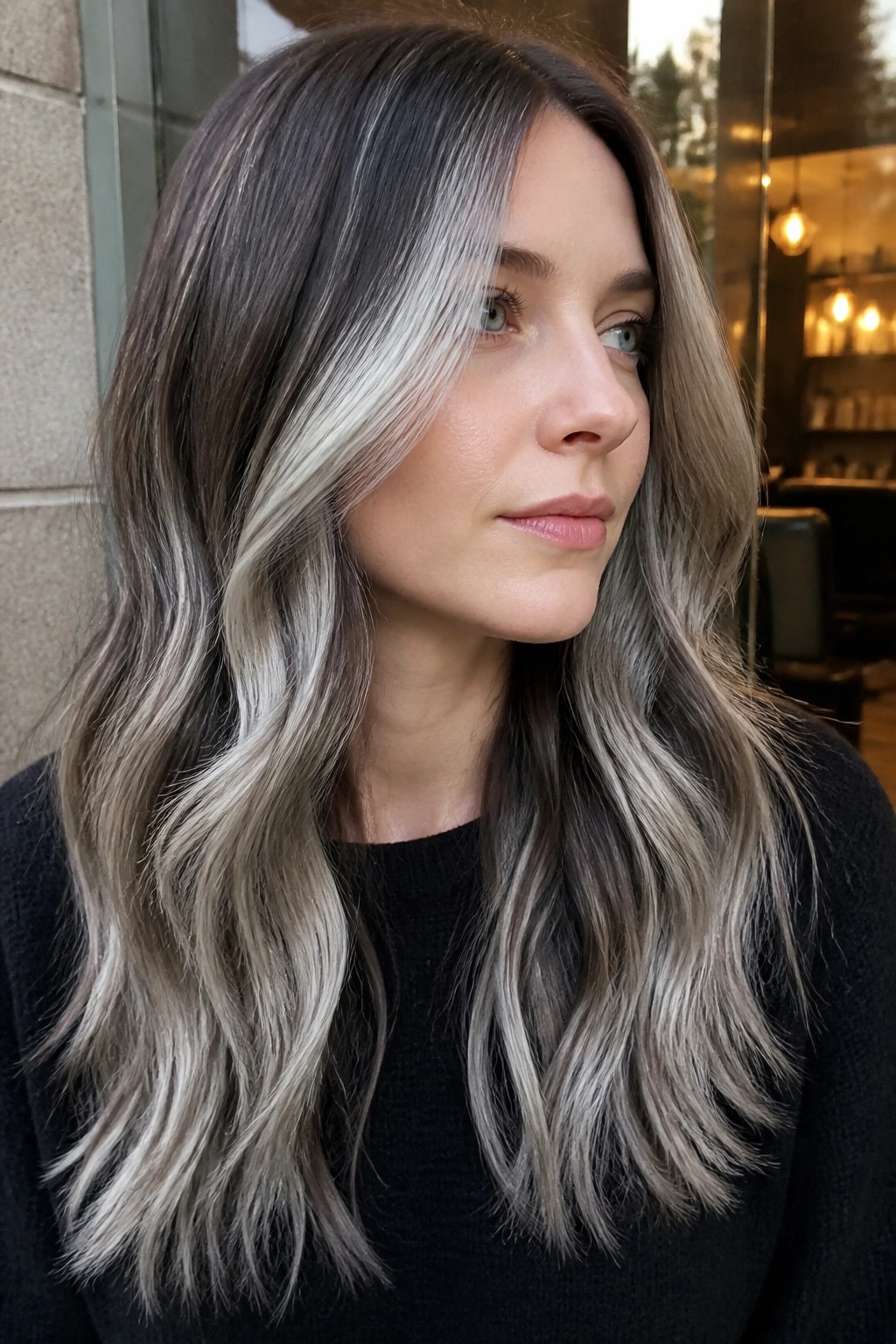
Arctic balayage on a brunette base is for contrast lovers. The base stays deep and cool, while the balayage pieces go pale, icy, and almost white.
The reason this works on cool skin is simple: the contrast makes the complexion look brighter without requiring the whole head to be lightened. That can be a relief if your hair is naturally dark and you do not want to chase full platinum.
What Makes It Stand Out
Unlike uniform blonde, this version keeps the dark base visible. That means less upkeep and a stronger visual frame around the face. It also looks especially good on thicker hair, where the pale pieces can get lost if they’re too sparse.
A colorist will often place the lightest sections around the front and through the top layer. That is where the eye goes first. Ask for cool ash blonde pieces, not beige or golden ones.
Sharp. Graphic. Easy to recognize.
19. Pewter Blonde Gloss
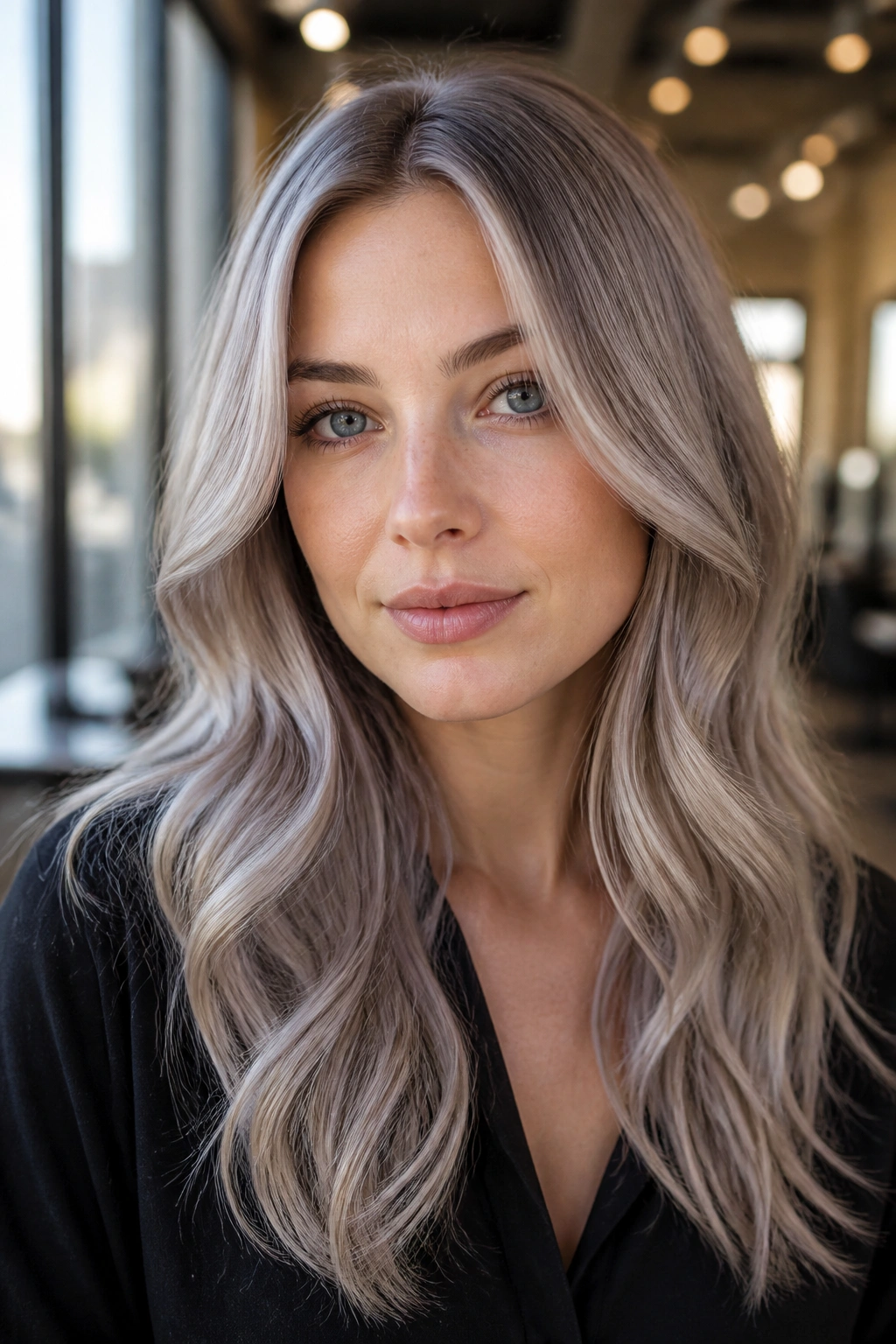
A pewter blonde gloss is the easiest refresh on the list, and it’s one of my favorites for people whose blonde has started to look too warm. The gloss adds a smoky metallic cast that sits somewhere between silver and muted blonde.
It works best on hair that is already light enough to take tone. You’re not lifting much here. You’re adjusting the finish. That makes it a useful salon service between bigger color appointments.
Cool skin tones usually like pewter because it cuts the brass without making the hair look harsh. The result is smooth, reflective, and a little cool-toned in the nicest way. On straight hair, it can look polished; on waves, it looks more dimensional.
If your blonde has gone flat or yellow, this is a tidy fix.
20. Slate Root Smudge and Luminous Ends
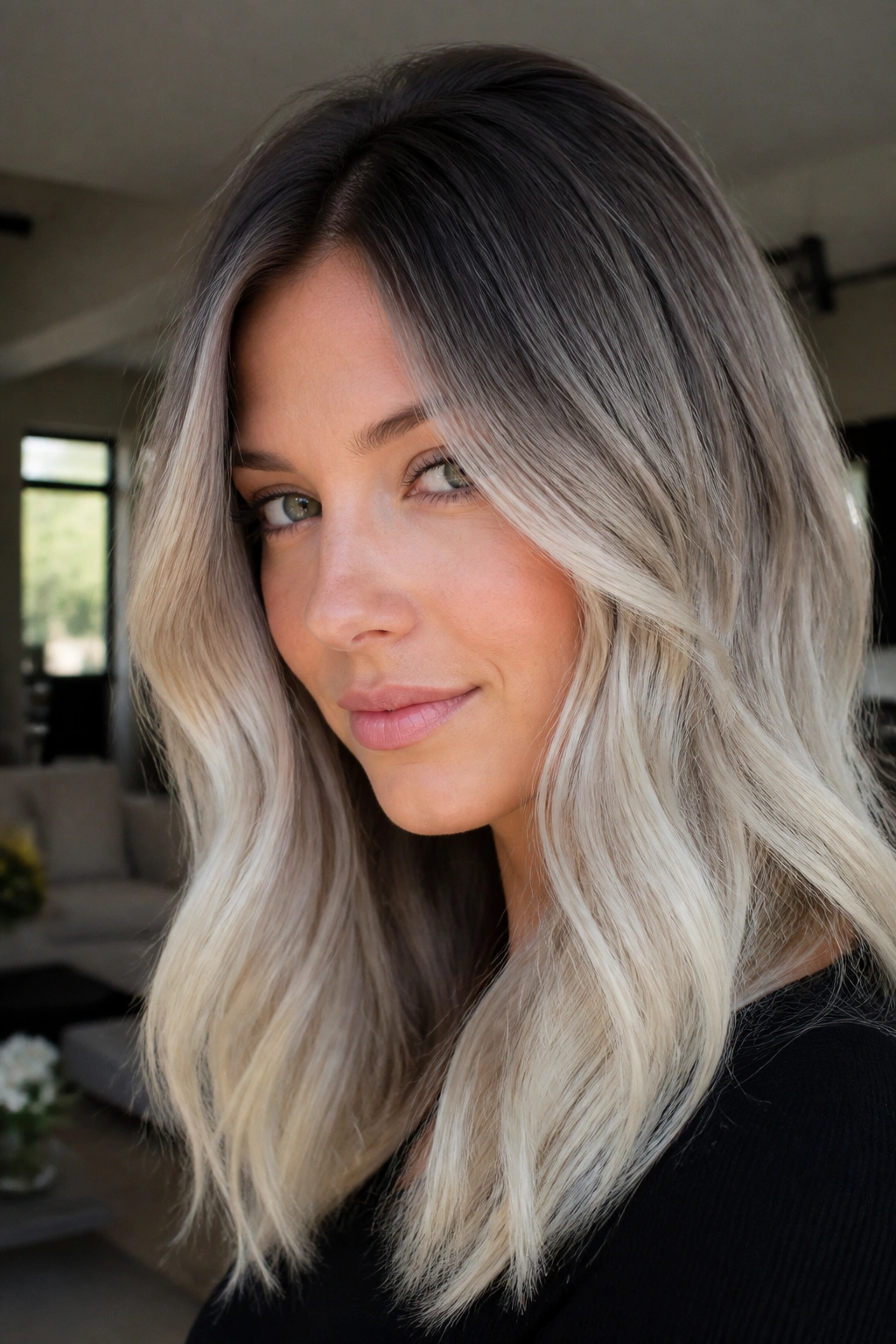
Slate root smudge and luminous ends is a grown-out version of grey blonde that still feels deliberate. The root area stays smoky and cool, then the ends open into a lighter blonde that catches the eye.
The smudge gives you time. That is the real advantage. Instead of a hard regrowth line, you get a gradual transition that can stretch salon visits farther apart without looking sloppy.
This shade flatters cool skin tones because the darker root adds contrast near the face, while the brighter ends keep the style from feeling heavy. It’s especially good on longer cuts where the fade has space to show itself.
Keep the ends bright, not gold. That one detail is what keeps the whole look inside the grey blonde family.
21. Silver Mushroom Bronde
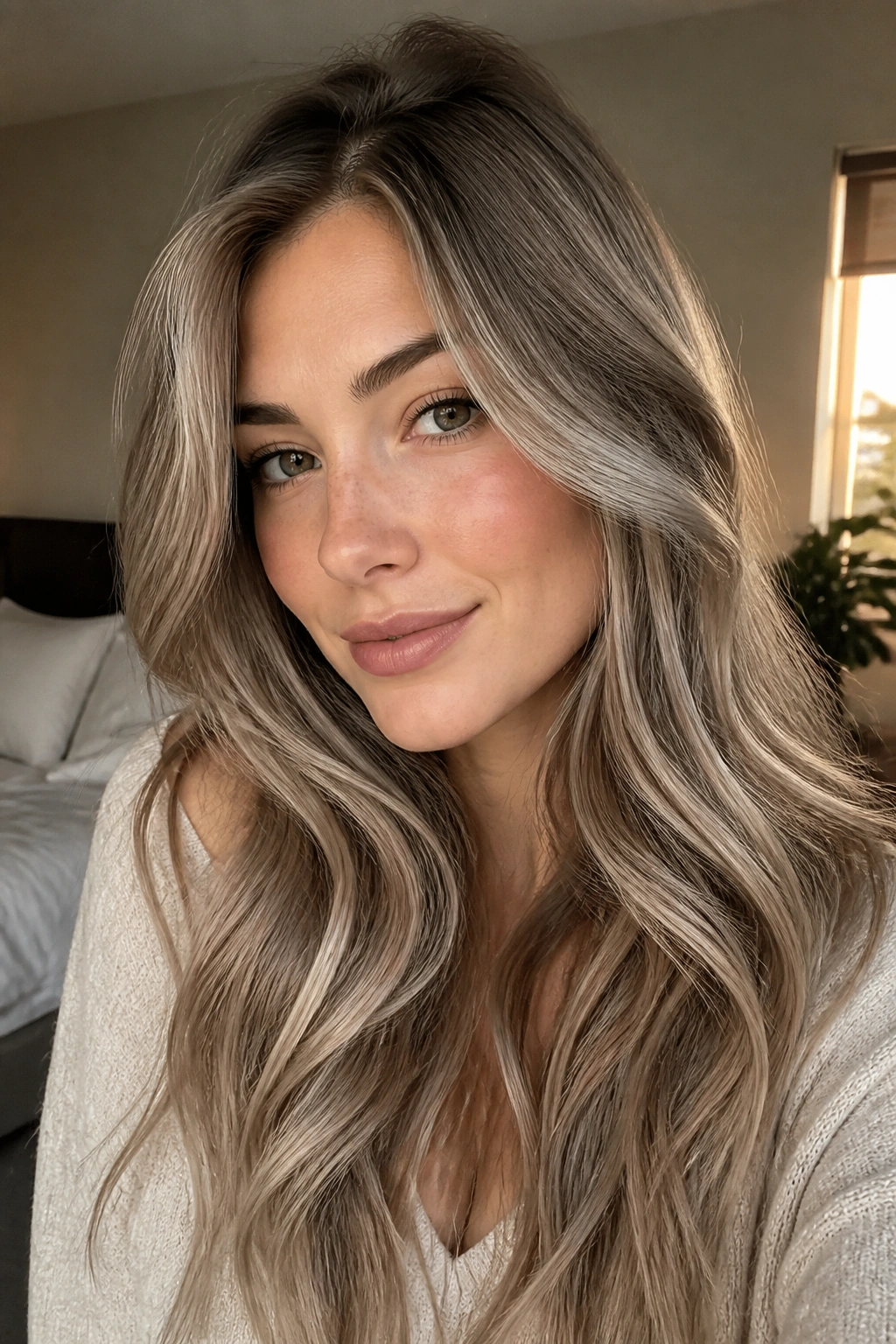
Silver mushroom bronde is for people who sit between brunette and blonde and do not want to choose sides. It mixes soft brown depth with silver-grey blonde ribbons, which gives cool skin a wearable amount of brightness.
This is one of the most forgiving grey blonde ideas in the bunch. The darker base keeps the color grounded, and the silver pieces bring just enough lift to stop the hair from feeling heavy. It’s a good fit if your natural color is dark blonde, light brown, or a cool mocha shade.
The finish looks especially nice on wavy hair because the mixed tones break up in motion. Straight hair makes it read cleaner and a little more graphic.
If you want cool color without the commitment of full blonde, this is a smart lane to stay in.
22. Silver Lilac Grey Blonde
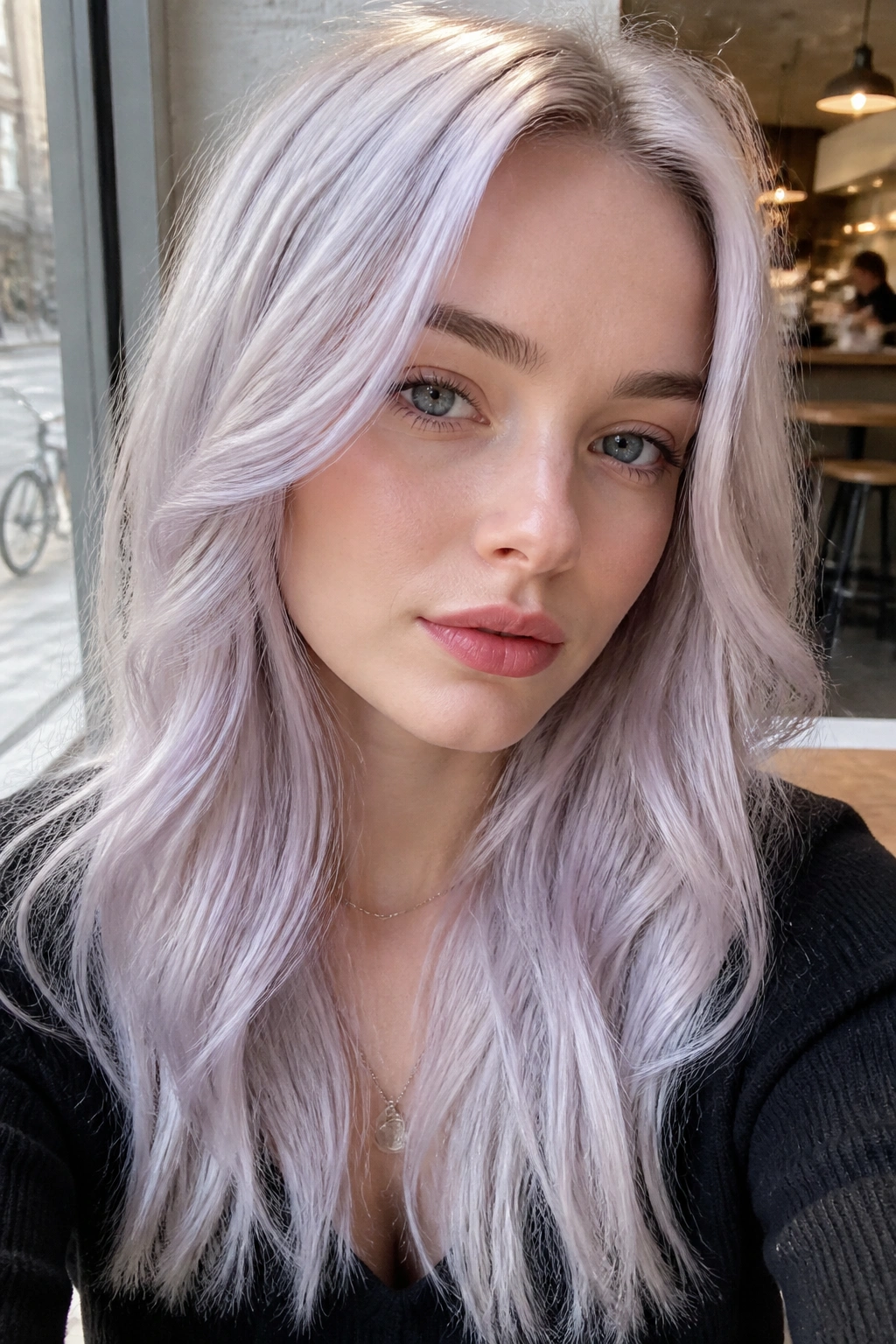
Silver lilac grey blonde has a softer, more playful edge. The lilac does not turn the hair purple in a loud way; it just cools the blonde and gives the silver a faint pastel cast.
That little bit of lilac is useful on cool skin with redness or uneven tone because it takes the edge off the face. The shade can look a touch fashion-forward, but it is still wearable if the pastel stays faint.
Why It Works
The base needs to be pale enough for the lilac to show, but not so white that the pastel disappears. A translucent toner is better than a heavy deposit. Heavy color can make the finish muddy fast.
This shade is good on smooth, glossy hair and on blunt cuts. It’s less convincing when the hair is very frizzy, because the color reads best when the surface looks tidy.
23. Quartz Blonde
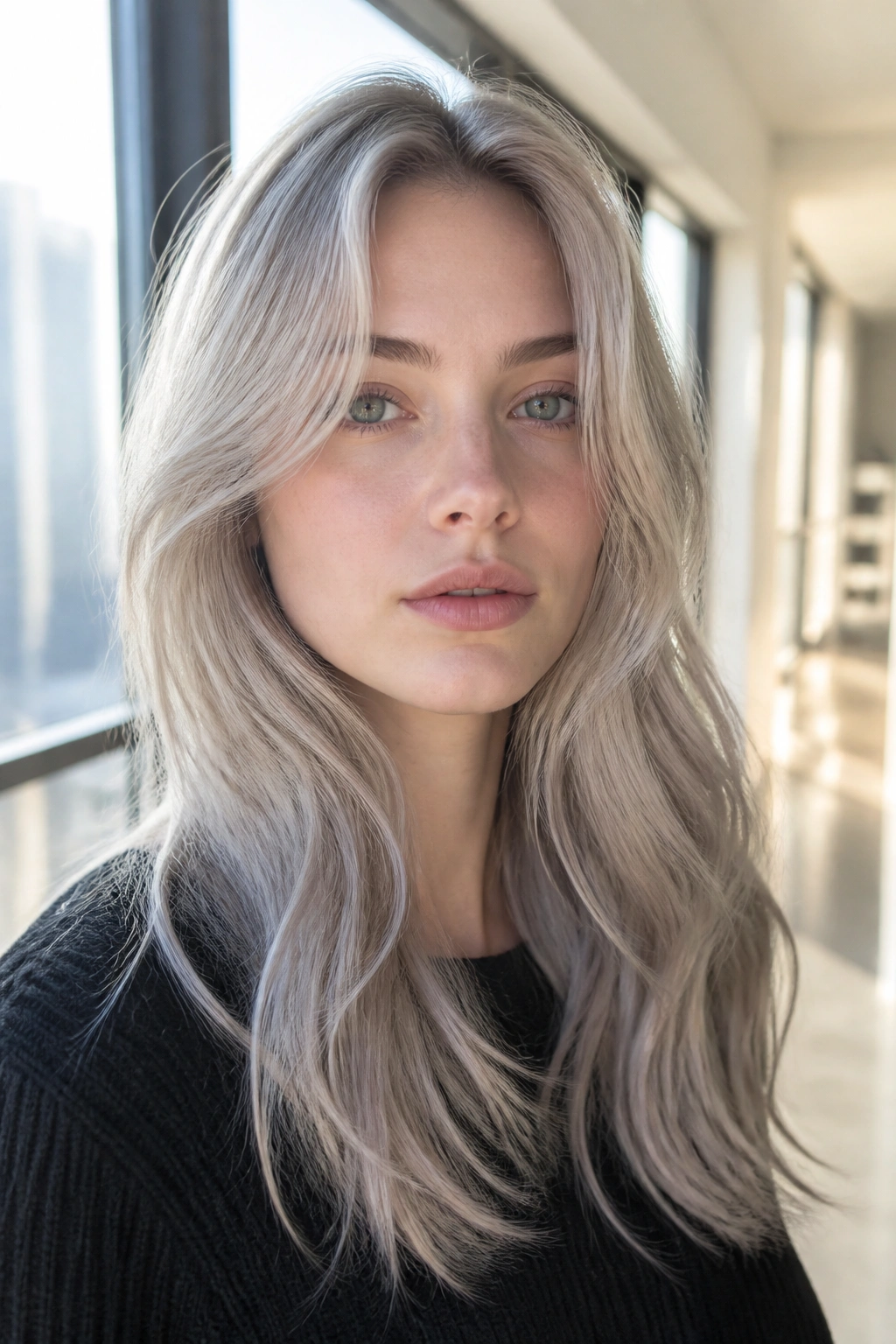
Quartz blonde has a mineral feel to it. Not shiny in a loud way. More like pale stone with a soft reflective finish.
That makes it useful for cool skin tones that need dimension but not drama. The tone sits between grey blonde and muted pearl blonde, with enough softness to keep the complexion from looking stark. It’s especially flattering if your features are delicate and you want the hair to support them rather than dominate them.
The best versions usually have a pale base with a cool glaze layered over the top. The color should look translucent, not opaque. That is what gives quartz blonde its calm, polished finish.
It works on medium lengths, but I think it really shines on long layers where the different surfaces of the hair catch light at different angles.
24. Midnight Ash Blonde
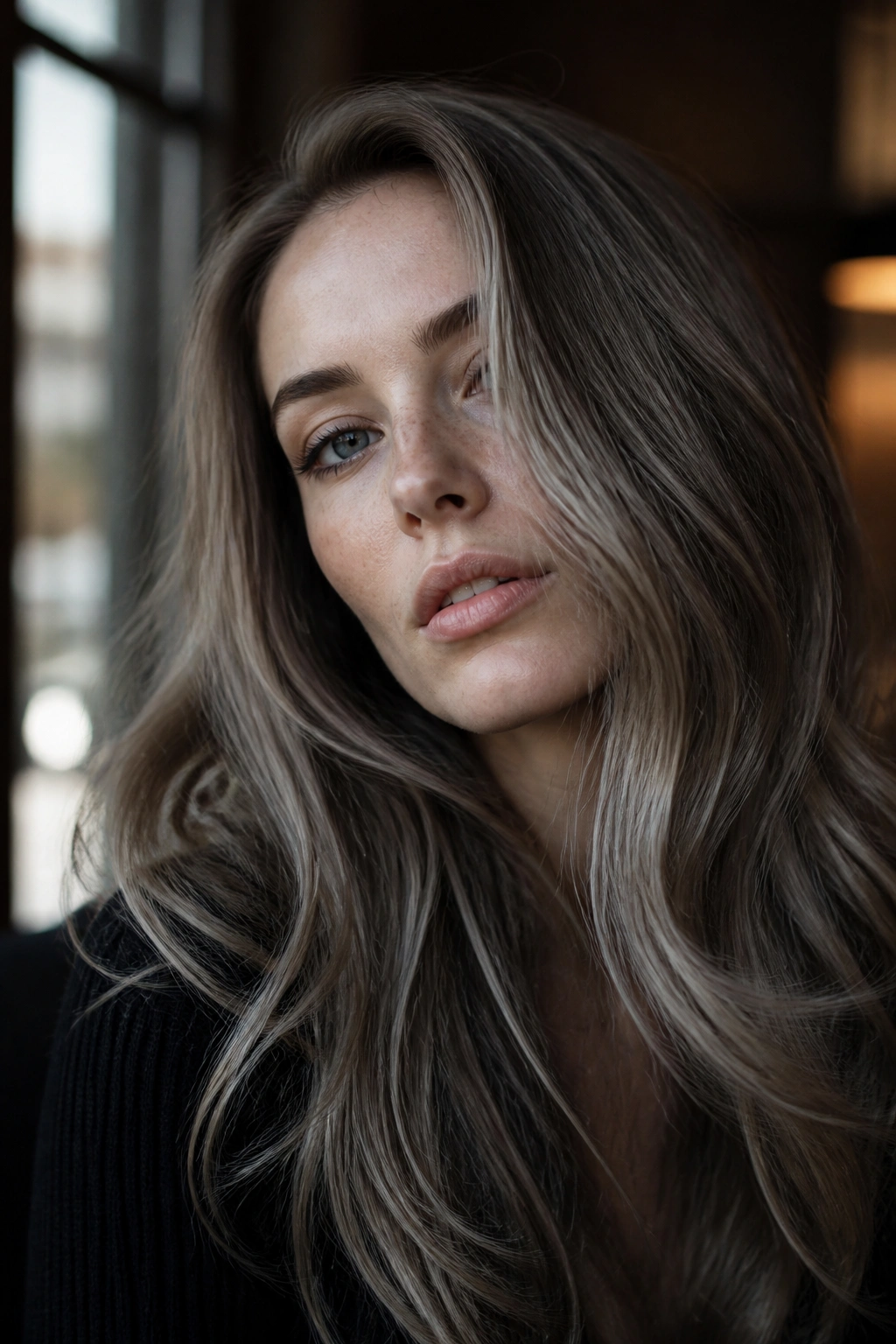
Midnight ash blonde is the darker side of grey blonde, and that makes it a strong option for cool brunettes who want change without going full light. It keeps the base deep and cool, then nudges the lighter pieces toward smoke and ash.
The result is subtle at first glance, then more interesting when you see it moving. That’s useful for cool skin because the color gives shape without overwhelming the face. It also grows out well, which is never a bad thing.
Unlike paler blondes, this shade can stay flattering even if you don’t live at the salon. A gloss every so often is usually enough to keep the ash tone from getting muddy.
If you like moody hair, this one has a lot to offer.
25. Soft Mushroom Platinum Blend
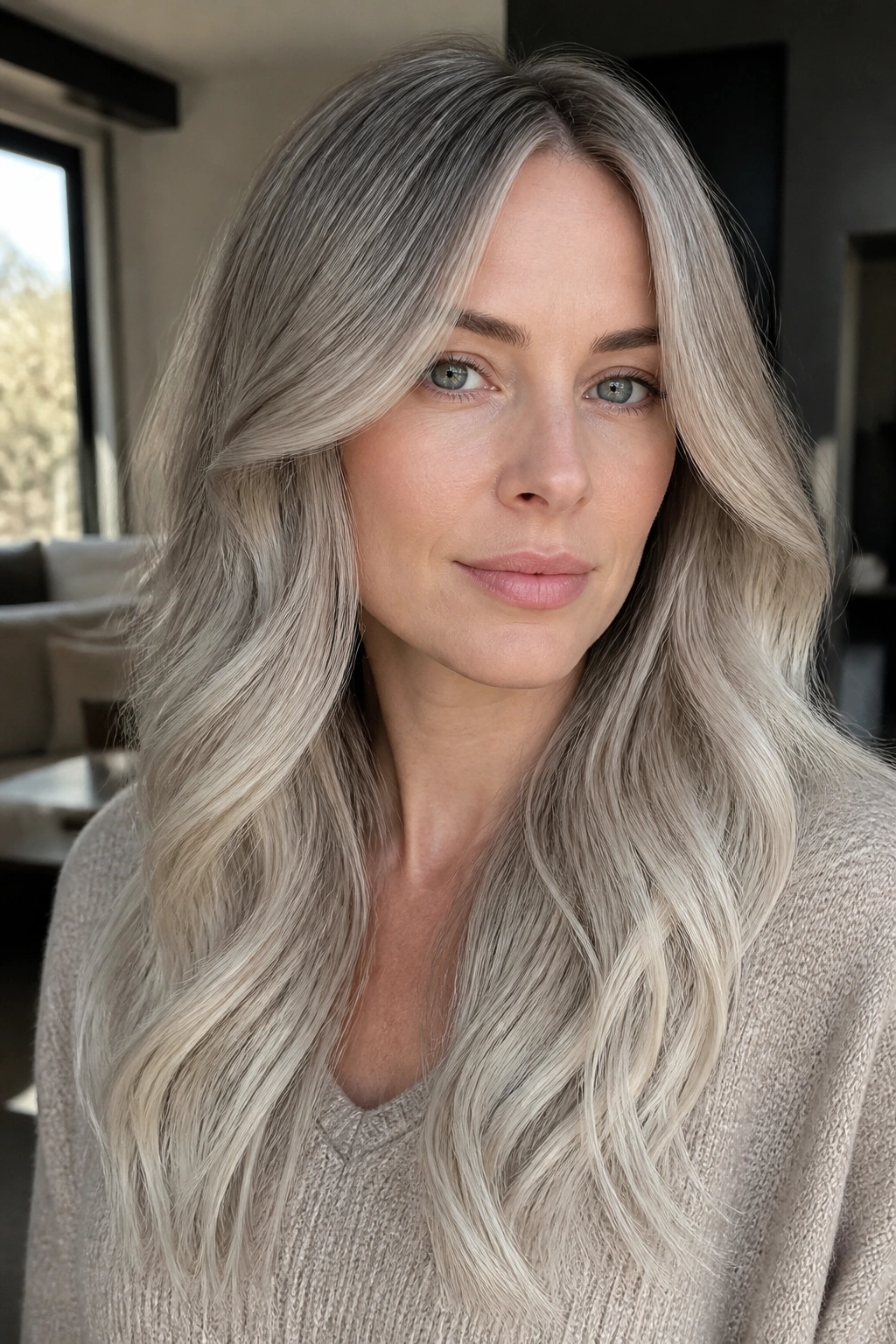
Soft mushroom platinum blend brings the whole idea full circle. It is pale, cool, and dimensional, but softer than a pure platinum and brighter than a typical mushroom blonde.
That combination is what makes it so useful for cool skin tones. The mushroom base keeps the color grounded near the roots, while the platinum ends or highlights bring in that frosty finish people love. It has enough contrast to stay interesting and enough softness to stay wearable.
This is a good choice if you want a blonde that looks expensive without looking severe. It’s also one of the easiest shades to adapt to different cuts, from a shag to a long layered blowout.
If you’re torn between silver and beige, this blend sits in the middle and does the job without making a scene.
Grey blonde hair color ideas work best when you match the tone to your skin’s undertone instead of chasing the palest shade in the room. Cool skin usually looks strongest with ash, pearl, silver, slate, and soft mushroom tones, while anything honey-gold can pull the whole look off balance.
The easiest way to get a flattering result is to think in layers: base depth, brightness, and tone. Get those three right, and even the most delicate blonde starts to look intentional. Get them wrong, and the color turns yellow, flat, or strangely harsh around the face. Small difference. Big payoff.
