



Cool skin tones can look icy and expensive with champagne blonde, or they can look a little tired if the shade runs too gold. The difference is smaller than people think: one toner too warm, a root that disappears too hard, or a highlight pattern that leaves the face washed out instead of brightened. Cool skin usually wants a blonde that sits in the pearl, beige, silver, or smoky range—not something that leans sunny and yellow.
That’s why champagne blonde works so well when it’s handled with a light hand. It has enough brightness to lift the face, but it keeps a softer, cooler edge than a classic gold blonde. A good color usually lives around a level 8 or 9, then gets cleaned up with a violet, pearl, or beige gloss so the finish stays crisp. Too much warmth and the whole thing turns buttery. Too little and it can go flat.
Some versions are soft and sheer. Others are brighter around the face, deeper at the root, or mixed with silver and smoke for a cooler mood. The right choice depends on your base color, your haircut, and how much maintenance you’re willing to live with. The ideas below stay in that cool lane, but each one changes the feel in a different way.
1. Classic Champagne Blonde for Cool Skin Tones
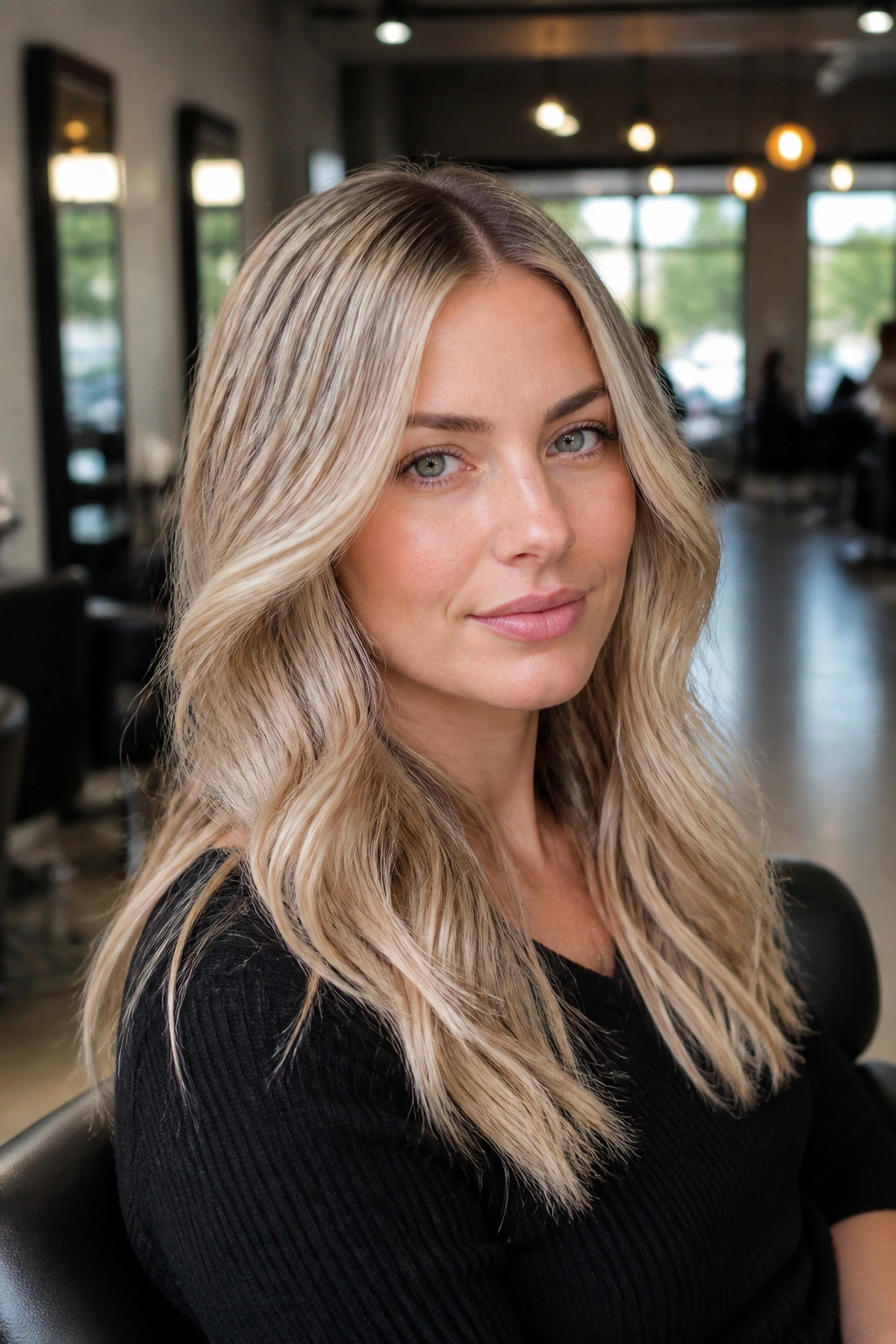
This is the reference point. Classic champagne blonde sits between beige and pearl, with enough warmth to keep the hair from looking chalky and enough coolness to keep it from drifting yellow. On cool skin, that balance matters a lot.
Why It Flatters Cool Skin
The shade works because it doesn’t fight pink or blue undertones. It softens redness in the skin without making the face look gray. That’s the sweet spot.
Ask for fine babylights, a neutral root, and a violet-beige gloss through the mids and ends. If the toner looks too golden in the bowl, it will probably read warm in the mirror too. That’s the part people miss.
- Keep the lightness around level 9 if your hair can hold it.
- Leave a whisper of depth at the root so the blonde has shape.
- Style it in loose waves or a smooth blowout to show the mixed tones.
Tip: If the shade starts looking like soft butter, it has wandered too warm.
2. Pearl Champagne Blonde
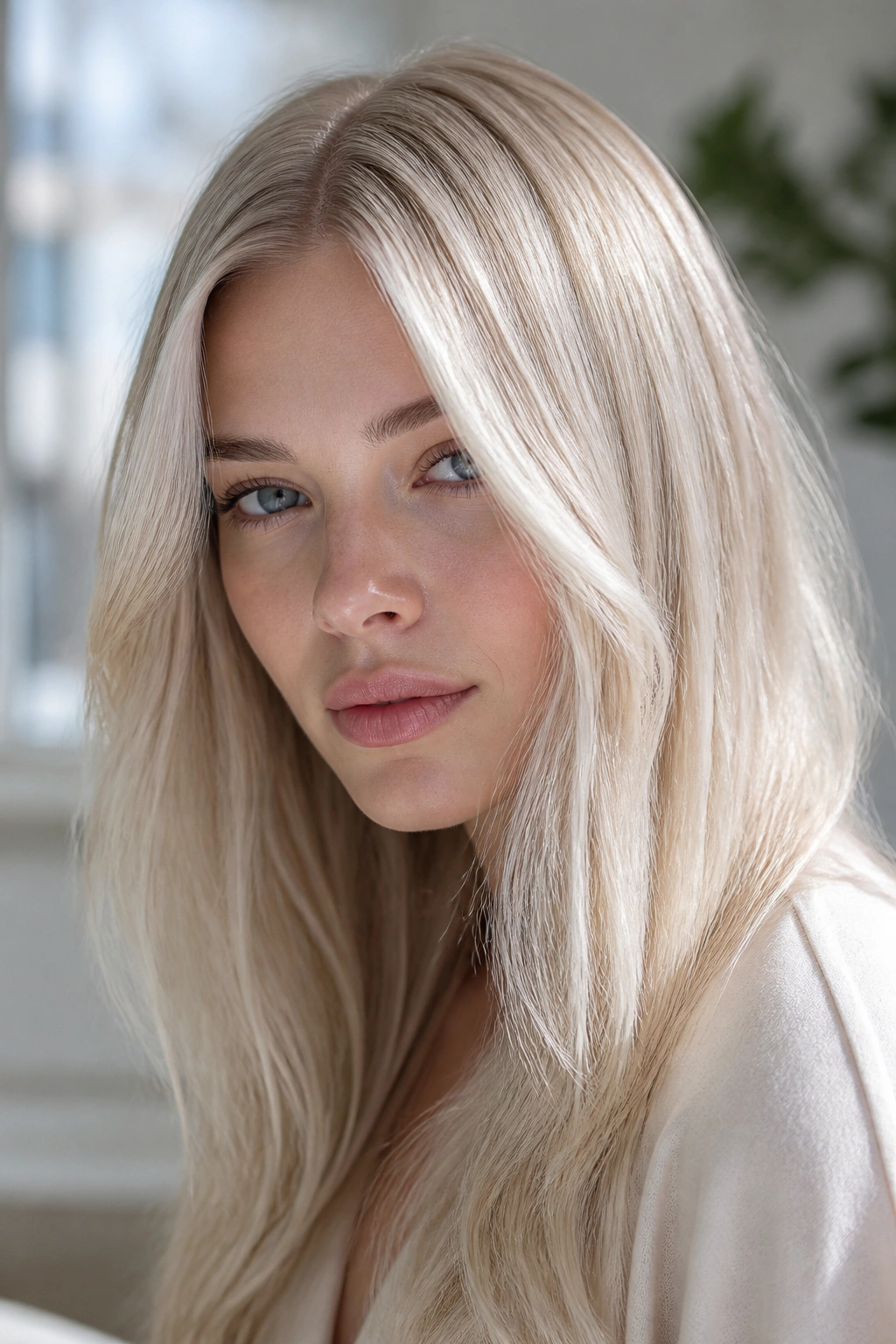
Pearl champagne is the version I reach for when someone wants blonde that feels clean rather than sugary. It has a shell-like finish, almost like the hair caught pale light and held onto it.
It suits very fair cool skin especially well because it keeps the overall look airy. The pearl note also stops the blonde from turning flat against pale complexions. That’s a common problem with cooler blondes: they can go dull if they don’t have enough shine.
A pearl gloss over prelightened hair gives you that soft reflection without obvious gold. It’s a good pick if you like sleek styling, center parts, and hair that sits close to the head.
3. Beige Champagne Balayage
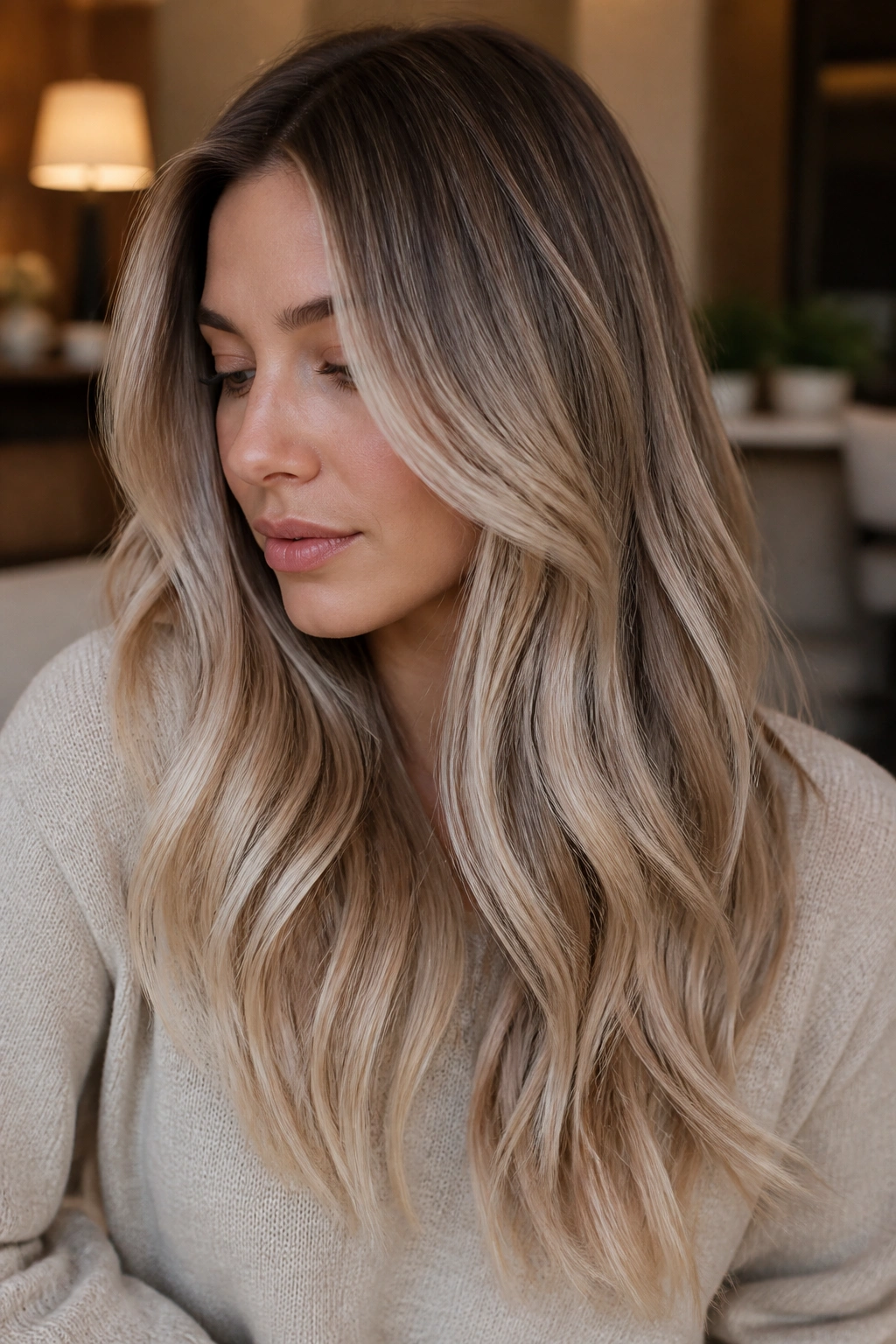
Can beige still read cool? Yes, if the beige leans soft, dusty, and neutral instead of honeyed. That’s why beige champagne balayage works so well on cool skin tones.
The placement matters as much as the tone. A balayage that starts a little lower on the head keeps the roots natural and lets the blonde feel lived-in instead of stripey. On medium brown or dark blonde hair, this is one of the easiest ways to move into champagne territory without losing depth.
How to Keep It Cool
Ask for hand-painted ribbons rather than chunky panels. The colorist should keep the lightest pieces around the face and through the top layers, then soften the ends with a beige gloss. A touch of ash in the formula keeps the whole thing from turning peachy.
This is the kind of blonde that grows out well, but it still needs toning now and then. Beige can drift warm if your water is hard or your hair pulls gold fast.
4. Smoky Champagne Lob
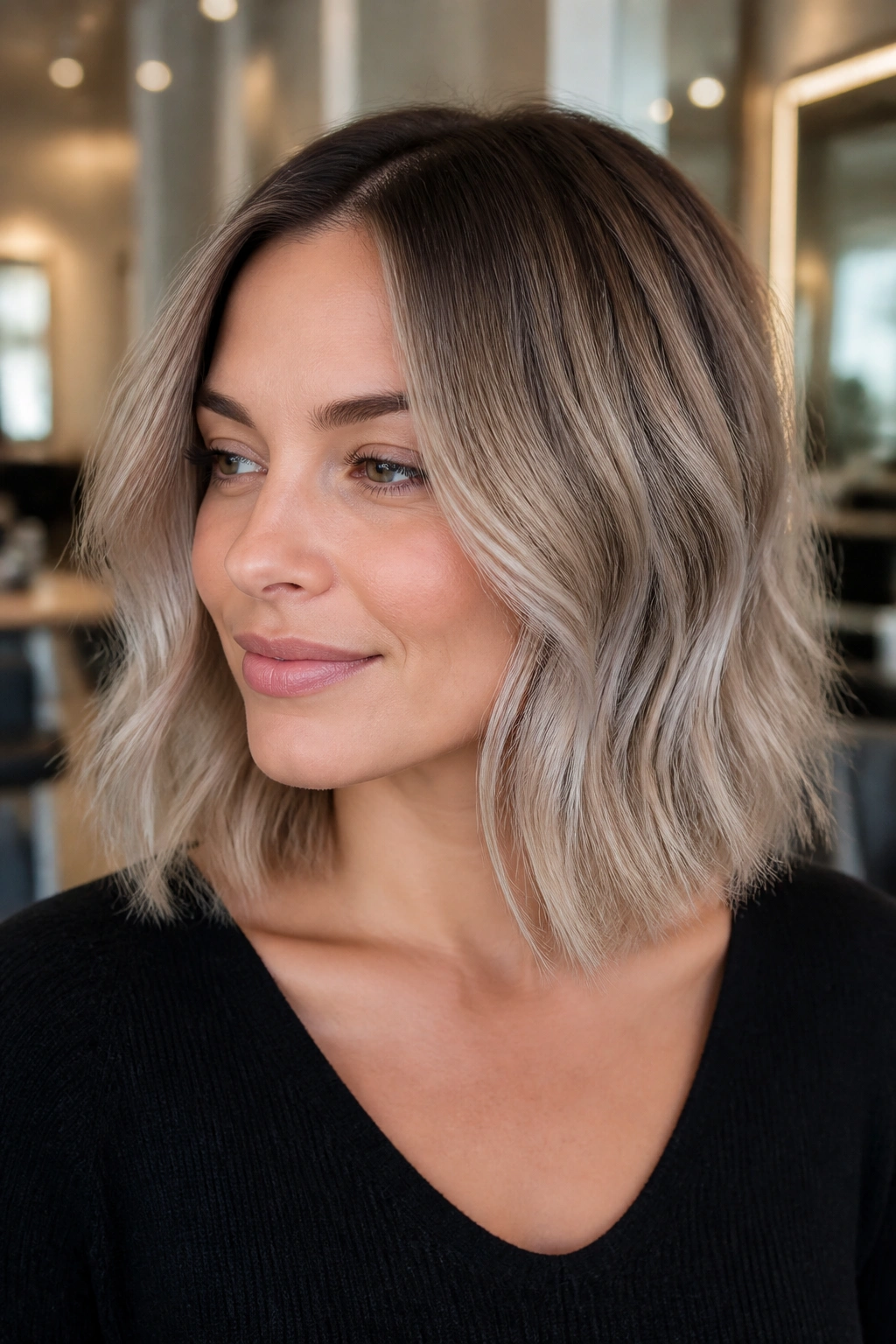
A shoulder-grazing lob makes smoky champagne feel deliberate. On longer hair, smoky tones can disappear. On a lob, they read polished and a little moody.
The color usually combines a deeper root, a cool beige midtone, and lighter champagne ends that aren’t too bright. That mix keeps cool skin from looking drained. It also gives the haircut a thicker visual line, which is useful if your hair is fine or medium.
Boring? Not this one.
A smoky champagne lob looks best when the waves are soft and not too uniform. You want movement, not curls that all bend the same direction. Ask your colorist to leave some shadow between the foils so the hair keeps depth under indoor light.
5. Icy Champagne Money Piece
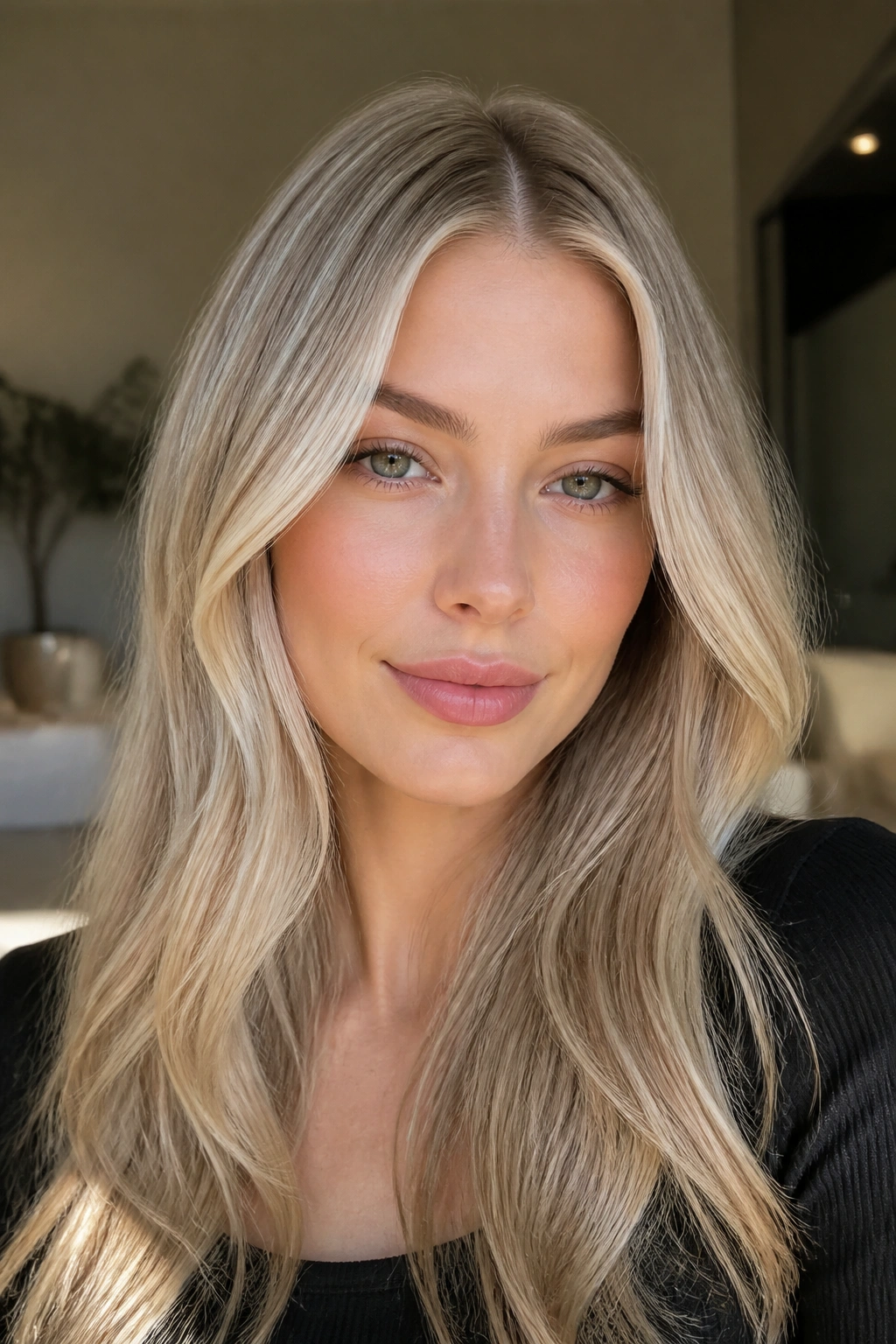
A bright front piece does more than frame the face. It changes the whole mood of the cut.
Icy champagne money pieces suit cool skin because they put the lightest tone exactly where the eye goes first. The key is keeping the money piece icy, not white-blonde. A little champagne beige in the mix stops it from looking sharp in a harsh way.
Where It Works Best
This look is strongest with long layers, curtain bangs, or a center part. The front pieces can be wider if your face is longer, or narrower if you want a softer result. I like it most when the color flows back into a rooted blonde through the sides instead of stopping abruptly.
- Keep the face frame one to two levels lighter than the rest.
- Use thin foils near the hairline for a softer edge.
- Blend the front sections into the crown so the color doesn’t look pasted on.
Tip: A money piece that’s too wide can shout. Keep it slim if you want elegance.
6. Root-Melt Champagne
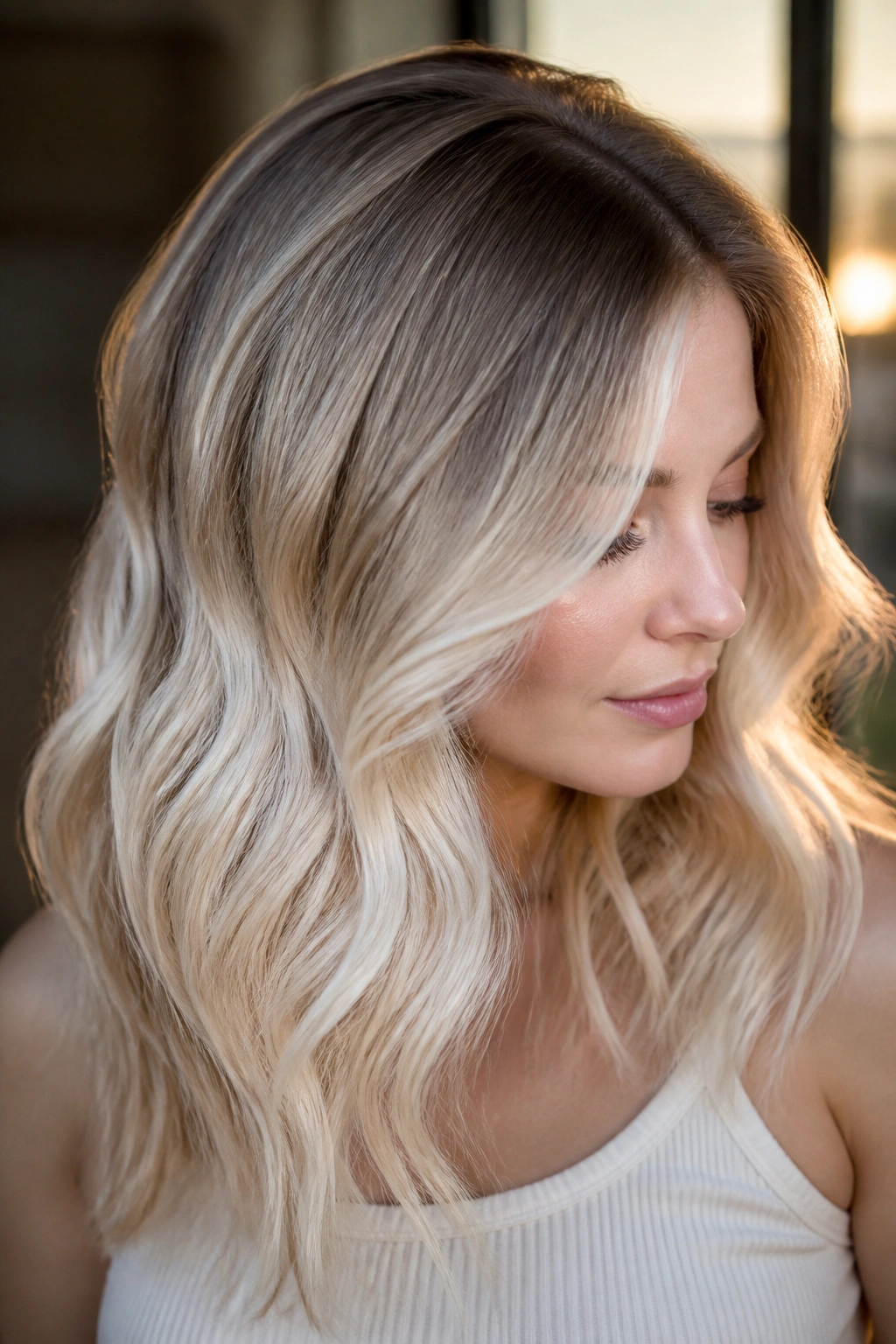
Why does a root melt work so well on cool skin? Because it gives the blonde a place to start.
A root-melt champagne blonde keeps the base slightly deeper and softer, then fades into cooler champagne through the mids and ends. That little bit of depth near the scalp makes the face look less stark and gives the color some shape. It also saves you from the too-bright-hairline effect that can happen with full blonde.
What to Ask For
Tell the colorist you want a seamless melt, not a hard root shadow. The root should be only a shade or two deeper than the mids. From there, the blonde can open up in beige and pearl tones.
This look is especially good if you wear your hair straight. Straight styles show every line, and a melt keeps the color from looking boxy. It’s also a nice choice if you don’t want to be in the salon every few weeks.
7. Champagne Ribbon Highlights
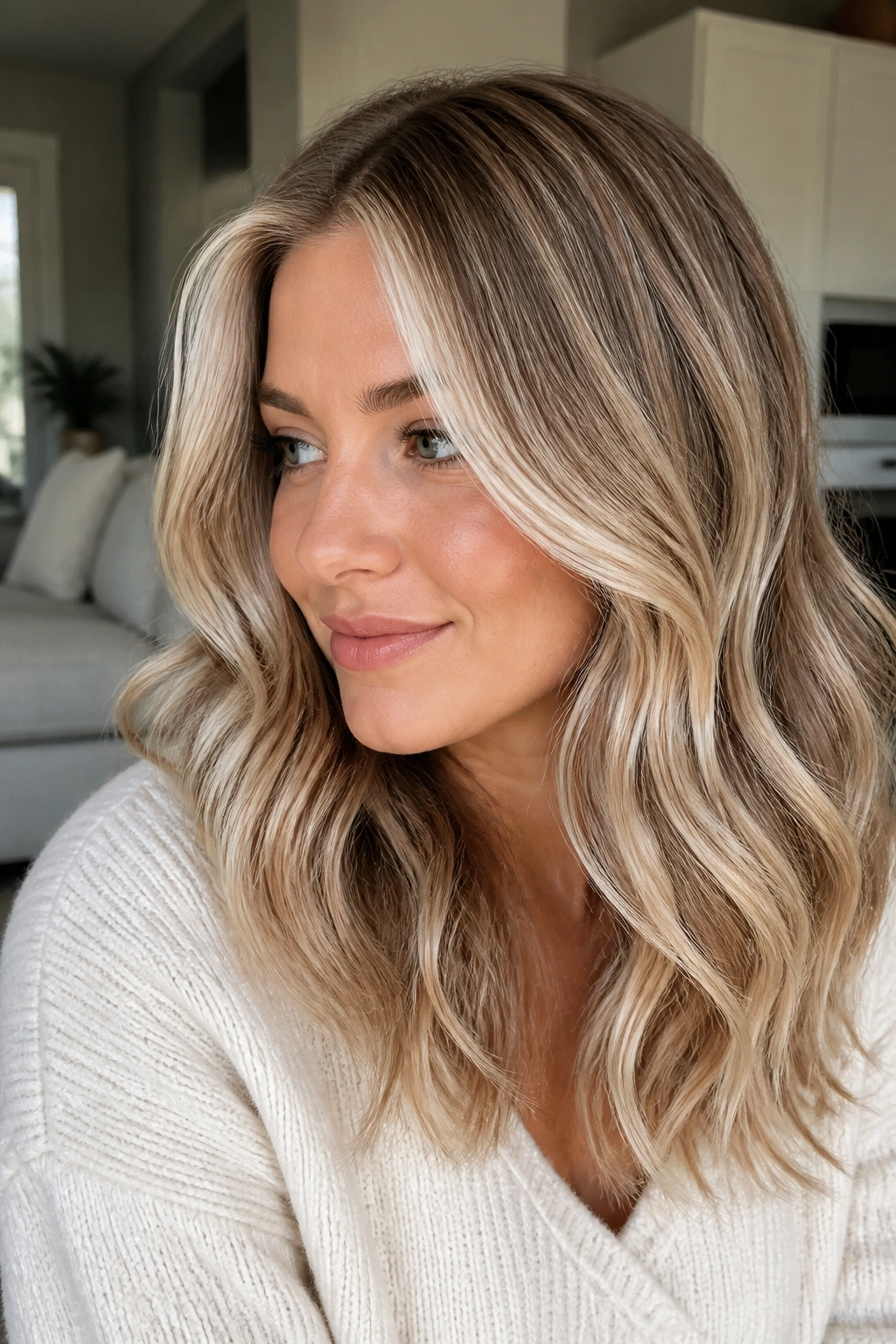
Long hair can swallow soft blonde if the highlight pattern is too timid. Ribbon highlights solve that by threading broader, more visible pieces through the hair while still keeping the tone cool.
This is one of my favorite ways to give champagne blonde some movement. Instead of tiny, scattered lights, you get soft ribbons that curve through the mid-lengths and catch the eye when the hair swings. On cool skin, the ribbons should stay beige-pearl, not caramel.
The Shape of the Look
Ribbon highlights need room. They work best on collarbone-length hair and longer, especially if the cut has layers. Too much layering and the ribbons break apart. Too little and the color sits there without shape.
- Ask for ribbons around the face and through the outer layers.
- Keep the underside a little deeper for contrast.
- Finish with a gloss that cuts yellow without making the blonde look dusty.
The end result feels brighter without turning busy.
8. Mushroom Champagne Blonde
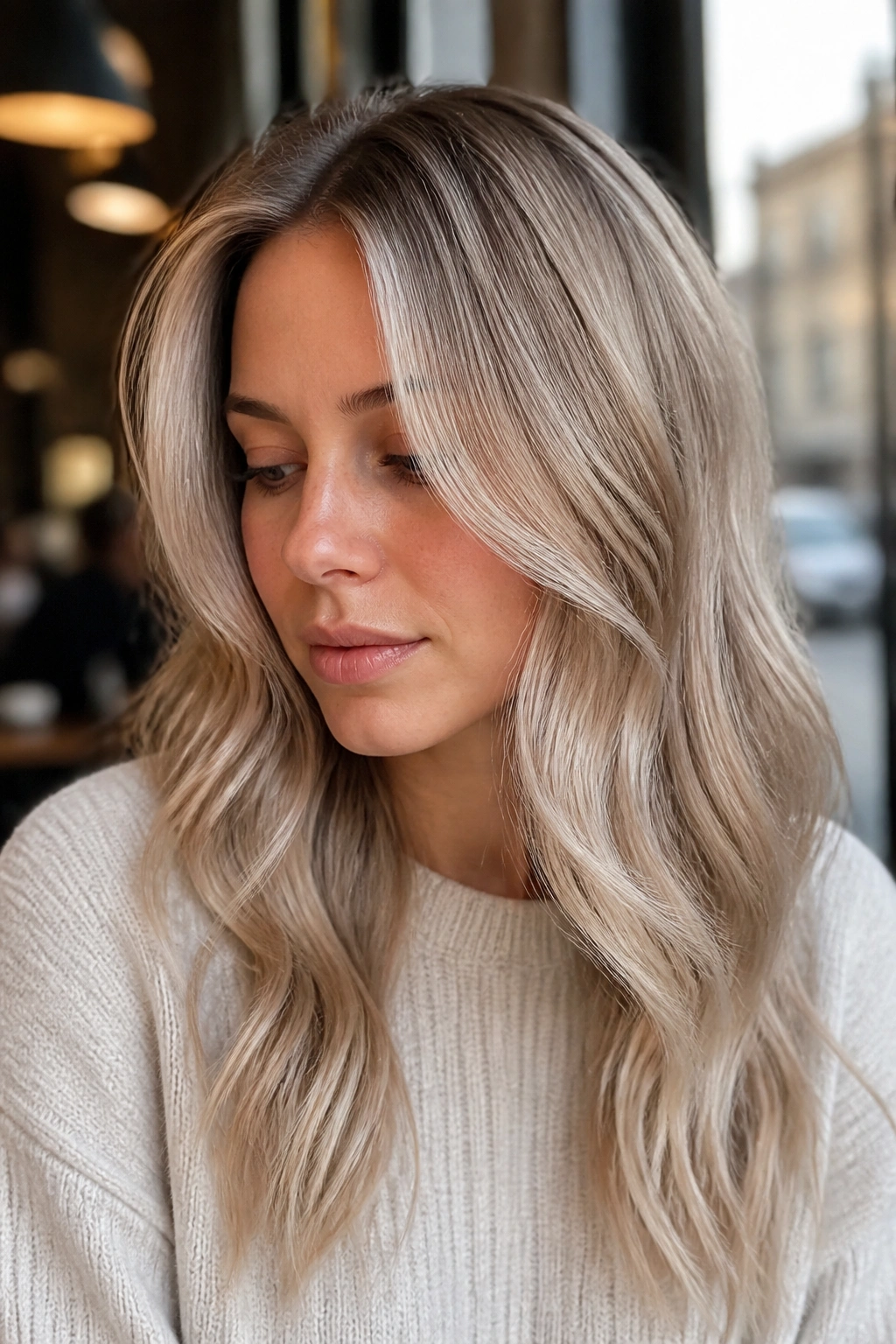
Mushroom champagne is quietly one of the smartest choices for cool skin. It leans taupe-beige with a faint silver edge, so it never gets too sunny.
The shade has a softness that works especially well if your natural color is dark blonde, light brown, or “in-between” brown. It doesn’t fight the base. It sits on top of it. That gives the hair a lived-in feel that’s much easier to wear than a high-contrast blonde.
It also suits people who hate obvious warmth. The mushroom note mutes brass fast. On cool skin, that slight gray-beige cast can make the complexion look calmer and more even.
This is not a loud color. That’s the appeal.
9. Platinum Champagne
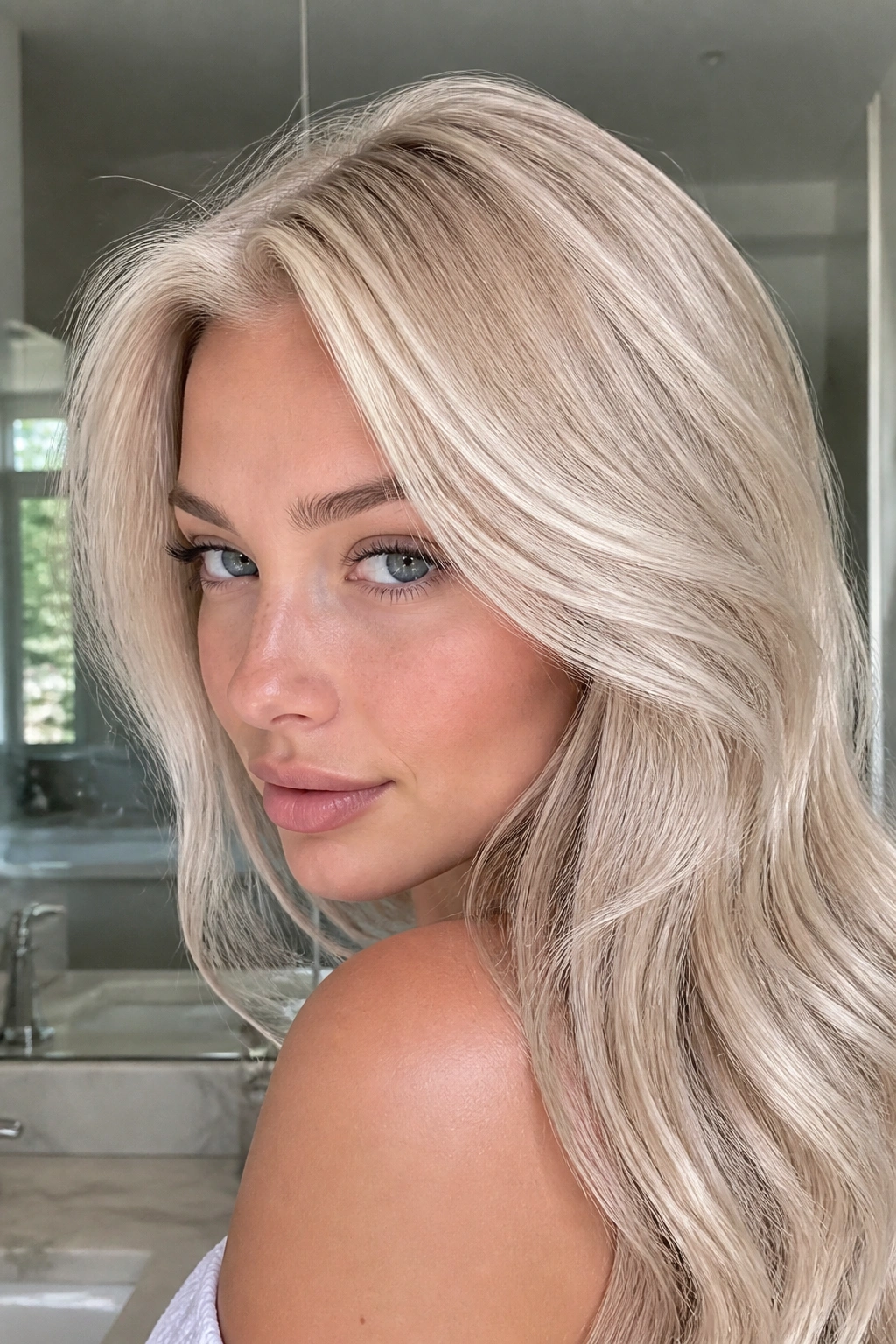
Unlike true platinum, platinum champagne keeps a trace of beige in the finish. That tiny bit of softness matters. It keeps the blonde from looking icy in a brittle way.
If your skin is cool but not extremely fair, this is a useful middle ground. The hair still looks bright and high-lifted, yet the champagne gloss stops it from reading flat white. That makes the shade easier to wear with makeup, especially if you like a clean lip and defined brows.
Platinum champagne usually needs serious lifting first, then a cool gloss on top. It’s high maintenance, no way around that. But the payoff is a striking, refined blonde that still feels softer than straight platinum.
10. Silver Veil Champagne
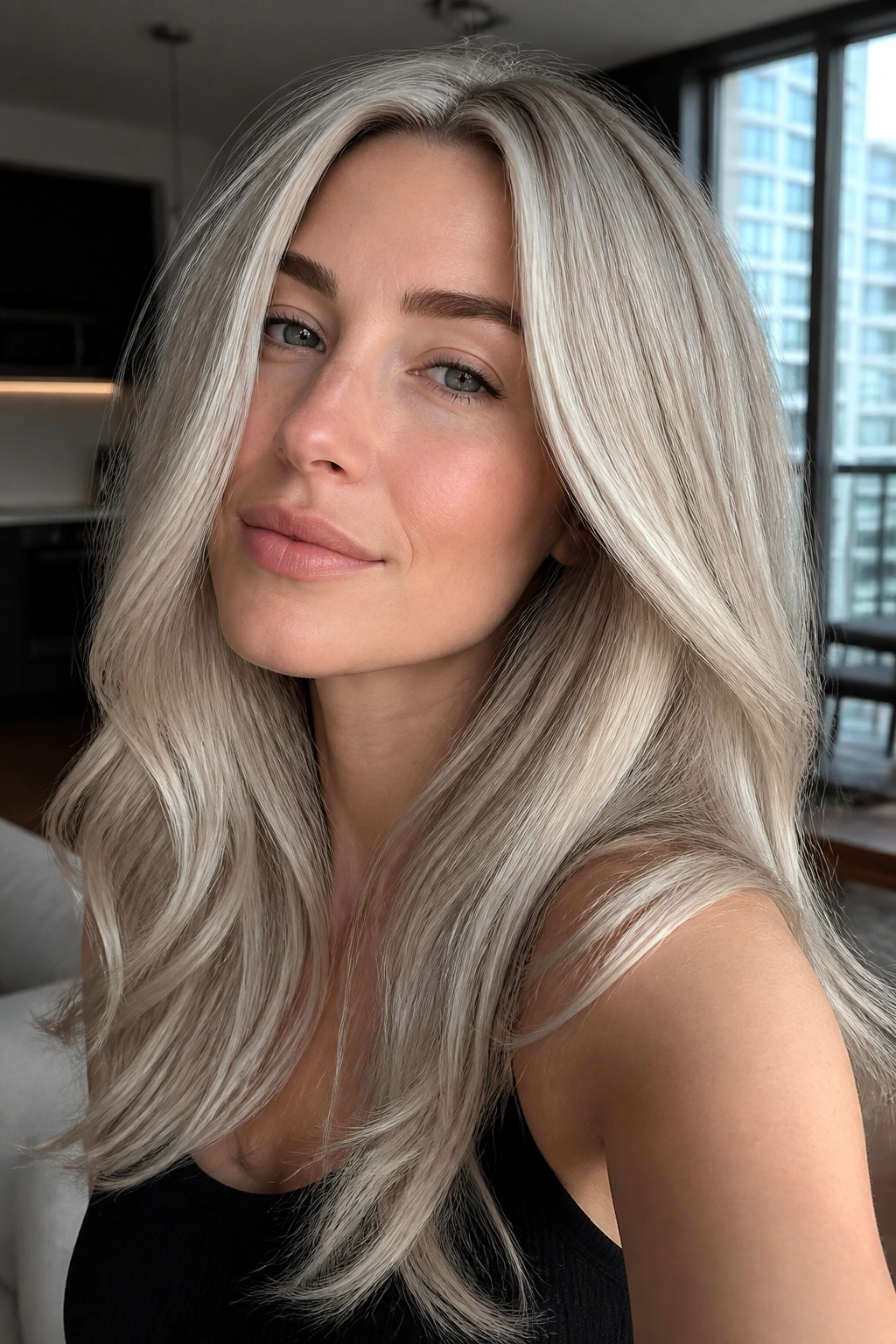
Silver veil champagne is the closest thing to moonlight in hair color. It’s not silver-gray all the way through. It’s a champagne base with a thin silver cast sitting on top.
That veil of silver works because it reflects cool light back at the face. On cool skin, the effect is crisp and clean. The shade can look almost liquid if the hair is straightened or blown out smooth.
A little warning: silver-leaning blondes need careful toning. Too much purple and the hair can start to look muted. Too little and the silver disappears. The best version keeps the shine but leaves enough warmth underneath to stop the hair from feeling flat.
11. Vanilla Champagne Bob
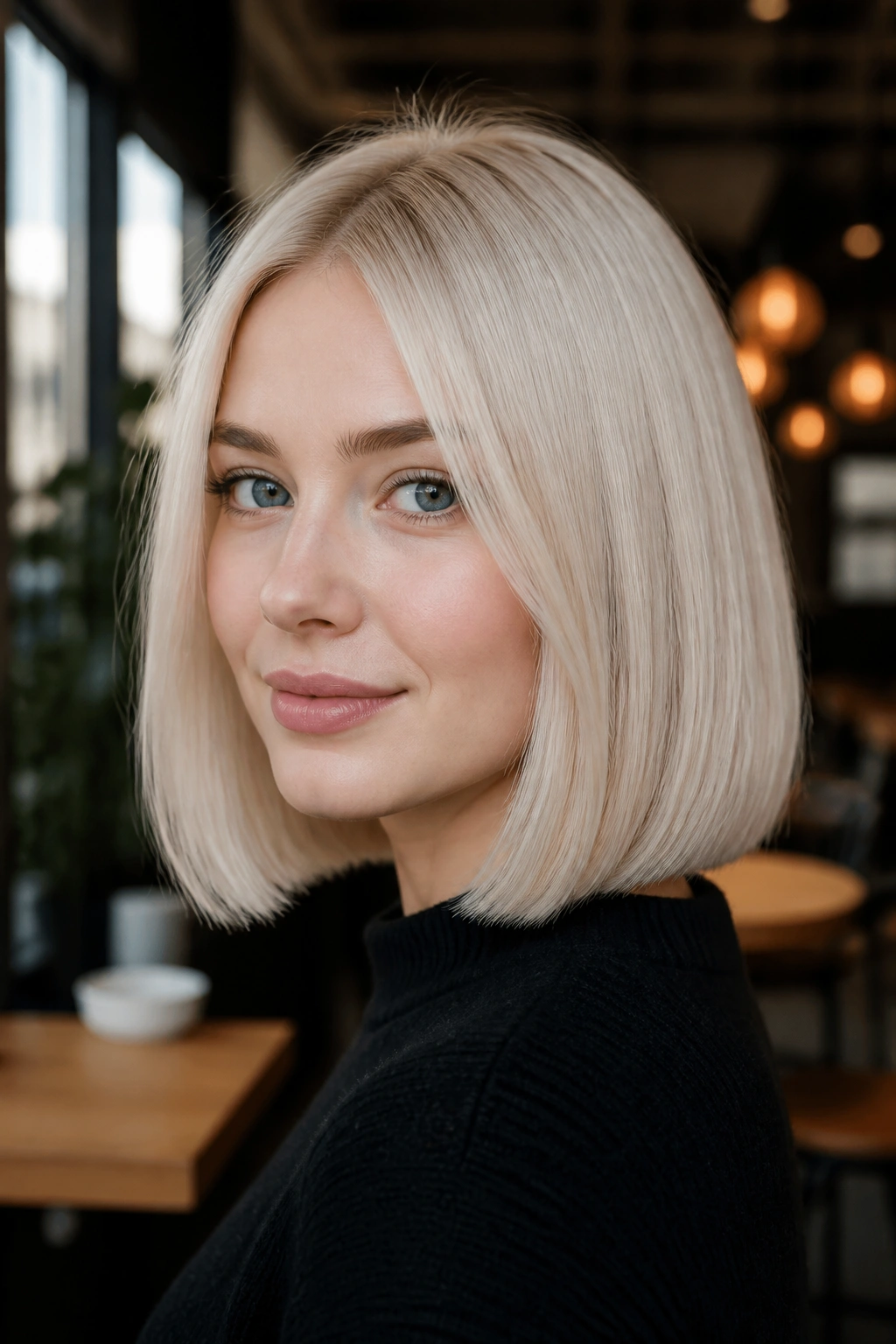
Why does vanilla work on cool skin when vanilla sounds warm? Because this version of vanilla isn’t custard yellow. It’s pale cream with a cool beige edge.
A vanilla champagne bob is a strong choice if you want something tidy and modern. The blunt shape makes the blonde read sharper, while the color itself stays soft. On cool skin, the effect can be really clean—almost graphic, but not harsh.
Shape Matters
A bob shows tone fast. That means the finish has to be even from root to end. Ask for a soft beige glaze through the mids and a slightly brighter face frame if you want extra lift around the cheeks. Straight styling keeps it sleek; soft bends make it feel more casual.
The shorter the cut, the more obvious brass becomes. So if your hair tends to go gold, this one needs a disciplined gloss schedule.
12. Rosé-Tinted Champagne Blonde
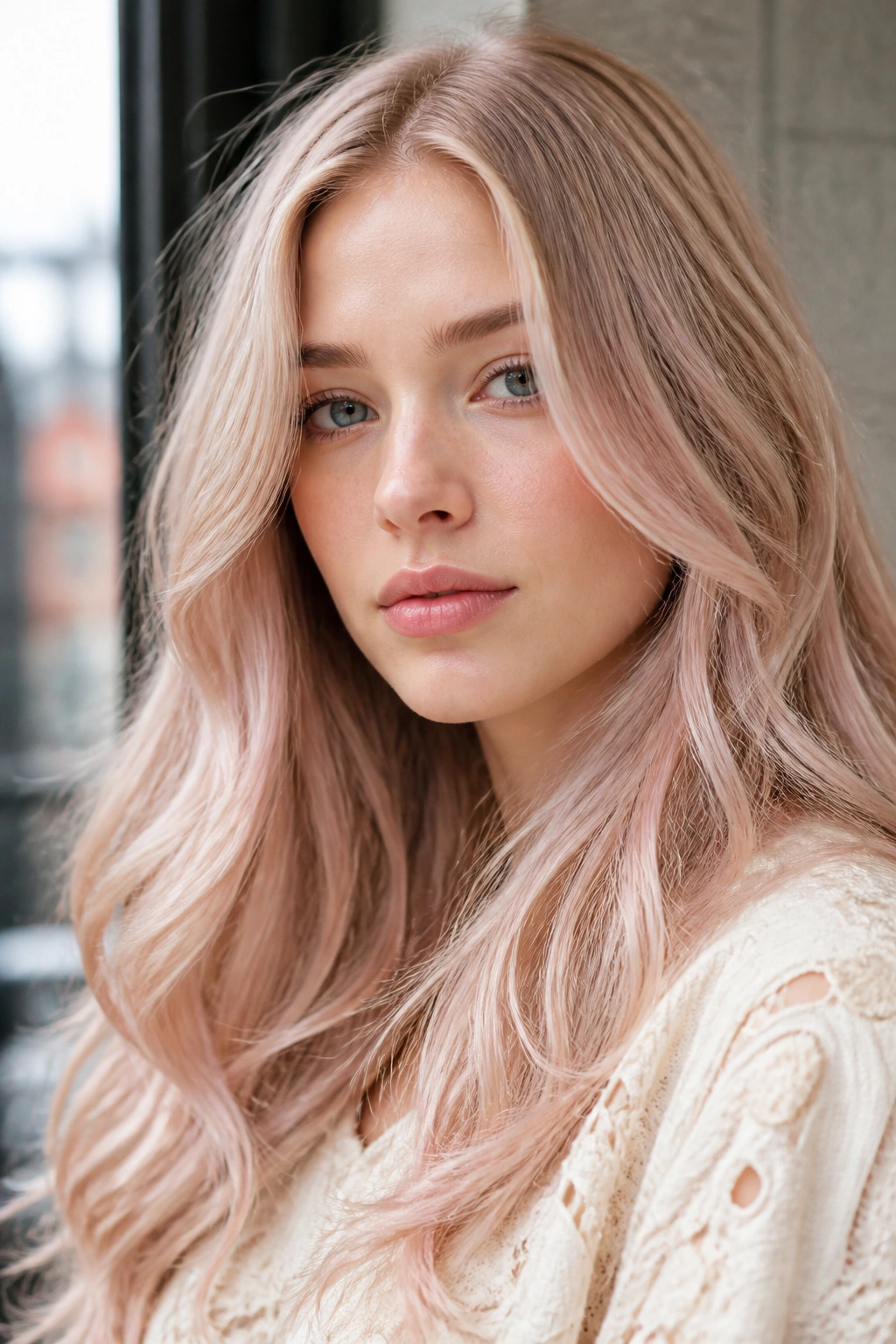
A tiny hint of pink can be a good thing.
Rosé-tinted champagne blonde works on cool skin when the pink stays whisper-light, not bubblegum. The shade has a soft blush cast that flatters complexions with pink or rosy undertones because it echoes them instead of fighting them. The key is restraint. Too much pink and the blonde stops reading champagne.
This look works best on hair that already lifts cleanly. The rosé tone sits on top like a filter, not a dye job. On wavy hair, it looks soft and romantic. On straight hair, it looks more polished and modern.
I like this option for someone who wants blonde with a little personality but doesn’t want pastel hair that screams for attention.
13. Champagne Ombré
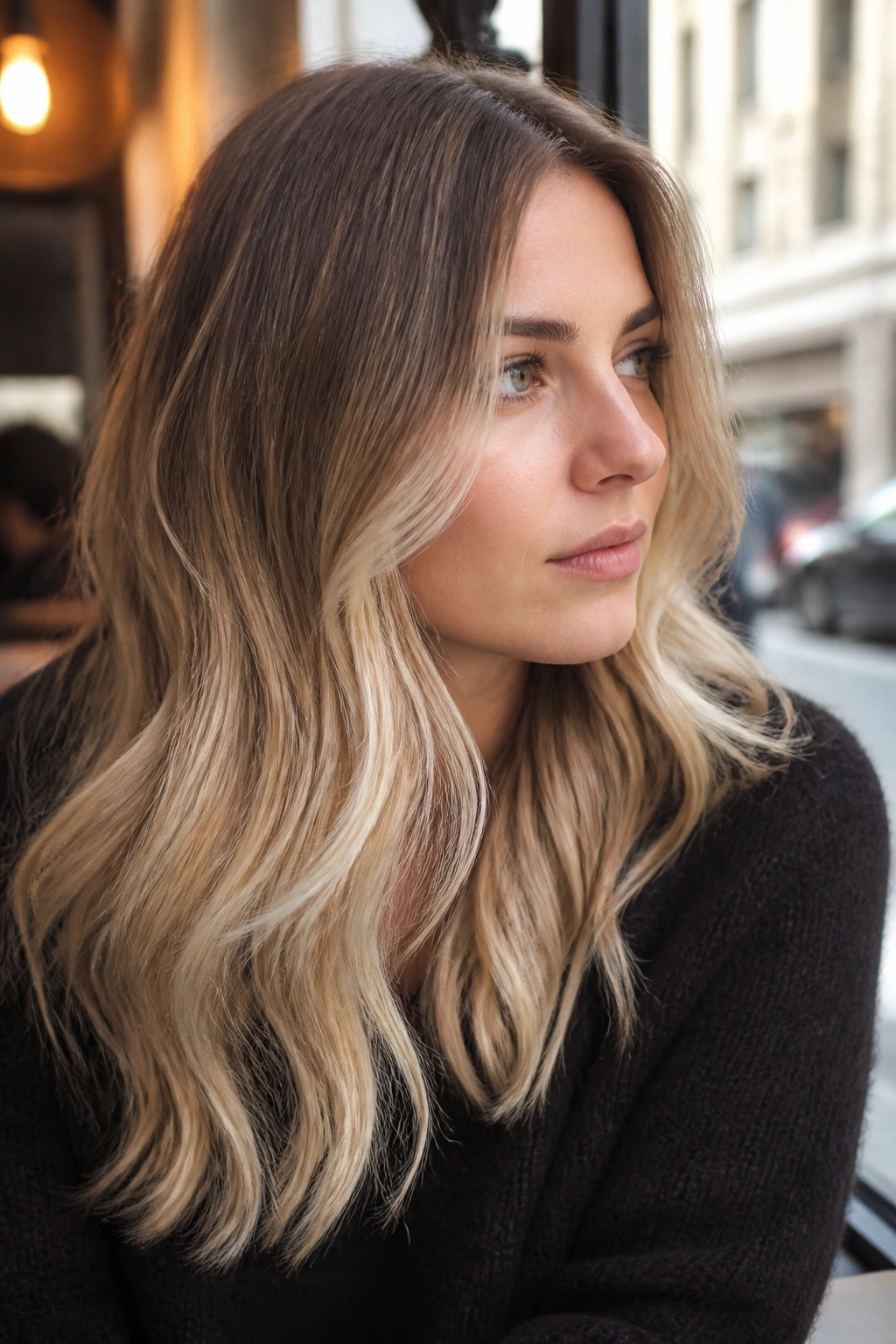
If you want an easier grow-out, ombré is the calmest way to wear champagne blonde.
A champagne ombré keeps the root deeper and more natural, then lightens gradually through the mids and ends. That slow fade works well on cool skin because the dark base gives the face some contrast. Without it, a very light blonde can flatten pale features.
What to Ask For
The transition should be soft, not striped. Ask for a melt from the natural root into beige-champagne lengths, with the brightest pieces around the bottom half. The ends can be a touch lighter than the mid-lengths, but not white.
- Keep the gradient gradual over at least 4 to 6 inches.
- Leave enough depth at the crown to stop the top from looking see-through.
- Style with waves if you want the color shift to show.
This one is easier to live with than full-head blonde, and that matters.
14. Dimensional Champagne with Lowlights
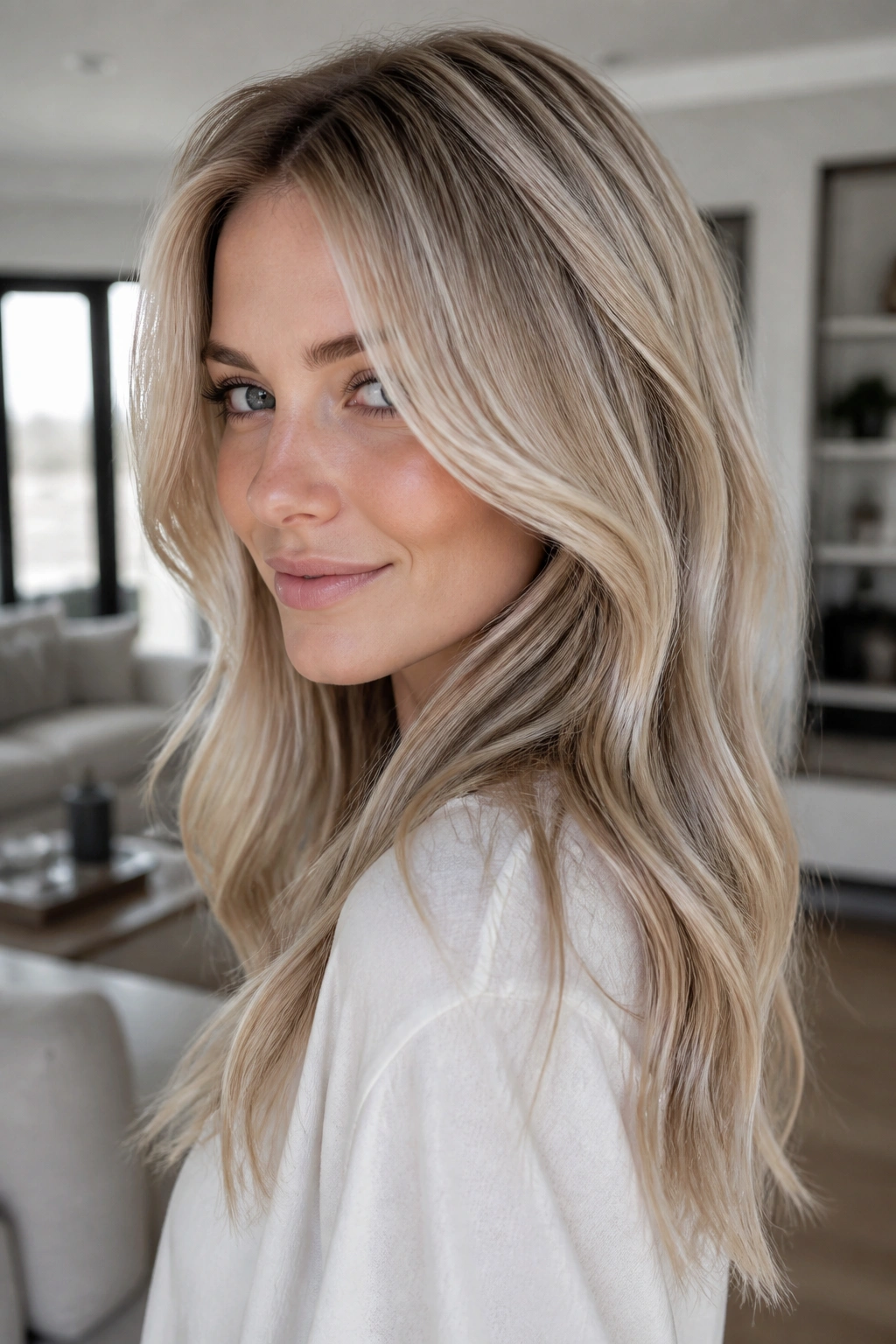
Flat blonde is the enemy of good champagne color. Lowlights fix that fast.
Adding deeper beige or soft ash ribbons back into the hair gives the champagne blonde a shape to sit in. On cool skin, the contrast helps the complexion look clearer because the hair isn’t all one pale note. It feels richer, not heavier.
The best dimensional versions use lowlights sparingly. Too many and the blonde loses its lift. Too few and the color still looks thin. You want the eye to move through the hair, not stop dead at one shade.
This is especially smart for thicker hair, where a single pale tone can look dense and blocky. A few darker threads open everything up.
15. Champagne Pixie
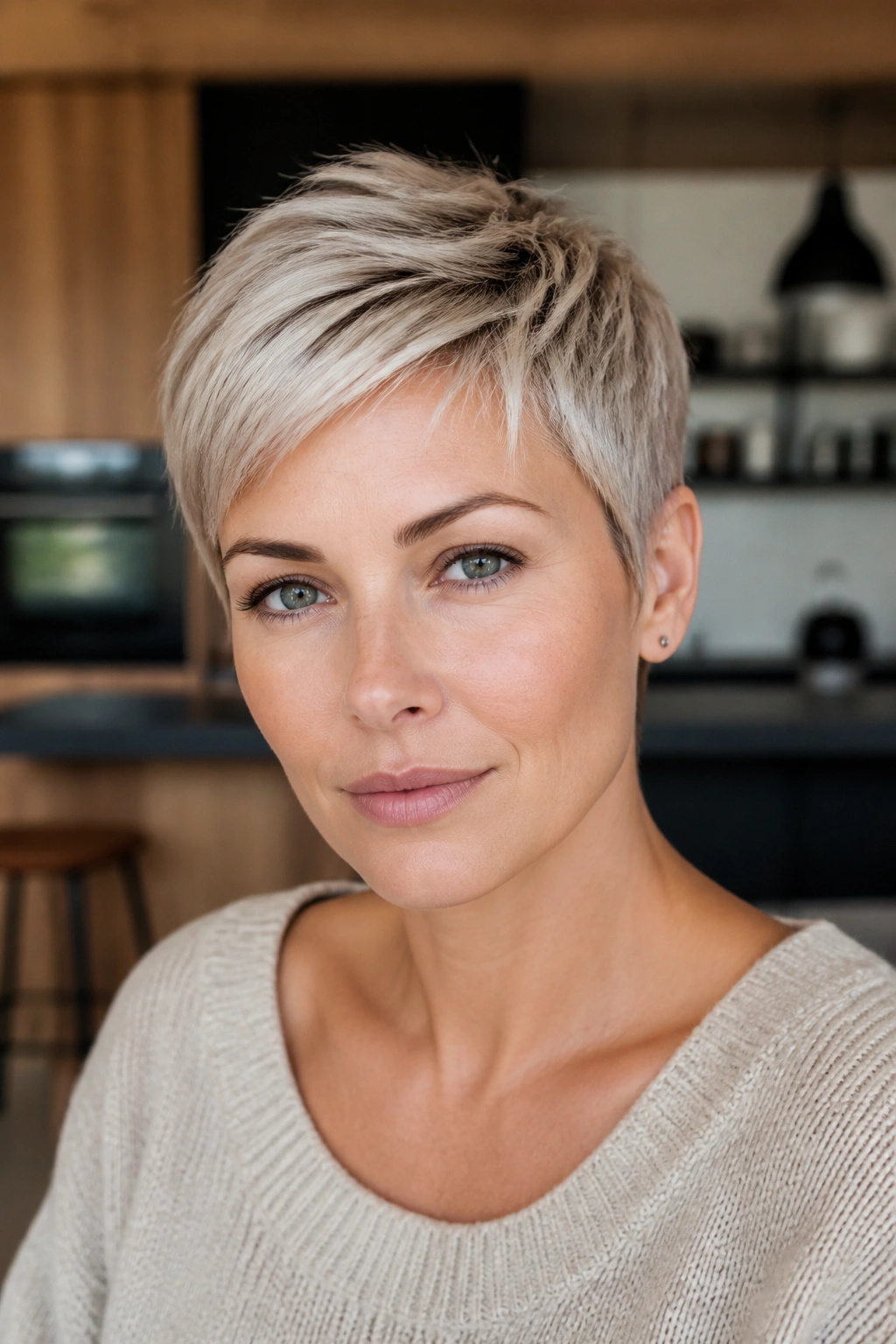
Unlike longer cuts, a champagne pixie shows the tone immediately. There’s nowhere for the color to hide, and that is exactly why it works.
Cool skin can handle a pixie blonde well when the shade stays soft and clean. The short length makes every highlight count, so the champagne should be bright enough to lift the face but not so warm that it turns yellow under short layers. A little pearl or silver in the toner goes a long way here.
This cut also makes styling easy. A bit of texture cream, a quick blow-dry, and you’re done. If you like color that looks sharp with very little fuss, this is one of the smartest ways to wear champagne blonde.
16. Butterfly-Cut Champagne Blonde
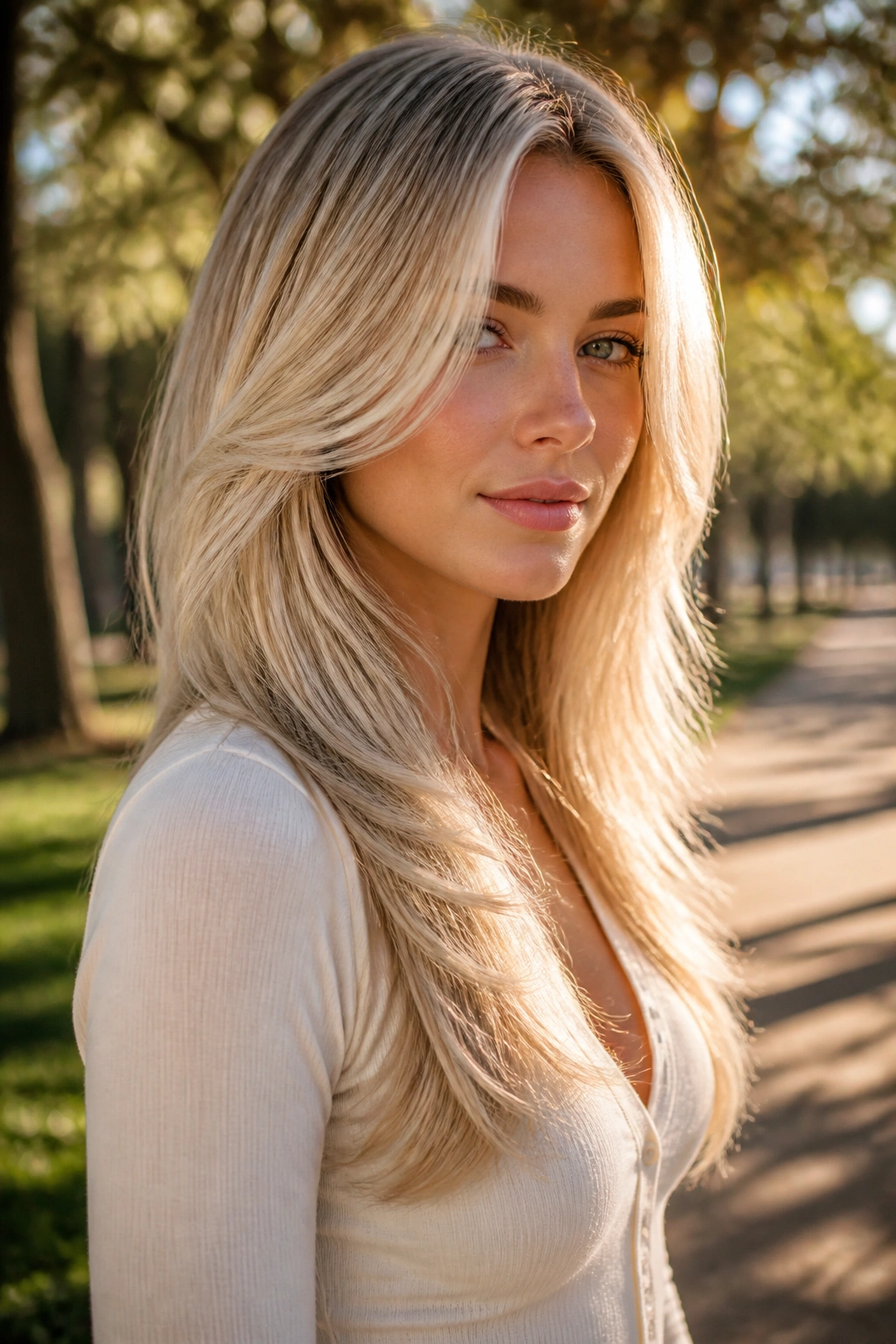
A butterfly cut gives champagne blonde room to move.
The long face-framing layers and softer crown pieces make the color catch the light in waves instead of sitting in one block. That’s useful on cool skin because the blonde can look flat if it’s too even. The layers break it up and keep the finish airy.
Where the Brightness Belongs
Put the lightest champagne around the front and on the long outer layers. Keep the inner layers a touch deeper. That contrast gives the haircut a floating look when it moves, which is the whole point of the butterfly shape.
Ask for a beige-pearl gloss, not a warm gold one. The style can carry more brightness than a blunt cut, so the tone can stay cool and still look full.
17. Curtain-Bang Champagne
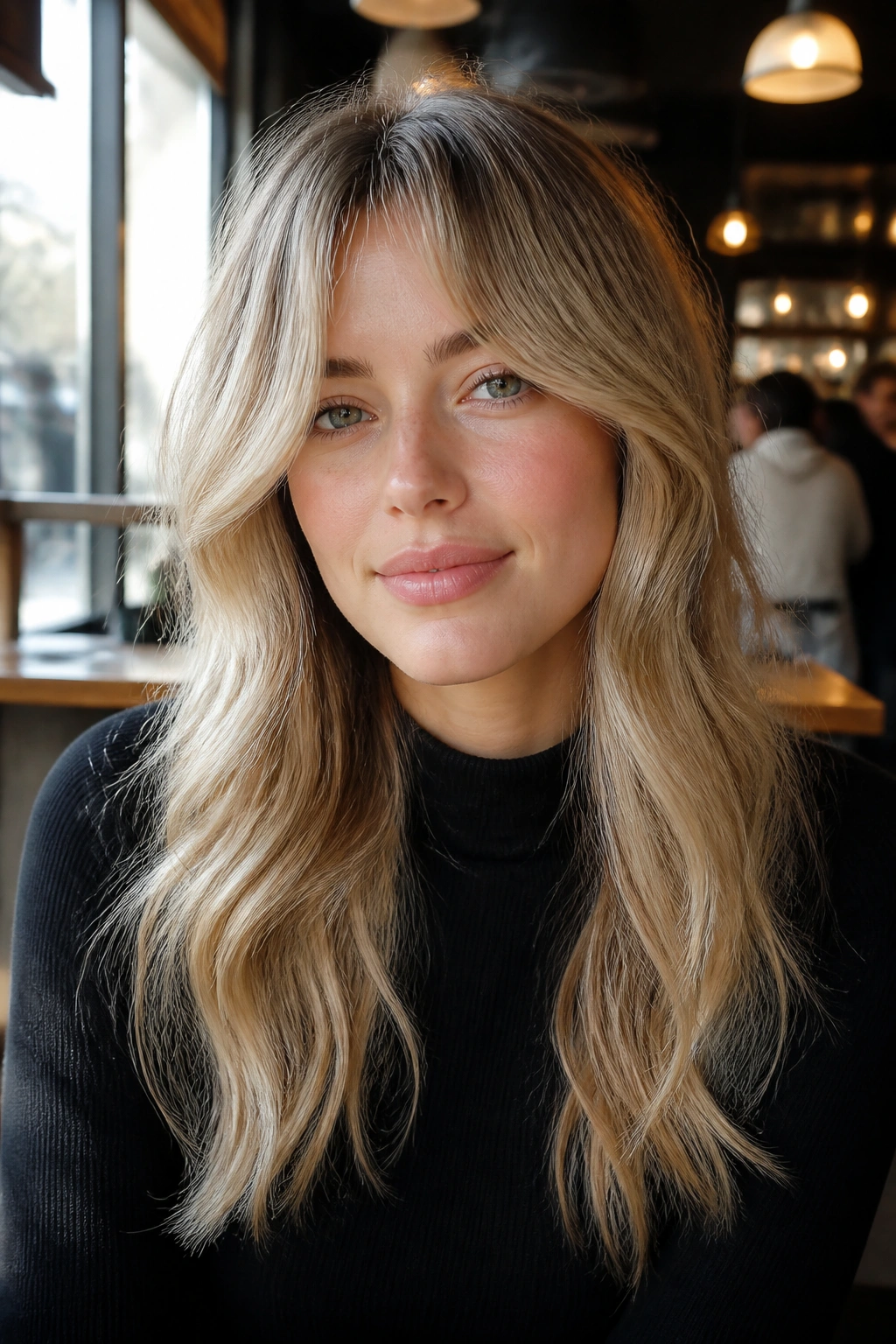
Do curtain bangs change the color? Absolutely. They pull light right to the face.
A curtain-bang champagne blonde uses that front fringe to soften cool skin and make the eyes stand out. The bangs can be a little lighter than the rest of the hair, but they should still read champagne, not bright yellow. That balance keeps the face framed without turning the fringe into a separate object.
The rest of the hair can stay more dimensional. I like this on layered cuts because the bangs connect to the side pieces and create a smooth sweep. If the bangs are too blunt, the look gets heavy fast.
This style is a good place to use fine highlights around the hairline. Tiny pieces at the temples can do a lot of work.
18. Creamy Champagne Melt
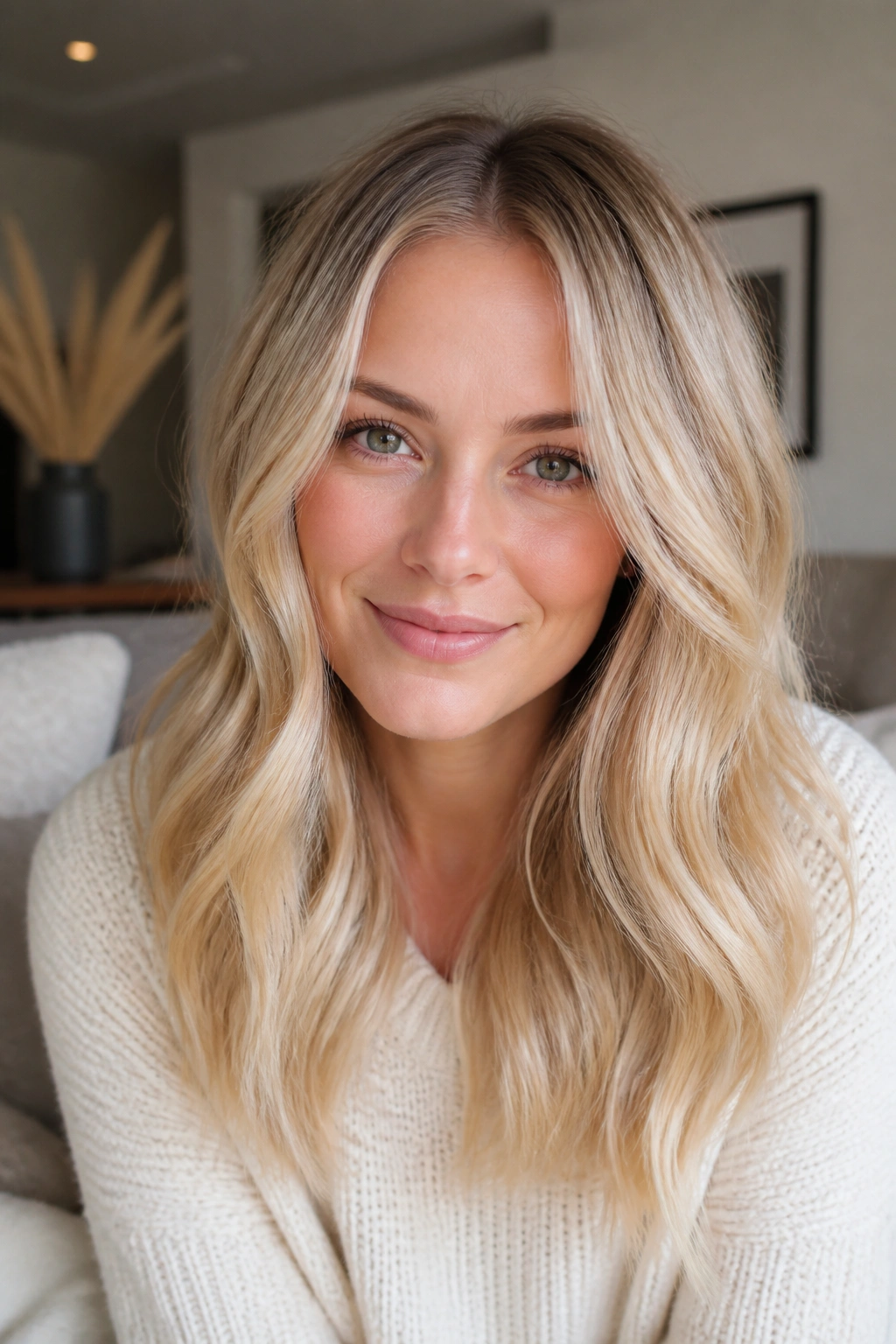
Creamy champagne is for people who want softness first.
This version keeps the blonde pale and smooth, with less obvious contrast than some of the sharper looks above. It’s especially flattering on cool skin because the cream note stays neutral instead of going yellow. Think satin, not shine bomb.
A cream champagne melt usually starts with a muted root and fades into a pale, creamy beige through the ends. The finish should feel blended enough that you can’t see where one tone ends and the next begins. That makes it good for straight styles, but it also works on waves because the movement gives the color more life.
If your hair tends to pick up warmth, this is one of the safer blonde lanes. It’s gentle, but not boring.
19. Icy-Ends Champagne Blonde
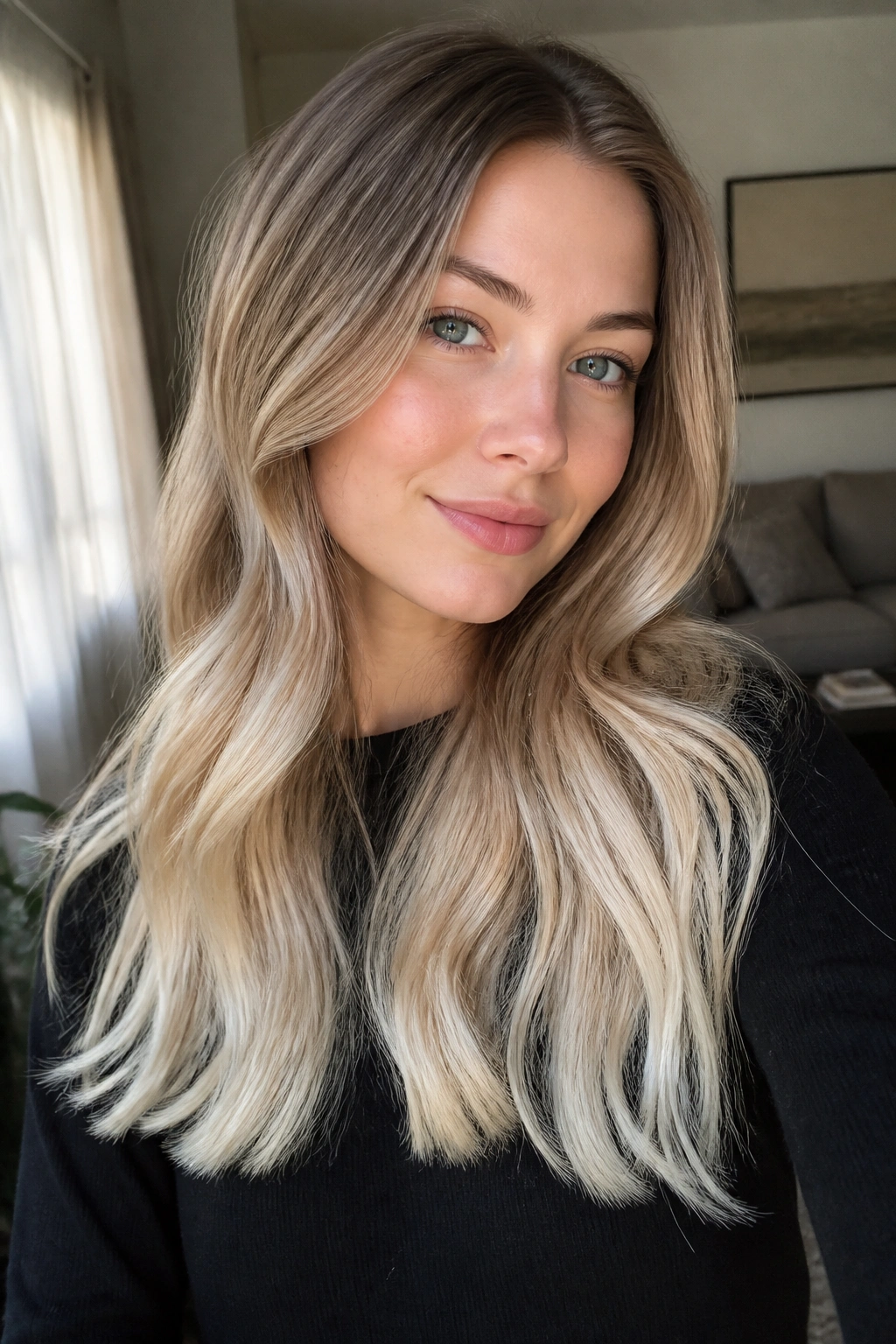
This one is for the person who likes a little drama at the tips.
Icy ends keep the root and mids softer, then push the bottom few inches toward a brighter, cooler blonde. On cool skin, the effect is sharp in a good way because the ends catch light without making the face look overexposed.
How It Works
The contrast draws the eye down the hair, which can make long cuts feel fuller. It also keeps the color from getting too samey from top to bottom. Ask for a smoother transition through the middle so the icy ends feel intentional, not like an afterthought.
- Use this on mid-length hair or longer.
- Keep the icy section concentrated in the final 2 to 4 inches.
- Pair it with soft waves so the end color moves.
Straight hair can make the shift look harder, so a bend in the hair usually helps.
20. Soft Champagne on Curls
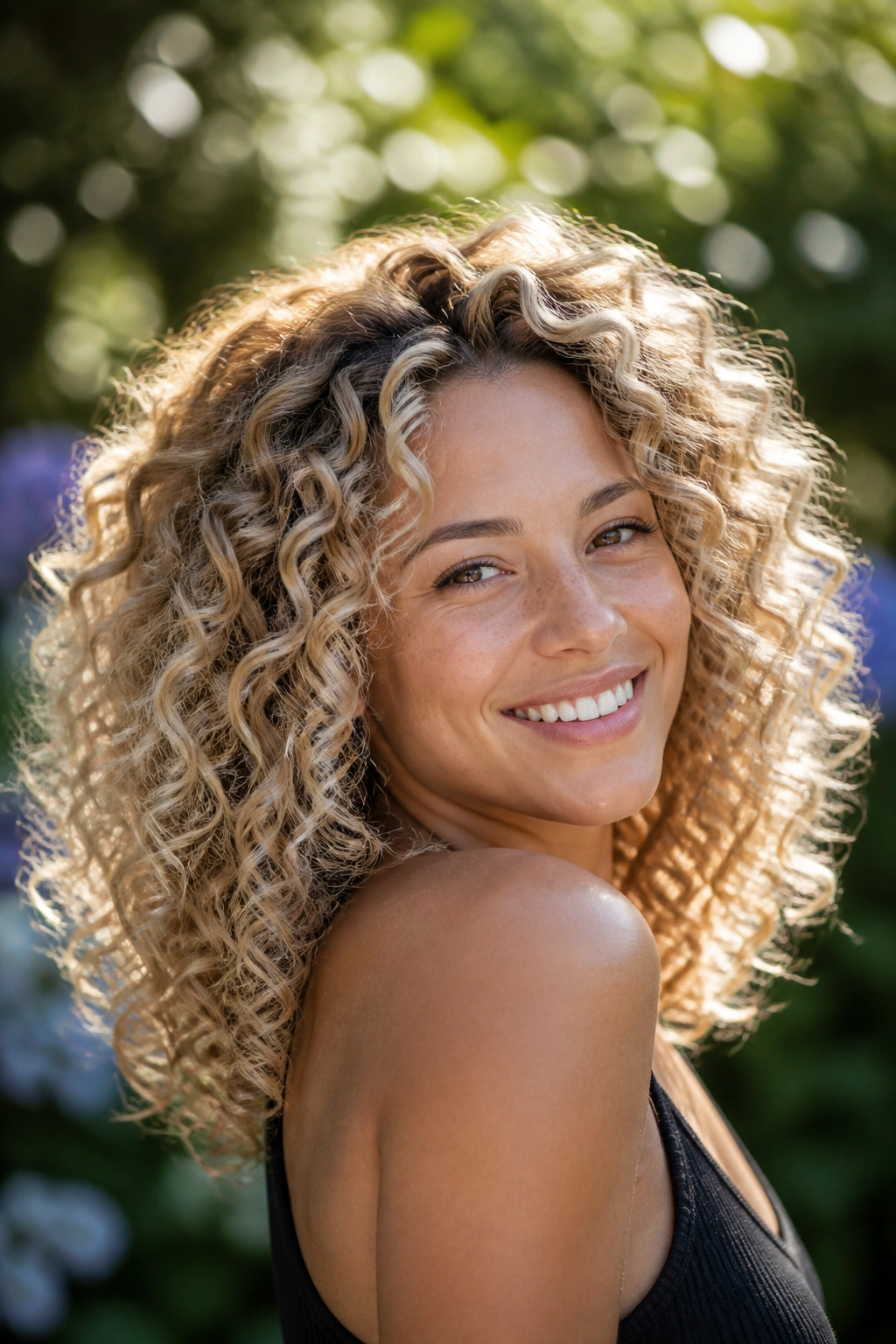
Curly hair does not want a stripey blonde. It wants ribbons, pockets of brightness, and room for the curl pattern to breathe.
Soft champagne on curls works because the tone can sit inside the curl rather than across it. The light pieces should follow the spiral, not cut through it. That keeps the hair from looking patched. On cool skin, a beige-pearl champagne gives curls a lifted look without turning them orange.
The trick is placement. You want brightness where the curls naturally catch light: around the top, on the outer ring, and near the face. Leave some depth underneath so the pattern stays clear. If every curl is light, the shape disappears.
This is one of those looks that can look fussy in a photo and great in real life. The movement matters more than the color chart.
21. Face-Framing Champagne Bob
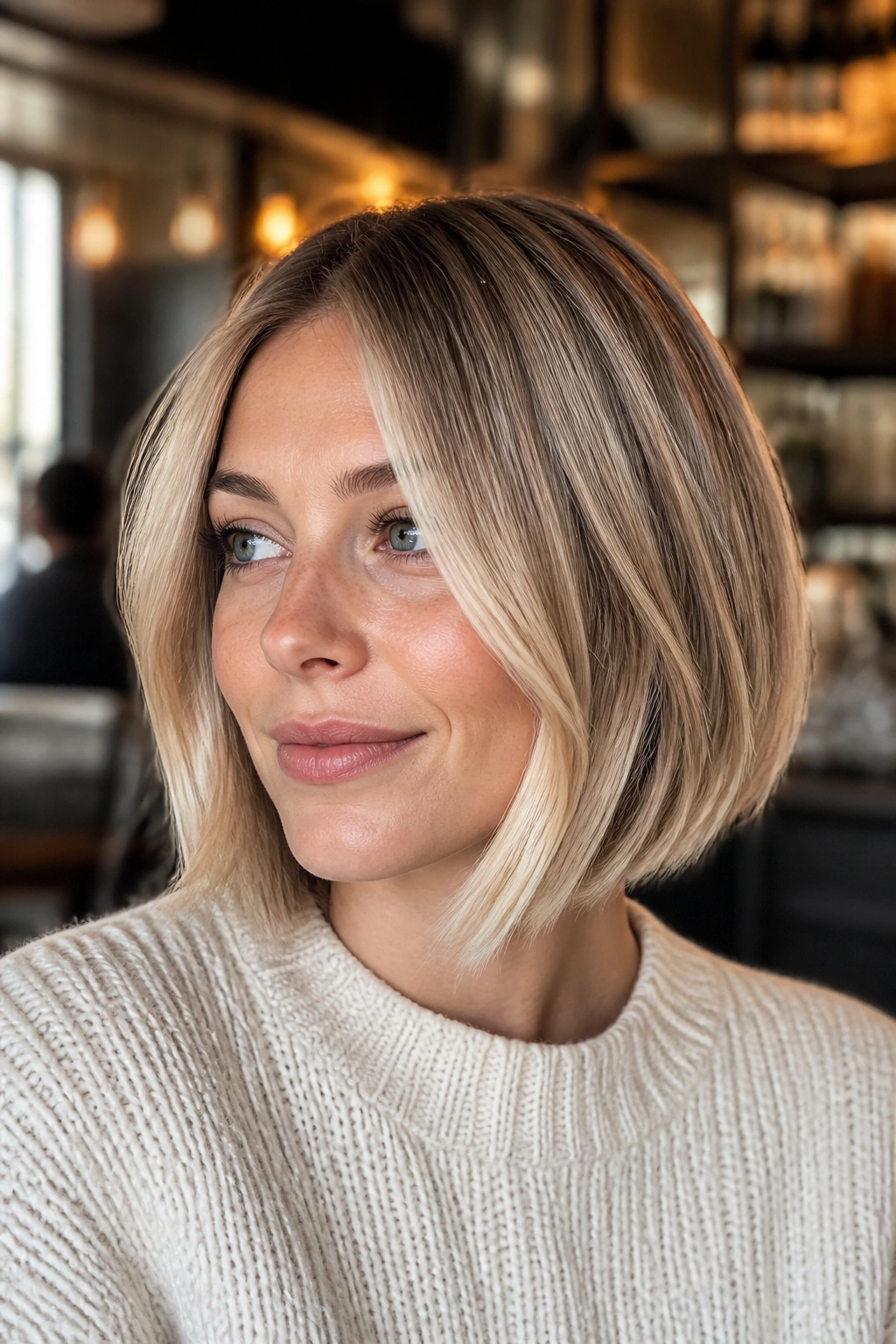
A bob already has shape. Add champagne face-framing pieces, and the haircut starts doing half the work for you.
This look is strong on cool skin because the front pieces sit right at the cheeks and jaw, where a little brightness can make the face feel more lifted. The rest of the bob can stay slightly deeper, which keeps the blonde from taking over. That contrast is flattering and practical.
I like this version with a side part or a soft off-center part. It lets the front lightness sweep across the face instead of sitting in a straight block. A gloss with pearl and beige keeps the pieces crisp.
If you want blonde that looks neat but not severe, this is a good lane.
22. Violet-Gloss Champagne Blonde
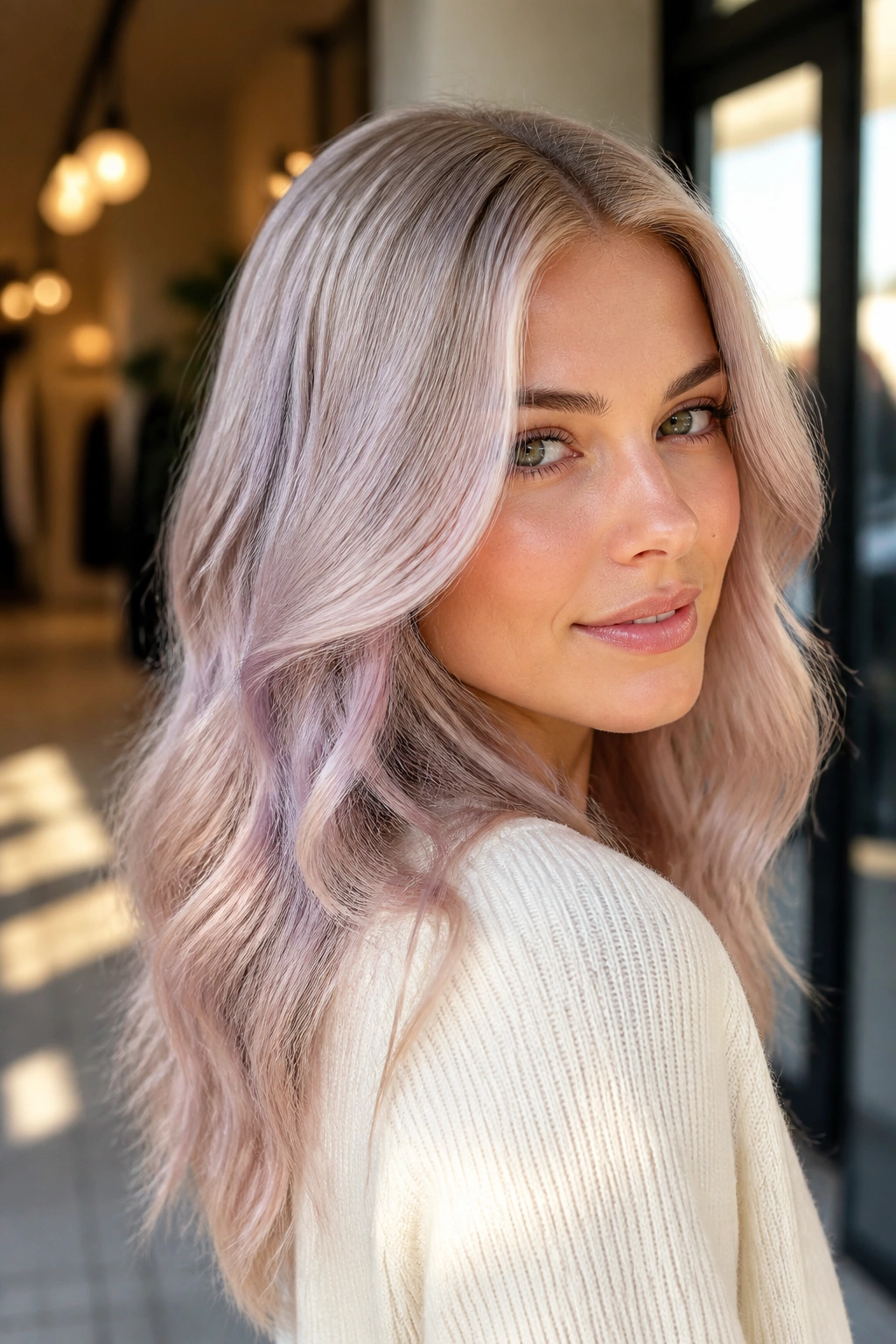
A violet gloss is not about turning the hair purple. It’s about cutting yellow before it gets a chance to take over.
This makes a lot of sense for cool skin tones, because the blonde needs to stay in the soft beige-pearl family. A violet-gloss refresh can bring tired champagne back to life between bigger color appointments. On prelightened hair, it can make the whole finish look cleaner in a single pass.
When to Use It
Reach for this when the blonde starts looking warm at the ends or dull through the mids. It works best on hair that’s already lifted enough; if the base is too dark, a gloss won’t do much. That part matters.
This is a maintenance move, but a useful one. Champagne blonde can go muddy if you ignore the tone, and a gloss is the quickest fix.
23. Dark-Base Champagne Blonde
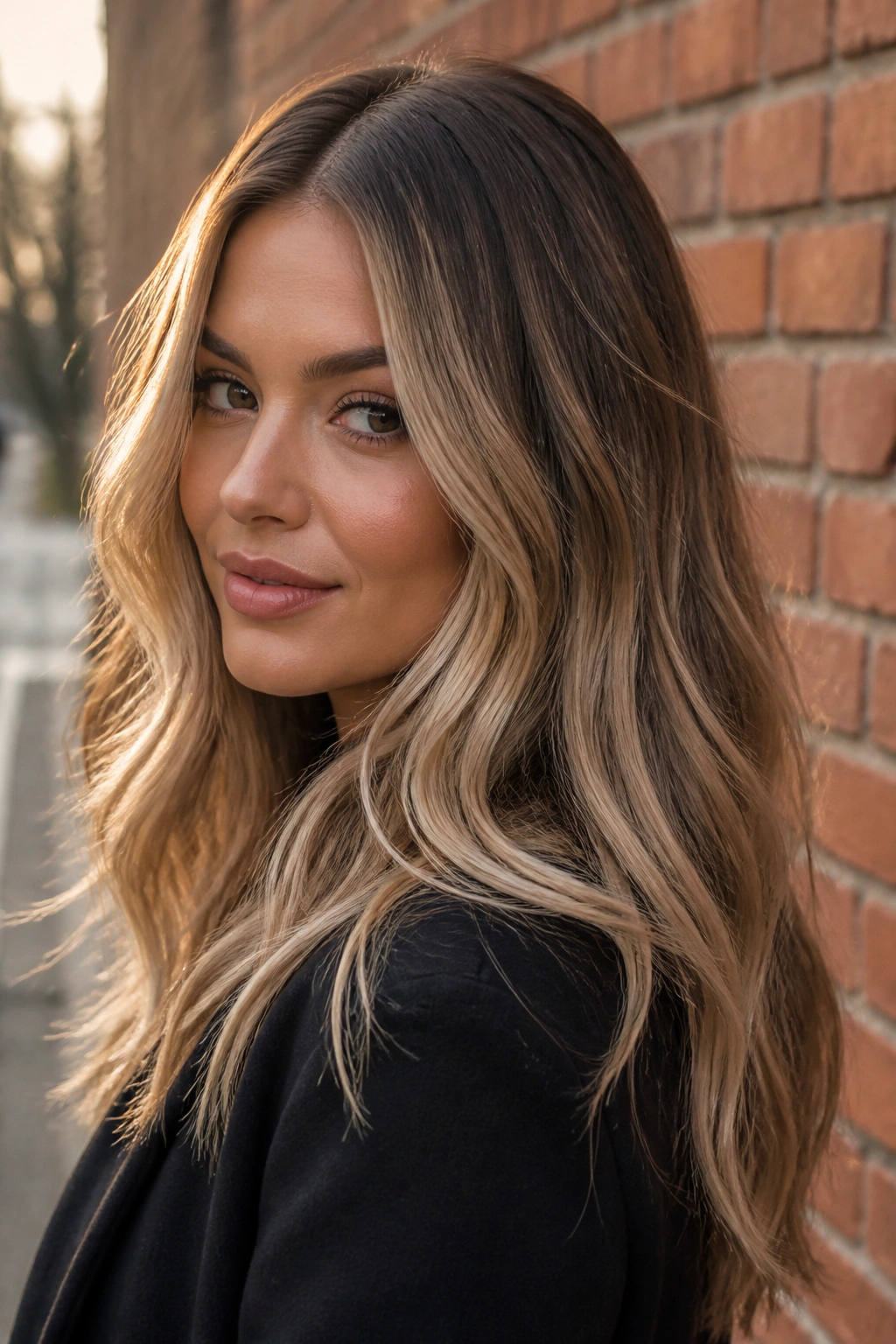
A darker base can be a gift on cool skin.
Keeping the root deeper lets the champagne blonde feel richer and less washed out. That contrast is especially helpful if your skin is very fair, because a light-on-light look can flatten the face. With a darker base, the blonde has something to sit against.
This style usually uses a brunette or dark blonde root with champagne ribbons through the mid-lengths and ends. The tones can be cool beige, pearl, or soft ash. You do not want orange anywhere near it. That would throw the whole thing off.
It’s also one of the easier blondes to wear if you prefer lower upkeep. The grow-out looks intentional, not neglected.
24. Reverse Balayage Champagne
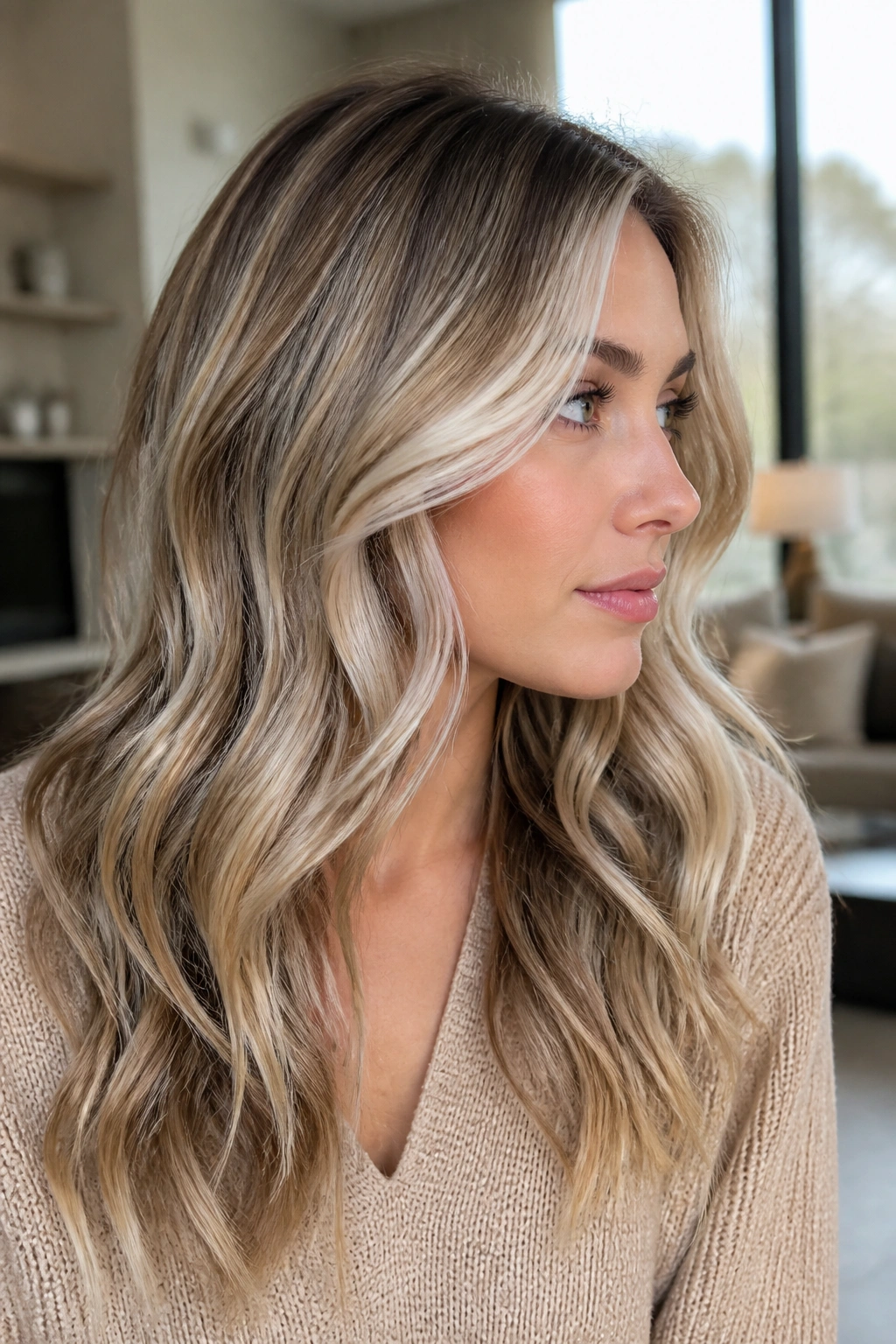
When a blonde gets too light, reverse balayage puts the bones back into it.
Instead of lifting more pieces, you add deeper ribbons through the hair so the champagne shade has contrast again. On cool skin, that can be a rescue move. Too much pale blonde can drain the face. A few darker threads bring the color back into balance.
Where the Depth Goes
The lowlights should sit under the crown, through the mids, and in a few face-framing sections if the hair needs structure. Leave the brightest pieces near the surface. That way, the hair still looks blonde, not brown with highlights.
- Use a cool beige or ash-brown lowlight.
- Keep the lightest pieces around the top layers.
- Style with a soft wave so the color layers show.
This is a smart choice if your blonde feels too airy or too bright for your skin.
25. Shadow-Root Champagne
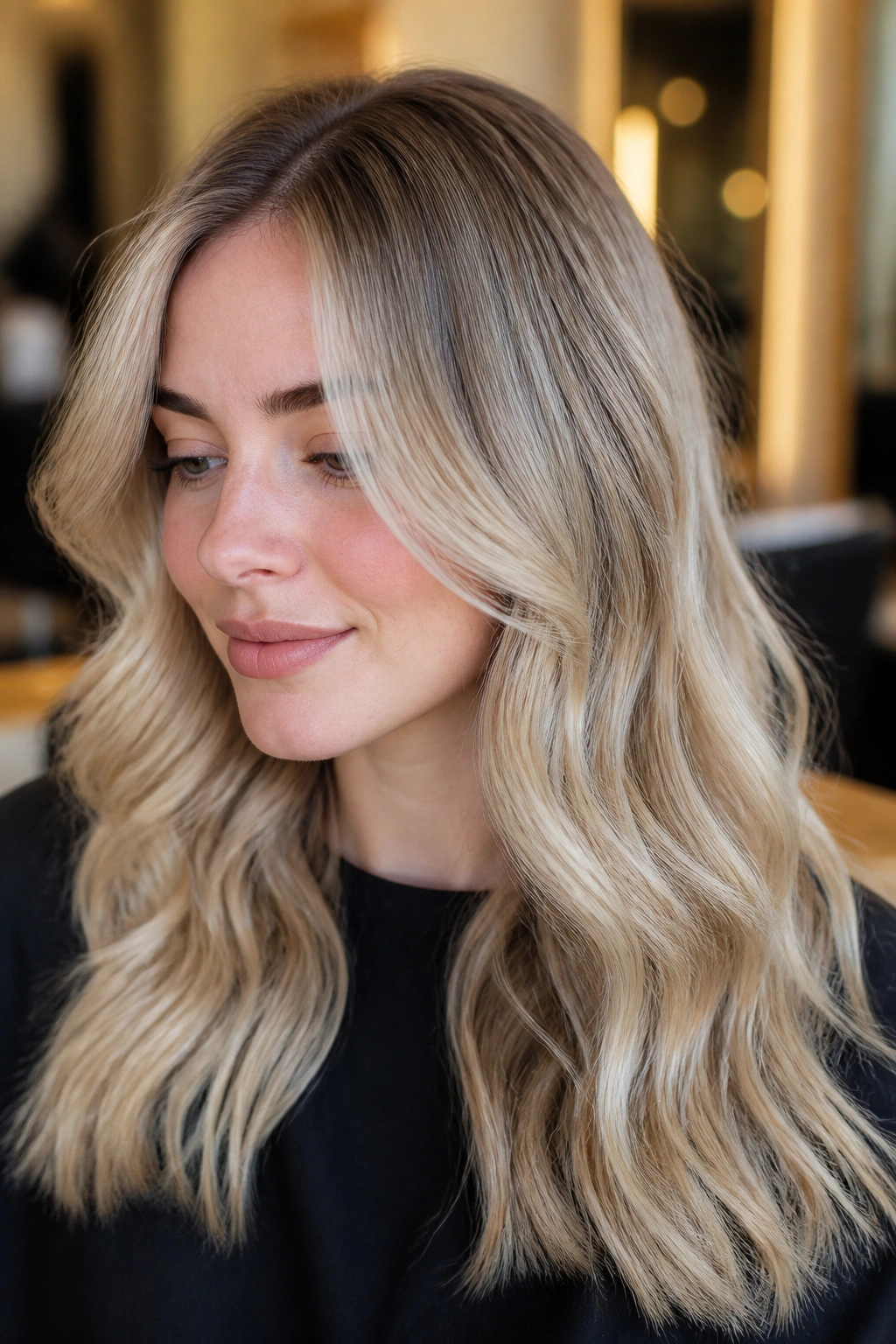
If root melt is seamless, shadow-root champagne is a little more intentional. The root is deeper on purpose, and the contrast is part of the look.
That deeper root keeps cool skin from looking pale next to very light lengths. It gives the face a frame and makes the champagne ends read brighter. This is useful if you want a softer grow-out but still like some edge around the top.
The root usually sits one to two levels deeper than the mid-lengths. Not more. If it gets too dark, the blonde ends start looking disconnected. A pearl-beige toner through the rest of the hair keeps the overall tone in the champagne family.
This one tends to suit people who wear their hair wavy or textured. The movement blurs the line and makes the root look polished rather than heavy.
26. Champagne with Teasylights
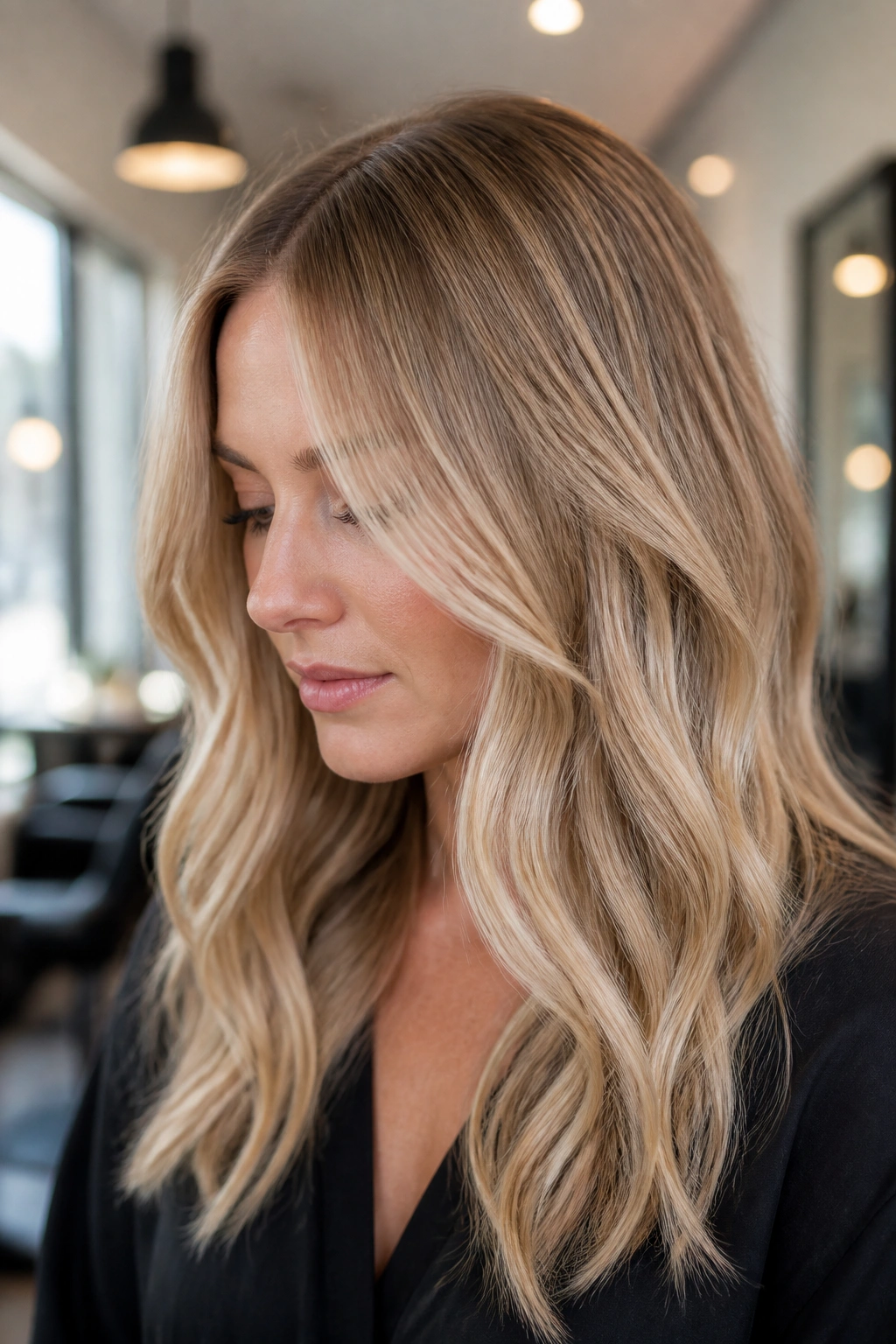
Teasylights are one of those techniques that sounds fussy until you see the result.
By teasing the hair lightly before foiling, the colorist can create a softer fade and avoid hard lines. That makes champagne with teasylights a strong option for cool skin because the blonde stays diffused and airy. It doesn’t look sliced into the hair.
Why the Technique Matters
The teased section blurs the transition between the natural base and the lightened pieces. That gives you a softer champagne result, especially around the crown and sides. It’s a smart move if your hair is fine or if you hate stripey highlights.
Ask for skinny, blended pieces rather than chunky foils. The whole point is soft light, not obvious streaks. When done well, teasylights give the hair that expensive-looking blend people try to describe and never quite name.
27. Champagne for Fine Hair
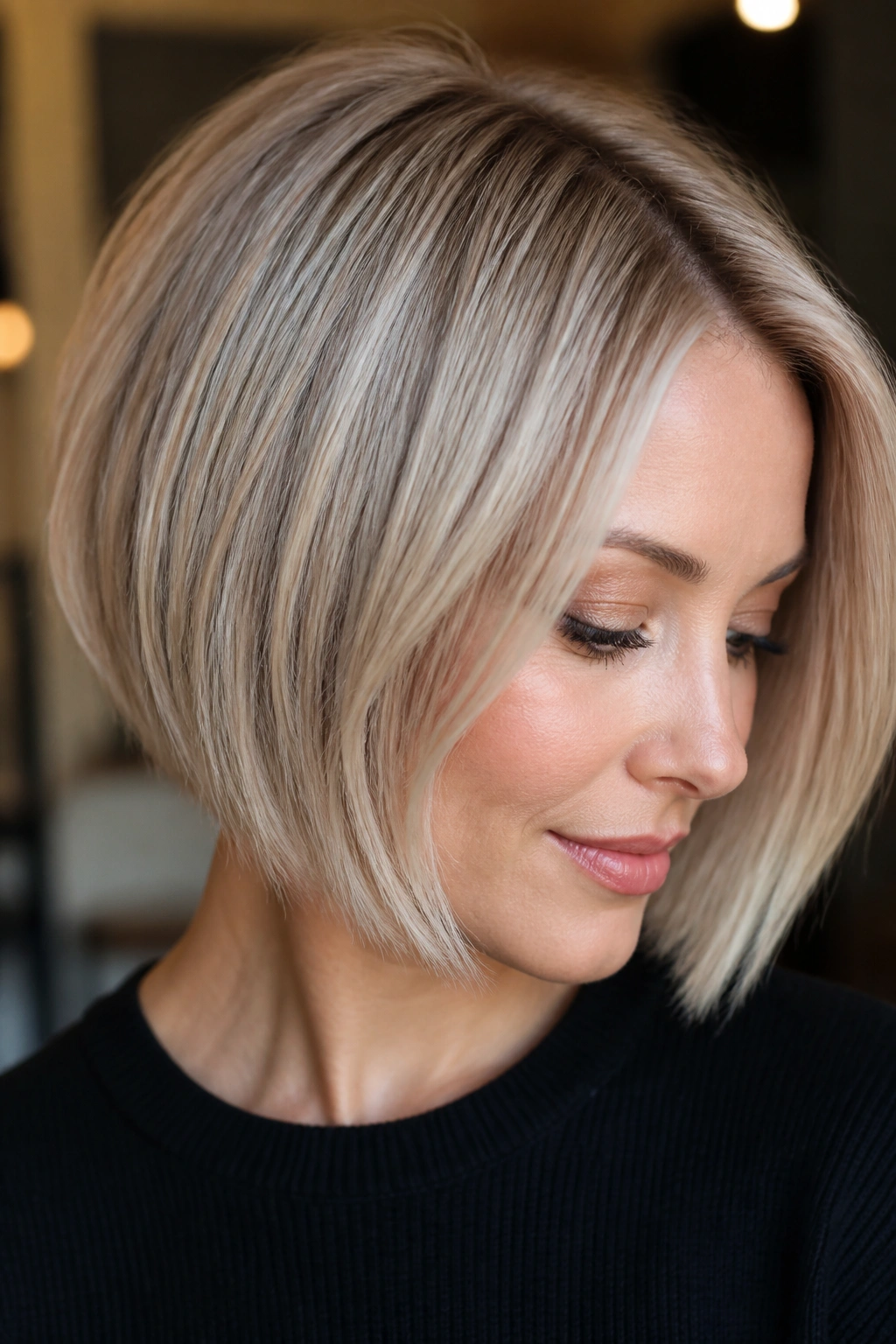
Fine hair needs champagne blonde to stay narrow and clean.
Too many chunky pieces can make fine hair look thin in the gaps, which is the opposite of what you want. The better move is lots of slender highlights, a cool beige toner, and a little root depth so the scalp doesn’t show too much. On cool skin, that creates a bright but controlled finish.
A chin-length bob or long layers both work. The main thing is keeping the lightness close to the surface so the hair looks fuller. Heavy lowlights can make fine hair feel stringy, so use them sparingly.
One sentence, because it matters: fine hair looks best when the blonde is delicate, not busy.
28. Champagne for Thick, Long Hair
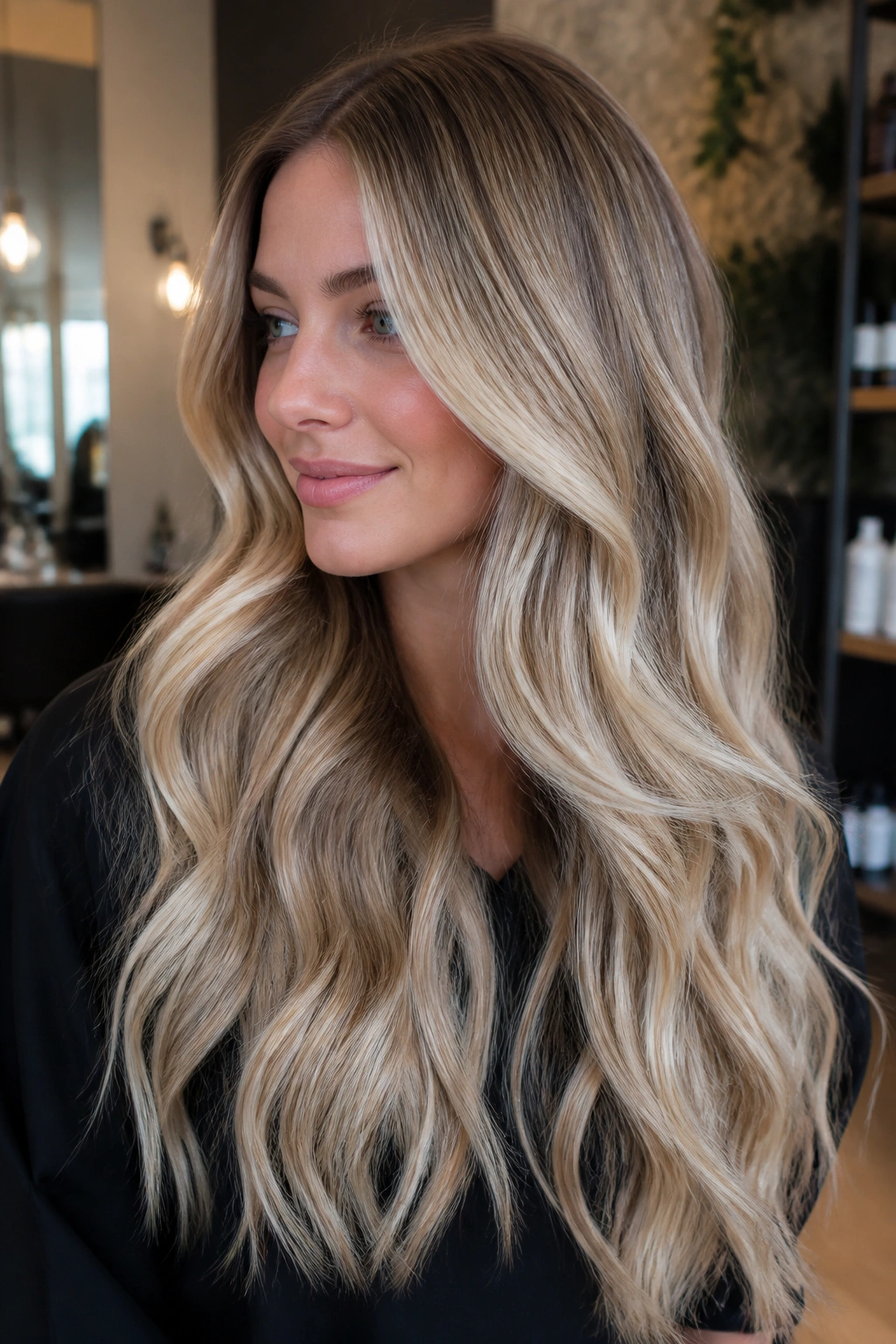
Thick, long hair can carry more dimension than most people think. That’s a gift here.
With this version, you can use wider champagne panels, deeper lowlights, and a root that has a little more shadow. The extra density in the hair keeps the color from disappearing, especially on cool skin where very light blonde can sometimes look too pale. More depth gives the shade a richer finish.
I like this look with long waves, soft layers, or a blowout that bends the ends under slightly. The movement keeps the color from reading heavy. If the hair is all one texture and one length, the blonde can look blocked. Break it up a little, and it starts to shine in a much better way.
This is the version I’d point to if you want champagne blonde that still feels cool from every angle. It has enough brightness to lift the face, enough depth to keep the hair grounded, and enough texture to look alive when you move.
