



Honey brown can look gorgeous on cool skin tones, but only when the warmth is handled with a light hand. Too much gold and the hair can read orange against pink or blue undertones. Too much ash and it can look flat, which is its own problem. The sweet spot sits in the middle: beige honey, smoky honey, mushroom brown with soft warmth, or a rooted brunette base with just enough glow to keep the color alive.
That balance is why honey brown hair color ideas for cool skin tones need a little more thought than a simple “ask for caramel” conversation at the salon. A cool complexion usually likes depth at the root, softness around the face, and ribbons that look sunlit rather than brassy. The right version does not fight your skin. It wakes it up.
I also think a lot of people ask for “honey brown” when what they really want is shine, dimension, and a softer face frame. Those are different things. You can get them with a beige glaze, a root shadow, babylights, or a cooler brunette base with honey ends — and each one lands differently on fair, rosy, or cool-neutral skin.
So let’s get specific. There’s a good honey brown for nearly every hair length, texture, and maintenance level, but the trick is choosing the one that keeps the warmth muted, glossy, and believable.
1. Beige Honey Brown Balayage for Cool Skin Tones
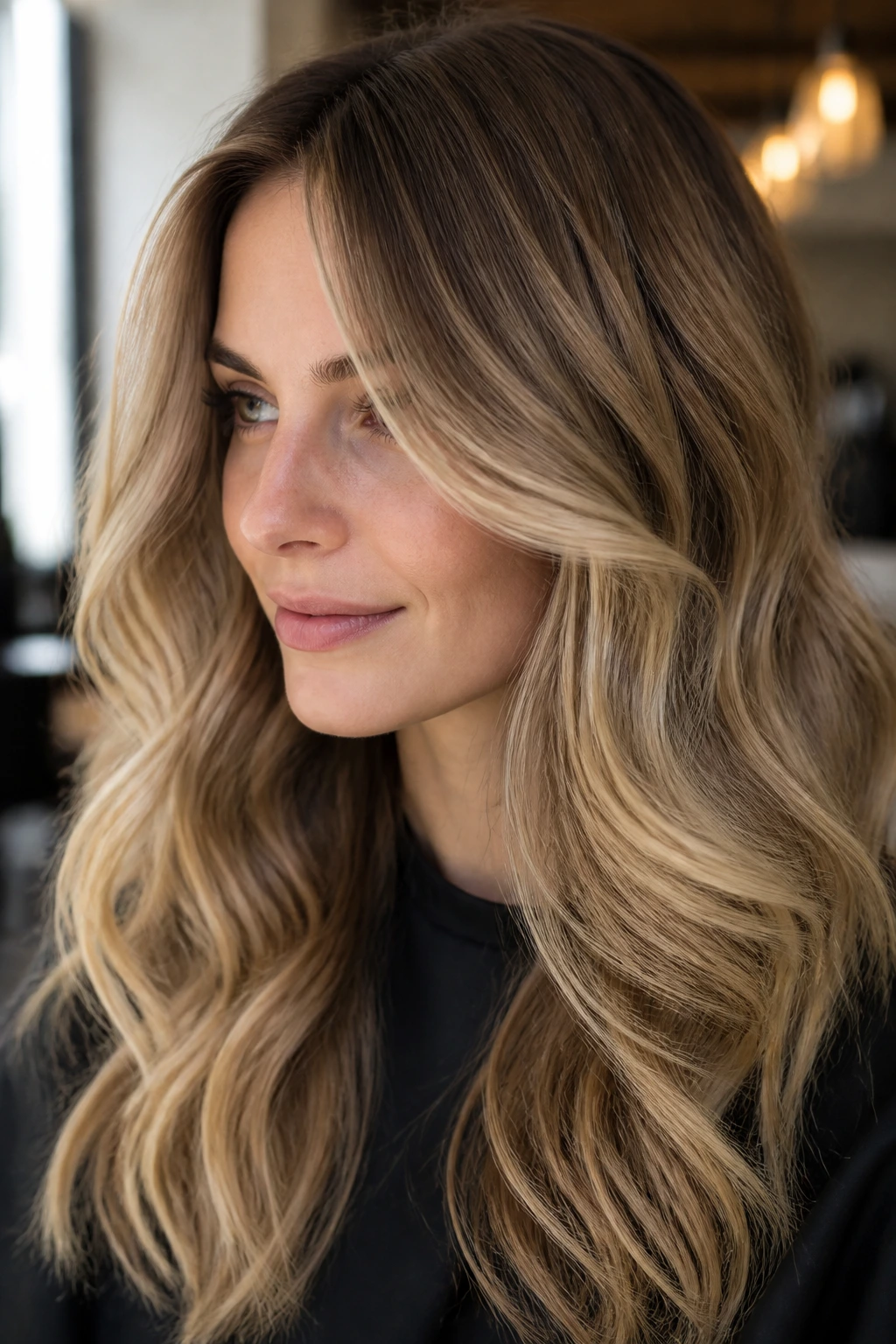
Beige is the quiet hero here. If your skin leans pink or blue, a beige honey brown balayage gives you the warmth you want without tipping into pumpkin territory.
Why It Works
Beige sits between gold and ash, which makes it a safer match for cool undertones than straight caramel. Ask for a level 6 or 7 brunette base with hand-painted ribbons one to two shades lighter, then finish with a beige gloss instead of a heavy golden toner. That keeps the color soft and expensive-looking, not loud.
Ask Your Colorist For
- Fine balayage pieces around the cheekbones and crown.
- A neutral-beige toner rather than a warm gold toner.
- A root shadow that stays about one shade deeper than the mids.
- Lighter face-framing strands if you want extra lift near the eyes.
Best tip: Keep the brightest pieces away from the part line if your skin is very fair; that prevents the whole look from turning stripey.
2. Mushroom Honey Brown With Smoky Dimension
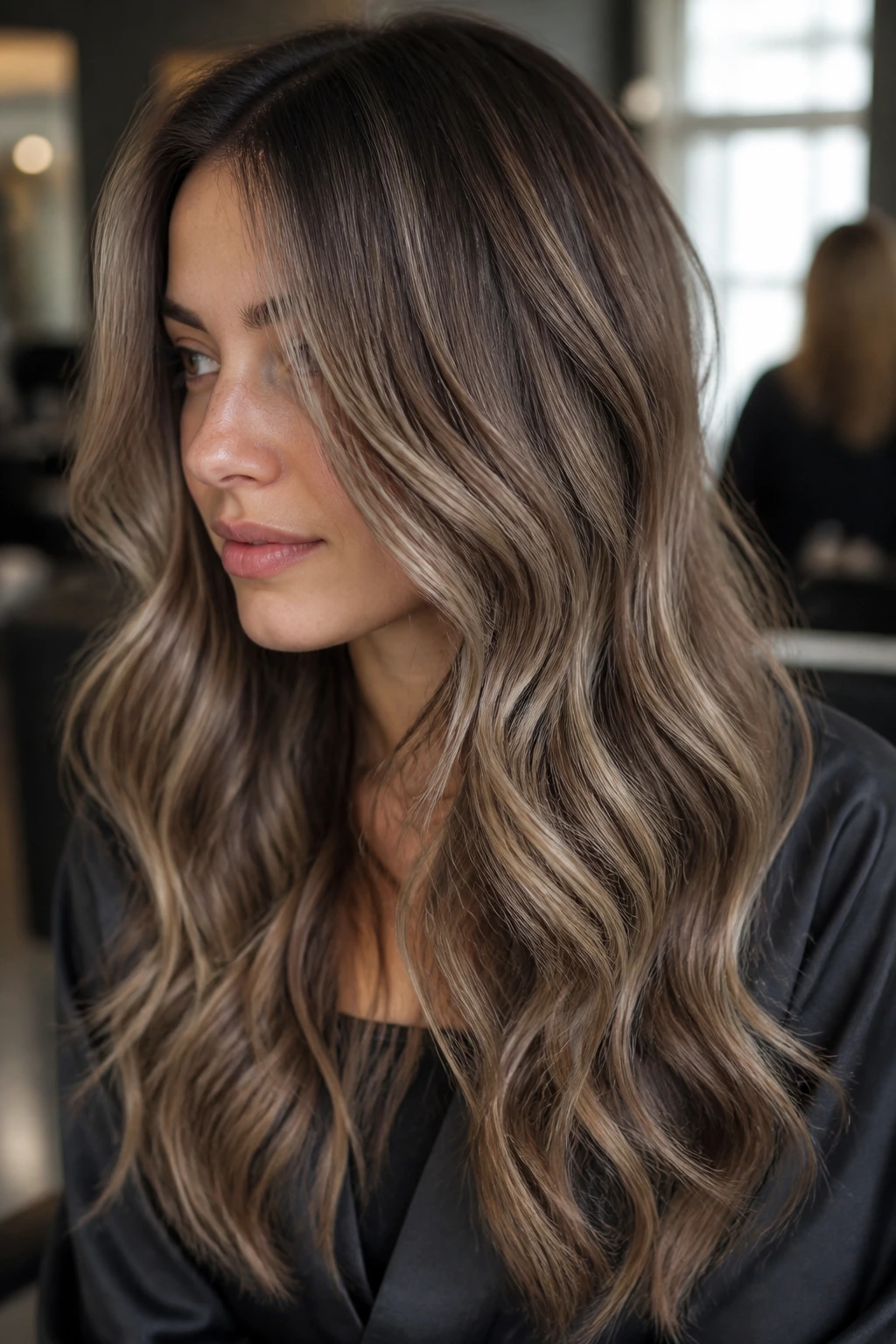
Mushroom honey brown is what happens when brunette goes a little cooler and smarter. It still has honey in it, but the warmth shows up in the mids and ends instead of shouting from the root.
This shade is lovely on cool skin because the smoky brown base calms everything down. The honey comes through like a gloss on top, not a full-color takeover. If your hair pulls orange easily, this is one of the more forgiving options. Ask for an ash-brown foundation with muted honey ribbons and a soft beige glaze at the sink.
It also grows out gracefully. That matters more than people admit. A mushroom honey brown looks intentional at week one and still looks deliberate at week eight, which is a small miracle if you hate constant salon visits.
What Makes It Different
Unlike a standard golden brown, this version stays grounded. It reads polished, not brassy.
3. Soft Honey Money Piece on a Cool Brunette Base
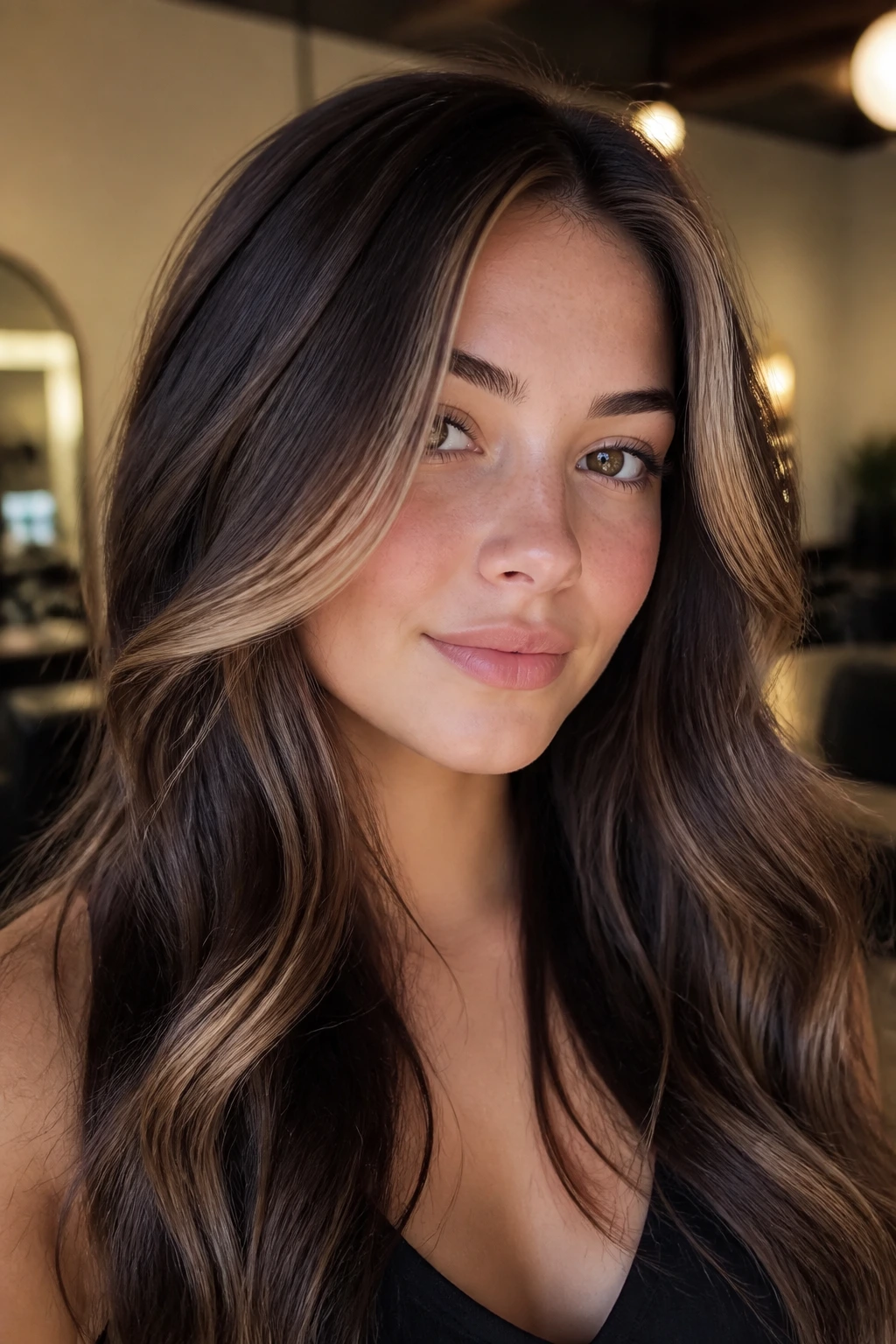
A money piece can go wrong fast on cool skin if it’s too light or too gold. Done right, though, it’s sharp in a good way.
The trick is keeping the front sections two shades lighter, not five, and asking for a beige honey tone instead of a warm blond strip. I like this most on shoulder-length hair because the face-framing pieces hit the cheekbone and jaw without overpowering the rest of the color. If your base is espresso or medium brown, a soft honey money piece gives you brightness where it counts.
What To Ask For
- A thin face-framing highlight on each side.
- Beige-gold or neutral honey, never orange gold.
- A soft blend into the temple area so the line doesn’t look harsh.
- A gloss between touch-ups to keep the front pieces shiny.
That front brightness can make cool eyes pop. Blue, gray, and green eyes tend to like it.
4. Mocha Honey Brown Babylights
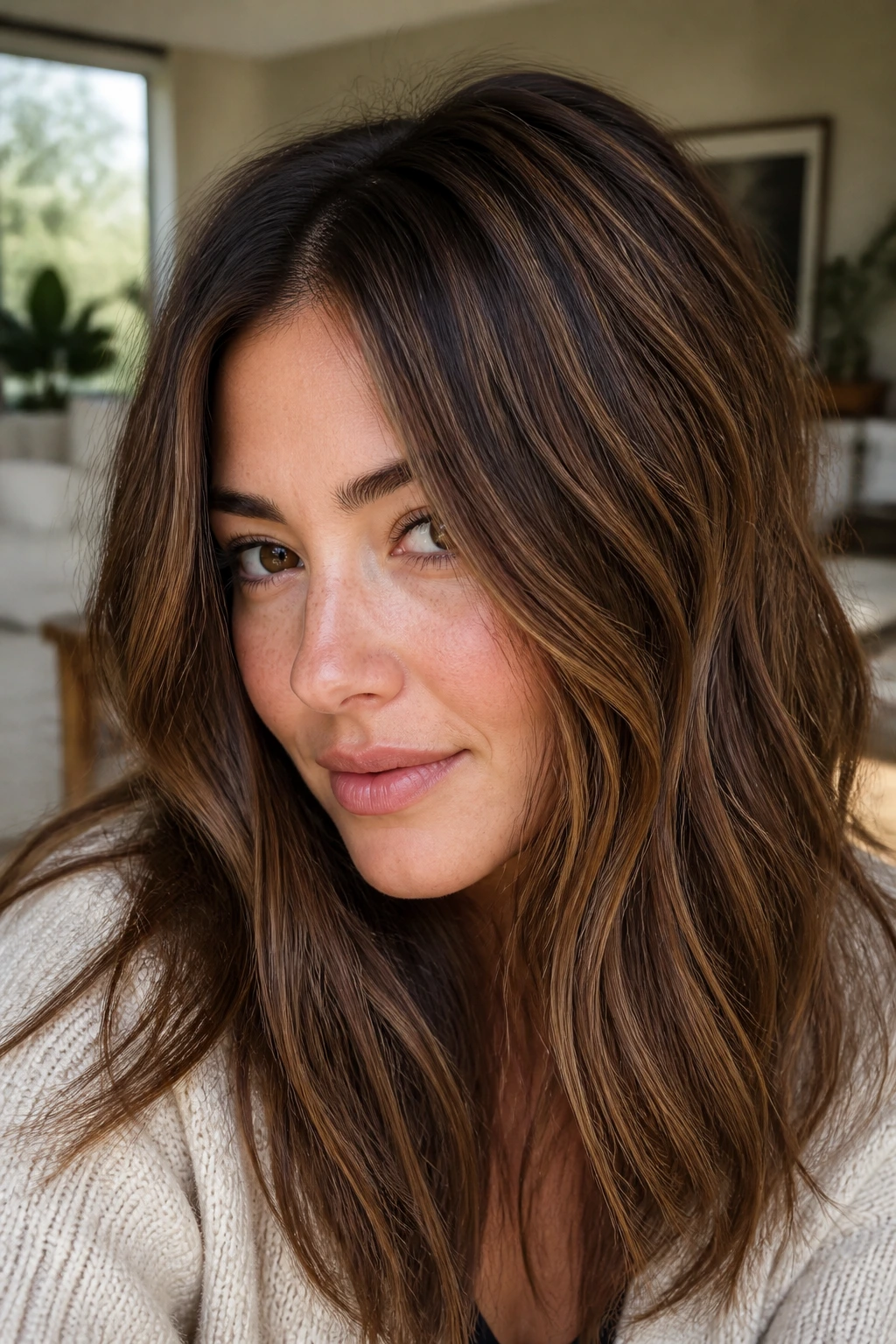
Mocha honey brown babylights are tiny, and that is exactly why they work. You get movement without the chunky contrast that can look a little dated in natural light.
This idea is best if you want the color to read soft from across the room and detailed up close. A mocha base gives cool skin a clean backdrop, while the babylights add warmth in little flashes. Because the highlights are so fine, the honey never overwhelms the face. Ask for micro-weaves placed around the part, temples, and crown.
Why I Keep Coming Back to This One
It’s one of the easiest ways to make brown hair look expensive without making it blonde. It also works on straight, wavy, and loosely curled hair because the fine pieces move as you move.
A good babylight pattern should look like natural light, not stripes. If you can spot every single foil from across the room, the placement is too bold.
5. Chestnut Honey Brown With an Ash Root Shadow
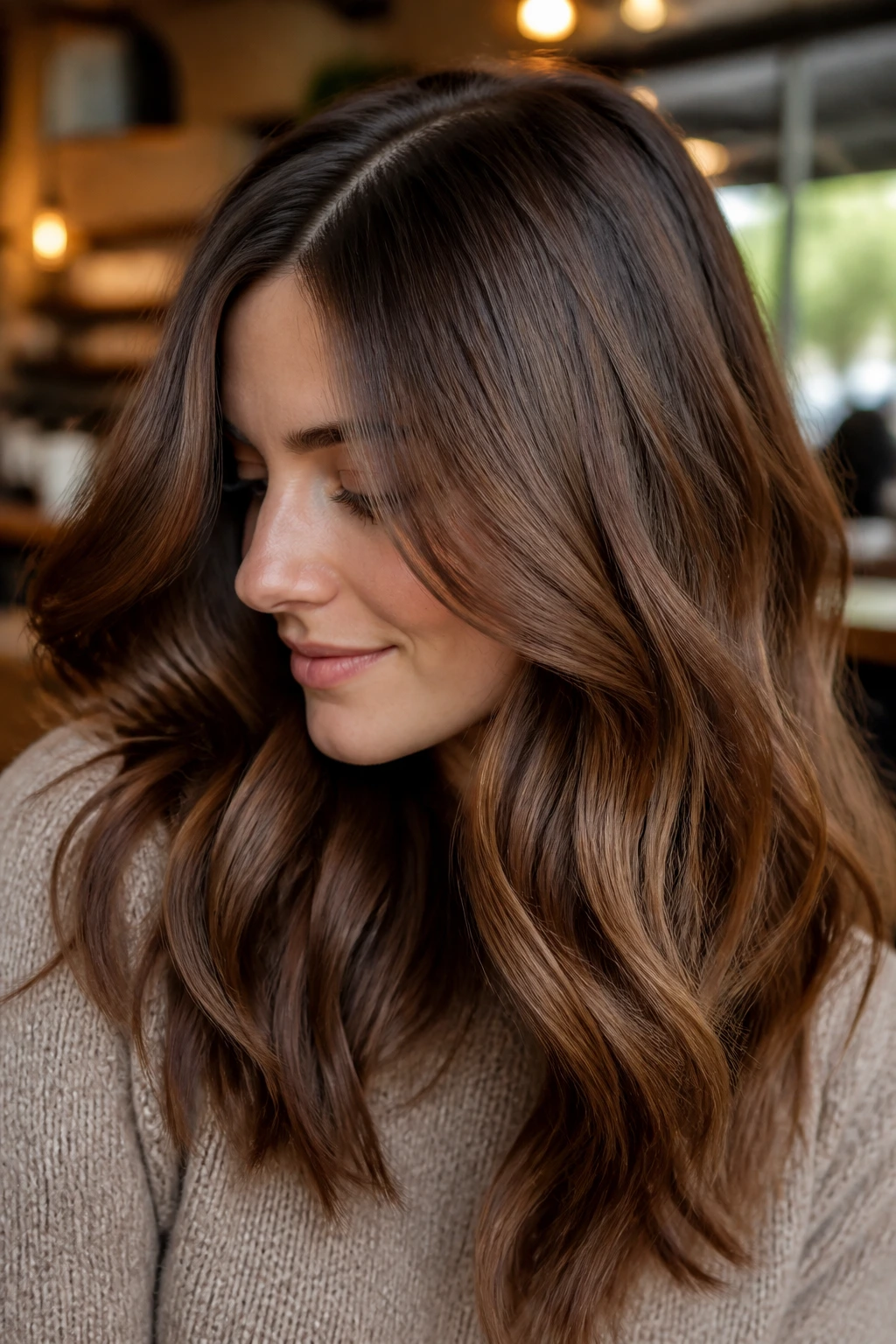
Chestnut honey brown has a deeper, richer feel than beige honey, which makes it a smart pick if your skin is cool but not icy pale. The ash root shadow is the part that keeps it grounded.
The root shadow gives you a darker frame near the scalp, then the chestnut and honey take over through the mids. That contrast is flattering on cool skin because it keeps the warmth from sitting right next to your face in one solid block. I’d ask for a level 4 or 5 root melt, then softly painted honey pieces through the lower half.
This shade looks especially good on medium-length hair with movement. A blunt one-length cut can make it feel heavy. A few layers or soft bends in the ends open it up.
Strong opinion: if your natural hair is dark brown, this is one of the least fussy ways to add honey without constant upkeep.
6. Bronde Honey Melt for Cool Skin Tones
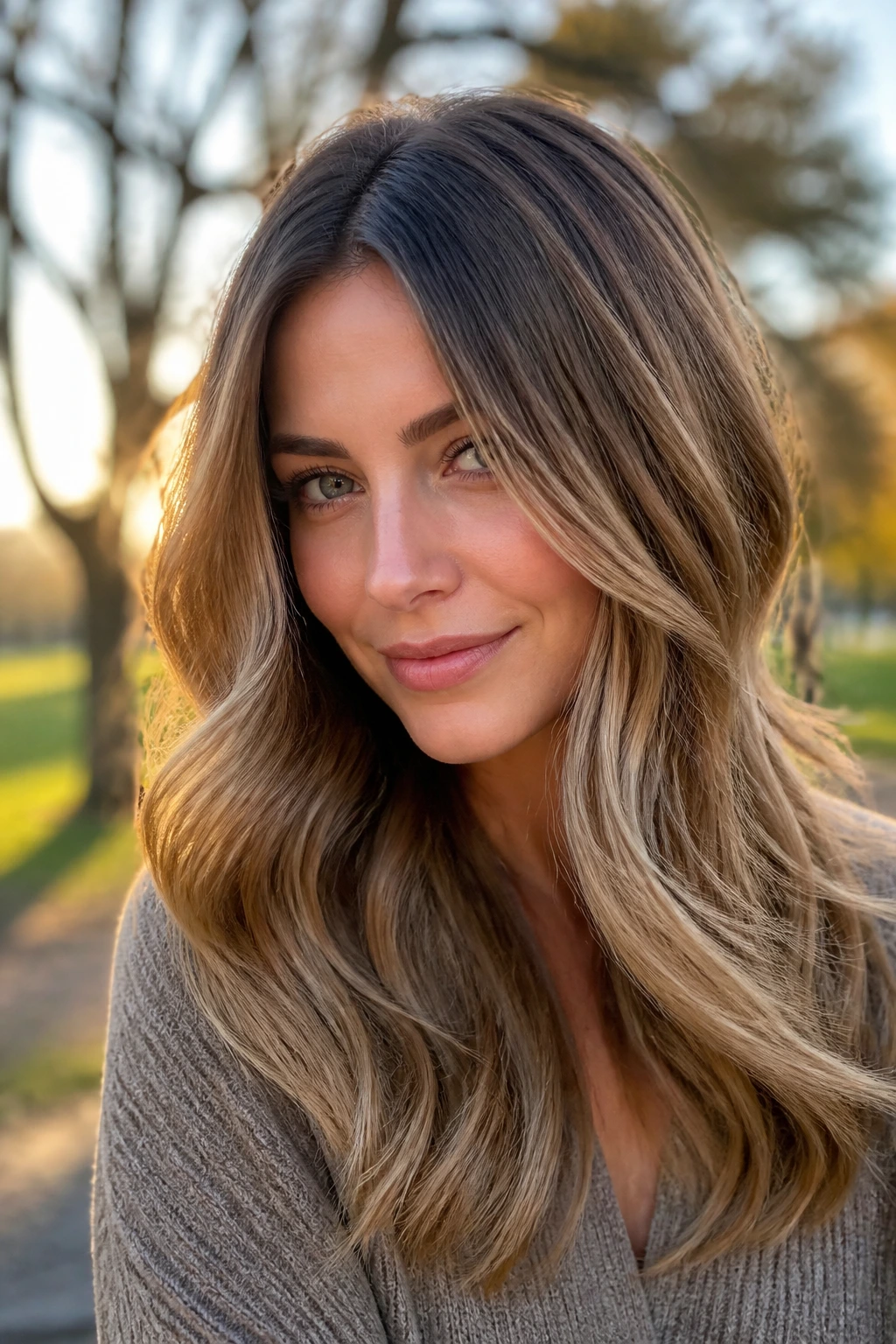
Bronde can be muddy when it’s done badly. When it’s done well, it sits right between brunette and blonde in a way that feels easy.
For cool skin, the key is keeping the blonde side of bronde muted. Think beige honey, not buttery yellow. The best version starts with a medium brown base and melts into sandy honey midlengths, then finishes with lighter ends that still look brunette at the core. It’s a nice choice if you want dimension but do not want to look fully highlighted.
A bronde melt also gives you room to wear your hair in waves, buns, or straight styles without the color reading flat. The movement does half the work for you. That matters on cool skin because too much warmth in one place can dominate fast.
Best For
- Medium to long hair
- People who like low-maintenance grow-out
- Soft waves and lived-in texture
7. Rooted Honey Brown Waves With a Lived-In Finish
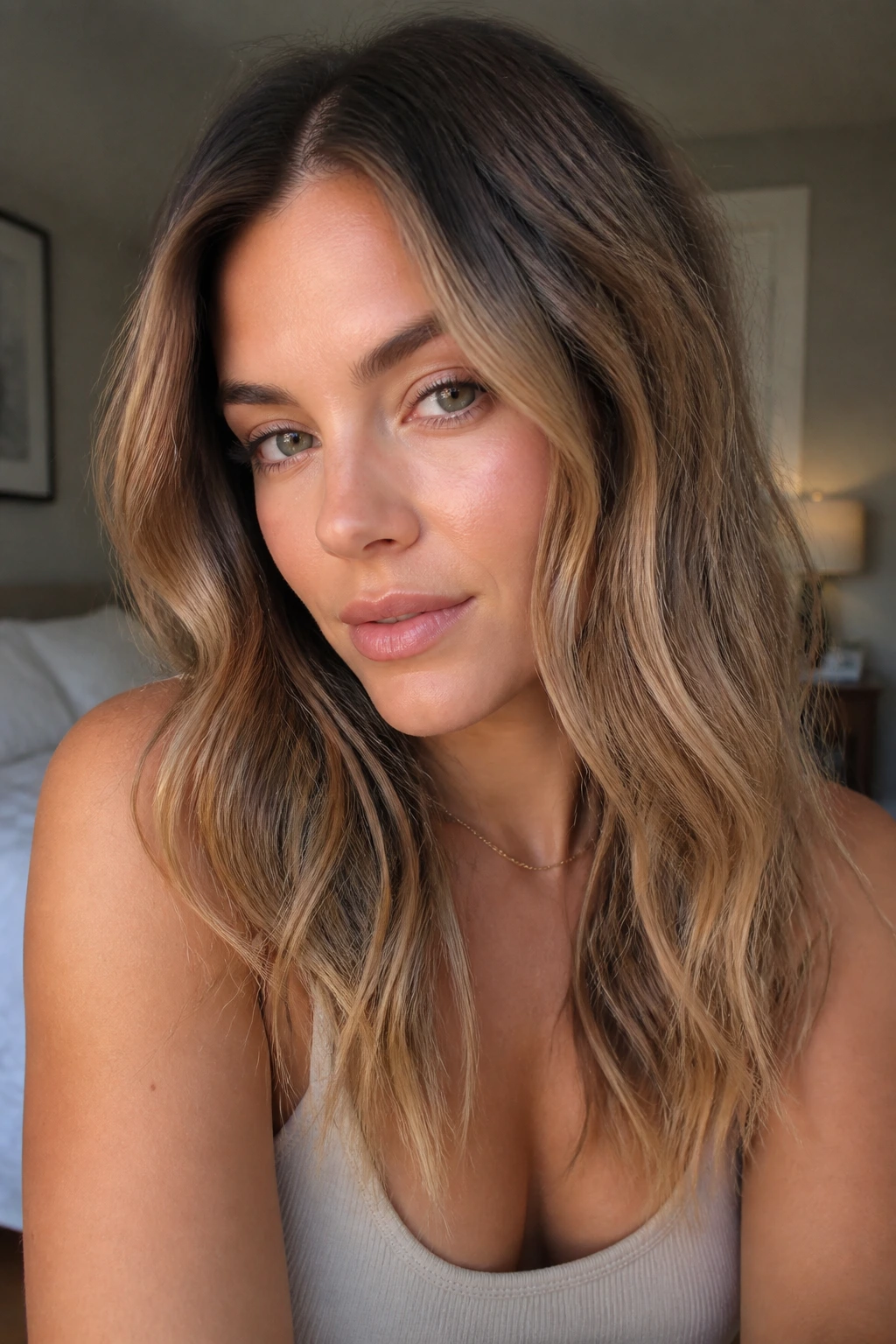
Rooted honey brown waves are easy to wear and easy to grow out, which is why they stay on my list. A deeper root buys you time. A honey-brown midsection gives you glow.
The contrast between the root and the wave pattern helps the color look dimensional instead of painted on top. Ask for a root smudge about 1 to 1.5 inches deep, then place honey ribbons through the body of the hair and around the face. On cool skin, the root helps the warmth stay away from the hairline where it can turn too yellow.
How It Wears
This shade looks good air-dried with a little bend, but it really comes alive with a 1-inch curling iron or a flat-iron wave. The bends catch the lighter pieces and make the whole head look fuller.
If you want one color that can survive a busy schedule, this is it. No drama.
8. Honey Brown Ribbon Highlights on a Cool Brunette Base
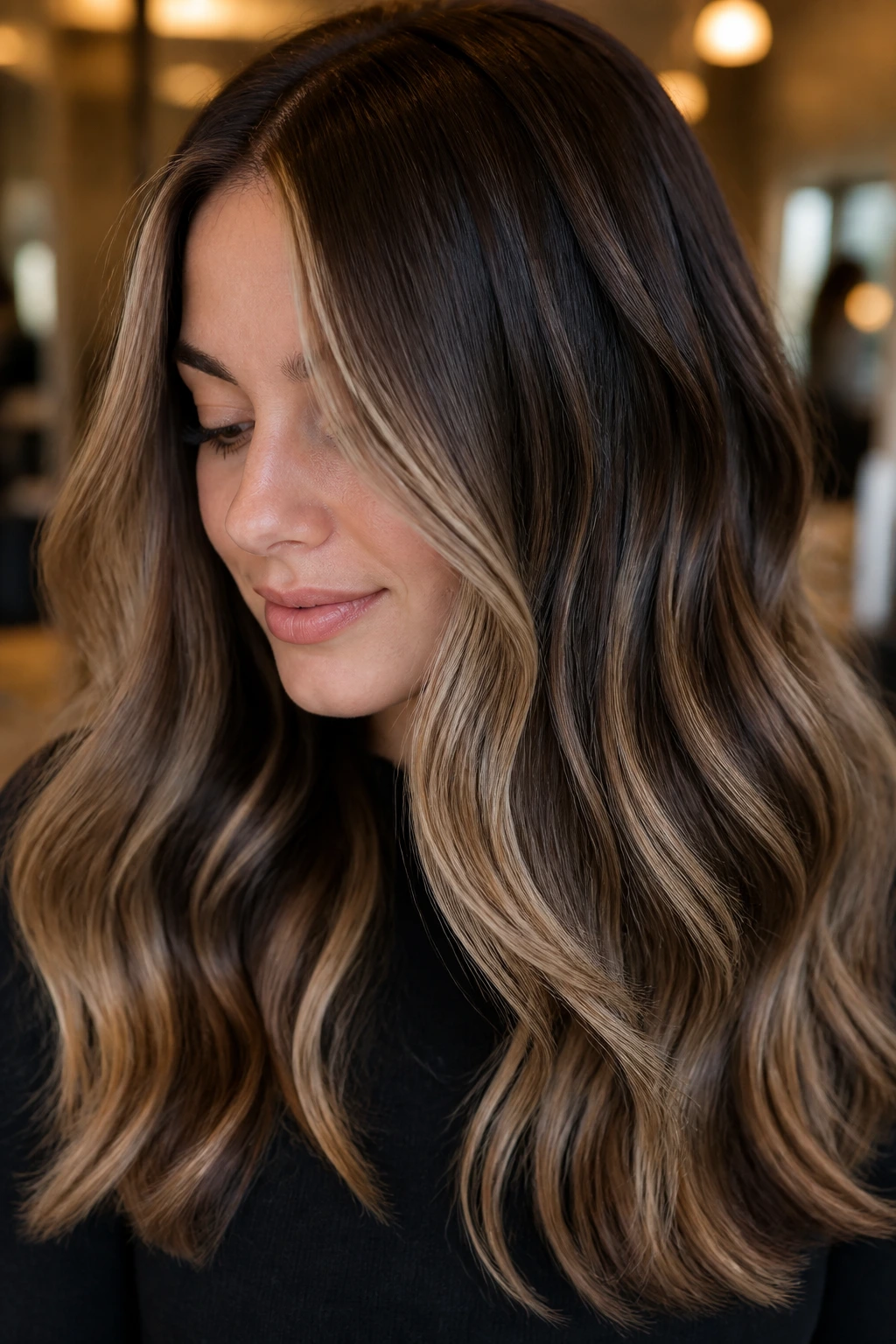
Ribbon highlights are broader than babylights, and that gives them a more visible, fashion-forward look. They’re also a good fit for cool skin when the ribbon tone stays beige and the base stays brown.
I like this version on thick hair because the larger panels can actually be seen. Fine hair can disappear under chunky highlights, but thick hair holds them beautifully. Ask your colorist to place the ribbons in the mid-lengths and ends, then keep the face frame lighter and the underlayers a touch deeper. That contrast makes the style feel expensive instead of washed out.
Ribbon highlights are especially nice on waves and curls. The curves show off the variation in tone, which means you get more payoff from each section of color. If your hair tends to look one-note in winter, this is a good fix.
What To Watch For
Keep the ribbons soft enough that they do not look stripy. A beige honey ribbon should feel painted, not stamped on.
9. Toffee Honey Brown With Face-Framing Layers
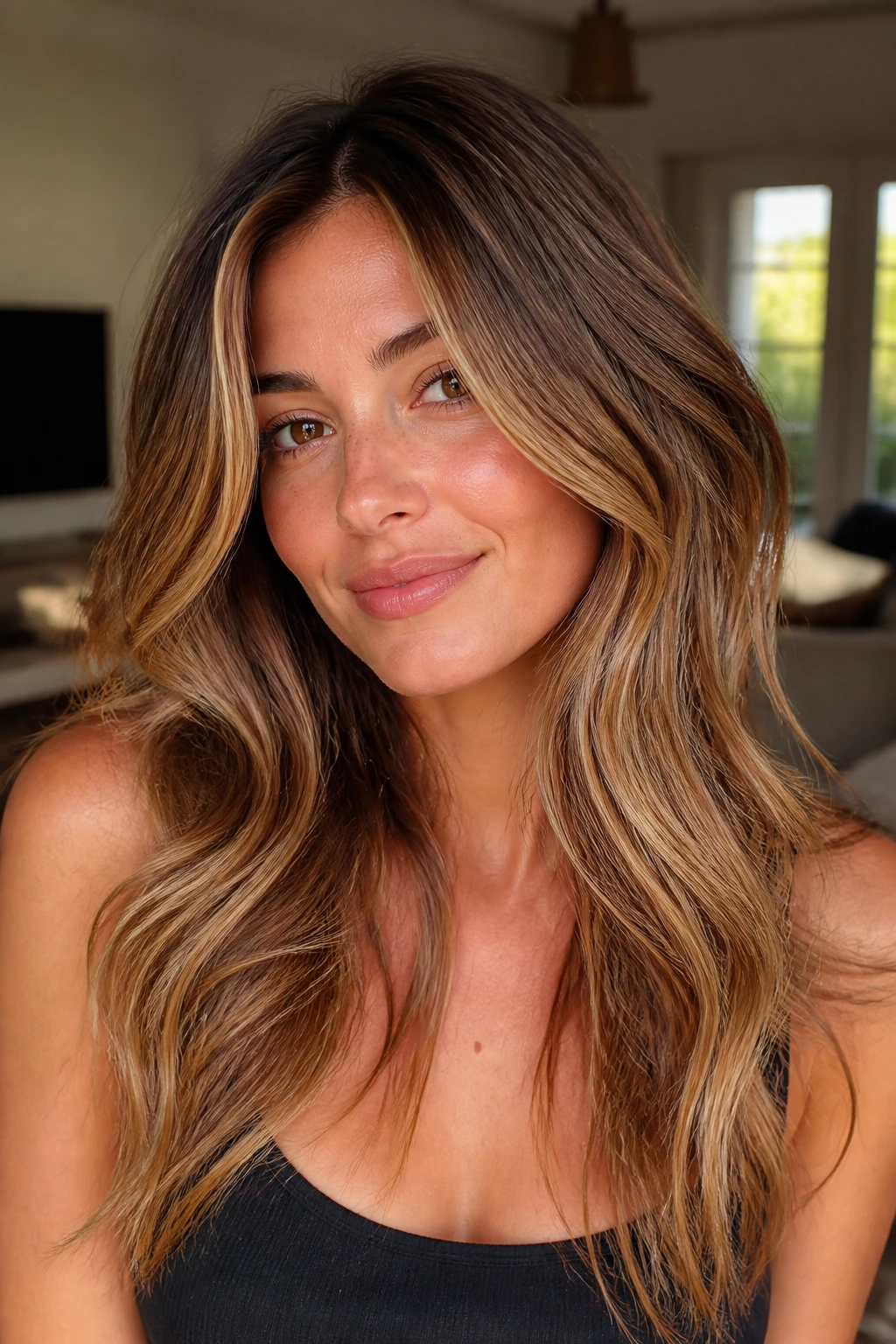
Toffee can get too warm in a hurry, so this one needs a careful hand. The payoff is worth it when the tone stays muted and the layers are cut with purpose.
Face-framing layers help the color move. Without them, toffee-honey shades can settle into one flat sheet of warmth. With the layers, the light catches the front and sides in a way that softens cool skin and keeps the look from feeling heavy. I’d ask for a neutral brunette base, toffee-honey mids, and lighter layer ends around the face.
This idea looks especially good if you wear your hair down a lot. The layers keep the front from hiding the color, which is a small but real problem on longer hair.
One practical note: if your skin is very pink, ask for a beige glaze after coloring. That tiny adjustment makes a big difference.
10. Beige Brunette With Honey Ends
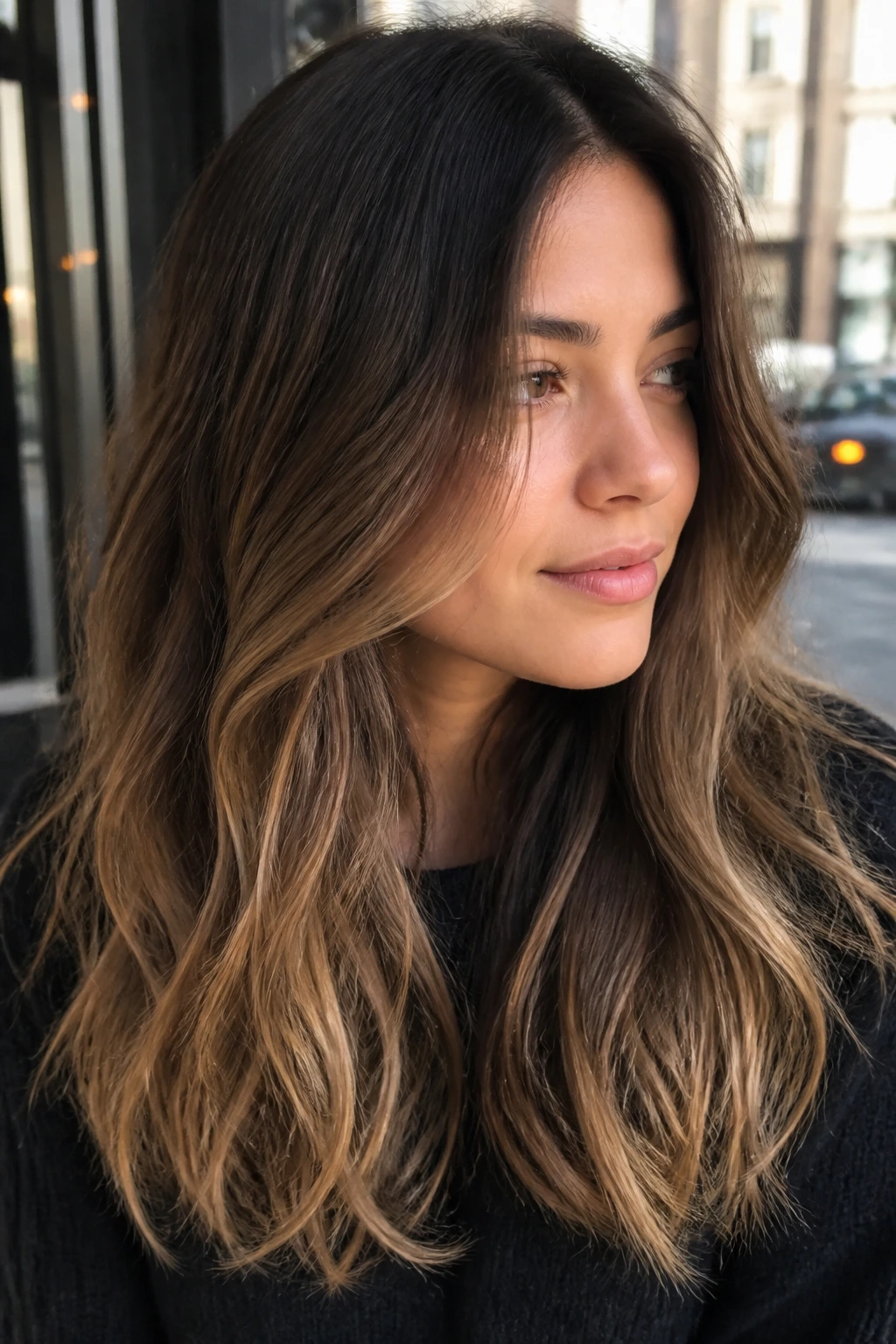
This is for the person who wants honey brown hair but does not want to look highlighted from the root down. The color stays brunette at the top and slowly warms into honey at the ends.
That makes the style work beautifully on cool skin. The top half keeps the hair from pulling too yellow near the face, while the ends give you that soft light-reflecting finish people notice in motion. It’s a nice choice for long hair, especially if you like wearing it in loose curls or a low ponytail.
The Shape Matters
Straight-across ends can make this look abrupt. A few long layers help the transition feel smoother, and they let the lighter ends peek out in a natural way.
Best if you like low maintenance: the grow-out is gentle. You can stretch salon visits longer than with a full highlight schedule.
11. Glassy Chestnut Honey Brown
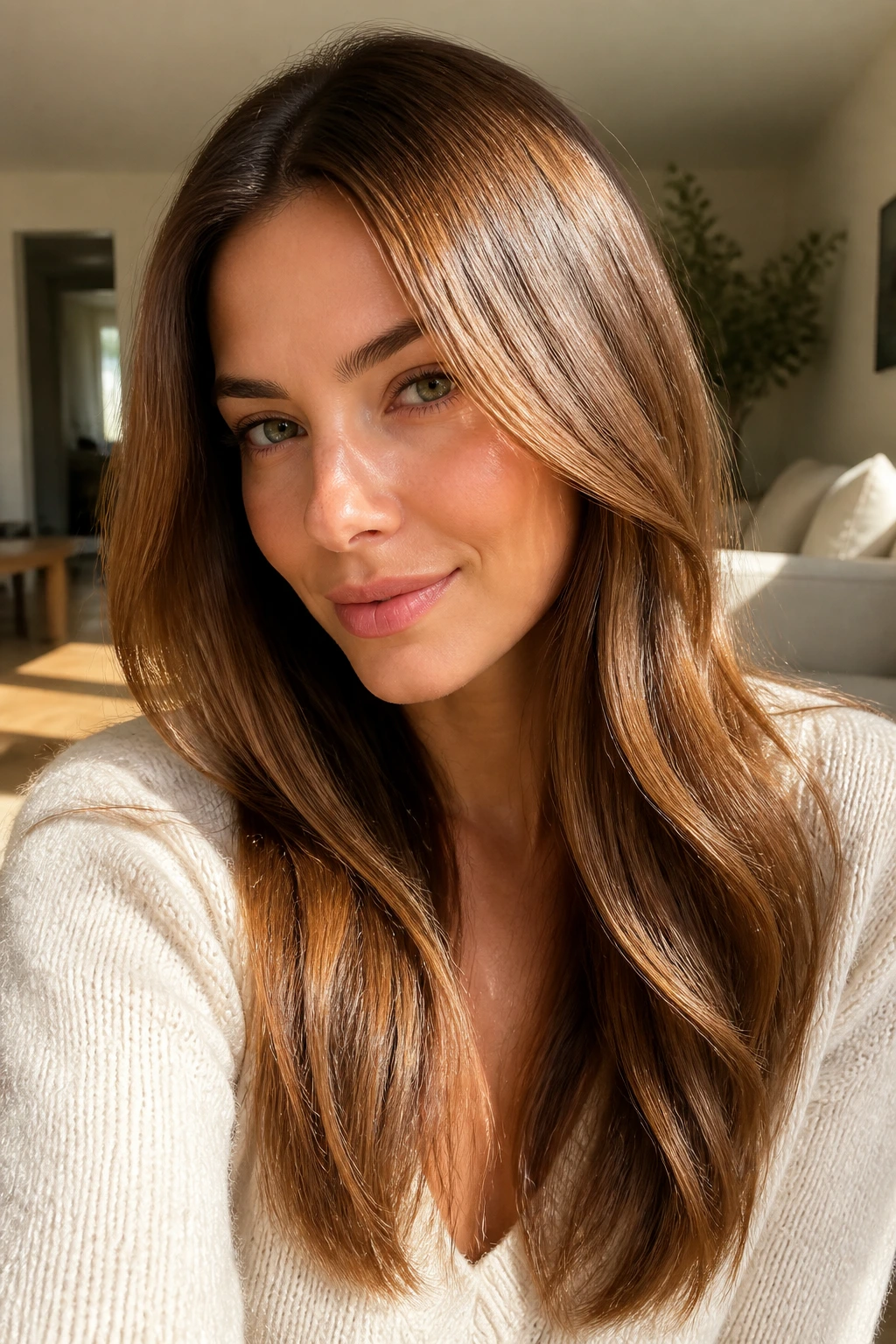
Glassy chestnut honey brown is all about shine. The color itself is not wildly bright, but the finish makes it feel polished and rich.
A chestnut base gives cool skin some depth, while a honey gloss adds reflection instead of obvious streaks. I like this on straight hair or smooth blowouts because the reflective surface shows every tone shift. It’s also a smart pick if your hair is fine and you want the illusion of thickness without adding a ton of highlight contrast.
Ask for a semi-permanent gloss in chestnut honey rather than a permanent all-over warm color. That keeps the tone flexible, and it usually fades more softly. If your hair tends to soak up pigment fast, this is safer than going too dark with the root.
The whole look feels neat, not fussy. That’s the charm.
12. Walnut Honey Brown With Micro-Lowlights
Walnut honey brown has a cooler, slightly earthy feel that flatters cool skin better than many people expect. The micro-lowlights are what give it body.
Instead of chasing brightness, this version adds tiny pockets of darker brown through the honey so the whole head doesn’t go flat. It’s especially helpful if your natural color is medium brown and you want dimension without a big color change. Ask for very fine lowlights spaced irregularly, then weave in soft honey pieces between them.
Why It Works
The eye reads the mix as depth, not as one solid shade. That means the warmth looks controlled.
This is also one of the better options for early grays. The darker bits break up the regrowth line and give the color a softer, lived-in feel. It’s a quietly clever choice.
13. Sandy Honey Brown on a Shag Cut
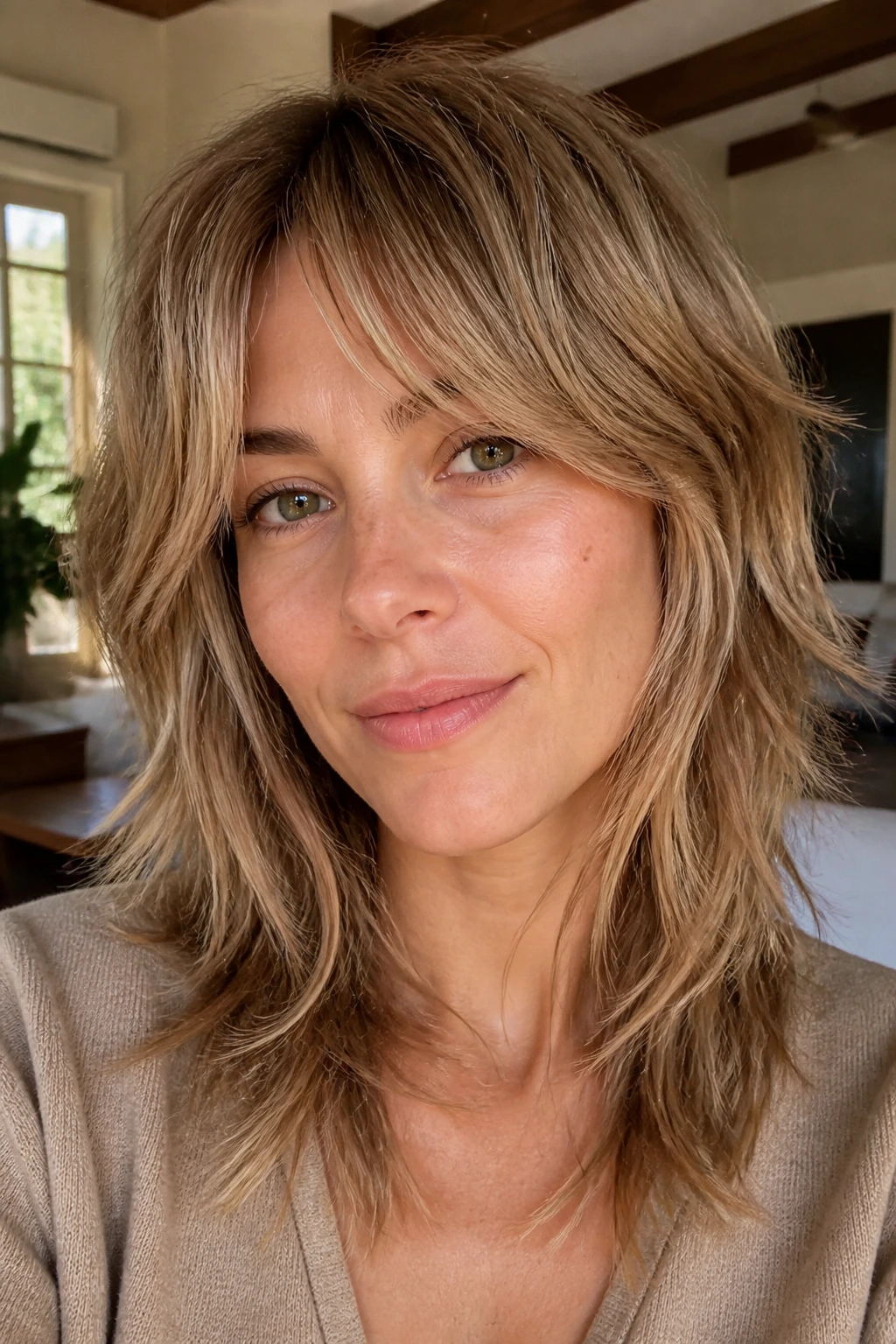
A shag cut changes everything. The layers create movement, and the sandy honey brown color rides on top of that movement instead of fighting it.
For cool skin, sandy honey is safer than bright gold because it keeps the warmth light and airy. The texture of the cut also helps the color read softer. Ask for face-framing pieces, textured ends, and a sandy beige toner so the whole style stays cool enough at the root and warm enough through the ends.
This one looks especially good if your hair has a little natural wave. The layers push the lighter pieces forward and make the shape feel fuller. It’s a good option for someone who wants a color that looks easy, even if the cut itself has attitude.
One small warning: a shag with heavy honey at the crown can look puffy. Keep the brightest pieces lower.
14. Espresso Honey Brown With a Soft Gloss
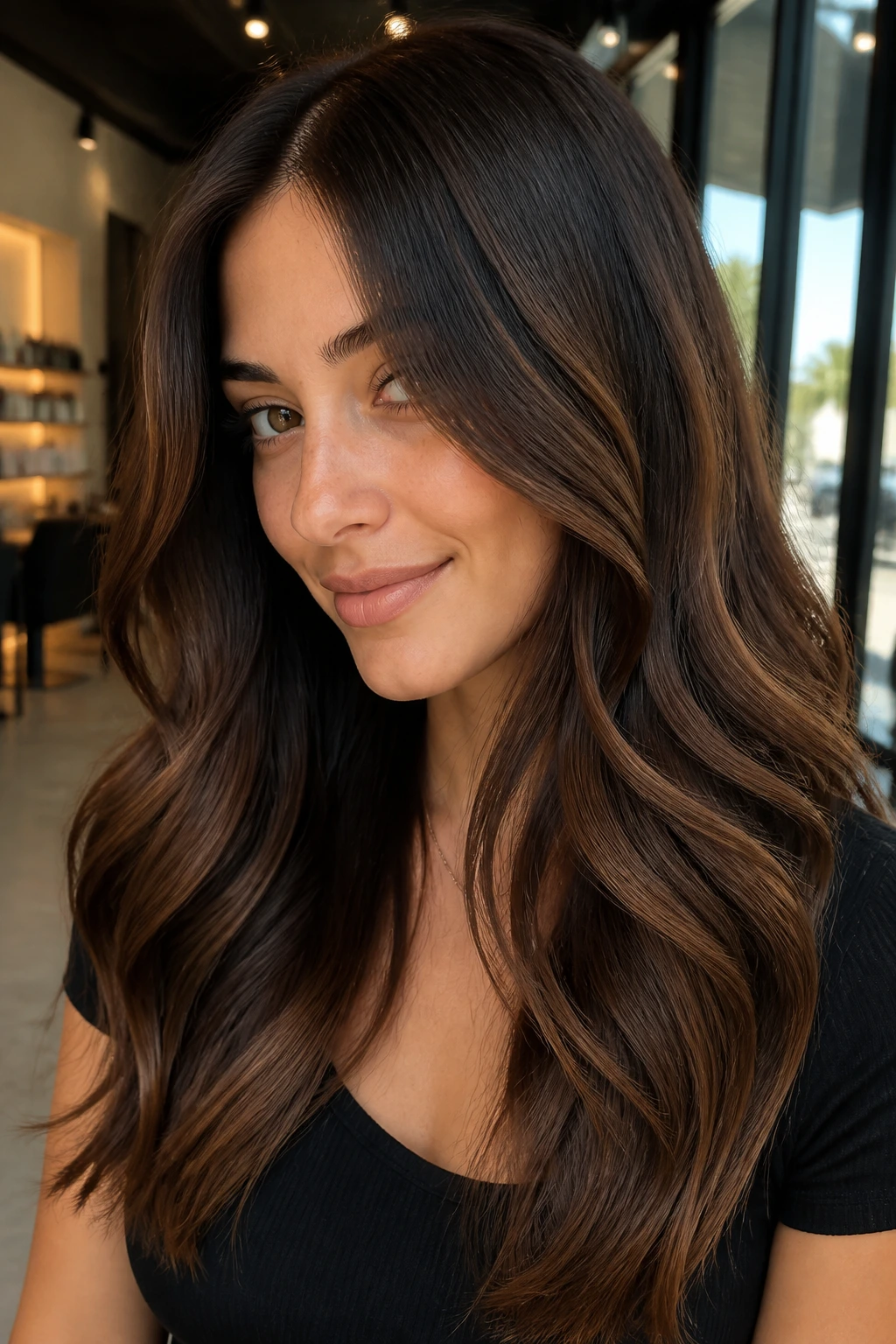
Espresso honey brown is for people who like contrast but still want the warmth to be restrained. The espresso base does most of the work, and the honey appears as a soft glaze through the mids and ends.
That darker foundation can be a gift for cool skin. It gives the complexion a cleaner frame and stops the honey from getting too loud. If you have dark hair already, this version may be less of a color change and more of a tone shift. Ask for espresso at the root, then a translucent honey-brown gloss on the lower lengths.
It’s also a good choice if you use heat tools a lot. A deeper base hides a little fading better than a very light brunette. Not glamorous advice, maybe, but practical.
The result is subtle from a distance and richer up close. That’s usually the sweet spot with darker cool skin and lighter eyes.
15. Honey Brown Curly Definition With Painted Ribbons
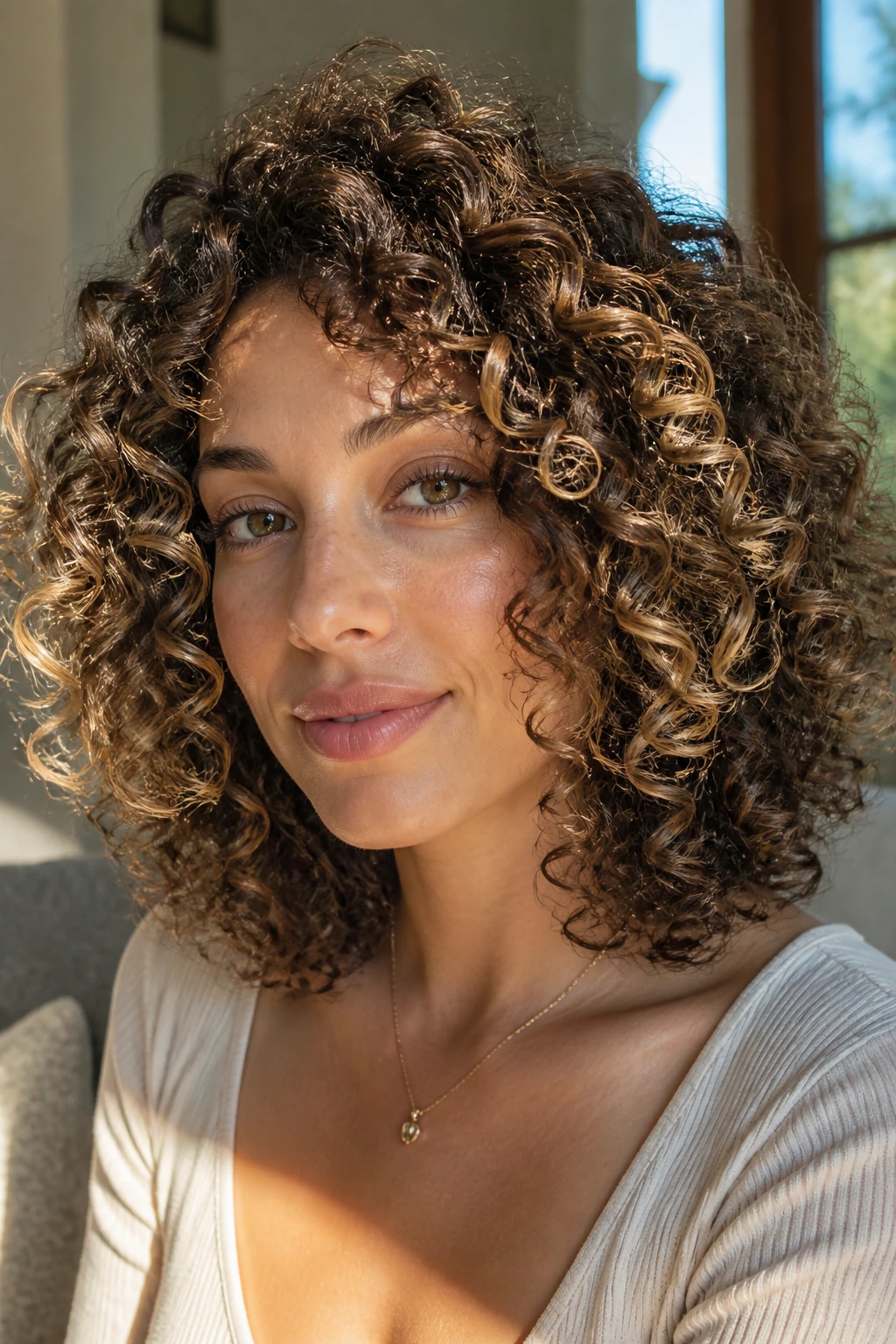
Curly hair changes the placement game. A honey brown that looks soft on straight hair can look much brighter once the curls spring up.
That’s why curl-by-curl placement matters. Instead of painting the whole head evenly, ask for honey ribbons on the outer curves of the curls and keep the underside a little deeper. Cool skin benefits from that kind of control because the warmth shows in motion, not as one flat block. A beige-gold or neutral honey usually works better than a strong yellow gold.
How To Talk To Your Colorist
- Keep the base one to two shades deeper than the highlight.
- Place brighter curls around the face and crown.
- Leave some untouched depth near the nape.
- Use a gloss that reads beige, not orange.
Curly hair does not need as much lightening as people think. A few well-placed ribbons go a long way.
16. Almond Honey Brown Ombré
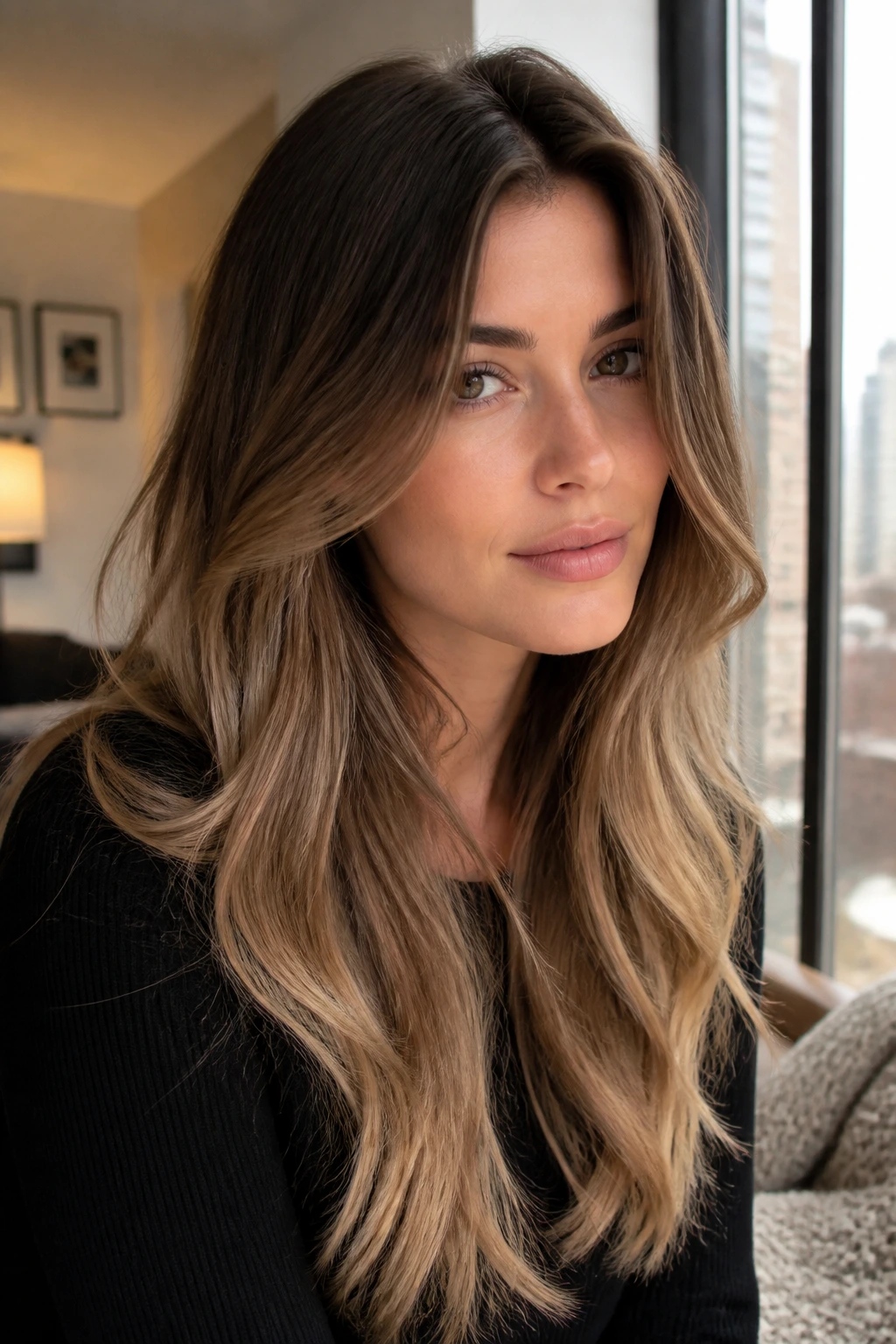
Almond honey brown ombré gives you a gentler gradient than a harsh color block. The roots stay brunette, the mids move into almond, and the ends carry a soft honey finish.
It flatters cool skin because the transition never jumps straight into gold. The almond tone acts like a buffer. That matters when your complexion goes pink in cold light or pale under indoor lighting. I’d ask for a slow melt from level 5 roots to level 7 ends, then finish with a neutral-beige gloss.
The best thing about this look is that it feels grown-up without being severe. If you wear your hair long, the ombré gives you movement at the ends and keeps the crown from looking too washed out.
A middle part makes this style feel sleek. A side part makes it softer. Both work.
17. Smoky Honey Brown Pixie
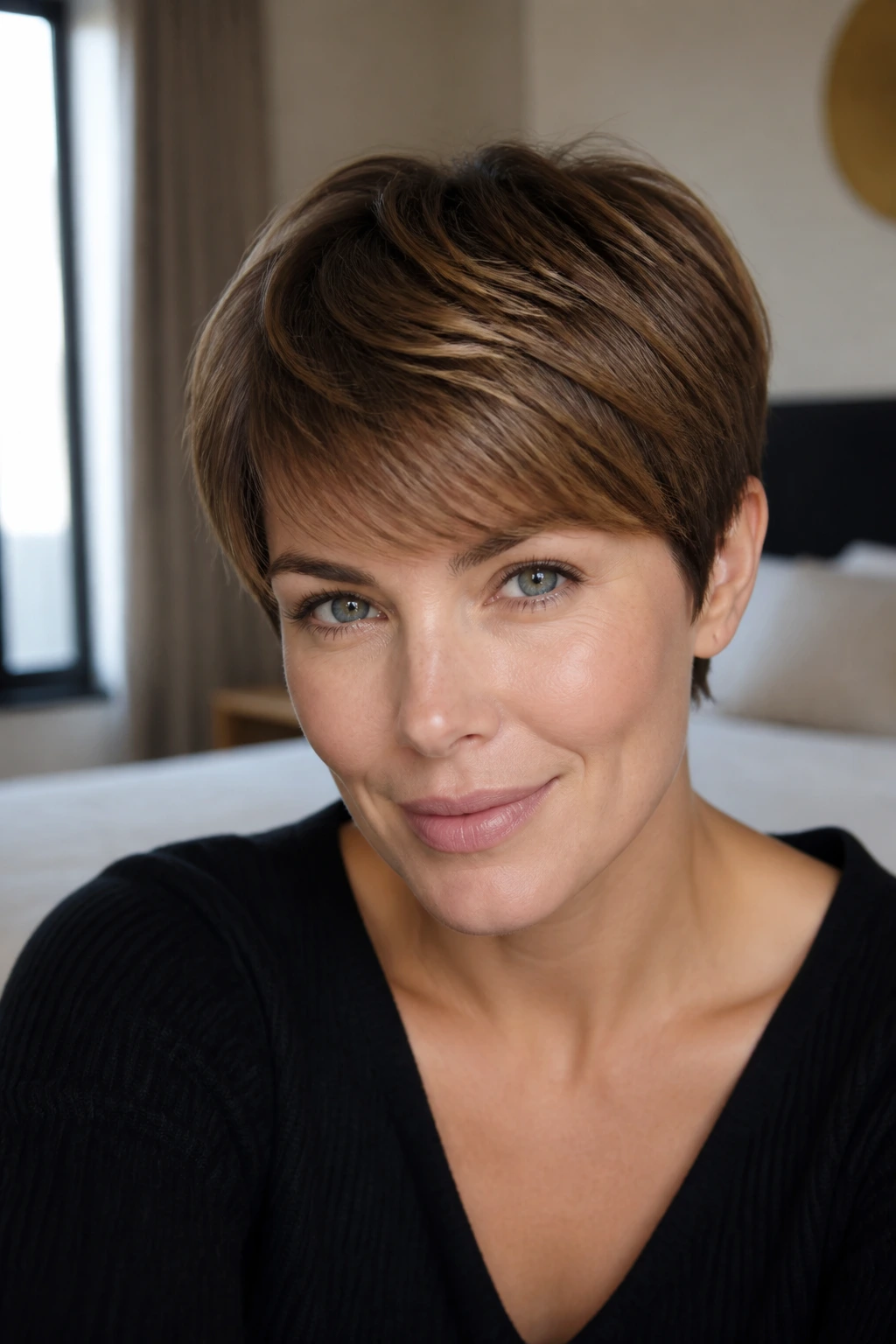
Short hair with color can be a trap if the tone is too flat. A smoky honey brown pixie avoids that by mixing depth and shine in a tight little package.
This cut loves a cool brunette base with tiny honey accents through the top and fringe. Because the hair is short, you do not need much contrast to see the effect. A whisper of brightness around the crown is enough. Ask for micro-foils or painted tips rather than broad highlight pieces.
What I Like About It
The color makes the texture visible. That matters on a pixie, where the cut is carrying a lot of the style on its own.
It also flatters cool skin nicely because the warmth is close to the face but not yellow-heavy. Keep the tone smoky, and the whole thing reads modern and crisp. If you want low styling time, this is one of the smartest honey-brown ideas on the list.
18. Vanilla Chai Honey Brown
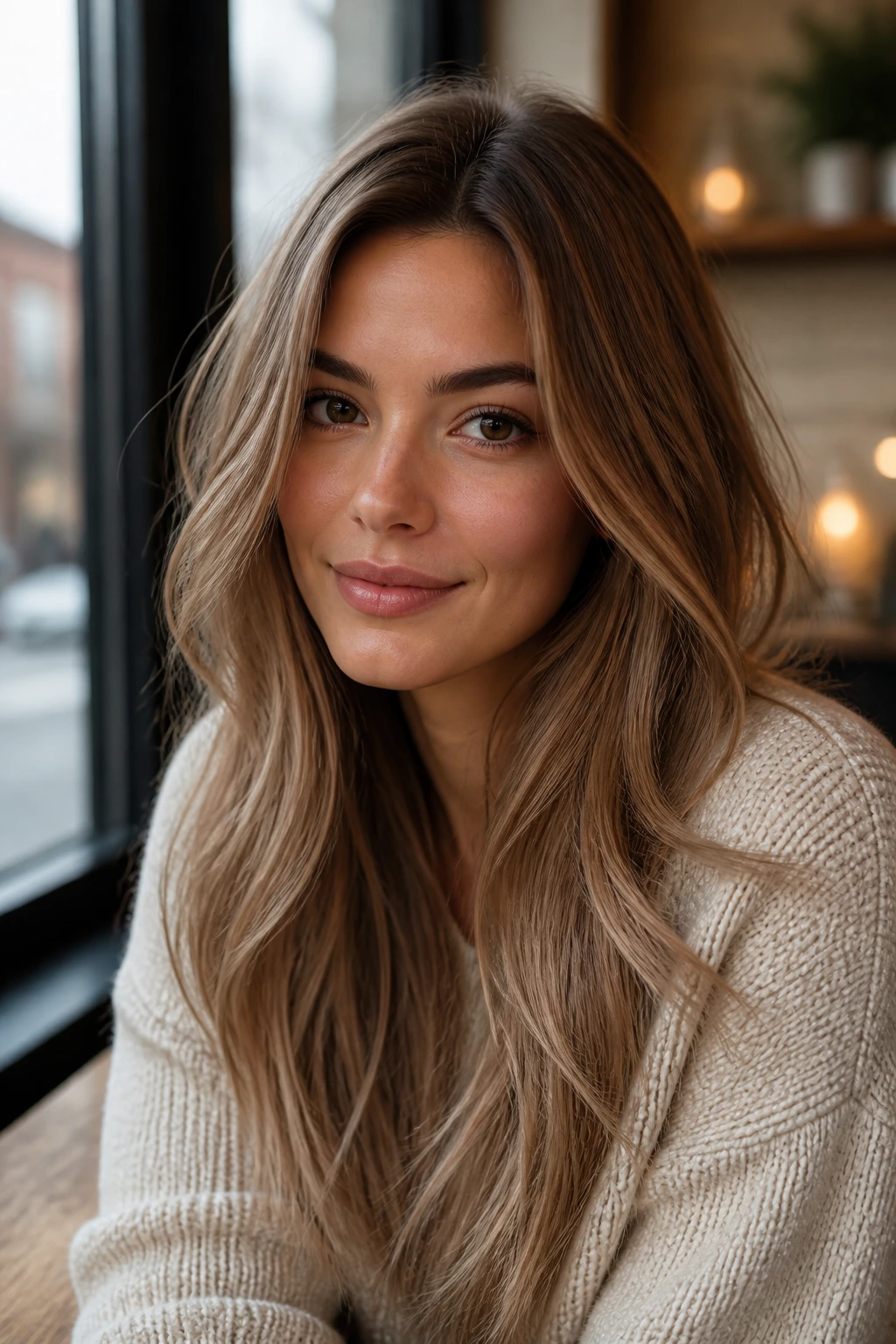
Vanilla chai honey brown has a softer, creamier feel than classic honey brown. It leans beige, a little milky, and just warm enough to keep the hair from looking dusty.
That softness is why it works on cool skin. The color does not shout yellow. It whispers beige with a hint of gold. The best version starts with a medium brunette base and adds creamy honey through the mids and ends, then finishes with a gloss that keeps the result smooth rather than brassy.
This is a strong choice if your wardrobe lives in black, gray, navy, or cream. The hair will still feel warm, but it won’t clash with cooler clothes or makeup.
Ask for a creamy toner, not a golden one. That one sentence can save the whole look.
19. Rooted Honey Brown Waves With a Deep Grow-Out
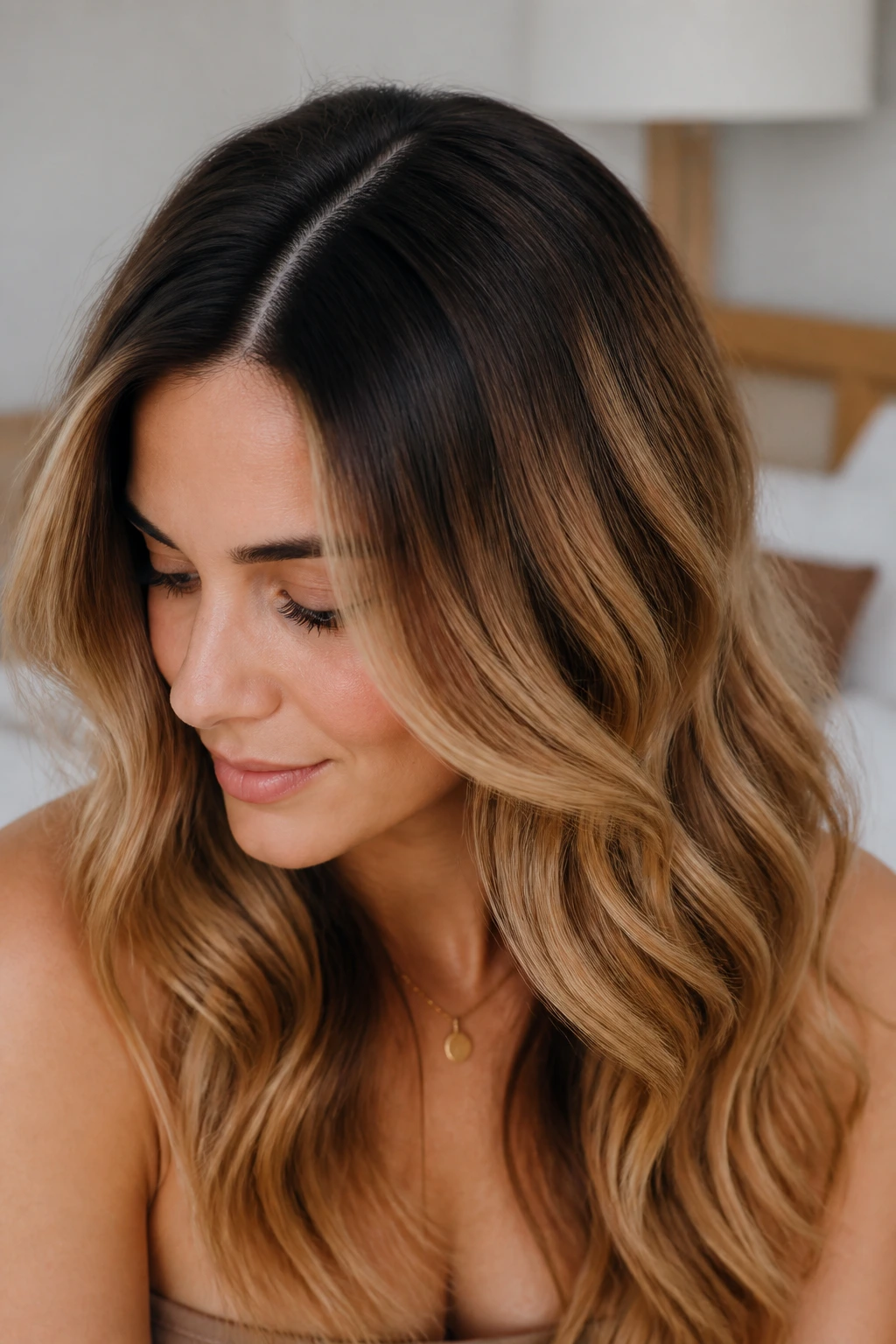
Rooted honey brown waves are a workhorse style. They keep the scalp area darker, which helps the color grow out without looking messy, and they place the honey where movement can show it off.
This is one of my favorite ideas for people who hate salon upkeep. The root shadow softens regrowth, and the waves keep the lighter pieces moving through the lengths. On cool skin, that darker root is useful because it prevents the warmth from landing right at the hairline. Ask for a rooted melt about 2 inches deep if your hair is naturally medium brown; go a touch deeper if your base is dark.
The style looks polished even when the wave pattern is loose and imperfect. That’s part of the appeal. It does not need to be curled to within an inch of its life.
One good gloss and a smart root shadow carry a lot of weight here.
20. Cocoa Honey Brown With Airy Highlights
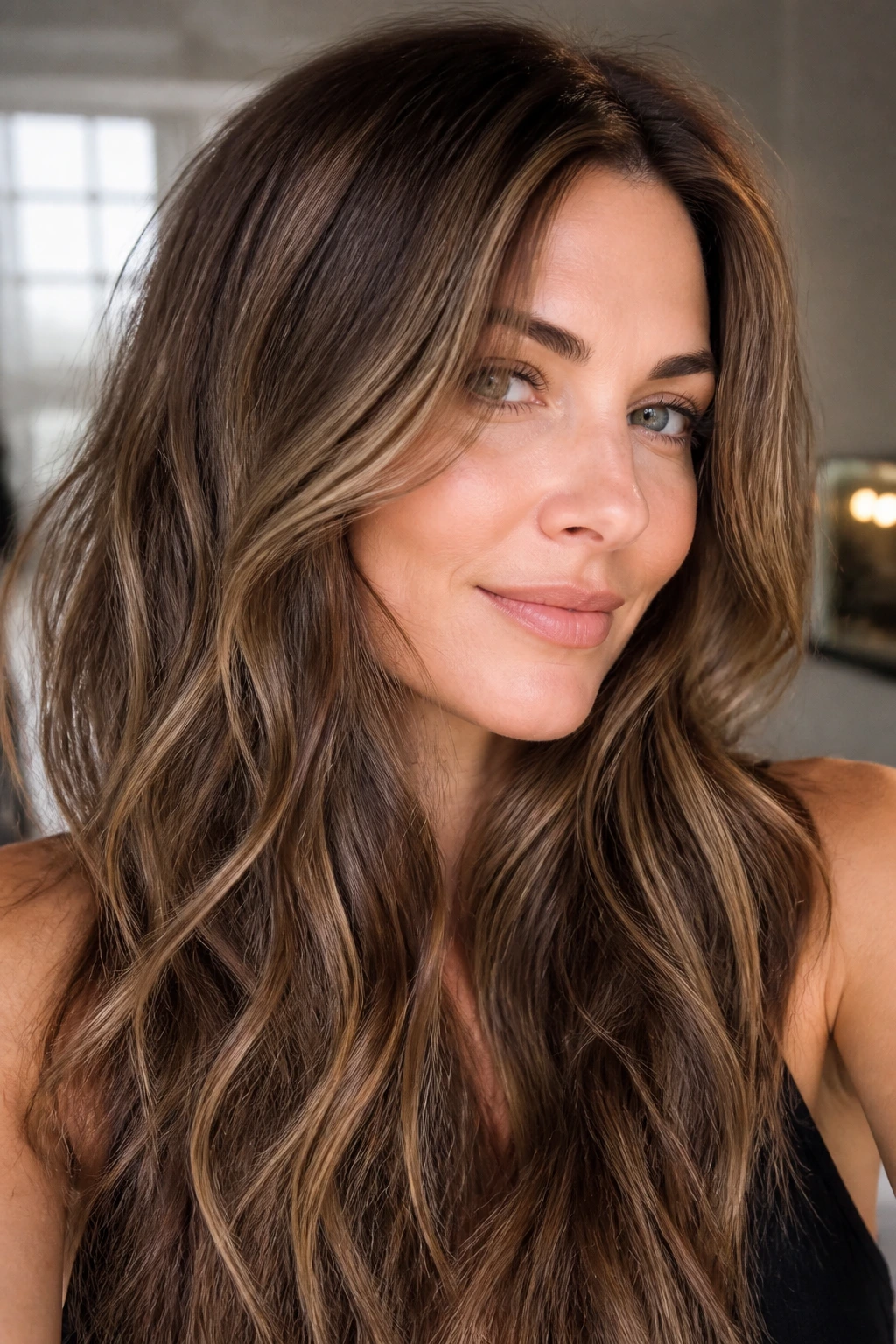
Cocoa honey brown is a cleaner, darker take on honey brown. The cocoa base gives cool skin contrast, while the airy highlights keep the finish from getting heavy.
I like this when someone wants dimension but hates the look of obvious bleach lines. The highlights should be thin, lifted softly, and placed in a scattered pattern so the head never looks striped. Ask for airy highlights around the part, temples, and upper layers, then let the rest stay cocoa-rich.
Where It Shines
This color looks especially good on long layers, because the highlights can break across the hair in different places as you move. The result feels softer than a uniform light brown.
If you wear minimal makeup, cocoa honey brown can be a smart choice. It gives enough warmth to brighten the face without demanding much else.
21. Honey Brown Money Piece Bob
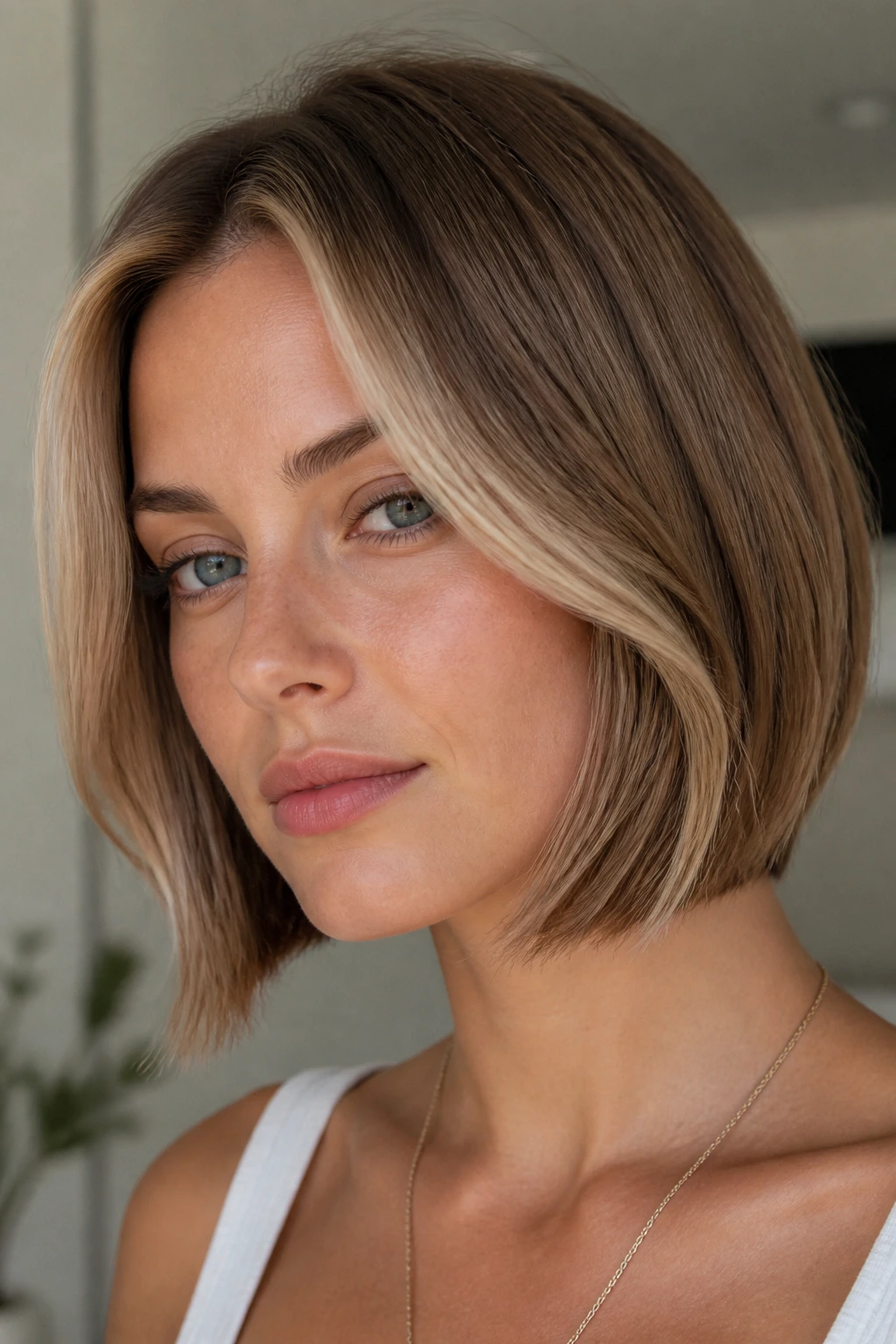
A bob and a money piece are a strong combo when you want clear shape. The cut gives you geometry; the color gives you lift.
For cool skin, keep the money piece beige and the rest of the bob in a medium brunette or smoky honey tone. That way the front looks lighter without turning buttery or orange. A chin-length or collarbone bob works especially well because the front pieces sit close enough to the face to brighten it, but not so close that they overwhelm it.
What To Ask For
- A clean bob line with soft internal texture.
- One brighter face-framing section on each side.
- Honey tones kept beige, not coppery.
- A gloss every few weeks to keep the front pieces smooth.
This is a great look if you want a bit of edge. The bob keeps it sharp. The honey keeps it soft.
22. Amber Honey Brown With Soft Layers
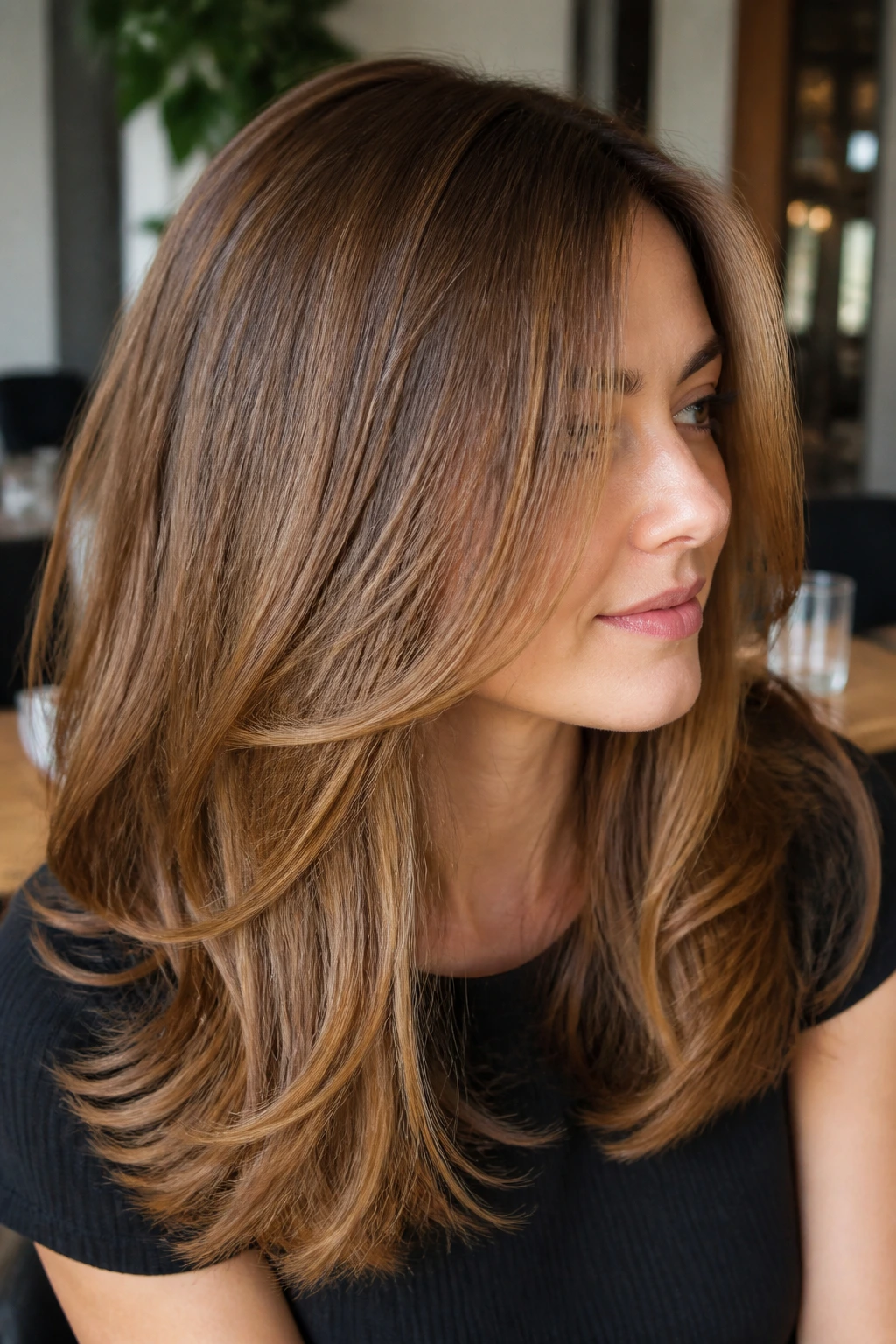
Amber can scare off cool-skin people because the word sounds warm, and yes, it can go too far. But when it stays muted and sits inside a brunette base, it becomes a rich option instead of a loud one.
Soft layers help. They let the amber honey brown move instead of sitting flat across the head. That movement matters because the color reads warmer in motion than it does at rest. If your skin is cool-neutral rather than icy, this can be a very flattering middle ground.
Ask for amber placed mostly through the mid-lengths, then keep the crown and root a touch deeper. That contrast stops the color from sliding into orange. If you want a little shine, a clear gloss on top can help the amber look richer without changing the tone much.
The key is restraint. More amber is not better.
23. Cool Beige Honey Brown Sombre
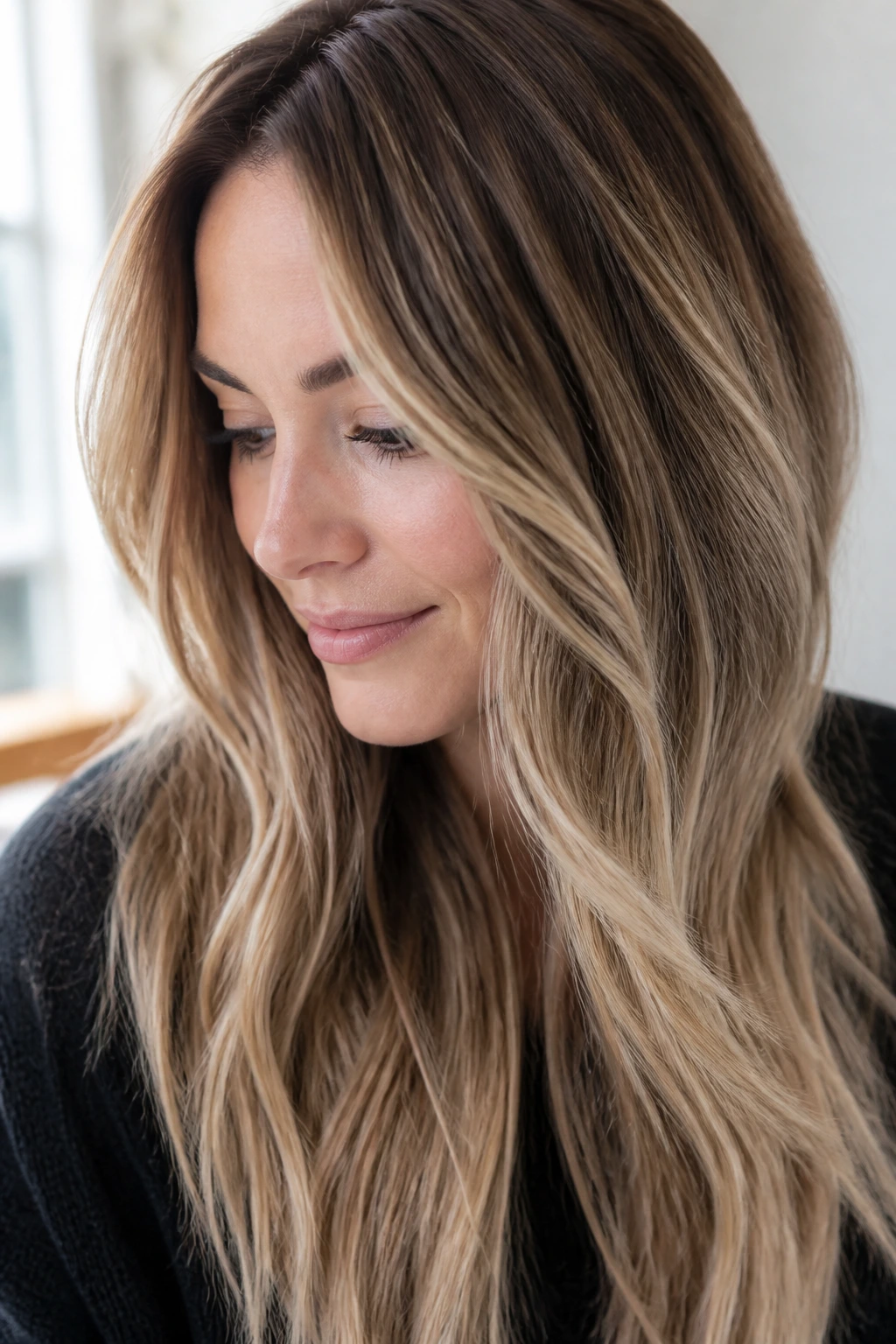
Sombre — short for soft ombré — is one of the easiest ways to wear honey brown on cool skin. The fade is subtle, the color shift is gentle, and nothing feels abrupt.
A cool beige honey brown sombre keeps the root in brunette territory, then lightens only a shade or two through the mids and ends. That narrow gap is what makes the look feel soft. It is a smart choice if you have fine hair and want dimension without seeing every section in high contrast.
Why It’s So Wearable
The grow-out is quiet. The tone is quiet. Even the upkeep is quiet.
That makes it useful for people who want color they can live with, not color they have to babysit. It also looks good on straight hair, where the transition is easy to see, and on waves, where it melts even more. If you like things subtle, this is a strong pick.
24. Hazelnut Honey Brown With a Middle Part
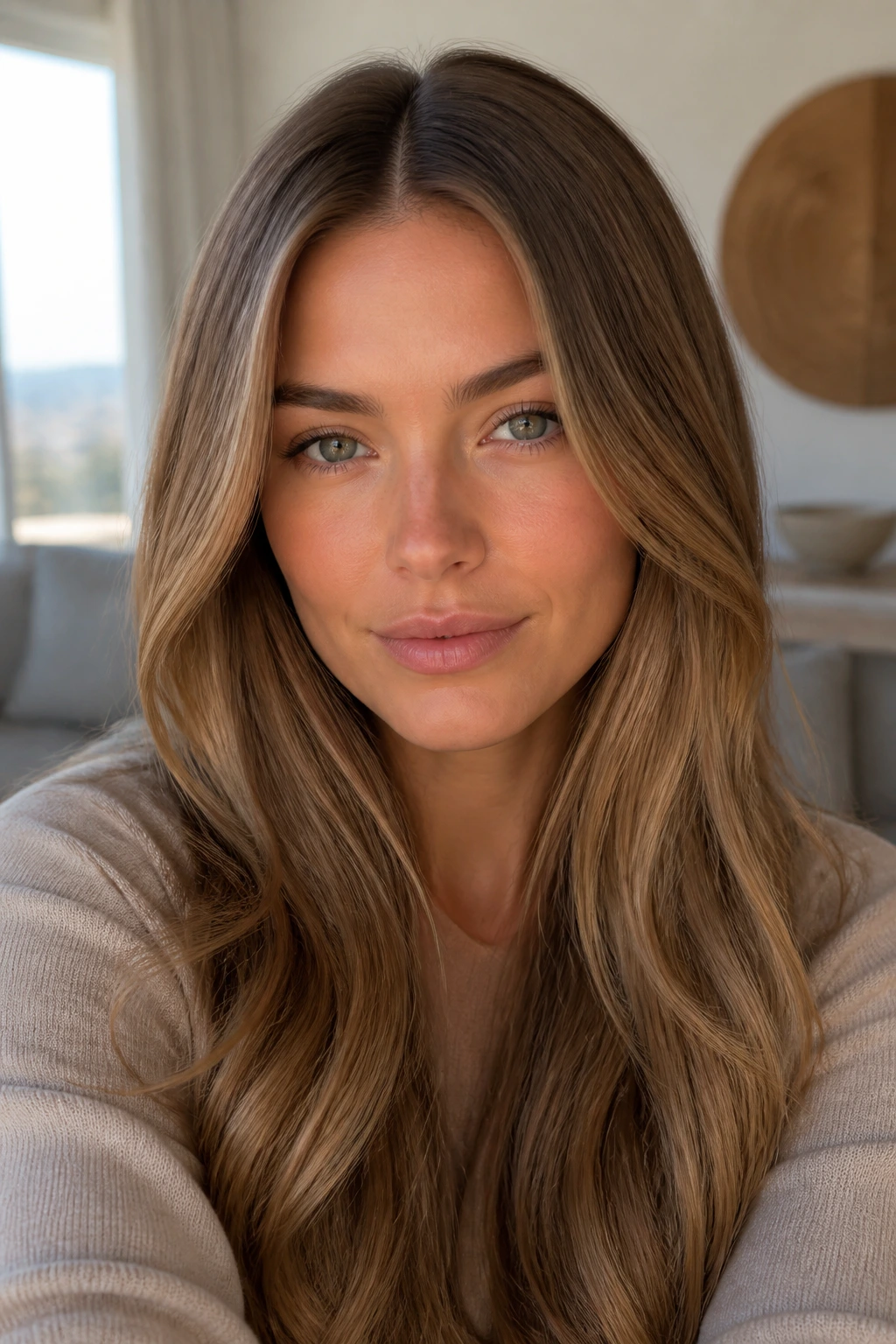
Hazelnut honey brown has a nutty, earthy feel that sits nicely against cool skin when the warmth stays muted. The middle part helps the color feel symmetrical and clean.
A center part also works well with cool undertones because it frames the face in a balanced way. If you have an oval or heart-shaped face, this can look especially neat. Ask for hazelnut tones in the mids, honey pieces around the cheekbones, and a soft ash glaze near the root.
This color is a good middle ground between classic brunette and full-on caramel. It is warm enough to keep your hair from looking dull, but not so warm that it competes with blush or cool-toned lipstick.
Some shades do their best work in motion. Hazelnut honey brown is one of them. It looks richer when the hair swings.
25. Honey Brown on Long Curls With Diffused Panels
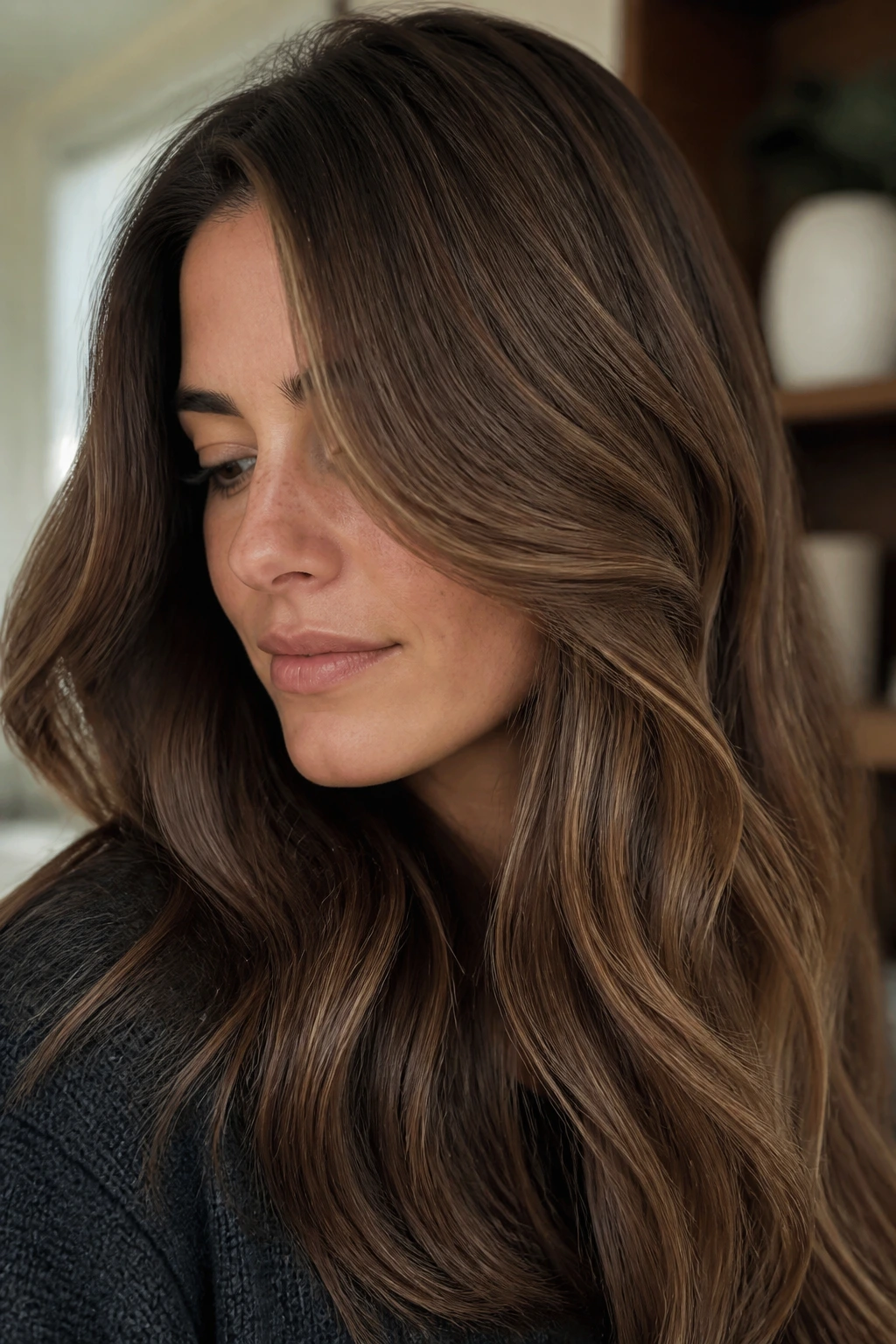
Long curls love color that follows the shape of the hair instead of sitting on top of it. Diffused honey brown panels do that job well.
The trick is to paint the light pieces where the curls naturally open up. That means the outside curves, the top layers, and the pieces around the face. Cool skin benefits from that diffused placement because the warmth is broken into smaller sections. It feels lighter, and the hair keeps its depth.
A Detail That Matters
Do not over-lighten the ends just because the hair is long. Ends that are too pale can make curly hair look frizzy instead of dimensional.
A beige honey glaze keeps the panels soft. If the curls are tight, ask for less contrast and more tonal variation. That usually looks better than a dramatic highlight map.
26. Mushroom Bronde Honey Brown
Mushroom bronde is where cool brown and soft honey blonde meet without a fight. It is one of the cleanest choices for cool skin because the mushroom base keeps the warmth from becoming aggressive.
This look tends to work best when the stylist keeps the roots earthy and the lighter pieces smoky. The result is a bronde that feels urban and polished instead of sunny. If your hair lifts warm on its own, this is a good way to keep control. Ask for smoky lowlights, beige highlights, and a soft root blur.
I like this on shoulder-length hair because it gives you enough length to show the blend, but not so much that the ends look overly light. If you want a color that reads expensive in photos and in real life, this is near the top of the list.
27. Ashy Honey Brown With a Deep Side Part
A deep side part can change the whole mood of honey brown. It adds lift at the roots, and the ashy tone keeps the color from drifting too warm.
This is a nice choice for cool skin because the ash base cools the honey just enough. The side part also gives you a little drama without needing a heavy highlight pattern. If your face looks best with asymmetry, this is an easy way to get it. Ask for an ashy brunette base with thin honey ribbons concentrated on the heavier side of the part.
It can look especially good on medium-length layers or a shoulder-length blowout. The fuller side catches the light and makes the color feel richer.
A deep side part is not subtle in the best way. It gives the whole look a little shape.
28. Soft Honey Brown With Seamless Dimension
Soft honey brown with seamless dimension is the one I’d hand to someone who wants the safest, prettiest version of the trend. Nothing is too bright. Nothing is too smoky. Everything blends.
For cool skin, that balance matters. Ask for a brunette base in the level 5 to 6 range, then layer in beige honey ribbons that stay soft at the root and a little brighter through the mids. Finish with a gloss that leans neutral-beige, not yellow. The color should look like it belongs to the hair, not pasted over it.
This works on almost every length, which is part of why it lasts as an idea. A bob gets a sharper version. Long waves get a softer one. Curly hair gets depth and glow without losing shape. If you want a honey brown that feels flattering, wearable, and easy to live with, this is the safest place to start — and honestly, the one I’d trust most on a cool complexion that has burned itself on gold tones before.
