



Black blonde hair color ideas for round faces work best when the blonde is doing actual shape work, not just sitting there looking pretty. A sharp money piece near the brow bone, a blonde panel that drops below the jaw, or a shadow-root balayage can change how the whole face reads without forcing you into a flat, wide block of color.
Round faces usually have soft cheeks and a gentler jawline, which means placement matters more than people think. Put the lightest blonde across the widest point of the face and you can make it look broader; move that brightness higher, lower, or off-center and the shape starts to look longer and cleaner. It’s a small shift. It matters a lot.
Black hair gives you the depth, the anchor, the contrast. Blonde gives you movement, lift, and a little edge. The trick is deciding where each one belongs, because a round face doesn’t need more width — it needs direction, and color can do that beautifully when it’s mapped with care.
1. Black Blonde Hair Color for Round Faces: Jet-Black Base with a Bright Money Piece
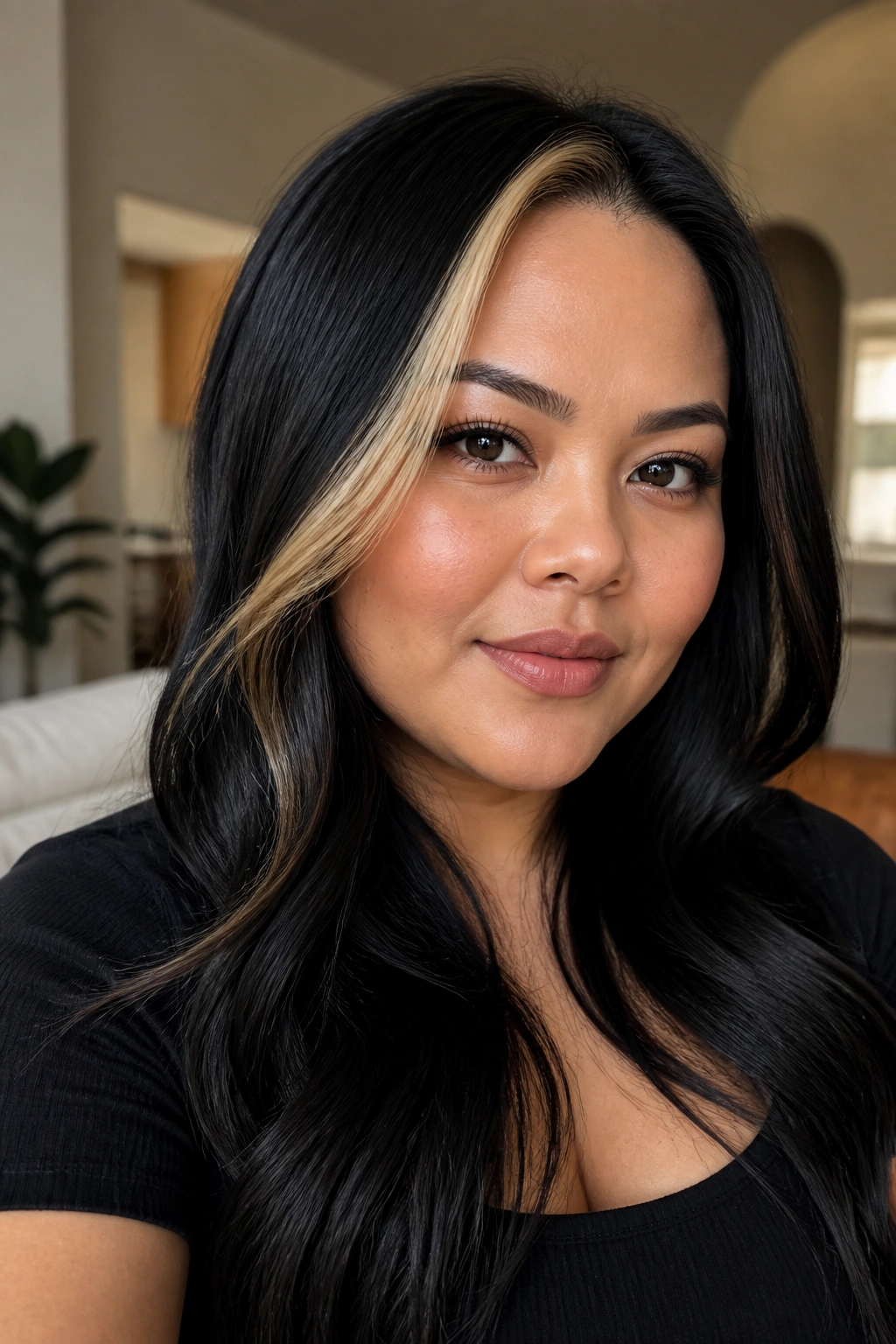
A jet-black base with a bright blonde money piece is the fastest way to sharpen a round face without bleaching the whole head. The dark root keeps the center of the hair visually narrow, while the blonde at the front pulls the eye upward and down in one clean line.
Keep the money piece slim near the hairline — about half an inch to an inch wide — and let it widen only a little as it drops past the brow. If it gets too chunky at the temples, the face starts to feel wider. That’s the part people miss.
Tiny stripe. Big difference.
I like this look on medium and long cuts because the color has room to fall straight instead of spreading sideways. An off-center part helps too, especially if one side of your face feels fuller than the other.
2. Ash-Blonde Balayage Over a Black Bob
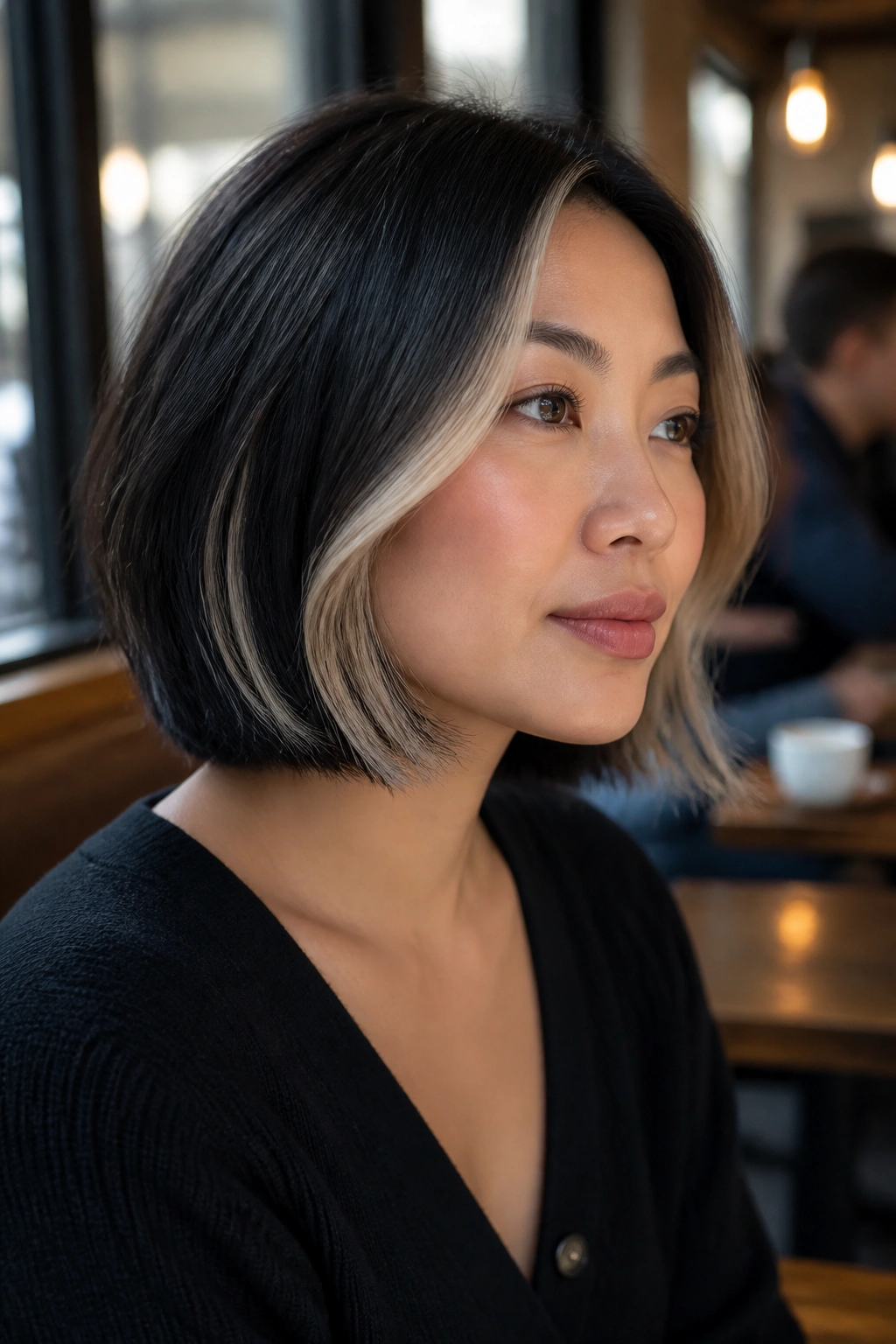
Ash-blonde balayage is one of the cleanest black blonde hair color ideas for round faces because the cool tone breaks up the darkness without throwing a bright band across the cheeks. On a bob, that matters. A bob already sits close to the face, so the color has to do some of the shaping work.
Ask for the lightest pieces to begin below the cheekbone, not right at the widest part of the face. That way the blonde falls where the eye already wants to move — down toward the jaw and the ends. If the bob hits below the chin, even better. That extra length gives the color room to stretch the face.
Why It Works Here
The soft ash tone keeps the contrast from feeling harsh. It’s cooler, quieter, and less flashy than gold or honey, which makes it a good match if you want contrast without a loud stripe.
A chin-length bob with ash balayage can look boxy when the highlights are placed too high. Push the lightness lower, and the whole cut feels longer.
3. Caramel-Blonde Ribbons Around the Cheekbones
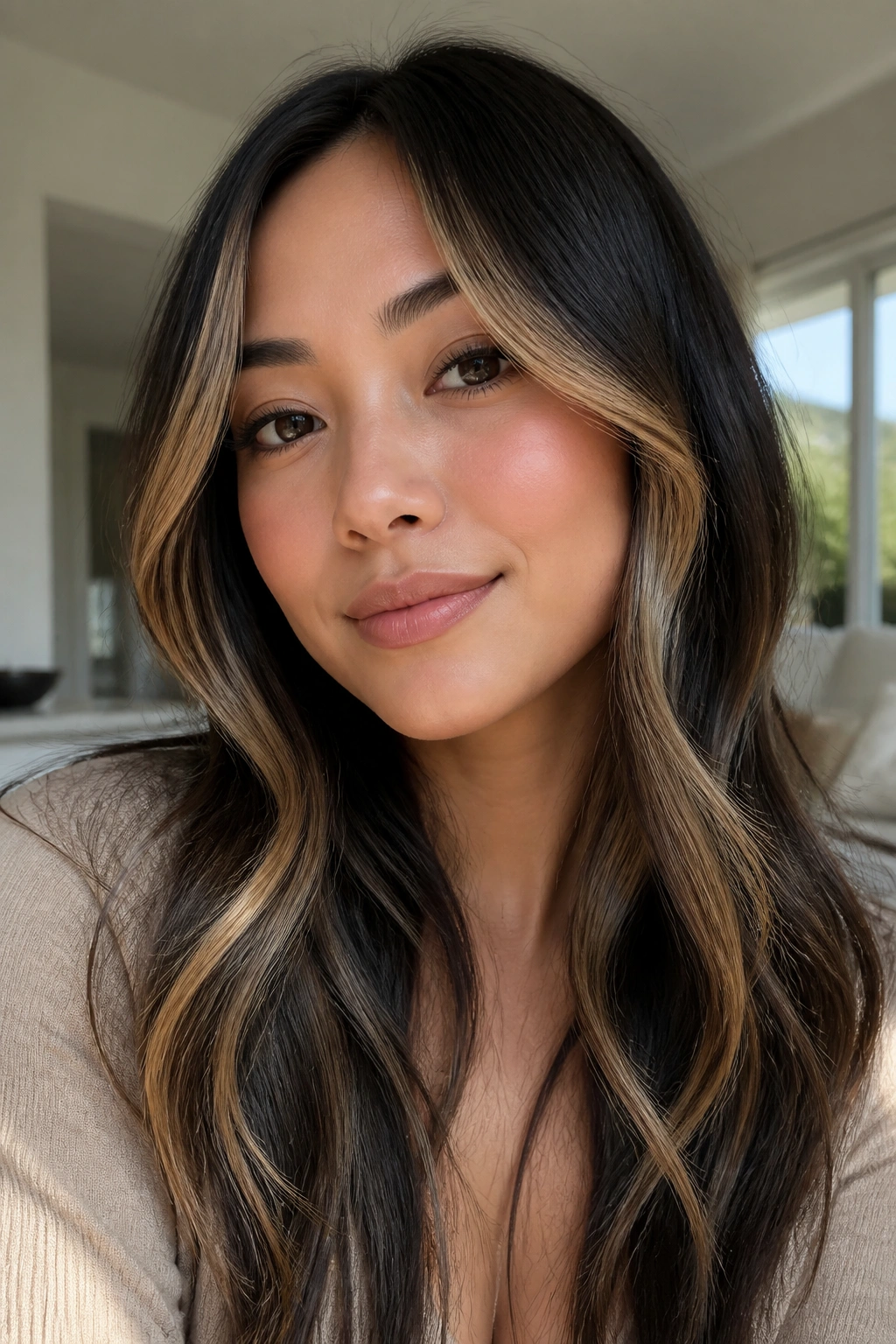
Why do caramel-blonde ribbons flatter a round face so well? Because they warm up the front of the hair without drawing a hard line across the widest part of the face. The blonde sits softly inside the black, almost like thin brushstrokes, and that broken-up effect keeps the shape from reading too full.
Where the Brightest Strands Should Sit
- Start the lightest ribbon just under the eyebrow, not above it.
- Keep the first face frame narrow near the temple, then let it taper to the collarbone.
- Leave the cheekbone area soft instead of packing all the brightness there.
- Ask for a caramel tone if your skin has warm or neutral undertones; it looks less streaky than pale blonde.
A round face likes this kind of gentle vertical movement. It feels softer than a money piece, but it still gives you lift.
If you wear waves, the ribbons catch each bend in the hair and keep the front from turning into one solid mass. That’s the whole point. Shape first, shine second.
4. Platinum Front Panels with a Shadow Root
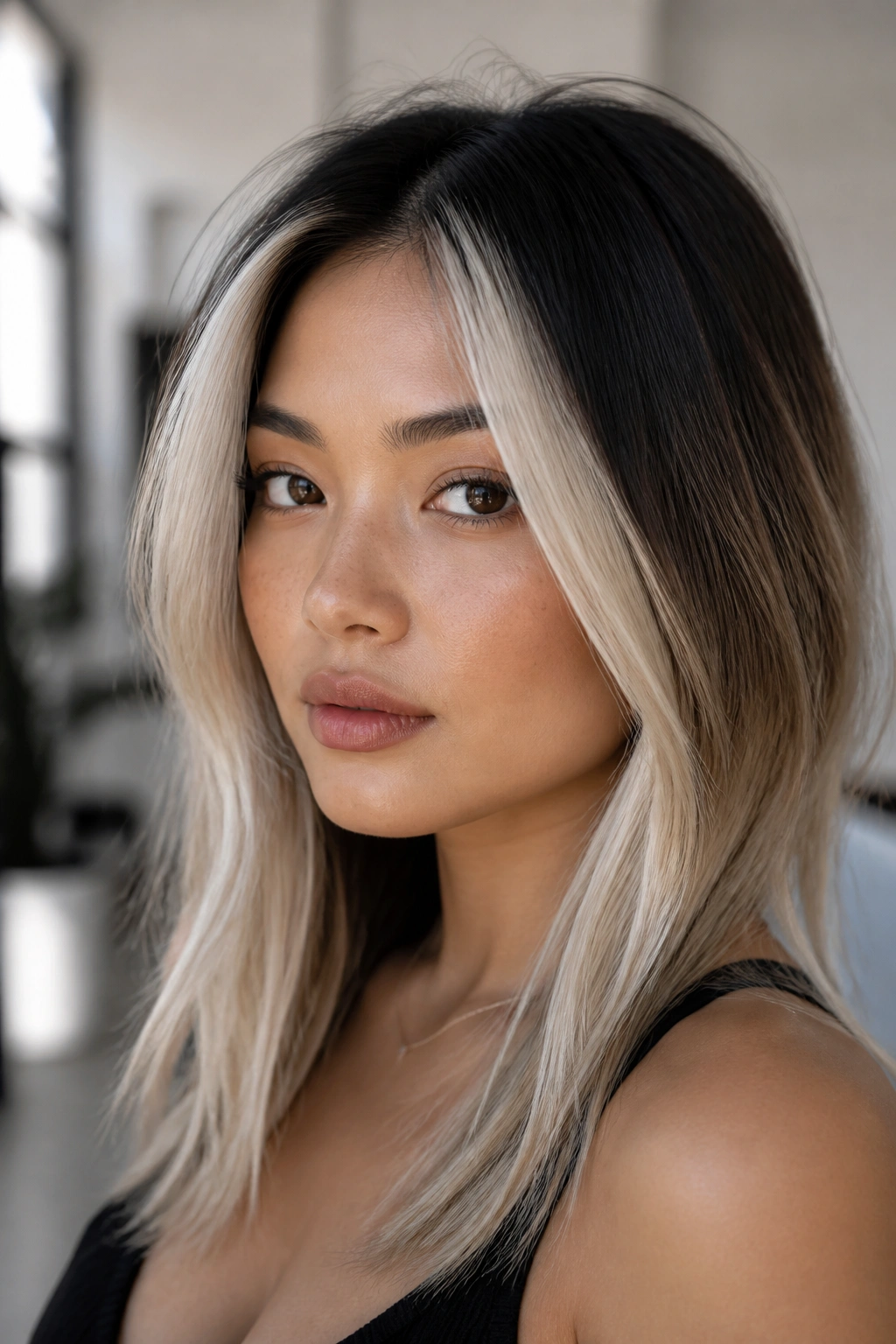
A platinum front panel on a black base is dramatic, yes, but it can be surprisingly flattering when the panel is narrow and the shadow root is kept deep. On a round face, the dark root works like a frame. The light panel works like a blade.
How to Keep It From Widening the Face
- Keep each platinum section thinner at the top and slightly longer at the bottom.
- Start the brightness just off the part line rather than wrapping it all the way around the face.
- Blend the root shadow for at least 1 inch so the contrast doesn’t look pasted on.
- Let the blonde stop below the chin if your hair is long enough.
This look can feel too harsh if the platinum hugs the cheeks. That’s the trap. Move the brightness a little farther out and a little lower, and the shape gets sharper instead of wider.
It’s a bold move. It also photographs well in real life, not only in staged photos, because the contrast stays clean from root to end.
5. Peekaboo Blonde Hidden Under Black Layers
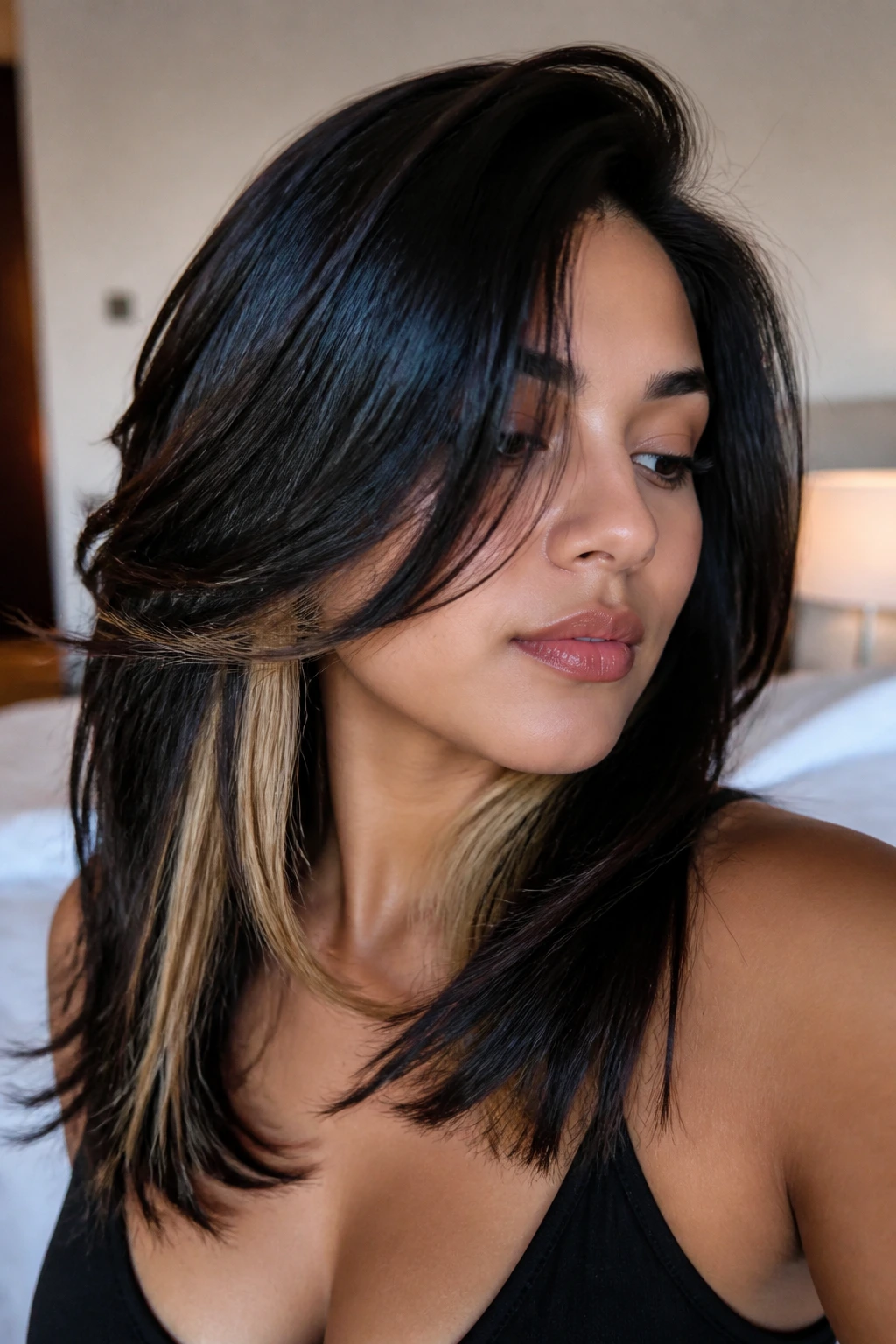
Peekaboo blonde is the sneaky option, and honestly, I think it’s underrated for round faces. The blonde lives under the black layers, so you get flashes of light when the hair moves instead of a permanent bright band sitting across the front.
That matters if you want contrast without a heavy frame around the cheeks. A hidden blonde panel keeps the top visually dark and slim, which helps the face read a little longer. You see the light when you turn your head, tuck one side behind an ear, or wear the hair half up.
One sentence here: sneaky is good.
This works especially well with layered cuts, because the movement reveals the blonde in thin slices. If your hair is thick, the peekaboo placement keeps the look from feeling bulky. If your hair is fine, it adds depth without making the front of the style look crowded.
6. Chunky ’90s Blonde Streaks on Straight Hair
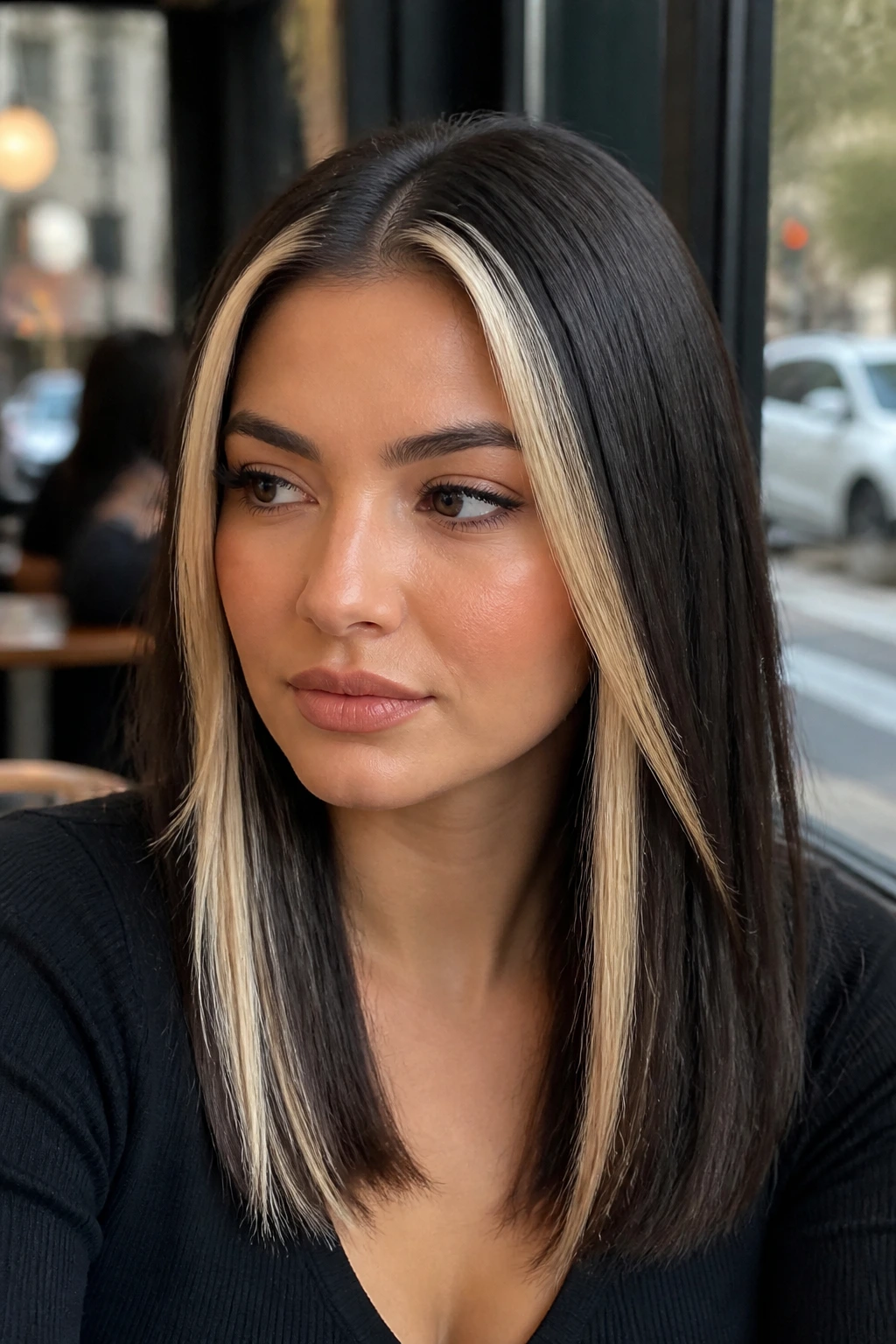
Chunky streaks can look sharp on a round face when the stripes are placed with some restraint. The goal isn’t to blanket the front in bright lines. It’s to use a few strong blonde streaks to cut through the black and create vertical contrast.
What Makes the Streaks Work
The lighter pieces should be a little thinner near the temples and a little fuller as they drop toward the ends. That keeps the width out of the cheeks. On pin-straight hair, the stripes look crisp, almost graphic, which is exactly why this style has so much bite.
A center part can work here, but only if the streaks are not mirror images. A tiny shift in placement keeps the face from looking circular. If your hair is shoulder length or longer, the stripes have enough room to fall downward instead of fanning out.
This is not a shy look. It suits someone who wants the contrast to be obvious from across the room.
7. Black-to-Blonde Ombré on a Long Lob
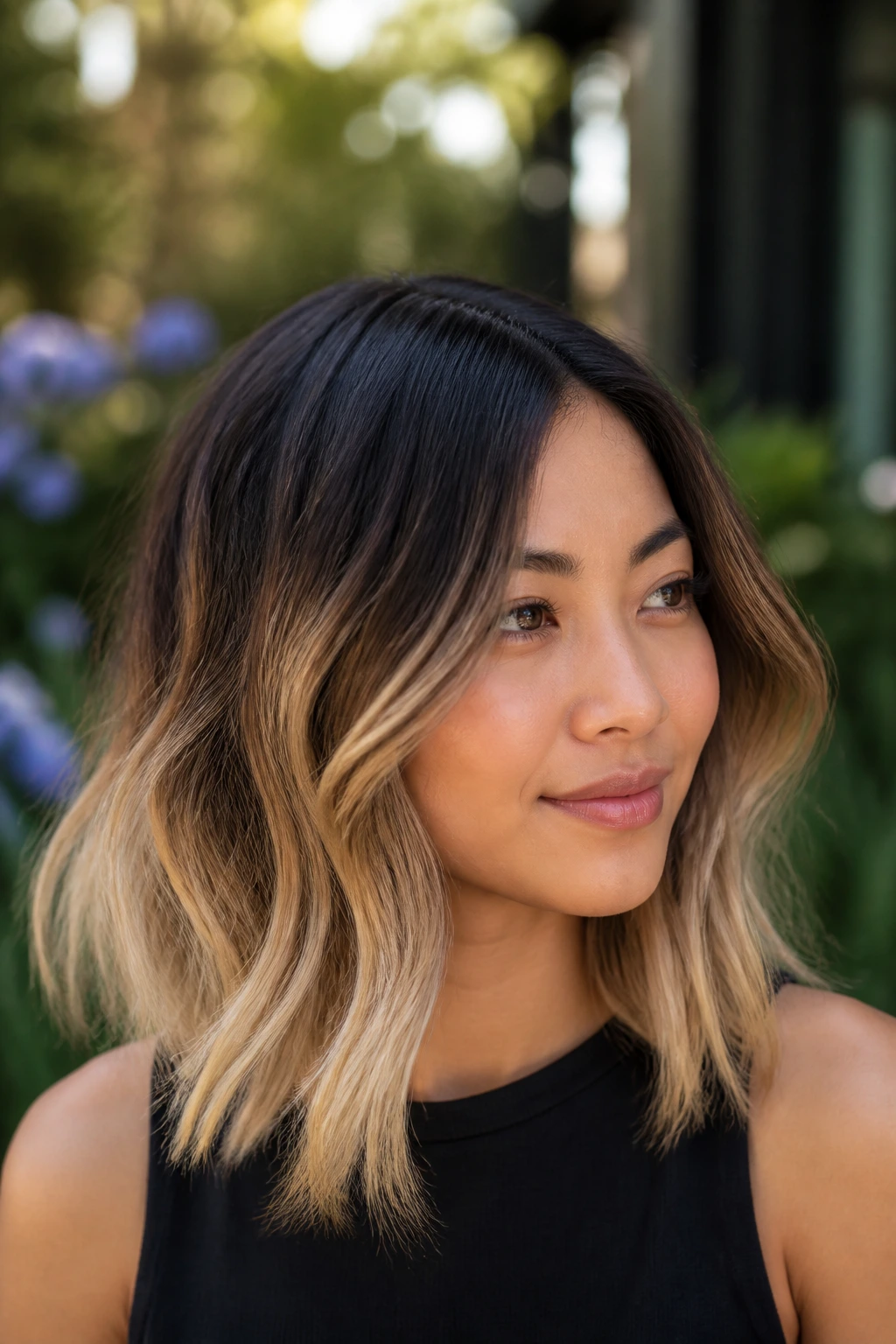
Unlike a full highlight pattern, ombré keeps the root dark and lets the blonde grow in from the lower half of the hair. That’s a gift for round faces, because the dark top section holds the eye in place while the lighter ends stretch the shape downward.
The fade should begin below the chin, not around the cheeks. If it starts too high, the color can feel busy right where you want less width. A long lob gives the ombré enough space to soften from black into brown, then into blonde, without looking patchy.
I like this on hair that bends a little. A gentle wave makes the fade look natural, and the moving ends keep the face from feeling boxed in.
The best version is never a hard line. It should feel like the blonde was pulled through the hair by sunlight, not painted on with a ruler.
8. Curtain Bangs with Beige-Blonde Framing
Soft. But not bland.
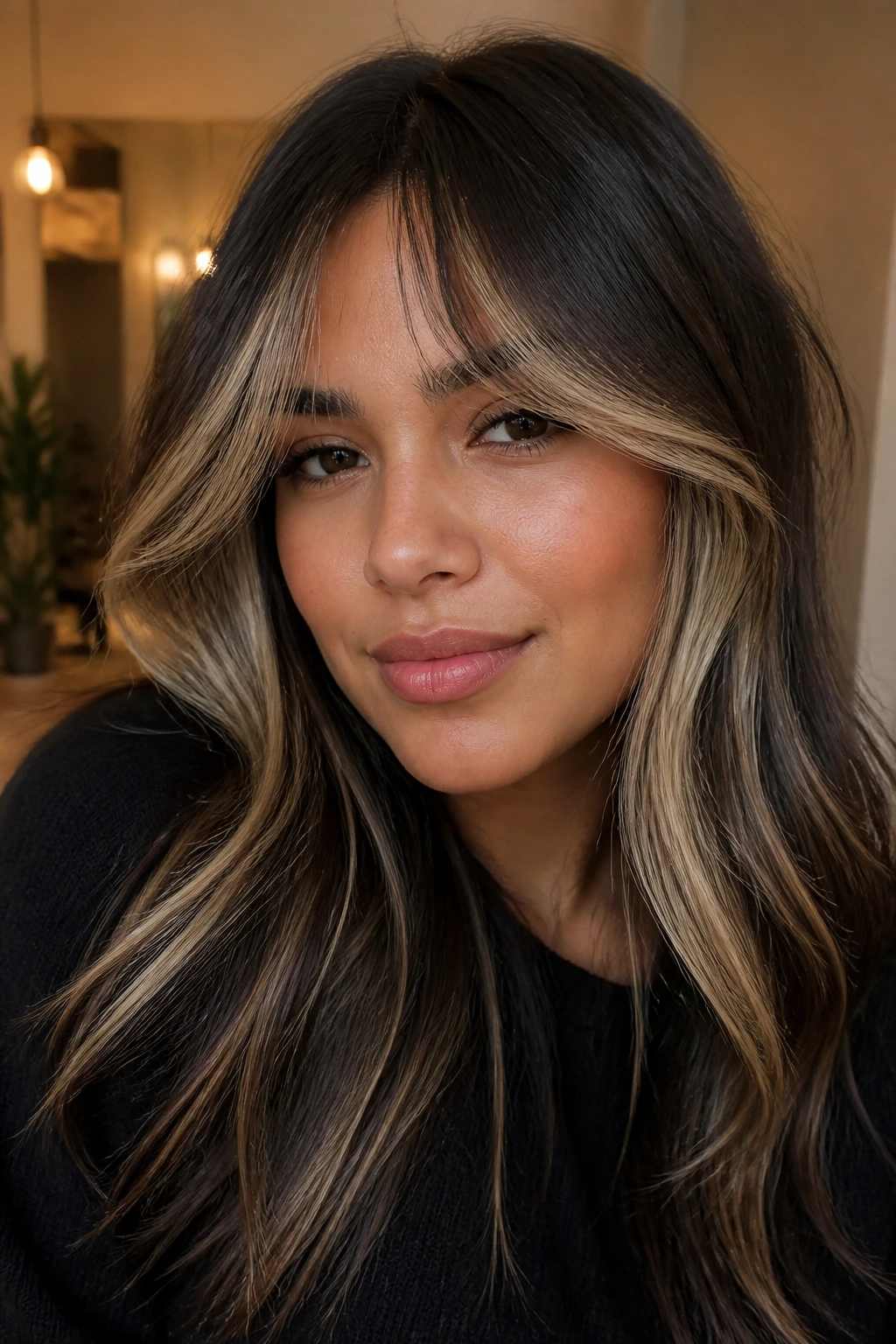
Curtain bangs can work on a round face if the blonde pieces around them are kept beige and airy, not wide and chunky. The bang itself opens the middle of the face, and the blonde pieces lead the eye down the sides instead of across the cheeks. That’s the whole trick.
Where the Shape Comes From
The bangs should part a little off-center and hit somewhere between the eyebrow and the upper lash line when dry. Any shorter, and they can puff out in a way that adds width. Pair them with blonde framing pieces that begin just below the brow and thin out near the jaw.
Beige blonde is a smart tone here because it softens the contrast against black hair. The result feels lighter than a full platinum frame, but it still gives you lift right where the face needs it.
This look is a good middle ground if you want movement without drama. It’s soft, and it still has enough edge to keep the black base from feeling heavy.
9. Baby Lights Through Long Black Layers
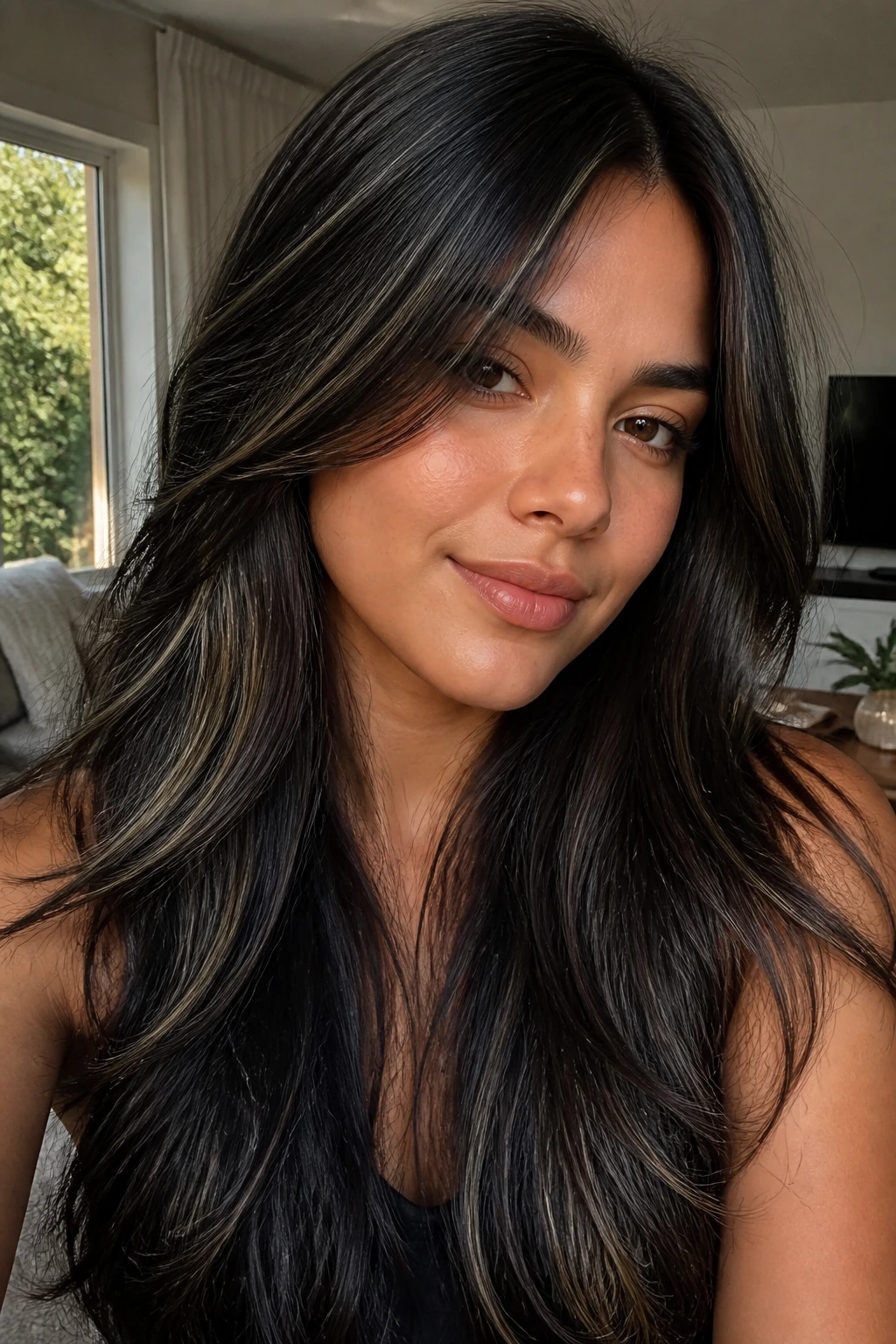
Baby lights are thin enough to stay quiet, which is exactly why they work on round faces. Instead of one obvious stripe, you get tiny slices of blonde scattered through long black layers. The hair looks deeper, richer, and a little more expensive-looking in movement, but the real win is shape.
Why the Tiny Pieces Help
- They break up heavy black hair without making the sides look wide.
- They add depth around the crown, which helps the face feel longer.
- They suit layered cuts because each layer catches a different amount of light.
- They grow out softly, so the grow-out line isn’t harsh.
If you have thick hair, baby lights keep the front from turning into a solid curtain. If your hair is finer, they stop the color from looking flat. Either way, the effect is subtle and very wearable.
I’d call this the low-drama option. It’s not trying to steal the room. It’s trying to make the face look better every time the hair moves.
10. Blonde Halo Highlights Around the Crown
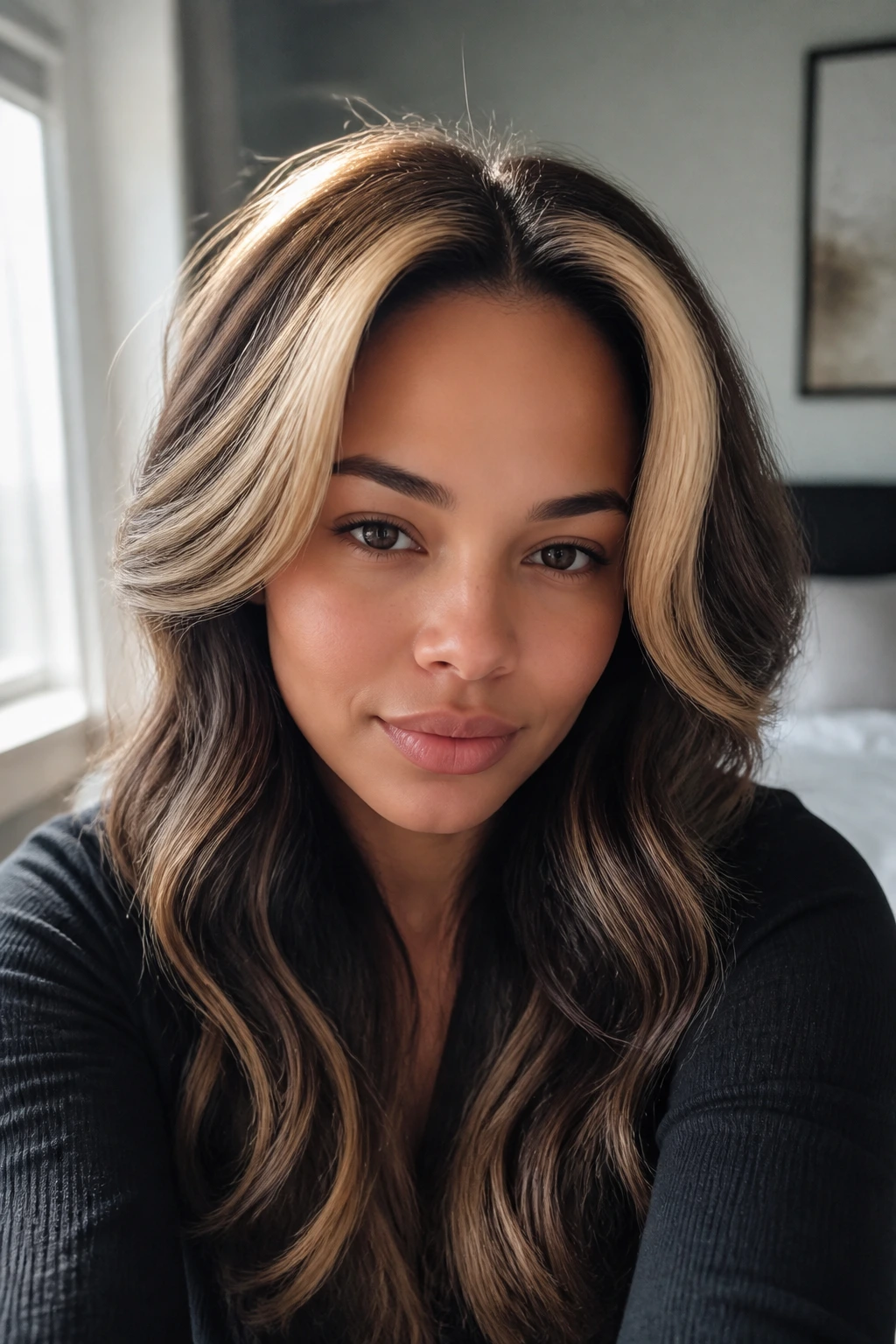
A blonde halo around the crown pulls the eye upward, and that upward motion is useful on a round face. The lighter pieces sit above the cheek line, which means the bright area does not spread across the widest part of the face. It lifts.
This is a good move if you already like volume at the top. A soft tease at the roots, a round brush blowout, or even a loose wave can make the halo look fuller without making the sides feel heavy. The blonde should form a loose 2-inch band around the crown rather than wrapping densely around the temples.
It also works well if the rest of the hair stays black and glossy. That contrast makes the top feel taller, which is exactly what you want when the face shape leans soft and circular.
The effect is quiet from the front and stronger in motion. That’s what makes it useful.
11. Frosted Blonde Ends with Deep Black Roots
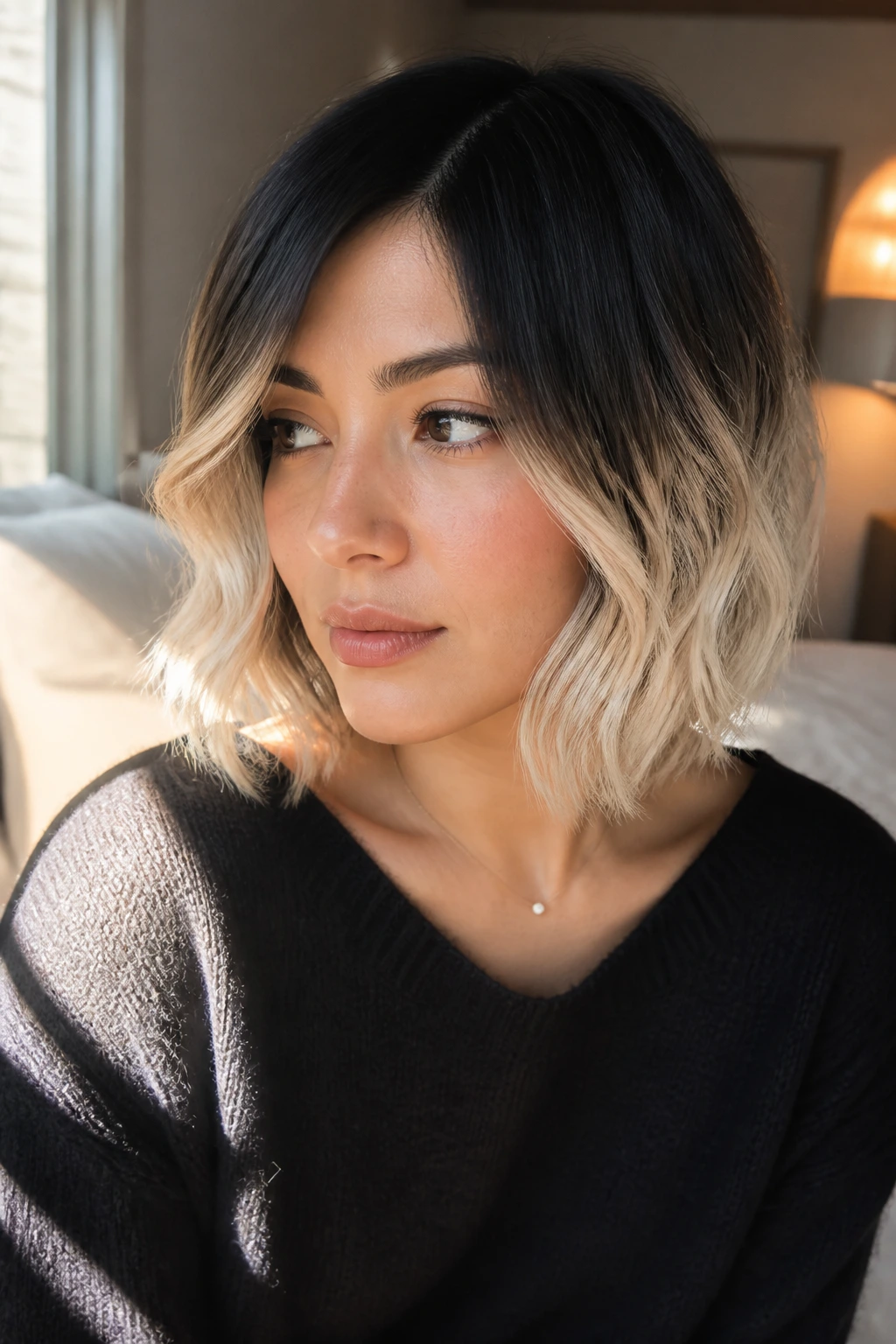
If your hair falls near the jaw or below it, frosted ends can stretch a round face in a way that feels clean, not forced. The black root keeps the top grounded. The pale ends draw the eye downward.
That downward pull matters. A round face can start to look broader when the light sits too close to the cheeks, but when the ends are the brightest part, the whole style reads longer. This is especially nice on waves, because the lighter tips break up the outline of the hair.
You do need a haircut that supports the look. A blunt cut can make the frosted ends feel heavy, while layers or a soft U-shape keep them moving. If the blonde is too icy and your skin is warm, it can look sharp in a bad way. A soft pearl or beige frost usually behaves better.
The roots do the hard work here. The ends get the attention.
12. Mushroom Blonde Ribbons on Wavy Black Hair
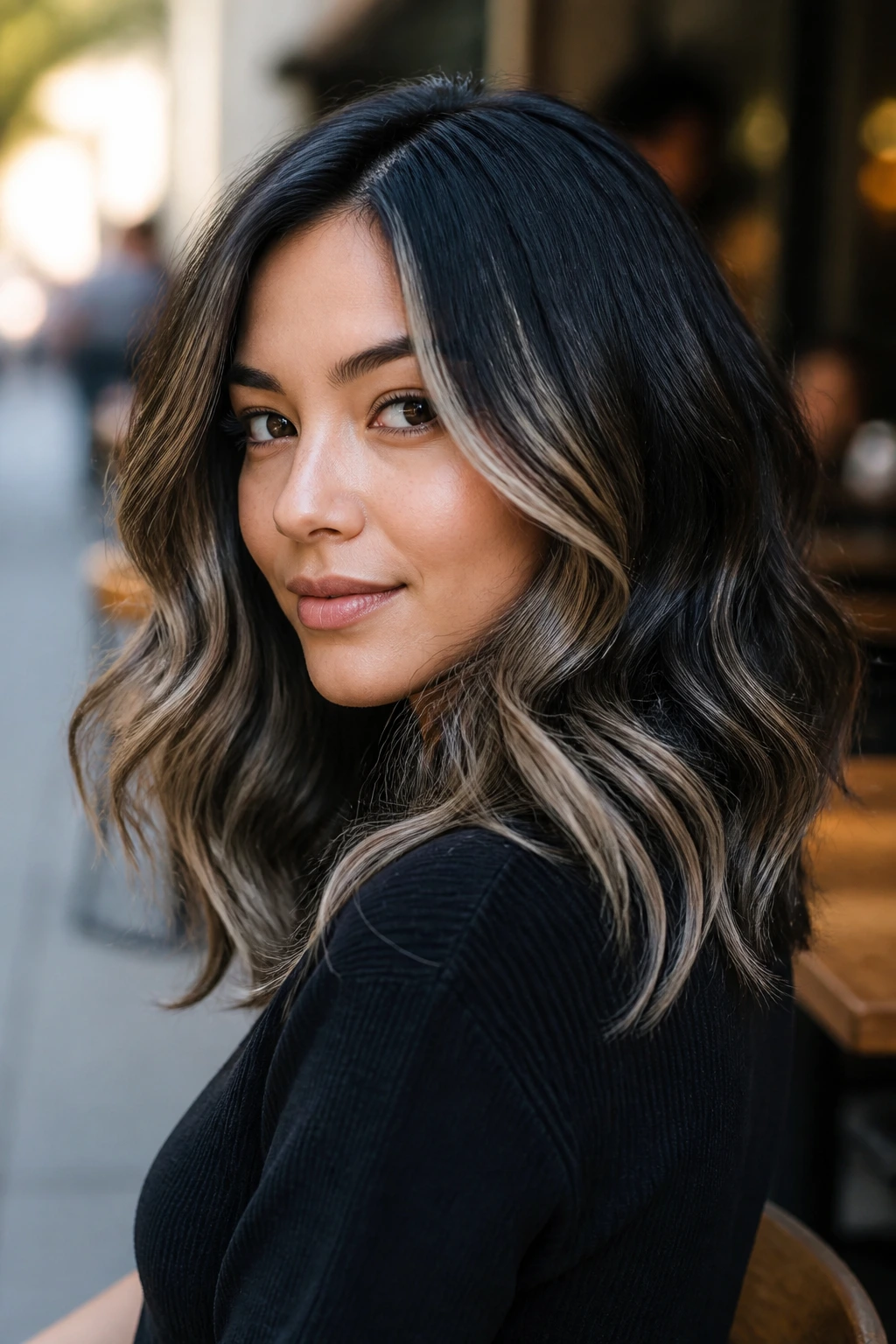
Mushroom blonde sits in that gray-beige zone that people often skip, and that’s a mistake. On black hair, it softens the contrast just enough to keep the face from looking too wide, while still giving you a cool, modern finish that feels deliberate.
How Waves Change the Placement
Wavy hair needs the blonde to follow the bends, not fight them. Put the ribbons where the S-curve already wants to move — around the mid-lengths and outer layers — and the color will look like part of the haircut. If the light pieces stop right at the cheekbone, though, the width can creep back in.
A mushroom tone is also forgiving during grow-out. It doesn’t scream as the roots come in, which makes it a smart choice if you don’t want to be in the salon every few weeks. The shape stays soft even as the color shifts.
This is one of my favorite choices for someone who wants black and blonde to feel grown-up, not flashy. It has edge, but it doesn’t shout.
13. Honey-Blonde Face Frame on Curly Black Hair for Round Faces
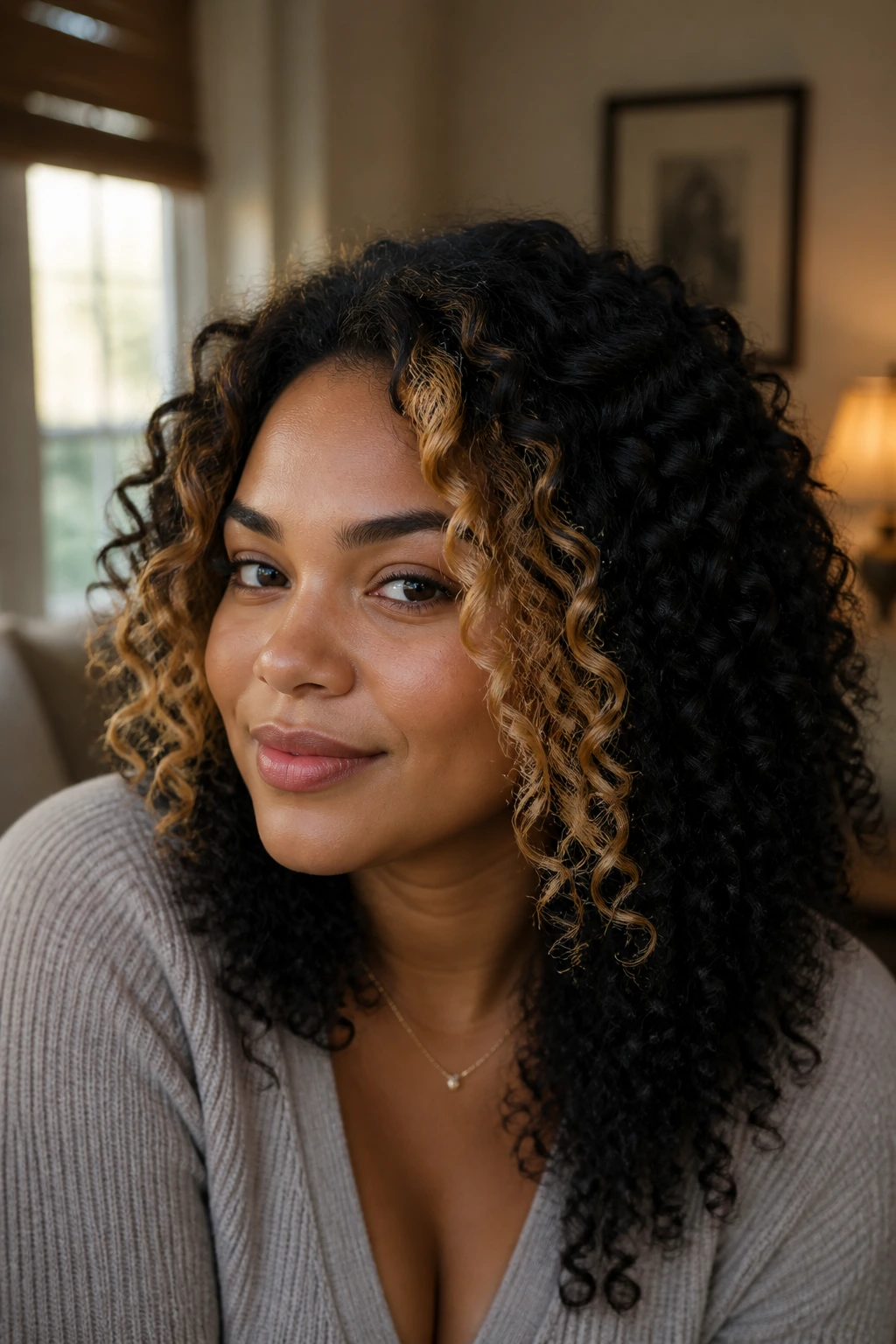
Curly hair changes the rules a little, because the curls themselves already create shape. On a round face, honey-blonde framing pieces can give the curls light and lift without flattening the natural volume.
The key is placement. Keep the brightest curls just outside the widest part of the cheeks and let them start closer to the brow or upper cheek. That way the eye moves through the curl pattern instead of stopping at the side of the face. Honey blonde also plays nicely with black curls because the warmth makes the contrast feel lively rather than stark.
If your curls are tighter, ask for thinner lightened ribbons rather than large painted panels. Bigger chunks can spread out when the curls spring up. That sounds minor, but it changes the whole shape in the mirror.
This look is warm, bright, and easy to wear. It also looks especially good when the curls are a little imperfect.
14. One-Side Platinum Panel for Asymmetry
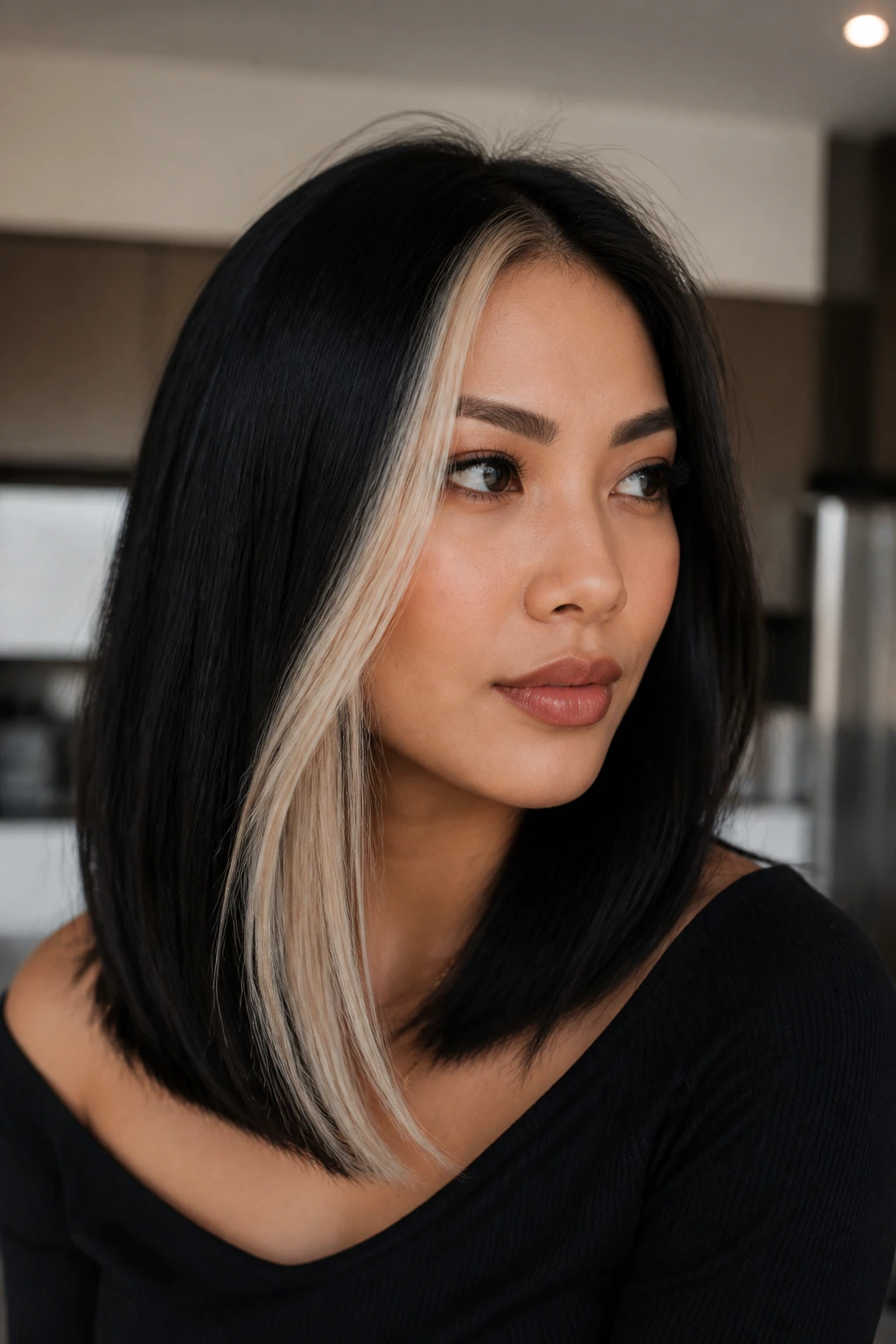
A single platinum panel next to deep black hair feels sharp in the best way. It’s a strong contrast, but the asymmetry keeps it from making a round face look broader on both sides at once.
Why the Offset Works
- One bright side cuts the width of the face visually.
- A deep side part adds diagonal movement.
- The black side acts like a frame.
- The platinum side becomes the focal point, so the eyes stop moving horizontally.
I’d place the panel on the fuller side of the face or on the side where the part naturally falls. That keeps the shape from feeling too mirrored. If the panel is too thick, it can look costume-like. Narrower is better here.
This is not a timid choice. It’s the kind of look that works when you want people to notice the color first and the haircut second. On a round face, that can be a very good thing.
15. Smoky Beige-Blonde Balayage on a Shag Cut
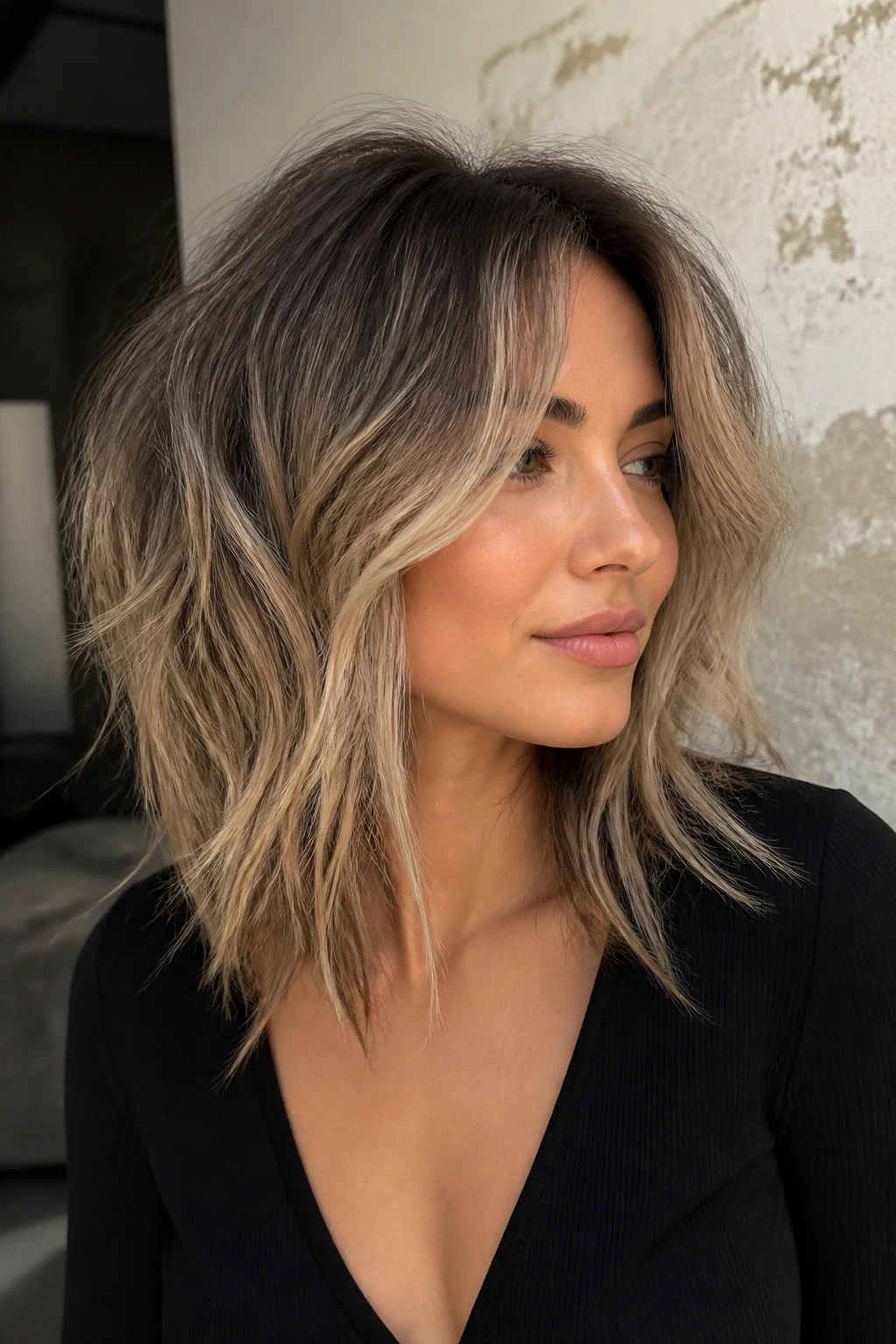
Not every blonde needs to shout. A shag cut with smoky beige-blonde balayage has enough texture to do the talking, and that texture helps a round face look longer because the lines are broken up instead of smooth and circular.
The shag’s layers fall in uneven pieces, which means the blonde can be scattered through the cut without creating one wide light zone. That’s useful. Beige-blonde tones keep the finish soft, while the black base underneath adds depth around the jaw and neck.
This style likes a little mess. A rough blow-dry, some mousse at the roots, or a finger-tousled finish can make the layers fall in better shapes than a super-polished style. If the hair is too sleek, the cut loses its edge.
It’s a strong choice if you want movement first and color second. The blonde supports the shape instead of taking over the whole haircut.
16. Golden Blonde Money Piece with a Middle Part
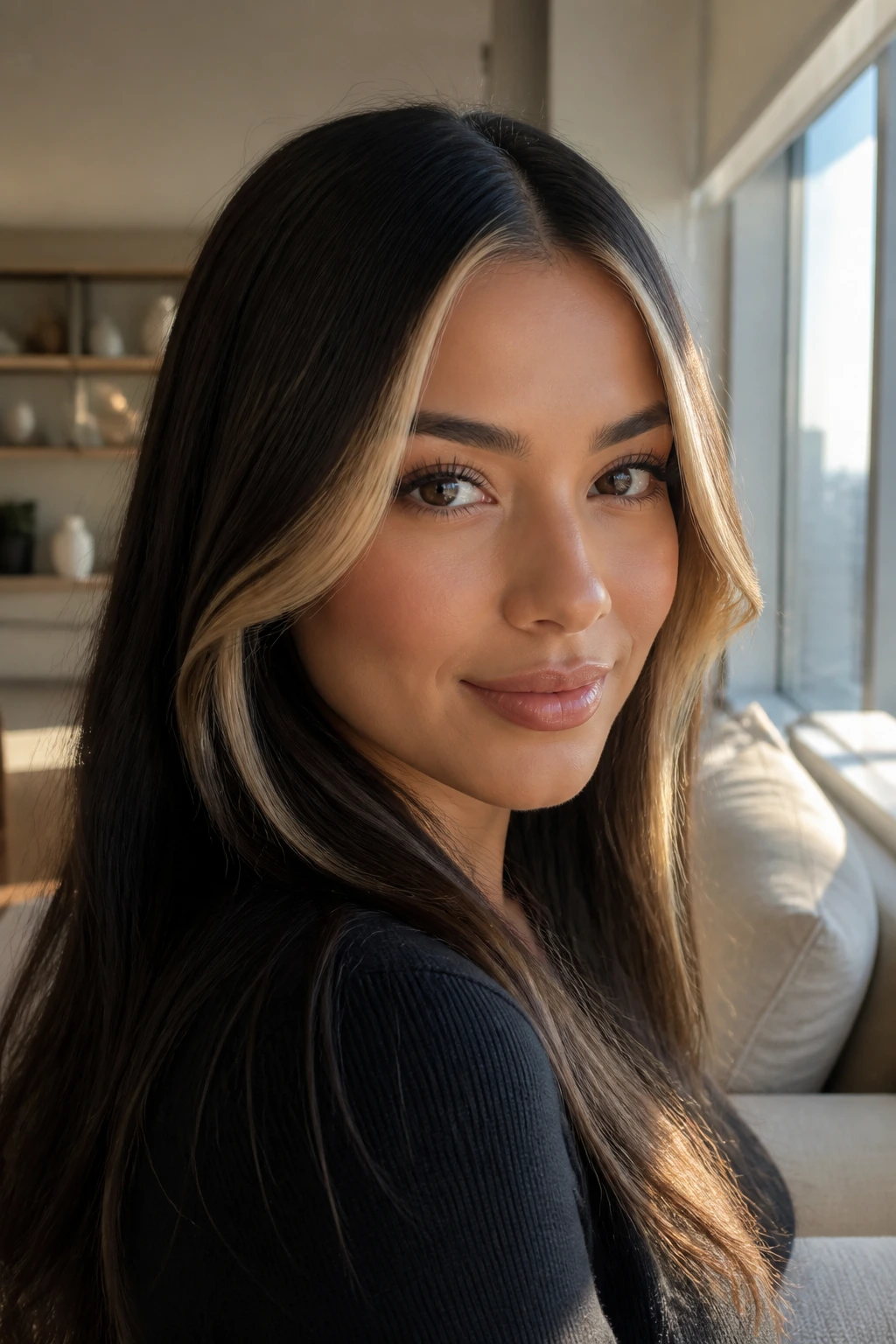
A middle part can absolutely work on a round face if the blonde is placed with purpose. A golden blonde money piece near the front breaks the symmetry and gives the face a brighter center line, which helps the features feel a little longer.
Keep the Brightness Narrow
The money piece should stay slim at the top, then taper as it moves past the brow. If it gets wide at the cheeks, the face can look fuller. A warm golden tone is useful here because it reflects light without looking flat or chalky against black hair.
This style works well with long layers, especially if the first face-framing layer starts below the cheekbone. The blonde and the layer line should work together, not fight each other.
I like this option for people who want something glamorous without going full platinum. It has warmth, shine, and enough structure to flatter soft facial lines.
17. Ash-Blonde Pixie with Darker Roots
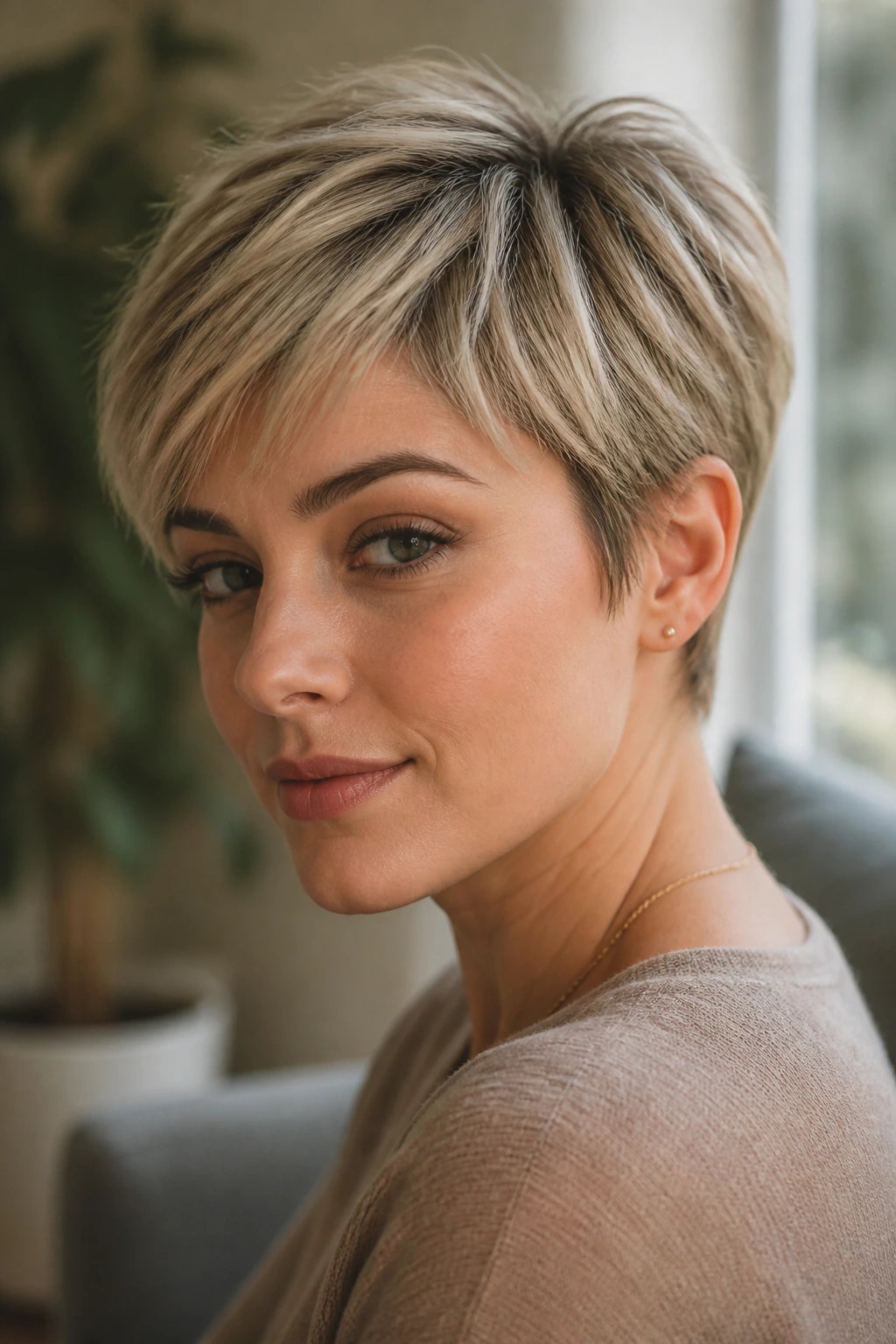
Short hair can be very good on a round face, but only if the top has lift. An ash-blonde pixie with darker roots creates that lift because the lighter top section draws the eye upward while the darker sides keep the shape tight.
The trick is in the crown. Keep the top piecey and a little longer — about 1 to 2 inches, depending on the cut — and let the fringe sweep across the forehead instead of sitting straight and flat. A flat pixie can make a round face look broader. A textured one does the opposite.
Ash blonde helps because it doesn’t flash as loudly as pale gold. The whole cut feels crisp, and the darker roots give it depth as it grows out. That means you don’t have to race back to the salon the second the roots show.
This is a strong choice if you like clean lines and low fuss. Short doesn’t have to mean soft. Sometimes short means sharper.
18. Champagne Blonde Around the Cheekbones on a Midi Cut
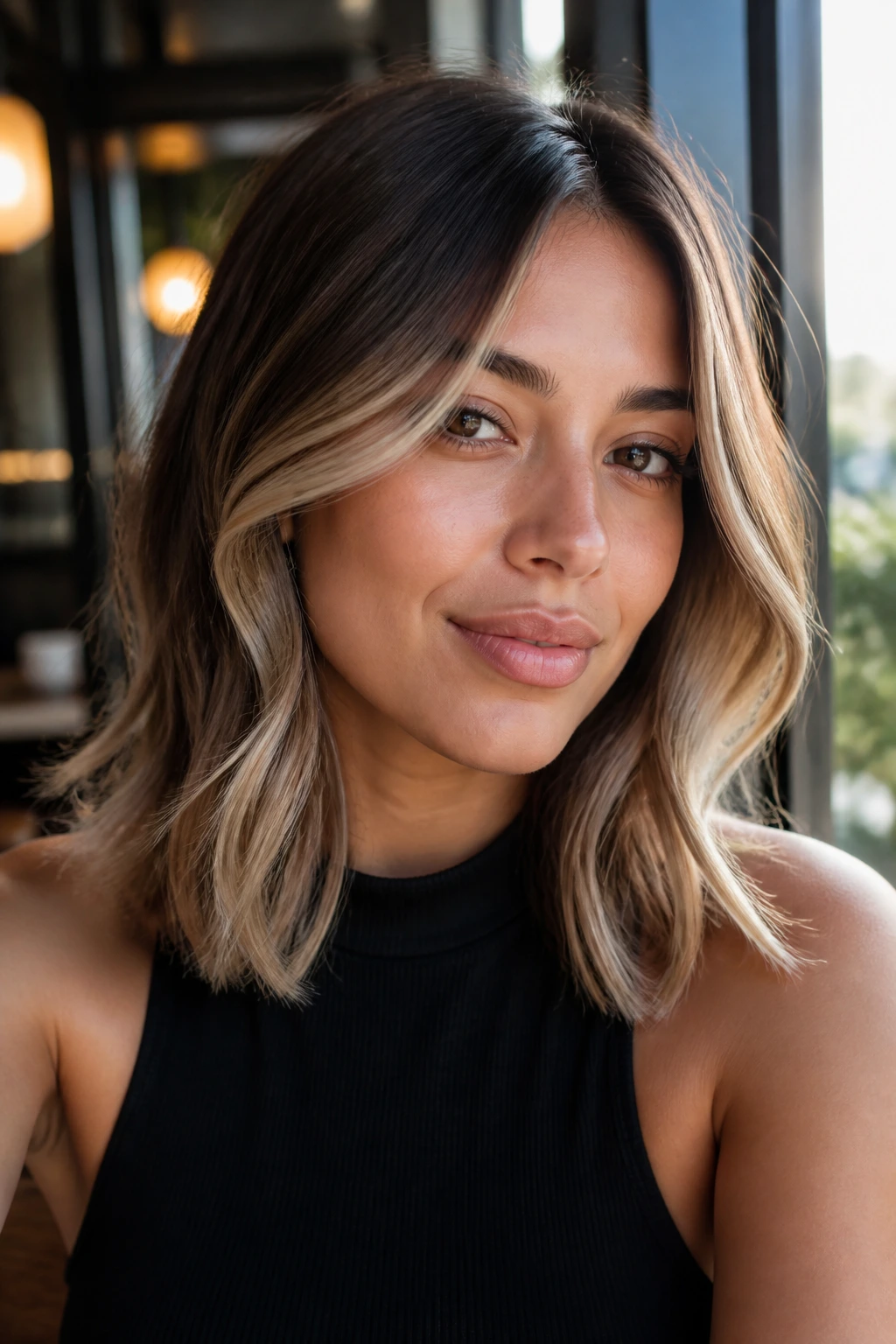
Champagne blonde sits between beige and pearl, which makes it one of the nicest tones for black hair when you want lightness without a harsh break. On a midi cut, it can frame a round face in a way that feels lifted instead of wide.
Where the Shine Should Land
- Start the champagne pieces just under the brow bone.
- Keep the brightest section above the cheekbone, not across it.
- Let the lighter strands thin out as they approach the jaw.
- Add soft bends to the hair so the light catches different layers.
That placement keeps the brightness moving vertically. It also keeps the face frame airy, which matters when the hair is medium length and sits right around the shoulders.
Champagne blonde is a good color for people who hate brassiness but don’t want a cold, icy look. It has a soft glow to it. On black hair, that glow is enough to change the whole mood of the style.
19. Black Lowlights Under Blonde Surface Pieces
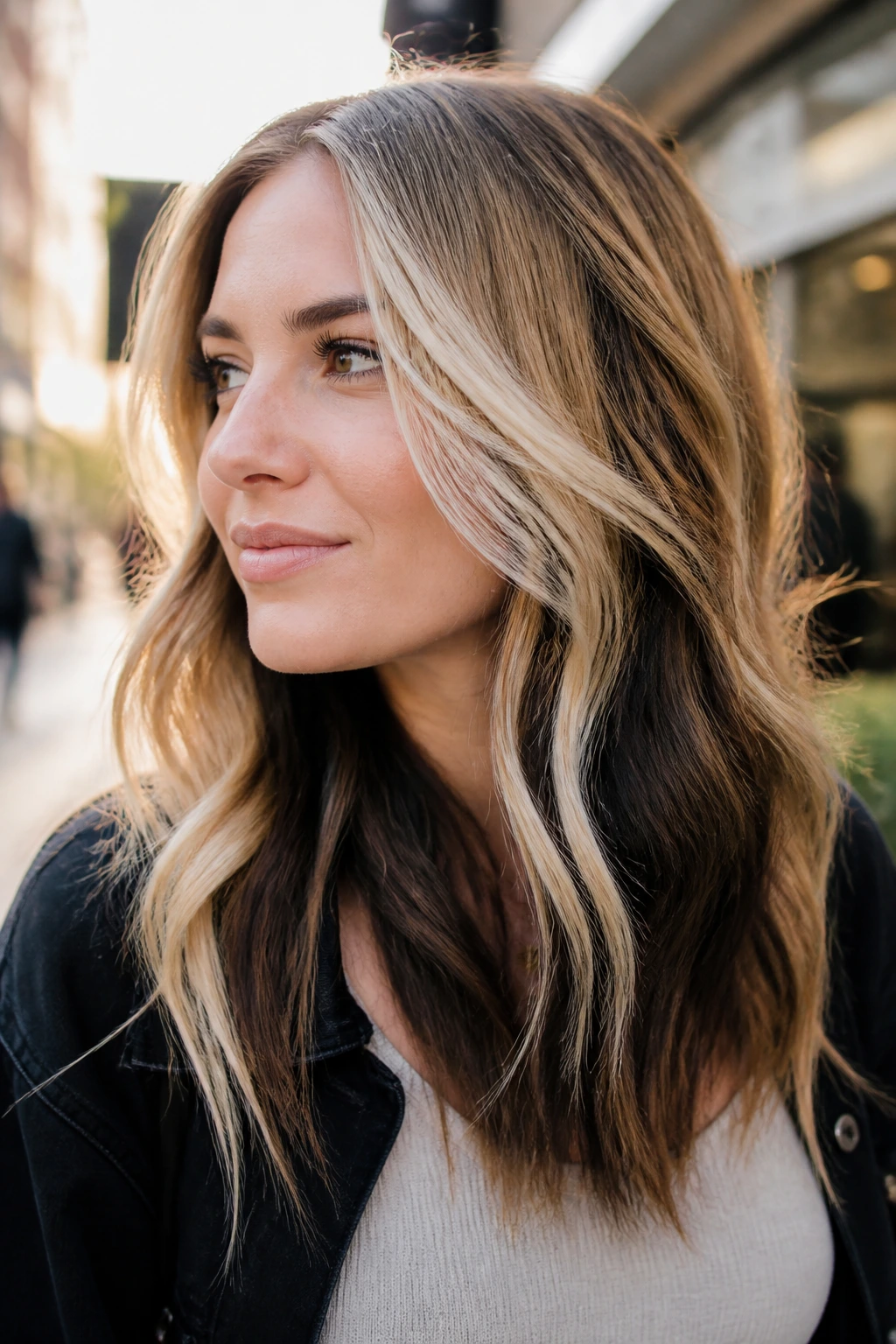
If you already wear blonde and want to make a round face look a little leaner, black lowlights underneath the lighter surface can do a lot of quiet work. They add depth below the top layer, which keeps the hair from expanding visually around the cheeks.
This is different from peekaboo blonde. There, the dark lives on top and the blonde hides underneath. Here, the lighter pieces stay visible while the darker strands sit beneath them like shadow. That layering is useful on thick hair because it stops the blonde from turning into one broad field of light.
What Makes It Flatter the Face
The black lowlights should sit lower on the head and toward the ends rather than around the temples. That pulls the eye down. It also gives straight hair more dimension, since every swing of the head shows a little more contrast.
I like this for people who want softer black-and-blonde contrast without redoing the whole head. It adds shape without asking for a total color overhaul.
20. Dip-Dyed Blonde Ends on a Blunt Cut
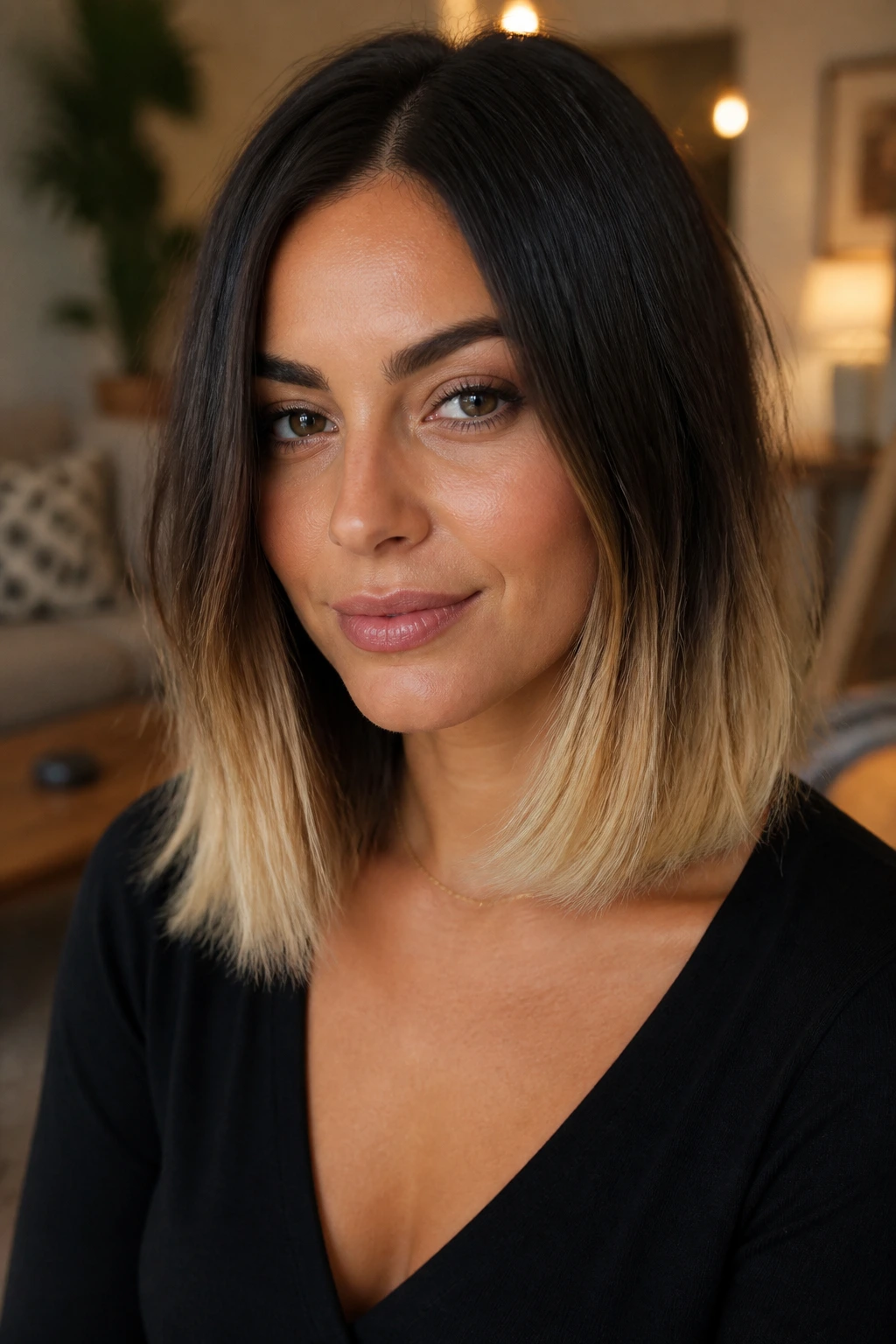
A blunt cut can sometimes make a round face feel wider, so the color has to work harder. Dip-dyed blonde ends help because they push the brightness to the very bottom of the hair, where it can lengthen the line instead of crowding the cheeks.
The dip line should sit well below the jaw. On shoulder-length hair, that often means the blonde starts somewhere in the lower third of the strand. If it begins too high, the whole look turns into a horizontal block. That’s not the move here.
The Cleanest Version
A black top with blonde ends looks best when the ends are a touch softer, almost feathered. Sharp, chopped ends can feel heavy. Soft ends move. Soft ends flatter.
This style is nice if you like contrast but want to keep your root color natural or dark. It’s lower upkeep than a full blonde placement, and it still gives a round face a longer outline.
21. Split-Dye Black and Blonde for Bold Contrast
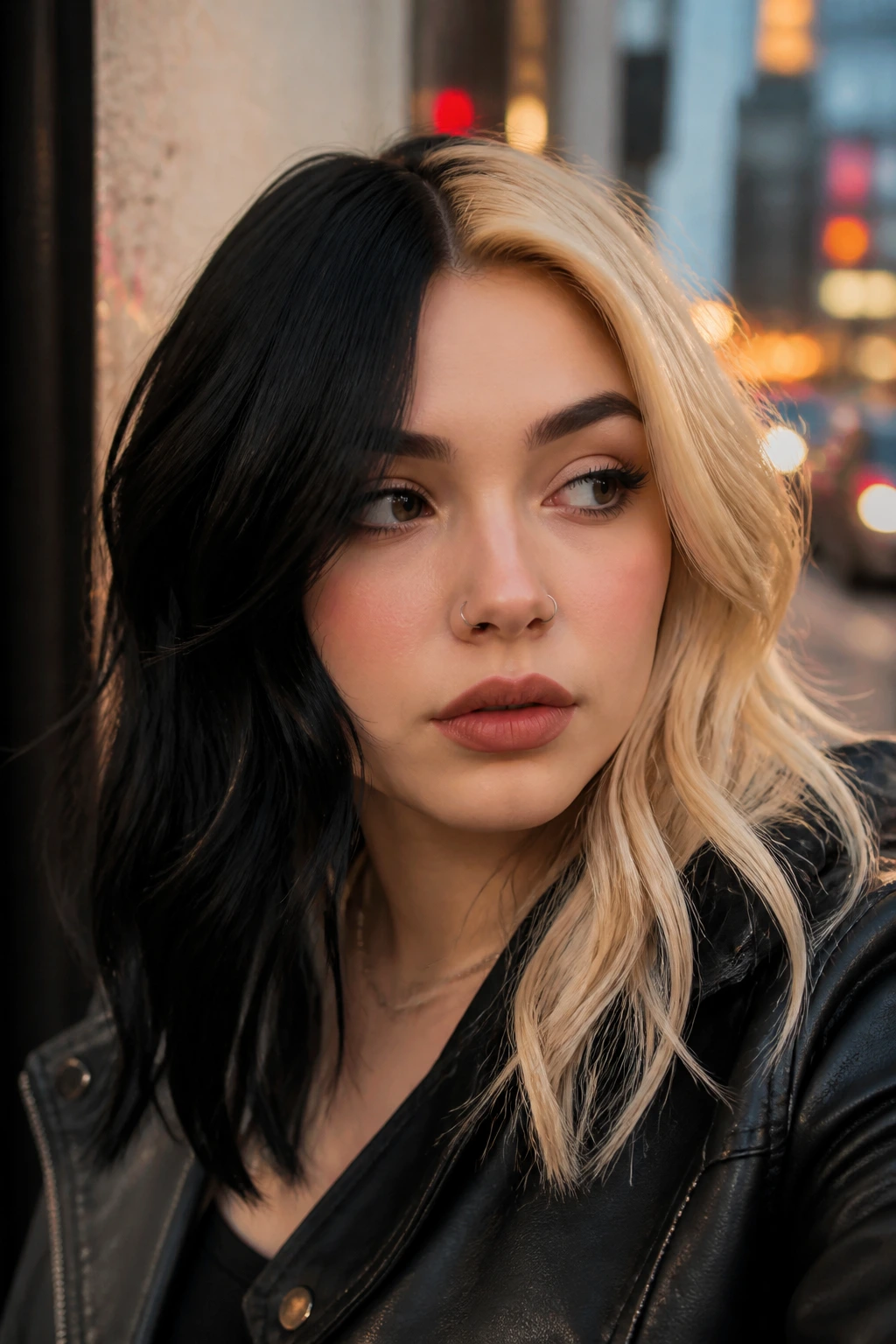
Split-dye hair is not subtle, and I’d never pretend otherwise. But if you like hard contrast, a slightly off-center black-and-blonde split can actually suit a round face better than a perfectly even center line, because the asymmetry cuts the width.
A Few Things to Watch
- Keep the split line a little off the middle so the face doesn’t look too symmetrical.
- Use a dark side with a deep root and a blonde side that falls longer.
- Avoid making both halves equal in volume if your hair is very thick.
- Style with a side tuck or bend so the color blocks move instead of sitting flat.
The style gets its power from contrast, so placement matters more than nuance. A dead-center split can make the face feel boxed in. A slightly shifted line feels more modern and more flattering.
This is the boldest idea on the list. It’s also one of the most decisive. You know pretty fast if it’s your thing.
22. Soft Beige Blonde with Layered Face-Framing Pieces
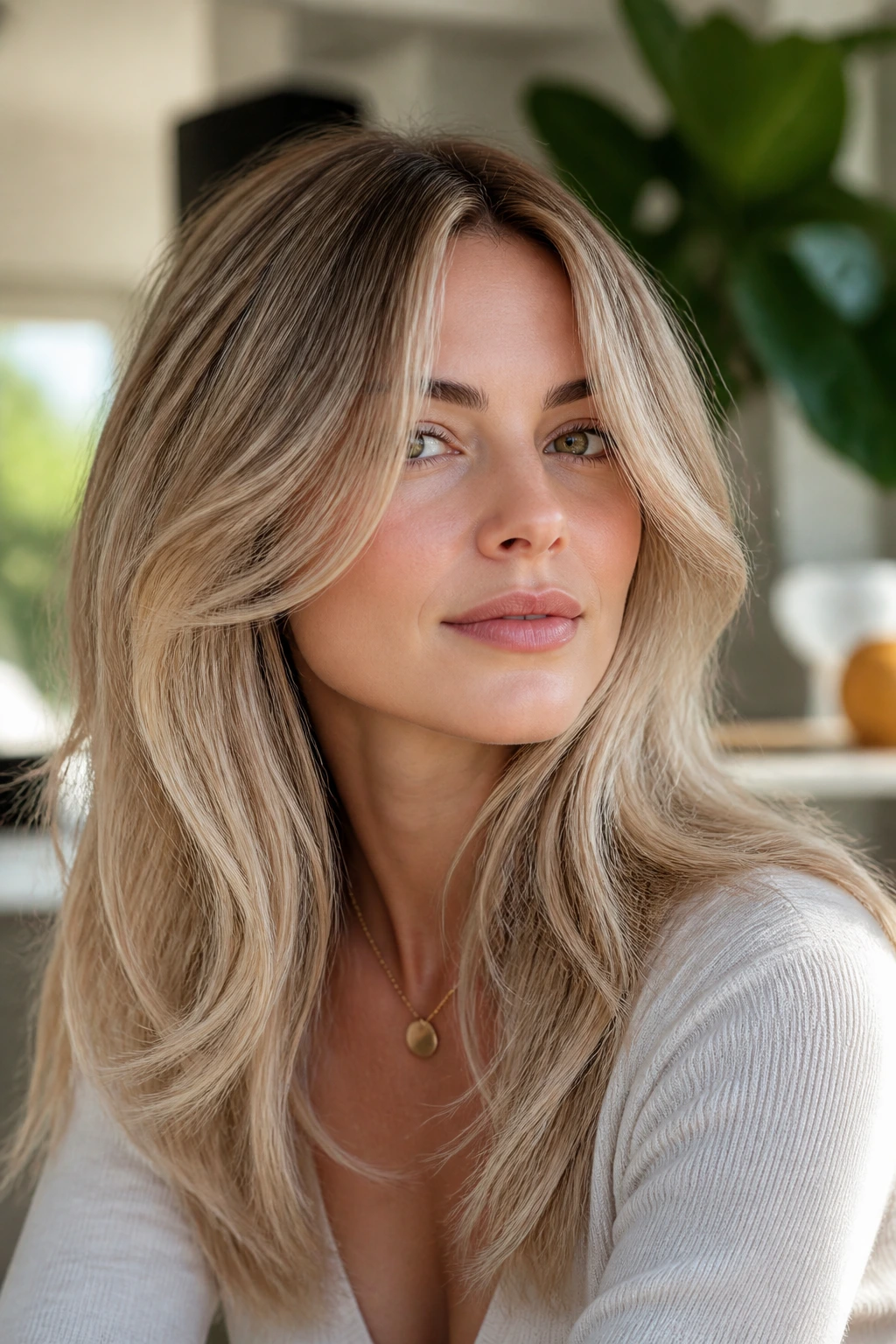
Soft beige blonde is the answer when you want the black-and-blonde contrast to feel gentle. On a round face, layered face-framing pieces help because they break up the sides without creating a wide bright frame.
The beige tone matters. It’s creamy, not icy, so it blends into black hair in a smoother way. That makes the face frame look intentional instead of striped. Keep the first light pieces a little below the cheekbone and let the layers carry the color downward.
This style works especially well if you wear your hair with loose bends. The color lands on the curves of the layers, and the eye follows those lines instead of stopping at the widest part of the face.
It’s one of those looks that can sit in the background and still make a huge difference. Not loud. Just smarter than it first appears.
23. Streaky Black and Blonde Curls for Dimension
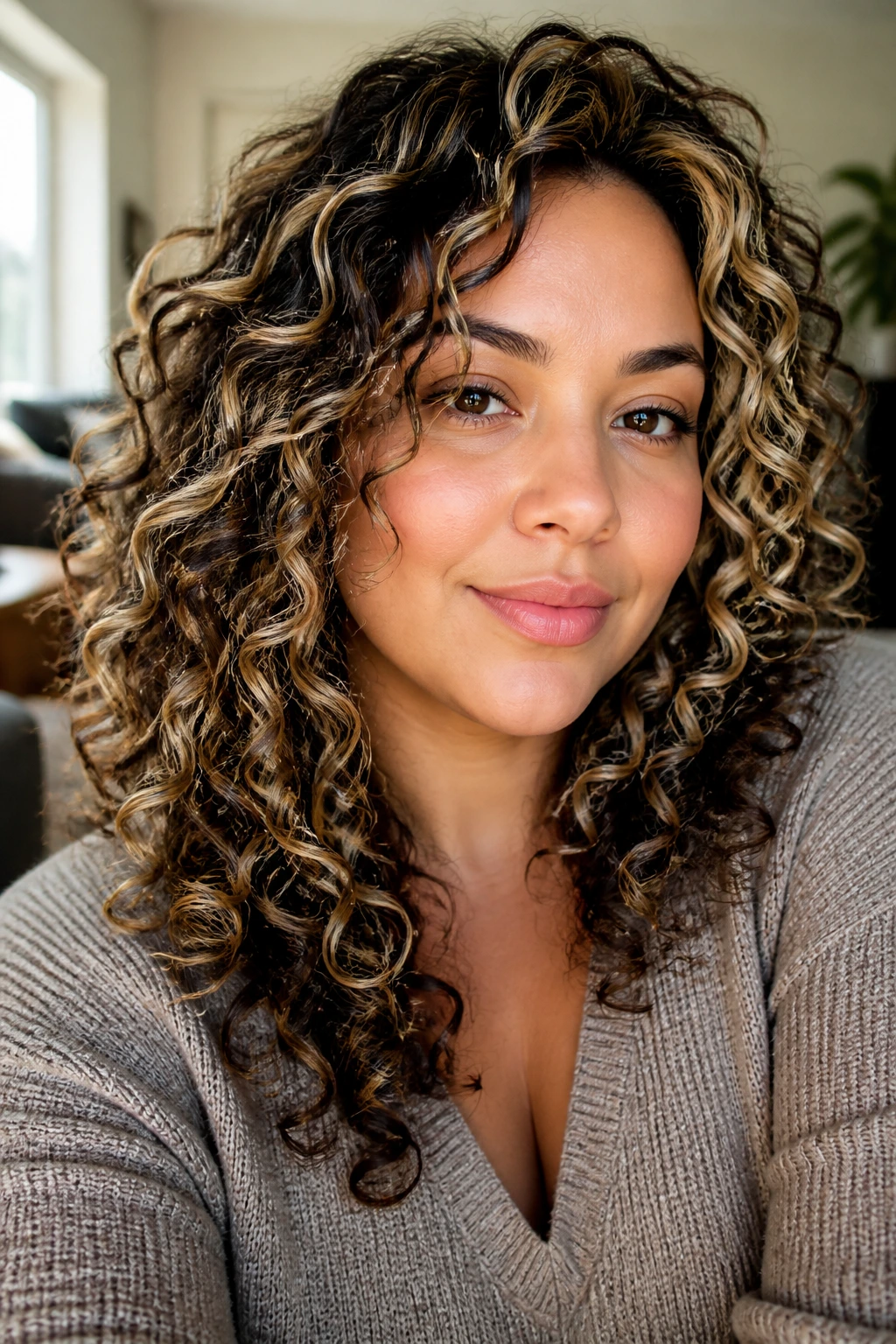
Can curls handle streaky black and blonde contrast? Yes — when the streaks follow the curl groups instead of fighting them. On a round face, that matters because curls already create width if the color sits in the wrong place.
The light pieces should land where the curls naturally stack and fall, usually through the outer layer and lower half of the hair. That keeps the brightness moving downward. If the streaks are too even, the style can look puffy. If they’re too random, the pattern gets messy. The sweet spot sits between those two.
What to Ask For in the Chair
- Thin painted ribbons through the outer curls.
- A little more blonde around the top layers than the sides.
- Soft root shadow so the contrast doesn’t start too high.
- Beige, honey, or ash tones depending on how warm or cool you want the finish.
This is a lively look. It feels textured, full, and shaped by movement rather than by a hard outline.
24. Blonde Paneling in Braids or Twist-Outs
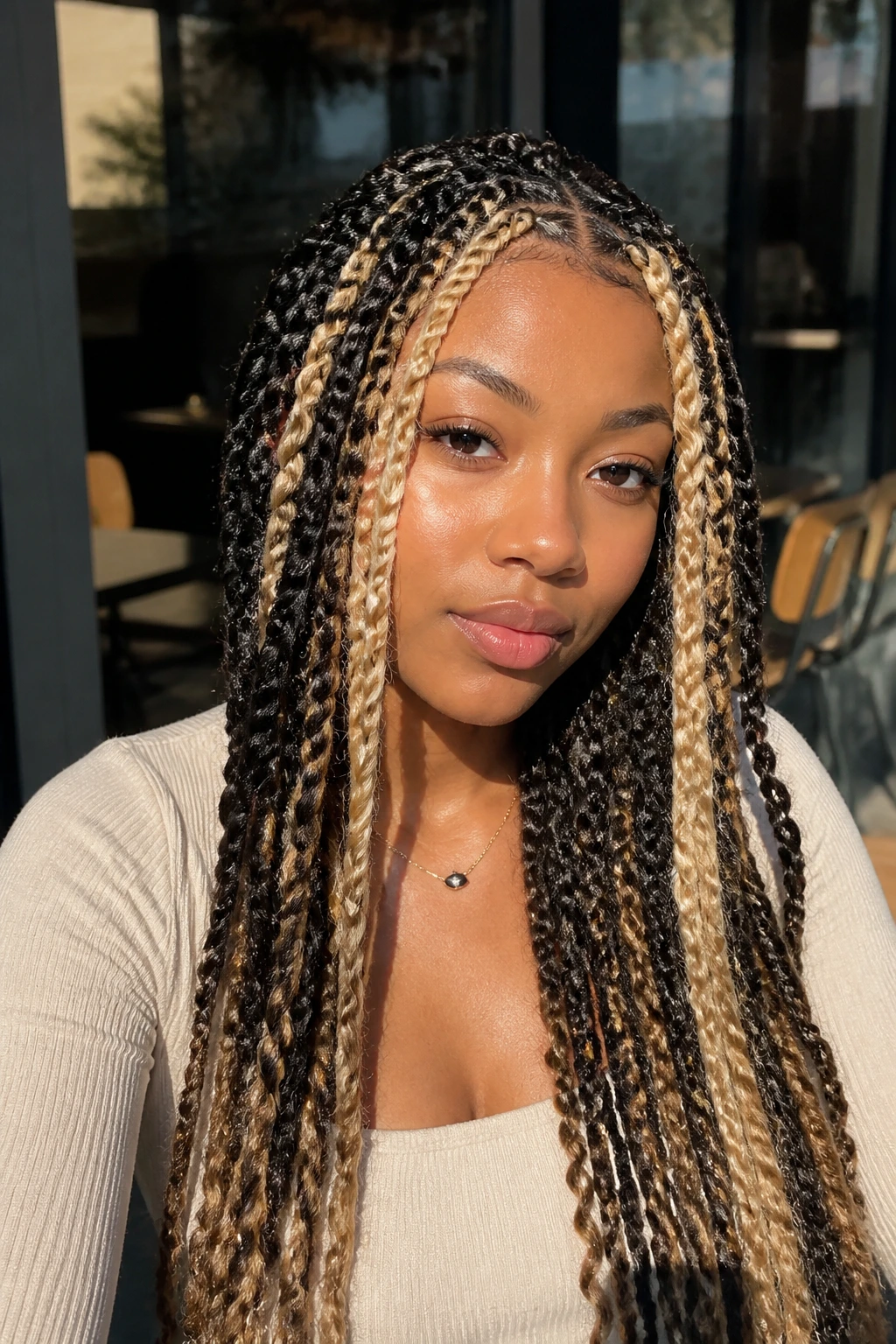
If you wear braids, twists, or twist-outs, paneling can frame a round face in a way that loose hair sometimes can’t. The color shows up in sections, so you get shape without needing daily styling.
A few blonde panels near the front and a couple lower pieces through the length are usually enough. Too much blonde all the way around the head can add width, especially if the style sits close to the cheeks. Keep the brightest pieces near the hairline and through the vertical fall of the style, not packed into the widest part of the face.
Why This Works So Well
Braided and twisted textures already have built-in line work. The blonde just makes those lines easier to see. That gives the face a longer outline and keeps the color from flattening into one shape.
This is also a practical choice. The placement stays visible, but the style itself can last a while, which means less time fussing and more time wearing the look.
25. The Low-Maintenance Black-and-Blonde Blend for Round Faces
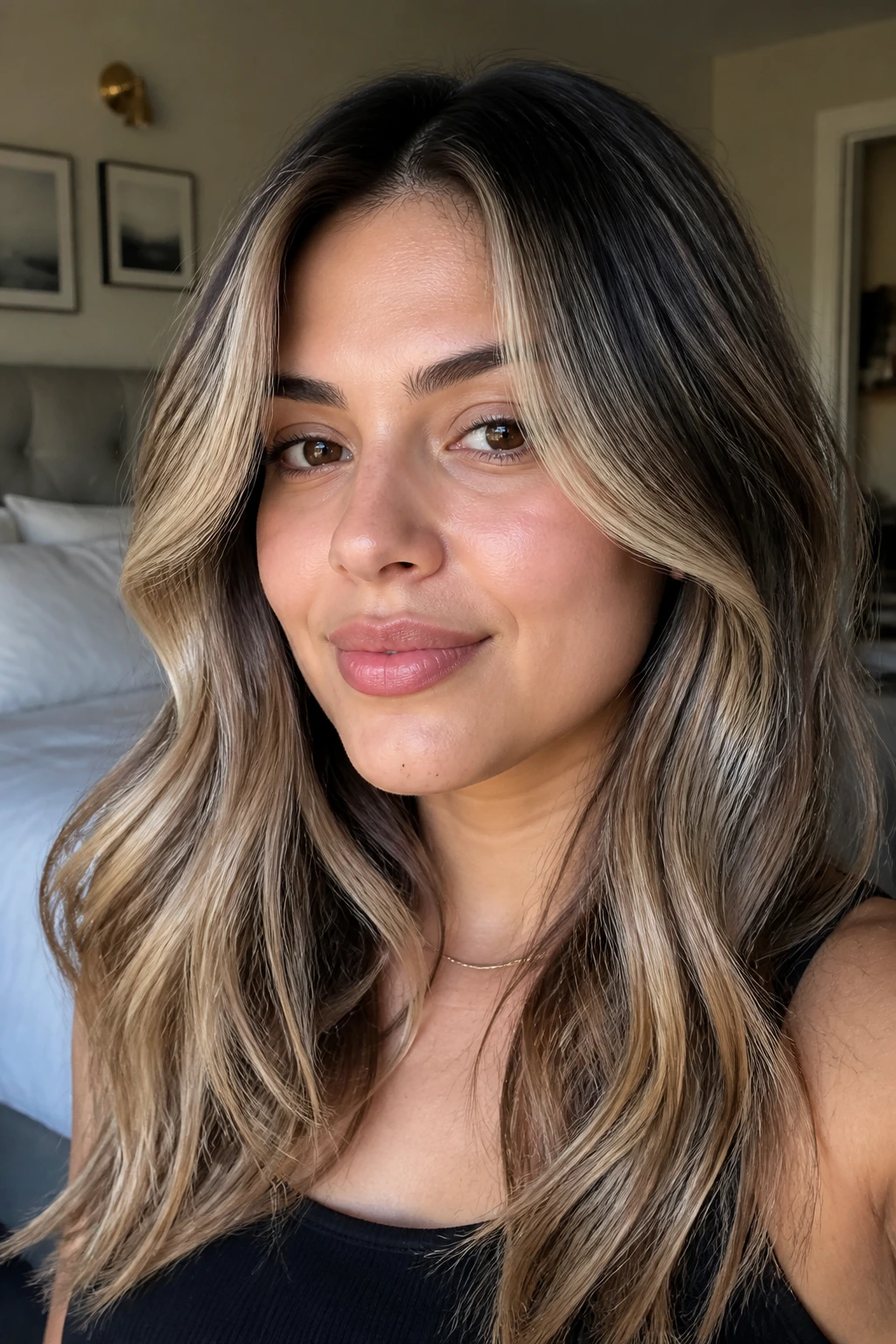
If you want one black blonde hair color idea for round faces that stays wearable, grows out cleanly, and doesn’t need constant fixing, make the blonde soft, the root deep, and the face frame narrow. That combination does a lot of quiet work.
The best low-maintenance version usually uses a dark root melt with beige, ash, or champagne blonde pieces placed above the cheek line and below the brow line. That keeps the light where it can lift the face instead of widening it. It also means the grow-out doesn’t leave a hard stripe around the cheeks, which is where many color jobs start to look tired.
I’d choose this route for anyone who likes contrast but hates spending every few weeks chasing toner. It looks polished, but not fussy. The black base still feels rich. The blonde still feels bright. And the face keeps its shape instead of getting swallowed by color.
If you’re taking one thing from all 25 ideas, make it this: placement beats intensity. A smaller, better-placed blonde piece will usually flatter a round face more than a huge bright section that sits in the wrong spot. That’s the difference between hair color that simply shows up and hair color that actually works for your face.
