



If your skin leans pink, rosy, or blue, a blonde that runs too warm can make the face look flat in a hurry. Blonde burgundy hair color ideas for cool skin tones work because they stay in the same mood: icy blonde, pearl blonde, smoky beige, and burgundy that leans wine, plum, blackberry, or oxblood.
Yellow-gold is the troublemaker.
It can look lovely on the right person, but on cool undertones it often tips the whole look into brass, and brass has a way of stealing the crispness right out of burgundy. A cooler blonde reflects light without turning buttery, which keeps the red-violet side of burgundy looking rich instead of muddy.
Placement matters almost as much as shade. A money piece by the cheekbone gives a different feel than a root melt or a hidden underlayer, and a bob needs a different balance than waist-length waves. If you want the color to feel polished instead of patchy, keep the blonde bright and the burgundy blue-based.
Some of these ideas are soft. Some are not.
The point is to give you options that actually flatter cool skin, not just look dramatic in a salon photo. The mix can be whisper-light or high contrast, and both can work if the tones are chosen well.
1. Icy Platinum Crown With Burgundy Root Melt
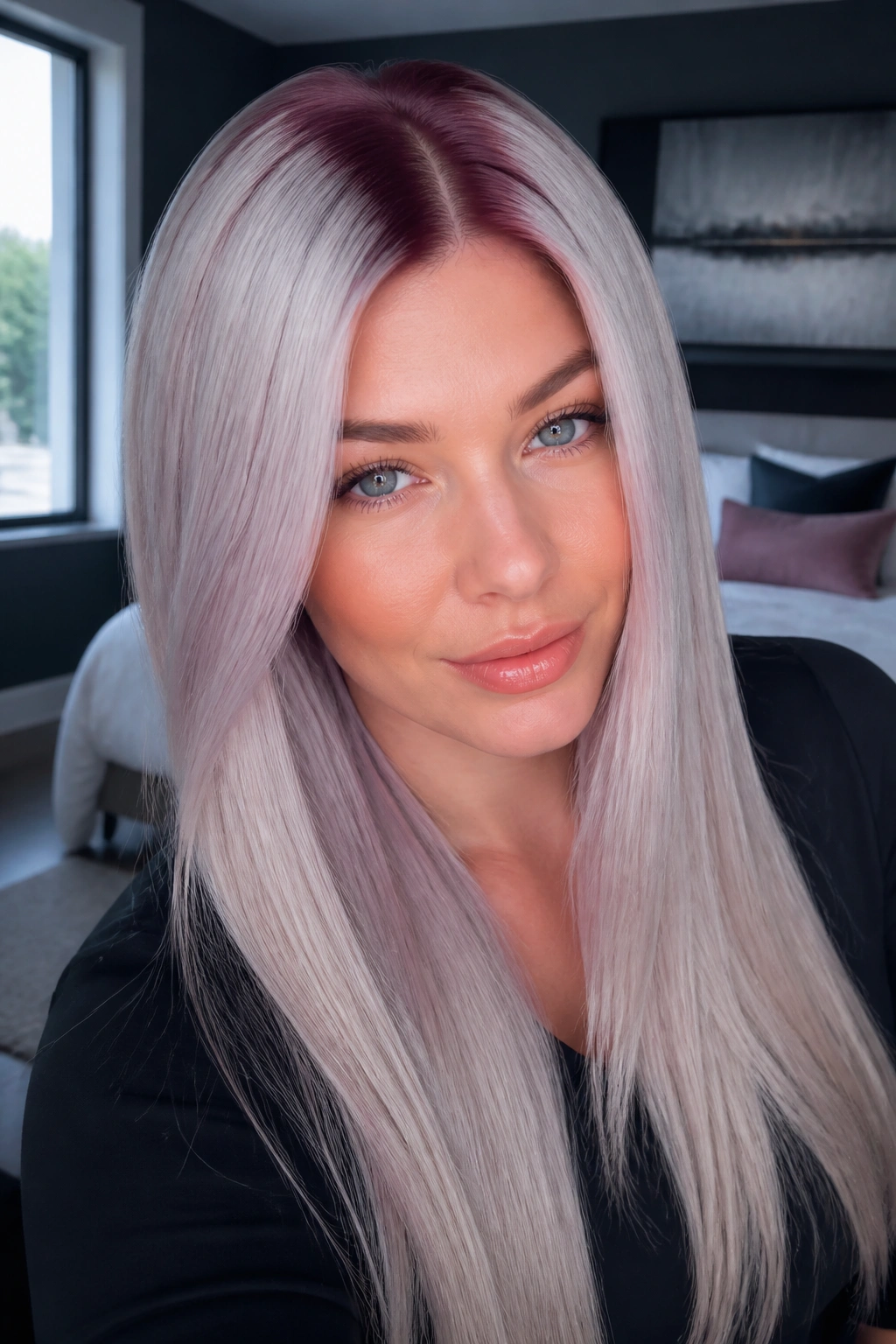
This one gives you the sharpest contrast in the whole bunch. The platinum blonde sits right up top, while the burgundy melts in at the roots and around the crown so the darker color feels like a shadow instead of a block.
Why It Flatters Cool Skin
Cool skin usually loves this because the platinum keeps everything clean, and the burgundy adds depth without dragging warmth into the face. The trick is to keep the burgundy on the blue-red side, almost like crushed berries, not a bright cherry.
Ask for a level 9 or 10 platinum blonde through the mids and ends, then a demi-permanent burgundy root melt that stays one or two levels deeper than your natural base. The line between the two should feel soft when the hair moves. Hard edges kill the effect.
- Keep the blonde on the pearly side, not golden.
- Use a blue-violet toner to stop brass from creeping in.
- Let the root melt blur 1 to 2 inches down for a softer grow-out.
- Wear it with sleek waves or a straight blowout for the cleanest read.
Pro tip: If your eyebrows are dark, this look gets even better. The contrast makes the face look crisp fast.
2. Smoky Mushroom Blonde and Merlot Balayage
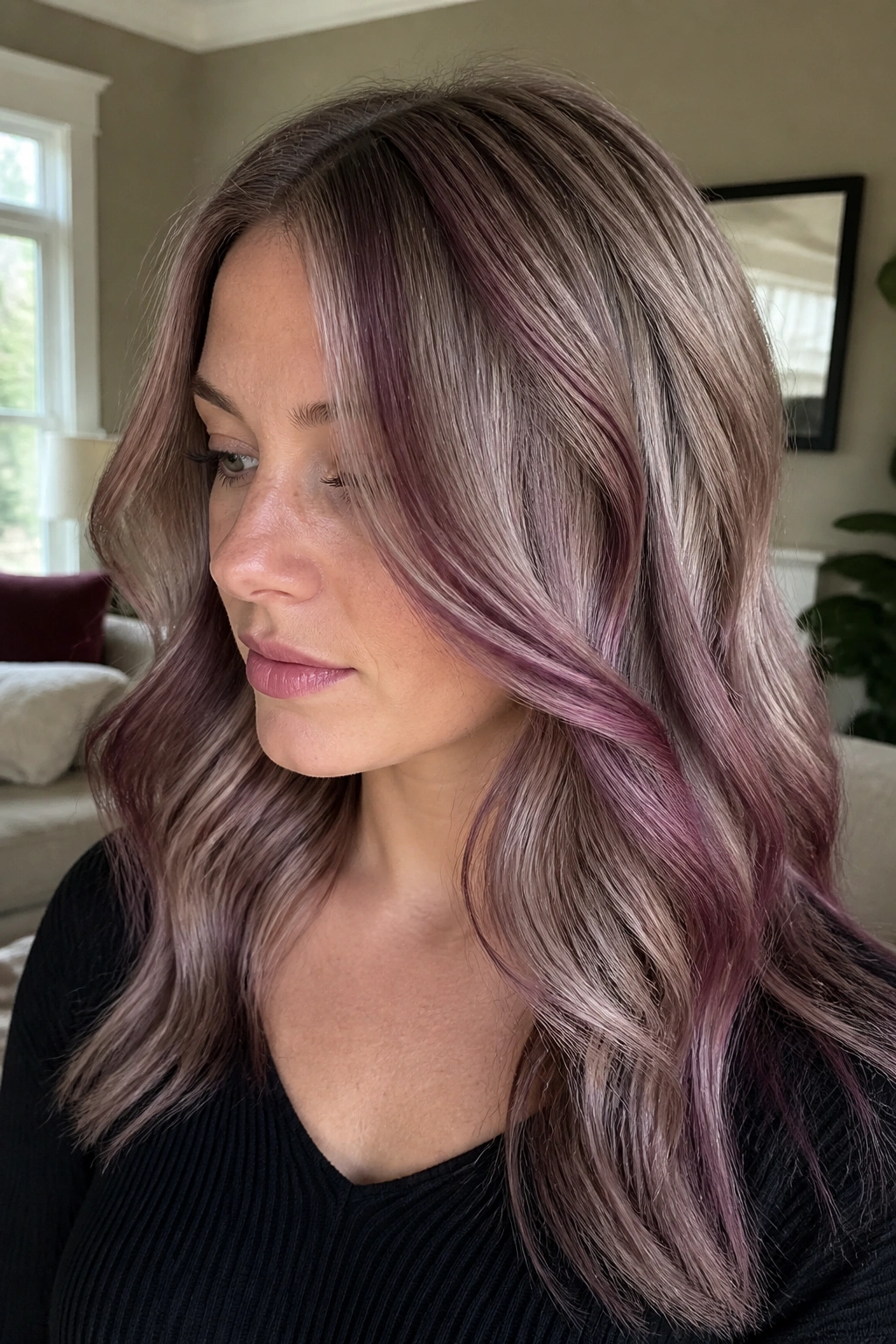
Soft, smoky, and a little moody — that’s the whole appeal here. Mushroom blonde gives you that gray-beige base that sits well on cool skin, and the merlot pieces add the richer note without taking over the whole head.
The reason this combo works is simple: mushroom blonde acts like a filter. It dulls any leftover yellow in the hair, so the burgundy can show up as wine instead of orange-red. On wavy hair, this color has a nice broken-up look that feels expensive without trying too hard.
This is a good choice if you want burgundy but don’t want the obvious “I changed my hair” effect. The balayage pieces can start around cheek level and drift through the ends, with a few lighter ribbons left around the face.
It’s also forgiving. When the burgundy fades, it tends to go soft and mauve rather than ugly pink, and that matters more than people think. Ugly fade is the enemy.
3. Creamy Beige Blonde With a Burgundy Money Piece

Want color that wakes up the face without taking over the whole head? This is the one. A creamy beige blonde base keeps things light, while a burgundy money piece sits right where the light hits first.
How to Ask for It
Ask for the blonde to stay cool beige, not yellow beige. Then ask for a burgundy face frame that starts near the temples and drops through the front layers, with a little extra saturation near the cheekbone. That placement makes the eyes stand out and gives cool skin a sharper outline.
A money piece like this works especially well if you wear your hair parted in the middle or swept back. The front sections do the talking, and the rest of the hair stays quiet. That balance is the whole reason it looks good.
- Best on shoulder-length cuts and long layers.
- Keep the burgundy slightly deeper than your root color.
- Style with loose bends so the front pieces don’t sit flat.
- Refresh the front ribbon more often than the rest of the hair.
It’s a smart first step if you’re nervous about burgundy. The commitment stays small, but the payoff is immediate.
4. Silver Blonde Layers With Wine Peekaboo Streaks
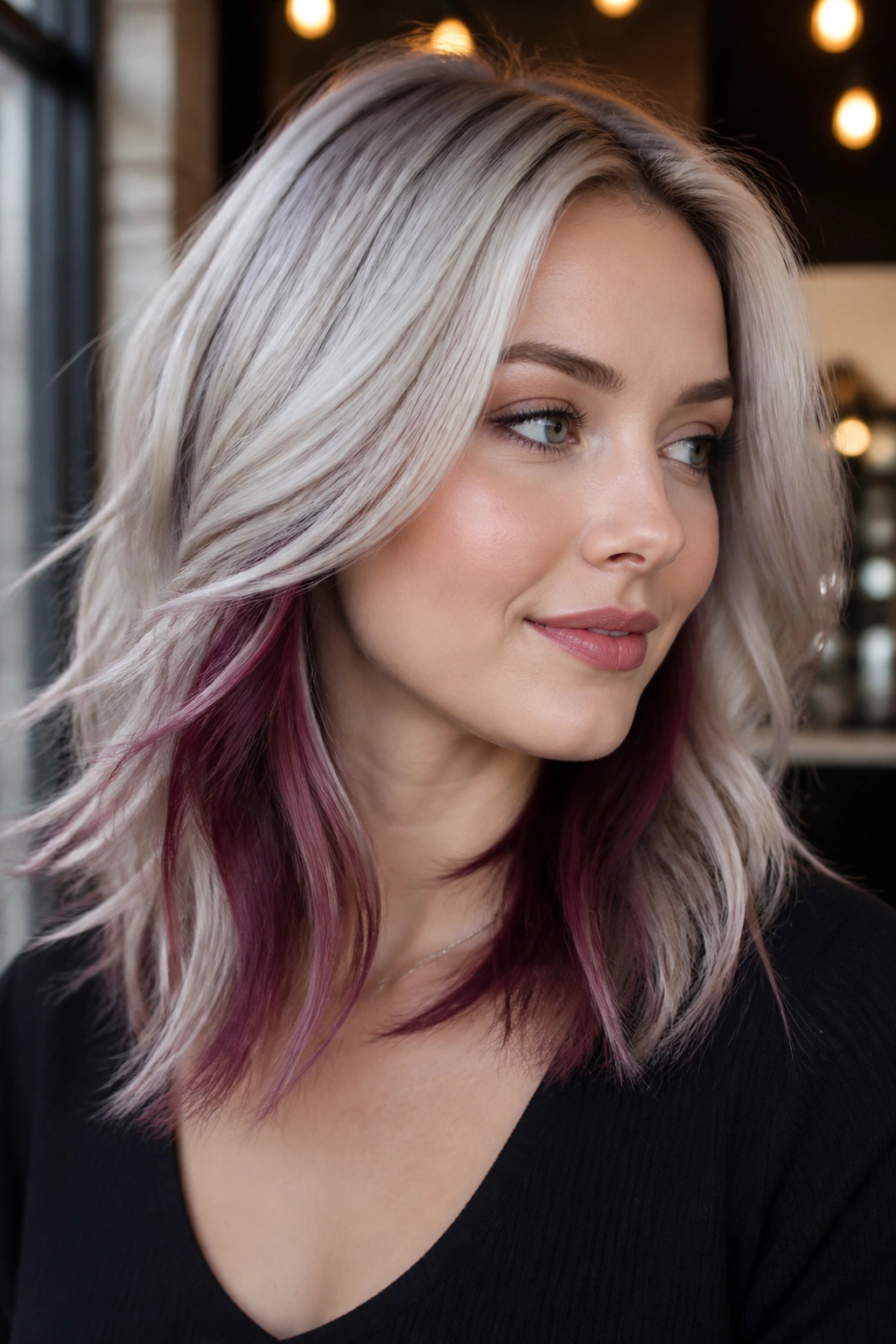
Put the color underneath, and it changes the whole mood. Silver blonde on the surface keeps the look icy, while wine peekaboo streaks hide in the lower layers and pop only when the hair moves.
That little reveal is the best part. You get a hair color that feels polished at work, then turns a little dramatic when you flip your hair or tie it into a half-up style. The burgundy never has to shout to be noticed.
What Makes It Different
Peekaboo color does not fight for attention with the blonde. It waits. That makes it useful for people who want cool skin-friendly contrast without staining the whole head burgundy.
- Place the streaks under the top layer, especially through the nape.
- Keep the visible blonde at a clean silver level with no gold left behind.
- Wear it tucked behind one ear to show off the color when you want to.
- Great for lob cuts, shags, and layered long hair.
There’s also a practical side. The underlayers fade slower because they don’t see as much sun or heat. Nice bonus.
5. Ash Blonde Ombre Into Black Cherry Ends
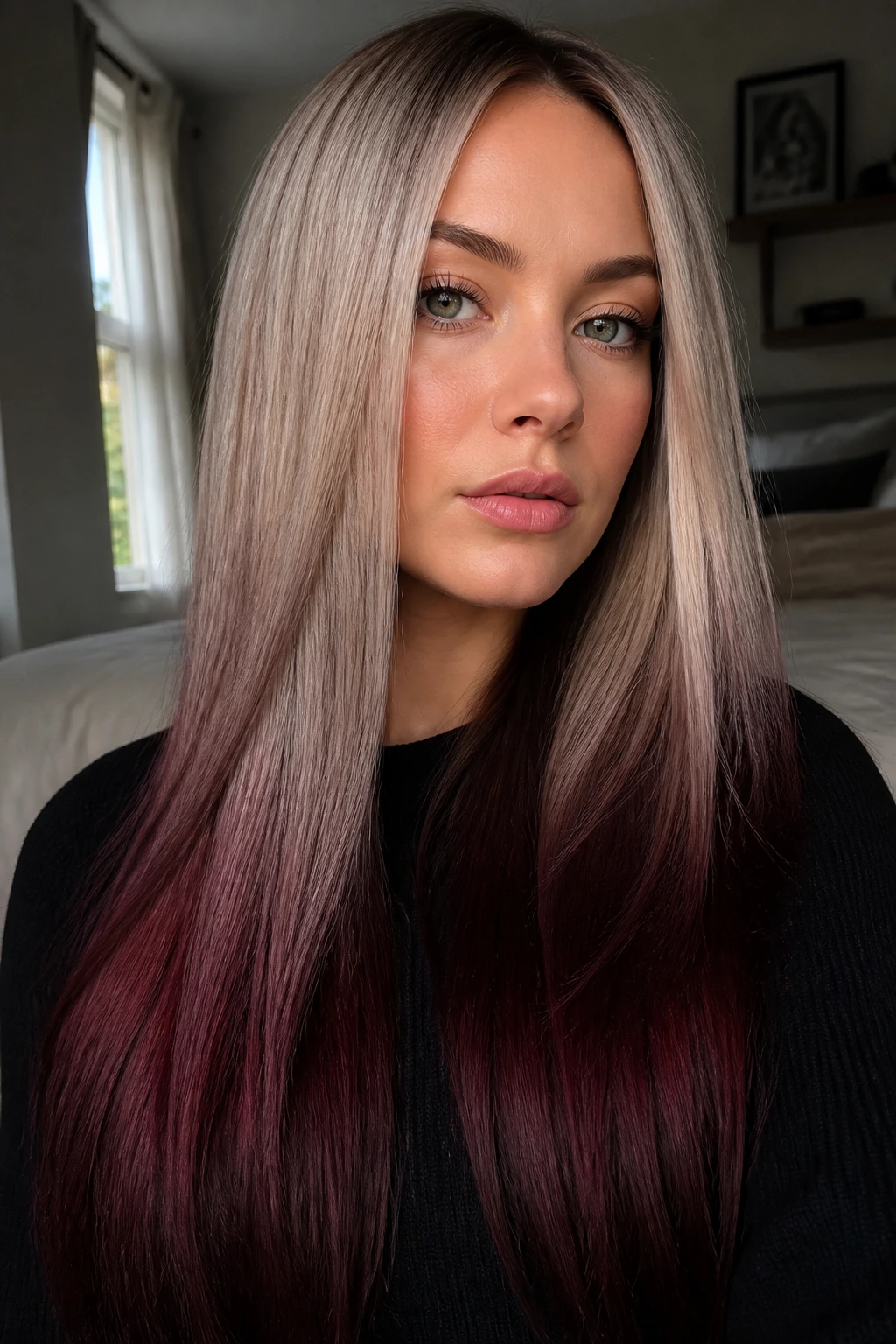
Ash blonde fading into black cherry ends has a moody, grown-up feel that suits cool skin without going flat. The blonde stays light enough to keep the face bright, and the ends deepen into a burgundy that feels dark, glossy, and a little dramatic.
Straight hair shows the fade best.
On longer lengths, the ombre gives you a lot of color story without a harsh line. That matters. A hard line between blonde and burgundy can look choppy if the tones are off by even a little, so a smooth fade is the safer bet. Start with ash at the roots and mids, then let the black cherry gather more pigment toward the bottom 4 to 6 inches.
This works especially well if your hair is already light or has been lifted before. If it’s dark and resistant, the burgundy ends may read more brown-red than cherry, which is fine if you want a softer result. A gloss every few weeks keeps the ends looking wet and deep.
6. Champagne Blonde With Soft Burgundy Lowlights
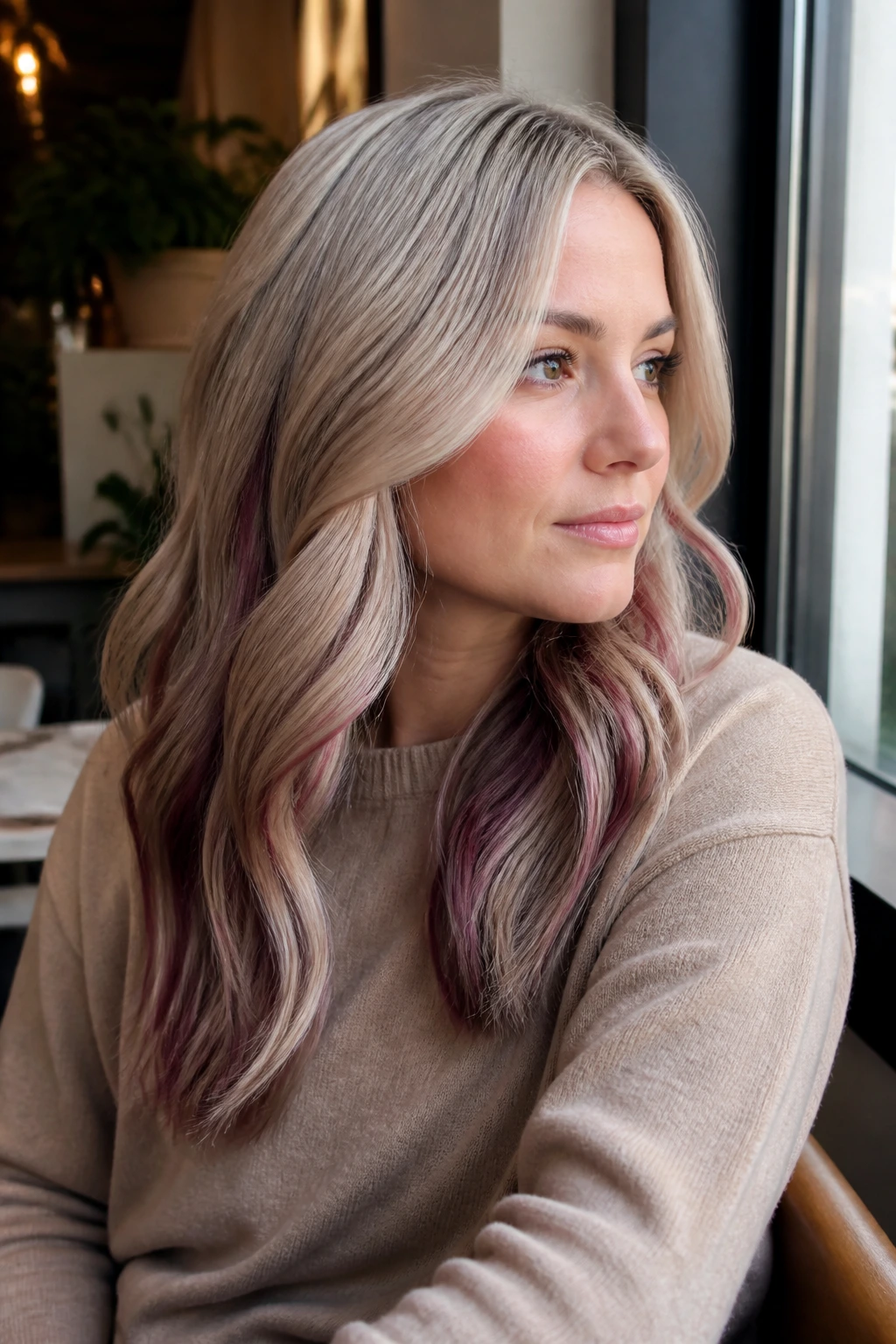
Champagne blonde can go wrong fast if it tips yellow, but when it stays cool, it gives a soft glow that flatters pink and blue undertones. Add burgundy lowlights, and the whole thing gains shape without getting loud.
Unlike highlights, lowlights push color inward. That means the blonde still does the brightening work, while the burgundy sits underneath and through the body of the hair. The result looks fuller, which is a bonus if your hair is fine or a little see-through at the ends.
Ask for demi-permanent burgundy lowlights placed every other section or in narrow ribbons through the mids. Keep the blonde champagne, not gold. If the colorist reaches for a warm toner, steer it back. Seriously.
This version is one of my favorites for people who want a calm result. It doesn’t read as streaky. It reads as depth.
7. Nordic Blonde With Burgundy Halo Panels
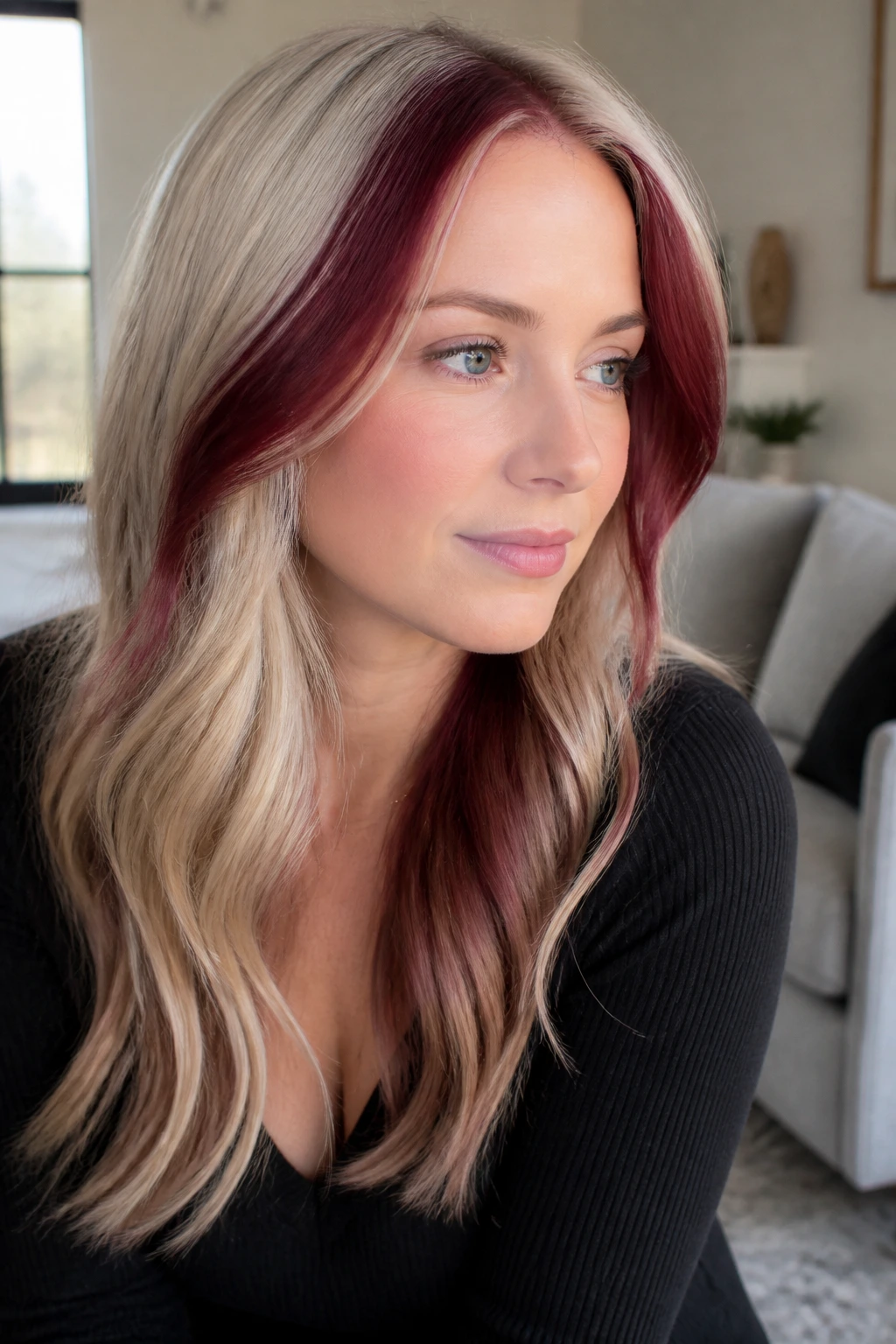
A halo panel is exactly what it sounds like: color that wraps around the crown, temples, and upper layers so it catches the eye from above and from the side. On a Nordic blonde base, burgundy panels add a little heat to all that icy brightness.
How to Wear It
This look is especially good if you wear buns, half-up styles, or clipped-back hair. The burgundy shows around the face and crown, then disappears into the lighter lengths. That gives you two looks in one, which is more fun than it sounds.
Cool skin likes this because the blonde stays very pale and the burgundy stays rich and blue-red. The contrast can sharpen the jawline and bring out gray or blue eyes. It also works on naturally straight hair, where the panel shape stays clean.
- Ask for bright blonde through the lengths.
- Place burgundy panels around the crown and temples.
- Keep the root area slightly deeper so the panels don’t look pasted on.
- Use a smoothing blowout for the neatest finish.
If you like hair that changes with movement, this one delivers without needing a full dye job.
8. Bronde Base With a Burgundy Melt
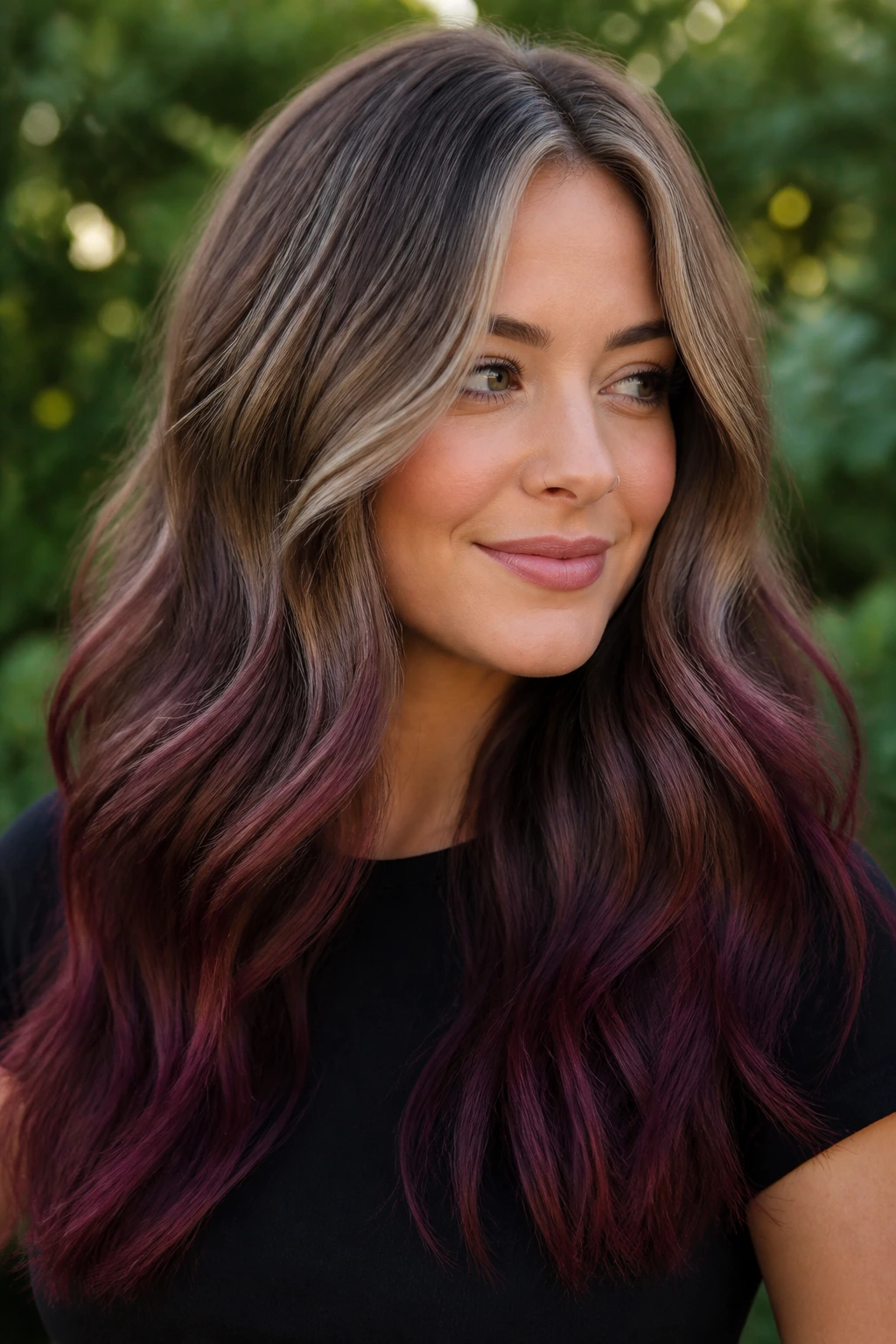
If your natural shade sits between dark blonde and light brown, this is the most forgiving option on the list. A bronde base gives you room to move, and the burgundy melt slides in from the mid-lengths downward so the change feels gradual.
What to Watch For
The word “bronde” gets thrown around a lot, but here it should mean a cool, beige-brown foundation with enough blonde to keep the hair from looking heavy. The burgundy then deepens the ends, almost like spilled wine soaking into cloth. That’s the visual.
- Keep the root close to your natural depth.
- Start the burgundy around chin level or lower.
- Leave a few beige ribbons around the face.
- Ask for a soft transition, not a hard color block.
This is a smart pick if you like low-maintenance hair. The grow-out blends into the base, and the burgundy fade often looks better after a few washes because it becomes slightly smoky. Not boring. Smoked.
9. Frosted Bob With Burgundy Underlayer
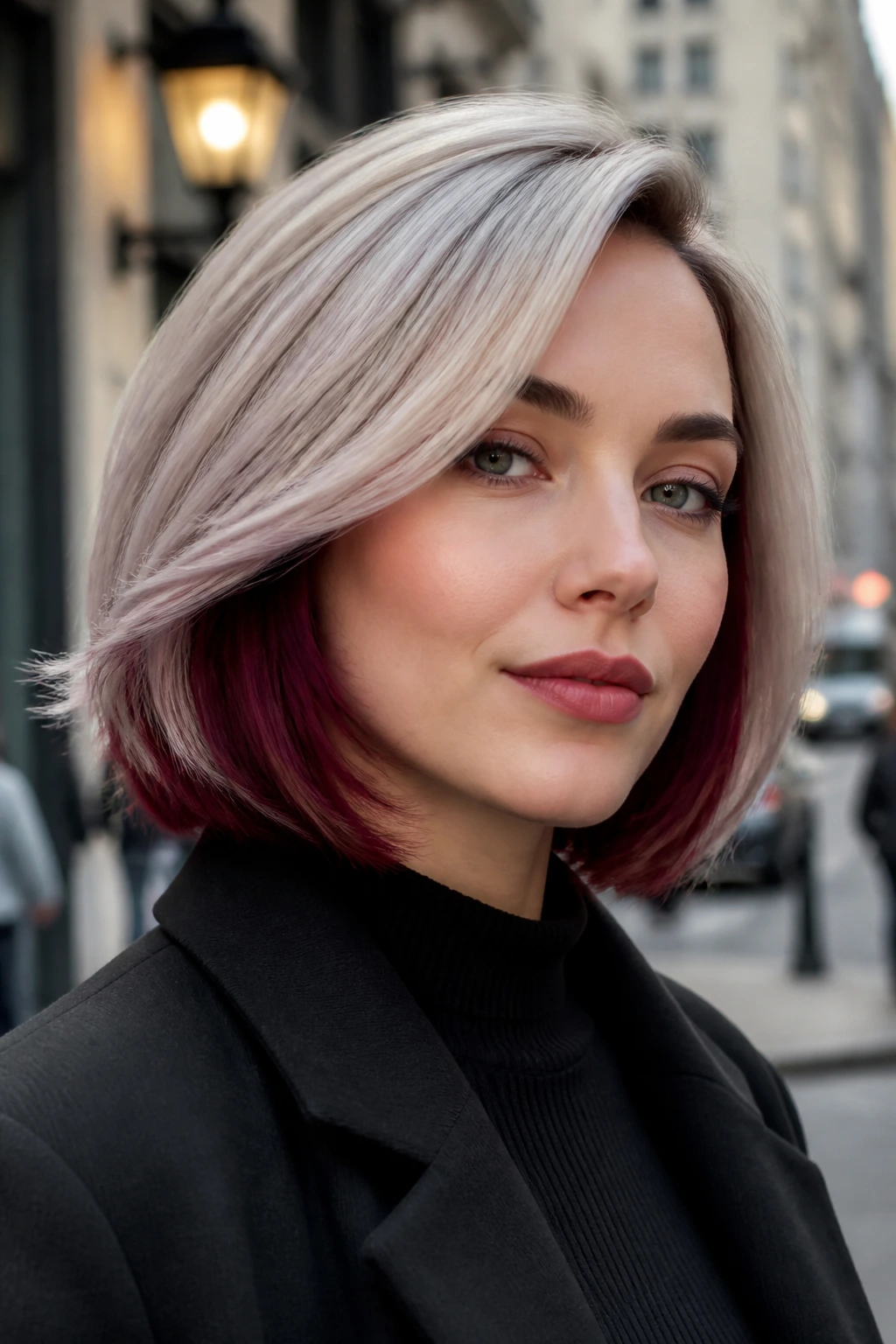
Short hair can carry burgundy and blonde without looking crowded, and a bob is the best proof. A frosted blonde top layer keeps the cut crisp, while a burgundy underlayer at the nape and lower sides adds depth that only shows when the hair sways.
That hidden color is half the charm. You get the clean, sharp shape of a bob from the outside, then a flash of burgundy from underneath when the light hits or when you tuck one side behind your ear. It feels deliberate, not busy.
This works especially well on blunt bobs and French bobs. The cut already has a line, so the color should follow the same idea: neat on top, richer underneath. If your cool skin is pale, the frosted blonde keeps the face from getting washed out. If your skin is deeper and cool, the burgundy gives the base more body.
It does not need beach waves. A smooth tuck is enough.
10. Ash Blonde Lob With Split Burgundy Face Frame
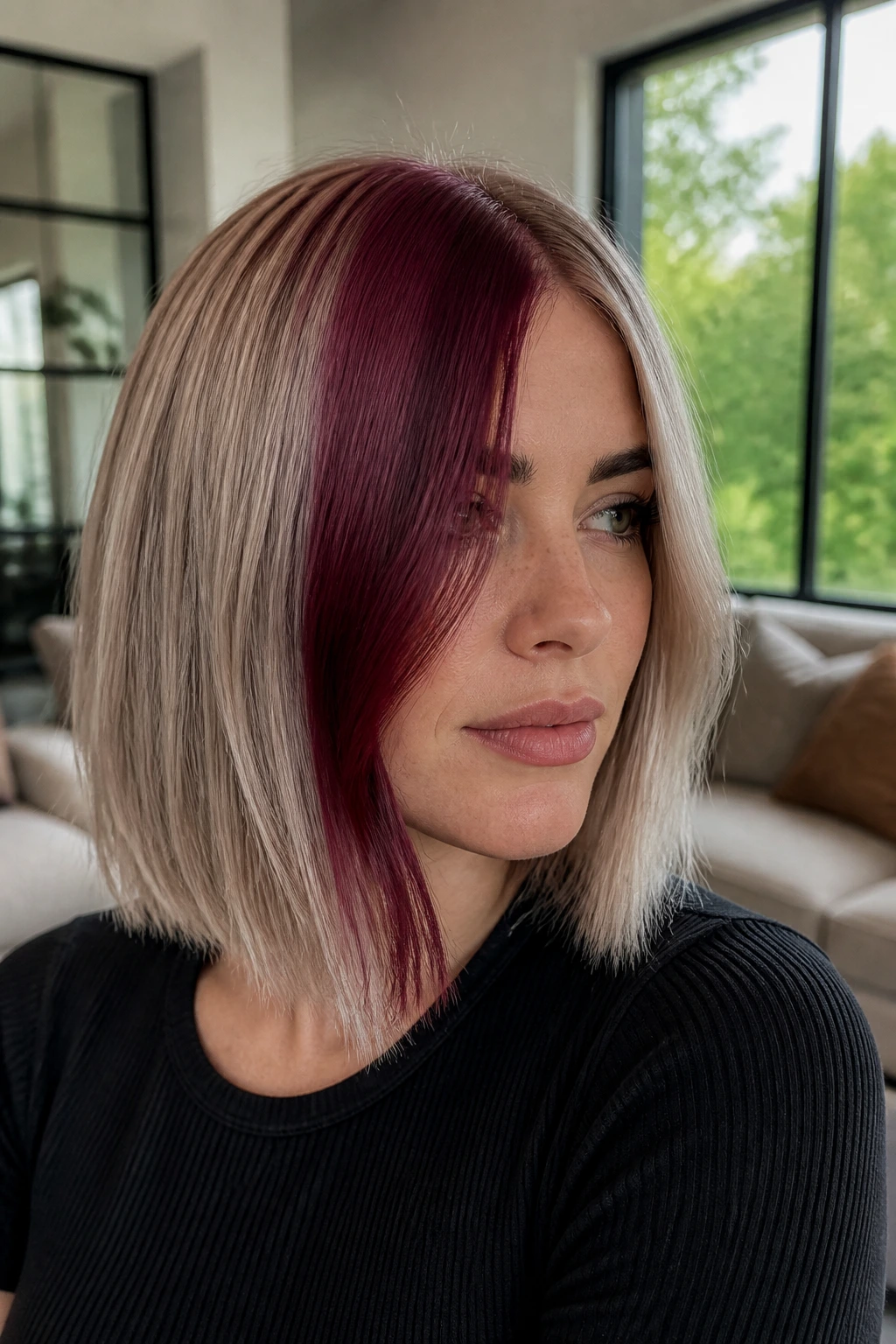
Do you want a bold front without dyeing everything? Split framing is the answer. An ash blonde lob gives you that airy, cool base, and the burgundy face frame slices down the front on one side or both sides depending on how loud you want it.
The Split-Face Effect
The split face frame makes the color look sharper than a standard money piece. You can keep one front section mostly blonde and let the other run burgundy, or divide the front in a more even way if you like a balanced look. Either way, the face becomes the center of the design.
That sharp front color works on straight lobs, but it looks even better with a soft bend. The movement keeps the split from feeling stiff. Cool skin usually benefits from the ash blonde because it cuts glare, while the burgundy gives the whole cut a darker edge.
Ask for face-frame pieces that start at the root and soften by the jawline. If the burgundy stops too high, it can look choppy. If it goes too low, it swallows the blonde. The sweet spot sits right in the middle.
11. White Blonde Balayage With Berry Shadow Root
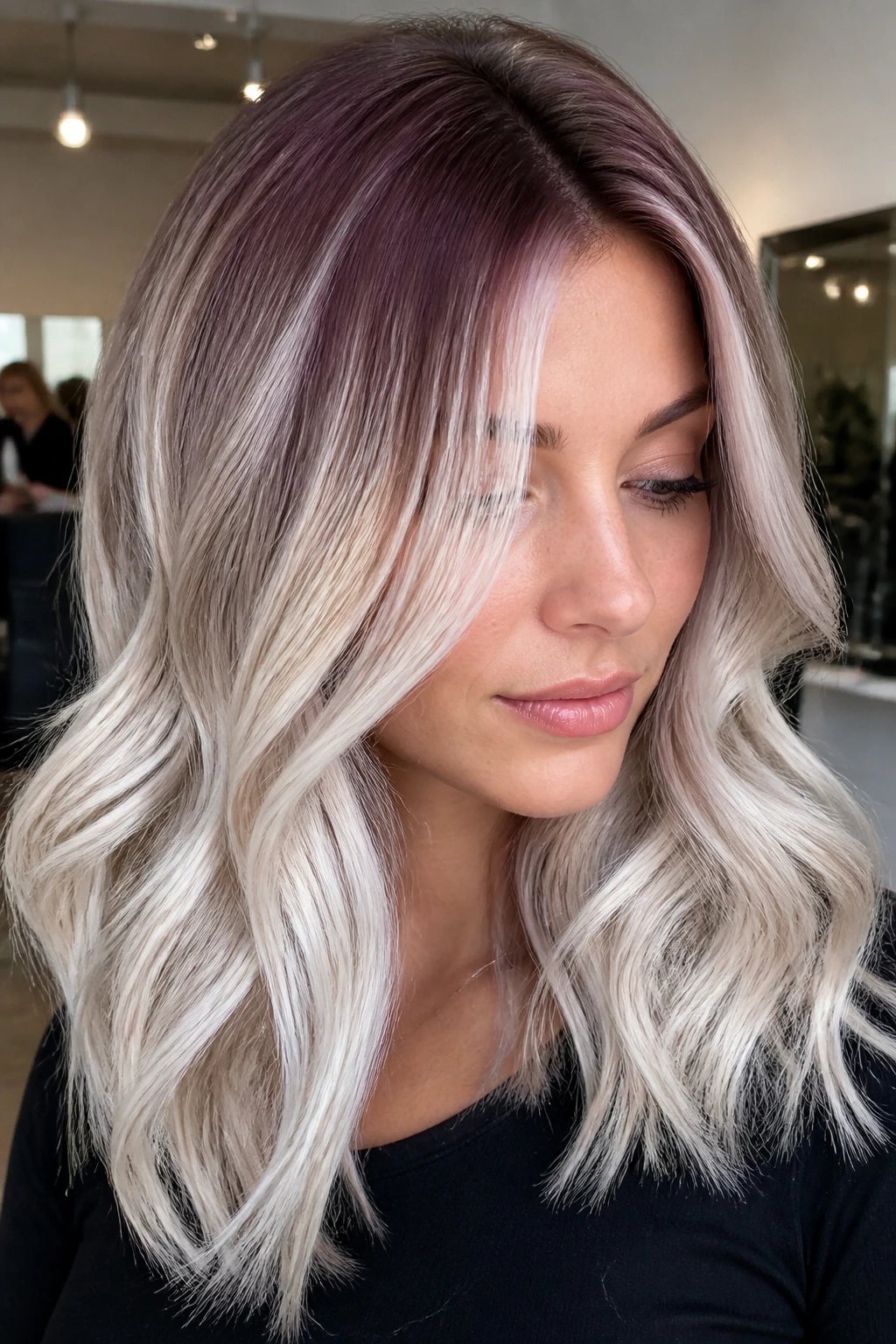
This is the cleanest-looking high-contrast choice in the set. White blonde balayage keeps the lengths bright and pale, while a berry shadow root softens the grow-out and gives cool skin a deeper frame.
The shadow root is doing more work than people realize. It prevents the white blonde from looking harsh at the scalp, and it keeps the burgundy family grounded in something darker than a flat red. When the root tone leans berry or plum, the whole look feels more expensive and less costume-like.
The burgundy should look smoked, not neon.
That sentence matters. Bright red roots against white blonde can read harsh fast, but a soft berry shadow turns the contrast into something smoother. This is a good choice if your hair is thick enough to support a lot of lightness and if you do not mind regular toning.
Wear it sleek for maximum impact. A smooth finish shows the color blend much better than a lot of texture.
12. Vanilla Blonde Curtain Bangs and Burgundy Ribbons
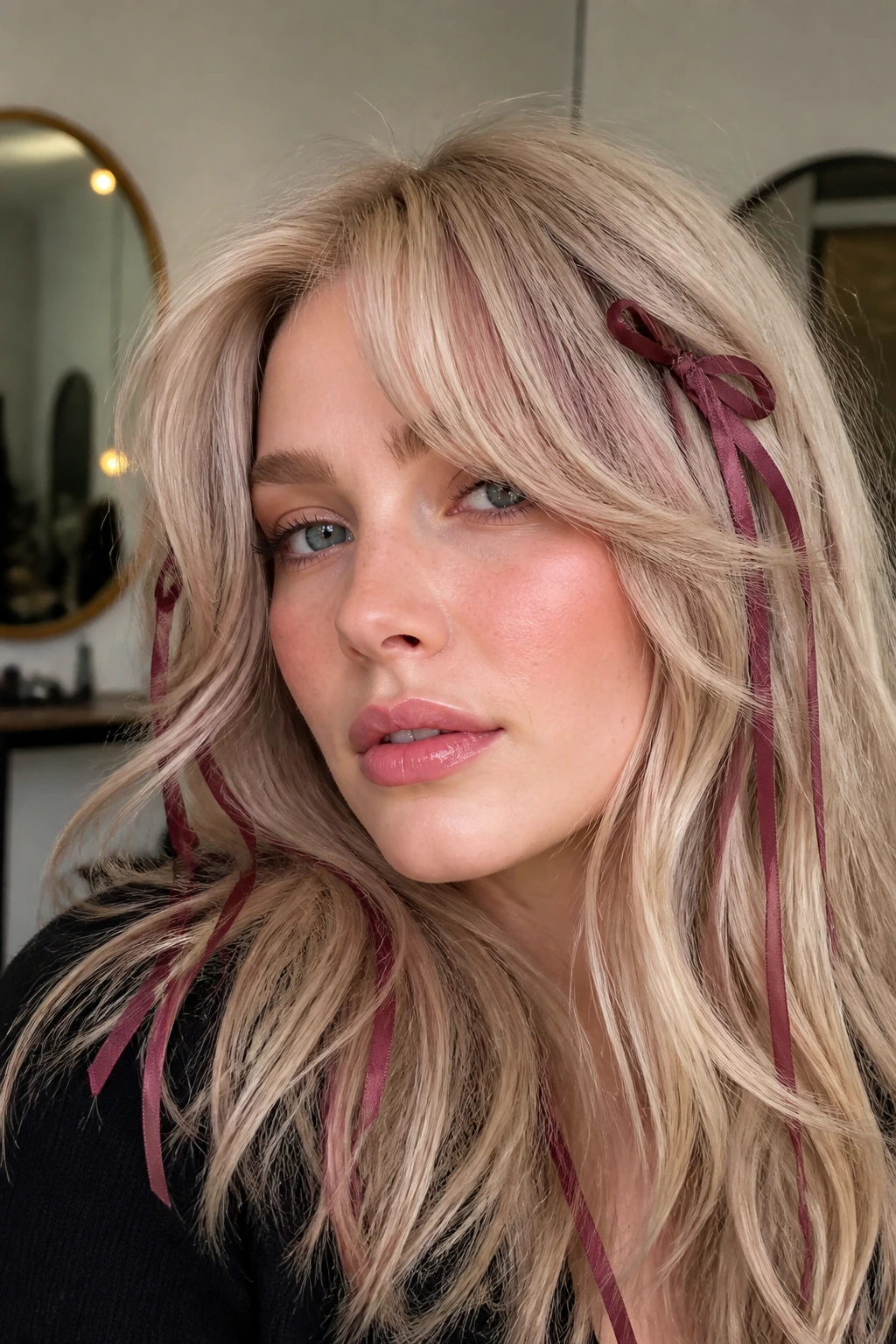
Curtain bangs change the whole conversation because they put color right next to the face. On a cool vanilla blonde base, burgundy ribbons threaded through the bangs and first few layers create a soft, pretty contrast that still has some edge.
How to Wear It
The trick here is restraint. You do not need thick burgundy streaks everywhere. A few ribbon-like pieces through the bangs, a couple more in the front layers, and maybe a hidden slice beneath the top layer is enough. The rest of the blonde can stay pale and even.
This works because curtain bangs move. They separate, they sweep, they fall differently every time you touch them. Burgundy in that area catches the eye fast, especially on cool skin where the pink-red depth feels intentional rather than warm.
- Best for lobs, shags, and layered mid-length hair.
- Ask for a cool vanilla blonde, not buttery blonde.
- Keep the burgundy pieces thin so the bangs stay soft.
- Let the front layers carry most of the color, not the whole head.
It’s a neat way to test burgundy before committing to a bigger pattern.
13. Smoke Blonde Curls With Burgundy Tips
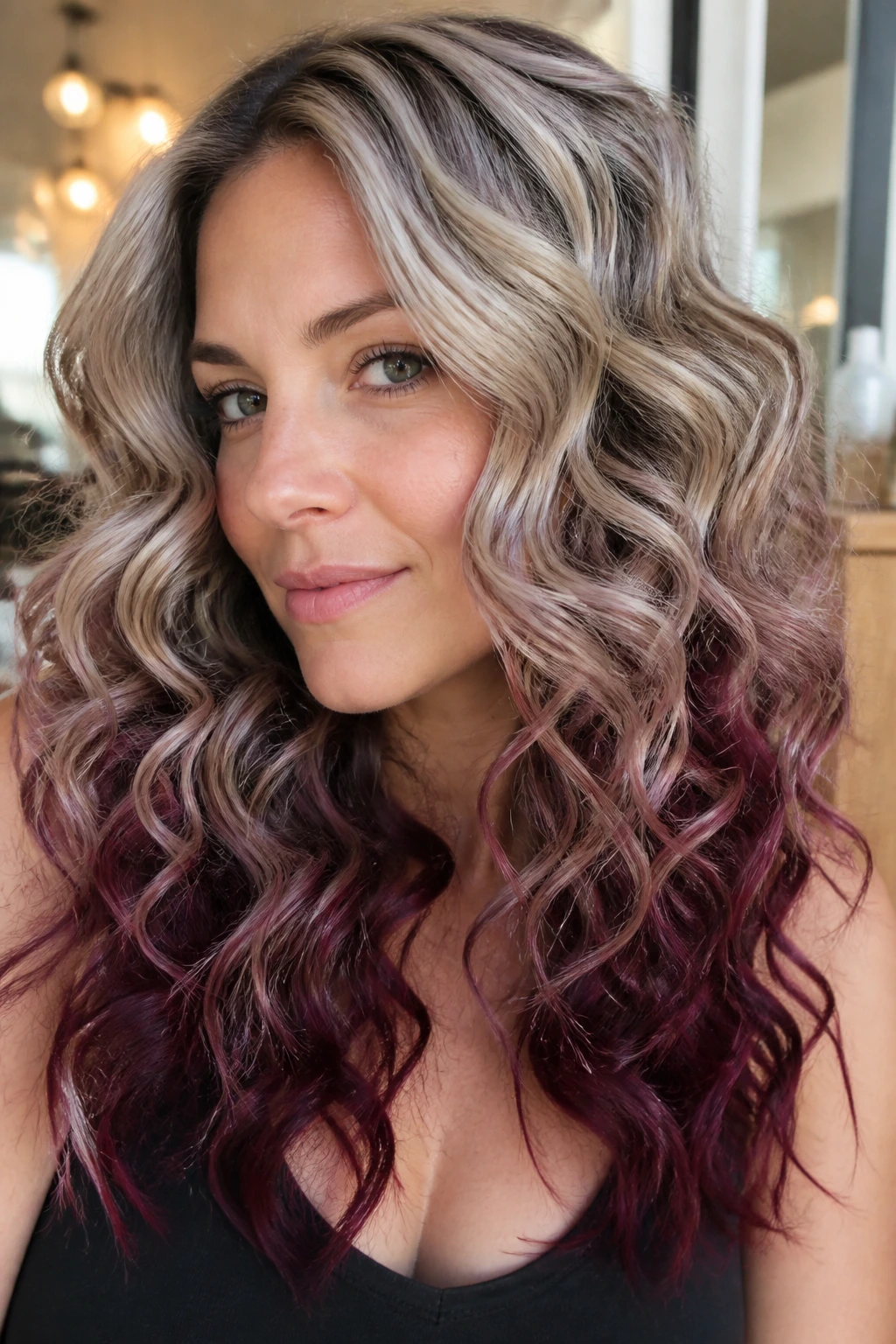
Curly hair changes the whole read. Smoke blonde on top keeps the curl pattern light, and burgundy tips add a little weight and definition at the ends where curls naturally bunch up.
Because curls shrink, the color sits differently than it does on straight hair. Burgundy at the tips can look like a shadow when the hair is dry and expanded, then show more clearly when the curls are stretched or wet. That makes the placement feel lively instead of painted on.
This is especially good if your cool skin needs brightness near the face but you still want a deeper shade through the body of the hair. The smoke blonde gives you lift without brass, and the burgundy tips keep the ends from looking thin.
Use a hydrating mask often. Lightened curls get thirsty, and dry curls make burgundy fade faster at the edges. That’s a boring fact, but a useful one.
14. Pearl Blonde Foilyage With Burgundy Veil
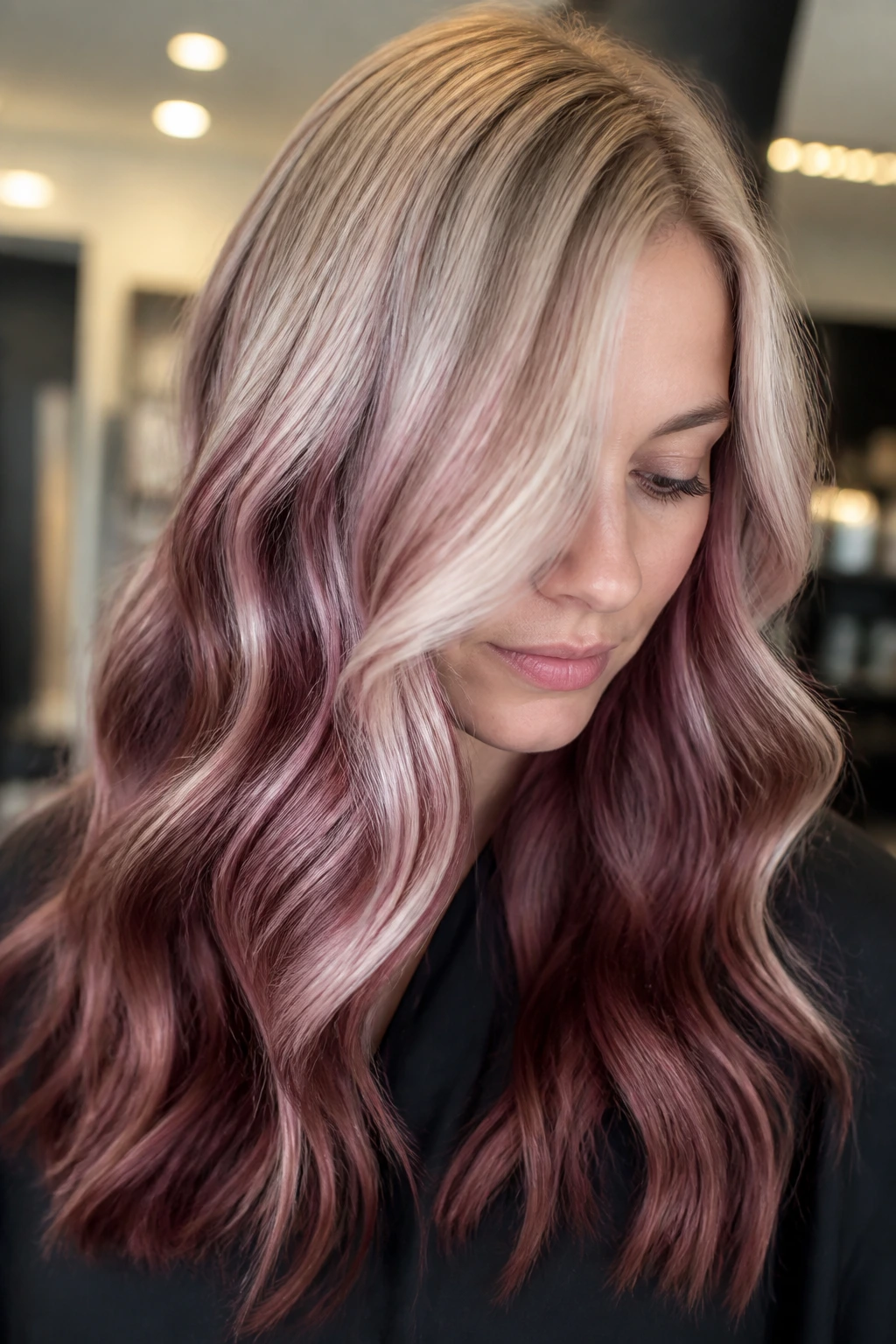
Foilyage gives you brighter blonde pieces than open-air painting alone, so it makes sense when you want a clearer contrast. Put pearl blonde through the lightest sections, then add a burgundy veil over selected mid-lengths and lower layers so the color feels hazy rather than striped.
That veil effect is what makes this look softer than a classic highlight-and-lowlight combo. The burgundy isn’t sitting in loud chunks. It’s more like a tint floating through the blonde, especially when the hair moves.
What Makes It Work
The pearl blonde should stay icy and clean. If it turns yellow, the burgundy loses its sharpness. The veil can be a translucent gloss, a demi-permanent glaze, or a gentle balayage layer depending on how much change you want.
- Great for medium-to-long hair with a lot of movement.
- Keeps cool skin from looking drained.
- Works well if you like loose waves and soft blowouts.
- Ask for lighter pieces around the face and crown, darker burgundy lower down.
This is one of the easier salon options to wear because it doesn’t scream from across the room. It just looks finished.
15. Platinum Pixie With Burgundy Nape
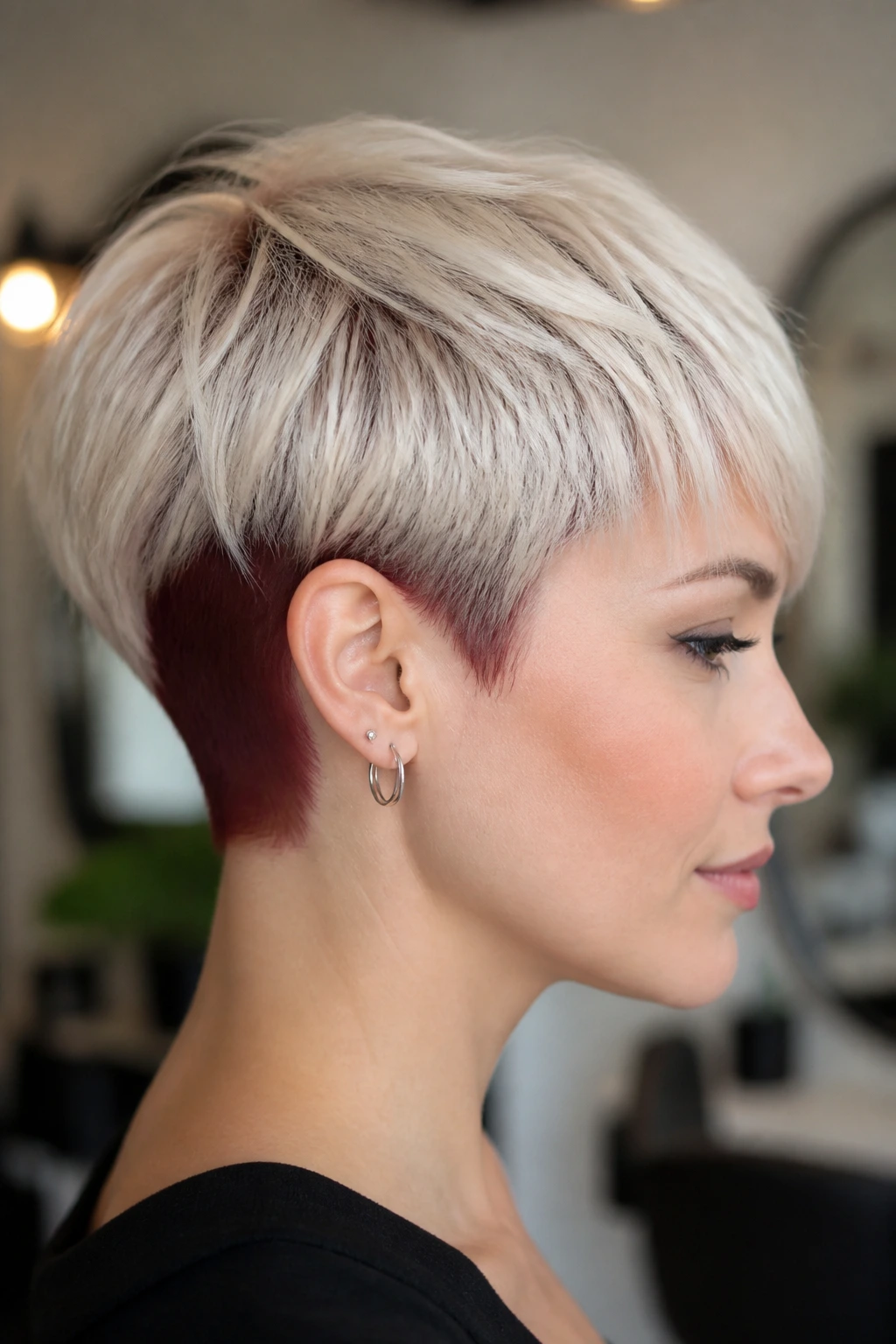
Short, sharp, and a little cheeky. A platinum pixie with burgundy at the nape and behind the ears gives cool skin a crisp frame and keeps the darker color where it can peek out instead of dominate.
There’s not much fluff here, which is the point. The platinum top keeps everything bright, and the burgundy lower section adds surprise when you tuck hair behind your ear or lift it off your neck. On a pixie, that tiny bit of hidden color can matter more than a bigger streak on long hair.
This also happens to be one of the easiest styles to maintain because there’s less hair to process. The color still needs refreshes, of course, but the cut itself keeps the look neat. A little styling paste or cream is enough.
If your cool skin runs very pale, this combo can make your features look more defined. If your face is already sharp, it just amps that up.
16. Ash Blonde Babylights Over a Burgundy Brown Base
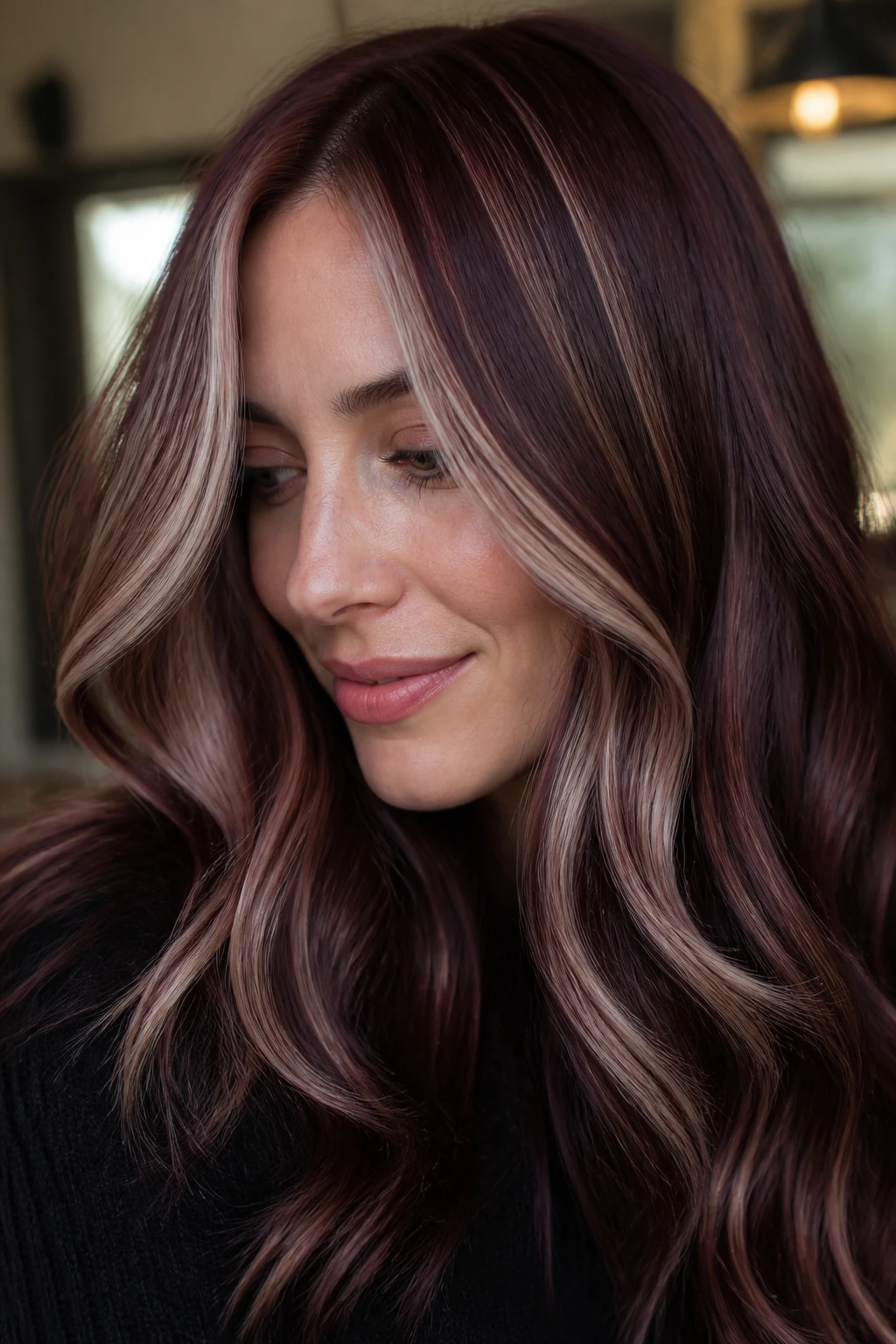
What if you want blonde but don’t want to give up dark richness? This is the answer. A burgundy brown base gives the hair depth, and ash blonde babylights thread through in tiny pieces to keep it from feeling too heavy.
Why Babylights Work Here
Babylights are thin — often about 1/16 to 1/8 inch — so they blend instead of stripe. That matters with burgundy because chunky blonde on a dark red base can look harsh fast. Tiny ash pieces, though, make the whole color look like it has movement in every light.
This is a strong pick if your starting color is brunette or deep burgundy and you want a cooler finish without going all the way platinum. The blonde pieces can sit around the face, crown, and part line, with the darker burgundy brown holding the body of the hair together.
It’s a subtle look, but not a boring one. Subtle is underrated.
17. Cool Sand Blonde With Burgundy Panels
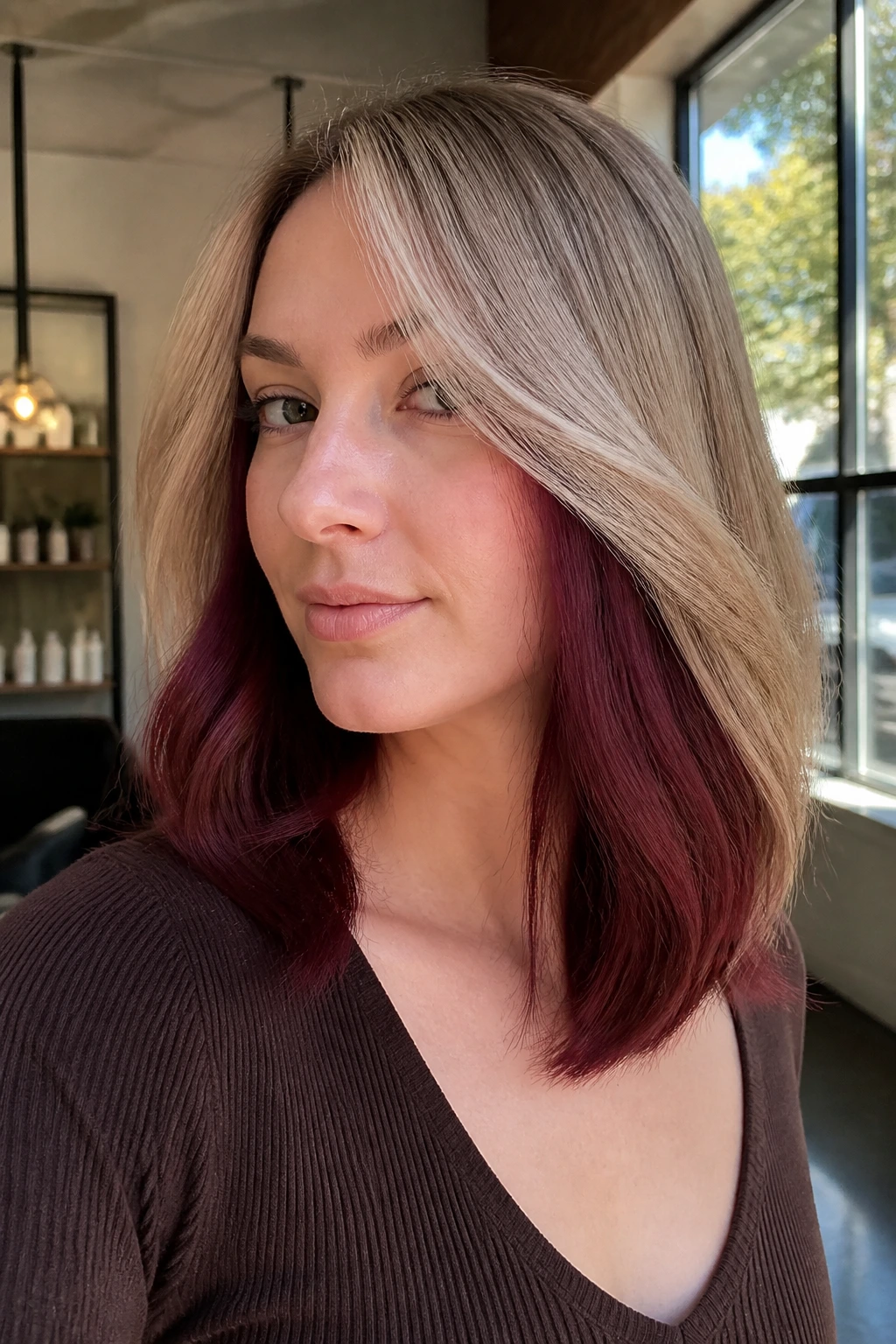
Cool sand blonde sits between beige and ash, so it’s one of the easiest blondes to pair with burgundy. Add thick panels of burgundy, and you get a look that has shape when the hair moves instead of a scattered highlight pattern.
Unlike fine highlights, panels give you a visible color block without turning into a stripey mess. That makes this idea useful on shoulder-length cuts, thick hair, and center parts where the color can fall in a controlled way.
Ask for the burgundy to sit behind the outer blonde layers or beneath the top crown pieces. That keeps the blonde visible while the burgundy creates depth underneath. If you braid the hair, the panels show their pattern in a really nice way.
Cool skin likes the muted quality here. Sand blonde can go too warm in the wrong hands, so keep the toner icy and the burgundy blue-red. That pairing does the heavy lifting.
18. Frosted Long Layers With Burgundy Money Lights
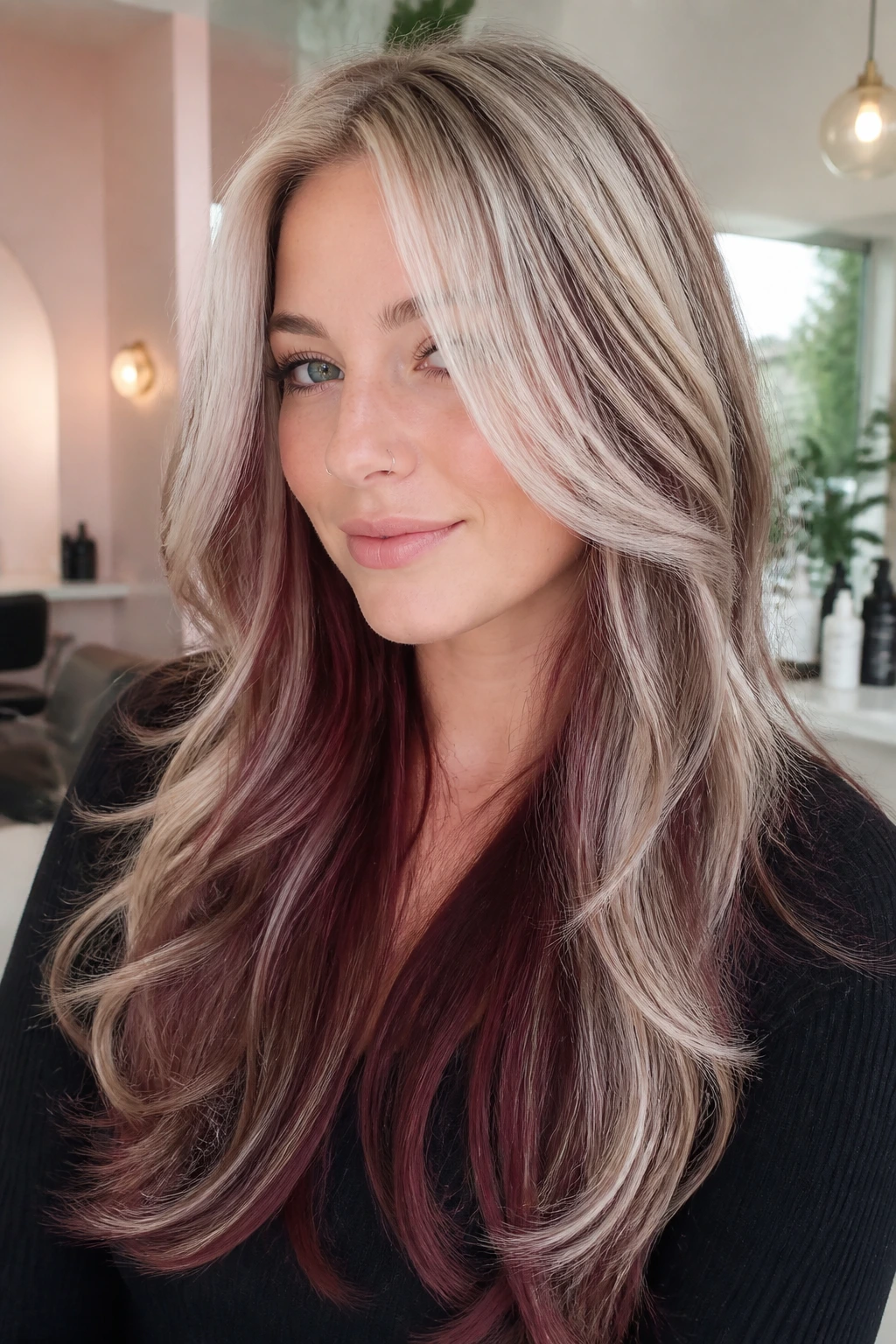
Money lights are the bright front pieces that frame the face, and in this version they sit inside a longer layered cut with burgundy tucked behind them. The result is bright up front, deeper through the body, and much more textured than a flat all-over color.
What Makes It Different
The front pieces stay pale enough to pull the eye upward. The burgundy sits in the inner layers and lower sections, where it adds depth when the hair swings or when you put it half up. Long layers matter here because they give the color somewhere to move.
- Best on thick or medium-thick hair.
- Keep the money lights cool and pale, not buttery.
- Let the burgundy run deeper in the hidden layers.
- Style with soft bends so the contrast shows through.
This is one of those colors that looks better when the cut is good. If the layers are clunky, the color will show it. If the layers are clean, the whole thing feels airy.
19. Silver-Gray Blonde With Oxblood Ends
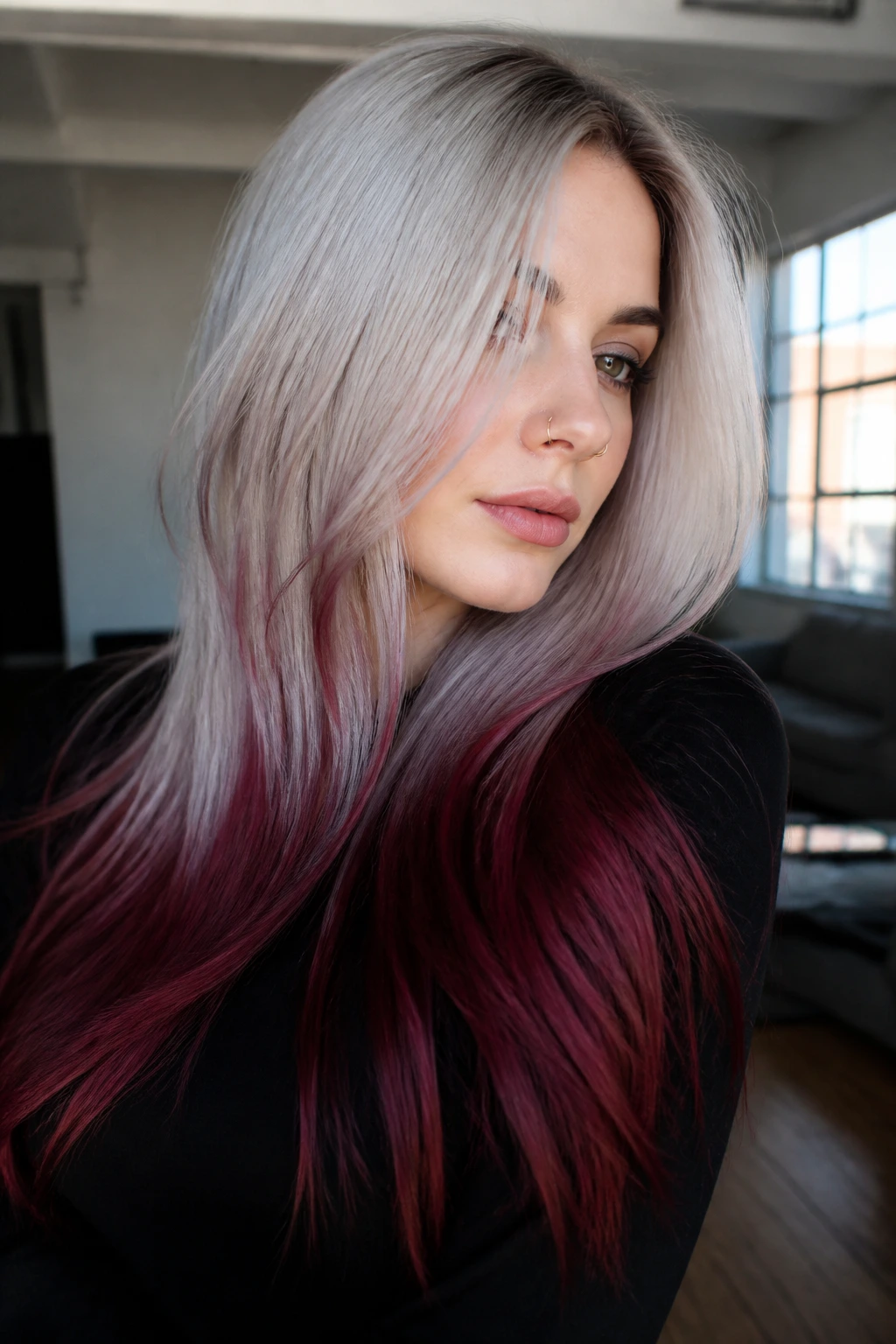
Oxblood is deeper than wine and moodier than merlot. Put it on the ends of a silver-gray blonde base, and you get a cool-toned mix that feels sharp without being loud.
This one leans dramatic in a very clean way. The silver-gray blonde keeps the top half pale and crisp, while the oxblood ends sink into a darker, richer finish. Cool skin tends to like that kind of contrast because nothing in the palette fights the undertone.
It works best on sleek hair, blunt ends, or long layers that stay controlled. If the hair is too heavily textured, the color can blur into a more general dark-red blonde, which is fine if that’s what you want. But the real payoff is in the contrast.
A gloss helps here. Oxblood can fade toward muted plum or soft brown-red, and that’s not bad, but if you want the depth to stay obvious, refresh it before the ends start looking dusty.
20. Iced Beige Blonde With Burgundy Dip Dye
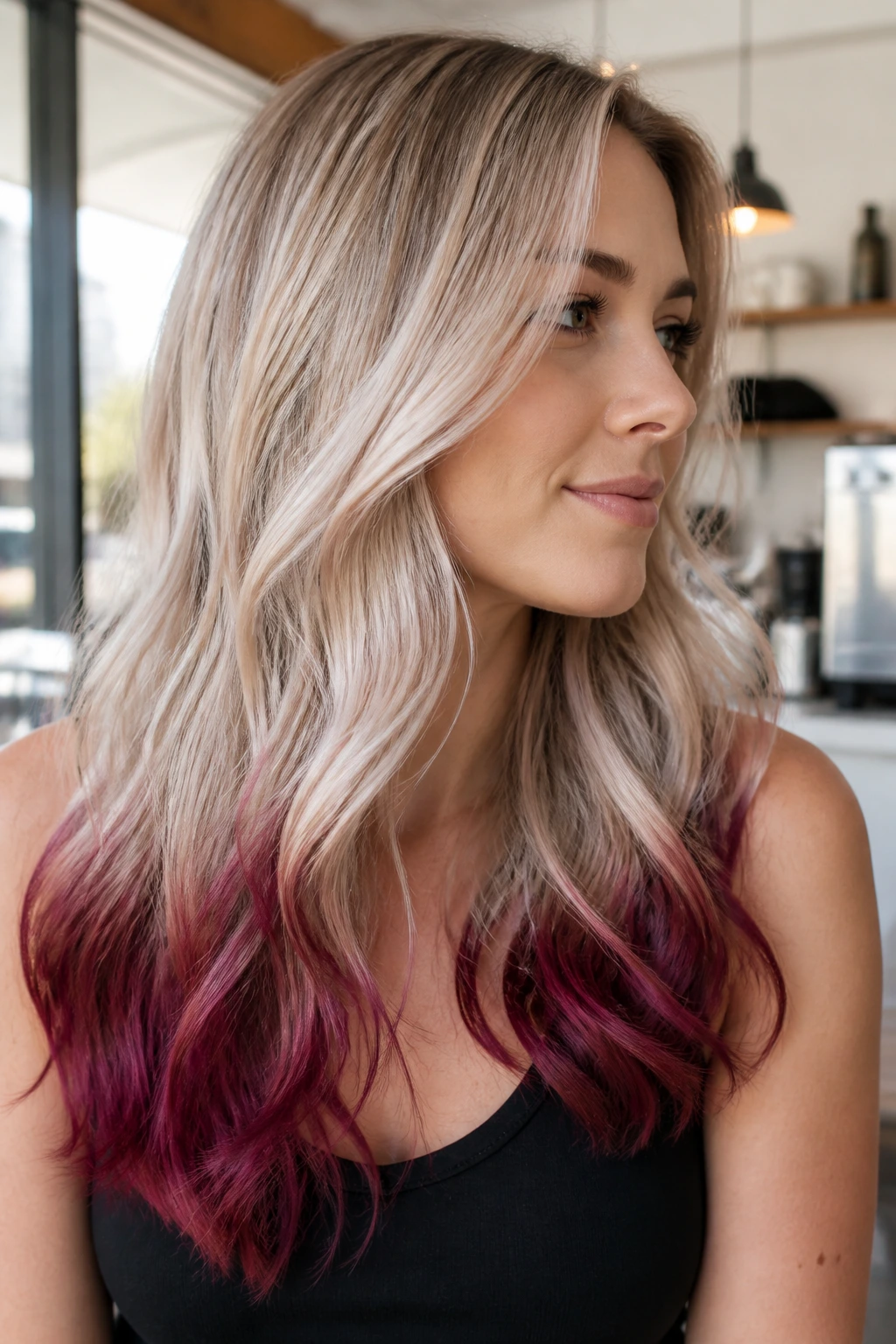
Dip dye is honest. You can see exactly where the lighter shade stops and the darker shade begins, and that clarity makes the style easy to wear. On a cool beige blonde base, burgundy dip-dyed ends give you a strong finish without needing full-head color.
Best If You Want Low Commitment
This is the one for someone who wants burgundy but also wants to clip the hair up on busy days and forget about it. The lighter top stays bright and cool, while the burgundy gathers at the bottom 3 to 6 inches. That means the grow-out stays manageable.
- Great on wavy hair, braids, and layered cuts.
- Keep the transition soft if your hair is fine.
- Ask for a cool beige toner, not honey beige.
- Works well if you like to wear the hair loose most of the time.
One nice thing about dip dye is that it can be cut off later if you get bored. Not everything needs to be permanent in spirit.
21. Blush-Pearl Blonde With Blackberry Burgundy
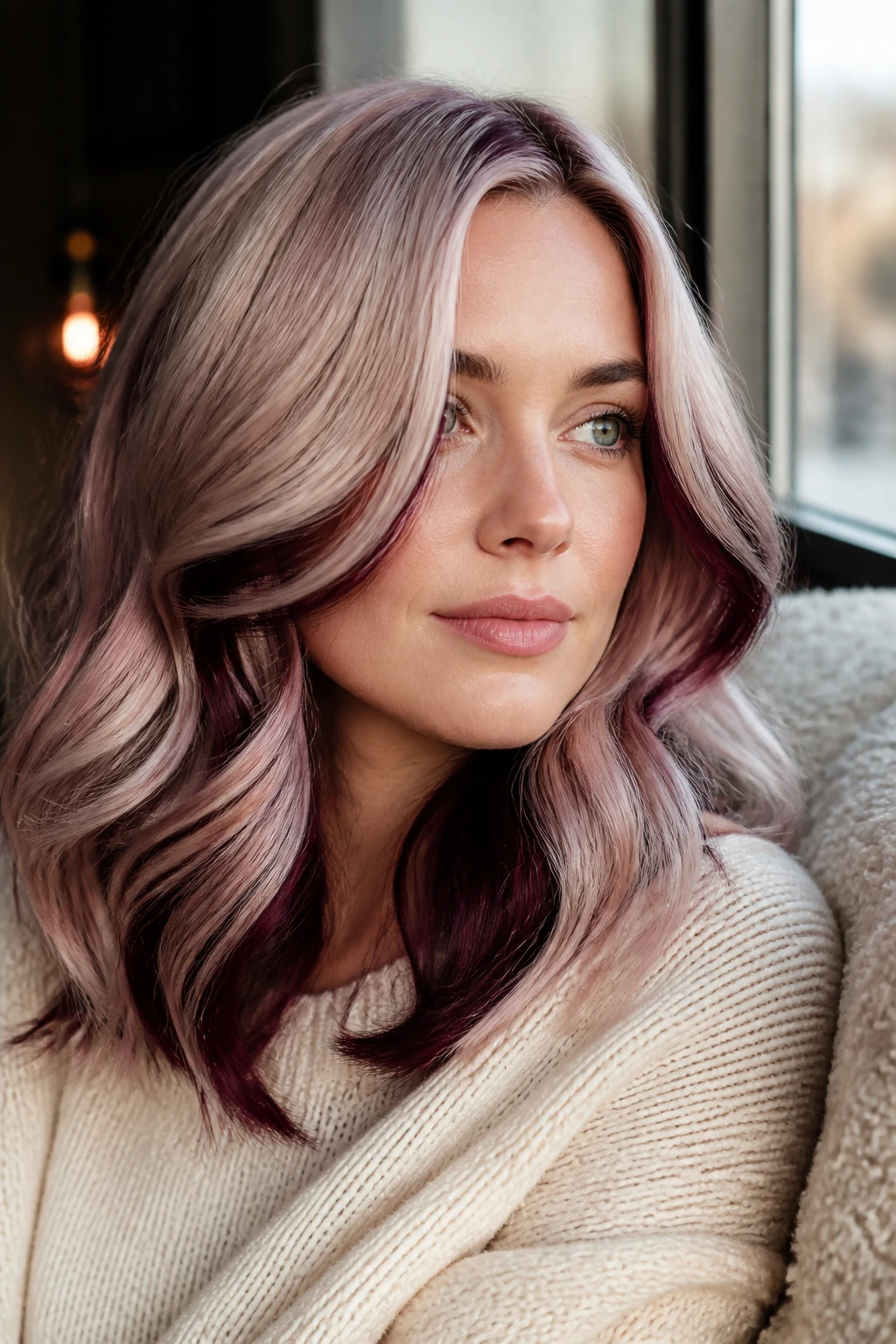
This version has a softer face than some of the bolder looks above it. Blush-pearl blonde gives the hair a pale, cool warmth — not orange, not gold, just a muted pink-beige shimmer — while blackberry burgundy adds a deep, cool contrast that feels smoother than cherry.
It’s a good choice if you want the hair to look expensive and a little romantic instead of edgy. The blackberry tone is darker and cooler than classic burgundy, which helps on pale cool skin that can get washed out by brighter reds. The pearl base keeps the light bouncing.
It has softness, not sweetness.
That’s the difference. Wear it with loose curls or a shoulder-length cut, and the color sits like fabric. Wear it straight, and the contrast becomes a touch sharper. Either way, the burgundy should stay rich and deep rather than bright.
22. Soft Smoke Blonde Melt With Burgundy and Platinum
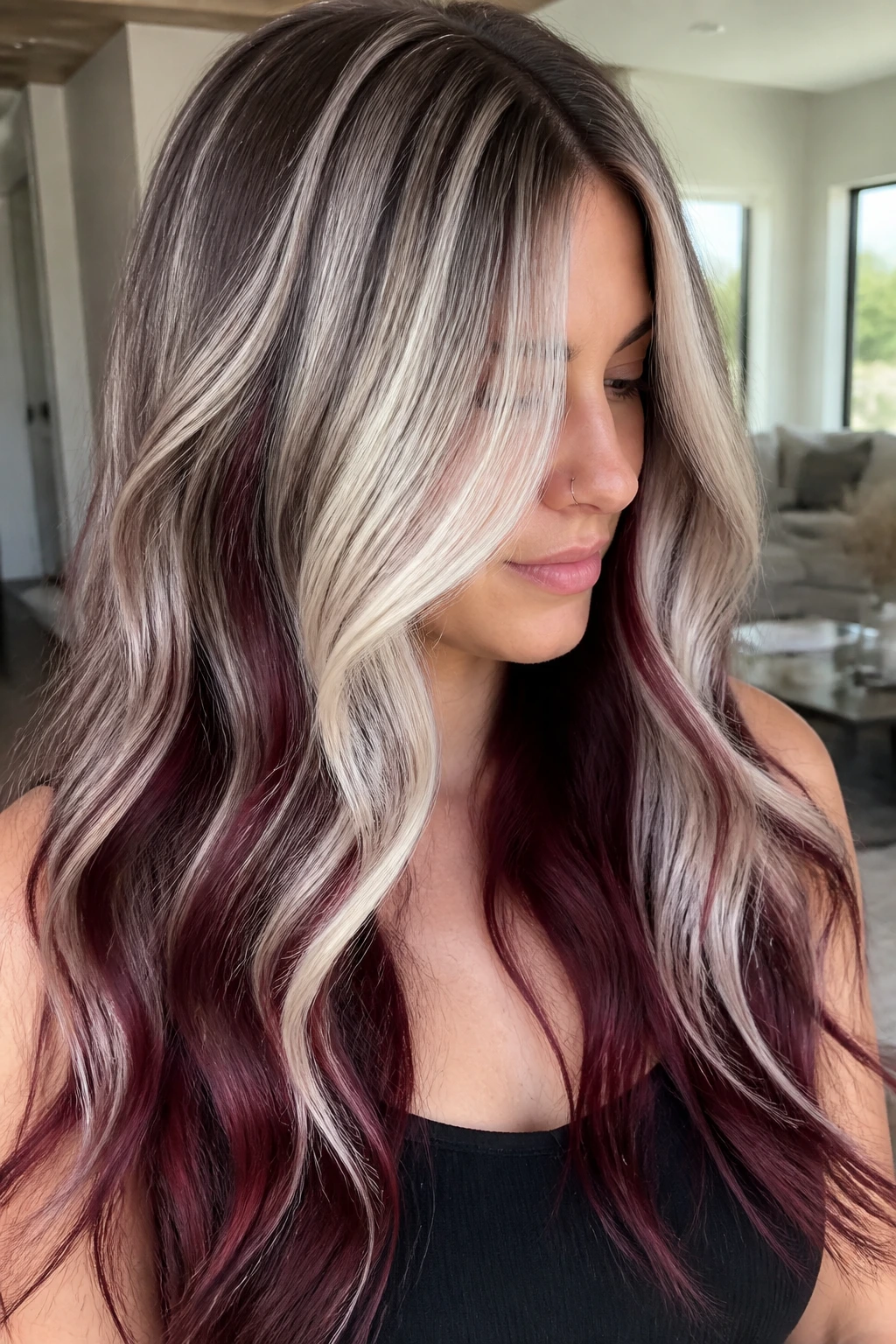
Some color ideas try to do one thing. This one borrows a little from several and ends up feeling balanced. A soft smoke blonde melt uses a cool root, pale platinum ribbons, and burgundy through the mid-lengths and ends so the eye moves through the hair instead of stopping at one spot.
That motion matters. The platinum keeps the look bright, the burgundy gives it depth, and the smoke blonde bridges the two so nothing feels pasted on. On cool skin, this mix can be especially flattering because the whole palette stays in the cool lane. No brass. No orange-red drift. No weird warm halo around the face.
It works well on layered cuts, long bobs, and longer hair with some wave. Ask for the burgundy to stay blue-based and for the blonde to finish at a pearly, ashy level. If you want the most wearable version of blonde and burgundy together, this is probably the one I’d point to first.
And that’s the real pattern here: the best looks don’t force blonde and burgundy to fight each other. They give each color a job, then let the undertones do the rest.
