



Honey hair color can be gorgeous on cool skin tones — if the warmth is controlled instead of blasted across the head like liquid amber.
That is the part most people miss. Cool undertones usually come with pink, rosy, or blue notes in the skin, and a harsh yellow-gold blonde can sit on top of that in a way that feels loud, not flattering. The trick is not avoiding honey altogether. It’s choosing versions of honey that lean beige, pearl, smoky, or softly neutral so the color gives shine without turning brassy.
I like this category because it sits in that sweet spot between blonde hair colors and light brunette shades. A good honey tone can brighten the face, soften strong features, and add movement to the hair without stripping away depth. A bad one can go too orange, too yellow, too stripey. That happens more often than people think, especially when the color is lifted and then left uncool at the toner stage.
The 22 honey hair color ideas below are built for cool skin tones that want warmth with a little restraint. Some are subtle. Some are bolder. A few are almost sneaky, which is often the smartest move anyway. Tiny shift. Big payoff.
1. Beige Honey Balayage with a Soft Root Shadow
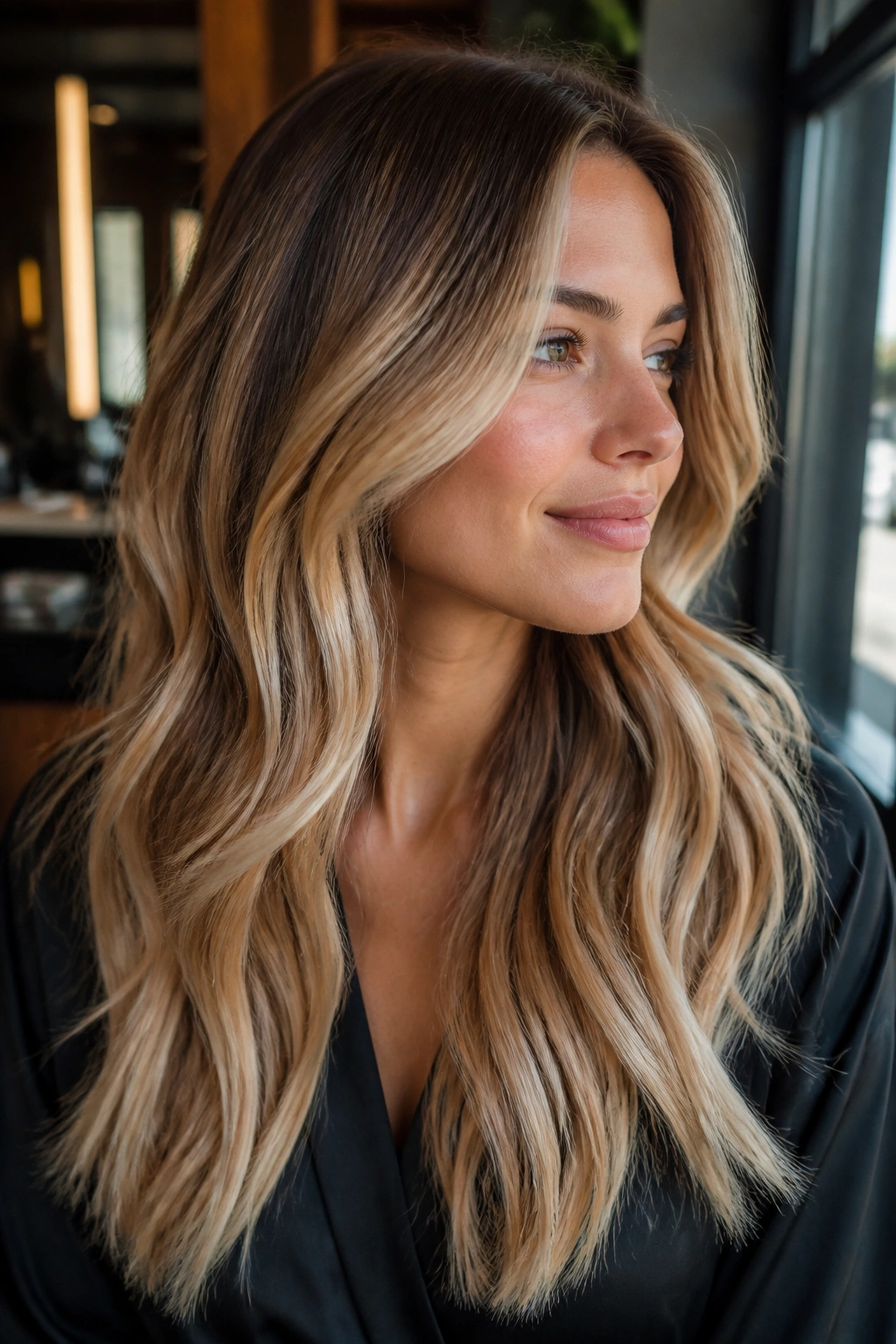
This is the safest place to start if you want honey hair color ideas for cool skin tones without flirting with brass. The beige honey pieces keep the warmth soft, while the root shadow gives the whole look a cooler, deeper base that feels grounded.
Why It Flatters Cool Undertones
A root shadow that sits one shade deeper than your natural base keeps the honey from floating too high and looking yellow. The balayage pieces should be painted in long, soft ribbons, not chunky stripes, so the color moves through the hair instead of sitting on top of it.
Ask for beige honey, not copper honey. That difference matters. Beige keeps the gold in check and gives the face a smoother frame.
- Best on medium blonde to light brown bases
- Works well with loose waves and layered cuts
- Needs a beige or neutral gloss every 6 to 8 weeks
- Keep the lightest pieces around the cheekbones and ends
Best tip: If your skin tends to flush pink in daylight, ask the colorist to leave the root shadow slightly cooler than the midlengths. It makes the whole color feel calmer.
2. Honey Babylights on a Cool Blonde Base
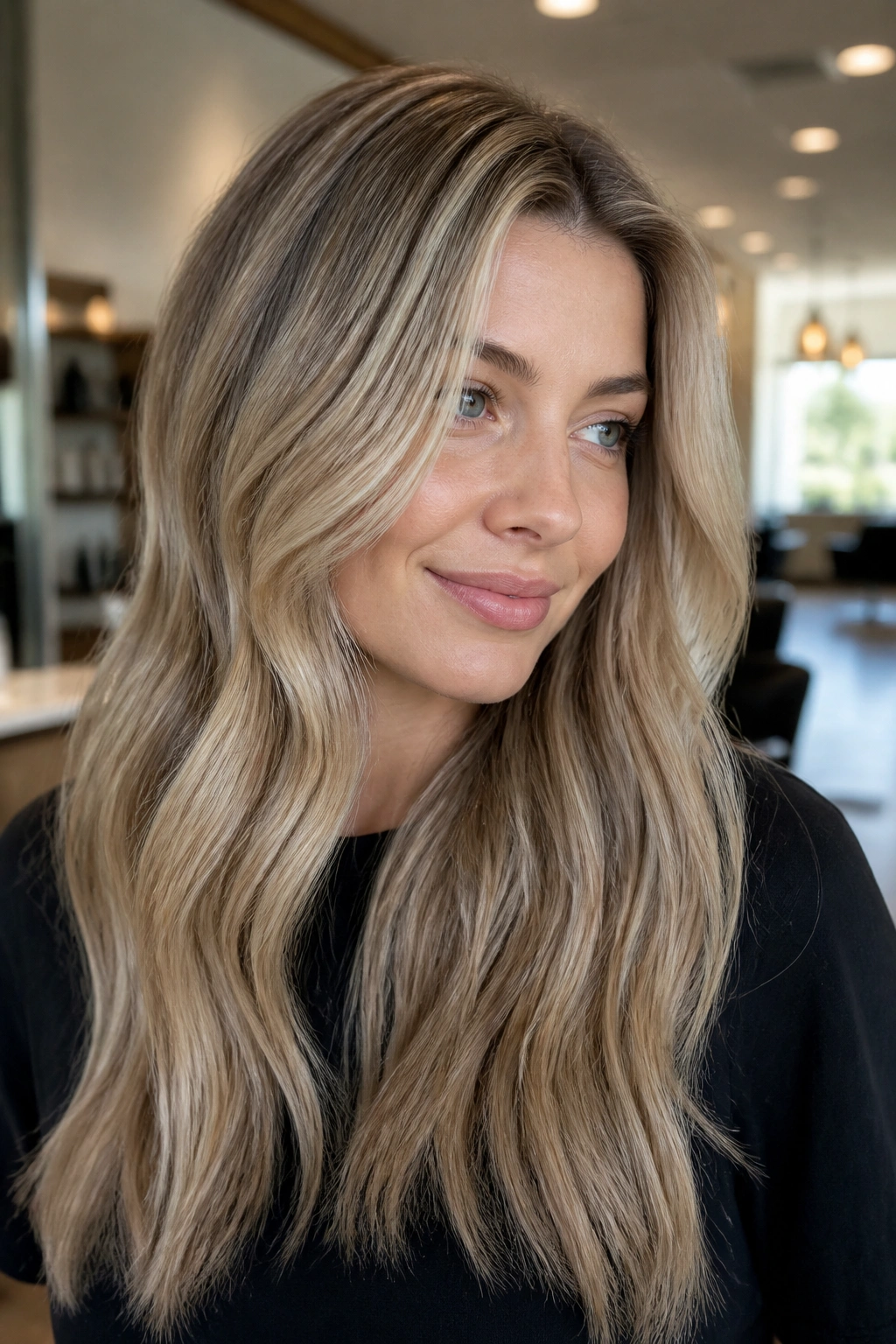
Tiny babylights can do more than bigger highlights ever will. That’s the whole point here. A cool blonde base with ultra-fine honey threads gives you warmth that reads as sheen, not streaks.
The effect is especially good if your hair is already light and you do not want a full color overhaul. Babylights spread the honey across the head in thin, delicate lines, so the warmth never gets a chance to turn heavy. It’s a soft-focus look. Gentle, but not boring.
On cool skin tones, this works because the blonde underneath stays pale enough to hold the contrast. You get brightness near the scalp, a little gold through the mids, and enough coolness in the base to keep the finish from leaning orange. Less stripe. More shimmer.
It also grows out nicely. The regrowth line stays blurred, which means you can go longer between touch-ups without the color looking tired.
3. Champagne Honey Blonde with Pearl Ends
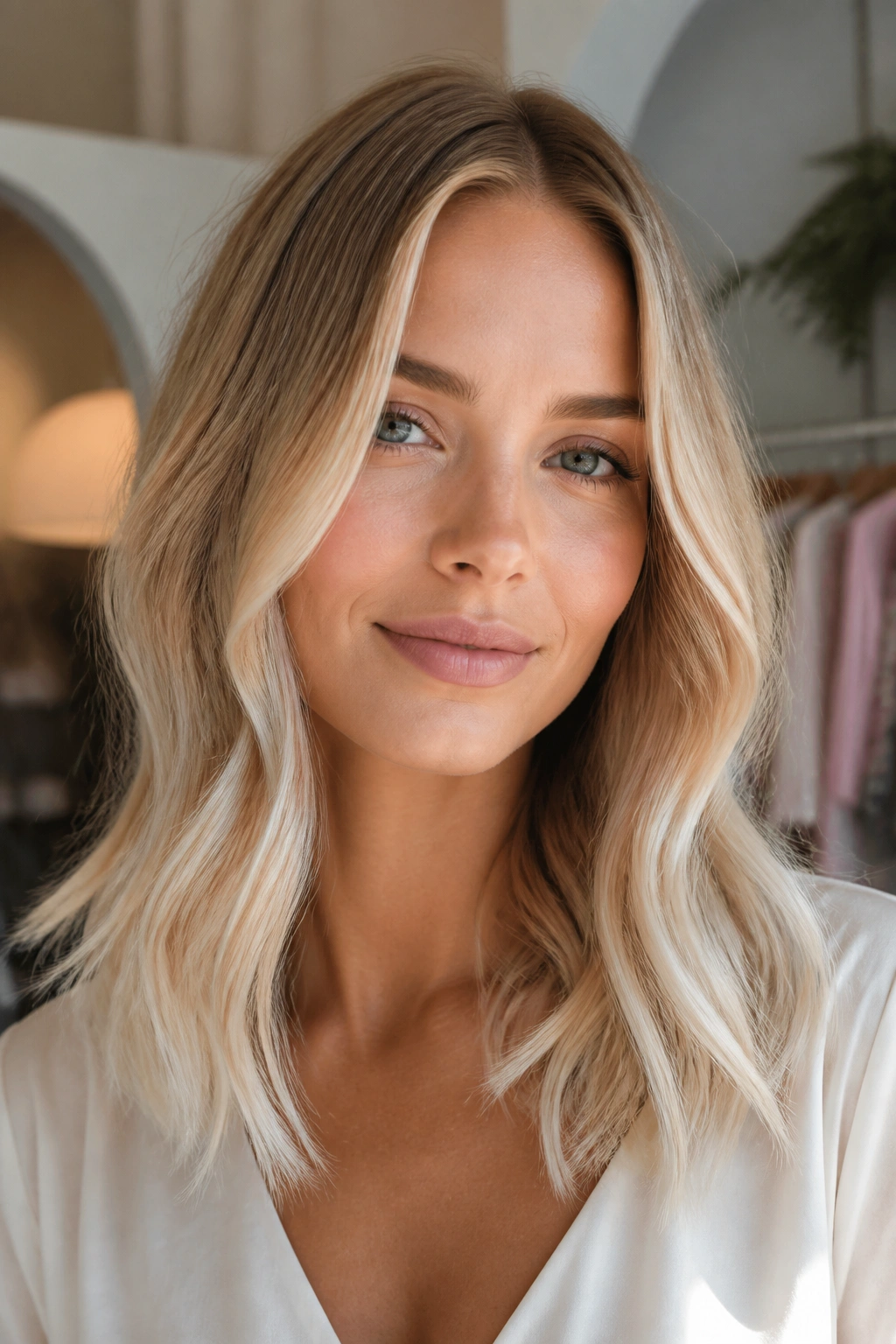
Can honey look cool? Absolutely. It just needs a little pearl in the mix.
This version starts with champagne honey through the midlengths and gets lighter, softer, and more reflective at the ends. The ends should not be flat platinum. They should look pearly — pale enough to brighten the face, warm enough to keep the color from turning icy and harsh. That balance is what makes it work on cool skin tones.
How to Ask for It
Tell your colorist you want a champagne blonde with honey warmth, then ask for a pearl-toned gloss on the lightest ends. That usually keeps the gold from going too bright.
- Root area: soft beige or neutral blonde
- Midlengths: champagne honey
- Ends: pearl-beige gloss
- Finish: loose bends or polished waves
This color loves movement. Straight hair shows the contrast cleanly, but waves make the pearl and honey shift in a prettier way. It’s one of those shades that looks expensive without trying to look expensive. Which is probably why people keep saving photos of it.
4. Honey Ribbon Highlights on Wavy Layers
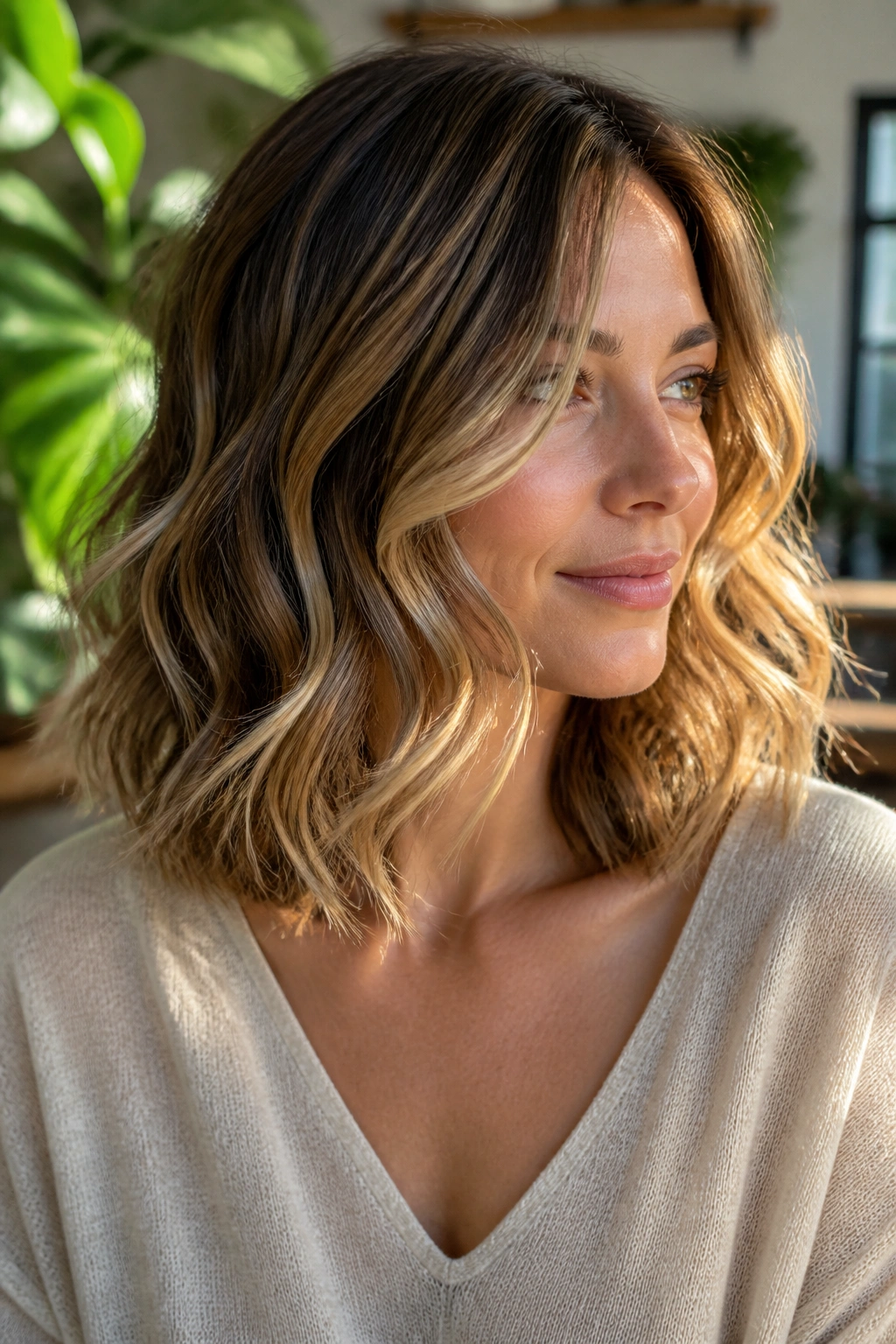
Picture shoulder-length waves with narrow ribbons of honey running through the midlengths. Not thick highlights. Ribbons. That detail changes everything.
This is a smart choice if you want warmth that shows when the hair moves. Wavy layers help the honey catch on the bends, so the color feels dimensional instead of painted on. On cool skin tones, the trick is to keep the ribbons narrow and the base fairly neutral. You want shine, not a yellow halo.
A good colorist will place more light around the face, crown, and the top layer where the wave pattern opens up. The lower layers can stay deeper. That contrast gives the hair shape even when it’s worn down and simple.
- Best on layered cuts with natural movement
- Keep ribbons fine near the hairline
- Ask for beige honey, not strong gold
- Blow-dry with a round brush or use a large-barrel iron to show the streaks
The whole point is motion. Without it, this look can feel flat. With it, the hair almost flickers.
5. Smoky Honey Bronde
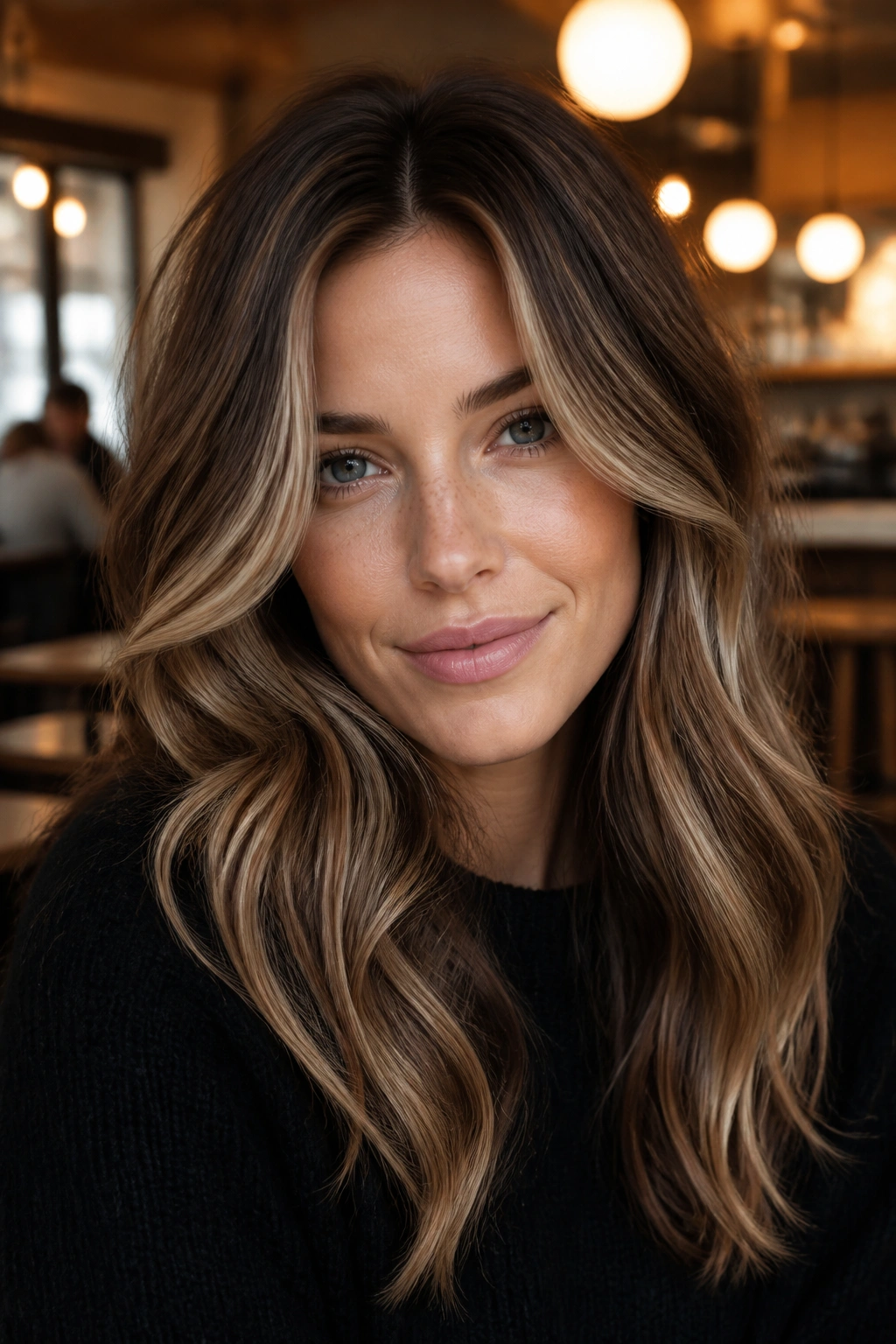
People talk about caramel bronde all the time, and honestly, that version can be a little too warm for cool skin. Smoky honey bronde is the better answer.
The base stays brown enough to ground the look, while the lighter pieces are toned with a smoky beige finish that keeps the honey from turning orange. It’s a really useful shade for brunettes who want brightness but do not want to look like they spent the afternoon in a tanning bed. Harsh? Maybe. Accurate? Also yes.
What makes this shade work is restraint. The lighter pieces should be woven through the front, crown, and midlengths, then softened with a cooler glaze. The result is rich, lived-in, and a little glossy. Not flat. Never flat.
This is one of the easiest color ideas to keep flattering as it grows out, since the brown base stays visible. If you’re nervous about honey, start here. It’s forgiving.
6. Honey Money Piece with an Ashy Base
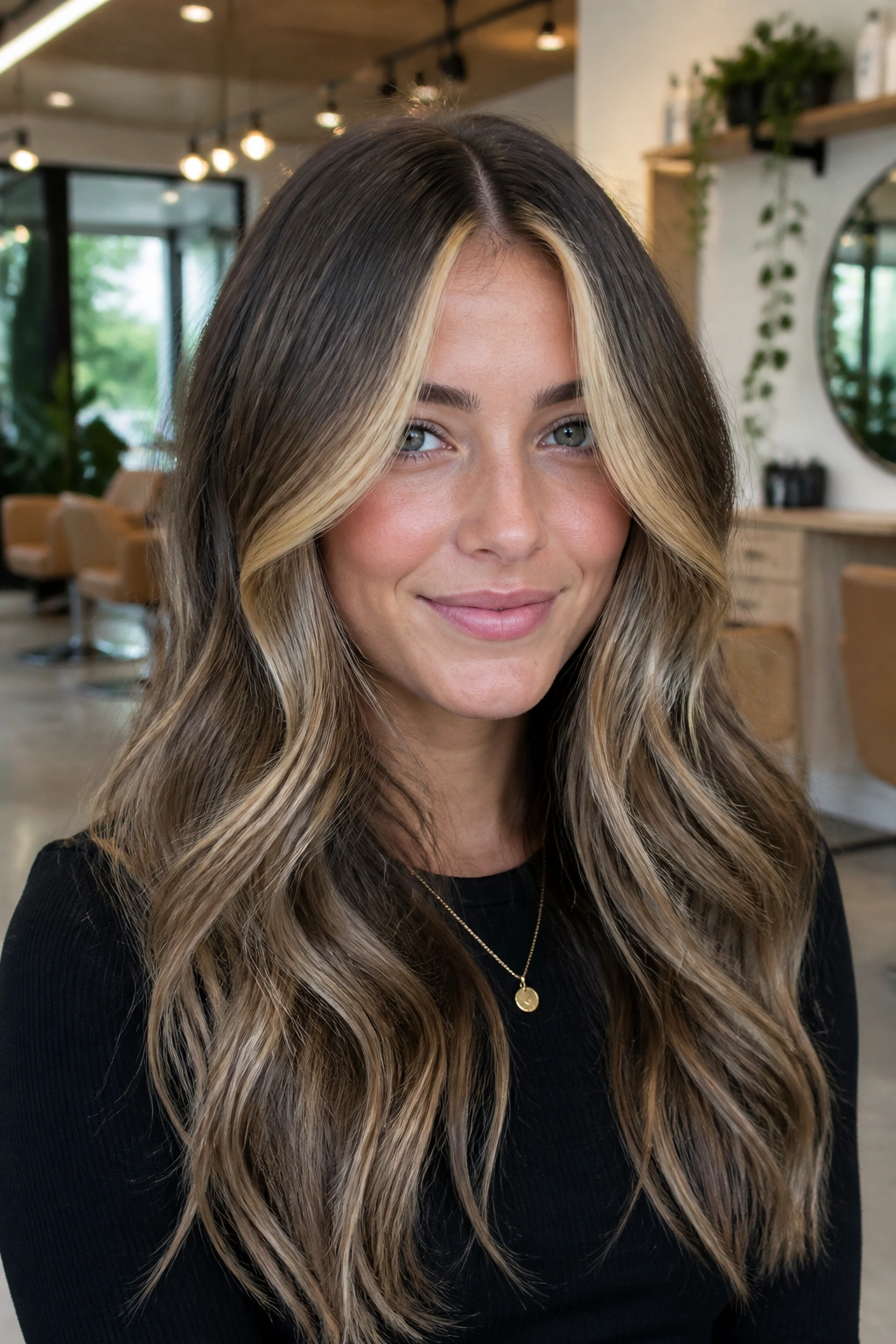
A strong face frame can wake up the whole face in one shot. That’s the draw here.
The money piece should sit a little brighter than the rest of the hair — honey blonde, yes, but with a cool edge from the ashy base around it. That contrast keeps the front sections from looking too yellow against cool skin. It also makes the eyes pop faster than an all-over honey shade usually does.
I like this idea for people who want a visible change without changing the whole head. Two or four lighter foils around the hairline can do a lot of work. The rest of the hair can stay deeper and cooler, which helps the bright front pieces feel intentional instead of random.
This looks especially good with curtain bangs or face-framing layers. The bright pieces follow the line of the cut, so the color and shape support each other. Simple. Smart. Not overdone.
7. Buttered Honey Highlights on a Dark Blonde Lob
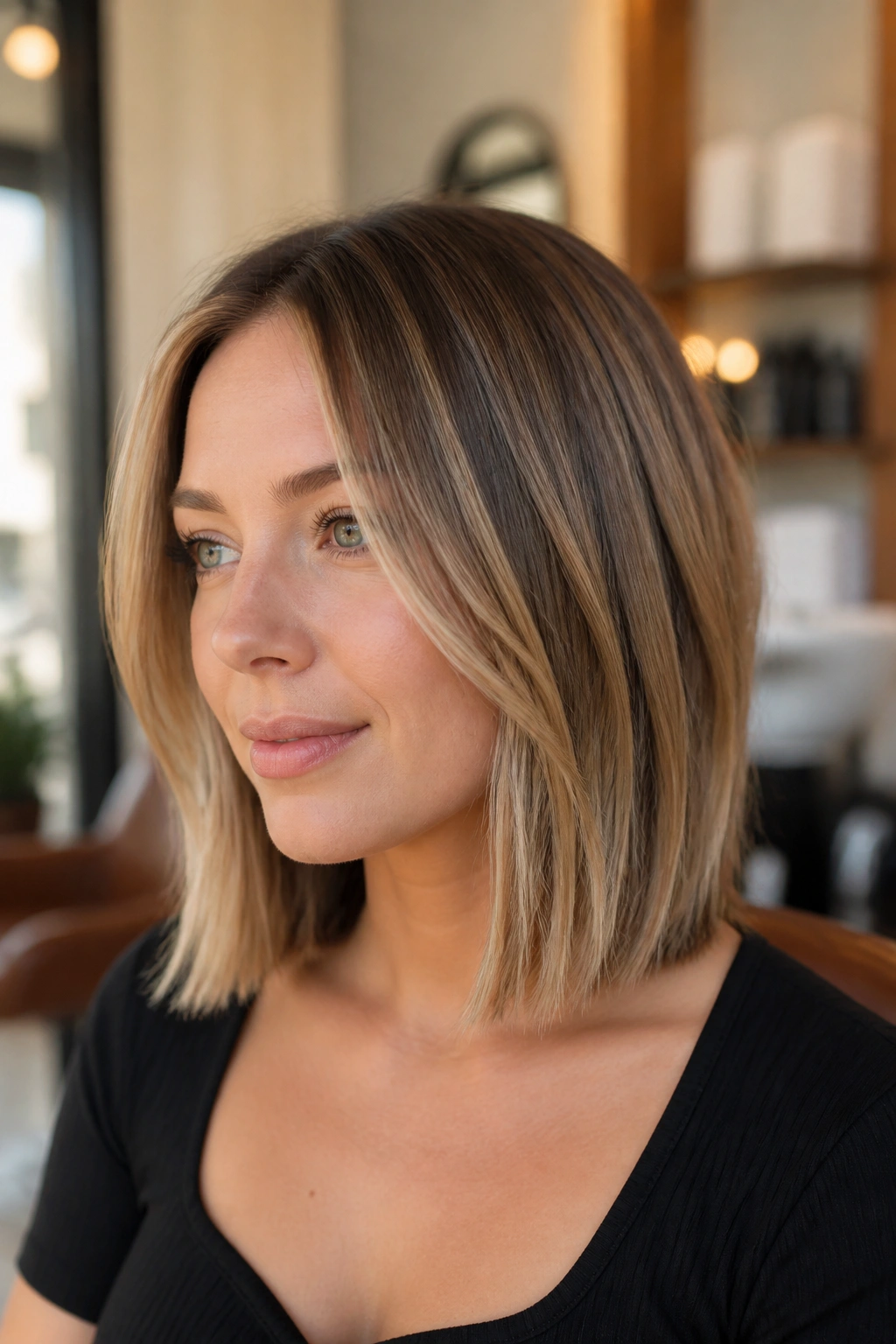
Buttered honey can sound too warm on paper, and that is exactly why this version needs a dark blonde lob to hold it together.
The length matters. A lob gives the warm highlights enough surface area to spread out, so the tone doesn’t bunch up and look heavy near the face. The base should stay a little muted — dark blonde, beige brown, or a neutral light brown — while the highlights run a shade or two lighter in a soft butter-honey direction.
What Makes It Different
Unlike bright gold highlights, these pieces should read creamy. Think soft shine rather than yellow shine.
A blunt-ish lob makes the color feel cleaner. Layered ends can work too, but the shape should be controlled or the honey can get a little noisy. That’s the honest version. This is not the place for five different blondes fighting each other.
Wear it with a smooth blowout when you want polish. Tossed waves work too, but keep the bends loose so the butter tone doesn’t clump.
8. Honey Gloss Over Sandy Blonde
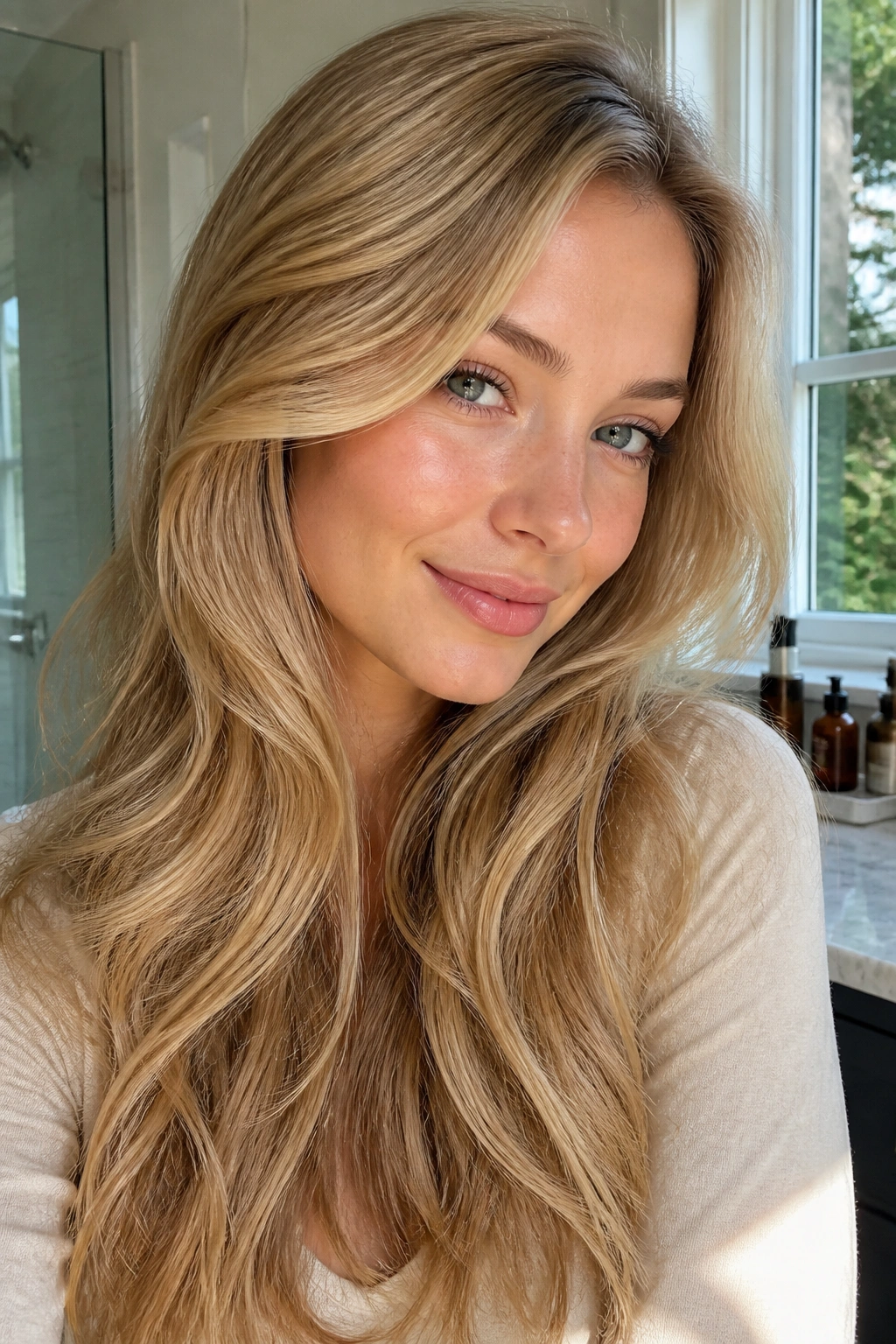
If your hair is already light, a gloss can be the smartest move in the room.
A sandy blonde base has enough beige in it to welcome honey without needing a heavy lift. A demi-permanent honey gloss adds warmth and shine in one pass, which is useful when you want the color to feel fresh but not dramatic. Cool skin tones often handle this well because the sandy base prevents the honey from going full yellow.
The real beauty here is softness. A gloss does not make the hair look painted. It makes it look healthier, and that matters if your hair has been lightened before and needs a little mercy. The tone usually fades gradually over 4 to 6 weeks, so it never leaves a harsh line.
You can ask for a beige-honey glaze, then keep the finish airy with a side part or loose texture. It’s an easy, low-commitment way to test honey without signing up for a full color shift.
9. Mushroom Blonde Honey Melt
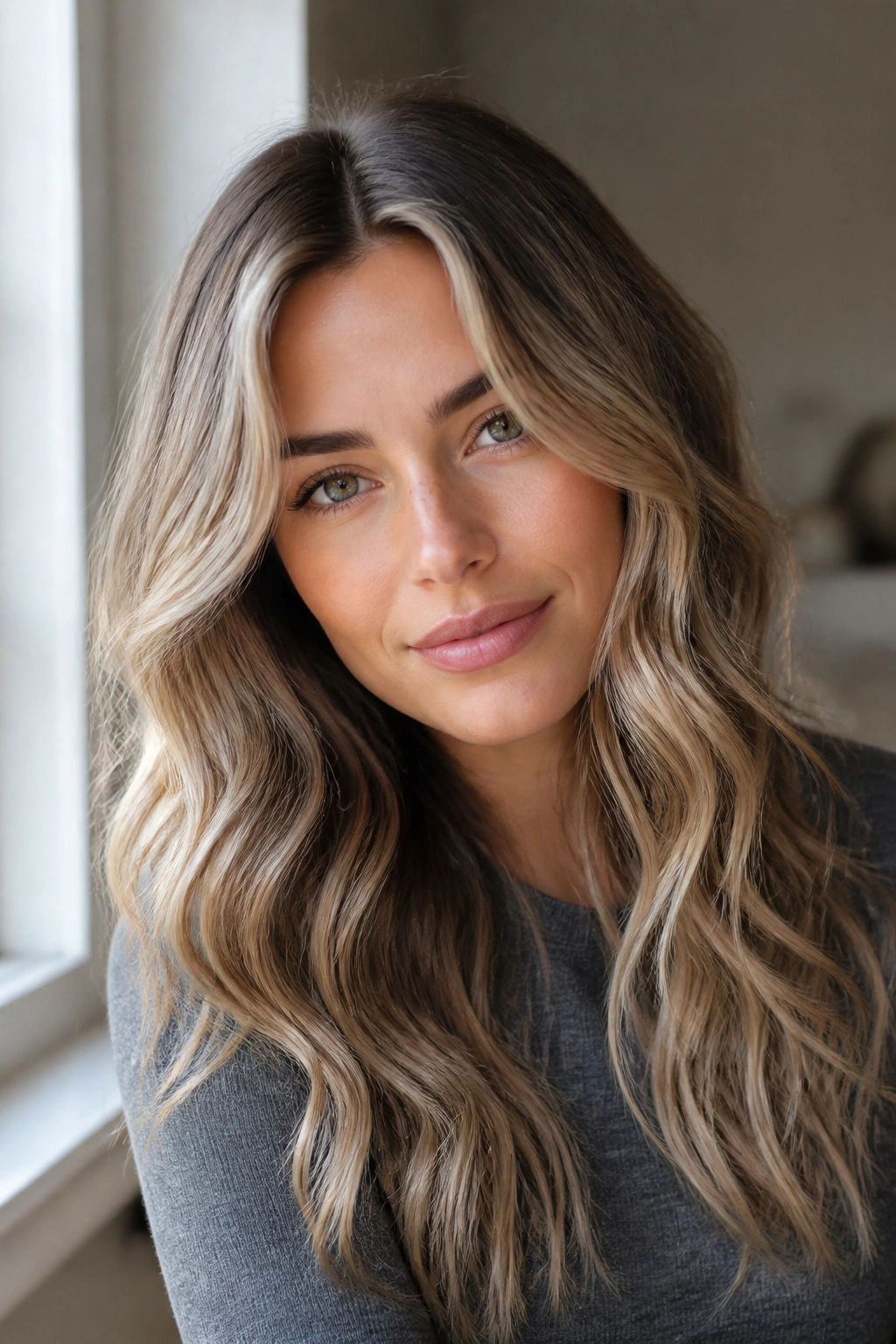
A cool root fading into honey lengths can be stunning when the top stays smoky enough.
Mushroom blonde at the root gives this look its balance. That cooler beige-brown base prevents the honey from taking over, while the melt through the mids and ends adds warmth and light. The transition should be slow, not abrupt. No stripe at the root. No hard line at the ears. Just a soft fade.
This works well on medium-length hair where you can see the transition happen. The color looks especially good when the lightest pieces sit around the front and the ends. That keeps the face bright while the root stays quiet.
- Ask for a root tap that is cool beige or mushroom brown
- Blend into honey-beige midlengths
- Leave the ends a touch lighter
- Style with soft bends, not tight curls
The best part is the grow-out. It stays pretty even as it fades, which is rare enough to be worth appreciating.
10. Vanilla Honey Foilayage on Shoulder-Length Cuts
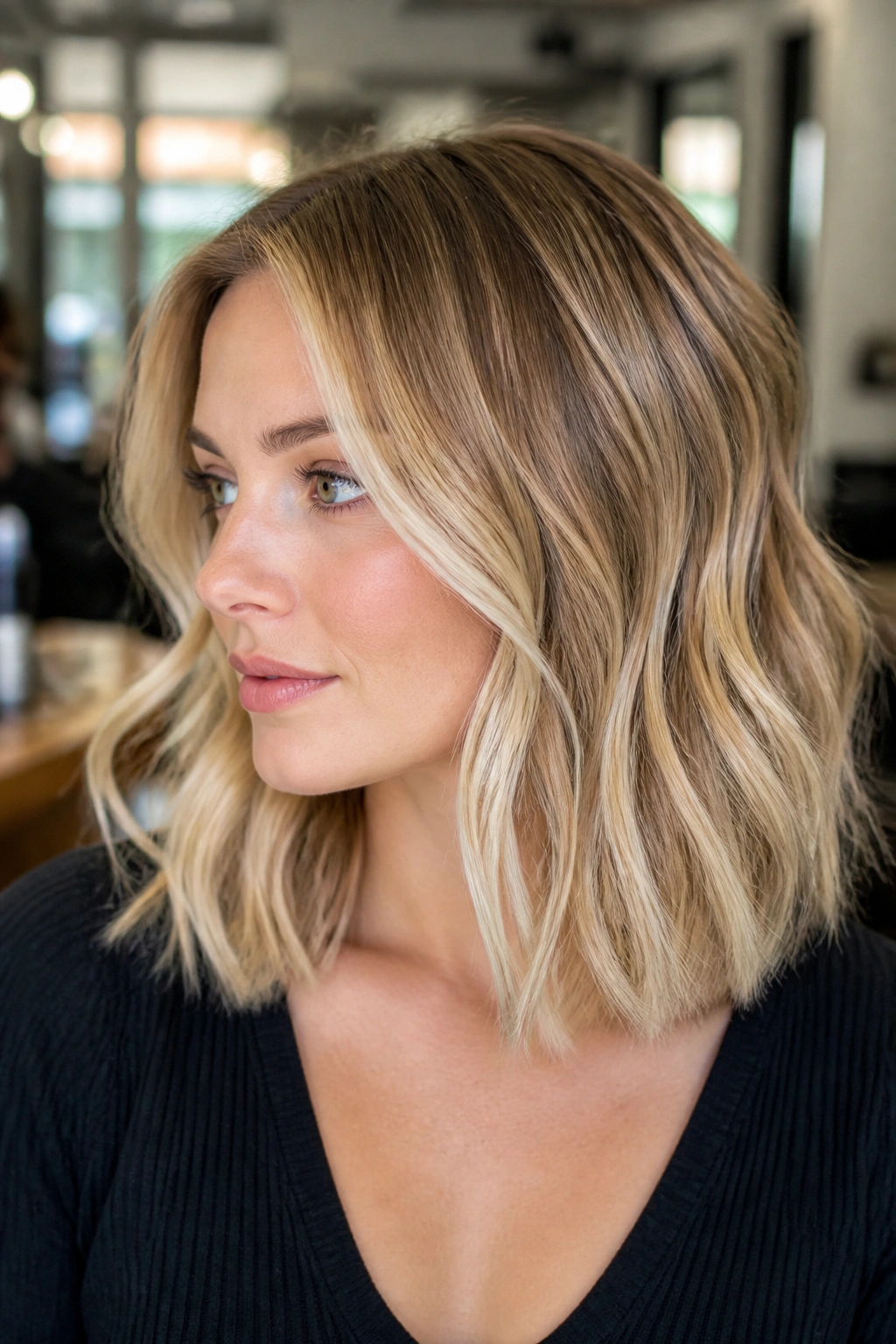
Foilayage gives you a cleaner lift than freehand balayage, and that matters when you want honey to stay refined on cool skin tones.
Vanilla honey is the key phrase here. It means a creamy, pale warmth rather than a strong yellow. In foilayage, the hair is painted and then wrapped, which usually gives a brighter result and a more defined ribbon than open-air painting alone. That extra brightness can be good on shoulder-length cuts because the color shows off the shape of the hair.
I’d choose this if you want a lifted look around the face and crown, but still want the rest of the hair to feel soft. The pieces should be fine enough that the color doesn’t look like stripes when the hair moves.
This version looks especially clean on a rounded shoulder cut or a collarbone-length chop. The ends can be a little lighter than the base, but not stark. Vanilla honey should feel creamy, not icy, not orange. That middle ground is the whole game.
11. Honey and Ash Brown Lowlights
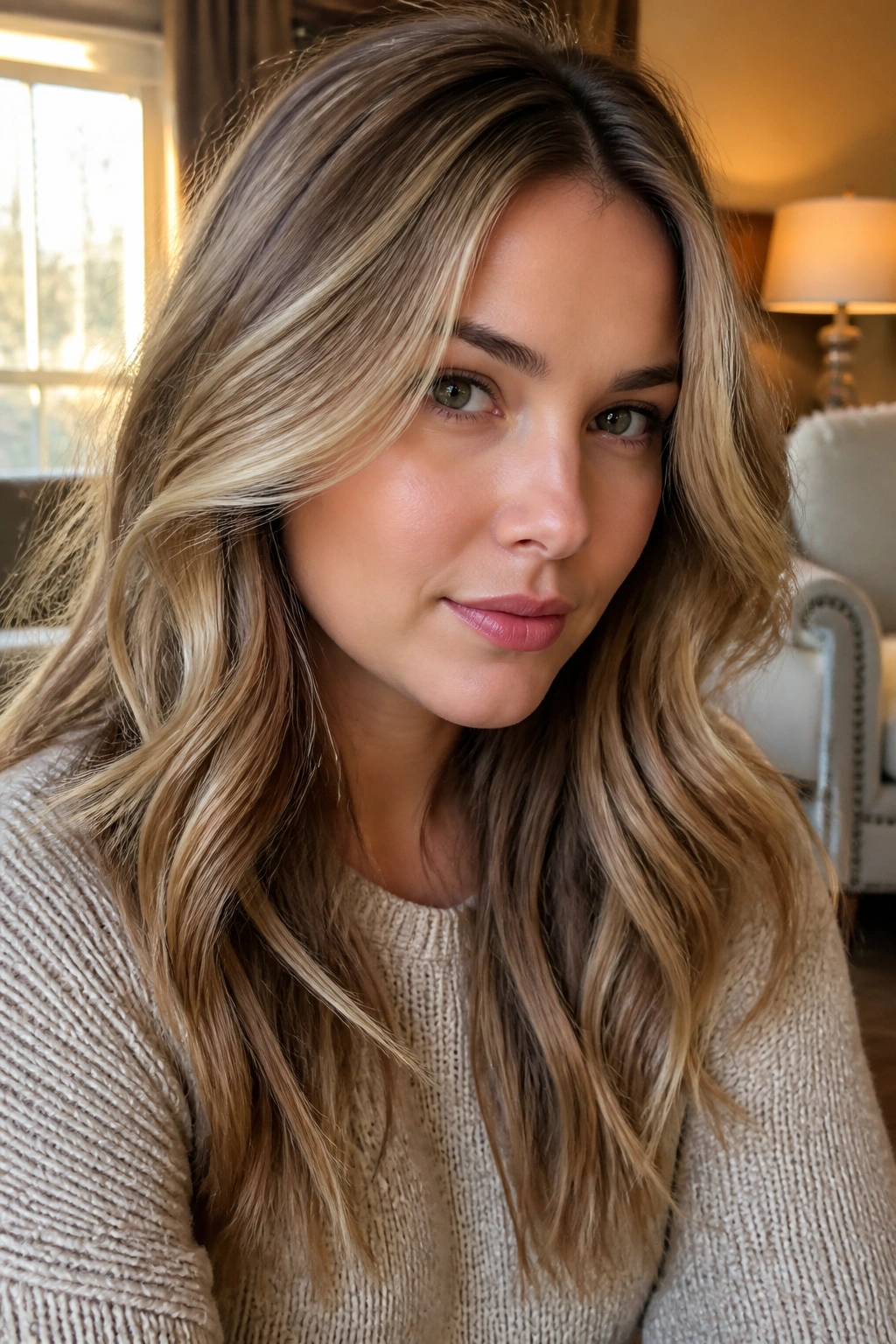
People talk about highlights too much. Lowlights do half the work, and sometimes more.
If honey starts to feel flat or too bright against cool skin, ash brown lowlights can pull it back into shape. They add depth between lighter pieces, which keeps the hair from reading as one big yellow sheet. That little bit of shadow makes the honey look richer and the skin look calmer. It’s a neat trick.
This is especially useful on fine hair, where too many light pieces can make the finish look thin. A few ash brown strands placed under the top layer give the hair more body and make the honey highlights stand out more. Oddly enough, adding darker color can make the blonde look brighter.
The best placement is usually through the interior sections, around the nape, and under the crown. You don’t want the lowlights screaming from the top. They should work quietly. That’s what makes the color look intentional instead of random.
12. Pearl Honey Blonde Bob
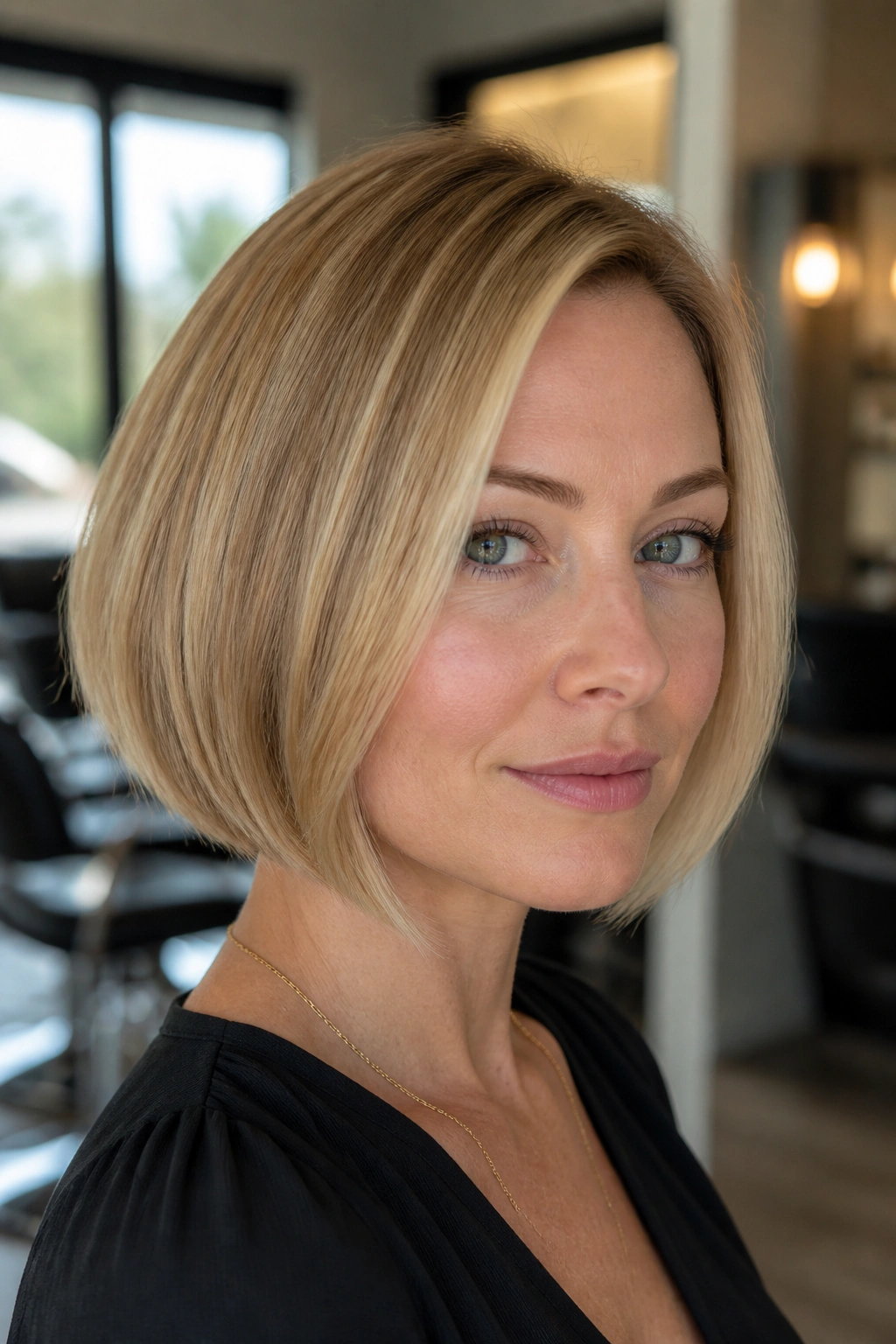
A bob and pearl honey are a very good pair. Clean line, soft shine, no fuss.
Shorter hair shows color fast, so the honey has to be controlled. Pearl honey is lighter and cooler than classic gold honey, which keeps the finish from overwhelming cool skin. It also makes the haircut look sharper because the light reflects off the blunt or beveled ends in a clean way.
Why It Works on Short Hair
A bob has less length to absorb color variation, which means every tone shows. Pearl honey solves that by staying soft and consistent while still giving enough warmth to keep the hair from looking flat.
You can wear this with a center part for polish or a deep side part for a little drama. Either way, the shine matters. A gloss every 6 weeks helps keep the pearl tone from slipping yellow.
If your hair is thick, ask for a tiny bit of internal layering so the bob moves. If it’s fine, keep the edge blunt. The color will do the rest.
13. Honey Ombre with a Smoky Finish
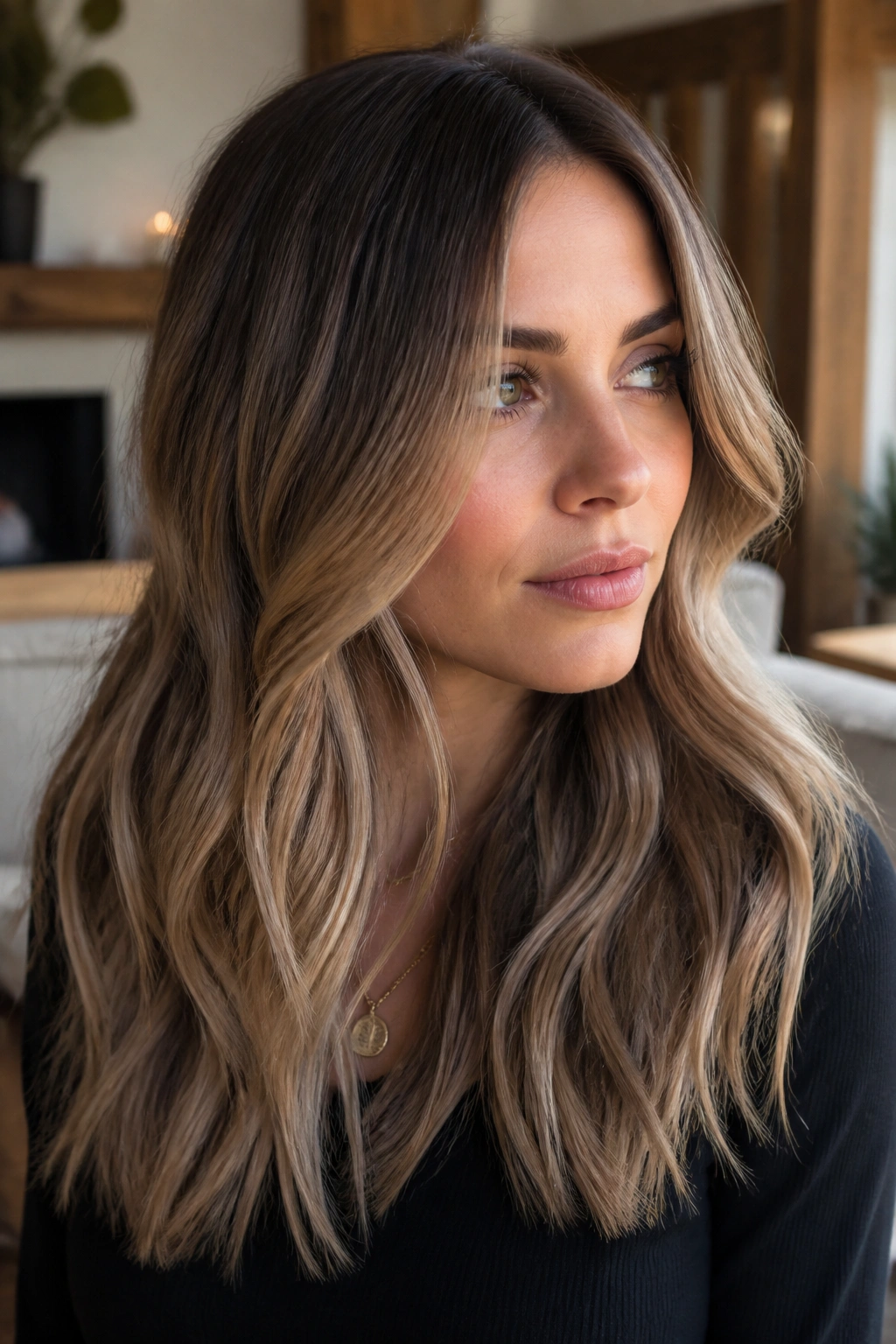
Can ombre feel grown-up? Yes, if the fade is handled with restraint.
The root stays deeper and cooler, then the honey shows up lower through the midlengths and ends. The smoky finish matters because it stops the transition from looking like a hard line between brown and gold. A soft ombre should feel gradual, like the color drifted there on its own.
This is one of the best ideas for long hair, especially if you don’t want constant root appointments. The lower sections take the honey, while the top keeps the look balanced against cool skin. The contrast can be beautiful when it’s not too severe.
If you wear your hair straight, the ombre line needs to be extremely soft. Waves hide a lot. Straight hair tells the truth. That is why smoky toning at the blend zone matters so much.
14. Frosted Honey Highlights for Curly Hair
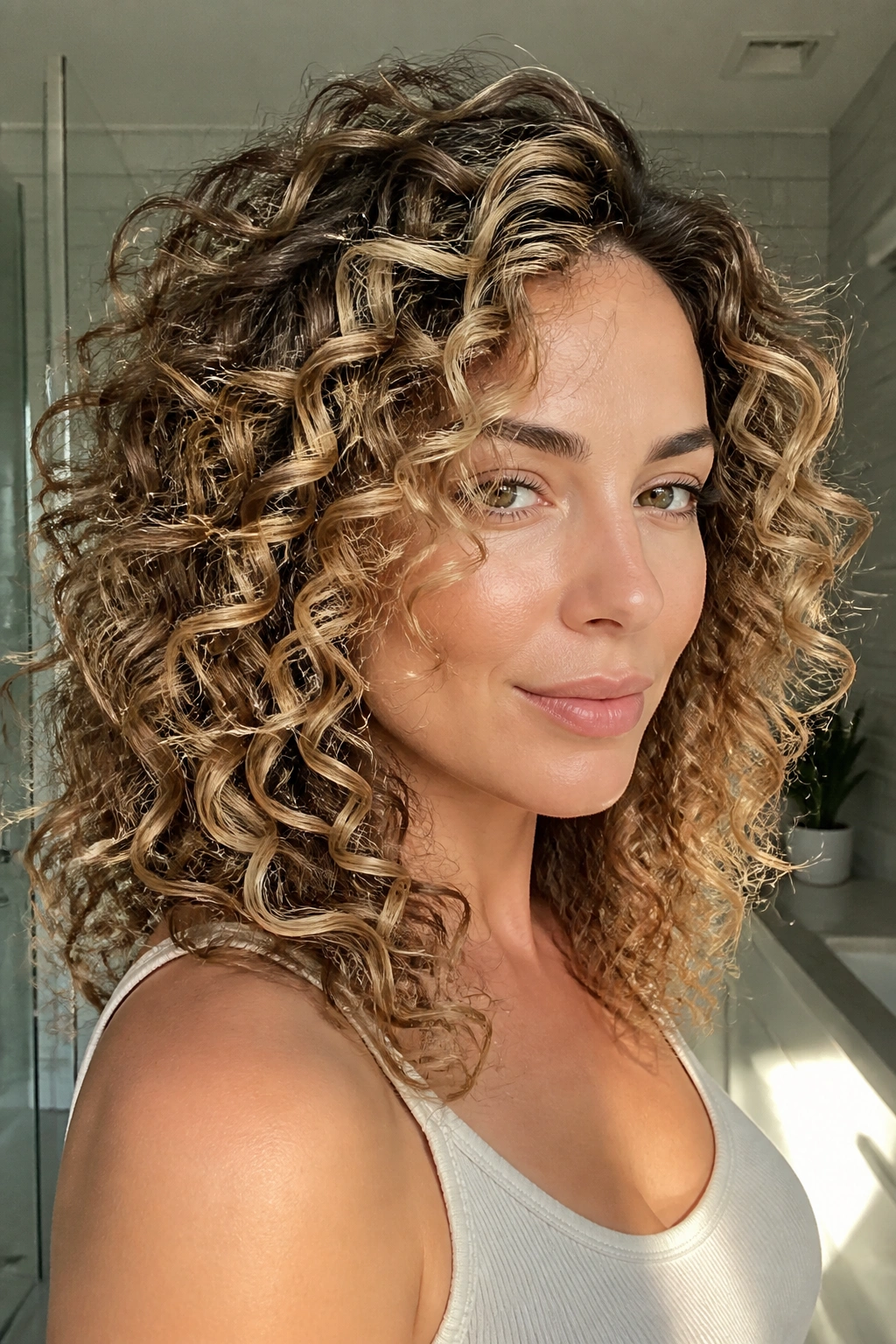
Curly hair handles honey in a different way, and that’s a good thing.
The bends in the curl pattern catch light on their own, so frosted honey highlights can make the shape pop without needing a ton of lift. The color should be painted where the curls naturally open up — around the outer curve of the spiral, the front pieces, and the upper layers. That placement keeps the pattern visible and stops the color from looking stripey.
Cool skin tones do better when the honey is frosted down a bit. Too much yellow can fight with the skin; a beige-frosted honey keeps the warmth soft enough to complement pinker undertones. It also looks richer when the curls are defined with a cream or gel that gives the pattern some hold.
- Paint on curl clumps, not random strands
- Leave depth under the crown
- Ask for beige honey or soft gold, not copper
- Diffuse gently so the tone stays visible without puffing out
Curly hair deserves color that respects the shape. This is that version.
15. Beige Honey Peekaboo Panels
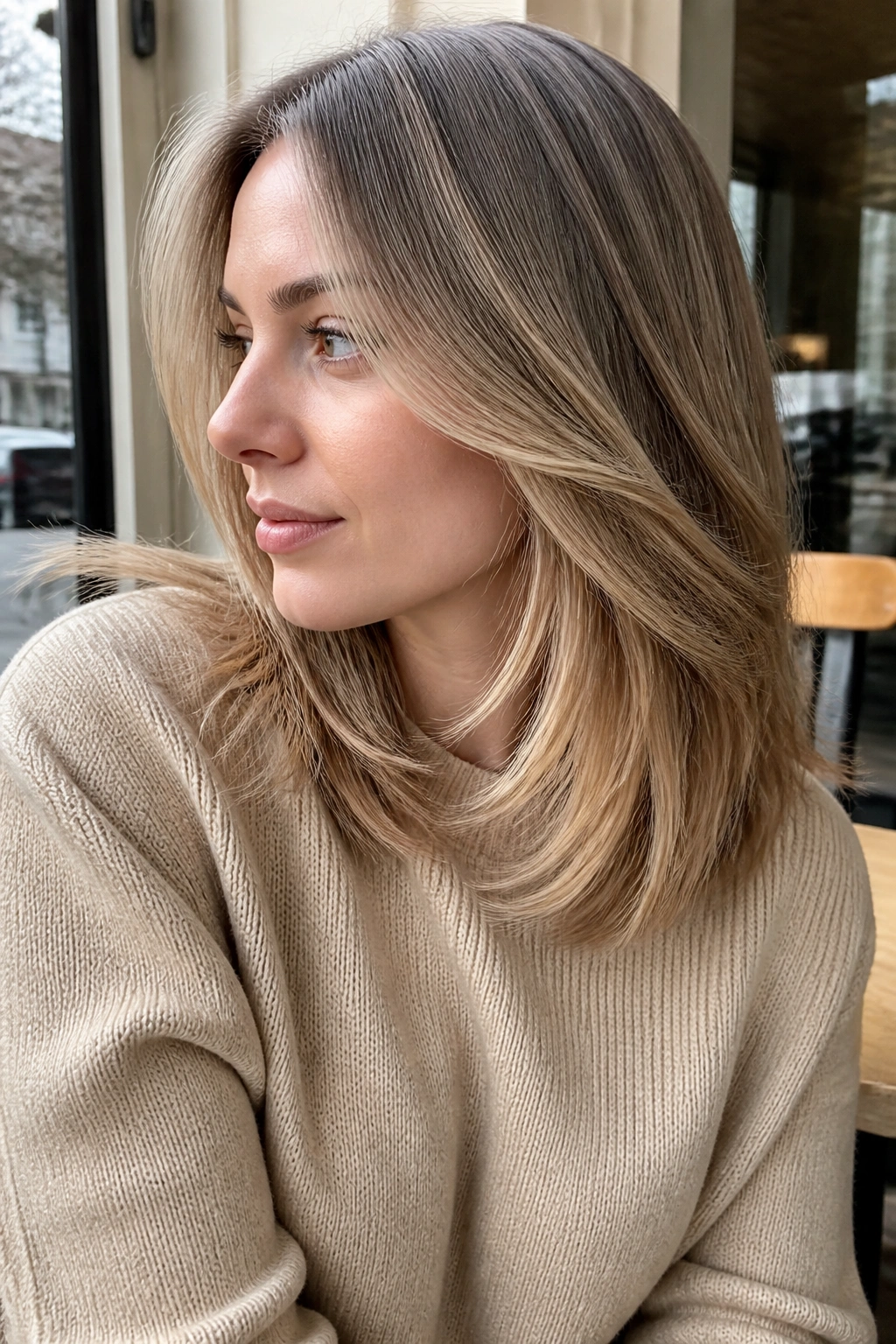
Peekaboo panels are for the person who likes a little surprise.
The honey lives underneath the top layers, so you catch it when the hair swings, gets tucked behind the ear, or goes into a half-up style. On cool skin tones, beige honey keeps the hidden color soft enough that it flashes as warmth, not as orange. It’s a subtle move, but a clever one.
This is a great pick if you need to keep the surface tone fairly cool for work or personal taste. The top layer can stay ashy, neutral, or sandy, while the panels underneath bring in the honey. That contrast makes the style feel more dimensional without changing the whole head.
It works best on layered cuts, shoulder-length hair, and anything that moves. A blunt one-length cut can still take it, but the reveal is smaller. The whole idea is that you get to choose when the honey shows up. That little bit of control is part of the appeal.
16. Soft Honey Melt with a Root Tap
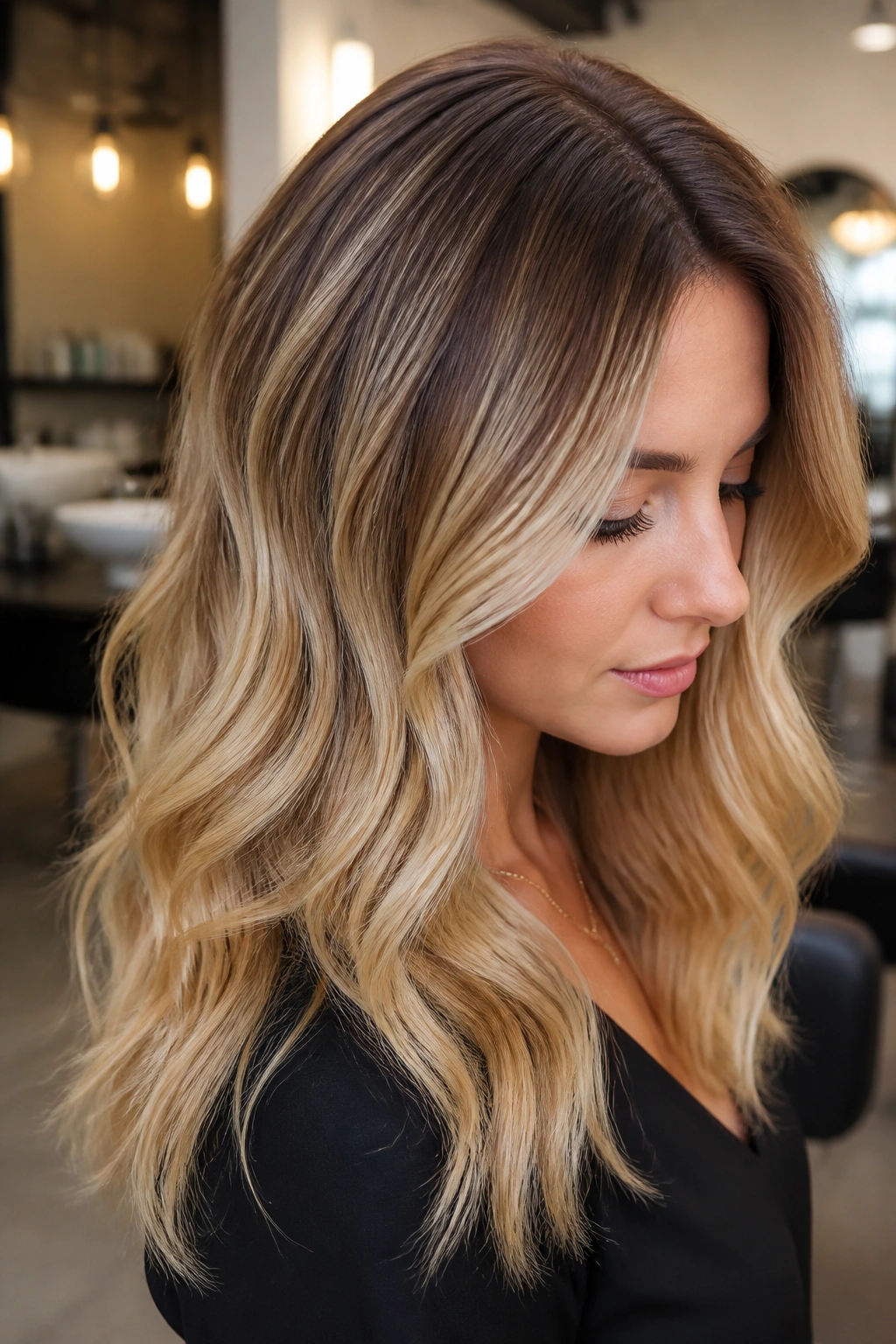
A root tap keeps honey from looking too bright right at the scalp, and that’s useful when your skin leans cool.
The root area should stay soft and slightly deeper, then the honey should melt through the mids without a harsh break. The tap is usually thin — just enough to blur the grow-out and anchor the color. After that, the lighter sections can flow down in a buttery-beige direction that still feels wearable.
This is a nice option if you want a salon color that ages well. The root tap buys you time. The melt keeps the color from feeling blocky. Put together, they create a smoother finish that works on straight hair, waves, and loose curls.
The only thing to watch is the warmth near the face. If the honey gets too concentrated there, cool skin can look a little flushed. Keep the front pieces beige and let the brighter warmth live lower down. That small shift makes a big difference in person.
17. Honey Blonde with Smoky Beige Lowlights
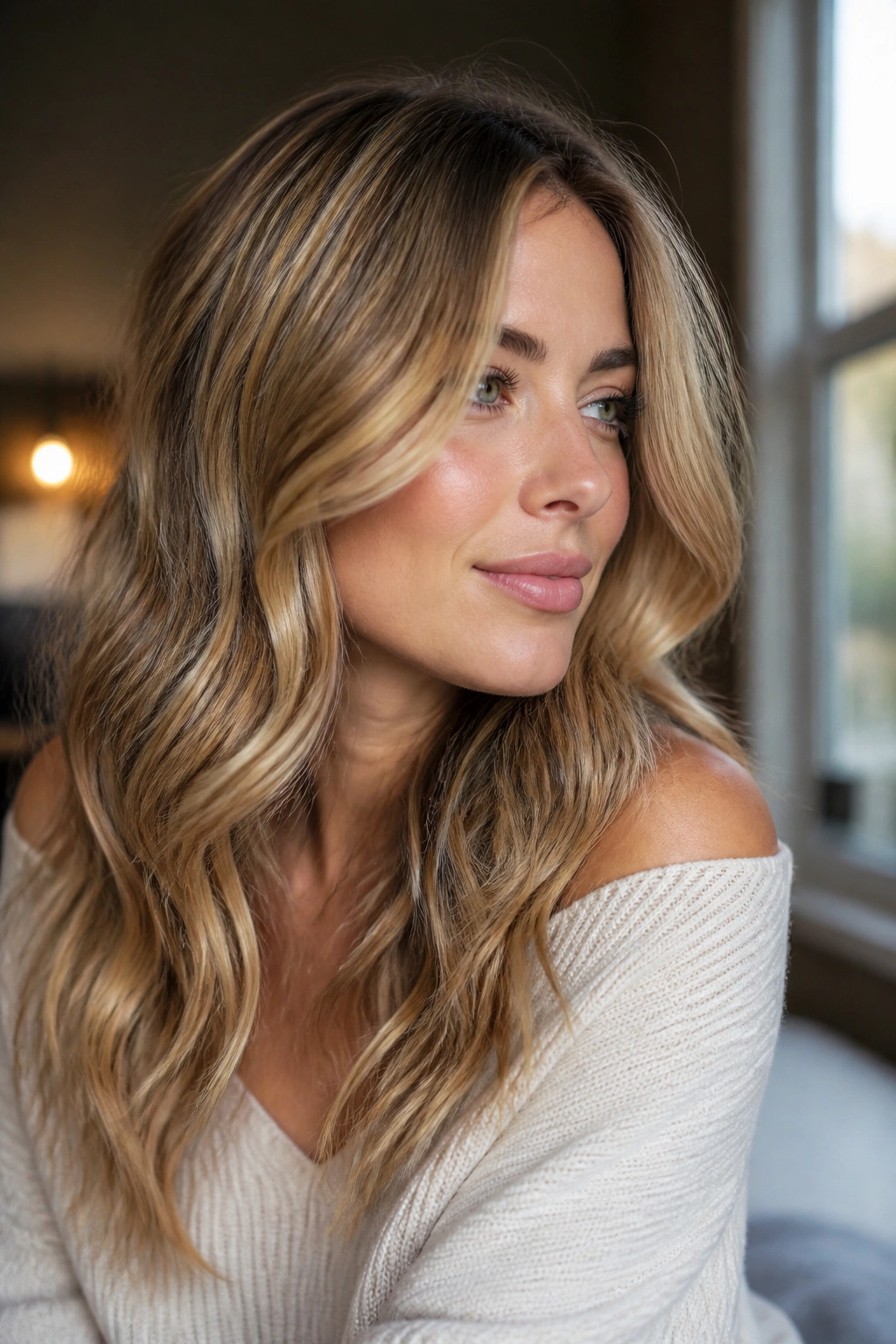
If honey starts drifting too golden, smoky beige lowlights are the fix.
They add just enough shadow to cool the whole head down without making it look dull. That balance matters on cool skin tones, because you still want the hair to feel warm and shiny. You just do not want the warmth to dominate. Lowlights keep the color from turning into one flat sheet of yellow.
This idea works especially well on thicker hair. Dense hair can handle more tonal variation, and the lowlights create space between the lighter pieces. That makes the hair look fuller and more expensive in a quiet way. Quiet is the right word here. Nothing should shout.
Place the lowlights in the underlayers, around the interior, and through the back where the hair naturally falls. Keep the top surface softer and brighter. That contrast gives the honey room to glow while the beige tones keep it from running hot.
18. Ice Honey Blonde with a Warm Veil
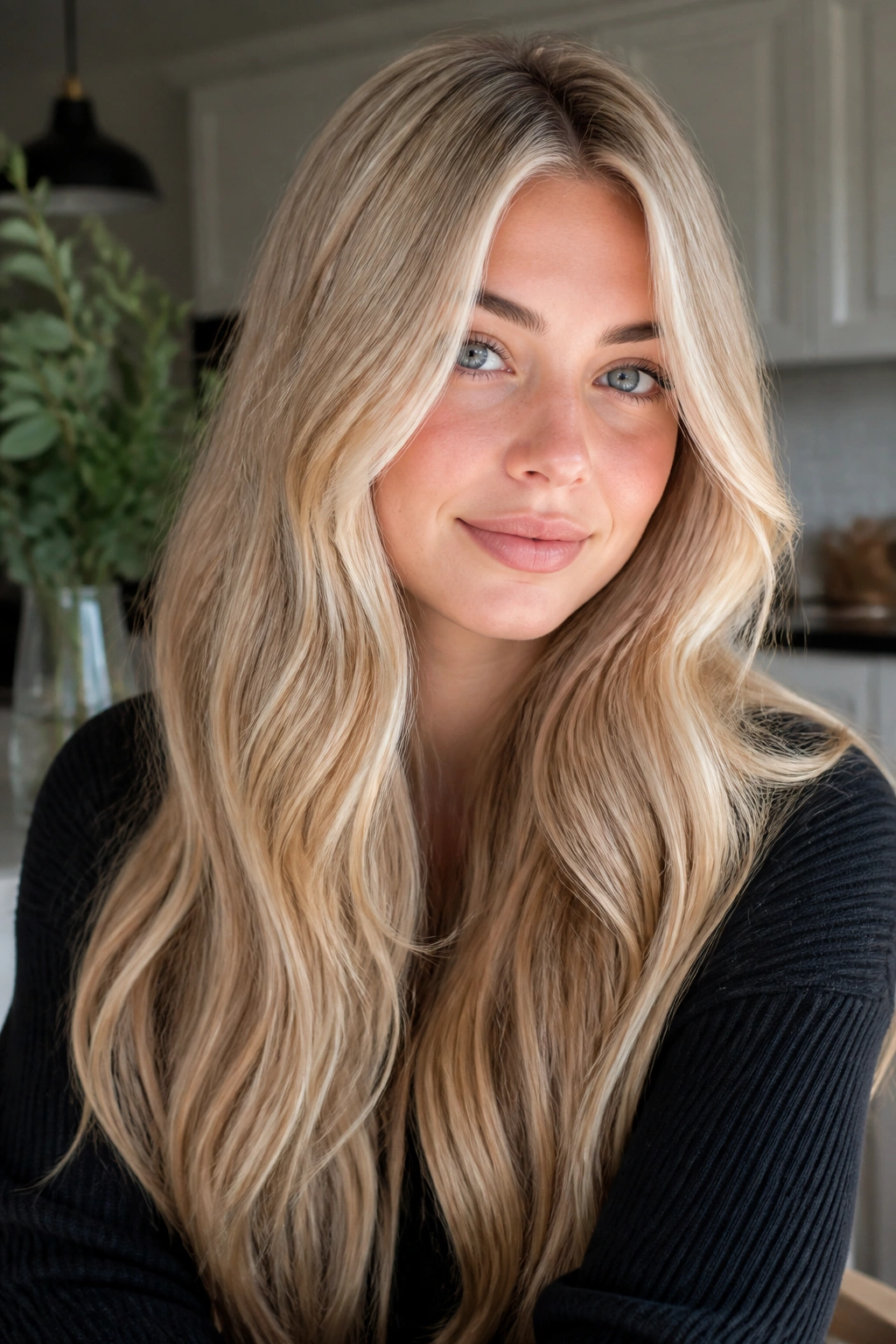
Can ice and honey live in the same head of hair? They can, if the veil is handled carefully.
The trick is to keep the top layers cool and pale, then let a warm honey veil sit underneath or thread through the mids in a very controlled way. That gives you brightness without the harshness of a full golden blonde. It also flatters cool skin better than most people expect, because the icy parts keep the face from getting washed out.
This is not a loud color. It’s more of a layered effect. The eye sees pale light first, then catches the honey a second later. That little delay is what makes it interesting. Loose waves show it best, but straight hair can look sharp too if the tone placement is clean.
You need a careful toner here. If the warm veil goes too yellow, the contrast falls apart. If the cool top goes too gray, the hair can look dull. The sweet spot is narrow. Worth it, though.
19. Honey Streaks on Medium Brown Hair
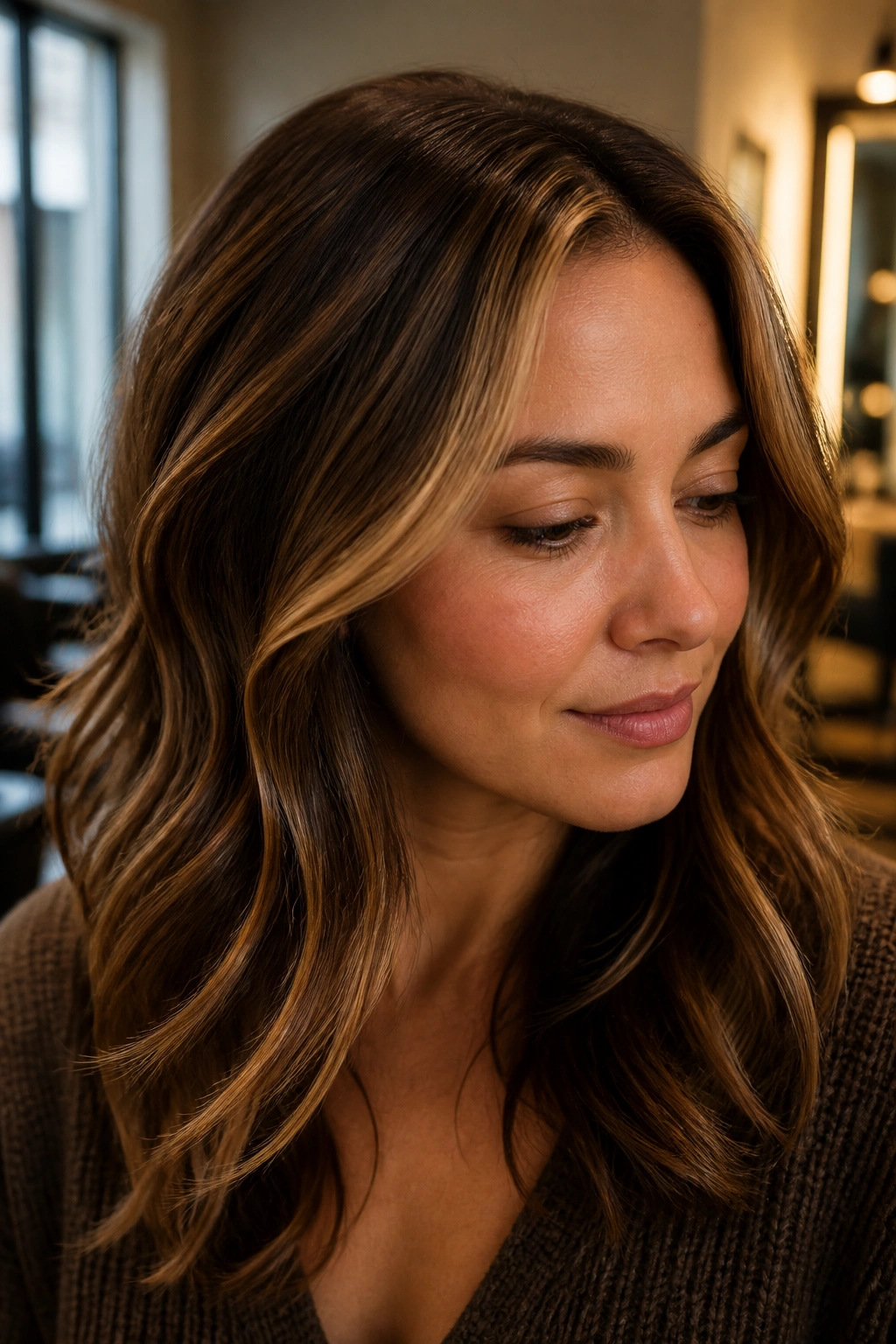
Sometimes the smartest honey is the one you barely notice at first.
Medium brown hair can take thin streaks of honey around the temples, crown, and ends without needing a full blonde transformation. That makes this a good choice for cool skin tones that want warmth but not too much of it. The brown base does most of the work. The honey just gives it lift.
This is a very practical look for people who wear their hair in simple shapes. A ponytail, a claw clip, or tucked-behind-the-ear hair all show different bits of the streaks. That movement makes the color feel alive. It also gives you a sense of dimension even when the hair is not styled.
- Put the brightest streaks near the front
- Keep the back softer and darker
- Ask for beige honey, not copper
- Let the streaks sit a little farther apart than classic highlights
You do not need a full blonde service to get a real change. This proves it.
20. Multi-Tonal Honey Blonde with Beige and Sand
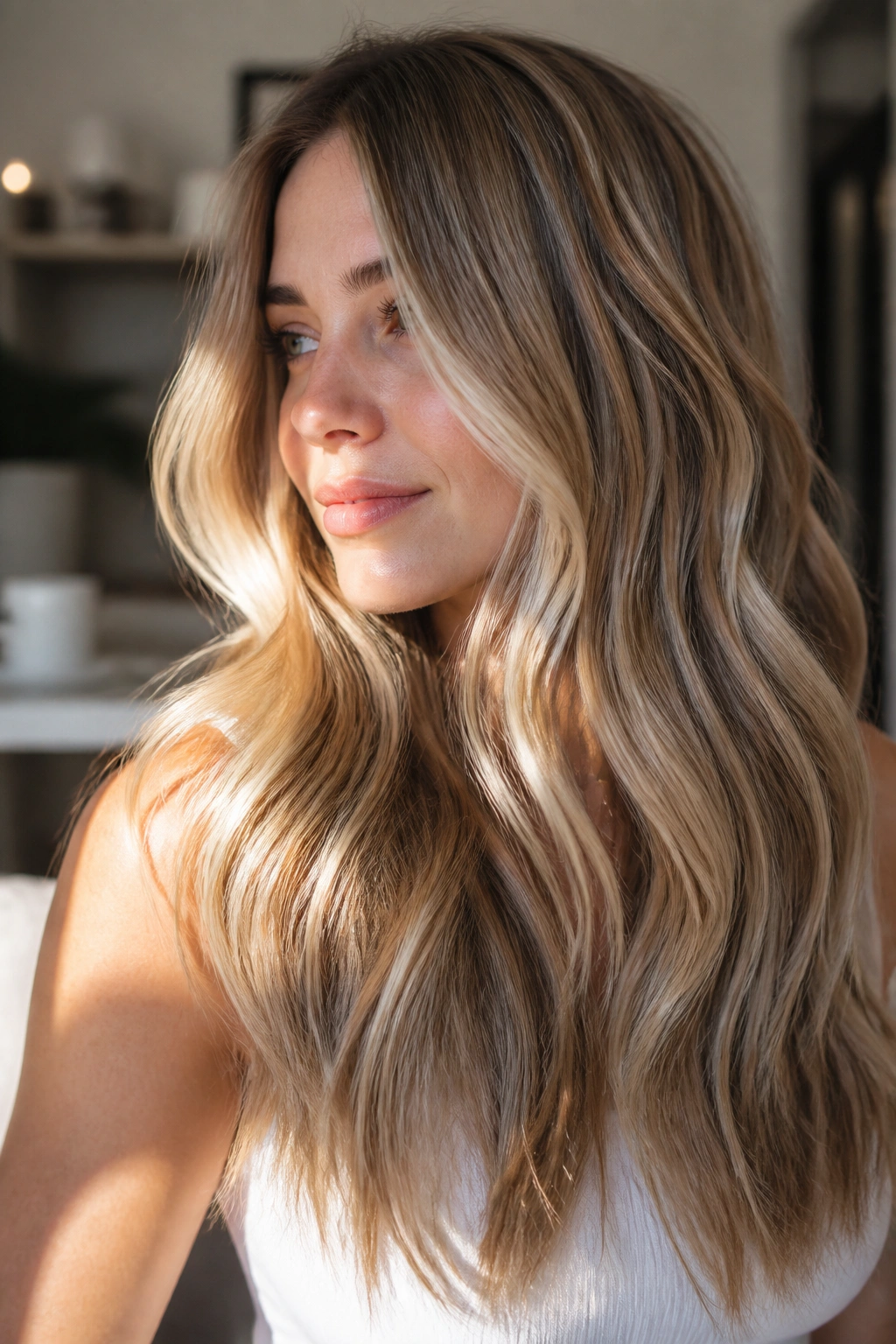
One-note honey can look flat. Multi-tonal honey rarely does.
This version mixes beige honey, sandy blonde, and a little pale gold so the hair reads as layered rather than painted in one color. For cool skin tones, that variety helps a lot. The beige tones keep the warmth soft, the sand adds a little cool-neutral balance, and the pale gold gives the finish a touch of shine without tipping into brass.
Why It Beats a Single Shade
Hair with one flat tone can expose every warm spot. Multi-tonal color hides that problem by spreading the brightness around.
It’s especially good on long hair and layered cuts, where the different shades can stack on top of one another. You get more movement in sunlight, more texture in indoor light, and less risk that the whole style turns yellow in one flat block.
Ask for at least three tones, with the lightest pieces reserved for the front and ends. Keep the midlengths softer. That makes the blend look expensive and natural, which is usually the whole point.
21. Honey Face-Framing Layers with Curtain Bangs
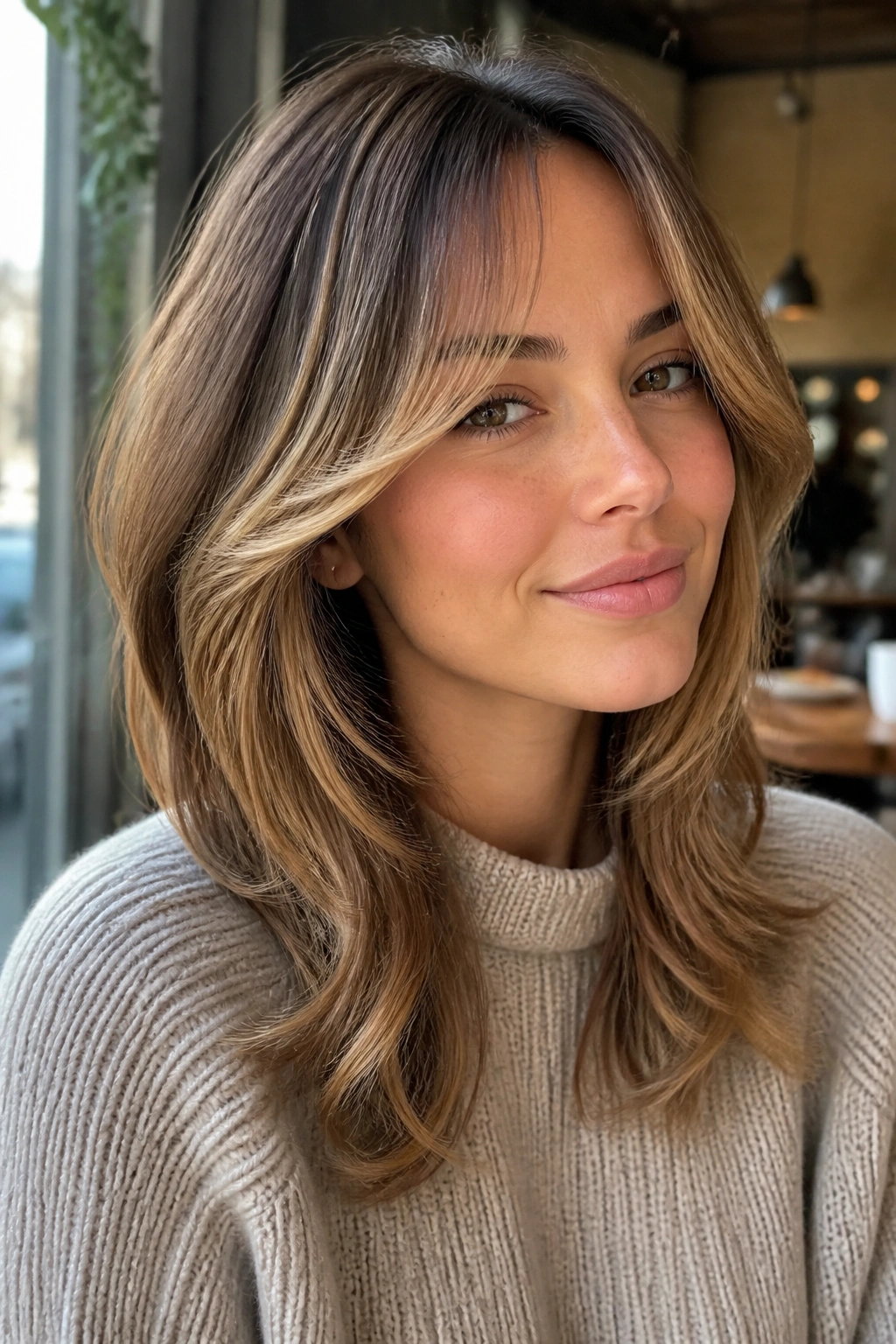
If you want honey to brighten the face without taking over the whole head, this is one of the easiest wins.
Curtain bangs and face-framing layers create a built-in spot for color. The honey sits right where the eye lands first — along the cheekbones, around the temples, and through the front bends of the hair. On cool skin tones, that targeted placement matters because it avoids flooding the entire head with warmth. You get light where it counts.
This look also works nicely if you wear your hair down most of the time. The front pieces stay visible even when the rest is tucked back or thrown into a messy knot. That makes the color feel useful, not decorative.
The best version keeps the back a little deeper and the front softer. Too much honey everywhere can pull attention in the wrong direction. A little around the face? Much better. It brightens the complexion and lets the cut do its job.
22. Cool Honey Beige Gloss Refresh
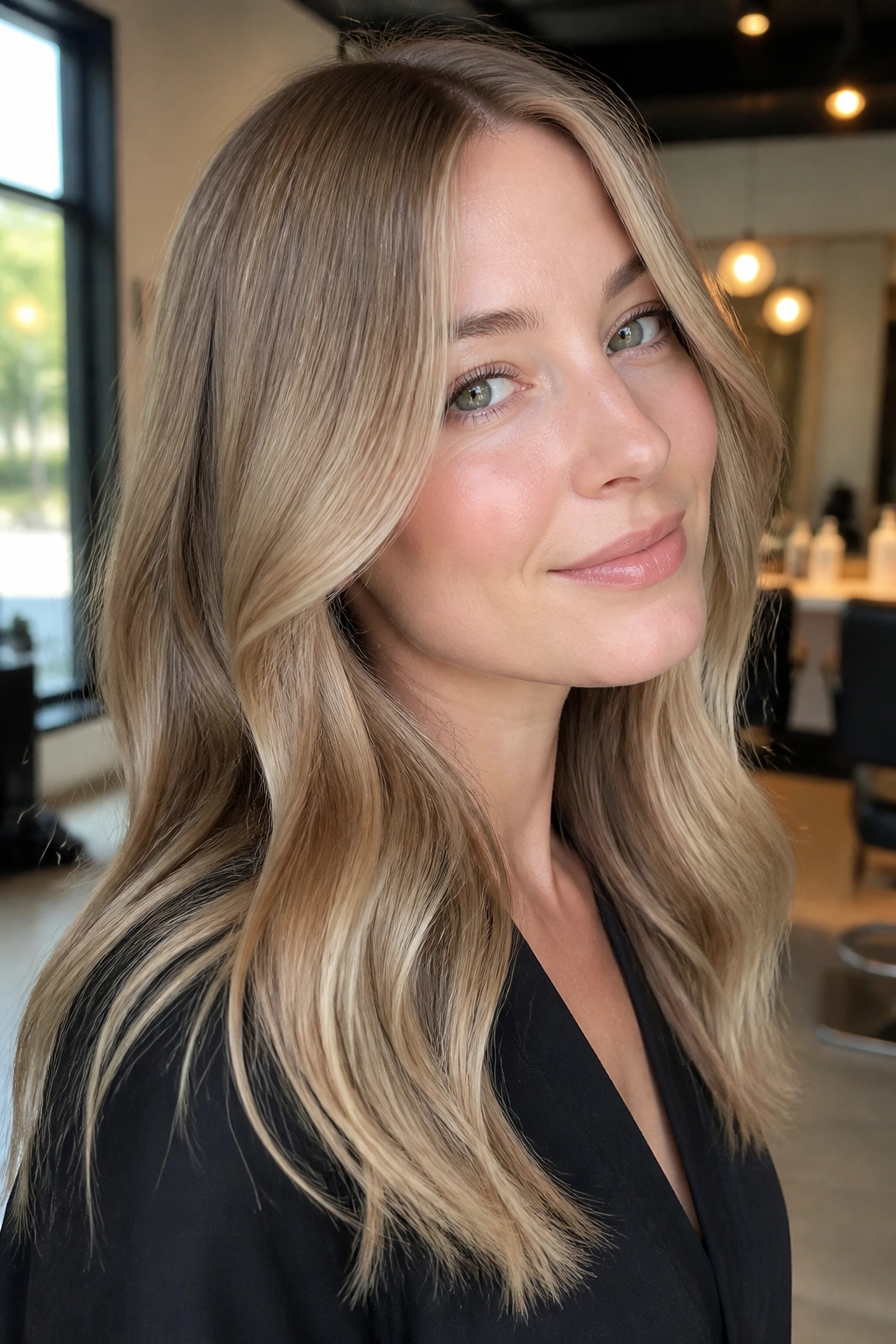
A gloss refresh sounds unglamorous until you see what it does to faded honey.
When honey starts looking too yellow, a cool beige gloss can pull it back into shape fast. That’s especially helpful for cool skin tones, which tend to look better when the warmth is softened rather than intensified. The gloss does not need to be dramatic. It just needs to calm the tone, add shine, and make the blonde sit closer to beige than gold.
This is the kind of service that keeps all the other honey ideas looking good for longer. A beige gloss can revive babylights, balayage, money pieces, or full honey blonde hair without changing the overall color story. If your ends are a little brassy, a violet-beige toner can help. If the whole head feels flat, a neutral honey glaze can bring it back.
A weekly purple shampoo can help, but don’t overdo it. Too much and the hair starts looking dusty. A gloss does the quieter, better job.
If you want honey on cool skin tones to stay pretty over time, this is the habit that keeps the shade from drifting off course.
