



Cool-toned skin is notoriously fickle. If you have blue or purple-leaning veins, silver jewelry looks better on you than gold, and you likely have a hard time finding a foundation that doesn’t turn orange the second it hits your skin, then you know exactly what I mean. When you try to go blonde, the result often pulls warm, showing up as a brassy, yellow disaster that makes your complexion look washed out rather than vibrant. The solution isn’t just “going lighter”; it is about controlling the undertones.
Integrating blue into blonde hair—whether it is a subtle tint to neutralize warmth or a deliberate fashion statement—is a game-changer for cool complexions. A little bit of blue cancels out the unwanted yellow pigments that haunt bleached hair, and when you lean into the color palette, it creates a striking harmony with your natural features. You do not need to look like you are auditioning for a comic book movie; the right blue-blonde balance can look polished, expensive, and intentionally styled.
Achieving this look requires precision. You are dealing with double-processing in many cases, especially if you want that crisp, icy finish. Bleaching hair to the point of being a clean, pale canvas is the first step, and the toning process—where the actual blue shift happens—is where the real artistry begins. Let’s look at how to pull this off with styles that actually suit a cool-toned face.
1. Icy Platinum with Sapphire Streaks
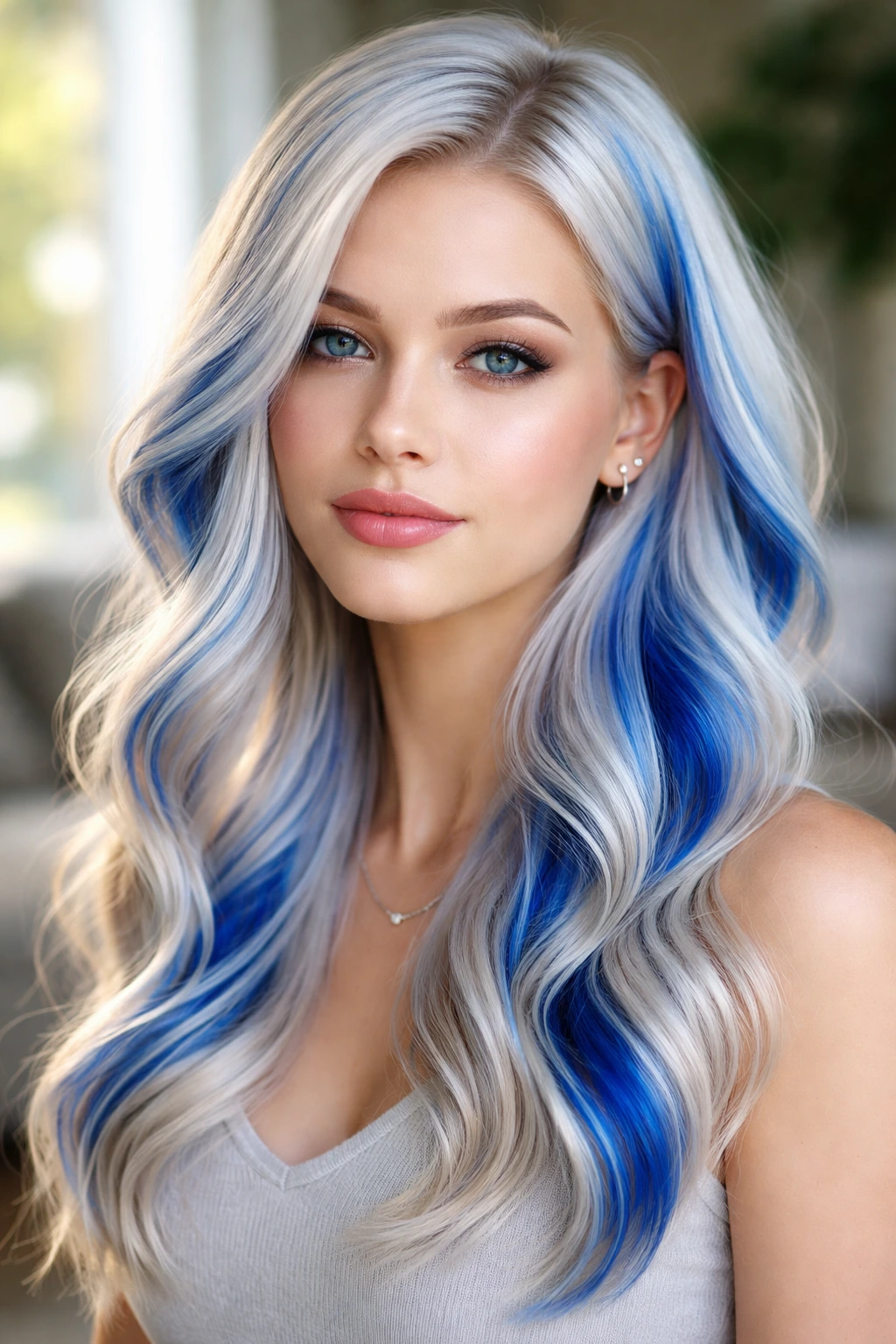
This is the quintessential “cool” look. It takes a near-white platinum base and cuts through it with thin, precisely placed ribbons of deep sapphire. Because the base is so light, the blue needs to be applied carefully—think of it like painting on high-quality parchment.
Why It Works for Cool Skin
The extreme white-blonde base matches the brightness of fair, cool skin, while the sapphire streaks provide a focal point that keeps the look from being one-dimensional. It highlights the eyes, especially if you have blue or grey irises.
Key Maintenance Notes
- Use a dedicated color-safe shampoo that is sulfate-free to prevent the sapphire from bleeding into the platinum too quickly.
- Sapphire dye is prone to fading into a lighter, muddy blue, so keep a tinted conditioner on hand to refresh the color once a week.
Pro tip: Ask your stylist for “babylights” rather than chunky highlights for the blue. It creates a softer, more sophisticated transition that looks lived-in as it grows out.
2. Smoky Ash Blonde with Denim Lowlights
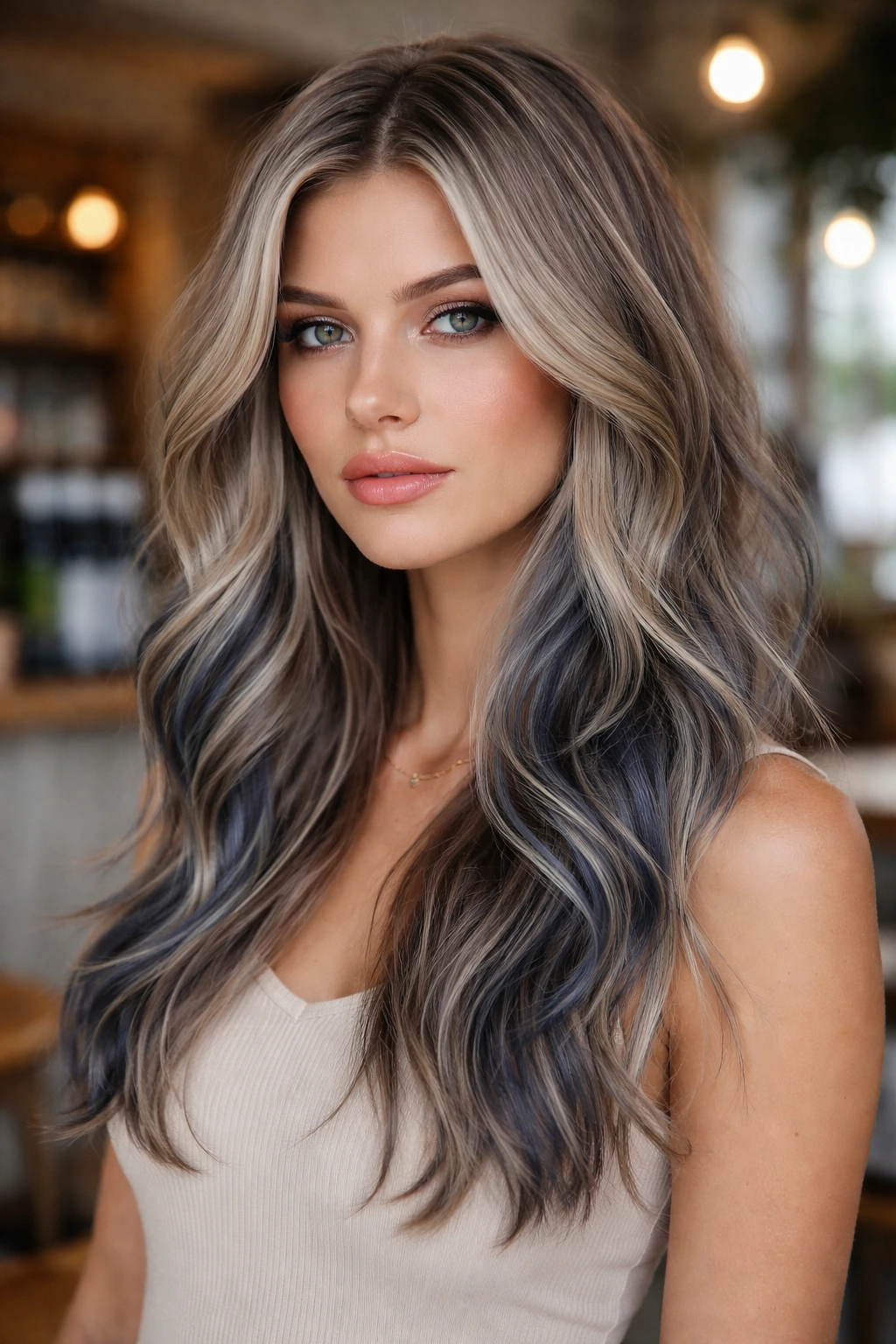
If platinum feels too high-maintenance, smoky ash is your best friend. It leans heavily into grey and slate tones, making it naturally cool. Adding denim-blue lowlights gives the hair depth that pure ash blonde often lacks.
Building Depth
Most people make the mistake of going for a flat, one-tone ash blonde. It ends up looking dull. By pulling through a soft, muted denim-blue, you add dimension without the hair looking like it has been dyed “unnatural” colors. It reads as a sophisticated, dusty shade that feels very intentional.
The Application Process You want to ask for a balayage technique here. The lowlights should be concentrated through the mid-lengths and ends, leaving the root area slightly darker and more natural. This creates an easy grow-out phase, so you aren’t back in the salon every four weeks for touch-ups.
3. Steel Grey Blonde Balayage
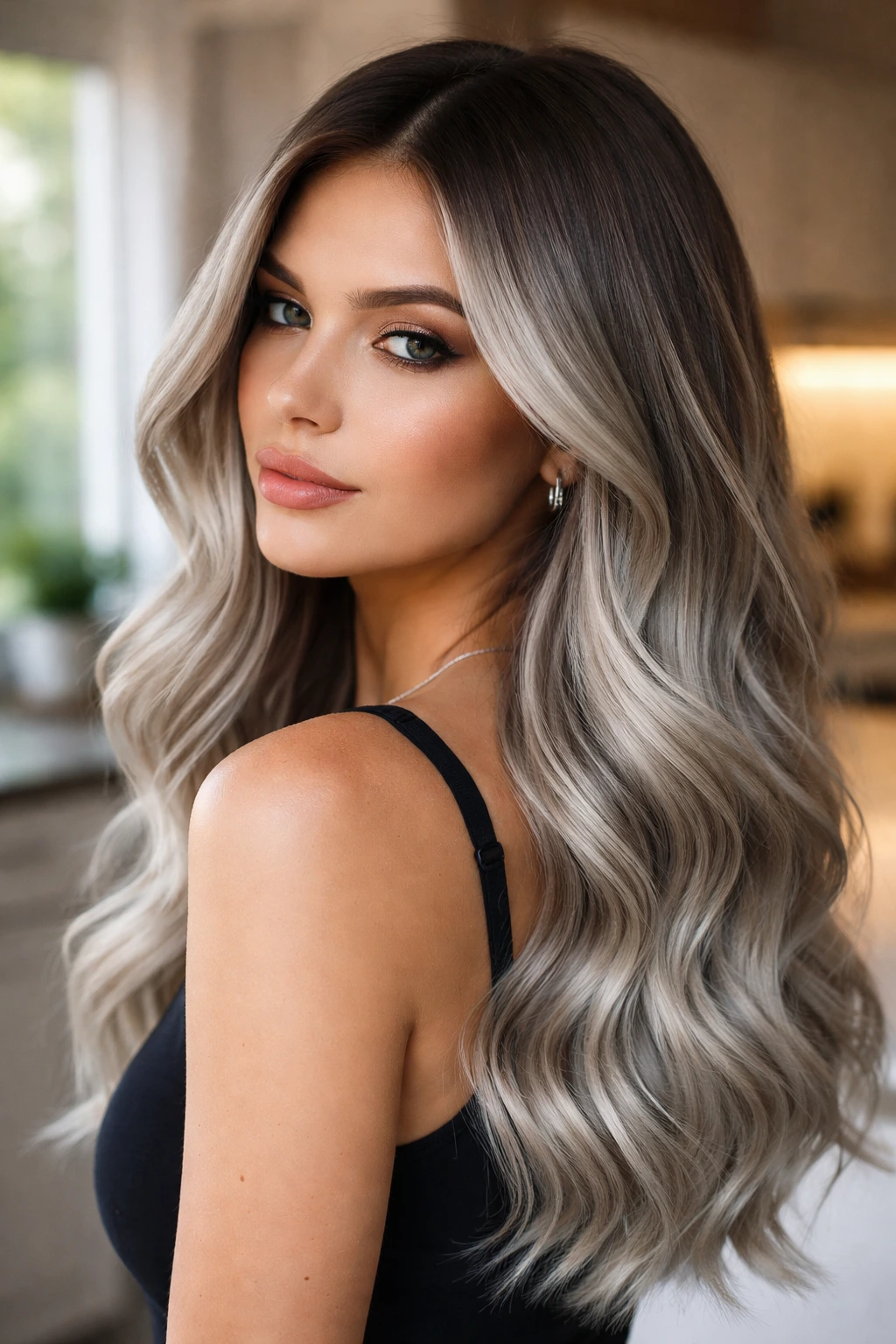
Steel grey is the bridge between silver and blue. It is sharp, modern, and looks incredibly intentional on cool skin. This style features a darker, slate-colored root that melts into a bright, steel-toned blonde.
It’s about the metallic finish. You don’t want the hair to look dusty or flat; you want it to reflect light. That high-gloss finish is what separates a trendy steel-grey from just looking like “aged” hair. Using a gloss treatment after the color service is non-negotiable here.
If you have a naturally dark base, don’t rush to lighten it all the way to white. The contrast between your natural dark root and the steel-grey ends is actually the appeal of this look. It’s gritty, cool, and effortless.
4. Pale Champagne with Periwinkle Babylights
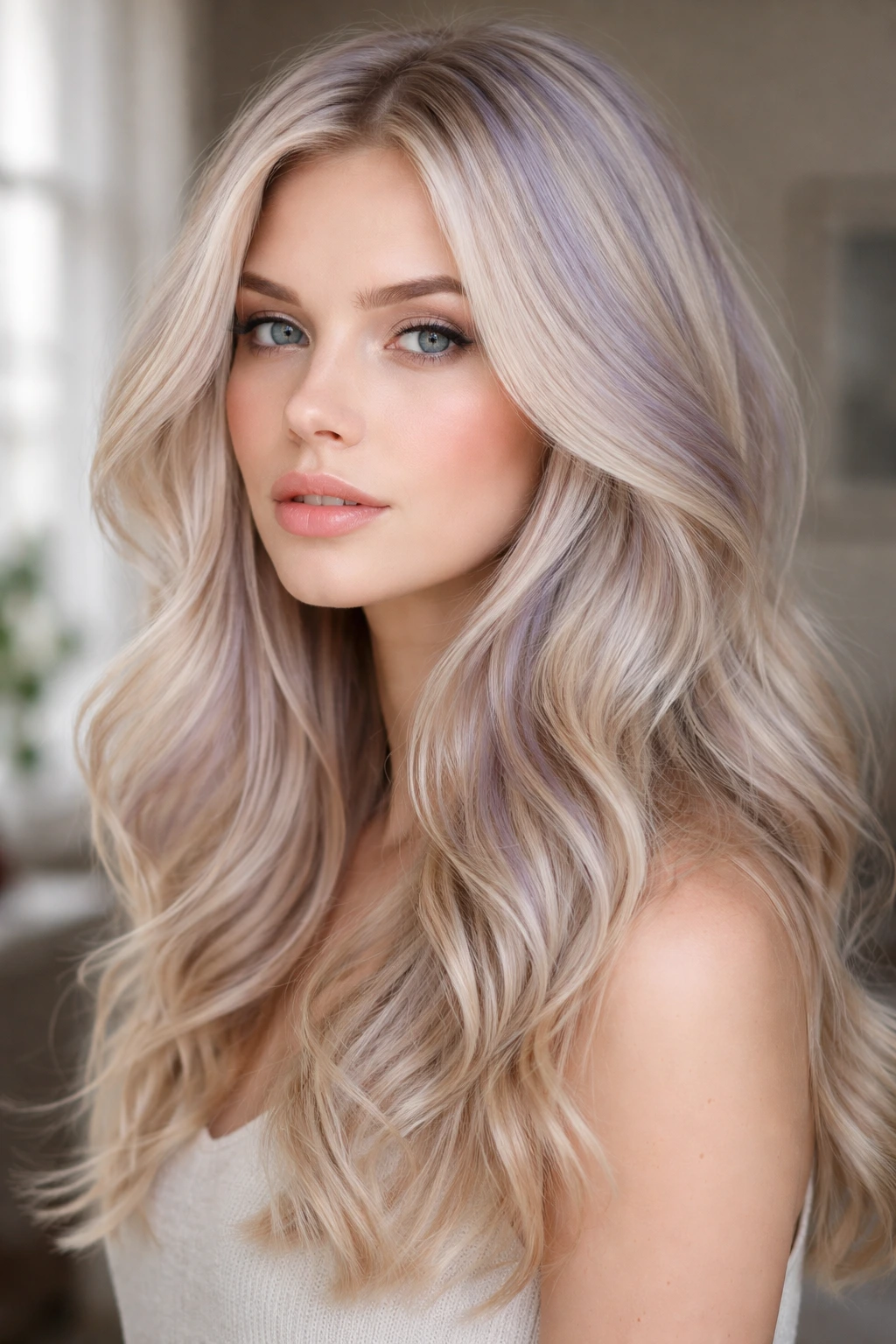
Champagne blonde is often associated with warmth, but it doesn’t have to be. By skewing the champagne toward a violet-base and adding periwinkle babylights, you create a soft, ethereal look that feels much more “winter” than “summer.”
How to Get the Look
The secret is in the toner. You need a stylist who understands the color wheel—specifically, that a touch of violet-blue will neutralize any yellow in the champagne base. The periwinkle accents should be scattered throughout the canopy of the hair, catching the light as you move.
It’s incredibly forgiving. Because the tones are so light and soft, as the color fades, it just turns into a beautiful, buttery blonde rather than a harsh brassy color. It is a perfect entry-level look if you aren’t ready for deep, bold blues.
5. Soft Lavender-Blue Toned Blonde
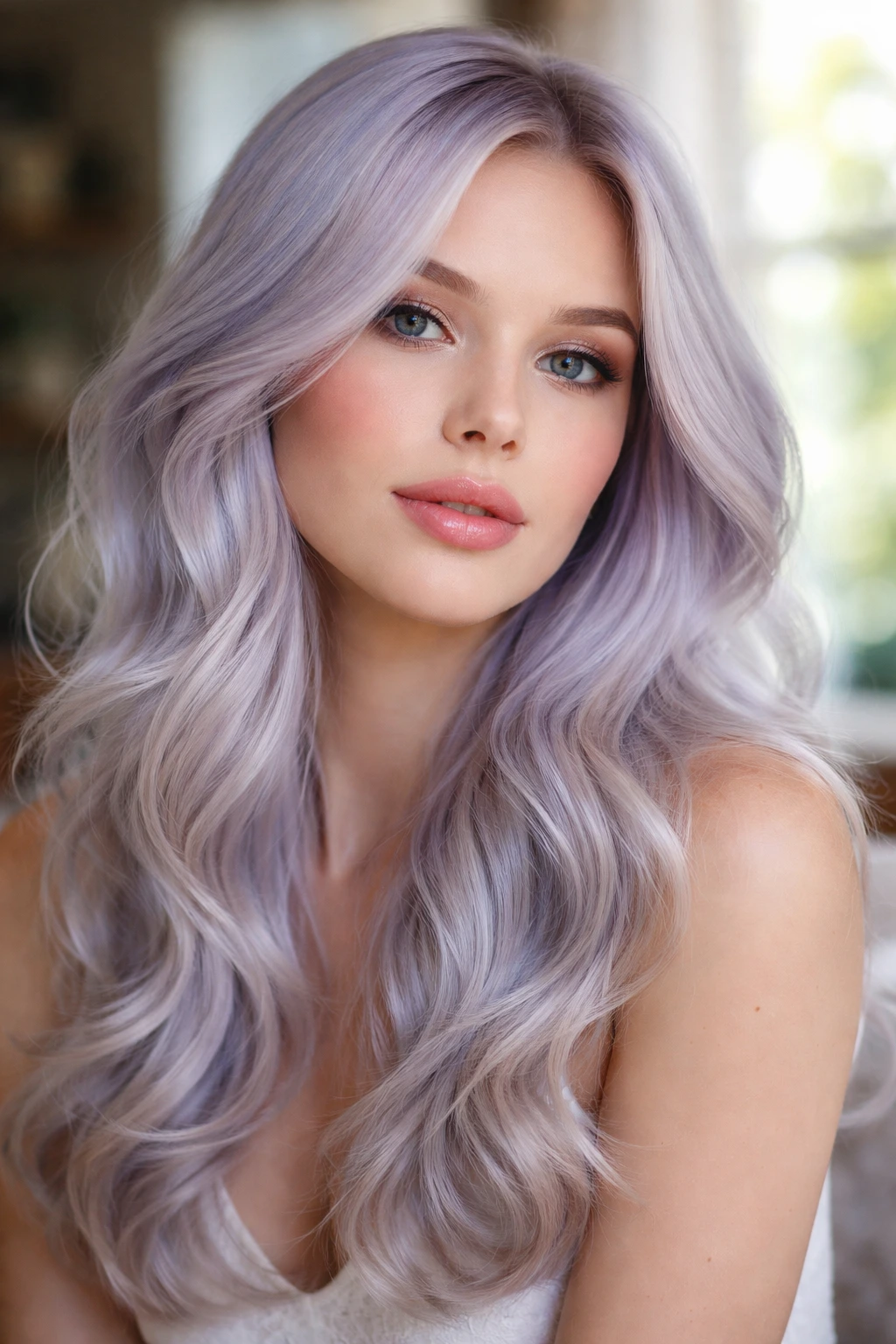
This is for when you want blue, but you want to keep the overall aesthetic soft and romantic. Lavender-blue acts as the ultimate filter. It’s not a stark, punchy blue, but a muted, dreamy shade that makes the hair appear almost iridescent.
The Science of the Shift
Lavender is the direct opposite of yellow on the color wheel. By using a lavender-blue toner, you are actively working against the natural tendency of bleached hair to yellow. It creates a clean, pristine blonde that looks like it belongs on a runway in Paris.
Style it right: This look benefits from loose, tousled waves. Because the color is so delicate, straight hair can sometimes make it look too uniform. A bit of texture spray or a loose curling iron bend adds the movement needed to show off the different shifts in the lavender-blue toner.
6. Silver Frost with Midnight Blue Tips
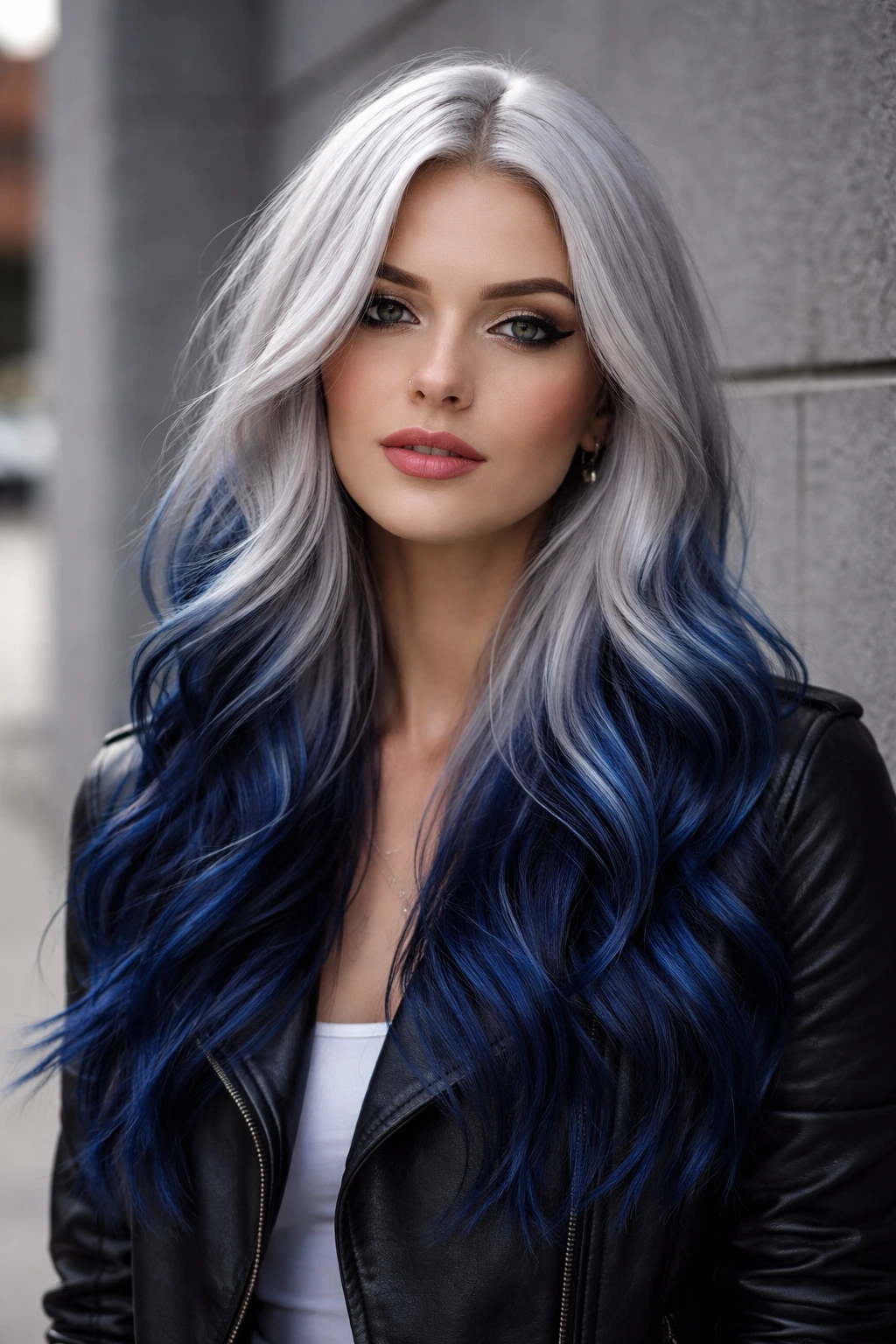
If you like the “dipped” look, this is a much more modern take than the standard neon-colored ends. You start with a silver, white-blonde base and transition into a concentrated block of midnight blue at the very ends.
It’s edgy. This is not a look for someone who wants to blend in. The contrast between the arctic, near-transparent silver and the deep, rich midnight blue is striking. Because the midnight blue is so pigmented, it actually lasts longer than the lighter tones, which is a nice bonus.
Just be prepared for the maintenance at the ends. Dark dyes bleed. You will need to rinse your hair with cold water—and only cold water—to keep that midnight blue from running into the silver when you wash it.
7. Cool Beige with Dusty Blue Undertones
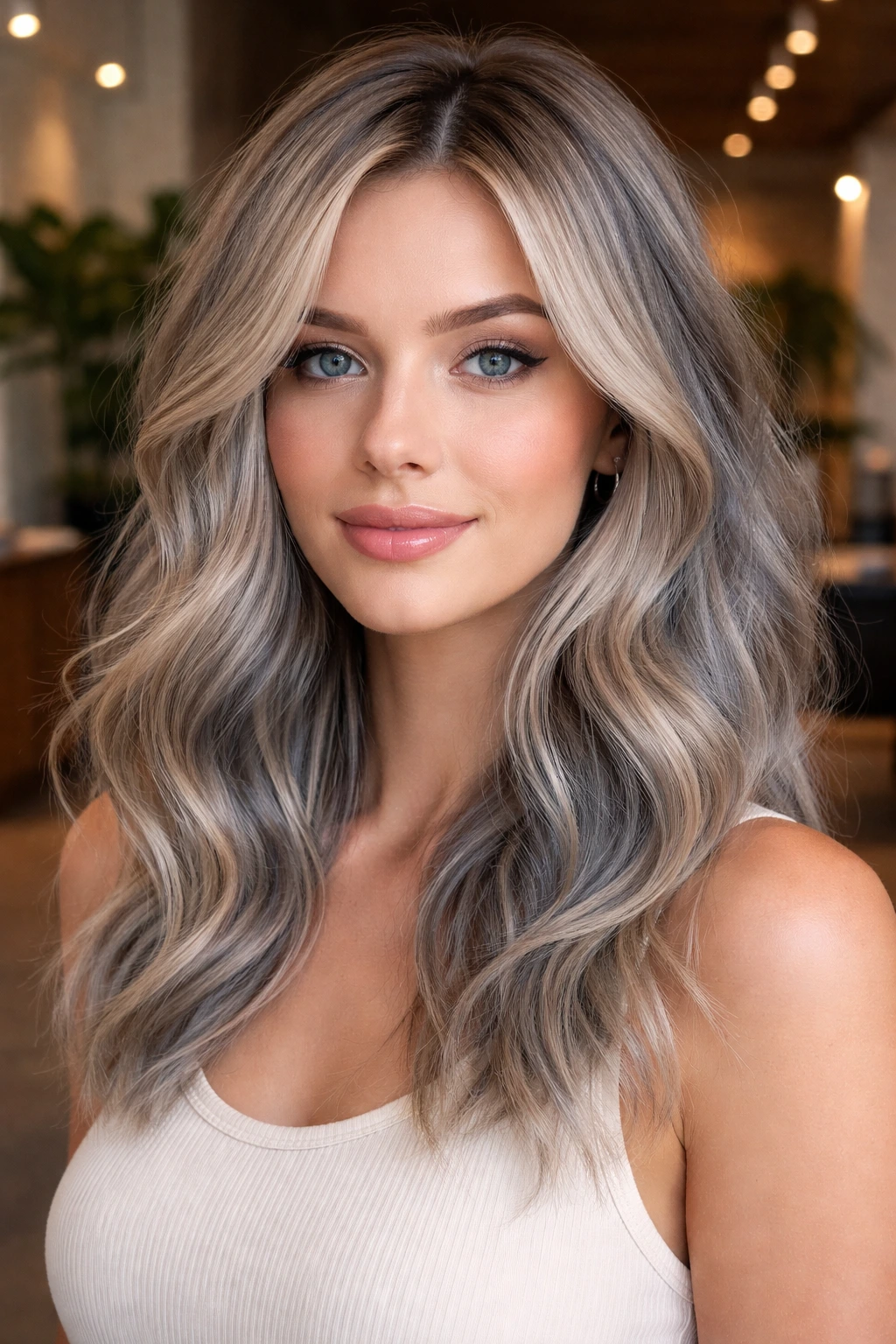
“Cool beige” sounds like an oxymoron, but it’s a staple in high-end salons. It’s a sandy, neutral blonde that isn’t white, but isn’t golden, either. Adding dusty blue undertones—essentially a blue-tinted gloss—makes it feel earthy and natural.
This is a great look if you have a job that doesn’t permit bright fashion colors. In dim lighting, it looks like a chic, sandy blonde. When you step into the sunlight, you get that subtle, cool blue shimmer. It’s the ultimate “if you know, you know” color.
Why choose this? It’s incredibly wearable. You don’t have to change your wardrobe to match your hair. It’s low-key, professional, and very flattering for people who feel that bright platinum makes them look sickly.
8. Frosted Blue Ombré
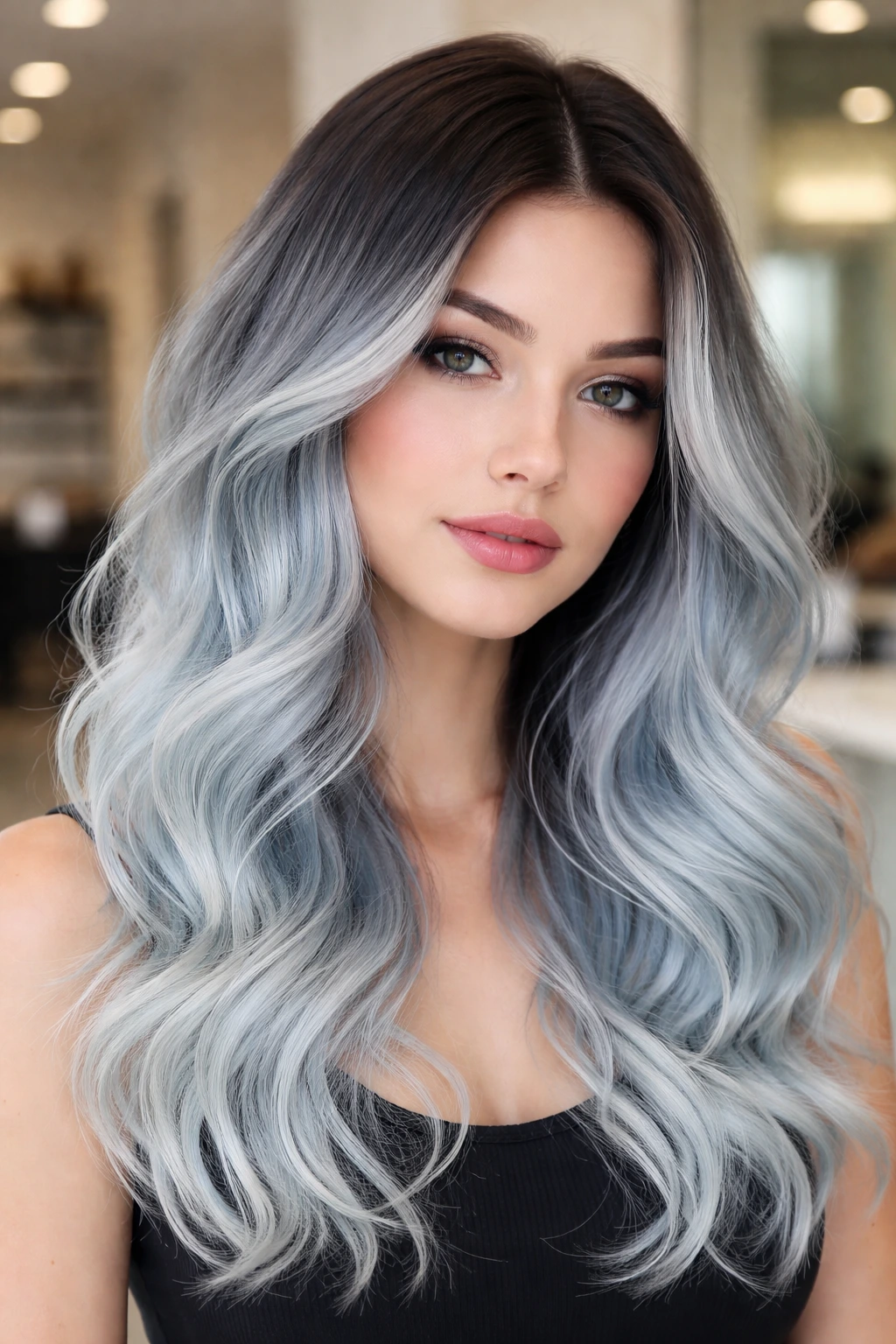
Ombré has evolved. We aren’t doing the stark line of demarcation from years ago; we are doing a seamless melt. The “frosted” aspect comes from keeping the roots dark—like a natural charcoal—and melting them into a cool, icy blue-blonde.
It’s a high-contrast style. You want to ensure the fade is gradual. If the change from dark root to blue-blonde happens too quickly, it looks like you missed your last three hair appointments. A good colorist will use a transitional shade in the middle to bridge the gap.
Care tip: Because the roots are dark and the ends are light, the ends will be the most damaged. Treat the lower half of your hair with a bonding treatment every time you wash it to maintain the integrity of that lightened blue.
9. Ice Blue Money Piece
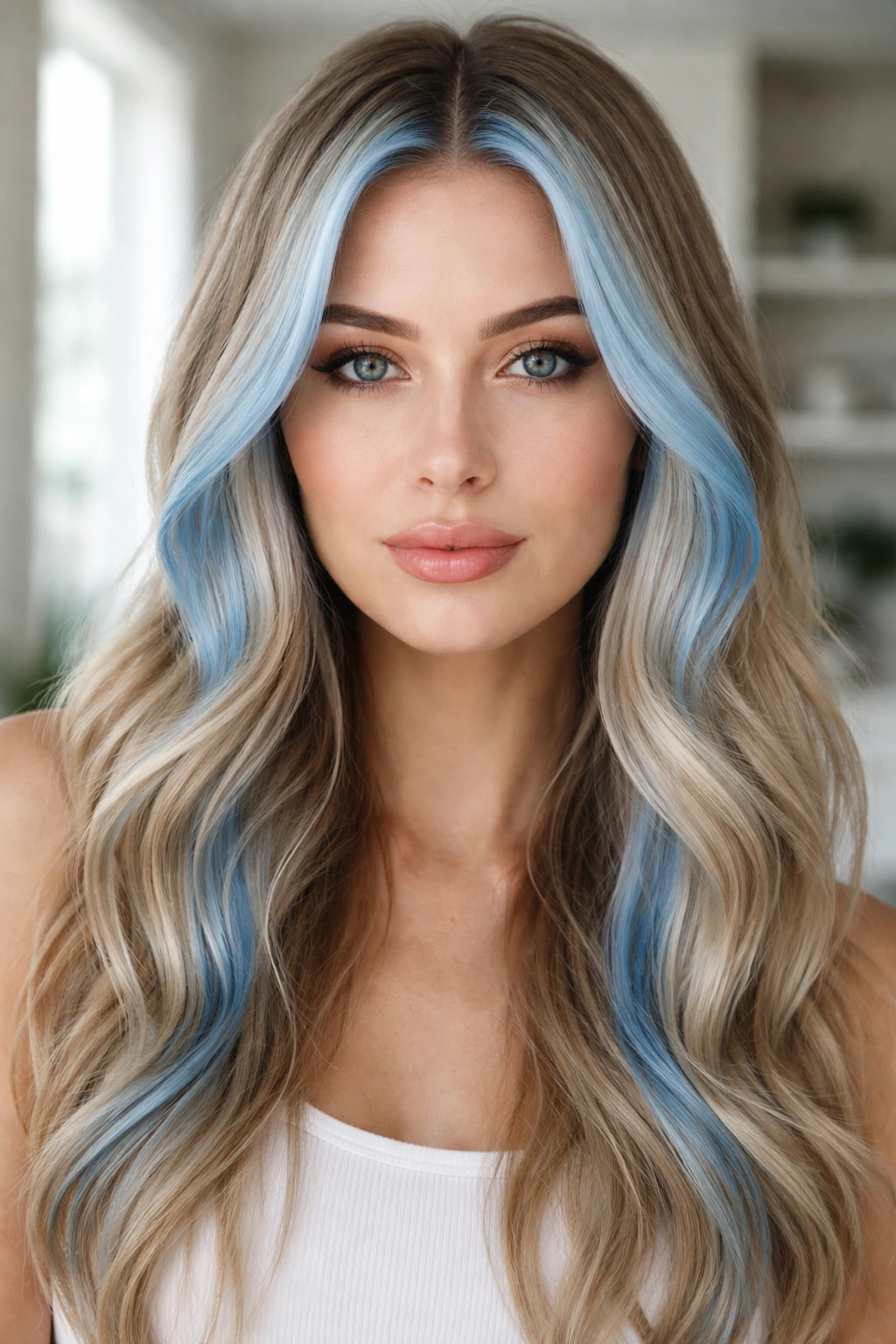
Sometimes you don’t need to color your entire head. The “money piece”—the two front strands of hair framing your face—is a massive trend for a reason. Doing these in an icy, electric blue-blonde is a great way to test the waters.
Why It Works
It brings the cool blue tones directly to your face, which is exactly where you need them to combat the yellow-undertone struggle of a cool-toned complexion. It’s also much easier to fix if you decide you hate it later.
Styling Ideas
- Keep the rest of your hair a neutral, ash blonde.
- Style with a center part to show off the symmetry of the money pieces.
- If you want a more subtle look, ask for a slightly darker, slate blue rather than a bright electric blue.
10. Cool Slate Blonde Roots
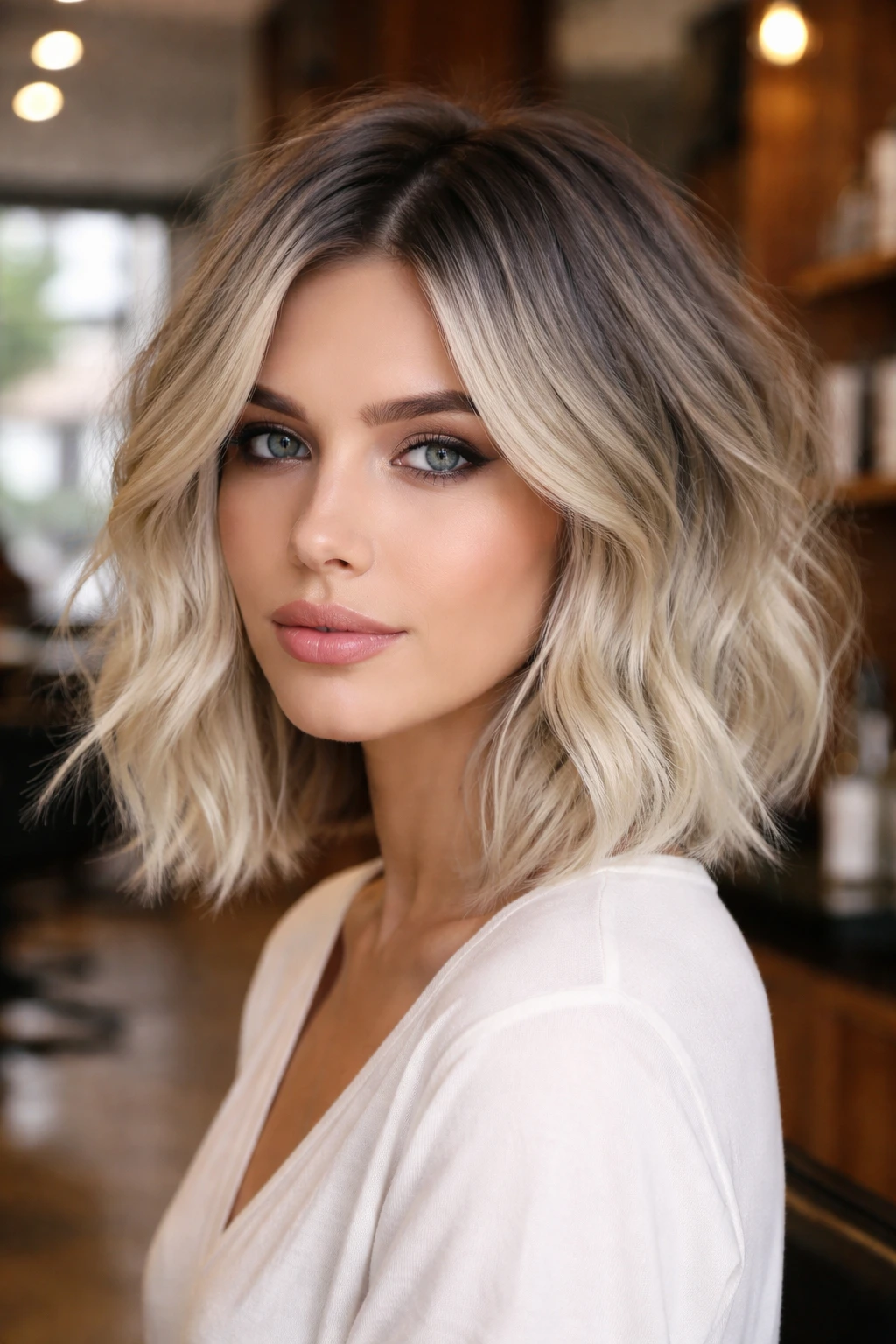
If you are tired of the constant root touch-ups, look into a slate blonde root smudge. Instead of trying to match your natural color (which might be too dark), you tint the roots to a cool, slate-grey blonde.
It’s an intentional look. By smudging a slate tone into your roots, you create a buffer zone. Even as your natural hair grows out, the difference in color isn’t as jarring because the slate serves as a bridge.
This is perfect for the low-maintenance individual. It pairs exceptionally well with a choppy, textured bob or lob. The contrast between the slate roots and the lighter, brighter ends gives the cut a lot of life and volume.
11. Arctic White with Azure Highlights
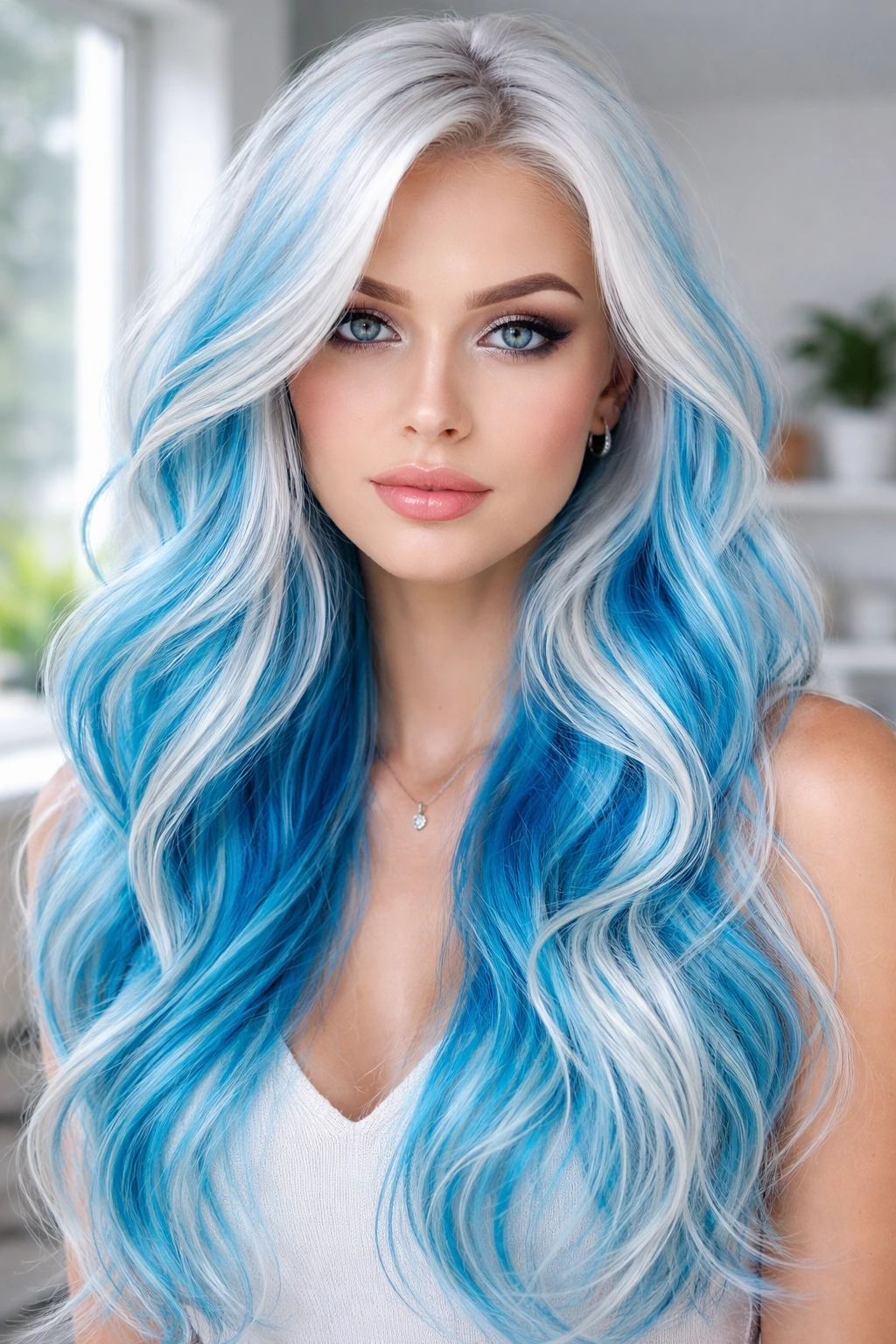
Azure is a brighter, more aquatic blue. When paired with arctic white, it looks like a winter wonderland. This is a very high-maintenance, high-reward color. You need the hair to be as light as possible—Level 10+—for the azure to show up correctly without turning green.
You are going to need a very skilled colorist. Azure is a tricky color; it has a lot of green in it. If your base isn’t sufficiently neutral, the azure will turn into a seafoam, which isn’t the vibe for a cool-toned skin match.
Warning: Do not try this at home. Even with professional help, getting the hair to a level where you can apply azure without it turning swampy is difficult. This is a “spend the money at the salon” kind of color.
12. Metallic Sky Blue Blonde
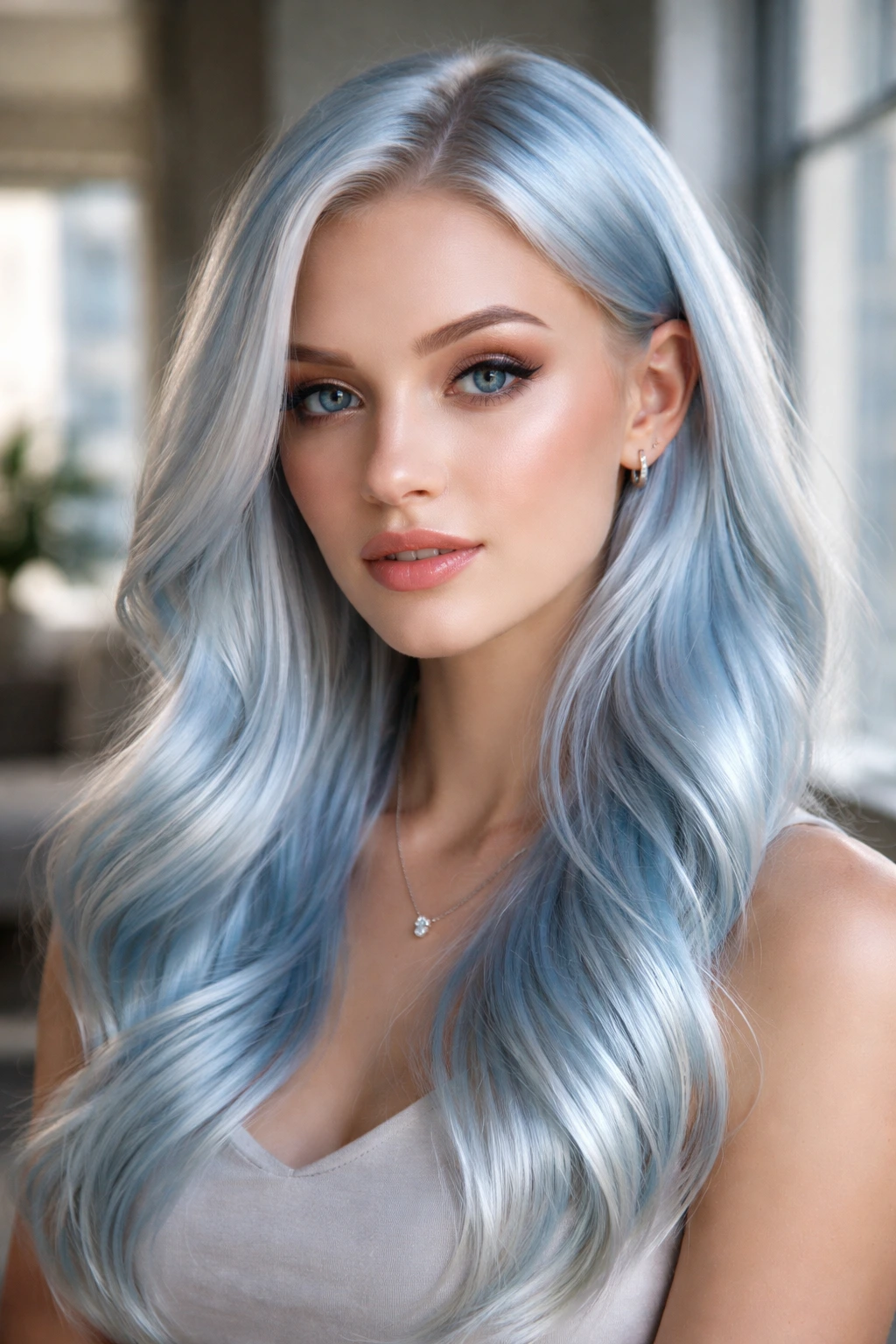
Metallic colors are distinct because they reflect light differently than matte or flat colors. A sky-blue blonde doesn’t just look blue; it looks like blue foil. It’s intense, glossy, and very modern.
Getting the Metallic Finish
This is usually achieved with a specific type of toner or gloss that contains high levels of silicone or specialized pigments that catch the light. It looks best on healthy, smooth hair. If your hair is porous or damaged, the metallic effect won’t catch—it will just look dull.
Pre-color prep: Before you go for this, spend a month using hair masks and avoiding heat tools. You want your hair cuticle to be as smooth as possible. The smoother the hair, the more “metallic” the blue will look.
13. Stormy Blue-Black Blonde Blend
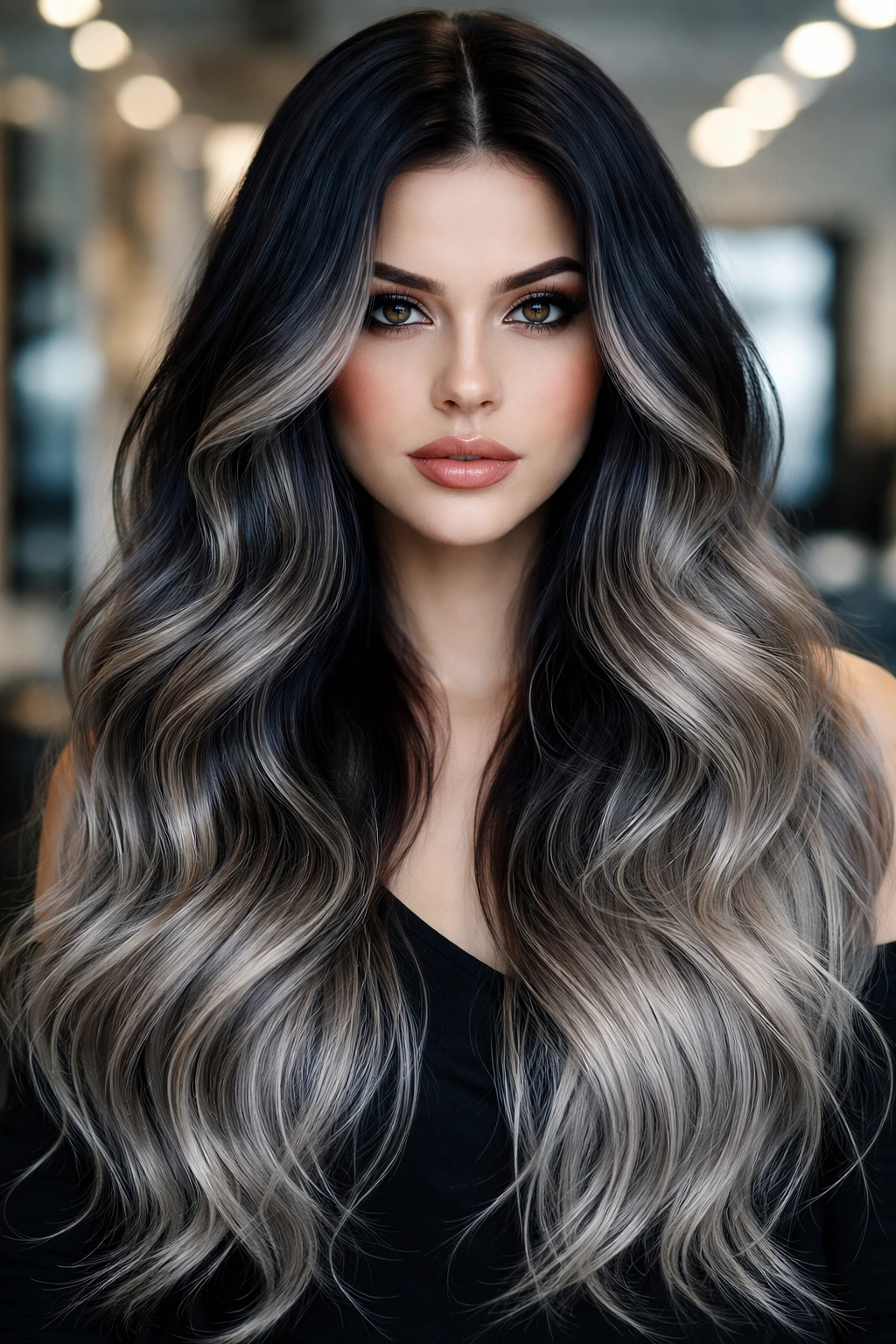
This is for the person who loves a moody, dark-to-light transition. Start with a deep, blue-black root that melts into a smoky, dark ash blonde. It’s intense, dramatic, and arguably the most “cool-toned” color you can get.
It creates a lot of weight. If you have fine, thin hair, be careful. The darkness at the roots can make your hair look thinner than it actually is. However, if you have thick, coarse hair, this is a great way to get a lot of drama without having to bleach your entire head.
It’s also incredibly durable. Because the base is so dark, you aren’t dealing with the constant struggle of bright colors fading to nothing. It has a long “grace period” before it needs to be refreshed.
14. Pastel Powder Blue Blonde
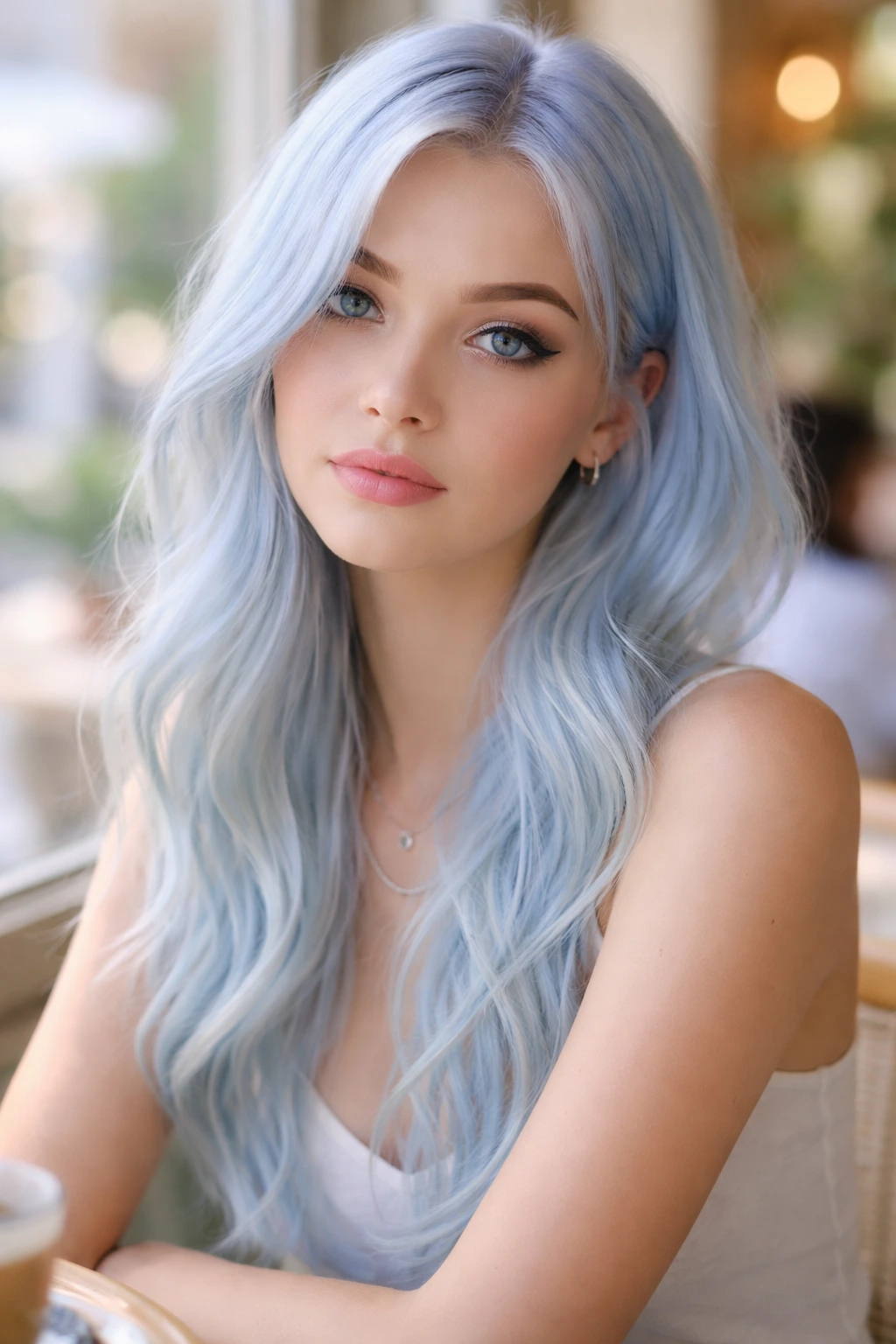
Powder blue is soft, muted, and very flattering on fair skin. It feels like a vintage, ethereal look. Unlike the neon blues or the deep sapphires, powder blue is delicate.
The Challenge of Pastel
Pastel colors are the hardest to maintain. They are sheer. If your hair isn’t toned perfectly white first, the yellow will shine through the pastel, turning it into a weird, sickly green. You need a dedicated, weekly toning routine with a blue-tinted shampoo to keep it from washing out into a pale yellow.
It is worth it for the aesthetic, though. It feels very intentional and soft. It’s not an “in your face” fashion color; it’s a subtle, artistic choice that shows you pay attention to the details.
15. Deep Cobalt Blonde Peekaboo
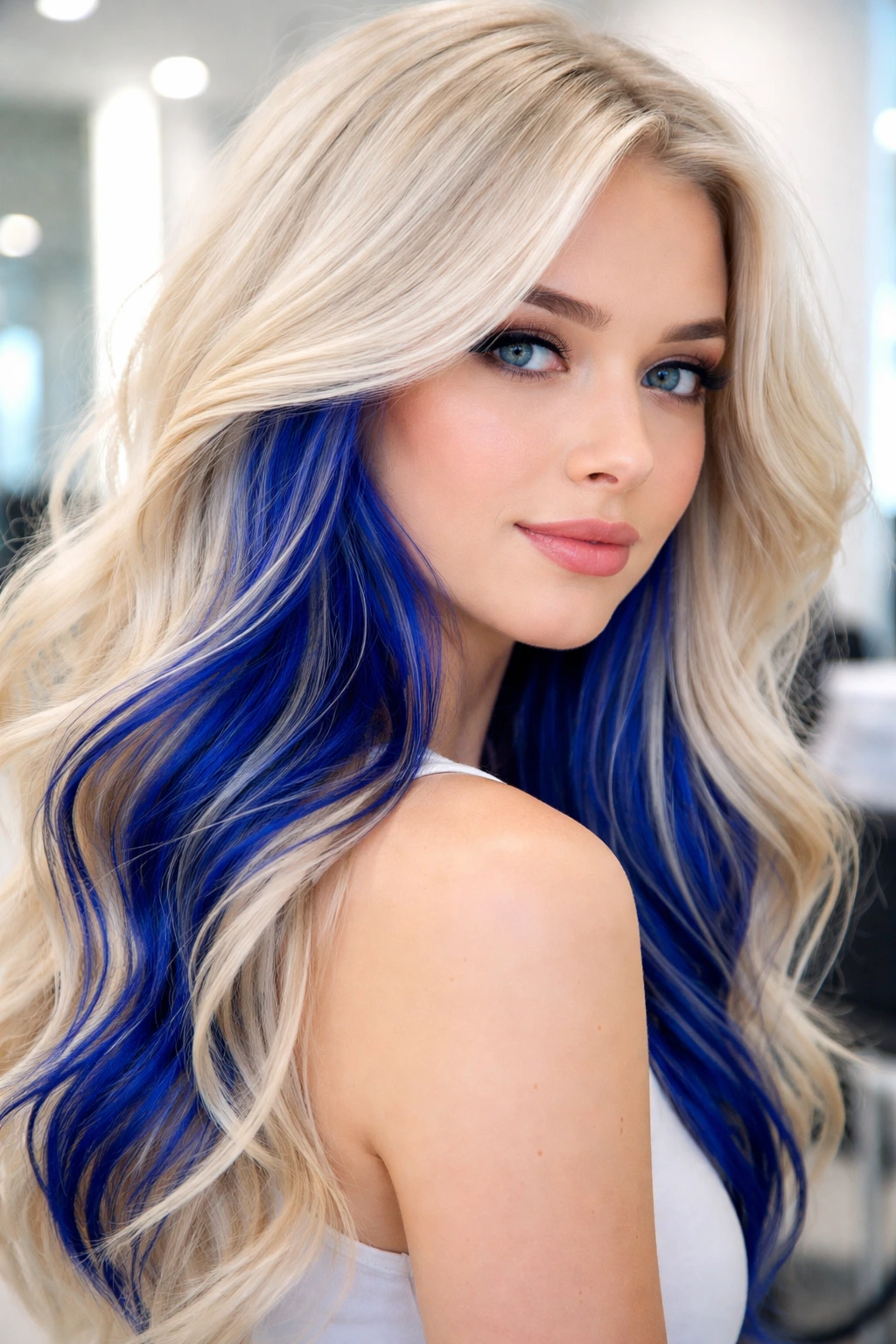
If you want to have fun without being overwhelming, try the peekaboo method. You color the underneath section of your hair—the part that usually touches your neck—a deep, vibrant cobalt blue, while the top remains a cool, platinum blonde.
It’s the ultimate “business in the front, party in the back” for your hair. You can wear it down, and it looks like a very subtle flash of blue when you move. You can wear it in a high ponytail, and the cobalt becomes the main event.
Why choose this? It limits the amount of damage. You only have to bleach the sections of hair that will be colored cobalt. If you have concerns about bleach damage, focusing on a smaller, strategic area is a smart way to enjoy the color without frying your entire head.
16. Iced Indigo Blonde Melt
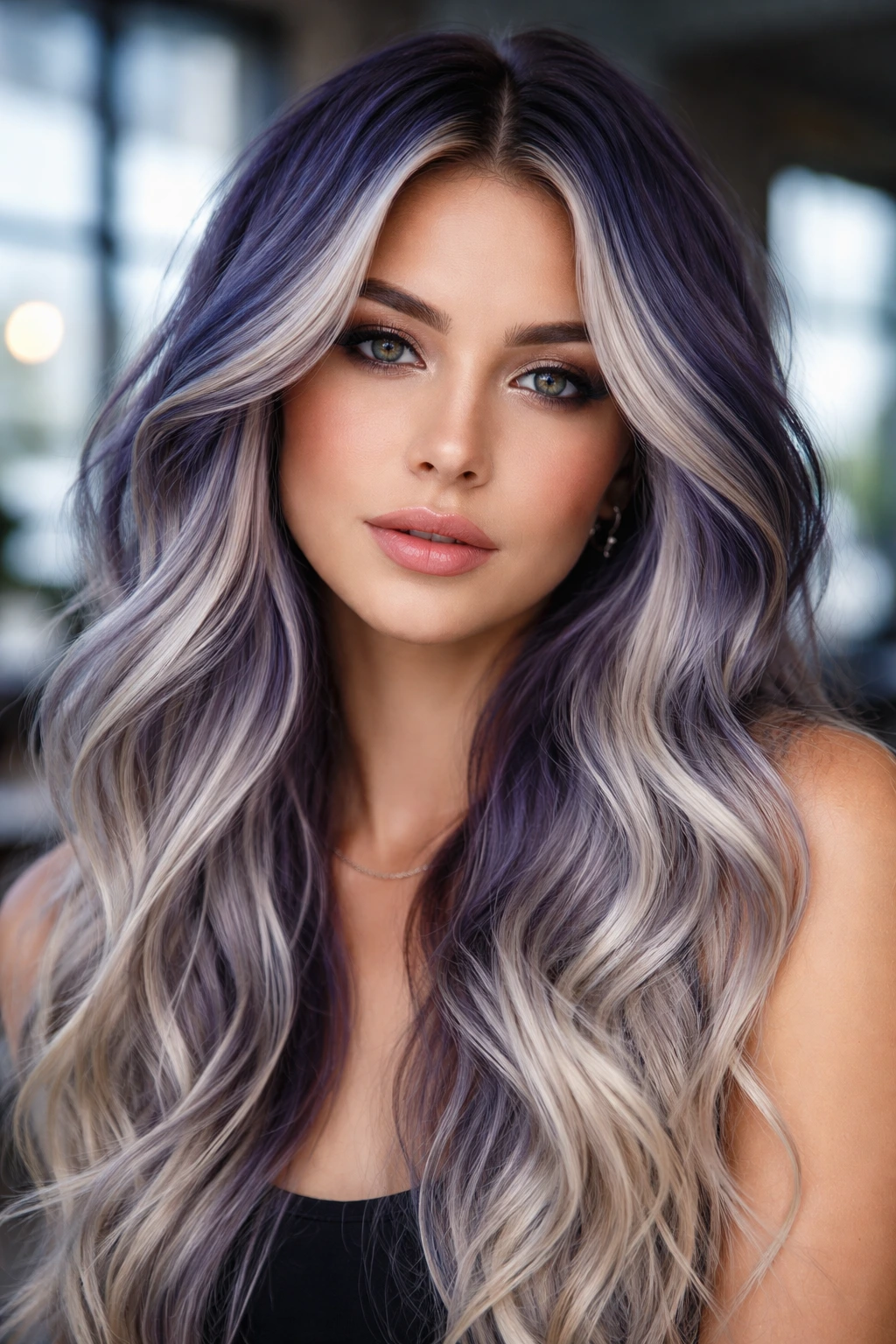
Indigo is a deep, purplish-blue. When you melt it into a blonde, it creates a very complex, expensive-looking gradient. This isn’t just blue; it’s a multi-dimensional color that shifts depending on the angle of the light.
The key to this look is the “melt.” You don’t want a horizontal stripe of indigo. You want the indigo to stretch down into the blonde in uneven, organic-looking streaks. It looks like a painting.
It’s also surprisingly flattering. The purple base of the indigo helps keep the hair from turning brassy, even as it starts to fade. It’s one of the few fashion colors that actually looks better as it fades because it softens into a dusty violet-grey.
17. Moonlight Blue Balayage
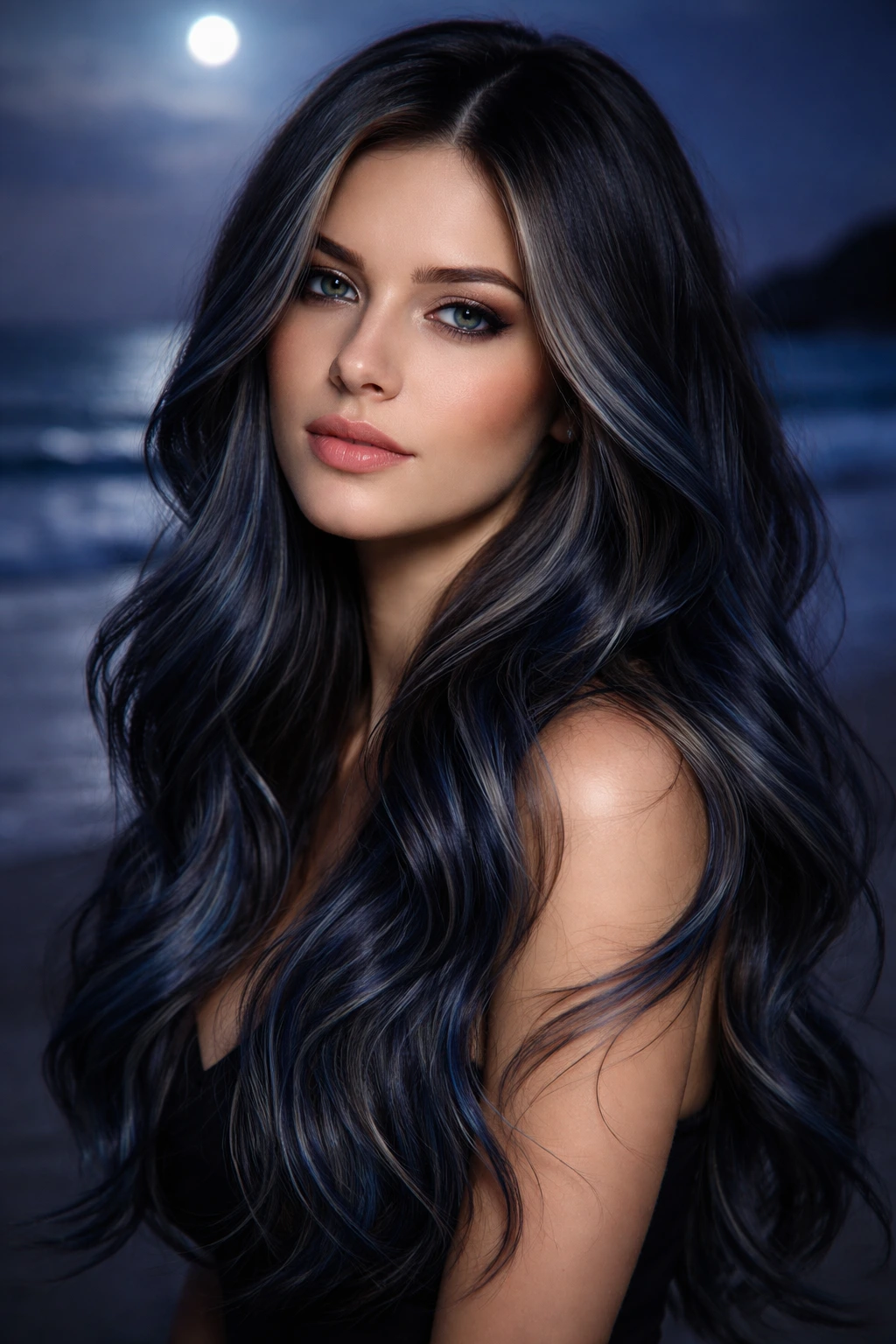
Imagine the way the moon hits the ocean at night—that’s the vibe here. It’s a mix of dark navy and lighter, slate-blue balayage pieces painted onto a very dark, cool-toned blonde. It’s dark, romantic, and very, very cool.
This is a great option for people who are naturally dark-haired. You don’t need to go to a light blonde. You can stay in the dark, “dirty blonde” range and just add these blue tones for dimension. It creates a “lived-in” aesthetic that feels very current.
Styling tip: Use a lightweight styling oil or serum. Because this look relies on the contrast between dark and light tones, you want your hair to be shiny. Dull hair will make the navy look like an accident rather than a deliberate style.
18. Slate and Cream Colour-Block
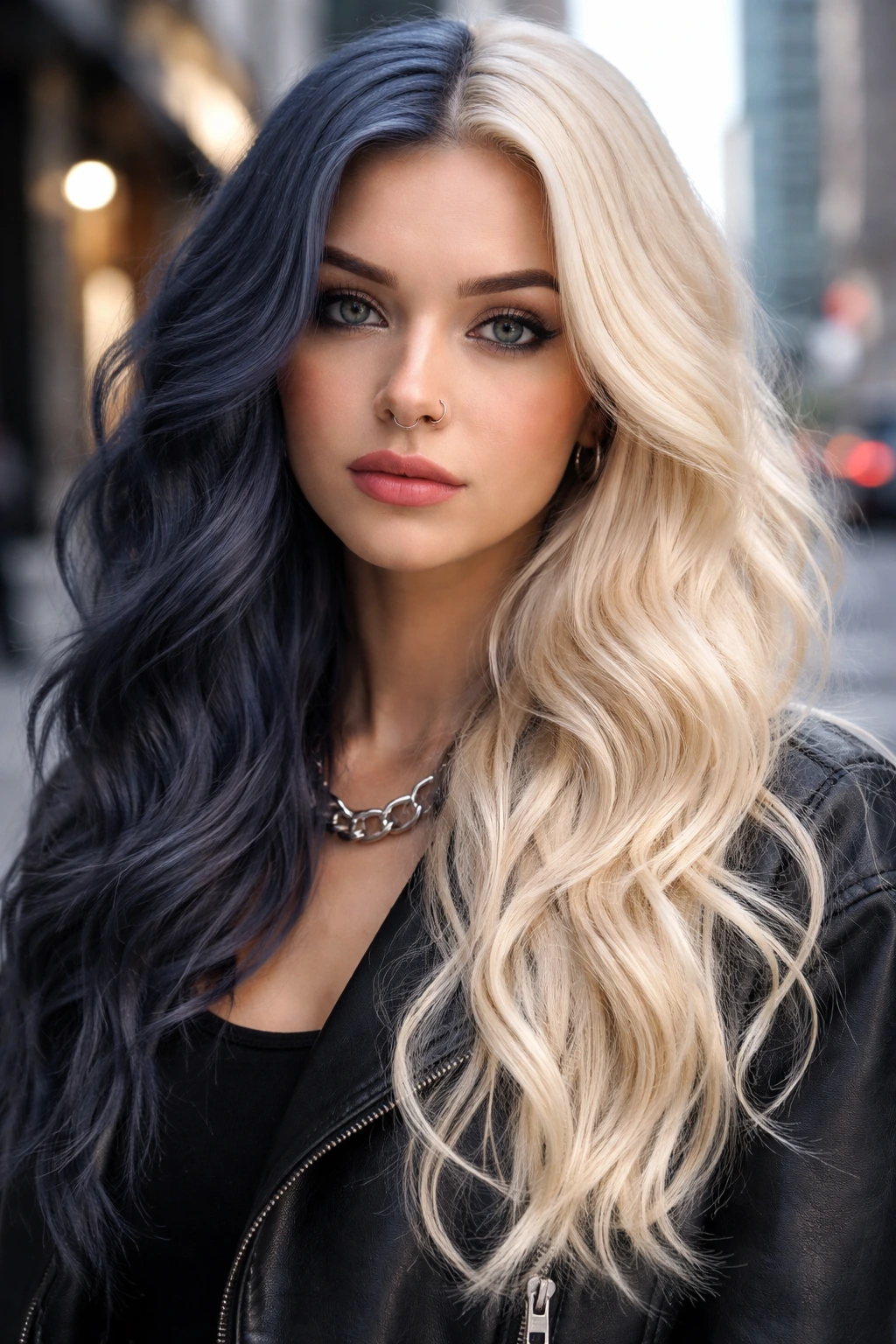
This is the most daring option on the list. Instead of blending the colors, you keep them distinct. One section of your hair—maybe the fringe or one side of your head—is a deep, matte slate blue, while the rest is a bright, creamy, neutral blonde.
It’s architectural. It’s for someone who treats their hair as an accessory. It’s bold, geometric, and very fashion-forward. Because the colors are separated, you don’t have to worry about them bleeding into each other during the washing process as much.
The final word on this: You have to own it. This style is guaranteed to draw attention. If you are someone who likes to fade into the background, this is not the look for you. But if you want to make a statement, there is nothing quite like a high-contrast color block.
The Bottom Line
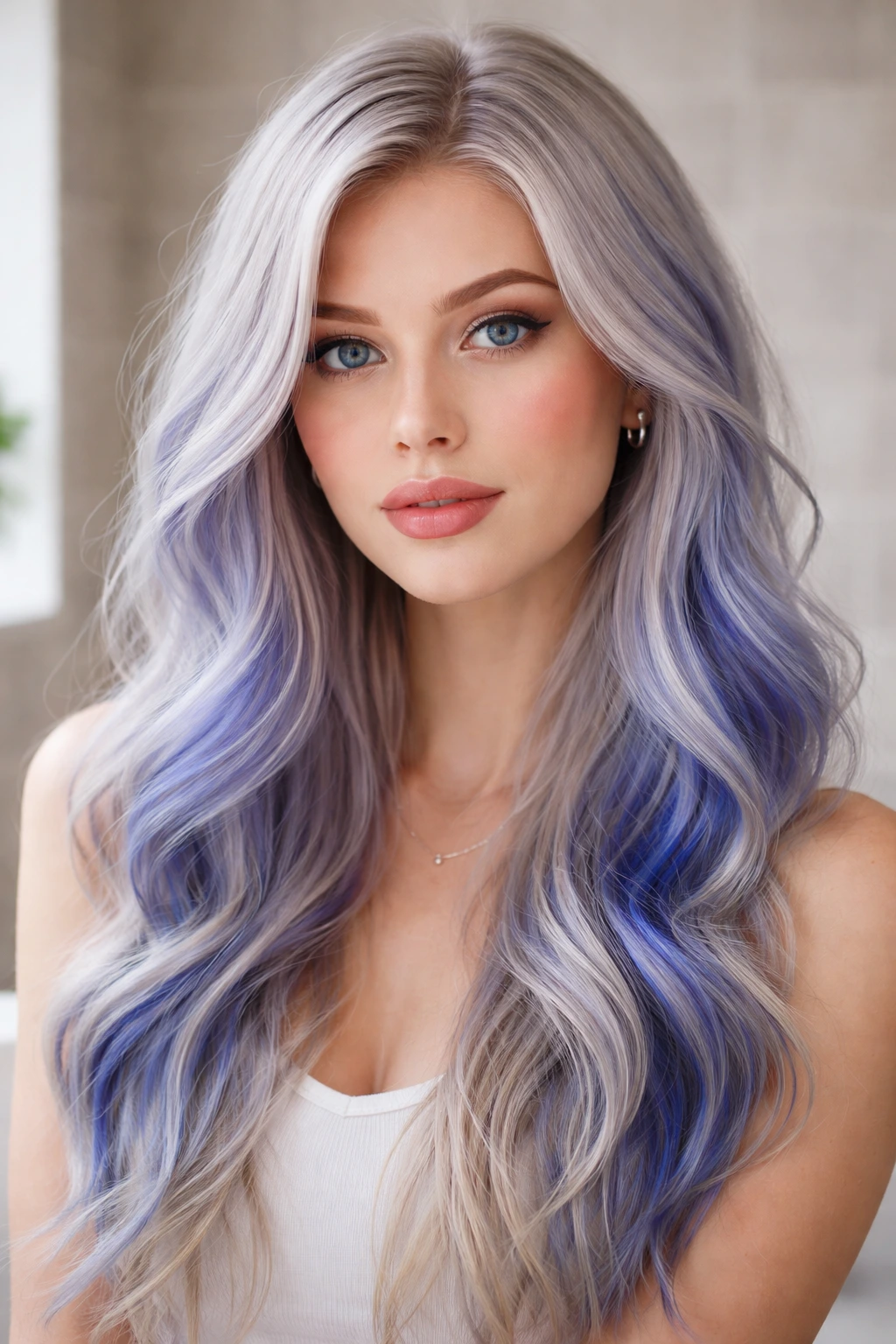
Choosing the right blue-blonde combination for cool skin is all about managing the undertones. Your enemy is yellow, and your best friend is a solid, cool-toned base. Whether you opt for a subtle periwinkle babylight or a daring cobalt peekaboo, the secret to success is patience during the bleaching process and vigilance in your aftercare routine.
Never rush the lightening phase. If your hair isn’t light enough, adding blue will almost always result in an unwanted green tint. Always use a professional-grade purple or blue shampoo in your rotation, and prioritize hydration. Bleached hair is thirsty, and blue-tinted hair is even thirstier. When in doubt, start small with a gloss or a peekaboo section. You can always go bolder, but you cannot easily undo a full-head bleach job. Take your time, find a colorist who gets the nuances of cool-toned skin, and enjoy the process of finding your perfect icy shade.
