



Honey caramel hair color for cool skin tones works best when the warmth stays soft. Too much gold can pull orange against pink or blue undertones, which is why the prettiest versions lean beige, smoky, or lightly toasted instead of brassy.
That small shift matters more than most people think. Cool complexions usually look freshest next to hair color that has depth at the root, a neutral or ash-brown base, and caramel placed where it can brighten the face without turning the whole head copper. A good colorist will talk about level, toner, and placement in the same breath. Those three pieces do most of the work.
And yes, honey caramel can still be warm. It just should not be loud. The nicest versions have that soft, glossy warmth you notice after a second look — the kind that makes skin look clearer and eyes look sharper without screaming for attention.
1. Beige Honey Caramel Balayage
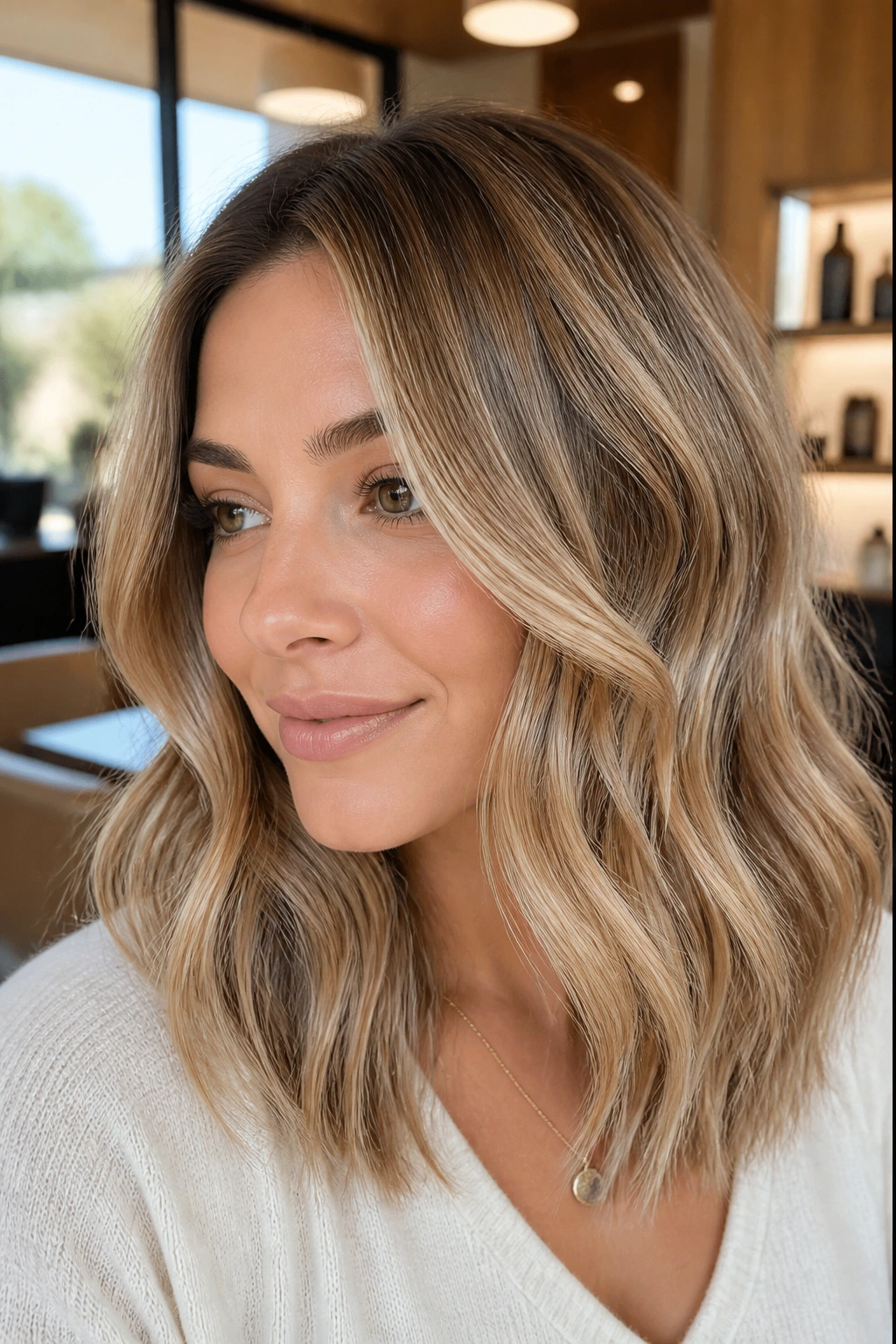
Beige honey caramel is the safest place to start if your skin leans cool. It keeps the sweetness of honey, but the beige tone pulls the color back from brass and makes the whole look feel cleaner against fair or medium skin with pink or blue undertones.
Why It Works on Cool Skin
Ask for a balayage that lifts the mids and ends to a soft caramel, then tones the highlights with a beige gloss. That beige layer is doing a lot of the heavy lifting here. It keeps the warmth from turning pumpkin-like in sunlight, which is where a lot of caramel shades go sideways.
This look is especially kind to fine hair because balayage gives you brightness without harsh stripes. The pieces can be painted wider near the face and softer through the back, so the result feels airy instead of chunky.
- Best base: level 5 to 7 brunette or dark blonde
- Best tone words to use: beige, neutral caramel, soft honey
- Best finish: loose waves or a blowout with bend at the ends
- Maintenance: a gloss every 6 to 8 weeks keeps the beige from fading warm
Pro tip: Ask your colorist to leave the root a shade or two deeper than the mids. That little bit of shadow makes the beige caramel look more expensive and keeps regrowth from looking harsh.
2. Mushroom Brown with Honey Caramel Ribbons
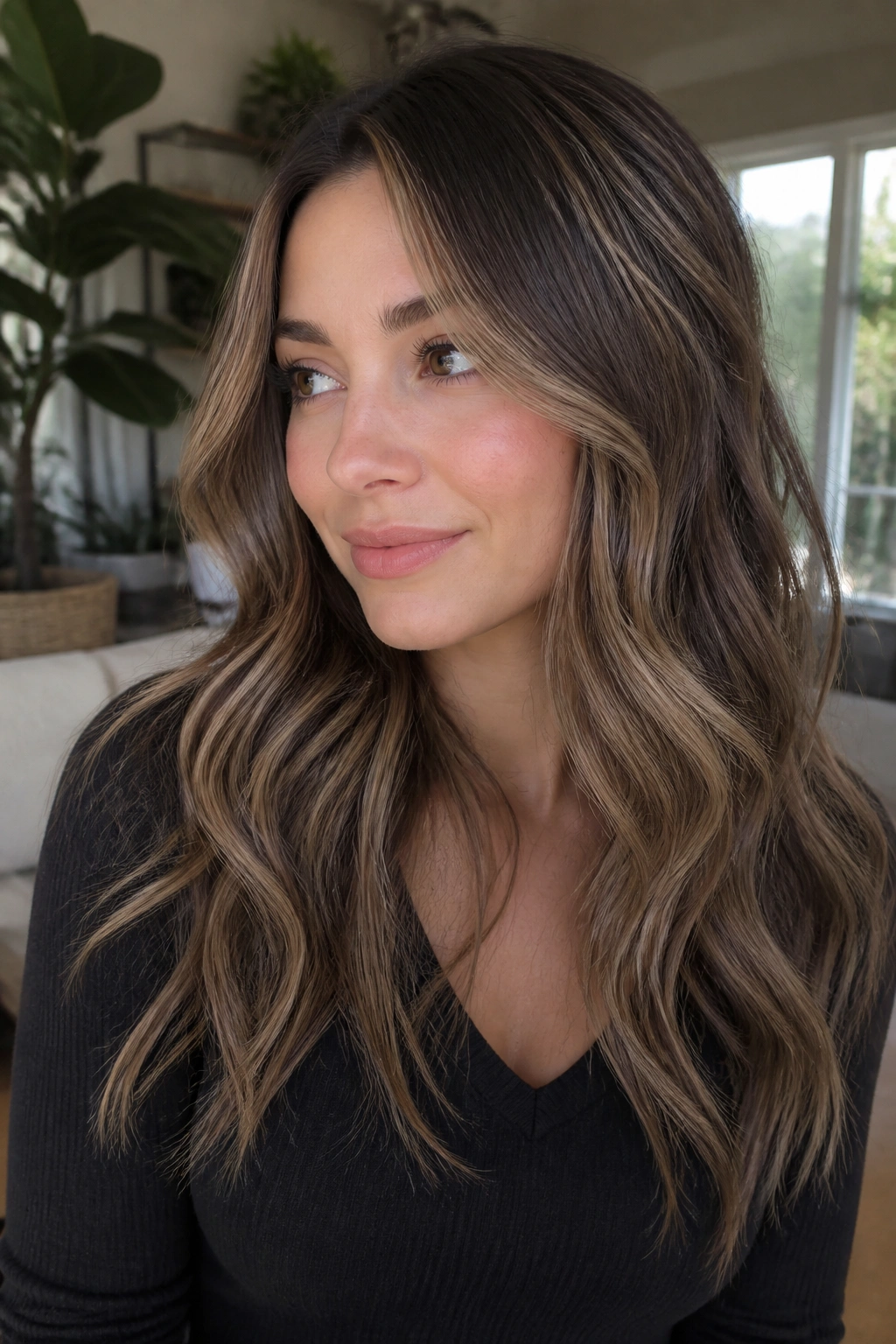
Mushroom brown sounds a little odd until you see it next to cool skin. Then it makes perfect sense. The base stays smoky and neutral, and the honey caramel comes through in thin ribbons that warm the hair without stealing the show.
This is the version I’d choose for someone who wants dimension first and brightness second. The brown base keeps the look grounded, while the caramel ribbons move through the hair like light hitting satin. It’s understated, but not flat. That matters.
The key is placement. Ribbons that are too thick can read striped, and on cool skin that striping can feel too yellow. Keep them narrow, especially around the crown and temples, and let them break up naturally through the ends.
A mushroom brunette with caramel pieces also grows out nicely. That’s not glamorous language, but it’s honest. You can go longer between touch-ups because the neutral base softens the line as it grows.
3. Soft Caramel Money Piece on a Dark Root
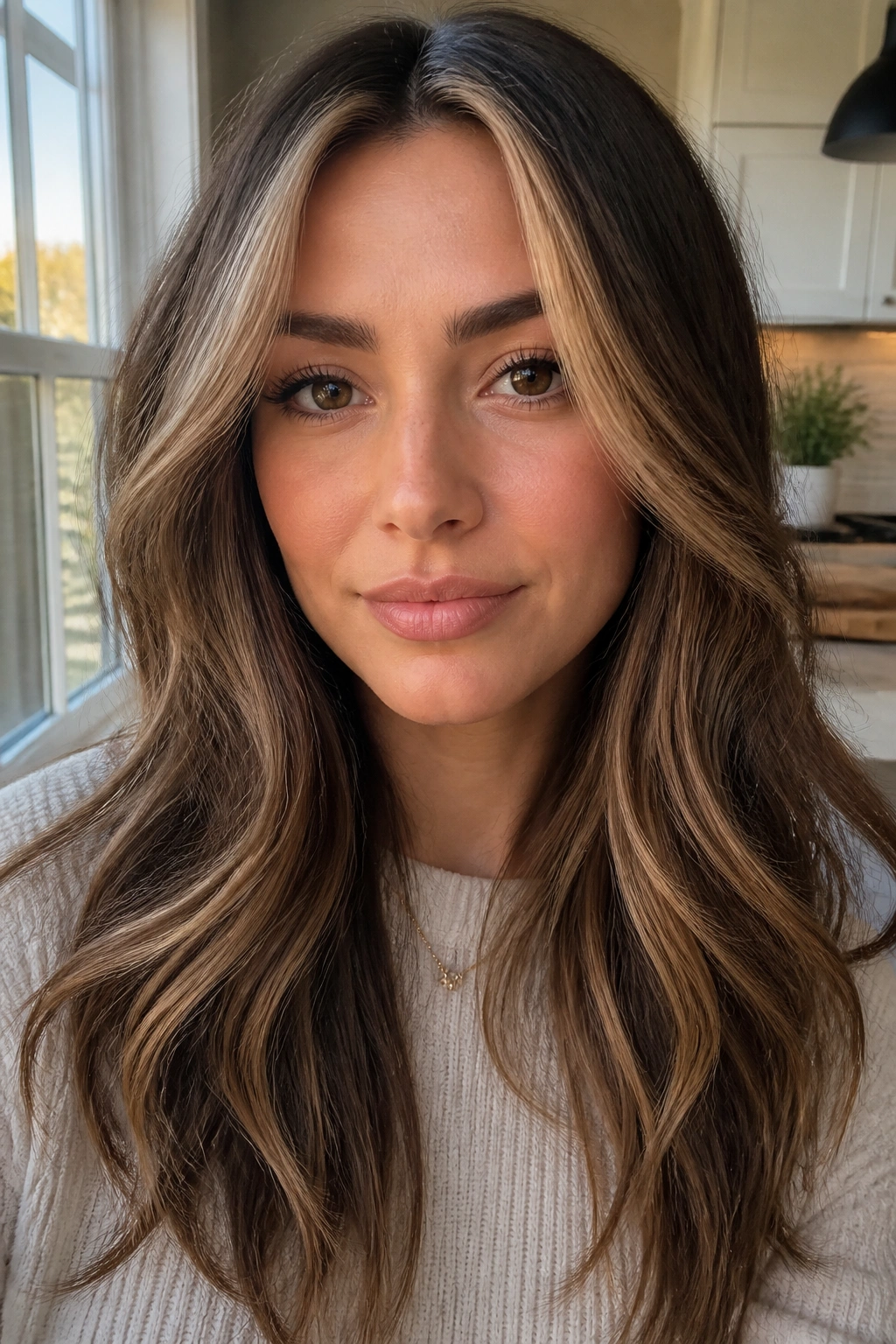
A bright face frame can change everything, even if the rest of your hair stays dark. For cool skin tones, the money piece should be caramel with a beige edge, not a true golden blonde. That difference is tiny on a swatch and huge on your face.
How to Wear It
A good version uses two front slices, one on each side of the part, lifted enough to catch light but not so pale that they fight your undertone. Keep the root area smudged so the front doesn’t look painted on.
This style works especially well if you wear your hair in waves, a half-up style, or a loose ponytail. The lighter pieces show up around the cheeks and collarbone, which gives the face a softer frame without needing a full head of highlights.
- Ask for a root smudge 1 level deeper than the face frame
- Keep the front pieces around level 7 or 8, not icy blonde
- Add a beige toner if the caramel starts looking orange
- Use a round brush when drying the front so the color sits near the face
If you want a change that people notice right away, this is one of the easiest ones to wear.
4. Smoky Honey Caramel Lob
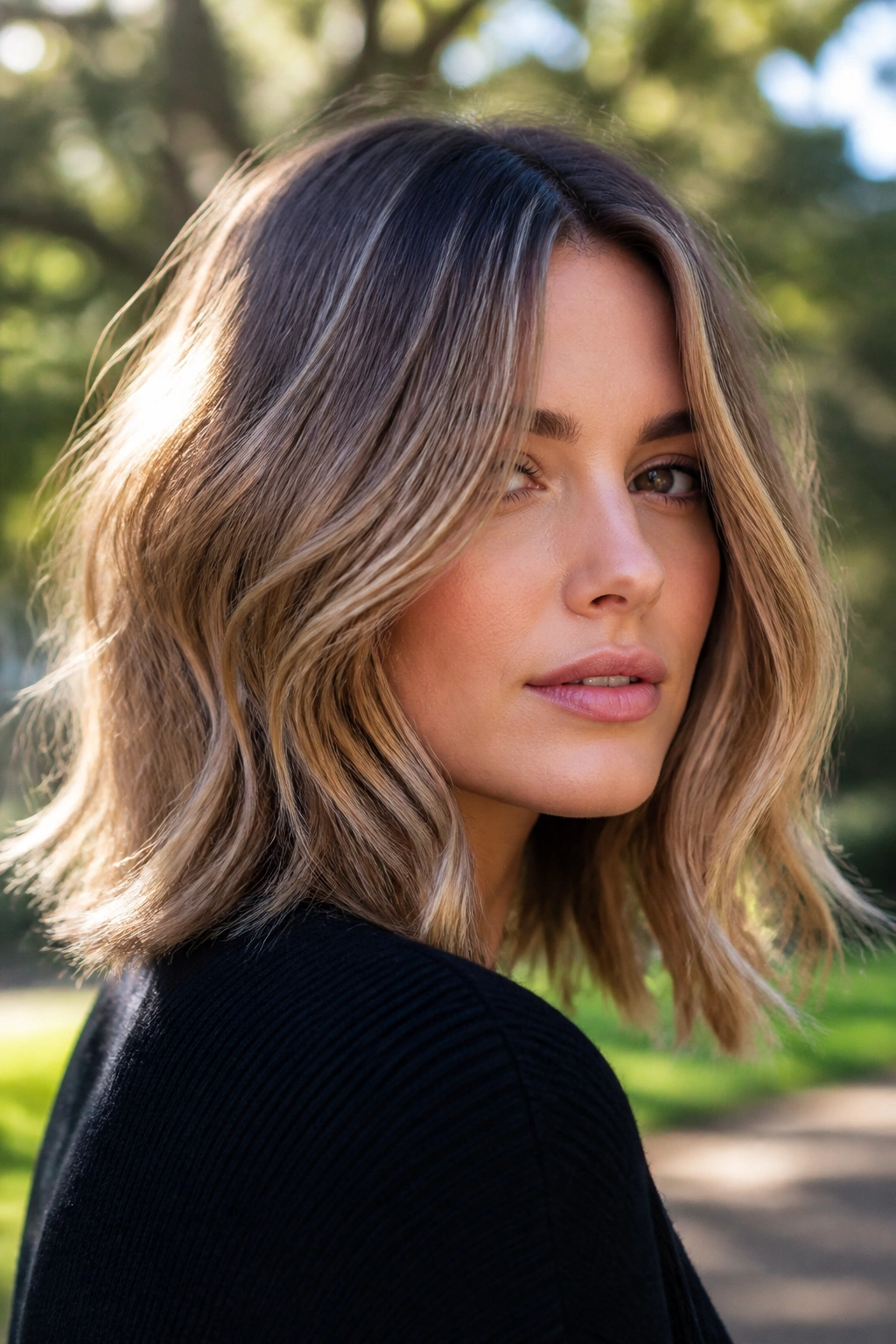
A lob gives caramel color room to breathe. On a collarbone-length cut, smoky honey caramel looks polished because the ends sit in a clean line and the color can fade from deeper roots to lighter ends without getting lost in too much hair.
What makes it work for cool skin is the smoky part. That word matters. You want the caramel to sit under a veil of ash or beige so the warmth feels controlled, not sunny. The result is flattering in daylight and even better indoors, where the softer tones show up as shine instead of yellow.
This is also one of the easiest cuts to style. A loose bend with a flat iron, or a blowout with a slight curve at the ends, shows off the dimension better than pin-straight hair does. Straight hair can work too, but it needs a glossy finish or the color can look a little one-note.
If your hair tends to frizz, this is a forgiving choice. The movement in the cut hides small changes in tone as the color grows out.
5. Espresso Base with Thin Caramel Babylights
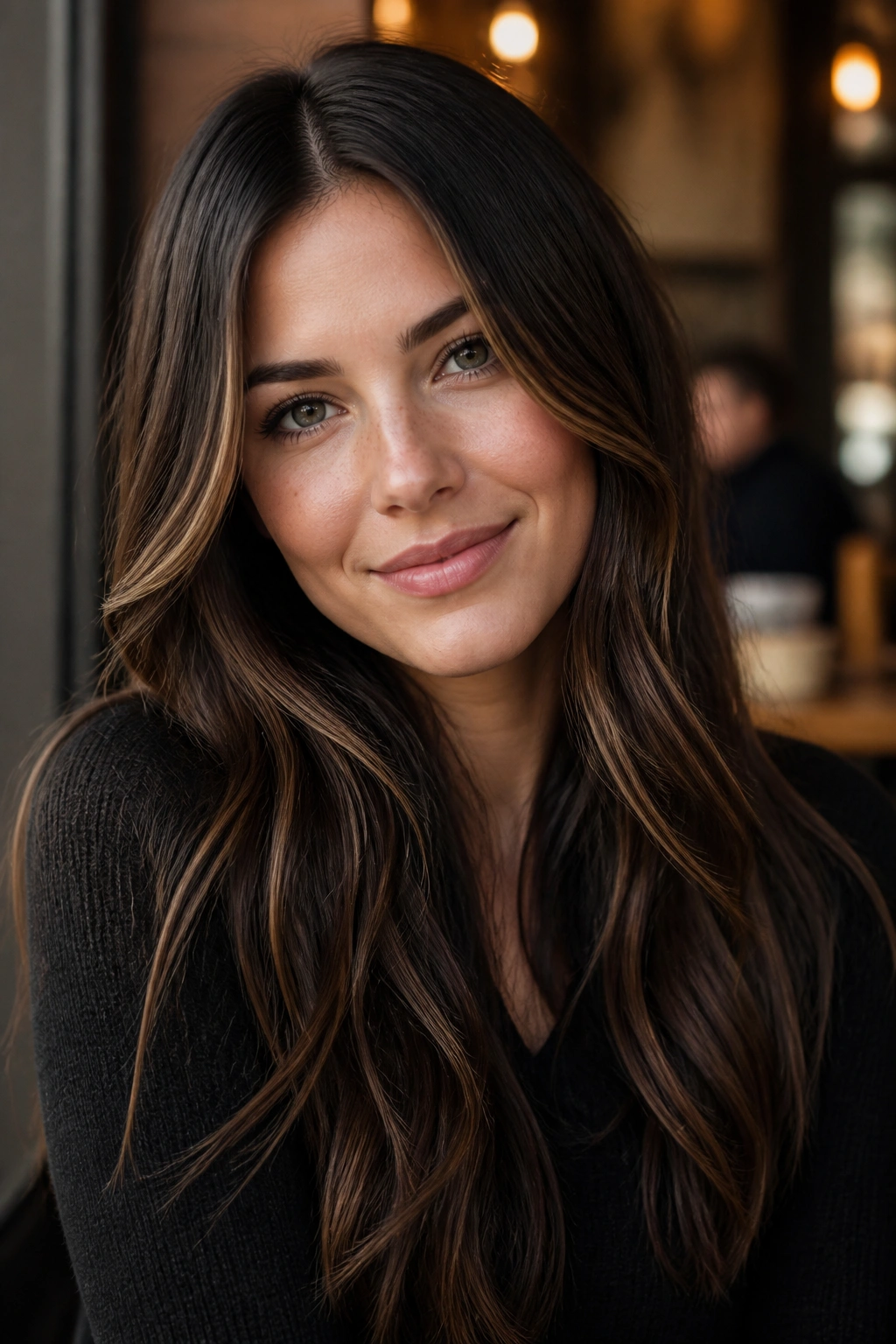
This is the version for people who want almost no obvious color change until the light hits. Thin babylights on an espresso base create a soft shimmer, not a stripey highlight effect. They’re tiny, and that’s the point.
Cool skin tones usually look sharp next to a deep brunette base because it gives the complexion a clean frame. Add very fine caramel babylights, and you get warmth without losing that crisp contrast. The caramel should stay narrow and well-toned — think candlelight, not highlighter.
Babylights also work well if you wear your hair up often. The tiny pieces near the hairline and part break up the darkness just enough to make the color read dimensional from every angle. You don’t need big contrast to get movement.
This is one of the lower-maintenance ideas on the list. Since the pieces are so fine, regrowth is softer and the overall look stays believable for a long stretch. That matters if you hate obvious lines.
6. Creamy Caramel Melt on Long Layers
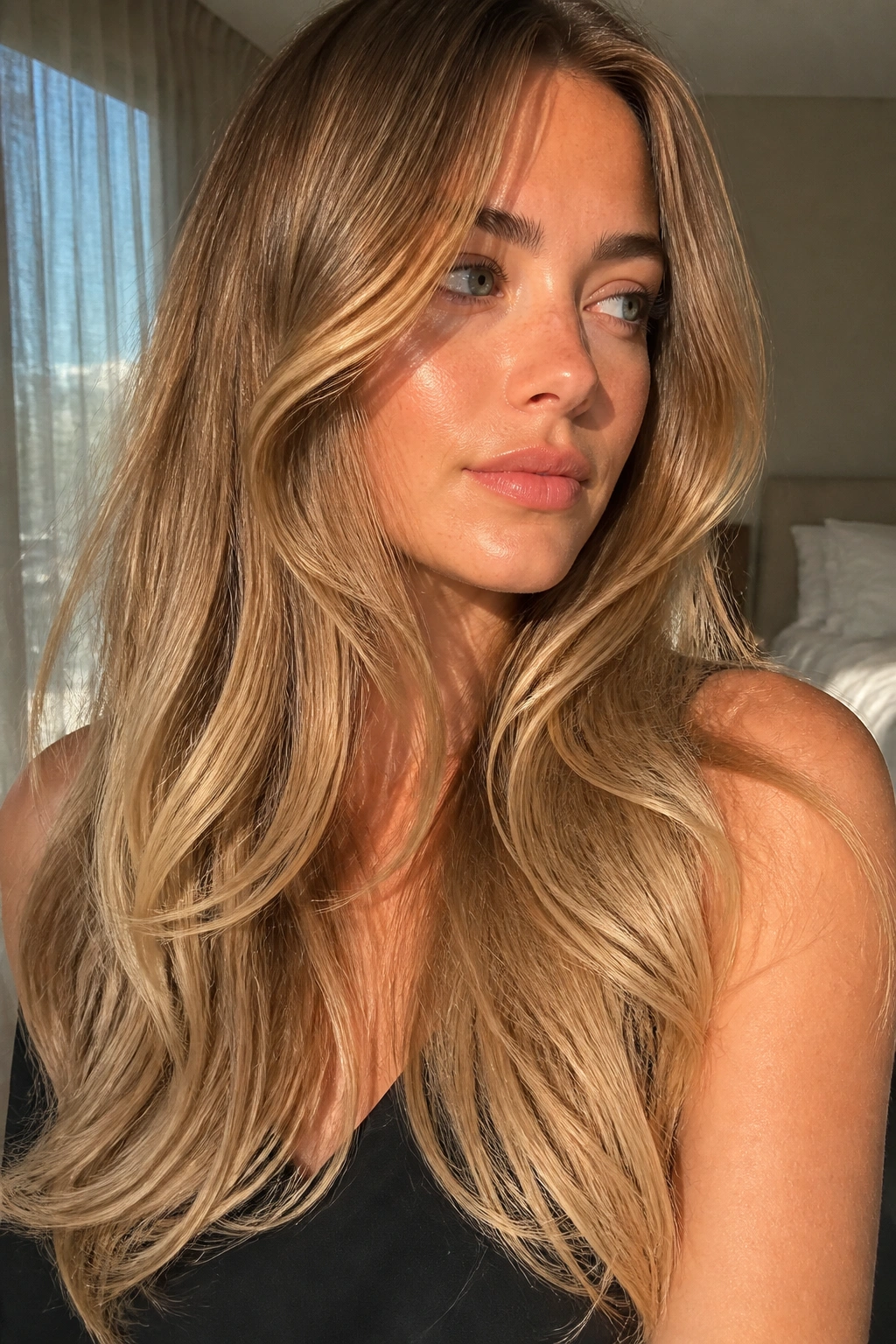
Long layers make a caramel melt look fluid instead of busy. The color can start deeper near the root, soften through the mid-lengths, and finish in creamy honey on the ends. On cool skin, the trick is to keep the lightest pieces creamy rather than yellow.
Unlike a heavy highlight set, a melt depends on smooth transitions. The eye shouldn’t stop at any one stripe. If it does, the color feels forced. You want one shade to slide into the next, almost like the hair was naturally kissed by lighter tones.
What Makes It Different
A melt is softer than classic highlights because the lift is distributed across the hair rather than stacked in obvious bands. That makes it easier on layered cuts, where each layer can show a different tone.
It’s also a smart choice if your ends are already light from previous color. A caramel melt can refresh the whole head without making the front too bright. Use a beige or neutral glaze to stop the lighter pieces from swinging orange as they fade.
Best for: medium to long hair, especially when the layers are cut with movement.
7. Ash Brown Bronde with Honey Ends
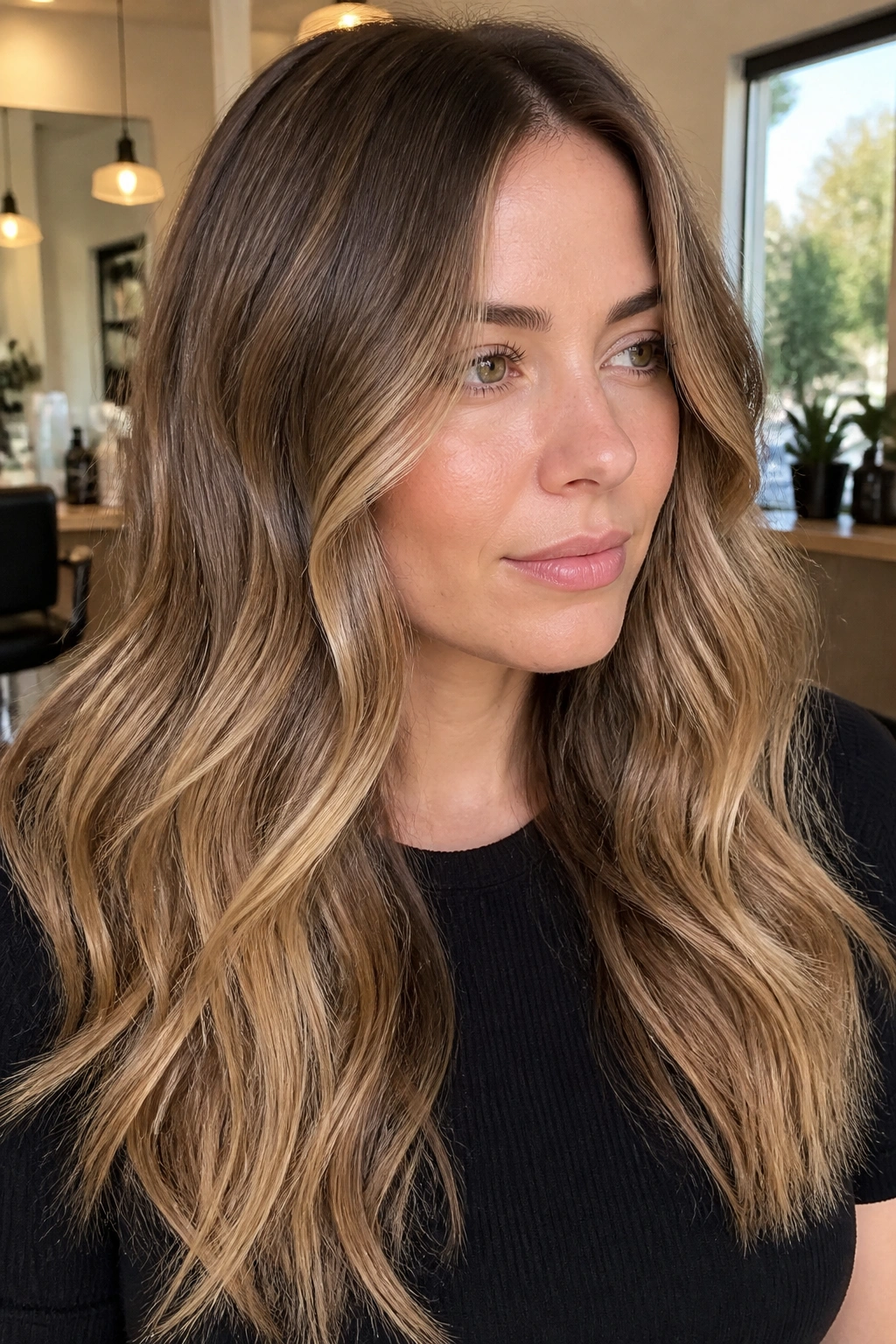
Bronde can be a boring word when people use it lazily. Here, though, it earns its keep. Ash brown at the top keeps the tone cool and grounded, then the honey ends give you a little warmth where the eye naturally lands.
Why It Flatters Cool Undertones
Cool skin tones usually look best when the hair near the face stays deeper. Ash brown does that job well. It keeps redness in the skin from competing with the color, while the honey ends bring enough lightness to keep the look from feeling heavy.
This idea suits people who like a lived-in look and do not want to baby their roots. The softer root-to-end shift means you can stretch appointments without the grow-out looking rough. That’s especially useful on wavy hair, where the texture already adds motion.
- Root zone: ash brown or soft mocha
- Mid-lengths: muted caramel
- Ends: honey toned with beige or neutral gloss
- Styling: air-dried waves or a diffuser works well
A tiny caution: if your hair is very porous, honey ends can grab warmth fast. Keep a gloss plan in place or they can wander into gold sooner than you’d like.
8. Face-Framing Caramel for Curtain Bangs
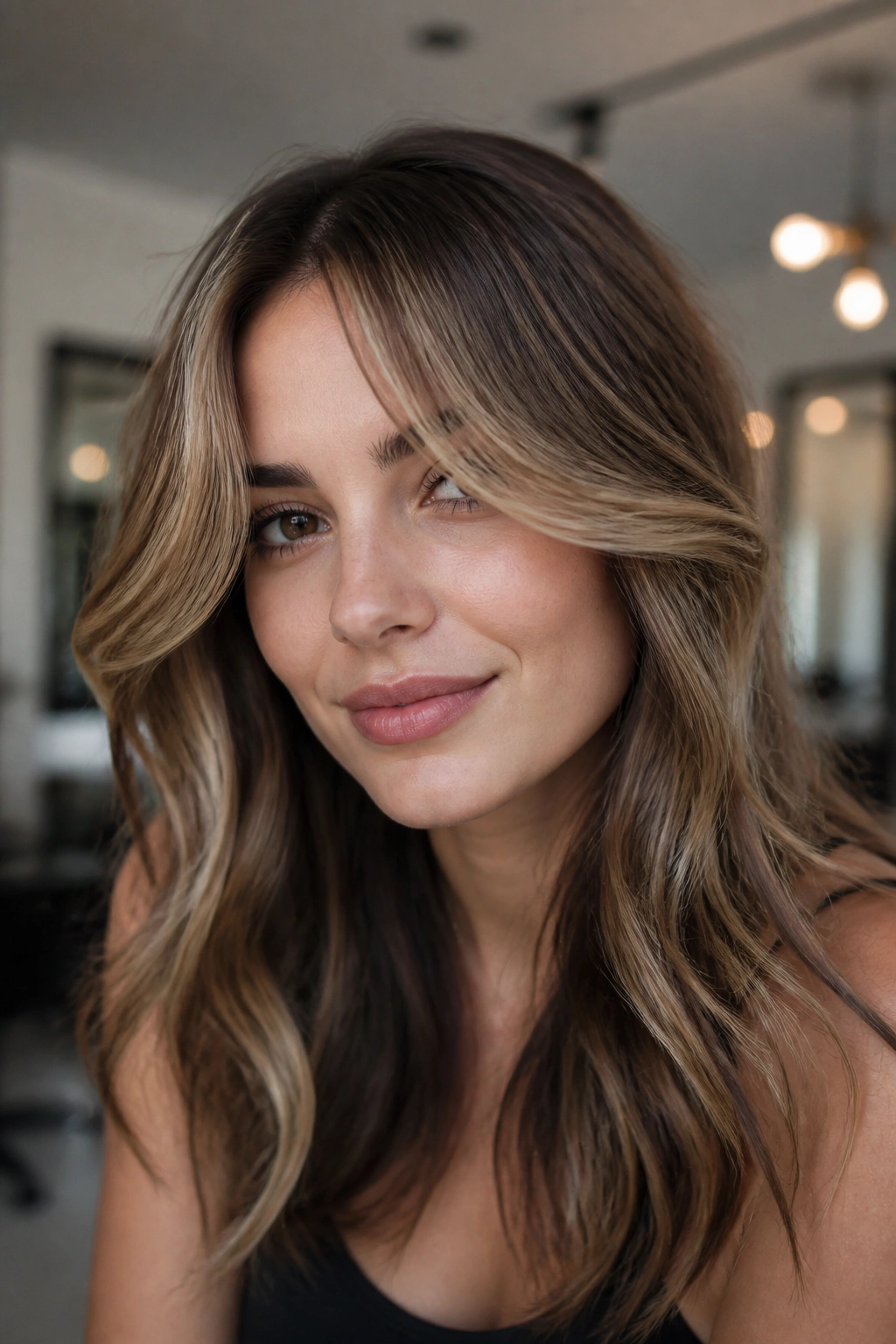
Curtain bangs and caramel highlights are a good match because both live near the face. The lighter pieces break up the fringe and soften the cheekbones, which can be lovely on cool skin if the caramel stays muted.
A lot of people make the mistake of brightening the bangs too much. Then the front section steals all the attention and the rest of the hair looks dull by comparison. Better to keep the money pieces a touch deeper, then weave a few softer ribbons through the bangs and the first layer behind them.
This idea works especially well on medium brown or dark blonde hair. You do not need a dramatic lift. You need shape. The eye follows the fringe, then catches the lighter pieces just under it.
If your bangs are thick, keep the highlight placement irregular. Thin strips can look dated fast on heavy fringe. A few broken pieces, spaced with purpose, feel fresher and grow out better.
9. Cool Chestnut with Toasted Caramel Waves
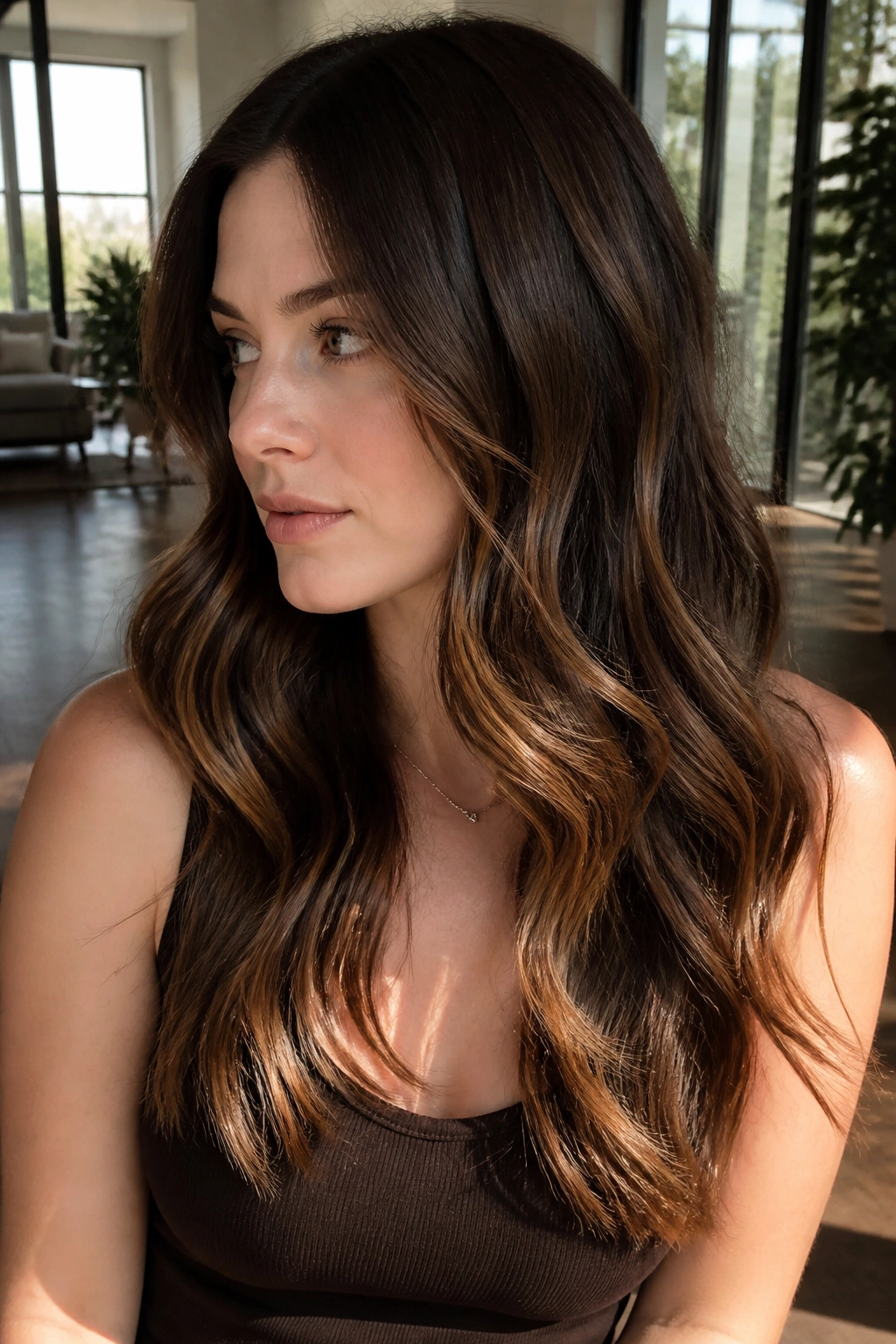
Can chestnut still look cool? Absolutely. It just needs to be the right chestnut — one with a brown, almost cocoa base and caramel that reads toasted rather than golden.
This color works because the chestnut keeps the whole head in the same family of depth. The caramel shows up in waves and bends, where it catches light on the raised parts of the hair. That means the warm notes appear in motion, not as a flat block of color.
The Science Behind It
Cool skin usually likes a deeper base because it gives the complexion contrast. Chestnut does that job without going too black, which can sometimes feel harsh. The caramel should be softened with a beige toner so it looks like sunlight filtered through wood, not through amber glass.
A wavy style makes this color shine. The bends in the hair break the light and reveal the toasted tones at different points. Straight hair can work, but it needs more careful placement, especially near the face.
If you love brown hair but want it to feel richer, this is one of the nicest ways to do it.
10. Rooted Honey Caramel Bob
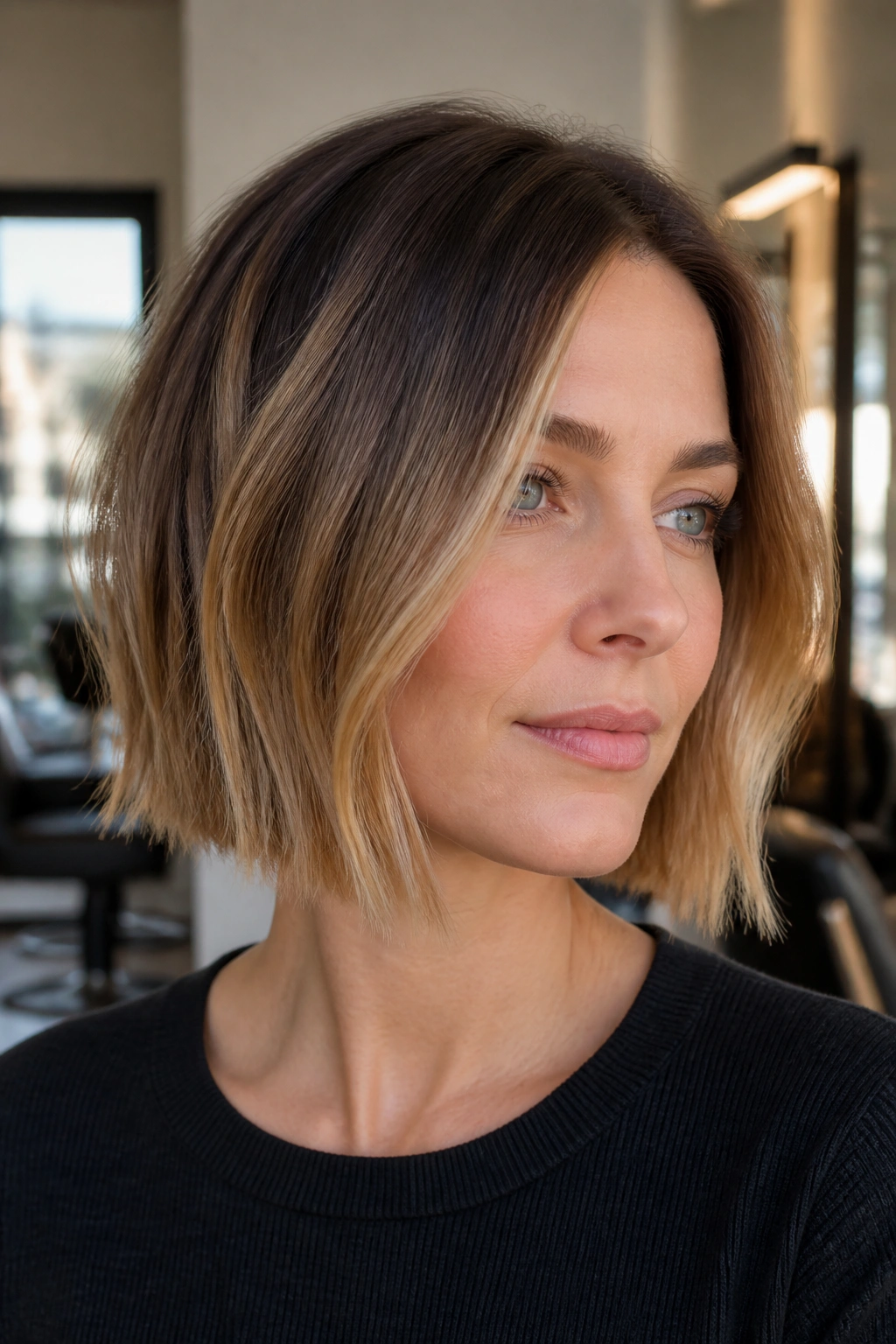
A bob with a rooted honey caramel finish has a clean, expensive look that flatters cool skin better than a fully bright all-over blonde. The dark root keeps the face from getting washed out, while the honey caramel through the body of the hair adds movement and shine.
Short hair needs color that works hard. A rooted bob does that without asking for too much upkeep. The root shadow makes regrowth softer, and the brighter caramel pieces through the ends keep the shape from looking heavy.
This style is especially good if your bob is blunt or slightly angled. A sharper cut needs some contrast to avoid looking blocky. A rooted caramel finish gives you that contrast in a controlled way.
No need to overcomplicate it. Ask for a soft root melt, then lighter mids and ends in beige caramel. If the hair starts to veer orange, a quick gloss can pull it back before it gets loud.
11. Caramel Foilyage with a Soft Shadow Root
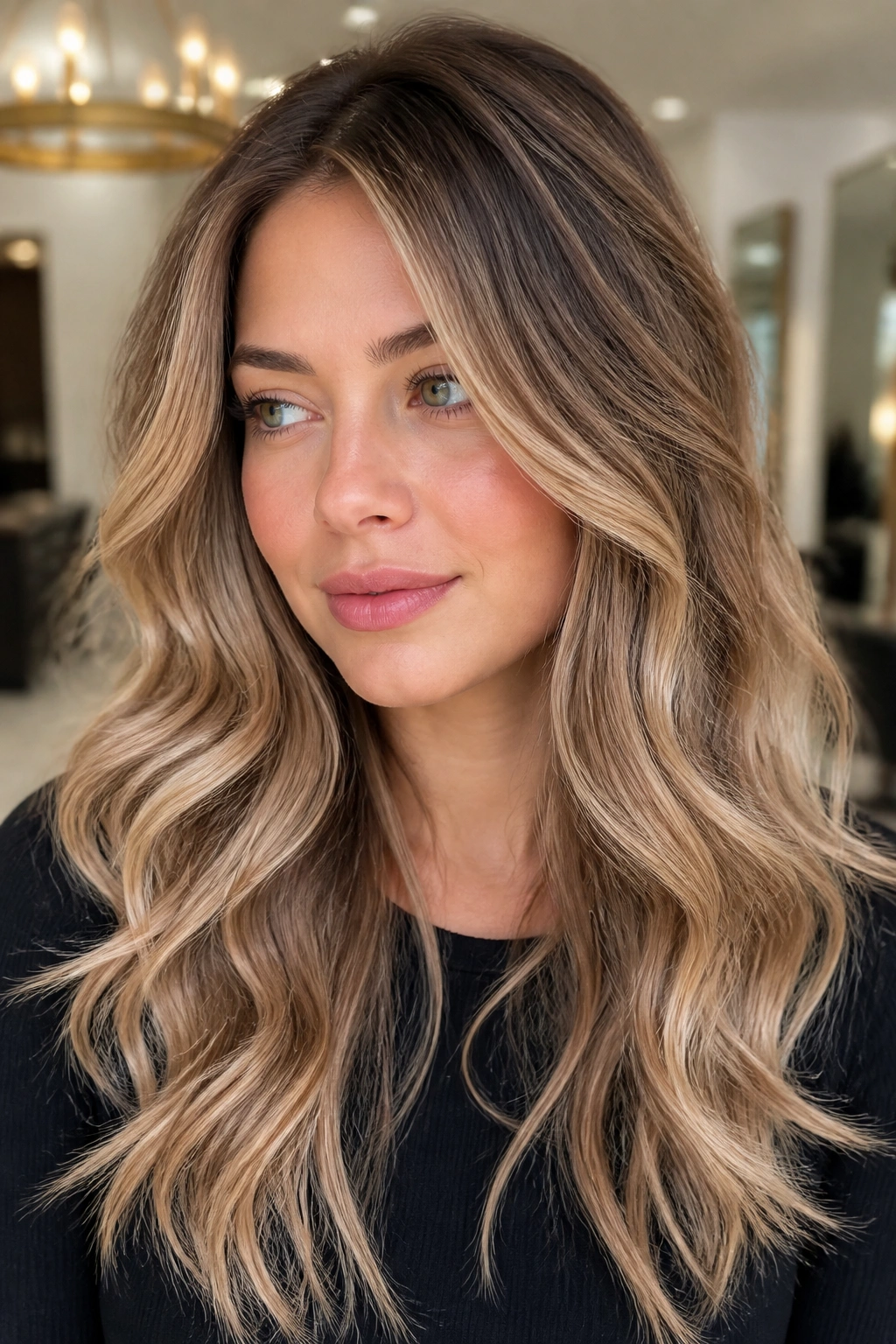
Foilyage gives you more lift than freehand painting, which matters if your hair is dark and resistant. The foil helps the caramel pop; the shadow root keeps it wearable on cool skin. That combination is the whole point.
What to Ask For
The foils should be concentrated around the face, part line, and upper crown, then feathered out through the rest of the head. You want brightness where the eye lands first and softer pieces underneath for dimension.
- Use foils if your hair needs stronger lift
- Keep the root shadow neutral brown, not reddish brown
- Tone the lifted pieces to beige caramel
- Add a gloss to the ends so they don’t look dry
This is a good choice if you like your color to show from across the room. It’s more visible than babylights, less blunt than chunky highlights, and easier to wear than a high-contrast blonde. The shadow root keeps the whole thing from feeling overworked.
12. Mocha and Honey Caramel Ribbon Curls
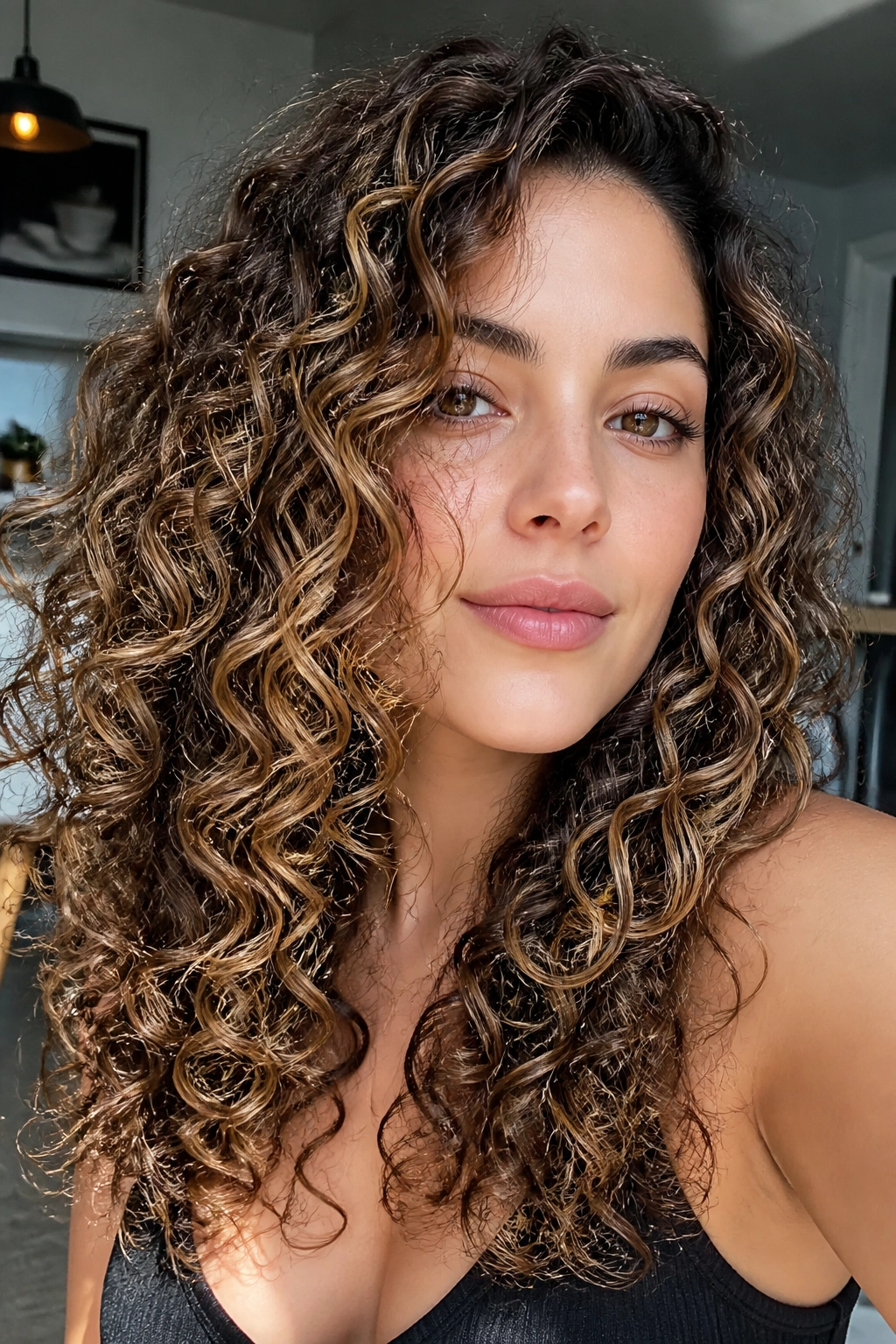
Curly hair loves ribbons, but only when the placement respects the curl pattern. A mocha base with honey caramel ribbons gives curls depth at the root and brightness on the curves of each curl family. On cool skin, the mocha keeps the look grounded while the honey stays soft.
The mistake I see most often is over-lightening the bottom layer and leaving the top too dark. That can make curly hair look patched instead of dimensional. Better to place brighter pieces where the curls naturally spring forward — around the face, the crown, and the outer layer that gets the most movement.
This look is beautiful when the curls are hydrated and defined. Dry curls can make any caramel color look a little dusty. Use a curl cream or gel that gives a soft cast, then break it once the hair is fully dry so the ribbons can show through.
If your curls are tighter, keep the color a shade deeper than you think you need. Curl patterns always make the light appear brighter.
13. Sandy Honey Caramel on a Wavy Shag
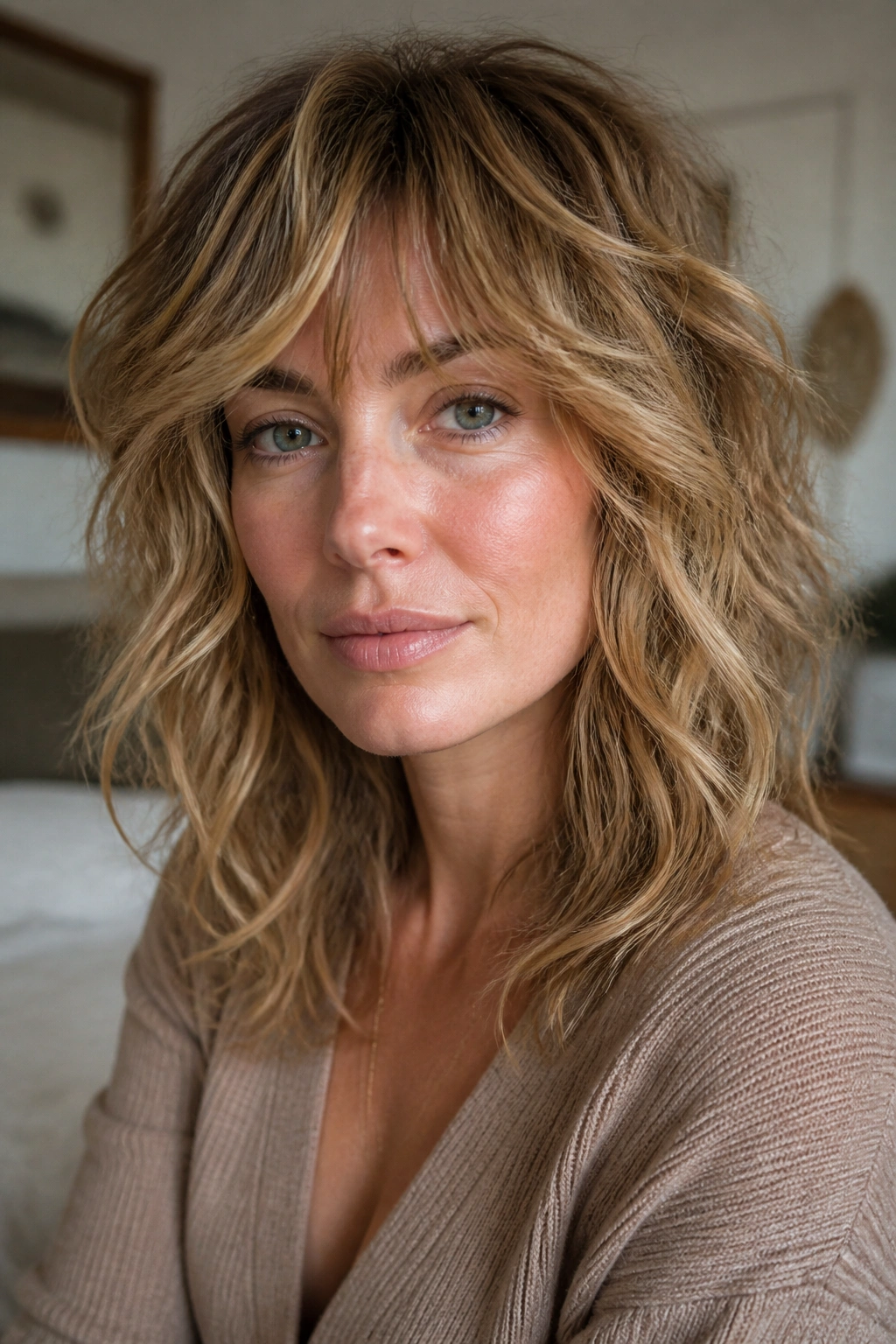
A shag cut already does half the styling work for you. Add sandy honey caramel, and the whole thing gets a lived-in, airy feel that suits cool skin better than an orange-heavy caramel ever would.
Sandy tones sit in that useful middle zone between gold and beige. They’re warm enough to feel rich, but not so warm that they fight a cooler complexion. On a shag, that sandy finish keeps the movement visible through the crown, the fringe, and those choppy ends that tend to swallow color in flatter styles.
How to Get the Most From It
Keep the brightest bits near the fringe and top layers, then leave the underlayers a touch deeper. That creates depth where the cut needs it most.
A texture spray works better than a heavy oil here. The shag should look touchable, not slick. If the hair is too polished, the dimension gets flattened and the caramel loses some of its edge.
This is one of those styles that looks better slightly imperfect. A few piecey bends, a little root lift, maybe a soft wave that falls out by evening — all of that suits the cut.
14. Pearl Beige Blonde with Caramel Lowlights for Cool Skin Tones
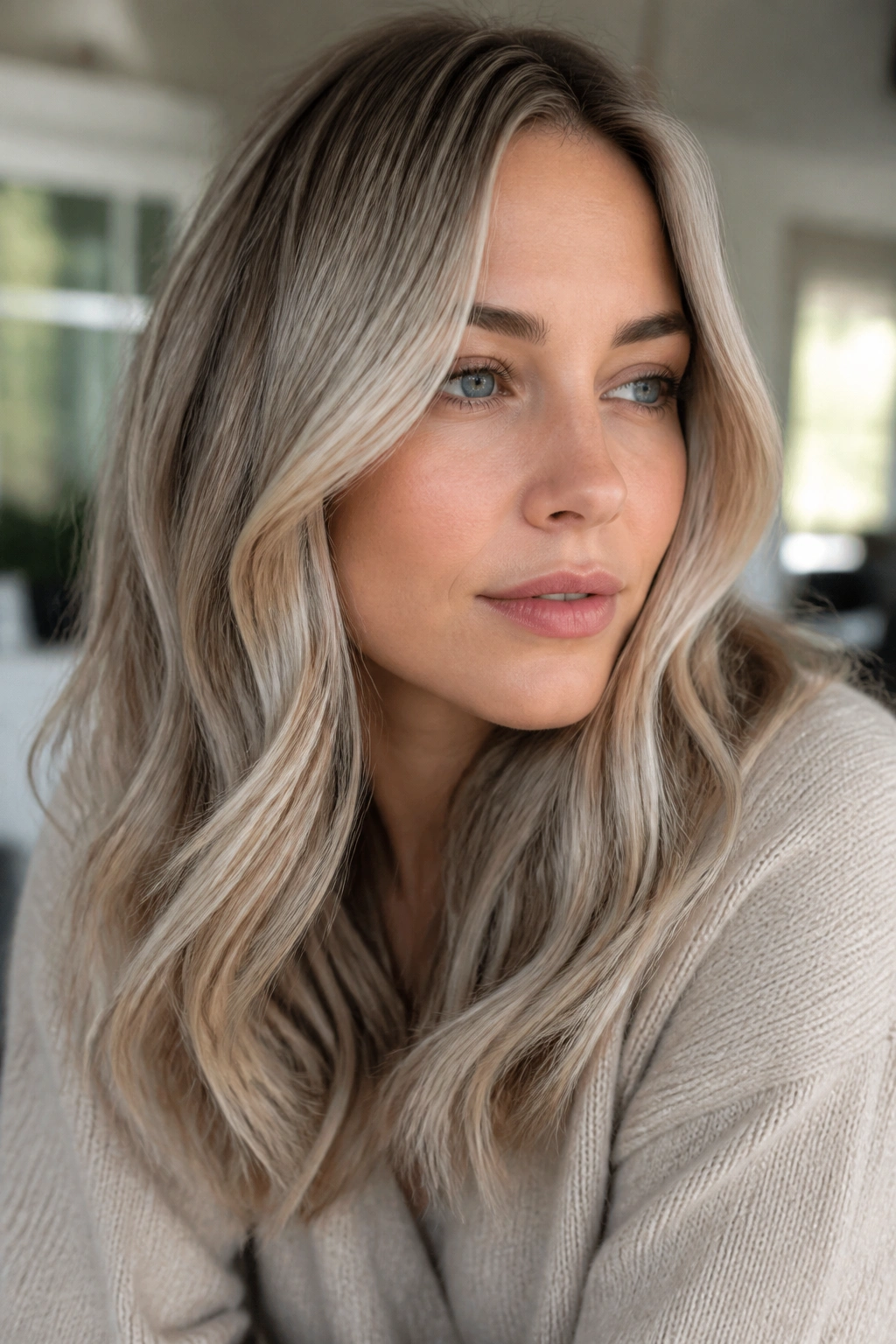
Blondes with cool skin sometimes look washed out when the color gets too pale. Caramel lowlights fix that problem by adding depth back into the hair, while pearl beige blonde keeps the lightness soft and clean.
The pearl tone matters. It gives you a cooler, smoother blonde base so the caramel can act like a shadow rather than a blast of warmth. That keeps the face from looking pink or over-bright. A few lowlights through the underlayers make the blonde feel richer in daylight.
Best Placement Notes
- Place lowlights under the crown and through the nape for depth
- Keep face-framing pieces pearl beige, not yellow blonde
- Ask for lowlights no wider than a pencil for a softer effect
- Finish with a cool beige gloss to keep the blonde steady
This style works especially well on medium-density hair. You can see the lowlights clearly, but they do not break up the shape too much. It is a smart way to make blonde feel less flat without moving into full brunette territory.
15. Dimensional Caramel on a Collarbone Cut
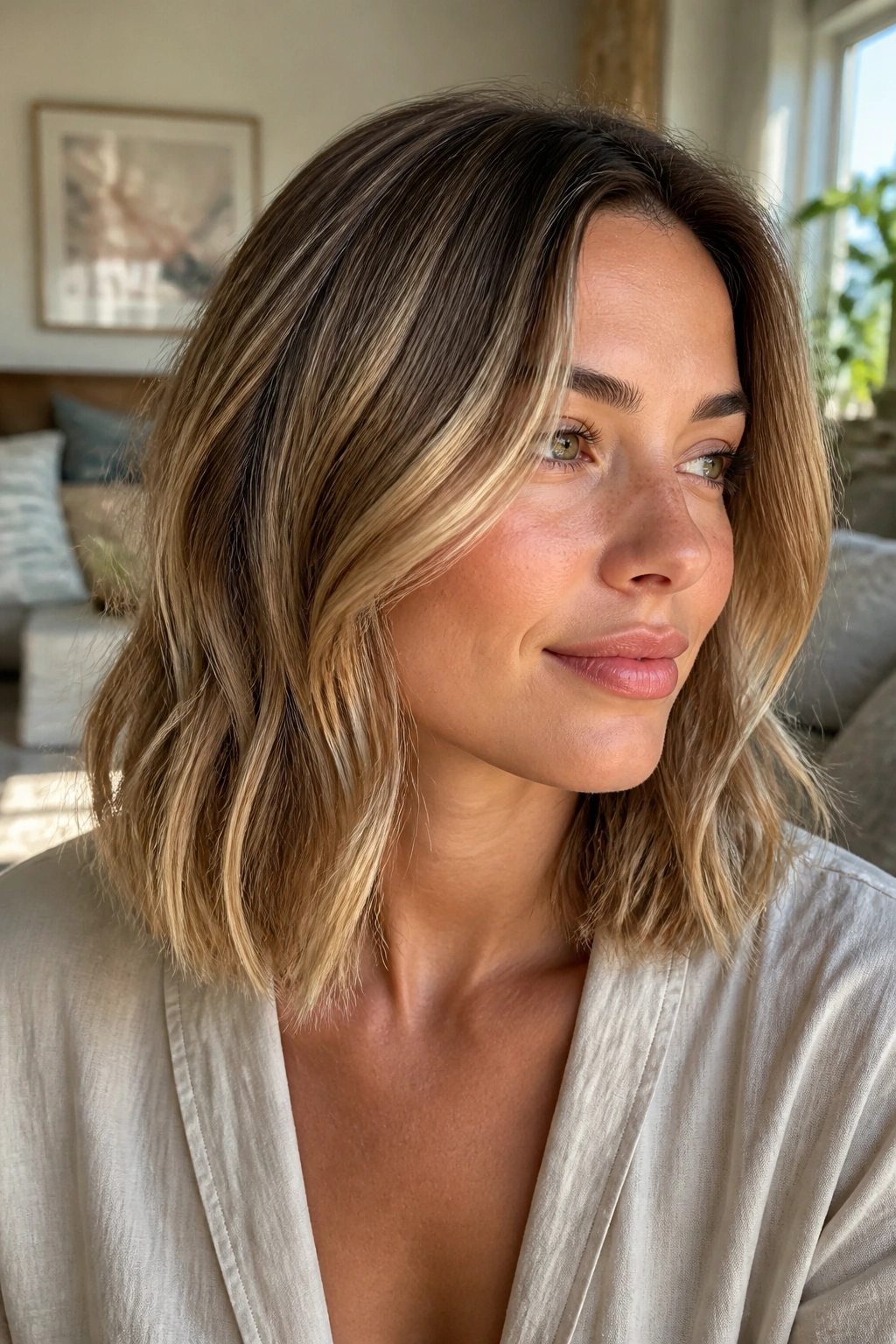
A collarbone cut is one of the easiest lengths to wear with dimensional caramel because the hair has enough weight to show the tones, but not so much length that the color gets lost. On cool skin, dimension is the part that matters. Flat caramel can turn muddy. Layered caramel looks expensive.
Unlike a single-process brown, dimensional color uses a mix of ribbons, shadows, and lighter ends to keep the eye moving. That movement is what makes the hair feel fresh. The cool undertone of the skin gets a better frame when the roots stay a bit deeper and the caramel pieces are woven through the middle section instead of plastered on top.
This cut also plays nicely with air drying. The natural bend in the hair lets the different shades show up without much styling, which is useful if you hate daily blowouts. A light cream or serum at the ends is enough for most people.
If you want your color to look modern without chasing a drastic change, this is a safe bet.
16. Frosted Brunette with Warm Honey Accents
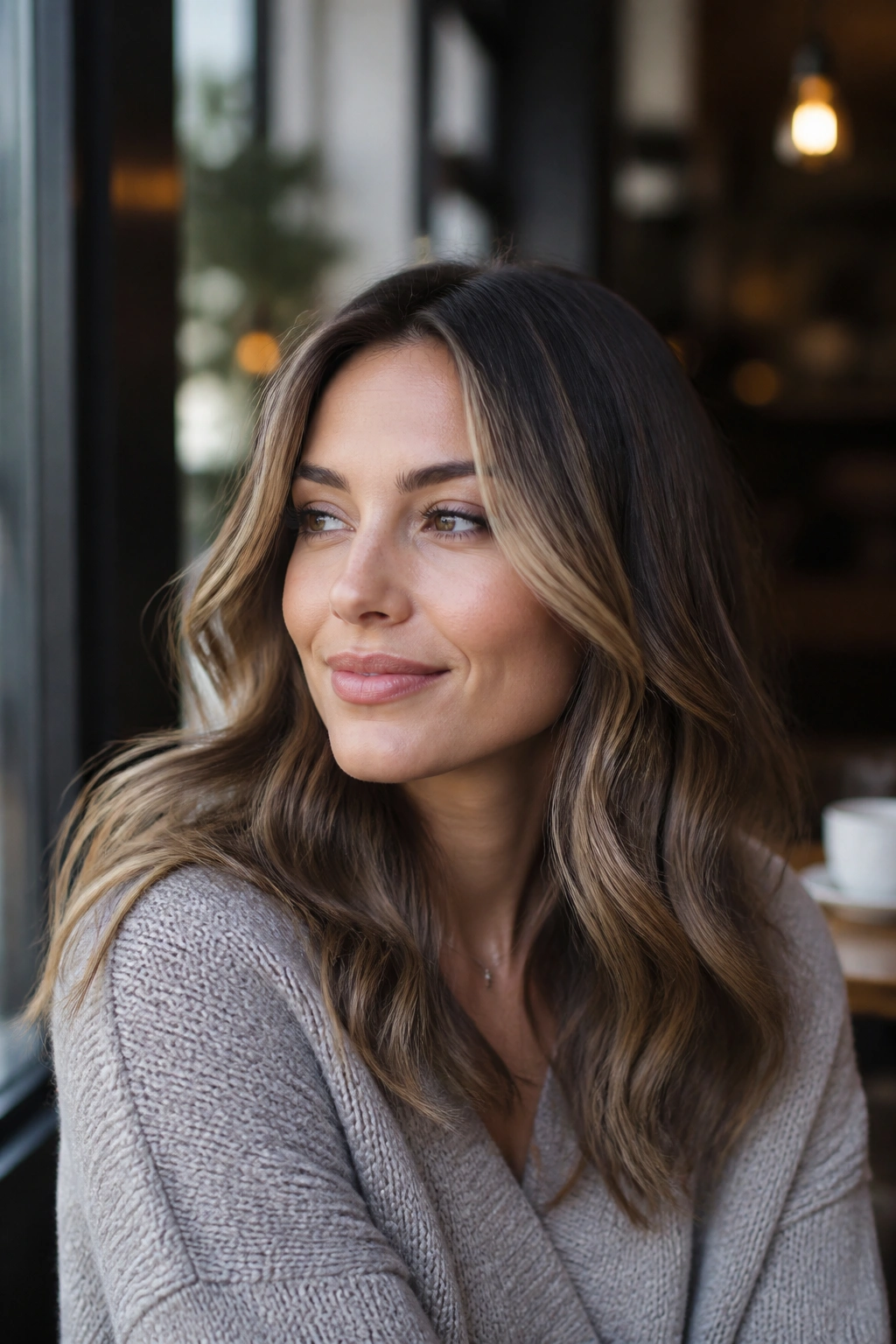
Warm honey accents do not have to mean a warm overall look. On a frosted brunette base, those accents can read almost like sunlight caught in brown glass — soft, thin, and controlled.
The frosted part is what keeps the color friendly to cool skin. It means the brunette base carries some ash or neutral tone, which stops the honey from taking over. The accents should be small, placed around the face and through the top layer, so they brighten the features without turning the whole head gold.
This is a good option if you like brunette hair but feel it can look harsh in winter light or flat in indoor lighting. A few honey accents break up the density and add a lived-in shine that feels softer than all-over highlights.
A quick gloss every few weeks helps here. Honey tones can drift warm as they fade, and the gloss keeps them from sliding into brassy territory. That tiny maintenance step makes a bigger difference than people expect.
17. Taffy Caramel Blend for Thick Hair
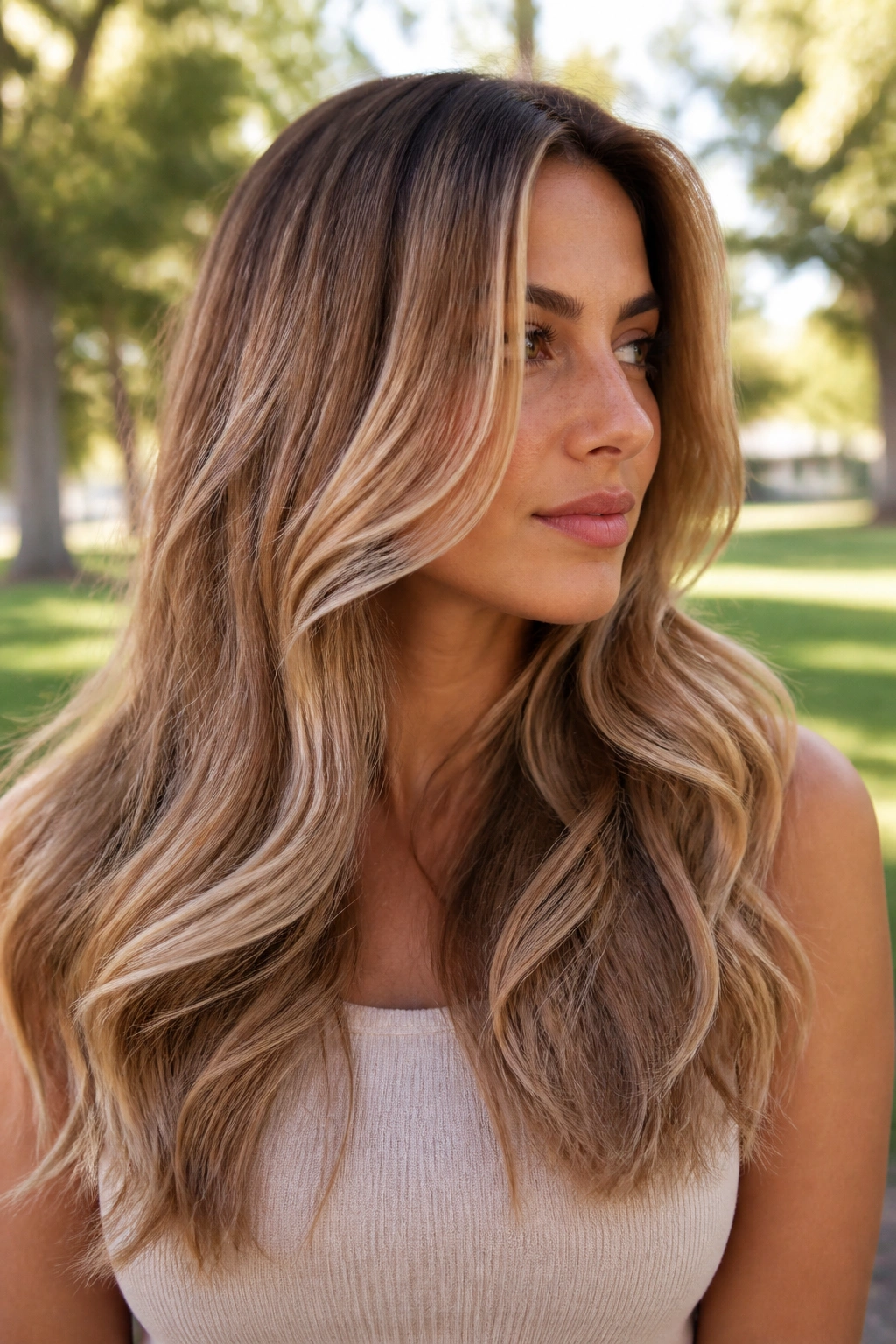
Thick hair needs stronger color placement because tiny highlights can disappear inside all that volume. A taffy caramel blend uses broader ribbons and a smooth transition from root to end so the dimension stays visible.
Does it suit cool skin? Yes, if the caramel leans beige and the base keeps a cool brown or neutral mocha undertone. The blend should look stretchy, not stripey. Think melted candy, not marker lines. That softness matters a lot on dense hair, which can make color look heavier than it really is.
How to Get the Most From It
Ask for a few broader panels around the face and crown, then softer weaving through the interior. That gives you contrast without making the hair look clipped into sections.
A layer cut helps, too. Thick hair with one blunt sheet can hide color underneath. Once the hair has movement, the caramel shows through in a much nicer way.
If your hair is coarse, a smoothing cream before blow-drying helps the blend look more polished. Coarse hair can drink up toner faster than you’d expect, so keep an eye on the warmth between visits.
18. Airy Honey Caramel Pixie or Crop
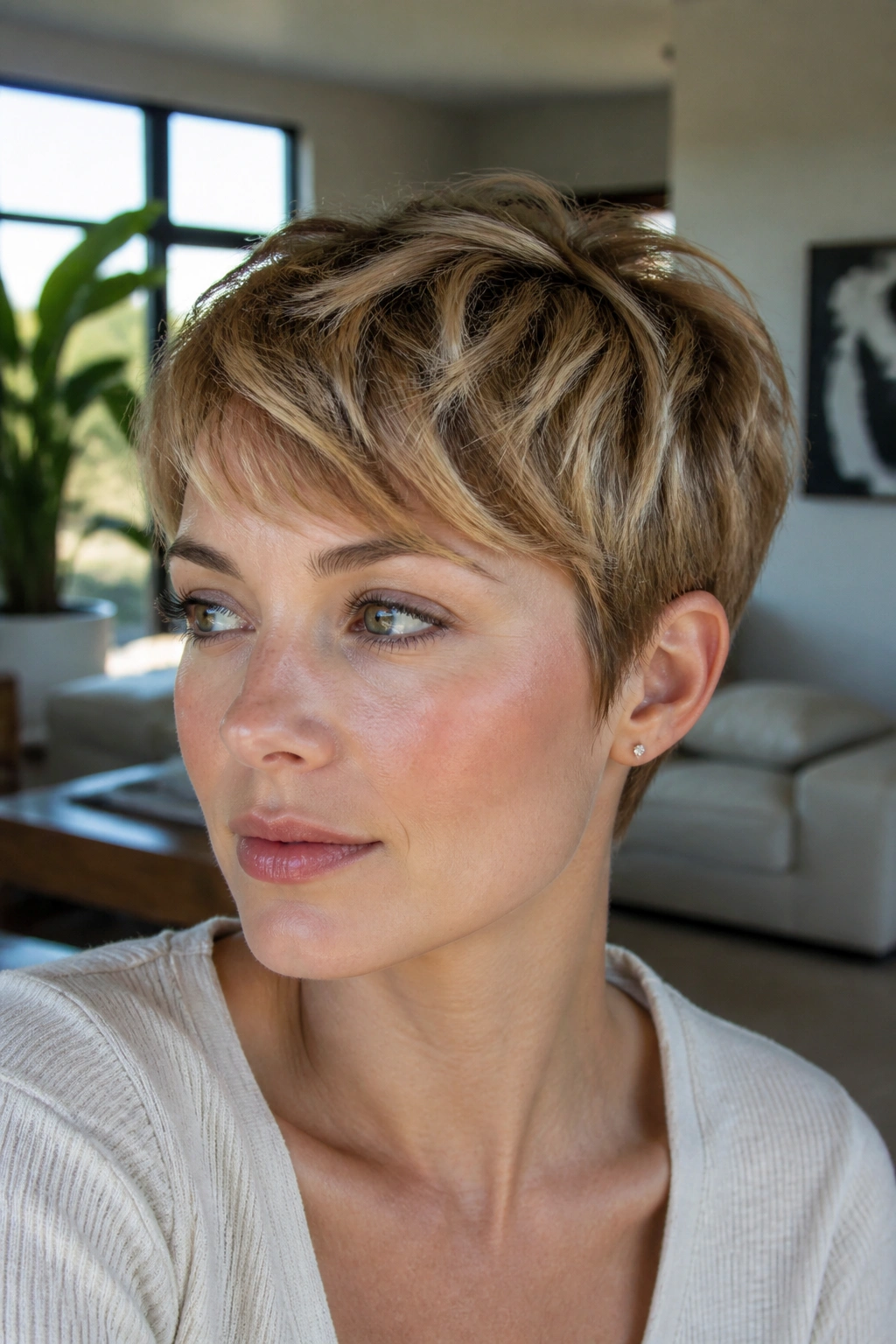
Short hair can wear caramel beautifully, but the placement has to be deliberate. On a pixie or crop, the color should sit where the texture lives — on the top, at the fringe, and around the crown — so the haircut keeps its shape.
A cool-toned client usually looks best with a deeper base and little flashes of honey caramel rather than a bright all-over lightening. That gives the cut some lift without making the head look pale. The result is breezy, a little sharp, and not at all fussy.
This look works well with piecey styling. A tiny bit of paste, worked through the ends with your fingers, brings the highlights into view. Too much product can dull the tone, though, so keep it light. A pea-sized amount is often enough for short hair.
It’s a small canvas, which means every detail shows. That can be a good thing. You notice the gloss, the shape, the little shift from brown to caramel faster than you would on long hair.
19. Soft Ombré from Cool Brown to Honey Ends
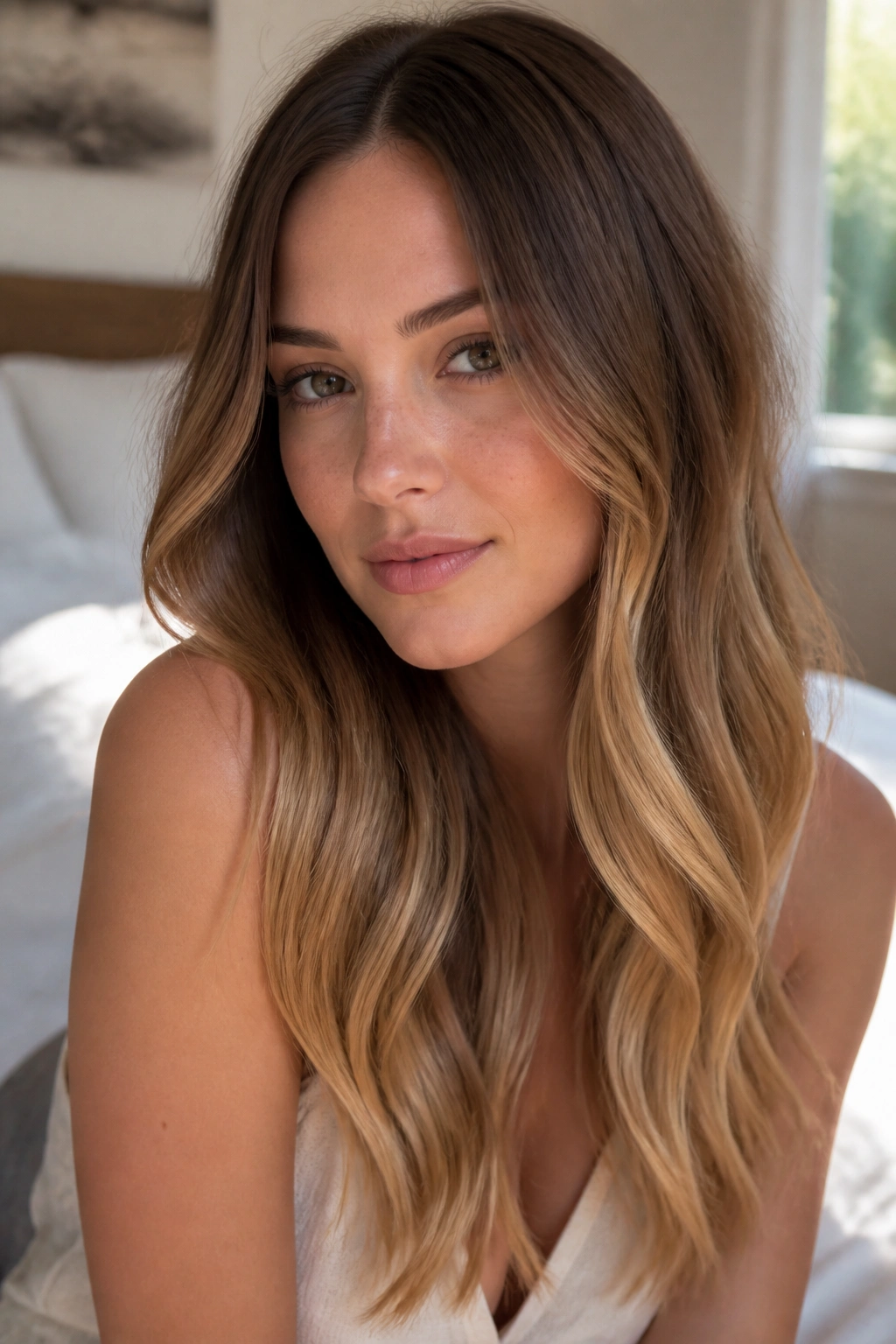
An ombré gives you the biggest visible shift on the list, but it can still suit cool skin if the fade is handled with restraint. The root stays cool brown, the mids soften, and the ends land in honey caramel instead of orange.
The reason this works is simple: the face stays framed by depth, while the lighter ends keep the overall look from feeling heavy. Cool skin often benefits from that kind of contrast. It gives the complexion clarity. The key is that the transition should feel gradual, not split in half.
A soft ombré is also forgiving if you wear your hair in ponytails or buns. The darker root makes regrowth easier to live with, and the lighter ends show movement when the hair swings. If the ends start going too warm, a beige toner or gloss can bring them back into line.
This is the kind of color that looks especially good on layered long hair. The fade has room to breathe, and the haircut keeps the lower half from looking flat.
20. Glossy Caramel Glaze on a Neutral Blonde Base
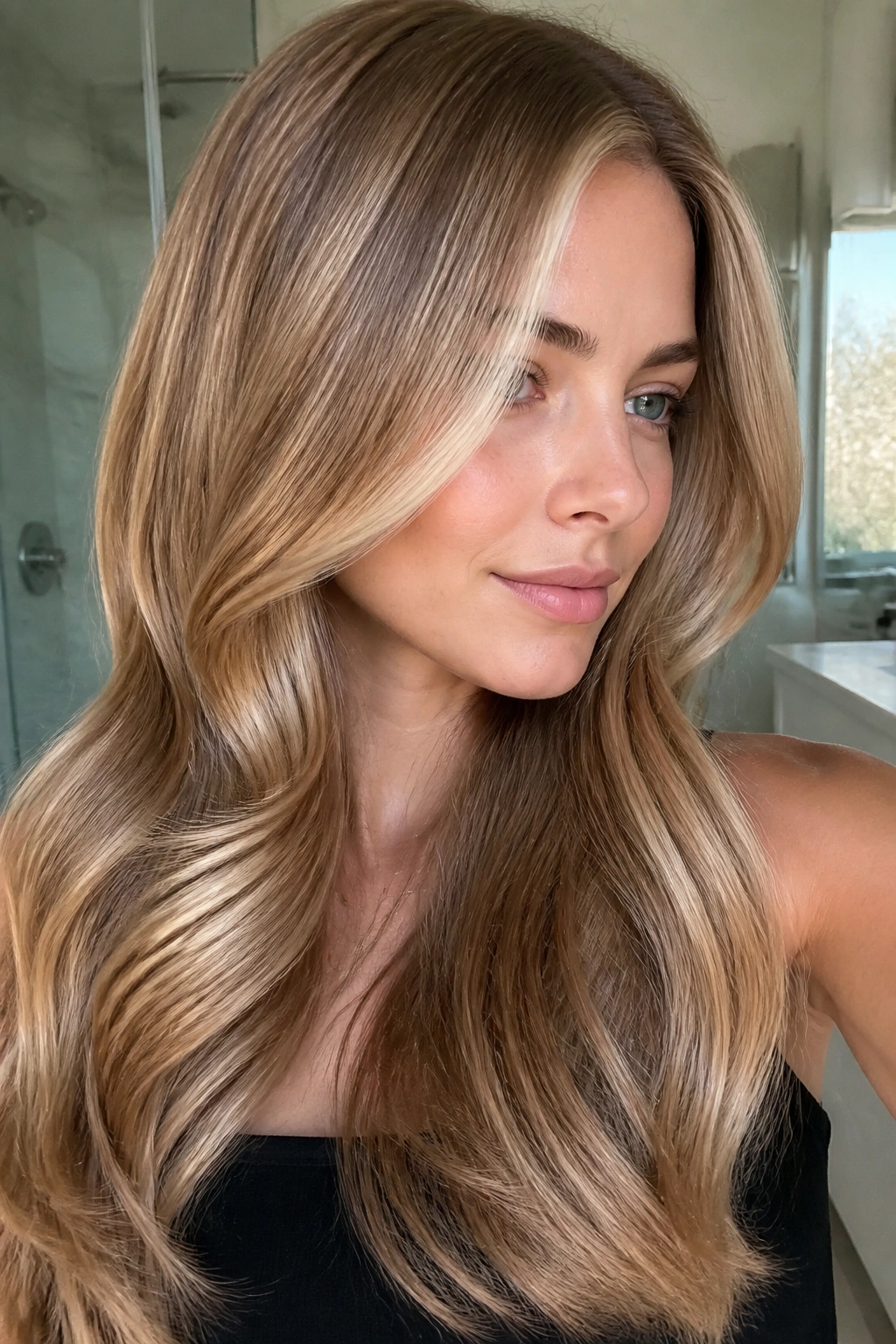
If you want the easiest route into honey caramel hair color, start with a neutral blonde base and add a glossy caramel glaze. It is low-commitment, low-drama, and far kinder to cool skin than a full warm blonde makeover.
The glaze should be more beige than gold. That is the whole trick. A neutral blonde base keeps the color from going muddy, and the caramel glaze adds shine plus a little warmth without changing the hair too aggressively. For people who like their hair bright but not flashy, this is a smart move.
You can wear this look straight, curled, or in a loose ponytail and it still reads clean. It is one of those colors that makes hair look cared for even when the cut is simple. That’s not a small thing. A good glaze can make a plain style look finished.
Refresh the gloss every 4 to 6 weeks if your hair tends to lose tone fast. If it stays put, you can stretch it longer. Watch for yellowing at the ends, because that is usually the first place the honey starts to drift.
Final Thoughts
The best honey caramel shades for cool skin are the ones that behave themselves. Beige, smoky, pearl, and neutral caramel usually flatter more reliably than bright gold or orange-leaning copper. The color should brighten your face, not fight it.
Placement matters just as much as tone. A deep root, a soft money piece, thin babylights, or a beige glaze can change how the whole color sits against your skin. That is why the same caramel shade can look perfect on one person and too hot on another.
If you’re taking screenshots for a salon visit, look for words like beige caramel, smoky honey, shadow root, and neutral gloss. Those are the phrases that keep the warmth soft enough for cool undertones, and they save you from the orange trap that catches so many people the first time around.
