



Platinum hair can look razor-sharp on cool skin tones — or it can look flat, chalky, and a little too icy for its own good. The difference usually comes down to undertone, not brightness. Get the tone right and the whole face wakes up.
Cool complexions tend to sit happiest next to silver, violet, ash, pearl, and blue-based reflection. Warm gold, buttery beige, and honey-leaning blonde can fight the skin and pull the whole look off balance. Brass is sneaky. It often shows up first around the hairline, where the lightest pieces sit right next to the face.
The other thing people miss is the starting canvas. Platinum is not a single shade; it’s a family of shades built on hair that’s been lifted to a pale yellow or near-white base, then toned back into a cooler direction. If the lift is uneven, the result gets patchy. If the toner is too warm, the whole thing slides into a beige zone that cool skin rarely loves.
These 20 platinum hair color ideas move through crisp white blondes, silver finishes, smoky roots, lavender whispers, and polished cool-toned blends. Some are bold. Some are softer. All of them are built for that clean, bright, slightly polished look that makes cool undertones come alive.
1. Icy White Platinum Bob for Cool Skin Tones
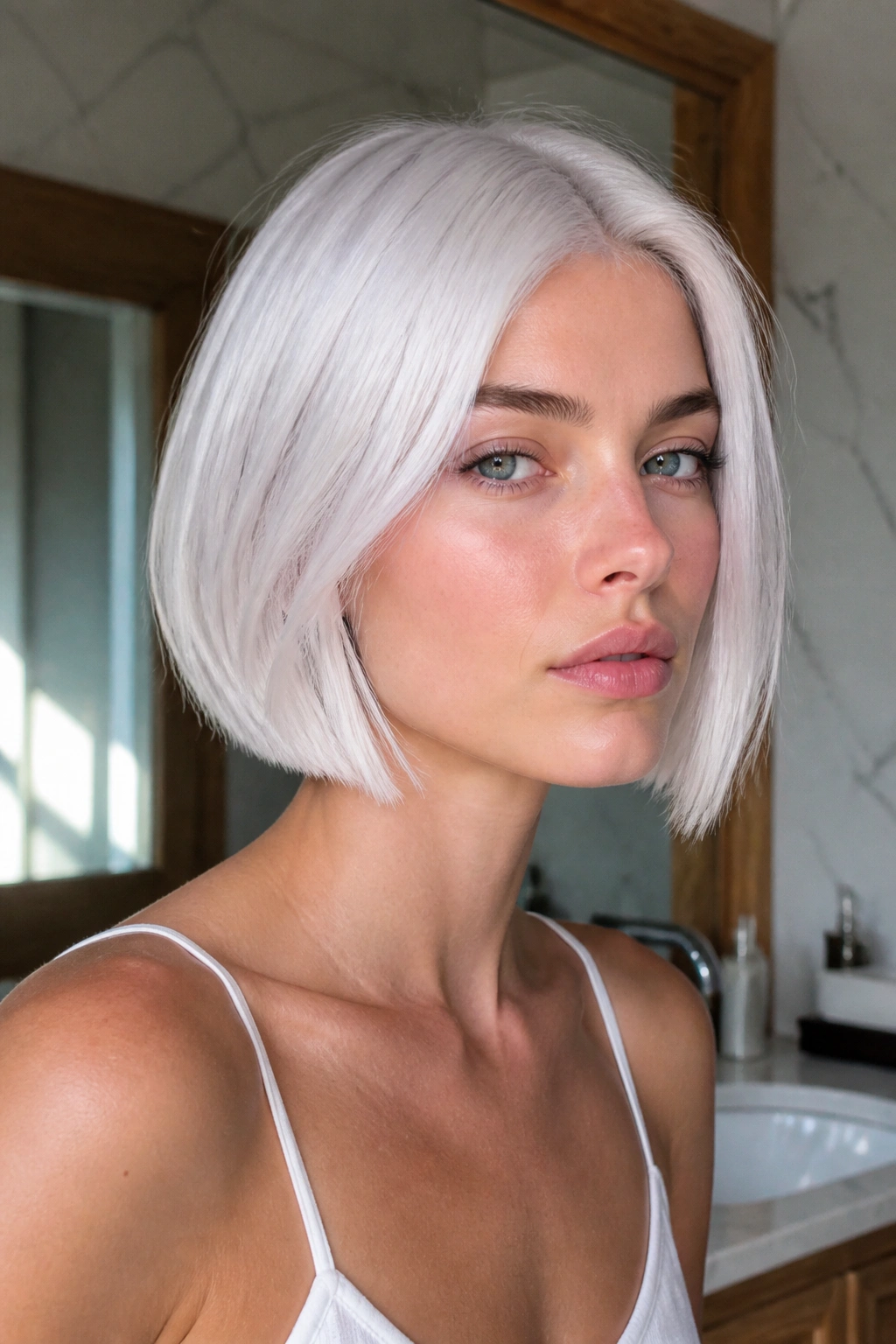
This is the cleanest version of platinum, and I mean clean in the best way. A blunt bob cut to the jawline makes icy white hair look deliberate instead of wispy, which matters when you’re working with such a bright tone.
The cut gives the color a hard edge. That edge is useful. On cool skin, a crisp white-platinum bob can make pink undertones look fresher and blue undertones look even clearer, especially if the toner leans violet instead of beige.
- Best base: hair lifted to level 10, with no visible yellow left behind.
- Best face-framing detail: a blunt perimeter or a soft undercut for extra swing.
- Tone family to ask for: violet-ash or neutral-violet, not pearl-gold.
- Maintenance note: purple shampoo once a week is enough for most people; too much will turn the hair dull and flat.
My favorite part: the haircut does half the work. If the ends are blunt and the shine is there, the color looks more expensive without needing a bunch of extra color tricks.
2. Silver Chrome Pixie Cut
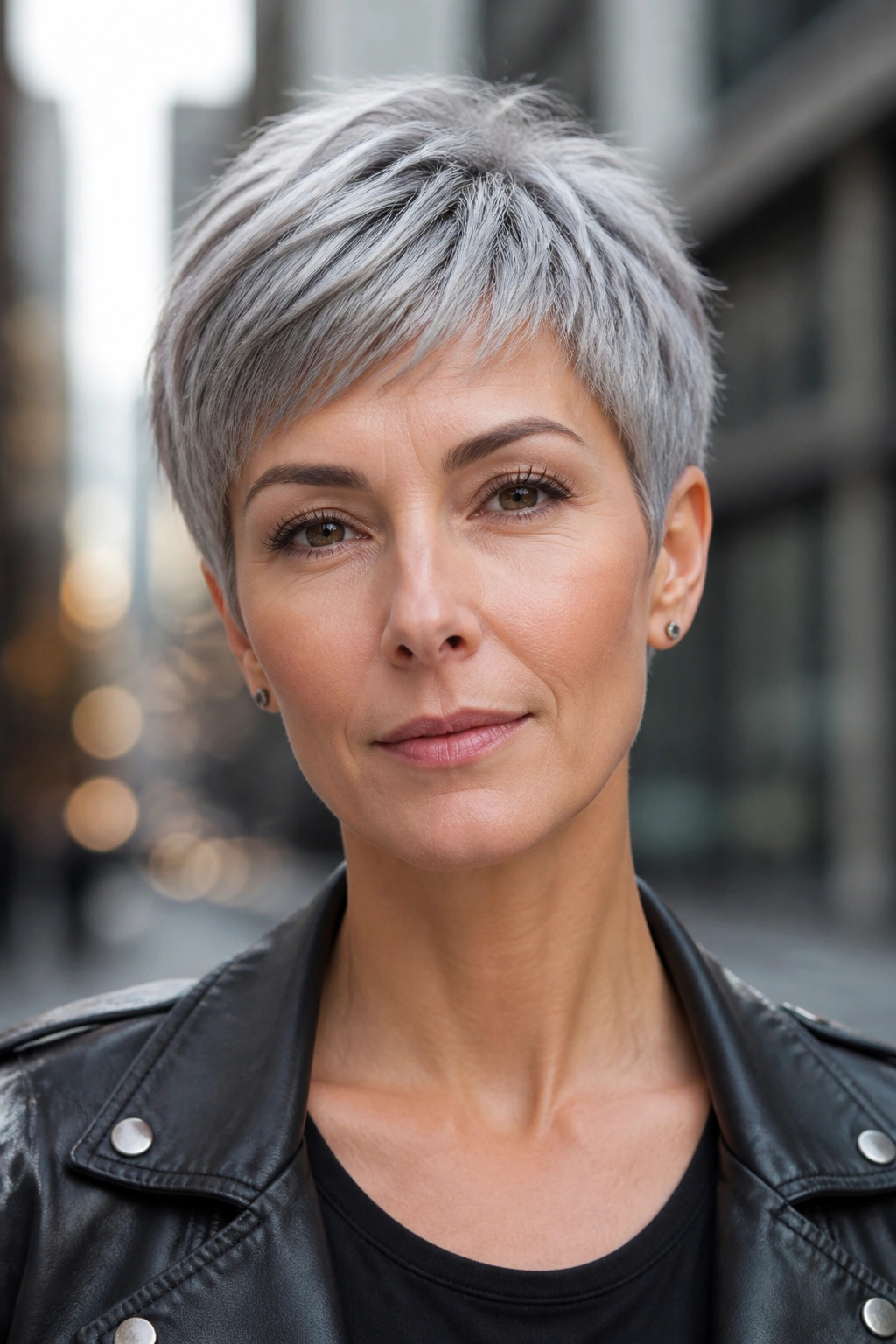
Why does a pixie make platinum look sharper? Because short hair shows every shift in reflection. A silver chrome finish on a pixie doesn’t hide behind length or layers; it just sits there and glows with a metallic edge.
This is one of those styles that looks especially good on cool skin because it leans into the same kind of crispness. Silver sits closer to blue and violet than yellow, so the face doesn’t get swallowed by warmth. It’s neat, punchy, and a little fearless.
How to ask for it
Ask for a tight crop with longer top pieces and a silver toner that leaves a steel-like sheen, not a smoky matte finish. A tiny root shadow — maybe a quarter inch — keeps regrowth from looking harsh and gives the cut some depth.
This style works best when the texture is controlled. A dab of lightweight paste at the crown and a small round brush at the fringe are enough. Too much volume makes the color feel fluffy, and fluffy is not what chrome wants.
3. Pearl Platinum with a Soft Root Shadow
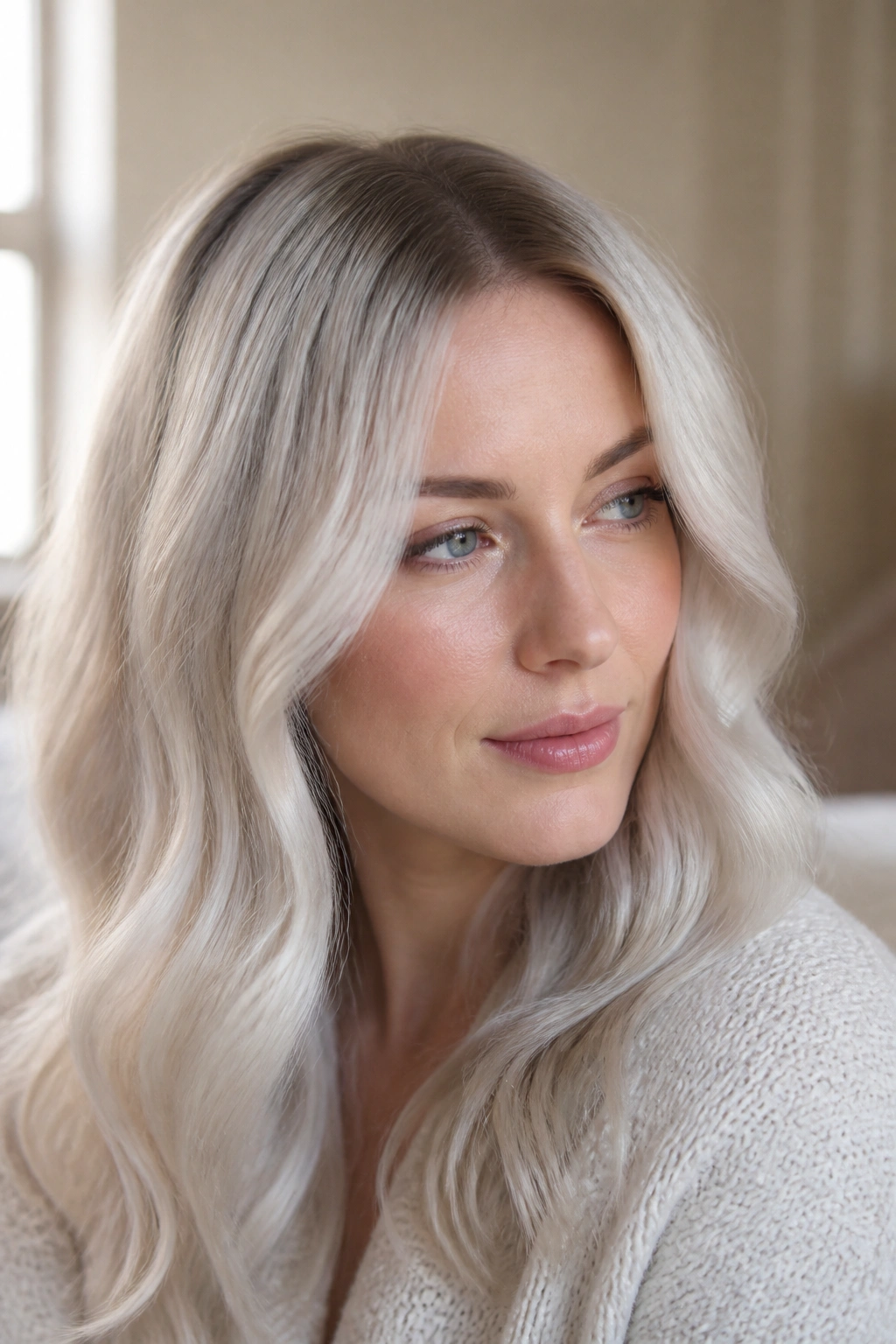
Pearl isn’t warmer. It’s softer. That’s the part people miss.
On cool skin, a pearl-platinum finish gives you the brightness of platinum without the severe white-out effect. The color reads milky and luminous, with a faint opalescent glow that can be lovely on skin that has pink or blue undertones. A soft root shadow — half an inch to an inch — keeps the whole thing from looking like a helmet.
There’s a calmness to this shade that I like. It’s polished, but it doesn’t shout. The ends stay bright, the mid-lengths carry a whisper of silver, and the root melt keeps the grow-out line from taking over your life.
If your eyes are gray, blue, or green, pearl platinum can be a quiet win. It doesn’t fight for attention; it just makes the face look cleaner and a little more awake.
4. Frosted Platinum Curtain Bangs
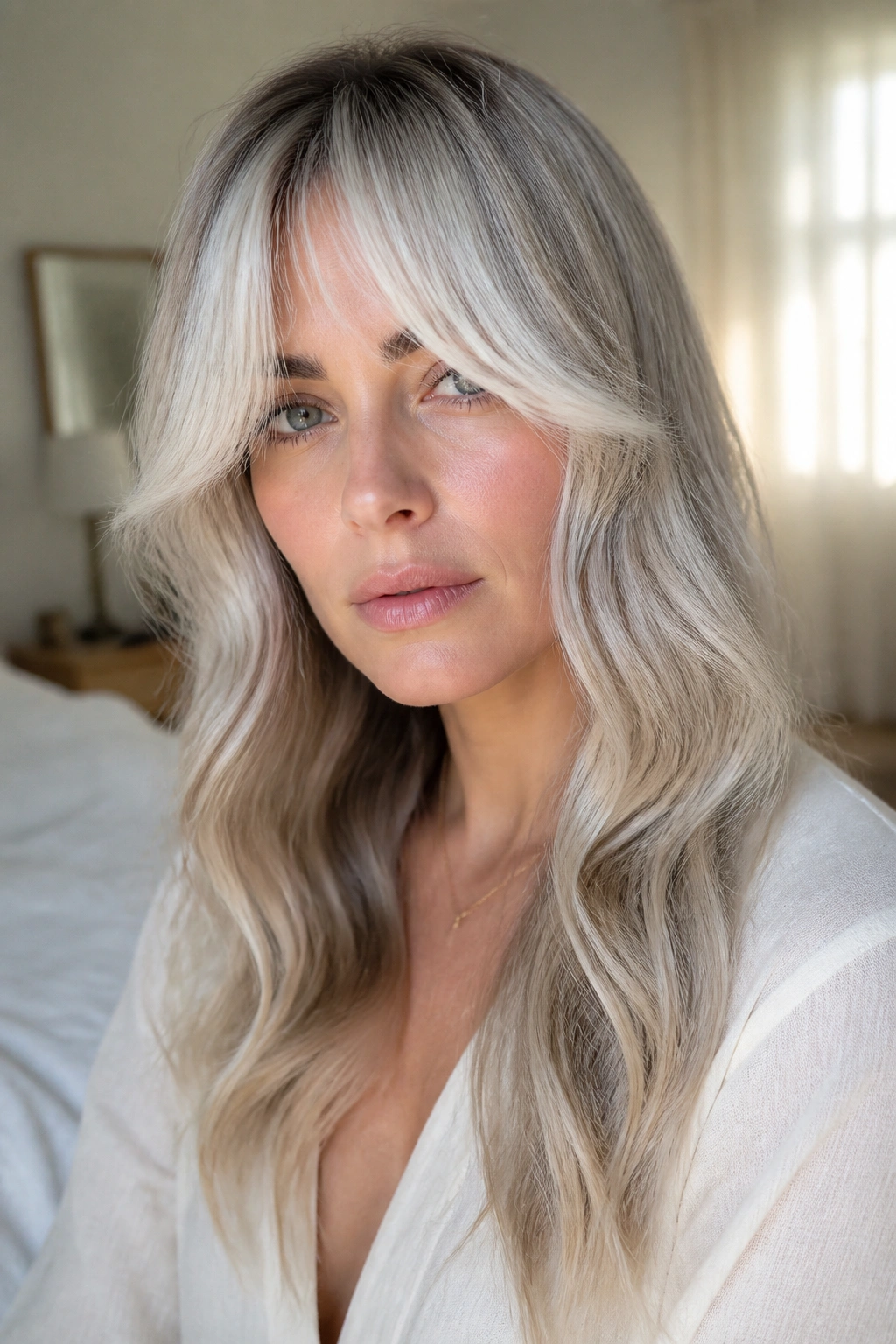
Curtain bangs can save a platinum color from looking too severe. That’s not a small thing. Bright hair around the face can be a little unforgiving on cool skin if the cut is too blunt, and curtain bangs soften the whole setup fast.
The trick is keeping the bang area a touch brighter than the back. A few fine foils around the fringe and temples create that frosted effect, while the rest of the hair stays a shade deeper so the bangs don’t disappear into the rest of the color.
- Best length: shoulder-grazing or collarbone length, where the bangs can fall into the cheekbones.
- Best tone: icy beige is a bad call here; stick with silver-violet or cool pearl.
- Styling note: blow-dry the bangs forward, then sweep them open with a round brush.
- Visual payoff: the face gets a bright frame without the whole head needing maximum lightness.
This look is especially good if you want platinum but don’t want it to feel severe every single day. The bangs break the brightness in a useful way.
5. Smoky Platinum Lob
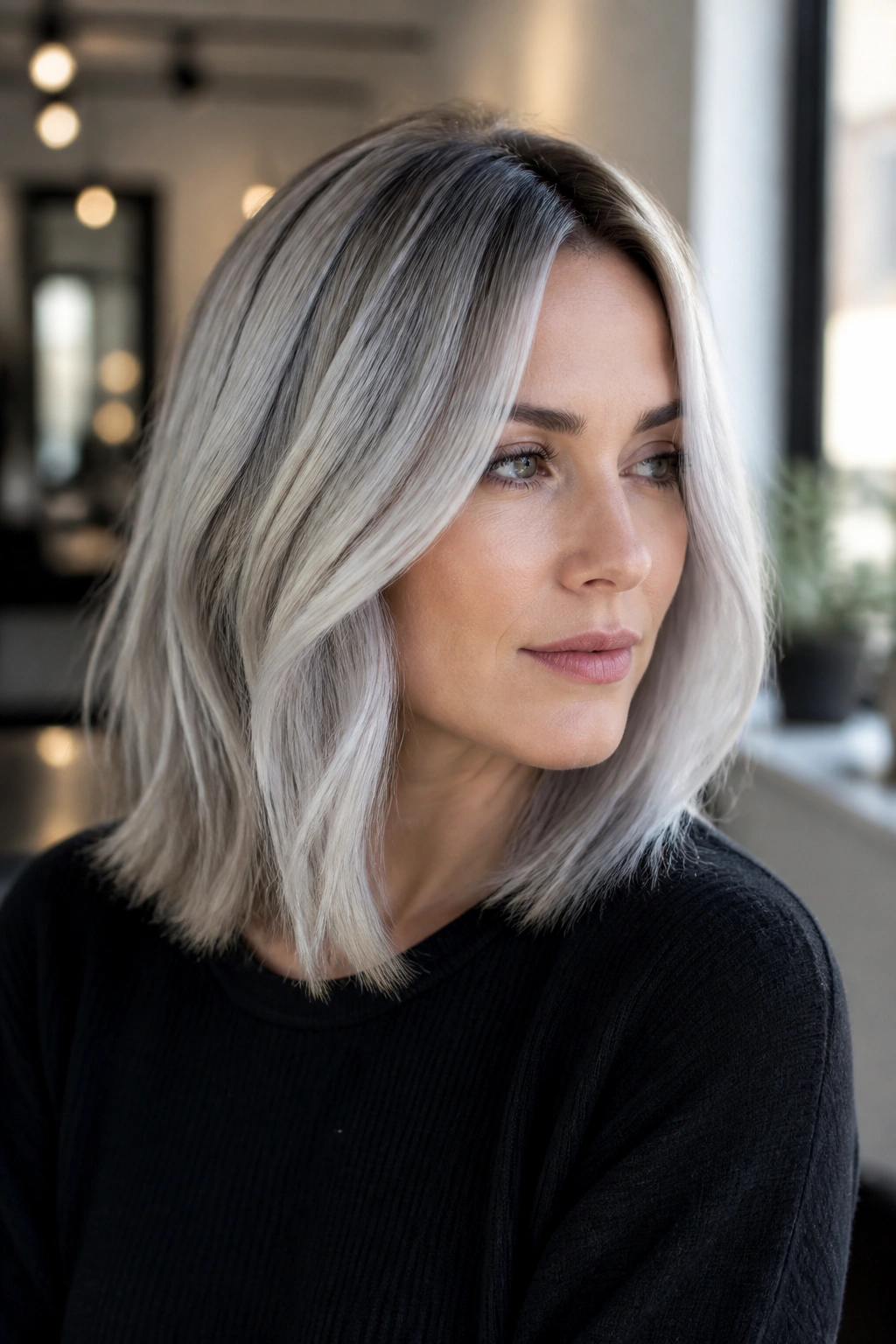
A smoky platinum lob is the sensible cousin in this whole family, and I mean that as a compliment. Unlike stark white platinum, smoky platinum keeps a trace of depth through the mids, so the hair feels richer and less fragile-looking.
Why it flatters cool undertones
The smoke comes from ash and slate reflection, not beige. That matters. Cool skin tends to look better when hair has a little blue-gray cast, especially around the jaw and cheekbones. The lob length also gives the color room to move; one flat tone on a long bob can look heavy, but smoky ribbons and a slightly deeper root keep it airy.
What to ask your colorist for
Ask for a root smudge that stays within 1 inch of the scalp, then a cool gloss over the rest. The mids should stay bright enough to read platinum in daylight, but not so white that they lose shape indoors.
This is a good pick if you want platinum that feels wearable on workdays and still interesting at night. It doesn’t need to be flashy to be good.
6. Glacier Blonde with a Center Part
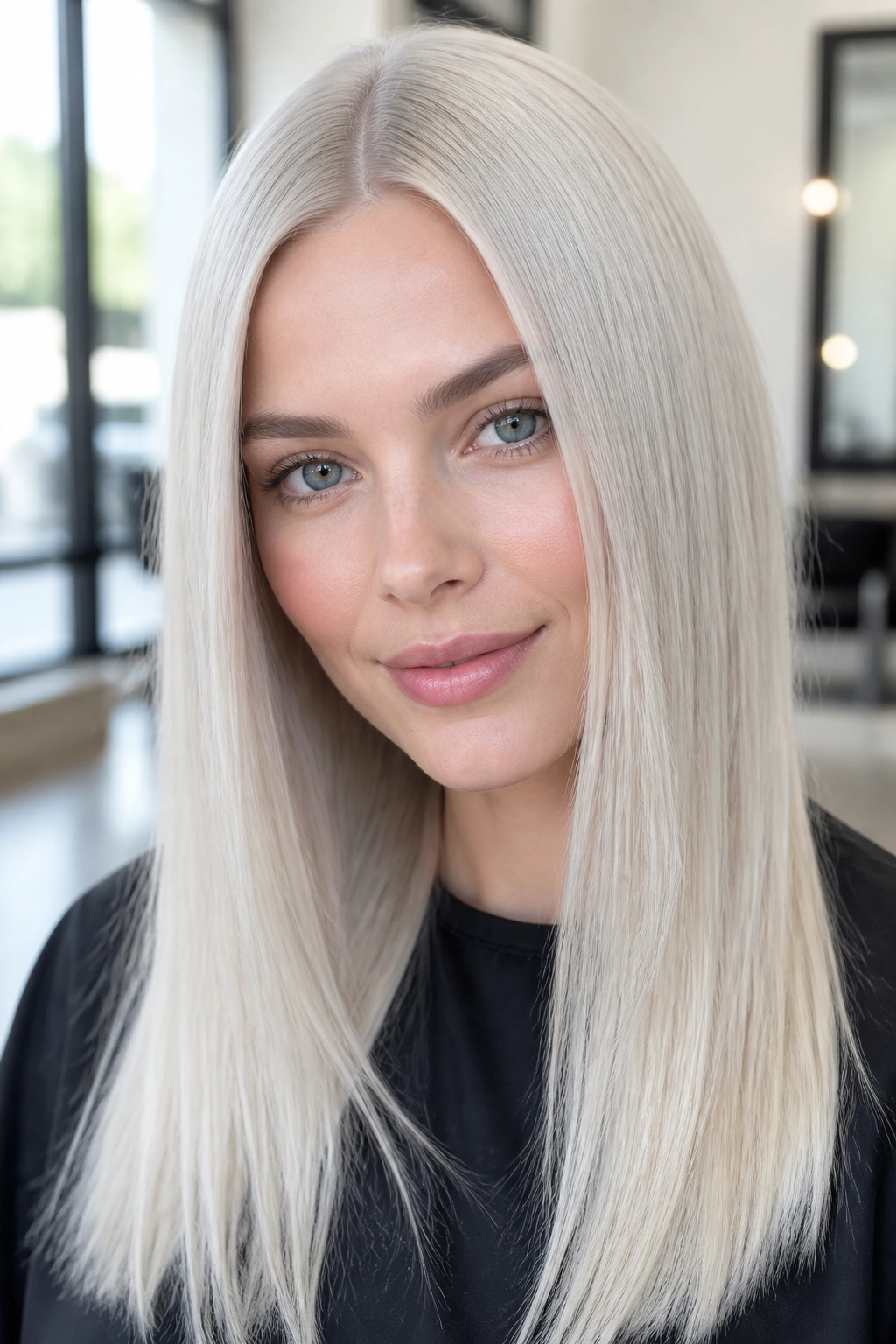
A center part changes everything here. It turns the hair into a clean, symmetrical frame, and that makes pale platinum look almost frozen in place — in a good way.
The best glacier blonde shades sit right on the edge between white and silver. They should look almost translucent near the ends, with just enough cool reflection to stop the hair from reading flat. On cool skin, that can be a beautiful pairing because the center part sharpens the features instead of softening them out.
If you like straight hair, this is one of the strongest options on the list. A sleek finish shows off the pale tone, and a glassy blowout makes the whole thing look polished without needing tons of styling products.
The key detail is consistency. The part, the tone, and the shine all have to cooperate. If one piece goes yellow, the whole illusion breaks.
7. Lavender-Tinted Platinum Waves for Cool Undertones
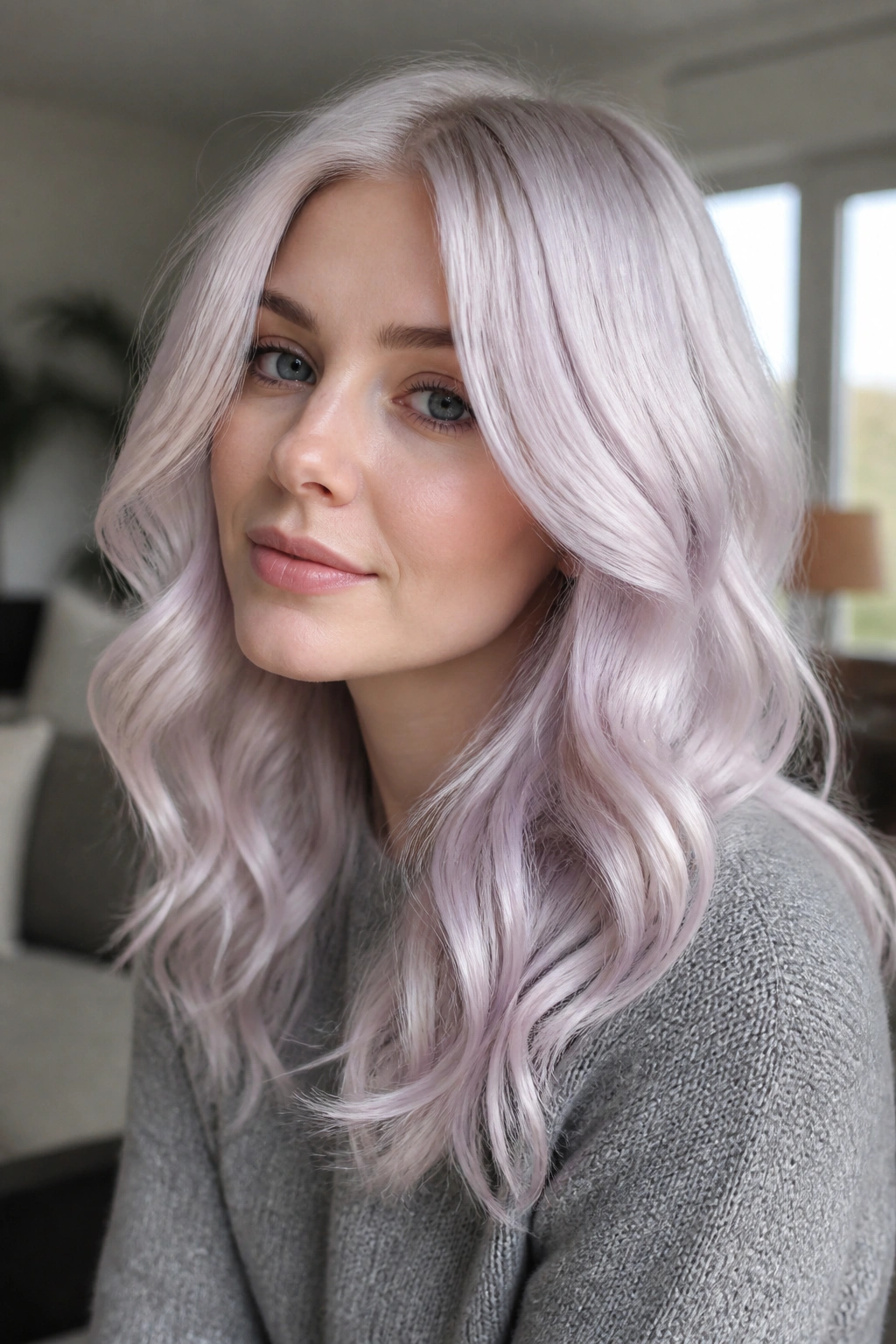
A whisper of lavender can rescue platinum from looking too stark. Not purple hair. Not pastel cotton-candy ends. Just a pale violet veil that sits inside the blonde and shows up when the light hits it.
That tiny wash of color works especially well on cool skin because it mirrors the skin’s own undertones instead of fighting them. The result can look soft, almost powdery, while still staying bright enough to count as platinum. Waves help too. The bend in the hair catches the toning in little flashes, which is much nicer than a flat sheet of color.
How much lavender is enough?
Less than you think. A toner that looks almost clear in the bowl is often enough if the hair is already lifted cleanly. On porous hair, I’d go even lighter, because porosity grabs pigment fast and can turn a delicate lilac into cloudy gray.
This shade is best for people who want platinum with a little personality, not a full fashion color moment.
8. Steel Gray Platinum Shag
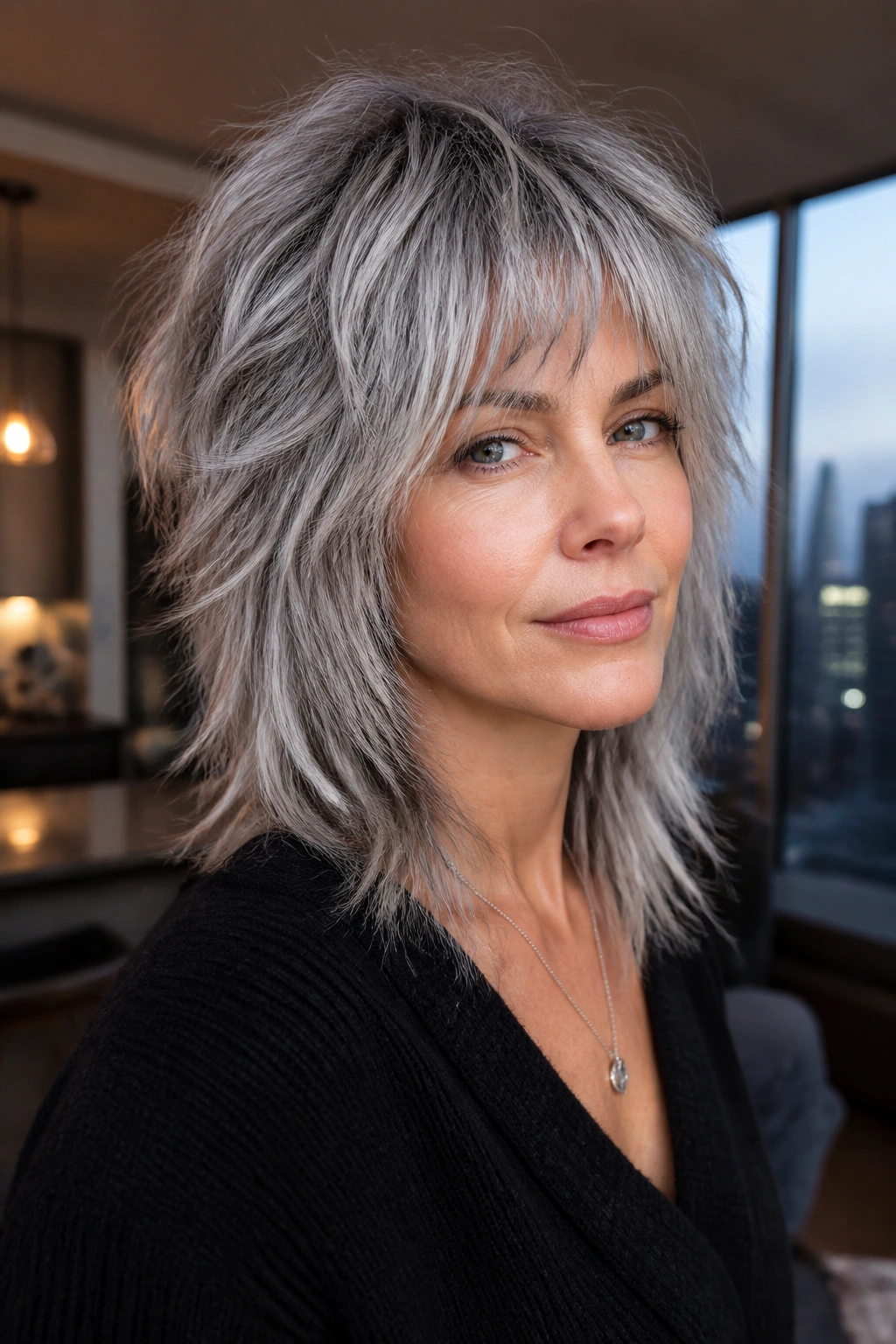
What if you want platinum with a bit of bite? A shag gives you the answer. The layers are choppy, the ends are feathered, and the tone can lean into steel-gray rather than bright white.
The shape matters as much as the color. A shag keeps the hair from sitting in one heavy block, which is useful when the shade is cool and reflective. The movement makes the silver tones look alive. On cool skin, the steel finish can feel almost tailored — sharp around the face, softer through the ends.
Best way to wear it
Use a light styling cream or a matte paste, not a glossy serum. Too much shine makes the shape collapse, and this cut needs texture. A center or slight off-center part works best, especially if your hair is naturally wavy.
If your wardrobe runs black, white, gray, navy, or icy blue, this shade lands beautifully. It has edge, but it still feels clean.
9. Arctic Platinum Money Pieces
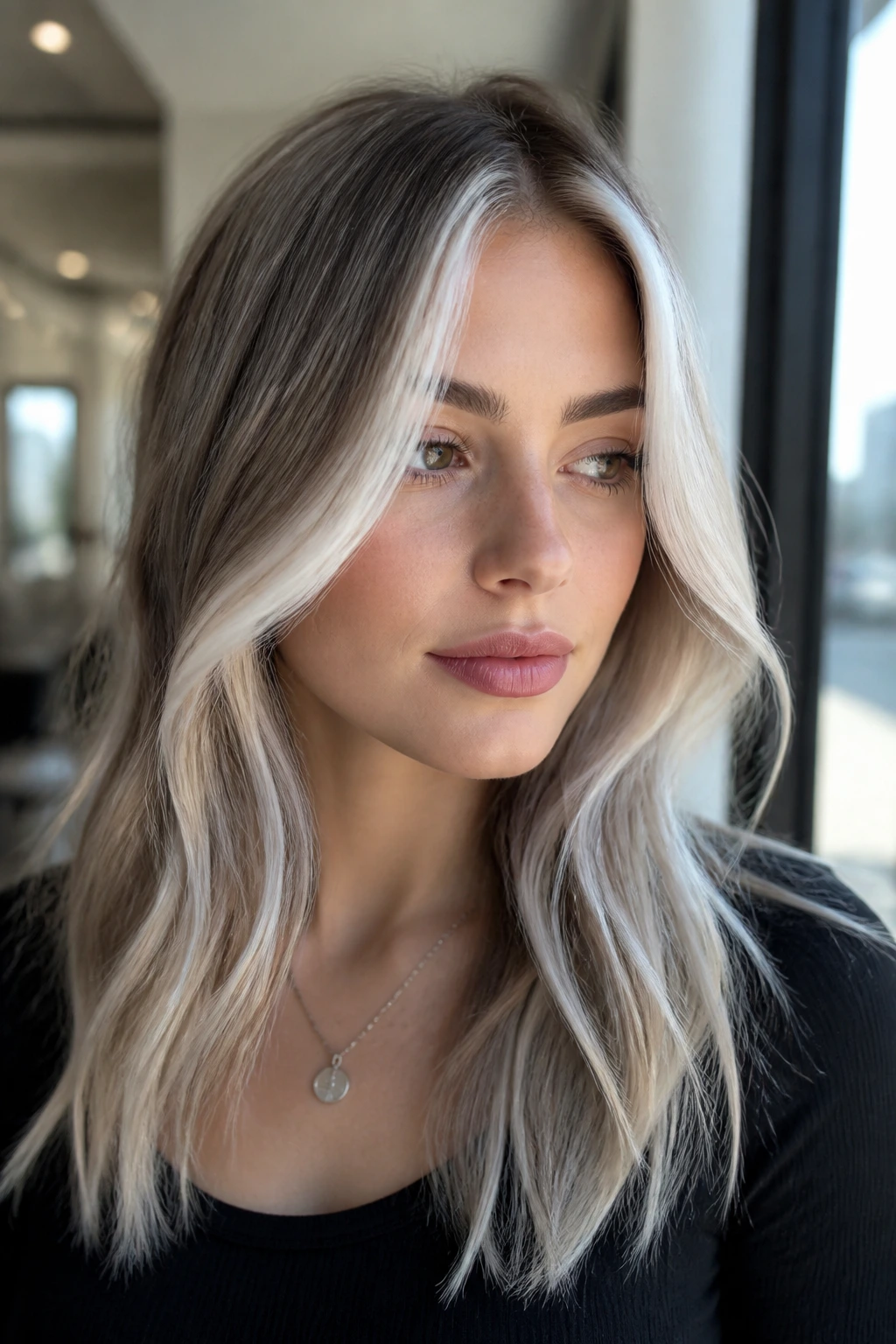
Money pieces are the lazy genius of platinum color. You brighten only the front sections — usually the first 2 to 4 foils on each side — and leave the rest of the hair a shade deeper. That gives cool skin an instant frame without bleaching the entire head to the same height.
The beauty of this idea is contrast. The front ribbons create brightness near the eyes and cheekbones, which is where you want the glow. The back can stay slightly deeper, so the overall look has shape and doesn’t flatten out under indoor light.
This is also easier to maintain than all-over platinum. The front still needs toner refreshes because those pieces fade fast, but the grow-out is friendlier. If you wear your hair up a lot, the bright front sections do the heavy lifting.
A good money-piece placement should start close to the part and taper just behind the ear. Anything wider starts to read stripey.
10. Mushroom Silver Platinum
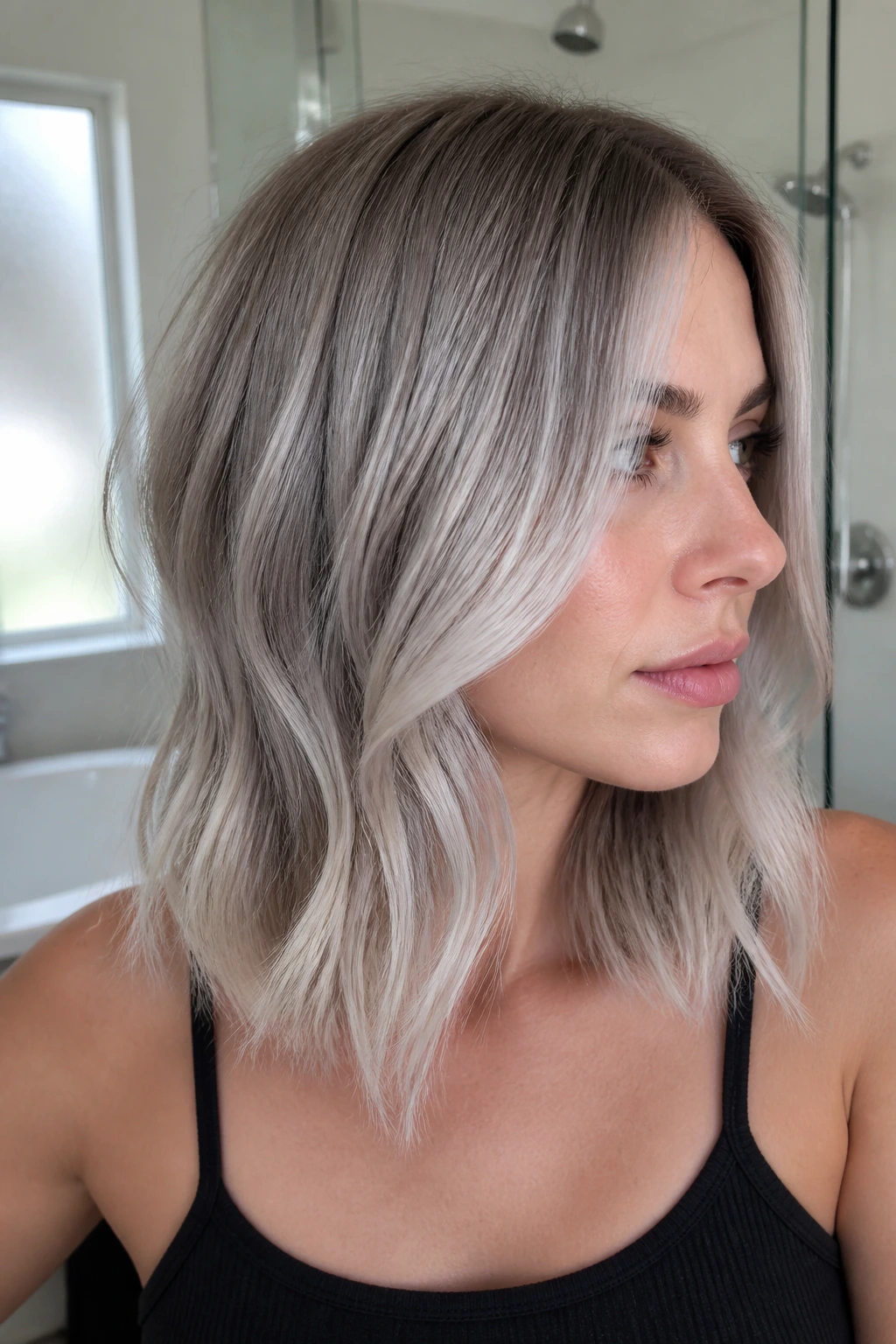
Mushroom sounds earthy, but in this context it means muted, smoky, and cool. The right version sits between ash blonde and silver, with enough depth at the root to keep the look grounded.
This is one of my favorite shades for people who think they want platinum but secretly hate the starkness of it. On cool skin, mushroom-silver can be gentler than pure white while still reading icy. It’s a quieter color. Not bland. Quiet.
Why it works
The tone usually starts with a soft ash base and a silver gloss over the mids and ends. The finish should never drift into beige or taupe-brown warmth. Keep it slate, smoke, and silver-gray. That keeps the complexion from looking pink or flushed in a bad way.
This is also a good bridge shade if you’re moving from brunette toward lighter blonde. It gives you a cool-toned landing place without forcing you into full white platinum on day one.
11. Mirror Platinum Long Layers
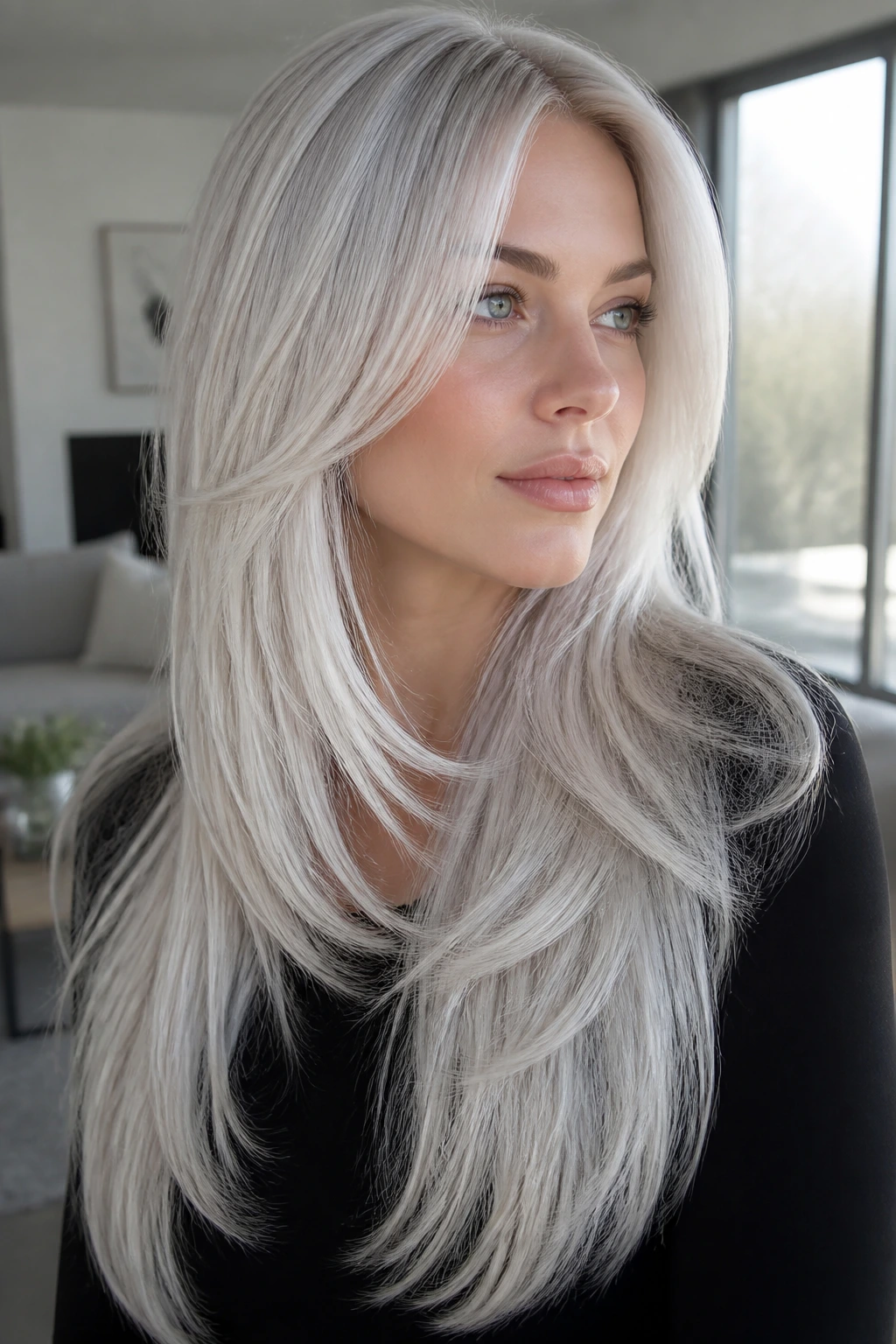
Mirror platinum is for people who like shine. Not oil-slick shine. Clean, polished reflection. The sort of hair that looks smooth even before the light hits it.
Long layers help because they break up the weight of the color. One flat sheet of very light platinum can feel heavy on long hair, but long layers add movement and let the shine travel. Cool skin tones tend to look especially fresh with this kind of finish because the hair reflects light in a blue-white way rather than a warm yellow one.
A good mirror-platinum look usually needs a careful blowout and heat protection every time. I’d keep flat iron passes to one or two per section, with the tool set around 350°F / 175°C if your hair is fine, a bit higher only if it’s thick and resilient.
The color itself should stay ultra-cool, but the surface should look glossy, not greasy.
12. Snowcap Platinum with Face-Framing Ribbons
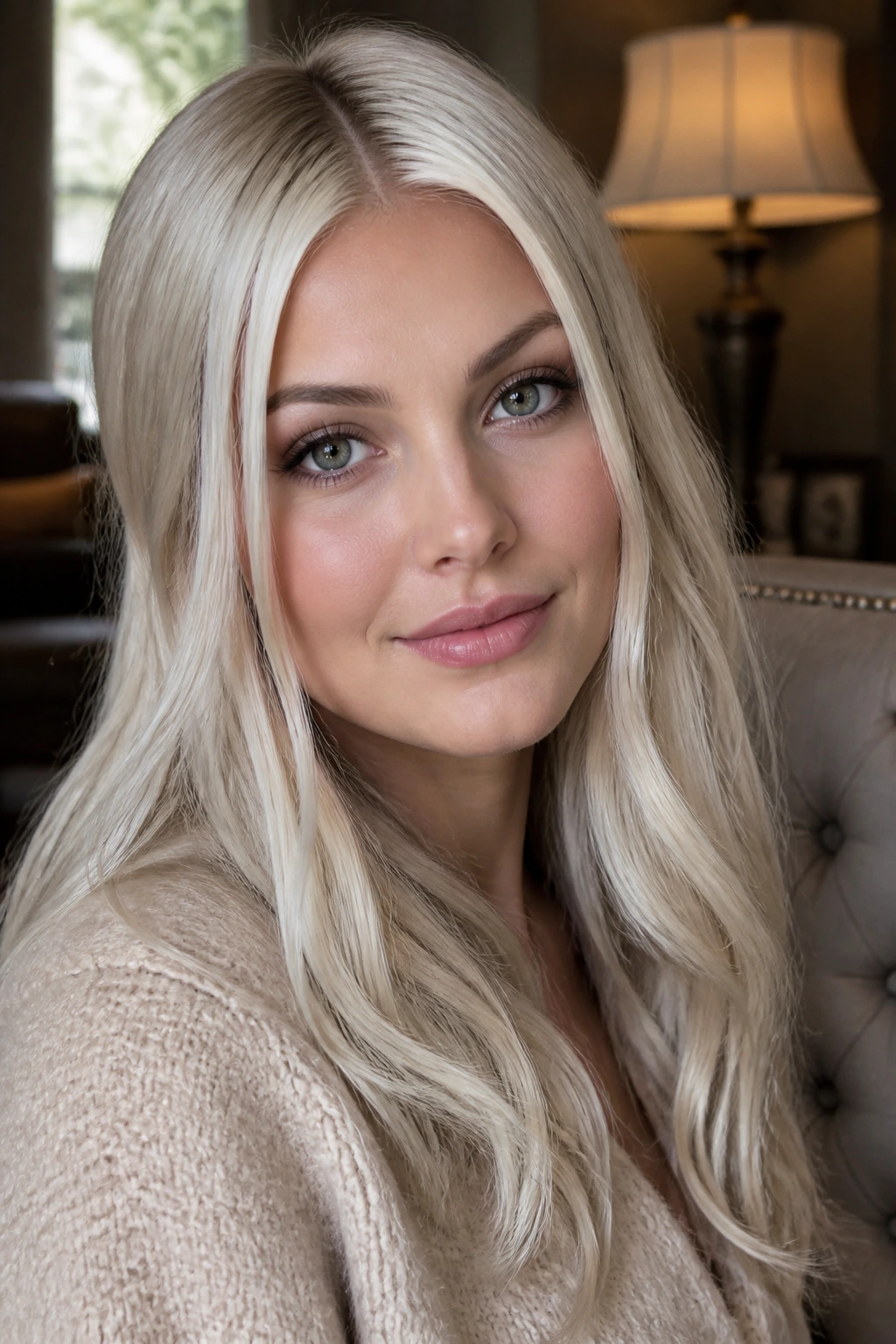
Snowcap platinum has a bright crown and brighter ribbons around the face, while the rest of the hair stays just a touch softer. It’s a nice way to wear a high-impact blonde without bleaching every strand into the same level of white.
The face-framing ribbons are the whole point. They should be narrow enough to look painted, not striped — about 1 to 1.5 inches wide at most. That keeps the brightness looking deliberate and helps cool skin tones get the lift right where they need it.
A little depth in the back gives the color room to breathe. That tiny contrast makes the face-framing pieces look even brighter, which is especially useful if your features are fine or your skin is very pale.
This shade wears well with waves, a low bun, or a loose blowout. You don’t need much styling. The color itself does the talking.
13. Violet-Platinum Crop
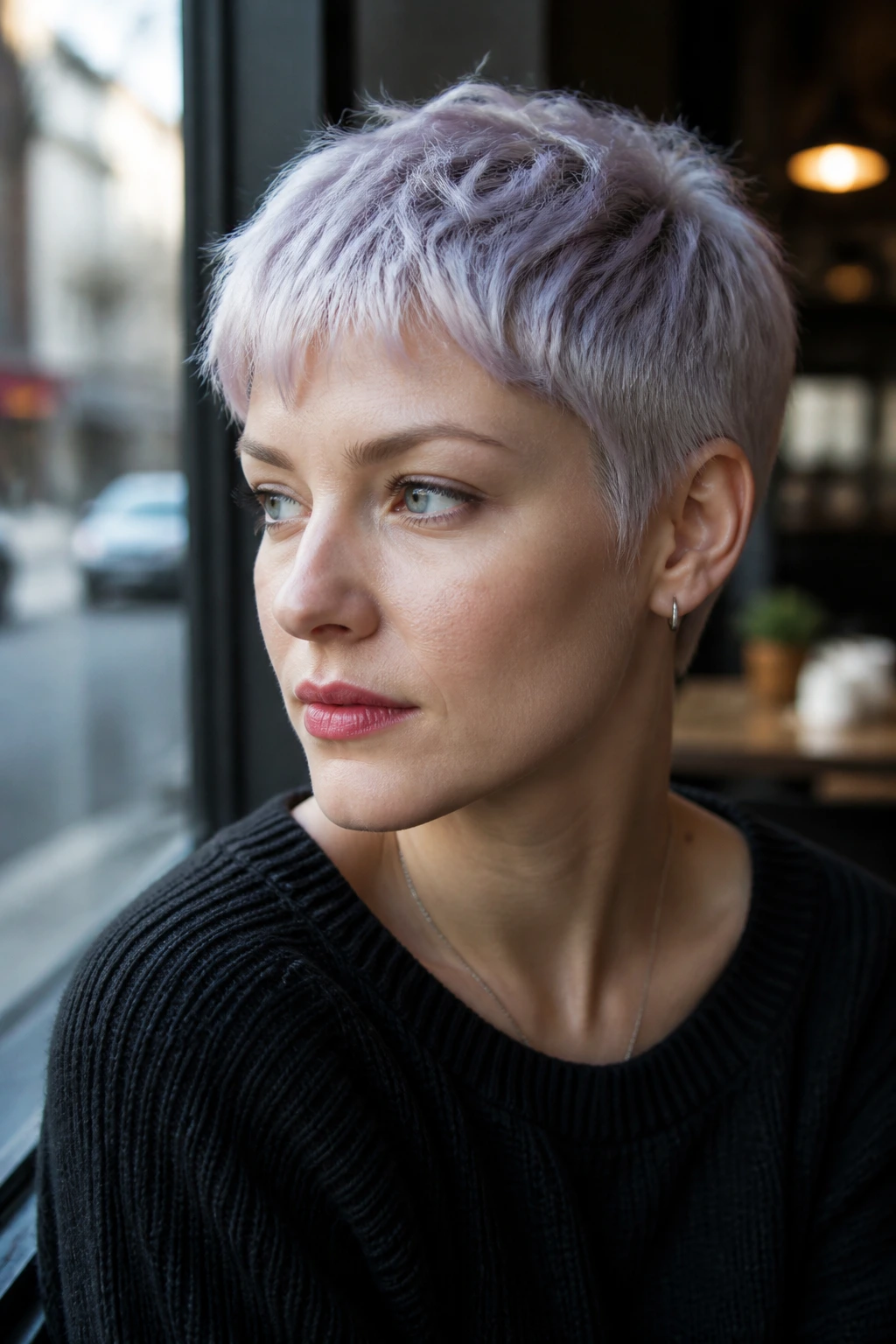
Violet is the fastest route to making platinum look intentional on cool skin. Not purple-purple. A pale violet cast, the kind that almost disappears until the sun catches it.
A crop keeps the shade from getting lost. Short hair shows tone changes more clearly, so even a thin violet veil can make the blonde feel fresh rather than washed out. This is especially useful if your hair has a faint yellow cast that keeps sneaking back after washes.
What to watch for
Porous hair grabs violet pigment fast. If the strands are already fragile from bleaching, the toner can go cloudy in a hurry. The fix is simple: use a diluted gloss, leave it on for less time, and check the shade every few minutes instead of guessing.
This shade suits people who like a little fashion edge but don’t want full pastel hair. It’s subtle enough for everyday wear, but it still feels more interesting than plain white platinum.
14. Ice Queen Platinum Curls
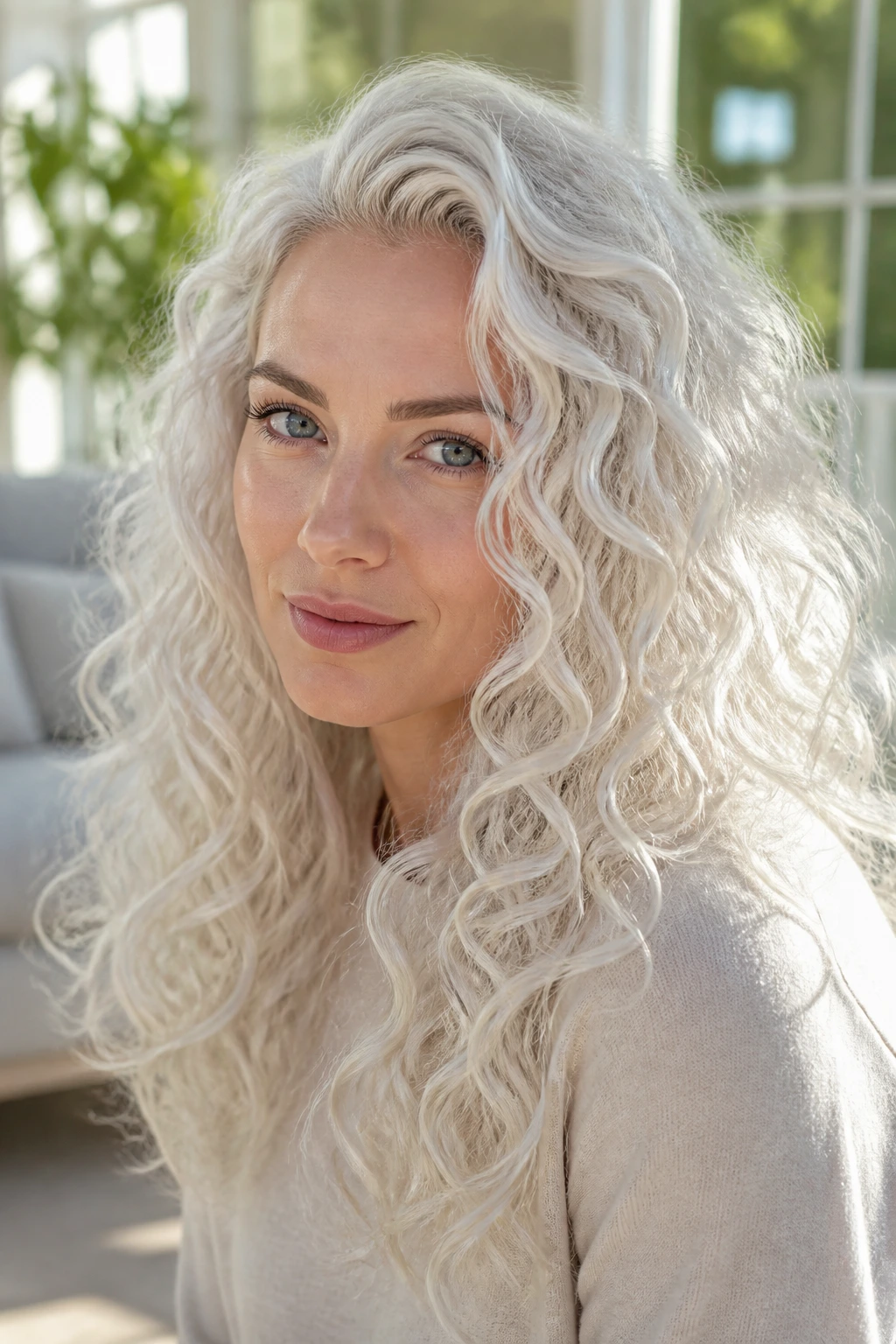
Can curls carry platinum without looking harsh? Yes, if the tone is soft enough and the moisture is there. Curls give platinum a different kind of life because the ringlets or waves catch reflection from every angle.
Cool skin tones do well with this because the texture makes the brightness feel less severe. A curl pattern naturally breaks up the light, so a pale silver or icy pearl tone ends up looking dimensional instead of flat. The trick is keeping the curl hydrated. Dry platinum curls can go fluffy in a bad way, and that’s nobody’s friend.
What helps
- Use a rich leave-in conditioner after every wash.
- Dry with a diffuser on low heat to keep the curl shape intact.
- Ask for a cooler gloss at the salon so the lighter pieces don’t drift yellow.
- Keep the ends trimmed every 8 to 10 weeks, because split ends show fast on pale hair.
This look is dramatic, but the drama comes from movement, not excess. That’s a good place to be.
15. Ash-Platinum Balayage
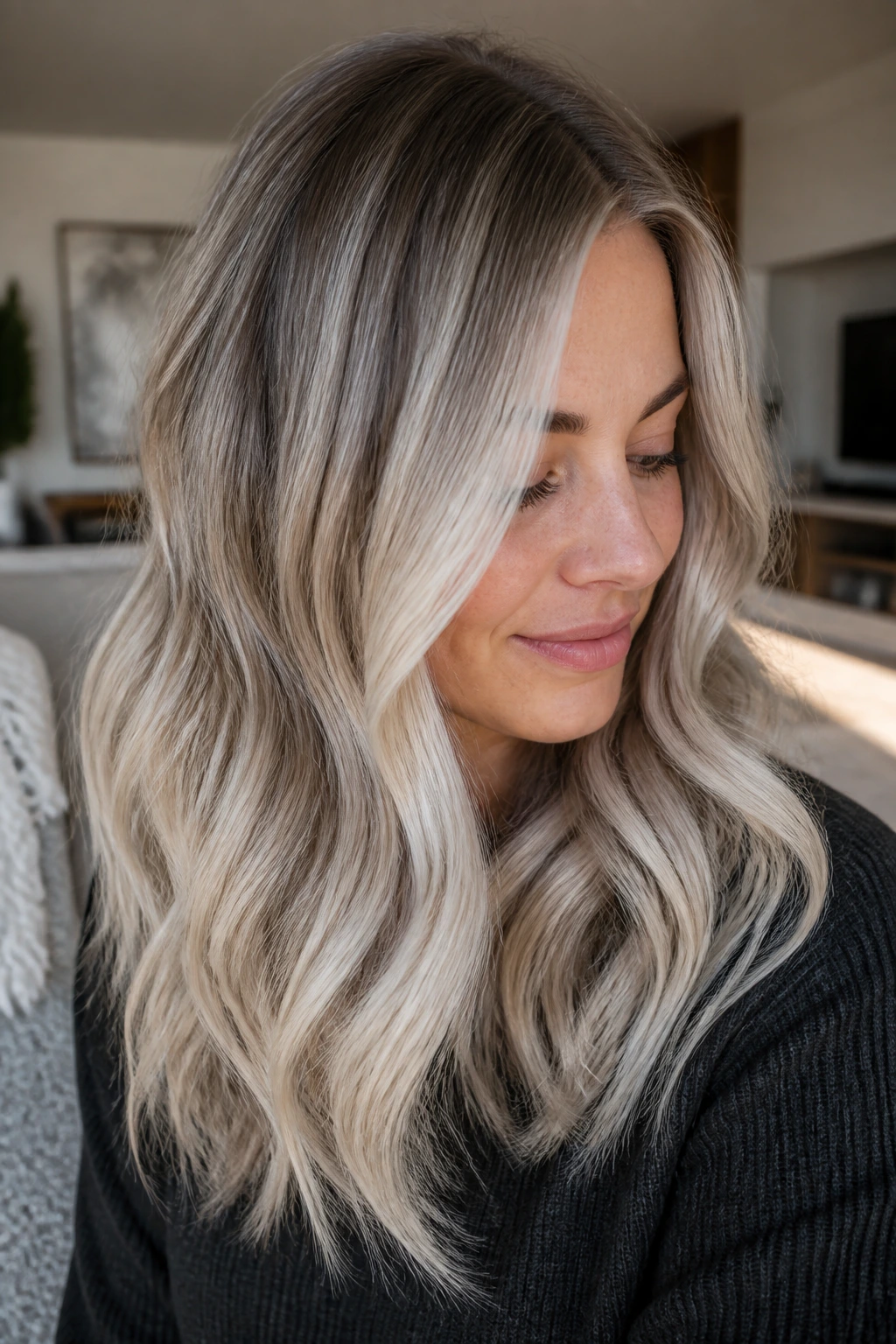
Ash-platinum balayage is the low-drama way to wear platinum on cool skin. Instead of full saturation from root to tip, the color is painted in ribbons through the mids and ends, leaving a little depth at the root so the whole thing blends.
That root depth matters. It gives the blonde shape and makes regrowth less obvious. More important, the ash tone keeps the lighter pieces from sliding warm. If your skin has pink undertones, this kind of color can help the hair support the face instead of competing with it.
Balayage also works nicely on layered cuts because the lighter pieces move. When you turn your head, the color shifts instead of sitting still, which is one reason it feels softer than all-over platinum.
If you want bright hair without the full-time maintenance of a solid white shade, this is one of the smarter picks.
16. Crystal Platinum with a Dark Root Melt
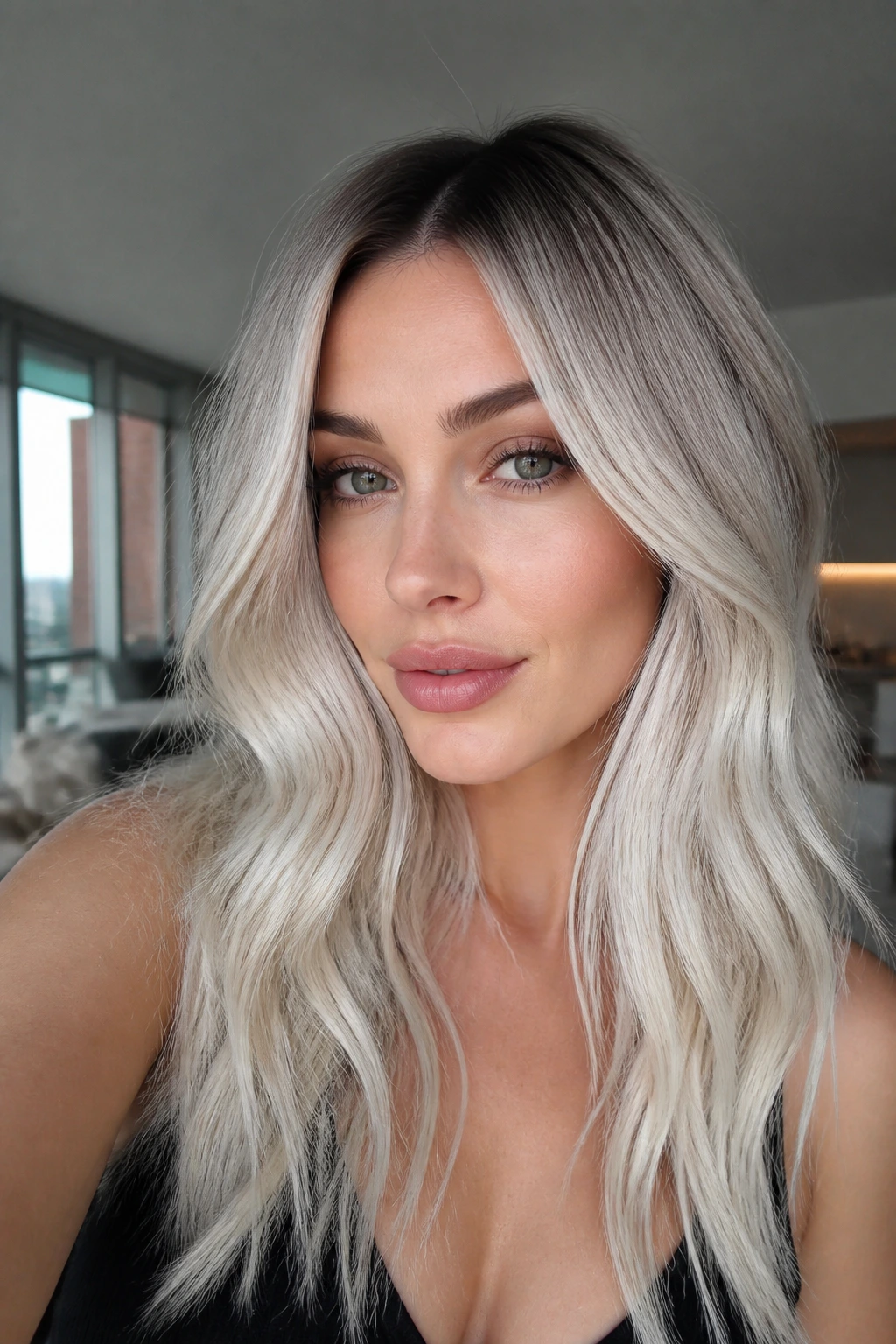
A dark root melt makes platinum easier to live with. That’s the honest answer. The root stays deeper — usually an ash brown or cool medium blonde — and then melts into crystal-bright ends, so the grow-out line is softer and the color has more depth.
Unlike a tiny root shadow, a melt is more visible. It creates a real transition, which is helpful if you like contrast. On cool skin tones, that contrast can look chic instead of harsh because the root stays neutral-cool instead of gold or copper.
This idea works especially well if you like your hair to look polished for longer between salon visits. A one-inch or even 1.5-inch melt can buy you time without making the color feel dark.
The ends should still look pale enough to count as platinum. If the melt gets too heavy, the whole look stops being bright and turns into a brunette-blonde hybrid. That’s not the goal here.
17. Blue-Glass Platinum Sleek Bob
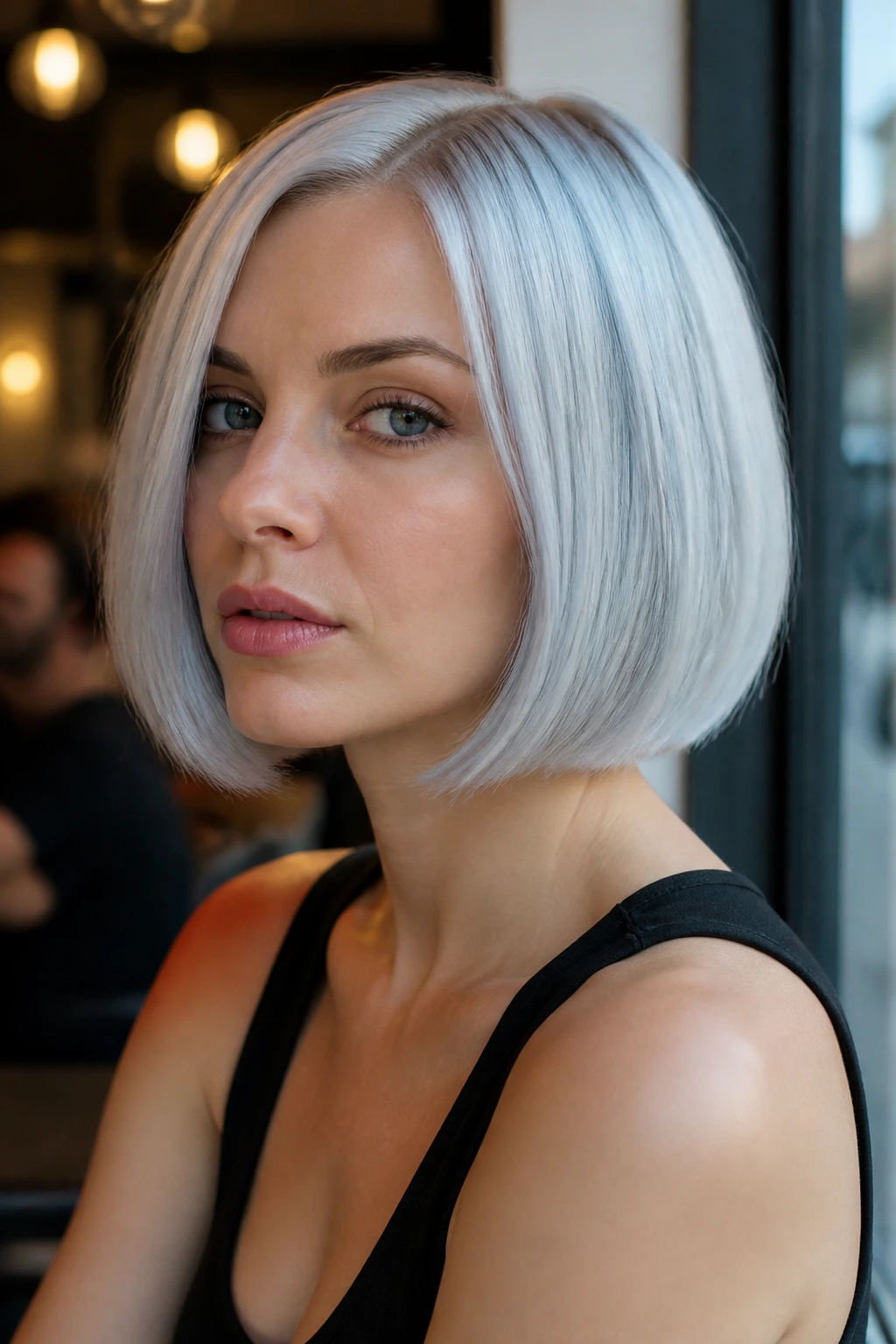
Blue doesn’t have to be loud to matter. In a blue-glass platinum bob, the blue is almost invisible — just enough to pull the blonde toward an icy direction and keep it from drifting yellow.
This shade works beautifully with a sleek bob because the cut gives the color a glassy surface. A chin-length or slightly shorter bob keeps the effect compact and sharp. Cool skin tones tend to like this because the hair reflection stays crisp next to the face, not muddy.
The styling should be smooth, but not overworked. One pass with a flat iron is usually enough if the cut is good. Too much heat makes platinum look thirsty, and thirsty hair loses the glass effect fast.
If you like sharp lines, clean makeup, and a wardrobe with a lot of black or navy, this one may be the most satisfying option in the whole list.
18. Moonlit Platinum Butterfly Cut
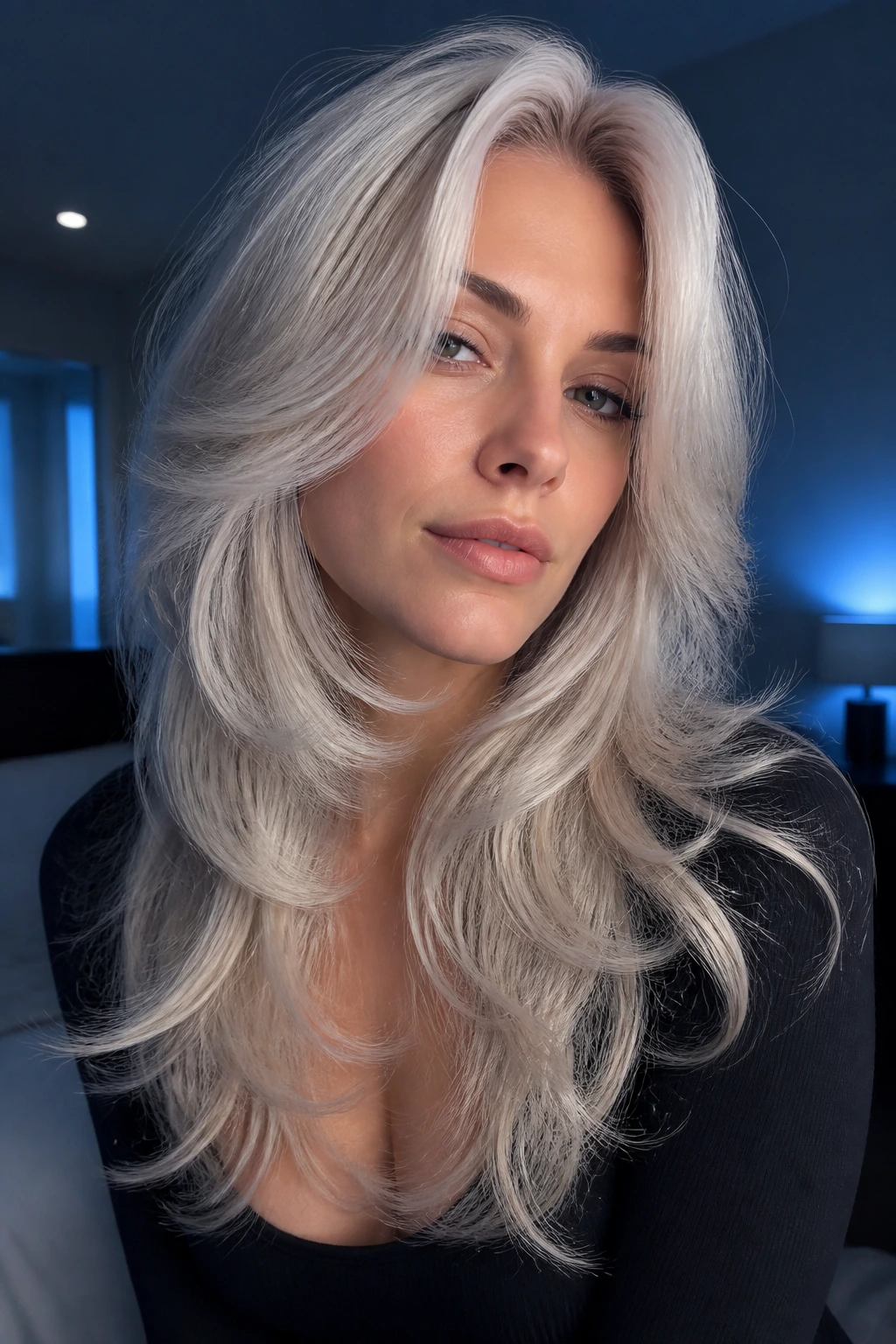
The butterfly cut gives platinum movement without killing the brightness around the face. That’s the appeal. You get airy, face-framing layers at the top and longer pieces through the bottom, so the color has room to breathe.
Moonlit platinum works well here because the layers create soft shifts in reflection. Instead of one solid sheet of white-blonde, you get little flashes of silver and pearl as the hair moves. Cool skin tones like that because the effect is bright but not harsh. It’s brightness with shape.
Why the cut matters
A heavy platinum length can look flat fast. The butterfly cut lifts the crown, softens the face, and keeps the ends from feeling weighed down. If the layers are cut well, the whole style looks lighter even before you pick up a brush.
This is a strong choice if you want hair that feels airy and bright at the same time. Not easy. Just balanced.
19. Opal Platinum with a Pastel Sheen
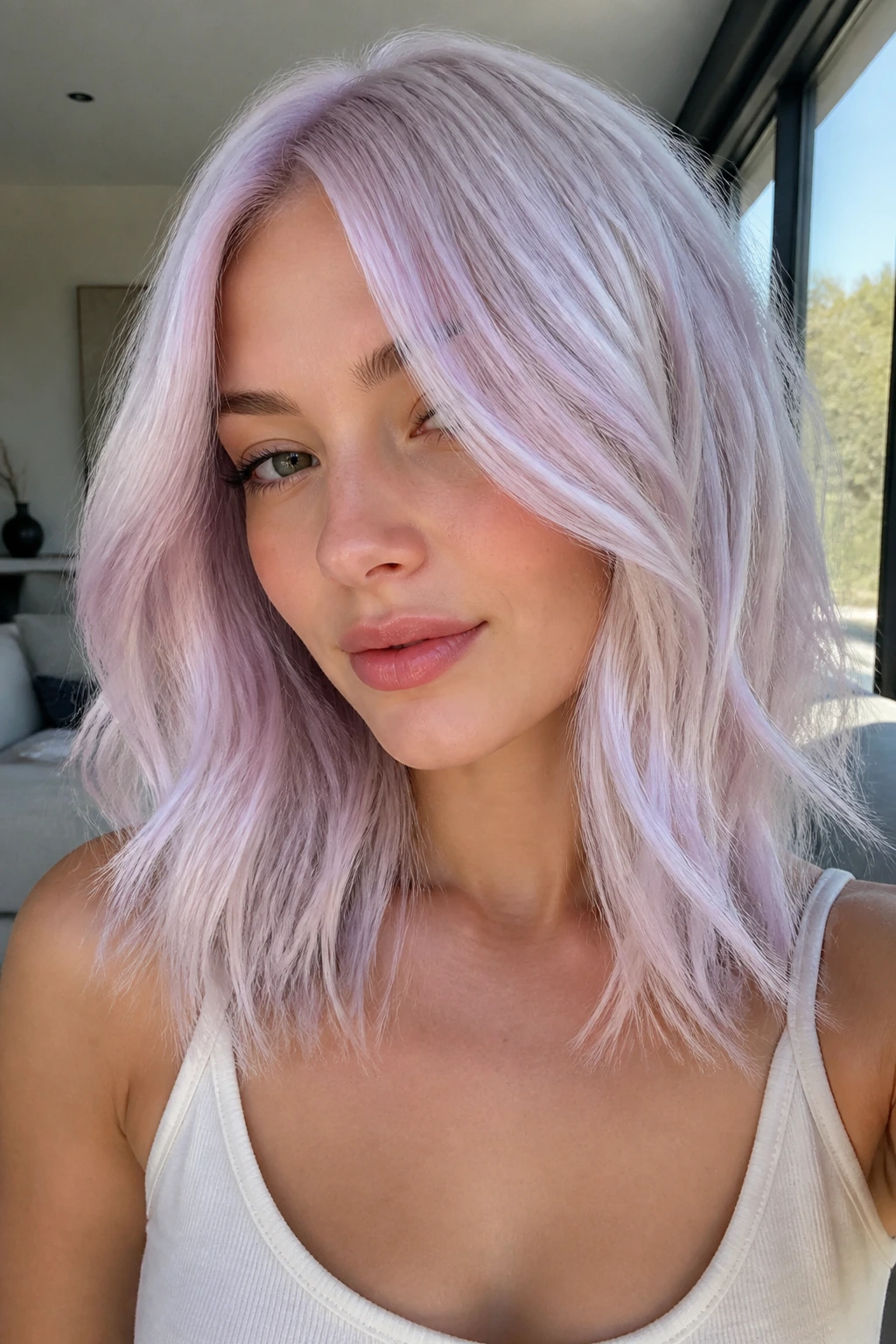
Opal platinum sits between silver, lilac, and pearl. It changes with the light, which is the fun part. Indoors it can look cool and pale; outdoors it can flash a tiny lavender or icy blue reflection.
For cool skin, that kind of shift can be lovely because the color echoes the undertones already present in the complexion. The key is keeping the pastel whisper-thin. A heavy pastel overlay can look chalky fast, and chalky is not the same as luminous.
I’d use this on hair that’s already lifted extremely cleanly. If the base still has yellow in it, opal will read muddy instead of soft. That’s the unglamorous truth. The base has to earn the right to wear the gloss.
This shade suits people who want something a little more artistic than plain platinum but still want the palette to stay cool and refined.
20. Soft White Platinum with an Ultra-Shadow Root
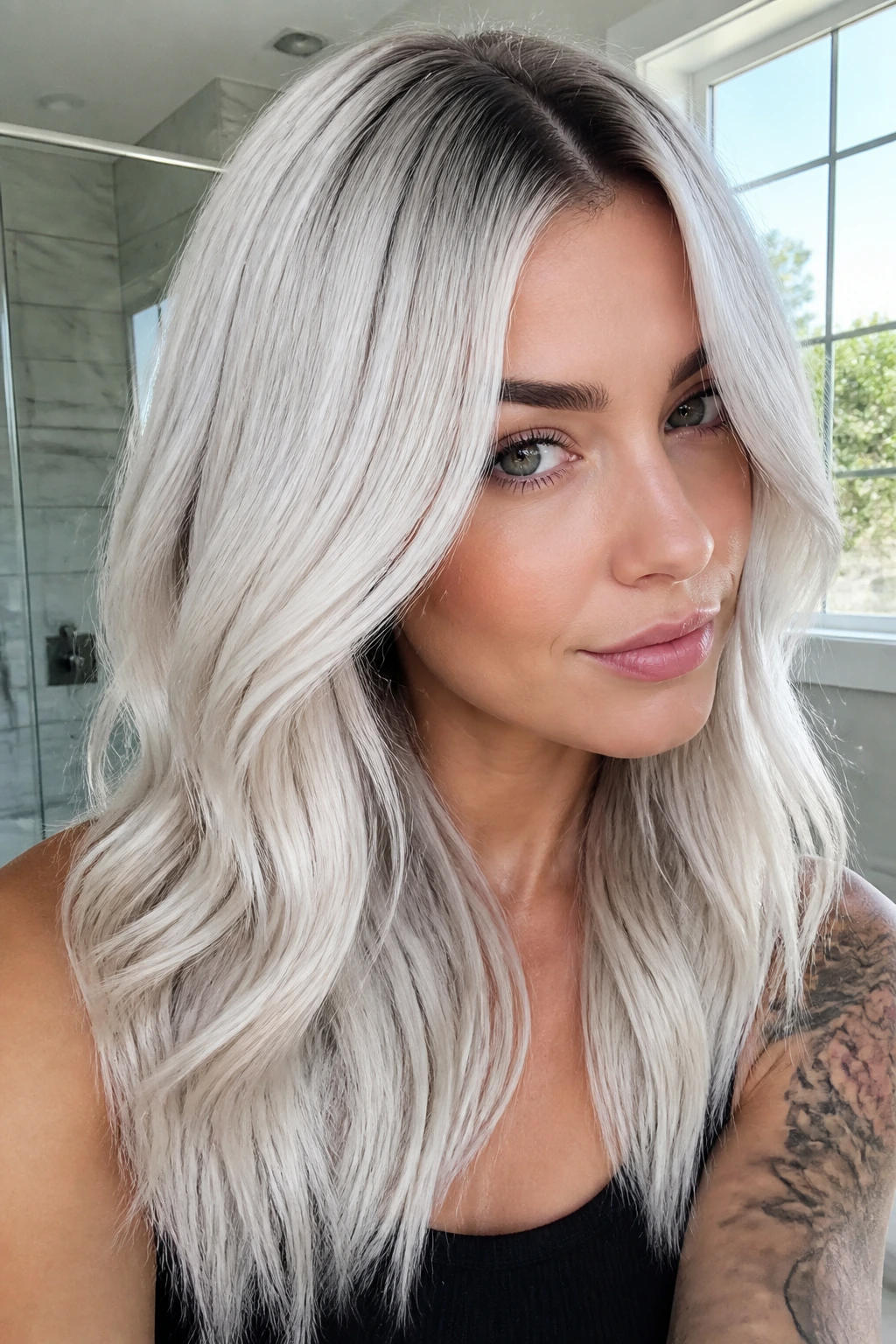
Soft white platinum is the boldest version here. The ends are nearly white, the root is shadowed enough to keep regrowth from screaming for attention, and the overall effect is bright from a distance and crisp up close.
The ultra-shadow root is doing some heavy lifting. A root that stretches 1 to 1.5 inches gives you room to move between salon visits, and it keeps cool skin from getting washed out by a hard white halo at the scalp. That little bit of depth can also make the eyes stand out more, which is a nice side effect if your features are pale.
This is the shade for someone who likes a high-contrast look and does not mind upkeep. It needs toning, careful shampoo choices, and a willingness to keep brass from sneaking back in through the ends.
If you want the brightest version of platinum, this is the one to ask about. Just keep the tone cool. That part never gets old.
Platinum on cool skin tones works best when it stays on the icy side of the color wheel — silver, violet, ash, pearl, steel, blue, or a very soft white. The moment the shade turns buttery or beige, the face loses some of that clean contrast.
A good colorist will talk about the base level, the toner, and the root transition instead of just saying “go lighter.” That’s the difference between hair that looks bright for a week and hair that looks thoughtful for months.
