



Honey blonde can look gorgeous on cool skin tones, but it can also go wrong fast. Push the warmth too far and the face starts looking flushed instead of fresh. Keep it softer, more beige, a little smoky at the root, and the whole shade suddenly makes sense.
That’s the part a lot of people miss. Honey blonde is not one fixed color. It can lean creamy, sandy, champagne, beige-gold, or deeper and rooted — and those small shifts matter a lot when your skin has pink, blue, or neutral-cool undertones.
I usually think of it this way: the best honey blonde for cool skin tones is the version that gives you warmth without shouting about it. A shade that reads soft gold in daylight and creamy beige indoors. A shade with enough depth near the scalp that the blonde doesn’t wash you out.
So if you’ve been saving inspiration photos and wondering why some look graceful while others look a little too sunny, that’s the difference. The good versions sit in the beige-gold lane, not the orange lane.
1. Cool Beige Honey Blonde
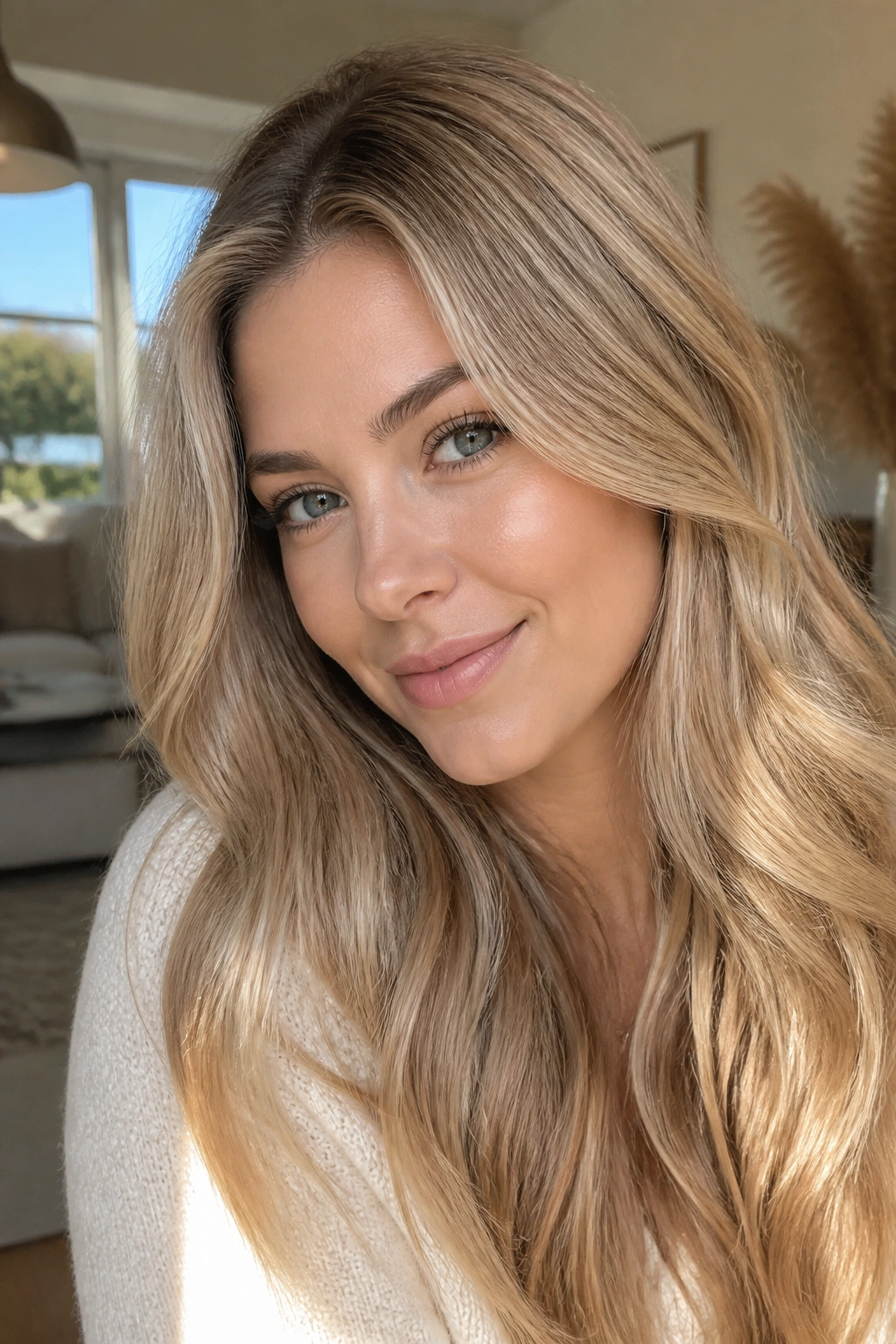
Cool beige honey blonde is the easiest place to start if you want warmth without the heavy golden shine that can fight cool undertones. It has that soft, sunlit feeling, but the beige keeps it from tipping into brass. On skin with pink or blue undertones, that makes a real difference.
Why It Flatters Cool Undertones
Ask for a level 8 beige-gold blonde with no copper, no strawberry, and no bright yellow. That little bit of restraint is doing all the work here.
A root that stays around level 6 or 7 also helps. The deeper base gives the blonde somewhere to land, so the color doesn’t sit flat against the face.
- Best on light brown to dark blonde bases
- Works well with loose waves or a soft blowout
- Holds up nicely with a beige gloss every 6 to 8 weeks
- Looks softer than a pure golden blonde in daylight
Pro tip: If a photo looks like butterscotch in direct sun, it’s probably warmer than you want for cool skin.
2. Rooted Honey Balayage
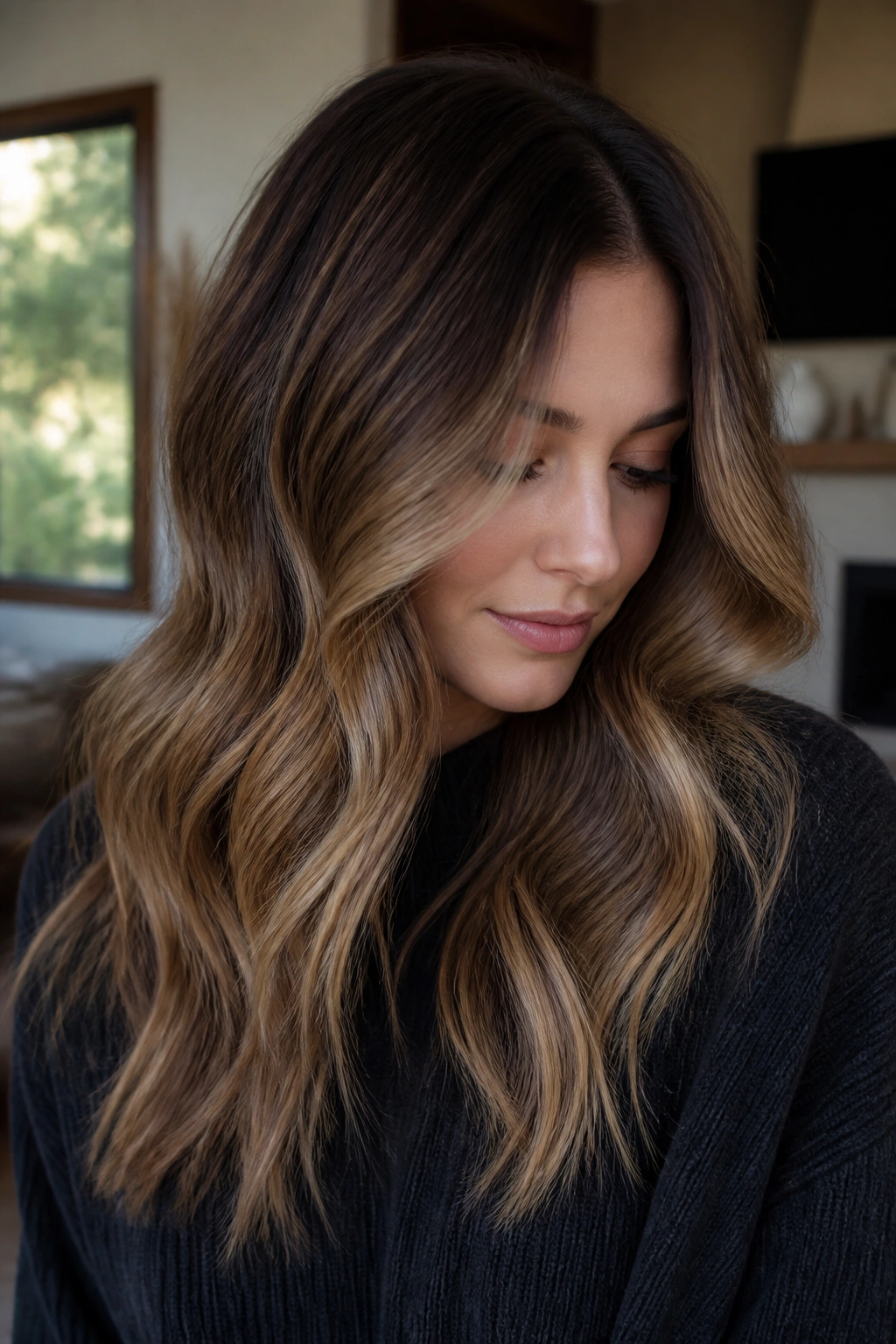
This is the shade I’d pick first for most people who want honey blonde without the upkeep headache. The rooted base keeps the hair from reading too yellow near the face, and the painted pieces through the mids and ends bring in just enough brightness.
Rooted balayage also gives cool skin a cleaner frame. The darkness at the scalp makes the honey look intentional, not washed out. That matters more than people think.
I like this look on brunettes who want a soft lift, because you do not need to bleach every strand to get the effect. A few brighter ribbons around the top layer, then softer honey through the lower sections, usually does the trick. It grows out gracefully, too.
Maybe that’s the whole appeal. It behaves.
3. Smoky Honey Blonde Lob
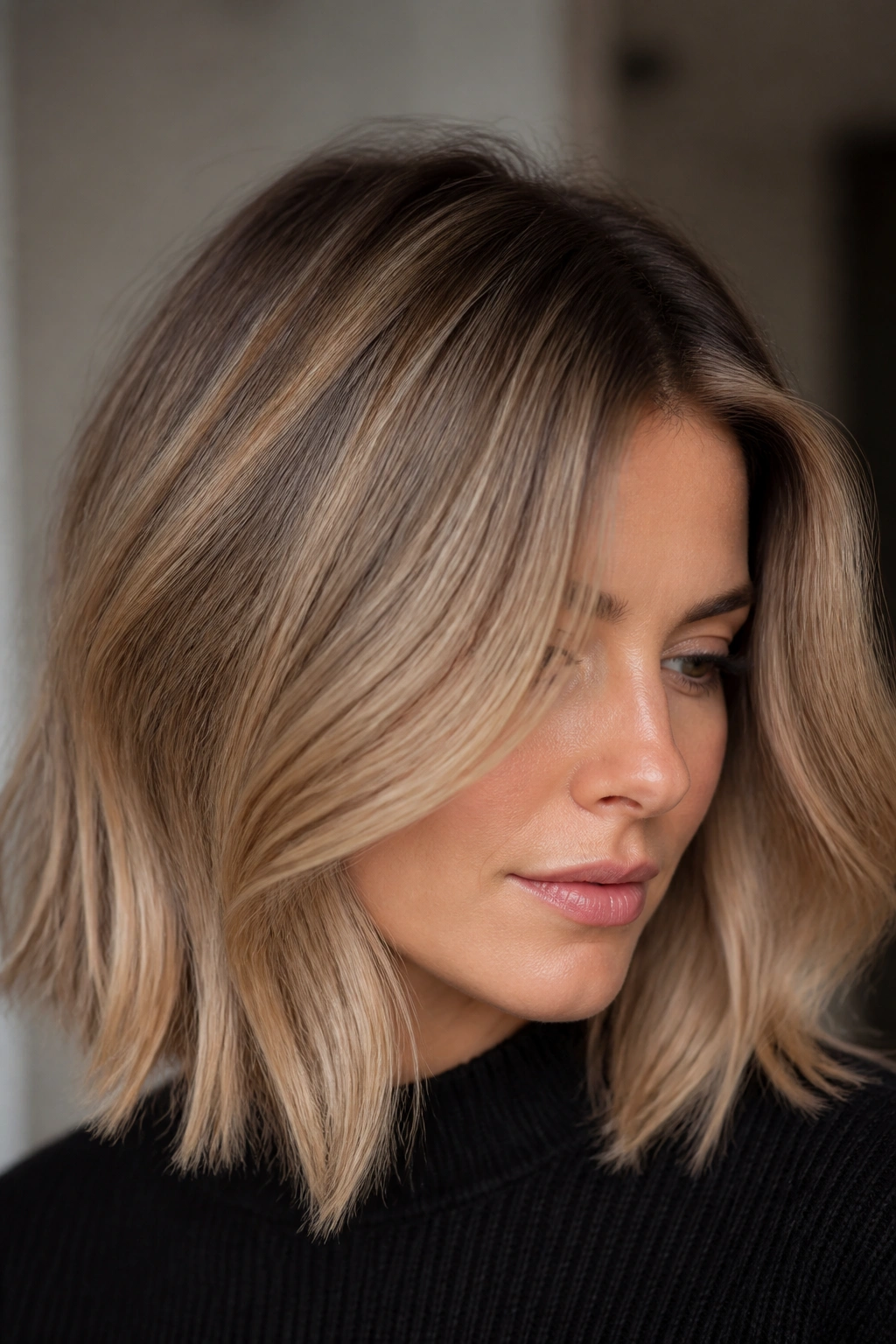
Can honey blonde look cool enough on a lob? Absolutely, if the blonde leans smoky instead of loud. A chin-skimming or shoulder-grazing lob gives the color a modern edge, and the shorter length keeps the warmth from spreading everywhere.
How to Ask for It
Tell your colorist you want a smoky honey glaze over a light brunette or dark blonde base. The goal is a beige-gold finish with a muted surface, not a bright yellow sheen.
- Keep the root shadow soft and narrow
- Ask for fine, diffused highlights through the ends
- Stay away from chunky panels near the hairline
- Style with a bend, not a tight curl, so the dimension shows
A lob like this is one of those cuts that does a lot of the visual work for you. The bluntness at the ends keeps the shade clean. The smoky finish keeps it from turning too sunny.
4. Face-Framing Honey Pieces
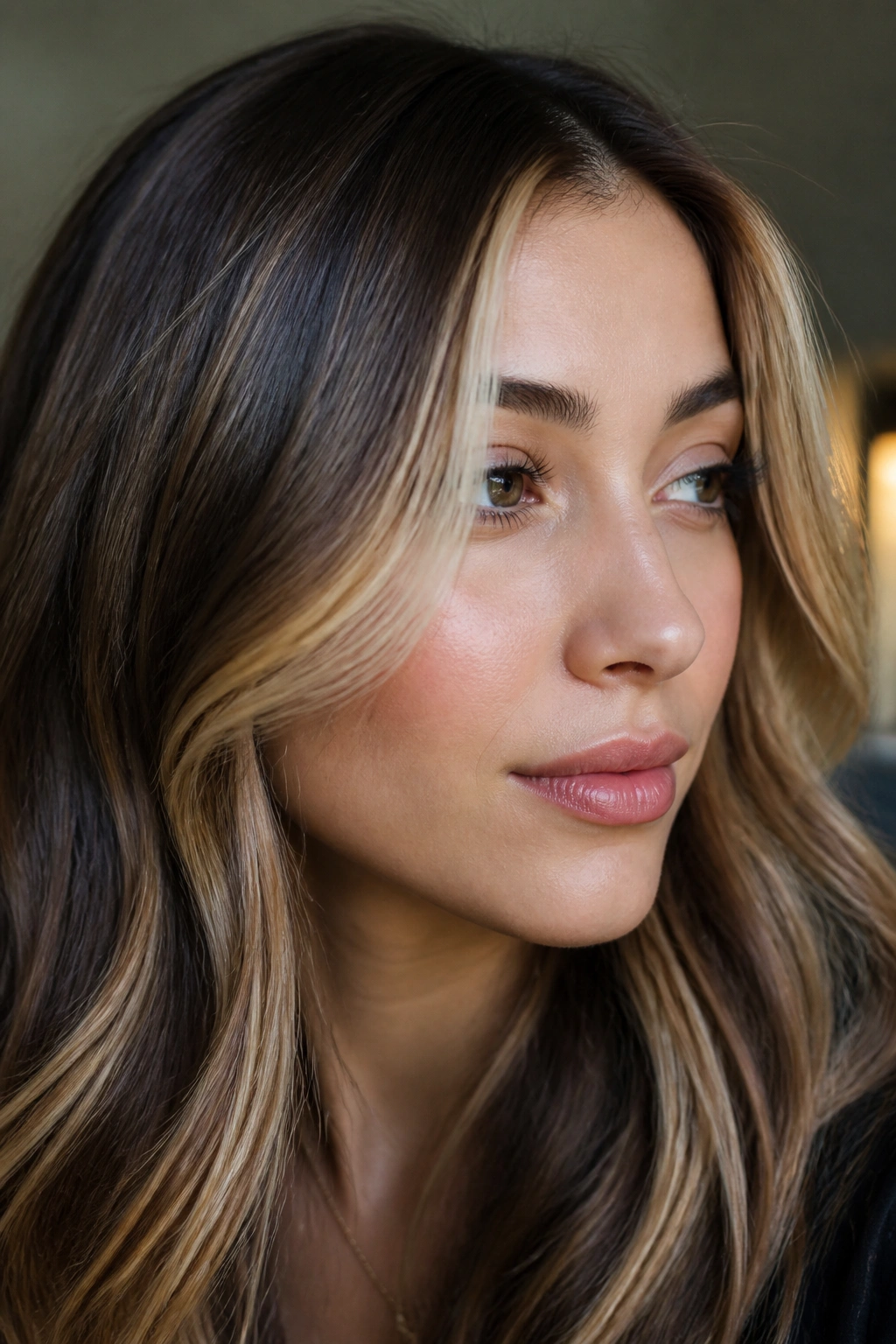
Imagine wanting a lighter face without committing to a full blonde. That’s where face-framing honey pieces earn their keep. They brighten the front, give cool skin a little lift, and leave the rest of the hair deeper so the color never feels overdone.
The key is placement. You want the brightest strands right near the hairline, then a softer fade as they move back toward the crown. If the lightness starts too far in, the whole head can read warm in a hurry.
- Brightest pieces: from temple to cheekbone
- Softest pieces: just behind the ear
- Best paired with a neutral brown or beige base
- Easy to refresh with a quick gloss instead of a full retouch
This is one of my favorite low-commitment ideas, because it buys you a lot of impact for a small amount of bleach.
5. Creamy Honey Blonde Melt
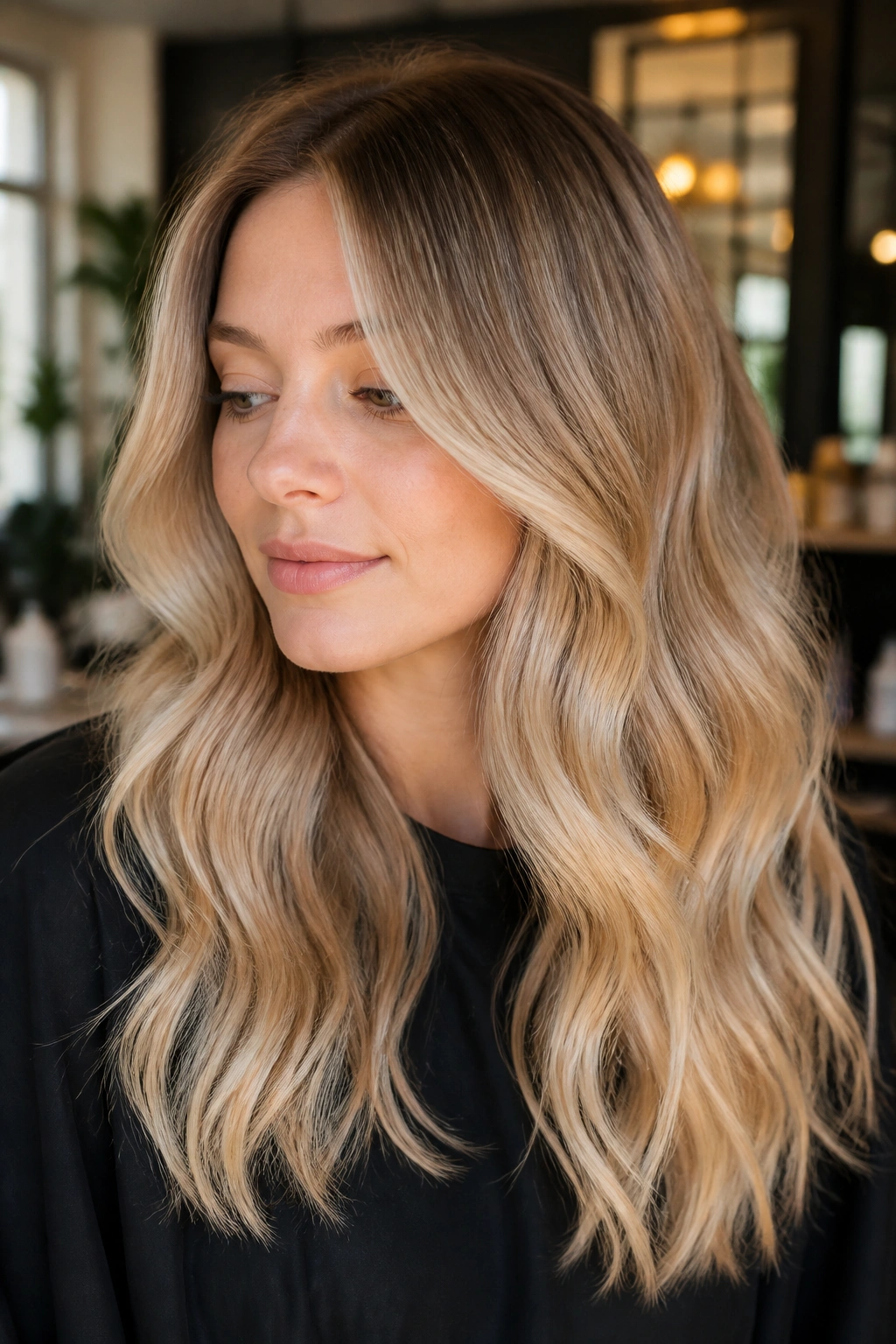
Creamy honey blonde is the gentlest version on the list, and it works especially well if your skin is very fair or pink-toned. The color moves from a deeper root into soft, milky honey ends, so the warmth feels layered instead of flat.
What makes this shade so wearable is the texture of it. It doesn’t look striped. It looks blended, almost like the light is sitting inside the hair rather than on top of it.
I like this on medium-length hair with a slight wave, because the curves let the creamy tones show up in sections. Straight hair can do it too, but you need a good gloss to keep the finish from looking dull. A beige or pearl gloss every couple of months helps the honey stay soft.
This one feels polished without trying too hard. Which, honestly, is the point.
6. Champagne Honey Foilayage
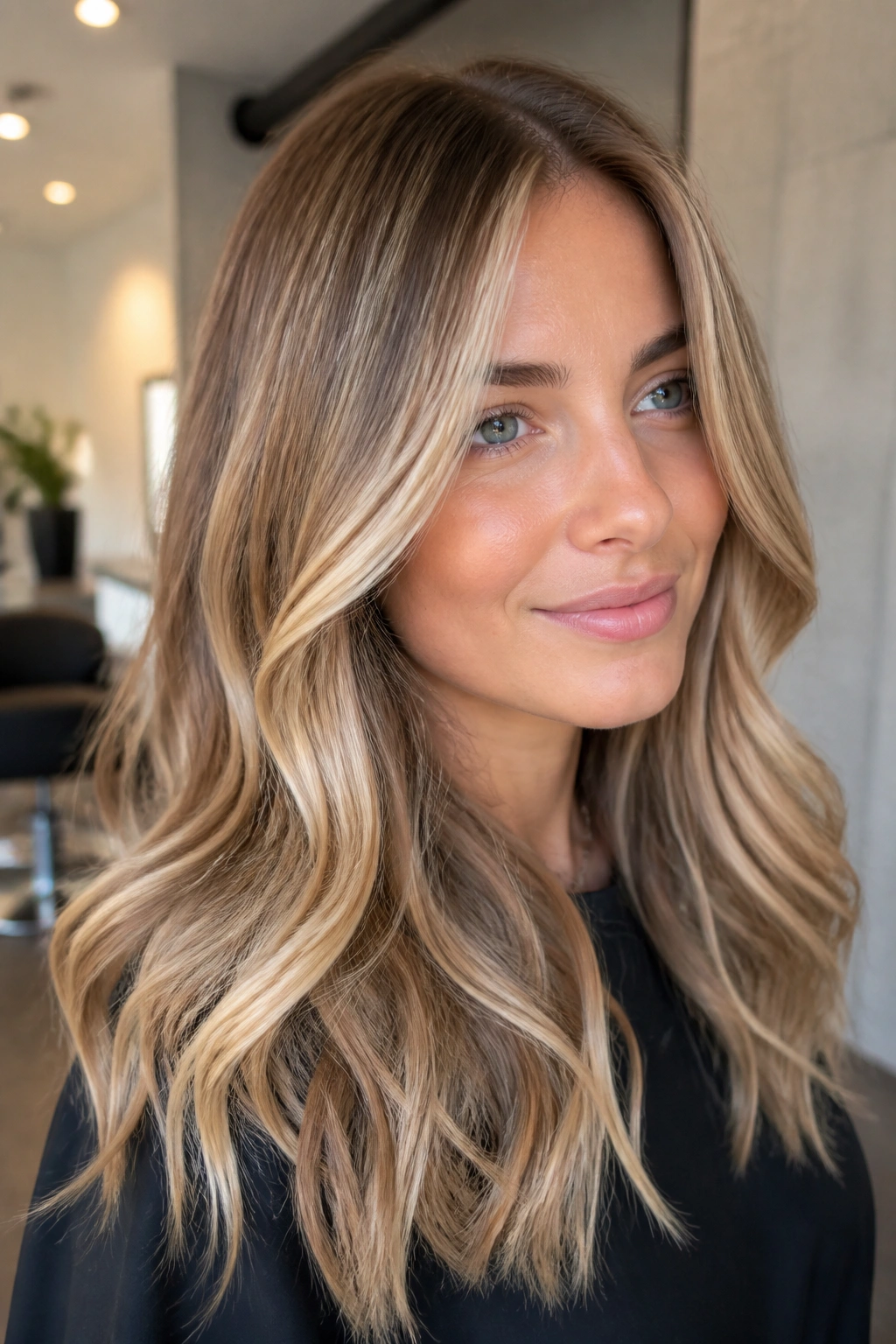
Unlike broad balayage, champagne honey foilayage gives you narrower, cleaner ribbons of light. That makes the color look more precise, and precision is useful when you want honey blonde to sit nicely on cool skin.
Foilayage is a smart middle ground. It gives you more lift than hand-painting alone, but the placement still feels soft. The champagne note pulls the honey away from orange and closer to a pale beige-gold, which reads better on cooler complexions.
This is the version I’d recommend if you want to look brighter without looking obviously highlighted. It’s especially good on layered cuts, where the thin ribbons can move around and catch different amounts of light.
If your hair tends to go brassy, ask for a neutral or violet-based toner after lightening. That one step can keep the whole finish calm.
7. Mushroom Honey Blonde
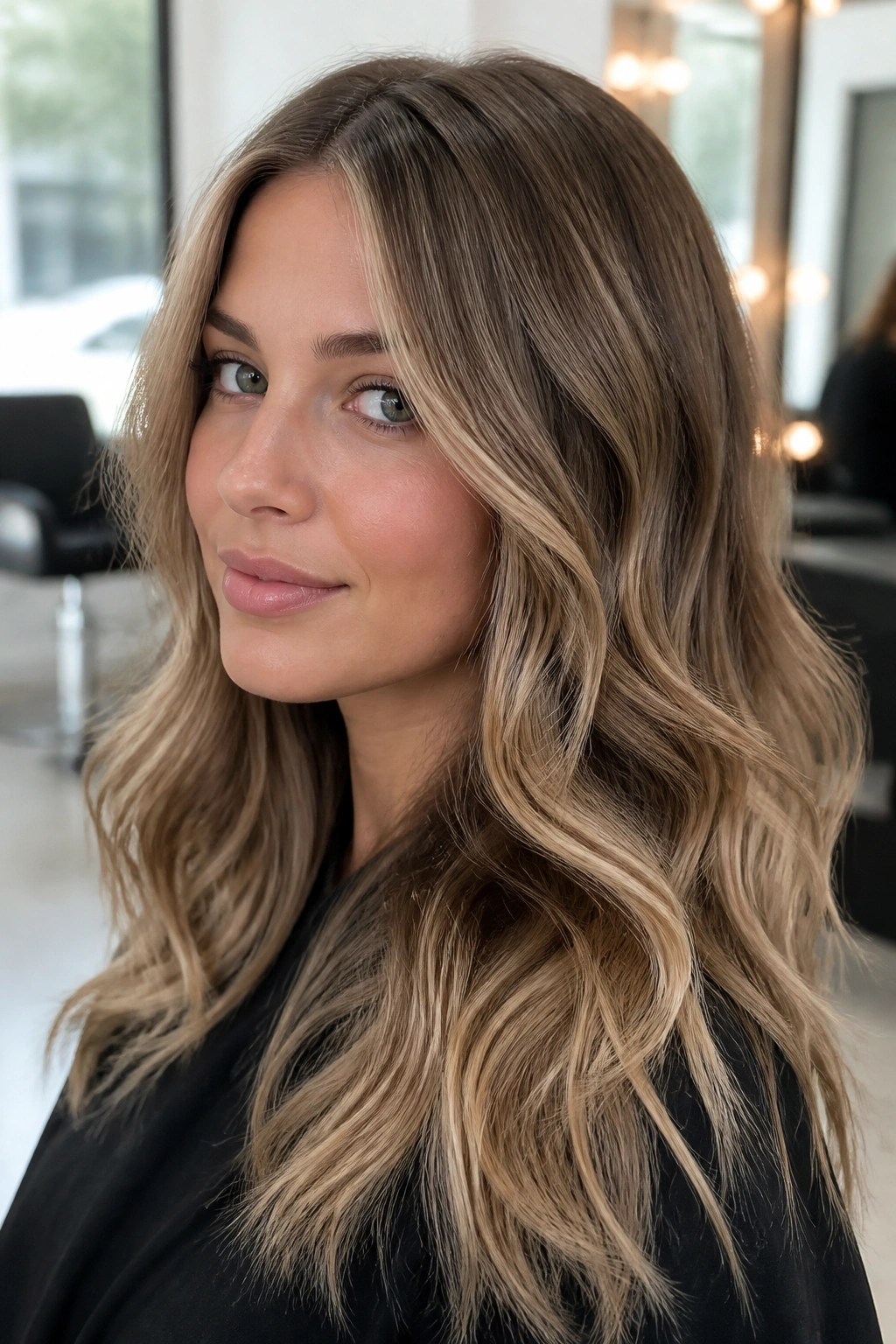
Mushroom honey blonde sounds odd on paper. On a head of hair, it makes perfect sense.
The Cool Part That Keeps It Wearable
The mushroom base gives you that soft taupe-brown depth, while the honey runs through the surface in muted ribbons. The result is warm enough to count as blonde, but grounded enough for cool skin tones to wear without looking yellow.
This is a good pick if you like earthy colors and hate anything too bright. It feels understated in the best way. There’s a little smoke in it, a little gold, and a lot of dimension.
- Best for medium to dark brunettes
- Looks strong on wavy or shaggy cuts
- Works well with cool beige or ash-beige glosses
- Needs low-contrast highlights, not stark streaks
One thing to watch: keep the honey in the mid-lengths and ends. If it sits too heavily at the crown, the shade can lose its mushroom softness.
8. Soft Honey Blonde with Babylights
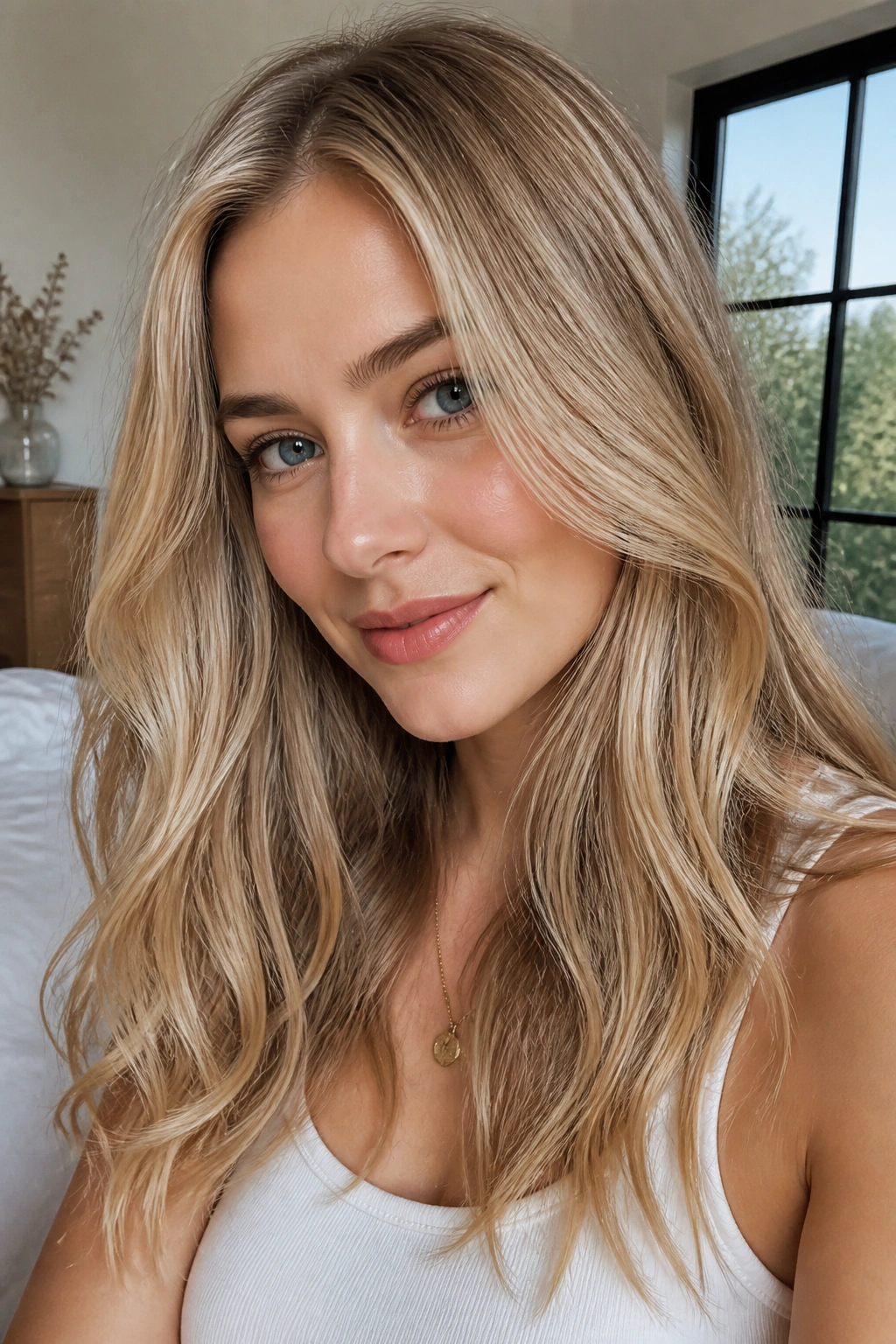
Babylights are tiny, and that matters. Those fine, delicate light pieces create a honey blonde that looks natural enough to fool the eye, which is exactly why it suits cool skin so well.
Instead of obvious stripes, you get a whisper of brightness. That means the warmth is spread out thinly, so it never crowds the face. A cool complexion usually looks better with that kind of softness than with big, obvious gold bands.
This is a lovely choice on fine hair, too, because babylights make the hair look fuller without adding visual heaviness. They work on straight hair, waves, curls — pretty much anything that needs a little movement.
I’d ask for a beige honey tone and keep the lightened pieces very fine around the temples and crown. The whole effect should feel airy, not loud.
9. Pearl-Toned Honey Blonde
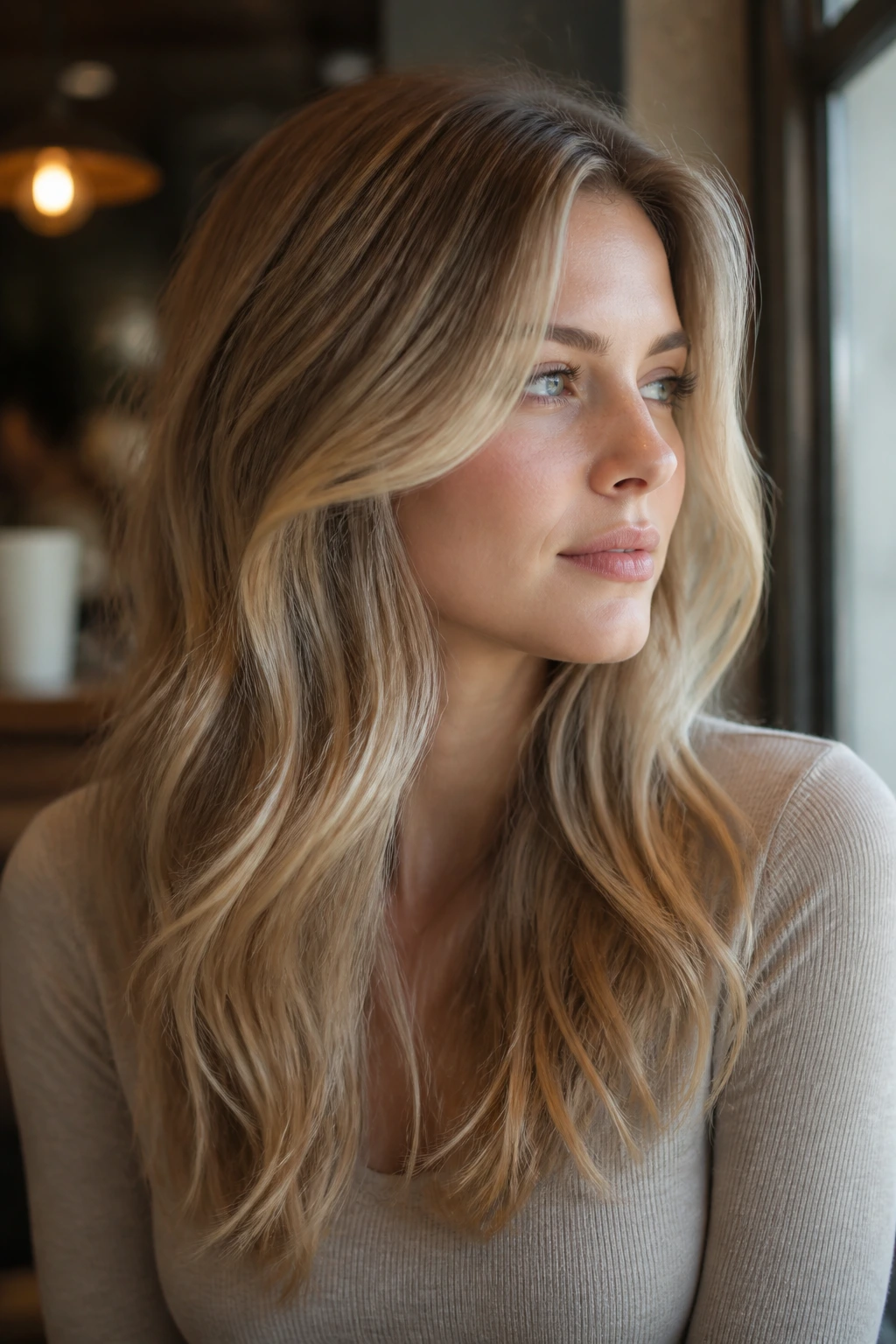
Can pearl and honey live in the same shade? Yes, if the pearl is acting like a soft filter rather than a full-on icy toner. That’s what makes this version useful for cool skin tones: it keeps the warmth, but mutes the shine.
Pearl-toned honey blonde has a subtle sheen that reads clean and smooth. It’s not white-blonde. It’s not yellow. It sits right in that narrow gap where the hair looks light and the skin still looks calm.
How to Get the Sheen
Ask for a honey base with a pearl-beige gloss over the top, especially on the mids and ends. You want the surface to feel reflective, almost satin-like, rather than bright.
- Keep the lightness around level 8 or 9
- Use a violet-leaning gloss if the blonde pulls too yellow
- Avoid heavy purple shampoo every wash; it can flatten the finish
- Style with a soft bend so the shine shows across the surface
This is one of those colors that looks even better after a week or two, once the toner settles down a little.
10. Dark Honey Blonde with Shadow Root
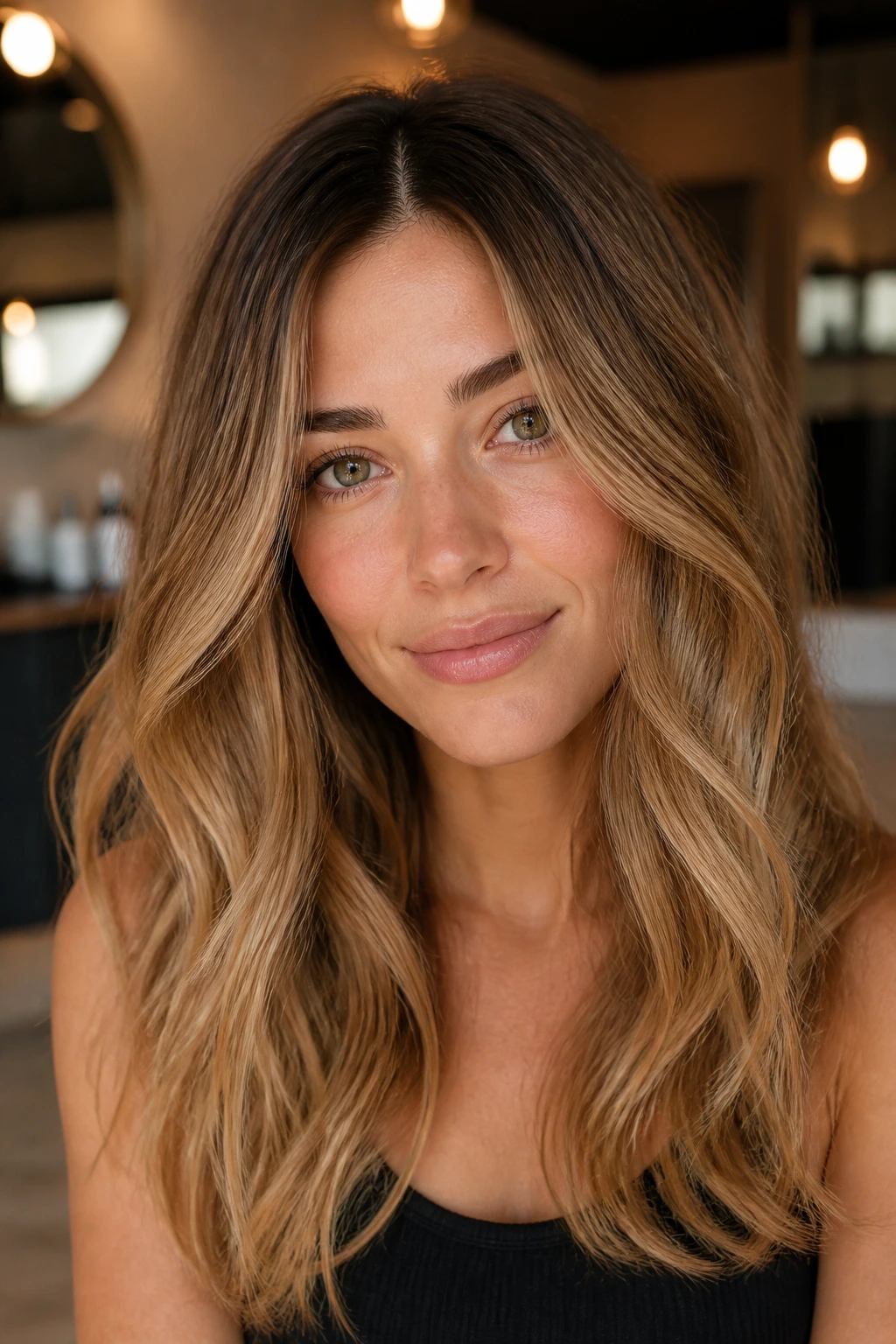
If you’re growing out brunette hair and do not want a dramatic blonde makeover, dark honey blonde with a shadow root is the sane choice. The root stays deep, the mid-lengths warm up into honey, and the ends carry the brightest note.
That shadow root keeps the color grounded for cool skin tones. It stops the blonde from starting too high and looking too yellow near the face. And it means the grow-out is softer, which I always appreciate.
This is also a smart pick if your hair has a natural wave. The darker root and lighter ends make the movement easier to see, even when the styling is simple.
Ask for a root area around level 5 or 6, then honey ribbons through the rest at level 7 or 8. You do not need a huge amount of lift to make the idea work.
11. Honey Blonde Shag with Piecey Layers
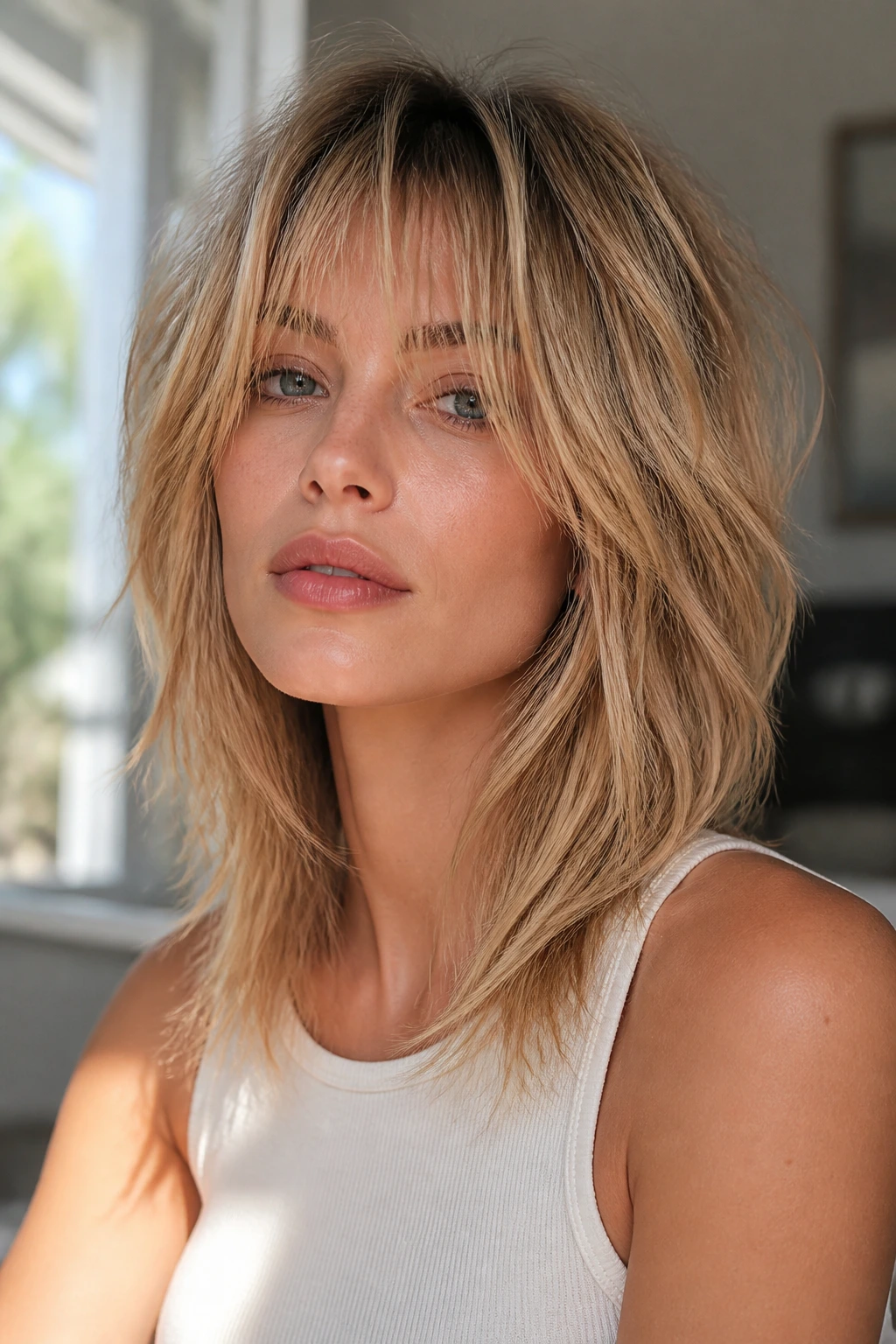
A shag cut and honey blonde are a better pair than people expect. The layers break up the color, so the honey does not sit in one flat block. It moves.
I like this version because it gives cool skin a little edge. The cut itself brings attitude, and the color stays softer around it. That balance matters. Too much blonde on a shag can look fuzzy; too much depth can make the layers disappear. Honey blonde sits in the middle and plays nicely with the texture.
Piecey layers also let you vary the tone across the head. A little brighter near the ends, a little deeper underneath, and the whole thing feels lived-in without looking messy.
Use a light texturizing spray and avoid over-smoothing the hair. The cut wants separation. The color wants air.
12. Honey Blonde on Curly Hair
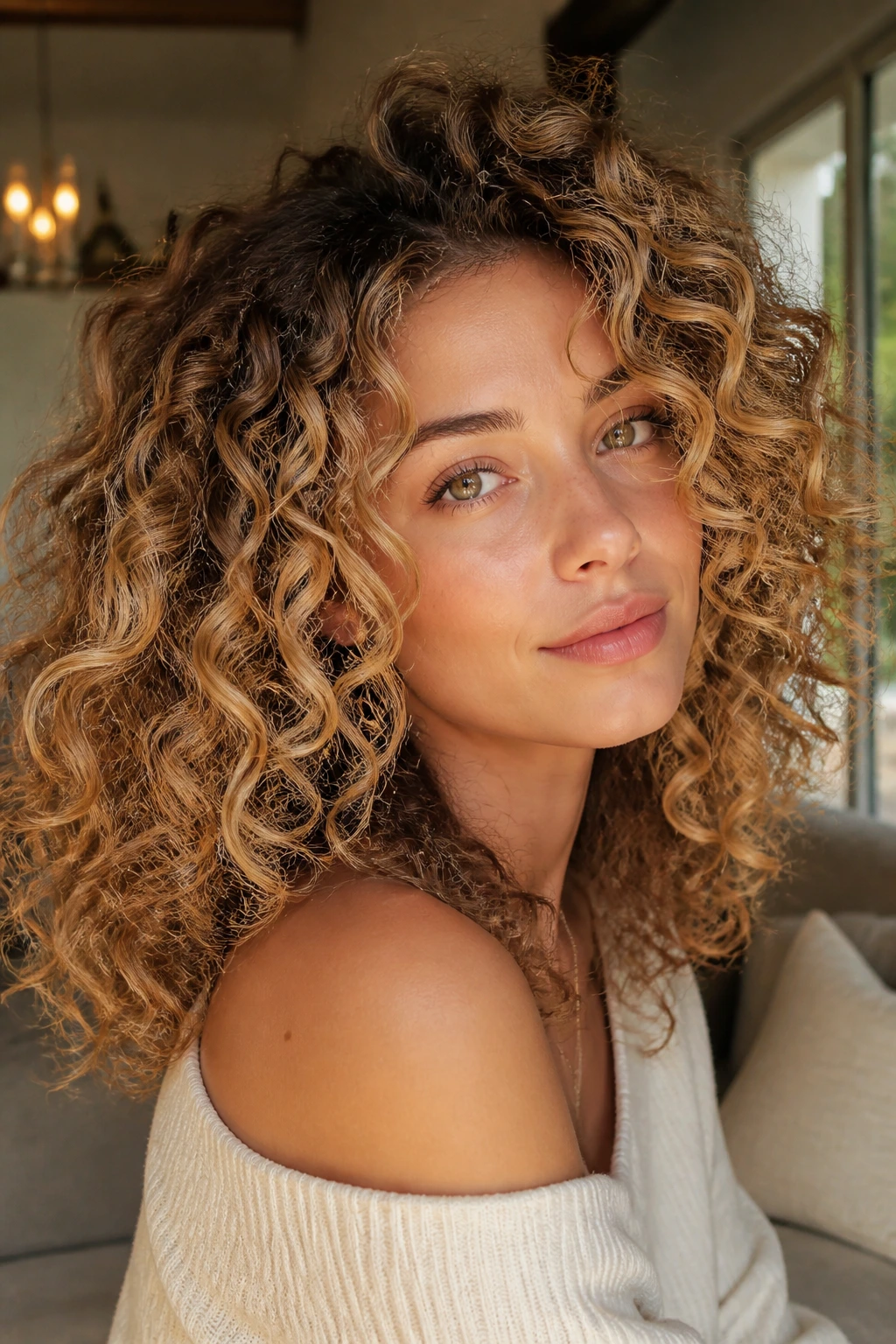
Curly hair changes the conversation. The curl pattern creates its own highlights, so honey blonde does not need to do all the work by itself.
That’s why this shade can look so good on cool skin. The warmer tones sit on the outer curves of the curls, where the light naturally hits, while the deeper base underneath keeps the face from getting washed out. You get brightness with shape. Nice, right?
Unlike straight hair, curls need placement more than they need heavy saturation. A good colorist will paint the honey in vertical ribbons and leave the interior of the curl pattern a little darker. That keeps definition intact.
My preference is a soft beige honey gloss over lifted curl sections, not a flat all-over yellow. The curl should still look like a curl. The color should just make it easier to see.
13. Caramel-Honey Ribbon Highlights
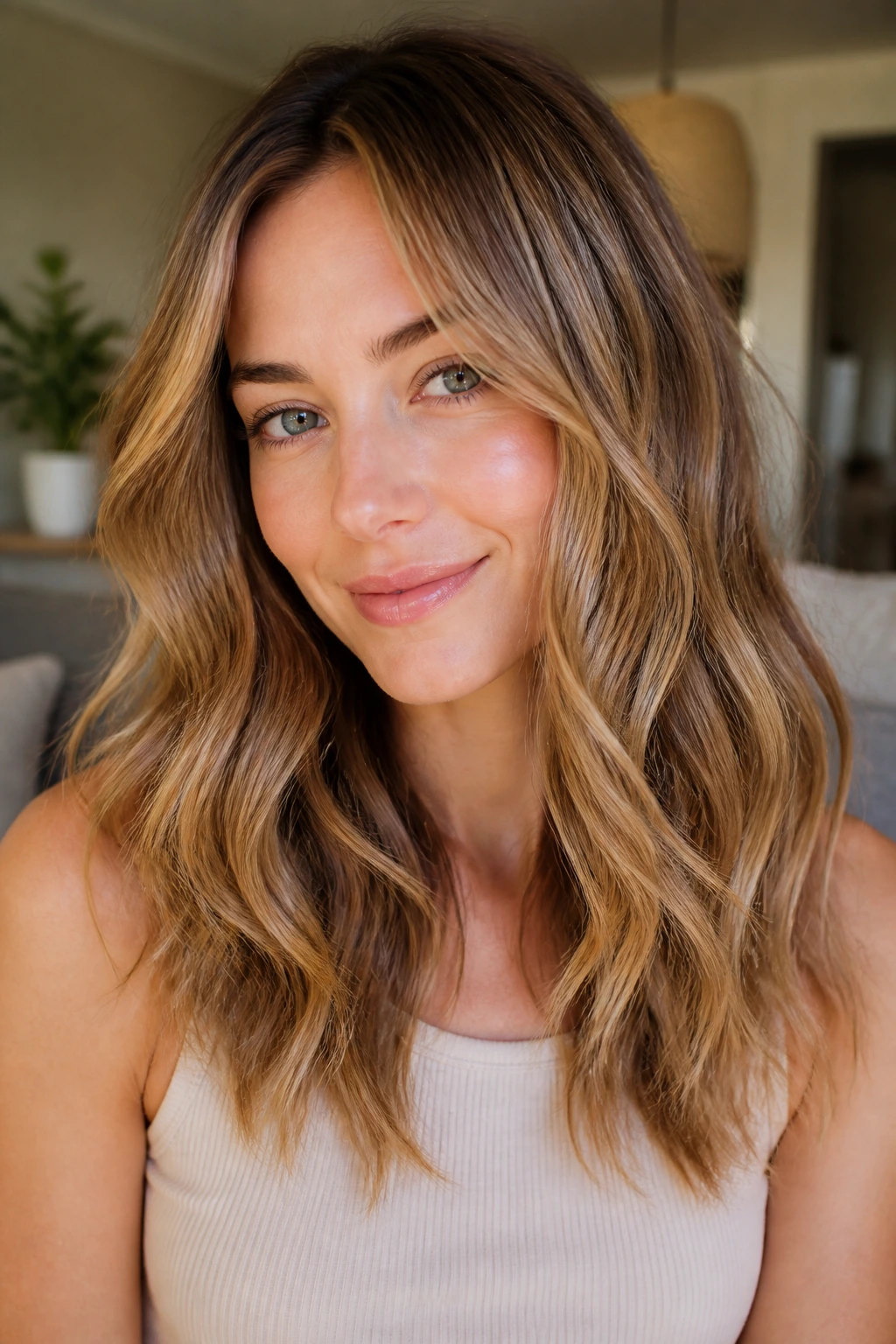
Caramel-honey ribbon highlights are thicker than babylights and gentler than chunky streaks. That middle ground is useful when you want the hair to show dimension without looking striped.
Where the Ribbons Should Go
The ribbons work best when they sweep through the mids and ends, especially on layered cuts. A few can sit near the front, but I would not push them too close to the hairline if you have very cool skin. That can tip the face into warmth you may not want.
- Good on medium to long hair
- Strong choice for brunettes who want visible lightness
- Looks best when the ribbons vary in width
- Needs a beige-gold or neutral-gold toner to stay soft
This color idea has a nice, easy rhythm to it. The caramel keeps the honey from looking pale, and the honey keeps the caramel from feeling too brown. It’s a decent compromise, which sounds boring and is actually the reason it works.
14. Honey Blonde Pixie with Texture
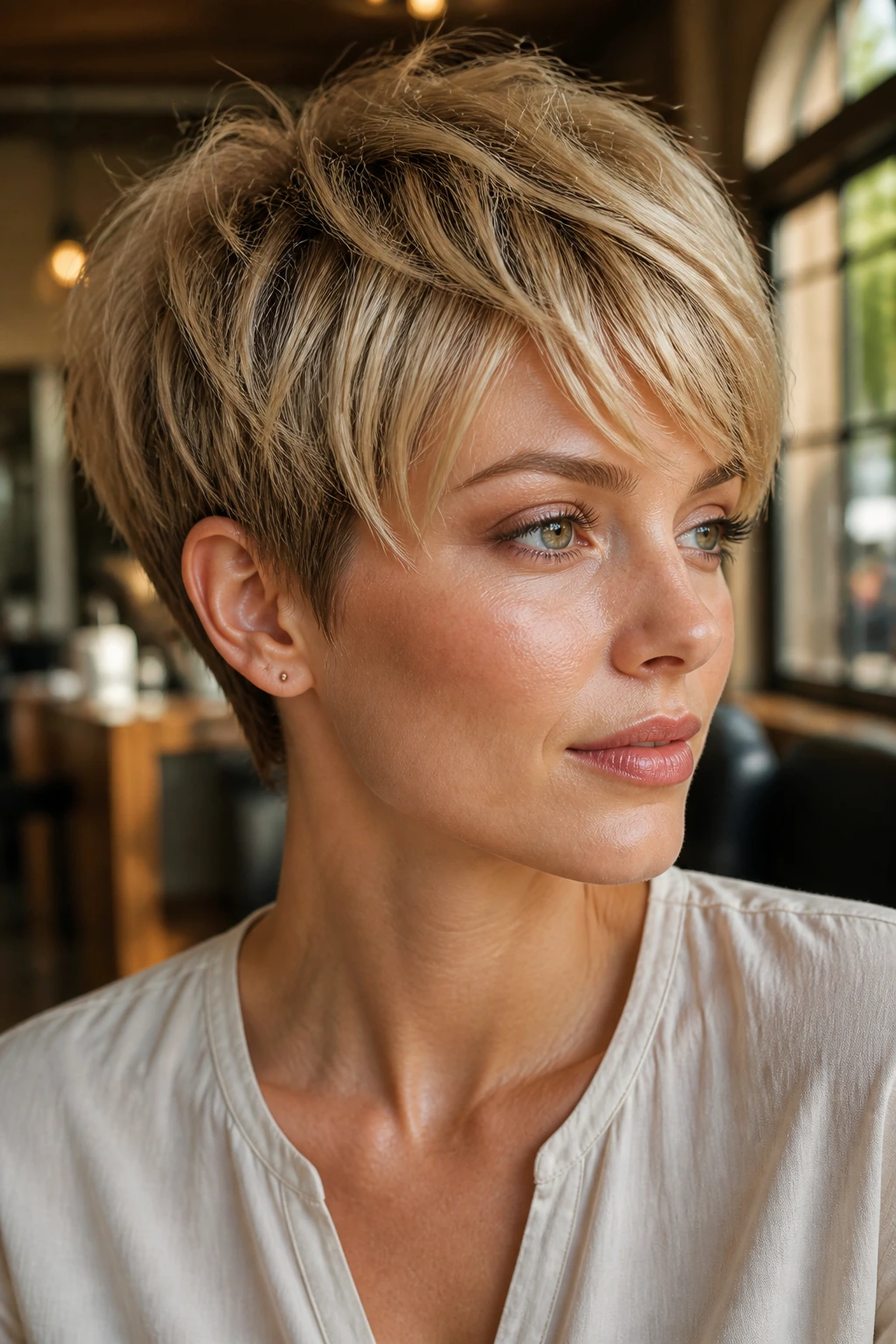
Short hair can wear honey blonde better than a lot of people think. A pixie cut keeps the color close to the face, so every tone matters more, which is exactly why a cooler honey blend can look so sharp here.
The trick is texture. If the pixie is too smooth, the warmth can feel one-note. A little choppiness on top, some soft piecey lightness at the fringe, and a deeper base underneath give the color room to breathe.
I’d keep the blonde concentrated on the top layers and around the front, then leave the sides slightly deeper. That stops the whole cut from turning into a pale helmet. A beige honey glaze over the lightest pieces works well.
This is a strong choice if you like low-maintenance styling but still want the hair to say something.
15. Honey Blonde with a Violet Gloss
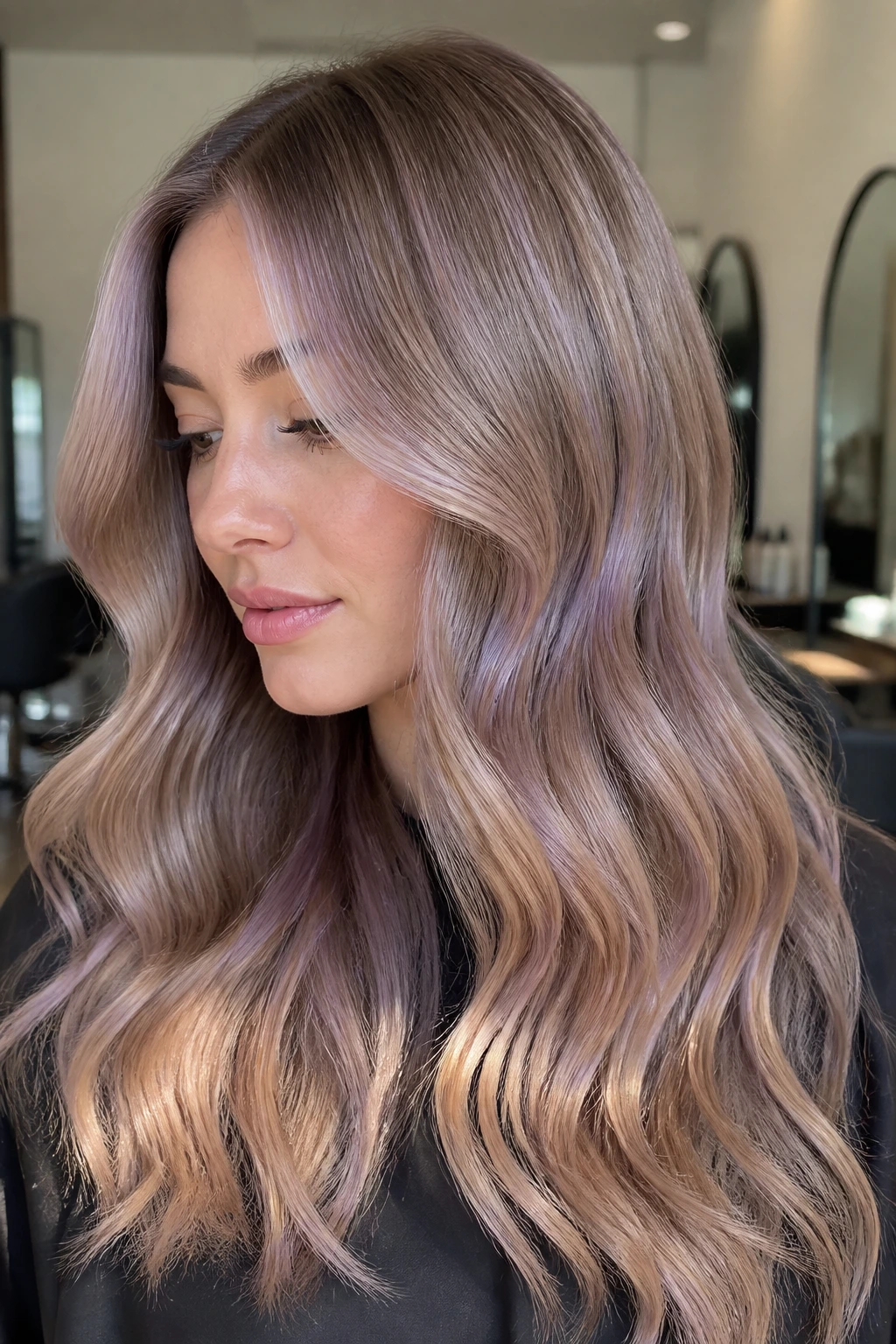
Can a violet gloss live on a honey blonde? Yes — and it is one of the best ways to keep the shade friendly for cool skin tones.
A tiny amount of violet does not make the hair purple. It softens yellow. That matters. Honey blonde can start to look too warm after a few washes, especially if your water runs hard or your shampoo is harsh. A violet gloss trims the brass and leaves the honey behind.
How to Use It
A gloss like this should be gentle, not heavy-handed. You want enough coolness to quiet the warmth, not so much that the blonde turns dull.
- Apply to damp, towel-blotted hair
- Leave on for 5 to 10 minutes, depending on the product
- Focus on mids and ends first
- Repeat every 4 to 6 weeks, or when the blonde starts to yellow
I like this approach because it keeps the color honest. The honey stays honey. It just stops shouting.
16. Honey Blonde Ombré on Long Hair
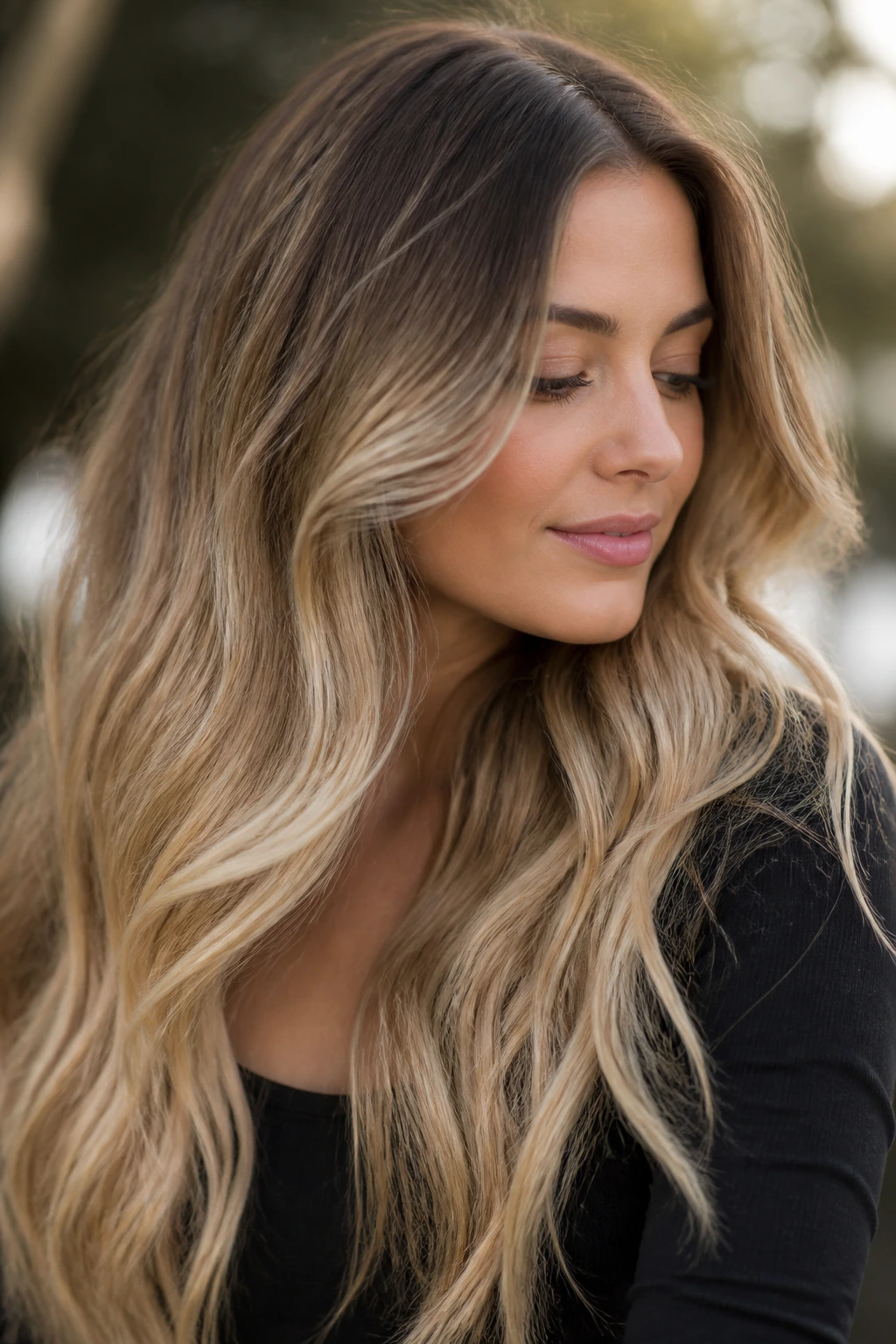
Long hair gives honey blonde room to stretch out, and ombré makes use of that length instead of fighting it. The color starts deeper near the roots, then gets lighter and warmer as it moves down.
That gradient works beautifully on cool skin because the face stays framed by depth while the lower lengths bring in the brightness. You get contrast near the top and softness near the bottom. It’s a good little trick.
A good ombré should feel smooth, not split in half. The transition from dark to honey needs to blur through the mid-lengths, or the look turns harsh. Ask for a neutral root and a beige honey finish at the ends, with plenty of blending through the middle.
If your ends are dry, keep the lightest pieces slightly above the very bottom. Too much pale blonde on fragile ends can make the style look brittle.
17. Ash-Soft Honey Blonde with Lowlights
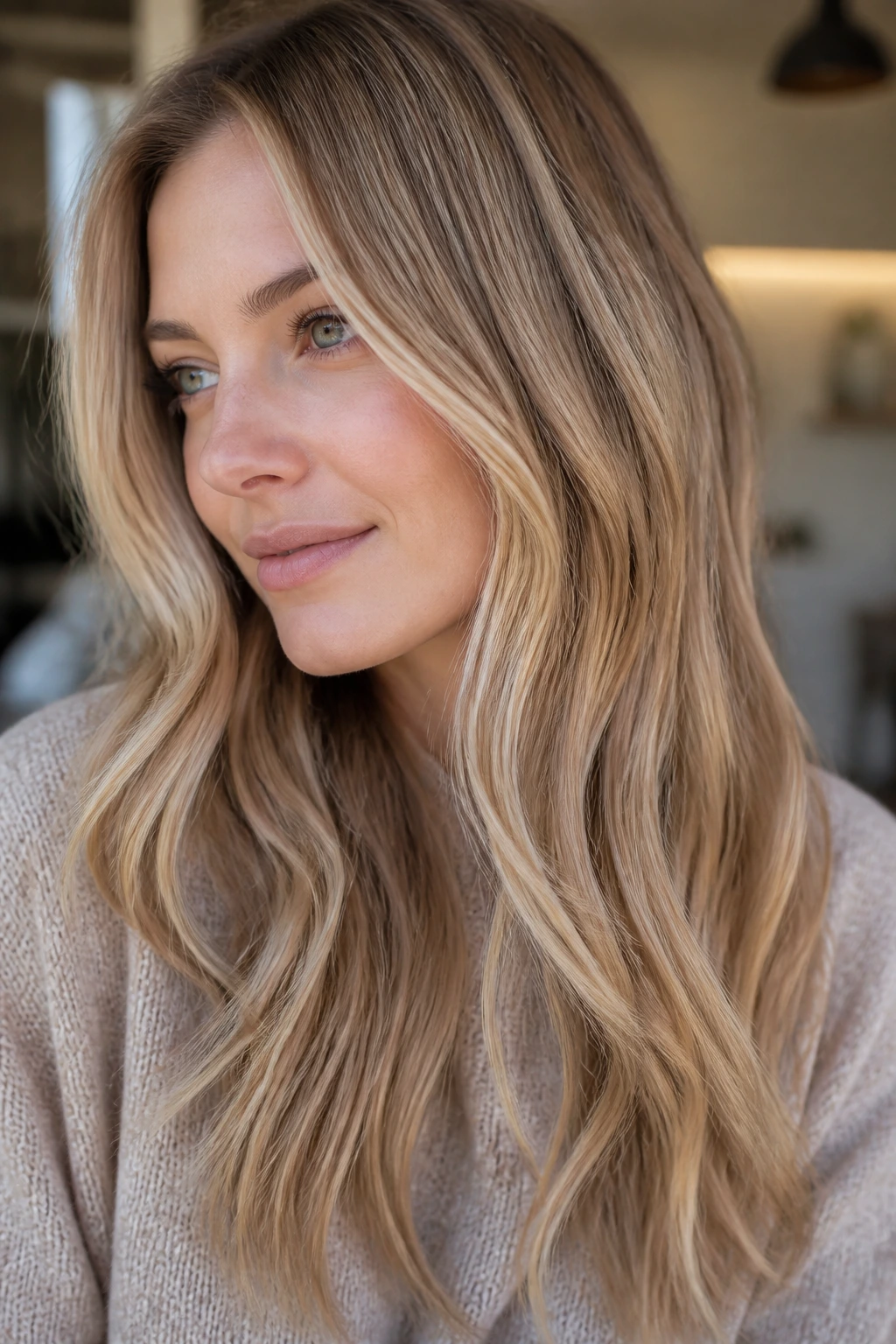
Ash-soft honey blonde is one of the easiest ways to keep warmth under control without killing the glow. The ash notes cool the surface, while the honey shows through underneath. Lowlights make the whole thing feel deeper and more expensive-looking, though that is not the word I usually want to use.
What I like most here is the balance. A lot of honey blondes on cool skin fail because they’re too single-note. Lowlights fix that by dropping a few darker strands back into the mix. Suddenly the blonde has shadows, and shadows are your friend.
This version is especially good if your hair is fine or straight and tends to look flat when it’s all one tone. The lowlights give it shape. The ash keeps it from sliding into gold.
Ask for a mix of beige-blonde and light brown lowlights, nothing too dramatic. The contrast should be soft enough to blend when the hair moves.
18. Money Piece Honey Blonde Bob
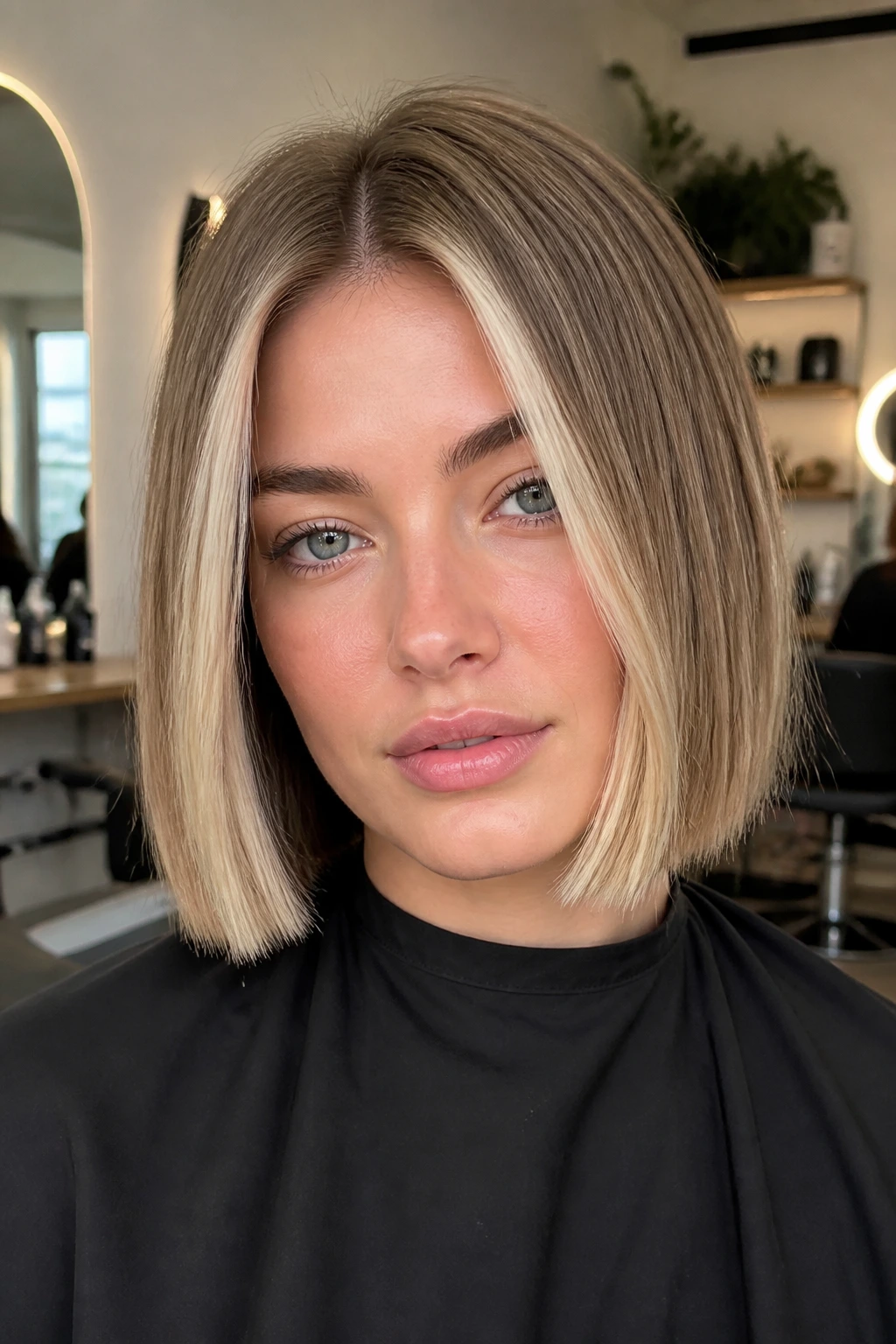
A bob with a money piece is not subtle. That’s the point.
The front sections are brighter, the back stays more grounded, and the cut itself keeps the whole look neat. On cool skin tones, the contrast can be really flattering because the brighter face-framing pieces lift the complexion while the deeper bob shape keeps the warmth from taking over.
Why It Works Better Than Full Front Lightening
A full halo of blonde around the face can be too much if you have pink undertones. A money piece does the job with less commitment. You get the brightness right where you want it and avoid turning the whole crown into a golden patch.
- Best on blunt bobs and soft A-line shapes
- Works well with a level 6 or 7 root
- Keep the front pieces fine, not blocky
- Finish with a neutral beige toner so the front stays soft
This is one of the more modern-looking honey blonde ideas, and it suits people who want shape as much as color.
19. Honey Blonde for Gray Blending
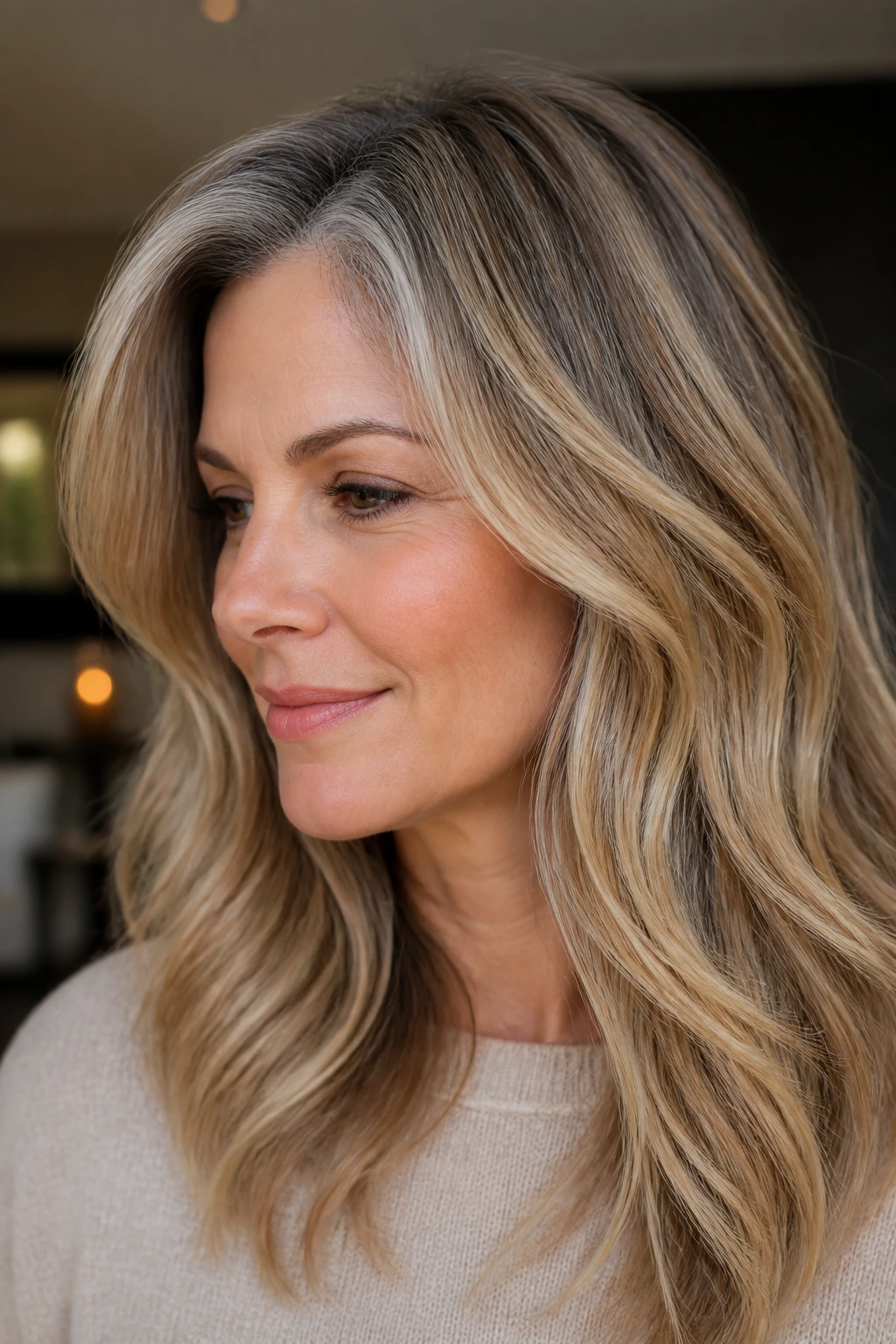
Gray blending is where honey blonde gets quietly clever. Instead of covering every silver strand, the color lets some of the gray stay visible and turns it into part of the pattern.
That makes the result feel lighter and less obvious, which is often what people want. On cool skin, the mix of silver and honey can look bright and clean rather than yellow or muddy. The gray gives you natural reflectiveness; the honey gives you warmth.
What to Ask For
- Fine, translucent highlights instead of thick light bands
- A cool-beige glaze to soften yellow
- Leave some silver visible so the blend looks airy
- Refresh every 8 to 10 weeks, depending on root growth
This approach is kinder to the hair than aggressive full coverage, too. I’m a fan of that. If you can work with the gray instead of fighting it, the whole color tends to look more natural.
20. Dusty Honey Blonde With Beige Ends
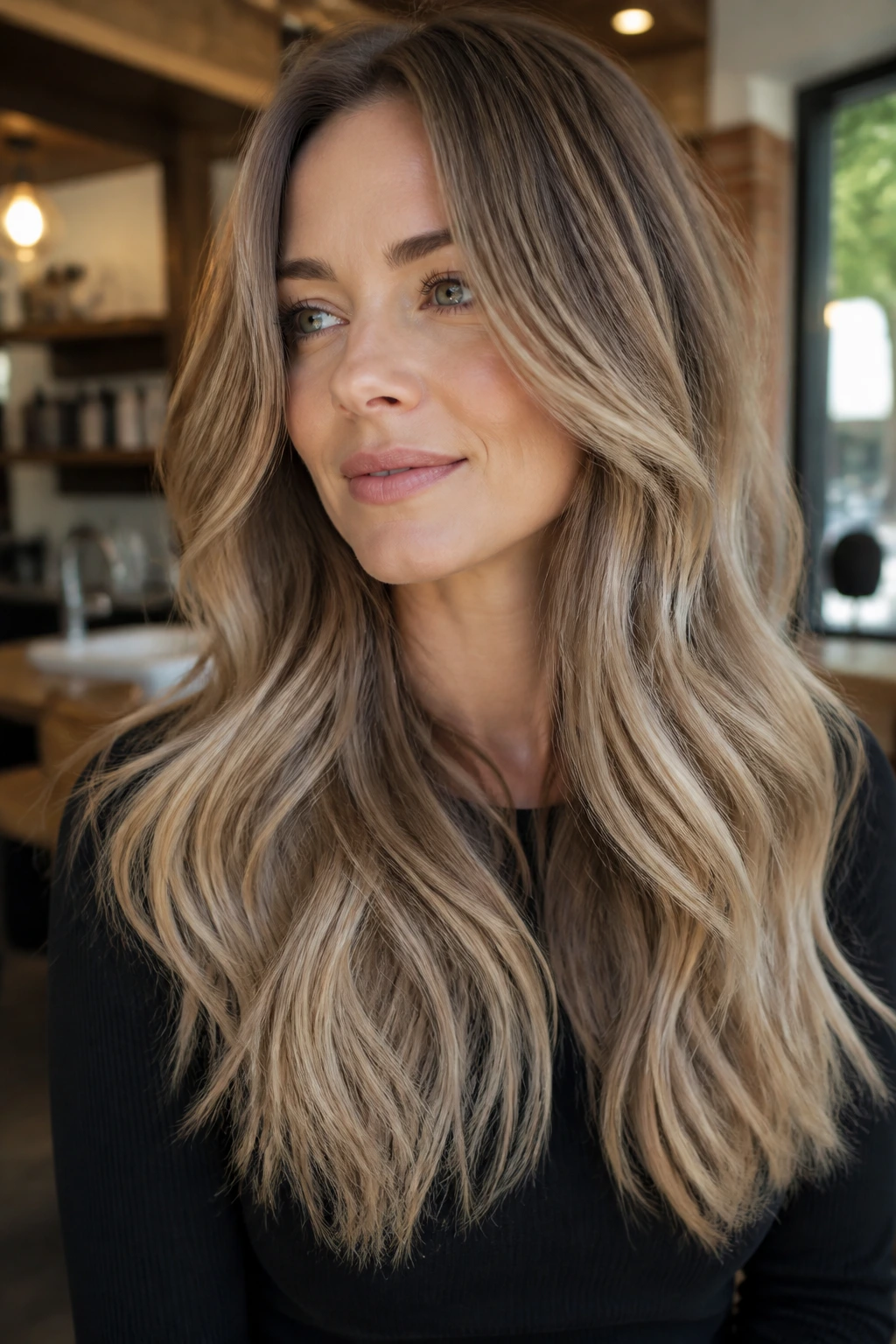
The ends matter more than the roots here. A dusty honey blonde stays softer and cooler because the very lightest bits are beige, not bright gold.
That small shift changes the whole mood of the color. Dusty honey has warmth, but the warmth feels worn-in and calm. It’s a nice fit for cool skin because it doesn’t flare up next to the face. Instead, it settles in and looks lived with.
I especially like this shade on longer layers or medium-length hair with some movement. The beige ends catch the eye without screaming. The root can stay slightly deeper, which keeps the haircut from looking overprocessed.
If your hair pulls orange fast, this is a smart direction. The dusty finish gives the toner somewhere to work.
21. Honey Blonde with Curtain Bangs
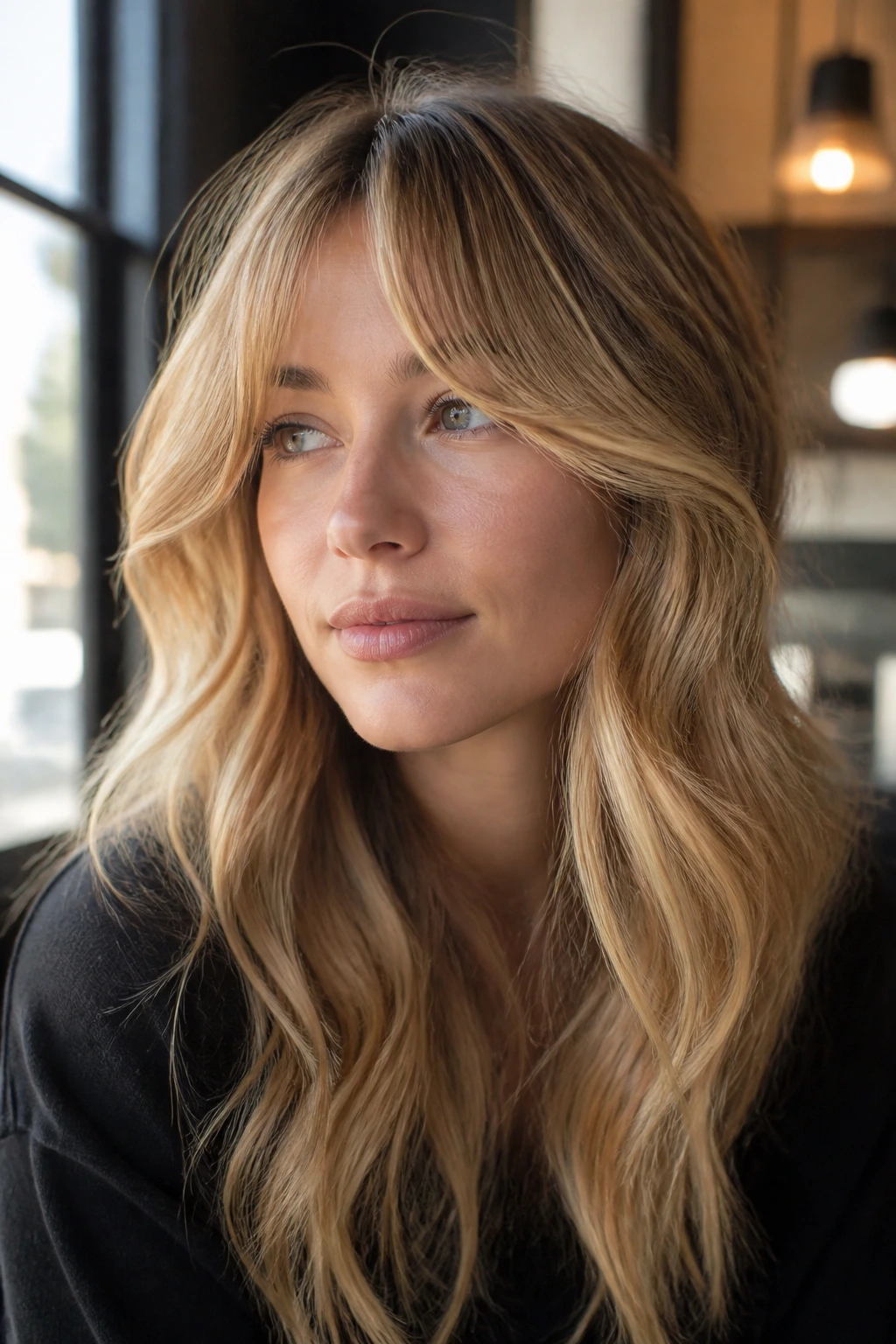
Can curtain bangs make honey blonde feel softer on cool skin? Absolutely. The bangs break up the forehead area, which means the warm pieces do not sit in one big block around the face.
Curtain bangs also help the honey read more dimensional. One side might catch a little more light, the other a little less, and that slight unevenness makes the shade feel natural. It’s one of those small details that changes the whole impression.
Styling Notes That Matter
- Blow-dry the bangs away from the face with a round brush
- Keep the root area deeper than the ends
- Use a light beige gloss if the fringe starts turning too golden
- Let the rest of the hair stay soft and movable
This pairing works on shags, lobs, and long layers alike. I’d call it one of the most forgiving honey blonde ideas on the list, which is saying something.
22. Deep Honey Blonde with Cool Finish
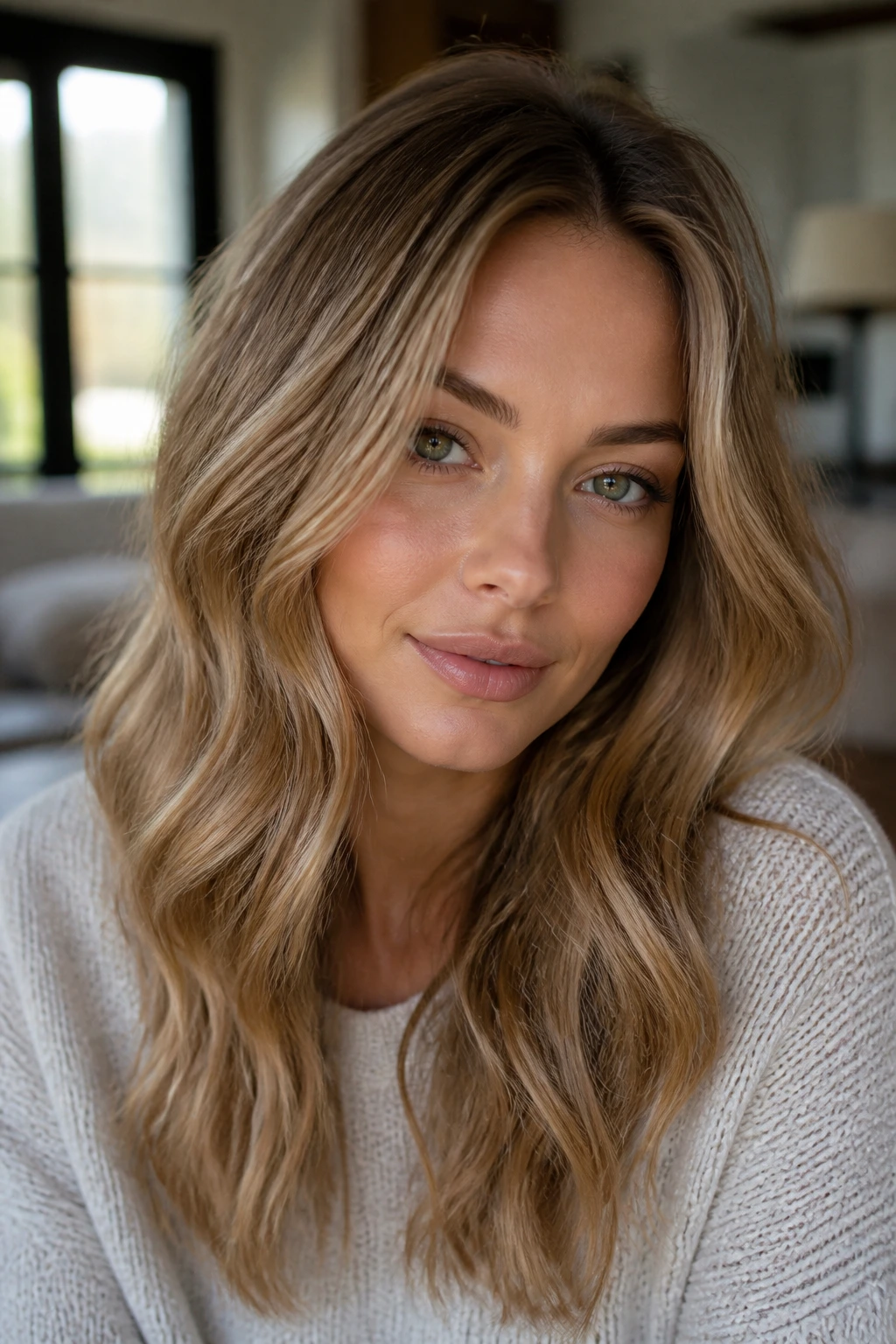
If you want honey blonde but worry about it looking too bright against cool skin, go deeper. A deep honey blonde with a cool finish stays near the brunette-blonde border, and that makes it easier to wear.
The deeper base keeps the color grounded. The honey still shows up through the mids and ends, but it behaves more like a warm glow than a full spotlight. That’s the sweet spot for a lot of people with pink or blue undertones.
I’d ask for a root that stays around level 5 or 6, then a honey-beige lift through the rest with a cool gloss on top. The final result should look rich, soft, and a little shadowed near the scalp. Not flat. Never flat.
If you are nervous about going blonde, start here. It gives you the feeling of honey without the full commitment, and that’s often the smartest way in.
