



White blonde hair color ideas can look almost custom-made for cool skin tones. The clean, pale finish picks up pink, blue, and rosy undertones in the face instead of fighting them, which is why the right shade can make skin look clearer, calmer, and more awake with almost no effort from the makeup bag.
The catch is simple. White blonde is picky. If the lift is uneven, if the toner leans yellow, or if the shade is too warm, cool skin can start to look flat instead of fresh. A proper white blonde usually lives at level 10, sometimes even a hair lighter in the brightest pieces, and the tone matters just as much as the lift. Violet, blue-violet, pearl, silver, ash — those are the notes that keep the blonde crisp.
That’s also why cool skin tones have so many good options here. White blonde does not have to mean one exact shade of icy white. It can be pearly, smoky, silvered, softly rooted, or cut into a bob or pixie that changes the whole mood. The right version depends on how much contrast you want, how often you want to sit in a salon chair, and how brave you feel about maintaining a color that shows every soft brass line.
Some shades are razor-sharp. Some are gentler. A few feel almost expensive in the quietest way. Arctic platinum is the loudest place to start.
1. Arctic Platinum White Blonde
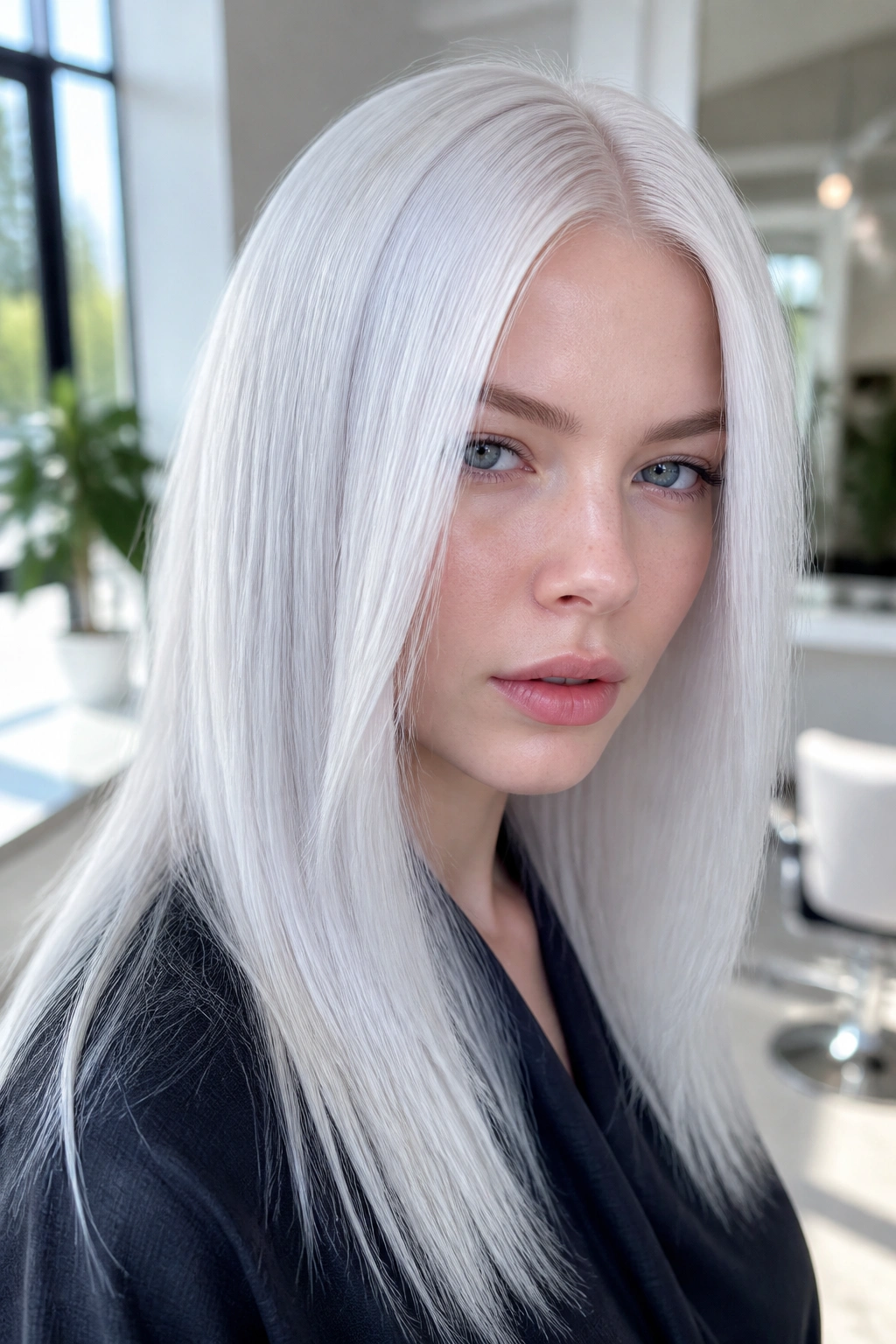
Arctic platinum is the cleanest, iciest version of white blonde, and it suits cool skin because it doesn’t drag in any yellow warmth. The result is sharp, pale, and almost frost-like. If your skin leans pink or porcelain, this shade can make your face look brighter without adding warmth that doesn’t belong there.
Why It Flatters Cool Skin
The trick is the tone. Blue-violet toner keeps the finish from turning creamy or beige, which is exactly what cool undertones need to avoid. On the right skin, arctic platinum makes silver jewelry pop and gives the whole face a very clean frame.
- Best on hair that can reach level 10 without breaking.
- Works especially well with pale skin, blue eyes, and sharp makeup lines.
- Needs regular toning because the color can go dull fast if brass sneaks in.
- Looks strongest on straight hair, sleek blowouts, and polished waves.
Tip: Ask for a tiny bit of root smudge if you want the color to grow out with less of that hard bleach line.
2. Pearl White Blonde
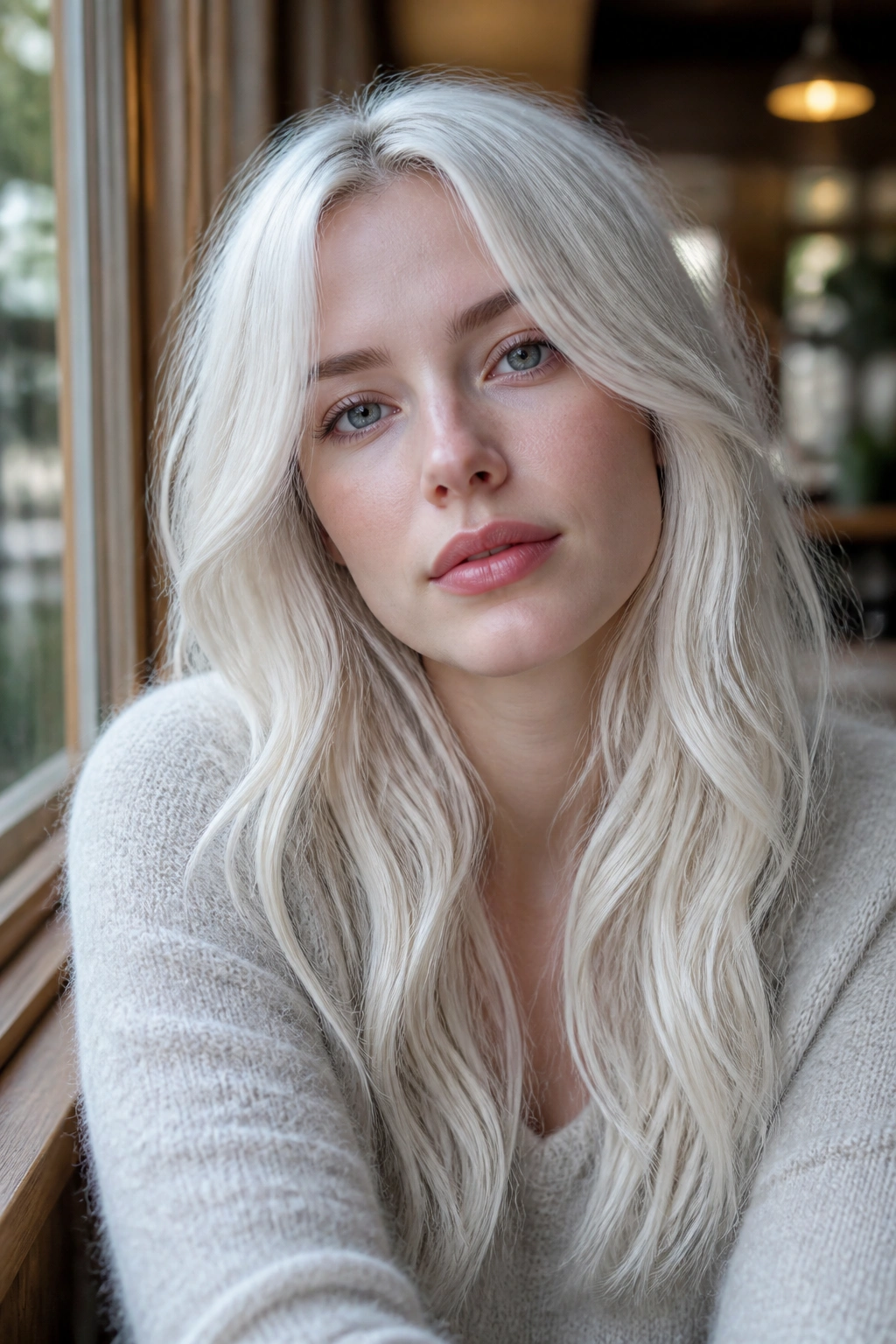
Pearl white blonde is softer than arctic platinum, but it still reads cool and bright. The finish has that pale, milky sheen you see in mother-of-pearl — not warm, not beige, not flat. It’s a good pick if you want white blonde without the glare of full-on ice.
The reason this shade works so well on cool skin is that it brings light without shouting. Your face gets the lift, but the hair still feels airy and touchable. That’s a nice balance when you wear light makeup or tend to blush easily, because the hair won’t fight your skin tone.
One thing I like about pearl blonde is how forgiving it can be on medium-length cuts. A blunt lob, a soft bob, or shoulder-length layers all look a little more expensive when pearl tones are threaded through them. A clear gloss every 4 to 6 weeks keeps the finish from turning dull or chalky.
3. Icy Champagne Blonde
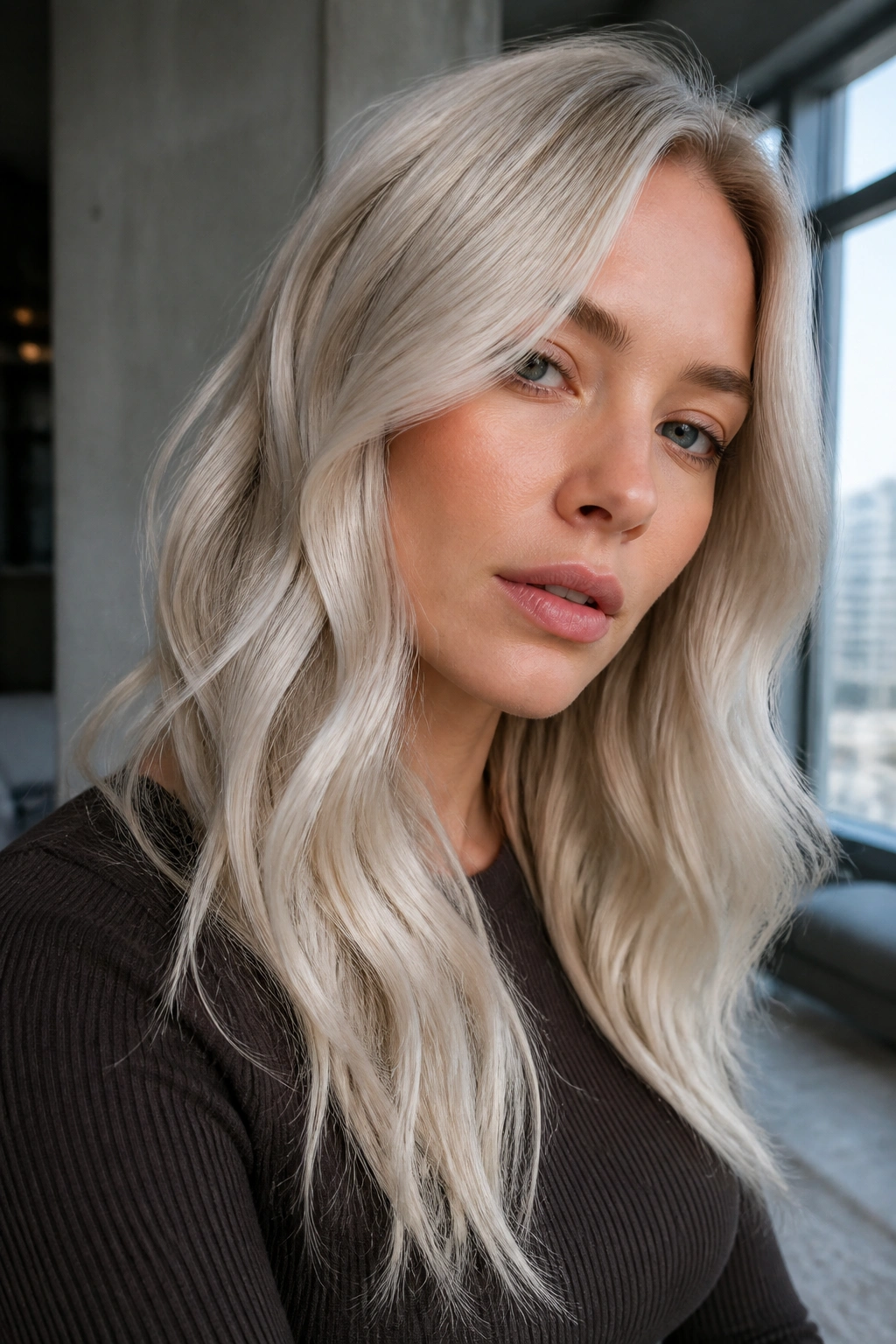
Can champagne be cool? Yes — if the warmth is stripped back and the blonde is cooled with a silver edge. That’s the whole point of icy champagne. It gives you a whisper of beige, but the blonde stays pale enough for cool skin to wear well.
This shade is a smart middle ground when pure white feels too stark. There’s a little softness in it, which helps if your skin is pale but not dramatically cool. The color looks especially good on hair that moves, because the tiny bit of beige keeps the finish from looking flat in dim light.
How to Wear It
Icy champagne usually looks best with soft bends, loose waves, or brushed-out curls. The movement keeps the color from reading too uniform. If you go this route, ask your colorist to stay away from gold and honey at the toning stage. A champagne blonde can turn muddy fast if the warmth gets away from you.
4. Mushroom White Blonde
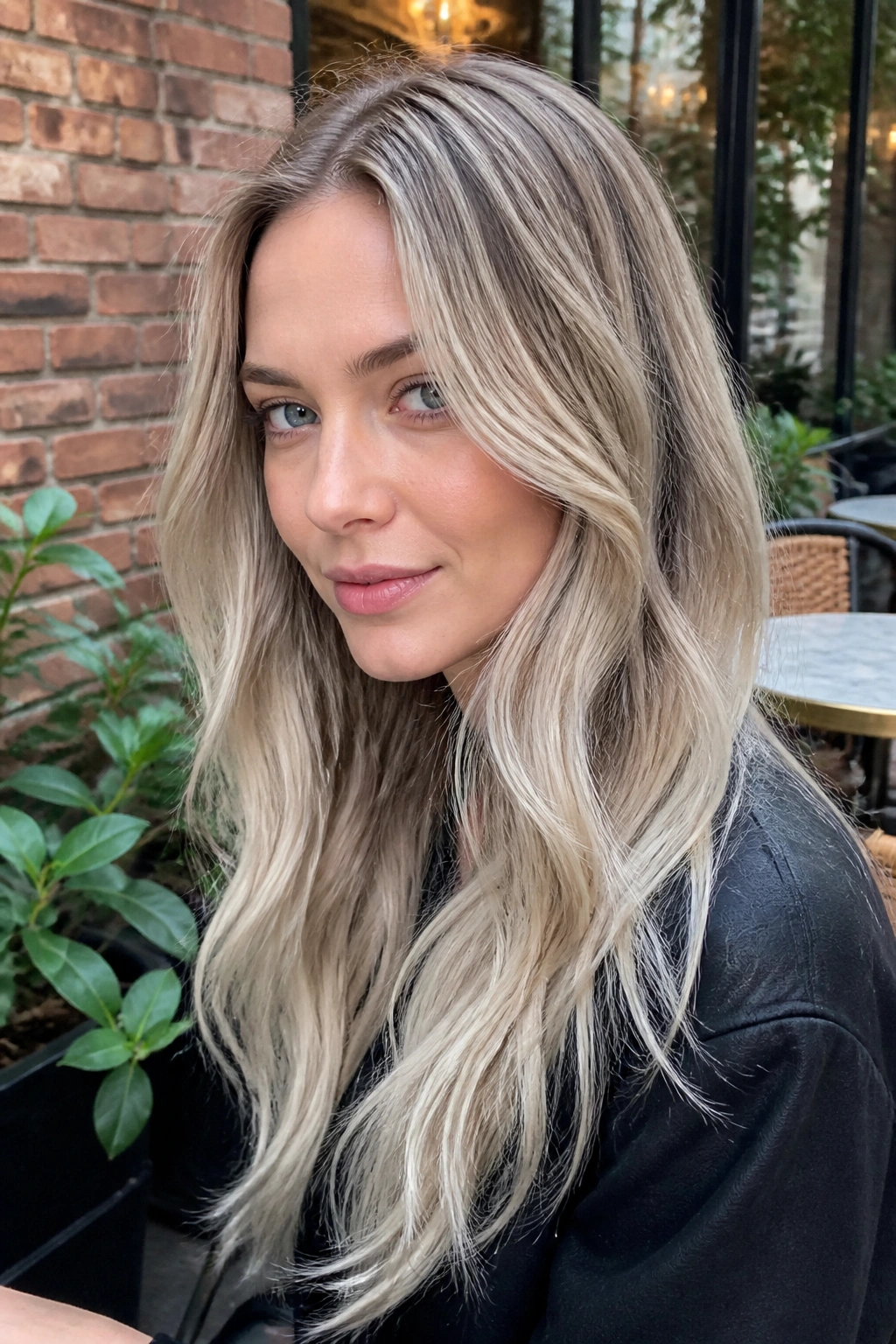
Mushroom white blonde is for the person who wants brightness but does not want their hair to look bleached within an inch of its life. It sits in that smoky beige-gray zone, then gets lifted enough that the ends still look white instead of tan. On cool skin, that muted finish can look sharp in a quieter way.
This shade is especially useful when your natural hair is darker and you want some dimension left behind. The roots can stay a little deeper, the mids can carry a smoky beige, and the ends can fade into a clean white. That mix keeps the overall look from going flat.
- Good choice if you want less obvious regrowth.
- Looks strong on thick hair, because the smoky tone keeps the shape from feeling heavy.
- Needs careful toning, not heavy silver overload.
- Works well with shag cuts, layered lobs, and tousled waves.
Tip: If the ash gets too gray, soften it with a pale pearl gloss instead of adding warmth.
5. Silver-Toned White Blonde
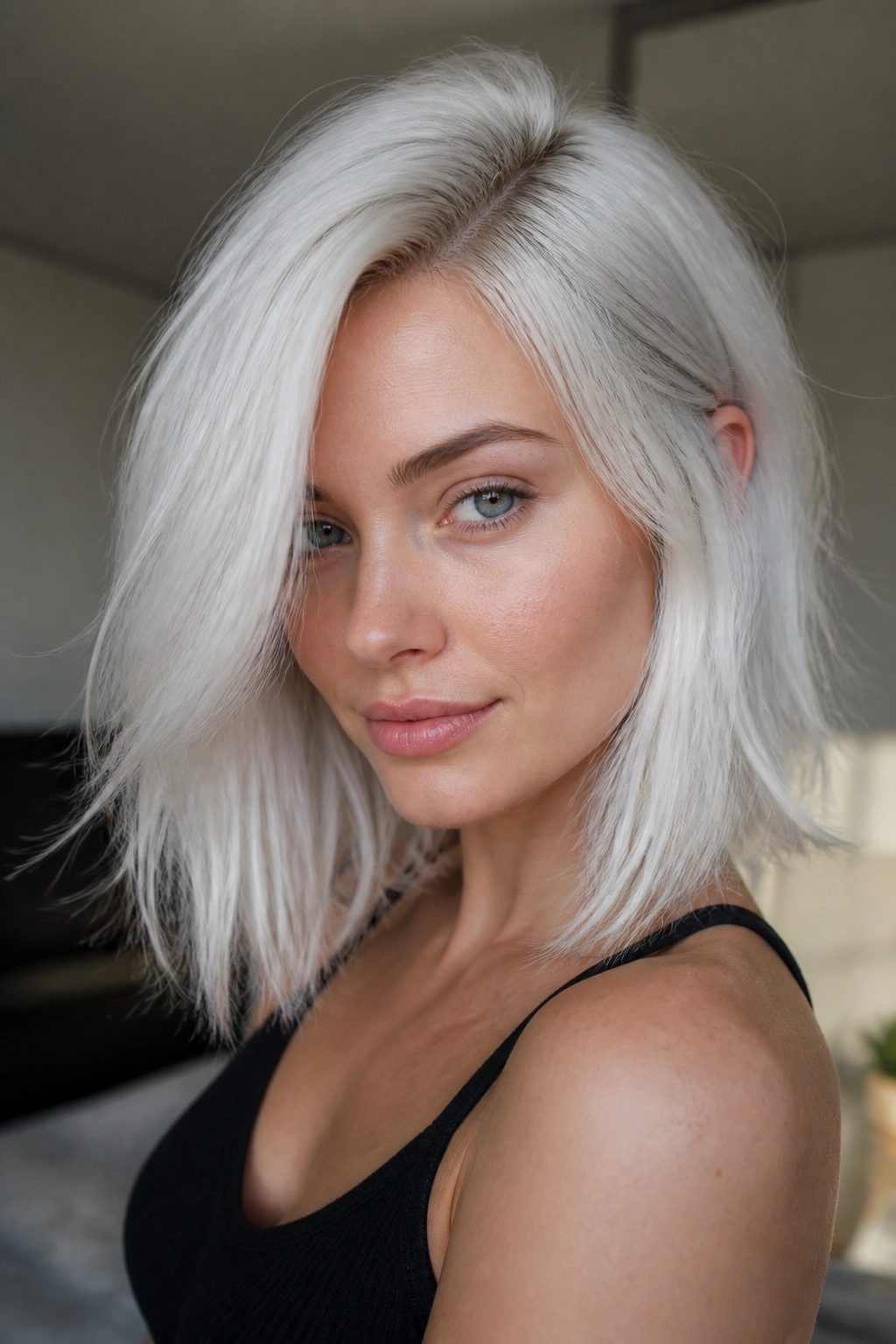
Silver-toned white blonde has a metallic edge that feels crisp on cool skin. It’s not the same as gray hair color, though people mix them up all the time. Silver blonde still reads as blonde; it just carries a chrome-like sheen that gives the hair a colder, sharper finish.
That metallic quality can be stunning on very fair skin, especially if your eyes are gray, blue, or blue-green. It makes the whole face feel intentional. No softness is hiding the line of the cut, so this shade rewards a tidy shape and healthy ends.
One thing to watch: silver toner can tip too far if it’s left on too long or used too often. Then the hair starts looking violet or steely instead of clean. That’s not the same effect. A lighter hand with toner is safer than overcorrecting brass. If you want your blonde to stay elegant rather than smoky, keep the silver note subtle.
6. Baby Blonde With a Soft Shadow Root
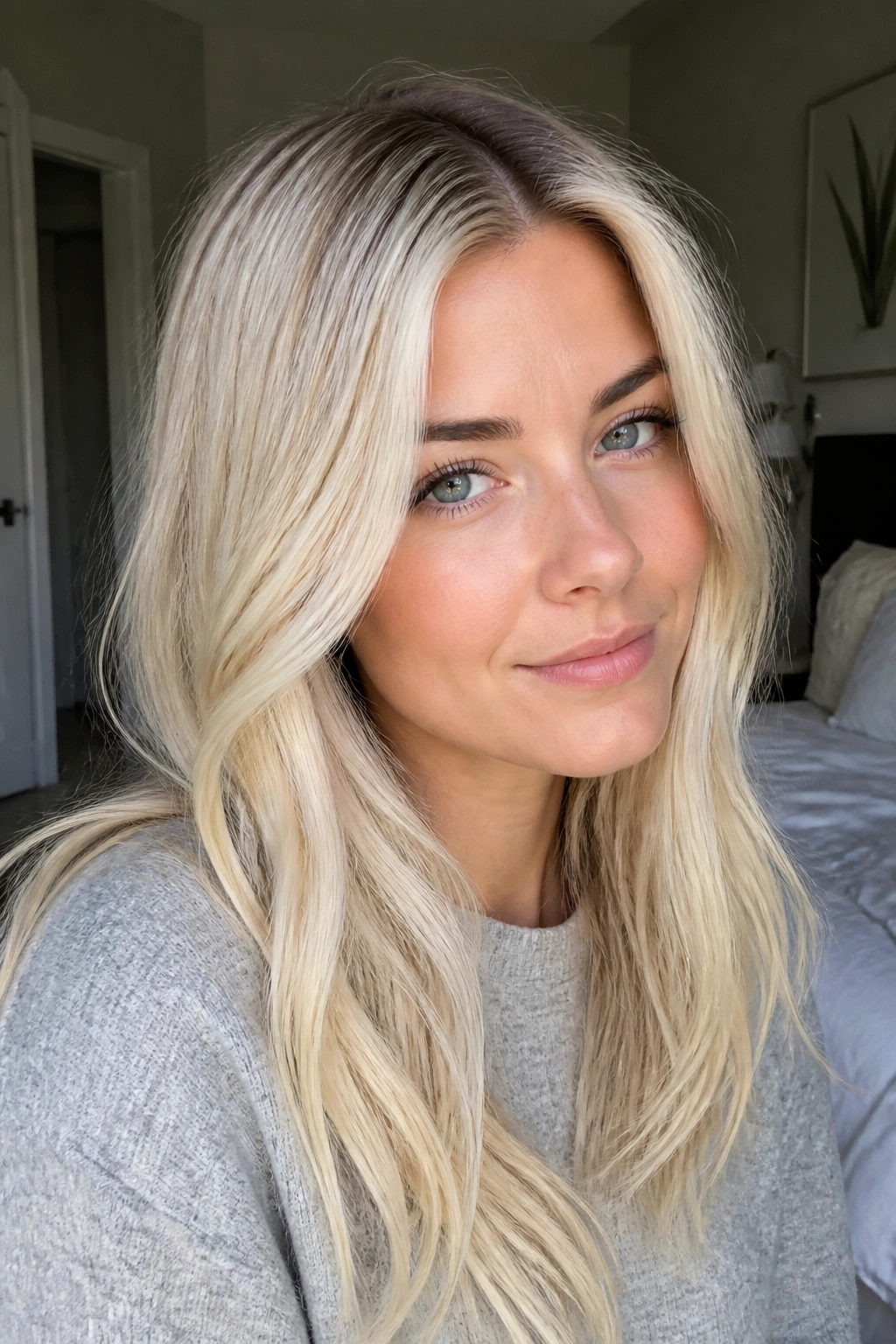
Baby blonde with a soft shadow root is one of the easiest white-blonde directions to live with. The root stays a shade or two deeper, then melts into very pale lengths. That little bit of darkness at the scalp makes the white pieces around the face look brighter by comparison.
What the Root Shadow Changes
A shadow root does two things at once. It softens the grow-out line, and it gives fine hair a little more visual depth at the top. Cool skin tends to love the effect because the pale blonde still sits close to the face, but the root keeps the overall look from feeling washed out.
- Best if you hate salon visits every few weeks.
- Helps thin hair look fuller at the crown.
- Works well with shoulder-length cuts and long layers.
- Needs a toner that stays cool, not golden.
Baby blonde can look a little too bright if every strand is pushed to the same pale level. The shadow root breaks that up in a good way. It’s gentle, practical, and a lot prettier in grow-out than people expect.
7. White Blonde Balayage on a Cool Brown Base
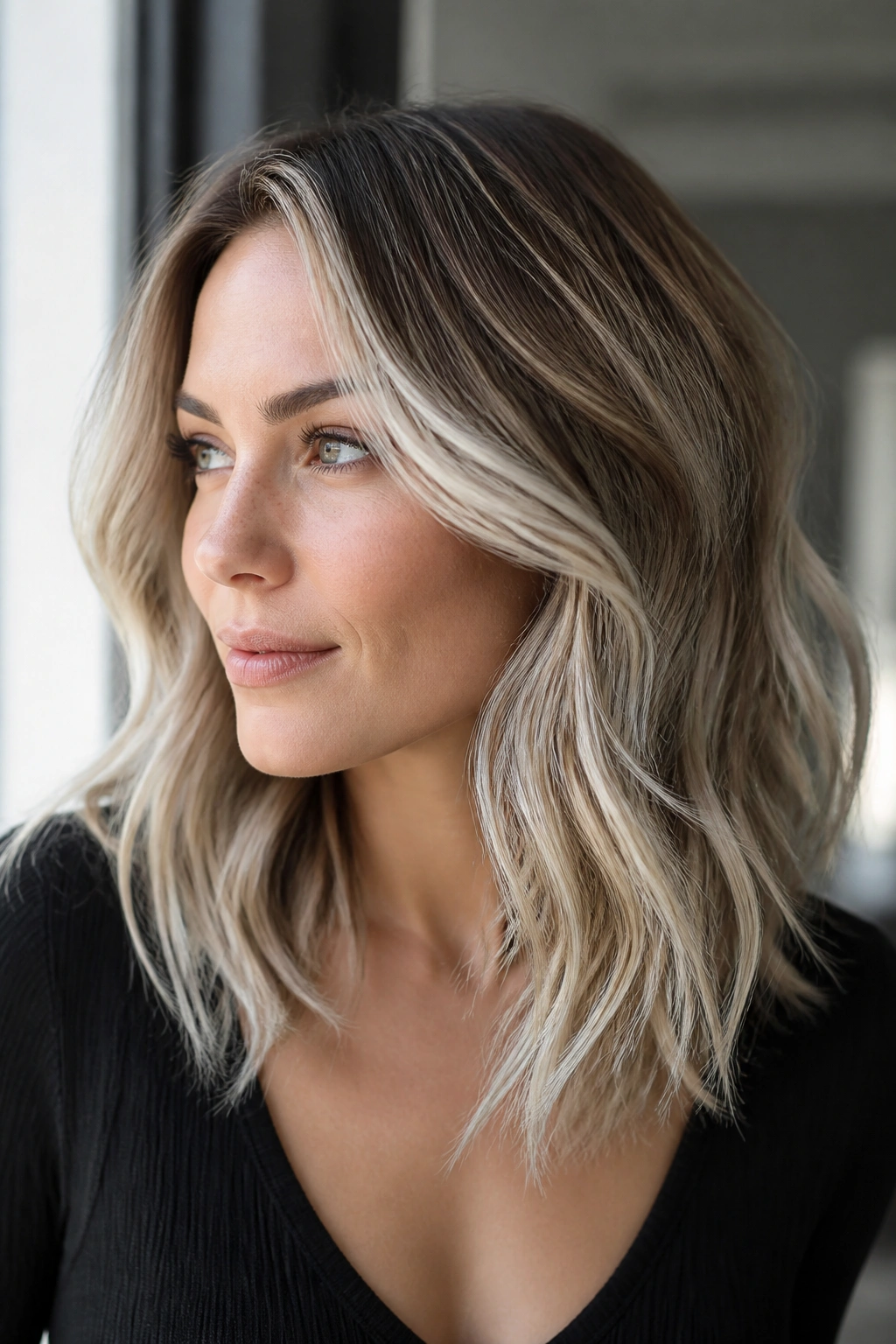
White blonde balayage on a cool brown base is a smart move if you want brightness without committing to a full-head lift. The painted pieces sit on top of a smoky brown foundation, so the white ends get more contrast and the cool skin gets a color story that feels balanced, not harsh.
The best part is the placement. Balayage lets the lighter pieces sit where the sun would naturally hit — around the crown, through the mids, and at the ends. On cool brown hair, those white strokes look almost icy against the darker backdrop.
A good balayage like this usually leaves a bit of depth near the root and around the underside of the hair. That keeps the color from turning into one big pale sheet. Ask for ash brown, not chocolate brown, if you want the cool tone to stay clean from root to tip.
8. Frosted Face-Framing Pieces
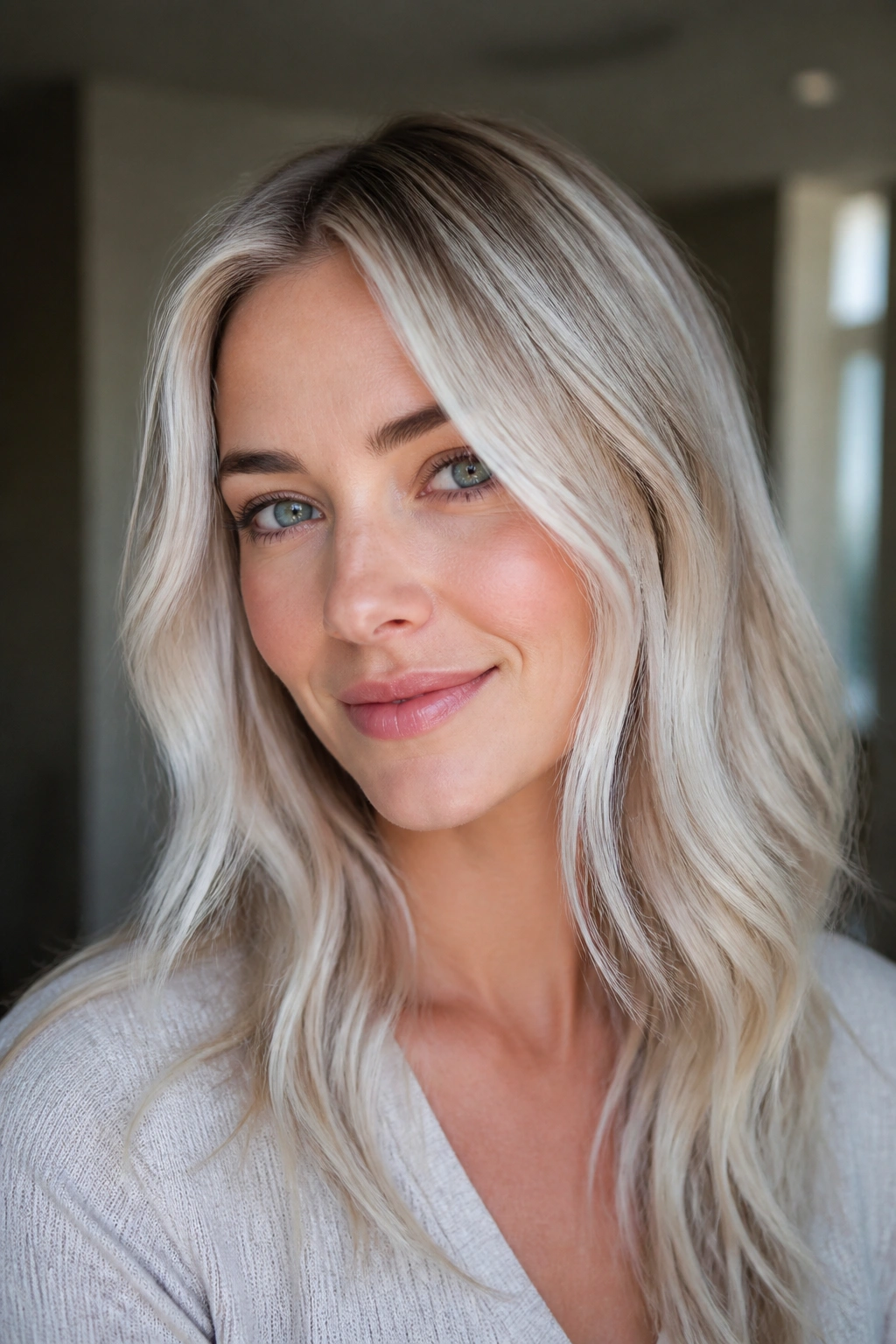
Frosted face-framing pieces can change your whole look without a full color overhaul. A few pale ribbons around the temples and front hairline give cool skin a quick lift, especially if the rest of the hair is still soft blonde, light brown, or even a darker cool brunette.
This is the style I’d recommend to anyone who wants to test white blonde before going all in. The front pieces catch light first, so the effect is obvious in photos and in the mirror, but the rest of the hair stays calmer. That makes it easier to wear every day.
The best version is delicate, not chunky. Think thin, airy pieces rather than a stripe you can spot from across the room. If the front pieces are too thick, they can overwhelm cool skin and make the color look dated. Keep them frosted, not blocky.
9. Scandi Blonde
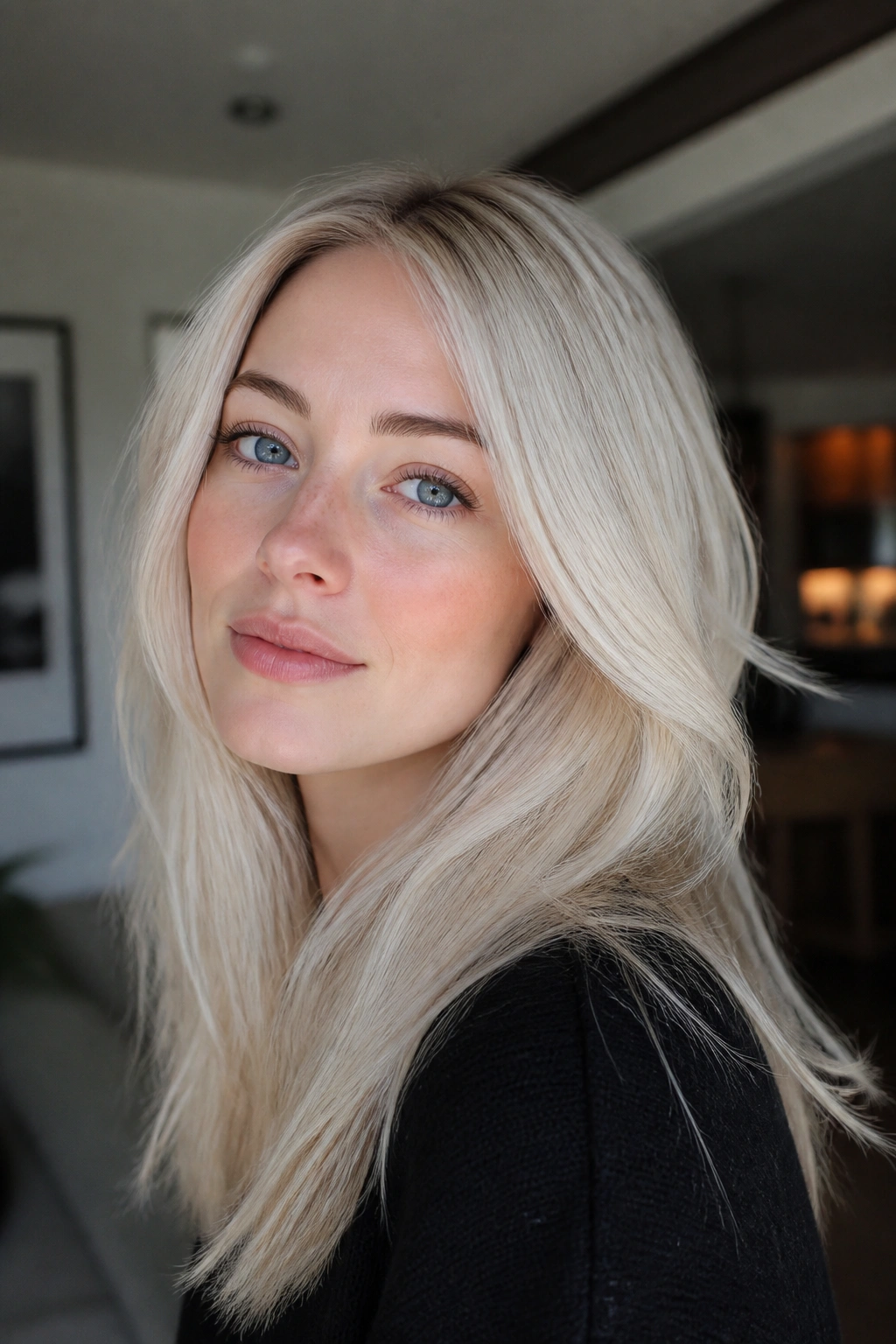
Scandi blonde has that pale, airy look people associate with clean, minimal color work. It usually sits somewhere between pearl and white blonde, with a very even finish and almost no gold left in the hair. Cool skin tends to wear it beautifully because the whole look stays crisp from root to ends.
What makes it different from a regular platinum is the restraint. Scandi blonde is light, but it doesn’t need to scream. The tone is soft enough to feel wearable, and the cut often matters just as much as the color. A straight lob, a blunt fringe, or a long center part all suit it well.
How It Works
The hair is usually lifted evenly, then glazed with a cool toner that keeps the shade pale without turning violet. That means the color can look a little softer than arctic platinum, but still much colder than beige blonde. If your style leans clean and simple, this is a lovely direction.
10. Vanilla Ice Blonde
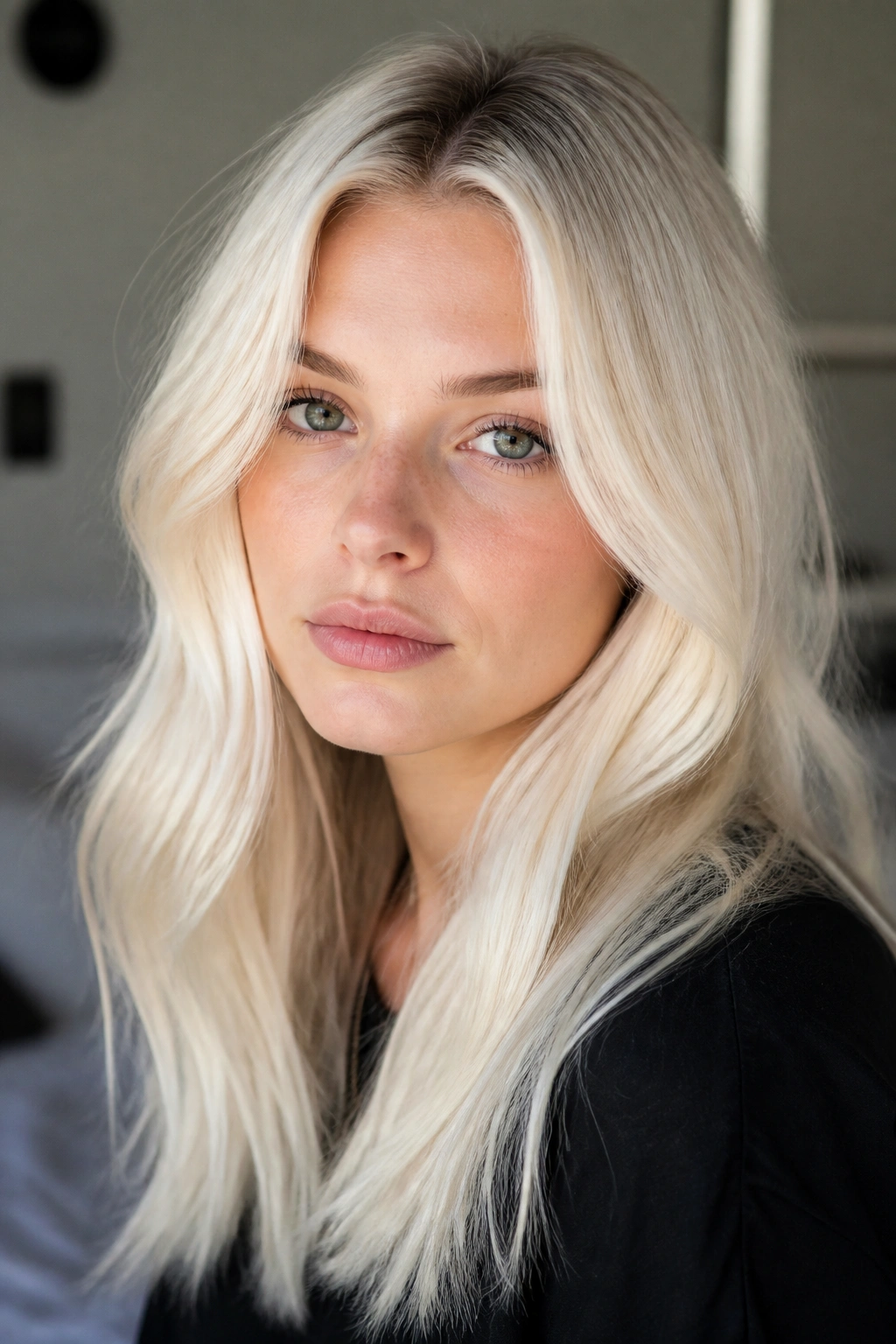
Vanilla Ice Blonde sounds warm, but the best version is cool cream with a pale, icy finish. That matters. On cool skin, you want the blonde to stay near white, not drift into buttery territory. The “vanilla” part should feel soft, not yellow.
This shade works well for people who want white blonde without the high-contrast look of pure platinum. It has a touch more softness around the edges, which can be kinder to pale complexions and lighter eyebrows. There’s still brightness, just not the severe kind.
A one-inch root shadow can keep the shade from reading flat, and a purple shampoo once a week is usually enough if the toner is holding. Do not chase brightness with too much toner — you can make the hair look dull and papery fast. That’s a miserable trade.
11. White Blonde Bob
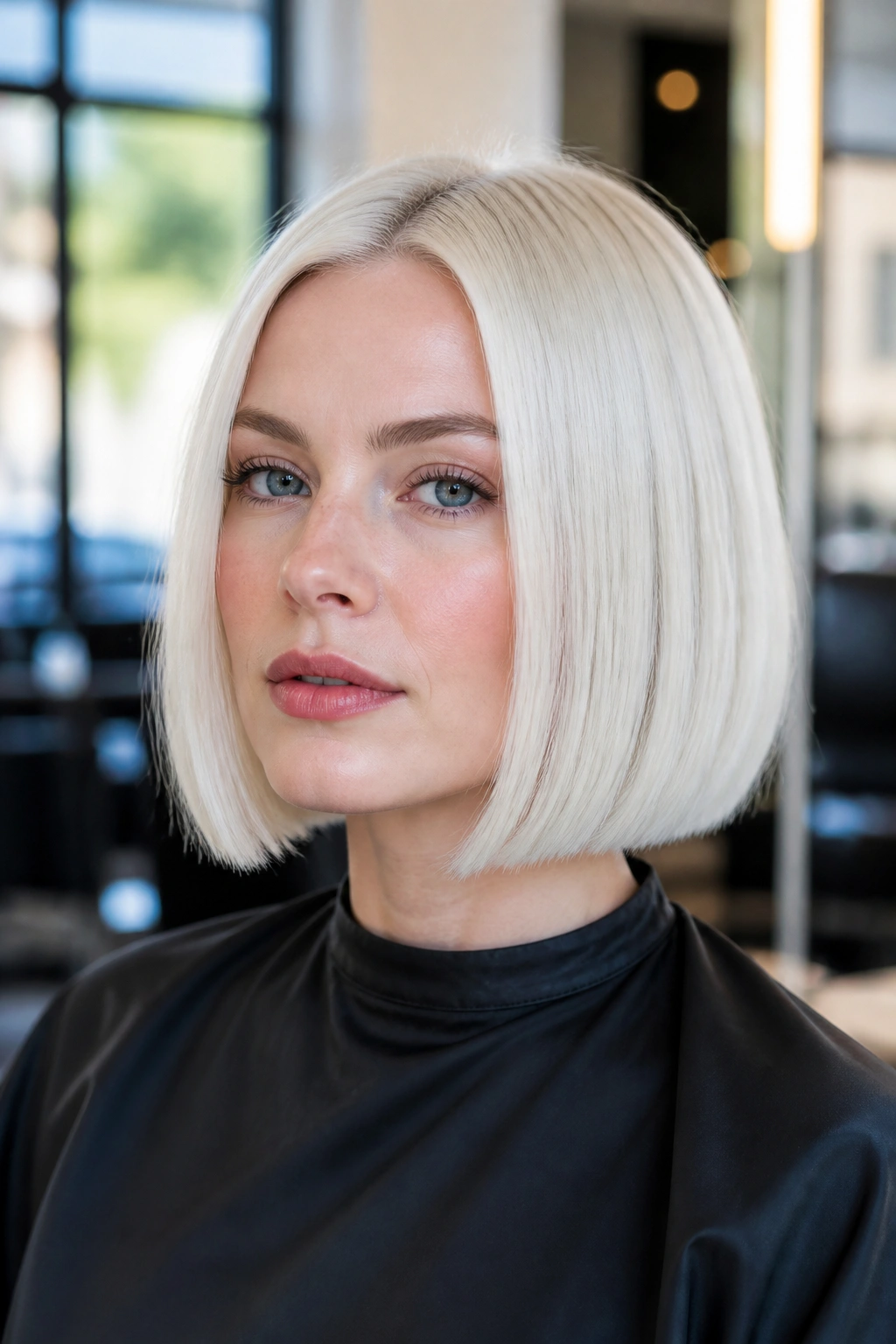
A white blonde bob is clean, graphic, and a little bit smug in the best way. The cut gives the color a shape to land on, and the pale tone makes every line look sharper. On cool skin, the whole thing reads polished without trying too hard.
This is where white blonde really shows its strength. A bob does not hide behind layers or wave patterns. The edges are the point. If the cut is blunt and the blonde is cool enough, the style can make cheekbones look higher and the jawline more defined.
Best Ways to Wear It
- Tuck one side behind the ear for a crisp finish.
- Keep the ends blunt if you want a stronger line.
- Add a soft wave only if you want to relax the shape a little.
- Use a gloss that stays pearl or silver, not beige.
Shorter cuts like this do need regular trims. Every 5 to 7 weeks is a good rhythm if you want the bob to stay clean.
12. White Blonde Pixie
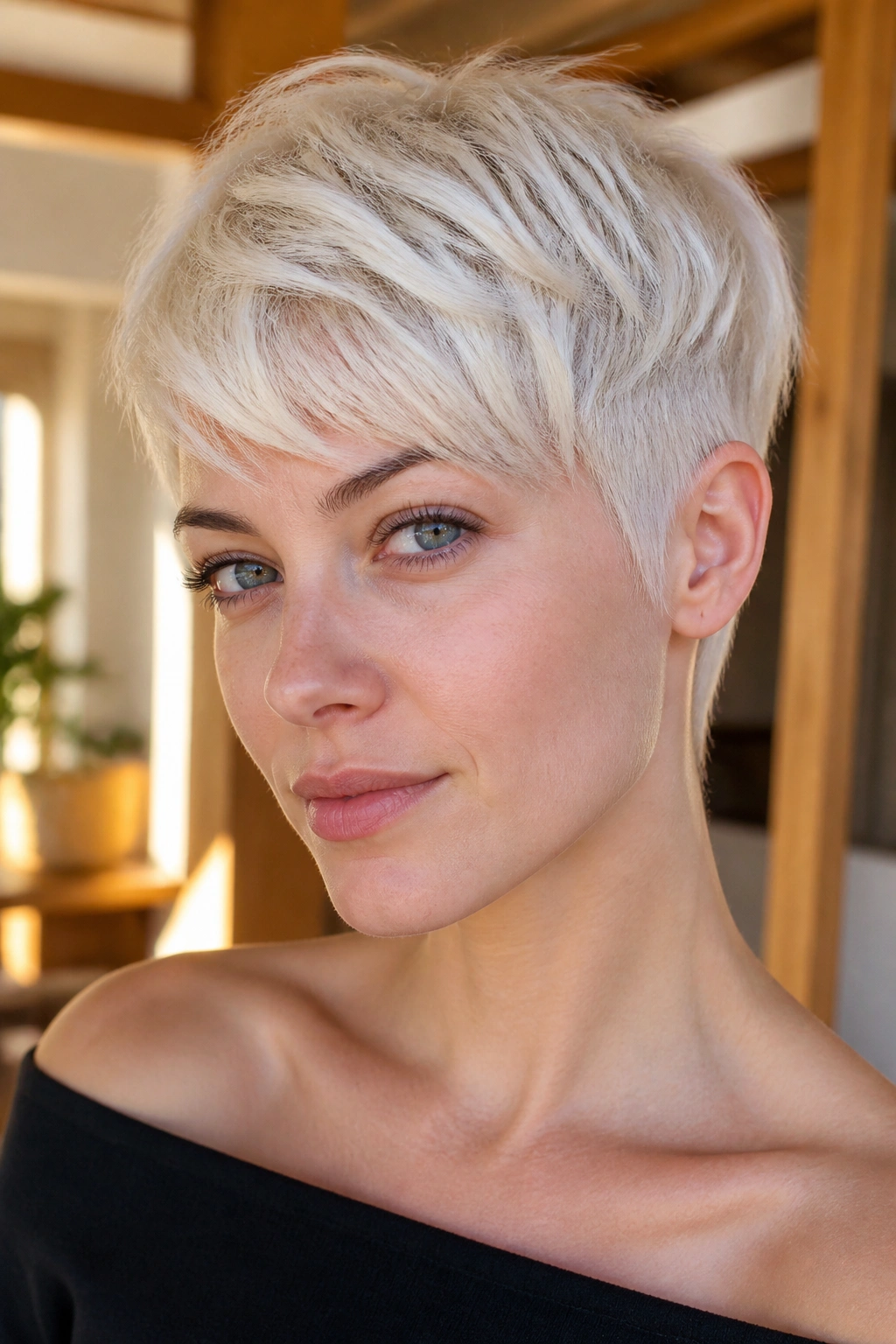
A white blonde pixie is high-impact hair, full stop. The short length makes the pale color feel brighter because there’s less surface area for the eye to land on. That means cool skin gets a strong frame right away, with the blonde sitting close to the face and eyes.
The cut itself matters a lot here. If the top is too flat, the hair can look helmet-like. A little texture through the crown fixes that. A slightly longer fringe, a choppy top, or soft pieces at the temples give the color room to breathe.
This style is not low-maintenance in the way people imagine. The color still needs care, and the cut needs regular shaping. The salon time shifts from one big appointment to many smaller ones. If you like that rhythm, the payoff is huge — sharp, clean, and very flattering on cool undertones.
13. Rooted White Blonde With a Smoky Melt
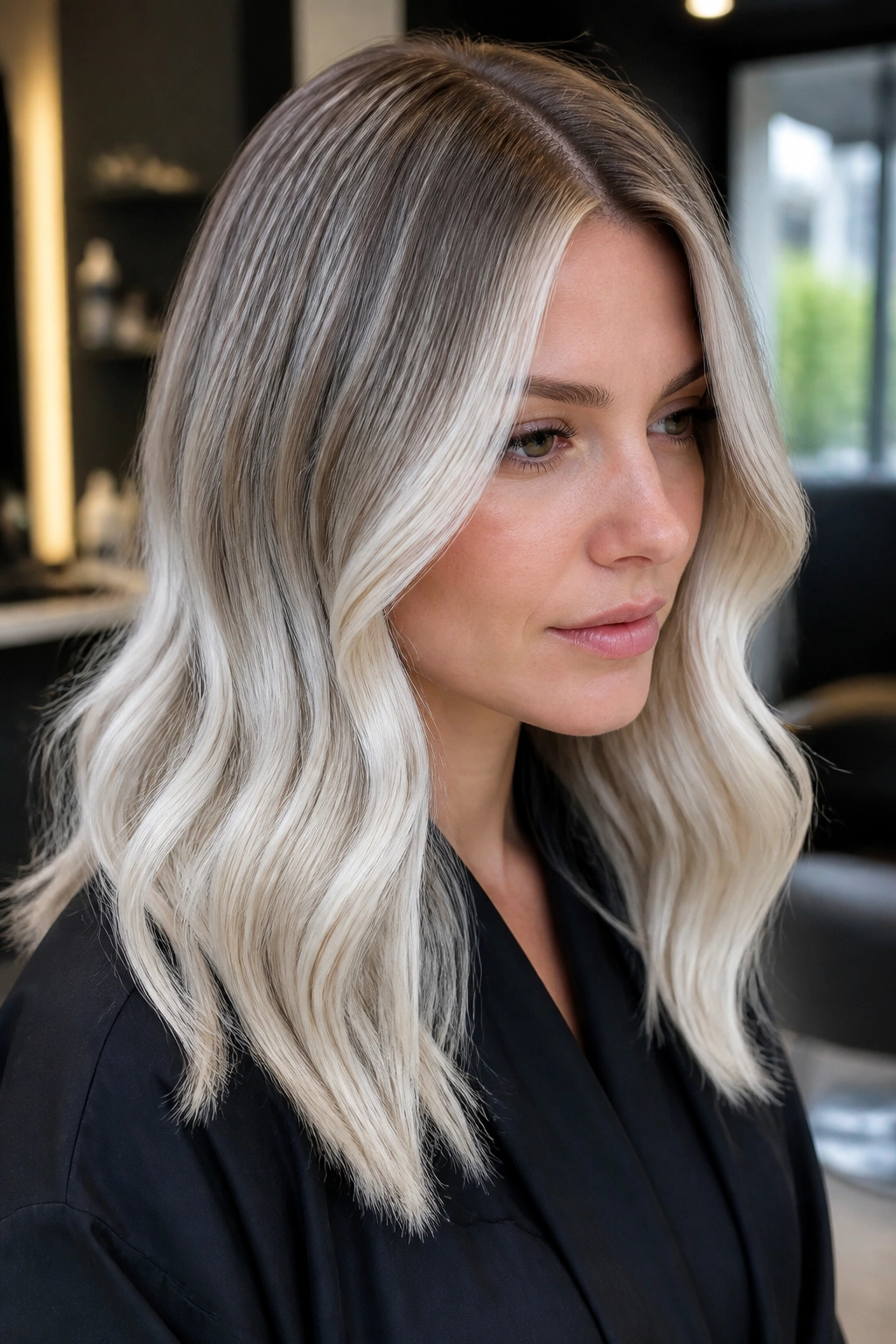
A rooted white blonde with a smoky melt looks more grounded than a true all-over platinum. The root stays deeper and cooler, then it fades into a smoky midlength and a bright white finish at the ends. That shift gives the hair a little shadow and stops it from looking like one solid sheet of bleach.
This is one of my favorite choices for people who want white blonde but hate constant maintenance. The deeper root buys you time. It also gives cool skin a nice frame, because the lighter pieces pop even more when they rise out of a darker base.
The key is softness. The melt should feel gradual, not striped. If the colorist drags the dark root too far down, the blonde can start looking dirty instead of smoky. Ask for a melt that fades over about 1 to 2 inches, not a heavy block at the scalp.
14. White Blonde Waves With Lived-In Dimension
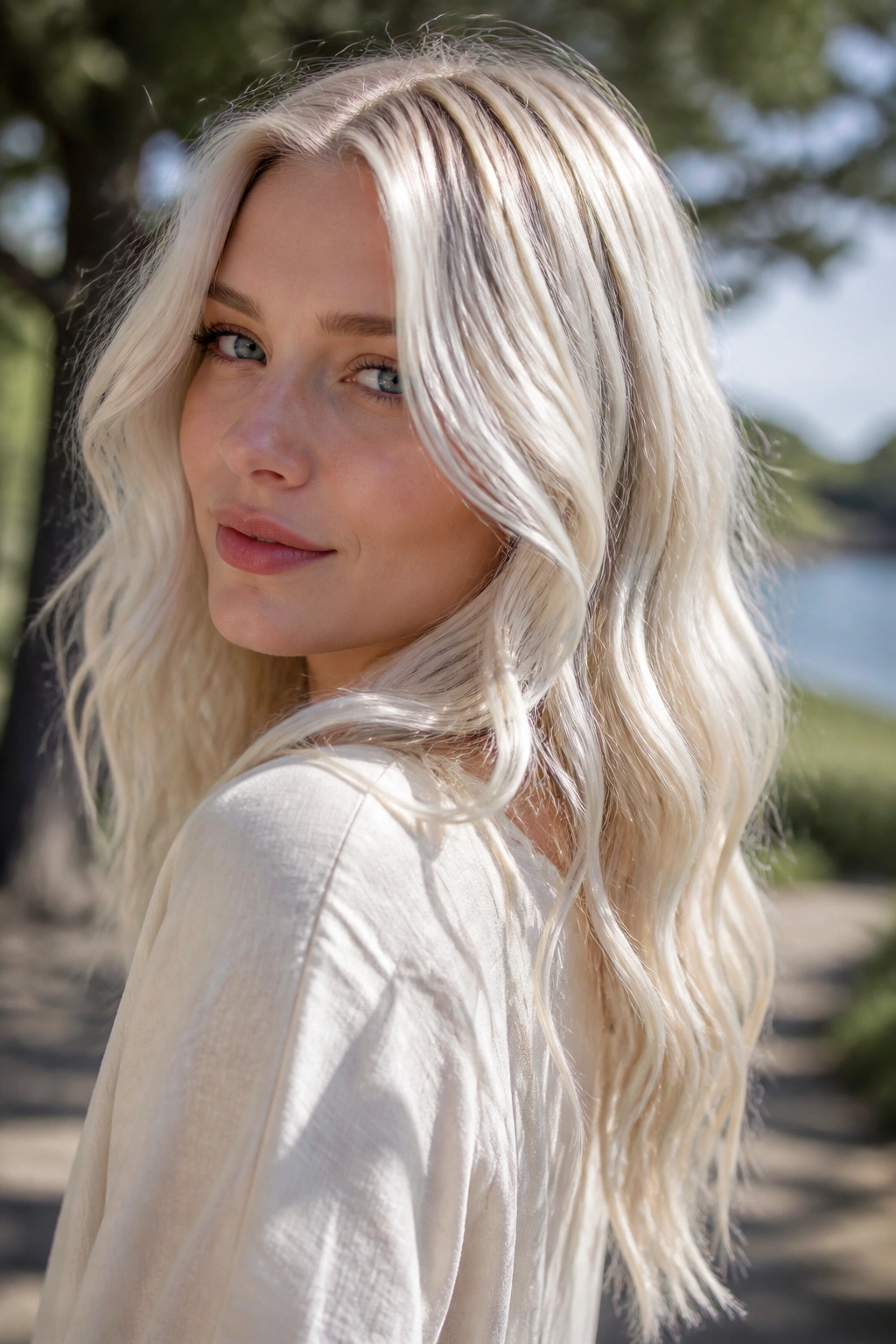
White blonde waves with lived-in dimension work because the wave pattern breaks up the color and keeps the light moving. A flat sheet of pale blonde can sometimes look harsh; waves fix that. Cool skin gets brightness, but the color still has shape and depth.
Where the Light Should Land
The most flattering version usually uses pale ribbons around the face, brighter ends, and a few cooler pieces scattered through the midlengths. The darker pieces underneath keep the surface from looking flat. That contrast matters even when the whole head is very light.
A salt spray can make the finish look rough, so I’d reach for a light cream or a soft texture mist instead. You want bend, not crunch. The hair should look airy, not dry. If the ends feel brittle, the color is too compromised, and no amount of styling will hide that.
15. Ultra-Light Beige Blonde for Cool Undertones

Ultra-light beige blonde sits just inside the white-blonde family, but it is softer than a true icy shade. The beige note is kept pale and cool, so the hair still works on cool undertones without pulling yellow. It’s the kind of blonde that looks quiet in one light and almost white in another.
That changing effect is useful. Pure platinum can feel severe on some faces, especially if the skin is very fair and the brows are light. Ultra-light beige gives a little more softness around the edges while still reading expensive and clean.
This shade also grows out a bit more gracefully than the brightest whites. A pale beige root blend can blur the regrowth line, which saves you from that harsh stripe after a few weeks. If you want white-blonde energy without a sharp edge, this is a very strong option.
16. Orchid-Glazed White Blonde
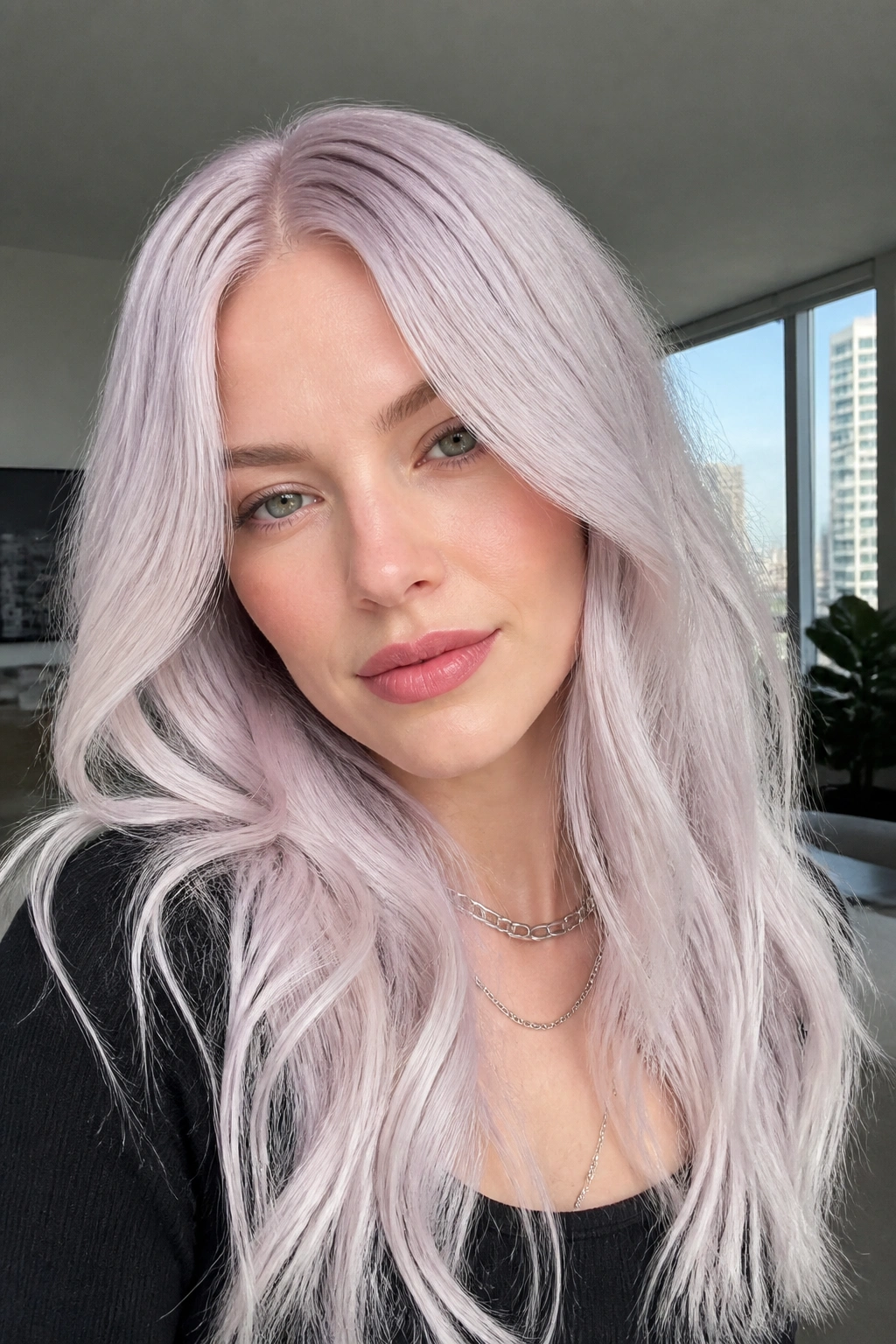
Orchid-glazed white blonde is for someone who wants a little mood in the tone. The glaze is tinted with a whisper of lavender or cool mauve, then kept so pale that the hair still reads white from a distance. On cool skin, the effect can look soft and a little editorial.
Does it sound unusual? Sure. That is part of the appeal. The orchid note plays nicely with pink or blue undertones in the face, and it gives the blonde a custom feel that standard silver toner cannot always match. The finish is delicate, not loud.
This shade works best when the base is already very light. If the hair is still yellow underneath, the glaze will not read cleanly. Think of orchid as a topcoat, not a fix. A level 10 canvas matters here. The color also fades faster than basic pearl or silver, so you need to like the look enough to refresh it now and then.
17. White Blonde with Silver Lowlights
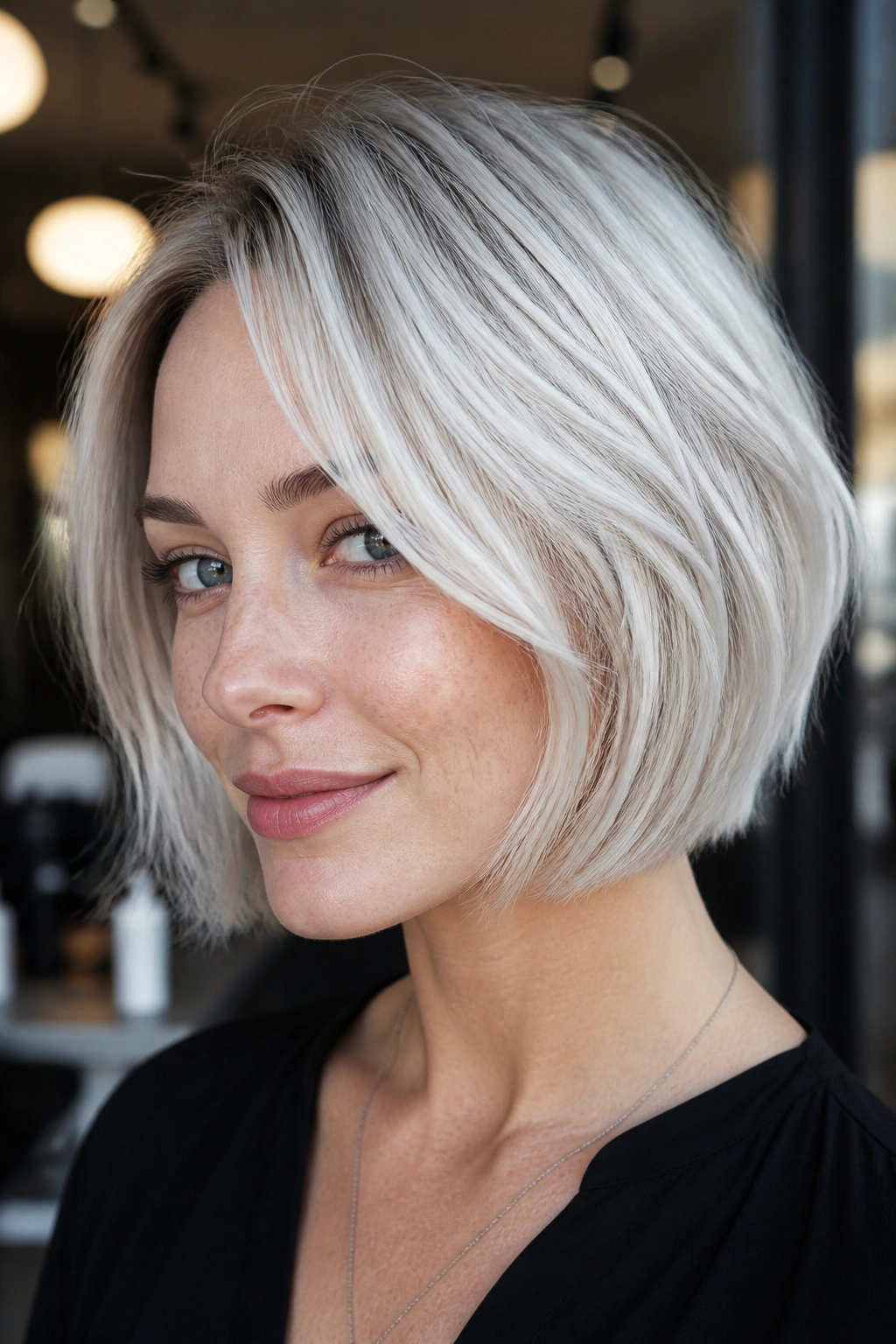
White blonde with silver lowlights is a smart move when the top is too light to hold shape on its own. The lowlights go underneath and through the crown, adding smoky strands that keep the white pieces from blending into one bright blur. That contrast looks excellent on cool skin.
The lowlights are doing real work here. They add depth at the roots, make thick hair easier to read, and stop the style from looking washed out in low light. On a bob or lob, they can make the cut look much more expensive because the shape becomes visible again.
- Place the lowlights under the top layer, not everywhere.
- Use a silver-beige or smoky ash tone.
- Keep the streaks narrow so they don’t look stripey.
- Refresh them less often than the white pieces.
If the lowlights turn too dark, the whole look can feel muddy. Stay in the pale end of the ash family.
18. Soft Opal Blonde
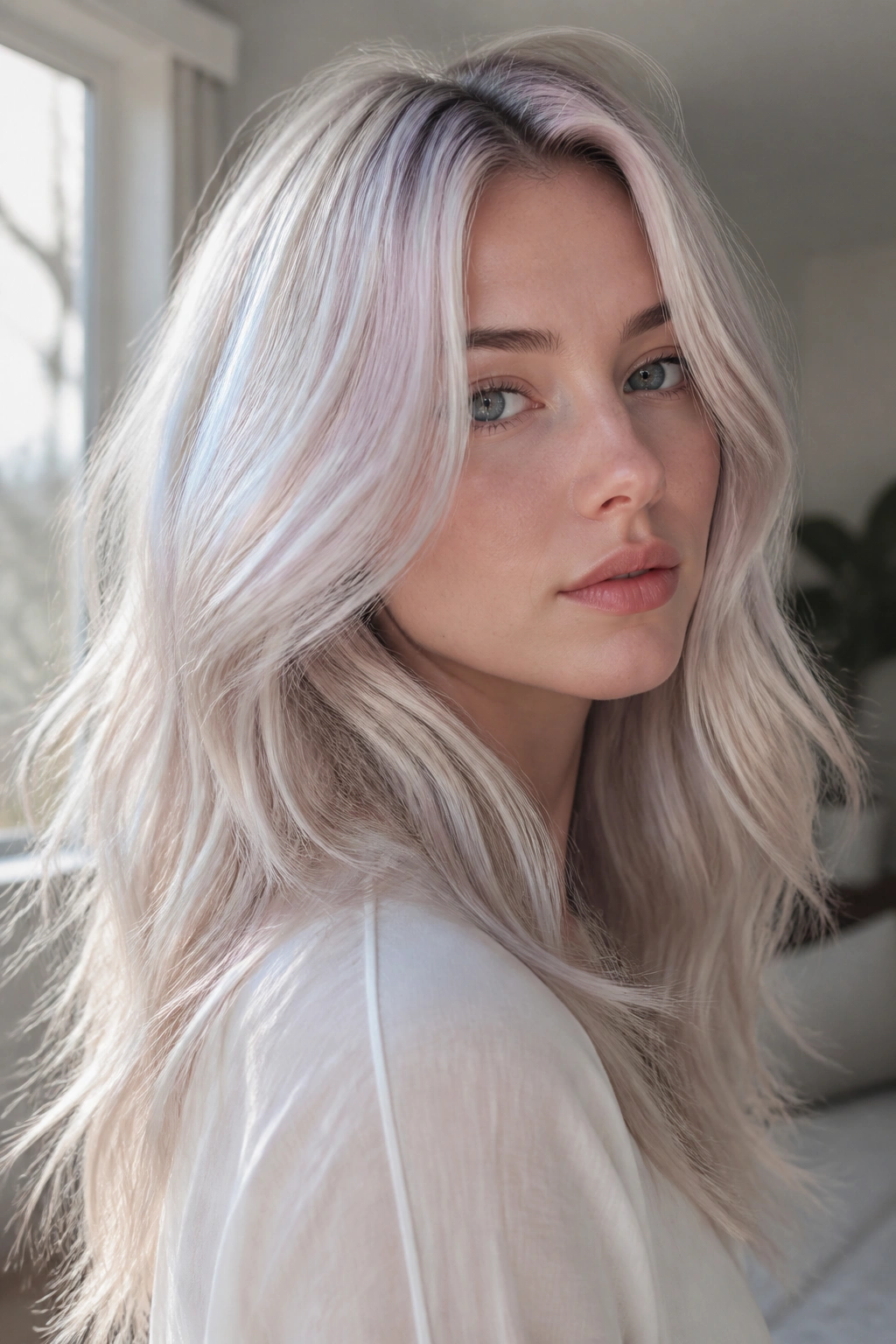
Soft opal blonde has a pearly base with tiny shifts of blue, pink, and silver when the light moves across it. It is still white-blonde at heart, but the tone has a bit more life than plain platinum. Cool skin tends to wear it beautifully because the color mirrors the coolness in the face without making the hair look icy-hard.
The finish is subtle. You do not want saturated pastel here. You want just enough pigment to give the blonde a faint opalescent glow. On very light skin, that can feel elegant in a quiet, almost shell-like way. On stronger contrast skin, it can look more fashion-forward.
What Makes It Different
Opal blonde needs even lifting. Patchy lift shows through faster here than it would in a flat platinum, because the shimmer tone exposes everything underneath. Keep the ends healthy, or the glaze will grab unevenly. A smooth blowout or loose bend usually shows it off best.
19. White Blonde on Long Layers
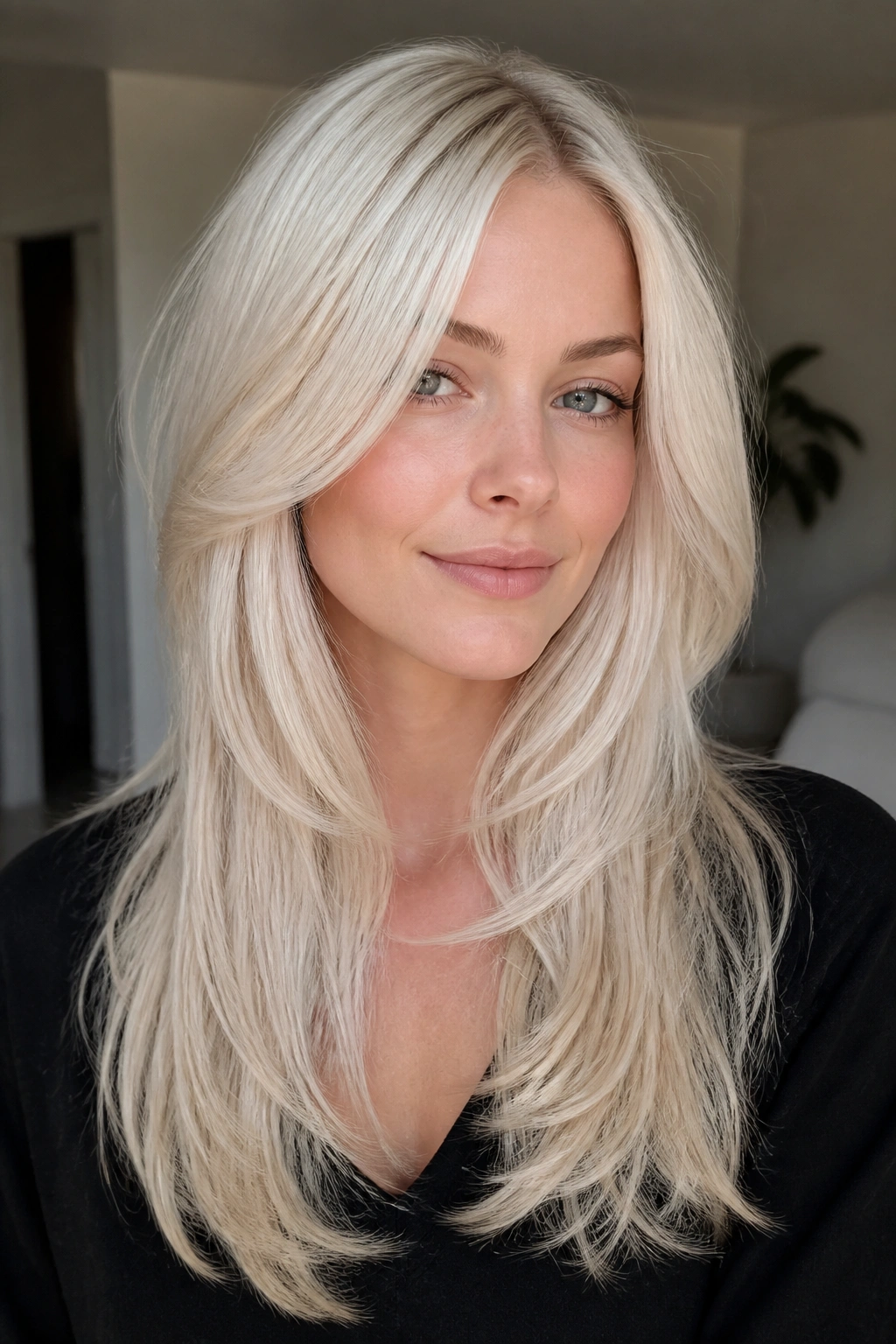
White blonde on long layers is a good choice when you want the color to move. Layers let the pale pieces catch light at different points, so the blonde looks less like a sheet and more like strands with shape. That matters on cool skin, where flat color can sometimes erase the face a little.
Long layers also keep the ends from feeling heavy. White blonde can show damage fast, and layers help remove some of the bulk without making the hair look thin. If your texture is straight or softly wavy, the effect is clean and sleek. If your hair is thicker, the layers keep it from looking bulky at the bottom.
Ask for a mix of face-framing pieces and longer internal layers. That keeps the brightness around the face while preserving length through the back. The cut should support the color, not fight it.
20. White Blonde with Micro-Babylights
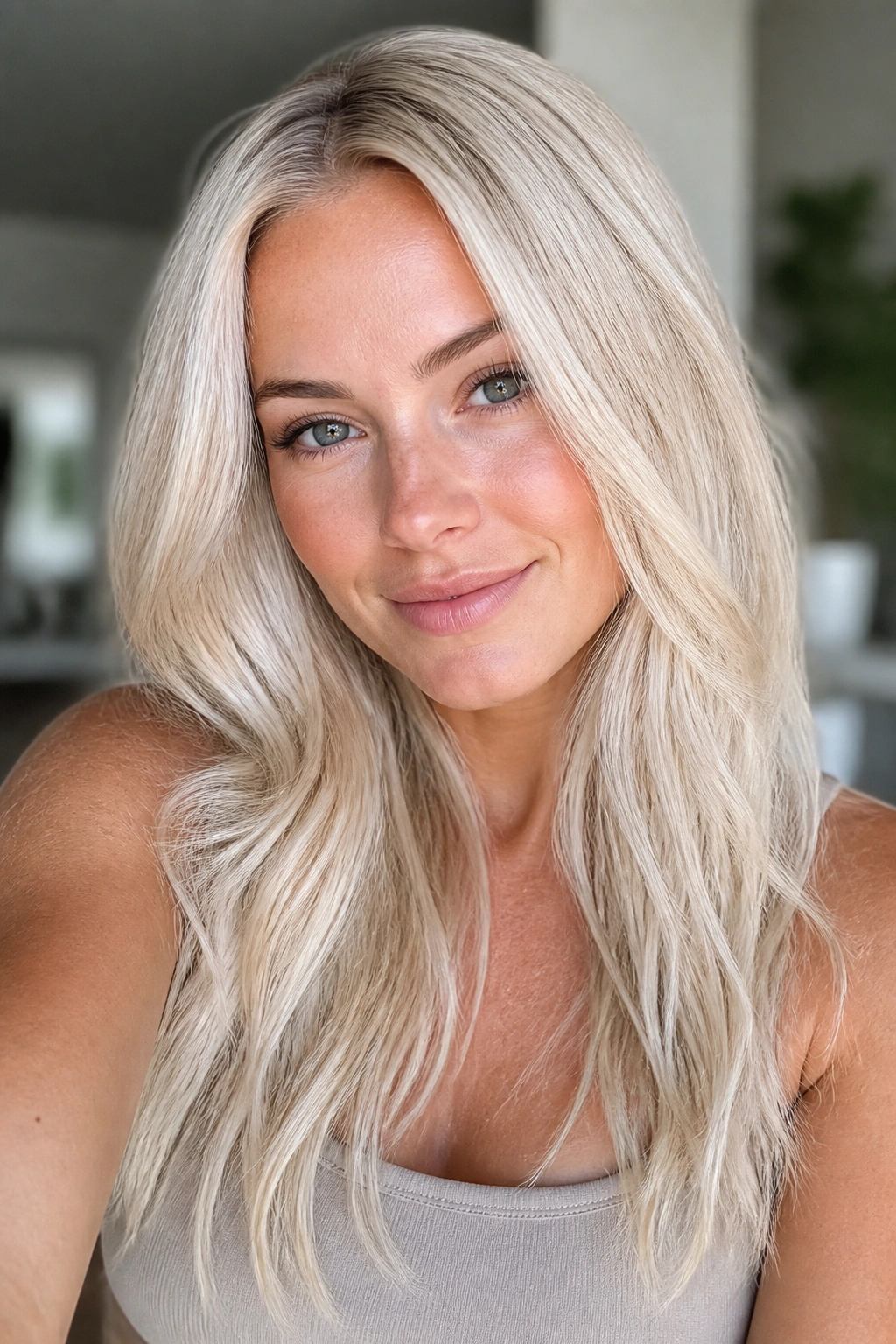
White blonde with micro-babylights is built from tiny, fine highlights that sit very close together. From a few feet away, the hair reads almost like a cloud of pale blonde, not a head full of obvious foils. On cool skin, that soft density can look polished and expensive.
The reason this method works is simple: the highlights are so small that they blend into each other. Instead of chunky contrast, you get a pale, even surface with just enough movement to keep the hair alive. It’s a good pick if you want brightness across the whole head but dislike stripey blonde.
How to Ask for It
- Request very fine weaves rather than thick slices.
- Keep the toner in the pearl, ash, or silver family.
- Leave a little depth near the root for shape.
- Use a hydrating mask after lightening, because tiny highlights still add up.
This is one of those looks that seems simple and is not. The placement matters more than the label.
21. Chunky White-Blonde Money Piece
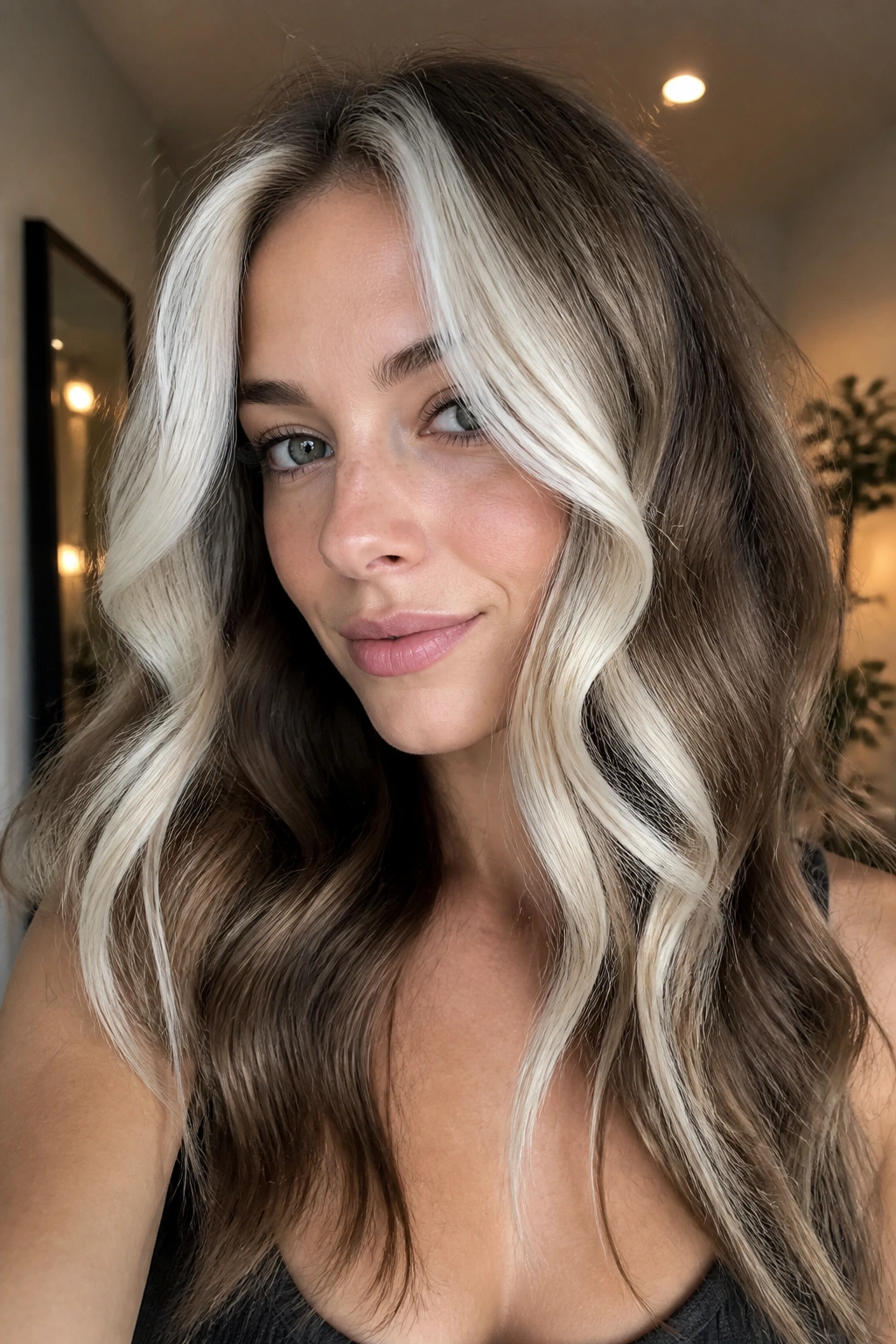
A chunky white-blonde money piece is bolder than frosted face-framing pieces, and that difference matters. Here, the front sections are brighter, wider, and more graphic. The rest of the hair can stay deeper, which makes the white money piece hit harder when the hair is pulled back or worn loose.
This version flatters cool skin when you want contrast near the face. It throws light upward, sharpens the hairline, and gives a cut a little attitude. A shag, wolf cut, curly fringe, or layered bob all work well with this kind of front-heavy brightness.
The trick is balance. If the front is too wide and the rest of the hair is too pale, the whole look loses focus. Keep the money piece the brightest part of the head. That way, it reads deliberate instead of scattered.
22. Cool White Blonde for Curly and Wavy Hair

Cool white blonde on curly and wavy hair needs a slightly different touch. Curls and bends catch light in spirals, so the color placement has to follow the shape of the texture. When it’s done well, the hair looks luminous without becoming frizzy or overprocessed.
The best approach is usually selective lightening. Colorists often place the brightest pieces where the curls open up — around the face, along the top layers, and near the ends. That keeps the pattern visible and avoids bleaching every inch of the strand. Curly hair can lose moisture fast, so the color plan has to respect that.
How to Keep the Curl Pattern Happy
A stronger treatment mask, fewer hot tools, and a gentle sulfate-free cleanser make a real difference here. Purple shampoo can help, but too much of it can dry curls out and leave them stiff. If the hair feels rough after toning, back off. The white blonde will still be there, and the curl pattern will thank you for not fighting it.
Final Thoughts
Cool skin tones and white blonde are a good match when the shade stays on the icy side of the fence. Pearl, silver, smoky ash, orchid, and opal all give you different ways to wear the same basic idea without ending up in yellow territory.
The best version is the one that fits your hair health and your patience. A bright platinum bob and a rooted balayage live very different lives, and that’s the point. One asks for regular salon visits. The other gives you breathing room.
If you’re choosing between shades, look at the tone first and the maintenance second. That order saves people from a lot of bad hair days.
