



If gold blonde makes your skin look a little flushed or tired, the problem is usually temperature, not darkness. Brown blonde hair color ideas for cool skin tones work best when the brown leans ash, mushroom, taupe, or smoky mocha and the blonde stays beige, pearl, or icy instead of buttery and yellow.
Cool skin tones usually carry pink, red, or blue undertones. That doesn’t mean you need a flat, gray-ish color from root to tip. The prettiest results usually have depth at the base, a controlled amount of brightness through the mids, and a toner that keeps the lighter pieces from drifting warm after a few washes.
A good colorist thinks about level, undertone, porosity, and placement in the same breath. Leave one of those out, and the whole thing can tip sideways fast. A light piece that looks clean on healthy hair may grab too much ash on porous ends, and a beige ribbon that looks soft in the bowl can turn muddy if it sits on a very dark base with no lift underneath.
The 30 ideas below move from subtle to bolder. Some are quiet enough to read as natural brunette with a little glow. Others have more contrast and a cooler edge. All of them stay in the lane that tends to flatter cool skin without turning the hair into a brass problem two weeks later.
1. Mushroom Brown Balayage
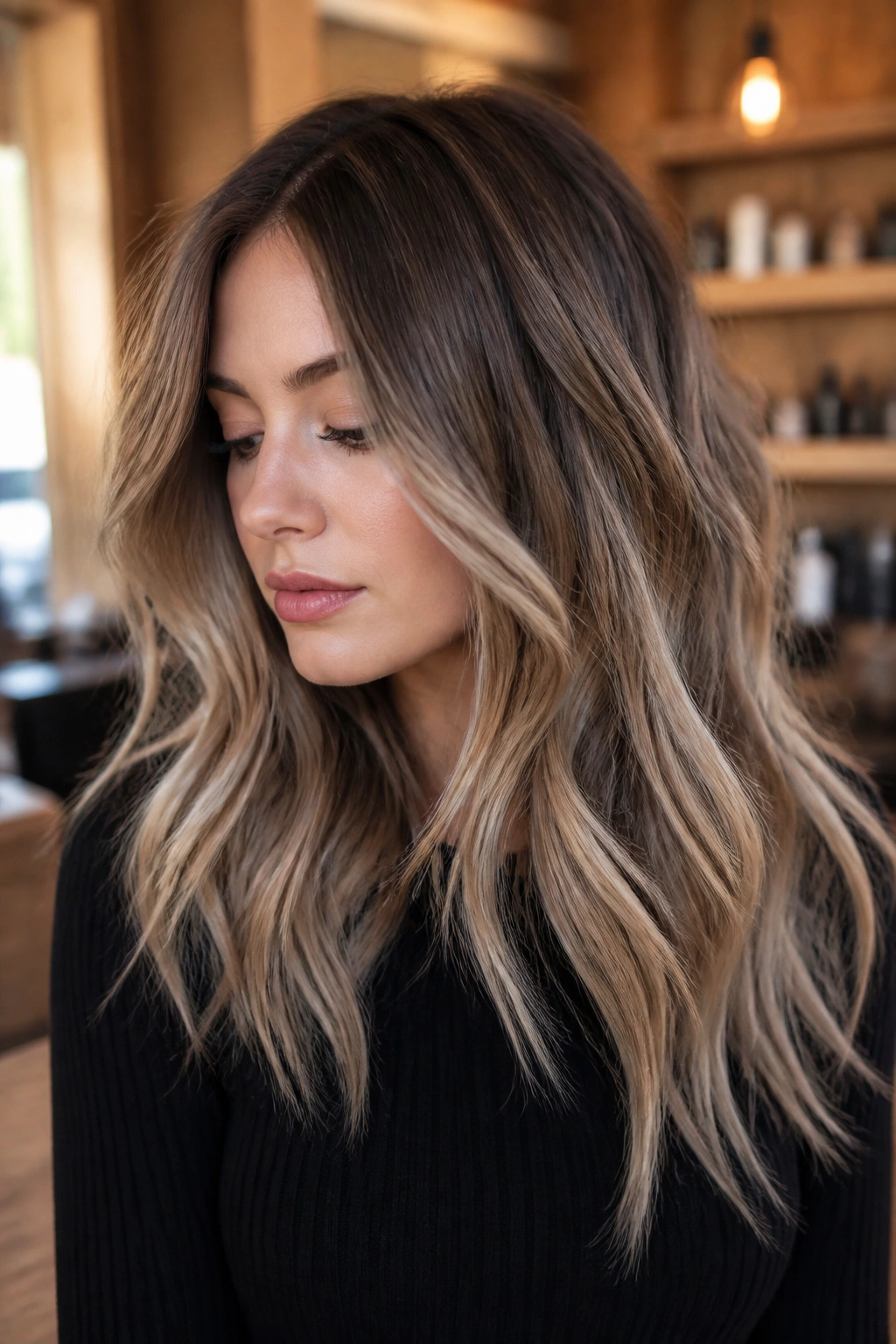
Mushroom brown is the shade I recommend when someone wants blonde movement without any obvious yellow. It sits in that smoky middle ground between brunette and beige blonde, which is exactly why it tends to flatter cool skin so well.
Why It Feels So Easy to Wear
The base stays around a level 5 or 6, then the lighter pieces rise into a muted beige at the ends. Nothing screams for attention. The color just looks expensive in a practical way: soft regrowth, no harsh line, and enough depth that your face still has contrast.
Ask for hand-painted pieces, not thick stripes. The trick is keeping the light pieces thin near the crown and a little fuller through the mid-lengths. That gives movement when the hair swings, but it does not give that chunky, overdone highlight look from the early salon disasters we all remember.
- Best on medium brown hair
- Toner range: beige-ash, not golden
- Refresh gloss every 6 to 8 weeks
Pro tip: If your ends are porous, ask for the lightest blonde to stop one shade darker than you think. Porous hair grabs ash fast.
2. Ash Bronde Melt
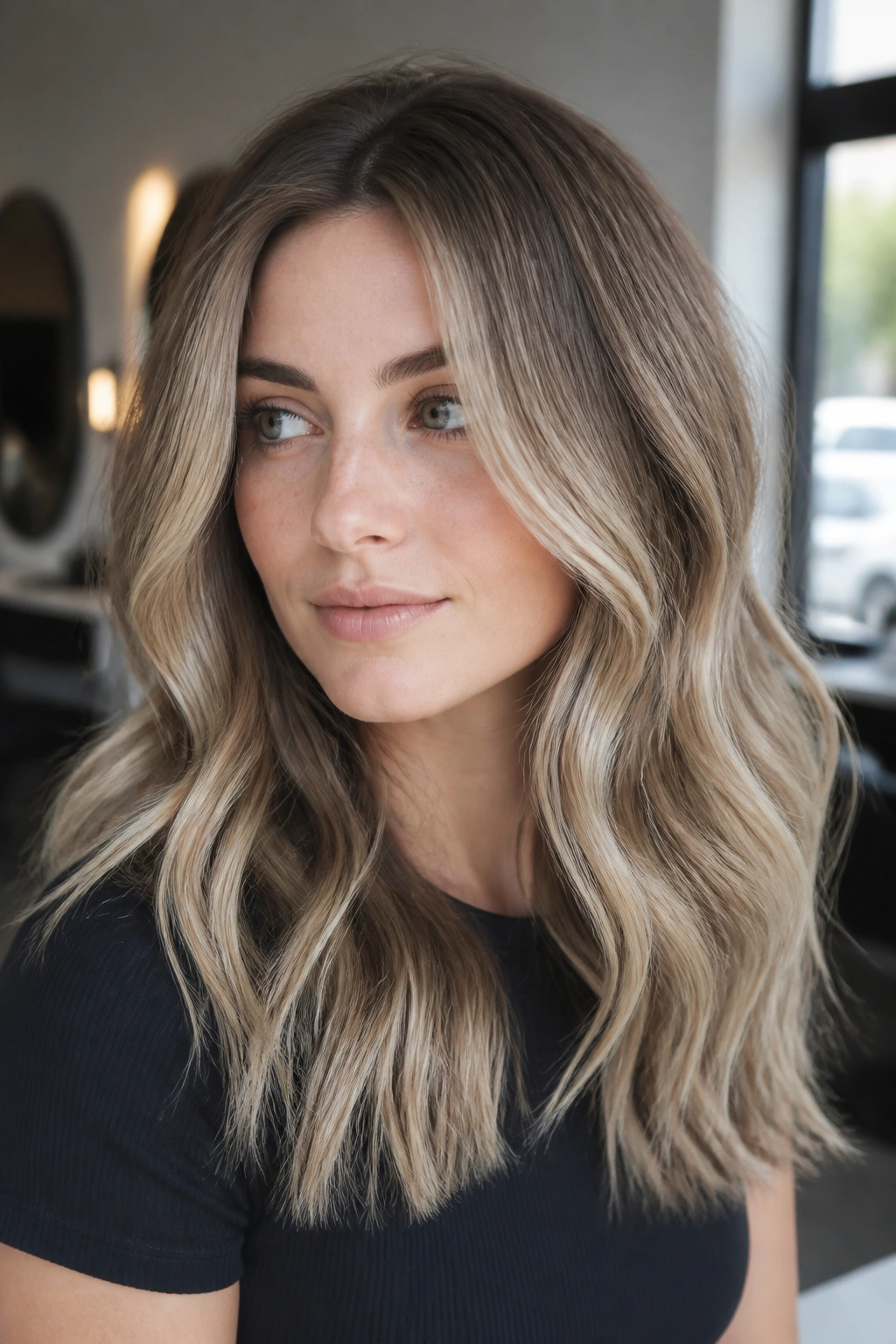
What makes an ash bronde melt work is the blur. Brown and blonde should not look like two separate ideas that met by accident.
The Color Bridge Matters
A good melt starts with a deeper root, then the tone opens slowly through the mids. The blonde is still there, but it sits under a veil of ash and beige so the shift feels smooth instead of stripey. On cool skin, that softness keeps the whole look from becoming harsh around the cheekbones.
How to Ask for It
Tell your colorist you want a root shadow that stays one to two levels deeper than the lightest pieces. That detail matters more than the name. If the root is too dark, the contrast can look severe; if it is too light, the whole thing turns flat.
I like this on straight hair and loose waves, because both show the fade clearly. It is one of those shades that looks understated in photos but even better in person, where you can see the movement between tones.
3. Smoky Beige Face-Framing Highlights
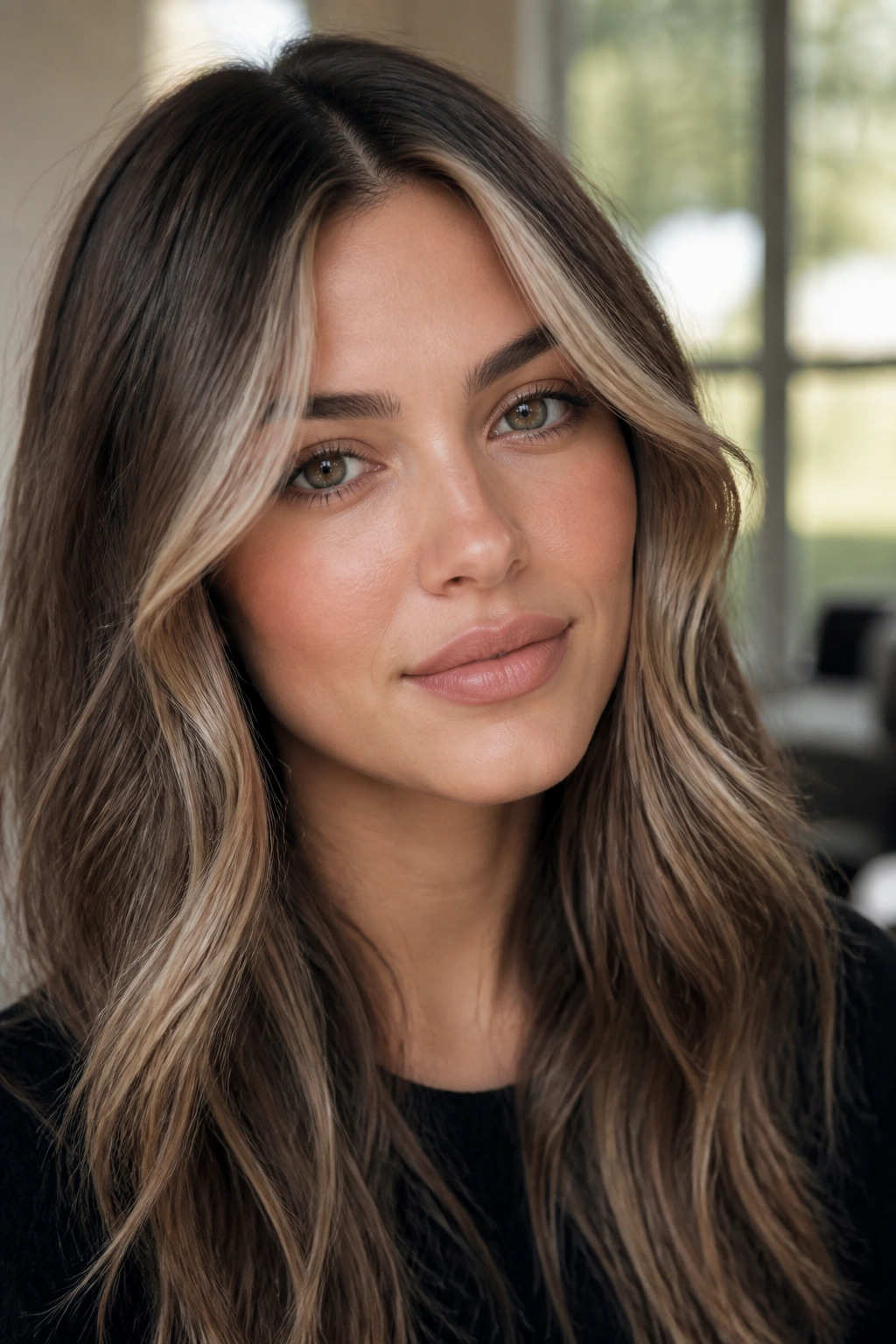
Face-framing highlights do the most work for the least commitment. That sounds dramatic, but it’s true. A few smoky beige pieces near the face can change how your skin reads before the rest of the hair even moves.
Start them around the temples and cheekbones, not all the way at the hairline. That keeps the brightness in a flattering zone instead of making the front pieces look like strips of paper. Beige is the key word here. Not gold. Not honey.
Why This Placement Wins
Cool skin can handle lightness just fine, but it usually looks better when the brightness is controlled. The front pieces should be a touch lighter than the rest of the hair, then softened with a cool toner so they don’t shout. A subtle money-piece effect is enough.
This is also a smart option if you wear your hair up a lot. Even a messy bun benefits from the brighter front sections, and the rest of the color can stay brunette and calm.
4. Taupe Brown Lowlights
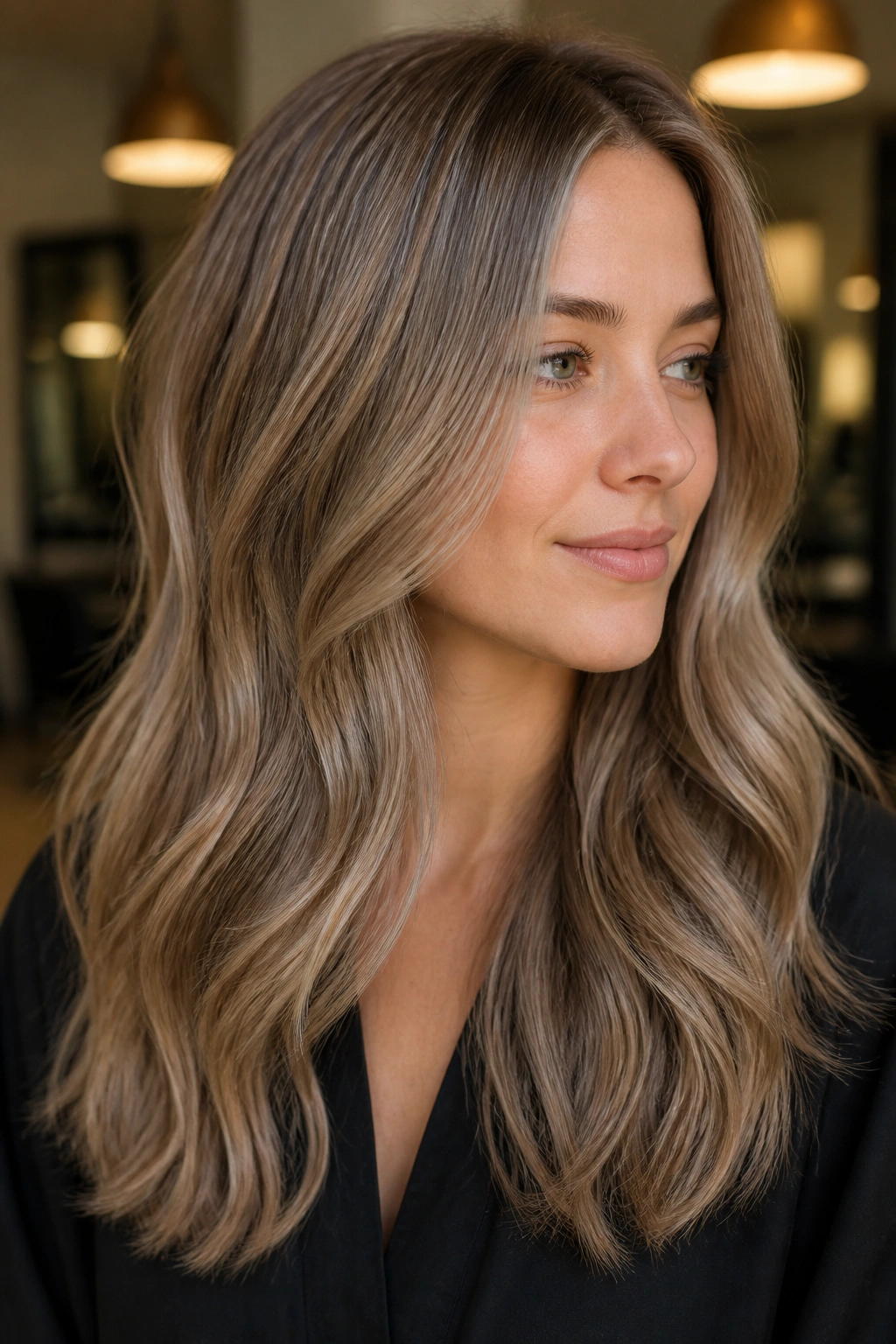
Taupe lowlights are one of those colors people skip because they sound quiet. That is exactly why I like them. They add depth to light brown or dark blonde hair without throwing warm stripes into the mix.
The effect is especially good if your hair has gone too light or too flat. A few cooler lowlights break up the surface and make the blonde pieces look cleaner by contrast. It is a small shift, but it changes the whole read of the hair.
If you have cool skin and a lighter base, taupe lowlights can stop the color from floating away from your face. The tone sits close enough to brown that it feels grounded, but the ash-beige cast keeps it from looking muddy. This is a toner-heavy color, not a shine-only color. Ask for demi-permanent lowlights if you want them to fade softly.
5. Icy Beige Money Piece
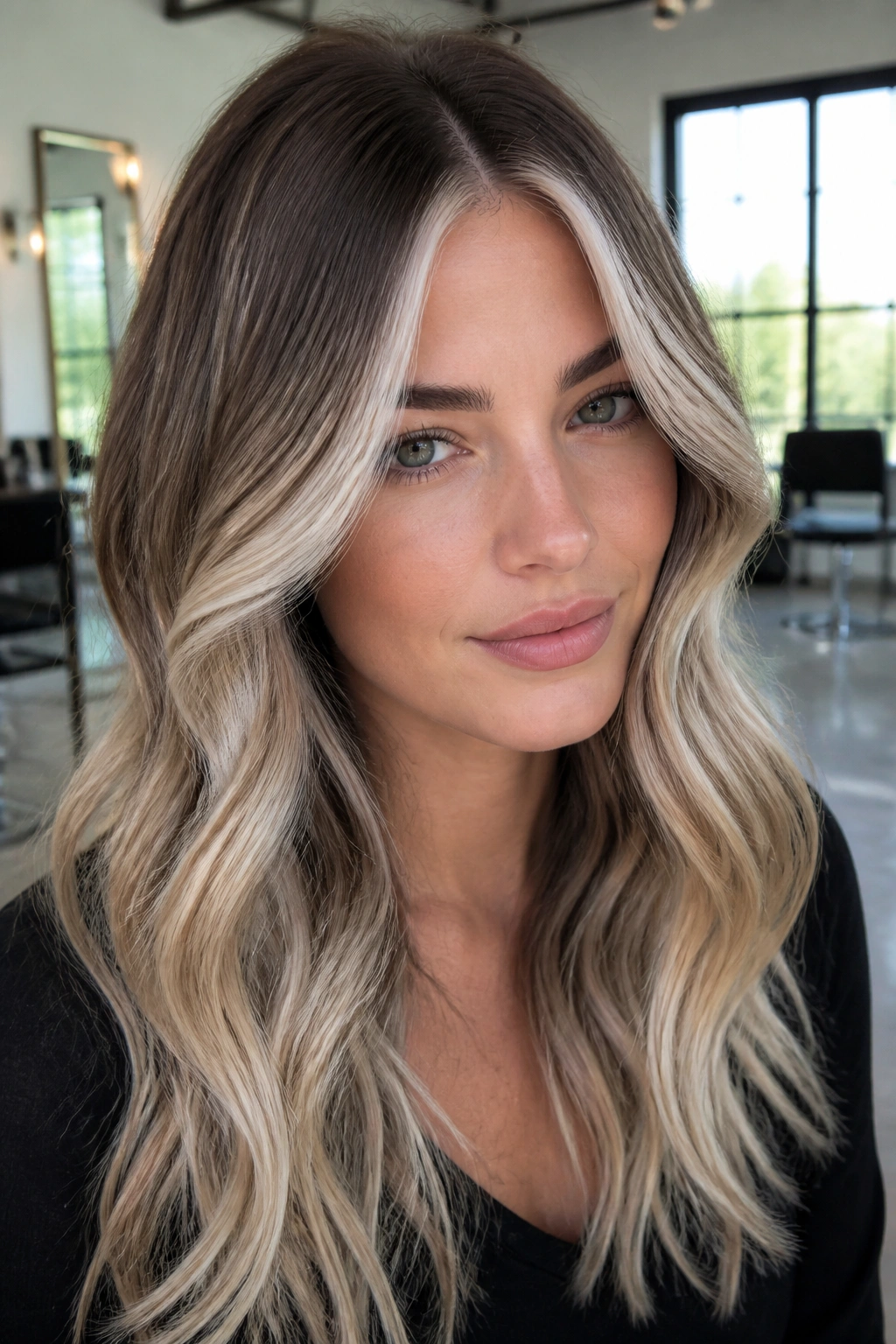
A strong money piece is not subtle. It is not supposed to be. The point is to place the brightness exactly where you want attention, and on cool skin that brightness should lean icy beige rather than yellow.
Why It Works
The front section usually needs the most lift because it sits beside the face and takes the eye first. When that piece is toned to a pale beige, it gives a lifted look without making the roots look disconnected. The contrast can be sharp or soft, depending on how thick the panel is.
What to Tell Your Colorist
- Keep the panel no wider than 1.5 to 2 inches
- Tone it with pearl-beige, not gold
- Leave a darker root for a cleaner grow-out
- Blend the sides with baby foils so the panel does not look pasted on
This shade is a little bolder than the others here, and that is the point. If you want instant brightness around cool skin, this is one of the fastest ways to get it without bleaching the whole head.
6. Cool Mocha with Micro Babylights
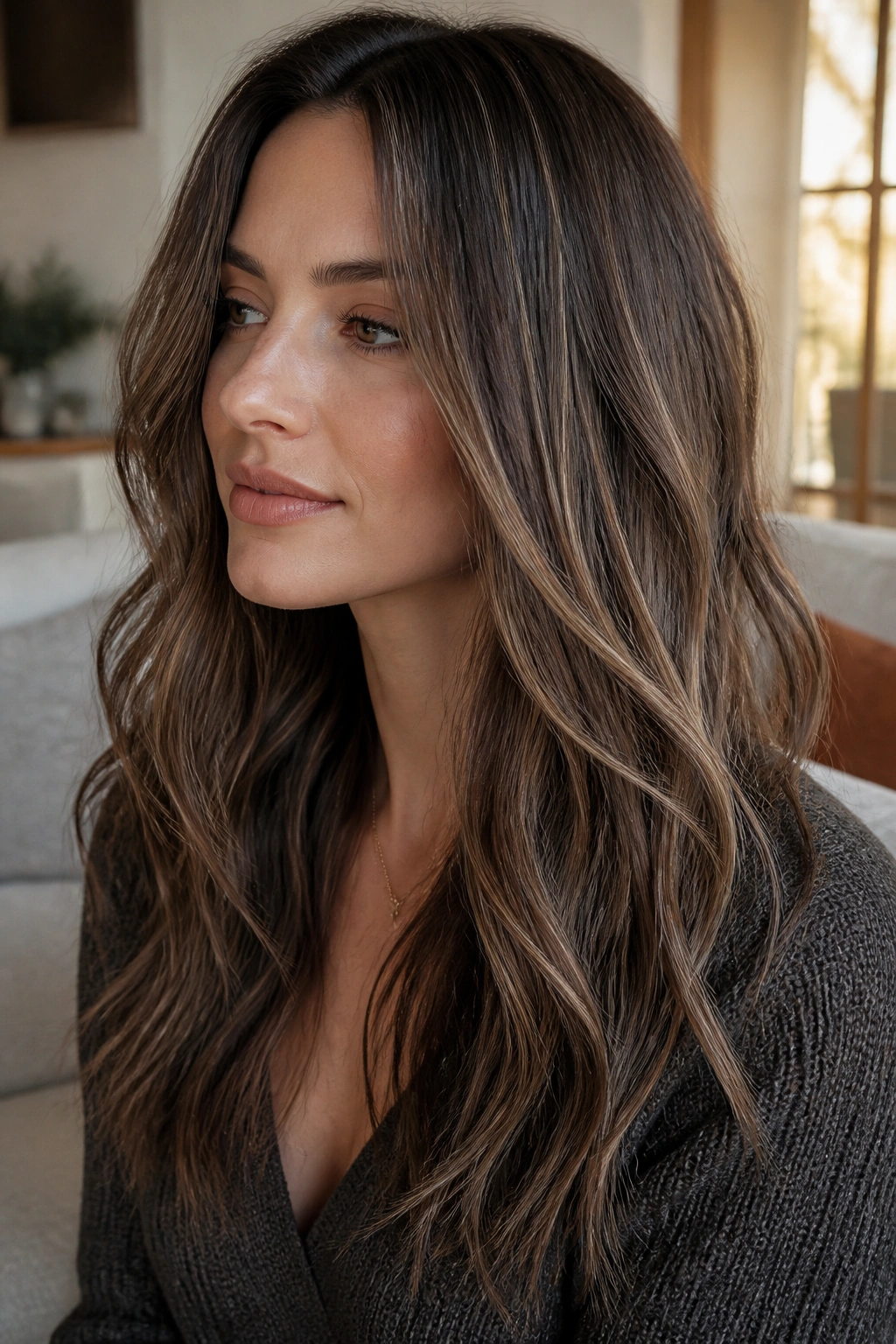
Fine babylights are the secret weapon for people who hate obvious highlights. They look like natural sun-fade, not salon stripes.
Cool mocha gives you that deep brown base that cool skin usually likes, while the micro babylights add just enough light to keep the hair from sitting too heavy. The pieces should be so thin they almost disappear until the light hits them. That is the whole charm.
This is a good choice for fine hair, because tiny lights create the illusion of density. Chunky highlights can make fine strands look separated. Babylights do the opposite. They give the hair a soft, woven look that still feels brown first and blonde second.
A good toner here keeps the lights beige and quiet. If they go too pale, the contrast gets harsh. If they stay too warm, the mocha base starts looking muddy instead of rich.
7. Silver Brown Ombré
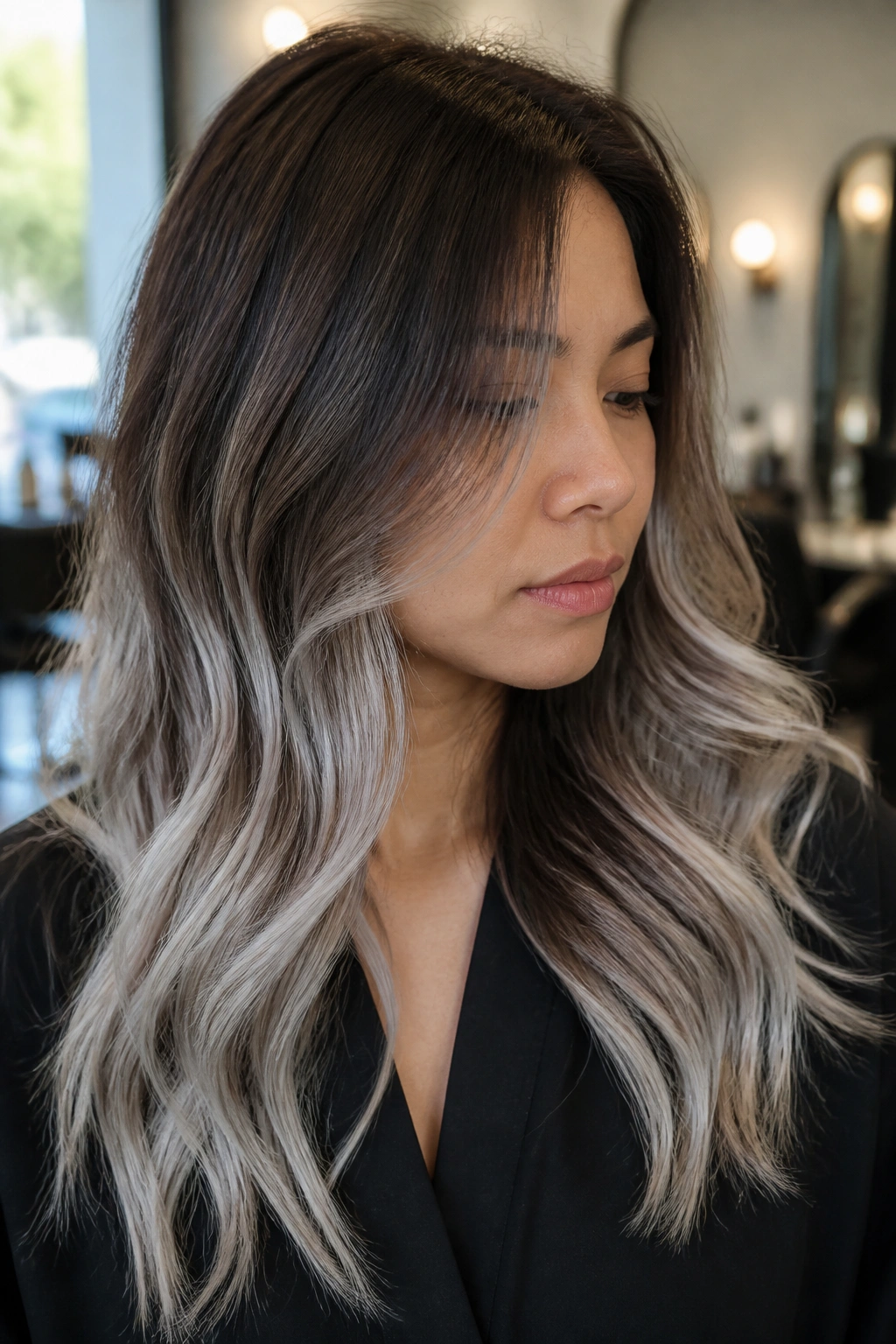
A silver brown ombré has a little edge to it. It looks especially good on cool skin that can handle contrast and doesn’t need a soft, barely-there finish.
The roots stay brown, usually around level 4 or 5, and the ends drift into a smoky silver-beige. That shift feels clean because it leans cool all the way through. The trick is not taking the ends into flat gray. You want movement, not ash dust.
It works best on medium to long hair, where the fade has room to breathe. Short hair can do it too, but the transition gets compressed and you lose some of the softness. Ask for a slow lift through the mid-lengths so the ombré doesn’t look like a hard dip-dye. That makes the brown and silver read like one thought instead of two.
8. Pearl Blonde Ribbons on a Brown Base
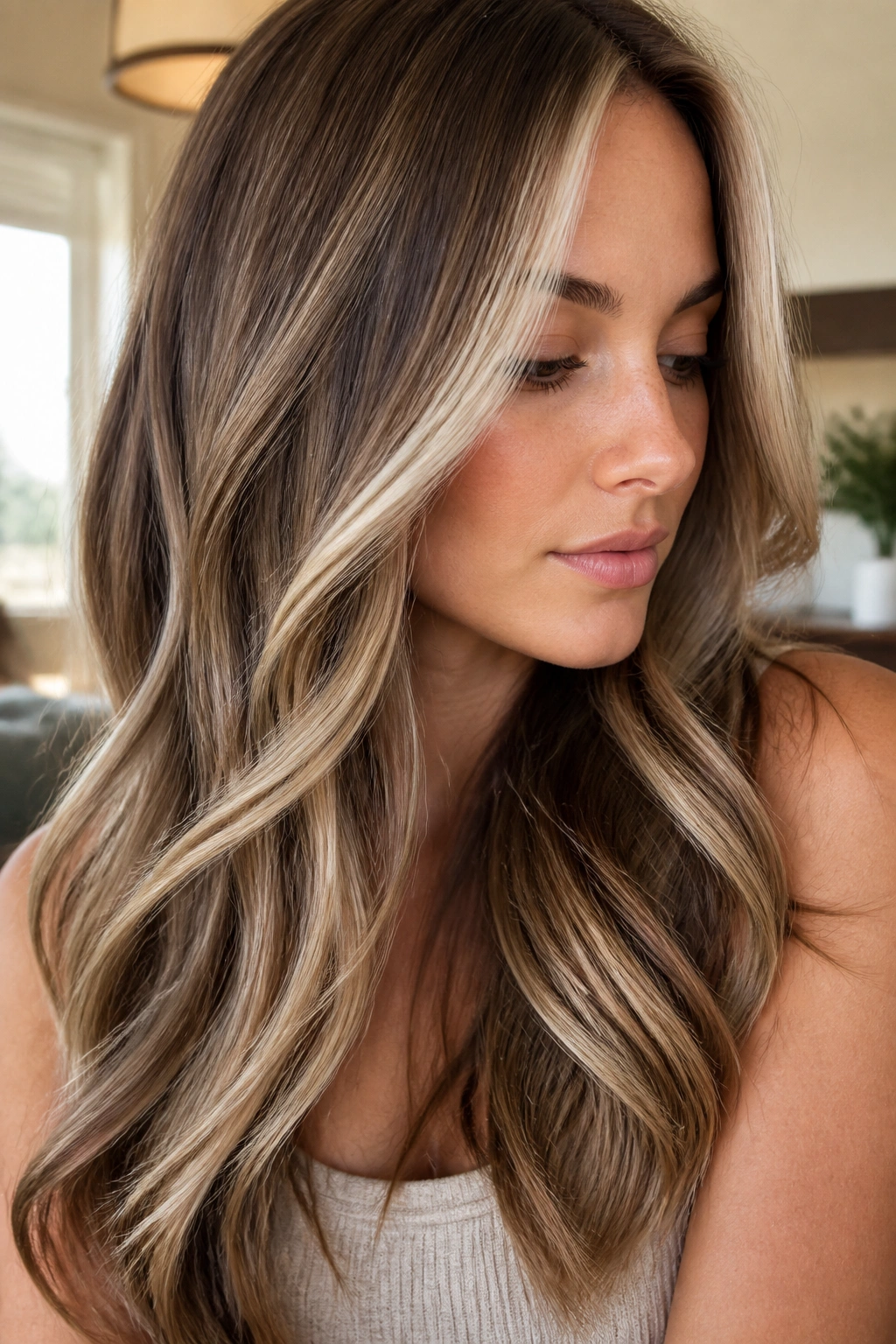
Why do pearl ribbons look softer than platinum? Because pearl blonde has that pale, reflective quality without the stark white cast that can be too much beside cool skin.
The ribbons should be placed in long, curved sweeps rather than short blocks. That gives the hair a more natural fall, especially if you wear waves or a blowout. The brown underneath can stay a level 5 or 6, which keeps the hair from going too light overall.
What Makes It Different
Pearl tones are sneaky. They look pale in daylight but calmer indoors, and that makes them easier to live with than a very icy blonde. The look also grows out better because the contrast isn’t screaming from the root.
If your hair is already medium brown, this is a nice middle step before going brighter. It gives you blonde energy without needing full-head lift. And yes, that matters if your strands are already feeling fragile.
9. Ash Brown Ribbon Highlights
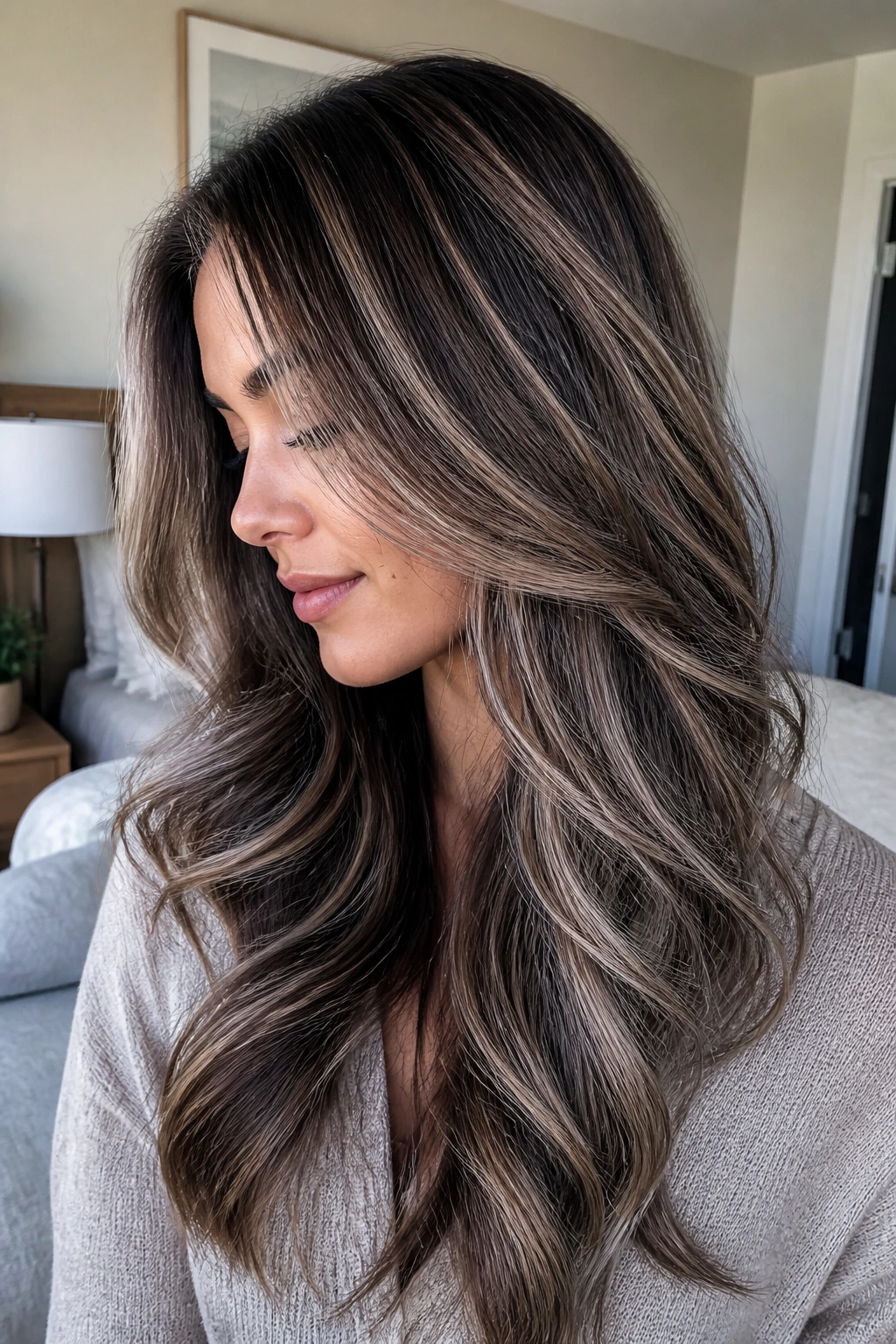
Ribbon highlights are for people who want movement before they want brightness. The shape matters just as much as the tone.
Ash brown ribbons trace through the hair in longer, painted lines, which helps the color look dimensional instead of speckled. On cool skin, the ash tone keeps the highlights from turning caramel or orange as they fade. That alone saves a lot of frustration.
I like this on layered cuts because the ribbons show up differently as the hair moves. On one section they read blonde; on another they slip back into brown. The result feels expensive in a low-key way, which is a phrase I do not use lightly.
Best pairing: a level 6 base with level 8 ribbons and a cool beige gloss. If the ribbons are any lighter than that, you risk a stripey finish unless the cut is very full.
10. Mushroom Blonde Lob with a Shadow Root
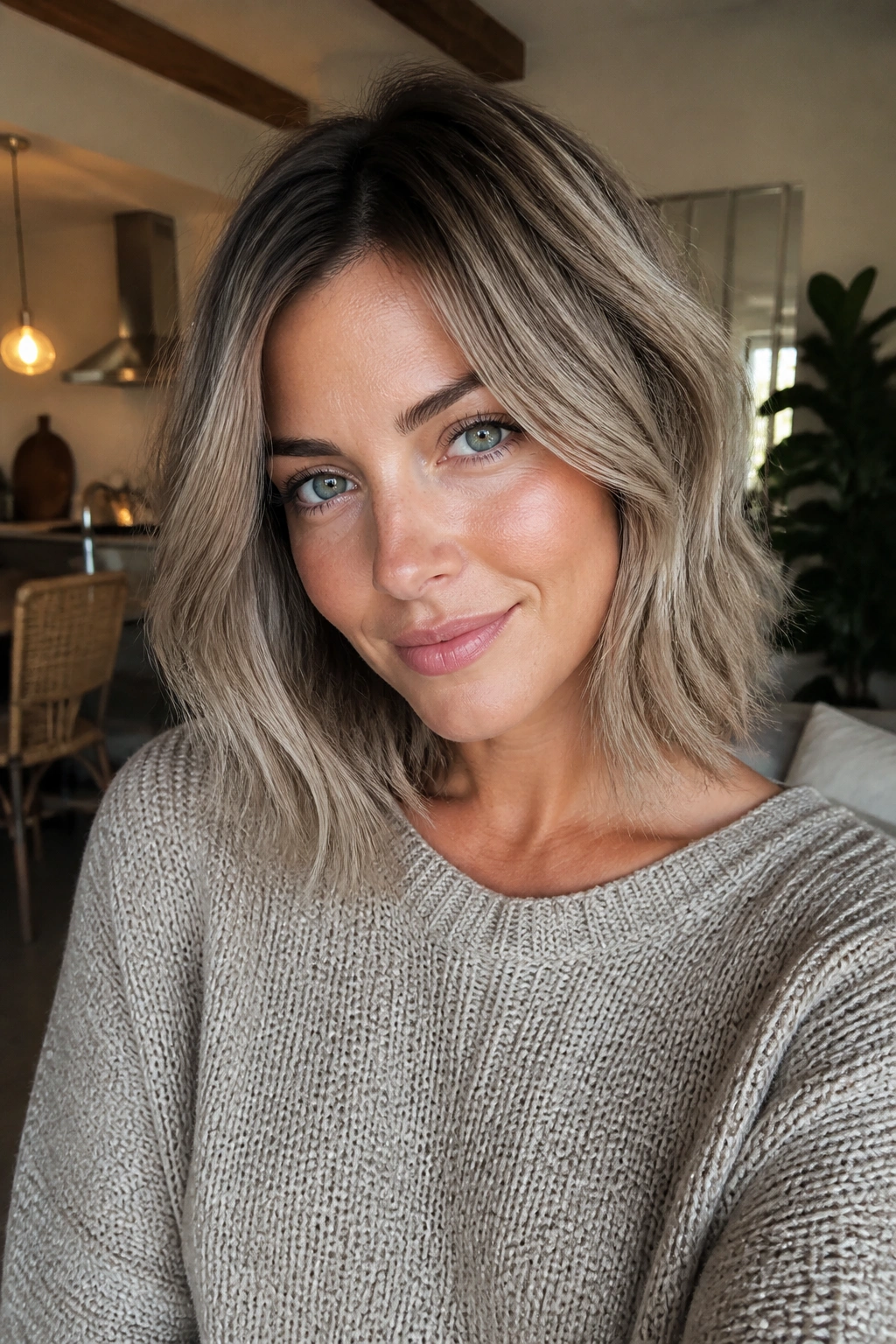
A lob is the perfect length for mushroom blonde because the cut gives the color room to show off without needing waist-length hair to make sense. It is a tidy, grown-in look that still has enough lift to flatter cool skin.
The shadow root keeps the top grounded and the ends soft. I would not skip it. Without a shadow root, mushroom blonde can start looking frosty in a way that feels abrupt. With one, the whole color slides into place.
Why the Cut Helps
A lob has blunt ends or soft layers, and both work. The blunt version makes the cool blonde look cleaner. The layered version gives the smoky tones more motion. Either way, the shorter shape keeps the color from reading too diffuse.
If you like hair that air-dries well, this is a strong choice. The mix of brown, beige, and ash tends to look intentional even when the styling is lazy. That is a rare and useful thing.
11. Beige Brunette with Airy Layers
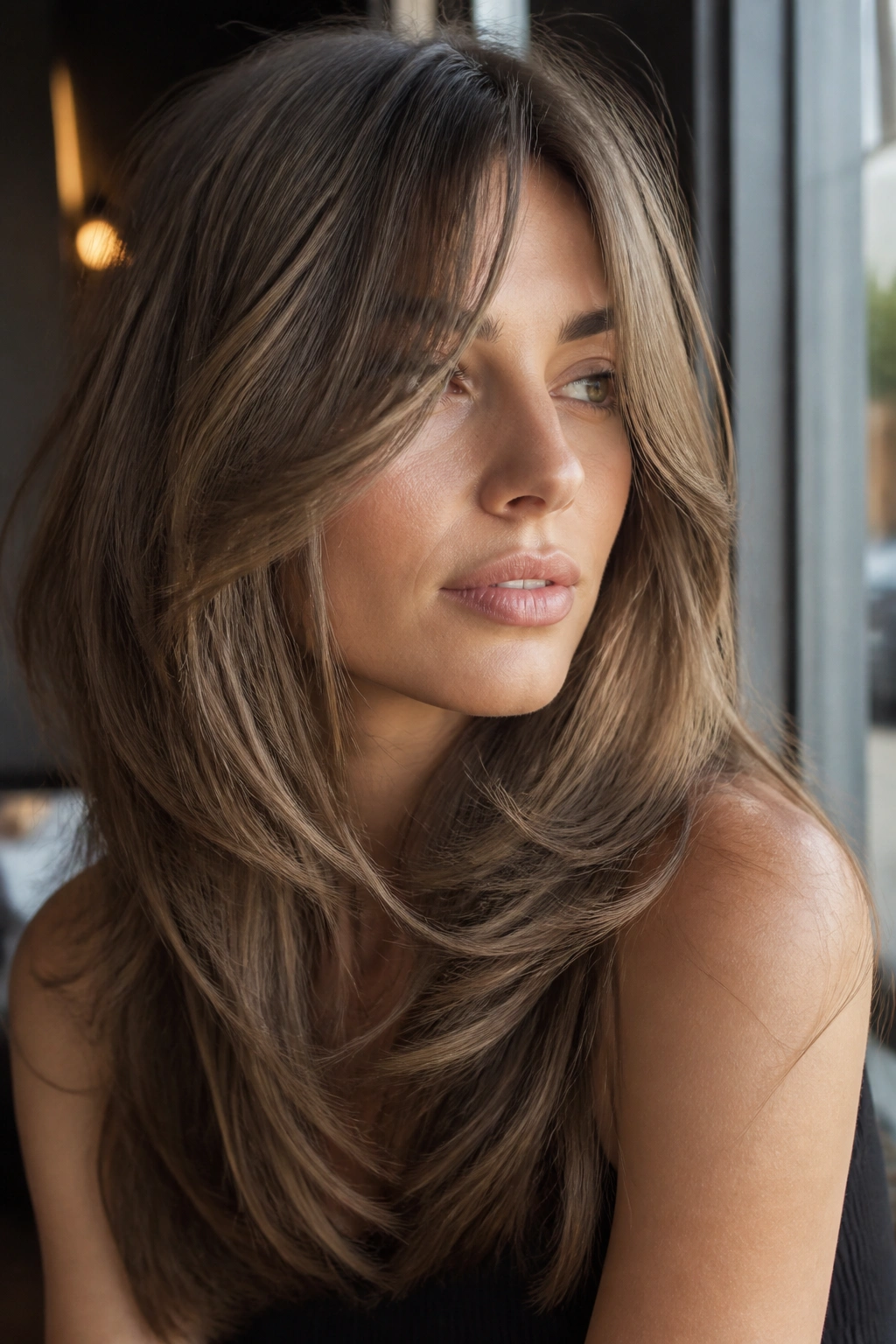
Beige brunette is the shade for someone who wants the hair to look soft, not dyed within an inch of its life. It sits between brown and blonde without making a big show of itself.
Airy layers matter here because they let the lighter pieces catch the light at different points. Heavy one-length hair can swallow this color. Layers keep the beige from disappearing into the brown and stop the whole thing from looking dull.
This is a smart option for cool skin when you want dimension but not a lot of contrast. The color works best if the lighter pieces stay a shade or two above the base, not four. That keeps the result believable. Too much lift here can make the beige look chalky.
If you wear neutral makeup, this color is especially easy. It does not fight the face. It just sits there and makes the skin look a little cleaner.
12. Mushroom-to-Ice Blonde Ombré
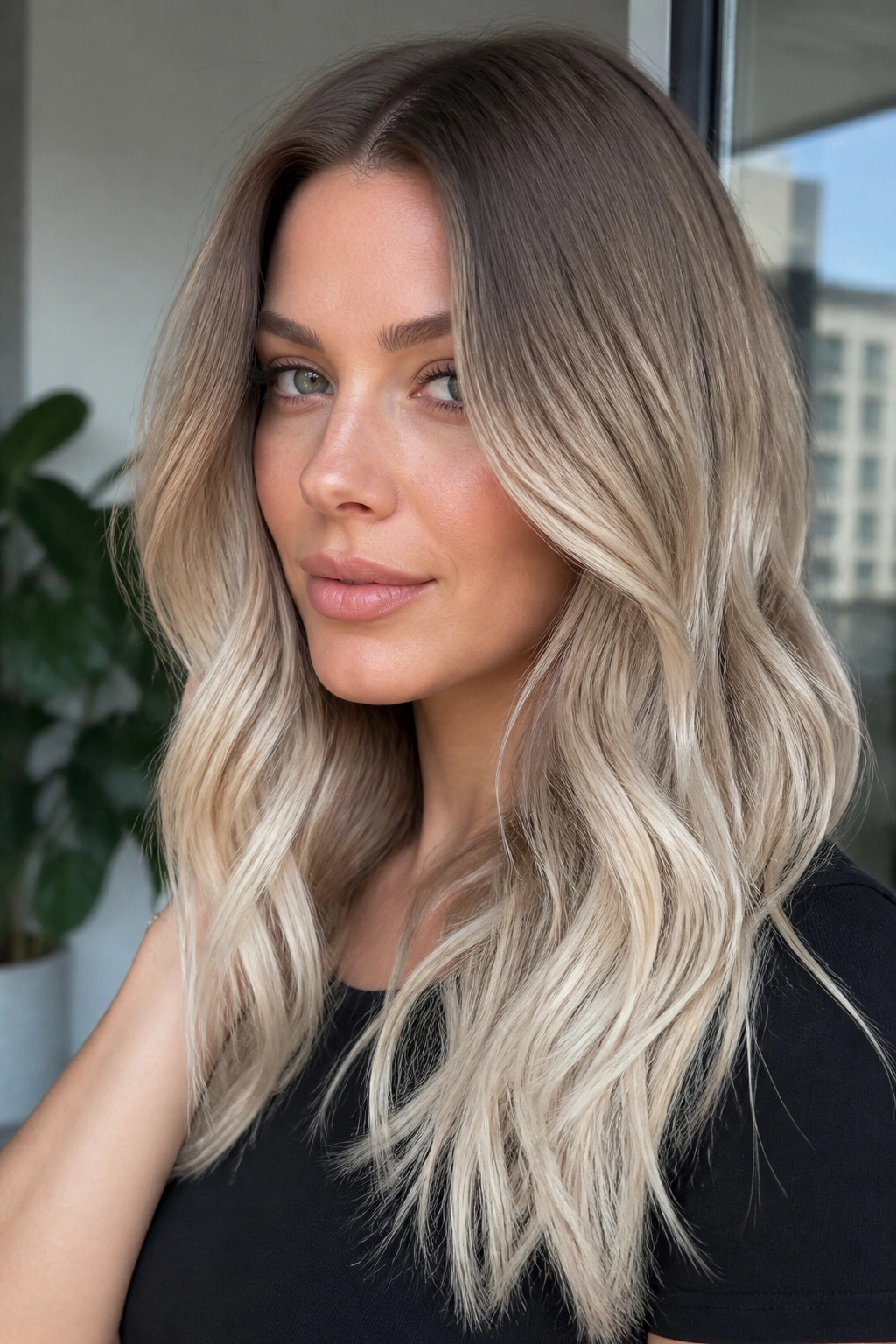
This one is for someone who wants a clear color story. The roots stay mushroom brown, and the ends travel all the way toward ice blonde, but the path between them has to be careful.
Why the Transition Matters
A hard ombré line looks dated fast. A smoky, slow fade looks much better on cool skin because the tones stay in the same family. You want the middle section to pass through beige and ash before it reaches the icy end.
That mid-zone is where a lot of color jobs fail. If it lifts unevenly, the ends can look bright while the mids look muddy. Not good. A clean ombré needs even lightening and a toner that does not overcorrect.
This is one of the higher-maintenance ideas on the list, but it has payoff. The contrast is striking, and the cool tones keep it from turning beachy or warm. If you like that almost editorial brunette-to-blonde fade, this is the one.
13. Smoky Walnut Brown
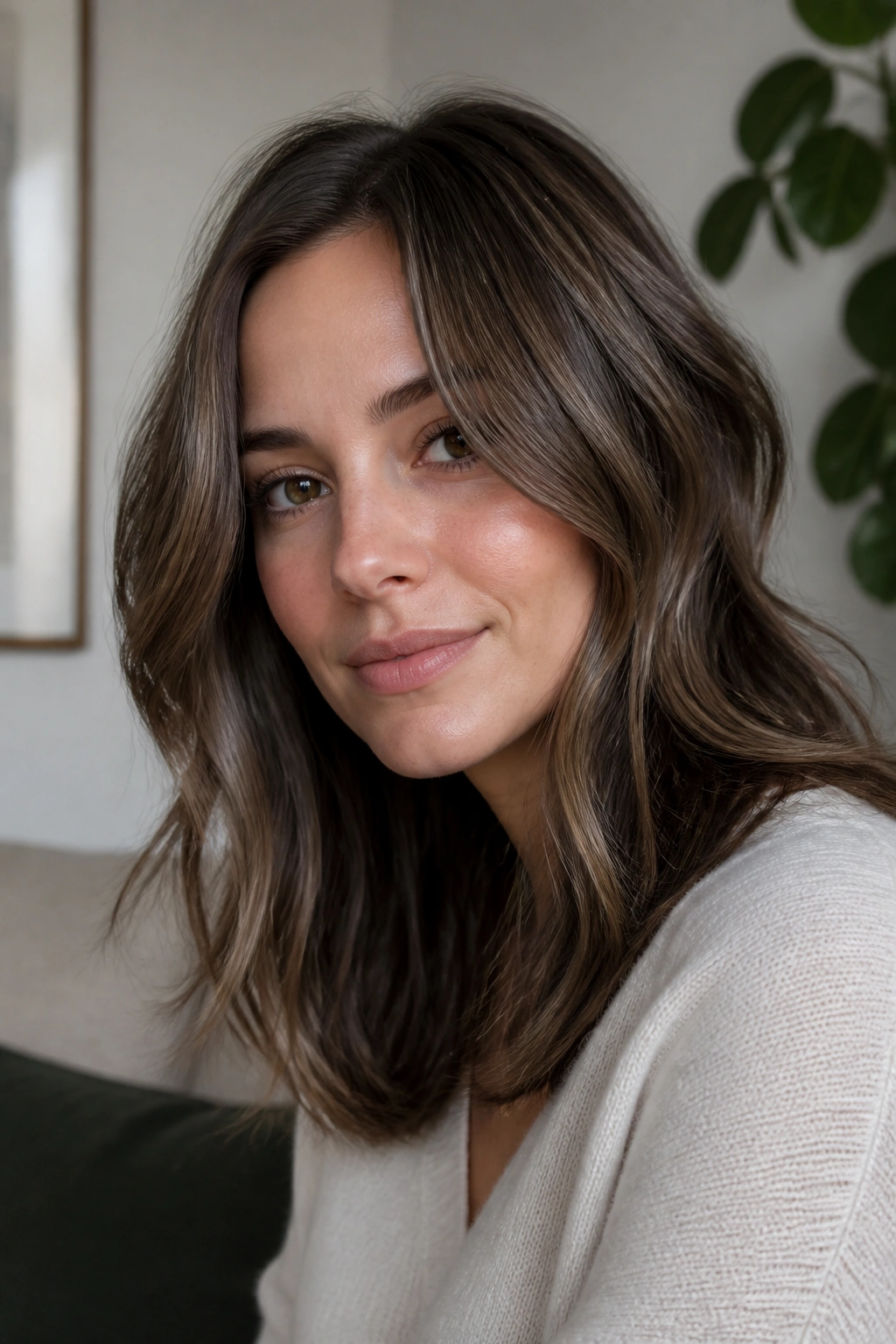
Smoky walnut brown is one of the quietest ideas here, and I mean that as a compliment. It gives you a brunette base with a cool haze that flatters skin with pink or blue undertones.
The blonde part is almost more suggestion than statement. You might see a few barely lighter threads through the mids, or a soft gloss that lifts the surface a touch. That restraint is what keeps the color polished. The hair still reads brown first.
A Good Fit When You Want Low Drama
- Works well on naturally dark brunette hair
- Keeps the face from looking washed out
- Needs only light maintenance if the blonde pieces are minimal
The shade is especially nice if you hate the feeling of obvious highlights growing out. It softens the hair without creating a maintenance headache every few weeks. Sometimes that is the smartest move.
14. Cool Hazelnut Balayage
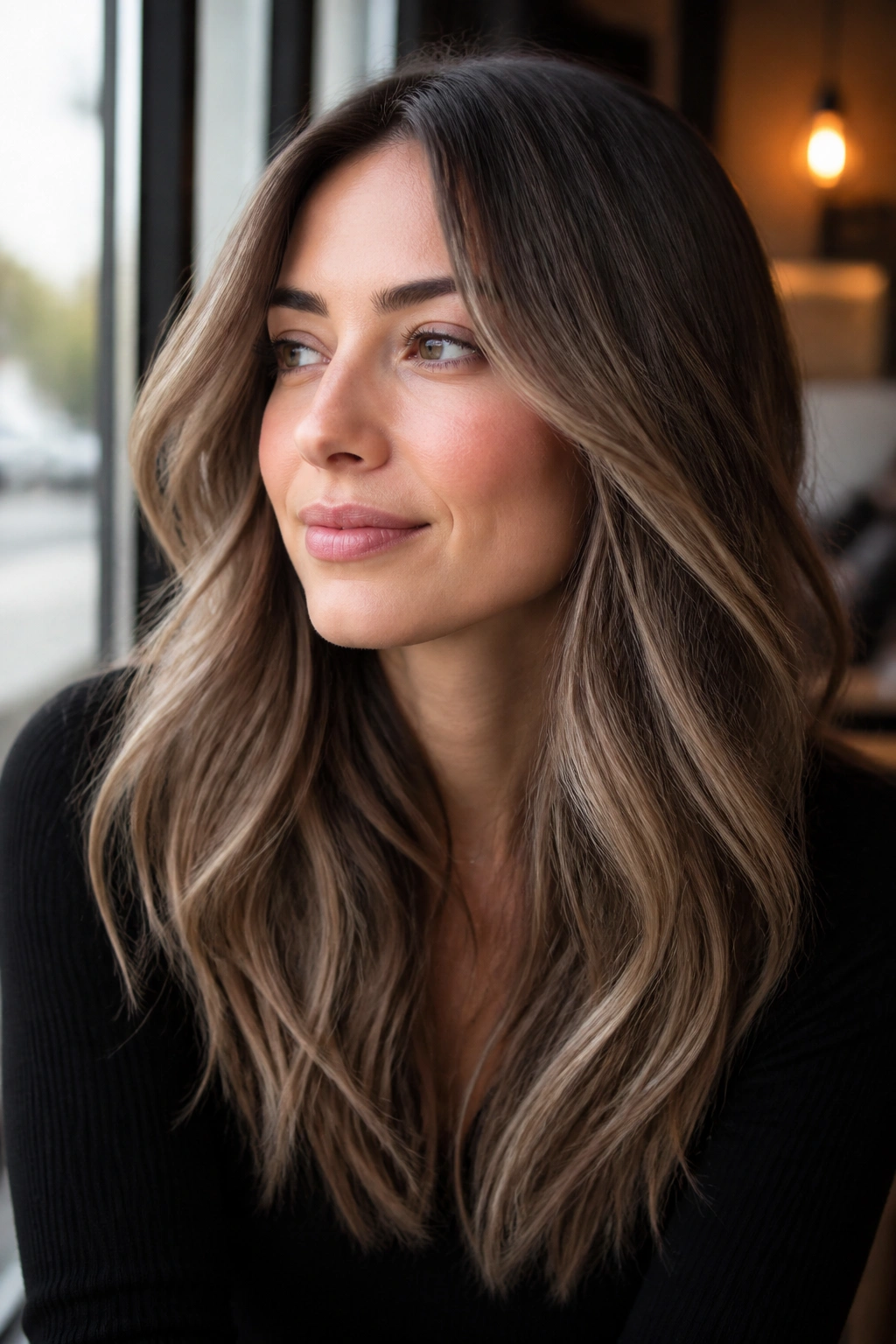
Is hazelnut too warm for cool skin? Not if it is handled properly. The trick is keeping the nuttiness muted and the blonde pieces toned down to beige.
A cool hazelnut balayage uses a brown base with light pieces that never go yellow. They should land in that neutral, creamy space where the hair looks softer, not sweeter. That distinction matters more than people think.
Balayage placement should stay below the root area so the hair retains depth near the scalp. Cool skin usually looks better with that framing because the face has something solid next to it. If everything is lightened too high, the result can wash out fast.
I like this shade on medium-length hair with movement. Curls and bends help the hazelnut dimension show up without needing a lot of lift.
15. Frosted Ends on a Cool Chestnut Base
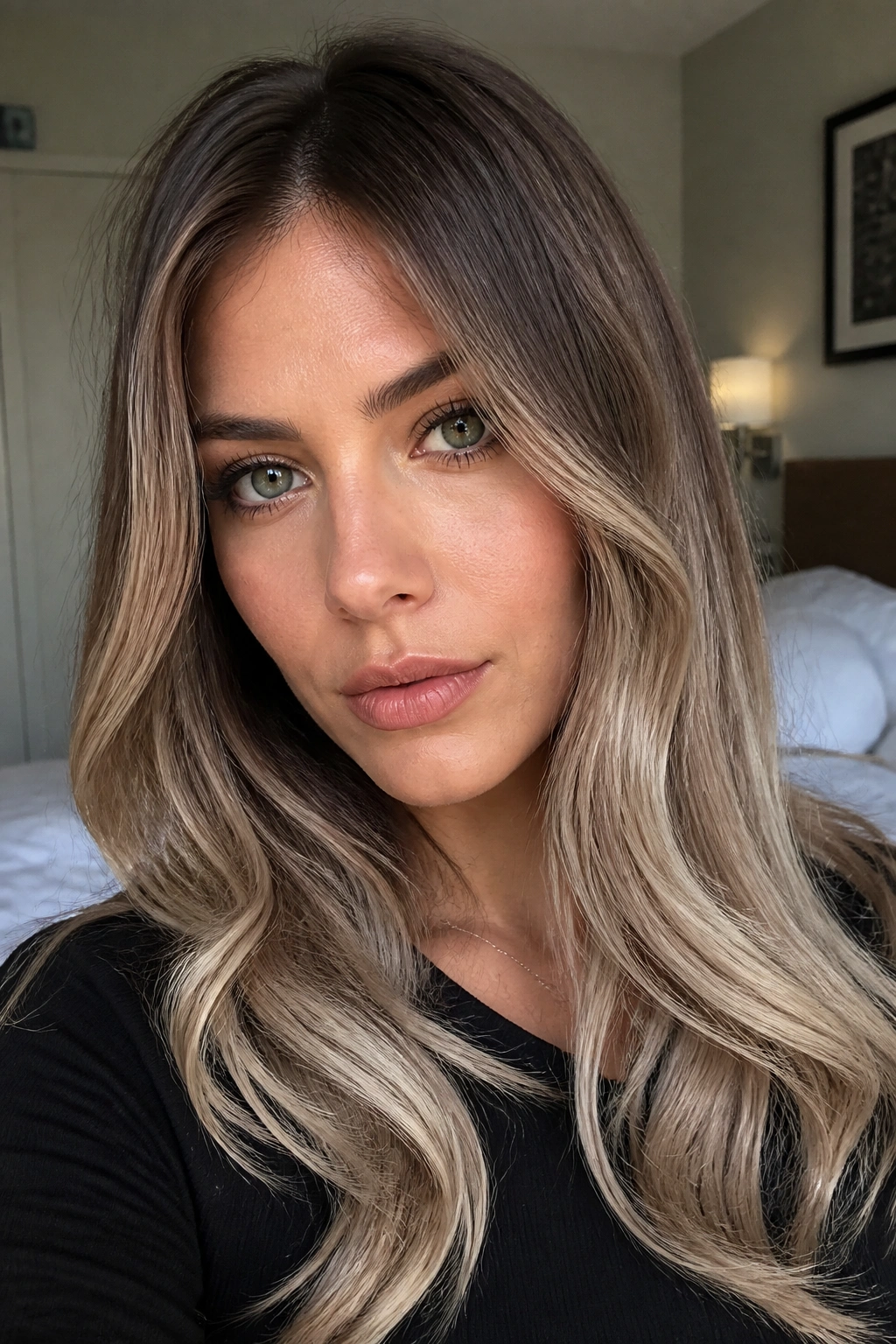
Frosted ends are a good way to flirt with blonde without committing to a full bright look. The chestnut base keeps the scalp area grounded, and the lighter ends add just enough contrast.
Why It Works Better Than Full-Length Blonde on Some People
Cool skin often looks stronger when the hair has depth near the face. Frosted ends respect that. They lighten the perimeter of the haircut, which gives the whole style a little air, while the top stays brunette and controlled.
This is a nice option if your hair is long enough for the ends to show off. On shoulder-length hair, the frosted part can look more abrupt. On longer lengths, it reads like a soft finish.
Keep the ends cool, not white. White can look too severe against chestnut. A pale beige or silvery blonde usually lands better and grows out with less fuss.
16. Cool Beige Bronde with Soft Contrast
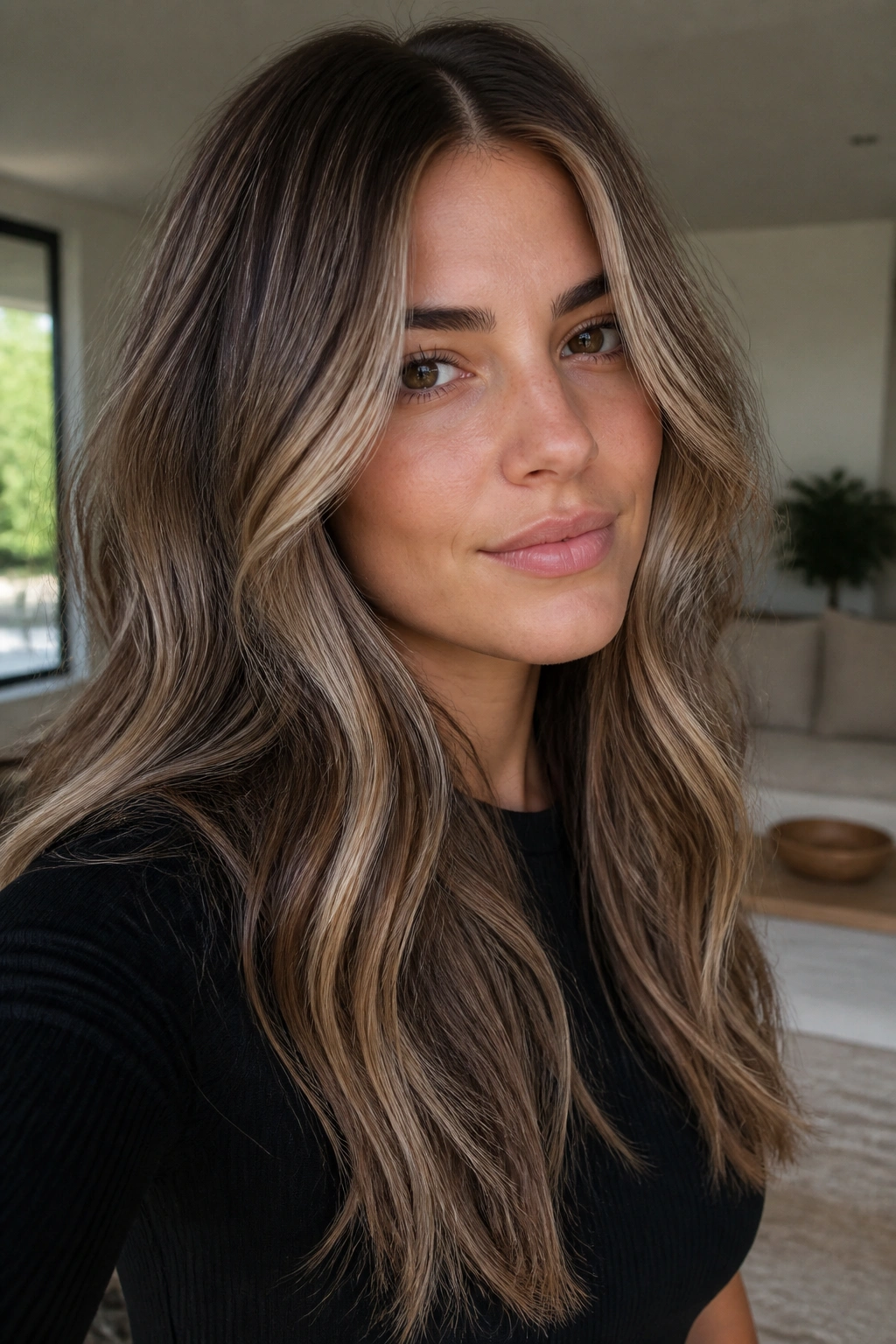
Cool beige bronde is the shade I reach for when someone says, “I want to be lighter, but I don’t want people to notice exactly what changed.” That is a real request. It makes sense.
What to Ask For
Tell your colorist you want a brown base around level 6 with beige pieces one or two levels lighter. The contrast should stay soft. If the lights are too pale, the look loses that creamy brown-blonde balance and tips into standard highlights.
A soft contrast bronde is flattering because it keeps the eye moving. The hair looks fuller, and cool skin gets a gentle lightness around it without a harsh ring of warmth. This is one of the easiest shades to wear with minimal makeup.
It also grows out politely. That matters more than people admit. A lot of color looks good on day one and annoying by week six. This one usually behaves.
17. Oyster Blonde Panels on Brown Hair
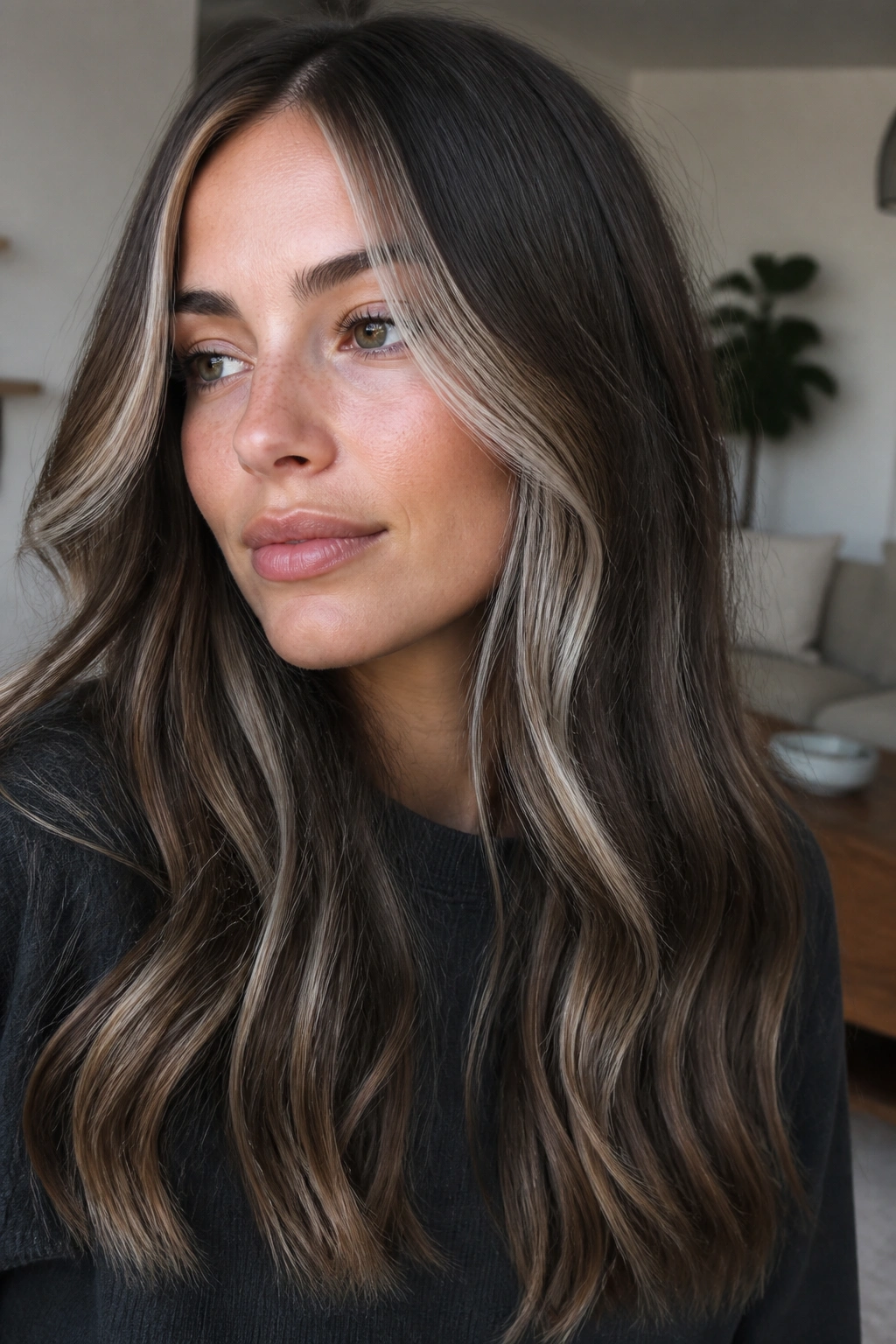
Oyster blonde is one of my favorite cool shades because it has that pale, shell-like mix of beige, silver, and soft gray. On brown hair, it looks crisp without drifting into brass.
The panels should be thin and placed with intention. Too many of them and the hair turns patchy. A few well-sliced panels, especially around the front and mid-lengths, create a clean visual line that cool skin can carry easily.
This shade works best when the brown underneath is deep enough to keep the blonde looking purposeful. If the base is too light, oyster blonde can vanish. If the base is too dark and the panels are too thick, it turns heavy. There is a sweet spot, and that sweet spot is where the style lives.
18. Ashy Cocoa with Veil Highlights
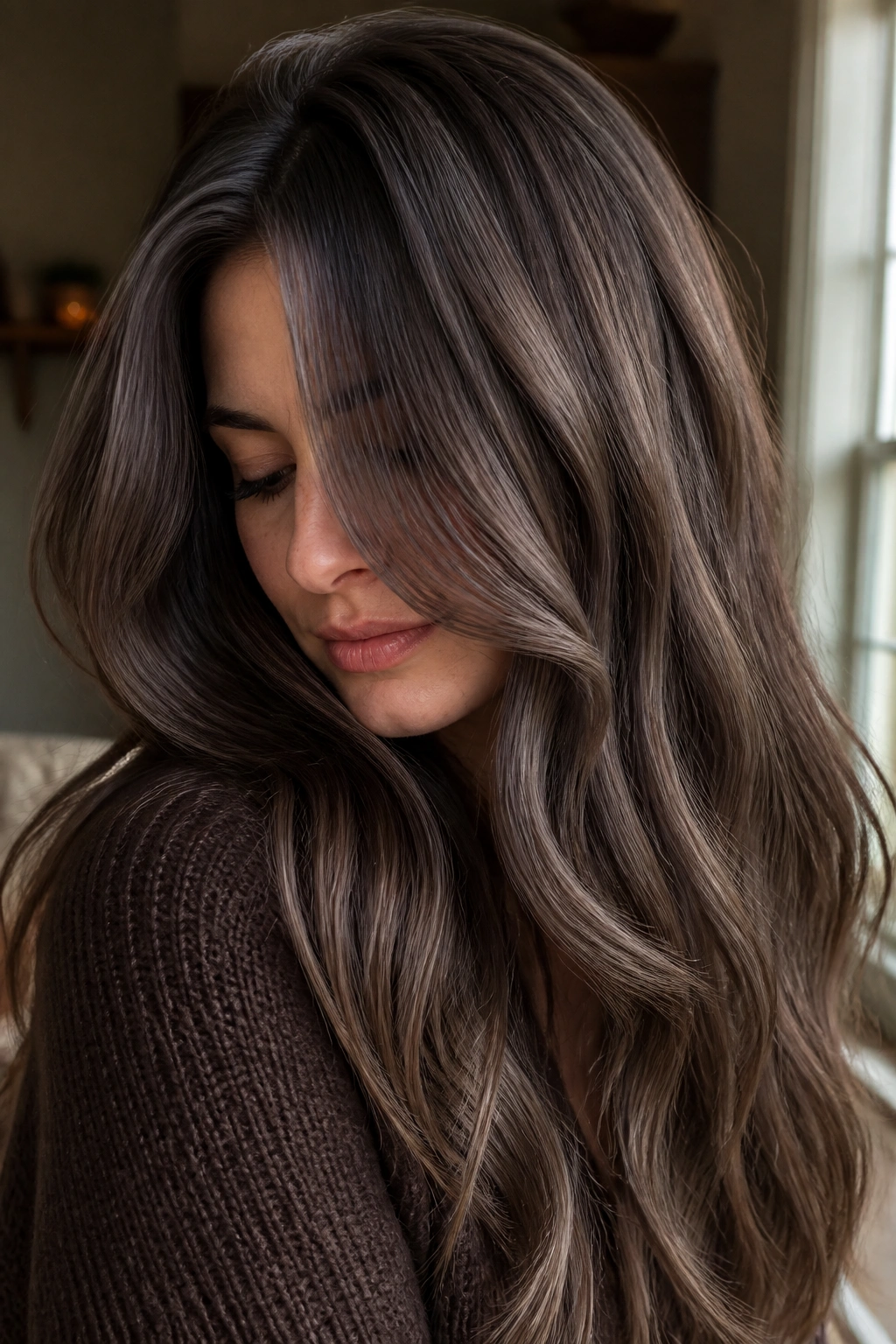
Ashy cocoa is for people who want brunette energy first and blonde second. The hair stays deep, rich, and cool, with veil-like highlights hovering over the surface.
The highlight pattern should be delicate. Think soft overlays, not obvious streaks. Veil highlights are placed in a way that lets some pieces peek through when the hair moves, which gives the style a more expensive finish than chunky contrast ever could.
On cool skin, this works because the color never gets loud. It frames the face quietly and lets the skin stay the focus. If your hair is dense, veil highlights can also prevent the style from reading too dark or too heavy. A gloss every six weeks keeps the cocoa from going flat.
19. Espresso Brown with Beige Veil Highlights
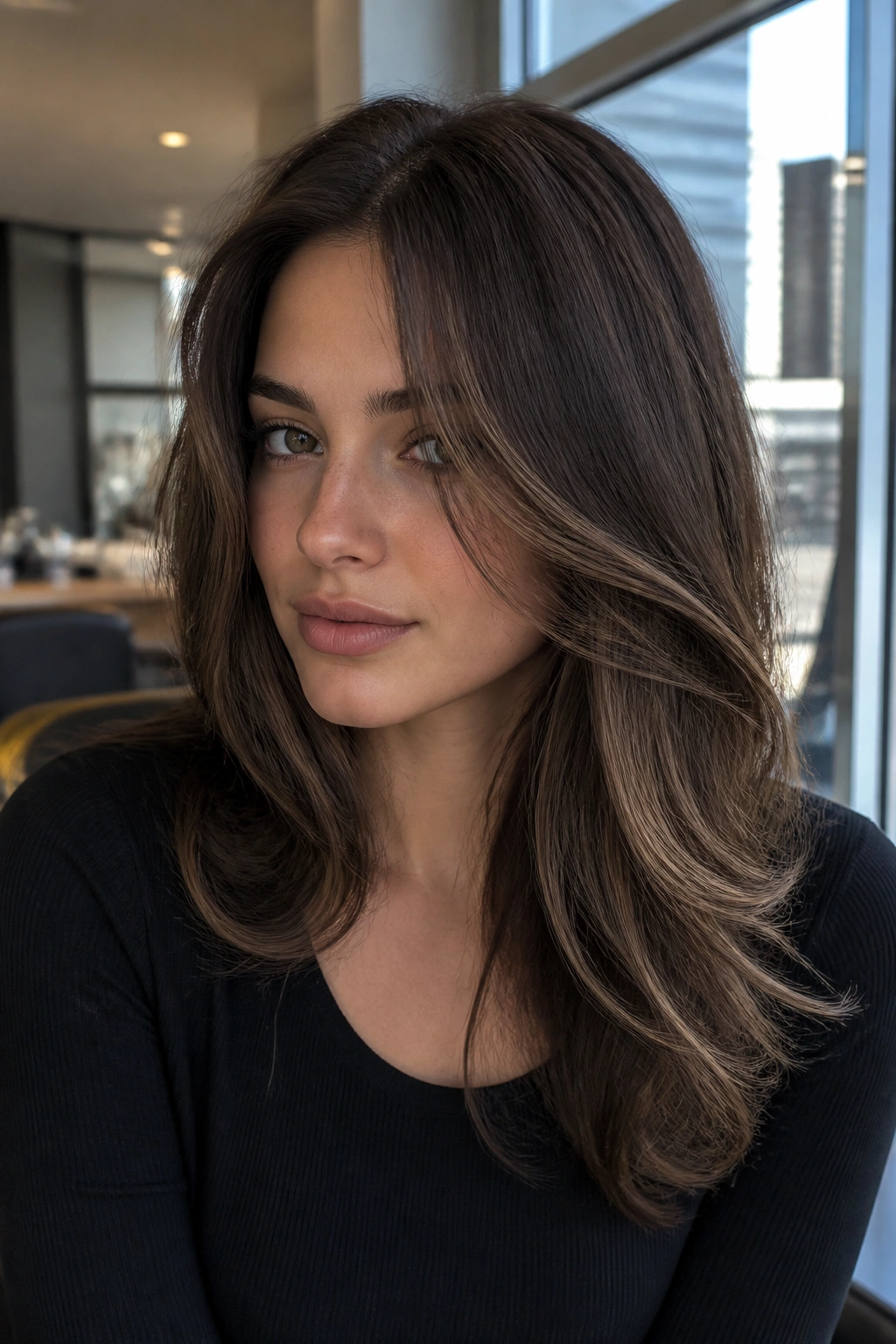
Espresso brown can look severe if it is left alone, which is why I like to soften it with beige veil highlights. The base stays dark and cool, but the blonde pieces break up the depth just enough.
A Small Detail That Changes Everything
The veil highlights should sit under the top layer, not all over the head. That lets the color peek through in motion without announcing itself at every angle. The effect is refined, not busy.
This is a smart choice if you need darker hair for work or personal taste but still want some lightness around the face. Beige keeps it flattering for cool skin. The espresso gives it structure. That combination is dependable.
If you’ve had gold highlights in the past and hated how they aged, this is the antidote. Cool beige fades more gracefully, and the brown base hides regrowth better than a lighter brunette would.
20. Smoke-and-Slate Bronde
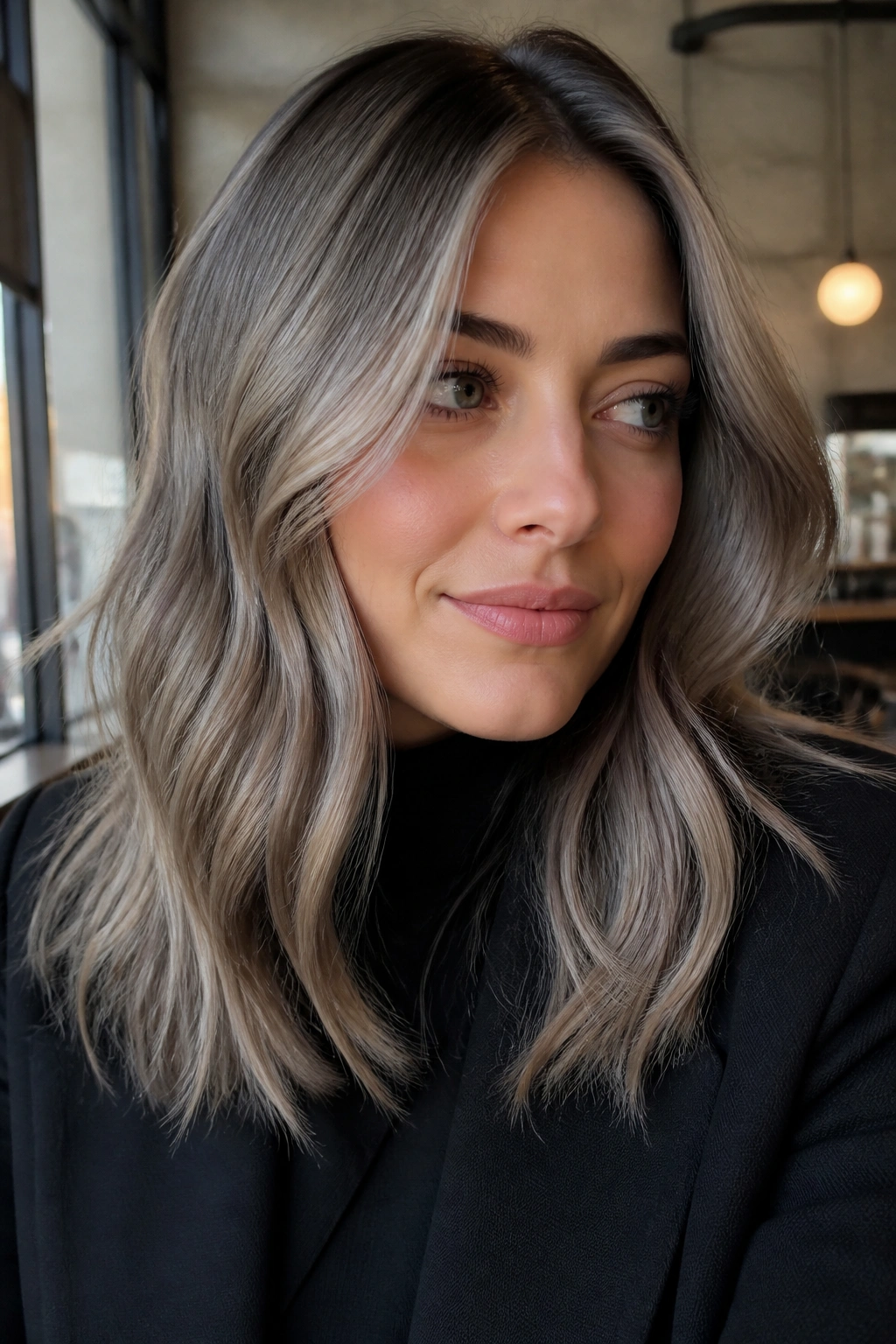
Smoke-and-slate bronde has a slightly edgy feel, and I like it for people who wear black, gray, navy, or jewel tones a lot. The hair should look cool enough to sit beside those clothes without fighting them.
Why does it work? Because the blonde is toned down into slate-beige territory instead of bright gold. That keeps the entire color family cohesive. The brown base can be a neutral level 5 or 6, while the lighter pieces hover in a smoky silver-beige zone.
This is one of those shades that benefits from a clean blowout or polished waves. The color itself has enough personality, so the style does not need to be fussy. Ask for a gloss that leans smoky, not icy-white, or the slate note gets lost.
21. Face-Framing Mushroom Highlights
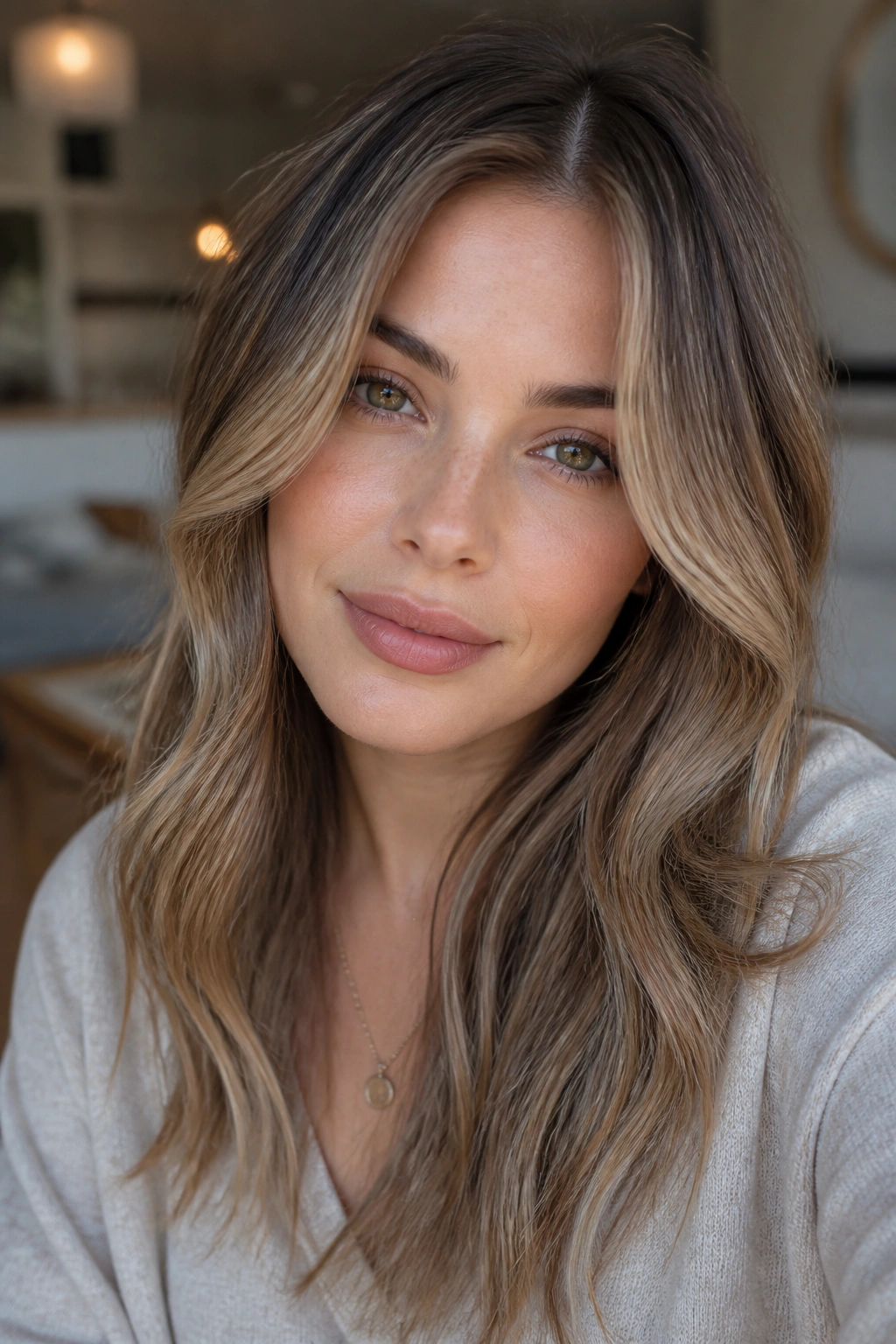
Face-framing mushroom highlights are the gentler cousin of a money piece. They give brightness where it matters most, but they do it in a softer, more blended way.
The pieces should start a little farther back from the hairline and travel down through the front layers. That way, the highlights move with the haircut instead of sitting as two obvious stripes. On cool skin, the mushroom tone keeps the lightness calm and usable.
This option is especially good if you are nervous about blonde around the face. The contrast is low enough to feel safe, but there is still enough lift to wake up the complexion. A lot of people end up liking this more than a stronger money piece because it wears easier day to day.
22. Walnut Brown with Pearl Ribbons
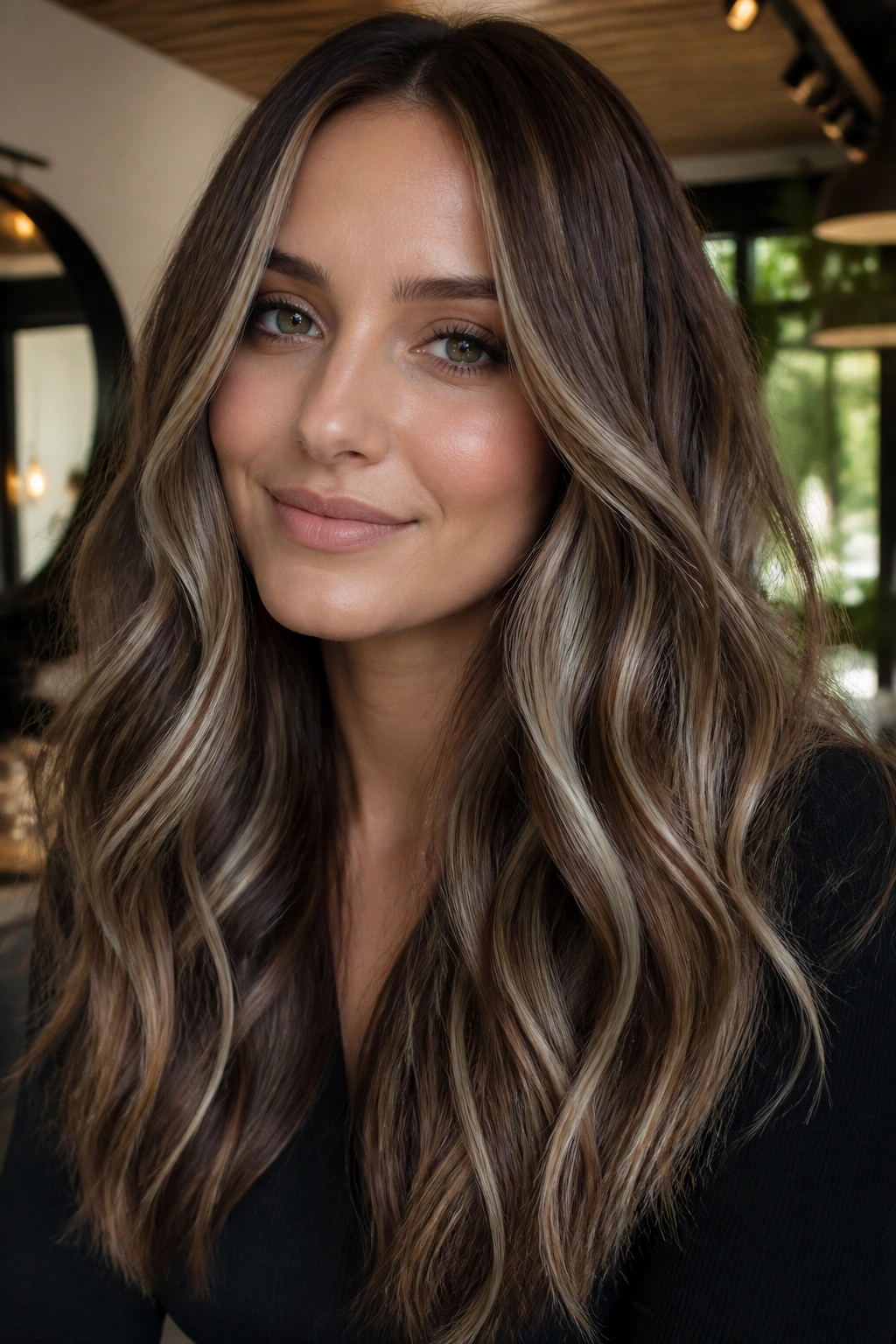
Walnut brown can be a little flat by itself, so pearl ribbons give it the lift it needs. The brown stays grounded and cool, while the pearl pieces add shine without warmth.
How the Ribbons Should Sit
They should move through the mid-lengths in long, narrow sweeps. If they are too broad, the style looks heavy. If they are too sparse, you lose the ribbon effect entirely. The whole thing depends on spacing.
- Best on medium-density hair
- Works well with soft waves
- Needs a beige-pearl toner, not yellow blonde
- Regrowth stays soft if the roots are left untouched
My favorite thing here: the pearl reads clean even in dim light. That matters more than it sounds like it should.
23. Cool Beige Ombré on Medium Brown
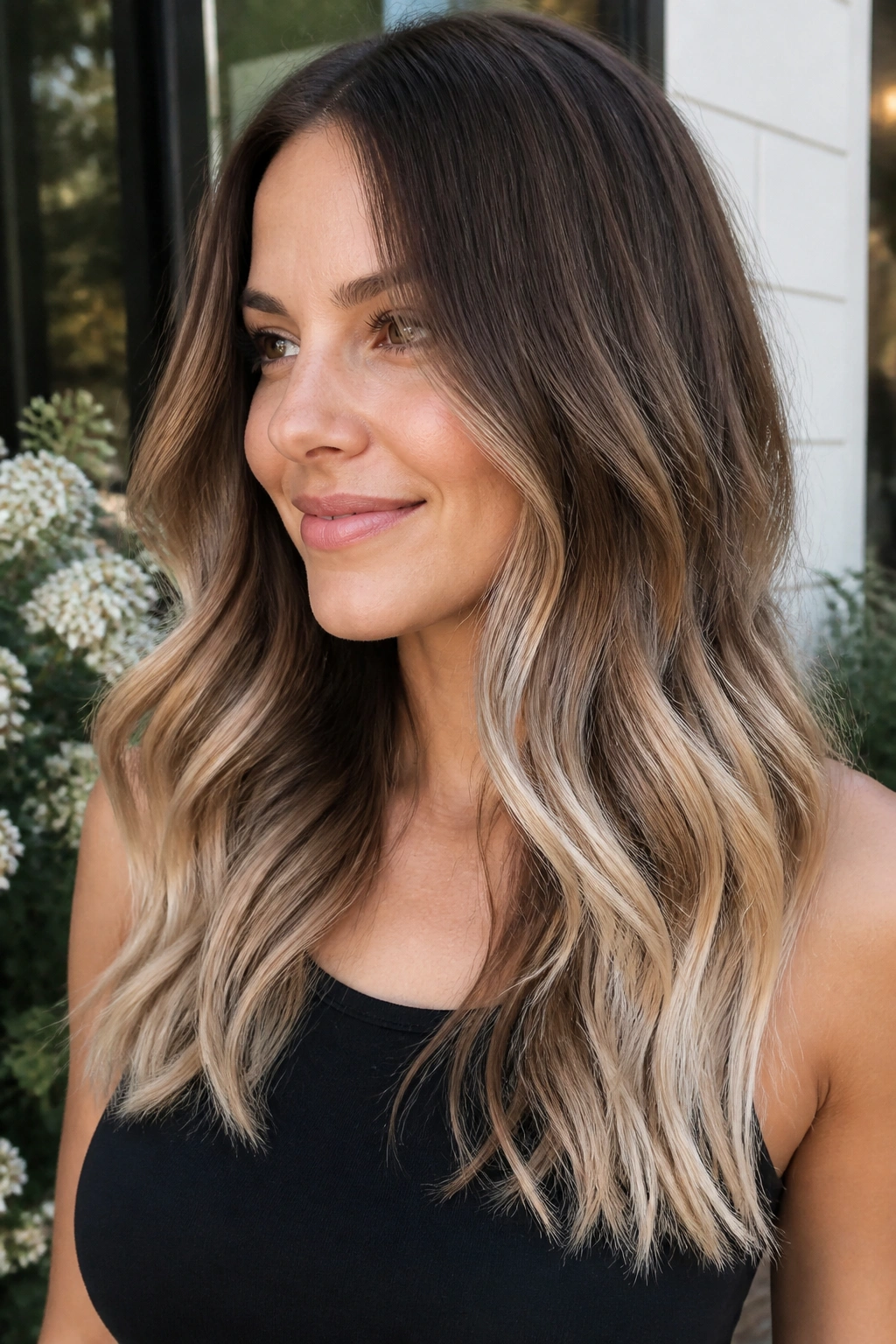
Cool beige ombré is the tidy, less dramatic version of a full blonde fade. It starts with medium brown and lightens gradually into a beige finish that still feels cool enough for the skin tone.
The transition should happen slowly through the lower third of the hair. That keeps the ombré from looking like the color was dipped in one line. The best versions have enough depth near the scalp to keep the face framed, then enough lightness at the ends to make the whole cut feel airy.
This is a strong choice if you want to keep your natural color visible. Medium brown gives the style honesty. Beige keeps it from going warm. And if your hair is straight, the fade looks sleek; if it’s wavy, it looks softer and more lived-in.
24. Mushroom Brunette Bob with Frosted Tips
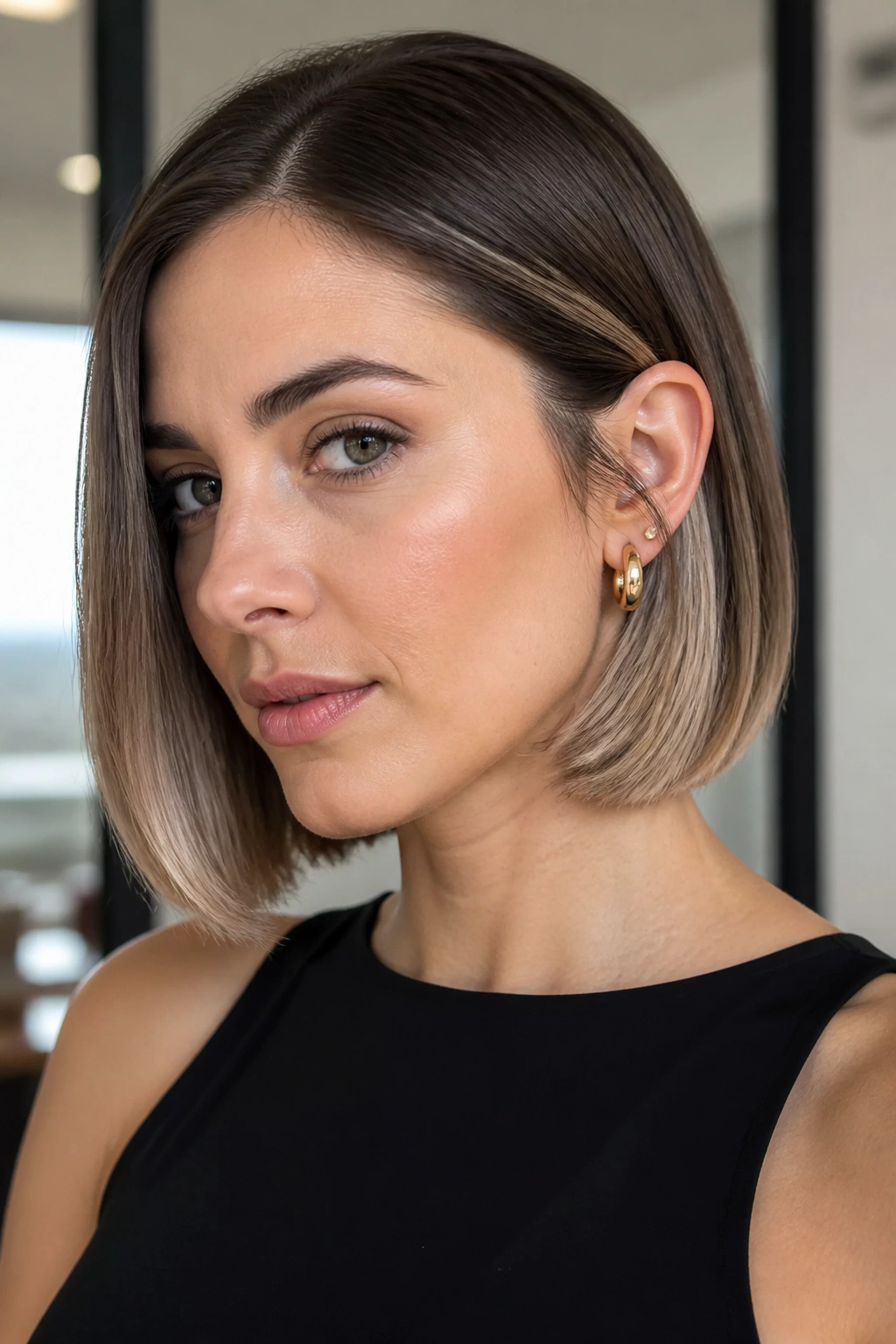
A bob makes frosted tips look sharper. Shorter hair gives the lighter ends more definition, and on cool skin that crispness can be exactly what you want.
The mushroom brunette base should stay rich and cool, while the tips get a pale beige or icy-beige finish. Because the haircut is short, the contrast feels graphic in a good way. You notice the line, but it does not feel loud.
This is not the place for messy warmth. A bob with frosted tips works best when the blonde is clean and the shape of the cut is tidy. If the ends are damaged, the frosted effect can turn rough fast. A regular trim matters here more than usual.
The style is especially strong with a tucked-behind-the-ear finish. Small thing. Big payoff.
25. Ash Bronde with Dimensional Lowlights
Everyone talks about highlights, but lowlights are the thing that saves a bronde job from looking washed out. Ash bronde with dimensional lowlights has both brightness and depth, and cool skin usually loves that balance.
The lowlights should be one shade deeper than the base, maybe two at most. They are there to give the blonde something to sit against. Without them, the whole head can drift toward flat beige. That is not the goal.
Why This Feels Fuller
Dimension makes hair look denser. Lowlights create shadows inside the color, which helps fine or medium hair read thicker. The ash tone keeps the warmth out, and the bronde stays in a believable middle zone.
If your hair has been over-lightened, this is a smart correction. It puts the structure back in. It is also kinder than trying to fix everything with more blonde, which is usually the wrong instinct.
26. Velvet Brown with Cream Blonde Balayage
Velvet brown sounds rich because it is rich. The base has a soft, plush depth to it, and cream blonde balayage adds lightness without breaking that feeling apart.
Why does it work on cool skin? The cream tone sits in a neutral-cool lane, so it brightens the face without pulling warmth forward. The balayage should be smooth and broad, not patchy. Think soft swathes of light, not tiny lightning bolts.
This is a pretty flexible shade if you like waves. The bends in the hair show the light and dark interplay better than straight hair does. A few glosses over time keep the cream from drifting yellow. That part is boring, but necessary.
It is also a nice choice if you want something polished without looking overprocessed. The brown does the heavy lifting. The blonde just lifts the edges.
27. Smoky Espresso with Whisper Blonde
Smoky espresso with whisper blonde is barely-there dimension, and that is the whole point. The blonde is so understated that people often register shine before they register color.
The whisper pieces should be feathered through the top layers and around the crown, where they catch light most easily. They should not compete with the espresso base. On cool skin, this low-contrast approach can look cleaner than anything brighter.
I like this for someone who wants a conservative look with a small twist. It works in professional settings, on straight styles, and on soft curls. The blonde stays hidden enough that it never feels fussy, but it still gives the hair movement.
Best use: if you want dimension but hate the upkeep of obvious highlights. This is one of the easiest ways to get it.
28. Cool Sand Bronde with a Root Shadow
Cool sand bronde is softer than ash bronde and lighter than mushroom brown. It sits in a balanced place that can be surprisingly flattering on cool skin when the toner is handled well.
The Root Shadow Is the Whole Story
A root shadow keeps the top grounded and gives the lighter pieces room to show. Without it, the color can look a little too airy and lose the brown-blonde blend that makes bronde work. A shadow root also helps the grow-out stay controlled.
The sand note should be cool-neutral, not beachy gold. That is where a lot of versions go wrong. You want the hair to feel pale and soft, not sunny. If the blonde is toned with beige and a hint of violet, it usually behaves better.
This shade is good if you like low-key lightness but want enough brightness to see the blonde at a glance. It wears in a calm way.
29. Frosted Brown with Icy Blonde Ends
Frosted brown with icy blonde ends has a little drama, but not the kind that reads warm or heavy. The base stays brunette and cool, and the ends take the brightness all the way up.
The shape of the haircut matters a lot here. Long layers or a blunt edge can both work, but the light ends need enough length to show the transition. If the cut is too short, the fade can look abrupt. If it is too layered, the ends may scatter and lose the frosted effect.
This is a good choice if you want the bottom half of the hair to do the talking. It is especially striking in a braid or a half-up style, where the icy ends peek through and the brown base keeps everything anchored. Maintenance is higher here, plain and simple. Bright ends need toner, trims, and some patience.
30. Soft Beige Brown with Platinum Peekaboos
Platinum peekaboos are for people who like a secret. The lighter pieces hide under the top layer and flash only when the hair moves, which makes the color feel playful without becoming loud.
Soft beige brown on top keeps the base cool and wearable. The platinum underneath gives you the surprise factor. I like this a lot on layered cuts, because the movement exposes and hides the lighter pieces in a natural rhythm. Straight hair can do it too, but the effect is more obvious when the hair bends.
The reason it flatters cool skin is simple: the beige keeps the top calm, and the platinum underneath stays crisp. No gold, no orange, no fake warmth trying to sneak in. If you want a brown-blonde look that feels a little more modern without shouting, this is the one I’d hand to someone first.
