



Curly hair can make blonde look richer than it does on straight hair. These blonde hair color ideas for curly hair work because curls bend light, so one strand can read honey, cream, and beige all at once. That built-in movement is the whole point. It’s why a careful blonde placement on curls often looks more expensive than a flat all-over lift ever could.
The catch is simple: curls do not forgive sloppy color placement. A shade that looks soft on a straight swatch can turn stripey, brassy, or washed out once it lands on a coil or ringlet. The right blonde has to respect your curl pattern, your base color, and the way your hair moves when it dries. That’s the part people skip, and then they wonder why the result feels loud instead of flattering.
I tend to like blondes on curls that keep a little depth at the root and brighten where the hair naturally puffs and bends. It looks more natural, yes, but it also keeps the curl pattern readable. Tight curls, loose spirals, corkscrews, and waves all take blonde differently. The placement matters as much as the shade.
Some of the ideas below are soft and low-drama. Others are bright, icy, and a little bold. Start with the one that sounds closest to the feeling you want, not the one that looks prettiest on a color chart. That’s usually where the good hair lives.
1. Honey Blonde Ribbons Through Dark Curls
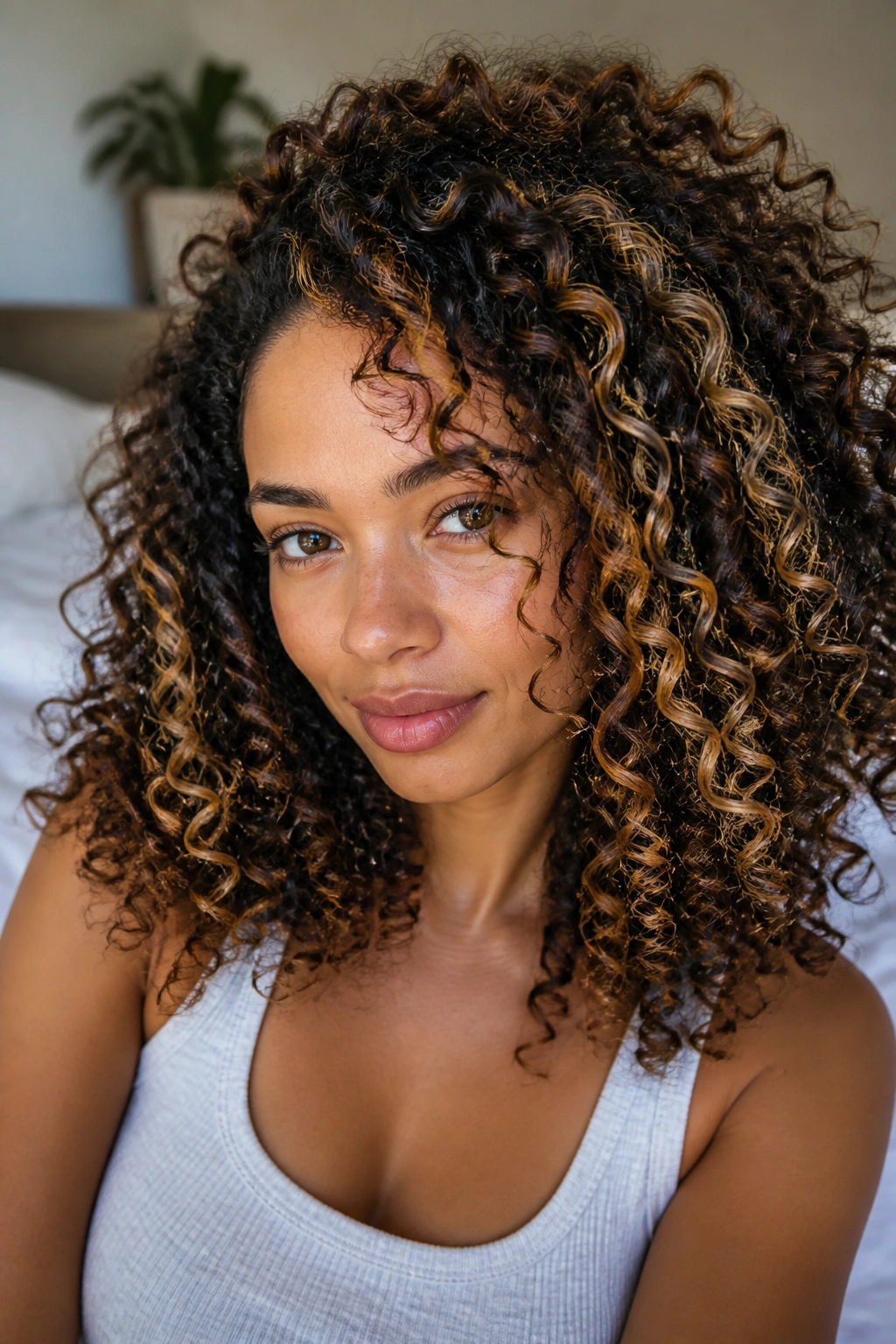
Honey blonde is the shade I reach for when someone wants blonde that still feels warm and alive. On dark curls, it looks like sunlight threaded through the hair instead of paint laid on top of it. That matters. A single heavy block of blonde can flatten curls fast, while thin ribbons keep every bend visible.
Why It Works on Curls
Honey sits in that sweet spot between gold and amber, so it softens darker bases without making the hair look pale or muddy. On 3B to 4A curls, I like it placed in curved ribbons rather than straight foils. The shape should follow the spiral, not fight it.
- Ask for thin, curved highlights that sit around the curl family, not across it.
- Keep the lightest pieces near the face and crown where the hair catches the most light.
- Finish with a gold-beige gloss so the blonde stays warm instead of orange.
Best tip: leave some deeper brown between the ribbons. Curly hair needs that shadow or the color starts to look busy.
2. Buttery Beige Blonde for Soft Ringlets
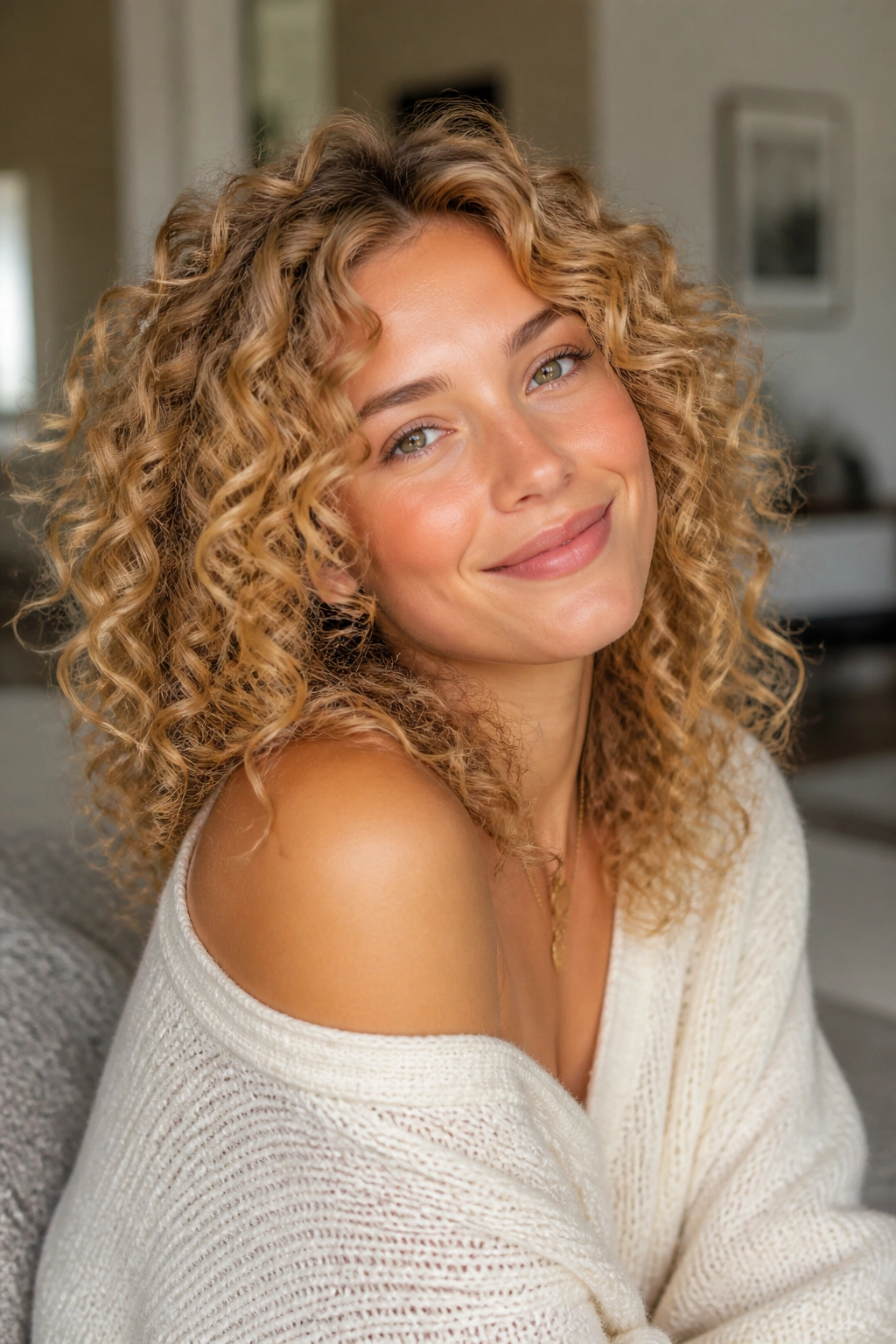
Buttery beige blonde is the answer when honey feels a little too golden. It has the same softness, but the finish is creamier and quieter, with less yellow in the mix. On ringlets, that slight beige note keeps the color from shouting over the curl pattern.
This shade is especially nice on people who want brightness but hate anything that looks brassy. A level 8 or 9 lift with a beige toner can give you that soft, whipped look without losing warmth entirely. It’s a calm blonde. No drama.
I like it best on medium-density curls because the tone sits gently on the surface instead of disappearing into the texture. If your hair is fine, keep the pieces smaller and closer together. If it’s thick, spread them out and let the curl pattern do the work.
3. Rooted Champagne Blonde with a Shadow Root
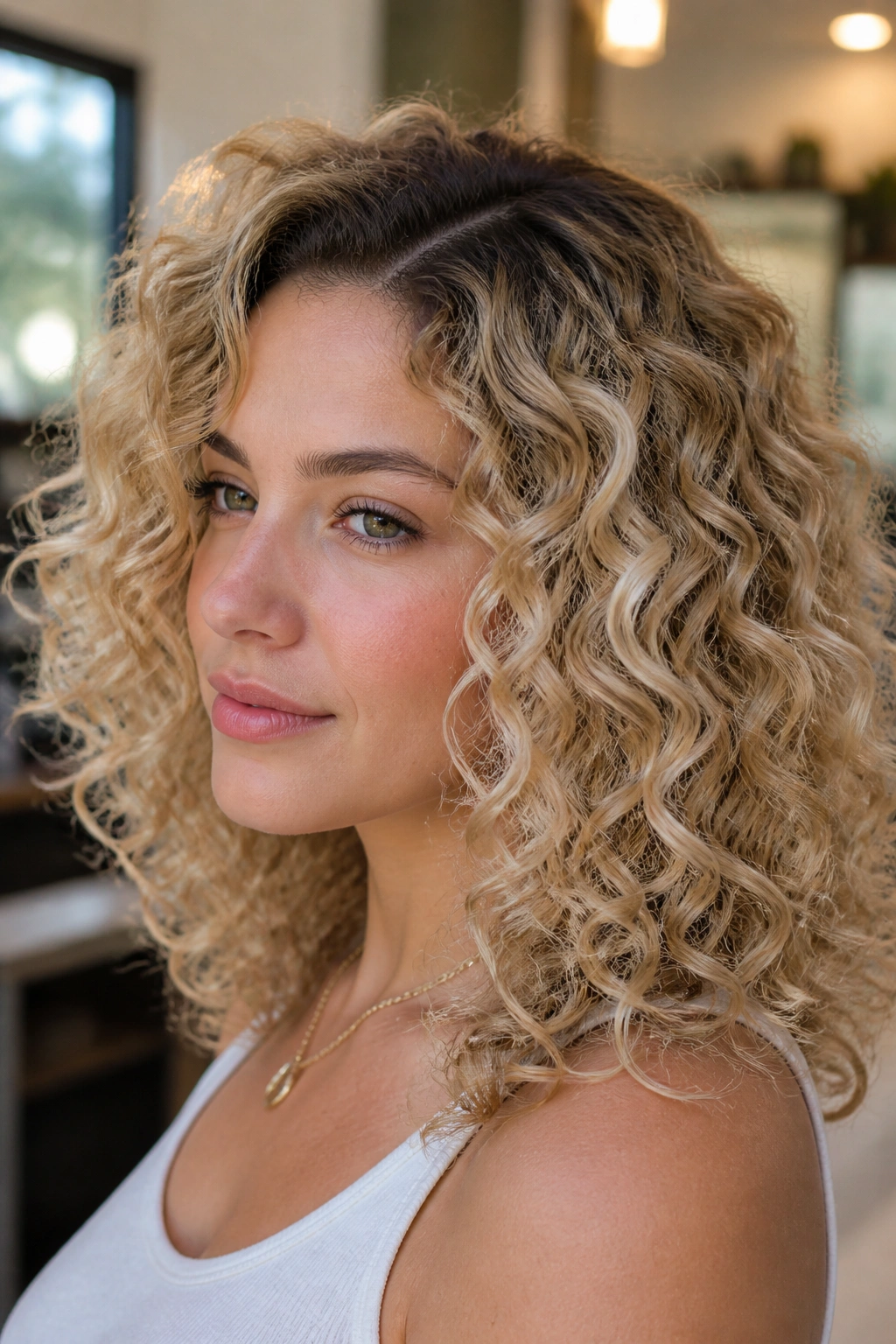
Want blonde that grows out without a hard line? Rooted champagne is the easy answer. The shadow root gives you breathing room, and the champagne lengths keep the whole thing bright without turning it icy or flat. It’s polished, but not fussy.
How to Use the Root Shadow
The root should be one to two shades deeper than the lightest blonde, usually a soft brown, dark blonde, or cool beige. That little bit of depth makes the champagne ends look cleaner and keeps the scalp area from getting overprocessed. On curly hair, the grow-out also blends better because the root color disappears into the bend of the curl.
Ask for the brightest champagne pieces around the front and top, then let the underneath stay softer. That keeps the hair from looking like a helmet when it dries.
A good champagne blonde should shimmer, not gleam. There’s a difference.
4. Cream Soda Blonde for Loose, Bouncy Curls
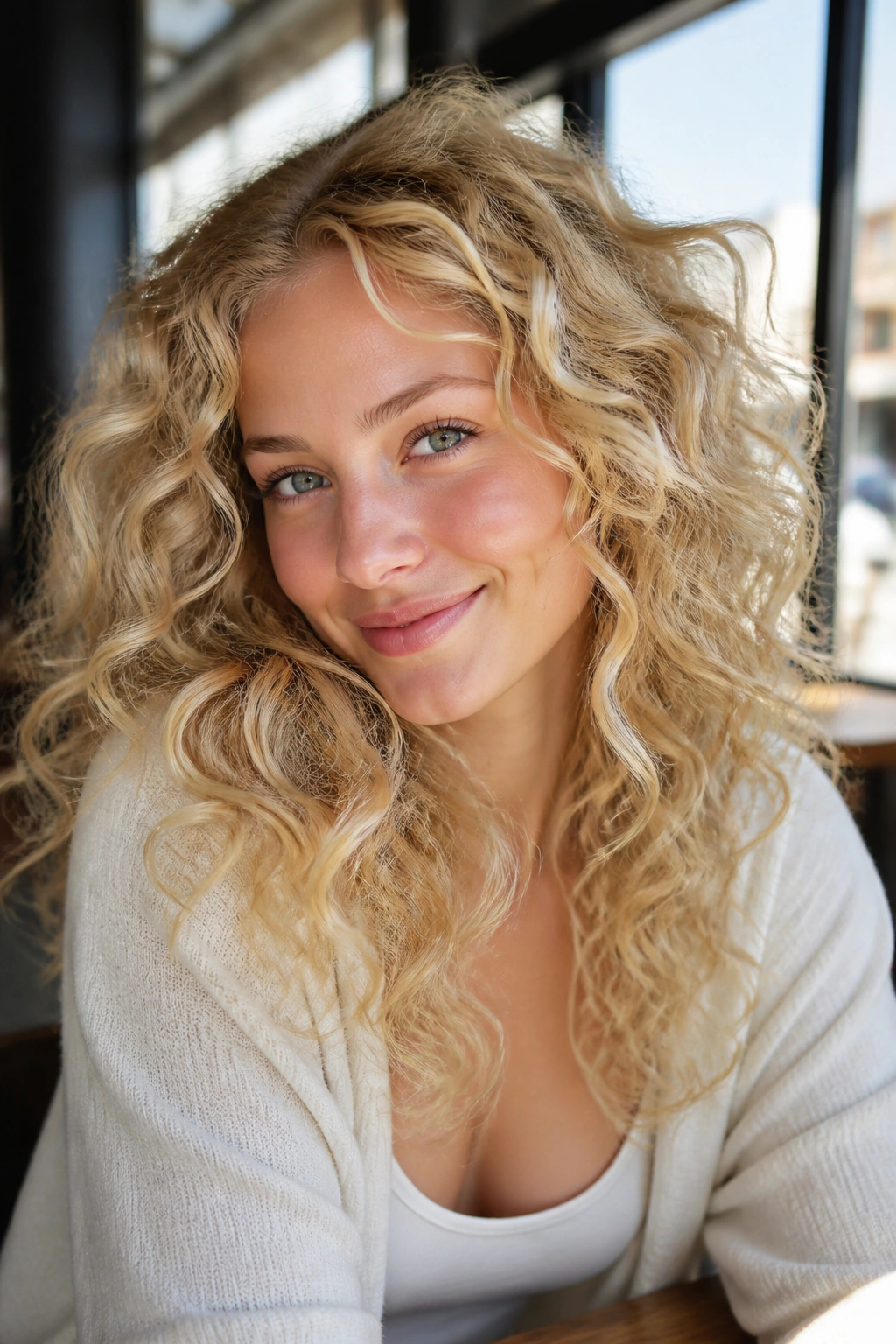
Cream soda blonde has a nostalgic feel to it. It’s creamy, pale, and lightly golden, like a soda shop version of blonde that never tips into neon. On loose curls, the shade reads airy and bright, especially when the spirals separate into big loops.
This color works well when you want a lighter overall look but not the starkness of platinum. The formula usually sits between beige and pale gold, which helps the hair keep some softness. It can look especially pretty on shoulder-length cuts where the curls can swing a bit.
The one thing to watch is toner strength. Push it too ash-heavy and it loses that cream soda softness. Keep the finish gentle, almost milky. That’s where the charm is.
5. Caramel Bronde Melt for Thick Curls
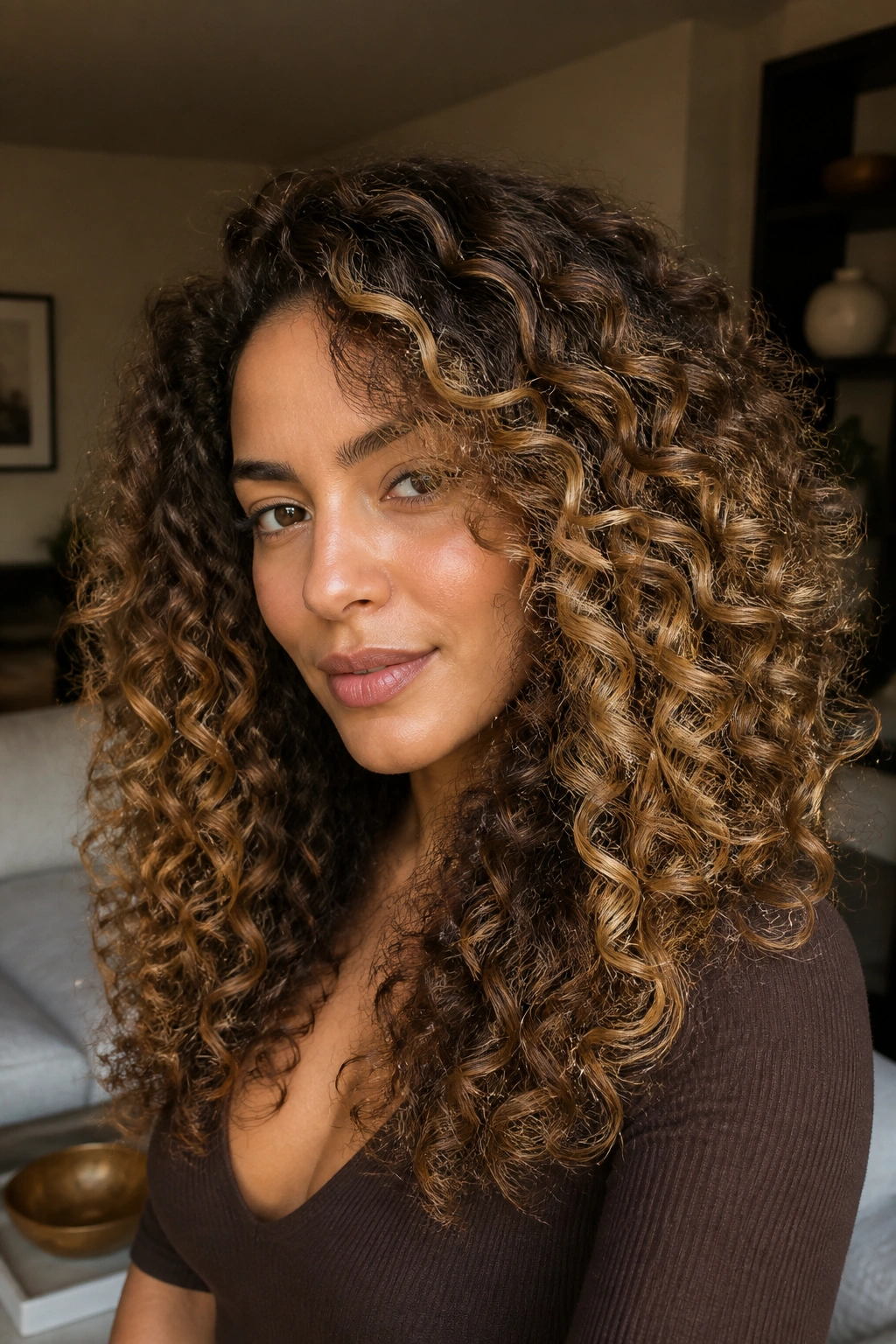
Caramel bronde is not pretending to be a full blonde, and that’s why it works. It blends brown and blonde so the result feels dimensional from root to tip. On thick curls, that melt keeps the hair from turning into one solid shade, which is the enemy of texture.
Unlike a standard balayage that jumps from dark to light, this version stays softer in the middle. The caramel sits in the mid-lengths, then the blonde lifts around the outer curls and face-framing layers. You get contrast without a harsh break.
It suits people who want blonde but still like seeing their natural depth. That’s a sensible preference, by the way. Curly hair usually looks better with some of its own color left in the mix.
6. Sandy Balayage for Airy Dimension
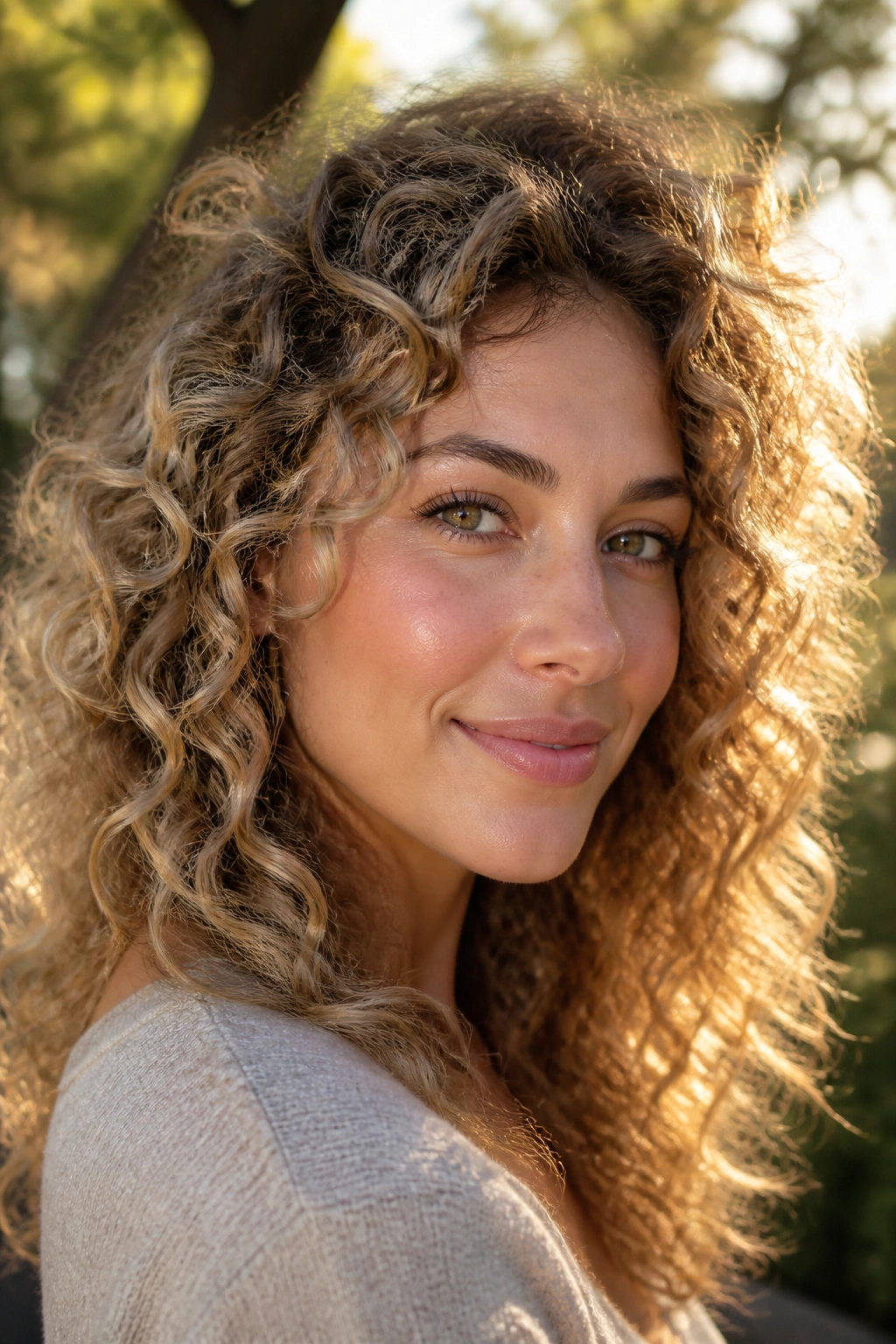
Sandy blonde is the color that makes curls look like they spent a little time in bright, dry air. Not beachy in a cliché way. More like soft beige sand with a few gold grains mixed in. The tone is light, but the feel stays grounded.
The best sandy balayage on curls is painted where the shape opens up: the outer canopy, a few mid-length bends, and the front pieces that fall around the cheekbone. That placement gives the hair a lifted look without scattering blonde everywhere.
- Keep the light pieces two to three levels lighter than your base, not five.
- Ask for a soft beige glaze after lifting.
- Avoid chunky streaks unless you want a retro finish.
Watch this: if your curls shrink a lot when dry, the blonde should live a little lower than you think. Shrinkage changes everything.
7. Face-Framing Blonde Money Pieces
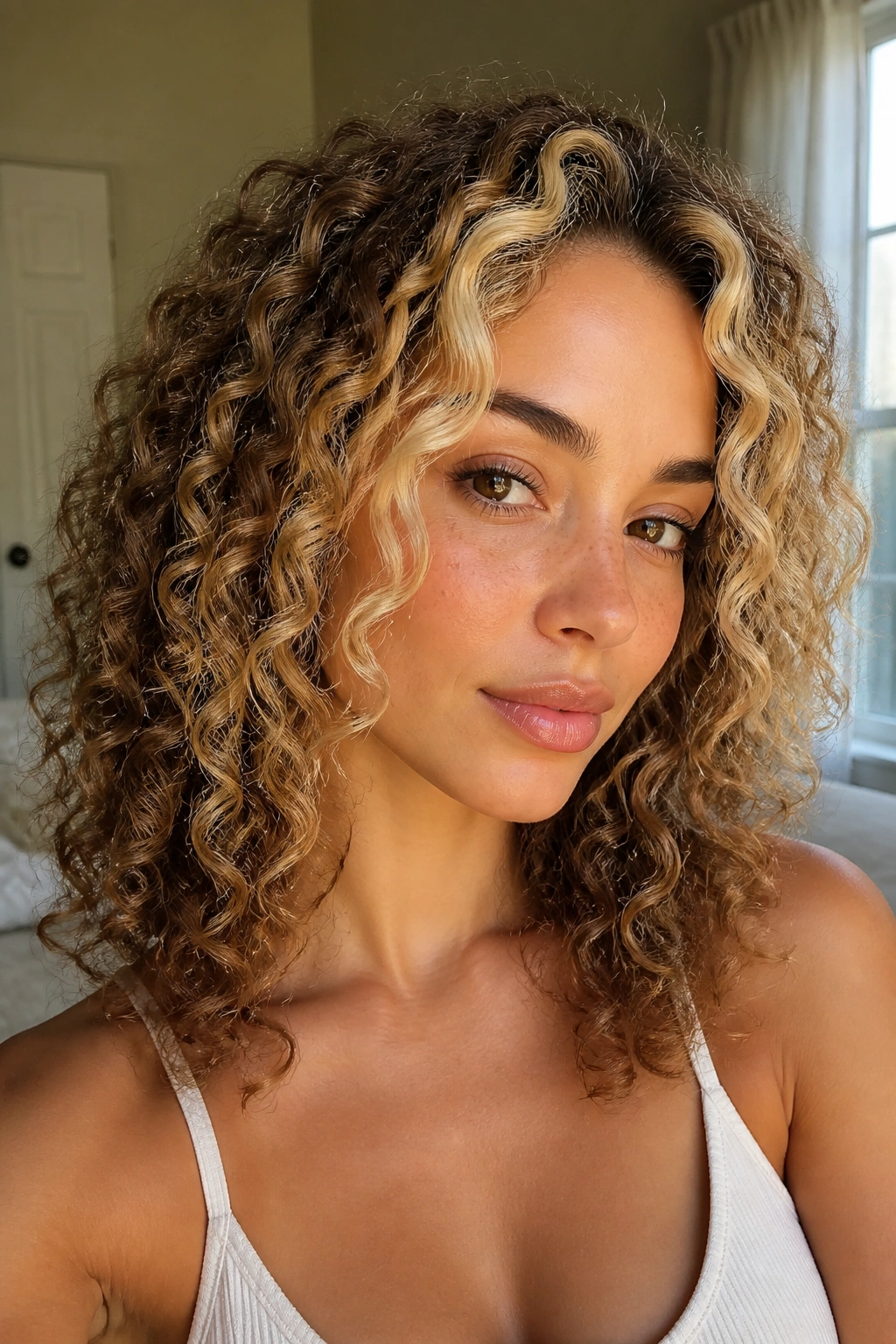
A money piece can be a savior when you want blonde without committing to a full head. On curly hair, the front pieces do a lot of visual work, so even a small bright section can wake up the whole style. The trick is not making those pieces too thick.
How to Ask for It
Tell your colorist you want the lightest blonde around the part line, temple, and front curl group, then softer pieces as you move back. Two fingers wide is usually enough for each side. Any thicker and the color starts to look blocky when the curls clump.
I like a pale beige or champagne tone here because it gives you brightness near the face without the sharpness of icy blonde. If you wear your curls up a lot, this placement still shows. That’s part of the appeal.
This is the blonde for people who like a little attitude. Not too much. Just enough.
8. Icy Platinum Tips
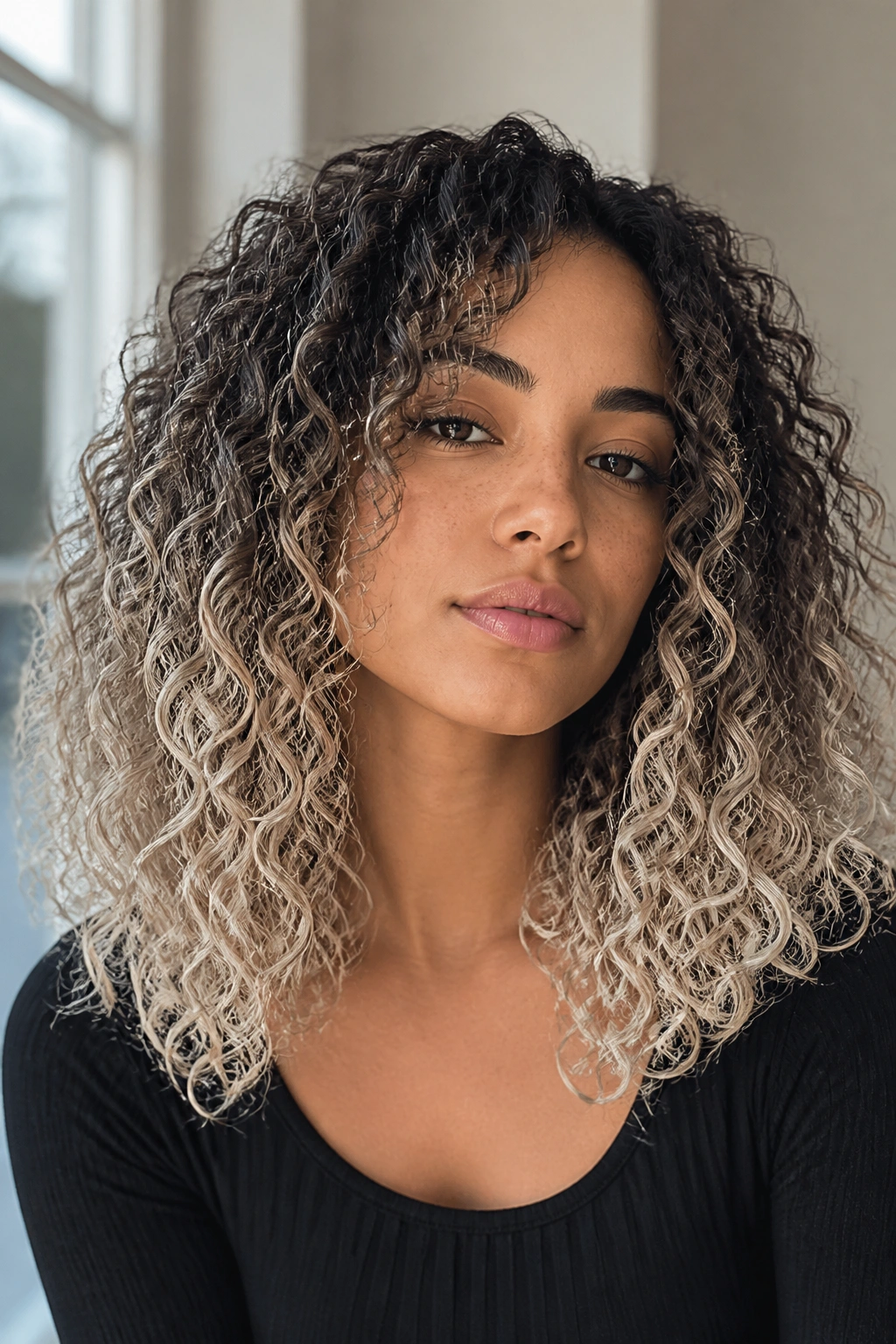
Icy platinum on curly hair is not a casual choice. It’s bold, bright, and unforgiving in the best and worst ways. Done well, the contrast between dark roots and platinum tips can look stunning on spirals because every curl end flashes a different tone.
Here’s the catch: curly ends are often the driest part of the head. If they are already fragile, platinum tips can snap quickly. So the placement has to be careful, and the lightening has to stop before the hair gets mushy.
I like this look on hair that’s already strong, well-conditioned, and regularly trimmed. The tips should feel soft, not gummy. If they feel rough when stretched, skip this one and choose a softer blonde instead. Pretty is not worth breakage.
9. Vanilla Cream Blonde for Soft Spirals
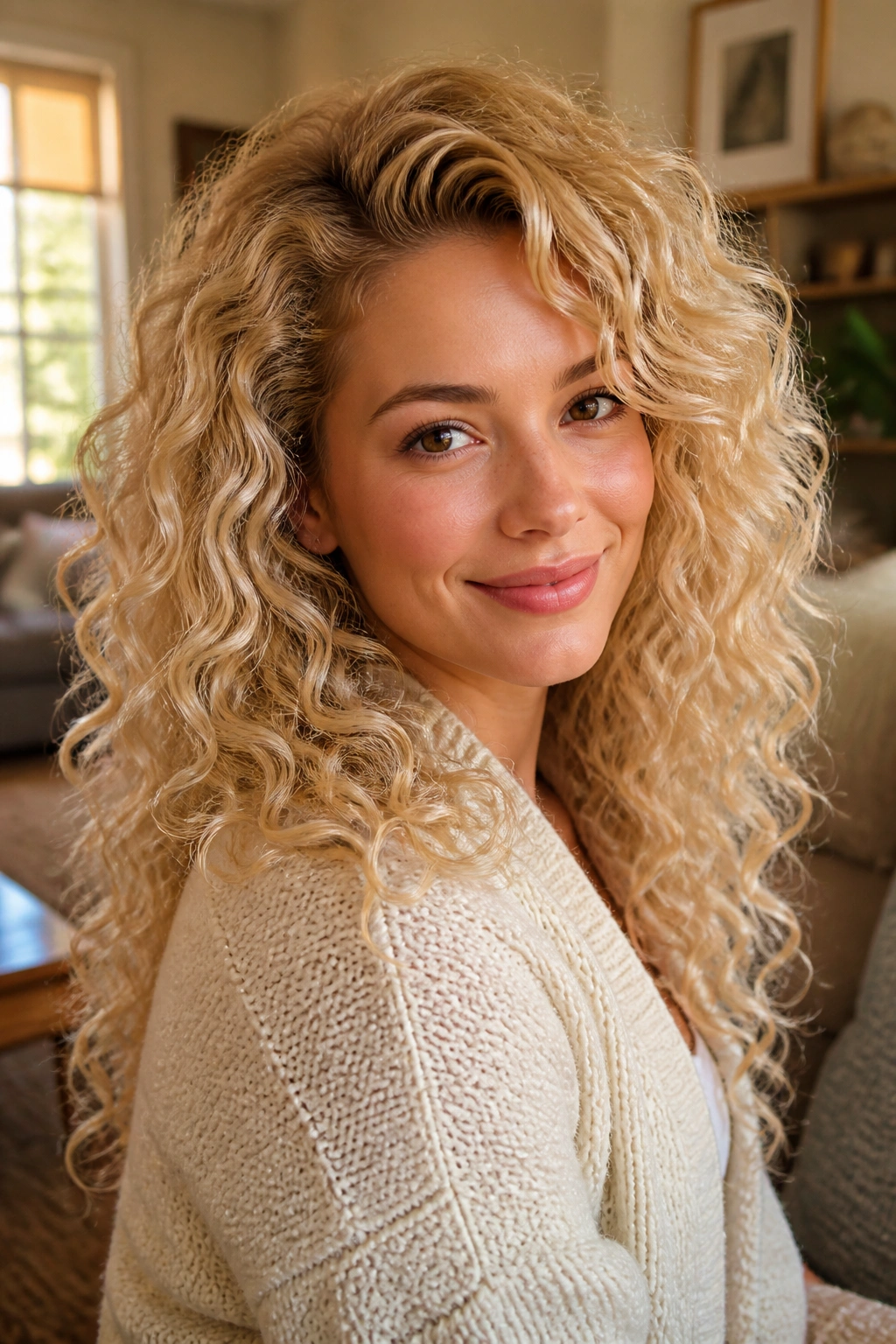
Vanilla cream blonde is what you get when you want lightness without a sharp edge. It sits between beige and pale gold, but the overall effect is smoother and more blurred than either. On soft spirals, that creamy finish looks polished without losing movement.
What makes it different from a brighter platinum is the warmth. Not much. Just enough. That warmth keeps the curls from looking chalky in bright light and helps the color read like part of the hair rather than a layer sitting on top.
How to Use It
Ask for a gentle lift and then a vanilla or neutral-beige gloss. If your base is dark, don’t rush the process. A cleaner lift makes the cream tone look more even, which matters a lot on curls because texture can hide uneven color until the hair is fully dry.
This is one of my favorite blondes for people who like soft, expensive-looking color without a lot of edge.
10. Strawberry Blonde with Copper Spark
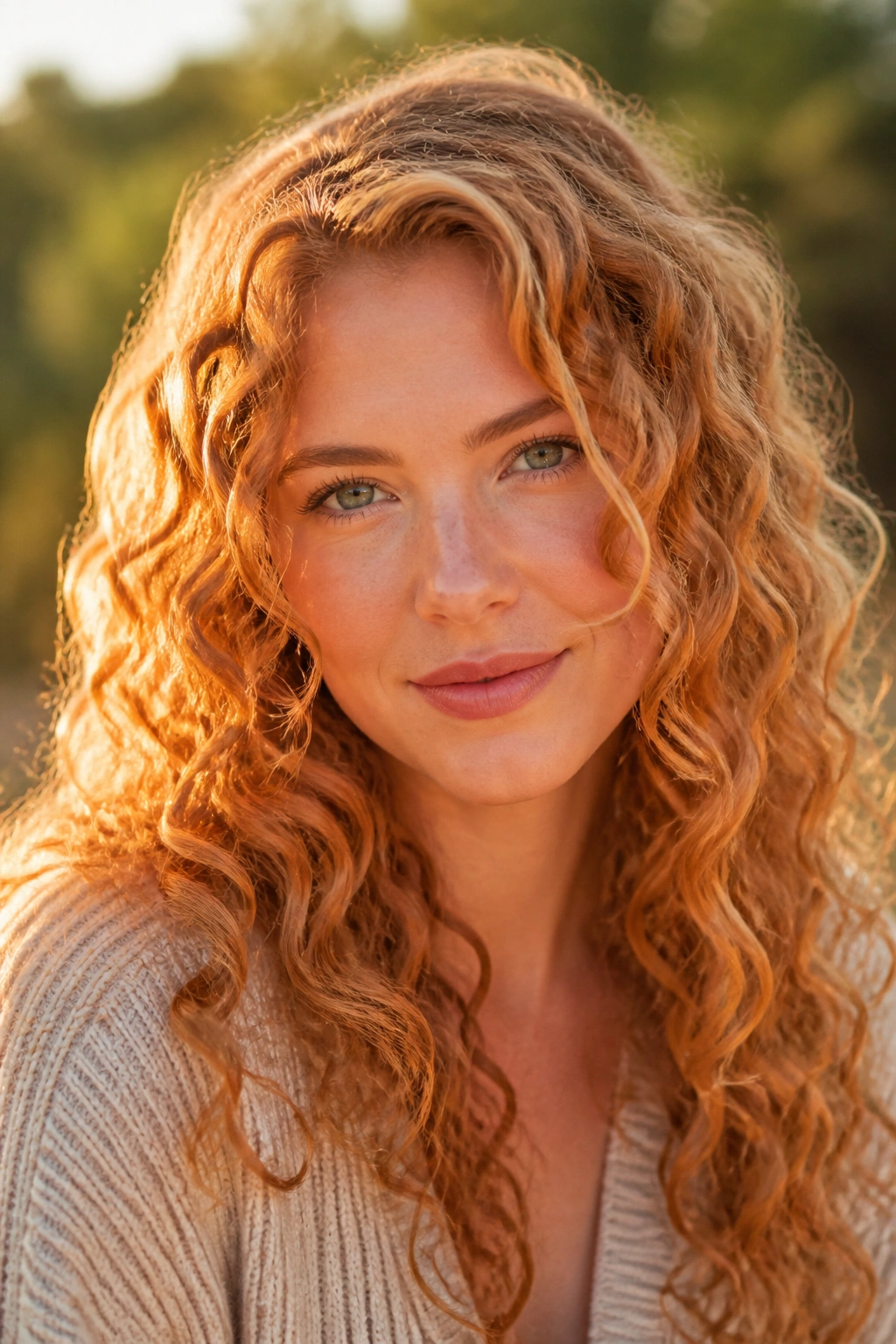
Strawberry blonde on curls has a warmth that feels almost alive. The red-gold mix catches on bends and coil edges in a way plain blonde can’t. It’s flattering on warm and neutral skin tones, and it works especially well when the natural base already has a little copper in it.
The best strawberry blonde is not neon and not orange. It’s more like a pale copper glaze over a blonde base. That keeps it wearable. On curls, the color can shift between peach, gold, and soft auburn depending on the light, which is half the fun.
- Keep the copper note soft and translucent.
- Pair it with a warm gloss every few washes.
- Use it around the face if you want the color to feel lighter overall.
The mistake people make is pushing this shade too red. Then it stops reading blonde and turns into something else entirely.
11. Mushroom Blonde Lowlights
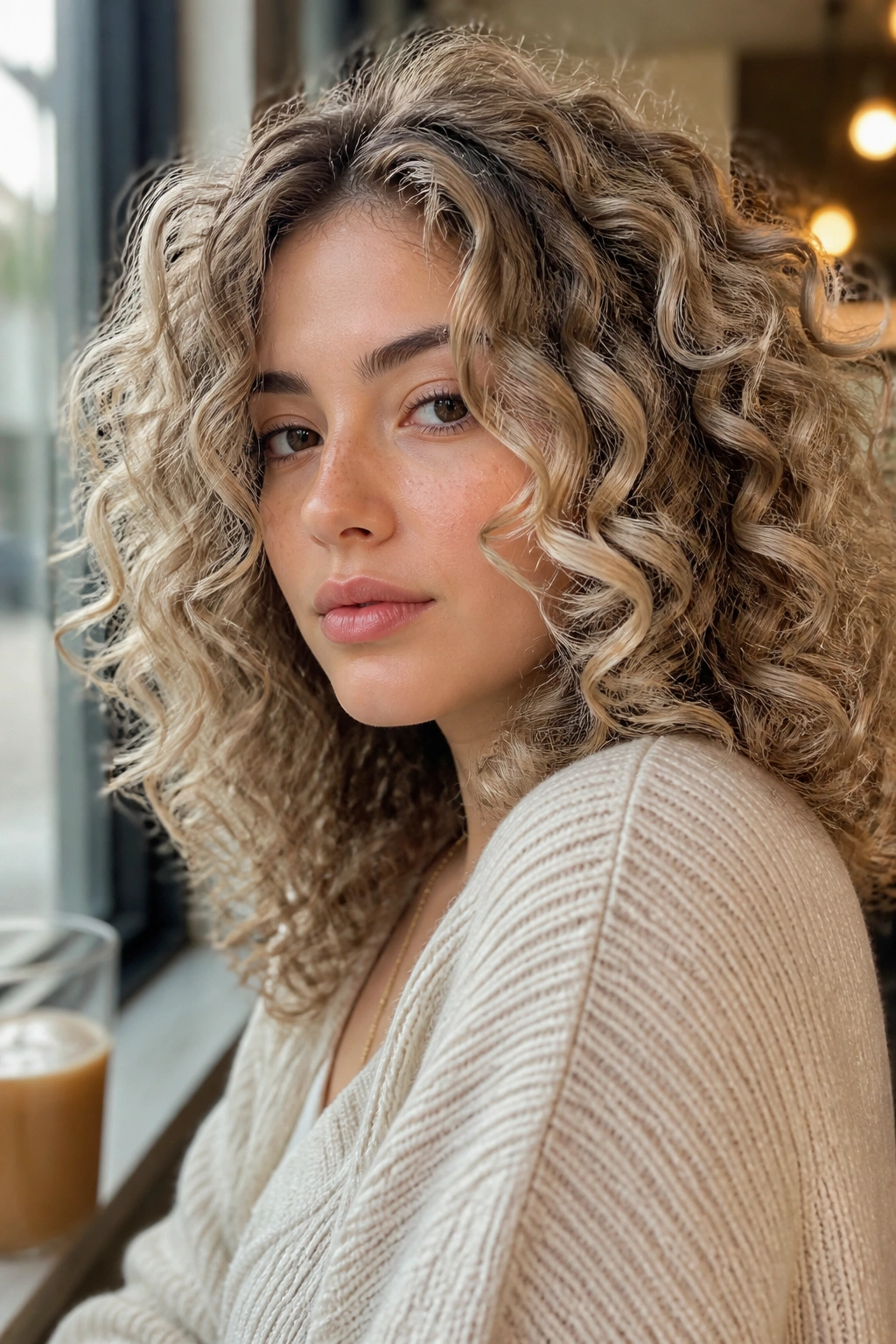
Mushroom blonde is cool, muted, and a little moody. It’s not a bright blonde at all, which is exactly why it’s such a strong choice on curls that need depth. The cool brown-beige tone sits under lighter pieces and gives the whole head a smoked, dimensional feel.
This works better than a flat ash blonde on many curl patterns because the lowlights keep the texture visible. Ash alone can look dull if the hair is very porous. Mushroom blonde adds just enough brown-beige to keep things rich.
I’d use it on people who want blonde but don’t want gold. It’s also a smart move if your natural base is already cool or neutral. The color feels grown-up without looking severe.
12. Pearl Blonde on Defined Corkscrews
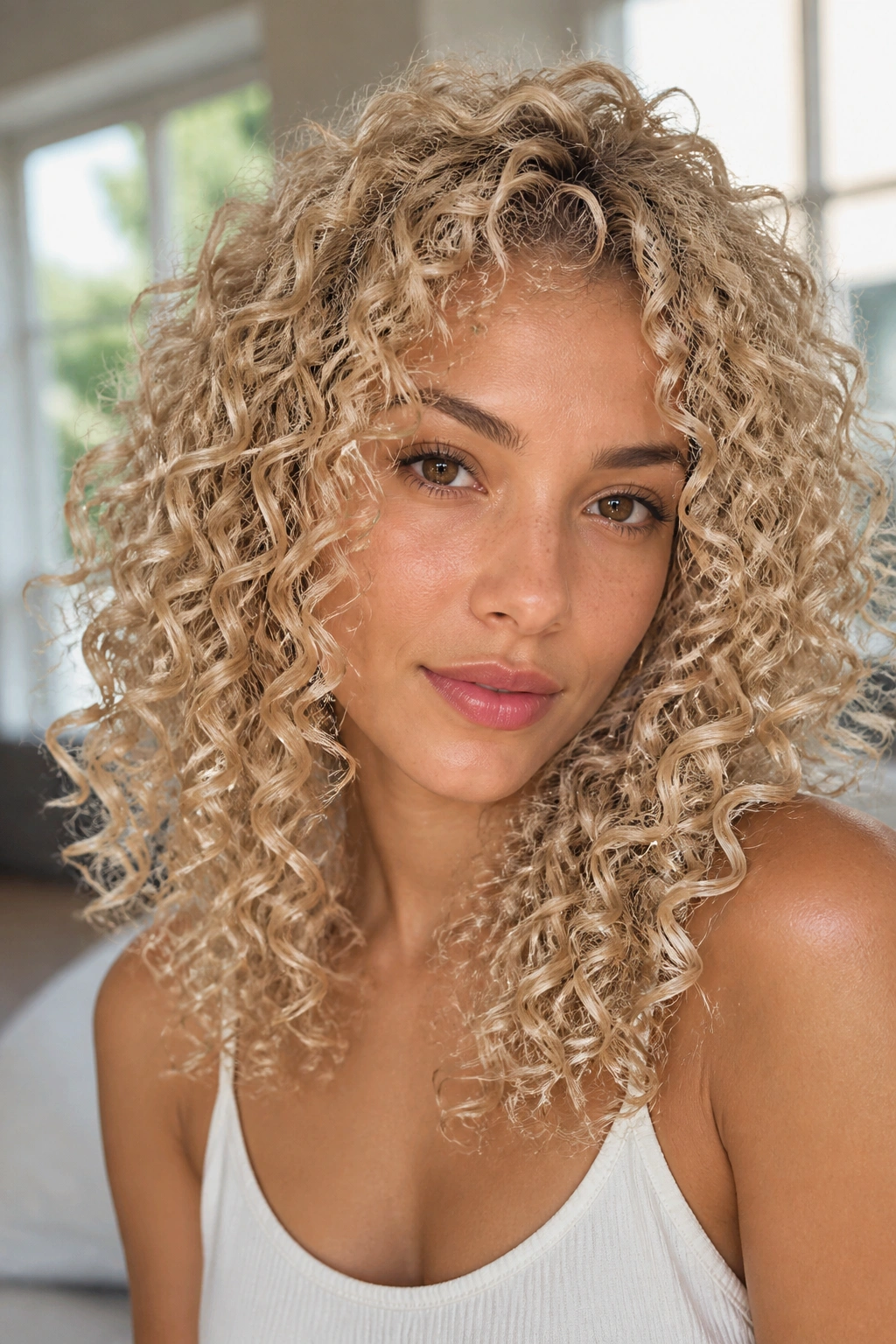
Pearl blonde is one of those shades that looks soft from a distance and detailed up close. It has a pale, cool sheen with just enough warmth to keep it from going flat. On defined corkscrews, the color shifts beautifully from strand to strand.
The reason it works is simple: curls need some movement in the tone, not a single block of brightness. Pearl blonde gives you that because it sits between silver, beige, and soft cream. It sounds fussy on paper. In real life, it’s just pretty.
I prefer this shade on hair with strong curl definition and good shine. If the curls are frizzy or thirsty, pearl can look dull fast. A gloss and regular moisture care are not optional here. They’re the whole point.
13. Sunlit Honey Ombré for Long Curls
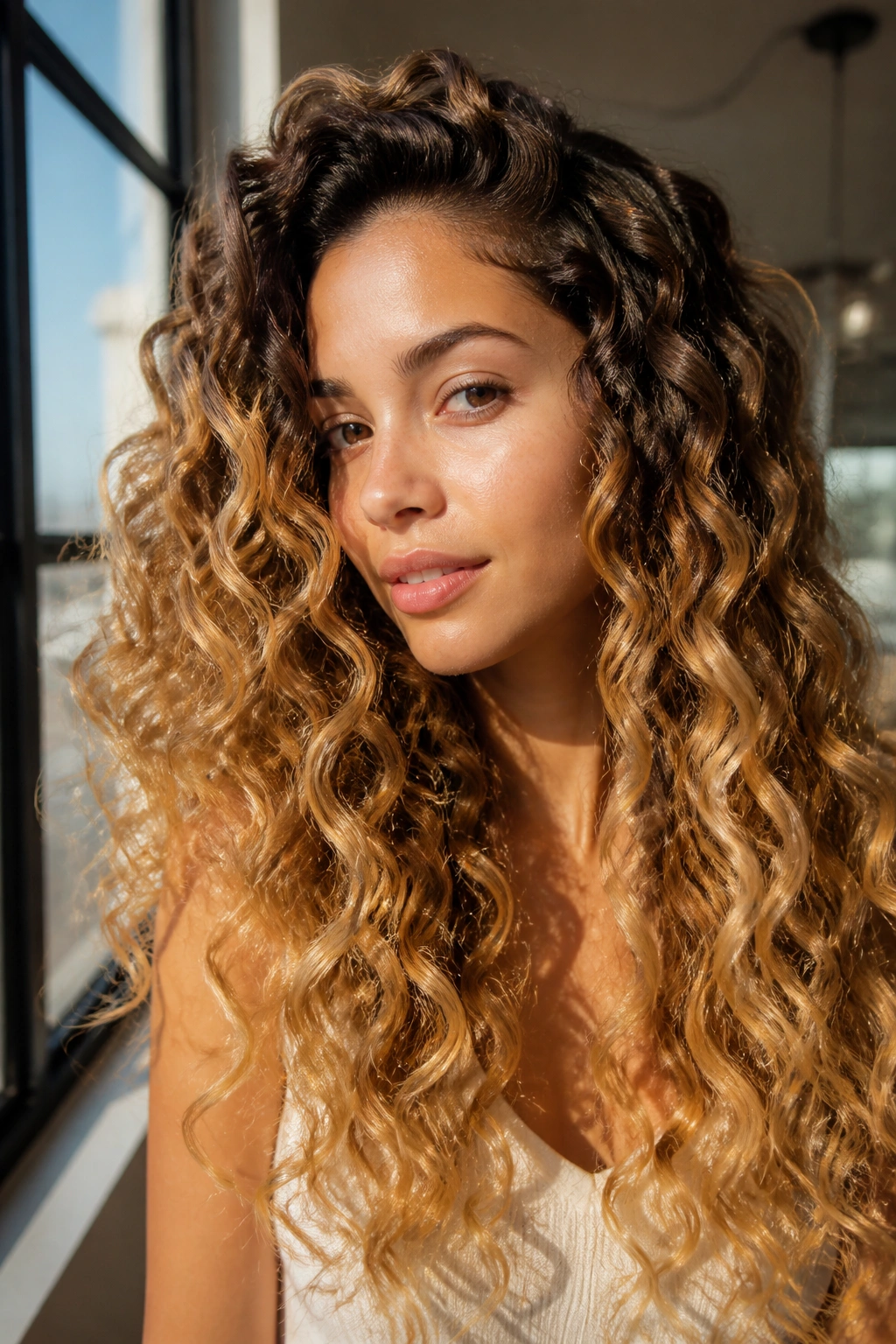
Long curls and ombré get along better than most people expect. The length gives the color room to breathe, so the darker root can stay grounded while the honey blonde grows brighter toward the ends. That gradual shift makes the hair look sun-kissed without looking overworked.
I like this when the curls fall past the shoulders, because the ombré can travel with the curl pattern instead of cutting through it. The lightest part should land where the hair naturally swings and lands on the body. That’s what makes it feel natural.
The tone itself should stay golden, not orange. A honey ombré with a soft beige finish is easier to wear than a true yellow blonde, and it grows out with less fuss. That matters if you hate appointments.
Some blondes need constant polishing. This one can relax a little.
14. Dimensional Babylights Across Big Curls
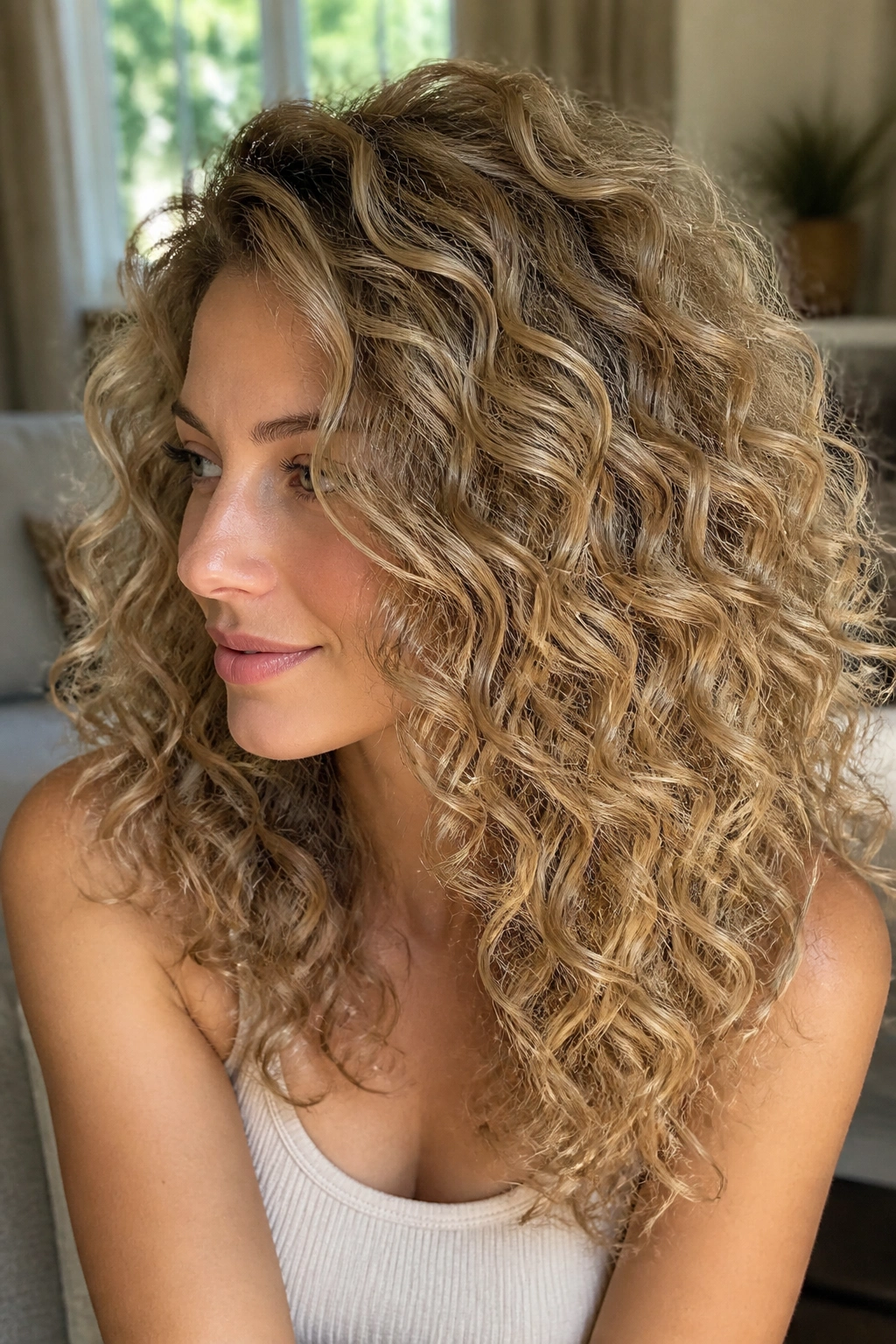
Babylights on big curls are all about detail. Tiny highlights woven close together can make dense hair look lighter without breaking up the curl pattern into obvious stripes. The effect is subtle, but in the best way.
What Makes It Different
The pieces are so fine that they disappear into the curl mass, then reappear when the hair moves. That’s why this technique works so well on 3A through 3C textures. You get brightness across the head, but the curls still look like curls, not sections of colored rope.
- Use micro-weaves rather than chunky foil placements.
- Keep the lift within two to four levels of your base.
- Blend with a neutral or beige toner, not a stark ash.
The result is especially good if you want your blonde to feel expensive and quiet. Quiet is underrated.
15. White Gold Blonde with High Contrast
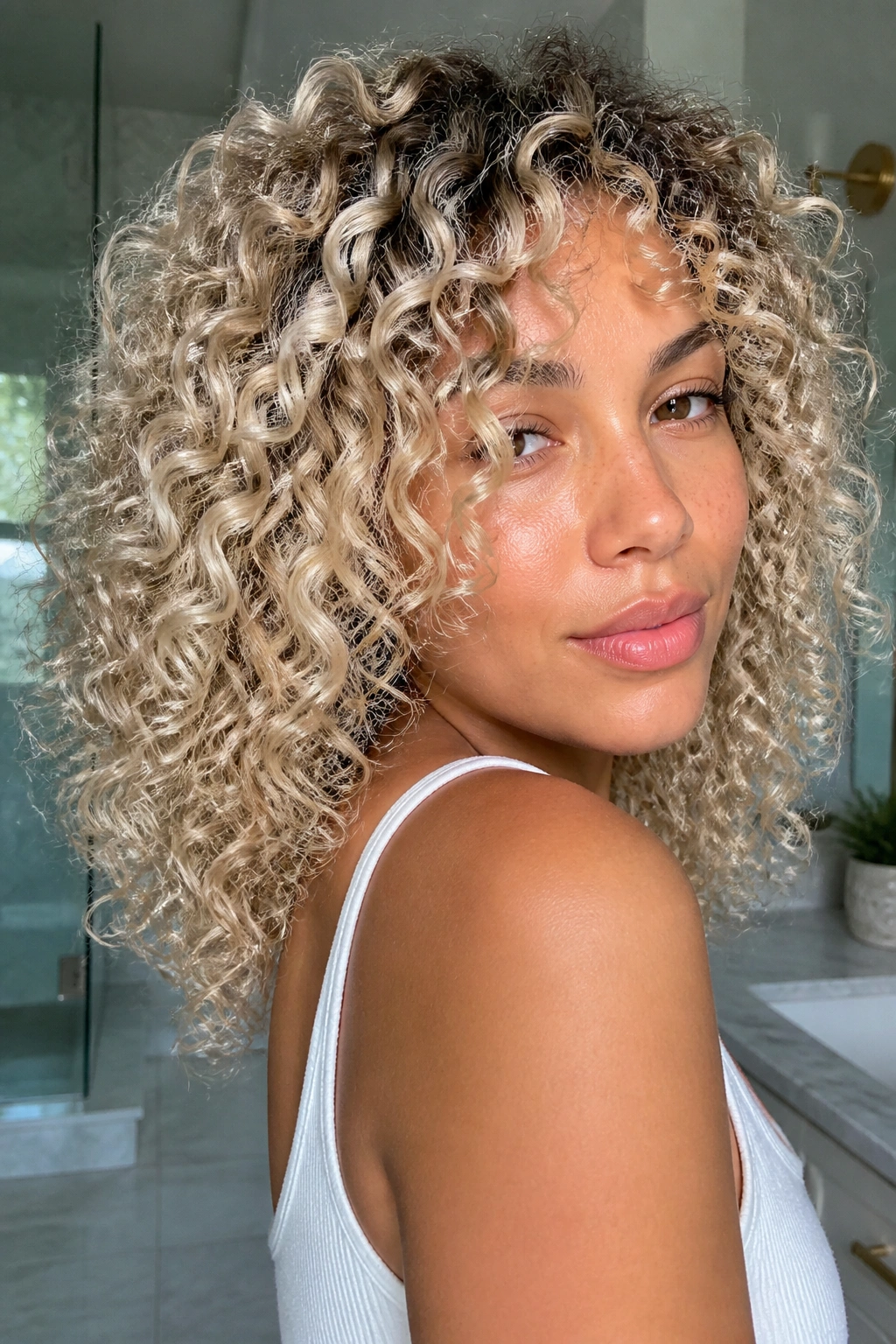
White gold blonde sits between platinum and champagne, and that in-between space is what makes it useful. It has the brightness of a very light blonde, but the finish is softer and more metallic than icy. On curly hair, that gives you contrast without a flat, bleached-out look.
This shade is sharp enough to stand out against darker roots, which is why it looks strong on dense curls. The texture keeps it from looking sterile. Every coil reflects the tone a little differently, so the hair ends up with movement even when the color itself is crisp.
I would not push this shade on fragile hair. It asks for a clean lift and careful toning. If the hair can take it, though, white gold has a clean, bright edge that reads modern without leaning harsh.
16. Ash Blonde with a Deep Root Smudge
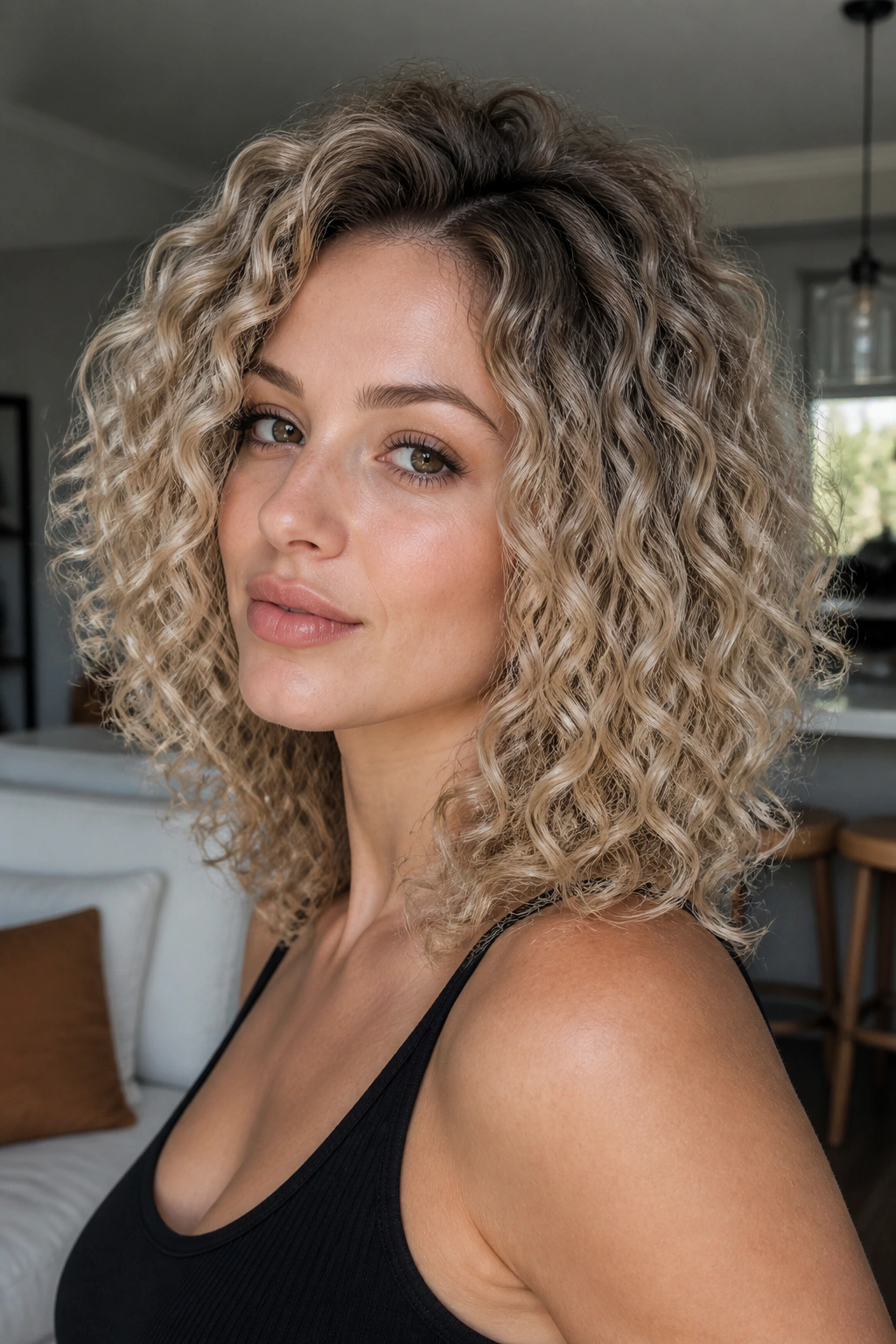
Ash blonde on curly hair can be gorgeous, but it needs a deeper root smudge or it can look washed out. That little shadow at the scalp keeps the cool tone from floating away from the rest of the hair. Without it, ash tends to read flat.
How to Keep It from Looking Dull
Ask for the root to stay one to two shades deeper than the lighter lengths, then let the ash live mostly through the mid-lengths and outer curls. The goal is coolness with dimension, not gray for the sake of gray. A clean ash gloss on healthy hair can look crisp. On porous curls, it can turn matte fast.
This shade is best if your skin tone already likes cooler colors. If warm tones make you look healthier, ash may need a touch of beige to soften it. That tiny adjustment usually makes the difference between chic and lifeless.
17. Peach Blonde for Warm Skin Tones
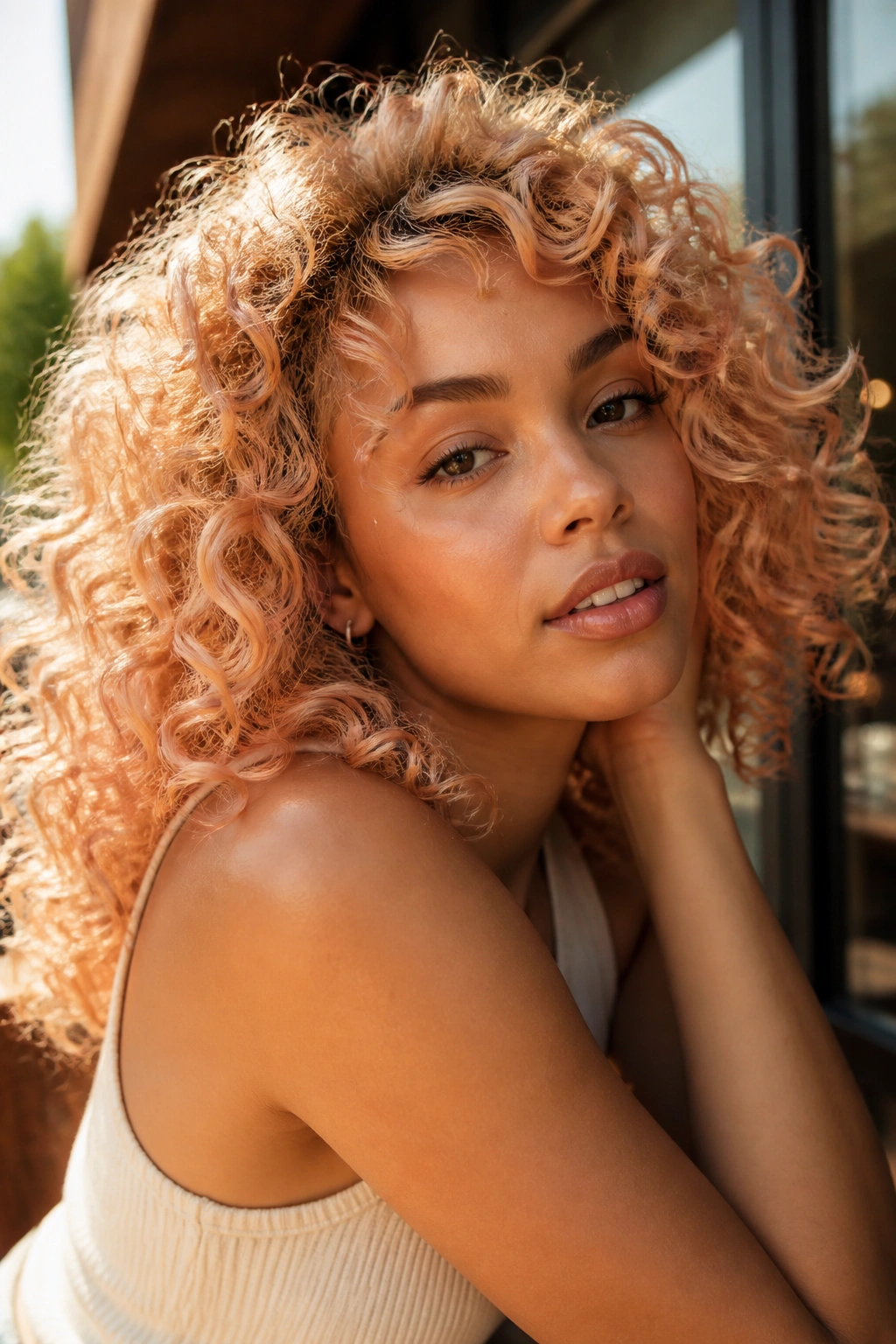
Peach blonde is a softer, friendlier cousin of strawberry blonde. It has blonde at the base, then a pale peach wash that gives the color a gentle blush. On curls, it can look playful without turning costume-like.
The charm here is the movement. When the hair bends, the peach tone flashes in little bursts instead of sitting as one solid color. That makes it feel fresh, especially on looser spirals or layered cuts. It’s a color that likes light, but it doesn’t need to scream.
- Keep the peach tone soft and pastel, not neon.
- Pair it with beige highlights so it still reads blonde first.
- Refresh the gloss before the peach fades into plain gold.
If you like warm tones and want something less expected than honey, this is a lovely detour.
18. Bronze-Blonde Blend for Rich Texture
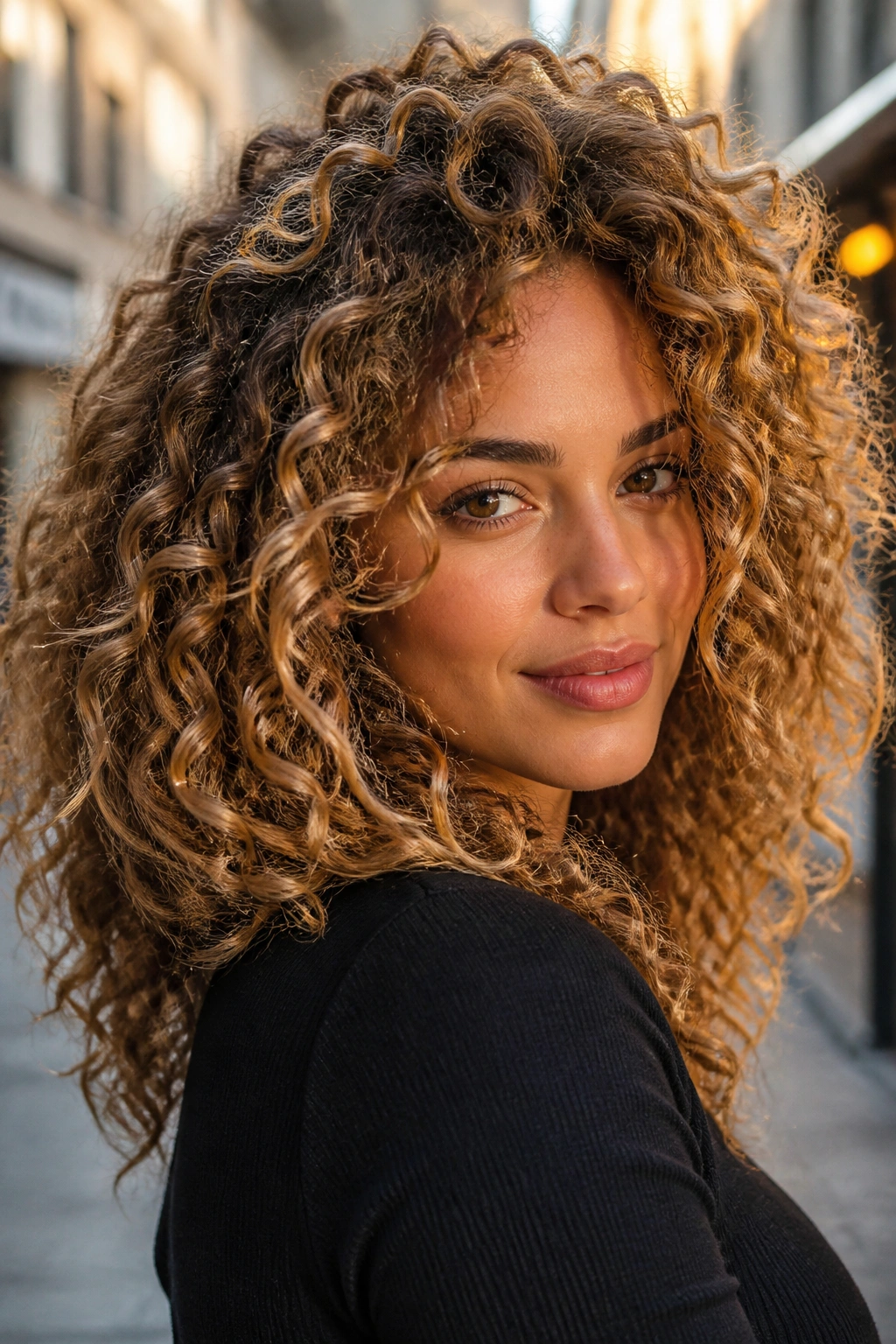
Bronze-blonde sits right on the edge of blonde and light brown, and I think that’s exactly where curls often look strongest. The deeper bronze base gives the hair heft, while the lighter pieces keep it from feeling heavy. It’s a smart look on medium to dark curls.
The best part is how forgiving it is. You do not need a perfect lift for it to work. Slight variations in tone actually help, because bronze catches light differently across each curl family. A few golden strands around the face and a deeper bronze through the interior can make the whole head look denser and shinier.
This is the kind of blonde I suggest to people who want softness first and brightness second. It’s less precious than platinum, and honestly, that makes it easier to live with.
19. Scandinavian Bright Blonde for Loose Curls
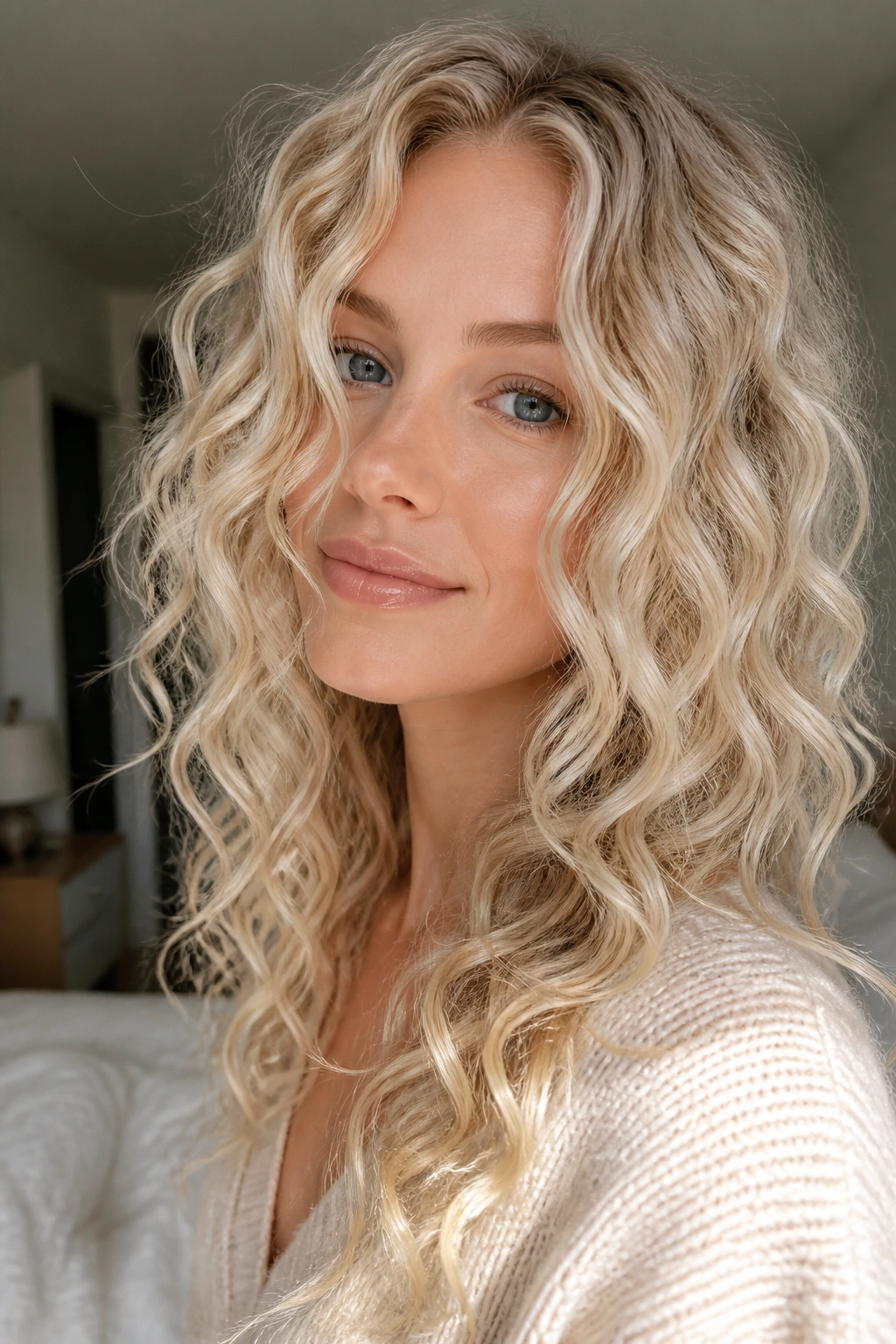
Scandinavian blonde is bright, clean, and unapologetically pale. On loose curls, it can look striking because the texture keeps it from becoming one flat sheet of color. Every wave shows a tiny shift in tone, which saves the color from looking severe.
That said, this is one of the harder blondes to wear well. It depends on healthy hair, careful lifting, and a toner that stays clean without going chalky. If the curls are already dry or damaged, I would not rush into this look.
This blonde suits people who want a crisp, high-contrast finish and are willing to keep up with masks, trims, and toner. It has a strong personality. So do you, if you pick it.
20. Toffee Blonde with Shadowed Roots
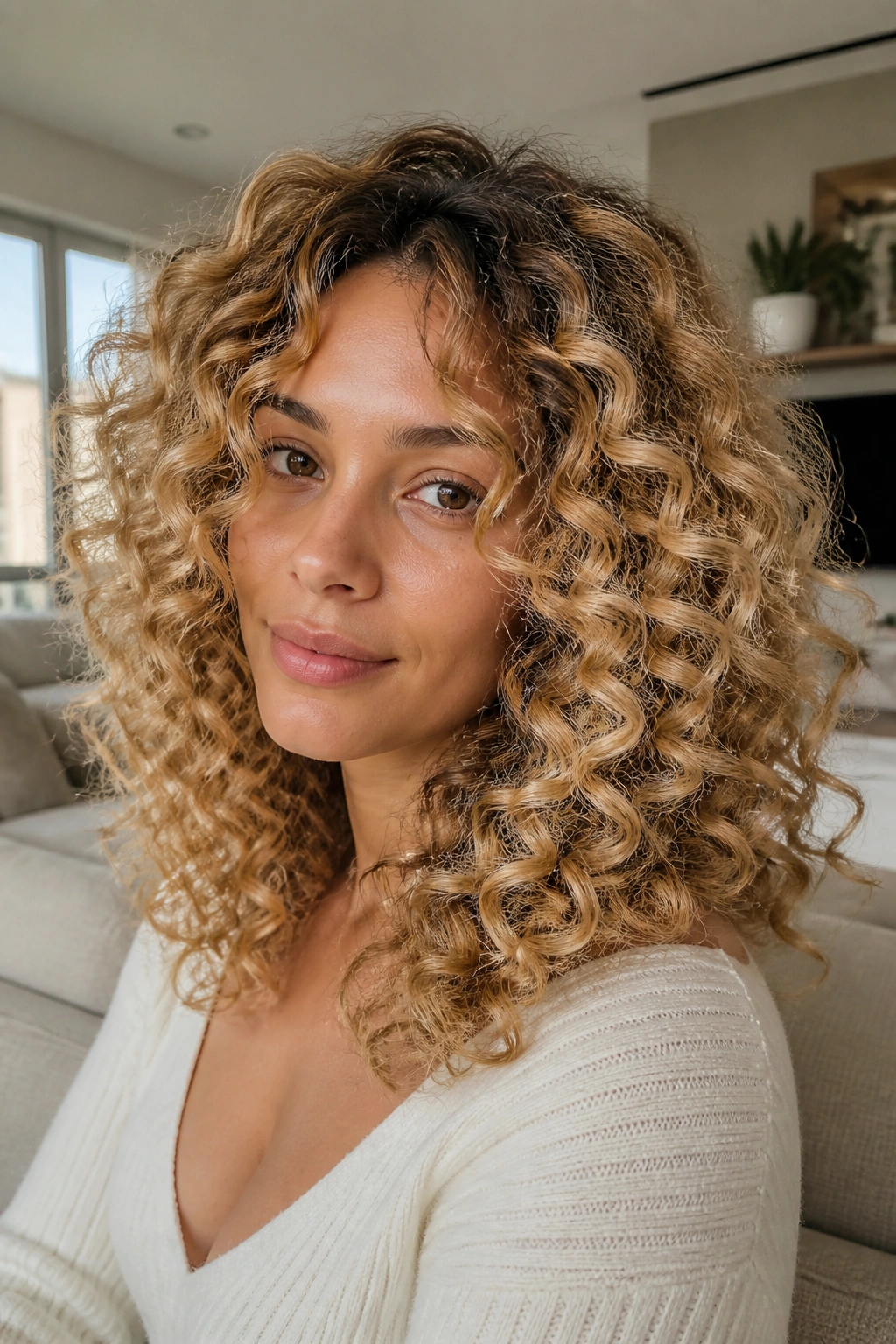
Toffee blonde is one of the easiest warm blondes to live with. The color lives in that deep caramel-to-golden space, which means it stays rich while the shadow root keeps regrowth soft. On curls, that combo is gold.
The blonde should not be too pale. If it gets pushed too high, it loses the toffee feel and starts looking disconnected from the root. I prefer this shade when the lighter pieces are painted through the mid-lengths and around the outer curl layer, then softened toward the ends.
It’s a friendly color. Not boring. Just easy to wear, easy to style, and forgiving when the curls puff up a little more than expected.
21. Linen Blonde for Minimalist Color
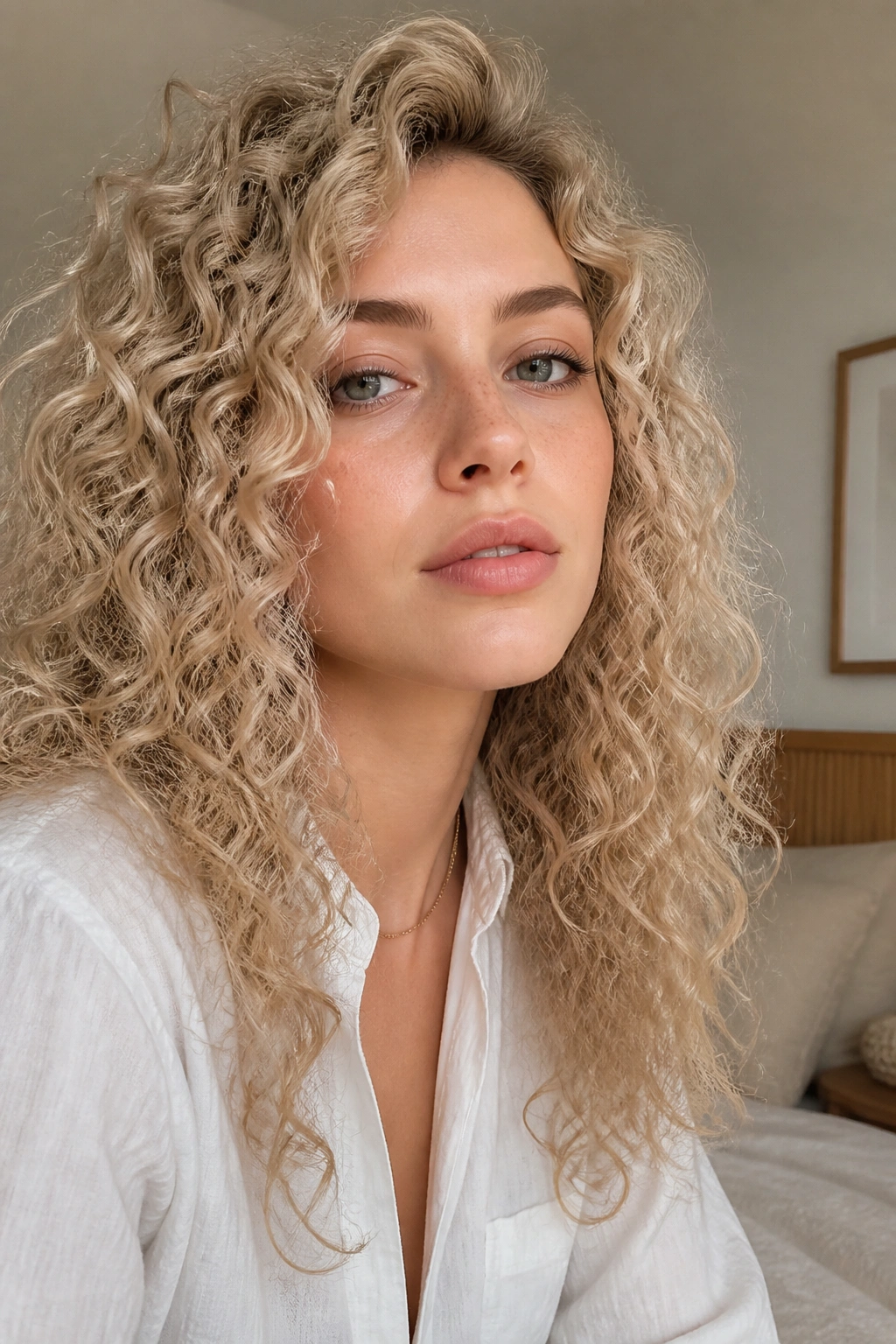
Linen blonde is pale, beige, and almost dusty in the nicest way. It does not chase yellow, and it does not lean too silver either. That restraint makes it a strong option for curls that need a clean, understated blonde.
Why It Stays So Wearable
The tone sits in a neutral lane, which means it works across more skin tones than people expect. On curls, that neutrality helps the shade blend into the texture instead of shouting over it. The hair looks lighter, but still soft.
Ask for a level 9 beige blonde with a gentle pearl or neutral gloss. That sounds technical because it is. The exact toner matters here. If the toner is too cool, the result can look dusty. If it’s too warm, the linen feel disappears.
This is the blonde for someone who likes a quiet wardrobe and wants their hair to feel the same.
22. Maple Blonde Melt on Dense Curls
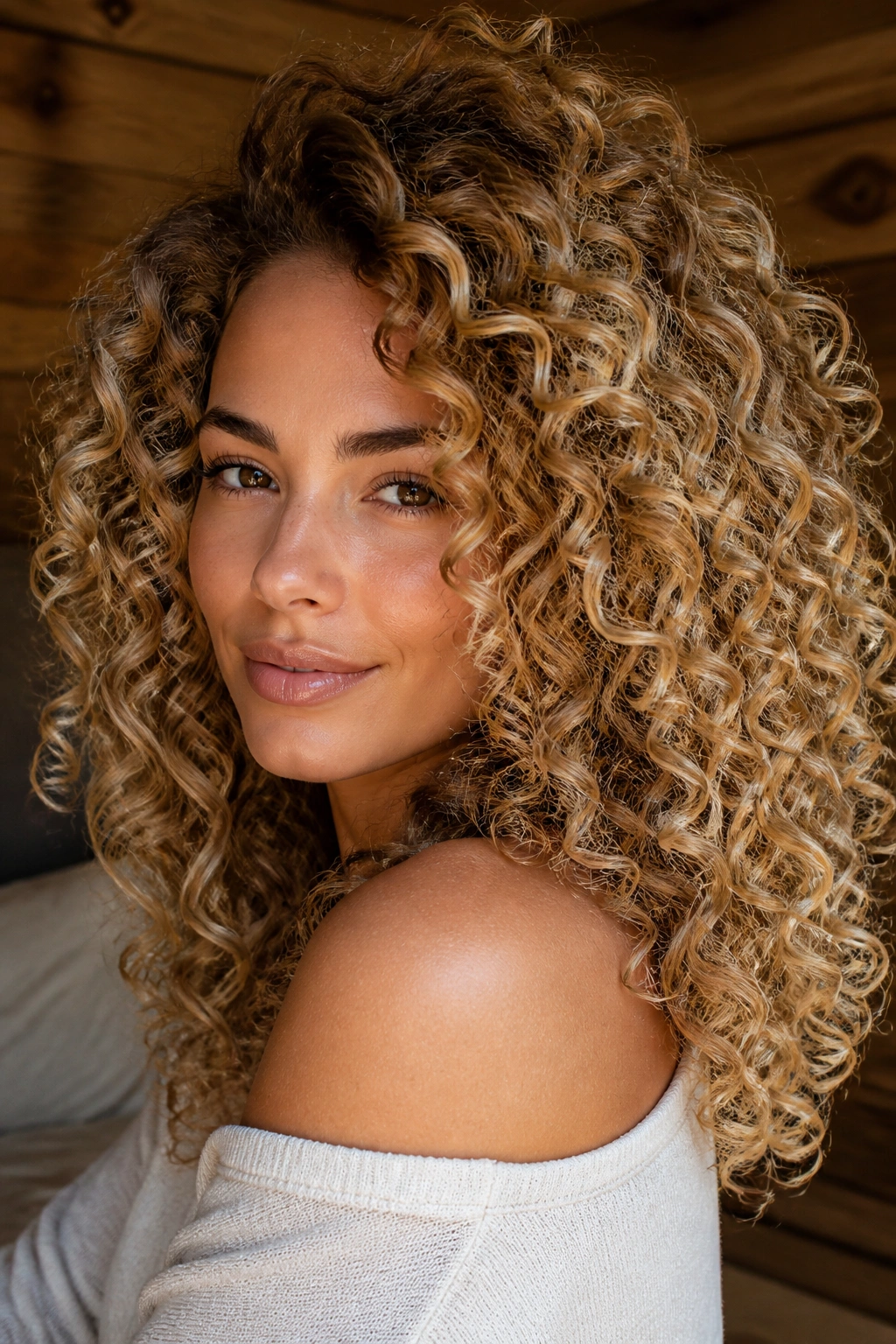
Maple blonde is warm, amber-leaning, and just dark enough to keep dense curls from looking overprocessed. A melt from deeper maple roots into brighter blonde ends can make thick hair look structured instead of heavy. That’s a good trick.
What to Watch For
Dense curls can hide the color underneath, so the brighter pieces should sit where the hair opens up: outer layers, front bends, and the crown. The interior can stay a little deeper. That contrast gives the hair shape even when it’s stretched or pinned.
- Keep the root shade closer to light brown than blonde.
- Use the lightest pieces on the outer layers and face.
- Finish with a warm glaze so the blonde stays maple, not brass.
This is one of those shades that looks better when it is a little imperfect. A perfect maple melt can feel flat. A lived-in one looks richer.
23. Smoky Beige Blonde with a Soft Finish
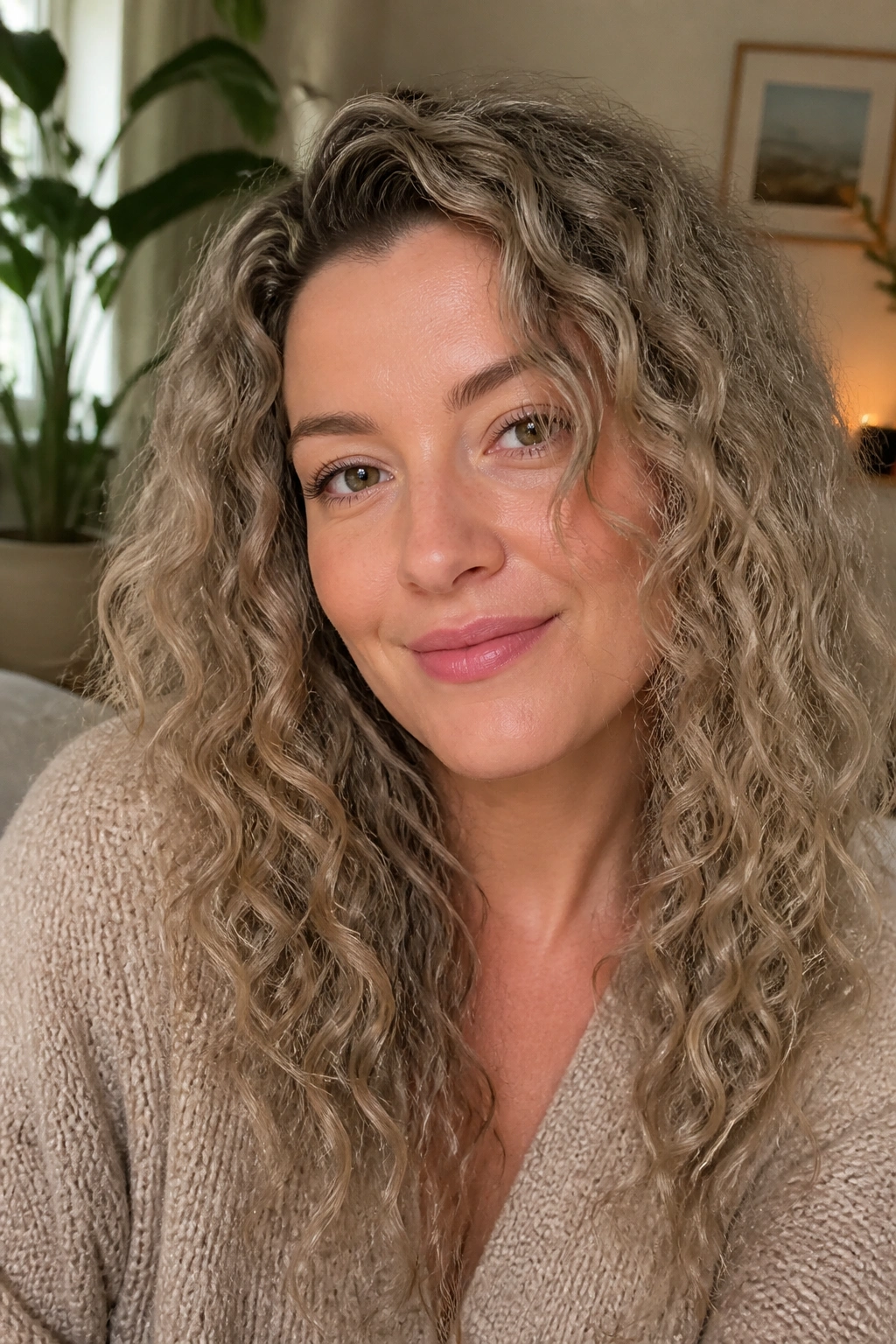
Smoky beige blonde is for people who want blonde without a lot of shine or gold. It sits between ash and butter, which gives it a calm, muted finish that works well on curls with natural texture. The color does not fight the hair. It settles into it.
What I like here is the softness. Smoky beige can make frizz look intentional instead of messy, because the tone has enough depth to hold onto the curl pattern. It’s a very good option if your hair tends to go a little orange when lifted. The beige pulls it back into line without making it gray.
This shade also grows out gracefully. The root stays believable, the lengths stay light, and the whole thing looks collected rather than high-maintenance. That’s a nice change.
24. Rose-Gold Blonde with a Muted Glow
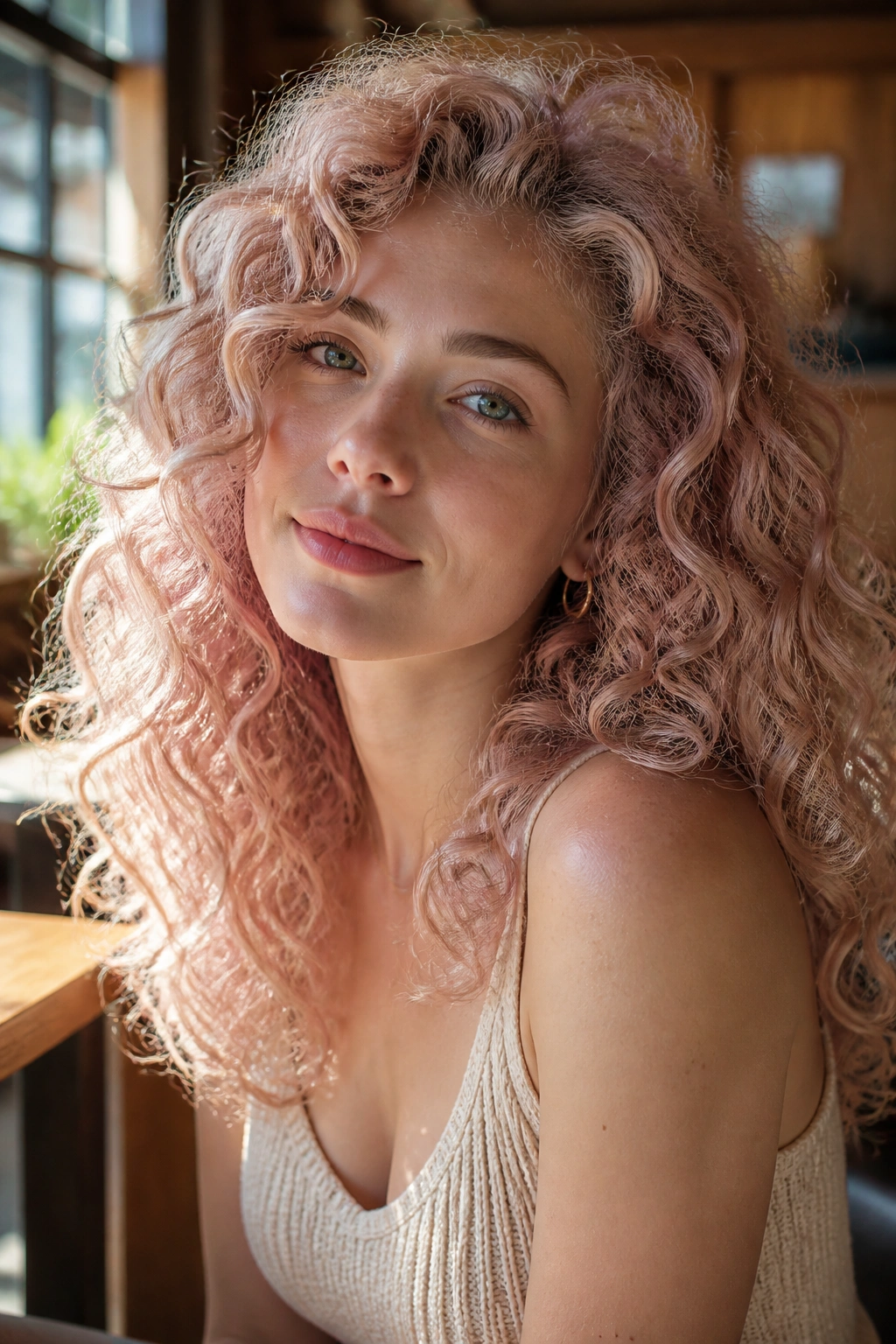
Rose-gold blonde can go tacky fast if the pink is too loud. Keep it muted, though, and it turns into one of the most flattering warm blondes for curls. The rose tint softens the gold and gives the color a faint blush that moves nicely in the light.
It’s a good choice if plain blonde feels too flat but you do not want full copper or strawberry. The rose note can sit on the surface of a pale blonde base, almost like a tinted glaze. On curls, the effect is gentle, because the bend of the hair breaks up the color.
I’d recommend this for people who like warmth, softness, and a little personality without crossing into obvious fashion color. It looks best when the pink is more whisper than shout.
25. Wheat Blonde for Natural Texture
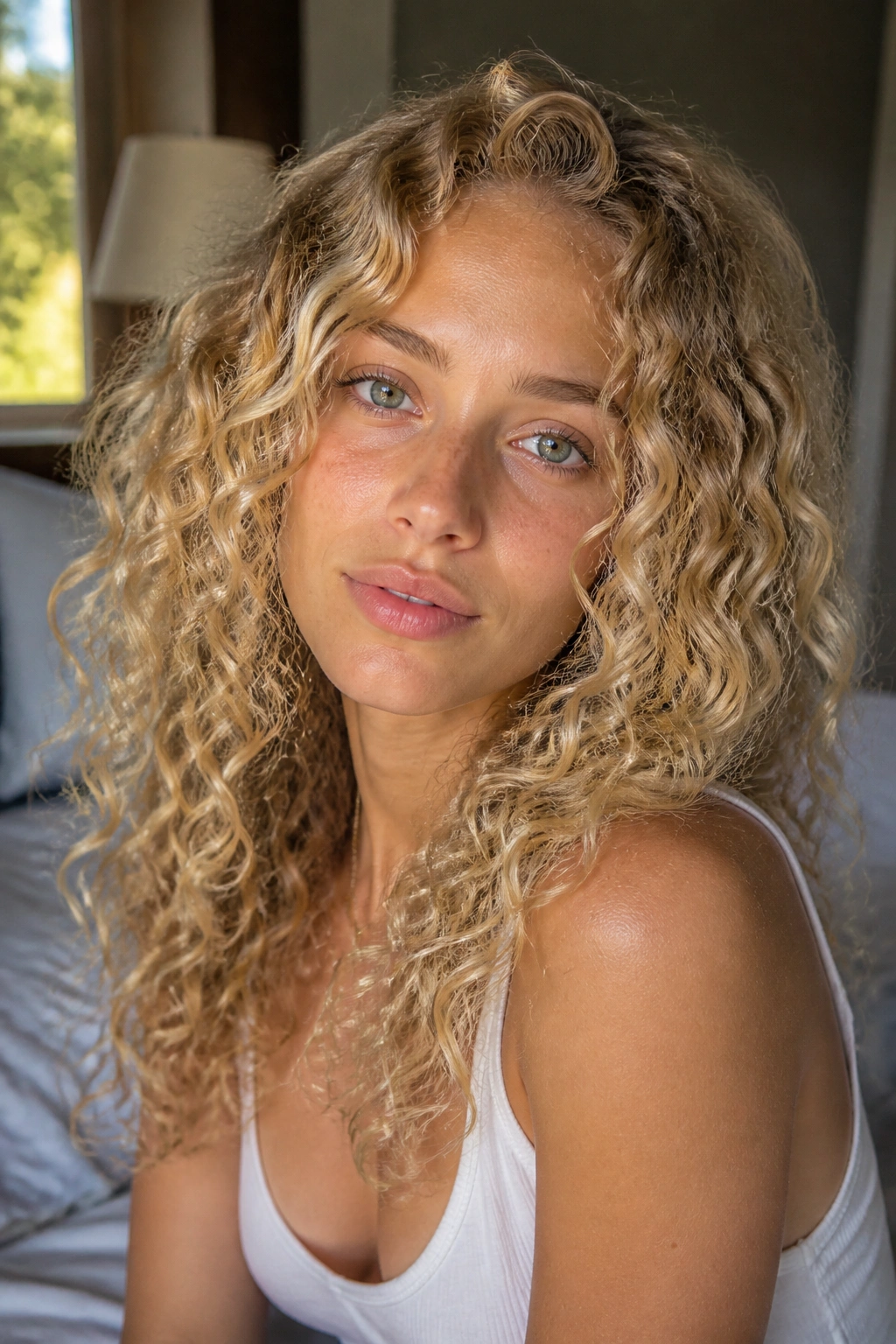
Wheat blonde is one of the easiest blondes to believe on curly hair. It’s soft, earthy, and close to the color of pale grain, which means it plays nicely with natural texture instead of trying to erase it. That’s the appeal.
The shade is usually deeper than beige blonde and lighter than light brown, so it can brighten the whole head without much maintenance. On curls, wheat blonde has a useful trick: it makes the hair look sunlit even when the finish is matte. Some blondes need shine to work. This one does not.
I like it on people who want a low-fuss color that still looks intentional. It’s quiet, but not bland. There’s a difference.
26. Frosted Ribbon Blonde on Long Curls
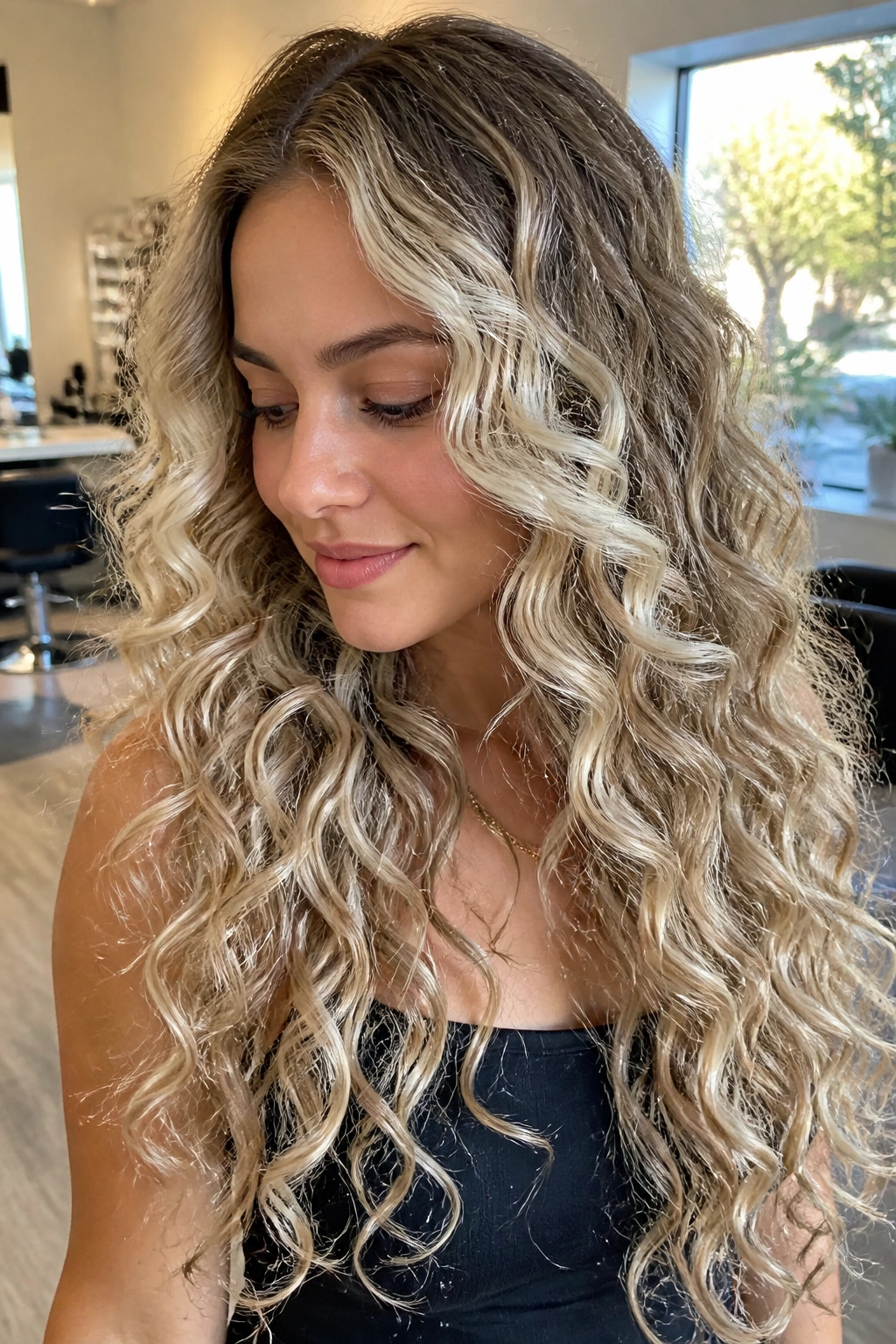
Frosted ribbon blonde is built for long curls that need movement at the ends and brightness around the outer layers. The ribbons should be narrow, cool, and spaced through the hair so the blonde shows up in motion rather than all at once. That keeps the pattern readable.
Where the Frost Should Sit
I like the frost around the canopy and the front sections, then a little less through the interior. Long curly hair can eat color if it’s packed too densely, so the placement has to respect the way the hair falls when it’s dry. If you wear a center part, keep the lightest strands near the temples and the outer curve of the face.
This is cooler than honey, softer than platinum, and a little more structured than balayage. It’s a very specific look, which is why it works. When the ribbons are fine enough, the whole style ends up feeling lighter without losing its shape.
27. Apricot Blonde for Springy Corkscrews
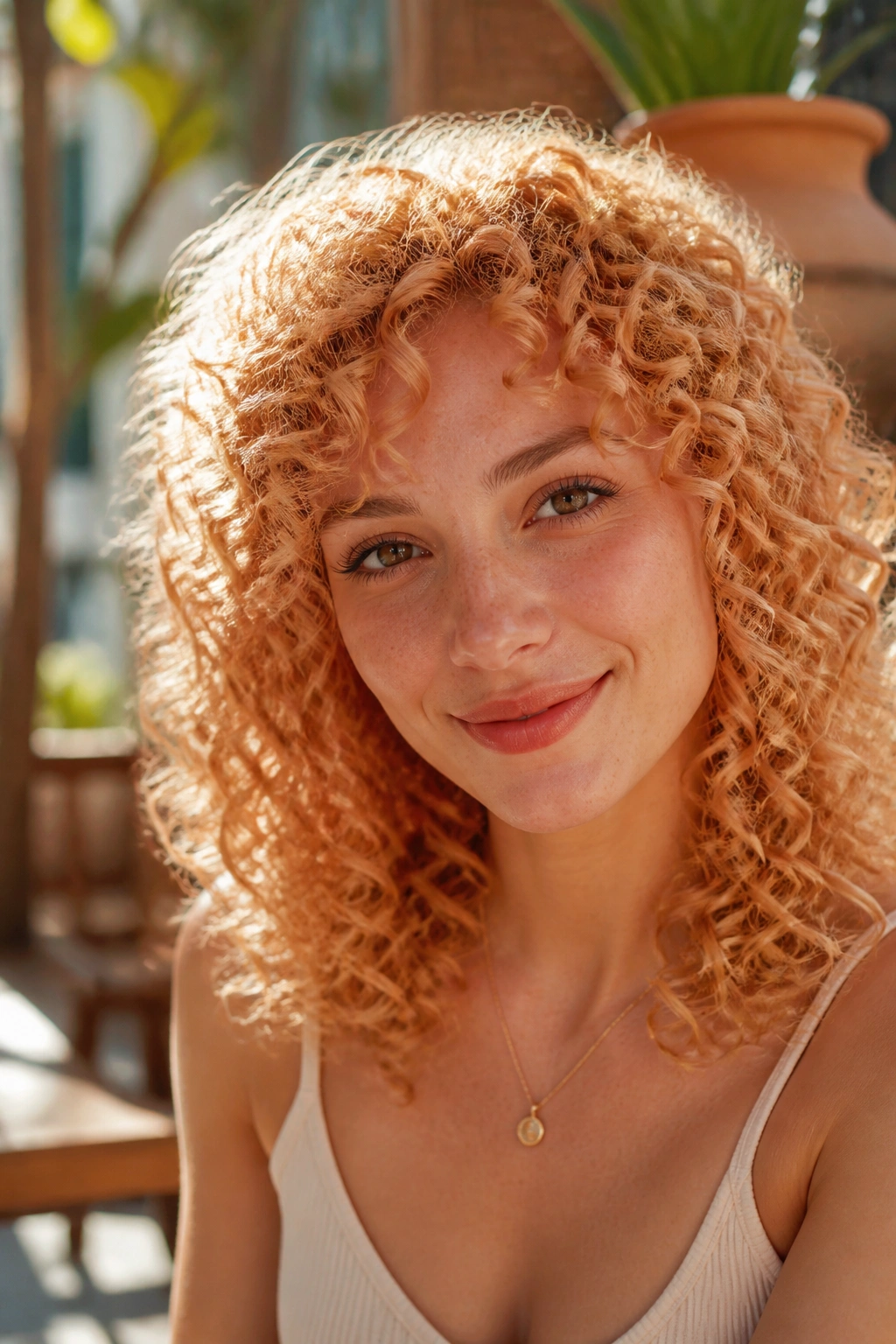
Apricot blonde has a soft peach-gold warmth that looks lovely on springy corkscrews. It’s brighter than strawberry and gentler than copper, which gives it an easy, fruit-soft feel. The color moves between pale gold and soft orange, but never enough to tip into neon territory.
The reason it flatters curls is the way it reflects through the bends. Apricot warms up the edges of the curl without covering the texture. On a very defined pattern, that can make the hair look almost glowing from within. That sounds dramatic, but it’s really just smart placement and a flattering tone.
- Keep the apricot soft and translucent.
- Use a beige base so the color stays blonde-first.
- Pair it with a gloss that fades cleanly, since warm pastel blondes can go dull if they’re over-toned.
This is one of the sweeter-looking blondes, and that’s the whole point.
28. Peekaboo Platinum Panels for Bold Contrast
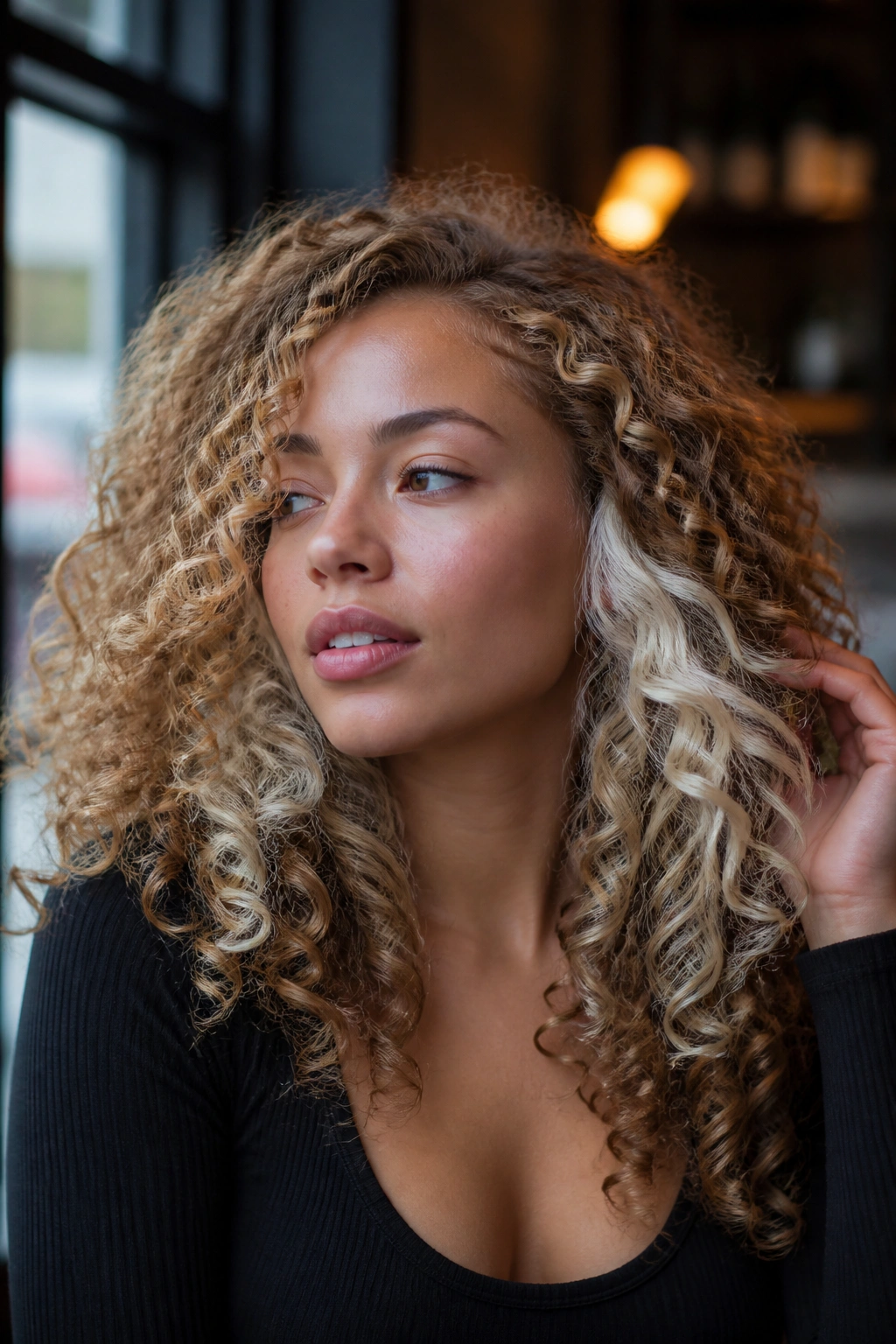
Peekaboo platinum panels are for the person who wants brightness without turning the whole head into a bleach project. The platinum lives underneath or inside the curl mass, so it flashes when the hair moves and hides when it doesn’t. On curly hair, that surprise effect is half the fun.
This is different from full platinum because the panels give you drama in controlled doses. The curls hide the placement until they separate, and then the blonde pops. That makes it easier to wear if you like contrast but do not want your whole head exposed to a high-lift service every time you color.
I’d suggest this for people with strong curl definition and enough length for the panels to tuck under the outer layer. It’s bold, a little cheeky, and much cooler in practice than it sounds on paper.
Final Thoughts
Curly hair can carry blonde in ways straight hair can’t. The bends, coils, and ringlets build their own dimension, so the right shade often looks richer than the same color on a smoother texture. That’s why the best choice is rarely the palest one. It’s the one that leaves room for the curl pattern to show through.
If you’re picking between two shades, choose the one with better depth at the root and cleaner tone through the ends. That combination tends to age better, grow out softer, and make the hair look fuller. A single glossy blonde can be pretty. A blonde that moves with your curls is better.
Take one dry photo of your hair in daylight and one in indoor light before you sit in the chair. That gives you a better starting point than any filter-filled inspiration board ever will.
