



Fine gray hair can look flat fast. One heavy layer, and it sits there like a lid.
A shag only helps if the shape is handled with care. Gray strands throw more light than dyed hair, so every ridge, bend, and blunt edge shows up; that’s a gift when the cut is clean, and a headache when the thinning shears get too eager.
The sweet spot is movement without see-through ends. You want lift near the crown, enough weight around the perimeter to keep the cut from fraying out, and fringe that breaks up the forehead instead of swallowing half your face.
That balance is what makes gray shag haircuts for fine hair worth paying attention to. Some are short and punchy, some are soft and grown-out, and a few are built for people who want air-dry ease with a little polish still left in the shape.
1. Chin-Length Gray Shag Haircut for Fine Hair with Feathered Fringe

Chin length is one of the smartest places to stop when your hair is fine. Go much longer, and the ends can start looking thin; go much shorter, and the shape can lose the softness that makes a shag feel easy instead of severe.
Why it flatters fine hair
The chin line keeps enough mass at the bottom to make the cut look fuller, while the feathered fringe breaks up the front and keeps the eyes moving. It’s a tidy little trick.
- Best for: straight to slightly wavy hair with a soft gray tone
- Ask for: feathered top layers, a light fringe, and a perimeter that stays a touch blunt
- Styling note: a pea-sized amount of mousse at the roots does more than a heavy cream
- Watch out for: over-thinning the sides, which makes the cut look ragged fast
My favorite part: it grows out in a sane way. That matters more than people admit.
2. Shoulder-Grazing Silver Shag with Curtain Bangs

Shoulder length gives fine hair a little breathing room. It is long enough to tuck behind the ears, tie back, or bend with a brush, but short enough that the ends still look like they belong to one shape.
Curtain bangs suit this length because they open the face without stealing too much density from the front. If your gray hair tends to collapse at the crown, ask for the shortest layers to land high enough to lift the top, but not so high that the sides end up skinny.
A shoulder-grazing shag also plays nicely with silver tones that are a mix of bright white and smoky gray. The movement in the cut keeps those shades from looking static.
Best styling move
Use a large round brush or a 1.25-inch curling iron just through the face frame, then leave the ends a little loose. Stiff curls look odd here. Soft bends look intentional.
3. Pixie-Length Gray Shag with Tapered Nape
Why does this tiny cut often look fuller than a longer one? Because every strand has a job.
A pixie-length shag works when the nape is tapered cleanly and the top stays a little longer, almost like a soft cap of texture sitting over the head. Fine hair can look sparse when it hangs; short lengths often fix that by removing the dead weight that drags the shape down.
What to ask for
Keep the language specific. A good stylist should hear tapered nape, long top, pieced-out crown, and soft sideburns and know exactly where to keep fullness. If you want a more lived-in finish, ask for point cutting instead of heavy razor work. That makes the edges look airy, not shredded.
This cut is sharp with glasses. It’s also honest. There’s nowhere for bad layering to hide.
4. Collarbone Shag with Airy Ends

Picture hair that hits right at the collarbone, then breaks into soft, broken-up layers that flick out instead of hanging in one flat sheet. That’s the kind of shag that saves a lot of people from the awkward in-between length.
The collarbone is a useful stopping point for fine hair because it leaves enough density to create a shape, especially if your hair is gray and showing every line of the cut. The layers should be lighter through the crown and face frame, with the bottom edge left slightly heavier.
That heavier edge is doing real work. It keeps the ends from looking wispy when the cut settles, which it absolutely will after a few shampoos.
If your hair is straight, this cut likes a slight bend from a flat iron or a quick wrap around a medium barrel iron. If it’s wavy, scrunch it with a light cream and leave it alone. Seriously. Too much brushing flattens the whole point.
5. Razored Lob with Swoopy Face Layers
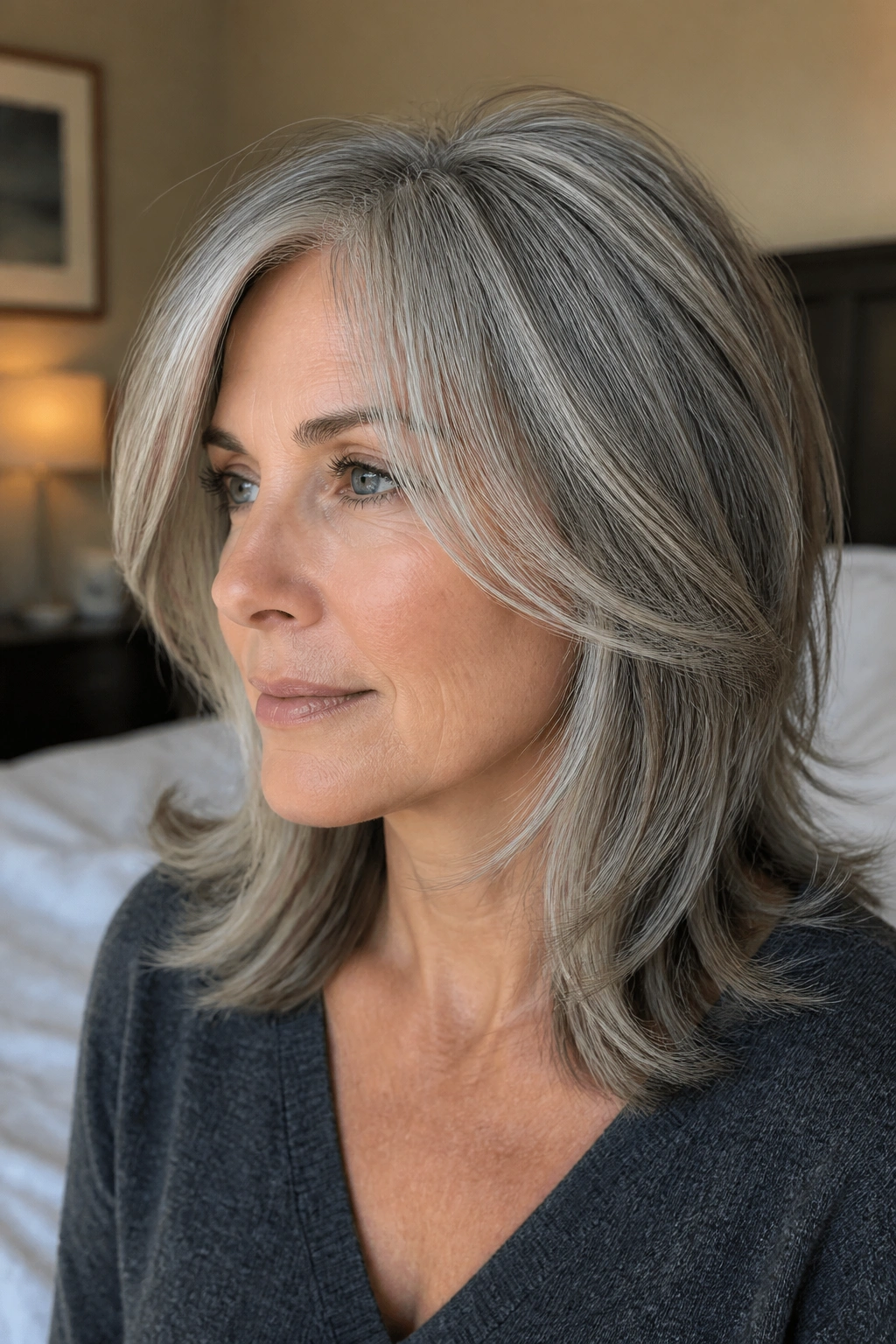
A razored lob can be beautiful on fine gray hair when the razor is used with restraint. The trick is not to chew up the ends. It’s to soften the interior so the shape moves when you turn your head.
The swoopy face layers matter here. They pull the eye toward the cheekbones and away from the part line, which is useful if your hairline has started to feel a little sparse. A side part makes this even better, because it gives the roots a little natural lift on one side.
A clean lob shape with soft shag layers is a good middle ground for anyone who wants texture but does not want a full-on tousled look every day. It feels more tailored than messy. That’s a good thing.
Style it like this: blow-dry the roots first, then wrap the front pieces away from the face for a few seconds with a brush. Let them cool before touching them. That cooling step is the difference between a swoop and a flop.
6. Soft Wolf Shag with Wispy Length
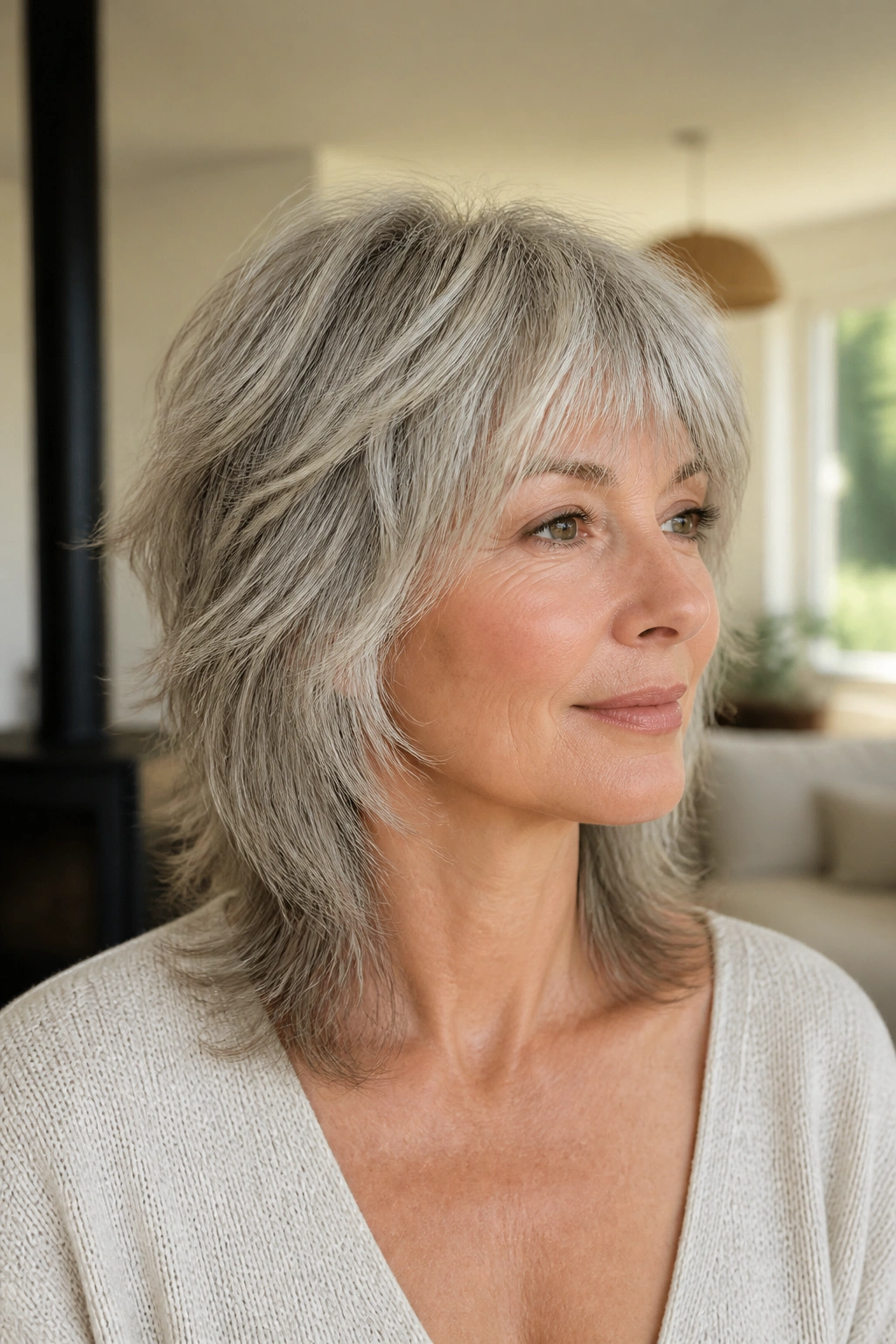
The wolf cut gets a lot of attention, but on fine hair it needs a softer hand. Too much disconnect and too many razor-thin ends will make the style look stringy instead of cool.
The version that works best for gray strands keeps the crown shorter, the sides blended, and the back only slightly longer. That gives you the mood of a wolf shag without the harsh bite. Think of it as a moderated version, not a costume.
What makes it different
Unlike a heavy mullet, the soft wolf shag still carries weight through the perimeter. That matters when the hair is fine, because the ends need enough substance to read as a shape from across the room.
- Great for: wavy hair that falls flat at the top
- Best with: light texturizing spray, not sticky wax
- Skip it if: your hair is very straight and limp without heat styling
- Stylist note: keep the longest layer just below the jaw or upper neck
This one has attitude, but not chaos. There’s a difference.
7. Short Gray Shag with Side-Swept Bangs

Short gray shag haircuts for fine hair can look unexpectedly plush when the bangs are swept to one side. A side-swept bang gives the front a little overlap, which helps the hairline look denser without turning the style into a full fringe wall.
What to ask for
Ask for soft crown layering, a side-swept bang that starts high, and shattered ends only at the surface. That last part matters. You want texture, not holes.
- Face-friendly: round, heart, and oval shapes
- Styling aid: root-lifting spray at the crown before blow-drying
- Tool: small round brush for the bang, fingers for the rest
- Avoid: a bang that’s cut too short above the brows unless you want real edge
A side-swept shape is useful on days when your hair won’t cooperate. It can be tucked, pinned, flipped, or left to fall across one eye. That flexibility is half the appeal.
8. Long Gray Shag with Invisible Layers

Long and fine can be a tough pairing. The ends often look see-through before you’re halfway through the haircut appointment, and that’s why a long shag has to be handled with discipline.
Invisible layers are the answer. Not dramatic chop lines. Not a thick ladder of short pieces. Just enough internal movement to keep the top from going limp, while the bottom still reads as long and full. That’s the kind of cut I reach for when someone wants to keep length but hates the dead curtain effect that long fine hair can fall into.
Gray tones make this especially important. Light silver ends can expose every uneven layer, so the blending has to be soft. A skilled stylist will often cut some of this dry, watching how the strands sit when they’re not stretched by water.
You can wear this one straight, bent, or loosely waved. The cut is doing the quiet work in the background. That is the whole point.
9. Wavy Silver Shag with Rounded Shape

If your gray hair already has a bend to it, don’t force it into a sharp outline. A rounded shag works with the wave instead of chopping through it, and that tends to make fine hair look a little denser.
The rounded shape keeps the sides from collapsing inward. It also gives the crown a softer lift, which is useful if your hair gets flat after a few hours. I like this version with a long fringe that splits naturally, because it leaves enough room around the face to breathe.
How to style it
Use a light curl cream on damp hair, then scrunch from the ends upward. If you diffuse, keep the dryer low and stop when the hair is about 80 percent dry. The last little bit can air-dry on its own.
A little frizz is fine here. Polished waves can look stiff on this cut, and stiff is the enemy of a good shag.
10. Blunt-Edged Shag Bob with Internal Lift
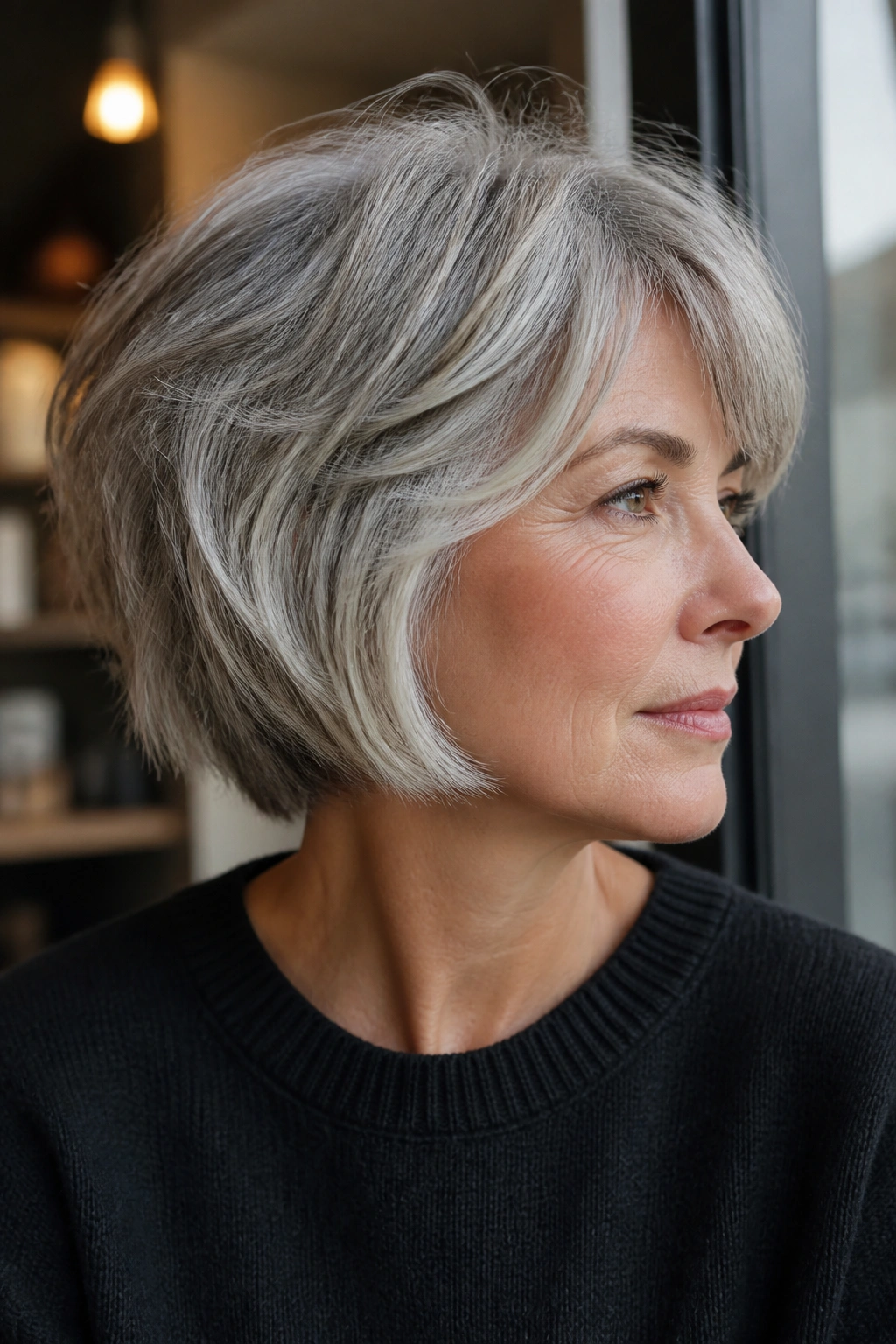
A blunt edge gives fine hair something it often needs: the feeling that there is more of it. A shag bob with a crisp bottom line and hidden internal layers is one of the smartest ways to get movement without sacrificing density.
The outside line stays tidy. The inside gets lifted. That combination means the cut can swing a little when you move, but it still looks solid when you tuck it behind the ears or let it settle naturally. It’s a neat bit of contrast.
This style works especially well if your gray hair is mostly straight. The blunt edge creates weight, while the internal layering keeps the crown from lying flat against the head. If you’ve tried softer bobs that melted into nothing, this version has more backbone.
Ask for: a bob that hits between the jaw and the top of the neck, plus hidden layers cut into the midsection. Skip aggressive thinning. You want support, not air.
11. Razored Crop with Micro Fringe

Micro fringe is not for everyone, and that’s fine. On the right face, though, it gives a gray shag a sharp little jolt that keeps fine hair from looking too sweet or too safe.
The key is restraint. A razored crop with a micro fringe should still feel soft at the edges, not spiky. If the bangs are sliced too hard, fine hair can start to look sparse around the forehead. A light hand keeps the fringe airy and the crown lifted.
Who this suits best
- People with smaller foreheads
- Oval or long face shapes
- Fine hair that needs a shorter silhouette
- Anyone who likes a cut that dries fast
It’s a bold look in a small package. The maintenance is the trade-off. You’ll want trims before the fringe gets shaggy in the wrong way.
12. Feathered Midlength Shag with Cheekbone Pieces
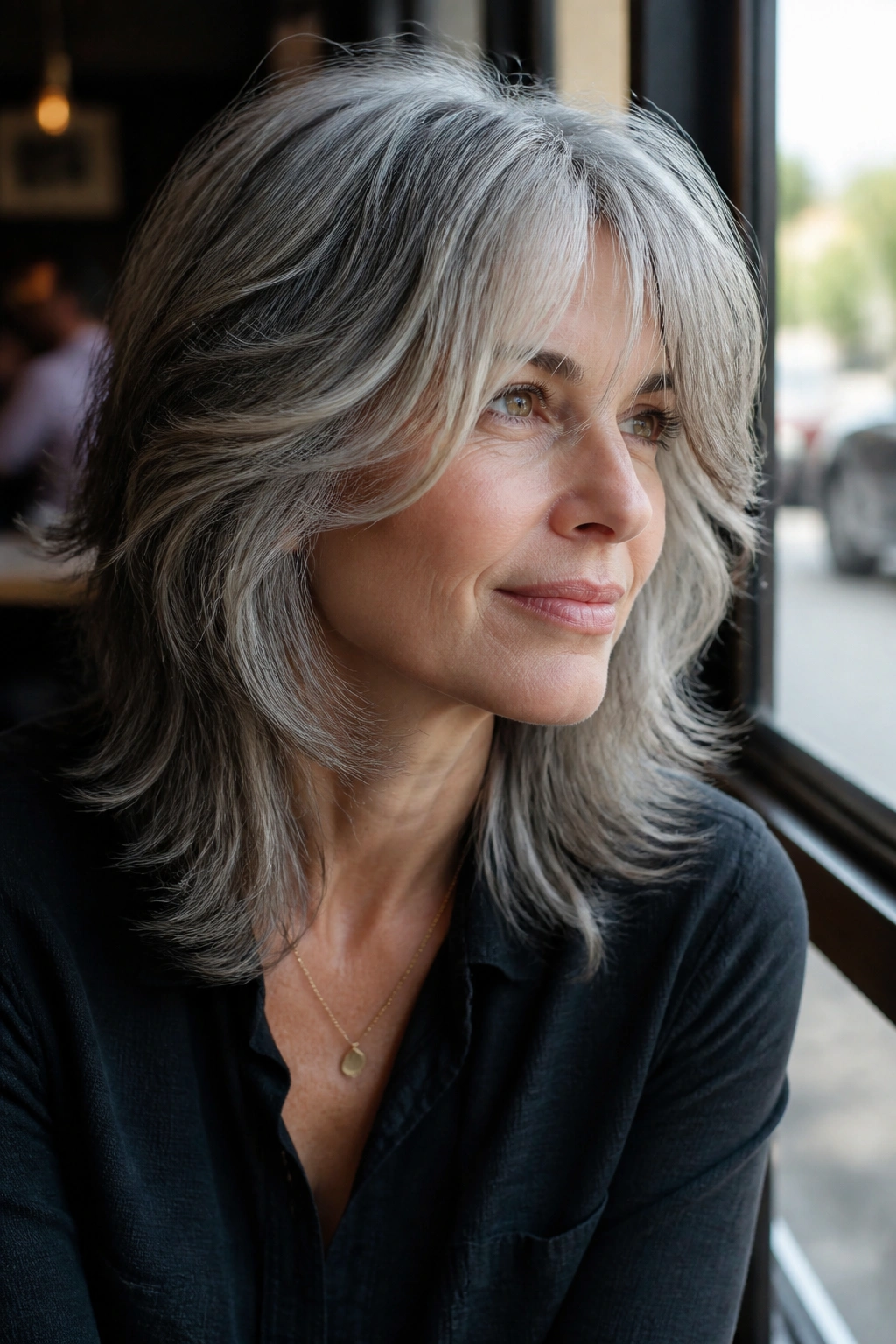
This is one of those cuts that makes people keep touching their hair. The feathering around the front and sides breaks up the shape enough to create movement, while the midlength keeps the overall outline from going too thin.
Cheekbone pieces are the quiet hero here. They draw attention upward, which helps on days when the hair at the crown is behaving badly. The layers should start high enough to lift, but not so high that the outer shape gets ragged.
Face-framing rules
- Keep the shortest front pieces near the cheekbone, not above the eye unless you want a stronger bang effect
- Ask for soft blending into the side layers
- Leave the ends lightly textured, not stripped down
- Use a medium round brush if you blow-dry
This cut is especially kind to gray hair with a salt-and-pepper mix, because the feathering lets the colors mix instead of sitting in obvious stripes.
13. Silver Shag Bob with Choppy Ends
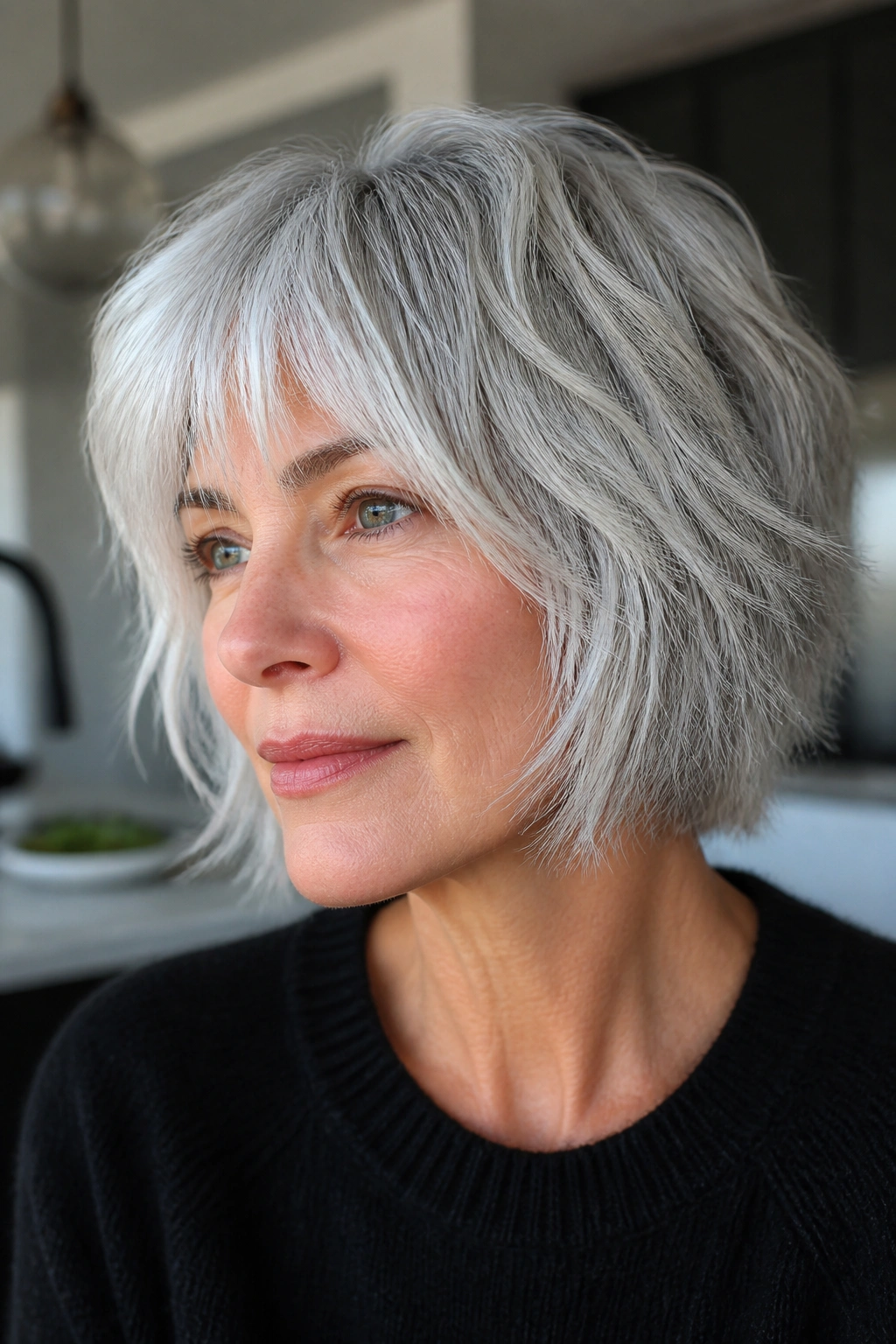
A shag bob with choppy ends can save fine hair from looking too precious. There’s a neatness to the bob shape, but the ends have enough break-up to keep the cut from falling flat.
The choppiness should live at the very edge, not all through the body. That’s the detail people miss. If every section is aggressively chopped, the whole bob can look thin. If only the perimeter gets a little bite, the shape stays dense and lively.
This cut looks especially good with silver hair that has brighter white strands woven through it. The contrast in the color makes the edge work harder, so the cut reads clearly even when it’s not perfectly styled.
A touch of styling paste at the ends can help. Tiny amount. Rub it between your fingers first, then press it into the outer layer only. Don’t rake it through the whole head unless you want the roots to go limp.
14. Deep Side-Part Shag with Root Volume
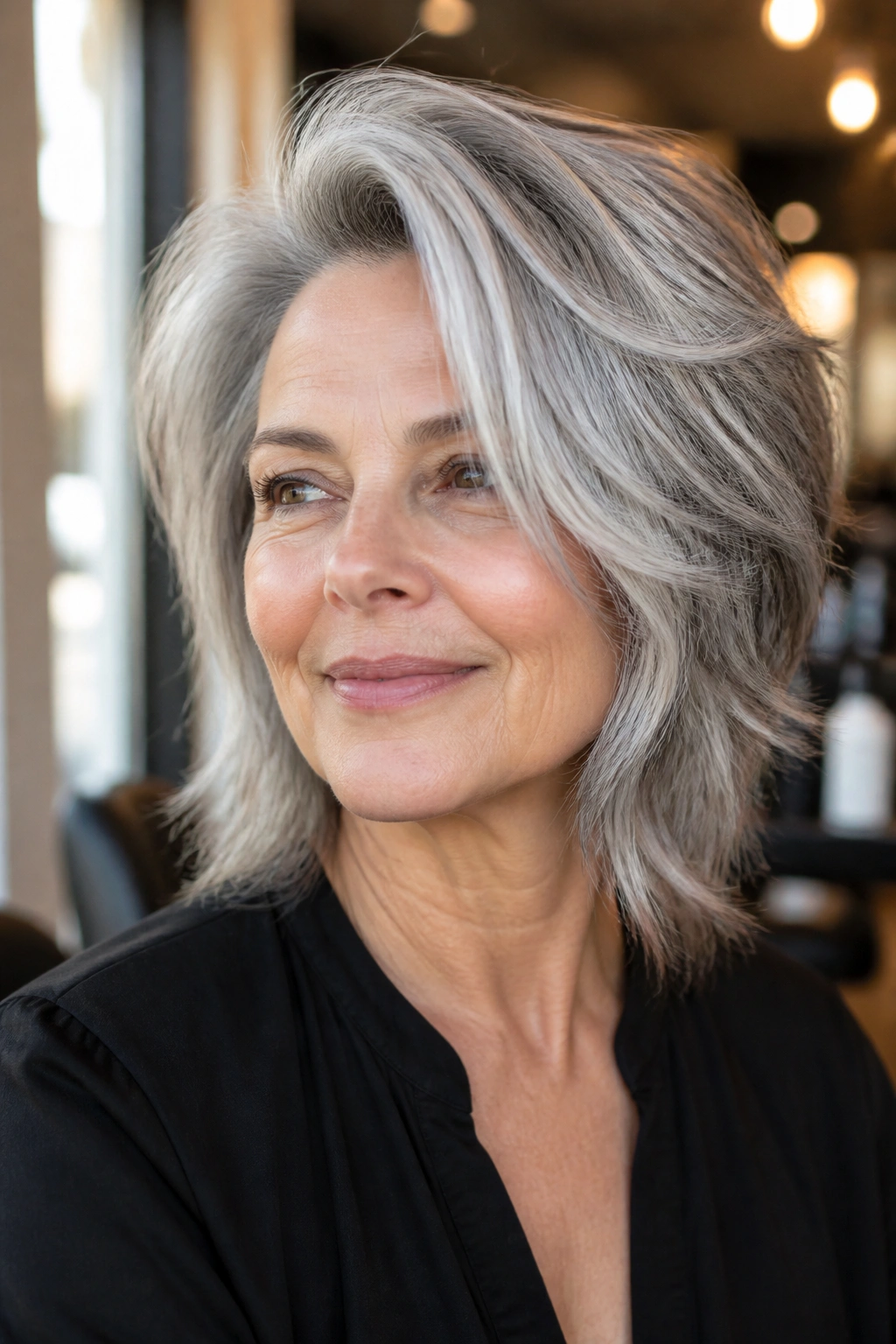
A deep side part can do more for fine gray hair than a whole drawer of styling tools. It shifts weight, creates instant height at the crown, and lets the front layers fall in a way that feels fuller on one side.
The haircut itself can be fairly simple. What changes everything is the part placement and the way the top layers are cut to support it. Ask for a little extra length near the heavier side so the hair doesn’t collapse into the cheek.
How to keep the lift
- Blow-dry the roots in the opposite direction first.
- Flip the part back once the hair is about 90 percent dry.
- Clip the crown for 10 minutes if you need more lift.
- Finish with a mist of flexible spray, not a crunchy hold product.
That little root flip is worth the trouble. It buys you shape for hours.
15. Graduated Gray Shag with Crown Lift
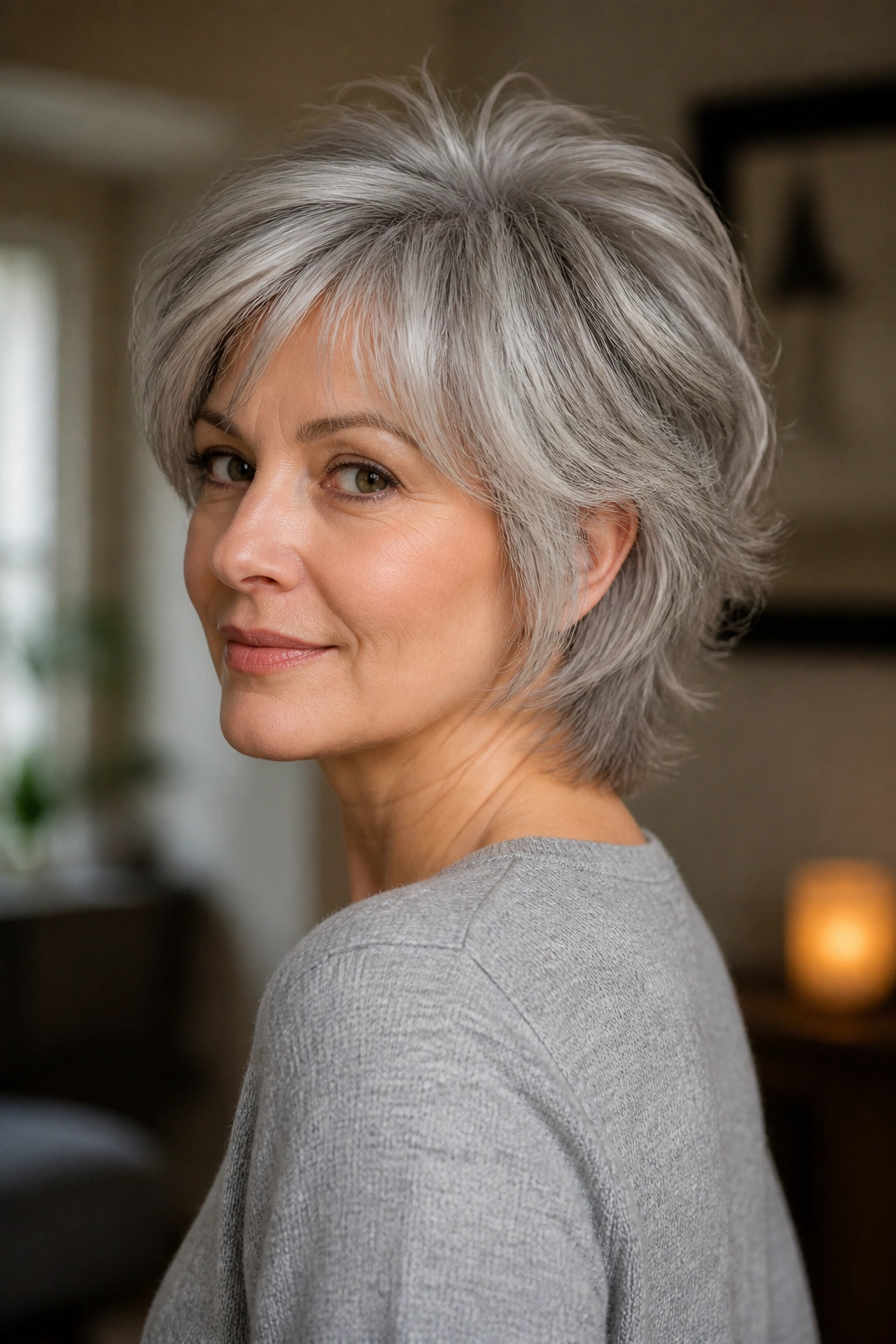
Graduation at the back gives this shag a stronger spine. That’s useful when the hair is fine, because a little stacking can make the profile look fuller without making the cut bulky.
The crown lift is the whole reason this style works. Shorter layers near the top keep the roots from hugging the scalp, while the graduated back preserves a smooth line that doesn’t shatter into pieces. It’s a good cut for people who want structure.
- Best for: flat crowns and narrow heads
- Ask for: softer graduation, not a stacked bowl shape
- Style with: root clips or a quick blast from a blow-dryer at the crown
- Avoid: razor work on the underside of the back if your ends are already thin
This one wears gray well because the shape stays readable even when the color is blended and soft.
16. Air-Dried Midlength Shag with Piecey Bangs

Some cuts want a brush, a round brush, a dryer, and a prayer. This is not one of them.
An air-dried shag with piecey bangs is built for people who want movement without a long styling routine. The midlength keeps enough weight in the ends, while the bangs are cut into separated pieces that fall where they want to fall. Fine hair often looks better in this style when it is a little imperfect.
A light mousse on damp hair is enough for most days. Scrunch the crown, twist a few front pieces with your fingers, and leave the ends alone. If you touch the hair too much while it dries, it frizzes and loses the clean, broken-up look that makes the cut work.
I like this version because it never looks overdone. It just looks like hair with some opinion.
17. Soft Mullet Shag with Wispy Length

The mullet gets a rough reputation, and some of that is deserved. Go too hard, and the shape reads as a costume. Keep it soft, though, and it becomes one of the more useful textures for fine gray hair.
The front and crown stay shorter, the sides blend gently, and the back keeps a whisper of extra length. That little tail gives the eye a place to land, which helps the hair seem more substantial than it is. Gray tones make the silhouette even cleaner, because the shape line is easier to read.
Unlike a classic mullet, this version works because…
- the transition from top to back is smoother
- the nape is not shaved or over-thinned
- the front can still be worn off the face
- the whole cut can be styled in under 10 minutes
If you want edge without losing softness, this is the one to try.
18. Stacked Nape Shag with Loose Top Layer
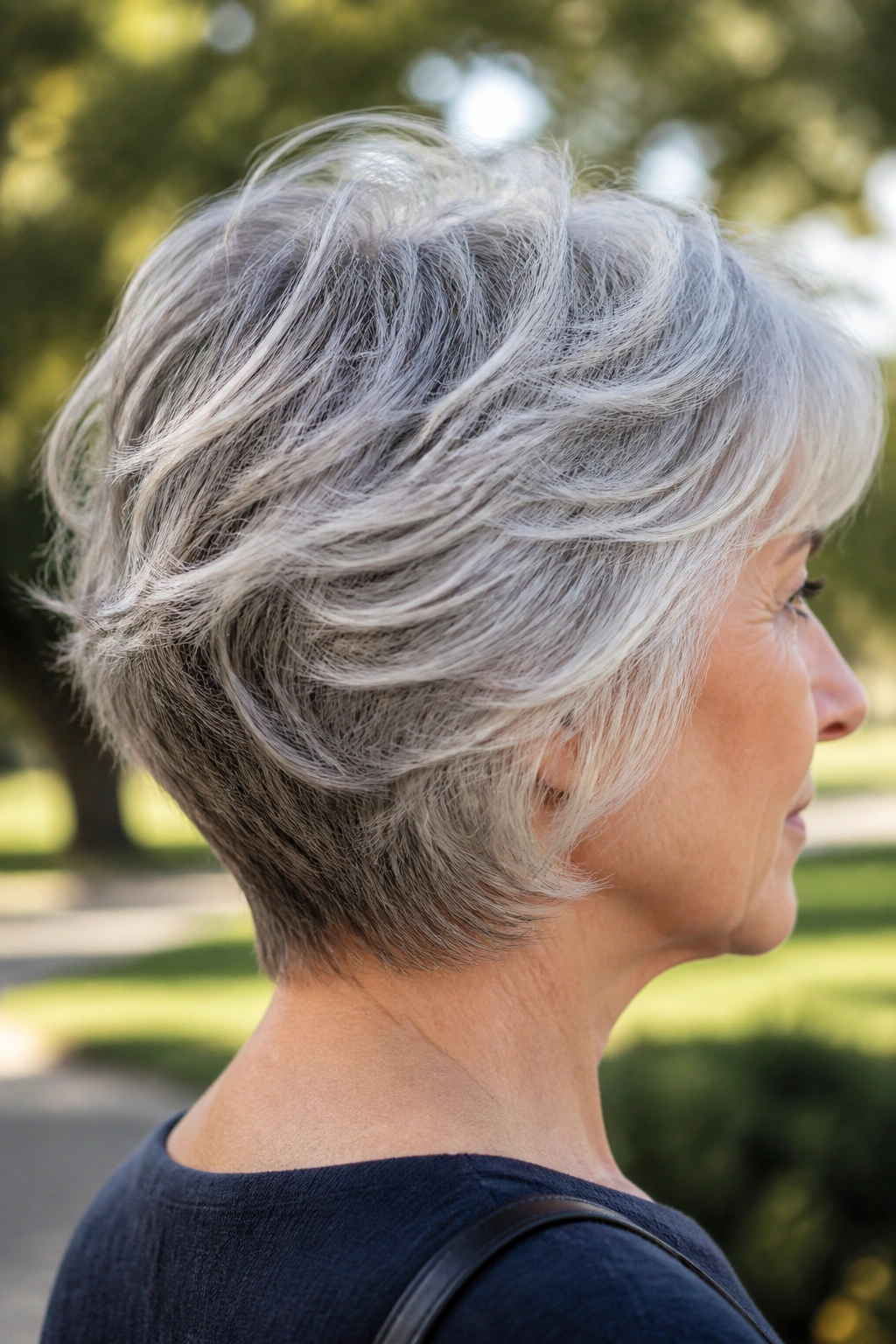
A stacked nape can make fine hair look like it has more structure than it actually does. The back gets a little lift, the top layer stays loose, and the whole cut has enough shape to hold up on a windy day.
This is a strong option for straight gray hair that tends to sit close to the head. The stacked back keeps the profile from disappearing, while the soft top keeps the style from feeling helmet-like. That balance is hard to get right, and I usually prefer it to a heavily layered everywhere approach.
What to watch for
- Too much stack in the nape can make the front look thin
- Too many short layers in the crown can make the top puffy and the sides flat
- A dry cut often shows the balance more accurately
- A little shine spray on the surface helps gray tones look clean
A good stacked shag should feel sculpted, not stiff. Big difference.
19. Long Shag with S-Bends and Soft Curtain Bangs
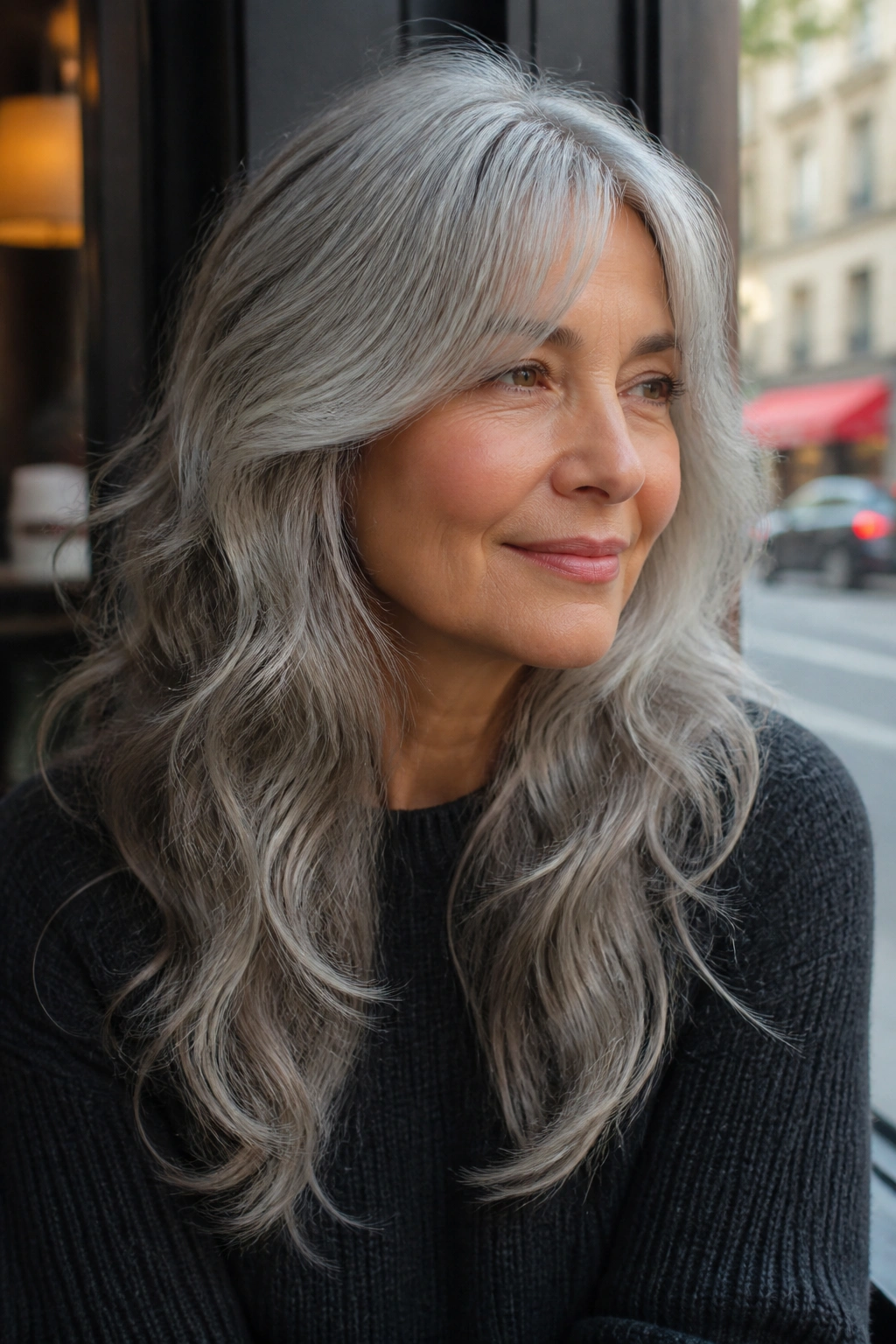
Long gray hair gets a lot more interesting when the bends are loose and the fringe is soft. Hard curls can look too formal on fine strands; S-bends give the hair movement without stealing its length.
The best long shag keeps the layers long enough to blend into the bottom half of the haircut. That lets the ends stay visible and full, which matters a lot when the hair is fine. Curtain bangs work here because they frame the face without demanding a heavy bang line across the forehead.
One thing I like about this cut is how it changes in motion. Standing still, it looks calm. Walking, it picks up shape at the sides and around the collarbone. That little swing is the whole point.
Use a large iron or even a flat iron to make bends rather than curls. Leave the ends out. The result is softer, and gray hair wears that softness well.
20. Salt-and-Pepper Shag with Root Shadow
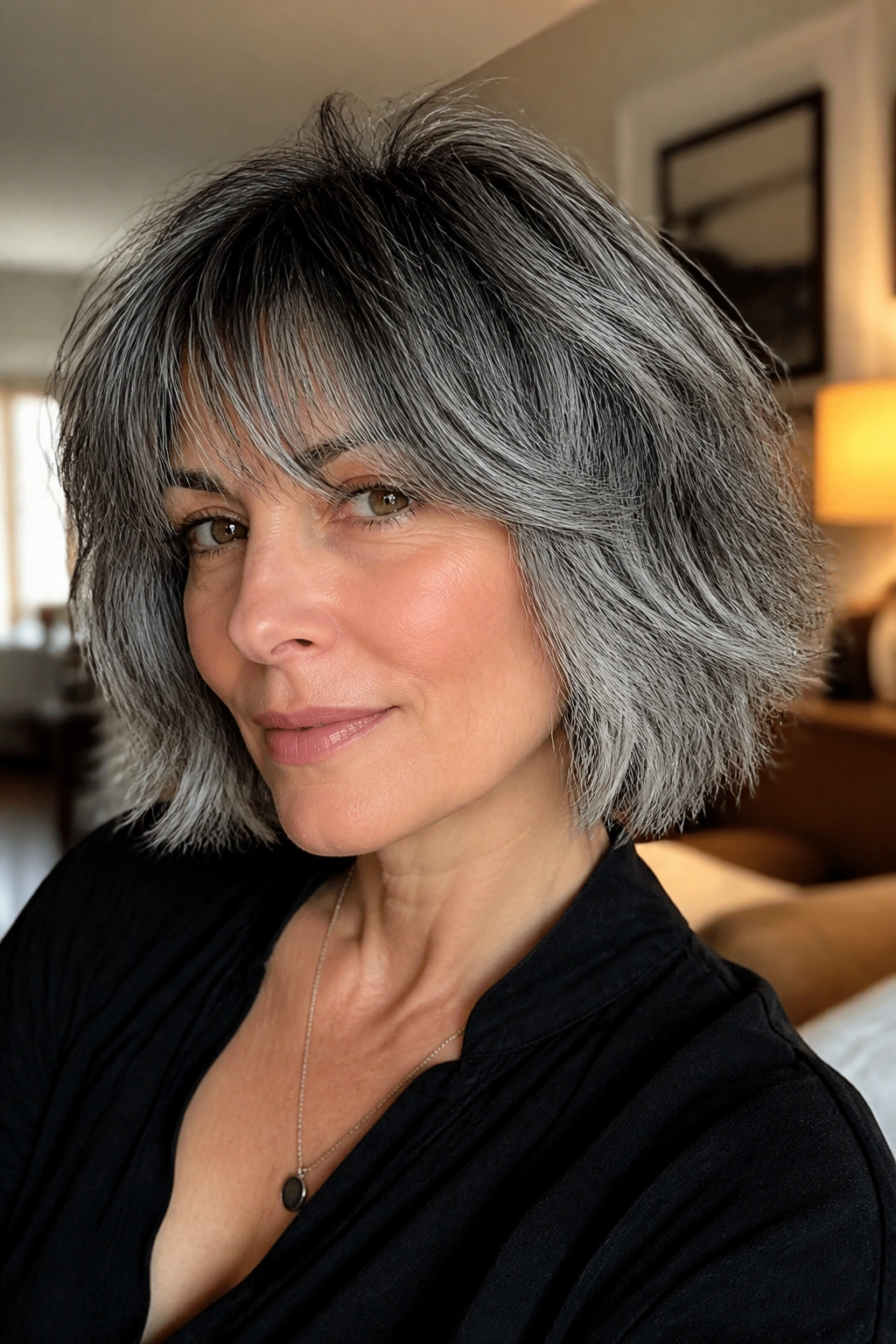
Color changes the haircut more than people expect. A root shadow can make a salt-and-pepper shag look fuller because it keeps the base from breaking into too many bright pieces.
That matters on fine hair, where too much highlighting can make the strands look airy in the wrong way. A little depth near the root gives the eye a darker anchor, and the lighter silver pieces around the face still pop. The cut reads denser because the color has contrast.
Why the color matters
A shag is already a broken-up shape. If the color is also broken up too much, the overall effect can get busy. A soft root shadow keeps the haircut grounded.
A lighter face frame and a deeper root can work well together, especially if the layer pattern is simple. You do not need five competing tones. Two or three are plenty.
21. Sliced Lob with Cheekbone Bangs
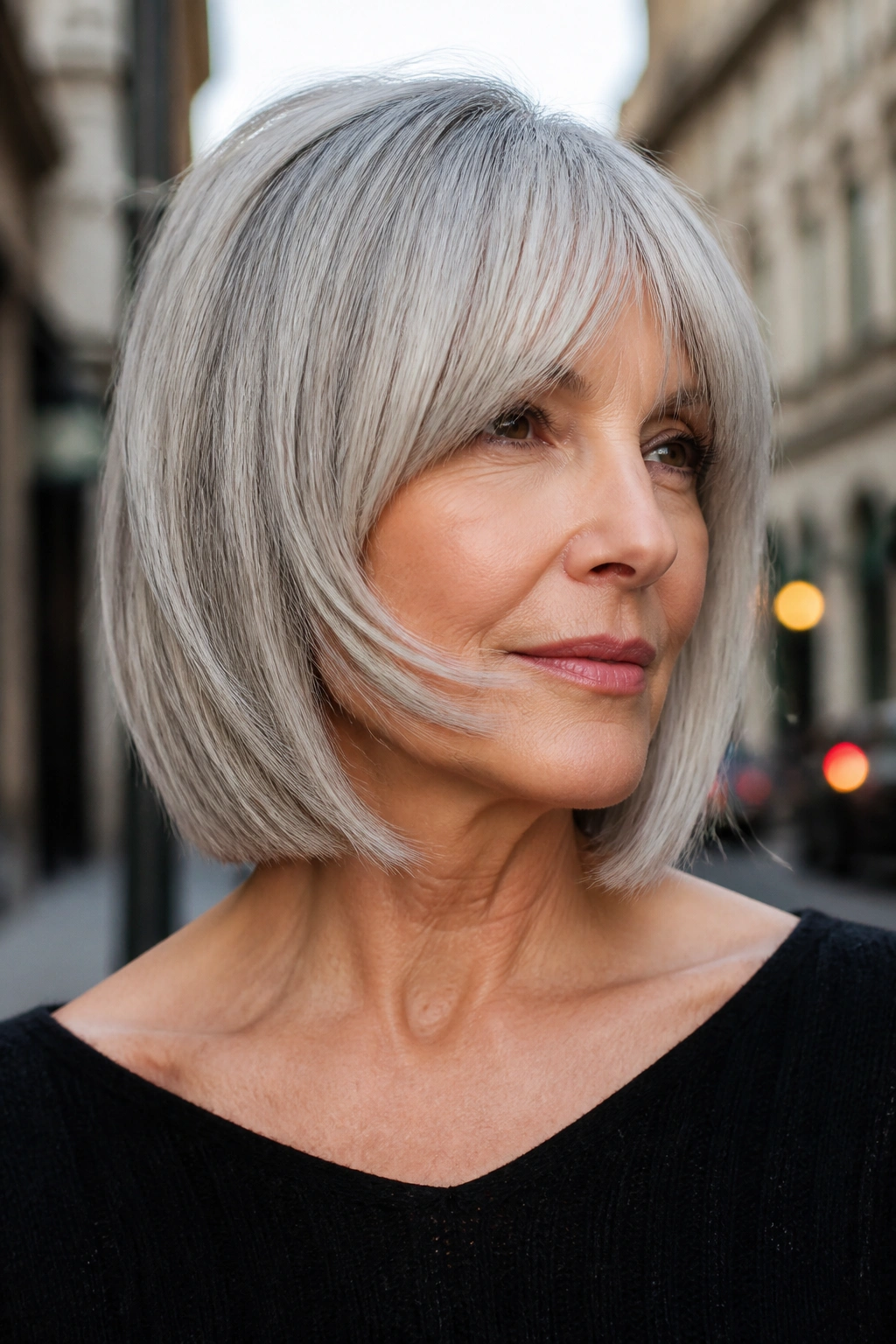
A sliced lob has a cleaner edge than a heavily feathered shag, which is exactly why it works on some fine gray heads. The cut still moves, but the overall line feels intentional and tidy.
Cheekbone bangs keep the front from becoming a flat curtain. They lift the eye upward and stop the lob from hanging too straight. If your hair naturally separates at the temples, this version can make that split look like part of the style instead of a problem.
Compared with a softer shag, this cut feels a little sharper. That makes it a good choice if you like polish more than mess. If you need volume from every angle, this is not the loudest option. If you want a gray cut that looks controlled and still loose, it earns its place.
Ask your stylist to keep the edges sliced, not shredded. A sliced edge gives movement without sacrificing the clean bottom line.
22. Neck-Length Razor Shag with Grown-Out Fringe

Why does a neck-length cut often feel easier than longer hair? Because it stays close enough to the head to hold shape, but long enough to tuck, flip, or air-dry without much fuss.
A grown-out fringe is the key here. Instead of a sharp bang line, the front pieces soften into the sides and give the haircut a more relaxed shape. For fine hair, that means less pressure on the forehead area and less chance of the front looking stringy.
Best for readers who want low fuss
- Neck-length silhouette
- Light razor work only at the surface
- Fringe that blends into the side layers
- Quick styling with a texture spray or air-dry cream
This cut is practical. It’s also flattering in a way that sneaks up on you. Nothing feels forced.
23. Brushed-Back Gray Shag for Glasses
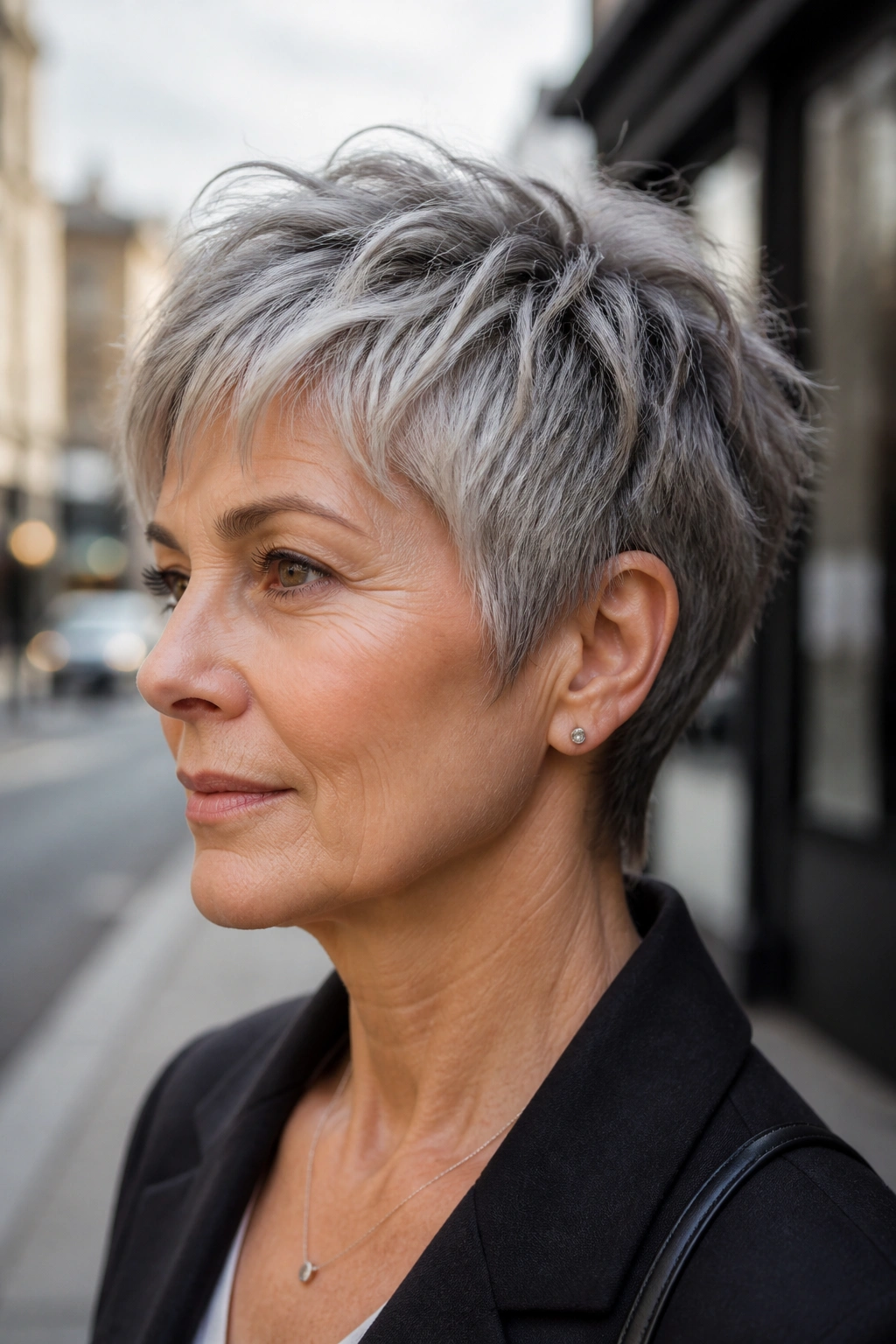
Glasses change the way a haircut sits on the face. Bangs that seem fine in the mirror can fight the frames all day long, and that gets old fast.
A brushed-back gray shag solves that by keeping the front open. The crown still gets texture, the sides still have movement, but the bangs are short enough or soft enough to sweep back without bunching into the lenses. That gives the face room to breathe.
If you wear frames, ask for temple-friendly face framing. That means the pieces near the eyes should stop before they crowd the arms of the glasses. The cut can still be shaggy; it just needs a little discipline near the front.
This version works especially well with silver hair that’s a little coarse on top and finer at the edges. The brushed-back shape keeps the top lifted and the lower half smooth.
24. Bottleneck Bang Shag for Fine Hair
Bottleneck bangs are one of the most useful fringe shapes for fine hair because they don’t demand a heavy wall of density across the forehead. They start narrower in the center, then open out near the cheekbones, which gives the face a soft frame without stealing too much hair from the top.
That makes them a strong match for gray shags. The top can stay light and lifted, while the fringe still does its job. If your hairline is a little sparse, this is a friendlier choice than a thick, straight bang.
How to ask for it
- Shorter in the center, longer toward the sides
- Soft, blended corners near the cheekbones
- Light layering at the crown
- No harsh disconnect between fringe and side pieces
I like this fringe because it behaves well when you’re growing it out. It does not turn into a weird shelf. That alone is worth a lot.
25. Choppy Midi Shag with Flipped Ends
The midi length sits in that pleasant middle zone where hair is long enough to move but short enough to hold shape. Add choppy ends and a little flip at the bottom, and fine gray hair can look lively instead of limp.
The flip is important. Outward movement at the ends makes the cut look fuller because the eye sees width at the perimeter. If the ends hang straight down, the whole thing can feel narrower. That’s why a midi shag often benefits from a round brush or a quick bend from a flat iron.
This version looks especially good on hair that’s slightly layered but not heavily textured. It keeps the outline friendly and avoids the overdone piecey look that can happen when too many layers are stacked on top of each other.
Wear it tucked on one side, loose on the other, or flipped away from the neck. It handles a little mess well.
26. Silver Pixie Shag with Long Top
A silver pixie shag works best when the top is long enough to style and the sides are kept tidy. Go too short everywhere, and fine hair can disappear. Leave some length on top, though, and the cut gets room to lift.
This is one of the most practical short gray shag haircuts for fine hair if you hate long drying time. A little mousse, a quick blow-dry with fingers, and the shape is there. The top can be swept forward, brushed up, or pushed to the side depending on the day.
The cut feels modern because the texture is doing the talking. The color helps too. Silver pixie shapes show their edges cleanly, which makes the layering look deliberate rather than accidental.
If you want short hair but still want flexibility, this one gives you more than a strict crop does. Short. Clean. Surprisingly versatile.
27. Crown-Boosting Gray Shag for Fine Hair
Some cuts are built around the crown first, and this is one of them. That is the smartest place to put your energy when the hair is fine and the top keeps falling flat.
The crown layers should be shorter, but not chopped to bits. The sides stay a little longer so the shape doesn’t turn into a puffball, and the back keeps enough length to anchor the whole haircut. The result is lift where you need it and weight where you don’t want holes.
What makes it worth asking for
- Crown height: short internal layers that rise from the scalp
- Side balance: longer side sections to preserve fullness
- Finish: root spray, then a cool shot from the dryer
- Best for: hair that loses shape fast after washing
This is one of those cuts that looks better after you learn how it wants to fall. The first blow-dry is not the whole story.
28. Low-Maintenance Gray Shag with Airy Taper
A low-maintenance shag is the quiet winner for a lot of people. It does not chase drama. It just gives fine gray hair a shape that can live through a normal week without turning into a frizzy mess.
The airy taper keeps the neck and sides light, while the top still has enough structure to avoid collapse. Nothing is over-cut. Nothing is over-styled. That restraint is what makes it work over and over again.
If you want one gray shag that grows out gracefully, this is the one I’d point to first. It holds its outline, softens in a good way, and stays believable even when you skip a wash day. The best haircuts do not fight the hair you actually have; they make it easier to wear.
