



A round face does not need to be hidden. Give it the right short shag haircut, and the face can look longer, sharper, and a little more awake without losing softness.
That is the part people often miss. A shag is not magic by itself. If the layers balloon out at the cheeks or the fringe lands in one heavy block, the cut can widen the face instead of slimming it. The sweet spot is movement in the right places: lift at the crown, broken texture through the ends, and enough length in front to pull the eye downward.
Short shag haircuts for round faces work because they create angles where the face is naturally soft. Curtain bangs, side-swept fringe, feathery layers, and slightly uneven parts all help break up fullness. A blunt bob can sit there and do nothing. A good shag has motion.
Some of the cuts below are gentle and wearable. A few are bolder. All 18 have one thing in common: they keep the shape lively while making a round face look a bit more elongated, a bit more sculpted, and a lot less “puffy around the sides,” which is the trap nobody wants.
1. Chin-Length Shag With Curtain Bangs
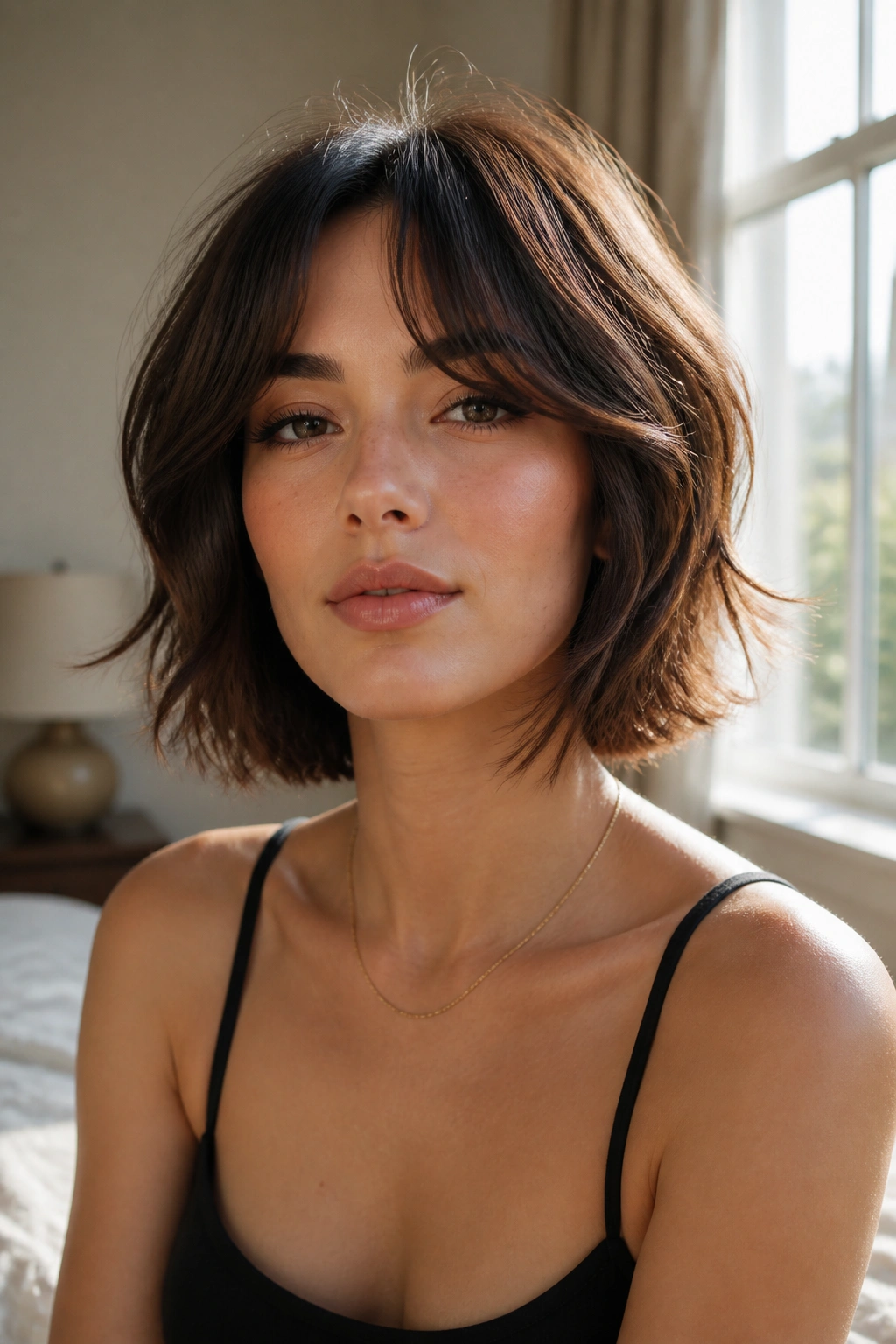
A chin-length shag is one of the easiest places to start if you want shape without drama. The cut sits below the widest part of the cheeks, which helps the face feel longer instead of wider. Add curtain bangs, and you get a soft center split that opens the face without freezing it into a helmet shape.
Why It Flatters Round Faces
Curtain bangs do a lot of quiet work here. They create a vertical line in the middle, then angle away from the cheeks, which helps guide the eye downward. That matters more than people think. A fringe that lands right across the forehead in one straight line can shorten a round face fast.
Ask for layers that start around the cheekbone or just below the cheekbone, not right at the fullest part of the face. The front pieces should graze the chin or stop a touch lower. If they are too short, the cut can puff out near the mouth and lose that slimming effect.
- Keep the crown a little shorter for lift.
- Let the side pieces bend inward or slightly away from the face.
- Use a light mousse at the roots, not a heavy cream.
- Blow-dry the bangs with a round brush or a medium Velcro roller.
Best for: fine to medium hair that needs movement without looking overly choppy.
2. Jawline Shag With Side-Swept Fringe
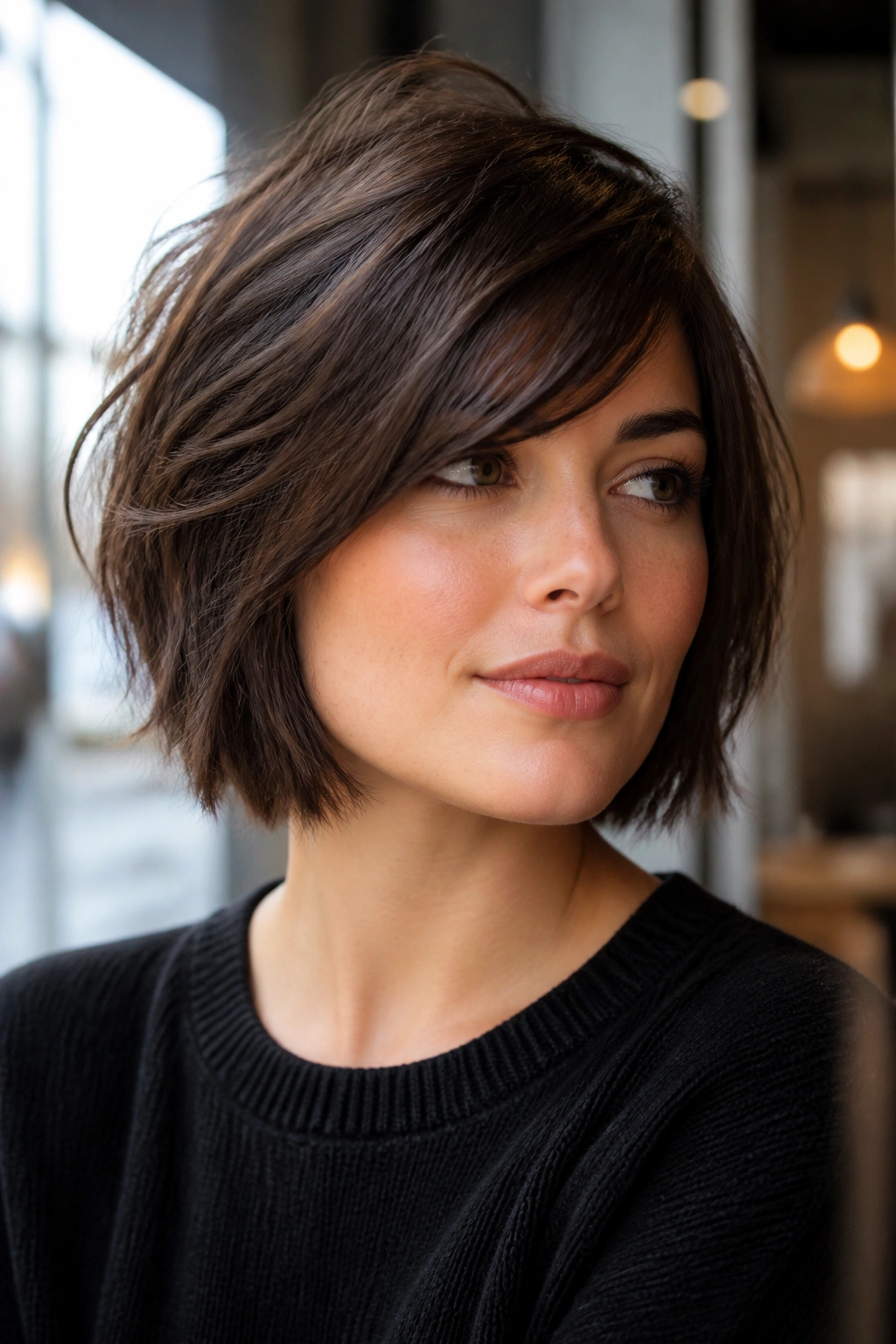
A deep side sweep does more heavy lifting than a lot of people expect. It breaks symmetry right away, and symmetry is usually what makes a round face look rounder. With this cut, the shag sits around the jawline, while the fringe skims across the forehead at an angle.
That diagonal line is the whole point. It gives the eye somewhere to go besides straight across the cheeks.
Keep the ends broken up, not blunt. The shorter layers should sit on top of the shape, not puff outward from it. I like this cut on straight or slightly wavy hair because it shows the layering without turning messy. Too much wave and too much product can make the sides expand; a little texture is enough.
If you like low-effort styling, this one is worth a close look. A quick side part, a round brush through the fringe, and a dab of texturizing spray through the ends usually does it. You get the shag feel without the big, wild silhouette.
3. Bixie Shag With Crown Lift
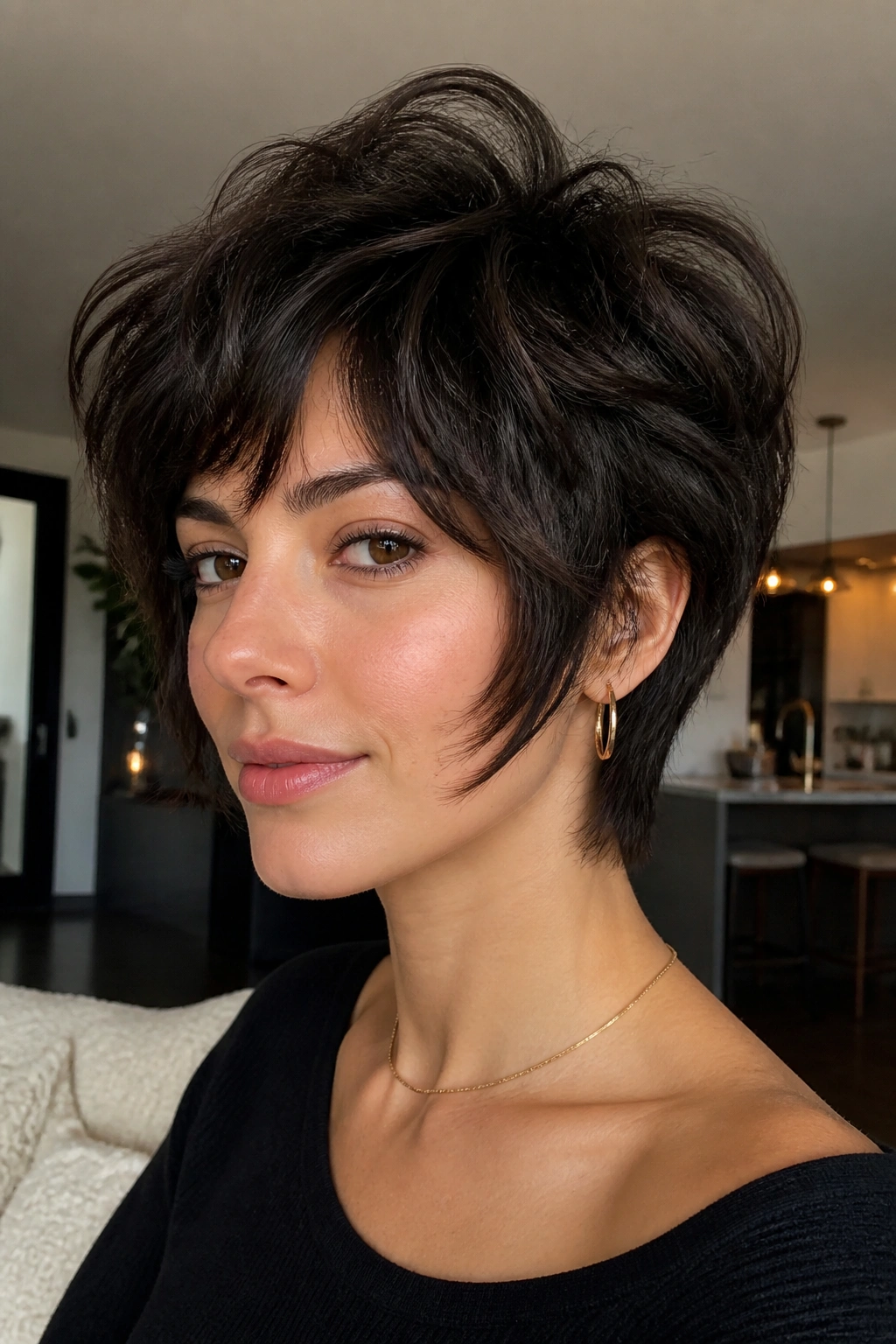
Can a bixie work on a round face? Absolutely, if the top has lift and the nape stays clean.
The bixie lives between a bob and a pixie, which gives it a nice sweet spot for round faces. You keep enough length around the ears and temples to soften the edges, but the crown gets a little height. That little bit of height matters more than people want to admit. It pulls the whole face upward.
What to Tell Your Stylist
Ask for a tapered nape, shorter layers through the top, and longer side pieces that skim the cheekbone instead of stopping there. The sides should not balloon outward. That is the mistake. A bixie with too much width at the temples can add roundness instead of breaking it up.
Use a pea-sized amount of styling paste and work it through dry hair with your fingers. You want piecey, not crunchy. If your hair is thick, this cut can feel wonderfully light. If your hair is fine, the crown layers keep it from collapsing by midday.
This is one of those cuts that looks cool even when it is slightly imperfect. Maybe especially then.
4. Razored Pixie Shag
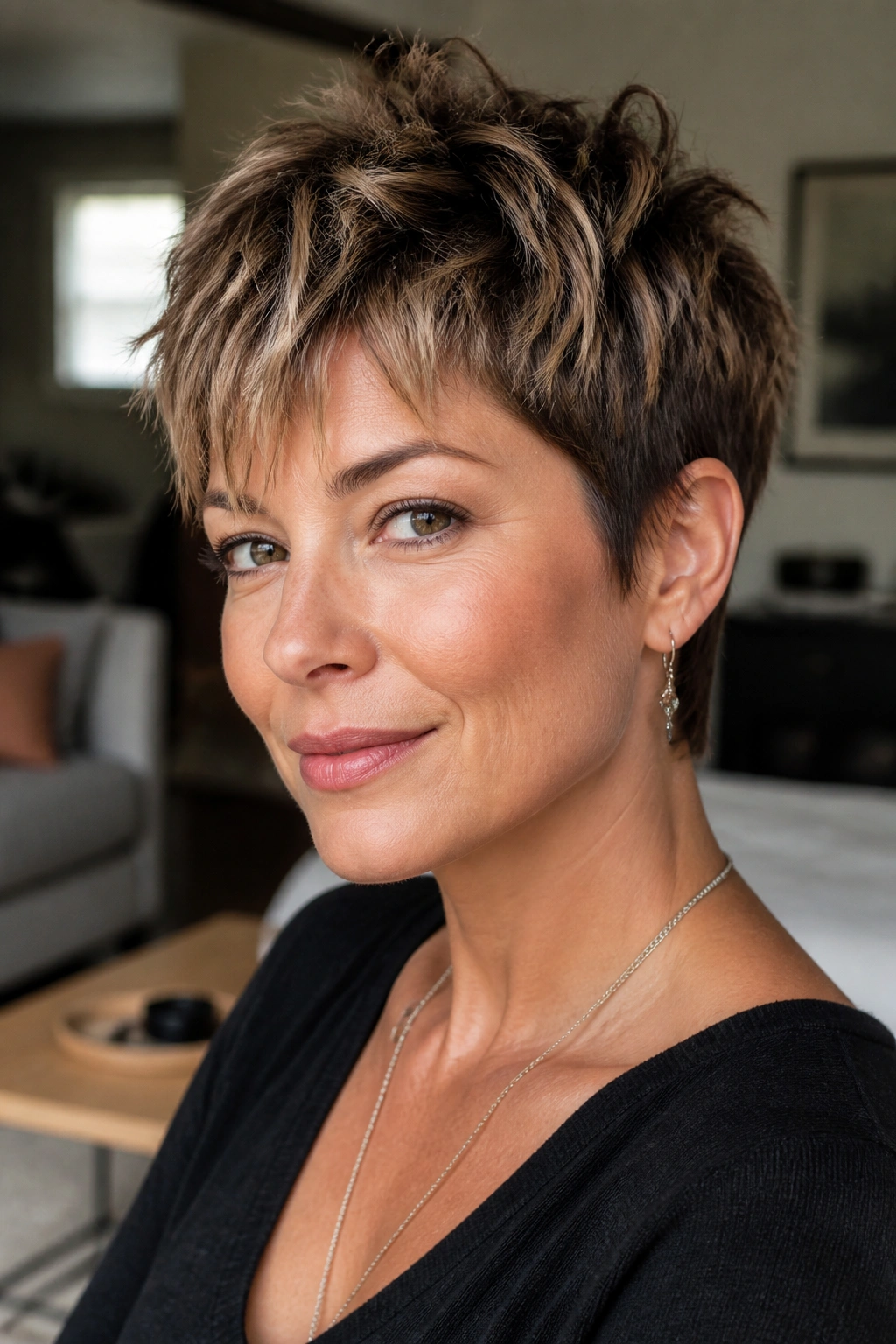
If you like hair that feels light on the head and quick to style, this is the sharp end of the spectrum. A razored pixie shag keeps the sides close and the top broken up, which creates the kind of vertical emphasis round faces usually need.
The key is not making it too fluffy around the sides. That is where the trouble starts. The shape should be narrow near the ears and fuller higher up, so the eye travels upward before it drifts outward. A soft, razor-cut fringe can help, but it should stay wispy. Heavy micro-bangs or dense side volume can pull the whole thing sideways.
This cut suits people who want edge without fuss. It also works better on hair that naturally has some bend, because the texture gives the layers a little life. Straight hair can wear it too, but it needs a touch of paste or wax to keep the top from lying flat.
No, it will not suit everyone. It is a commitment. But if you want something short, brisk, and far from boring, it has a real point of view.
5. Textured Bob Shag With Flipped Ends

A blunt bob can feel a little boxy on a round face. A textured bob shag solves that by breaking the edge and giving the shape air. The ends stay choppy, the crown gets some lift, and the front pieces can flip outward or inward depending on how you style them.
The flip matters because it keeps the eye moving. Straight, dead-straight ends stop the face cold. A little bend gives the cut life. If your hair is naturally wavy, this shape can look almost accidental in a good way. If your hair is straighter, a quick bend with a flat iron at the bottom two inches is enough.
I like this cut for people who want something neat enough for work but not too polished. It has a bit of swagger without looking like it tried too hard. That is a nice place to be.
A few centimeters below the jaw is usually the safest landing point. Any shorter, and the fullness can sit right at the cheeks. Any longer, and the shape starts to drift away from “short shag” into something else.
6. Short Wolf Cut Shag
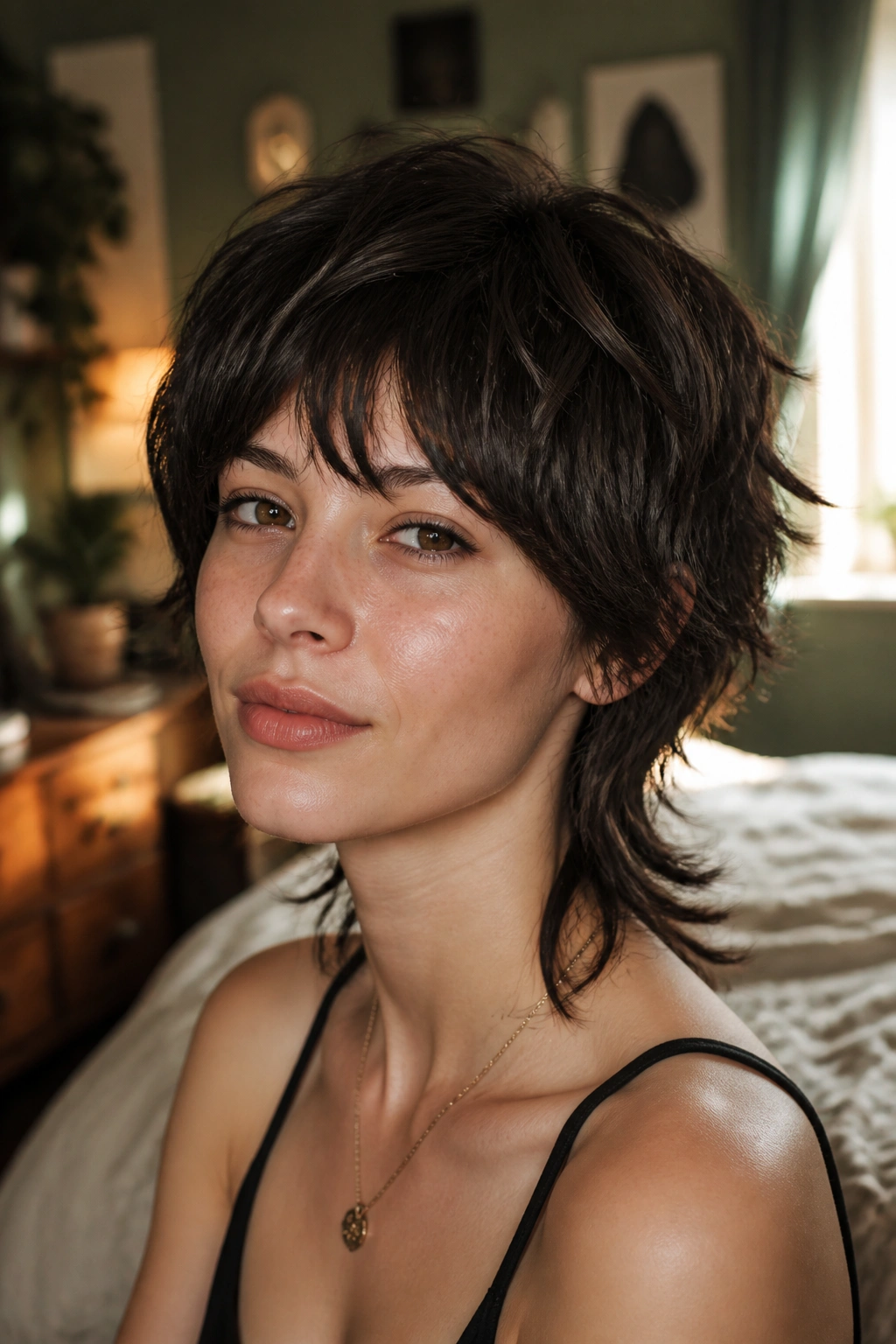
A short wolf cut does not need to be dramatic to work. In fact, the best version for a round face is usually the most restrained one: shorter through the crown, slightly longer in the back, and broken up around the face so the width stays under control.
Why It Works
The wolf cut gives you stacked texture at the top, which adds lift, while the longer nape keeps the silhouette from puffing out at the cheeks. That balance is what makes it flattering. You are not trying to create a perfect oval around the face. You are building a shape with some bite in it.
- Keep the top layers shorter than the side layers by about 1 to 2 inches.
- Ask for separation through the ends, not a rounded, fluffy finish.
- Leave the front pieces long enough to skim the jaw.
- Use a diffuser if your hair waves or curls, so the crown keeps its height.
This cut has attitude, and that is part of its appeal. It looks good a little messy, which is handy on days when you do not want to fuss. It also handles thick hair better than many smooth bobs because the layers remove weight where it tends to build up.
7. Curly Shag With Soft Layers
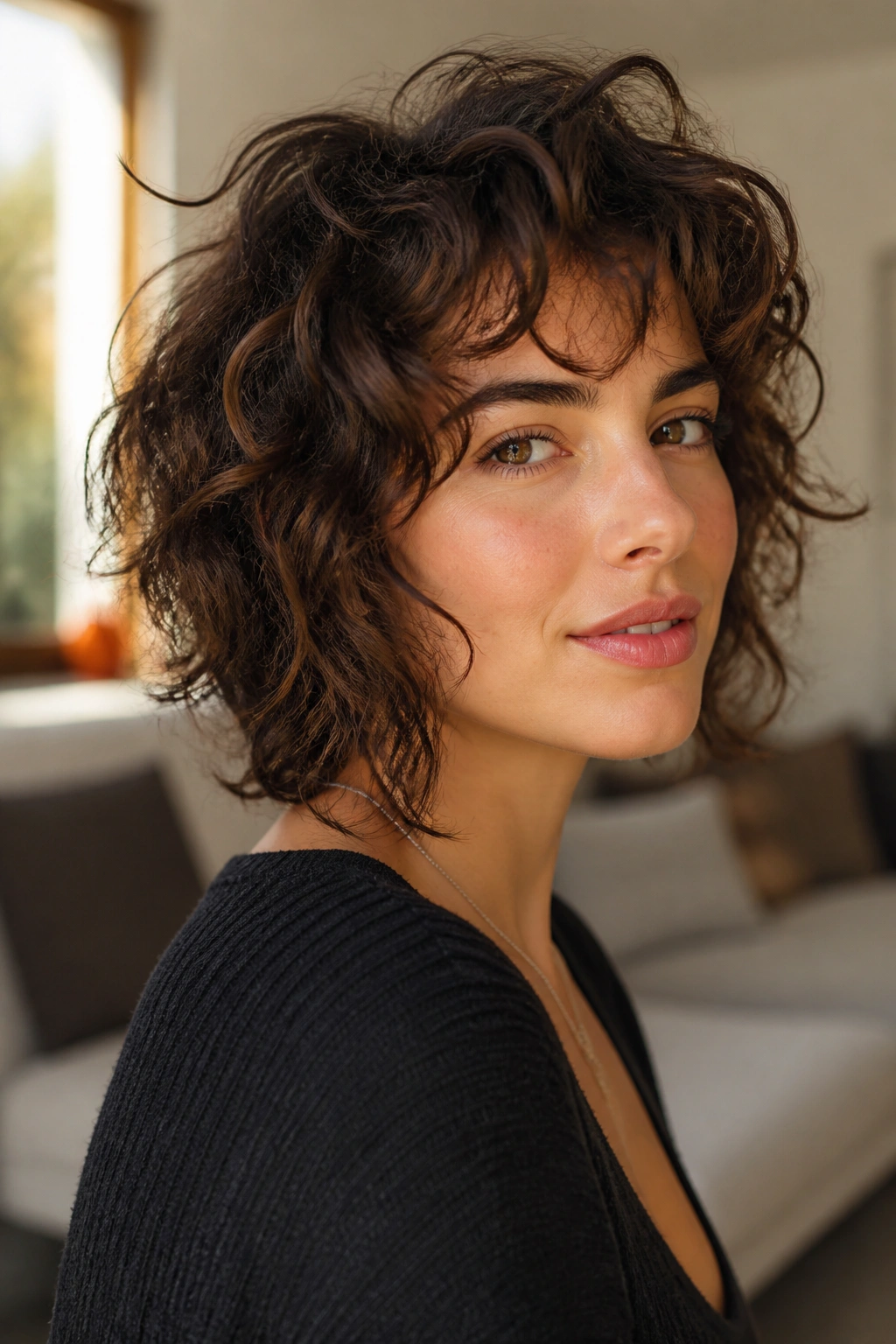
Curly hair and shag cuts have a long history together for a reason. The layers let curls spring up instead of hanging in a heavy block, which is exactly what a round face needs. You get shape, but the shape stays alive.
Dry cutting is the move here. Curls behave differently when they are wet, and a stylist who cuts them dry can see where the hair naturally swells, where it collapses, and where the face-framing pieces should land. That matters around the cheeks. Put too much curl at that level and the face can look wider than it is.
What Helps Most
The front pieces should be long enough to fall near the chin when dry. The top can be shorter, but not so short that it pops upward into a little dome. That dome shape is the enemy. Keep the crown soft and let the curls stack without spreading out too far.
A lightweight curl cream and a small amount of gel usually beat a heavy butter or oil. Heavy products pull curls down, then the cut loses its lift. That is the whole trick with curly shags: give the curls enough control to keep their shape, but not so much that they go flat and mushy.
8. Asymmetrical Shag Bob

Perfect symmetry can be the wrong move on a round face. A small asymmetry changes the line of the haircut, and that line changes how the face reads. One side a little longer than the other creates a diagonal path for the eye, which naturally trims down the roundness.
The difference does not need to be wild. Sometimes 1 to 2 inches is enough. More than that can start to look like a statement haircut, which is fine if that is your style, but it is not necessary for the face-flattering effect. Keep the layers choppy so the longer side does not just hang there like a separate piece.
This cut is especially good if you part your hair on the same side every day anyway. A side part and asymmetry work together. They make the whole shape feel less centered, less boxy, and more sculpted.
It is a neat option for straight hair, too, because you can see the line clearly. On wavier hair, the effect gets softer and more relaxed, which works just as well.
9. Feathered Crop Shag
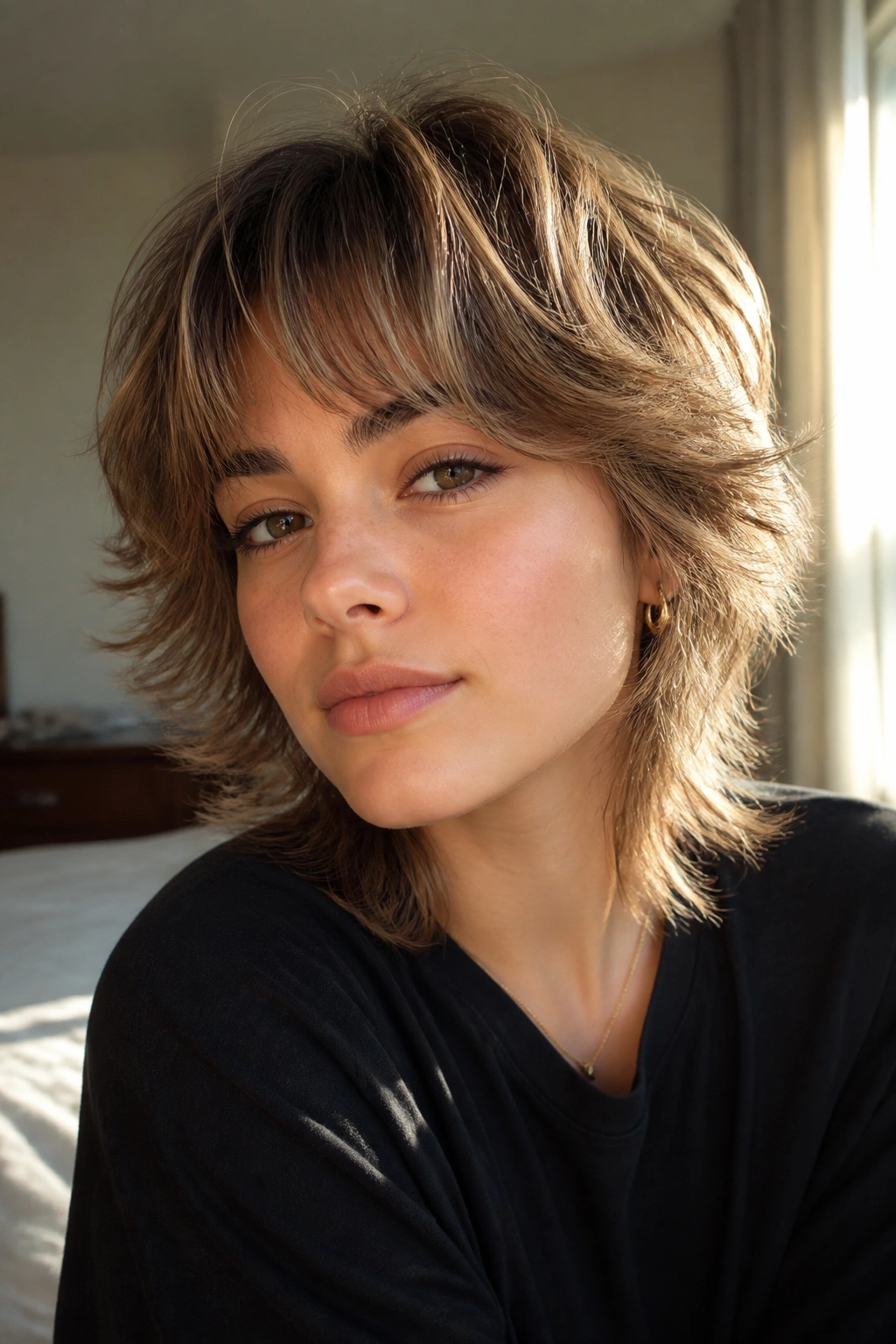
Feathering is one of those old-school techniques that keeps coming back because it works. Instead of blunt chunks, the stylist lightly slices through the ends so the layers blur into one another. On a round face, that soft edge helps keep the haircut from feeling heavy near the cheeks.
Why Feathering Helps
Feathered layers reduce bulk without making the hair look ragged. That is a fine line. The goal is not to thin the hair to pieces; the goal is to make the shape feel airy. If the ends are too thick and even, they can sit like a shelf around the face. Feathering breaks that shelf apart.
This cut is a nice choice for fine hair because it can make the texture look fuller without adding obvious weight. It also works on medium-density hair that tends to sit flat at the crown. A little lift at the top and a soft fringe are enough to shift the balance.
A round brush and a quick blow-dry through the top layer usually bring it to life. If you want a more casual finish, scrunch in a tiny amount of styling cream and let it dry with a little bend. The cut can handle both looks.
10. Collarbone Shag With Bottleneck Bangs
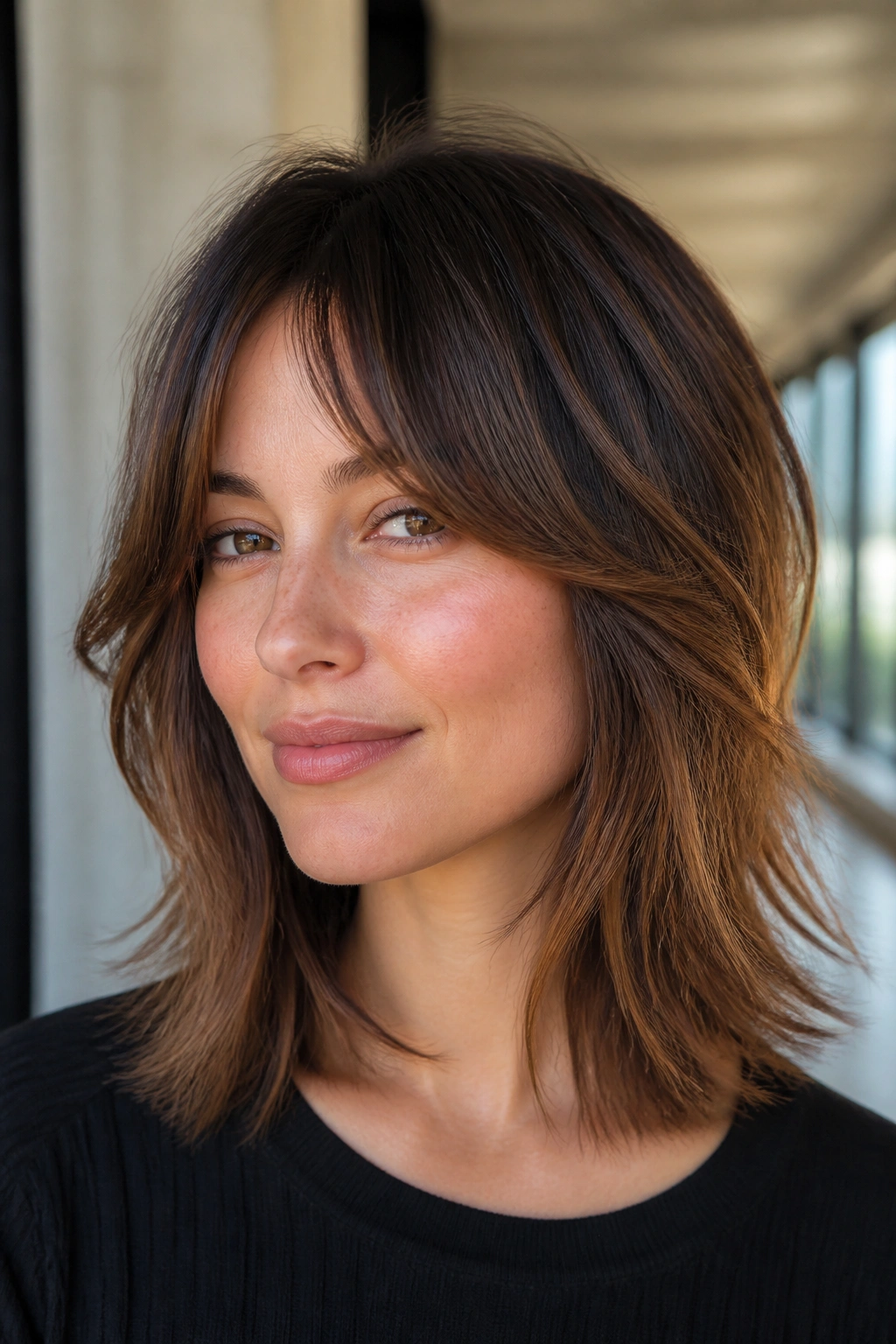
Need a short cut that still feels easy to grow out? This one sits right on the edge of short hair and longer short hair, which makes it practical. The collarbone length stretches the face, and bottleneck bangs soften the forehead without cutting the face in half.
Bottleneck bangs are smart on round faces because they stay narrow in the center and get longer toward the sides. That shape works with the haircut instead of against it. The center opening adds a little height at the top, while the side pieces blend into the rest of the layers.
The collarbone length gives the cut a vertical line that shorter cuts do not always have. If your hair is thick, this shape can feel much lighter than a blunt lob. If your hair is wavy, it sits in that sweet spot where the bend makes the layers look intentional instead of messy.
This is a good “safe but not boring” option. It is polished enough for a conservative setting, but the shag texture keeps it from looking like a standard salon bob.
11. Choppy French Shag

The ends on a French shag look a little bitten off, in the best way. That is part of the charm. The cut feels undone but not careless, with short layers around the crown and a fringe that grazes the forehead instead of sitting in one hard line.
For a round face, the trick is to keep the volume up top and the width under control. You do not want the hair ballooning at the cheeks. You want the movement to happen above and below them. A choppy French shag does that well when the layers are kept soft and the front pieces stay a little longer than the rest.
How I’d Wear It
I’d keep the fringe airy, not dense. I’d also avoid loading it with too much product. A small amount of dry texture spray gives separation without turning the whole cut gritty. If the hair is naturally wavy, even better. The bend adds the kind of casual shape this cut likes.
It is a little romantic, a little rough around the edges, and that mix is exactly why it works. Clean but not stiff. That is the sweet spot.
12. Layered Shag With A Deep Side Part
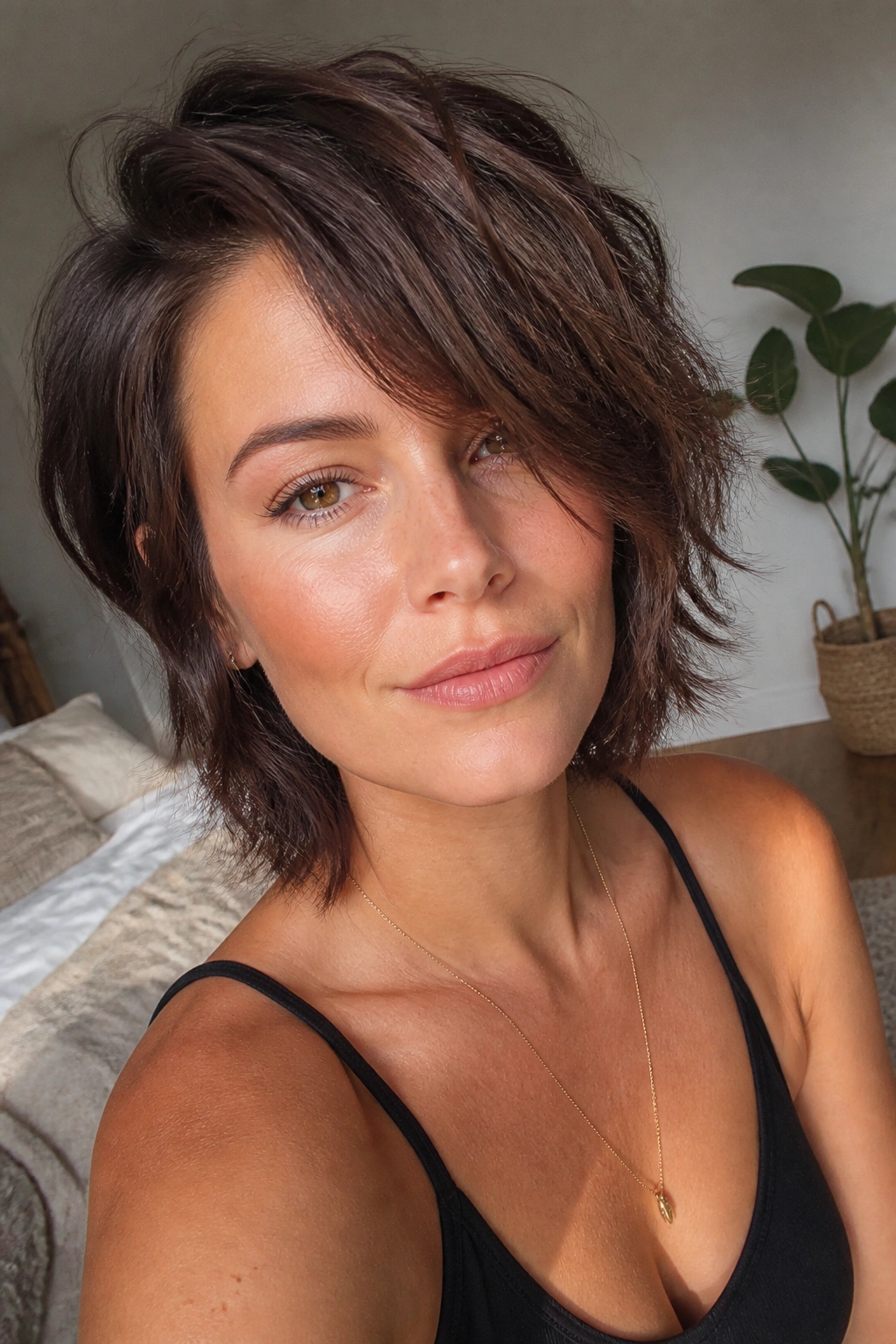
A side part that starts an inch or two off center changes the whole face. On a round face, it creates a diagonal line, which breaks up width and gives the eye a place to travel. Add a layered shag underneath, and the result feels softer and longer at the same time.
This is one of the easiest short shag haircuts for round faces to style because the part does half the work. You do not need a complicated blowout. Lift the roots at the crown, tuck one side back behind the ear if you want, and let the longer front section fall forward on the opposite side. That little bit of imbalance is flattering.
The layers should be broken up rather than stacked too neatly. If they are too neat, the cut can start to look like a rounded helmet. Nobody wants that. The whole point is movement, especially through the top and front.
Straight hair benefits a lot from this shape because the part creates instant structure. Wavy hair gets a softer, more lived-in version of the same idea.
13. Tousled Mullet Shag
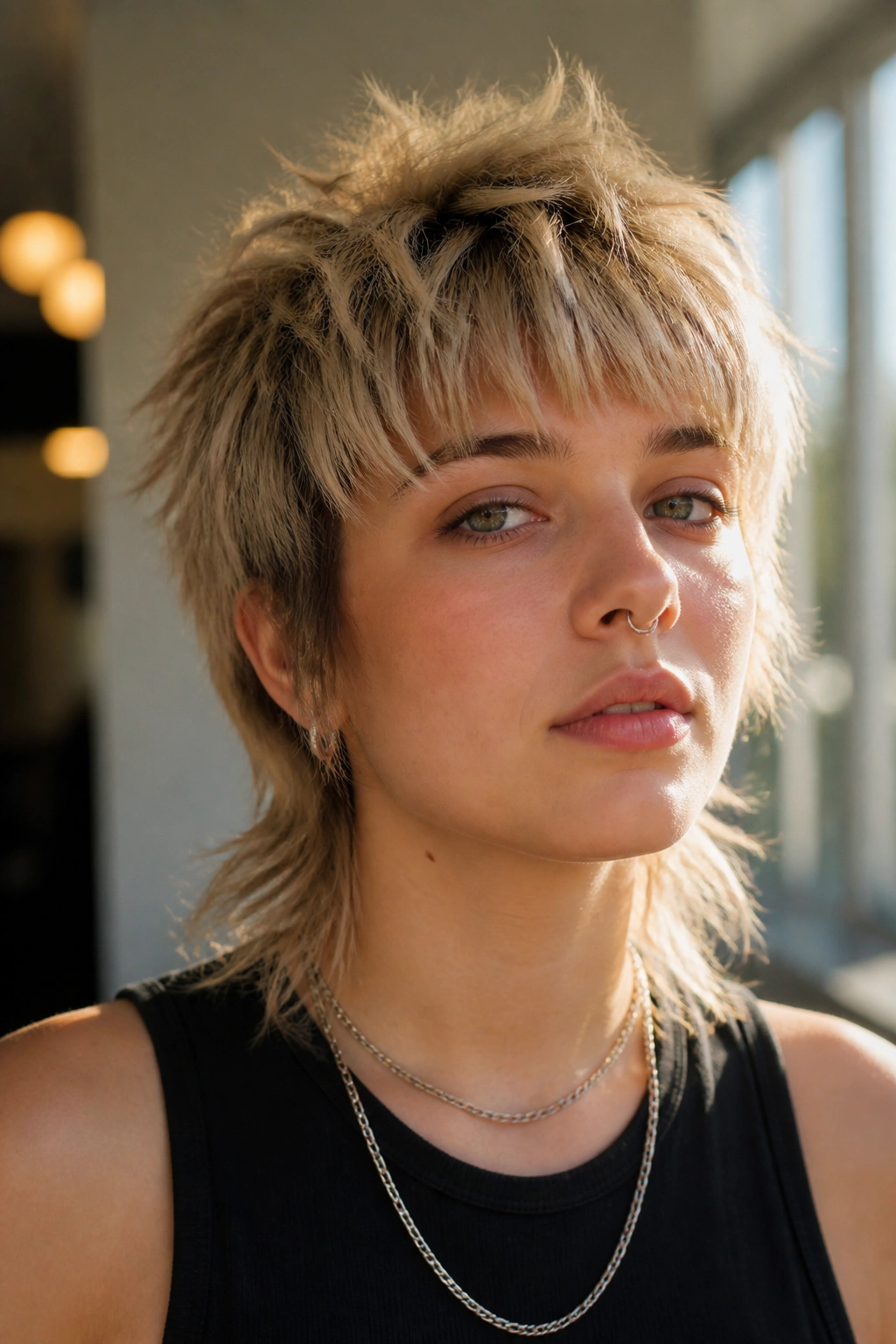
This one has more attitude than the rest, and I mean that in a good way. A short tousled mullet shag keeps the front and crown lighter while leaving a little extra length in the back. That longer back piece helps stretch the silhouette, which is useful on a round face.
The shape works because it refuses to sit in one tidy circle. The front pieces can stay cheekbone length or a touch longer, while the nape keeps going. That contrast creates a bit of vertical pull. If the hair is thick, the internal layers keep it from turning into a triangle. If the hair is fine, the top layers make it look fuller without needing bulk everywhere.
- Best on hair with natural texture or a little wave.
- Keep the top choppy, not rounded.
- Ask for softness around the sides so the cheeks do not look wider.
- Use a matte paste if you want separation.
This is not the cut for someone who wants invisible hair. It makes a point. That is why it looks good.
14. Piecey Shag With Micro Bangs

Micro bangs are tricky on round faces, and I would never pretend otherwise. They can sharpen the look fast, but they can also shorten the face if the rest of the haircut does not do enough work. The key is keeping the bangs light and the side layers longer.
When the fringe is piecey instead of heavy, it gives the forehead definition without creating a hard horizontal block. Pair that with shaggy layers around the jaw and a bit of crown lift, and the cut feels more fashion-forward than harsh. It is a small difference, but it changes everything.
This shape suits someone who likes a little edge and does not mind being noticed. It is not the quietest option in the room. The best version keeps the micro bangs wispy, almost broken, so they show the forehead instead of covering it completely.
If you want softness first, skip this one. If you want a short shag that feels sharp, graphic, and a little subversive, it has a real place.
15. Air-Dried Shag For Thick Hair
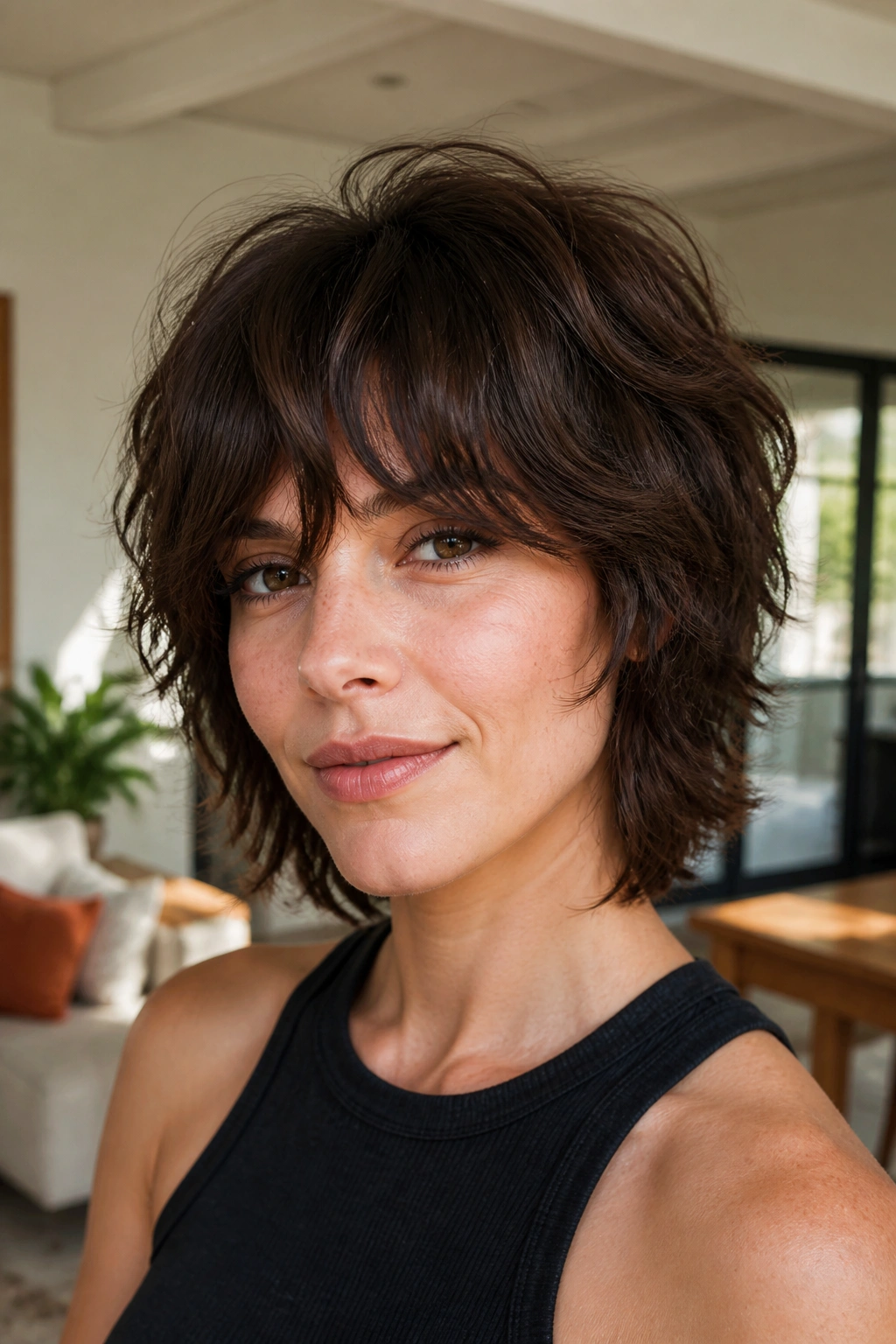
Thick hair can make a shag look either brilliant or too bulky. The difference is usually in how the layers are cut. On a round face, you want internal layers that remove weight from the middle and leave the outline controlled. Otherwise the cut swells out at the sides and adds width you do not need.
This is the shag I like for people who hate spending twenty minutes with a blow dryer. A good air-dried shag should fall into shape with a little cream, a little scrunching, and maybe a diffuser if the hair is wavy. The crown should still sit higher than the sides. If it does not, the haircut is missing its job.
Small Things That Matter
- Ask for weight removal inside the shape, not just at the ends.
- Keep the longest pieces below the jawline.
- Use a quarter-sized amount of styling cream, then stop.
- Let the hair dry without touching it for the first 20 minutes.
Too much product is the fastest way to kill this cut. It turns the layers heavy and makes the whole head collapse. Clean, light, and touchable wins here.
16. Sleek Shag With Internal Layers

Not every shag has to be messy. A sleeker version can look sharp on a round face if the internal layers are doing the work underneath. The outside shape stays smoother, but the hidden layers keep the hair from lying flat and wide.
That is what makes this cut feel more refined than some of the rougher shags. You still get movement, but it is controlled movement. The front can be long enough to skim the cheekbone, which helps lengthen the face, while the crown keeps a small lift. That combination keeps the silhouette from reading as flat and square.
This cut is especially good for straight hair that tends to lose texture by midday. A light blow-dry with a paddle brush, then a tiny bend at the ends with a flat iron, usually gives enough life. You do not need corkscrews. You need shape.
It is also a smart choice if you want a shag haircut that can look tidy when tucked behind one ear and more relaxed when worn loose.
17. Razor-Soft Shag With Long Fringe
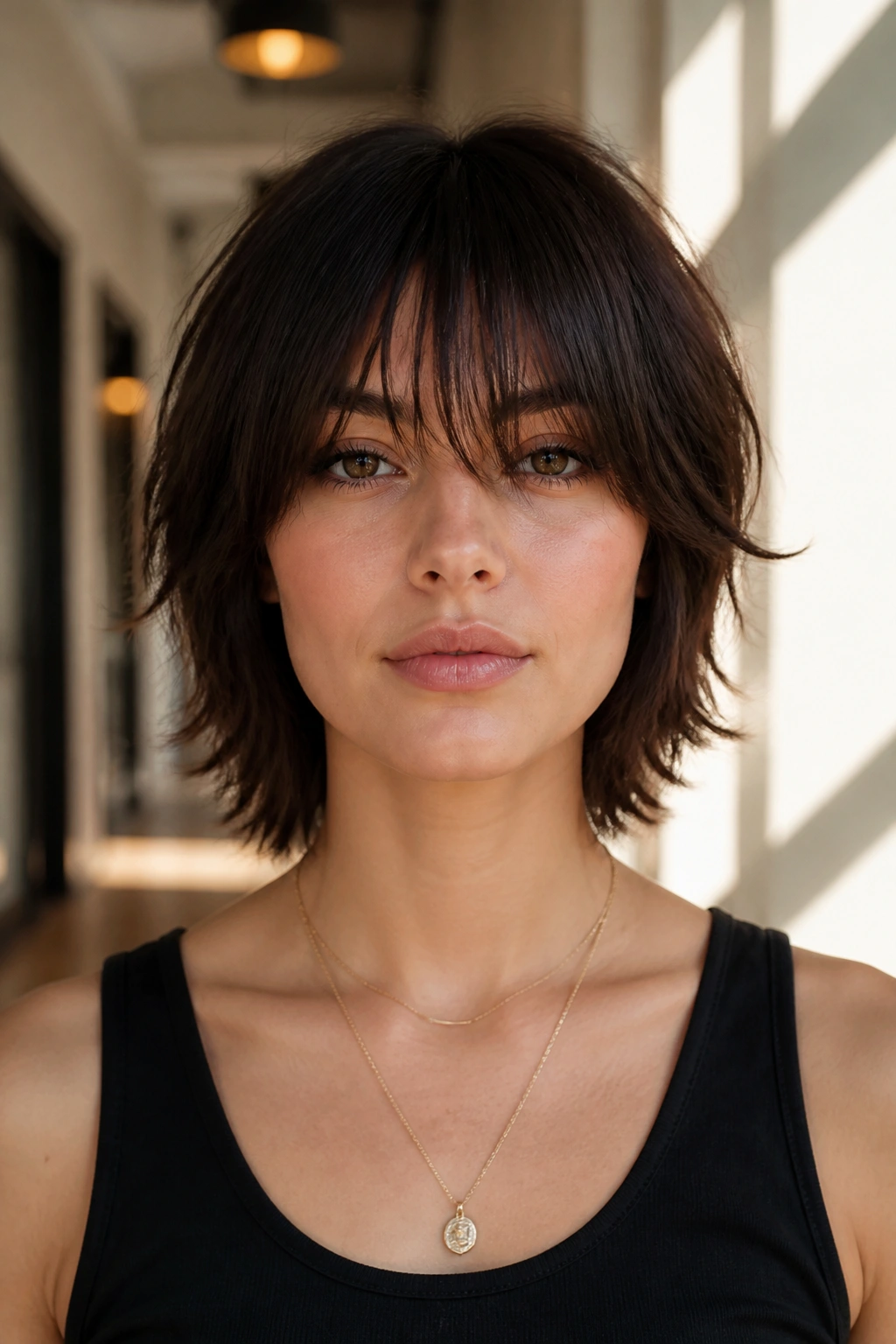
If you want the face-framing effect without heavy bangs, this is the one I would point to first. A long fringe, cut soft with a razor, gives the forehead some coverage while still letting the cut breathe. On a round face, that length in front helps pull the shape downward.
The razor-soft finish matters because it keeps the ends from looking blunt or dense. A blunt fringe can feel too boxy here. A soft fringe bends, separates, and moves. That movement is what makes the face look less circular.
This cut works well with medium-density hair and any texture that has a bit of natural bend. If the hair is pin-straight, a small wave through the front can help the layers sit more naturally. A lightweight styling cream is enough. Heavy oils will flatten the fringe and make the face-frame lose its shape.
It is a forgiving cut, which I appreciate. You can wear it tucked, parted, or slightly messy, and it still reads as intentional.
18. Tapered Shag Bob With Side-Swept Layers
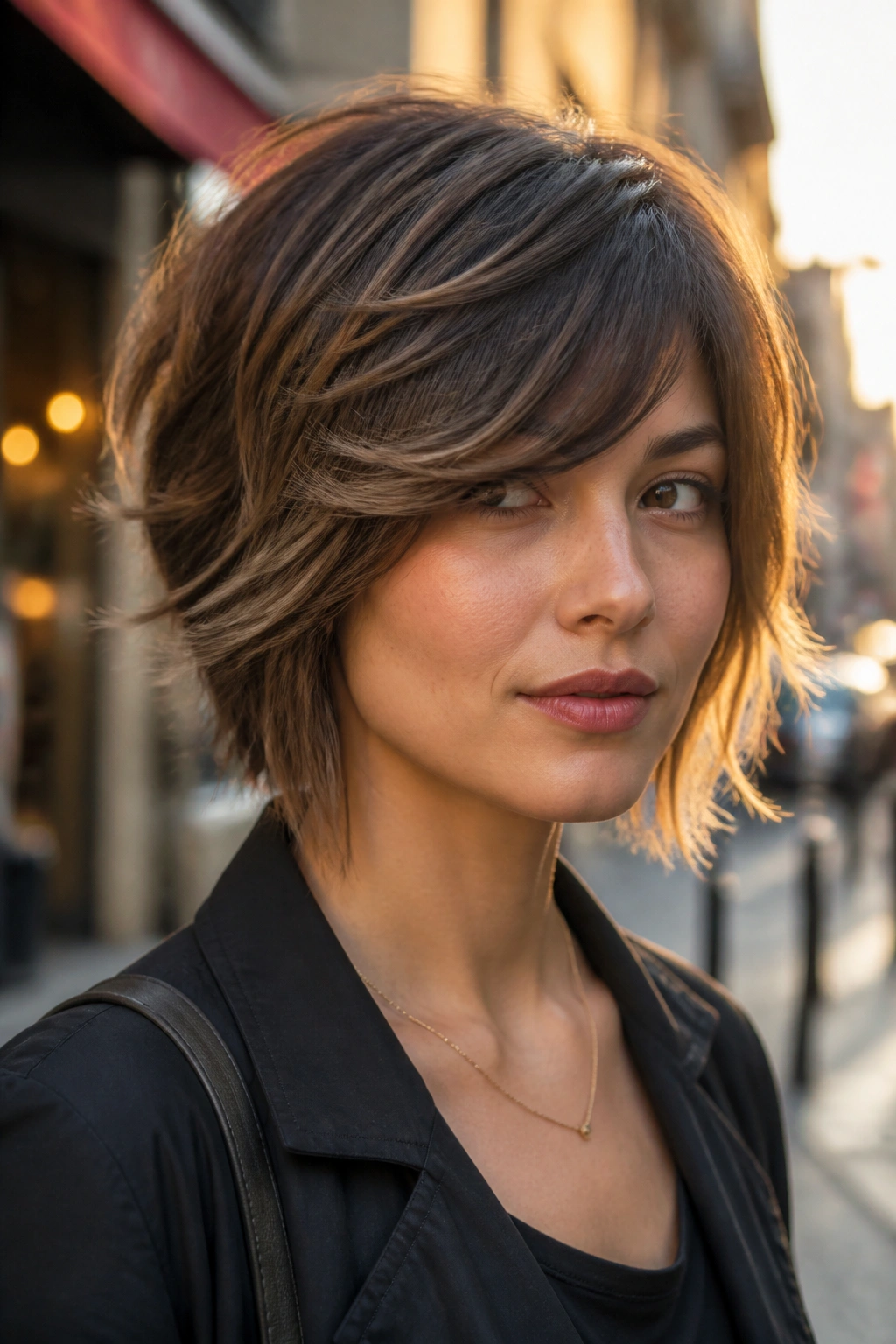
If you want one cut that covers a lot of ground, this is the one. A tapered shag bob keeps the nape neat, lets the layers build softly toward the top, and uses side-swept pieces to break up the roundness in the face. It is tidy enough to grow out well, which is always a plus.
The taper is the quiet hero. It removes width near the bottom while keeping the silhouette light. That means the haircut does not puff out around the jaw or cheeks. The side-swept layers add a diagonal line, and that diagonal is what stops the face from reading too circular.
This cut works on straight, wavy, and loosely curly hair, which is part of why I like it so much. It is flexible without being bland. You can wear it smooth for a cleaner finish or rough it up with texture spray and let the layers do their thing.
If you want a short shag that feels easy, flattering, and not too precious, start here. It is the kind of cut that makes sense in real life, not just in a salon mirror.
A good short shag for a round face should do three things at once: lift the crown, break up the cheeks, and keep the outline from turning into a circle. If a cut does those three things, it usually works harder than it looks.
The smart move is to think about where the layers land before you think about how trendy the cut looks. Chin, jaw, cheekbone, crown. Those are the landmarks that matter. Get them right, and the rest becomes much easier to wear.
