



Fine hair likes a shag when the cut is disciplined. Loose layers can be magic; overdone layers turn the ends into see-through fluff.
Shag haircuts for fine hair work best when the shape keeps enough weight at the perimeter to hold together. That means the right amount of layering, not the most layering the scissors can possibly handle. Fine hair is about strand diameter, not how much hair you have, so the haircut has to create movement without stripping away the structure that keeps everything looking full.
The smartest versions add lift where the eye wants it first: around the crown, through the cheekbones, and near the jaw. A few feathered pieces can change the whole read of the haircut. Too many short layers, though, and the style starts looking tired before lunch.
Some of the cuts below are soft and easy, some are sharper, and a few lean a little cooler than others. The right one depends on your length, your part, and how much styling you’re willing to do on a regular morning when the mirror is not especially forgiving.
1. The Classic Shag Haircut for Fine Hair
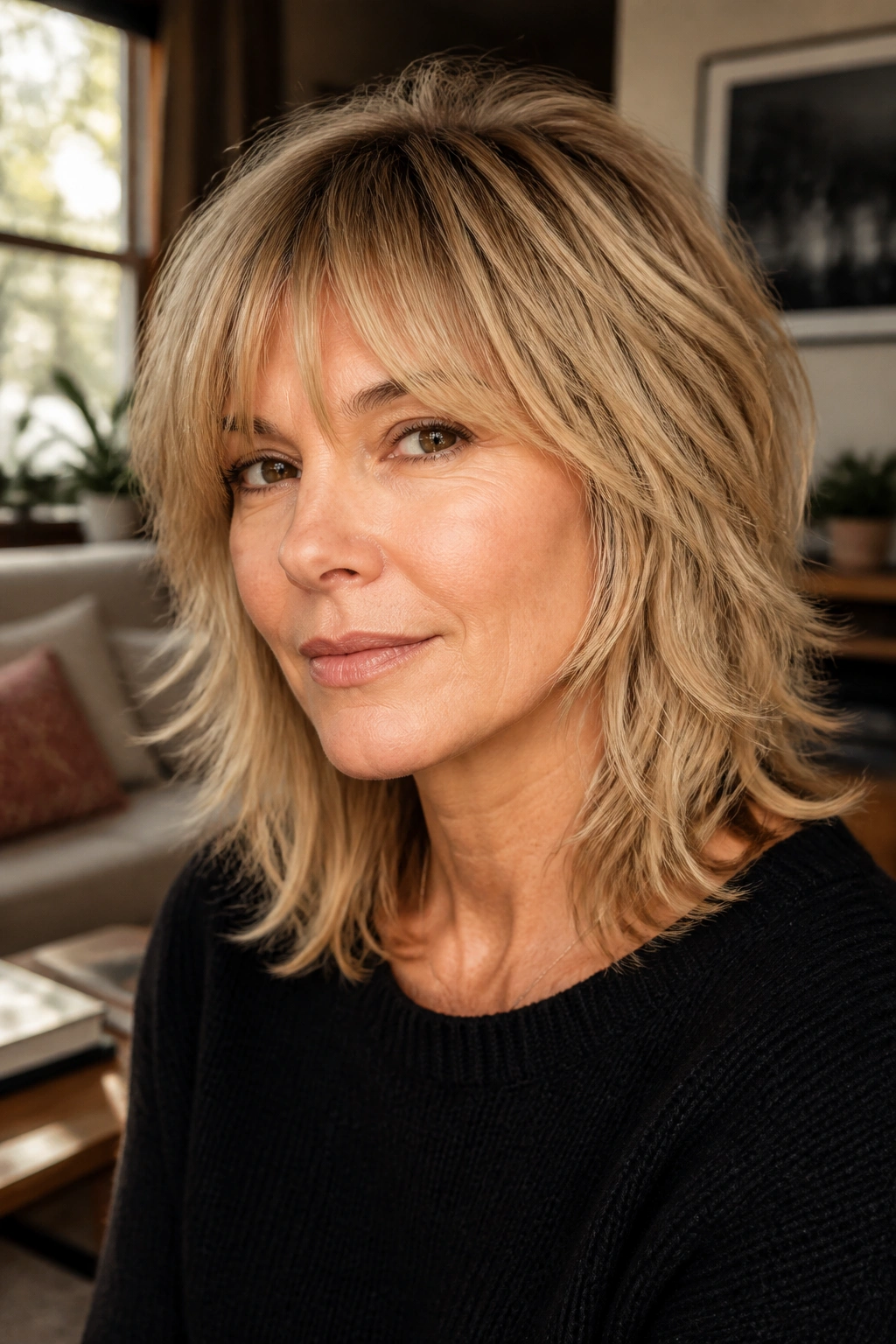
The classic shag is the one I’d hand to someone who wants movement without drama. It usually sits somewhere between the chin and the shoulders, with soft layers that begin below the cheekbones and a fringe that breaks up the front without swallowing the face.
Why it works on fine hair
The magic is in the balance. You get lift at the crown and movement through the mids, but the ends still keep enough weight to look like actual hair, not a wispy outline. That matters more than people admit.
Ask your stylist for:
- Soft, feathered layers that start low enough to keep the outline intact.
- A slightly piecey fringe that can be worn parted in the middle or swept aside.
- A strong perimeter so the ends do not disappear when the hair dries.
- Point cutting, not aggressive thinning, especially if your hair is very fine.
A classic shag is also forgiving on days when you air-dry and walk away. It does not need a perfect blowout to look intentional. That is the real appeal.
2. The Collarbone Shag with Curtain Bangs

The collarbone length is one of the safest places for fine hair to land. It gives the hair enough length to swing, but it stops before gravity starts dragging everything flat against your shoulders.
Curtain bangs do a lot of quiet work here. They frame the face, lift the eye line, and create the feeling that there is more hair than there actually is. That diagonal shape is sneaky in the best way. It gives the front of the haircut some drama without forcing the rest of the style to compete.
This cut is especially good if you like a middle part but hate how flat the top can look. A round brush and a medium-size root lift spray can wake it up fast. Keep the layers soft through the ends, though. If the cut gets too shredded, the collarbone length loses its advantage.
3. The Chin-Length Shag Bob

Why does a shorter shag often look thicker? Because the hair stacks up in the viewer’s mind. A chin-length line gives fine hair a clear shape, and the internal layers keep it from feeling boxy or heavy.
This is a strong option if your hair is straight or only bends a little. The cut gives you the density illusion of a bob, but the shag texture keeps it from looking helmet-like. I like this version when the ends are a little fragile, because the hair never has to drag itself across your collarbones all day.
How to style it
- Blow-dry with a small round brush or flat brush for a cleaner edge.
- Use a light mousse at the roots before drying, not a heavy cream.
- Finish with a small amount of texture spray at the mid-lengths only.
- Tuck one side behind the ear for instant shape. That tiny move matters.
If your hair tends to puff out at the sides, ask for the shortest layers to stay close to the face. Keep the back a touch longer than you think. It helps the whole shape feel fuller.
4. The Pixie Shag
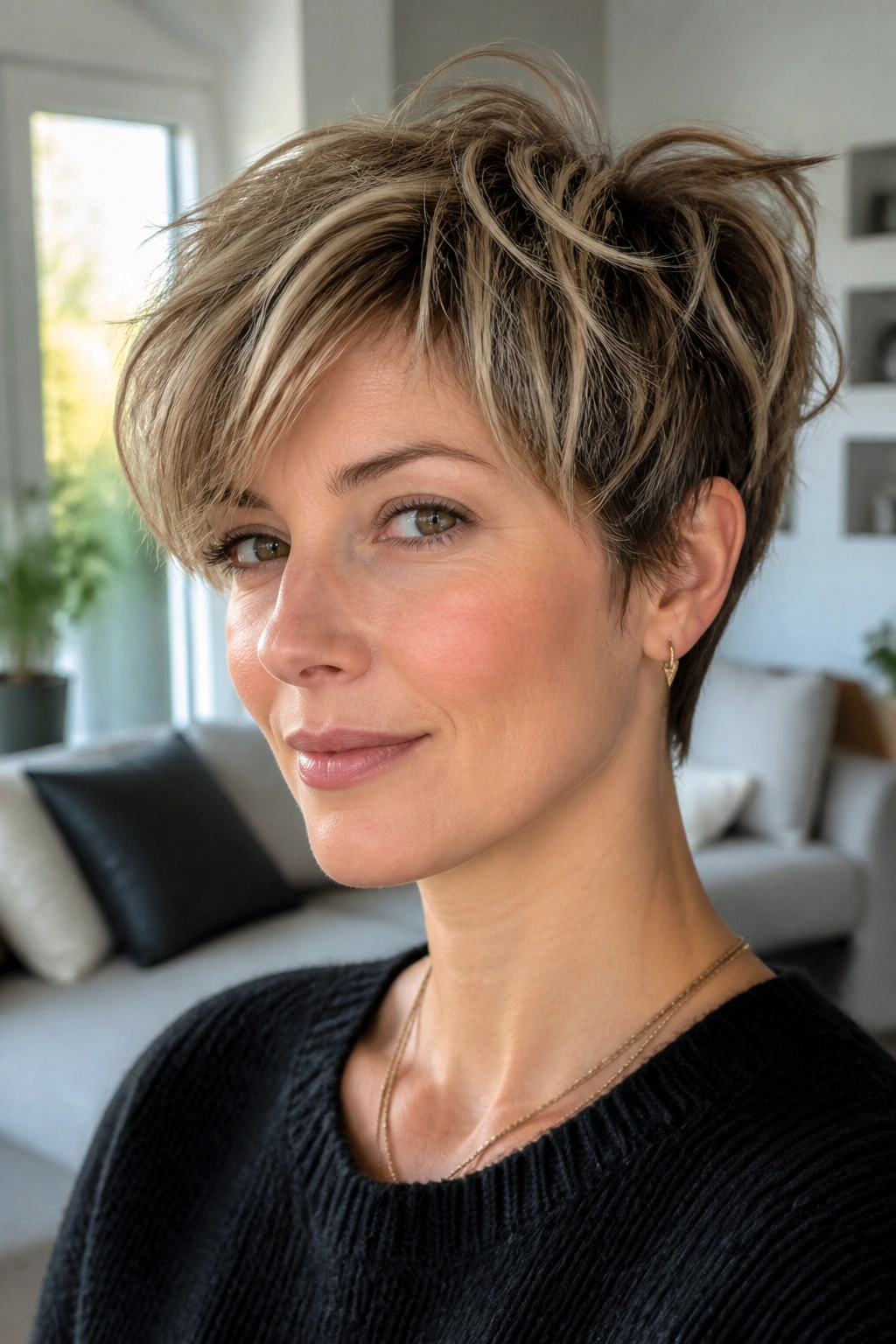
If your hair dries flat before you’ve even finished your coffee, a pixie shag can be a relief. It gives you all the texture of a shag, but in a shorter, more lifted shape that depends less on length and more on deliberate layering.
A pixie shag is not a severe crop. That’s the trap. The top should stay soft and touchable, with a little grit through the fringe and crown, and the sides should taper without looking shaved down to nothing. Fine hair does better when the cut keeps some airy movement on top instead of trying to fake bulk with blunt lines.
This one works best if you like styling products. A pea-sized amount of paste or a light cream can separate the top layers and keep them from collapsing. If you want to let it dry naturally, ask for enough length on top—about 2 to 3 inches—so the hair has room to bend instead of sticking straight up. Shorter than that, and the shape can get awkward fast.
5. The Long Shag with Face-Framing Layers
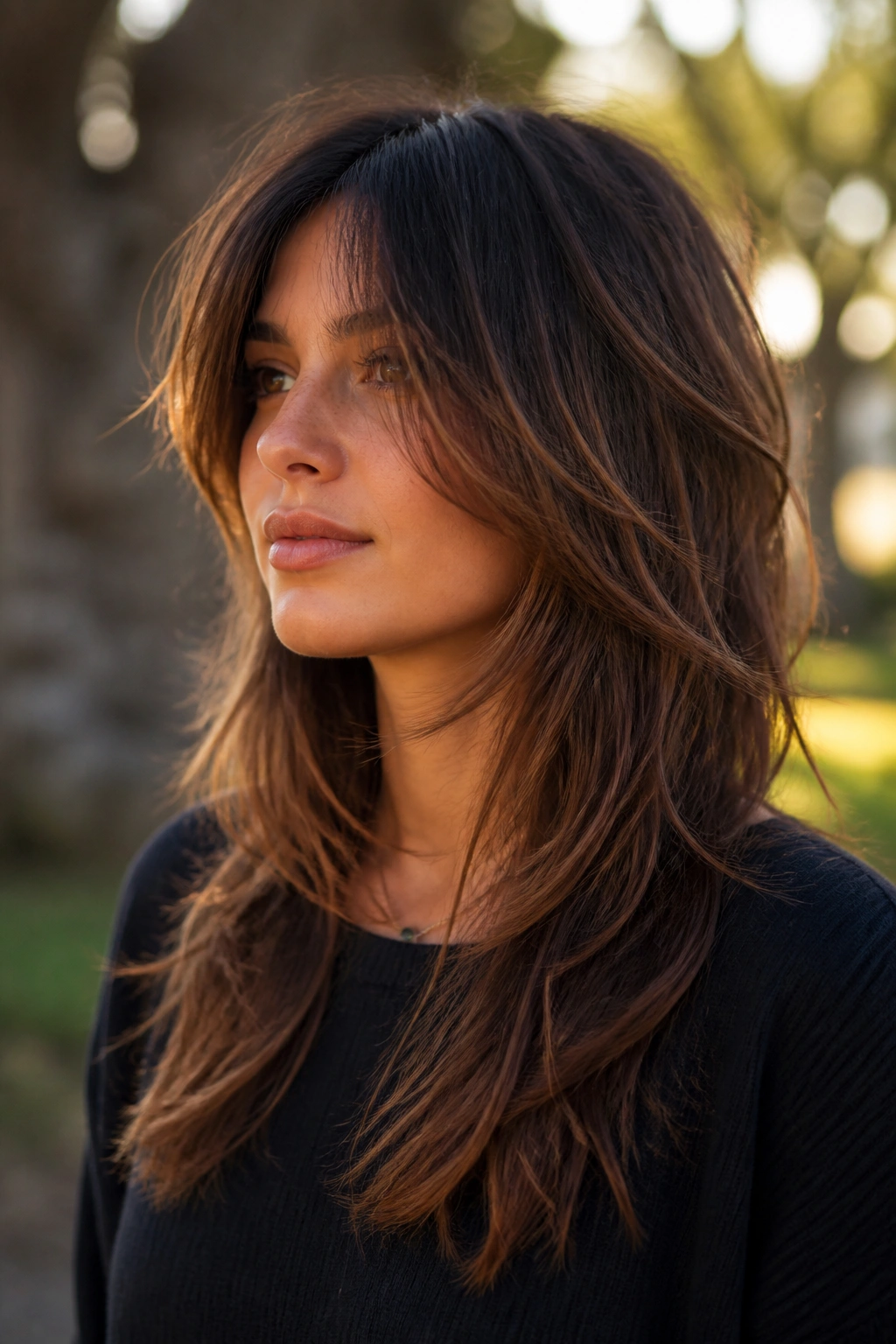
Long hair can absolutely be flattering on fine hair, but the layers have to be handled with care. If the shortest pieces start too high, the cut begins to fray at the ends and the whole thing can look tired.
The better version keeps the length through the back and puts the action in the front. I like face-framing layers that start around the chin or just below it, then melt into longer pieces through the shoulders. That gives movement where people actually notice it—around the face—without turning the rest of the hair into a bunch of thin strings.
The long shag is a good pick if you still want ponytail length or braid length. It gives you softness without forcing you into a shorter haircut. And yes, it can still feel light. The trick is restraint.
Don’t let the layering drift upward. The moment the shortest layer lands near the mouth or cheekbones on very fine hair, you risk a frayed finish that needs constant styling to behave.
6. The Razor-Cut Shag
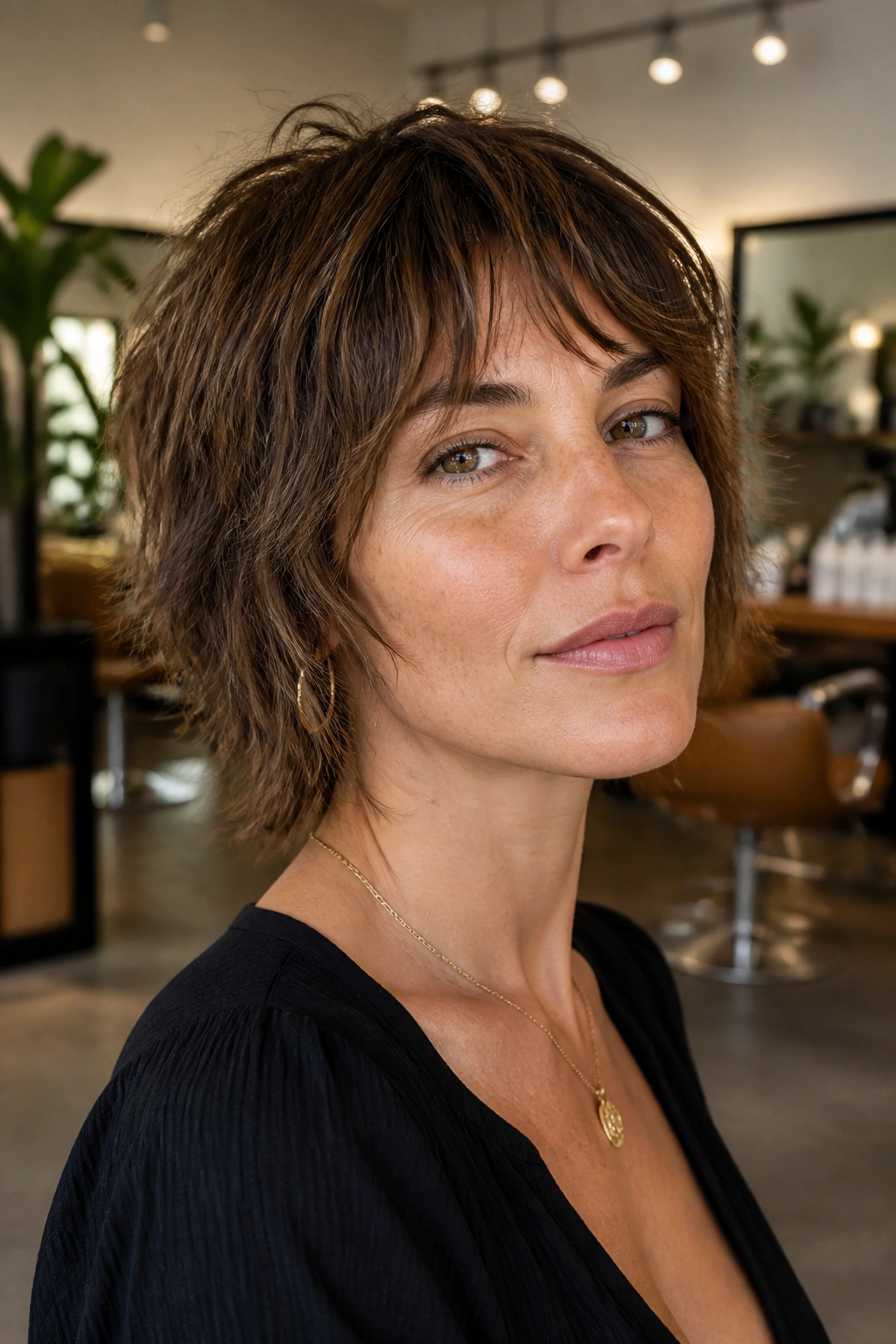
A razor-cut shag has a softer edge than a scissor-heavy cut, which is why it can look so airy on fine hair. The ends taper and move more freely, so the whole shape feels less blocky and more broken up in a good way.
That said, razor cutting is not for everyone. If your hair is already fragile, split-prone, or dry from mid-shaft to ends, too much razor work can make the fringe pieces look fuzzy instead of textured. I’d use this cut for straight to slightly wavy fine hair that needs softness, not for hair that snaps easily.
The best razor shag keeps the perimeter recognizable. You still want a shape you can read from across the room. Ask for soft slicing through the interior, not shredded ends everywhere. That difference is huge.
Best for: hair that falls flat but isn’t delicate enough to fall apart at the first sign of texture.
7. The Bottleneck-Bang Shag

Bottleneck bangs have a narrow center and a wider sweep at the temples, which makes them a smart match for fine hair. The shape creates the feeling of fullness right where the haircut starts, and that can make the whole head of hair look denser.
What to ask your stylist
- Keep the center of the fringe softly tapered, not blunt.
- Let the sides open out around the outer corners of the eyes or cheekbones.
- Pair the fringe with mid-length layers that stay light, not chopped.
- Avoid over-thinning the bangs; fine hair needs a little presence there.
This cut is especially good if your forehead is wider than your jaw or if you want the front of your haircut to feel more styled with less daily effort. The fringe does the heavy lifting. The rest can stay easy.
One warning: if the bangs are cut too short, they stop looking soft and start looking busy. For fine hair, a little length is your friend. Let the fringe brush the brows or sit just above them, then fall around the face in a loose curve.
8. The Side-Swept Fringe Shag
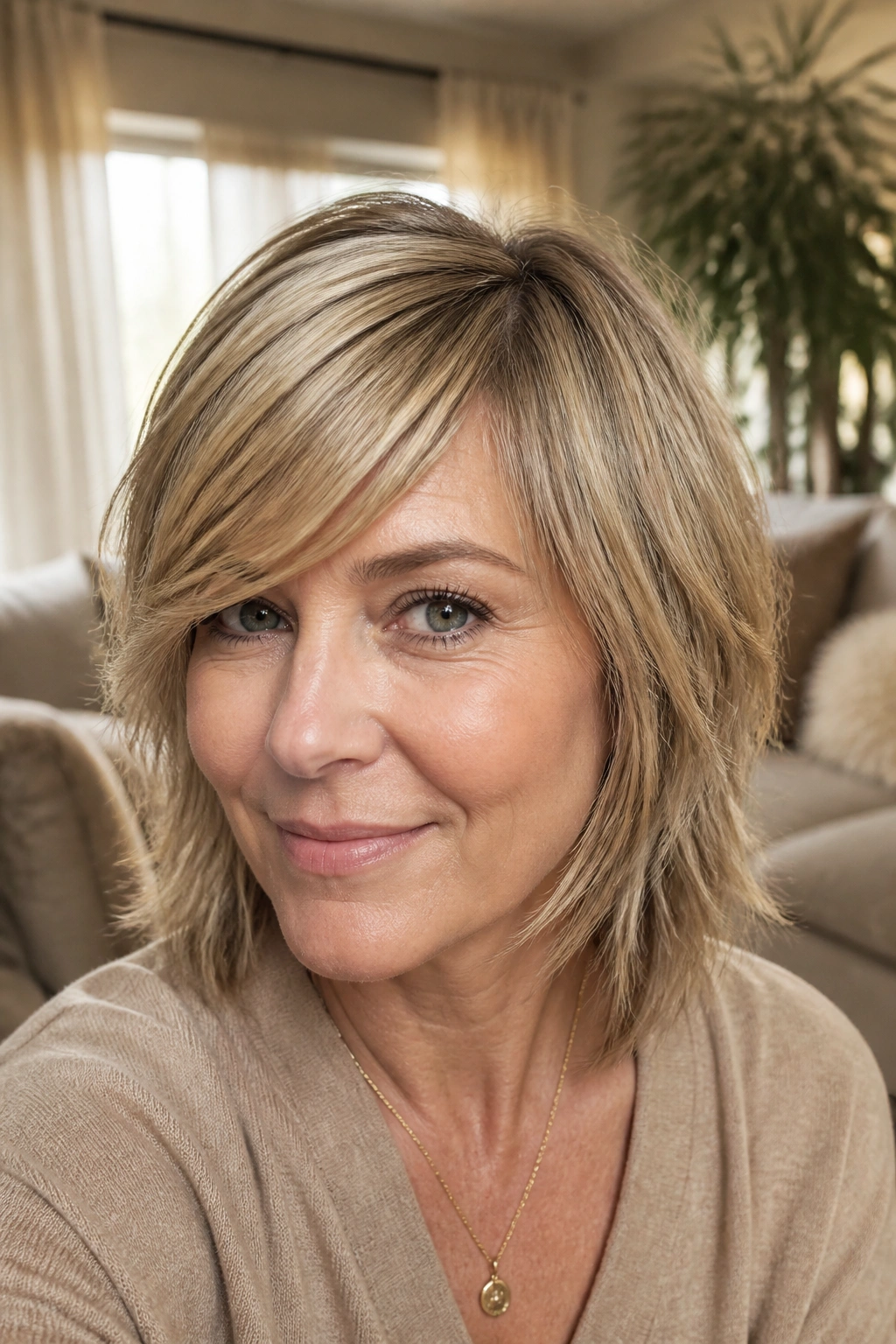
A side-swept fringe is the friend of flat roots and stubborn cowlicks. It gives you movement without the commitment of a full curtain bang, and it can hide a sparse hairline better than a center-part fringe on many faces.
I like this version for readers who are growing out bangs or who don’t want the upkeep of a perfect middle part. The side angle creates lift on one side of the forehead, which tricks the eye into seeing more volume at the top. That diagonal line matters. It breaks up the flatness in a way straight-across bangs can’t.
What makes it useful
- Works well with an off-center part.
- Looks good on wavy or straight fine hair.
- Can be styled with a small round brush in under 5 minutes.
- Gives the crown a more lifted look without adding bulk.
A side-swept fringe does not need to be dramatic. Sometimes the smartest cut is the one that looks almost accidental. That’s the point.
9. The Layered Lob Shag

What if you want something polished enough for work, but not stiff? The layered lob shag sits right in that middle zone. It usually falls somewhere between the collarbone and the top of the chest, which gives fine hair enough length to move and enough shape to stay believable.
The sweet spot is where the first layers start. Too high, and the lob gets flimsy. Too low, and it turns into a plain cut with texture sprayed on top. I like layers that begin around the chin and melt down, especially if the ends have a bit of bevel from a blow-dry.
How to style it
- Use a large round brush or a paddle brush with a slight bend at the ends.
- Mist root-lift spray near the crown before drying.
- Part the hair slightly off-center for a softer profile.
- Finish with a touch of dry texture spray through the mids.
This is one of the easiest shag haircuts for fine hair to live with. It behaves in the office, then loosens up at night. Not bad.
10. The Curly Shag for Fine Hair
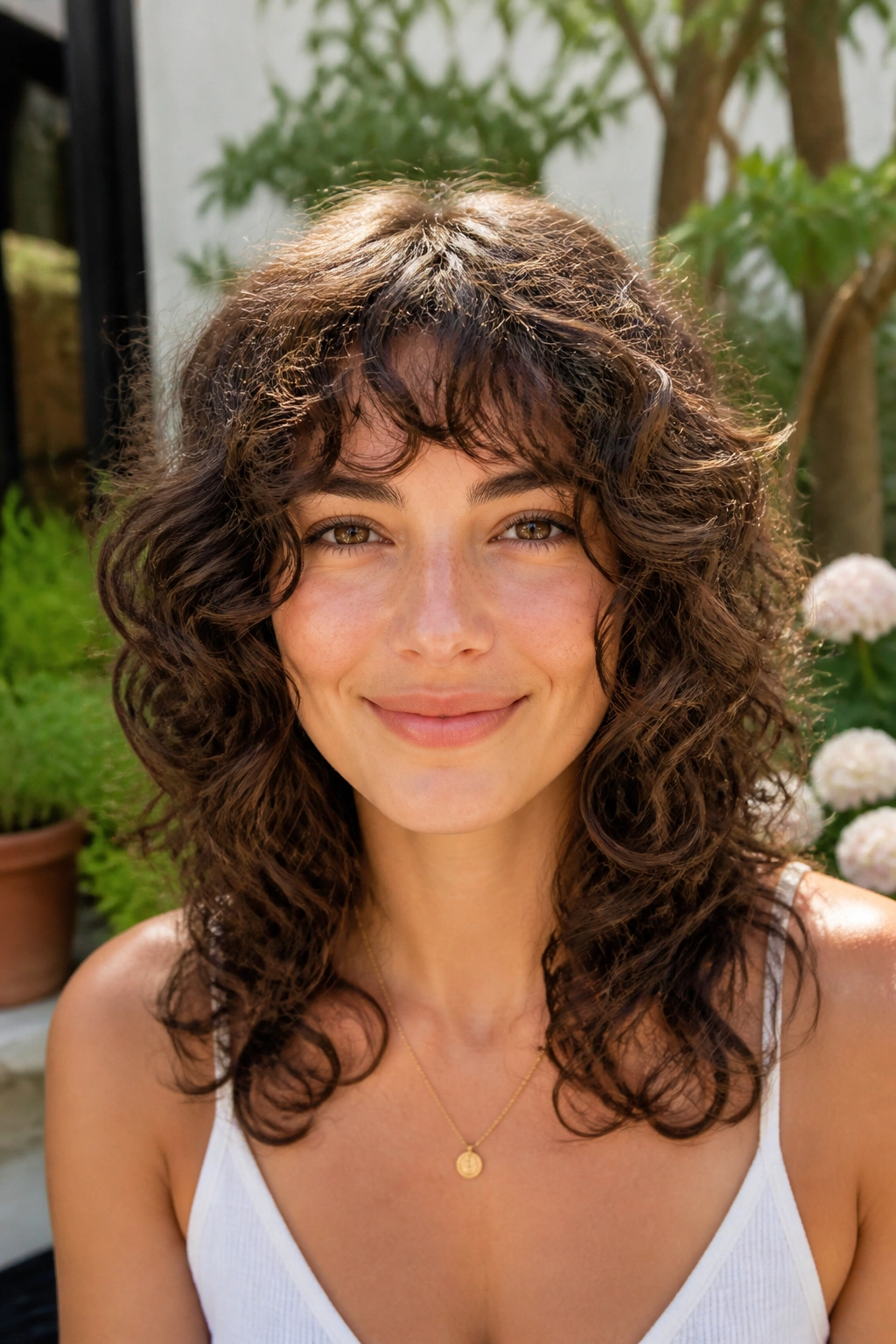
Fine curls need a lighter hand than people think. If the layers are chopped too short, the curl pattern can puff outward and leave the ends looking thin at the same time. Not a good trade.
The better curly shag keeps the layers a little longer so the curl clumps stay intact. That usually means letting the shortest layers hover around the cheekbones or jaw, with enough weight left in the lower sections to stop the shape from floating away. The goal is bounce, not frizz.
The rule that matters
Keep your styling products light and the heat lower than you think.
A foam or mousse at the roots can help the curl set without turning the hair crunchy. A diffuser on low heat, used with a gentle scrunching motion, keeps the curls from stretching out into limp waves. And if you need a little control around the face, a tiny dab of cream on wet ends does more than a big handful ever will.
This cut is a quiet win for anyone whose curls look sparse when they’re cut too bluntly. The shag gives them room to move.
11. The French Shag

The French shag is a little softer, a little sexier, and a little less tidy than a classic shag. It usually has airy fringe, cheekbone-length face pieces, and a shape that looks as if it was cut after a good coffee and a few honest opinions.
Fine hair suits that attitude more than people expect. The key is not to over-layer the back. Keep the silhouette relaxed and let the front pieces do the talking. When the fringe lands around the brows and the sides skim the cheekbones, the haircut gets that easy, lived-in feeling without turning flat.
I like this cut on hair that has a bit of natural bend. The movement hides the finer strand size and gives the style some life. If your hair is pin-straight, you can still wear it, but you’ll want a quick bend at the ends and maybe a soft wave through the front. Nothing polished. That would ruin the point.
A small amount of styling cream is enough here. Too much product and the airy shape disappears.
12. The Soft Wolf Shag

The wolf shag is the more dramatic cousin in the shag family, but fine hair usually needs the softer version. Think of it as a shag with a little extra edge, not a full-on choppy mess.
Unlike the classic shag, this cut pushes more texture toward the crown and front. That can look fantastic on fine hair if the lengths stay controlled. The mistake is taking too much off the sides and back. Once that happens, the shape gets too wild and the ends lose their thickness.
This version is best for someone who likes a little attitude and doesn’t mind styling with a diffuser or texturizing spray. Ask for short-to-medium crown layers, but keep the nape and lower lengths long enough to hold the outline. The haircut should feel uneven in a deliberate way, not hacked apart.
If you want edge without giving up softness, this is a good place to land. Just don’t let the layers climb too high. That’s where the shape can start working against fine hair.
13. The Invisible-Layer Shag

This is the sneaky one. From the outside, it almost looks like a clean, simple cut. Then the hair moves, and the internal layers show up like a good secret.
Invisible layers are perfect for fine hair because they create lift without taking too much off the surface. That means the hair reads as fuller at first glance, which is what most people want anyway. You still get softness and swing, but the perimeter stays intact.
I like this cut for anyone who hates piecey ends. If you’ve had a shag before and felt like the layers looked too obvious, this version fixes that problem. The stylist keeps the heavier outline and places the texture inside the shape, not all over it.
It’s a nice choice for straight hair, especially if you usually wear it down and want the style to look neat from the front. The hair can still bend and move, but it won’t look shredded. Sometimes that restraint is exactly what fine hair needs.
14. The Blunt-Perimeter Shag for Fine Hair

Fine hair often looks fuller when the edge is strong. That sounds backwards if you’ve spent years hearing that you need more layers, but the blunt-perimeter shag proves the point fast.
The idea is simple: keep the bottom line cleaner, then build texture inside the haircut. You get the movement of a shag without losing the visual weight that a blunt line gives you. On very fine hair, that weight matters. It can make the difference between “cute texture” and “where did my hair go?”
What to request
- A clean, blunt outline at the ends.
- Internal layers only, or very soft layering near the face.
- Minimal thinning through the bottom 2 to 3 inches.
- A dry finish with a flat brush or soft bend at the ends.
This cut is one of my favorites for sparse fine hair because it avoids the frayed look that can happen with too many short pieces. The shag element lives in the movement, not in the destruction of the shape. That’s a useful distinction. The perimeter is the point.
15. The Deep Side-Part Shag

Can a part change the haircut? Absolutely. A deep side part shifts the weight, creates instant volume at the crown, and gives fine hair a little lift without a single extra layer.
The haircut underneath can be almost anything shag-based, but the styling makes the difference. I like this option when the hair wants to lie flat on one side or when the top needs a little height for the face to feel balanced. It also softens a stronger jaw or widens a narrow forehead in a way a middle part doesn’t.
How to wear it
- Blow-dry the hair opposite the part first for lift.
- Clip the roots at the crown for 5 to 10 minutes while they cool.
- Use a small amount of root spray near the part line.
- Sweep the heavier side across the forehead, not down over it.
The best part about this shag is how little effort it asks for. A part change can do more than another layer ever will. That’s one of those rare styling truths people forget because it sounds too easy.
16. The Air-Dry Shag

If you hate hot tools, this is your cut. An air-dry shag is shaped so the hair falls into place with a little help and then mostly leaves you alone.
The trick is to ask for layers that work with your natural bend. On fine hair, that usually means keeping the shortest pieces soft and not too short around the face. The hair should be able to dry into movement instead of drying into a puffy triangle or a flat sheet. That’s a hard balance, and it takes a good haircut to pull off.
A light leave-in and a mousse are enough for most people here. Scrunch the mids, rake a tiny bit through the ends, then let the hair do what it wants. If the crown drops too fast, lift it with a clip while it dries or give it a brief pass with a diffuser. You do not need to fight every strand.
Keep it simple
- Apply product to damp hair, not dripping wet hair.
- Scrunch once, maybe twice.
- Touch the hair less while it dries.
- Break up the finish with dry fingers, not a brush.
That last part matters more than it sounds.
17. The Flipped-End Shag
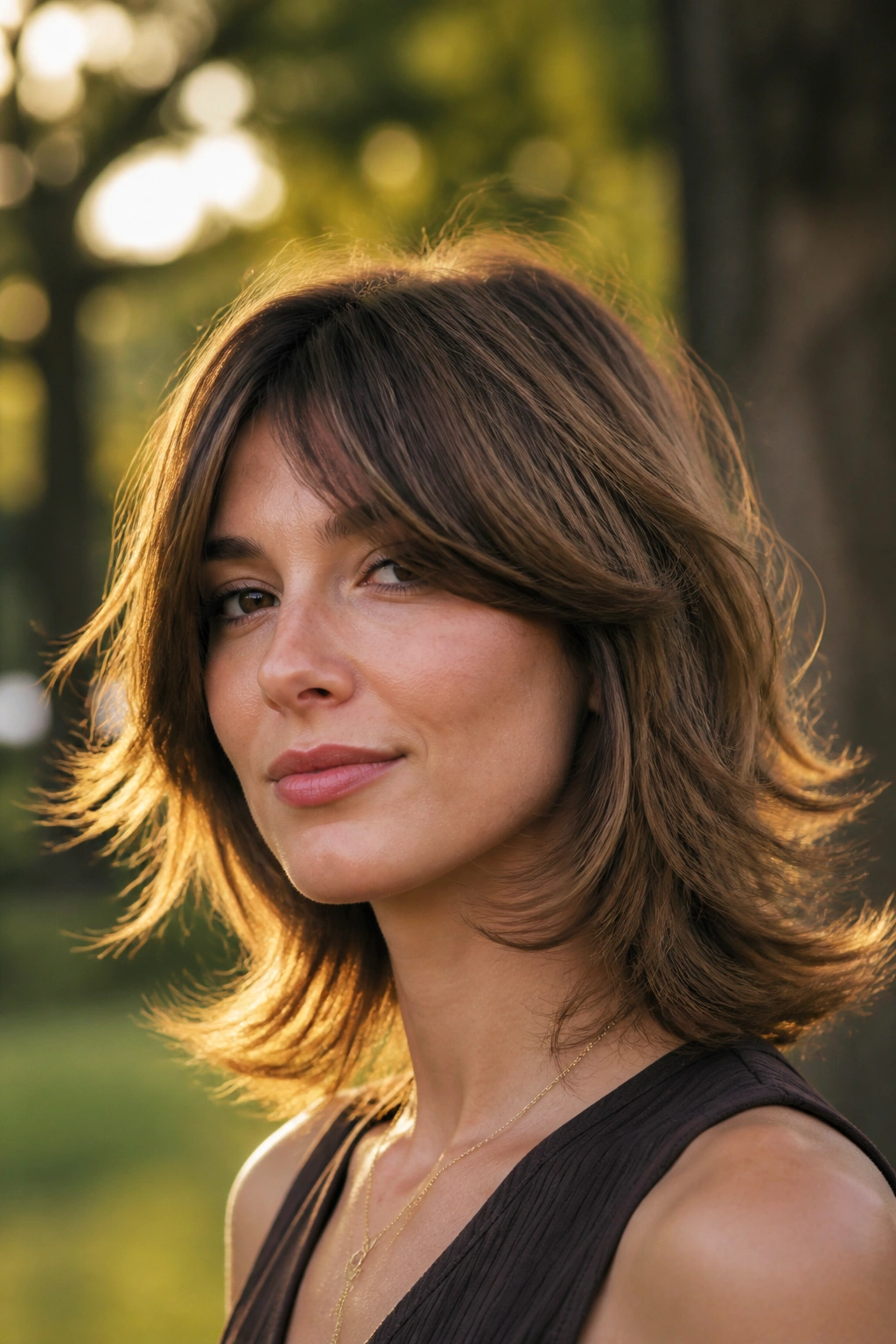
There’s a reason flipped ends keep coming back: they make fine hair look animated. A little outward bend at the ends gives the haircut a shape that reads fuller, especially when the hair itself is straight and prone to collapsing.
This version works best when the layers are long enough to catch the bend but short enough to move. A 1.25-inch or 1.5-inch round brush can give you that soft flip, or you can use a flat iron for a gentler turn at the ends. I prefer a loose bend over a hard curl. Hard curls can look too styled on fine hair, and then the cut loses its easy charm.
The best flipped shag keeps the crown soft and the ends lively. That contrast is the whole point. You want the top to feel light and the bottom to look like it has a little momentum.
A light mist of flexible hairspray helps hold the bend without freezing it. Heavy spray makes the ends look dry. Nobody wants that.
18. The Grown-Out Shag

The grown-out shag is for people who do not want their haircut to fall apart after six weeks. It keeps the shape softer, the layers longer, and the maintenance lower than the sharper versions.
That makes it a smart choice for fine hair, which can get fragile fast if it’s constantly being re-cut into pieces. The grown-out version allows the shape to blur a little between trims and still look on purpose. I like it when the ends are kept slightly blunt and the face-framing layers are allowed to drift past the cheekbones toward the jaw.
This cut also plays well with real life. It can be tucked behind the ear, worn with a middle part, or flipped to one side without looking fussy. If you want a shag that stays attractive as it grows, ask for soft layering that keeps the front visible and the bottom line intact. That is the piece most people miss.
A trim every 8 to 10 weeks keeps the outline from getting shaggy in the wrong way. Beyond that, the haircut should keep its shape with only a little product and a quick bend from your hands. That is the version I trust most on fine hair.
