



For a long time, the beauty industry seemed convinced that round faces required rigid, geometric haircuts to “balance” their soft features. We were told to hide behind long, straight styles that dragged our features down or to avoid layers for fear of adding “unnecessary” width. As someone who has spent years analyzing how hair interacts with bone structure, I can tell you that those rules are not just outdated—they are fundamentally wrong.
The truth is that round faces are versatile, and they often hold styles better than more angular faces because they provide a soft, forgiving canvas. When you add layers, texture, and movement—the pillars of a great shag cut—you aren’t hiding your face. You are framing it. Shag haircuts are brilliant for round faces because they inject height at the crown and texture at the cheekbones, which naturally elongates the silhouette and creates a more oval appearance without requiring you to grow your hair to your waist.
Stop worrying about “slimming” your face and start focusing on movement. A shag works because it’s intentionally unkempt, creating a visual distraction that draws the eye upward to your eyes and brows rather than settling on the jawline. Whether you have thick curls, fine pin-straight strands, or anything in between, the right shag cut isn’t just a style; it’s a structural adjustment that breathes life into your look. Let’s look at the specific variations that work best for rounder shapes.
1. The Classic 70s Shag
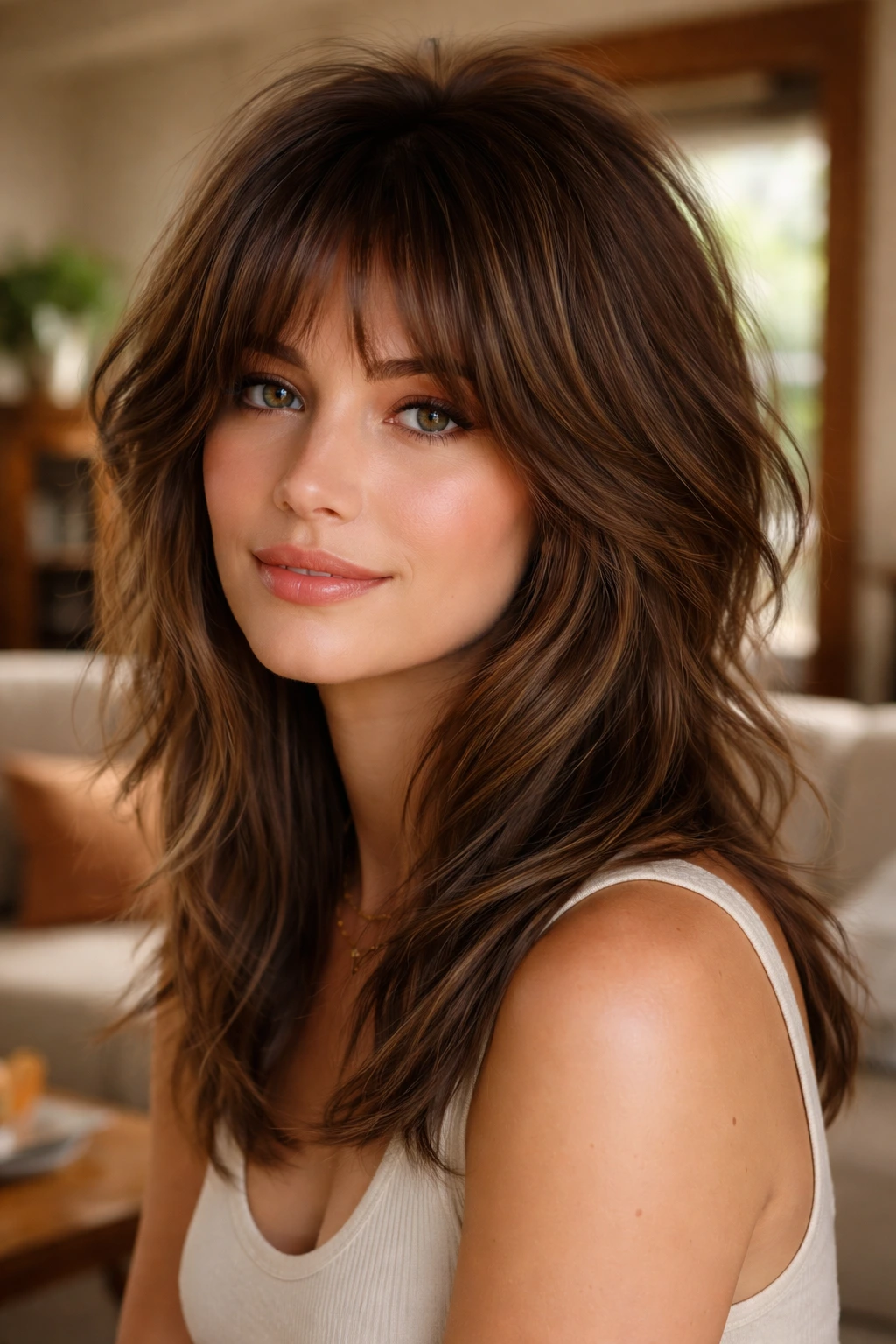
This is the original blueprint for modern layering. It features heavy, choppy layers that start relatively high up near the crown and cascade down toward the ends. For a round face, the magic lies in the crown volume; by building height at the top of the head, you instantly draw the eye vertically, creating the illusion of a longer, more oval face shape.
Why This Works for Round Faces
The key isn’t the length—it’s the weight distribution. In a classic shag, the hair is thinned out at the ends, which prevents the “triangle” effect that plagues many haircuts on rounder face shapes. Because the hair is lighter at the bottom, it doesn’t push out against your jawline.
- Crown Volume: The shorter layers at the top create natural lift.
- Feathered Ends: The ends are razored or point-cut to remove bulk.
- Face Framing: The layers around the face are kept slightly shorter to emphasize your eyes.
Styling note: Use a sea salt spray on damp hair and scrunch it with your hands to enhance the natural chaos of the layers. Avoid using a flat iron; this cut lives and dies by its messy, lived-in texture.
2. Modern Wolf Cut
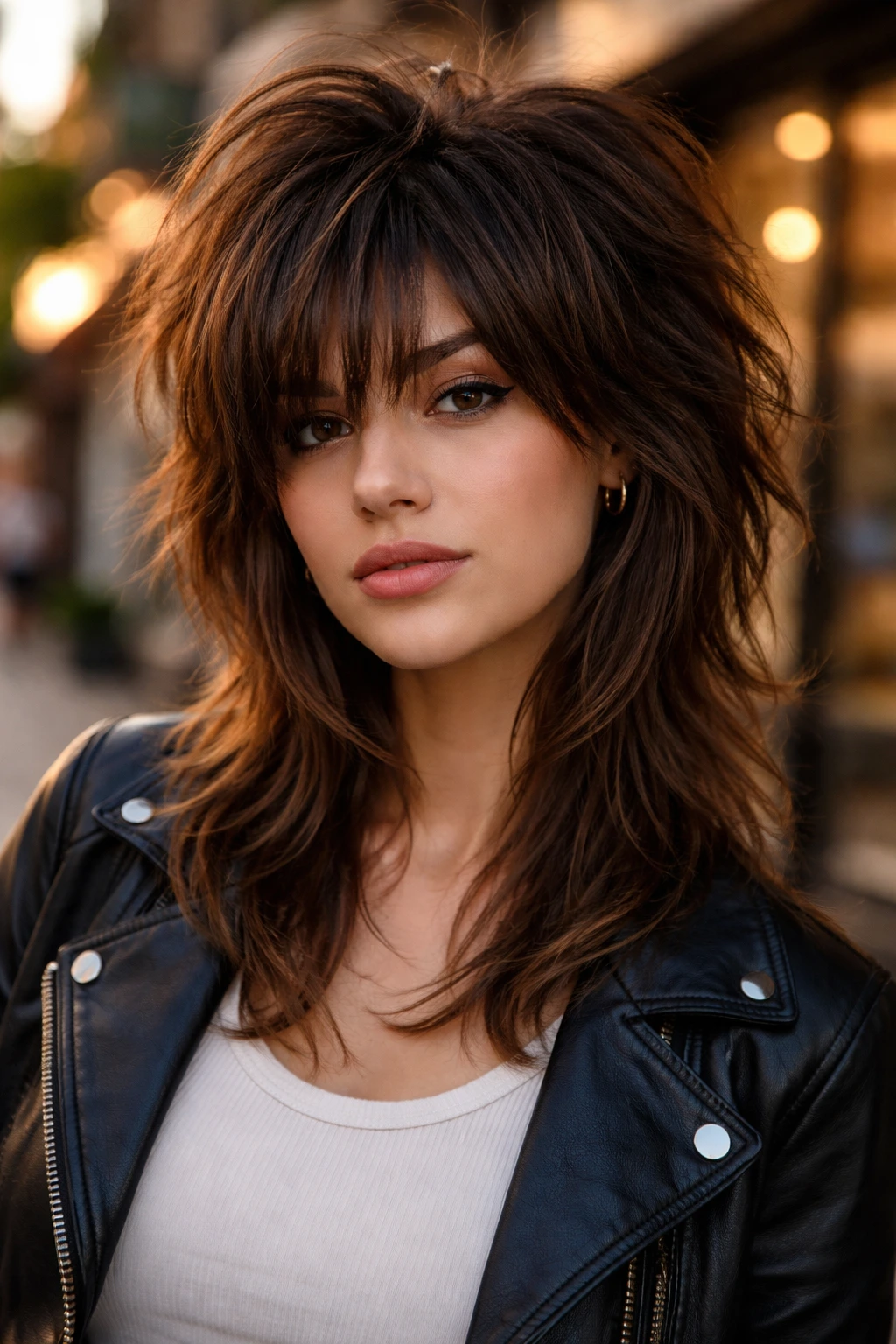
The wolf cut is essentially a high-voltage, punk-rock hybrid of the shag and the mullet. It has taken over because it embraces extreme volume. If you have a round face, you might be tempted to avoid volume, but the wolf cut proves that assertion wrong. By keeping the bulk at the top and letting the ends remain wispy, you shift the focus away from the widest part of your face.
Managing the Volume
Many people worry that a wolf cut will make their head look huge. It won’t, provided your stylist keeps the hair around your neck and ears thinner. The goal is a “shaggy” look, not a “wide” look.
- Top Layers: Extremely choppy and short.
- Nape Length: Often left longer and thinner to contrast the top.
- Texture: Requires a texturizing paste to keep the pieces separated.
If you have thick hair, be very careful with this cut. Too much density at the mid-lengths can backfire. Ask your stylist to “debulk” the interior layers so the hair collapses inward rather than exploding outward.
3. Textured Bob Shag
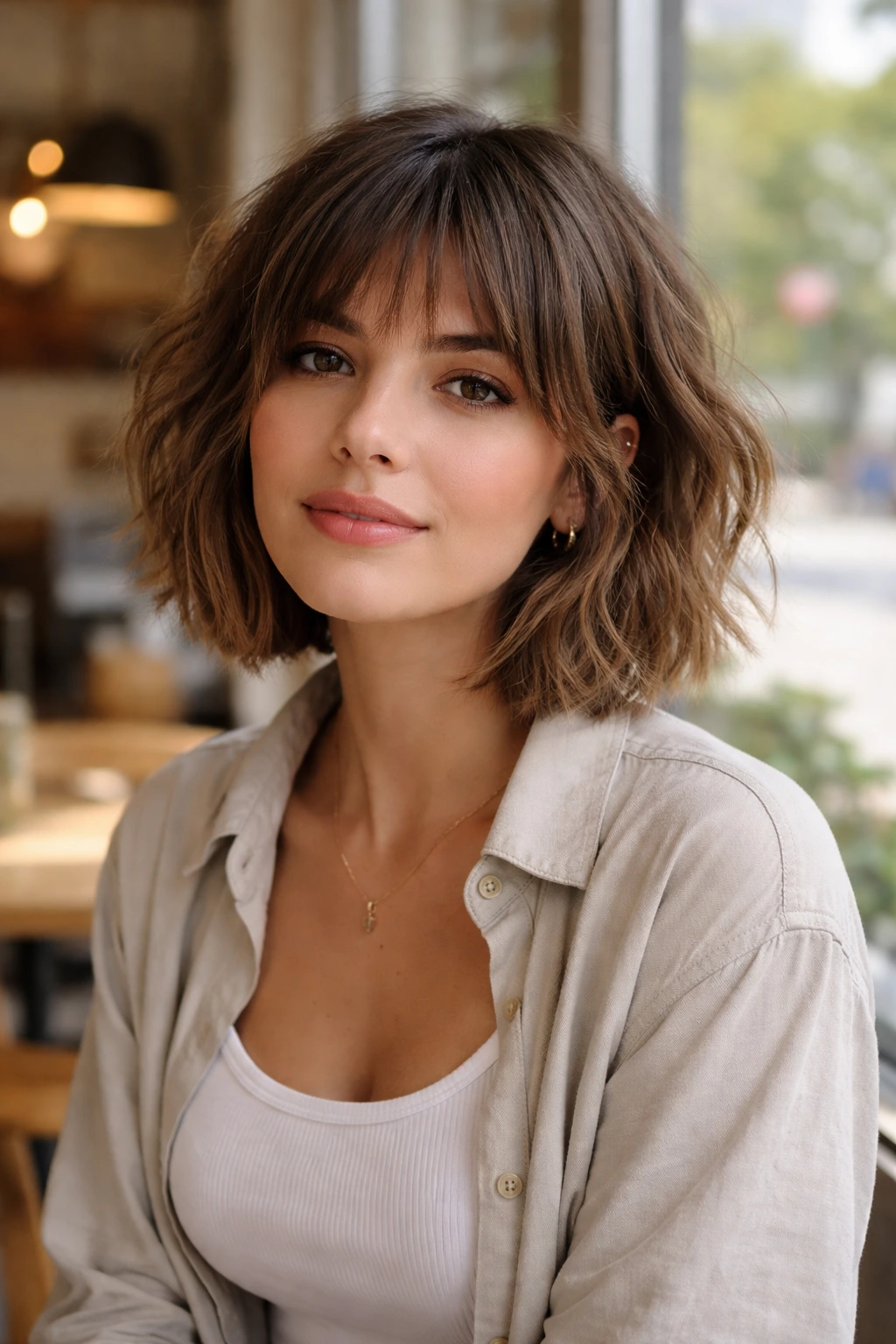
This is the perfect entry point for those who aren’t ready to commit to long hair. It’s a jaw-grazing bob that incorporates the choppiness of a shag. By keeping the length around the chin or slightly below, you create a sharp line that actually defines your jaw, effectively cutting through the softness of a round face.
The Balancing Act
The bob shag is all about the perimeter. You want the ends to be soft and piecey rather than blunt and heavy. Blunt bobs can sometimes emphasize the roundness of cheeks, but a shagged bob with layers helps break up that solid line.
- Layering: The layers should start at the cheekbones.
- Finish: Use a light-hold pomade to define the ends.
- Transition: This is the easiest cut to grow out because it stays flattering at every length.
Pro tip: If you have very fine hair, a choppy bob is your best friend. It gives you the appearance of having twice as much hair density because the layers aren’t being weighed down by length.
4. Long Layered Shag
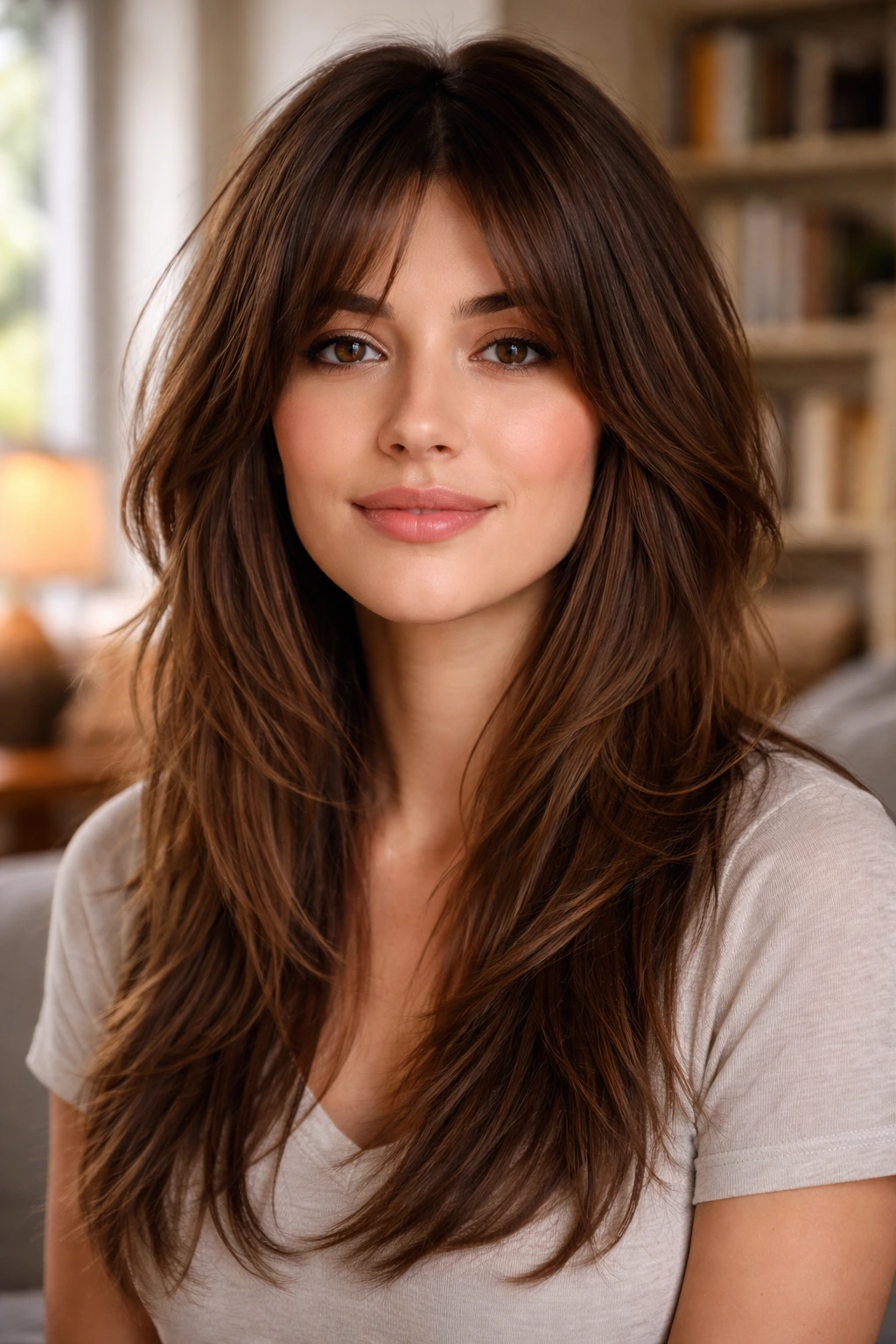
Not everyone wants to cut their hair into a bob, and that’s perfectly fine. A long shag allows you to keep your length while still benefiting from the structural advantages of layering. The secret here is to avoid “one-length” hair. If your hair is all one length, it tends to drag your face down.
Keeping It Light
When you go long, the weight of the hair becomes a factor. You need to ensure the layers are “internalized”—meaning they aren’t just at the ends, but distributed throughout the mid-lengths. This prevents the hair from looking stringy.
- Start layers at the chin: This creates an immediate focal point.
- Avoid heavy bangs: Stick to wispy, long fringe that you can tuck away.
- End finish: Go for a “shattered” look rather than a straight-across cut.
You will need to trim this every eight weeks, even if you are growing it out, to keep the layers crisp and defined. Without regular maintenance, a long shag can quickly turn into a mullet you didn’t ask for.
5. Shag with Bottleneck Bangs
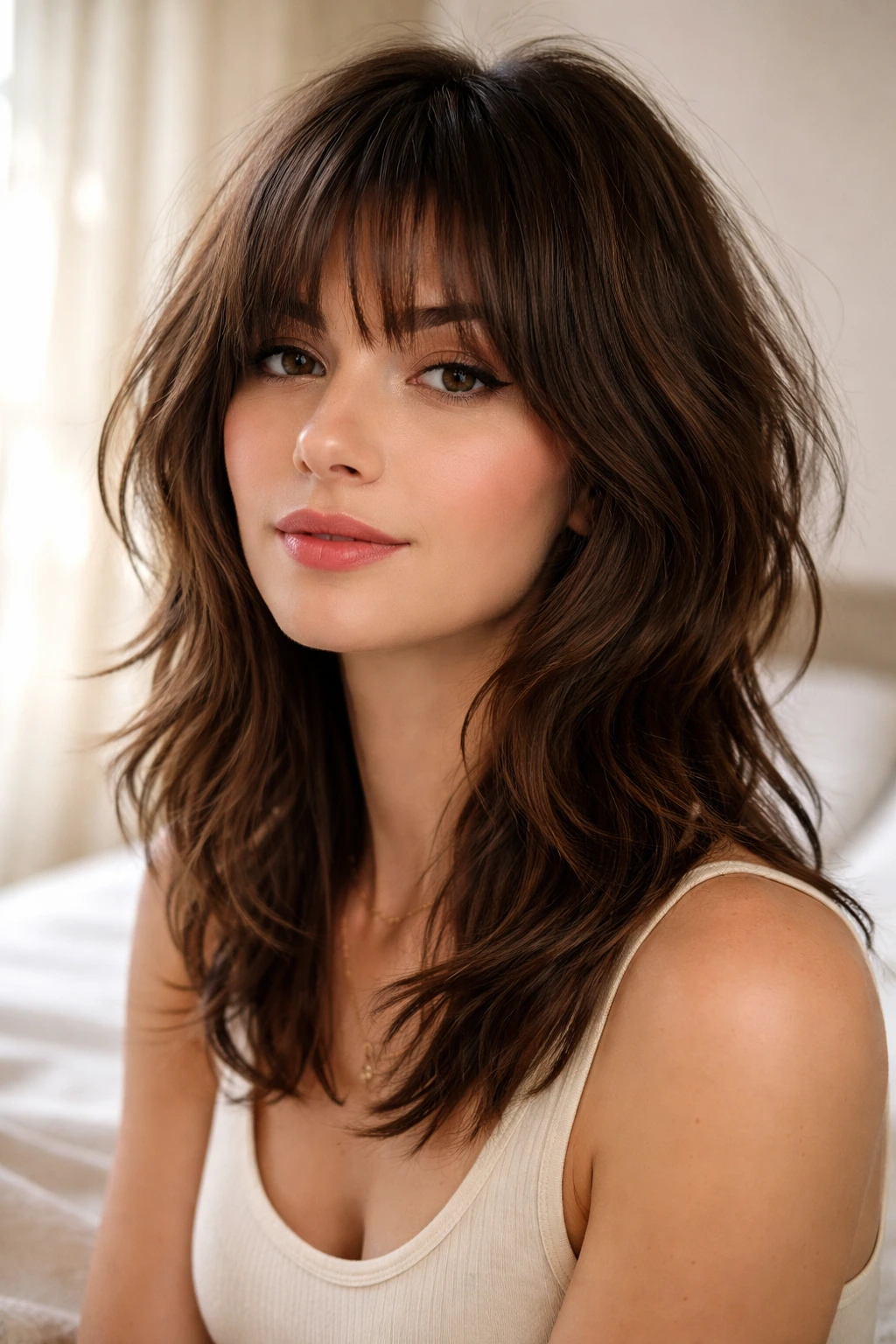
Bottleneck bangs are a slightly softer take on curtain bangs. They are shorter in the middle and get longer as they move toward the temples, creating a gap that mimics the neck of a bottle. For round faces, this is brilliant because the middle part of the bang hits right at the bridge of the nose, breaking up the horizontal line of the face.
Why They Flatter
Unlike blunt bangs that cut your face in half, bottleneck bangs create a vertical line of sight. They guide the eyes toward your nose and cheekbones rather than the width of your cheeks.
- Length: They should graze your eyebrows.
- Blending: They need to melt seamlessly into the rest of the shag layers.
- Styling: A round brush is essential here to give them that subtle, outward flick.
If you have a very low hairline, proceed with caution. Bottleneck bangs look best when you have enough forehead space to show off the “bottle” shape. If your forehead is narrow, you might need to adjust the placement.
6. Curly Shag
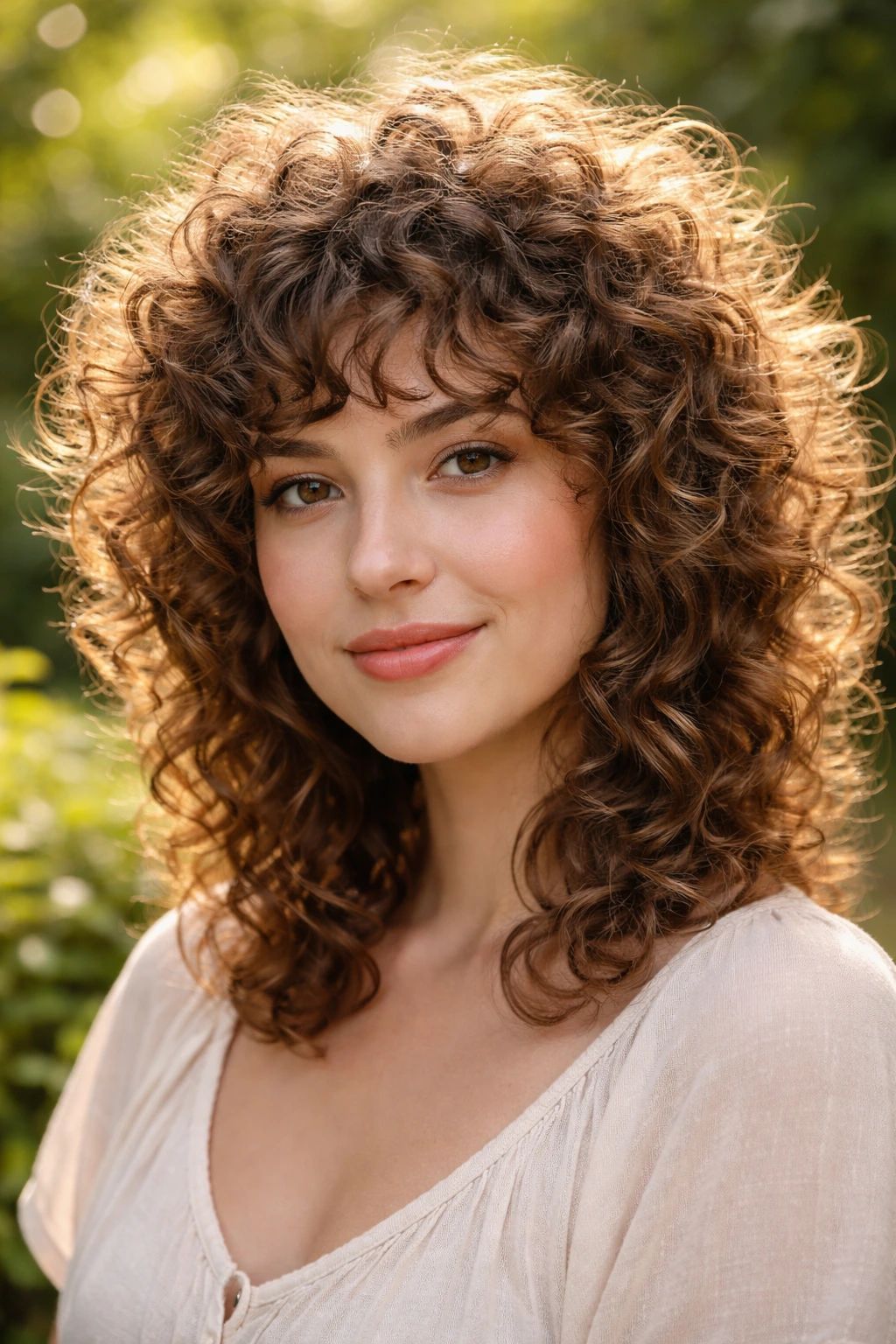
If you have natural curls, the shag is arguably the best haircut you can possibly get. Curly hair is heavy, and long, one-length cuts tend to create a “pyramid” shape on round faces. A shag cuts away that weight, allowing your curls to spring up and sit higher on your head.
The Curly Advantage
Curly hair naturally adds width. By using a shag cut to move the volume from the sides of your face to the top of your head, you solve the width problem automatically.
- Technique: Dry cutting is often superior for curly shags.
- De-bulking: Ask for internal layering to prevent the “triangle” shape.
- Hydration: A leave-in conditioner is non-negotiable for defined layers.
Warning: Don’t let your stylist use a razor on curly hair. It creates frizz and compromises the integrity of the curl pattern. Stick to point-cutting with professional shears to maintain the health of your ringlets.
7. Wispy Pixie Shag
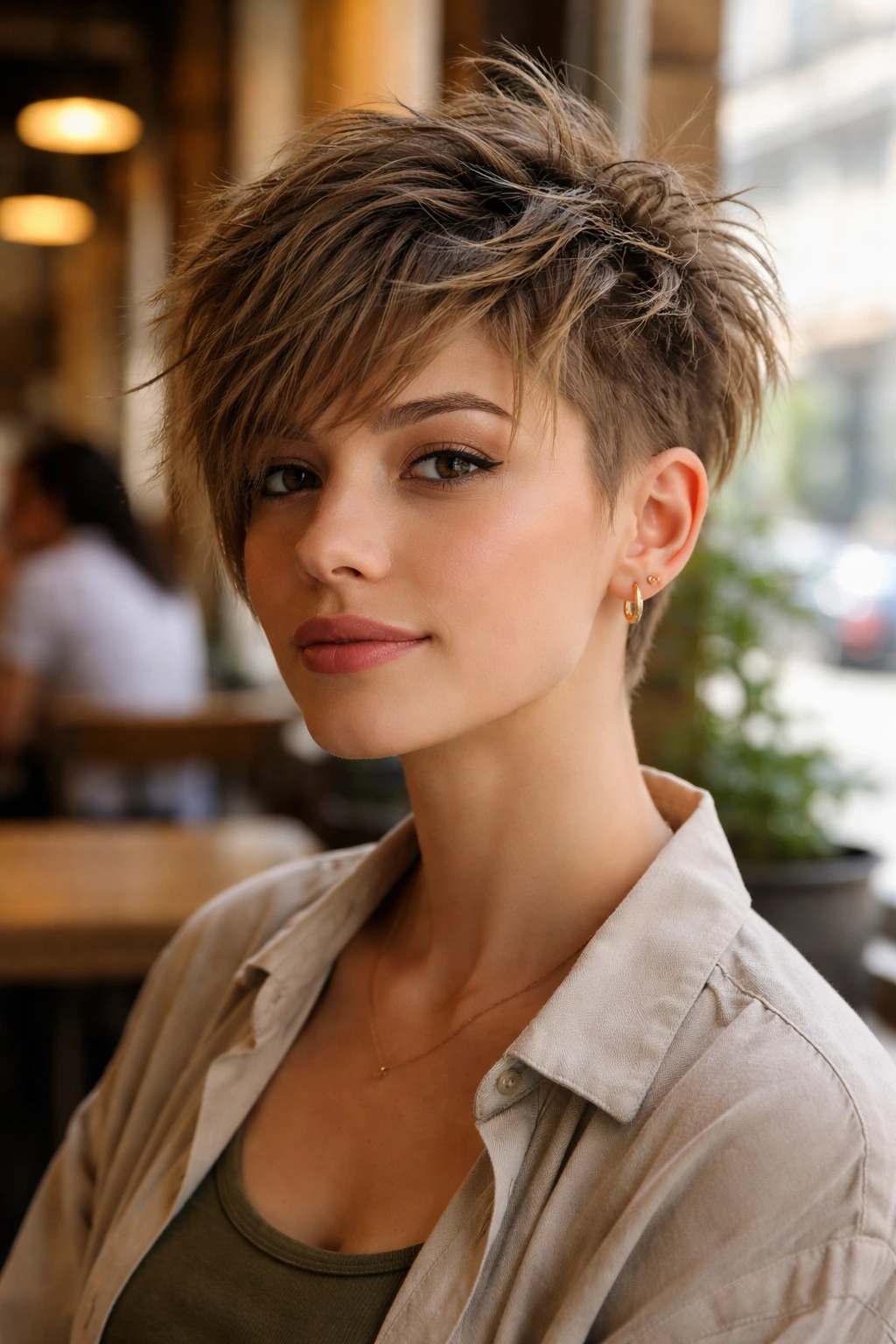
The pixie shag is a bold move, but it is incredibly effective for round faces. By keeping the sides very short or tight and leaving the top and crown long and shaggy, you create an oval shape with your hair. It’s the visual equivalent of a high ponytail without the elastic.
Confidence Is Key
This cut requires a bit of maintenance. Because it’s short, you’ll likely need a trim every four to six weeks to keep the shape from growing out into a mushroom-like silhouette.
- Sides: Keep them close to the scalp.
- Top: Messy, long, and multi-directional.
- Styling: Use a tiny amount of grit paste or clay.
It’s a misconception that pixie cuts don’t suit round faces. The issue is usually a pixie cut that is too rounded or too “flat” against the head. A pixie shag adds the necessary texture and height to break up the shape.
8. Shaggy Mullet
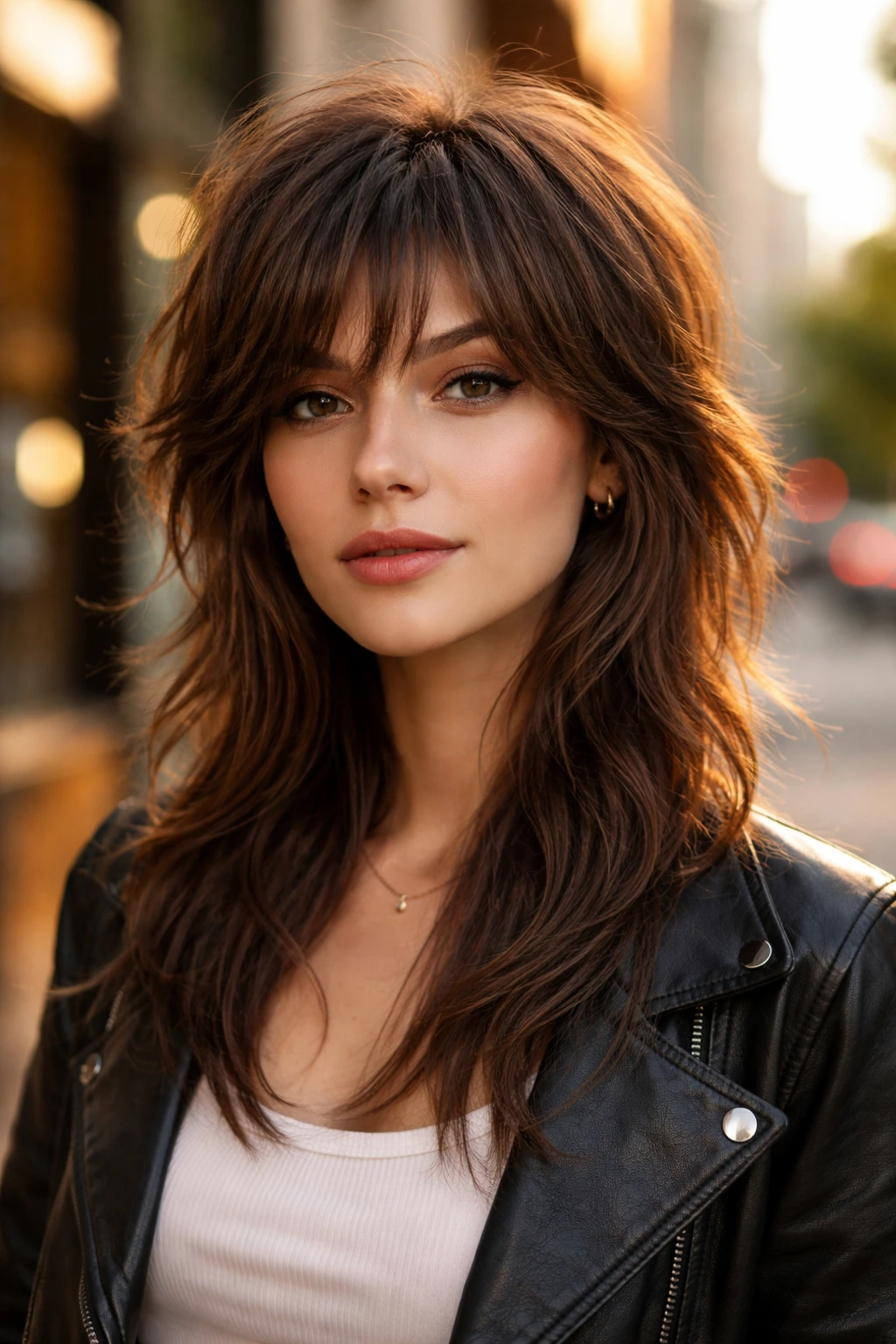
Hear me out—the modern mullet is not the caricature of the 80s. It’s a high-fashion, edgy cut that focuses volume at the crown and keeps the front shorter and the back longer. For a round face, the front layers frame the eyes, while the volume on top lengthens the face.
The Modern Interpretation
The key is to blur the lines between the short front and long back. You don’t want a harsh disconnection; you want a gradient.
- Front: Face-framing layers that hit the cheekbones.
- Top: Maximum volume.
- Back: Wispy and textured.
This style is excellent for people with fine hair who struggle to get volume. The shorter layers on top are easy to tease or blow-dry into a permanent lift that lasts all day.
9. Shag with Curtain Bangs
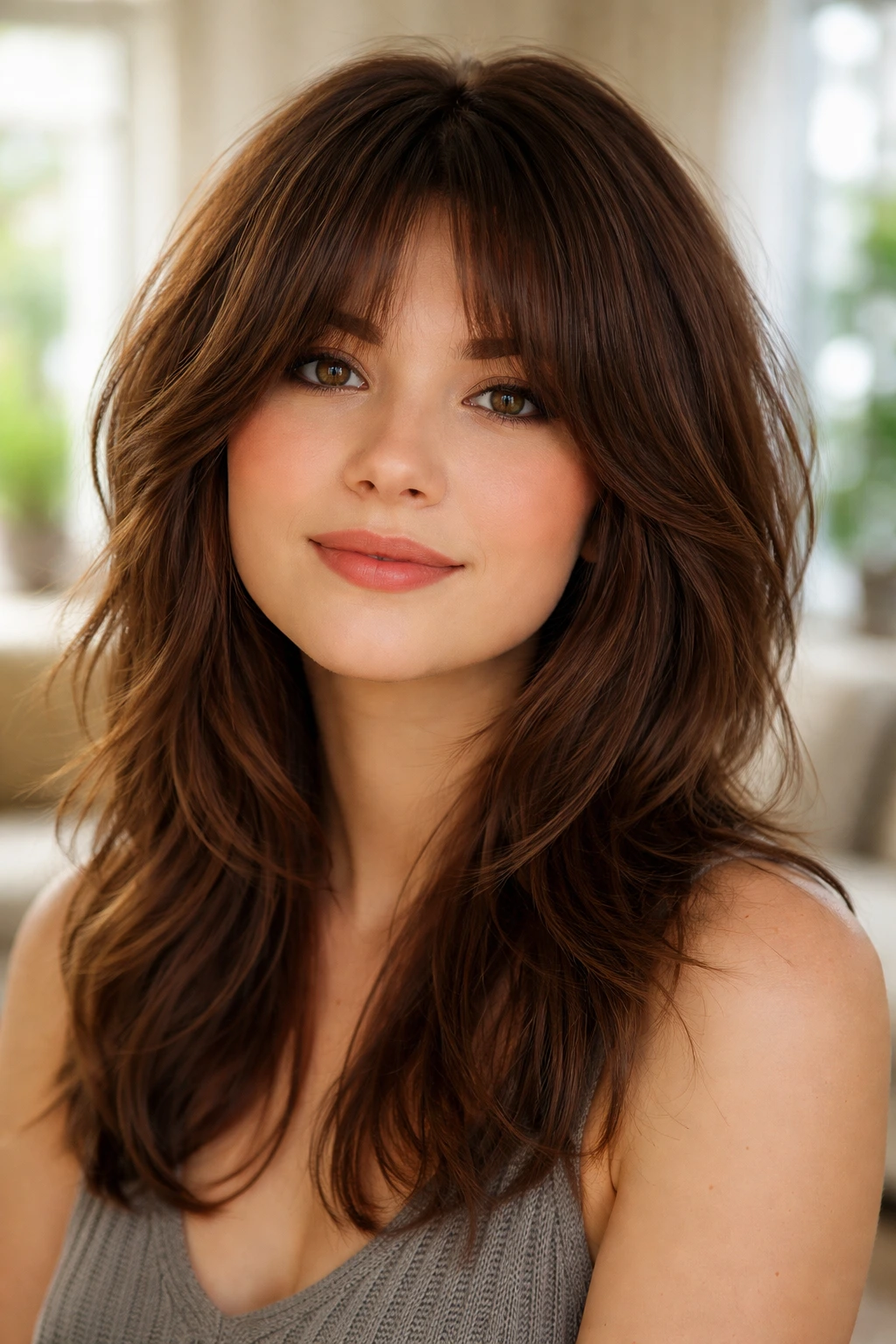
Curtain bangs are the “safe” version of fringe, and they are immensely flattering for round faces. They sweep away from the center, creating a frame for your face. When combined with a shag cut, they make the hair look effortless and romantic.
The Frame Effect
Curtain bangs work by splitting your forehead and creating diagonal lines. These diagonals are the enemy of a round face, because they slice through the roundness and create angles where there were none.
- Parting: A center part is most common, but you can do a slight off-center part for more drama.
- Maintenance: These require a quick blowout with a round brush every morning to keep the sweep.
- Blending: They should flow directly into the side layers of the shag.
10. Mid-Length Shag
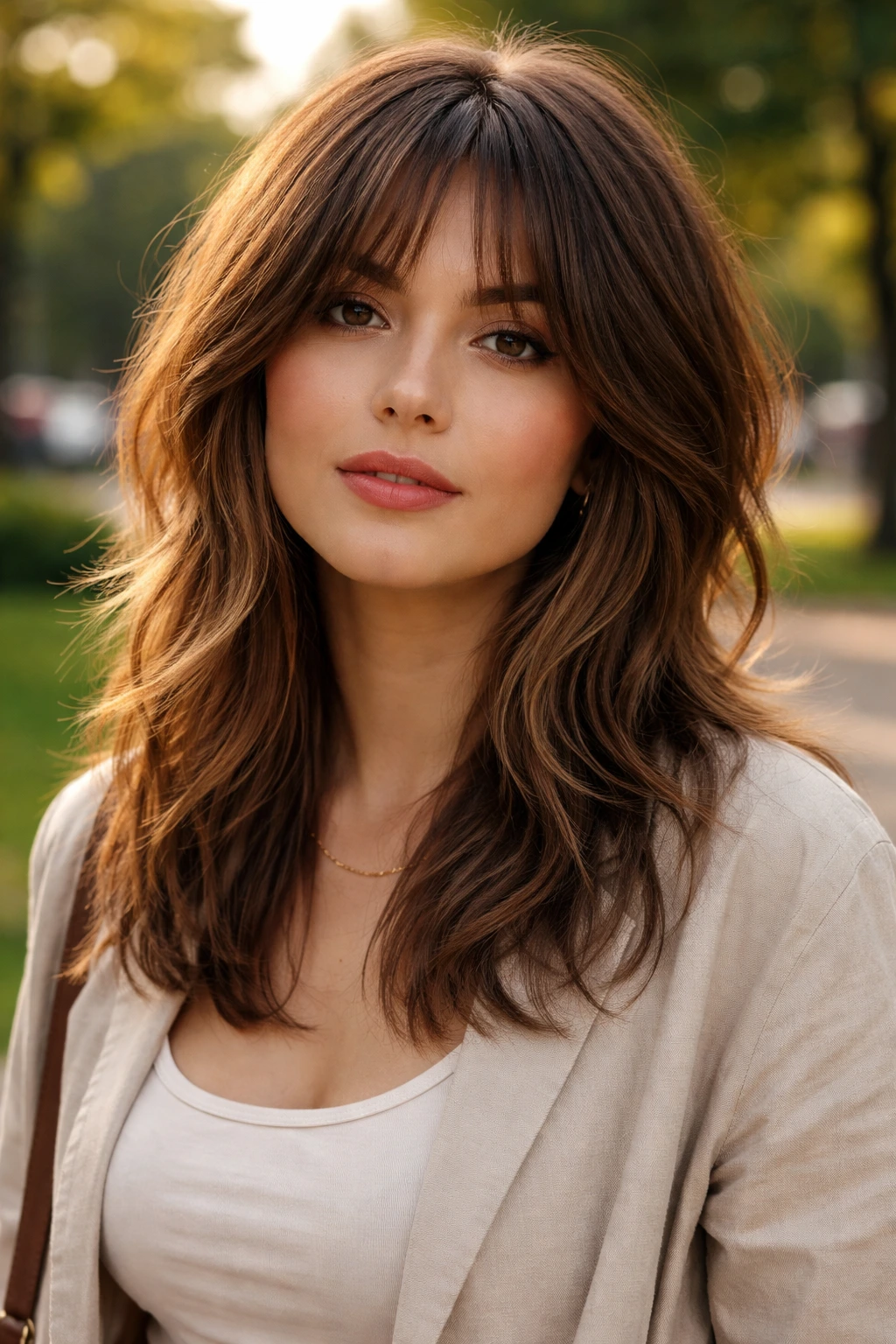
The mid-length shag is the “Goldilocks” length—not too short to be intimidating, not too long to be heavy. It usually hits right at the collarbone. This length is universally flattering because it creates a clear vertical line down your neck.
Why It’s Versatile
You can tie it up, curl it, or let it air dry. It offers the most flexibility for daily life while still giving you the edge of a shag.
- Layering: The layers should be dense in the mid-lengths.
- Movement: Perfect for people who like to run their hands through their hair.
- Styling: Great for a messy bun—the shorter layers around the face will fall out naturally, framing your face perfectly.
11. Feathered Shag
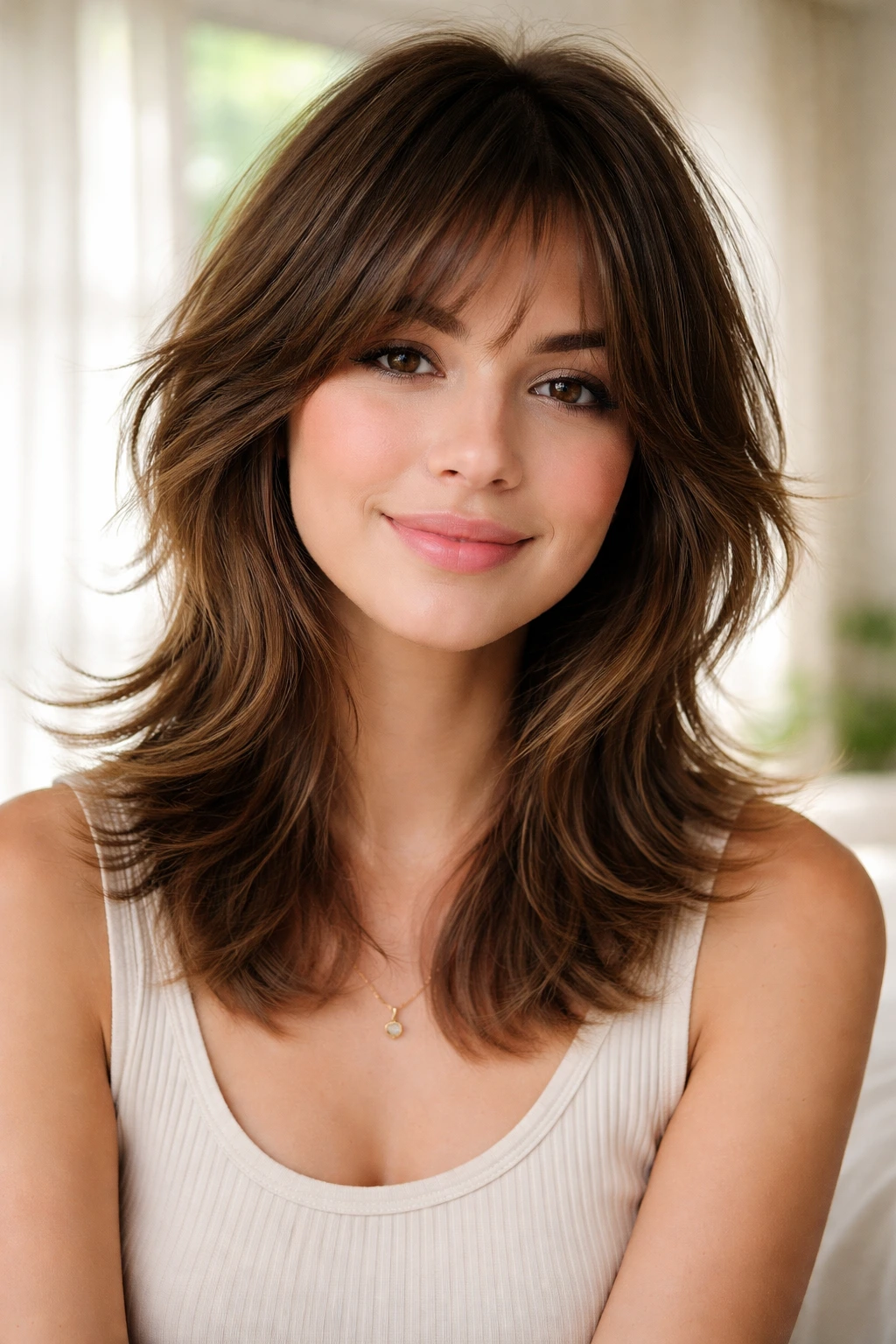
Feathering is a technique where the stylist cuts into the ends of the hair to make them look light and airy, like the plumage of a bird. For a round face, a feathered shag is wonderful because it softens the features. If you have harsh or strong features, this is the style for you.
The Softening Effect
Feathering removes weight, which means your hair won’t sit flat against your cheeks. It encourages the hair to flick out slightly, which creates a dynamic, youthful shape.
- Technique: Requires careful point-cutting by the stylist.
- Result: A bouncy, lively look.
- Best for: Someone who hates the “heavy” feeling of thick hair.
12. Choppy Layers Shag
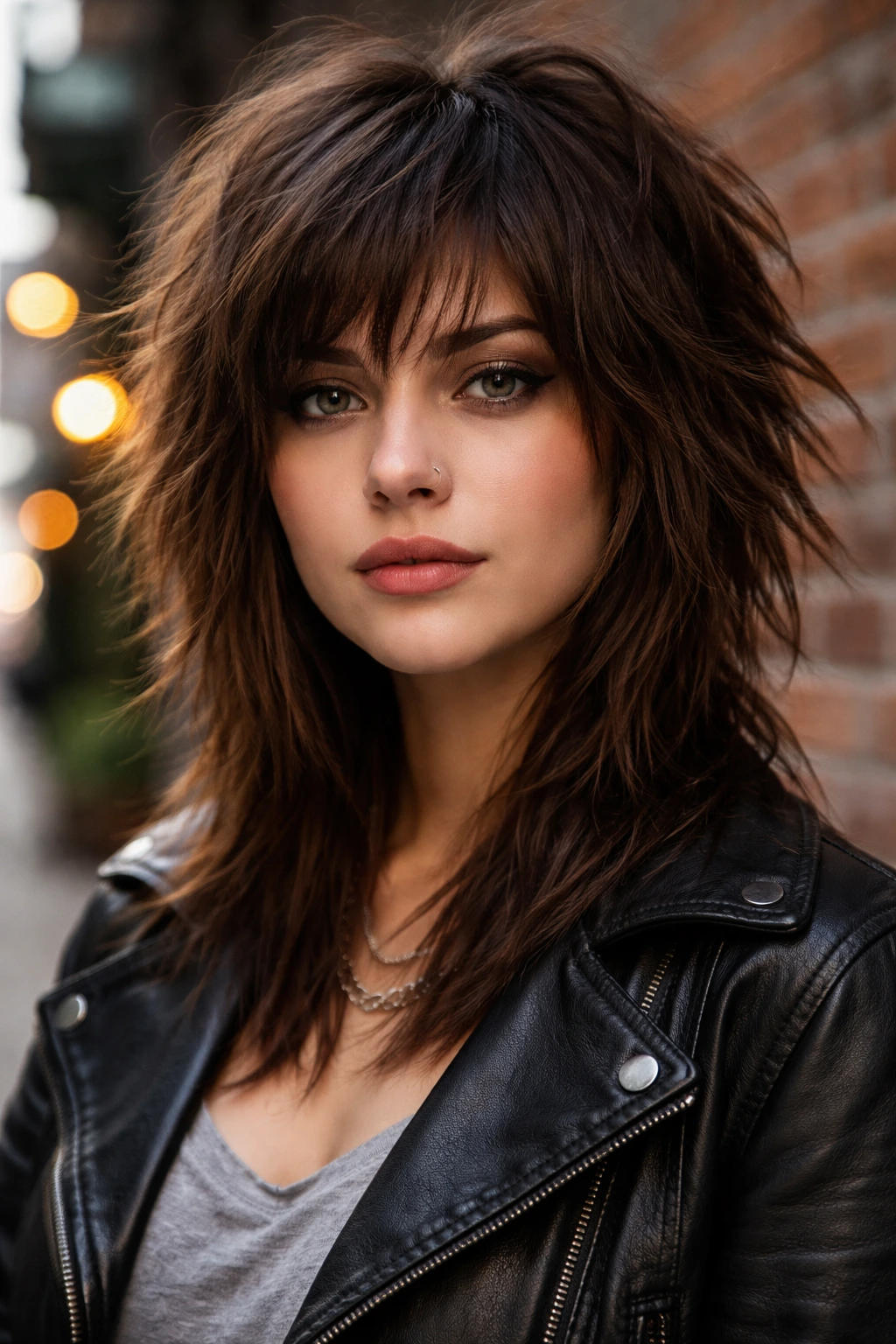
If “soft” and “feathered” aren’t your vibe, maybe “choppy” is. Choppy layers are abrupt and visible. They create texture and grit. On a round face, this deliberate messiness is an asset because it makes the style look intentional and edgy rather than just “soft.”
Texture Over Length
The more texture you add, the more you break up the circular shape of the face. Choppy layers create peaks and valleys in your hair, and the eye naturally follows these patterns instead of tracing the outline of your jaw.
- Styling: Use a matte texturizing spray.
- Volume: Highly dependent on how short the top layers are.
- Attitude: This is a confident cut. Own the chaos.
13. Shag with Money Pieces
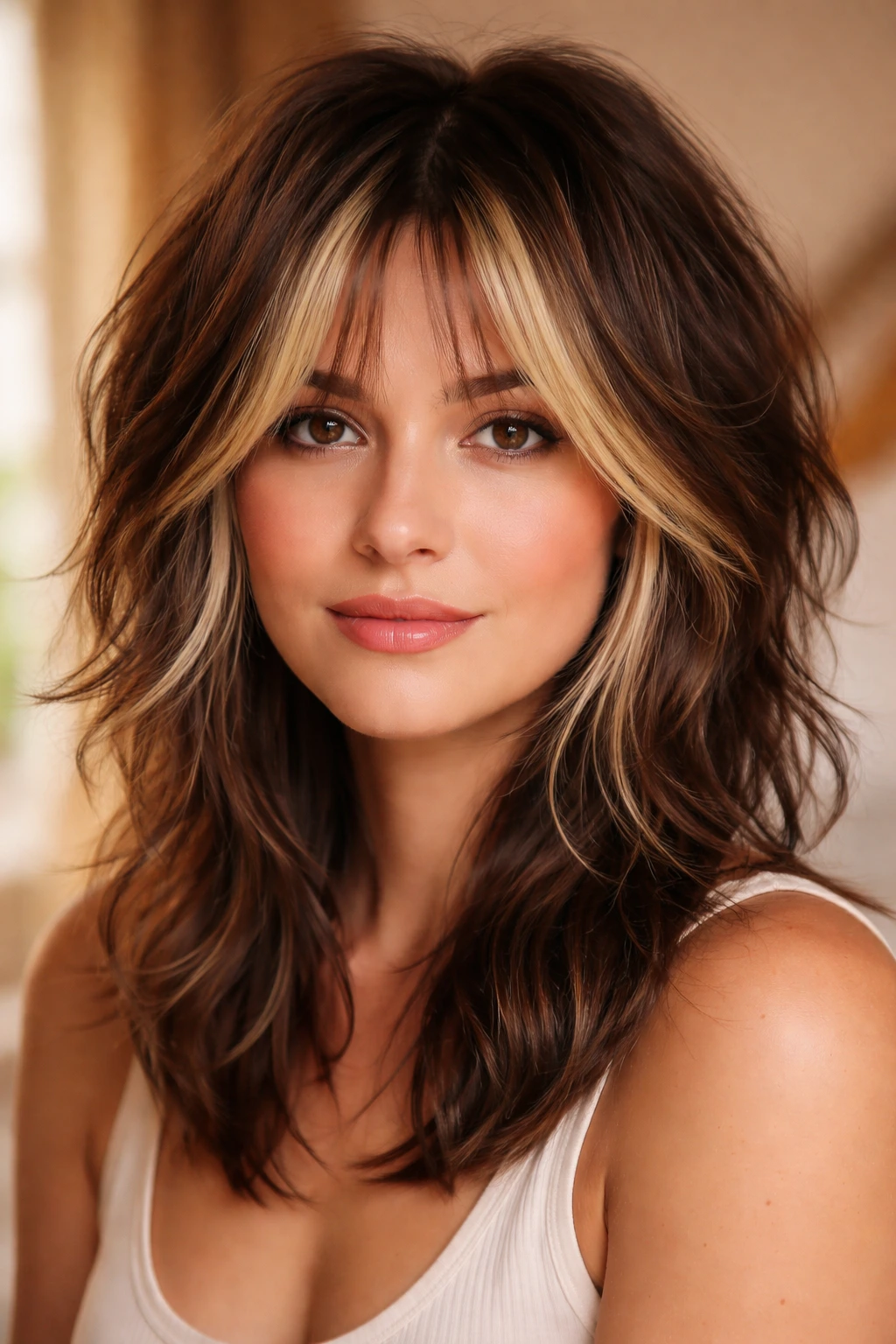
“Money pieces” are the brighter, lighter sections of hair right around the face. In a shag, this color placement is incredibly powerful. It acts as a highlighter for your face.
The Visual Trick
When you brighten the hair framing your face, you pull focus to your eyes and cheekbones. It creates a “light source” that distracts from the width of the face.
- Color placement: Two distinct strips of color at the front.
- Integration: Must be blended well into the rest of the shag.
- Versatility: Works on any hair color, from platinum blonde to deep red.
14. Asymmetrical Shag
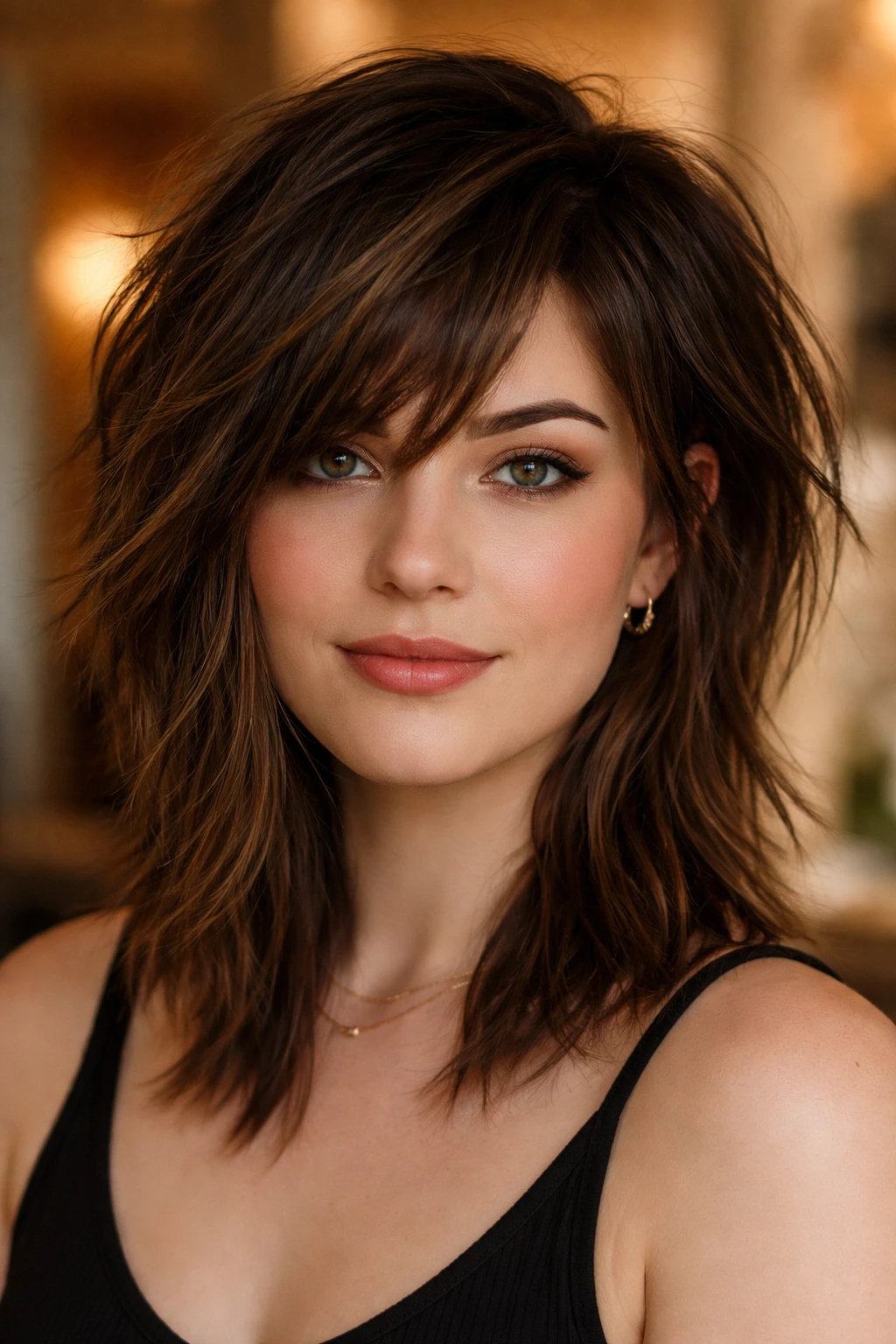
Asymmetry is a secret weapon for round faces. By having one side slightly longer or differently layered than the other, you break the symmetry of the face. Your face is round, but your hair is not—this discrepancy is visually interesting and flattering.
Managing the Look
You don’t need a drastic “emo” style asymmetry here. A subtle shift where one side is an inch longer than the other is enough to add dimension.
- Cutting: Requires a skilled hand to ensure it looks intentional, not like you forgot to finish the haircut.
- Styling: Usually looks best with a side part to emphasize the imbalance.
15. Shag with Side-Swept Bangs
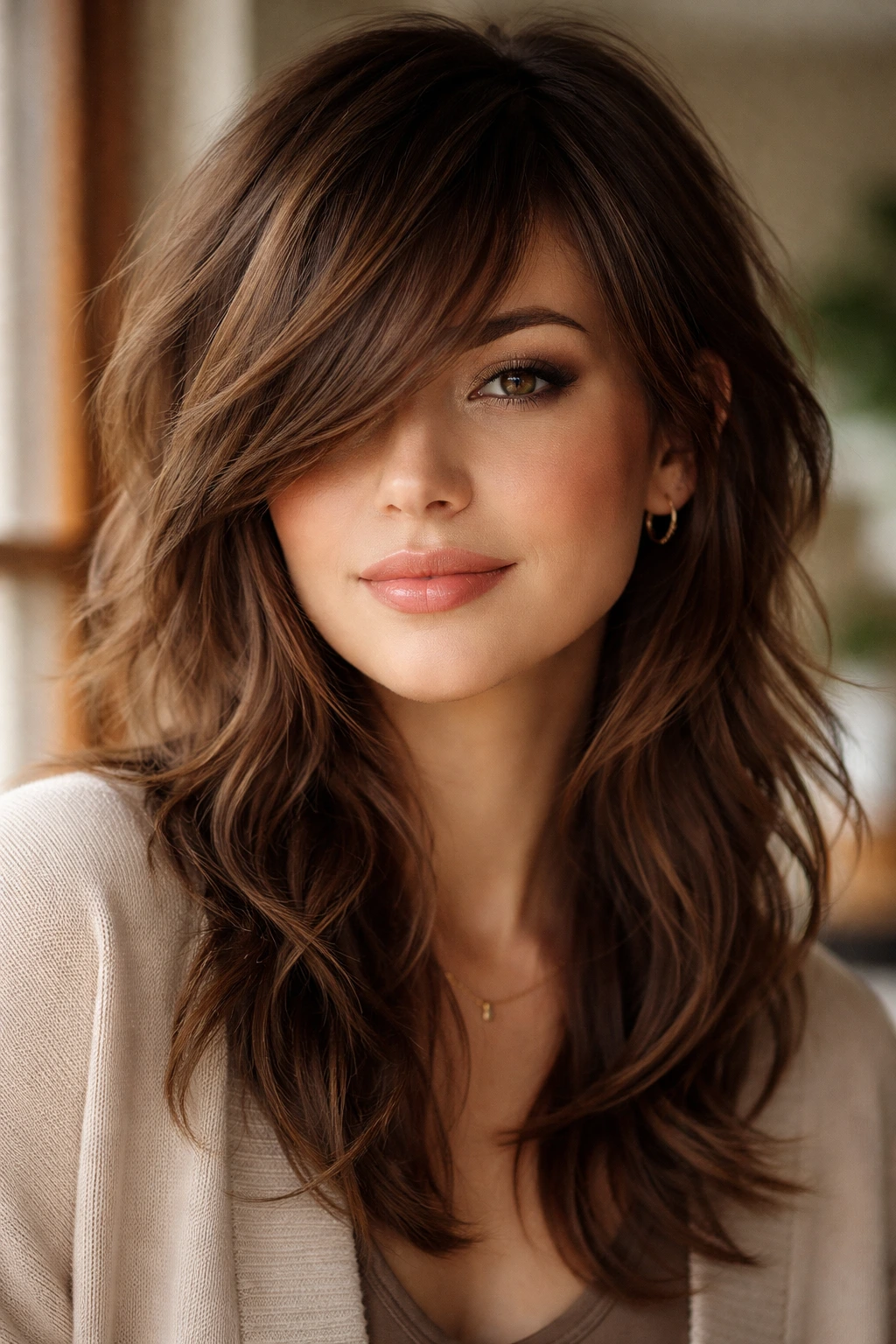
Side-swept bangs are the classic alternative to curtain bangs. They are angled and dramatic. For a round face, a deep side-swept bang creates a massive diagonal line that draws the eye across the face, effectively minimizing roundness.
Why They Work
The diagonal line is the most powerful tool in your arsenal. It cuts the round shape of your forehead and cheekbone in half, making the face look more narrow and structured.
- Length: Should start at the temple and sweep across.
- Blending: Needs to be integrated into the side shag layers for a cohesive look.
- Parting: Requires a consistent side part.
16. Shag with Face-Framing Tendrils
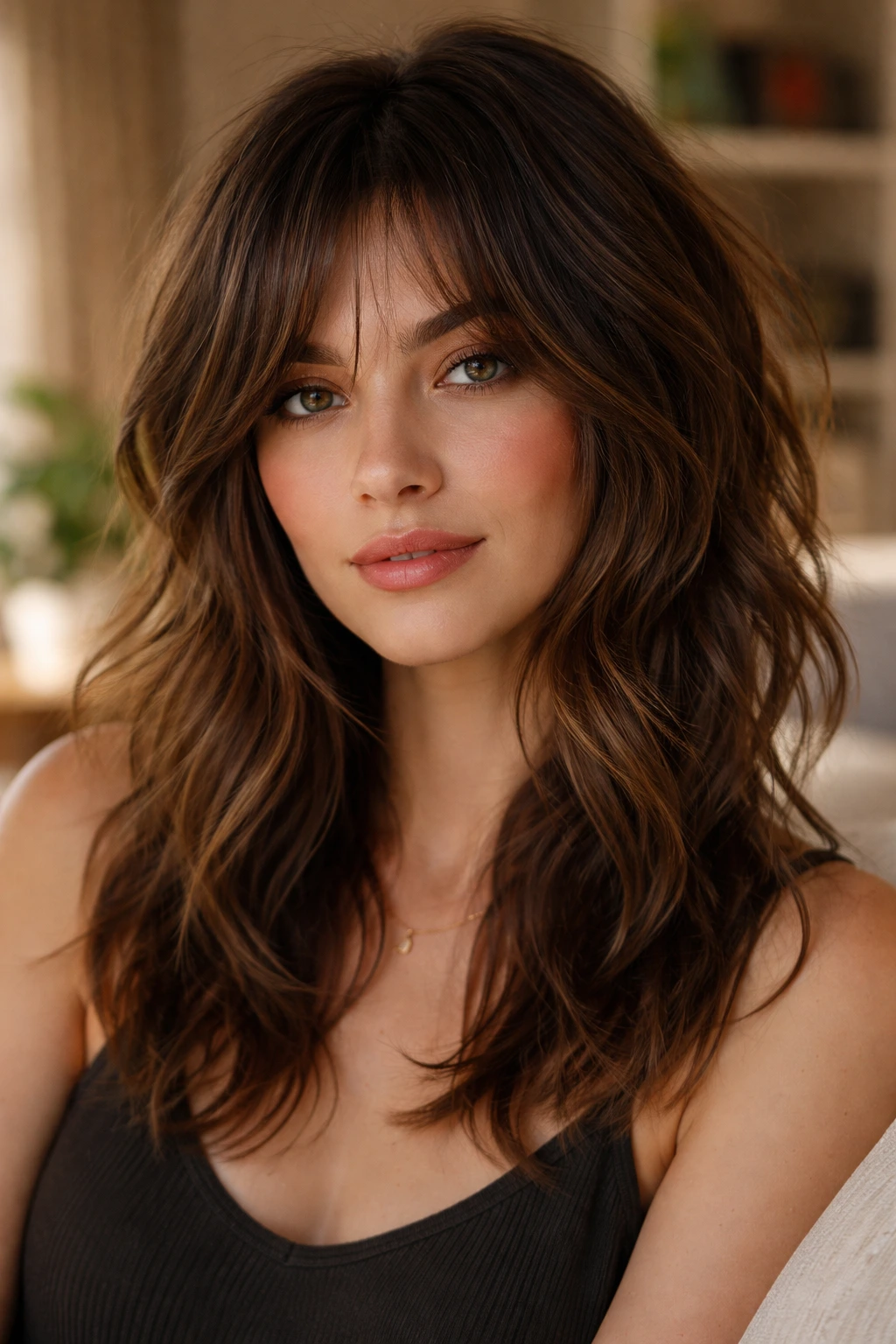
This is a softer, more romantic version of the shag. You cut the hair with long, flowing layers throughout, but you intentionally leave shorter “tendrils” or “pieces” around the face.
The “Undone” Aesthetic
This look is very popular because it feels like you didn’t try too hard. You are highlighting your facial features with the smaller pieces while keeping the length of the hair for a feminine look.
- Layering: Long layers are key.
- Tendrils: Should hit at the jawline or cheekbone.
- Styling: Perfect for low ponytails or messy buns.
17. The Shaggy Lob
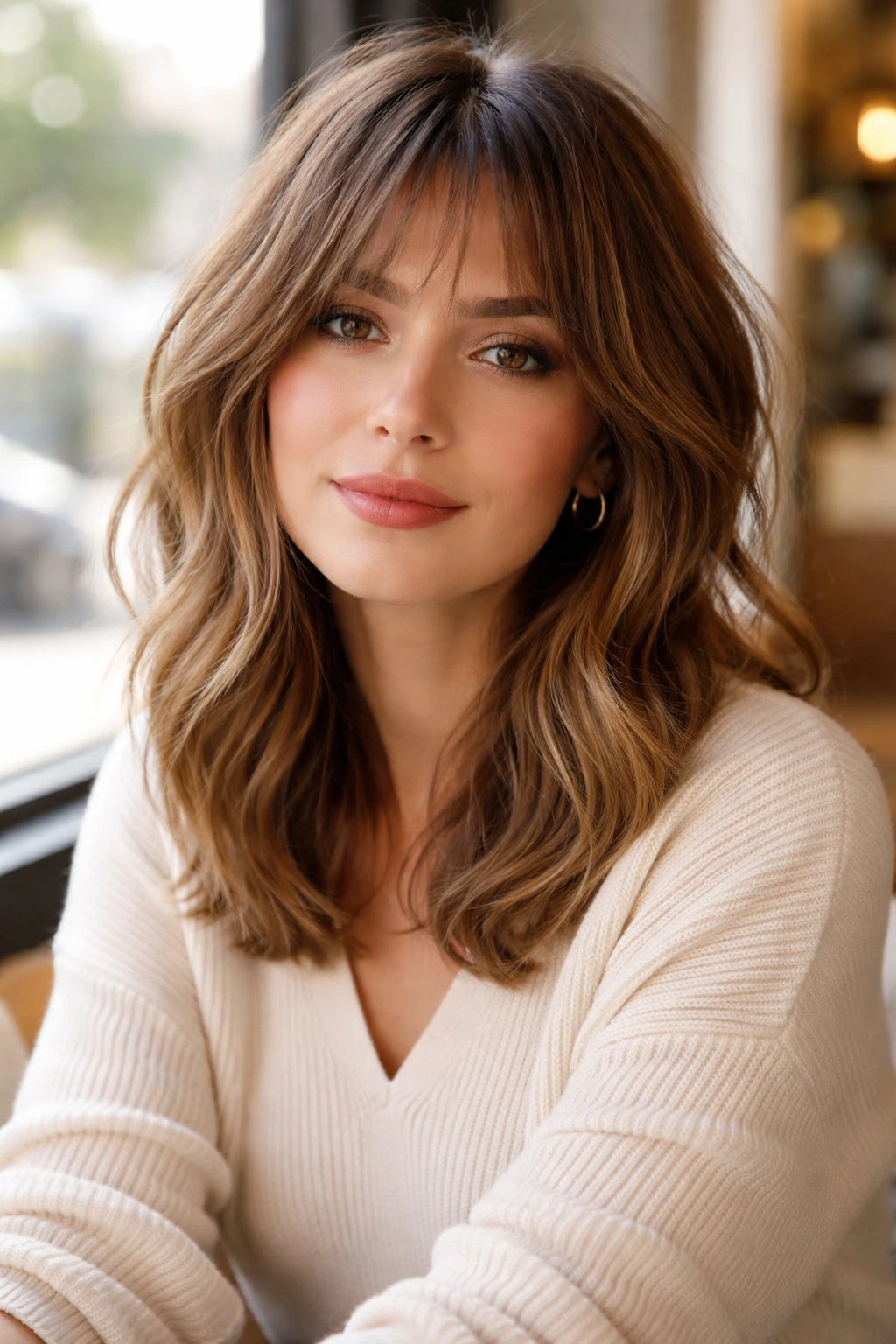
A “lob” (long bob) is already a staple, but adding shag layers to it transforms it. A shaggy lob hits somewhere between the collarbone and the chin. It is the perfect bridge if you are growing out a bob or considering cutting your long hair.
Structure
The lob provides enough length to pull your hair back but enough shortness to show off your neck. By adding shag layers, you remove the boxy quality that some bobs have, keeping the hair moving and alive.
- Versatility: Can be straightened, waved, or curled.
- Growth: Grows out beautifully without an awkward phase.
- Best for: Everyone. Truly, this is the universal cut.
18. Shag with Root Lift
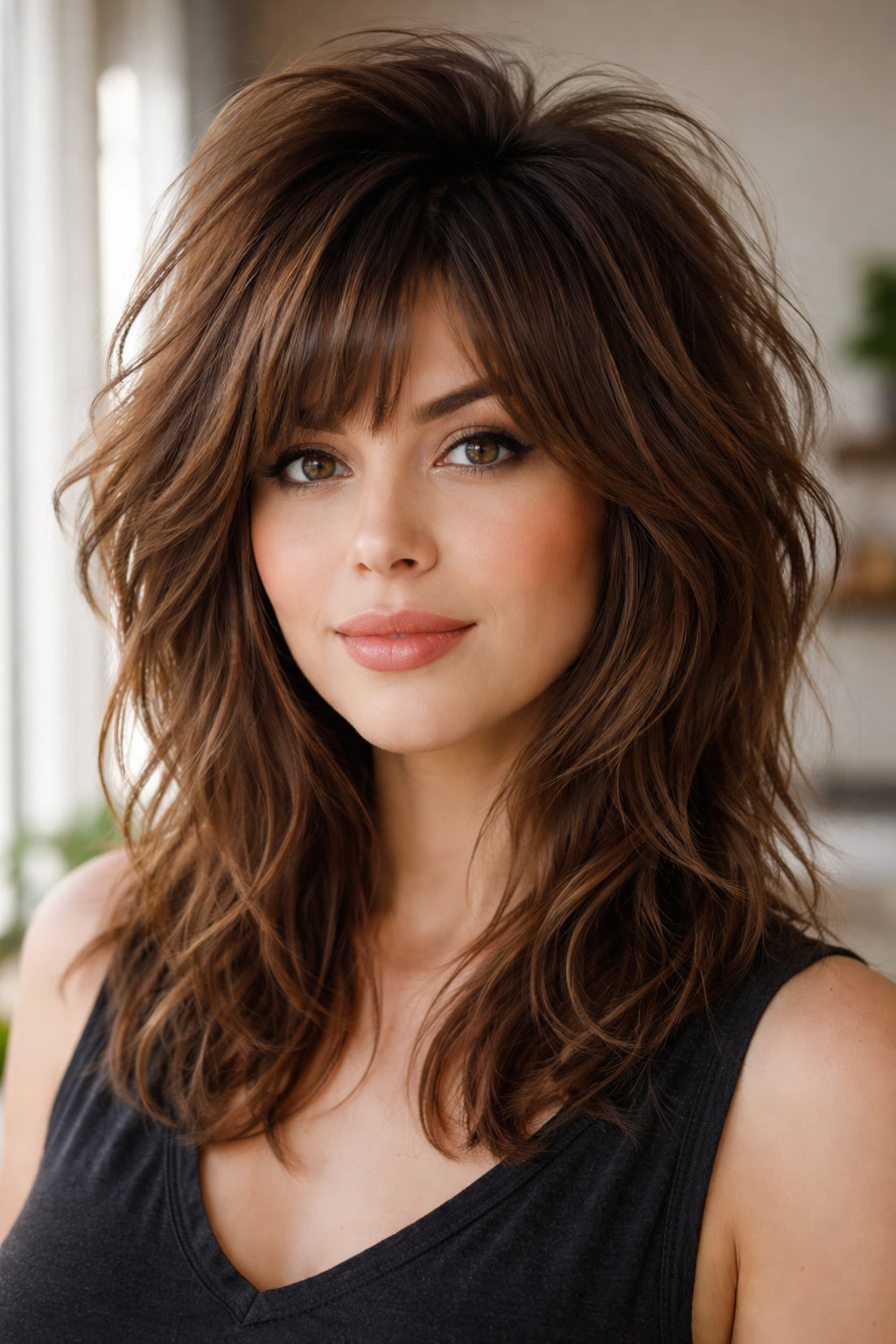
Sometimes the cut is fine, but the styling is what makes or breaks a shag on a round face. If you have a shag, you absolutely must emphasize the roots. Flat hair on top is the enemy; it accentuates the width of the cheeks.
How to Get It
You don’t need to be a professional stylist. A simple root-lifting mousse applied to damp hair before blow-drying is enough.
- The Technique: Blow-dry your hair upside down until it’s 80% dry.
- The Product: Use a lightweight volumizing powder at the crown.
- The Result: Instant elongation of the face shape.
19. Shag with Blunt Ends
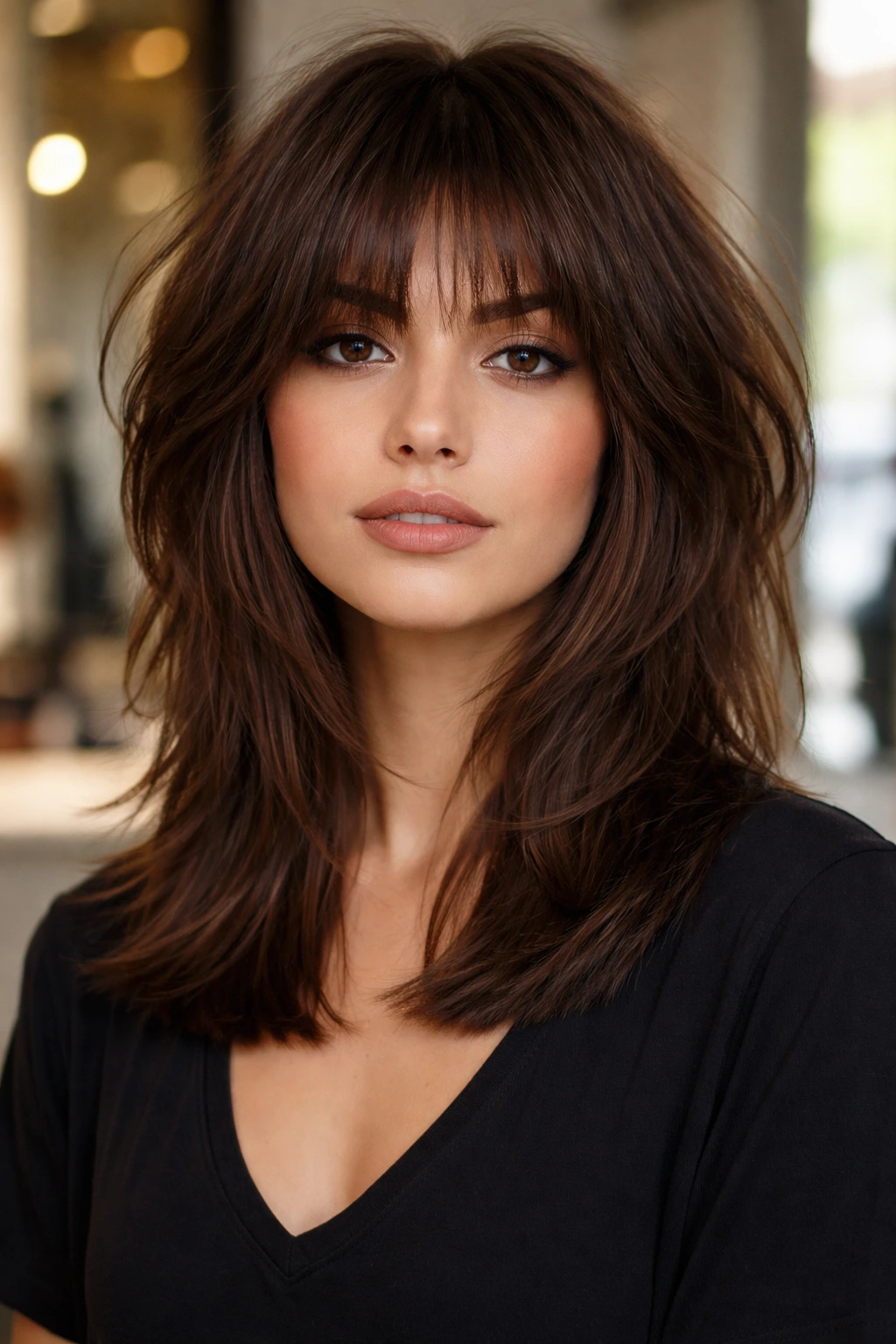
This is a modern twist on the shag. You keep the layers and the volume at the top, but you chop the ends blunt. This contrast between the messy, chaotic top and the sharp, clean bottom is very chic.
Why Contrast Matters
The blunt ends provide a sense of order to the chaos of the layers. For a round face, that clean line at the bottom can actually act as a frame, preventing the hair from looking too fuzzy or unkempt.
- Maintenance: Needs to be trimmed more often to keep the ends blunt.
- Styling: Looks great with a sleek finish, contrasting with the textured top.
20. Shag with Tapered Nape
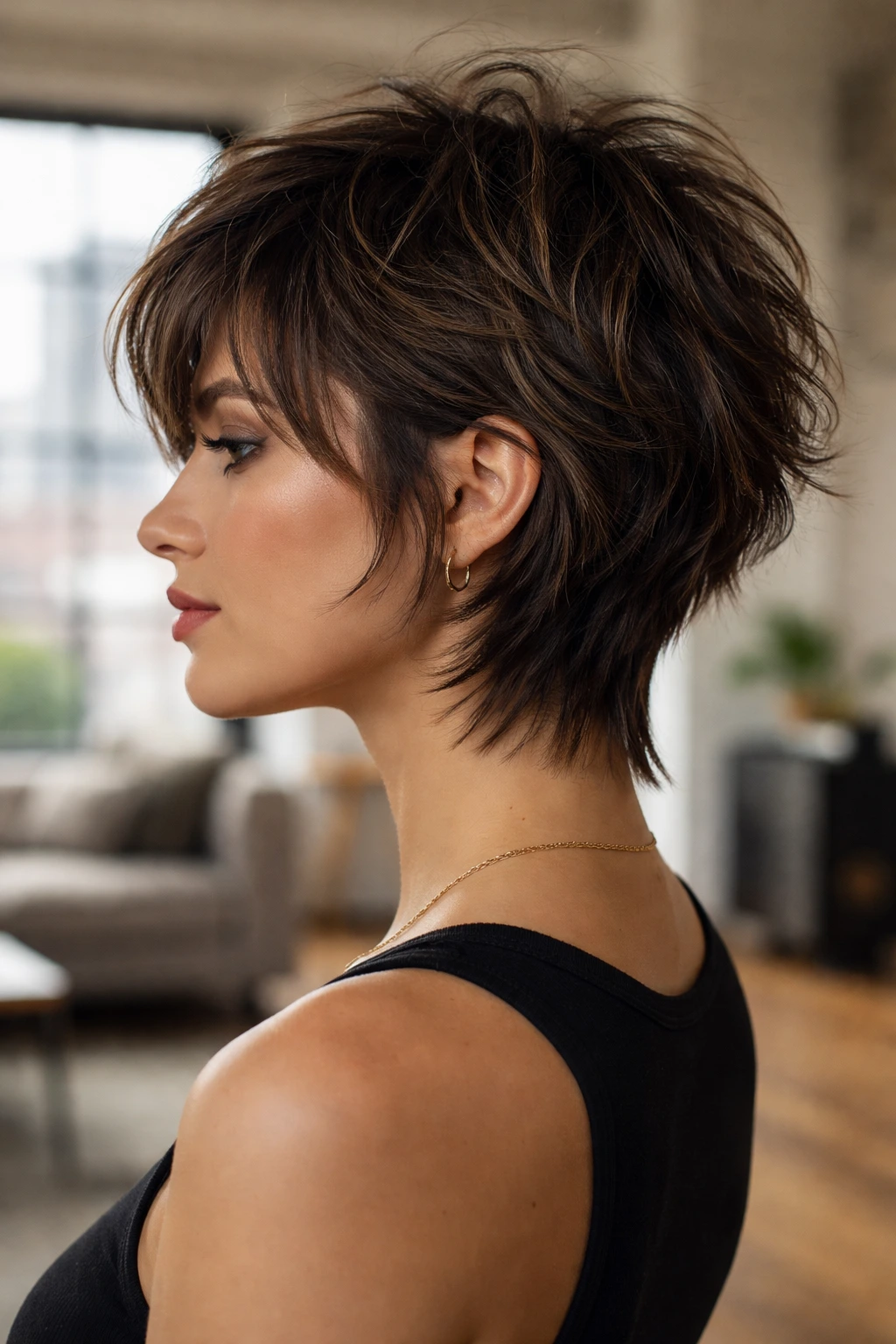
If you want to keep the shag but don’t like the feeling of hair on your neck, a tapered nape is your solution. You cut the hair very short at the bottom, tapering it into the neck, but keep the layers longer and shaggy on the top and sides.
Profile Focus
This style looks incredible from the side. It emphasizes the jawline and neck, which can actually help create a more defined profile. It’s a very clean, deliberate look.
- Vibe: Sophisticated and a little bit tough.
- Convenience: Keeps the hair off your neck during warmer months.
21. Shag with Micro Bangs
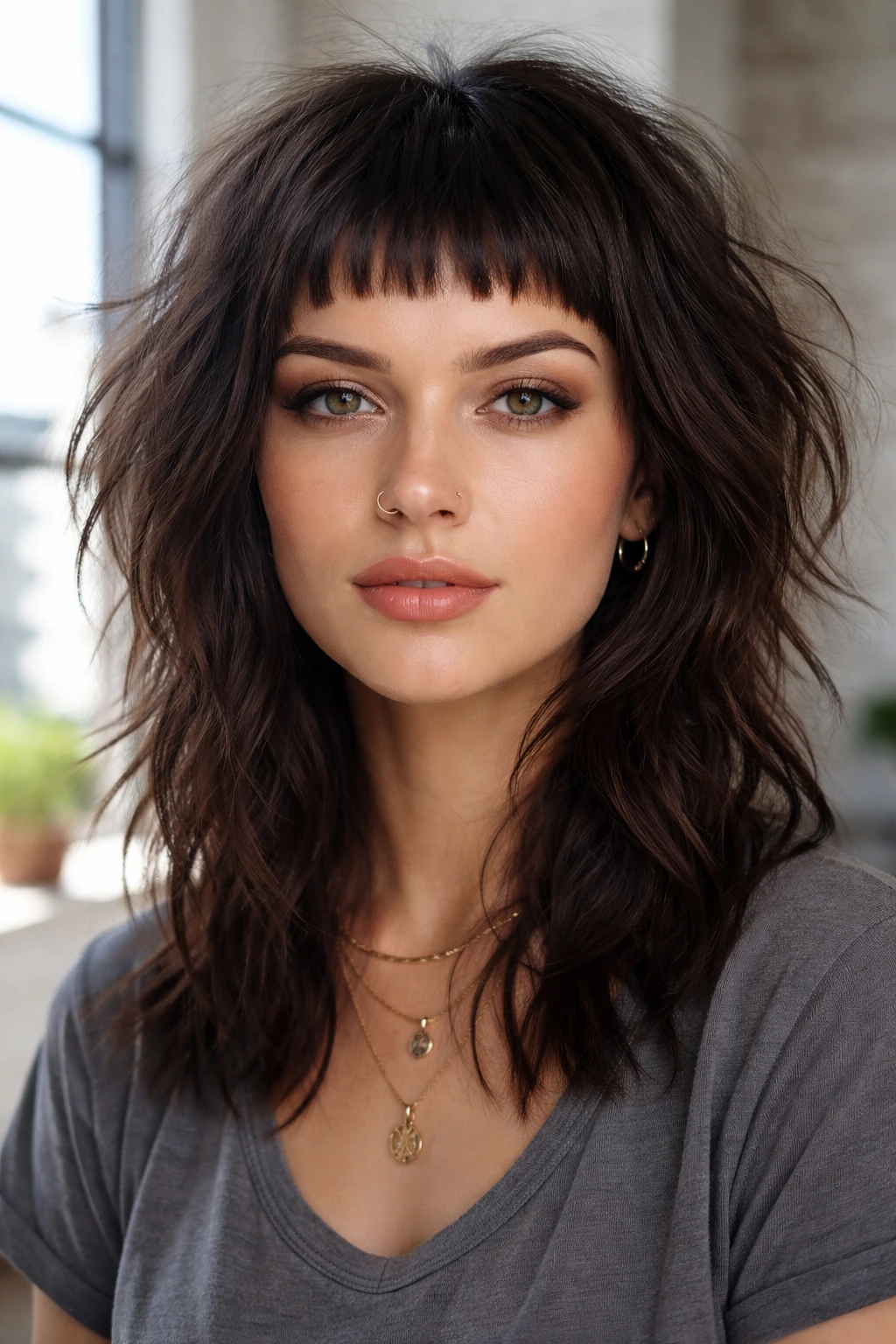
Micro bangs are very short, sitting well above the eyebrows. This is a high-fashion look. On a round face, it creates a very strong visual statement. It draws all the attention to your eyes and brows.
Why It Works
It’s shocking, which is good. Because it’s so unconventional, it forces people to look at your eyes, not your cheeks.
- Commitment Level: High. Once you cut them, you have to wait for them to grow out.
- Style: Pairs well with heavy eyeliner or bold brows.
- Texture: The rest of the shag should be quite messy to balance the precision of the bangs.
22. Shag with Beach Wave Texture
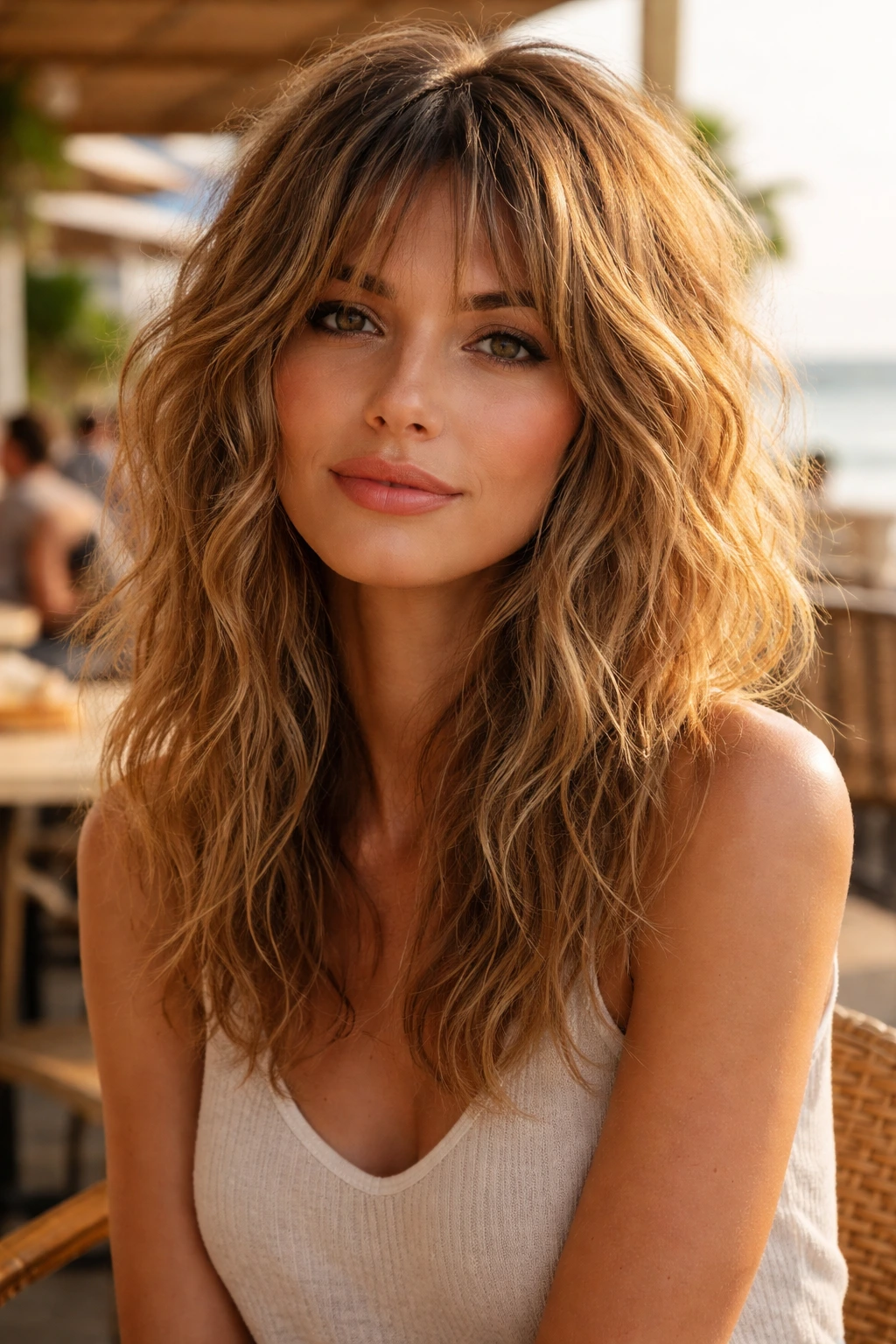
This is the “summer hair” version of the shag. It’s all about soft, undone waves that look like you just spent the day in the ocean. This texture is incredibly flattering because it adds volume in a natural, organic way.
Achieving the Look
A diffuser is your best friend here. Don’t use a curling iron—it creates a uniform, “perfect” wave that ruins the shag effect. You want the waves to be irregular.
- Technique: Braid your damp hair and let it air dry, or use a diffuser attachment.
- Product: Sea salt or texturizing spray.
- Feeling: Relaxed, effortless, and very youthful.
23. Shag with a Deep Part
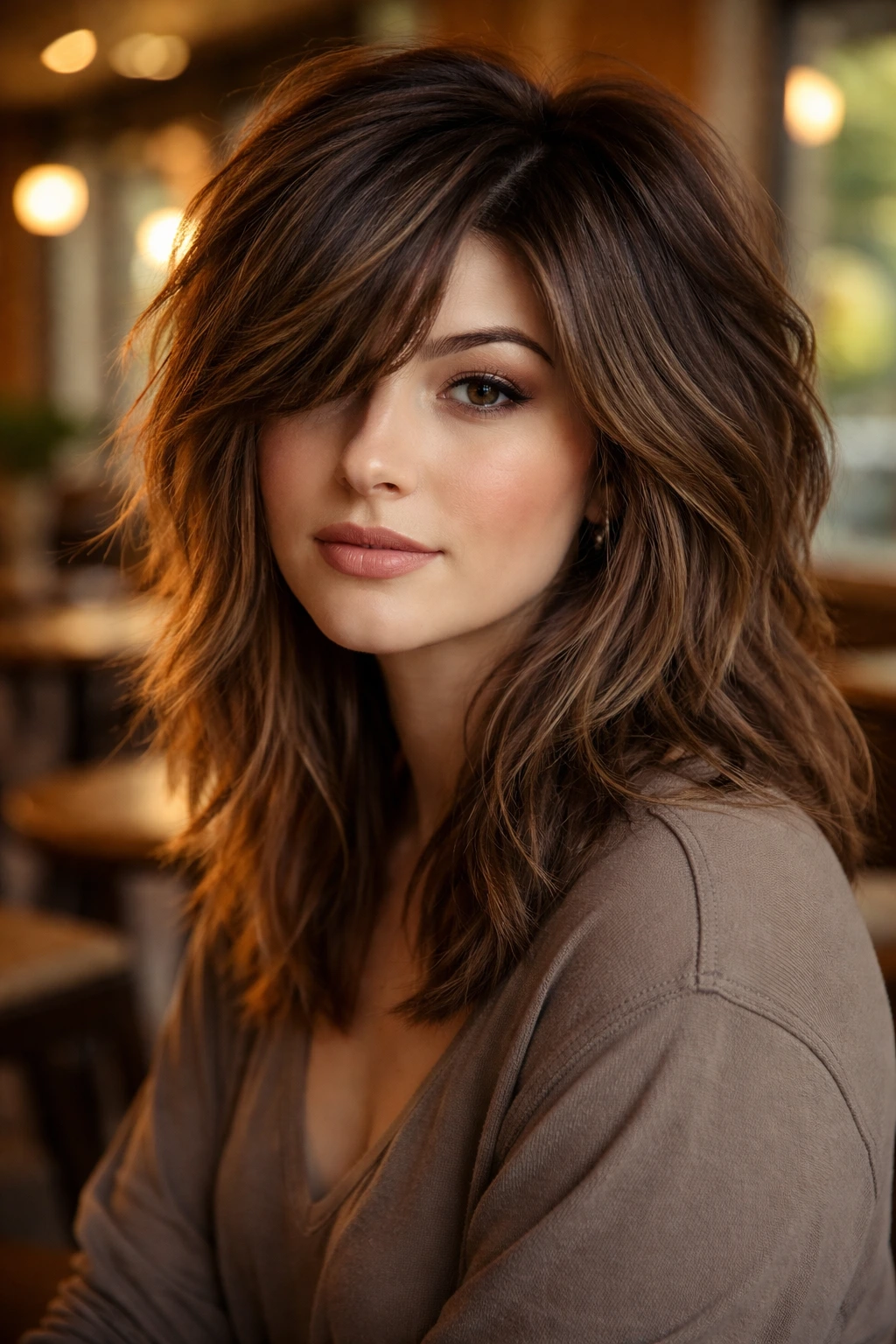
If you usually part your hair in the middle, try switching to a deep side part. For a round face, this is an instant “hack” to add height and asymmetry.
The Physics of the Part
By pushing a large volume of hair to one side, you create an arch at the crown. This arch elongates your face instantly. It’s the easiest way to change your look without cutting a single inch of hair.
- Volume: The side with more hair will naturally have more volume.
- Framing: The deep part sweeps across the forehead, breaking up the face shape.
24. Pastel Shag
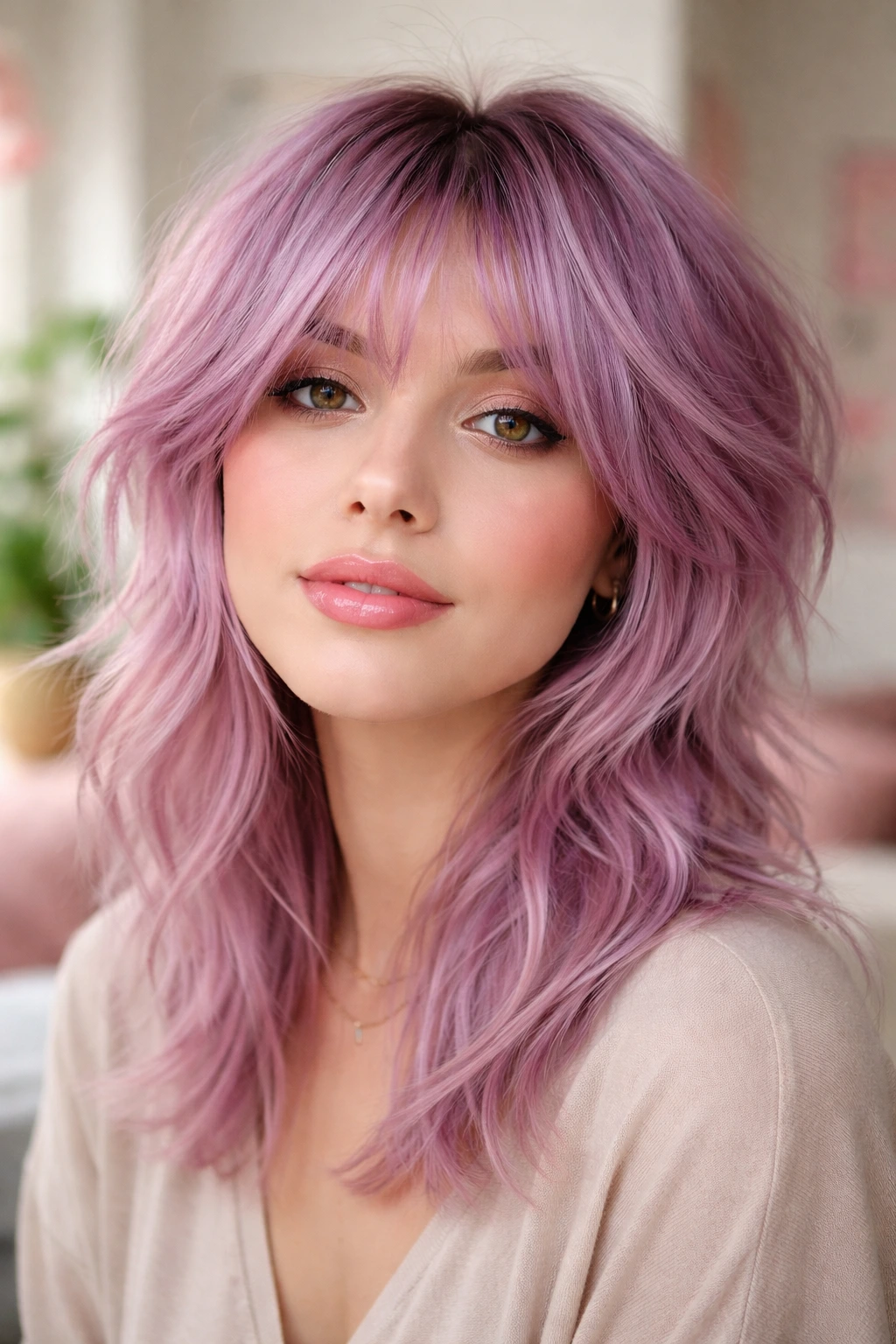
Who says your color can’t be as dramatic as your cut? Pastels—like dusty rose, lavender, or mint—are incredibly fun. When combined with a shag, they make the hair look even more textured.
Color as Texture
Color placement can highlight the layers. When the hair is light or pastel, you can see the individual layers much more clearly than you can with dark, solid colors. This visibility of layers is what makes the shag work.
- Maintenance: Color-safe shampoo is vital.
- Bleaching: Requires a professional; don’t try this at home.
25. Shag with Low Layers
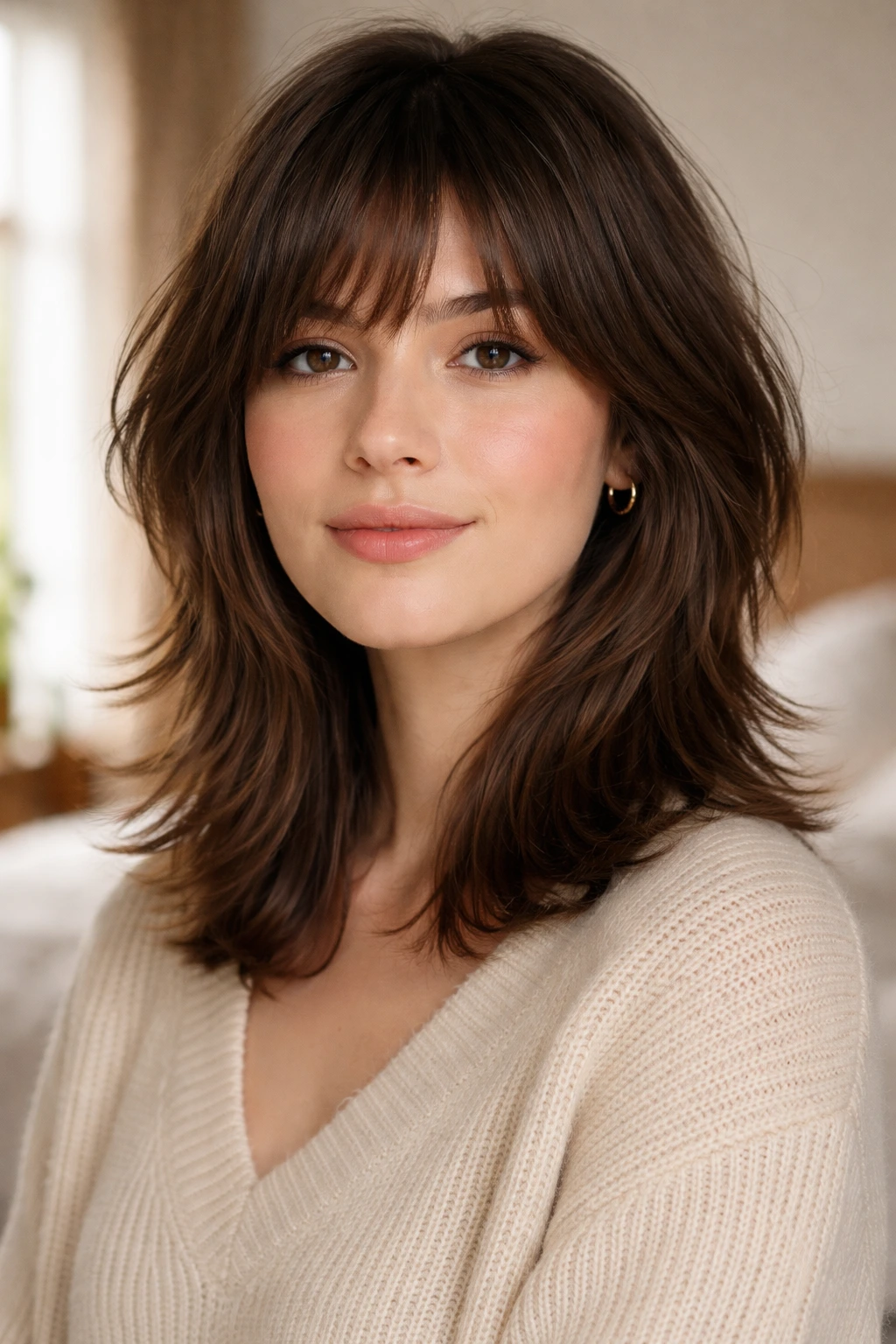
If you are nervous about the “wild” look of a shag, start with low layers. This means the layering starts below the jawline. It’s much more conservative but still gives you the benefit of movement at the ends.
Gradual Transition
This is a great option if you have professional constraints. It’s “work-appropriate” while still having that modern, shaggy feel.
- Movement: Focuses on the ends rather than the roots.
- Styling: A simple blow-dry is enough to make it look polished.
26. Shag with Crown Volume
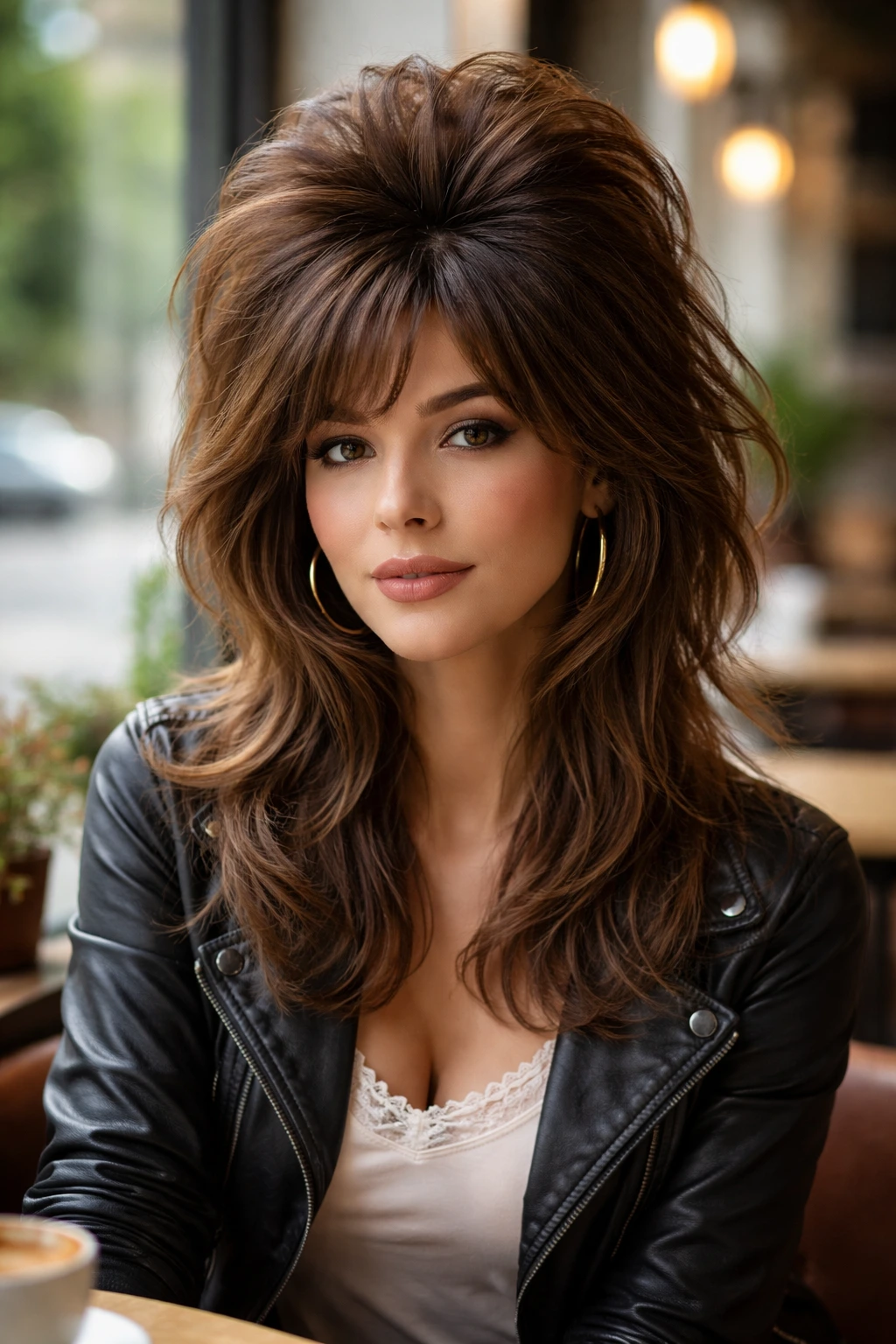
This version of the shag focuses 90% of the effort on the top of the head. It’s almost like a beehive, but updated for the modern era. By teasing the hair at the crown, you lift the silhouette of your head, which is the most effective way to counteract the roundness of the face.
The Teasing Technique
Use a fine-tooth comb and a little bit of hairspray. Lift sections of the hair at the crown, backcomb the roots gently, and smooth the top layer over.
- Impact: Massive. It’s the most dramatic face-slimming effect you can achieve with hair.
- Stability: Use a flexible-hold hairspray to keep it in place.
27. Shag with Razored Edges
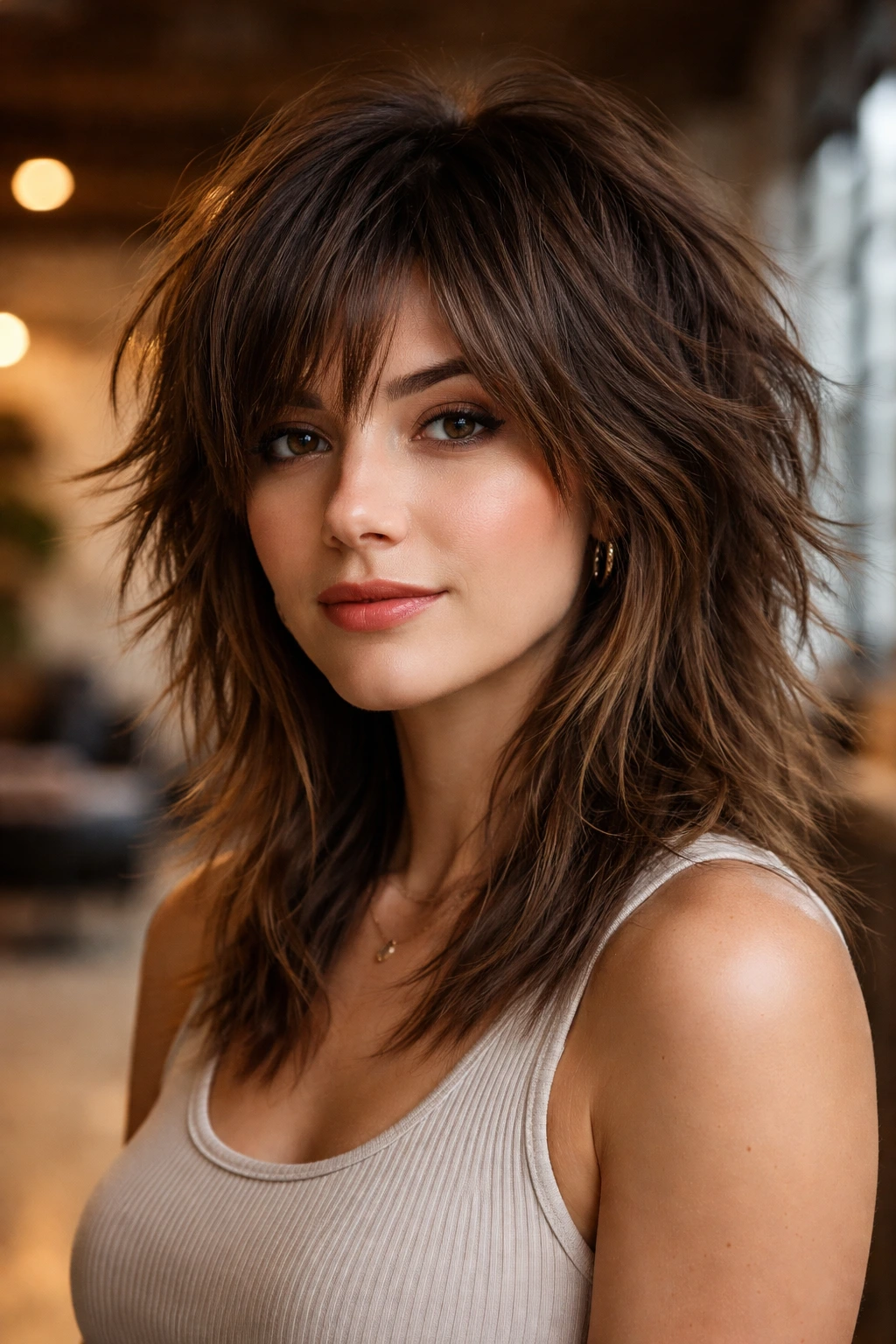
A razor is the primary tool for the true 1970s shag. Unlike shears, which cut a clean line, a razor shreds the end of the hair, making it taper naturally to a point. This is incredible for removing bulk and creating that “shattered” effect.
The Skill Factor
Not every stylist is comfortable with a razor. Make sure you find someone who specializes in it. If done wrong, it can cause frizz; if done right, it makes the hair look like it’s vibrating with texture.
- Texture: Unmatched by any other cutting tool.
- Movement: The hair will swing and move as you walk.
28. Shag with Highlights
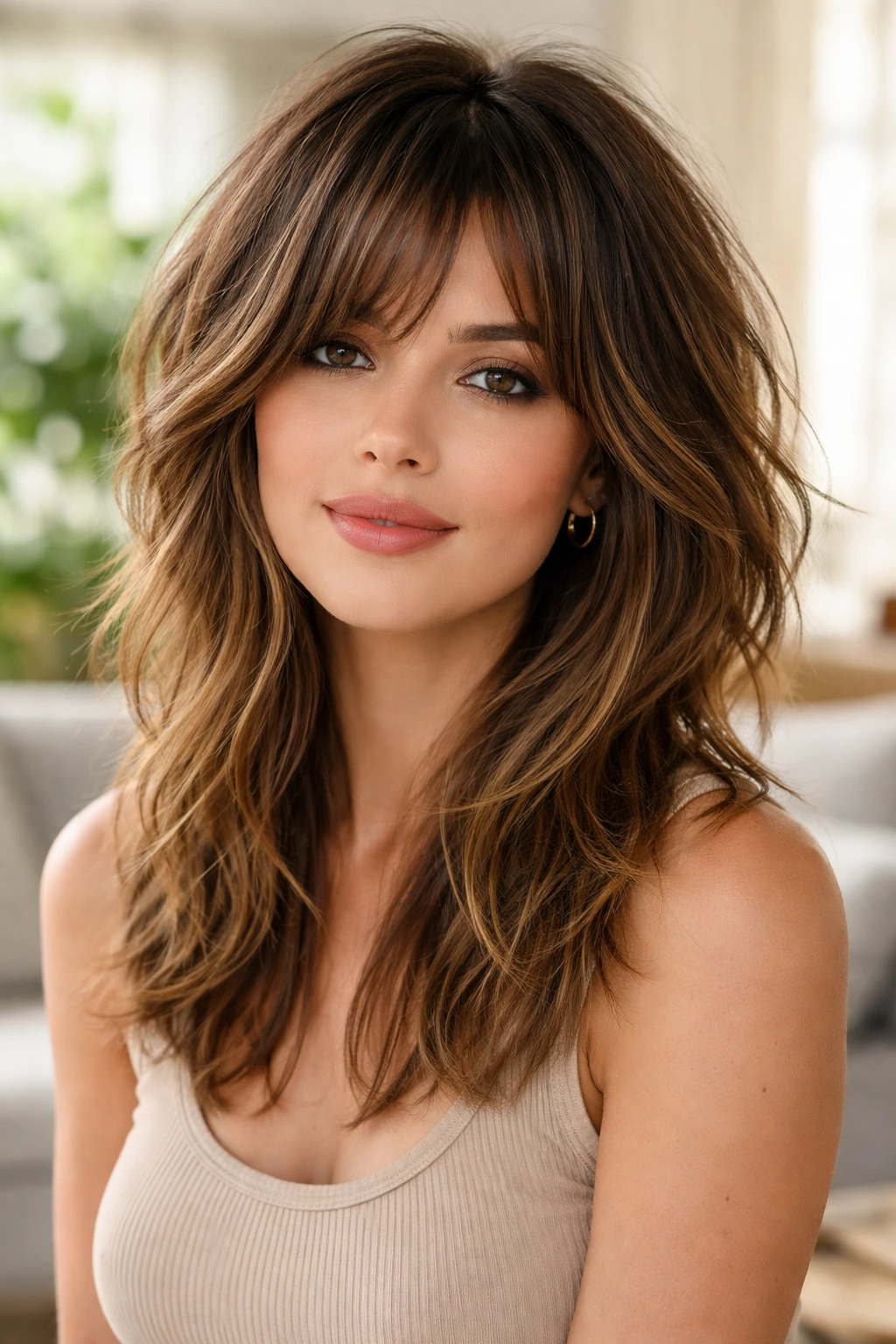
Similar to the money pieces, all-over highlights (or balayage) make the layers of a shag pop. When the light hits the different lengths, the varying colors highlight the depth and texture.
Dimensionality
A solid color can sometimes hide the layers in a shag. If you feel like your cut isn’t “showing” enough, a few strategic highlights can fix it instantly.
- Placement: Focus on the ends of the layers for maximum visibility.
- Tone: Warm tones often look best with shaggy, textured styles.
29. Shag with Soft Waves
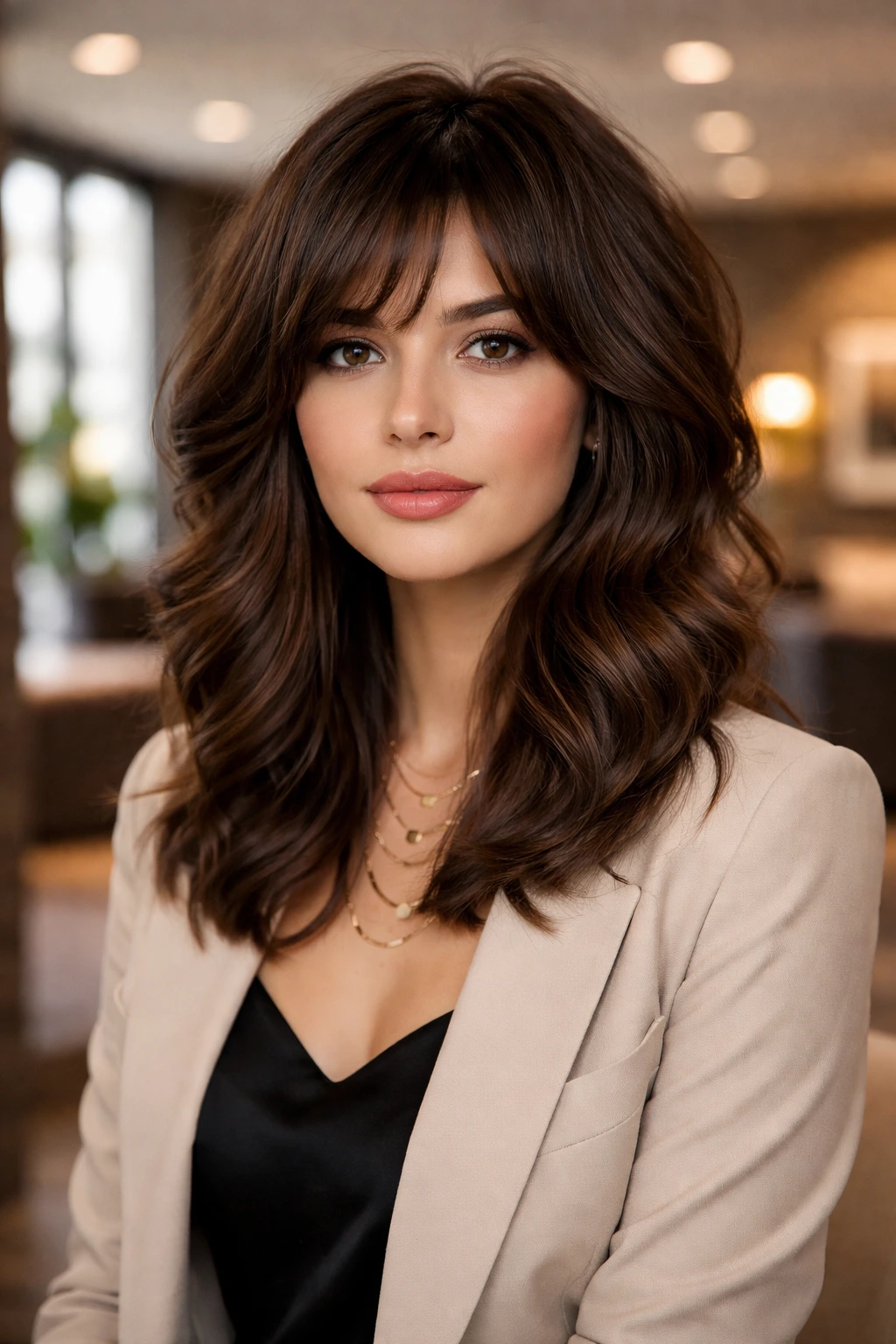
Not all shags need to be “messy.” You can style a shag with soft, polished waves for a more elegant look. It’s still layered, still textured, but it’s “tamed.”
The Elegant Vibe
This is the version of the shag you wear to a formal event or an office setting. It looks expensive and well-groomed while retaining the shape-correcting benefits of the cut.
- Tool: Use a larger-barrel curling iron.
- Motion: Keep the waves loose; don’t hold them for more than a few seconds.
30. Shag with Undercut Detail
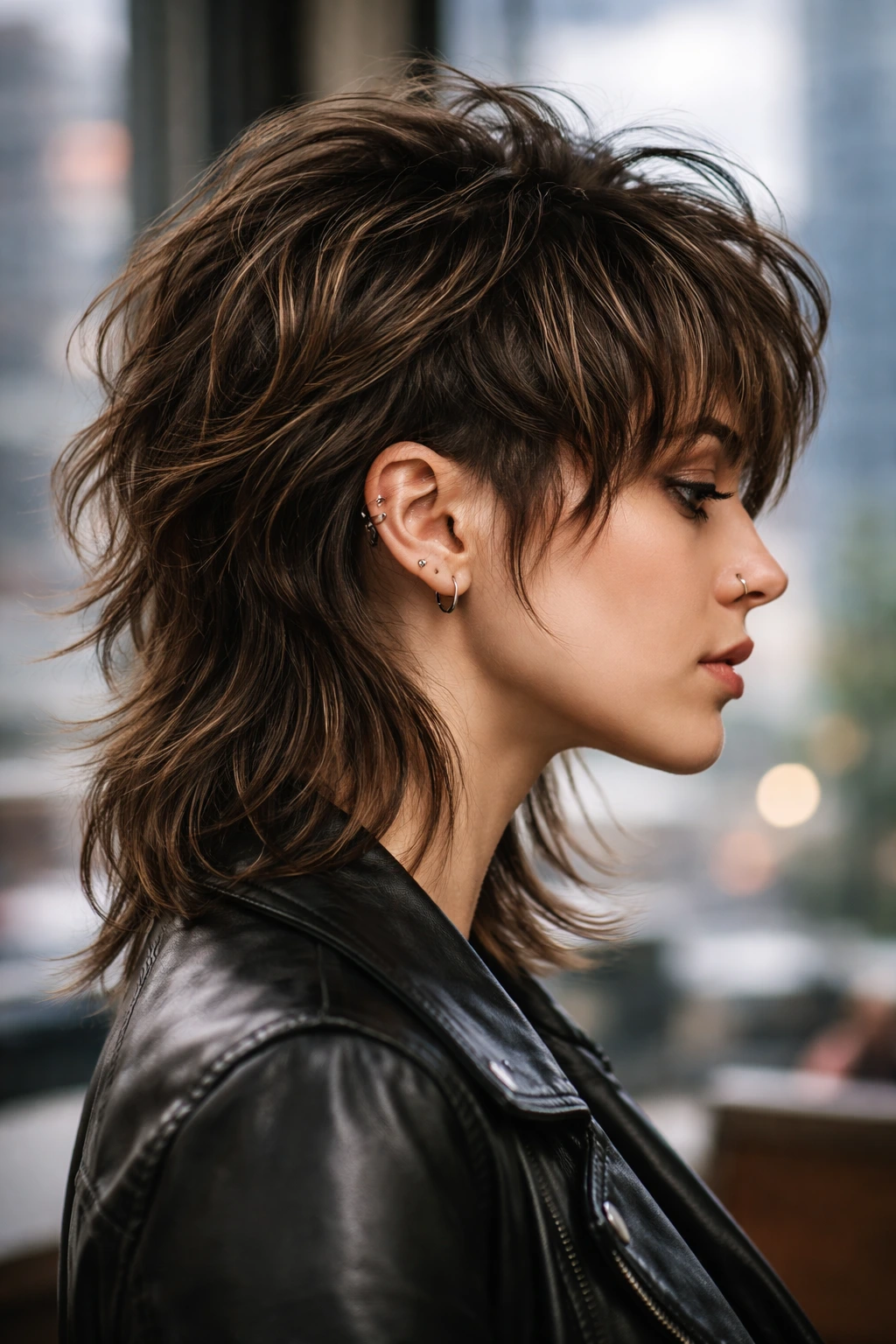
This is the ultimate edgy choice. You keep the shag on top and shave a small section at the nape of your neck—perhaps even with a pattern or design.
Why It’s Hidden Genius
For a round face, the nape undercut is surprisingly practical. It removes the bulk of hair that sits against your neck, which helps keep the focus on the volume at the top of your head. Plus, it’s a fun secret to hide or show off when you put your hair up.
- Vibe: Undeniably cool.
- Utility: Keeps you cool and light in the heat.
Final Thoughts
At the end of the day, the best haircut for a round face is the one that makes you feel like yourself. We often get caught up in the “rules” of what we should wear to flatter our face shape, but hair is ultimately about expression. The shag is a timeless style for a reason—it’s practical, adaptable, and inherently cool.
Don’t be afraid of the scissors. If you’ve been hiding behind long, heavy hair, the transition to a shag will feel like losing a weight you didn’t know you were carrying. Embrace the layers, get to know your styling products, and remember that the most “flattering” haircut is simply one that you have the confidence to rock. If you choose a cut that fits your texture and your personality, the face shape conversation usually fades into the background.
