



Wavy hair and a shag cut are a natural match when the layers are placed with some restraint. The right version lets the wave do the lifting; the wrong one turns the ends fuzzy, the crown flat, and the whole shape a little lost.
That’s why shag haircuts for wavy hair can look so good or so odd, with very little middle ground. A good shag gives movement, air, and a little bite around the face. A sloppy one just looks like you forgot to brush your hair for three days and called it texture.
The trick is not “more layers.” It’s where those layers start, how much weight stays at the perimeter, and whether the fringe matches the rest of the cut. Loose waves want a different shape than dense, springy waves. Fine waves need a gentler hand than thick hair that mushrooms if you let it.
Some of the cuts below are soft and wearable. Some lean sharper, a little cooler, a little more undone. All of them can work on wavy hair if the cut respects the wave pattern instead of fighting it.
1. Soft Collarbone Shag for Loose Waves
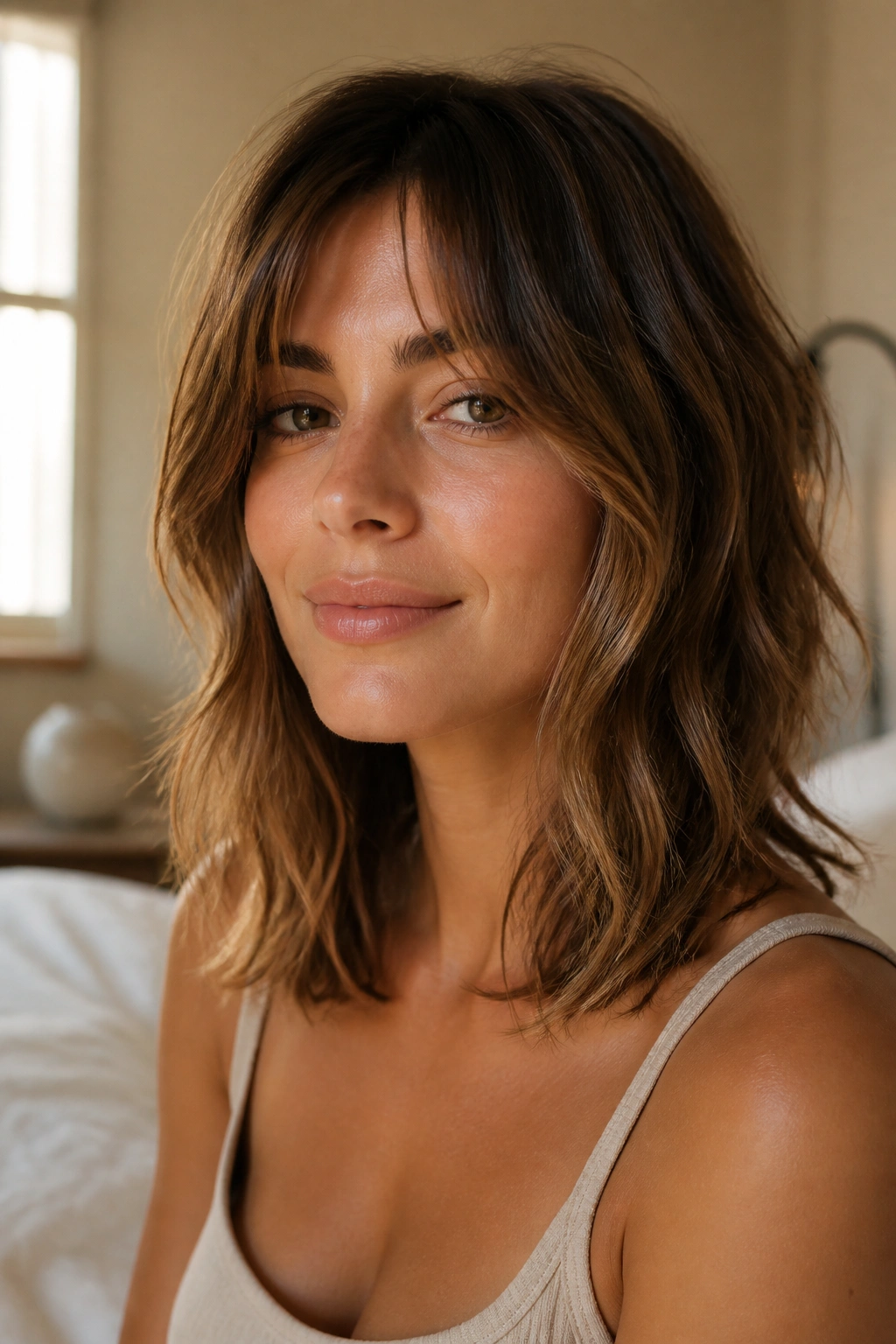
This is the shag I recommend when someone wants movement without making a big scene about it. The length sits around the collarbone, which keeps enough weight at the bottom to stop the waves from puffing out, while the layers around the cheekbones and jaw give the shape some lift.
Why It Works
Loose waves can go limp fast if the cut is too long and too heavy. A collarbone shag keeps the outline clean, so the hair still looks like hair, not a cloud. The face-framing pieces open things up, especially if your waves bend more at the mid-lengths than at the roots.
A stylist will usually point-cut the ends and soften the top third of the hair. That little detail matters. It keeps the cut from looking chopped to pieces.
- Ask for layers that start near the cheekbone, not at the chin.
- Keep the perimeter at collarbone length for a fuller finish.
- Style with a light mousse or a pea-size curl cream on damp hair.
- Scrunch, then air-dry or diffuse on low heat.
Best for: loose to medium waves that lose shape when they get too long.
2. Curtain-Bang Shag With Airy Crown
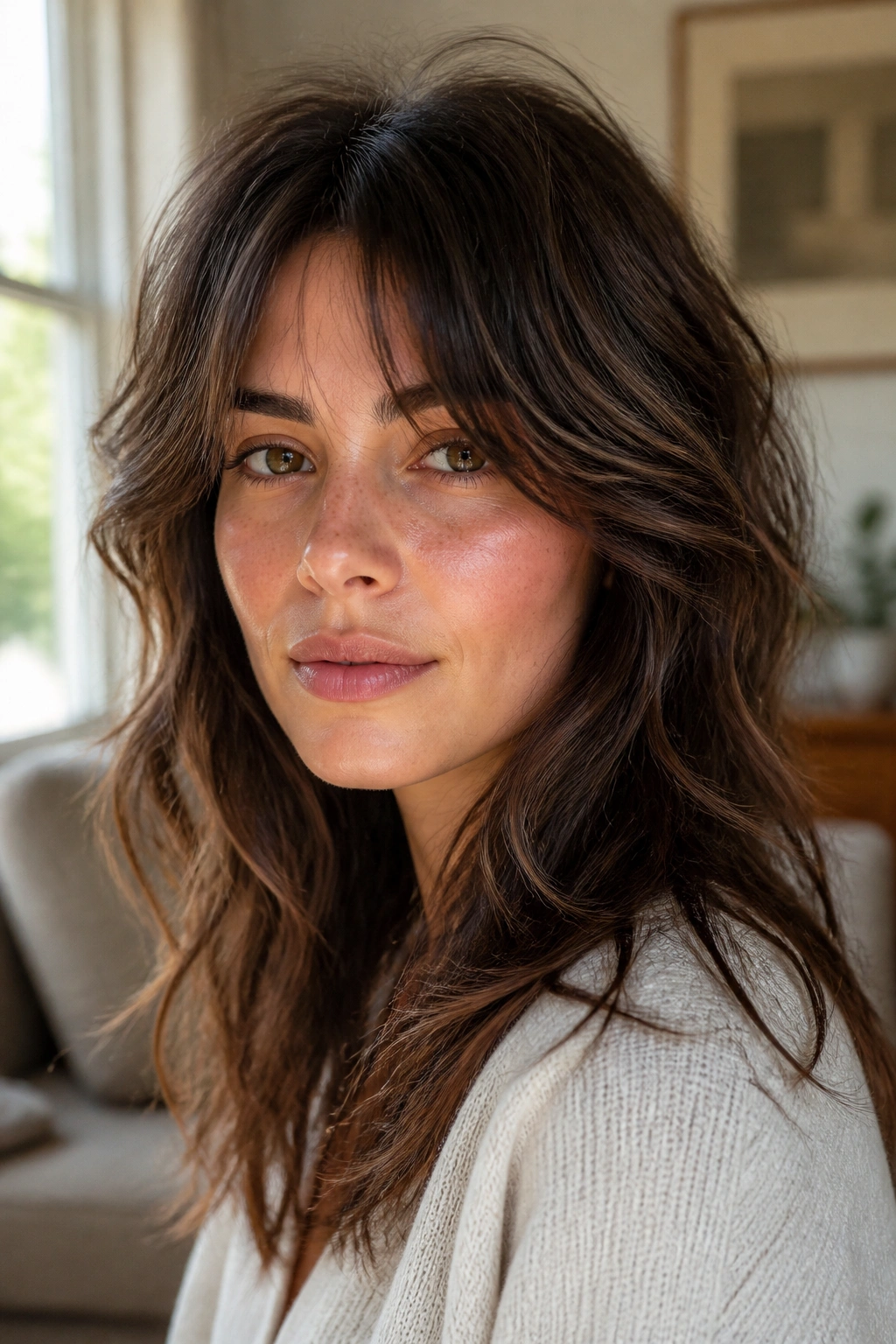
This is the shag that makes people look like they spent effort, even when they didn’t. The curtain bangs split softly at the center, sweep into the sides, and blend into the top layers so the crown lifts without looking teased or overdone.
The big win here is balance. Curtain bangs can pull attention to the eyes and cheekbones, while the shaggy layers keep the rest of the cut from feeling stiff. On wavy hair, that combination reads relaxed rather than fussy.
I like this version most when the bangs are cut a little longer than people expect. Too short, and they can spring up in odd ways on wavy hair. Too long, and they collapse into the cheeks. The sweet spot usually sits around the eyebrow or just below it when dry.
What to Ask For
- A center-parted fringe that opens toward the temples.
- Soft layers at the crown for lift.
- Longer face-framing pieces that tuck into the rest of the cut.
- A blow-dry with a round brush, then finger separation so the fringe doesn’t look helmet-like.
If you hate high-maintenance bangs, this is still a sane choice. It grows out better than blunt fringe and doesn’t demand a perfect styling session every morning.
3. Wolf-Cut Shag for Medium Waves
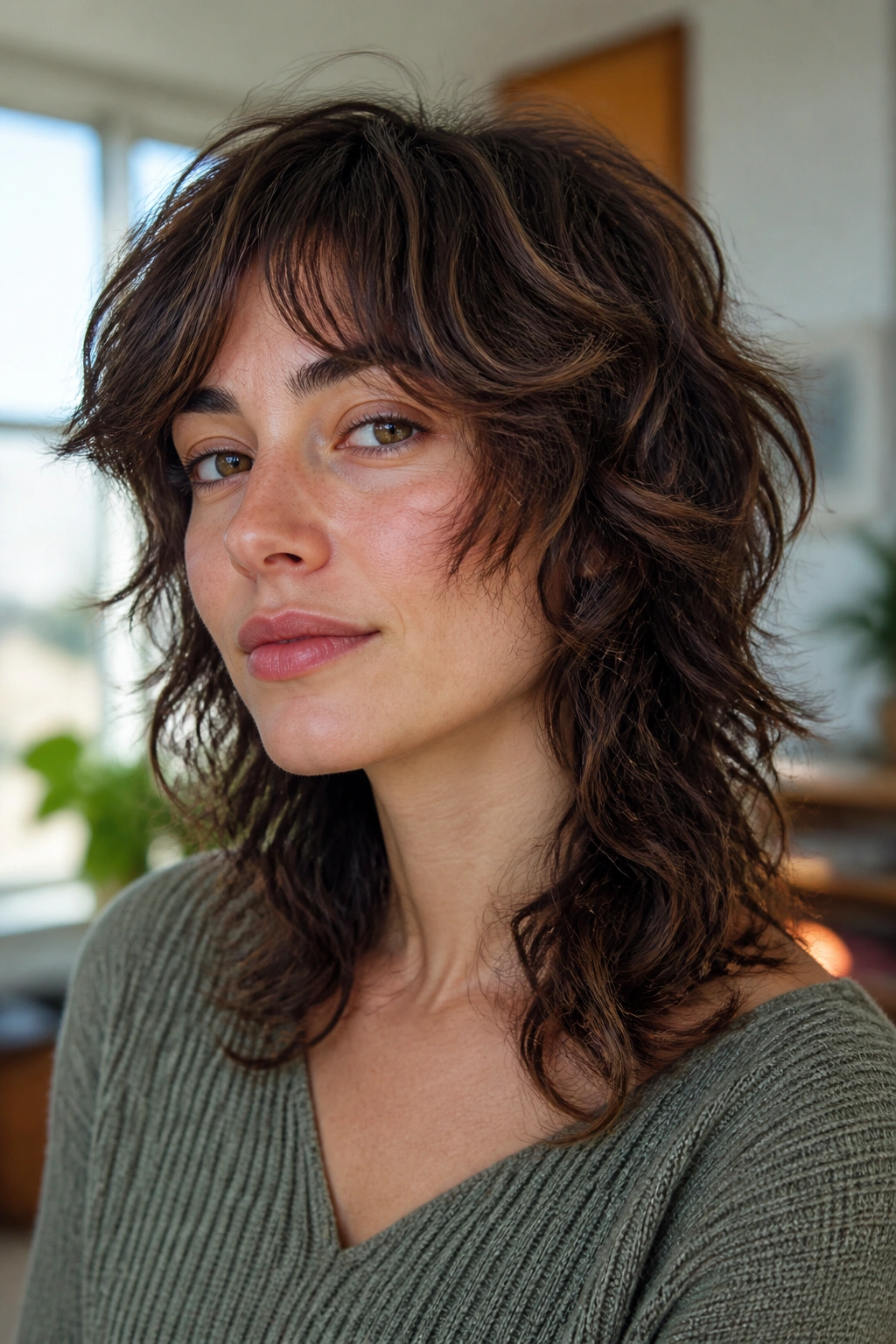
If you want the shag to look a little wilder, the wolf-cut version sits right in that sweet spot between playful and sharp. The top is shorter, the bottom stays longer, and the whole shape has more bite than a classic soft shag.
What Makes It Different
A wolf-cut shag puts more visual weight near the top and lets the lower lengths hang on. That creates a deliberate contrast, which is why it looks so good on medium-density waves that can handle movement without collapsing. The result is edgy, but not costume-y.
It works especially well when the waves have some natural spring. You want the layers to stack, not collapse into each other. If your hair is super fine, the shape can get a little too sparse at the ends. Thick waves usually love it.
Salon Notes
- Ask for shorter crown layers and longer tail layers.
- Keep the fringe piecey, not blunt.
- Styling cream should stay light; heavy products drag the shape down.
- Diffuse upside down for lift, then shake the roots loose with your fingers.
This one has attitude. Not loud attitude. Just enough.
4. Chin-Length Shag Bob for Clean Structure
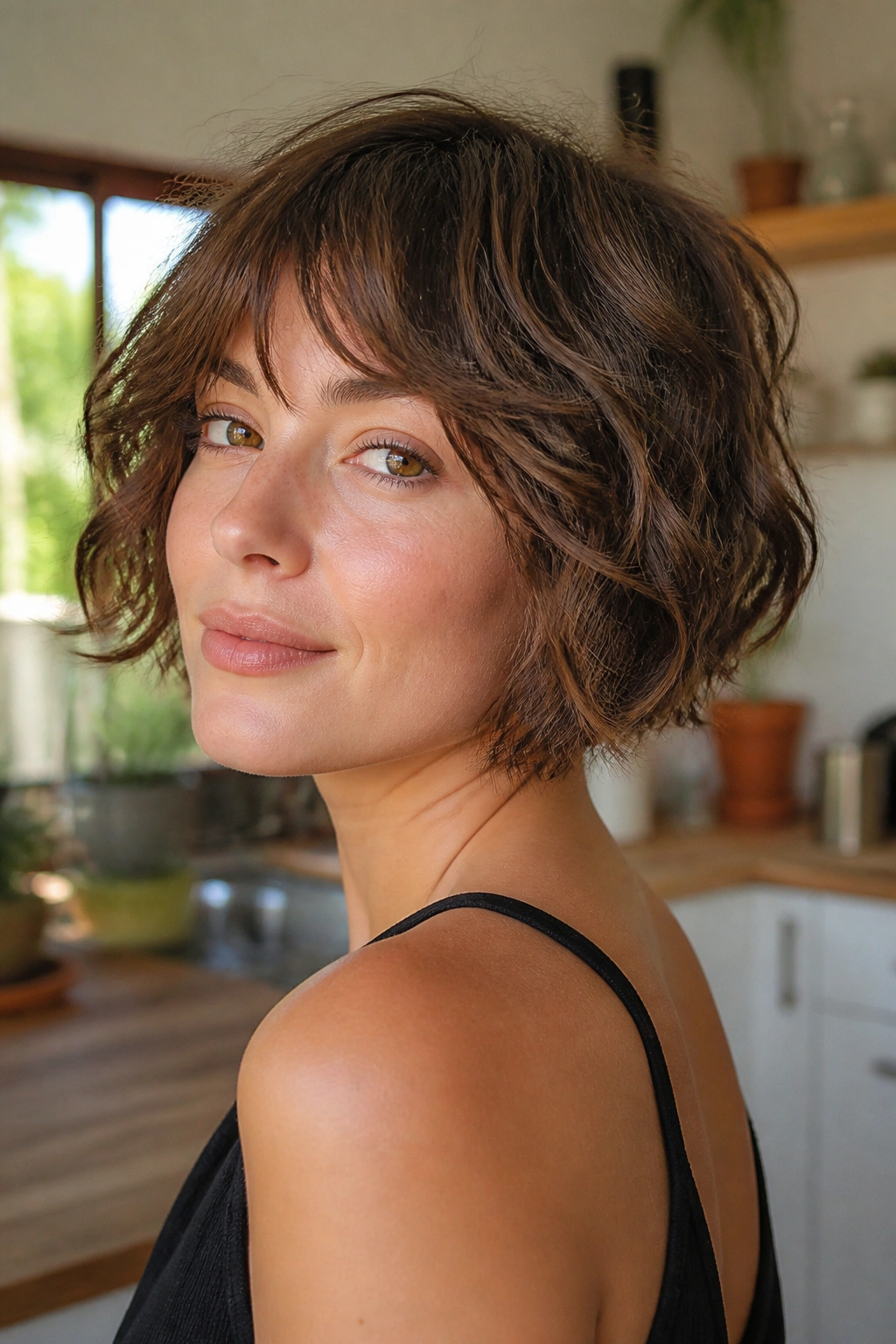
A chin-length shag bob has a neat little trick up its sleeve: it gives you the crisp outline of a bob and the movement of a shag at the same time. On wavy hair, that means you get shape at the jaw without the stiff, helmety feel some short bobs can have.
The length is the whole story here. At the chin, the cut sits where the face needs structure, but the waves still have room to break apart. The layers are usually subtle and tucked inside the shape, so the perimeter stays strong. That keeps the haircut from ballooning out.
I like this cut for people who want a polished look most days but don’t want to fight their texture. It can be tucked behind one ear and still look intentional. It can be air-dried and still behave. That’s a good sign.
A tiny warning: if your waves flip outward hard, this cut can kick at the bottom in a way that feels too busy. A stylist who knows how to soften the ends can fix that fast.
5. Long Boho Shag With Feathered Ends
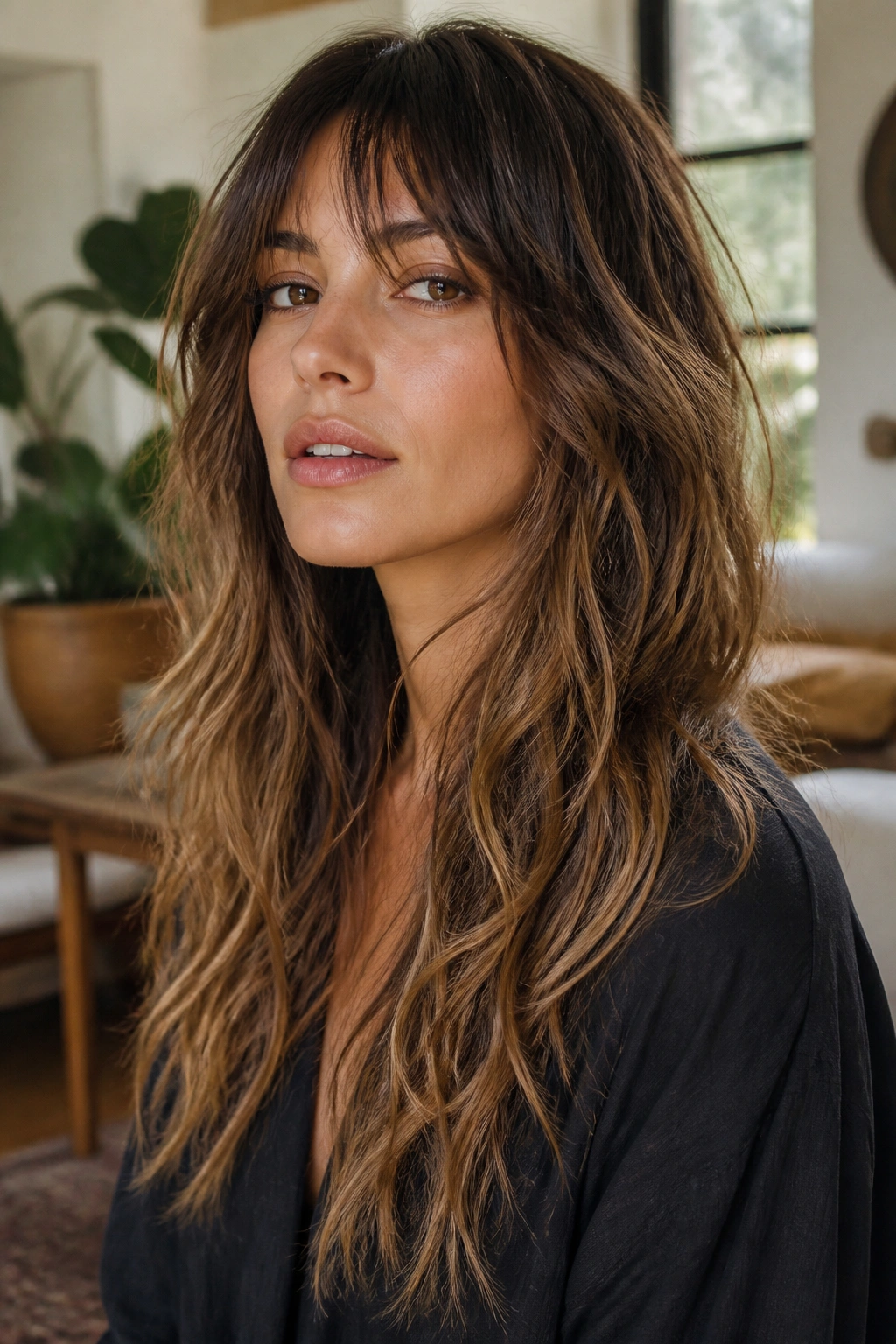
Long shag cuts can get boring when the layers are too timid. The boho version avoids that by keeping the length and adding feathered, airy layers that move when you do. It’s the haircut that looks best when it’s slightly messy, which is half the appeal.
There’s a difference between “long with layers” and a true long shag. The shag should have visible shape around the face and through the mids, while the ends stay light enough to fall in loose pieces instead of one heavy curtain. On wavy hair, that feathered finish is what keeps the cut from feeling weighed down.
How It Usually Wears
- Air-dries into soft bends with a lived-in finish.
- Works with middle parts and soft side parts.
- Looks good with half-up clips, low buns, and loose braids.
- Needs trimming before the ends get stringy.
This cut is not trying to be tidy. That’s the point. If you like hair that feels a little romantic and a little undone, this is the one I’d hand you first.
6. Side-Swept Bang Shag for an Easy Front Shape
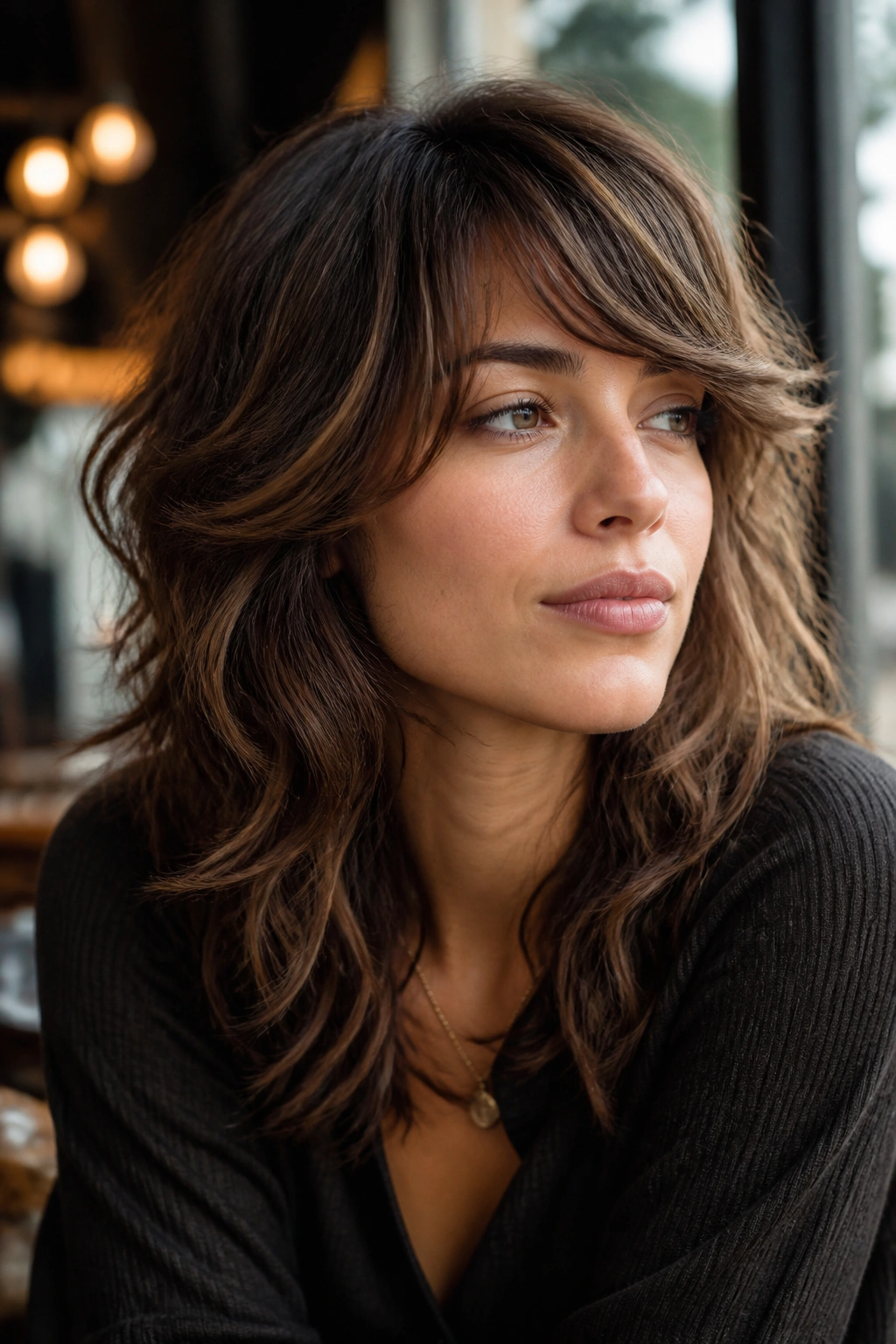
What if you want fringe, but not the center-part curtain look everyone seems to have? A side-swept bang shag gives you softness across the forehead without making the front of the cut the main event.
The side sweep is useful on wavy hair because it travels with the bend instead of fighting it. Wavy fringe can split in weird places if it’s cut too blunt or too short. A side-swept shape gives the hair a built-in direction, which makes morning styling far less annoying.
Why the Part Matters
A side part gives the top layers a different fall, and that changes the whole haircut. The crown gets a little height, the fringe drapes across the forehead, and the waves around the cheekbones look more deliberate. It also helps if one side of your hair is flatter than the other.
This version is good for people who like movement but don’t want their bangs falling into their eyes all day. It’s also kinder during grow-out. That matters more than people admit.
Ask for a long, blended fringe, not a severe side bang. Severe side bangs belong to a different decade, and I’m not sure we need to bring them back.
7. Razor-Cut Shag With Soft, Airy Ends
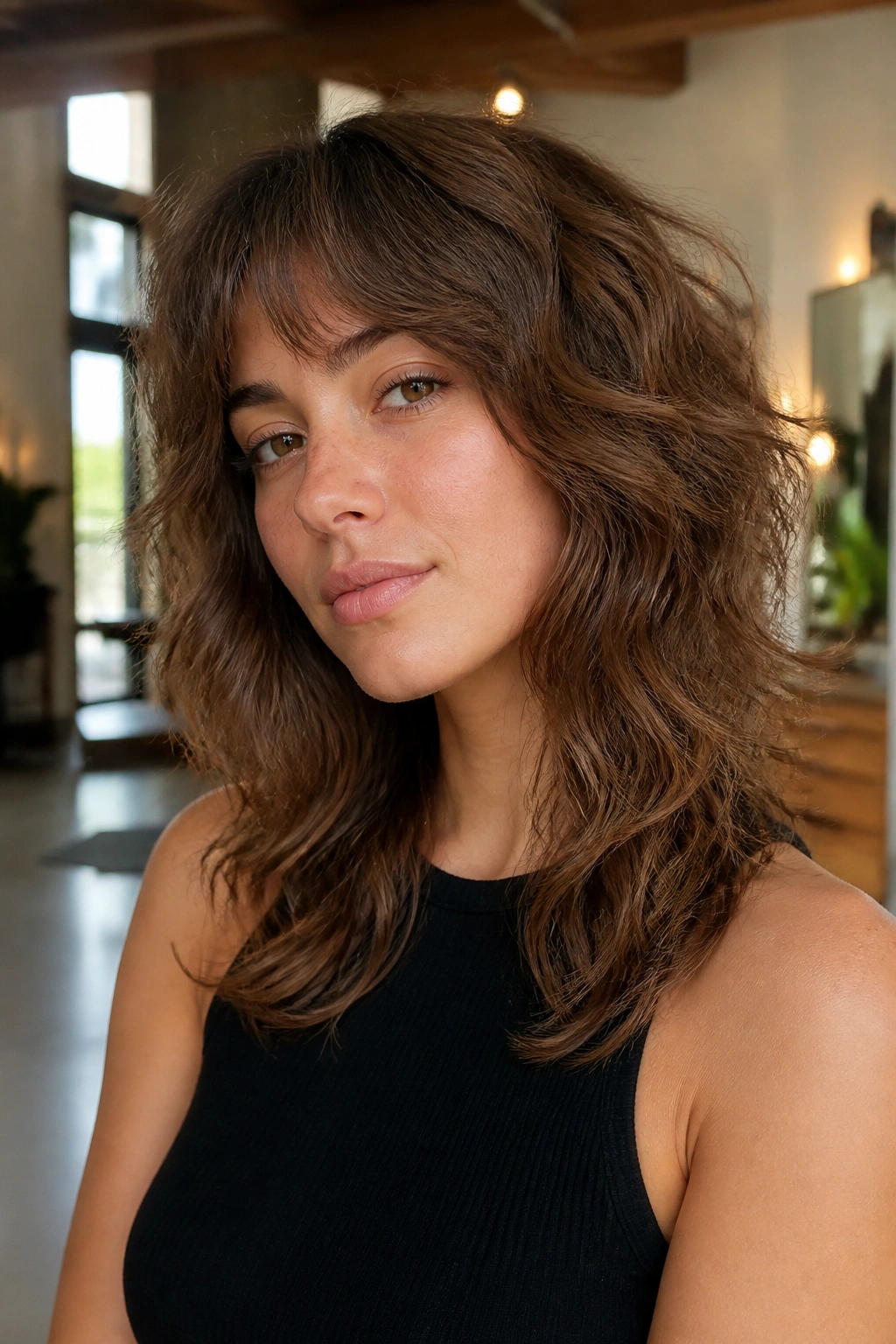
A razor can make wavy hair look floaty and light, or it can make the ends fray in a way that never settles down. That’s why this cut lives or dies by the stylist’s hand.
When a razor-cut shag is done well, the layers feather out instead of sitting in hard shelves. The movement looks soft. The ends separate in a nice way. On hair that has natural bend, the razor can shave away bulk and create that airy finish people are usually chasing.
The catch is simple. Very fine or porous hair can go fuzzy if the razor work is too aggressive. If your hair already feels dry or puffy, I’d ask for controlled razor work only at the ends, or even scissors with point-cutting instead.
Watch For
- A dry cutting approach so the wave pattern is visible.
- Softening only where the hair is too heavy.
- No over-thinning near the crown.
- A finish that still looks good on day two.
I love this cut on dense waves. I’m cautious with it on fragile hair. Both things can be true.
8. Micro-Bang Shag for Bold Texture
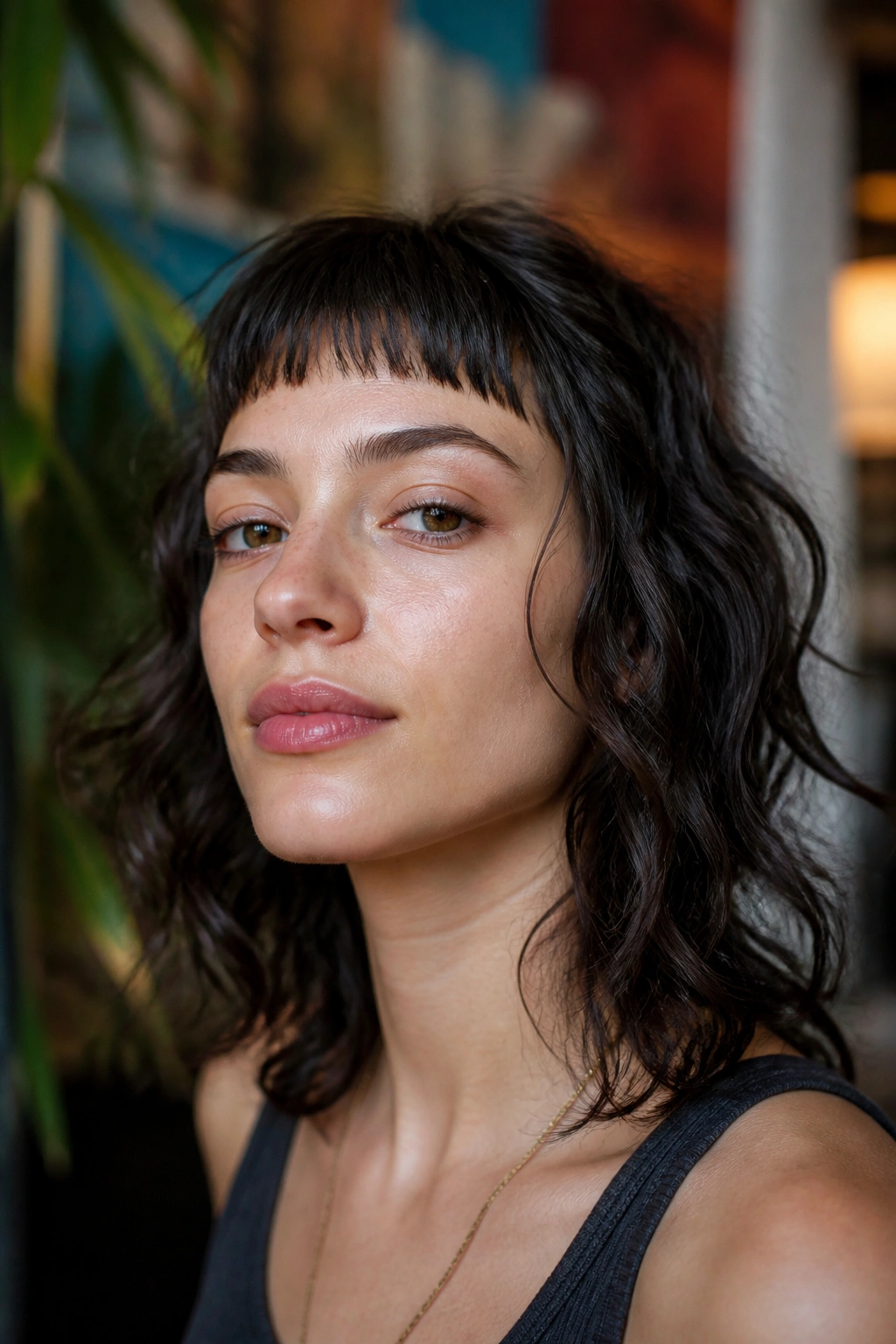
Micro bangs are not subtle. They sit above the brows, put the face front and center, and make the whole haircut feel sharper. Paired with a shag, they create a shape that’s part art-school, part street-cool, and very much not shy.
What Makes It Work
The reason this cut lands on wavy hair is contrast. The fringe is short and graphic, while the rest of the hair is loose and broken up. That contrast keeps the cut from looking soft in a boring way. It gives the waves a frame.
Micro bangs do ask for honesty, though. If your hairline grows fast, if your forehead is very sensitive to fringe length, or if you want a wash-and-go style with no fuss, think twice. These bangs show everything.
- Keep the rest of the shag airy, not bulky.
- Ask for the bangs to be cut dry so the wave shrinkage is visible.
- Style with a tiny bit of paste only on the ends of the fringe.
- Don’t overload the front with cream or oil.
The best part? They make earrings, glasses, and strong brows look even better. The worst part? You have to like them. Really like them.
9. Shoulder-Length Shag With Curtain Fringe
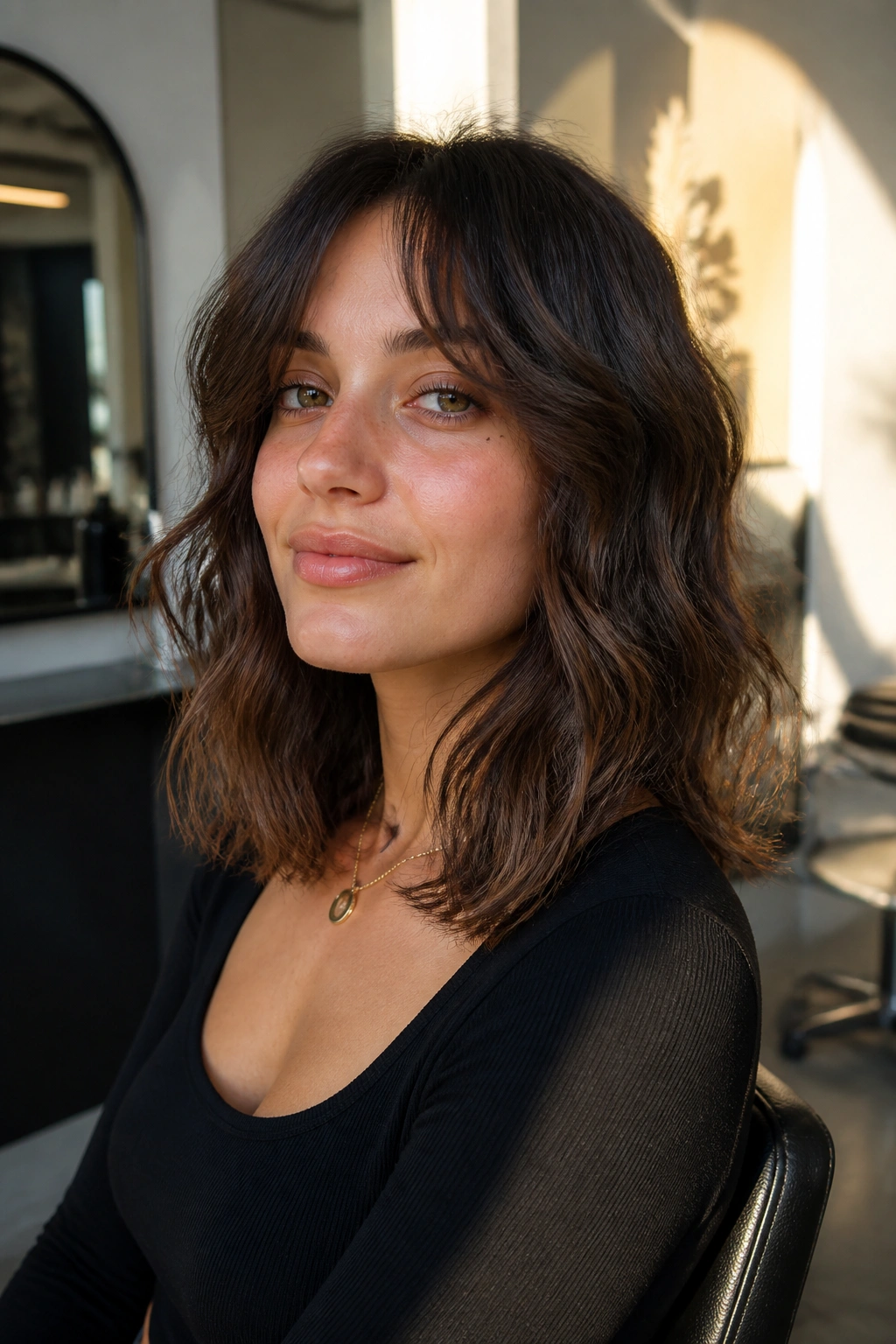
Shoulder length is one of the safest places for wavy hair to live, and adding a shag shape keeps it from feeling predictable. The curtain fringe softens the front, while the shoulder-length body gives enough weight for the waves to stay controlled.
This cut sits in a good middle lane. It’s long enough to tie back, short enough to feel fresh, and layered enough to keep the hair from sitting like a block. If you have waves that expand when humidity kicks in, this shape often behaves better than a longer, heavier cut.
The fringe matters more than people think. Curtain bangs lead the eye inward and keep the hair from looking boxy at the sides. They also make a shoulder-length cut feel more intentional, which is useful when you don’t want a haircut that looks like a compromise.
A nice bonus: it grows out gracefully. The fringe slides into the layers, and the whole cut stays wearable for a long stretch. That kind of practical beauty is underrated.
10. Airy Shag for Fine Wavy Hair

Fine wavy hair needs a careful shag, not a hacked-up one. Remove too much weight and the ends go stringy. Leave too much weight and the waves collapse into a sad, flat line.
The airy shag handles that balance by keeping the perimeter fuller while still building movement through the crown and face frame. The layers should feel light, not chopped. The goal is lift, not emptiness. A good stylist will often leave the back slightly stronger so the ends don’t disappear.
What Helps Most
- Layers concentrated near the crown and cheekbones.
- A fuller bottom edge to keep density in the shape.
- Light mousse at the roots, then a dab of cream only on the mids.
- Blow-drying with fingers first, brush second.
Fine waves usually look best when they are not overloaded with product. A quarter-size amount is often enough. Too much cream, and the hair goes limp fast.
This is one of those cuts that looks better when it moves. Stand still, and it may seem simple. Turn your head, and the whole shape wakes up.
11. Heavy-Layered Shag for Thick Waves
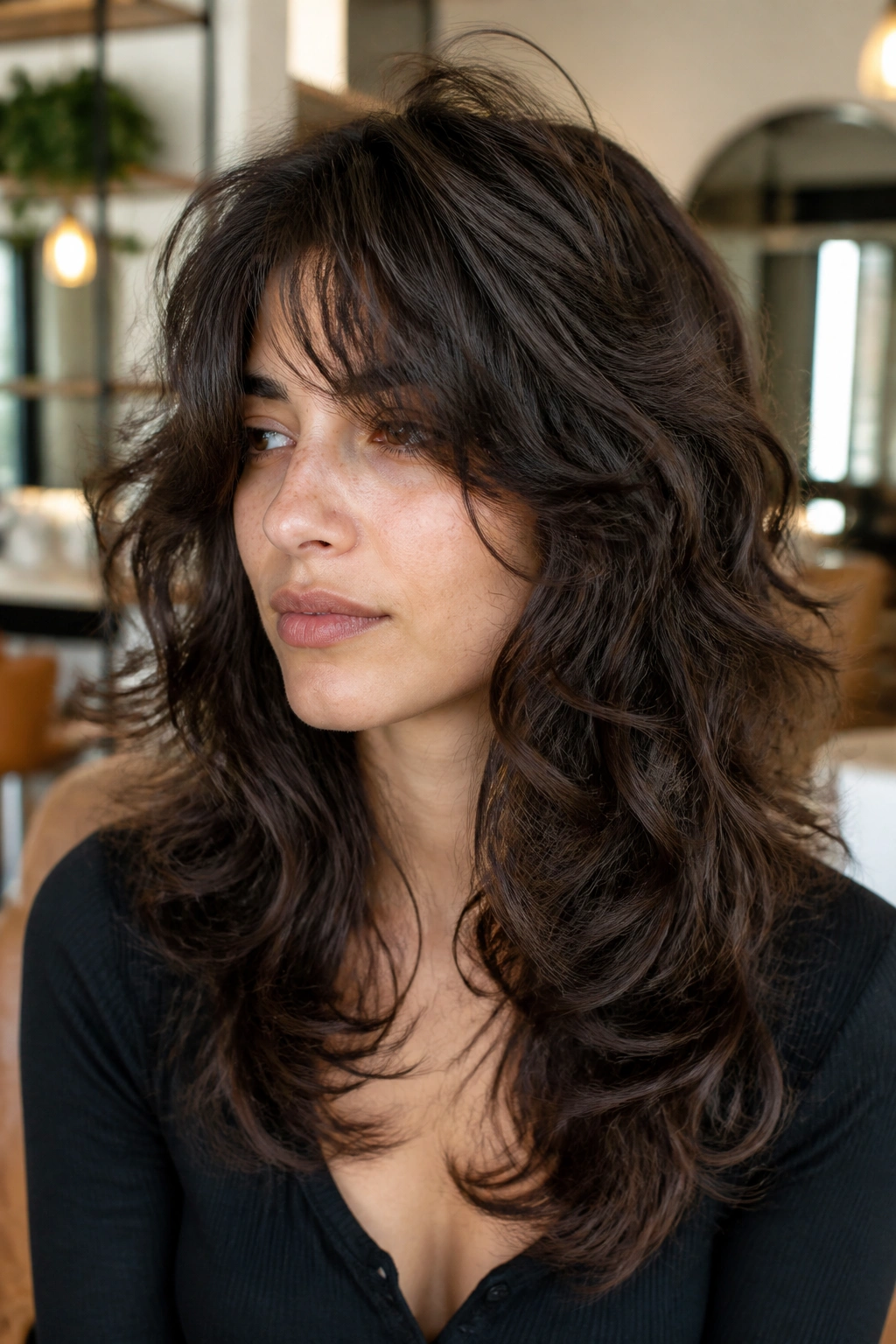
Thick wavy hair can carry more layers than people think. In fact, it often needs them. Without enough shaping, the hair can sit like a triangle, puff at the sides, or feel heavier than the person wearing it wants to deal with.
A heavy-layered shag removes bulk in the right places while leaving some density at the ends. That keeps the shape from becoming wispy or weak. It also helps the wave pattern separate, which is half the battle with thick hair. You want motion, not a helmet.
Where the Weight Comes Out
- Around the crown, to stop the top from swelling.
- Behind the ears, where bulk tends to hide.
- Through the interior, not just on the surface.
- At the fringe, so the front doesn’t feel dense and boxy.
I’d be cautious with aggressive thinning shears on thick waves. They can make the cut look lighter for a week, then frizzier later. Scissor work usually ages better.
This cut can be gorgeous when it is shaped with intent. It can also become a mess fast if the stylist overdoes it. Thick hair remembers everything.
12. Invisible-Layer Shag With a Smooth Outline
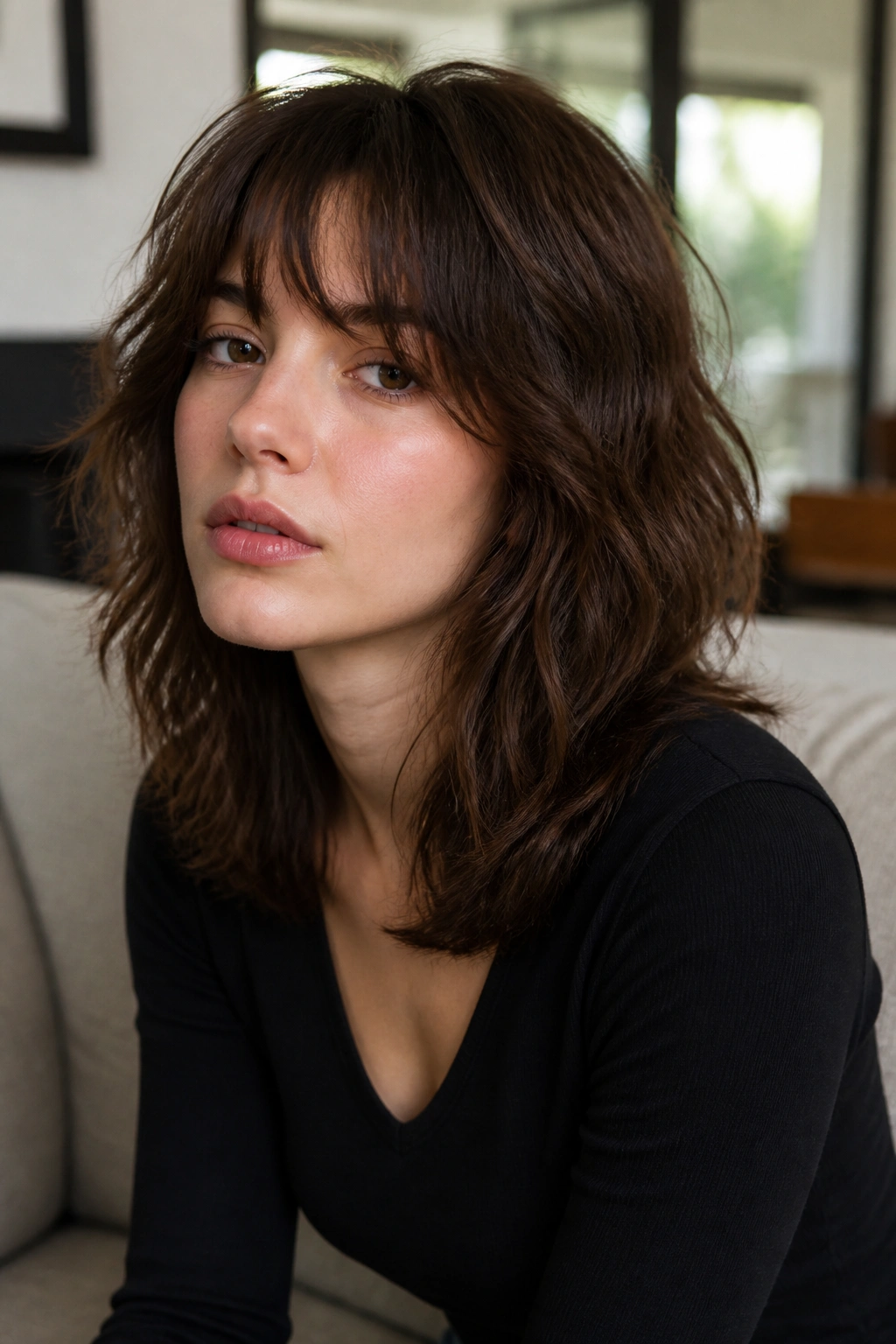
Invisible layers are the secret handshake of the shag world. You get movement and bend without seeing obvious choppy steps all over the head. On wavy hair, that means the cut looks polished from a distance and textured up close.
The beauty of this version is restraint. Instead of short obvious pieces, the layers live inside the shape and support the wave pattern from underneath. The top falls softly. The ends still move. The haircut keeps its line.
That makes it a smart choice for people who want to try a shag but do not want to look like they have committed to a punker version of themselves. The cut still has personality. It just doesn’t shout.
A little styling cream and a rough dry are usually enough. If you like hair that can go from office neat to evening messy without a full reset, this is one of the better options on the list.
13. Mullet-Leaning Shag for a Sharper Silhouette
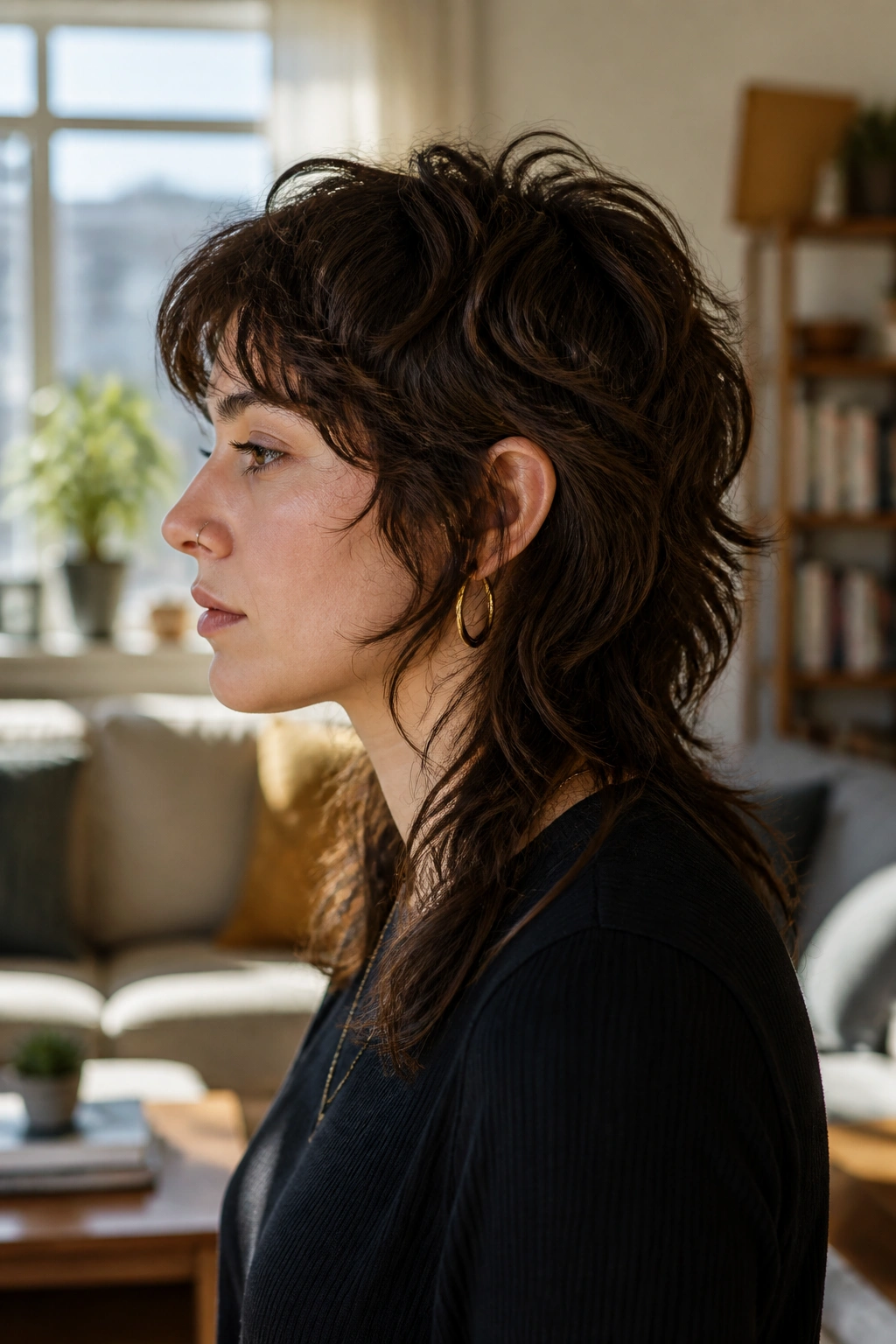
A mullet-leaning shag is not for everyone, and that’s fine. Some people want a softer outline. Some people want the haircut to have a little edge and a clear shape from the side profile. This one does that.
The front and crown stay shorter, the back keeps more length, and the contrast between the two gives the haircut a sharper line. On wavy hair, that contrast looks lively instead of severe, especially when the layers are broken up enough to avoid a blocky back.
Good Reasons to Try It
- You like visible shape, not just softness.
- Your waves have enough bounce to support shorter top pieces.
- You don’t mind a haircut that gets noticed.
- You’re okay with styling the crown so it doesn’t flatten.
A mullet-leaning shag needs confidence, yes, but it also needs good cutting. The transition from short to long has to feel gradual enough that it reads as shape, not accident.
It’s one of the most personality-forward cuts in the group. That is its charm. That is also the warning label.
14. Bottleneck Bang Shag With a Soft Front Drop
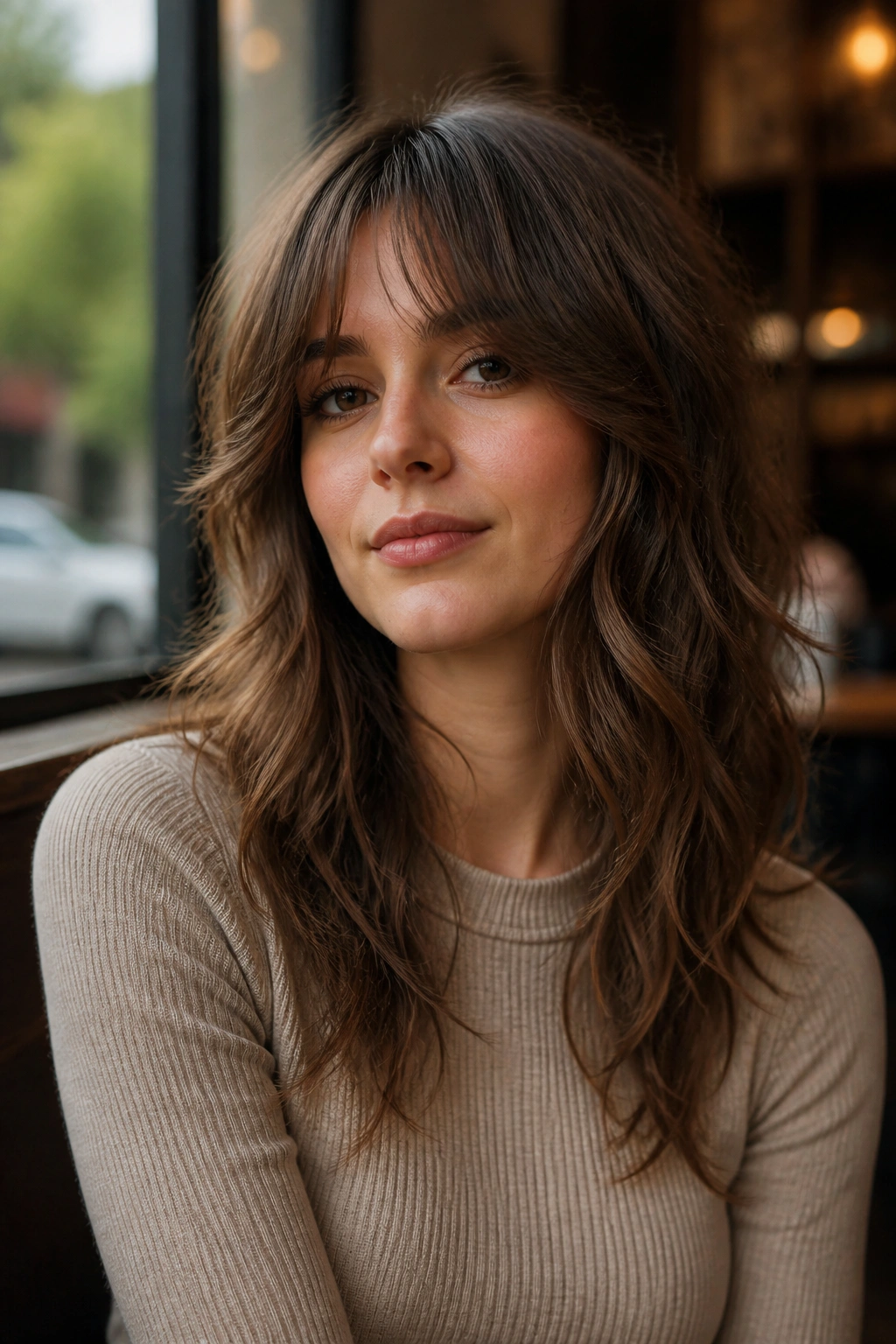
This is a smart fringe choice if you like the idea of bangs but hate the bluntness of a straight-across line. Bottleneck bangs are shorter in the center, then widen toward the temples, which makes them blend neatly into shag layers.
The shape is flattering because it frames the eyes while leaving the sides open. On wavy hair, the fringe usually bends in a softer way than classic bangs, so it doesn’t feel like it’s sitting on the face. It joins the haircut instead of sitting on top of it.
Quick Details That Matter
- The center should stay shorter than the edges.
- The side pieces need enough length to tuck into the layers.
- The fringe should be cut with the dry wave pattern in view.
- A tiny bit of bend cream is enough; too much product makes it clump.
I like this version for people who want a little vintage feel without a full retro commitment. It has shape, but it doesn’t trap the face.
Pro tip: ask for the side pieces to graze the cheekbones. That small adjustment keeps the bang from looking disconnected.
15. Rounded 70s Shag for Soft, Full Shape
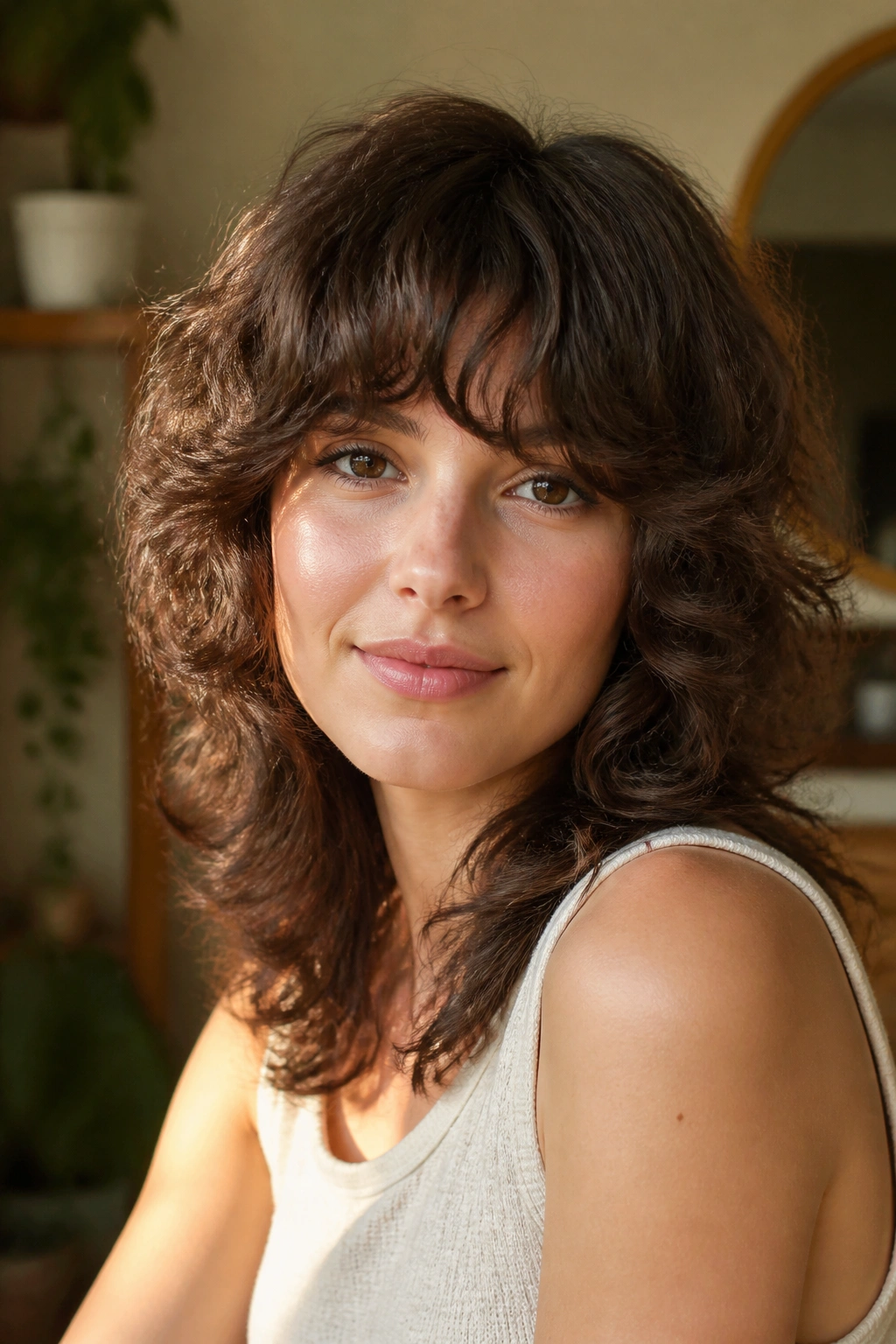
Some shag cuts look cool because they’re edgy. This one looks good because it’s balanced. The rounded 70s shag keeps fullness through the crown and sides, then softens the silhouette so the waves fall in a curved, flattering shape.
It works especially well on wavy hair with some natural body. The haircut supports the wave instead of trying to force it into a sharp outline. The bangs or fringe pieces usually blend into long layers around the cheekbones and jaw, which gives the whole head a soft frame.
I think this cut is underrated for people who want volume without chaos. It has a little bounce, a little shape, and enough length to keep the ends from popping out in strange places. Not every shag has to look rebellious. Some can just look rich and full.
The styling can stay simple: rough-dry, lift the roots a bit, then bend a few front pieces with a large round brush or fingers. Done.
16. Choppy Shag With Polished Ends
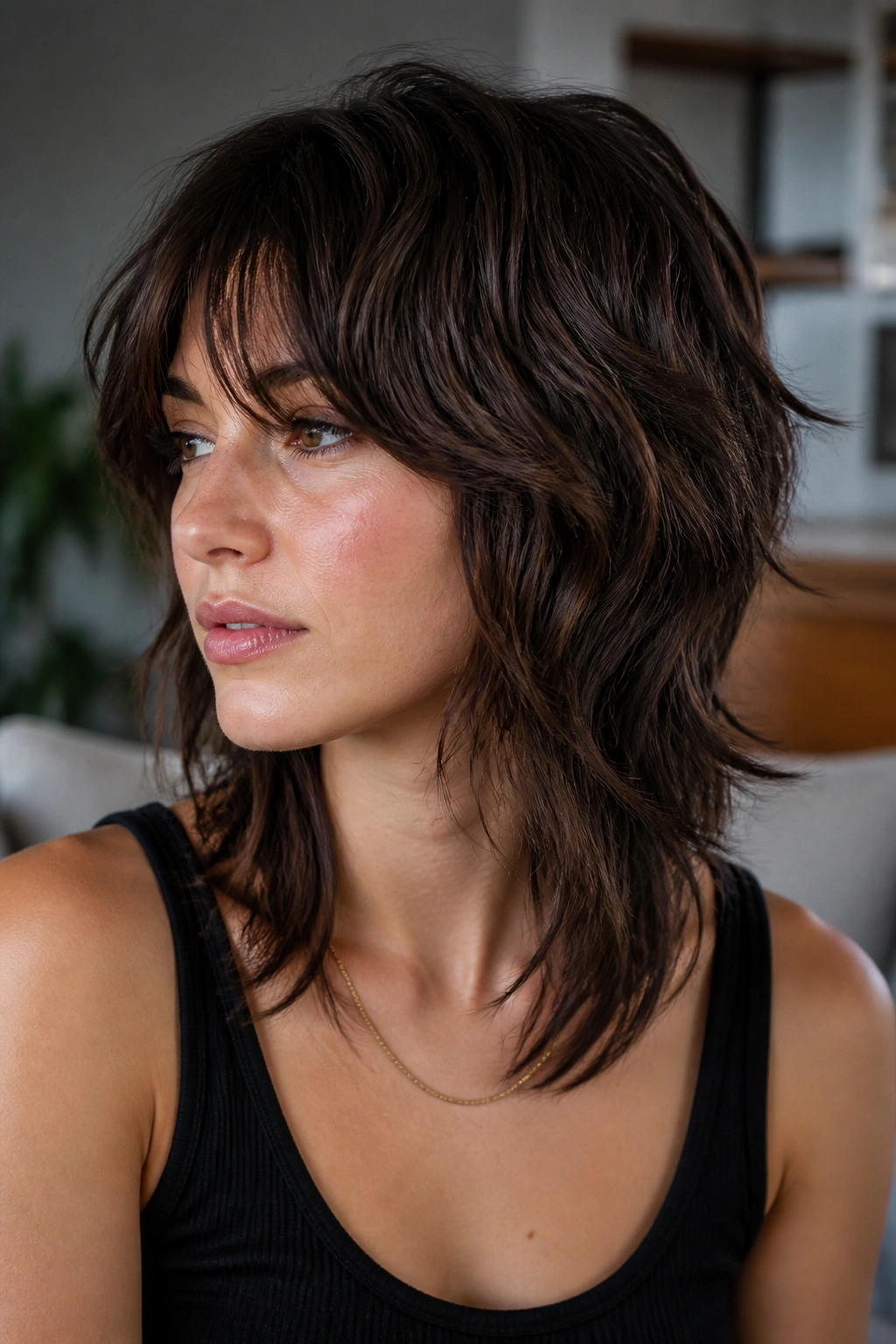
Here’s a cut I like for people who want texture but still want their hair to look neat from the back. The layers are choppy enough to create movement, but the ends stay more polished than piecey.
That contrast matters. If everything is chopped the same way, the haircut can start looking shaggy in the lazy sense of the word. A polished edge gives the shape a cleaner finish, which is especially helpful on wavy hair that tends to puff at the ends.
What to Ask For
- Soft internal layers, not heavy slicing.
- A cleaner perimeter with only light point-cutting.
- Face-framing pieces that break up the front.
- A blow-dry that smooths the ends just enough.
This is one of the easier shags to live with if you wear your hair both wavy and straighter sometimes. It doesn’t collapse when brushed out. It doesn’t lose the point of the cut when air-dried.
A haircut can be textured without looking unfinished. This is that haircut.
17. Face-Framing Shag for Growing Out Length
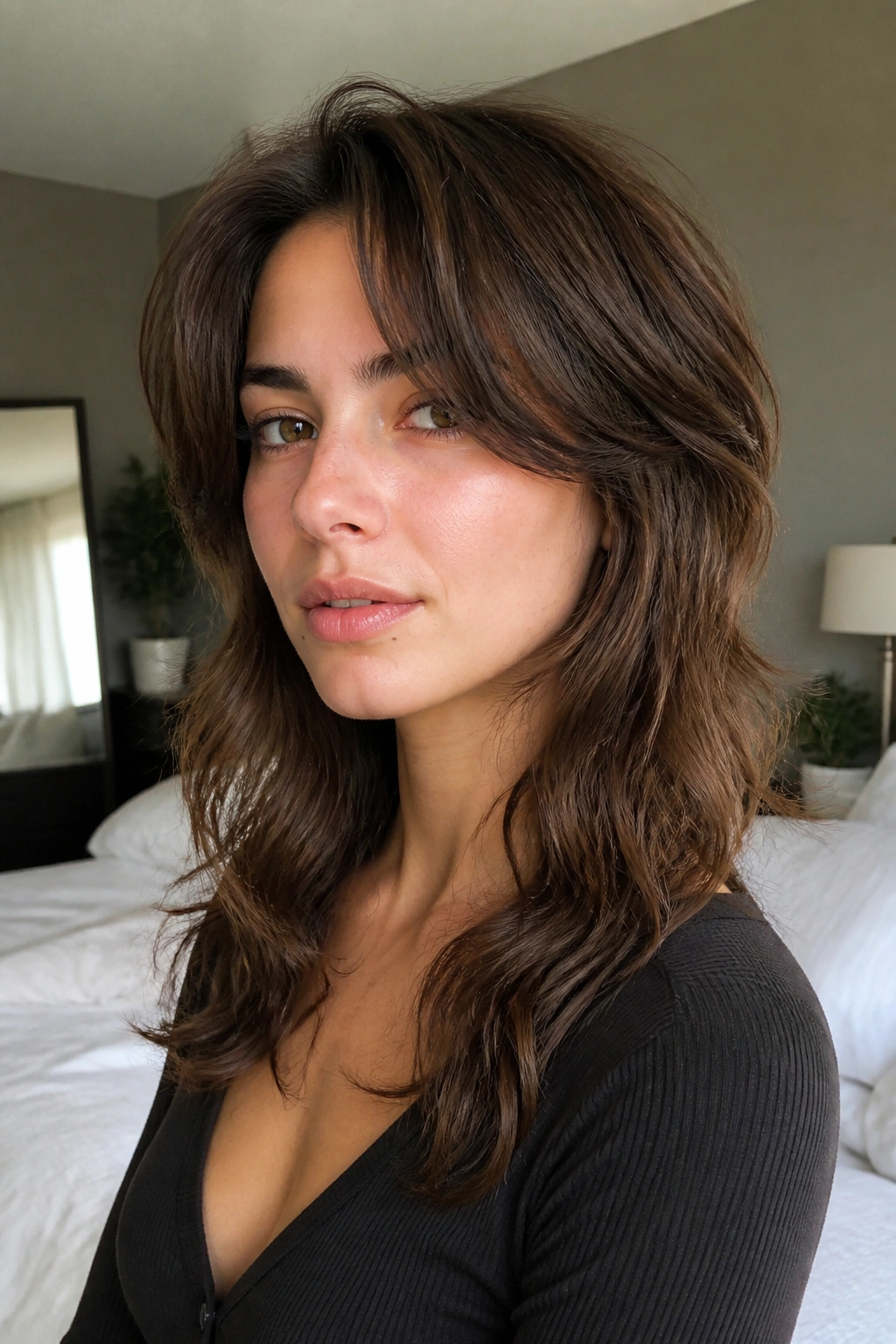
When you want to keep length but you’re tired of your hair hanging there like a sheet, a face-framing shag is a smart compromise. The layers are concentrated around the front and upper sides, so you get movement where it shows most, while the back keeps more of its length.
This is the haircut for the in-between stage. Between salon visits. Between blunt and layered. Between “I want change” and “I do not want to lose four inches.” Wavy hair responds well to this because the front pieces can swoop and bend in a way that makes the whole haircut look intentional.
A good version of this cut should start the shortest layers around the cheekbones or lips, then taper gradually into longer pieces. That keeps the shape soft. If the front is cut too high, the grow-out gets annoying fast.
- Great if you tie your hair back a lot.
- Good for people growing out bangs.
- Easier to maintain than a full shag.
- Keeps the length where you can still use it.
There’s nothing wrong with wanting a haircut that behaves while you grow your hair. That is a perfectly sane request.
18. Deeply Layered Shag for Frizz-Prone Waves
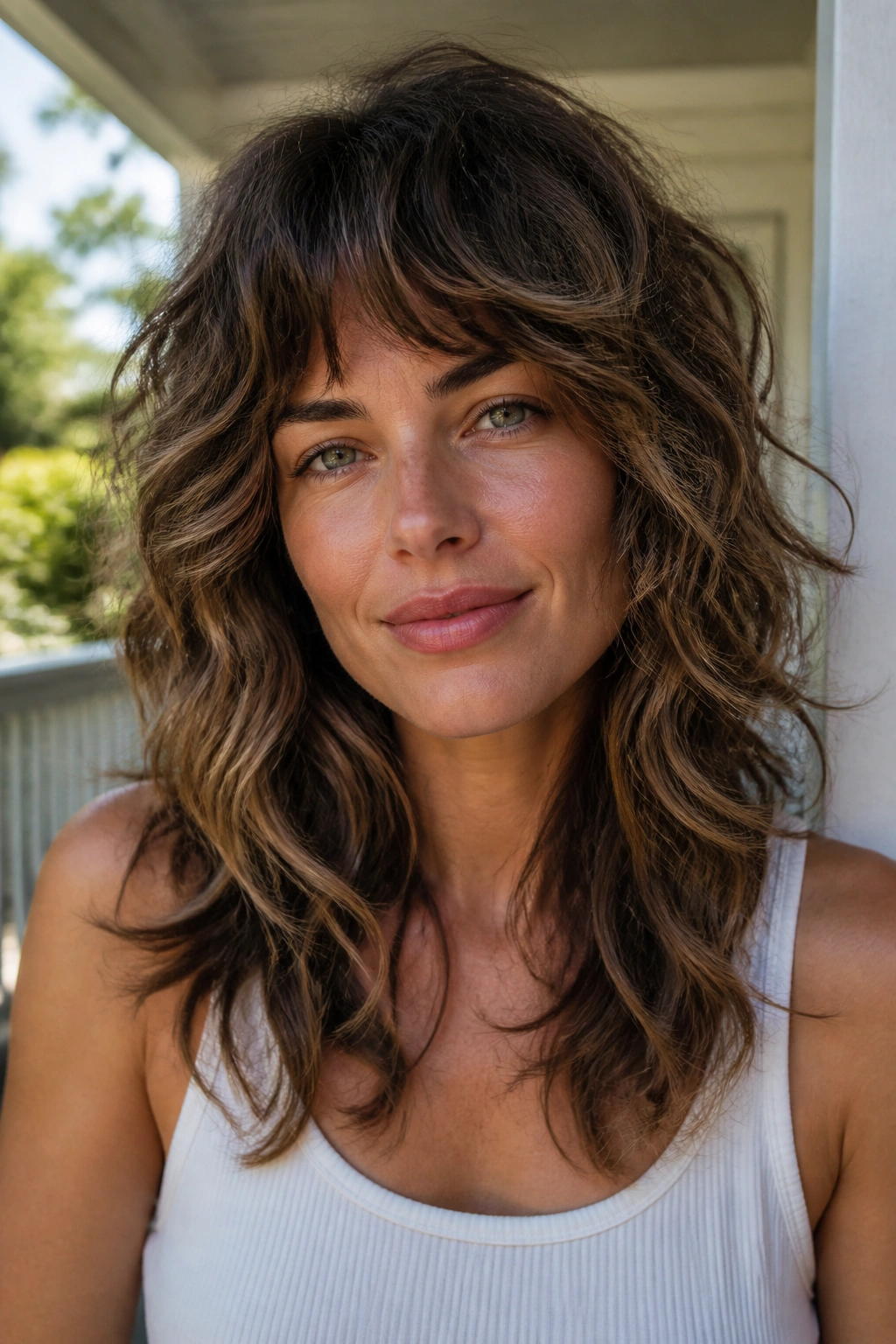
Frizz-prone waves can benefit from layers, but only if the shape is controlled. Too much bulk in the wrong places makes the hair balloon. Too much texturizing makes the ends look thirsty. A deeply layered shag can help, but it has to be cut with a plan.
The goal is to remove weight from the areas that puff while leaving enough structure to keep the waves from scattering. That usually means thoughtful layers through the crown, soft shaping around the face, and ends that are not over-thinned. You want the wave clumped into nice pieces, not floating away from itself.
Styling That Helps
- Apply gel or mousse to soaking-wet hair.
- Scrunch with a microfiber towel or T-shirt.
- Diffuse on low heat until the roots are set.
- Leave the hair alone once it starts drying.
Frizz is not always the enemy. Sometimes it just means the cut needs better balance. This shag can bring that balance back, especially if your waves swell in humidity and you’re tired of puff at the sides.
One caveat: it needs a stylist who understands texture. A heavy hand here can make the cut look overworked fast.
19. Short Shag With Soft Volume
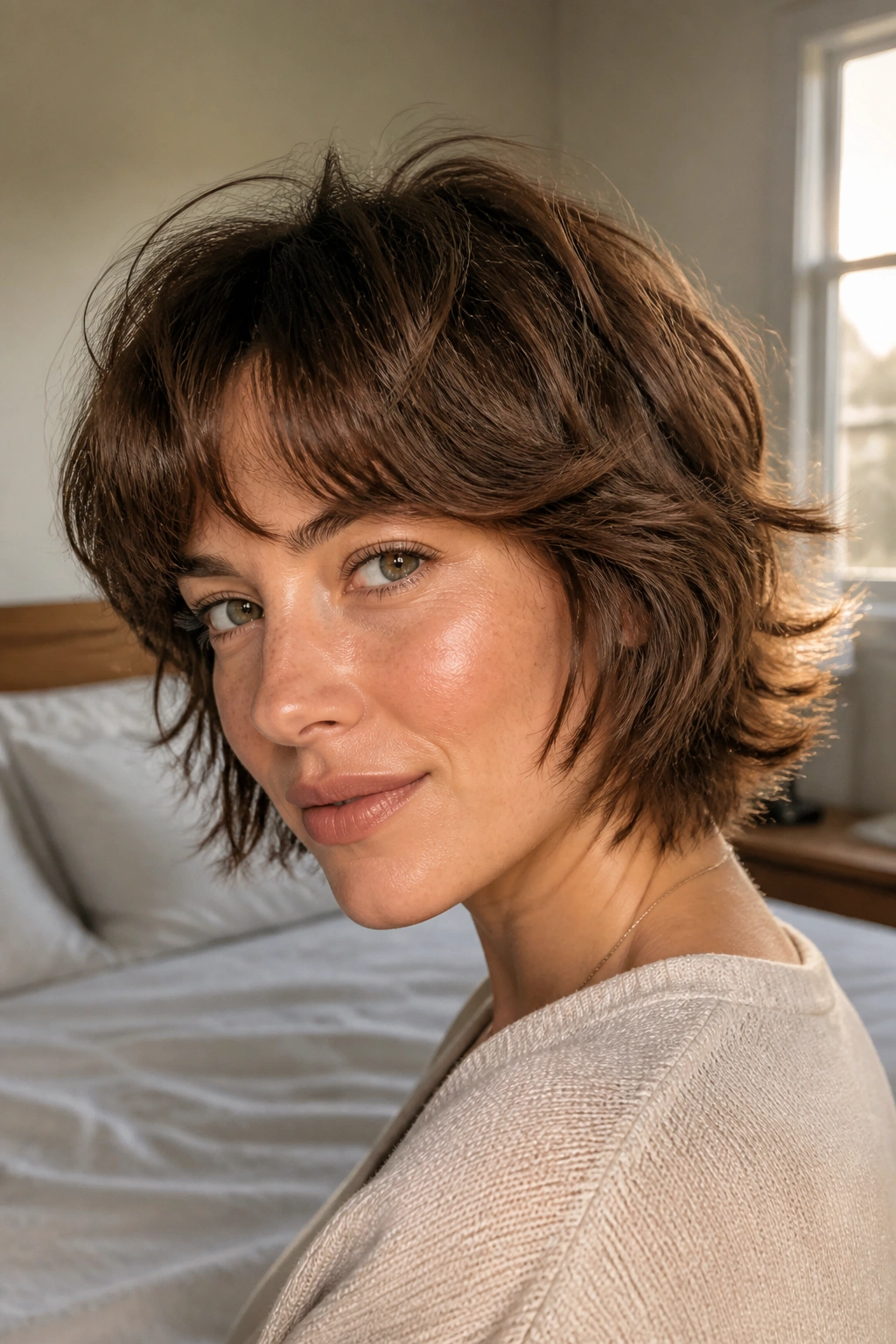
Short shag cuts can look fantastic on wavy hair when the volume is soft instead of spiky. This version usually lands above the shoulders, sometimes near the jaw, and leans into air and lift rather than heavy layering.
I like it for anyone who wants a shorter shape without going full pixie or full bob. The waves give the cut body, the layers stop it from sitting flat, and the shorter length keeps the styling simple. It also shows off glasses, earrings, and the line of the neck in a way longer cuts just don’t.
A short shag does need a little discipline. If the top gets too short, it can stand up in a way that feels hard. If the bottom gets too bulky, the cut loses its easy shape. The best versions are soft around the edges and a little piecey through the crown.
- Ask for short, blended top layers.
- Keep the sides feathered, not blunt.
- Use a light paste only if the ends need separation.
- Refresh with water and a small amount of mousse on day two.
This is one of those cuts that feels fresh every time you shake it out.
20. Lived-In Wavy Shag With Soft Finish
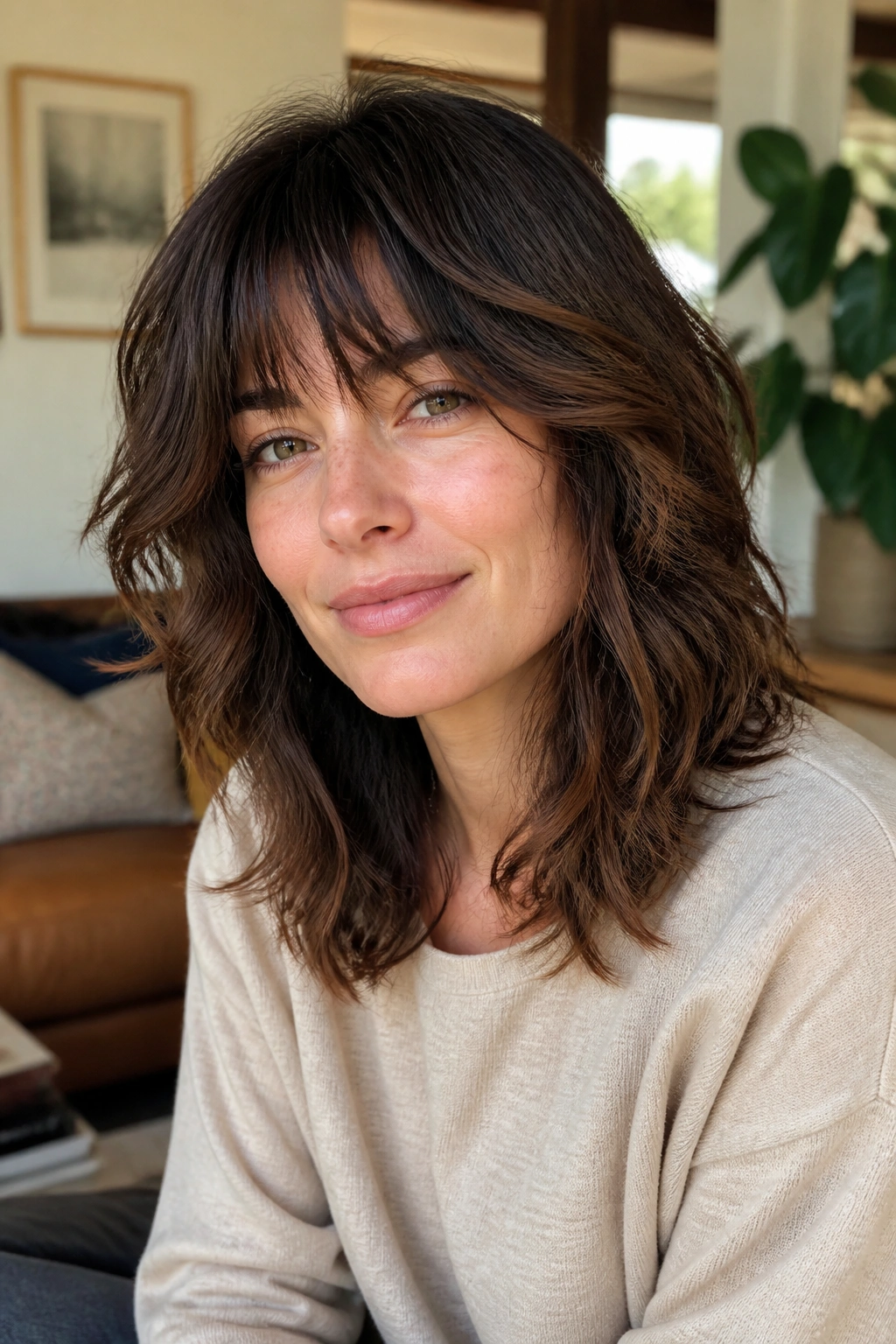
This is the shag for people who want the haircut to look like part of their personality, not a salon project. The layers are visible, but not severe. The fringe is soft, but not mushy. The finish is lived-in, which is a nice way of saying it can look good when you don’t try too hard.
The reason this version works so well on wavy hair is simple: it leaves room for movement without demanding perfection. Air-dry it, diffuse it, clip it up, tuck one side behind your ear — the shape still holds. A stylist who cuts this well will usually preserve some weight at the bottom and keep the layers scattered enough that the waves fall naturally.
If you want to ask for one thing, ask for a cut that matches how you actually wear your hair. Straighten it sometimes? Say so. Air-dry on weekdays? Say that too. Wear it half-up most of the time? That matters more than people think.
That final detail is the one that decides whether a shag feels easy or annoying. The best wavy shag is not the most dramatic one. It is the one you can live with, second day and all, without reaching for a hat.
