



Fine hair loves a shag—until the cut gets too hungry. A good bohemian shag haircut for fine hair should leave movement, not scraps; the ends ought to look soft and touchable, while the crown still has enough weight to sit up instead of folding flat by lunchtime.
That balance is the whole game. Curtain bangs, feathered face-framing pieces, and broken-up layers can make the head look fuller, but only if the stylist keeps the perimeter strong and avoids shaving too much off the ends. Too much texturizing turns fine hair stringy fast. No one wants that.
Fine hair is tricky because it can look polished one minute and limp the next. It also behaves differently depending on density, wave pattern, and how much lift you’re willing to create with mousse, a round brush, or a diffuser. So the best boho shag is not one cut copied twenty times; it’s a set of smart variations that make your hair look airy without making it look thin.
That’s the sweet spot.
Some versions lean soft and romantic, some have more bite, and a few are surprisingly easy to live with when styling time is short.
1. Bohemian Shag Haircuts for Fine Hair with Curtain Bangs

Curtain bangs are the safest entry point into this whole look. They split the front into two soft panels, which means you get face framing without the blunt wall that can crush fine strands at the forehead.
Why Curtain Bangs Help Fine Hair
The best curtain-bang shag keeps the shortest point around the cheekbone, not halfway up the forehead. That little shift matters. It gives the front section enough length to blend, and it keeps the fringe from looking like a sparse accident on day two.
- Ask for soft, blended corners instead of sharp lines.
- Keep the center slightly shorter than the sides.
- Dry the bangs away from the face with a small round brush.
- Use a pea-size dab of mousse, not a heavy cream.
Pro tip: if your hair falls flat by noon, lift the bangs at the root with a quick blast from the dryer before you touch the rest of the hair. It takes about 30 seconds and changes the whole front.
2. Collarbone Shag with Soft Tapered Ends
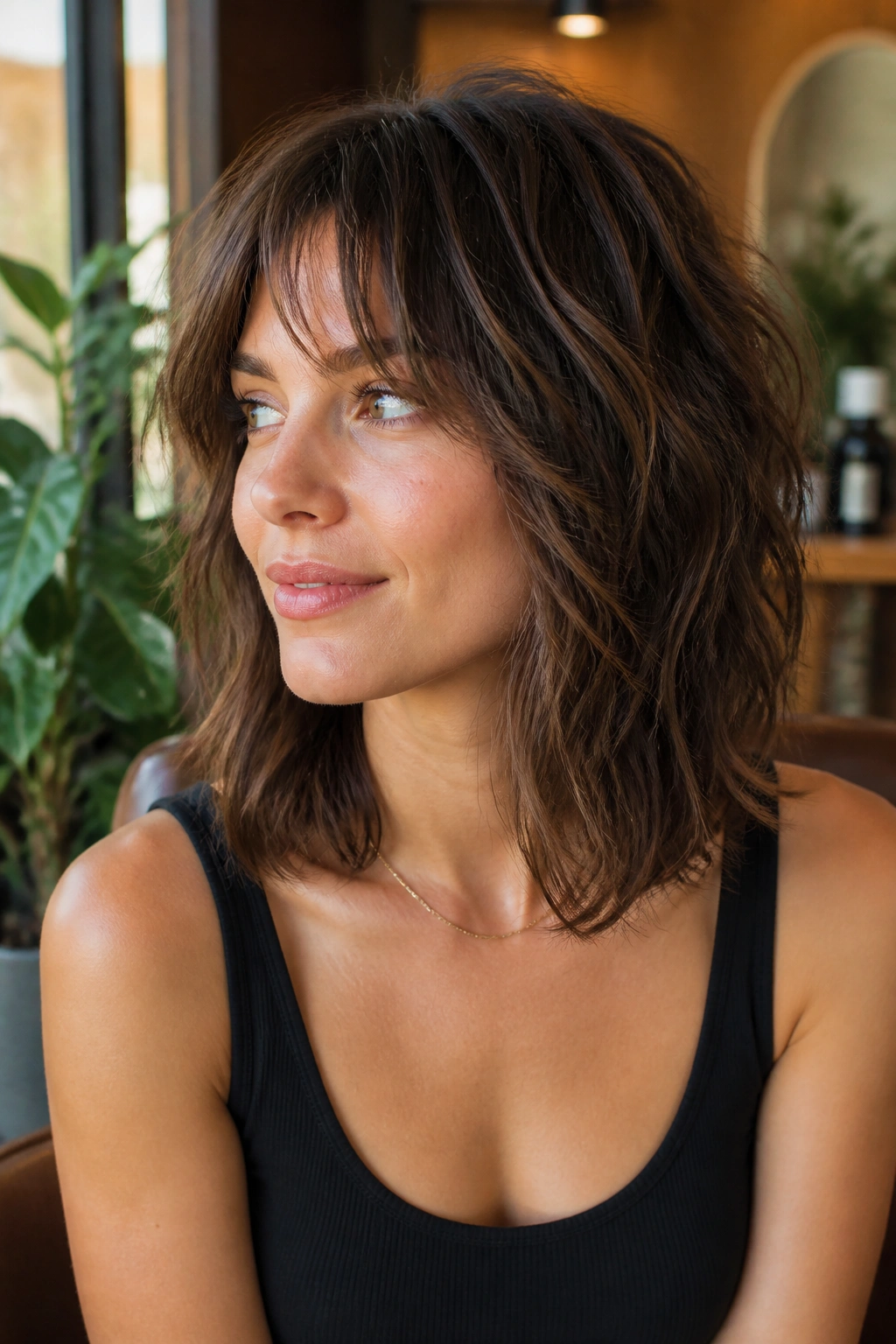
This is the most forgiving length for fine hair. It hits that collarbone zone where the hair still has enough mass to look full, but the layers can move when you walk. Shorter than this and the cut can feel too airy; longer than this and the ends start to drag if the layering gets sloppy.
I like this version because it doesn’t need a lot of theater. A clean collarbone line gives the eye something solid to read, and the soft taper at the bottom keeps the shag part from feeling heavy. If your hair is straight, the shape will look neat and a little lived-in. If it waves, the ends get that loose bend people usually try to fake with tools.
Wear it with a center part if you like symmetry, or push one side behind the ear for a more undone look. Either way, the cut should still feel like it has a spine. Without that, fine hair tends to drift.
3. Is a Long Bohemian Shag Too Heavy for Fine Hair?
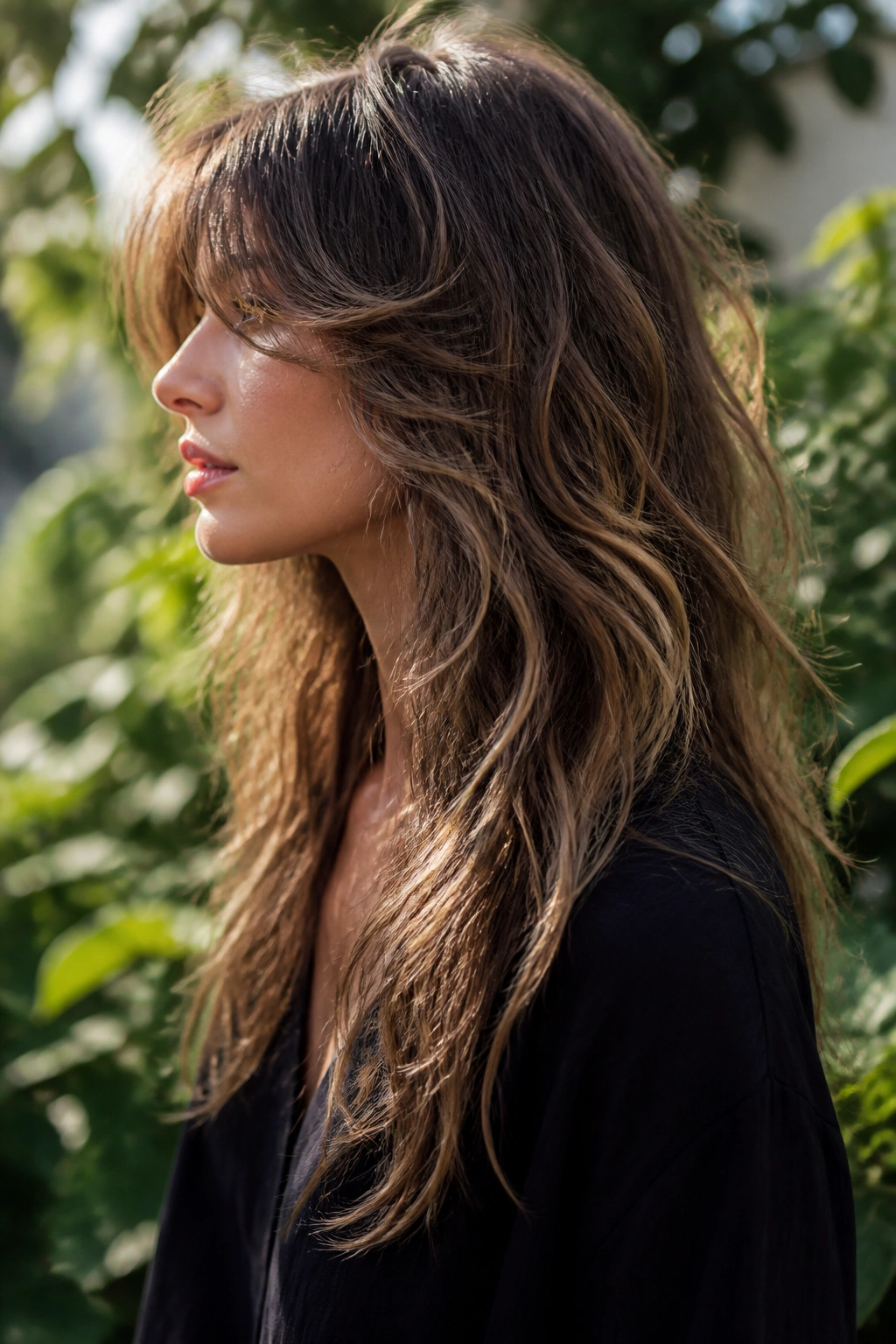
Not if the layers are placed with some restraint. Long hair on fine strands can go flat in a hurry, but a shag that starts too high can be worse, because it removes the weight that keeps the lengths from looking see-through.
How to Keep It Lively
The trick is to keep the shortest pieces below the cheekbones and let the movement happen in the mid-lengths. That way the top still has support, and the lower half keeps enough density to read as hair, not wisps. A long bohemian shag should feel airy at the edges, not thin through the middle.
If you want this shape, ask for long internal layers rather than choppy ones all over the head. That matters more than people think. The visible surface should still look smooth, and the layers should show only when the hair moves.
A quick bend with a 1-inch iron can help, but you do not need tight curls. Loose waves, brushed out, are enough. Anything too polished takes the boho out of it.
4. Chin-Length Shaggy Bob with Beachy Fringe
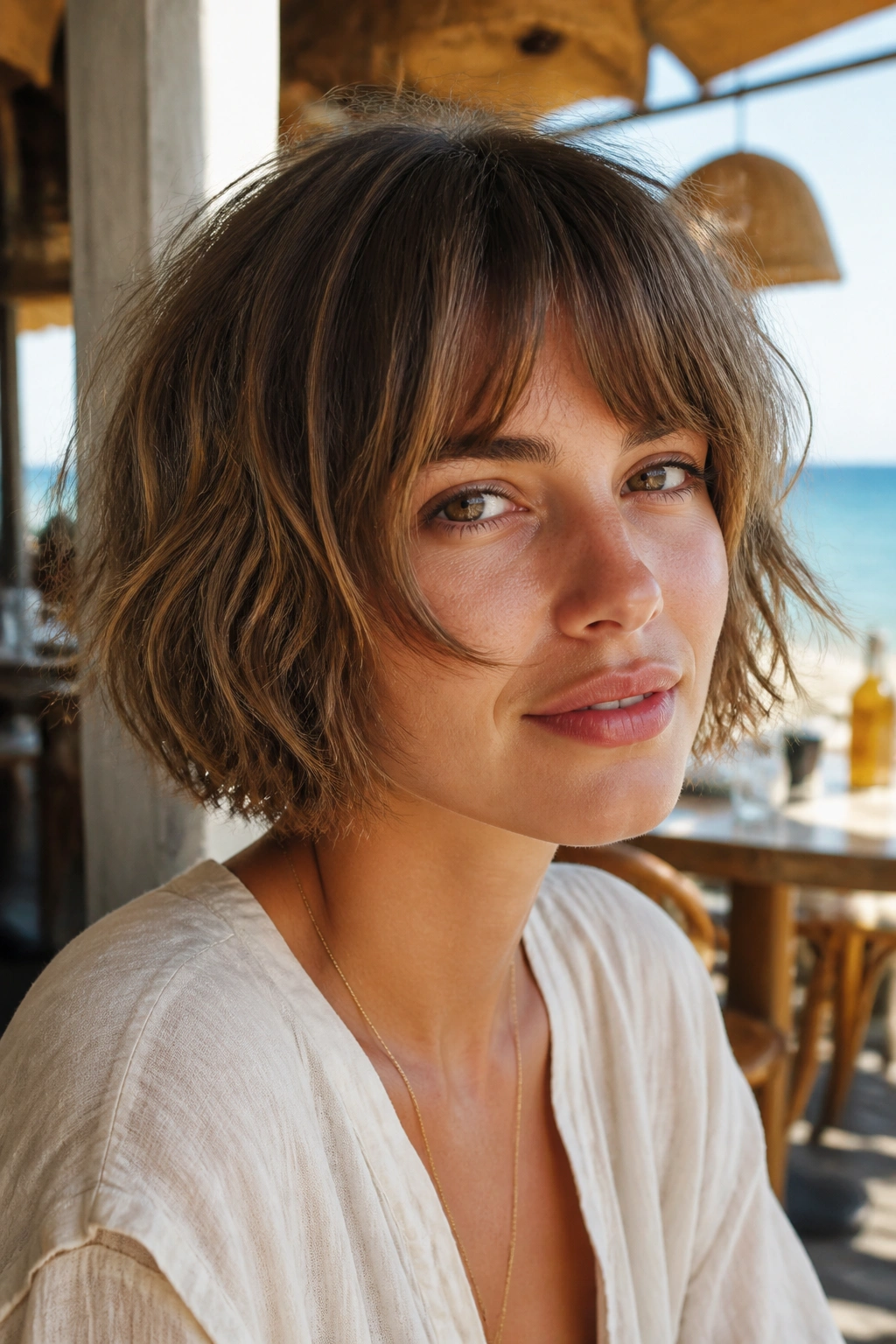
Picture hair that used to disappear into a scarf the second the weather turned cool. A chin-length shag changes that fast.
It opens up the face, pulls the eye to the jawline, and gives fine hair a little more swing because there’s less length dragging the shape downward. The fringe should skim the brows or sit just under them, with pieces that break apart instead of sitting in one solid line. If the haircut is too stacked at the back, it can puff in a dated way. Keep it soft.
- Best when the ends land right at or just below the jaw.
- Fringe should be piecey, not full.
- A little root lift mousse goes a long way.
- Dry the sides forward first, then flip them out with your fingers.
One thing I love about this cut: it still tucks behind the ear without losing its shape. That sounds small. It isn’t.
5. The Shoulder-Grazing Razor Shag

I’m not a fan of razor cutting on fine hair when the stylist gets aggressive. I am a fan when the blade is used with a light hand and the goal is softness, not shredding.
At shoulder length, a razor shag can give the ends that feathered, touchable feel that makes bohemian hair look relaxed instead of overworked. The catch is simple: if the blade eats too much from the perimeter, the bottom starts to look transparent. Fine hair does not forgive that. You want the ends airy, not ghostly.
This cut works best when the top layers are cut to fall into each other, almost like overlapping leaves. That gives movement without obvious stripes of layer. On the styling side, a touch of sea salt spray on damp hair, then a rough dry with your fingers, usually does more than a long styling routine ever will.
And yes, this one grows out nicely if the perimeter stays intact.
6. Bottleneck Bangs vs. Heavy Bangs
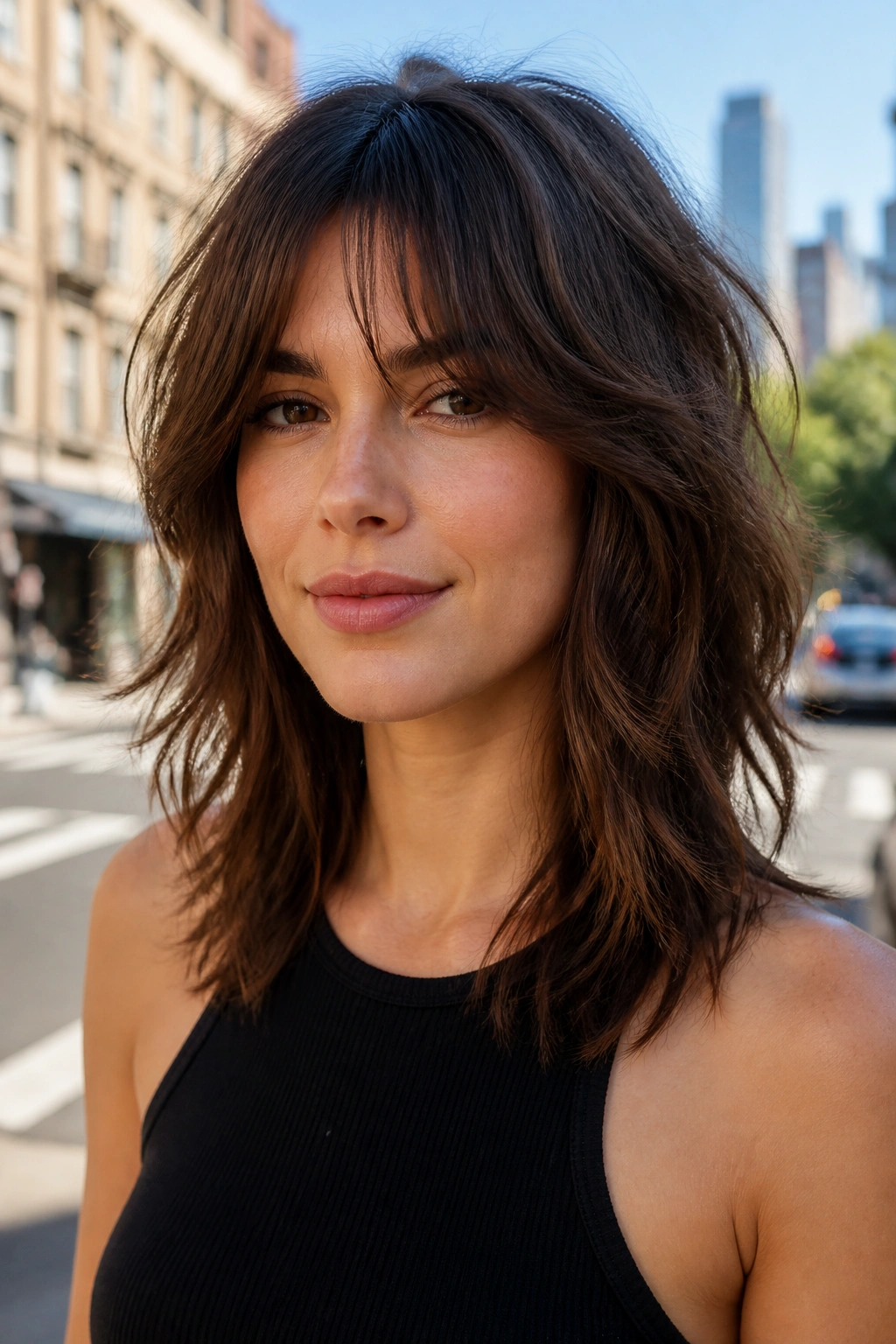
Bottleneck bangs give you shape without a hard curtain across the forehead. That’s why they’re a smarter match for fine hair than a thick, blunt fringe that can look chunky at first and sparse later.
The center of the bang is a little shorter, then it eases out toward the temples. That creates a soft funnel shape, which sounds odd until you see it on a person. It frames the eyes, softens a high forehead, and leaves enough air around the front so the hair does not look overburdened.
Unlike a heavy bang, this version doesn’t need a lot of density to work. It can be cut from a lighter front section and still read as full because the shape does the lifting. I’d choose it for anyone who wants a shag with more polish at the front, or for someone who hates the feeling of hair sitting on their lashes all day. Ask for the center to hover around brow level and the sides to melt into cheekbone length. Clean, not choppy.
7. Invisible-Layer Shag for Straight Fine Hair
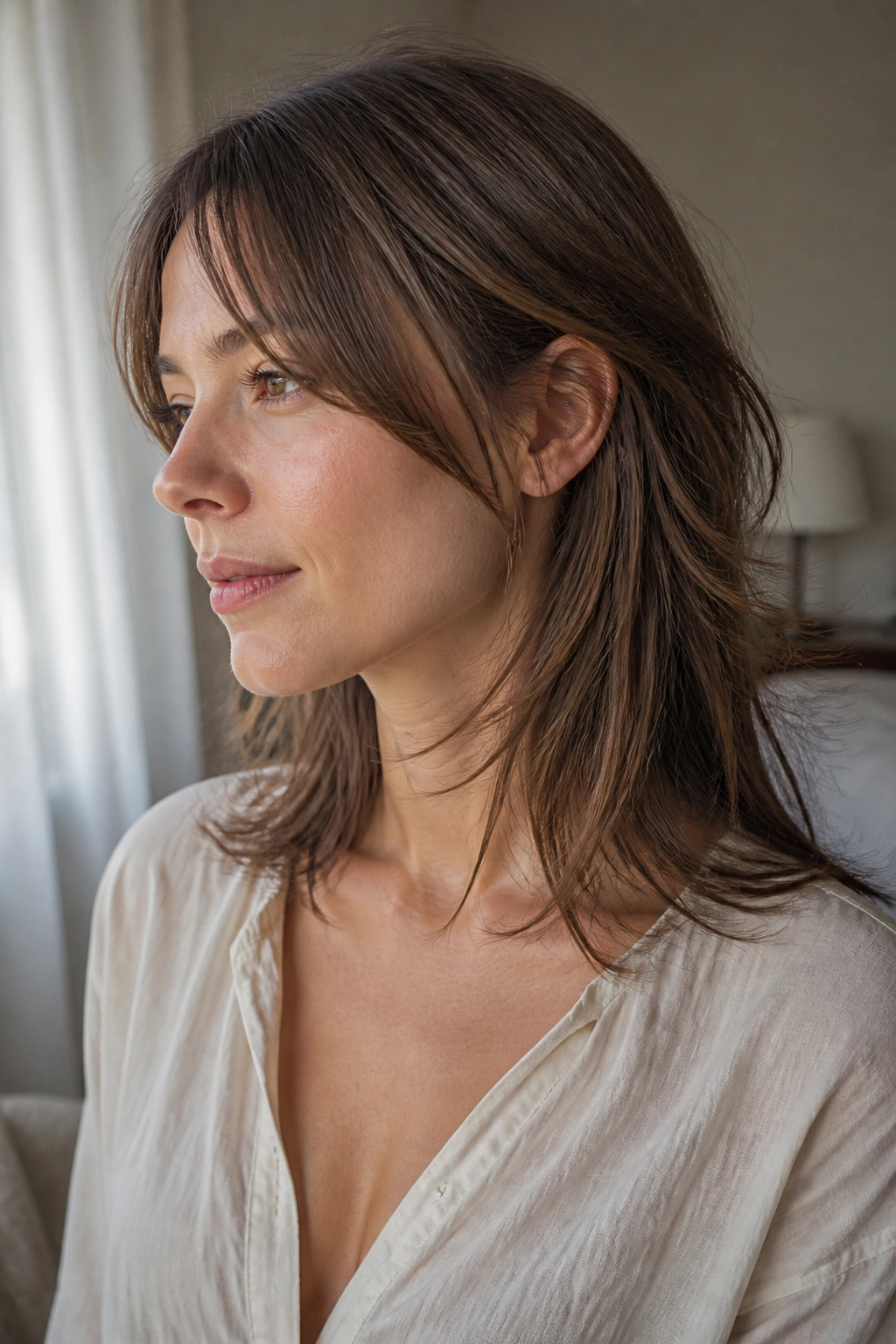
Straight fine hair can look best when the layers stay hidden until the hair moves. That sounds backwards, but it’s exactly why this cut works.
What Makes the Layers Invisible
The top section stays smooth and calm, while the internal layers remove weight from underneath. The result is a shag that lifts when you tuck hair behind the ear, bend your head, or catch a breeze, but doesn’t show obvious shelf-like layer lines.
- Keep the outer surface almost untouched.
- Place most of the layering below the crown.
- Ask for soft point cutting at the ends, not aggressive razoring.
- Style with a light volumizing mist at the roots.
This is the cut I recommend when someone says, “I want movement, but I don’t want to see every layer from across the room.” That request is more common than people admit. And it makes sense. Fine straight hair usually looks best when the cut is subtle enough to fool the eye a little.
8. Bohemian Shag Haircuts for Fine Hair with a Side-Swept Fringe
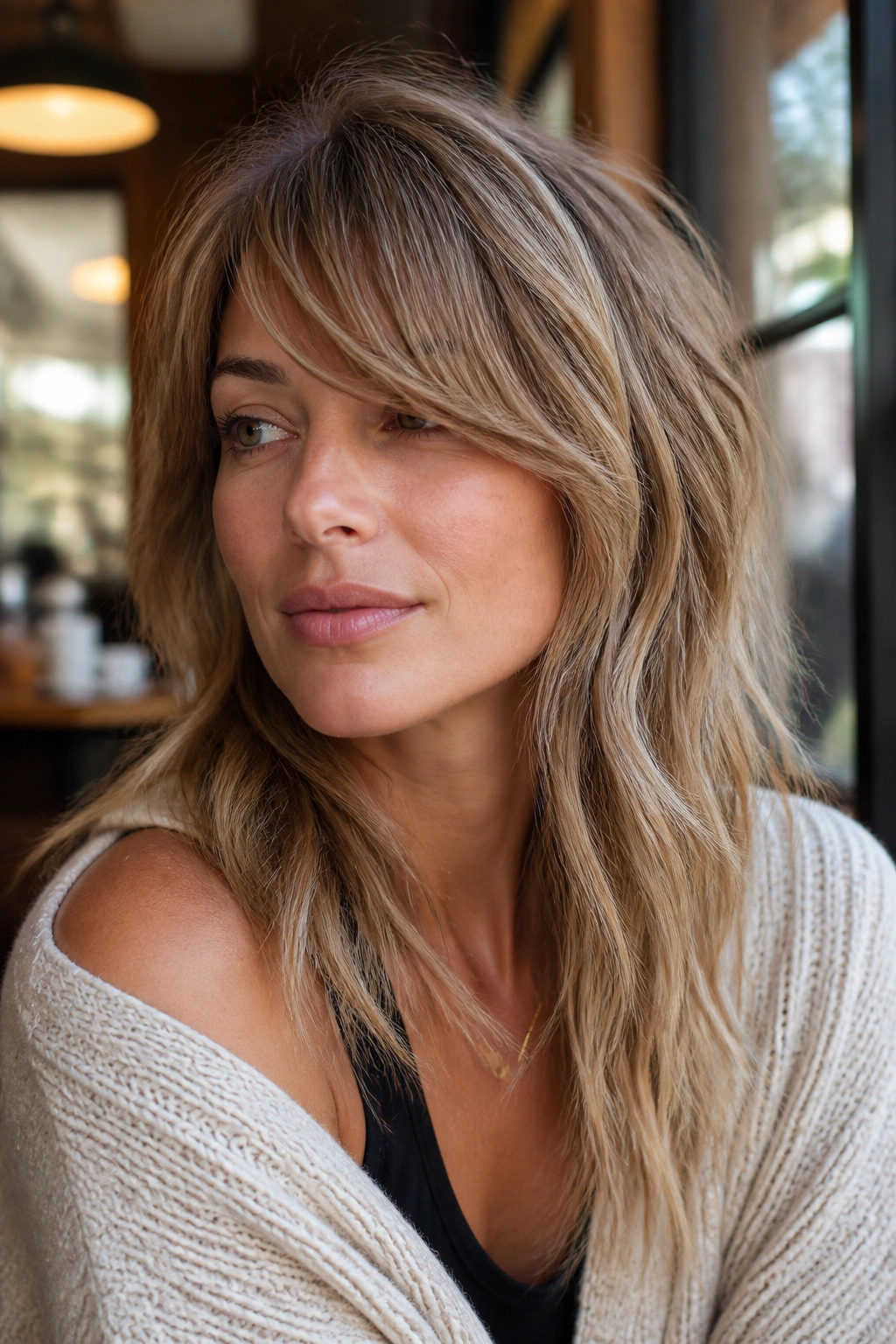
Side-swept fringe is the easiest way to fake density at the front. A diagonal line carries the eye across the face, which gives fine hair more visual weight than a straight-across bang line ever will.
The other thing I like here is flexibility. If your hair gets oily fast at the roots, a side-swept fringe can be refreshed with a finger twist and a quick dry blast. If it separates during the day, it still looks intentional. That’s rare. Most fringes need more babysitting than they’re worth.
This version suits people with a soft wave, but it also works on straighter hair if the front is cut with enough length to move. Keep the sweep long enough to tuck behind one ear. That gives you options on rough days, and options matter more than perfect symmetry.
I’d pair this with slightly longer layers through the sides so the fringe has somewhere to blend. Otherwise it starts to look like a separate haircut.
9. Should You Wear a Center Part With Fine Hair?
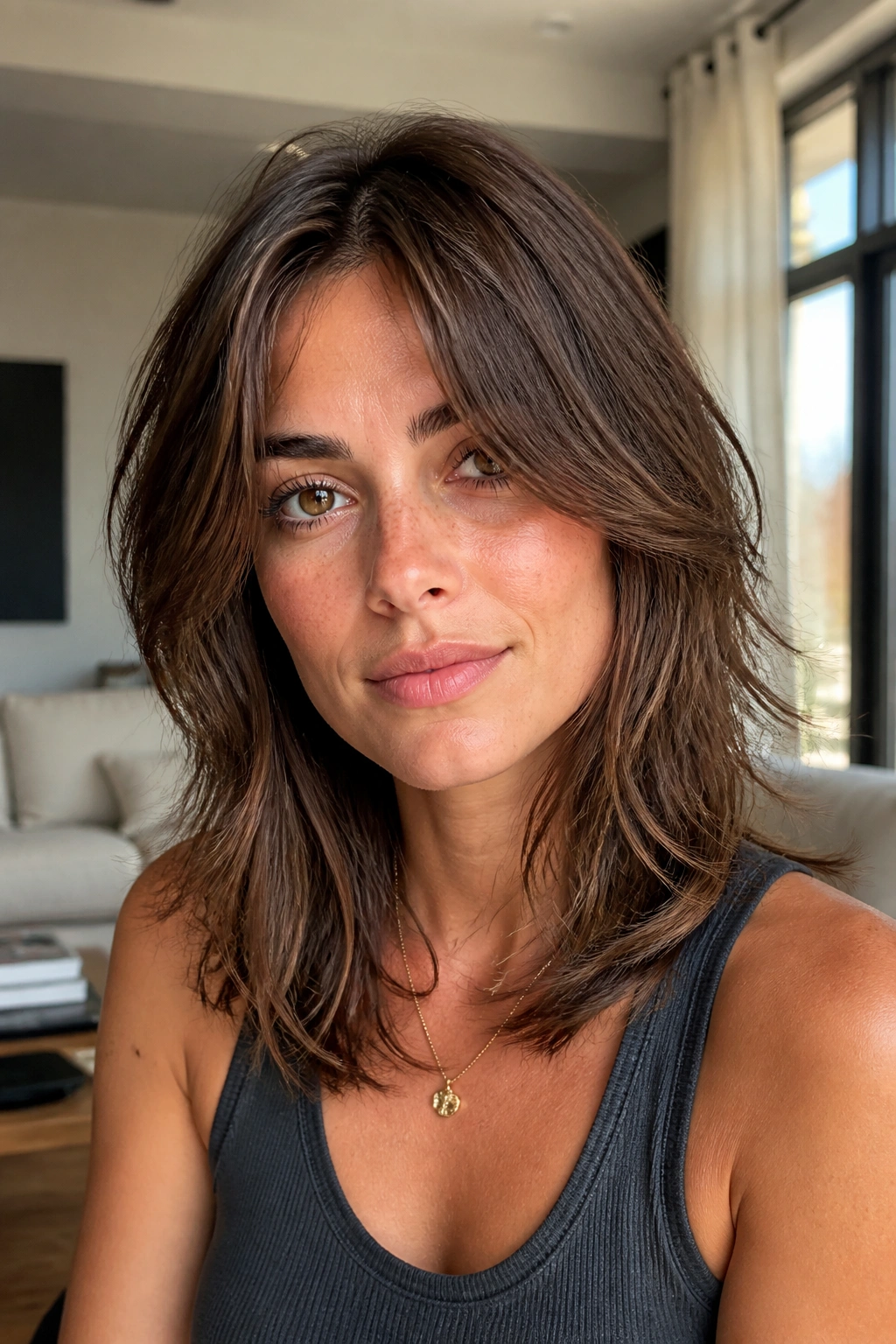
Yes, but only if the rest of the cut supports it. A center part can be brutally honest on fine hair, so the shag has to do more of the heavy lifting around the face and crown.
How to Wear the Part
If the top is over-thinned, a center part exposes every gap. If the front layers are soft and the crown has enough support, it can make the whole head look balanced and clean. The best trick is to keep the part slightly off-center by half an inch. That tiny shift often gives the roots a better lift pattern without looking obviously side-parted.
A center part also works better when the face-framing pieces start around the cheekbones or lips. That gives the eye a place to land. Otherwise the middle can feel too flat and too literal.
I would not force this part on hair that naturally splits to one side and fights back all day. Hair has opinions. Sometimes you need to listen.
10. Mullet-Lite Boho Shag with Longer Back Length
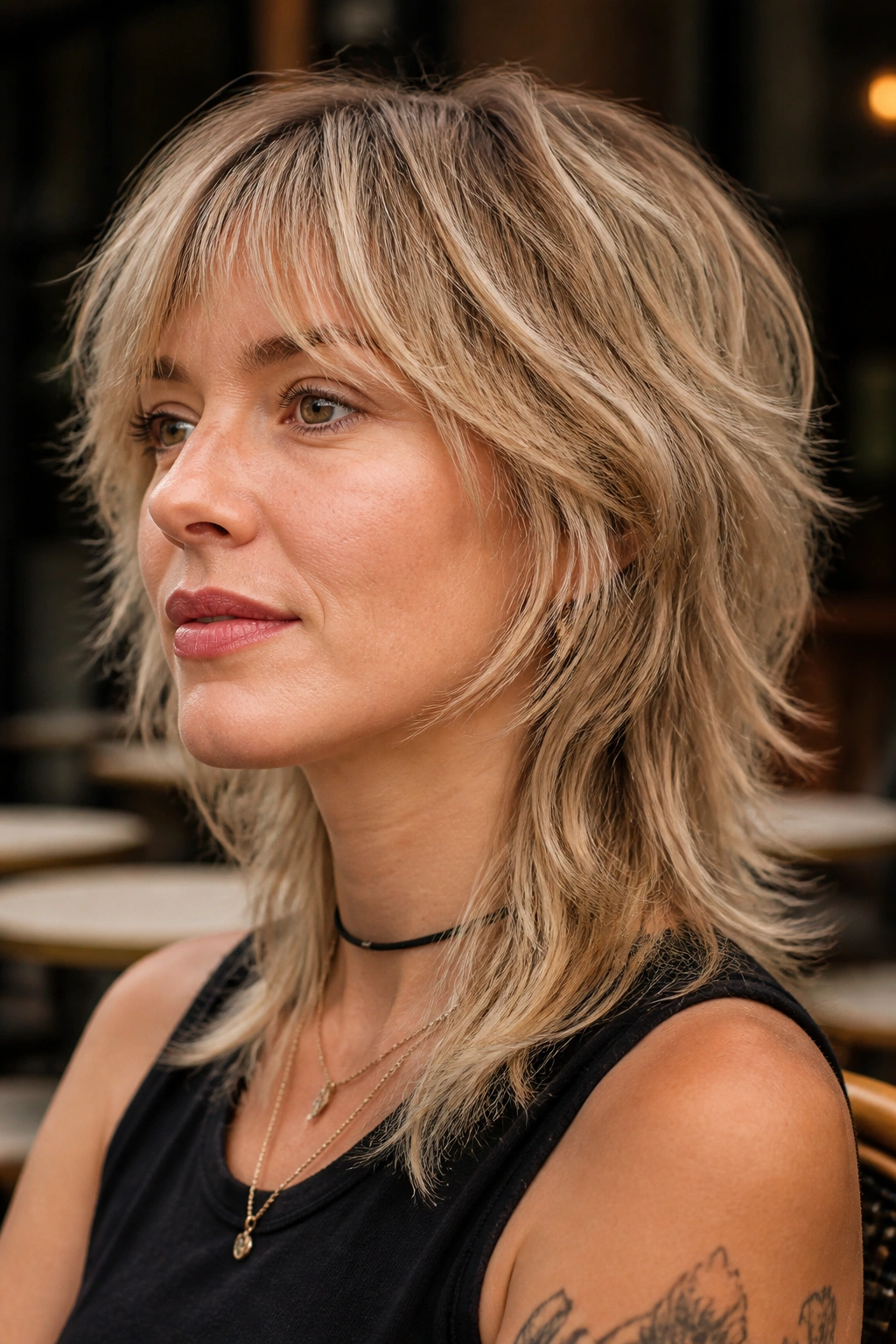
If you want some edge without giving up softness, this is the one.
The mullet-lite version keeps the top and front lighter, then lets the back stay a little longer than the sides. On fine hair, that extra length in back stops the cut from looking too airy. It also gives the style a loose swing that reads bohemian rather than harsh.
- Shorter crown pieces create lift.
- The front should stay soft, not sharp.
- The back can sit at the collarbone or a touch below.
- Best styled with rough drying and a couple of loose bends, not tight curls.
This cut is good for someone who likes a little shape around the face but doesn’t want the classic shag to feel too sweet. It has a bit of attitude. Not a costume. Just enough.
11. The Air-Dry Bohemian Shag

Some cuts ask for a blowout. This one does not. It’s built to look better when you leave it alone and let the texture settle on its own.
That makes it a smart choice for fine hair that already has a slight wave. The layers should be soft and internal, so the hair can dry into loose pieces instead of puffing into frizz. A little leave-in spray on damp hair, scrunched through the ends, is usually enough. Heavy cream is too much. It drags the hair down before it can take shape.
I like this cut because it does not try to fight the hair’s natural pattern. It works with it, which is rare advice and usually the right advice. If your strands dry with a bend but not a tight curl, this shag will look casual in a good way. If your hair dries pin-straight, you may need a bit more root work to keep it from collapsing.
The hair should look slightly imperfect. That’s the point.
12. Long U-Shaped Shag Instead of a Sharp V
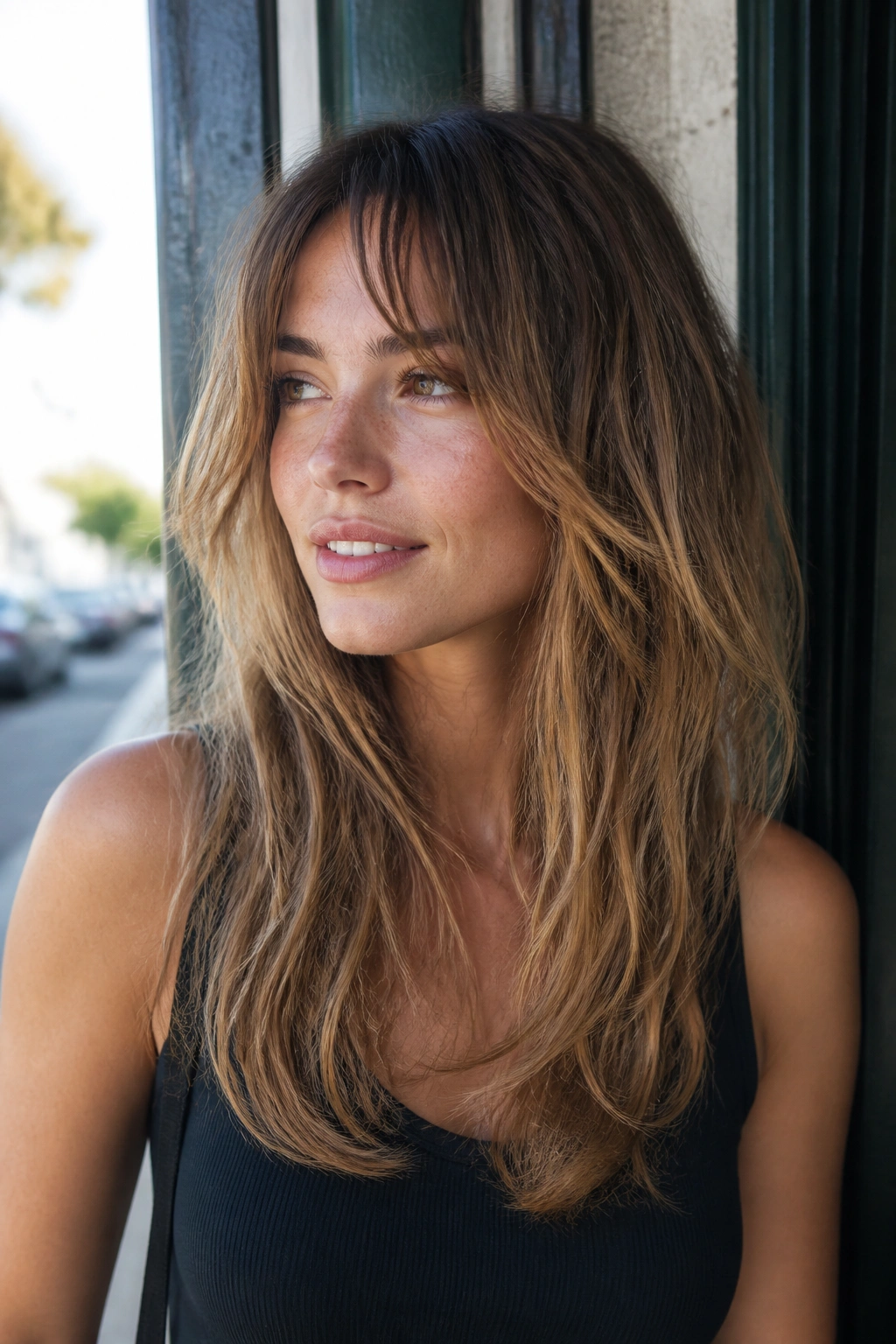
A sharp V cut can look dramatic on thick hair. On fine hair, it often removes too much of the lower weight and leaves the ends looking narrow. A U shape is kinder.
The curve at the bottom keeps the perimeter fuller, which makes the whole head look thicker from the back and the side. Then the shag layers can live on top and around the face, where they create movement without stealing the silhouette. That balance matters more than people think. You want the eye to read softness, not a skinny tail.
This is a good option if you want to keep length past the shoulders but still need some air around the face. Ask for the shortest face-framing pieces to sit near the cheekbone, and let the rest fall in long arcs rather than sharp points. The result feels bohemian, but it also feels grown-up. Less churn, more shape.
13. Face-Framing Bohemian Shag Haircuts for Fine Hair

Face-framing layers are the part of a shag that most people notice first, which is why they deserve their own slot. They can make the whole haircut look more expensive, but only if the layers are placed with purpose.
Where the Frame Should Start
For most fine hair, the best starting point is somewhere between the cheekbone and the lip. Go too short and the pieces can look disconnected from the rest of the cut. Go too long and they stop doing any work at all.
- Ask for soft, diagonal front pieces that melt into the sides.
- Keep the shortest point near a facial feature you want to highlight.
- Use a round brush only at the front if you want lift.
- Let the back stay calmer so the face frame can do the talking.
I like this version because it gives the haircut a little architecture. Not stiff architecture. Just enough structure so the rest of the hair can stay relaxed.
14. The Crown-Lift Shag with Short Top Layers
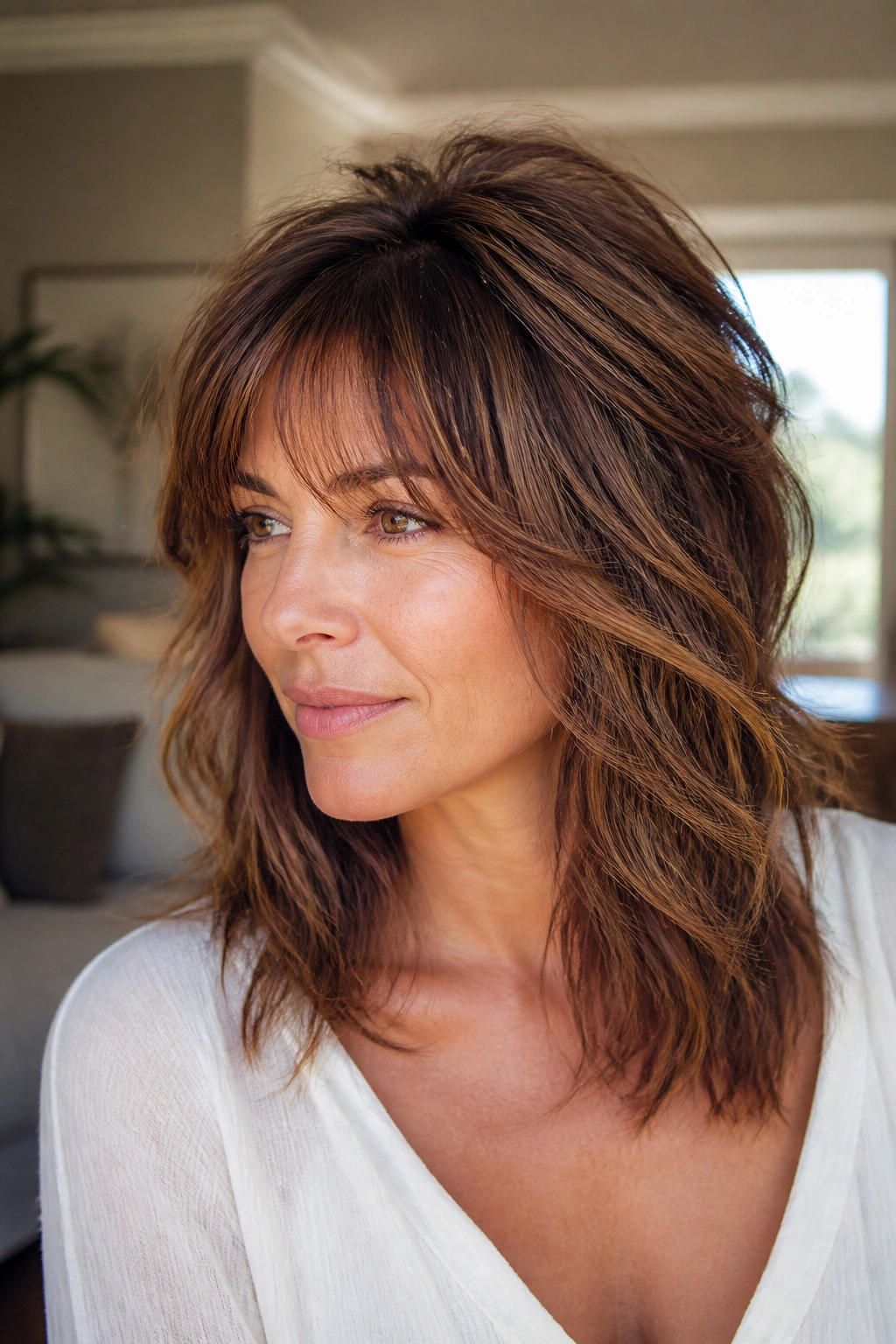
If your roots collapse fast, this is the cut that buys you the most height. The shortest layers live up near the crown, which helps hair stand away from the head instead of clinging to it.
That said, this is not the cut to get sloppy with. Too many short pieces can leave fine hair puffed at the top and sparse at the bottom, which is a strange place to end up. The best version keeps the top light but controlled, then lets the layers soften as they travel down.
It helps a lot if you style this one with a root spray and a quick round-brush lift at the crown. You do not need to do the whole head. Thirty seconds at the roots can change the shape enough to matter. I also like this cut on hair that bends a little naturally, because the layers catch that movement and hold onto it.
If you hate helmet-flat roots, this is worth asking about.
15. Bohemian Shag Haircuts for Fine Hair That Keep Their Length
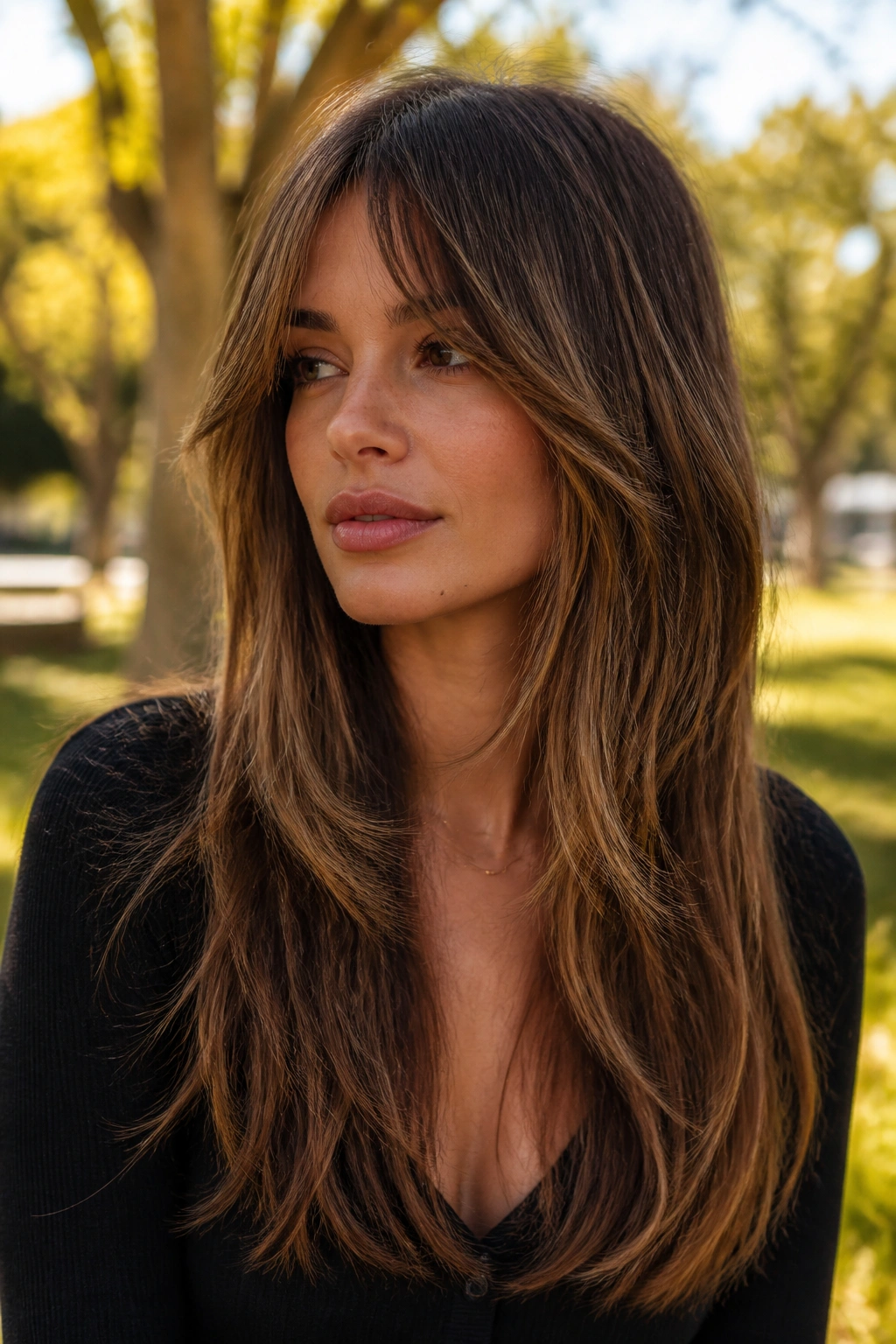
Can very long hair still look shaggy without turning limp? Absolutely, if the layers are light and the perimeter stays strong.
This is the version for someone who loves long hair but wants more shape around the face and through the top. The layers should be sparse, not heavy-handed. Think of them as guiding pieces rather than a full dismantling of the length. Fine hair gets into trouble when every inch is cut into a different tier. The result can look busy and thin at the same time.
What to Ask For
- Keep the shortest layer below the chin if the hair falls past the chest.
- Leave the ends a touch blunt so they read fuller.
- Add long face-framing pieces that start near the cheekbone.
- Style with loose bends, not tight curls, so the length still feels airy.
This cut works when you want movement but refuse to give up the drama of long hair. Fair enough. Long hair has its own charm.
16. Retro Feathered Shag with Flipped Ends
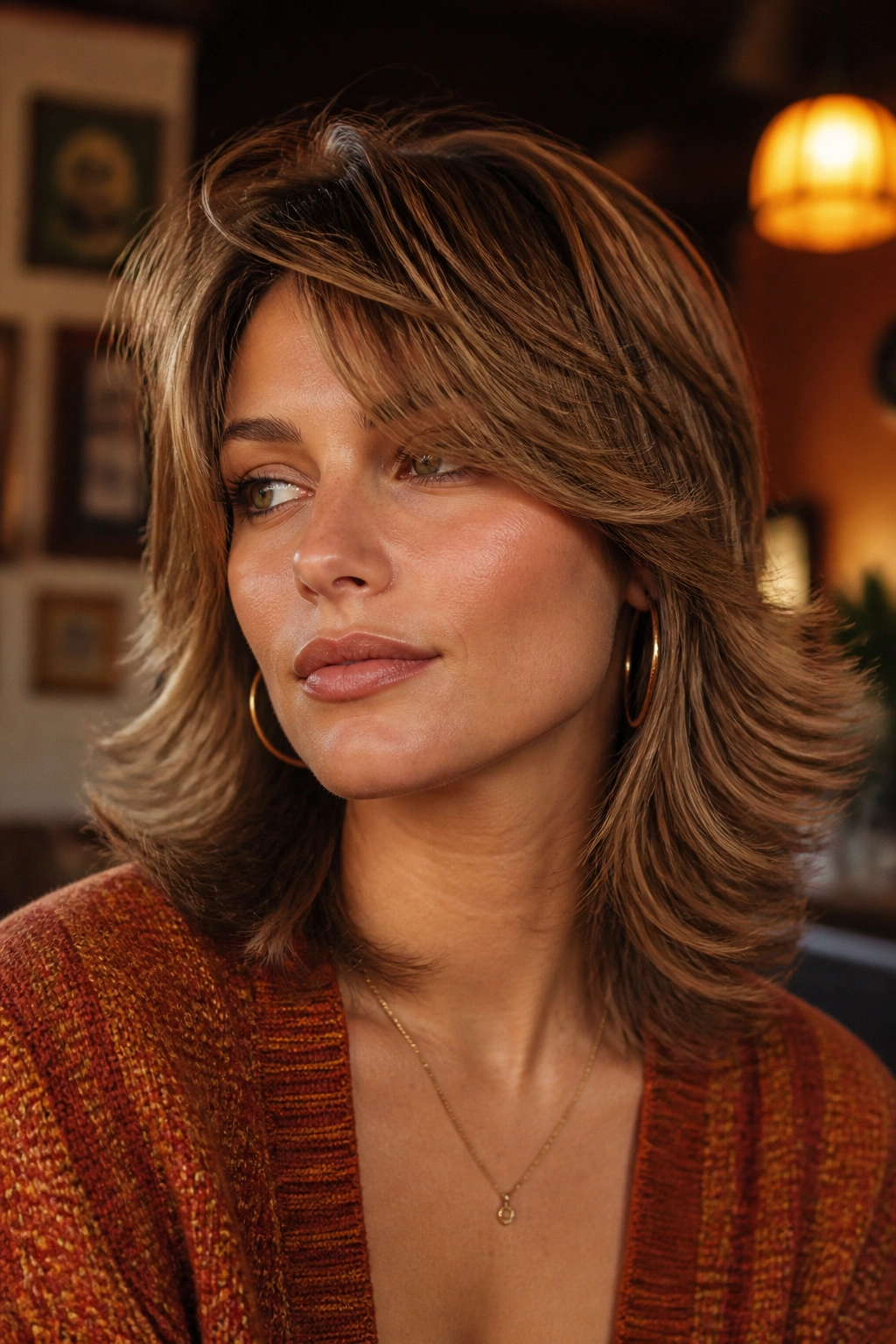
A feathered shag can look old-school in the best way, especially when the ends flip away from the face. Fine hair tends to like this because feathering gives it shape without asking for a lot of bulk.
The top should have enough lift to separate from the scalp, and the front pieces should fall in soft arcs around the eyes and cheekbones. A round brush, used on dry or nearly dry hair, makes a big difference here. Flip the ends out by half an inch or so, not into a full curl. That small bend keeps the look light.
- Great with a side part or a soft center part.
- Works well when the fringe is cheekbone length.
- A few velcro rollers at the crown can help if you need more shape.
- Hairspray should be light, or the whole thing turns stiff.
This is one of those cuts that can look dressed up without being fussy. That’s a useful place to be.
17. The Blunt-Perimeter Shag That Cheats Density
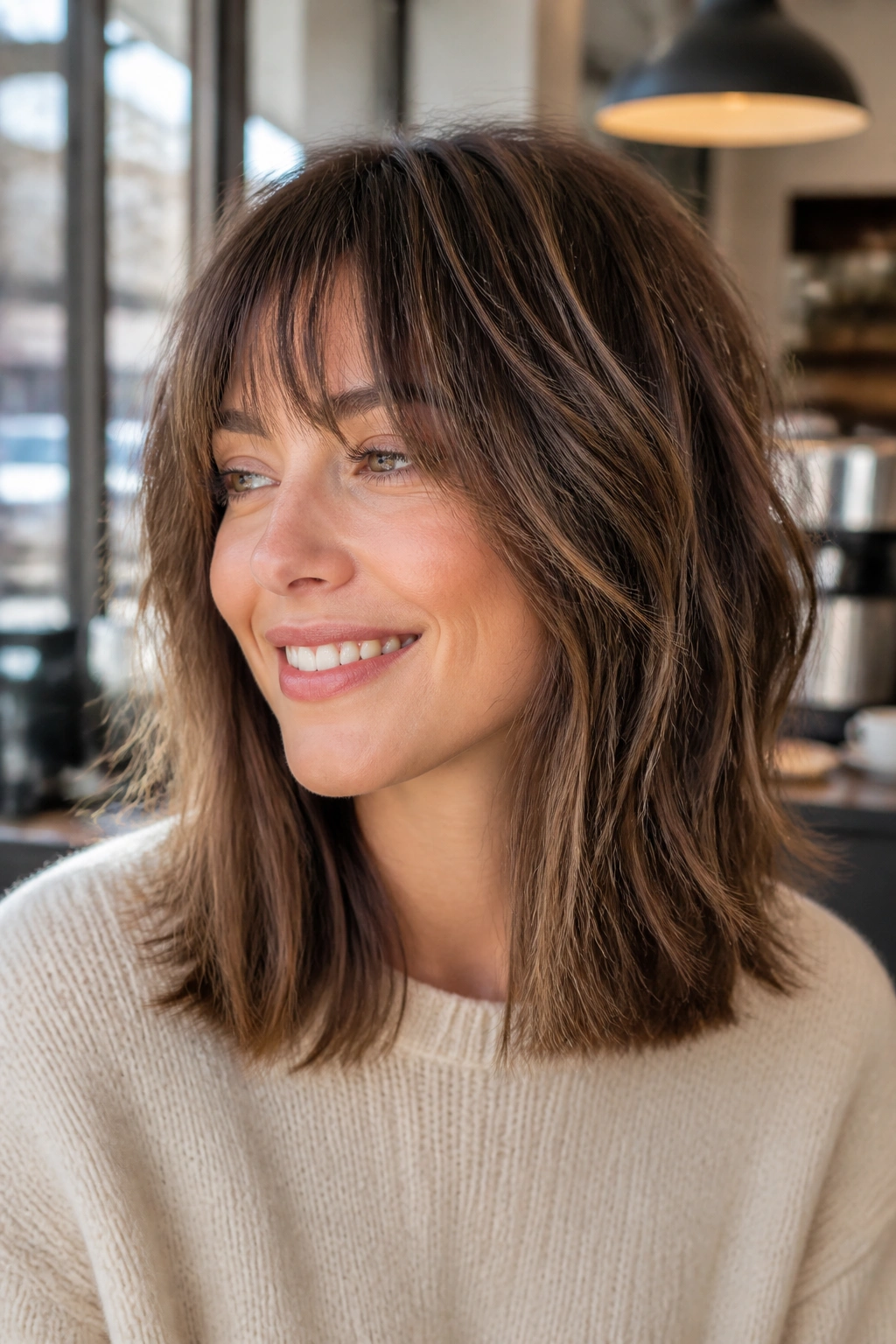
Not every shag has to look shredded at the bottom. In fact, on fine hair, I often prefer a stronger perimeter with only a little breakup inside the shape.
That blunt edge gives the eye a thicker line to follow. Then the boho feeling comes from the layers at the top, the fringe, and the soft movement around the face. You get the texture without sacrificing the visual weight that keeps the ends looking healthy. Too much choppiness at the bottom can make fine hair look like it was cut with garden shears. Nobody needs that.
This version is especially good if your hair is straight or only lightly wavy. It keeps the cut clean enough to wear sleek on some days and soft on others. You can still add a little bend with a flat iron or a 1-inch curling wand, but you’re not dependent on heat to make the shape make sense.
It’s a blunt move, in the best way.
18. Side-Part Bohemian Shag with Soft Volume
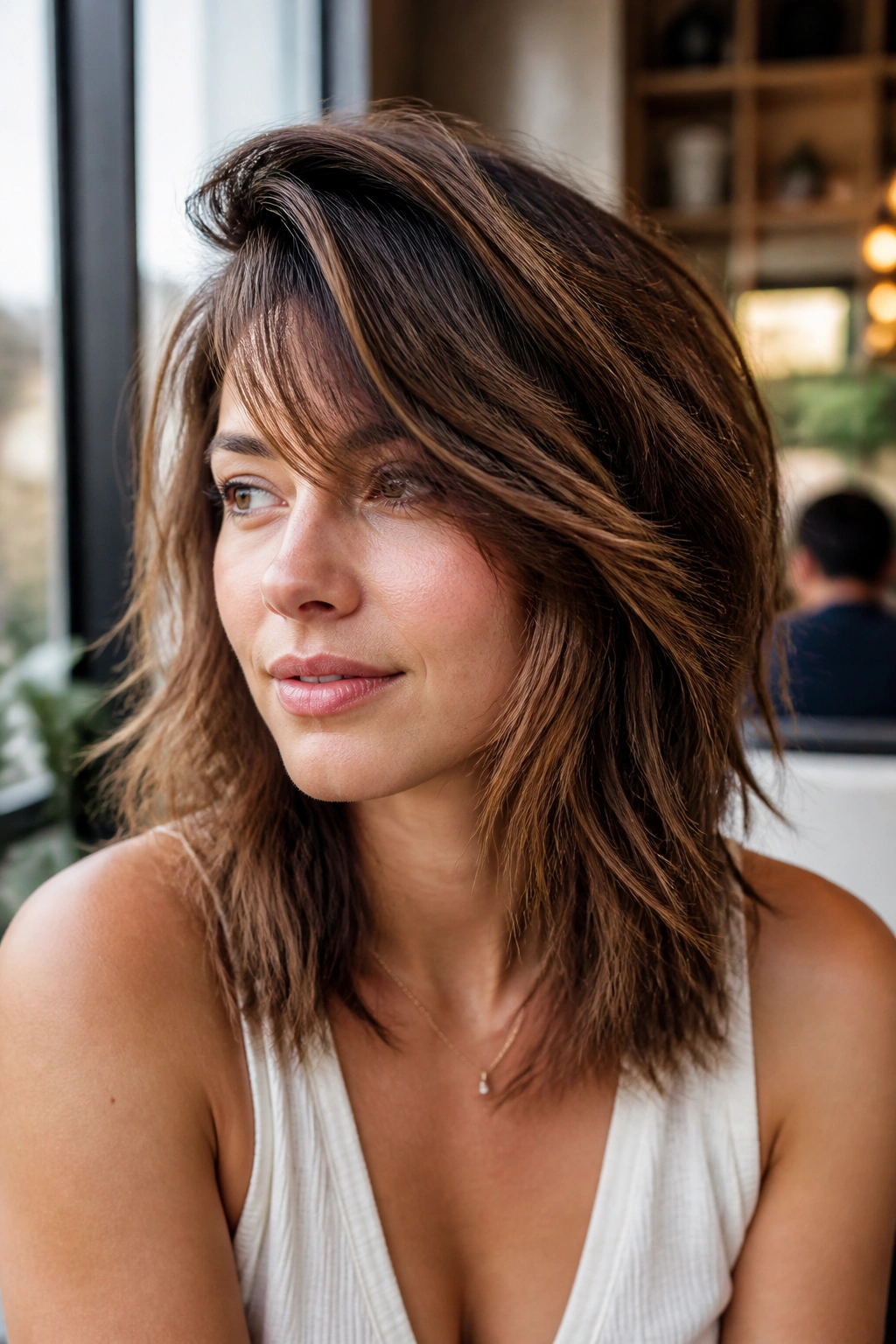
A side part gives fine hair a natural boost because it creates a heavier side and a lighter side. That imbalance can be flattering when the shag is cut to match it.
Unlike a center part, which exposes the middle in a neat line, a side part lets the front layers fall across the forehead and cheek. That helps hide sparseness near the hairline and makes the crown look a little taller. I’d especially recommend it for anyone with a cowlick that refuses to sit down in the center.
The best approach is to part the hair about an inch off center, then let the shorter front pieces fall in that direction. A quick root lift at the heavier side helps too. And if you want to tuck one side behind the ear, fine—do it. The cut should hold up after that little bit of disorder.
This style has enough softness to feel bohemian, but it still looks put together when you need it to.
19. Bohemian Shag Haircuts for Fine Hair with Waves and Diffused Texture
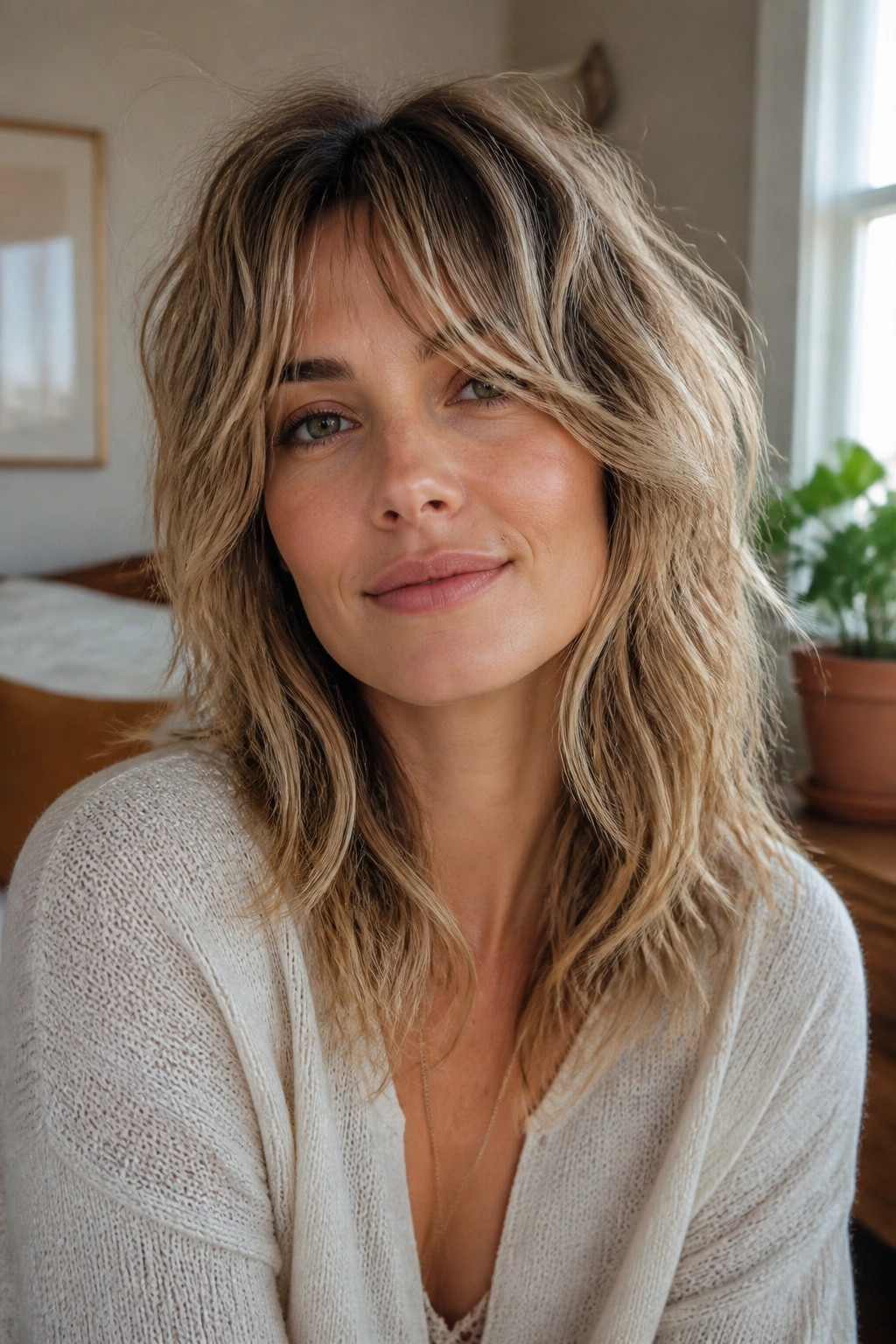
If your fine hair has even a little wave, the shag starts doing half the work for you. That wave breaks up the layers in a way that adds motion without making the hair look overstyled.
How to Work With Natural Wave
A diffuser is your friend here, but only if you use it gently. High heat and high speed can scatter fine strands and make them frizzy before they set. Medium heat, low speed, and a little patience usually do the job better.
- Scrunch in a lightweight mousse on damp hair.
- Diffuse until the roots are about 80% dry.
- Stop before the ends get puffy.
- Finger-separate the front pieces only after the hair cools.
I like this cut because it rewards hair that already wants to move. You are not forcing texture into place; you’re coaxing it. That usually looks better, and it takes less time.
20. Bohemian Shag Haircuts for Fine Hair That Grow Out Gracefully

A grow-out friendly shag is the one you’ll appreciate three months later, not just on day one. That matters more than a dramatic first haircut.
The best versions keep the perimeter soft, the front pieces long enough to blend, and the layers spaced far enough apart that they don’t turn into a messy halo as they lengthen. Fine hair can lose shape fast if the layers are too short, so the grow-out plan should be part of the cut from the start. I would rather have a haircut that looks good at six weeks and still works at twelve than one that looks perfect for two days and then falls apart.
This version is for people who don’t want constant salon visits. It also suits anyone who likes to tuck hair back, wear it half-up, or let it air-dry and go. Ask your stylist to show you where the shortest layer will fall once the hair settles dry. That one detail saves a lot of regret.
Final Thoughts
The best shag for fine hair is rarely the most shredded one in the room. It’s the one that keeps enough weight to look full, enough layering to move, and enough softness to feel bohemian instead of overworked.
If you’re taking photos to a stylist, bring at least one shot of the front, one of the side, and one of the back. The back matters more than people think, especially with fine hair. A cut can look dreamy from the front and flat from behind. That’s an expensive surprise.
One last thing: ask where the shortest layer will sit when the hair is dry. Wet hair stretches, and that little difference can change everything. A clean, honest consultation beats a vague request every time, and it’s the easiest way to end up with a shag that still looks good after the first wash.
