



Round faces and long wispy shag haircuts for round faces get along better than most people expect—if the layers are placed with a little care. The wrong shag can puff out at the cheeks and make the face look wider. The right one does the opposite. It adds movement, pulls the eye downward, and keeps the whole cut soft instead of boxy.
That’s the trick with this shape. You do not want bulk sitting right at the widest part of the face. You want length, swing, and a few airy pieces that break up the curve around the cheeks and jaw. A good shag can do that without looking stiff or overworked.
I’ve always liked shag cuts for this reason: they look better when they are a little undone. The ends can be wispy, the bangs can be broken up, and the layers can feel lived-in instead of carved into perfect little shelves. That looseness matters on round faces, because blunt lines tend to stop the eye. Wispy texture keeps it moving.
1. Curtain-Bang Shag With Long Face-Framing Layers
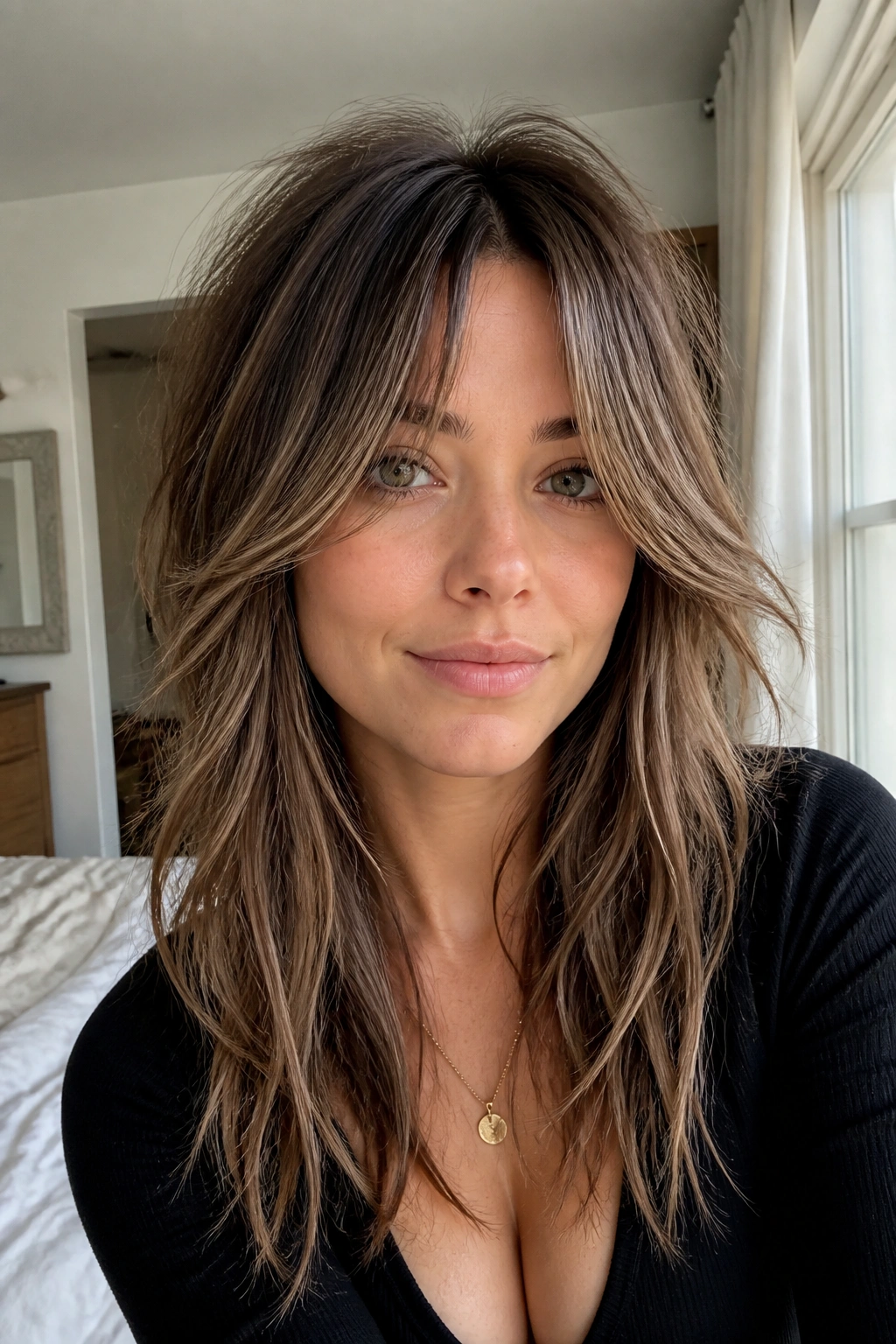
Curtain bangs are one of the easiest ways to make a shag flatter a round face. The split at the center opens the face up, while the longer side pieces skim past the cheeks instead of landing right on them. That detail matters more than people think. The goal is vertical movement, not width.
Why It Works
The bangs should start around the brow and drift into cheekbone-length layers. If they’re too short and too full, they can make the face feel shorter. Keep the middle soft, not blunt, and let the longest pieces fall past the jaw.
A good version of this cut feels breezy, not heavy. The crown has lift, the sides taper, and the ends are feathered enough to move when you turn your head.
- Ask for long curtain bangs that blend into the front layers.
- Keep the shortest face-framing pieces at or just below the cheekbone.
- Add texture through the mids and ends, not the roots only.
- Style with a round brush or a large Velcro roller for a soft bend.
Best for: anyone who wants a shag that still feels polished at work and loose on weekends.
2. Feathered Collarbone Shag
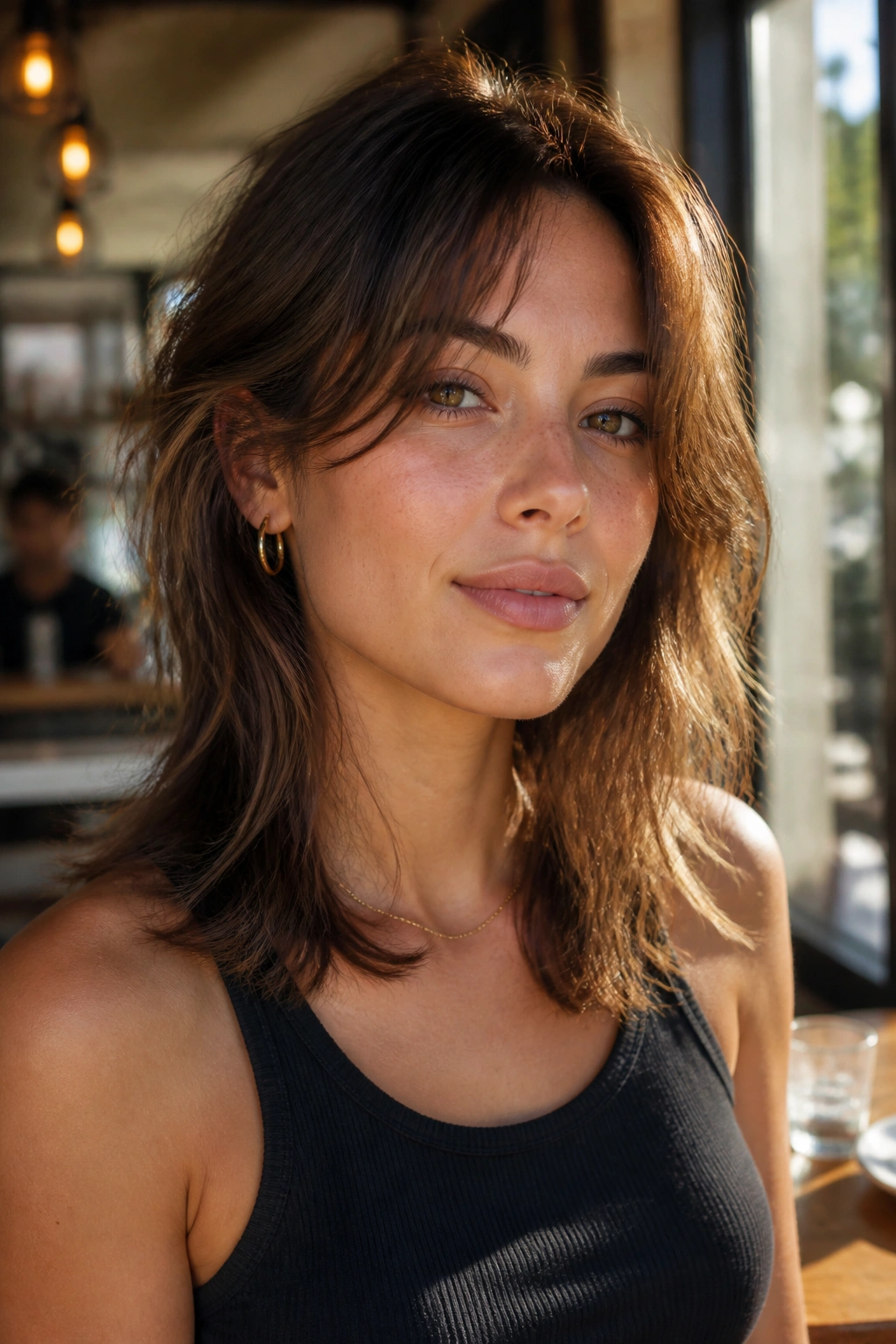
This one is a little sleeker than the classic shag, and that’s why it works so well on fuller cheeks. The collarbone is a smart stopping point because it gives the face a long line to follow. That length pulls the eye down.
Feathered ends keep the cut from feeling heavy. If the perimeter is too blunt, the whole shape can look thick at the bottom. A wispy finish avoids that, especially on straight or slightly wavy hair.
I like this version for people who want movement but not chaos. It still has shag energy, just less mess. The layers sit in a softer pattern, and the front pieces can be tucked behind the ears without losing shape.
No need to over-layer the back. Too many short layers in the crown can make the head look rounder, which is the one thing we’re trying to dodge.
3. Razor-Cut Shag With Side-Swept Fringe
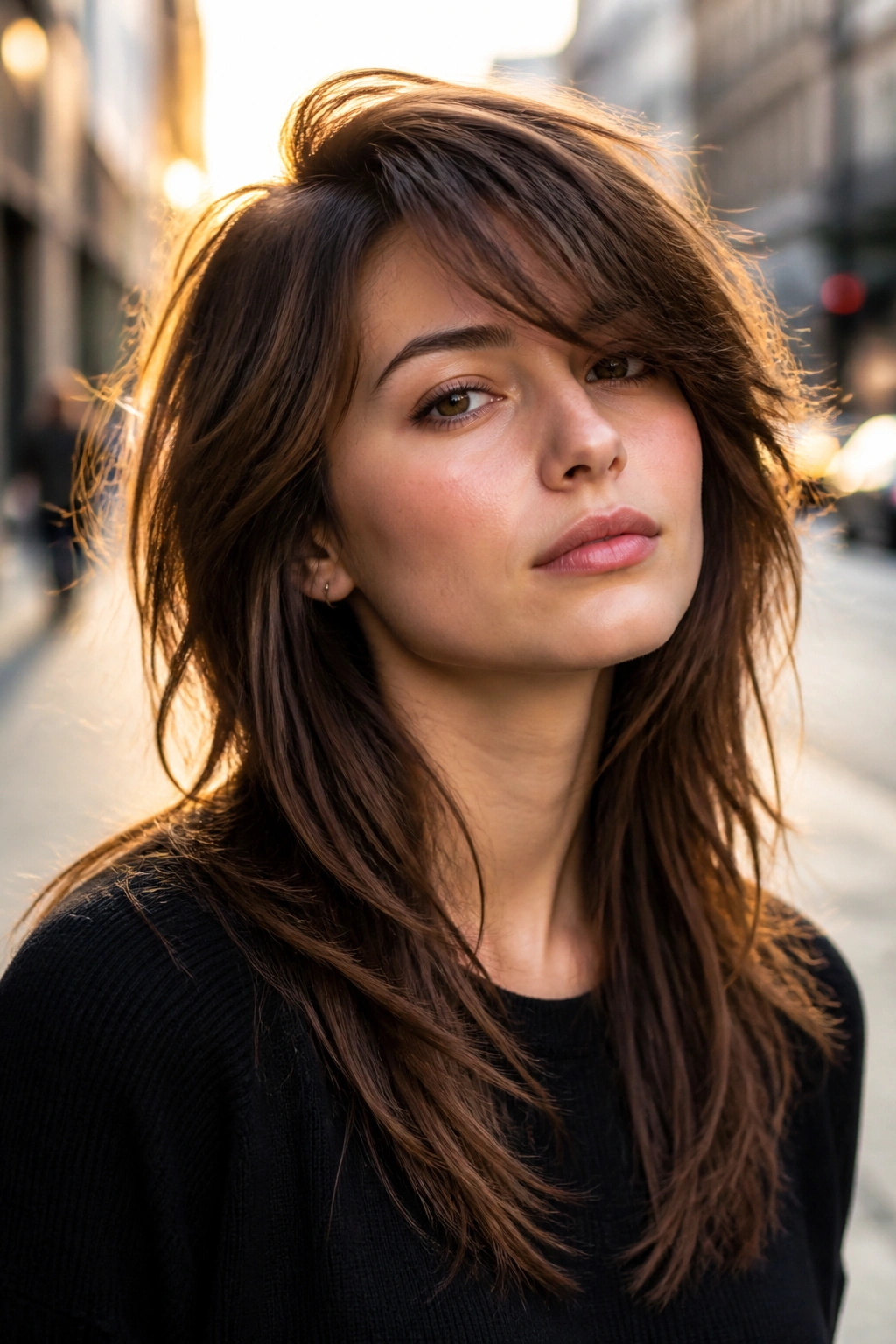
Can a side part help a round face? Yes, and this cut proves it. A deep side-swept fringe breaks up symmetry, and symmetry is what can sometimes make a round face look even rounder. The diagonal line is doing a lot of work here.
The Shape to Ask For
Keep the fringe soft and movable. You want it to sweep across the forehead, not sit in one solid block. Razor-cut ends are useful because they leave the hair looking airy instead of chopped off.
How It Shows Up in Real Life
This is the shag I’d point to for someone who wants a little edge without going full rocker. The side-swept front gives you coverage where you want it, and the longer layers keep the silhouette slim around the cheeks. It also grows out well, which is a practical bonus.
- Part the hair slightly off-center.
- Blow-dry the fringe in the direction you want it to fall.
- Use a light styling cream, not a heavy paste.
- Keep the ends piecey, not chunky.
A cut like this looks best when it is allowed to move. Flat-ironed to death, it loses the point.
4. Subtle Wolf-Style Shag

People sometimes hear “wolf cut” and picture something wild and exaggerated. This version is calmer. It borrows the crown volume and long, wispy ends, then keeps the layers softer so the face does not get swallowed by texture.
A round face can handle that kind of lift, especially when the shortest layers sit high on the head and the longest ones fall below the chin. The contrast creates shape. That contrast is the whole game.
This cut works well if your hair has a little natural wave. The top can be airy and slightly full, while the lower layers stay thin enough to keep the outline from ballooning out. On very dense hair, a stylist may need to remove bulk through the interior so the layers do not sit like a helmet.
It’s a fun cut, but it does need restraint. Too much choppiness around the cheeks starts to fight the face shape.
5. Deep Side-Part Shag With Long Bangs
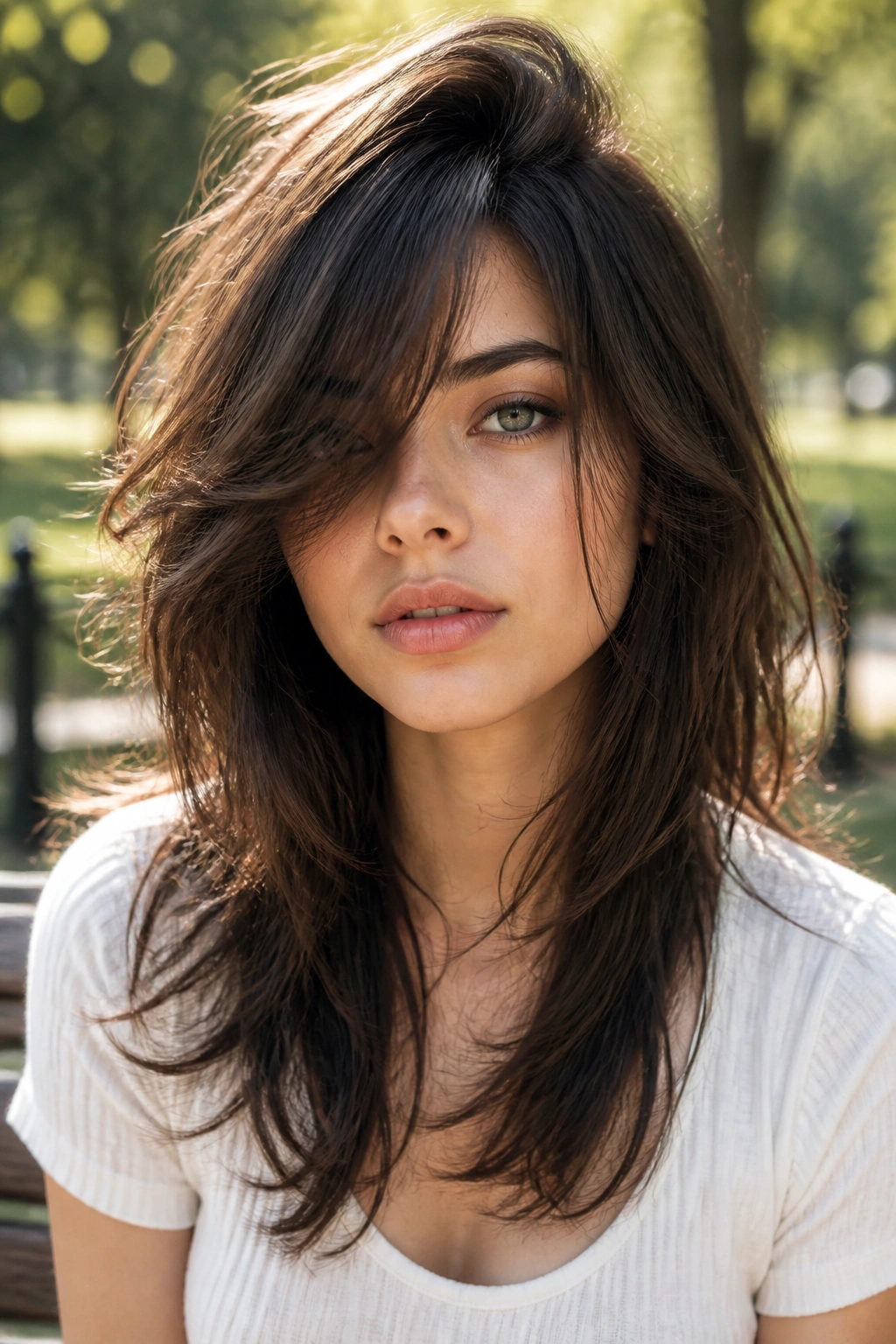
A deep side part changes the whole feel of a shag. It gives one side more height and lets the front fall in a slanted line, which is useful for round faces because it breaks the circular outline in a subtle way. No blunt center block. No heaviness.
This one is especially good if you like hair that looks a little romantic and a little undone. The long bangs can graze the cheekbones, then melt into layered lengths around the collarbone. The shape is soft, but not vague.
The best part? It can be styled fast. A rough blow-dry, a bend from a curling iron, and a quick finger comb are usually enough. You do not need every strand to behave.
Best Styling Notes
- Use a side part that sits about 1 to 1½ inches off center.
- Curl only the front pieces away from the face.
- Leave the ends straighter if you want a less fussy finish.
- Add dry texture spray at the roots for lift.
This is one of those cuts that looks more expensive when it is a little imperfect.
6. Face-Framing Shag That Starts Below the Cheekbones
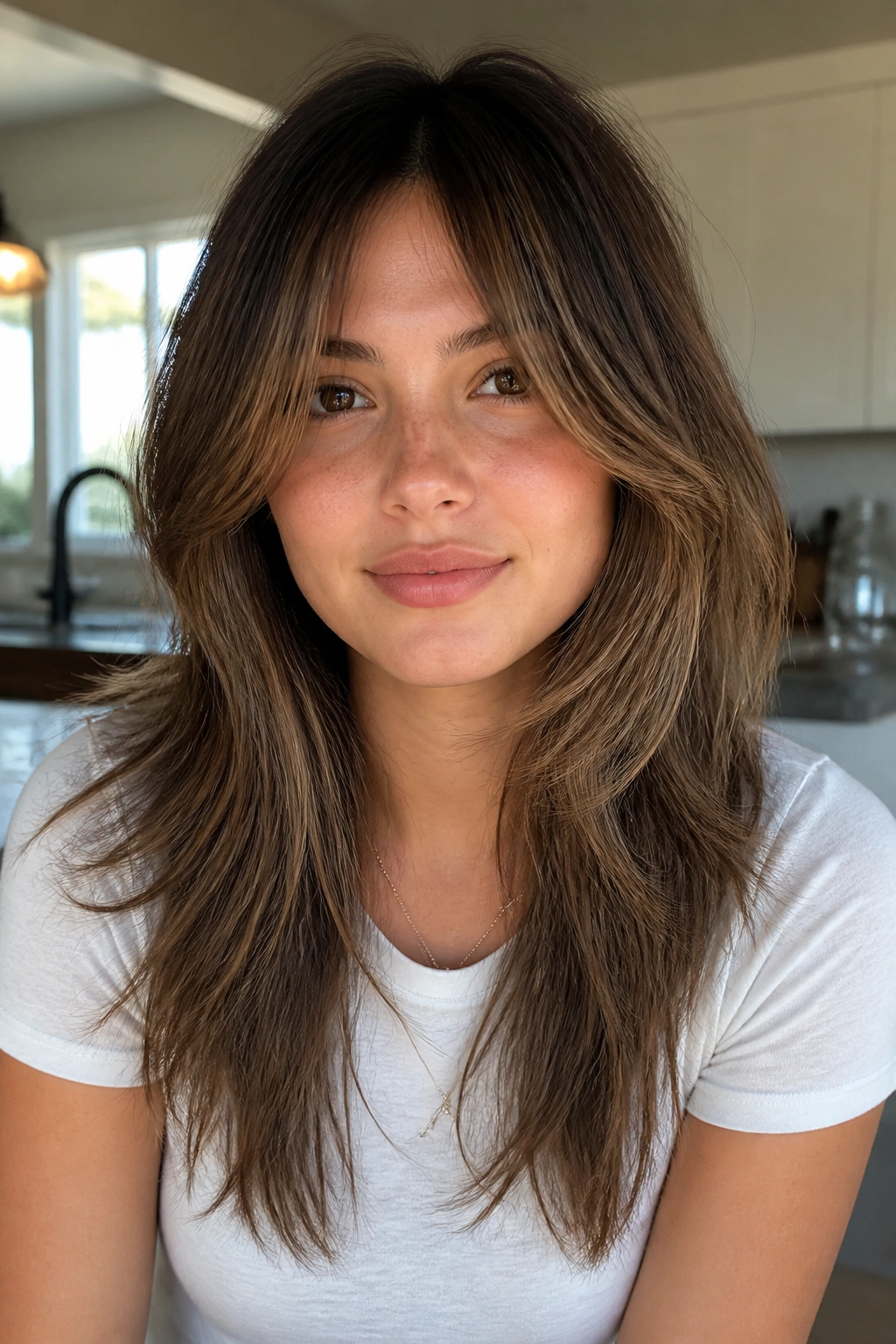
This is the safest shag for someone nervous about width. The front layers start lower, below the cheekbones, so they do not add extra volume at the fullest part of the face. That makes the face read a little longer and leaner without looking severe.
The cut is still layered, but the action happens lower down. The upper section stays controlled, then the texture opens up through the mid-lengths and ends. That keeps the top from puffing out in a way that can fight a round face.
I like this version for thick hair that tends to flare outward. You can thin the interior just enough to let the lengths hang instead of poof. On finer hair, the same shape gives movement without making the ends look stringy.
It’s quiet. Which is nice. Not every shag needs to shout.
7. Airy Shag With Bottleneck Bangs
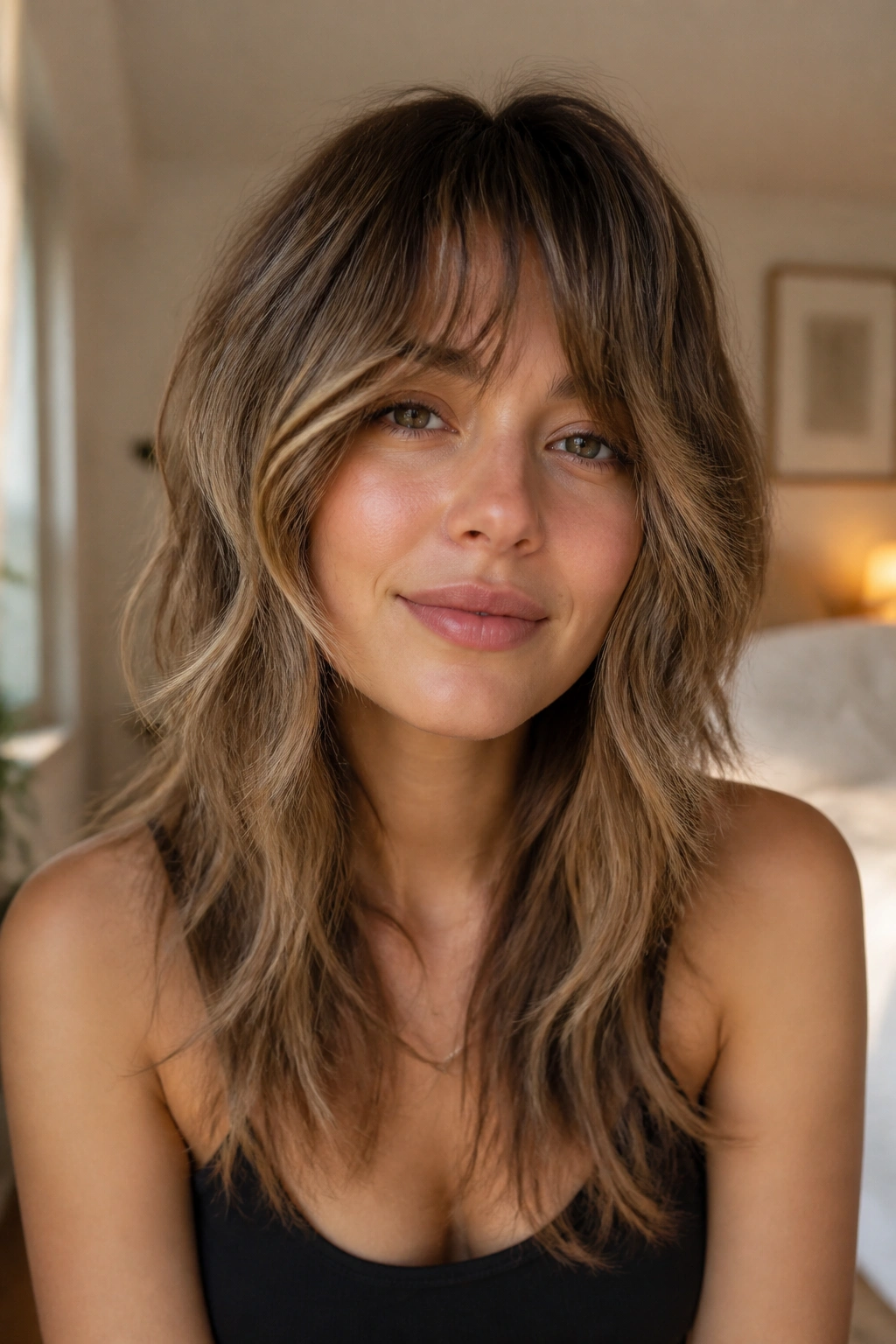
Bottleneck bangs are a smart middle ground between full fringe and curtain bangs. They start a little narrower at the center, then widen toward the temples before blending into the sides. That soft shape helps a round face because it avoids a hard horizontal line across the forehead.
The rest of the shag should stay light and feathery. You want enough texture to keep the ends from looking blunt, but not so much choppiness that the cut turns frizzy. On wavy hair, this shape can look almost effortless after air-drying with a bit of cream.
The bangs do a lot of the visual work here. They frame the upper face without closing it in, and the longer outer edges help stretch the face gently toward the jaw.
One warning: keep the center of the fringe soft. If it becomes too dense, it can shorten the face in a hurry.
8. Layered Shag With Tapered Ends
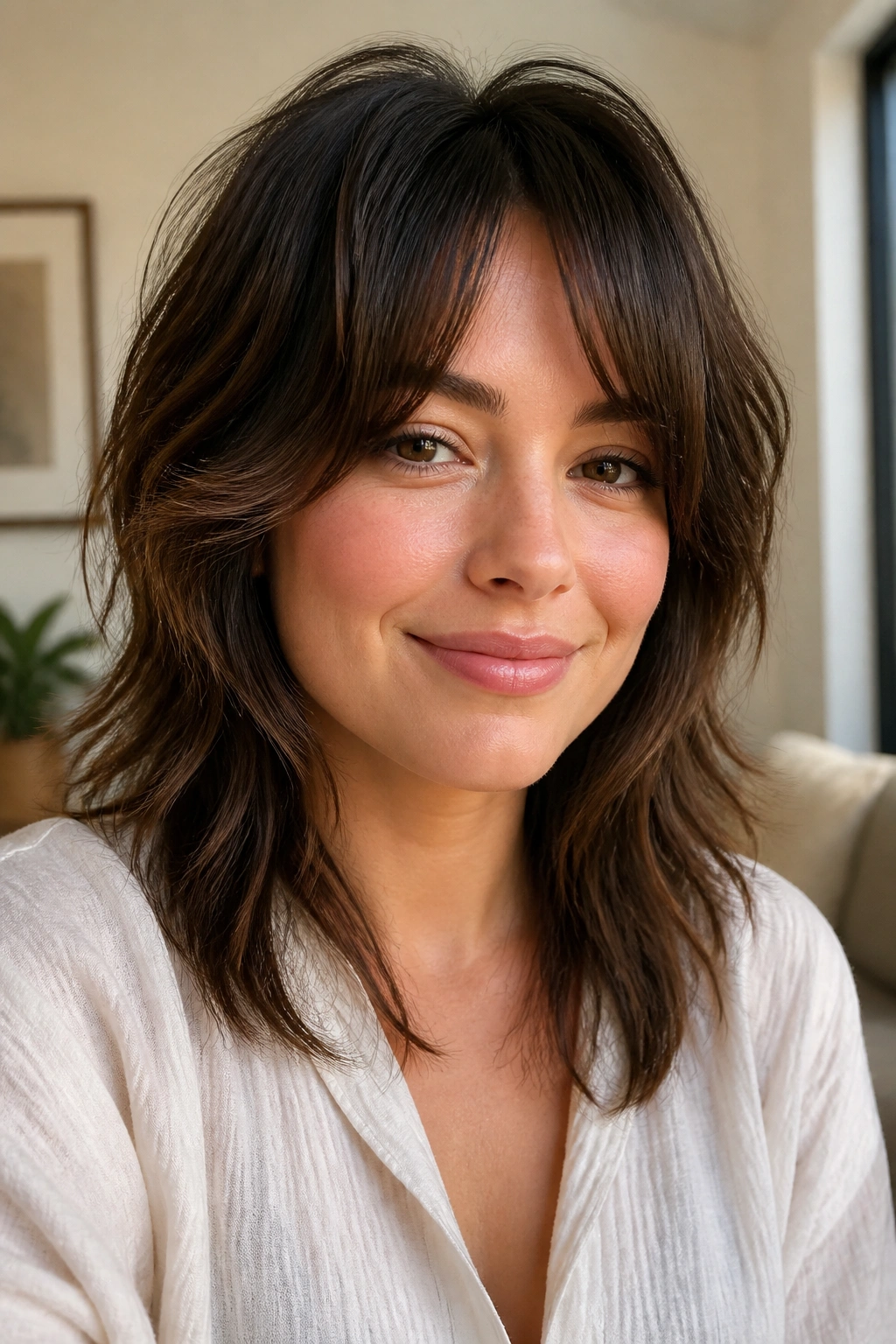
Some shag cuts look best when the ends are a little thinner than you expect. This is one of them. Tapered ends keep the bottom from feeling heavy, which matters on round faces because a chunky edge can make the face appear wider than it is.
The layers should build gradually from the cheekbone down. Nothing should jump out too sharply. That slow taper keeps the haircut graceful, which sounds fussy but actually translates into easy movement and less daily styling.
Here’s the real appeal: it works on straight hair that needs shape and on wavy hair that needs control. The cut gives structure either way. If your hair tends to sit flat at the roots and bulky at the ends, this shape corrects both problems at once.
A little smoothing serum on the bottom third goes a long way. Not the roots. Just the ends.
9. Soft Disco Shag
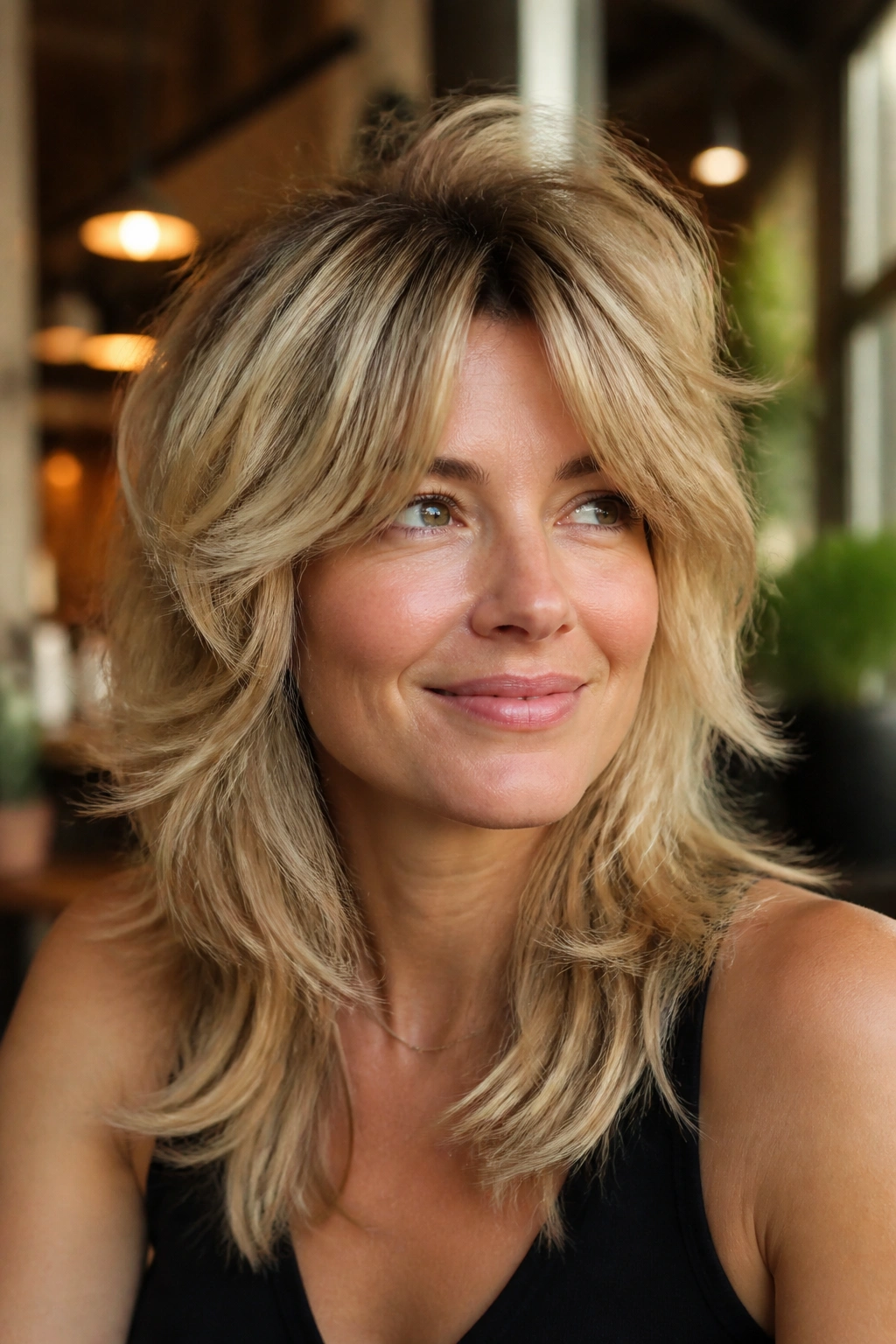
This cut has a bit of 1970s flavor, but I’d call it wearable first and retro second. The crown gets lift, the layers are feathered, and the whole thing has that loose, airy swing that makes round faces look longer. Volume up top, softness at the sides.
What separates it from a generic layered cut is the movement. The pieces around the face are not supposed to sit still. They should curve away, bend slightly, and fall in a way that keeps the outline from getting too circular.
If you like a haircut that looks better after a few hours of being worn, this is a strong pick. It does not need perfection. It likes a little bend, a little lift, maybe even a few flyaways. That messiness is part of the charm.
A diffuser can help if your hair is wavy. A big curling iron can help if it is straight. Either way, the trick is to leave the ends touchable.
10. Long Shag With Invisible Layers
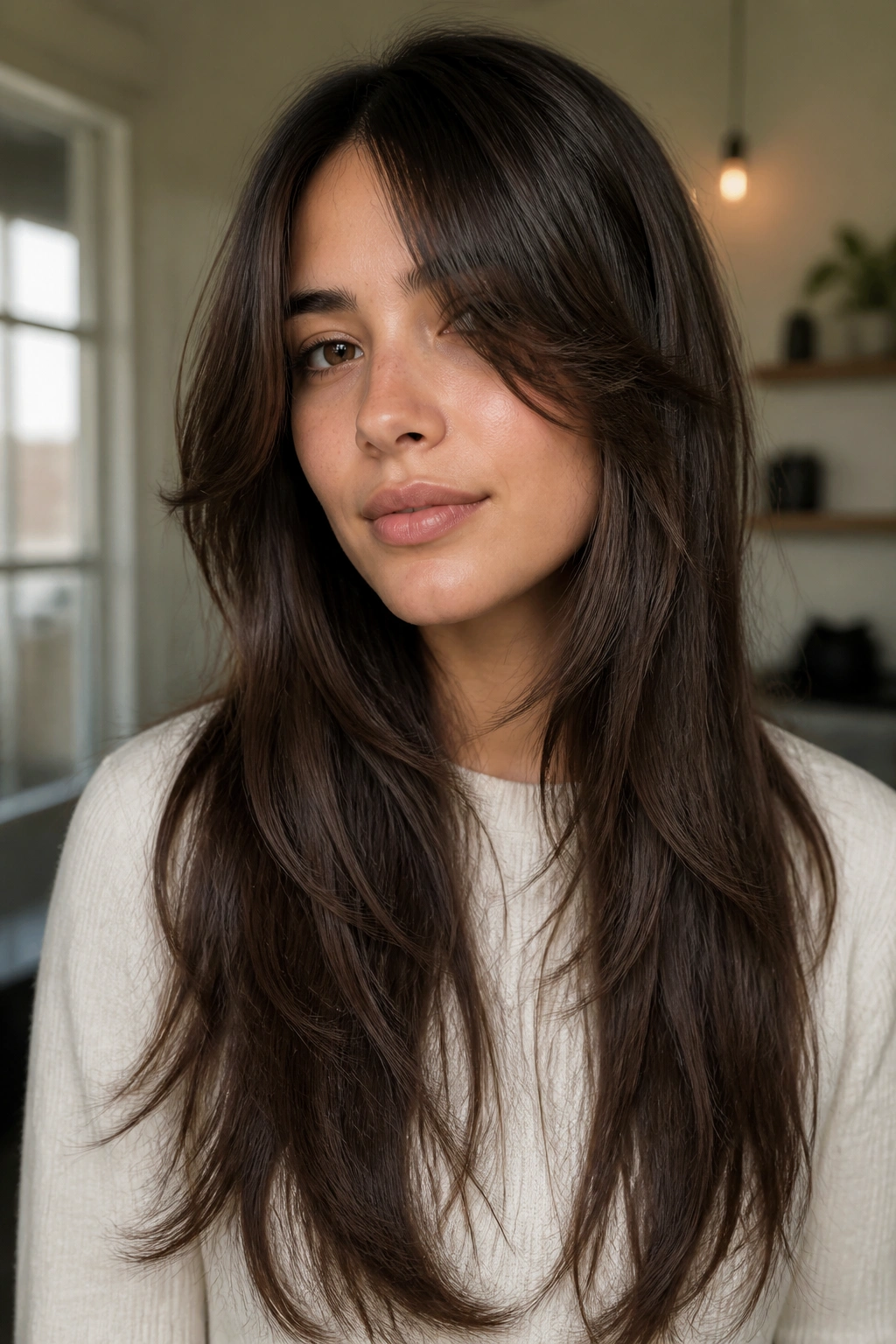
Invisible layers are sneaky in the best way. You get movement and shape without a visibly chopped-up surface, so the haircut feels long and light at the same time. For round faces, that’s a nice balance because you keep the length while avoiding a heavy curtain around the cheeks.
This style is good when you want the shag effect but do not want the haircut to announce itself from across the room. The texture lives inside the shape. The top moves. The ends sway. But the outside line stays clean enough to look grown-up.
What Makes It Different
- The layers are cut inside the shape, not just on top.
- The perimeter stays long and smooth.
- The movement shows most when the hair swings or is tucked behind one ear.
- It grows out with less obvious jumpiness than a choppier shag.
That last part is underrated. If you hate obvious grow-out lines, invisible layers are worth asking for.
11. Choppy Shag With Piecey Fringe
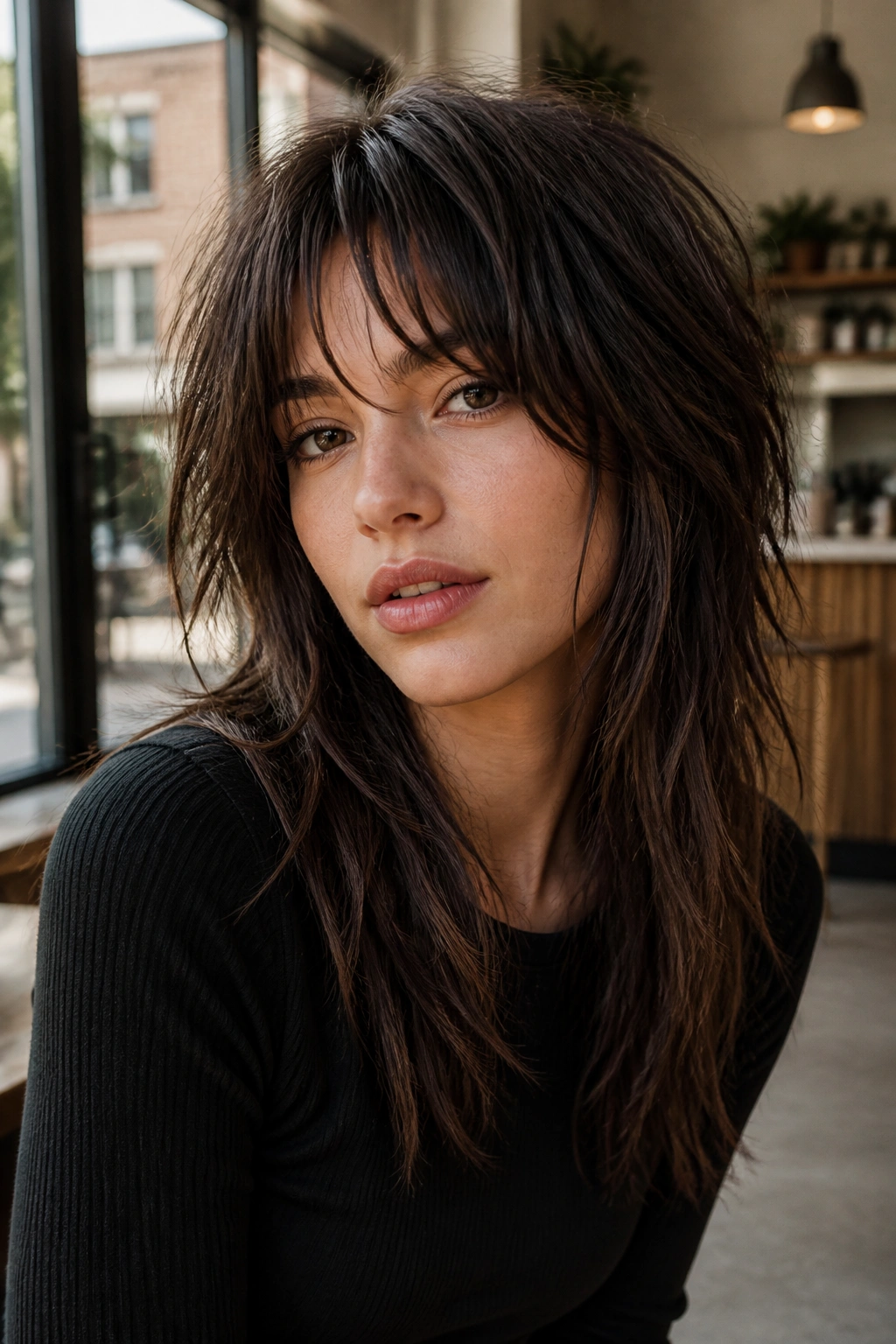
Here’s the more graphic option. Piecey fringe creates little vertical breaks across the forehead, which helps interrupt a round face’s softer curve. The trick is keeping those pieces thin enough that they do not turn into a solid curtain.
The rest of the cut should mirror that energy. Shorter layers can sit near the crown, with longer ones pulled down through the sides and ends. The result is a cut that feels alive even when you do not style it much.
This is not the one I’d choose if your hair is already frizz-prone and thick. It can get too wild. But on medium-density hair, it gives a cool, lived-in shape that looks intentional without feeling fussy.
A bit of wax between the fingers can separate the fringe. Use a tiny amount. A pea-sized dab is enough.
12. Beachy Shag With S-Curve Waves
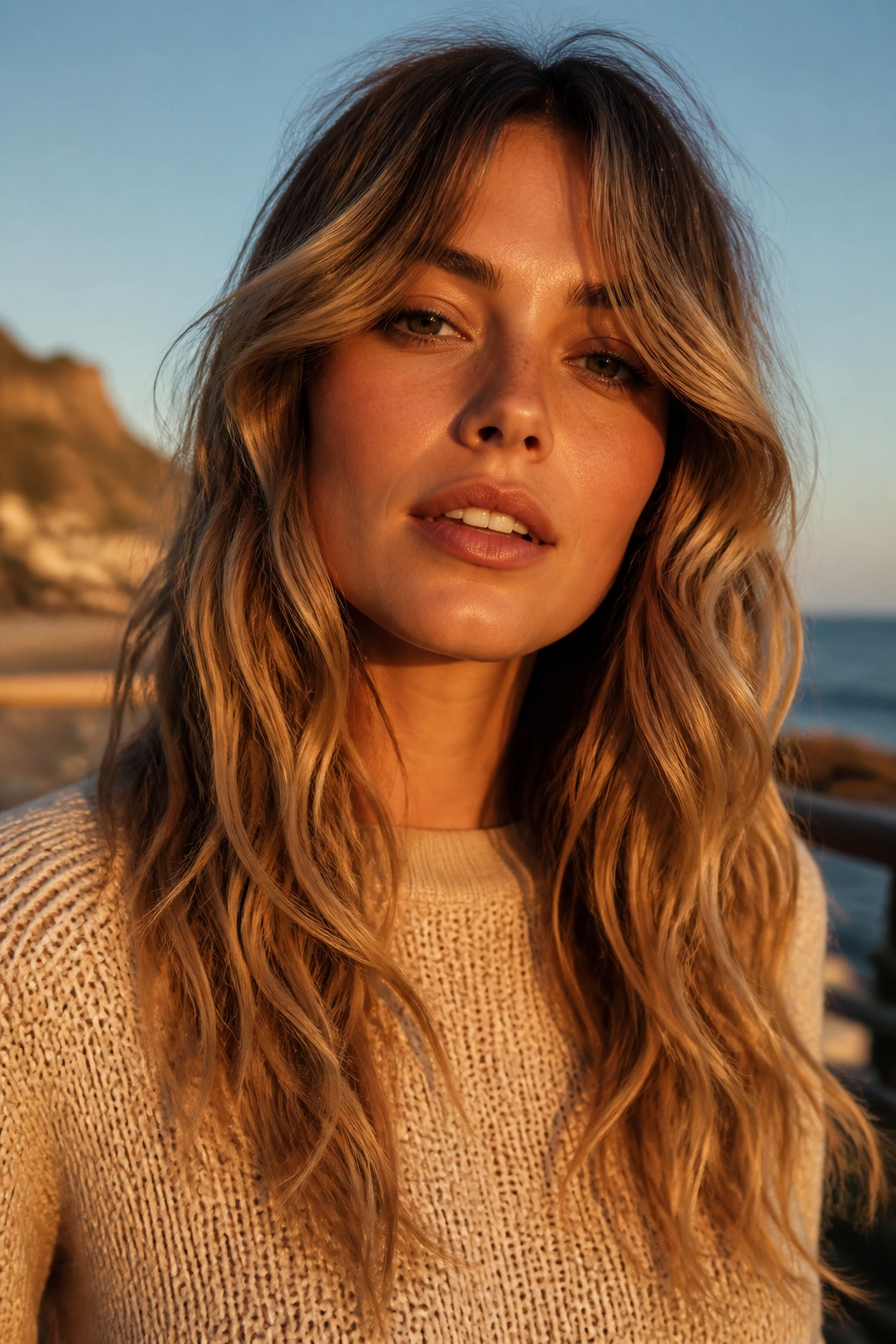
A beachy shag sounds casual, and it should. The hair falls into loose S-curves rather than polished curls, which keeps the face soft while still elongating it. Round faces often benefit from that kind of vertical wave pattern because it creates movement down the length of the hair instead of out to the sides.
The longer the ends, the better this cut tends to read. Shoulder-grazing or longer lengths help the waves drape in a flattering way. If the layers are too short, the shape can puff. If they’re too long and heavy, the wave disappears. That middle ground is the sweet spot.
I’d call this one a weekend haircut. It can look clean and refined, but it really shines when the wave pattern is a little uneven and natural.
Use a 1 to 1¼-inch curling iron, leave the last inch straight, and brush the curls out once they cool. That’s the move.
13. Shoulder-Skimming Shag That Stretches the Jawline
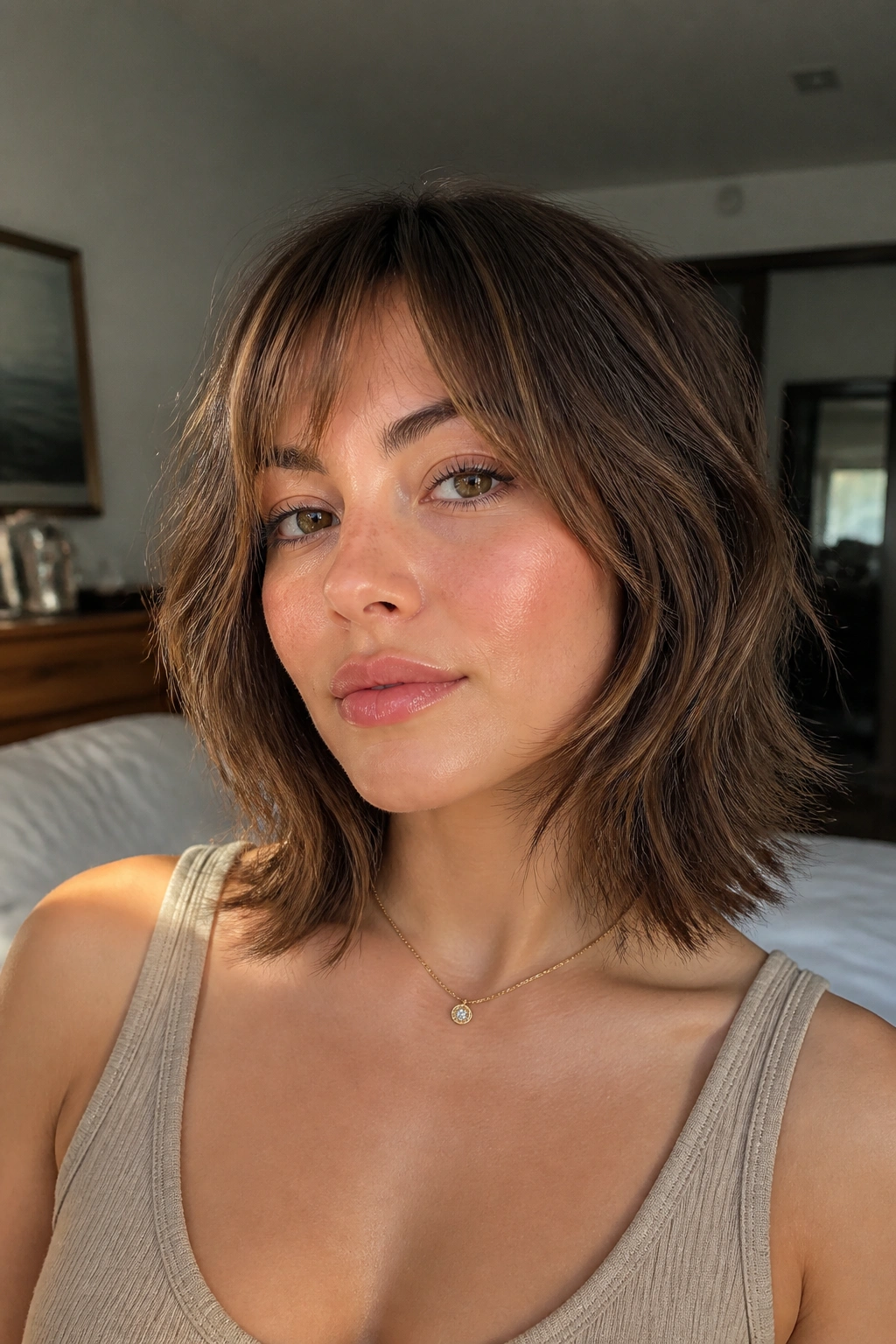
Not every long shag needs to be long past the chest. Shoulder-skimming versions can work too, especially if the lowest layers hit right around the jaw and curve past it. That little bit of length near the chin helps lengthen the lower face, which round faces usually appreciate.
The cut should be feathered enough to avoid a blocky edge. If the line is too clean, it can sit on the face like a shelf. A wispy bottom edge keeps the shape softer and more flattering.
This is a good choice if you want the shag look without the maintenance of a long mane. It still has movement. It still has shape. You just do not have to deal with as much drying time.
A middle part can work here, but a slight off-center part often gives the cut more lift.
14. Long Shag With Heavy Crown Volume
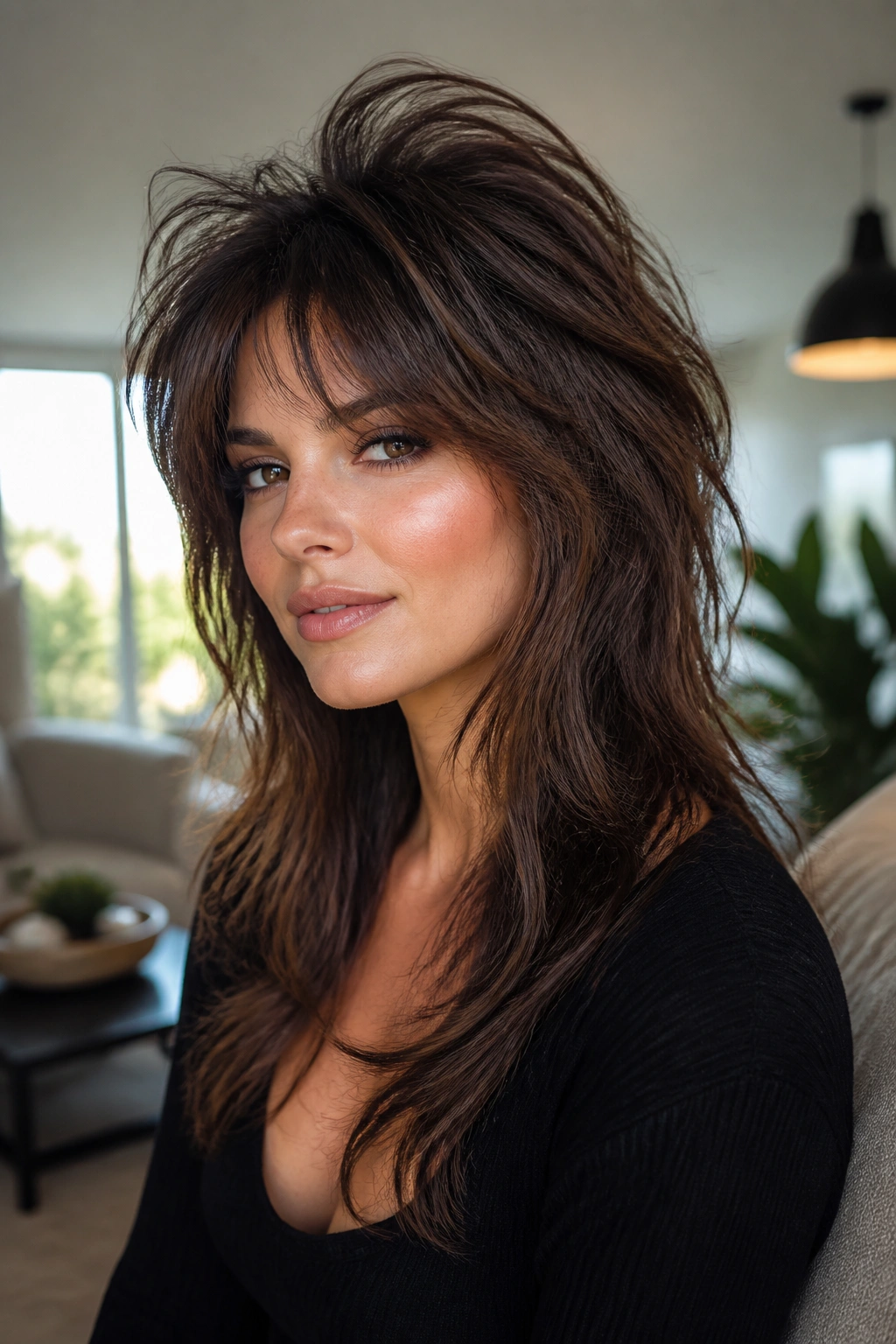
This one is all about height. The crown has more body, the upper layers are shorter, and the lengths fall away from the head so the face feels a touch longer. That can be a nice fix for round faces, especially if the hair tends to lie flat on top and full at the sides.
Crown lift changes the silhouette fast. It creates a vertical line at the top of the head, which helps balance the softness in the cheeks. The rest of the haircut should stay airy, or the volume can start to feel too top-heavy.
This style works best when you can rough-dry the roots with a little mousse or spray. The finish does not need to be glossy. It needs shape. And a bit of grit helps hold that shape in place.
If your hair is very fine, use smaller sections at the crown when blow-drying. That gives a more natural lift than blasting the whole top at once.
15. Minimalist Shag for Fine Hair
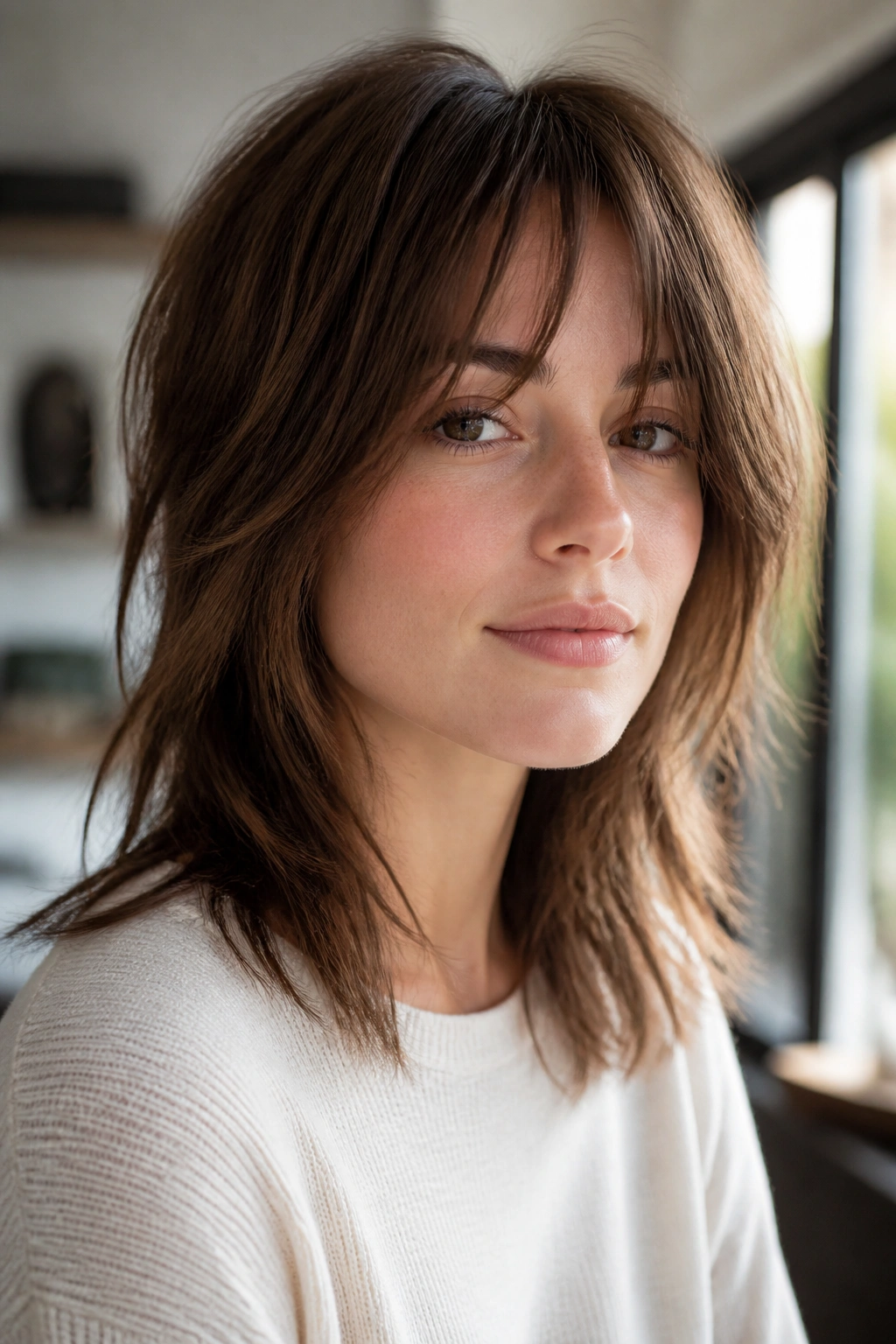
Fine hair can absolutely do a shag, but it needs a gentler hand. Too many layers will make it look thin at the ends, which is the opposite of what you want. A minimalist shag keeps the layering light and strategic, so the hair still looks full and soft.
The front pieces should frame the face without taking too much density away from the perimeter. A few wispy layers around the cheekbones, a touch of movement through the mids, and a slightly textured bottom line are usually enough.
A Small but Useful Rule
Do not let the layers start too high if the hair is sparse. That tends to expose the scalp and makes the shape look tired. Keep the shortest pieces lower and let the body stay where it naturally lives.
This cut feels delicate in the best sense. It moves, but it does not collapse. And on a round face, that controlled softness can look far better than heavy volume ever does.
16. Shag With Long Curtain Bangs and Loose Ends
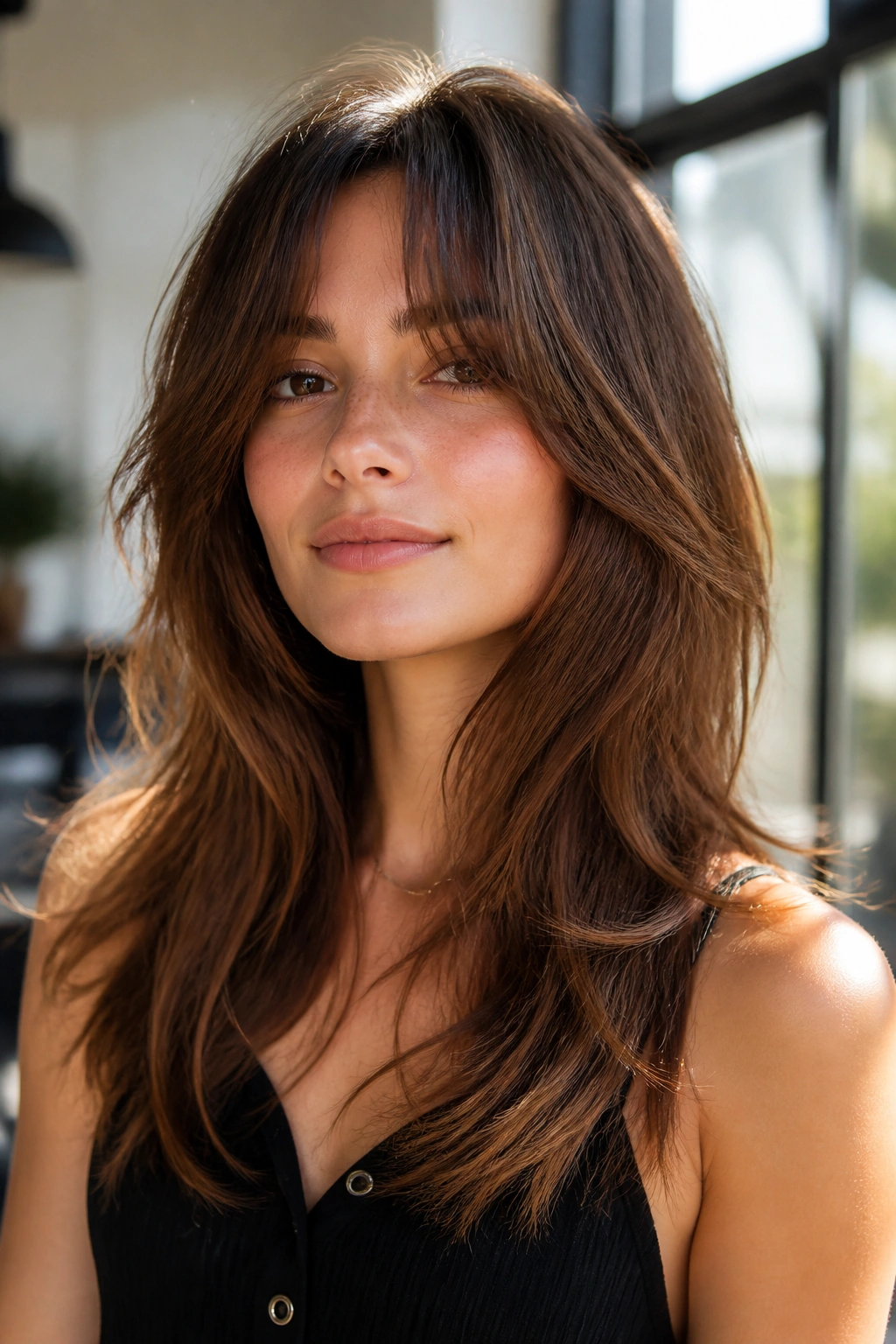
This version is almost the classic answer for round faces. The long curtain bangs open the forehead, the loose ends keep the cut from getting bulky, and the overall shape stays long enough to stretch the face rather than widen it. It’s simple. Which is why it works.
The key is the blend. The bangs should not sit like a separate part of the haircut. They need to feed into the side layers so the whole shape feels connected. When that happens, the eye moves down the face in one smooth line instead of stopping at the cheeks.
I also like this cut because it behaves well on second-day hair. A little dry shampoo at the roots, a quick bend through the front pieces, and you’re done. It doesn’t need a lot of fuss.
If you want a low-drama shag, start here. It’s the one I recommend most often.
17. Textured Shag With Rounded Perimeter
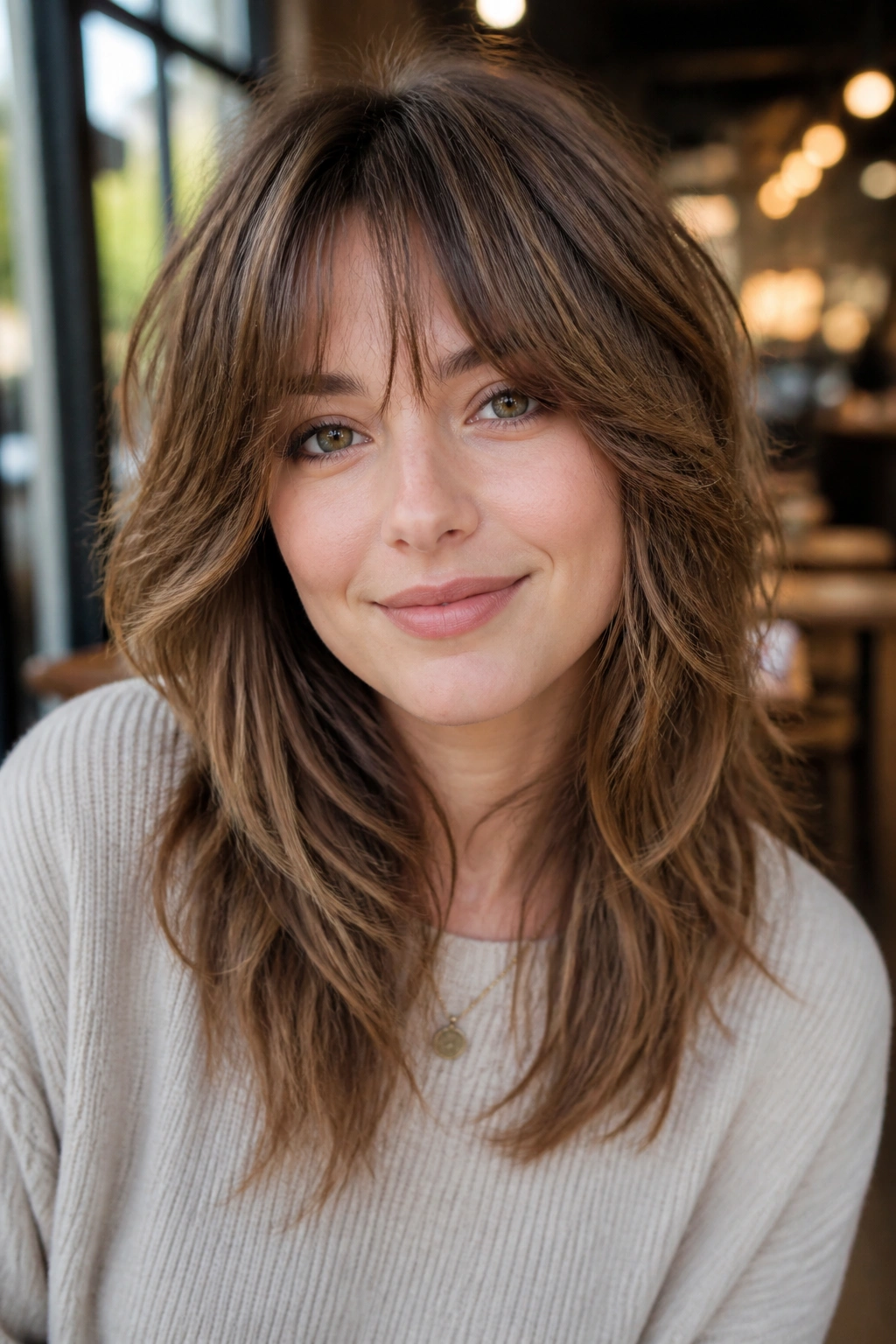
A rounded perimeter sounds counterintuitive for a round face, but this cut is about balance, not echoing the same shape. The outline stays softly curved while the layers inside add vertical movement and texture. That keeps the haircut from looking harsh or over-chopped.
The trick is to make the outer line airy. Not blunt. Not heavy. Just softly rounded enough that it falls naturally, while the internal layers keep it from puffing out. If the texture is concentrated in the mids and ends, the face still reads longer.
This cut is especially nice for medium-thick hair that can hold shape but sometimes feels bulky. The round perimeter stops it from looking too edgy. The texture keeps it from feeling plain.
It’s a good example of a haircut that seems simple in a mirror but does a lot of work in motion.
18. Asymmetric Shag With Off-Center Part
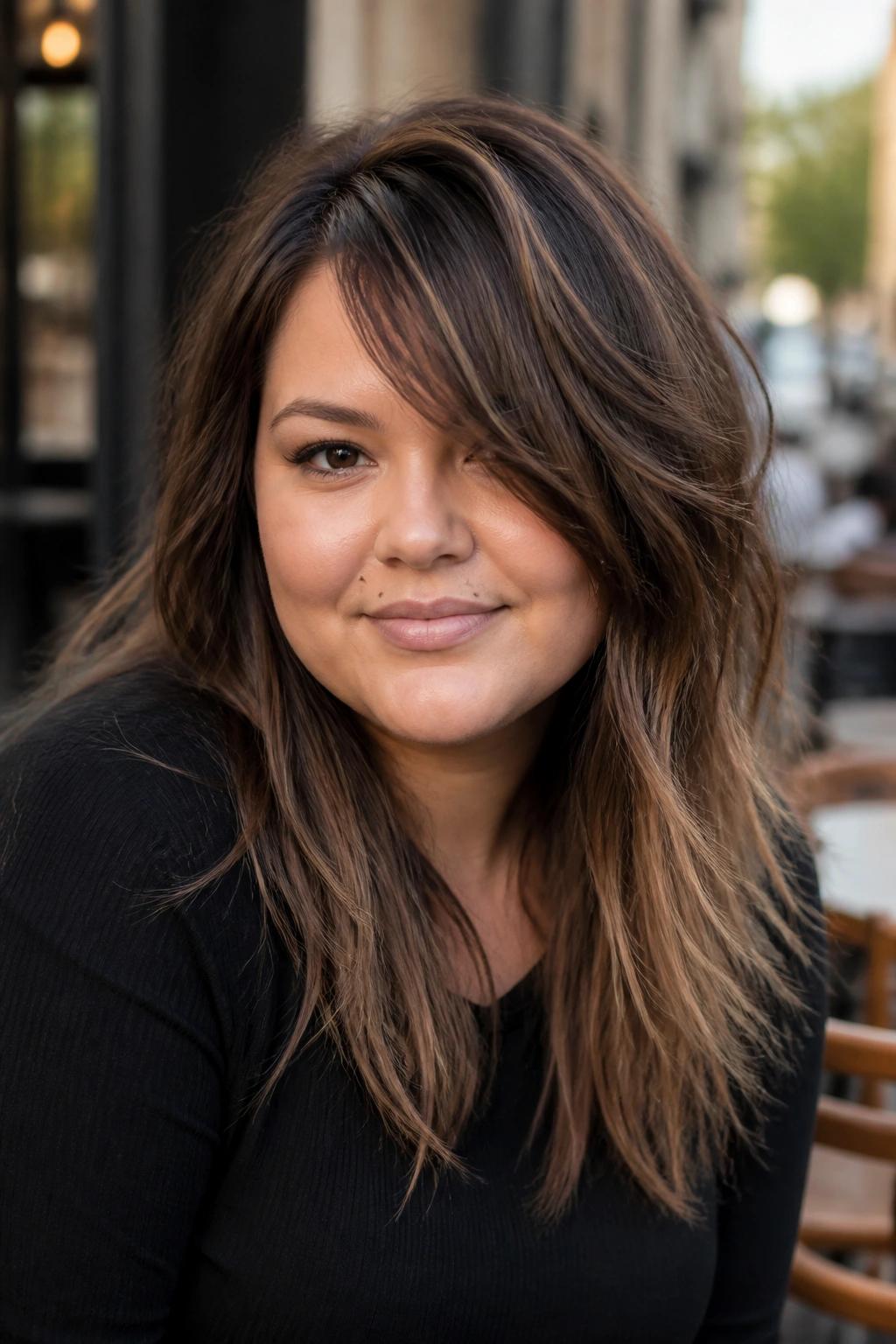
Need a little asymmetry? This is your cut. An off-center part and uneven front lengths create diagonal lines across the face, and diagonal lines are gold on round shapes because they interrupt the natural curve. It’s subtle, but it changes the whole feel.
The shorter side should not be dramatically shorter. A gentle difference is enough. Let one side skim the cheek, let the other fall longer and looser, and keep the rest of the shag soft and blended.
How to Wear It
- Start the part just off the center of your crown.
- Blow-dry the heavier side first so it keeps its direction.
- Keep the shortest face-framing piece at least to cheekbone level.
- Use a light spray wax if the shorter side wants to separate too much.
This cut has personality. It also has enough softness that it does not look severe, which is handy if you want a little edge without a full style rewrite.
19. Layered Shag With Wispy Micro-Texturing
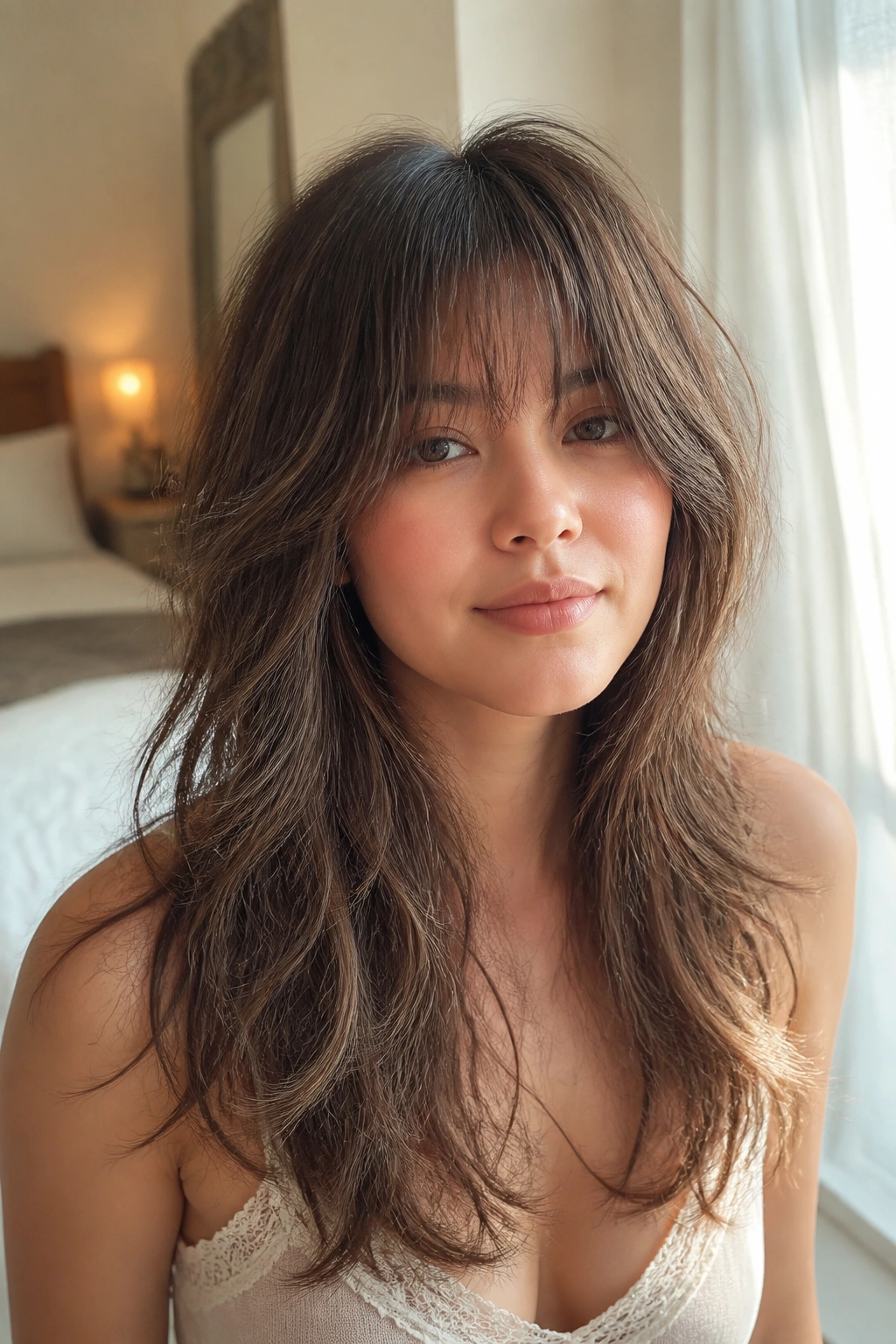
This one is for people who want movement without obvious layers. The micro-texturing is fine and almost invisible, which means the hair looks soft and airy instead of chopped up. On a round face, that can be a relief. No chunky pieces. No harsh steps.
The effect is subtle, but the shape still changes. The ends light up a little when the hair moves, and the front has enough break-up to keep the cheeks from feeling boxed in. It’s a quiet haircut, but not a boring one.
I’d especially point this out for people who wear their hair straight most days. Big shag layers can disappear when straightened. Fine texturing still shows up. You get the movement without having to curl everything.
A stylist has to be careful here. Too much texturizing turns into frizz or see-through ends fast. The goal is softness, not thinning for its own sake.
20. Soft Center-Part Shag With Long, Airy Ends
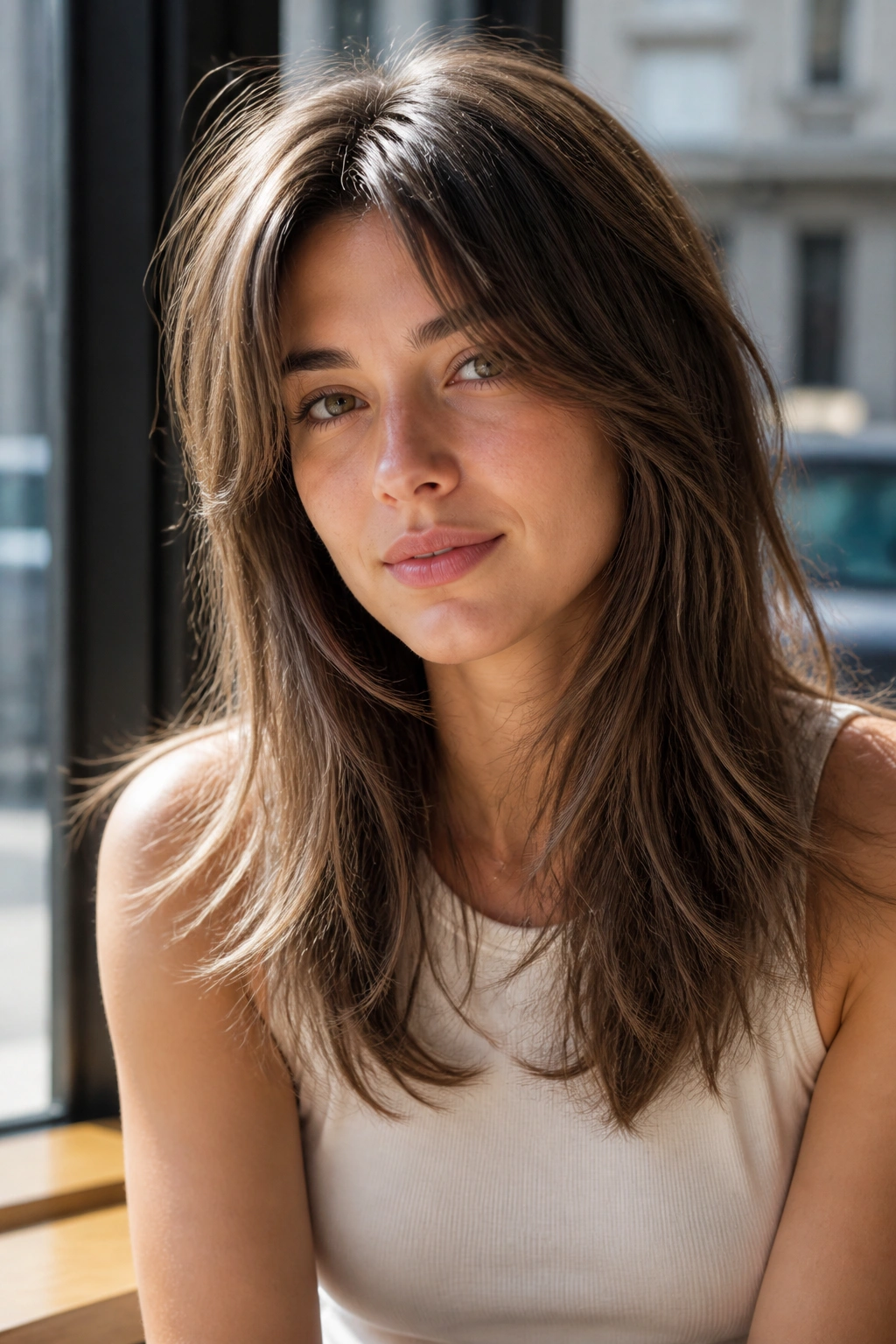
A center part can work on a round face when the rest of the cut is long enough and loose enough to offset it. This version keeps the part clean, then uses long airy ends and gentle face-framing layers to lengthen the shape. The result feels balanced, not severe.
The front pieces should open at the forehead and then drift past the cheeks without stopping there. That’s the key detail. If they land right at the widest point of the face, the whole cut can feel wider. If they fall lower, they guide the eye down and out.
This is the shag I’d choose for someone who likes calm hair. No dramatic flip, no loud fringe, no obvious chunking. Just movement, shape, and a little softness around the edges. It’s especially nice on naturally wavy hair, because the wave gives the layers life without much styling.
And if you only remember one thing from all these options, make it this: round faces look best in shags that create length, not width. That can mean curtain bangs, a side part, lower face-framing layers, or just a softer perimeter with air in the ends. The details change. The principle stays the same.
