



Shag haircuts for straight hair can look effortlessly cool, or they can look like someone took a pair of thinning shears to the wrong end of your head. The difference is shape. Straight hair shows every line, every angle, every bad layer, so the shag has to be cut with a little more care than people expect.
That’s why the good versions feel so satisfying. They keep a clean outline, then add bend and movement where the eye wants it most — around the cheekbones, the jaw, the crown, and sometimes the collarbone. The cut should move when you turn your head, not collapse into a flat sheet by lunchtime.
I’m not a fan of shag cuts that are stripped of too much weight. On straight hair, that usually turns into wispy ends and a shape that looks better in the salon mirror than in real life. The smarter versions keep enough density at the perimeter to hold the haircut together, then use layers to create swing.
Some shags are soft and easy. Some are sharper, a little rebellious, and meant to be styled with a round brush or a flat iron bend. All of them can work on straight hair if the layering is placed with purpose. The 22 ideas below are the ones that actually make sense when your hair doesn’t naturally puff, curl, or hide anything.
1. Shoulder-Grazing Soft Shag
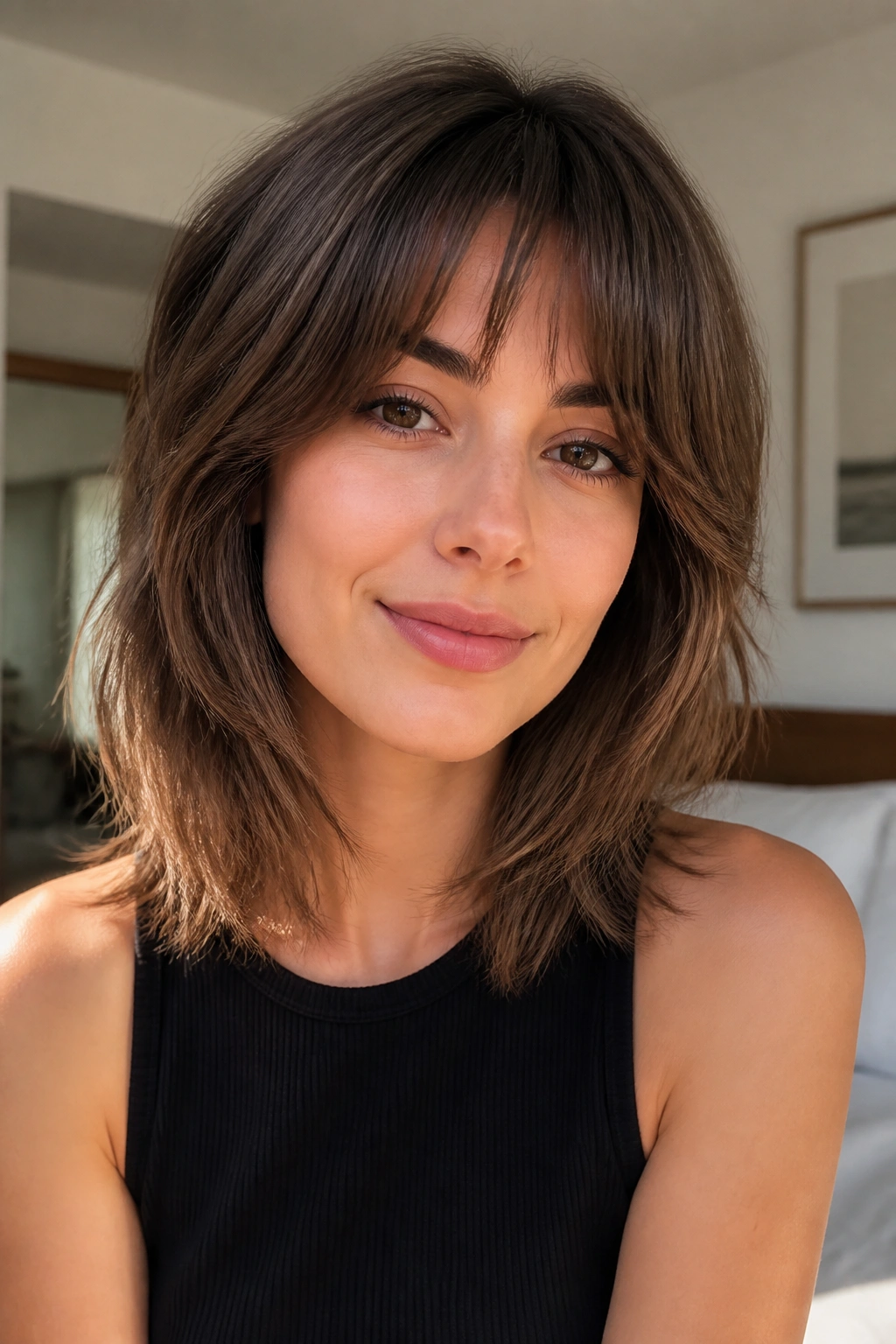
This is the easiest shag to wear on straight hair. The length sits around the shoulders, which gives the haircut enough weight to stay polished while still letting the layers move.
Ask for soft layers starting around the collarbone and a gentle face frame that lands near the cheekbones. That keeps the cut from turning too shaggy too fast. The ends should feel airy, not shredded.
I like this version for people who want a change without going full retro or edgy. It still looks like hair you can tuck behind one ear and forget about for a few hours. Low drama. Good shape.
2. Curtain-Bang Shag
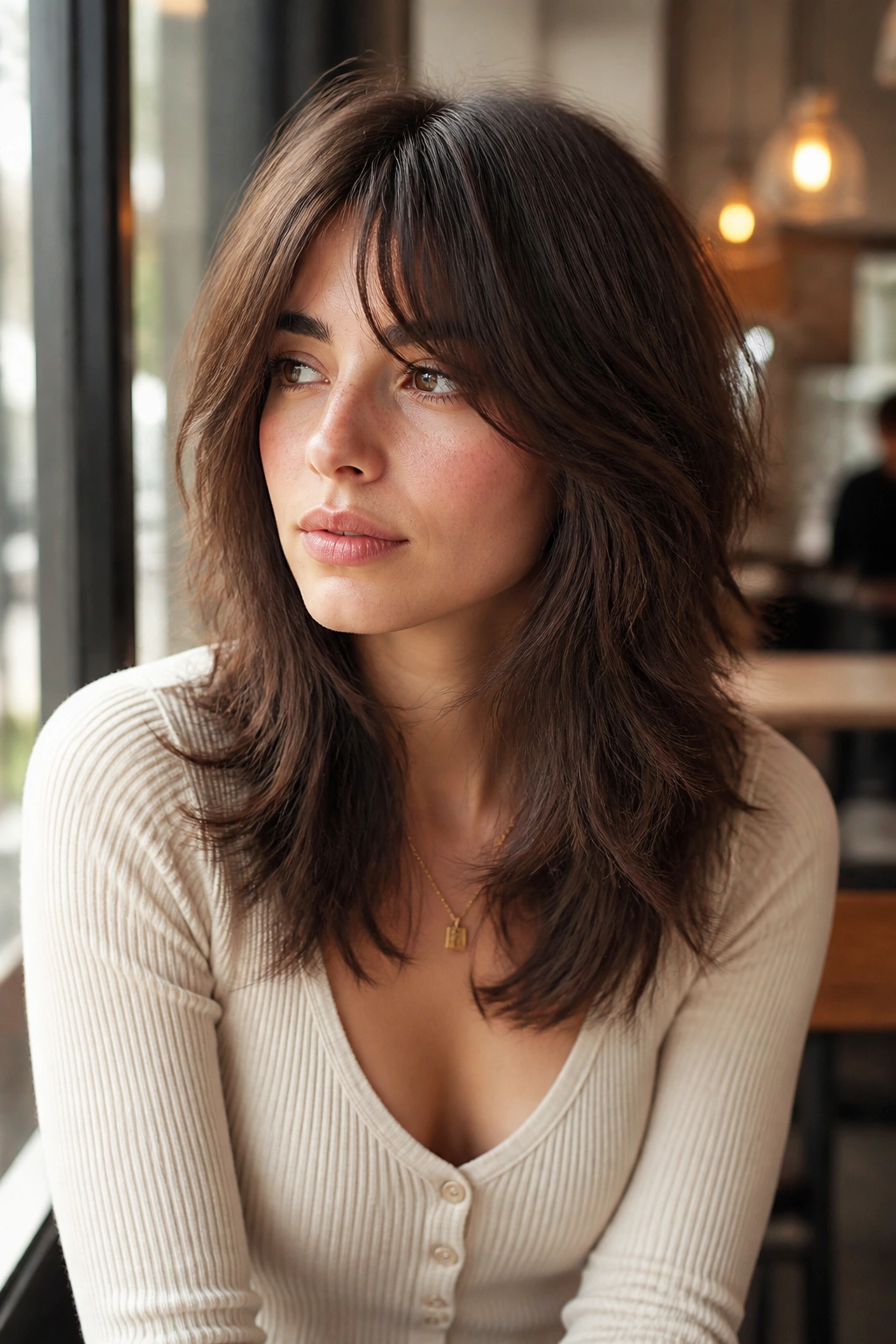
Want movement without giving up forehead coverage? This is the one people usually reach for first, and for good reason.
Why It Works on Straight Hair
Curtain bangs split open cleanly on straighter textures, so they don’t fight your hair pattern the way heavy fringe sometimes does. They also pull attention to the eyes and cheekbones, which is a nice trick when the rest of the hair is kept soft and layered.
The rest of the cut should stay light through the sides, with longer layers that blend into the bang area. If the top is cut too short, the bangs can swallow the haircut. If the layers are too timid, it looks like a regular long cut with bangs taped on.
- Ask for a center-framing fringe that starts shorter in the middle and drifts longer toward the temples.
- Blow-dry the bangs away from the face using a medium round brush.
- Keep the ends slightly beveled, not blunt.
- Use a touch of light cream, not a heavy oil.
Best for: straight hair that needs softness around the face more than volume everywhere else.
3. Collarbone Shag with Invisible Layers
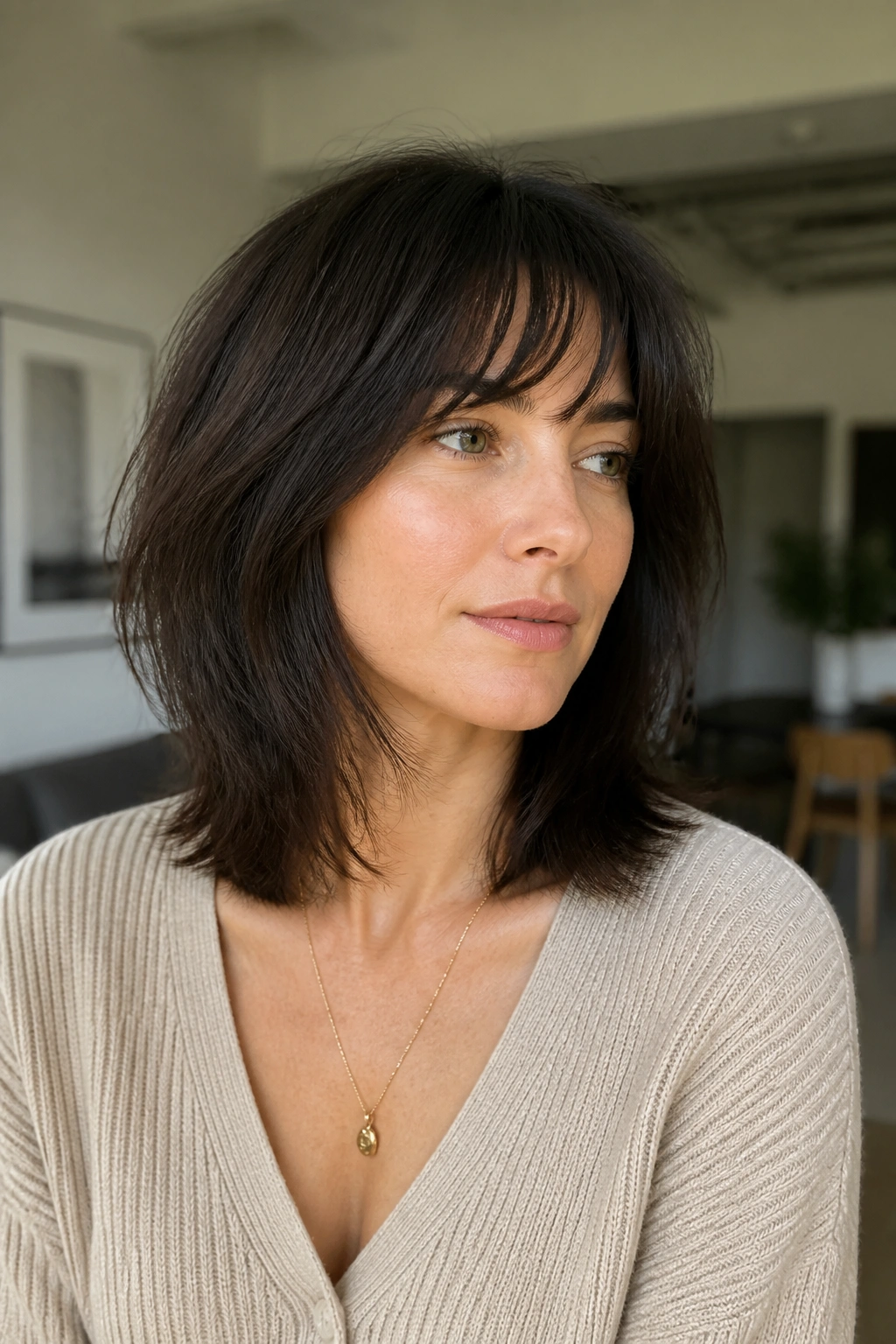
This is the polished cousin in the shag family. At first glance, it almost looks like a sleek mid-length cut, but the movement shows up when you turn your head.
The trick is in the layering. Instead of obvious choppy pieces, the stylist removes weight from the inside and keeps the outside line clean. On straight hair, that matters a lot. You get swing without the ends looking thin or broken.
It’s the shag I’d pick for someone who works in a formal setting or just hates hair that looks too styled. There’s shape, but it stays quiet. Clean in front. A little softer underneath. Nice balance, and I do mean in the practical sense, not the fluffy salon sense.
4. Chin-Length Shag Bob
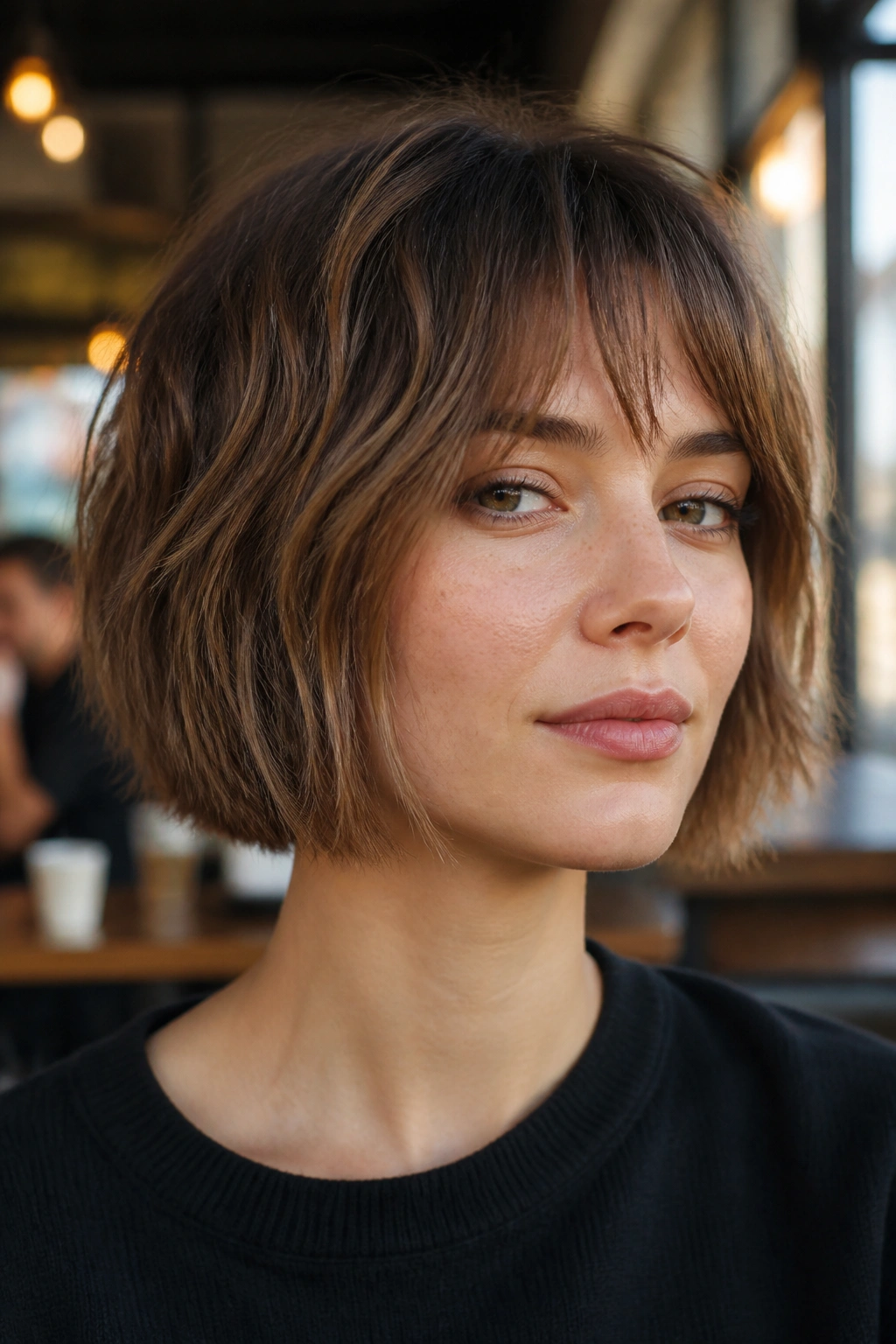
If your hair hangs pin-straight and refuses to hold a wave, a chin-length shag bob gives it a job to do.
The shorter length creates instant architecture. The shag part comes from lightly carved layers around the crown and cheek area, plus a little texture through the bottom edge so the cut doesn’t sit like a helmet. On straight hair, that bottom edge is everything.
A blunt chin-length bob can look severe. A shag bob feels more lived-in, and that’s the point. It also works well with a slight tuck behind the ear or a deep side part when you want the shape to look less symmetrical. Not fussy. Just enough edge.
5. Long Feathered Shag
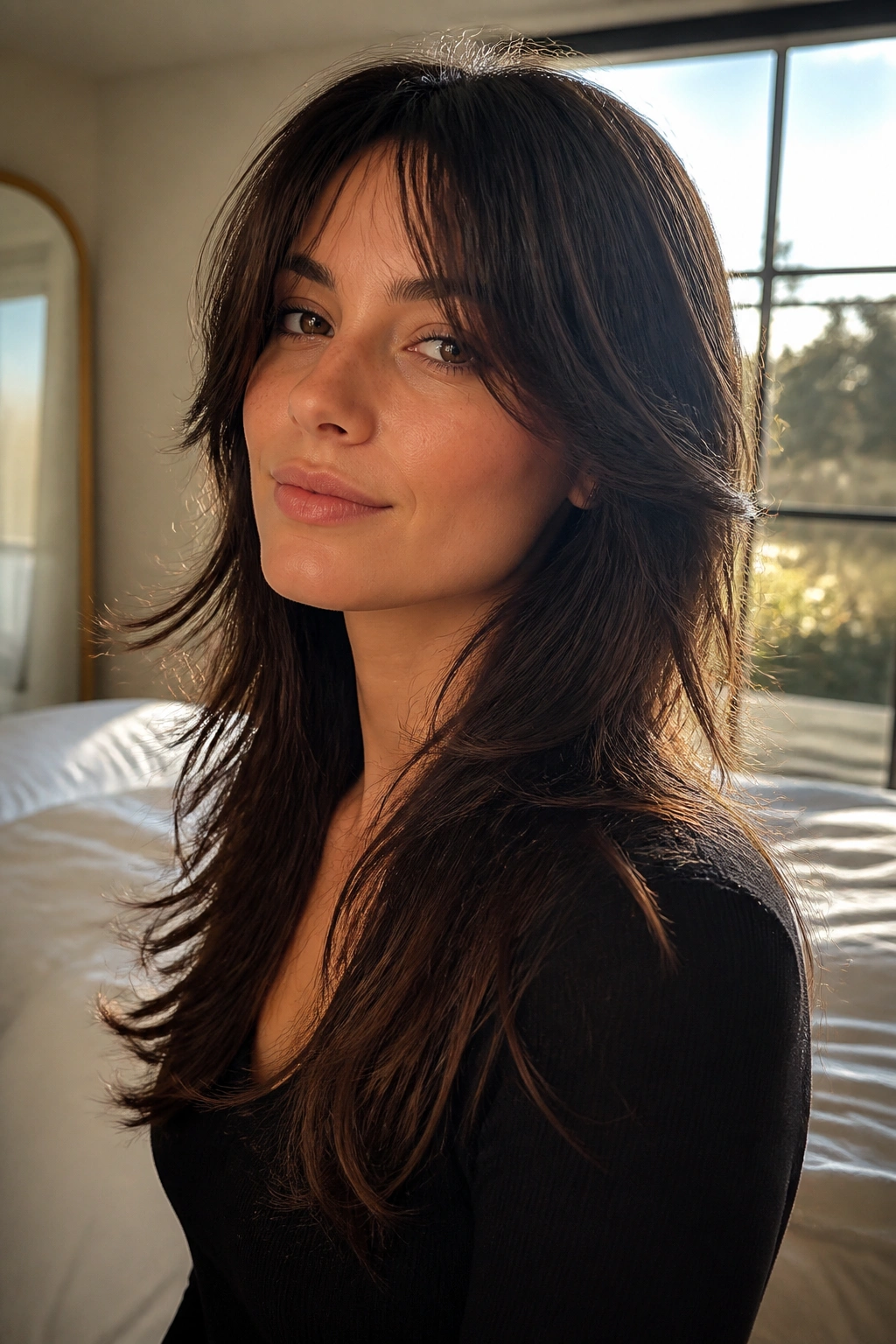
The ends move instead of sitting there. That’s the whole appeal.
A long feathered shag keeps the length below the shoulders, but the layers are cut to soften the outline and let the hair fall in narrow, flicked sections rather than one heavy curtain. On straight hair, feathering is often better than aggressive texturizing because it keeps the finish smooth.
What to Ask For
- Layering that begins around the chin or lower lip, not higher.
- Feathered ends that are cut with scissors, not heavily thinned.
- A small amount of face framing that blends into the front lengths.
- A perimeter that still feels solid when the hair is dry.
This one is for people who love length but are bored by a single, flat line. The shape still reads as long hair. It just has a little more life in it.
6. Pixie Shag
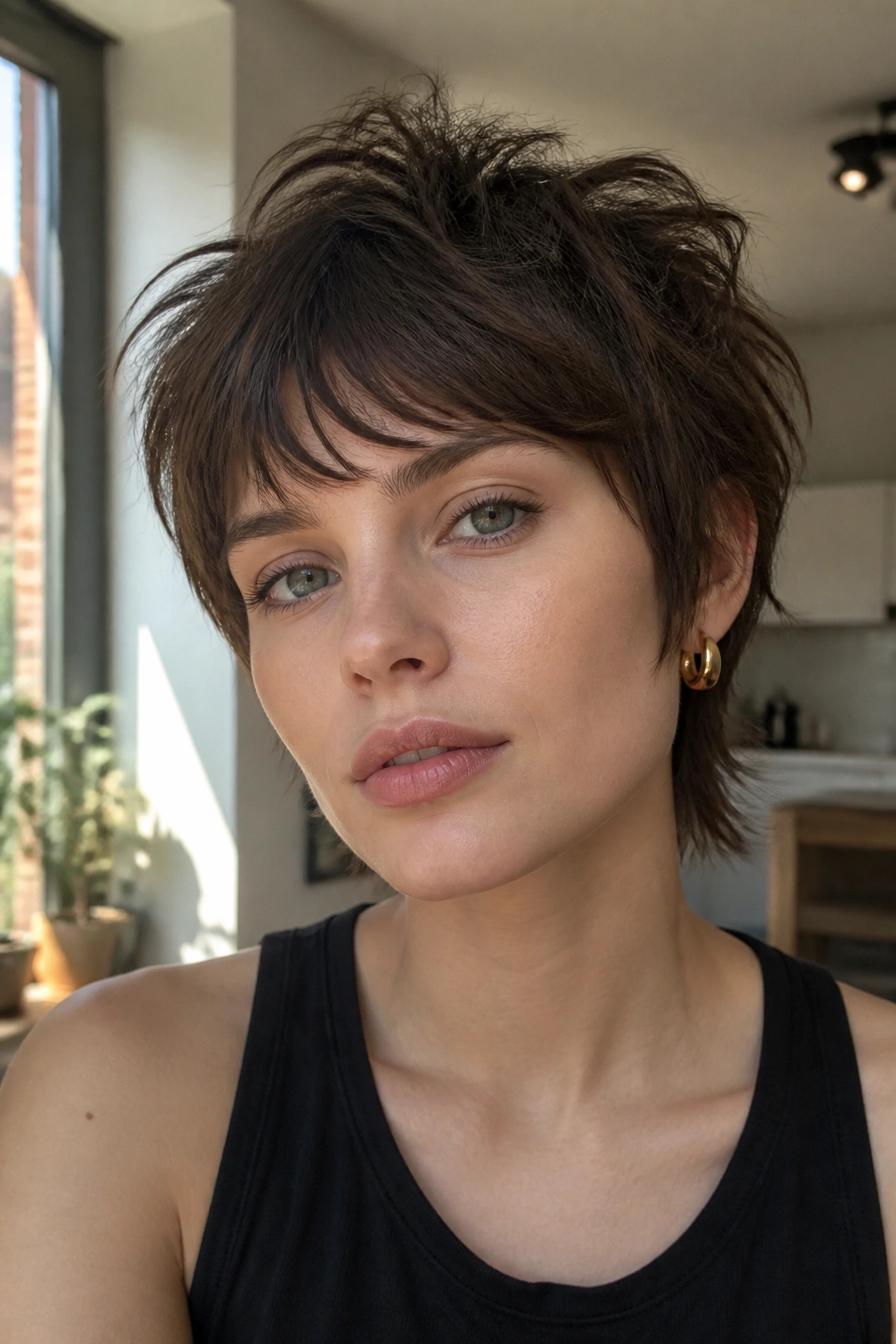
Short doesn’t mean harsh.
A pixie shag works on straight hair because it uses short, choppy top layers and soft, slightly longer pieces around the sides to create movement without needing curl. The crown should have enough texture to lift, but the nape and sideburns stay neat enough that the cut doesn’t drift into chaos.
It’s a fast style, too. A pea-sized bit of matte paste or light wax is usually enough to separate the top and give the edges a bit of grit. That’s it. No endless round-brush session.
This cut does ask for confidence, though. If you want hair that can be pushed around with your hands and still look intentional, this is charming. If you want your hair to lie still and behave, skip it.
7. Wolf-Shag Lite
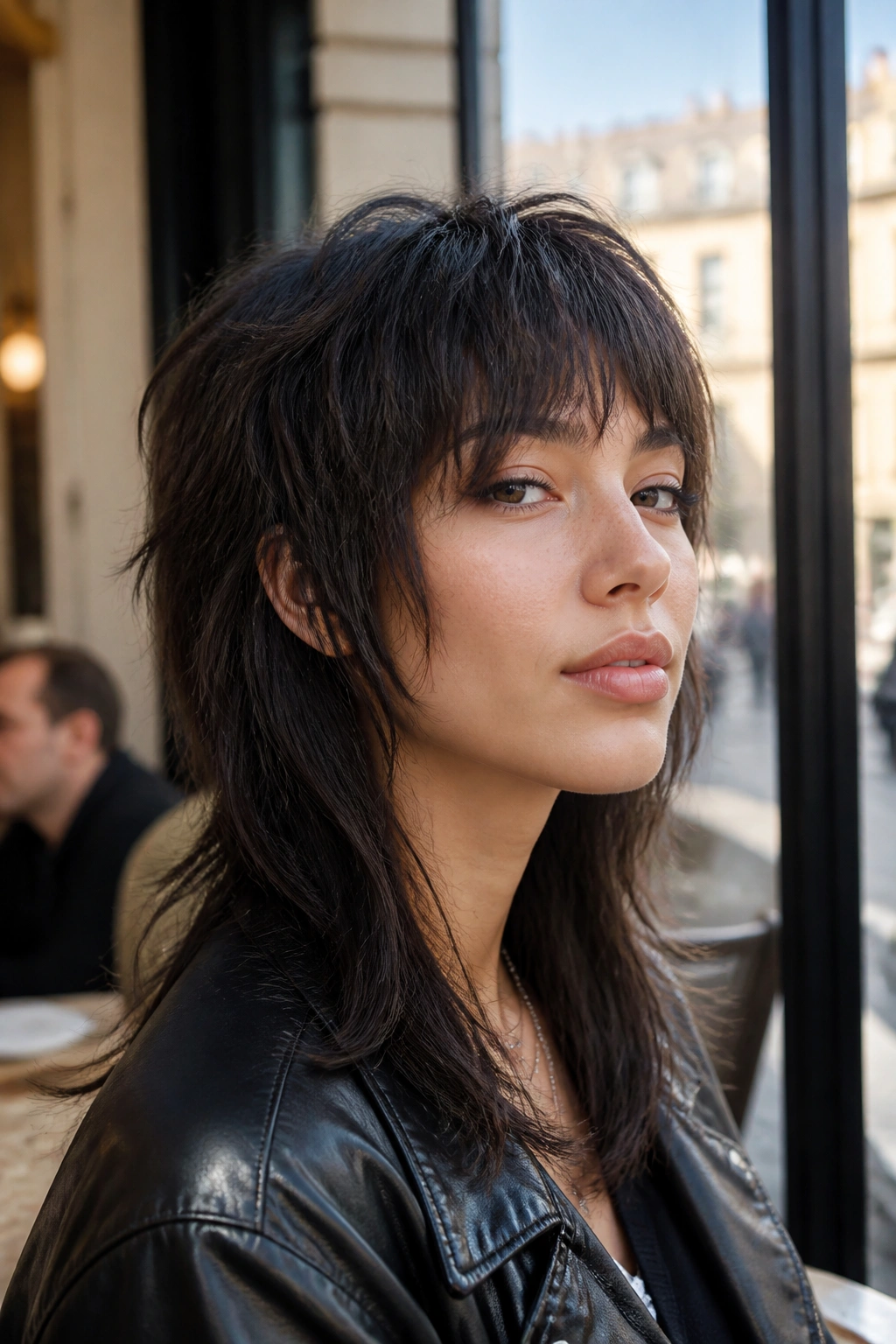
This is the edgier sister, not the full drama.
A wolf-shag lite keeps the crown shorter and the lengths longer, but the transition between them is softened so straight hair can wear it without looking too extreme. The silhouette is still noticeable. You get the little bit of mullet energy, but it’s controlled.
I prefer this version over a harsher wolf cut for straight hair because straight textures expose every hard line. A softer blend through the sides helps the cut breathe. You still want a touch of disconnection, though, or it turns into a regular layered cut with a cooler name.
Best on medium to thick hair. Fine hair can wear it, but the layers need to be light or the ends will disappear faster than you want.
8. Razor-Cut Shag
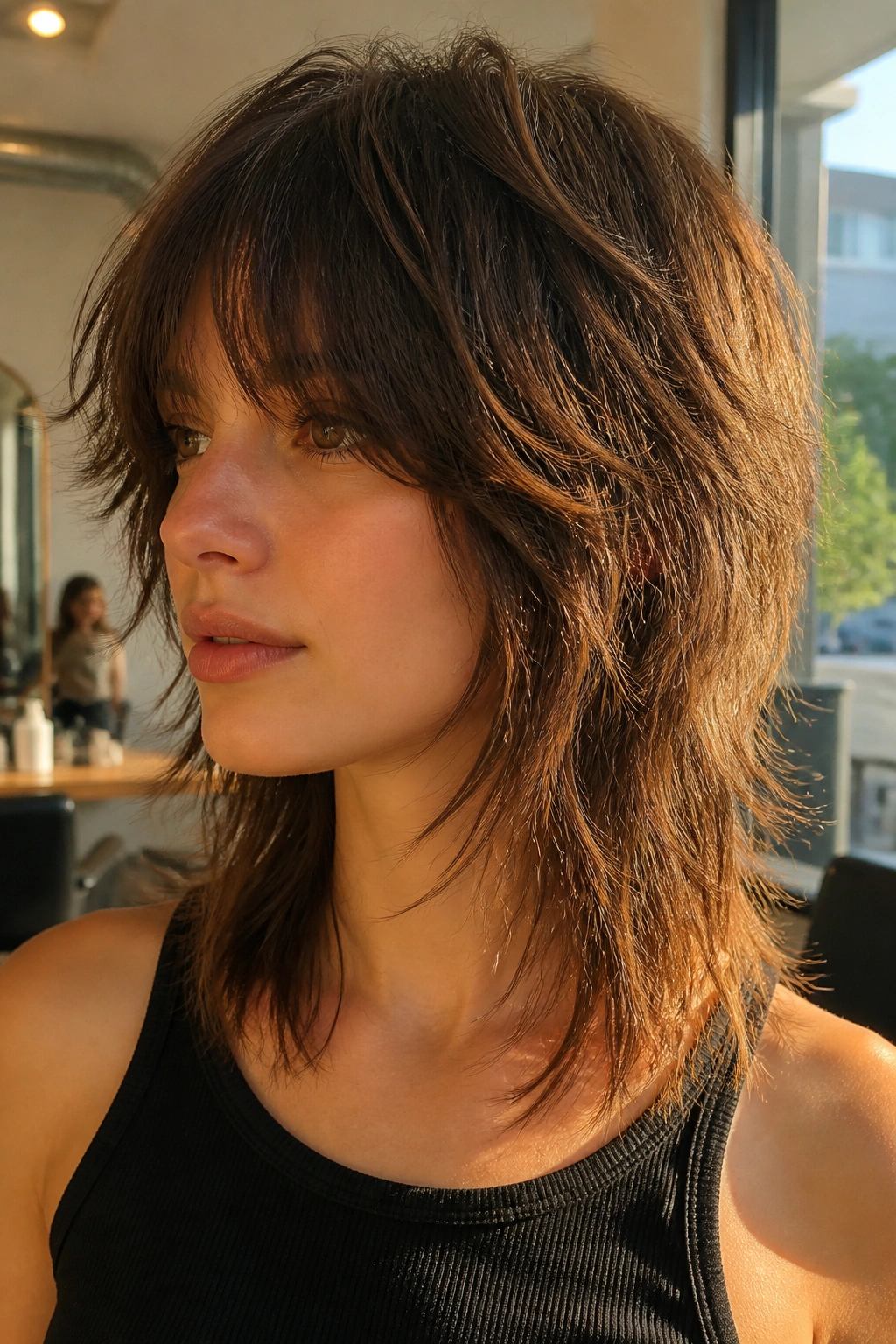
Can a razor cut work on straight hair? Yes — if the hair is dense enough to handle it.
A razor-cut shag gives the ends a softer, airier finish than scissors alone. That can look gorgeous on straight hair because the outline stops feeling blocky. The danger is overdoing it. Fine or fragile hair can fray if the razor work is too aggressive.
What Makes It Different
The movement comes from the edge of the cut itself. Each layer sits with a slightly softer finish, which helps the hair bend instead of hanging in one blunt line. It’s especially useful if your straight hair tends to look heavy around the mid-lengths.
- Best on medium to thick straight hair.
- Less ideal on very fine or breakable hair.
- Looks best when styled with a light bend, not poker-straight.
- Needs a stylist who knows how to keep the perimeter from looking shredded.
This is one of those cuts that can look expensive when it’s done well and a little tired when it isn’t. There’s no middle ground, which is annoying, but true.
9. Side-Part Shag
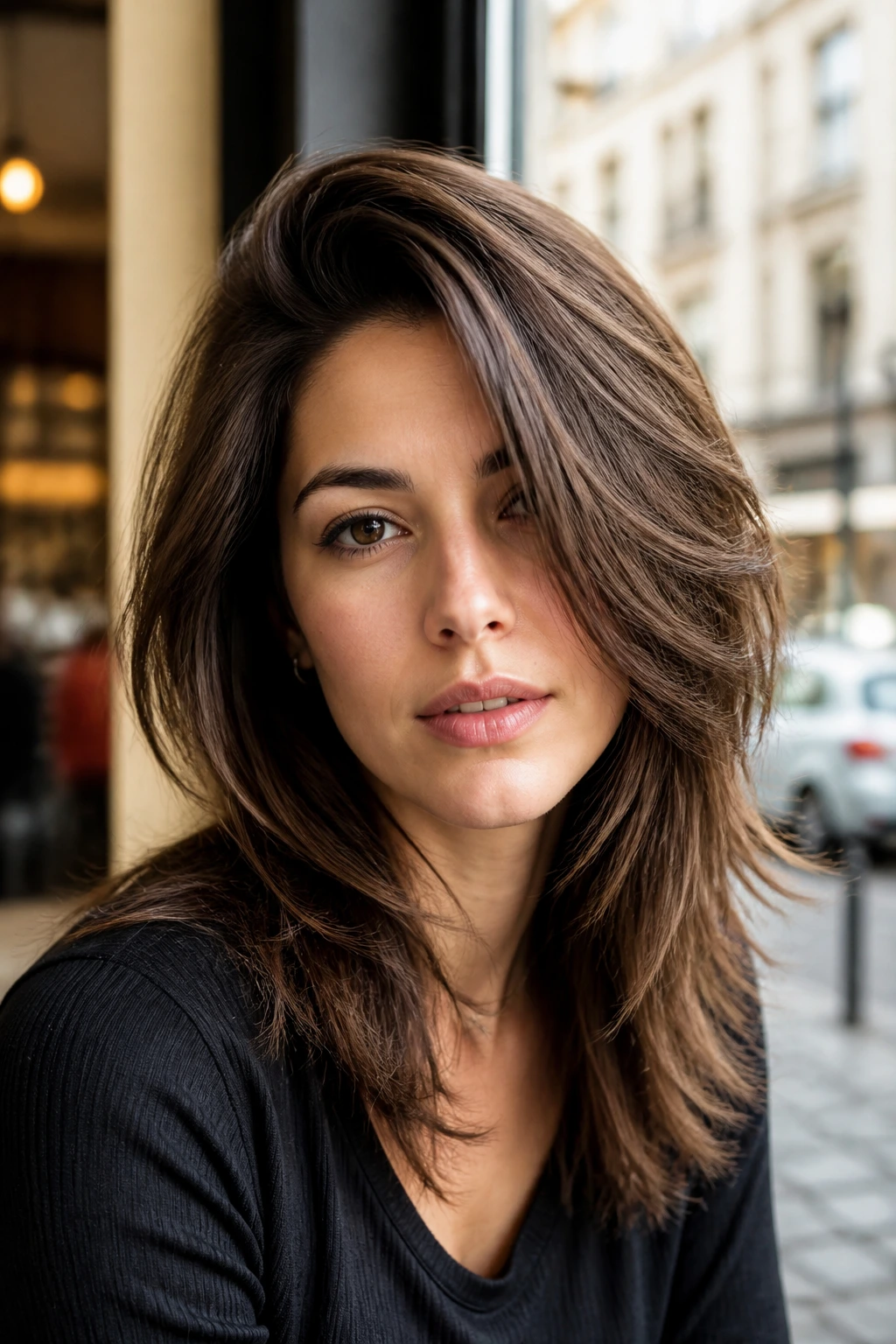
A deep side part can wake up straight hair fast. It changes the whole attitude of the haircut.
The asymmetry gives you lift at the crown and lets the layers fall more dramatically across the face. That matters because straight hair often lacks the natural bend that makes a center-part shag look soft. A side part brings shape without asking for much styling time.
I also like this option for people with stubborn cowlicks. Sometimes the hair already wants to fall off-center, and fighting it is a waste of your morning. Work with it. Let the shag do the framing.
A little root spray and a quick blast at the roots are usually enough. After that, the cut does most of the talking.
10. Rounded Shag for Fine Hair
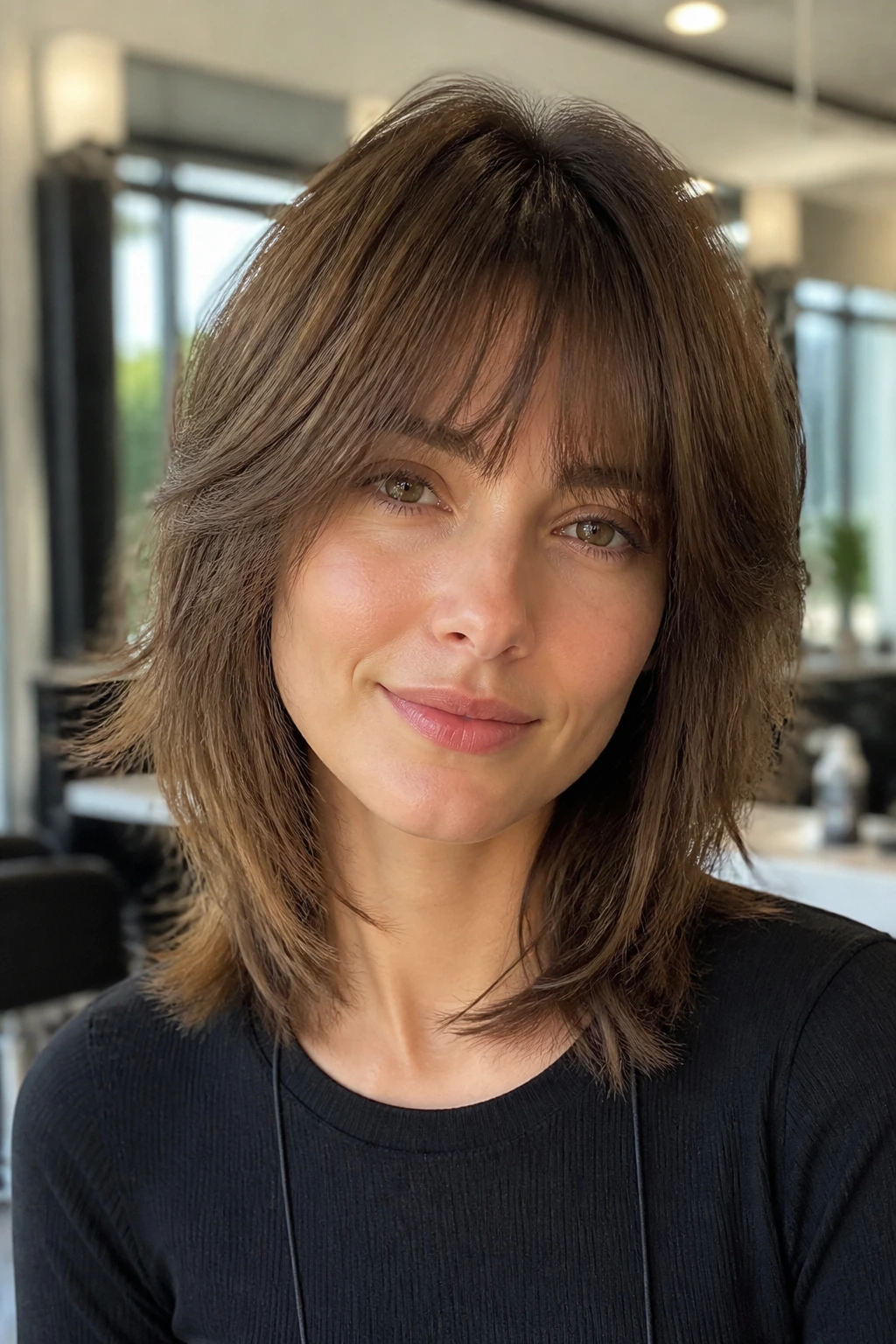
Fine straight hair needs a different kind of shag. Not more layers. Better layers.
Why It Helps Fine Hair
A rounded shag keeps the shape fuller through the sides and crown, which helps fine hair look denser than it is. The layers should be soft and carefully stacked, not hacked apart with thinning shears. Too much removal near the ends is a bad idea here.
Ask for a rounded perimeter with gentle face framing and minimal texturizing at the bottom. The goal is lift, not see-through wisps. That distinction matters more than people think.
What to Avoid
- Heavy razoring at the ends.
- Layers that start too high on the head.
- Over-thinning around the face.
- A fringe that is cut so lightly it disappears.
This cut looks best when blow-dried with a round brush and finished with a light volumizing spray at the roots. Small effort. Big payoff.
11. Debulked Shag for Thick Hair
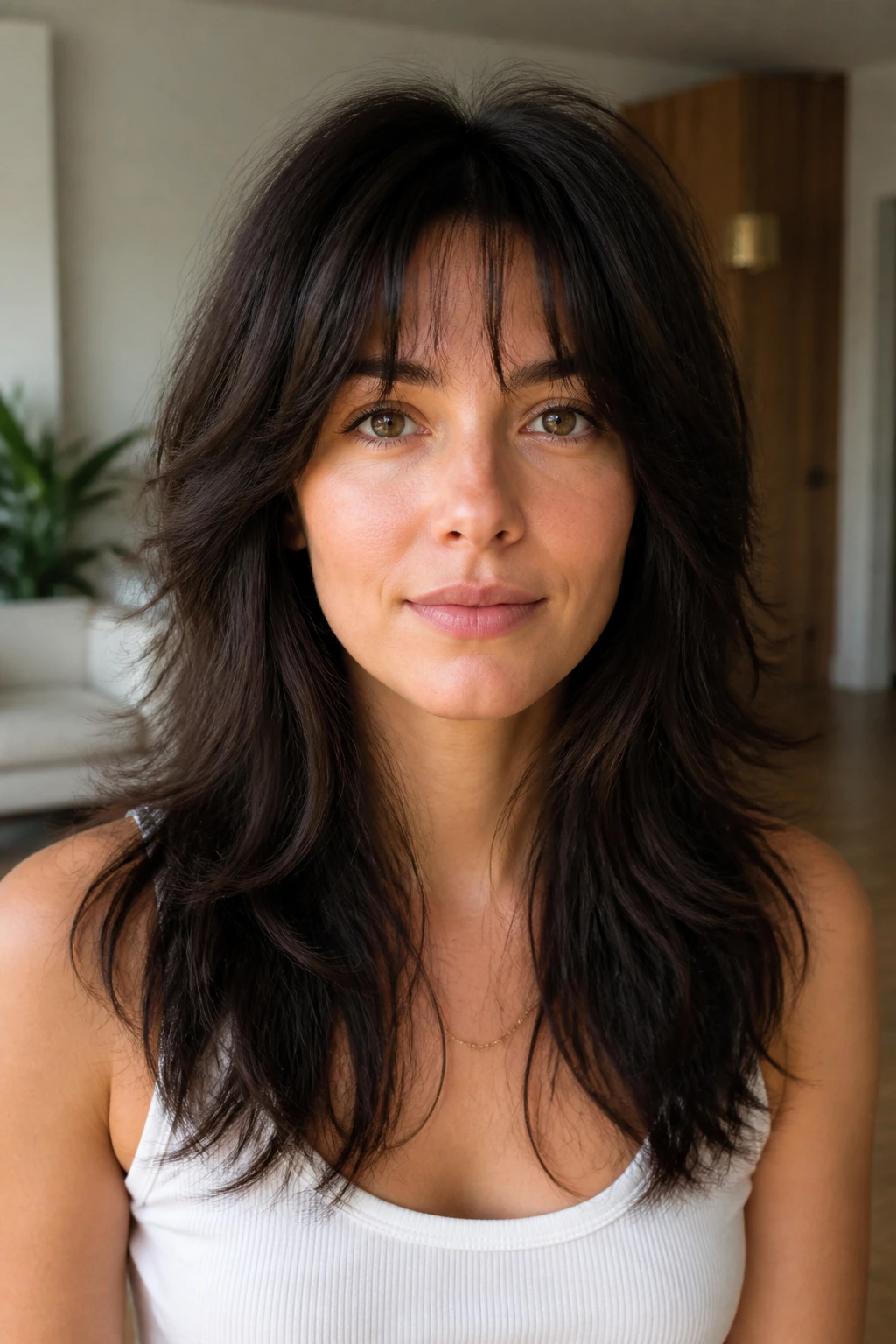
Thick straight hair doesn’t need more movement. It needs less bulk in the right places.
That’s why this version works. The weight gets removed from the interior and crown, not just the ends, so the haircut stops puffing out like a triangle. Straight hair with a lot of density can carry a shag beautifully when the layers are cut to reduce mass rather than scatter the shape.
I’d ask for controlled debulking under the surface and long layers through the top. The outer line should still feel strong. If the stylist goes too wild, the ends get ragged and the cut loses its strength.
This one can be a lifesaver if your hair takes forever to dry. Less bulk means less time under the dryer and less bending from the roots to the mid-lengths. You’ll feel that difference right away.
12. Bottleneck Bang Shag
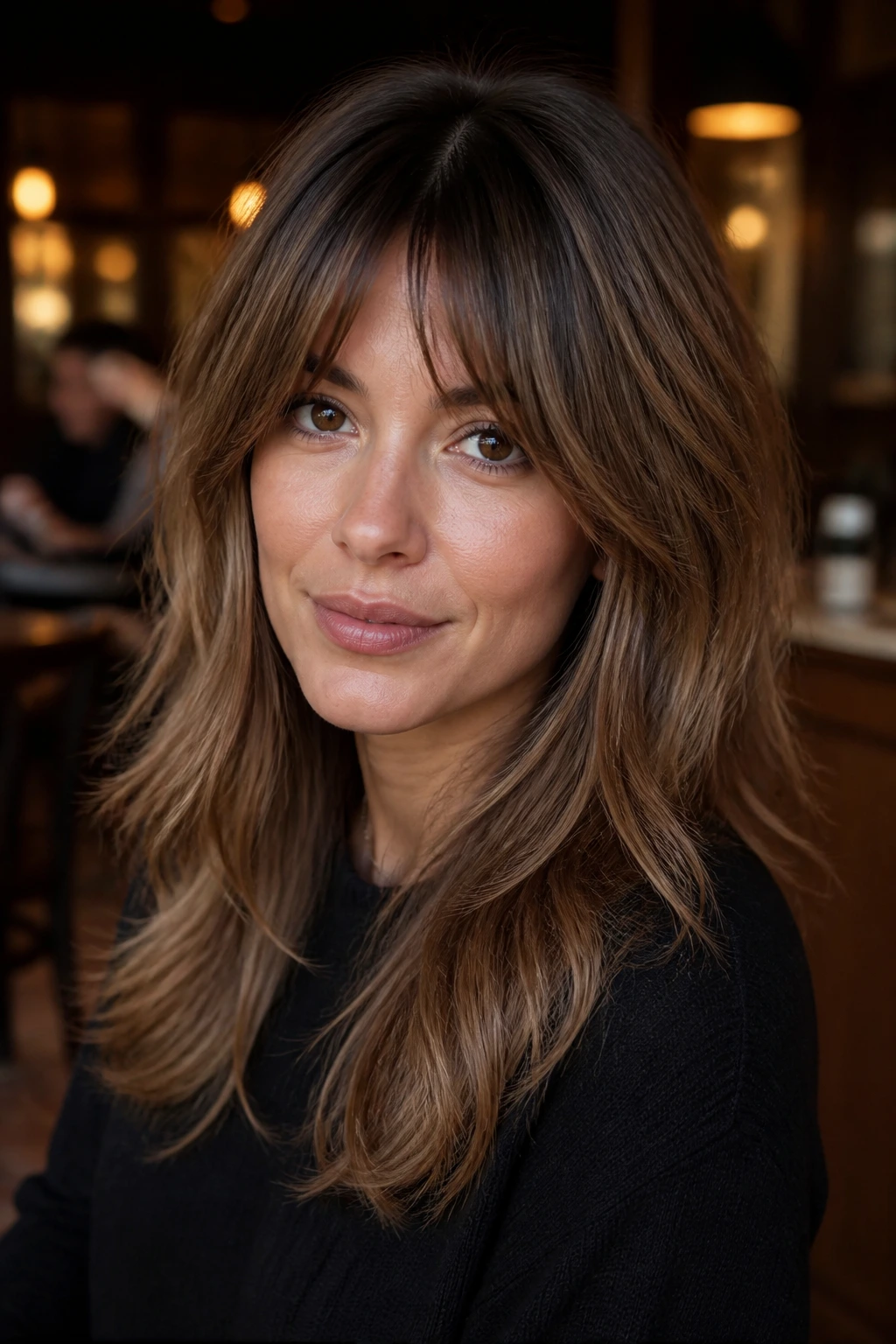
What’s the difference between bottleneck bangs and curtain bangs? Small detail, big effect.
Bottleneck bangs are narrower in the center and open out around the temples, which makes them a little cleaner and a little more tailored than a broad curtain fringe. On straight hair, that can be a gift. The fringe lays flat in the middle, then softens as it moves outward.
The rest of the shag should stay layered but not too broken up. You want the bangs to be the focus, not a fight with the rest of the cut. The shape is flattering because it frames the upper face without swallowing it.
A quick round-brush pass is usually enough to style them. They don’t need much. That’s one reason I like them on straight hair better than super-heavy fringe.
13. No-Bangs Layered Shag
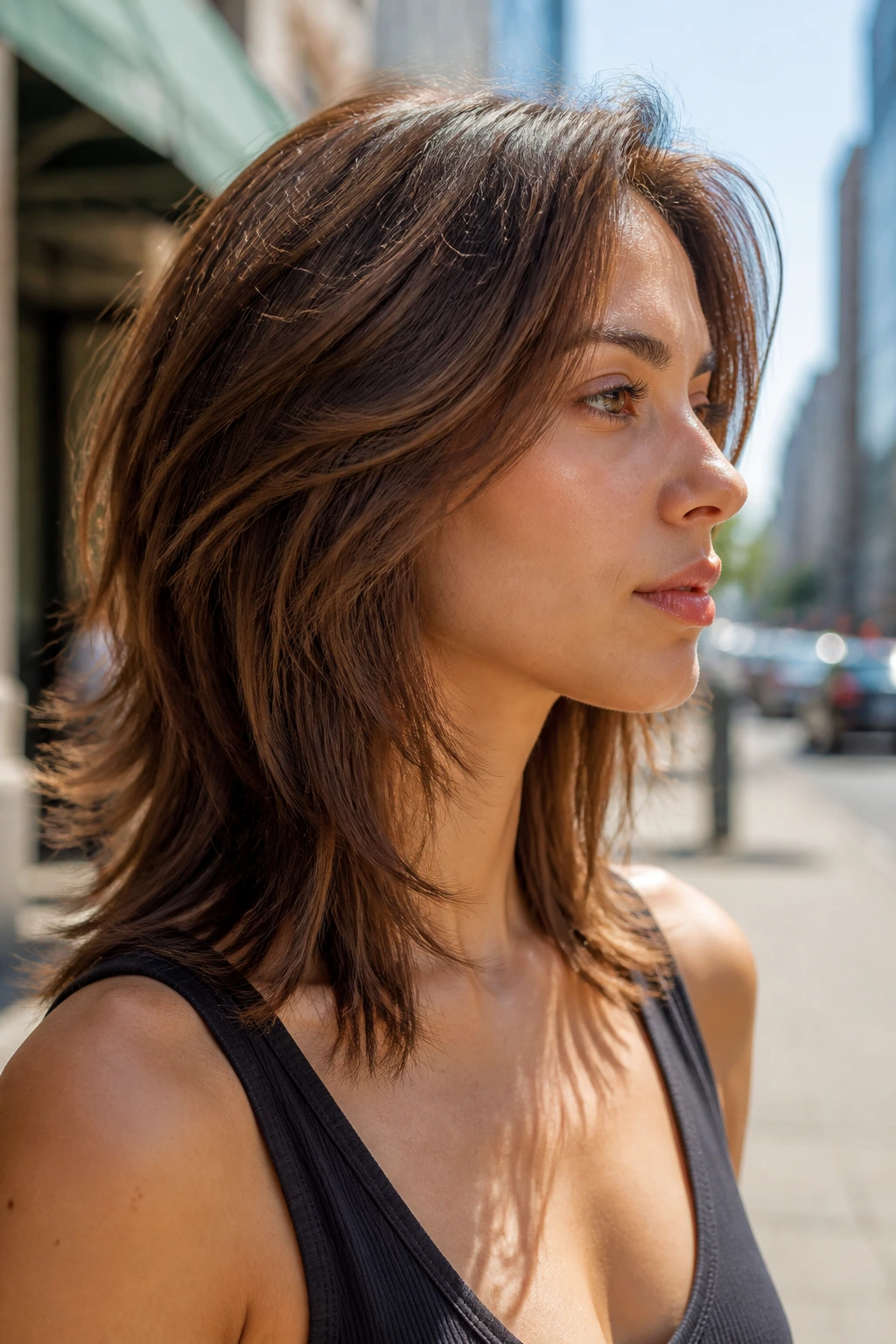
Some people do not want hair on their forehead. Fair enough.
A no-bangs shag keeps the face open and lets the layers start lower, usually around the cheek or jaw. On straight hair, this can look cleaner than a bang-heavy version, especially if your hairline sits low or your forehead is short. The cut still has movement, just not in the front fringe zone.
This is a good pick if you want a shag that won’t feel high-maintenance after a month. Bangs need trims. Face-framing pieces are easier to live with. They grow out more gracefully, and they don’t need daily coaxing.
It’s also the version I’d choose for someone who likes to tuck hair behind the ears, wear sunglasses, or throw it into a loose clip without wrecking the shape.
14. Flipped-End Retro Shag
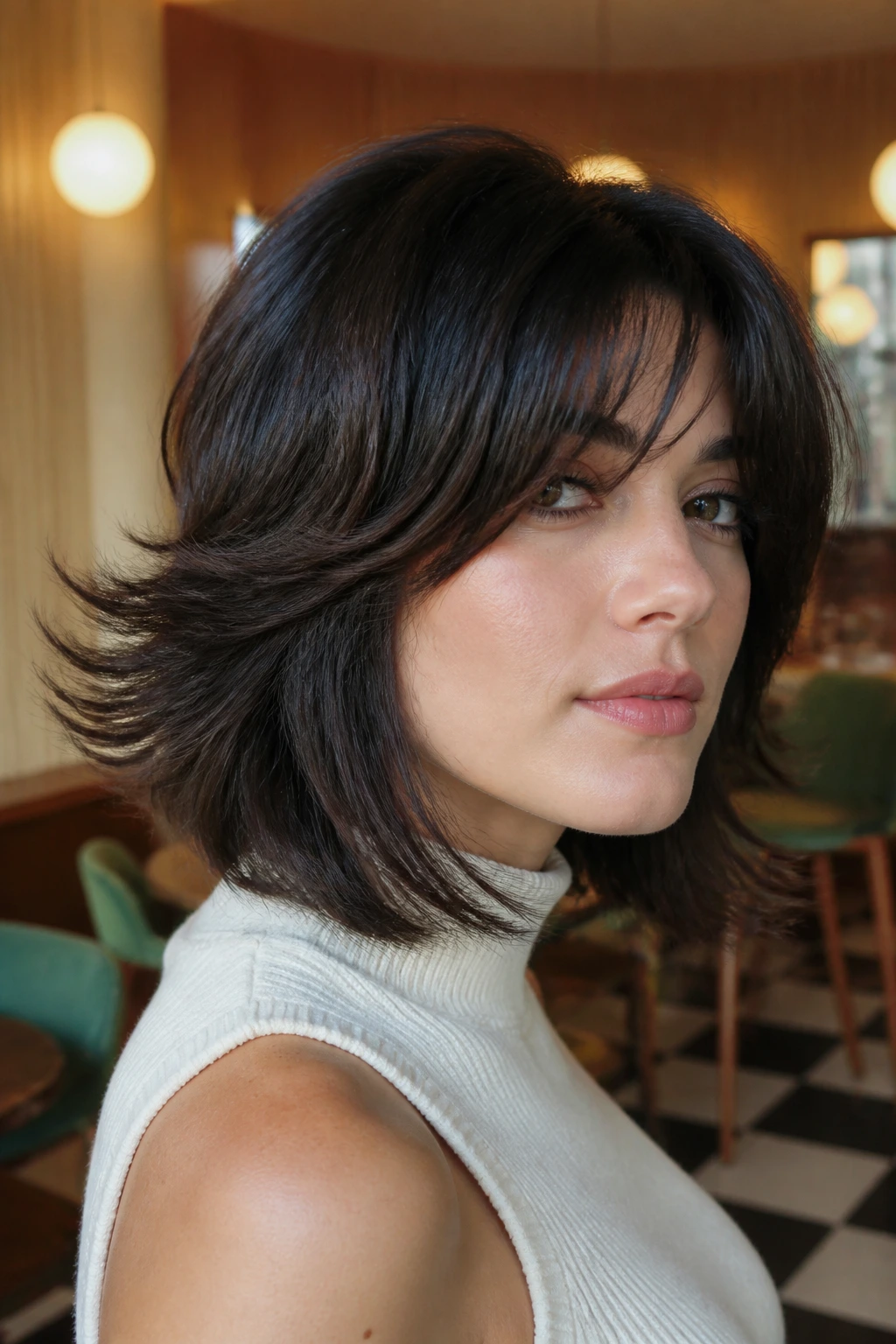
You can almost hear the blow-dryer with this one.
The flipped-end shag leans into that retro bend at the bottom, where the ends flick out instead of turning under. On straight hair, that small detail can make the whole haircut feel intentional. It’s less about wild layering and more about a confident shape with a little swing at the edges.
A round brush or a 1.25-inch iron is usually enough to get the finish. Work the ends away from the face, then let the top stay loose. A little mousse at the roots helps too, especially if your hair likes to lie flat after an hour.
This is a fun cut, and I mean fun in the normal sense, not the overblown salon sense. It has personality. It also looks best when it’s slightly imperfect.
15. Air-Dry Shag
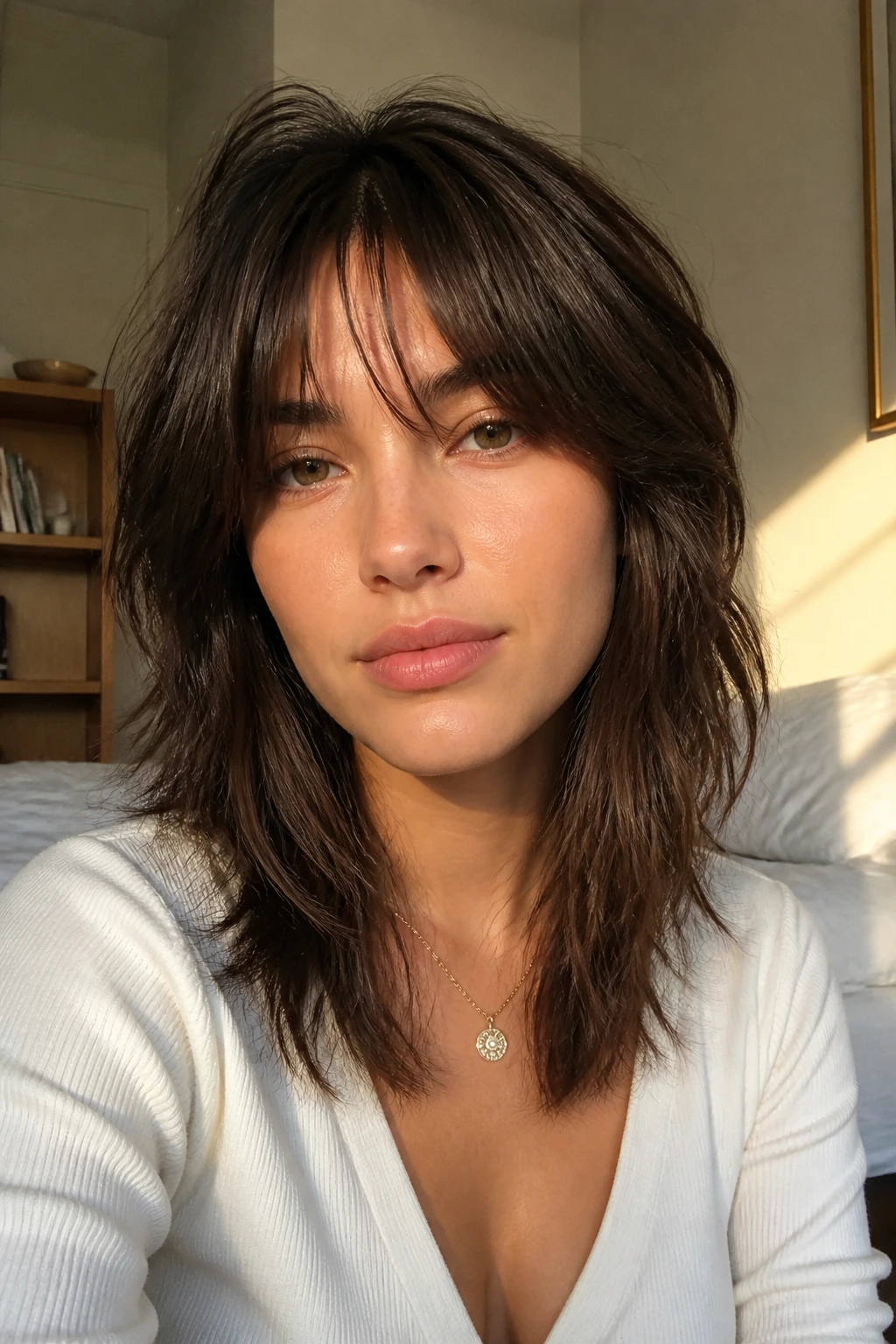
If you hate hot tools, this is the practical pick.
An air-dry shag needs soft layers and a perimeter that can hold its own without a blow-dry. On straight hair, that usually means the stylist has to be restrained. Too much layering and the shape goes limp. Too little and the haircut falls flat.
The styling routine should be light: leave-in conditioner, a bit of cream through the mids, and maybe a touch of salt-free texture spray if your hair can handle it. Then let it dry. Don’t keep touching it. That’s how straight hair gets stringy.
This cut is best when the natural fall of your hair is already decent. If your hair has a stubborn bend or weird cowlicks, you may need a quick blast at the roots. Still simpler than doing a full blowout every morning.
16. Disconnected Shag
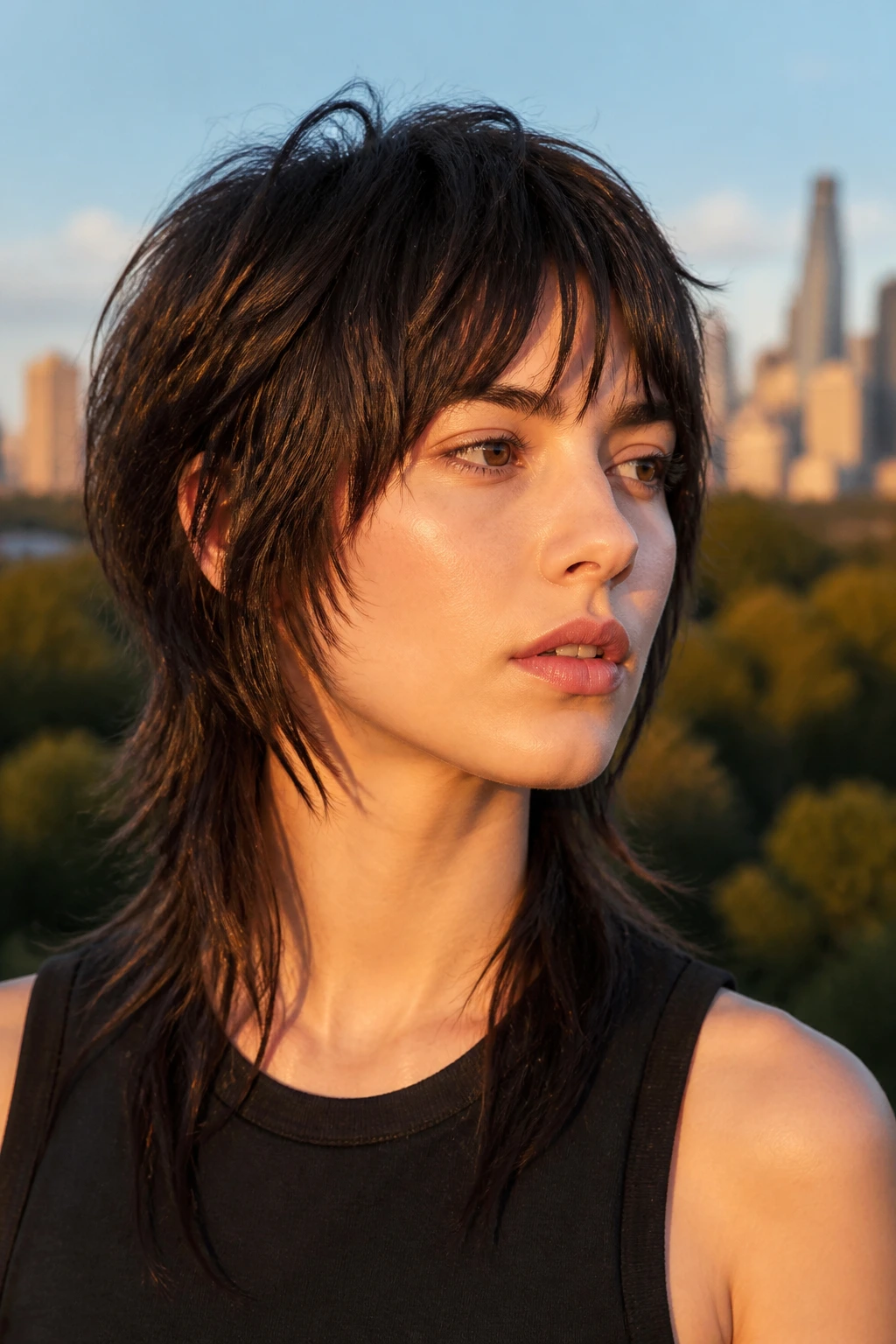
Not every shag has to blend softly. Sometimes the point is to show the shift.
A disconnected shag uses more visible jumps between lengths, which gives straight hair a sharper, more editorial look. You can see where the layers start and stop, and that contrast is the whole appeal. It is not a shy haircut.
What Makes It Different
Unlike a blended shag, this one leans into separation. The top may sit shorter and more textured, while the lower lengths keep more weight and clarity. That contrast can look fantastic on dense straight hair because the shape has room to breathe.
Best on hair that can hold a little styling product without turning greasy. A dry texture spray or a light paste helps the layers read as piecey instead of limp. If your hair is very fine, the separation can look sparse fast.
This is the one for people who like their haircut to say something before they say anything.
17. Deep-Layered Rapunzel Shag
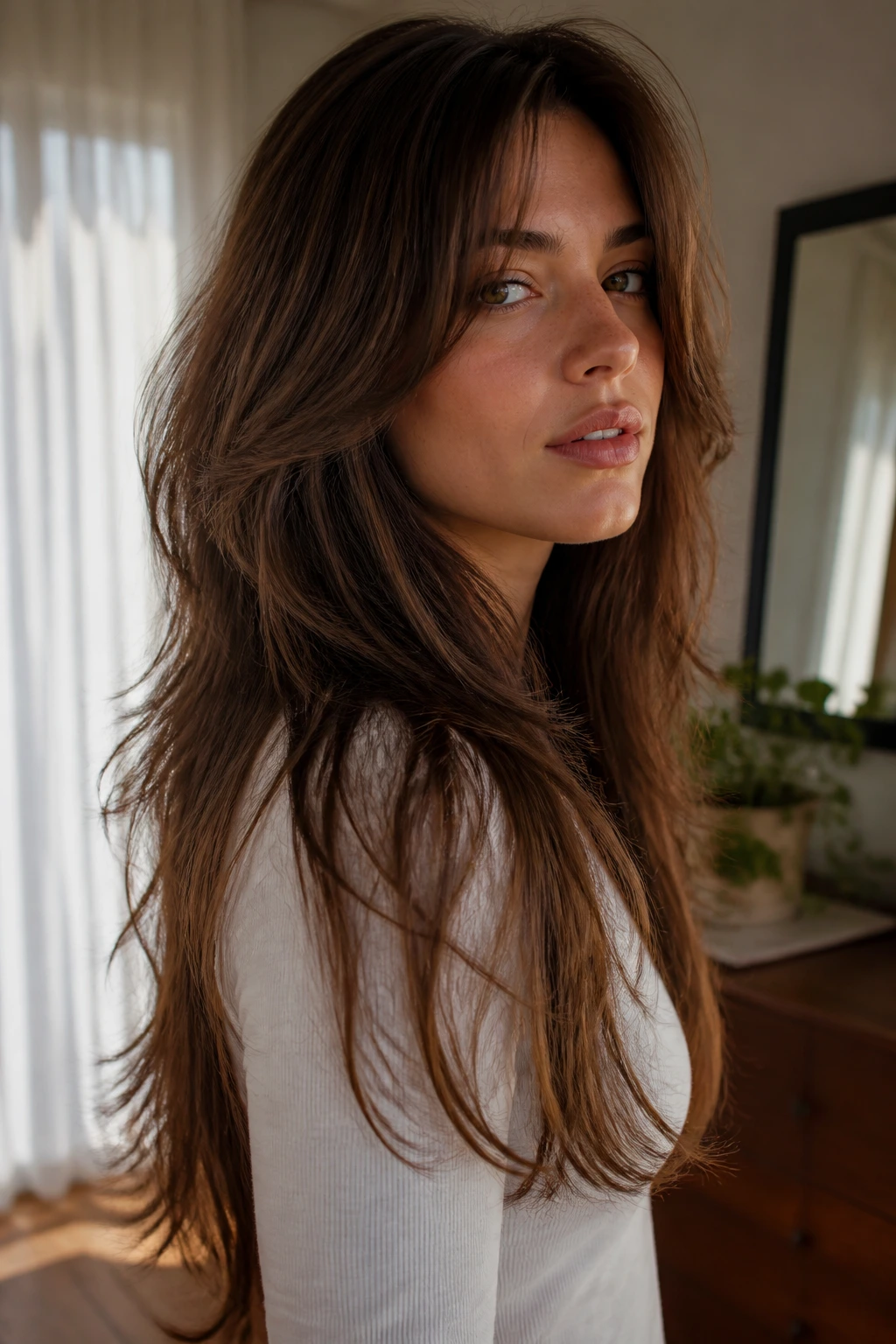
Long hair doesn’t have to mean one long sheet of hair.
A deep-layered shag keeps the length far down the back, but starts cutting away weight below the chin or chest so the hair can move. On straight hair, this is especially useful because long lengths tend to sit heavy and still. The layers give the ends a little swing without making the cut look short.
The danger here is over-layering. Too much and the hair frays into pieces that never reconnect. I prefer a few stronger layers instead of a lot of tiny ones. The shape stays cleaner that way.
If you love length and refuse to give it up, this is the compromise I’d actually recommend. You keep the drama of long hair, but it doesn’t feel like a blanket.
18. French Shag
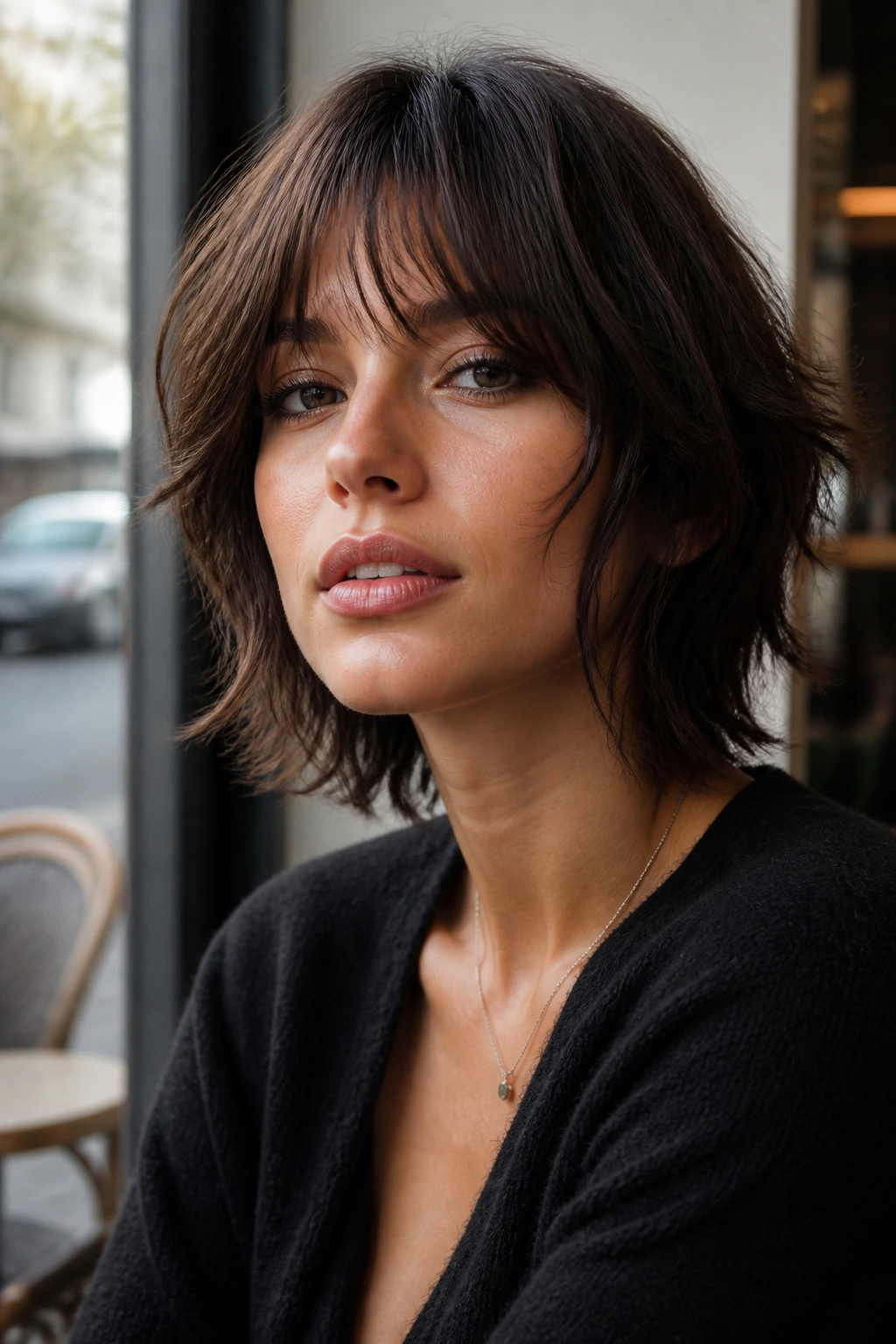
Think cheekbone fringe, soft bends, and a haircut that looks slightly undone on purpose.
The French shag is usually shorter and lighter around the face, with a relaxed shape that flatters straight hair because it doesn’t depend on curls to come alive. The layering should be subtle enough to keep the silhouette elegant, but not so subtle that it turns boring.
What I like most is how easy it is to wear with natural texture. You do not need a perfect blowout. A quick bend through the front and a little lift at the crown are enough. If the ends look too perfect, it can lose the charm.
This cut works well for people who want the shag idea without the heavier, more obvious 70s shape. It feels lighter. Less effort. More air.
19. Center-Part Sleek Shag
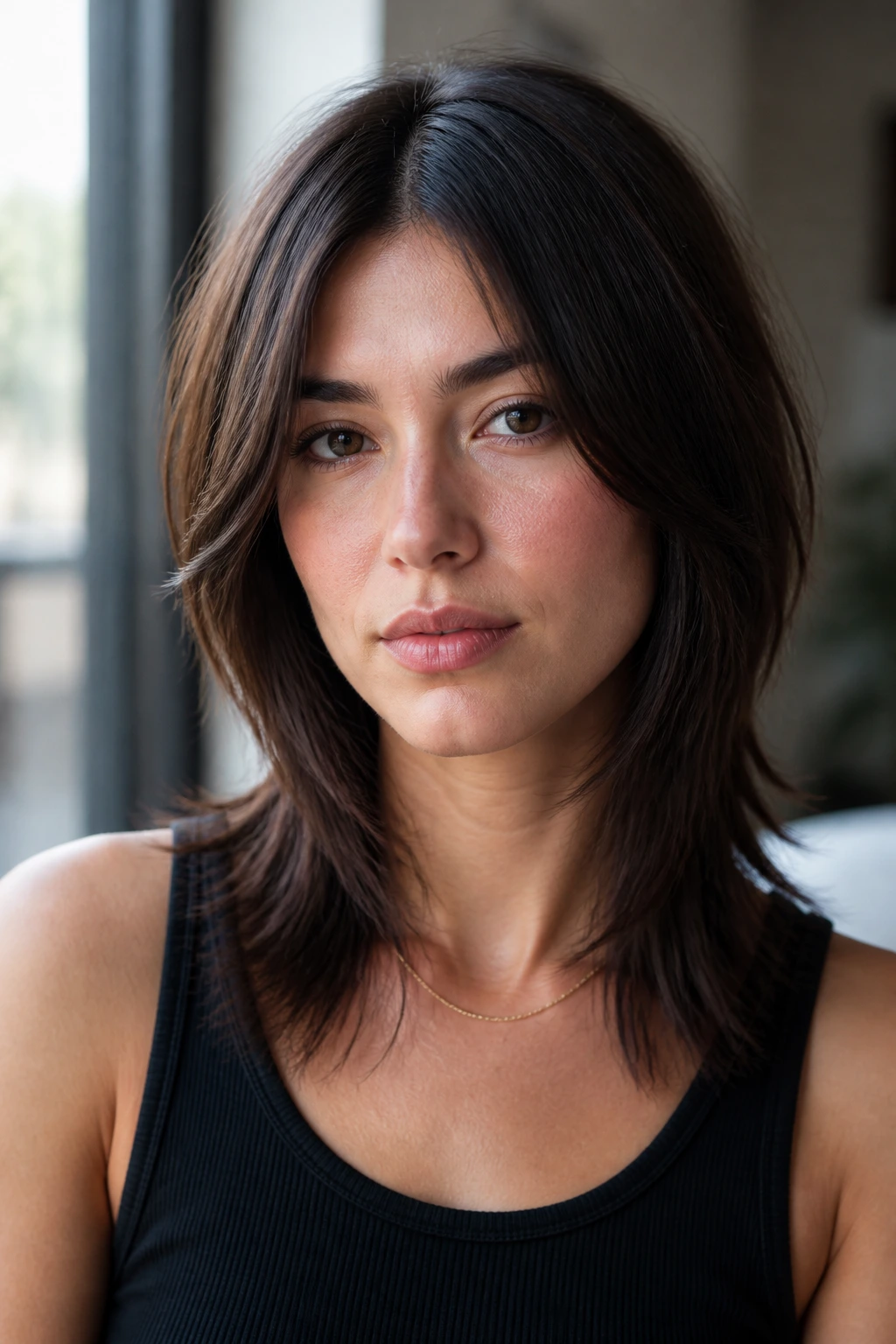
Middle parts and straight hair can look sharp when the layers are subtle.
This version keeps the center part and builds the shag around it with soft face-framing pieces and light movement through the top half. The result is neat, modern, and a little cooler than the messier shag shapes. It’s the least noisy option here, which is exactly why some people will love it.
The key is restraint. The front should frame, not split apart. The sides should move, not stick out. If the layers are cut too short, the clean center part starts looking severe.
I’d pick this for someone who likes tidy hair but still wants a shape with life. It pairs well with straight, glossy styling and only a bit of bend on the ends.
20. Choppy Mid-Length Shag
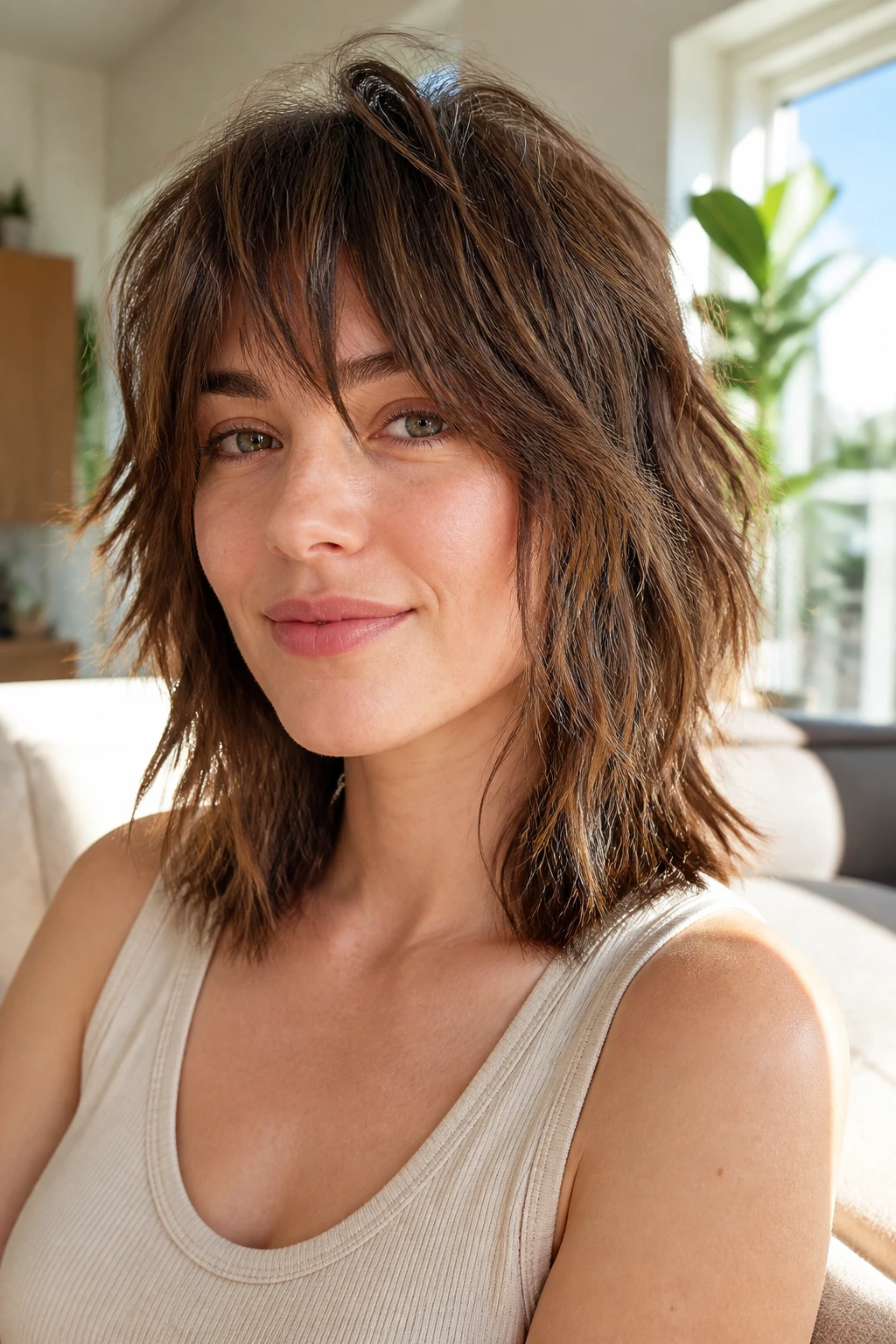
This one sits in the sweet spot between short and long, which is useful if you hate extremes.
A choppy mid-length shag lands somewhere around the shoulders or just below, with more visible piecey texture than a soft collarbone cut. On straight hair, the choppiness gives the haircut a little grit without forcing it into full edgy territory. It’s a good middle lane.
Use texture spray sparingly. Too much and the layers start clumping in a way that looks tired, not cool. A light hand keeps the pieces separated and the shape airy.
I like this cut for people who want something that can be styled in five minutes on a normal day and a little more polished on a night out. It has enough room to do both.
21. Soft Mullet Shag
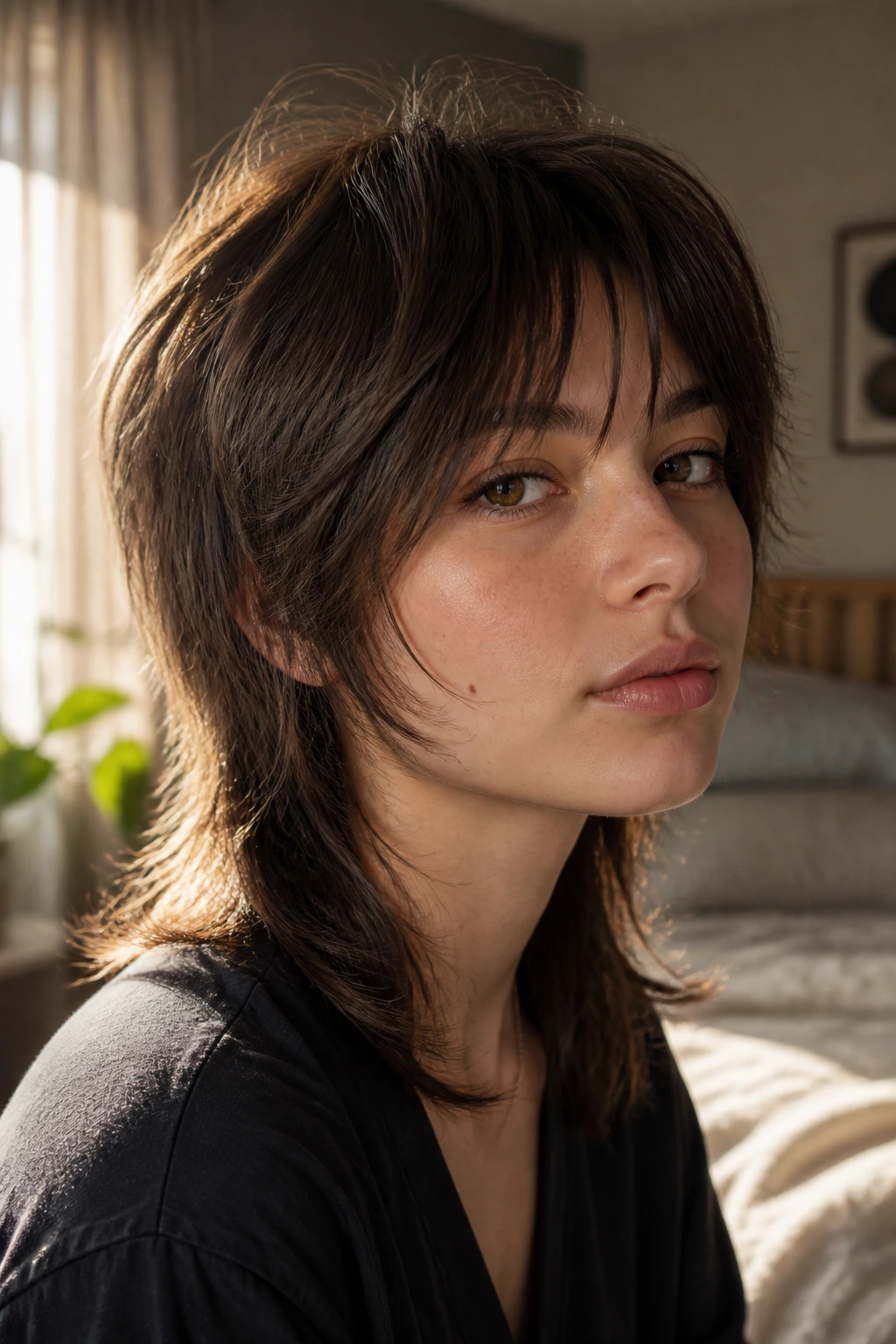
This one is for the brave, but it sounds harsher than it wears.
A soft mullet shag keeps the front and crown shorter while allowing the back to stay longer and looser. On straight hair, the shape shows clearly, which is both the appeal and the warning label. If the cut is off by even a little, you will notice.
That said, a well-balanced version can look fantastic. The trick is to keep the transitions soft and the perimeter clean enough that the back feels intentional, not forgotten. I’d avoid going too extreme unless you like a very visible haircut.
It’s good for people who want personality in their hair and don’t mind styling it. You won’t accidentally wear this one. It has too much character for that.
22. The One That Fits Best
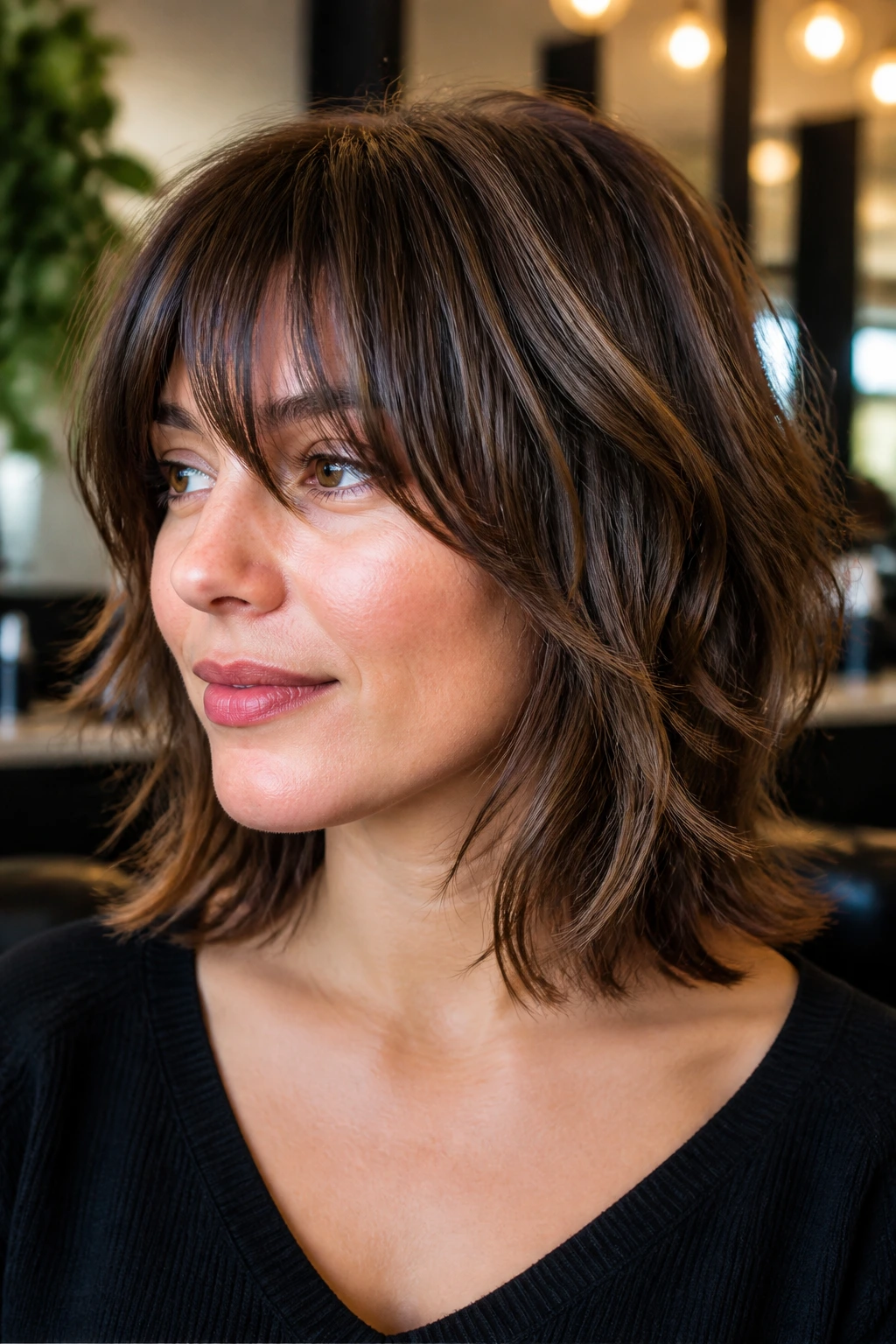
If you want the safest place to start, pick the shoulder-grazing soft shag or the collarbone shag with invisible layers. If your straight hair is fine, go gentler. If it’s thick, ask for weight removal inside the shape rather than endless choppy ends. Those two choices save a lot of regret.
Quick Way to Choose
- Fine, flat hair: Rounded shag for fine hair, collarbone shag, or center-part sleek shag.
- Thick, heavy hair: Debulked shag, razor-cut shag, or long feathered shag.
- Low styling patience: Air-dry shag or no-bangs layered shag.
- Want edge: Wolf-shag lite, disconnected shag, or soft mullet shag.
- Want the most flattering face frame: Curtain-bang shag or bottleneck-bang shag.
Bring two photos to the salon if you can — one showing the front, one showing the back. The back shape matters more than most people think, and straight hair does not hide a bad silhouette. A good shag should look like it belongs to your hair, not like it was pasted on top of it.
