



Fine hair and red tones can be a sneaky good pairing. A shag gives movement where soft strands usually need it most, and red color makes those layers easy to see. Red shag haircuts for fine hair work because the cut creates lift without turning the whole head into a flat sheet or a puffball.
The trick is restraint. Too many razor-thin layers and the ends start to look see-through; too little layering and the style drops flat by noon. The sweet spot is a controlled crown, a soft perimeter, and a fringe or face frame that breaks up the outline just enough.
Color matters more than people think. Copper, auburn, cherry, and burgundy all behave a little differently on fine hair, and each one changes how the layers read in daylight. A good shag is never only about the cut. The shade, the texture, and the exact way the ends are handled all do part of the work.
1. Red Shag Haircuts for Fine Hair: Copper Chin-Length Shag With Wispy Bangs

Copper at chin length is one of those cuts that looks expensive without trying too hard. The short length keeps fine hair from dragging itself down, and the wispy bangs stop the style from feeling too blunt at the front. There’s movement here, but not chaos.
Why It Works on Fine Hair
The strongest part of this cut is the perimeter. A clean line at the chin gives the hair a little weight, while soft internal layers around the cheekbones stop it from looking boxy. If your hair collapses near the roots, this shape brings the eye back up.
Ask for the shortest face-framing pieces to sit around the cheekbone, not higher. That keeps the cut airy without stripping out too much density. And skip aggressive thinning at the bottom. Fine hair needs shape, not vapor.
- Use a pea-sized amount of lightweight mousse on damp roots.
- Blow-dry with a small round brush, lifting the crown for 5 to 7 seconds at a time.
- Keep the bang section soft and piecey, not heavy and packed together.
- Finish with a dry texturizing spray from mid-length to ends.
Best move: keep the bangs narrow, not wide. Wide bangs can swallow the face on delicate hair.
2. Strawberry Blonde Collarbone Shag With Curtain Bangs
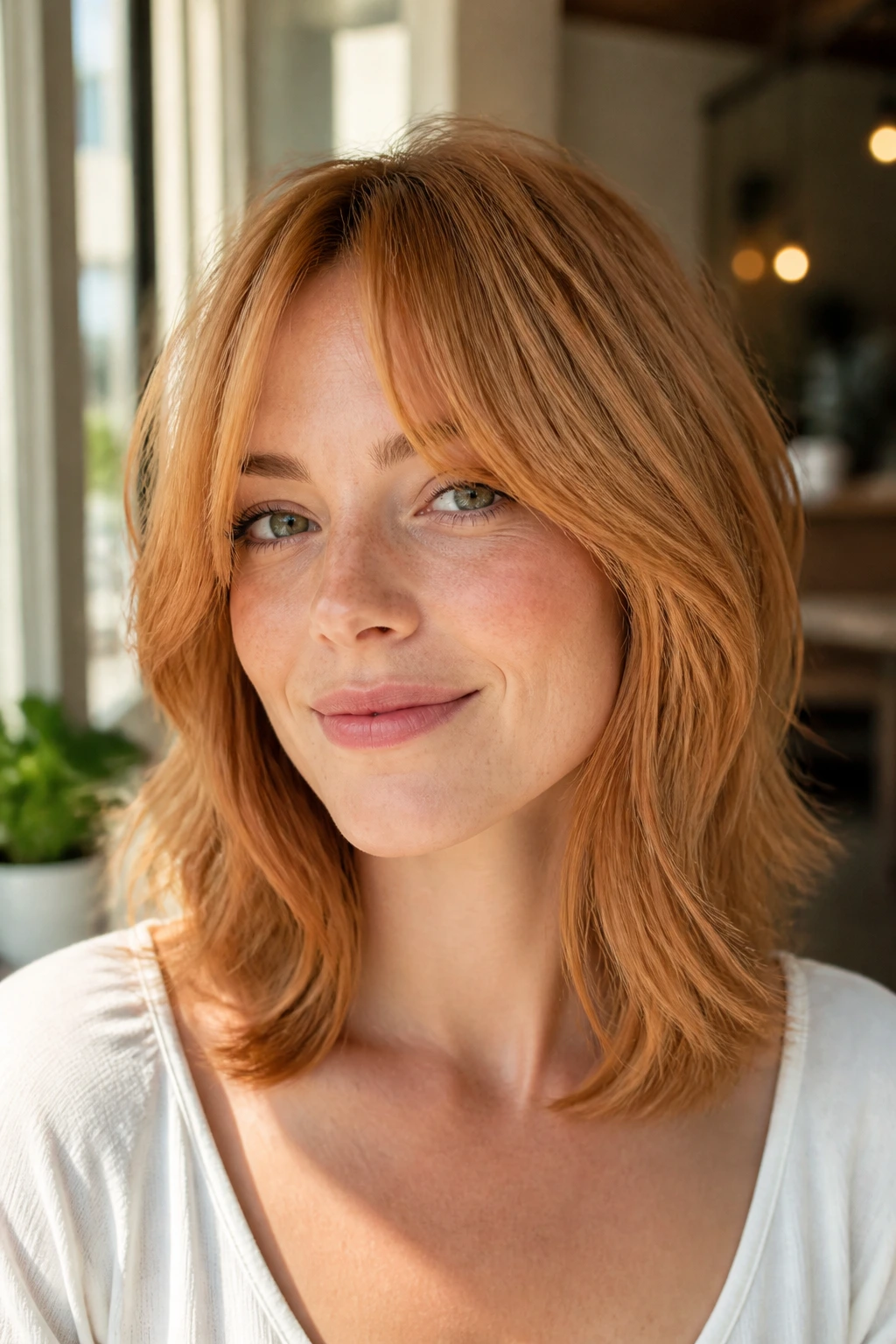
Strawberry blonde gives this cut a softer, more sunlit feel than a deeper copper. At collarbone length, the hair still has enough mass to look full, but the shag layers keep it from hanging like one long curtain. Curtain bangs help, too. They split the front and create the illusion of more hair than you actually have.
This is one of the easier red shag haircuts for fine hair because it doesn’t ask the hair to do too much. The color adds brightness around the face, and the length gives you enough room to tuck or flip the ends if you want a little shape. I like this cut when someone wants red hair without the drama of a short crop.
The bangs should start around the bridge of the nose and open toward the cheekbones. That soft arc is what makes the cut feel balanced. If the fringe is cut too short, the whole thing can look jumpy in a way that fine hair rarely enjoys. Keep the ends slightly uneven, then rough-dry with your fingers for a lived-in finish.
3. Burnt Copper Pixie Shag With Tapered Nape
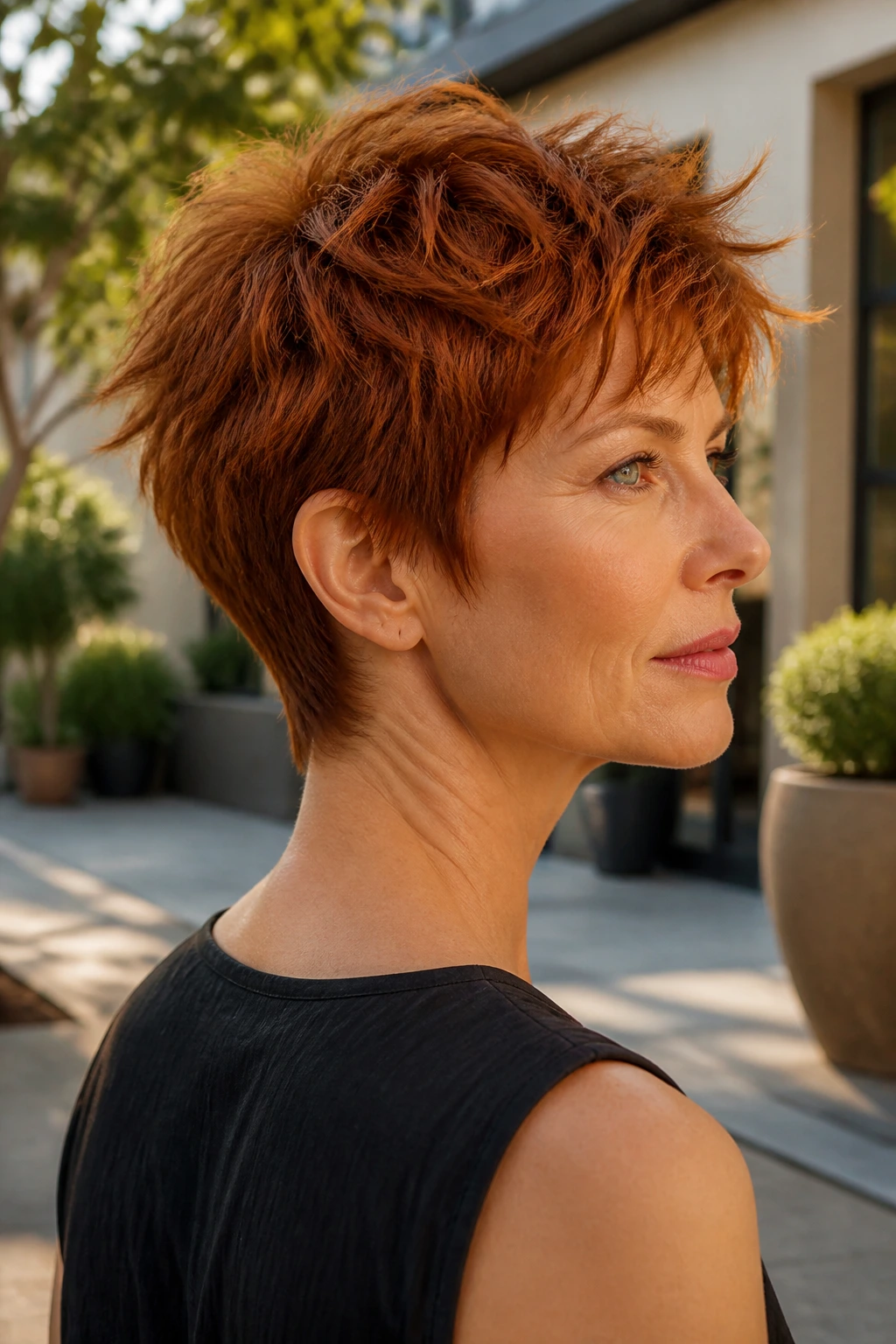
If your hair is soft and limp at the back, this is a smart little cut. The tapered nape keeps the neckline neat, while the shaggy top gives you height where you need it most. It looks a bit tougher than a classic pixie, which is exactly why it works.
Picture this: the sides hug the head, the crown has short, choppy layers, and the top pieces fall forward with a broken texture. That shape gives fine hair a thicker read without demanding a lot of length. It also dries fast. Very fast.
What to Ask For
- A tapered nape that sits close to the neck
- Crown layers cut to create lift, not spikiness
- A soft, side-swept fringe instead of a blunt baby bang
- Point-cut ends so the top looks feathered, not carved
A little matte paste at the roots is enough. Work it in with your fingertips, then push the top forward and slightly sideways. Do not overload this cut with shine serum. It can flatten the top in a matter of minutes.
4. Auburn Lob Shag With Soft Side Part
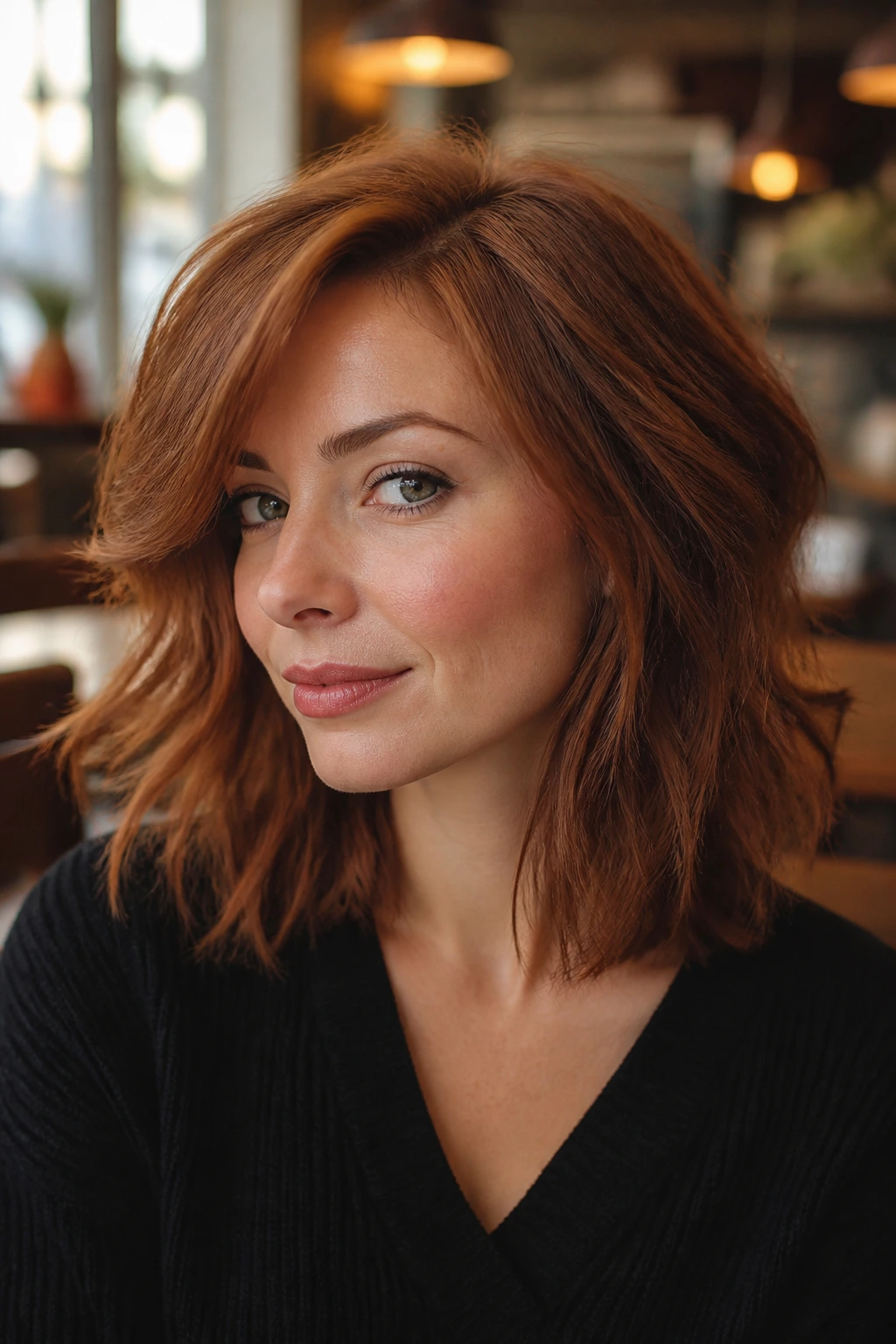
An auburn lob shag is the safest place to start if you want movement but do not want to lose much length. The side part is the quiet hero here. It creates an instant lift at the root, and on fine hair that lift matters more than almost anything else.
The auburn tone helps the layers show without looking loud. It reads rich, not flashy. There’s enough warmth to brighten pale skin, enough depth to stop the cut from feeling thin, and enough softness that the shag lines never look hard. That’s a hard balance to get right.
A lob shag like this is best when the layers begin below the cheekbone. If they start too high, the ends can go wispy in a bad way. Keep the base around the collarbone, then ask for movement only through the mid-lengths. A round brush isn’t required, but if you use one, curve the front pieces away from the face for a gentle bend. That one move makes the whole cut feel fuller.
5. Cinnamon Shag With Micro Fringe
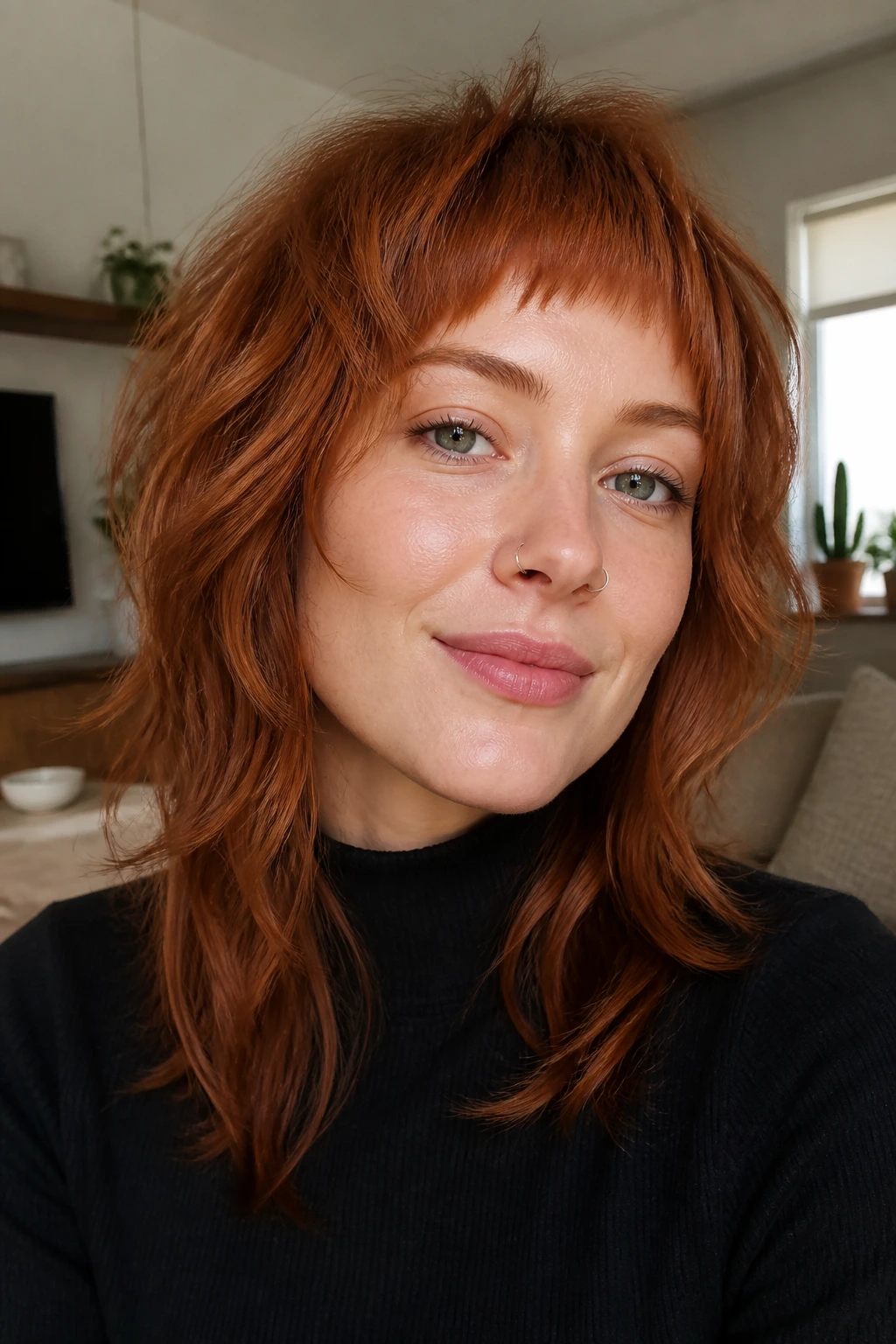
Why does a micro fringe look thicker on fine hair? Because it breaks up a narrow forehead line without asking the rest of the haircut to do all the work. The eye lands on the fringe first, then drifts through the layers. That visual stop-and-start makes the hair seem denser.
Cinnamon red is a smart shade for this shape because it has warmth without too much brightness. The color gives the cut texture before you even touch a styling tool. On very soft hair, that matters. Hair can look flat even when the cut is good, and a warm spice tone helps avoid that.
How to Wear It
Ask your stylist to keep the fringe short but broken, never solid and heavy. Micro bangs on fine hair should look airy at the tips, almost like they were cut with a lighter hand. Pair them with shag layers that start around the brow or temple, not the crown, so the front stays the star.
This cut suits people who like a little edge. It does not pretend to be soft and sweet. It’s neat, a bit sharp, and easier to style than it looks. A small round brush and a quick pass of smoothing cream through the fringe are usually enough.
6. Ginger Shag With Flipped-Out Ends

A ginger shag with flipped-out ends feels looser than a straight shag and less polished than a lob. That middle ground is exactly why it flatters fine hair. The ends kick away from the neck, which gives the style motion even on days when your roots are sleepy.
Unlike a sleek cut, this version does not rely on smoothness to look intentional. The flip at the bottom creates shape, and shape is gold when hair has low density. You can blow-dry the ends outward with a medium round brush, or cheat with a flat iron by turning the wrist slightly as you slide through the last inch.
This cut works especially well if your hair tends to cling to the jawline. The outward bend opens the face and stops the silhouette from looking too narrow. Keep the layers soft through the crown and a touch stronger through the lower half. That balance gives you movement without making the top look sparse.
If your hair likes a little grit, this is a good one.
7. Rust Red Wolf Shag With Heavy Crown Layers
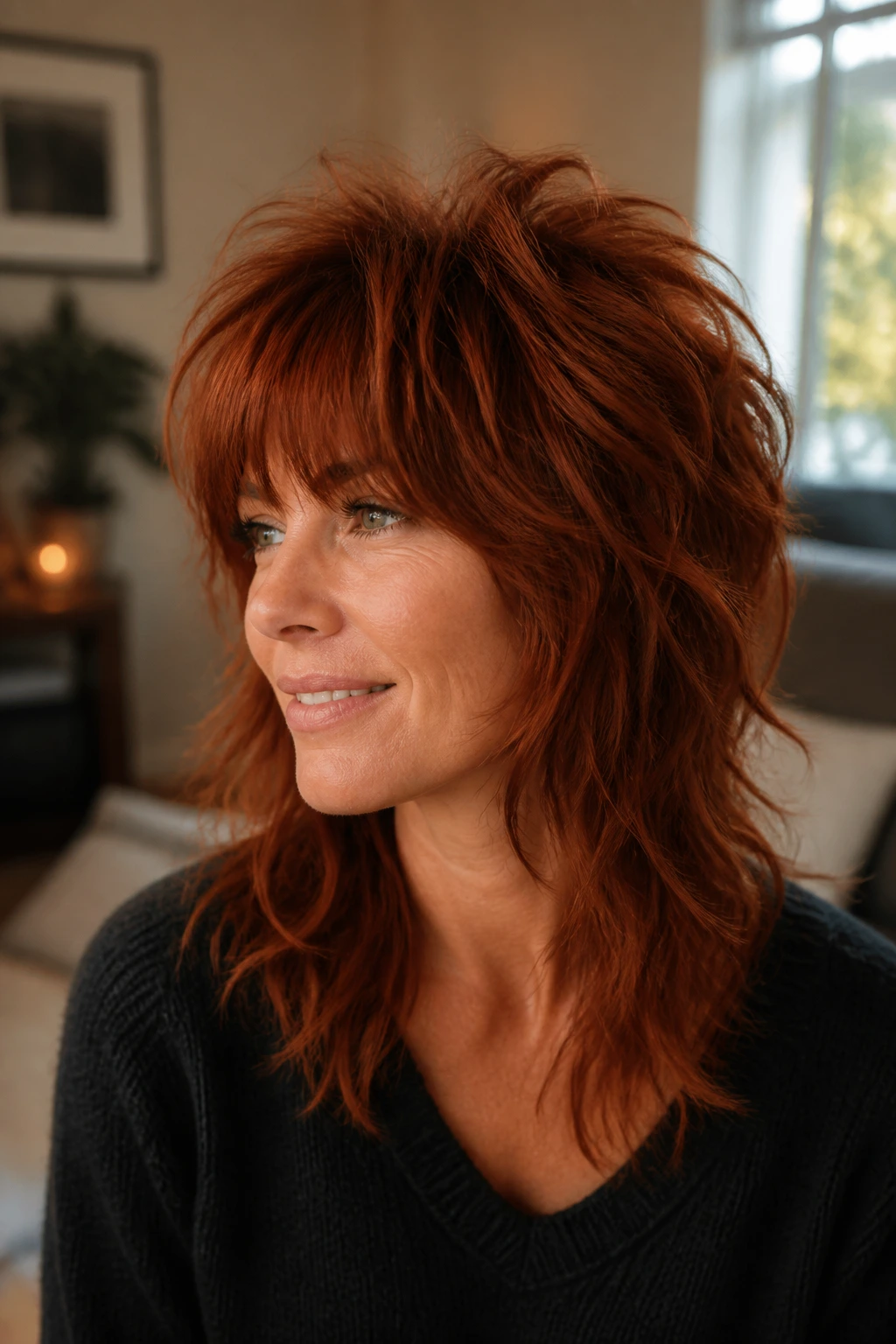
A wolf shag sounds wild, but the fine-hair version should be more controlled than most people expect. The crown gets the most lift. The sides stay feathered. The back keeps enough length to avoid the chopped-up “I cut this myself” look that can happen fast with a heavier shag.
Rust red is a strong match because it has depth and a slightly earthy feel. The tone makes the layers look thicker, especially near the crown where fine hair often needs help most. You want the top to seem plush, not fuzzy. That difference matters.
Why It Works
The crown layers should sit one to two inches shorter than the side layers, with soft tapering toward the temples. That creates a little dome of shape at the top. The bottom half stays more compact, which helps the cut keep weight. If the whole head is thinned evenly, the result can look stringy. Nobody wants that.
A little root spray at the part line will keep this cut from collapsing. Blow-dry the crown first, not the ends. The shape starts there.
8. Mahogany Shoulder-Length Shag With Side-Swept Bangs
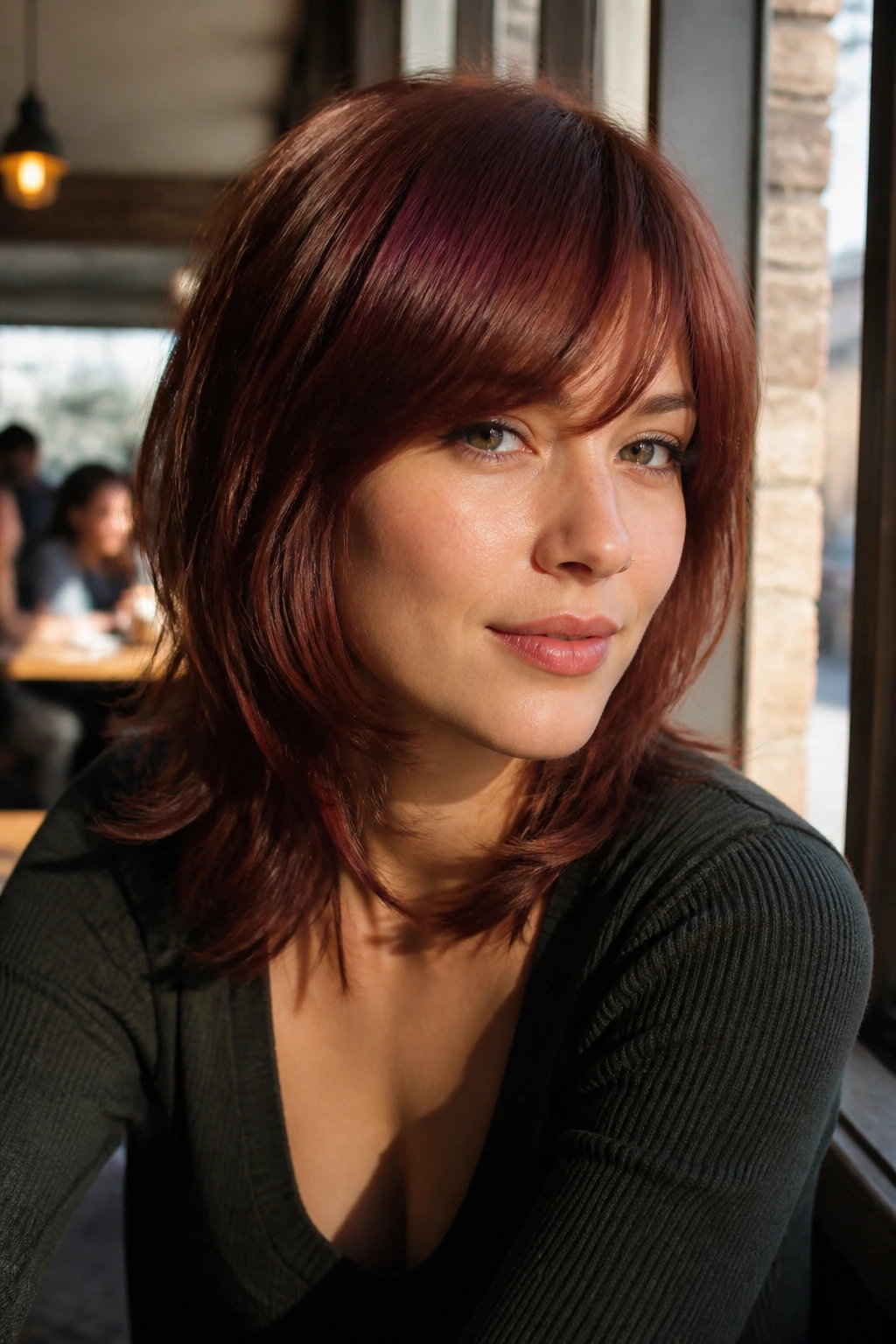
Mahogany is one of the most useful red shades for fine hair because it reads deep without going flat. At shoulder length, the cut has enough length to move, but the layers can still swing instead of droop. Side-swept bangs soften the forehead and keep the front from feeling too exposed.
This cut has a calmer personality than some of the shorter shags. That’s part of the appeal. It suits someone who wants the shag shape but doesn’t want the messier, punkier edge. The layers should be feathered through the cheekbone and lightly through the collarbone, so the hair bends rather than breaks.
A rough dry works well here. Pull the bangs across the forehead with your fingers while the rest of the hair dries naturally, then use a round brush only on the front pieces if they need a little curve. Do not overwork the ends. On fine hair, too much brushing can make the haircut lose its body before you leave the house.
9. Copper Money-Piece Shag With Airy Ends
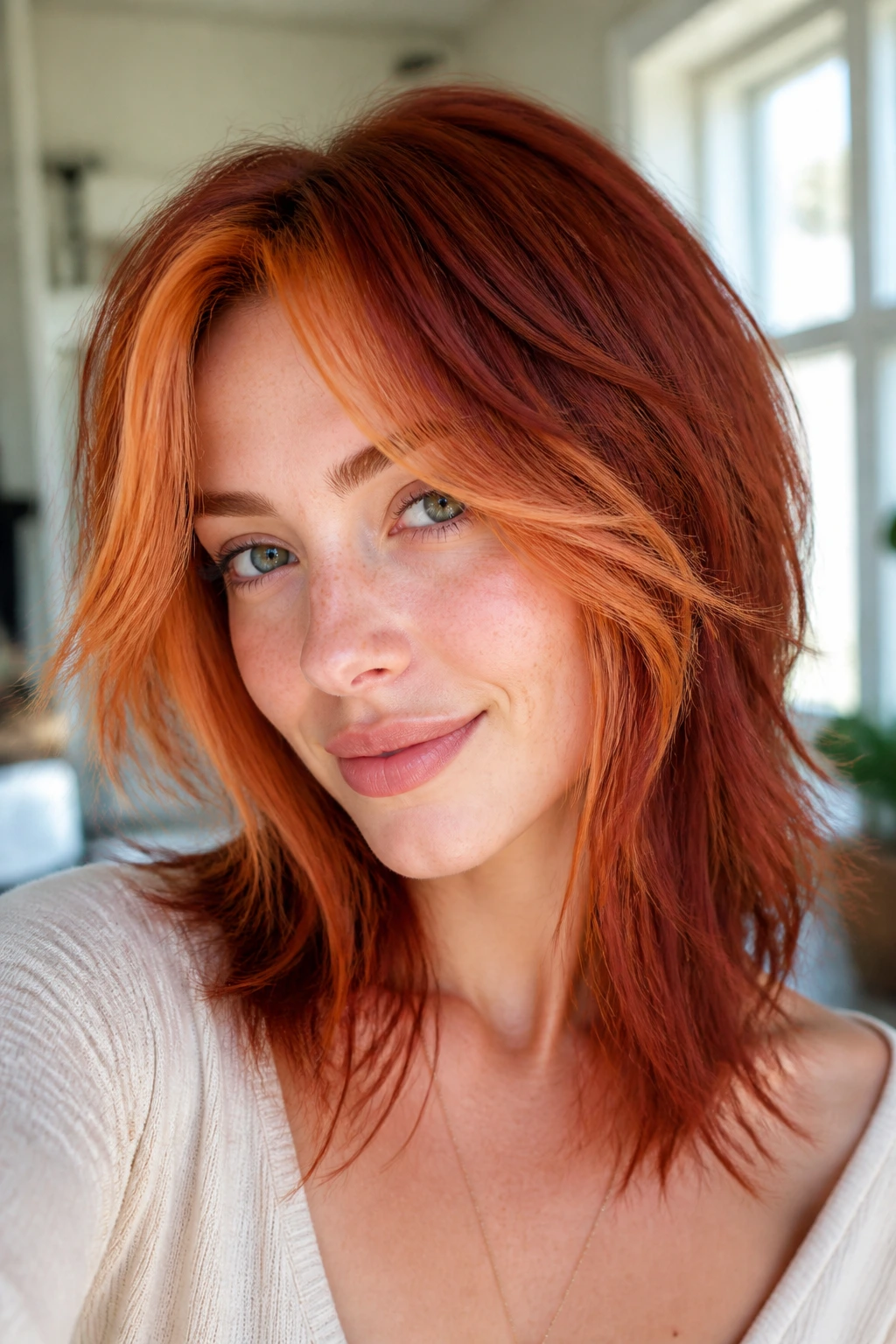
A money-piece shag puts the brightest red right where people look first. That front brightness can make the whole haircut appear fuller, especially if the rest of the hair is a softer copper or strawberry tone. The contrast draws attention to the layers instead of the scalp.
Imagine a shag with lighter copper ribbons around the face, then slightly deeper red through the back. Fine hair benefits from that kind of color placement because the eye reads dimension, even when the density is modest. It’s a useful trick, and it’s prettier in person than it sounds on paper.
The face-framing pieces should begin around the cheekbone and fall just past the jaw. Keep them feathered at the bottom so they don’t look chunky. If your hair is fragile, ask for subtle lightening only around the front; too much bleach on fine strands can leave the ends tired and see-through.
This one is a good match for anyone who wants brightness without a full all-over high-maintenance color job.
10. Red Shag Haircuts for Fine Hair: Bright Red Wavy Shag With Diffused Texture

A bright red wavy shag is the loudest cut in the group, but it can still be wearable on fine hair if the texture is kept soft. The waves do most of the work. The color does the rest. Together, they create a look that feels full, even if the hair itself is light.
How to Get the Wave to Hold
Start with a mousse that has a touch of grip. Apply it from roots to mid-lengths on damp hair, then scrunch lightly with your hands. A diffuser on low heat helps the wave set without blowing it apart. If you rough-dry too hard, the top can go frizzy and the ends can lose shape.
Keep the layers medium in length, not ultra short. Bright red already pulls attention; the haircut should support that, not compete with it. The goal is soft movement, not puffy volume. A little bend around the cheekbones and jawline is enough.
This cut is strongest on naturally wavy hair, though it can be coaxed on straight hair with a curling wand and a light touch. Leave the ends out of the iron for a lived-in finish. That little bit of slack keeps the shag from looking too done.
11. Wine-Red Shag With Bottleneck Bangs

Wine red gives a shag a deeper, richer look than copper or scarlet ever could. It’s a darker shade, so it can hide a little sparseness at the roots while making the ends look more plush. Bottleneck bangs are the right match because they add softness in front without swallowing the face.
The shape of the bangs matters here. They start shorter in the center, then curve longer toward the cheeks. That frame works especially well if your hairline is a bit uneven or your forehead needs a softer line. On fine hair, this fringe also creates movement around the eyes, which keeps the cut from feeling heavy.
This is one of those styles that benefits from a little bend rather than a straight finish. Use a medium brush or a large curling iron on the bang sides, then leave the center a touch piecey. If the fringe is too polished, the whole haircut can look stiff. And stiff is the enemy here.
It’s a chic shape, but not fussy. That’s the sweet spot.
12. Rosewood Shag With Soft Face-Framing Layers
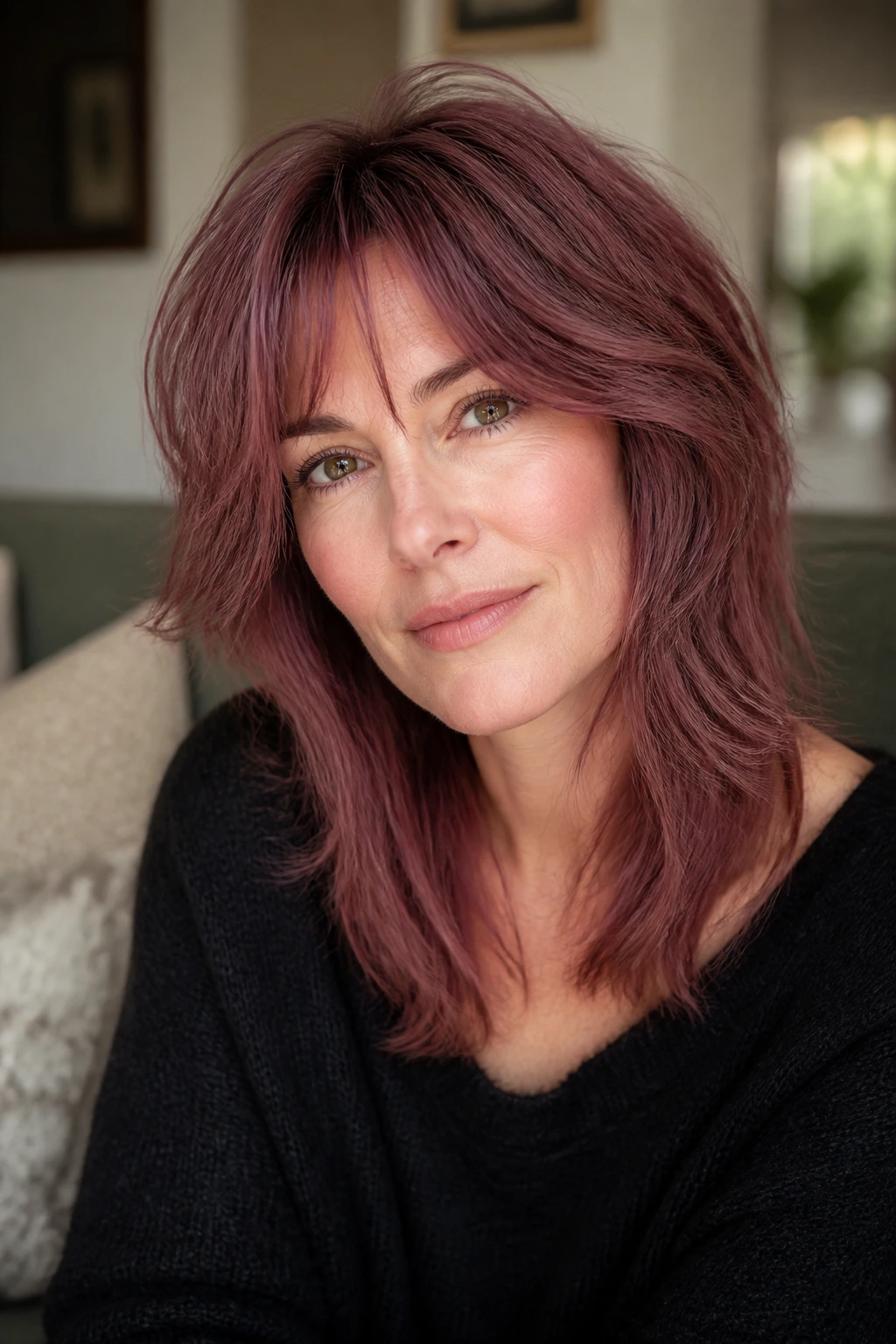
Rosewood is a quieter red, more muted than cherry and softer than burgundy. If you want red without shouting about it, this shade makes sense. The shag itself stays gentle, too, with face-framing layers that fall in front of the cheekbone and taper toward the collarbone.
Unlike a sharper shag, this one feels almost brushed-out and airy. The softness is the point. Fine hair often looks best when the layers are visible but not too jagged, and rosewood helps because the color gives enough dimension on its own. You do not need a wild cut to make it interesting.
I like this version for round and oval faces. The front pieces can be kept a little longer, which stretches the face visually. A tiny amount of shine cream on the ends will help the color look smooth, but keep it away from the roots. Root product and red tones can get greasy-looking fast if you pile them together.
This is the cut for someone who wants a pretty, easy red shag without edge for the sake of edge.
13. Cherry Shag With Blunt Perimeter
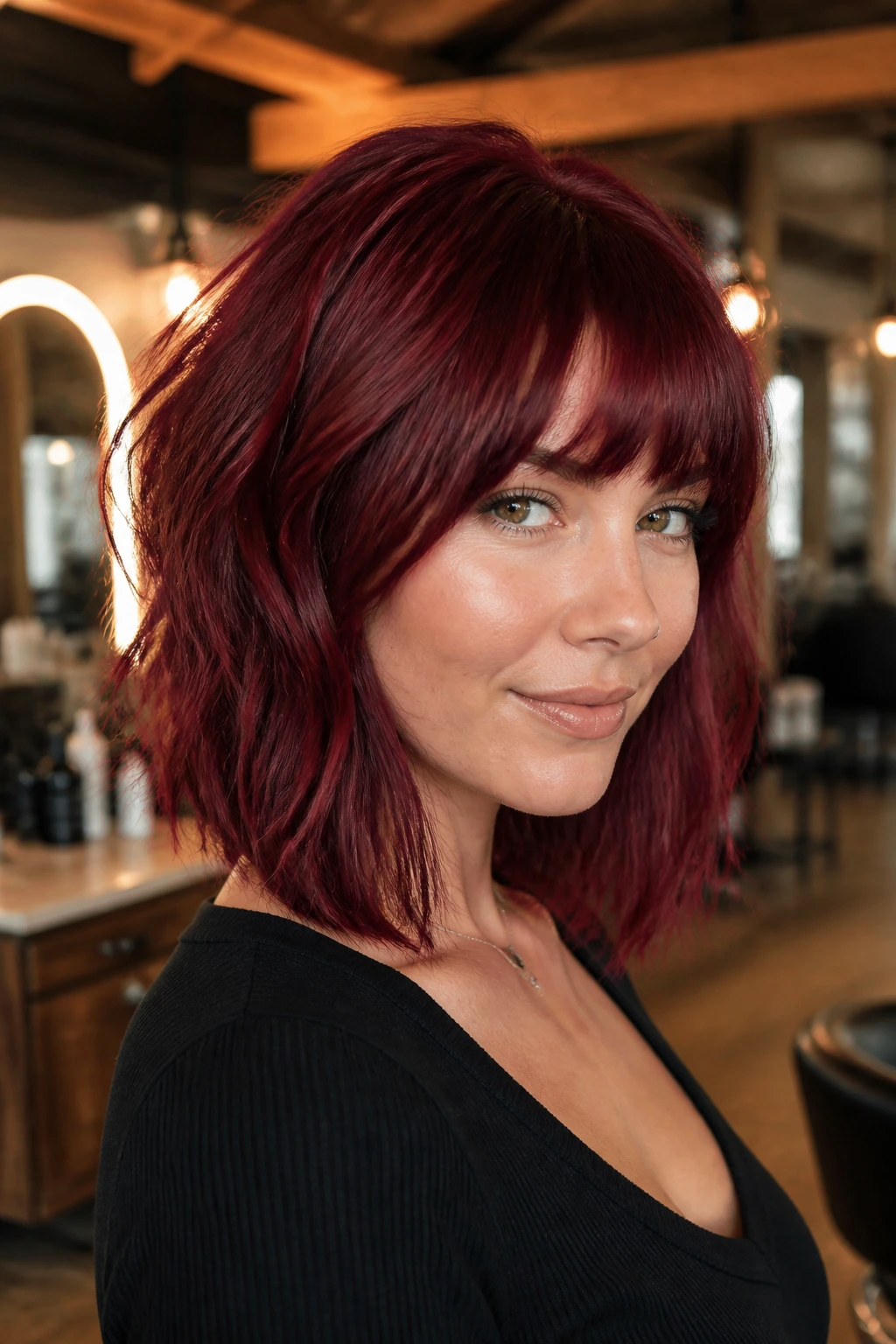
Cherry red can go from cute to sharp in a hurry, and the blunt perimeter is what keeps it from looking flimsy. Fine hair often needs a solid edge somewhere in the haircut, and this is where that edge lives. The shag layers sit above it and through it, but the base line stays clean.
Why the Blunt Edge Matters
A blunt bottom line gives the eye a place to stop. That makes the rest of the cut feel fuller. If the perimeter is too razored, the ends can disappear, especially when the hair is straight or freshly blow-dried. The bluntness does not need to be severe. Just neat.
Ask for the lowest layers to stay modest and the top layers to move more. That way, the cut keeps density at the bottom while still feeling shaggy around the head. Cherry red makes this shape pop because the color is bright enough to show the line without making it look heavy.
A smoothing brush works better than a big round brush here. The idea is sleek at the base, loose through the crown. That contrast is what makes the cut feel modern without looking trendy for the sake of it.
14. Scarlet Shag With Short Crown Layers
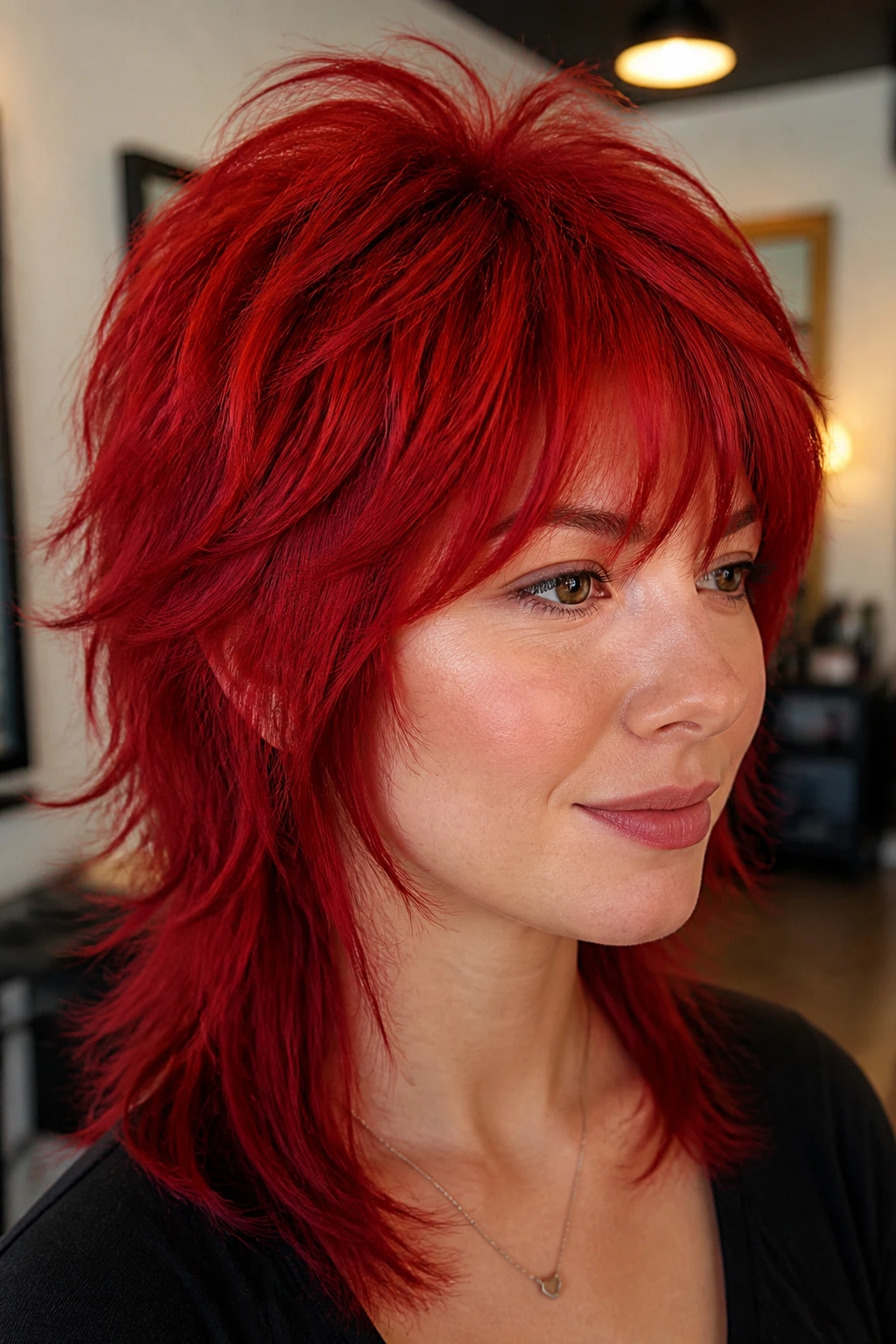
Why does crown length matter so much on fine hair? Because that’s where lift either happens or dies. Short crown layers can give scarlet red hair a real push at the top, which keeps the whole cut from lying flat against the scalp.
Scarlet is a bright, warm red, so the haircut should not be overcomplicated. A few well-placed layers around the crown and temples do more than a dozen tiny ones would. The top should feel light enough to move, but not so chopped that the hair separates into little ribbons.
How to Style It
- Blow-dry the roots first, lifting them with your fingers.
- Set the crown with a velcro roller for 10 to 15 minutes if you want extra height.
- Use a light spray wax on the ends, not the roots.
- Keep the sides a touch longer so the head shape stays balanced.
This cut is for someone who likes a little drama at the top and does not mind a bit of maintenance. It’s quick, but not lazy. There’s a difference.
15. Auburn Shullet for Very Fine Hair
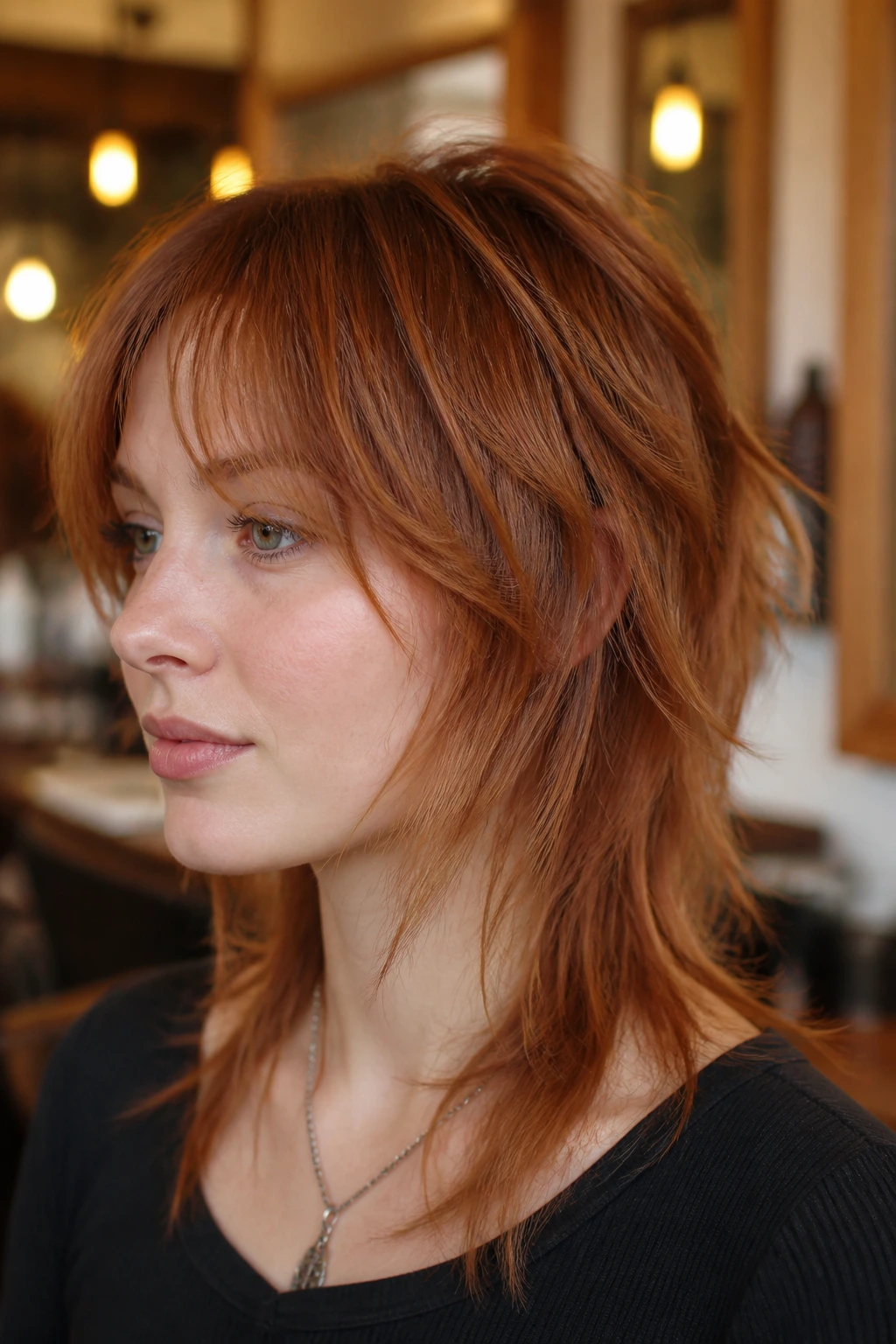
A shullet sounds risky until you see it cut properly. The front and sides keep the shag softness, while the back stretches a little longer for attitude. On very fine hair, the trick is to keep the disconnect gentle. Too much contrast and the ends look stringy; too little and the shape disappears.
The auburn tone helps because it gives the haircut warmth and depth along the longer back sections. That matters. Fine hair can look thin when it hangs all one length, but auburn color makes the movement more obvious. The back should graze the nape or just hit the collarbone, never dangle far past it unless the hair has a lot more density than most fine heads do.
Ask for soft point cutting around the face, not a harsh choppy line. A shullet should feel cheeky, not hacked. One small dose of texture cream at the mid-lengths is enough to keep the shape separated. If the product goes everywhere, the cut can lose its swing and start sticking together in awkward clumps.
This is for the person who wants some edge and still wants hair that moves.
16. Chestnut-Red Shag With Long Face-Framing Pieces
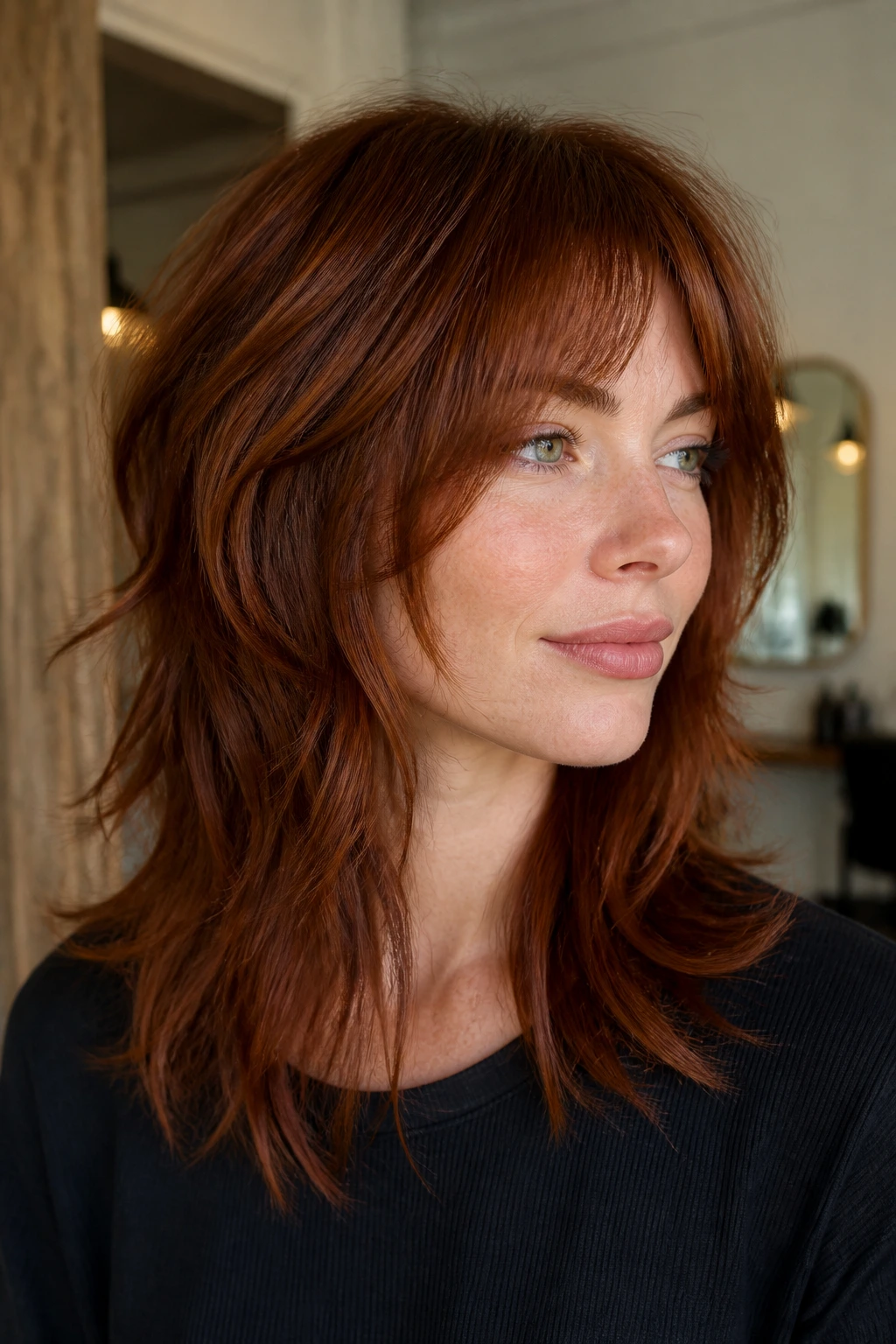
Chestnut red is a friendly shade. It has brown depth under the red warmth, so it usually looks smoother on fine hair than brighter copper. Long face-framing pieces make this cut feel more relaxed, and they also help if you’re nervous about losing length.
The shag here is quiet. The best version keeps the shortest layers around the cheekbone and lets the longest front pieces graze the collarbone. That gives the cut shape without making the ends look thin. Fine hair can get swallowed by too much layering, so the long front pieces are not a nice extra — they’re part of the balance.
This style works well with a 1.5-inch curling iron used only on the mid-lengths. Wrap the hair away from the face on one side, toward the face on the other, then brush it out lightly once it cools. That mixed direction keeps the layers from merging into one flat shape. If you like a softer finish, stop there. If you want more grit, add a touch of texture spray under the top layers.
17. Cider Red Shag With Feathered Bangs
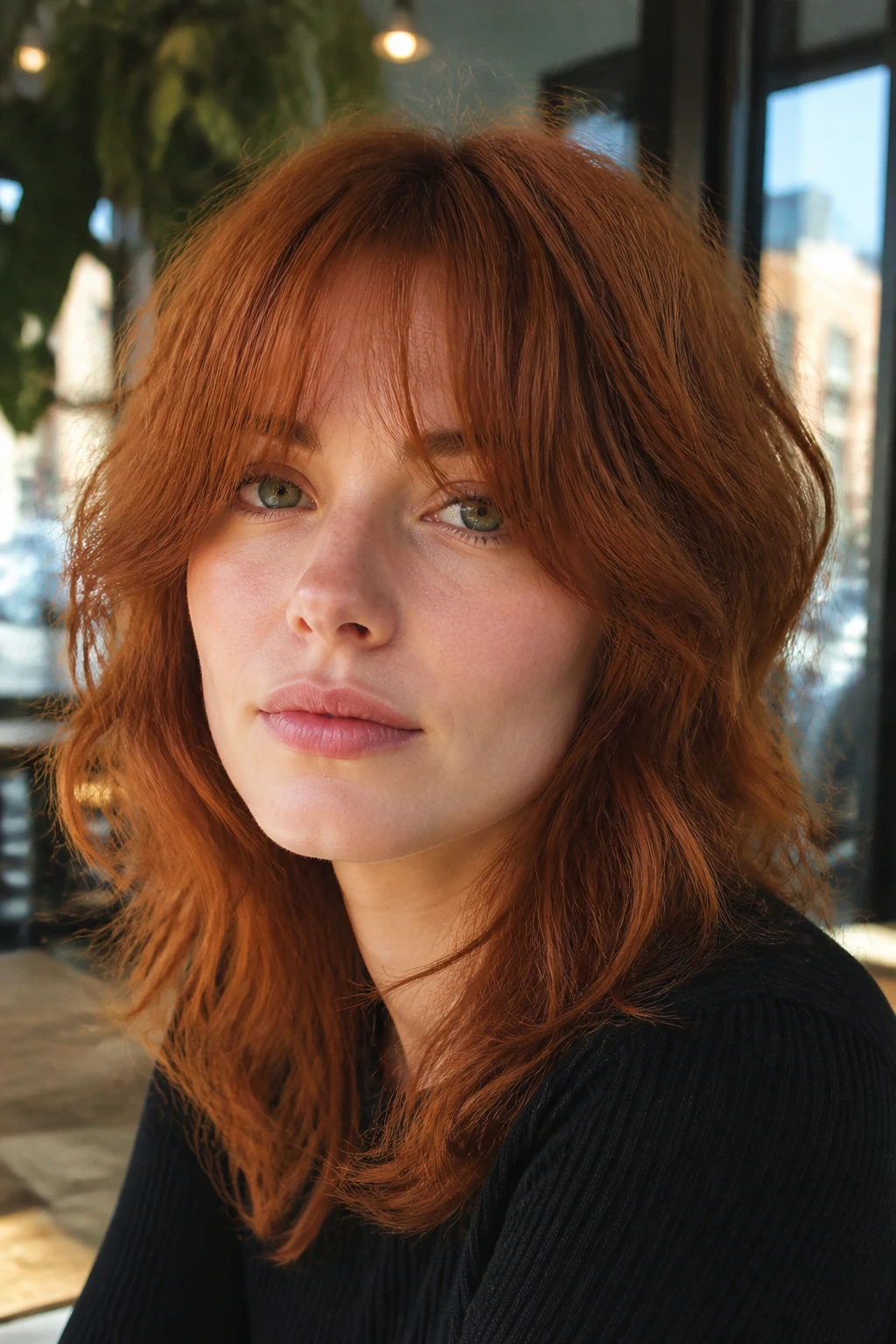
Feathered bangs can be fussy — or they can be the one detail that keeps a fine-hair shag from feeling plain. The cider-red shade helps because it sits in that warm, slightly golden range that makes feathering show up without screaming for attention.
The bang section should be light and split a little in the middle, with the sides tapering toward the temples. That creates a soft frame without blocking the eyes. On fine hair, feathering around the forehead is useful because it opens up the cut while hiding any patchiness at the front hairline.
What to Watch For
Do not drown this style in hairspray. The feathered effect only works when the bangs stay touchable. A light mist at arm’s length is enough. If you shellac the front, it can go flat and stiff by midday, which is exactly what this kind of cut is trying to avoid.
The rest of the shag can stay loose and medium-long, especially if your hair is prone to tangling. That gives you movement without making the ends fight each other every time you turn your head.
18. Merlot Shag With Soft Taper
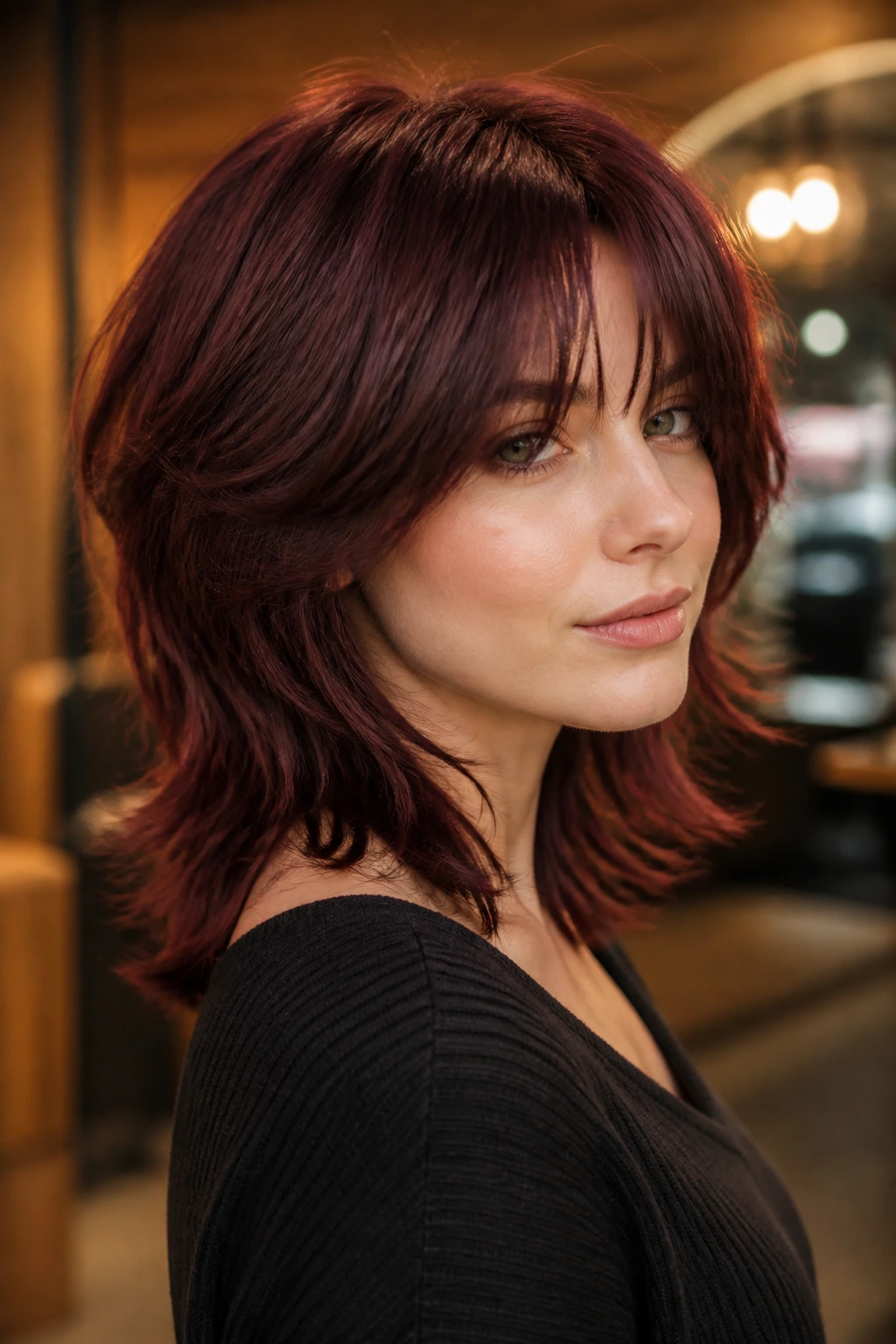
Merlot red gives fine hair a richer, denser look than lighter reds do. It has that darker wine quality that absorbs a little light and makes the hair appear fuller near the base. A soft taper keeps the shag from becoming too heavy at the bottom.
This cut is a clean answer for anyone who wants red hair that reads a bit grown-up. The taper should begin below the cheekbone, not right under it. That detail keeps the layers from poofing around the face. The perimeter can stay just past the shoulders, which helps the hair keep some swing.
Unlike a brighter copper shag, this one depends more on finish than color contrast. A shine serum on the ends works well because merlot tones look dull fast if the surface is rough. Keep the product light and use only half a pump. Fine hair can go limp in a hurry when you pile on too much.
It’s a polished version of the shag. Still textured. Just less rowdy.
19. Warm Copper Shag With Long Lengths
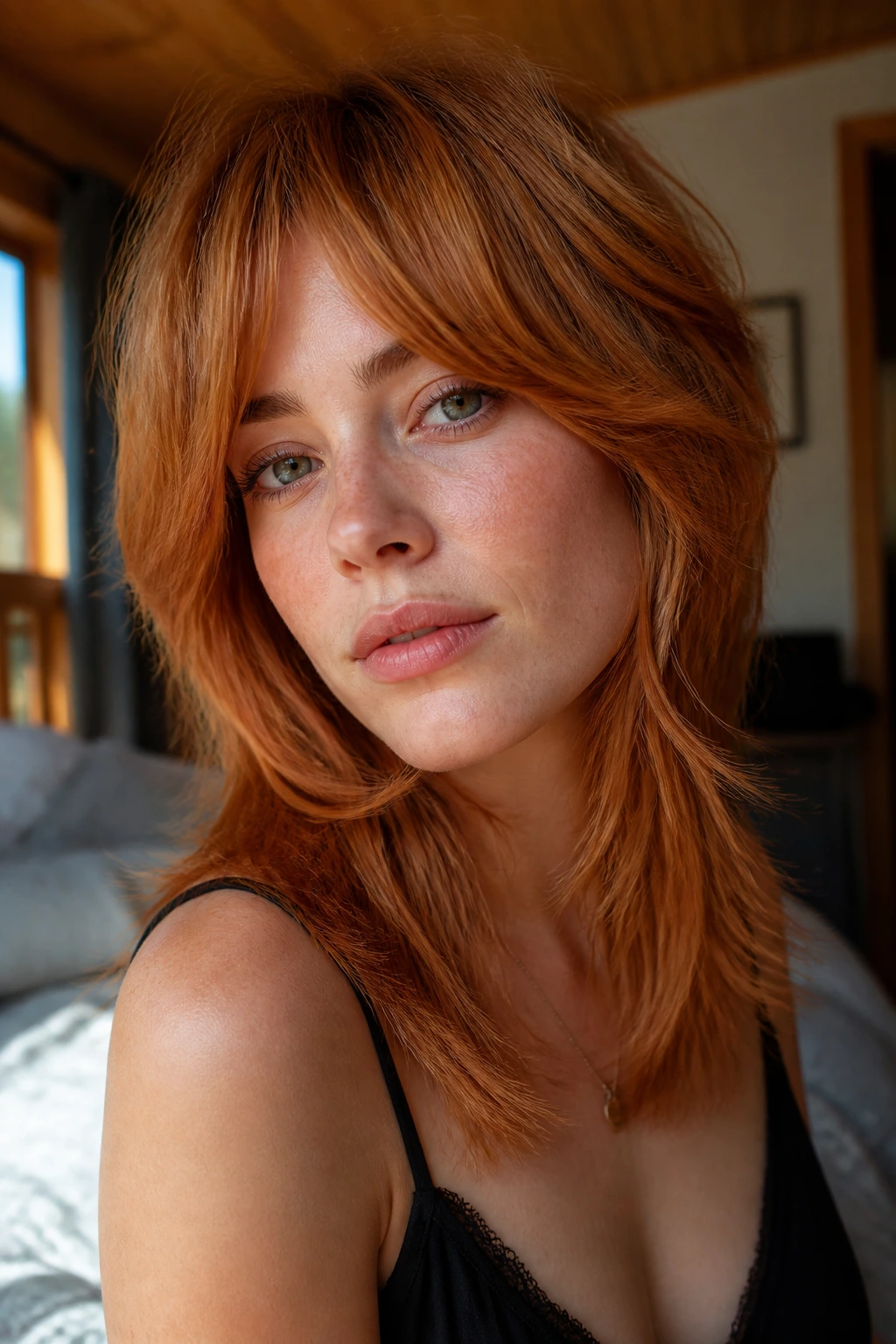
Not everyone wants short hair, and that is fine. A long copper shag lets you keep length while still getting the lift and movement that fine hair usually lacks. The key is where the layers start. If they begin too high, the ends can look scraggly. If they begin too low, the shape gets sleepy.
How to Keep It Full
Keep the first real layers around the collarbone or just below it. That gives the front pieces enough strength to hold their own. The back can stay longer, with a soft taper that removes bulk without taking away all the weight. This is the version to choose if you wear your hair up often and still want it to look good down.
A wide-barrel curling iron can help, but don’t curl every section the same direction. Alternate the bends and leave the last inch straighter. That little variation keeps the haircut from turning into a uniform wave, which tends to flatten fine hair once it cools.
Copper makes the movement obvious. Long or short, the cut reads best when the layers are not too tidy.
20. Red Shag Haircuts for Fine Hair: Deep Burgundy Shag With Lived-In Texture
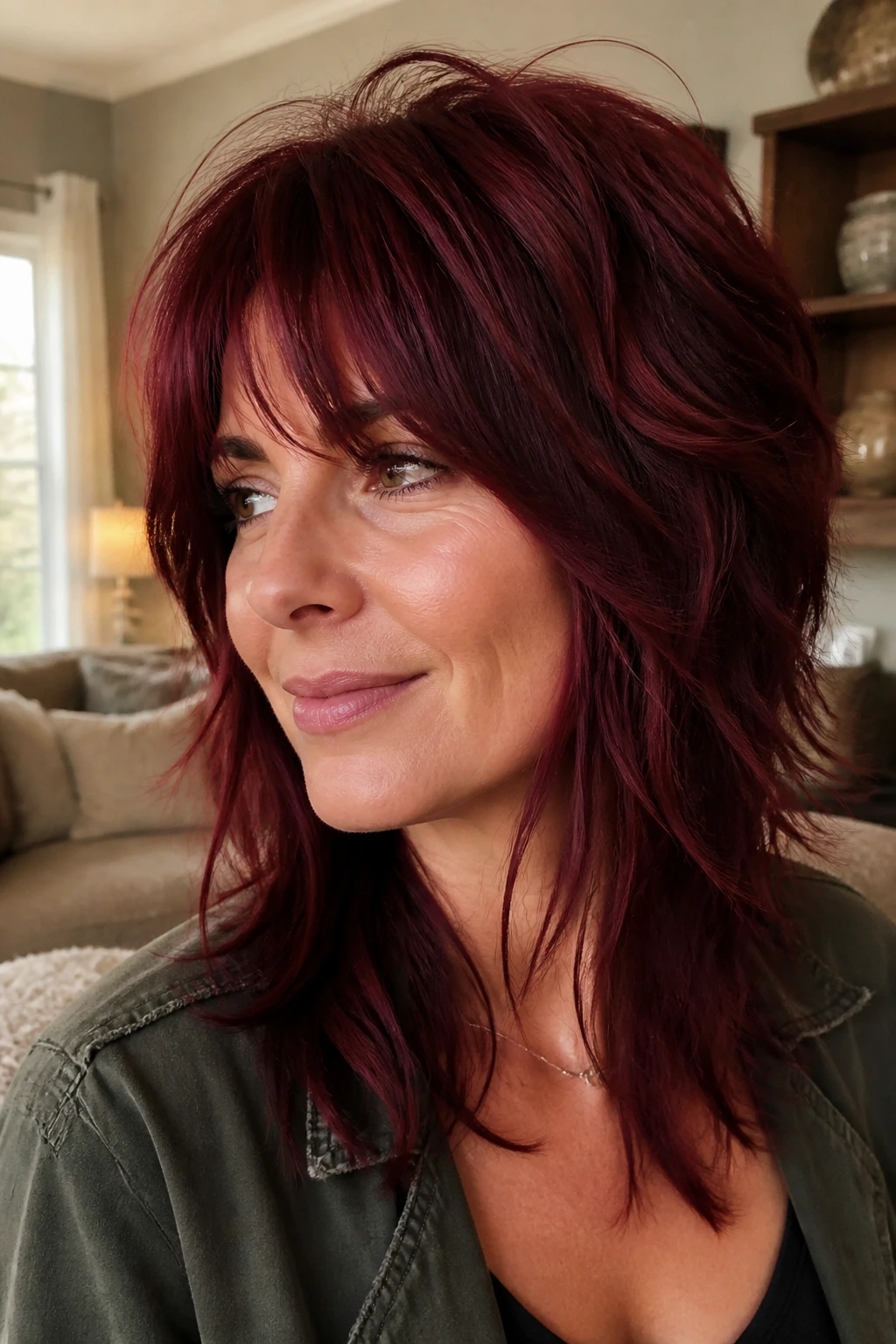
Deep burgundy is the last cut on this list, and it might be the easiest to wear if you want a shag that looks fuller without a lot of obvious styling. The dark red tone adds depth, while the lived-in texture keeps the finish from looking too neat or too precious.
This is one of the better red shag haircuts for fine hair when the goal is density. Darker burgundy shades reduce the see-through effect that light reds can sometimes show on very soft strands. Pair that with a medium-length shag, and you get a shape that feels plush around the face and lighter through the ends.
Ask for layers that move through the crown and cheekbones, but keep the bottom edge a little solid. That stops the haircut from going wispy at the longest points. A soft wave set with a 1-inch iron or a quick bend from a flat iron works well, but don’t chase perfection. A few uneven pieces make the cut look more natural, and on this texture, natural is the whole point.
If you want the red shade that hides a little and shows a little, this is the one I’d keep coming back to.
