



Fine hair can wear a shag. It just can’t wear a careless one.
That’s the real difference here. A good textured shag haircut for fine hair gives you lift at the roots, movement through the sides, and enough shape at the ends that your hair still looks like hair — not a few airy strings trying to stay attached to your head. The trick is restraint. Too many short layers, too much razor work, or a crown that gets thinned to death, and the whole thing can tip into limp and see-through fast.
The best shag cuts for fine hair usually share the same quiet little secret: they keep some weight where the eye needs it, then add softness where the hair needs motion. Point-cutting, curtain fringe, soft face-framing pieces, and long internal layers do most of the heavy lifting. You get the lived-in shape people want from a shag, but with enough density left behind to make the cut feel deliberate instead of fragile.
And yes, the wrong shag can make fine hair flatter. The right one can do a lot with very little. The styles below keep that balance in mind, from short and cheeky to long and airy, so you can pick a version that suits your length, your styling patience, and how much volume you actually want to chase in the mirror each morning.
1. Soft Textured Shag Haircuts for Fine Hair with Curtain Fringe
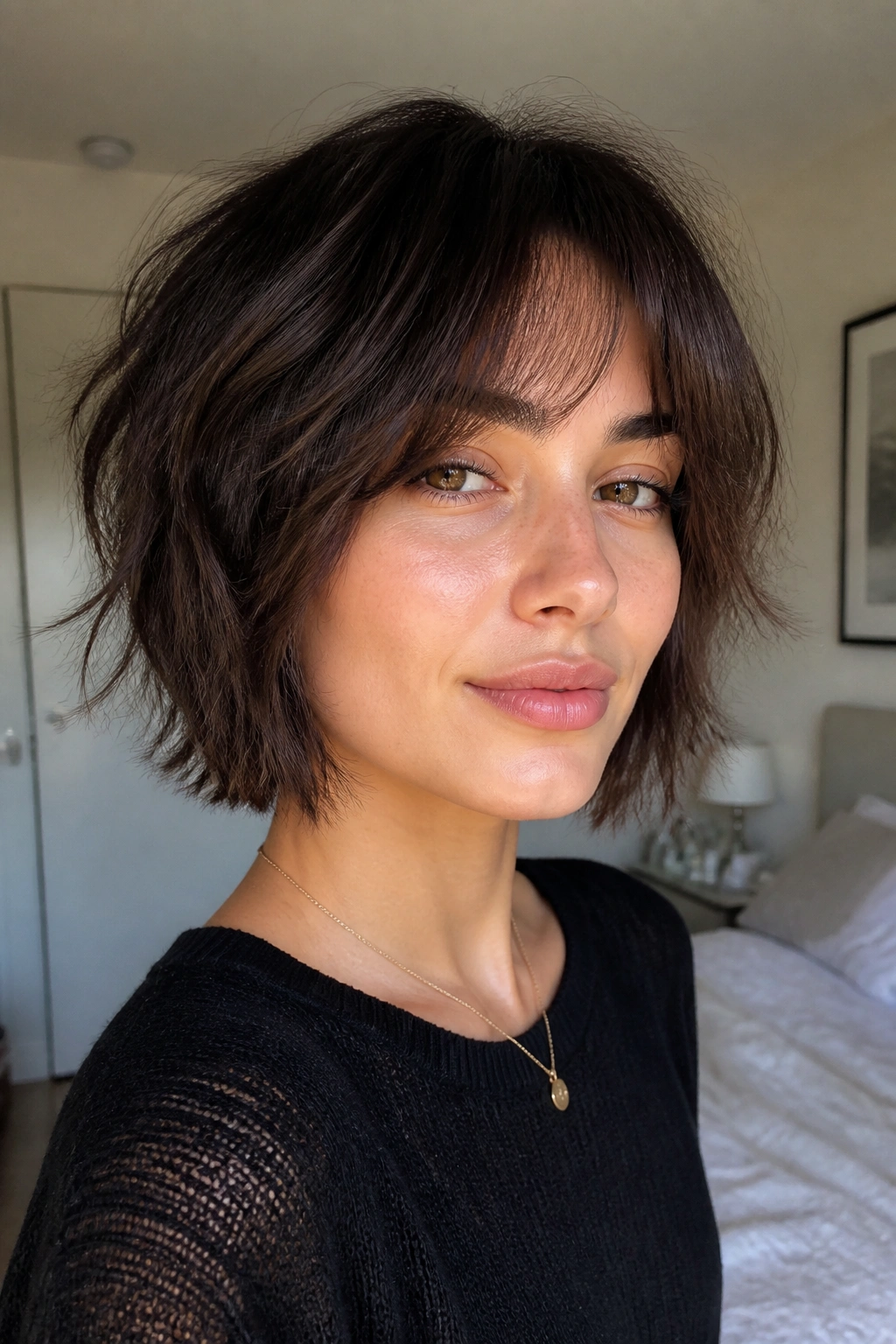
This is the shag I’d hand to someone who wants movement without drama. The length sits around the chin or just below it, which gives fine hair enough mass to look full while the curtain fringe opens the face and adds lift right where flat hair usually gives up. It’s a smart cut, not a loud one.
Why It Works
The fringe helps create the illusion of density at the front, and the layers stay long enough that the ends don’t go wispy. Ask for soft, blended layers that begin around the cheekbone and stay out of the bottom inch or two. That keeps the perimeter from looking shredded.
A quick styling pass with a 1-inch round brush or a large curling wand is enough. Bend the fringe away from the face, then let the rest fall a little undone. Fine hair usually looks better when it moves, not when it’s forced into perfect curls.
- Best length: chin to collarbone
- Best part: slightly off-center or soft middle part
- Best styling product: lightweight mousse at the roots
- Best trim schedule: every 6 to 8 weeks
Pro tip: If your hair tends to collapse by lunchtime, keep the fringe a little longer. Shorter curtain bangs can split too fast on fine textures.
2. The Soft Wolf Cut That Doesn’t Eat the Ends
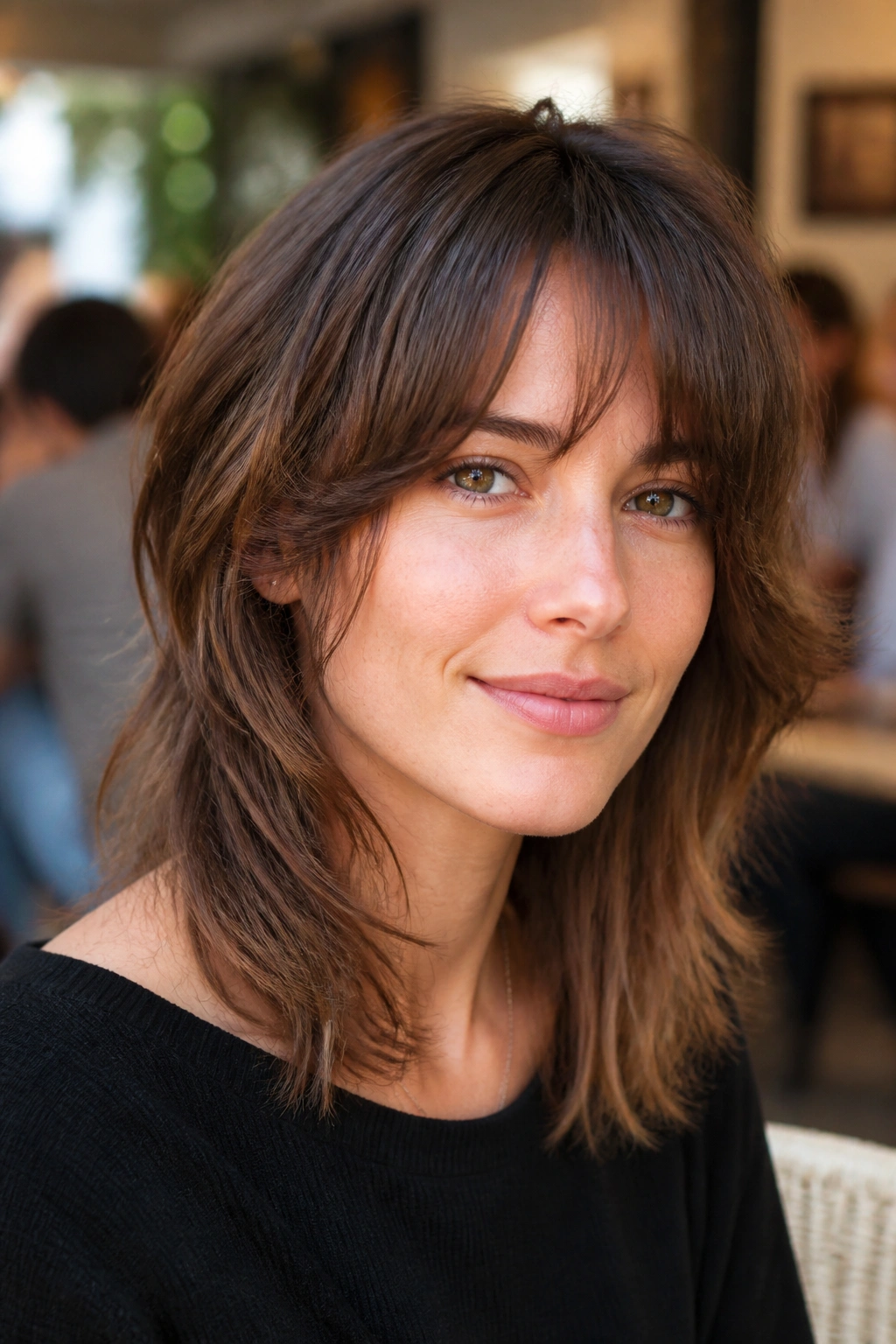
A wolf cut can be a disaster on fine hair if it’s taken too far. Too much crown removal, too much gap between the top and the bottom, and you’re left with a head shape that feels unfinished. The soft version solves that by keeping the layers connected and the outline intact.
What I like here is the attitude. The cut still has that rough, slightly rebellious energy, but the edges remain believable. Ask for longer, blended layers through the crown and only a little internal texture near the top. The nape should stay soft rather than aggressively chopped.
This version works well if your hair already has a bit of bend. Air-dried waves make it look even better. Straight hair can wear it too, but you’ll want a root-lifting spray and a little bend with a flat iron or wand. Skip heavy creams. They drag fine hair down fast.
3. Collarbone Shag with Face-Framing Pieces
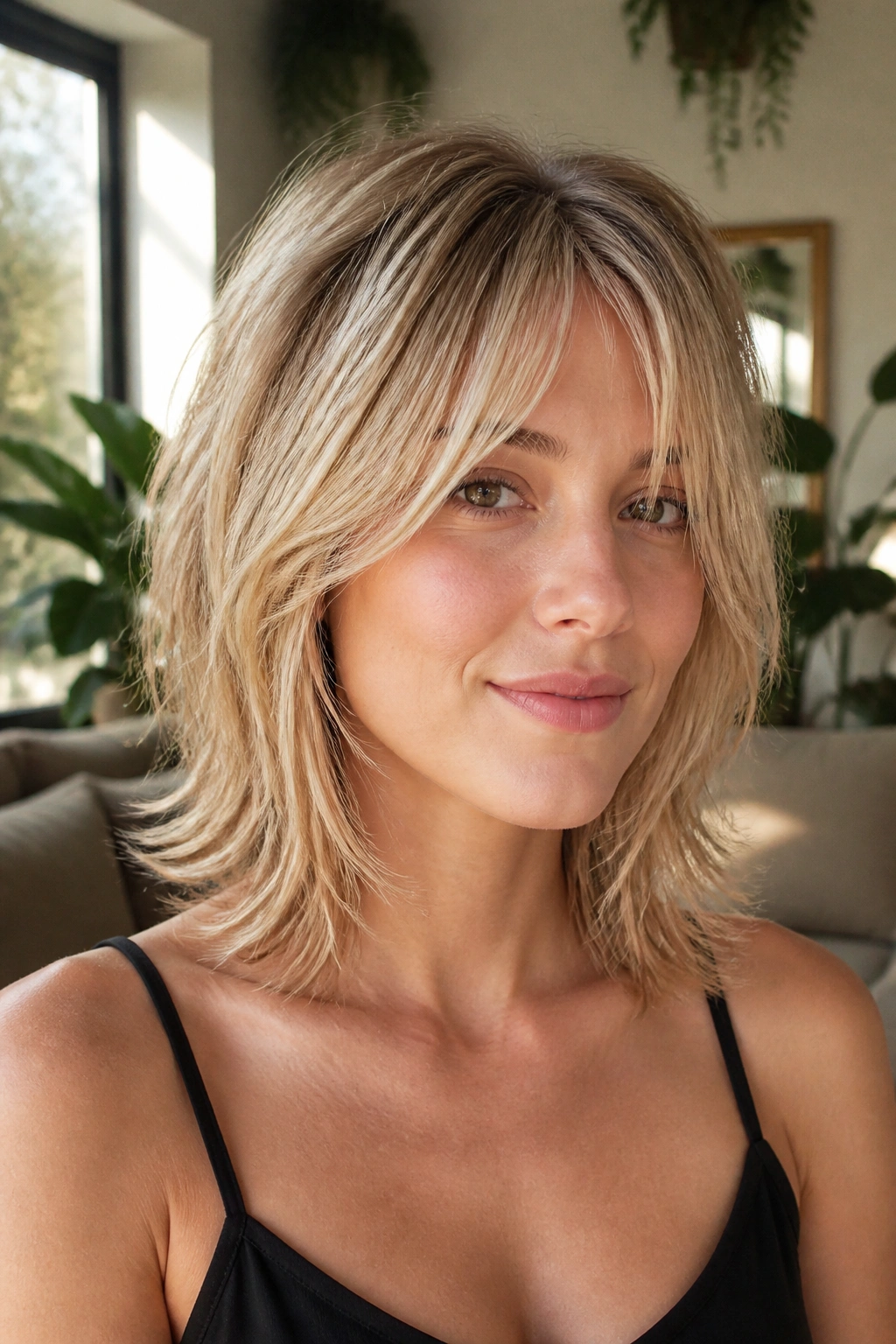
Why does this one keep showing up in good salons? Because collarbone length is a sweet spot for fine hair. It gives you enough heft to avoid that see-through, fluttery look while still feeling light and airy.
The face-framing pieces do most of the visual work. They should start around the cheekbone or mouth, not right at the jaw, so the front opens up without creating a hole through the sides. Ask for longer internal layers rather than short disconnected ones. That matters more than people think.
How to Style It
Use a volumizing spray at the roots, then rough-dry until the hair is about 80 percent dry. Finish with a medium brush, turning the front pieces away from the face. You do not need a polished blowout here. A little bend is enough.
A collarbone shag also grows out well, which is useful if you hate living at the salon. That softness around the shoulders keeps the shape from turning into a triangle when it gets a little longer.
4. Shoulder-Length Shag with Airy Ends

Picture hair that moves when you turn your head, but still has a solid outline at the bottom. That’s the appeal of a shoulder-length shag with airy ends. It keeps enough density through the perimeter to look healthy, while the textured layers break up the bulk so the style doesn’t sit like a block.
The easiest mistake is over-thinning the very ends. Don’t do it. Fine hair needs a little edge weight, or the cut can look broken in daylight. Ask your stylist to soften the ends with point-cutting rather than taking out too much length.
- Good for straight to softly wavy hair
- Works with side parts or center parts
- Needs a light blow-dry cream, not a rich cream
- Looks best when the ends flip slightly outward
One thing I’d watch: if your hair is very fine, keep the layers below the jaw. Short layers can make the top look busy and the bottom look empty. That’s the opposite of the effect you want.
5. The Pixie Shag for Fine Hair That Wants Lift
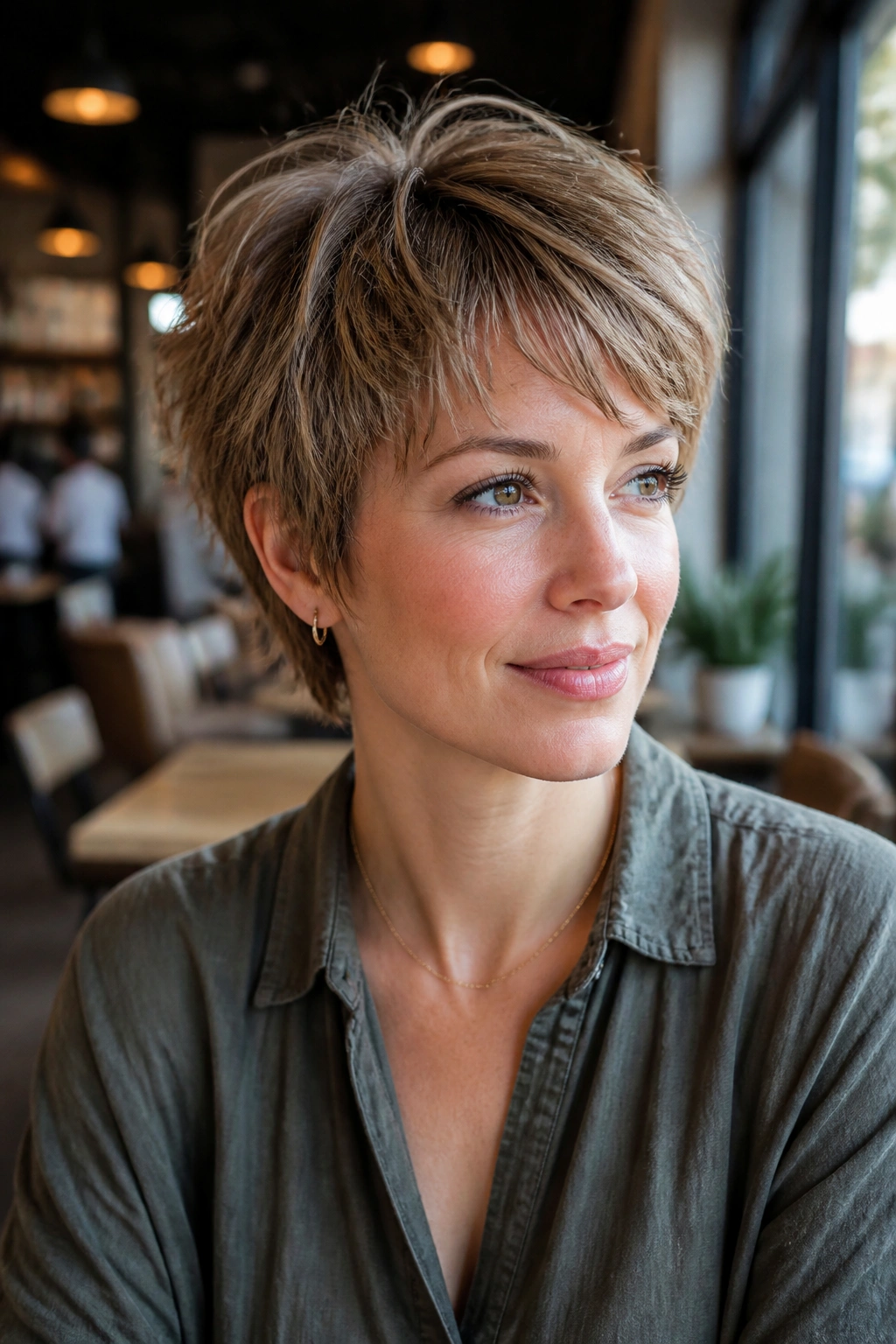
Short hair and fine hair can be a great match, but only if the cut respects the hair’s softness. A pixie shag does that when the crown has enough length to lift and the sides are tapered without being stripped bare. The result feels airy, but not sparse.
This cut is for someone who likes shape on purpose. You need a little styling, usually a pea-sized amount of paste or cream, and maybe 30 seconds with your fingers to separate the top. Ask for texture concentrated through the crown and fringe, with the nape kept neat so the outline doesn’t blur.
It’s a good option if your hair dries quickly and you’re tired of spending time on it. Fine hair in a pixie shag can look fuller than it does at longer lengths because the shorter shape makes the density you do have feel stronger. Still, don’t let anyone razor the entire head to bits. You want texture, not fraying.
6. Long Shag with Barely-There Layers

This is the one for people who want movement but refuse to give up length. The layers stay long, sometimes starting below the chin or even closer to the shoulders, so the hair keeps its weight. That weight is your friend. On fine hair, it stops the ends from looking too thin.
What to Ask For
- Layers that begin low, not high
- Soft face-framing that blends into the rest
- A fringe only if it can be kept light and long
- Minimal thinning through the ends
A long shag like this looks best when it has a little bend. A 1.25-inch curling iron or a few big Velcro rollers at the crown can wake the shape up in minutes. If you wear your hair straight every day, keep the layers subtle. The more dramatic the cut, the more obvious the separation becomes on fine strands.
My honest take: this is one of the safest shag choices for very fine hair. It gives you style without exposing too much scalp through the top.
7. Micro Fringe with a French-Girl Edge
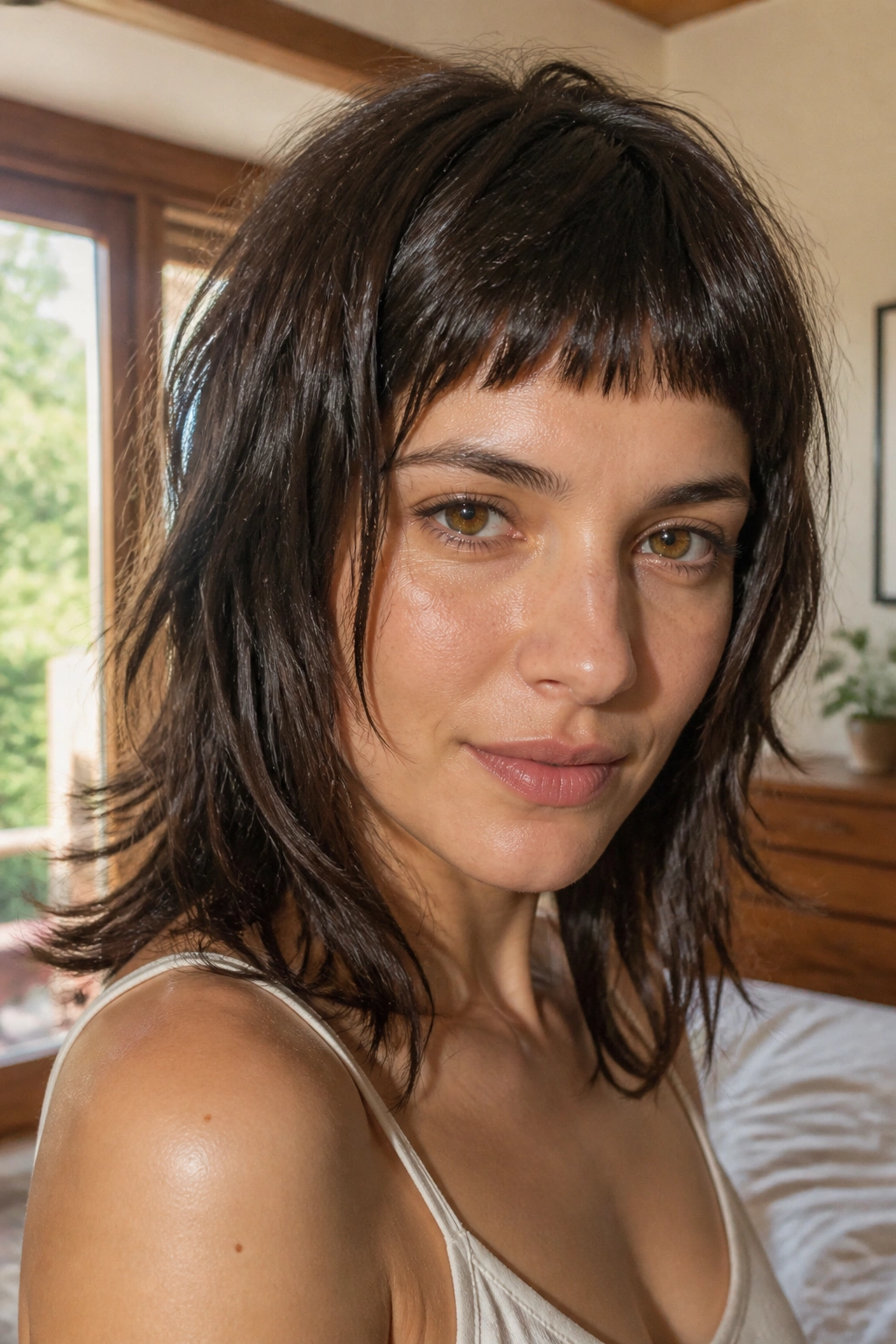
A micro fringe sounds risky, and on some people it is. On fine hair, though, it can look sharp and intentional when the rest of the cut stays soft. The key is balance. Short bangs need enough density to sit properly, so the fringe itself should be cut with care, not hacked through.
The shag around it should stay light and connected, with texture more visible in the front than the back. Ask for a short fringe that still has body and layers that don’t start too high on the head. If the crown gets too choppy, the look turns awkward fast.
This style pairs well with straight or slightly wavy hair and a little grit at the roots. Dry shampoo can be your friend here, especially if your hair falls flat by noon. It gives the fringe a bit of grip and keeps the top from sliding against the scalp.
8. Shaggy Bob with Side-Swept Bangs
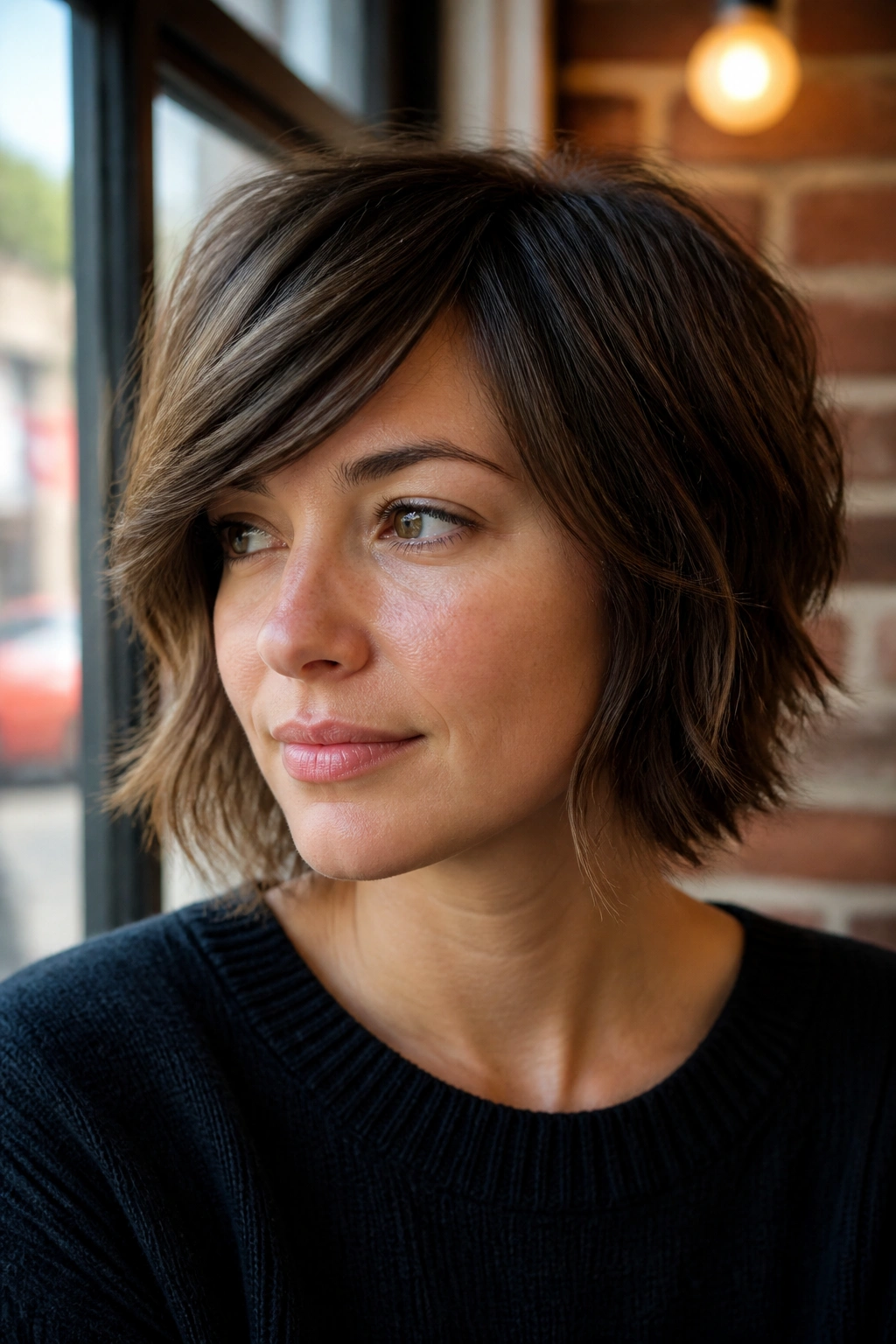
Why do side-swept bangs work so well here? Because they move the eye diagonally, and diagonal lines are flattering when hair lacks thickness. They also let you keep a little more length in the fringe area, which helps fine hair look fuller around the face.
This cut lands somewhere between a bob and a soft shag, which makes it especially good if you want texture but not a full-on choppy shape. Ask for a bob that brushes the jaw or just grazes it, then layer the front enough to give the bangs a sweep instead of a hard fall. The back should stay neat so the cut doesn’t puff out.
I like this one for people who need a haircut that styles fast. A quick blow-dry with a paddle brush and a bend at the front is enough. If you’ve got five extra minutes, wrap the bangs around a medium brush while they cool. That little trick matters.
9. Layered Midi Shag with Blunt Ends
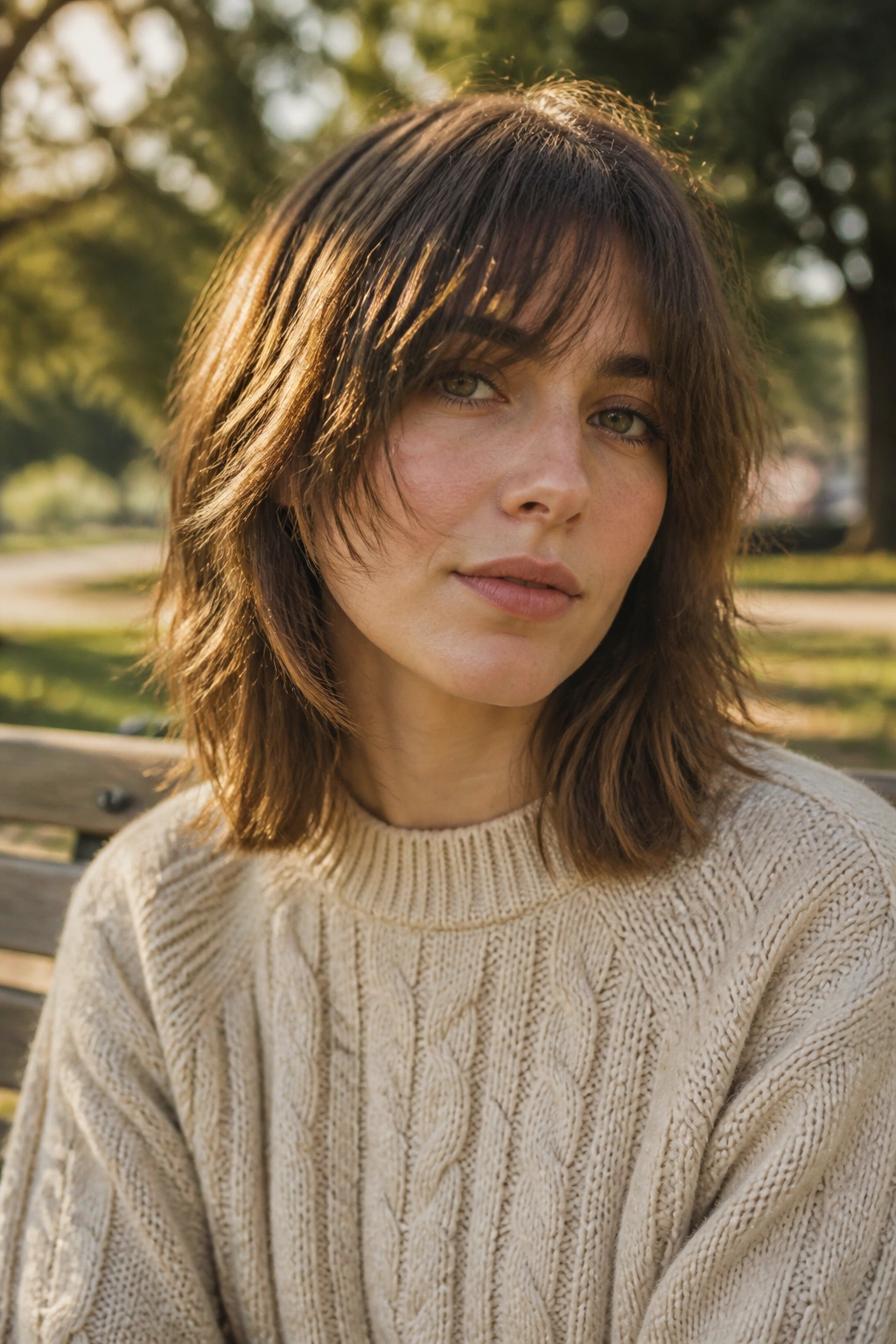
A blunt bottom edge can save fine hair. That sounds backward, but it’s true. The blunt line gives the ends a stronger visual mass, and the layers above it bring in the movement you want from a shag. It’s a useful mix, especially if your hair is medium fine rather than ultra-fine.
Think of this cut as structure plus softness. The shape is still shaggy, but the base line stays firm. Ask for a blunt perimeter with soft internal layers so the haircut doesn’t get too shredded through the bottom half. Too many short pieces underneath will steal the fullness from the outline.
Best Features
- Strong bottom line
- Layering kept mostly through the upper sections
- Works with air-drying or blowouts
- Easy to dress up with a bendy finish
There’s also a nice side effect: this version grows out without looking messy. That’s a real win if you don’t love frequent trims or if your hair grows in patchy ways.
10. Textured Shag Haircuts for Fine Hair with a Deep Side Part
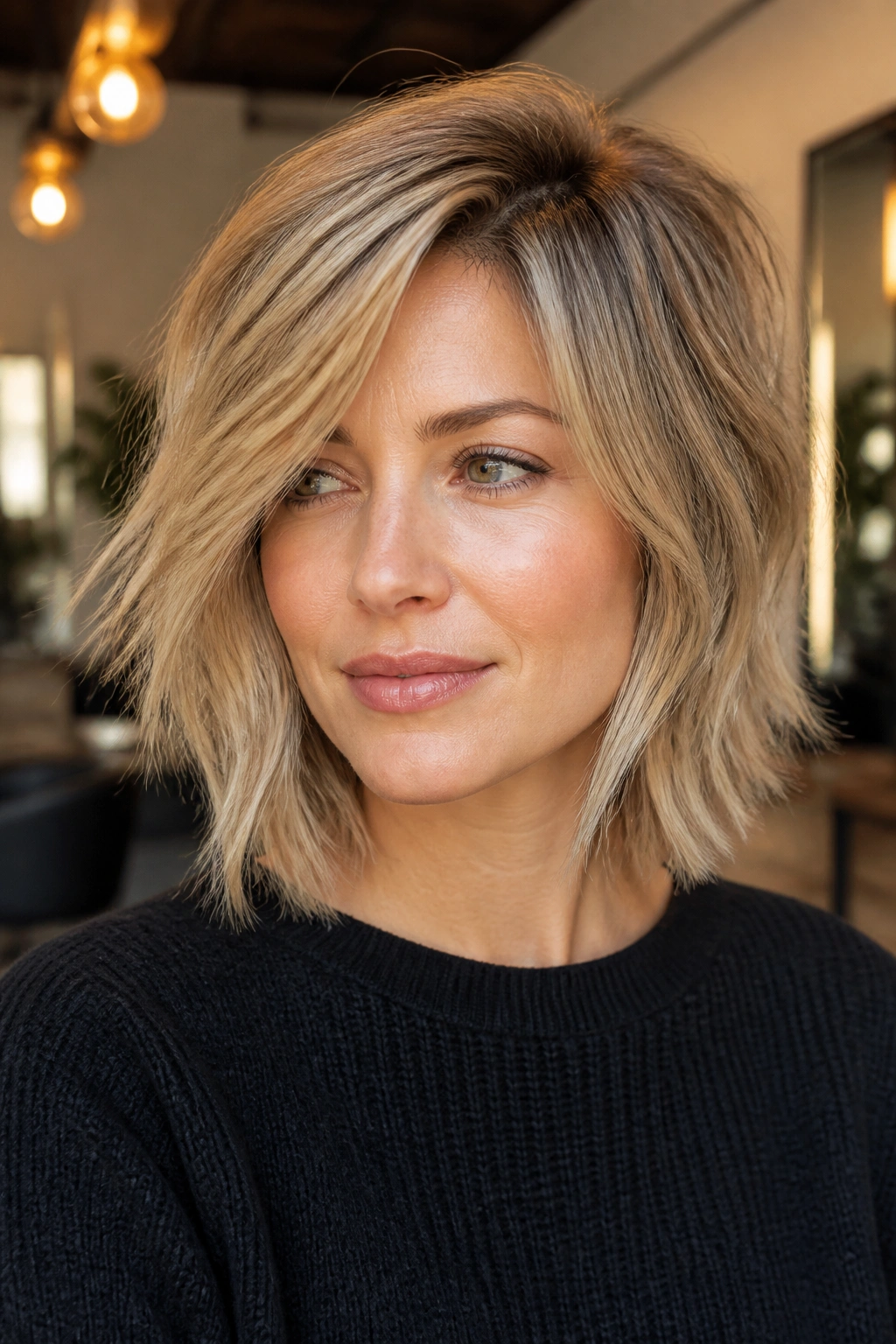
A deep side part can do more for fine hair than some people expect. It creates instant lift on the heavier side, gives the front a little drama, and makes the whole haircut feel fuller at the crown. No extra layers required.
The part shift also changes the way light lands on the hair, which matters when strands are thin. A center part can sometimes expose too much scalp if the hair is very flat. A side part softens that and makes the top look denser. Ask for layers that support the part without collapsing it, especially around the temple area.
Use a root-lifting mousse or spray, then clip the hair at the part while it cools after blow-drying. That tiny pause helps the shape hold. If you want this look to stay soft rather than stiff, keep the texture around the ends piecey and the top smooth. It’s a small detail, but it changes everything.
11. Razor-Cut Shag with Piecey Ends

A razor can be a good tool on fine hair, but only in the right hands. Used lightly, it creates airy ends and a slightly broken texture that suits a shag nicely. Used badly, it frays the hair and makes the ends look dry in a way no conditioner can fix.
The cut should feel soft, not shredded. Ask for razor work only through healthy mid-lengths and ends, never through already fragile sections. If your hair tends to split, scissors may be the better call. I’m blunt about this because it matters. Fine hair does not need extra damage pretending to be texture.
What to Watch For
- Hair that already breaks easily
- Over-thinned ends
- Too much layering near the crown
- A rough finish that looks dry indoors
If you like piecey separation, this style can be gorgeous with a little lightweight serum rubbed between the palms and pressed through the ends. Keep it away from the roots. Roots need lift. Ends need a tiny bit of slip.
12. 70s-Inspired Shag with Feathered Bangs
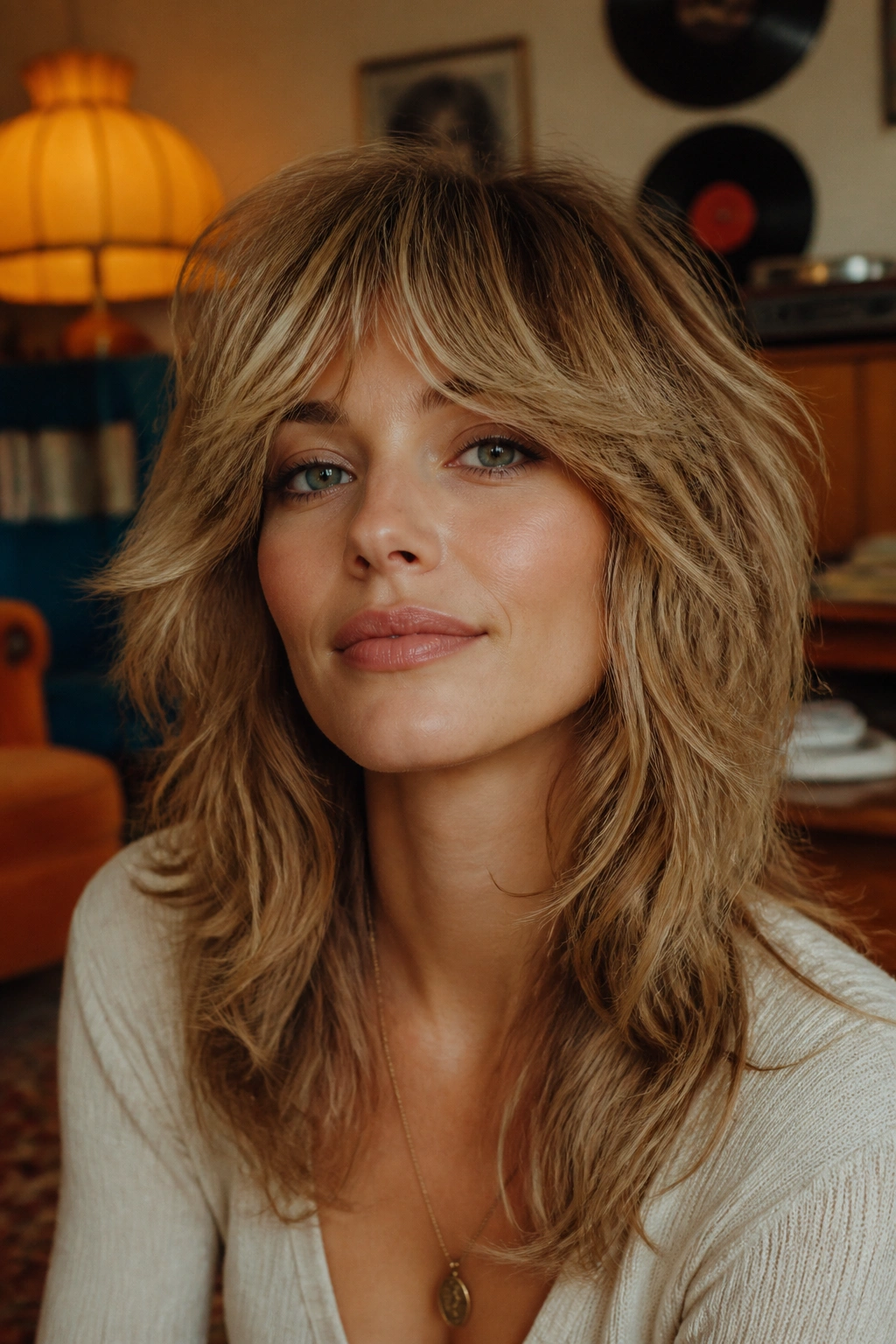
The feathered-bang shag has a lot of charm, but it needs a lighter hand on fine hair. The bangs should skim and fan out, not sit like a thick curtain. When the fringe is feathered well, it frames the face and makes the whole cut look breezy without stripping away density.
The rest of the shape should lean soft and layered, with the front pieces a little more open than the back. That gives you movement around the cheeks and keeps the silhouette from getting boxy. Ask for bangs that blend into the temple layers, so the cut doesn’t look like two different haircuts sitting on top of each other.
I love this version on hair that has a little natural bend. It takes to a round brush nicely, and even a rough finish looks intentional. Straight fine hair can wear it too, but the bangs will need a touch of styling most days. That’s the trade-off. Cute cut, small effort.
13. Wavy Fine Hair Shag with Strategic Shape
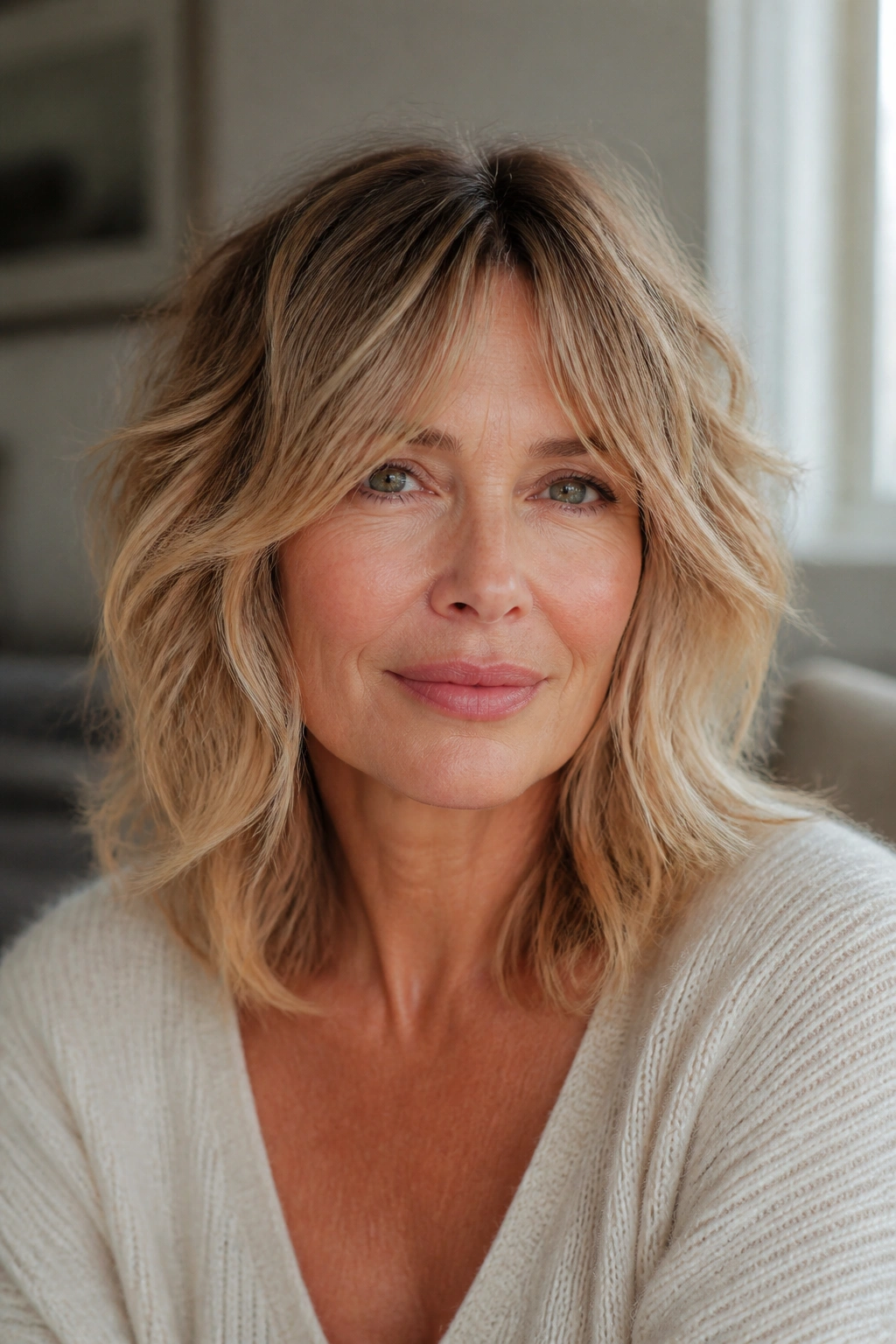
Can fine hair be wavy and still hold a shag? Absolutely. The key is respecting the wave pattern instead of cutting against it. On wavy fine hair, the shape needs to be placed where the wave naturally bends, or the cut can puff out in odd places.
This is one of those styles where the stylist should look at your hair dry, not just wet. Fine waves shrink and spread in ways that can fool people. Ask for longer layers through the sides and a soft face frame that starts at the cheekbone. If the layers begin too high, the wave can get frizzy and lose its line.
How to Wear It
Use a light leave-in and a small amount of curl cream or mousse. Scrunch once, not five times. Then leave it alone until it’s dry. Fine wavy hair hates being fussed with. The less you poke it, the better the shape tends to look.
14. Shoulder-Length Shag with Bottleneck Bangs
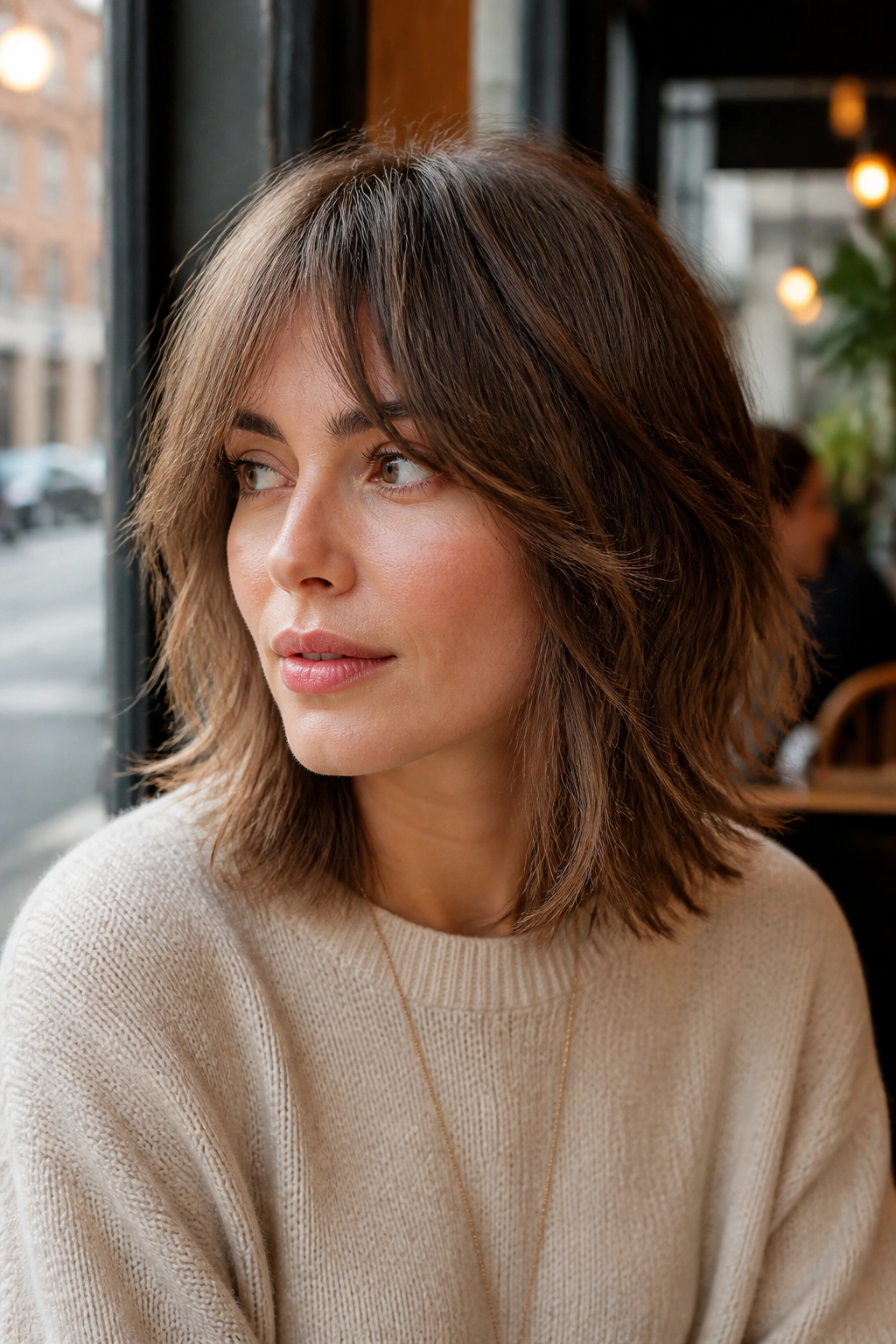
Bottleneck bangs are one of those cuts that look casual but are actually doing a lot of quiet work. They start narrow near the bridge of the nose, then open out toward the cheekbones. On fine hair, that shape gives you a nice frame without dumping too much weight into the fringe.
A shoulder-length shag with this bang shape feels balanced. The shoulders keep the hair from looking sparse, and the bangs soften the forehead without overpowering the rest of the cut. Ask for a soft, tapered fringe that blends into airy side layers. The word “blended” matters here. Hard lines can feel too heavy on fine hair.
- Best for oval, heart, and longer face shapes
- Works with straight or slightly wavy textures
- Needs a quick blow-dry on the bangs
- Grows out in a forgiving way
I’d pick this for someone who wants a little face framing but hates maintenance-heavy fringe. It’s flattering without becoming a full-time job.
15. The Air-Dry Shag That Still Looks Intentional
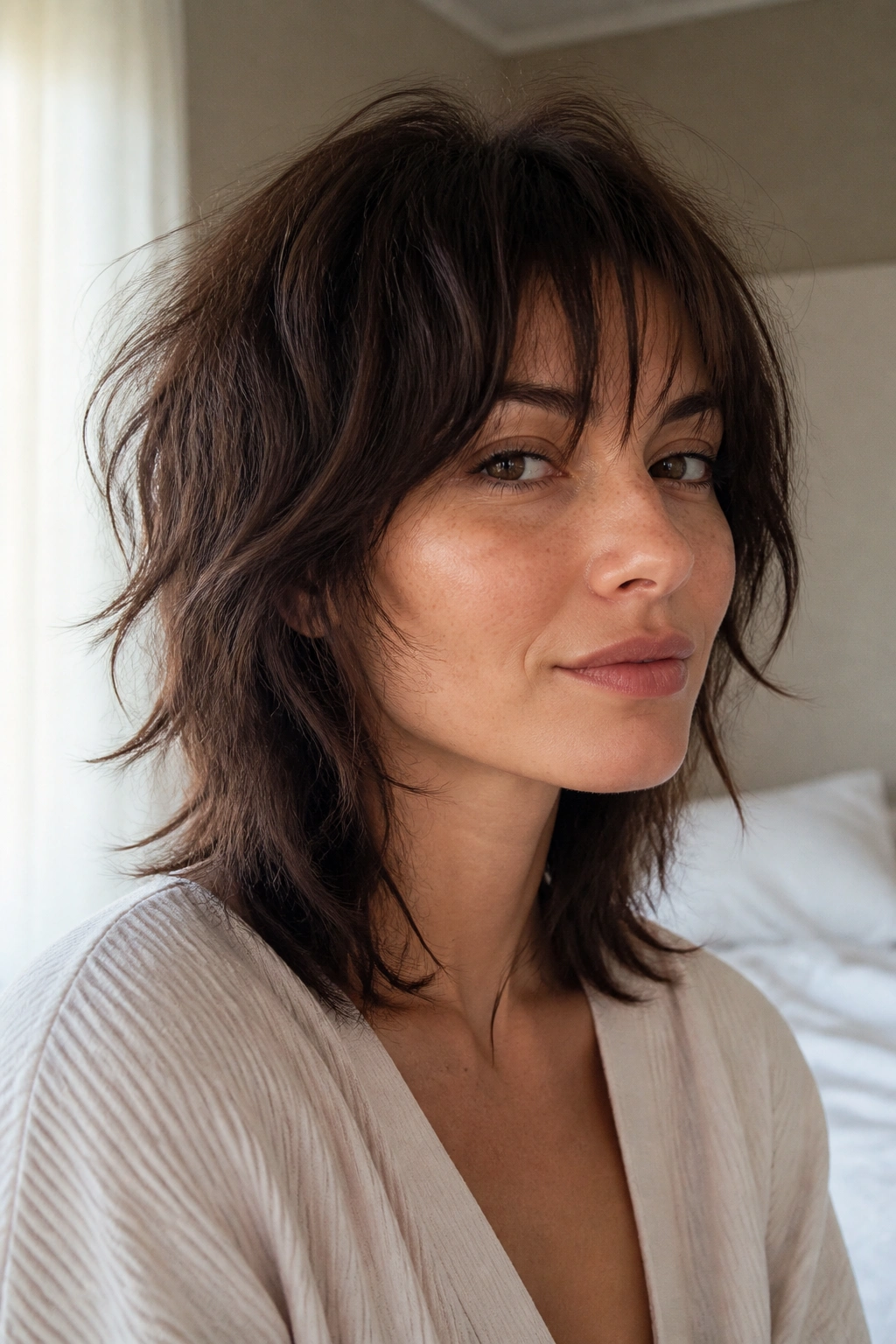
Air-dry shags live or die by the cut. If the layers are too short, the hair goes fluffy in the wrong places. If they’re too long and blunt, the style falls flat and boring. The sweet spot sits somewhere in the middle, with texture placed where your hair bends naturally.
This is a favorite for fine hair that has some natural wave or a soft body when damp. Ask for low-contrast layers and a slightly shattered front, then let the product do only a little work. A light mousse or foam helps keep the shape from drying out weirdly. Heavy oil? No. It can make the roots collapse and the ends stringy.
The best part is how unforced it looks. You don’t get a helmet. You don’t get that overstyled salon finish that falls apart after one bus ride. You get a cut that respects how your hair actually behaves, and that’s worth more than a fancy styling trick.
16. Shag with Hidden Internal Layers
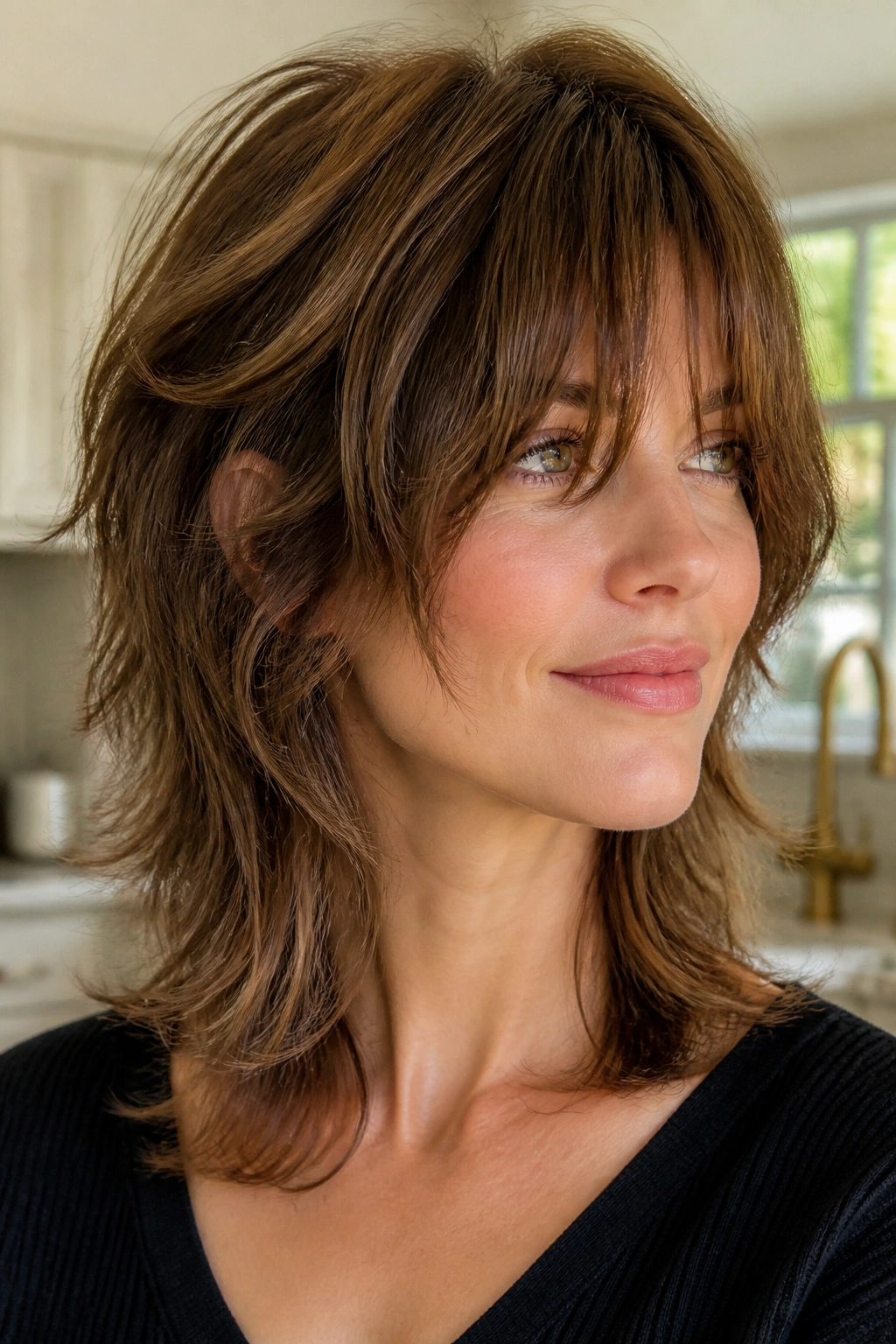
This is the quiet workhorse of the shag world. From the outside, it looks relatively smooth. Inside, though, there are internal layers that remove bulk in smart places and help the top sit with more lift. On fine hair, that’s a huge advantage because the surface still looks full.
Why I Like It
- The perimeter keeps its thickness
- The movement comes from inside the haircut
- It grows out without looking chopped up
- It suits people who want texture but not a choppy finish
Ask your stylist to keep the outer line soft and use internal layering instead of a heavily broken edge. That way, the hair swings more when you move, but it doesn’t look thin when you stand still. There’s a big difference between those two things.
This cut also plays nicely with a side part or soft curtain fringe. If you want volume but you’re nervous about committing to a loud shag, this is one of the safer, smarter routes.
17. Soft Mullet Shag for Fine Hair
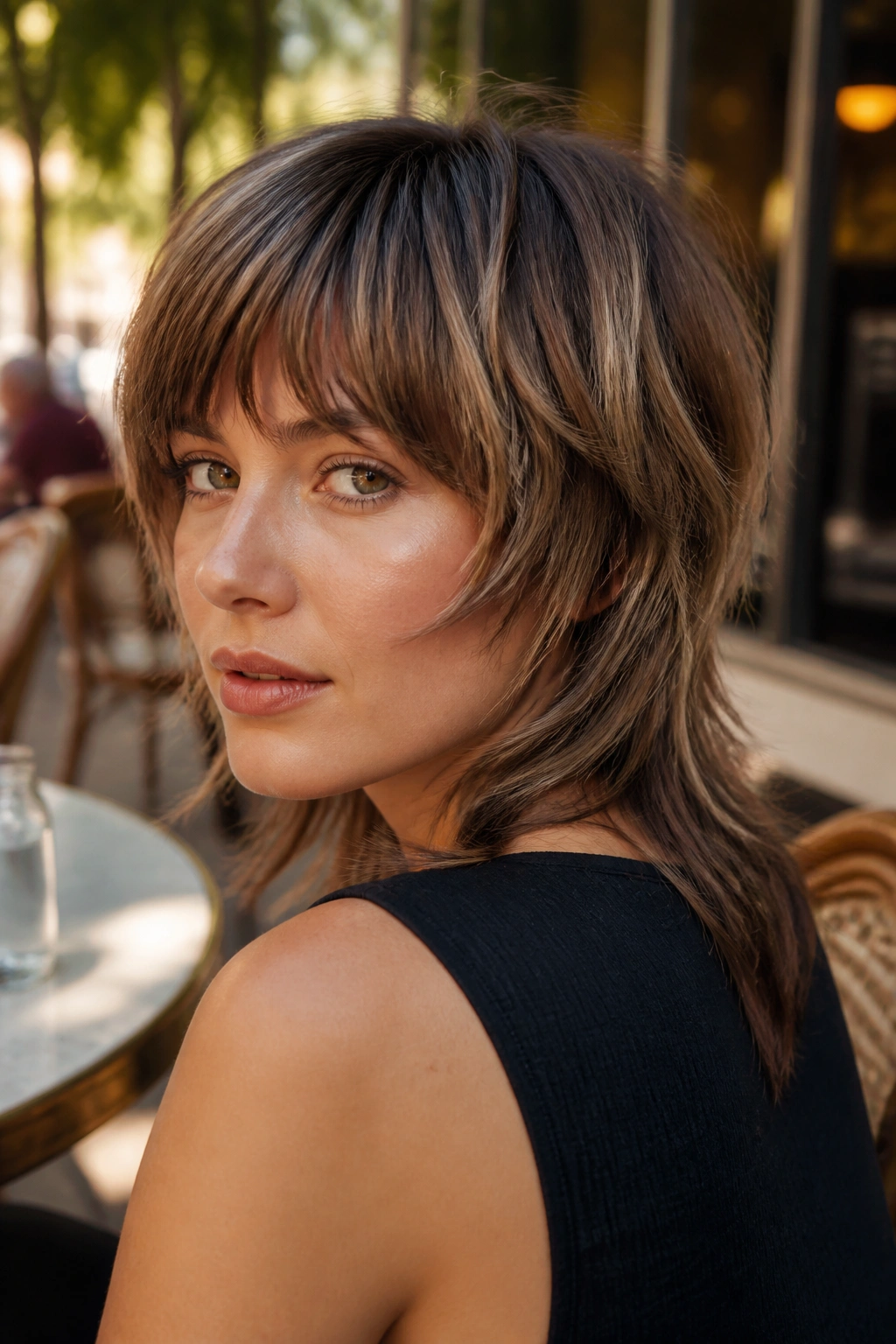
The word mullet still scares people a little, and honestly, I get why. But a soft mullet shag is not the hard-edged version people picture from old photos. On fine hair, it can actually be a clever shape because it keeps the top light and the back a touch longer, which preserves movement.
The trick is to keep the contrast subtle. Ask for a gentle difference between the crown and the nape, not a sharp disconnect. The fringe should stay soft, and the sides should connect to the rest of the cut without a sudden drop. If the stylist overdoes the separation, the hair can look thin at the temples.
This cut works especially well if you like texture spray and finger styling. It has a lived-in feel that doesn’t need perfect blowouts. If you want a haircut with some edge but not a full commitment to short hair, this one has a lot going for it. It’s a little cooler than people expect.
18. Shoulder-Grazing Shag with Flip-Out Ends

What makes this cut feel fresh is the movement at the bottom. Instead of keeping the ends tucked in, you let them flick out just enough to make the shape feel lively. On fine hair, that outward bend can make the whole cut appear more animated and full.
The base should sit at or just below the shoulders. That gives the ends enough weight to hold the flip, which is harder at shorter lengths. Ask for layers that support the outward turn rather than fighting it. A stylist who understands face framing will usually know where to leave more weight.
How to Style It
Use a round brush or a flat iron on low-to-medium heat, then turn the ends outward only 1/2 inch to 1 inch. Don’t curl the whole head. You want a soft kick, not a retro helmet. A little gloss spray at the very ends can help the flick look clean.
19. Shag with a Subtle Undercut at the Nape
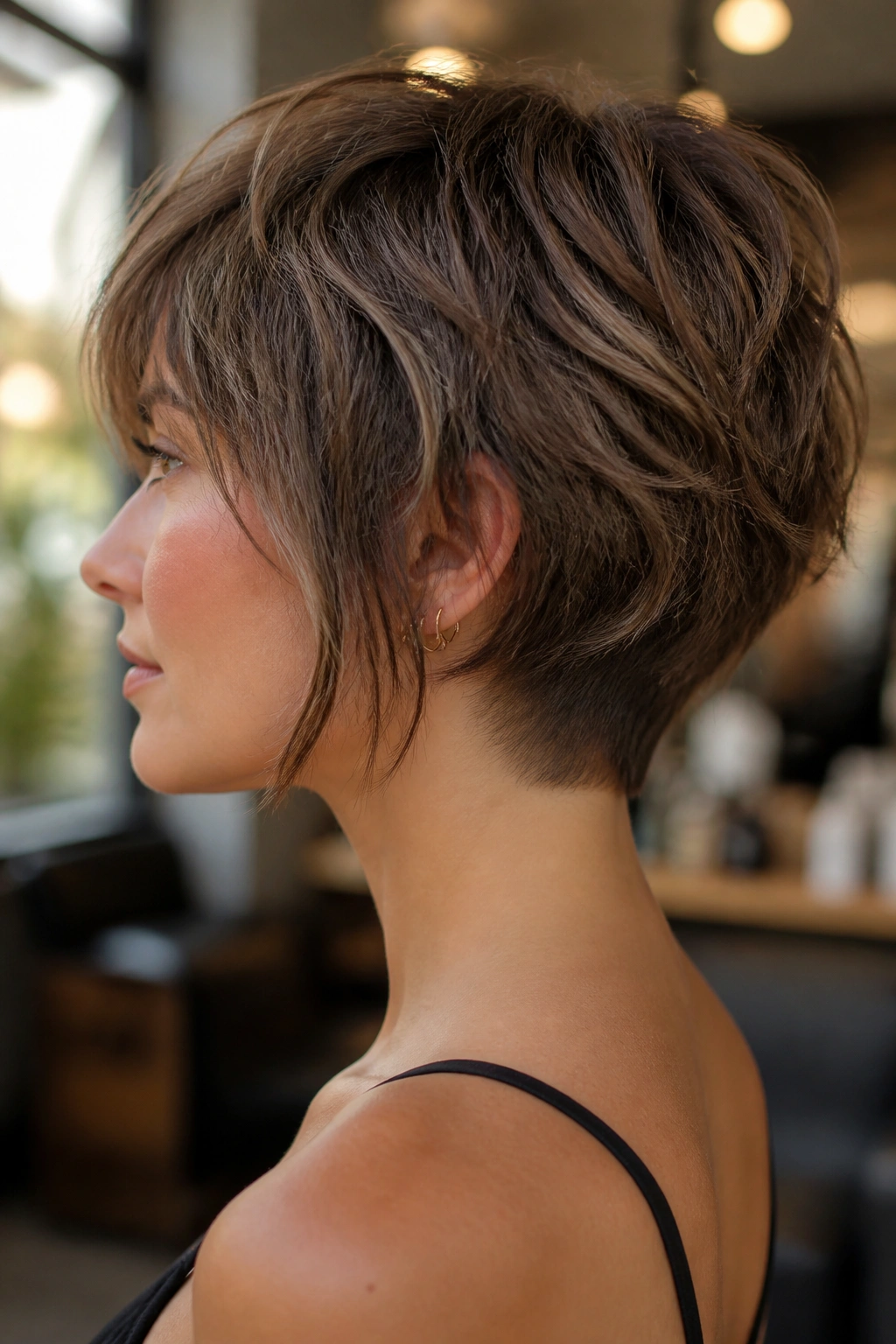
This one isn’t for everyone, but it solves a real problem: fine hair that gets bulky at the neck while staying flat on top. A subtle undercut at the nape removes some of that hidden weight so the upper layers can fall more freely.
The cut only works if it stays subtle. Ask for just enough removal under the bottom layer to reduce puffiness, not a dramatic buzzed section. The point is to improve movement, not to advertise the undercut every time you tuck your hair behind your ear.
- Best for thick-fine hybrid hair
- Useful if the nape gets hot or bulky
- Keeps the top looking lighter
- Needs a stylist who understands balance
I’d be careful with this if your hair is very sparse overall. You want the top to look fuller, not exposed. Done right, though, it gives a shag a cleaner fall and makes the ends behave better around the neckline.
20. Textured Shag Haircuts for Fine Hair with Long Invisible Layers
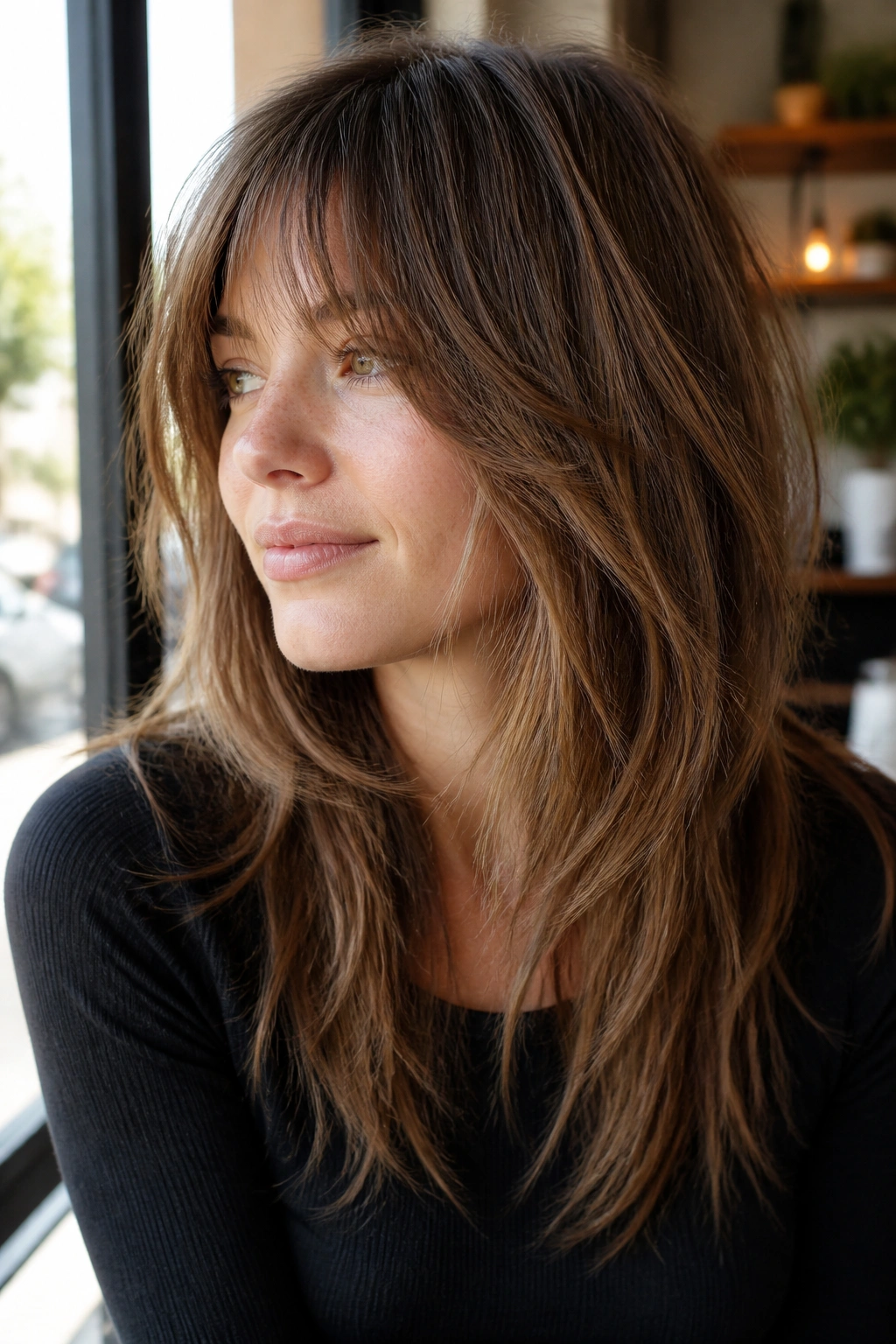
This is the shag for people who like the idea of texture but hate seeing obvious choppiness in the mirror. The layers are there, but they live inside the haircut, so the outside line still looks smooth and full. That matters a lot on fine hair.
The invisible-layer approach keeps the ends from becoming too see-through. Ask for soft graduation through the mid-lengths and a perimeter that stays strong. If your hair is straight, this can be especially good because the shape doesn’t rely on waves to read correctly. It holds its own.
I think this style gets overlooked because it sounds less exciting than a razored, piecey cut. But excitement is not the same thing as good hair. A subtle shag that gives you movement, shine, and a real-looking outline often wins in daily life. That’s the cut you can wear to work, dinner, and a lazy Sunday without changing a thing.
21. Stacked Crown Shag for Extra Lift
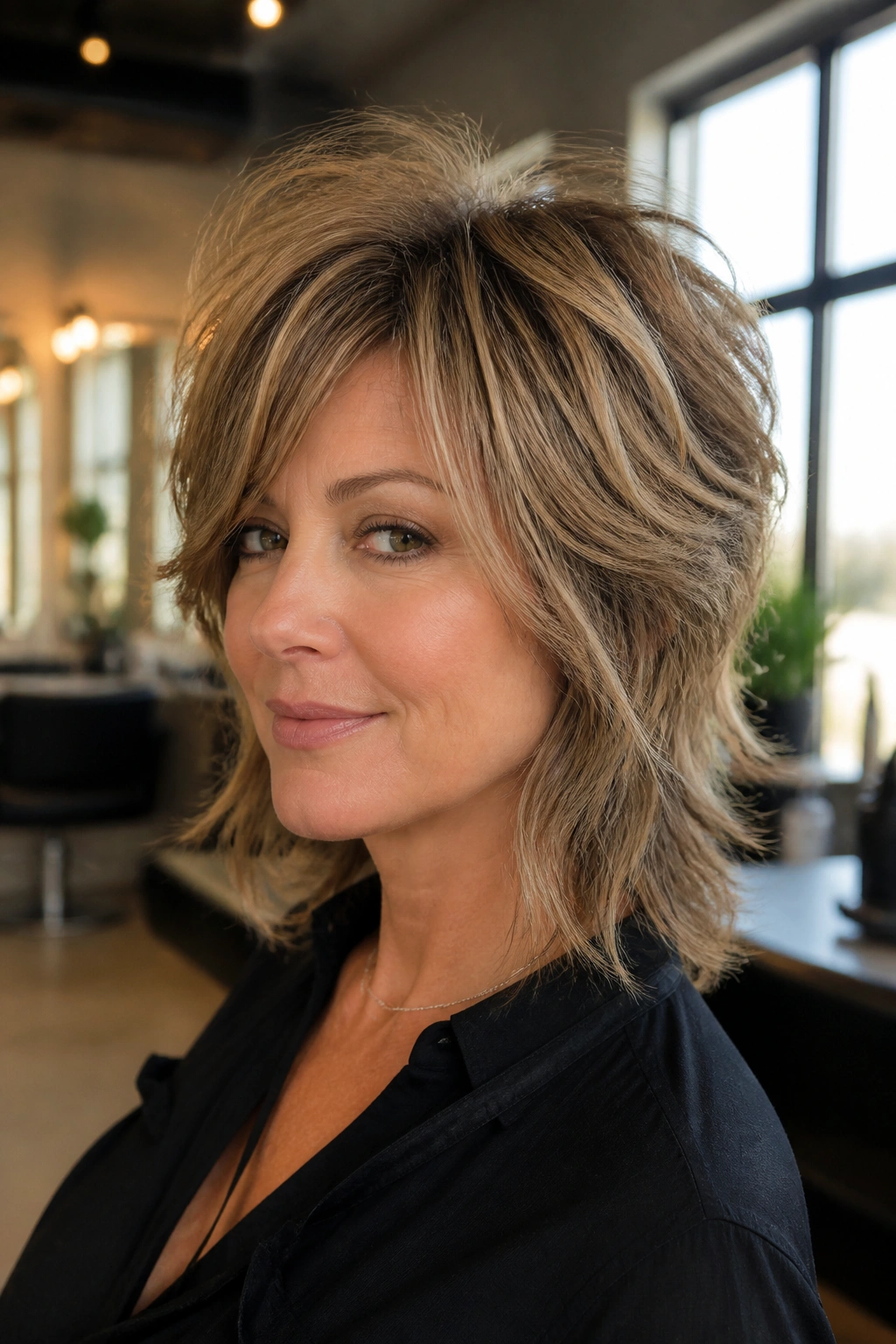
The crown is where fine hair usually betrays you first. It lies flat, shows scalp, and refuses to cooperate. A stacked crown shag tackles that head-on by building lift where the top needs it most, while keeping the rest of the haircut soft and wearable.
The Shape Matters
Ask for graduation at the crown with longer layers falling underneath. You want volume, but not a mushroom shape. The top should rise a little, then taper smoothly into the sides. When that balance is off, the cut can look puffy. When it’s right, the hair just sits better.
Use root clips while the hair cools if you blow-dry it. That tiny step makes a bigger difference than most people expect. A side part can also help here, especially if your natural part tends to collapse. The stacked crown gives you height; the part gives it direction. Together, they do the job.
22. Shag with Blended Highlights to Fake Density

This is where color quietly helps the haircut. On fine hair, blended highlights and lowlights can create the impression of more body because the eye sees depth and contrast instead of one flat sheet of color. It’s a trick, sure, but it’s a useful one.
The haircut should still do the real work. Ask for a soft shag with movement through the sides and a strong outline at the bottom, then use color to support it. Face-framing pieces with a slightly lighter tone can make the front feel lighter and more dimensional. Deeper lowlights underneath can keep the base from looking washed out.
I like this option for anyone whose hair color has gone a little one-note. Fine hair often looks flatter when the color is too uniform. A few ribbons of light and shadow can wake it up without changing the cut itself. Just keep the color placement soft. Harsh stripes can make the ends look thinner, which defeats the point.
23. Modern Marilyn Shag with Volume at the Sides
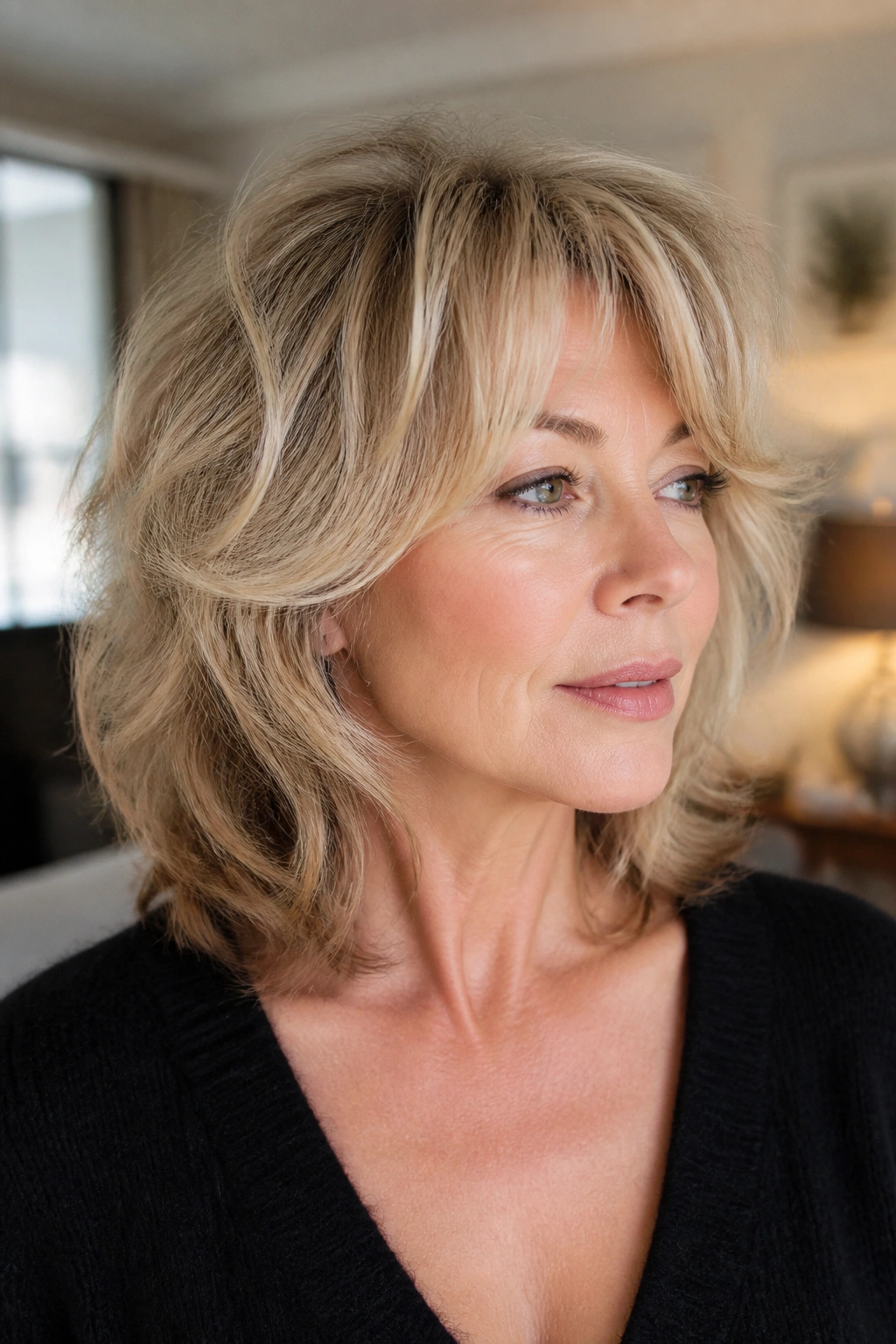
A side-focused shag has a specific kind of glamour to it. The volume sits around the temples and cheekbones instead of all being piled on top, which gives fine hair a fuller shape from the front and a softer profile from the side.
This works especially well if your face is narrow or your hair tends to go flat at the temples. Ask for side volume built through long layers and a soft fringe that can be swept or parted, not a dense block of bangs. The sides should feel plush, not heavy. That’s a subtle difference, but it changes the whole read of the cut.
How to Style It
Wrap the front sections around a medium round brush or a 1.5-inch iron, then set them away from the face. Let the rest stay a bit softer. If you want a little extra hold, mist a flexible hairspray from 8 to 10 inches away, then leave the ends alone. That keeps the front lifted without turning stiff.
24. Feathered Ends Shag with Minimal Bangs
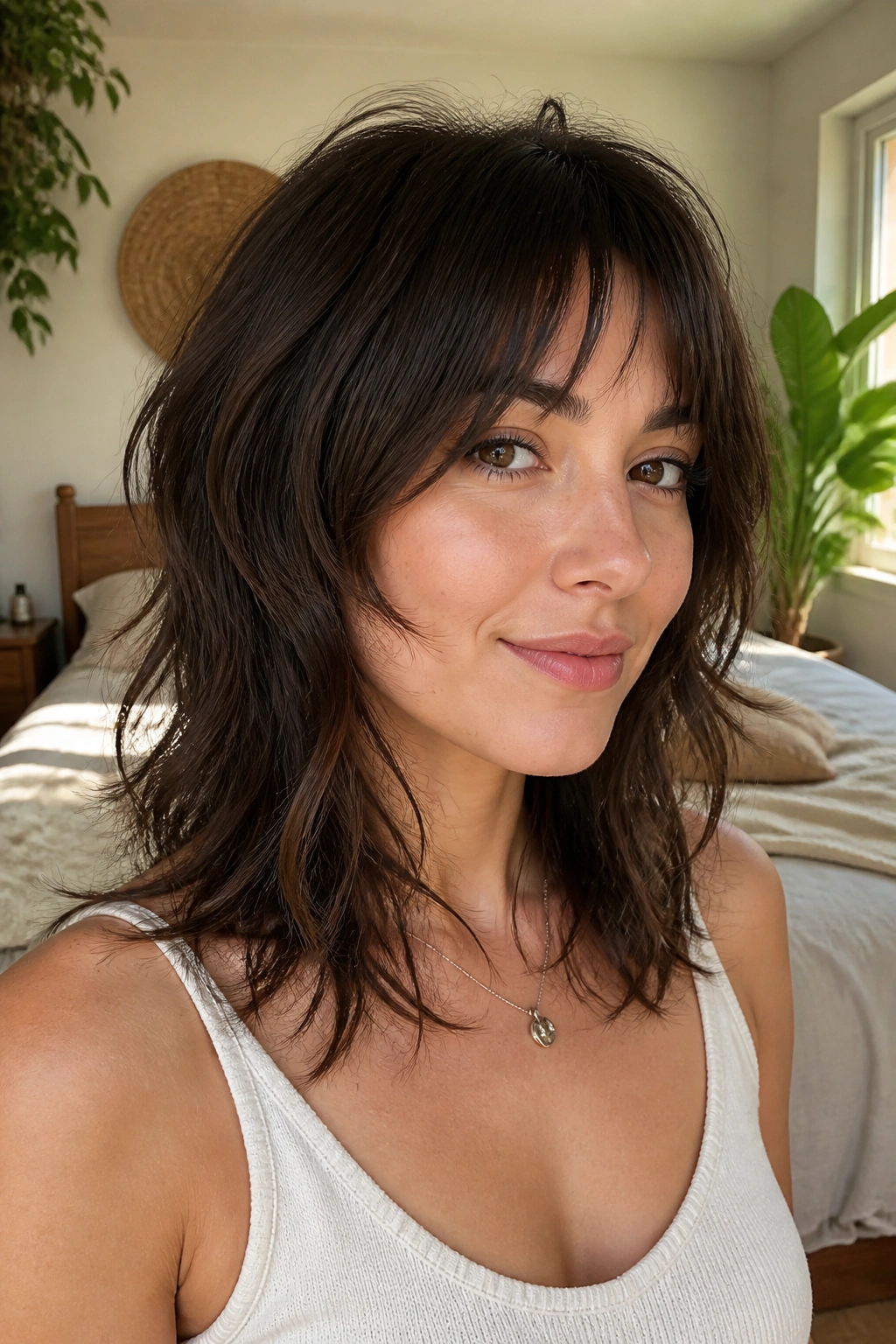
This is one of the easiest shags to wear if you’re nervous about fringe. The bangs stay minimal — maybe just a whisper of face framing — while the ends do the feathered work. On fine hair, that lets you keep fullness near the face and along the bottom edge where you need it most.
A feathered finish at the ends helps the haircut move, but the layers should stay soft enough that the line still feels anchored. Ask for feathering mostly through the lower half and a light front that doesn’t cut too deeply into the forehead area. If you have a high forehead, this is especially useful because the fringe won’t split and disappear.
- Easy to style with a blow-dryer
- Good for straight hair with a little bend
- Grows out nicely
- Keeps the perimeter looking full
This one is a workhorse, honestly. Not flashy. Just dependable, pretty, and easy to live with.
25. Textured Shag Haircuts for Fine Hair That Keep the Length
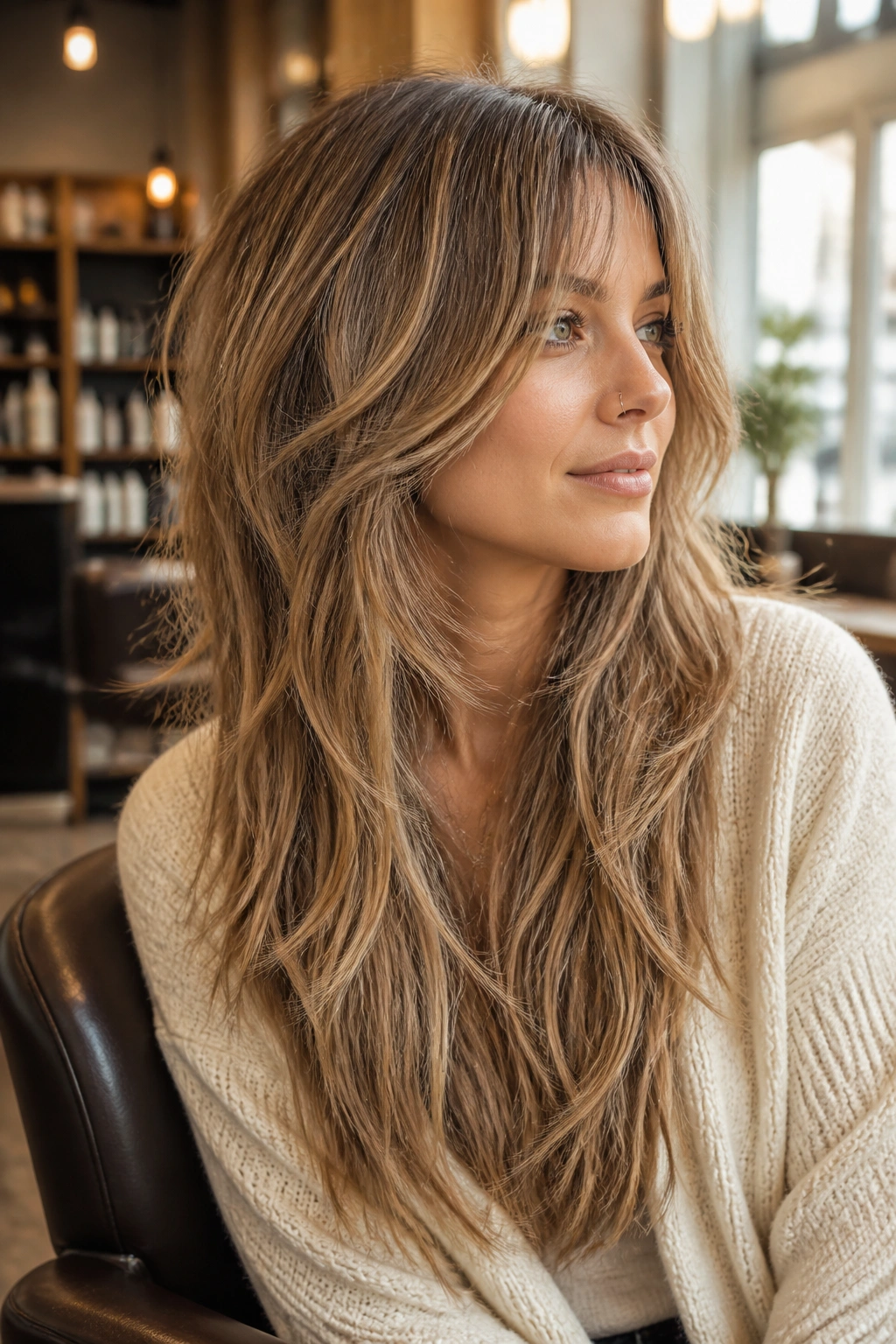
Long fine hair can still wear a shag, but the layers have to behave. Keep them long, keep them blended, and keep the perimeter strong enough that the hair doesn’t feel like it’s disappearing as it falls past the shoulders. That’s the whole game.
This version is for anyone who wants the texture of a shag without sacrificing length. Ask for soft face-framing, long internal layers, and minimal thinning at the ends. If the stylist gets enthusiastic with the shears, the whole shape can go sparse fast. Fine hair needs restraint more than it needs drama.
I’d also keep the fringe optional here. Sometimes no bangs at all is the smartest move, especially if your hair already sits flat at the front. A center part with long side pieces can give the haircut enough shape without pulling attention away from the density you still have. It’s a calmer shag, and I mean that in a good way.
Final Thoughts
The best shag on fine hair is the one that protects your outline while giving the hair room to move. That sounds simple, but it’s where a lot of bad haircuts go wrong. They remove too much at the wrong points, then wonder why the ends look thin.
A strong shag on fine hair keeps some weight at the bottom, adds lift where the scalp tends to show, and uses texture as support instead of decoration. That might mean curtain bangs, a side part, hidden layers, or just a blunt edge with soft movement around it. Different shapes, same goal.
If you’re taking one thing from all 25 styles, let it be this: texture should make fine hair look fuller, not more broken up. That’s the line worth protecting.
