



Fine hair can look flat in a hurry. One day it has a little lift, the next day it’s clinging to the head and showing every blunt line. That’s exactly why a shag haircut keeps coming back: it gives hair shape, motion, and a bit of edge without asking for a ton of thickness that isn’t there.
The trick is choosing the right shag. Fine strands do not love aggressive layering that eats away at the ends. Too much texture, and the cut starts to look wispy in the wrong way. Too little, and you lose the point of the shag altogether. The sweet spot is movement at the crown, softness around the face, and enough perimeter left in place to keep the shape from collapsing.
That balance is what makes modern shag haircuts for fine hair so useful. Some versions are soft and wearable. Others lean cool and choppy. A few are barely shags at all, which is honestly part of the appeal. You can go subtle or bold, but the best versions always do the same thing: they make hair look lighter on purpose, not thin by accident.
1. Soft Collarbone Shag
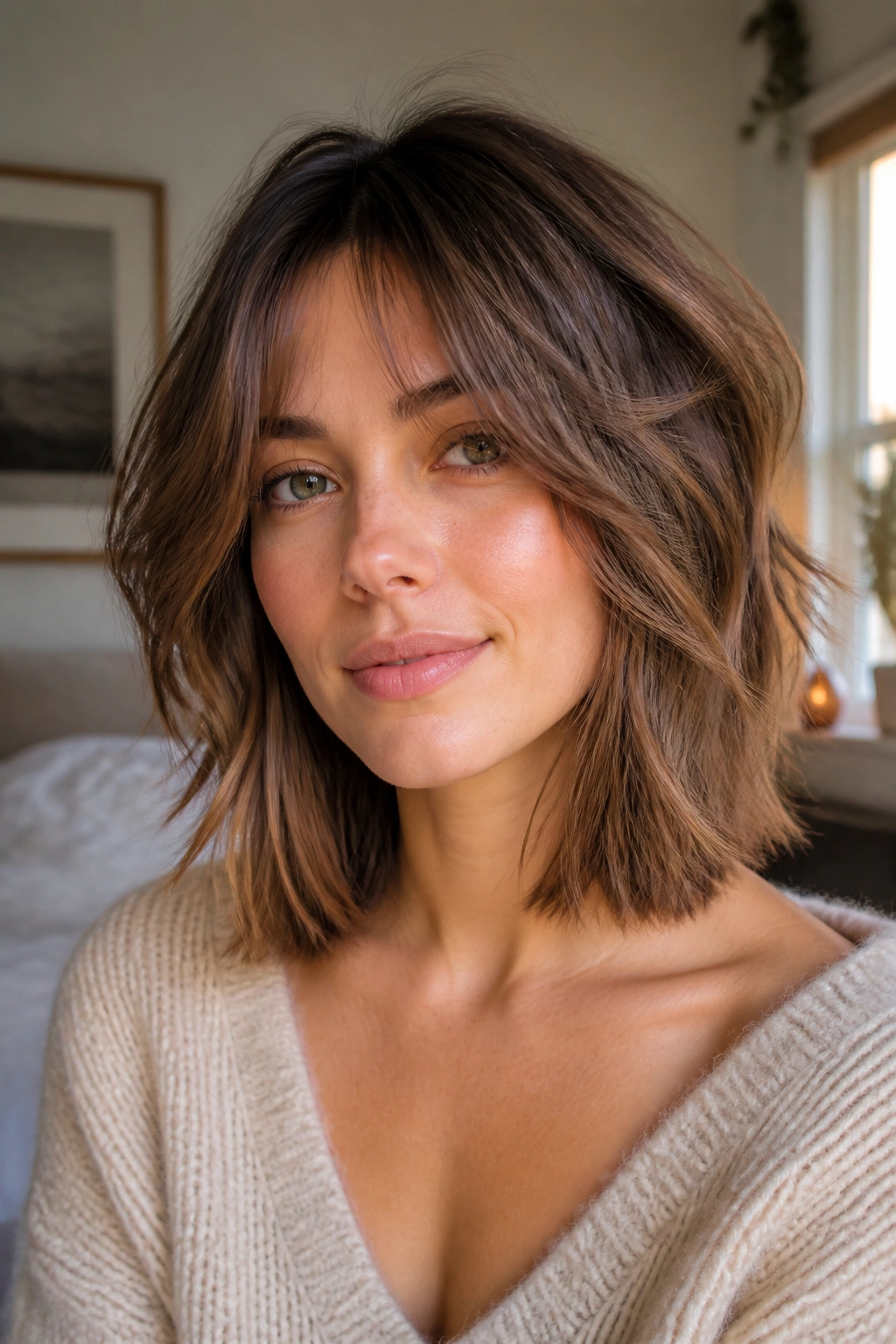
This is the safest place to start if your hair is fine and you’re nervous about losing too much weight. The length hits right around the collarbone, which gives you enough hair to keep the ends looking full while the layers build movement through the mid-lengths. It’s a smart cut for straight or slightly wavy hair that needs a little lift without a big styling routine.
Why it works on fine hair
The collarbone length gives the eye something solid to hold onto. That matters. Fine hair can get stringy fast when the ends are too short, so keeping the perimeter a little longer helps the whole cut read as fuller.
Ask for soft layers that begin around the cheekbone or just below the chin. Do not let the stylist over-thin the ends. A small amount of point cutting is enough. If you want to style it fast, a round brush and a light mousse at the roots will do more than a heavy serum ever will.
2. Chin-Length Shag With Curtain Bangs
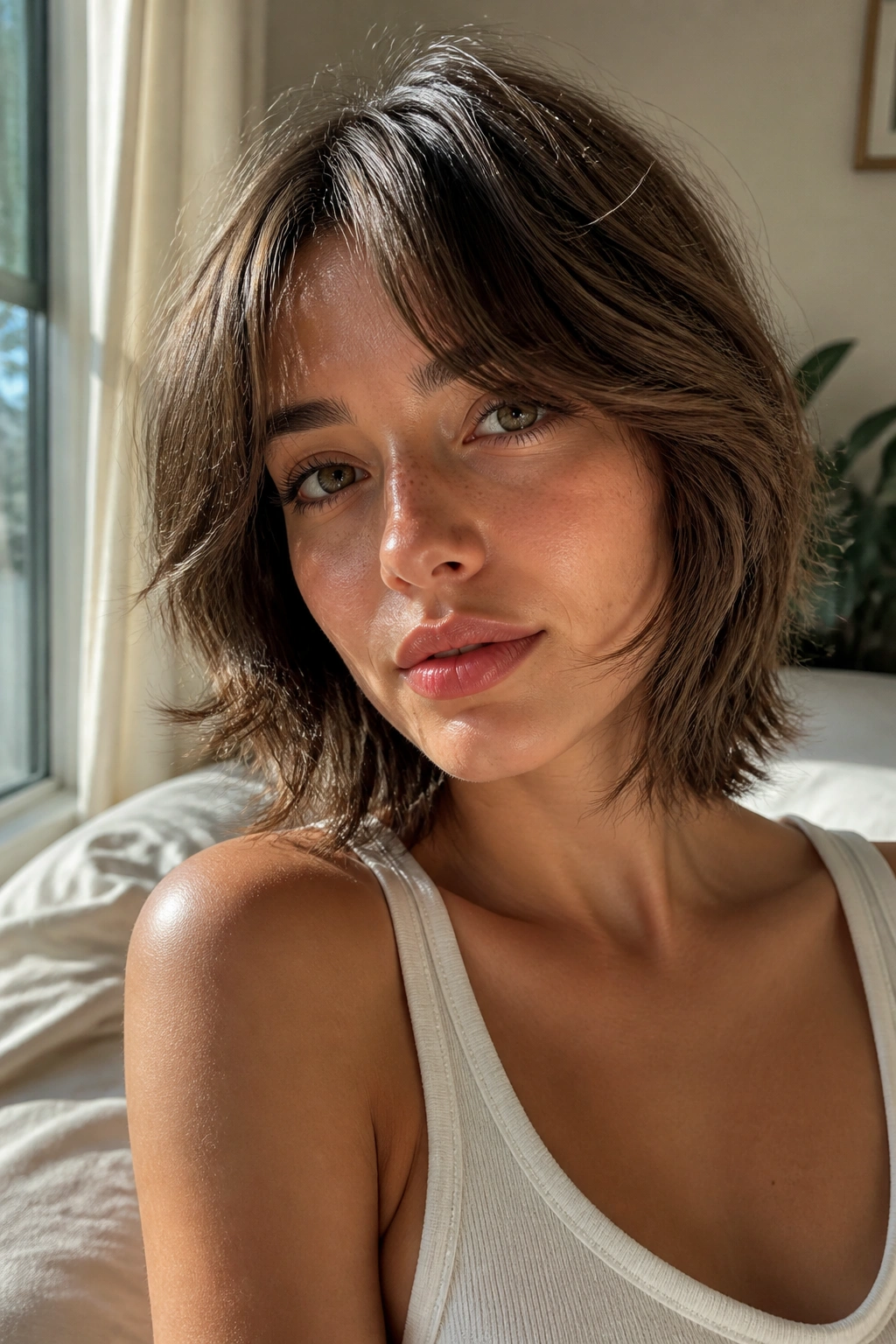
A chin-length shag gives fine hair a little attitude right away. The shorter shape pushes volume upward, and the curtain bangs draw the eye to the center of the face instead of the ends. That can be a lifesaver if your hair tends to go flat at the sides.
The best part is how easy it looks when it’s slightly messy. A clean blowout is nice, but this cut really shines when the bangs fall a little loose and the layers around the cheekbones bend outward. It has that lived-in look people keep trying to copy, except here the structure is doing most of the work.
If your hair is very fine, keep the bangs soft rather than thick. Heavy fringe can swallow the face. A feathered curtain bang opens things up and gives you more flexibility on days when you want to tuck the hair behind the ears.
3. Wispy Pixie Shag
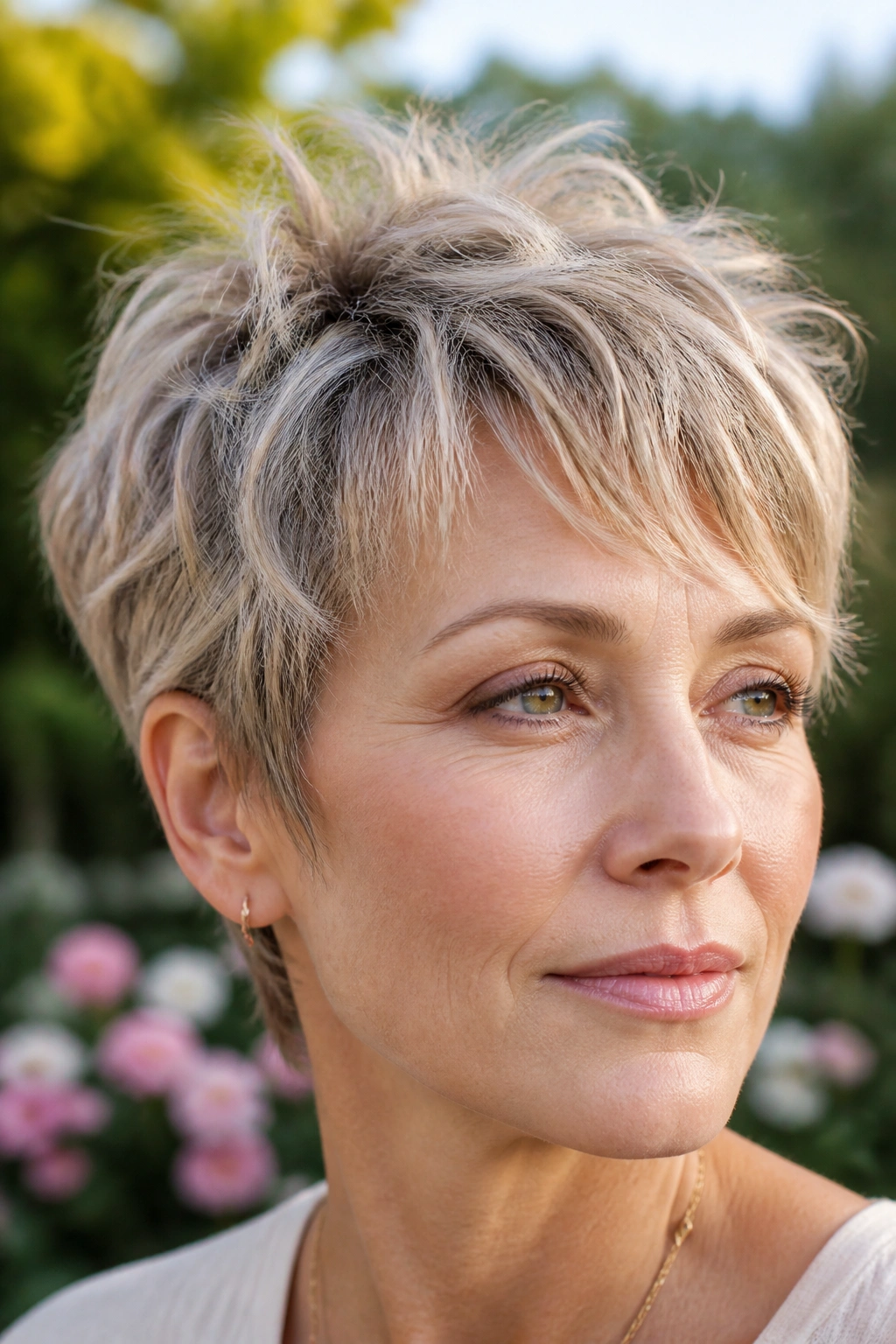
Short hair and fine hair often get along better than people expect. A wispy pixie shag gives you lift at the crown, texture through the top, and enough softness around the edges that it doesn’t feel severe. It’s cropped, but not hard-edged. That difference matters.
The cut works best when the top has a little length to play with—enough to finger-style or push forward with a touch of paste. If the sides are cut too tight, the shape can start to look sparse. You want air between the pieces, not holes.
Styling details that help
- Use a pea-sized amount of matte paste on damp hair.
- Blow-dry the crown first, lifting at the roots with your fingers.
- Leave the fringe piecey instead of combed flat.
- Ask for soft tapering around the ears and nape.
A cut like this is tiny, fast, and a little cheeky. Good traits, all three.
4. Long Razor Shag
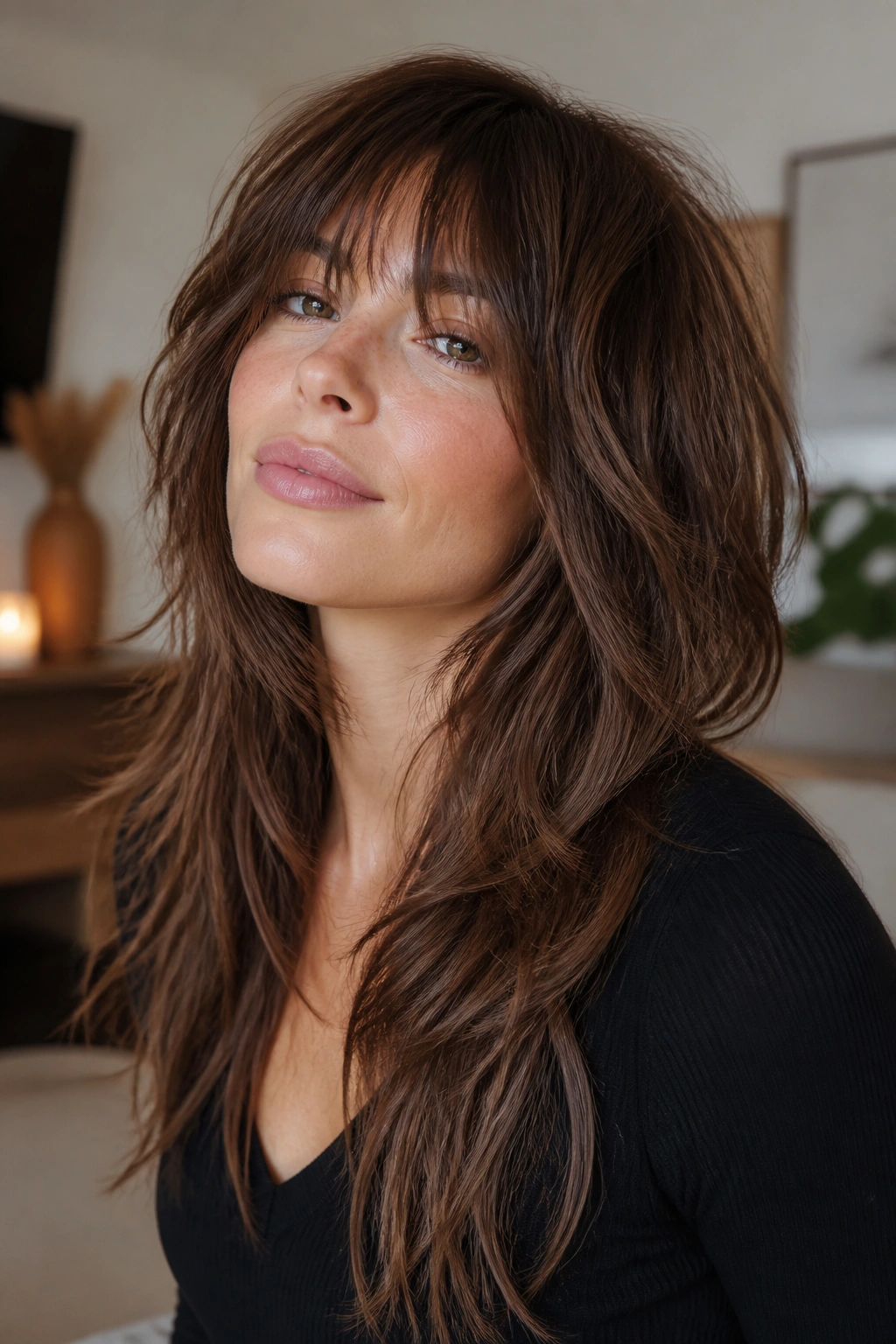
If you want to keep your length, a long razor shag is one of the better options for fine hair. It keeps the weight moving, which stops long hair from hanging in one flat sheet. The overall shape still feels feminine and loose, but the layers keep it from going limp by lunchtime.
A razor can be useful here, but only in the right hands. On fine hair, too much razor work can make the ends fuzzy or see-through. A light hand is the point. The goal is a soft edge that moves, not a shredded finish.
What to ask for
- Layers that start below the chin
- Soft face-framing pieces
- Ends that are texturized lightly, not aggressively
- A perimeter that stays long enough to hold density
This is a good cut if you like to wear your hair down most of the time and want it to swing a bit when you move.
5. Shoulder-Grazing Shag With Bottleneck Bangs

Shoulder length is one of those places where fine hair either looks good or falls apart. A shag changes the game by adding shape through the sides and a little lift around the crown. Bottleneck bangs finish it off nicely because they narrow near the forehead and open near the cheekbones.
That fringe shape is flattering without being fussy. It also buys you a little time between trims because it grows out more softly than a blunt bang. Fine hair usually does better with that kind of forgiveness.
If you style with a blow-dryer, clip the bangs out of the way first and work on the rest of the head. Then come back and bend the fringe with a round brush or a flat brush and a quick twist of the wrist. Small move. Big payoff.
6. Layered Bob Shag
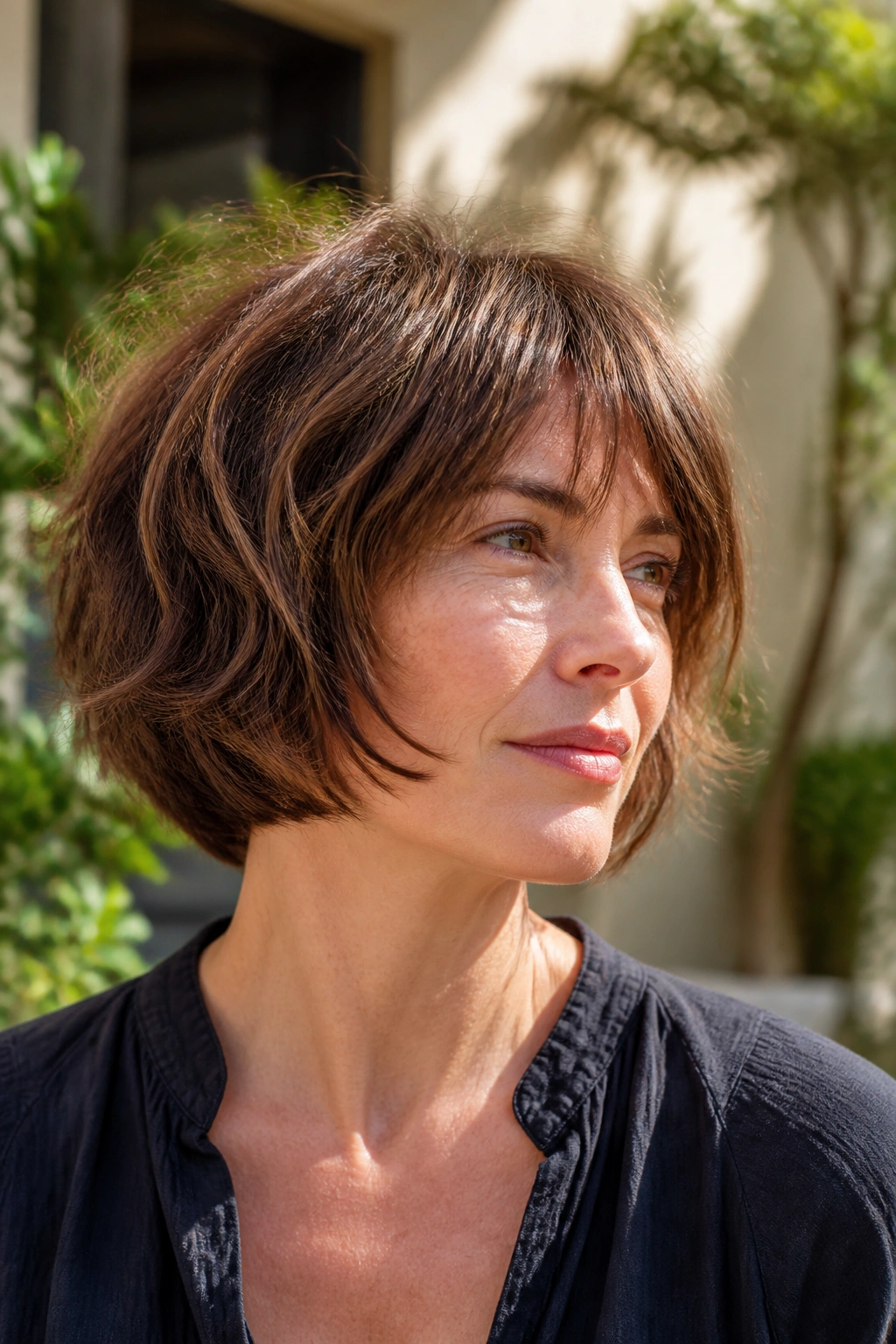
A bob with shaggy texture gives fine hair the kind of structure it rarely gets on its own. The bob base keeps the outline full, while the internal layers keep the shape from feeling heavy or helmet-like. It’s a nice middle ground for someone who wants movement but still likes a clean silhouette.
This cut is especially good if your hair has a slight bend or wave. The layers fall into place faster when there’s already some natural motion. On pin-straight hair, the styling matters more, but it can still work if the perimeter stays blunt enough to hold weight.
I like this version because it looks intentional even when it’s messy. That matters on fine hair. If a cut relies on perfect styling every day, it gets old fast.
7. French-Girl Shag
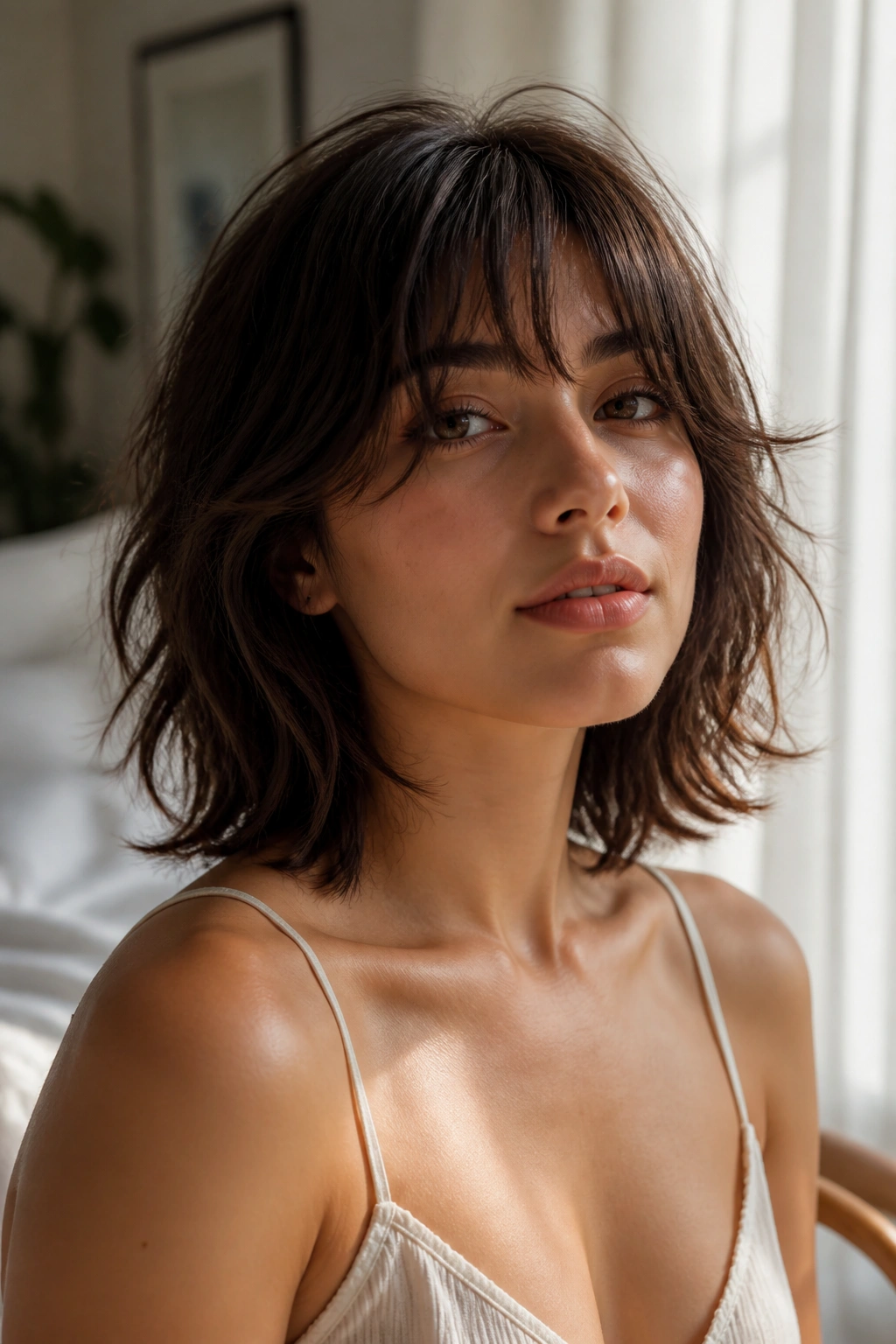
The French-girl shag tends to be softer than people imagine. It usually sits somewhere around the jaw or collarbone, with delicate fringe and loose face-framing layers that look like they were cut for movement rather than drama. On fine hair, that restraint is the whole appeal.
This style is less about chunkiness and more about bend. You want the ends to flip, the bangs to fall a little irregularly, and the layers to separate in a natural way. A little dry shampoo at the roots helps, but the real win comes from not overworking it.
What makes it different
A harsh shag can look cool for about ten minutes, then it starts to feel like too much. This version stays wearable. It suits someone who likes a low-key, undone shape and does not want a cut that screams for attention every time they leave the house.
8. Textured Lob Shag
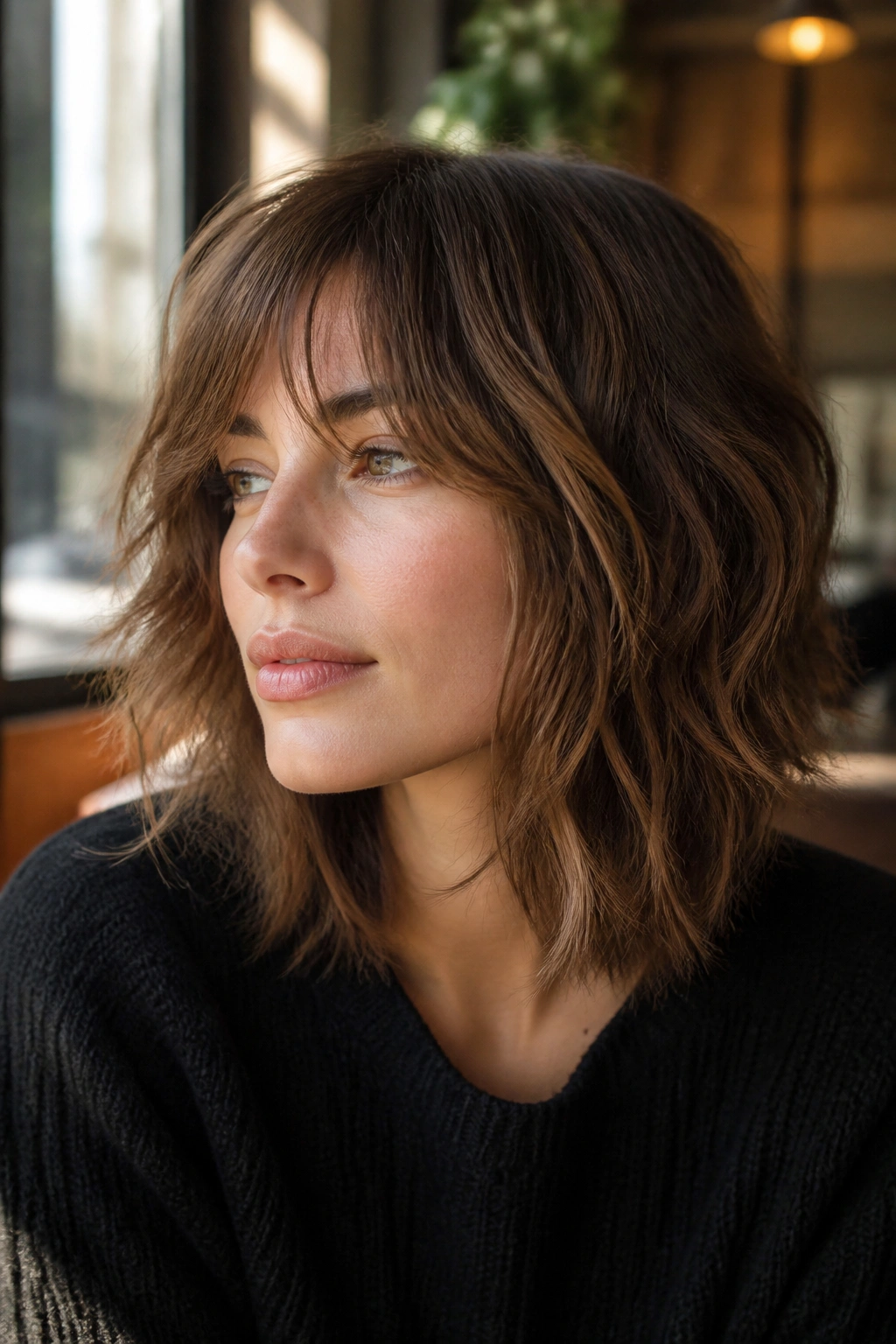
A lob with shag texture is one of the easiest modern shag haircuts for fine hair to wear every day. The length usually sits between the jaw and collarbone, which gives enough room for movement without losing the density that makes fine hair look healthy. It’s also a cut that works across a lot of hair types, which is part of why stylists lean on it so often.
The texture should live mostly through the mid-lengths and ends. If the layers start too high, the lob can go see-through. That’s the mistake. Keep the top a little smoother and let the lower half do the work.
This one is great with a loose wave, especially one made with a 1-inch curling iron and brushed out lightly. You want bends, not tight curls. Tight curls can make the layers pop in a way that looks fussy instead of soft.
9. Airy Wolf Cut for Fine Hair
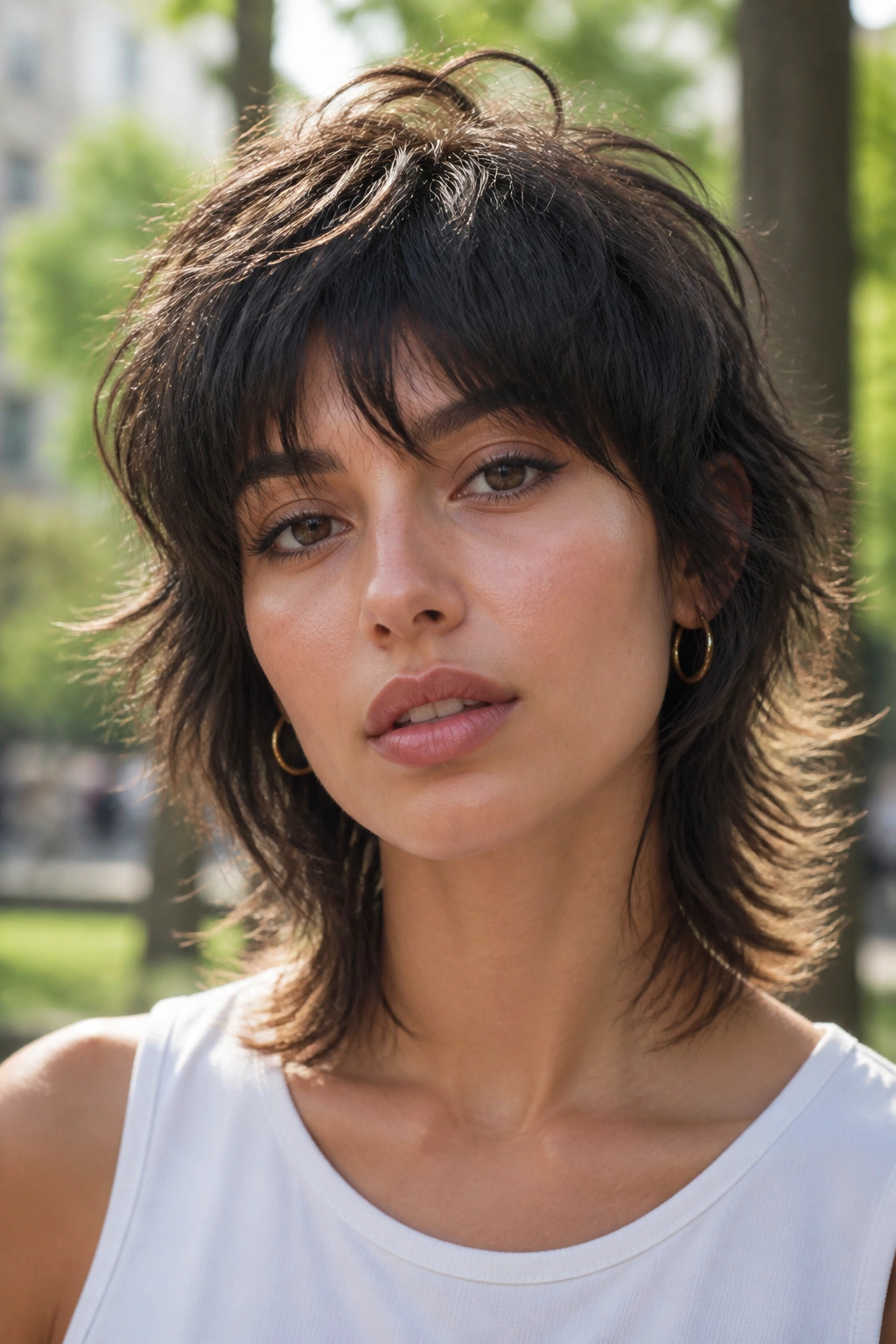
A wolf cut can be a hard sell on fine hair if it’s taken too far. The heavy version is all crown and no substance, which is not what you want when strands are already light. The airy version is different. It keeps the attitude but softens the shape so the ends still read full.
Think of it as a shag with more lift on top and less bulk at the bottom. The layers around the crown create height, while the length below the ears keeps the cut grounded. That balance keeps the style from tipping into stringy territory.
I’d only recommend this if you like texture and don’t mind a bit of mess. It is not a neat cut. But it has energy, and on the right head shape, it can make fine hair look unexpectedly lively.
10. Face-Framing Shag With Side-Swept Fringe
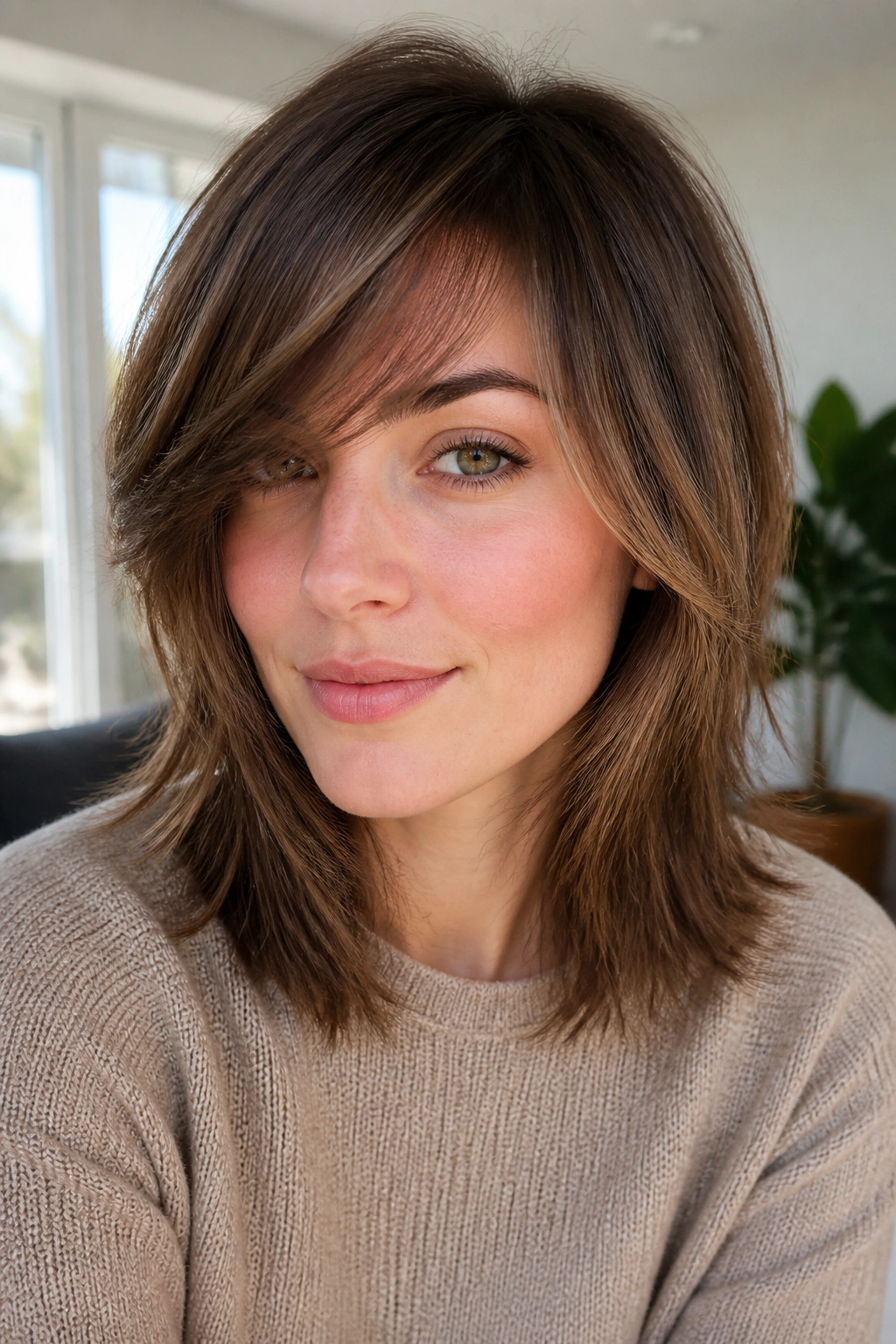
If you want movement without committing to heavy bangs, side-swept fringe is a smart move. It gives fine hair softness around the face and adds the feeling of thickness where the eye lands first. That can make the whole cut feel more substantial, even when the overall length stays modest.
The layers here should angle gently from the cheekbones down. Sharp, choppy face-framing pieces can be too obvious on very fine hair. A softer sweep blends better and grows out in a cleaner way.
How to style it
- Blow-dry the fringe in the direction you want it to fall.
- Use a small round brush only at the front.
- Keep the roots lifted with a light mousse.
- Avoid heavy oils near the fringe; they collapse it fast.
This cut is a good choice if you like to tuck your hair behind one ear and still want the front to look intentional.
11. Feathered Mid-Length Shag

Feathering and fine hair get along. They’ve always gotten along. The feathered mid-length shag uses that relationship well by keeping the layers soft, airy, and separated just enough to create a light halo around the head. It has motion without looking broken up.
The feathered finish works best when the hair is cut dry or at least checked dry, because fine hair can spring in odd ways when it’s wet. A good stylist will shape the layers so they fall into one another instead of stacking like steps.
This is a flattering cut for someone who likes to wear hair loose, brushed out, and a little fluffy at the ends. It does not need a lot of product. In fact, too much product ruins the whole point.
12. Piecey Shag With Micro Layers
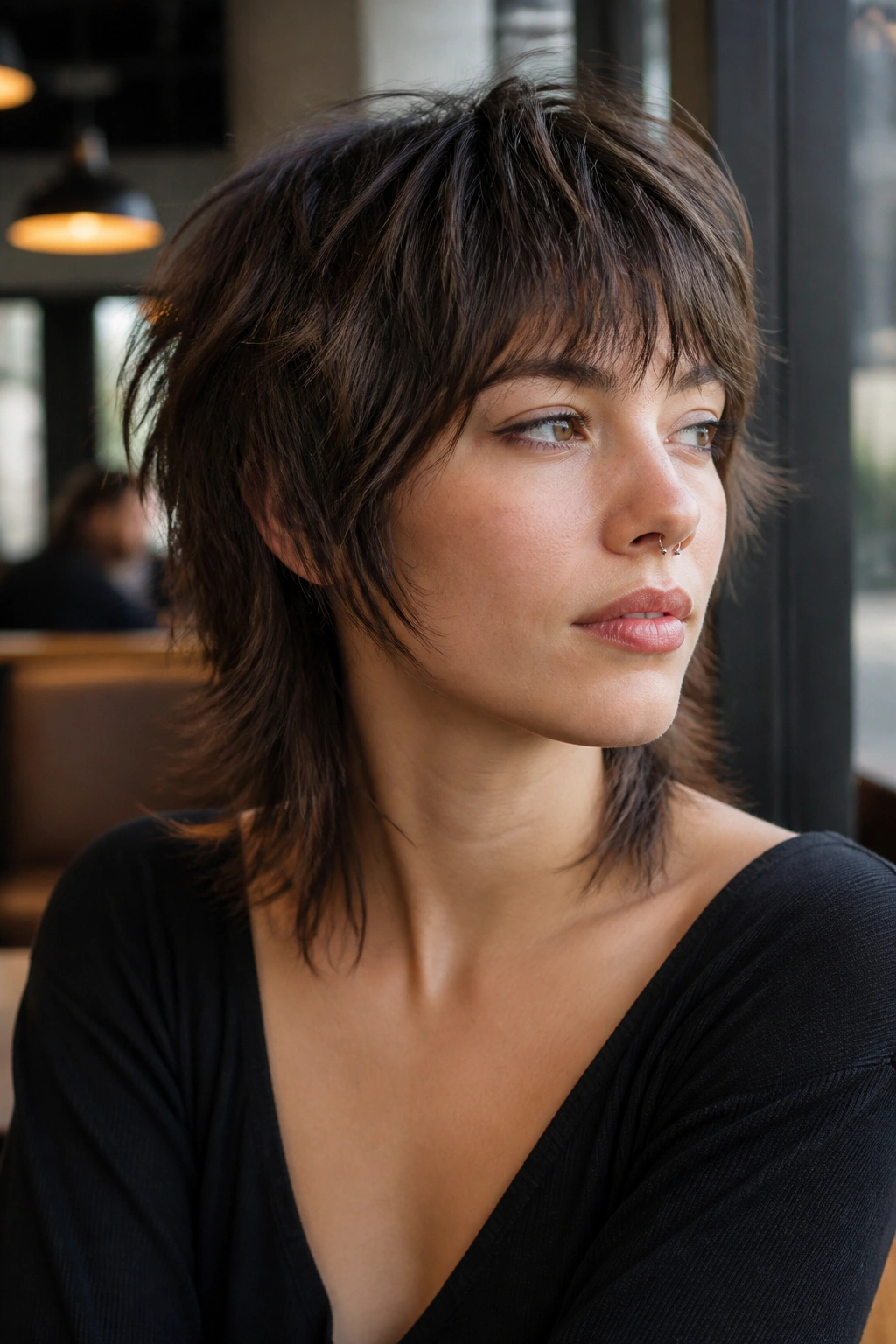
A piecey shag is all about separation. The layers are small and deliberate, which helps fine hair create the look of density without losing the soft outline. Micro layers can be a blessing if they’re done well, because they stop hair from lying like one flat sheet.
The styling has to follow the cut. A little texture spray, a small amount of matte cream, and finger-tousling are usually enough. Brush it too much, and the pieces disappear. That’s the trade-off.
This version suits people who like a more styled, editorial feel. It does not look accidental. It looks shaped. If you want a haircut that still shows a little edge when you step out of bed, this is one to keep on the list.
13. Shaggy Mullet With Soft Edges
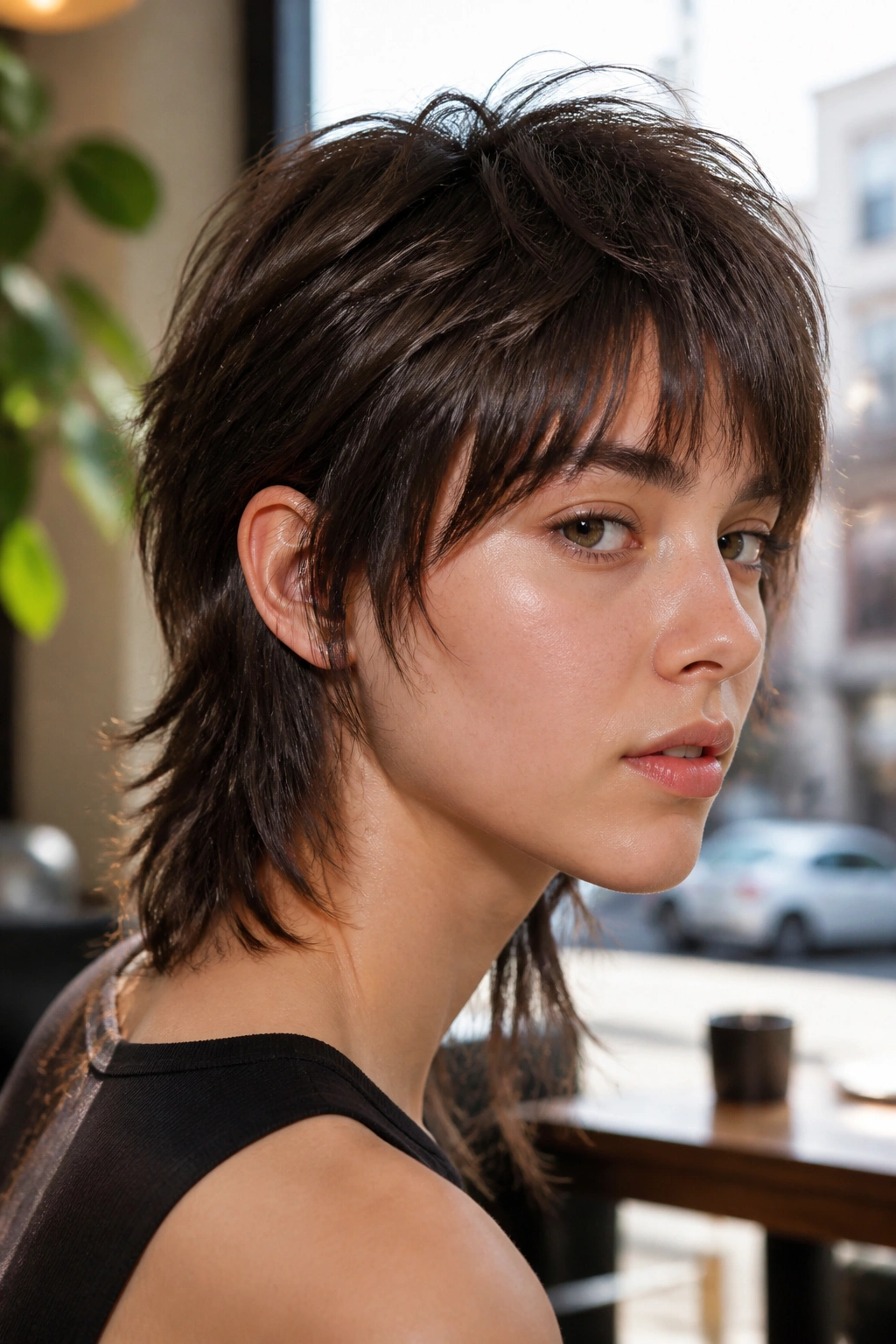
A shaggy mullet on fine hair sounds braver than it is. The modern version softens the sharp disconnect and keeps the back from getting too sparse. What you get is a cut with personality, movement at the crown, and a little extra length in the back to balance the front.
The important part is restraint. The back should not be hacked away. Fine hair needs something to hang onto. Keep the nape soft and the crown lifted, and the shape feels cool instead of harsh.
This cut works best if you like a bit of fashion energy in your hair. It is not for someone who wants to disappear into the crowd. It has a point of view. So does the person wearing it.
14. Wavy Shag for Natural Texture

Natural waves make a shag come alive fast. The layers fall into the wave pattern, the bangs separate on their own, and the whole cut looks lighter without much effort. On fine hair, that matters because too much manipulation can flatten the texture you’re trying to keep.
The shape should follow the wave, not fight it. Ask for layers that encourage bend around the jaw and collarbone. If the cut is too uniform, the wave sits on top of it instead of moving through it. That’s when the hair looks puffy in one area and limp in another.
A diffuser on low heat helps, but so does walking away from the mirror for a bit. Fine wavy hair often looks better after it has settled. Give it ten minutes before you judge it.
15. Sleek Shag With Hidden Layers

Not every shag has to look wild. A sleek shag keeps the outer shape smooth while hiding the layers underneath, which gives fine hair movement without all the visible choppiness. It’s one of my favorites for people who want polish first and texture second.
The layers are there, but they’re quiet. You’ll feel them when the hair swings, yet the front still looks clean enough for a more formal setting. That makes the cut easy to wear in a lot of places without feeling overstyled.
This version is especially good if your hair is fine but plentiful. If density is decent, hidden layers add lift without making the ends look scrappy. Ask for a blowout finish at the salon so you can see how the structure falls when it’s smooth.
16. Curly Shag for Fine Curls
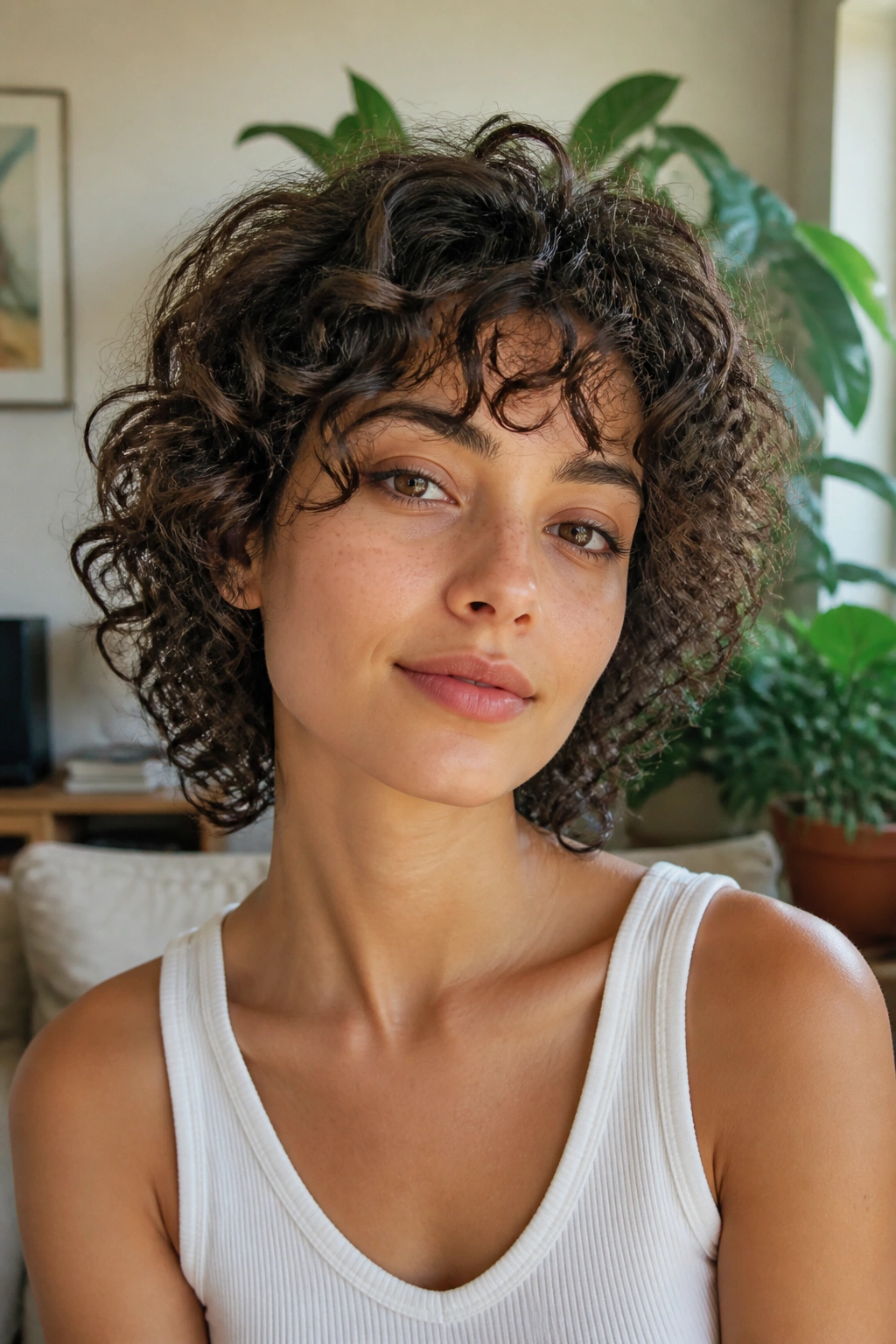
Fine curls need their own rules. A curly shag can be brilliant on them because the shape respects curl pattern while giving the top some lift and the sides some breathing room. The key is dry cutting or cutting curl by curl, not forcing the whole head into one wet shape.
A good curly shag avoids bulky triangles and keeps the curl pattern open. Layers should encourage spring, not flatten it. If the stylist understands curl behavior, this cut can make fine curls look fuller than they do in a one-length shape.
What to watch for
- Keep the layers balanced on both sides.
- Avoid over-thinning the crown.
- Leave enough length in the curls to keep their spring.
- Style with a cream that defines without coating.
This is one of those cuts where shape matters more than length. Get that wrong, and the curl loses its voice.
17. Short Crop Shag
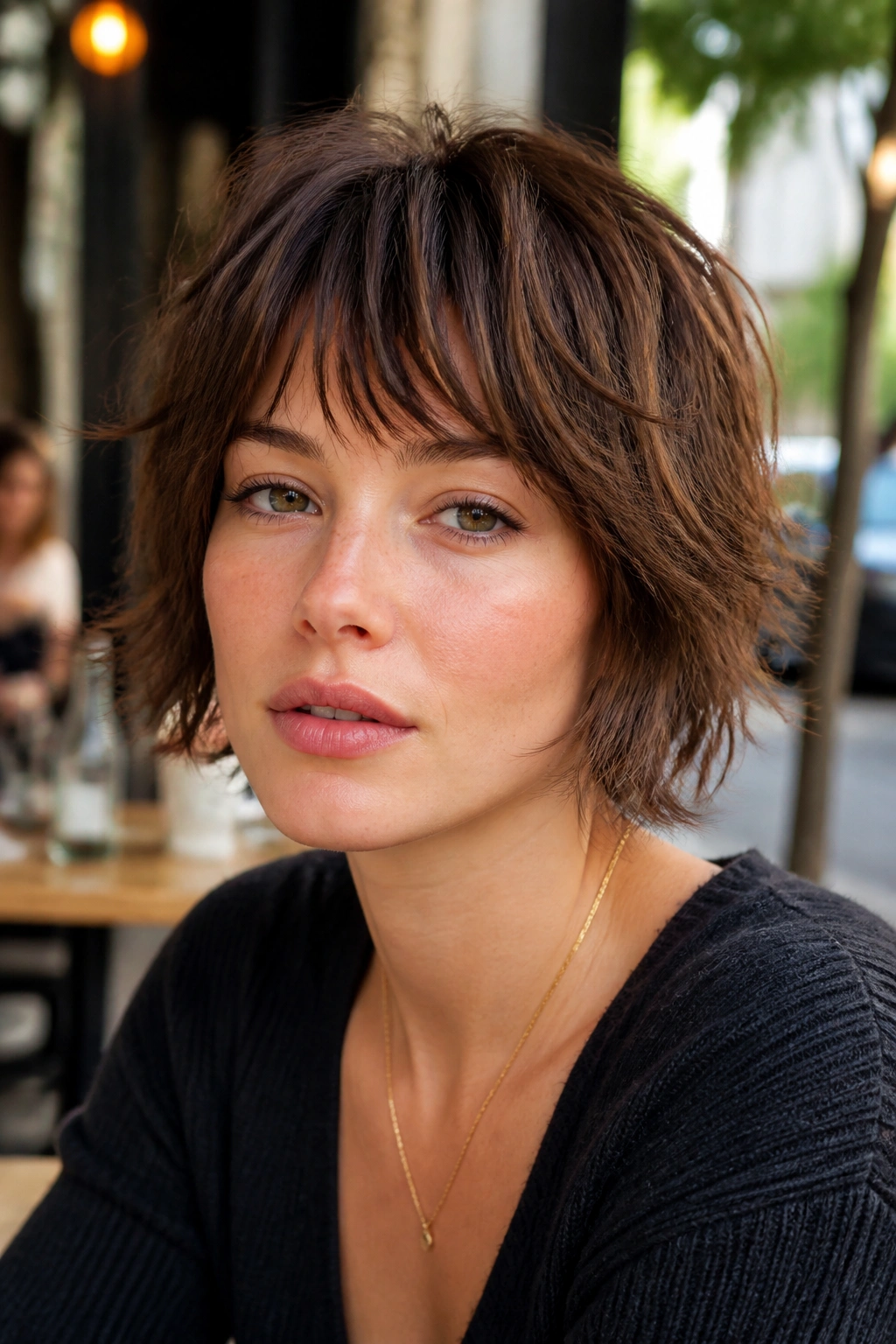
A short crop shag gives fine hair a sharp little boost. The hair sits close to the head, but the layers keep it from going flat and static. It’s a strong choice if you want something quick to style and easy to lift at the roots.
The length usually hovers around the jaw or just above it. That keeps the ends from looking thin while the crown gets enough texture to feel lively. A tiny round brush can make a big difference here, especially at the back of the head where fine hair often droops first.
This cut has a nice energy to it. It feels modern without trying too hard. And because the shape is shorter, you don’t spend half the morning coaxing it into place.
18. Split-Bang Shag

Split bangs give a shag a little air right away. Instead of hanging as one dense block, the fringe parts naturally and lets the forehead breathe. On fine hair, that makes the front feel lighter and less crowded.
The bangs can be short or long, but they should stay soft. A hard split with very heavy pieces can feel dated fast. Better to keep the front flexible so you can wear it centered one day and pushed apart the next.
This cut works well if you hate committing to one fringe shape. It grows out politely, and it can be tucked, pinned, or brushed loose without wrecking the whole look. That flexibility is a big deal when you want a shag that behaves in real life.
19. Tapered Shag With Crown Volume
If your fine hair lies flat at the top, a tapered shag with crown volume is worth a close look. The cut builds height where you need it most, then narrows down the sides so the shape does not balloon out. It can make the head look taller and the hair look fuller at the same time.
The crown layers should be short enough to lift, but not so short that they stand away from the head in a spiky way. There’s a fine line there. The taper through the nape and sides keeps the whole thing elegant instead of boxy.
How to get the lift
Ask for root-focused layers near the crown, then style with a volumizing spray at the roots and a quick blow-dry using your fingers. A little bend at the ends helps, too. Flat ends can drag the whole silhouette down.
20. Blunt-Edge Shag
This is the cut for people who want texture but refuse to give up a strong outline. A blunt-edge shag keeps the perimeter solid while adding movement inside the shape. Fine hair usually looks healthier this way because the ends stay dense and the layers do the lighter work underneath.
The blunt edge is the anchor. Without it, shag layers on fine hair can turn floaty in a bad way. That’s especially true if the hair is long. A clean base makes everything else look more expensive, even if the styling is casual.
This is a very practical cut. It grows out well, it photographs nicely in real life, and it keeps your hair from looking shaggy in the ordinary, unflattering sense of the word. That’s a win.
21. Choppy Shag With U-Shaped Back
A U-shaped back softens the outline and keeps the hair from feeling too heavy at the center. When that shape is paired with choppy layers, fine hair gets a nice mix of movement and fullness. The back falls a little longer in the middle, which helps preserve density.
This cut is especially good if you wear your hair half up often. The shape gives you something interesting to see from behind, not just from the front. And since the sides stay a touch shorter, the face gets a little framing without losing overall balance.
The choppiness should be controlled, not wild. If the layers are too disconnected, the U-shape loses its softness. Ask for gradual layering and a gentle curve at the back rather than an obvious V.
22. Layered Shag With Flipped Ends
Flipped ends bring a little bounce to fine hair. A layered shag that encourages that shape feels upbeat and fresh, especially when the hair ends around the shoulder or collarbone. The layers catch movement, and the flipped finish keeps the style from lying flat.
A round brush, a medium barrel brush, or even a quick bend with a flat iron can make this happen. The trick is not curling the hair too tightly. You want the ends to lift away from the neck, not wrap into a ringlet.
What makes it different
Unlike a smooth lob, this cut invites the ends to show off a little. That means the haircut itself does more of the styling work. If you like a blowout look but want the easier structure of a shag, this is a strong compromise.
23. Air-Dried Shag With Soft Fringe
Some haircuts are built for salon polish. This one is built for real mornings. An air-dried shag with soft fringe relies on natural bend, a gentle fringe, and layers that fall into place without a lot of fuss. Fine hair often responds well to that kind of low-pressure styling.
The fringe should be light enough to separate as it dries. If it’s too thick, it sticks together and loses that airy feel. A touch of leave-in conditioner on the ends and a tiny bit of mousse near the roots can help the shape settle in a decent way.
This is the cut I’d pick for someone who wants to spend less time with a blow-dryer and more time doing something else. It’s not lazy. It’s practical.
24. Retro 70s-Inspired Shag
The 70s-inspired shag has a recognizable shape: soft fringe, layered sides, and movement that starts high enough to frame the cheekbones. On fine hair, a modern version needs a lighter touch than the classic did. You want the energy, not the heaviness.
The best updates keep the layers wispy and the outline clean. If you go too chunky, the hair can feel sparse. Keep the bangs soft and the layers blended, and the result looks current without losing the retro feel.
This cut has a little drama in it, which is part of the fun. It pairs well with round brushing, a bit of root lift, and a loose finish around the face. It’s the sort of haircut that can make a plain T-shirt look deliberate.
25. Side-Part Shag With Deep Sweep
A deep side part changes the whole mood of a shag. It gives fine hair immediate lift at the root and makes the front look fuller because the hair is no longer splitting evenly down the middle. Sometimes that’s all a cut needs.
The shag shape underneath can stay fairly simple. The part does a lot of the visual work. That said, the layers should still be soft enough to support the sweep, especially around the temple and cheekbone.
How to style it
- Set the part while the hair is damp.
- Blow-dry the roots opposite the direction you want them to fall, then flip back.
- Use a clip at the crown for 5 minutes if you want extra lift.
- Finish with a light mist, not a stiff spray.
This is one of the easiest ways to fake fuller hair without changing much else.
26. Minimalist Shag With Barely-There Layers
Not every shag needs to shout. A minimalist shag keeps the shape subtle and uses just enough layering to stop fine hair from lying flat. The effect is softer, quieter, and easier to wear if you prefer your hair to look neat first and textured second.
This is a good option for someone who likes a clean silhouette but wants more movement than a blunt cut can give. The layers usually start low, the face-framing stays gentle, and the overall result is tidy from a distance but soft up close.
The beauty of this cut is that it doesn’t fight your hair texture. It works with it. That means less time fixing the shape and more time wearing it.
27. Tousled Shag With Jaw-Length Framing
Jaw-length framing pieces are useful on fine hair because they make the face look defined while creating the illusion of fullness around the sides. A tousled shag built around that idea feels casual but not sloppy, which is harder to pull off than people think.
The framing pieces should skim, not cling. If they sit too close to the jaw, they can expose the thinness underneath. Keep the movement loose and a little irregular so the hair looks touched by air instead of overworked with a curling iron.
This cut likes texture spray and finger styling. A brush can flatten its personality fast. Leave a little imperfection in it. That’s where the charm lives.
28. Polished Shag With Soft Movement
This is the version I’d recommend to someone who wants a shag but does not want to look like they walked out of a music video from three decades ago. The shape is polished, the movement is there, and the fine hair gets enough layering to feel alive without losing its clean edge.
Ask for a strong base, soft internal layers, and face-framing pieces that start around the cheekbone. That combination keeps the cut elegant and useful. It works with a blazer. It works with a sweater. It even works on days when the only styling you manage is a quick blow-dry and a little dry shampoo at the roots.
Fine hair does not need to be rescued. It needs the right shape. A polished shag gives you that shape without making the hair look overcut, which is the main mistake I see over and over. Keep the lines clean, keep the layers soft, and the cut does the rest.
