



Cutting curly hair is a high-stakes game of geometry. You aren’t just shaping hair; you are managing a spring-loaded fabric that has a mind of its own. For those of us with round faces, the goal is often finding that sweet spot where the hair adds texture and height without creating that dreaded triangular shape that widens the face instead of framing it.
The shag haircut is, quite frankly, the perfect solution for this struggle. It relies on internal layers and weight removal, which is exactly what a round face needs to break up horizontal width and encourage vertical movement. You want the hair to lift, to move, and to create angles.
We are going to walk through twenty-five different iterations of the curly shag. These aren’t just styles; they are structural choices. Each one prioritizes elongation, balance, and volume control, tailored specifically to the proportions of a round face.
1. The Collarbone-Length Classic Shag
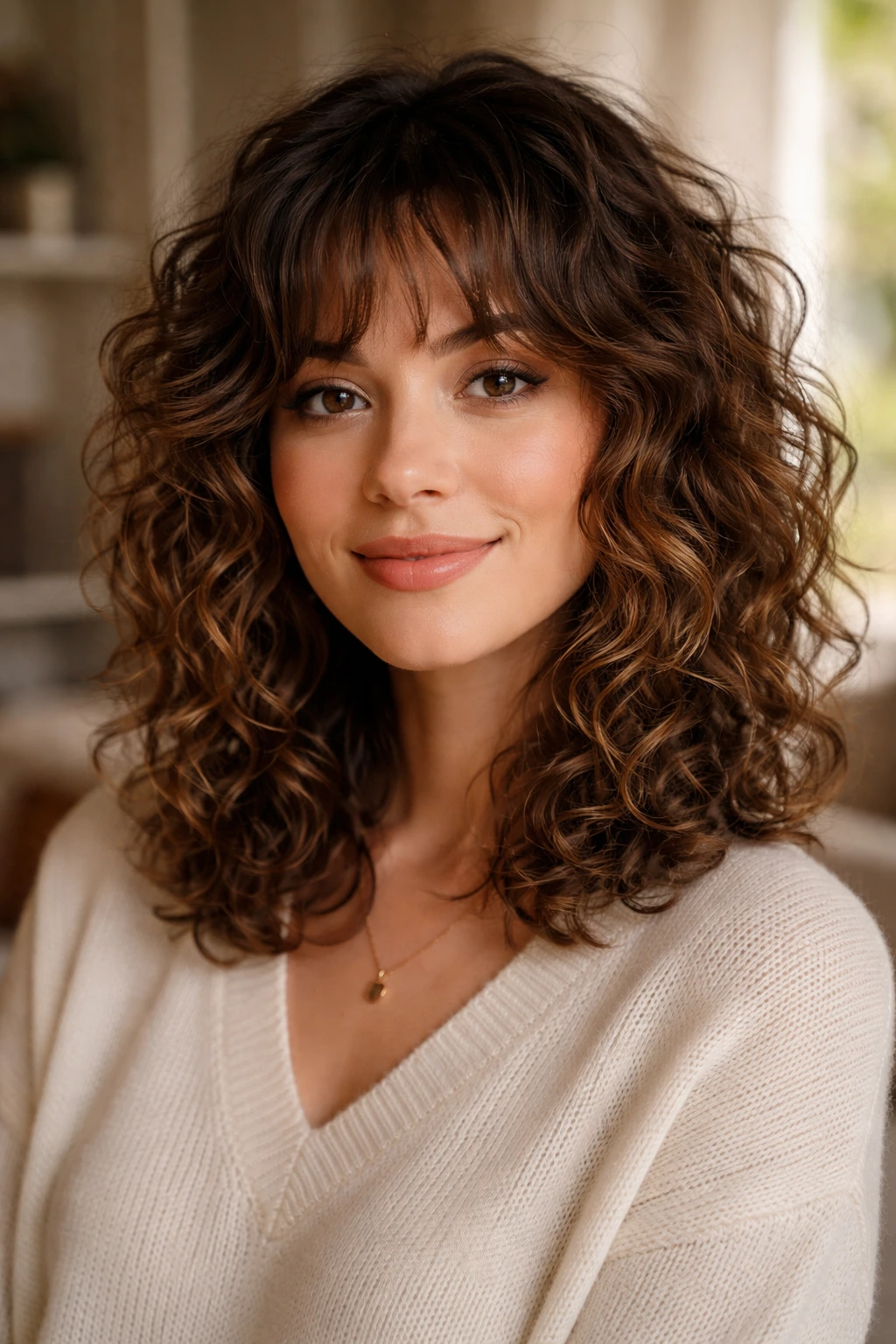
The collarbone is arguably the most flattering length for a round face. It is long enough to pull the eye downward, creating a vertical line, but short enough that it does not drag the face down with excess weight. This cut focuses on removing density from the mid-lengths so the curls can bounce.
Why It Works
By keeping the bulk of the hair at or slightly below the collarbone, you avoid the “width trap.” If a cut ends right at the chin, it acts like a highlighter for the widest part of a round face. Dropping that line just a few inches changes the entire silhouette.
Styling Tip
Focus your product application on the ends. Use a lightweight curl cream to define the ends without turning them crunchy. This ensures that the hair around your face stays soft and touchable, which is crucial for preventing that “helmet” effect that can happen with shorter, shag-style cuts.
2. Wispy Bang Shag
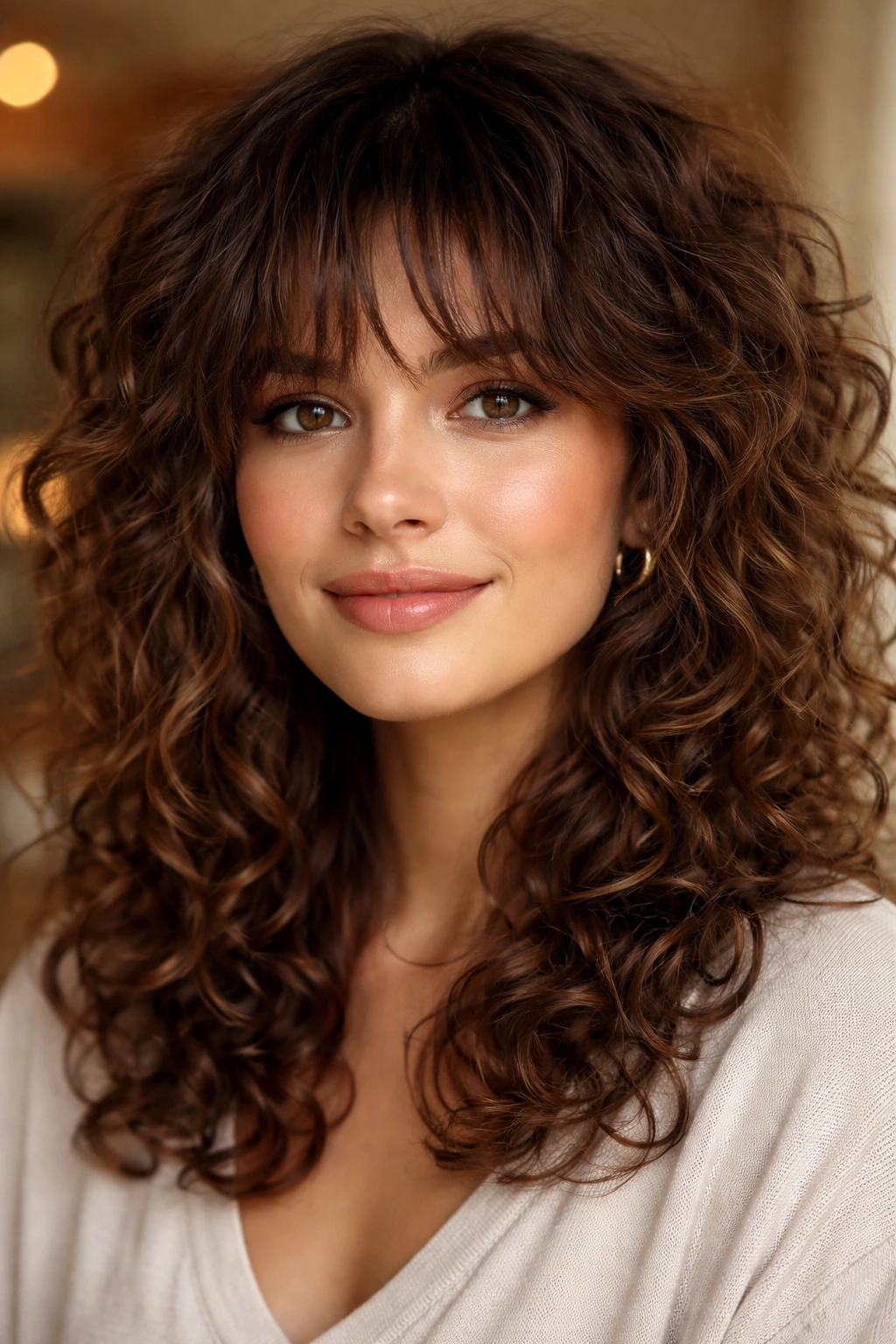
Many people with round faces are terrified of bangs. They worry that a fringe will cut the face in half and make it look wider. The secret is the “wispy” approach. This isn’t a heavy, blunt fringe. It is a light, shattered layer of hair across the forehead that lets light through.
Achieving the Shape
The key here is transparency. Your stylist should cut these bangs dry, curl by curl, to ensure they don’t shrink up too far once they settle. You want them to graze the eyebrows, not sit in the middle of your forehead.
The Maintenance Factor
Because these bangs are so light, they grow out gracefully. You won’t be back in the salon chair every two weeks for a trim. They serve as a soft veil that breaks up the roundness of the forehead without creating a solid, horizontal line that would emphasize width.
3. The Short Pixie Shag
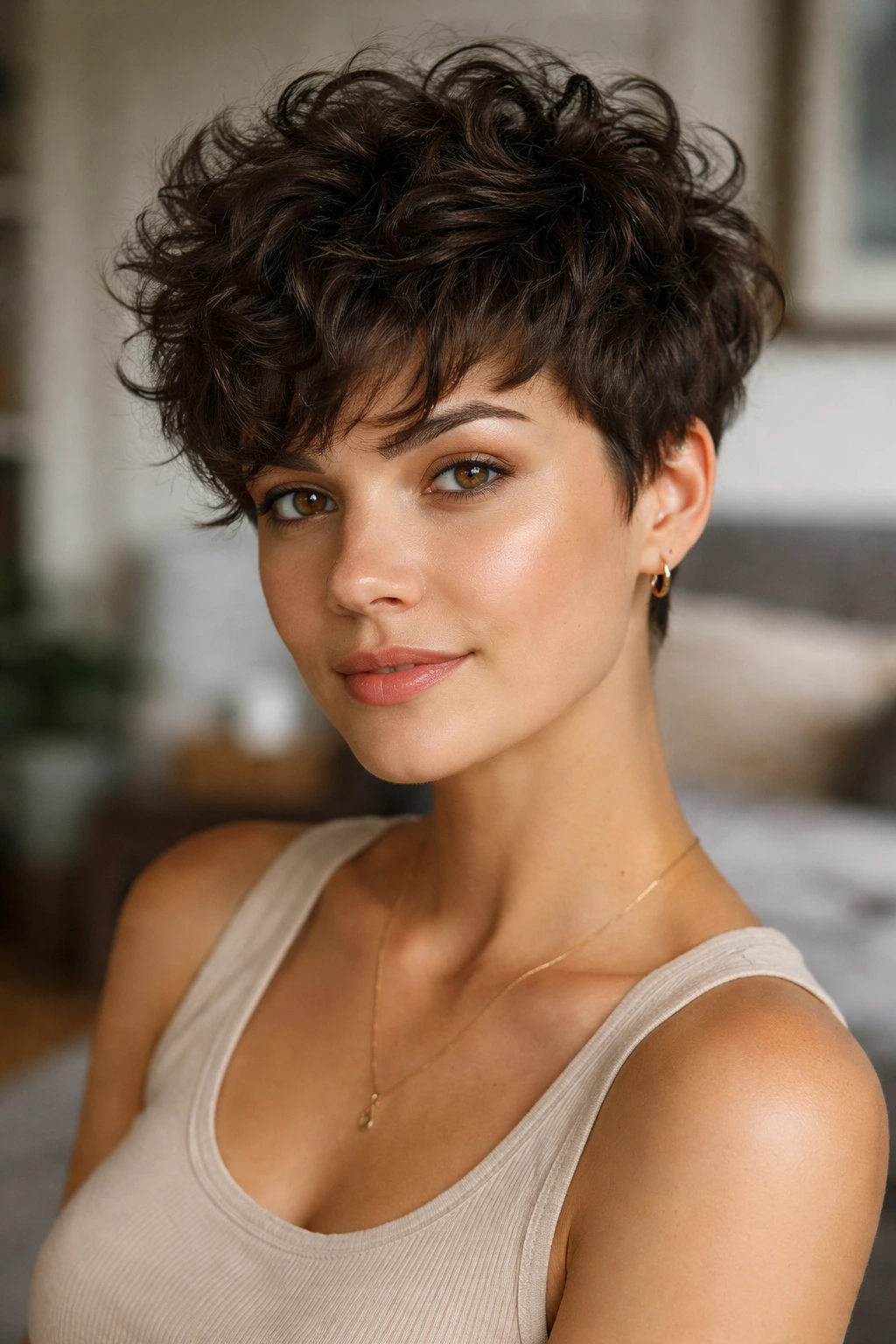
If you are bold enough to go short, a pixie shag is an incredible way to highlight your cheekbones and jawline. This cut is all about volume at the crown. By keeping the sides tight and the top long and textured, you physically elongate the face.
The Anatomy of the Cut
- The Crown: Keep this very long, with plenty of disconnected layers.
- The Sides: Cut these close to the head to minimize width.
- The Neck: Leave some soft, jagged pieces at the nape to keep it feminine.
Pro tip: Use a dry texture spray instead of a heavy gel. You want the curls to look effortless and slightly messy. If the product is too heavy, the hair will lay flat against your scalp, which defeats the purpose of the vertical lift you are trying to achieve.
4. Shoulder-Length Wolf Cut
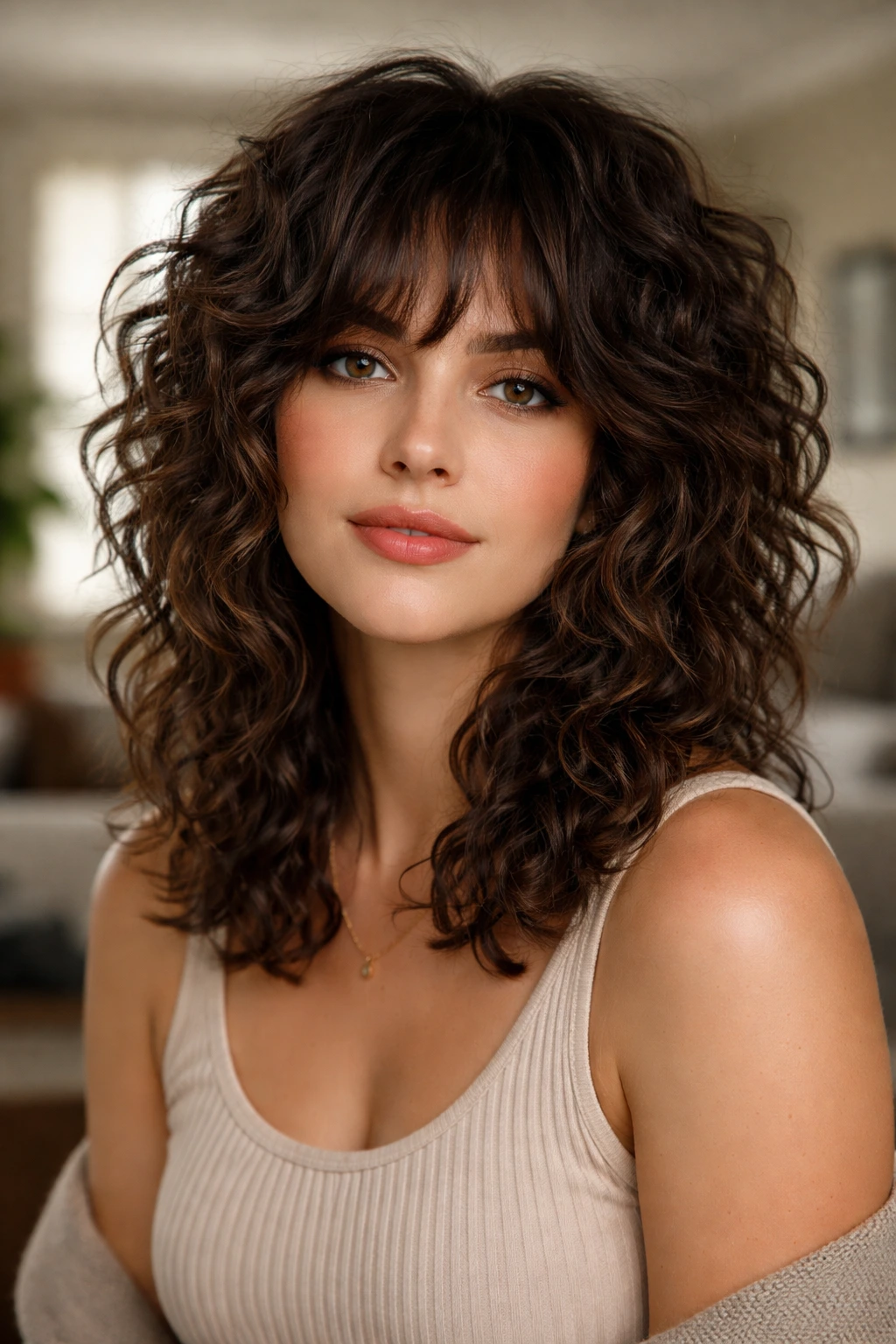
The wolf cut is essentially a modern, edgier version of the traditional shag. It is characterized by heavier layers around the crown and thinner, more tapered layers toward the ends. For a round face, this is ideal because it creates “height” on top, which is the fastest way to make a face look more oval.
How to Style
You want to encourage the layers to separate. When you are diffusing, flip your head upside down for the first few minutes. This forces the roots to lift off the scalp. Once you are 80% dry, flip back up and let the rest air dry. This prevents the hair from drying into a matted, uniform shape.
5. Curtain Bang Shag
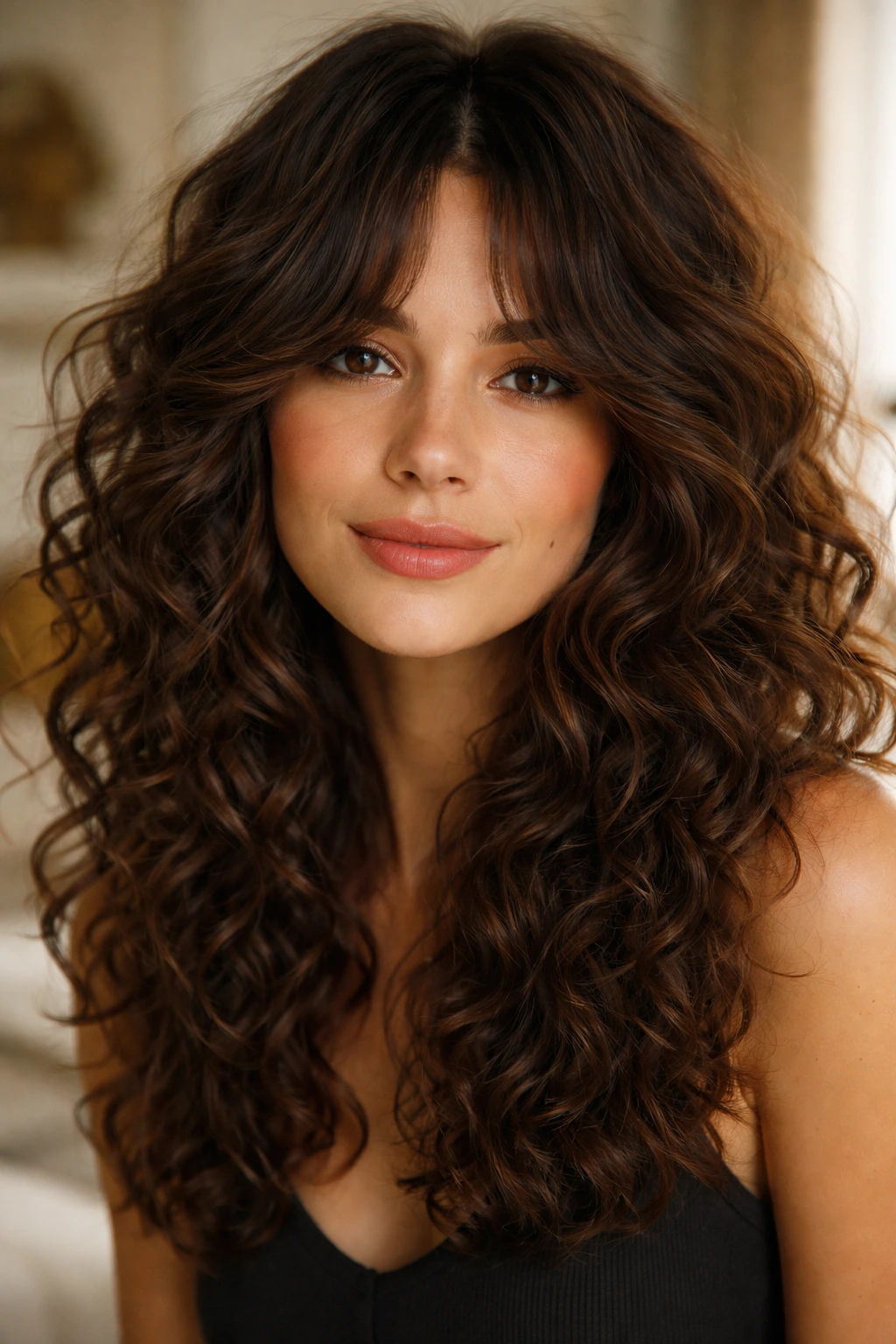
If you want the benefits of bangs without the commitment, the curtain fringe is your best friend. In a curly shag, these bangs should be cut to cheekbone length or even slightly longer. They create a diagonal line that draws the eye down toward the chin, which is a classic trick for slimming a round face.
The Framing Effect
The beauty of this style is how it frames the eyes. Because the fringe is parted and sweeps outward, it acts like a curtain, opening up the center of the face. It creates a soft, romantic look that pairs beautifully with the chaotic texture of a curly shag.
6. Tight Coil Shag
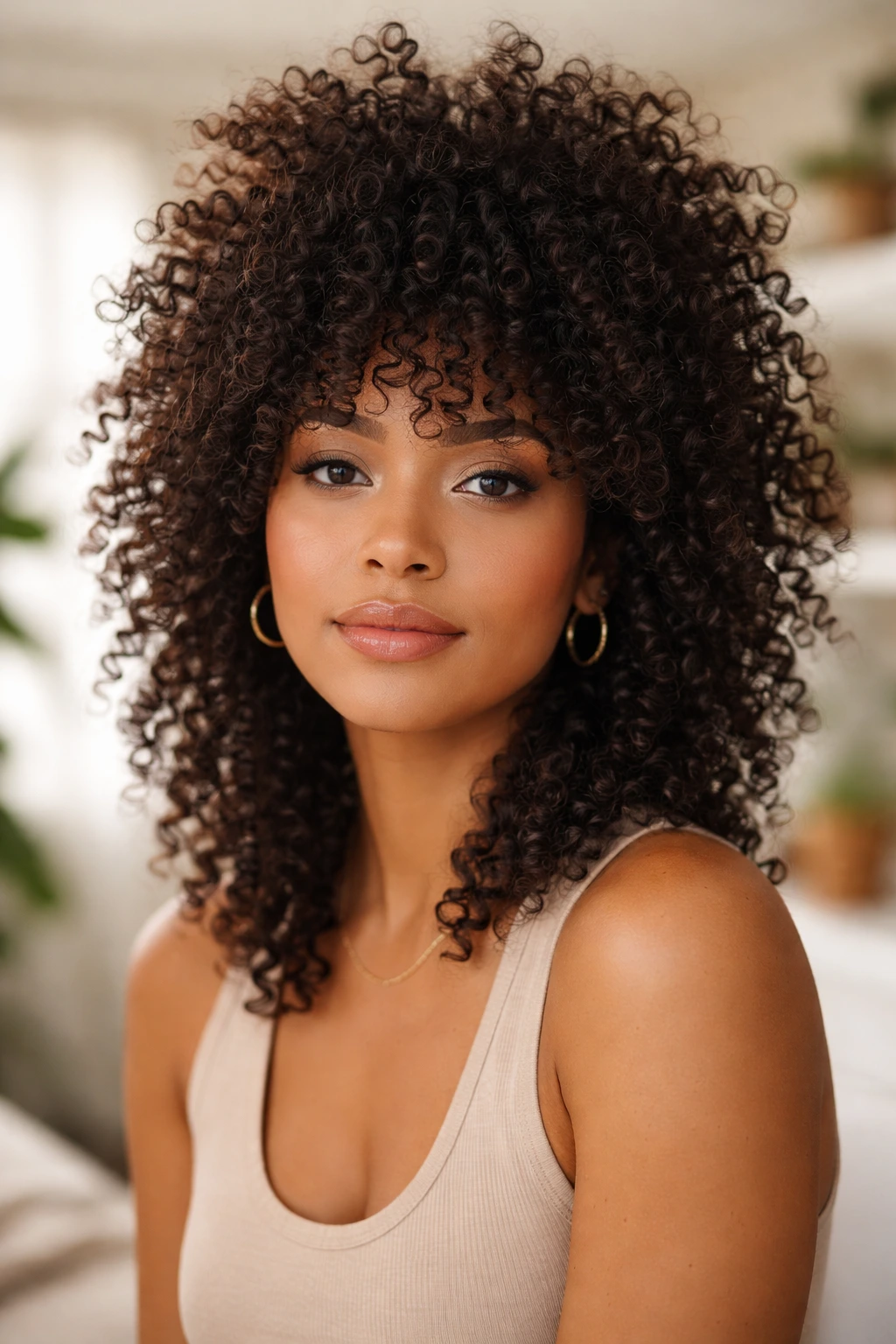
Tight coils require a different approach than loose waves. You cannot use the same layering technique for 4C hair that you use for 2C hair. For tight coils, the shag should be focused on “de-bulking” the sides while letting the hair grow long in the center to create a vertical pillar of volume.
Why It Works
It gives you the height you need to elongate the face without adding the width that happens when tight curls expand naturally. You are essentially sculpting a shape that grows up rather than out.
Maintenance
This cut requires regular moisturizing. Coily hair is drier by nature, and a shag cut exposes more of your ends to the elements. A high-quality leave-in conditioner is not optional—it is a requirement.
7. Deep Side Part Shag
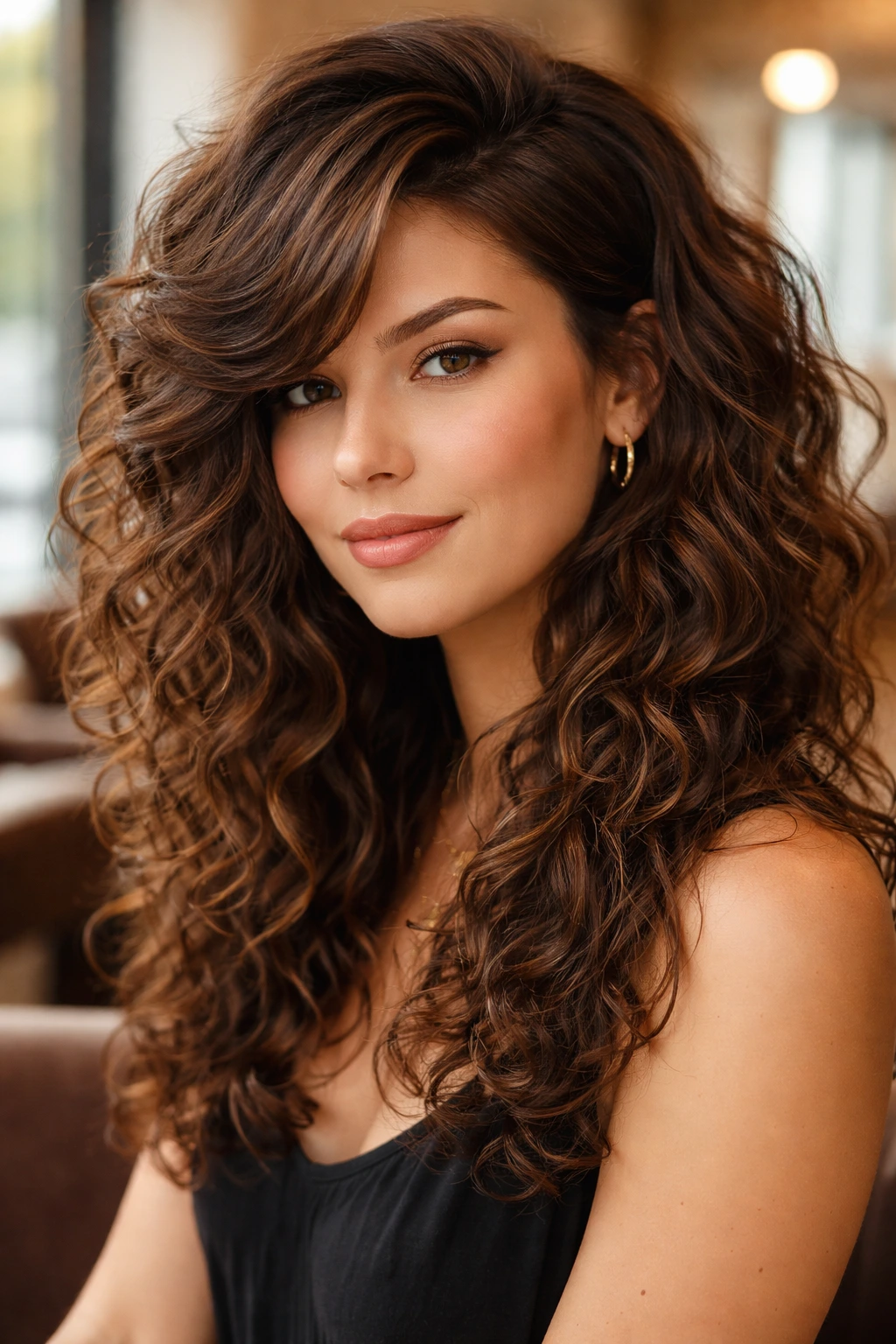
A center part on a round face can sometimes make the face look wider. A deep side part, however, creates an immediate diagonal line across the forehead. This breaks the symmetry of the face and creates an illusion of length.
Implementation
You don’t need a specific cut to do this, but asking for a shag with a “long-layered crown” helps. When you style, force your damp hair to the side you want to part on. As it dries, the weight of the longer layers will hold the volume on that side, preventing it from flopping back to the center.
8. Long Layered Shag
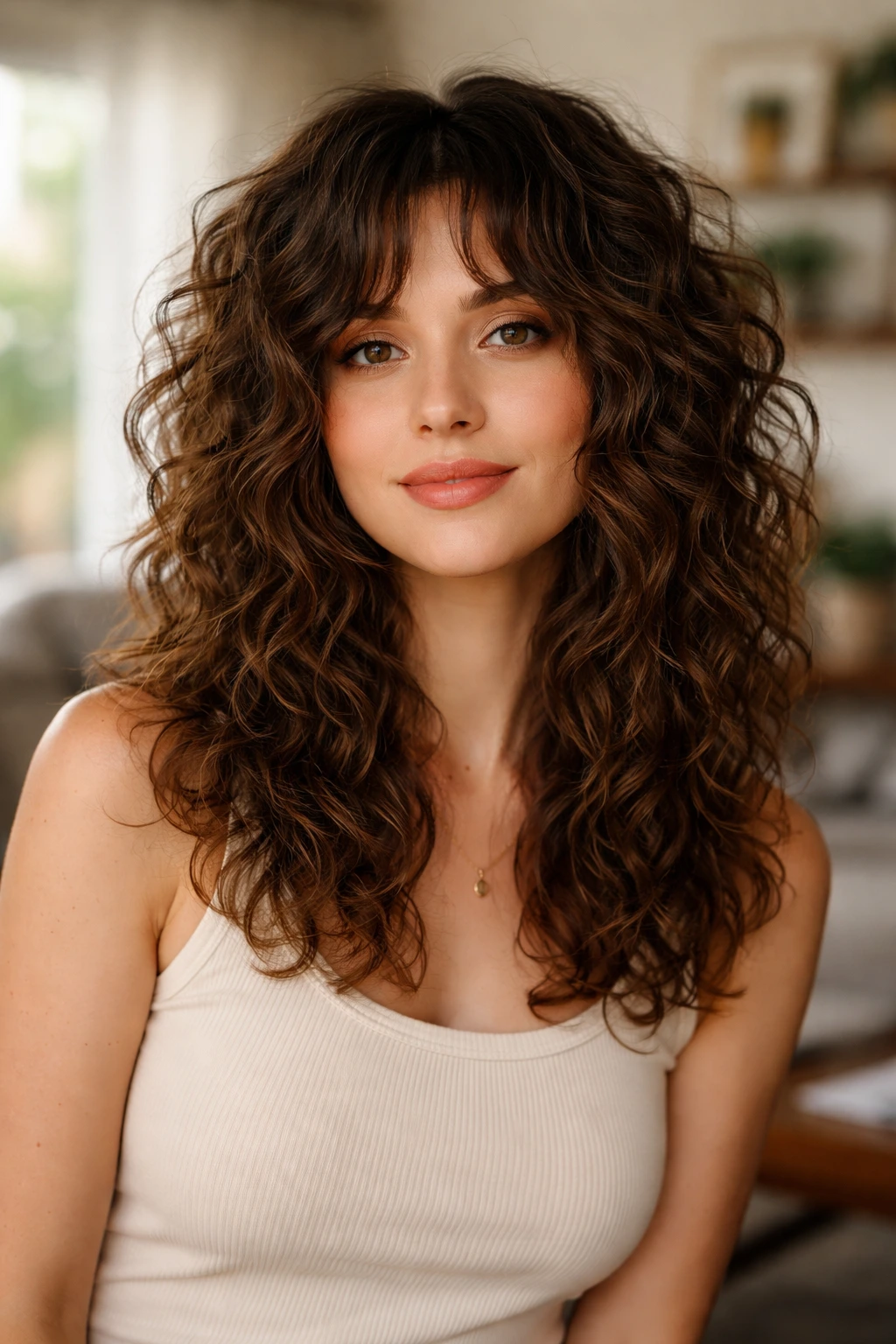
If you refuse to part with your length, a long shag is the compromise. The layers start around the chin and continue down to the ends. This allows you to keep the length you love while removing enough weight to prevent the hair from pulling your face down.
The Weight Problem
Long, heavy curly hair is the enemy of a round face. The weight pulls the curl flat at the root and makes it puffy at the ends. By adding short layers in the interior of the hair, you give the roots permission to lift.
9. Bottleneck Bang Shag
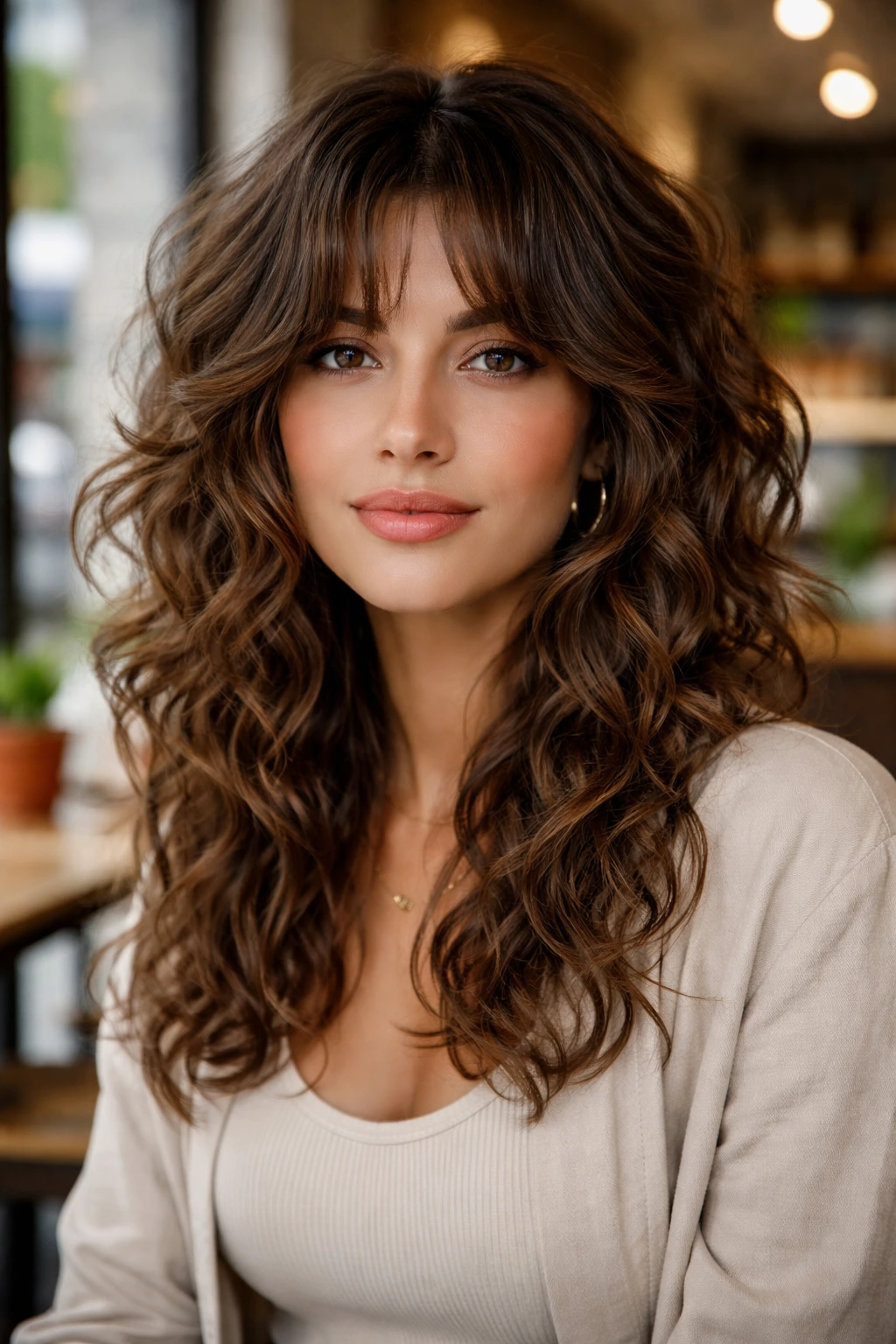
Bottleneck bangs are narrower at the center and wider at the sides, mimicking the shape of a glass bottle. They are fantastic for round faces because they provide a “peek-a-boo” effect. They don’t cover the entire forehead, so you maintain a sense of openness.
Why This Style Succeeds
It softens the hairline. If you have a round face and feel like your hair is too “severe” when pulled back, these bangs provide a buffer. They blend seamlessly into the rest of the shag layers, making the transition from fringe to lengths almost invisible.
10. Modern Mullet-Shag Hybrid
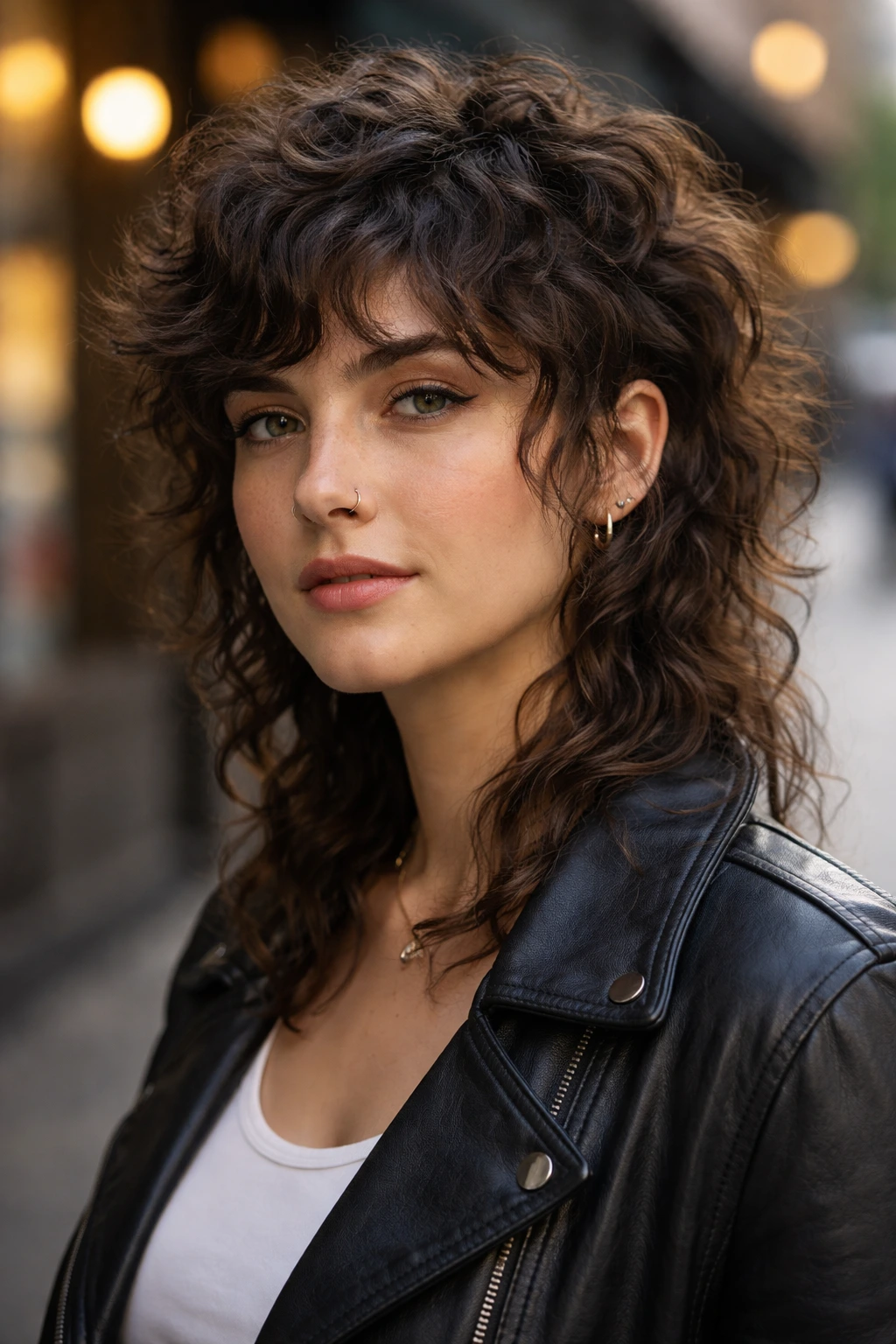
Hear me out: the mullet is back, but the “curly shag mullet” is actually wearable. It’s shorter on the sides and top, with significant length in the back. Because the sides are shorter, it removes the width around the cheeks, which is exactly what a round face craves.
Styling for Daily Life
You need to be comfortable with a bit of “mess.” This isn’t a style for someone who wants perfection. It is meant to look slightly undone. Use a matte pomade on the sides to keep them tucked, and a light foam in the back to let the length shine.
11. Razored Ends Shag
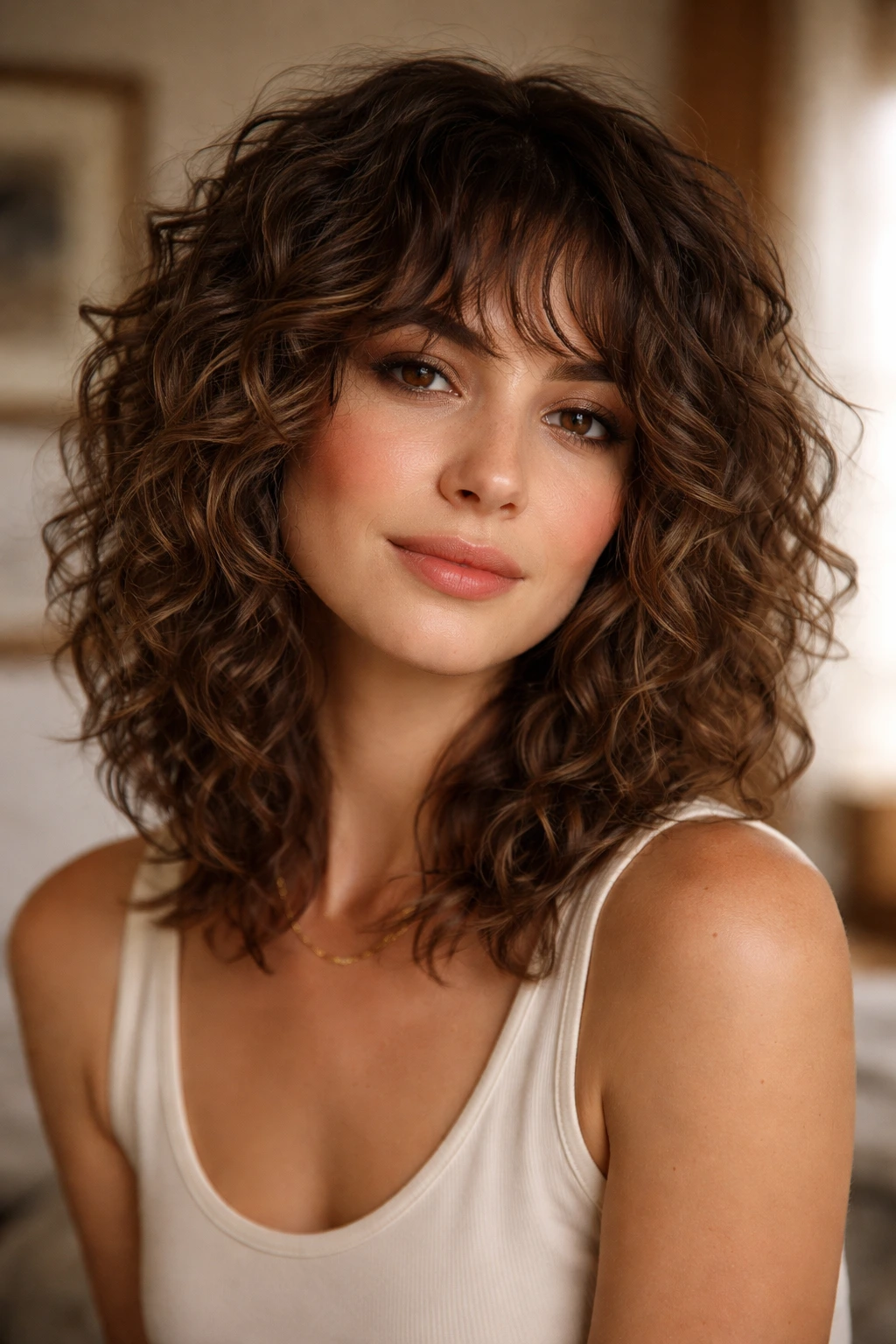
A razor cut on curly hair is controversial, but when done by a pro, it creates the best texture for a shag. A razor tapers the ends of the curls, making them feel lighter and more airy. For a round face, this prevents the “heavy bottom” look.
The “Shattered” Look
Instead of a blunt line at the bottom, which creates a horizontal shelf, razored ends create a shattered, soft edge. It looks like the hair is naturally weathered and textured, which distracts from the roundness of the jawline.
12. Asymmetrical Shag
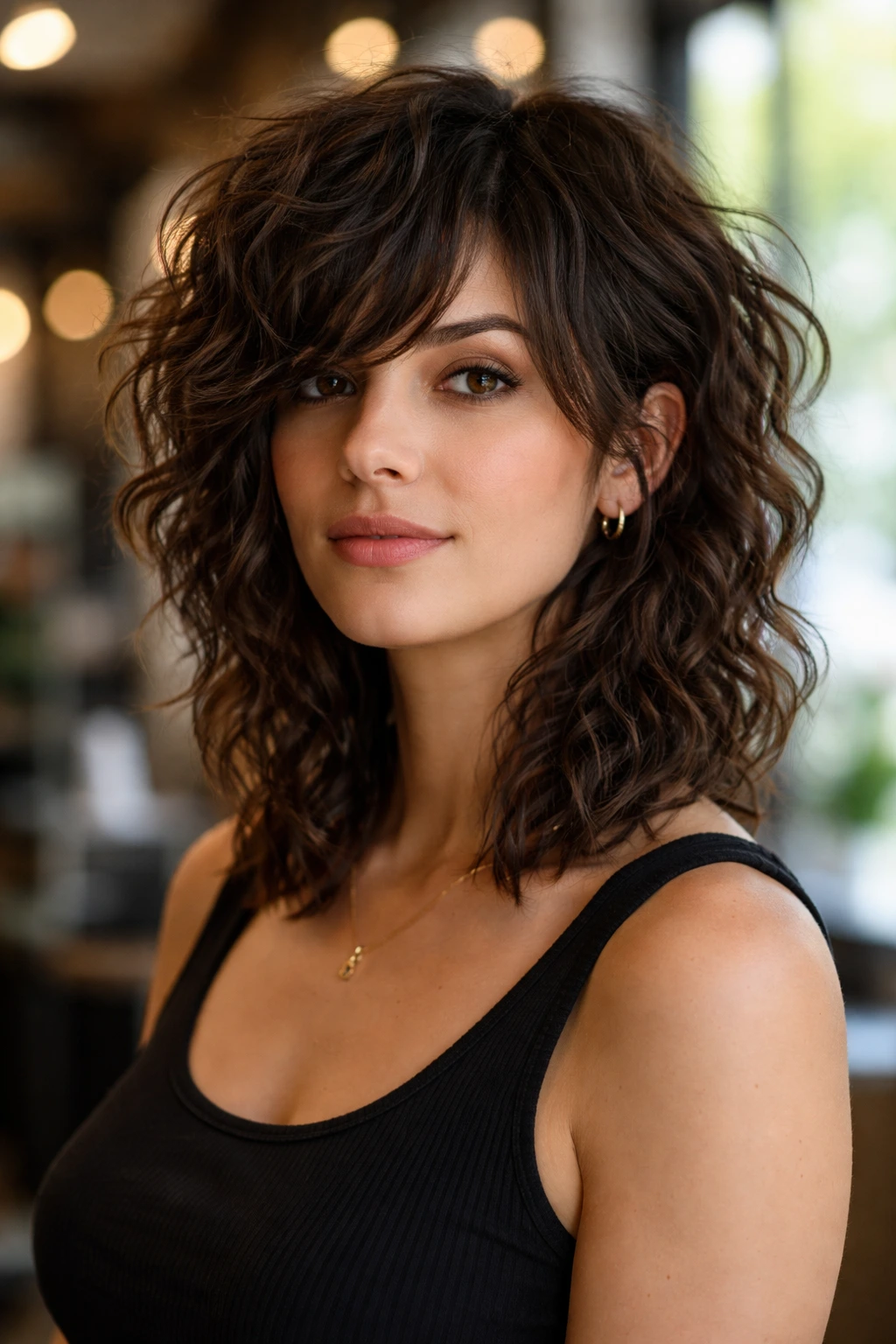
Nothing says “I have a plan” like an asymmetrical cut. By making one side slightly longer than the other, you create an intentional angle that pulls the eye away from the center of the face.
The Execution
You don’t need a drastic difference. Even a half-inch difference can break the visual symmetry. It looks cool, intentional, and it does the hard work of contouring your face without you needing to pick up a bronzer.
13. Tight-Curl Tapered Shag
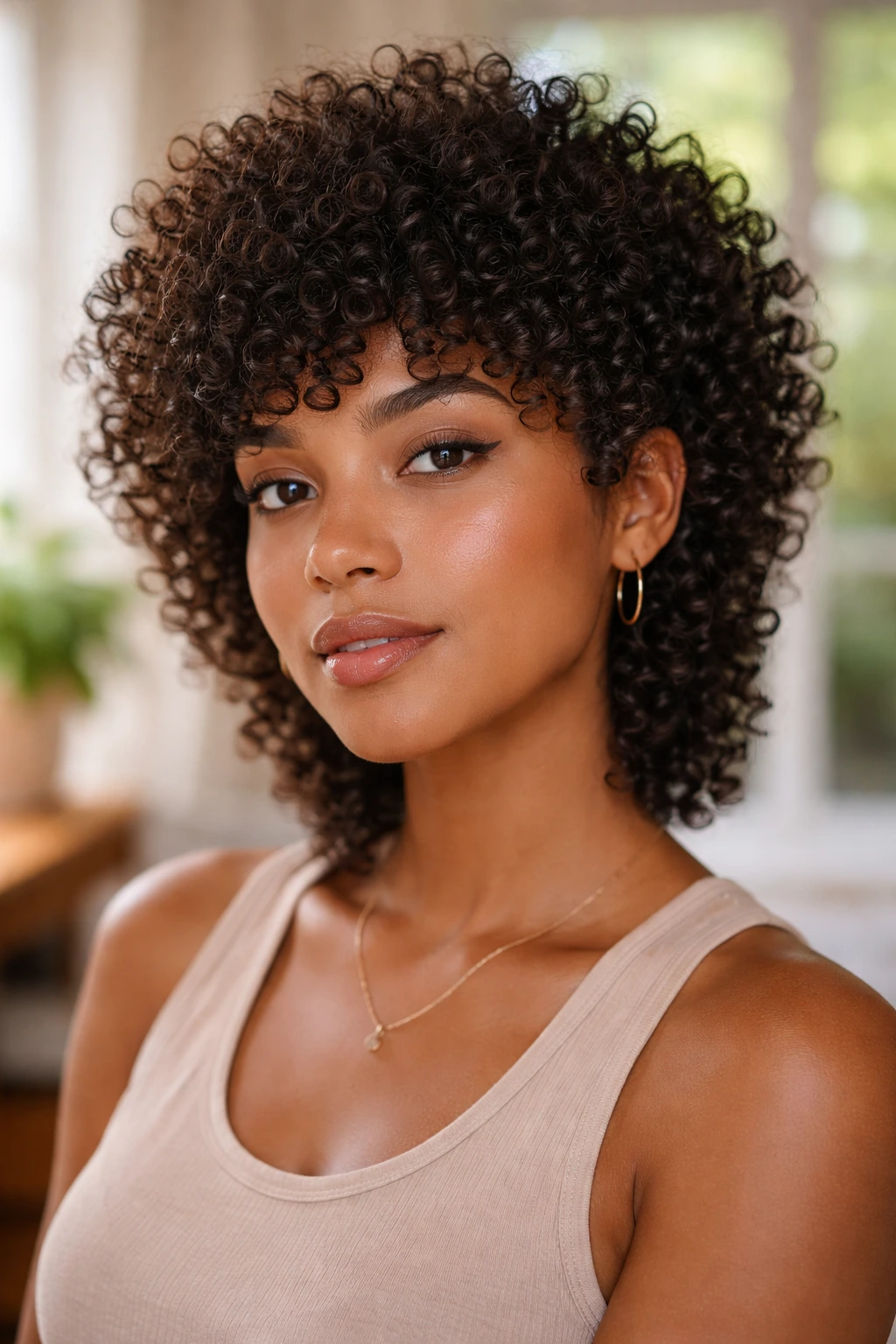
This is for those with very tight curls who want a shag but are worried about volume management. The cut is “tapered” because the sides are cut slightly shorter than the back and top.
Why It Flattens the Roundness
It essentially shaves off the “corners” of your hair shape. If you let your hair grow in a natural sphere, it will look like a globe around your head. This taper cuts into that globe, giving it a more oval shape that mimics the proportions of a face you want to frame.
14. Soft Waves Shag
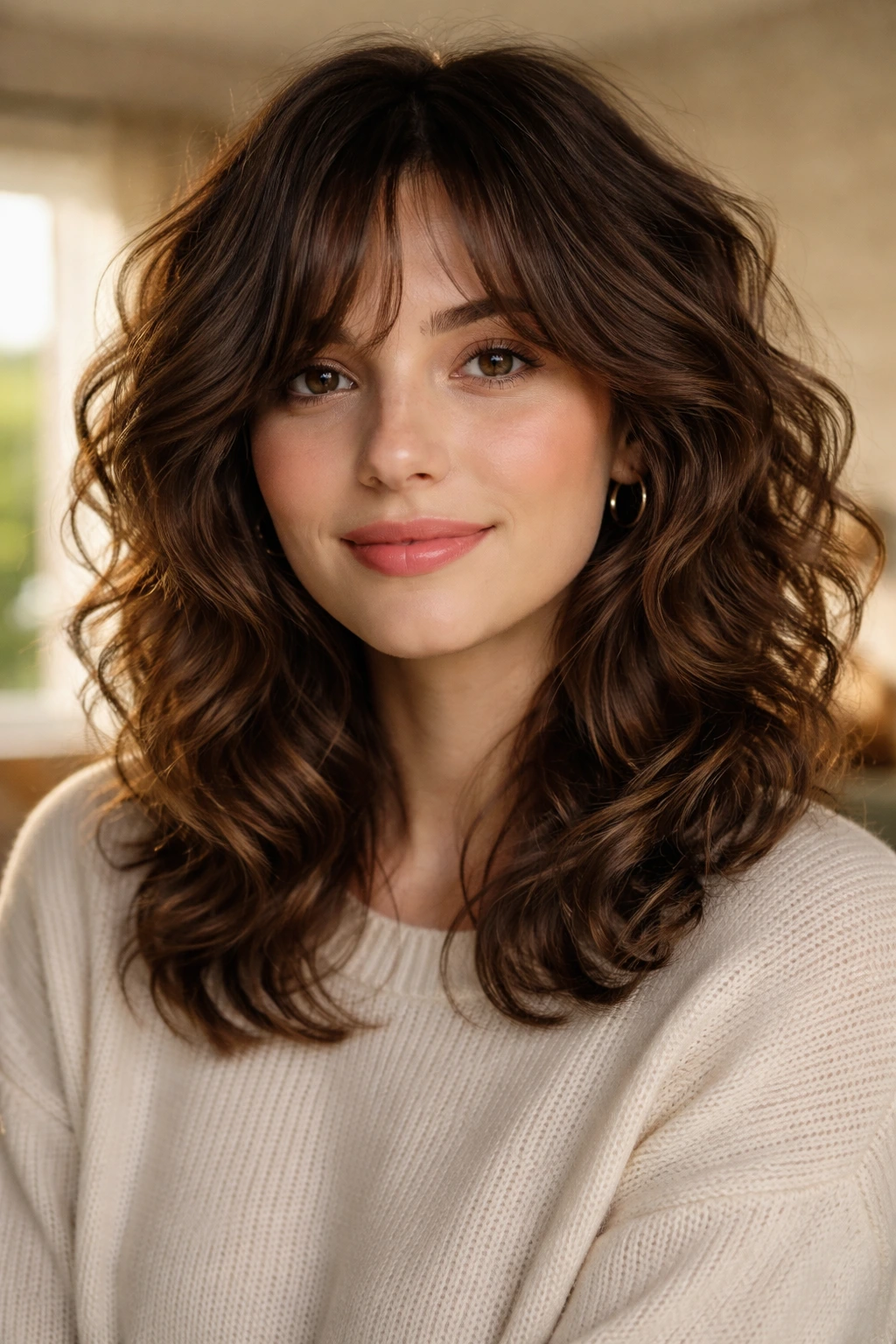
If your curls are more of a loose S-wave, you need a different cutting technique. You need “invisible layers.” These are layers cut into the interior of the hair that provide structure without being visible on the surface.
The Volume Balance
Because waves are less dense than coils, you have to be careful with thinning shears. Too much thinning will make the hair look stringy. Stick to slide cutting—where the stylist uses a shears-on-hair motion to remove weight without cutting off the length.
15. Micro-Bangs Shag
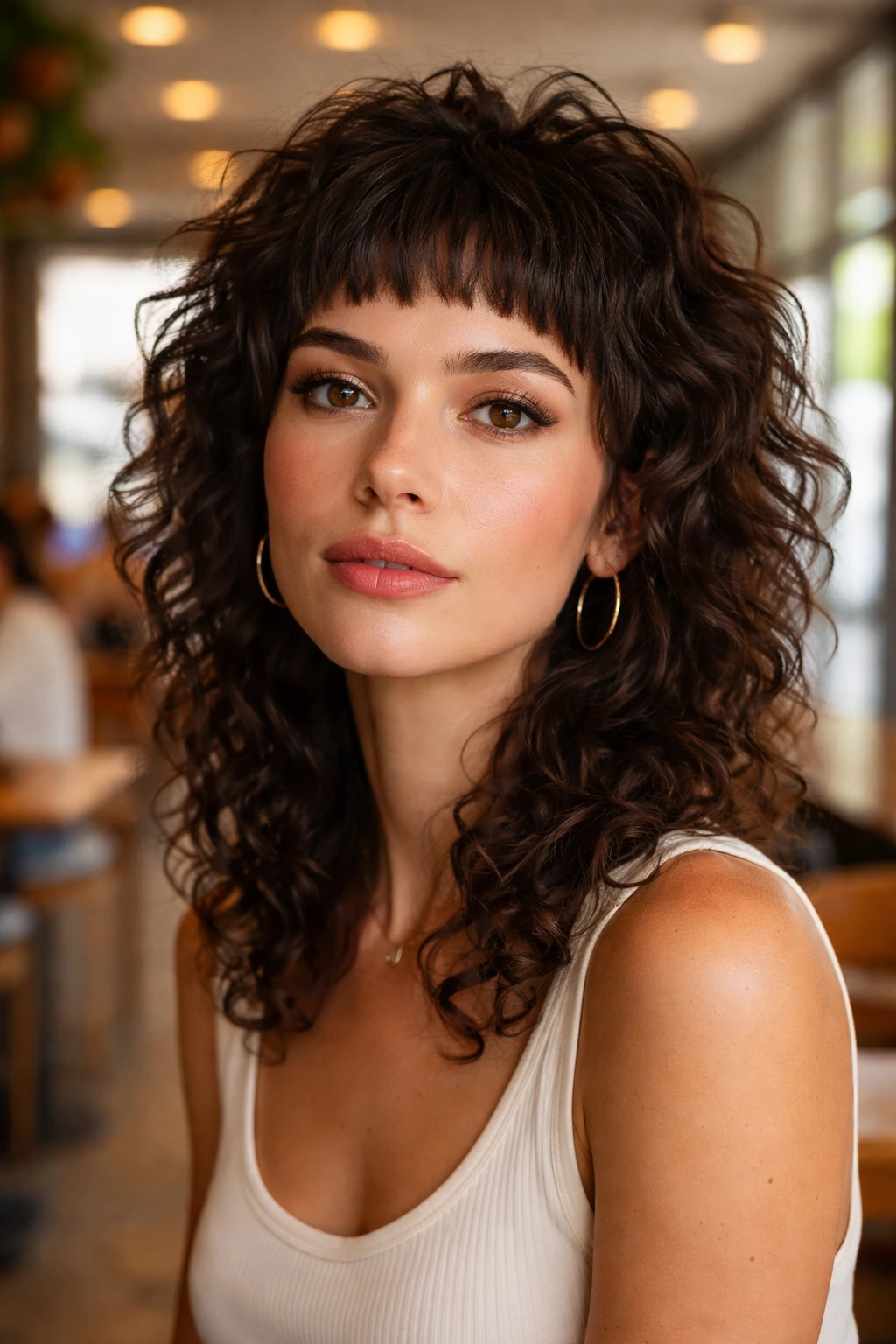
Are you feeling rebellious? Micro-bangs—those that sit high on the forehead—are excellent for round faces. They expose the forehead, which lengthens the face. When paired with a shag, they provide a strong point of interest near the eyes.
The “Cool Girl” Aesthetic
This is a high-fashion look. Pair it with a shag that is layered heavily at the crown. It creates a silhouette that is very vertical, making the face appear narrower by comparison. Just be prepared for the maintenance; you will need to trim these bangs every three to four weeks.
16. Mid-Length Curly Shag
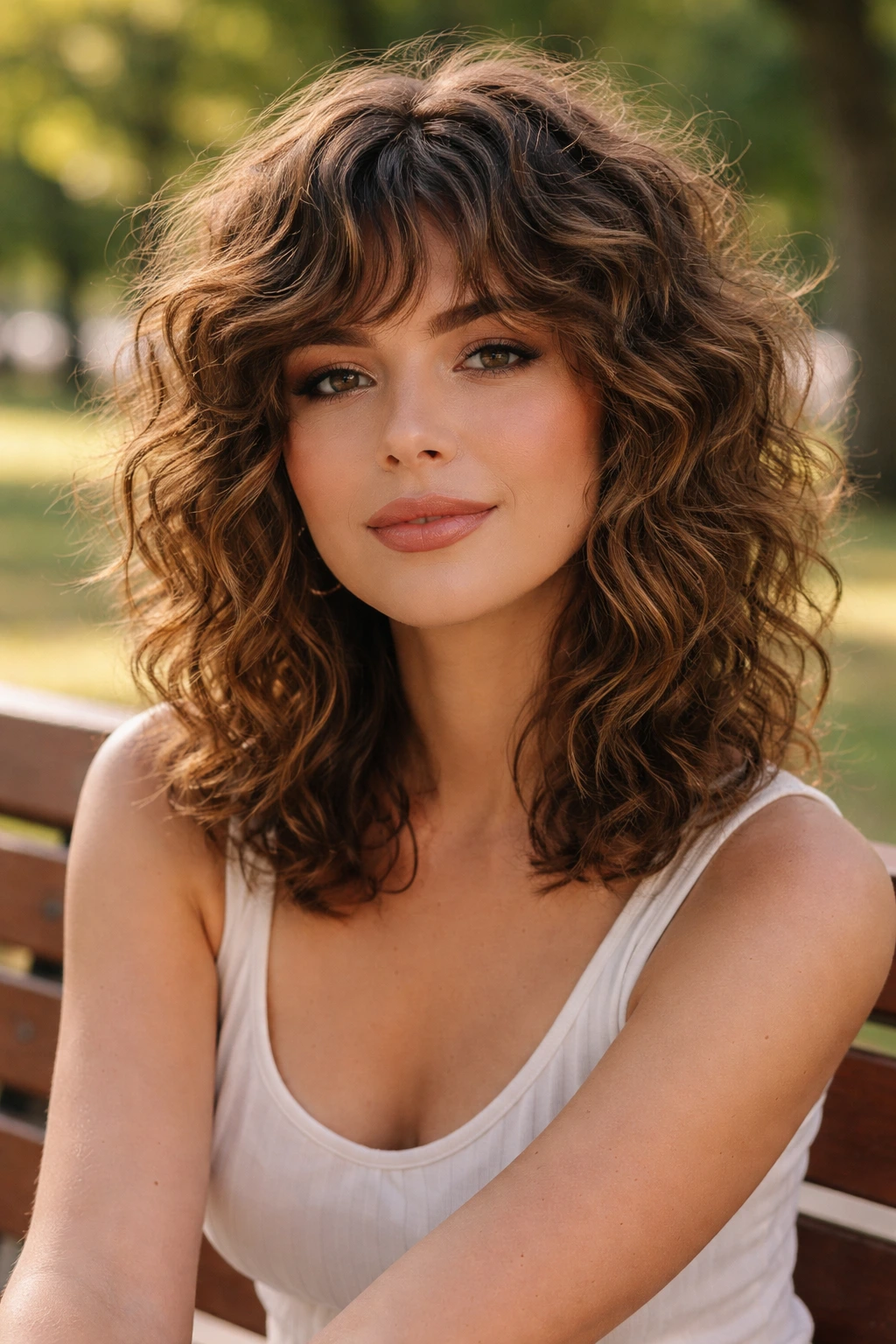
The “Goldilocks” length. It sits right between the chin and the shoulders. This is the most versatile length for styling. You can pull it back, you can wear it down, and it provides enough mass to balance out a fuller jawline.
Why it Works for Most
This length is the least risky. It’s not so long that it gets heavy, and not so short that it exposes the neck completely. It’s a safe, flattering middle ground. If you are new to the shag haircut, start here.
17. Choppy Layered Shag
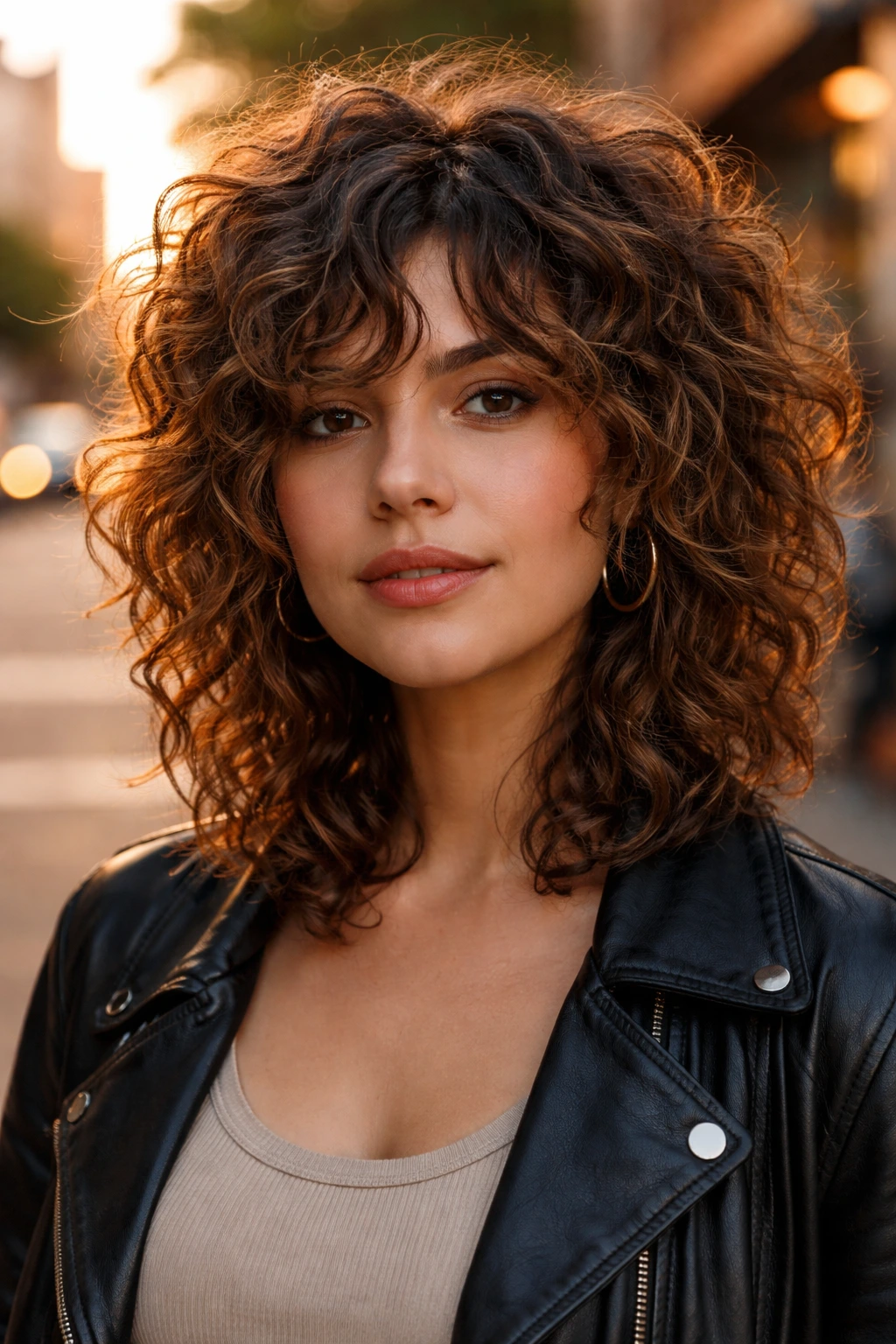
“Choppy” means the layers are disconnected. They aren’t blended perfectly. This creates a staggered look that looks fantastic on curls. Each layer sits on top of the next, creating little shelves of hair.
The Visual Distraction
The choppiness creates so much movement and shadow in the hair that the eye doesn’t settle on the roundness of the face. It’s a camouflage technique. The more texture you have, the less focus is on the face shape.
18. Two-Tone or Color-Blocked Shag
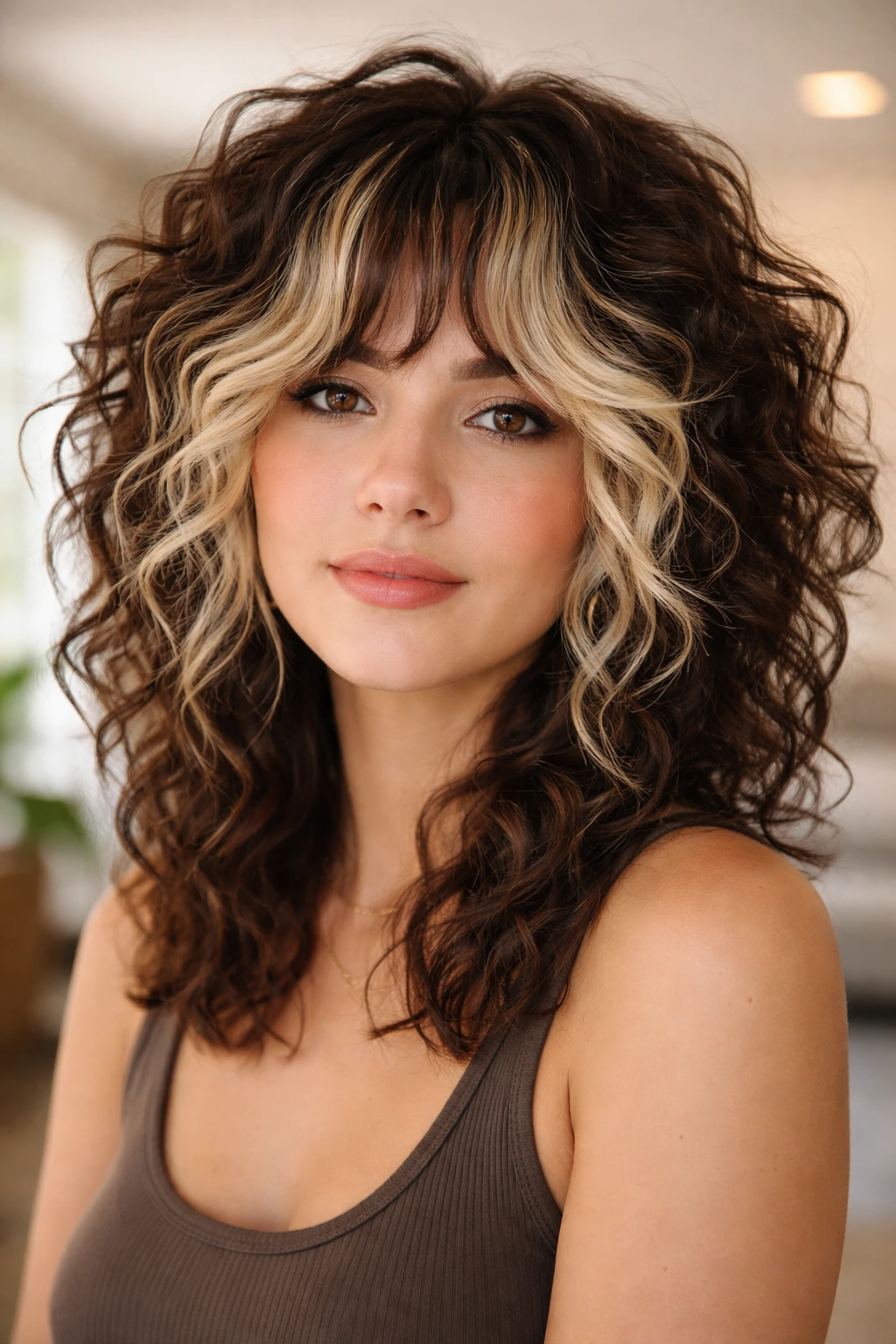
This is less about the cut and more about the color, but it changes the perception of the cut. By coloring the front layers lighter or adding a vivid streak near the face, you create a “curtain” of color that frames the face.
The Optical Illusion
Vertical color placement (highlights running from root to tip) draws the eye up and down, reinforcing the vertical lines you’re trying to create with your layers. Stay away from horizontal coloring (like a solid color block across the ends), as that will widen the face.
19. Brushed-Out Shag
For those days when you want maximum volume, the “brushed-out” look is a stylistic choice. You take a dry, fluffy shag and you actually brush through the curls to create a cloud-like texture.
Styling Safety
You must do this only on dry hair, and ideally with a wide-tooth comb or a specialized pick. If you do this on wet hair, you are asking for frizz. For a round face, this is a dramatic look—it’s big, it’s bold, and it changes your proportions entirely.
20. Deep Rooted Shag
This cut is designed to solve the “flat root” problem. The stylist cuts the layers starting very high, almost at the parietal ridge. This keeps the hair lifted off the scalp, preventing the “flat-topped” look that can sometimes occur with curly hair.
The Impact
By maximizing volume at the root, you are essentially creating a taller head shape. It’s the easiest way to combat the width of a round face. Just ensure your stylist knows you want “high layers”—not “short layers,” which can cause the hair to stick straight out horizontally.
21. Fringeless Shag
Don’t like hair in your face? No problem. A shag doesn’t require bangs. You can have a shag cut with long, face-framing layers that start at the jawline.
How It Frames
These long layers create a “V” shape around the face. The eye follows the line from your forehead down to the ends of these pieces. That diagonal movement is essential for softening the roundness of the cheeks. It’s a very sophisticated, 1970s-inspired look.
22. Shag with Face-Framing Tendrils
This is a subtle version of the shag. You cut the main length of the hair, but you leave some shorter, wispy pieces around the face. It’s like a built-in accessory that is always framing your features.
The Maintenance
These tendrils will need a little extra love. Because they are the first thing people see, make sure they are hydrated. A tiny drop of hair oil on these pieces goes a long way to making the whole style look intentional rather than just “growing out.”
23. Blunt-Cut Shag
Yes, it’s possible to have a shag with blunt edges. You keep the internal layers choppy and textured, but you cut the perimeter line blunt. This gives you the best of both worlds: the volume and movement of a shag, but the structure and “finished” look of a blunt cut.
Why This is Great
It looks healthier. Sometimes, heavy layering can make ends look thin or stringy. A blunt perimeter gives the illusion of thickness. For those with fine, curly hair, this is often the better route.
24. Voluminous “Lion’s Mane” Shag
Embrace the bigness. If you have a round face, sometimes trying to “hide” the face with hair is the wrong approach. Instead, go the opposite direction. Create a massive, voluminous shag that celebrates your curls.
Balancing Act
When you go this big, keep your makeup simple or go bold with your eyewear. You are creating a statement. The volume draws attention to your hair, which actually balances out the face. It’s a “go big or go home” approach that is incredibly confidence-boosting.
25. Ultra-Long Shag
We started with collarbone length, let’s end with the longest version possible. This is for the person who loves their long curls but needs to remove the triangle shape. The layers start at the shoulders and cascade down.
The Key to Success
The trick here is to ensure the layers aren’t too long. If the layers are too low, they won’t lift. You need at least some layers to hit the mid-lengths to give that “shag” feel. It’s romantic, it’s sweeping, and it’s a beautiful way to wear a shag without losing your length.
Final Thoughts
The curly shag is not just a trend; it is a structural necessity for managing curls. When you have a round face, the goal isn’t to change your shape, but to complement it. You want to add height, create diagonal lines, and manage the volume so it works with you instead of against you.
Always communicate clearly with your stylist about the “triangle” problem. If they know that is your primary concern, they will adjust the layers to focus on the crown rather than the perimeter. Once the cut is done, remember that product application is eighty percent of the battle. Keep the heavy stuff on the ends, the light stuff at the roots, and let your curls be the masterpiece.
