



A good set of blonde shag haircuts for straight hair can do something blunt cuts never quite manage: it makes sleek hair move without forcing it to fake waves. Straight strands show every line, so a shag on this texture lives or dies by the placement of the layers, the amount of weight left at the bottom, and the tone of the blonde itself.
A lazy shag is obvious from across the room. The layers sit in the wrong place, the ends look chopped up instead of airy, and the whole shape collapses the minute you tuck one side behind your ear. A cleaner version feels different. Beige blonde, champagne blonde, ash blonde, and rooted blonde all change how the cut lands, because color can either soften the layer breaks or expose them.
That’s the part people miss. On straight hair, the haircut and the color have to work together. A stylist who understands this will keep enough density at the hem to avoid a thin tail, then remove just enough weight through the crown and face frame to give the cut some lift. Too little, and you get a flat curtain. Too much, and the ends start looking ragged.
Some of the cuts below are soft and wearable. Others are sharper, more deliberate, and a little cooler. All 20 work with straight hair instead of fighting it.
1. Soft Blonde Shag for Straight Hair
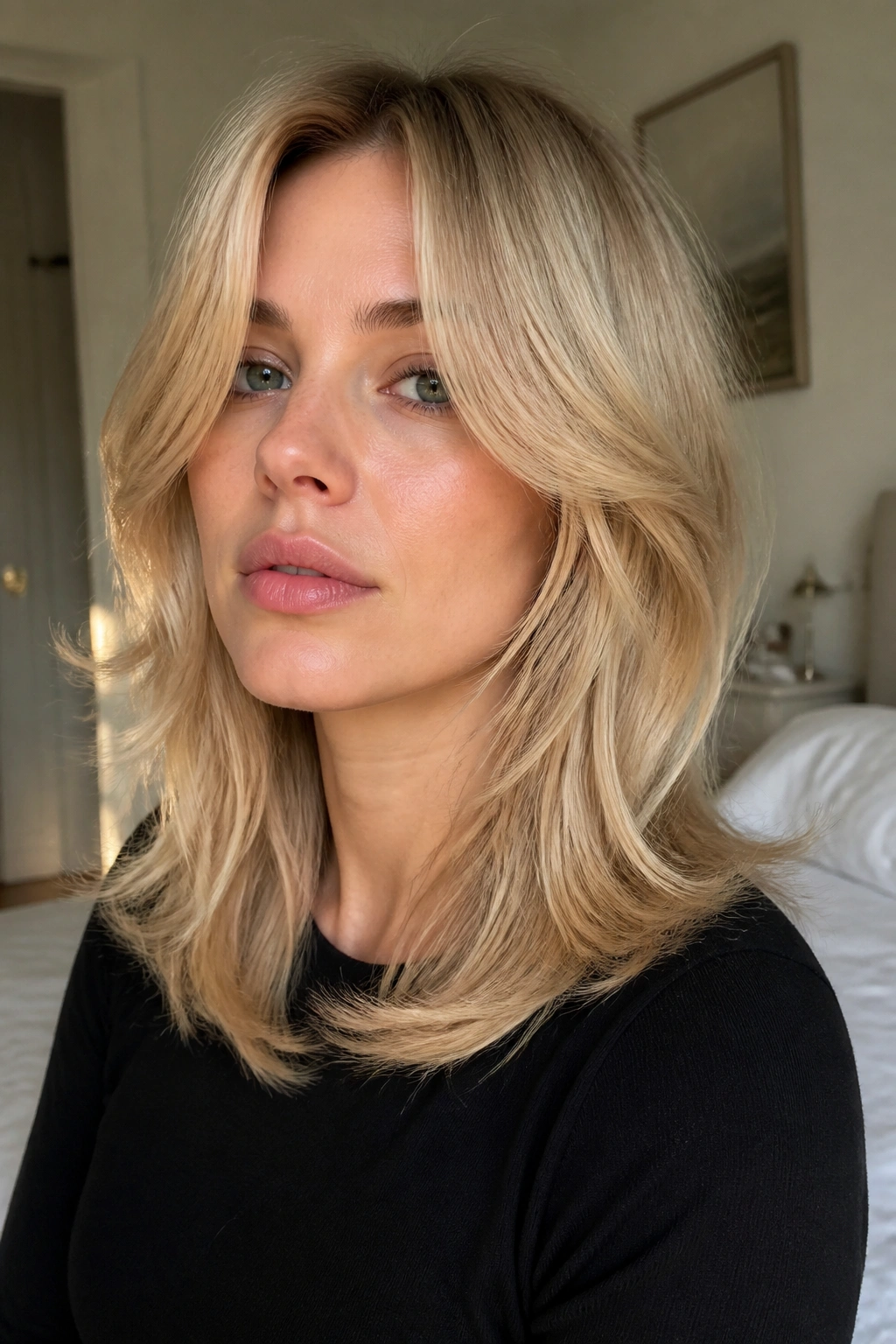
Flat hair hates a lazy shag. When the layers sit too high or too uneven, the whole cut looks like it was attacked with scissors and then regretted by breakfast.
This version keeps the movement soft. The shortest face-framing pieces usually start around the cheekbone, while the back holds enough length to keep the silhouette from getting spiky. Beige blonde or vanilla blonde works well here because the color softens the layer breaks; a harsh platinum can make every line shout.
Why it works on straight hair
- The front pieces bend toward the face instead of flipping out.
- The crown stays light without turning see-through.
- The ends keep enough density to look polished when air-dried.
Ask for long internal layers, a soft fringe that can split in the middle, and a little extra weight at the hem. This is the kind of shag you can blow dry with a round brush in 8 minutes and still look like you made an effort.
2. Curtain Bang Blonde Shag
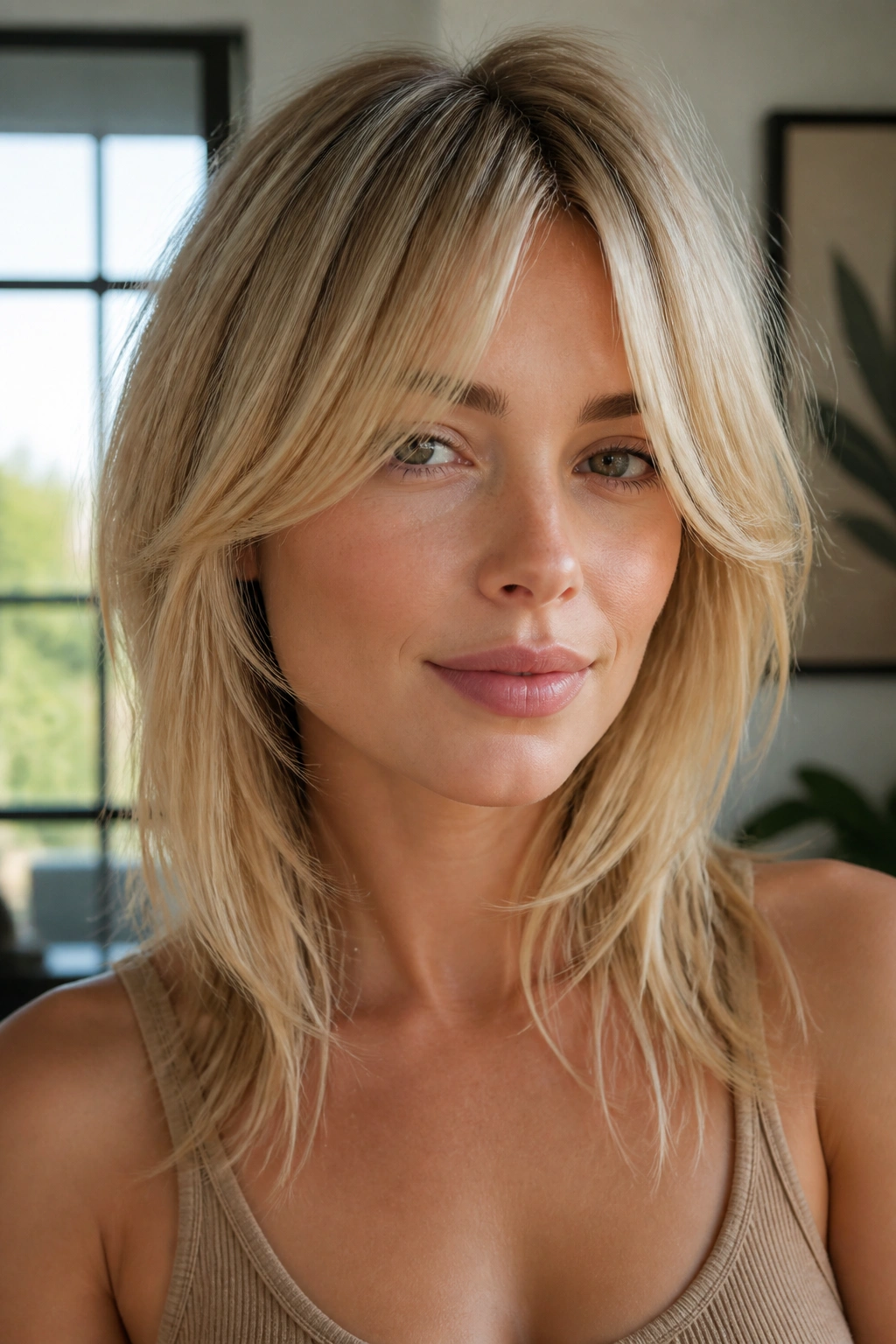
Why do curtain bangs keep showing up with shag cuts? Because they give straight hair shape at the front without locking you into a heavy fringe.
The bang opens in the center, then sweeps out toward the cheekbones. On pin-straight hair, that tiny movement matters. It stops the face from looking boxed in, and it gives the rest of the cut room to breathe. If your hair tends to lie close to the head, this is one of the easiest ways to make the top half feel lighter.
How to wear it
Blow-dry the fringe with a small round brush or give it a gentle bend with a flat iron, then let the rest of the hair stay straighter. That contrast is the point. You do not need a full wave pattern to make this cut work.
This version suits oval, long, and heart-shaped faces especially well. The blonde tone can be soft and creamy, or a little warmer at the ends if you want the fringe to feel less sharp. Skip the super-short center pieces if your forehead is already narrow. They can crowd the face fast.
3. Platinum Micro-Shag
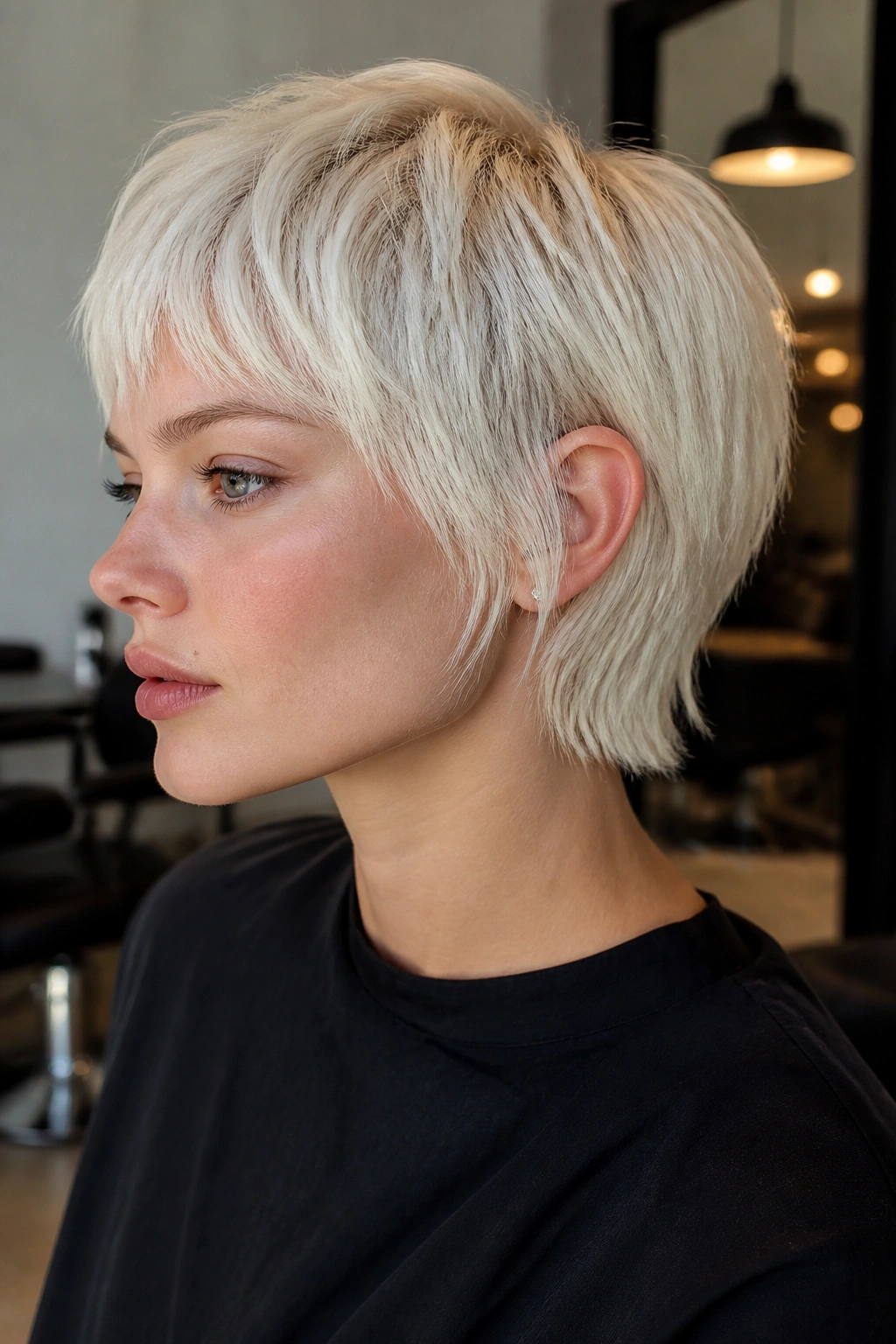
Platinum shows everything. That is exactly why the micro-shag can look so good on straight hair.
The cut is short, tight, and a bit edgy, with little layers tucked through the crown and a feathered outline around the ears and neck. On fine straight hair, the shorter shape gives the illusion of thickness because the weight is removed before the hair can hang limp. On thicker hair, it keeps the head from looking boxy. Either way, it has attitude.
The key is restraint. A micro-shag should feel piecey, not shredded. The best versions keep the bottom line clean enough that the cut still looks intentional from the side. If the blonde is icy or almost white, every slice in the haircut becomes visible, so the layering has to be smart.
Best for: people who like short hair, regular trims, and a bit of edge.
Not for: anyone who wants to air-dry and leave the house without touching it. This one asks for a hand with wax, cream, or a quick blow-dry.
4. Collarbone-Length Blonde Shag
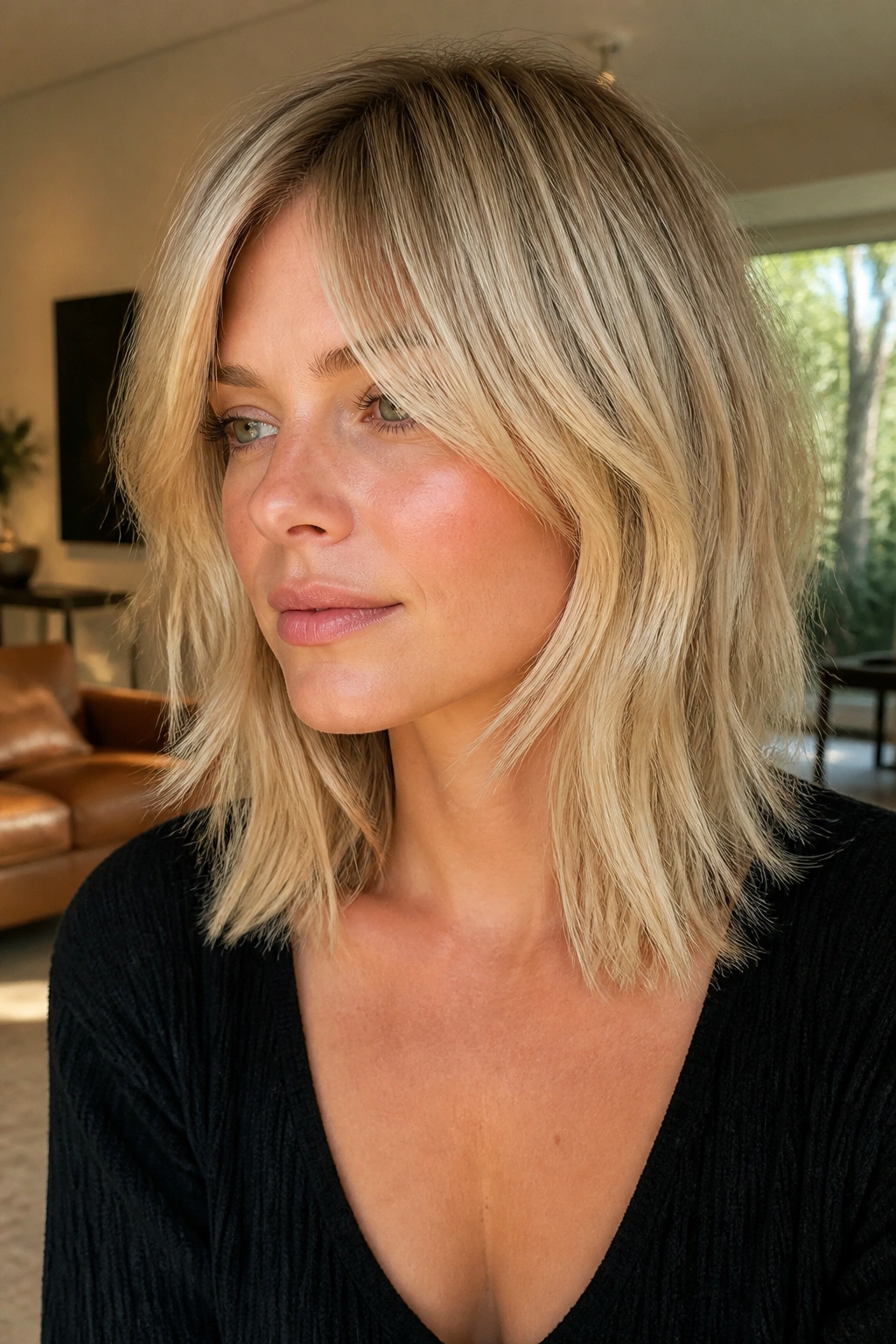
If your hair hits the collarbone and then collapses, this cut fixes the problem without making you lose much length. That matters.
A collarbone-length shag sits in that sweet spot where straight hair still moves when you turn your head, but the ends don’t look thin or wispy. The longest pieces brush the shoulders, while the internal layers take weight out of the middle. That keeps the shape from puffing out at the sides, which is the part most people fight.
- Works well for medium-density hair.
- Gives a clean line when tucked behind one ear.
- Keeps enough length for clips, low buns, and half-up styles.
The blonde can stay soft and buttery, or lean slightly ash if you want the layer pattern to show. This is one of those cuts that looks calm from the front and a little more interesting from the side. Not flashy. Just smart.
5. Bottleneck Bang Shag
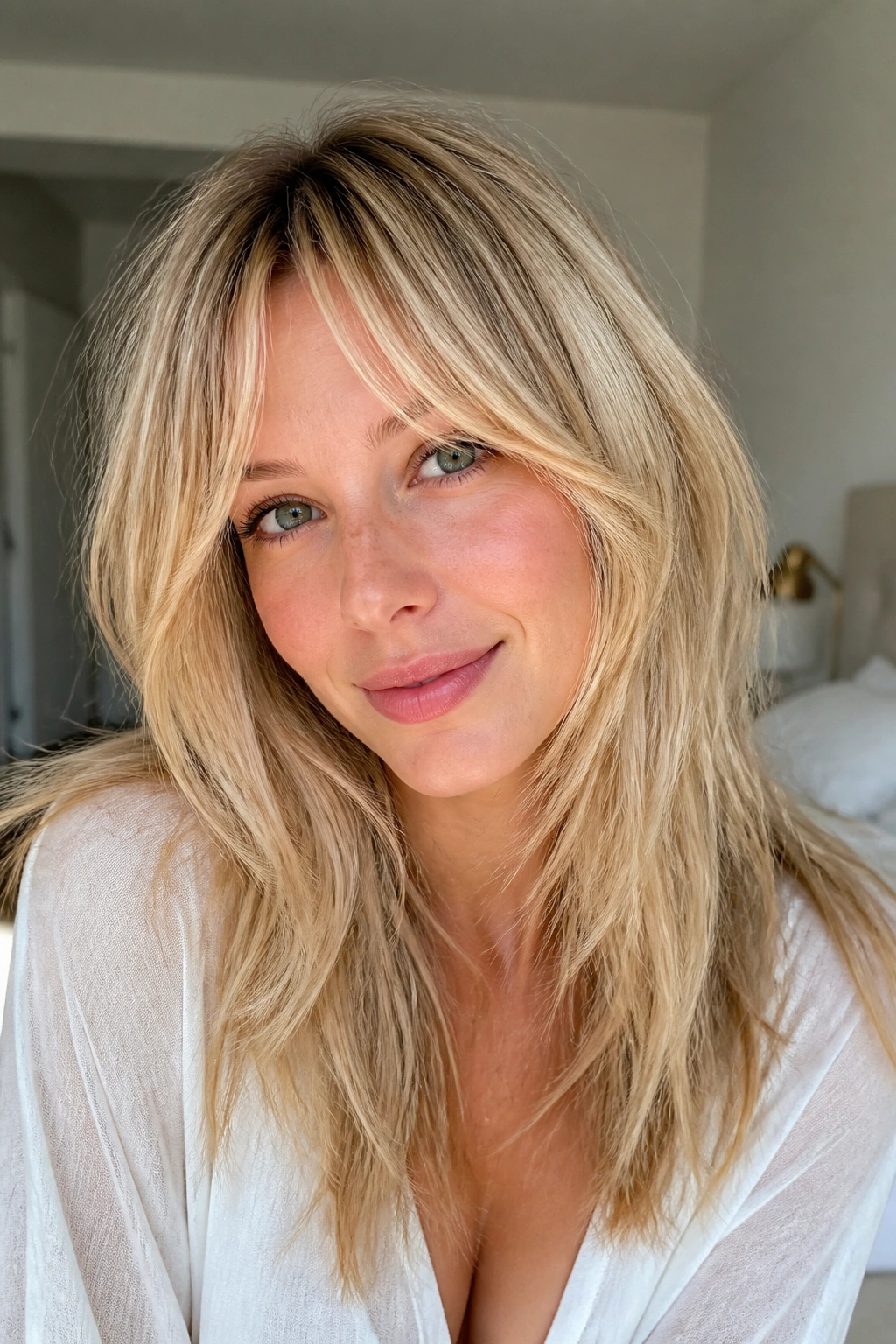
Bottleneck bangs are the quiet overachiever of fringe cuts. They start narrower at the center, then widen gradually as they move outward, which gives straight hair a soft frame without the heaviness of a full bang.
The shape is especially nice on blonde shag haircuts because the fringe blends into the sides instead of sitting there like a separate piece. On straight hair, that blending matters. You get movement around the eyes and cheekbones, but the rest of the cut still feels clean. No puff. No wiggle room for chaos.
The cut works best when the layers around the face are feathered, not blunt. Think of the fringe as the opening note and the rest of the shag as the longer sentence that follows. If the blonde has a subtle root shadow, the shape looks even softer because the darker base gives the bangs some depth.
A bottleneck fringe is a good choice if you want bangs but don’t want to be trapped by them every six weeks.
6. Razored Ash Blonde Shag
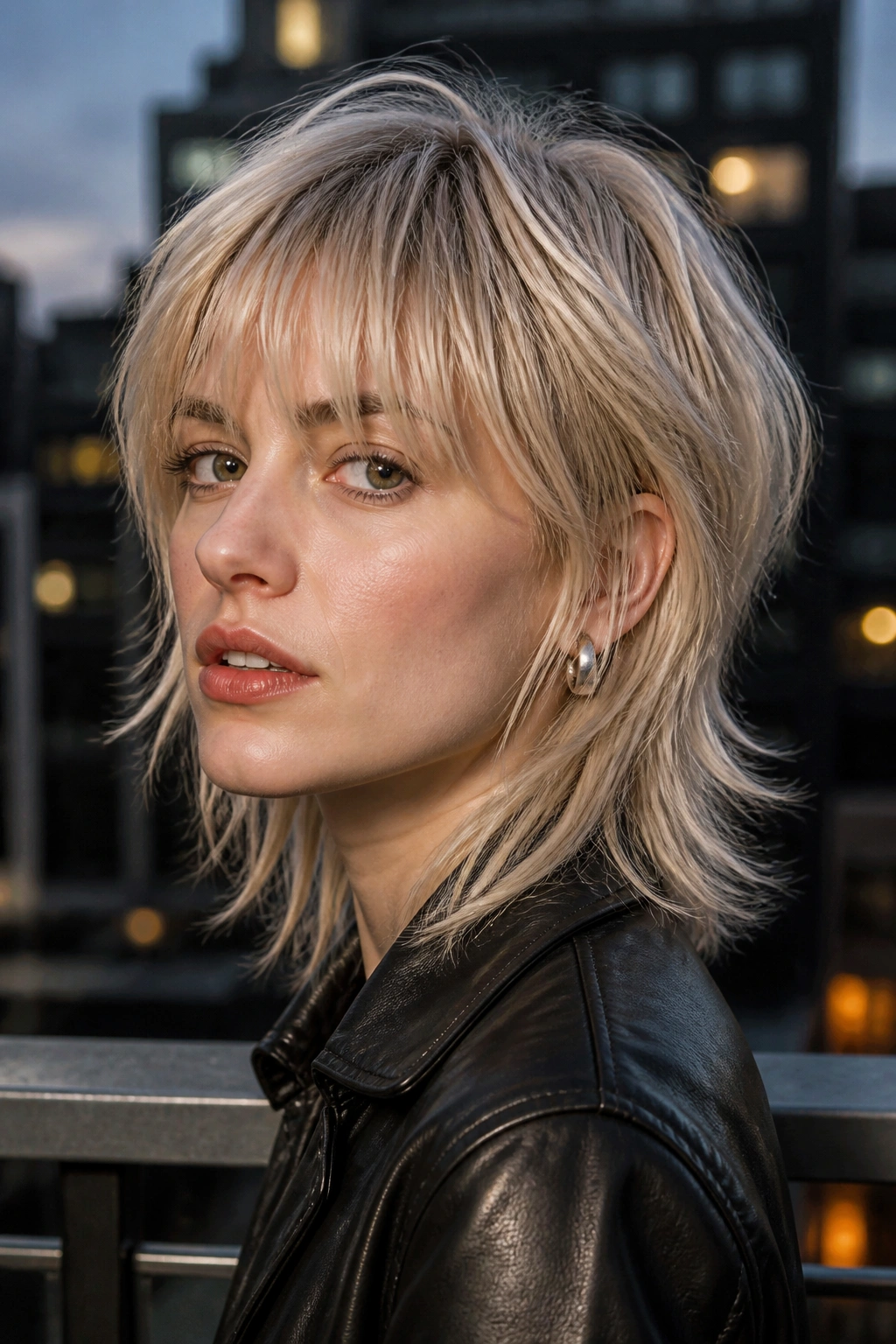
Unlike a blunt lob, this version takes weight out from the inside. That is the whole point.
A razor cut lets thick straight hair fall with less bulk, and ash blonde makes the texture easier to see because it keeps the color cool and a little matte. Warm honey tones can blur the layer work. Ash tones show it off. If your hair tends to sit too flat at the roots and too heavy at the ends, this is a strong fix.
What makes it different
A razored shag feels lighter in the hand and in the mirror. The ends separate into soft wisps instead of one solid line, which helps dense straight hair move without needing a wave iron every morning. The face frame can start higher than in softer shags, especially if you want the cheekbones to stand out.
This is not the cut for fragile, breakable hair. Razor cutting can be too much on damaged ends. But on healthy, thick hair, it has a nice swing to it—quick, sharp, and not overly fussy.
7. Long Sunlit Shag
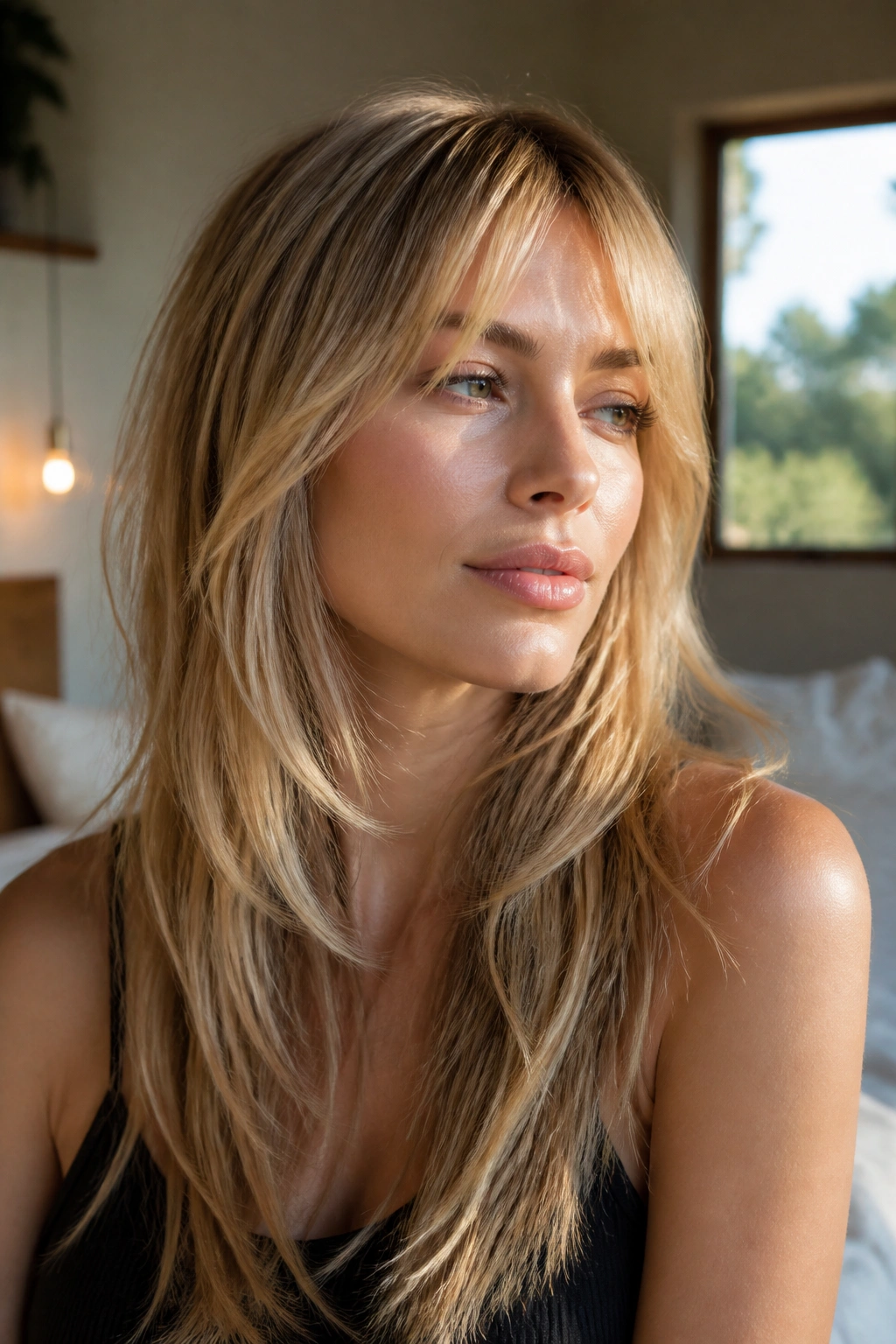
How do you keep length and still get movement? You leave the perimeter long and do the work inside the shape.
That’s what makes the long sunlit shag such an easy answer for straight hair. The layers usually begin below the jaw or around the collarbone, so the cut keeps its length while still breaking up the heavy sheet-like look that straight hair can create. Sunlit blonde—think soft highlights that brighten the top and mid-lengths—adds another layer of depth without making the cut look striped.
How to style it
A big blowout isn’t required. A medium round brush, a 1.25-inch curling iron for just the front pieces, or even a quick bend at the ends is enough. The goal is movement, not curls. Let the rest stay smooth.
This cut works well if you’re nervous about going short. You still get a shaggy outline, but the hair keeps its long, easy feel. The result is softer than a classic shag, less stern than a long one-length cut, and much better at handling straight strands that like to fall flat by lunchtime.
8. Feathered Side-Part Shag
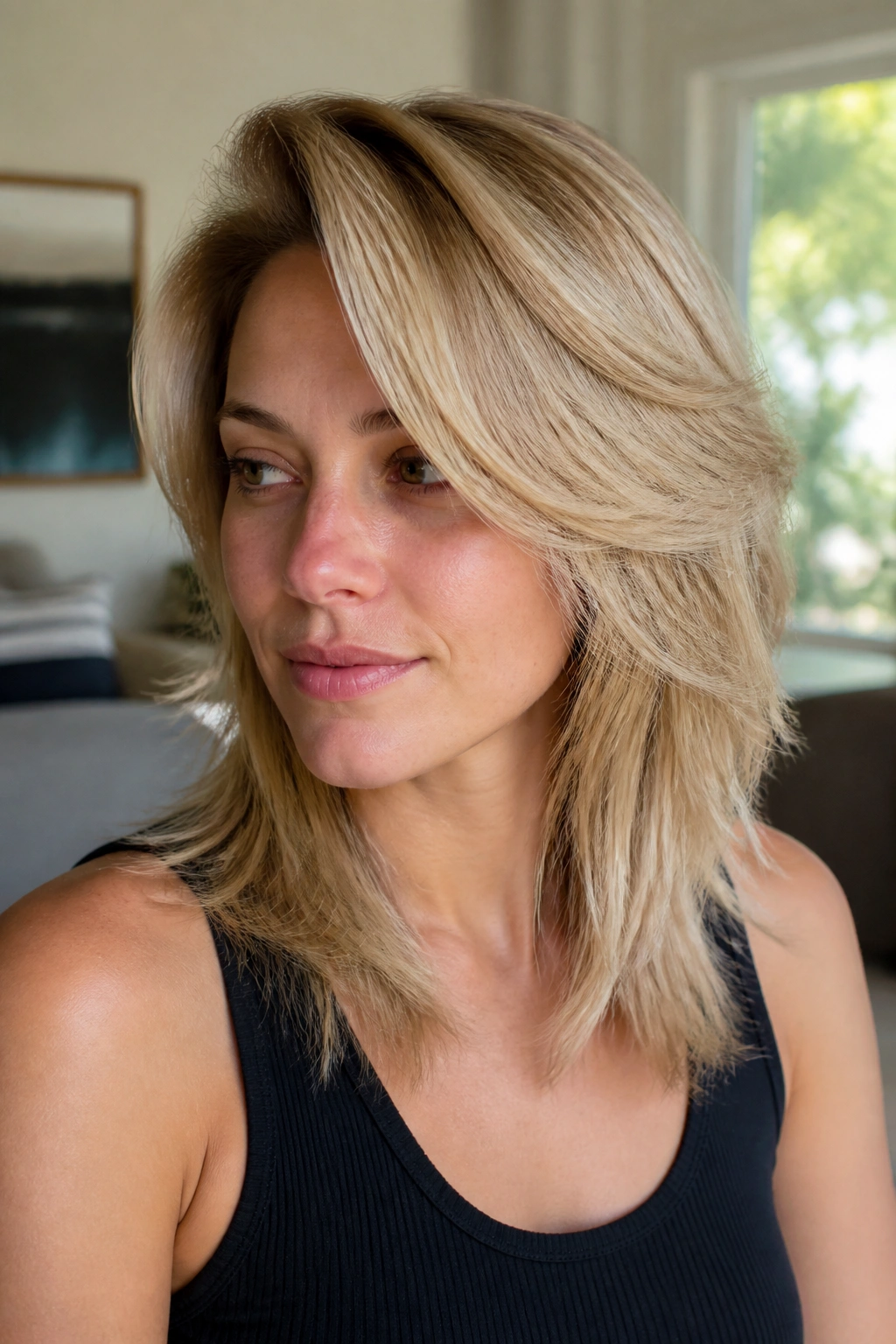
A deep side part can change the whole mood of straight hair. Add feathered layers, and the cut suddenly has shape without looking overworked.
This version leans on a softer side sweep around the forehead and temple, which is useful if your face shape likes a little asymmetry. Square faces, in particular, tend to like this one because the side part breaks up straight lines. The blonde can be cool or warm, but the feathering around the part should stay light enough that the hair falls in a soft arc instead of a stiff ridge.
Best details to ask for
- A side part that sits just off center.
- Feathered layers around the temple and cheekbone.
- Enough length at the bottom to keep the cut from feeling too airy.
The nice thing here is how forgiving it is. If your part shifts during the day, the haircut still works. It doesn’t rely on a single perfect placement. Straight hair likes that kind of freedom.
9. Strawberry Blonde Shag with Long Fringe
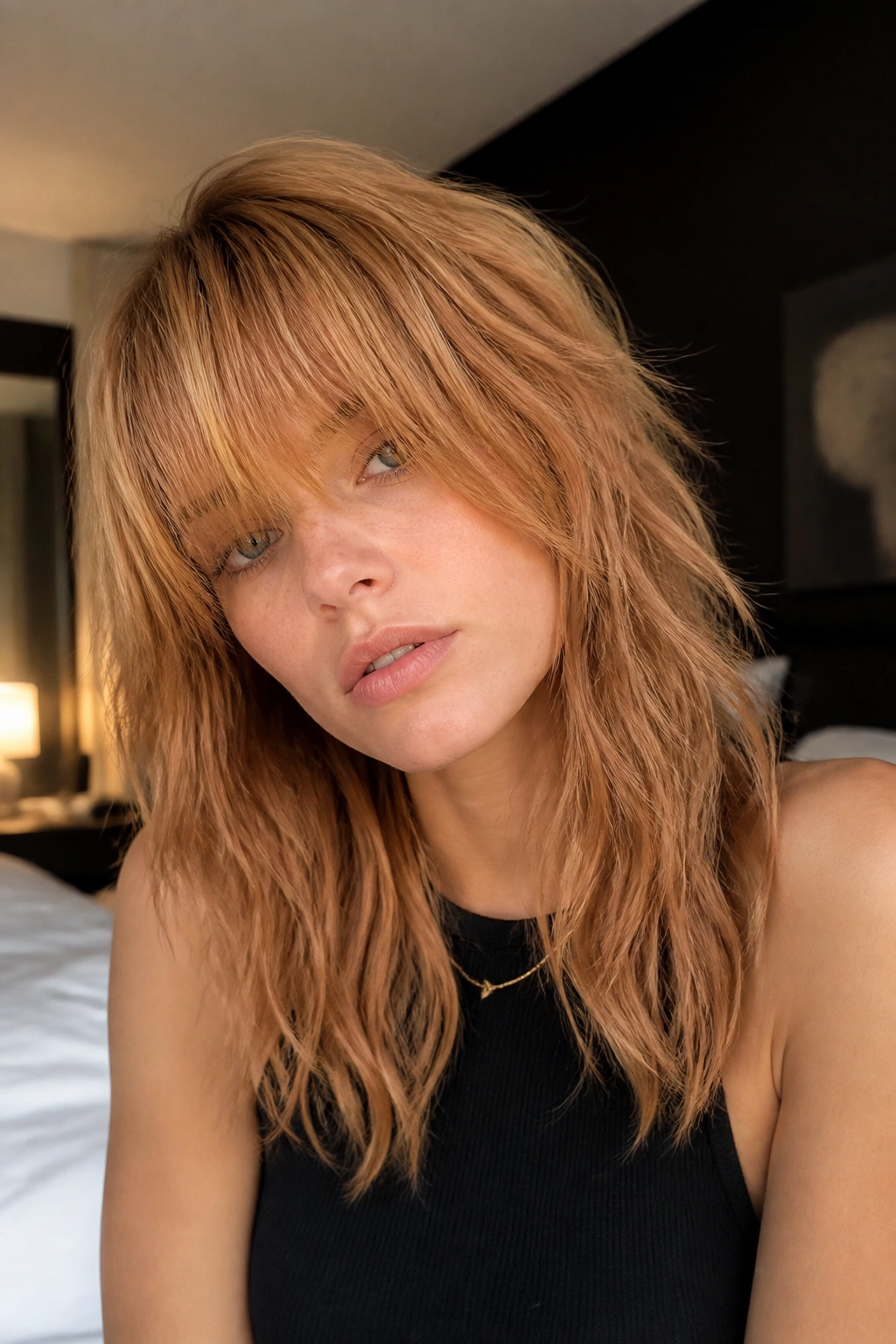
Strawberry blonde can look flat if the cut is too severe. A long fringe fixes that fast.
The warm peachy tones give straight hair a soft sheen, and the longer fringe keeps the front from feeling chopped into pieces. This is one of those styles that looks a little romantic without turning into something fussy. The layers can stay loose through the sides, with the fringe grazing the lashes or just sitting at brow level. That small difference changes the whole mood.
What I like here is the contrast between the warmth of the color and the slightly undone shape of the shag. Straight hair often needs that contrast, because too much sameness makes it look stiff. A long fringe also gives you options. Wear it center-parted, tuck it off the face, or blow it slightly to one side. Easy.
If your skin tends to like warm tones, this cut is a very good match. It feels softer than ash, less stark than platinum, and more flattering when the hair is naturally fine.
10. Creamy Blonde Shag Bob
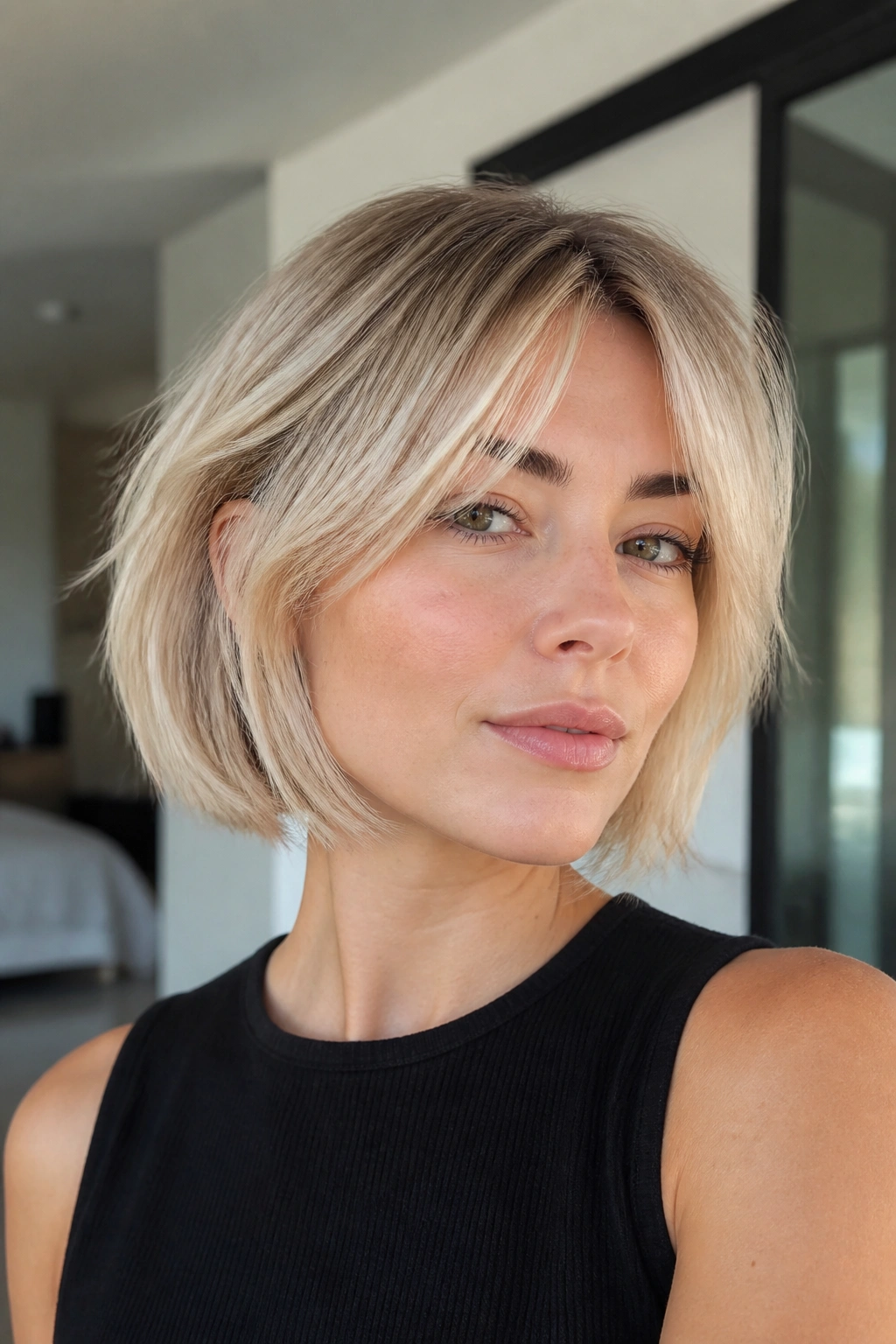
A shag bob is for people who want movement but don’t want their hair to drift past the jawline and lose shape.
The creamy blonde version keeps things bright and soft, which matters because bob-length shag layers can look abrupt if the color is too harsh. On straight hair, the trick is to leave the outline clean while feathering the inside. That keeps the bob from looking bulky at the cheeks or too round at the ends.
What makes the bob version different
A blunt bob sits as one block. A shag bob breaks that block into pieces. The front can angle slightly longer than the back, or it can sit evenly around the jaw with soft fringe pieces drifting forward. Either way, the movement lives inside the cut rather than at the very edge.
This works especially well for fine straight hair. Shorter length means less weight dragging the hair down, and the shag layering gives it a little lift. If you want a bob that feels less strict and more lived-in, this is the one to look at.
11. Piecey Shag with Sliced Ends
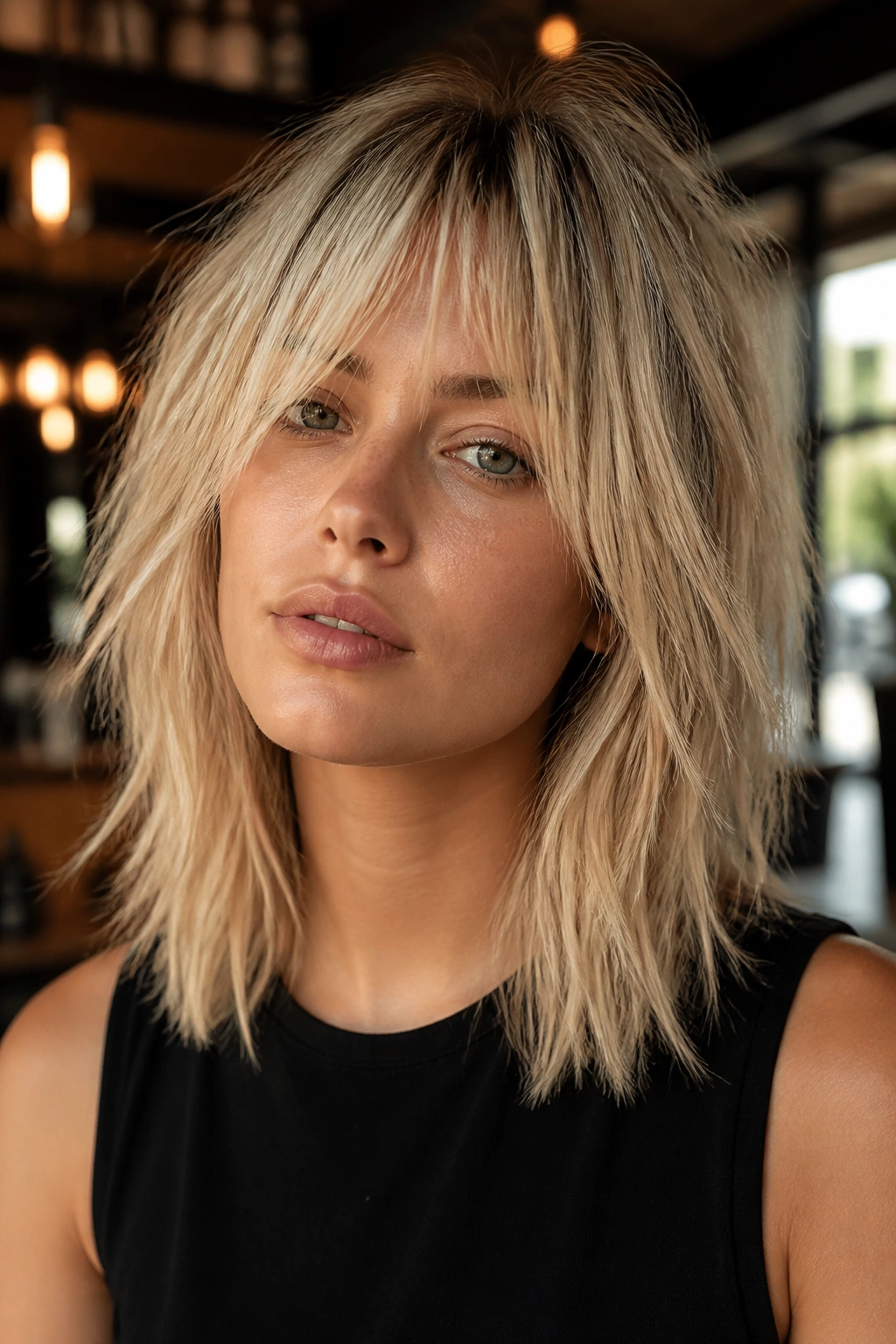
You know that moment when straight hair starts looking like one long sheet? Sliced ends fix that.
This shag depends on separation. The stylist removes weight from selected sections so the hair falls in visible pieces instead of one heavy block. On blonde hair, especially if the color has a few lighter ribbons through the top layer, that separation shows up in a good way. It looks modern without trying too hard.
Key details
- Sliced ends create texture without shortening the whole cut.
- Slightly uneven face pieces keep the front from feeling rigid.
- Works well with medium-density hair that needs movement, not volume.
The one thing to watch is over-thinning. Too much slicing can make the ends look stringy, and straight hair shows that fast. A better version keeps enough fullness at the perimeter to hold its shape, then uses the interior layers to do the softening. It’s a subtle cut, but subtle is the point.
12. Champagne Blonde Mid-Length Shag
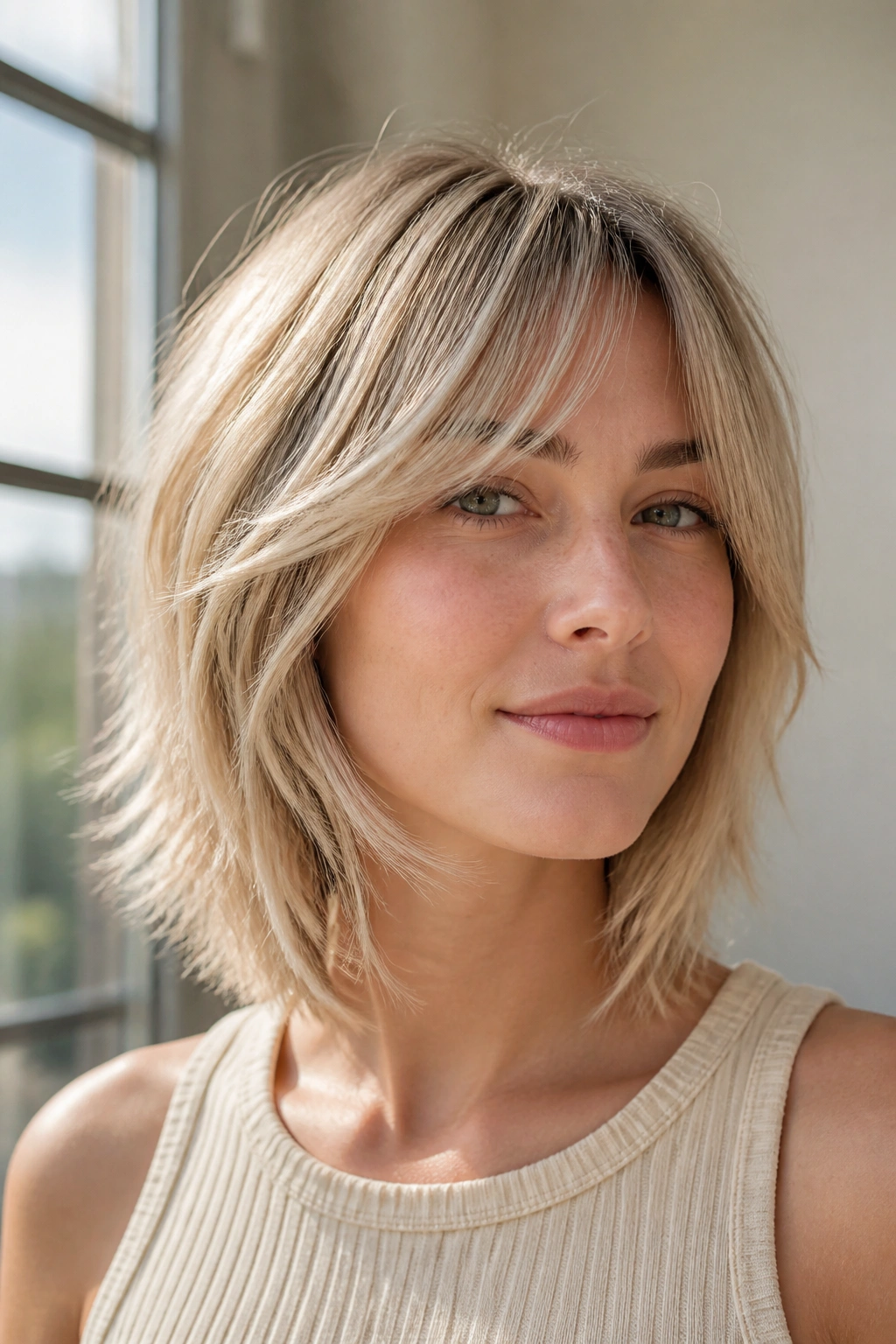
This is probably the easiest shag to live with if you want something soft, bright, and low-fuss.
Champagne blonde has that pale, slightly warm tone that flatters straight hair without making it look flat. Pair it with a mid-length shag, and you get shape around the shoulders, movement through the sides, and enough length to throw into a clip when you’re done with it. The cut lands between the jaw and the collarbone, which is a sweet spot for people who like a little swing but not too much chop.
There’s also a nice practical side here. Mid-length hair is easier to blow dry than long hair, and it’s less demanding than a short cut that needs constant styling to stay neat. If you want a shag that works with a quick pass of a flat iron and a bit of smoothing cream, this is a smart choice.
The color does a lot of work too. Champagne tones reflect light softly, so the layers look airy rather than choppy. That’s a useful trick on straight hair.
13. Choppy Lob Shag
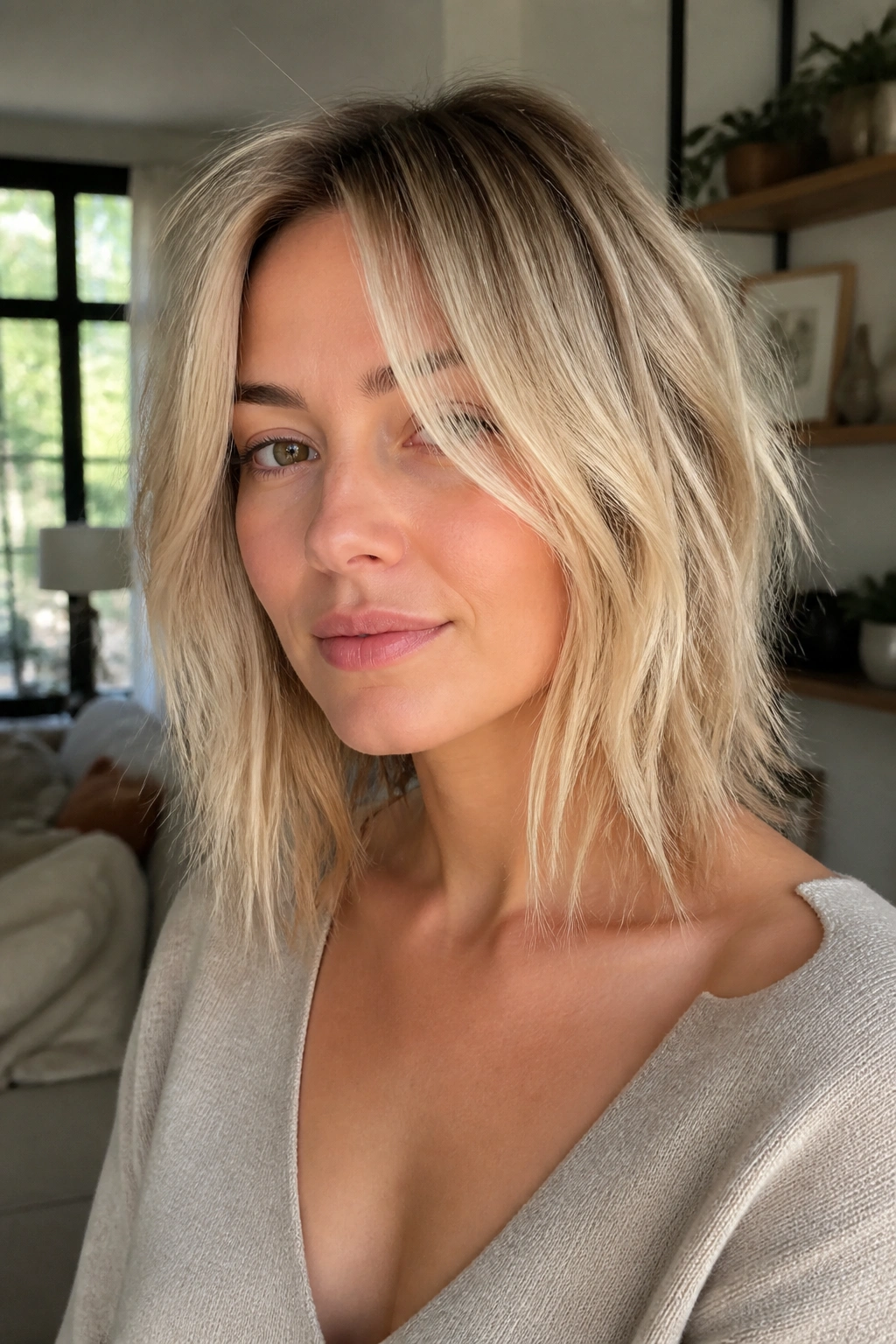
Why do some lobs look dull while others look alive? Usually it comes down to where the layers sit.
A choppy lob shag keeps the length around the shoulders or a little above, then breaks the line with short internal layers and a face frame that isn’t afraid to be a bit uneven. On straight hair, that unevenness is what keeps the cut from feeling too neat. Not messy. Just relaxed.
How to keep it from feeling too rough
Ask for point-cut ends instead of a heavy razor finish, especially if your hair is fine. That keeps the outline soft without making the bottom look sparse. A slight bend at the ends helps too—nothing fancy, just enough to keep the lob from sitting dead straight.
This cut suits people who want movement but don’t want bangs. It also wears well with second-day hair, which is one reason it’s such a practical option. A little dry shampoo at the roots and a quick finger comb can bring it back to life.
14. Rooted Blonde Shag for Straight Hair
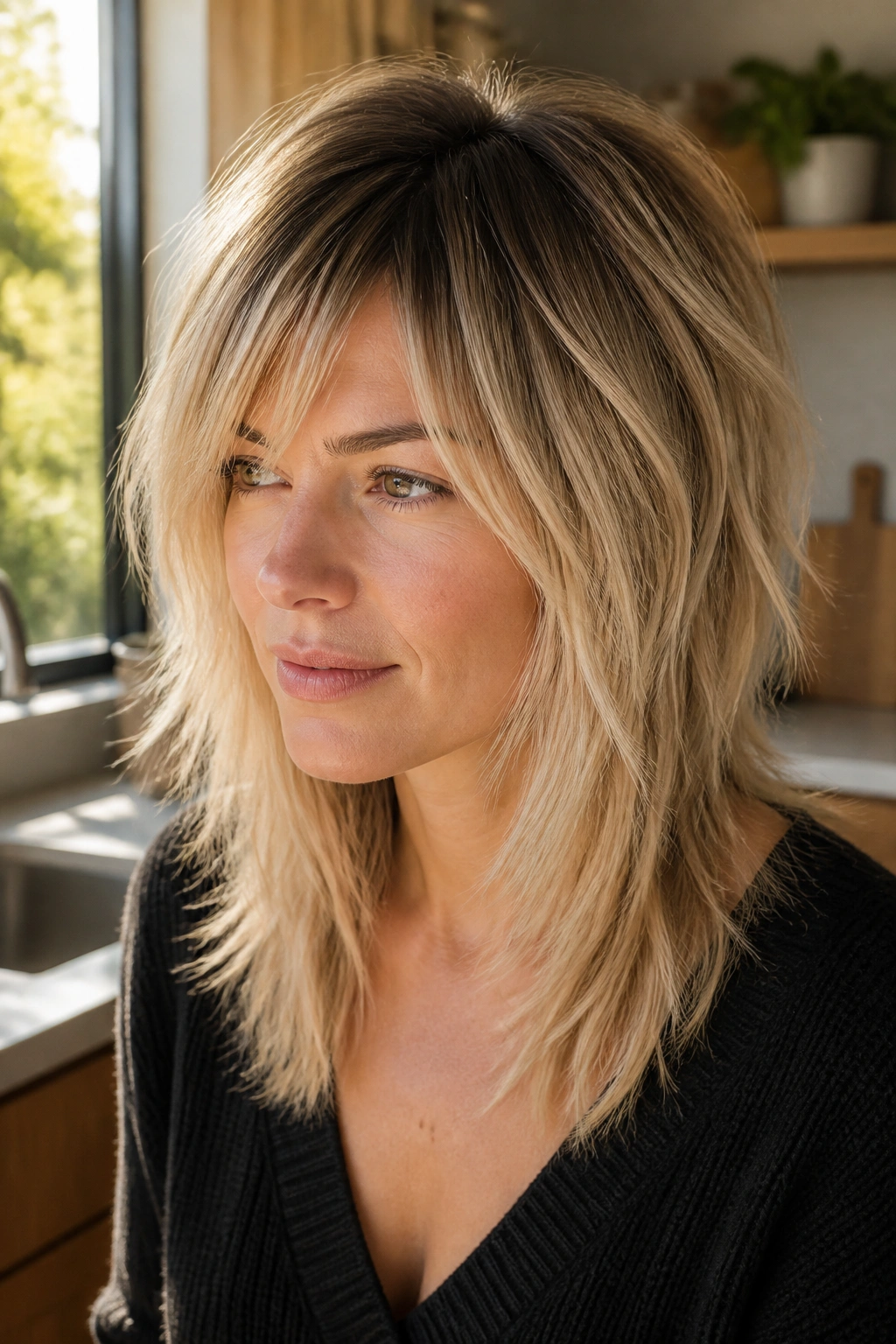
A rooted blonde shag is useful if you hate seeing a hard line of regrowth every few weeks. The darker root blends into the blonde, and the layer pattern becomes easier to read.
That shadow at the base does more than save maintenance. It adds depth to straight hair, which can otherwise look one-note under bright light. The cut itself can be soft or choppy, but the root melt keeps the whole thing from feeling overly polished. It’s a good look if you like blonde hair that feels lived in instead of freshly flattened.
- Better for people who want longer gaps between color visits.
- Helps the crown look fuller.
- Makes the layer breaks less obvious.
The best versions keep the roots soft, not stripey. Think gradual shift, not abrupt banding. If you’ve ever noticed how a slightly darker base can make the ends look brighter, that’s the effect here. It’s quiet, but it works.
15. Airy Face-Opening Shag
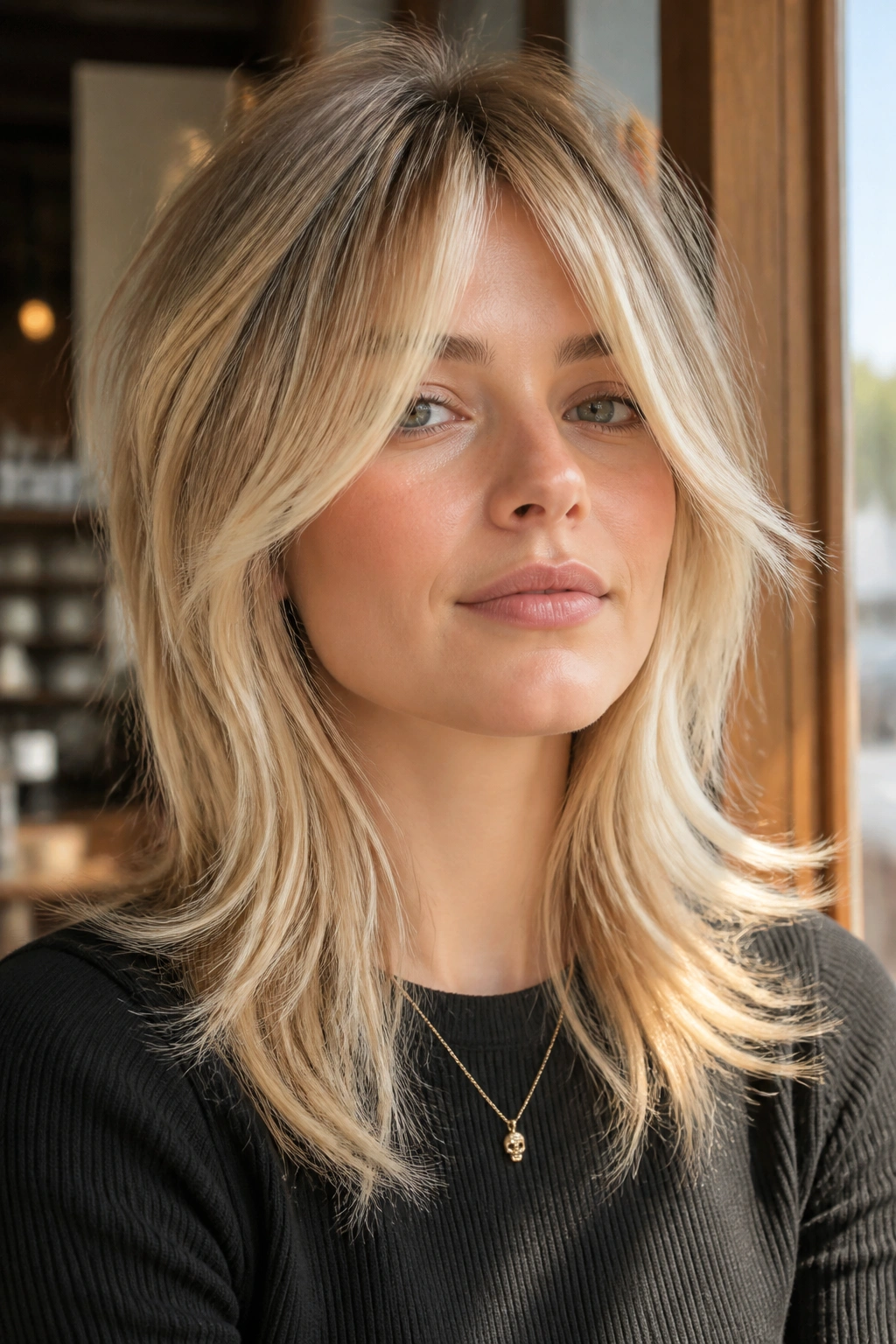
A face-opening shag is all about where the shortest pieces land. Get that wrong and the cut can look busy. Get it right and the whole face changes.
The front layers usually start around the cheekbone and angle down toward the jaw, which gives straight hair a kind of lift it doesn’t naturally have. This is a strong choice for round or heart-shaped faces because it creates vertical movement and keeps the sides from feeling heavy. The blonde can be cool, warm, or mixed, but the front pieces should stay a touch lighter than the rest so they stand out.
The cut works because it creates motion exactly where the eye goes first. That’s the trick. You don’t need every inch of hair to move; you need the right inches to move. Keep the rest of the length smooth, and the face frame does the talking.
I like this shape on hair that’s naturally sleek but not fine to the point of transparency. It gives presence without bulk.
16. Minimalist Clean-Line Shag
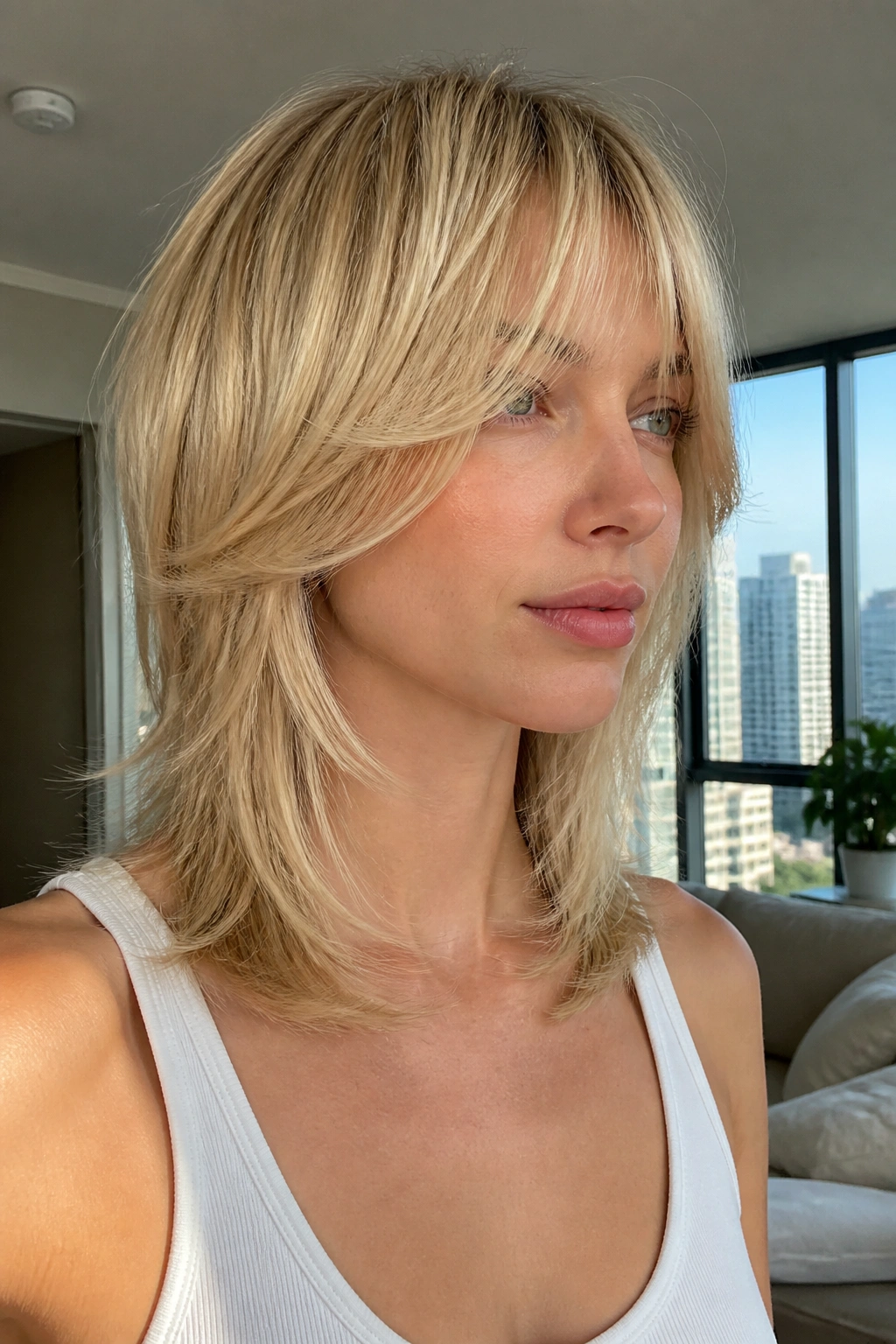
This is the least messy shag in the bunch, and that’s a good thing for some people.
A minimalist clean-line shag keeps the silhouette controlled, with subtle interior layering that only shows when the hair moves. On straight hair, that can be a relief. You get a little texture, a little bend, and none of the over-chopped look that can happen when a stylist gets too enthusiastic with the razor.
What makes it different
The perimeter stays tidy. The layers do their work inside the cut, so the haircut still looks sharp when you tuck it behind the ears or pull it into a low clip. The blonde usually looks best in a soft neutral tone here—beige, pearl, or a pale wheat shade—because the color should support the shape instead of competing with it.
This version is ideal if you like a clean finish but want more life than a blunt cut gives you. It’s also the easiest shag to grow out gracefully. That matters more than people admit.
17. Long Beachy Blonde Shag
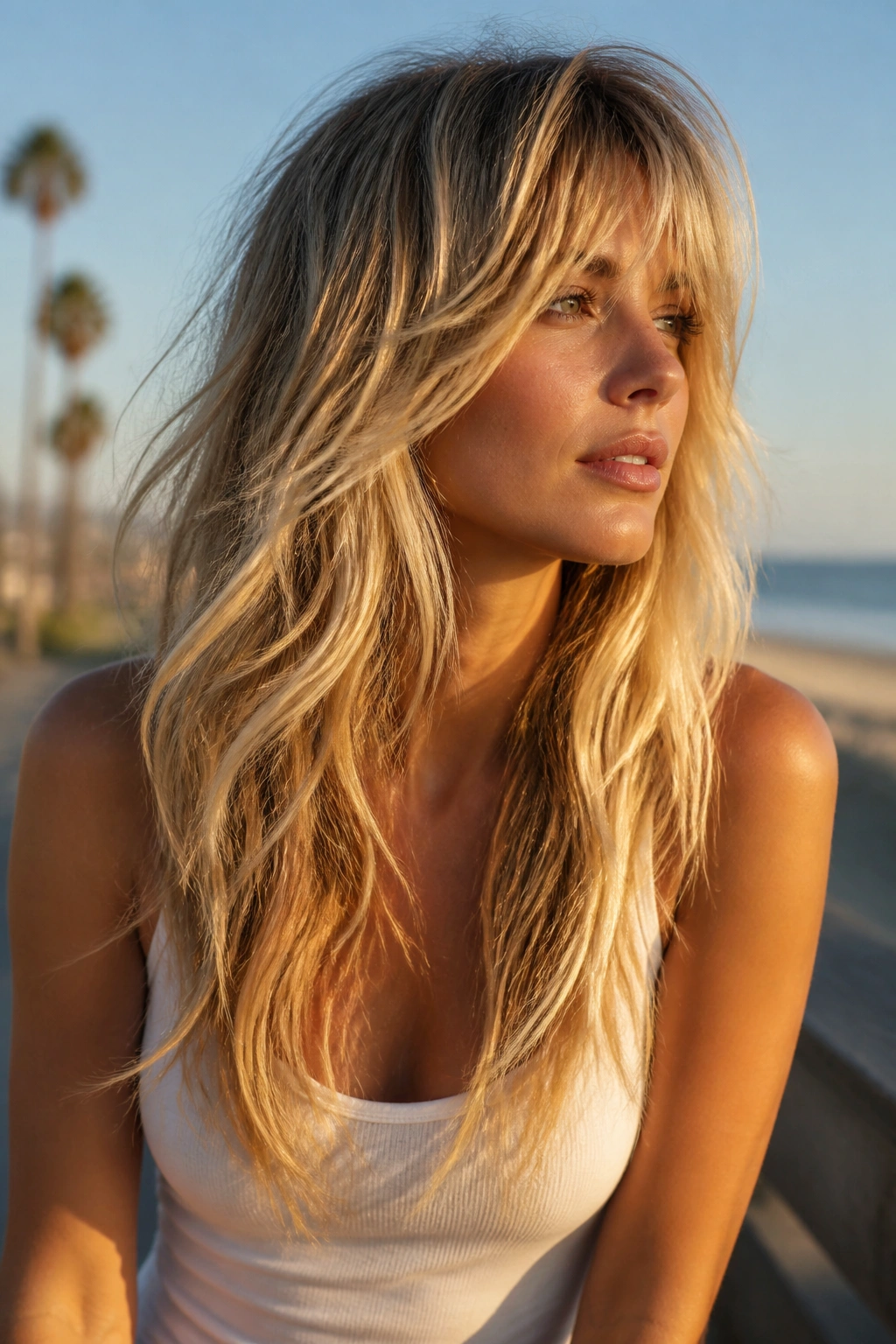
Long straight hair can look gorgeous, but it can also look a little like a curtain if the cut is too cautious. A long beachy shag solves that without forcing you into a short style.
The layers are kept long enough to preserve the swing, then softened so they move when the hair is bent with a flat iron, wave wand, or even a loose braid overnight. The blonde often has mixed tones—lighter around the face, slightly deeper through the underside—so the texture shows in different light.
Styling without overdoing it
Use a small bend, not a curl. A 1-inch or 1.25-inch iron is enough to push the front pieces away from the face and create that loose, broken-up finish. Brush it out a little. Stop before it turns into pageant hair.
This is a good option if you want a shag but you still like to wear your hair down most days. It has enough length to stay familiar, but the cut keeps it from going limp. That balance is rare and useful.
18. Short Crop Shag with Feathered Crown
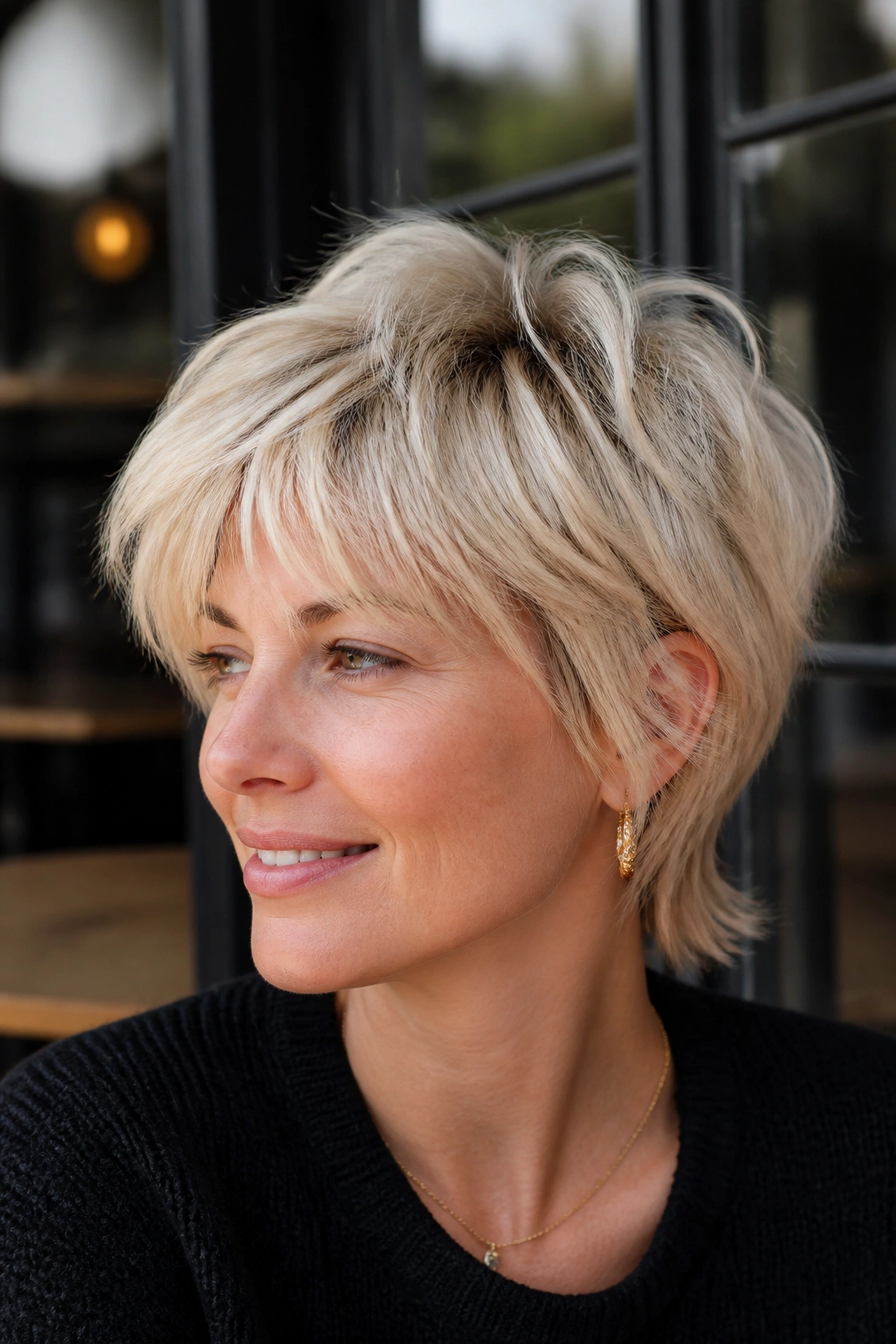
Shorter shag cuts can be hit or miss on straight hair. This one gets the balance right by keeping the crown light and the outline soft.
The feathered crown gives lift at the top, which is usually the hardest part of straight hair to wake up. The sides stay a bit longer, brushing the ears or grazing the jaw, so the haircut doesn’t puff out like a helmet. Pale blonde, buttery blonde, or even a soft beige tone can all work here, but the shape matters more than the shade.
Good for
- Fine straight hair that needs the illusion of body.
- Busy mornings when you want a cut that air-dries fast.
- People who like short hair but still want a little softness around the face.
This is not the style for someone attached to ponytails. It’s a shape cut, and the shape is the whole point. Once it’s trimmed properly, it has a nice feathered movement that looks natural rather than forced.
19. Dimensional Beige Blonde Shag
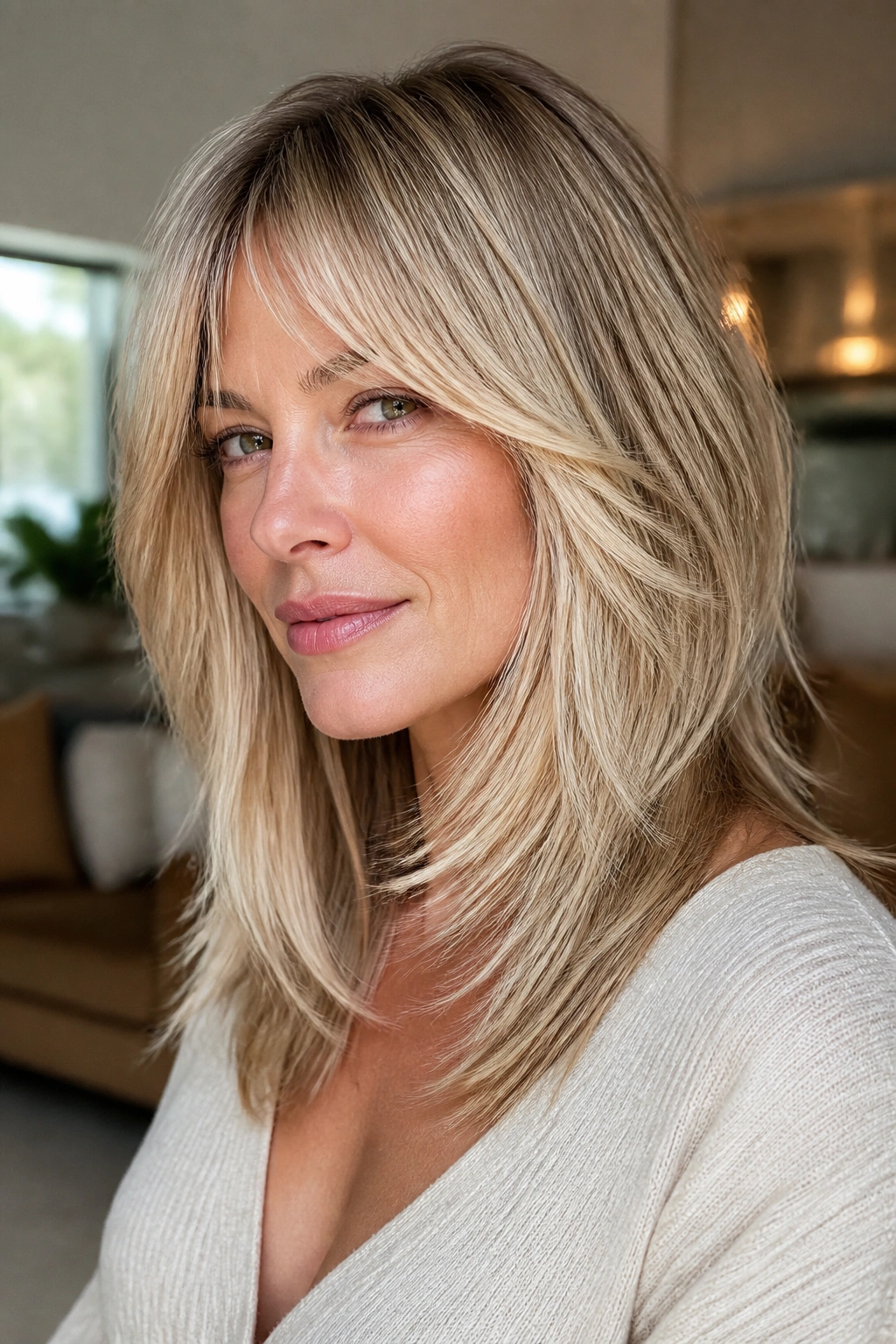
A single-tone blonde can flatten straight hair fast. Add beige dimension, and the shag suddenly gets depth.
This cut depends as much on color placement as it does on layering. Beige blonde sits between warm and cool, which makes it a useful middle ground. Lowlights under the crown or through the lower lengths help the top layers stand out, and the result feels fuller without looking teased. On straight hair, that kind of dimension matters because every line is visible.
Color notes that help
- Keep the face frame a half-step lighter than the rest.
- Use a soft root shadow to avoid a hard line.
- Ask for woven highlights instead of chunky streaks.
The haircut itself can stay fairly simple, which is the nice part. You don’t need wild layers if the color is doing some of the work. This is a strong choice for people who want straight hair that looks thick, not busy.
20. Golden Blonde Shag with Long Tapered Ends
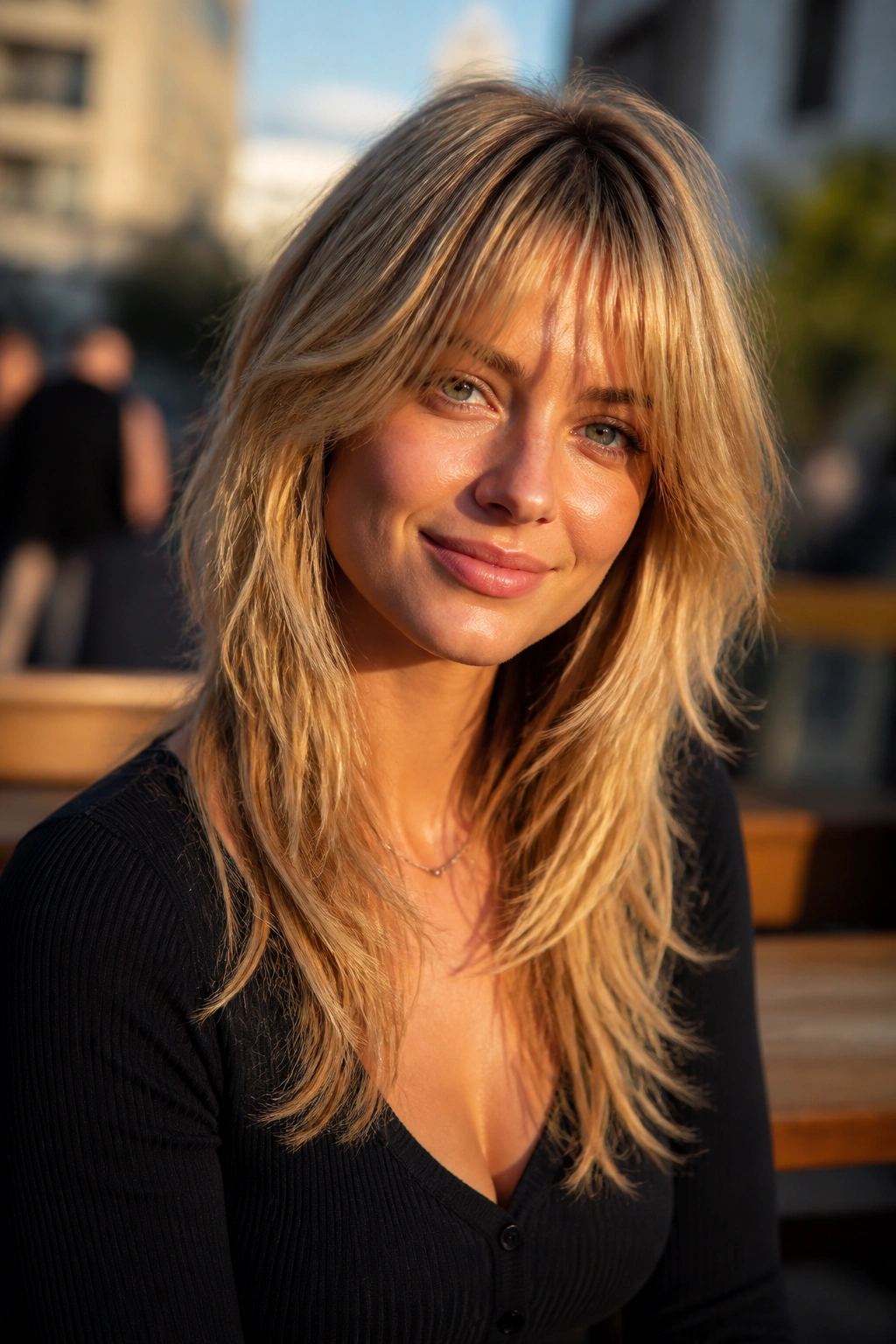
Golden blonde is warm, easy to wear, and forgiving on straight hair. Put it with long tapered ends, and the cut keeps its softness while still having shape.
The taper at the bottom is what keeps this version from looking heavy. Instead of one blunt edge, the ends narrow gradually, which lets the hair move when it falls over the shoulders. That makes a big difference on straight hair, because straight hair tends to show where it stops. A tapered finish keeps the line from feeling abrupt.
This is the shag for someone who wants the safest entry point. Not boring. Just reliable. You still get the face frame, the layers, the bit of lift around the crown, but the overall look stays approachable. It works with air-drying, a fast blow-dry, or a loose bend at the front pieces. And if you like to tuck your hair behind one ear, this cut holds up to that better than a sharper shag does.
If you’re stuck between soft and edgy, start here. It has enough shape to feel modern, enough warmth to flatter most skin tones, and enough length to keep the maintenance from becoming a chore. A good golden shag should look like your hair, only better behaved.
