



A shag can be a little sneaky on a round face. Done well, it pulls the eye down, gives the cheekbones some room, and keeps the shape soft instead of boxy. Long brown shag haircuts for round faces work for exactly that reason: the layers move, but the length still holds the line.
Brown hair makes this even better. Chestnut, cocoa, espresso, and caramel-brown all show layer breaks in a softer way than a flat, one-tone dye job, so the cut can look airy without turning sharp. The parting, the fringe, and the exact place where the shortest layer lands matter more than most people think. Put a heavy layer at cheek width and the face can look wider. Push that layer below the cheekbones and the whole cut starts behaving differently.
I keep coming back to the same rule because it saves people from bad shag cuts: the widest part of the haircut should not sit on the widest part of the face. That sounds obvious once you say it out loud, but salon photos can fool people fast. The styles below all use that idea in different ways, from curtain bangs and side parts to softer wolf shapes and glossy straight finishes.
1. Curtain Bangs That Open the Face
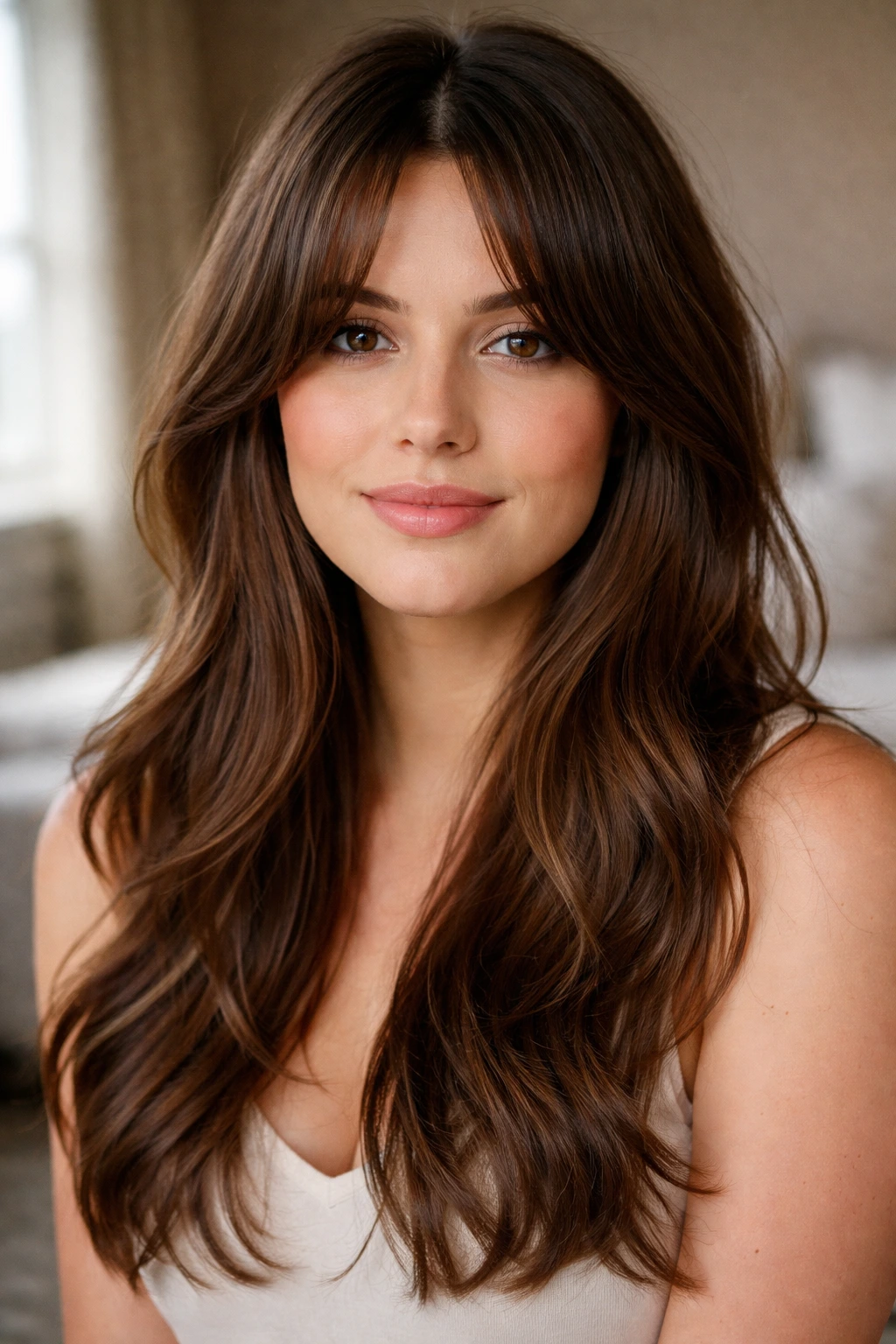
Curtain bangs are the easiest shag entry point for a round face. They split the forehead, make a clean vertical line down the center, and then drift away from the cheeks instead of stopping right on them. That little shift matters. A good curtain fringe should start around the brow or just above it, then get longer fast enough to blend into the front layers.
Why It Works on Round Faces
The best part is the diagonals. Round faces already have soft curves, so the haircut needs some angles to keep things from feeling all one shape. Curtain bangs give you that angle without looking severe. Keep the shortest point closer to the brow bone than the middle of the cheek, and ask for the side pieces to land around the cheekbone or just below.
A brown shade helps here too. Medium chestnut shows the bend in the bangs, while deeper espresso makes the fringe look a little sleeker and more dramatic.
- Ask for a center split with a soft taper.
- Keep the side pieces longer than the center.
- Blow-dry the bangs away from the face with a medium round brush.
My favorite trick: flip the ends outward only at the last minute. It keeps the fringe from collapsing into the cheeks.
2. Feathered Cheekbone Layers
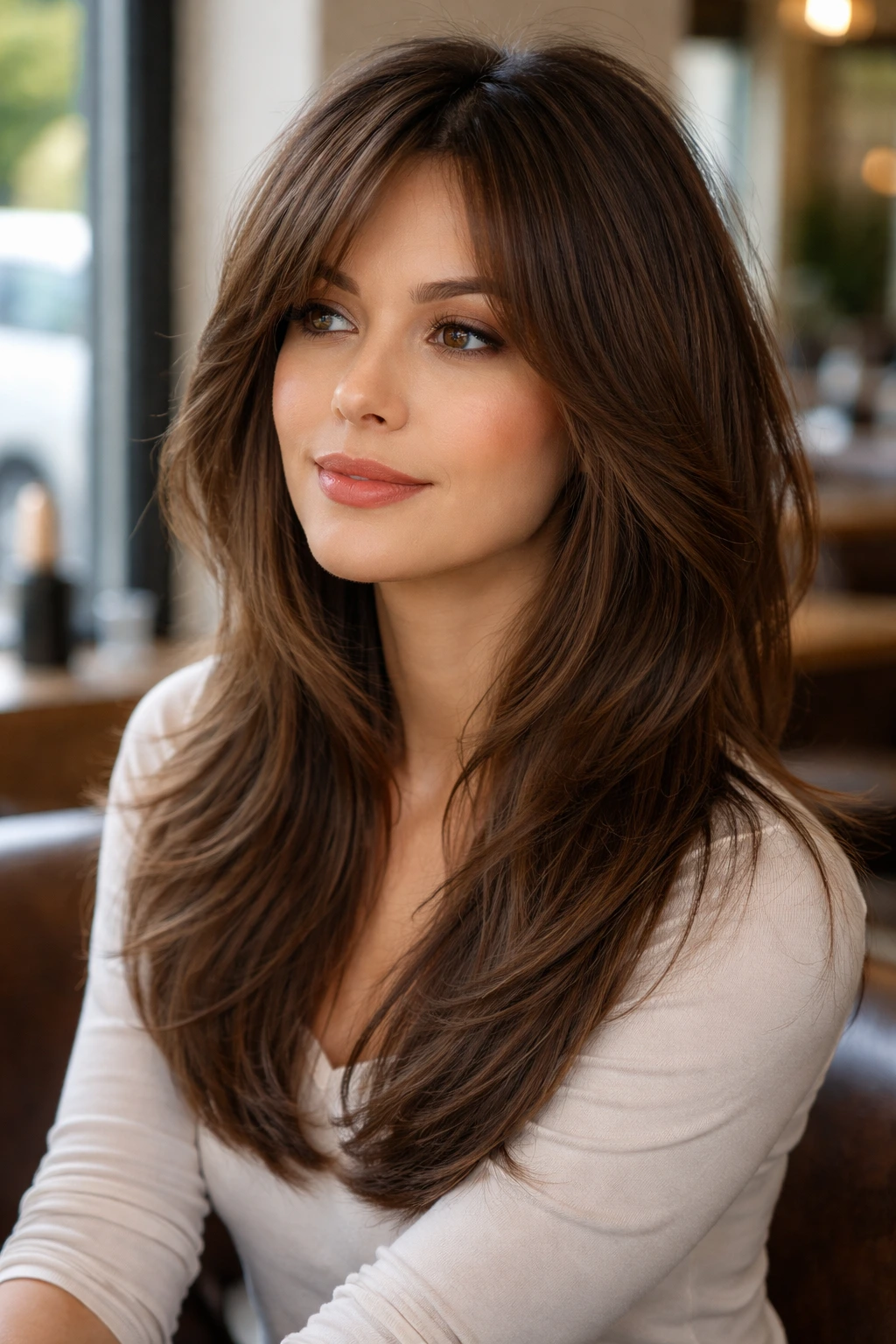
A face frame that starts at the cheekbone is cleaner than one that starts at the jaw. Plain and simple. That’s the sweet spot where the haircut can skim the face without boxing it in. Feathered layers also move better on brown hair because the texture catches light in thin, soft lines instead of thick chunks.
The cut should feel airy, not chopped. You want the stylist to slide the scissors or razor through the front so the ends break up gently, then keep the back length strong enough to hold weight. That contrast is what keeps the hair from puffing out near the sides.
What to Ask For
- Longest face-framing pieces at the collarbone or a touch above.
- Shorter internal layers that start above the chin.
- Soft feathering, not blunt steps.
A face like this likes movement that drops downward. If the front layers stop too high, the haircut can spread outward. If they fall a little longer, the whole shape looks slimmer and more polished. Not fussy. Just smarter.
3. A Deep Side Part With Long Layers
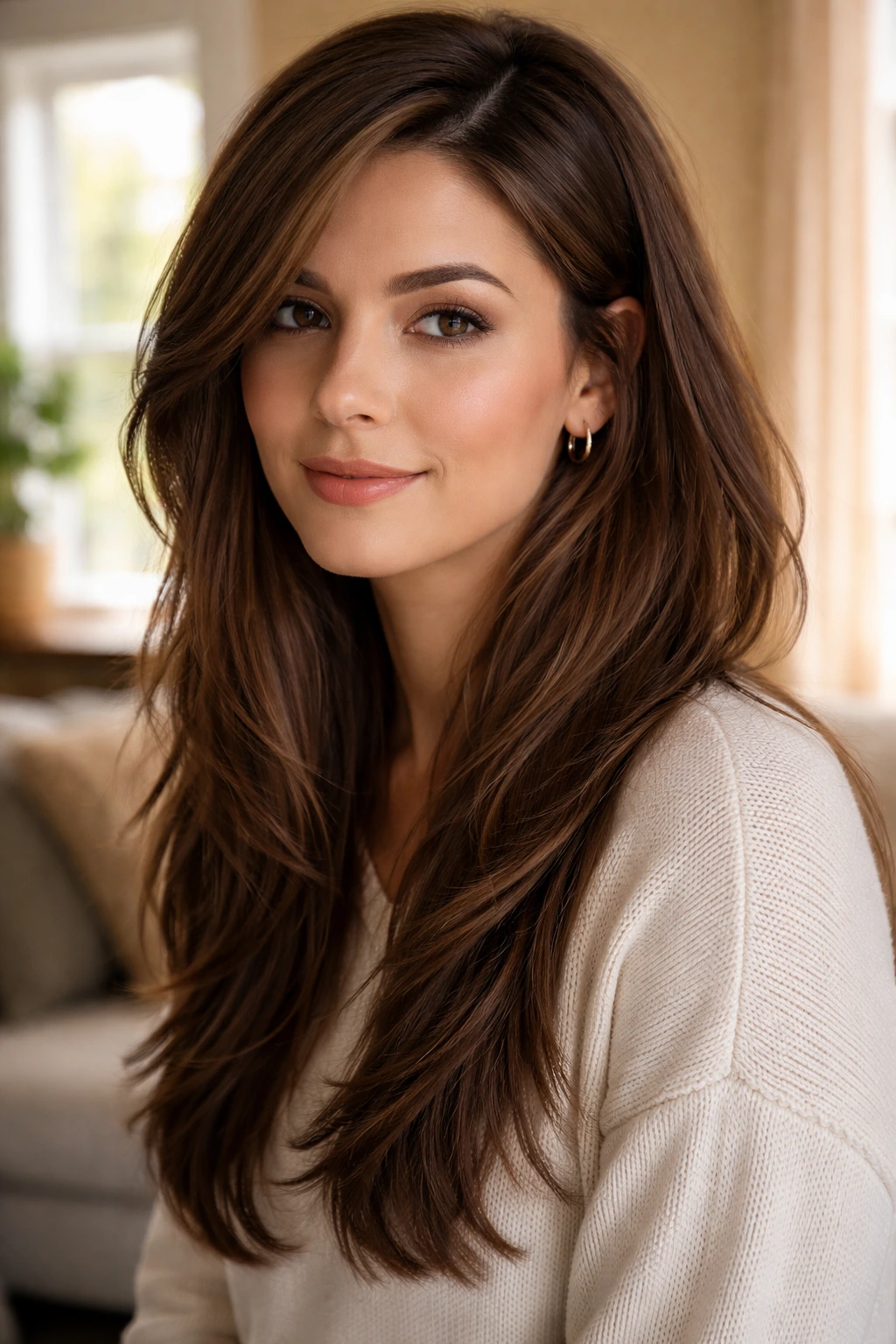
Can a side part change a shag this much? Yes. A deep side part breaks up the symmetry that can make a round face look wider, and it gives the roots a lift that a center part sometimes flattens. The shift is subtle, but the effect shows up fast in the mirror.
This works best when the long layers are already doing some of the face-slimming work. The part then nudges everything a little to one side, which makes the cut feel longer and less centered on the cheeks. It’s a good choice if you like hair that looks relaxed without looking soft all the way through.
To style it, rough-dry the roots in the opposite direction first, then switch the part back. That small bend at the root keeps the hair from lying too flat. Use a light mousse or root spray if your hair tends to drop by midday.
4. Razored Ends for Softer Movement
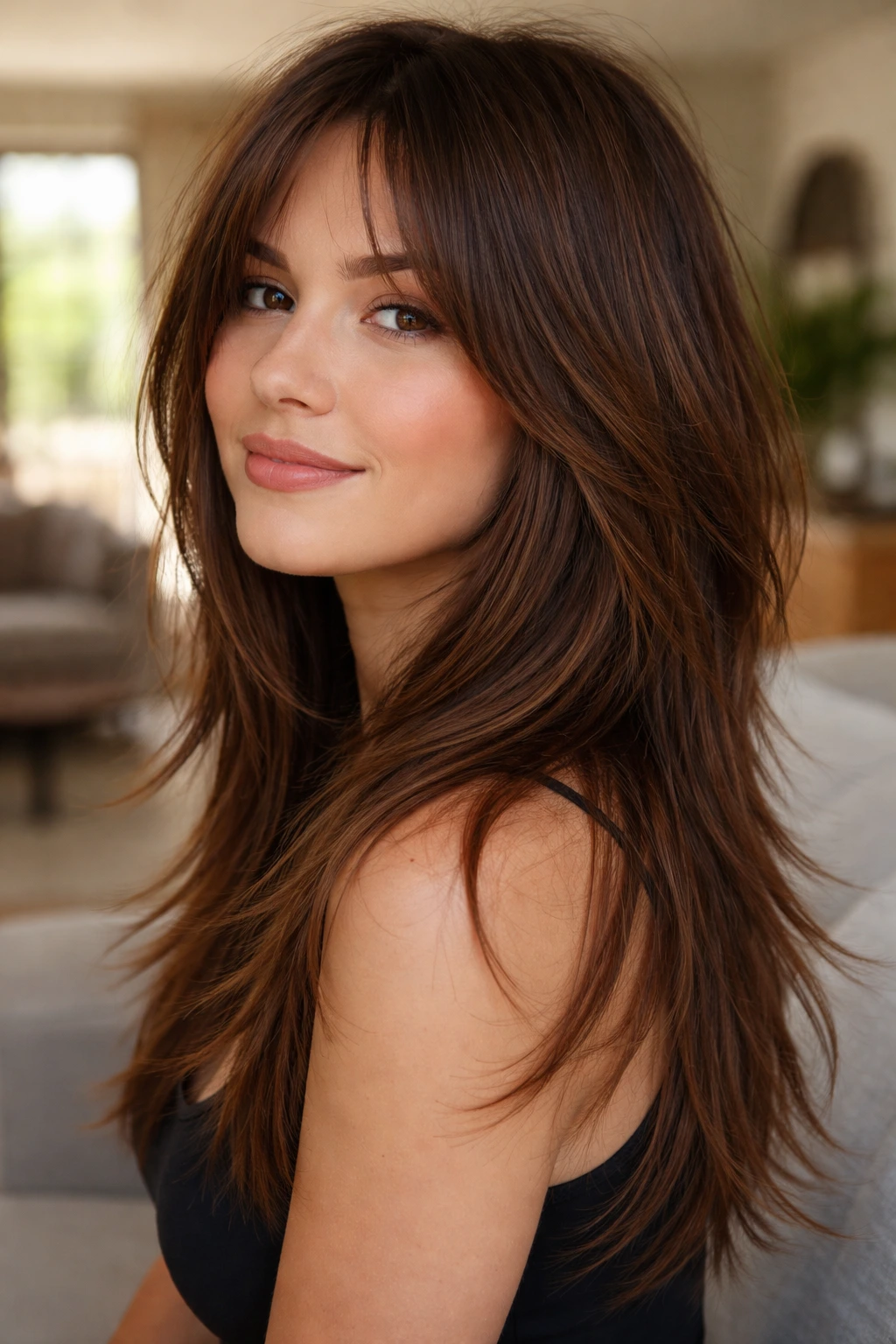
If your long hair gets thick and boxy at the bottom, razored ends can save it. They take away the blunt edge that makes a shag look heavy, and they replace it with a broken, airy finish. On a round face, that matters because a solid line across the lower face can make everything feel wider.
The razor should be used with a light hand. You do not want the ends shredded into wisps that fray apart. You want controlled texture. Brown hair shows this especially well when the shade is rich and glossy, because the broken ends catch the light without looking harsh.
A good razored shag feels cleaner when you tuck one side behind your ear. The ends should still fall back into place instead of sticking out like a bad haircut from the early layers of the grow-out phase. That is the difference between intentional texture and a haircut that simply lost shape.
5. Bottleneck Bangs and Long Layers
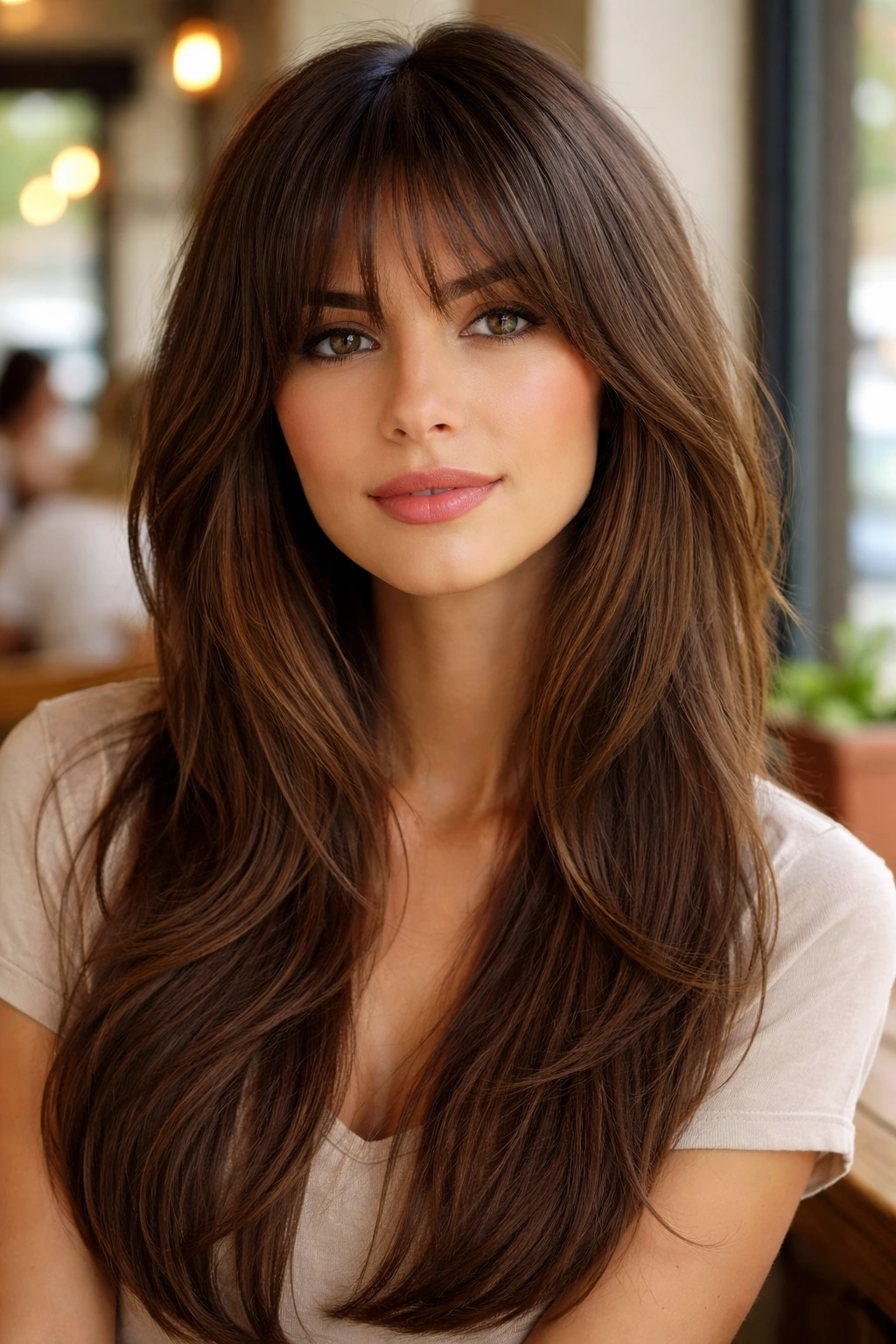
Bottleneck bangs start narrow in the center and open wider at the sides, which is exactly why they work on a round face. The shape mimics a soft hourglass: a little vertical focus in the middle, then a gradual curve out toward the temples. It keeps the forehead from looking too wide and helps the haircut taper instead of spread.
This version works nicely with long brown shag layers because the bangs do half the face-framing job before the rest of the haircut even starts moving. The key is keeping the bangs light. Heavy bottleneck bangs can close the face in fast, especially if the hair is dense.
Ask for the center to graze the brows, then have the sides blend into cheekbone-length pieces. That creates a smooth slide into the rest of the cut. If you like air-dried texture, this is a forgiving shape. If you like a blowout, it looks even better.
6. A Wolf Shag That Stays Soft
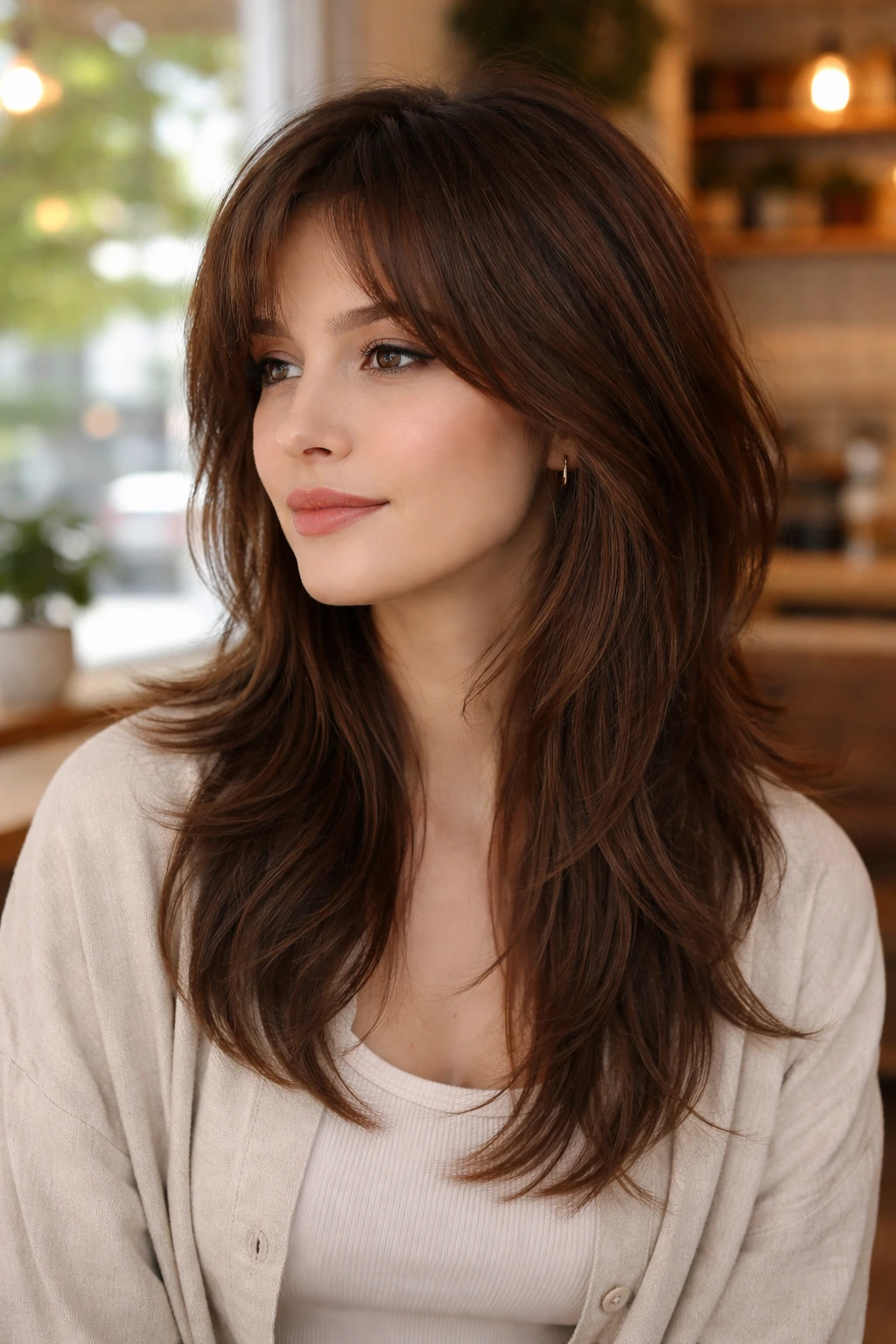
The wolf shag can go too far on a round face if the crown gets too short and the sides stay too full. The softer version keeps the attitude but cuts the drama. That means longer lengths through the back, a bit of lift on top, and face-framing layers that do not stop right at the cheek.
What Makes It Different
A true wolf cut can feel choppy and high-contrast. This version is more wearable. You still get edge, but you do not get the harsh shelf effect. Brown hair helps here because the darker root-to-length blend makes the layers feel smoother.
Best for:
- Hair that already has some wave.
- Faces that want height at the top.
- Anyone who likes movement but hates helmet hair.
If you want the shape without the commitment, tell your stylist to keep the perimeter long and the top layers soft. That one sentence can save a lot of regret.
7. An Airy Center Part
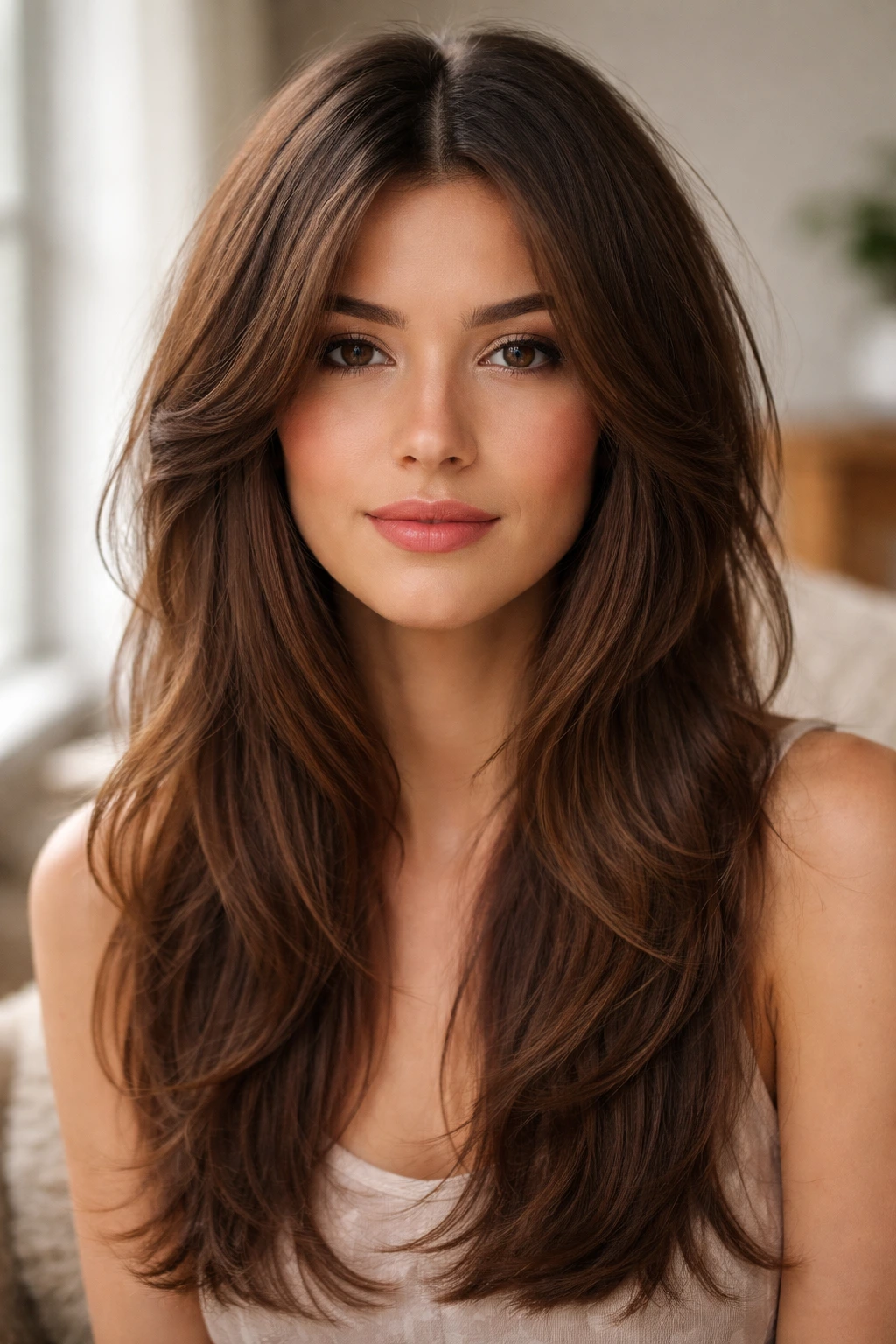
A center part is not the enemy. It only turns into a problem when the layers start too high and the sides puff out right at cheek level. If you keep the front layers lower and lighter, a center part can make a round face look longer and calmer.
The trick is balance. The center line gives the eye a vertical path, while the shag layers break up the width on both sides. That combination works especially well on brown hair with a bit of shine, because the part line stays clean and the texture still reads.
How to Keep It From Widening the Face
- Keep the shortest face-framing pieces below the cheekbone.
- Add lift at the roots, not the sides.
- Let the ends stay soft and slightly broken.
I like this cut on people who wear the same part most days. It feels easy. It also looks better when you do not over-style it, which is rare and refreshing.
8. Caramel Balayage on Brown Shag Layers
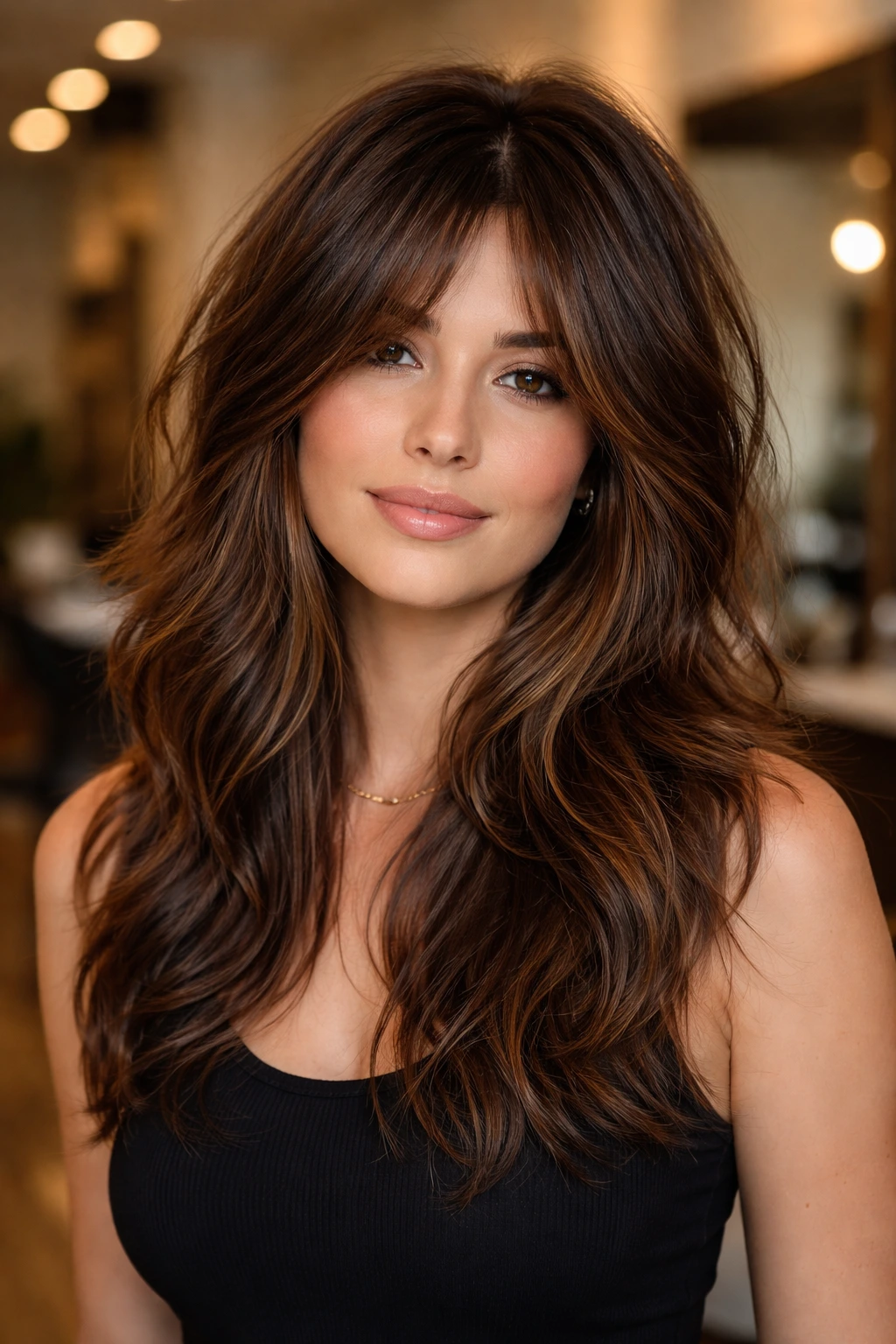
Color matters more than people admit. A brown shag with a flat, single-tone finish can blur together, while caramel balayage makes the layers pop just enough to show the shape. The point is not brightness for its own sake. The point is motion. Light pieces around the front and ends can make the cut look lighter, which helps a round face feel less compressed.
A good balayage on this cut should stay soft through the mids and ends. Bright streaks all over the top can make the head look wider. Place the lighter pieces around the front curve, a few threads through the crown, and the lower lengths where the layers break apart.
That kind of placement keeps the haircut dimensional without turning it stripey. On dark brown hair, even a subtle caramel lift can change the whole mood. The cut feels warmer, less heavy, and a little more expensive-looking without trying too hard.
9. Cheekbone Sweep Layers
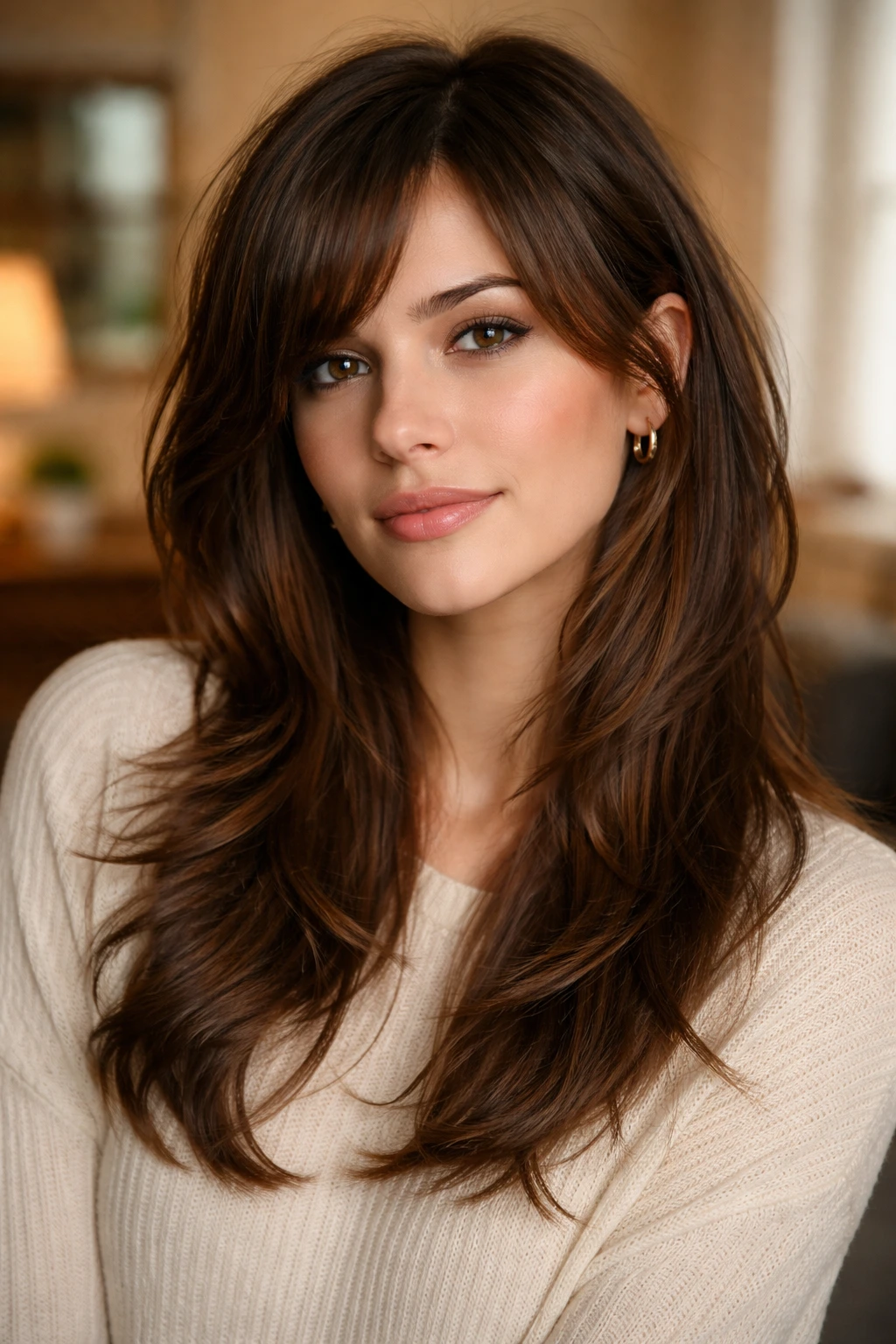
Want movement without obvious bangs? Cheekbone sweep layers do that job quietly. The front pieces angle across the face instead of sitting straight down, so the eye sees a diagonal line first and a curve second. On a round face, diagonals are your friend. They interrupt the circle.
This shape works best when the shortest layer starts at or just above the cheekbone and then slides toward the jaw. You do not want the piece to end exactly where the face is widest. That’s the trap. A slight drop below the cheekbone keeps the silhouette longer.
Ask for This
- A side-swept front layer on both sides.
- A soft point cut through the ends.
- Length that stays past the chin.
It’s a flattering option for people who like to tuck hair behind one ear. The front still holds shape, even when the rest of the cut is loose.
10. Blowout Volume Through the Crown
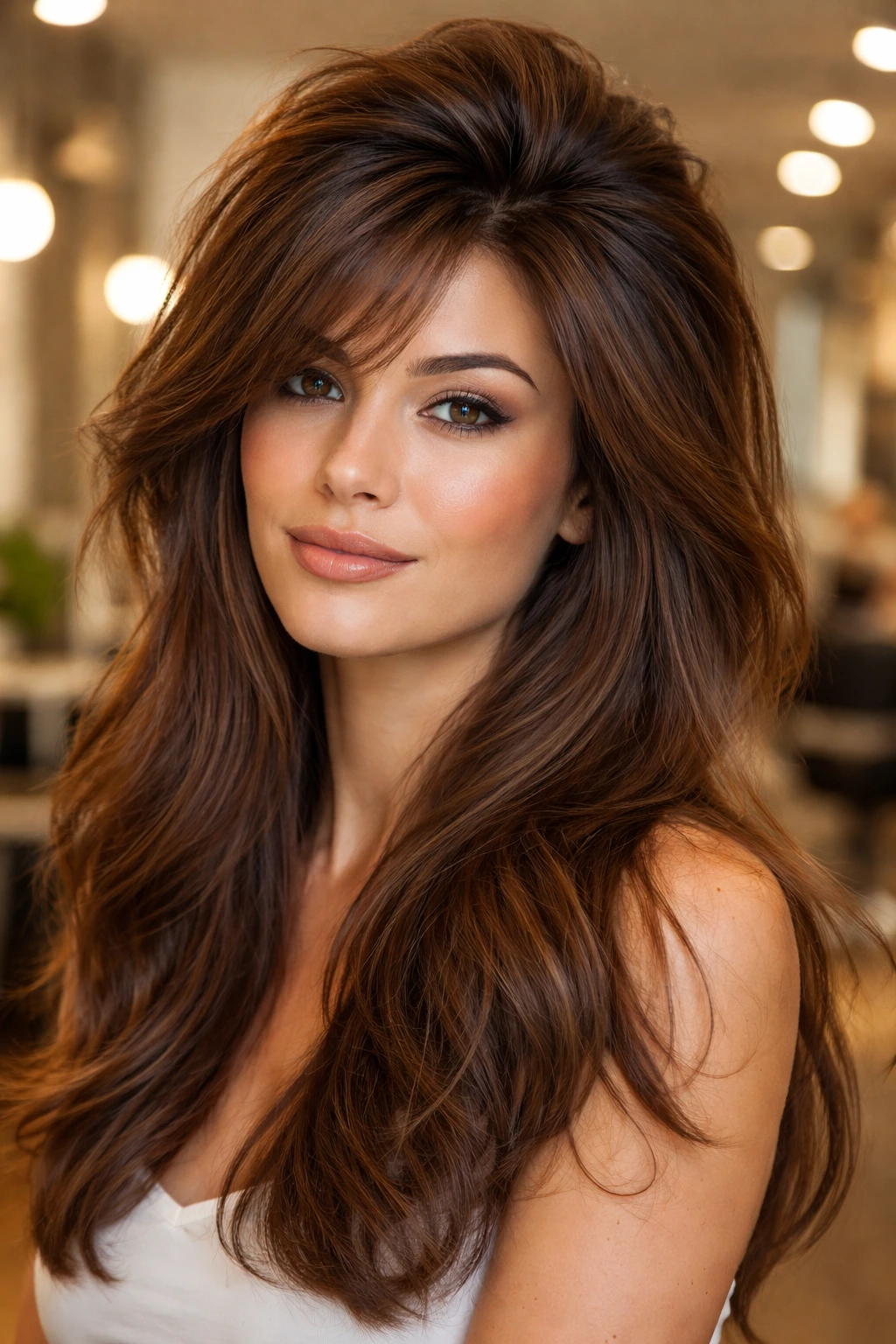
The best round-face shag is often the one with volume at the crown, not at the sides. That lift draws the eye upward, which makes the face read longer right away. A flat crown can do the opposite and make all the width feel concentrated in the middle.
This is the version to choose if you like a salon blowout look. Use a round brush, lift the top sections straight up and back, and finish with a cool shot to lock the bend. The crown should feel full, but not puffy. There’s a difference, and it shows.
A lightweight mousse or root-lift spray near the roots helps a lot here. Keep it off the ends. You want the movement to start at the base and loosen as it falls. If you go heavy with product, the shag can lose that soft swing that makes it work.
11. Invisible Layers That Melt Into the Length
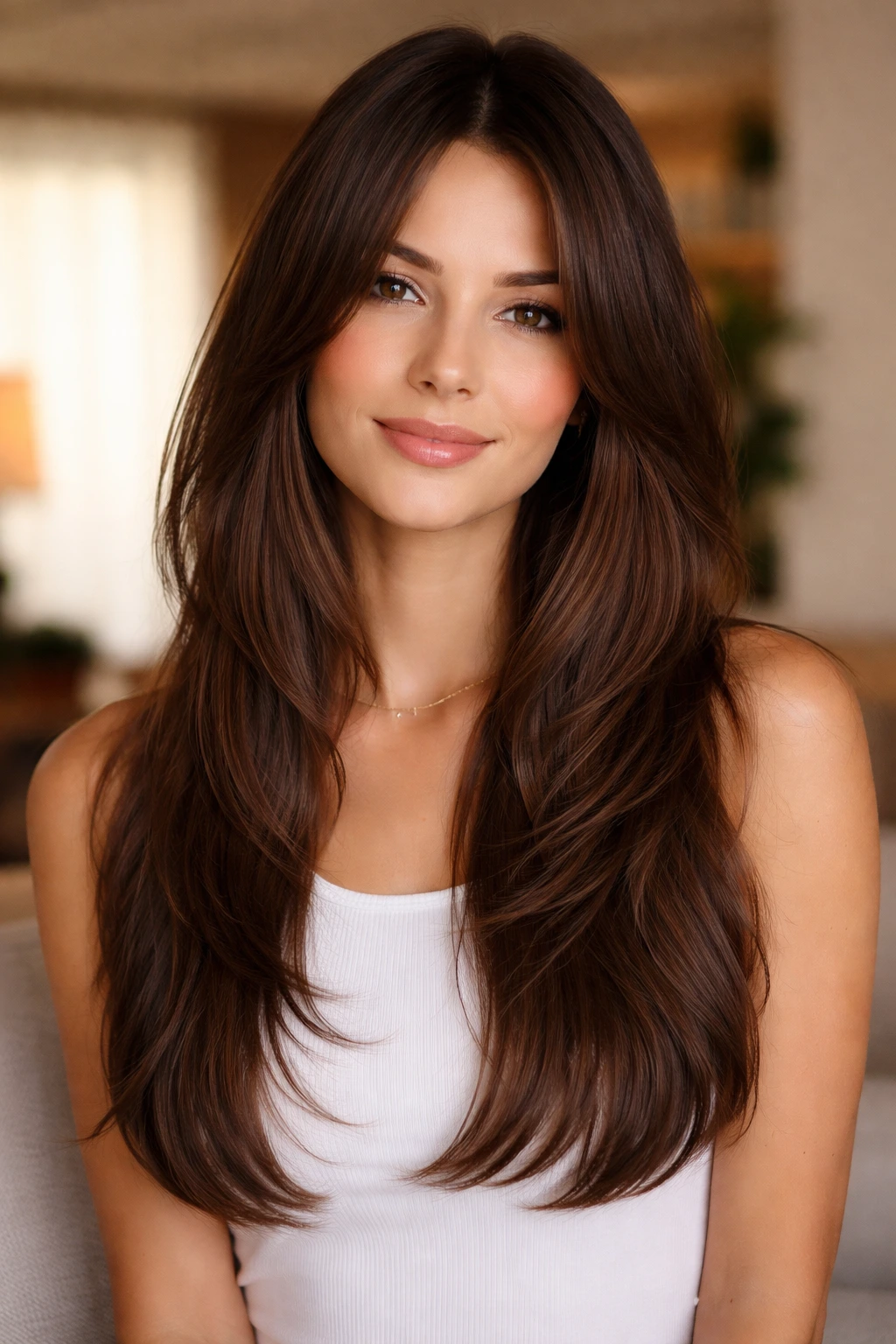
Invisible layers are the answer for anyone who wants shape without obvious steps. The cut still removes weight, but the layering is hidden inside the length instead of sitting on top like a staircase. That makes the hair look smooth and full, not choppy.
This is a smart choice for round faces because it keeps the sides from ballooning out. The outer line stays long and clean, while the inside of the cut does the work. Brown hair is especially good for this because the finish looks glossy and the subtle movement reads as healthy rather than overworked.
It’s also a nice option if you hate seeing every layer when you wear your hair straight. The shape stays there, but it doesn’t shout. That matters more than people think. A haircut that behaves on lazy days earns its keep.
12. Loose Curls That Break Up the Width
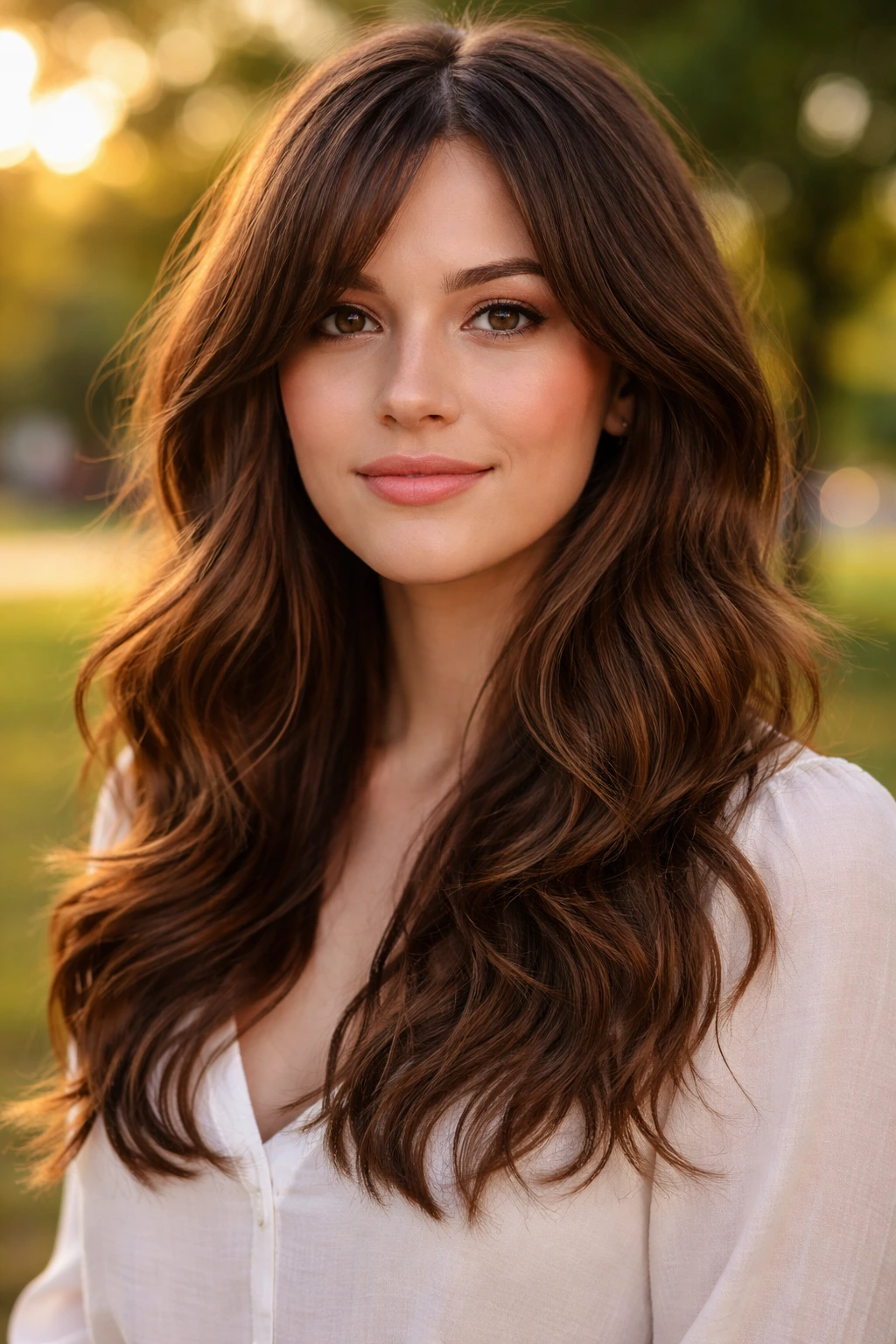
Loose curls can make a shag look softer and longer if you keep the curl pattern relaxed. Tight curls around the cheekbones can add width. Loose bends below that area do the opposite. They stretch the eye downward and keep the haircut from fanning out too much.
How to Style It
Use a 1¼-inch iron or wand, wrap sections away from the face, and leave the last inch out for a straighter end. That little omission keeps the curl from turning into a ball. A light cream or lotion on damp hair helps the texture stay separated.
A round face and a loose shag curl can be a great match when the curls start below the cheekbone. The shape stays airy. The haircut still feels romantic. And the brown color, especially with a few warmer ribbons, shows every bend without getting fuzzy.
13. Long Side Bangs That Curve In
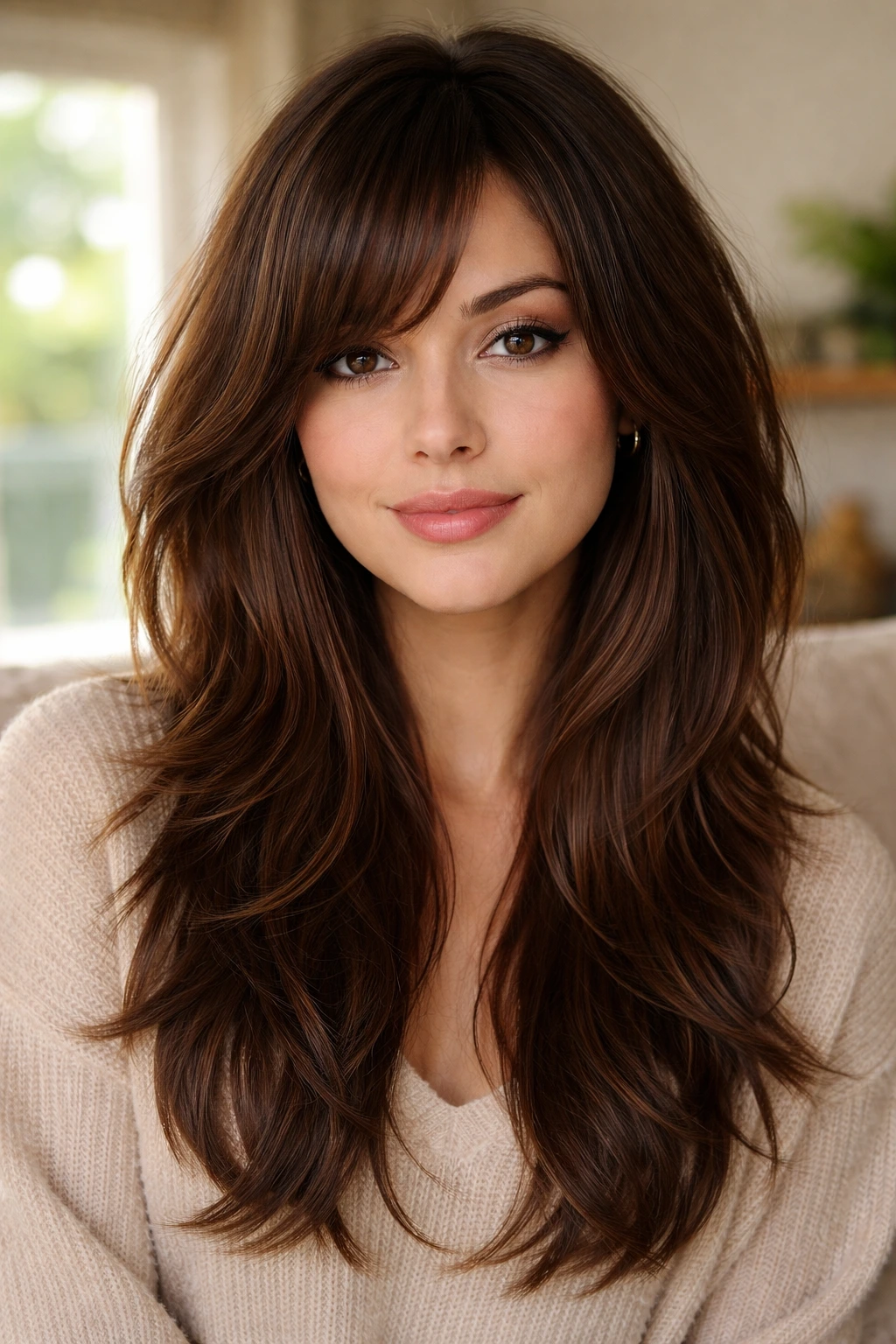
Long side bangs are underrated. They soften the forehead, point the eye diagonally, and blend into the rest of the shag without making a big statement. That’s useful on round faces, where a strong horizontal line can feel too blunt.
The best version curves inward just enough to skim the cheek, then drops into the side layers. It should not stop abruptly. A bang that ends too short can make the face look wider, which is exactly what we’re trying to avoid.
This cut is good for people who want a little framing but do not want the maintenance of classic bangs. You can tuck it, sweep it, or let it fall loose. All three work. Brown hair keeps the transition soft, which helps the whole style feel calm rather than fussy.
14. A Grown-Out Fringe That Skims the Brows
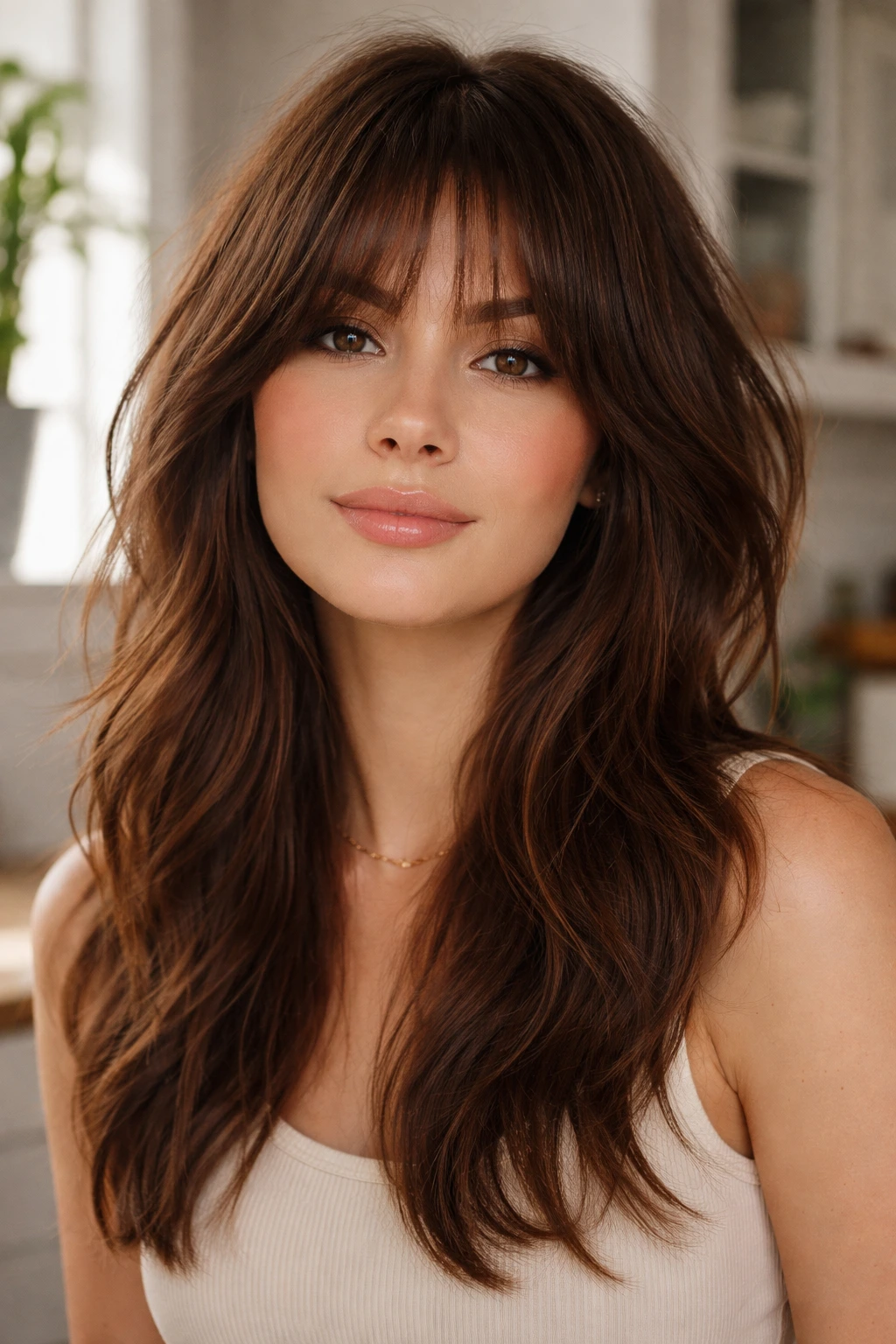
Grown-out fringe looks relaxed in the best way. It has the shape of bangs without the hard maintenance line, and that softer edge suits a round face nicely. The fringe should sit close to the brows, then break into longer pieces on the sides so the shape never turns boxy.
The charm here is that it feels lived-in, not overdone. You get the face-framing effect of a shag without committing to a blunt bang line. That makes it easier to grow out, trim, and wear on days when you are not styling it much.
It also pairs well with brown hair that has a little dimension. The fringe can read as feathered rather than heavy, especially if the ends are point cut. If you usually tuck your hair behind your ears, this is a good one to try.
15. A U-Shaped Perimeter With Shaggy Texture
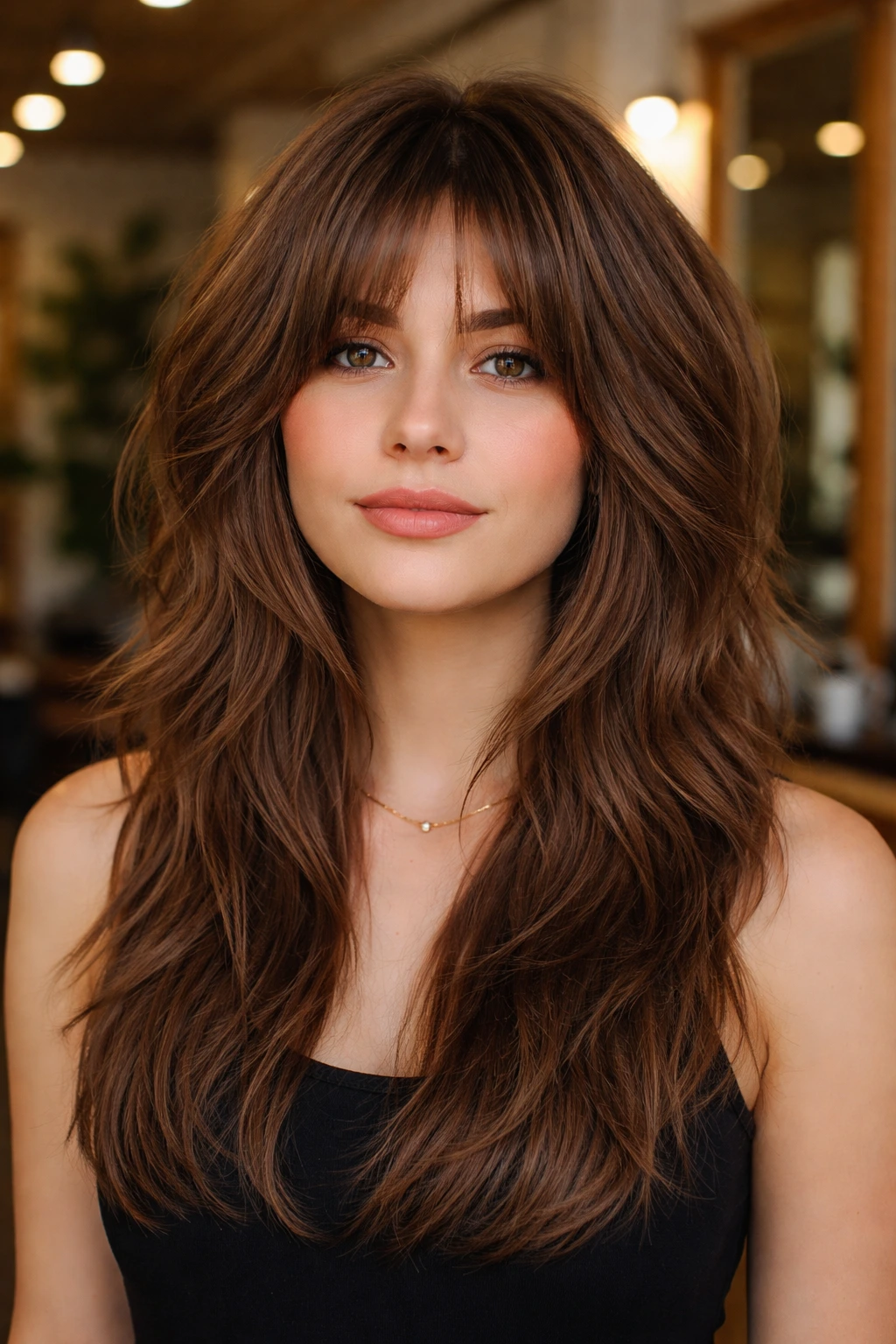
The perimeter of the cut matters as much as the layers. A soft U shape keeps the center a little longer and the sides slightly shorter, which helps the hair fall in a more vertical line. On a round face, that can make the whole silhouette feel leaner.
A blunt bottom edge can look thick and wide, especially on brown hair with a lot of density. A U shape breaks that wall of hair into a gentler curve. Then the shag layers inside the cut add movement so the shape doesn’t feel stiff.
This is a good middle ground if you want your length to stay noticeable. It does not look severe. It also works with both straight and wavy styling, which is handy if your hair changes mood from day to day. Some cuts ask too much. This one does not.
16. Piecey Ends That Keep the Cut Light
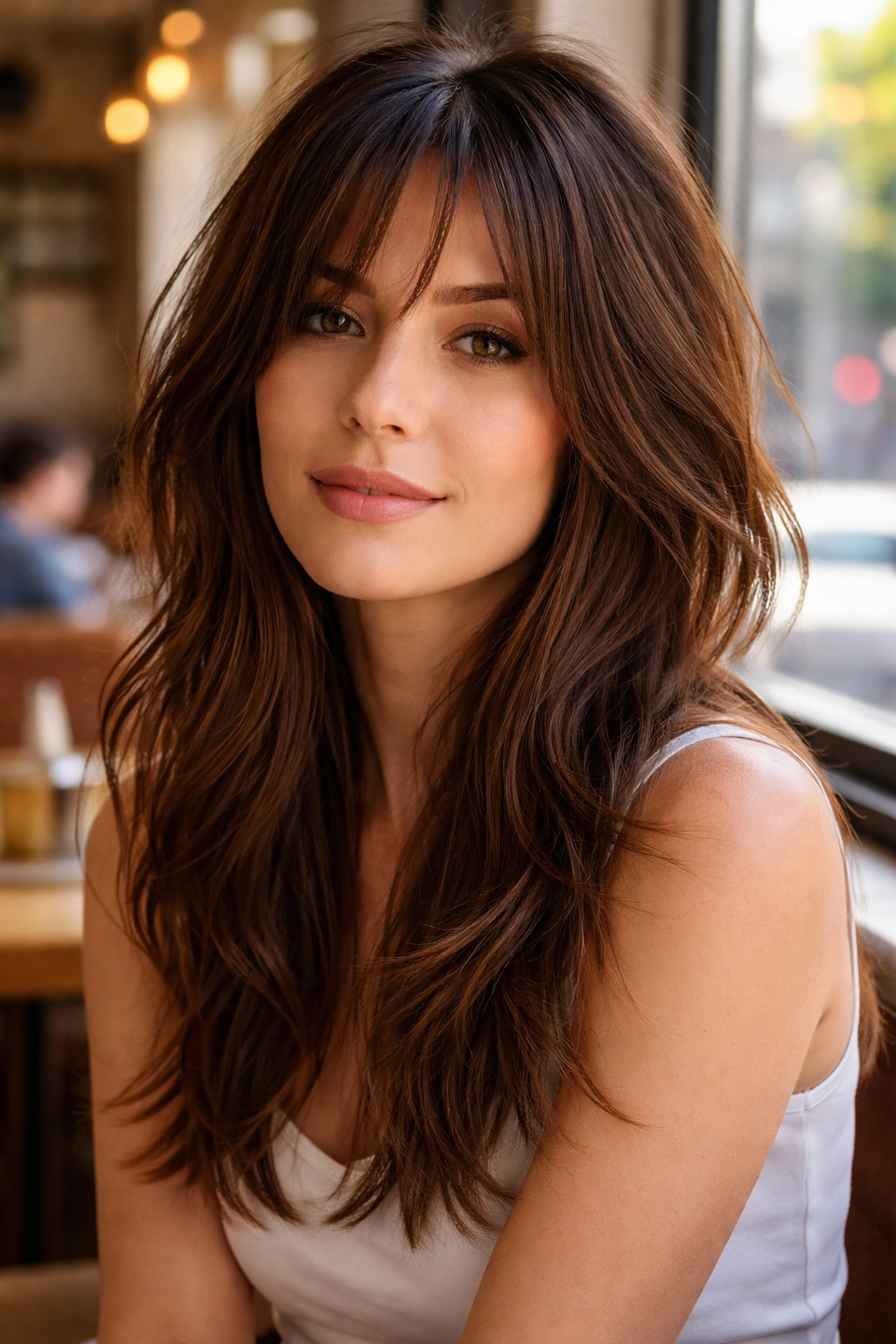
Piecey ends give a shag that lived-in feel people keep trying to fake with spray. The difference is in the cut, not the product. If the ends are sliced or point cut to separate into small sections, the hair moves in little ribbons instead of one heavy sheet.
That separation helps round faces because it breaks up width near the bottom. A solid curtain of hair at the ends can pull the face outward. Piecey ends keep the outline softer and longer.
A little texture cream on damp hair helps, but don’t drown it. Too much product turns the pieces sticky and clumped. A pea-sized amount is enough for medium-length layers, maybe two peas if the hair is thick. The goal is separation, not crunch.
17. Crown Lift Without Cheek Width
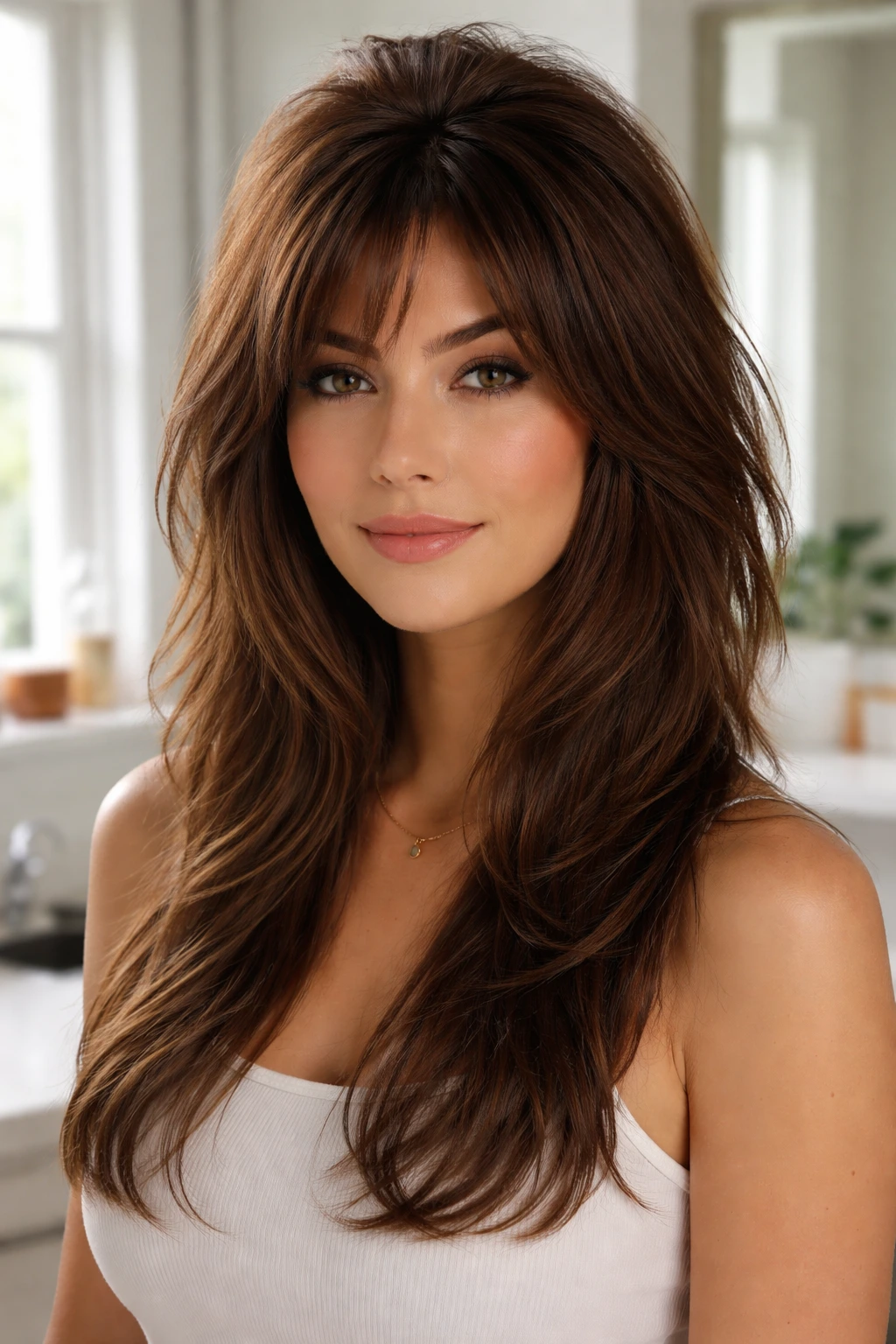
Flat roots can make a round face look broader than it really is. Crown lift fixes that by adding height where the eye wants to travel upward. That lift is one of the easiest shape tricks in a shag, and it works whether the hair is blow-dried, diffused, or air-dried with clips.
Simple Ways to Get It
- Blow-dry the top sections upward with a round brush.
- Pin the crown up while the hair cools.
- Use root clips at the top for 10 to 15 minutes.
The key is to avoid volume at the sides while you build it on top. That’s the part people miss. Height at the crown slims; puff at the temples widens. Small difference. Big payoff.
This version looks especially good on rich brown hair with a little shine, because the lift creates a soft contour through the top of the cut.
18. A Soft Mullet Shape Done Gently
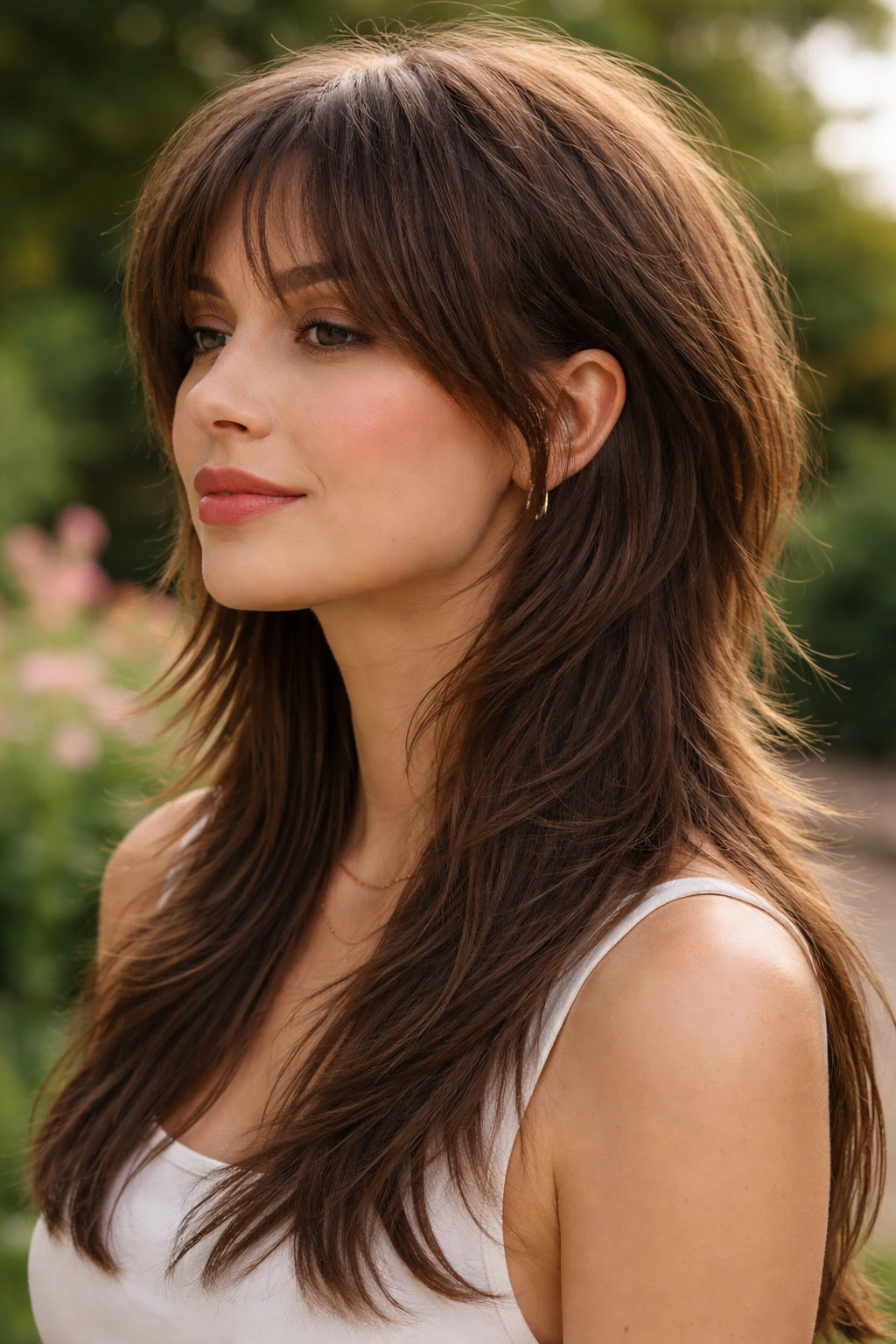
A soft mullet-shaped shag is for someone who wants edge without the hard line. The back stays longer, the top gets a little shorter, and the sides remain blended enough that the cut still feels wearable on an everyday basis. On a round face, this can work because the shape draws the eye down the center and keeps the widest area from sitting all at once.
The important word here is soft. You do not want a harsh disconnect between the front and back. You want a slow shift in length. Brown hair helps smooth the transition, especially if the finish is matte rather than overly sleek.
If you like a little attitude in your haircut, this is the one. If you want quiet and neat, skip it. That honesty saves time in the chair. Not every shag needs to pretend it is for everyone.
19. Money Piece Highlights on Brown Shags
Money piece highlights can help a shag on a round face, but only if they’re placed with restraint. Bright pieces at the front pull attention upward and around the eyes, which can make the haircut feel lighter. The wrong placement, though, can flatten the whole effect by highlighting the widest part of the cheeks.
The trick is to keep the lightest strands near the temples and front edge, then let them blend into warmer brown lengths. Think soft contrast, not hard stripes. A caramel or toffee ribbon tends to work better than a stark pale blonde on darker brunettes.
This is a nice option if you wear very little makeup and want the haircut itself to do more work. The face frame looks intentional. The layers become easier to see. And the brown base keeps everything grounded.
20. Air-Dry Texture That Still Holds Shape
Some haircuts fall apart when you let them dry on their own. A good shag shouldn’t. If the layers are cut with enough thought, the hair can air-dry into shape and still keep the round face looking balanced.
Use a light leave-in, then twist the front pieces away from the face while the hair is damp. Scrunch the mids and ends once or twice, but do not keep touching them. That’s how frizz wins. If your hair is wavy, a little gel cream can help the bends stay separated and keep the layer breaks visible.
This kind of shag is best for people who do not want a strict styling routine. It looks lived-in on purpose. Brown shades with a soft gloss finish make the texture read clean, not messy.
21. Shag Layers That Tame Thick Hair
Thick hair needs weight removed from the inside, not just the bottom edge. If the layers are only cut on the outside, the hair can still swell out at the sides and make a round face look wider. A better shag breaks the bulk up in the mid-lengths and keeps the perimeter long enough to hang straight.
What to Ask Your Stylist
- Internal layers to reduce bulk.
- A long perimeter that stays below the chin.
- Face-framing pieces that blend, not chunk.
This version is worth considering if your hair feels hot, heavy, or stubborn. It gives movement without turning the shape into a cloud. Brown hair, especially darker brunette shades, can look almost too solid when it is thick. The right layering breaks that up fast.
22. Fine Hair Layers That Don’t Collapse
Can fine hair wear a shag without going limp? Yes, but the layers have to stay long enough to hold their shape. Too many short pieces can make the cut collapse and leave the ends thin. That’s a bad trade.
The better move is to keep the top layers soft and the face frame long. You want enough texture to create movement, but not so much that the hair loses its body. A round brush or a little mousse at the roots goes a long way here. Fine brown hair often looks fuller when the layers are spaced out instead of stacked tightly.
A good stylist will leave some weight in the bottom so the hair still has something to swing against. That keeps the cut from floating away from the head. It sounds small. It isn’t.
23. Chestnut Brown Dimension
Chestnut brown is one of the nicest shades for a shag because it has warmth without looking red. That warmth helps the layers show up, and it softens the edges around a round face. The cut looks dimensional even when the styling is minimal.
A solid dark brunette can sometimes hide the movement in a shag. Chestnut breaks that up just enough. If you like subtle color, ask for soft lowlights or a gloss that keeps the tone rich and shiny. That tiny shift can make the layers read more clearly in daylight.
This is the kind of color choice that supports the haircut instead of fighting it. The face frame looks lighter, the ends look softer, and the whole shape feels less heavy. Easy win.
24. Espresso Gloss and Soft Layers
Deep espresso brown can look dramatic on a shag, but it needs good layering or the whole shape can feel blocky. The fix is a soft, internal layer pattern and a glossy finish that keeps the hair from looking flat. You want depth, not a black curtain.
If the cut has too many blunt lines, espresso shade can make every edge show. That is not flattering on round faces. So keep the layers long, the face frame curved, and the ends lightly broken up. A shine serum on the mids and ends helps the texture read polished without making the top greasy.
This version is a strong pick if you like darker hair and low drama. It feels clean. It also makes the shag look more expensive, which is a very useful side effect.
25. Loose S-Waves That Stretch the Face
Loose S-waves are one of the simplest ways to make a shag look longer on a round face. The bend moves the eye down the length of the hair instead of circling the cheeks. It’s a softer effect than a full curl, and I think it suits brown hair especially well because the movement stays visible without looking frizzy.
Use a 1-inch iron, bend the hair once, skip the next inch, then bend again in the opposite direction. That creates the S pattern. Keep the wave loose near the face and a little fuller toward the ends. The hair should look bent, not curled tight.
This is a good styling choice if you already have a shag and want to lean into the shape without changing the cut. The haircut does the structure. The wave does the finish.
26. Sleek Straight Styling for a Shag Cut
People sometimes think a shag only works when it’s messy. I do not buy that. On brown hair, a straight finish can show the layer map beautifully, as long as the cut has enough softness in the ends and enough lift near the crown.
The straight version is best when the layers are long and blended. That way the haircut still has movement, but the silhouette stays smooth. A flat iron around 300°F is usually enough for most brown hair types; go lower if the hair is fine or already processed. You want the bend gone, not the shine.
This is a smart option if your face is round and you prefer polish over texture. The hair falls in a clean line, which keeps the face from feeling boxed in. Simple. Effective. And a little underrated.
27. Flipped-Out Ends for Extra Movement
Flipped-out ends can make a shag feel lighter without adding width at the cheeks. The flip happens below the face frame, so the motion stays at the lower half of the hair where it helps elongate the shape. That detail matters more than people realize.
A round brush or a quick pass with a flat iron can create the bend. Keep the flip soft, not cartoonish. You want the ends to turn away slightly, like the hair decided to move on its own. Brown hair shows that movement well, especially when the shade has a little gloss.
This style works nicely on days when you want the haircut to look finished but not stiff. It feels playful. It also keeps the ends from hanging dead straight, which can drag the face down.
28. Soft, Low-Maintenance Layers
If you want the whole cut to work with almost no drama, this is the version to ask for. Keep the layers long, keep the face frame soft, and let the shortest pieces land below the cheekbones. That gives the haircut movement without building a lot of width where the face is fullest.
This is the place to be honest about your routine. If you barely style your hair, do not ask for a shag that only looks good after twenty minutes with a round brush. Ask for shape that survives a rough dry, a quick scrunch, and maybe a little tuck behind one ear. That is where a good long brown shag earns its keep.
My own bias? I like this version most for people who want the round face to look a little longer without making the haircut feel precious. It’s soft, flattering, and easy to live with. That combination is harder to find than it should be.
