



Fine hair can look polished one minute and flat the next. A medium shag fixes that only if the layers are placed with a little restraint. Too much slicing and the ends go see-through; too little and the shape collapses by lunchtime. Medium shag haircuts for fine hair work because they keep movement up top while leaving enough weight around the outline to make the hair look fuller than it is.
The bad shag is easy to spot. It has frayed ends, a wispy perimeter, and bangs that seem to belong to another haircut entirely. The good one keeps a line somewhere — at the collarbone, at the jaw, or just below — so the eye has a place to land. That line matters more on fine hair than people think.
Styling matters, sure, but the cut does most of the work. A smart shag can give you lift at the crown, cheekbone movement, and that slightly undone finish that looks relaxed without turning stringy. I like shags that feel soft at the front and fuller at the back; they grow out better and usually survive a few skipped wash days without going limp.
The 25 versions below lean in different directions: some are airy and face-framing, some are blunt around the ends, and some borrow a little from the wolf cut without going overboard. Start with the ones that match your part, your bang tolerance, and how much styling you’re willing to do before coffee.
1. Soft Curtain Shag With a Narrow Face Frame
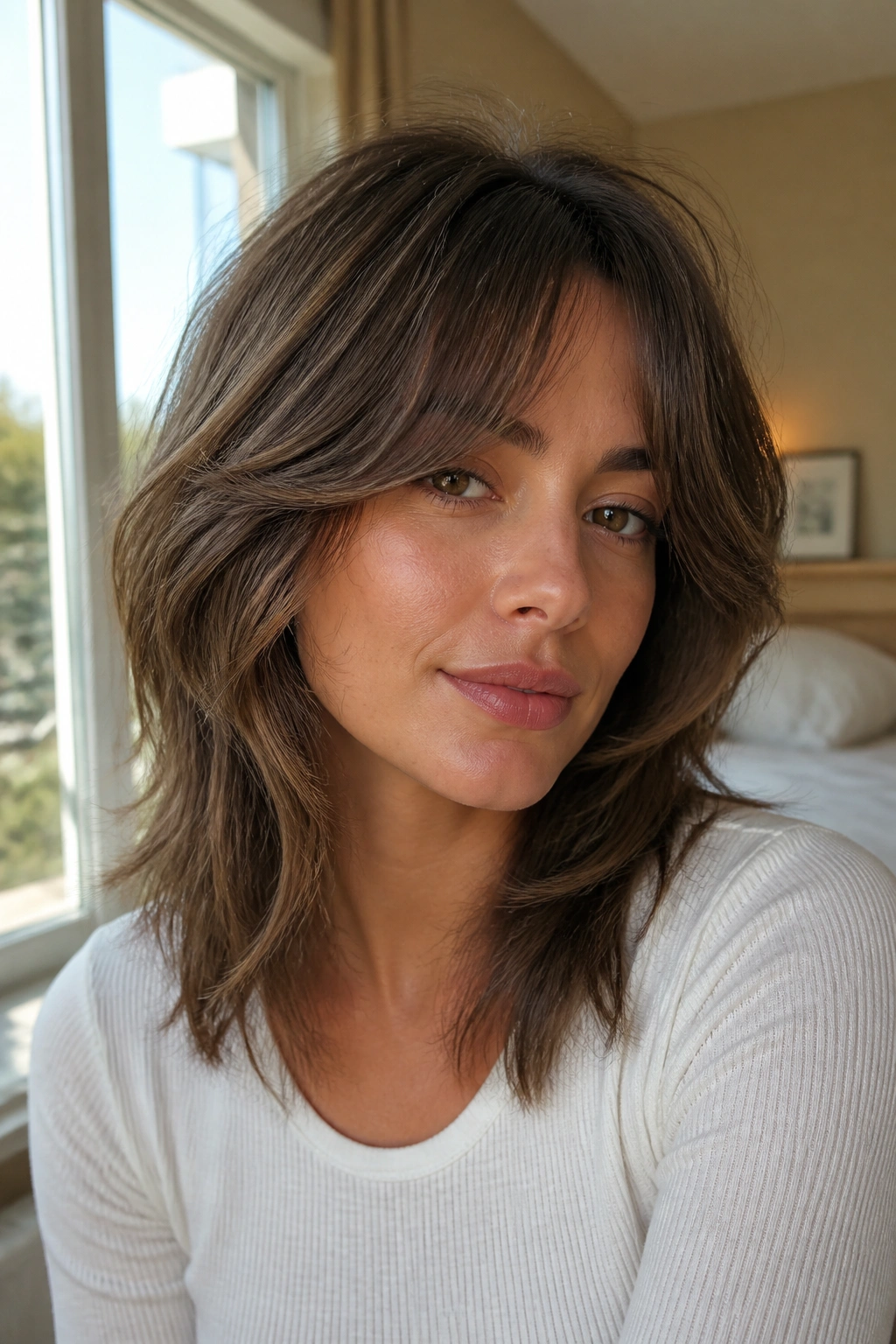
Soft curtain bangs are the safest doorway into shag territory. The layers open around the face, but the cut still leaves enough hair at the perimeter to keep fine strands from looking sparse.
Why It Works
This version is smart because it spreads movement where you can see it most — around the eyes, cheekbones, and jaw — while keeping the bottom line intact. On fine hair, that matters. A haircut that keeps the outer edge a touch heavier tends to look fuller after a few washes, when softer styles can start to collapse.
Ask for curtain bangs that start around the brow or just below it, then taper into long face-framing pieces that fall near the cheekbone and collarbone. Do not let the stylist over-thin the ends. The whole point is softness, not frizzed-out air.
- Best on straight to slightly wavy hair
- Works well with a round brush or a large velcro roller
- Ask for long internal layers, not choppy all-over carving
- Keep the perimeter grazing the collarbone for extra density
My tip: a pea-sized amount of lightweight mousse at the roots does more here than a heavy texture cream ever will.
2. Jaw-Grazing Shag With Cheekbone Bangs
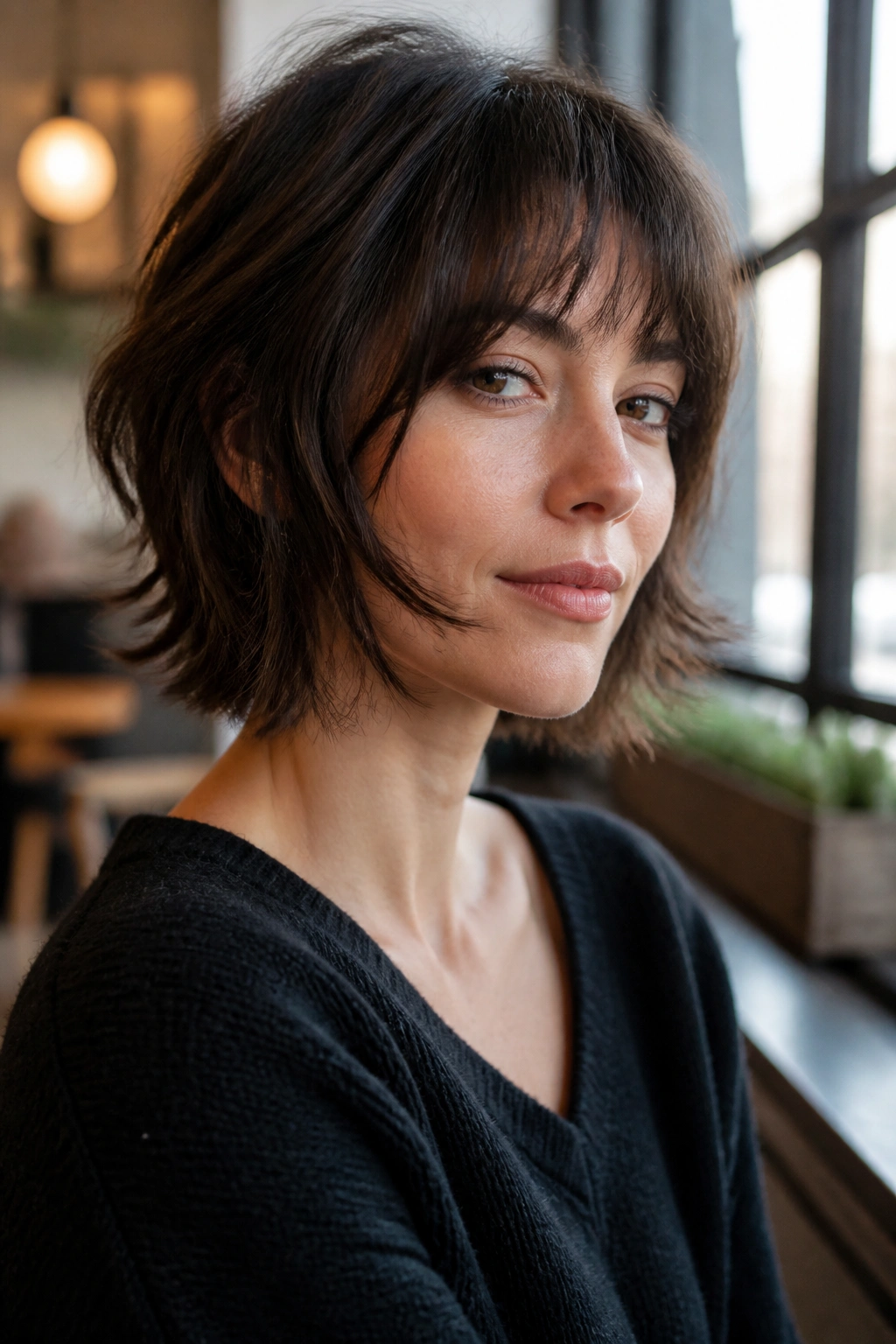
A shorter front can fake volume better than a lot of styling products. When the bang line sits near the cheekbone and the first layer lands around the jaw, the whole haircut gets a stronger frame.
The reason this works is simple: fine hair often needs a visible shape, not just movement. This cut gives you both. It leaves enough length to tuck behind the ear, but the front still bites into the face a little, which makes the hair look more deliberate and less wispy.
I like this one for people who wear glasses or want their haircut to do some of the work that makeup usually does. The sharpness around the eyes gives the style a little edge without turning it into a hard bob. If your hair is very flat at the crown, blow-drying the front forward first and then sweeping it back helps the layers bend instead of sit like a curtain.
3. Mid-Length Razored Shag With Soft Ends
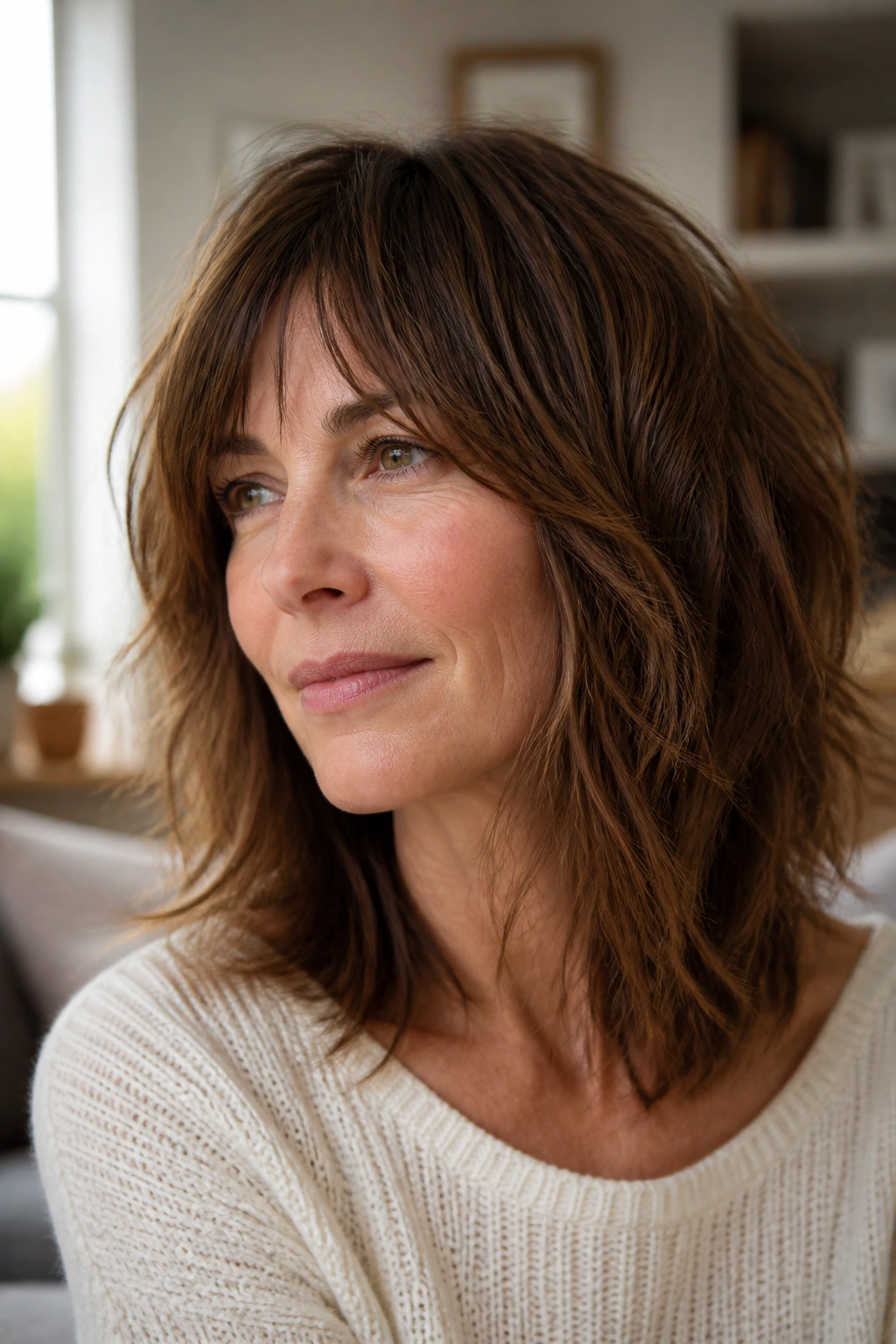
Some shags look airy in the chair and invisible a week later. That usually happens when the stylist has taken too much bulk out of the ends and left the hair with no weight to hold a shape.
A better version uses razor work only where the hair can afford it — usually through the mid-lengths and around the face — while the bottom edge stays softly blunt. That mix gives fine hair movement without making the ends feel see-through. The texture should look broken up, not shredded.
What to Ask For
- Razor or slide-cut texture through the middle only
- A softer, blunt-ish bottom line
- Layers that begin below the cheekbone
- Minimal thinning at the very ends
This one shines if your hair has a little bend to it already. Straight fine hair can wear it too, but you’ll want a root-lifting spray and a quick rough-dry to keep the shape from going limp. Keep the crown light; keep the hemline solid. That’s the whole trick.
4. Shoulder-Skimming Feathered Shag
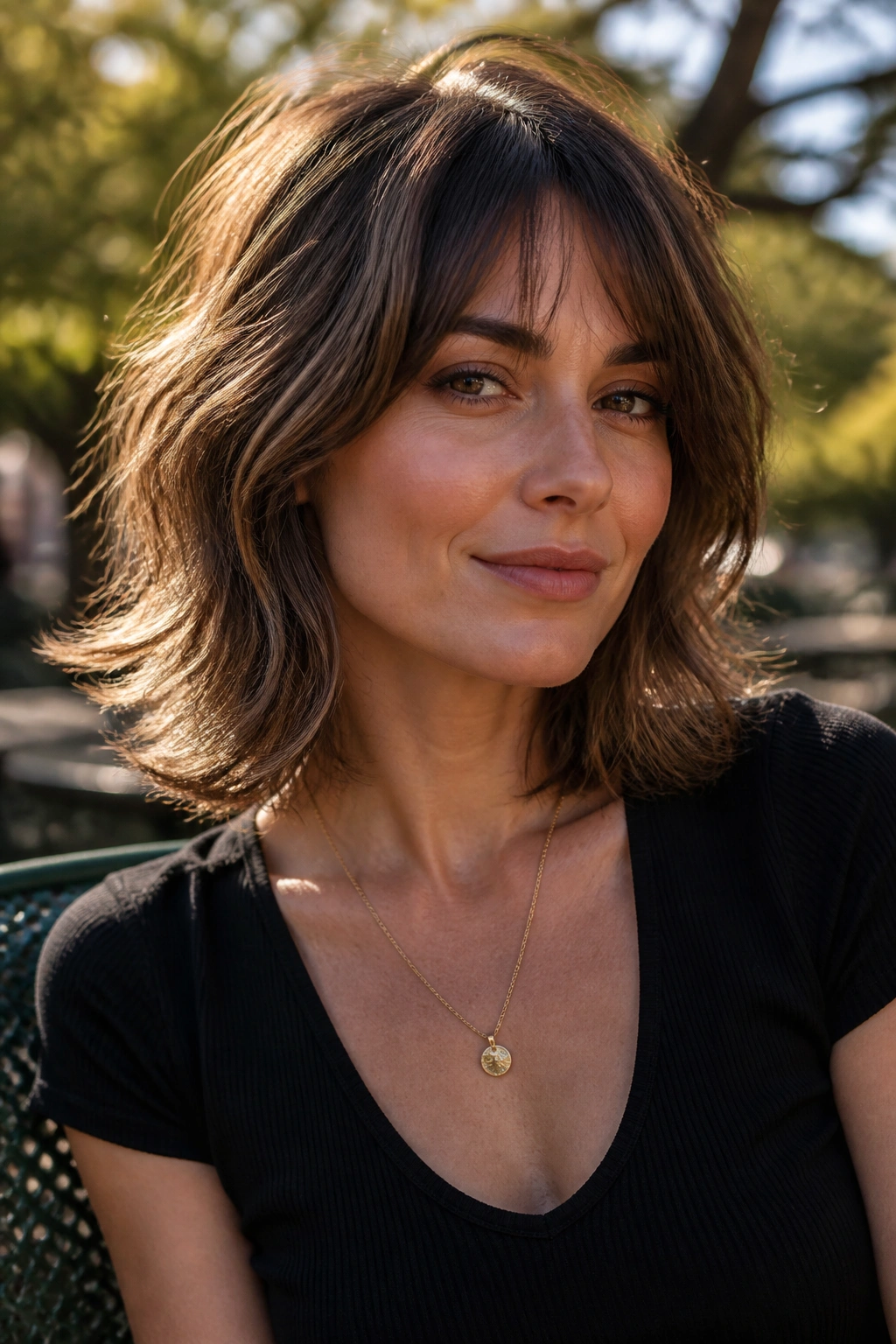
Shoulder length gives fine hair something useful: a touch of gravity, but not too much. Once the hair gets much longer than that, the weight can drag the roots flat. Shorter than that, and the cut starts to behave more like a bob.
This feathered version sits right in the middle. The layers are long enough to move, and the ends are softened rather than hacked at. It has a calm, easy shape that looks good even when the hair air-dries a little imperfectly. I like this cut when someone wants “interesting” hair, but not a haircut that needs a 20-minute styling routine to make sense.
A large round brush or a blow-dry brush will flip the ends under just enough to keep the shape tidy. If your hair naturally kicks out at the bottom, even better. That little bend gives the cut some life.
5. Rounded Shag With a Full Perimeter
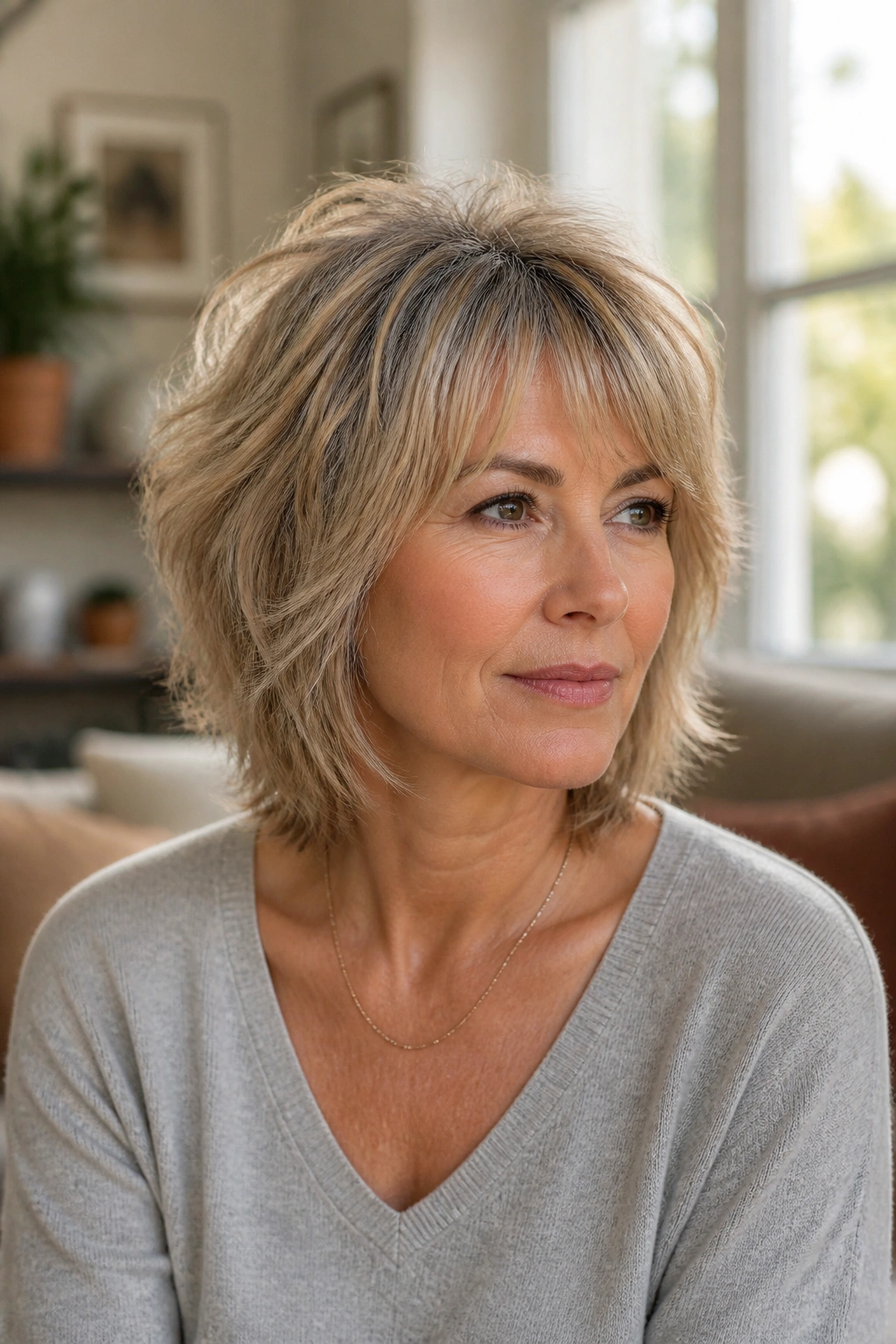
Not every shag has to look edgy. A rounded shag keeps the layers soft and the outline fuller, which is a huge plus for fine hair that gets stringy when it’s overworked.
The shape is a little like a halo around the head: not puffy, not severe, just gently curved. That roundness keeps the haircut from looking hollow at the sides. It also makes the hair look thicker from the back, which a lot of people forget to check in the mirror.
Unlike a heavily thinned shag, this version keeps the lower sections intact. The crown gets lift, the sides get movement, and the ends stay substantial. It suits straight hair, but it’s especially good if your hair has a soft wave that appears after a few hours in the day.
If you want a shag that feels quietly polished instead of deliberately messy, this is the one I’d point to first.
6. Center-Part Shag With Long Curtain Bangs
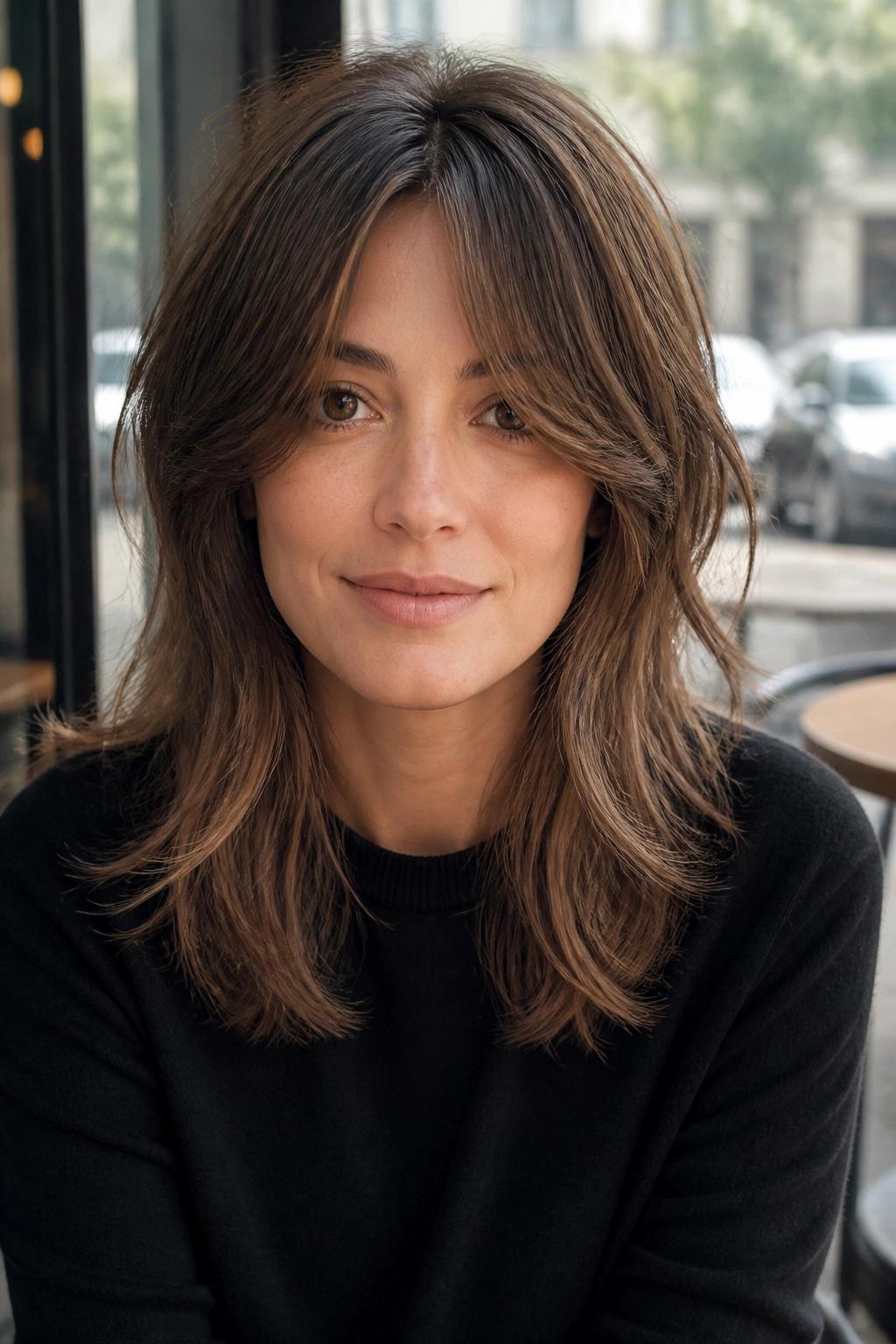
Want something that falls neatly on both sides of the face and still looks lived-in? This is the version to show your stylist. A center part with long curtain bangs can make fine hair look more deliberate because the eye gets two clean vertical lines instead of one vague mass.
The longest pieces should start near the cheekbone and drift into the collarbone, while the shortest layers stay high enough to open the face. The middle part helps the hair fall in a balanced way, which is useful when the strands themselves are too soft to hold a dramatic shape on their own.
How to Ask for It
Tell the stylist you want long face-framing layers, a middle part, and a soft fringe that can part in the center without splitting too high. That last part matters. If the bangs are too short, they can pop out awkwardly and make fine hair look thinner than it is.
This haircut works best with a quick blow-dry and a bit of bend at the ends. Straight and limp is not the goal here.
7. Collarbone Shag With Piecey Bangs
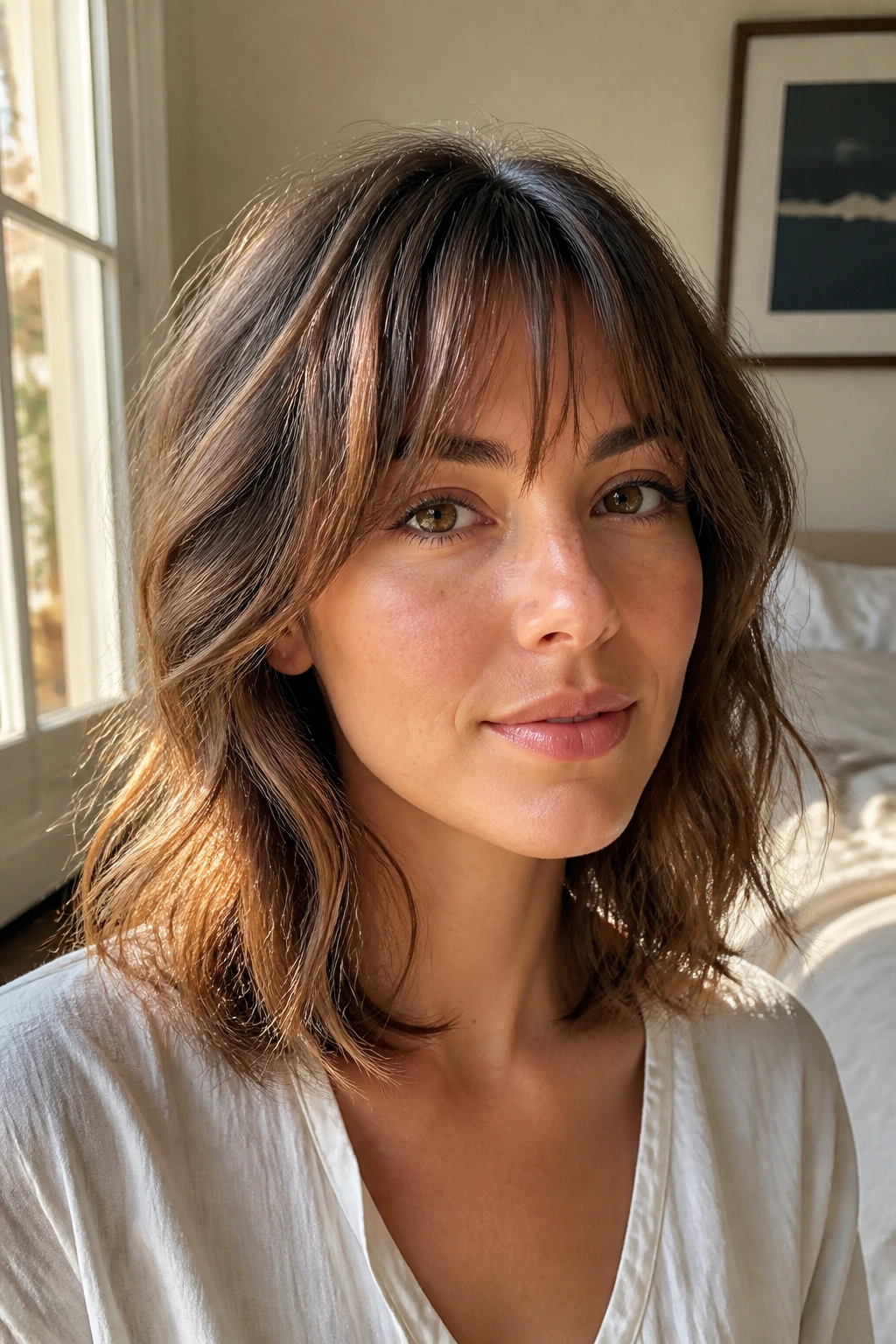
Piecey bangs can do a lot of heavy lifting for fine hair. They break up the forehead line, which keeps the haircut from looking like one flat sheet from root to tip.
This version lands at the collarbone, where hair still has enough length to move but doesn’t get dragged down by its own weight. The bangs should be separated, not heavy, and the layers around the face should taper softly into the rest of the cut. You want little bits of texture, not a shredded fringe that needs constant fixing.
- Good if you like to wear your hair half-up
- Useful for softening a strong jaw or broad forehead
- Easy to refresh with dry shampoo at the roots
- Looks best when the ends are turned under or loosely waved
A tiny dab of styling cream rubbed just through the bangs is enough. More than that and the strands start to stick together, which is the last thing fine hair needs.
8. Soft Wolf Shag for Fine Hair
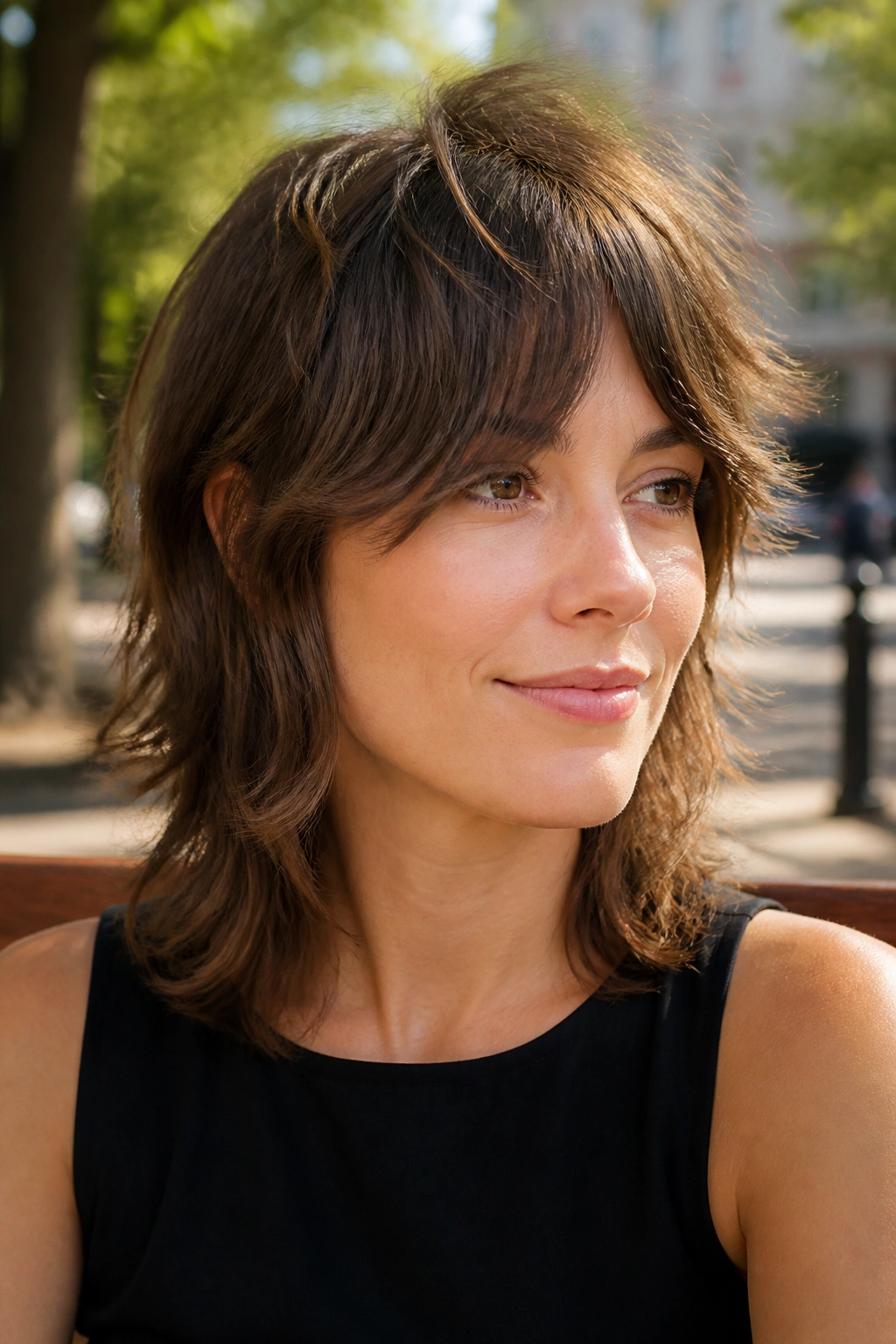
A wolf cut can be too much on fine hair. Too many short layers, and the whole shape starts to look hollow. A soft wolf shag keeps the attitude but backs off the extremes.
The trick is to preserve some weight in the back and around the bottom edge while still letting the crown and sides get a little lift. The top should feel airy, not brittle. The length should still touch the shoulders or collarbone so the haircut has somewhere to land.
I actually like this version more than the full-blown wolf cut for most fine-haired people. It gives you the cool, slightly undone mood without the high risk of ending up with ends that look chewed up. If your hair is dense for fine hair — meaning you have a lot of strands, even if each one is thin — this can be a really good fit.
Wear it with a rough wave, not a perfect curl. A little irregularity is part of the charm.
9. Side-Part Shag That Lifts the Crown
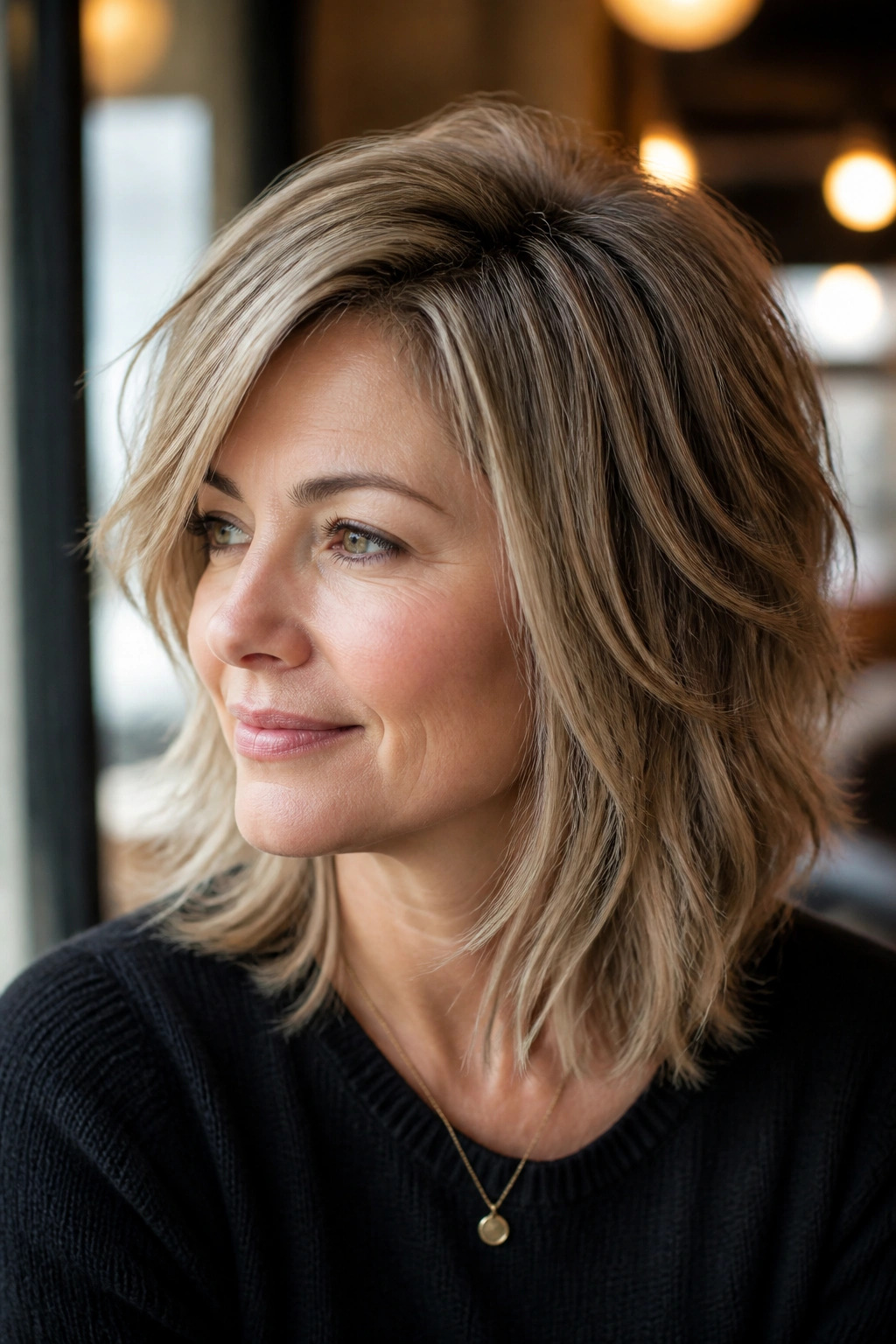
Can a part change a haircut? Absolutely. On fine hair, a side part can wake up the crown fast, especially when the layers are cut to fall away from the heavier side.
This shag uses the asymmetry on purpose. One side gets a little more sweep, the other side sits closer to the head, and that imbalance gives the illusion of fullness. It’s a nice trick if your roots tend to lie flat or if one side of your hair is always more cooperative than the other.
Best for Flat Roots
If the top of your head tends to pancake, ask for short-to-medium layers near the crown and longer pieces that can swing to one side. A root spray and a quick blast of heat at the roots will help, but the cut should already be doing half the job.
The side part also makes this a good choice for fine hair that needs a bit of polish. It looks intentional, not fussy. And that is hard to beat.
10. Airy Shag With Invisible Internal Layers
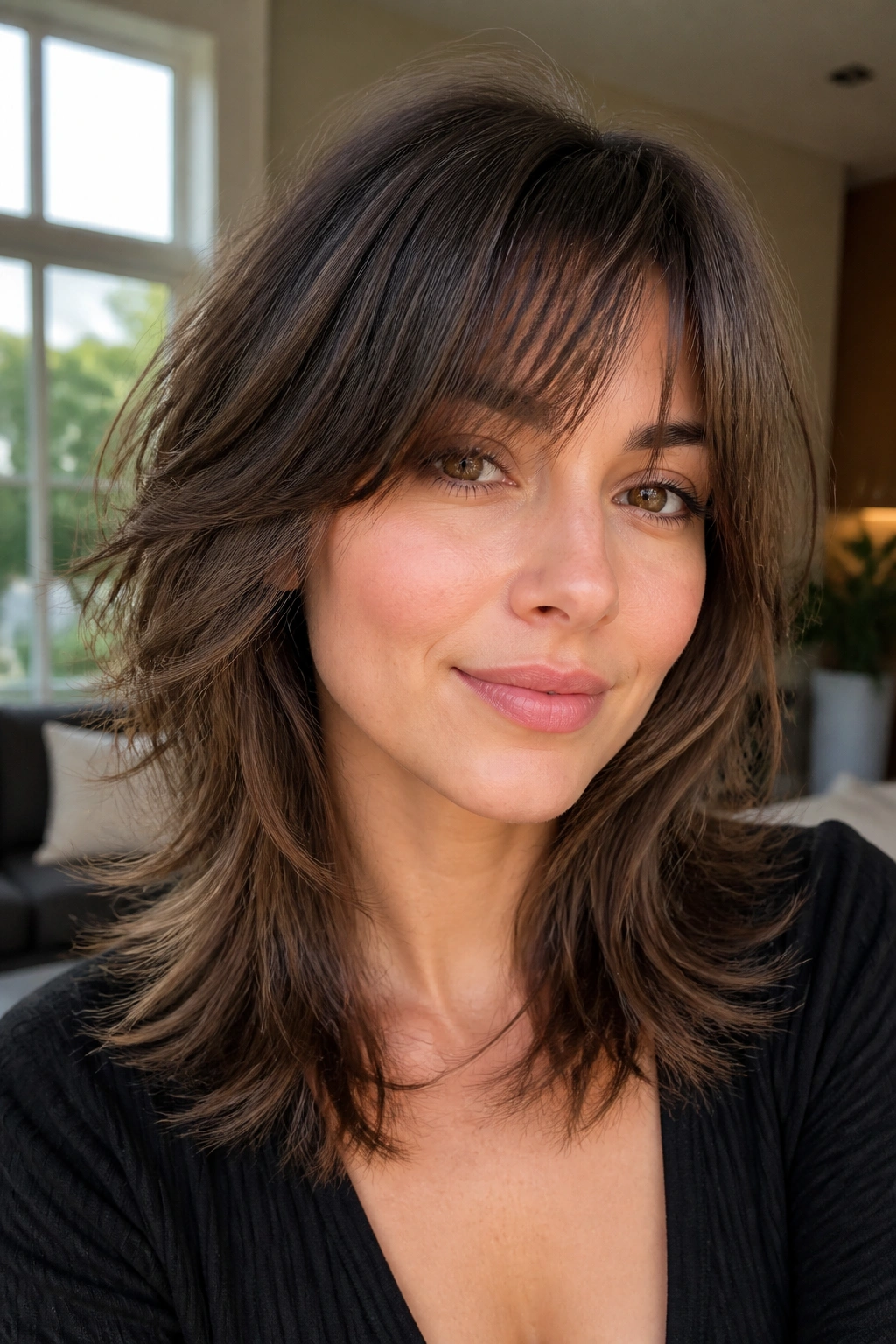
This is the haircut for people who want movement but hate looking “layered.” The trick is that the layers are mostly hidden inside the shape, so the outside still looks full and clean.
That makes a real difference on fine hair. Visible layers can sometimes show too much scalp or leave gaps along the sides. Internal layers shift the weight without advertising every cut line. You still get bounce, but the finish looks more expensive and less chopped up.
Unlike a blunt lob, this cut doesn’t sit as one heavy block. It moves when you turn your head, and the ends fall in soft bends instead of one stiff sheet. I like it for straight hair that needs shape but not drama.
If your stylist starts talking about “removing bulk” at the ends, steer the conversation back toward internal movement. You want less visible weight, not less hair.
11. Shag Bob Hybrid That Ends at the Collarbone
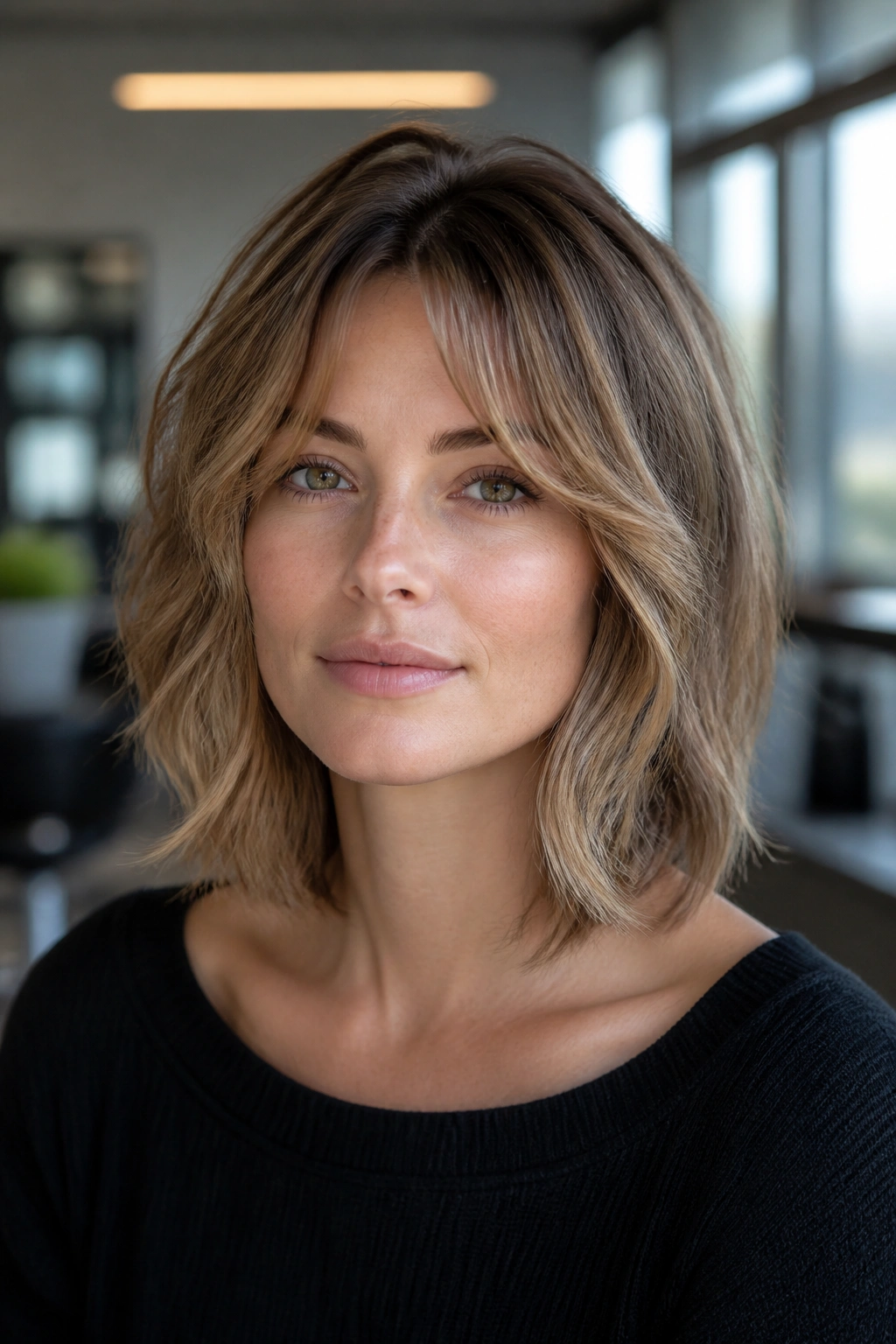
If you’re not ready for a full shag, this hybrid is a safe bridge. It has the swing of a shag and the structure of a bob, which keeps fine hair from looking too airy.
This cut usually sits just at or slightly below the collarbone, with enough layering around the front to keep it from feeling boxy. It’s a smart option for people who like the idea of texture but still want something that can be tucked behind the ear and worn to work without much fuss.
- Collarbone length gives the hair a fuller-looking bottom line
- Long front layers soften the face without breaking the outline
- Works well with straight or barely wavy textures
- Easy to style with a blow-dry brush or large curling iron
The best part is the grow-out. A shag bob hybrid tends to stay useful for months because the shape stays readable even when the layers start to lengthen a bit.
12. Flippy 70s-Inspired Shag With Long Sides
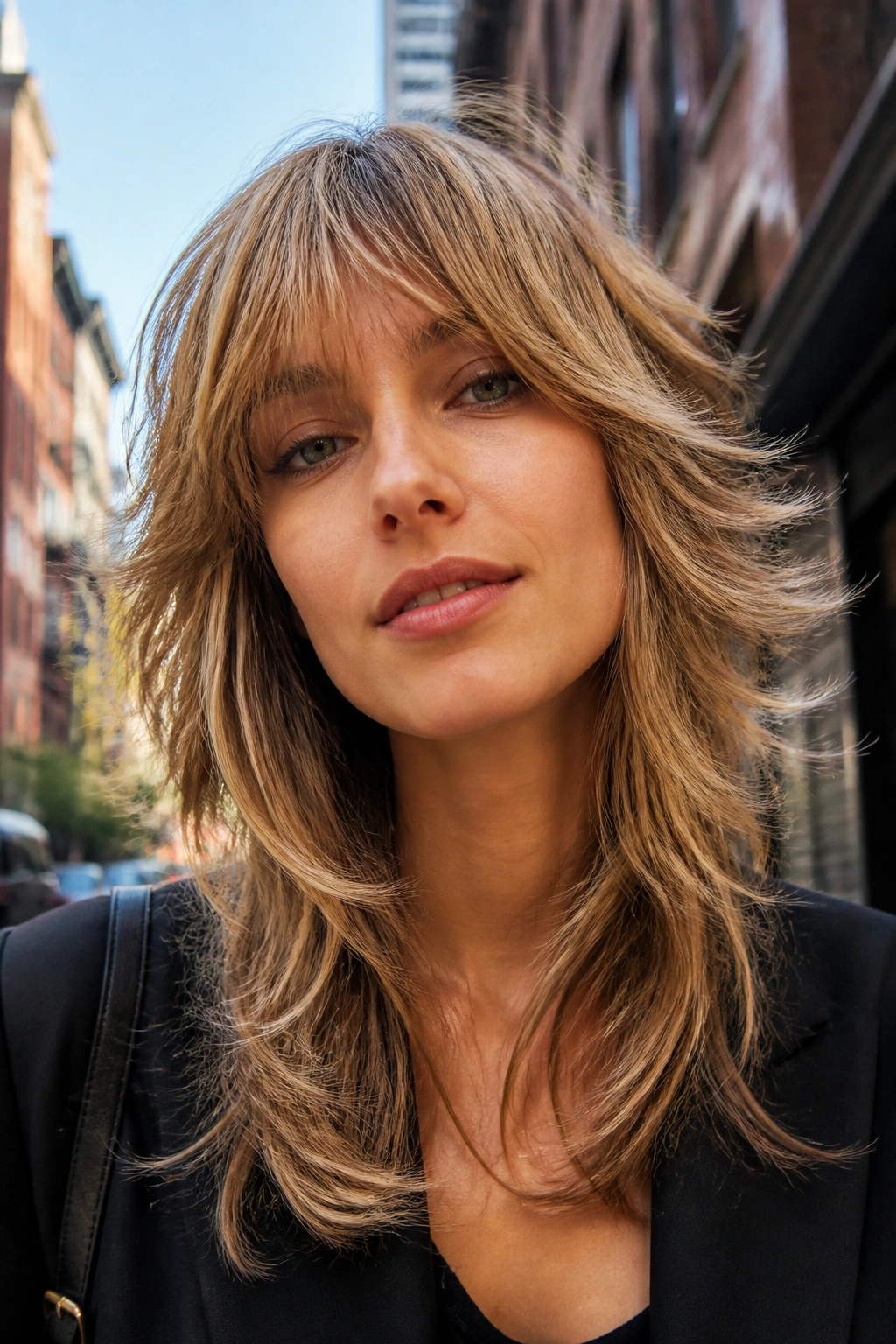
A little flip at the ends can make fine hair feel more alive. This cut borrows from 70s shapes, but it keeps the layers long enough to avoid that overly chopped look.
The sides are the star here. They should swing away from the face just enough to make the cheekbones pop, while the ends flip under or out depending on how you dry it. That movement gives the haircut personality without taking away density. For fine hair, that’s the sweet spot.
I’d pair this with a medium round brush and a quick set at the ends. Nothing too perfect. The charm is in the looseness. If the hair is curled into a tight, finished shape, the cut can start to look too precious. Keep it soft and slightly irregular.
This one suits anyone who wants a bit of retro flair but doesn’t want their hair to scream costume.
13. Lightly Razored Shag With Wispy Fringe
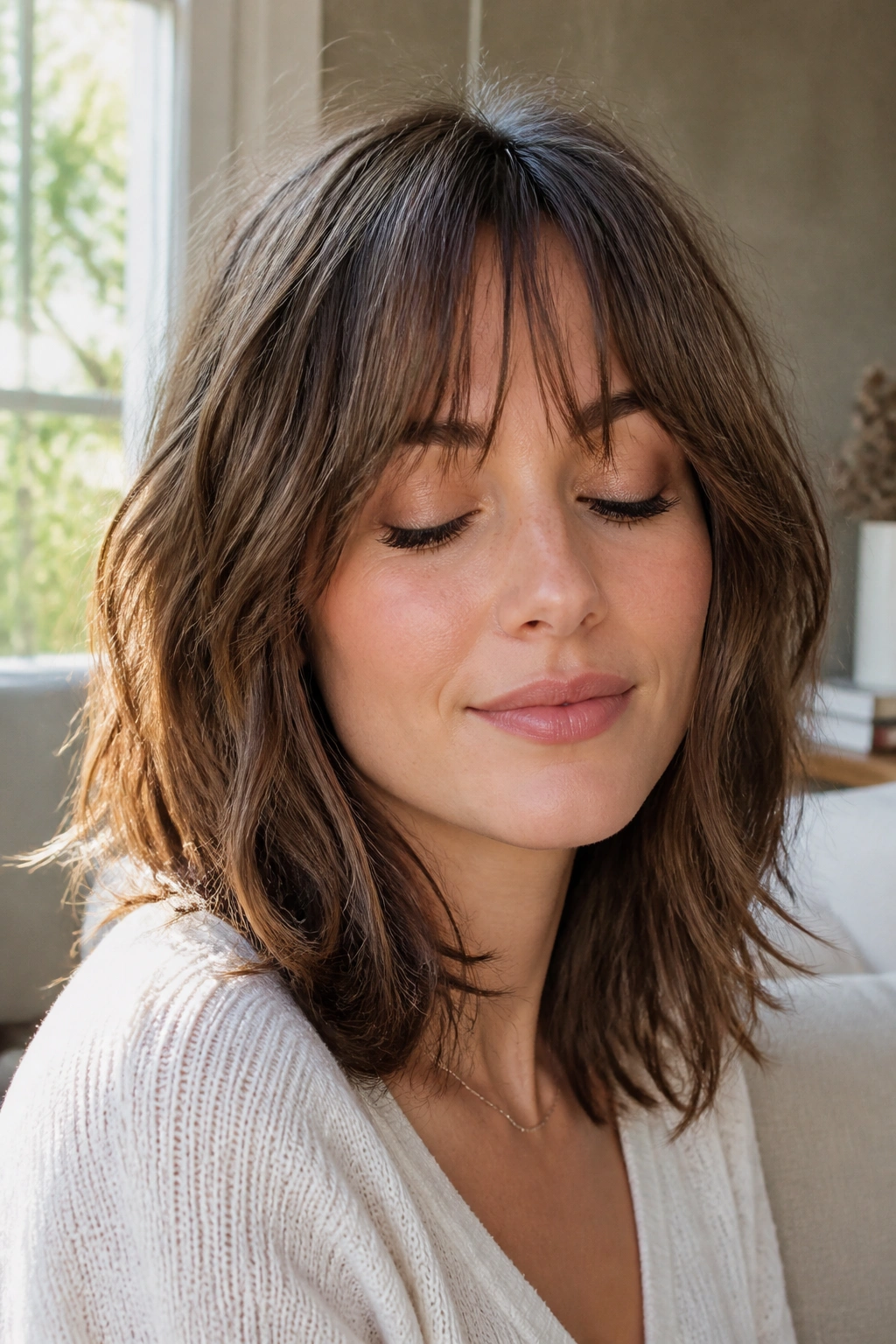
Can razor cutting work on fine hair? Yes, but only when the hand is light. A little razor work can soften the layers and give the fringe a feathery look; too much, and you’re left with ends that feel transparent.
Styling Note
This version works best when the bang is kept wispy and the rest of the cut stays longer through the perimeter. The fringe should sit somewhere between brow and eyelash level, depending on your face shape, and it should be soft enough to move when you blink.
A small flat iron bend at the front can help, but even easier is a round brush and a cool shot from the dryer. That sets the bang without making it stiff. If your hair is prone to frizz, keep the styling product light — a drop of serum rubbed between the palms is enough.
The haircut has a slightly airy feel, but it still needs a shape underneath. That balance keeps it from drifting into “just thin hair with bangs,” which nobody wants.
14. Medium Shag With Blunt Ends
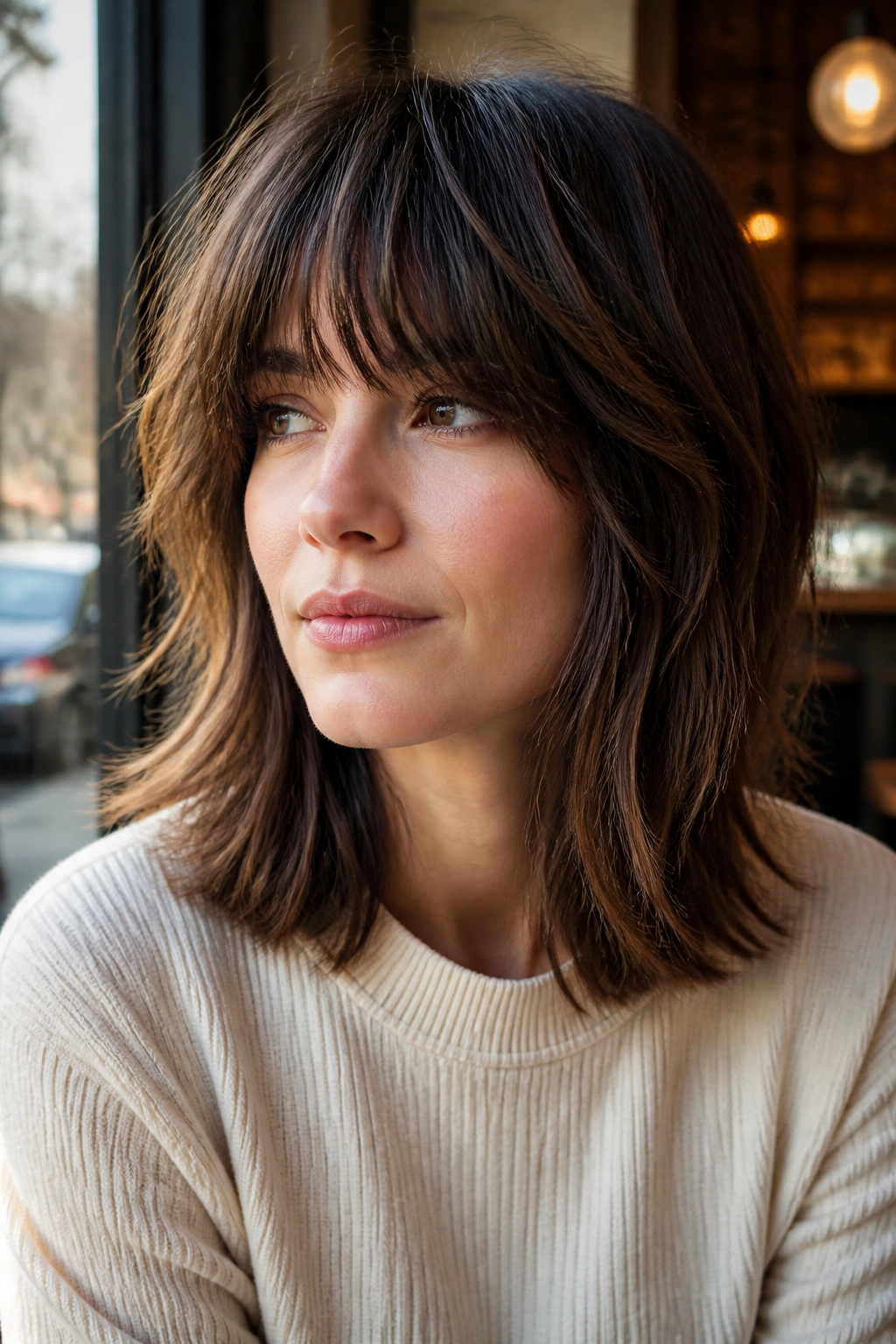
Here’s my blunt opinion: blunt ends can save fine hair. A medium shag with a solid perimeter looks fuller because the eye reads the edge as density, even when the hair itself is delicate.
The layers here should sit inside the haircut, not chew up the outline. That means the ends remain clean, while the top and sides get the movement. It’s a very good choice if you’ve had too many haircuts that looked airy for two days and then vanished.
This style is especially kind to straight hair. The blunt line gives you a visual base, and the shag layers prevent it from feeling heavy or school-uniform plain. If you want a haircut that still looks decent on day three, this is a strong pick.
I’d ask the stylist to keep the bottom line as full as possible and only texture the interior. That one instruction can change the whole result.
15. Tousled Shag With a Slight A-Line Shape

A slight A-line shape means the front stays a touch longer than the back. On fine hair, that subtle angle can make the haircut feel sharper and more modern without draining away the fullness at the ends.
The benefit is practical. Hair that grazes the front of the shoulders tends to feel more substantial, while the slightly shorter back creates lift and movement. It also makes tucking one side behind the ear look intentional instead of random.
Unlike a severe angled cut, this one stays soft. You should still see pieces, bends, and a bit of texture around the face. But the silhouette remains tidy enough that it works for people who like a clean outline with a little edge.
If you wear your hair down most of the time, this shape is easy to live with. It needs less fuss than a heavily layered shag and usually grows out without drama.
16. Soft Layered Shag With Bottleneck Bangs
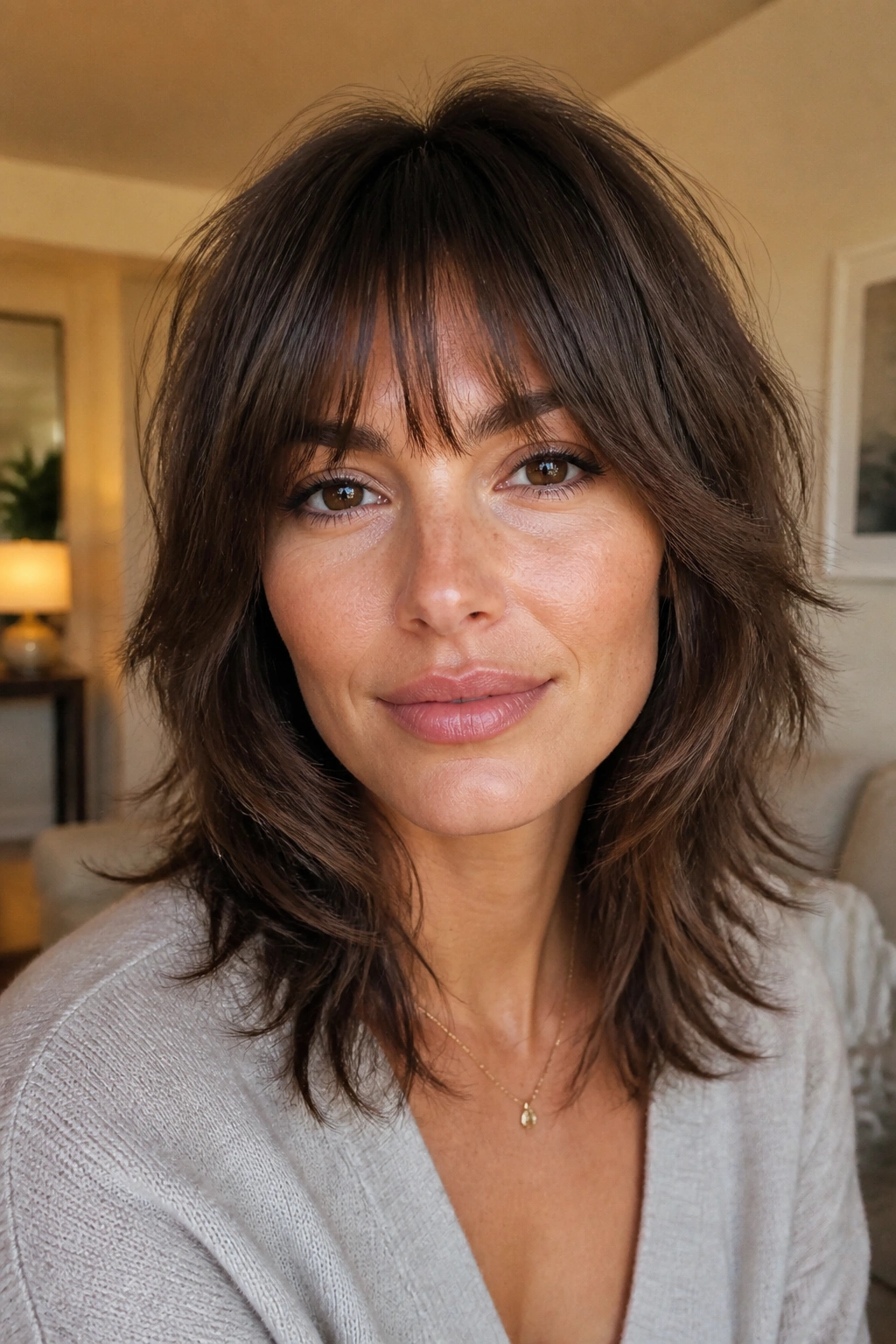
Bottleneck bangs are one of those fringe shapes that can be kinder to fine hair than a heavy bang. They start narrower near the center and open out as they move toward the temples, which keeps the front from looking too dense or too thin.
This cut is all about balance. The bangs give the face a frame, the layers add movement, and the medium length keeps the ends from vanishing. It suits hair that has a little natural bend, but it can also work on straight hair if you like a quick wave with a 1.25-inch iron.
What to Tell Your Stylist
- Keep the bangs narrow in the center
- Let them taper softly at the temples
- Leave enough length through the ends to hold shape
- Avoid aggressive texturizing near the bottom
The result feels relaxed without looking undone in a bad way. That distinction matters. A soft shag can look effortless; a poorly cut one just looks unfinished.
17. Low-Maintenance Shag With Face Framing Only
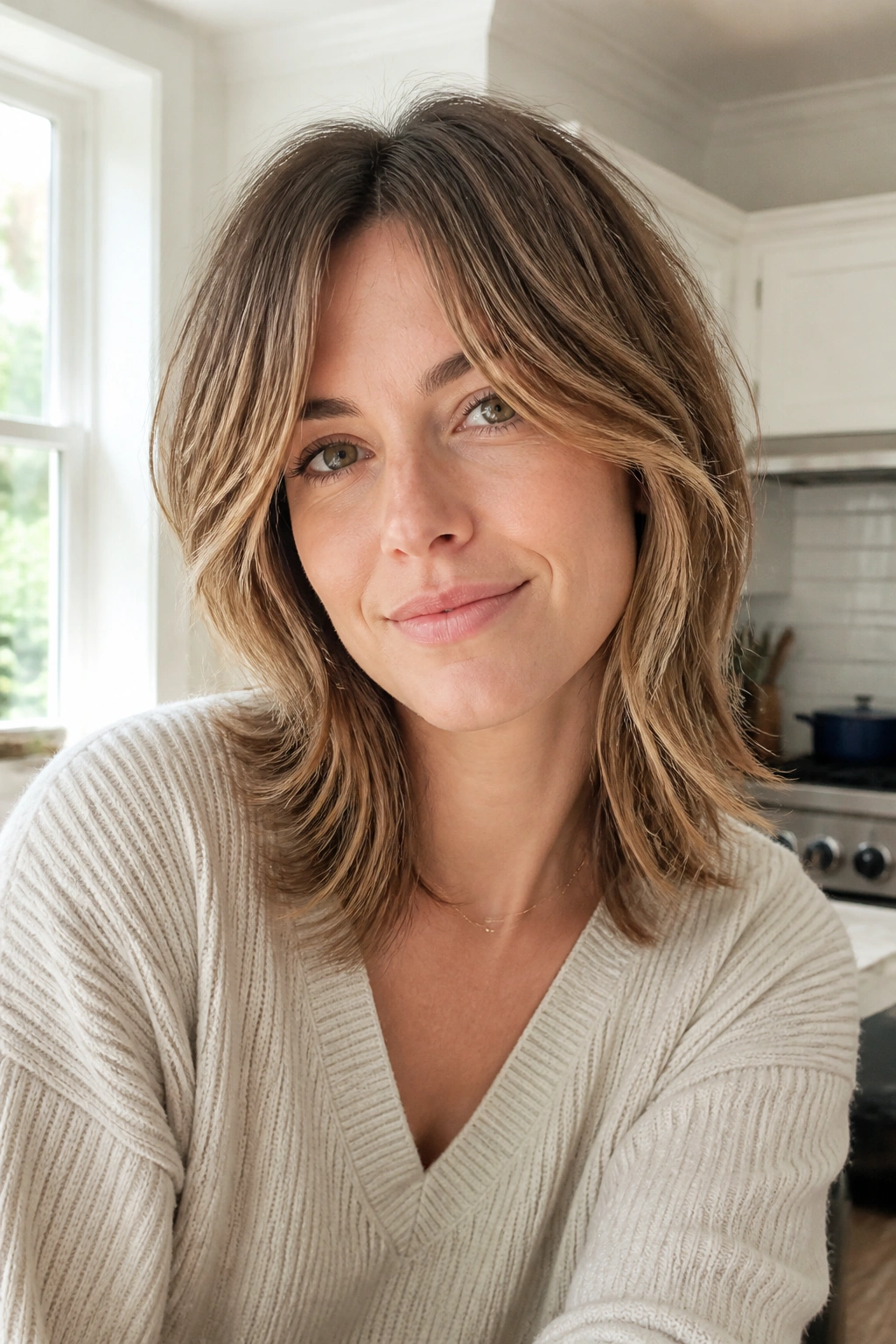
Not everyone wants a haircut that needs a strategy. This one is for people who want the mood of a shag without a lot of daily work.
The cut keeps most of the layering around the face and crown, then leaves the rest fairly simple. That means you get lift where it helps most, but the back and ends still hang together as one readable shape. Fine hair often does better with this kind of restraint because the perimeter has more room to look full.
I like this cut when someone wants to air-dry and go. It doesn’t demand perfect styling, and if you sleep on it a little, the hair still looks intentional the next day. The shape is relaxed, not lazy.
A sea-salt spray can be too drying on very fine hair, so I’d reach for a lightweight mousse instead. You’ll get more bend and less crunch.
18. Cheekbone-Opening Shag With Tucked Sides
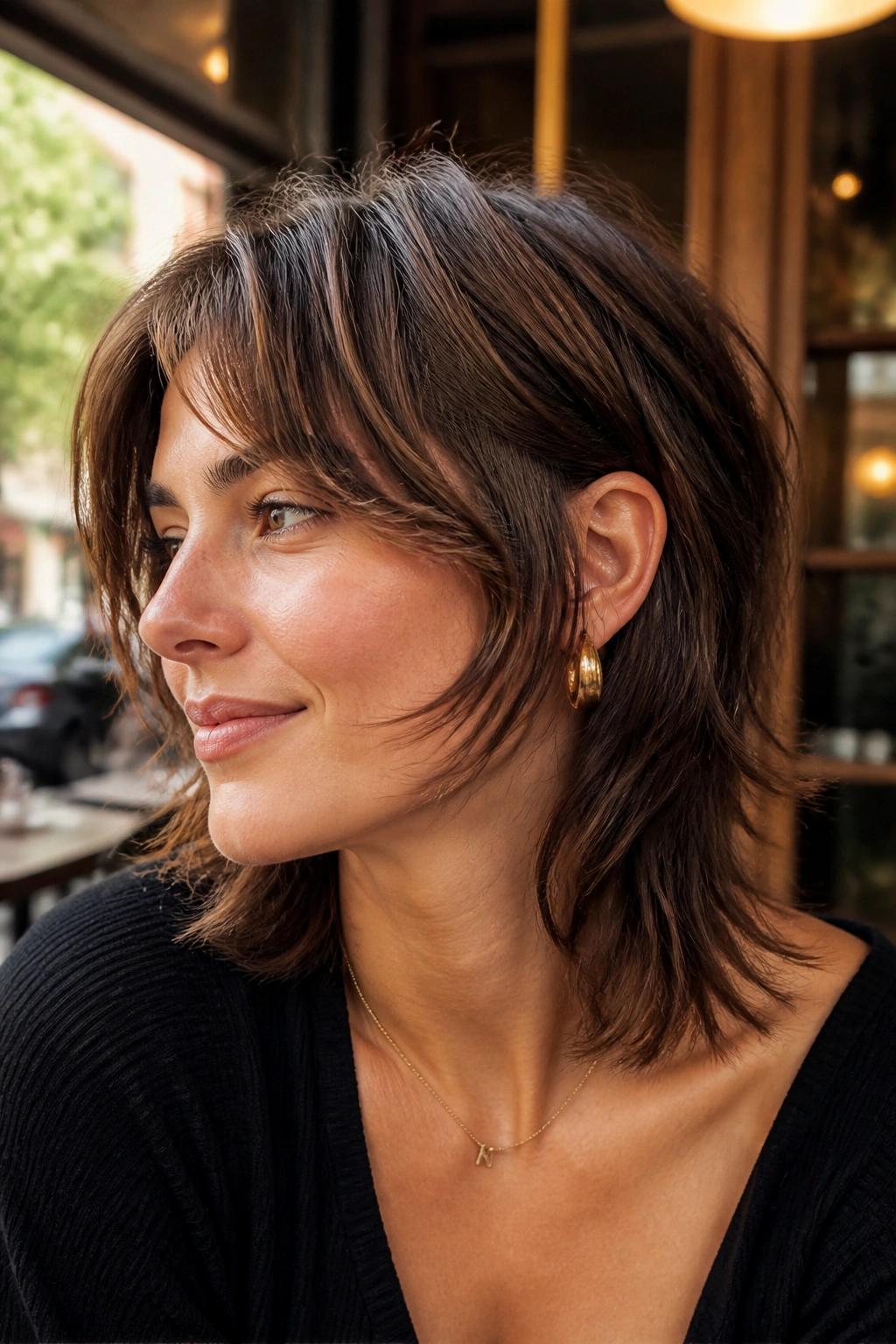
What makes this haircut work is the cheekbone line. Once the front pieces skim that spot, the face opens up fast and the rest of the cut reads as fuller.
The tucked-sides part matters more than it sounds. Fine hair often looks best when one side is tucked behind the ear or pushed back a little, because that exposes the shape of the cut and gives the front some breathing room. It also keeps the bangs from swallowing the face.
How to Style It
Start with a volumizing spray at the roots, then dry the front pieces away from the face with a medium brush. Once the hair is dry, tuck one side behind the ear and let the other side fall forward. That slight asymmetry keeps the style from feeling too neat.
This is a solid option if you want softness around the face but still like a haircut with a little structure. It has movement, but it doesn’t fall apart.
19. Air-Dry Friendly Shag With Long Feathering
This is the cut I’d choose for someone who hates fighting with a blow dryer. Long feathering gives fine hair motion without forcing it into a rigid shape.
The layers are stretched out, not chopped short, so the cut keeps enough weight to dry nicely on its own. If you scrunch it a little after showering and leave it alone, the hair tends to settle into soft bends instead of stringy bits. That’s the whole point.
A little mousse or cream through damp hair helps, but keep your hands light. Fine hair turns greasy fast when too much product lands near the roots. Focus on the mids and ends, then let the crown dry with as little touching as possible.
This style is especially good if your natural texture is somewhere between straight and wavy. It doesn’t fight the hair. It just nudges it.
20. Slightly Choppy Shag for Fine Hair That Needs Texture
Not all fine hair is soft and silky. Some of it has enough density to hold a little chop, and this is the cut for that version of fine hair.
The choppiness should be controlled. You want separated pieces and a bit of grit, not a feather storm. The layers can be a little shorter around the crown and the cheekbones, but the bottom edge should still have enough body to keep the cut from looking depleted.
Unlike a wispy shag, this one has a little more attitude. It works if your hair needs texture to wake it up, or if you like the feeling of the ends moving when you turn your head. A texture spray at the very end can help define the pieces, but don’t overdo it. Too much product makes the hair clump.
If you’ve ever wished your fine hair looked less sweet and a little more deliberate, this is the lane to try.
21. Medium Shag With a Clean, Narrow Fringe
A narrow fringe can be a gift when the rest of the hair is fine. Instead of swallowing the forehead with too much bang, this cut keeps the fringe controlled and lets the rest of the shag carry the movement.
That clean line helps the haircut look intentional. It also keeps the bangs from stealing density away from the sides, which is a real issue when the hair is already delicate. The fringe should skim the brows or sit a bit above them, depending on how much forehead you want to show.
- Best for oval and heart-shaped faces
- Works well if you wear your hair straight more than curly
- Needs a trim a little more often than longer bangs
- Pairs well with tucked side pieces or a loose wave
I’d keep the rest of the layers soft and medium in length. A fringe this neat needs some balance around it, or the whole style can feel too top-heavy.
22. Polished Shag With Loose Waves
Loose waves can make a shag look expensive without making it stiff. On fine hair, the right wave pattern gives the illusion of density because the bends interrupt the eye and create shape.
This version keeps the finish smoother than a beachy shag. The waves should be loose and wide, not tight or crunchy. If you use a curling iron, alternate the direction of the curls and leave the last inch or so out. That gives the ends a more relaxed fall and keeps the cut from becoming too “done.”
I like this cut for people who want a little shine with their texture. A light serum on the ends and a shine spray at the very end can make fine hair look more healthy, not greasy, if you keep the amounts tiny.
It’s one of those styles that looks good in daylight, which is always the real test.
23. U-Shaped Shag That Keeps the Ends Full
Does a U-shape make a shag feel too soft? Not if it’s cut well. A gentle U-shaped perimeter can make fine hair look fuller because the curve at the back keeps the length from appearing flat and blunt in a bad way.
What to Tell Your Stylist
Ask for a subtle U shape, long layers through the sides, and a front that opens softly around the cheekbones. The back should keep enough weight that it doesn’t look straggly when the hair is pulled over one shoulder. That’s the key.
This shape works especially well if you like wearing your hair half-up or clipped back. The curve still reads when the hair is off the face, which is useful. A lot of shags lose their charm the second you put them up; this one doesn’t.
For fine hair, the U-shape can feel a little gentler than a straight line. And gentler is often better.
24. Soft Mullet-Inspired Shag for Fine Hair
A full mullet can be too sharp for fine hair. A soft mullet-inspired shag keeps the attitude but smooths out the harsh bits, which makes it much easier to wear.
The crown gets some lift, the sides get shorter layers, and the nape stays long enough to keep the shape from collapsing. That contrast is what gives the haircut personality. But the transitions should stay soft; otherwise, the hair can look thin in patches.
This version suits someone who wants a little edge and doesn’t mind a haircut that gets noticed. It’s not a safe cut, and that’s fine. The goal is to keep the silhouette readable rather than extreme.
If your hair has a natural wave, the shape looks even better because the texture helps blur the layer changes. Straight hair can wear it too, but it needs more styling to keep the back from lying flat.
25. Balanced Medium Shag With Curtain Layers
This is the one I’d hand to someone who wants one good shag and doesn’t want to overthink it. The layers are balanced, the curtain pieces are soft, and the perimeter stays full enough to make fine hair look healthy.
The best part is that nothing in the cut fights the hair. The front opens the face, the crown gets a lift, and the bottom line still feels solid. That combination is why balanced medium shag haircuts for fine hair are such a reliable choice. They look styled even when you haven’t done much.
If you want a cut that works with sneakers, a blazer, messy bun days, and the occasional blowout, this is the safest bet. It doesn’t lean too edgy, and it doesn’t lean too plain.
Ask for movement, not disconnection. That single word changes the whole mood of the haircut.
Final Thoughts
Fine hair usually looks best when the shag has a little restraint. The most flattering versions keep the perimeter from getting too stringy, then place the movement where the eye actually sees it: around the face, crown, and cheekbones.
The smartest medium shag is the one that gives you shape on a good hair day and still behaves on a lazy one. That means layers with a purpose, bangs that suit your forehead instead of fighting it, and enough length left at the ends to keep the whole cut from floating away.
If you take one thing to the salon, take this: show the stylist where you want the fullness to live. That sentence does more good than asking for “more texture,” which usually means different things to different people.
