



Fine hair and shag cuts get along better than most people think. Brunette shag haircuts for fine hair work best when the layers are soft, the perimeter stays a little dense, and the crown gets just enough lift to stop everything from collapsing by lunch.
The mistake people make is shaving off too much weight. Then the hair looks see-through instead of airy, and brown hair can start to show every uneven snip in the worst possible way. Deep espresso, cocoa, chestnut — those shades look rich, but they also expose bad layering fast.
That’s why the good shags matter so much. A little movement near the cheekbones, a controlled fringe, and a perimeter that still feels solid can make fine strands look fuller without turning the cut into a puffball. Small choices matter. A lot.
Some of these looks are soft and barely layered. Some borrow from the wolf cut. Some keep the length and do the heavy lifting at the top. Pick the one that matches how much styling you’ll actually do before coffee.
1. Feathered Collarbone Shag for Fine Brunette Hair

If you want the safest starting point, this is it. A collarbone shag gives fine brunette hair enough length to keep weight at the ends, while the feathered layers create movement where it counts.
Why the Collarbone Length Helps
The collarbone sits in a sweet spot. Hair that lands there still swings when you move, but it doesn’t get so long that the top goes flat and the ends look stringy.
For brunettes, that matters even more. Darker hair shows separation between layers a little more clearly, so a feathered cut can look polished instead of wispy if the base stays full.
- Ask for soft internal layers, not heavy thinning.
- Keep the bottom perimeter blunt-ish so the ends look thicker.
- Start the face frame around the cheekbone or upper lip.
- Use a point-cut finish instead of a rough razor all the way through.
Pro tip: a small amount of mousse at the roots and a 1.25-inch round brush on the top layer can make this cut look twice as full.
2. Curtain Bang Shag That Opens the Face
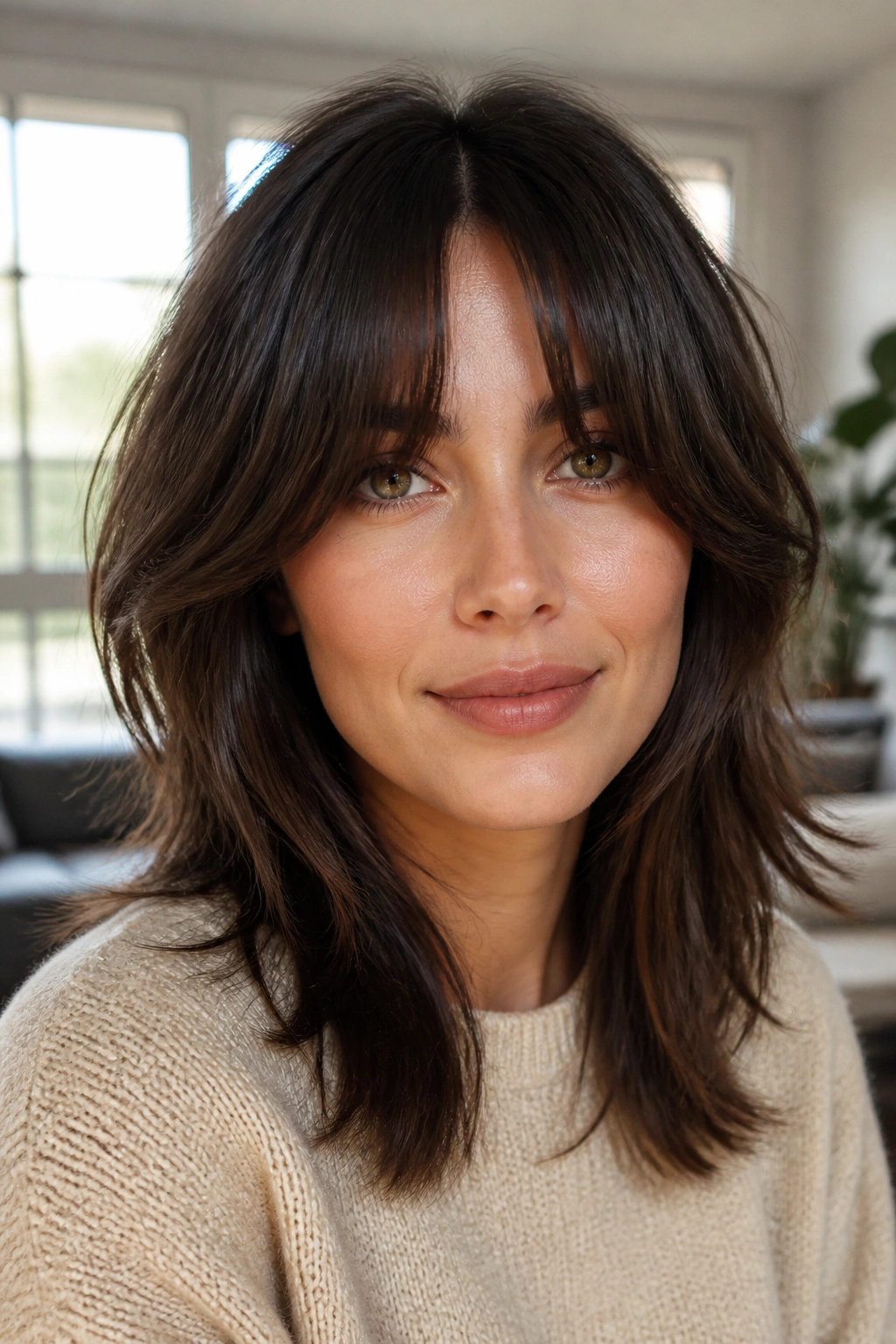
Curtain bangs do more for fine brunette hair than most people expect. They put width around the face, which tricks the eye into seeing more hair than is really there.
The trick is keeping the fringe long enough to blend. Short curtain bangs can look cute, but on fine hair they sometimes split too fast and show scalp at the center. A longer version, grazing the cheekbone, gives softness without that awkward gap.
I like this cut because it moves easily between casual and polished. Blow it out with a round brush, bend the bangs away from the face, and let the rest fall naturally. It reads airy, not fussy.
One small detail makes a big difference. Keep the bangs the thickest part of the cut and let the layers behind them stay quieter. That balance helps brunette hair look lifted right where people look first.
3. Micro-Layered Midi Shag That Stays Full
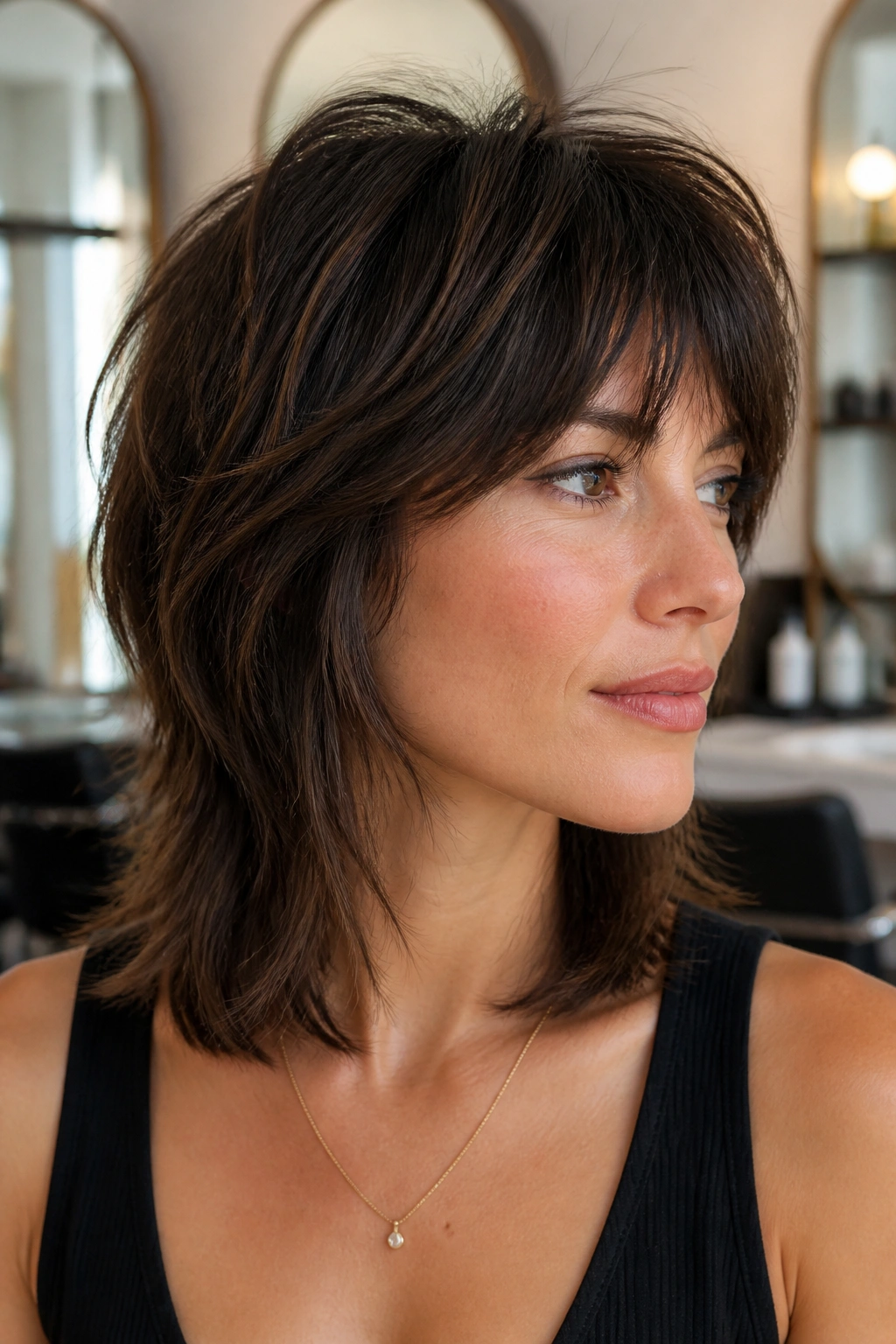
Why do tiny layers matter so much? Because fine hair does not need a lot of cutting to gain shape. It needs restraint.
A micro-layered midi shag keeps the overall outline calm, then slips in small internal layers that create bend without chewing up the ends. The result is a cut that still looks like hair, not a cloud of separated pieces.
How to Ask for It
Tell your stylist you want light graduation through the crown and only a soft break in the middle lengths. That phrase helps keep the cut controlled.
- Keep the perimeter solid.
- Add micro-layers above the occipital bone.
- Avoid over-texturizing the last two inches.
- Style with a light volumizing spray, not a heavy cream.
This is a good choice if your brunette hair tends to fall flat but you do not want an obvious shag. It gives you shape that shows up in motion.
4. Bottleneck Bang Shag for Narrow Foreheads

Picture this: fine chestnut hair, a narrow forehead, and layers that collapse at the temples. Bottleneck bangs fix that in a way blunt fringe never quite does.
They start slimmer near the center and open wider as they reach the cheeks. That shape adds fullness where the face needs it, while still letting the top stay light. On brunettes, the effect is clean and soft at the same time.
What Makes It Work
The fringe is doing a lot of visual work here, but the cut behind it has to cooperate. If the crown is over-thinned, the bangs will look detached.
- Ask for longer pieces at the temples.
- Keep the shortest part of the fringe around brow level.
- Let the layers fall into the bangs, not chop off above them.
- Use a cool shot after blow-drying so the bend holds.
This is one of those cuts that looks best when it is not trying too hard. The shape does the job for you.
5. Long Razor Shag With Soft Ends
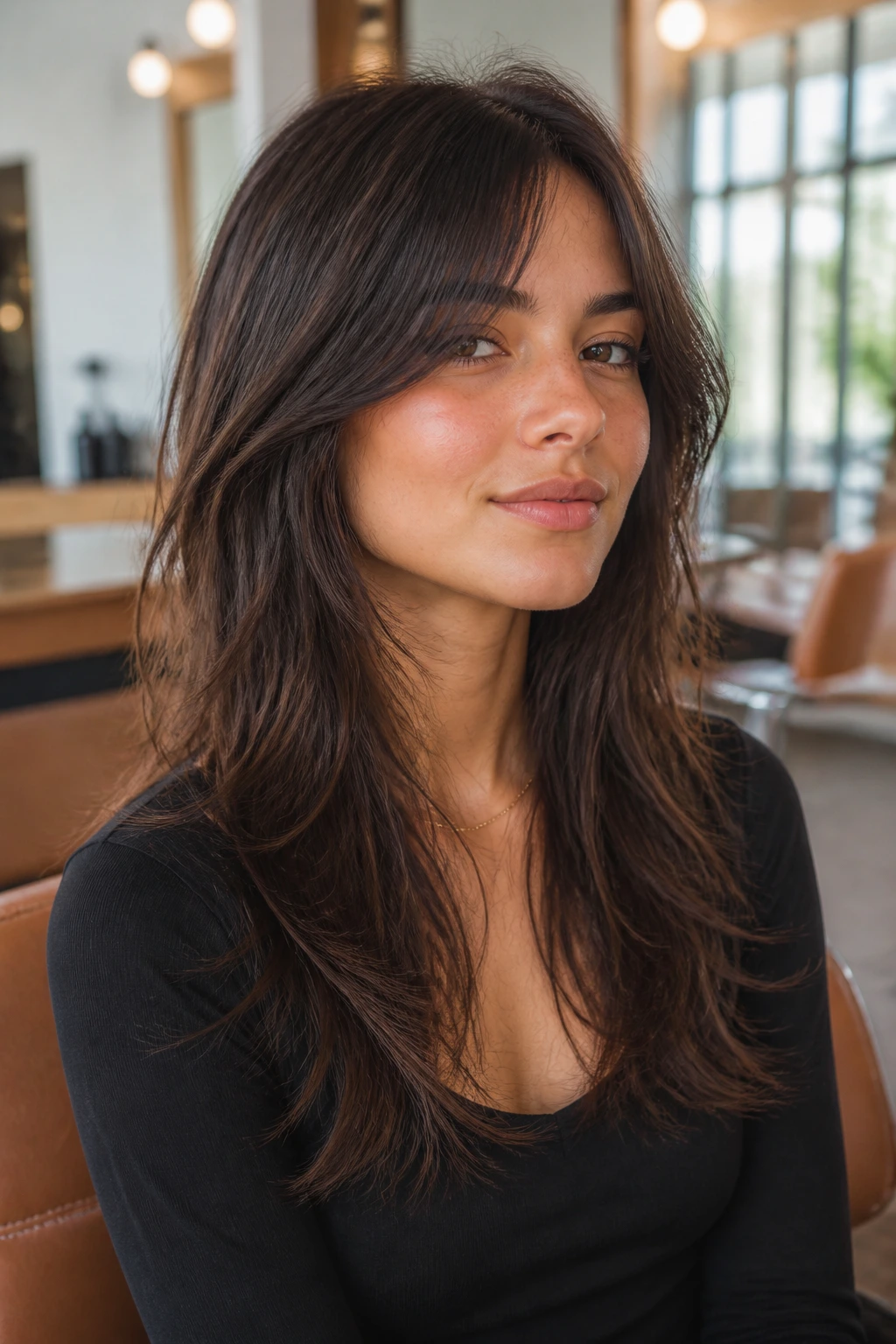
Not every fine hair head wants to lose length. Some want movement, but they also want their ponytail to feel like something.
A long razor shag can work, but only if the hair is healthy enough to handle it. On brunette hair, the razor can create lovely separation and airy ends, yet it can also make split ends look louder if the hair is already dry.
I prefer this shape when the lengths stay below the shoulders and the top layers are kept loose. You get swing around the face and motion through the mid-lengths, but the bottom still has enough body to avoid that ragged look.
Healthy ends matter here.
If your hair tangles easily or your ends fray fast, ask for a softer slide cut instead of a heavy razor pass. Same idea. Less damage.
6. Chin-Length Shag Bob That Lifts the Jawline
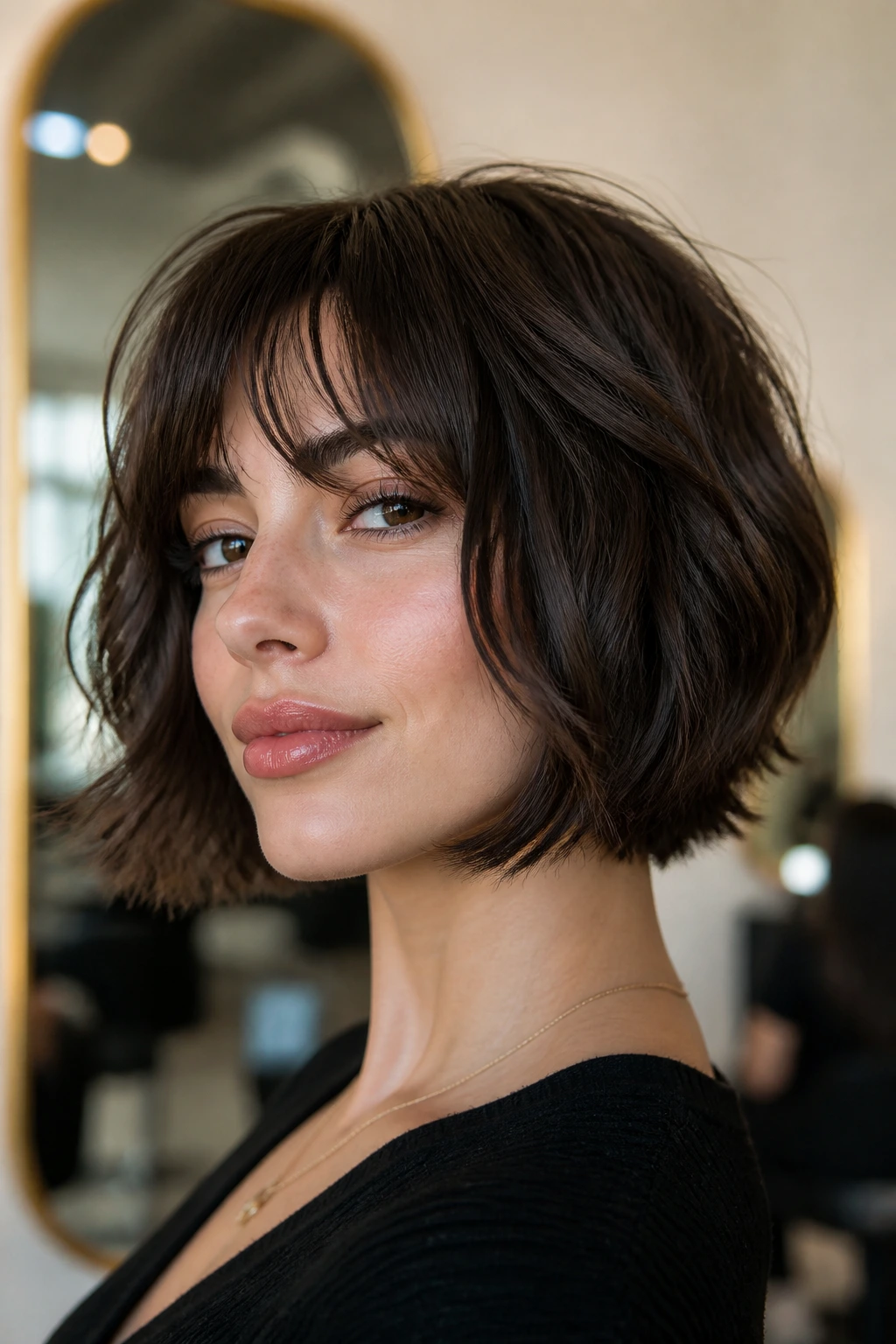
Unlike a blunt bob, this version does not sit there like a little box. It bends, flips, and gives fine brunette hair a bit of attitude without asking for much daily styling.
The chin length is useful because it creates width at the jaw. That can make fine hair look denser than a longer cut that hangs close to the head. It also keeps the line short enough that air-drying does not drag everything down.
If your hair tends to go limp by noon, this is a smart pick. The shaggy texture gives the bob life, while the cut line keeps it from turning stringy. I’d especially point people with straight fine hair toward this one, because the shorter shape holds its own better than a long layer-heavy style.
A tiny bend at the ends is enough. Too much curling makes it feel dated.
7. Side-Part Shag With a Swooping Fringe

The side part is doing more work than people give it credit for. On fine brunette hair, it lifts the root on one side and creates a fuller-looking front line without adding another layer of cutting.
What to Ask Your Stylist
- Keep the parting off-center by at least one inch.
- Let the fringe sweep from brow to cheekbone.
- Build a little more volume on the heavier side.
- Cut the layers so they fall toward the part, not away from it.
The swoop helps if your hair tends to split straight down the middle and expose the scalp. A side part hides that weak spot fast.
I like this version on round faces and softer jawlines, but it can work almost anywhere. It has a polished feel, yet it still reads shaggy once you shake it out.
8. Soft Wolf Shag That Keeps the Edge Gentle

A soft wolf cut is really just a shag with a little more attitude. The difference is that the layers are allowed to look slightly wild without going full mullet.
For fine brunette hair, that softness is the important part. A harsher wolf shape can make the top look too short and the bottom too sparse. Keep the back long enough to hold weight, and let the crown lift only a little.
This cut suits people who like texture but hate a clean, finished look. It wakes up with some personality already built in. A rough blow-dry, a touch of paste at the ends, and you’re done.
The key is balance. Shorten the top just enough to get height, then leave the sides and back long enough to preserve fullness. If the cut starts looking stripped, it has gone too far.
9. Invisible Layer Shag for the Quiet Hair Person
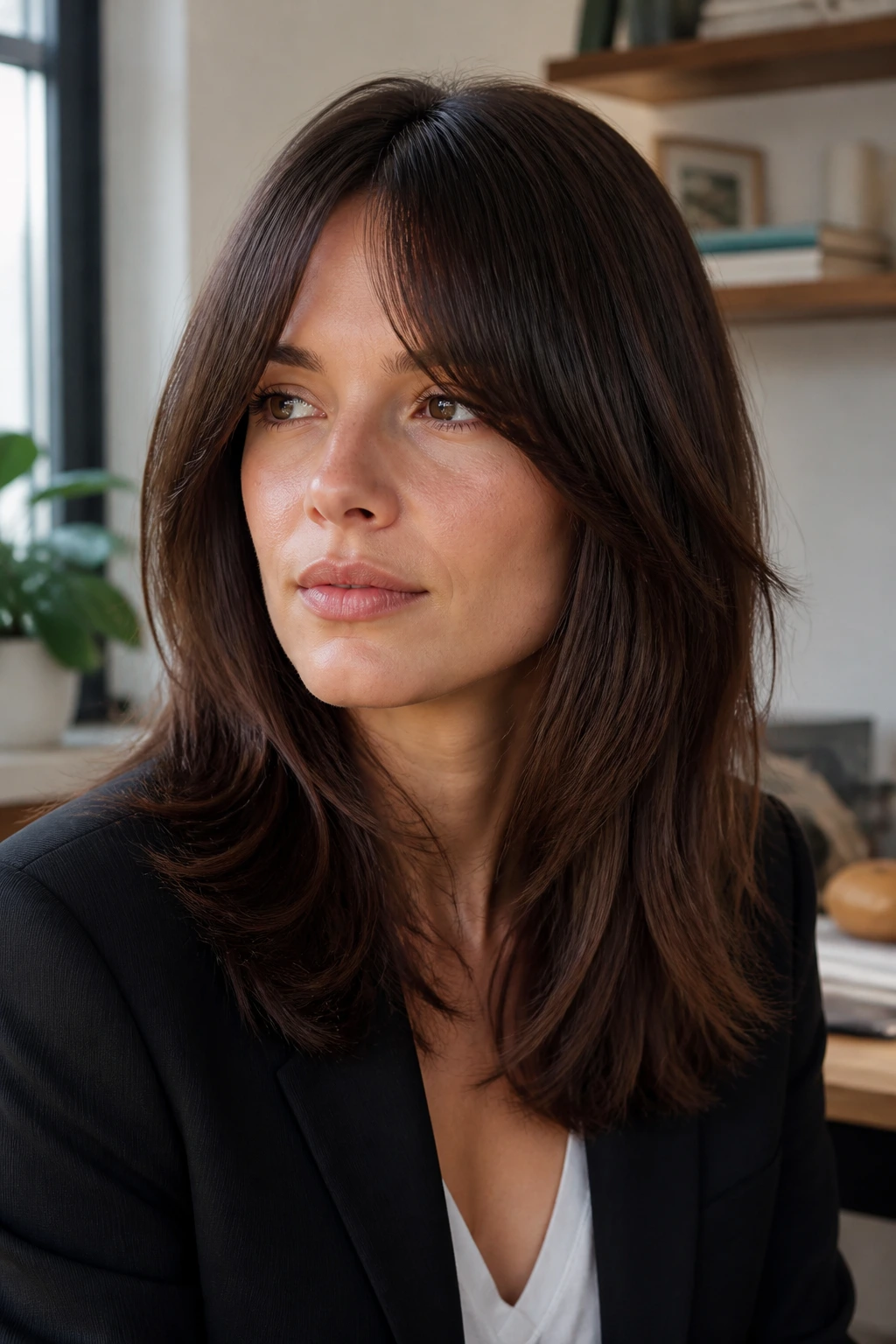
Why hide the layers? Because not everybody wants the haircut to shout at you from across the room.
Invisible layers sit under the surface instead of carving obvious steps into the top sheet of hair. On brunette fine hair, that means the cut still moves, but the outline stays smooth and full.
The Part People Miss
The top layer has to stay intact. If the stylist cuts too much into the outer shell, the fine ends will separate fast and the whole thing loses polish.
How to Wear It
- Keep the outer surface long and even.
- Add movement underneath the top layer.
- Use a pea-sized amount of lightweight cream only on the ends.
- Finish with a dry texture spray if the roots collapse.
This is a strong choice if you want shape at work and ease on the weekend. It does not look as obvious as a choppier shag, which is exactly why I like it.
10. Air-Dried Wavy Shag for Low-Effort Mornings
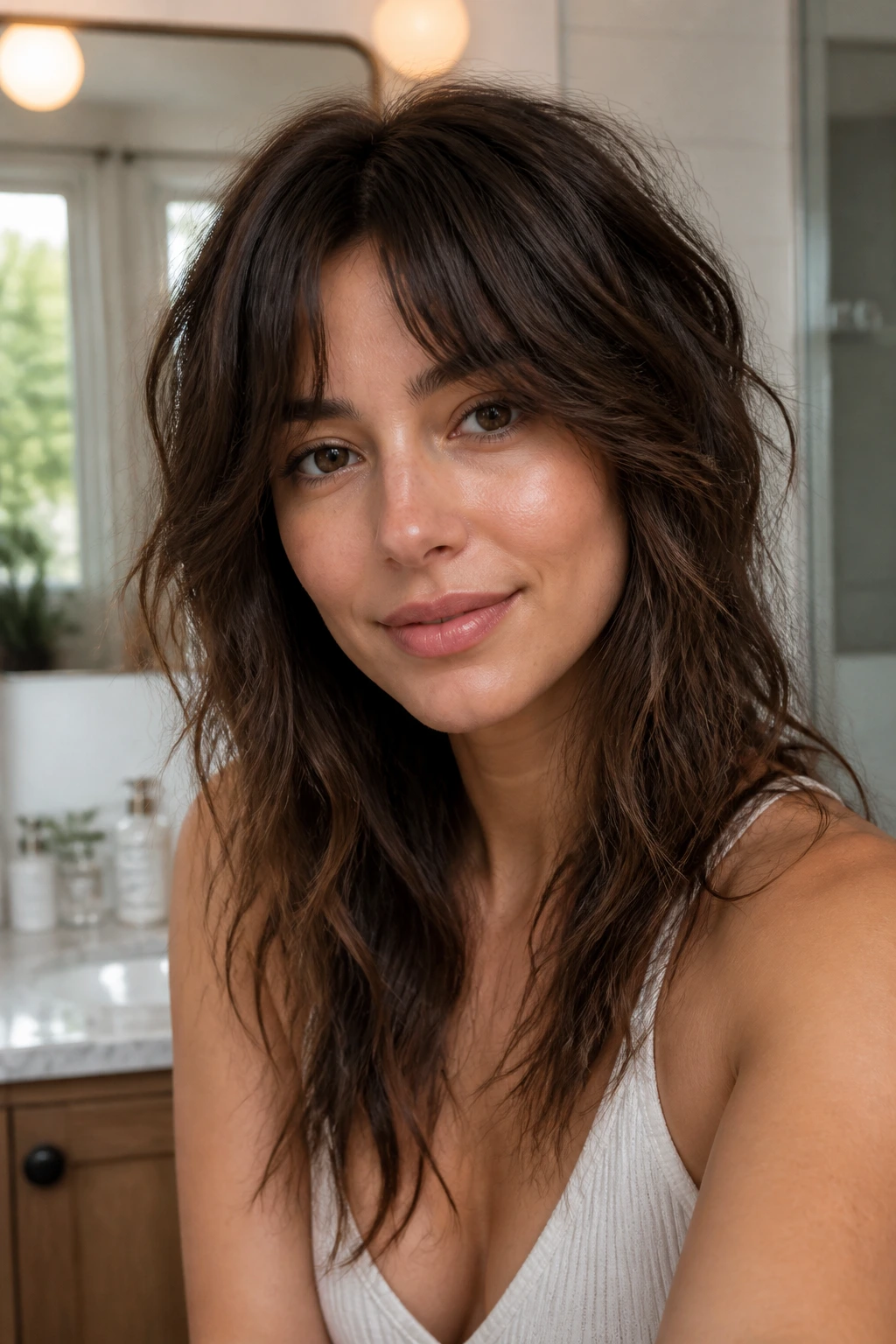
A lot of people with fine brunette hair want a cut that looks better with almost no heat. This is that cut.
The layers are meant to encourage natural bend, not force a big styled wave. If your hair already makes a slight S-shape after washing, this shag lets that texture show without making the ends look thin.
The Best Setup
- Scrunch in a light mousse while hair is damp.
- Use a microfiber towel or soft T-shirt to blot, not rub.
- Part the hair where it naturally wants to fall.
- Do not touch it much while it dries.
That last part matters. Fine hair frizzes fast when you keep fussing with it.
Once dry, you can break up the shape with a little texturizing spray. Not too much. The point is to keep the brunette color glossy and the movement soft, not crunchy.
11. Chest-Length Brunette Shag for Fine Hair
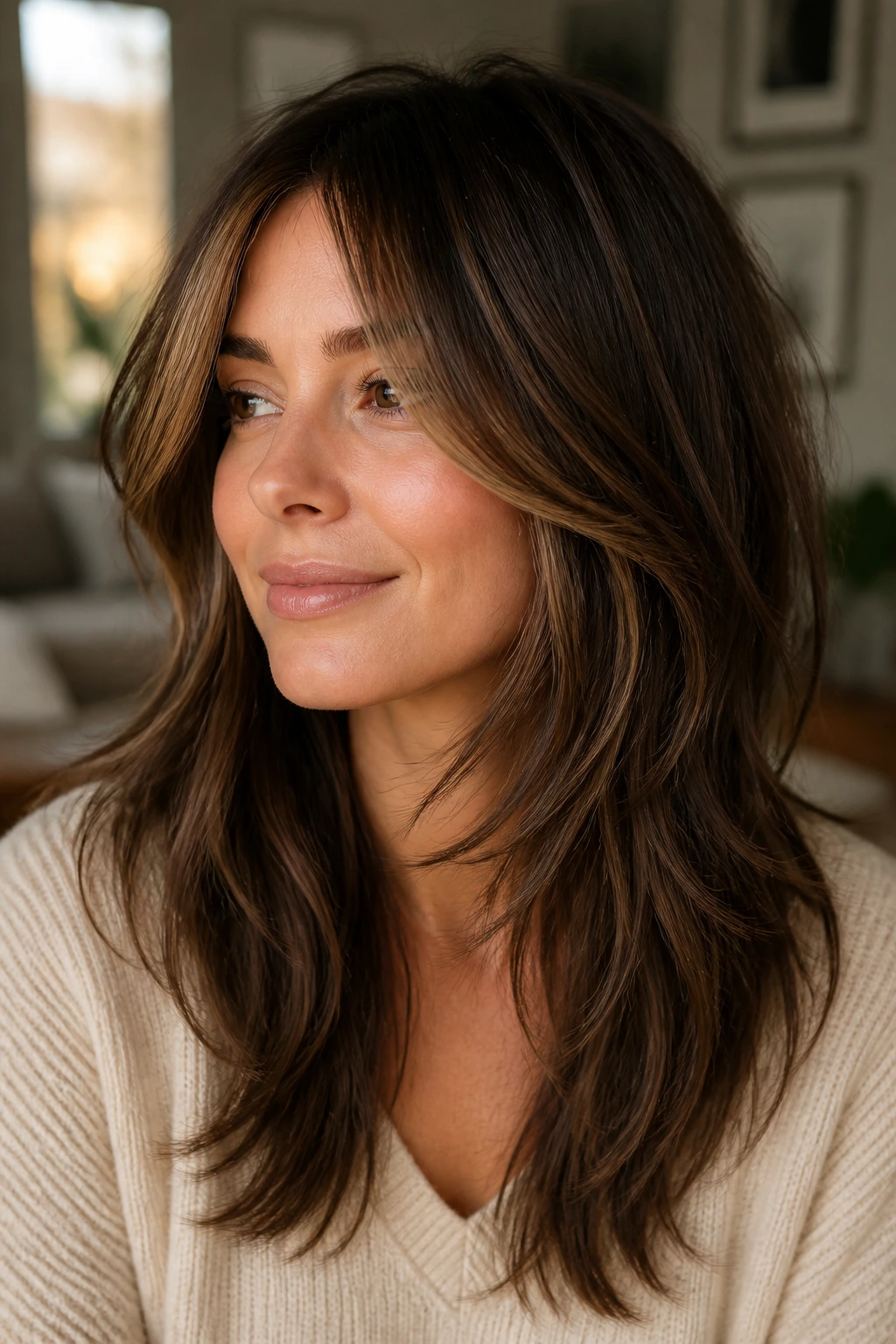
Chest length is where a lot of fine-haired brunettes finally stop fighting their cut. The hair has enough length to keep some body, but not so much that it drags the whole shape down.
This version works especially well when the layers begin around the cheekbones and melt into longer pieces through the front. The result is a cut that feels grown-up and a little relaxed, without losing density.
Brown hair looks good here because the length lets you see the variation in tone as the layers move. A deep brunette with a few lighter ribbons around the front can make the shape read fuller, even if the actual haircut is fairly light.
I’d choose this for someone who wants movement but still likes to tuck hair behind one ear, wear it down, or throw it in a claw clip. It’s useful. That matters more than fashion language.
12. Shoulder-Grazing Brunette Shag for Fine Hair

If chest length feels too long, shoulder grazing is the next smart stop. Unlike shorter shag bobs, this shape keeps enough length to avoid a puffy top and a skinny bottom.
The shoulder line helps fine hair keep its outline. You still get shag texture through the crown and the face frame, but the rest of the hair has a little more swing and control. On brunette hair, that makes the layers look deliberate instead of choppy.
This one is good if you do not want to trim every few weeks to keep the shape alive. It grows out more cleanly than a shorter version.
I usually recommend it to people who wear their hair half-up, behind the ears, or with a slight wave. If you want easy movement and a cut that does not demand a long styling session, this is a strong pick.
13. French-Girl Shag With Airy Bangs

French-girl shag sounds vague until you look at the details. It usually means softer bangs, cheekbone-level layers, and a shape that falls a little imperfectly on purpose.
For fine brunette hair, that softness is a gift. Heavy layering can make the hair lose all structure, while this version keeps the fringe light and the mid-lengths loose. It has that cool, undone look without making the hair feel unfinished.
What Gives It That Feel
The bangs are usually brow-skimming or just a touch longer. The layers around the face are feathered, not hacked. And the back stays gentle enough that the whole cut can air-dry without much drama.
A small amount of root spray and a loose finger twist around the front is usually enough. This is one of those cuts that seems casual but still benefits from a smart cut line underneath.
14. Choppy Lob Shag for Everyday Wear

A choppy lob shag is the haircut I reach for when someone wants a shag but not a full-on shag. It stays clean enough for work, but it has enough edge to keep fine brunette hair from lying flat.
The lob length gives the hair a little more weight than a short shag would. That weight helps the ends look thicker, which is half the battle with fine strands. The choppiness comes in around the face and through the top layers, so you get lift without a lot of visible mess.
It’s a friendly cut. Not precious. You can wear it straight, tuck it, wave it, or rough-dry it and still look put together.
If your hair gets stringy when it grows long, this shape is easier to live with. It grows out into a soft lob instead of a sad, separated shell.
15. Deep Side-Part Root-Lift Shag
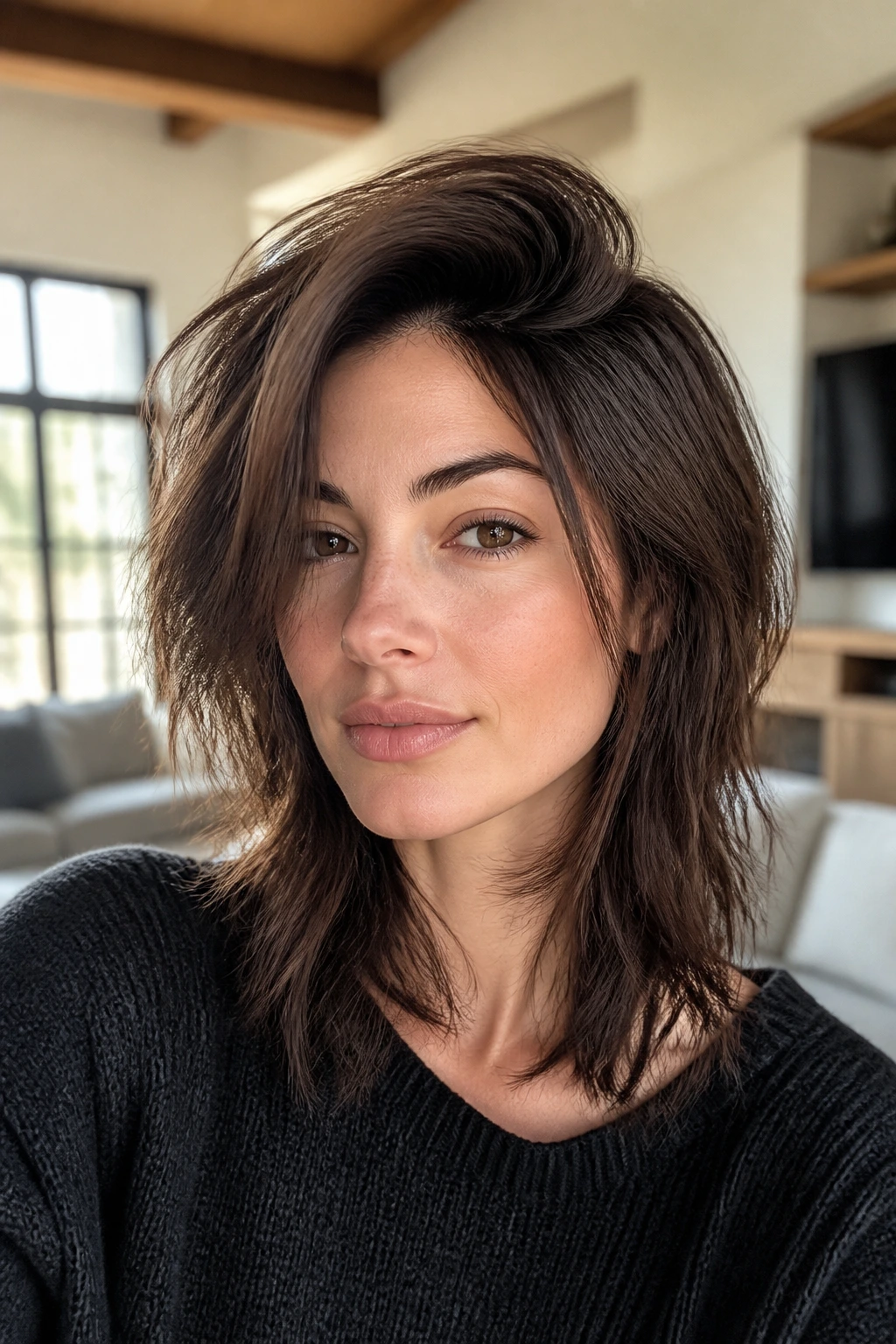
Can a part change the whole haircut? Absolutely.
A deep side part gives brunette fine hair instant height at the roots, and the shag layers help carry that lift through the rest of the shape. The cut is especially good when the crown sits flat no matter what product you use.
How I’d Style It
- Blow-dry the hair in the opposite direction of the final part first.
- Clip the heavier side at the roots for 5 to 10 minutes while it cools.
- Use dry shampoo only at the crown, not through the ends.
- Keep the front pieces long enough to sweep across the forehead.
That little cooling pause matters more than people think. Hair sets as it cools, and fine strands need all the help they can get.
This cut gives you a dramatic root lift without making the whole head look big. It’s a neat trick, and it works.
16. Wispy Bang Shag That Stays Light at the Front

A wispy bang can save fine brunette hair from looking too heavy in front. That matters when the rest of the cut is already layered and moving.
The fringe should feel almost airy between the fingers. Not sparse. Just light enough that it separates a little instead of hanging like one solid panel. That softness keeps the face open and the hair from looking crowded at the forehead.
What to Watch For
- Keep the shortest pieces around brow to pupil level.
- Let a few strands fall into the temples.
- Avoid blunt, thick fringe lines.
- Dry the bangs first so they do not split awkwardly.
This style is useful if your face gets overwhelmed by heavy bangs. It gives you the fringe feeling without the weight.
I’d choose it for people who wear glasses, too. The lightness stops the front from fighting the frames.
17. C-Shape Face-Frame Shag
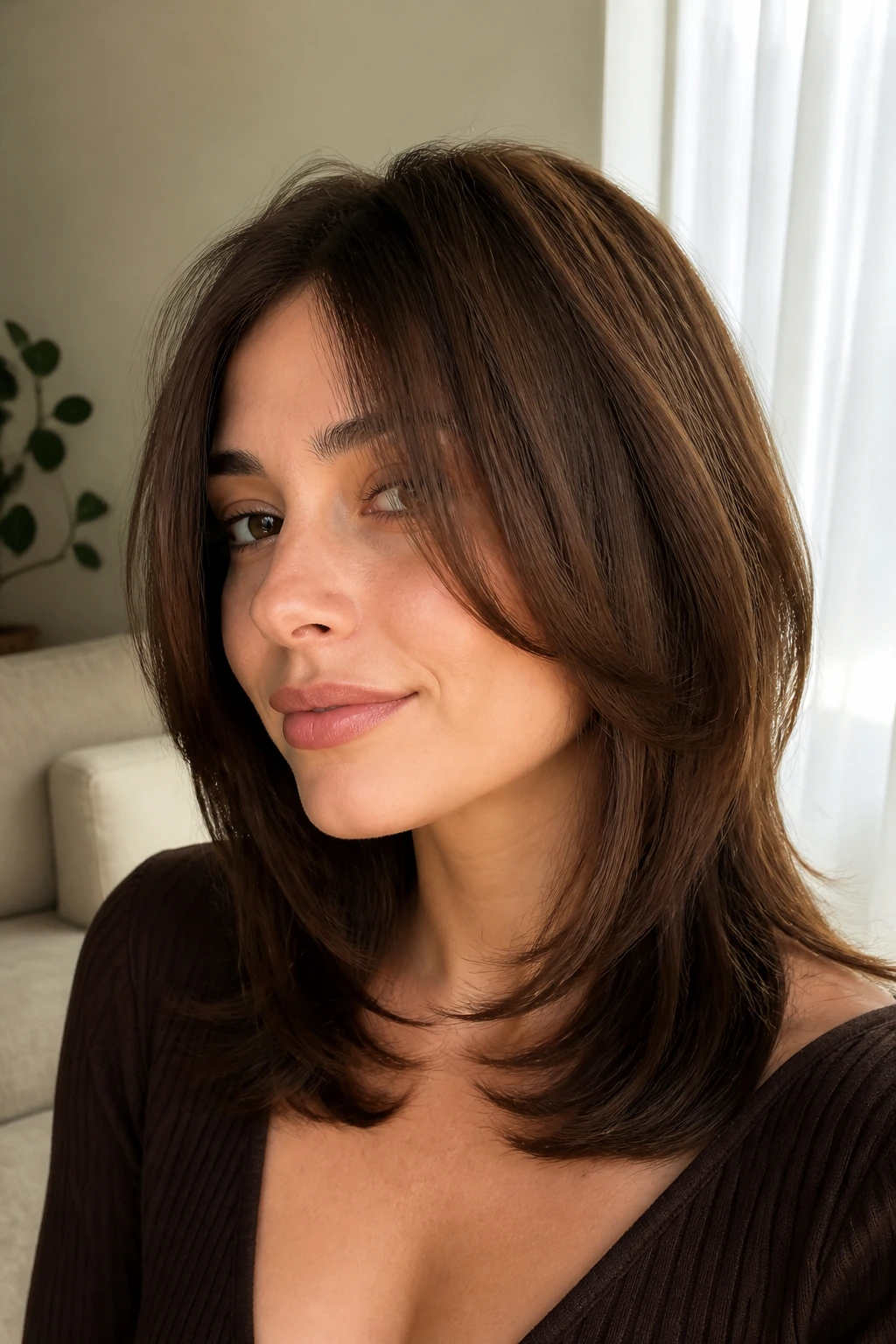
A C-shaped face frame curves from the cheek down toward the collarbone, and that shape can be magic on fine brunette hair. It softens the face without tearing apart the rest of the cut.
The curve matters because it gives the eye a path to follow. Instead of a hard step, you get a gentle sweep that makes the hair look fuller through the front panel. On square or angular faces, it takes the edge off. On round faces, it adds length.
This is not the same as lots of layers everywhere. The back can stay fairly quiet while the front does the shaping. That restraint is what keeps the cut from looking thin.
I like this version when someone wants movement but does not want to be told their hair is “textured.” It’s a cleaner, calmer shag.
18. Razor-Soft Straight-Hair Shag
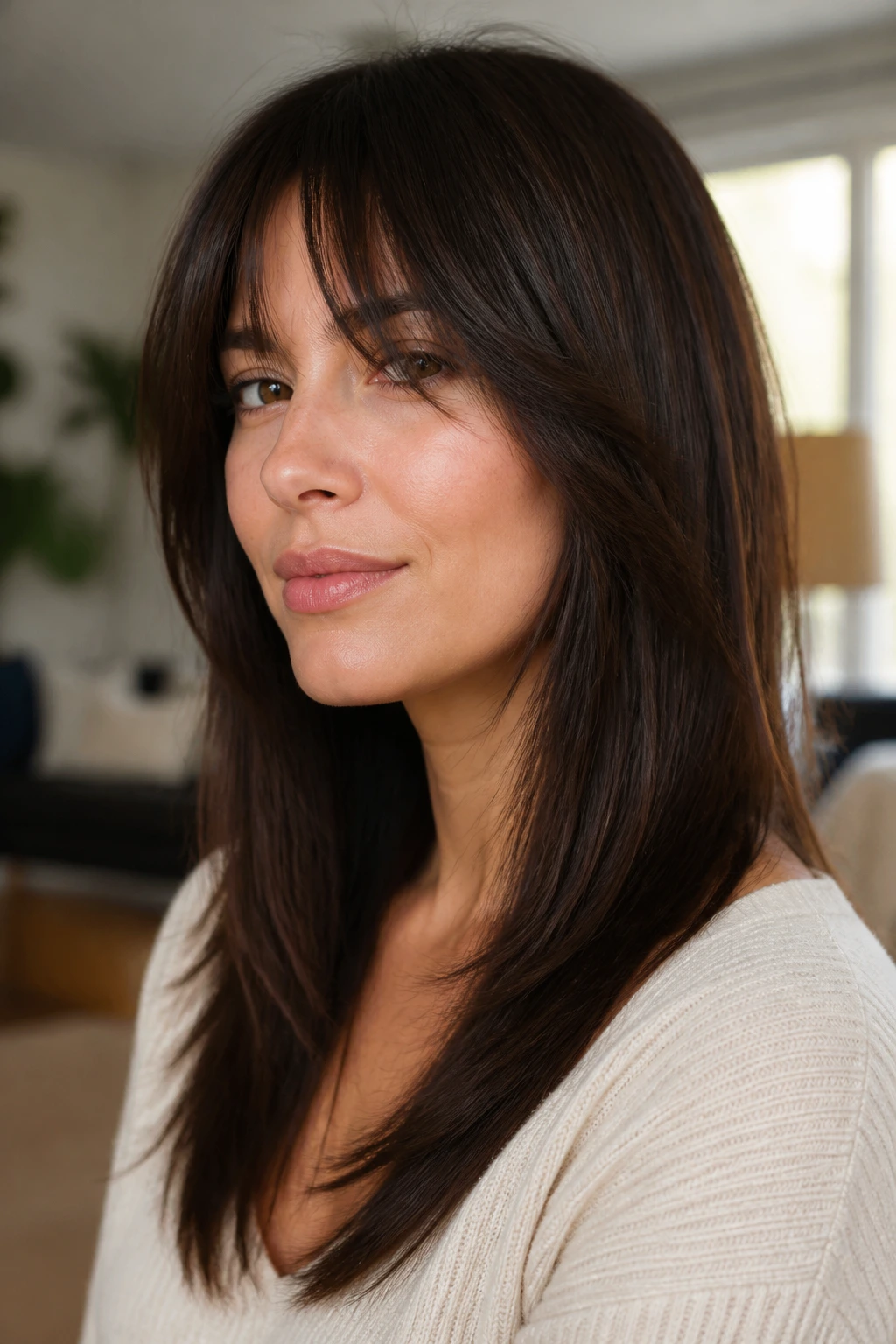
Unlike a wavy shag, this one is built for straight hair that needs shape without curl to prop it up. The cut should look crisp at the base and soft through the front pieces.
Fine brunette hair that stays pin-straight can look limp if it gets too many disconnected layers. A razor-soft shag avoids that by keeping the ends airy but not shredded. The line is still there. It just moves a little.
This is best for someone who wears their hair mostly straight and wants a cut that works with a flat iron or quick blow-dry. It’s also a good match for darker brown tones, because the cleaner outline helps the layers show without looking broken.
If your hair tangles easily, ask for less razor and more slide cutting. The goal is movement, not fray.
19. Tousled Mid-Length Shag With Internal Volume
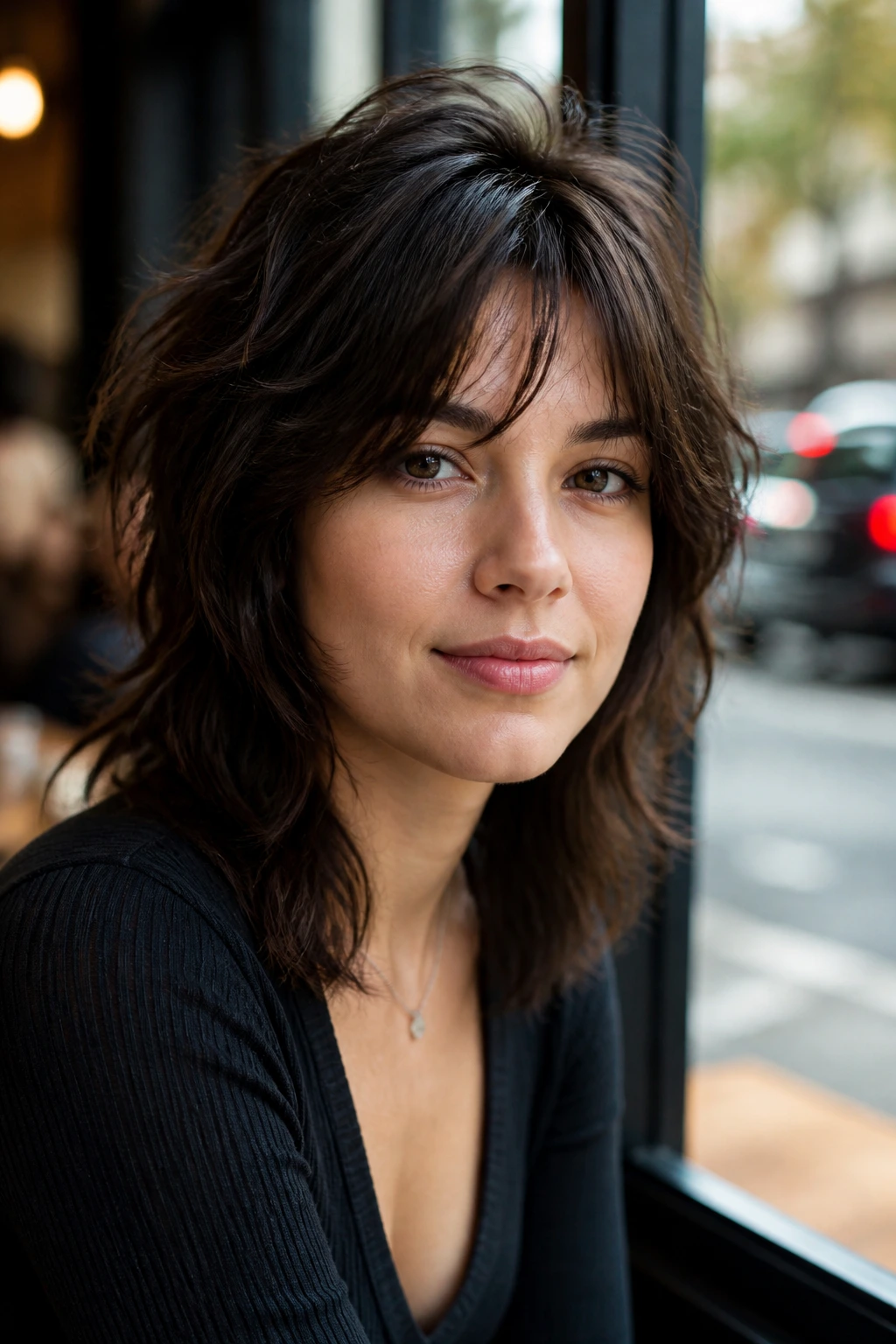
Where does fullness come from if the ends stay light? Usually from the inside of the cut.
That’s what makes this shag so useful for fine brunette hair. The stylist builds volume through the midsection and crown, then leaves the perimeter soft enough that the whole style still moves. You get lift without a choppy outline.
The Part Most People Miss
Volume does not have to live at the ends. In fact, when fine hair gets too much texture at the bottom, it can look thinner.
How to Wear It
- Blow-dry the roots first.
- Flip the head upside down for 30 to 45 seconds only if your hair tolerates it.
- Smooth the outer layer lightly with a brush.
- Finish with a small amount of texture spray through the middle lengths.
This cut is a solid choice if your hair falls flat in humid air or after a long day. It keeps the shape alive without asking for constant fixing.
20. Grown-Out Bang Shag That Forgives a Busy Schedule
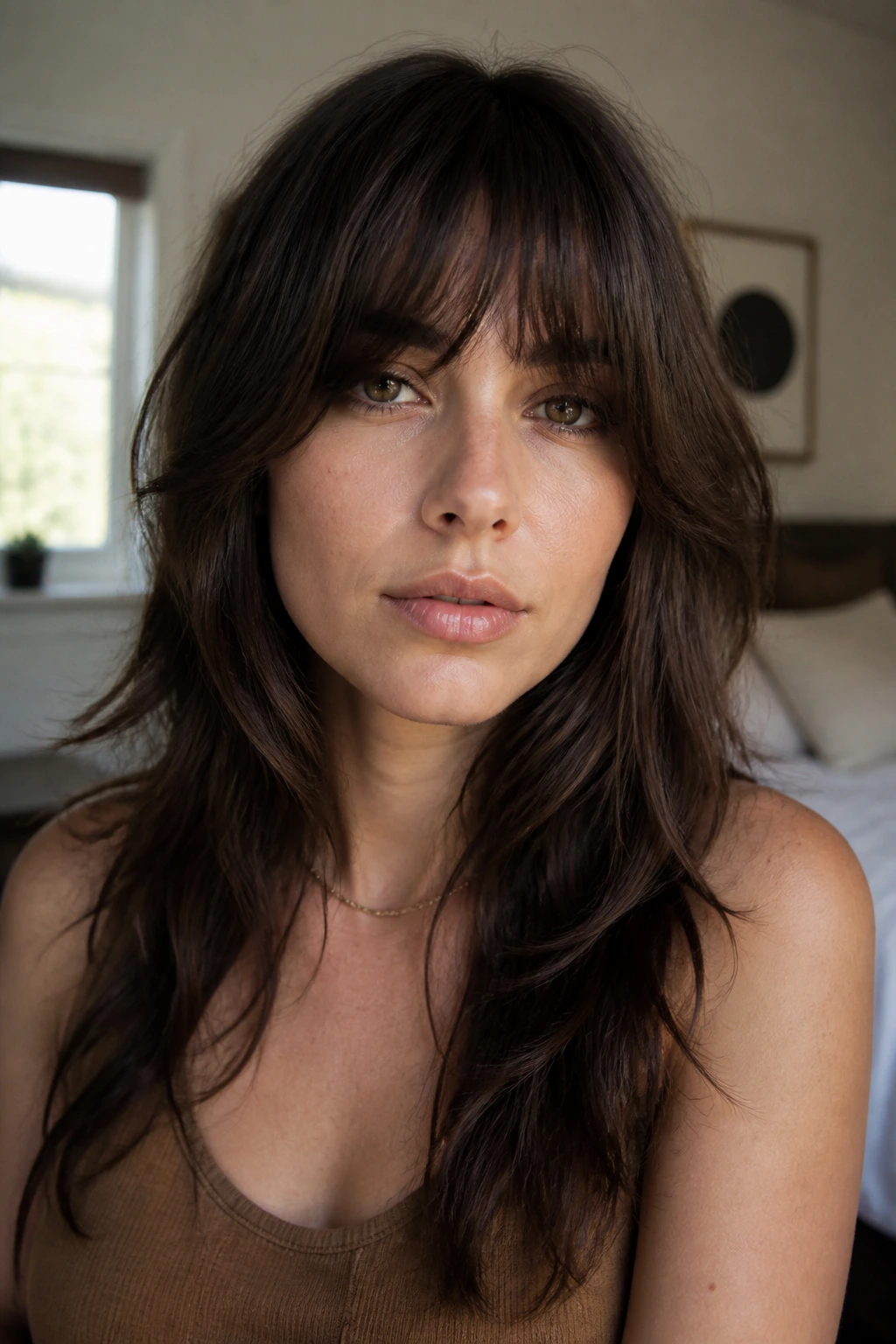
If you hate frequent trims, pay attention here. A grown-out bang shag can be worn in more than one phase, which makes it one of the easiest styles to live with.
The fringe starts as a bang, but it is cut long enough to split, sweep, or tuck behind the ears as it grows. That flexibility is useful for fine brunette hair because the front stays useful even between salon visits.
It also means the haircut keeps its shape when life gets messy. A bit of dry shampoo, a quick bend with a round brush, and the bangs still look intentional. Not stiff. Intentional.
Key Details
- Keep the fringe below brow level at the shortest point.
- Blend the sides so they can frame the cheeks later.
- Leave the crown soft, not over-cut.
- Avoid a dense, short bang line unless you want more upkeep.
This one is practical, and I like practical.
21. Short Crown, Full Perimeter Shag
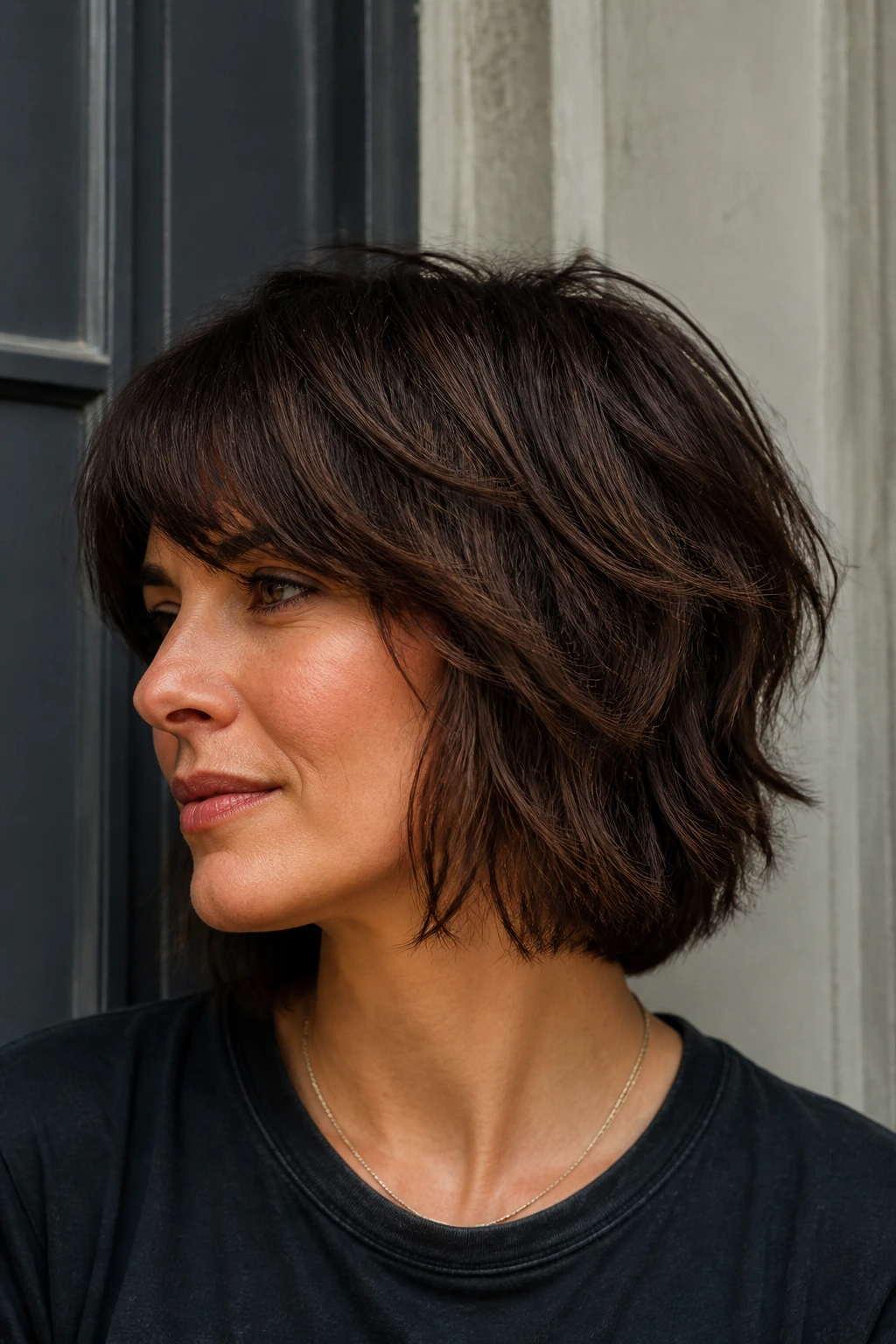
Fine hair can look sparse on top before it looks sparse anywhere else. That’s why this shape works so well: it creates lift at the crown while keeping the bottom thick.
The visual effect is smart. The top sits a little shorter, which gives height, but the outer line stays solid. On brunette hair, that full perimeter helps the cut read richer and denser. You see shape, not scalp.
This is a good option if you want your hair to feel fuller from the side profile. The silhouette gets a little rounder, which can be flattering on longer faces or narrow heads.
I would not make the crown too short. That’s where people get greedy and regret it. A little lift is enough.
22. Soft Mullet Shag for People Who Want Edge

A soft mullet shag is not the same thing as a hard mullet, and that distinction matters. The back still has length, but the transition is gentler, so fine brunette hair does not end up looking chopped into pieces.
Compared with a classic shag, this version leans a little bolder through the neckline. Compared with a wolf cut, it is less dramatic and easier to wear straight. That middle ground is why some people love it.
It suits anyone who likes texture but does not want a cupcake-shaped top. The crown stays lived-in, the sides stay touchable, and the nape gets a little extra personality.
If you want a cut that feels a touch rebellious without being hard to style, this is the one. Keep the ends soft, though. A sharp edge on fine hair can go from cool to patchy fast.
23. Brunette Shag With a Bright Money Piece
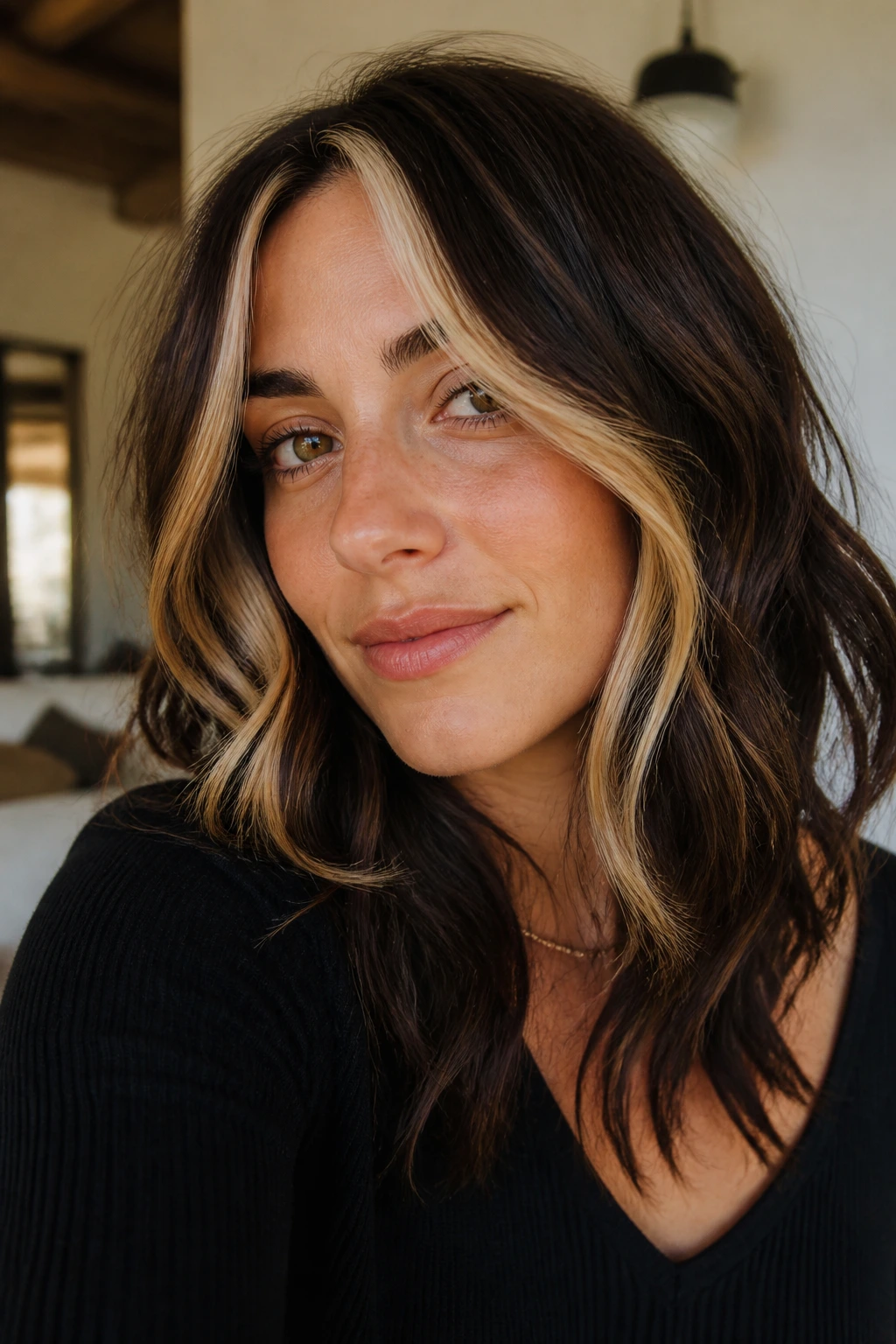
A money piece can make a brunette shag read fuller because the eye gets pulled to the front first. That front brightness creates contrast, and contrast makes layers easier to see.
Why Cut and Color Work Together
When the front strands are a shade lighter, the face frame pops a little more. That means the shag layers do not have to do all the work on their own. The haircut gets backup from the color, which is a nice trick on fine hair.
Where to Place It
- Keep the lighter pieces around the cheekbone and jawline.
- Blend them into curtain bangs or a soft face frame.
- Leave the back richer and deeper for contrast.
- Style with a loose wave so the front pieces separate slightly.
This is not about making the hair loud. It’s about making the cut easier to read. On dark brown hair, even a subtle caramel or hazelnut ribbon can sharpen the whole shape.
24. Minimal-Layer Shag for Fragile Fine Hair
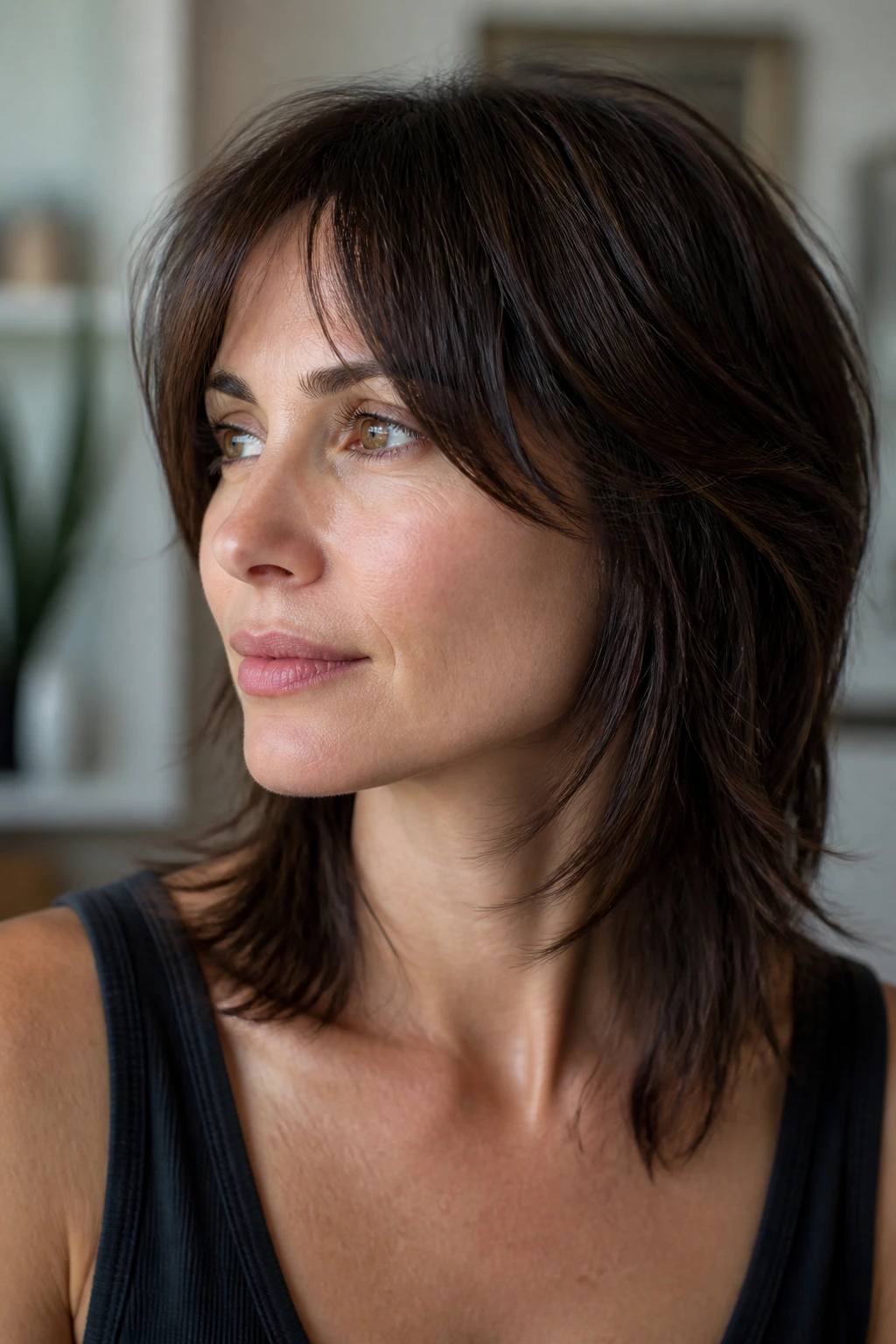
What if your hair cannot handle much layering at all? Then keep it minimal.
This version keeps the changes light and precise. The shape comes from a slightly shorter crown, a soft face frame, and a gentle bit of texture at the ends — not from taking out half the hair. On delicate brunette hair, that restraint can be a relief.
What to Ask For
- A soft face frame only, starting near the cheekbone.
- A light dusting at the ends, not aggressive thinning.
- Layers that are short enough to move, long enough to stay together.
- No heavy razor work if the hair breaks easily.
This is one of the better options when the hair is fine and fragile. You still get movement, but the cut does not chew up the density you already have.
I’d rather see this than a too-thin shag any day. Thin hair needs shape, yes. It also needs mercy.
25. Soft Brunette Shag for Fine Hair
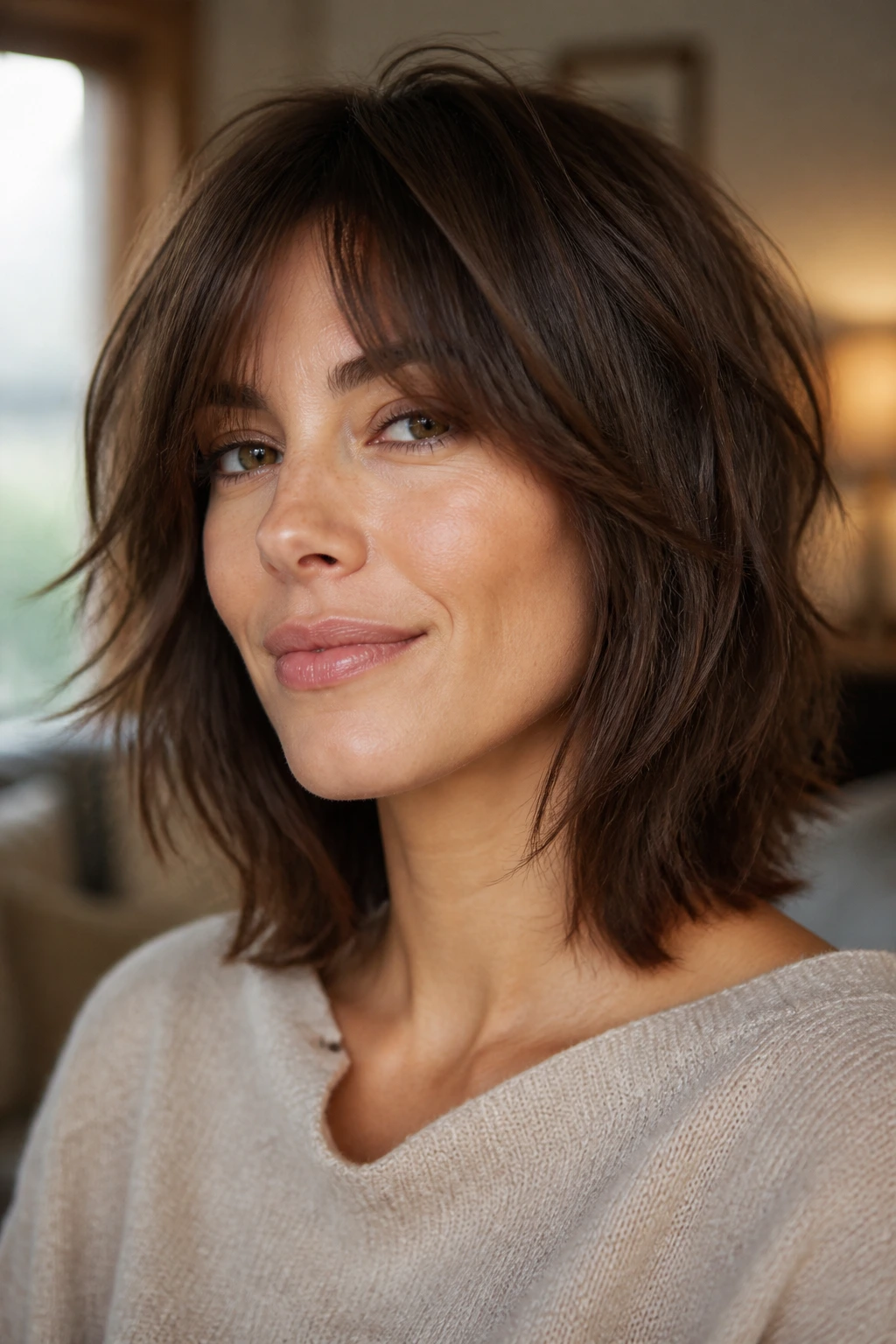
If you want one brunette shag that does almost everything well, this is the one I’d point to. It keeps the outline soft, lets the front pieces move, and avoids the over-layered look that can make fine hair feel half its size.
The beauty of this cut is its range. Air-dry it and it looks relaxed. Blow it out and it looks polished. Wear it with a middle part, a side part, or tucked behind one ear, and it still holds together because the perimeter has enough substance.
That’s the part people forget. A good shag for fine hair is not about removing more and more. It’s about taking weight away in the right spots and leaving enough hair behind to keep the shape believable.
If you’re sitting in a salon chair with brown hair that always goes flat, ask for softness first, texture second, and restraint third. That order saves a lot of bad cuts.
