



Fine hair and a wavy shag can be a brilliant match, but only if the cut is built to keep the ends looking full. Too much slicing, and the whole shape starts to look wispy in the wrong places; not enough layering, and the wave just hangs there with no lift at the crown.
The shag works because it gives fine hair movement without asking it to behave like thick hair. That’s the whole trick. You want layers that break up flatness, but you still want a clean perimeter somewhere so the hair has a line to hold onto. Lose that line and the cut can turn stringy fast.
Bangs change everything too. Curtain bangs, bottleneck bangs, a soft fringe, even a tiny micro fringe can shift where the eye goes, which matters when your hair needs help looking fuller. The best versions are never about chopping everything up. They’re about keeping enough weight in the right places.
These 22 wavy shag haircuts for fine hair lean in different directions—short, long, edgy, soft, low-maintenance, a little French, a little rock ’n’ roll—but each one is built around the same idea: keep the wave, keep the lift, and don’t shred the ends.
1. Collarbone Shag With Curtain Bangs
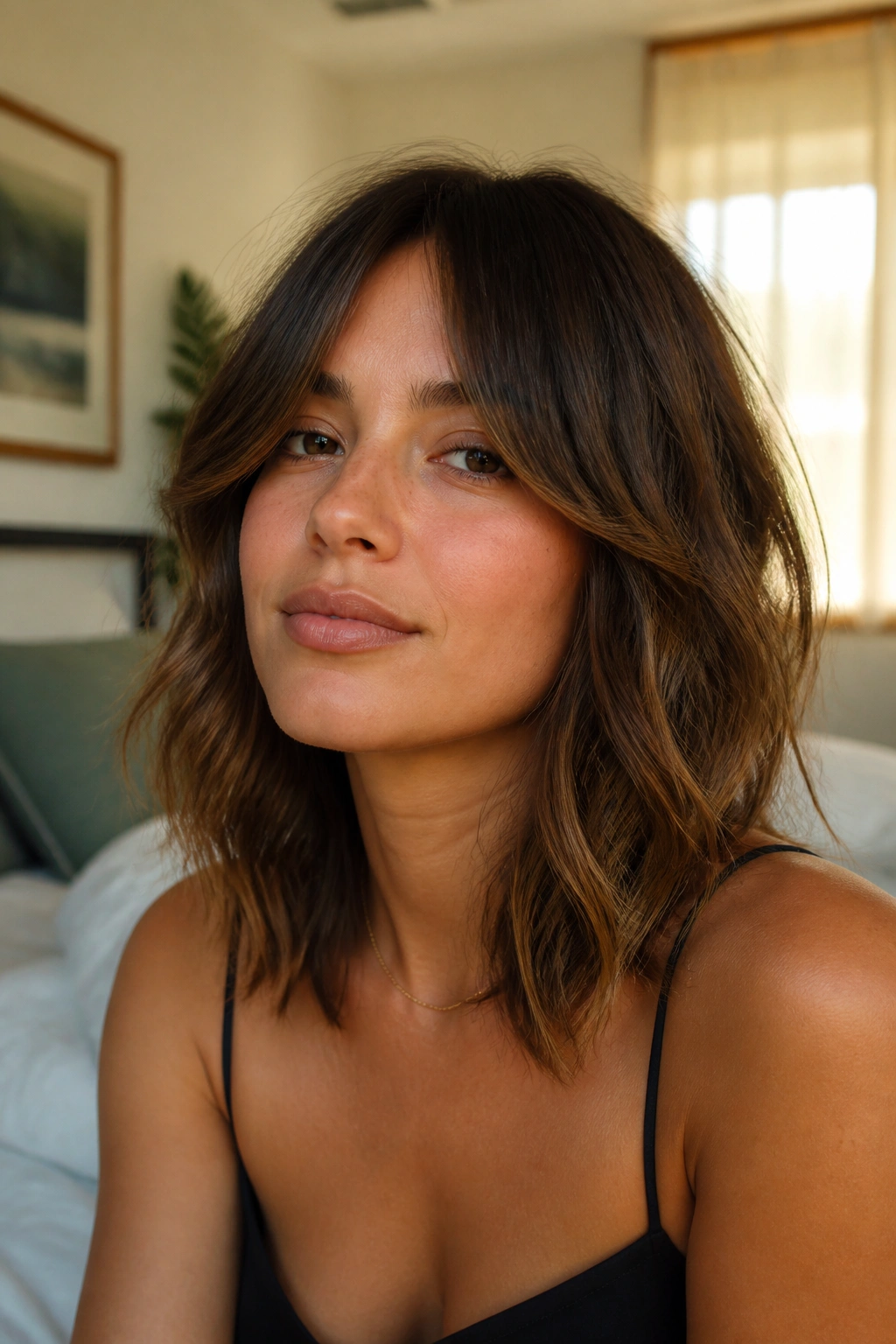
This is the shag I recommend most often for people who want movement without losing too much density. The length sits right around the collarbone, which is a sweet spot for fine hair because it’s long enough to feel versatile but short enough to avoid that limp, dragged-down look at the bottom.
What to ask for
Ask for soft layers that start around the cheekbones and blend into longer pieces near the chest. Keep the curtain bangs light and slightly longer at the edges so they sweep back instead of falling flat into the eyes. A clean perimeter helps here. Don’t let the whole cut get over-thinned.
Why it works
The collarbone length gives the wave somewhere to bounce. That little bit of weight keeps the hair from puffing out at the sides, while the bangs pull attention upward toward the face. It’s flattering on a lot of face shapes, and it styles well with a round brush or a quick rough-dry.
Best for: fine, wavy hair that needs shape more than drama.
Styling note: Use a pea-sized amount of mousse at the roots, then twist the front sections away from your face while blow-drying.
2. Chin-Length Shag Bob With Soft Ends
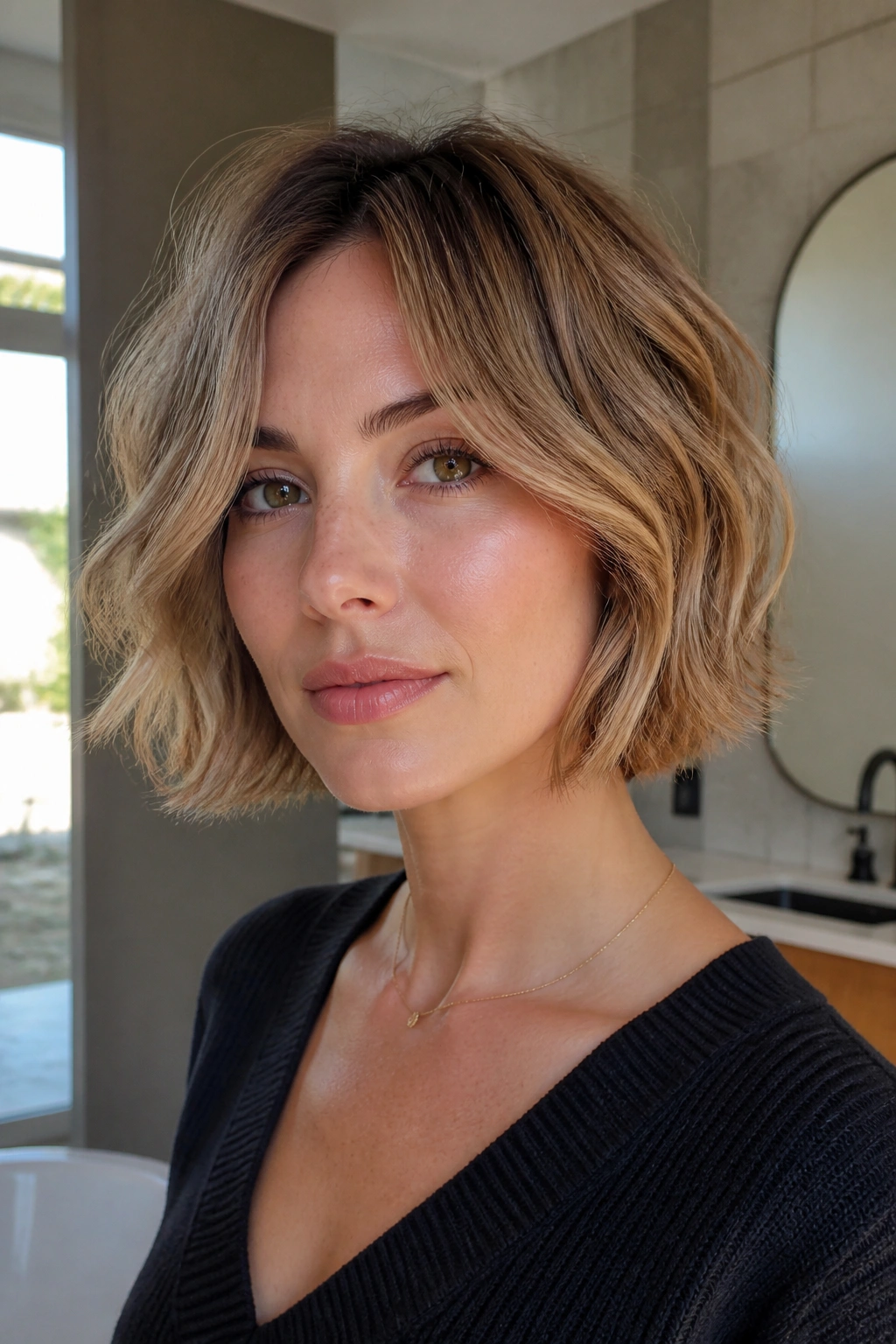
Short hair can be a gift for fine strands. A chin-length shag bob gives the illusion of thickness because the ends land close to the jaw, where hair usually looks fuller and more deliberate. It also dries fast, which matters more than people admit.
The trick is keeping the edges soft, not chopped to bits. If the layers get too aggressive, the bob starts to separate in a thin, scraggly way. Ask for texture only where it helps lift the top and bend the sides. The bottom line should still feel like a bob.
This cut has a little attitude, but not the crunchy kind. It looks best when the wave is loose and uneven, like you slept on it and shook it out with your fingers. A light cream or spray wax can help, but use almost nothing.
Best for: anyone whose fine hair collapses by noon.
Tip: If your wave pattern is weak, bend the ends inward with a 1-inch round brush so the shape doesn’t splay out.
3. Long Wavy Shag With Airy Layers
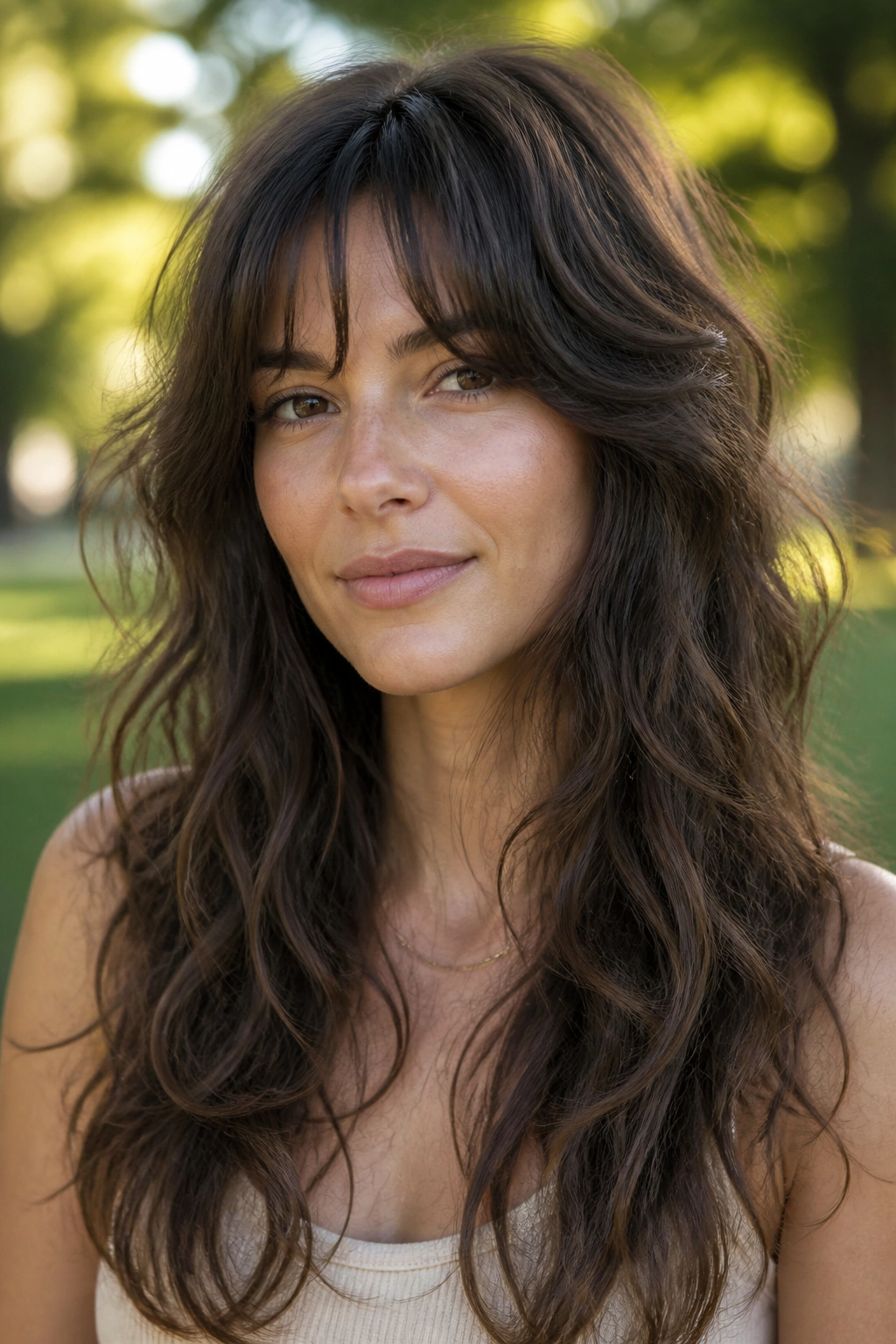
Can long hair work on fine strands? Yes, but only if the layers are placed with a steady hand. A long wavy shag keeps the length past the shoulders while removing enough bulk through the mid-lengths to stop that flat curtain effect at the back.
You want the layers to feel airy, not carved. I’d avoid heavy razor work here unless your stylist knows exactly how your hair behaves when it dries. Fine hair can look luxurious with long layers, but only if the ends still have some shape. Otherwise, they taper into nothing.
The sweet spot
Keep the shortest face-framing pieces around the cheekbone or lip, then let the rest fall longer and softer. This gives the wave a chance to stack on itself without making the cut look choppy. It also grows out nicely, which is useful if you hate frequent trims.
A diffuser helps, but so does air-drying with a bit of mousse scrunched through the mids.
4. Shoulder-Grazing Shag With A Deep Side Part
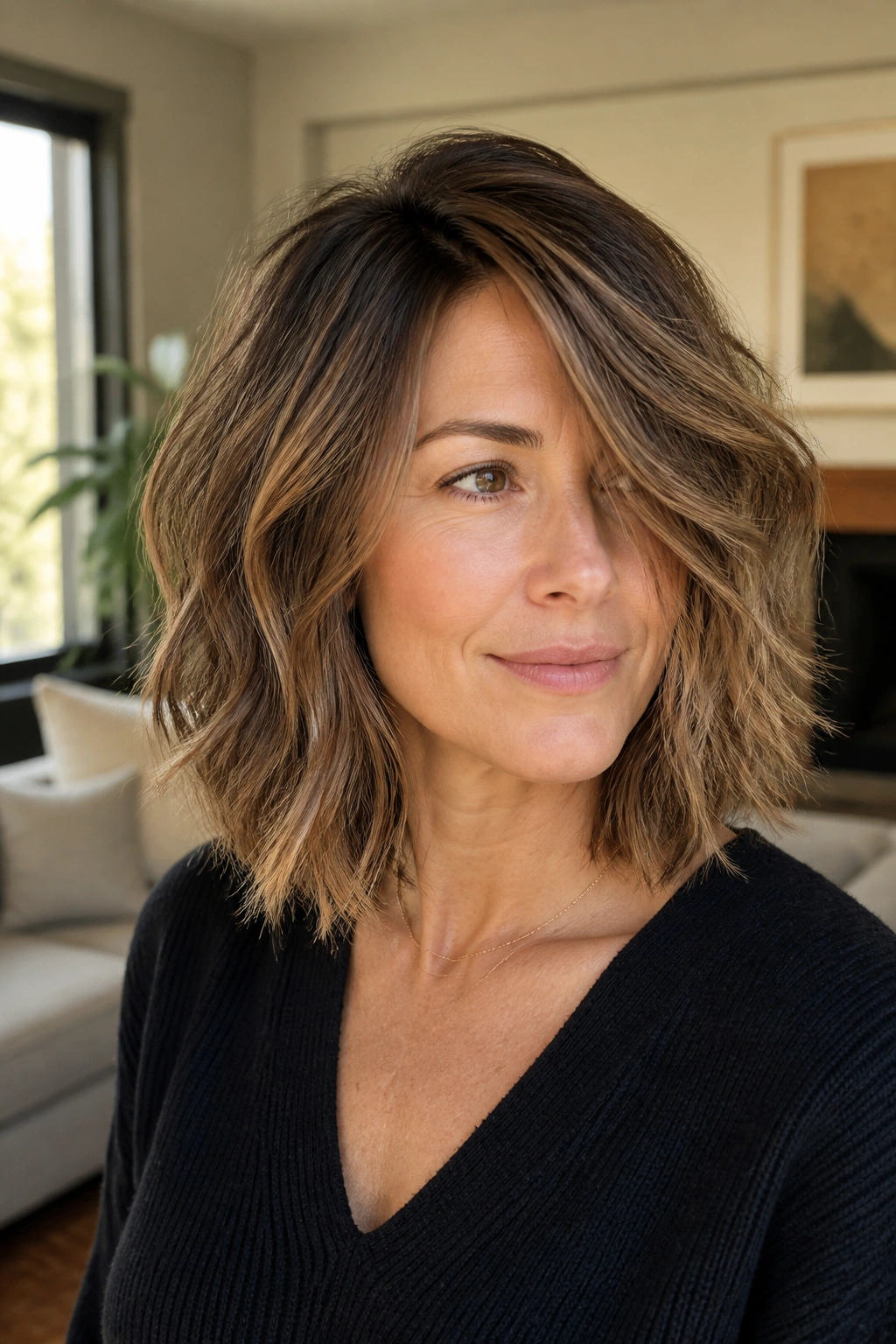
A deep side part is one of the fastest ways to make fine hair look fuller at the root. Add shag layers at shoulder length and you get lift without needing a ton of product or heat. It’s a practical cut, not a fussy one.
This version is especially good when one side of your hair always seems to fall flatter than the other. The part shifts the volume, and the shoulder length keeps the cut from feeling too precious. You’ll still see movement through the ends, but the shape stays easy to live in.
What to request at the salon
- A side part that can be flipped either direction
- Soft layering around the crown, not just the face
- Tapered ends that keep the line clean
- Minimal thinning near the bottom
Use a root spray at the crown and blow-dry the part in the opposite direction first. Then flip it back. It sounds simple because it is.
5. Bixie Shag With Piecey Top
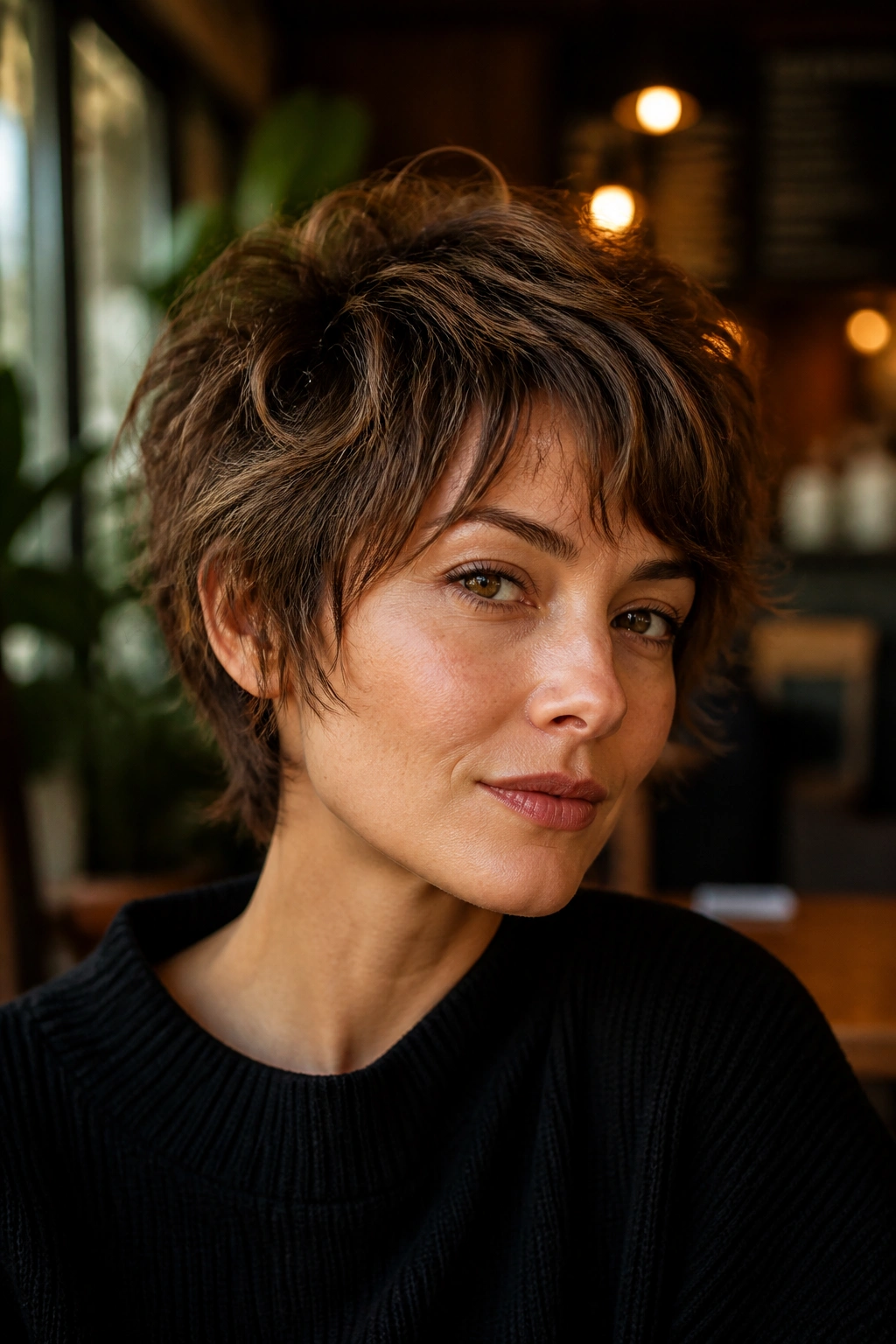
The bixie shag sits between a pixie and a bob, and on fine hair that can be a real advantage. It removes weight from the back and keeps enough length around the front to feel feminine, sharp, and a little bit messy in a good way.
This cut is not for someone who wants their hair to lie politely all day. It’s for people who like separation and movement. The top is piecey, the nape is short, and the sides can be tucked behind the ears or left to fall forward. Fine waves usually wake up fast in this shape.
The best part? It makes the crown look fuller without needing a lot of teasing. A matte paste or lightweight pomade through the tips is enough. Too much product, and the whole thing goes flat. Too little, and the layers can look fuzzy.
It has edge. Not fuss.
6. Lob Shag With Hidden Internal Layers
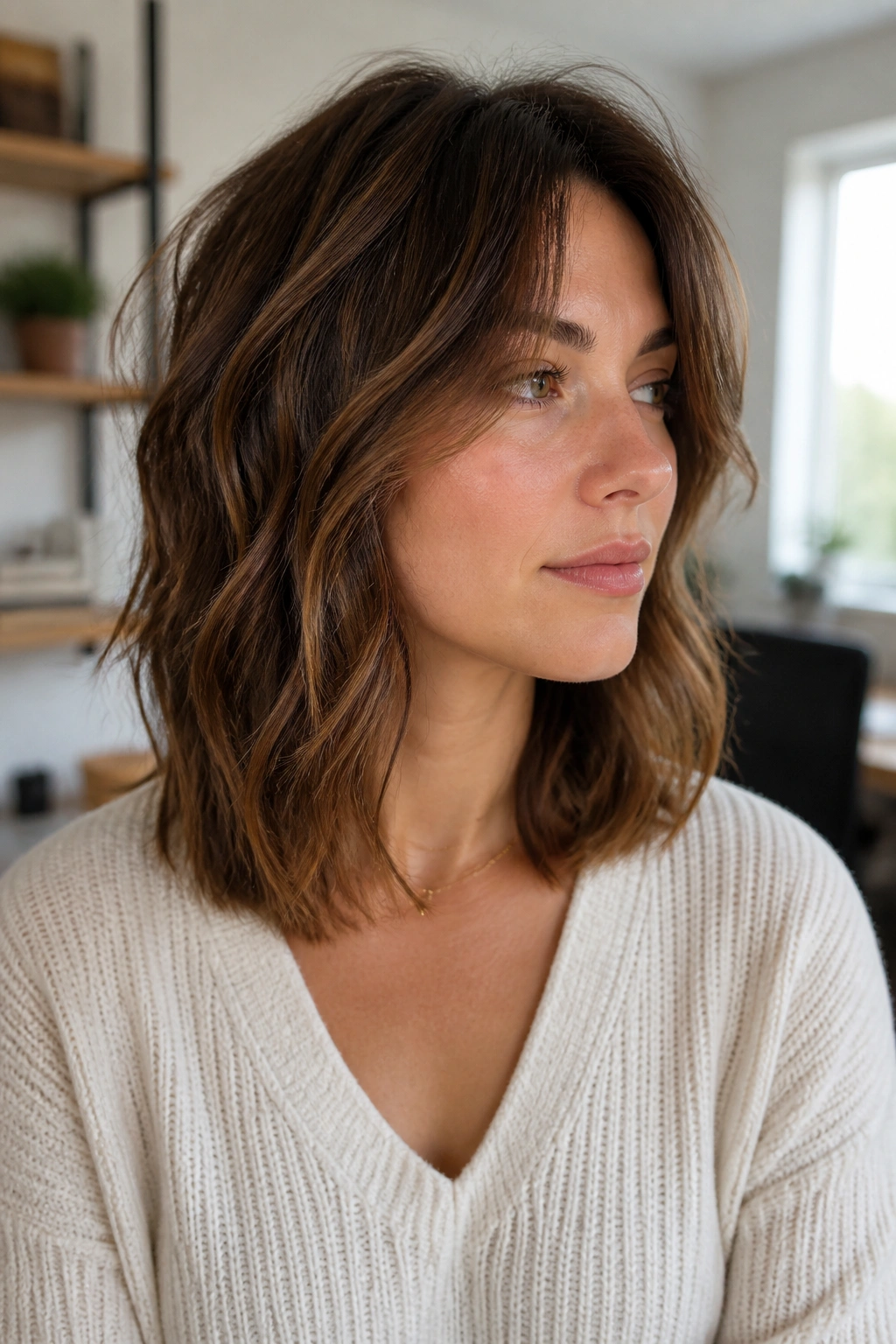
A lob shag is the version I’d point to if you want texture but you still need your hair to behave in a meeting, at dinner, or while you’re growing out an old cut. The perimeter stays around the collarbone or just above it, which gives fine hair some body. The internal layers do the heavy lifting without shouting about it.
What makes it different
Unlike a heavily chopped shag, this one hides most of the movement under the top layer. That means your hair still looks polished when you smooth it down, but the wave comes alive when you scrunch it or air-dry it. It’s a nice middle ground.
Ask for invisible layers or internal layering if your stylist uses that language. You want lift, not holes. The cut should feel soft at the ends, but the silhouette needs to stay strong. That’s what keeps fine hair from looking see-through.
A flat iron bend at the mid-lengths can sharpen the shape fast. Two minutes. Done.
7. French-Girl Shag With Brow-Grazing Fringe

This is the shag that looks easiest when it actually took some thought. The fringe lands near the brows, the sides are soft and cheeky, and the wave has enough structure to look intentional without turning stiff. Fine hair does well here because the cut creates the feeling of fullness right around the face.
The fringe matters. Keep it light, airy, and a touch longer at the corners so it blends into the rest of the cut. If it’s too dense, it can overwhelm fine hair and make the top half look heavy. If it’s too thin, it disappears. That middle zone is where the magic lives.
Styling note
A little root mousse, a diffuser, and a rough finger-dry usually beat a round brush on this one. The shape should look a touch undone. Not sloppy. Just not too perfect.
This version suits people who like a softer, more lived-in haircut and don’t mind a bang trim every few weeks.
8. Razored Shag With Full Fringe
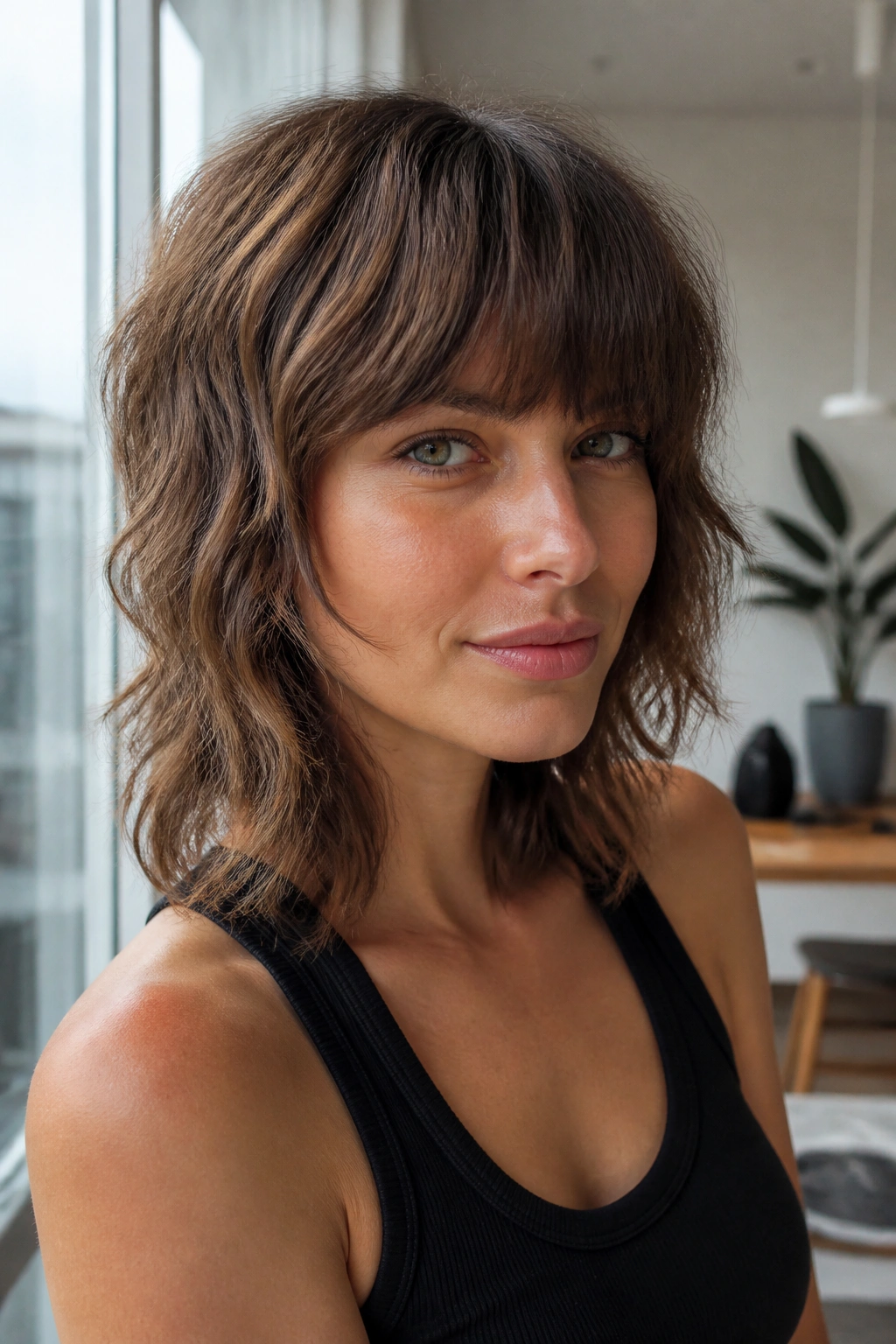
A razored shag can look amazing on fine wavy hair, but only when the razor is used with restraint. Heavy-handed razor work is where people get into trouble. The ends start to fray, and instead of movement you get see-through bits that don’t hold shape.
The payoff, when it’s done well, is a cut that moves like fabric. The fringe sits straight across or just a touch rounded, and the rest of the layers fall in soft slices that show off the wave. It’s a stronger look than a curtain-bang shag, and it can be dramatic in a good way.
If your hair is already fragile at the ends, ask for point cutting instead of a full razor finish. That gives texture without shredding the perimeter. A little bluntness at the base helps the style last.
Watch for: if the ends look fuzzy when dry, the cut has been thinned too much.
9. Wolf-Light Shag For Fine Hair

The wolf cut’s softer cousin is a smart option for fine hair that wants lift but not a full-on mullet moment. A wolf-light shag keeps some height at the crown, a little length in the back, and softer transitions between the layers so the haircut feels wearable instead of costume-y.
Why does this work? Because fine wavy hair often needs an optical illusion. A bit of lift up top and a bit of looseness through the back creates that illusion better than a blunt, even shape ever could. The key is not over-cutting the crown. Leave enough mass there for the top to hold.
I like this style for people whose waves look better when they’re a little messy. You can rough-dry it, add a small amount of texturizing spray, and let the cut do the work. It has shape even on tired hair.
It’s edgy, but not reckless.
10. Face-Framing Shag With Bottleneck Bangs
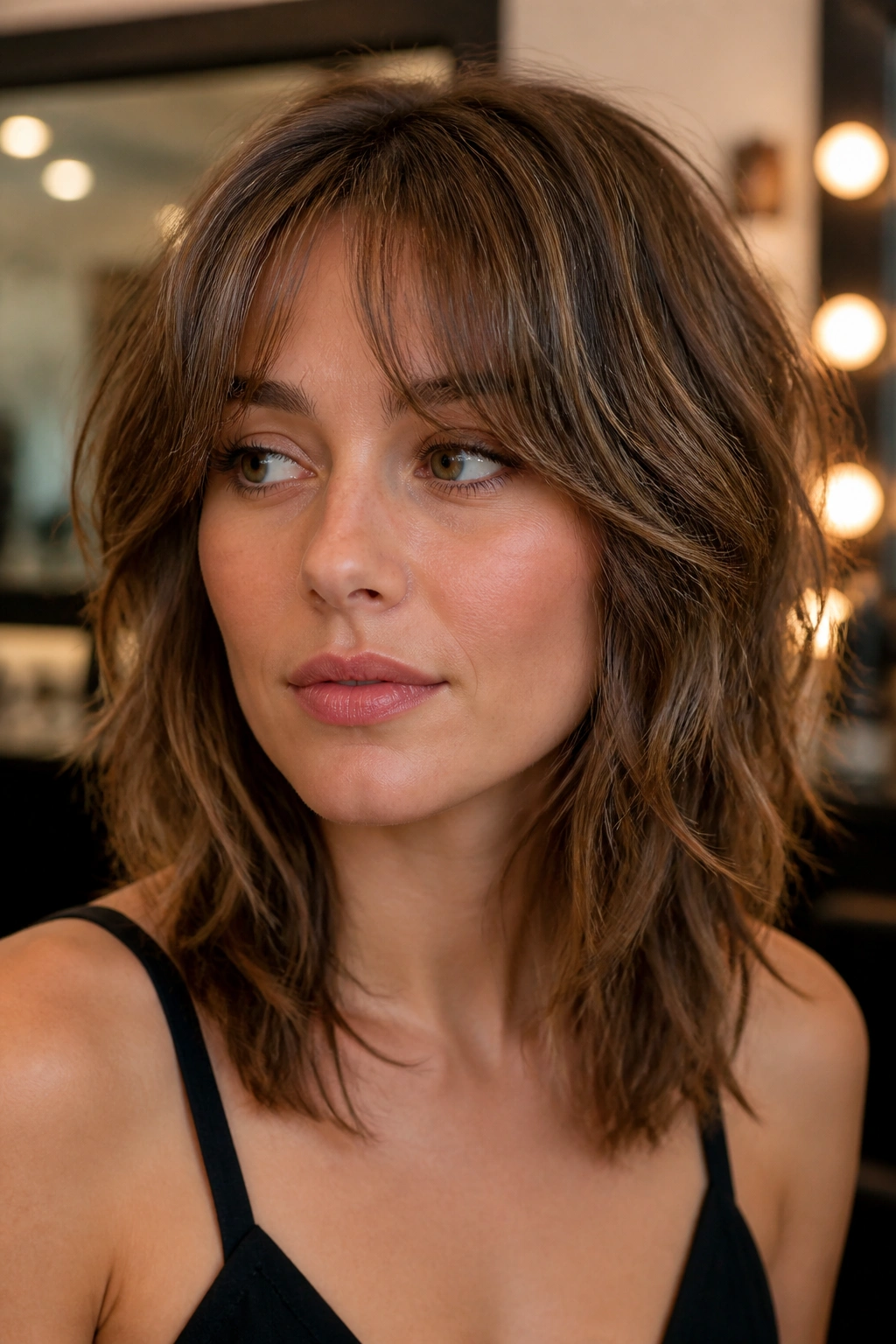
Bottleneck bangs are a gift for fine hair because they start narrow at the center and open out near the cheekbones. That shape gives your face softness without taking too much density away from the top. Add a shag around it, and you get a cut that looks fuller at eye level, which is exactly where people notice it most.
This version shines on round, square, and heart-shaped faces. The longest face-framing pieces should land somewhere between the cheek and jaw, depending on how much you want to soften the face. The rest of the layers can stay light and wavy, not heavily shredded.
How to style it
- Blow-dry the bangs first, while they’re damp
- Use a small round brush to bend the ends away from the center
- Keep the crown lifted with a root spray
- Finish by separating the waves with your fingers
That front shape does a lot of work. More than people expect.
11. Flipped-Out Shag With Tapered Ends
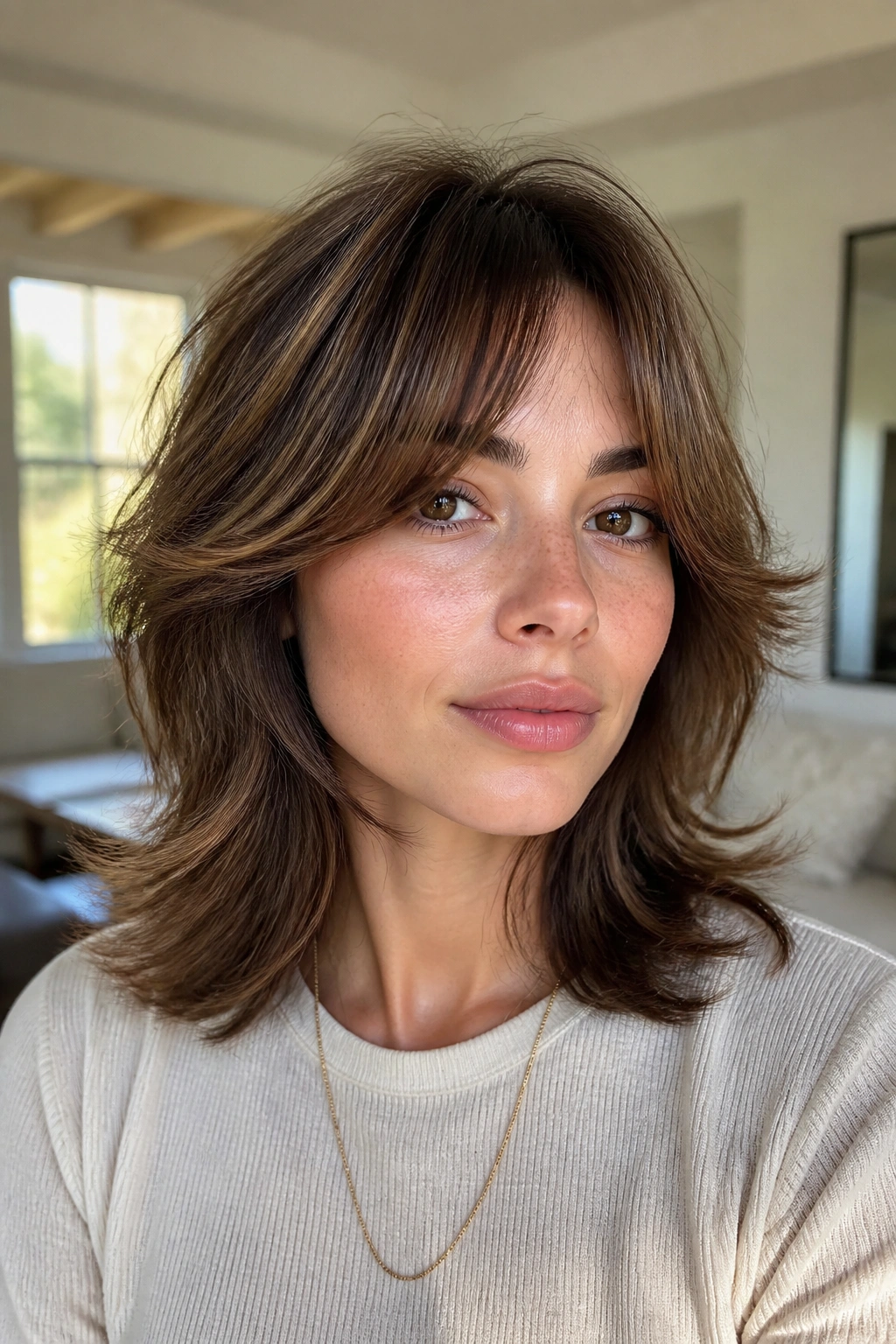
A flipped-out shag has a little retro energy, but it doesn’t feel dated when the layers are kept soft and the ends are tapered instead of chopped bluntly. For fine hair, that outward movement can fake a thicker outline, especially around the shoulders.
This cut looks best when the wave is encouraged to turn away from the neck and collarbone. A quick brush-out at the ends or a twist of the wrist with a blow-dryer can create that lift. The overall feel should be airy, almost springy. If the ends hang straight, the whole thing loses its shape.
The other nice thing about this version is that it works with both casual and polished styling. Wear it messy with a center part on a weekend, then smooth the top and flip the ends for something cleaner.
A small round brush is worth keeping around for this one. So is patience.
12. Tousled Midi Shag With A Deep Side Part
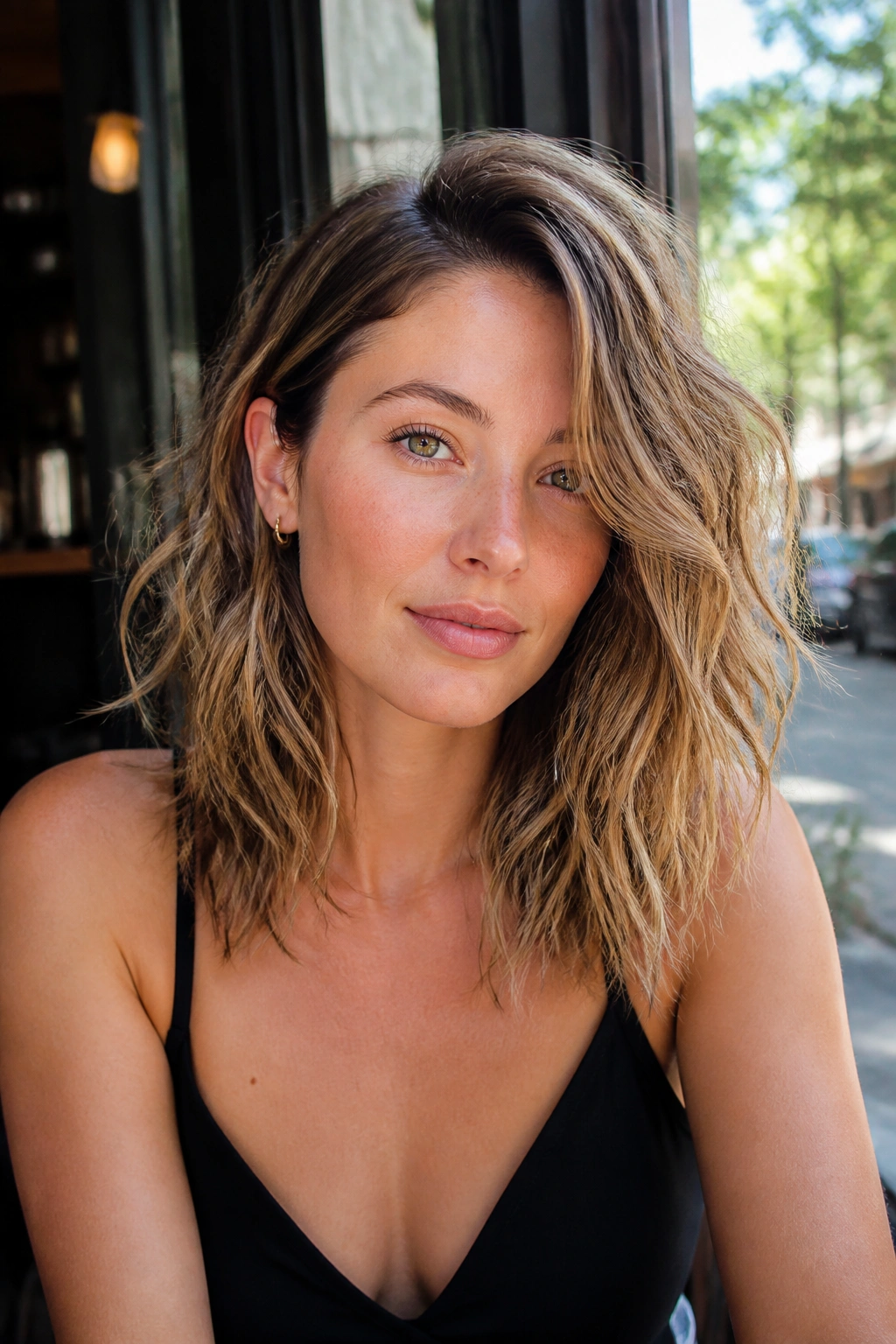
The midi length sits right in the zone where fine hair can still feel light, but not so short that you lose the option of tying it back. Add a shag cut and a deep side part, and suddenly the whole style has more drama than you’d expect from something so practical.
This is a good pick if your hair tends to fall flat by the second day. The side part gives the roots a lift, while the mid-length layers let the wave stack rather than stretch out. I’d keep the ends soft and slightly uneven, not razor-thin. That unevenness helps the movement read as texture instead of damage.
You can wear this one with a loose bend, a soft bend, or even brushed waves if you want a calmer look. It’s one of the more flexible versions in the group.
A little dry shampoo at the roots helps. Not much. Just enough to create grip.
13. Micro-Bang Shag With Soft Waves

Micro bangs are not for everyone, and that’s fine. They draw the eye straight to the face, which can be a smart move when fine hair needs help looking more intentional. Paired with a shag, they keep the top interesting while the rest of the cut stays soft and bendy.
The danger with micro bangs on fine hair is making them too sparse. If they’re cut too thin, they disappear. If they’re too blunt, they can look heavy against a light wave pattern. The sweet spot is a tiny fringe with texture built into the edge. Not wispy to the point of vanishing. Just broken up enough to move.
This style feels youthful and a little graphic, which is why it works better when the rest of the haircut stays relaxed. Let the shag do the messy work while the bangs stay neat.
Best for: people who like contrast and don’t mind upkeep around the forehead.
14. Layered V-Cut Shag With Longer Back
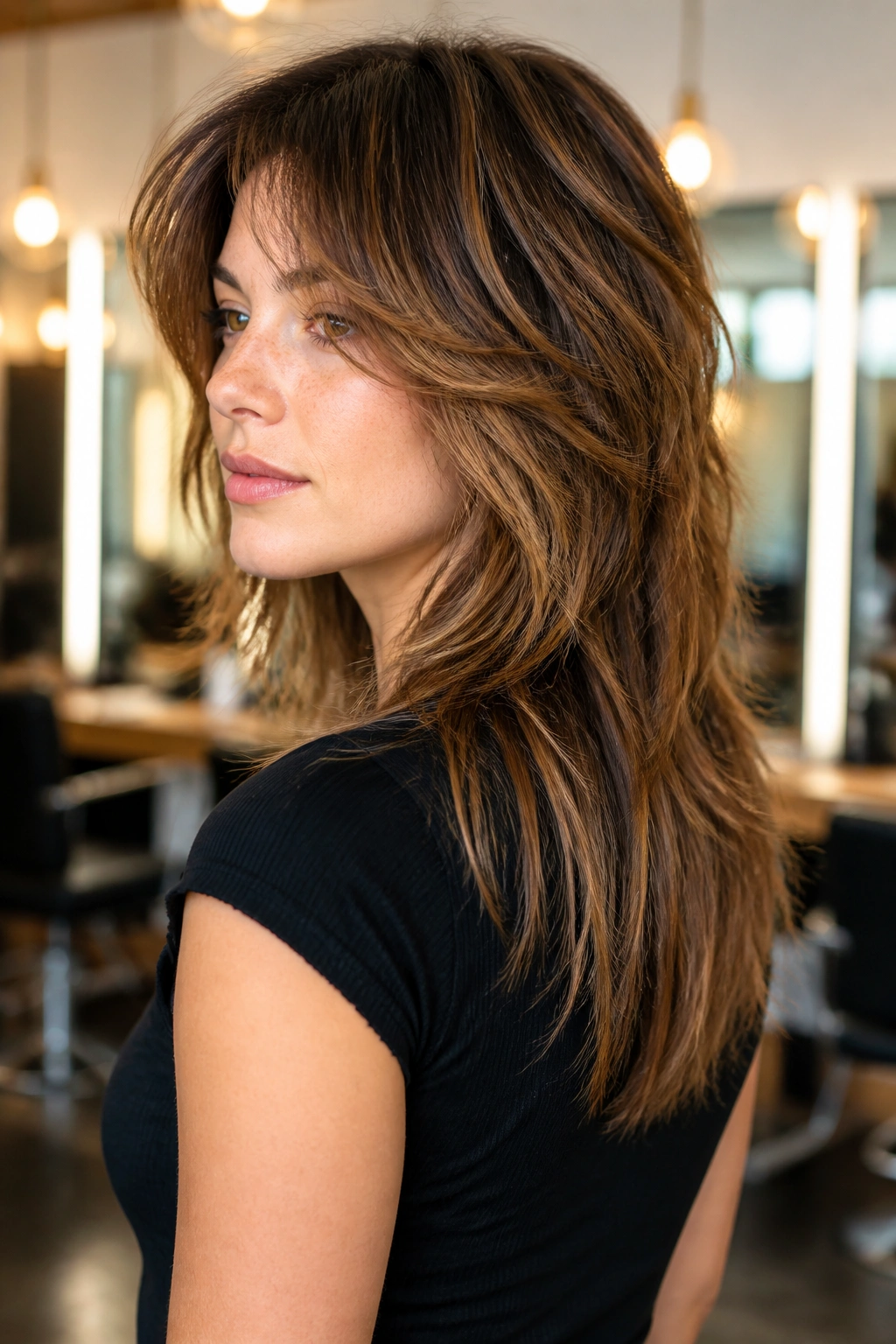
A V-cut can be a smart shape for long, fine wavy hair because it keeps the center back longer while the sides taper gently. Add shag layering on top of that structure, and the result is a cut with movement that still feels dense at the bottom.
Why bother with the V? Because fine hair often looks best when there’s a hint of length at the center line. It keeps the silhouette from spreading too wide, which can happen with too many short layers. The shag pieces bring the wave forward around the face and crown, while the V keeps the rear view neat.
This is one of those styles that looks better from every angle than you’d think. From the front, it has softness. From the back, it keeps a little drama without losing shape. Good balance.
Use a diffuser or air-dry with clips at the crown if you want extra lift. The shape will hold better that way.
15. Wavy Shag With A Blunt Perimeter
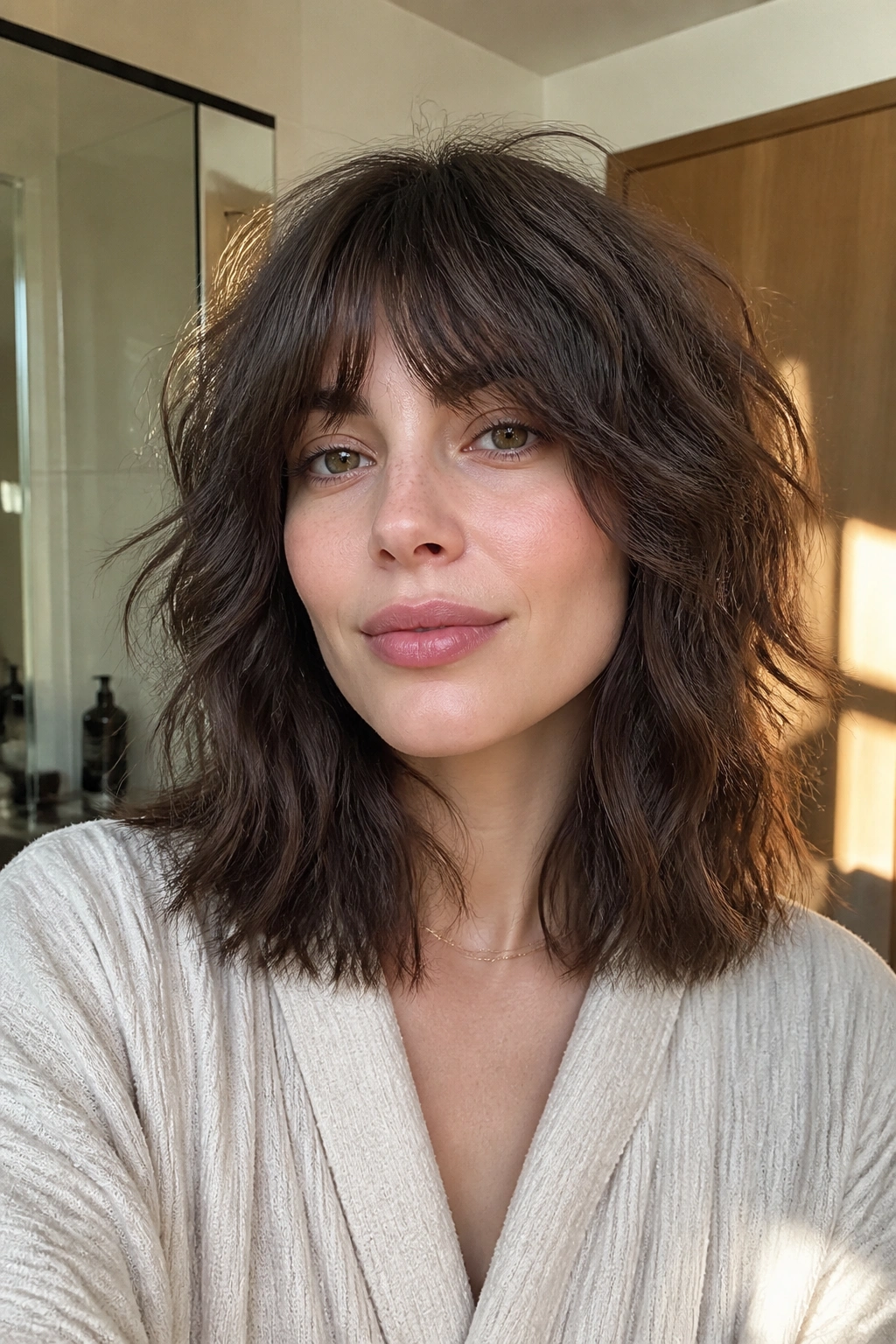
Here’s the thing: fine hair often needs a blunt line more than it needs more layers. A shag with a blunt perimeter gives you movement on top and density at the bottom, which keeps the haircut from looking see-through when it dries.
That clean edge is doing real work. It gives the eye something solid to land on, especially if your hair is naturally fine and a little soft around the ends. The shag layers can live inside the shape, lifting the crown and the front without eating into the outline.
This cut is smart if you like a polished look some days and a messy one on others. A straight blow-dry shows the blunt edge. Scrunch it, and the layers wake up. Not many styles do both that well.
What to remember
- Keep the base line intact
- Ask for internal layering only
- Avoid excessive thinning near the ends
- Style with a light mousse, not a heavy cream
Simple. Effective. No drama.
16. Curly-Wavy Shag Hybrid

Fine hair doesn’t always wave the same way from root to end. Some pieces bend, some stay straighter, and a few sections do their own thing entirely. A curly-wavy shag hybrid works with that mix instead of fighting it, which is why it can look so much better than a one-size-fits-all cut.
The stylist needs to respect the pattern of the hair in different zones. The front may need shorter face-framing layers, while the back might need a little more length to keep density. Cutting it dry can help here, because wet hair often hides how much bend lives in each section.
This cut has a lived-in softness that suits people who don’t want every wave to match. It looks best when the texture is allowed to be a little uneven. That unevenness is the point.
Don’t load it up with product. A light foam or curl cream on the wetter pieces is enough. Too much will drag the finer sections down fast.
17. Modern Mullet Shag
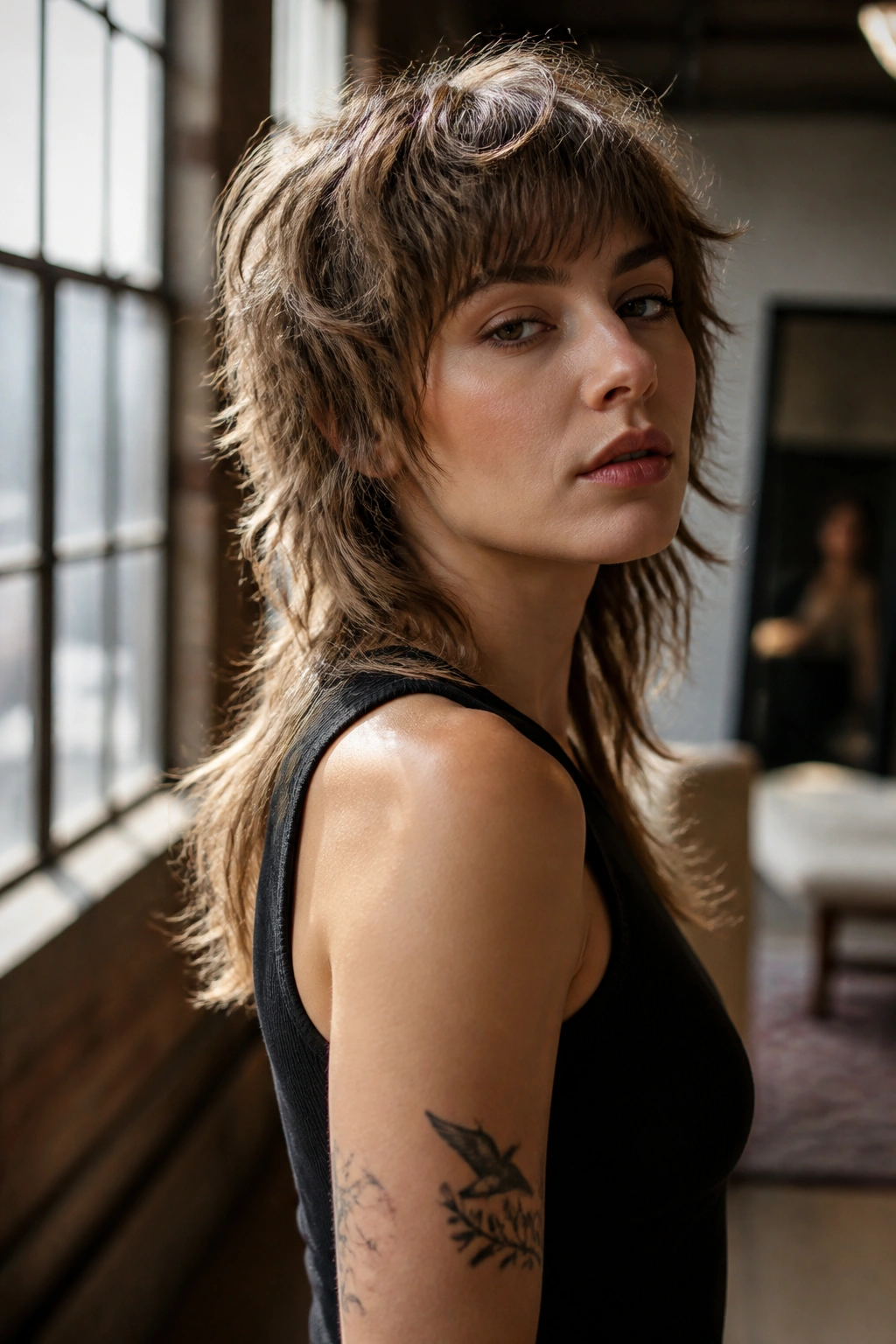
A modern mullet shag is a bolder choice, and I respect that. It keeps shorter layers around the crown and face, then leaves more length through the back. On fine wavy hair, that contrast can create the illusion of thickness because the layers don’t all collapse into the same line.
This is not the cut for someone who wants to hide in their hair. It announces itself. But when the proportions are right, it can make fine hair look sharper and fuller at the same time. The front pieces should still feel soft enough to blend, not jagged. If the nape gets too thin, the whole shape loses its punch.
The style works best with a bit of grit in it. Air-dry, diffuse, or rough-dry and leave some imperfections alone. That’s where the charm sits. The haircut should feel deliberate, not overly polished.
If your wardrobe leans a little edgy, this one can be a lot of fun.
18. Collarbone Shag With A Money Piece
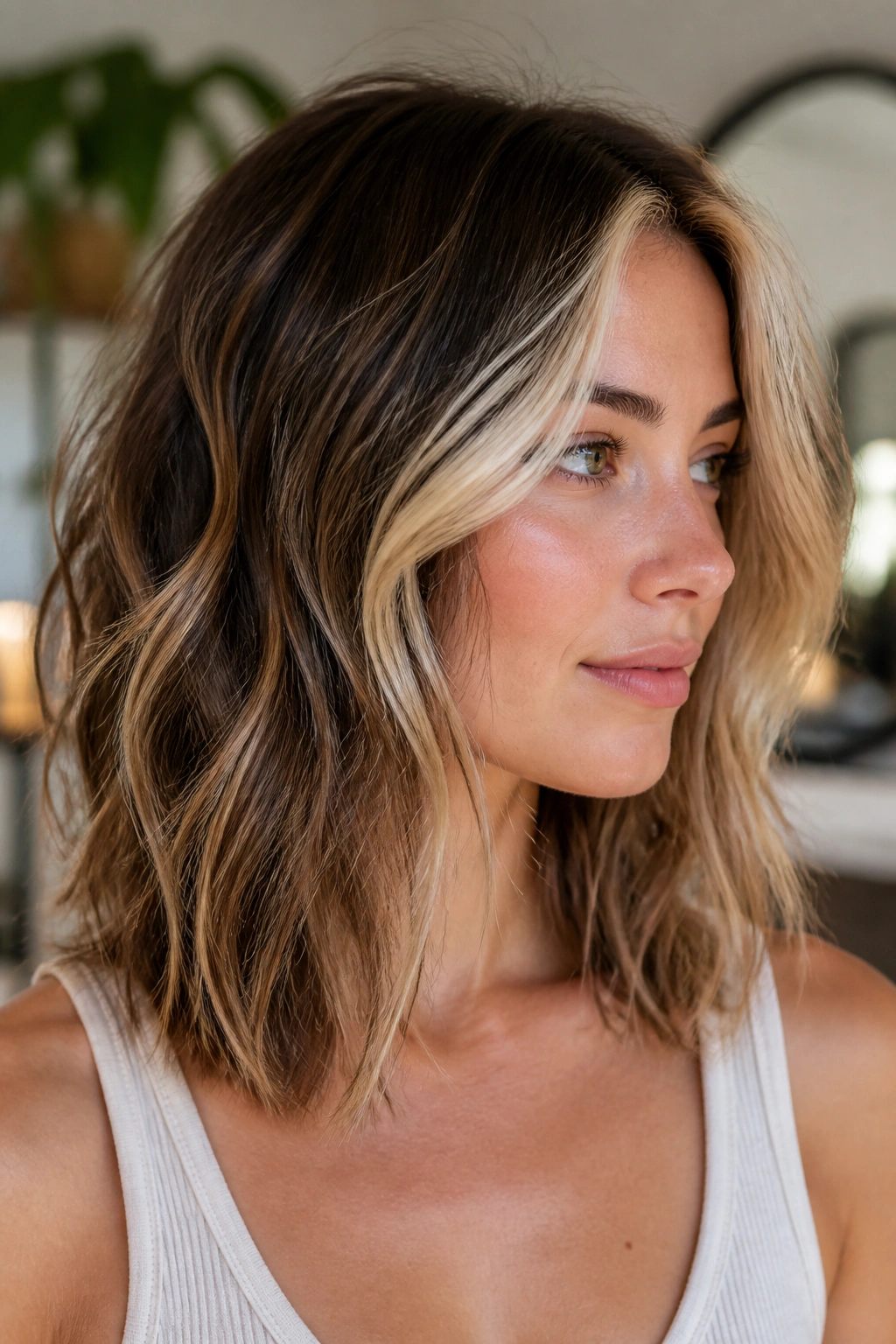
A money piece can do more than brighten the face. On a collarbone shag for fine hair, it gives the front sections a little visual weight, which makes the whole haircut seem fuller at first glance. That matters when your strands are delicate and the ends need help staying substantial.
The layers here should be soft and long enough to keep the color placement clean. Too many short chops around the front can make the bright pieces look disconnected. You want the lighter sections to frame the face, not float away from the rest of the cut.
This version is especially handy if your hair looks flatter near the root and you want a way to pull attention upward. The haircut and the color work together. Not in a loud way. In a practical way.
A center part shows off the brightness. A side part gives it more edge. Either way, keep the styling loose so the shape doesn’t feel overworked.
19. Piecey Shag With A Deep Side Part
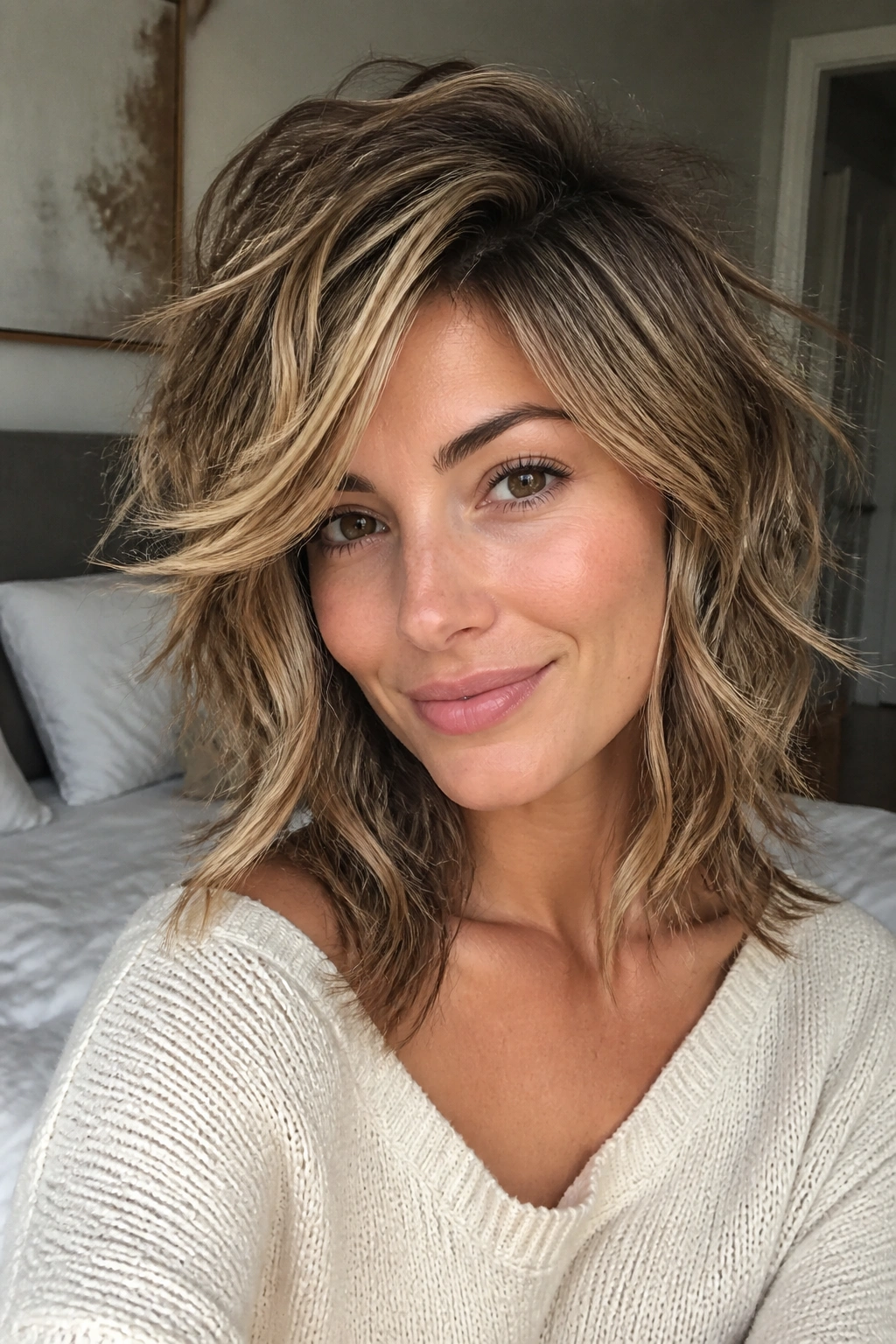
This is the shag for people who like separation. Piecey ends, defined strands, a side part with a little height at the root—it all works together to make fine hair look more intentional and a bit thicker than it is.
The deep side part matters because it breaks up the crown line. The piecey texture matters because it helps the wave read in sections instead of one soft blur. Fine hair can disappear when it’s too unified. This cut solves that by creating contrast.
How to get the look
Use a salt-free texturizing spray if your hair gets dry fast. Scrunch only the mid-lengths and ends. Then pinch a few face-framing pieces together while the hair is still warm from the dryer. That little detail goes a long way.
This style does not need perfect symmetry. It looks better with a slight imbalance. That’s where the energy is.
20. Choppy Shag With Feathered Ends

Choppy doesn’t have to mean harsh. On fine wavy hair, a choppy shag with feathered ends can feel soft, light, and full of movement, especially if the layer breaks are kept gradual. The feathering keeps the haircut from looking blocky, while the shorter pieces give the wave a place to spring up.
The danger here is overdoing the texture. If every section is heavily sliced, the ends can look a little frayed. Ask for feathering only where it helps the shape move, not everywhere at once. The best versions still have enough line to look healthy.
I like this cut on people who want a more casual finish. It air-dries into a lived-in shape, and it doesn’t need much heat to make sense. A quick scrunch and a few twists at the front are enough on most days.
Best for: hair that falls flat when it’s too long and even.
21. Air-Dried Shag For Low-Maintenance Days
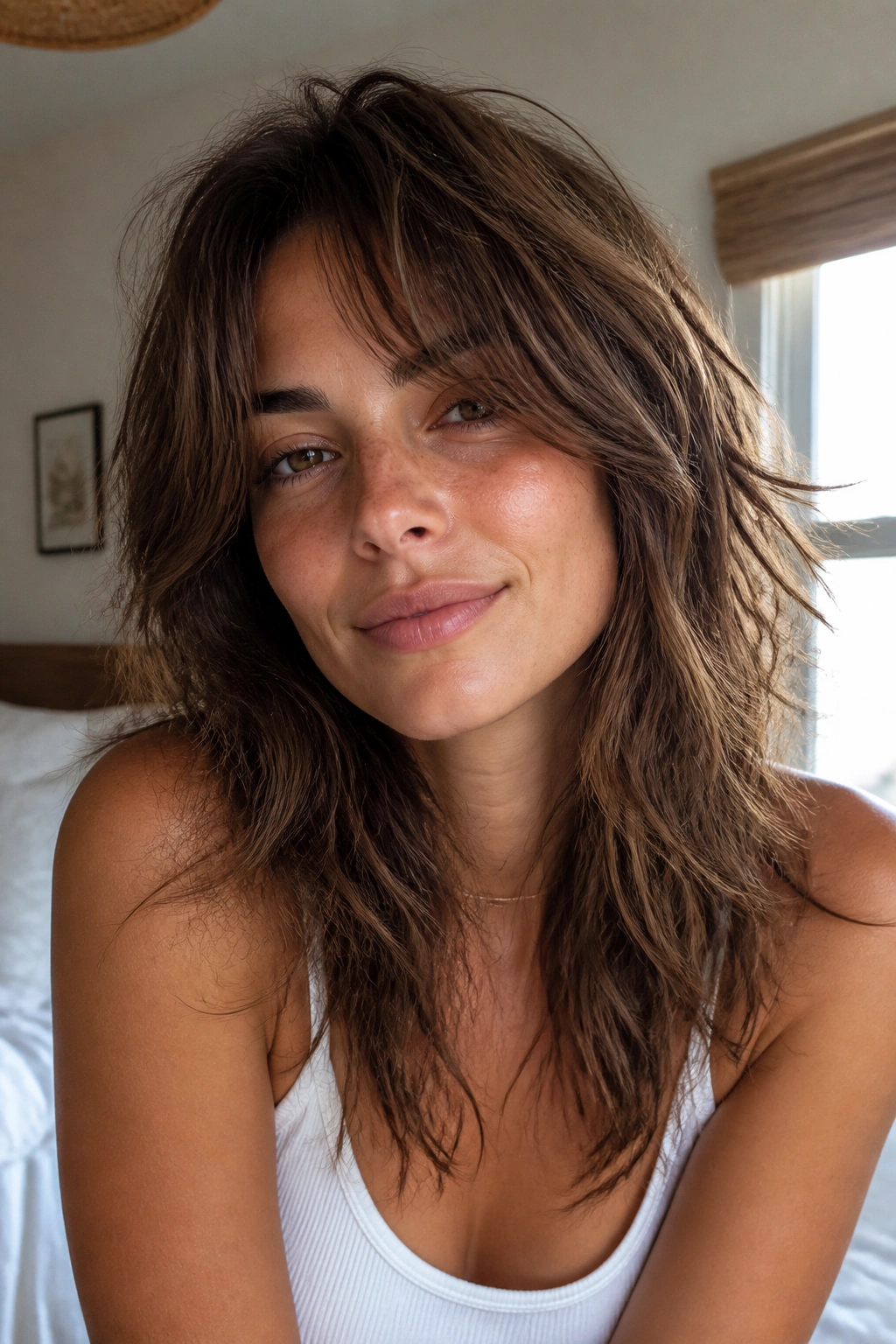
Some haircuts are designed to look good after a full styling session. This one is designed to look good after you squeeze out the water and walk away. An air-dried shag for fine hair needs balanced layering, shorter face-framing pieces, and a perimeter that keeps the ends from dissolving into nothing.
The real trick is cut placement. The layers should encourage the wave to settle where it naturally wants to go. If they’re too short, the hair puffs. If they’re too long, the wave just droops. That middle zone is where the cut earns its keep.
What helps most
- Apply mousse to damp roots and mids
- Scrunch with a T-shirt, not a rough towel
- Clip the crown while it dries
- Leave the ends alone once they start setting
This style is for people who don’t want to stand in front of a mirror for 20 minutes every morning. Fair enough.
22. Long Shag With Soft Internal Layers
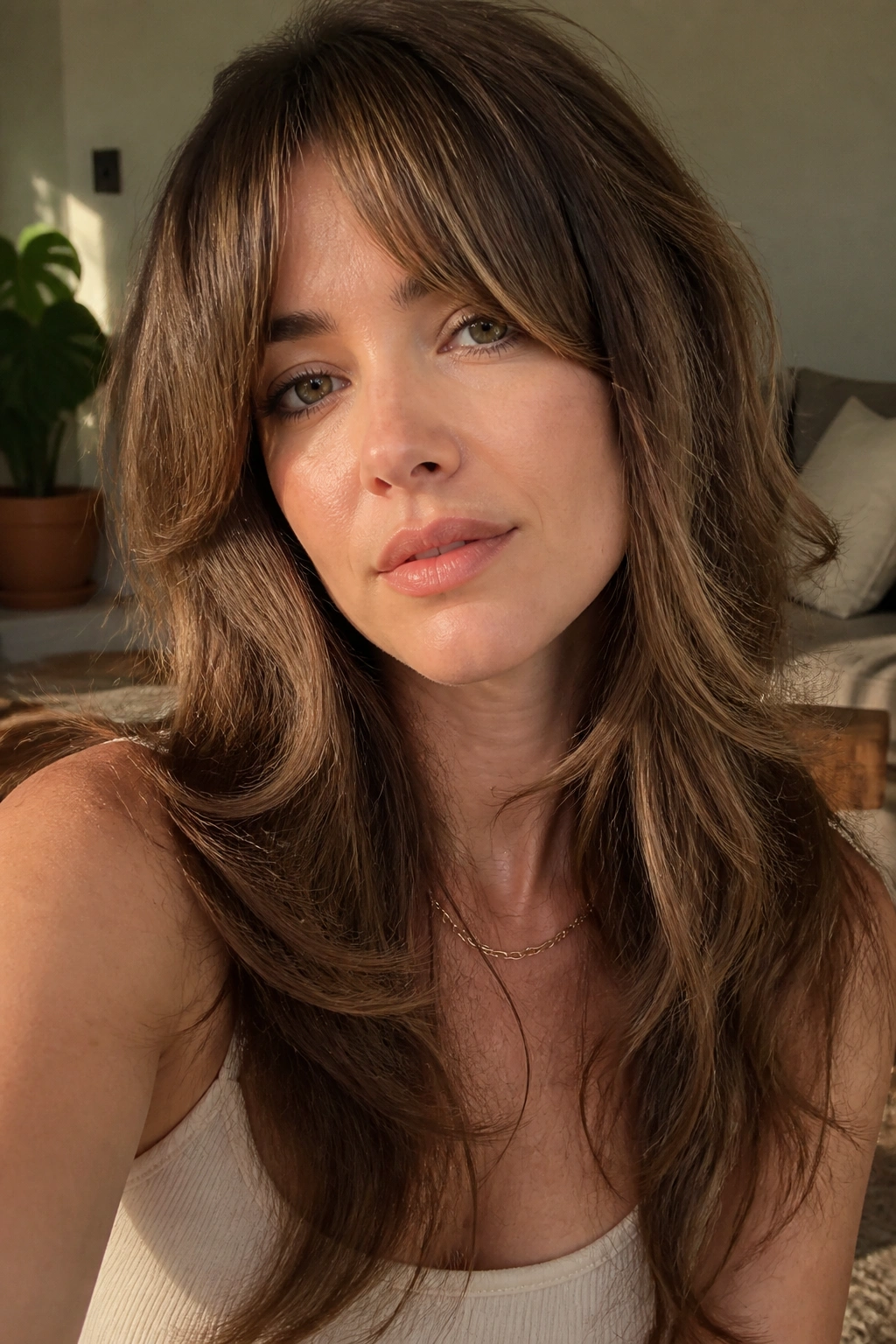
A long shag with soft internal layers is the quietest version on this list, and sometimes that’s the smartest one. It keeps the length, keeps the wave, and adds movement without shouting about it. For fine hair, that restraint matters. You still get shape, but the ends don’t get stripped away.
This cut is a strong choice if you’re growing out layers or if you like hair that can be worn down, tucked back, or loosely pinned. The internal layers stop the back from becoming a flat sheet, and the longer front pieces keep the face open. It’s elegant in a low-key way.
The best part is how forgiving it is. A soft bend, a little root lift, and a bit of finger separation are usually enough. No need to overstyle it. In fact, the more you fuss, the more it can lose that easy feel.
A final note: fine hair does not need more aggression. It needs smarter placement. That’s the difference between a shag that looks thin and one that looks airy, full, and alive.
