



Round faces can wear long blonde shag haircuts beautifully, but the cut has to do a little geometry. You want layers that pull the eye down, not straight across. You want softness around the cheeks, not a puff of volume parked right where the face is widest.
Blonde helps more than people realize. A shag with honey ribbons, beige tones, or cooler ash pieces can make the layers read clearly, even from across the room. Flat color can blur the cut; dimension makes the whole shape feel lighter and cleaner.
The real secret is placement. Curtain bangs that split near the center, face-framing layers that start below the cheekbone, and texture that lives lower on the length usually flatter a round face far more than blunt fullness at the sides. The length can be dreamy. The shape still has to do the work.
Some of these cuts are soft and airy. Others are sharper, choppier, and a little more rock-and-roll. All of them give you options if you want a long blonde shag haircut for a round face that does more than sit there and behave.
1. Curtain Bangs and Soft Layering
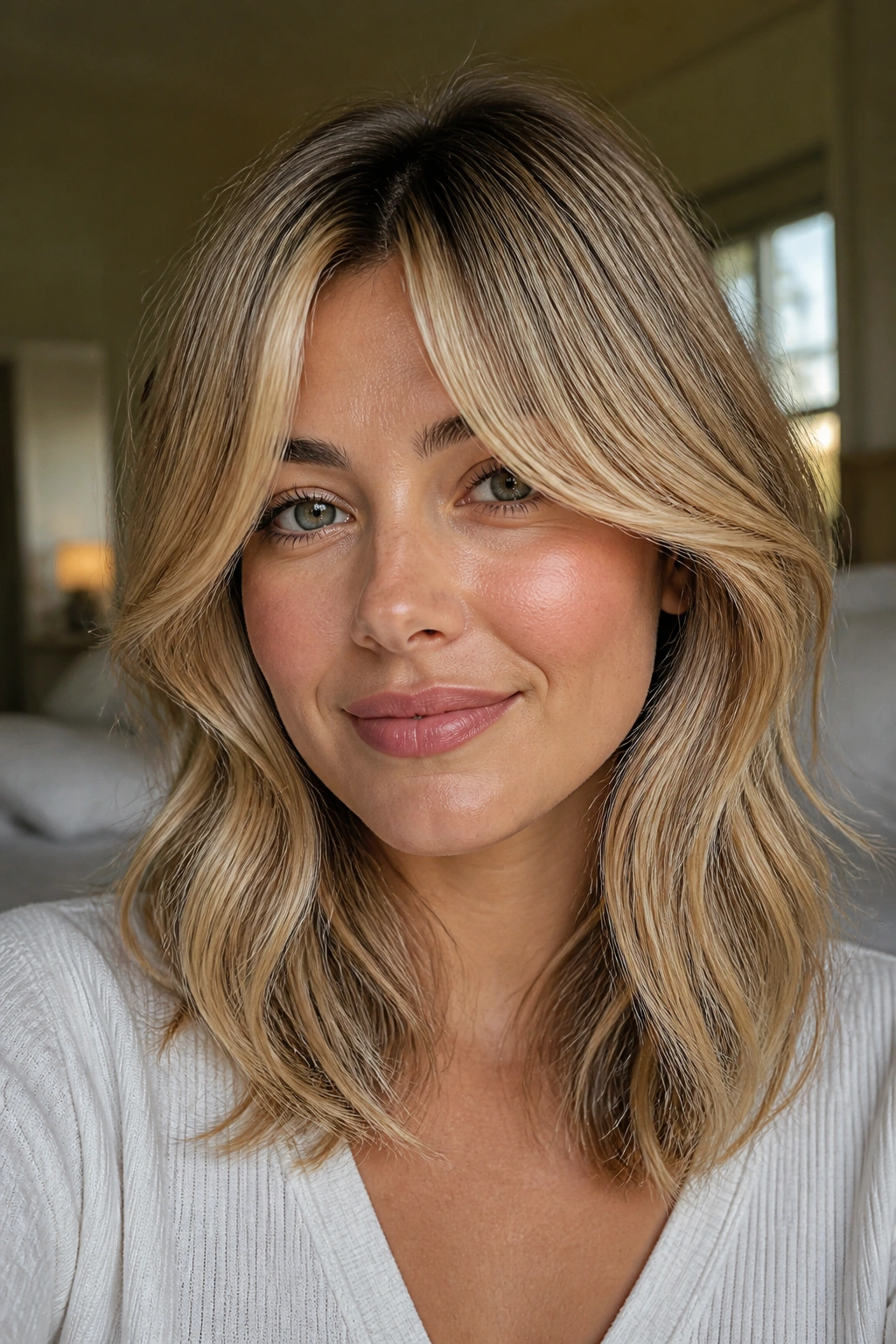
Curtain bangs are the easiest place to start if you want a round-face-friendly shag. They split the front of the face, soften the forehead, and send the eye downward instead of outward. Keep the shortest pieces just below the brow or grazing the outer lashes, then let the cheek-framing layers fall a little lower.
Why It Works on Round Faces
That extra drop matters. If the fringe ends right at the cheekbone, it can widen the face; if it falls a touch lower, it starts to narrow the visual shape instead.
- Ask for longer curtain bangs that open from the center.
- Keep the face frame below the widest part of the cheek.
- Add soft honey or beige blonde pieces through the front for movement.
- Blow-dry the bangs away from the face with a medium round brush.
Best tip: tuck the shortest layers behind each ear for a minute after styling. It trains the fringe to bend out instead of puffing forward.
2. Deep Side Part With Face-Skimming Fringe
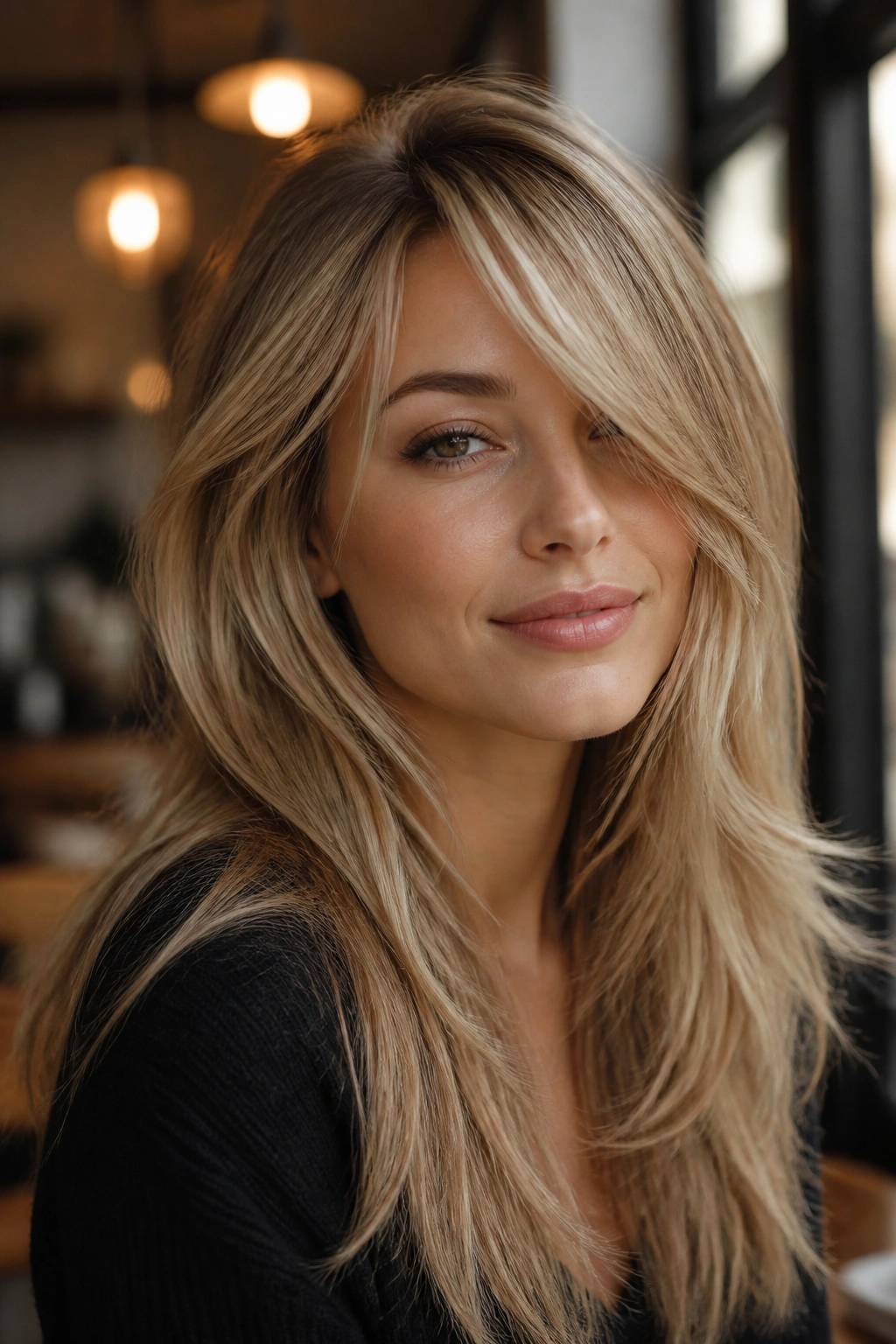
A deep side part does more for a round face than a lot of people expect. The part itself creates a long diagonal line, and that diagonal is the whole point. It breaks up the symmetry that can make a round face feel wider, especially when the hair is long and full.
The fringe should sweep across the forehead in a soft arc, then skim the temple and cheek without sitting heavy on top of them. I like this look in buttery blonde or soft caramel-blonde because the color shift makes the side-swept line read even more clearly.
It’s a good cut if you want the shag shape without committing to a center-part curtain bang. A little asymmetry goes a long way here.
3. Razored Platinum Length With Broken Ends
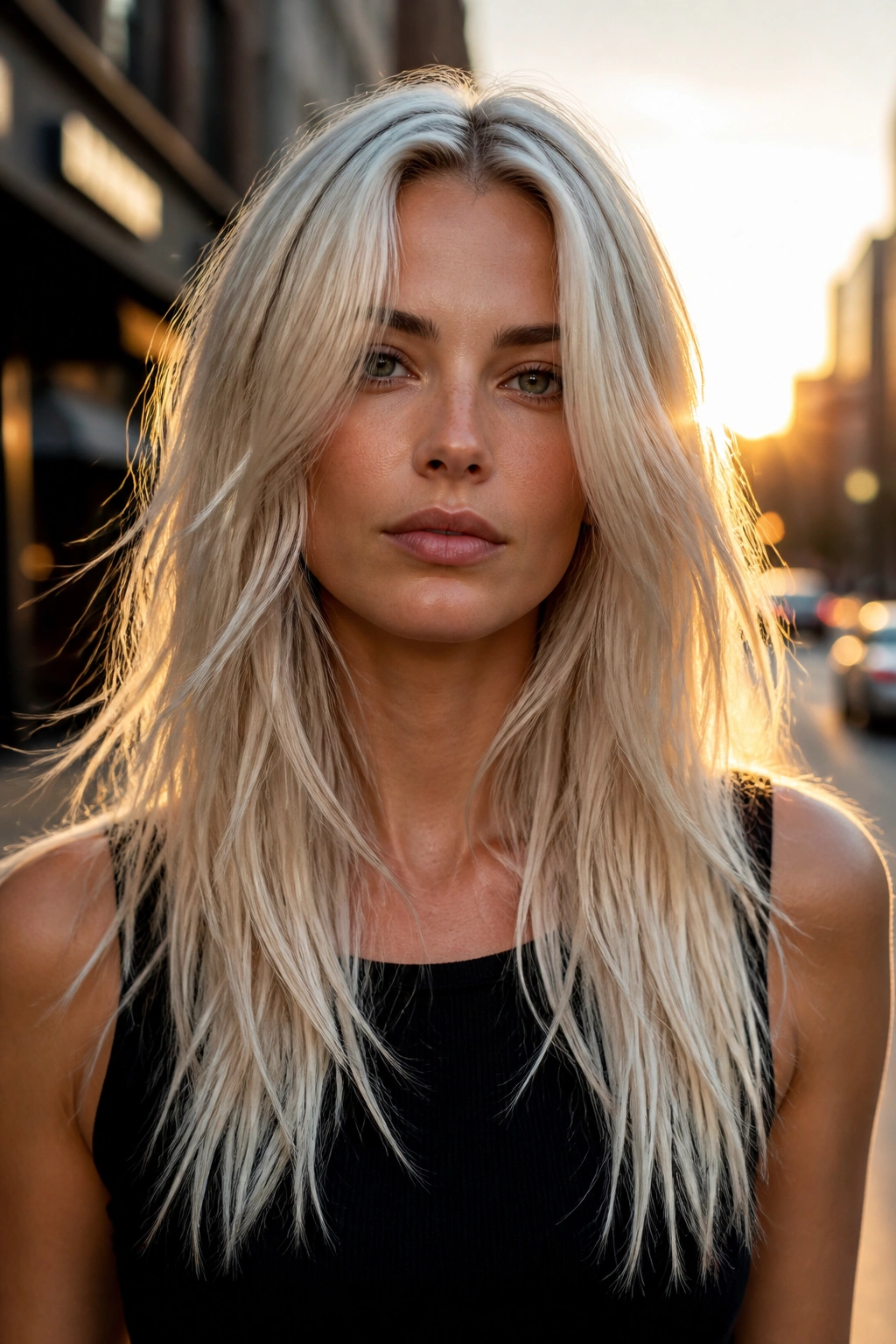
Why does this one work so well? Because razor cutting keeps the ends airy instead of heavy. On a round face, that matters. The line stays long, but the texture keeps the shape from turning into one big fluffy curtain.
How to Ask for It
Tell your stylist you want length below the shoulders, with razored ends and soft movement through the lower half. The shortest layers should live around the collarbone or lower, not at the cheeks. Platinum blonde makes the broken texture look crisp, but it also shows every blunt mistake, so the cut has to be clean.
What to Watch For
- Too much layering at the crown can make the top look thin.
- A blunt face frame can widen the cheeks.
- Dry texture spray helps the ends separate after styling.
Pro tip: this cut looks best when the pieces are slightly messy, not over-brushed.
4. Beachy Balayage Shag With Loose Waves
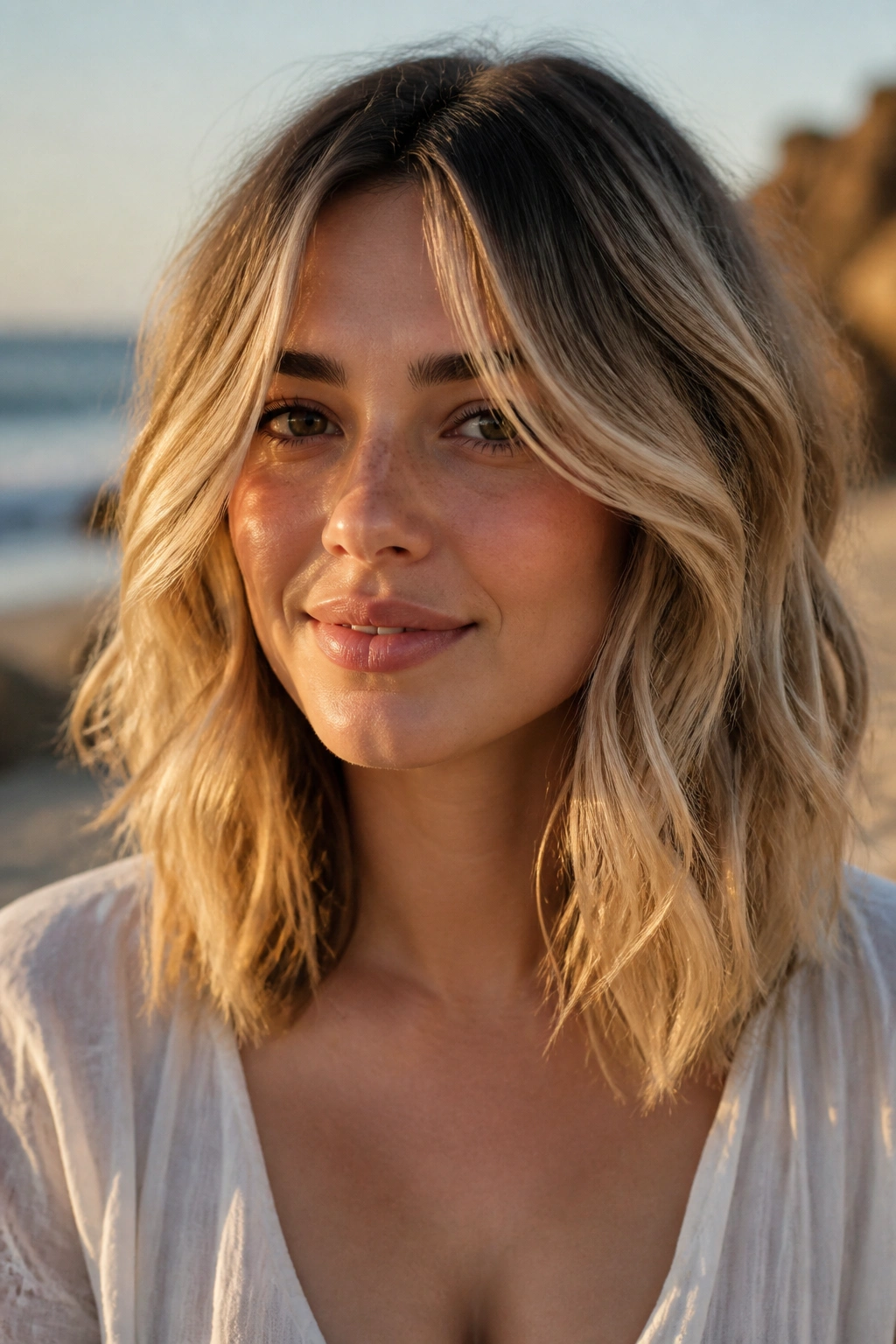
Picture a shag that looks like it spent the day near salt air, even if it didn’t. Loose waves and balayage ribbons make the layers show up without screaming for attention, which is good news for a round face. The eye moves through the bends instead of stopping at one wide point.
The balayage should be painted lower through the mids and ends, with a little brightness around the face. Keep the wave pattern soft—think a 1.25-inch iron wrapped loosely, then brushed out with your fingers. Hard curls can make the shape too puffy.
If your hair has some natural bend, this cut is easy to wear. If it doesn’t, a sea-salt spray and a quick scrunch are usually enough to bring it alive.
- Best on hair that holds a wave
- Works well with lived-in blonde tones
- Keeps the silhouette soft at the cheeks
5. Waist-Length Invisible Layers
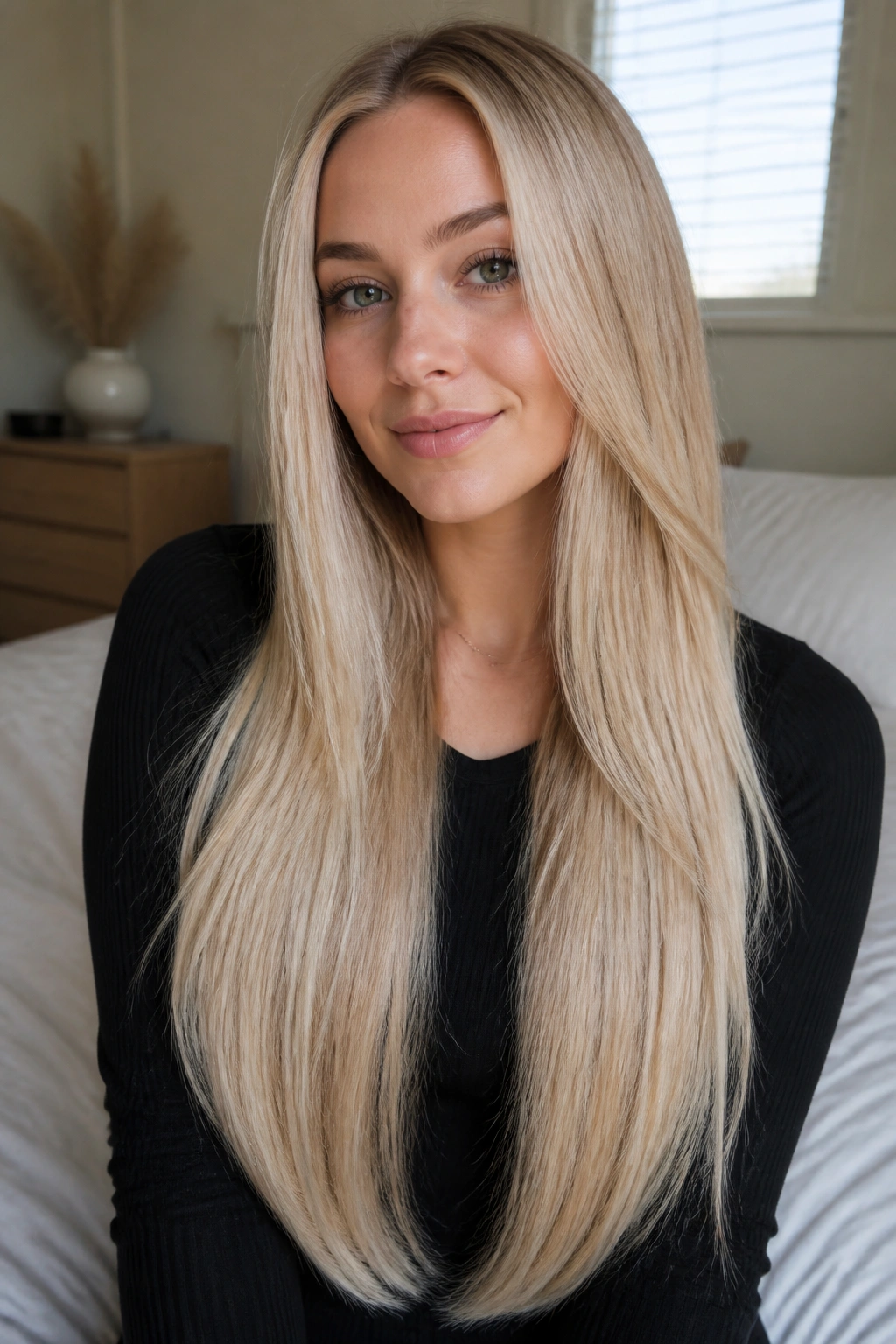
This is the shag for someone who wants length first and texture second. The layers are there, but they’re hidden inside the haircut, which keeps the outside line smooth and long. On a round face, that vertical line helps more than a chop-heavy shape would.
I like this one in cream blonde or soft beige blonde because the color gives the movement away without making the ends look thin. The face frame should be long and quiet, barely announcing itself until you move.
It’s a strong choice if you like putting your hair up half the time and wearing it down the rest. The cut still has shape when tied back, which is a nice bonus. Not every shag needs to look loud.
6. Honey Blonde Bottleneck Bangs

Bottleneck bangs are a neat middle ground between curtain bangs and a heavier fringe. They start narrow at the center, then open slightly around the brow and cheek. On a round face, that shape can be kinder than a straight fringe because it keeps the forehead from feeling boxed in.
Honey blonde gives the style warmth, and the soft depth at the root stops the bangs from floating away from the rest of the haircut. I’d choose this if you want a little softness up front without going full wispy.
The best part is the way the bangs melt into the side layers. They don’t look pasted on. They look built in.
Good for: medium-density hair, soft waves, and anyone who wants face-framing without a heavy curtain.
Skip if: you hate styling bangs every morning.
7. Grown-Out Rock Shag With Choppy Crown Layers
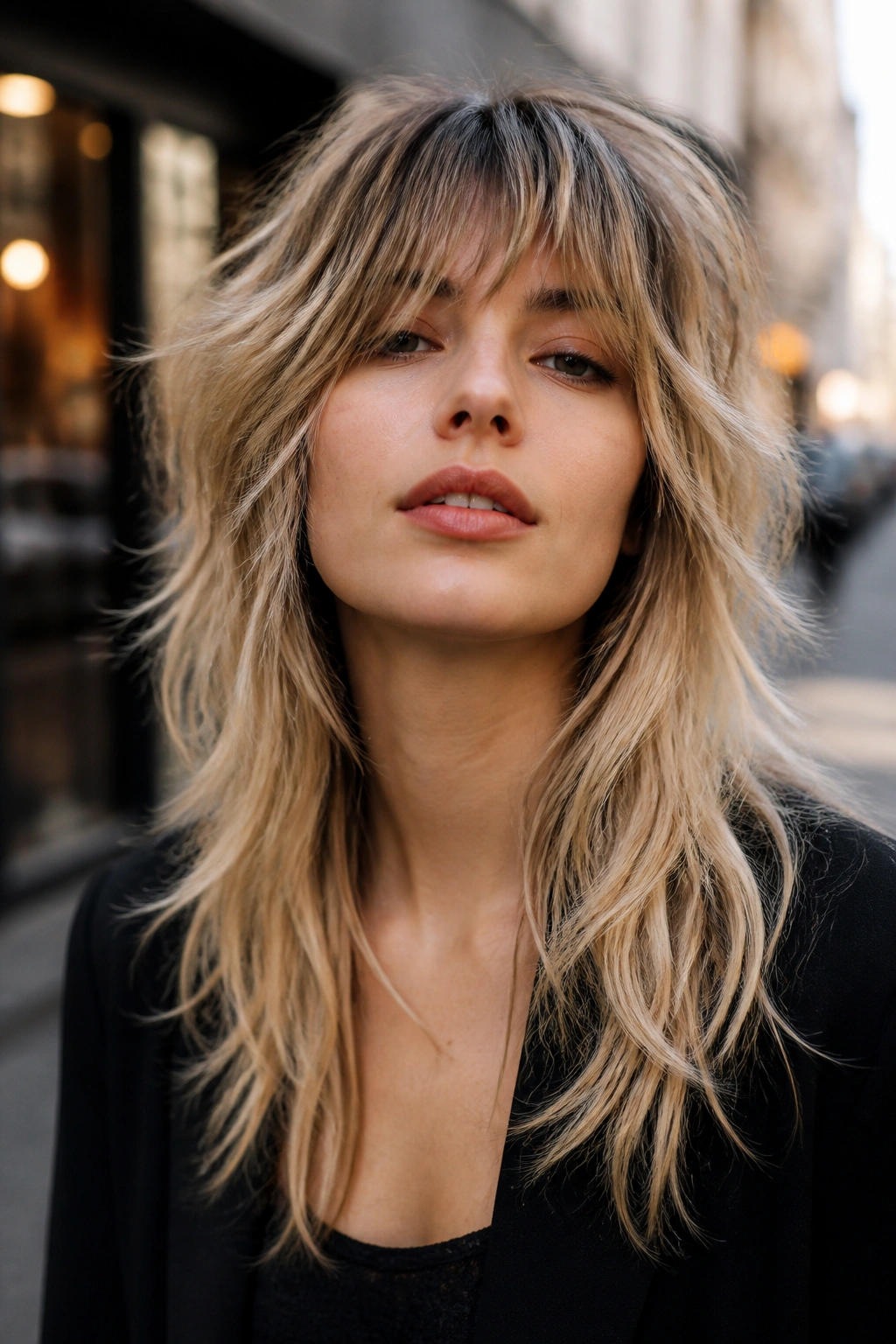
This cut has attitude, but it still needs discipline. The crown layers are choppy and lifted, while the lower lengths stay long enough to keep the round face from feeling wider. That contrast is what gives it shape.
What Makes It Different
The top moves fast. The bottom moves slow.
- Crown layers are short enough to create lift.
- Side pieces stay long and narrow the cheek line.
- The blonde should have darker roots or lowlights for depth.
- Works best with a matte texture paste or dry spray.
My take: this is one of the better choices if your hair is thick and loves to poof. The choppy crown removes weight where you do not want it.
8. Champagne Blonde Shag With a Polished Blowout
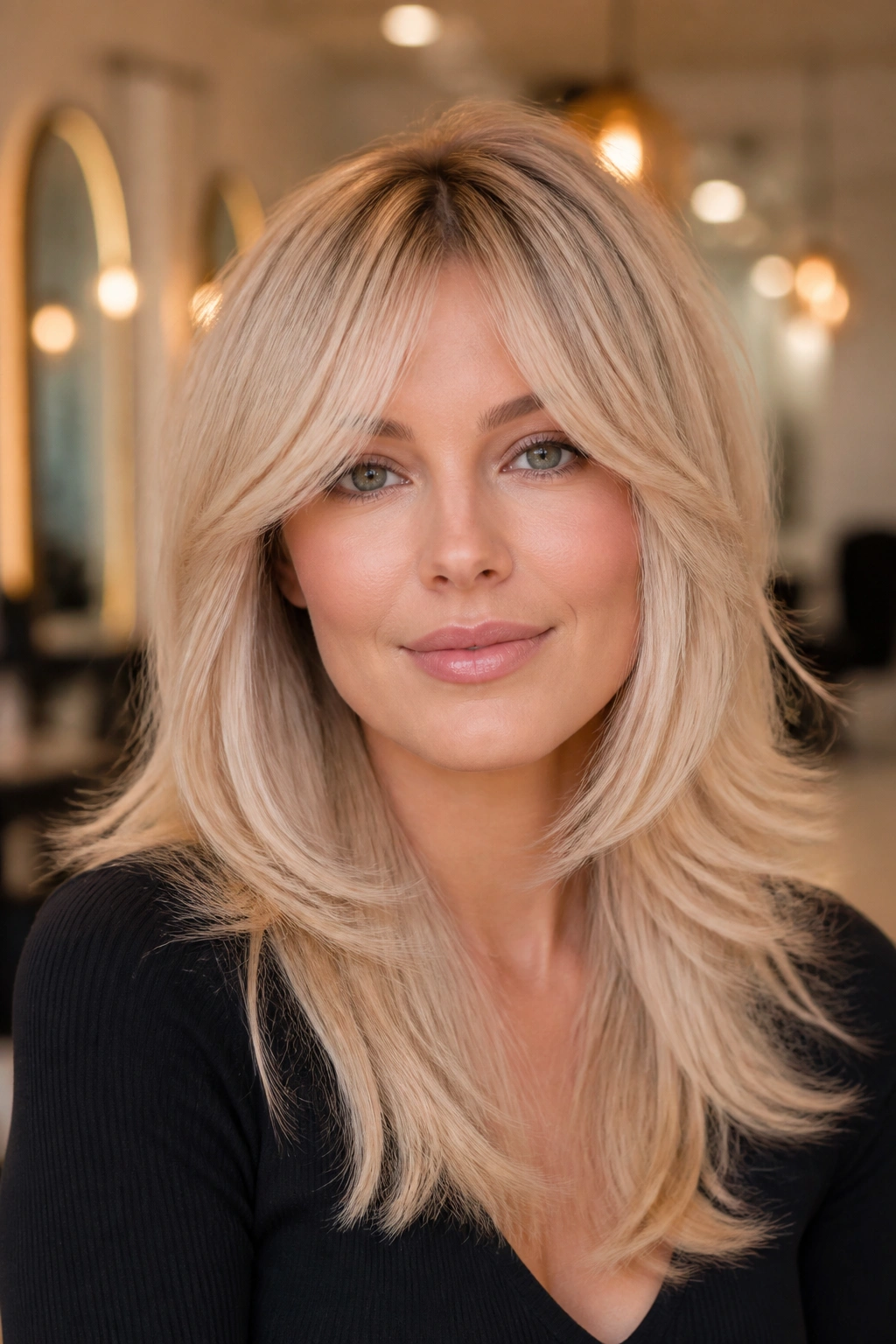
A polished blowout changes the mood of a shag completely. Instead of looking beachy and rough, the layers swing cleanly and the fringe curves just enough to soften the face. That little curve matters on a round face because it keeps the width from sitting flat across the cheeks.
Champagne blonde is a smart color here. It reflects light without going icy, and it makes the cut look expensive in that quiet, salon-fresh way. The ends should still have movement, but not so much texture that the shape turns fuzzy.
This is the shag for someone who wants softness with control. The hair still moves. It just moves like it knows where it’s going.
9. Deep Side-Swept Shag With Long Front Pieces
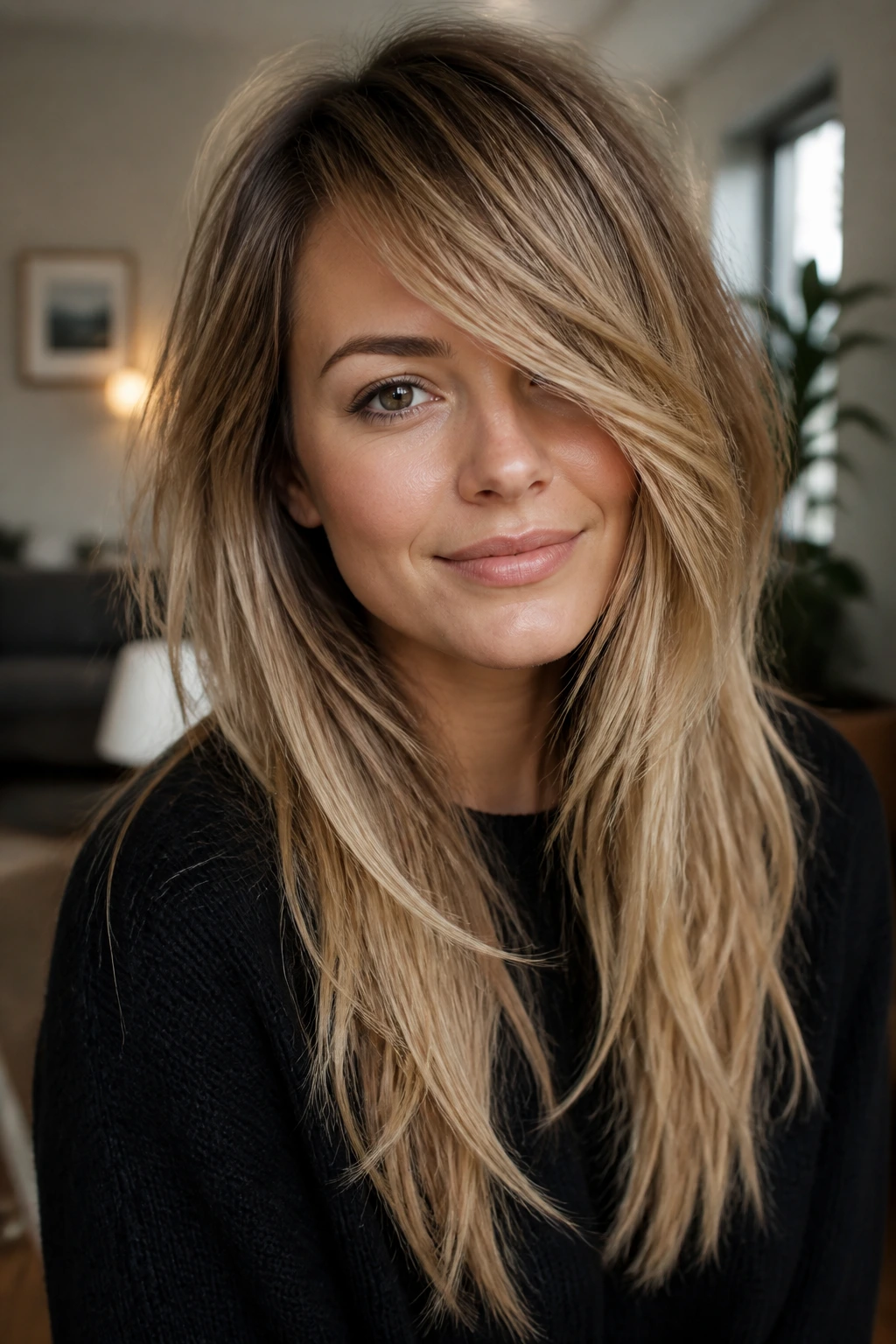
Can a side-swept shag slim a round face better than curtain bangs? Sometimes, yes. The long front pieces form a diagonal across the face, and diagonals are excellent at breaking up roundness. You get motion near the cheeks without parking fullness right at the widest point.
The key is length. Those front pieces need to pass the chin, or at least brush it, so they stretch the face instead of stopping it. A warm blonde balayage helps the sweep stand out, especially if the brighter pieces sit lower on the lengths.
How to Wear It
Use a blow dryer and a paddle brush to direct the front away from the face, then bend the ends slightly inward. That keeps the look soft, not severe. A side part plus long fringe can feel glamorous in a very low-effort way.
10. Butterfly Shag With Blonde Ribbons
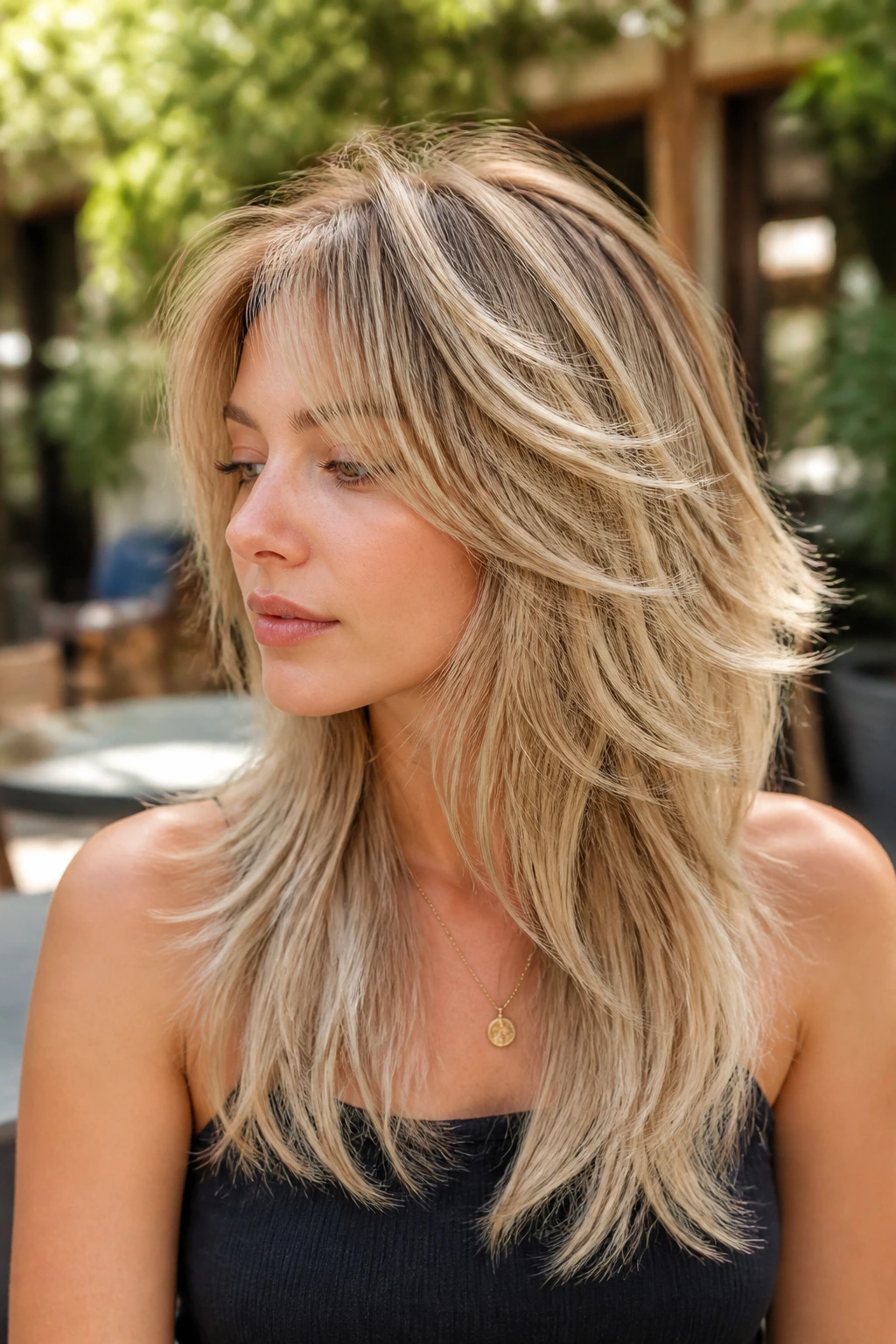
This is the cut I picture when someone wants movement everywhere. The top layers are shorter and more lifted, the lower layers stay long, and the blonde ribbons catch both zones so the haircut doesn’t flatten out. On a round face, the lift at the crown helps, but the long lower pieces are what keep the shape from getting broad.
Think of it as a shag with more swing. The face frame should start below the cheekbone, then blend into long, loose lengths. If the shortest pieces hit too high, the cut can widen the face instead of lengthening it.
- Ask for soft separation through the crown.
- Keep the lower length full, not wispy.
- Place brighter blonde pieces through the front and ends.
- Style with a large round brush for a floating finish.
That combination gives the haircut some drama without losing softness.
11. Feathered Ends and Airy Volume
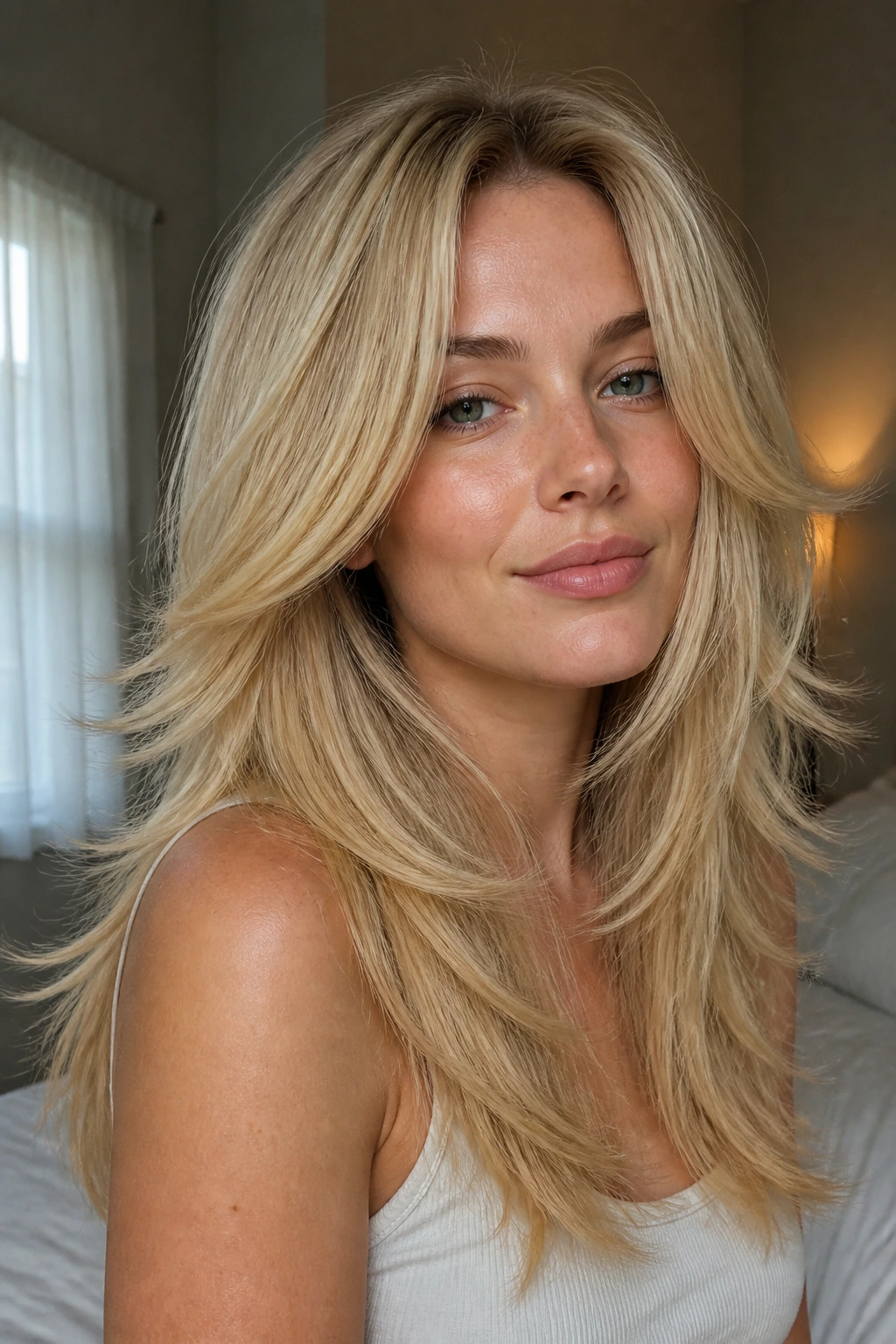
Feathered ends feel almost old-school in the best way. They make the hair flick outward lightly instead of hanging in one solid block, which is exactly what a round face often needs from a long shag. The shape stays long, but the edges breathe.
I especially like this on fine to medium hair because feathering gives you motion without needing a ton of heavy layering. A soft beige-blonde shade helps, too, since it keeps the ends from looking stringy.
The top should stay soft and lifted, not puffy. That’s the line to keep. Too much volume on the sides can undo the whole point.
This is one of those cuts that looks better when it’s not too neat. A little bend in the ends makes it sing.
12. Rooted Beige Blonde Shag With a Long Fringe
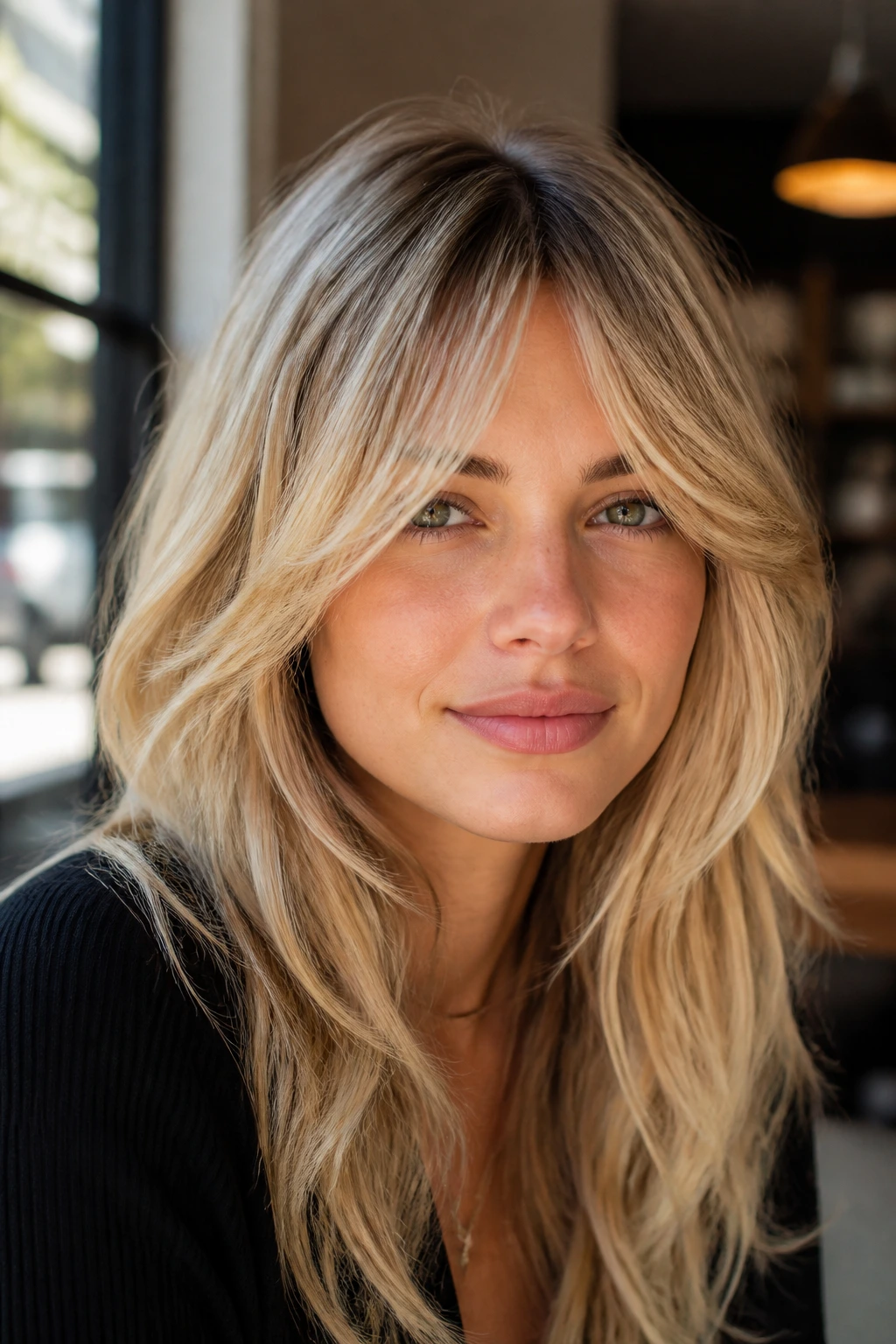
Rooted beige blonde is practical, and I mean that in the nicest way. The darker root gives the cut depth, which stops a round face from looking even fuller around the cheeks. Beige blonde through the mids keeps the whole thing soft, while the long fringe drifts down the sides and stretches the face visually.
Compared With a Flat All-Over Blonde
A single blonde tone can blur the layer pattern. Rooting the color keeps the shag readable.
That matters if you want movement to show up in daylight and not just in the salon mirror.
Best for: people who want lower upkeep and a little more dimension at the scalp.
Not ideal for: anyone who wants a very bright, all-over blonde that starts at the root.
The long fringe should be soft and side-friendly, not blunt. That’s where the flattering part lives.
13. Internal Layers and a Blunt Perimeter
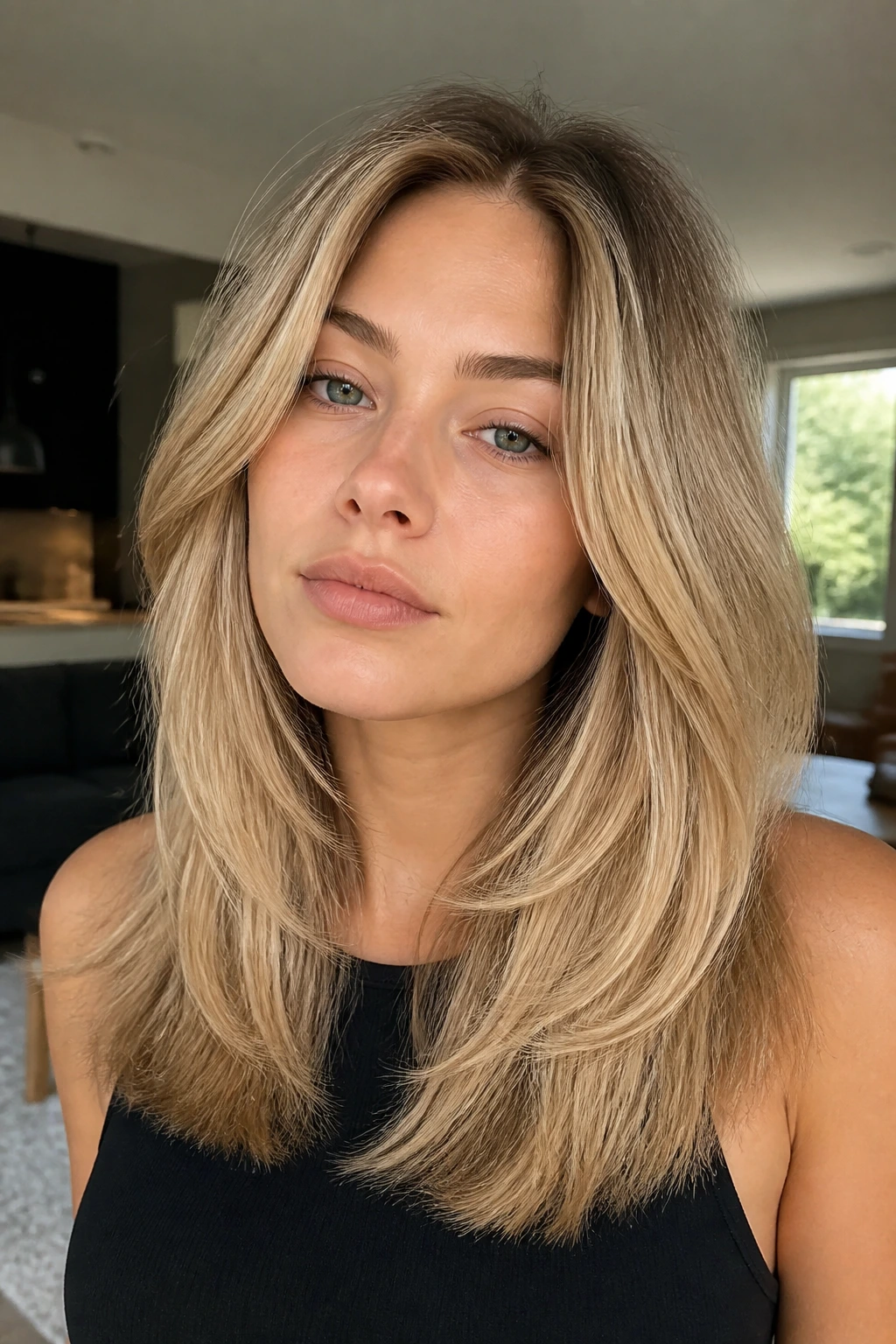
This cut sounds contradictory, and that’s why it works. The inside of the haircut has movement, but the outer edge stays more solid. On a round face, that outer edge can keep the hair from ballooning out at the sides while the internal layers do the real shaping.
Why It Helps the Shape
The blunt perimeter acts like a frame. The internal layers do the air work.
- Great for dense hair that wants to expand.
- Keeps the ends looking full instead of thin.
- Pairs well with warm blonde highlights that show the movement inside.
- Ask your stylist to keep the layers lower through the length.
This is a smart option if you want a shag without the frayed, overly broken finish. It feels cleaner. Slightly tougher, too.
14. Ash Blonde Shag With Wispy Bangs
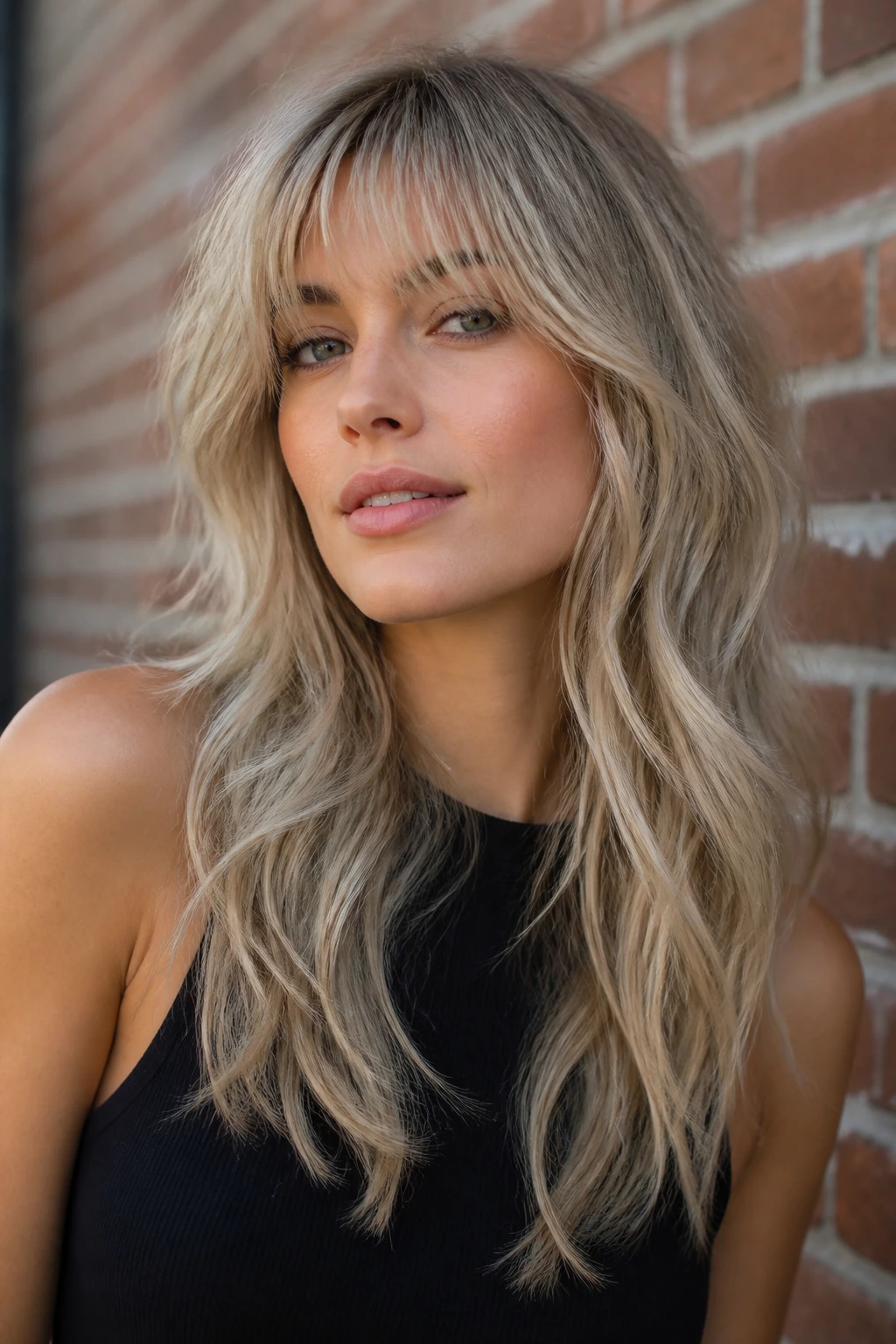
Ash blonde changes the mood fast. It cools the whole cut down and makes the wispy bangs look lighter, which can be useful on a round face because the fringe doesn’t sit heavy across the forehead. Instead, it breaks up the top of the face in a soft, narrow way.
I like the wispy bang approach here because it keeps the forehead open enough to avoid the boxed-in feeling that fuller bangs can bring. The layers should stay long and loose, with enough bend to keep the sides from puffing outward.
A good ash blonde shag has a slightly undone look, not a frozen one. The texture should feel touchable. Not crunchy. Not stiff. Just airy and cool.
If your skin tone likes cooler tones, this cut is especially flattering.
15. Soft Wolf-Inspired Length
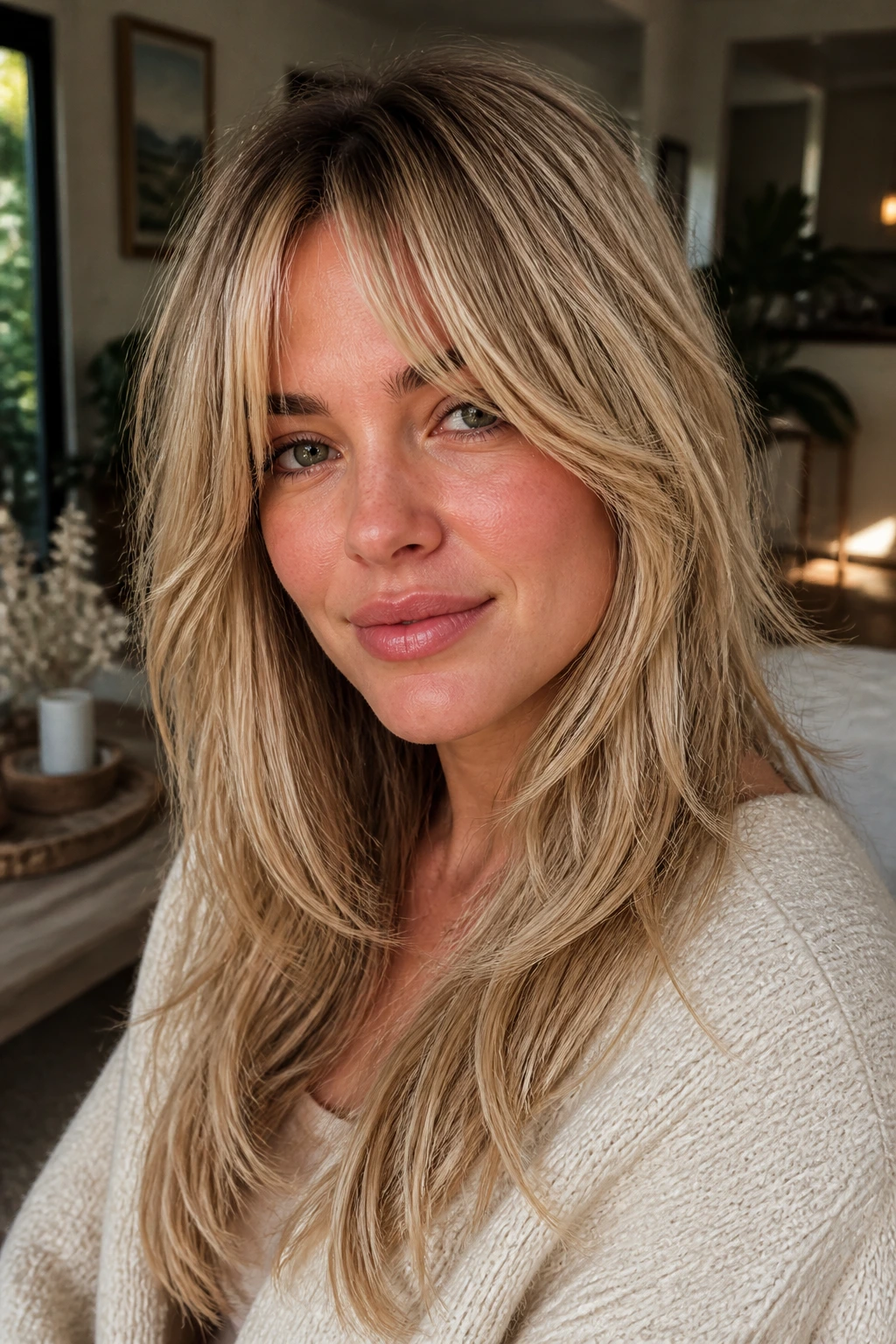
Does a wolf-inspired shag have to look edgy? Not at all. A softer version keeps the crown lift and piecey movement, but the longest layers stay elegant and low. That balance can work well on a round face because it adds shape without adding width.
How to Keep It Wearable
The trick is restraint. Too many short layers near the cheeks, and the whole cut gets wild fast.
- Keep the crown textured but not choppy.
- Let the front pieces fall past the chin.
- Use a blonde shade with dimension at the root and ends.
- Finish with a small amount of lightweight cream, not heavy oil.
This version feels a little rebellious, but not messy. That’s the sweet spot.
16. Round-Brush Blowout Shag
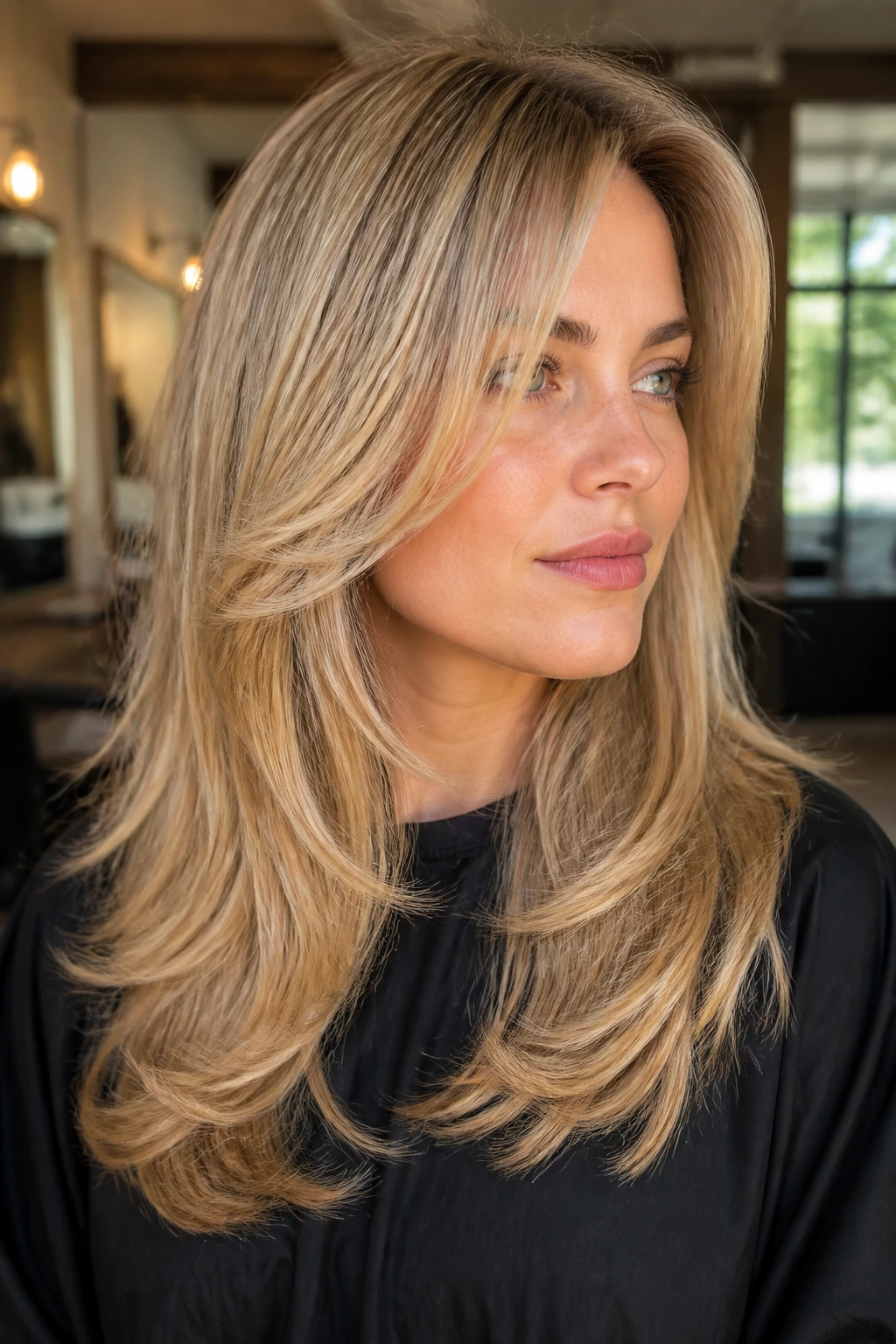
Here’s the difference between a shag that looks sleepy and one that looks expensive: the blowout. A round brush gives the layers a soft curve, and that curve keeps a round face from looking wider. The hair lifts at the crown, bends at the ends, and falls in a cleaner line.
The best blonde for this cut is usually a soft gold or creamy beige tone, because it reflects light off the bends. Ask for long layers that can flip easily, especially through the front and mid-lengths. If the layers are too short, the blowout can get big in the wrong places.
- Use a 1.5-inch round brush for smoother bends.
- Aim the dryer upward at the roots for lift.
- Turn the ends slightly under or outward, not both.
- Finish with cool air to lock the shape.
It feels polished, but not rigid. That matters.
17. U-Shaped Back With Soft Texture
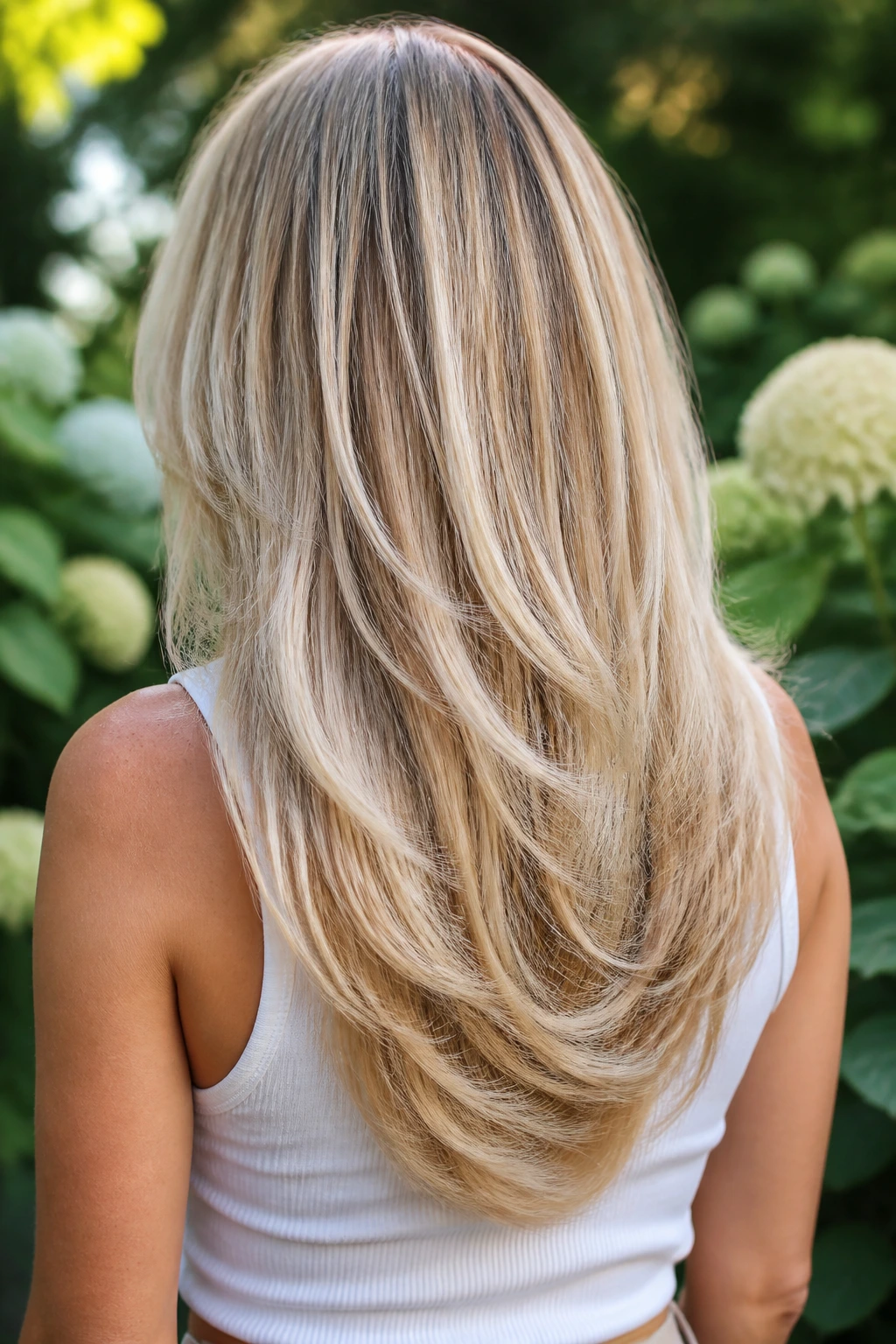
A U-shaped haircut keeps the back full and rounded in a controlled way, which sounds odd until you see it on long hair. The line dips gently in the center, so the overall silhouette feels long rather than boxy. For a round face, that lengthened back shape helps balance the cheeks.
The soft texture should live mostly in the interior, not at the edges. That keeps the perimeter smooth while still giving the shag enough movement to avoid heaviness. Blonde balayage works nicely here because it shows the gradual curve in the cut.
This is a strong choice if you want hair that still looks good in a low ponytail or clip. The shape holds up from the back as well as the front. That’s not true of every shag.
18. Golden Blonde Shag With Flipped Ends
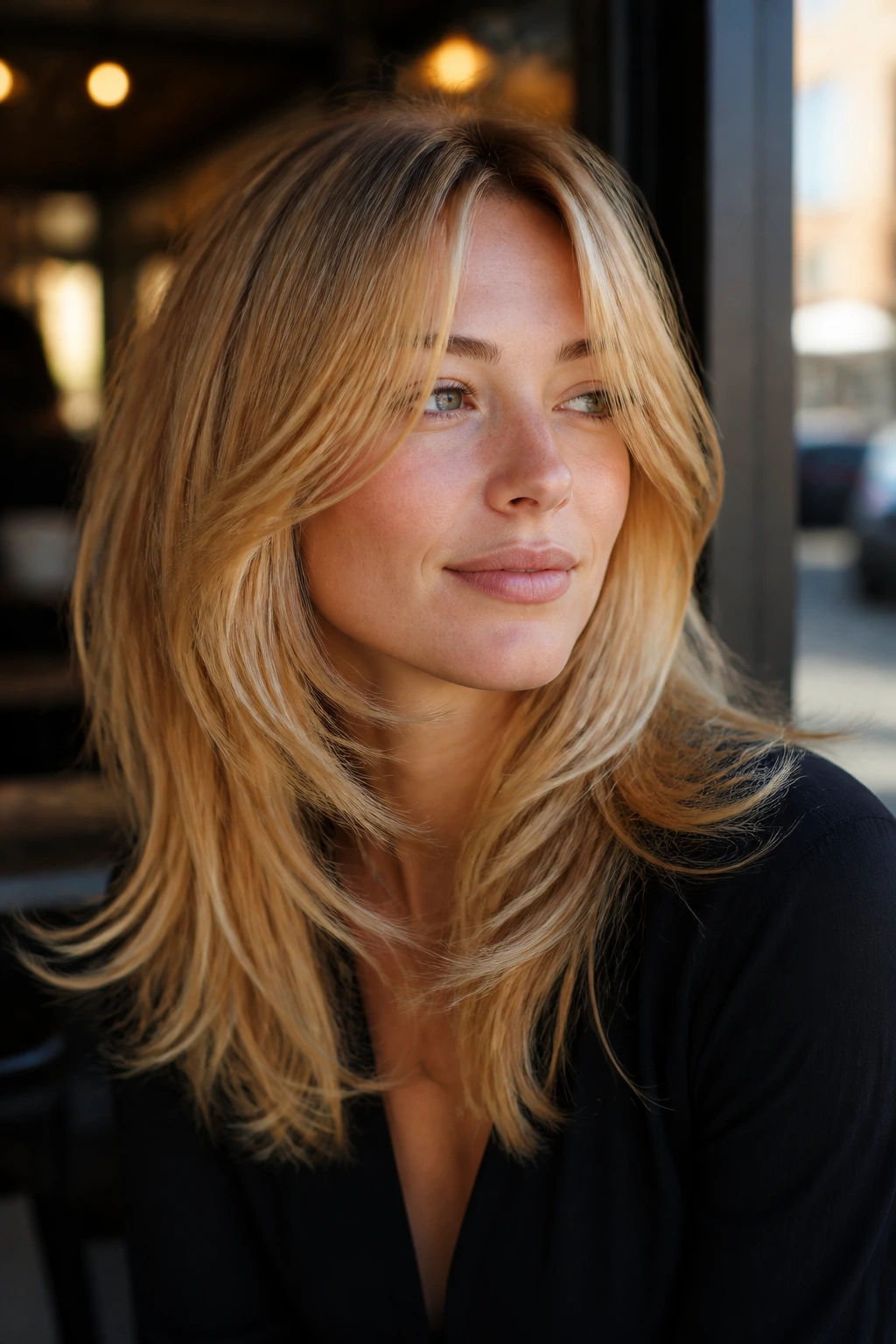
Golden blonde brings warmth and a bit of shine, and flipped ends make the whole cut feel lively instead of severe. The slight outward bend at the bottom can be useful on a round face as long as the volume stays low and the flip starts below the jaw.
Compared With Straight-Laced Shags
A straighter shag looks sharper. A flipped one feels softer and more playful.
If your face already has a lot of soft curves, the flip should stay gentle. Too much outward kick near the cheeks can widen the look. Keep it toward the lower lengths, where it adds movement without stealing the shape.
This cut is good for hair that responds well to a flat iron or round brush. A little bend at the ends makes the blonde catch the light in pieces, which keeps the style from going flat.
19. Barely-There Layers for Fine Hair
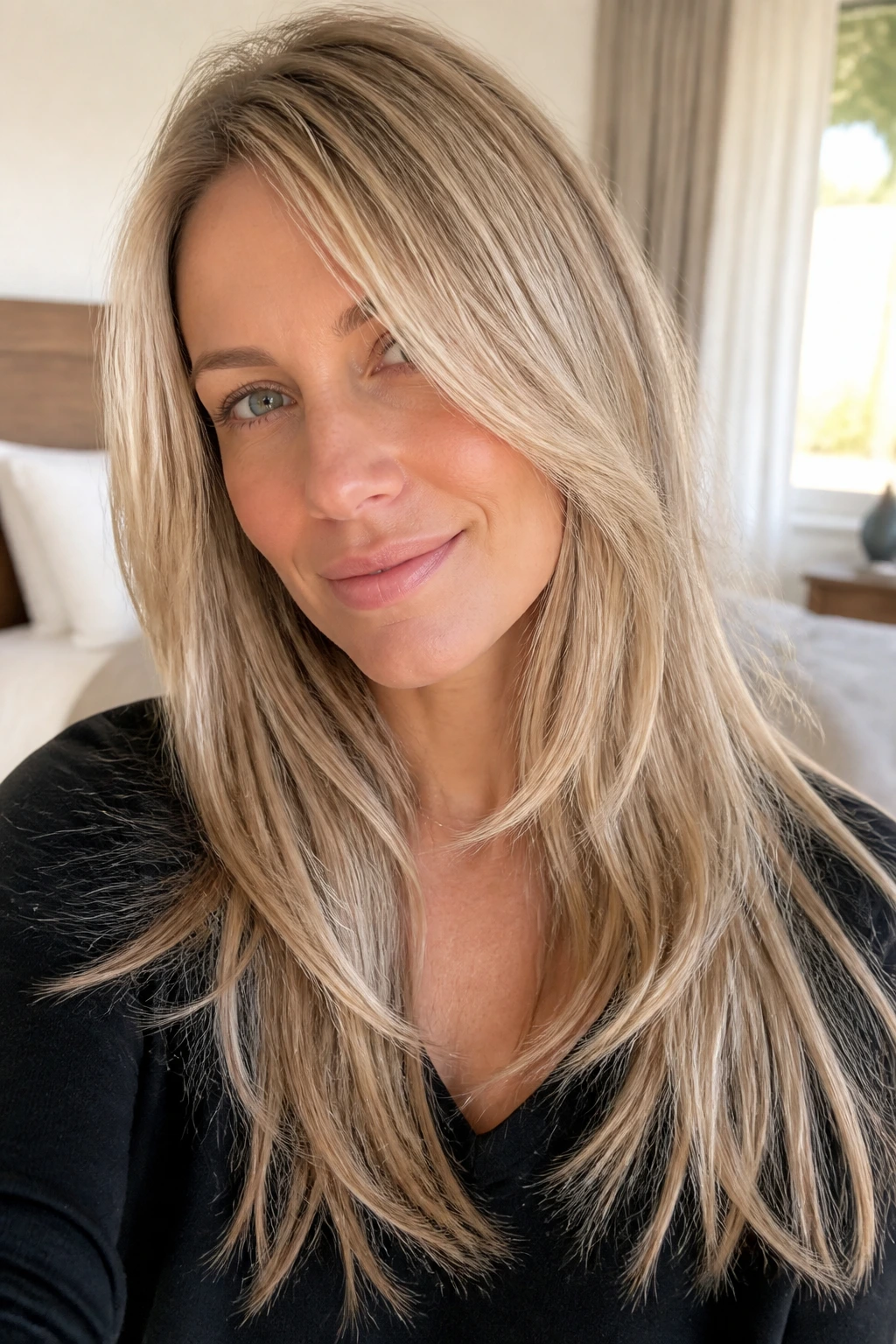
Fine hair and shag cuts can be tricky. Too many layers and the ends get thin fast. Too few and the whole thing hangs limp. Barely-there layers split the difference, especially on a round face where you still want some vertical movement without losing density.
What to Ask Your Stylist
Ask for long layers that start low, soft face-framing pieces, and a perimeter that stays mostly full. The haircut should feel feather-light, not stripped down.
- Keep the shortest pieces below the cheekbone.
- Avoid heavy texturizing at the very ends.
- Choose a blonde with subtle highlights, not chunky contrast.
- Style with mousse at the roots and a quick blow-dry.
This is a practical, honest version of the shag. It doesn’t try to do too much.
20. Temple Volume and Side Bangs
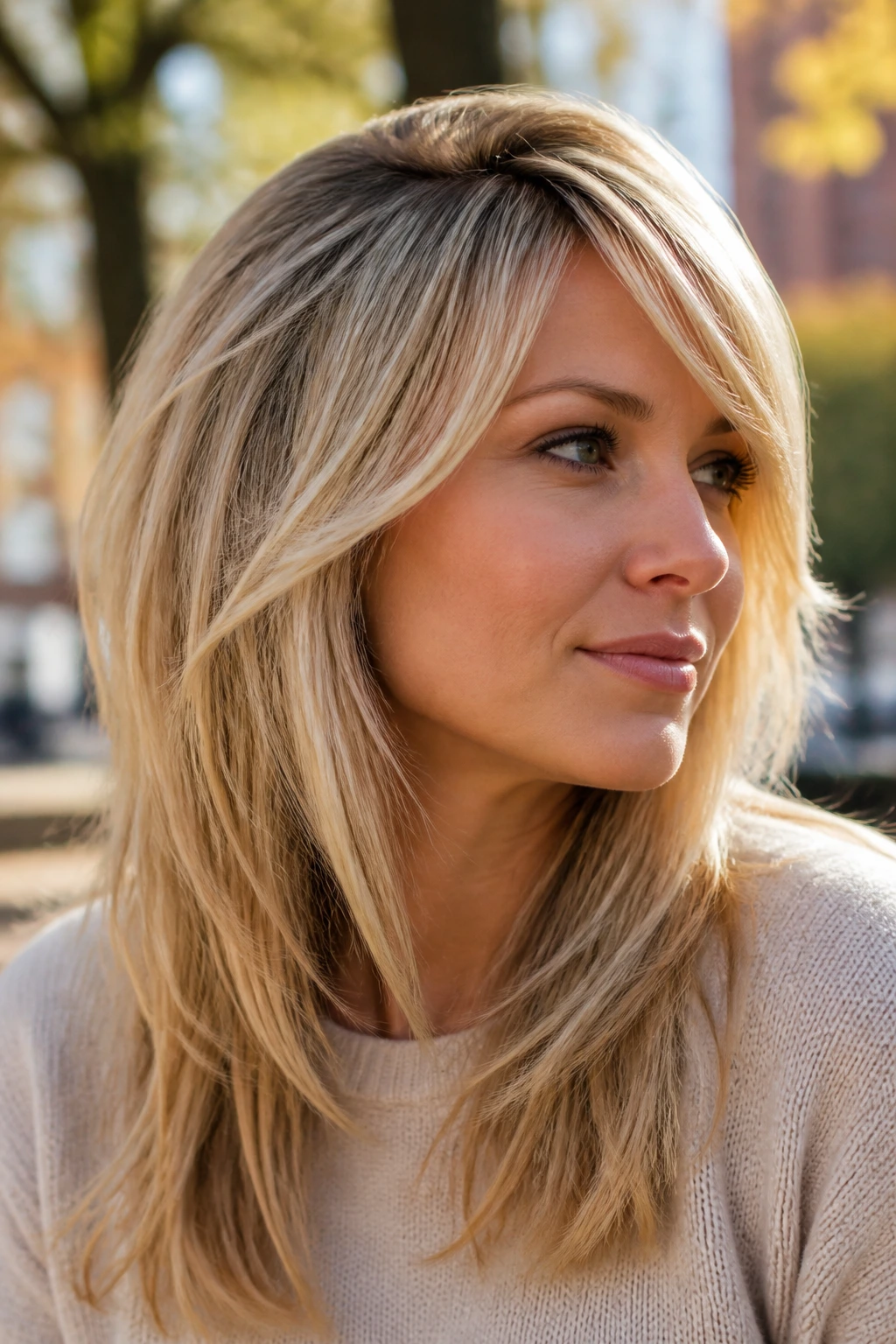
Temple volume can sound scary, but in the right cut it gives the face a lift where it needs one. The volume sits higher and slightly back from the cheeks, so it opens the face instead of widening it. Side bangs help guide the eye diagonally, which is a nice bonus on a round face.
I like this look in creamy blonde shades because they keep the top airy. The bangs should graze the brow and sweep softly into the side layers. Nothing should feel cut square. The lines need to stay curved and light.
This is a strong choice if the sides of your hair tend to fall flat. A little lift at the temple changes the whole profile. Small move, big effect.
21. Micro Curtain Fringe and Long Sides
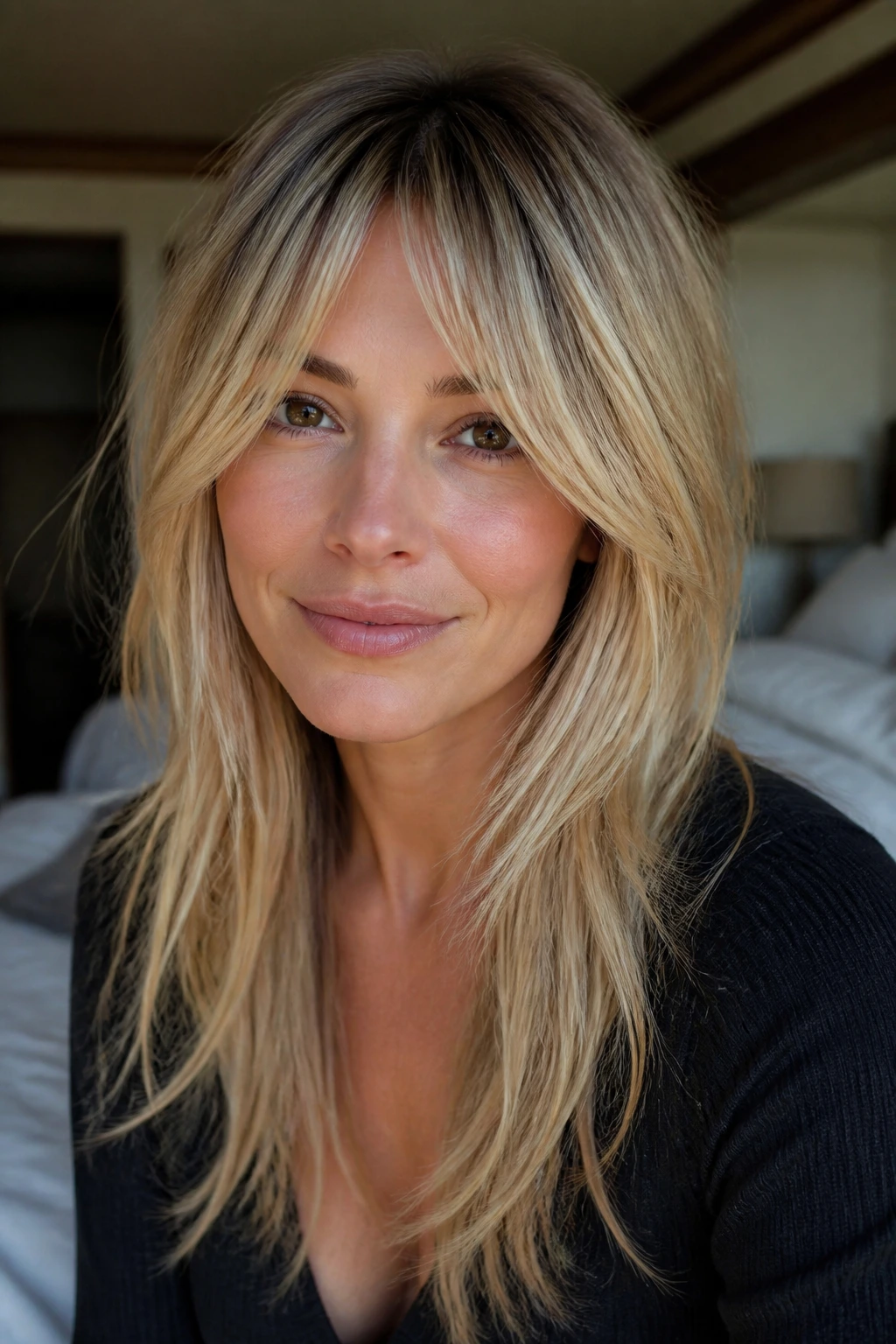
Can a shorter curtain fringe work on a round face? Yes, if the sides are long enough. The micro fringe gives you a hint of the curtain effect without a full sweep across the forehead, and the long side pieces carry the shape downward.
How It Reads on the Face
The fringe should split lightly at the center and blend fast into the longer layers. If it stays blunt, it can look boxy. If it breaks up too much, it loses the point.
A light blonde with soft root shadow is especially good here because the fringe needs separation to show up. Ask for a soft, face-opening shape rather than a heavy bang line.
This one feels fresh, but still wearable. It’s a good cut if you want some forehead softness without making the bangs the whole story.
22. Low-Set Balayage Layers
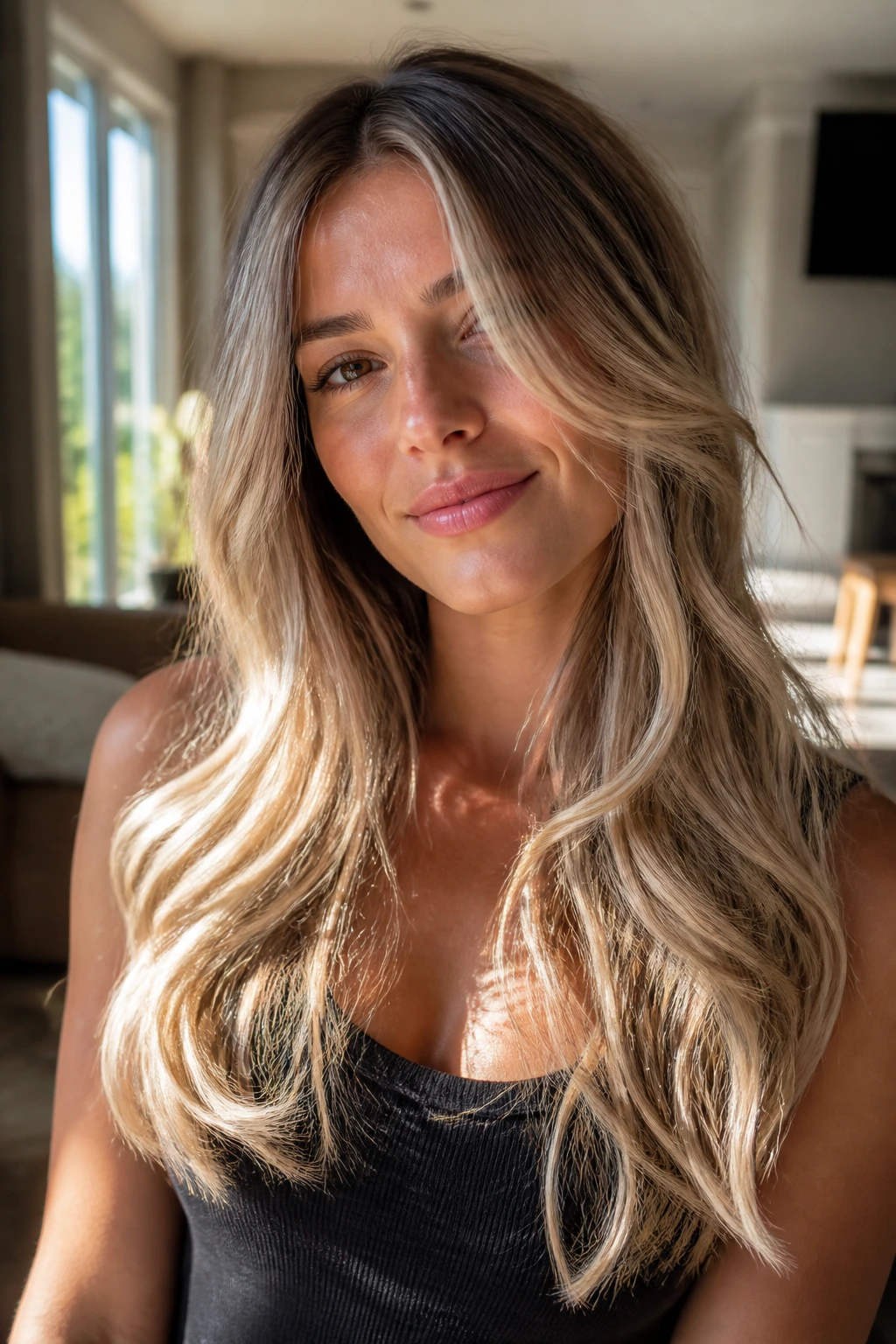
A lot of people place brightness too high on a shag. On a round face, that can make the upper half of the haircut feel wide and busy. Low-set balayage layers fix that by keeping the lighter pieces lower through the mids and ends, where they stretch the silhouette instead of spreading it.
The haircut itself should stay long and narrow around the face, with the widest movement below the jaw. That’s where the eye should land. A little brightness at the ends helps the line feel longer, especially when the hair moves.
- Place the lightest pieces around the lower face and ends.
- Keep the crown soft, not over-layered.
- Use a salt spray or texture mist to show the separation.
- Avoid a thick stripe of light at the cheekbone.
It’s a quiet cut, but a smart one.
23. Air-Dried Shag With Soft Bends
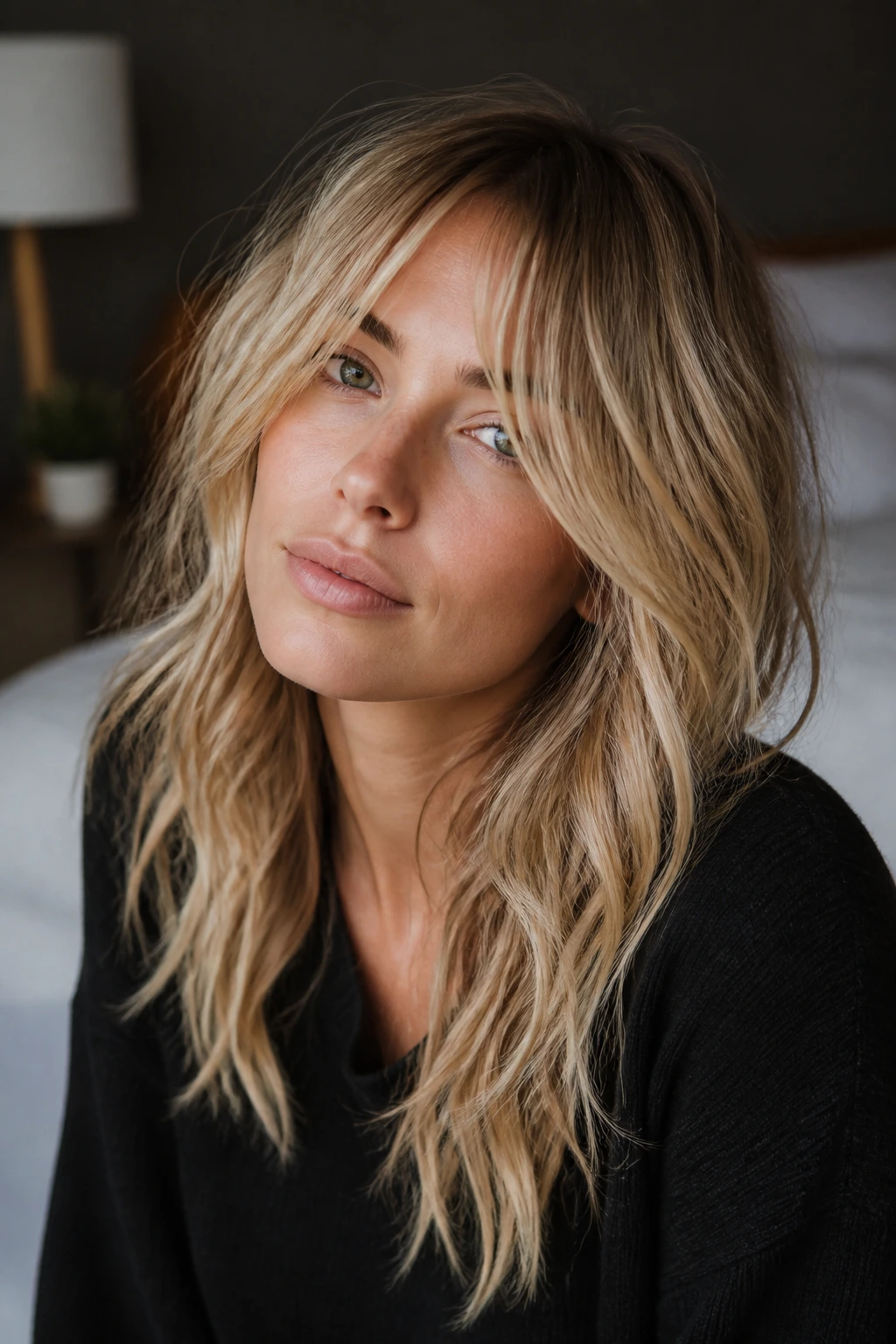
Some shags only look good after a full styling session. This is not one of them. The air-dried version works because the layers are cut to fall into soft bends on their own, which is handy if you want a round-face-friendly shape without a blow dryer in your hand every day.
The blonde should be dimensional, but not streaky. Think soft ribbons through the lengths, a little shadow near the roots, and a face frame that lands below the cheeks. A light leave-in cream helps the bends separate as they dry. So does a touch of mousse scrunched into the roots.
This is the kind of cut that looks a little better the second day. The bends loosen, the layers settle, and the whole thing gets easier. Some haircuts are needy. This one isn’t.
24. Honey Blonde Fringe With Loose Ends
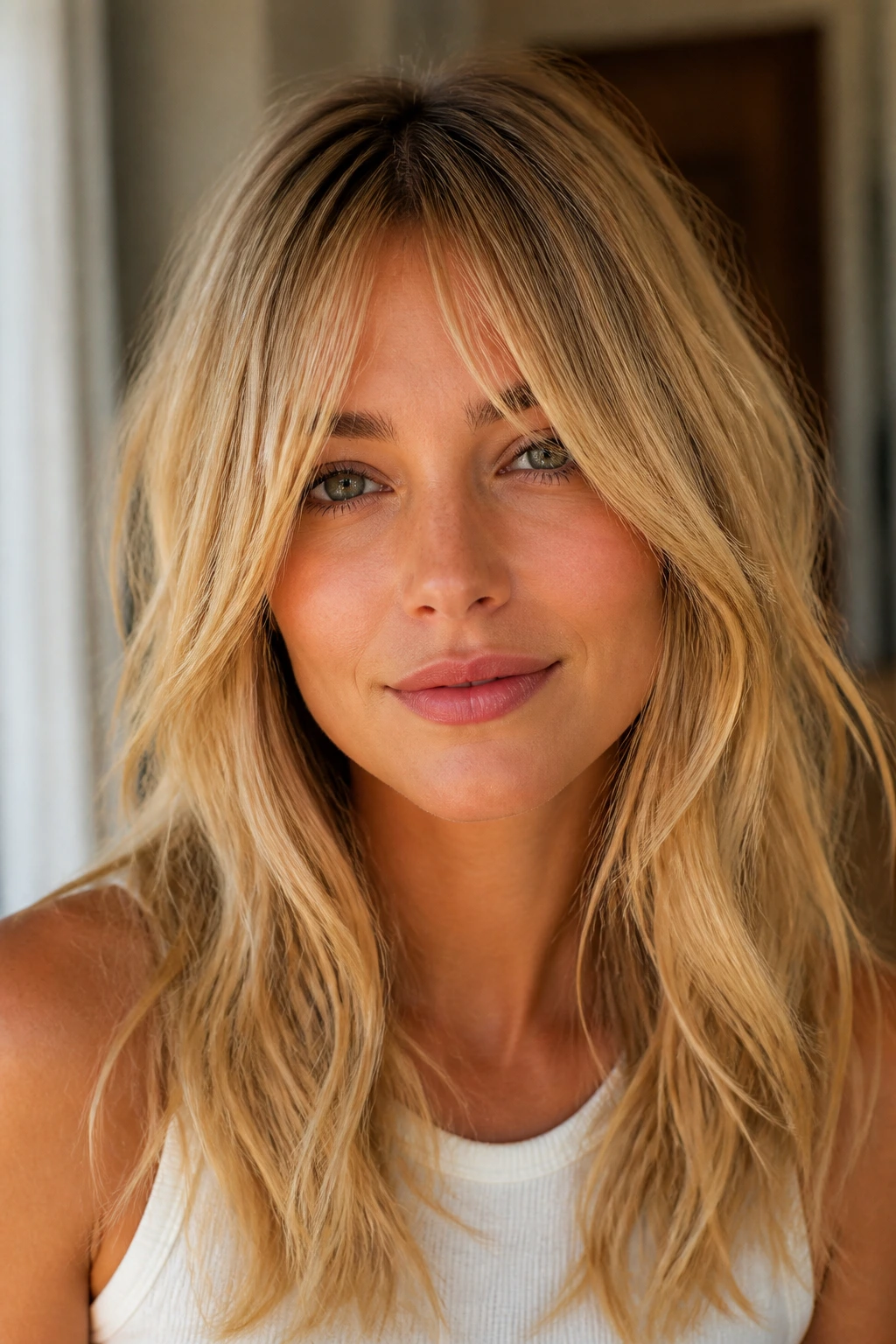
Honey blonde has a warmth that can soften strong lines on a round face, and a fringe can be flattering if it stays loose instead of dense. The loose ends matter because they keep the haircut from forming a hard edge around the face.
What Makes It Different
This isn’t a heavy bang-and-layer situation. It’s softer, looser, and more forgiving.
The fringe should split easily with finger styling, then blend into lengths that move below the jaw. If the ends are too blunt, the look tightens up. If they are too thinned out, the haircut starts to look tired. Somewhere in the middle is right.
Best for: someone who wants warmth, softness, and a little face frame without a full curtain bang.
Style it with: a wide-tooth comb, a round brush, and a light cream.
That’s a simple routine. Sometimes simple is the point.
25. Razor-Cut Shag With Piecey Texture
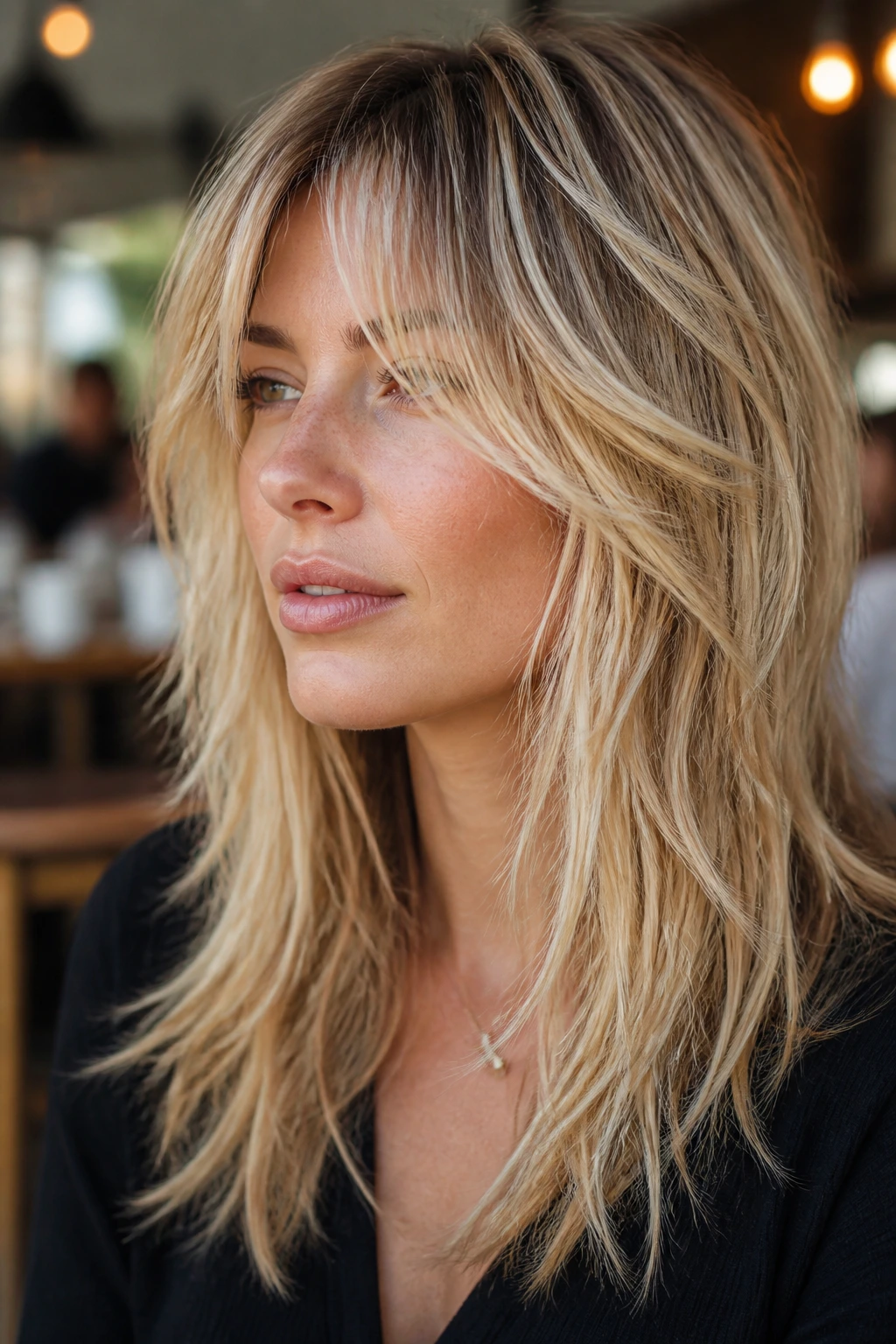
Razor cutting gives you those separated, piecey ends that feel modern without being fussy. On a round face, the benefit is shape control. The texture breaks up the line, but the long length still keeps the face from looking wider.
How to Make It Work
The front should stay long enough to fall past the cheekbone. The crown can be textured, but not hacked to bits. That’s the difference between an airy shag and a haircut that looks overprocessed.
- Use a razor cut only if your hair has enough strength for it.
- Ask for piecey ends, not shredded ends.
- Keep the blonde dimensional, with light and dark pieces.
- Finish with a pea-size styling cream for separation.
I like this cut best on naturally wavy hair. Straight hair can wear it too, but you’ll need a little styling to keep the texture visible.
26. Diagonal Face-Framing Layers
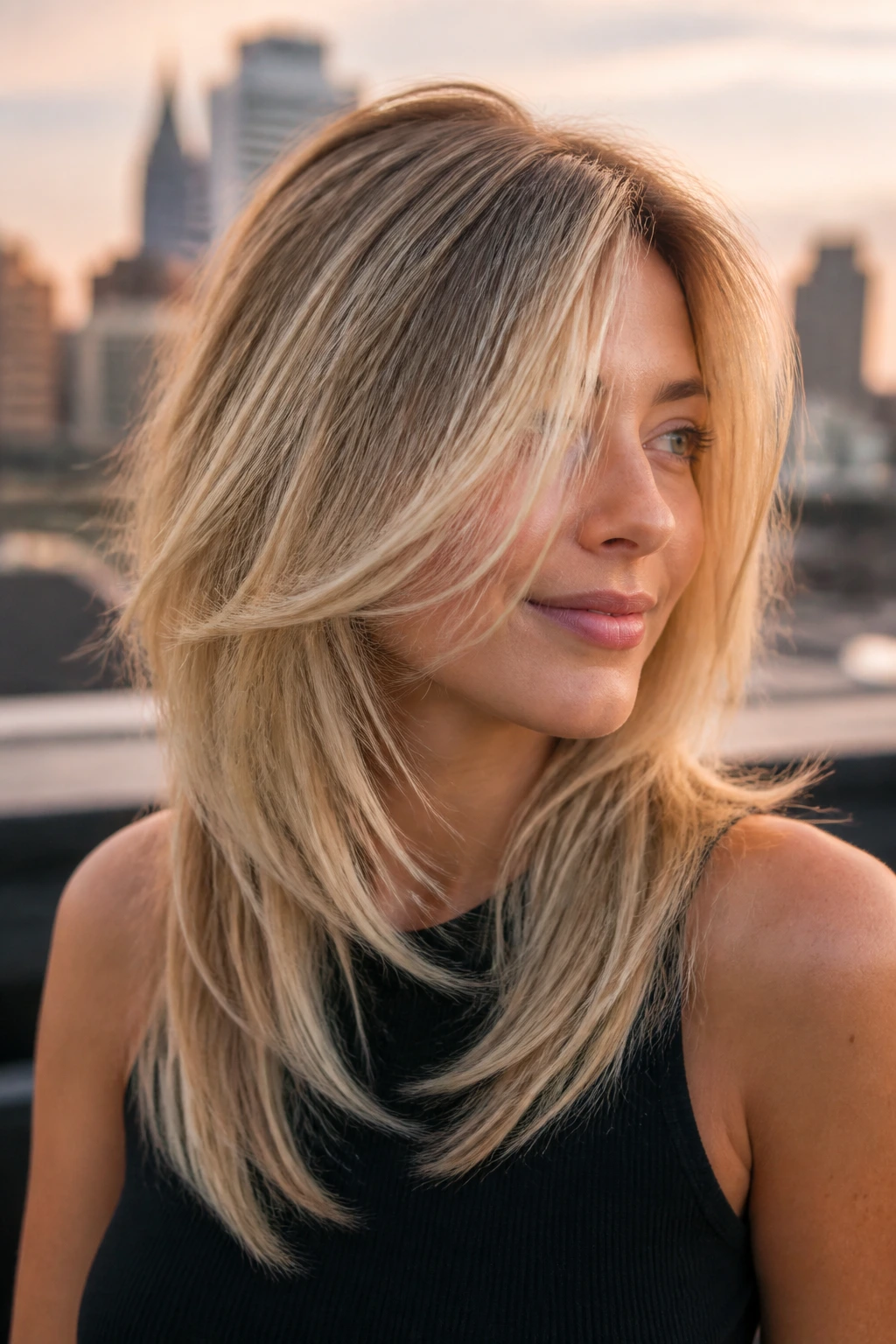
A diagonal line is one of the most useful things you can put on a round face. These layers start higher near the back and slide lower toward the front, which gives the hair a natural slope instead of a blunt wall. That slope lengthens the face without making the cut feel severe.
The blonde should follow that line, too. A brighter front piece near the cheek can be fine, but keep it soft and slanted, not blocky. The rest of the layers should stay long and move away from the jaw.
This is a good cut if you like hair that looks intentional without looking stiff. It has shape. It also has room to move.
If you want a version that feels flattering in a photo and in real life, this is one to keep on the shortlist.
27. Strawberry Blonde Shag With Soft Movement
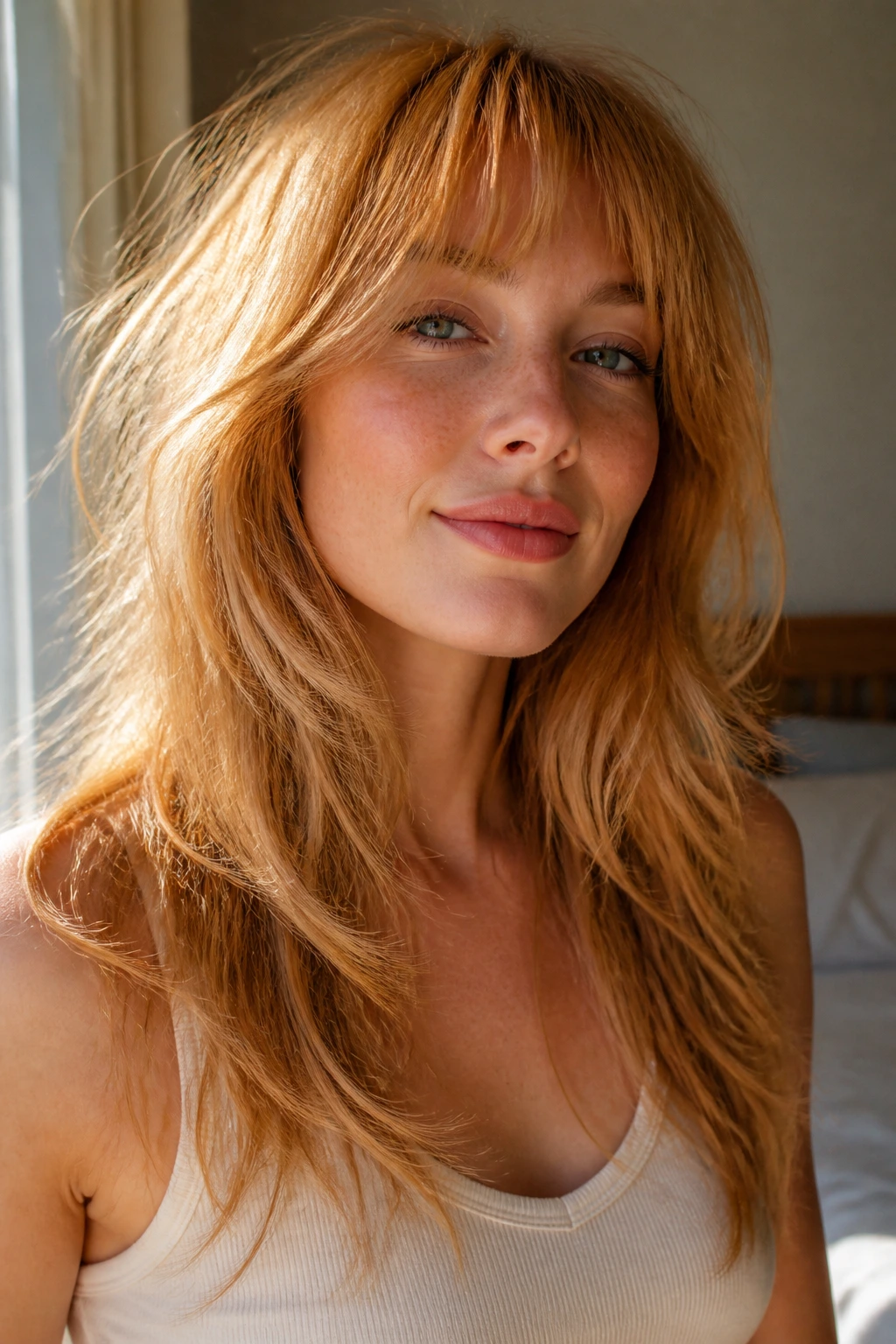
Can strawberry blonde count as blonde? In haircut land, absolutely. It sits in that warm blonde family and gives a shag a little glow that pure ash tones can’t match. On a round face, the softness of the color helps the layers feel less harsh, which is useful if you want movement without too much edge.
Why It Flatters
The warmth keeps attention on the cut, not just the color. The long layers should fall below the cheek line, and the fringe should stay light enough to avoid boxing in the forehead.
A soft wave pattern works best here. It makes the color shift from coppery blonde to pale gold show up in pieces. Not stripes. Pieces.
Try this if: you want a warmer, friendlier version of the shag.
Skip it if: you only wear icy blonde and want a hard, cool finish.
It’s softer than it sounds, and that’s the charm.
28. Airy Curtain Fringe With Tapered Ends
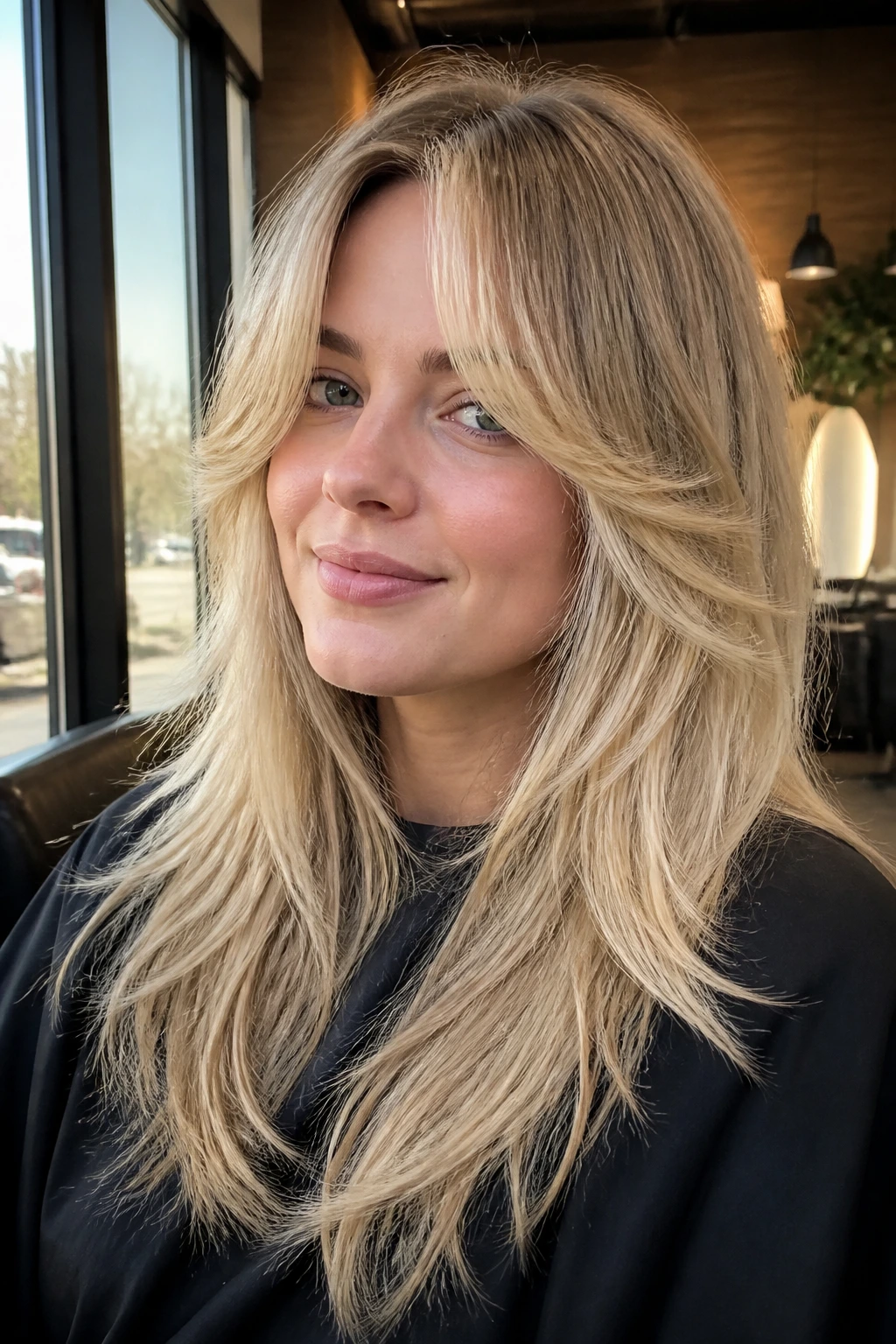
A tapered finish is one of the cleanest ways to keep a long blonde shag from looking bulky on a round face. The ends narrow slightly as they fall, which keeps the silhouette light, while the airy curtain fringe opens the top of the face and gives the front some shape.
Imagine this cut moving when you turn your head. The fringe parts and swings. The lower layers skim instead of clumping. The blonde reads in soft bands, not hard blocks, so the whole style feels lifted without getting puffy.
- Ask for tapering through the final 2 to 3 inches.
- Keep the curtain fringe long enough to split easily.
- Use soft blonde highlights around the front for brightness.
- Finish with a light blowout or loose bend.
If you want one safe reference point to bring to the salon, make it this: keep the widest volume below the cheekbone and the fringe soft at the center. That single idea carries a lot of weight, and it’s the difference between a shag that flatters a round face and one that just takes up space.
