



A shag haircut can look lazy in the best possible way.
Not sloppy. Not unfinished. Just loose, lived-in, and a little rebellious, with layers that make the hair move instead of sitting there like a block.
Shag haircuts for men work because they do one simple thing better than most cuts: they build shape without demanding perfection. Straight hair gets more body. Wavy hair gets more direction. Curly hair gets room to breathe. And if you’ve ever had a barber leave too much bulk at the sides, you already know why this style keeps coming back.
The big mistake is obvious once you’ve seen it a few times. Too much weight at the bottom turns a shag into a shelf. Too many tiny layers on fine hair can make it look wispy and tired. The cut has to be rough in the right places and controlled in the right places. That balance is the whole game.
1. Classic Mid-Length Shag
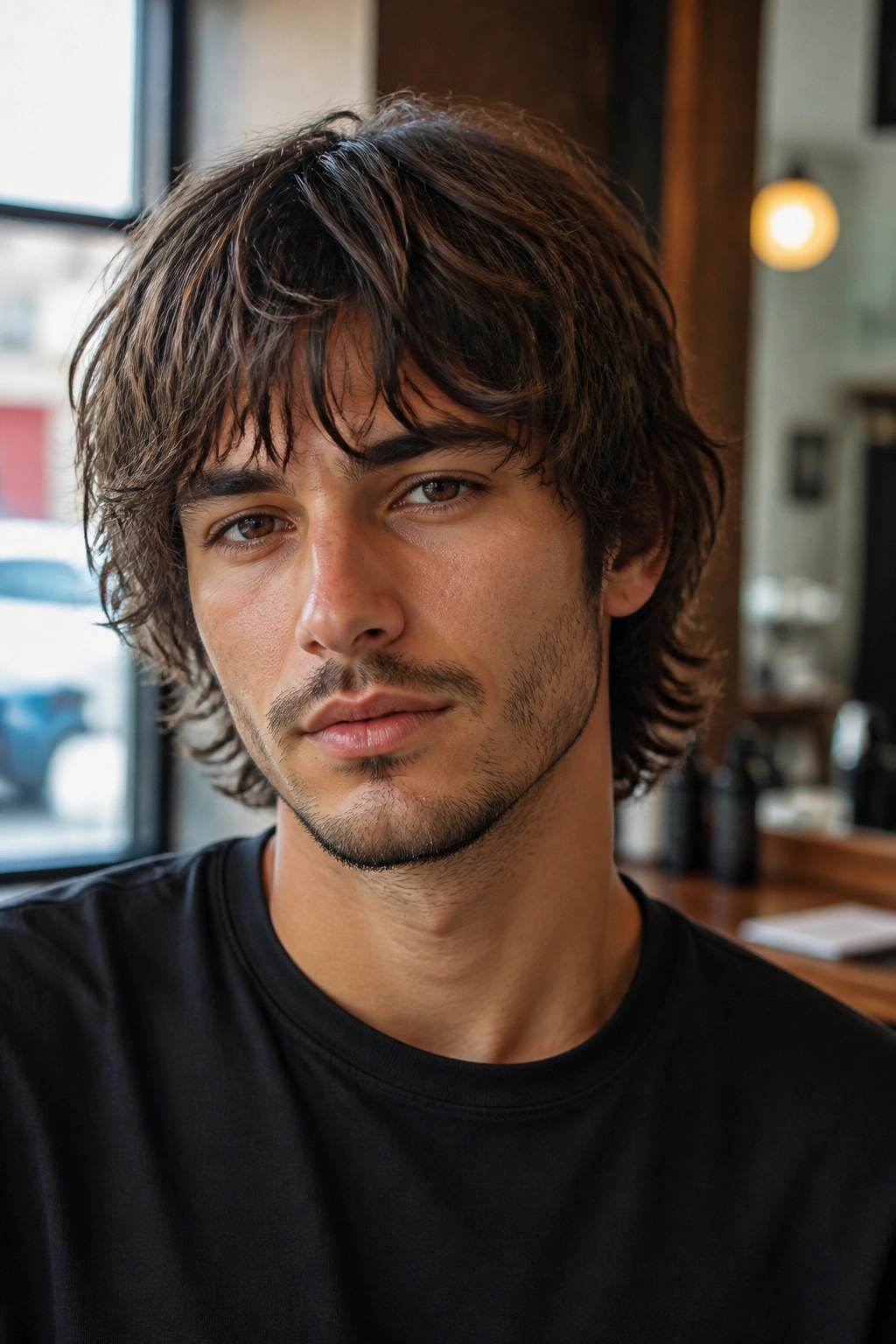
This is the cleanest place to start. A classic mid-length shag keeps enough length to move, but not so much that the shape disappears. The hair usually falls somewhere between the cheekbones and the top of the collar, with layered ends and a soft fringe that doesn’t sit too blunt on the forehead.
Why It Works
A good classic shag gives you the loose, feathered shape people want without making the haircut feel costume-y. The layers break up heavy hair, and the fringe keeps the front from looking flat. It’s one of the few cuts that can look a little messy on purpose and still feel polished enough for daily life.
The trick is balance. Keep the top a touch longer than the sides, but don’t let the sides collapse into a triangle. A barber who uses point cutting instead of chopping straight across the ends can make the whole thing feel lighter and more natural.
- Top length: around 4 to 6 inches for most men
- Side length: just short enough to avoid puffiness
- Best hair types: straight, wavy, and light curls
- Styling product: a small amount of matte cream or lightweight paste
My favorite detail: ask for soft, broken ends, not razor-sharp lines. That tiny choice changes everything.
2. Short Shag With Tapered Sides
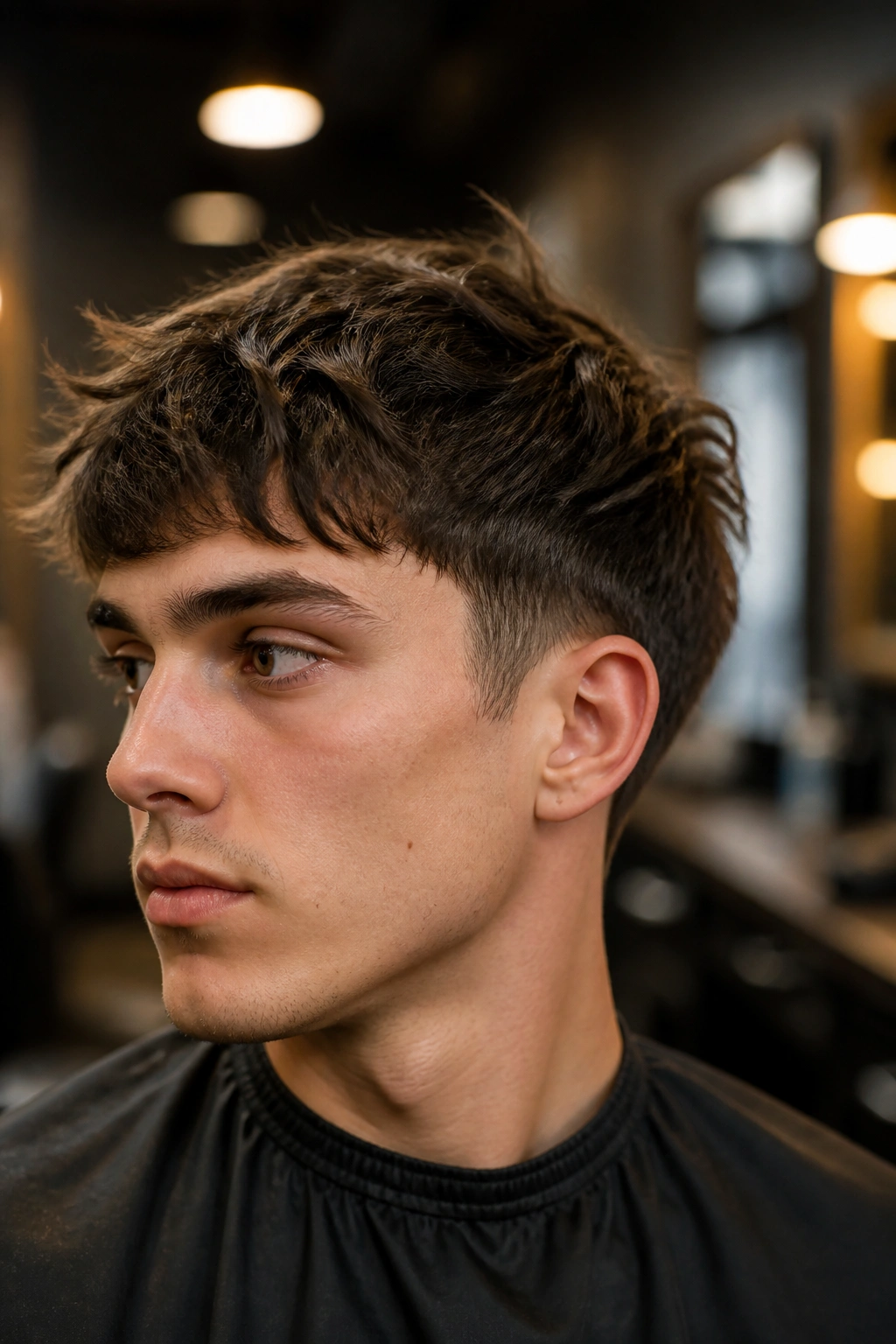
This is the shag for men who hate a floppy neck. Shorter length on top keeps the texture, while a taper around the ears and nape keeps the whole cut looking neat. It’s a smart move if you want the shag shape but need the sides to behave.
The reason it works is simple. The top still gets layers, so the hair has lift and separation. The taper keeps the outline clean, which matters a lot if your hair grows out fast or tends to puff at the edges. This version also suits guys with dense hair who don’t want the cut to eat their face.
No extra bulk. That’s the whole point.
Wear it with a little sea salt spray or a pea-size amount of matte paste. Push the top forward with your fingers, then lift the fringe slightly so it does not sit like a helmet. If your barber leaves the taper too high, the cut starts looking like a fade with layers, which is a different animal. Keep the taper soft and low. Cleaner. Easier. Better looking when the haircut grows out a bit.
3. Curly Shag for Natural Texture
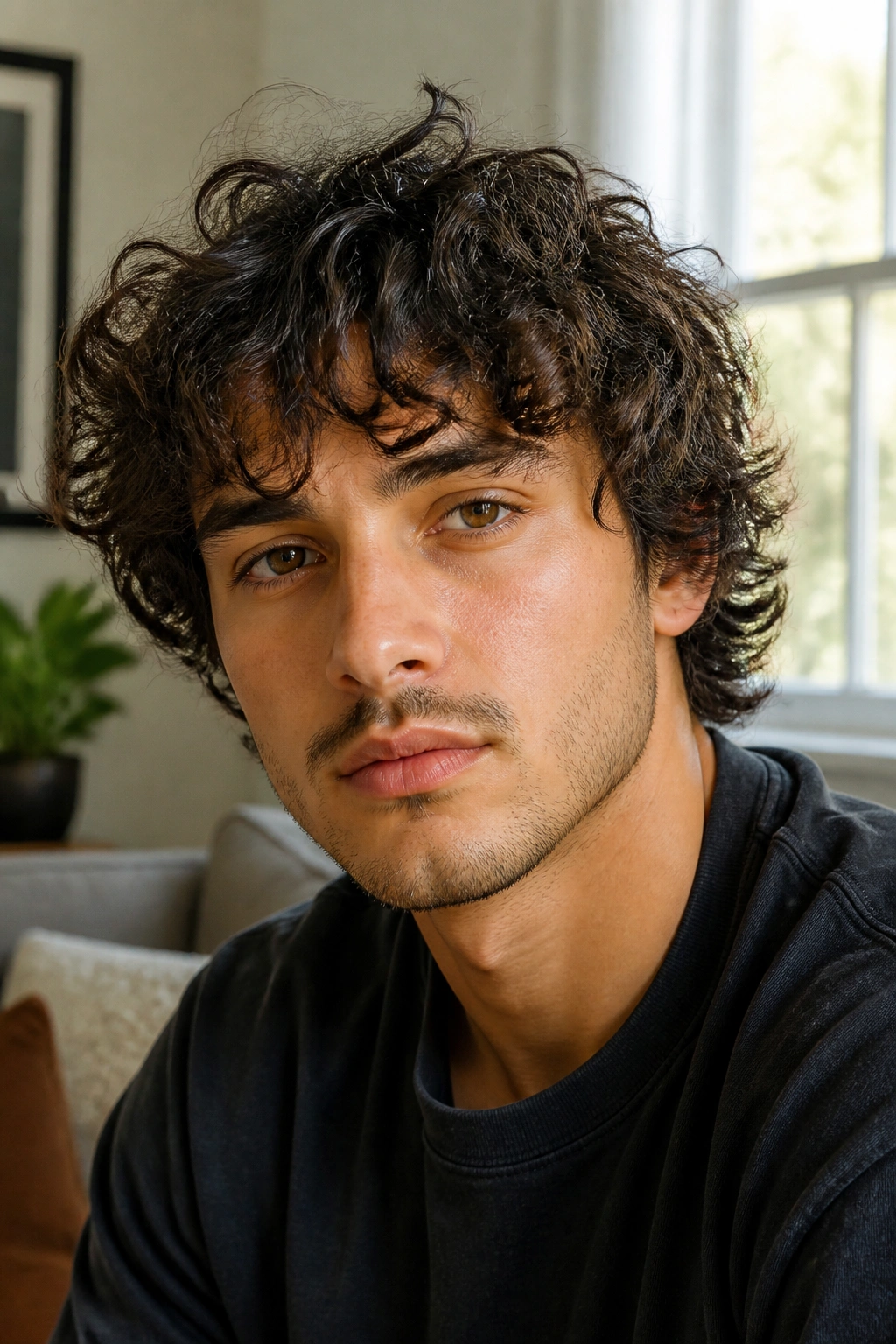
Why does a shag work so well on curls? Because it lets the curl pattern stack instead of fighting it. A good curly shag removes weight where the hair swells out, then keeps enough length on top and around the crown to show the curl shape instead of hiding it.
The best curly shags usually have a little more room through the top than people expect. Curls shrink, and they shrink differently depending on weather, moisture, and how tight the pattern is. That means the haircut should be cut with shrinkage in mind, not against it. If the barber cuts it too short when it’s wet, you can lose the entire shape.
How to Style It
- Apply curl cream to damp hair, not soaking-wet hair
- Scrunch gently with a T-shirt or microfiber towel
- Diffuse on low heat for 5 to 8 minutes if you want more lift
- Leave the crown a touch looser so the top does not balloon
A curly shag looks best when the curl clumps stay visible. Don’t rake through it too much. That just makes frizz. Small move. Big payoff.
4. Wavy Collar-Length Shag
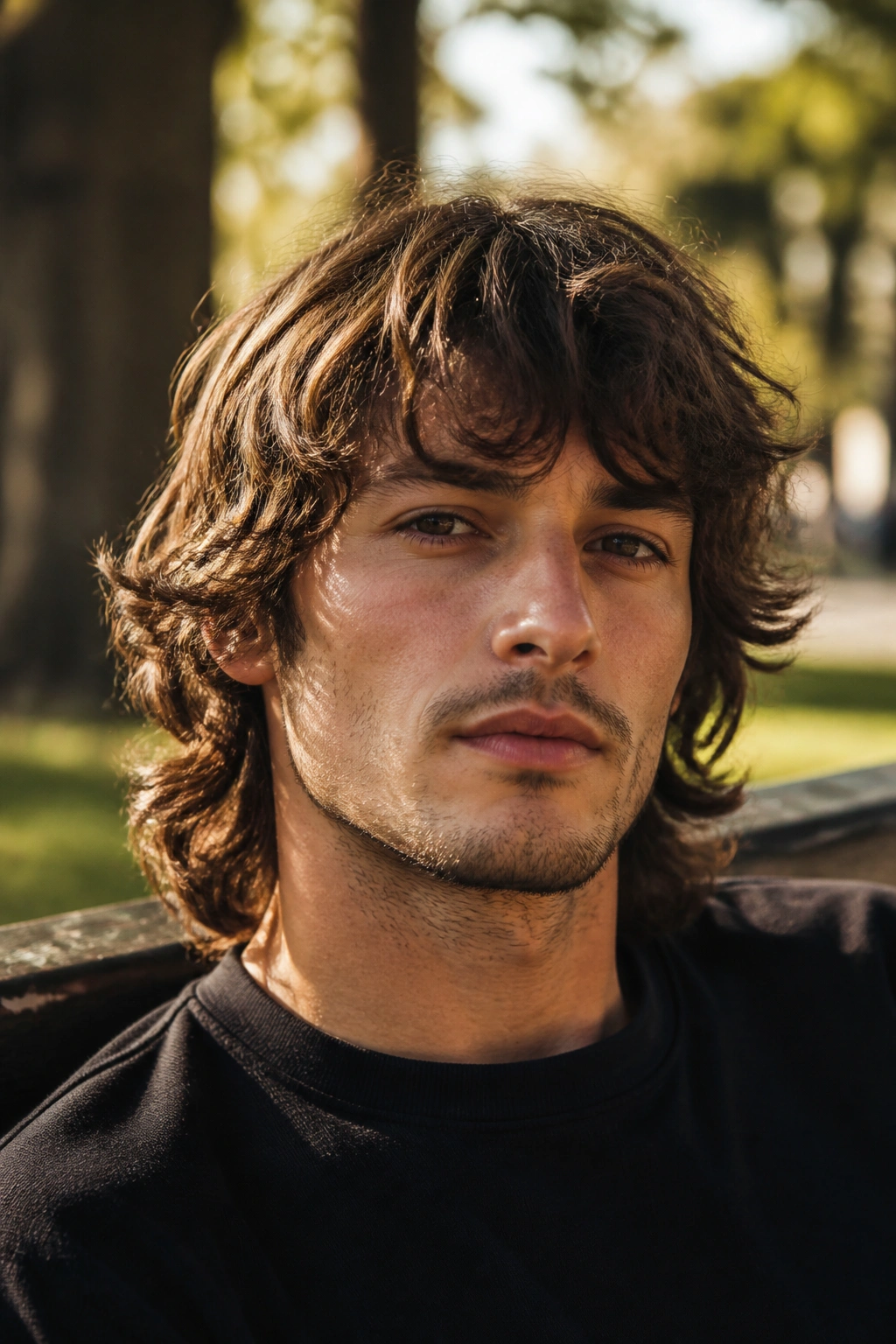
A wavy shag that brushes the collar has a nice advantage: it looks deliberate even when the hair is a little imperfect. The waves give the cut shape all by themselves, so the haircut only needs to keep the sides from getting bulky and the ends from feeling heavy.
I like this version for guys whose hair flips out at the neck. Instead of fighting that bend, the shag uses it. The layers sit on the outside of the wave pattern, which means the hair still moves but doesn’t hang like a curtain. If your hair has that half-bend, half-kink thing going on, this is one of the few cuts that makes it look better, not worse.
- Keep the fringe around eyebrow level
- Let the back graze the collar
- Avoid heavy gels that make the wave stiff
- Use a light cream or mist of sea salt spray
The useful part is the grow-out. Even when it gets a little shaggy, it still reads as a haircut, not an accident.
5. Wolf-Cut Shag
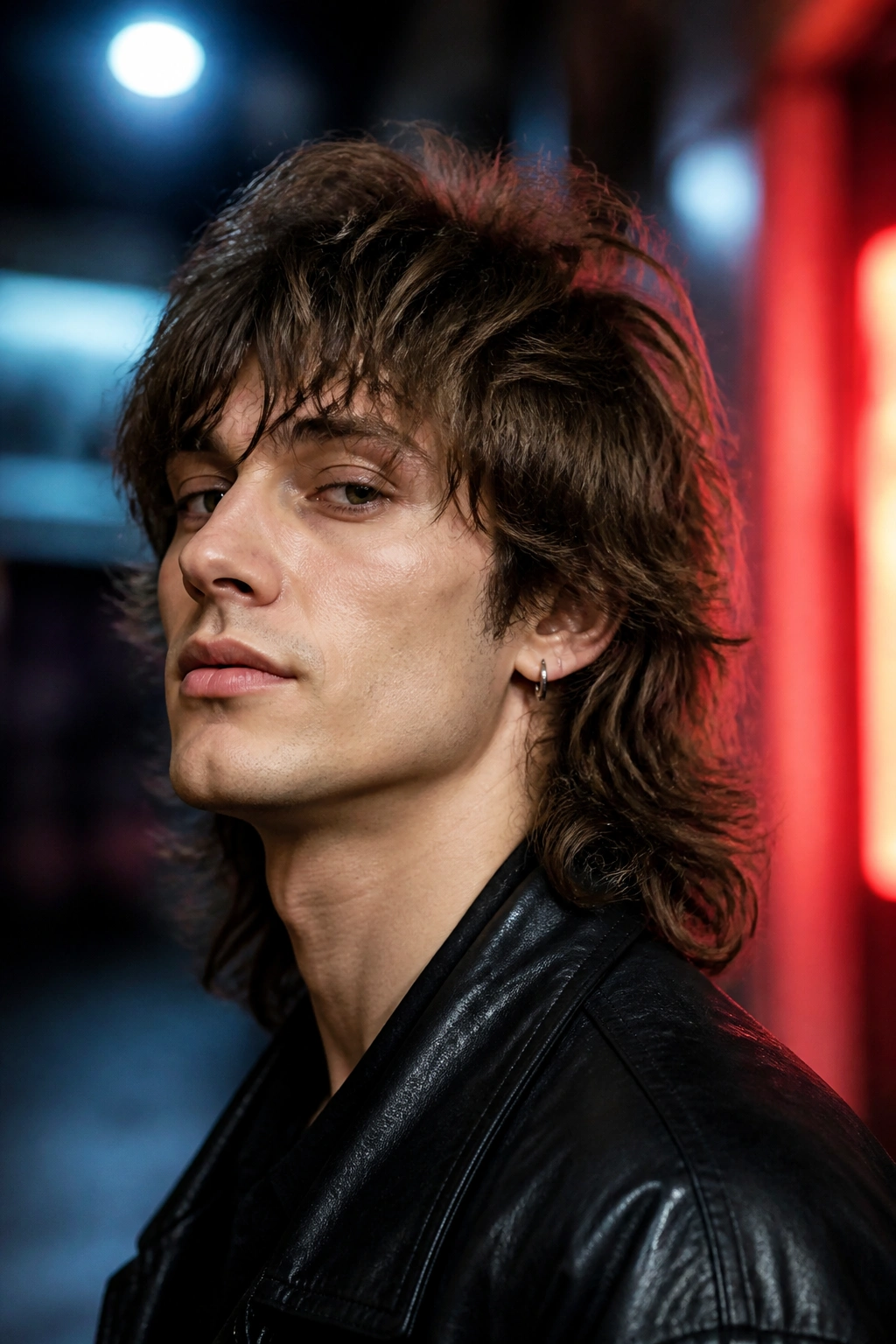
The wolf-cut shag is the louder cousin in the family. It keeps the layered spirit of a shag, but the crown sits higher, the sides hug the head a little more, and the back can run longer for a rougher shape. If the classic shag feels too polite, this one has more bite.
It’s a good cut for thick hair that wants to spread out. The longer back and choppier top can take some of that bulk and turn it into movement. On straight hair, it has a raw, almost punk edge. On wavy hair, it can look wild in a good way. Either way, it needs confidence. A wolf cut that’s too tidy loses the point fast.
The main difference is attitude. A shag says, “I have texture.” A wolf cut says, “I know exactly what I’m doing with that texture.”
That matters because styling changes too. You want separation, not shine. Dry the hair with your fingers, not a brush, and use a matte product only where the ends need help. If you over-comb it, the shape goes flat and the whole haircut starts acting like a compromise.
6. Shag With Curtain Bangs
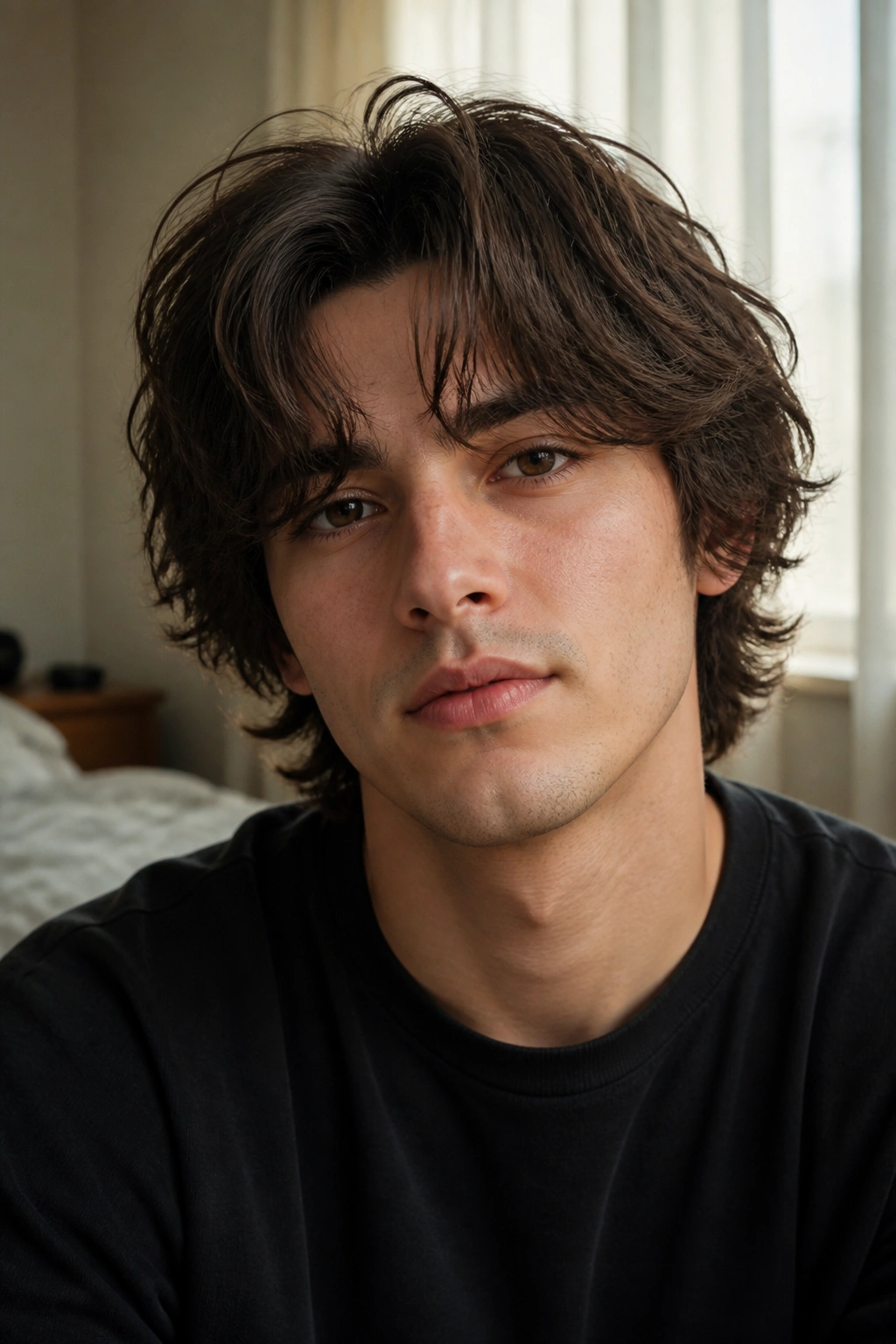
Compared with a blunt fringe, curtain bangs make a shag feel softer and more open. The middle parts away from the forehead, while the sides fall longer and taper into the rest of the cut. That shape is useful if you want the layers of a shag haircut for men but don’t want a heavy line across the brow.
The face-framing effect is the real draw here. Curtain bangs can make a long face look less stretched and a square face look less rigid. They also grow out gracefully, which is nice because not every haircut should demand a cleanup every few weeks. A barber usually leaves the center a little shorter and the temple pieces longer, then blends everything so it falls away from the face instead of sitting on top of it.
Best for: medium hair, straight hair, and loose waves.
Best avoided if: your hair grows in one stiff direction and refuses to part at all.
My advice? Ask for a soft middle split, then style the fringe with your fingers while the hair is still damp. A brush can make it too neat, and neat is not the point here.
7. Razor-Cut Shag
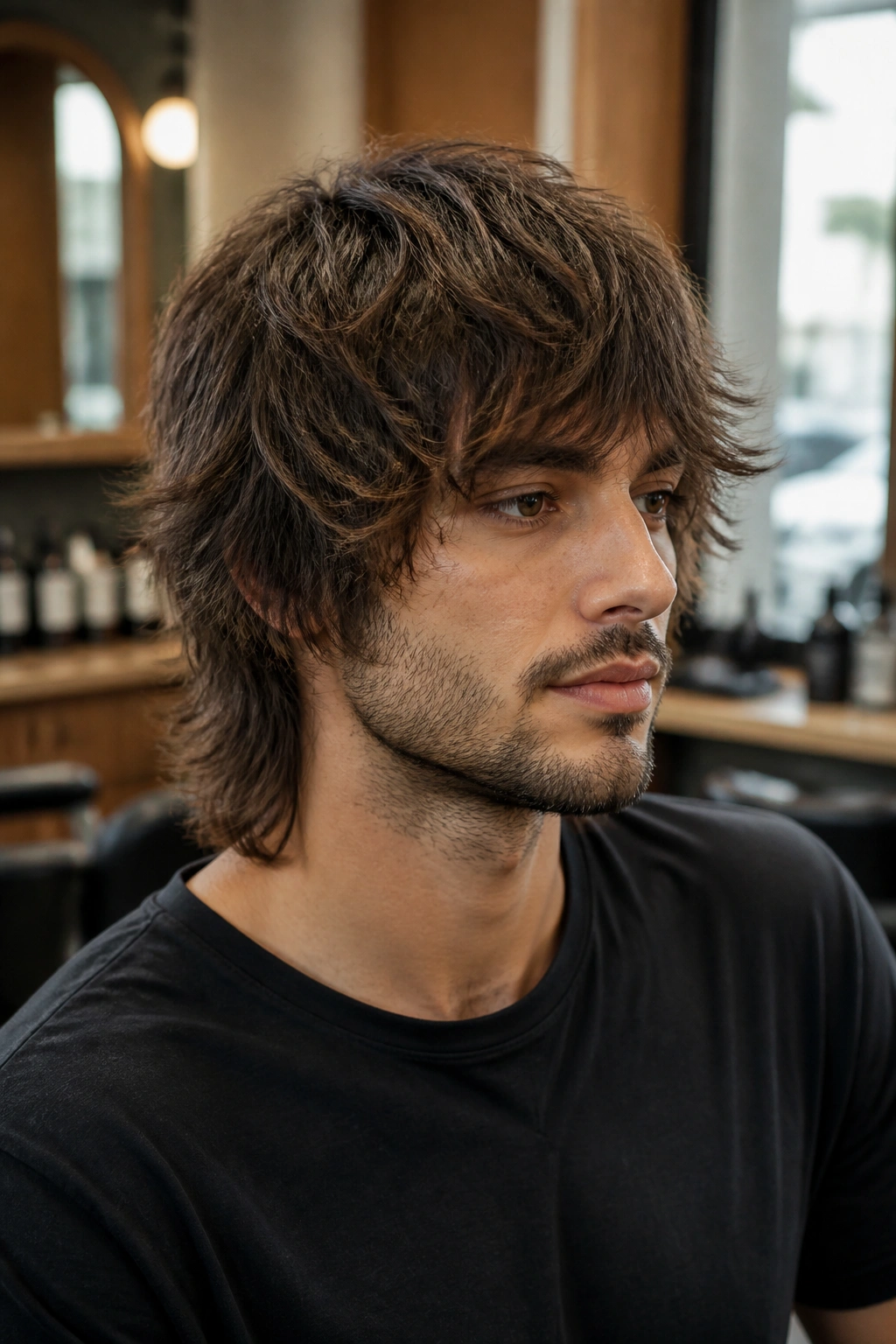
A razor-cut shag looks lighter because it is lighter. The razor thins the ends and creates a feathered edge that sits differently from scissors. On thick or dense hair, that can be a huge advantage. The cut feels airier, moves faster, and shows off texture without needing a lot of product.
Why the Razor Matters
A razor is not a magic trick. It’s a tool, and on the wrong hair it can make the ends look frayed. But on coarse straight hair or strong waves, it can break up the bulk in a way scissors sometimes can’t. The result is a shag with more swing and less blocky weight at the bottom.
Here’s the practical side:
- Best on medium to thick hair
- Works well with wavy textures
- Needs a barber who knows how to control the blade angle
- Can look too soft if the hair is already fine
Use a light cream or cream-paste blend after washing. A heavy wax kills the airy feel, and that feathered finish is the whole reason this cut exists. If the ends start looking too wispy, the razor probably went too far. Sharp is good. Shredded is not.
8. Heavy Fringe Shag
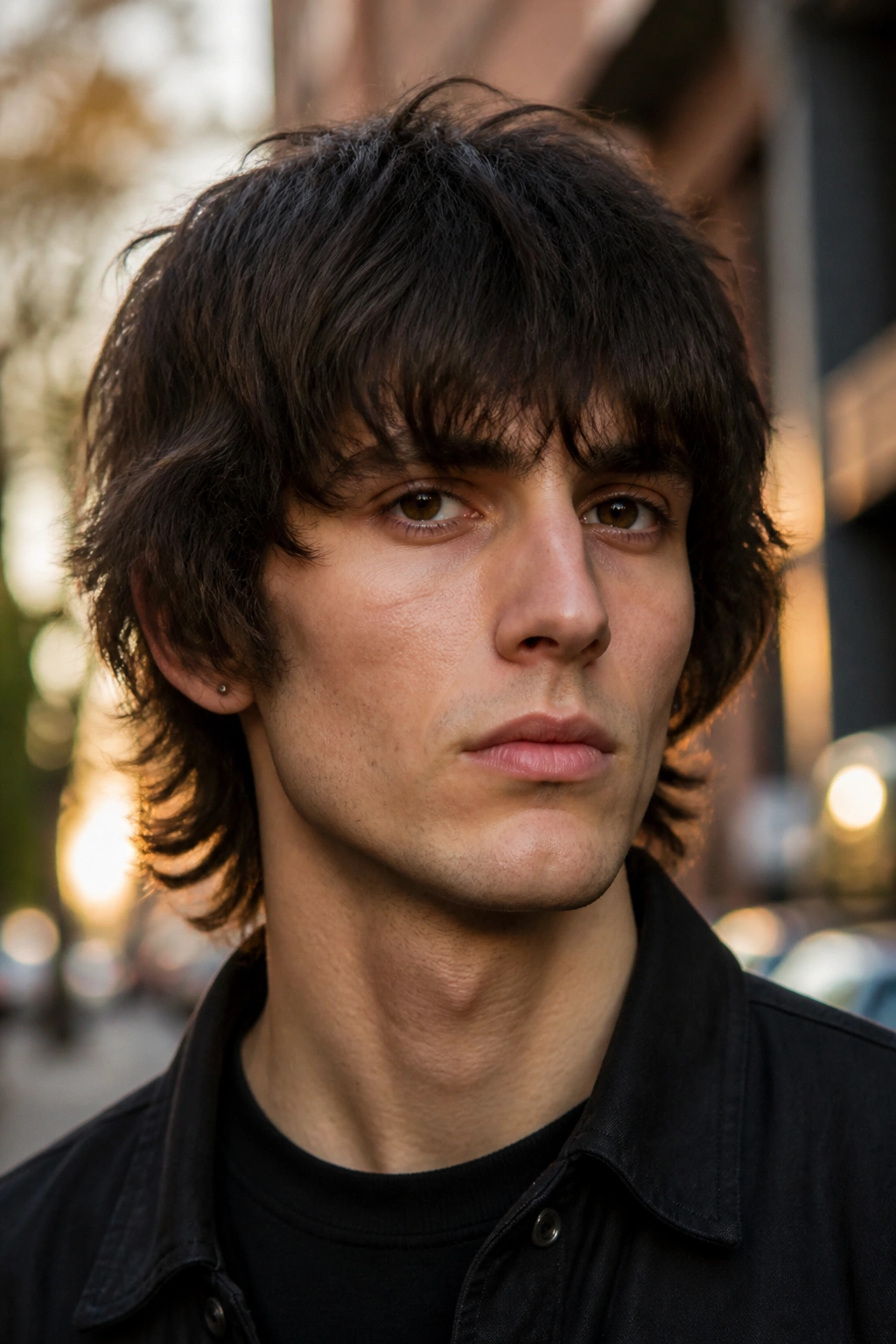
If the fringe is the star, the whole haircut changes mood. A heavy fringe shag puts more hair forward, sometimes brushing the eyebrows or sitting right above them, while the layers behind it keep the cut from turning into a bowl. It can look bold, moody, and a little dramatic in a good way.
The fringe helps if you want to shorten the look of a long forehead or draw attention toward the eyes. It also works on guys with straighter hair that tends to fall flat, because the front gives the cut a built-in focus point. The risk is obvious: if the fringe gets too thick, the face disappears. So the layers around the temples need to stay broken up and soft.
One sentence matters here. Do not let the fringe sit as one solid slab.
A trim every 4 to 6 weeks usually keeps this shape honest. Longer than that and the fringe starts hanging into the eyes, which sounds interesting until you’re blinking through lunch.
9. Mullet-Lean Shag
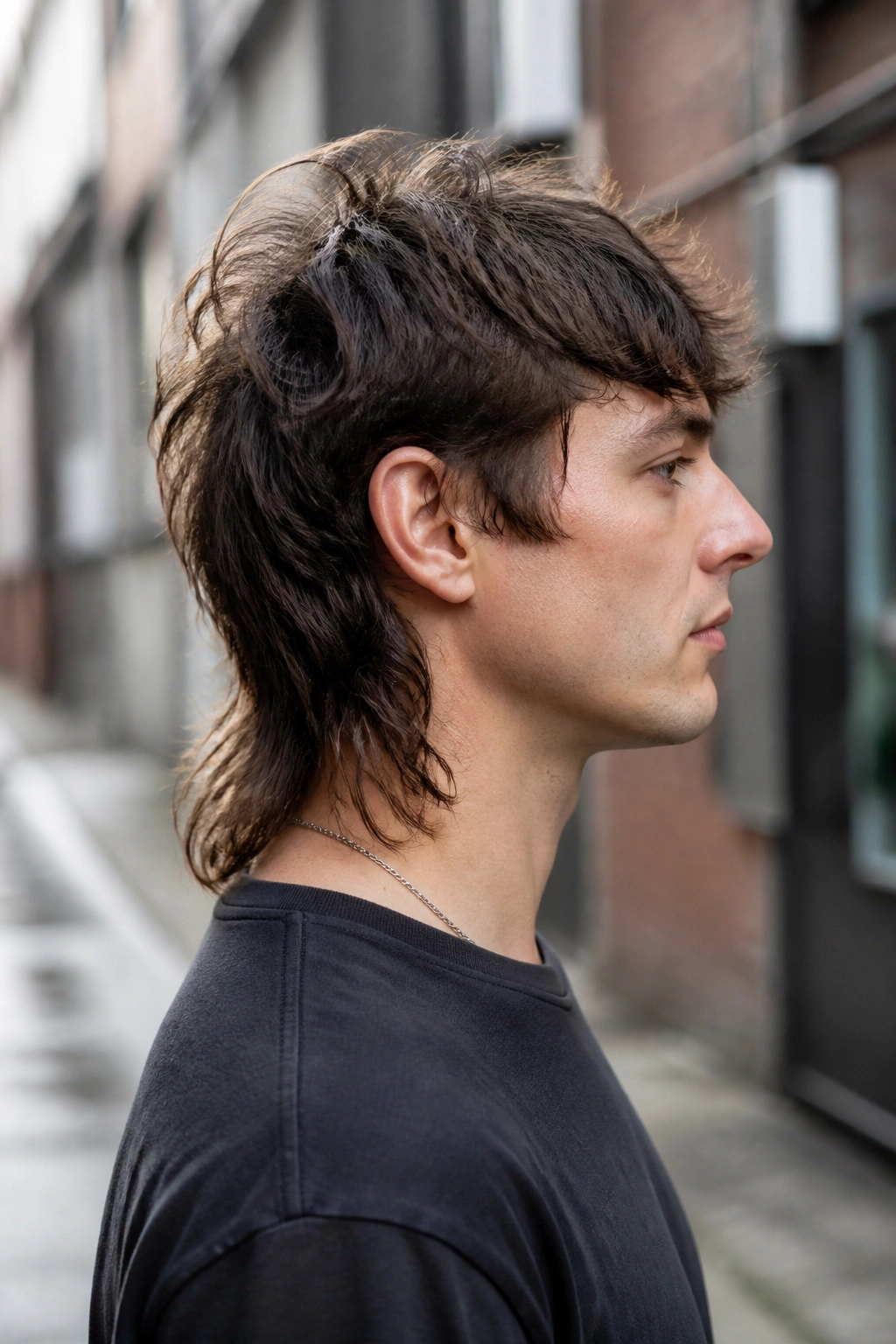
Want the shag to lean a little punk? Let the back stay longer and keep the front a little shorter. That’s the bridge between a shag and a mullet, and when it’s done well, the result feels energetic instead of costume-like.
The difference is in the transition. A mullet-lean shag should still have soft layers through the crown and sides, not a hard disconnect. You want the back to stretch out enough to show length, but the top should stay textured so the haircut still reads as a shag first. The best versions feel like they’re moving even when you’re standing still.
How to Wear It
- Keep the top choppy, not smooth
- Ask for a longer nape with blended sides
- Use a matte paste to rough up the crown
- Let the fringe fall naturally instead of pushing it back hard
This cut suits guys who like a little edge and don’t mind getting noticed. It’s not subtle. That’s fine. Subtle is overrated anyway.
10. Bro Flow Shag
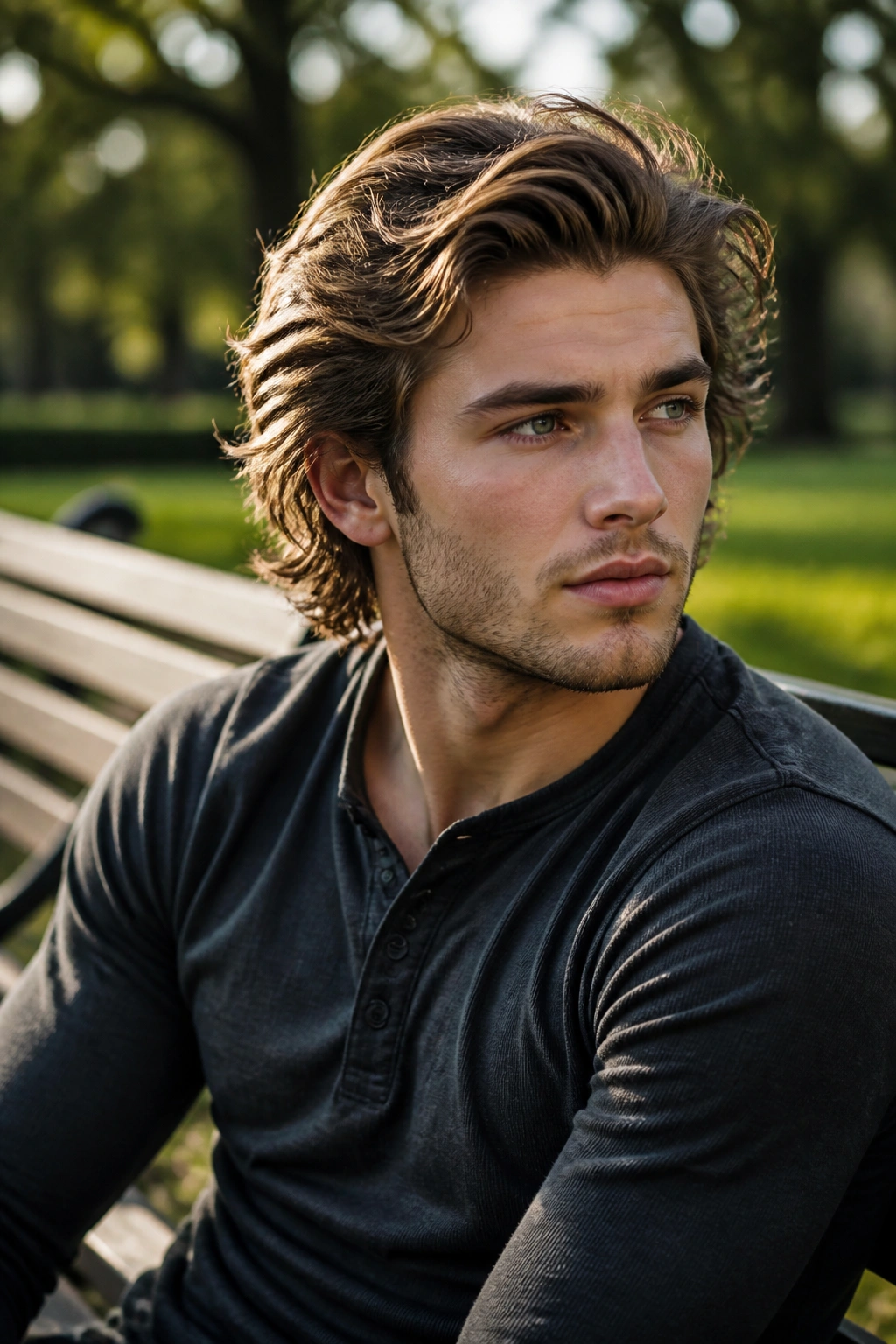
A bro flow shag is what happens when medium-length hair starts to relax and you decide to make it look on purpose. The front usually gets pushed back or swept to the side, while the layers keep the sides from puffing out like a triangle. It has a relaxed, athletic feel that works especially well if your hair already wants to move back from the face.
The best thing about this version is how forgiving it is. If you’re growing your hair out, a bro flow shag gives the in-between stage some shape. It’s also friendly to guys who wear hats a lot, because the hair can get flattened and still recover. A good cut leaves enough length through the top and crown so the flow stays visible even after a long day.
Small detail. Matters a lot.
Use a sea salt spray on damp hair, then push it back with your hands and let it dry with some lift at the roots. A brush can make it too slick, which defeats the point. The haircut should feel loose, almost like you were born with it that way.
11. French Shag
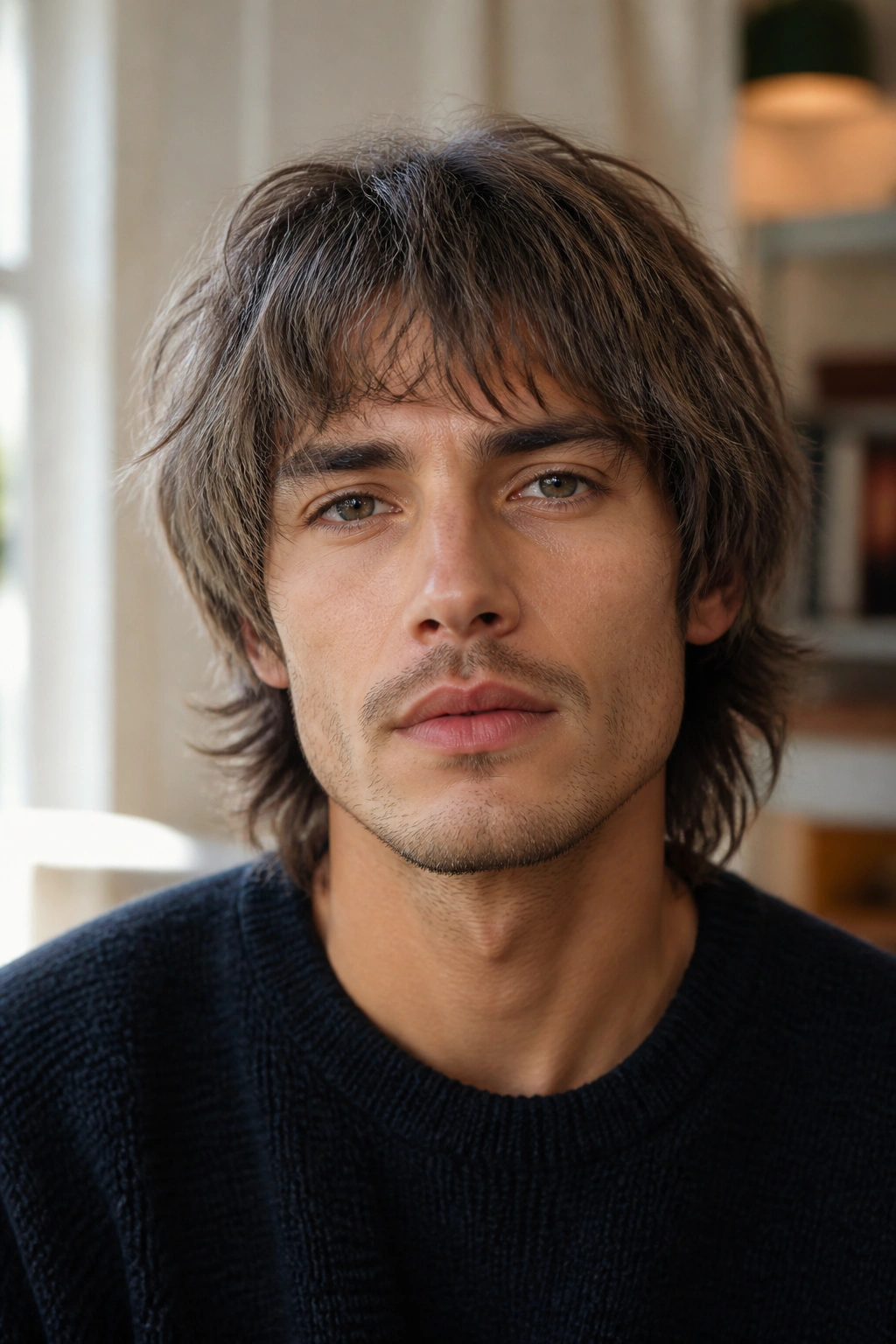
The French shag is softer than people expect. It keeps the layered shape, but the edges are usually airier, the fringe lighter, and the whole cut a bit less aggressive than a punk shag or a mullet-lean version. It’s one of those cuts that looks accidental in the best way, as if the hair simply fell into place and stayed there.
What I like about it is the restraint. The layers are there, but they don’t scream. The fringe can sit a little longer at the center and drift into the temples, which gives the face a frame without turning the front into a curtain. On straight hair, it feels artsy without looking stiff. On wavy hair, it gets even better because the natural bend fills in the shape.
This cut is also easier to live with than the louder shag variants. You can part it loosely, wear it messy, or smooth it down a little and it still works. That flexibility is rare. Most textured cuts want one exact styling trick. The French shag is less fussy.
A light cream or mousse is enough. If your hair is full of product, the softness disappears fast.
12. Grunge Shag
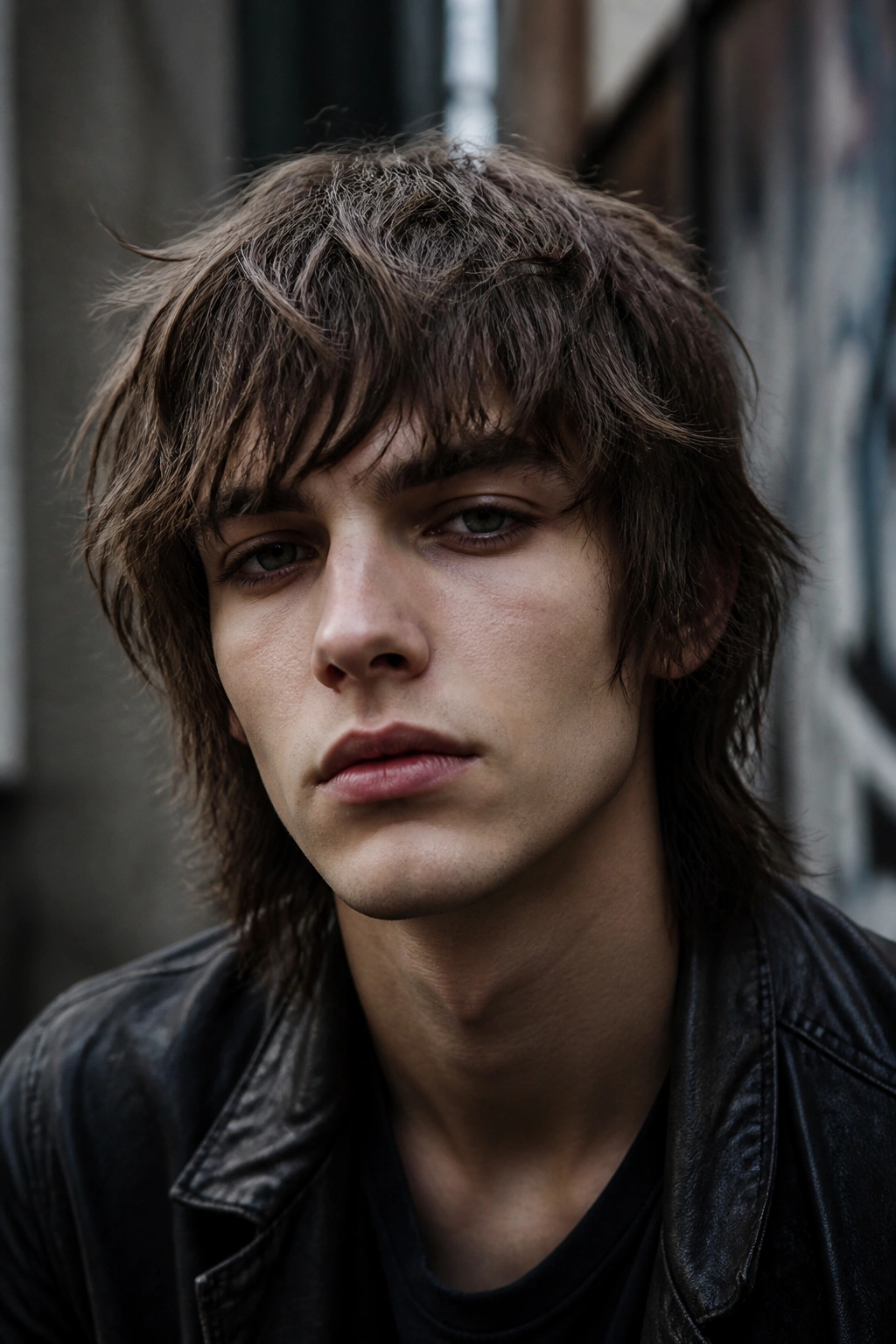
Compared with the French shag, the grunge shag wants to look a little dirtier. Not unwashed. Just rougher, heavier, and more broken up at the ends. Think chunkier texture, less polish, more attitude. It’s the version you reach for if you want the haircut to feel lived-in from day one.
The shape matters, but the finish matters more. A grunge shag often has a messier fringe, stronger separation through the layers, and a bit more drop around the eyes and ears. It looks best when the hair isn’t forced into perfect symmetry. Straight hair can carry it well if there’s enough choppiness. Wavy hair makes it easier, because the natural bend adds friction and shadow.
Who it suits: guys who like matte texture, band-shirt energy, and low-shine finishes.
Who should skip it: men who want their hair to look crisp and tightly groomed.
I’d use a dry texture spray first, then a tiny amount of clay on the ends. That combination gives you grit without turning the hair stiff. And yes, it does look better a little unmade.
13. Low-Maintenance Air-Dried Shag
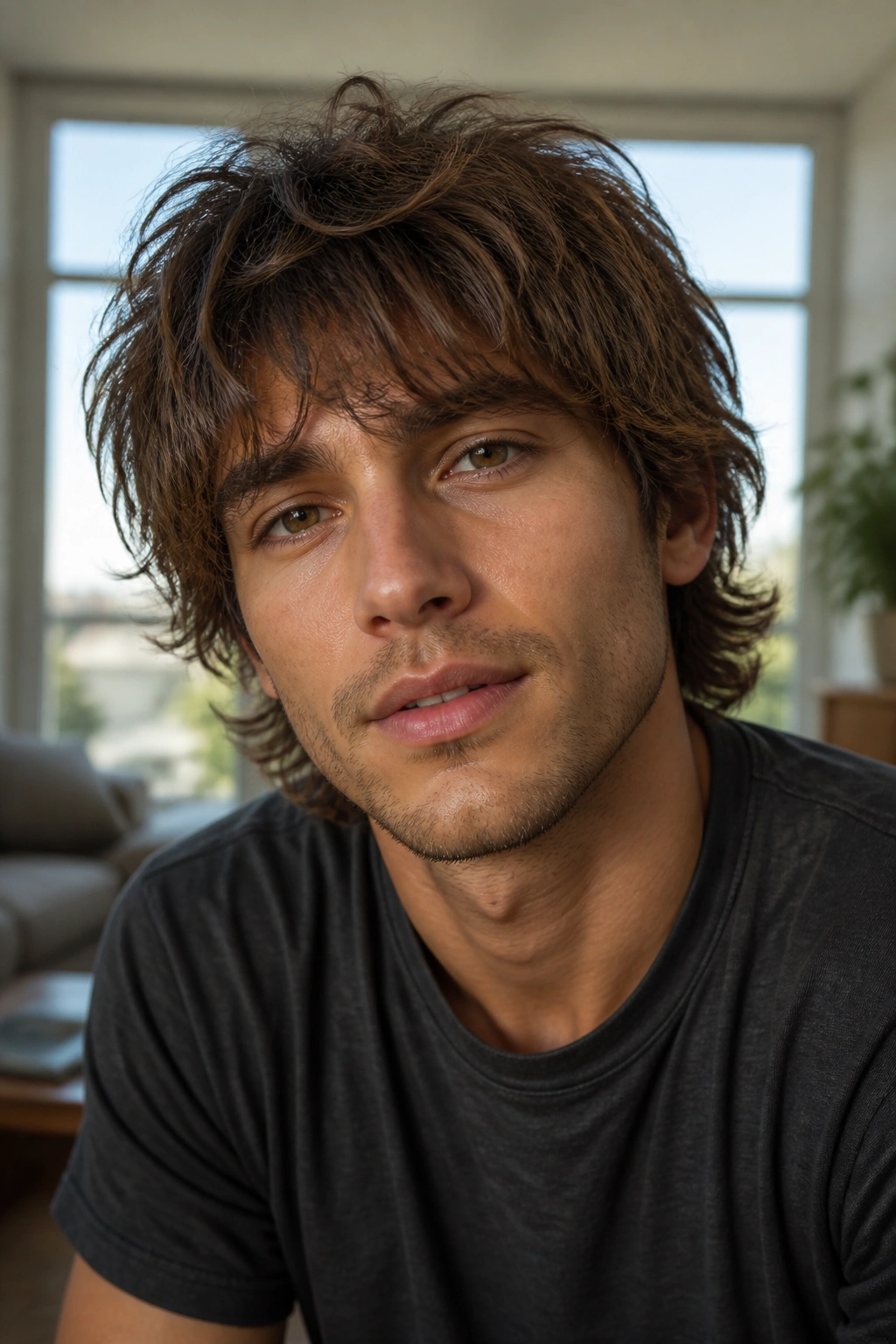
This is the easy one, and I mean that in a good way. A low-maintenance air-dried shag is cut so the hair falls into place after a towel dry and a few minutes of waiting. The layers need to do the job, because the styling is supposed to stay light.
What Makes It Low-Effort
A barber should leave enough movement through the top and enough softness around the edges so you do not need a brush and blow dryer every morning. That means less blunt weight, no over-thinning, and a little extra room in the fringe so it doesn’t spring up awkwardly as it dries.
- Use a microfiber towel to blot, not rub
- Work in a small amount of leave-in conditioner
- Let the crown dry with some lift
- Break up the ends with your fingers once it’s dry
The catch? Air-dried shags only look easy when the cut is right. If the shape is off, the hair will tell on you. If the cut is right, though, this can be one of the cleanest-looking men’s shag haircuts on the list. Honest. Low drama. No fuss.
14. Fine-Hair Shag
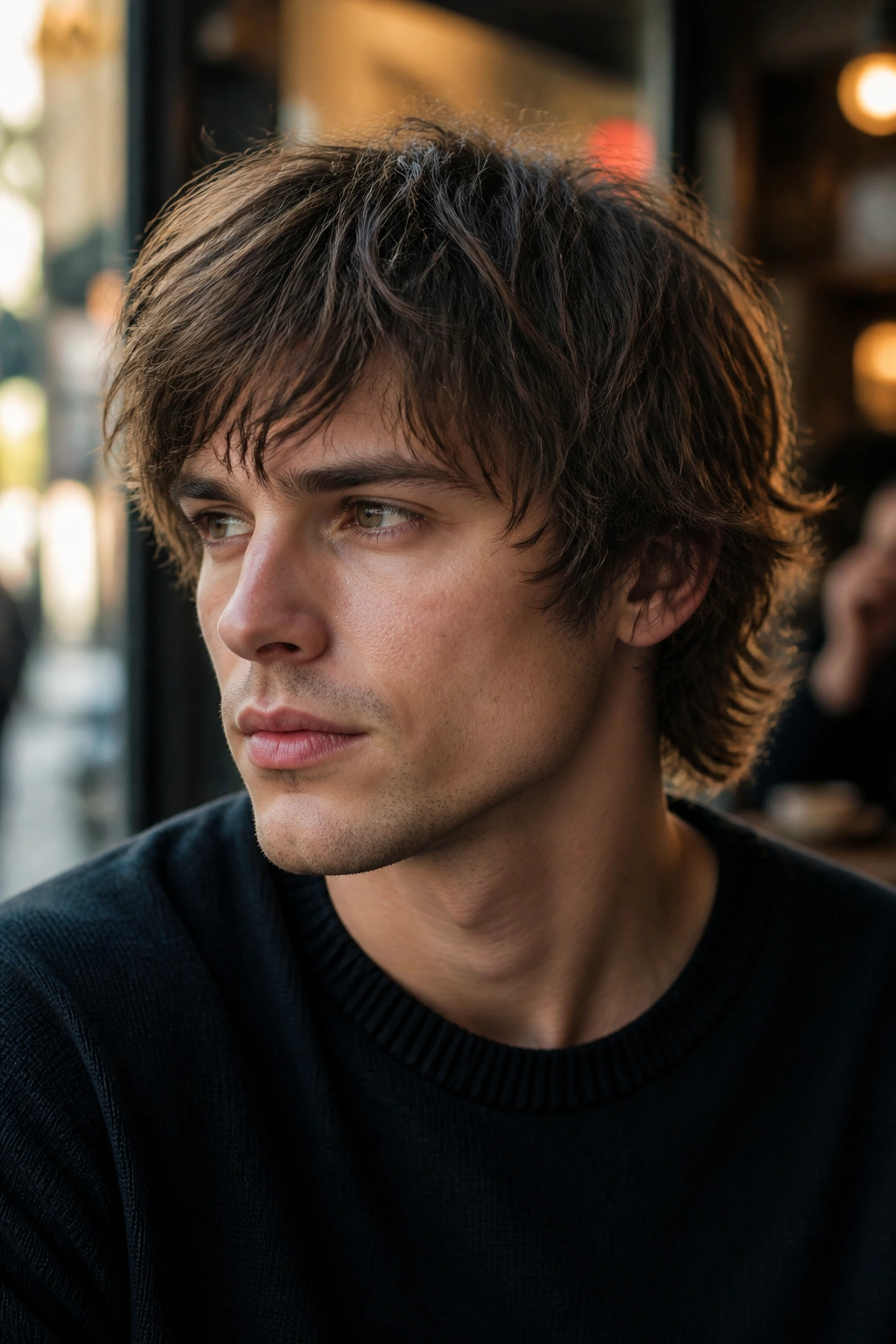
Fine hair needs layers, but not too many. That’s the tension. A shag can give fine hair the look of body and movement, yet if the barber gets overexcited with thinning shears, the result is see-through ends and a flat crown. That is not texture. That’s damage.
The better version uses soft internal layers that keep the surface looking full while removing just enough weight so the hair doesn’t cling to the scalp. The ends should still have some substance. You want lift, not wisps. A little root volume spray at the front can help, but the cut itself has to do most of the work.
No heavy cream here.
Go lighter: mousse, texture spray, maybe a dusting of powder at the roots if you need it. Fine hair gets greasy fast when you pile on product, and that kills the movement a shag depends on. If you keep the layers controlled and the finish matte, the cut can look thicker than it really is. That’s the trick.
15. Thick-Hair Shag
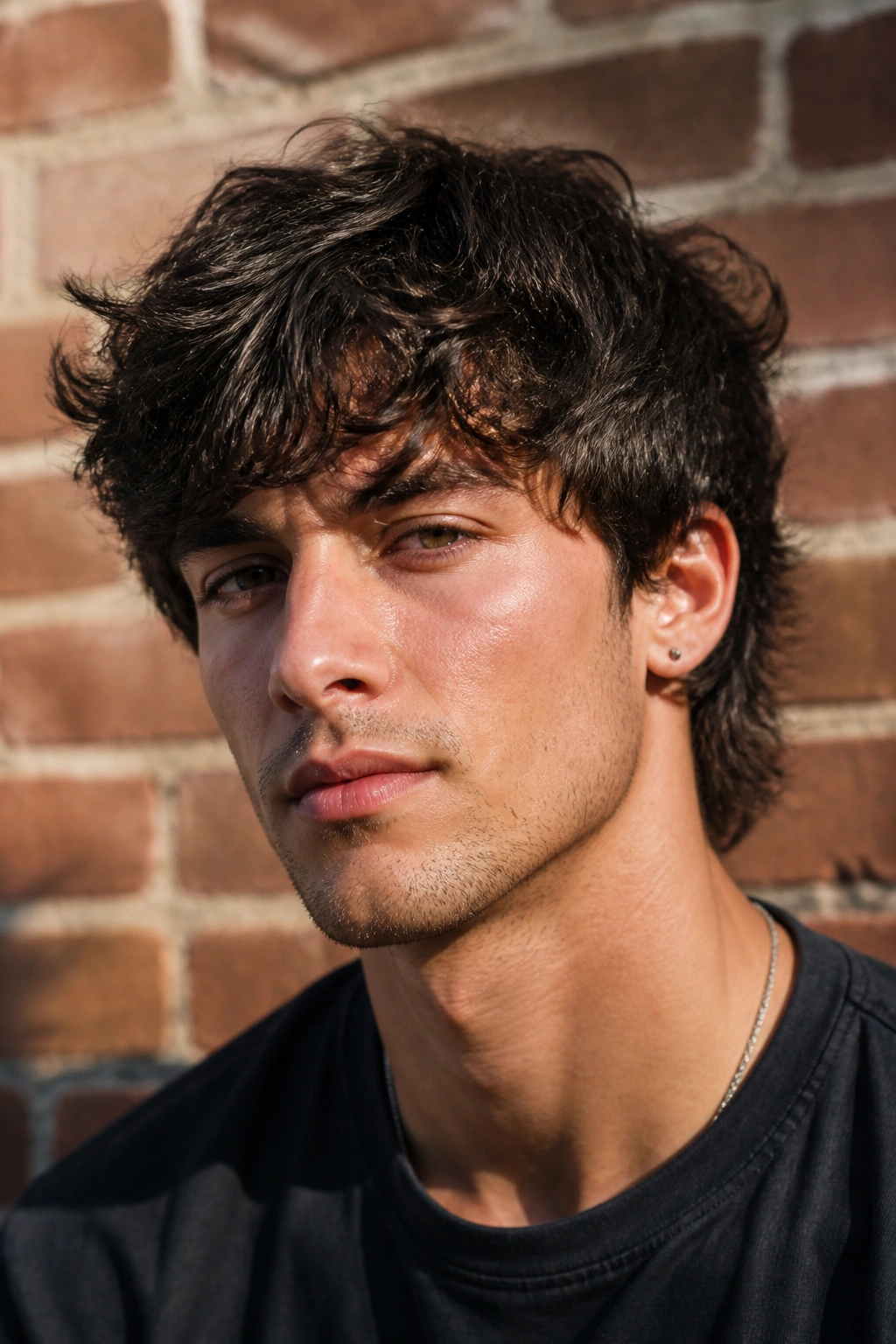
Why is thick hair such a different beast? Because it can hold shape, but it can also hold weight in all the wrong places. A thick-hair shag needs the barber to remove bulk from the inside while keeping enough perimeter length so the cut doesn’t turn fuzzy on the ends.
The smartest thick-hair version usually has a strong top and lighter sides, but not so light that the head starts looking triangular. You want the layers to create movement through the crown and temples, especially if your hair tends to spread wide when it dries. The haircut should feel controlled, not carved.
How to Get It to Move
- Ask for internal layering rather than aggressive thinning
- Keep the fringe piecey so it doesn’t sit as one dense sheet
- Blow-dry with the fingers lifted at the roots for 30 to 60 seconds
- Finish with a matte cream, not a glossy pomade
Thick hair is forgiving, but not automatically flattering. A good shag makes it feel lighter without taking away the strength of the hair itself.
16. Pin-Straight Shag
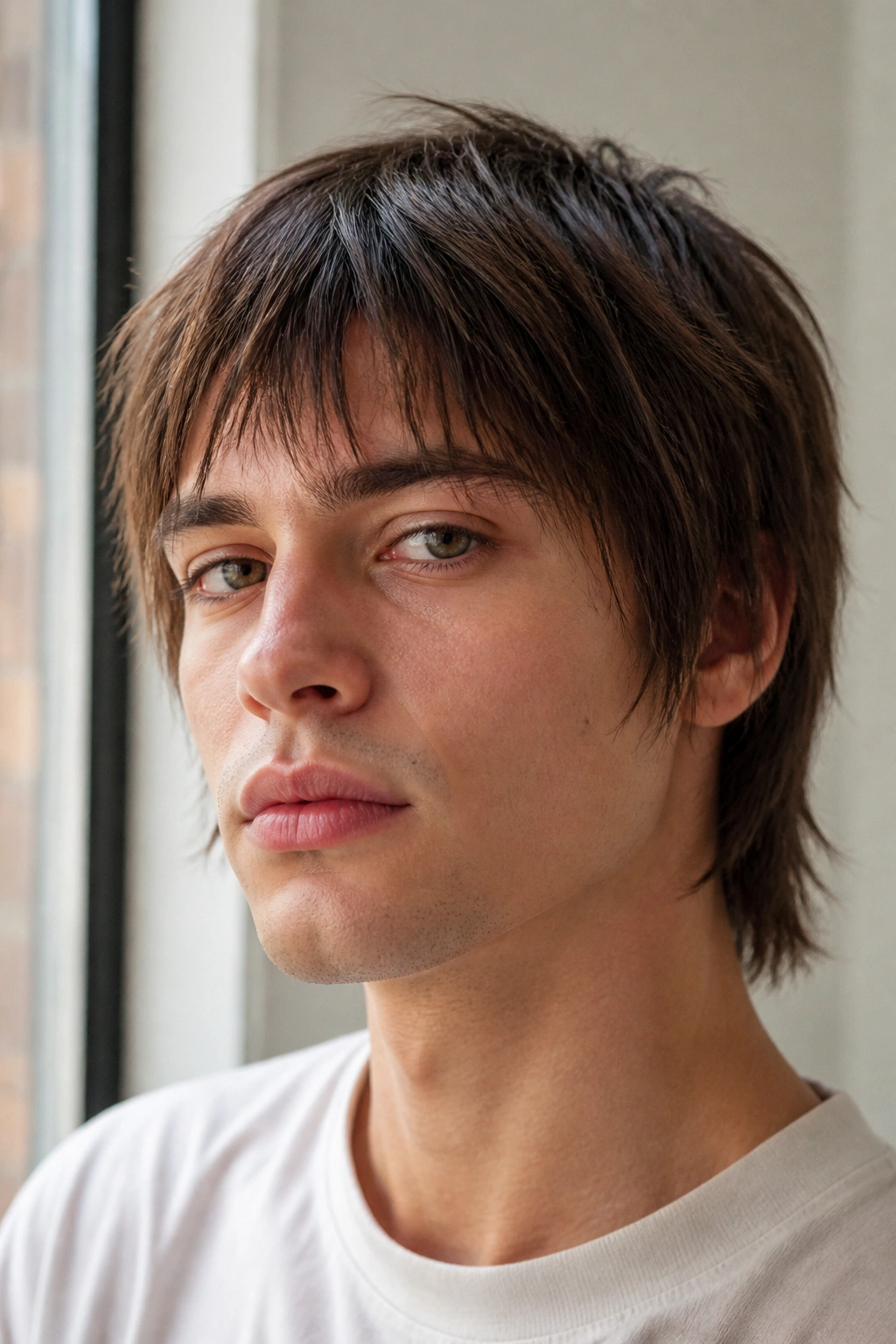
A pin-straight shag needs one thing more than anything else: broken ends. Straight hair can look sleek, sure, but it can also look boring fast if the layers are too even. A shag fixes that by putting movement into the silhouette, not just the surface.
The haircut usually works best with a slightly uneven fringe and layers that start high enough to create bend around the cheekbones. If the layers begin too low, the top goes flat and the length just hangs there. If they start too high, the cut can lose weight and start to fray. There’s a narrow path in the middle, and that’s where the sweet spot lives.
- Use a round brush only at the fringe if needed
- Dry the hair by lifting at the roots
- Keep the ends soft, not chopped blunt
- Use a light texture spray for grip
Straight hair shags can look almost too neat if you over-style them. Let a few pieces fall where they want. That’s usually the part that makes the cut feel alive.
17. Beard-Friendly Shag
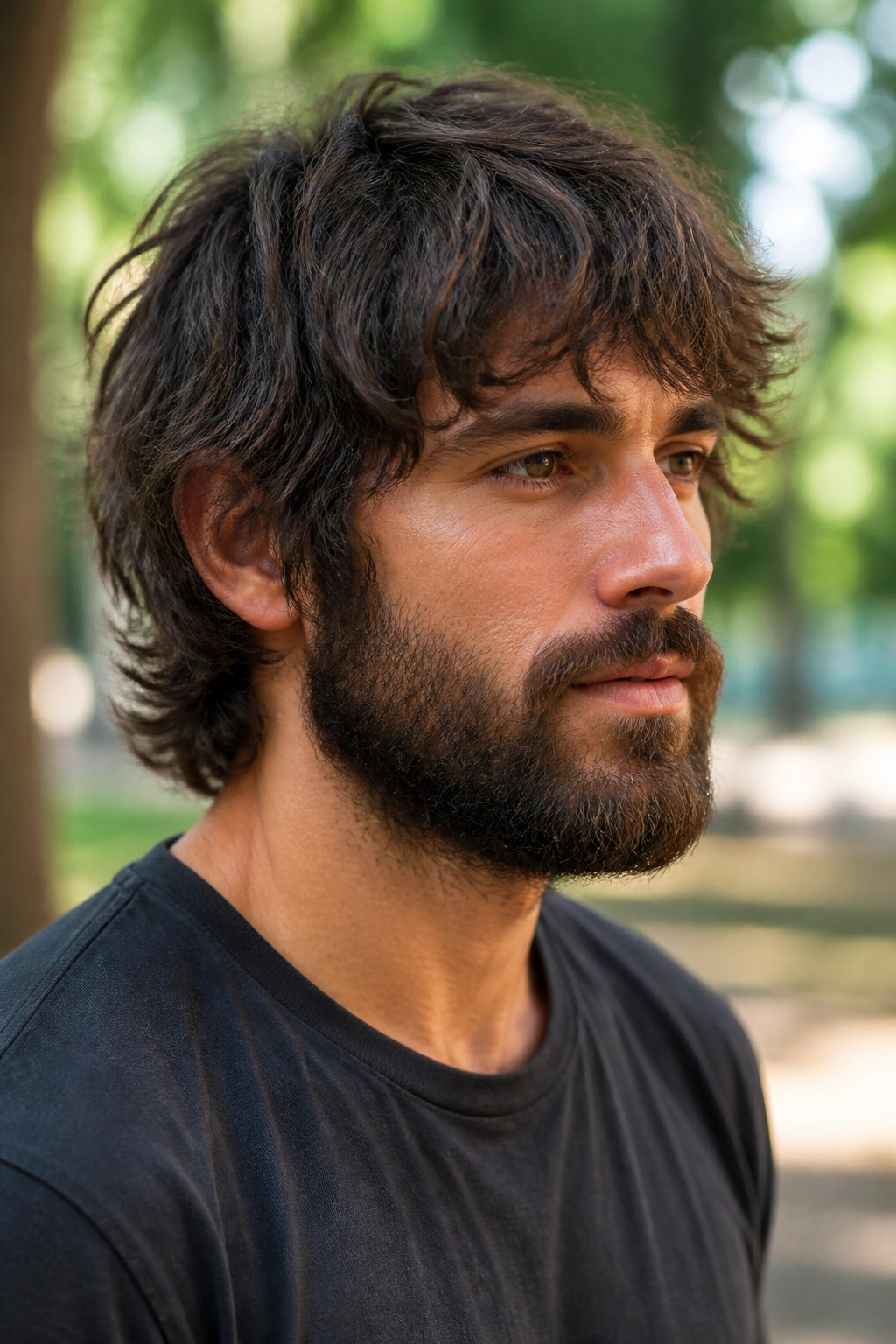
A shag and a beard can work together, but the connection has to be managed. If the haircut ends at the jaw and the beard starts with a hard line, the face can look boxed in. The better move is a soft transition through the sideburns and a bit of length at the temples so the haircut meets the beard without a jolt.
What this cut does well is balance. A fuller beard can carry a shorter shag with more fringe, while a lighter beard can pair with longer layers that keep the face from looking bottom-heavy. The idea is not to match the hair and beard perfectly. That looks fake. Instead, let one side carry more weight and let the other side stay loose.
I usually prefer a shag with some length around the ears when the beard is substantial. It keeps the profile from feeling abrupt. If the beard is short and neat, a rougher shag can make the whole look feel intentional without needing a lot of styling. One part texture, one part shape. Simple, but not boring.
The neckline matters too. Keep it clean. The haircut can be shaggy. The neck should not be.
18. Side-Parted Shag
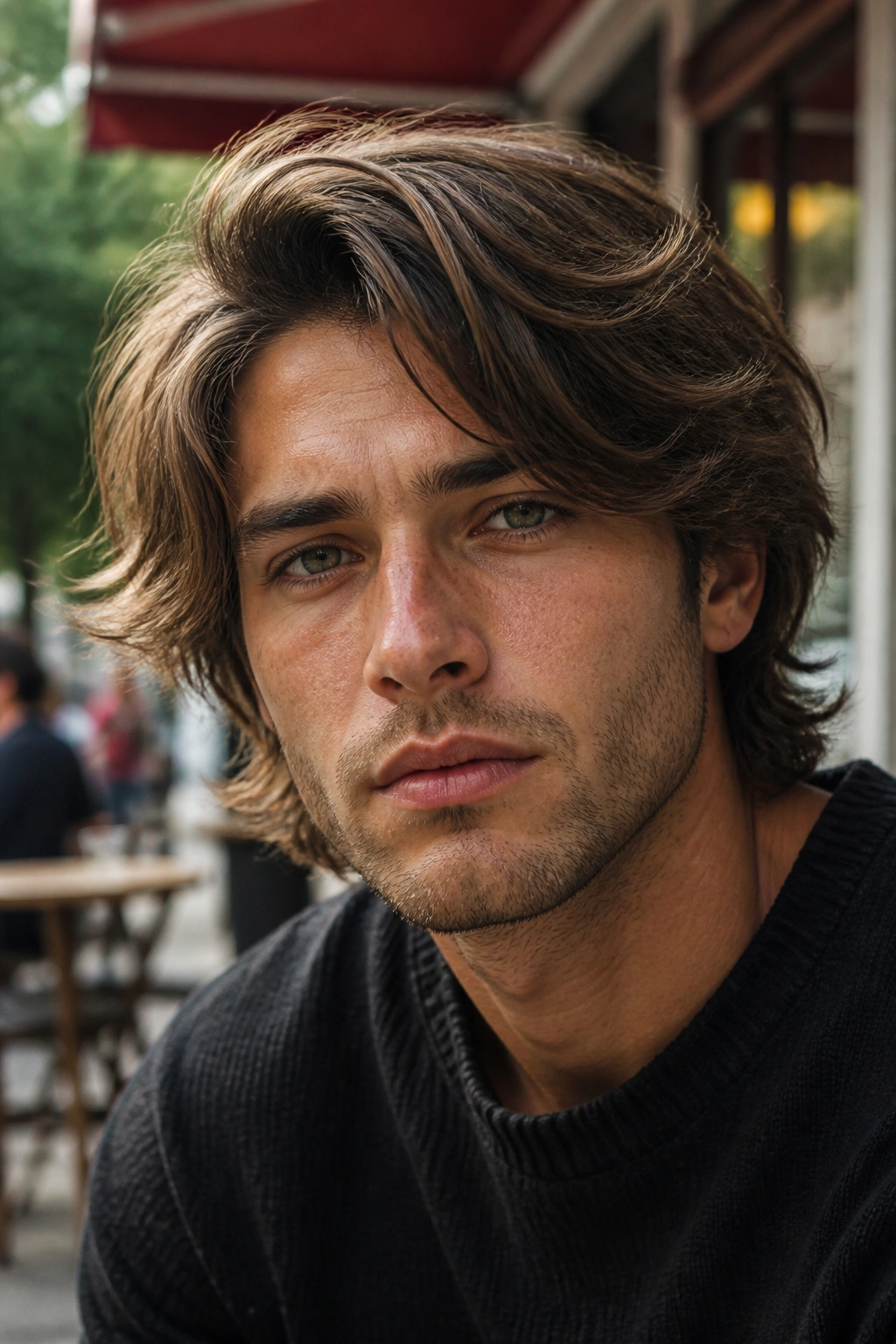
Compared with a center-parted shag, a side-parted version gives the haircut a little more structure. The layers still move, but the part creates a directional line that makes the style feel less loose and a bit more controlled. That can be a lifesaver if your face needs a bit of asymmetry.
This works well for men whose hair naturally falls to one side anyway. Rather than fighting the grain, the cut leans into it and lets the fringe sweep across the forehead. The result is softer than a hard part and less fussy than a centered curtain. It also grows out neatly, which is one reason barbers like it for clients who do not come in every month.
Best for: oval, round, and square faces.
Best with: medium hair that has some bend or a little wave.
If you ask for this, tell the barber where your hair naturally splits. That’s the detail people skip, and it matters more than a lot of styling advice. A forced part can make the whole shag look like it’s wearing someone else’s haircut.
19. Long Shag
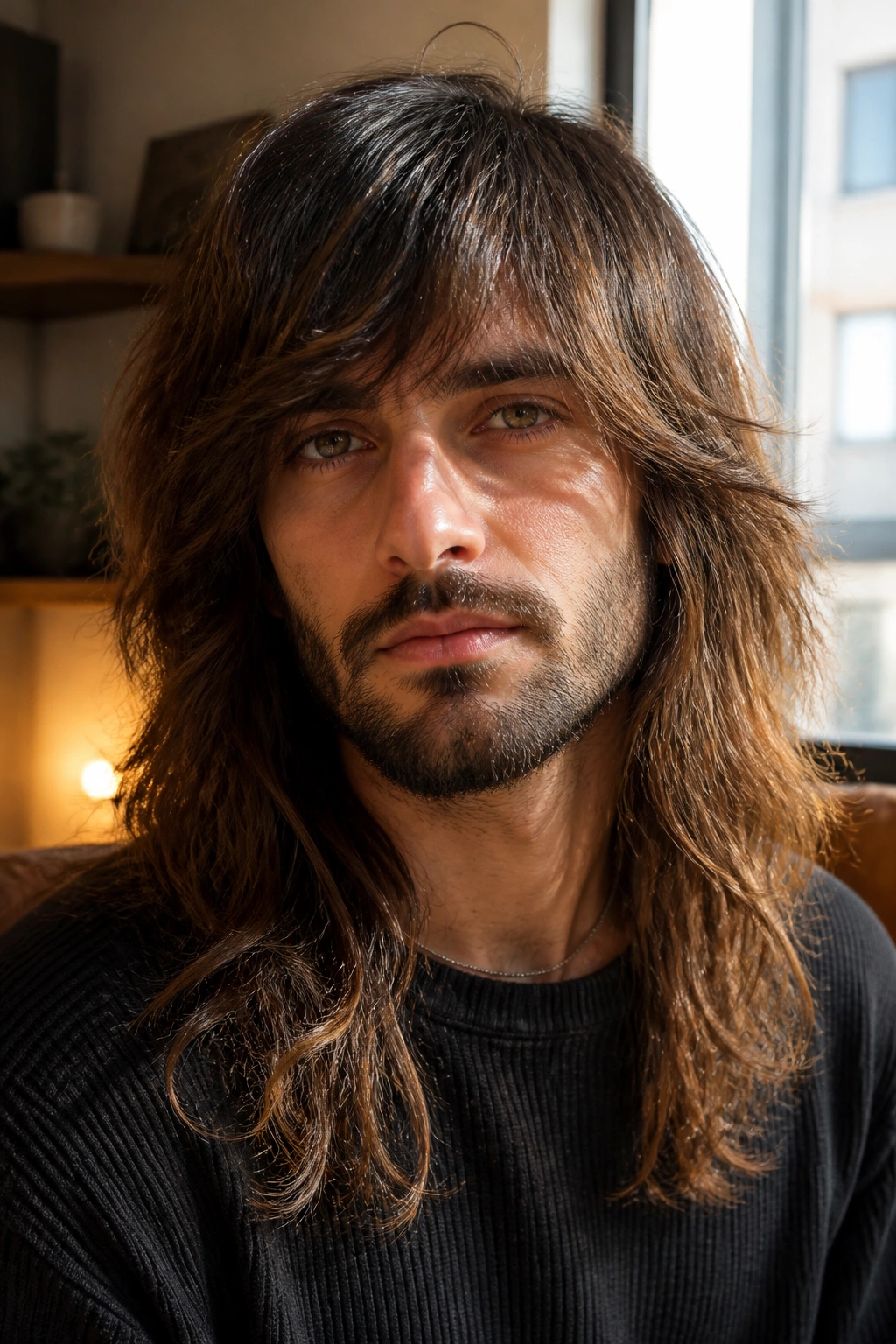
A long shag is where the layers need discipline. Once the hair gets down toward the shoulders or below, the cut can go flat fast if the barber doesn’t keep enough shape through the crown and sides. The goal is to keep the length while still giving the hair a reason to move.
Keep the Length From Going Flat
A strong long shag usually has layers that break up the weight around the cheekbones, chin, and collarbone. That keeps the silhouette from turning into one heavy sheet of hair. The top should still have lift, and the ends should stay soft enough to swing when you move.
- Ask for layered pieces around the face, not just the bottom
- Keep the crown from getting over-thinned
- Use a leave-in conditioner if the hair gets dry at the ends
- Trim the shape before it starts collapsing into one length
Long shags can look incredible on hair with wave, bend, or loose curl. They can also look expensive in the old-fashioned sense: not flashy, just full of character. The key is maintenance. Wait too long between trims and the shape disappears into length.
20. Clean Soft-Taper Shag
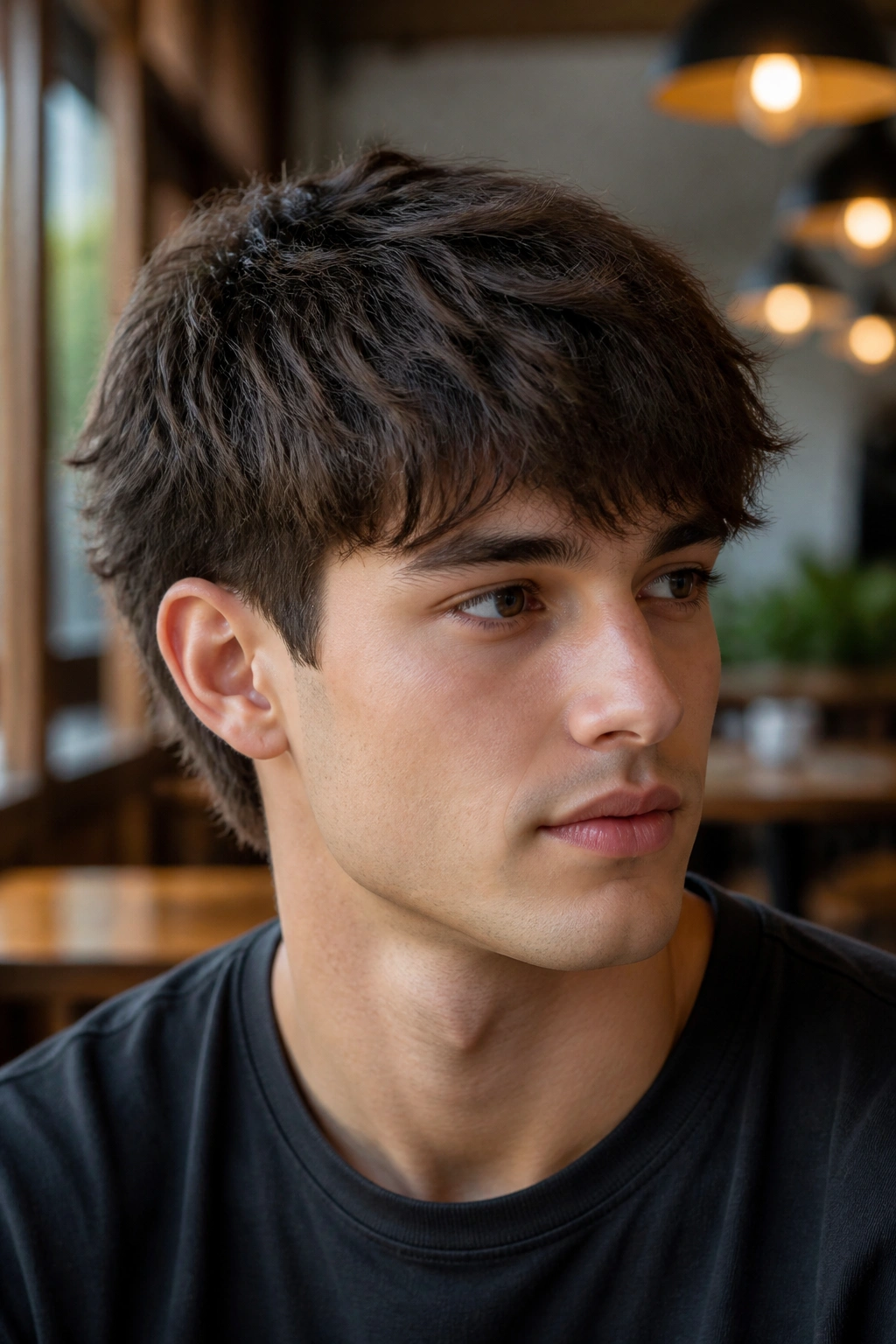
This is the shag for men who want texture without looking like they got lost at a concert. A clean soft-taper shag keeps the layered top and fringe but tightens up the sides and neckline just enough to make the cut feel more polished. It still has movement. It just behaves a little better.
The reason I like this version so much is that it plays both sides. You get the looseness of a shag haircut for men, but the taper keeps the outline sharp enough for work, dinner, or any setting where you don’t want the haircut doing all the talking. It works especially well if your hair has medium density and you want shape without a lot of daily styling.
Keep the fringe soft, not severe. Keep the taper low, not faded to the skin. And leave enough texture in the top so the haircut can dry with some bend instead of falling flat.
If you want one shag that’s easy to explain to a barber, easy to wear, and easy to grow out, this is the one I’d hand over first.
