



Round faces can pull off a shag better than a lot of people think. The trick is not “more layers” in the abstract. It’s where those layers land, how much width they add at the cheek line, and whether the cut gives you any lift at the crown.
A soft short shag works because it breaks up the circle without turning the hair stiff or boxy. You want movement above and below the widest part of the face, not a heavy shelf sitting right on it. That’s the whole game. A blunt chin-length line can make the face feel wider; a feathered edge with a little bend can do the opposite.
Texture matters too. Fine hair needs restraint or it goes wispy in a sad way. Thick hair needs weight removed in the right places or the shape puffs out at the sides. Curly hair needs the layers to respect the curl pattern instead of fighting it. The good short shag is never just a haircut. It’s a small set of choices that keep the face open, the jaw softer, and the whole thing easy to wear.
1. Chin-Length Feathered Shag for Round Faces

This is one of the cleanest ways to flatter a round face without looking fussy. The shortest face-framing pieces sit just below the cheekbone, so the eye reads length instead of width. That small shift makes a bigger difference than people expect.
What Makes It Work
The feathering keeps the edge light, which matters a lot here. If the ends are too blunt, the cut starts to feel heavy and boxed in. Keep the front pieces soft and let the crown sit a little higher than the sides so the silhouette doesn’t spread outward.
- Ask for the face frame to start about 1/2 inch below the cheekbone.
- Keep the perimeter at chin length or just under it.
- Use point-cutting or razor detailing to soften the ends.
- Style with a 1-inch round brush or loose bend from a curling iron.
Best tip: don’t let the shortest layer land right on the apples of the cheeks. That’s the spot that can make a round face look broader.
2. Pixie-Bob Shag with Curtain Fringe

Can a pixie-bob feel soft? Absolutely, if the crown has lift and the sides stay airy. This version keeps the back neat, the top a little tousled, and the fringe split open so the face doesn’t get boxed in.
The curtain fringe is the quiet hero here. It draws a diagonal line across the forehead, which is exactly the kind of shape that helps a round face. Keep the fringe long enough to graze the eyebrows and slightly separate at the center.
Where the Shape Matters
The nape should be tapered, not shaved up high. Too much exposure at the back can make the front feel bulky by comparison. If your hair is fine, this cut gives you movement without making the ends look thin.
If you want something easy to style, this is a smart pick. A dab of mousse at the roots and a quick rough-dry is usually enough. It looks deliberate even when it isn’t.
3. Jaw-Grazing Shag with Side-Swept Bangs

A jaw-grazing shag works because it creates a little motion right where round faces need it least: around the widest part. The fix is to sweep the bangs off-center so the line cuts across the face instead of sitting straight on it.
This cut is nice if curtain bangs feel too expected. Side-swept bangs can be softer and a little more romantic, especially when the ends are broken up instead of sliced into one sharp edge.
How to Wear It
Blow-dry the fringe in the direction you want it to stay, using a small round brush or your fingers and a touch of heat. A side part between 7/3 and 8/2 usually gives the best angle for this shape.
I like this option on hair that has some natural body. The movement does the work for you. And if your hair falls flat, a light root spray at the crown keeps the shape from collapsing by midday.
4. Cropped Wolf Shag with Wispy Ends
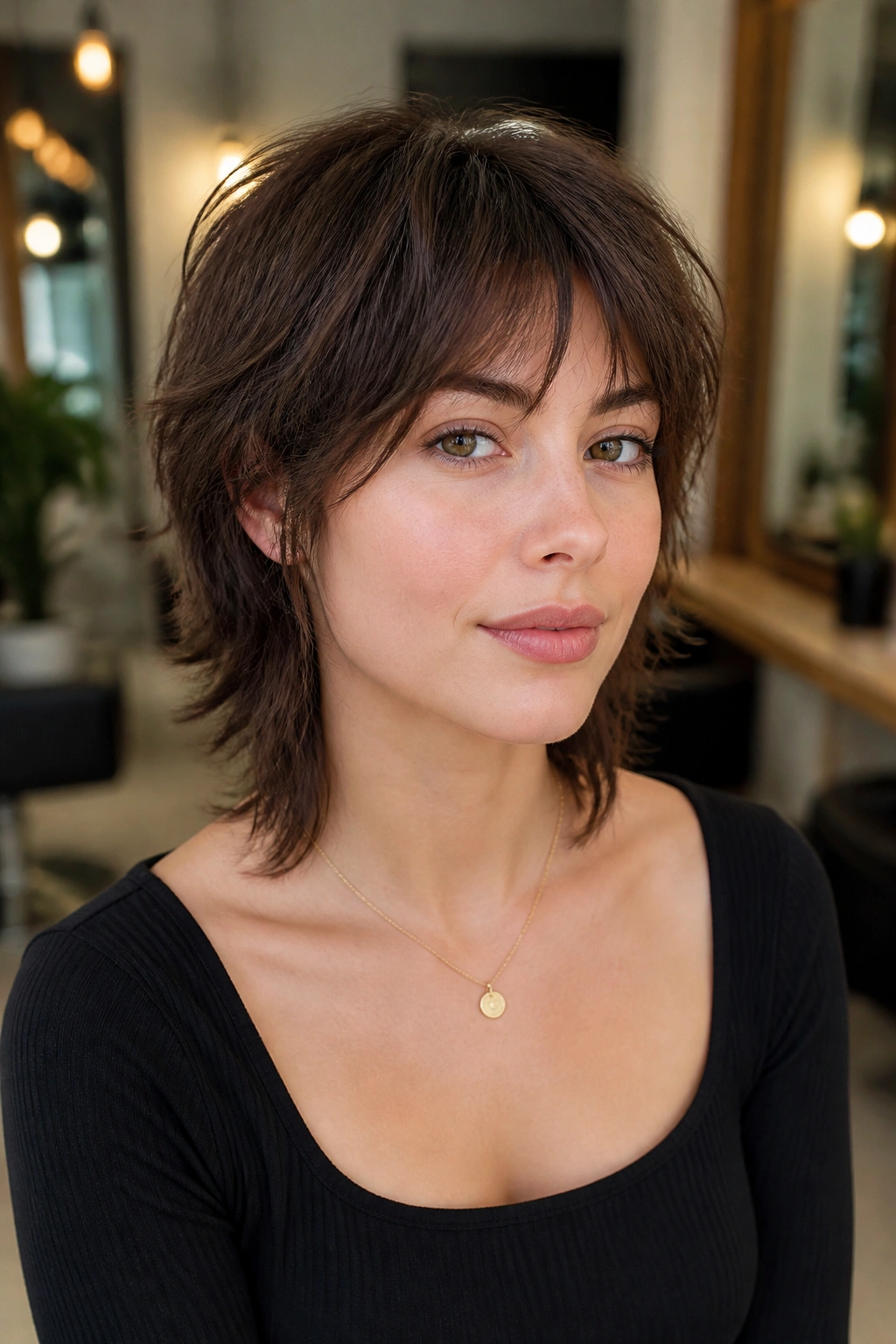
A wolf cut does not have to be loud. On a round face, the soft version is the one that actually works. Keep the top a little shaggy, the sides light, and the ends wispy enough that they don’t build a hard outline.
The danger is the heavy shelf look. That broad, choppy bottom line can make the face feel wider than it is. A cropped wolf shag should feel broken up, not blunt.
- Keep the fringe soft and uneven, not thick and square.
- Let the back stay close to the nape.
- Remove weight from the middle layers, not just the ends.
- Leave some length through the front so the face doesn’t close in.
Worth saying: the softer this cut is, the better it behaves on round faces.
5. French Bob Shag with Airy Layers

A French bob shag should feel like hair that moves when you turn your head. Not helmet hair. Not a clean one-length bob with attitude. The whole point is to keep the shape light enough that it brushes the jaw without hanging there like a block.
The airy layers stop the cut from becoming boxy, and they also help if your hair has a slight wave. The ends can flip in or out a little; both work. What you want to avoid is a dense line sitting exactly at the widest point of the face.
Styling Note
Use a light cream or spray and rough-dry the roots first. Then work the ends with your fingers or a small brush, just enough to create a bend. Over-styling kills the charm here.
This one is especially good if you want that neat, slightly Parisian shape without a rigid finish. It’s polished, but not stiff.
6. Curly Mini Shag with Crown Lift

Curls need room. If the cut is too blunt or the layers start in the wrong place, the hair can puff at the cheeks and sit like a triangle. A mini shag fixes that by keeping the top lighter and the crown a touch higher.
The best version follows your curl pattern instead of chopping straight across it. Short curls around the face should be soft and staggered, usually starting near the cheekbone or just below it. If you cut curls too short at the sides, they bounce outward in exactly the wrong place.
Why the Crown Matters
Lift at the crown helps stretch the whole silhouette. It gives the eye a vertical path before it reaches the fullness of the hair. That’s a small thing, but on a round face it matters a lot.
Ask for a dry cut if your curl pattern changes a lot when it dries. And use a diffuser with a medium-hold gel so the layers keep their shape instead of puffing up into frizz.
7. Razor Pixie Shag with Long Top Layers
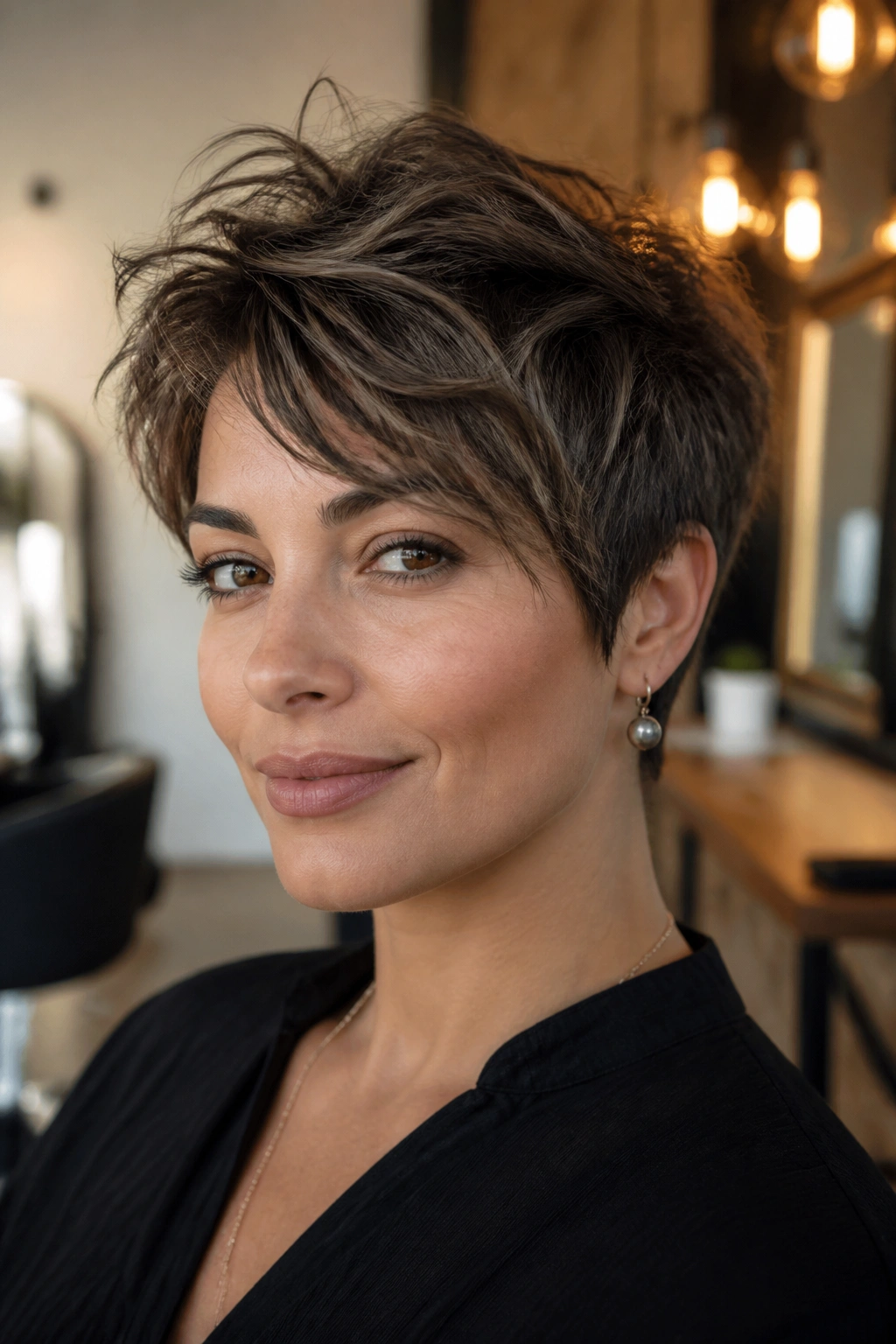
Three inches can change everything. With a razor pixie shag, the sides stay tight enough to feel fresh, while the top stays long enough to move and soften the face. The haircut lives or dies on that contrast.
A round face does better when the top has some height and the sides don’t balloon out. Keep the longest top layers about 2 to 3 inches longer than the sides, and feather the fringe so it doesn’t sit like a blunt bar across the forehead.
What to Ask For
A stylist should take the weight out with a light hand. Too much razor work can leave the ends frayed in a bad way, especially on fine hair. You want texture, not fuzz.
- Taper the ears softly.
- Keep the fringe piecey.
- Leave the crown longer than the temple area.
- Use a paste only on the last inch of the hair.
This cut has attitude, but it doesn’t have to feel sharp.
8. Ear-Length Grown-Out Pixie Shag
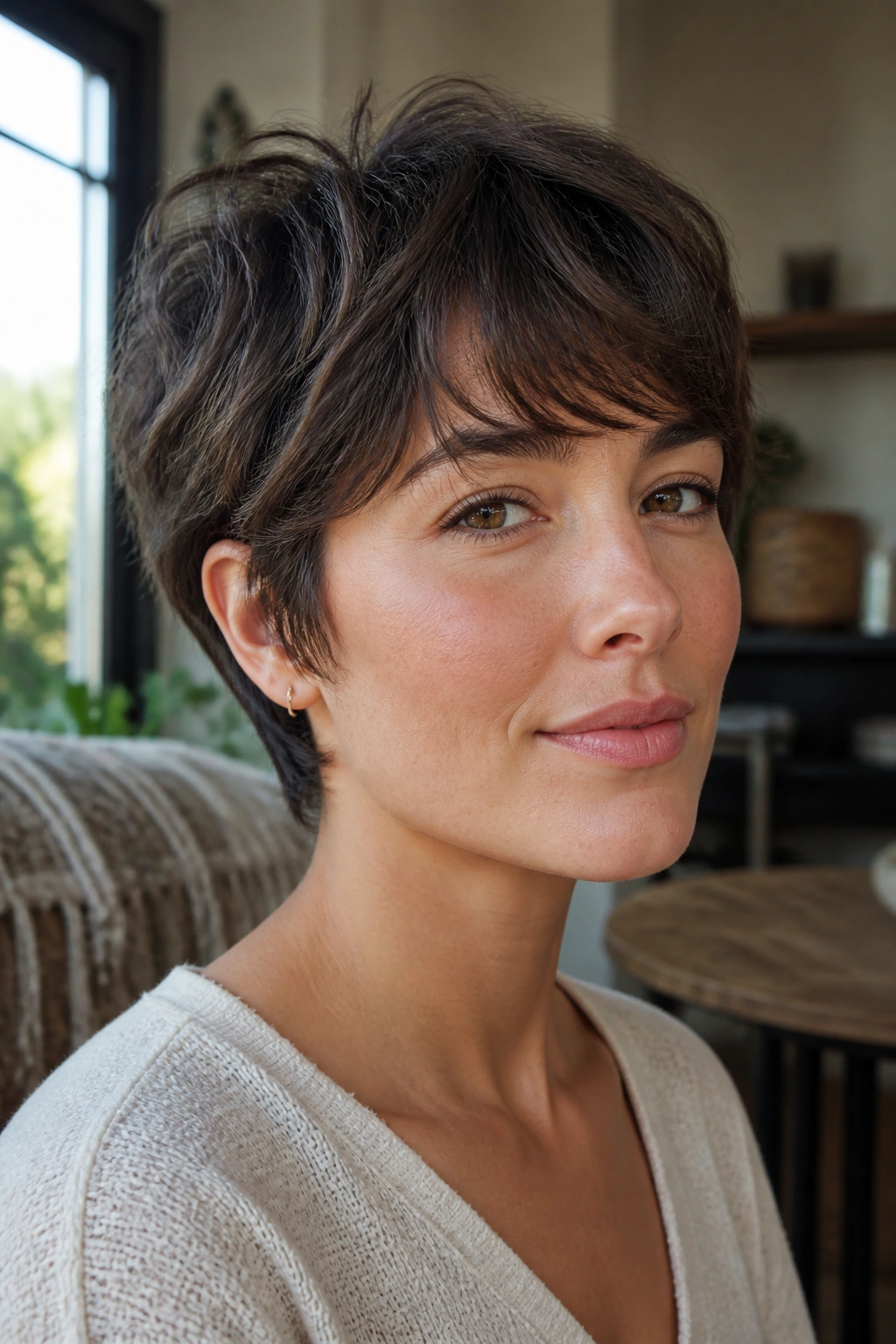
I like the grown-out pixie shag more than the super perfect one. It feels easier, and on a round face the extra softness around the ears and temples can be a gift. The shape stays close to the head, but it never looks severe.
The secret is letting the top grow into light layers while the sides stay tucked and airy. That gives you movement without adding bulk at the cheeks. If the nape is clean and the front pieces skim the jaw, the whole cut starts to feel longer.
Worth it if you hate spending time with a brush. A little texture cream through damp hair, then a rough dry, is often enough. It’s low drama. And that’s the charm.
9. Textured Micro-Bob Shag for Round Faces

A micro-bob can work on a round face if it’s broken up instead of blunt. That’s the part people miss. A solid little bob at the chin can make the face look wider, but a textured micro-bob with soft ends creates movement that cuts that width.
The length should sit just under the ears or at the top of the jaw, depending on your neck and cheek shape. Keep the interior light, but do not shred the perimeter into nothing. You want enough structure to hold the shape.
What Makes It Different
This cut feels a little sharper than the French bob, but still soft. It suits straight hair, wavy hair, and even fine hair that needs a bit of shape around the face. A side part helps, though a loose center part can work if the fringe breaks open.
It’s a good choice if you want something short enough to feel fresh but not so short that the face becomes the only thing you notice.
10. Tapered Mullet Shag with Soft Neckline
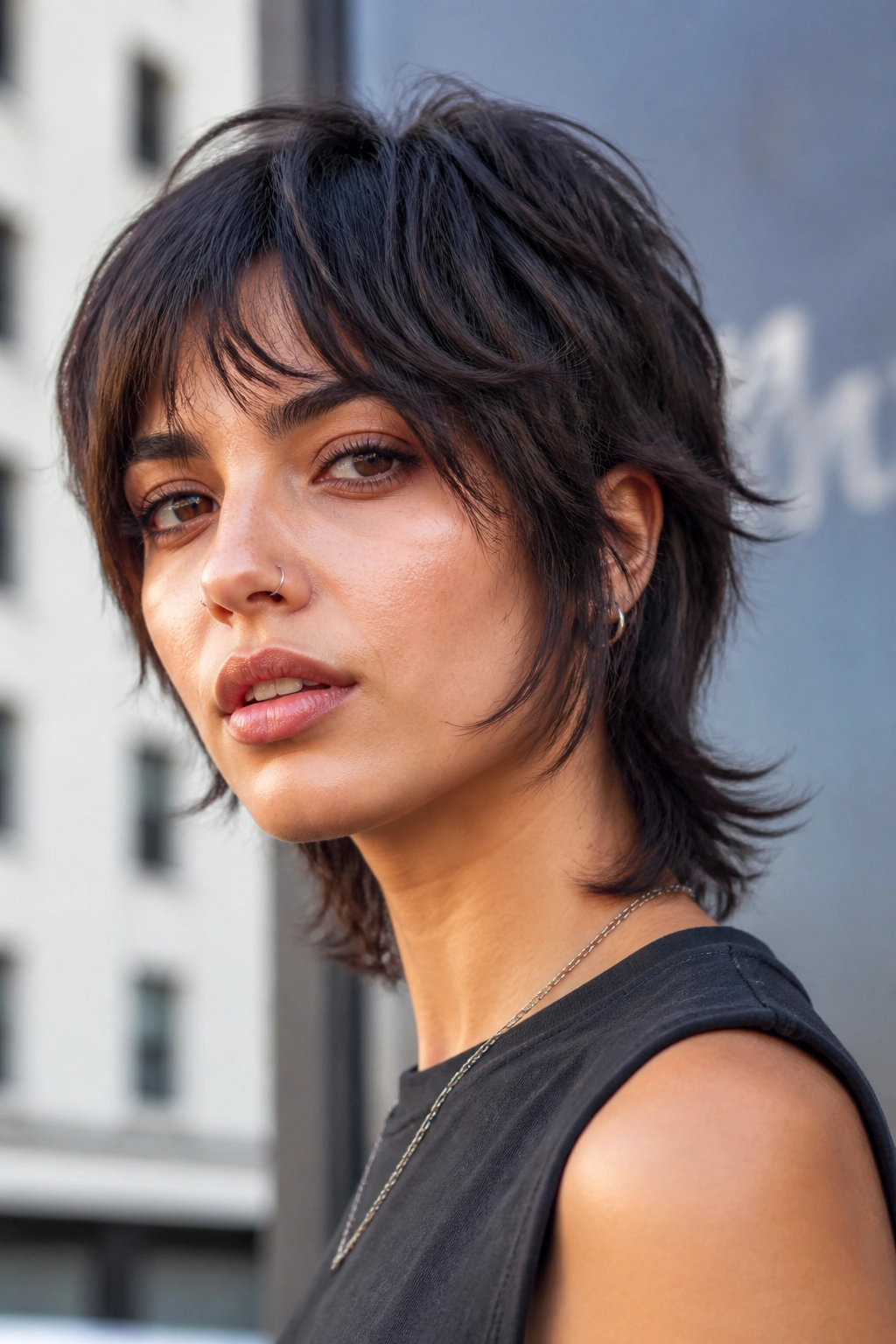
Want something bolder without making the face look rounder? A soft tapered mullet shag can do it, as long as the sides stay light and the neckline stays gentle. The shape should narrow slightly as it moves toward the neck, not flare out.
The front pieces should skim the jaw, and the fringe should split open at the brow. That open space matters. It keeps the face from feeling crowded. The back can be a little longer, but only enough to create movement, not a dramatic tail.
Who It Suits
This cut is best for someone who likes texture and doesn’t mind a little edge. It works especially well if your hair has natural wave or a bit of bend. Straight hair can wear it too, but it needs more styling.
Ask for the shortest layers to stay controlled around the temples. That keeps the silhouette narrow enough for a round face.
11. Inverted Shag Bob with Cheekbone Pieces

Picture a bob that lifts in the back and drifts forward in soft slices. That’s the inverted shag bob, and it has a nice way of pulling the eye down and forward instead of across the cheeks.
Cheekbone pieces are the star here. They should graze the face lightly, not sit in a thick block. If the front is too full, the cut loses the angle that makes it flattering in the first place.
The Shape in Practice
Keep the back a touch shorter, usually around 1 to 2 inches above the front length. That little difference gives the bob some swing. Then break up the front with point-cutting so the ends don’t feel strict.
I’d recommend this one if you want a haircut that looks neat on day one but still holds texture after a few hours. It’s polished enough for work, but not stiff enough to feel boring.
12. Bottleneck Bang Shag for Round Faces

Bottleneck bangs are one of the smartest bang shapes for a round face. The center sits shorter, then the sides open longer and softer as they move outward. That little shape creates space through the forehead and pulls the eye up.
The rest of the shag can stay short and easy. The bangs do the heavy lifting. They soften the face without making the forehead disappear, which is the trap with heavier fringe.
Why Bottleneck Bangs Work
They don’t sit like a straight bar. They bend and part in a way that keeps the face from feeling boxed in. If your hairline is a little uneven or your forehead is shorter, this shape is more forgiving than blunt bangs.
Ask for the center to land around the eyebrow zone, with the outer corners leaving room to sweep toward the cheekbone. That spread keeps the whole cut from widening the face.
13. Feathered Razor Bob with Broken Layers

A feathered razor bob should move in pieces, not in one solid sheet. If the ends look too smooth, the cut can feel heavy. Broken layers give it air.
This is a good choice for thick or medium hair that wants to sit too flat at the ends. The razor work removes some of the block, and the feathering around the face keeps the shape soft. The result is easy to wear and easy to bend with a brush.
- Keep the fringe light and uneven.
- Leave the perimeter soft at the jaw, not blunt.
- Use a texturizing mist on dry hair.
- Bend the front pieces away from the cheeks.
The nice thing here is that it looks a little undone even when it’s neatly cut. That’s a good thing.
14. Fine-Hair Shag with Light Crown Debulking

Fine hair can get swallowed by too many layers. That’s the mistake. For a round face, a fine-hair shag should use restraint, with only enough debulking at the crown to keep the top from lying flat.
The best version keeps the outline readable. You still need some shape at the jaw or chin, or the hair vanishes into the face. But the layers should be long and light, not chopped into tiny pieces that disappear after an hour.
What to Watch For
If the stylist goes wild with thinning shears, the ends can look see-through. That’s not softness. That’s just thin hair looking thinner. Ask for long internal layers instead of a lot of surface texture.
A root spray and a 1-inch round brush can do more here than another round of cutting. Lift the crown, bend the ends slightly inward, and stop. That’s enough.
15. Thick-Hair Shag with Internal Layers

Thick hair needs room to breathe, and internal layers are the cleanest way to make that happen. They remove weight from inside the shape, which keeps the cut from ballooning around the cheeks.
The exterior can stay fairly soft and smooth. That’s the point. You don’t need a chopped-up surface to get movement. In fact, too much surface layering can make thick hair frizzy and uneven.
How to Remove Weight Without Losing Shape
Ask for the stylist to keep the perimeter blunt-ish but not hard, then slice weight from the interior around the mid-lengths. The haircut should still hold a line when you tuck it behind the ear.
This is one of those cuts that looks better when the hair falls naturally than when it’s over-brushed. If your hair dries in a little bend, even better. That movement keeps the face from feeling boxed in.
16. Deep Side-Part Shag with Swept Fringe
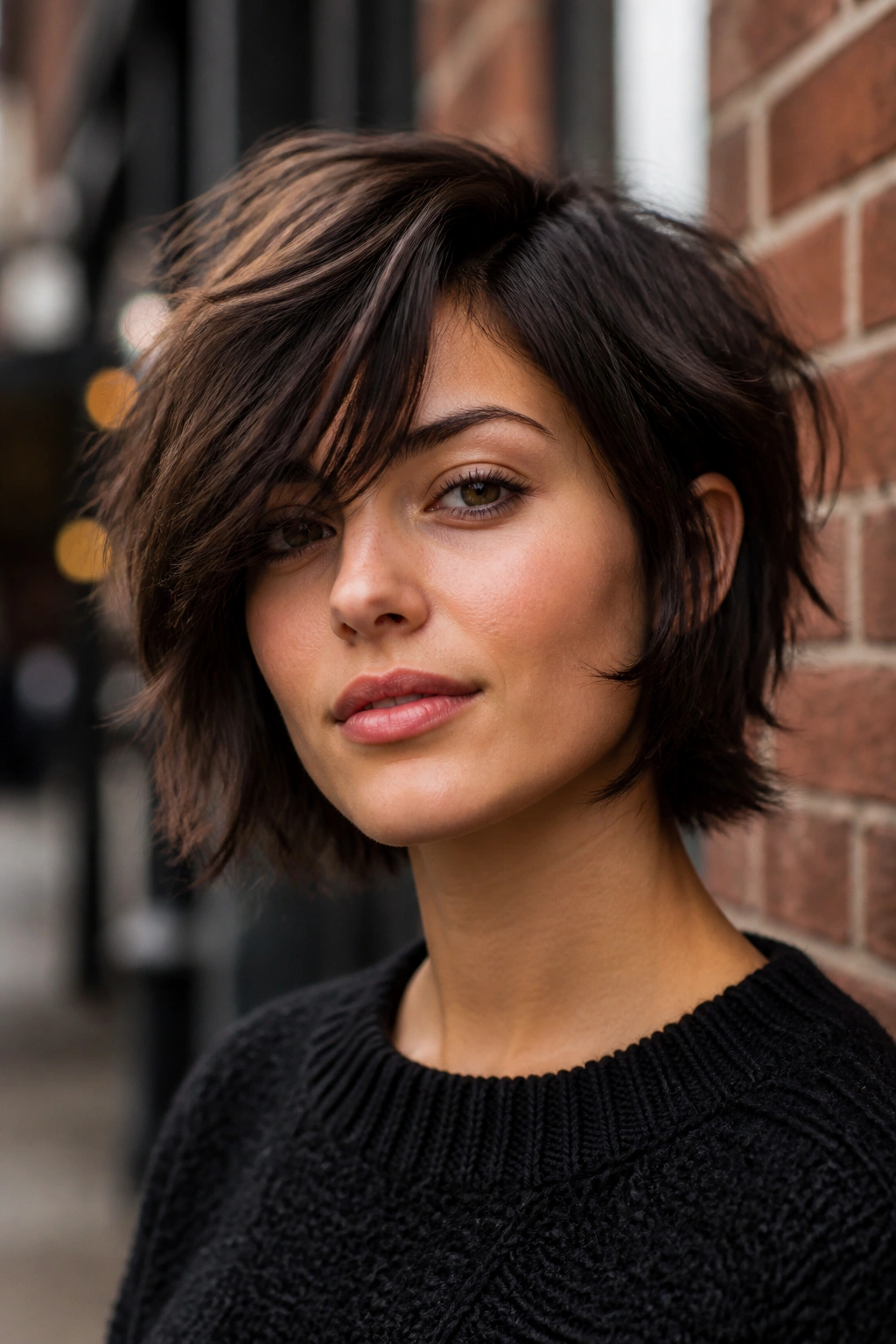
A deep side part changes the whole mood of a short shag. It adds a diagonal line across the face, and diagonals are your friend when you’re working with a round shape. They stretch the eye instead of circling it.
The swept fringe should feel loose, not stiff. Let it fall across the forehead and then break apart near the temple. That little break makes the cut look less perfect and more flattering.
You can use a 7/3 or 8/2 part for this look, depending on your cowlicks and how much lift you want at the crown. If your hair insists on splitting down the middle, a damp set with clips at the root can help train it.
17. Tucked-Behind-Ears Shag with Airy Sides

Tucking hair behind the ears does more than people think. It opens up the cheek line and keeps the sides from feeling heavy. On a round face, that breathing room matters.
The cut itself should give you enough length around the front so the tuck looks intentional, not accidental. Pieces that skim the cheekbone or jaw are ideal. If they’re too short, the tuck looks stubby.
A shag like this also works well when you want to show off earrings or neckline shape. It’s a small detail, but it changes the whole frame of the face. That’s why I keep coming back to it.
18. Short Shag with Piecey Ends and Loose Texture

Do you want a cut that looks a little cool without trying too hard? Piecey ends are the move. They break up the line, which is exactly what keeps a round face from feeling too full.
Keep the texture loose, not crunchy. The difference matters. Piecey hair should move when you touch it, not sit there with a shell of product on it. Use a tiny amount of wax paste, warmed in your palms, then pinch only the very ends.
How to Style It
Air-dry halfway, then finish with your fingers or a diffuser. If you blow-dry everything smooth, you lose the point of the cut. The shag needs a bit of irregularity to feel soft.
This style is especially good if you want a haircut that works with second-day texture. It gets better when it’s a little lived in.
19. Salt-and-Pepper Shag with Natural Movement

Natural color can make a shag look even better, because the texture and the color shifts play off each other. On salt-and-pepper hair, soft short layers keep the gray and dark strands from forming one flat block.
The shape should stay close enough to the head to feel neat, but open enough that the light catches the texture. That’s where the movement matters. A round face benefits when the hair doesn’t sit like a helmet.
What I Like About It
This cut looks honest. It doesn’t try to hide the texture or force the color into something glossy and uniform. Instead, it lets the movement do the work.
A soft side fringe can keep the forehead from looking too wide, and a slightly longer nape keeps the profile clean. It’s a calm haircut, which is a nice change if you want something low-maintenance.
20. Short Shag with Underlayer Length
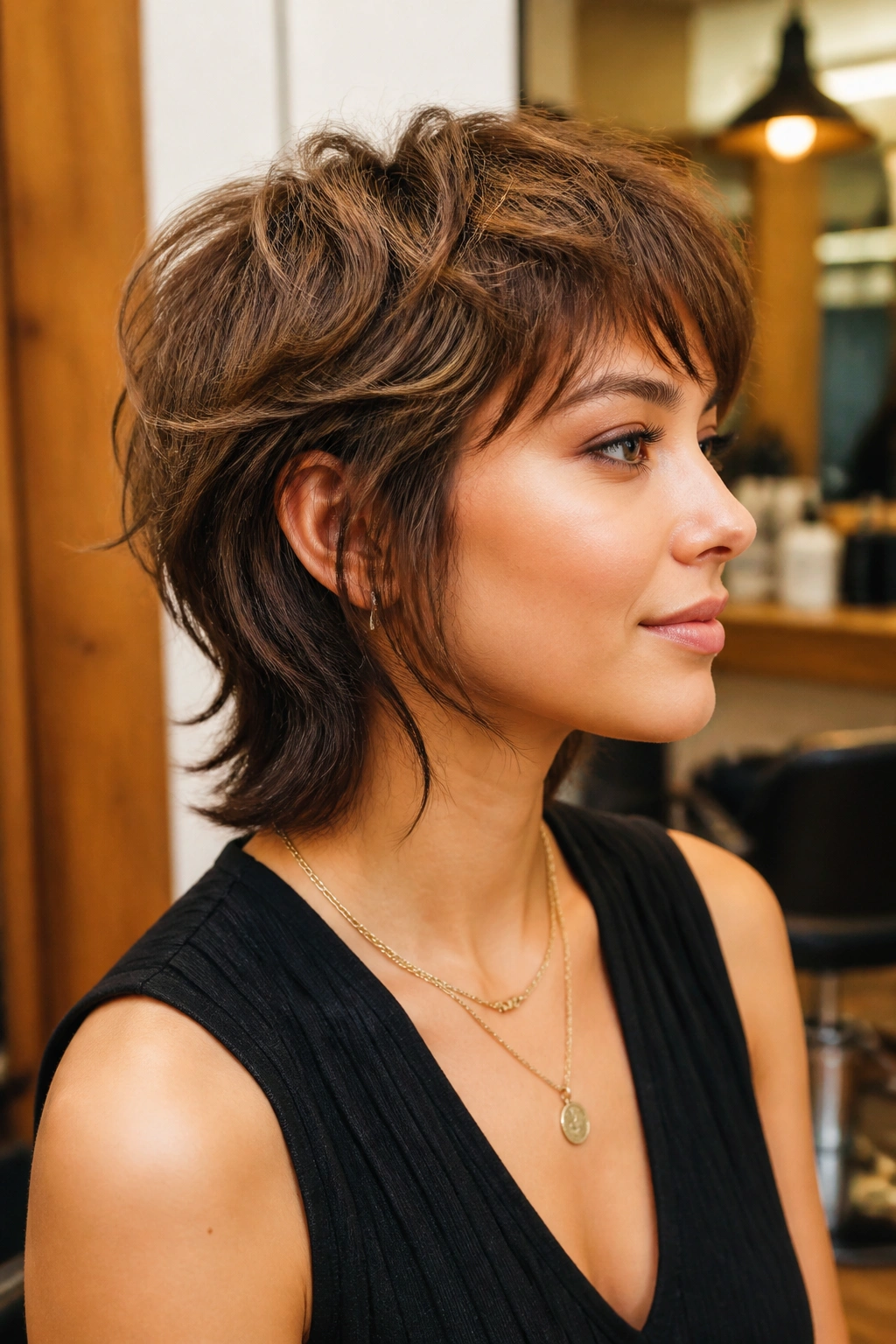
A short shag with underlayer length gives you two shapes at once. The top can stay light and lively, while the underlayer gives the haircut a bit of swing around the jaw.
That hidden length is useful on a round face because it keeps the outline from puffing outward. You get movement without losing the sense of direction. It’s subtle, but it works.
- Keep the top layers short enough to move.
- Leave the underlayer at or just below the jaw.
- Avoid a hard, full edge at the bottom.
- Style with a bend, not a curl.
This is a good salon photo to bring if you want short hair but don’t want it to feel too chopped.
21. Shaggy Pixie Bob with Flipped Tips

A little flip at the ends can soften a round face fast. It breaks the downward line and makes the haircut feel lighter, almost springy. That’s useful when the rest of the cut is close to the head.
The shaggy pixie bob usually sits somewhere between a pixie and a bob, which is why the proportions matter. Keep the top layered enough to move, and let the tips flick out just a bit around the jaw.
The flip should look casual, not sculpted. A small brush, a quick wrist turn, and a touch of heat usually does the job. If the ends are too curled, the face can feel more compact, so keep the bend soft.
22. Chin-Curve Shag with Rounded Bottom

A chin-curve shag follows the jawline without hugging it too hard. That subtle curve can be flattering on a round face because it gives shape without creating a hard wall.
The bottom should round under slightly, then break apart in feathered pieces. Too smooth, and the shape turns heavy. Too choppy, and it loses the softness that makes it easy to wear.
The Part That Matters Most
Ask for the front to stay longer than the cheek area. That lets the hair frame the face without sitting exactly on the widest point. If your jaw is strong, this cut can soften it. If your jaw is softer, it just keeps the profile clean.
It’s one of those haircuts that looks gentle from the front and a little more interesting from the side.
23. Soft Undercut Shag
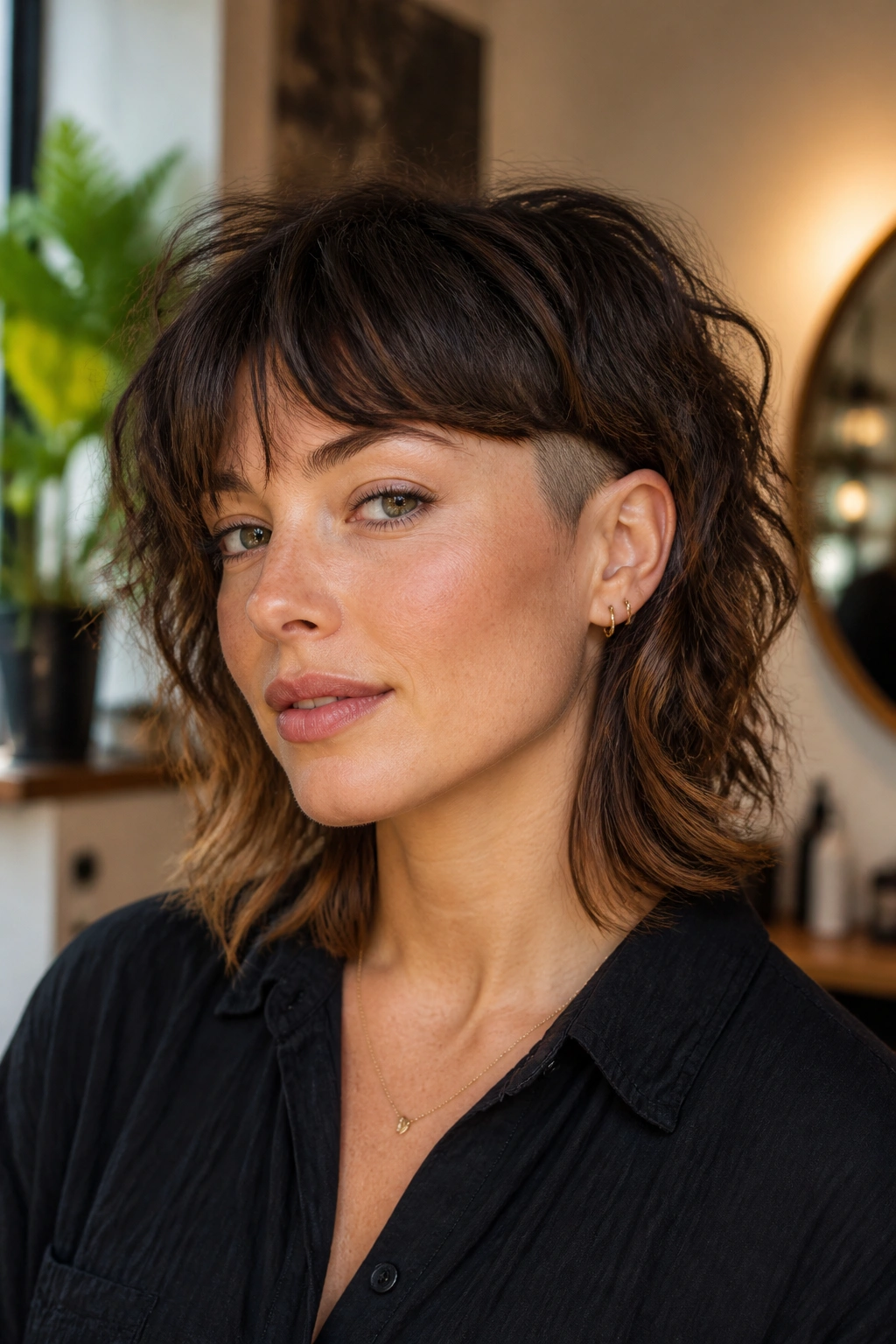
A soft undercut shag is not the shaved-sides drama people imagine first. The undercut stays hidden or low, usually beneath the top layers, so the shape can shed bulk without looking severe.
That makes it a smart option for thick or wavy hair that gets puffy around the cheeks. The visible layers stay soft, but the underneath has enough removal to stop the shape from ballooning.
Where to Keep It Hidden
If you want the undercut discreet, keep it below the top of the ear or tucked into the nape. That lets the haircut move normally when you wear it down. And if you wear your hair up sometimes, the undercut can make that easier too.
This cut is especially helpful if you hate the triangle effect. It clears space without making the haircut look stripped.
24. Wavy Shag with Light Bangs

Wavy hair and a shag are old friends, but the bang choice decides whether the cut flatters a round face or fights it. Light bangs keep the forehead soft while the waves bring movement through the sides.
The bangs should sit airy enough to separate a little. Heavy fringe can make the face feel shorter. Loose fringe, with tiny gaps in it, gives the whole cut some lift.
I like this one because it doesn’t need much coercion. A little mousse, a scrunch, and either a diffuser or air-drying is often enough. The waves do half the styling for you, which is probably the nicest part.
25. Rounded Shag Bob with Crown Volume
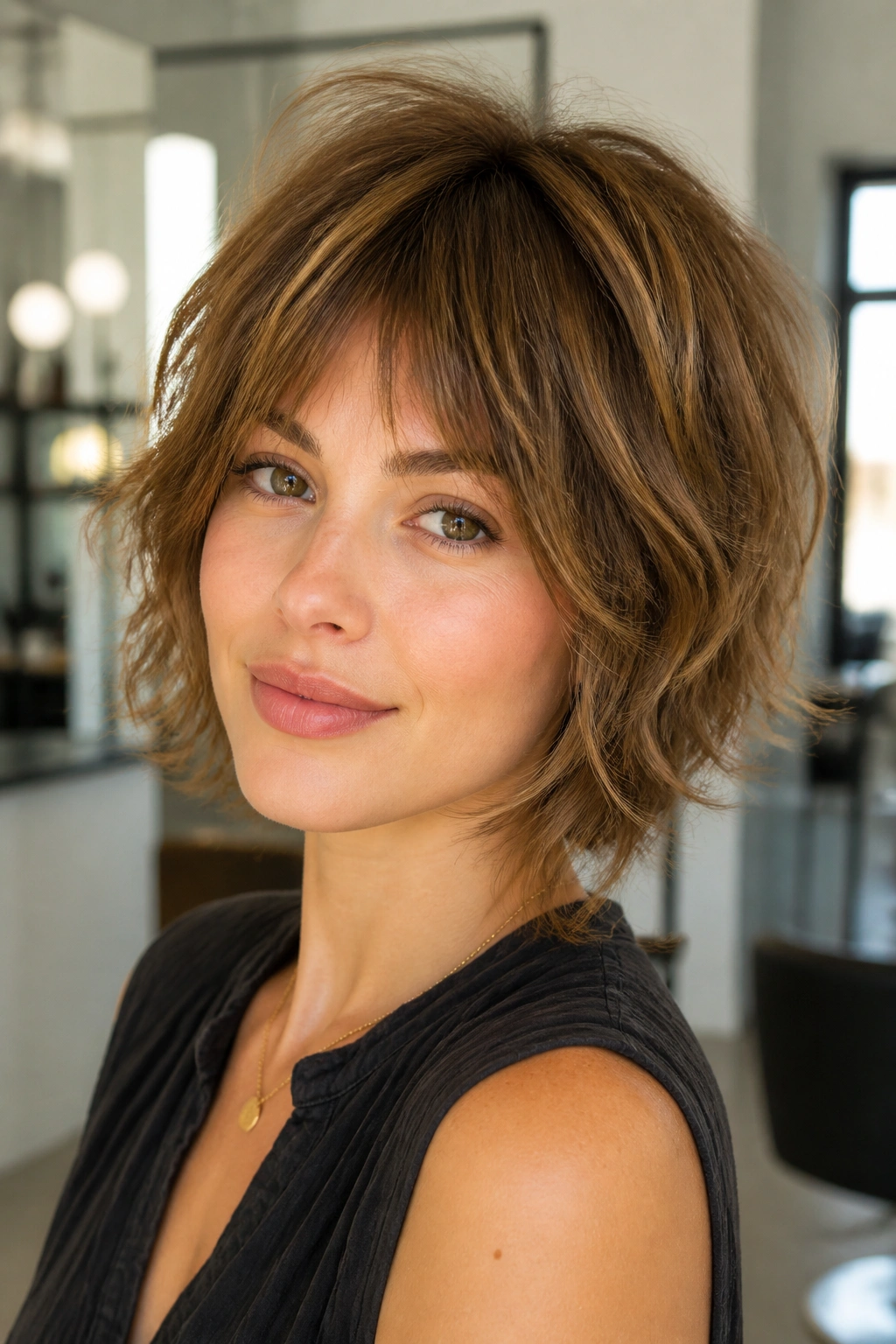
A rounded shag bob sounds like it might add width, but the crown volume changes the math. When the lift is up top, the eye reads height first and width second. That’s the part people forget.
Keep the sides soft and the top a bit fuller, then make sure the ends are broken so the shape doesn’t become a solid dome. A round face can handle roundness better when it’s sitting higher on the head, not lower at the cheeks.
Styling the Root
Blow-dry the roots upward with a medium round brush and a light spray. Then bend the ends just enough to keep them from flattening out. Don’t overthink the finish. The cut needs air more than polish.
This one is a good middle ground if you want a bob shape but still want the ease of a shag.
26. Short Shag with Baby Bangs
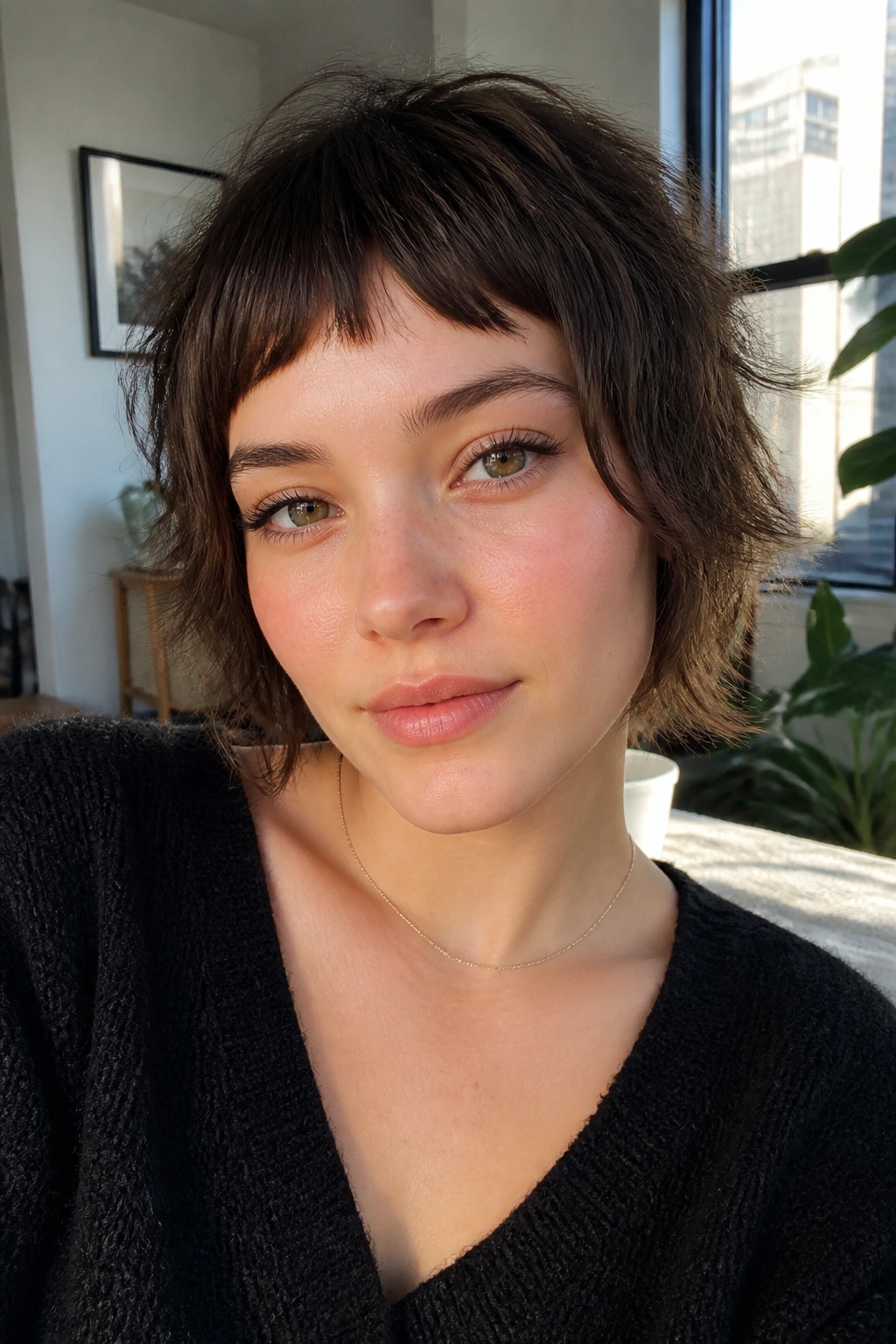
Baby bangs can work on a round face, but only if the rest of the cut stays soft. The fringe is short, so the sides need to carry some of the balancing weight.
That means broken texture, not a hard geometric line. The fringe should sit well above the brows, and the side pieces should be longer, feathered, and a little loose around the temples.
Who Should Skip It
If you like your forehead covered, this is not your cut. If you hate regular trims, it’s also not your cut. Baby bangs grow out with attitude.
But if you like a haircut with a bit of edge and you’re happy to keep the rest of the shape airy, this can be a sharp, fresh option. It looks best when the hair around it is soft enough to keep the face open.
27. Air-Dried Natural Shag

An air-dried shag works best when the cut respects the way your hair already wants to fall. That matters more on a round face than people admit, because forcing the hair into the wrong shape tends to widen it.
The layers should be placed where the hair bends naturally, not where a ruler says they should go. If your hair kicks out at the jaw, cut a little below that. If it curves in, let the front pieces follow the line instead of fighting it.
The styling routine is simple: leave-in conditioner, a little curl cream or light mousse if you need it, and hands off while it dries. The messier the hair gets, the more honest the cut looks. That’s the point.
28. S-Curve Shag with Bend and Movement
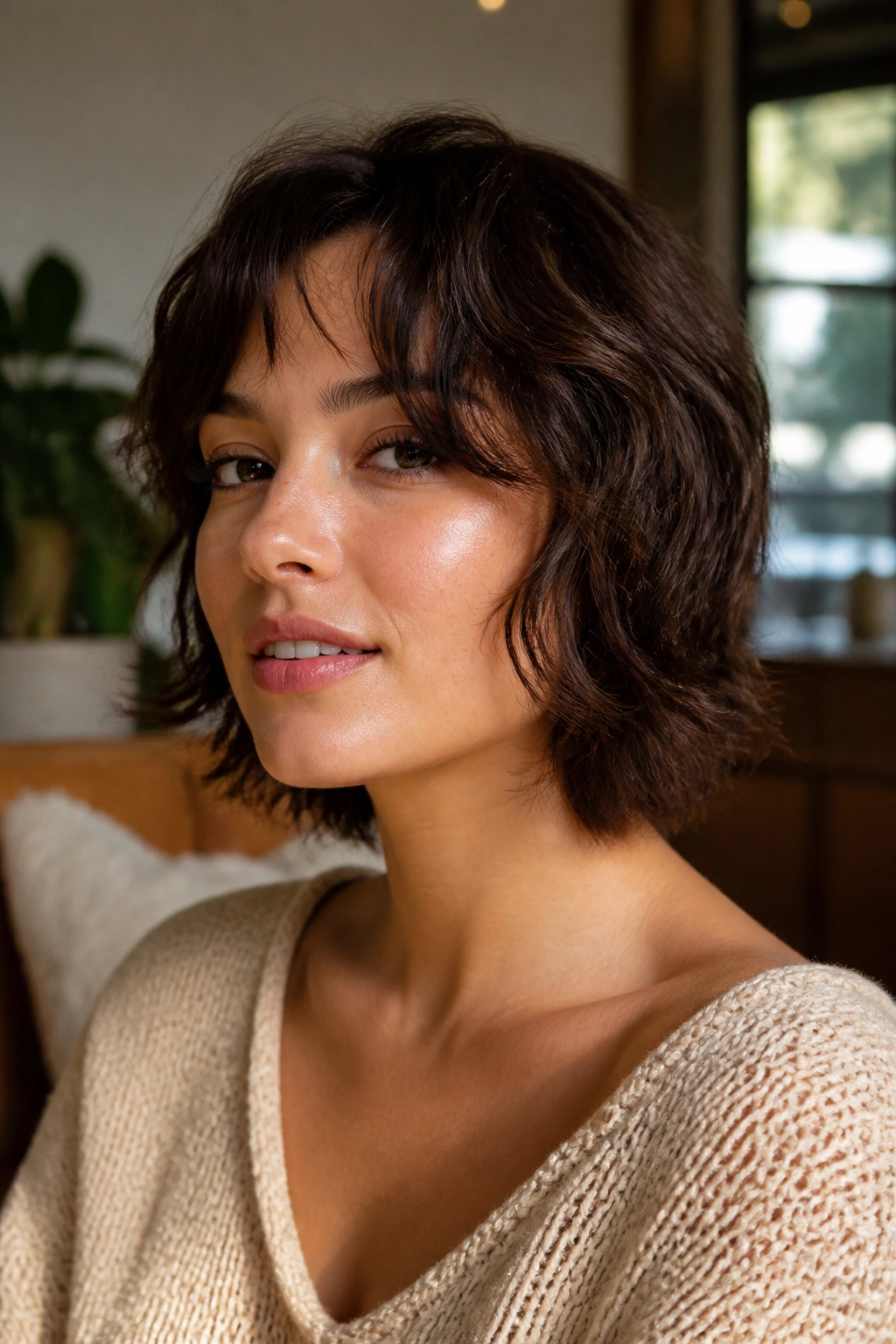
An S-curve through the front can make a short shag feel softer and more dimensional. The bend gives the face a vertical path, then a small sweep away from the cheek keeps the width in check.
This cut is especially nice if you like to style with a flat iron or a medium barrel. The goal isn’t a curl. It’s a bend that starts near the temple, shifts near the cheek, and softens again at the ends.
- Keep the front long enough to bend, usually just below the eyebrow to cheekbone zone.
- Use a light smoothing cream before heat styling.
- Rotate the iron only half a turn to avoid a hard curl.
- Leave the tips loose.
That little S-shape can be a lot kinder to a round face than a straight, blunt front.
29. Modern Mop-Top Shag
A soft mop-top can sound awkward on paper, but the right version looks relaxed and a little artsy. The fringe sits loose, the sides move, and the overall shape stays round only in a gentle way, never in a puffed-up way.
The haircut needs broken edges to keep it from feeling heavy. Think of it as a shag with more fringe presence and less obvious layering. That makes it easy to wear on hair that has a little natural bend or wants to fall forward.
This is one of those cuts that benefits from imperfection. A slight shift in the part, a few pieces falling across the brow, a little bend at the end — all of that helps keep the face from looking overly full.
30. Minimal Layer Shag with Whispery Fringe for Round Faces
If you want the safest, most wearable short shag on a round face, start here. Minimal layers keep the shape from puffing out, and the whispery fringe gives you softness without a hard line across the forehead.
I like this one for people who don’t want a haircut that asks for a lot every morning. The layers are long enough to move, short enough to matter, and subtle enough not to fight the face. You can wear it sleek, roughed up, or somewhere in between.
Why It’s Such a Strong Finish
The fringe should sit lightly at the brows, then break apart before it gets heavy. Keep the rest of the cut close to the jaw and a little airy at the crown. If the sides stay too full, the face reads wider. If the crown has a touch of lift, the whole look lengthens.
This is the one I’d suggest when someone says, “I want a shag, but I do not want it to get weird.” Fair request. This haircut listens.
Final Thoughts
The best soft short shag haircuts for round faces all do the same basic job, even when they look different on paper. They keep the sides from getting too wide, give the crown some lift, and leave enough softness around the face that the haircut still feels easy.
If you want the least risky version, go for the chin-length feathered shag, the pixie-bob shag, or the minimal layer shag with whispery fringe. If you want more edge, the soft wolf shag, mullet shag, or baby-bang version can all work. The shape matters more than the label.
A good short shag should make your face look a little more open and your hair a little more alive. That’s the test.
