



Fine hair loves movement, but it punishes clumsy layering. Cut too much out of the wrong place and the ends go see-through; leave too much weight and the whole shape collapses by lunch.
The best voluminous shag haircuts for fine hair do one smart thing: they build lift where the eye lands first — the crown, cheekbones, and front corners — while keeping enough edge weight to make the hair look fuller. That balance matters more than most people think. A shag can look airy and full of life, or it can look like it got stripped down too hard.
I’m picky about this cut for a reason. Fine strands don’t need drama everywhere; they need a shape that stays believable from the front, the side, and the back. A blunt-ish perimeter, careful interior layers, and a fringe that doesn’t eat up too much density can change the whole mood of the hair.
If your hair is fine but dense, you can usually go a little shorter and choppier. If it’s fine and sparse, the softer shags win almost every time. The styles below lean on different tricks — bangs, crown height, side parts, feathering, or smarter length choices — but each one is built to give fine hair more presence without asking it to do impossible work.
1. Curtain Fringe Shag
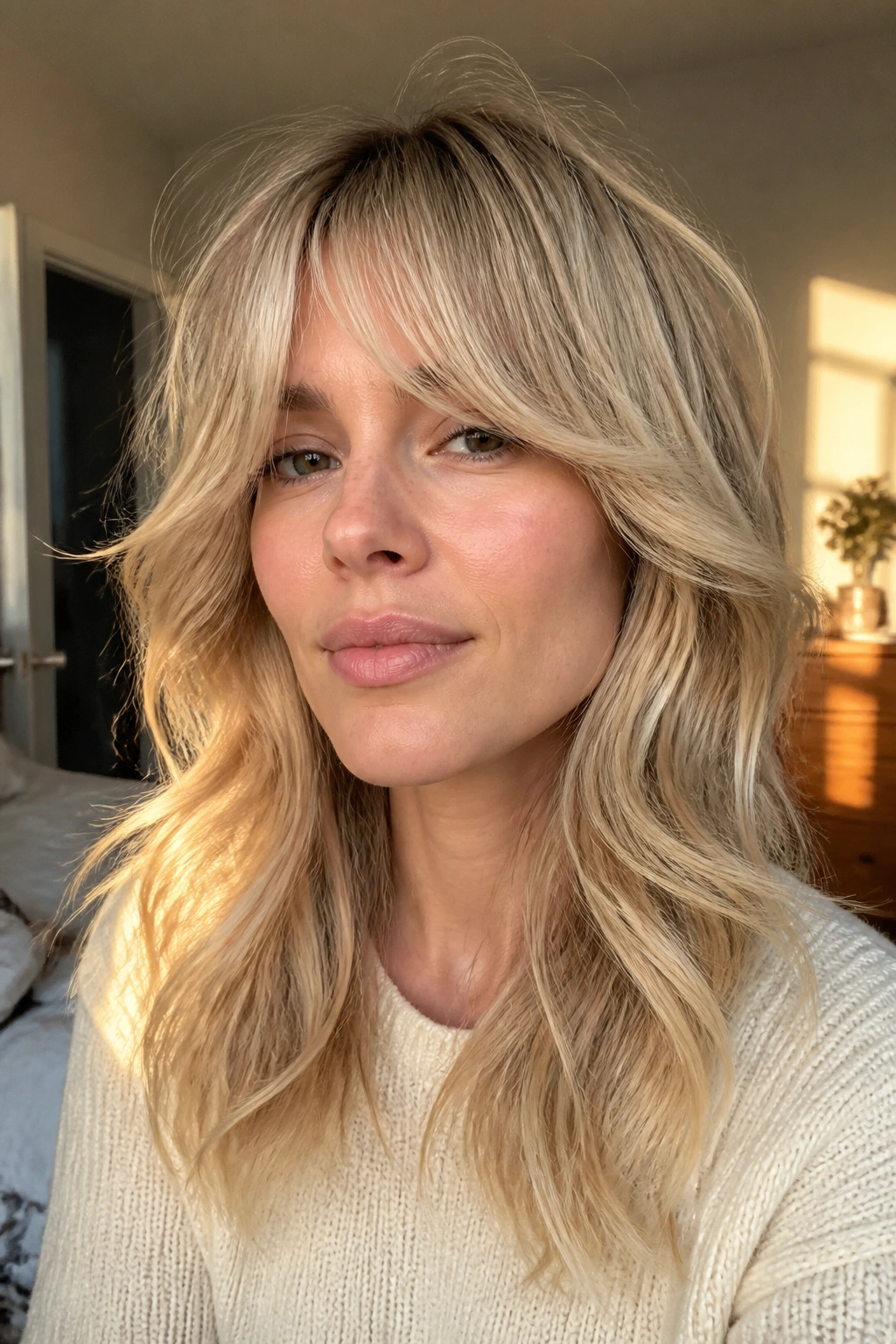
Curtain fringe is the easiest place to start if you want softness without losing fullness. The middle stays a touch shorter, the sides sweep away from the face, and that shape gives fine hair a little lift right where it counts.
Why It Works
The fringe frames the face without taking too much from the rest of the haircut. That matters on fine hair, because a heavy bang can steal density fast. Ask for the shortest point of the fringe to land around the bridge of the nose, then let it taper toward the cheekbones.
The rest of the shag should be layered with restraint. You want movement, not holes.
- Keep the crown layers soft and blended.
- Let the perimeter stay a little heavier than you think.
- Style with a root-lifting mousse before blow-drying.
- Use a round brush only through the front pieces, not the whole head.
Best tip: dry the fringe first, while the hair is still damp. It sets the shape before the roots go flat.
2. Bottleneck Bang Shag

Bottleneck bangs are a smart choice when you want a little edge but don’t want your hairline to look crowded. They start narrow in the center, then open out toward the temples, which makes the face look framed instead of boxed in.
That shape is especially kind to fine hair. The fringe can look full without being dense, and the longer side pieces blend right into shag layers instead of sitting on top of them. A blunt brow fringe can be lovely, sure, but it can also eat up too much hair if your strands are fine.
Style this cut with a light mousse and a quick bend through the fringe using a small round brush. Don’t overwork it. A shag should move.
3. Chin-Length Shag Bob

Can a shag be short and still feel soft? Absolutely. A chin-length shag bob is one of the best fixes for fine hair that collapses when it gets long.
The shorter length keeps the ends from looking stringy, and the shag layers stop it from reading like a plain bob. That’s the trick. You get the density of a shorter cut, then the movement of a layered one.
How to Ask for It
Ask your stylist to keep the line around the jaw or just below it, with light internal layers through the crown and sides. The nape should stay clean, not shredded. If the layers are too high, the cut starts to lose its body.
This shape is strong on straight fine hair, and it’s even better if your hair has a slight bend. It dries fast, lifts well with mousse, and looks intentional even when you barely style it.
4. Collarbone Shag with Airy Ends
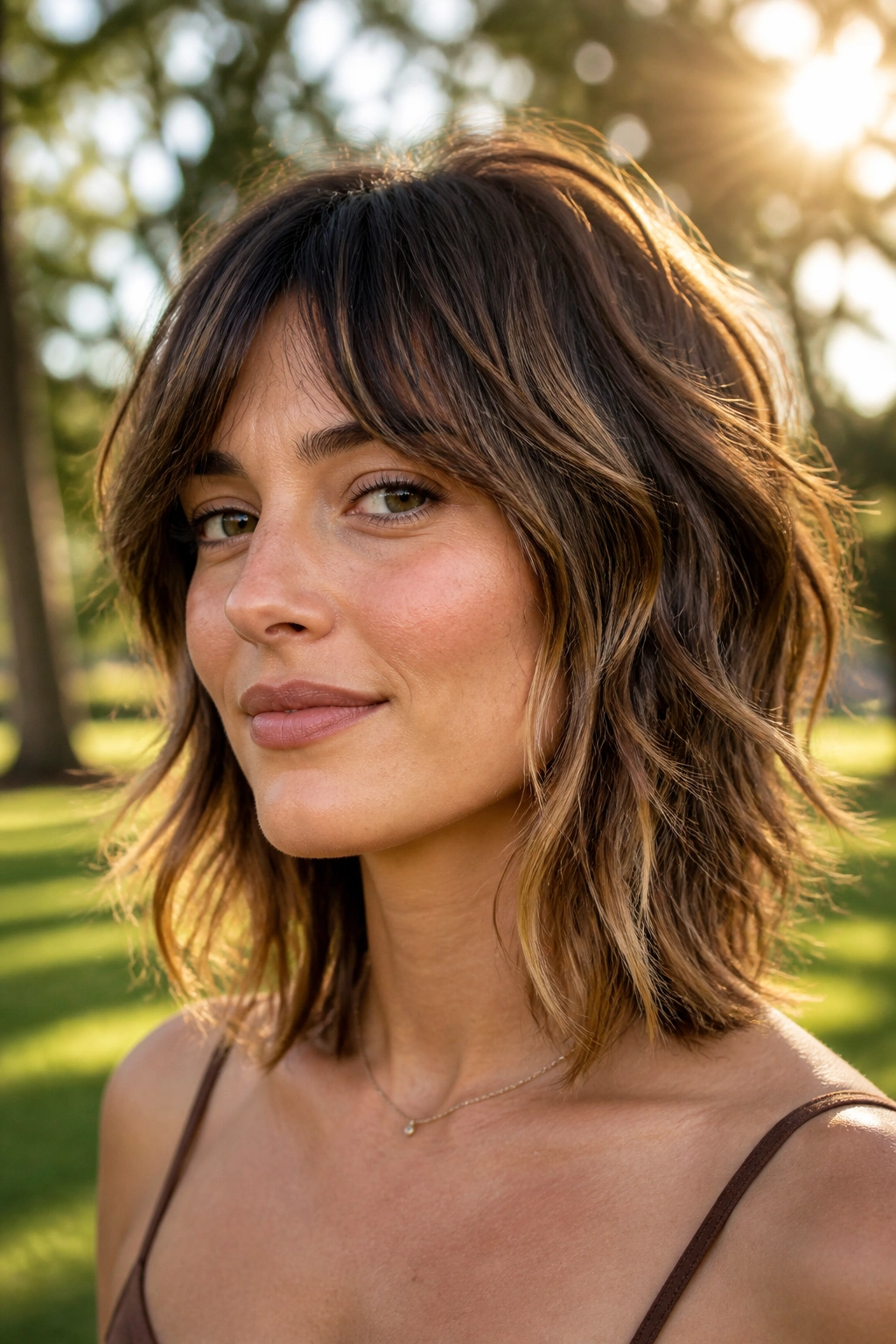
If your hair flops by midafternoon, collarbone length can be your friend. It gives you enough weight to keep the silhouette full, but not so much that the ends drag everything down.
This version works best when the layers are concentrated around the front and mid-lengths, not chopped all through the bottom. The ends should feel light, yes, but not thin. That little difference is what keeps the haircut from looking scraggly.
A few passes with a blow-dry brush at the crown are enough. Then mist the mid-lengths with a soft texture spray and scrunch lightly. You want bend, not crunch.
5. Long Shag with Invisible Layers
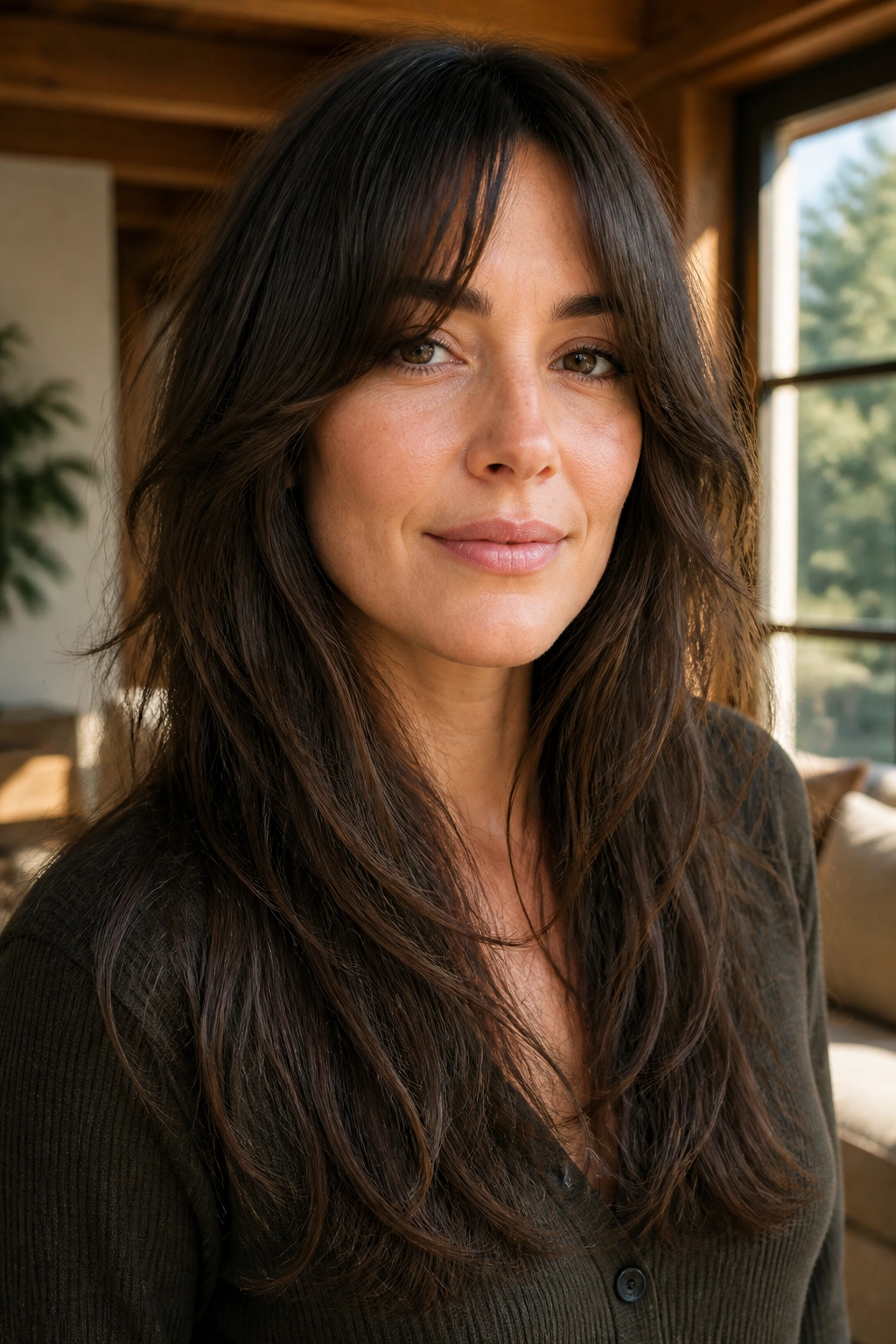
Long hair and fine strands can be a rough combination if the cut is too obvious. A long shag with invisible layers fixes that by keeping the shape soft from the outside while removing bulk from the inside.
That’s the kind of cut I like on people who love length but hate flatness. The front pieces can start around the cheekbones, then melt into layers that sit inside the hair rather than sitting on top of it. From a distance, the cut still reads as long and full. Up close, it has movement.
It’s also a kinder choice if you do not want to style every morning. Air-dry it with a small amount of mousse, then rough up the roots with your fingers once it’s mostly dry. The movement comes from the layers; the volume comes from the way they’re placed.
6. Wolf Shag with Soft Crown Lift
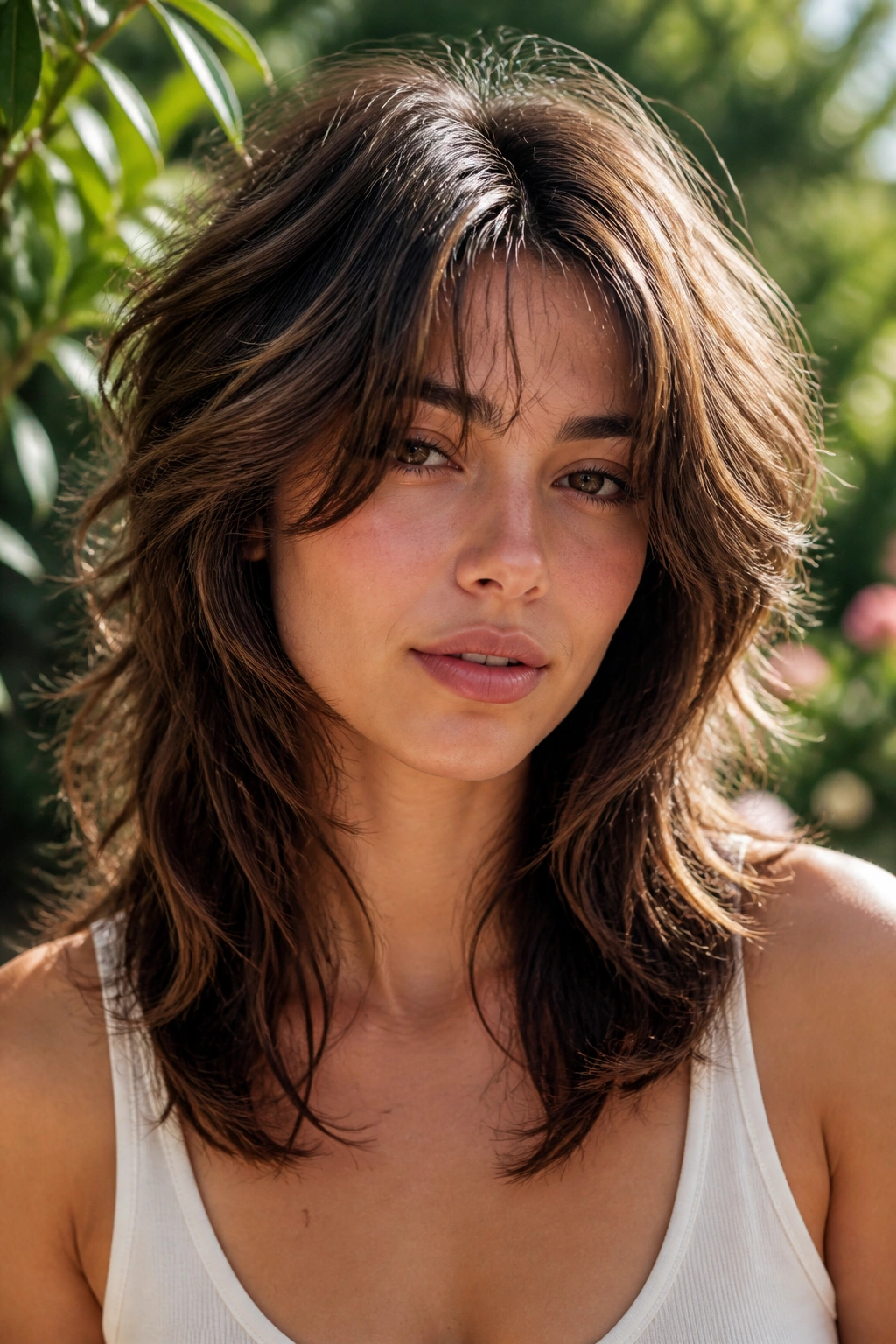
A wolf shag can work beautifully on fine hair, but only if the edges are handled with a light hand. Too much chop and the whole thing turns wispy. Too little shape and you lose the point of the cut.
The softer version keeps volume at the crown and cheekbones, then lets the lower lengths stay a little fuller. That balance makes the haircut look wild in a good way, not brittle. It’s especially nice on hair that has a natural wave and a bit of bounce.
Unlike a harder wolf cut, this one doesn’t need aggressive texture everywhere. Ask for a gentle crown lift, face-framing layers, and a nape that still has some weight. It’s the cleaner, easier-to-wear version for fine strands.
7. Razored Midi Shag
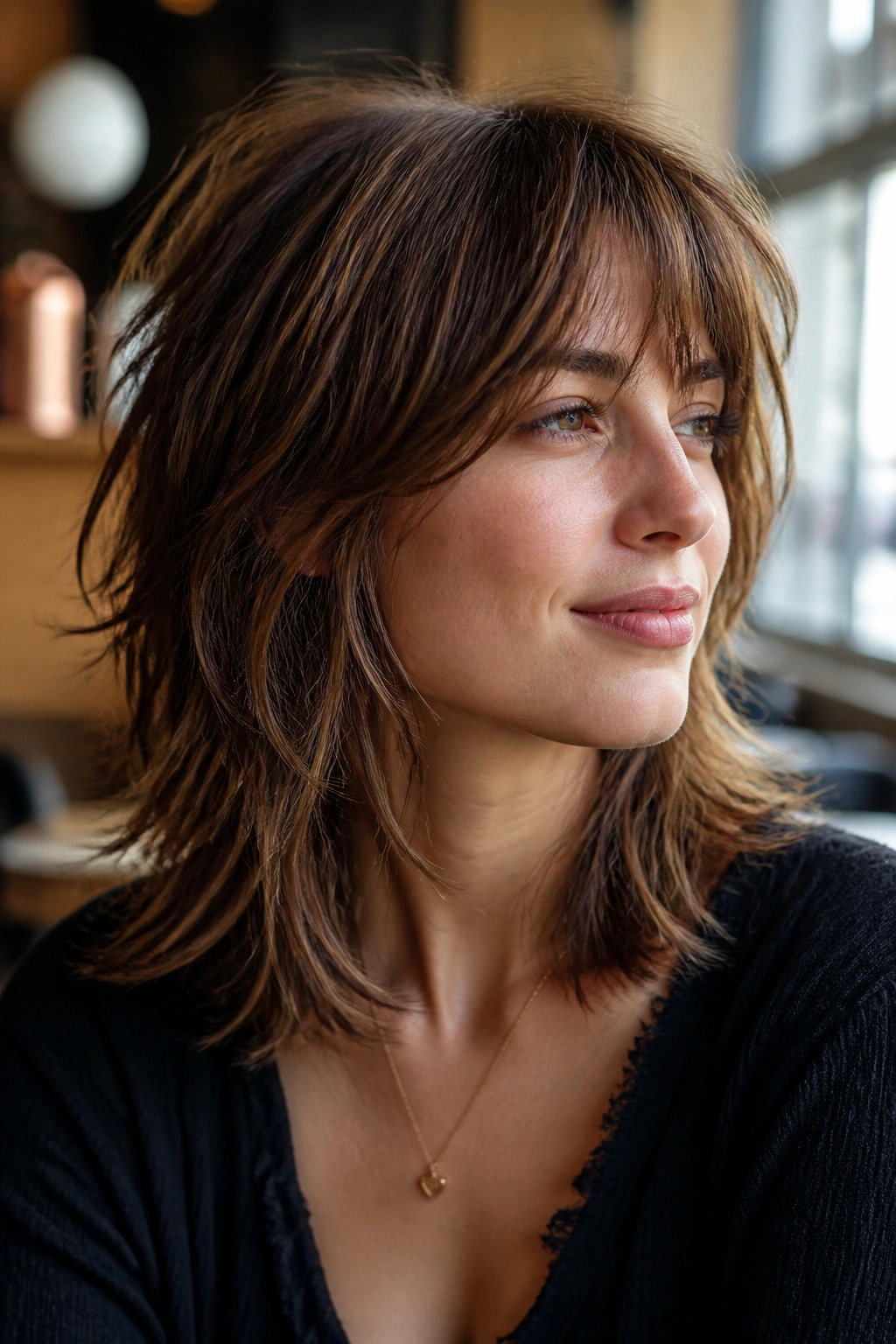
A razor can help fine hair — if the stylist knows when to stop. A razored midi shag gets its airy feel from soft, tapered ends rather than blunt, chunky steps.
The Part That Matters
The razoring should happen mostly through the outer layers and the face frame. That creates feathered movement without making the bottom look see-through. If the whole head gets heavily razored, you can lose too much mass and the cut starts to feel dry.
How to Wear It
- Blow-dry with a medium round brush.
- Flip the ends under or out, depending on your mood.
- Use a pea-sized amount of cream only on the mid-lengths.
- Finish with a light mist of texture spray at the crown.
This cut looks especially good when it’s not over-styled. A little bend goes a long way.
8. Feathered Side-Swept Shag

Side-swept fringe is one of the easiest ways to cheat extra volume into fine hair. The asymmetry lifts one side of the root, and the feathered layers keep the shape from feeling heavy.
This is a strong option if you’ve always liked the idea of bangs but worry about losing too much hair at the front. The fringe can sweep across the forehead, then blend into face-framing layers that hit around the jaw or collarbone. Nothing sits still for too long, which is part of why it reads fuller.
A round brush and a quick bend at the ends are enough. I would keep the product light here — a soft foam at the roots and maybe a dry spray at the very end. That’s it.
9. Air-Dried Wavy Shag
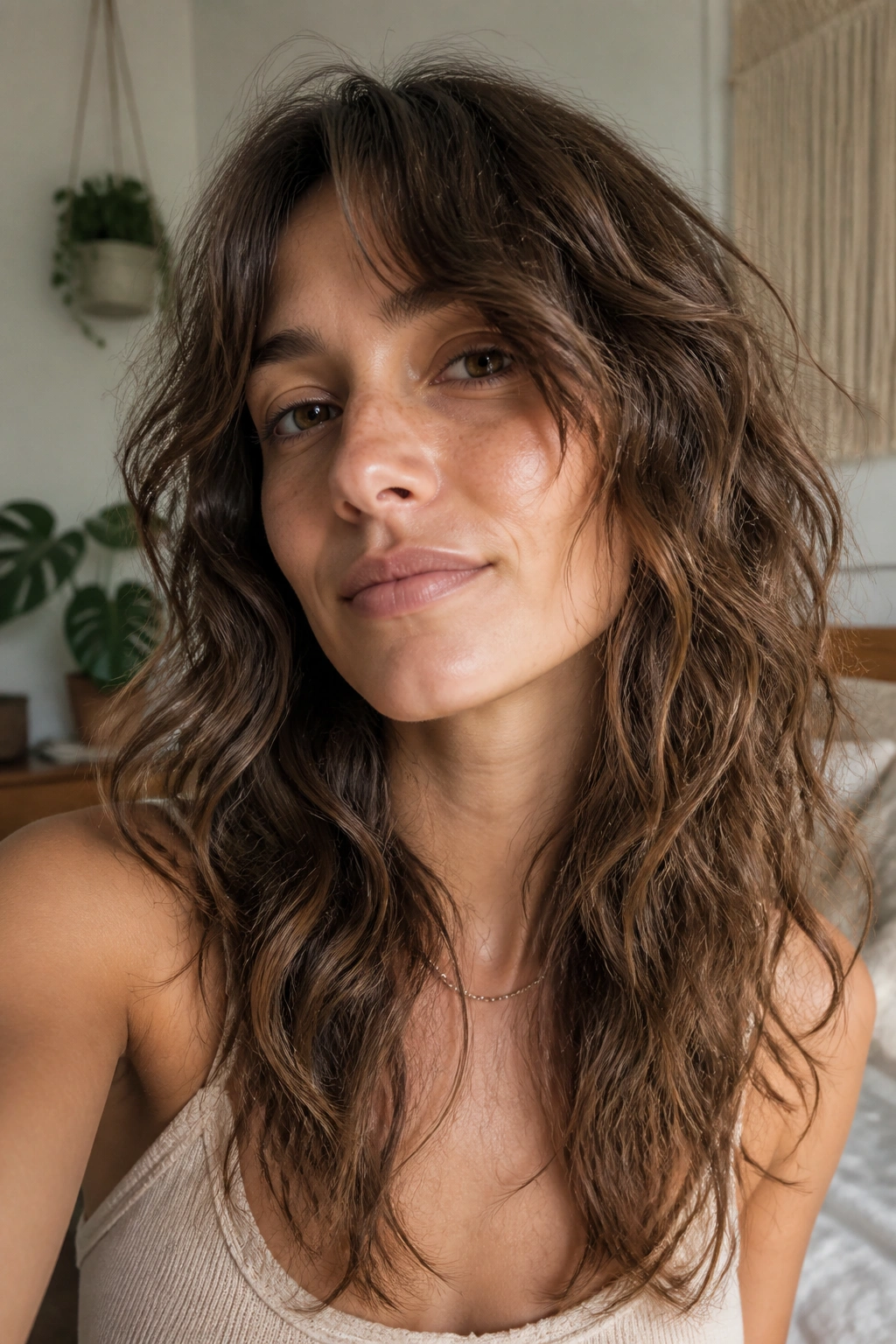
What if you don’t want to blow-dry every time? Then this is the cut to look at. An air-dried wavy shag works with natural movement instead of fighting it.
Fine hair with a wave pattern often looks best when the layers are not too short. If the top gets chopped up hard, the wave can puff unevenly and the ends lose shape. A softer shag keeps the wave pattern visible from root to tip, which makes the hair look fuller in a more believable way.
How to Use It
Work a light mousse through damp hair, scrunch from the ends up to the mid-lengths, and let it dry with a clean center or soft off-center part. Once it’s dry, break up any crunchy spots with your hands. Don’t brush it. That usually ruins the effect.
10. Piecey Tousled Shag

Some haircuts are meant to look tidy. This is not one of them.
A piecey tousled shag gives fine hair a little separation, which can make each strand catch the eye instead of disappearing into a flat sheet. The trick is to keep the pieces intentional. You want soft definition, not frizz.
I like this cut for people who want their hair to look thicker on casual days with almost no effort. A texturizing spray, a few bends from a curling wand, and a finger rake through the ends are usually enough. Leave a few pieces around the face a little longer so the front still feels anchored.
Watch the product use. Too much texture spray can make fine hair look dusty.
11. Brow-Skimming Fringe Shag

A brow-skimming fringe can make fine hair look much denser at the front without swallowing the face. That’s the appeal. You get the illusion of more hair where people look first, and the shag layers carry that energy through the rest of the cut.
This version works best when the fringe is soft, not chopped into tiny bits. The ends should skim the brows or sit just below them, then melt into the temple layers. If the bangs are too short, the forehead gets all the attention. If they’re too thick, the front of the haircut can feel heavy and hard to style.
I’d pair this with a shoulder-length shag and a little root lift at the crown. It’s a good combination for straight fine hair that needs a stronger outline.
12. Soft Mullet Shag
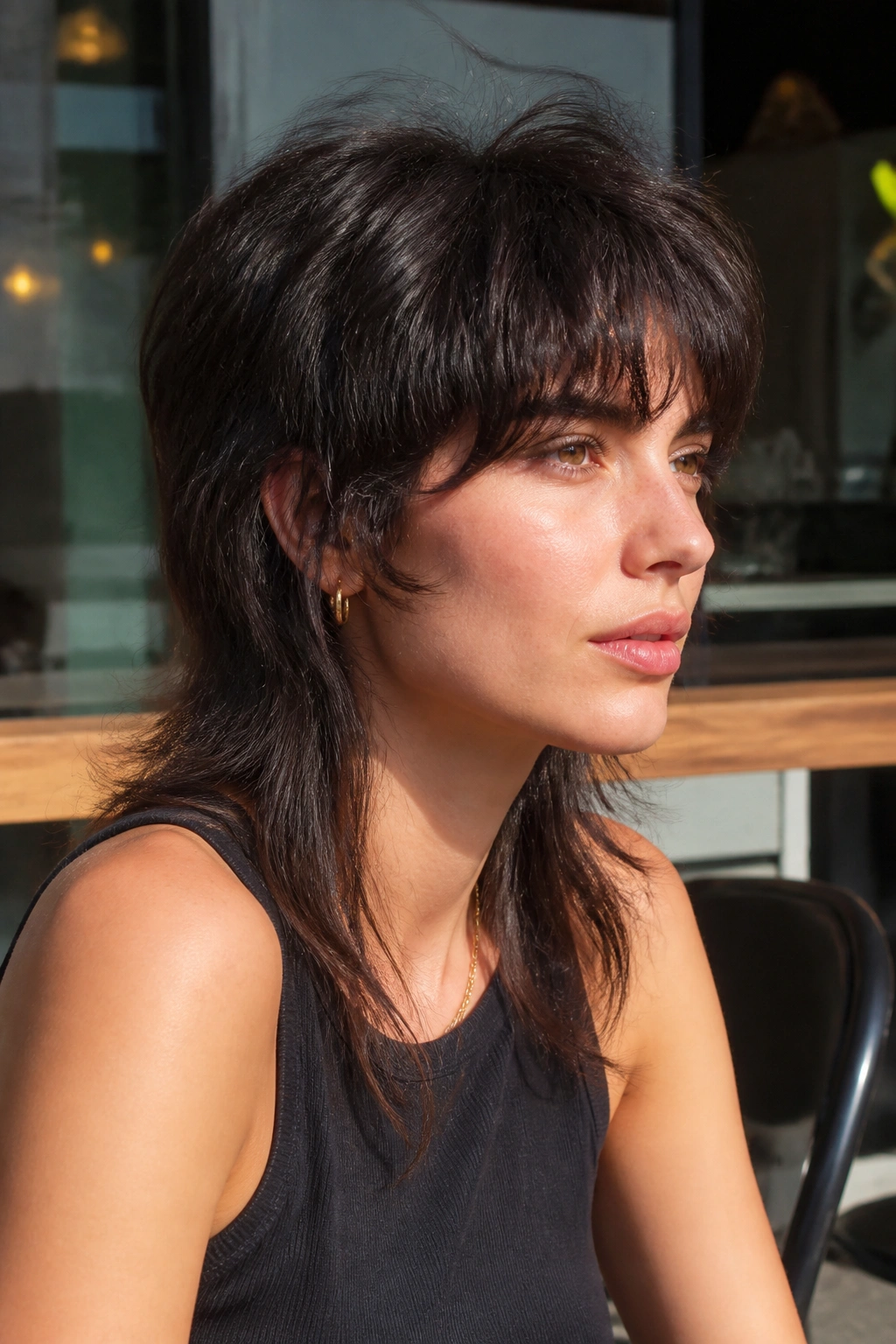
A soft mullet shag sounds braver than it looks. The shape keeps more length at the back, lifts the top, and lets the front stay lighter around the face.
The reason it works on fine hair is simple: it builds contrast without demanding fullness everywhere. The crown can have lift, the sides can graze the cheekbones, and the nape can keep a little length so the cut still feels grounded. You get edge, but the silhouette stays soft.
Unlike a severe mullet, this version avoids harsh disconnects. That makes it easier to wear with fine hair because the transition from top to back feels smooth, not chopped. If you want something that looks a little rebellious but still easy to grow out, this is a strong pick.
13. Mixie Shag
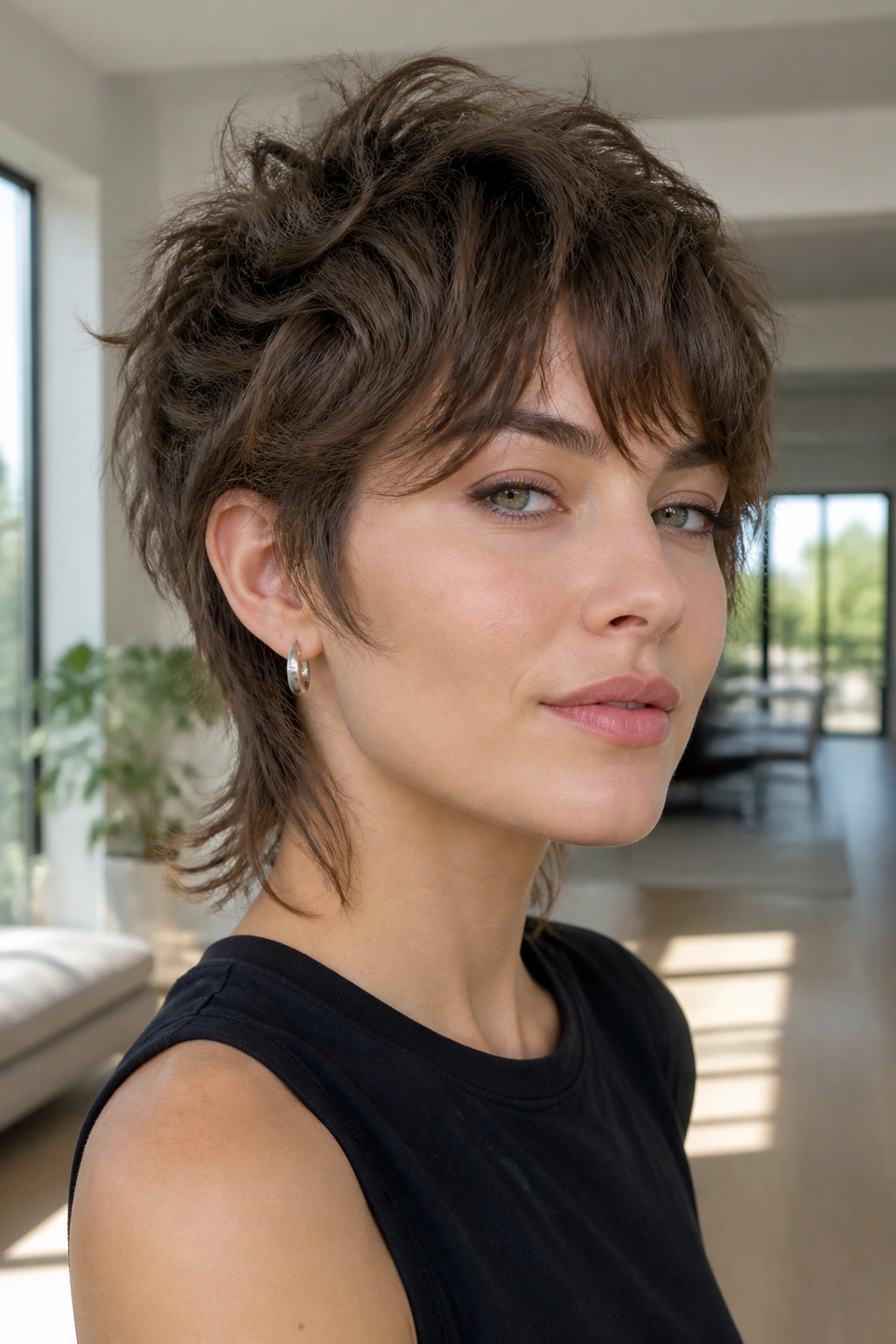
A mixie sits between a pixie and a mullet, and it can be a lifesaver for very fine hair that refuses to hold weight. The shorter shape gives instant lift, while the shaggy top and soft back keep it from looking like a plain crop.
Why It Helps
The cut creates movement where short hair can sometimes look flat. A little extra length at the nape or the temples adds shape, and the choppy crown pieces stop the top from lying down too neatly. It’s small hair, but it doesn’t read small.
What to Ask For
- Keep the crown light, not spiky.
- Leave a touch more length around the ears.
- Ask for soft texture, not aggressive thinning.
- Let the fringe fall forward or side-sweep it.
This cut is especially good if you like quick styling. A dab of paste, a finger tousle, done.
14. Rounded Layered Shag
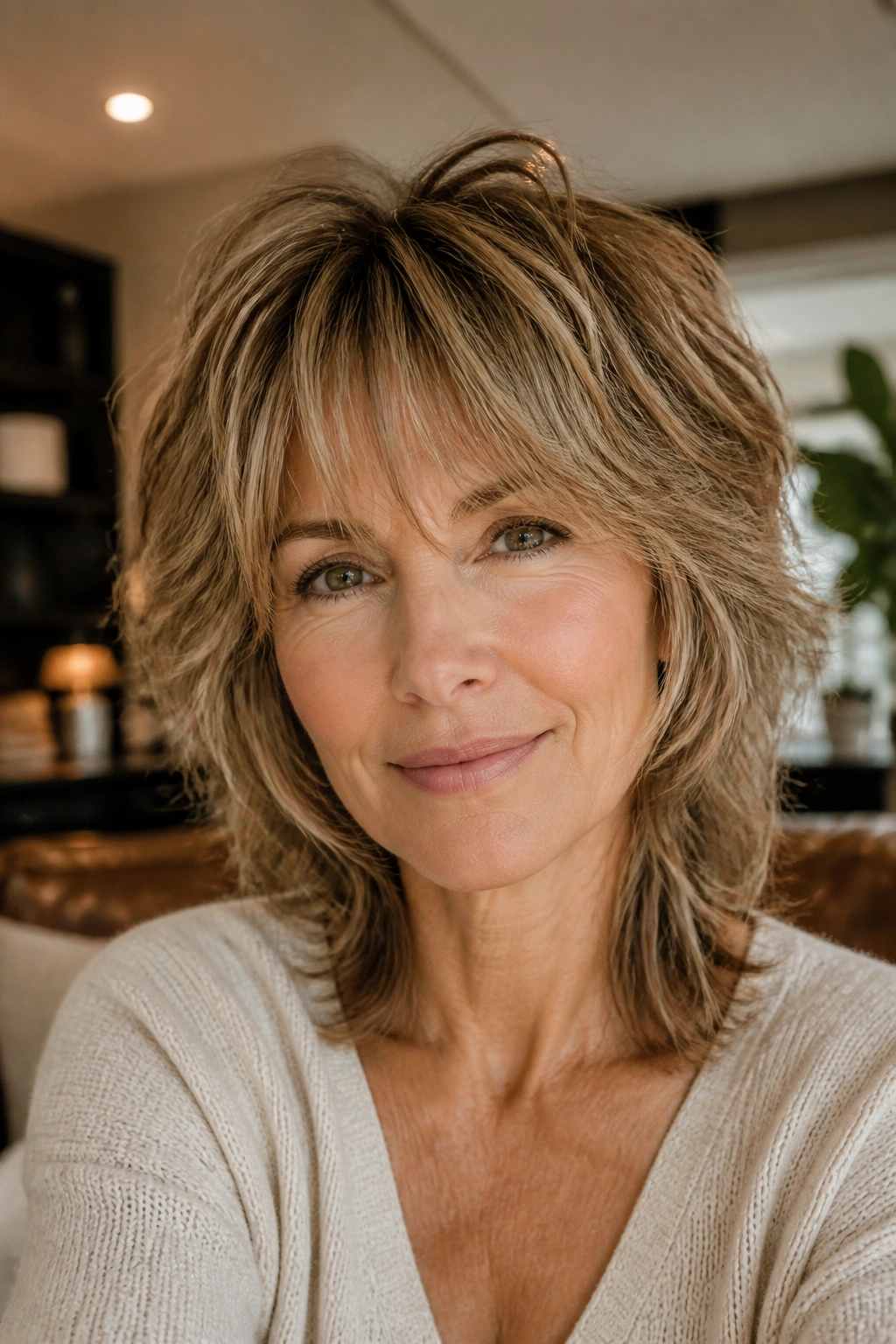
A rounded shag sounds less trendy than some of the sharper cuts, and that’s exactly why it works. Rounded layers build the illusion of fullness because the silhouette follows the curve of the head instead of hanging straight down.
That shape is kind to fine hair with a little bend or softness. The layers should arc around the crown and cheekbones, then taper gently toward the ends. Nothing should stick out too far. The result feels plush rather than choppy.
If your hair has always looked better in a blowout than in a wash-and-go, this may be the most flattering route. Ask for a rounded outline with layered interior movement. It gives the hair a thicker-looking body without needing a ton of product.
15. V-Cut Long Shag for Fine Hair
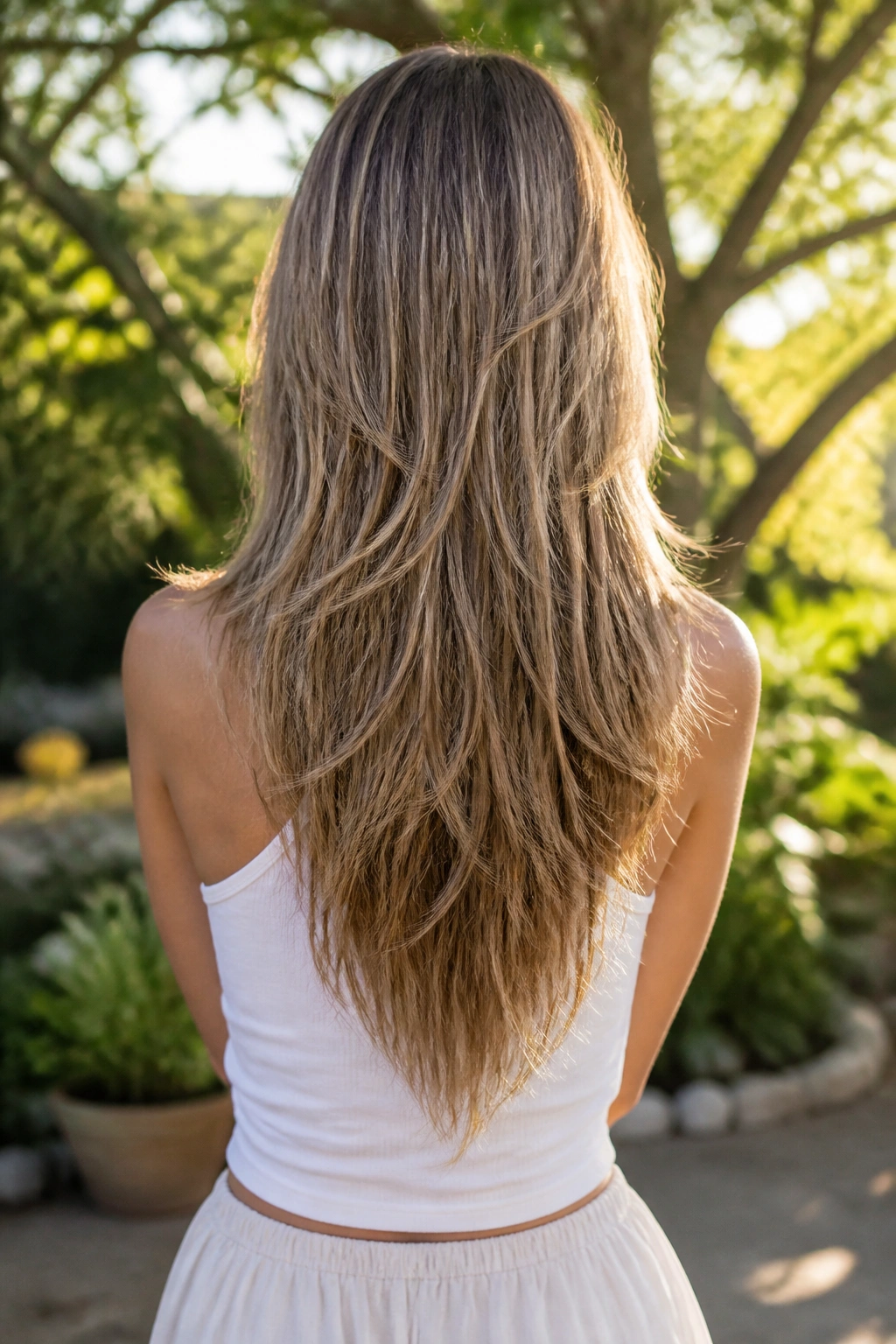
Can long hair still look full when it’s fine? Yes, if the cut has enough shape. A V-cut long shag keeps the length but pulls the outline inward so the back doesn’t look like a flat curtain.
The V shape is useful because it gives the hair a clear finish at the back while the layers build movement through the sides and front. That way, the hair can swing instead of hanging in one straight block. On fine hair, that swing matters.
How to Ask for It
Tell your stylist you want the longest point at the center back, with soft layers that start around the collarbone and taper forward. Keep the ends blunt enough to hold weight. If the layers get too high, the cut can lose density fast.
This style suits people who want length but still want a little drama when they turn their head.
16. Flipped-Out Shag
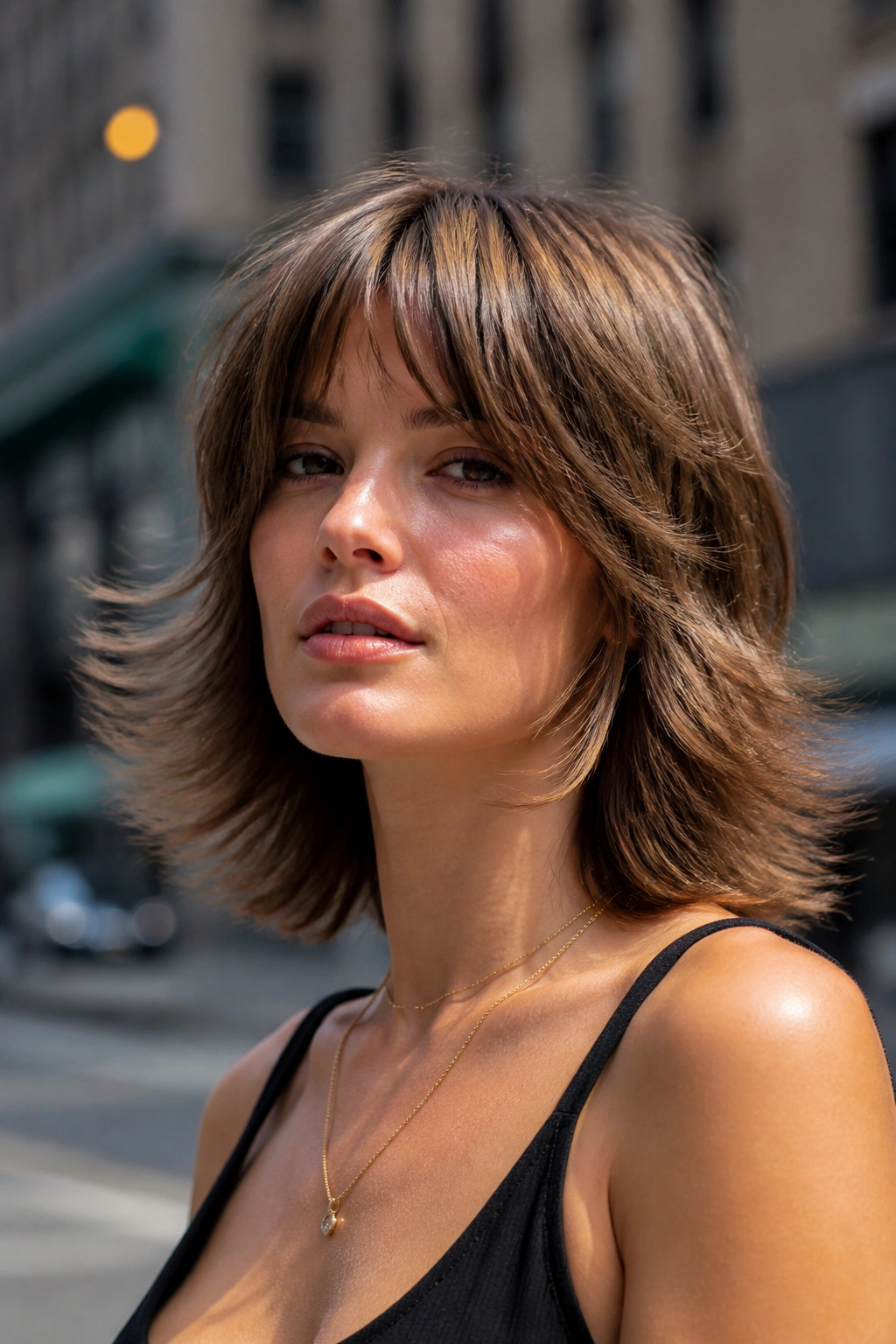
A flipped-out shag has a bit of retro energy, and fine hair loves that kind of built-in direction. The outward bend at the ends creates width, which can make the whole haircut feel fuller from the shoulders down.
This cut works best when the layers are placed so the ends naturally want to turn out. A round brush, a medium barrel brush, or a flat iron turned slightly outward can help. You do not need perfect curls. You just need the ends to stop looking limp.
A Small Styling Habit That Helps
Dry the hair until it’s about 90 percent dry, then shape the ends while the hair still has some heat left in it. If the hair cools flat, the bend usually falls out sooner. That tiny timing detail makes a bigger difference than most people expect.
17. Deep Side-Part Shag
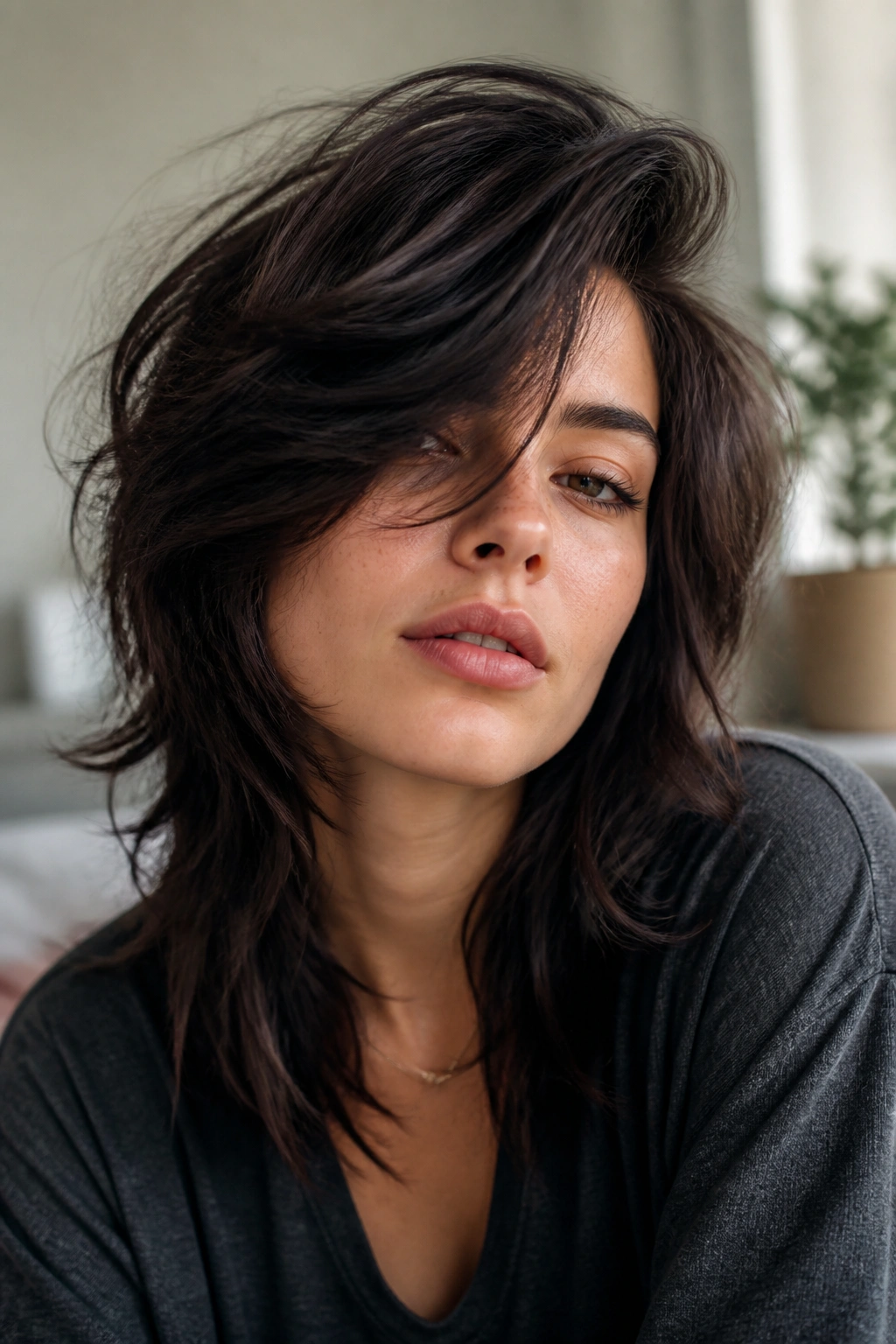
A deep side part is one of the cheapest volume tricks in the book, and I mean that as praise. Fine hair often lies too flat when it’s split evenly, so shifting the part can give you instant root lift on one side.
The shag cut makes that move look better because the layers aren’t all falling the same way. One side gets a little more height, the other side gets a softer frame, and the whole haircut feels less rigid. It’s the kind of style that wakes up fast.
Keep the front layers long enough to sweep across the forehead or cheekbone, then use a root spray only at the heavy side of the part. That unevenness is the point. If both sides get the same treatment, you lose the effect.
18. Wispy Bang Shag

Wispy bangs can be a mistake on the wrong cut. On a shag, though, they can be a nice way to lighten the face without draining the rest of the hair.
The key is restraint. The fringe should be soft and narrow enough that you can see a little forehead through it. That keeps the bangs from feeling blocky, which is usually where fine hair gets into trouble. Pair them with mid-length layers that keep the shape open around the cheeks.
This is a good cut if you like bangs but want a lighter front. It also grows out gracefully, which matters because wispy fringe can go awkward fast if it’s cut too short. Ask for texture at the very ends, not all the way through the body of the bang.
19. Shoulder-Length Interior-Layer Shag
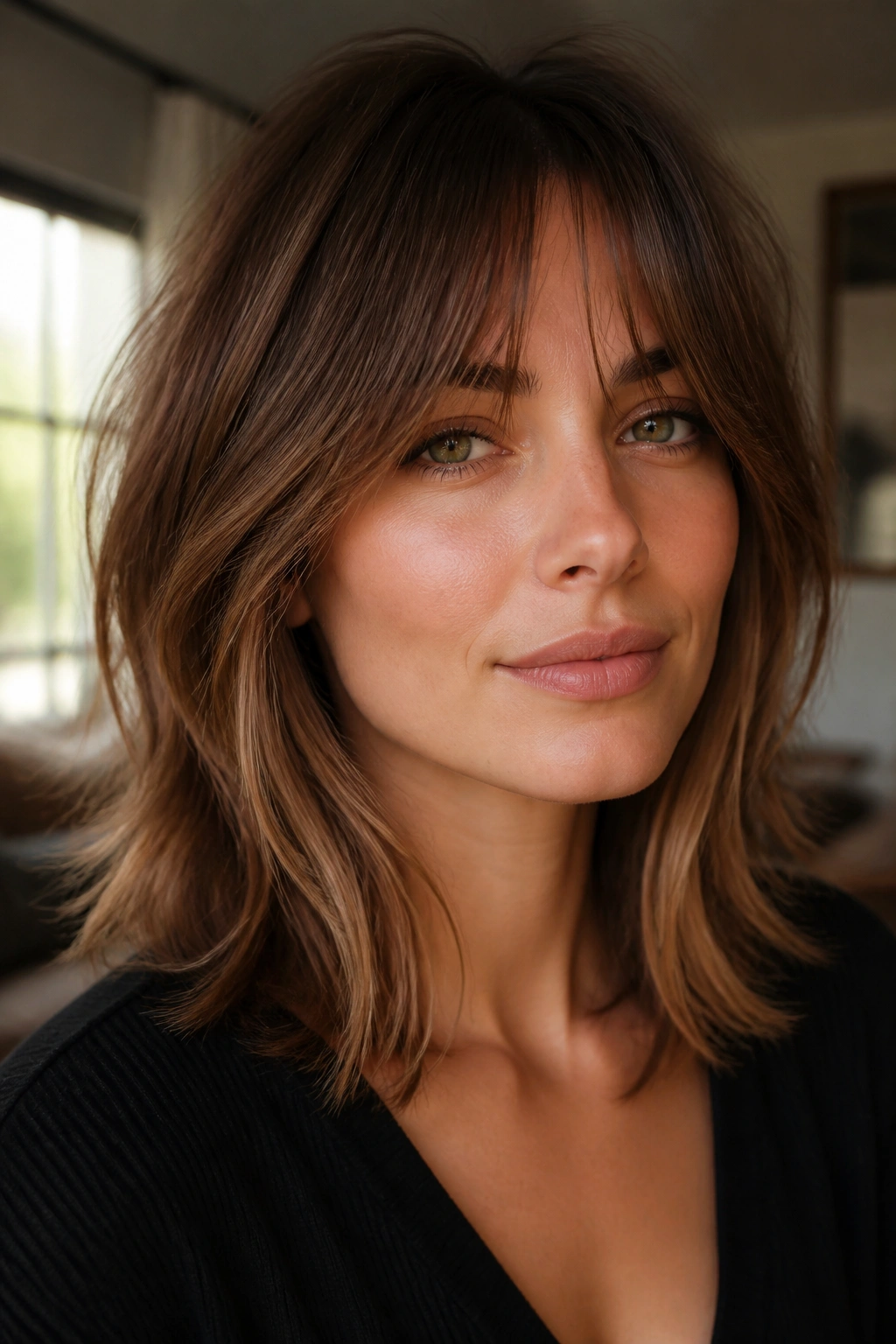
This one is quietly one of the smartest options on the list. A shoulder-length shag with interior layers keeps the outside line calm while building volume underneath.
Why It Works on Fine Hair
The outer layer stays intact enough to hold shape, which helps the hair look thicker. The hidden layers underneath remove some weight, so the hair still moves when you turn your head. It’s a good balance, and honestly, balance is what fine hair usually wants most.
Styling Notes
- Blow-dry with a paddle brush if you want a smoother finish.
- Use a light mousse at the roots, not heavy cream.
- Add a few bends through the front pieces with a 1-inch iron.
- Keep the ends soft, not broken up too much.
This cut is easy to wear to work, easy to grow out, and easy to fake a blowout with.
20. Farrah-Inspired Shag
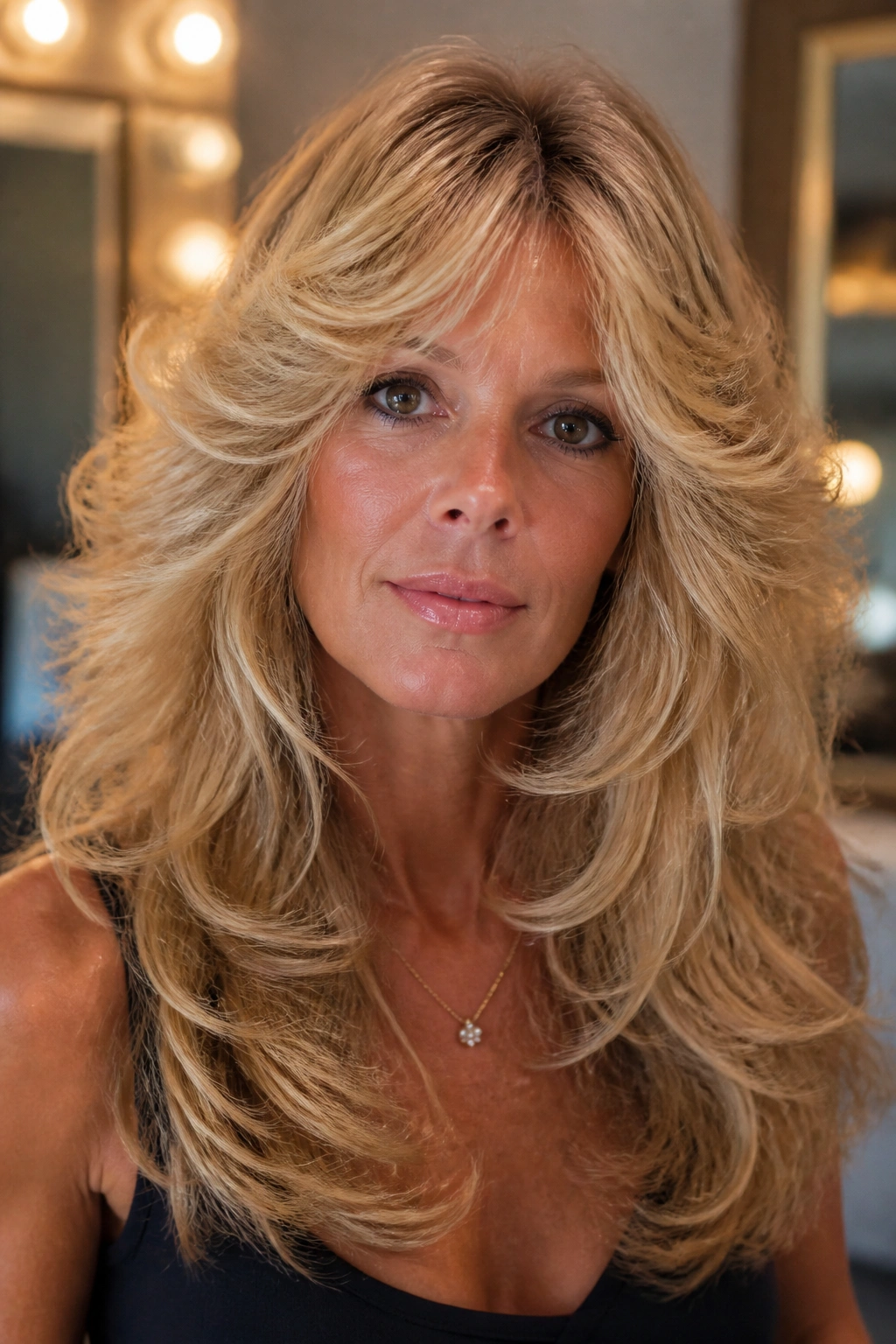
Big feathered front pieces can do wonders for fine hair. A Farrah-inspired shag leans into that shape, with long face-framing layers that swoop away from the cheeks and give the illusion of more width.
The beauty of this cut is that it looks styled even when it isn’t perfectly styled. A large round brush or hot rollers can help, but the haircut itself does a lot of the work. Ask for layers that start around the cheekbones and keep the front open. The bangs should blend, not sit like a helmet.
This one is especially good if you like a little glam. Not stiff glam. Just hair with a bit of swing and shine.
21. Textured Lob Shag
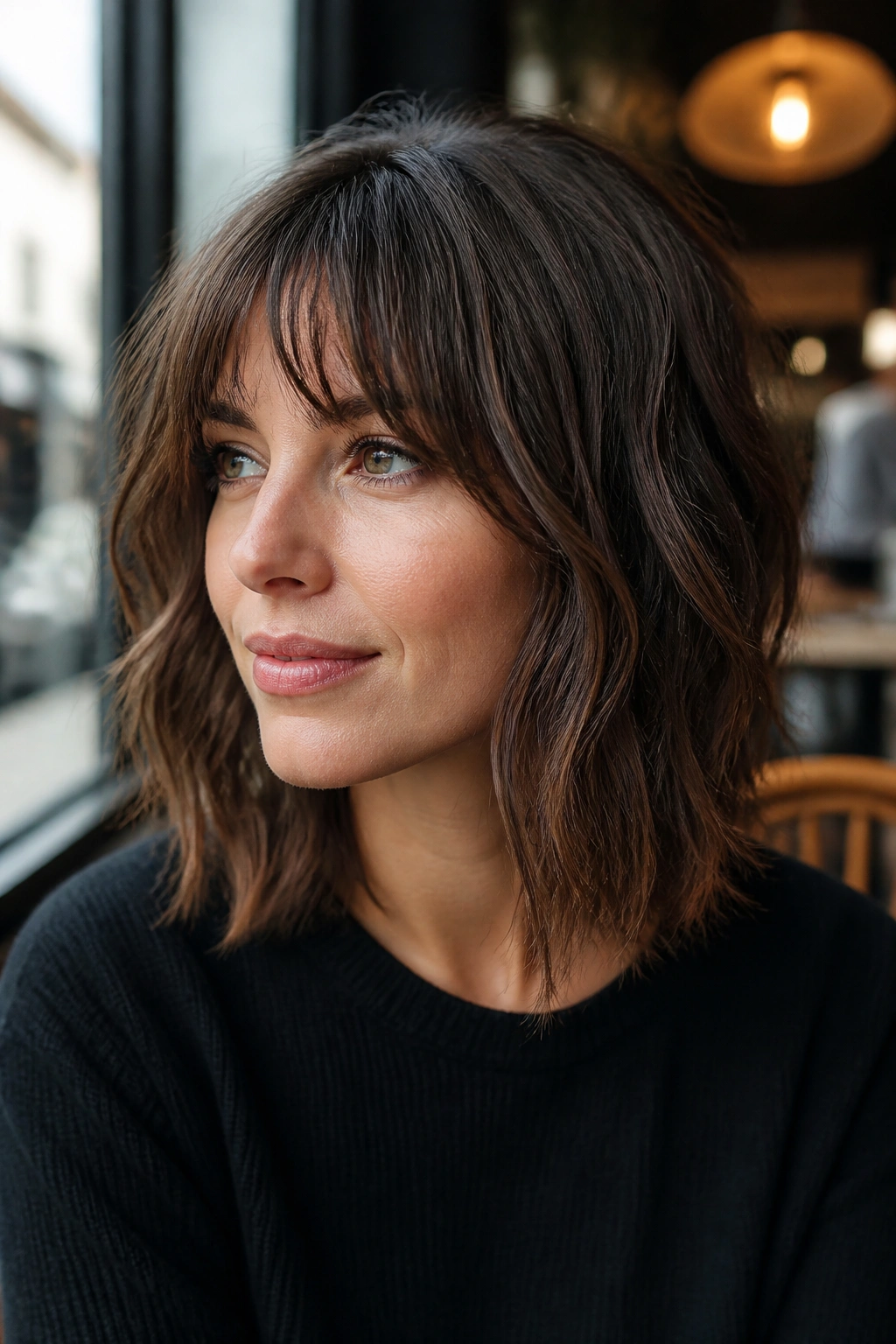
Why does a lob work so well for fine hair? Because it gives you enough length for movement without letting the ends disappear into nothing. Add shag layers, and the whole cut wakes up.
A textured lob shag hits somewhere around the collarbone or a touch above. That spot is flattering because it gives the hair a visible bottom edge, then the layers above it create motion. Fine hair often looks best when there is a strong line somewhere in the cut. It gives the eye a place to stop.
How to Wear It
Wear it straight with soft bends, or let it dry into a loose wave. A center part feels clean, but a soft side part gives more lift. Either way, keep the product light so the ends stay airy rather than sticky.
22. Curly Fine-Hair Shag
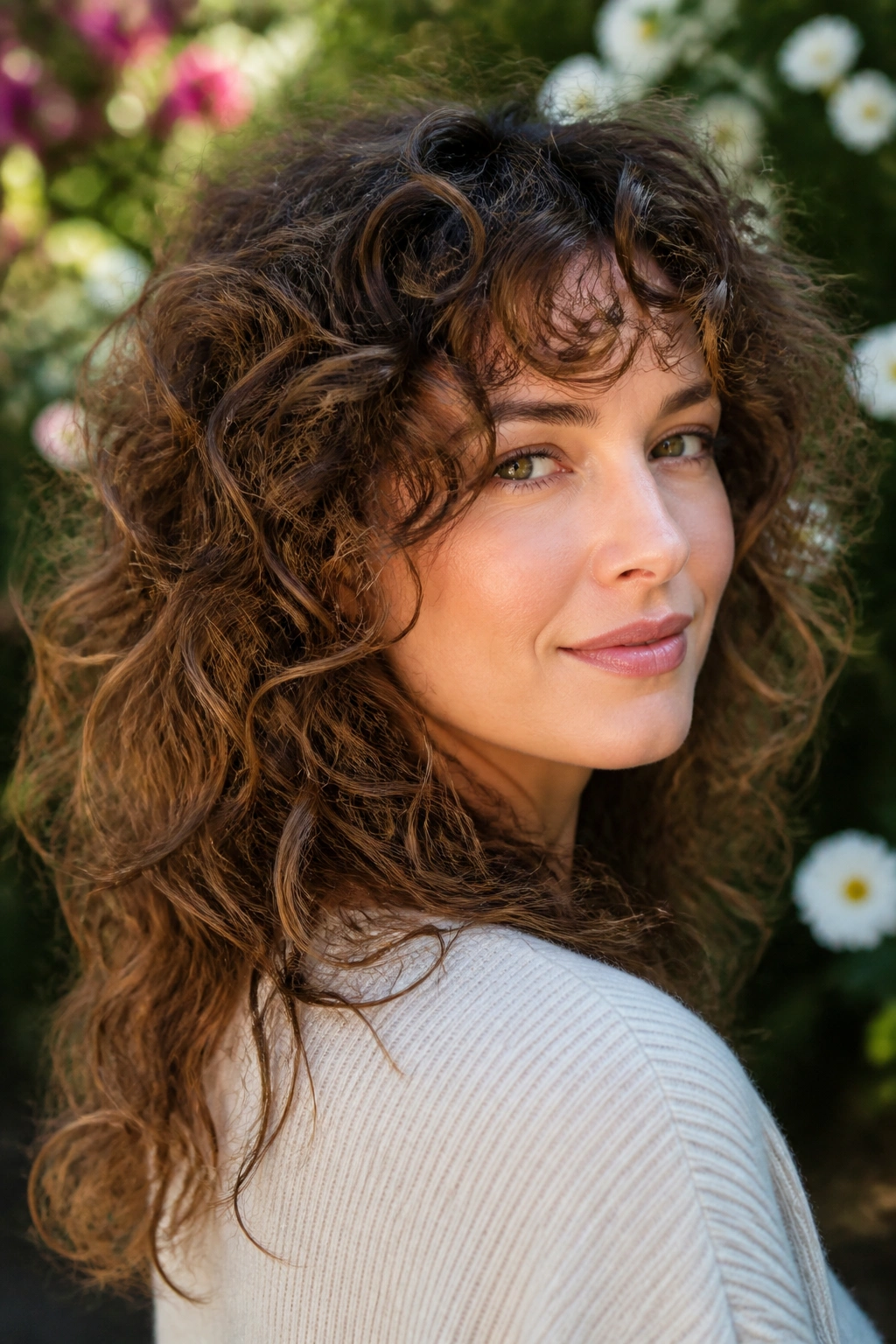
Curly fine hair needs a different kind of respect. If the layers are too short, the shape can puff out in odd places. If they’re too long, the curls get dragged down.
The right shag gives curls room to spring without stealing their outline. Ask for longer layers that follow the curl pattern and keep the crown from being overcut. That helps the curls stack in a fuller way instead of breaking apart into frizz.
What Helps Most
- Apply leave-in conditioner on damp hair.
- Use a gel or light curl cream from mid-lengths to ends.
- Diffuse on low heat and low speed.
- Don’t rake through dry curls with a brush.
This cut should look soft, not fluffy. There’s a difference, and it matters.
23. Wavy Fine-Hair Shag
Loose waves and a shag are a natural pair, but the cut still needs discipline. Fine wavy hair can lose shape quickly if too much internal texture is taken out.
The best version keeps the waves visible and the perimeter a little grounded. Layers around the face and crown give lift, while the bottom stays strong enough to keep the whole haircut from collapsing. That’s what gives the style its fuller look.
You can wear this one air-dried or with a quick diffuser pass. I like a light mousse and a salt-free texture spray on the mid-lengths only. Put too much product near the roots and the hair falls flat. Keep the roots clean, and the waves will do the rest.
24. Straight Hair Shag With Gritty Ends
Straight fine hair is the hardest to fake volume with, so the cut has to do more of the work. A gritty-ended shag adds texture without relying on curl or wave.
The trick is keeping the ends blunt enough to hold shape, then breaking up the top layers for movement. On straight hair, too much razor work can make the bottom look thin fast. A better answer is soft point cutting through the ends and controlled layering around the front.
This style suits people who like a little undone texture and do not mind using a dry spray or a light paste. If your hair is pin-straight and slippery, this shag can give it a touch more grip. Not a miracle. Just a better shot.
25. French Shag
A French shag has that easy, slightly lived-in shape that fine hair often needs. The fringe sits soft and a little messy, the layers stay light around the face, and the whole cut feels relaxed without losing structure.
Why It Flatters Fine Hair
The cut avoids heavy blocks of hair in the front. That keeps the face open and the roots from getting crushed. The layers are usually softer and more blended than a sharper shag, which helps if your hair is fine but not especially dense.
Best Styling Move
Let it dry with a loose center part, then tuck one side behind the ear and leave the other side loose. That simple asymmetry gives the haircut a little lift. If you want more shape, a medium round brush through the fringe is enough.
This is one of those cuts that looks better when it’s not overdone.
26. Crown-Volume Shag
If your biggest problem is flatness at the top, this is the cut to look at first. A crown-volume shag puts the emphasis where the head naturally needs height.
The layers at the crown are short enough to stand up a bit, but not so short that they separate into spikes. That balance matters. The sides and back stay softer so the top can do the lifting without the haircut turning boxy.
Use clips at the roots while the hair is cooling after blow-drying, or rough-dry the crown upside down for a few seconds before smoothing the rest. Those little habits help the shape hold. The haircut gives you the base; the styling locks it in.
27. Face-Framing Peak Shag
What makes a face-framing peak different from ordinary layers? The front pieces are cut to create visible points of movement near the cheeks, jaw, or chin instead of fading invisibly into the rest of the hair.
That sounds small. It isn’t. Fine hair often looks fuller when the eye can follow a clear shape through the front, and these peaks give it that direction. They can be soft and subtle, or more dramatic if you like the front to feel animated.
How to Ask for It
Tell your stylist you want face-framing pieces that hit at two different zones — one near the cheekbones and another near the jawline. That staggered shape adds motion without making the ends sparse. It’s a good fix for people who feel their hair disappears around the face.
28. Micro-Layer Shag
Micro-layers are tiny layers placed with restraint, and that restraint is what makes them useful on some fine hair. Too many big layers can leave the hair empty. Micro-layers keep the silhouette fuller while still giving it some bend.
I like this approach on fine hair that has a lot of strands, or on hair that gets bulky at the crown but flat at the ends. The layers are small enough to be felt rather than seen, which means the haircut moves without looking chopped apart. That’s hard to pull off, and you need a stylist who knows how to stop before the shape gets too busy.
If you want visible texture, this may not be enough on its own. If you want subtle lift and a softer grow-out, it’s excellent.
29. Sleek Movement Shag
Not every shag needs to look beachy or piecey. A sleek movement shag keeps the outline smoother, which can be a relief if your fine hair frizzes or tangles easily.
The layer pattern still matters, but the ends stay cleaner. That gives the haircut a more polished feel while preserving the swing that makes a shag useful in the first place. It’s a smart choice if you want body without the rough texture that sometimes comes with heavier layering.
Use a smoothing cream sparingly, then dry with a brush that keeps the hair aligned. A couple of soft bends around the face are enough. The haircut carries the volume; the styling just keeps it neat.
30. Low-Maintenance Curtain Shag for Fine Hair
This is the cut I’d hand to someone who wants volume but does not want a fight every morning. A low-maintenance curtain shag for fine hair keeps the bangs soft, the layers blended, and the grow-out forgiving.
Unlike sharper shags, this version doesn’t depend on perfect texture. It still has lift around the face and crown, but the line stays calm enough that you can skip a blowout and still look put together. That’s a big deal if your hair tends to go limp fast.
Ask for curtain pieces that skim the cheeks, with layers that begin below the cheekbone and a perimeter that keeps enough weight at the ends. That way the hair stays full even when it’s not freshly styled. It’s the practical pick, and sometimes practical is the nicest thing a haircut can be.
Final Thoughts
Fine hair does not need more chopping. It needs smarter shape. The best shag cuts keep some weight at the bottom, build lift near the crown, and use the front pieces to make the whole style feel fuller than it really is.
If you’re choosing between two options, pick the one with the stronger outline. That one will usually grow out better, hold volume longer, and ask less of your mornings. A good shag should help the hair behave, not turn grooming into a project.
Bring photos to the salon, but bring notes too. Tell your stylist where your hair goes flat, where it frizzes, and how much styling you’re willing to do. That conversation matters more than any trendy name on the cut.
