



A good medium shag haircut for round faces can do something a blunt cut almost never does: it breaks up the width at the cheeks and gives the face a longer line. That sounds small. It is not. A few inches of layer placement can change whether the cut feels airy and lifted or puffy and boxy.
The sweet spot sits between the jaw and the collarbone. Too short, and the shape can flare out at the sides. Too long, and the shag loses its swing. The best versions keep some strength at the perimeter while sending texture upward through the crown and downward through the front pieces, which is why they flatter round faces so well when the cut is done with intent.
What I like about shags is that they do not all chase the same finish. Some look soft and lived-in, some are choppy and modern, some lean curly or sleek, and a few are practically made for fine hair that refuses to hold shape. The trick is choosing the one that puts height where you want it and removes weight where you do not. The first cut below is the one I reach for most often when somebody wants movement without turning the sides into a halo.
1. Collarbone-Shaping Shag With Curtain Bangs
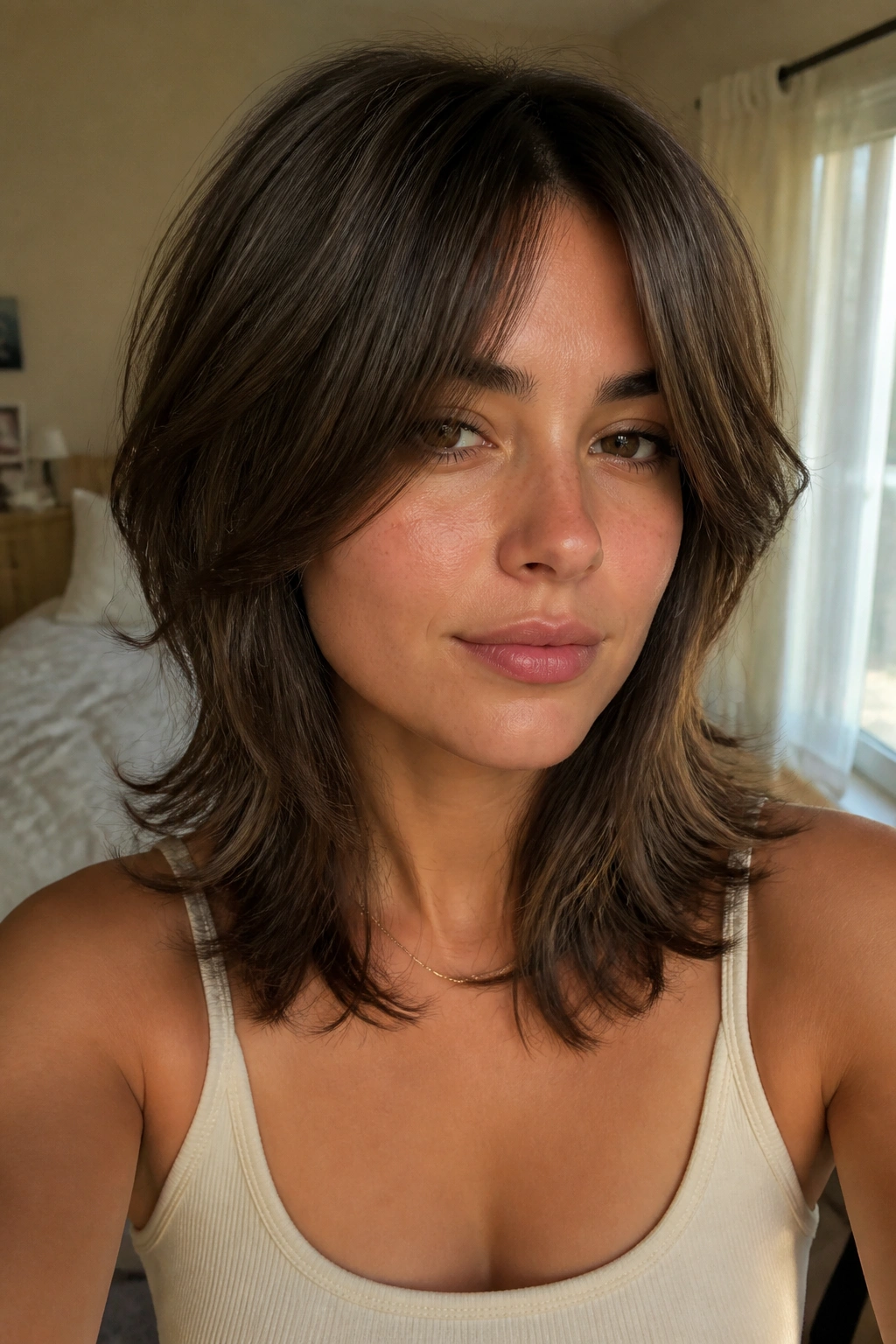
A collarbone-shaping shag with curtain bangs is the cleanest starting point for a round face. The front pieces split at the center and fall in a long diagonal, which pulls the eye down instead of letting it stop at the cheeks. That line matters more than people think.
Why It Flatters a Round Face
The shortest layers should start around the cheekbone or just below it, never right on the fullest part of the face. That one detail keeps the cut from puffing out sideways. You want the fringe to open like a narrow frame, not a heavy curtain that lands squarely across the widest point of the face.
- Ask for curtain bangs that begin around the pupil or inner brow.
- Keep the shortest face-framing layers just below cheek level.
- Let the ends sit at the collarbone for a longer, leaner line.
- Style with a loose bend, not a tight curl, so the sides do not balloon.
Tip: Ask your stylist to point-cut the front instead of cutting it blunt. The difference shows once the hair dries.
2. Crown-Lift Shag With Feathered Ends
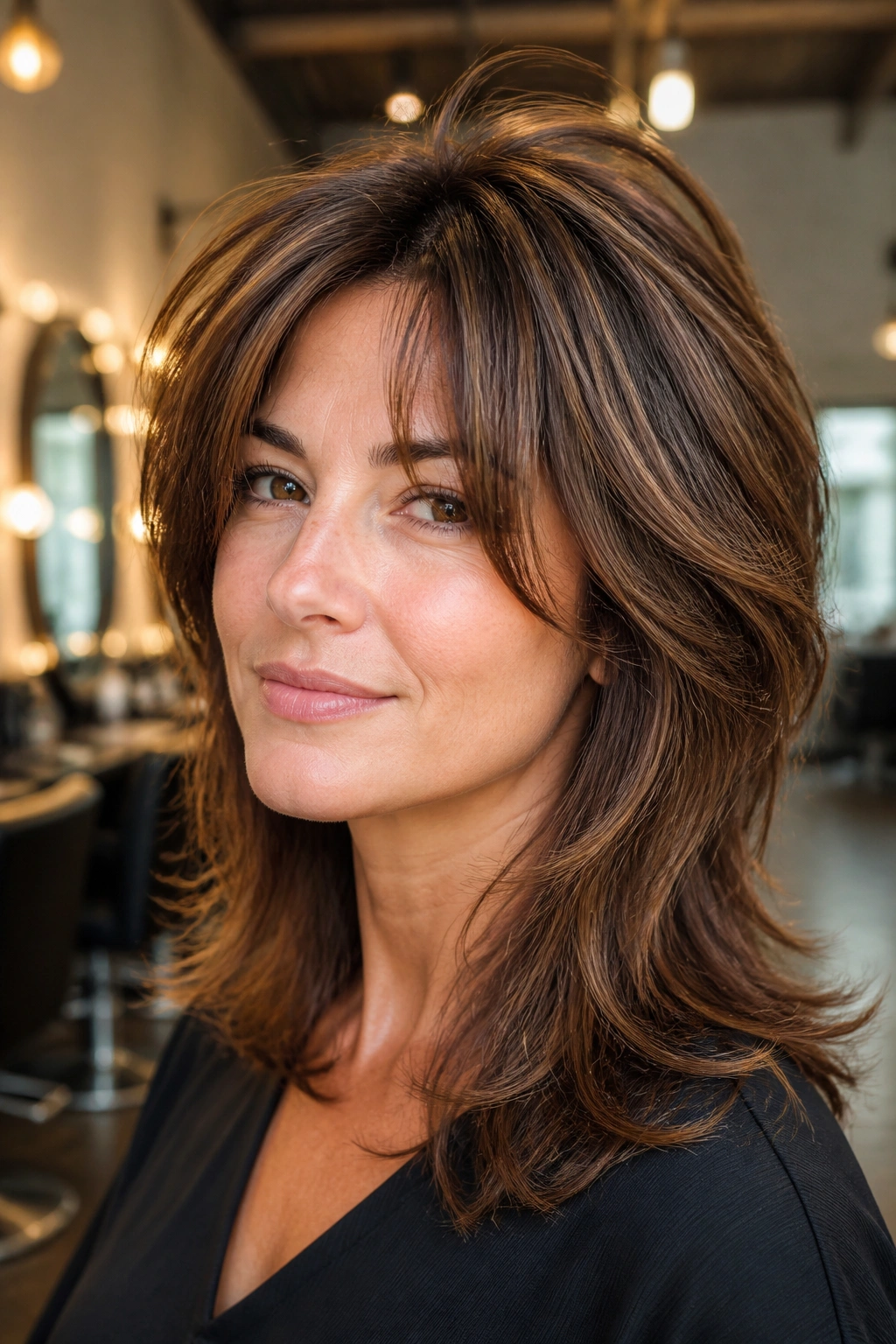
Want height without teasing the life out of your hair? This is the cut. A crown-lift shag keeps the top buoyant and the ends soft, so the face looks lifted without the sides getting bulky. It has shape, but it does not look hard.
The crown carries the shortest internal layers, which helps the top rise away from the scalp. That lift changes the whole profile. When the back and sides stay a little longer, the roundness of the face gets broken up by vertical movement instead of a wide sweep at cheek level.
Feathered ends are the part that keeps this cut from feeling heavy. They blur the edge of the haircut, so the shape melts instead of sitting as one block. That is handy if your hair tends to collapse by lunch or if you hate the feeling of bulky ends on the neck.
It works especially well on medium-density hair that holds a wave. The cut gives the wave somewhere to go. Smooth, flat hair can wear it too, but you will want a round brush or a root-lifting mousse to keep the top from lying flat against the head. That lift matters.
3. Softer Wolf-Inspired Medium Shag

A wolf cut is not too extreme for a round face. It only gets awkward when the top is too short and the sides flare out. Keep the medium length, soften the perimeter, and the shape turns into something much easier to wear.
What Makes It Different
The wolf-inspired version uses a shorter crown and longer lower layers, but the contrast stays controlled. You still get that wild, piecey texture, yet the overall shape reads cleaner because the bottom is not chopped into a wide shelf. That makes a big difference around a round face, where width at the jaw can work against you.
How to Wear It
- Keep the face-framing pieces a little below the cheekbones.
- Ask for a softer transition from crown to mid-lengths.
- Use texture paste sparingly; too much can make the sides look fuzzy.
- Let the fringe stay broken up, not heavy.
This is the cut for someone who likes some edge. Not chaos. Edge. It looks best when the texture is visible but still controlled enough that the silhouette stays narrow through the sides.
4. Jaw-Skimming Shag With Side-Swept Fringe
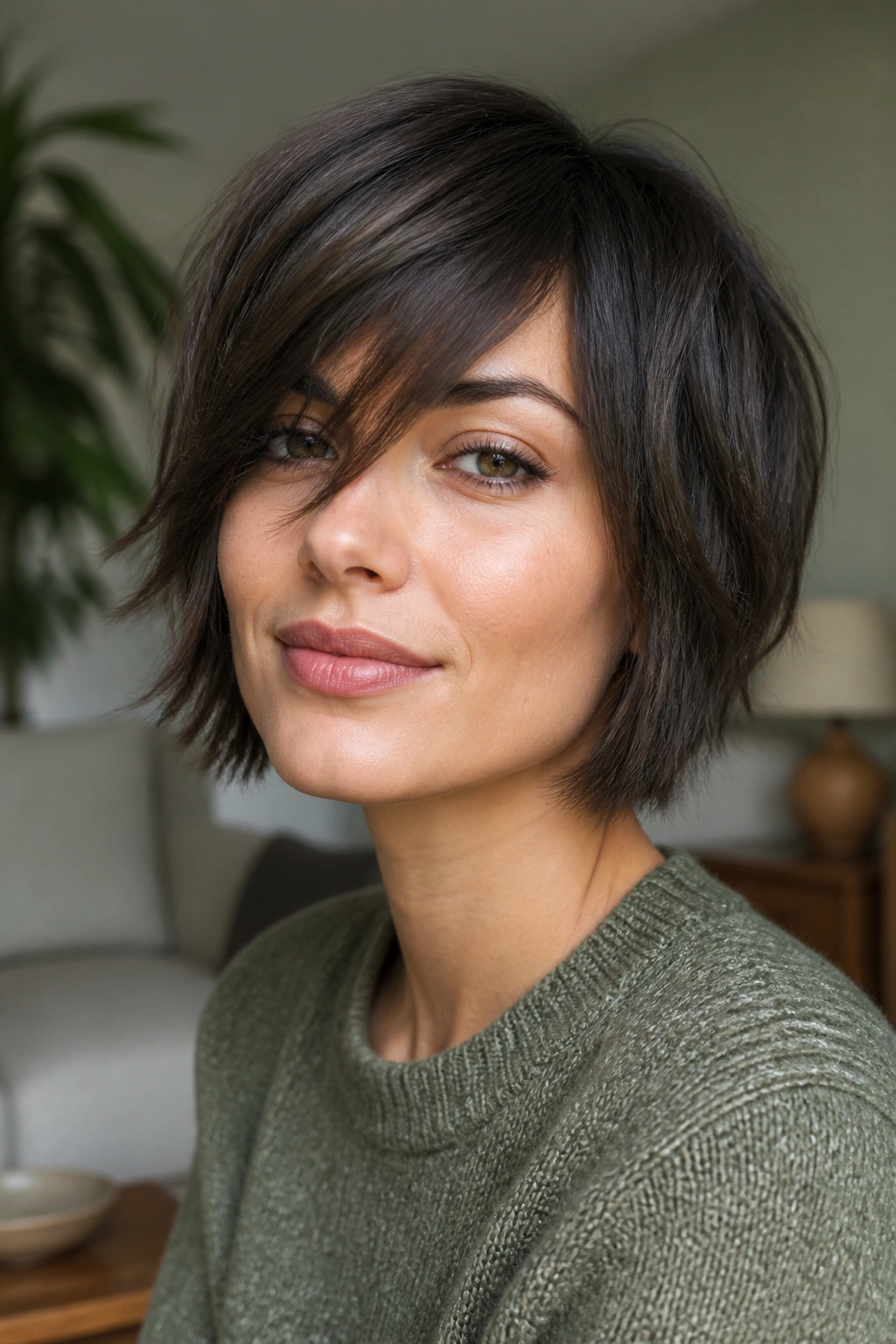
You sit down in the chair and ask for shape, not volume at the cheeks. That is where this cut earns its keep. The side-swept fringe crosses the face on a diagonal, which interrupts the roundness and adds a little asymmetry right away.
The jaw-skimming length is the part that keeps the haircut grounded. If the shortest pieces land right at the jawline, they should be airy and broken, never blunt. A blunt edge at the jaw can widen the face more than you want. A soft, feathered edge does the opposite.
Key Details That Help
- Part the fringe off-center, not straight down the middle.
- Let the longest face-framing pieces hit below the chin.
- Keep texture concentrated at the top and front.
- Blow-dry the fringe away from the face so it arcs, not clings.
That diagonal line can be a lifesaver on days when your hair wants to puff out. It gives the face a break at the center and keeps the haircut from sitting like a bell around the jaw.
5. Airy Shag With Bottleneck Bangs

Touch a good airy shag and the ends feel light, almost feathery. The whole point is movement that seems to float instead of sit in one heavy block. Bottleneck bangs suit that feeling because they start narrow and open gradually, which gives the face a gentle frame rather than a hard line.
The best thing about this shape is the way it redirects attention. The narrow center of the fringe draws the eye upward, then the wider side pieces drop away around the temples and cheekbones. On a round face, that gives you a little vertical stretch without making the haircut look severe.
The medium length keeps the shag from going too short through the sides. That matters. If the layers stop too high, the cut can flare out and steal the effect you were trying to create. Here, the length should hover around the collarbone or just above it, with the shortest action happening in the fringe and crown.
This one is especially nice if you wear your hair wavy. The wave adds softness, the fringe adds shape, and the overall result feels easy instead of overworked. The hair moves.
6. Razored Shag With Cheekbone Framing
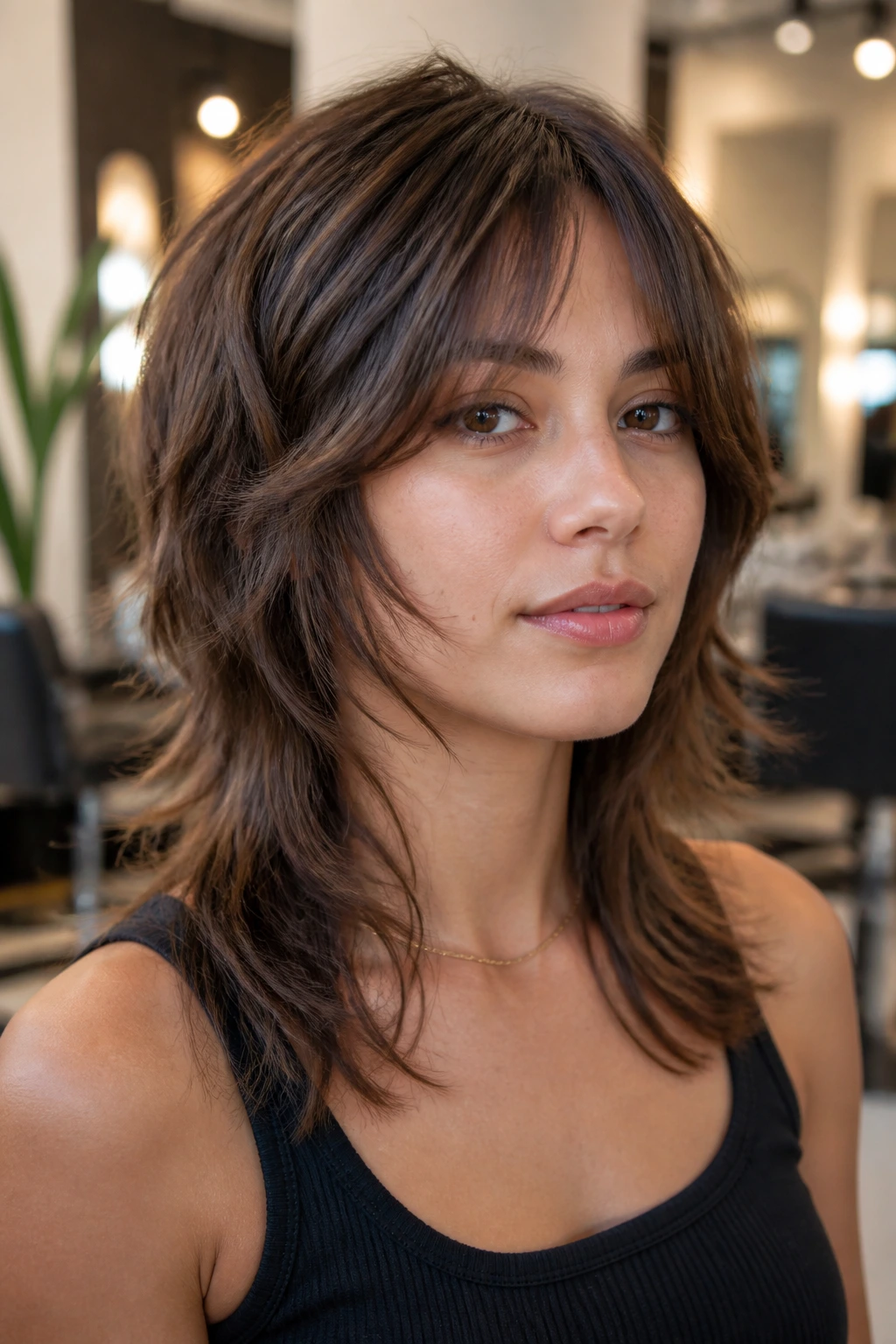
Unlike a blunt layered cut, a razored shag removes weight with a softer edge. That makes it useful for round faces, because the hair does not stack up at the sides in a thick, boxy mass. It falls with a little air between the pieces.
What Makes It Different
A razor gives you a more shredded finish than scissors alone. On the right hair, that finish helps the layers separate and fall in slim sections instead of forming a round puff. The cheekbone framing pieces should skim the face and then drop past the widest point. That is the whole trick.
Who It Suits Best
This cut is happiest on straight to wavy hair with some density. Very dry or fragile ends can look ragged if the razor work gets too aggressive, so I would not push it on hair that already frays easily. Thick hair, though, often loves it. The weight comes down fast, and the layers stop feeling like a helmet.
Recommendation
Ask for a soft razor finish through the mid-lengths, not the ends only. That keeps the haircut from looking thin at the bottom while still giving you the movement that makes a shag feel alive.
7. Long-Layered Tousled Shag

Long layers keep a shag calm. That is why this version works so well for round faces that do not want a super chopped look. The movement is there, but the overall outline stays smooth enough to lengthen the face instead of widening it.
What to Ask For
- Keep the shortest layers below the cheekbones.
- Let the front pieces slide past the mouth.
- Add a soft bend through the mid-lengths rather than tight texture.
- Leave enough length at the bottom to avoid the mushroom effect.
A tousled finish is not about mess. It is about air. The strands should separate into loose sections when you shake the hair out, not clump into a stiff wave. That is where a medium shag shines, especially if your hair has a little natural bend.
This one is also forgiving on busy mornings. A rough blow-dry and a small amount of mousse can get you close to the finish without much effort. If your hair tends to fall flat by noon, a light root spray at the crown helps the shape hold its height.
8. Wispy Fringe Shag With Soft Perimeter

Can a full fringe work on a round face? Yes, if it is wispy and broken up. The danger is not the fringe itself. The danger is a heavy, solid line that stops the eye right across the widest part of the face.
A wispy fringe should show a little forehead through the strands. That tiny amount of openness keeps the cut from feeling boxed in. The corners of the fringe should drift longer toward the temples, which helps connect the bangs to the side layers in a softer way.
The perimeter matters just as much. Keep the hemline soft, not blunt. A shag with wispy fringe works best when the ends are lightly textured and the front pieces are allowed to fall below the cheekbones. Otherwise the fringe can look cute while the rest of the haircut works against the face shape.
This is a good cut if you like a little softness around the eyes. It gives a gentle frame without needing a lot of styling every day, as long as the fringe is cut with enough see-through texture to keep it light.
9. Layered Lob-Shag Hybrid

A layered lob-shag hybrid looks polished, but it still has grit. That is the appeal. You get the cleaner outline of a lob with the movement and broken texture of a shag, which is a smart match for round faces that need length but not stiffness.
Styling Note
A medium round brush or a large Velcro roller at the crown can give this cut just enough lift to keep the top from collapsing. The rest of the hair can stay loose and slightly bent. You do not need a perfect blowout here. In fact, too much polish flattens the point of the cut.
The lob base usually lands around the collarbone or a hair below it. That extra length helps narrow the face visually. Internal layers keep it from looking heavy, and the shag pieces around the front soften the line without turning the style into a full-on chopfest.
It is a good pick if you want something a little easier to grow out. The shape holds well, and the cut still looks intentional when it gains an inch or two.
10. Flipped-End Shag

A flip at the ends changes the whole silhouette. That outward bend pulls the hair away from the jaw in a way that feels playful, not bulky, and it keeps the line from hugging the cheeks too closely.
The key is where the flip starts. If it begins too high, the sides can spread out. If it begins low, near the collarbone or lower, the haircut gets a little kick without widening the face. That is the zone you want. A round brush or a flat iron twist at the bottom can create the bend in seconds.
- Keep the top layers smooth and lifted.
- Let the flip happen only through the last 2 to 3 inches.
- Use a light spray wax if the ends need separation.
- Avoid flipping every layer outward at once. That gets too wide.
This cut is fun, but it is also practical. It gives you movement at the edge of the haircut, which helps a round face look a little longer and a little sharper.
11. Deep-Side-Part Piecey Shag
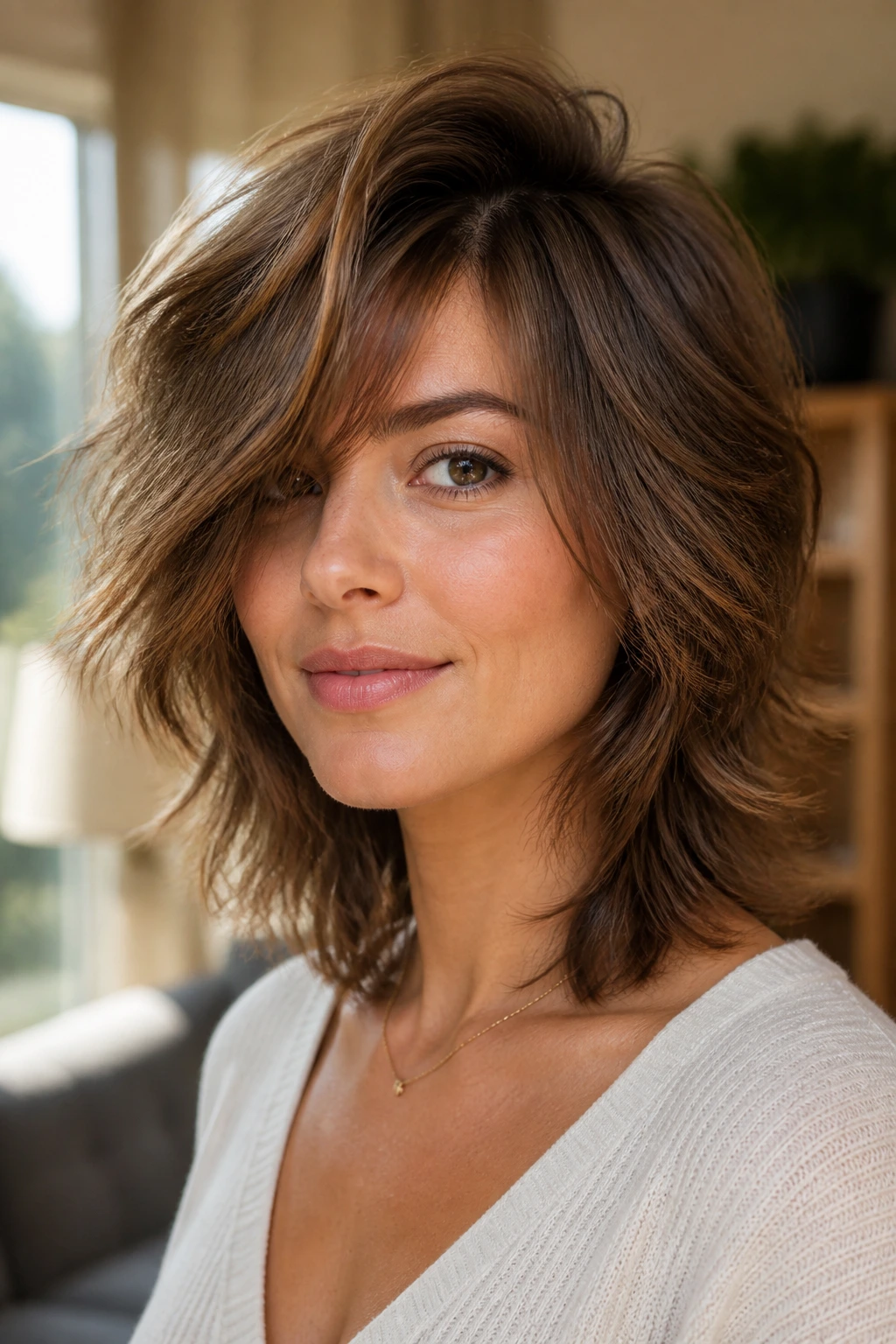
You feel the lift at the root before you even look in the mirror. That is what a deep side part does for a round face when it meets a piecey shag. One side gets more height, the other side falls across the face, and the asymmetry instantly changes the shape.
The layers should stay broken and touchable, not crunchy or overly separated. A little pieceiness around the fringe and temple area keeps the haircut modern. Too much texture product can make the hair look stringy, which is not the same thing at all. You want movement with direction.
The deep side part also gives you a chance to tuck one side behind the ear and let the other side stay fuller. That small difference can make the face look narrower through the middle, which is often the goal with a round shape. It is one of those cuts that works fast.
If your hair has a natural bend, this is an easy win. If it is pin-straight, you may need a root clip while the hair cools after blow-drying. Tiny detail. Big change.
12. Soft Shag With Beveled Ends

Beveled ends are the quiet version of a shag. Instead of obvious choppy sections, the layers taper in a smoother line, which makes this cut a smart choice if you want movement without a lot of jagged edges around the face.
What Makes It Different
A bevel softens the bottom edge of the haircut. On a round face, that matters because a hard, straight hemline can make the lower half look wider. A beveled edge leans inward just enough to slim the silhouette. It is subtle, but subtle is the point here.
Who It Suits Best
This cut works well on medium-density hair that you want to wear straight, softly waved, or lightly brushed out. If you like texture but hate the look of shredded ends, this is probably your lane. It still has shag spirit, just less noise.
Specific Recommendation
Ask the stylist to keep the perimeter soft and slightly rounded under the collarbone, then build movement through the interior rather than the very bottom. That keeps the shape from splaying out at the ends.
13. Choppy Shag With Ribbon Layers
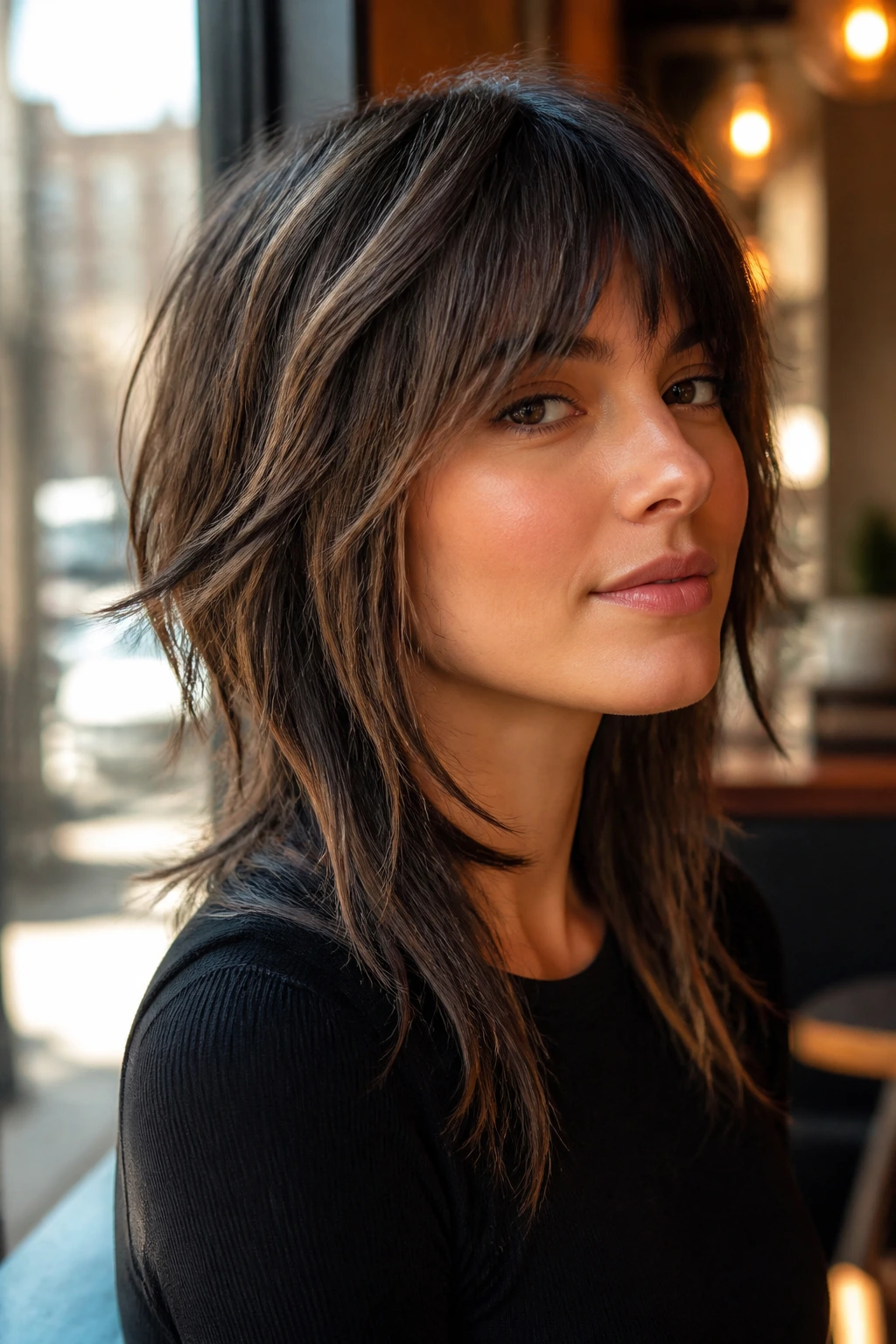
Ribbon layers are for people who want movement to show up in strands, not chunks. The effect is slimmer and more directional than a heavy, all-over texture, which helps a round face look less wide through the middle.
Why the Ribbons Matter
The layers should be narrow enough to move separately, almost like loose ribbons sliding over one another. That gives the haircut a lot of visual motion without making it bulky. The face-framing pieces should start low enough to avoid sitting on the cheeks. Mouth level or lower is the safer zone.
- Use a texturizing spray only at the mid-lengths.
- Keep the crown layered, but not chopped into tiny bits.
- Let the lower layers stay longer so the outline remains lean.
- Finger-dry the front to keep the pieces from clumping together.
A choppy shag can go wrong fast if the ends get too short and too wide. Here, the choppiness stays controlled. It gives you definition without the round-face widening effect that comes from too much volume near the cheeks.
14. Curly Medium Shag
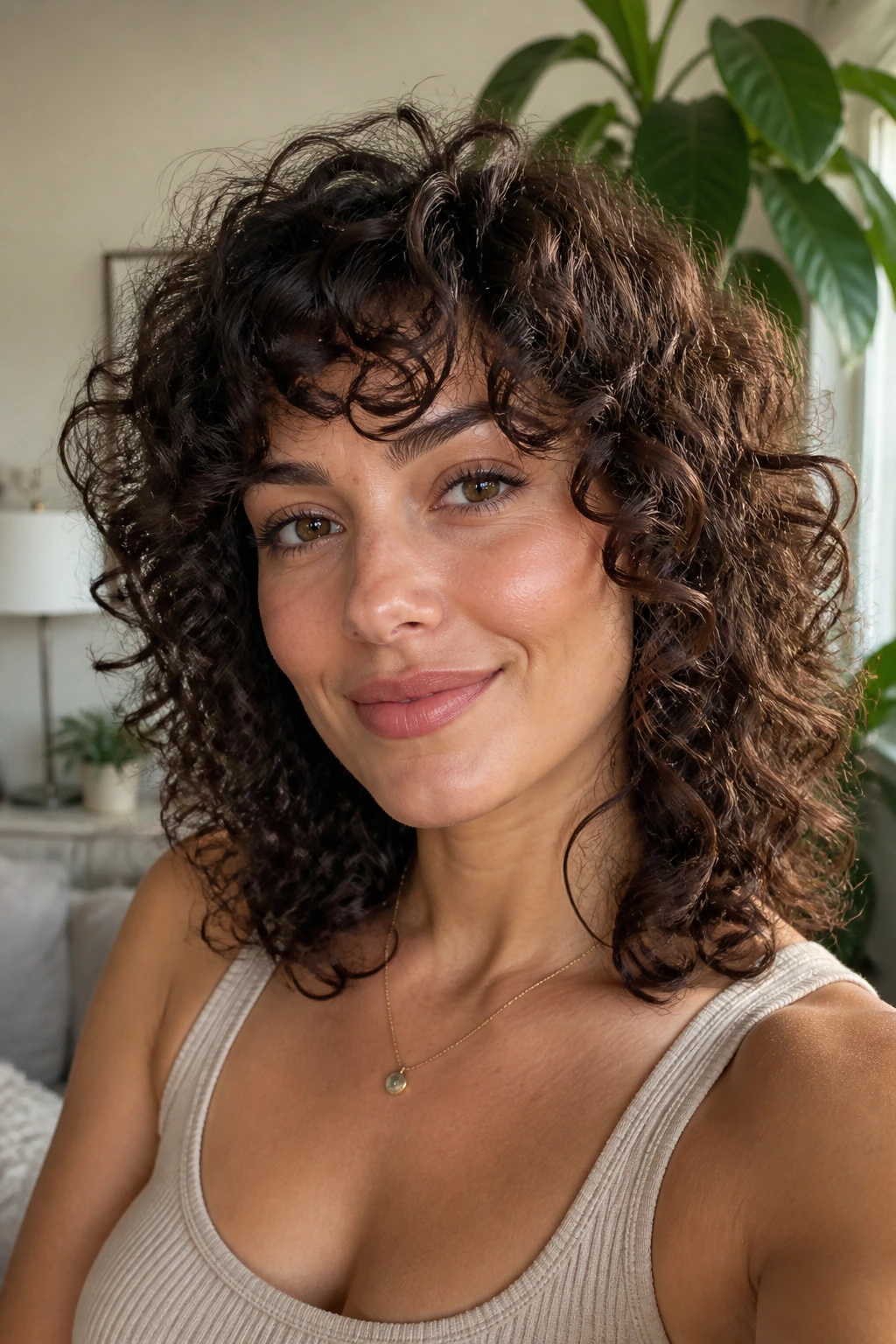
Does curly hair need a different shag for a round face? Absolutely. Curls shrink, spring, and change shape as they dry, so a cut that looks balanced when wet can land very differently once the hair is fully dry. A medium shag gives the curls room to move without building a triangle.
The best curly version keeps the shortest layers high enough to create lift at the crown, but not so high that the sides puff out near the cheeks. That balance is delicate. If the layers are too short around the face, the curl spring can widen the look. If they are too long, the hair can sit heavy and lose bounce.
Dry cutting or curl-by-curl cutting helps because the stylist can see the real shape of each curl pattern. A lot of curly shags go wrong when they are cut too evenly while wet. They look polite for half an hour and then dry into something entirely different.
Leave enough length around the jaw and collarbone to let the curls fall downward. That line helps a round face look longer and keeps the silhouette from turning into a sphere.
15. Wavy Shag With Invisible Layers

An invisible-layer shag looks almost plain when it is cut well. That is the charm. The layers sit inside the shape instead of shouting from the surface, so the hair moves without looking choppy from every angle.
The hidden layers are useful on round faces because they reduce bulk where you do not want it while keeping the outer outline long. You get lift through the top and a softer fall at the sides. The face-frame pieces can be barely there when the hair is straight, then show up more once a wave is added.
How to Style It
A medium-barrel curling iron or even a quick bend with a flat iron can bring the shape out. Work in loose sections. Five or six twists are usually enough for shoulder-length hair; more than that can make the style too curled and less shaggy.
This cut is the quiet choice for someone who likes texture but not drama. It reads easy, clean, and slightly undone, which is a nice place to be.
16. Center-Part Shag With Elongated Face Frame
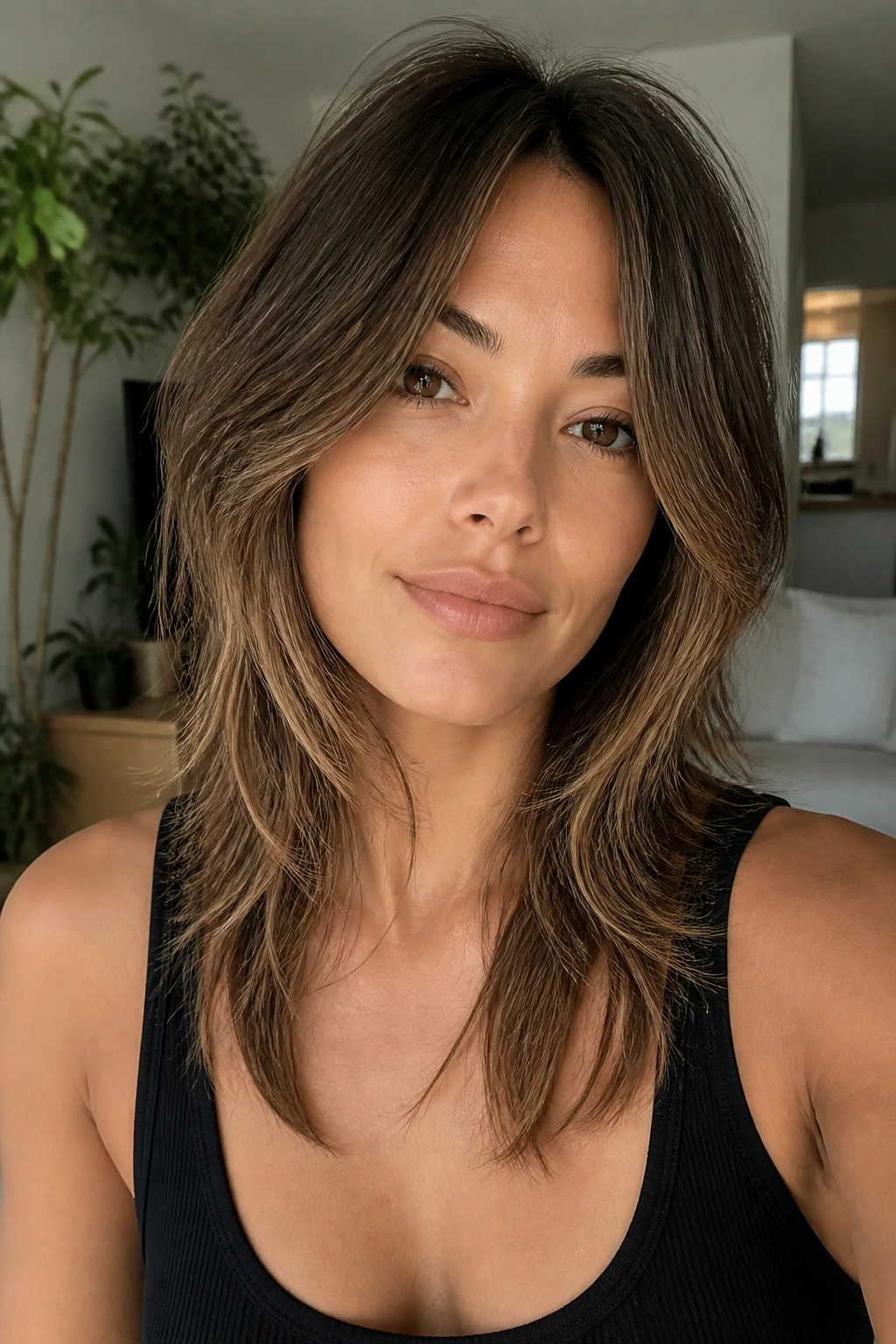
Center parts get blamed too often. On a round face, they can work well if the face-framing pieces are long enough to stretch downward and the top has enough lift to avoid a flat, pancake shape.
The trick is not the part itself. It is the line created by the front pieces. If they start below the cheekbones and taper toward the collarbone, the center part can actually sharpen the face by creating symmetry at the top and length at the sides. That is the part people miss.
- Keep the crown lightly layered for height.
- Let the front pieces curve past the jaw.
- Avoid a blunt fringe across the forehead.
- Use a middle part only if the hair can hold some root lift.
This cut is good for someone who likes a balanced look and does not want heavy asymmetry. It can feel cleaner than a side-part shag, but it still gives the movement a round face needs.
17. Thick-Hair Shag With Internal Layers
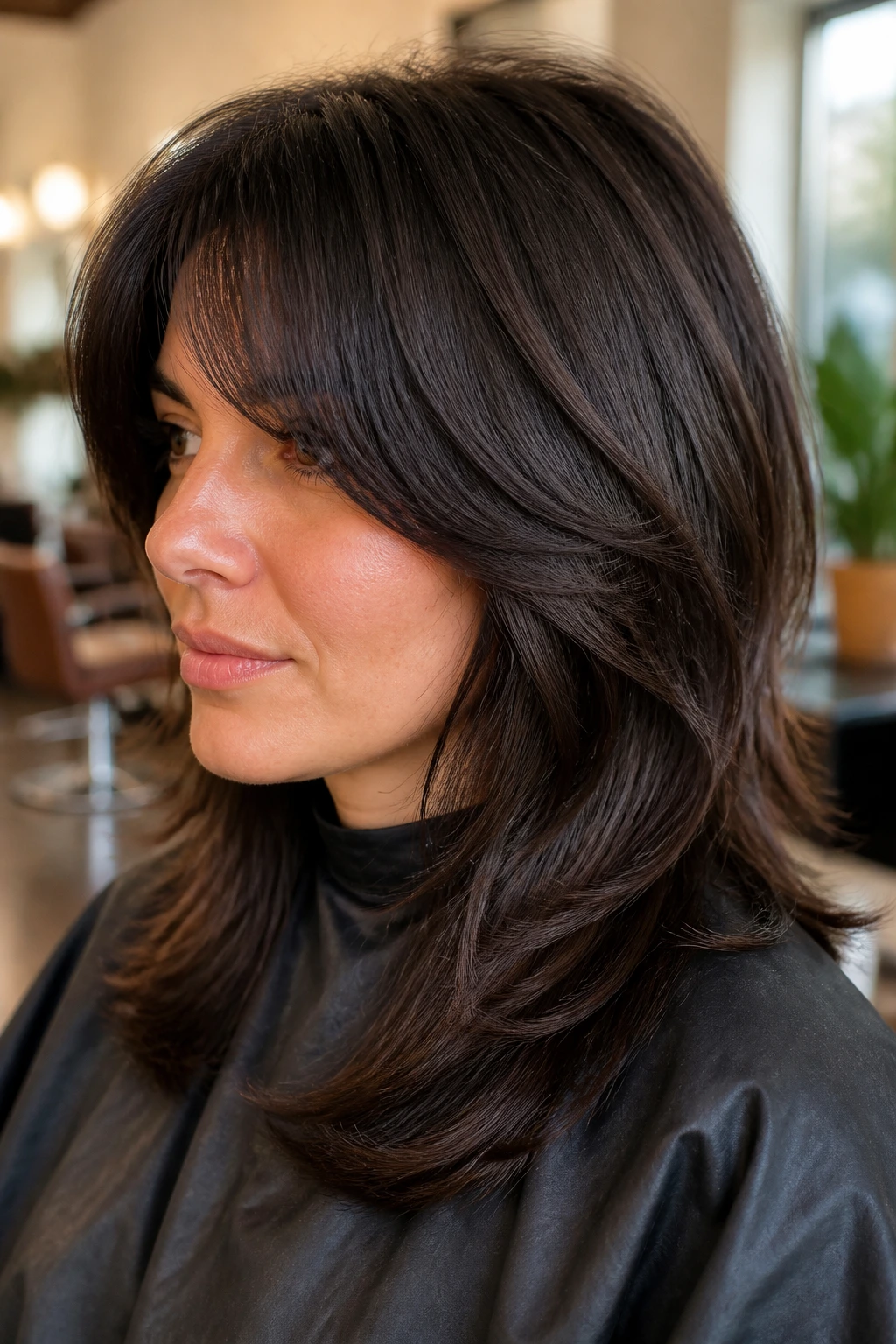
Thick hair can turn a medium shag into a shelf if the inside never gets thinned. That is why internal layers matter so much here. They remove mass from the middle of the haircut, which lets the hair fall closer to the head instead of spreading out like a triangle.
The outer shape should stay fairly smooth. Thick hair already brings plenty of presence, so the cut does not need to add more bulk at the sides. A skilled stylist will usually keep the perimeter longer and carve out weight from inside the shape, especially around the crown and back.
That approach leaves the ends looking fuller, which is what you want. Too much texturizing at the edge can make thick hair frizz and stick out. The goal is controlled movement, not shredded ends that puff in humidity.
If your hair is dense and slightly coarse, this may be the most useful version on the list. It keeps the shag feeling light enough to wear, but it does not let the face disappear into a wall of hair.
18. Fine-Hair Shag With Root-Lift Layers
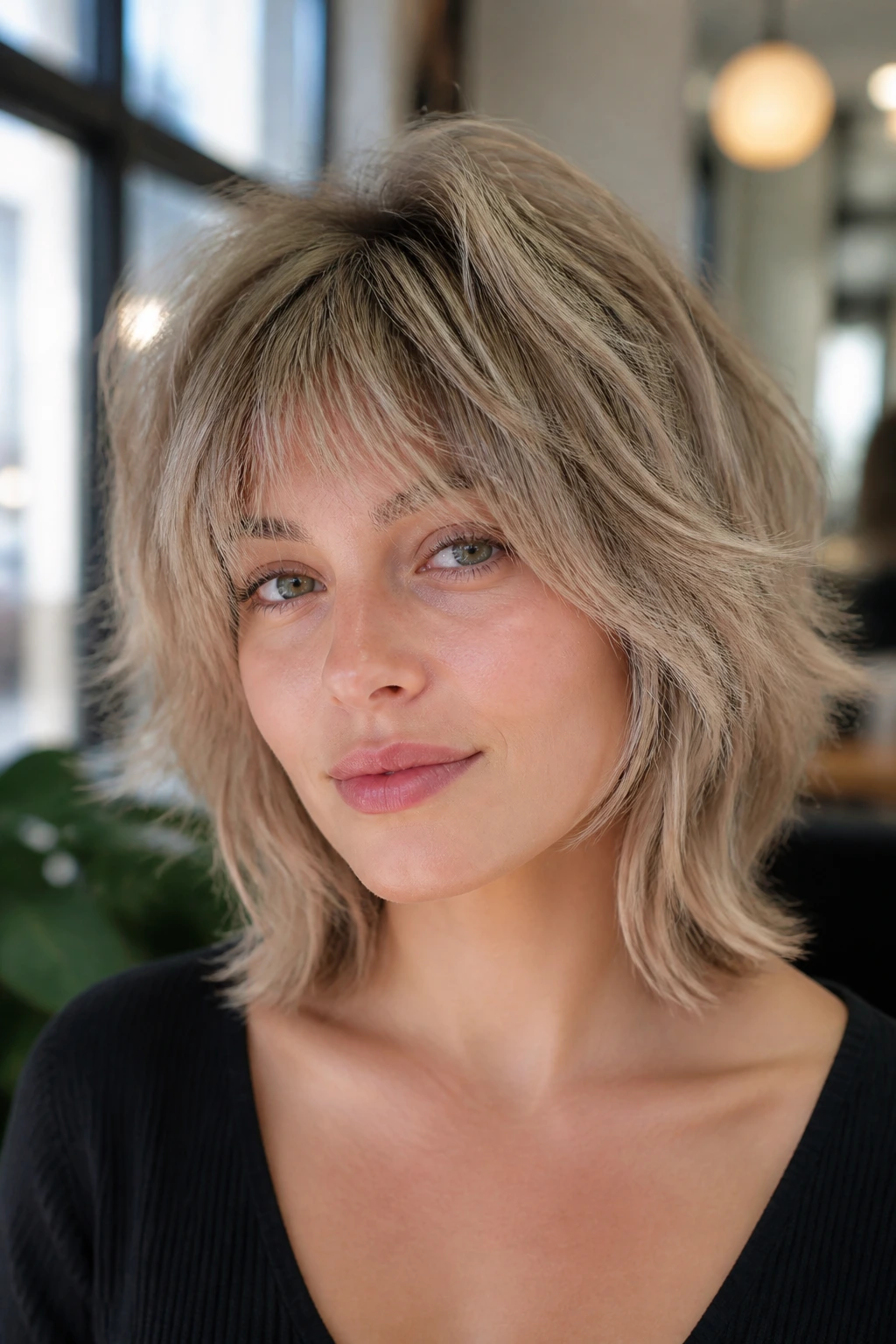
Fine hair needs a different kind of shag patience. If the layers are too short or too many, the ends can go see-through fast and the haircut loses its shape. A better version keeps the perimeter cleaner and builds the lift where the eye notices it first: the crown and the front.
A round face benefits from that root lift because it creates vertical movement without stealing density from the sides. You still want some face-framing pieces, but they should be soft and narrow rather than heavily carved. The haircut should look fuller, not thinner.
Who It Suits Best
This is a strong option if your hair falls flat by noon and you want something that looks more awake with very little styling. A light mousse at the roots and a quick blast with a dryer can make a bigger difference than piling on products.
Specific Recommendation
Ask for a soft, airy shag with a solid bottom line. That sounds contradictory, but it works. The clean perimeter keeps the hair looking thick, while the interior layers give the shape room to breathe.
19. Air-Dry Shag With Randomized Texture

Air-dry shags live or die on the cut. If the layers are placed well, the hair falls into a relaxed shape on its own. If they are not, the whole thing looks uneven in a bad way. There is no hiding it.
The No-Fuss Version
The best air-dry shag uses a mix of short and long pieces around the crown and front, but nothing so precise that the hair needs heat to behave. The texture should look a little irregular, almost scattered, which helps the style avoid that round, puffy outline a round face does not need.
- Work in a light leave-in conditioner on damp hair.
- Scrunch with a towel, not a rough cotton tee that frays the ends.
- Use a small amount of mousse at the roots if the hair is flat.
- Skip heavy creams that make the layers collapse together.
This is a good cut for people who want the shag look without a daily styling routine. It still needs a smart shape at the salon, though. Random texture only looks good when the haircut has an actual plan underneath it.
20. Modern Midi Shag With Clean Ends
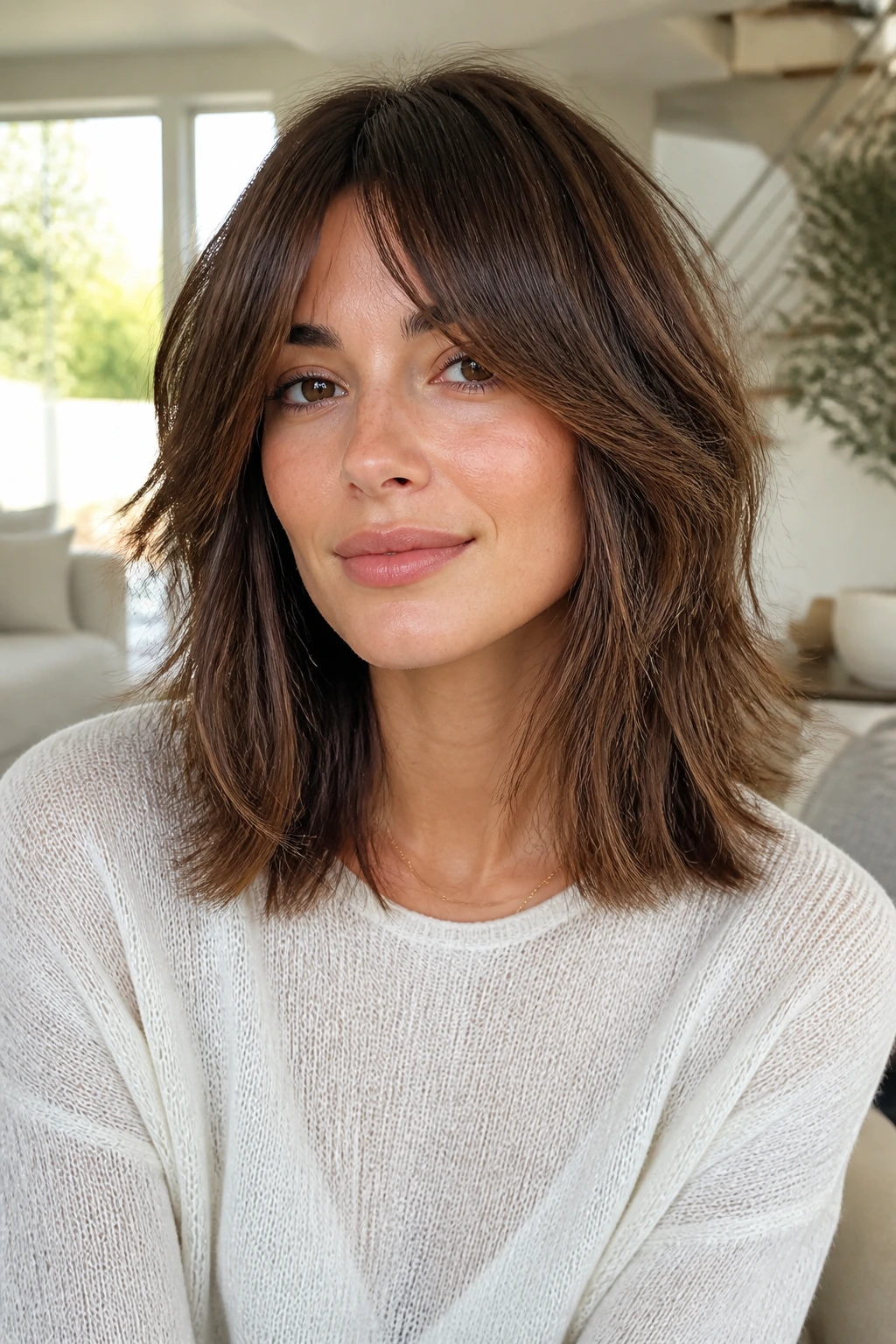
Can a shag look polished? Yes. It can, if the ends stay clean and the layers are controlled. This modern midi version is for the person who wants movement, but not the full scruffy effect that some shags lean into.
The length usually falls just past the collarbone, which helps a round face because it creates a long, uninterrupted line down the neck and chest. The layers are there, but they do not announce themselves from across the room. You notice the bend, the lift, the softness around the face. You do not notice a lot of chopped-up edges.
That restraint is what makes the cut feel current without trying too hard. The hair can be worn smooth, brushed into a loose wave, or bent at the ends with a large barrel iron. It holds shape in a tidy way, which is nice if you like some structure with your texture.
This is the version I would hand to someone who likes shags in theory but wants the haircut to play nicely with work clothes, straightening, or a more finished look. It is calm. Not boring. Calm.
Final Thoughts
Round faces do not need to be hidden. They need shape in the right places. The cuts that work best are the ones that keep the shortest layers above or below the cheekbones, not right on top of them, and that is why medium length is such a useful middle ground.
If you are bringing one of these ideas to a stylist, bring two photos: one of the front and one of the side. Ask where the shortest layer will hit when the hair is dry. That question saves a lot of disappointment. Dry hair tells the truth.
The best shag for you will still depend on texture, density, and how much styling you’re willing to do, but the principle stays the same: lift the crown, soften the sides, and keep the widest part of the face from being the place where the haircut stops. That is the move.
