



Fine hair can go flat fast. That is exactly why messy shag haircuts for fine hair work so well when the layers are cut with restraint instead of enthusiasm gone wild.
A good shag does not pile layers everywhere. It keeps the perimeter light, breaks up the ends, and leaves enough weight through the crown so the whole cut still looks alive when you move, tuck one side back, or let it air-dry on a normal day. The wrong shag does the opposite. It strips out so much hair that the ends turn wispy and the shape vanishes by lunchtime.
The sweet spot is a cut that looks a little undone even when it is clean. Choppy ends, soft fringe, and face-framing pieces can make thin strands look fuller because they create movement without demanding a lot of density. Straight fine hair, wavy fine hair, and fine curls each need their own version of that idea, though. One size does not fit here.
If you’ve ever walked out of the salon with a cut that looked big for one day and then collapsed into a sad triangle, you already know the pain. The styles below avoid that trap. Some are soft and wearable, some lean bolder, and a few are almost sneaky in how much fullness they create.
1. Chin-Length Shag With Wispy Fringe
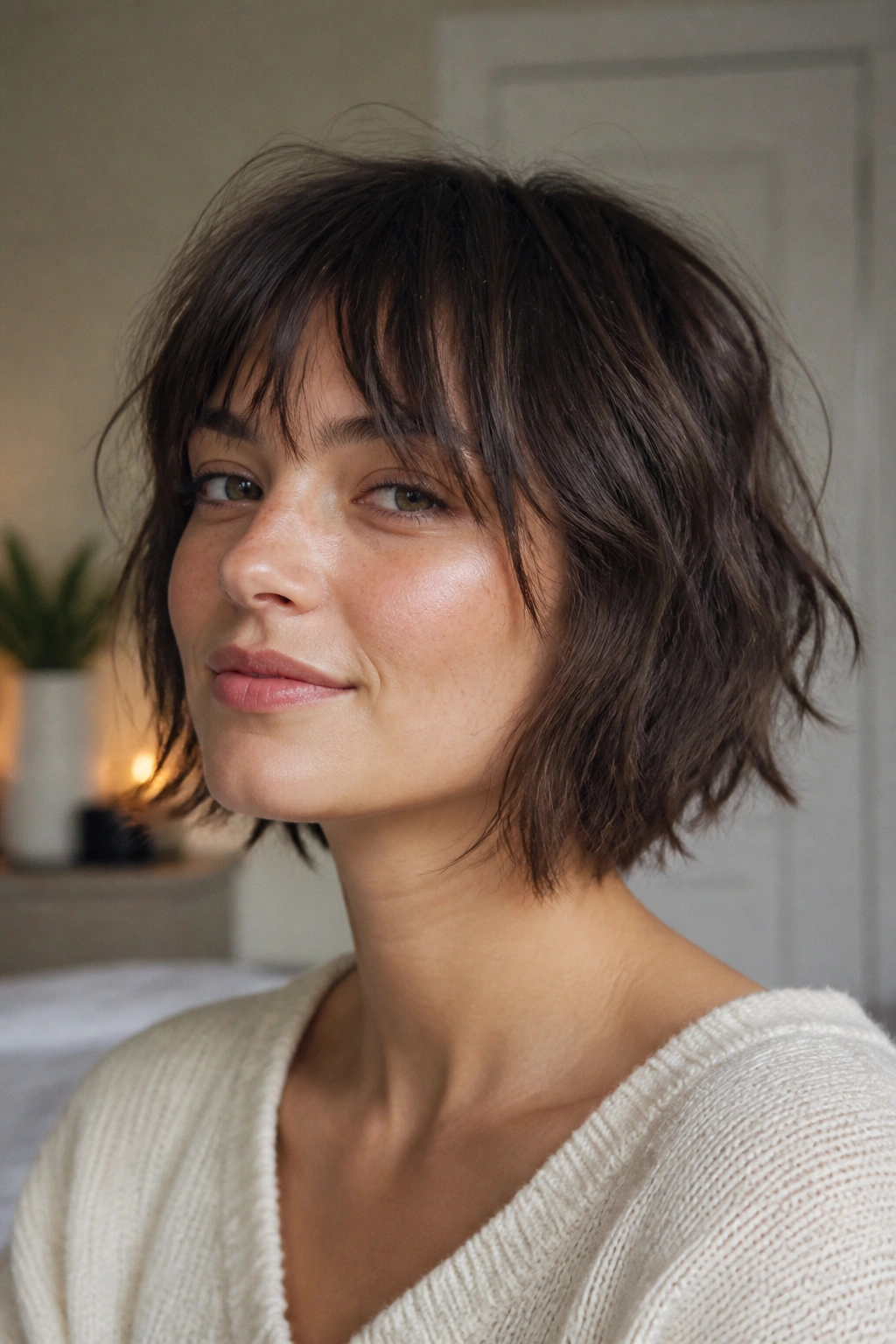
A chin-length shag is a smart starting point when your hair feels fragile and limp. The length sits where the hair can still hold shape, and the fringe keeps the eye moving so the cut doesn’t look sparse.
Why It Works on Fine Hair
The jawline gives this cut a natural edge, which means the ends don’t have to do all the work. A wispy fringe also makes the front feel lighter without taking away too much density. That matters. Too much thinning at the top can make the whole thing look see-through.
- Keep the shortest layers around the cheekbone, not high on the crown.
- Ask for point cutting instead of aggressive razor work.
- Style with a light mousse at the roots and a quick finger-dry.
- Leave the ends a little blunt so they still read as full.
Best move: ask your stylist to keep the fringe soft, not sparse.
2. Collarbone Shag With Broken Layers
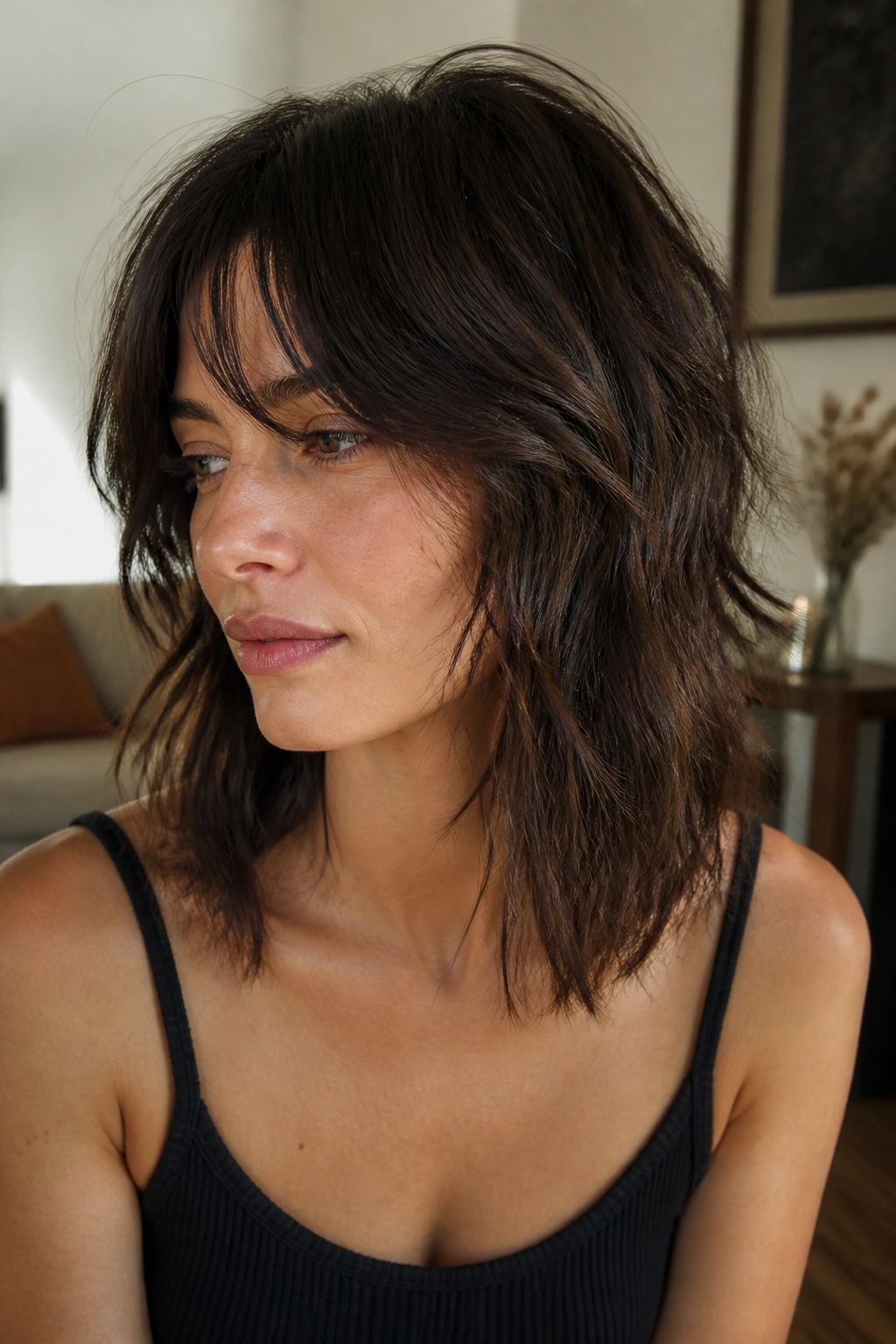
This is the cut I reach for when someone wants movement without looking like they lost half their hair. The collarbone length gives fine strands a longer line, which helps them feel fuller than a short crop can.
The broken layers stop the shape from getting heavy at the bottom. They also make it easier to toss the hair up, tuck it behind one ear, or wear it with a messy middle part. A little bend from a round brush or curling iron is enough. You do not need polished curls here.
For styling, think one-inch sections and a soft bend, not a stiff spiral. That keeps the cut loose and touchable. If your hair is pin-straight, this one still works, but it likes a root lift spray more than a heavy cream.
3. Curtain-Bang Shag With Soft Face Frame
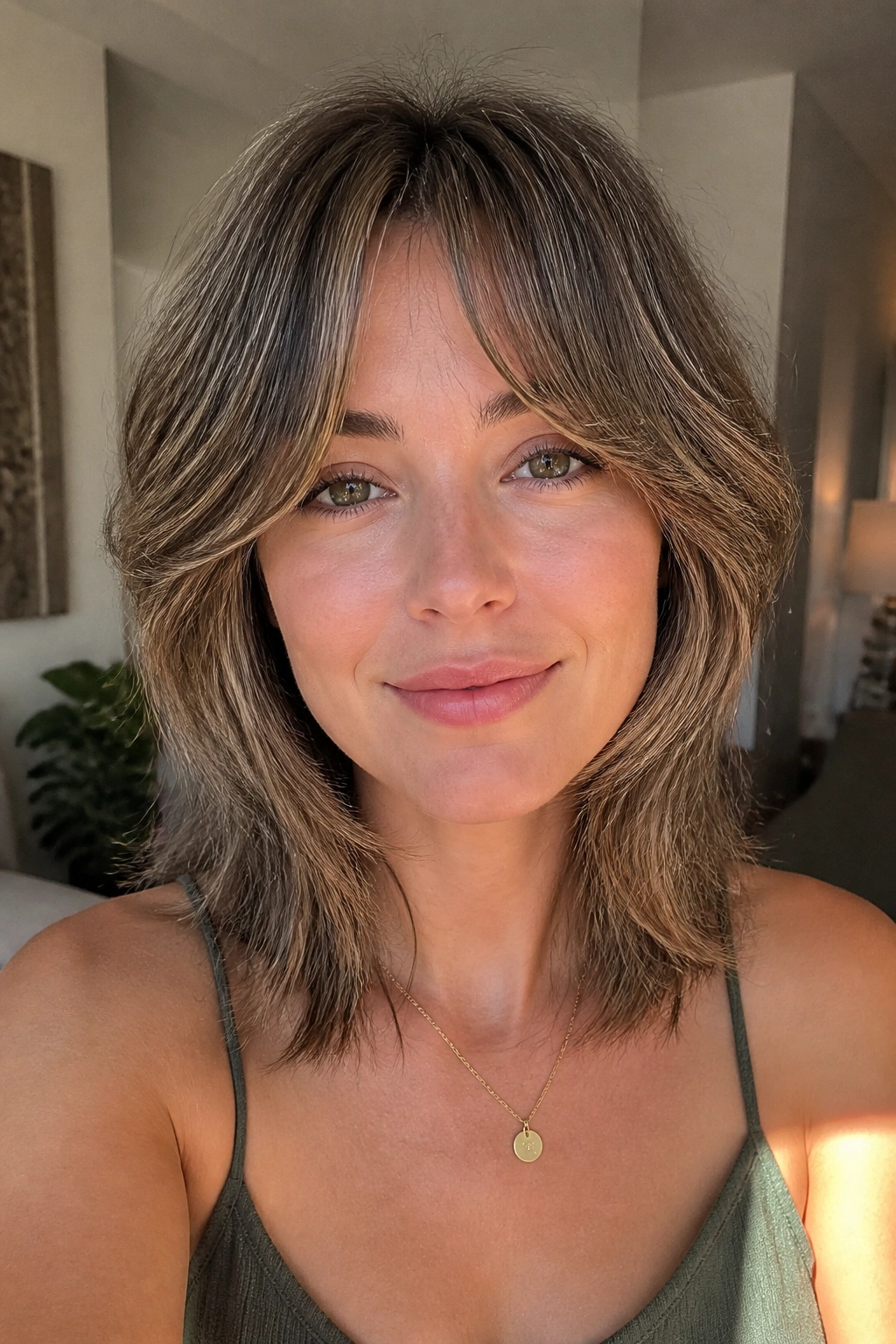
Can curtain bangs help fine hair look fuller? Yes, if they’re cut with enough length to blend instead of sitting like a hard shelf. The softness matters more than the drama.
A curtain-bang shag spreads the weight across the front, which makes the hair around the face feel thicker. The face frame should start around the cheekbone and melt toward the jaw. Anything shorter can get fussy fast, especially if your hair is soft and slides out of shape.
How to Wear It
Blow-dry the bangs away from the face with a small round brush, then bend the ends back with your fingers. A little dry shampoo at the roots helps, but don’t pack it on. Fine hair gets dull when product builds up.
4. Razor-Soft Micro-Shag With Airy Ends
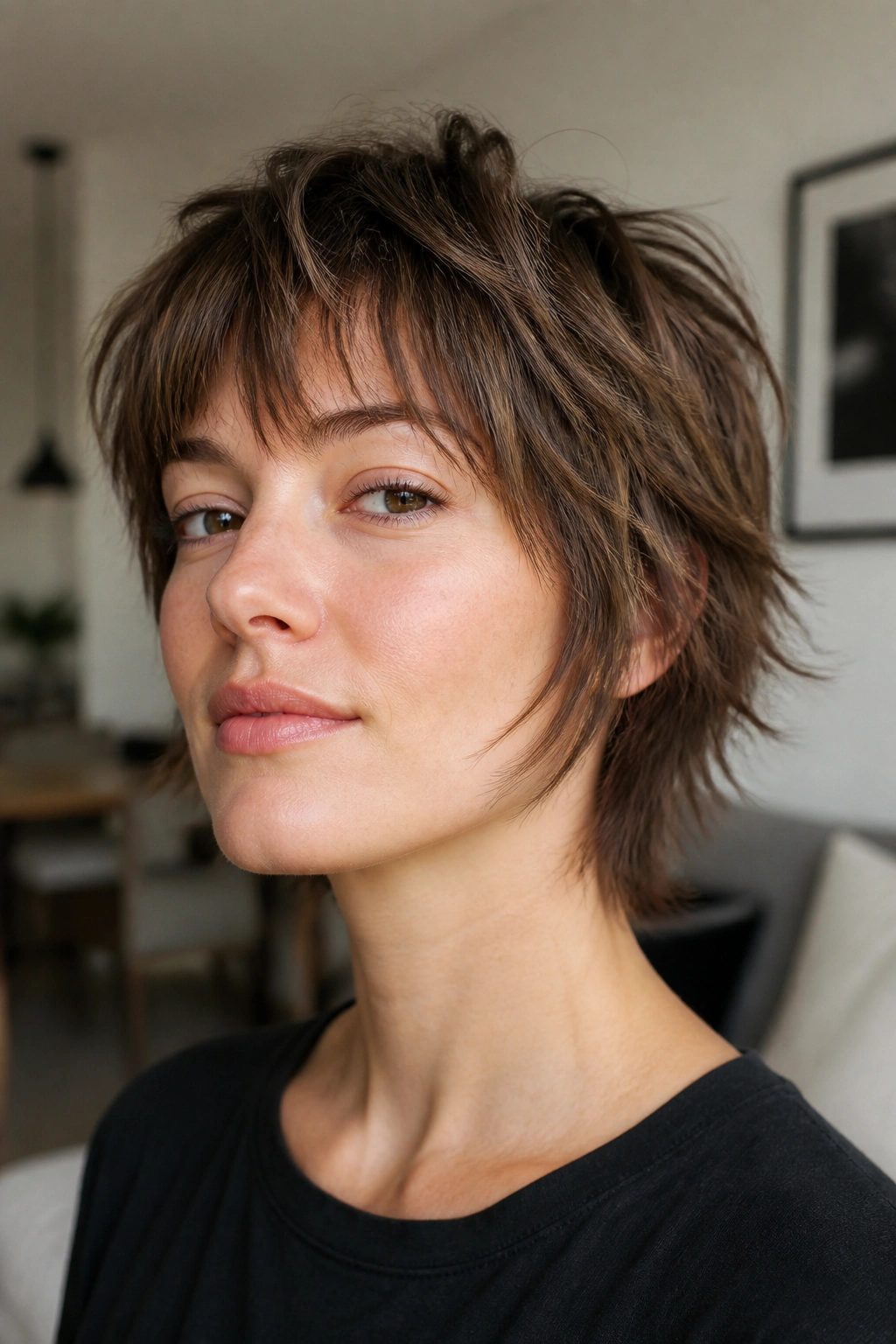
If your ends look thin already, this is the cut that keeps the mess on purpose. The micro-shag is short, choppy, and a little rebellious, but the trick is keeping the texture airy instead of shredded.
A razor can help here, but only in the right hands. On fine hair, a heavy razor pass can fray the ends and make them look thinner than they are. A smart cut uses just enough texture to break up the line without chewing it apart.
- Keep the length around the cheekbones or just above the jaw.
- Leave the crown soft, not stacked.
- Use a matte texture spray after drying.
- Skip thick oils. They flatten the whole thing.
The best version looks imperfect in a good way. Not sloppy. Just loose.
5. Shoulder-Length Shag With Invisible Layers
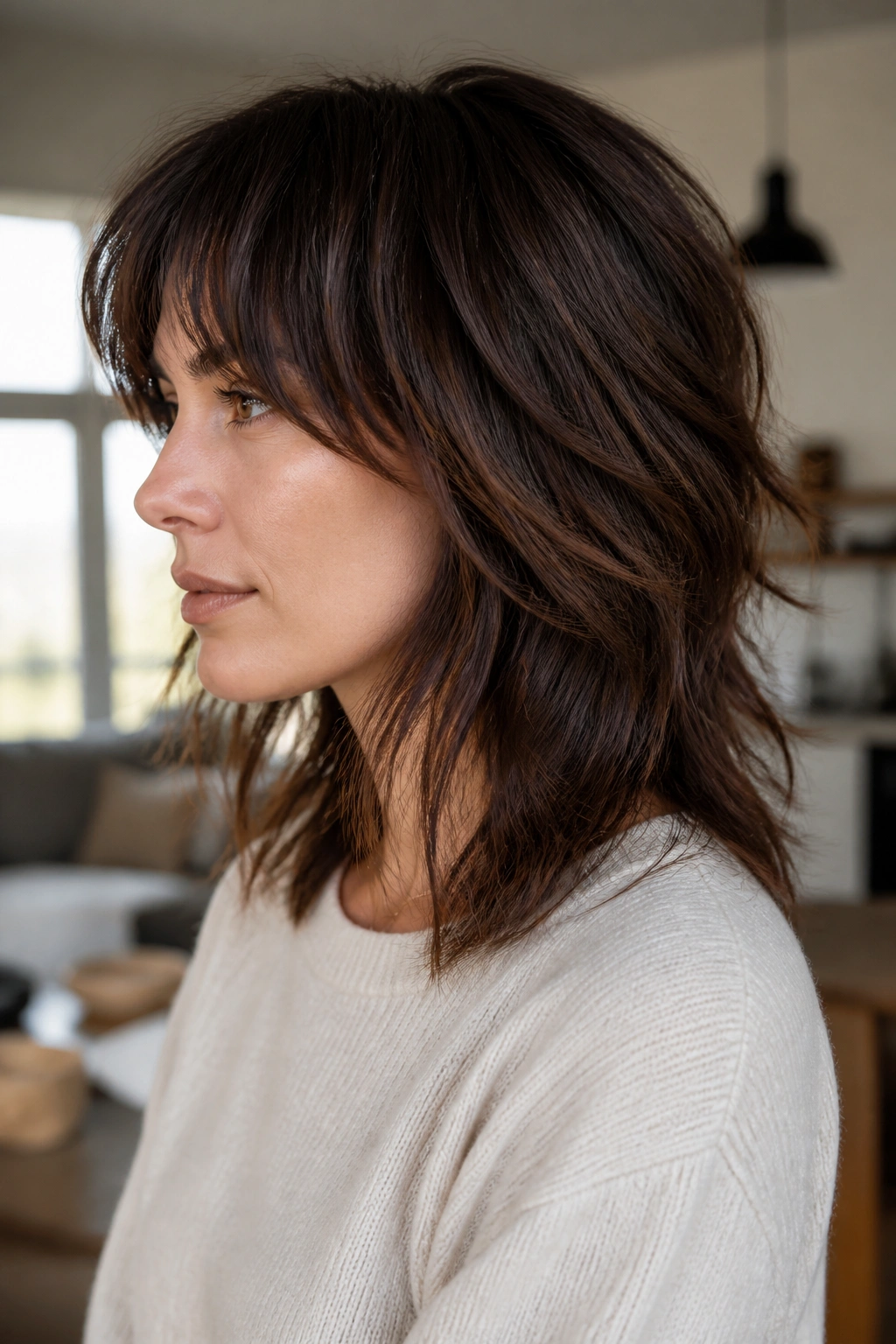
This cut is for the person who wants the shag effect without shouting about it. The layers are there, but they hide inside the shape, so the hair still looks like it has a solid body.
Shoulder length gives fine hair a little more weight than a shorter crop, which can be helpful if your strands fall flat around the ears. Invisible layers keep the outline soft while letting the top move. That’s the whole point. You get swing, not fluff.
A side benefit: this cut grows out well. The shape doesn’t fall apart the minute it gets a little long, which is nice if you prefer fewer salon visits and less drama with your mirror.
6. Wolf-Inspired Shag With Tapered Back
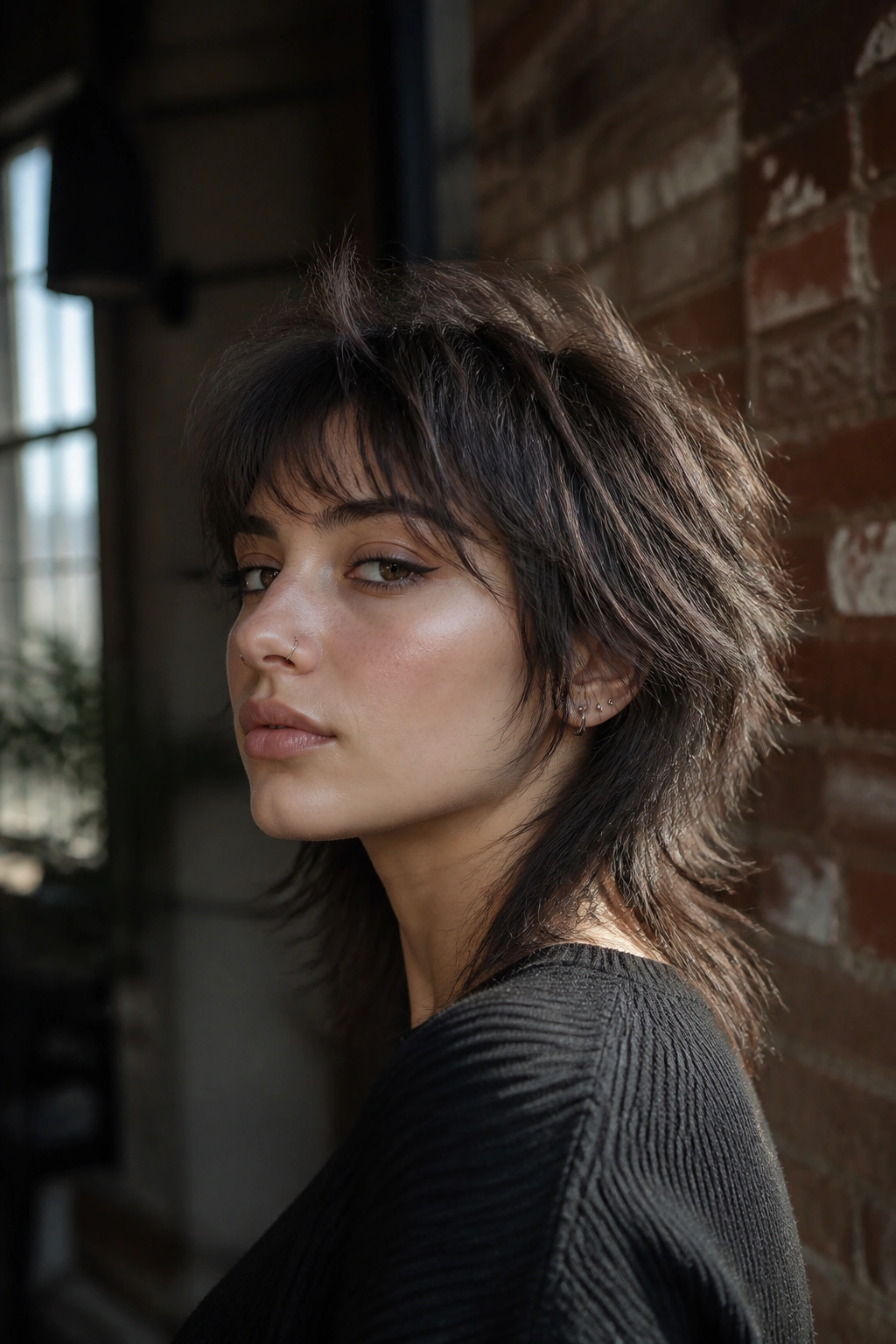
Unlike a classic shag, the wolf-inspired version leans rougher at the crown and tighter through the back. That makes it feel more deliberate, more edgy, and a bit less sweet.
For fine hair, the tapered back is the part to watch. Too much removal there and you end up with a tail that looks skinny. Keep the back soft and let the top carry the movement. That’s where the lift comes from.
This style suits people who want a little attitude and don’t mind a cut that looks better when it’s roughed up. It’s not the best choice if you want sleek and tidy every day. It is a good pick if you like hair that looks better after you’ve lived in it for a few hours.
7. Shag Bob With Choppy Perimeter
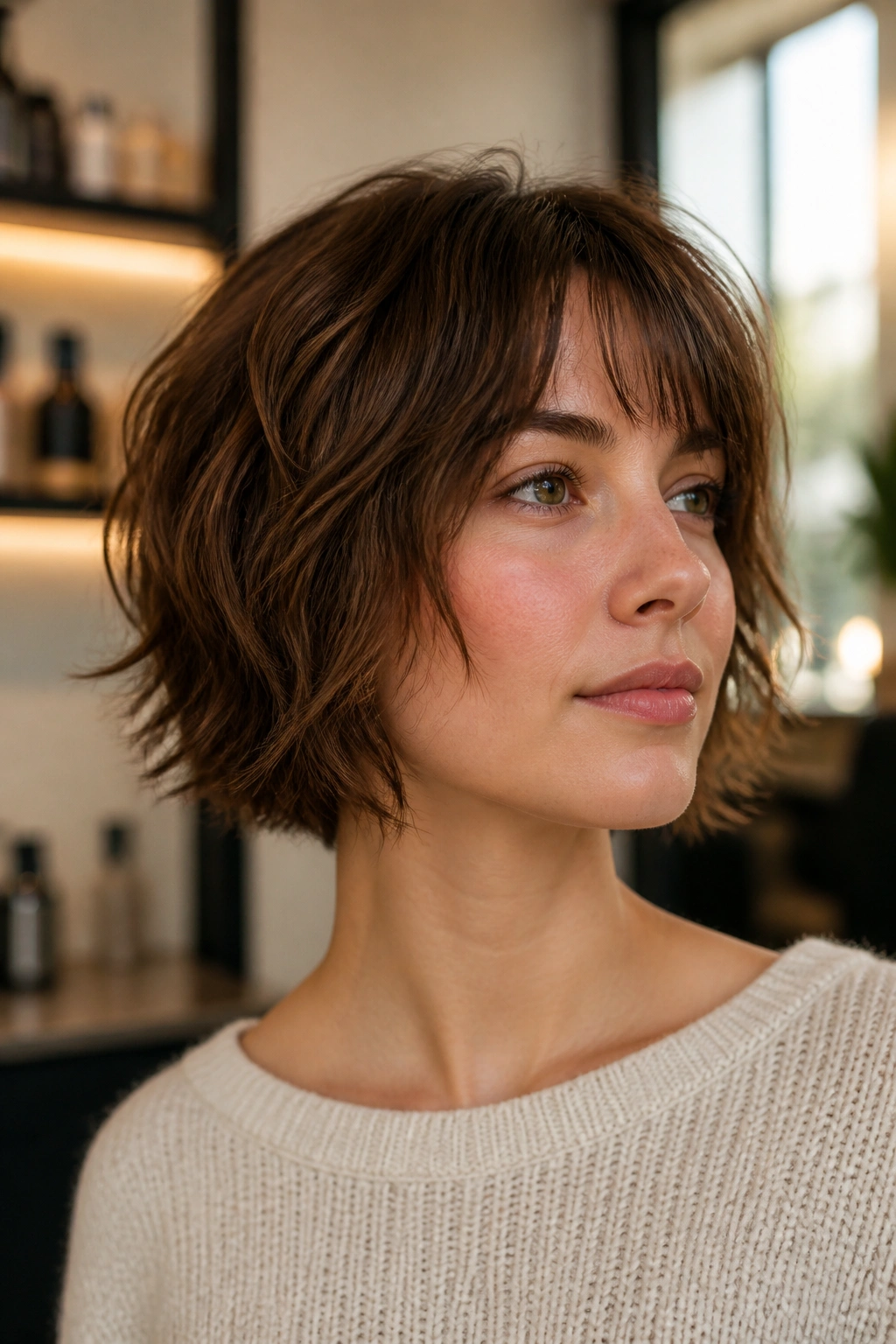
Picture a bob that had a little fun and stopped trying to be neat. That’s the shag bob. The perimeter stays readable, which matters for fine hair, but the ends are broken up enough to keep the shape from feeling heavy.
What Makes It Different
A normal bob can look too solid on thin strands. This version keeps the line, then adds enough choppiness to stop it from sitting like a helmet. The result is lighter movement around the neck and jaw.
- Best length: between the chin and upper neck.
- Best texture: slight wave or a quick bend with a flat iron.
- Best styling product: volume mousse or a root spray.
- Best caution: do not over-layer the nape.
That last point is the big one. If the back gets thinned too much, the whole cut loses its backbone.
8. Long Shag With Feathered Ends
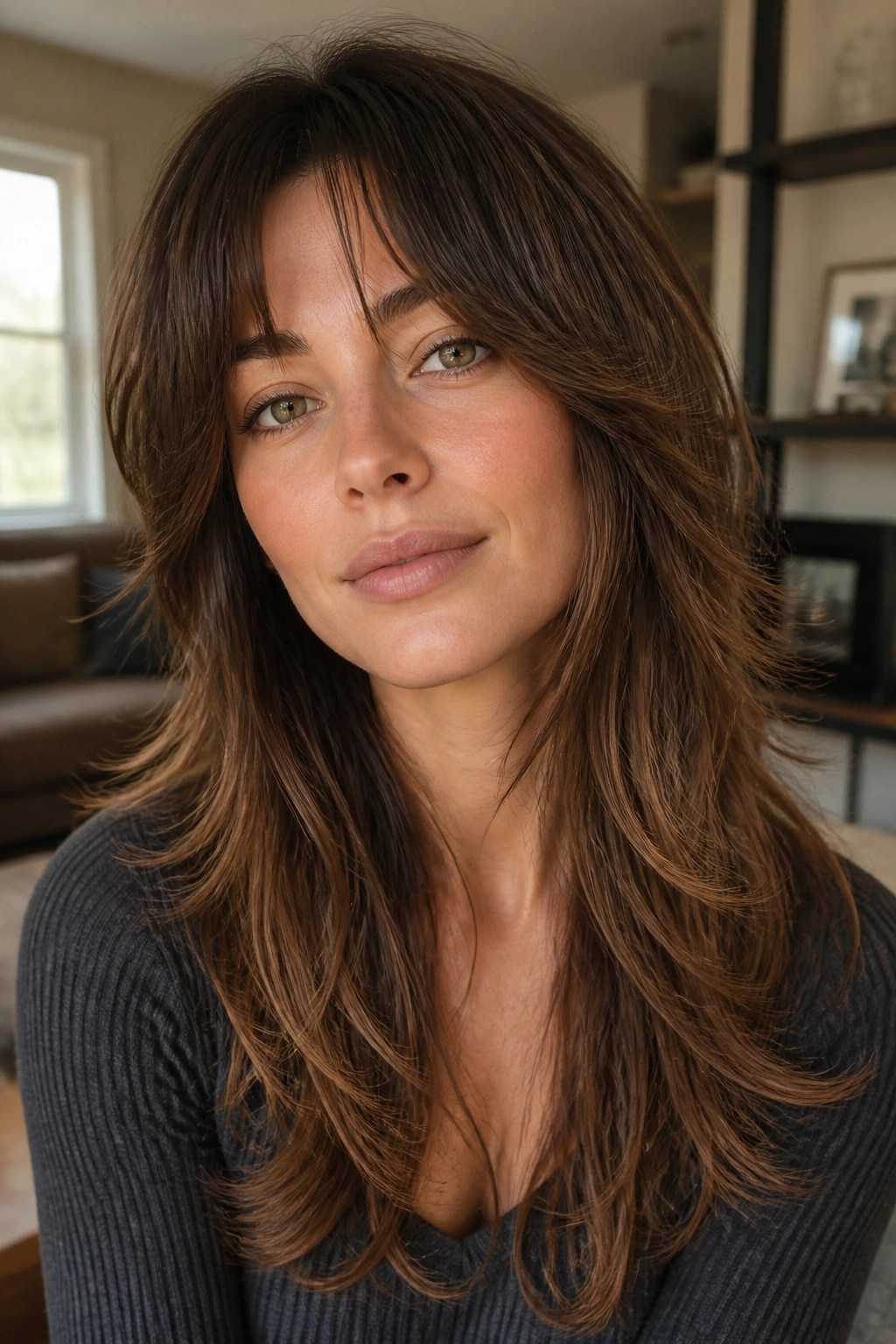
Long hair can still benefit from a shag, but only if the layers are placed with a light touch. Feathered ends keep the lower half from looking stringy, and they let the hair move instead of hanging there like a curtain.
This is a good option if you like length and don’t want to sacrifice it. The face frame should do most of the work. The rest can stay softer and longer, which helps the hair keep some mass through the sides.
If you blow-dry, use a round brush just on the front pieces and let the back fall more naturally. That keeps the style from getting overworked. A tiny bit of leave-in on the ends is enough. Too much product will make the whole length look tired.
9. Bottleneck-Bang Shag
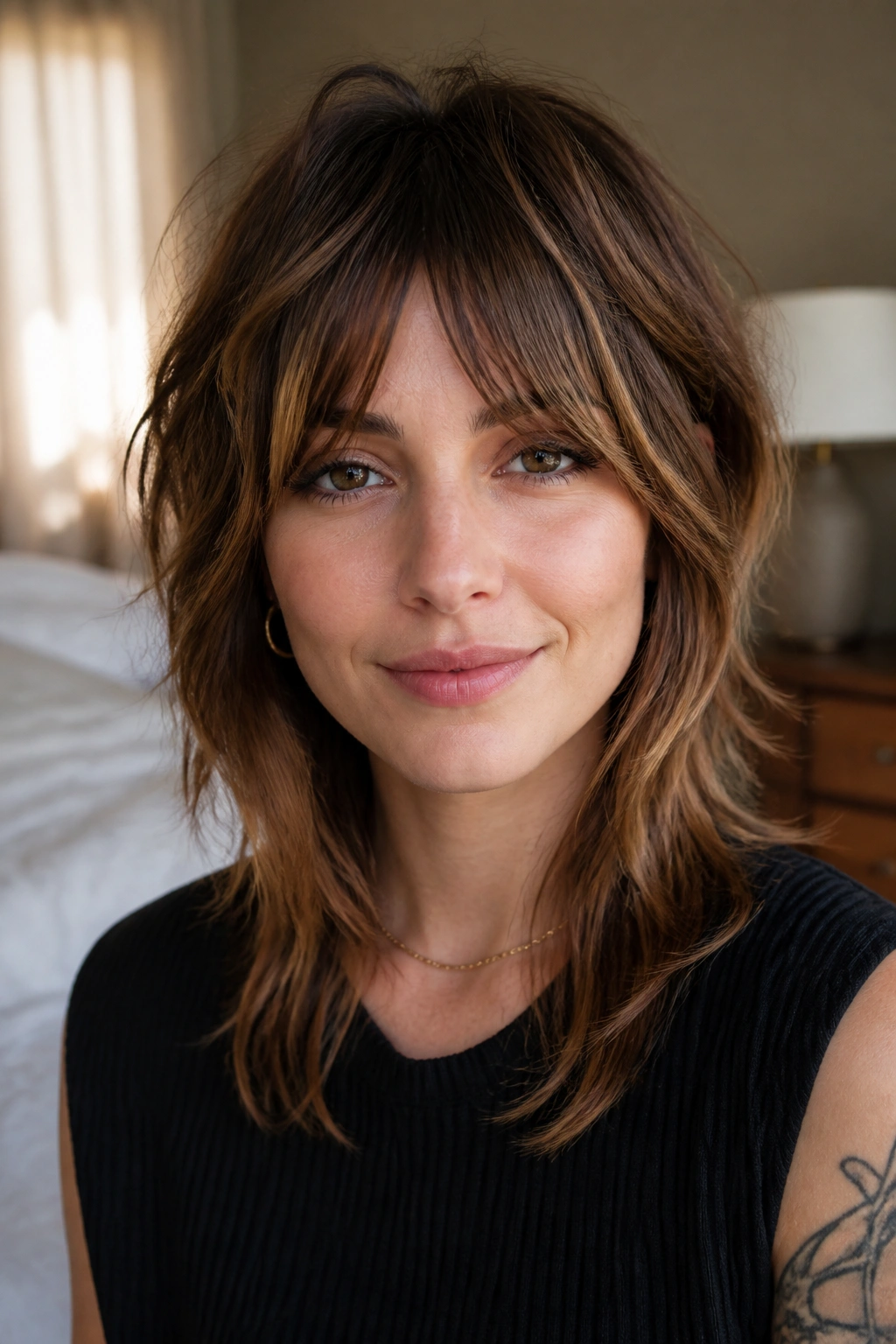
Bottleneck bangs look wider at the sides and narrower in the middle, which gives fine hair a nice trick. The front feels styled, but not stiff. That little shape keeps the forehead from looking too open when the rest of the hair is light.
The Science Behind It
The narrow center lets the bangs sit close to the face without eating up too much density. The wider edges blend into the cheekbones and soften the transition into the rest of the cut. That is why this fringe works better than a blunt heavy bang on fragile strands.
How to Wear It
Dry the bangs first. Always. Shape them with a small round brush, then separate the pieces with your fingers once they cool. If the fringe starts to split in a weird way, don’t fight it with more spray. A touch of dry shampoo at the root usually does more than a sticky finishing mist.
10. Side-Swept Fringe Shag
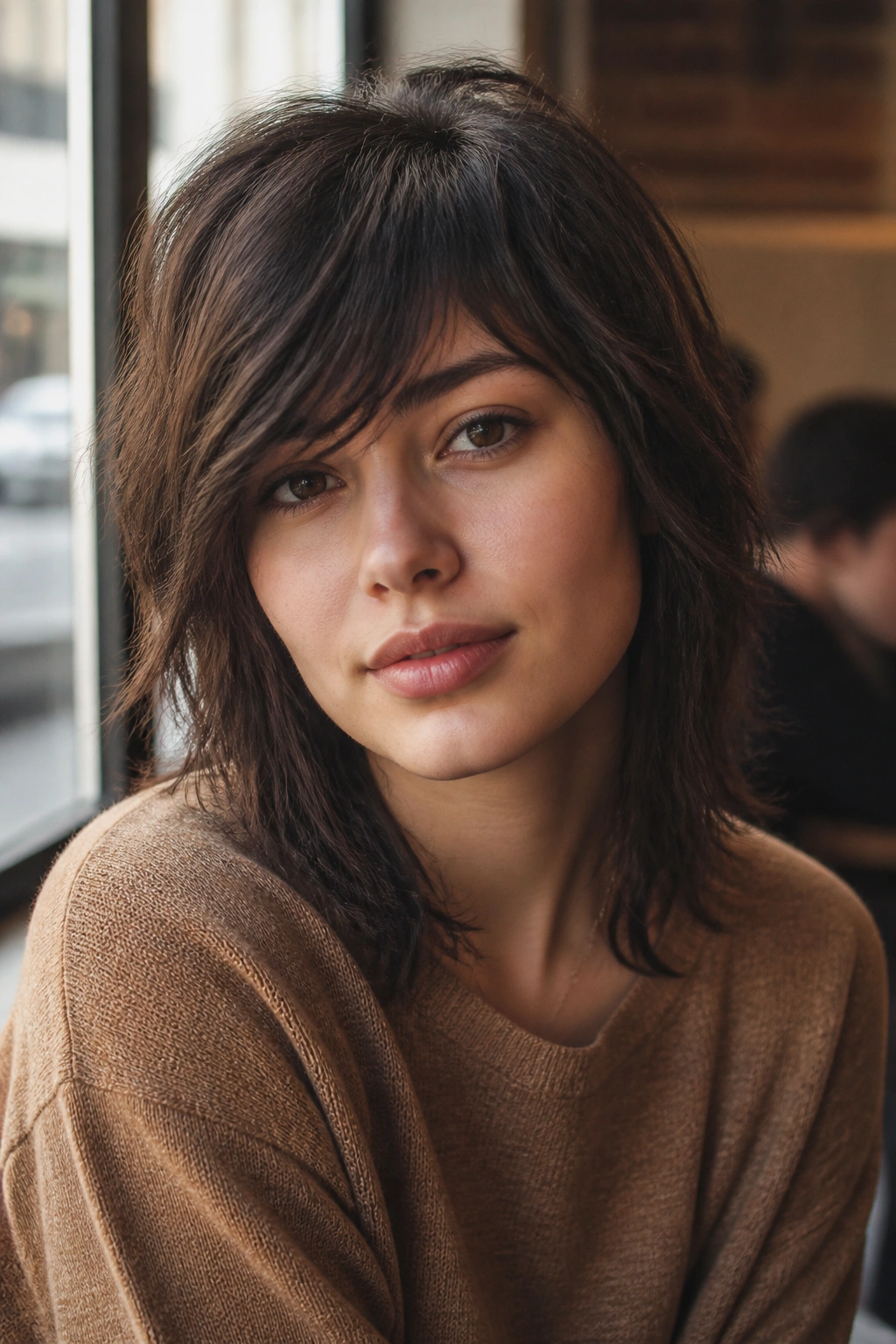
A side-swept fringe gives fine hair a quick boost because it creates a diagonal line across the face. That diagonal makes the top feel fuller, especially if your part tends to collapse to one side anyway.
This cut works best when the fringe starts with a little lift at the root and falls across the forehead in a soft sweep. The key is not to overcut the bang area. If the fringe gets too short, it pops up and loses the sweep. If it’s too heavy, it drags the rest of the cut down.
Use a deep side part and blow-dry the front in the opposite direction first. Then let it settle back. That little move gives the roots a bit of memory.
11. Pixie-Length Shag
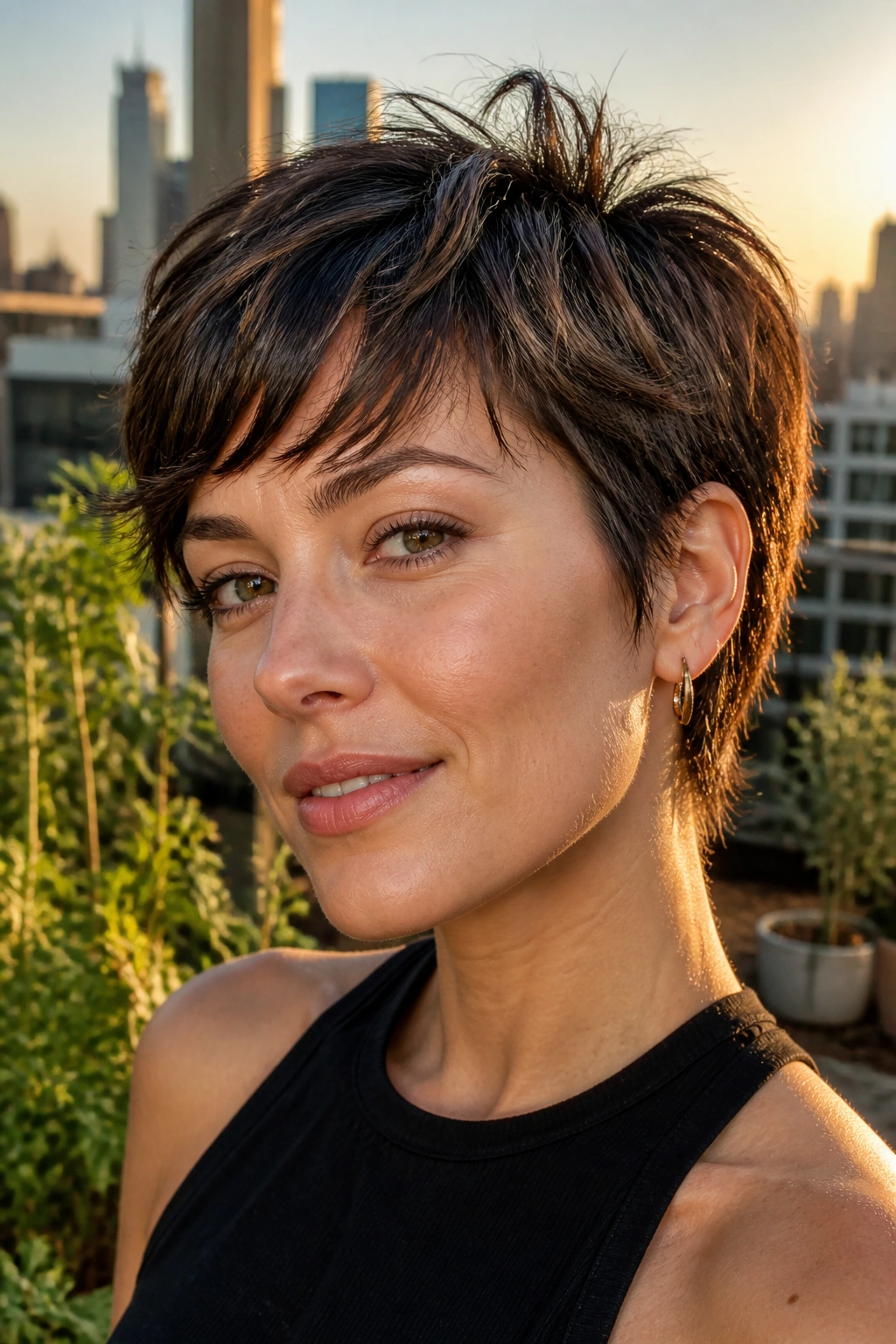
Short hair can absolutely look full on fine strands, and a pixie-length shag is proof. The cut keeps the top a little longer, the sides cleaner, and the texture broken up enough to avoid that flat, shell-like look some short cuts get.
This style is all about movement. You want pieces, not a blur. A tiny dab of paste through the crown and fringe can separate the layers without making them stiff. I’d avoid heavy gel here. It tends to glue the hair into place and makes thin strands look smaller.
What to Watch For
If the stylist takes too much off the top, the shape turns spiky fast. The better version keeps softness through the crown and a little fullness right at the hairline. That way, the cut looks intentional even when you run your hands through it.
12. Center-Part Shag With Loose Waves
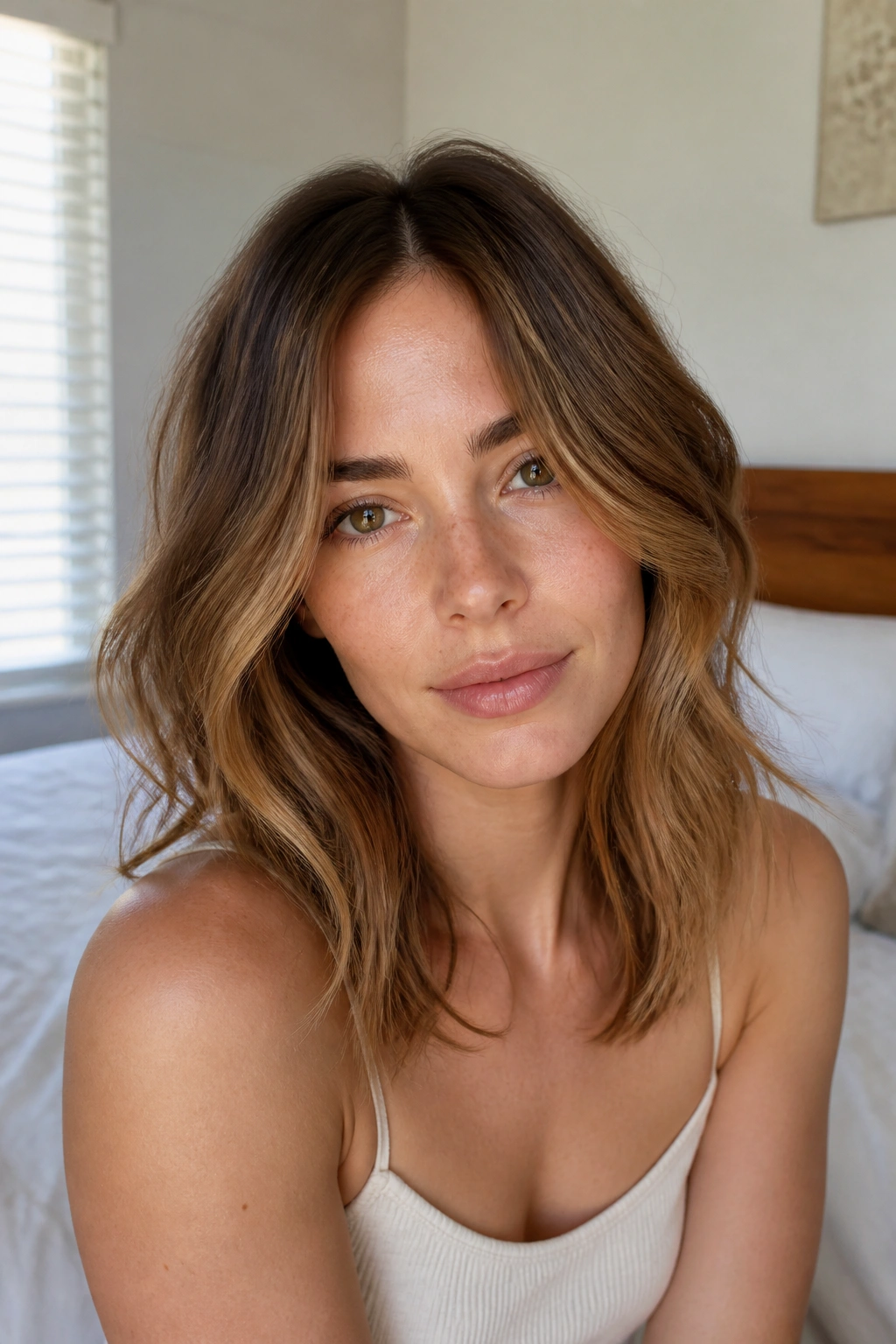
A center part can make fine hair look balanced, but only if the waves are soft enough to create width. This cut gives you symmetry without feeling flat in the middle.
The loose wave pattern matters more than people think. Tight bends can make thin hair look overdone, while one or two soft waves open up the sides of the face and make the haircut feel bigger. The shag layers help the wave hold its shape instead of dropping straight.
What Makes It Different
Unlike a side-parted shag, this one spreads the volume evenly on both sides. That’s useful if one side of your hair always looks fuller than the other. It also keeps the face frame easy to wear with glasses, because the front pieces can sit behind the frames without puffing out.
13. Face-Framing Shag With Cheekbone Pieces
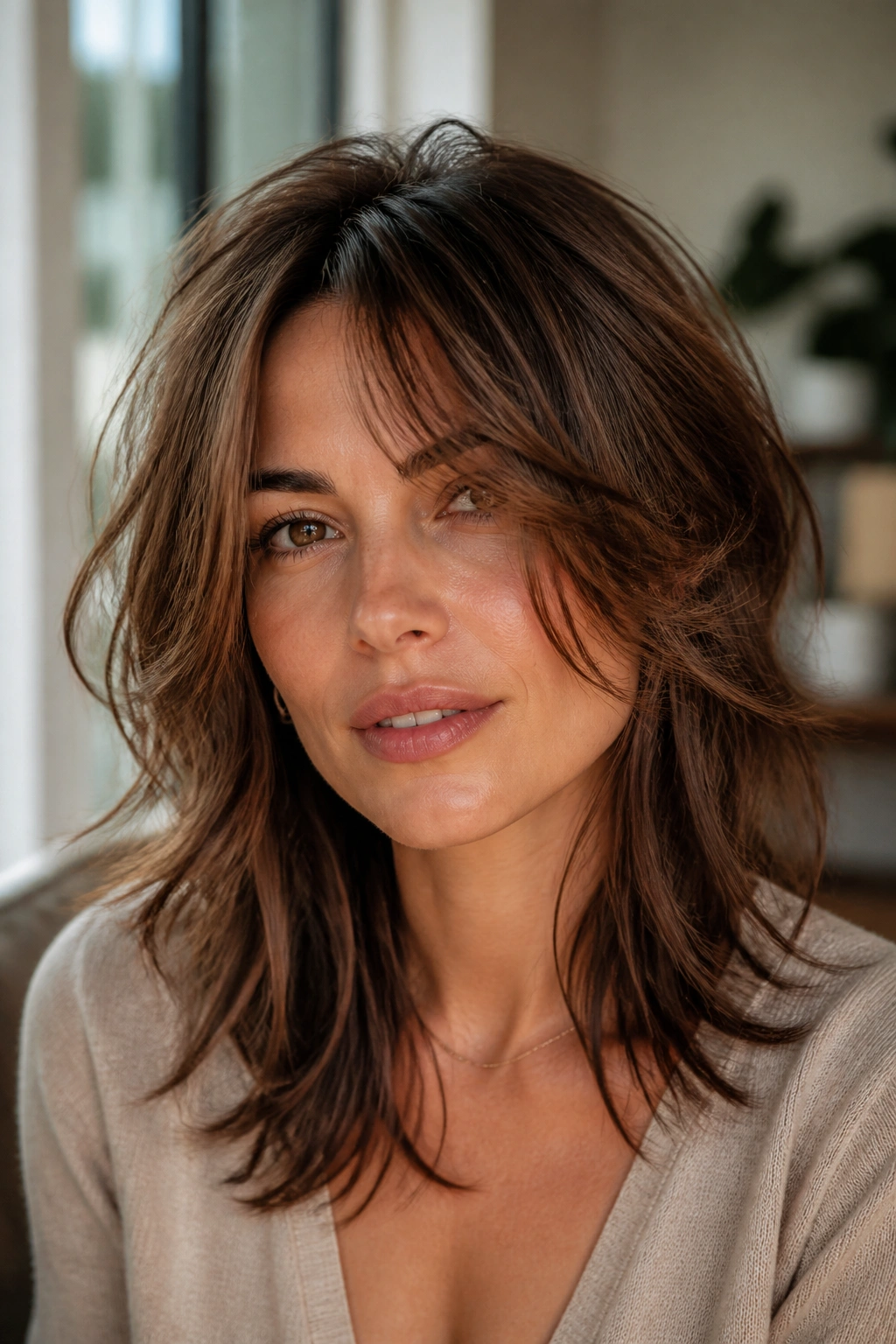
This is one of those cuts that sounds subtle and ends up doing a lot. The cheekbone pieces pull the eye outward, which makes the hair feel wider where it counts. Fine hair needs that kind of help.
The rest of the cut can stay soft and medium length. The face frame does the heavy lifting. If the front pieces are too short, they can flick out in a way that looks unfinished. Keep them long enough to graze the cheekbones and soften toward the jaw.
How to Ask for It
Tell your stylist you want the shortest pieces to start around the cheekbone, not the temple. That small change makes the haircut feel fuller because the hair is still holding some length around the front. Finish with a round brush or a quick bend from a flat iron, then separate the pieces with your fingers.
14. Layer-Light Shag For Straight Fine Hair
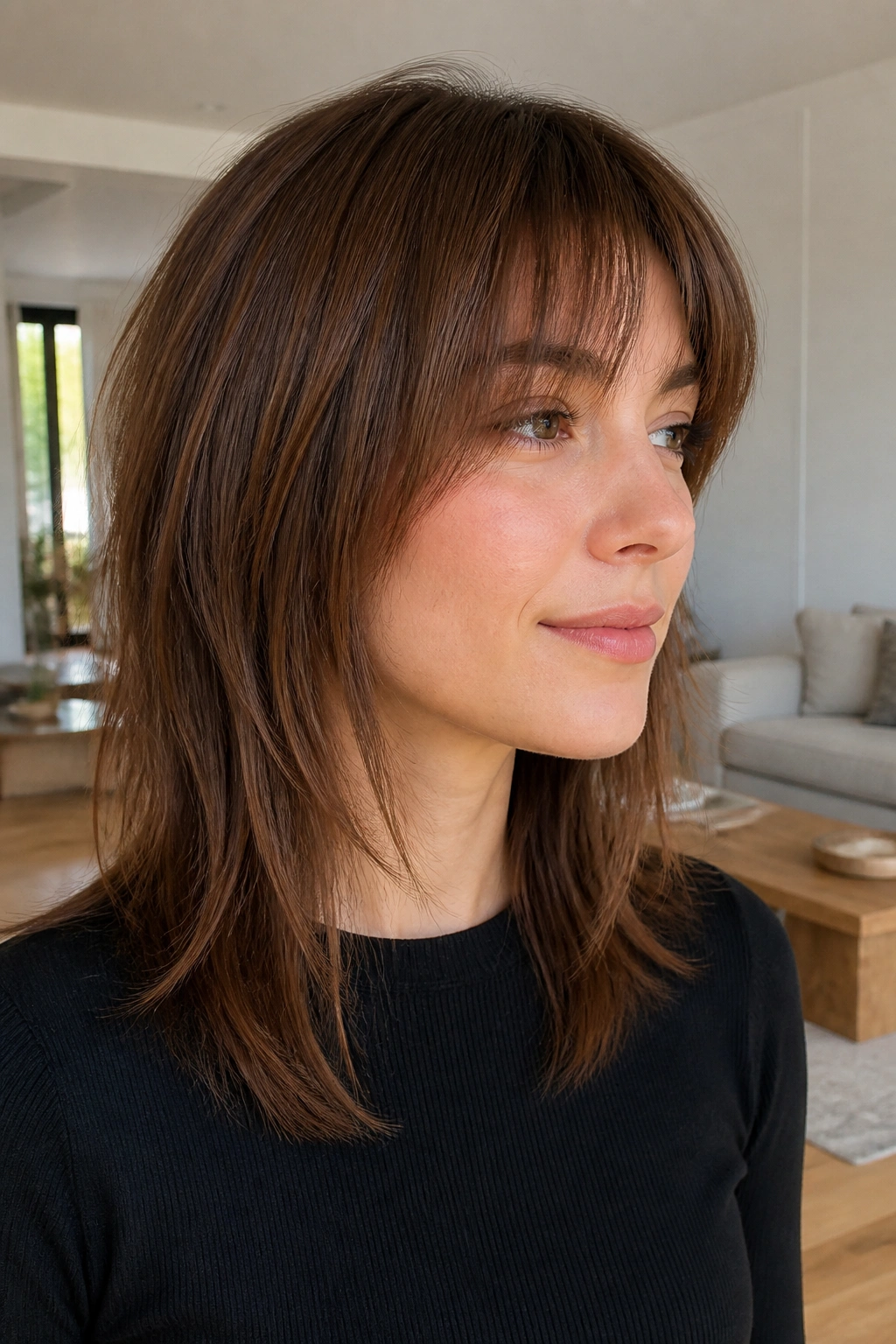
Straight fine hair can get stringy fast, so this is the version that keeps the layers light and the shape honest. The goal is not to carve in a dozen short pieces. The goal is to make the cut move without making the ends look thin.
This shag works best when the bottom line still has some bluntness. That gives the style a little weight. The internal layers should be soft and carefully placed, mostly around the crown and front. Too much slicing through the sides and the whole thing starts to disappear.
If your hair is stubbornly straight, use a root lift spray and a large round brush just at the top. You don’t need much else. The simplicity is the point.
15. Bedhead Shag With Piecey Bangs
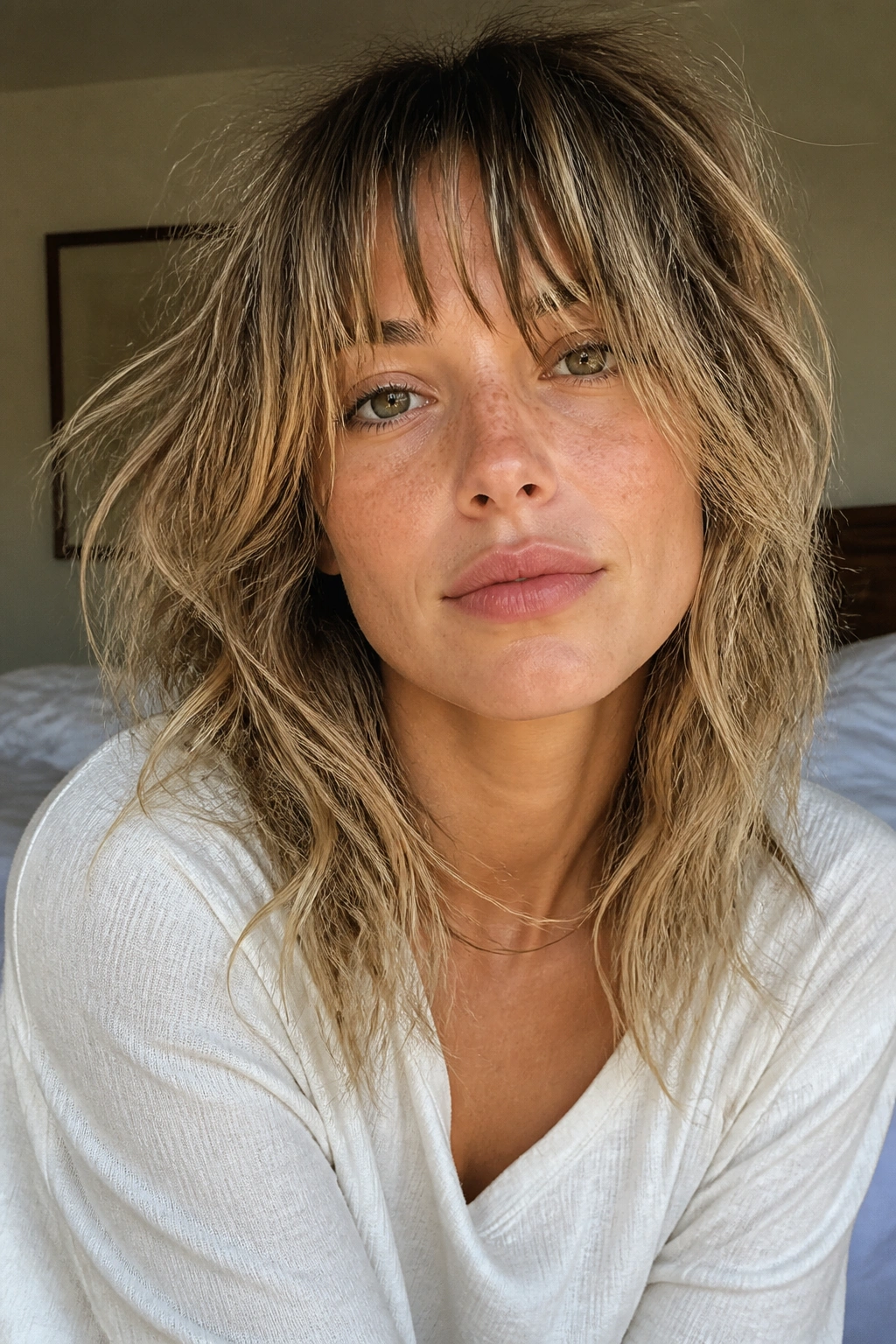
Bedhead hair sounds careless, but a good bedhead shag is planned down to the last snip. The texture is broken up on purpose so the hair looks lived-in, not finished to death.
The piecey bangs matter here. They should separate into small sections, not sit as one dense strip. A pea-size amount of lightweight cream or paste is enough to define the front without clumping the strands together. More than that starts to work against you.
How to Get the Most From It
Blow-dry the roots first, then pinch the bangs into little pieces with your fingers. Let the ends stay a little wild. That contrast is what gives the cut its shape. If you want more hold, mist a tiny bit of texture spray at arm’s length and stop there.
16. Flipped-End Shag
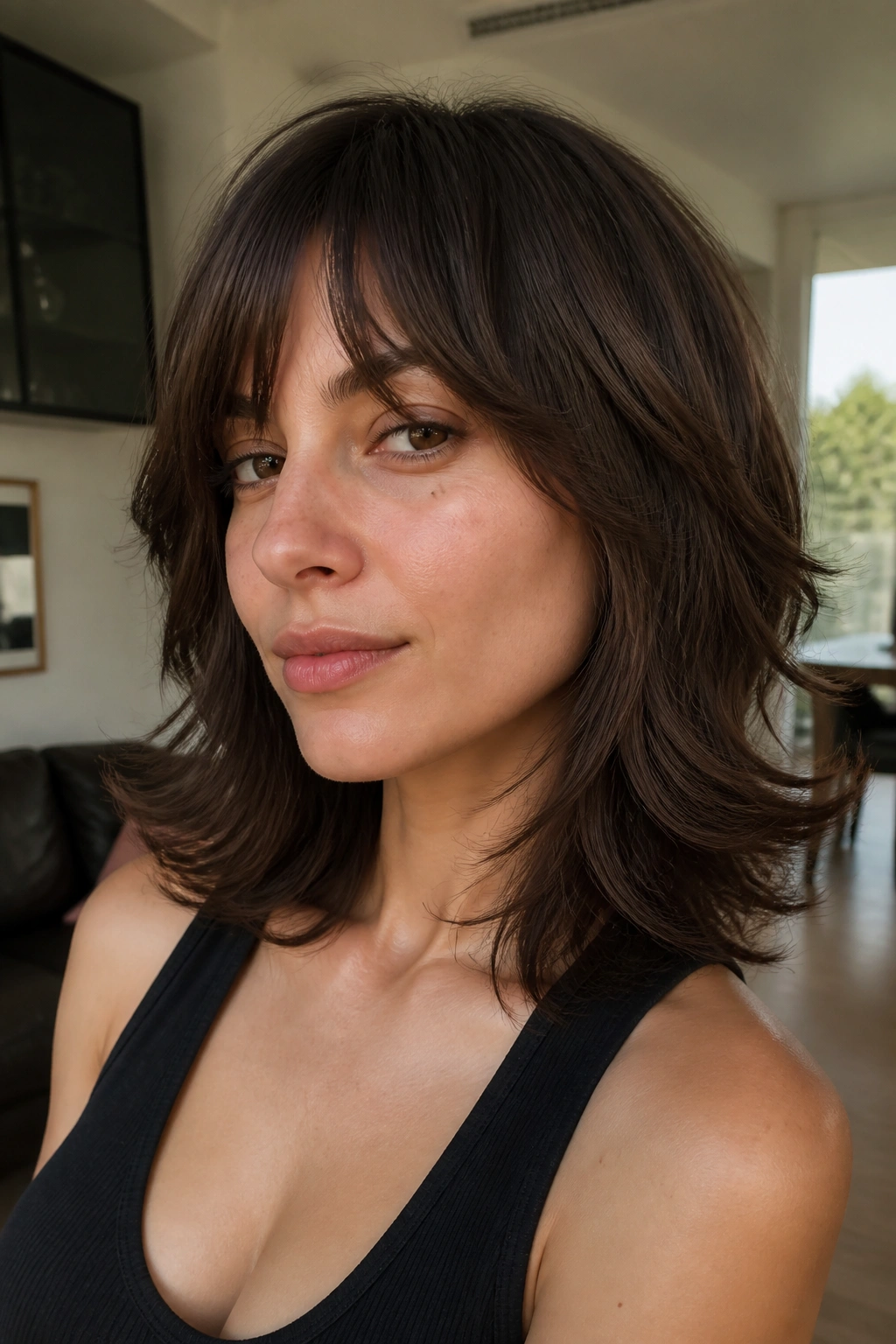
Flipped ends give fine hair width, which is a nice change from the usual downward slide. The shape opens up at the bottom and makes the haircut look fuller across the shoulders.
A lot of this comes down to direction. If your hair naturally turns under, this cut teaches the ends to move out instead. A round brush, a small flat iron bend, or even the old quick-flick with a brush and blow-dryer can do it.
Quick Details
- Length works best at the collarbone or just below.
- Ends should stay soft, not curled tight.
- A light heat protectant is enough.
- The cut should keep some weight at the back so the flip doesn’t get stringy.
The effect is simple, but it works. Hair looks like it has more width, which is half the battle with fine strands.
17. Mullet-Softened Shag
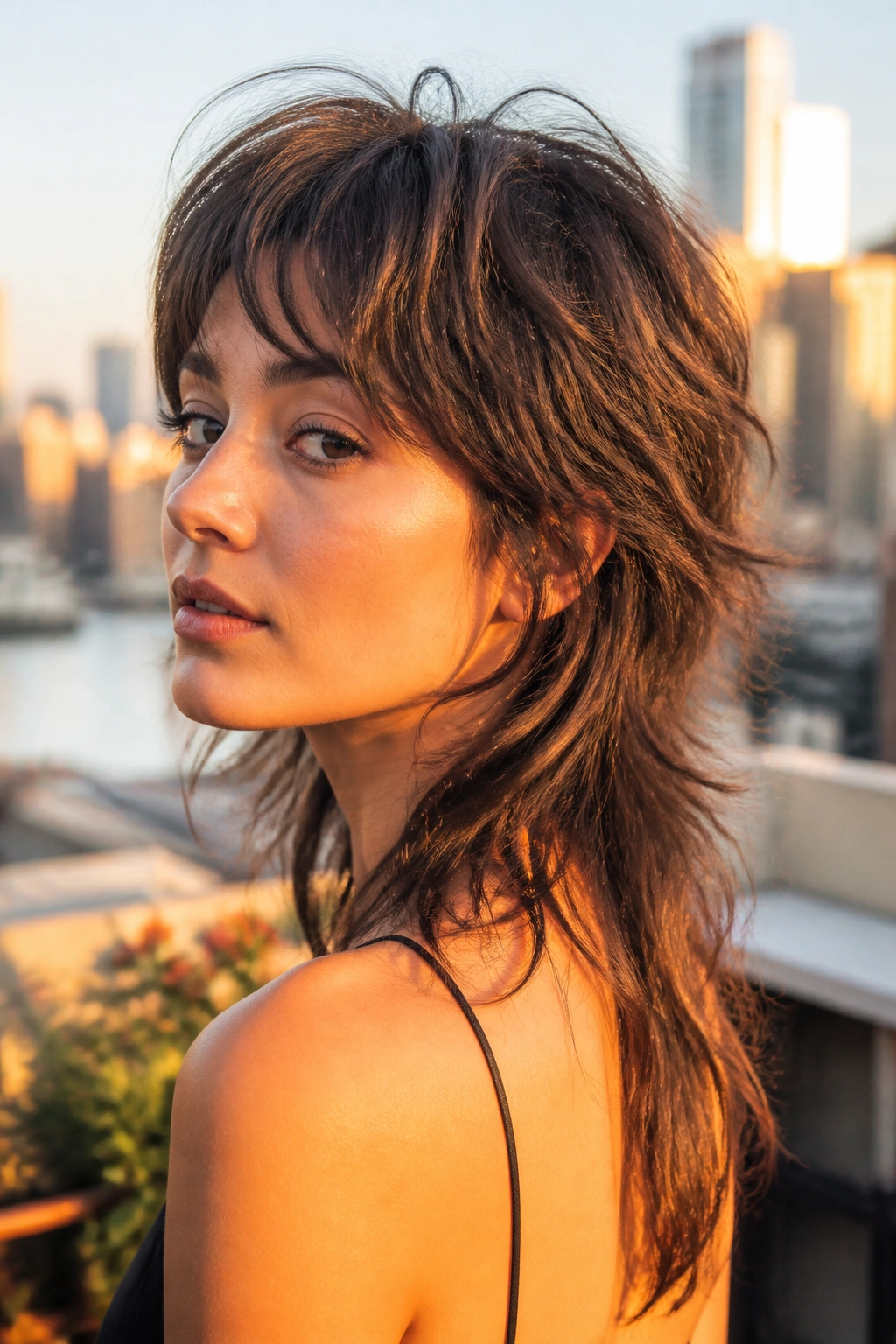
A soft mullet shag gives you shape without going full sharp-edged. The front and crown stay airy, while the back keeps a little extra length. That contrast can make fine hair look fuller because the eye sees more structure.
This is not the cut to ask for if you want quiet. It has personality. Still, the softened version is wearable when the transitions are blended well. The back should flow, not hang like a tail. The front should frame the face, not fight it.
The nice thing here is the shape survives air-drying well. A little scrunching is enough. If you like hair with some edge and movement, this one is fun without being a costume.
18. Razorless Shag For Fragile Ends
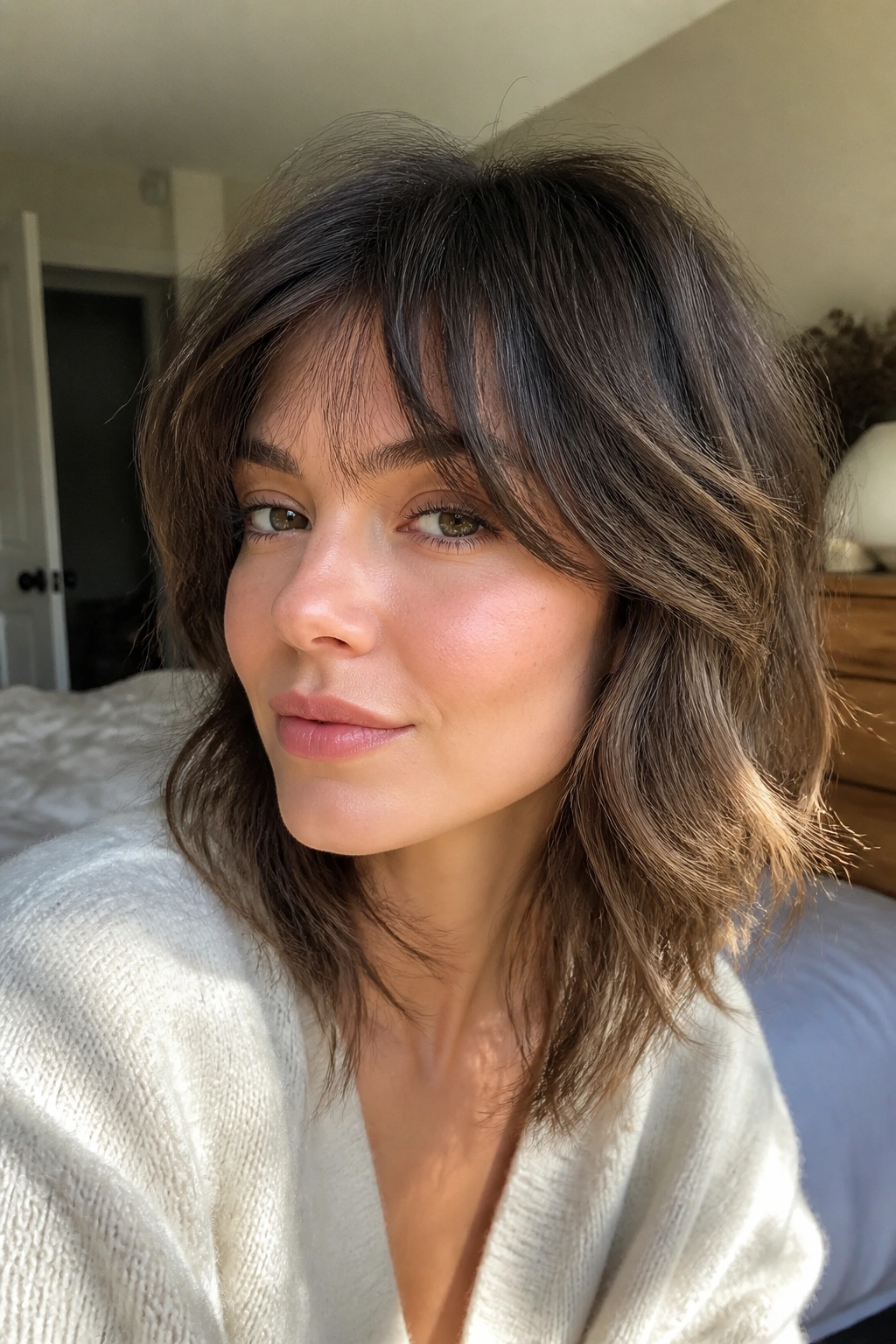
If your ends split the minute a razor touches them, skip the razor. Seriously. A razorless shag relies on scissors, point cutting, and careful layering, which is often a better choice for brittle fine hair.
What Makes It Different
The texture comes from the cut line itself, not from shaving the strands thinner. That means the ends can still look full while the shape gets movement. It’s especially useful if your hair feels soft but delicate, or if past layering left the ends looking fuzzy.
Who It’s Best For
- Hair that frays easily.
- Hair that already has a lot of breakage.
- Hair that looks thinner after texturizing.
- Anyone who wants movement without a wispy finish.
Ask for soft layering around the crown and a clean, healthy perimeter. That combination keeps the shag shape without chewing up the bottom.
19. Tousled Shag With Crown Lift
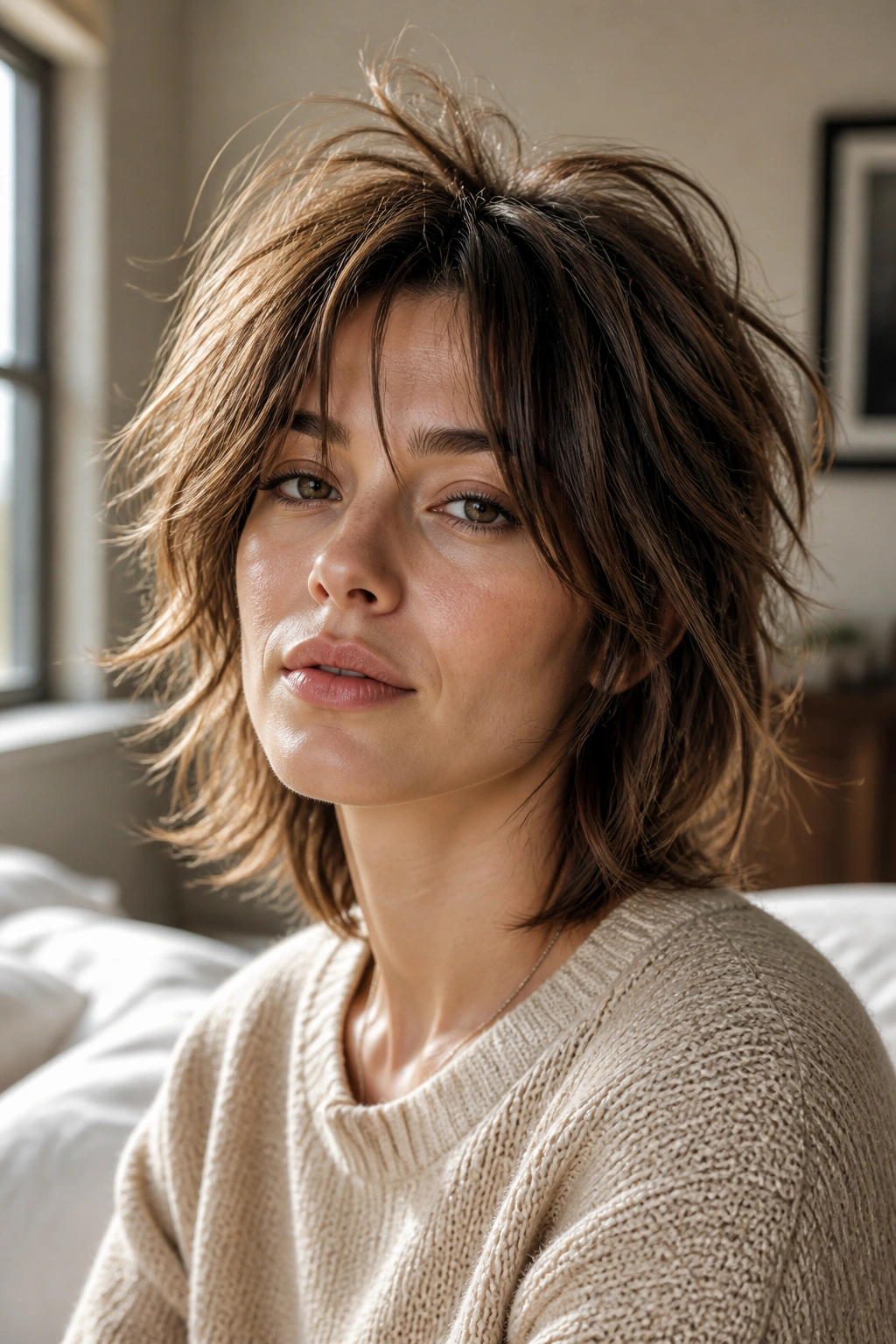
A little lift at the crown can change everything. It makes fine hair look like it has more body from the scalp down, which is where the problem usually starts.
This cut works because the layers around the top are short enough to stand up a bit, but not so short that they stick out. The rest of the hair stays loose and tousled. A root clip while the hair cools can help the top keep its shape, and that’s one of those boring little tricks that pays off more than fancy products.
Why It Stands Out
The crown gets the attention, not the ends. That means the cut looks fuller from the front and side, even when the hair is clean and light. If your hair always lies flat in photos, this is one of the better fixes.
20. Mid-Length Shag With Soft U-Shape

Unlike a blunt mid-length cut, a soft U-shape keeps the sides a touch shorter than the back. That curve helps fine hair look less boxy and gives the length a more fluid outline.
The shag layers should stay gentle here. You want enough movement to keep the cut from feeling heavy, but not so much that the perimeter loses its strength. The U-shape gives you the structure; the layers supply the motion. That combination is hard to beat if you like shoulder-adjacent length.
It also pairs well with loose waves. A quick wrap around a large barrel iron or a bend made with a flat iron is enough. Keep the ends soft. Sharp curls can make the cut feel smaller than it is.
21. Air-Dried Shag With Scrunched Texture

If you’d rather let your hair dry on its own, this is the shag to look at. It should have enough texture built into the cut that scrunching does most of the work for you.
A little leave-in conditioner, a small dollop of mousse, and a gentle squeeze with a microfiber towel can be enough. Don’t rub the hair hard. Fine strands rough up fast, and once they do, they start to frizz instead of clump into soft pieces. A cotton T-shirt works fine if you don’t own a towel made for hair.
How to Get the Most From It
Apply product while the hair is damp, not soaking. Then scrunch from the ends up toward the roots and leave it alone for a while. Touching it too much while it dries breaks the wave pattern. That’s the whole game here: set the shape, then stop fussing with it.
22. Shag With Full Fringe and Thin Ends
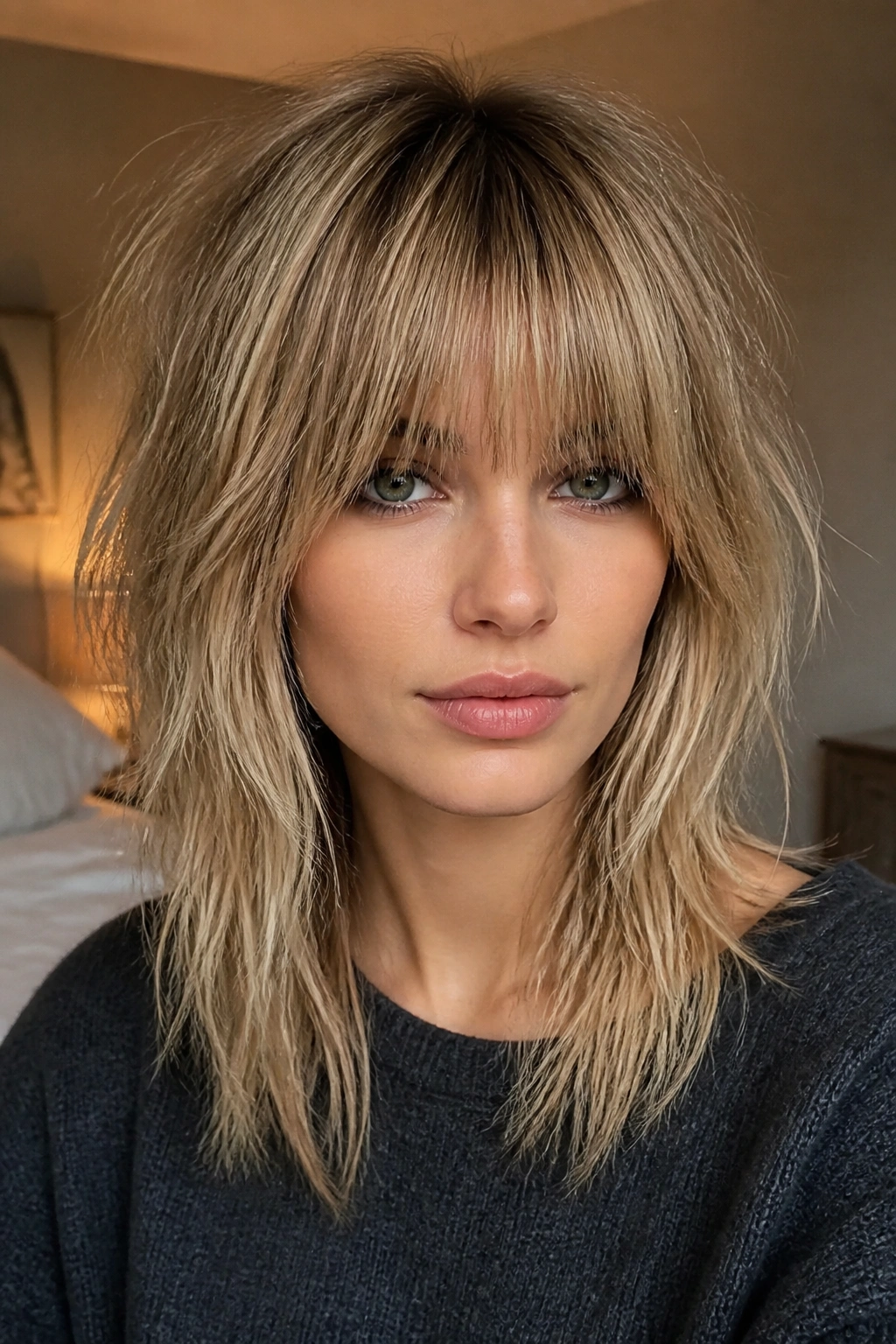
A full fringe can work on fine hair, but only if the rest of the cut stays softer and lighter. That contrast keeps the bangs from overwhelming the face.
This cut feels bolder than a wispy fringe shag. The bangs need enough density to sit like a real fringe, not a see-through strip. The ends, though, should stay broken up and airy so the lower half does not compete with the front. That balance keeps the style wearable.
What to Watch For
- The fringe should be blunt enough to hold shape.
- The sides should blend gradually into the face frame.
- The ends should stay soft, not feathered to nothing.
- Heavy styling cream will make the fringe collapse.
If your forehead is on the smaller side, ask for a slightly longer fringe. It’s easier to style and far less fussy.
23. Shoulder-Grazing Shag With Side Part
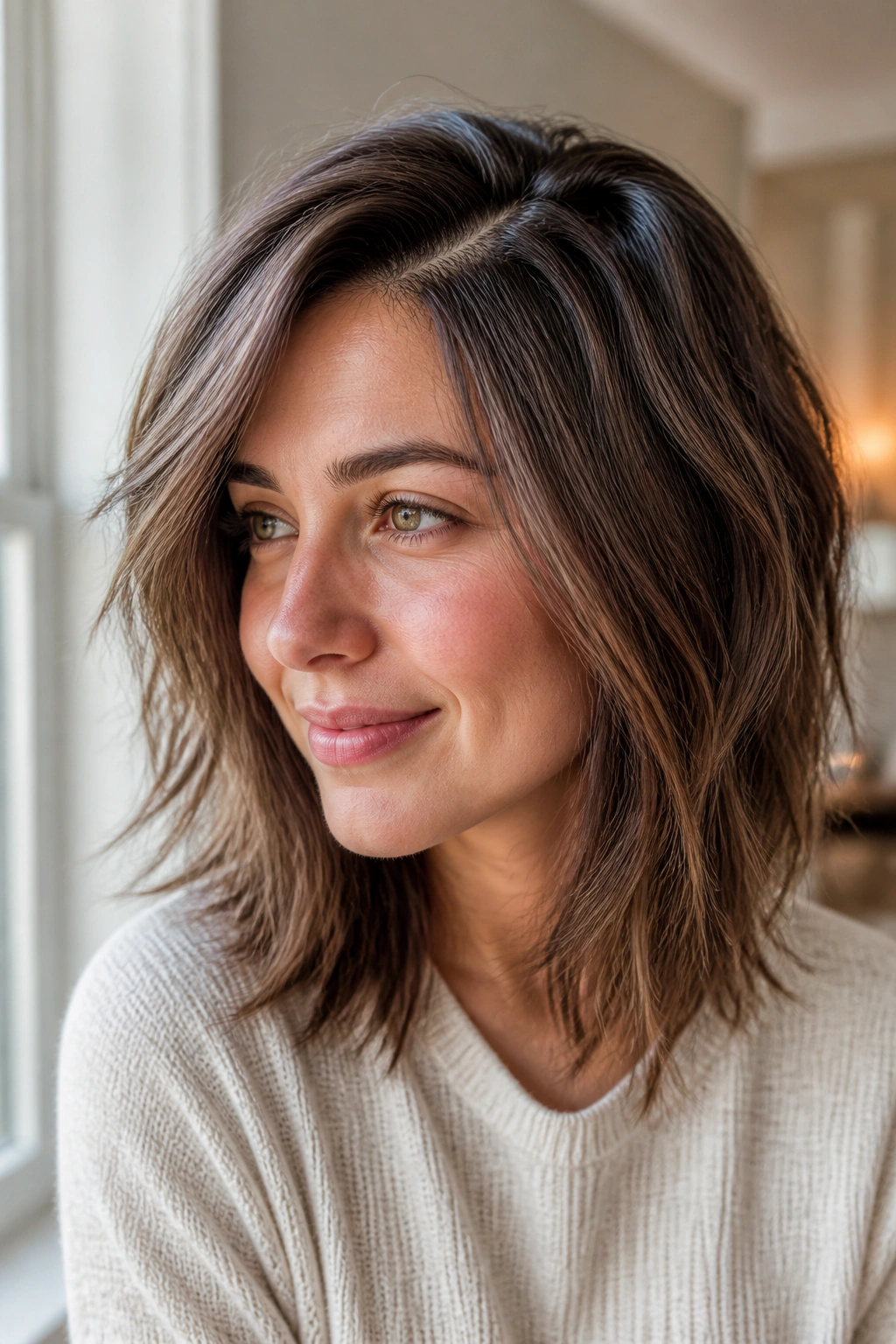
A side part can be a cheat code for fine hair. It shifts weight to one side, lifts the roots on the other, and creates the look of more volume at the top where hair usually goes flat.
The shoulder-grazing length keeps the cut easy to wear, while the shag layers stop it from hanging in one straight sheet. That matters if your hair is straight or only barely wavy. The side part gives the crown a little drama without requiring lots of product.
This one is a nice daily cut because it doesn’t need perfect styling. A quick blow-dry at the roots and a loose bend through the front is enough. If one side always falls first, this is a good way to work with that instead of fighting it.
24. Overgrown Shag With Grown-Out Layers

Some shags look best when they are not razor sharp. The overgrown version keeps the layers blended, which makes it a solid pick if you dislike constant trims.
The trick is to ask for a shape that still has purpose as it grows. The shortest pieces shouldn’t be so short that they turn into little spikes a few weeks later. Instead, the cut should keep longer transitions through the sides and back. That way the style softens rather than falling apart.
What Makes It Different
It is less about instant drama and more about longevity. The hair still has movement, but the lines are easier to live with as they grow out. If you want a shag that ages well between salon visits, this is one of the safest bets.
25. Low-Maintenance Shag That Grows Out Cleanly
Among messy shag haircuts for fine hair, this is the one I’d point to for anyone who wants the least fuss. It keeps the shape soft, the layers long enough to blend, and the ends full enough to avoid that tired, stringy look.
The best version doesn’t try to do too much. It gives you movement around the face, a little lift at the crown, and a perimeter that still feels strong when the haircut starts to grow. That’s what makes it useful. The style looks intentional on day one and still makes sense weeks later.
If you ask your stylist for only one thing, ask for movement without over-thinning. That line matters. A shag for fine hair should make the strands feel more alive, not more fragile.
Final Thoughts
The shags that work best on fine hair all share the same quiet trick: they keep enough structure to hold the shape while adding just enough break-up to stop the cut from lying flat. That is the sweet spot.
A dramatic chop is not always the answer. Sometimes the smartest move is a softer perimeter, a little lift at the crown, and layers that start lower than you think. Small changes. Big difference.
If you’re heading to the salon, bring a photo that shows both the front and the back, then say what you do not want: too much thinning, too much poof at the crown, and bangs that collapse into your eyes. That conversation matters more than chasing a trendy label.
