



A long shag can do a lot for a round face when the layers are placed with a little restraint. Too high at the cheeks, and the cut starts to puff out sideways; too low, and it can drag the whole shape down.
The sweet spot is usually somewhere between the chin and collarbone, with movement around the jaw and a little lift at the crown. That is why long shag haircuts for round faces keep showing up in salons: they make the face look longer without turning the haircut stiff or helmet-like.
Curtain bangs, bottleneck bangs, side-swept fringe, and feathered ends all have their place, but the real trick is balance. You want softness, not bulk. You want texture, not triangle hair.
And if your last shag felt wide or frizzy, the cut probably needed better placement, not less personality. The styles below each solve a different version of that problem.
1. Long Shag With Curtain Bangs for Round Faces
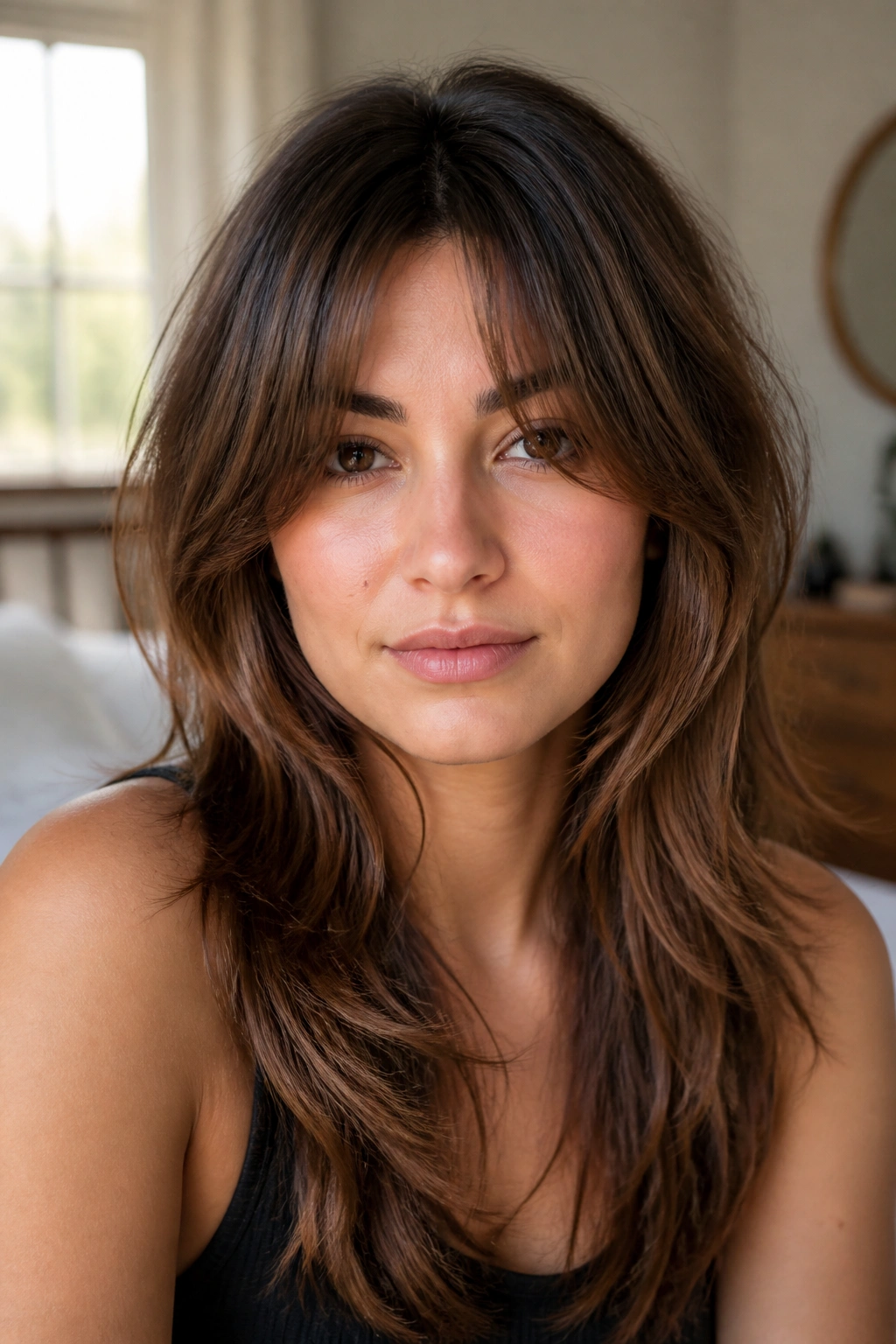
This is the safest long shag for a round face, and I mean that in a good way. The curtain fringe opens at the center, then drops toward the cheekbones, which keeps the face from looking boxed in.
Ask for the shortest front pieces to hit just below the cheekbone, not right at it. That small shift matters more than people think. When the layers begin lower, the eye travels down instead of stopping at the widest part of the face.
A little crown lift helps too. A root-lifting mousse and a 1.25-inch round brush can make the top look taller without making the ends frizzy. Clean, airy, and a touch undone. That’s the sweet spot.
2. Collarbone Shag With Cheekbone-Resting Layers
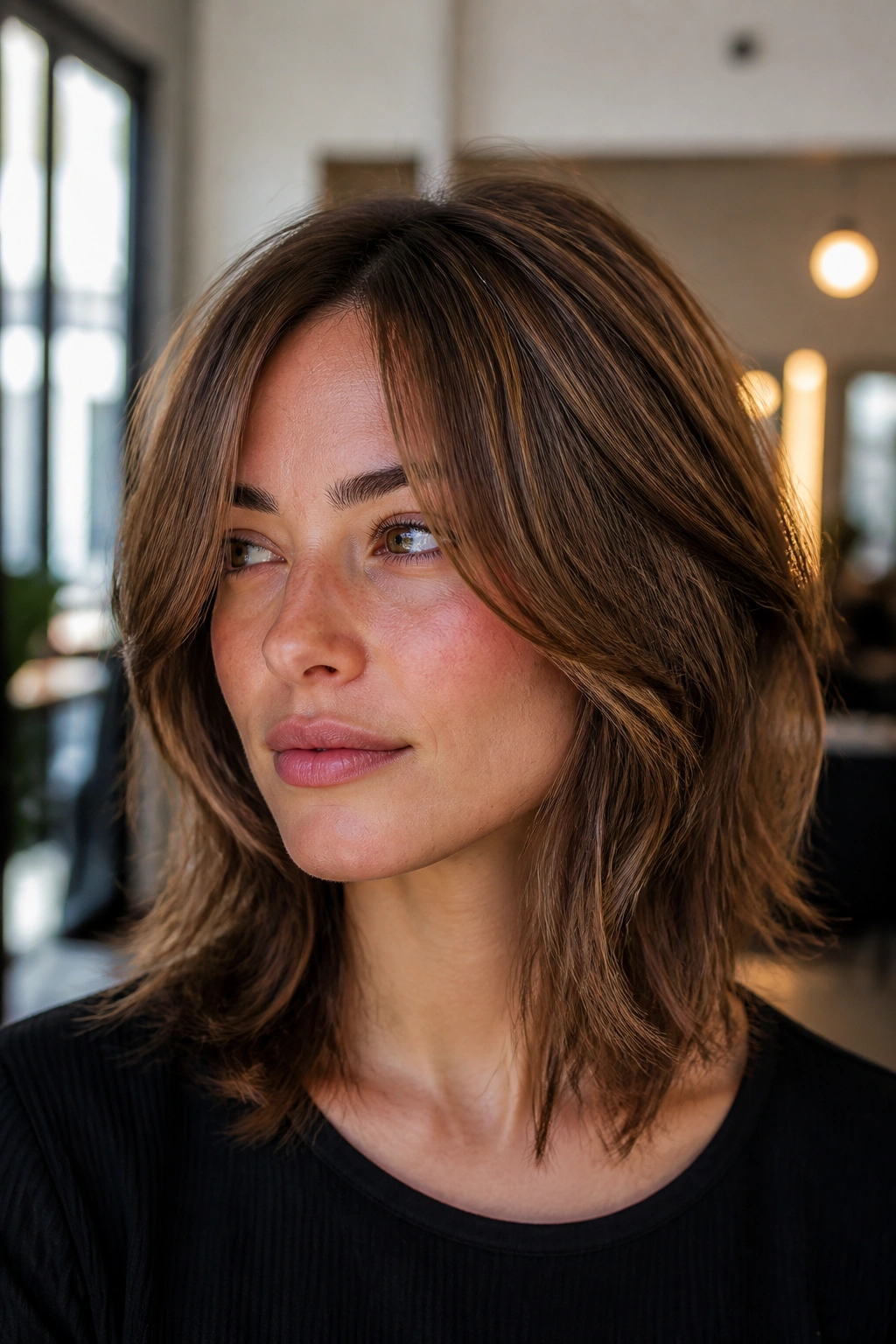
Why does this one work so well? Because it gives the haircut a long vertical line while still keeping movement around the face. The perimeter sits near the collarbone, which adds length, and the front pieces skim past the cheekbones instead of sitting on them.
What to Ask For
- Keep the longest layers grazing the collarbone.
- Let the shortest face frame fall at or just below the chin.
- Ask for soft point cutting instead of heavy thinning.
- Leave enough weight in the ends so the cut does not puff outward.
A center part looks clean here, but an off-center part can soften the look if your face feels very even. Either way, the goal is the same: less width at the cheeks, more line through the length.
3. Razored Shag With Side-Swept Fringe
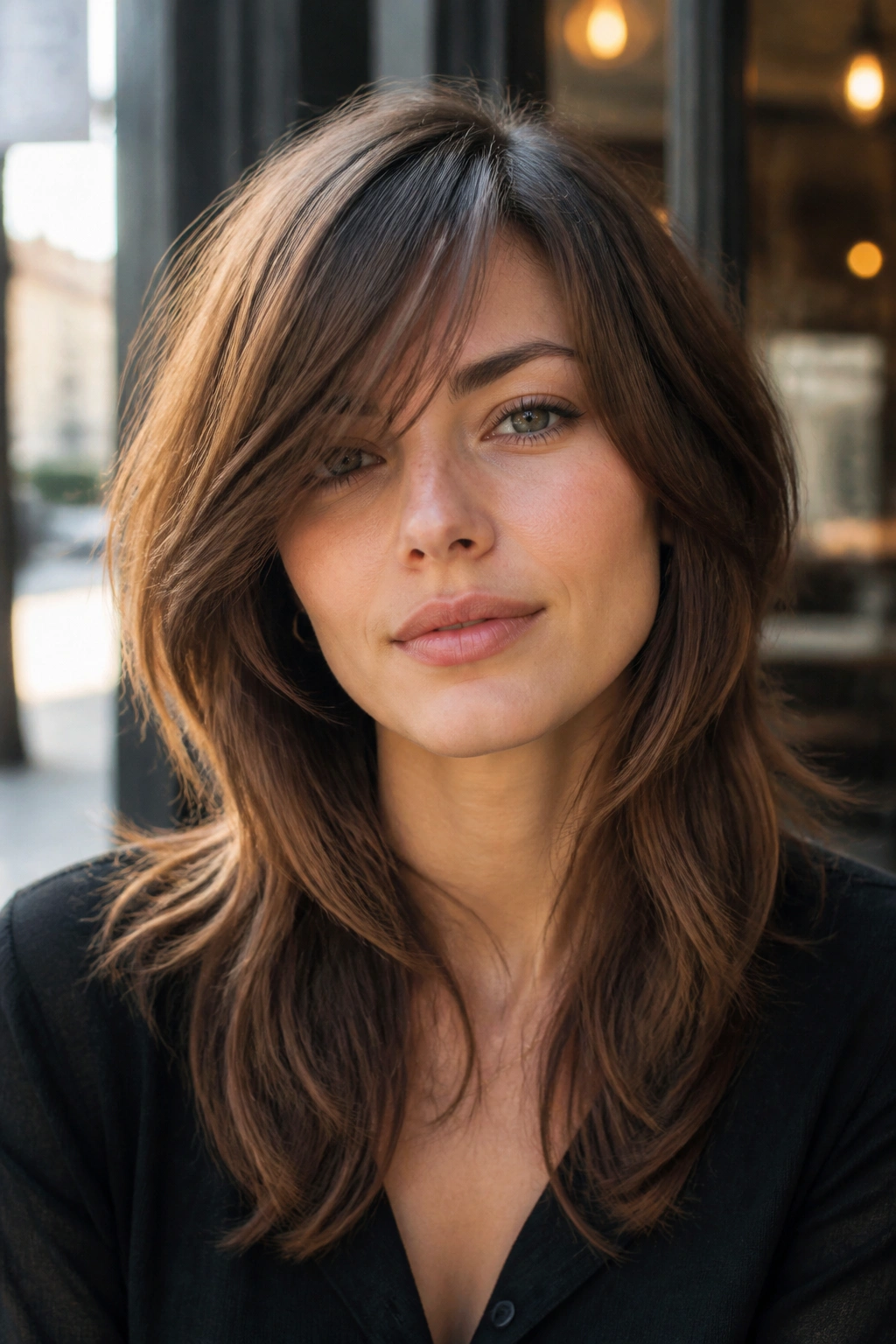
A razor cut gives this shag a little bite, which sounds harsh until you see how it moves. The ends lie flatter, the layers separate more easily, and the whole cut feels lighter around the face.
This one is best if your hair is medium to thick and you like a piecey finish. Fine hair can take razoring too, but too much of it will make the ends look frayed instead of soft. That is the catch. A good stylist will use the razor sparingly and keep the shape long enough to hold together.
Why It Flatters a Round Face
The side-swept fringe breaks up the symmetry right across the forehead, which makes the face look a little longer. Keep the sweep long enough to tuck behind one ear, and you get movement without the triangle effect.
4. Soft Wolf Shag With Airy Crown Volume
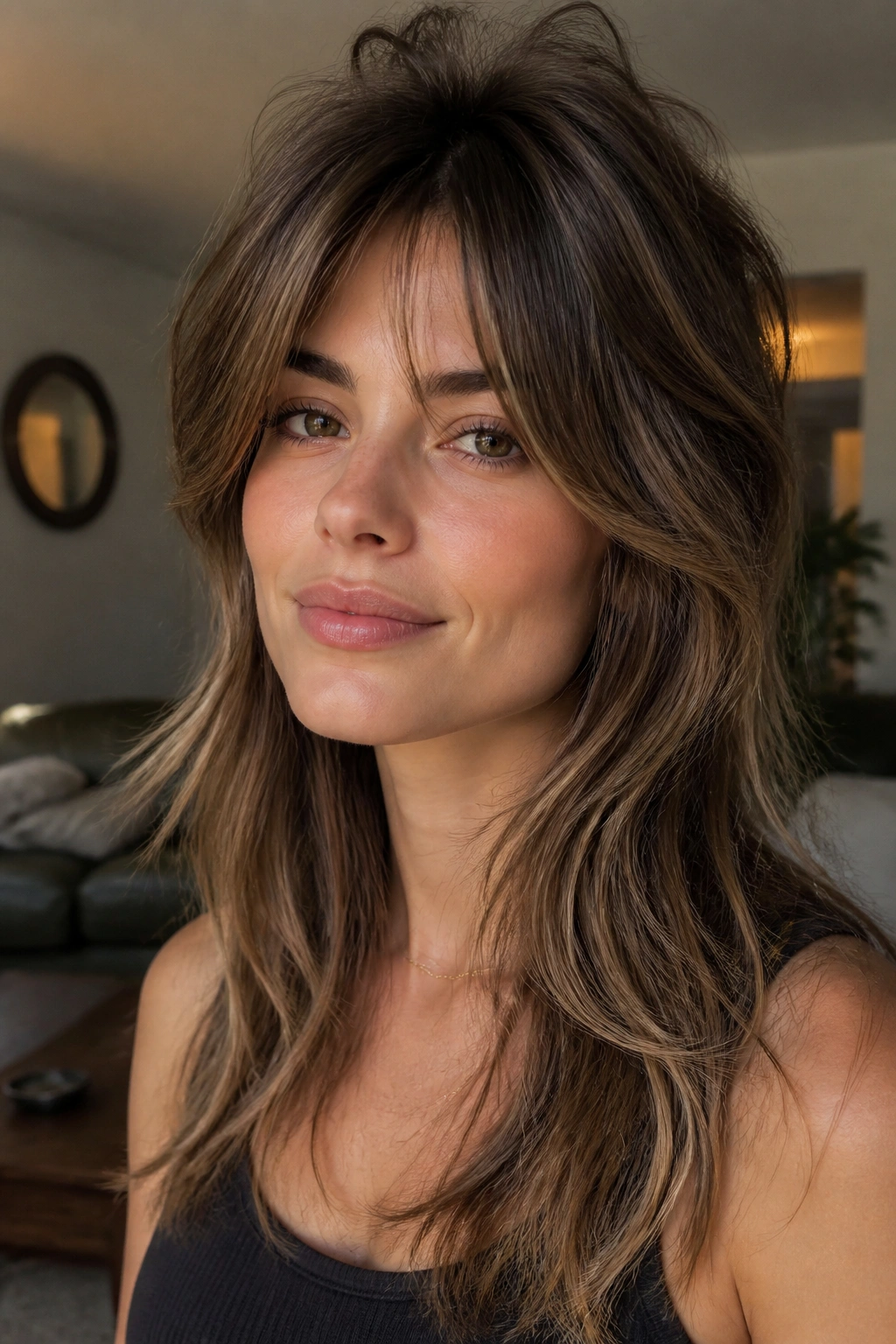
The wolf cut gets a bad reputation when it is too short and too choppy. The softer version, worn long, can be excellent on a round face because it builds height at the crown and keeps the front pieces below the widest point of the cheeks.
The trick is restraint. You want the attitude of a wolf shag, not the full-on mullet drama. Long front layers, loose crown texture, and a back that still feels connected to the rest of the cut. That keeps the look modern instead of costume-y.
If your hair naturally has bend or wave, this style almost styles itself. A little volumizing spray at the roots, then a rough dry with your fingers, is usually enough. The shape should look lived in, not overworked.
5. Feathered Shag With Invisible Layers
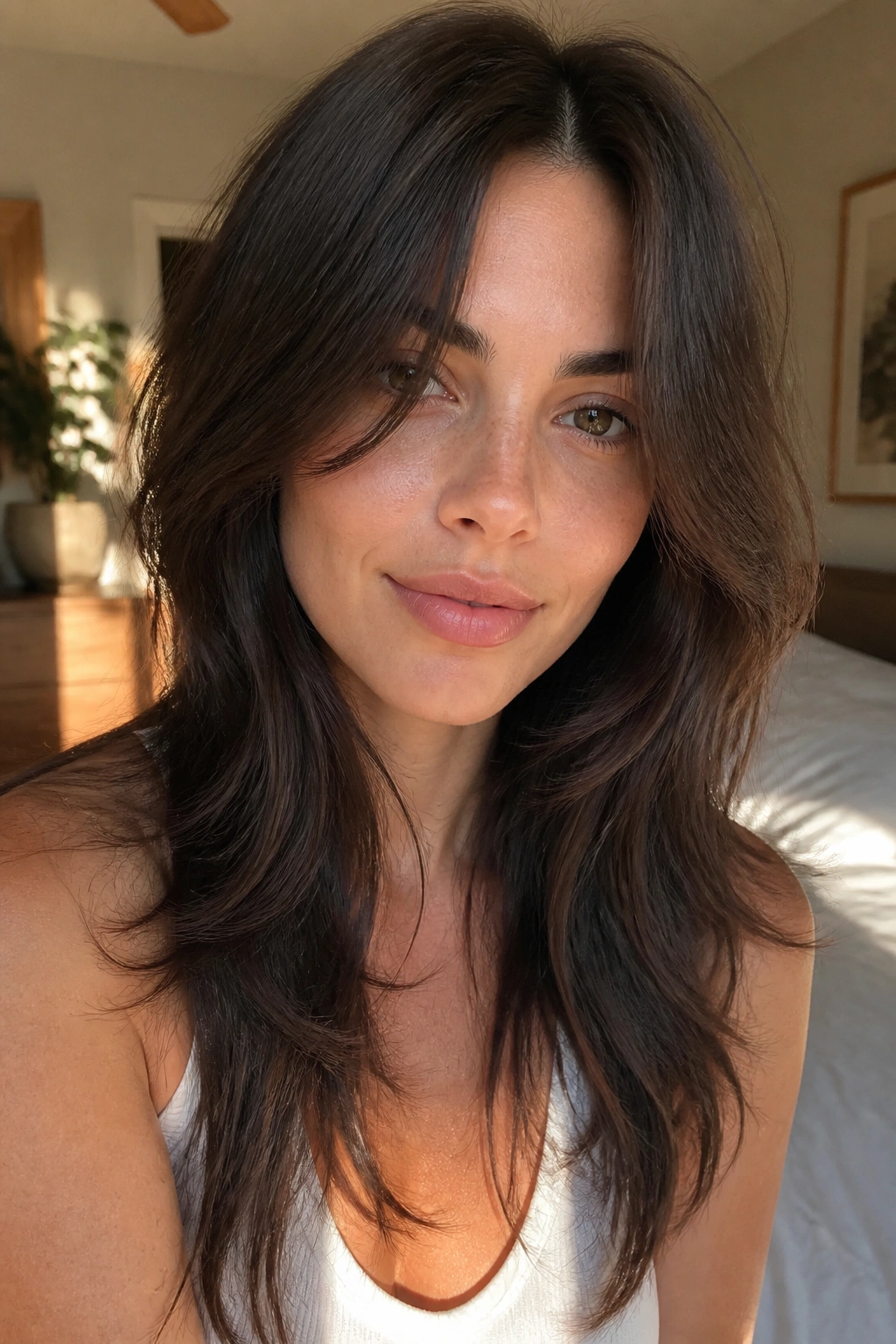
I love this one for people who say they want layers but panic when they see a lot of chopped pieces in the mirror. The layers are there, but they blend so well that the cut reads as smooth from a distance.
Why It Flatters
The feathered ends make the perimeter feel lighter, which helps thick hair move instead of sitting in a block. On a round face, that movement matters because it keeps the sides from looking heavy.
You can wear this one with a soft middle part or a slightly off-center part. Just avoid layers that stop right at the cheeks. Ask for the face frame to begin around the mouth or lower if you want the most lengthening effect.
Best for: thick hair, hair that flips out on its own, and anyone who hates obvious choppiness.
6. Big Blowout Shag With Full Movement
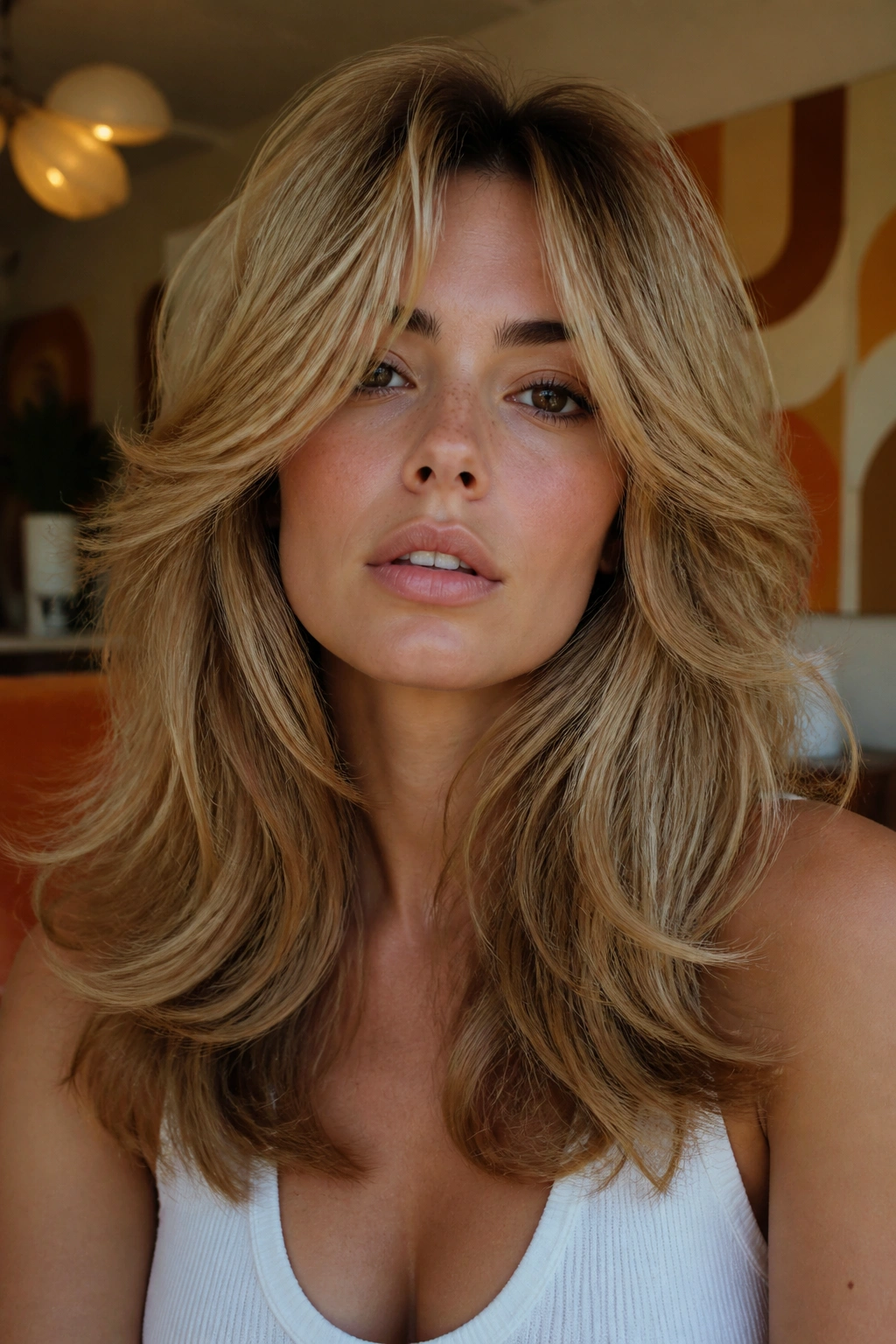
This version leans polished rather than messy. The layers are still there, but the styling gives them a smooth bend, almost like a soft 1970s blowout that grew out gracefully.
Unlike a beachy shag, this one depends on brushing and shape. A medium round brush, a heat protectant, and a little tension at the roots do most of the work. The front should curve away from the face, not inward, or you lose the lengthening effect.
It is a smart choice if you wear your hair straight most of the time but want the haircut to have life. The silhouette stays longer through the jaw, while the crown gets enough lift to keep the face from reading too circular.
7. Minimal-Layer Shag for Straight Hair
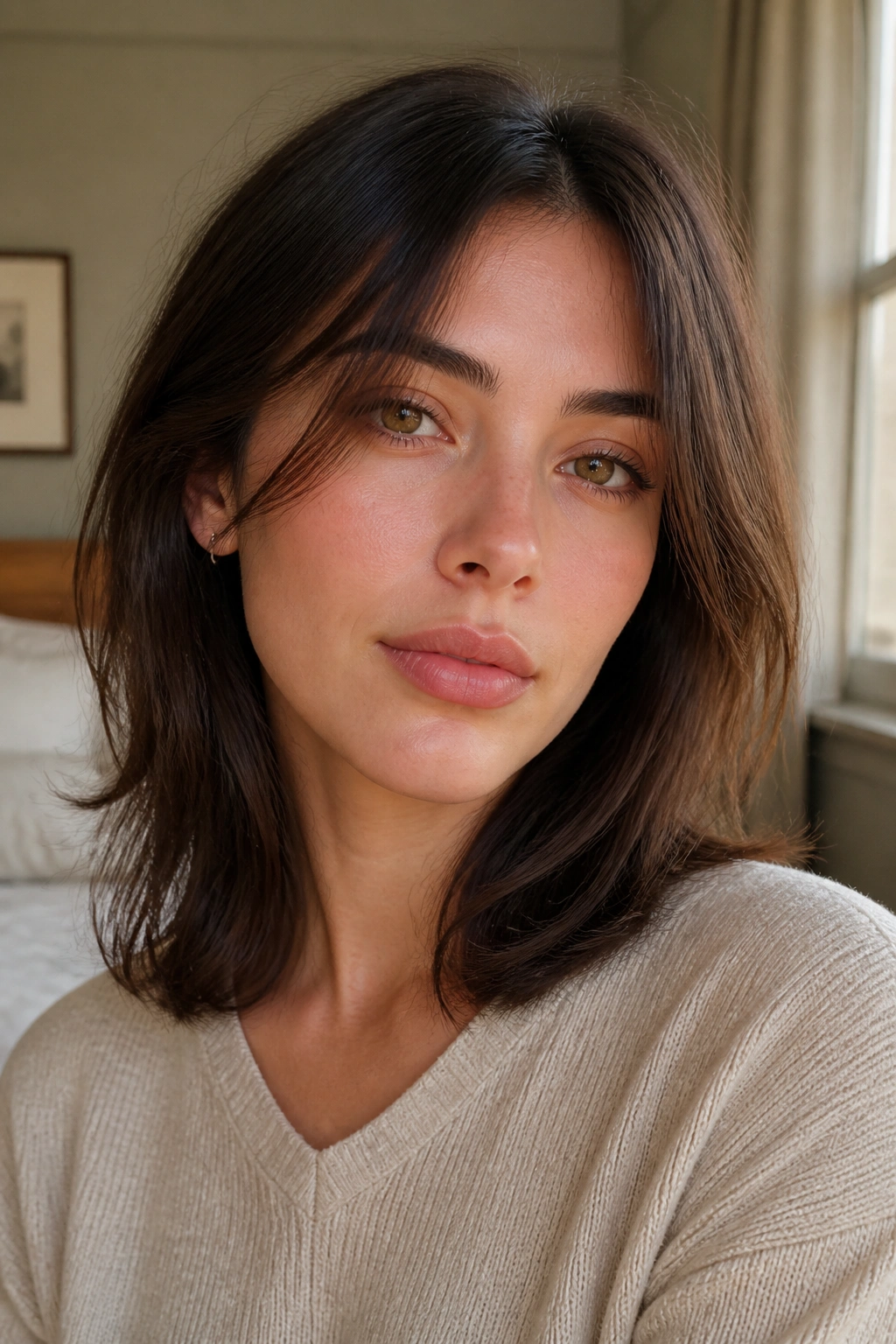
Straight hair can look amazing in a shag, but it needs a lighter hand. Too many short layers and the ends start to look wispy in a way that does not help anyone.
How to Style It
- Use a flat brush or paddle brush for blow-drying.
- Add one or two bends with a 1-inch iron near the front.
- Keep product light; a pea-sized amount of cream is enough.
- Let the longest layers sit below the collarbone for balance.
This cut is for someone who wants the shape of a shag without the full texture story. The movement is subtle. The payoff is that the haircut still narrows the face, but it does it quietly.
8. Bottleneck Bangs and Long Layers

Bottleneck bangs are one of those bangs that looks fussy on a hanger and terrific on a face. They start narrow between the brows, then open out around the eyes and cheekbones, which gives a round face a cleaner frame.
The bangs should not sit too bluntly across the forehead. Keep them soft and slightly broken at the edges, especially if your hair grows in a strong pattern. A solid fringe can shorten the face in a hurry. These do the opposite when they are cut right.
A long shag beneath bottleneck bangs feels balanced because the top is controlled while the rest of the hair still moves. That contrast is the point. It keeps the haircut from getting heavy in one spot.
9. Boho Shag With Waves and Broken Ends
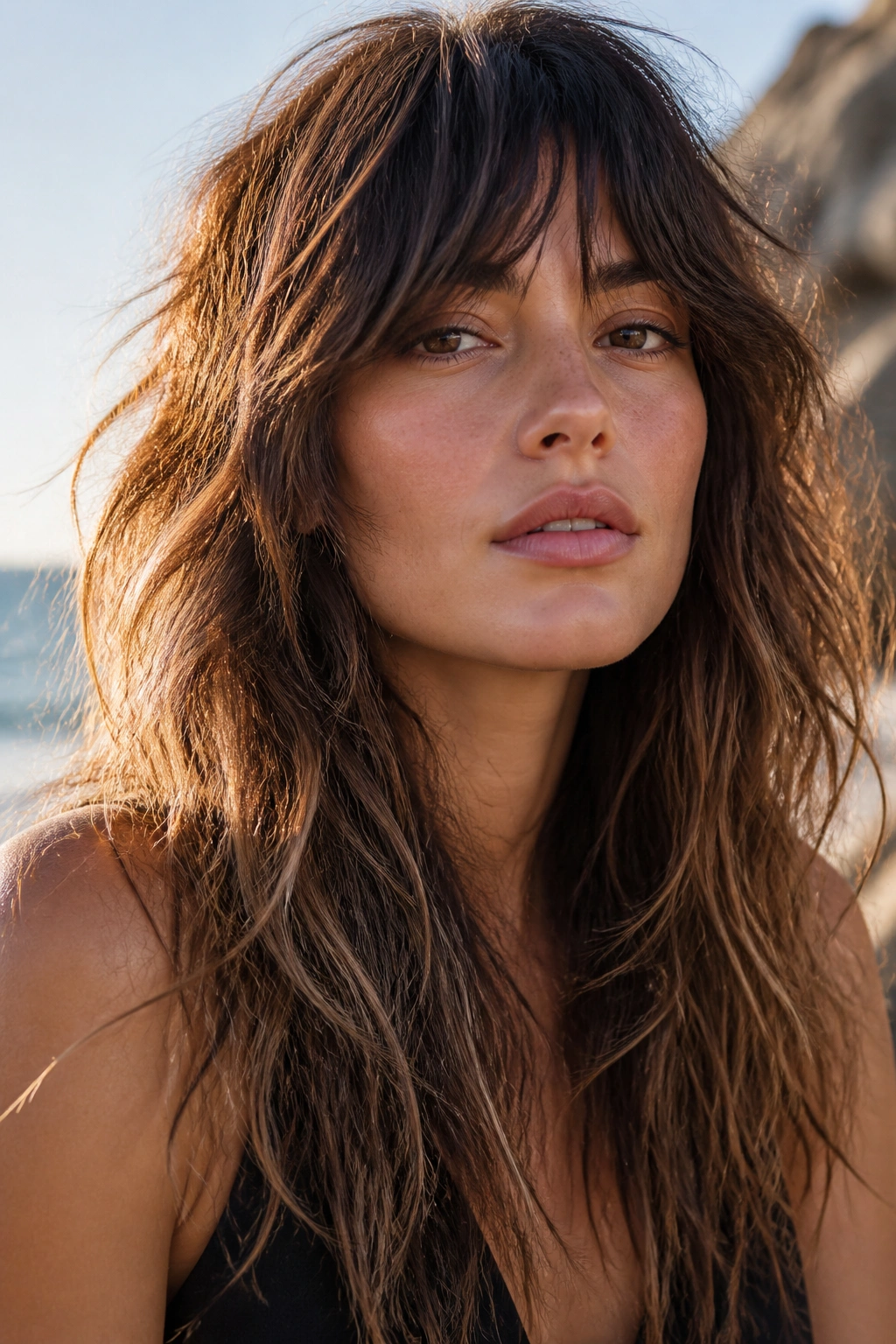
What makes this style different is the texture. The layers are long and airy, but the waves and softened ends create enough separation that the haircut never sits as one big shape around the cheeks.
If your hair has a natural wave, this is one of the easiest options on the list. A salt spray misted through the mid-lengths, a quick scrunch, and a diffuser on low heat are usually enough. Keep the roots from getting too sticky. That is where the frizz starts.
The best part is that it looks better when it is not overdone. A little unevenness around the face gives it that easy, slightly wild feel. Over-styling ruins it fast.
10. Long Shag With a Forward-Swept Front
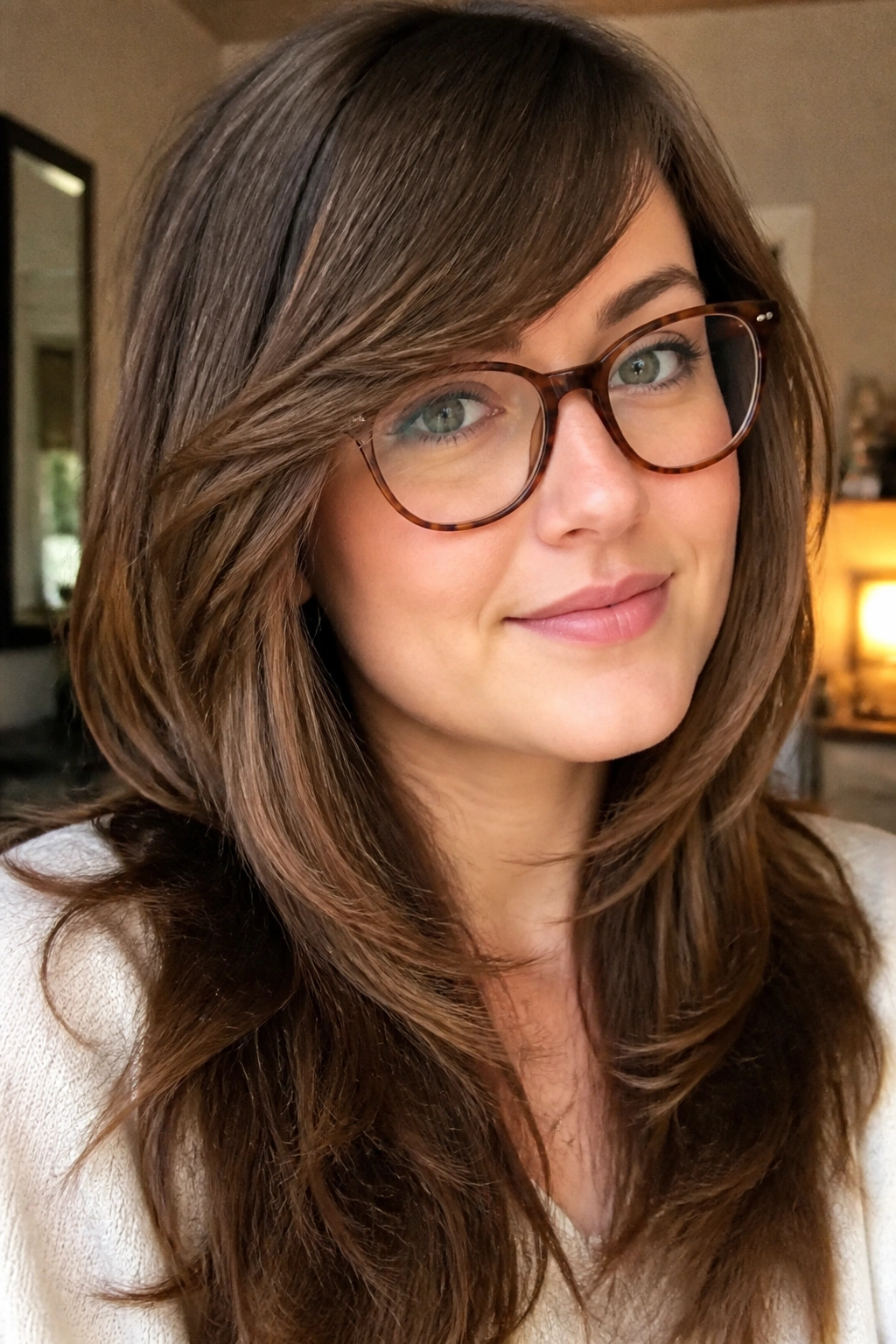
Some shags lean back and away from the face. This one leans forward. The front pieces are brought slightly toward the chin and jaw, which creates a narrow frame and keeps the width from sitting at cheek level.
That forward sweep is useful if your face feels widest in the middle. It pulls the eye down in a soft line. No harsh angles. No hard edge. Just a long curve that does the job without looking forced.
I like this cut for people who wear glasses too. The longer front pieces sit nicely around frames without fighting them. If your stylist cuts the front too short, the whole thing loses its shape.
11. Thick-Hair Long Shag for Round Faces

Thick hair needs a different kind of shag. Not more cutting. Better cutting. If you go too short with too many layers, the sides can puff out like a bell, and that is the opposite of what you want.
The Trick With Thick Hair
- Keep the outer length below the shoulders.
- Remove bulk from the inside, not just the ends.
- Ask for longer face-framing pieces that start below the cheekbone.
- Use point cutting so the ends do not form a blunt shelf.
A thick-hair shag should feel lighter when you move, but still have enough weight to fall neatly. That balance matters more on a round face because the wrong layers make the hair widen at exactly the wrong spot.
12. Fine-Hair Shag With Shorter Crown Layers
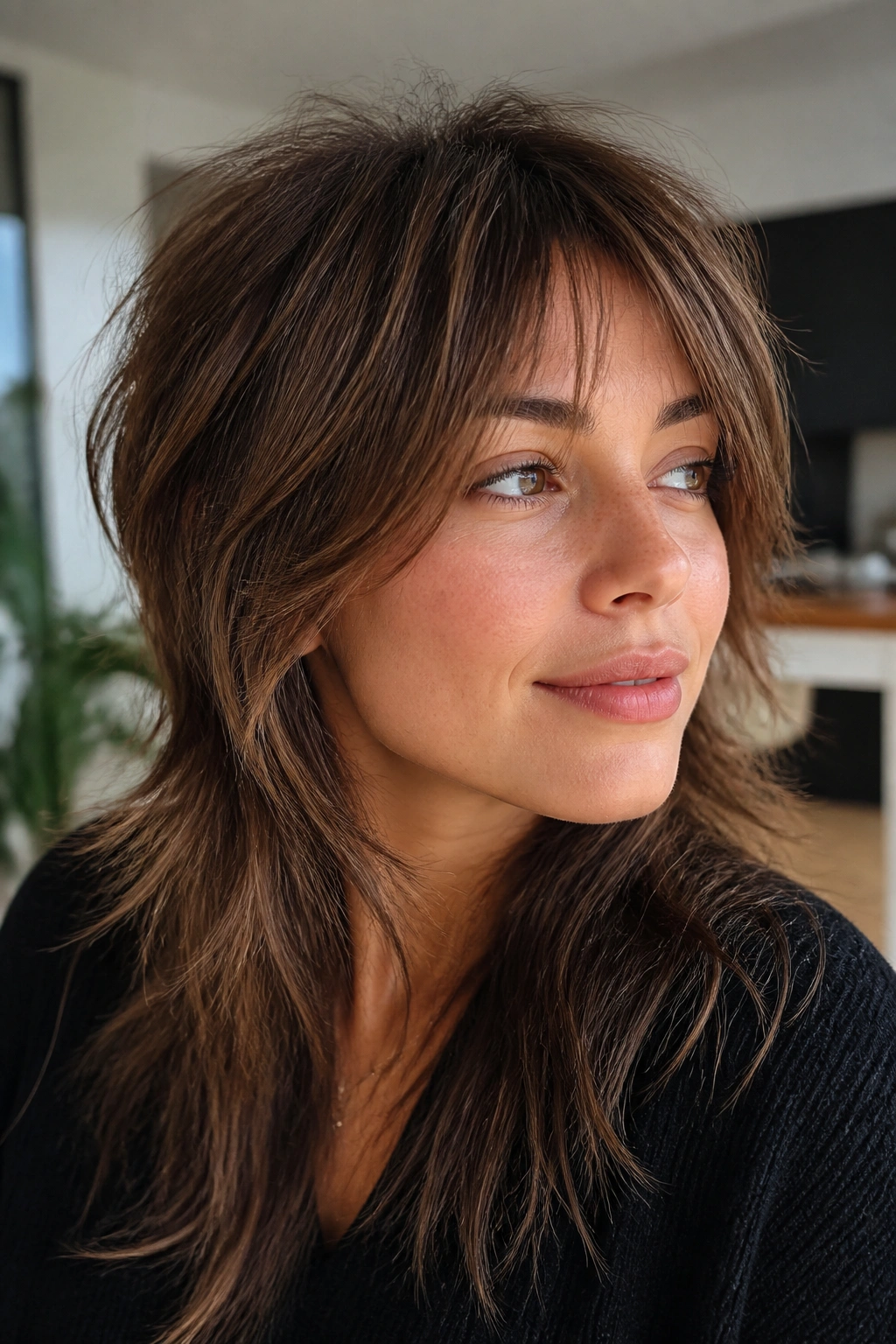
Fine hair can wear a long shag beautifully, but it needs a slightly different plan. The crown layers can be shorter to create lift, while the sides stay longer so the face still looks stretched.
This is one of the few cases where a little more layering helps. Not everywhere. Just at the top. Too much length with fine hair can drag the style flat, and then the face ends up looking wider because there is no shape up top.
A lightweight volumizing spray at the roots and a quick lift with a round brush can make the whole cut look fuller. Skip heavy oils near the top. They weigh down the very movement you are trying to get.
13. Curly Long Shag That Keeps the Shape Light
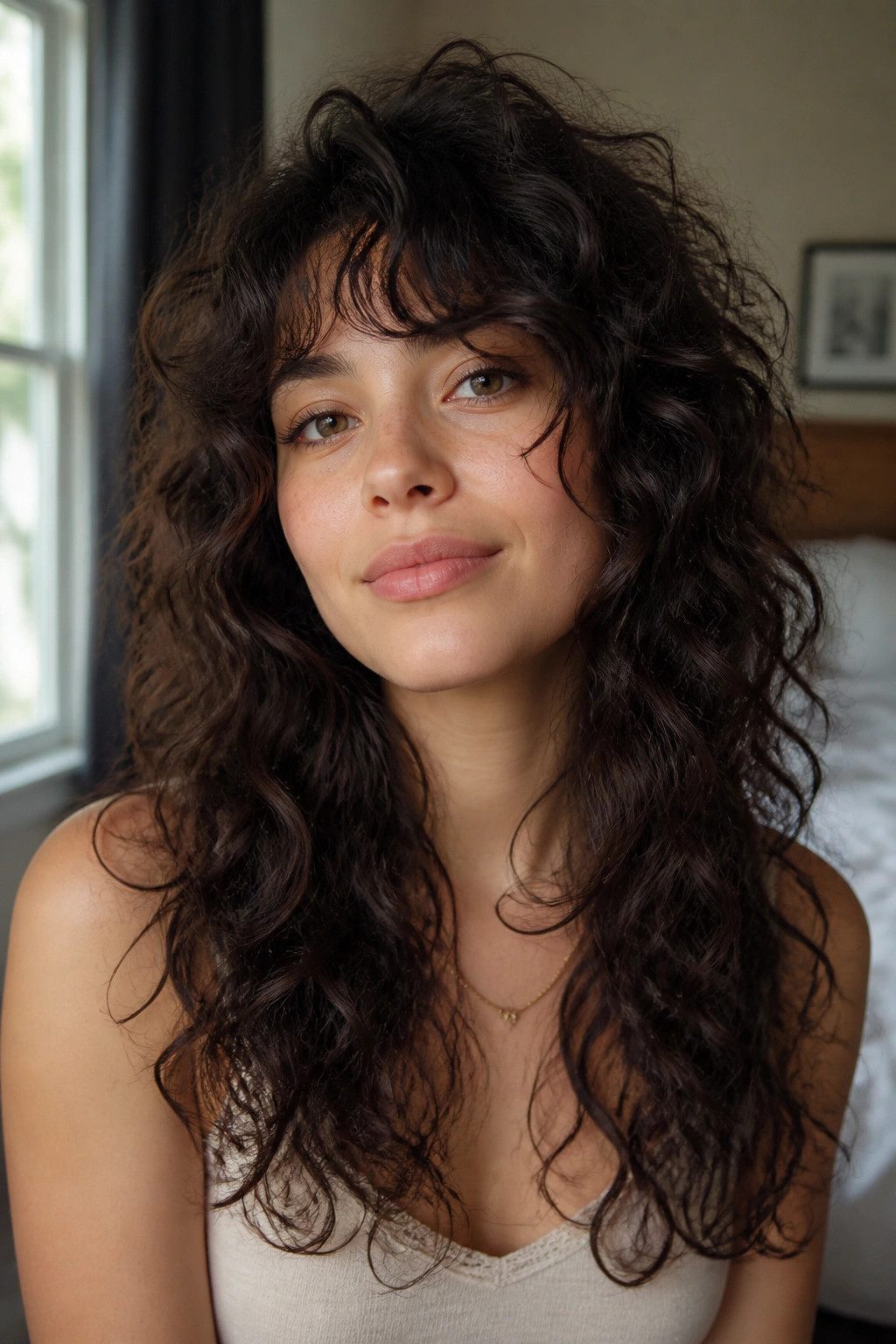
Curly hair and round faces can be a brilliant match when the shag is cut to follow the curl pattern instead of fighting it. The layers should usually begin lower, often below the chin, so the curls do not balloon out around the cheeks.
Dry cutting helps here. Curls shrink, and shrinkage can turn a decent shag into a weirdly short one if the stylist guesses wrong. The best curly shags leave room for the curl to spring up while still keeping the outline long.
The finish should feel soft and airy, not shorn. A curl cream about the size of a walnut and a light gel glaze are usually enough. Crunchy curls are not the goal. Defined, touchable curls are.
14. Deep Side-Part Shag With Swing
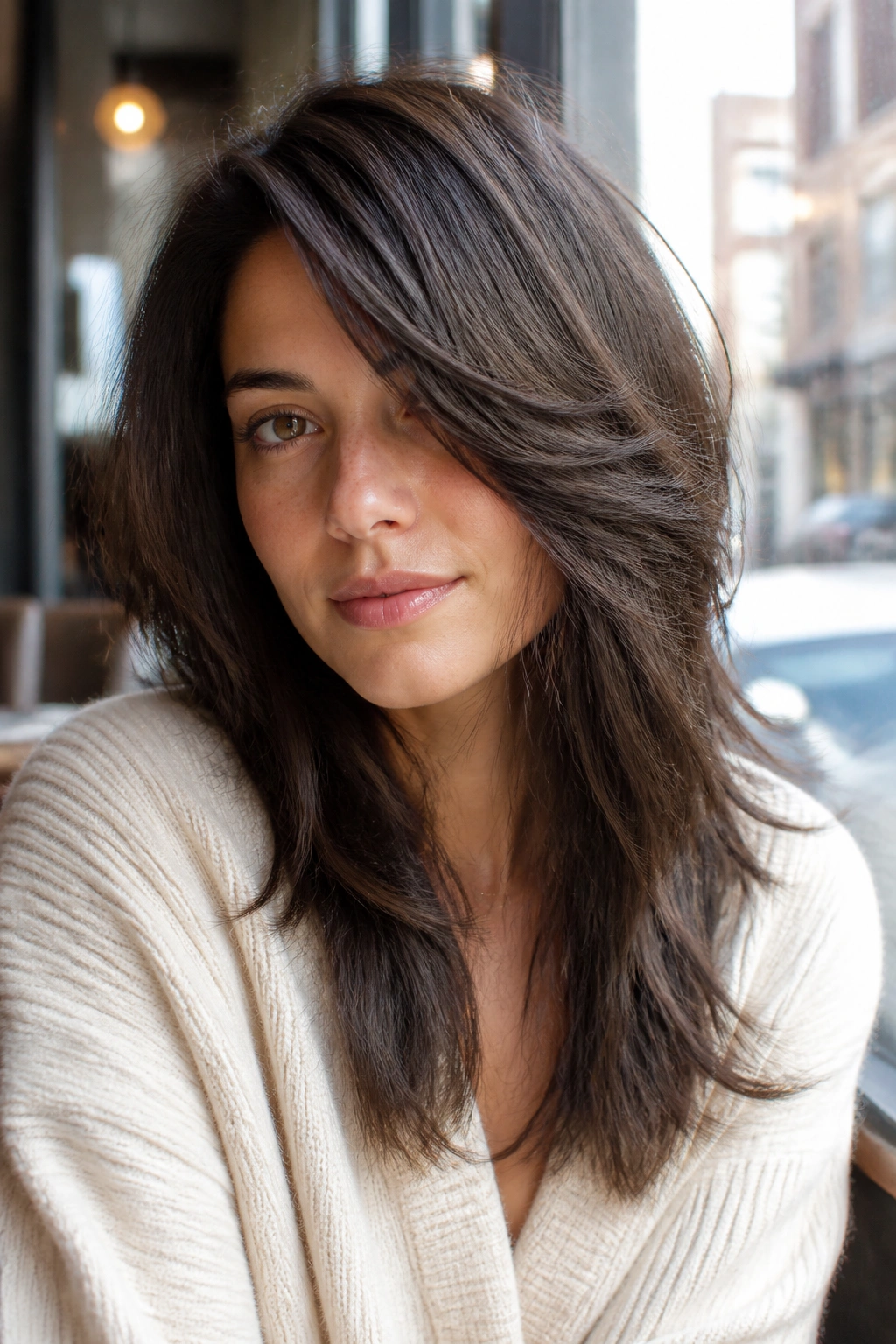
A deep side part can change the whole story of a long shag. It breaks up the symmetry of a round face and gives the haircut a longer, more dramatic line through the forehead and cheek area.
What Makes It Different
- The heavier side creates a diagonal line.
- The lighter side keeps the face open.
- Long layers in front soften the drop from temple to jaw.
- A little root lift at the part keeps the style from collapsing.
This one works best when the front pieces are still long enough to brush the collarbone. If the front is too short, the side part starts to look abrupt. A soft bend through the lengths helps too. Straight hair can wear this, but a little texture makes the shape feel more alive.
15. Flipped-End Shag That Opens the Jawline
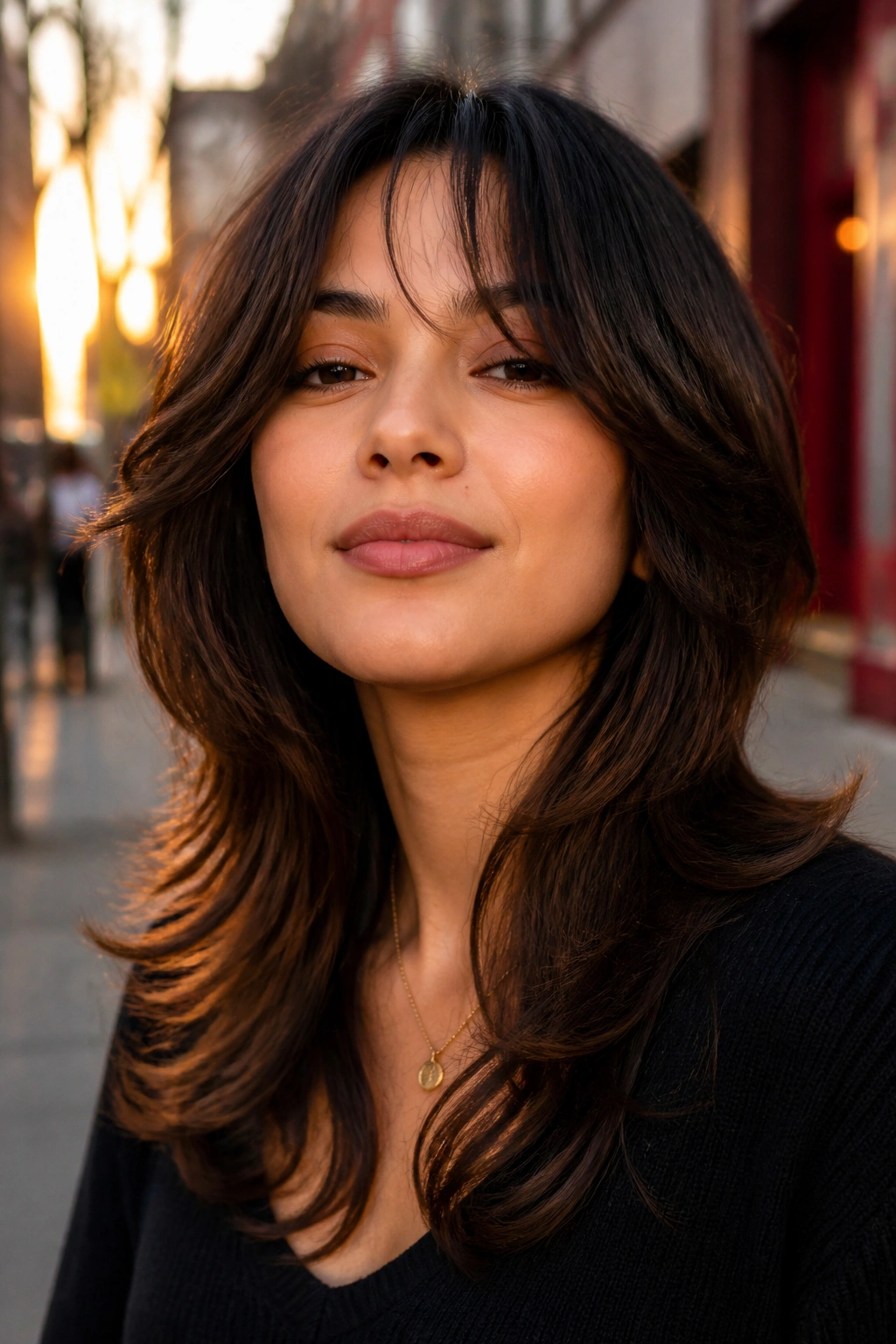
Flipped ends have a very specific feel. Done right, they make the haircut look playful and give the jawline some room. Done wrong, they can widen the bottom half of the face. So the cut has to be long enough to keep the flips below the chin.
Why does this help a round face? The outward motion draws the eye away from the middle of the cheeks and down toward the edges of the haircut. That gives the whole look a little more shape.
A 1-inch curling iron or a medium round brush works well here. Turn the ends away from the face just a little, not into a full retro curl. Tiny changes matter. Too much flip gets cartoonish fast.
16. Lived-In Beach Shag

Messy, but on purpose. That is the whole point here. A lived-in beach shag has soft bends, a relaxed outline, and enough length to keep the face from looking packed in.
This style is forgiving, which is why so many people love it. You can air-dry 70 percent of the way, twist a few front pieces while they are damp, and let the rest do its thing. A small amount of sea-salt spray is enough; drown it and the hair gets rough instead of textured.
On a round face, the best beach shag keeps the volume up top and the fullness away from the cheeks. If the waves start exactly at cheek level, the face looks wider. So push the movement lower or higher. Not dead center.
17. Glam Shag With Face-Framing Layers to the Collarbone
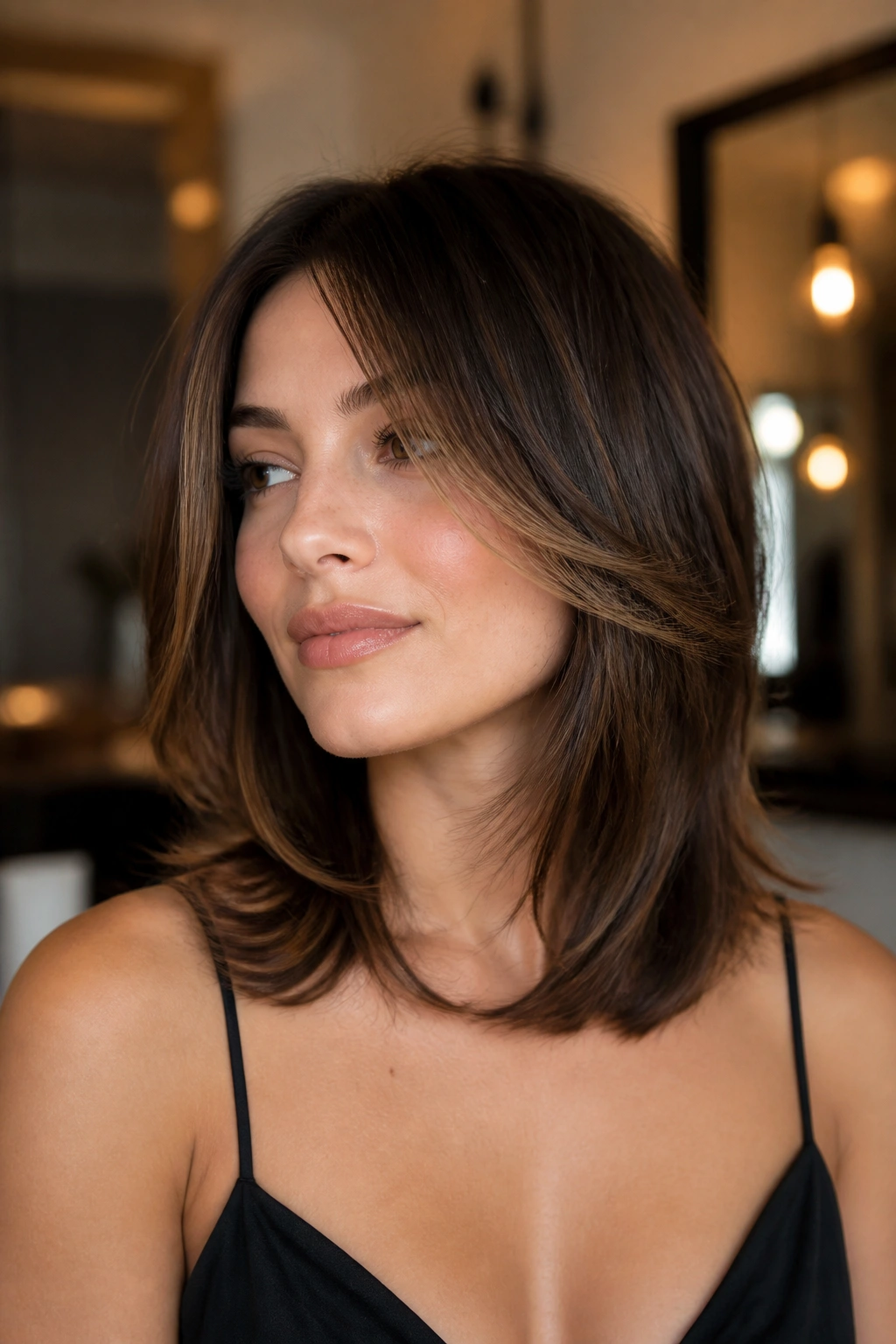
This is the prettier, more polished cousin of the messy shag. The layers are long and glossy, the front frame is smooth, and the styling makes everything fall in one clean direction.
I like this cut for people who want softness but not chaos. It looks especially good with a round face because the long front pieces stretch toward the collarbone and the crown stays just full enough to give height. A smoothing cream and a round brush are the whole story.
A Few Things That Matter
- Keep the perimeter sleek.
- Blow-dry the front away from the face.
- Let the longest pieces brush the tops of the shoulders.
- Use a finishing serum only on the mid-lengths and ends.
This one reads elegant in person, not fussy. That is harder to pull off than people think.
18. Side-Bang Shag That Cuts Across the Width
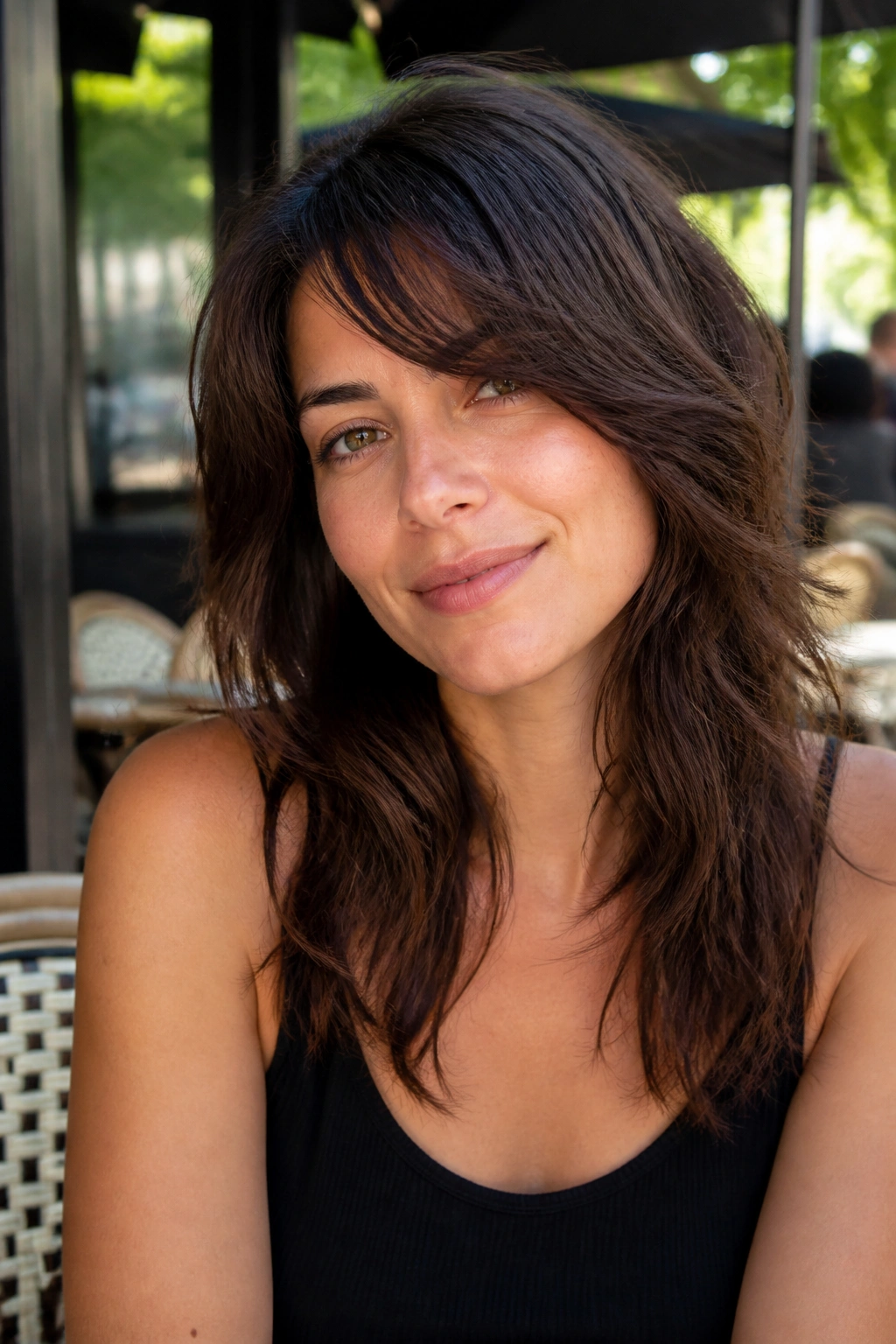
If curtain bangs feel too sweet for you, side bangs bring a little more edge. They also cut across the face in a way that breaks up roundness without stealing too much forehead space.
The angle matters. A side bang that starts too blunt or too heavy can sit like a curtain on one side of the face. Better to keep it soft, with a longer lead-in toward the cheekbone and a gradual taper into the rest of the layers.
This style is especially useful if your face feels widest through the apples of the cheeks. The diagonal line created by the bang draws the eye in another direction. Simple. Effective. A little old-school in a good way.
19. U-Shaped Perimeter Shag
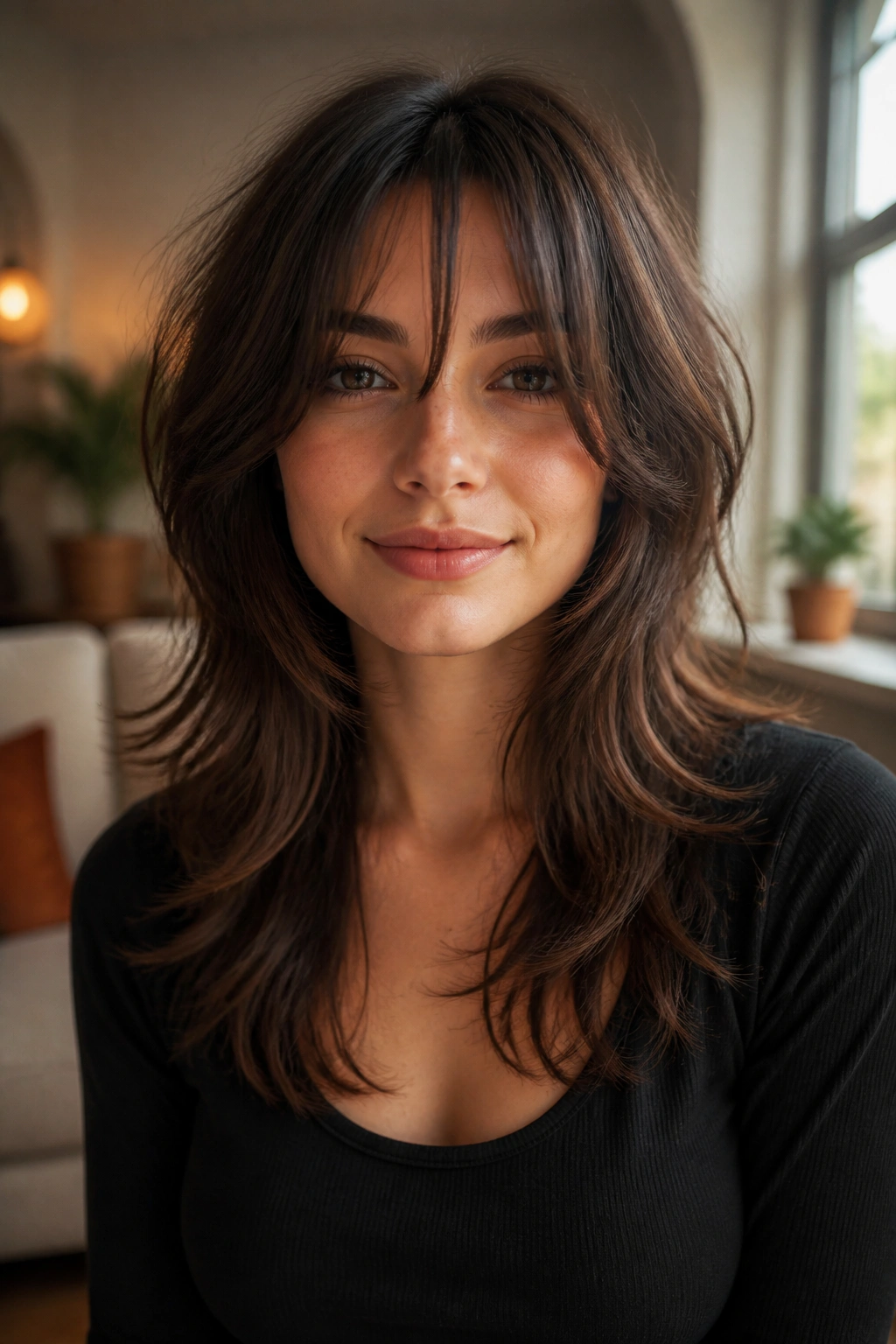
A U-shaped outline is one of those details people do not always notice, but they feel it. The hair stays longer in the center back and gently shorter toward the front, which makes the whole cut look softer and more balanced.
For a round face, that shape is helpful because it keeps the side sections from ending too abruptly at the jaw. The U gives the eye a downward curve, not a hard horizontal line. That is what keeps the style from widening the face.
This is a smart choice if you like your hair long and do not want a heavily layered look. You still get the shag texture, but the perimeter stays soft and connected. It is neat without being severe.
20. Soft Mullet-Inspired Shag With Longer Back Length
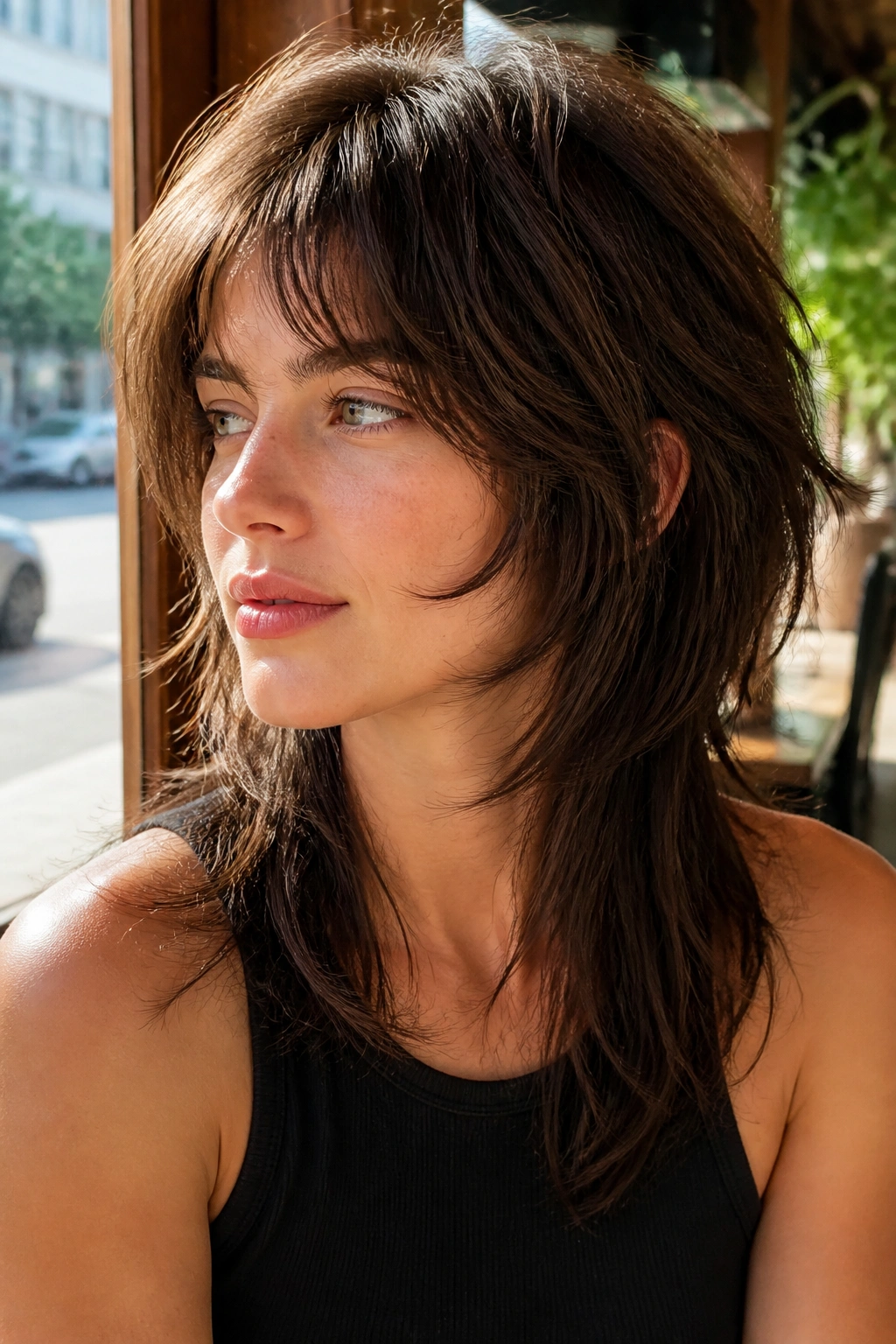
A little mullet energy can work here, as long as the cut stays soft. The crown gets a touch of lift, the front stays long, and the back hangs a bit longer so the whole silhouette points downward.
How to Keep It Wearable
- Ask for a gentle disconnect, not a harsh one.
- Keep the front pieces below the cheekbone.
- Let the back stay 2 to 4 inches longer than the front.
- Style with texture cream, not stiff paste.
A round face benefits from the extra vertical line in the back. The danger is going too short around the sides. That makes the face look fuller. Keep the corners soft, and this cut has a lot of personality without turning into a costume.
21. Humidity-Proof Long Shag
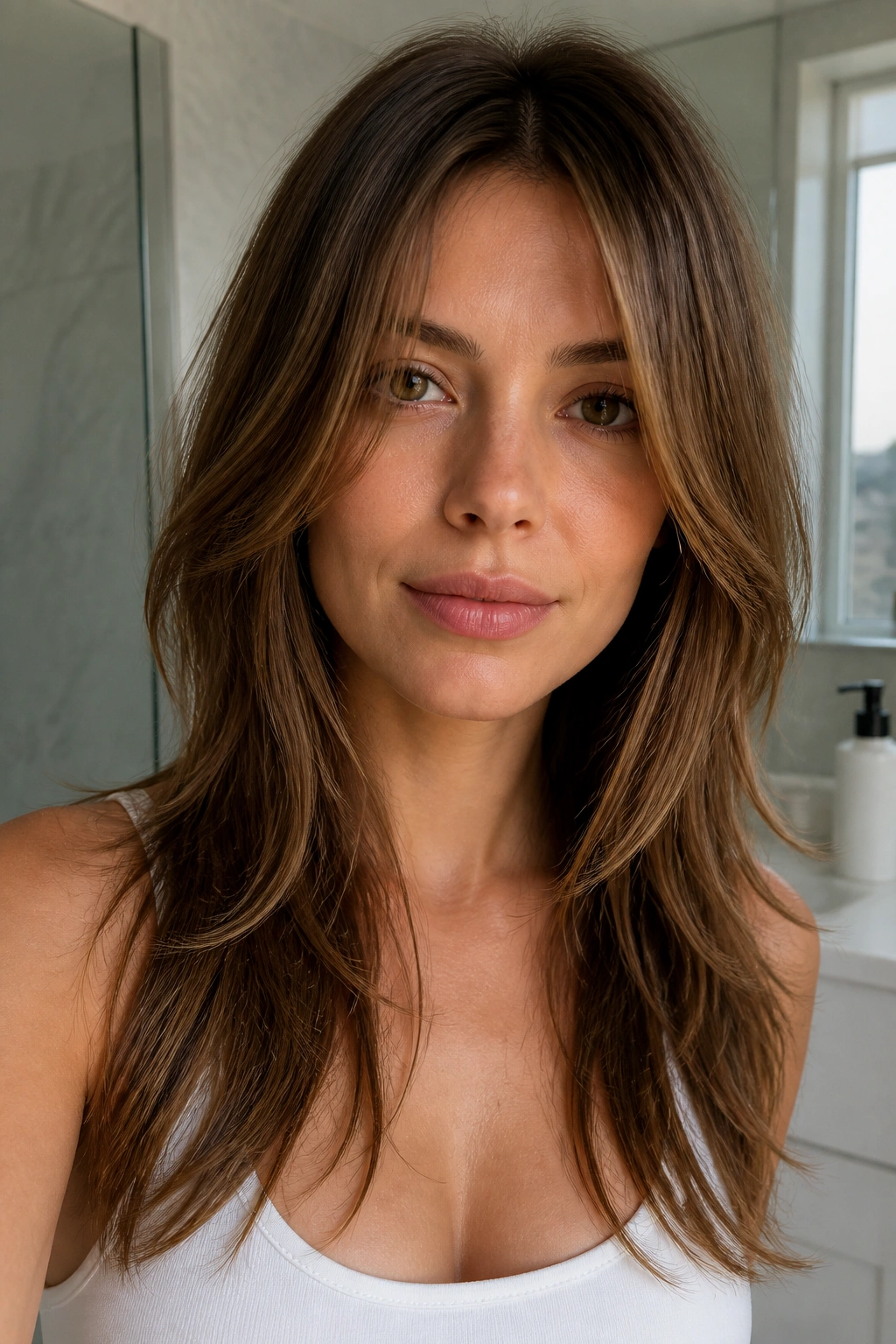
Some shags look lovely in dry air and then puff up the second the weather turns damp. This version is cut and styled to hold its shape with less drama. Long layers, a controlled crown, and a smooth face frame keep it from exploding outward.
What helps most is the finish. A little anti-frizz cream on wet hair, then a nozzle-directed blow-dry from roots to ends, gives the strands a flatter surface. You do not need heavy products. You need direction. That is the part people skip.
A humidity-proof shag on a round face should still move, but the movement needs to stay close to the head rather than flaring out at the sides. If the hair expands past the cheek line, the cut loses its shape fast.
22. Ultra-Soft Grown-Out Shag
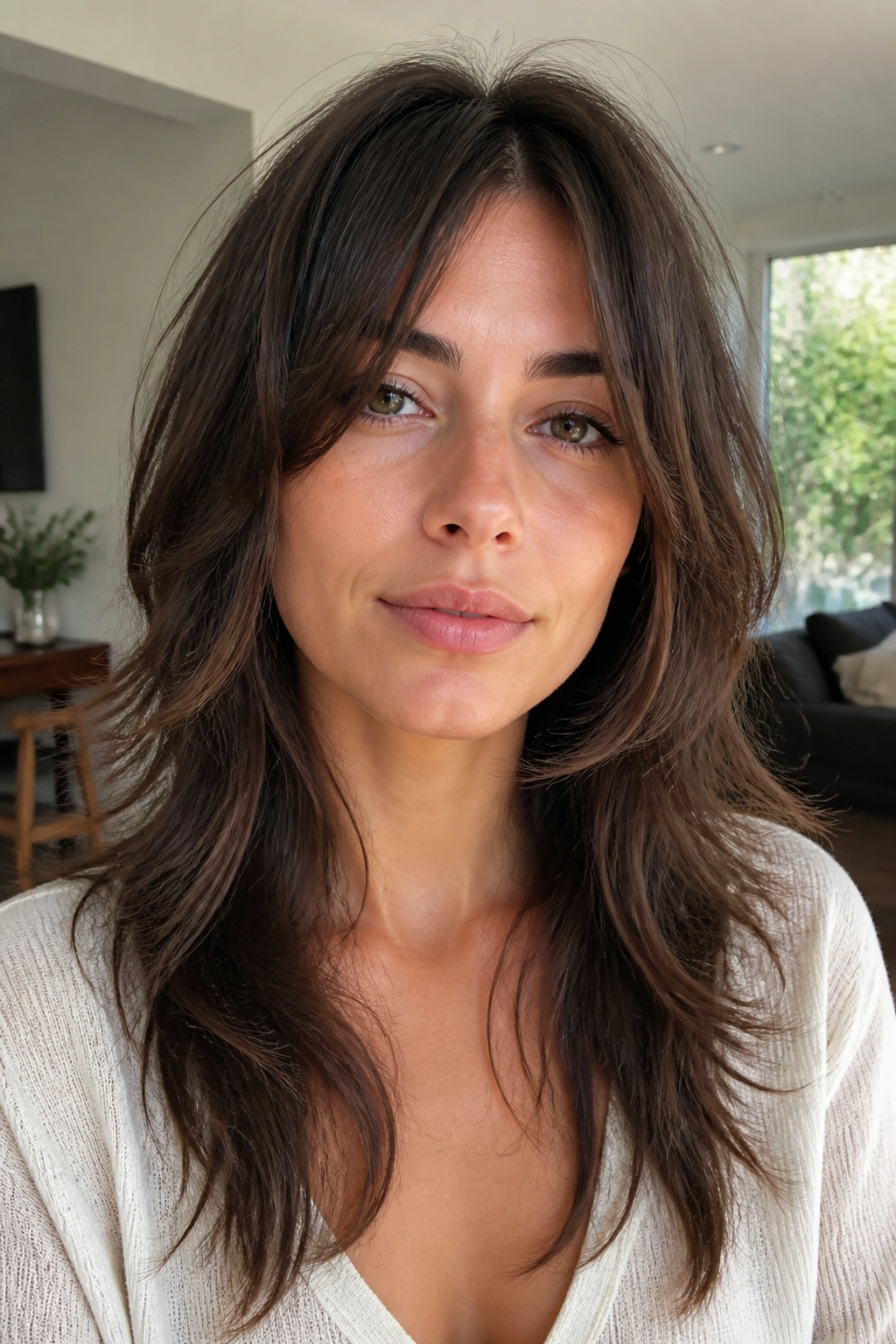
This is the one I recommend to people who want movement but hate looking like they got a very obvious haircut. The layers are long, the edges are soft, and the whole thing can grow out without getting lumpy.
The best version keeps the shortest front pieces around the mouth or lower, with only a gentle bend at the crown. That keeps the face open and long. No sudden shelf at the cheeks. No hard line at the jaw. Just a loose frame that settles in naturally.
A grown-out shag is also easier to live with. You can air-dry it, bend a few pieces with a flat iron, or brush it out for a smoother look. It does not demand perfect styling, and that is half the reason it works.
Final Thoughts
A long shag is not one haircut. It is a whole set of choices, and the placement is what makes it work on a round face. The best versions keep the width out of the cheeks, build a little height up top, and let the front pieces fall low enough to lengthen the face.
If you remember only one thing, make it this: the shortest layer should usually land below the cheekbone unless your hair is very fine and your stylist is intentionally building lift. That one detail changes the silhouette more than most people expect.
The nicest part is how flexible the cut can be. Soft and polished, messy and airy, curly, straight, heavy, fine — there is a version that fits. And when the cut is placed well, it stops fighting your face and starts working with it.
