



A long shag can do something a lot of haircuts miss: it can make a round face look longer without turning the whole style stiff or severe. That’s the trick, and it matters more than length alone. A shag cut that piles bulk at the cheeks will widen the face. One that drops the weight lower, breaks up the outline, and leaves a little air at the crown changes the whole balance.
The difference is not subtle in real life. A good shag moves when you do, shifts when you tuck one side back, and gives the face a cleaner vertical line. A bad one turns puffy at the sides and feels busy in the wrong places. I keep coming back to this because it’s the part most people miss: where the layers start matters as much as how long the hair is.
Texture changes the equation too. Straight hair usually needs more internal layering so it doesn’t hang like a sheet. Wavy hair can take more choppiness. Curly hair needs the shape cut around shrinkage, not against it. The 20 long shag haircuts below cover all of that, from soft and pretty to a little messy in the best way.
1. Curtain Bang Long Shag for Round Faces
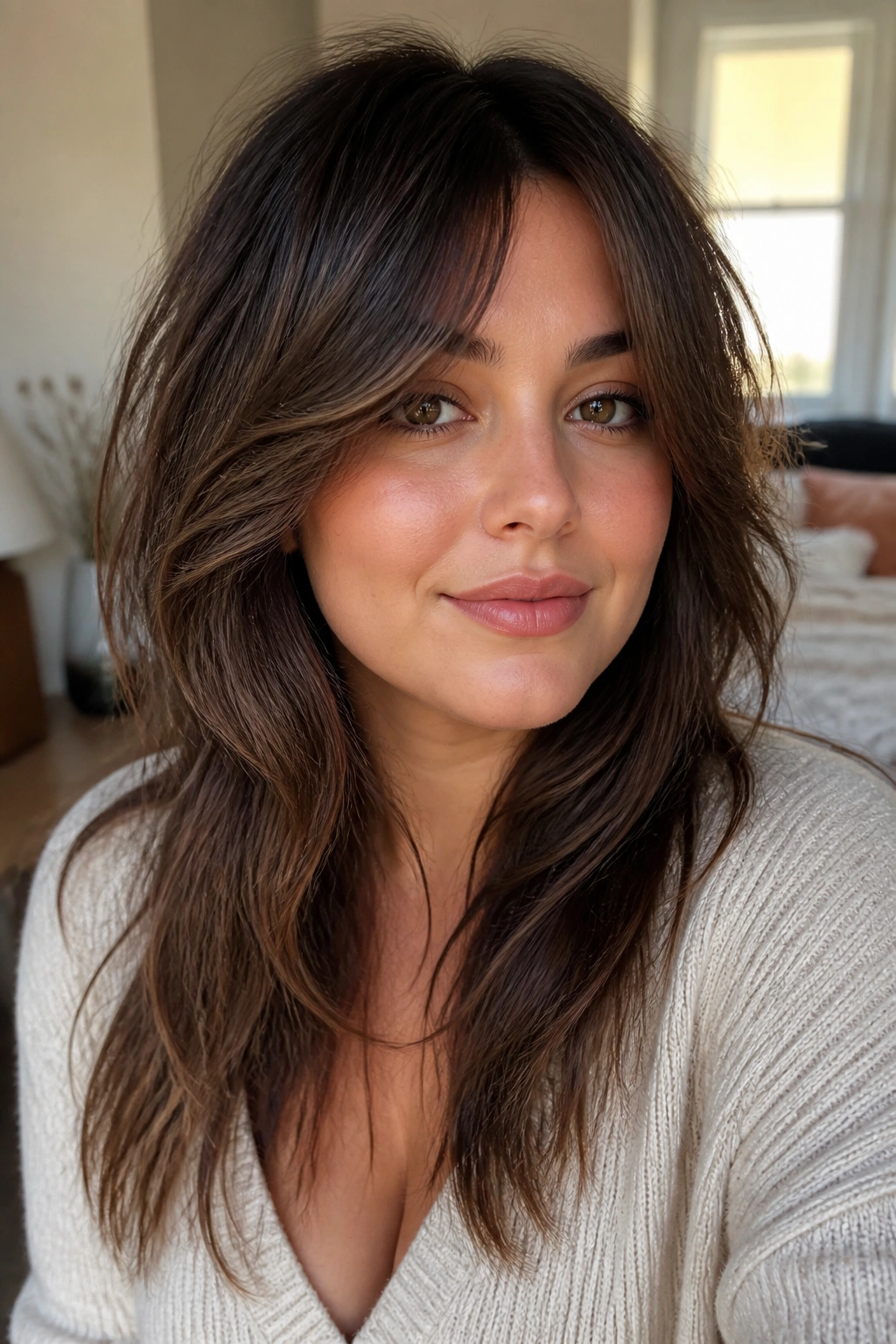
Curtain bangs are the easy entry point if you want a long shag haircut for round faces without going too edgy. They split the face down the middle, then fall away from the cheeks instead of stopping right on them. That small shift draws the eye up and down, which is exactly what a round face needs.
Why It Works
Ask your stylist for curtain bangs that hit somewhere between the brow and the cheekbone, then blend into layers that start below the chin. Anything shorter can push width back into the face. The front should feel soft, not bulky.
This cut looks best when the longest face-framing pieces fall past the mouth. That extra length creates a cleaner line and keeps the haircut from feeling boxy. The center opening is doing the work here.
A round face with fuller cheeks usually benefits from this shape because the bangs break up the widest area without hiding the face. It’s flattering, not fussy. That matters.
2. Center-Parted Soft Shag with Cheekbone Layers
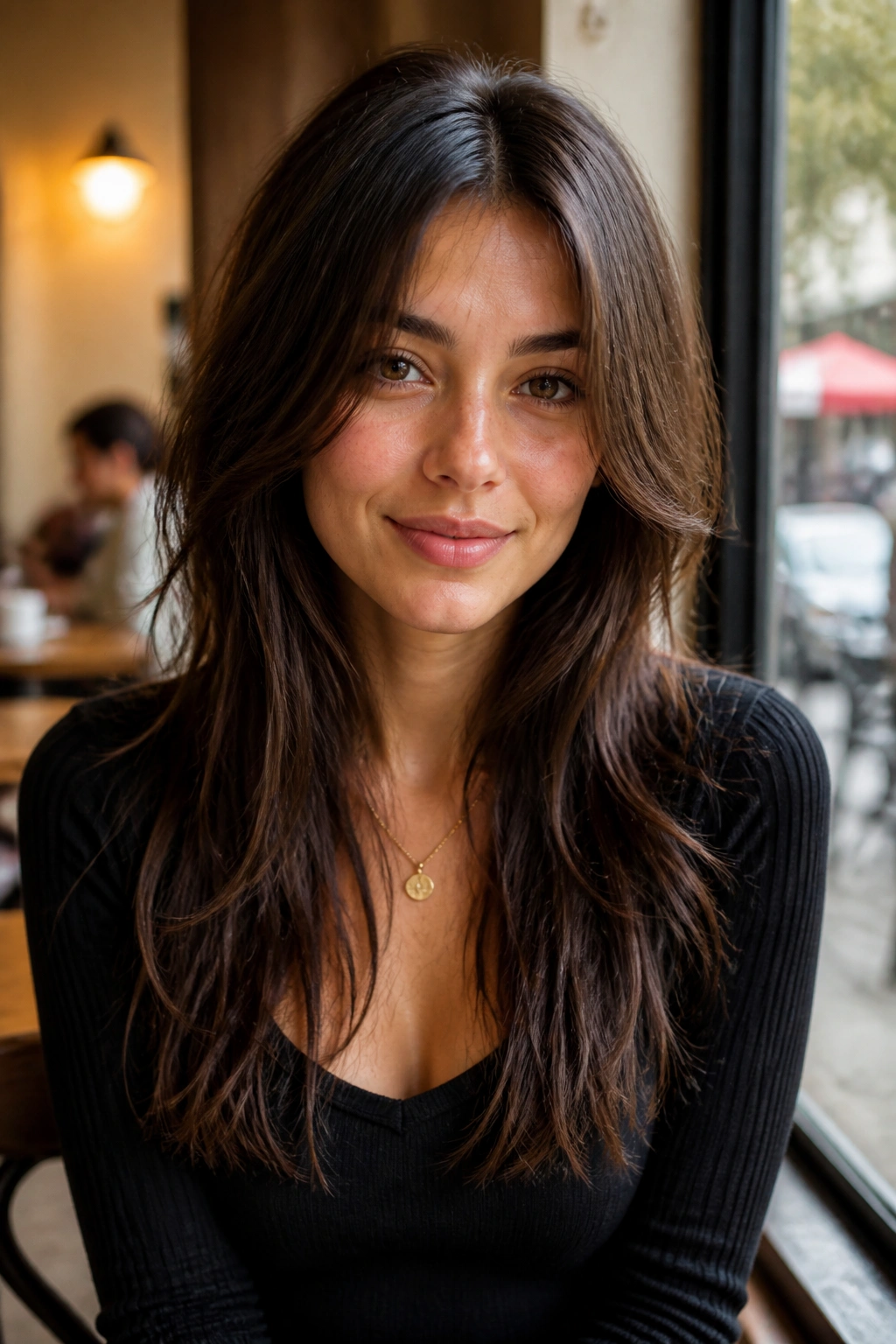
A center part can look severe on some people. Not here. When the layers are soft and the front pieces skim the cheekbones instead of ending right at them, the middle part becomes a long, straight line that makes the face read slimmer.
The key is restraint. You want movement, not a cloud of short layers around the cheeks. Ask for long internal layers that start around the mouth and continue down through the ribs or bust line, depending on length. The outline should still feel long.
This version suits straight to loose-wavy hair especially well. It has that clean, easy shape that looks polished even when you air-dry it. A little wave cream, a middle part, and a rough dry are often enough.
One small warning: if your face is round and your hair is very thick, keep the layers from ballooning near the sides. The cut should fall down, not out.
3. Wavy Razor-Cut Shag
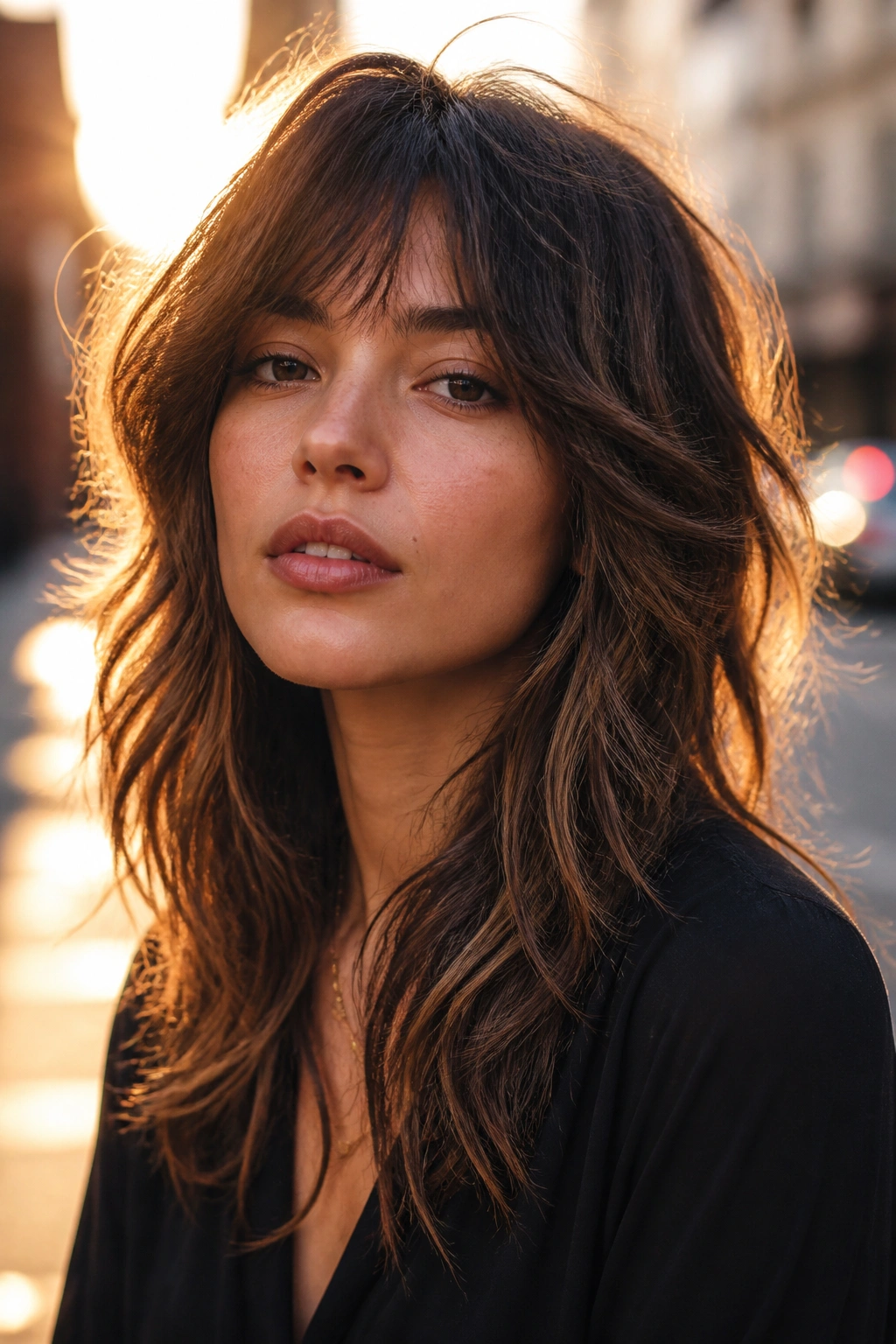
Razor cutting changes the whole mood. A razor-cropped shag takes the weight off the ends and leaves the hair with a softer, more broken edge, which works beautifully when you want movement around a round face without heavy lines.
What Makes It Different
The best razor-cut shag is done with a light hand. You should see separation at the ends, not frayed chaos. On wavy hair, that little bit of unevenness helps the waves stack in a looser pattern and keeps the shape from puffing at the sides.
I like this cut for hair that gets bulky when it’s blunt. The razor removes some of that blocky feeling. The face stays open because the longest front layers keep sliding past the jaw.
How to wear it? Air-dry with a curl cream or diffuse on low heat, then scrunch a touch of texture spray into the mid-lengths. Skip heavy oils near the front. They make the wispy ends clump and lose the shag effect.
4. Long Shag with Bottleneck Bangs
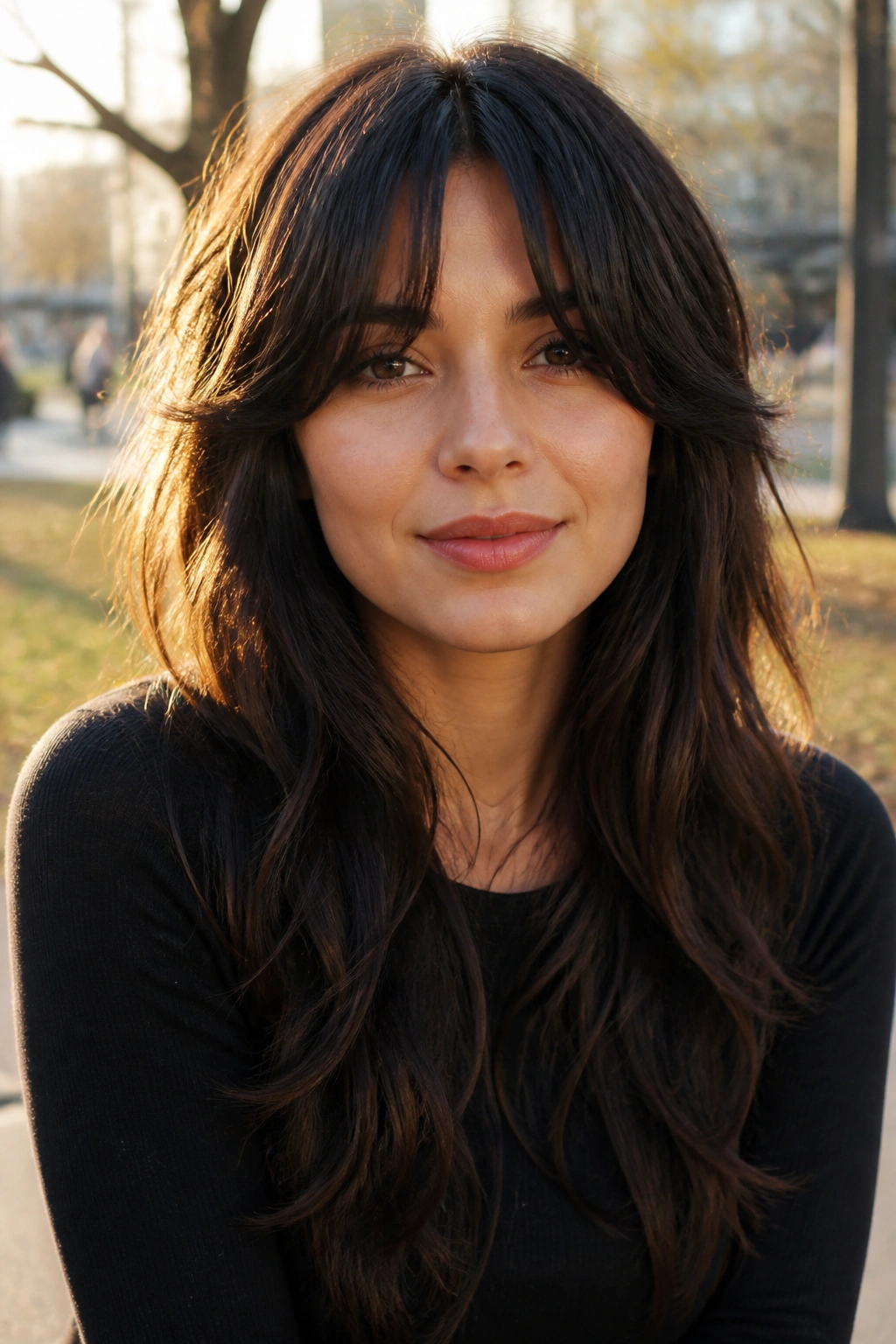
Bottleneck bangs sit in that nice middle ground between curtain bangs and full fringe. They start narrow at the center, open up at the temples, and blend into the rest of the haircut with a little bend. For round faces, that shape is useful because it pulls the eye upward without boxing in the cheeks.
A blunt bang can make the face feel shorter. Bottleneck bangs don’t do that. They leave room around the sides and still give you some forehead coverage if you want it. That mix is why so many stylists reach for them on softer face shapes.
How to Ask for It
Tell your stylist you want the center of the fringe cut around brow level, then length that stretches to the top of the cheekbone near the temples. The transition should be soft. No hard step from bangs to layers.
This version looks especially good when the rest of the hair has long, gentle layers and a little bend through the ends. Not crunchy. Not overdone. Just enough shape to keep the cut interesting.
5. Feathered Shag with Face-Framing Pieces
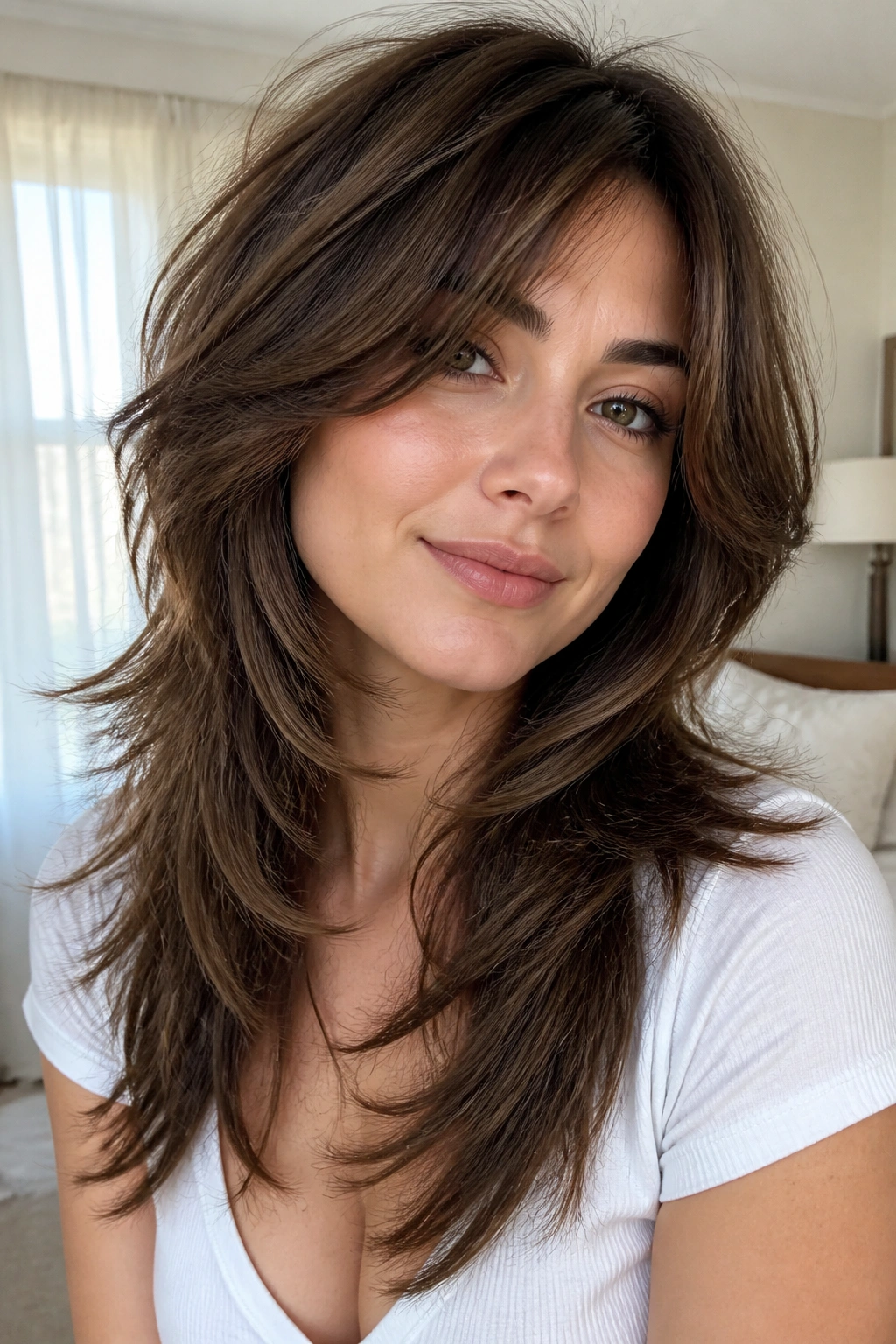
Feathering can look dated if the cut is wrong. If it’s right, it feels airy, polished, and oddly flattering in a way that never gets old. On a round face, feathered layers are useful because they break up width with soft diagonal lines instead of flat, blunt ones.
The Shape at a Glance
- The shortest face-framing pieces usually land around the cheekbone or just below it.
- The longest layers should fall past the collarbone for a stronger vertical line.
- The ends need light texturizing, not chunky chopping.
- Blow-drying away from the face gives the feathered effect its lift.
A feathered shag suits medium-thick hair best, because there’s enough body for the layers to show without looking sparse. Fine hair can wear it too, but the layering has to stay controlled. Too many short pieces, and the ends disappear.
I’d call this the cleanest-looking shag on the list. It still has movement, but it can be dressed up easily. A round brush, a soft bend at the ends, and a little shine spray are enough to make it look finished.
6. Piecey Shag with a Deep Side Part
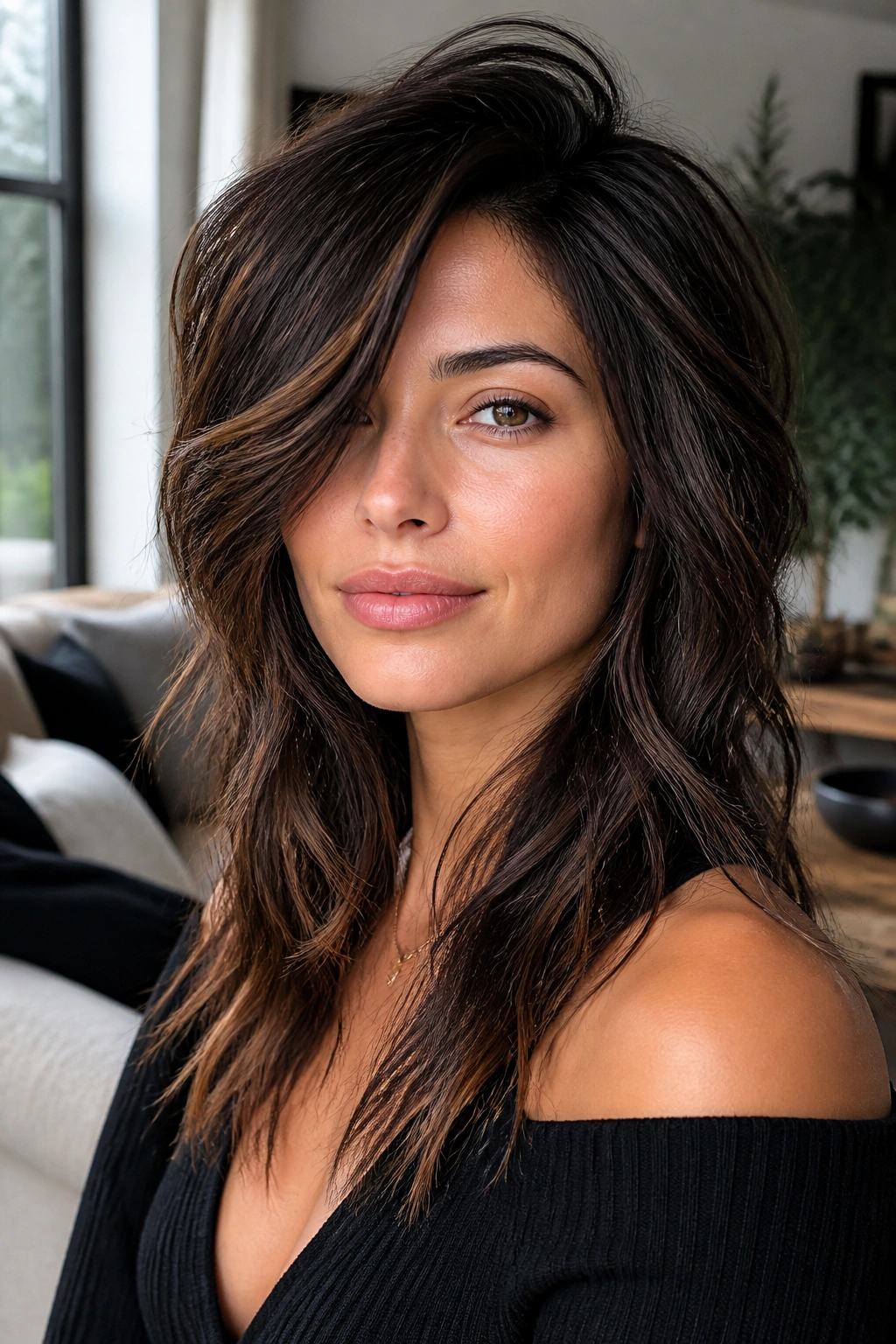
A deep side part does something a center part can’t. It breaks the symmetry of a round face and throws one side of the cut into a diagonal line, which makes the whole style feel longer and sharper. That’s a useful trick when you want your hair to pull focus upward and across instead of straight out.
The piecey part matters too. You do not want a single flat curtain of hair. You want separated strands, little bends, and some air between the layers. The texture is what keeps the side part from feeling too formal.
Try this if you like a little attitude in your haircut. It works well on wavy and straight hair, and it can hide a stronger cheek area on one side without looking like you’re trying to hide anything. A root-lifting mousse at the crown helps keep the part from collapsing during the day.
Tiny detail. Big payoff.
7. Long Shag for Straight Hair with Invisible Layers
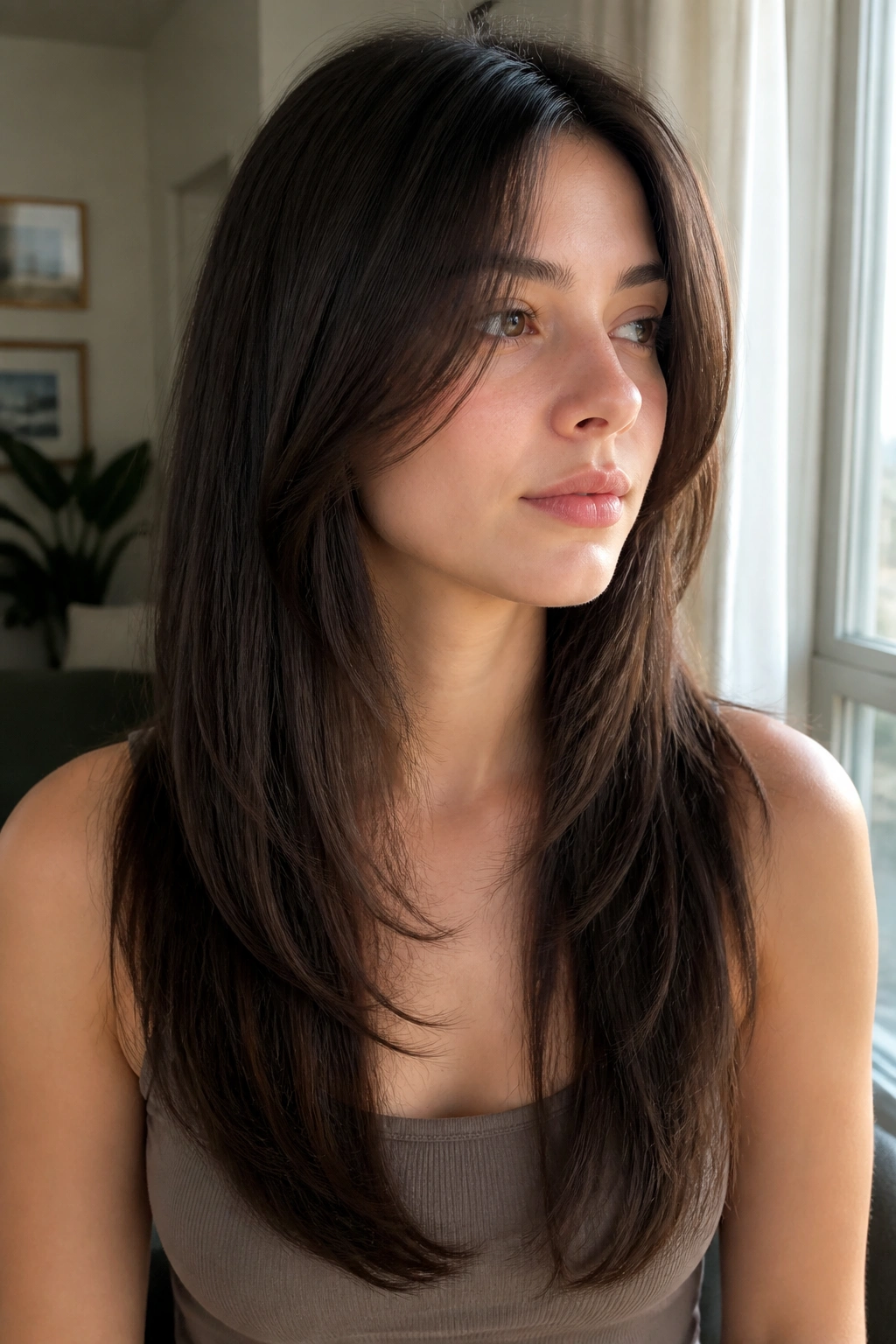
Straight hair needs a different plan. If you cut it too choppy, the layers can stick out in hard little steps. If you leave it one length, it can lie flat and widen the face instead of slimming it. Invisible layers solve that problem by removing weight inside the haircut while keeping the outer line long.
Ask for layers that begin around 2 to 3 inches below the chin, then get longer as they move down. The outer perimeter should still look smooth, almost sleek. The movement is tucked inside the shape, not broadcast all over the surface.
That makes this one a good choice if you like hair that can go from office-ready to loose and airy with a quick bend from a flat iron. A light smoothing cream at the ends keeps it from puffing. And if your hair is fine, this is far better than hacking in lots of short layers.
The goal is softness with discipline.
8. Curly Long Shag with a Rounded Crown
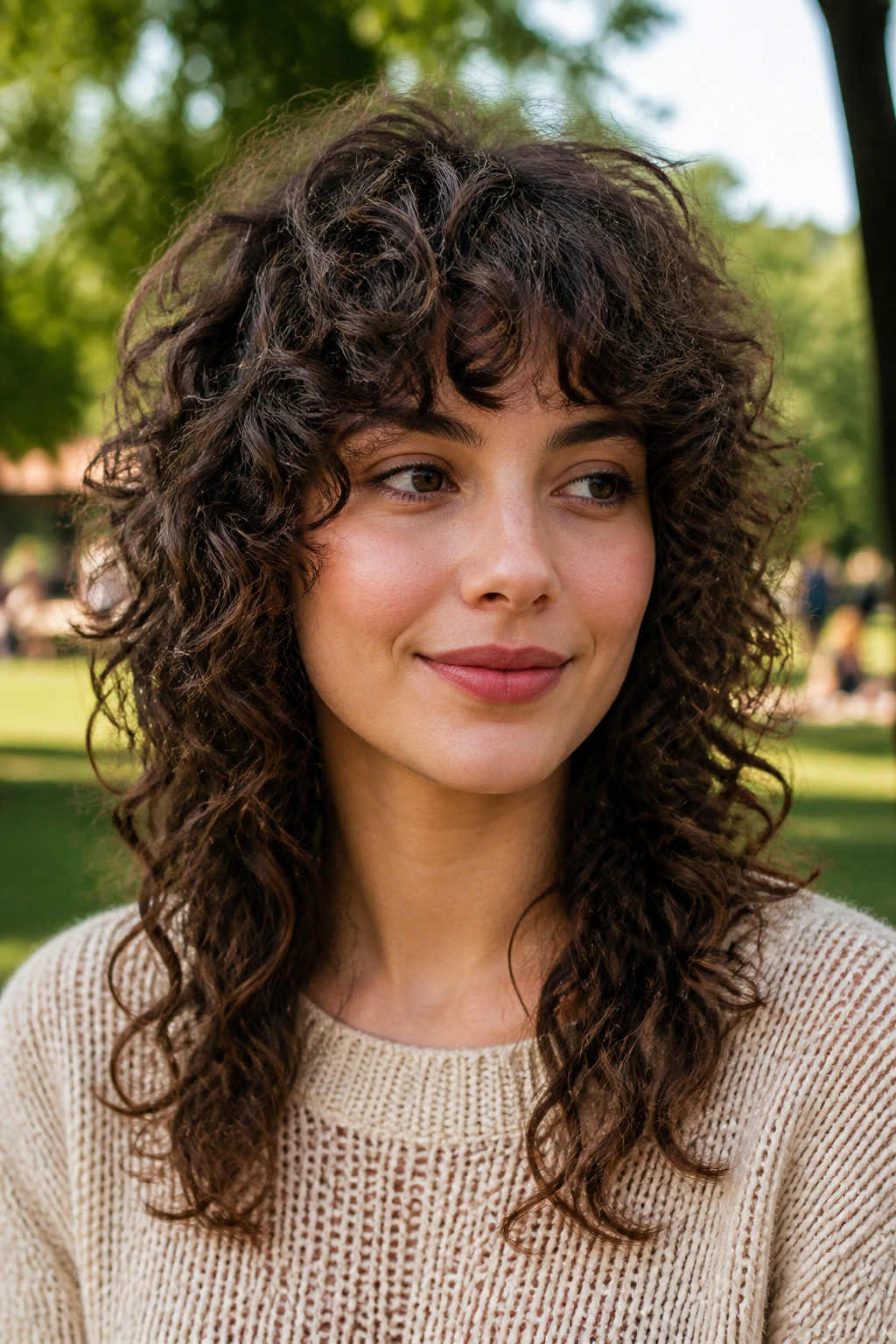
Curly hair and round faces can be a beautiful match, but only when the shape is cut with the curl pattern in mind. A long shag on curls should build height at the crown and let the curls taper around the jawline, not sit all in one wide ring around the cheeks.
Cut It Dry, Not Guessing
A dry cut is often the smarter move here because curls shrink. A layer that looks perfect wet can land too high once it dries. The stylist should watch how the curls fall naturally and trim to shape, not to a ruler.
- The crown should stay a little fuller to add height.
- Side layers need to curve past the cheekbone.
- Ends should be left soft so they don’t puff outward.
- A diffuser helps keep the top lifted without flattening the curl pattern.
This cut is generous, not fussy. It gives curls room to move and keeps the face from getting boxed in. The rounded crown is the part that changes the silhouette most. It lengthens the face in a quiet way.
9. Long Wolf-Shag Hybrid
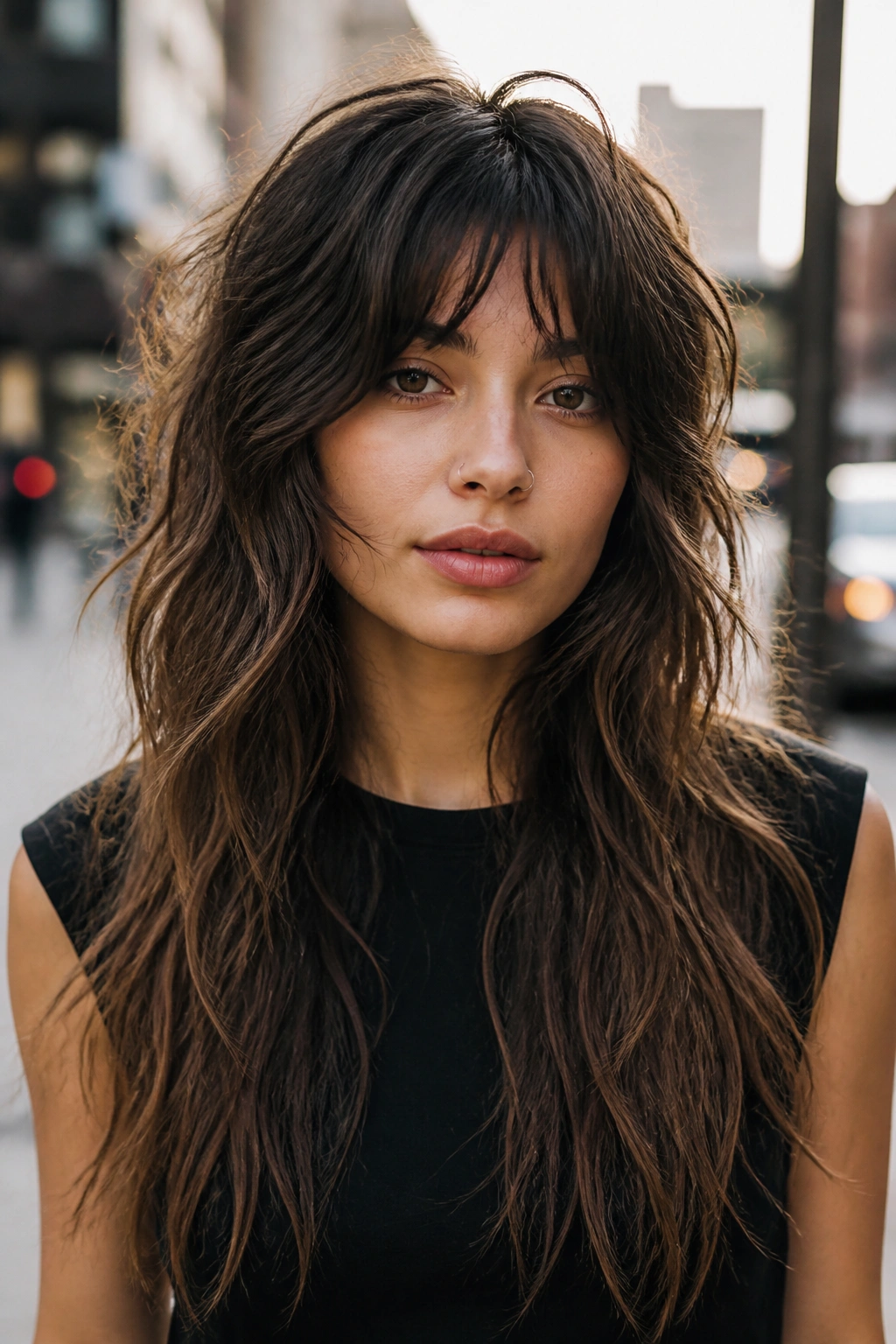
The wolf-shag hybrid is not for everyone. It’s heavier on texture, shorter at the crown, and a little more rebellious than a classic shag. But on a round face, the extra lift at the top can be a gift, because it shifts attention upward and makes the lower half of the face feel narrower.
The trick is keeping it long enough that it doesn’t turn into a mullet by accident. The back should still read as long hair, just with a little roughness around the edges. Face-framing layers can start around the lips or chin, then dissolve into longer lengths.
I’d recommend this if you like hair that looks better with a bend than with a perfect blowout. If you want neat, skip it. If you want texture, attitude, and a cut that forgives a bit of mess, this is the one.
A matte styling cream or dry texture spray usually beats glossy products here. Shine can make the layers look flat. This cut wants air.
10. Long Shag with Wispy Fringe and Ends
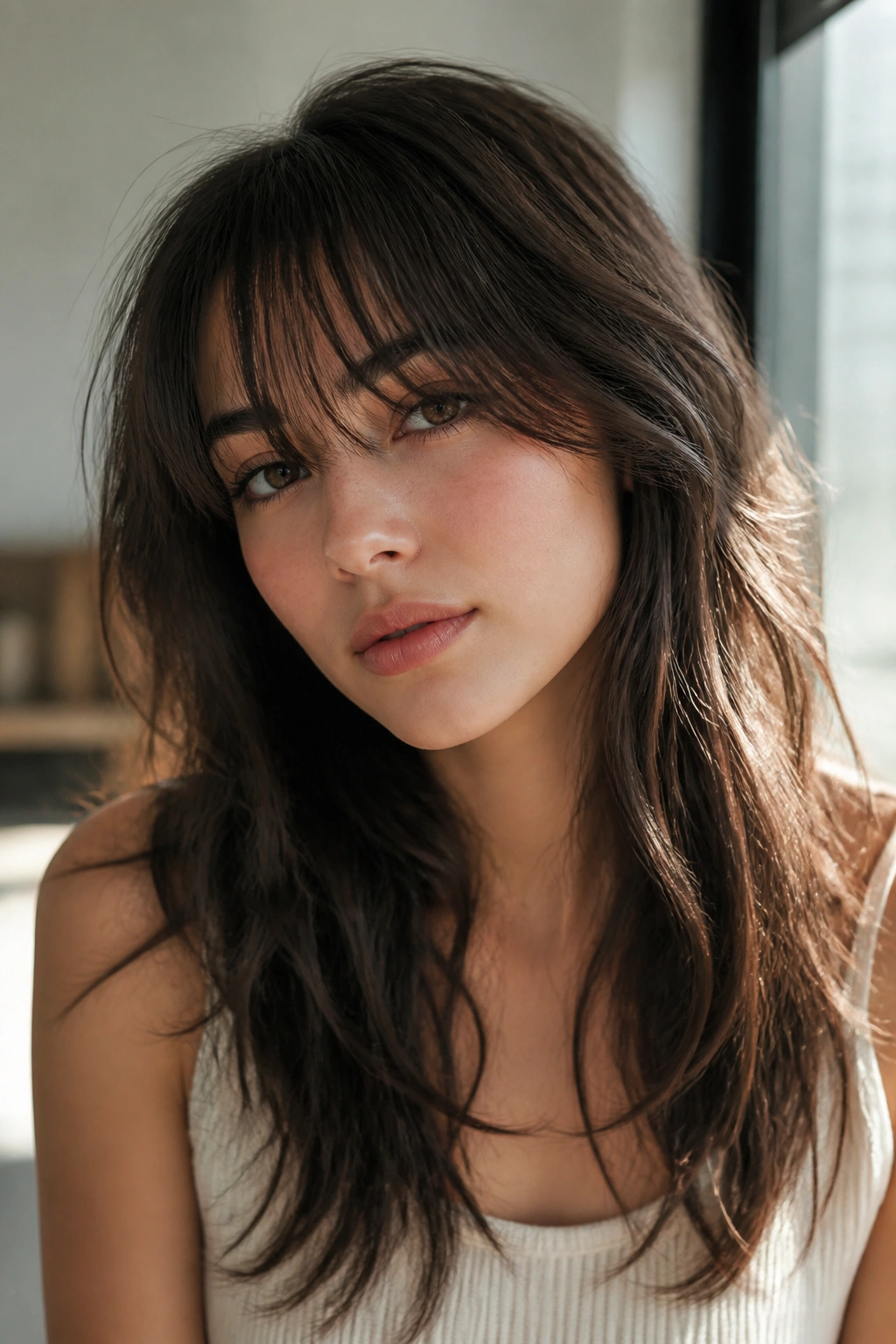
Wispy fringe is the softest way to wear bangs on a round face. It gives you coverage up front without building a heavy line across the forehead, and the broken ends keep the haircut from feeling too dense near the cheeks.
The fringe should be light enough that you can see a little forehead through it. That translucent quality matters. It keeps the top of the face open while the rest of the shag does the shaping work below. If the bangs are too thick, they can shorten the face.
The ends should get the same treatment. A little point cutting, a little texturizing, nothing severe. You want the lower edge of the cut to look airy and undone, not chopped off. This is one of those cuts that looks better the more it’s moved around.
If you like a romantic, slightly messy look, this one is easy to wear. It doesn’t demand perfect styling. It wants soft fingers through the fringe and a quick shake at the roots.
11. Collarbone-to-Chest Length Shag
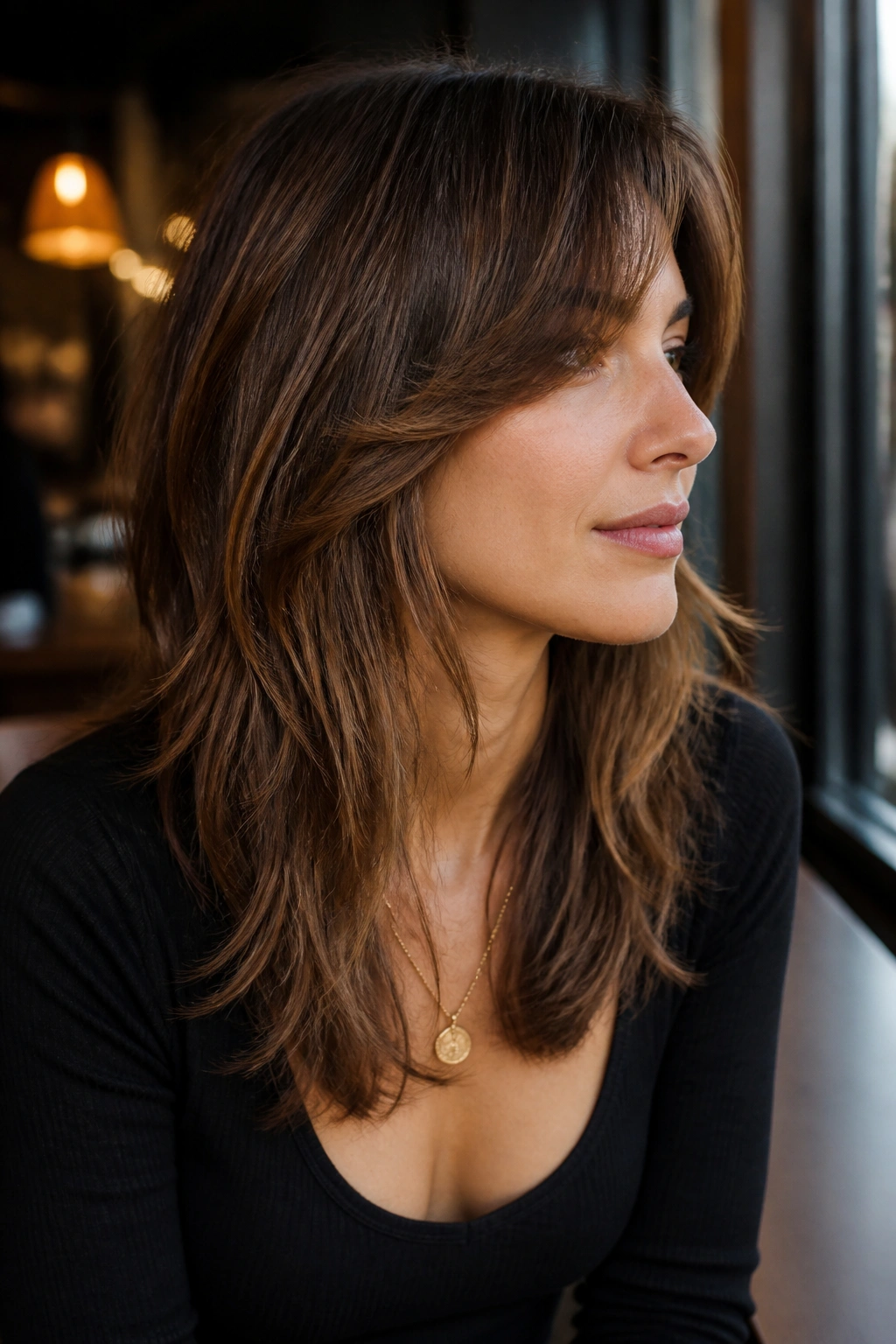
Length alone won’t flatter a round face if the weight sits in the wrong place. A collarbone-to-chest length shag works because it gives the face a long frame while keeping enough layers to avoid the blocky, curtain-like effect that straight long hair can create.
This length is the sweet spot for a lot of people. It’s long enough to slim the cheeks, but not so long that the shape goes flat around the ribs or waist. The layers should start low enough to keep the upper face open, and the shortest pieces should not stop at the widest point of the cheek.
I like this cut for people who want long hair but also want movement when they walk. It looks especially good with a side tuck or a loose wave. No need to overstyle it. A soft bend through the mid-lengths is enough.
If you’ve been growing your hair out and it feels heavy, this is often the reset that makes everything feel lighter again.
12. Long Shag with Grown-Out Bangs
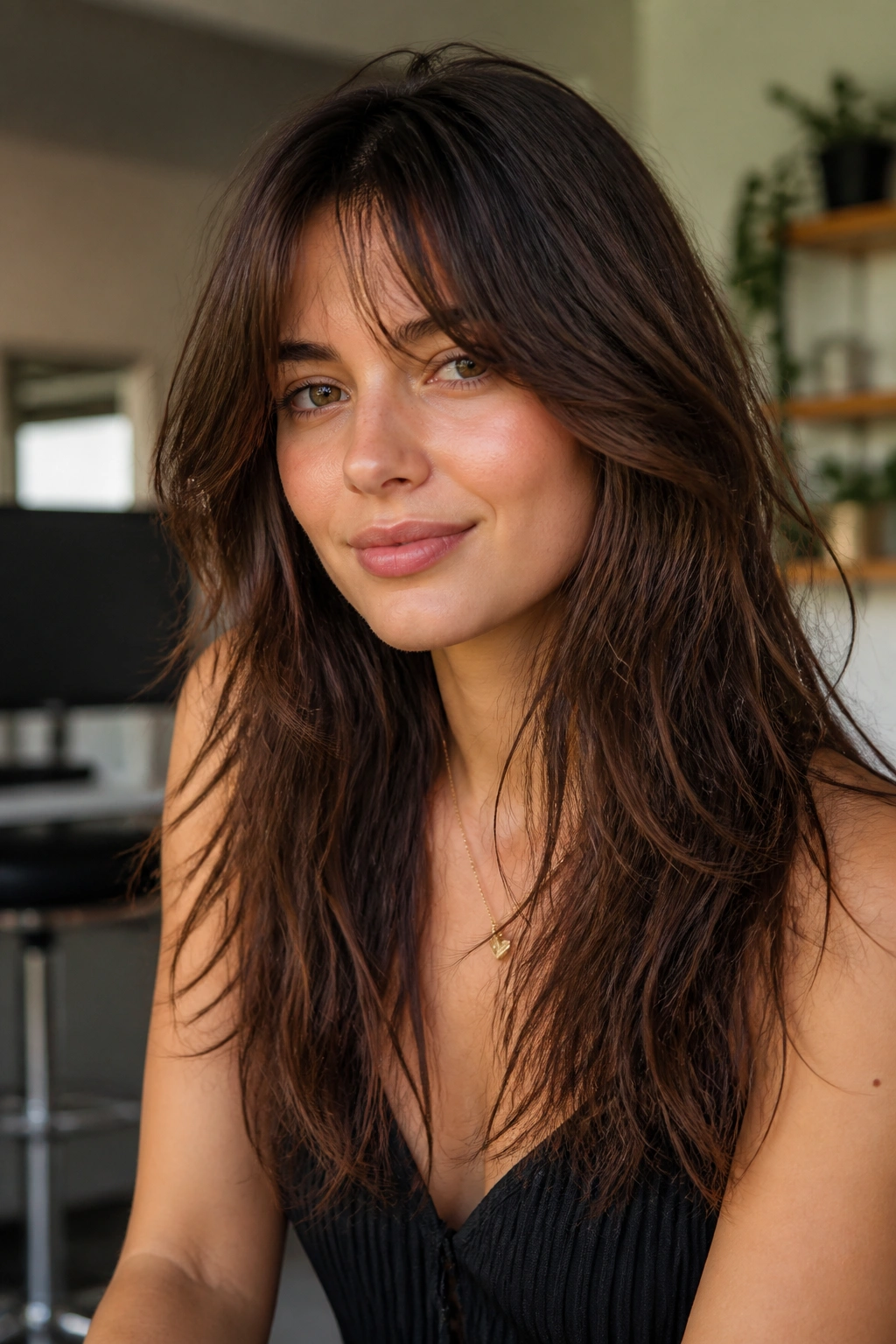
Grown-out bangs are the low-maintenance cousin of a polished shag, and that’s not an insult. They’re useful because they soften the forehead, blend into the front layers, and avoid that hard “bang line” that can make a round face look shorter.
The best version looks intentional, not like you simply forgot to cut your fringe. The bangs should sweep into the cheek layers, with the shortest point hovering around the brow or just below it. As they grow, they should still read as part of the haircut, not a separate piece hanging there.
This is a good pick if you hate frequent bang trims. It also works well for people who tuck hair behind one ear often, because the grown-out shape still looks balanced when one side is pulled back.
It’s a forgiving cut. That’s the appeal. You can let it live a little between salon visits and it still holds its shape.
13. Shag with Money Pieces
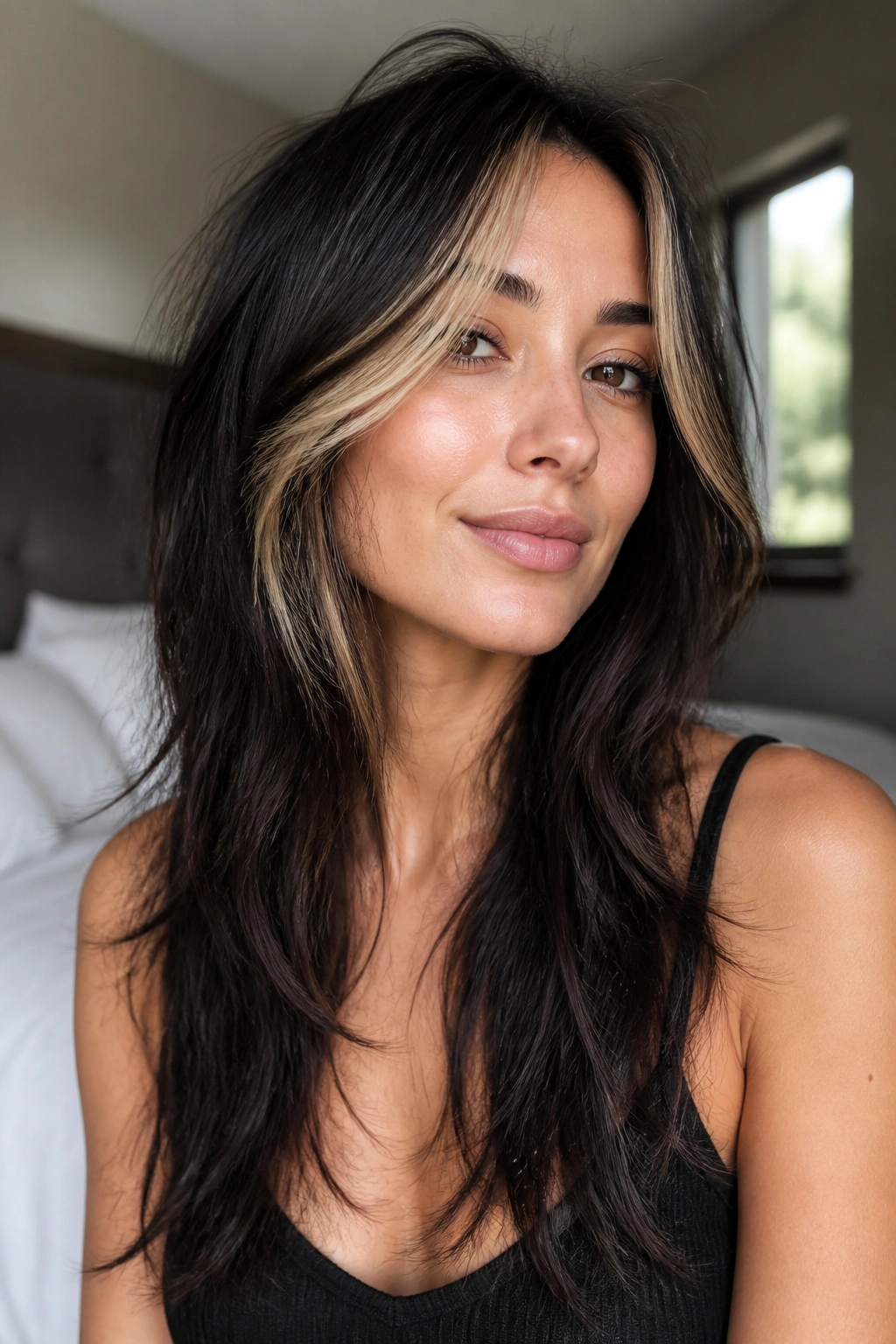
Money pieces are those brighter front sections that frame the face, and on a long shag they can change the whole read of the haircut. They draw the eye upward, which helps a round face feel a little longer, especially when the lighter pieces are placed around the temples instead of the widest part of the cheeks.
The color needs to be placed with care. Too much brightness at cheek level can widen the face. Keep the lightness a touch higher, then let it flow into longer layers. That gives you a lift without turning the front into a stripe.
This cut works especially well if you like contrast. Dark base, lighter front, textured ends. It has energy. It also photographs well in real life, which matters more than people admit.
Best Pairing
- Soft wave or loose bend
- Long curtain fringe or grown-out bangs
- Medium texture spray, not heavy cream
- Slightly off-center part if you want extra length
A shag with money pieces can look playful or sleek depending on how you style it. That’s why it’s such a good option.
14. Layered Shag with Flip-Out Ends
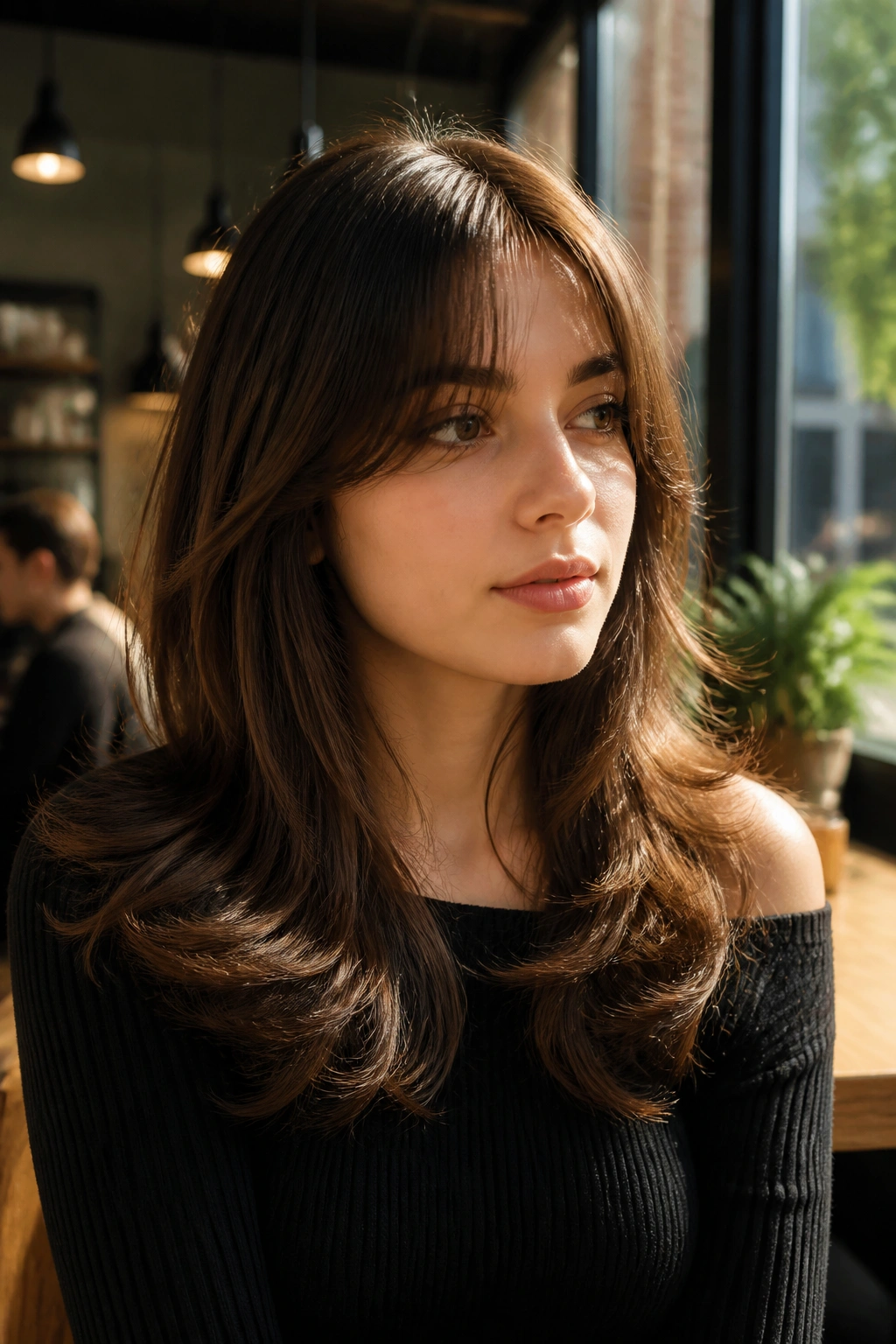
Flip-out ends bring motion to a shag without making it look overly messy. On a round face, the outward bend works if it starts below the jaw and keeps the eye moving downward. If the flip-out happens too high, around the cheeks, the haircut gets wider. That’s the part to watch.
The style feels a little retro, but not costume-y when the layers are long and soft. Use a round brush or a flat iron to flick the last inch of the hair away from the neck. Keep the flip loose. Crisp little hooks at the ends can look harsh.
This is a good option for fine to medium hair because the bend gives the illusion of fullness without needing huge volume everywhere. A small amount of mousse at the roots, then a light blow-dry, is usually enough.
One thing I like about it: it looks deliberate even when it’s not perfect. That makes it practical. Hair that still looks like hair after a long day is worth keeping.
15. Tousled Beachy Shag with Mid-Length Layers
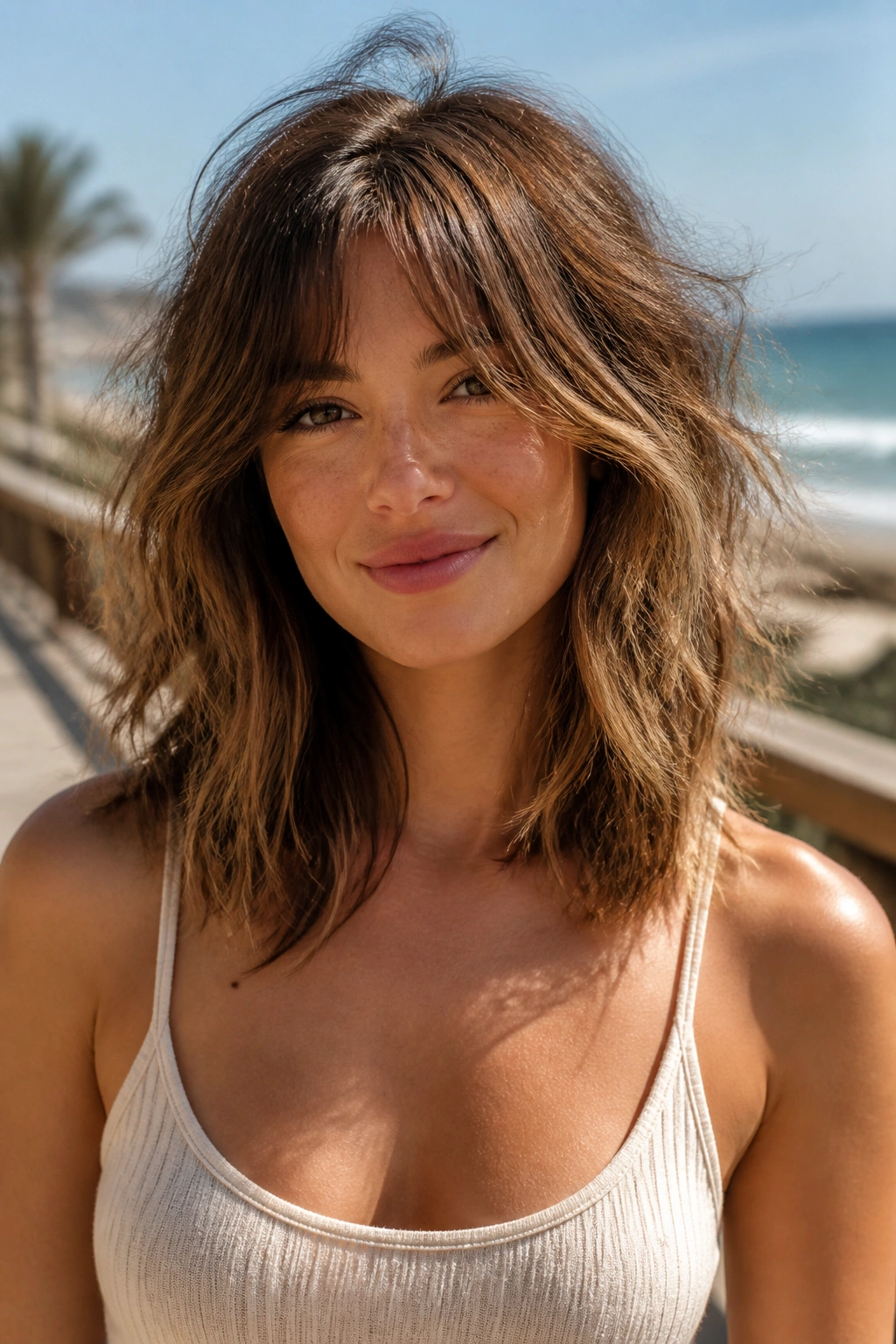
Beachy shag can go wrong fast. If the waves sit only at the cheeks, the face widens. If the texture stays low and loose, the haircut looks airy and long. So the placement matters a lot here.
Mid-length layers are the key. They should start around the collarbone area and keep drifting downward so the shape stays soft. A sea-salt spray or texturizing mist can help, but don’t drown the hair in product. You want piecey bends, not crunchy strands.
This cut is ideal for someone who likes the idea of undone hair more than the act of styling it. It looks best when there’s a little unevenness in the wave pattern. That’s part of the charm.
Air-dry if your hair already has wave. Diffuse if it needs help. Either way, keep the crown a bit lifted so the face gets that longer outline.
16. Long Shag for Fine Hair with Crown Lift
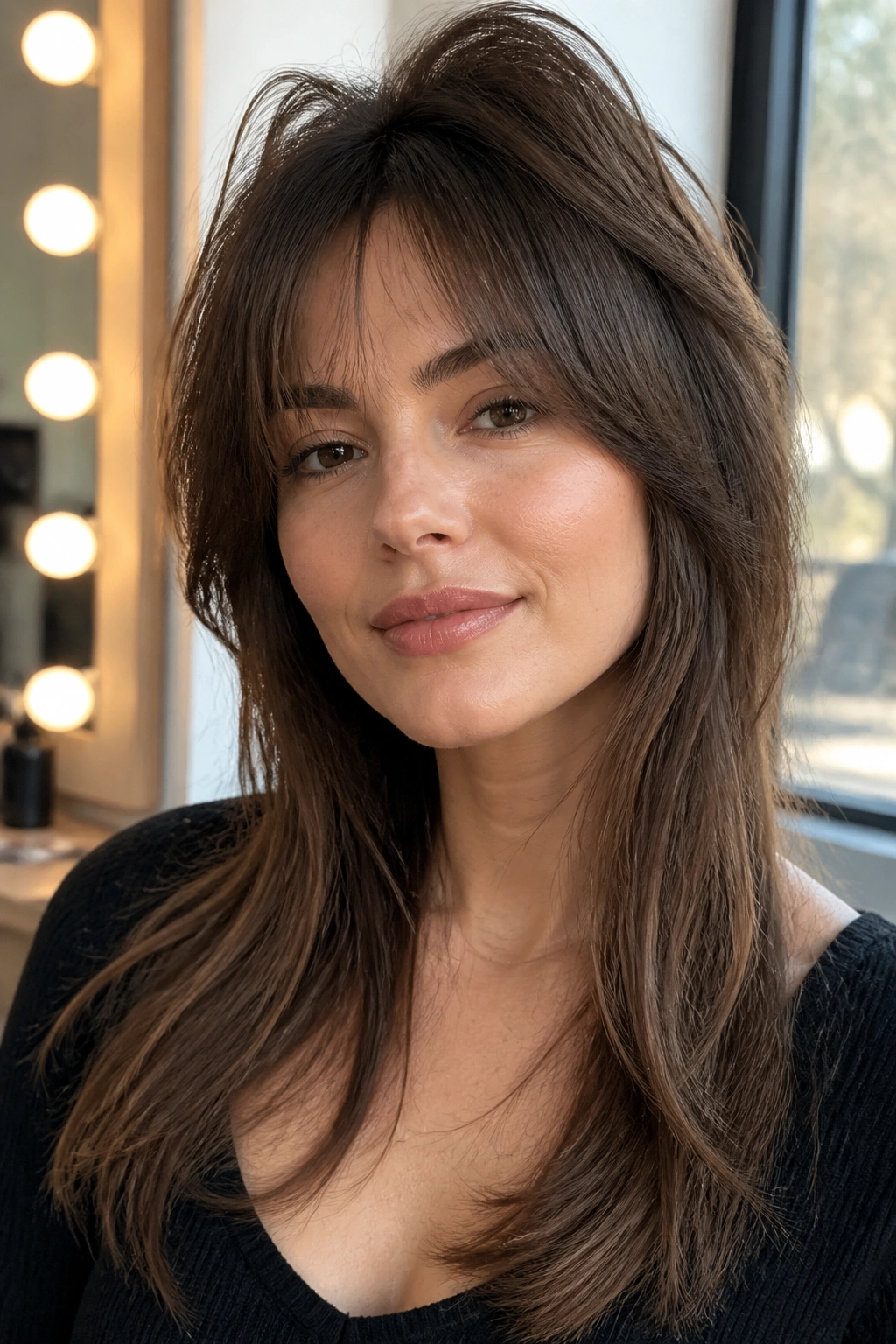
Fine hair needs restraint. Too many layers and it starts to look thin at the ends, which is the opposite of what you want. A long shag for fine hair should keep enough length to feel full while adding crown lift and a few well-placed layers to stop the style from falling flat.
What to Ask For
Ask for long layers, not lots of short ones. The top can be lightly textured to create movement, but the perimeter should stay strong. That gives the hair body where you see it and keeps the ends from looking sparse.
A root-lifting mousse at the crown helps more than people think. So does blow-drying the front sections away from the face using a medium round brush. The result is a taller silhouette, which flatters a round face instantly.
I’d skip heavy razoring here. Fine hair can fray fast. A clean, controlled cut with a few soft slices at the ends is safer and usually looks better.
This is one of those shags that looks expensive without trying hard. Not flashy. Just good.
17. Long Shag for Thick Hair with Internal Weight Removal
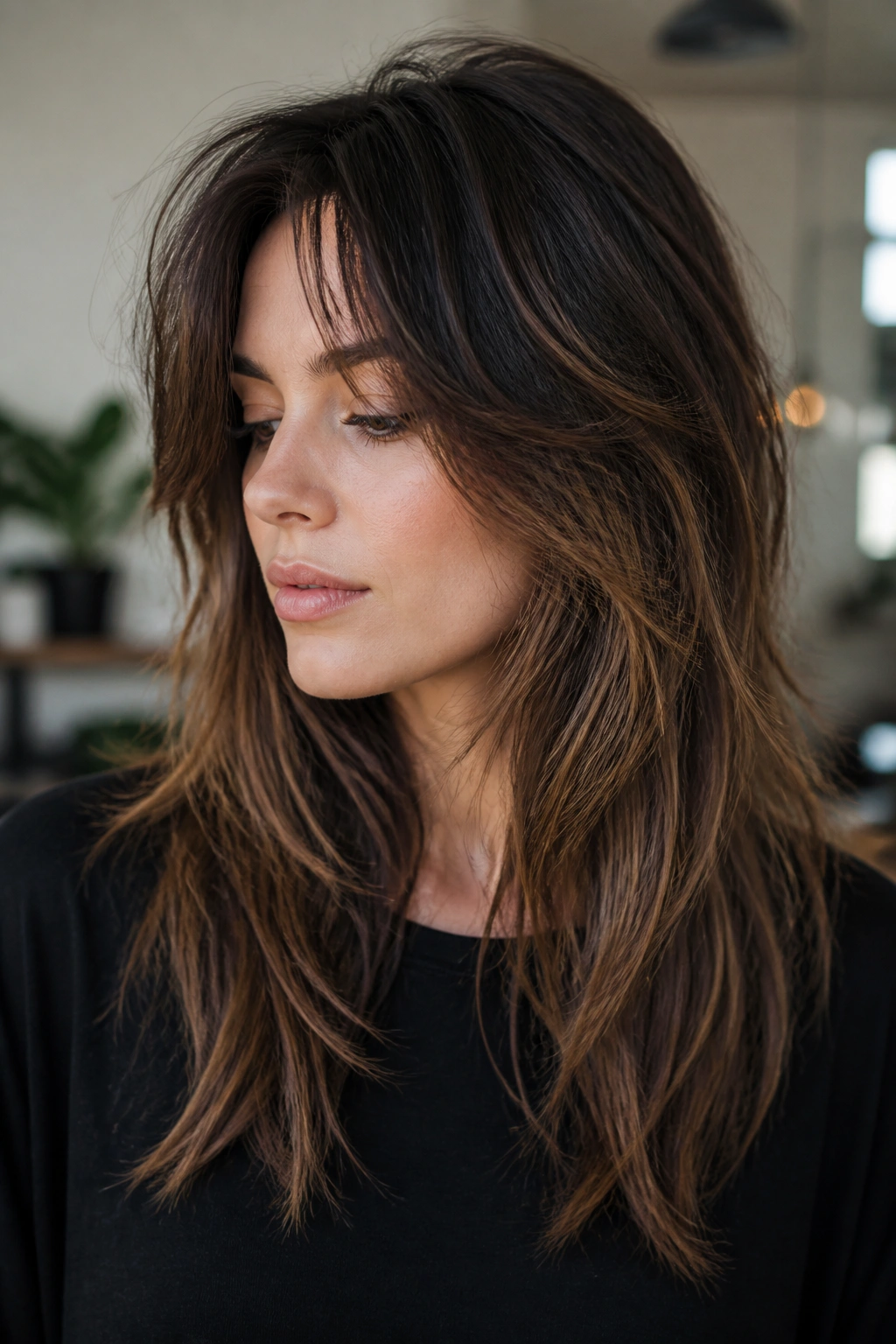
Thick hair needs the opposite problem solved. There’s often too much mass at the sides, and on a round face that can create a wide, helmet-like shape. Internal weight removal fixes that by taking bulk out from underneath while leaving the outside length intact.
The cut should move. That’s the point. If the stylist only trims the surface, the hair stays heavy and can pull outward at the cheeks. Ask for long layers with strategic debulking through the mid-lengths, especially if your hair is dense enough to swell after drying.
This style handles waves and bends well, and it usually grows out nicely because the long perimeter keeps everything connected. You still need a bit of smoothing cream or leave-in conditioner, though. Thick shag hair can get fuzzy if it dries too fast.
A clean blowout makes the layers show, but an air-dried version can work too. The cut does most of the work; styling just nudges it in the right direction.
18. Soft Romantic Shag with Swoopy Layers
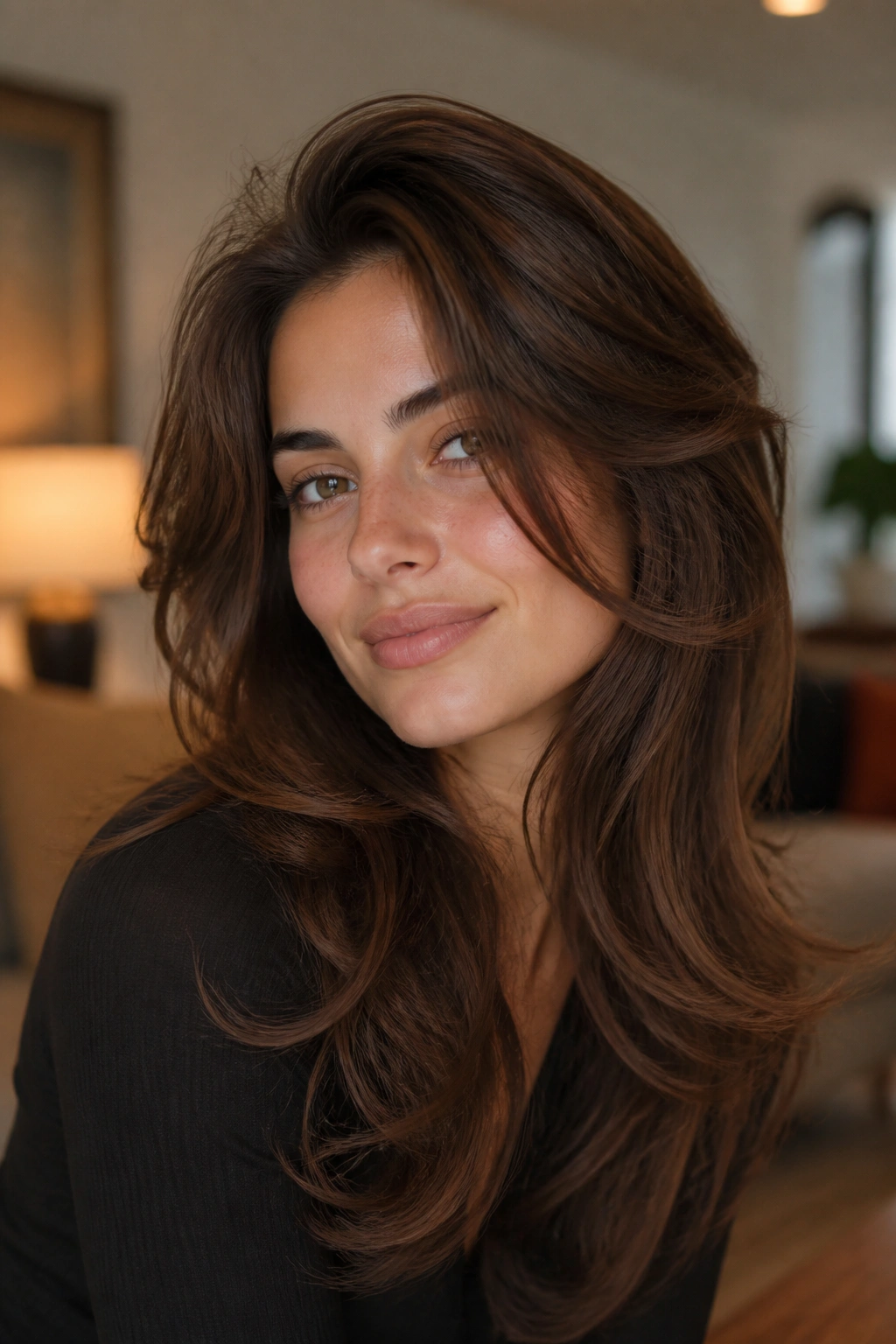
Romantic shags are softer than the choppier versions most people picture. The layers sweep instead of spike, and the face-framing pieces curve gently around the jaw before slipping down into the length. That softness is useful on round faces because it doesn’t add hard edges where you don’t want them.
This cut looks best when the top is lightly lifted and the front pieces have movement, not volume in a puffed-up sense. Think bend, not bump. A large round brush or a blowout brush can shape the front away from the face in one smooth motion.
A Few Good Details
- Keep the shortest layer around the cheekbone or below.
- Let the longest pieces skim the chest.
- Use a flexible hold spray so the waves stay touchable.
- Avoid heavy middle-section layering, which can widen the profile.
This is the shag for people who want softness and polish in the same haircut. It can look almost graceful when styled with a loose wave and a side or center part.
19. Long Shag with Airy Side Bangs
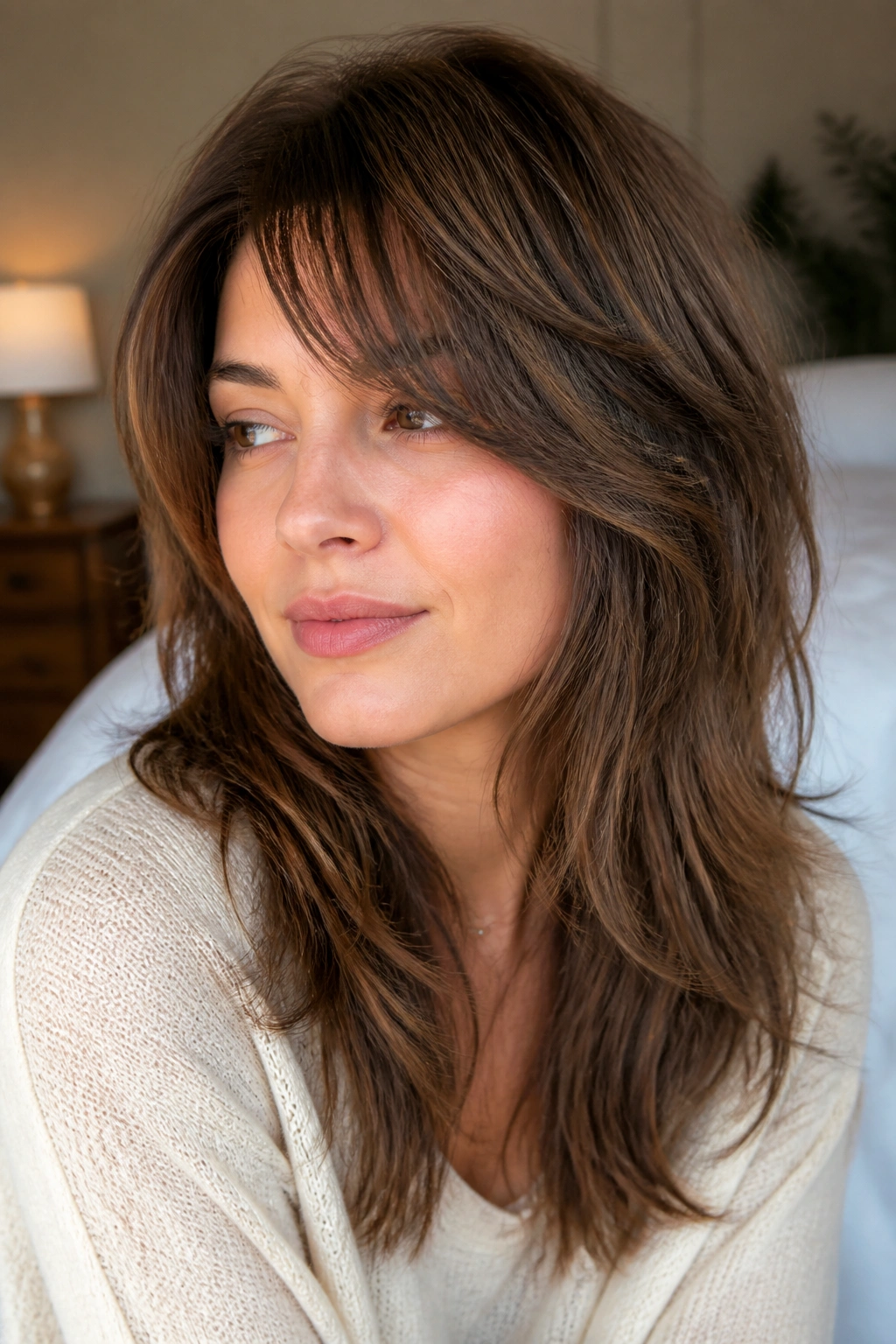
Side bangs are underrated. A good side fringe cuts across the face diagonally, and diagonals are your friend when the goal is to make a round face feel longer. The trick is keeping the fringe airy enough that it doesn’t turn into a heavy curtain over one eye.
The side bang should start higher on the forehead, then taper into the shortest front layers. That creates a line that flows into the rest of the shag instead of sitting on top of it. The result feels easy, not dated.
This cut is useful if your face is round but one side tends to feel fuller than the other. The fringe gives a bit of directional movement and makes the haircut less symmetrical. A blow-dry with a small round brush helps the fringe settle without flipping into your eyes.
It’s one of the most wearable options here. Not flashy. Just smart.
20. High-Volume Glam Shag with Big Waves
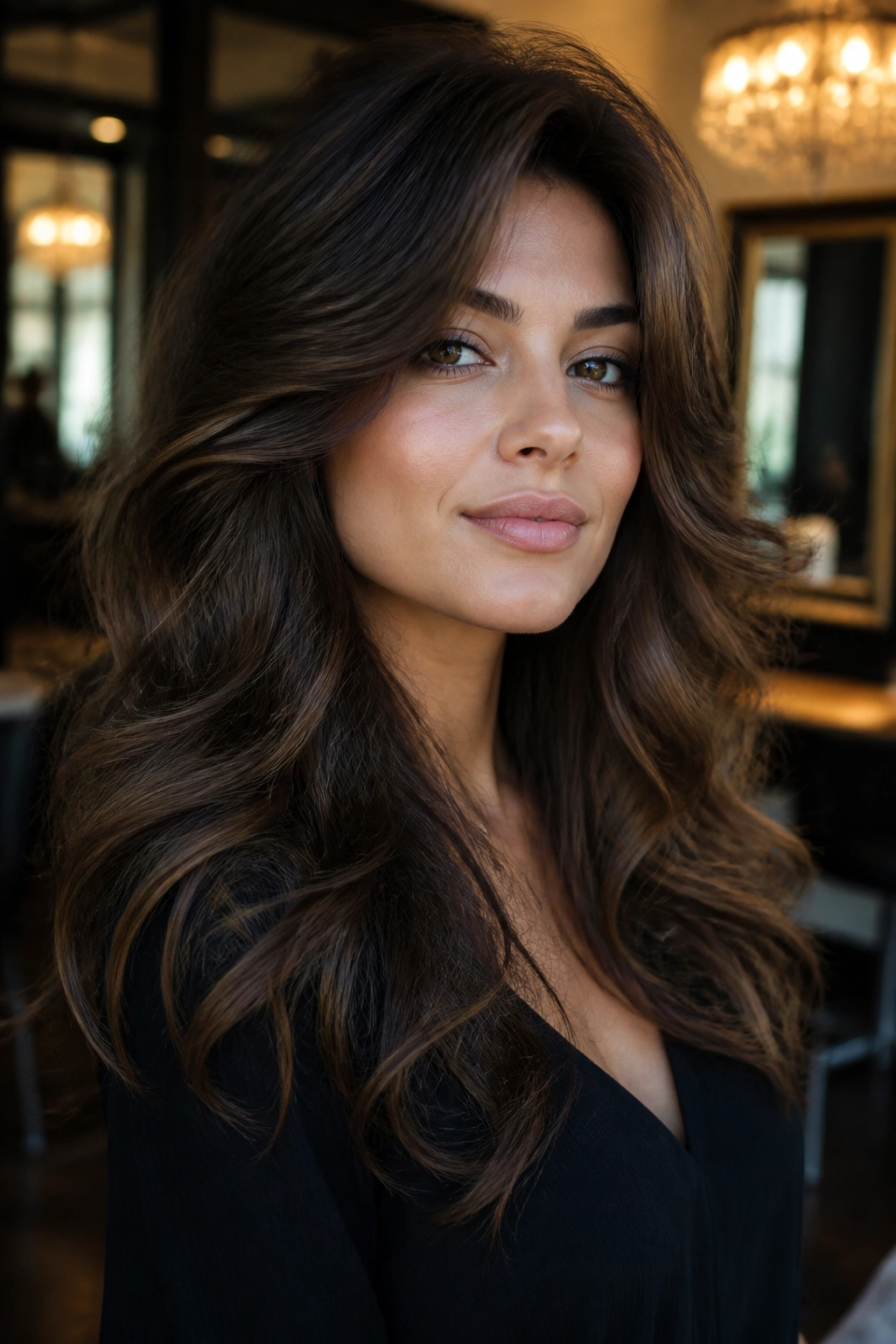
Big waves can make a shag look dressy, especially when the layers are long and the crown has some height. On a round face, the goal is to keep that volume from sitting right beside the cheeks. Build it higher, let it cascade lower, and the shape reads glamorous instead of wide.
A 1.25-inch or 1.5-inch curling iron usually does the job. Wrap sections away from the face, leave the ends slightly straighter if you want that modern shag feel, then brush the curls out once they cool. The brushed wave gives more width in the hair, but the long layers keep it from swallowing the face.
This is a strong choice for events, dinners, or any day you want the haircut to feel a little extra. A root clip at the crown while the hair cools can help the top stay lifted. That one move changes the silhouette more than people expect.
Do not let the biggest wave sit at cheek level. That’s the one rule worth keeping.
Final Thoughts
A good long shag for a round face is never only about being “choppy.” It’s about placement, balance, and a little restraint in the wrong places. The best versions create height at the crown, movement through the lengths, and soft framing that doesn’t press into the cheeks.
If you’re taking one thing to the salon, make it this: bring a photo of the shape you like, then talk about where the shortest face-framing pieces should land. That one detail can save you from a cut that looks cute on the chair and odd at home.
Texture matters too. Straight hair, waves, curls, fine strands, thick strands — they all want a different version of the shag. Get the cut to work with the hair you actually have, and the style gets easier. A lot easier.
