



A medium shag can do something a blunt shoulder-length cut rarely manages for a round face: it breaks up width without stealing all the hair’s presence. The shape feels lighter around the cheeks, the crown gets a little lift, and the whole cut moves in a way that reads soft rather than puffy. That’s the sweet spot people are usually after with medium shag haircuts for round faces.
The trick is placement. If the shortest layers sit right at cheek level, the cut can widen the face fast. Push those face-framing pieces a little lower, keep some height up top, and the eye starts traveling vertically instead of side to side. Small shift. Big difference.
Hair texture changes the game too. Fine hair needs shape without too many short internal layers. Thick hair usually needs some controlled removal of bulk so it doesn’t balloon out at the sides. Wavy hair can take more texture. Curly hair needs enough length in the perimeter so it doesn’t turn into a round halo. That part gets missed a lot.
And no, a shag does not have to mean heavy, choppy, rock-band hair. It can be polished, airy, and easy to wear on a Tuesday morning with no drama. The cuts below lean on movement, smart layer placement, and just enough attitude to flatter a fuller face shape without looking like they tried too hard.
1. Collarbone Shag with Curtain Bangs
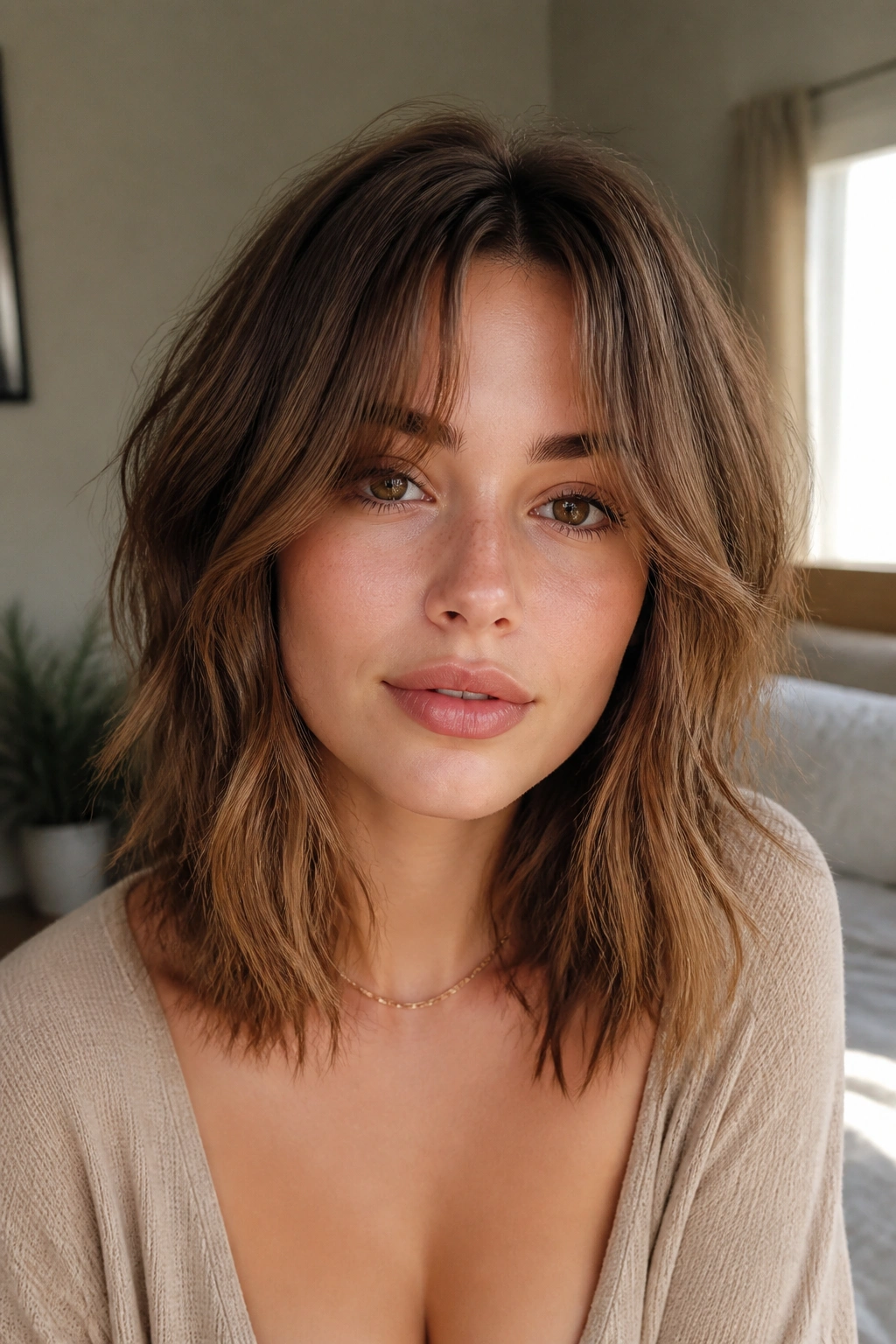
This is the shag I’d hand to someone who wants shape without a sharp edge. The collarbone length keeps the hair from bunching up at the cheeks, and the curtain bangs split the face in the middle instead of boxing it in. Done well, the whole cut feels open and a little airy.
Why It Works
The longest layers should fall just past the chin and skim the collarbone. That line pulls the eye down, which is exactly what a round face needs when the goal is a softer outline. Keep the fringe long enough to tuck behind the ears, too. That little detail matters more than people think.
- Ask for the shortest front pieces to start about 1 to 2 inches below the cheekbone.
- Keep the bangs blended into the sides so they don’t look like a separate helmet.
- Style with a 1.25-inch curling iron and leave the ends out for a relaxed bend.
- Finish with a light mist of texture spray, not a heavy wax.
Best for: hair that has a little bend already, or hair that holds a soft wave after blow-drying.
2. Razor-Cut Shag with a Deep Side Part
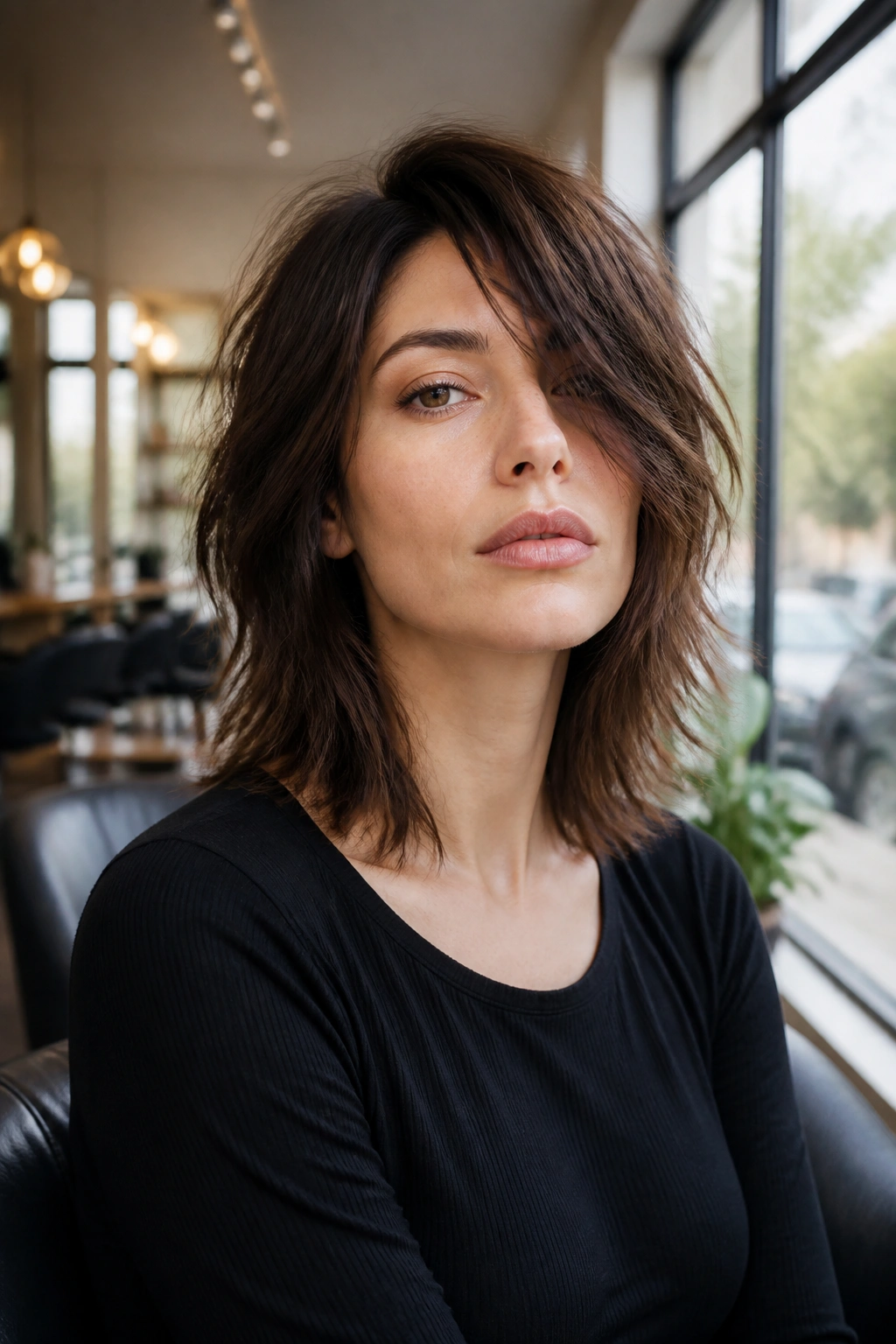
A deep side part changes the whole mood of a shag. It creates asymmetry, and asymmetry is your friend when the face is naturally full through the cheeks. Razor cutting adds softness at the ends, so the hair moves instead of sitting in one dense block.
The best version of this cut has a side part that falls roughly over the arch of one eyebrow, then shifts the front layers across the forehead and down the cheek. That diagonal line is doing work whether you notice it or not. It breaks the circle of the face.
This one looks especially good on straight to wavy hair because the razor gives the ends a little feathered edge. Keep the layers below the jawline and let the side front piece hit around the upper lip or chin. Shorter than that can get messy fast. Longer than that, and the shape starts to lose its edge.
3. Feathery Shag with Face-Framing Layers
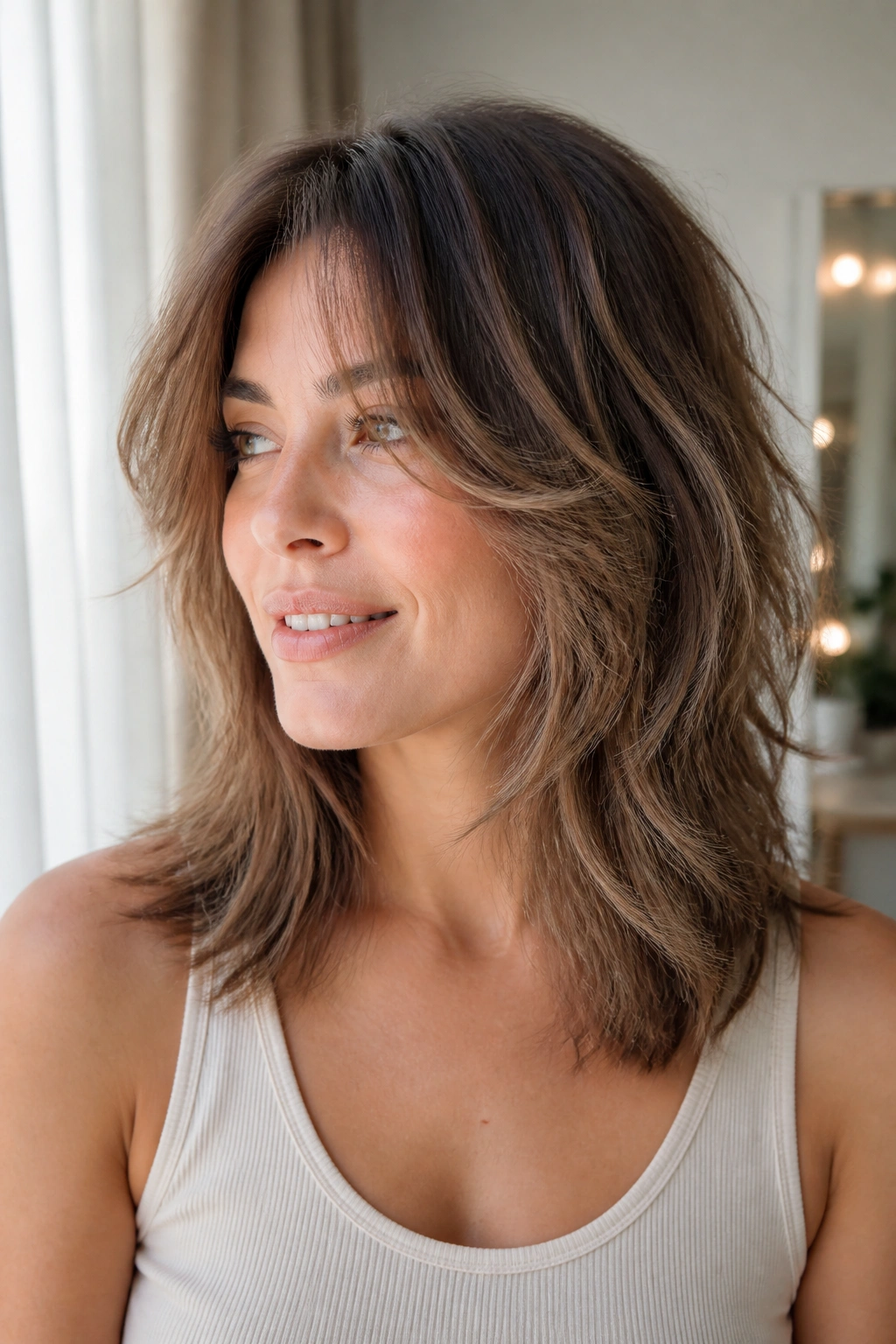
Why does this style look so easy? Because it cheats in a smart way. The feathered layers are soft at the ends, but the cut still builds height near the crown and movement through the sides, which keeps a round face from reading too wide.
What Makes It Different
Instead of a chunky, piecey finish, this shag uses lots of small, light layers that melt into one another. The front pieces should graze the jawline and then continue into the length without a hard stop. That smooth transition is what keeps the face from looking boxed in.
A lot of stylists will over-thin fine hair when they hear “feathered,” and that’s a mistake. You want airy ends, not see-through ends. Ask for movement, not a heavy razored sweep. If your hair is straight, a round brush and a quick bend at the ends will bring the shape to life. If it’s wavy, a little mousse at the roots is enough.
How to Wear It
- Blow-dry the crown upward for 15 to 20 seconds per section.
- Tuck the front pieces behind one ear on one side for a softer asymmetrical line.
- Use a small amount of smoothing cream on the ends only.
4. Wavy Shag with Bottleneck Bangs
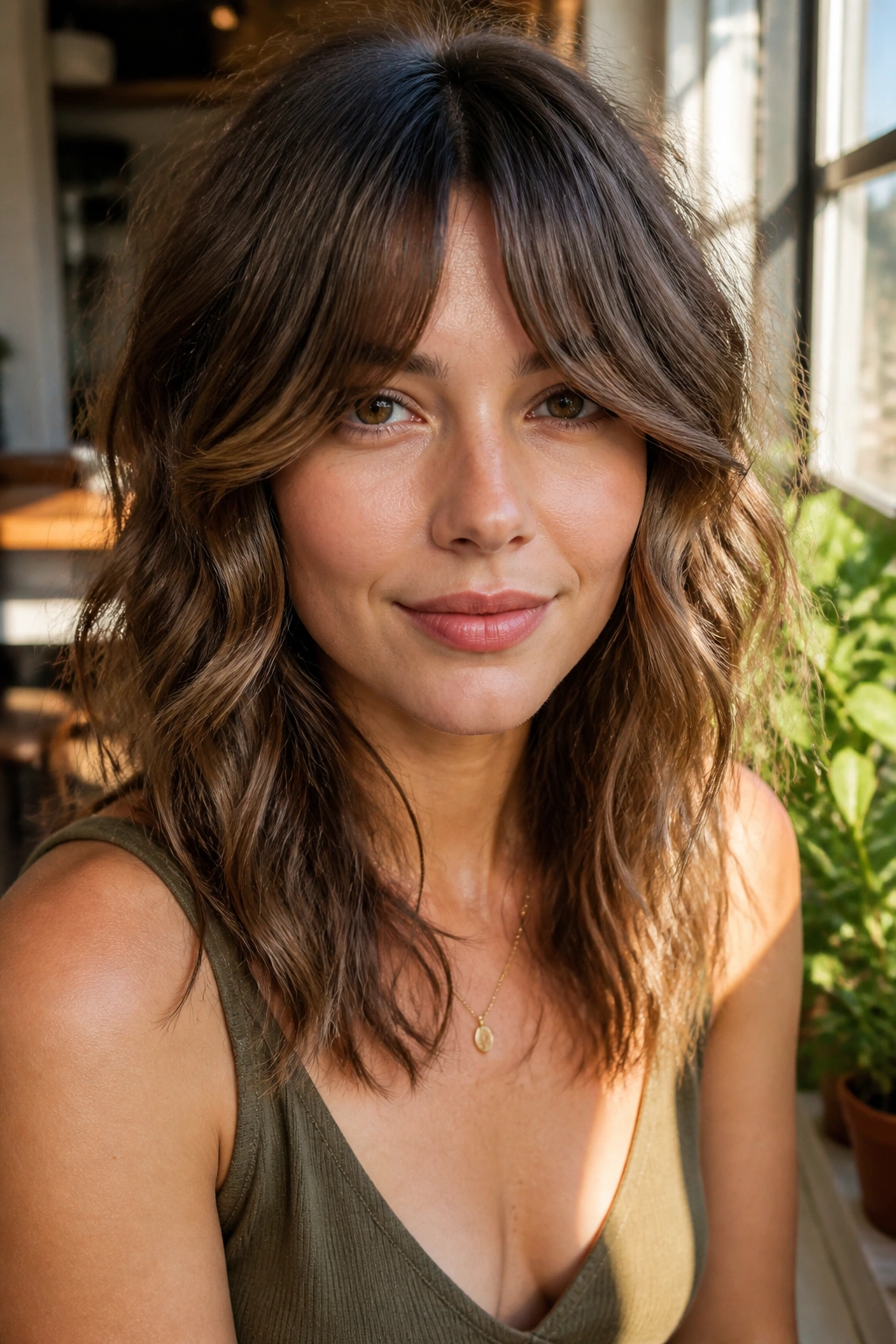
A round face and bottleneck bangs get along better than people expect. The narrow center opening keeps the forehead visible, then the fringe opens out around the eyes and cheekbones instead of cutting straight across the face. It feels softer than blunt bangs and less obvious than a full curtain fringe.
I like this cut on medium hair that has a natural wave, because the bend in the lengths helps the shag feel lived-in instead of over-styled. The shortest pieces should stay below the widest part of the cheeks. That one rule saves the whole look. If the layers jump up too high, the face can start to look wider even when the hair is pretty.
For styling, twist two-inch sections around your fingers while the hair is damp, then air-dry or diffuse on low heat. Don’t brush it to death. You want the waves to sit in loose ribbons, not one big cloud. A pea-sized amount of curl cream is enough for most hair; too much will drag the layers down.
- Best for natural wave or soft bend
- Good if you want bangs without a heavy line
- Looks best with a center or slightly off-center part
5. Layered Lob Shag with Flipped-Out Ends
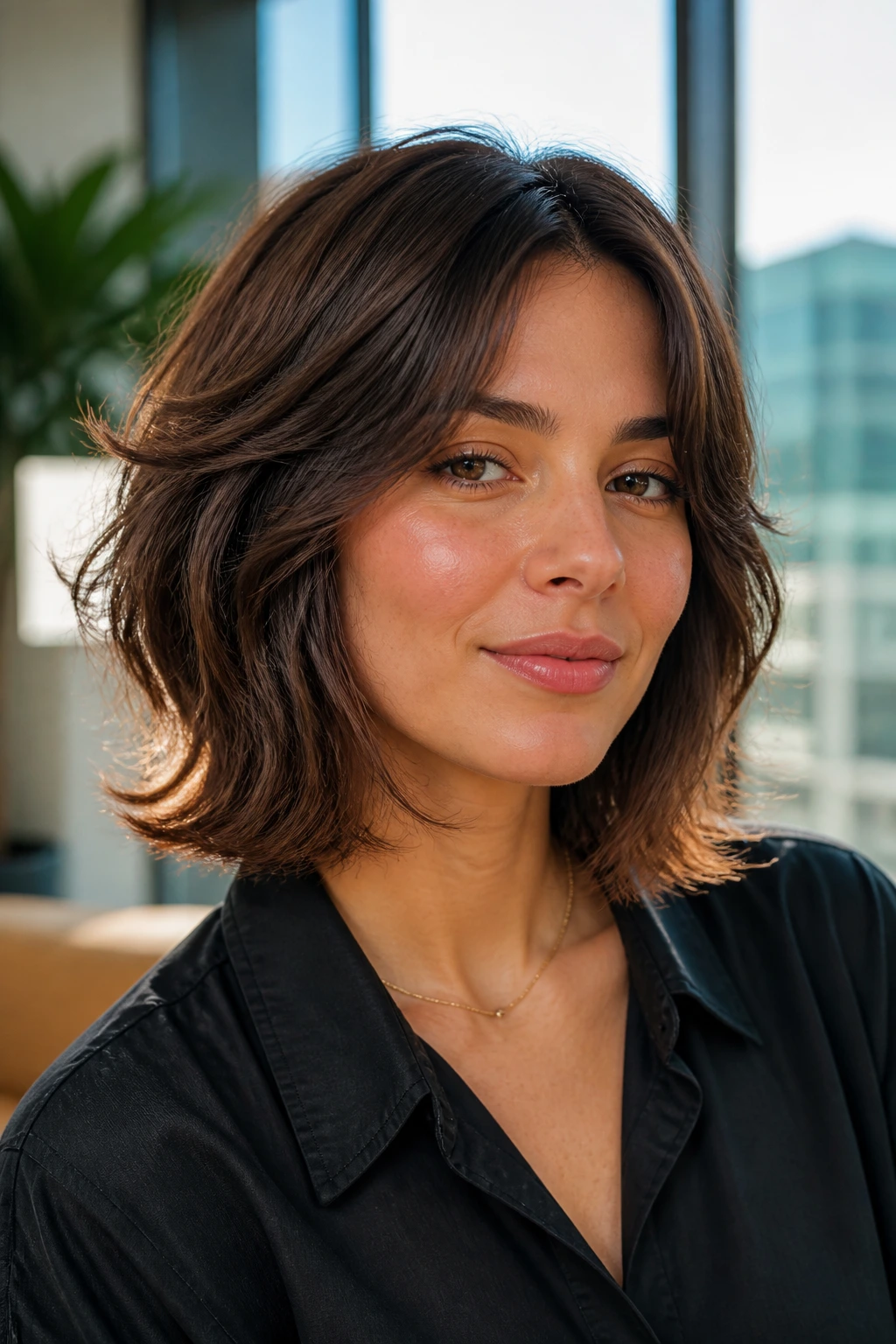
This one is a little more polished than the average shag, and that’s exactly why it works. The length sits between the chin and collarbone, so the cut doesn’t swell out at the cheeks. Then the flipped-out ends break up the shape and keep the hair from reading flat or square.
The styling is the point here. A round brush, a medium barrel brush, or even a large curling wand turned outward at the ends gives this cut its lift. Keep the root area smooth and save the bend for the bottom third of the hair. That contrast helps elongate the face.
If you want to make the cut feel softer, ask for long internal layers instead of heavy choppy ones. You’ll still get motion, just not that ragged edge some shags have. I’m a fan of this version for people who work in places where a more undone cut would feel out of place. It has personality, but it’s still tidy enough to wear with a blazer.
6. Wolf-Inspired Medium Shag
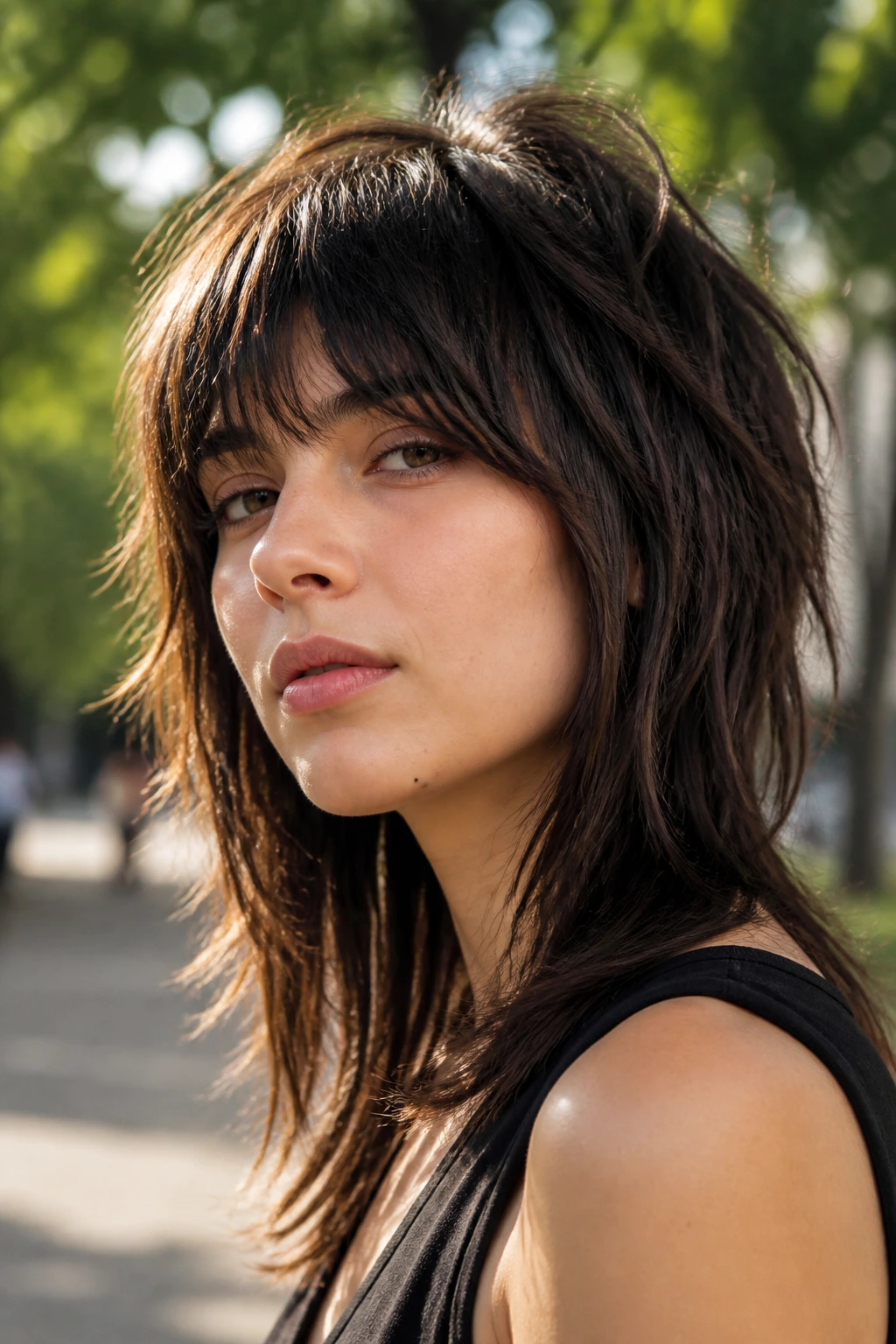
Unlike a full wolf cut, this version keeps the edges more controlled. That matters on a round face, because too much bulk at the sides can make the silhouette feel wide and top-heavy. The medium shag with wolf energy is all about crown height, longer nape length, and a little controlled messiness through the middle.
The cut should look a touch rebellious, but not extreme. Ask for shorter layers around the top crown, then keep the front lengths long enough to slide past the jaw. That makes the face appear longer without turning the style into a mullet clone. It’s a useful distinction.
Who should pick this? Someone with thick hair, a little natural texture, or a willingness to rough-dry and go. It is not the best choice if you want a clean, polished finish every day. But if you like your hair with some edge and you don’t mind a bit of movement around the ears, this version has real bite.
7. Airy Shag with Crown Lift

A round face needs lift in the right place. Not at the cheeks. At the crown. That is the whole game with this haircut.
Why It Works
The top layers are cut to sit shorter and lighter, while the sides stay longer and looser. That keeps the volume from spreading horizontally. Instead, the eye goes upward first, then down along the face-framing pieces. It sounds small, but it changes the shape a lot in person.
- Ask for internal layering at the crown, not a choppy top layer.
- Keep the side lengths grazing the collarbone.
- Use root lift spray on damp hair, then rough-dry the roots with your fingers.
- Finish by pinching just the ends with a tiny bit of texture cream.
This style is one of my favorites for finer hair that tends to collapse. You get air, not bulk. The hair feels lighter on your head too, which sounds minor until you wear it all day and realize the difference.
8. Soft Shag with Cheekbone-Grazing Pieces

This cut is for someone who wants the face framed, but not loudly. The trick is the placement of the shortest side pieces. They should skim the upper part of the cheekbone and then fall away toward the jaw, never stopping dead at the fullest point of the face.
That subtle length shift makes the whole haircut look tailored. The shape is gentle, but it still does real work. I also like it because it plays nicely with makeup. A little blush, a little highlighter, and the layers won’t compete with your face; they’ll sit around it.
A soft shag like this is especially good if you wear your hair down most days and want something that doesn’t need constant restyling. A large round brush, a bend at the ends, and a light mist of flexible spray is usually enough. Skip the crunchy products. They kill the movement fast.
Tip: if your stylist wants to cut those front pieces right at cheek level, ask them to drop the line a touch lower. That tiny shift keeps the width under control.
9. Shag with Wispy Micro Fringe
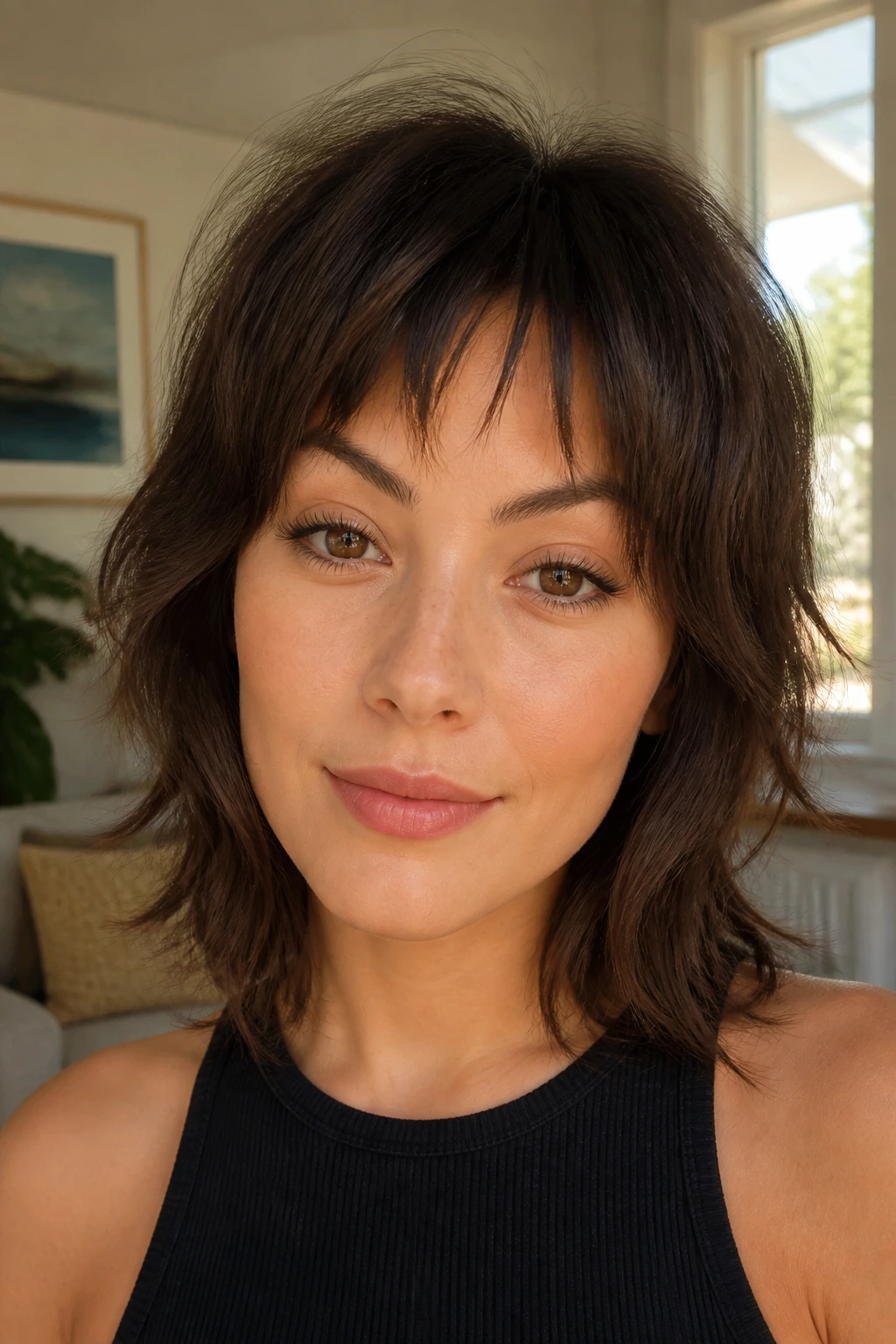
Should everyone with a round face avoid a micro fringe? No. But this is the one cut in this list that needs a little honesty. A wispy micro fringe can work, yet only if the rest of the haircut does enough lengthening around the sides.
The fringe itself should stay airy, broken up, and soft. Never dense. If it gets too full, the forehead looks shorter and the face can read even rounder. The rest of the shag should be longer through the temples and jaw, almost like a frame with breathing room. That balance keeps the fringe from feeling like it swallowed the face.
I like this look on people with a playful style who don’t mind a bit of attention on the eyes. It’s not the safest choice, and that’s part of its charm. To wear it well, keep the texture undone and the sides stretched out with a soft wave. If you straighten everything perfectly, the cut can feel a little harsh. A messy finish helps.
How to Use It
Use a small flat brush to dry the fringe first, then mist the lengths with texturizing spray and scrunch lightly with your hands.
10. Shoulder-Skimming Shag with Disconnected Layers

Picture a cut that looks casual from a distance, then a little more interesting the moment the hair moves. That’s the point here. The shoulders are the anchor, and the disconnected layers keep the haircut from turning into one even wall of hair around the face.
The mechanism is simple. The top layers are cut to move separately from the bottom length, so the shape doesn’t balloon outward in a smooth curve. On a round face, that separation matters. It gives the eye more lines to follow.
This style is especially good if your hair is thick and tends to sit heavy when it’s one length. The disconnection takes some weight out without making the ends look thin. Ask for the lower length to stay blunt enough to hold shape, then let the upper layers break up the outline. That combination is cleaner than people expect.
If you want to wear it well, let it air-dry halfway, then finish the ends with a wide curling iron. Don’t overdo the texture. A little unevenness is enough.
11. Choppy Shag with a Blunt Perimeter
This one sounds like a contradiction, and it kind of is. The perimeter stays blunt, which gives the haircut a solid base, while the interior layers are broken up and choppy. On a round face, that blunt bottom line keeps the shape from puffing out too much at the edges.
The choppy interior adds movement where it matters. Around the crown, through the top layers, and in the front sections that swing away from the cheeks. That’s the part most people notice first, even if they can’t name it.
I prefer this cut on medium hair that has enough density to support a firmer outline. If your hair is very fine, a blunt perimeter can still work, but the layers need to be softer. Otherwise the ends can look too thin next to the base. It’s a neat little balancing act.
You can style it with a dry texturizing spray and a quick bend from a flat iron, alternating directions. The result should feel loose, not crimped.
12. Tousled Shag with a Center Part
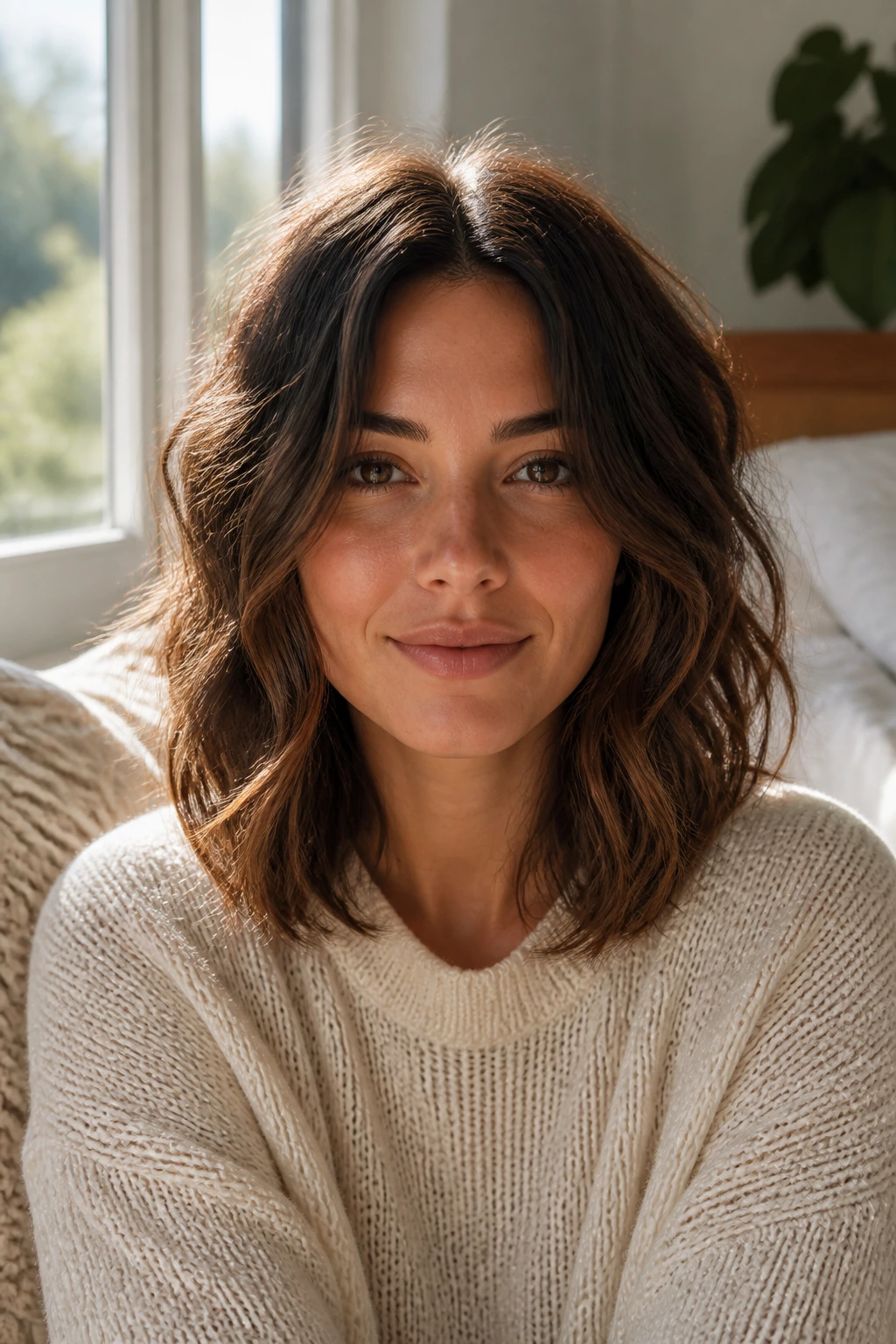
Unlike a side-heavy shag, this version leans into symmetry while still avoiding heaviness. The center part gives the face a clean line down the middle, and the tousled layers stop the style from looking flat or strict. It can be a very flattering look for round faces when the front pieces are kept long enough to fall past the cheeks.
A lot depends on the waves. If the hair has soft bend, this cut looks easy and modern. If the hair is stick-straight, you’ll need a little help from a curling wand or a setting spray to keep the ends from hanging straight like ropes. The haircut itself is only half the story.
Who should try it? Someone who likes a neat part but does not want a blunt cut. The center line can visually lengthen the face, while the shag layers make sure the silhouette stays soft. If you’ve ever felt that side parts make your hair look lopsided, this is the obvious alternative.
13. Shaggy Cut with a Bottleneck Curtain Fringe
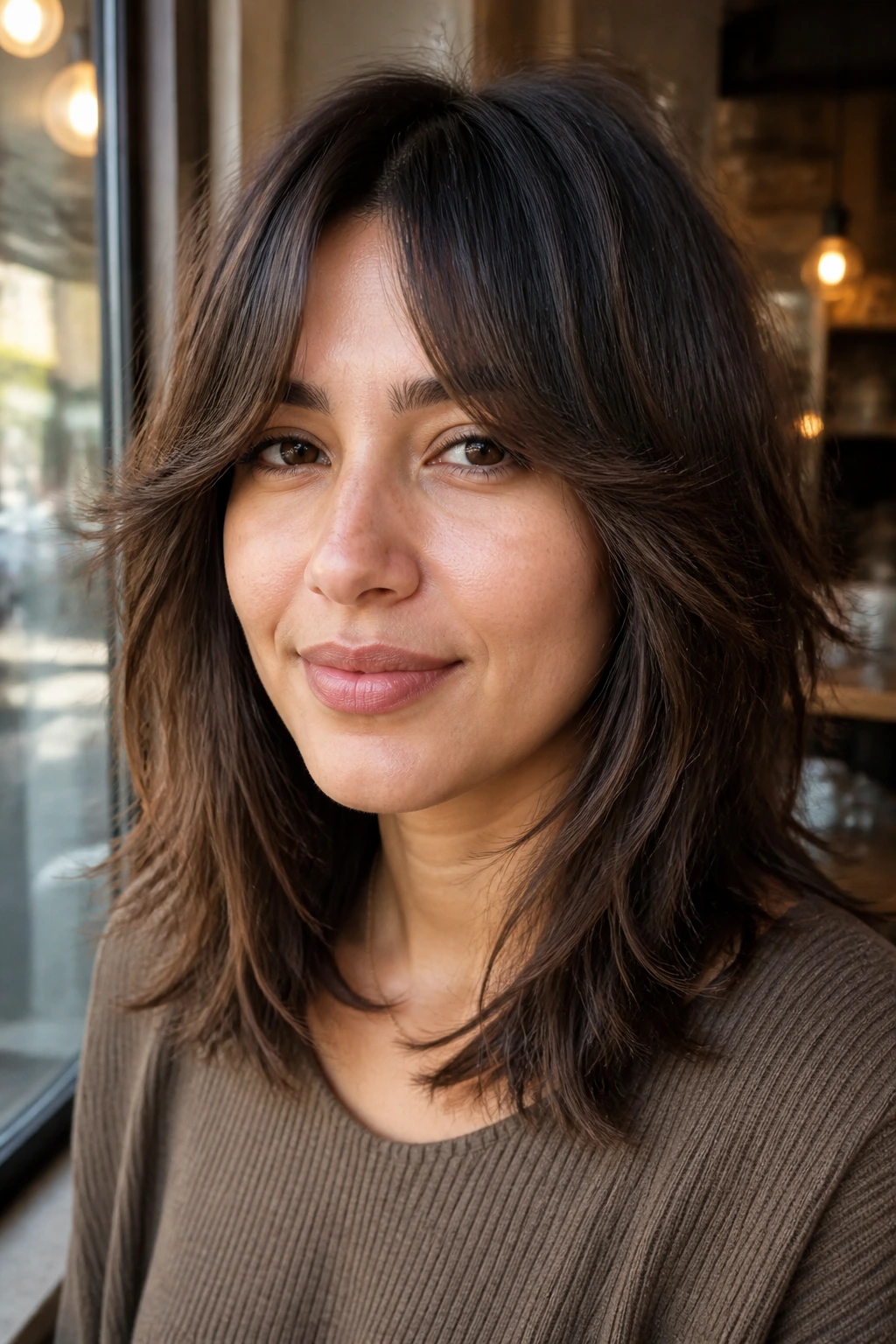
This is the slightly cooler cousin of the classic curtain bang shag. The fringe narrows in the center, widens through the middle, and disappears into longer face-framing layers. That shape is useful on a round face because it opens the top of the face without creating a wide bar across the forehead.
What Makes It Different
The fringe is the star, but it should not overpower the haircut. The best version stays soft at the center and a little longer at the temples, which helps the eye move down the face instead of across it. That’s the whole point, really.
- Keep the fringe piecey, not dense.
- Let the side layers start around the lip or chin.
- Style with a medium round brush and a quick bend away from the face.
- Use only a small amount of shine serum on the ends.
If you want bangs but hate the feeling of being trapped by them, this is the safer choice. They grow out more gracefully too, which matters more than anyone wants to admit.
14. Textured Shag with Soft S-Curls
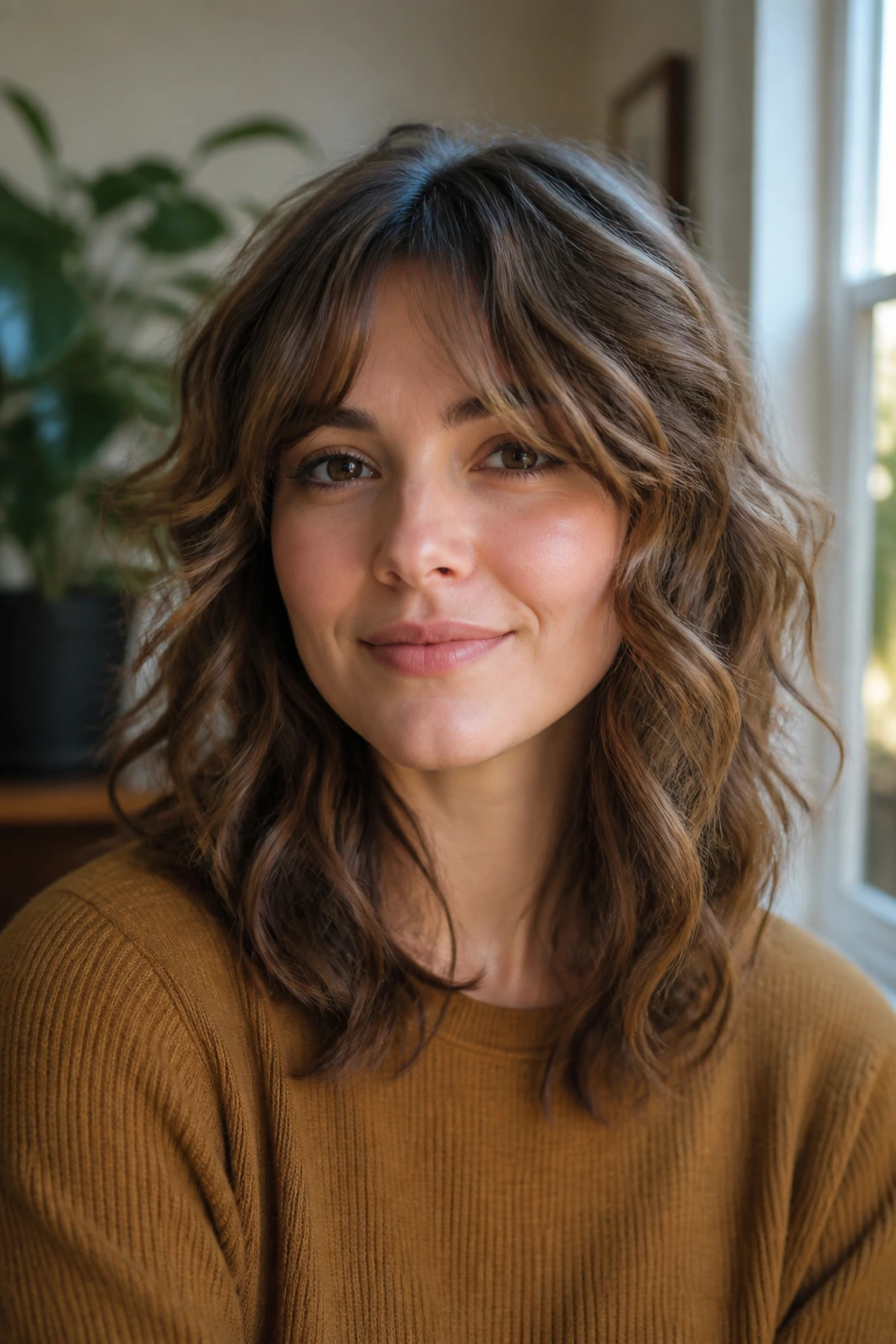
If your hair naturally bends into loose S-shapes, stop fighting it. This cut takes that texture and gives it a shape that flatters a rounder face rather than puffing out around it. The key is leaving enough length through the sides so the curls stack gently instead of bulking at the cheekbones.
The finish should feel touchable. Not crunchy. Not stiff. Just broken up enough that the curl pattern reads in pieces instead of one heavy wave. A diffuser on low heat helps, but the cut itself does most of the work. You do not need to force a lot of curl here.
This style is good for people who want movement without too much styling. Scrunch in a lightweight mousse, let the hair dry, and then separate the curls with your fingers. If you use a brush after it dries, the layers can puff too much. That one mistake changes the whole cut.
It’s easy to wear. That’s the appeal.
15. Modern Rachel-Inspired Shag
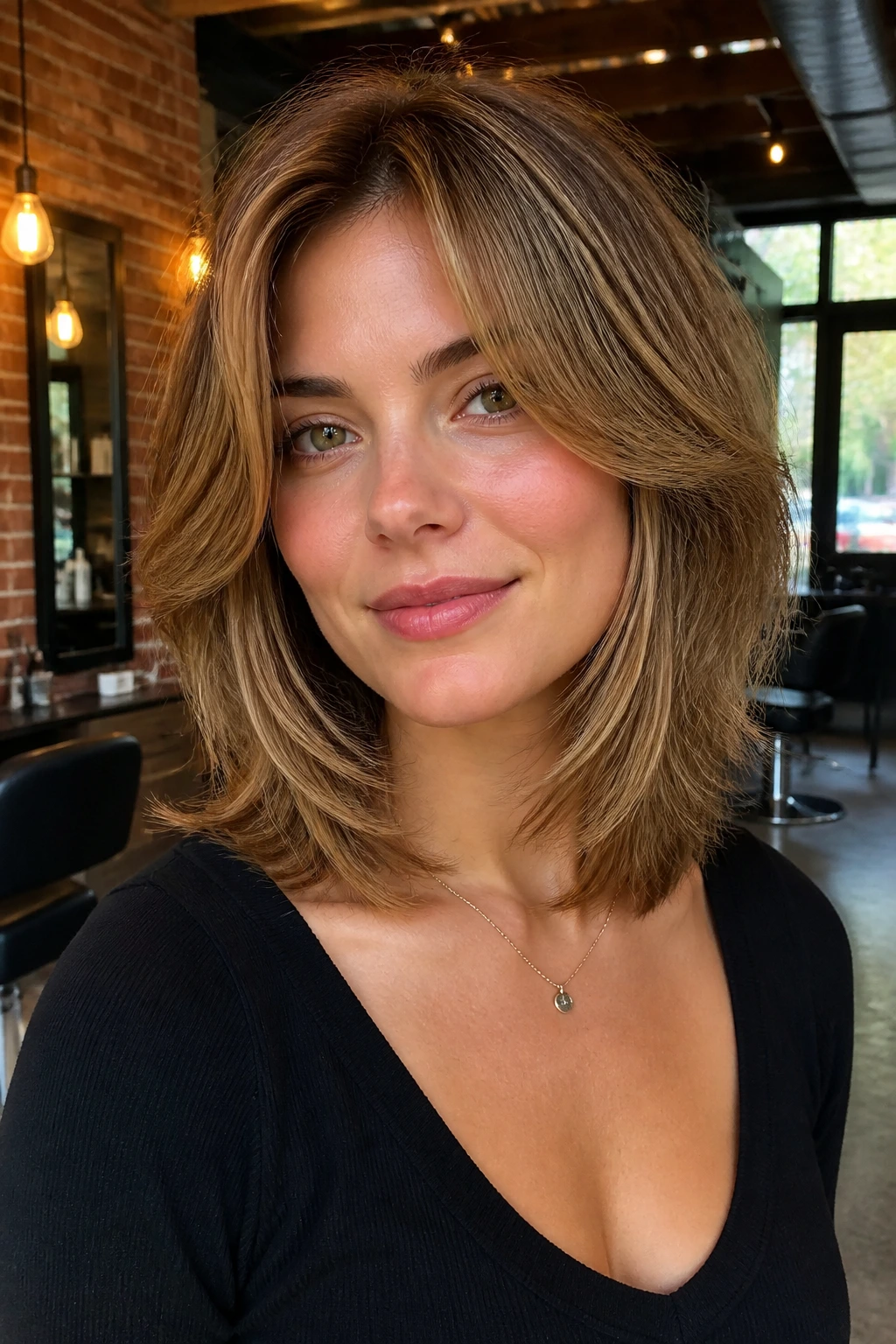
Remember the layered bounce that made the old salon blowouts look so polished? This is that energy, but softer and less rigid. The layers are still obvious, yet the edges are broken up enough that the haircut feels current rather than dated.
Why does it flatter a round face? Because the front pieces fall forward in a long curve, the crown gets some lift, and the length keeps the shape from sitting right on the cheeks. The style has structure, but it doesn’t wrap the face in a circle. That’s the important part.
The best version lands somewhere between the chin and collarbone, with face-framing layers that hit in a few different spots instead of one hard line. That staggered fall gives the cut a more natural swing. I’d style it with a round brush blowout or large velcro rollers if you want extra bounce. If not, a fast blow-dry and a bend at the ends is enough.
How to Get the Most From It
A light spray mousse at the roots and a blow-dry with the head tipped forward gives the crown the lift it needs.
16. Shag with Piecey Balayage
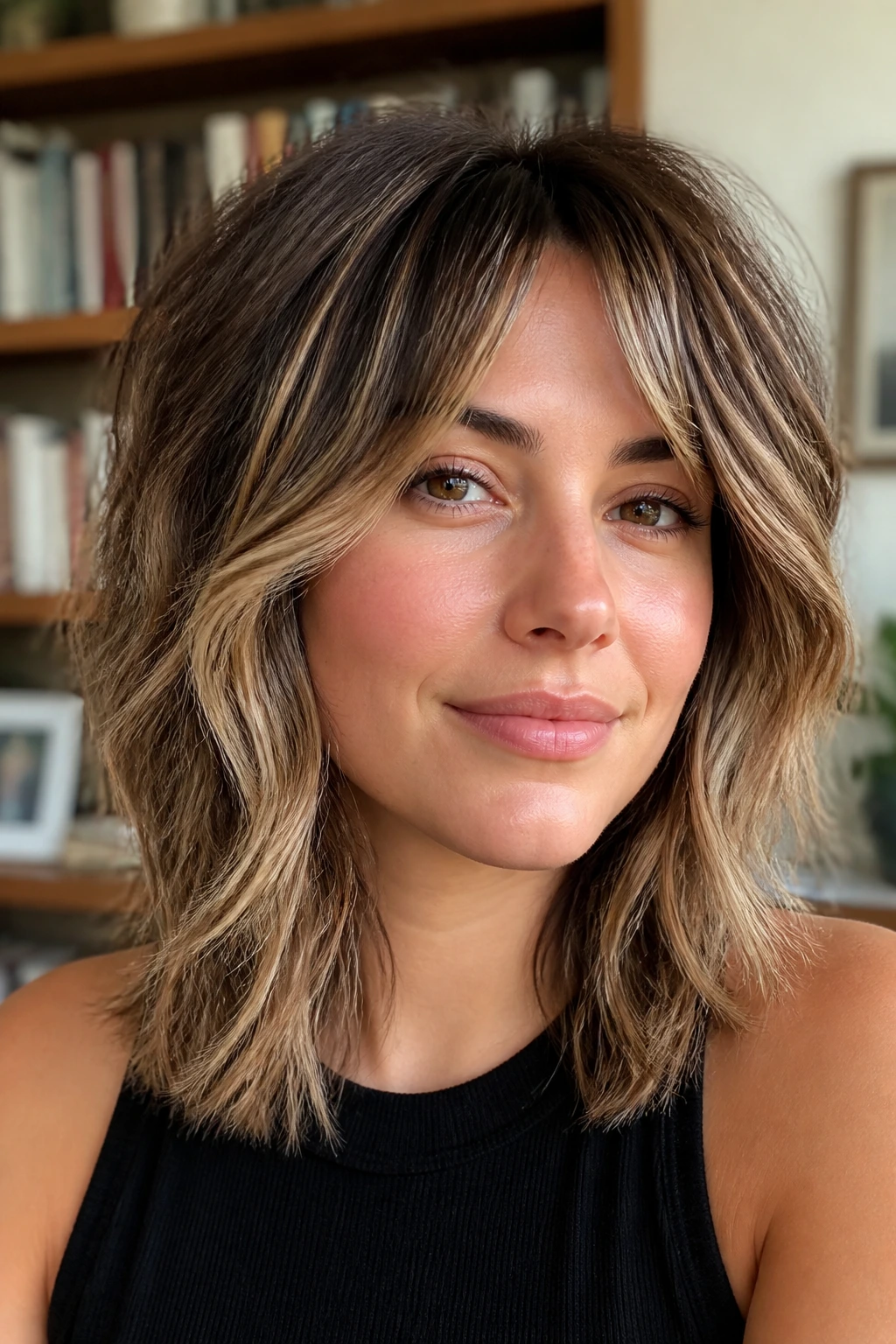
Color changes how a shag reads. A piecey balayage makes the layers show up more clearly, especially around the face and through the ends. On a round face, that visual break matters because it stops the hair from becoming one uniform curtain.
The haircut itself should stay medium and mobile, with the shortest pieces around the jaw or just below it. Then the color is painted in a way that gives extra depth to the top layers and a little brightness at the front. The effect isn’t dramatic in a loud way. It just makes the texture easier to see.
This one is especially useful if you have dark hair and feel like shags can disappear in photos or under indoor light. Dimension fixes that. Ask for lighter pieces around the cheek-to-chin area, but keep them soft enough that they don’t spotlight the widest part of the face. That’s a subtle distinction, and it matters.
The style works best with a loose wave, not a stiff curl.
17. Low-Maintenance Air-Dry Shag
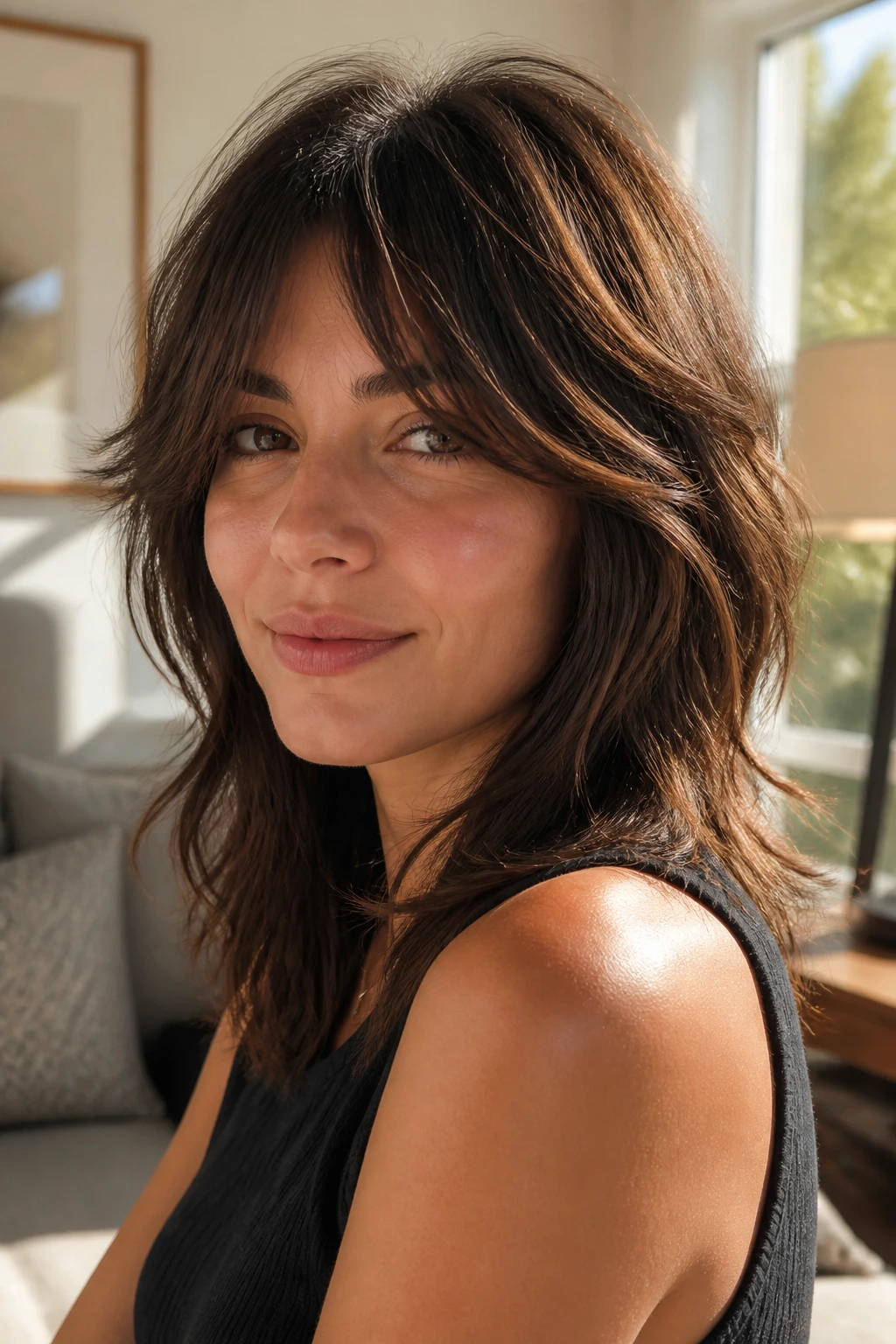
Some cuts need a blow-dryer. This one does not. It is built for air-drying, which means the layers have to be placed carefully so they fall into shape without coaxing. For a round face, the face-framing pieces should be longer and lighter, while the crown carries a little texture so the overall profile looks taller.
I like this cut for people who get irritated by complicated routines. Wash, scrunch, leave it alone. That’s the appeal. The hair should still have movement, though, so ask for soft internal layers rather than a harsh razor finish. Too much slicing can make air-dried hair fray at the ends.
A little leave-in conditioner and a small amount of mousse are enough. Apply the mousse from the roots through the mid-lengths, then scrunch once or twice and stop touching it. The key is not to turn the hair into a fluffy triangle while it’s drying. That shape is the enemy here.
If you like easy mornings, this is a strong pick.
18. Heavy-Layered Shag with Longer Sides
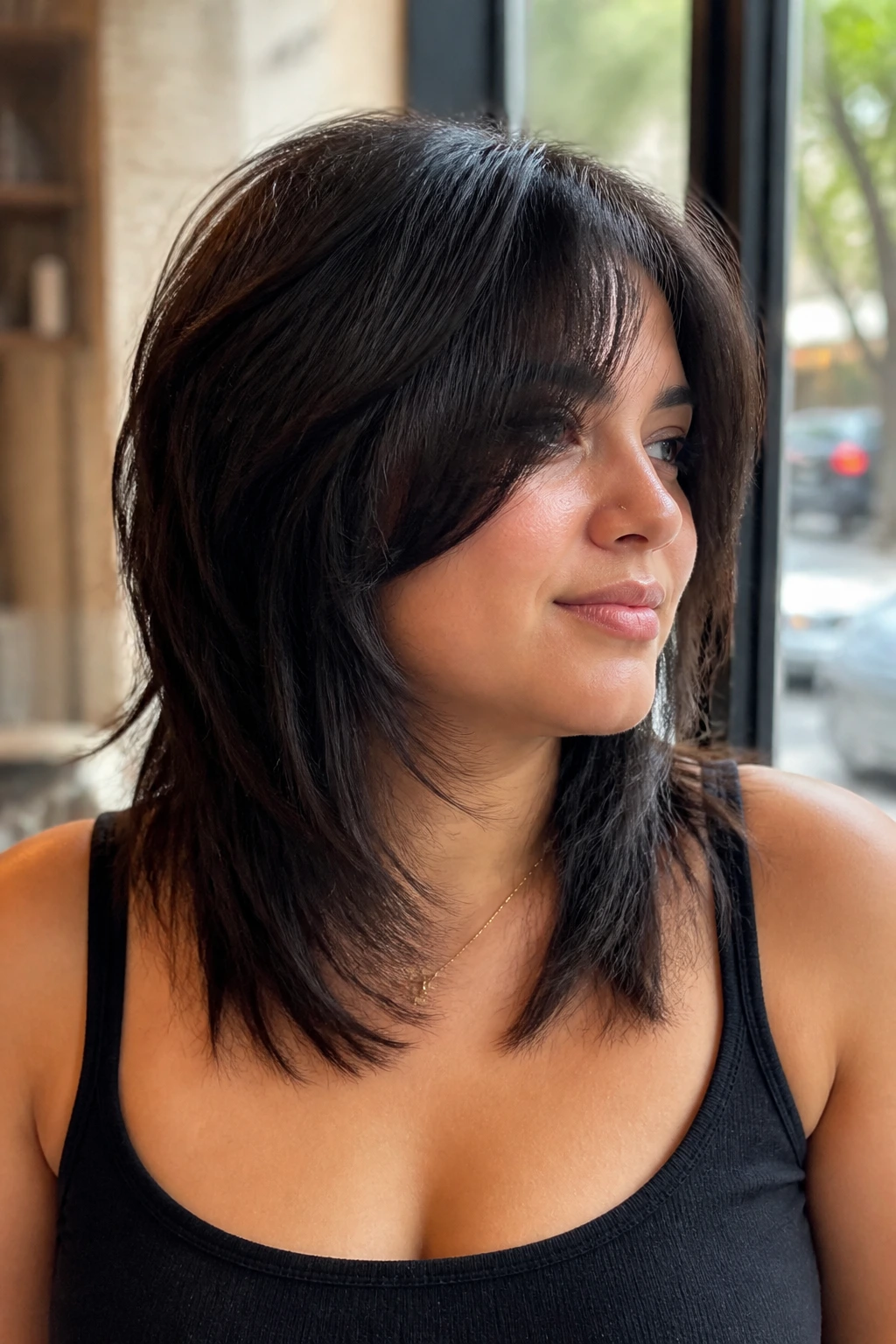
Unlike lighter shags that spread texture everywhere, this one keeps the sides longer and the layers heavier through the interior. That’s a smart move for fuller faces because it avoids the halo effect. You still get movement, but the hair stays closer to the head at the cheeks.
The style suits thick hair especially well. The longer side pieces pull the eye down, and the heavy layers remove bulk from inside the shape instead of carving the outline too aggressively. That keeps the cut from looking wispy or over-thinned. A lot of stylists go too far with thinning shears. This is better.
Best worn with a soft wave or a blowout that bends the front pieces away from the face. If you prefer straight hair, keep the ends slightly beveled rather than pin-straight. A tiny inward curve at the bottom keeps the hair from fanning out.
Recommendation: ask for weight removal through the middle only, not the perimeter.
19. Shag with Soft Feathered Ends
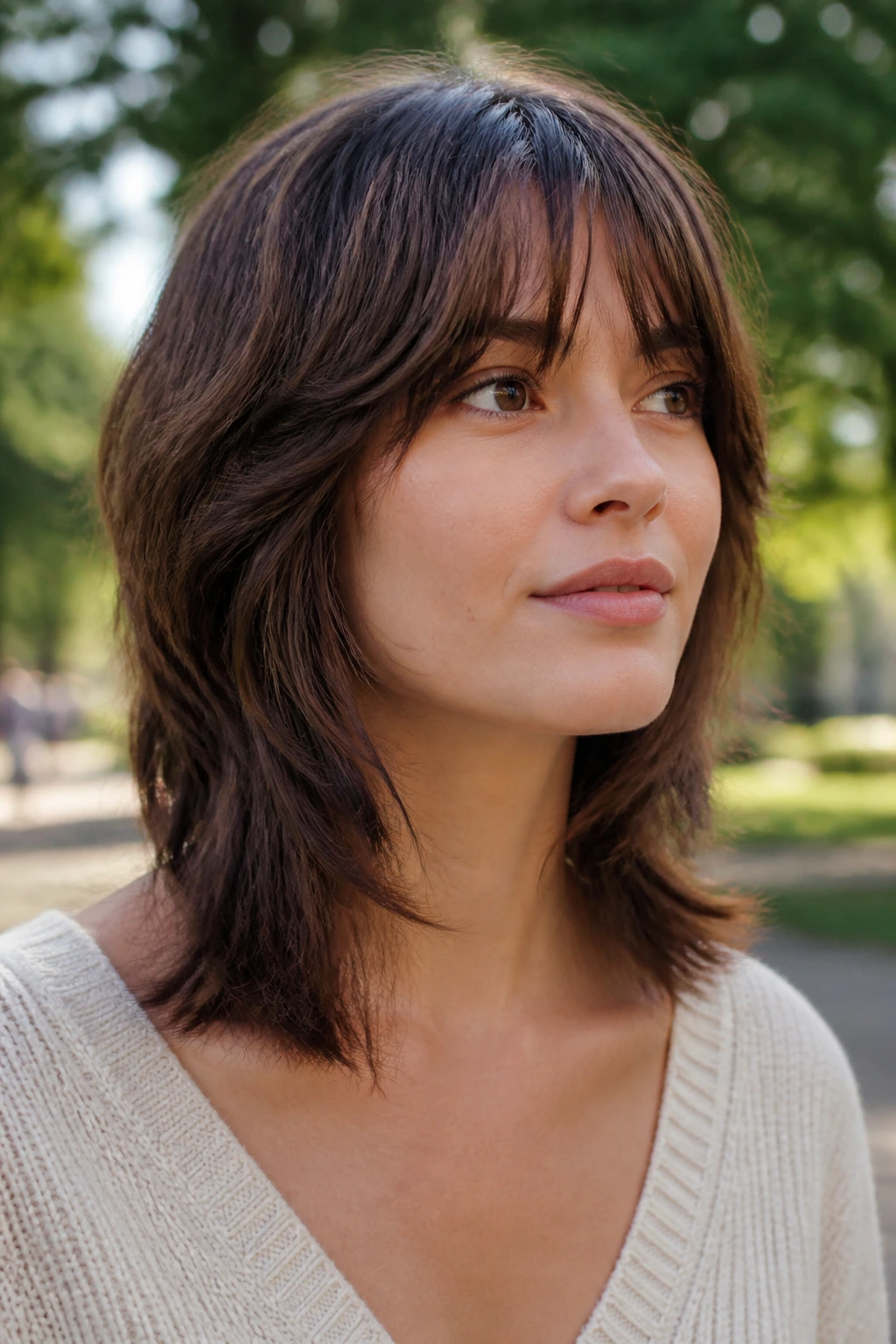
Feathered ends give a shag a quiet finish. The pieces taper instead of stopping in blunt little chunks, and that taper helps a round face because it reduces the visual width at the bottom of the haircut. The eye slips past the edges instead of hitting a hard line.
This is the sort of cut that looks better when it moves. Sitting still, it can seem almost plain. A few steps, a head turn, a breeze, and suddenly the shape wakes up. That’s the charm. It’s not trying to be dramatic all the time.
Why It Works
The soft feathering keeps the lower half of the haircut light, while the upper layers still create texture near the top of the head. That vertical shift matters. It prevents the hair from forming a wide oval around the face.
- Use a medium-hold mousse on damp hair.
- Dry with a paddle brush if you want a smoother finish.
- Bend only the last 2 inches of the hair with a flat iron for a subtle flick.
- Finish with a mist of shine spray, not oil at the roots.
20. Midi Shag with Inward Bends
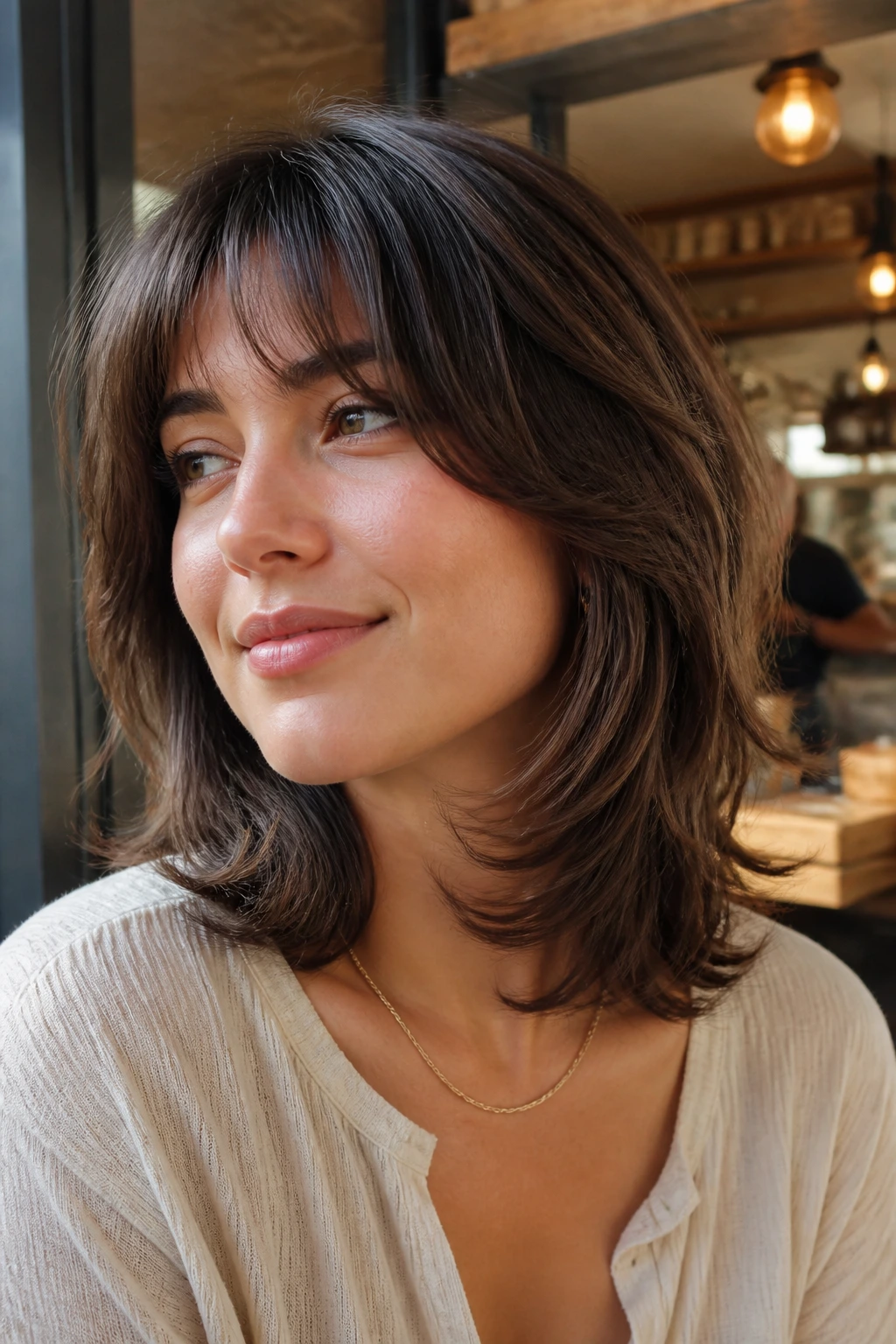
A lot of people think inward bends are old-school. Fair enough. But on a round face, that little curve can be useful. The ends hug the jaw and collarbone instead of flaring outward, which keeps the silhouette narrower.
The cut sits at that in-between length where it feels long enough to tie back but short enough to stay light. That makes it easy to wear, especially if your hair grows fast and you hate losing the shape between appointments. The layers should still be visible, but they do not need to be choppy. A smoother shag works here.
I like this version when the hair has some thickness and needs a controlled finish. Blow-dry the side pieces under with a round brush, then leave the crown slightly lifted. That combination creates a longer line through the face. If you flip every end out, the shape can start to spread. Keep the movement directed inward near the front and looser through the back.
It’s simple. And it works.
21. Side-Swept Bang Shag
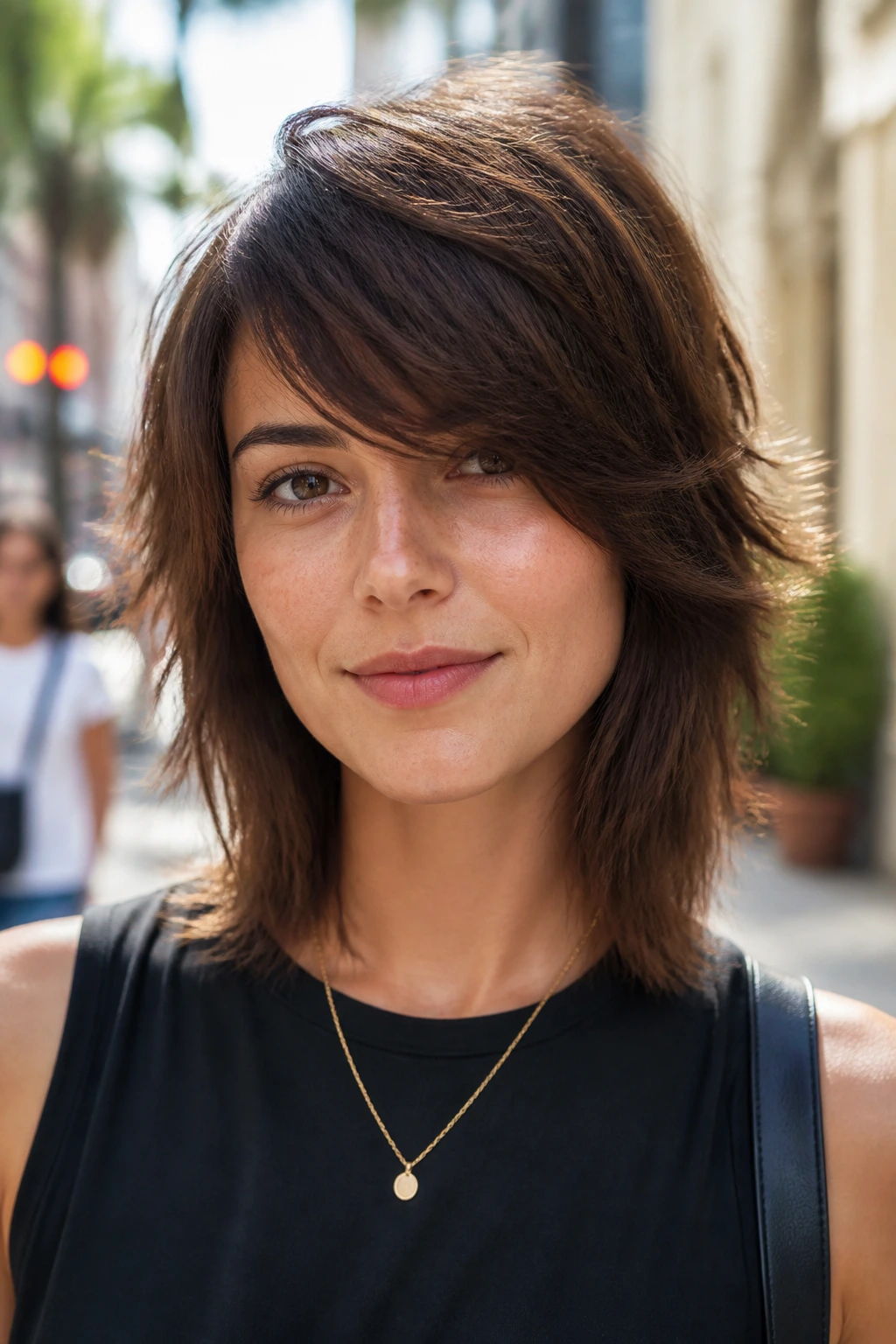
A side-swept fringe can do what a center split can’t: it breaks the face at an angle. That diagonal line trims the visual width through the forehead and cheek area, which is why it flatters rounder faces so well. The rest of the shag should stay medium and layered, but the fringe does the first bit of shaping.
The bangs shouldn’t be too dense. If they sit heavy, they drag the whole cut down. Ask for a long, soft sweep that starts high on one side and blends into the front layers on the other. The cut should feel like one motion, not two separate pieces.
This is a good choice if you want bangs but are nervous about commitment. Side-swept bangs grow out more gently than straight-across fringe, and they’re easier to tuck away on busy days. Style them with a round brush and a touch of heat at the root so they lift instead of hanging flat. That root lift matters. Flat bangs can make a round face look shorter.
22. Razor Shag with Invisible Layers
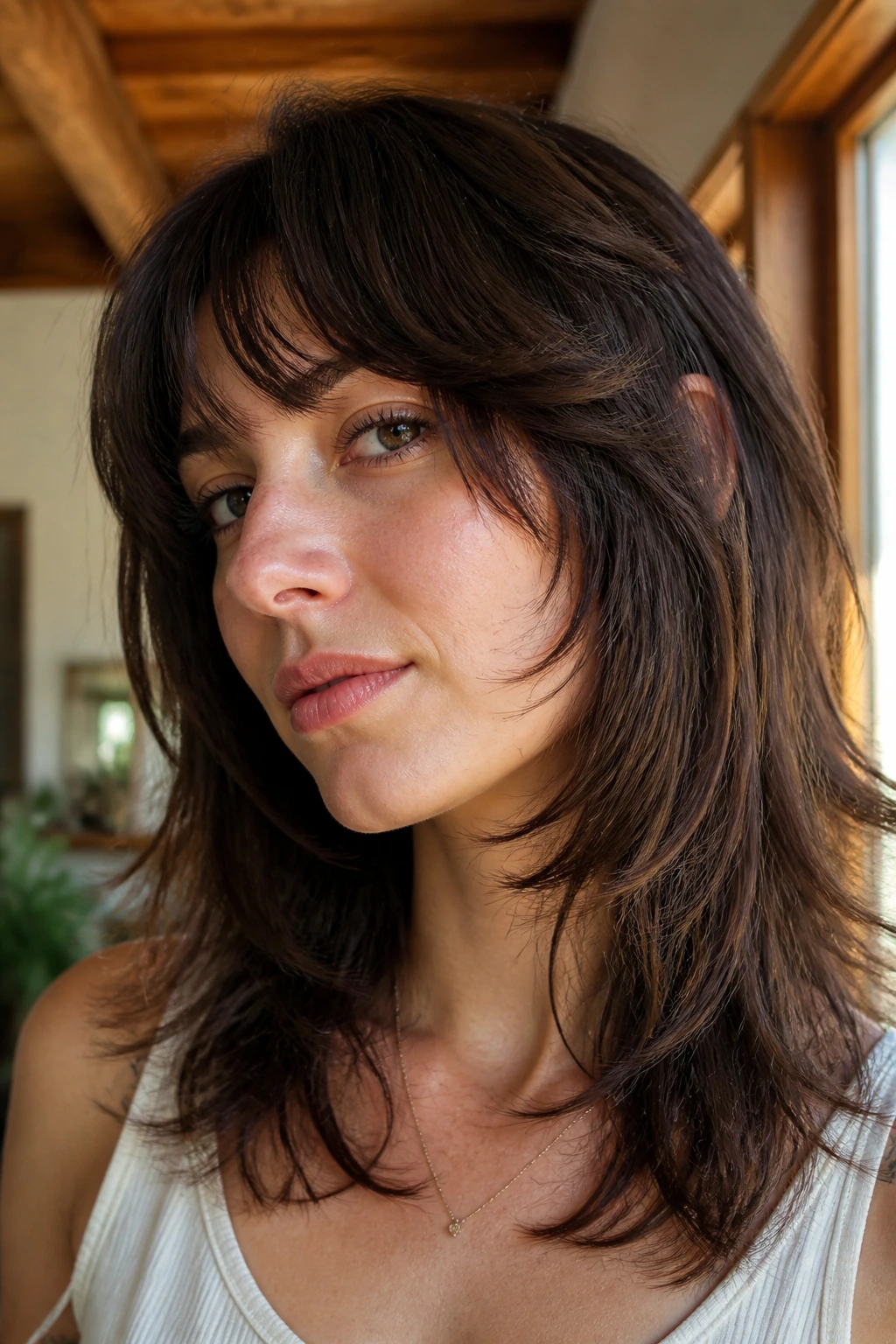
Invisible layers are the quiet trick in this haircut. They sit inside the shape instead of jumping out at the surface, so the cut keeps its length and still moves. On a round face, that means you get softness without a puffed-out outline.
A razor is useful here because it creates a tapered edge that almost disappears into the rest of the hair. The front pieces should still be long enough to skim below the jaw, maybe even closer to the collarbone if your face is very full. You do not want the shortest parts landing where the face is widest. That would undo the whole thing.
This cut is good for people who like a cleaner look but still want the easy movement of a shag. It can be worn straight, wavy, or loosely curled. If you style it straight, the hidden layers give the ends a slight swing. If you wave it, the cut comes alive with very little effort. A small amount of flexible gel on damp hair helps define the pieces without making them stiff.
23. Retro 70s Shag with Long Curtain Bangs

There’s a reason this shape keeps coming back. Long curtain bangs are flattering, practical, and a little glamorous without being fussy. On a round face, they open the center of the forehead, then sweep down toward the cheekbones and beyond, which gives the face a longer line.
The rest of the haircut should stay airy and layered, with enough length around the sides to keep the outline soft. You want the 70s feeling, not the old-school feather helmet. That means plenty of movement near the ends and no chunky shelf of hair around the jaw. Keep the texture bendy and the finish loose.
This cut looks especially good with a big round-brush blowout or hot rollers wrapped away from the face. It’s one of those styles that can look expensive without trying to look expensive, which I appreciate. If the bangs are too short, the look loses the lengthening effect. Let them reach the cheekbone at minimum, and a touch lower is often better.
24. Defined Curl Shag with Shape at Chin and Below
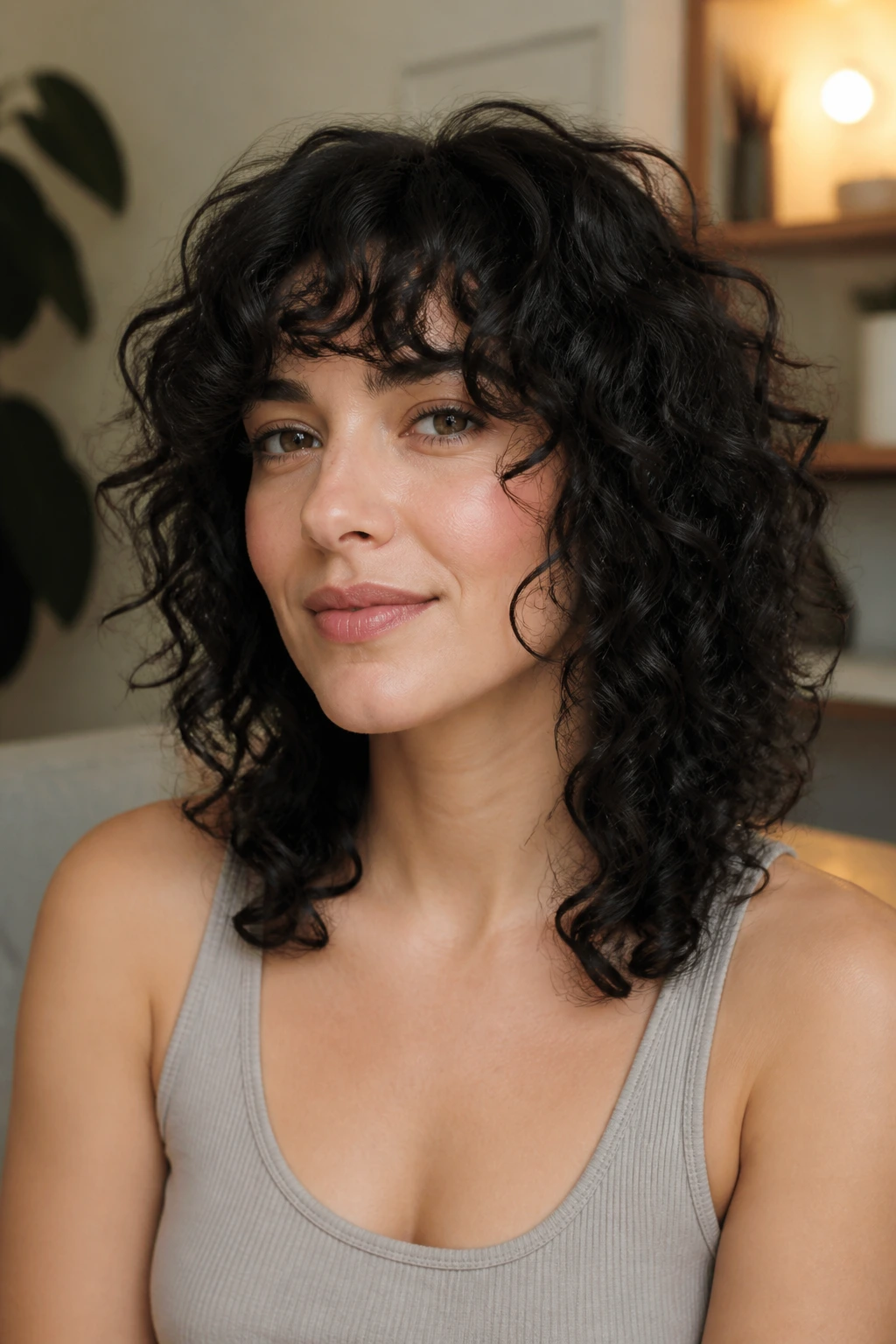
Curly hair needs shape, not just layers thrown at it and hope. This cut places the movement lower, around the chin and below, so the curls don’t bunch into a round cloud around the cheeks. That placement is the whole reason it works for a round face.
The perimeter should stay long enough to anchor the curl pattern. Short curls at the top can lift the shape, but too many short layers around the cheeks can widen the face quickly. Ask for a stylist who cuts curls dry or mostly dry, because shrinkage changes everything. Wet curls lie.
For styling, use a leave-in conditioner and a curl cream in small amounts. Then diffuse gently, hovering around the crown first and the sides second. Once the hair is dry, separate a few curls near the front if they cling too close to the face. That tiny adjustment can make the cut look more open and less compact.
This one rewards patience. Good curl shaping always does.
25. Blowout Shag with Bouncy Ends
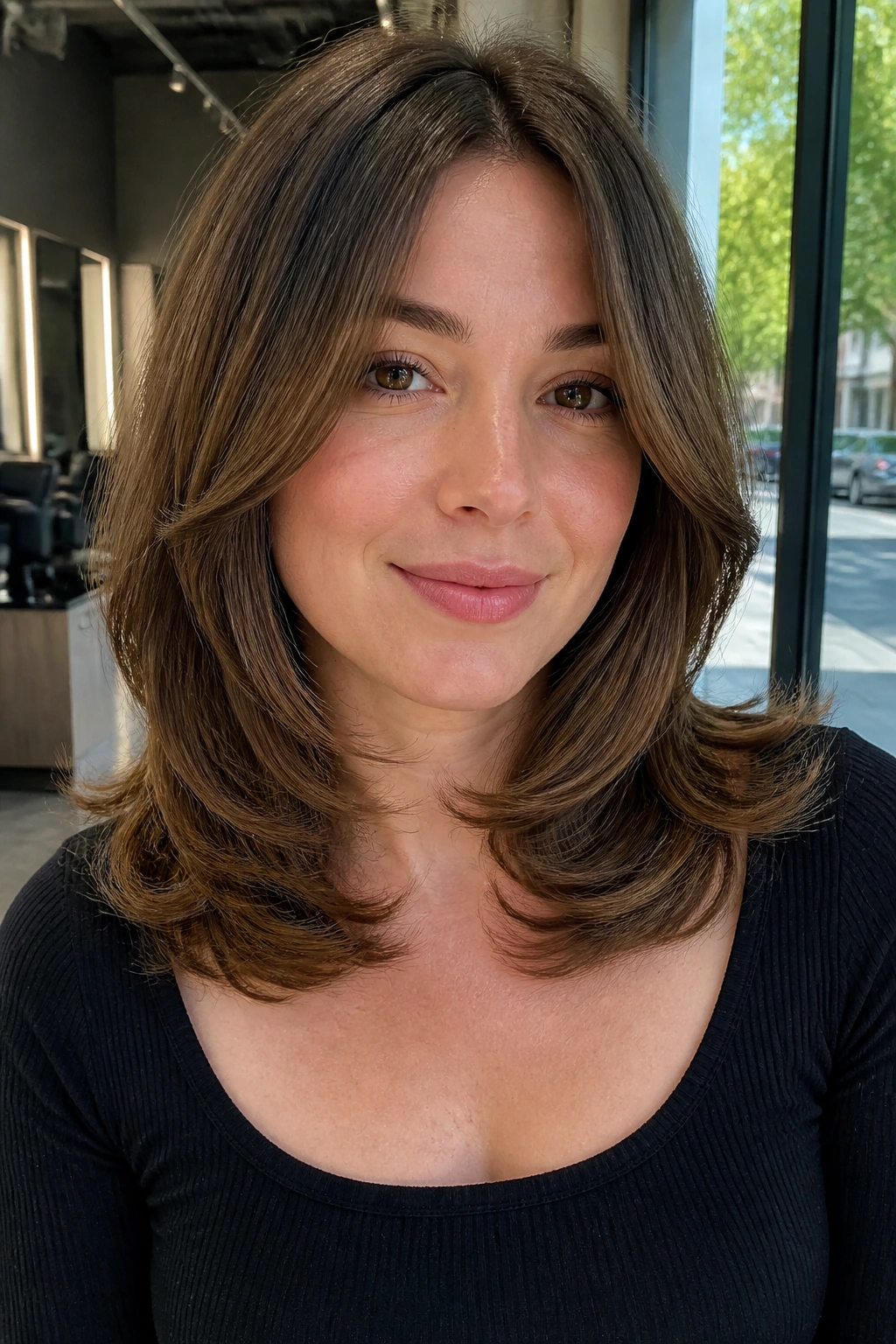
This is the polished cousin in the room. The layers still move, but the finish is smoother and more lifted, like the hair just left a good salon chair. For a round face, the bounce matters because it keeps the cut from sitting heavy at the sides.
The front pieces should arc away from the cheeks, then curve back in near the ends. That soft swing creates a longer line through the face without looking stiff. I like this style when the hair has medium density and a little natural body. If the hair is very fine, the bounce can fall flat unless you use a root spray and a set brush.
It helps to dry the hair in sections, lifting the roots with a round brush and rolling the ends under once before releasing them. Don’t overwork the hair after it cools. Touch it too much and you lose the shape. A light mist of flexible hairspray is enough to hold the finish without making it crunchy.
If you like a bit of polish, this cut delivers.
26. Asymmetrical Shag with an Off-Center Part

An off-center part is subtle, but it changes the whole read of the face. A truly centered cut can emphasize roundness if the hair is full on both sides. Shift the part just an inch or two away from the middle, and the shape becomes more interesting and less uniform.
The asymmetry should continue through the layers. One side can fall slightly forward, while the other side sits a touch more open. That difference makes the haircut feel alive. It also keeps the eye moving instead of landing in one circular frame.
This is a good option if you want your hair to look styled even on days when you barely touch it. The off-center part alone does a lot of the work. Keep the face-framing pieces long enough to cut below the cheekbones, and avoid a blunt, horizontal edge. That would fight the asymmetry and make the cut feel heavy.
I’d pair this with soft waves rather than pin-straight hair. The uneven texture helps the part look intentional.
27. Soft Mullet Shag with a Long Nape
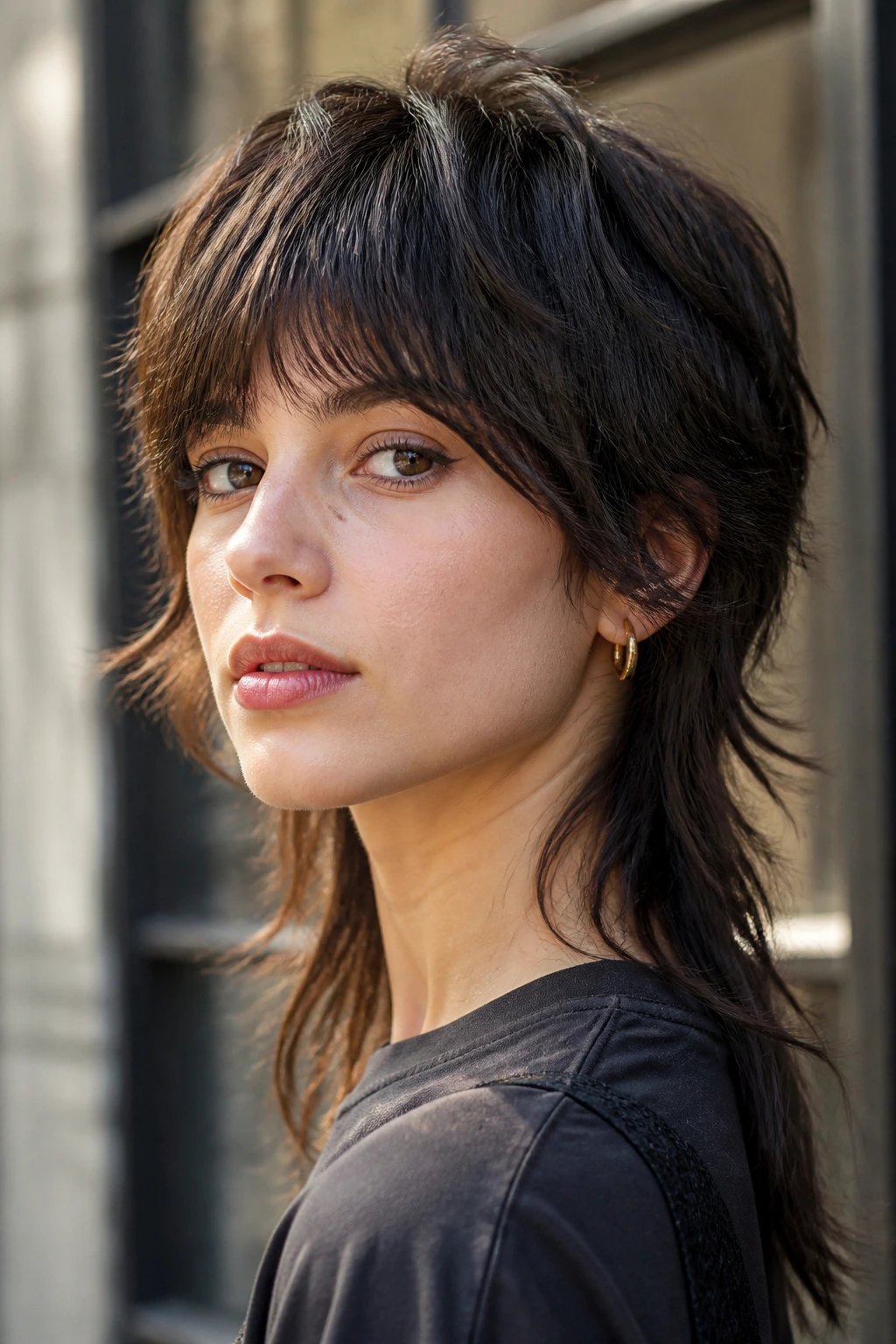
This is the boldest cut in the group, but “soft” is doing a lot of work here. The top and sides stay shaggy and loose, while the nape carries a little extra length. That longer back section creates a vertical pull, which can be flattering on a round face when the rest of the cut stays feathered.
The key is restraint. You want a hint of mullet shape, not a hard retro one. The front should still frame the face gently, and the sides should not puff out around the cheeks. If the cut gets too dramatic up top, it can throw the proportions off. Keep the crown textured, not spiky.
Who is this for? Someone who likes fashion hair and can wear a little edge with confidence. It’s not for everyone, and that’s fine. The style looks best with a lived-in finish, maybe a spray gel or sea salt mist, then finger-styled into shape. If you flatten it with a brush, the personality disappears fast.
28. Polished Medium Shag with Minimal Layers
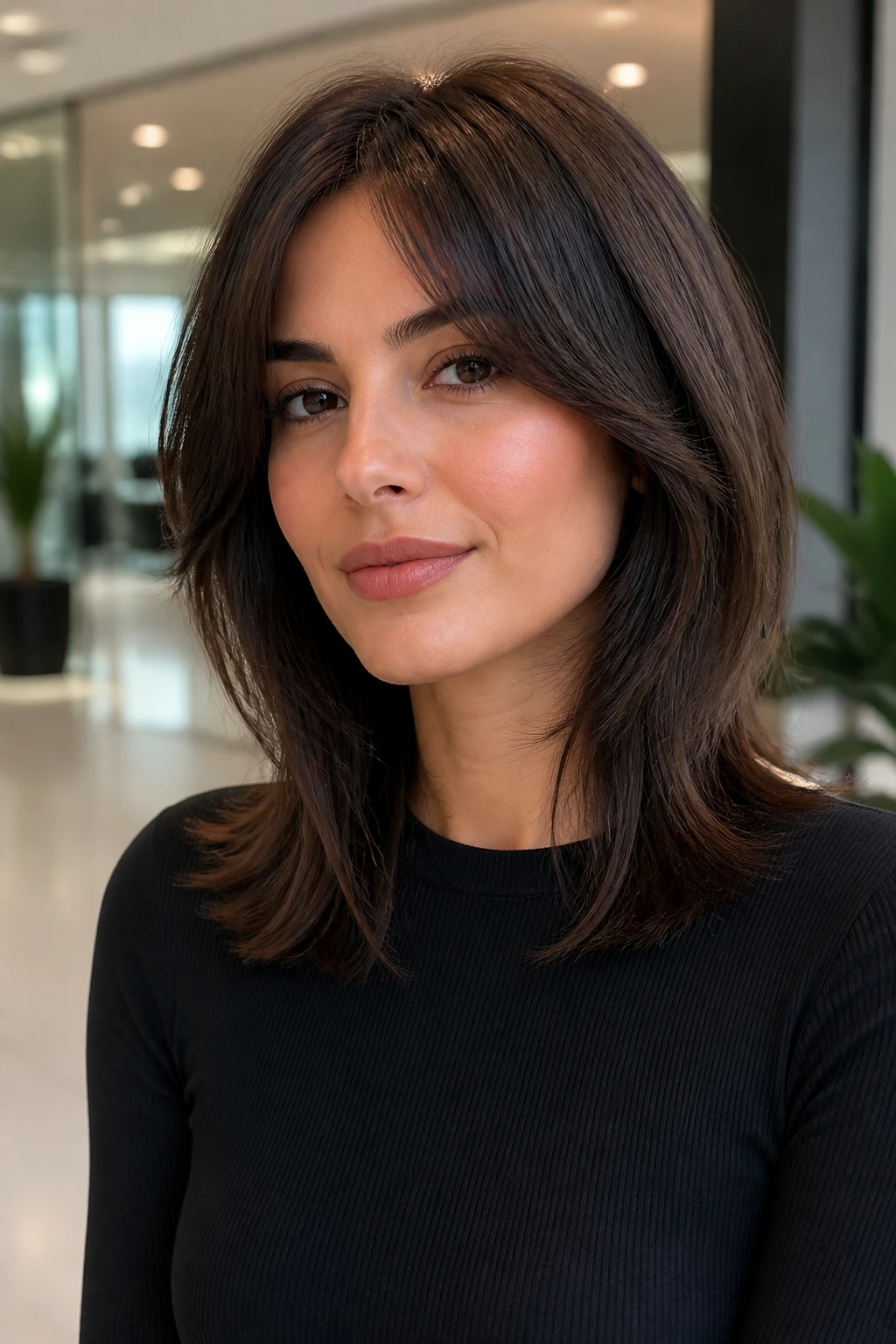
Not every shag has to look torn up. This one keeps the layers subtle and the perimeter clean, which is useful if you want movement without a messy finish. On a round face, minimal layers can be kinder than heavy chopping because they keep the outline smooth.
The cut should still have enough face-framing to avoid a boxy shape. The first layer can start below the cheekbone, then melt into the rest of the hair in a long line. That gives shape without obvious breaks. I like this for people who work in conservative settings or just prefer hair that looks calm.
Styling is simple. A soft blow-dry, a slight bend through the ends, and a smoothing cream from mid-length to tip. That’s usually enough. The cut does not need a lot of product or texture to behave. In fact, too much texture can ruin the neatness that makes it useful.
If you want a shag but not a statement, this is the one.
29. Shag with Tapered Ends and Crown Volume
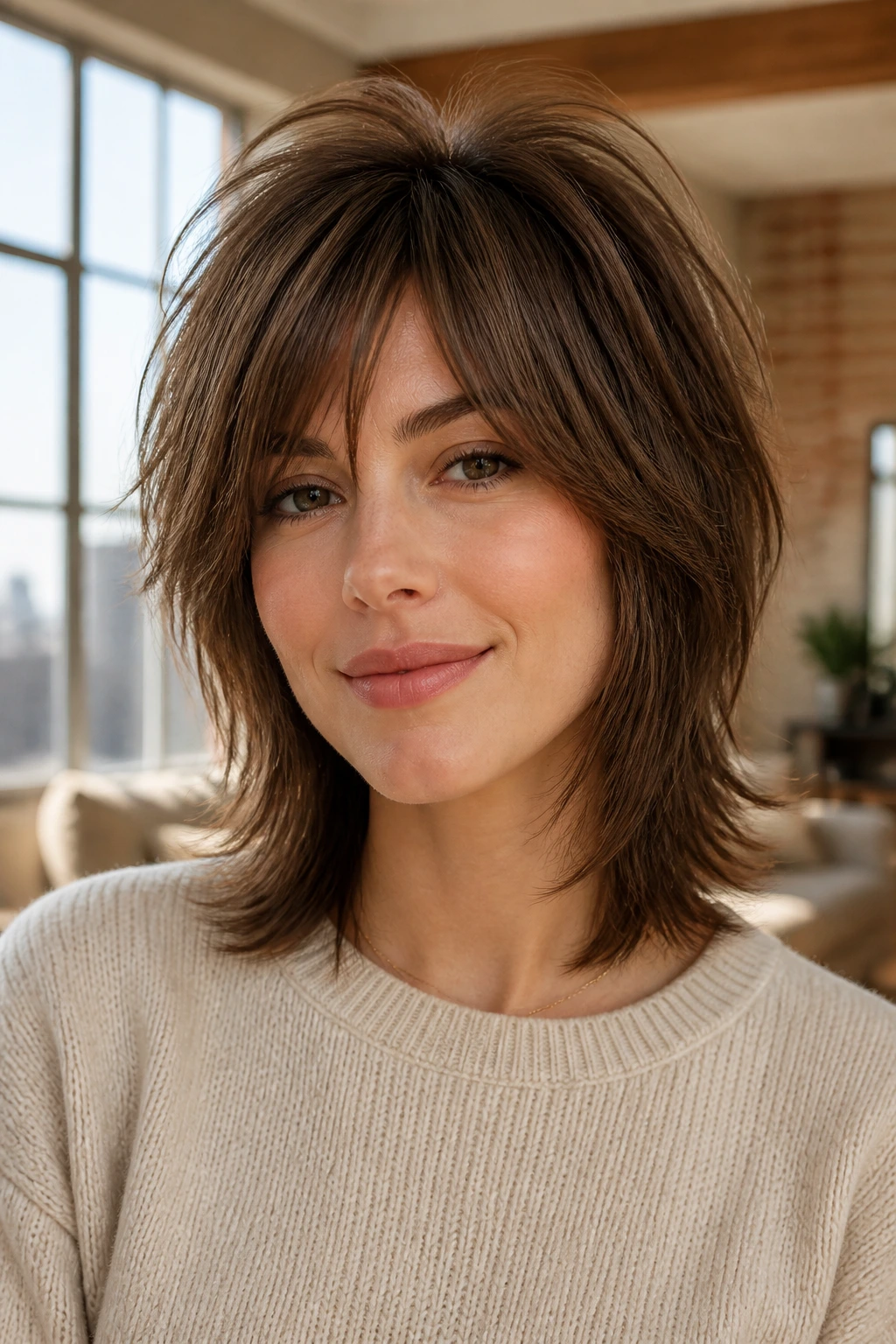
Volume up top. Soft taper below. That combination is flattering on round faces because it stretches the shape vertically while keeping the lower half of the hair from spreading wide. The tapered ends also help the haircut feel lighter, which is handy if your hair gets bulky.
The crown should have the most lift, but not so much that it becomes a puff. Think of it as a gentle rise, not a teased tower. The sides can stay close enough to the face to narrow the outline, then the ends taper off instead of stopping in a blunt line. That taper is a small detail that makes the whole style feel more graceful.
This cut works well with both straight and wavy hair. Straight hair gives it a neat finish; wavy hair gives it movement. If you want to style it quickly, dry the roots first with your head upside down, then smooth the top layer with a brush. Leave the ends a little imperfect. A shag needs some looseness or it loses its charm.
30. Shoulder-Length Shag with a Long Arc Fringe
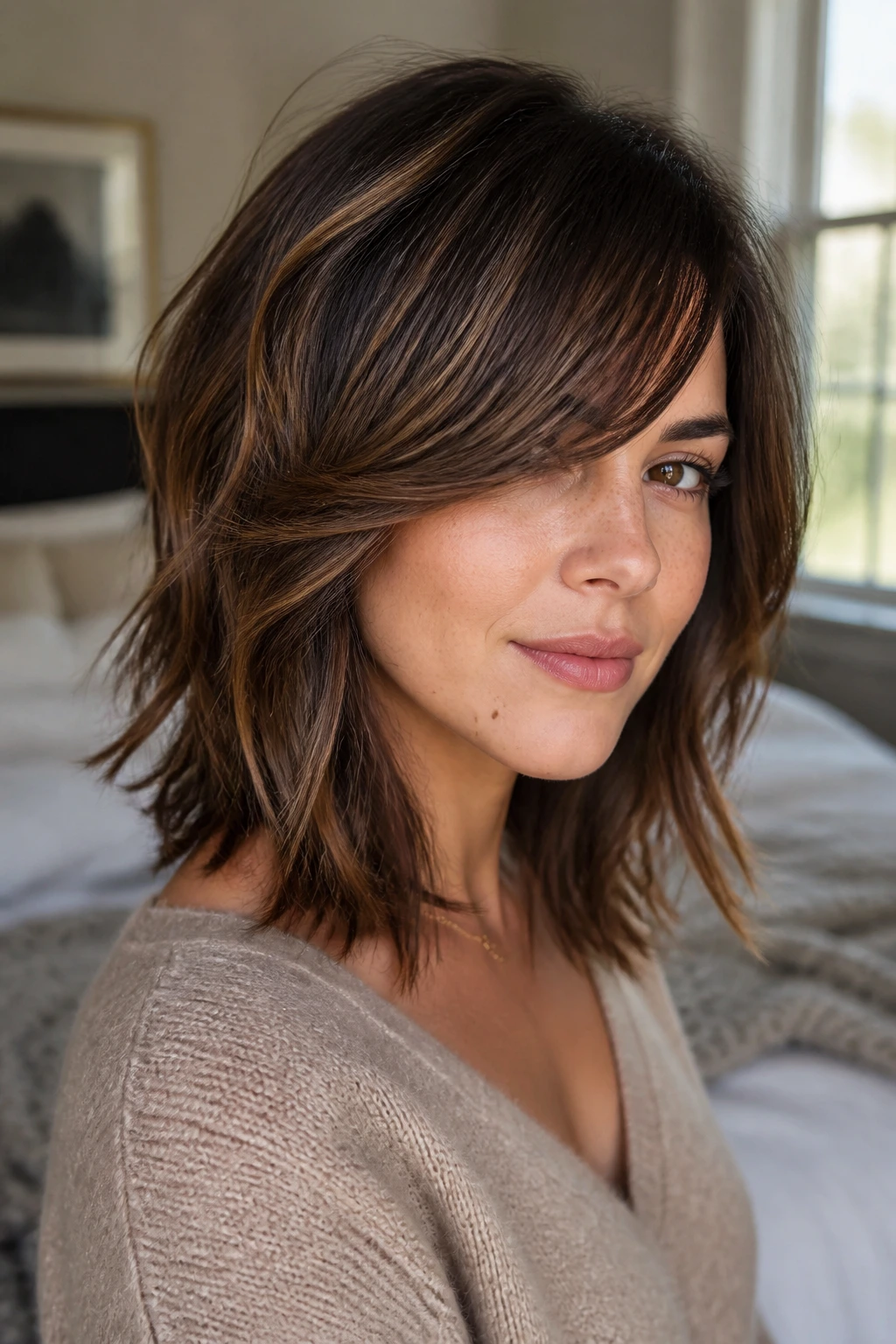
A long arc fringe is one of the easiest ways to soften a round face without going full curtain bang. The fringe curves from one side to the other in a long sweep, which gives the front of the haircut a more vertical feel. Add shoulder-length layers underneath, and the whole cut stays balanced.
This style is a good middle ground for someone who wants movement, wants some fringe, and does not want a cut that screams “shag” from across the room. The arc should be soft and blended, not blunt. It can skim the brows on one side and fall to the cheekbone on the other. That slant is doing quiet work all day.
I like this version for straight or lightly wavy hair because the arc shows up best when the front has a smooth finish. Use a medium round brush and direct the fringe away from the cheek first, then let it fall naturally. The rest of the hair can stay loose and touchable. It’s a gentle finish, and on a round face, that gentleness is the point.
Final Thoughts
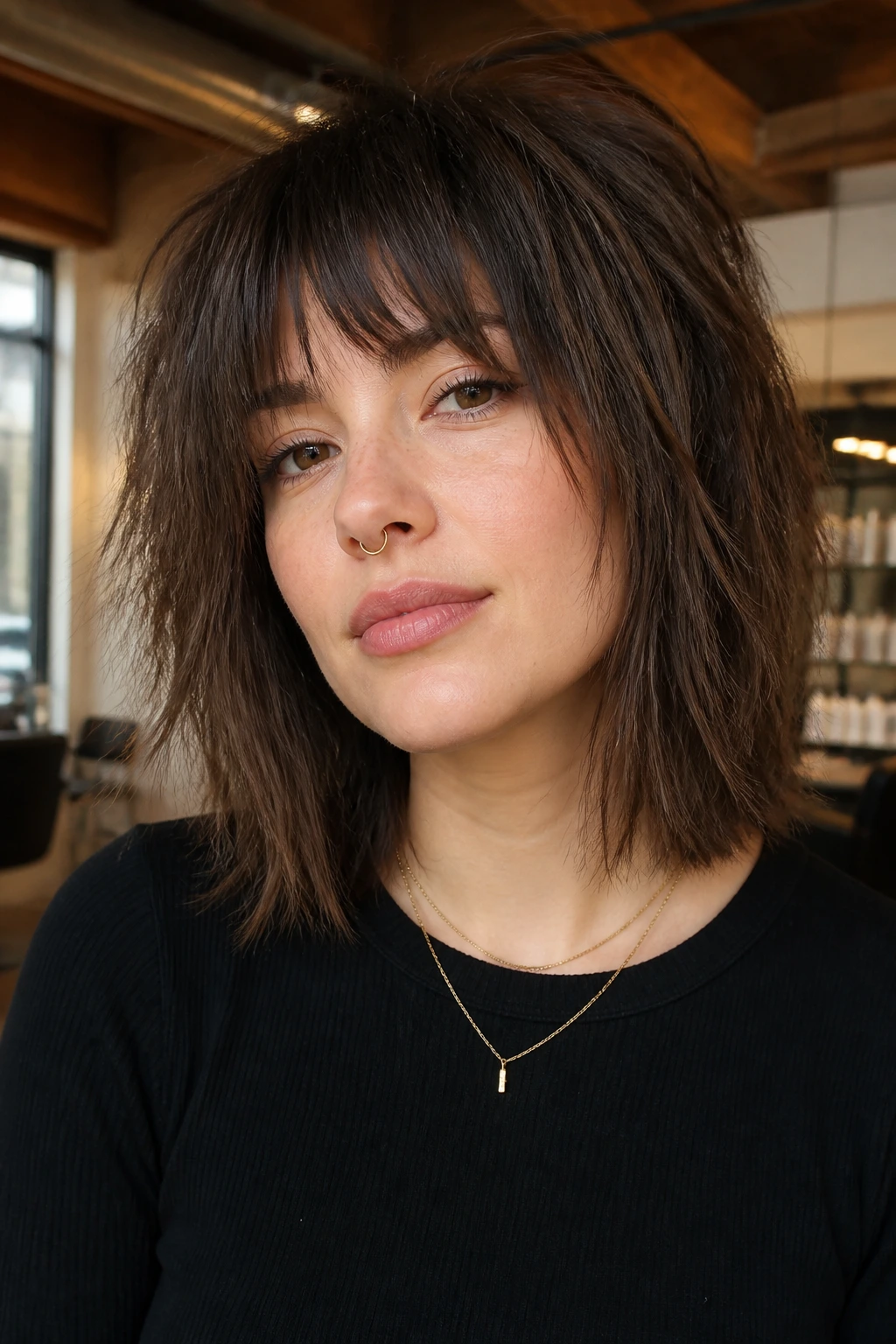
The best medium shag haircuts for round faces do three things at once: they keep the cheeks from being boxed in, they add movement where the hair needs it, and they leave enough length to keep the shape looking balanced. That mix is what makes a shag flattering instead of fussy.
If you remember one rule, make it this one: keep the shortest face-framing pieces below the widest part of the face. That small choice changes the silhouette more than a lot of people expect. Crown lift helps too. So does a little asymmetry.
And if a cut looks good in photos but sits heavy around your cheeks in real life, trust the mirror over the caption. Hair has to work from every angle, not just the front.
