



A blunt, one-length cut can make a round face feel wider than it is. That’s why long micro shag haircuts for round faces keep showing up in salon chairs: they hold onto length, but they break up the soft curve around the cheeks with light layers, lifted roots, and ends that move instead of sitting there like a shelf.
The trick is shape, not drama. A micro shag is shorter and choppier through the crown than a classic shag, yet the length stays long enough to keep the profile vertical. That mix matters on a round face because the eye reads up-and-down movement as length, while heavy width at the cheek line reads broader. Tiny change. Big payoff.
I like this cut because it can be soft or edgy without losing the face-flattering part. You can wear it with curtain bangs, a side sweep, curly texture, or a polished blowout, and the bones of the cut still do their job. Some versions feel airy and lived-in. Some feel sleeker. Some are almost quietly messy, which is a nice way of saying they look good after a real day, not just five minutes after a salon chair photo.
The sections below get into the versions that actually make sense on round faces: the ones that add height, narrow the cheeks visually, and keep the length working for you instead of fighting your face shape.
1. Collarbone Long Micro Shag With Curtain Fringe
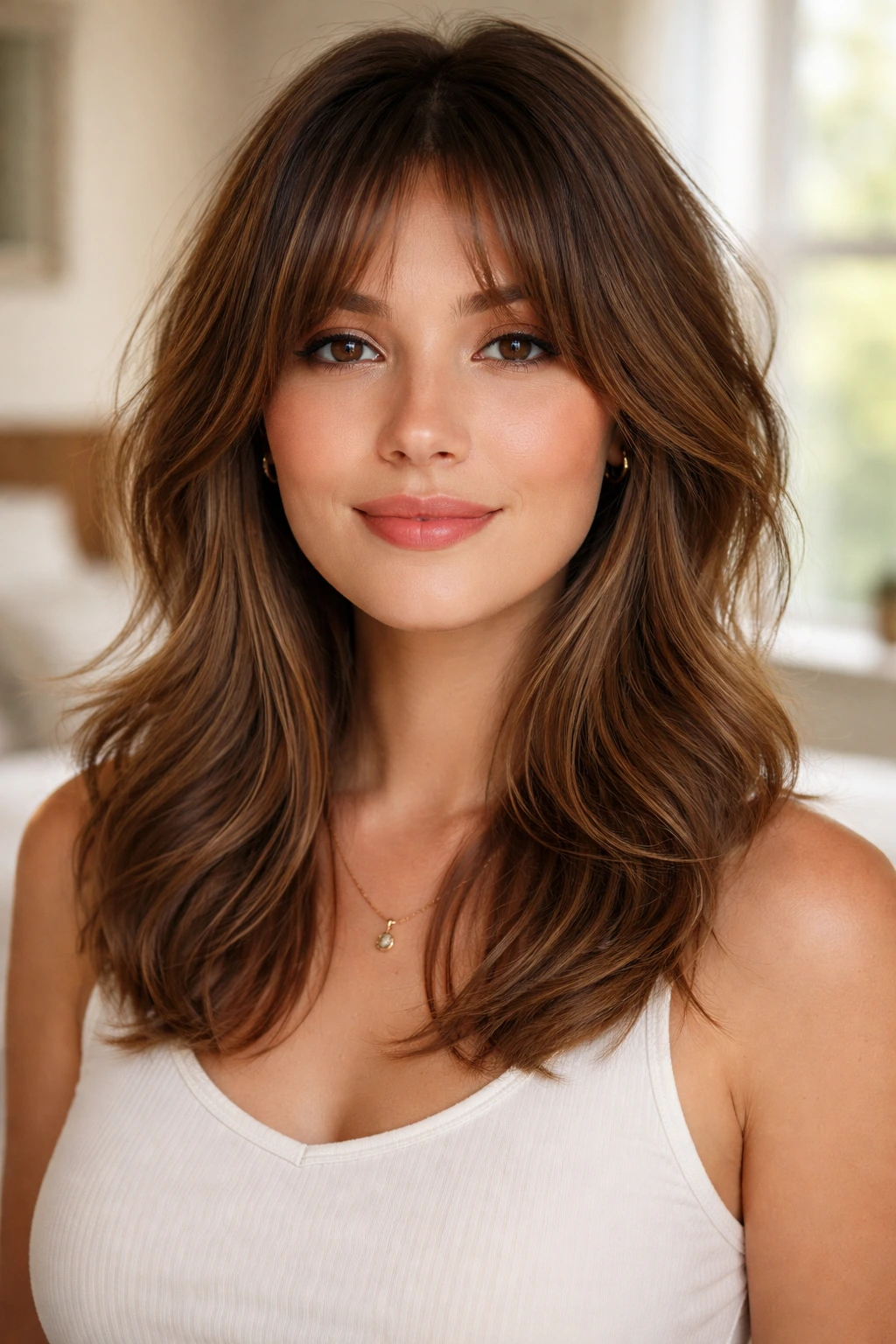
This is the easiest place to start if you want the most forgiving long micro shag haircut for round faces. Collarbone length gives you a vertical line that helps stretch the face, and curtain fringe breaks up the width at the forehead without cutting your face in half.
Why it works
The fringe matters here. A true curtain shape opens in the middle and curves away from the cheeks, which is the exact opposite of a blunt bang sitting straight across the widest part of the face. Keep the shortest face-framing pieces around lip level or just below the cheekbone, and let the back stay at the collarbone.
- Ask for light crown layers so the top has lift.
- Keep the perimeter soft, not blunt.
- Style with a round brush or large velcro roller for a little bend at the ends.
Best tip: if your face already feels full at the cheeks, do not let the front shortest pieces stop right there. Move them lower.
2. Center-Part Micro Shag With Crown Lift
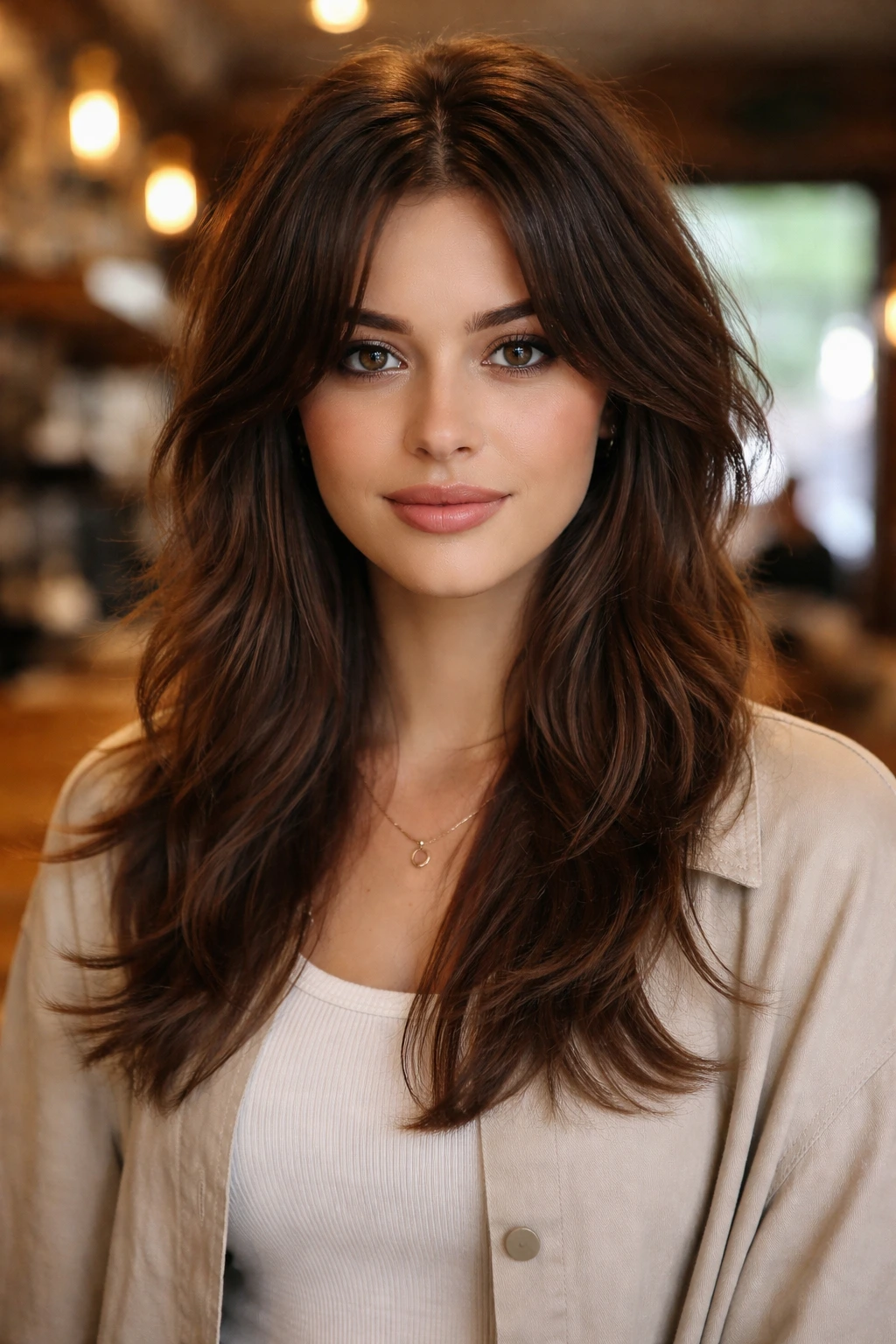
A center part can be flattering on a round face when the crown has enough height to carry it. Without that lift, the middle line can flatten the whole shape and make the face look broader.
Here’s the part people miss: the center part itself isn’t doing the work. The root lift is doing the work. A micro shag with shorter layers around the crown creates that lift more easily than a heavy long cut. The result is a cleaner vertical line from forehead to chin, which helps the face read longer.
I’d ask for a bit more movement at the top and less bulk at the sides. Keep the face frame soft and let the ends flick out just slightly. That tiny kick at the bottom stops the cut from feeling too solid.
If you wear your hair straight, dry the roots upward first. If you leave the crown flat, the whole shape slumps. Fast.
3. Razor-Feathered Long Micro Shag

Why does razor cutting suit this shape so well? Because round faces need softness around the edges, and a razor makes the ends fall with a lighter finish than blunt scissors usually do. The cut looks airy instead of heavy, which helps a lot when the cheeks are already soft.
The catch is frizz. Razor work can make coarse or dry hair puff out if the stylist goes too far, so this version is best when the hair has some natural bend or a smoother texture. On fine hair, though, the feathered finish can look almost effortless.
How to wear it
- Use a light mousse at the roots.
- Add a pea-sized cream only through the ends.
- Let the layers fall into loose pieces instead of brushing them into one flat sheet.
That last part matters. The more separation you see, the less the face reads as wide.
4. Bottleneck Bang Micro Shag

A bottleneck bang is a smart choice if you want fringe but hate the feeling of a straight-across line. It starts narrower near the brows, then opens wider toward the cheekbones, so the face gets shape without a heavy curtain hanging over it.
Round faces can struggle with thick bangs because a dense fringe often shortens the face visually. Bottleneck bangs dodge that problem. They leave space around the temples and still give you that shaggy, face-softening front. I especially like them on medium-density hair because they sit with movement instead of fighting the rest of the cut.
Ask for the shortest point to land just above the brows, then let the side pieces sweep out toward the cheekbone. That keeps the center light and the sides gentle.
If you want a little edge without going full rocker, this is the move. Not flashy. Just clever.
5. Cheekbone-Frame Long Micro Shag
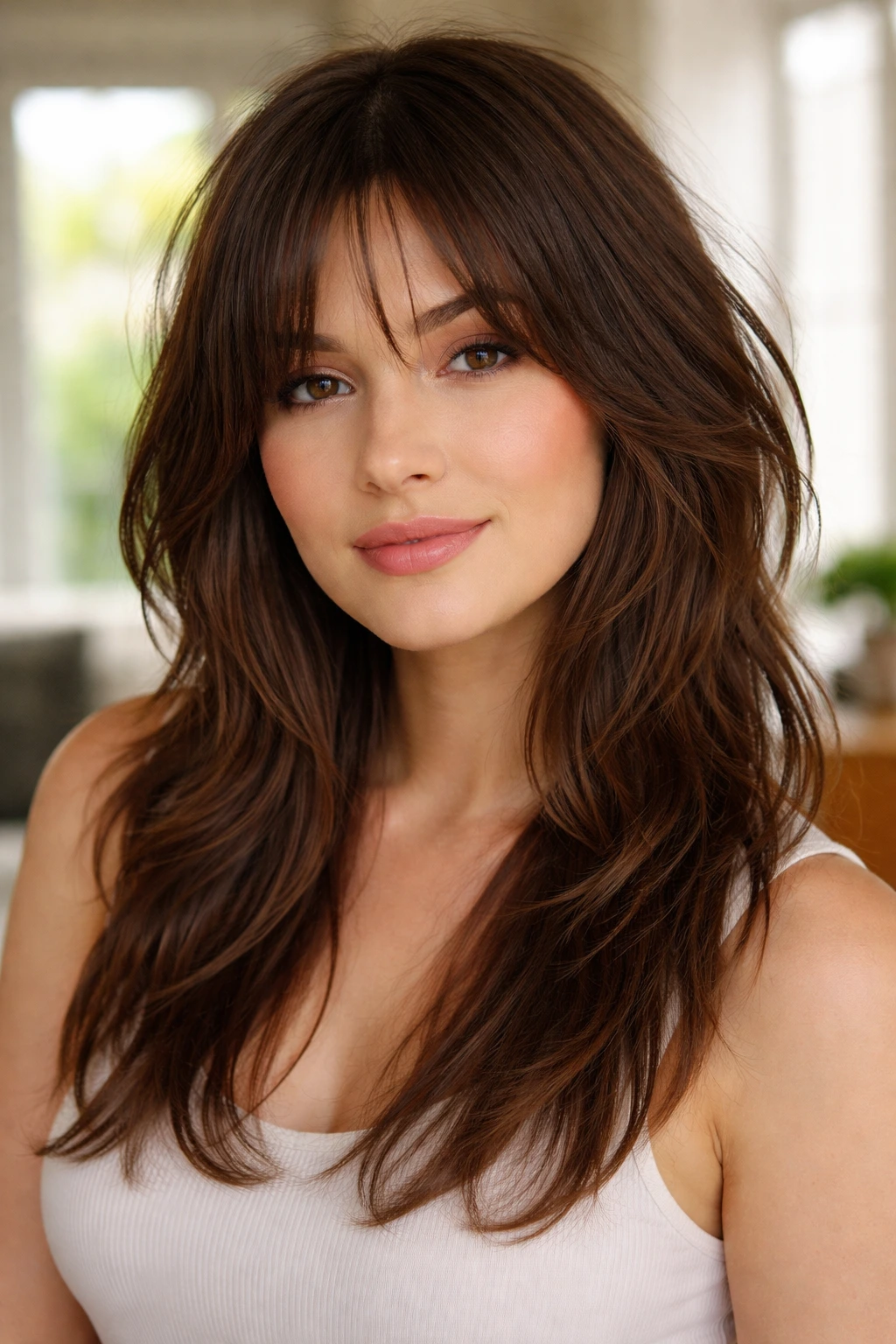
A lot of round-face advice says “add face-framing layers,” but that phrase gets tossed around so loosely it almost stops meaning anything. The useful version is this: the front pieces should start at the cheekbone, then slide past the jaw. That gives the face a visible diagonal, which breaks the circle.
I like this cut on hair that already has a bit of movement. The shape can be soft and swingy, almost like the cut is turning as you move your head. That little turn is what keeps the face from looking flat. If the layers are too short at the cheeks, though, you end up widening the area you were trying to slim. So be picky.
A good stylist will keep the front long enough to skim the jaw and will build the shagged texture higher up, near the crown and upper sides. That creates shape without loading weight where the face is broadest.
6. Thick-Hair Wolfy Micro Shag

Unlike a blunt lob, this version uses internal layering to remove bulk from the middle of the head, not just the ends. That matters if your hair is thick enough to balloon outward the second it dries. The wolfy edge gives the cut some attitude, but the long perimeter keeps it wearable.
The best version for a round face is not choppy everywhere. That can look too puffy. Instead, ask for a controlled shag: shorter crown layers, then longer broken pieces around the cheeks and collarbone. Point-cutting is better than aggressive thinning shears for many thick heads, because thinning can leave frizzy ends that stick out in odd places.
What to ask for
- Shorter layers at the crown for lift.
- Weight removed from the interior, not the outline.
- Long front pieces that pass the jawline.
This is the kind of cut that looks better with a little mess in it. Too polished, and the shape loses its charm.
7. Fine-Hair Wispy Micro Shag
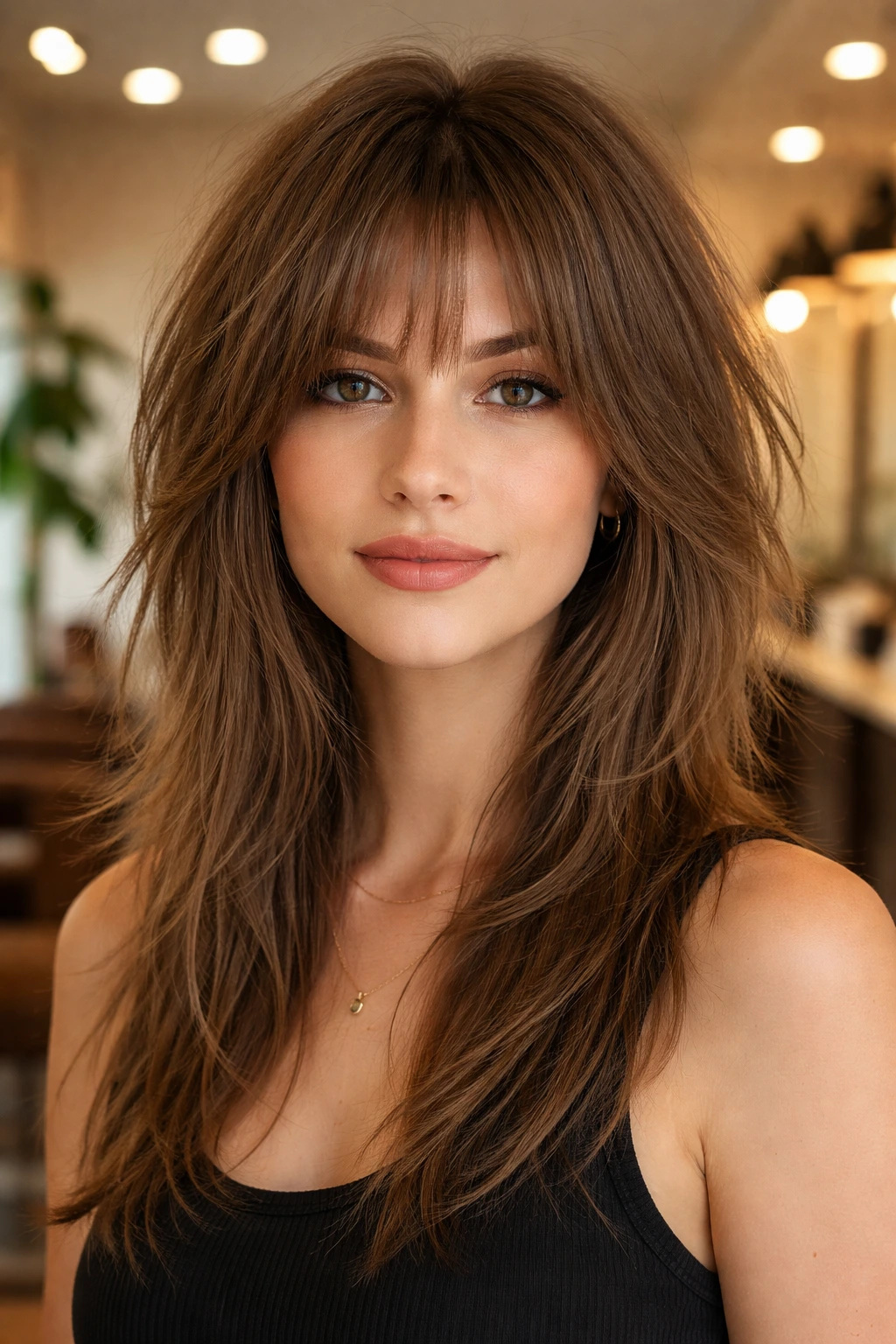
Fine hair needs a different strategy. Too many short layers and it collapses. Too much texture and it goes see-through. So the sweet spot is a micro shag that keeps a bit more length through the perimeter while using soft, wispy layering near the top.
The face-flattering part is the movement, not the amount of cutting. A round face with fine hair usually benefits from a little lift at the crown and a feathered frame that falls below the cheekbone. That gives dimension without stripping away the little density you have.
I’d avoid razor overload here. A careful point-cut often gives better control. The ends stay soft, but they don’t disappear.
Use a root-lifting spray and blow-dry with the head tipped down for the first 30 seconds. That small habit can change the whole look.
8. Curly Long Micro Shag
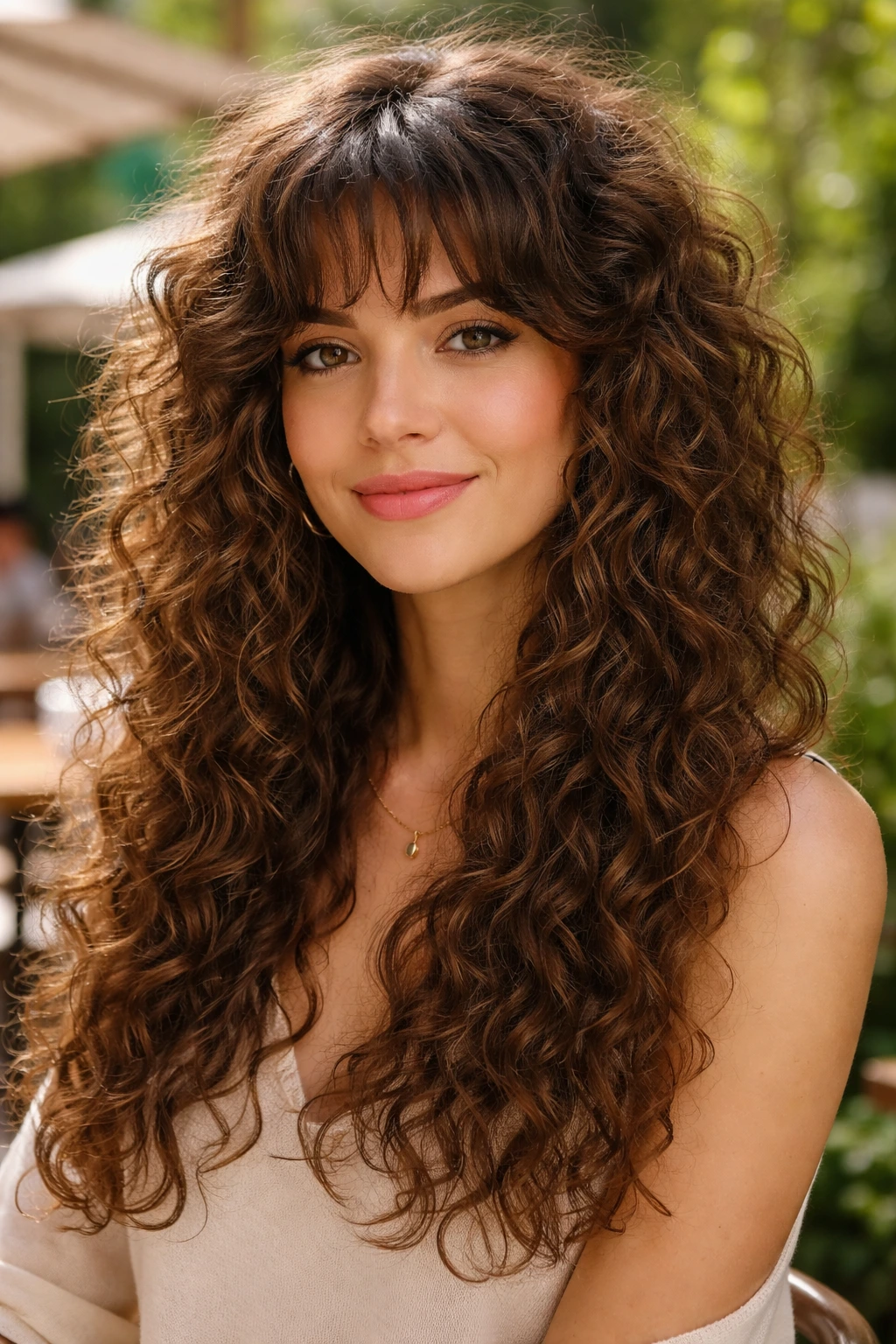
Curly hair and round faces can get along beautifully, but the cut has to respect the curl pattern. A dry cut is usually the right move because curls shrink differently from one section to the next, and a wet cut can lie to you.
What you want is height at the crown and shape around the sides without building a mushroom. That means the stylist should carve out the layers where the curls stack, then leave enough length so the lower half still drops. If the shortest curl lands right at the cheek, it can widen the face. If it lands above or below that point, the shape tends to work better.
The styling part is simple. Use a curl cream, scrunch lightly, and let some frizz live. A micro shag on curls looks better when it has a little air in it.
Skip the heavy diffuser blast unless you want extra width. Gentle drying wins here.
9. Wavy Beach Micro Shag
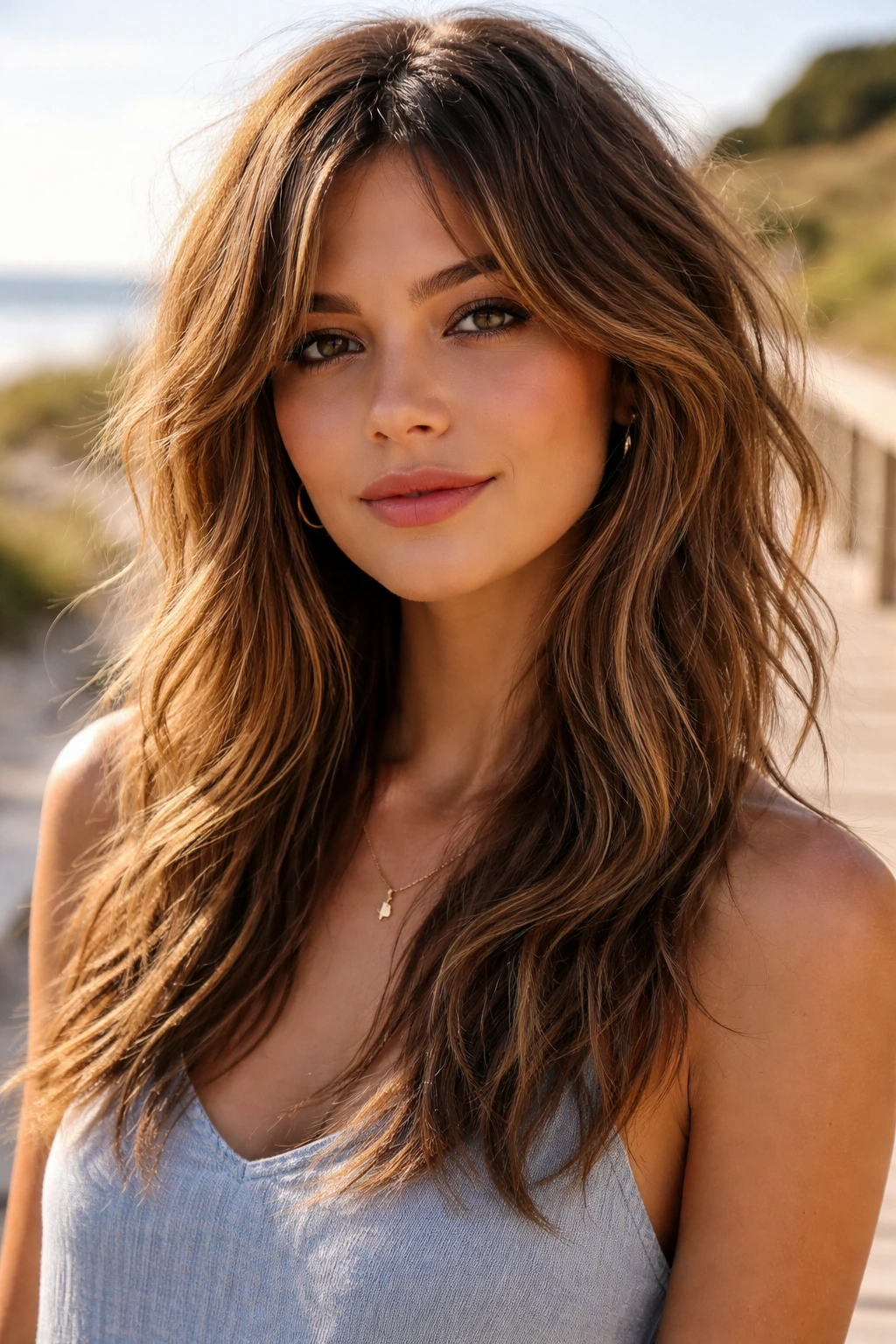
Wavy hair is almost built for this cut. The soft bends show off the layers without much effort, and the face gets a nice diagonal movement from the cheekbones down to the shoulders. That line helps a round face look longer and a little slimmer through the middle.
This version should feel loose, not overworked. Ask for a shag that keeps the ends uneven and the front pieces long enough to graze the jaw. Too many short pieces around the face can make the cut bounce outward, which is the last thing a round shape needs.
Air-drying works, but only if you scrunch from the bottom and leave the crown alone until it’s almost dry. If you keep handling the roots, the waves can puff out wider than you want.
A salt spray can help, though I prefer a light mousse if your waves tend to dry rough. Salt gives texture. Mousse gives shape.
10. Straight Piecey Micro Shag
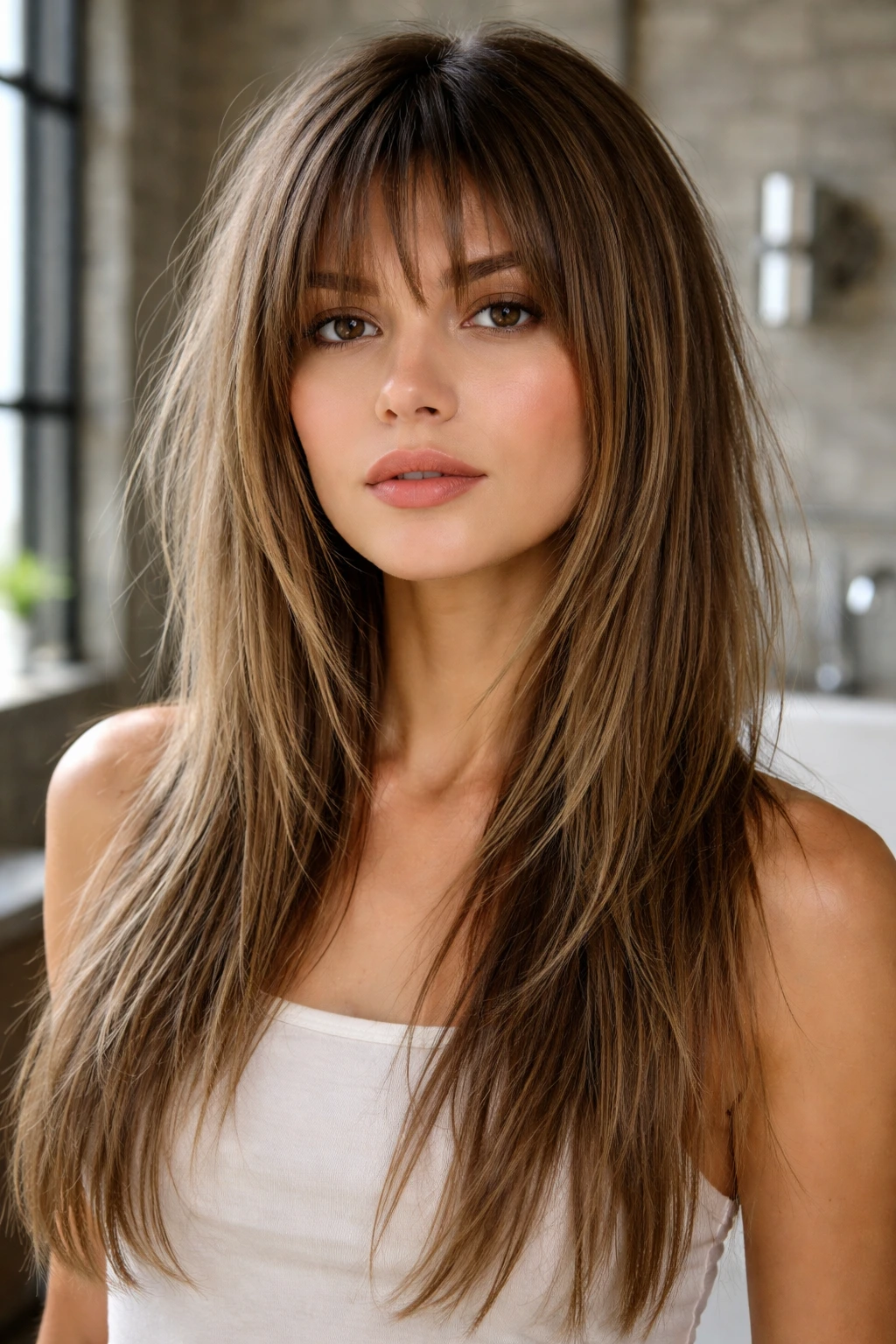
Straight hair can wear a micro shag, but it needs sharper texture than wavy hair because the layers won’t hide anything. Every cut line shows. Every angle shows. That’s either a gift or a problem.
For a round face, the goal is to break the smooth dome effect. Piecey ends help, especially if the front pieces are long and slightly disconnected from the rest. That creates movement around the cheeks instead of a blunt wall.
Best styling move
- Rough-dry the roots first.
- Add a light texture spray through the mid-lengths.
- Bend 2-inch sections with a flat iron, turning the iron just a little as you pull down.
- Leave the ends imperfect.
That imperfect finish is the point. Straight micro shags look best when they do not look over-controlled.
11. Side-Part Long Micro Shag

A side part can be a gift for round faces when the rest of the haircut is light enough to support it. The part creates a diagonal line across the forehead, which interrupts the symmetry that often makes a round face feel even rounder.
I like this version when the hair has medium density and you want a more polished feel without losing the shag shape. The front should sweep across the forehead, not sit in a solid slab. Then the layers can fall away from the cheeks and land below the jaw. That keeps the eye moving.
A deep side part works better than a shallow one here. It needs to feel intentional. If it’s barely off center, the face still reads squarely forward. If it’s deeper, the whole cut gains a little tension, which is flattering.
Use a round brush at the roots on the heavier side of the part. Tiny lift. That’s enough.
12. Feather Fringe Long Micro Shag
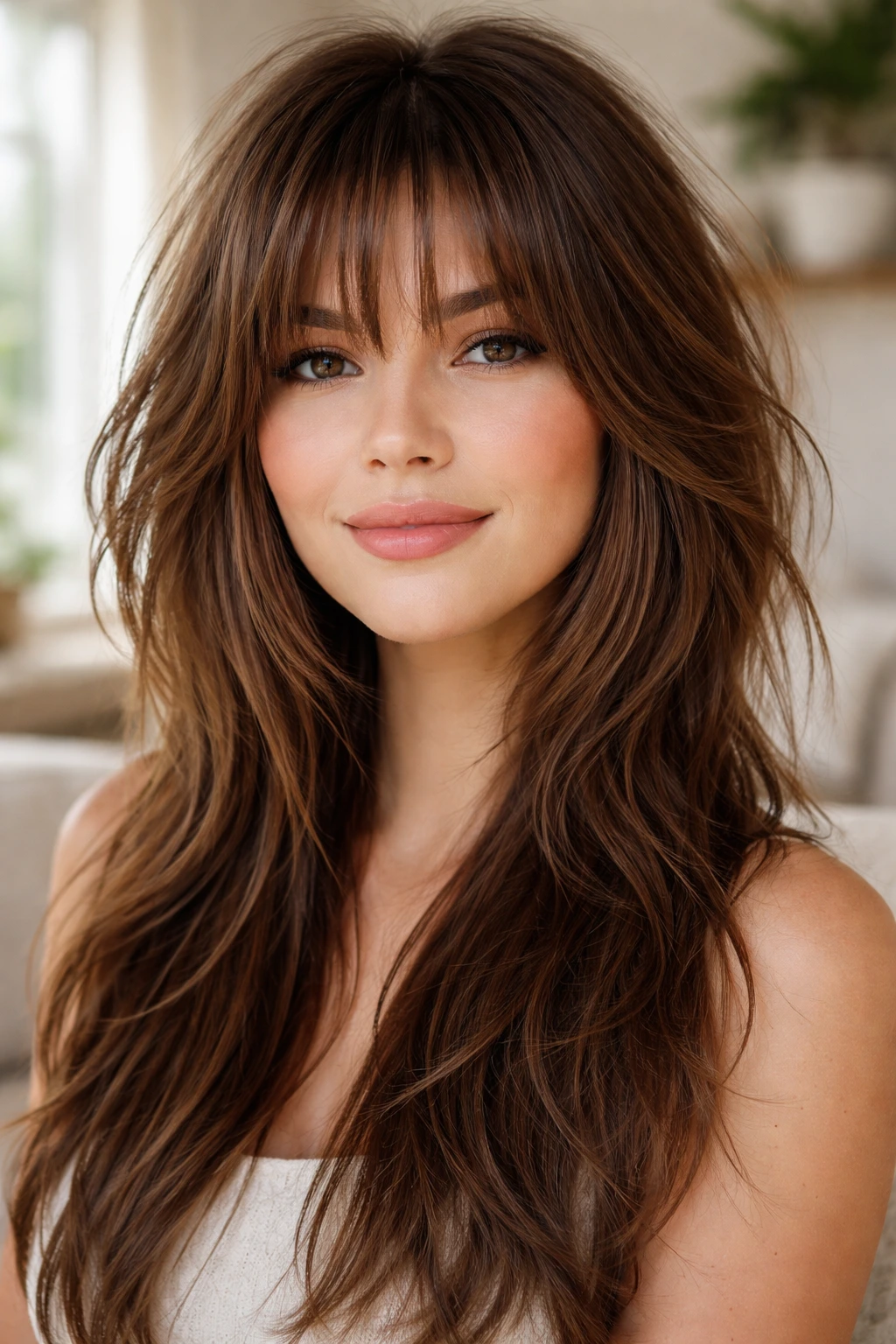
A feather fringe is one of my favorites on a round face because it softens the forehead without boxing the face in. The pieces are lighter than a blunt fringe, and they break apart more easily, which keeps the front from feeling heavy.
This version works especially well if you like a softer, more feminine finish. The fringe should be airy, not sparse to the point of looking unfinished. The crown layers need to support it too, or the bangs will sit there with no shape around them.
What makes it different
- The fringe is broken into thin pieces.
- The sides stay longer and melt into the layers.
- The top keeps lift, so the bangs do not flatten the face.
I’d style it with a small round brush or a medium roller set near the front. A quick bend at the roots keeps the fringe from sticking straight to the forehead. Nobody wants that.
13. Internal-Layer Micro Shag
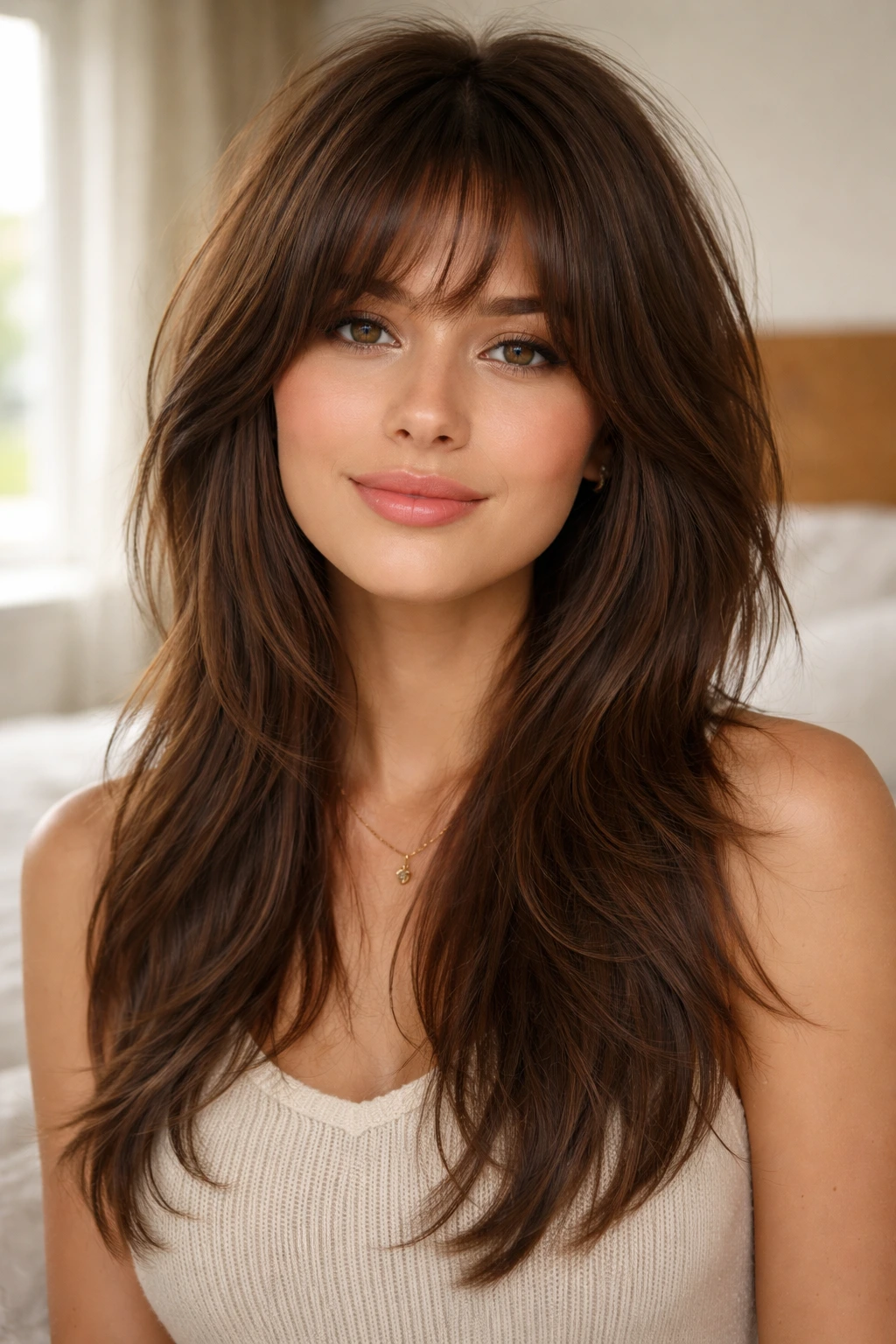
This is the quiet one. It does not shout shag from across the room, but it gives the cut movement where you need it most: inside the shape, not just on the surface.
That’s a smart choice for round faces that need slimming without obvious choppiness. The outside line stays soft and long, while the hidden layers keep the hair from ballooning. You get motion when you move, which is a lot nicer than a haircut that only looks good in a posed photo.
Ask for internal layers through the crown and upper sides, then keep the perimeter long. The effect is subtle, but it lasts. Grow-out is easier too, which I appreciate. A lot.
If you hate the feeling of “too much haircut,” start here. It gives you the shag idea without the loudest version of the texture.
14. Shaggy Lob Micro Shag
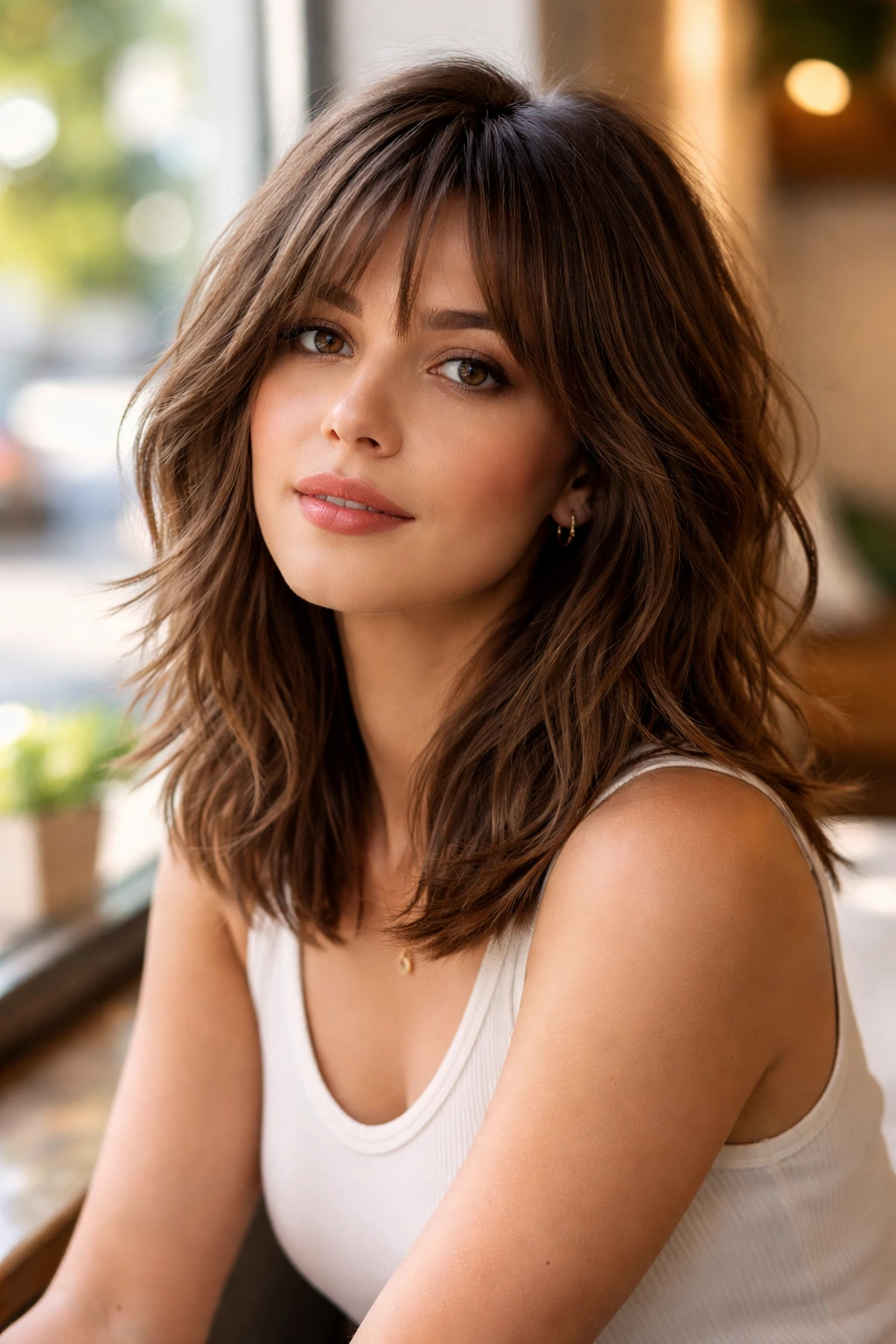
A shaggy lob is the safe bet for people who want enough length to tie back but still want the lighter shape of a shag. For round faces, that shoulder-to-collarbone zone is useful because it pulls the silhouette down instead of across.
The cut looks best when the bottom line is soft and broken, not exact. Add layers through the top third and leave the lower third a little longer so the whole thing doesn’t puff out. That balance keeps the face from looking wider at the sides.
If you style it with a round brush, bend the front pieces away from the face. If you air-dry it, tuck one side behind the ear and let the other side fall forward. That asymmetry helps more than people think.
This is the cut I’d suggest to someone who wants shag movement but does not want to commit to a shorter, more dramatic shape.
15. Tapered Nape Long Micro Shag
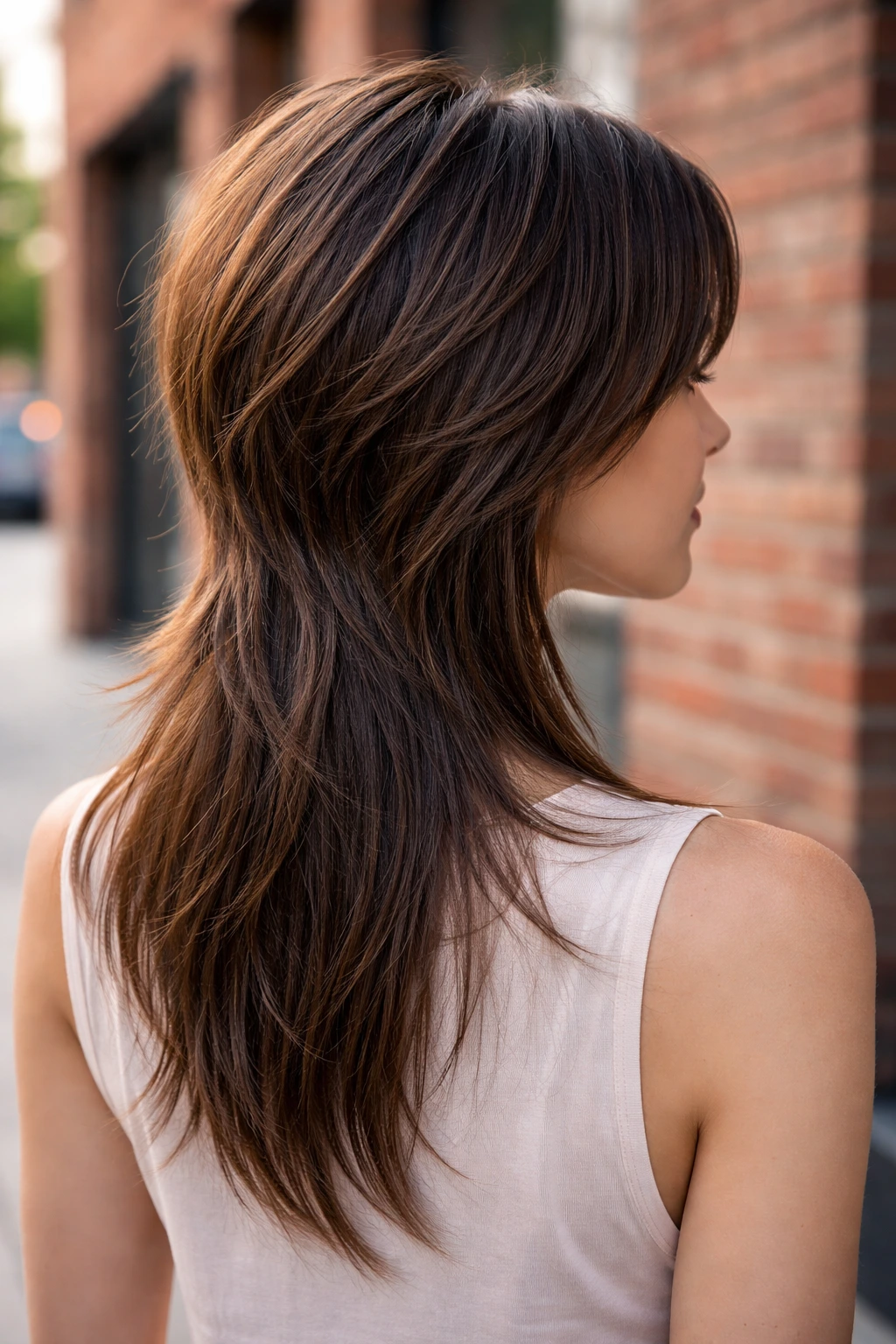
Do you want the back to feel lighter without losing the front length? Then a tapered nape helps. The back is cut a bit shorter and cleaner, while the front stays long and broken. That creates a subtle forward angle, which is useful on round faces because it draws attention away from the widest side view.
This shape is especially good if your hair tends to get bulky at the neck. A clean nape removes that heaviness, and the shag layers above it stop the whole cut from turning into a bob with attitude. There’s a difference.
How to style it
- Blow-dry the nape smooth first.
- Keep the crown lifted with root spray.
- Let the front pieces sit a little tousled.
Best detail to request: ask for the taper to be soft, not stacked. Hard stacking can look too dated and can widen the back of the head.
16. Deep Side Sweep Micro Shag
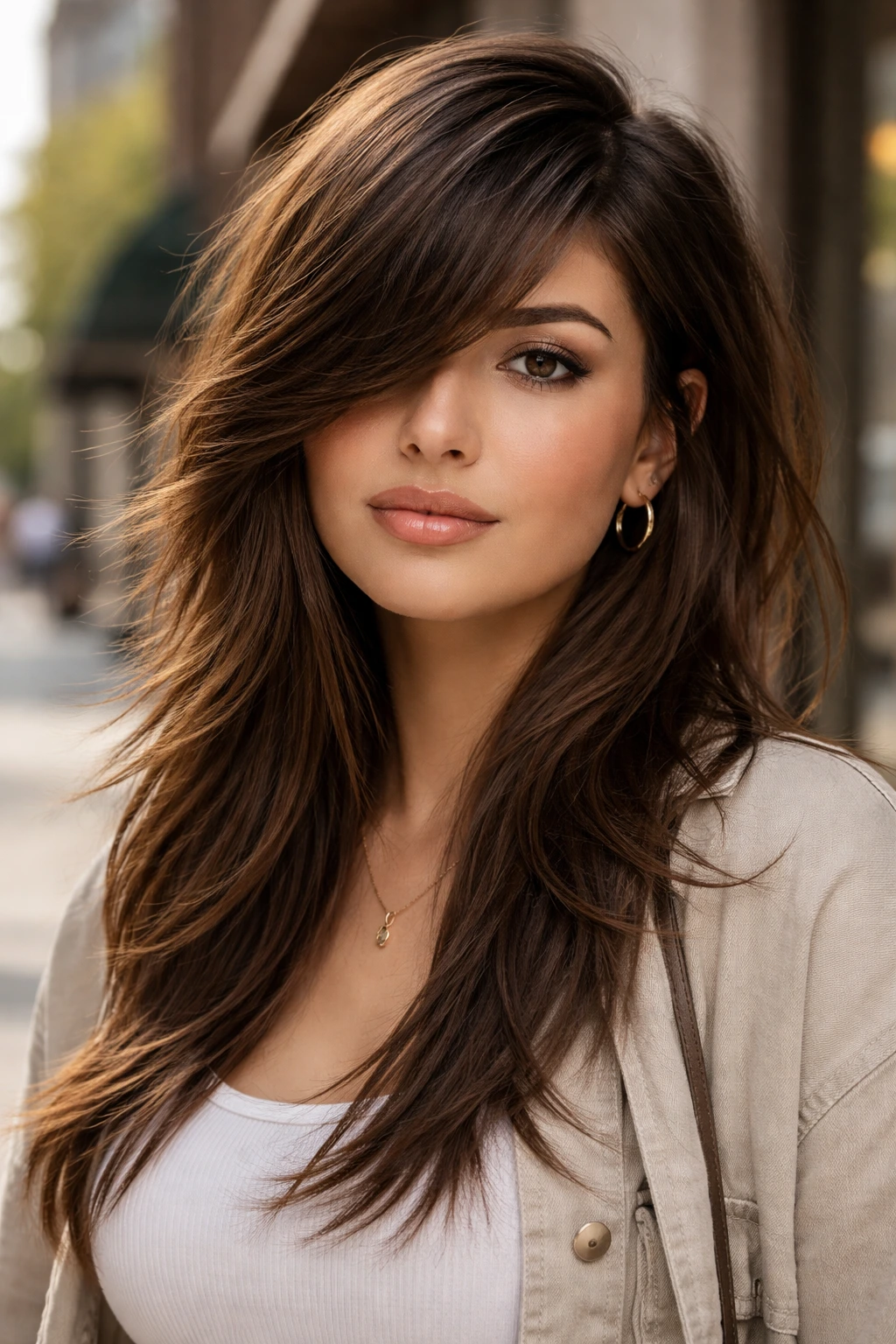
A deep side sweep changes the entire mood of the haircut. Instead of a balanced frame, you get motion flowing across the face, and that diagonal line is a nice trick for round faces that need length.
I like this on hair with some density because the sweep has to hold its shape. The side fringe should start heavier near the part and taper into lighter pieces around the cheekbone. That keeps the front from feeling like a helmet. A micro shag gives the sweep somewhere to land, which is why the combination works.
This is also one of the better choices if you like a little drama without cutting a strong bang. The shape can feel polished for work and loose by evening, which is a rare combination.
The only caution: if your hair falls flat fast, you need root support at the part. Otherwise the sweep collapses and the face gets wider again.
17. Blowout-Style Long Micro Shag
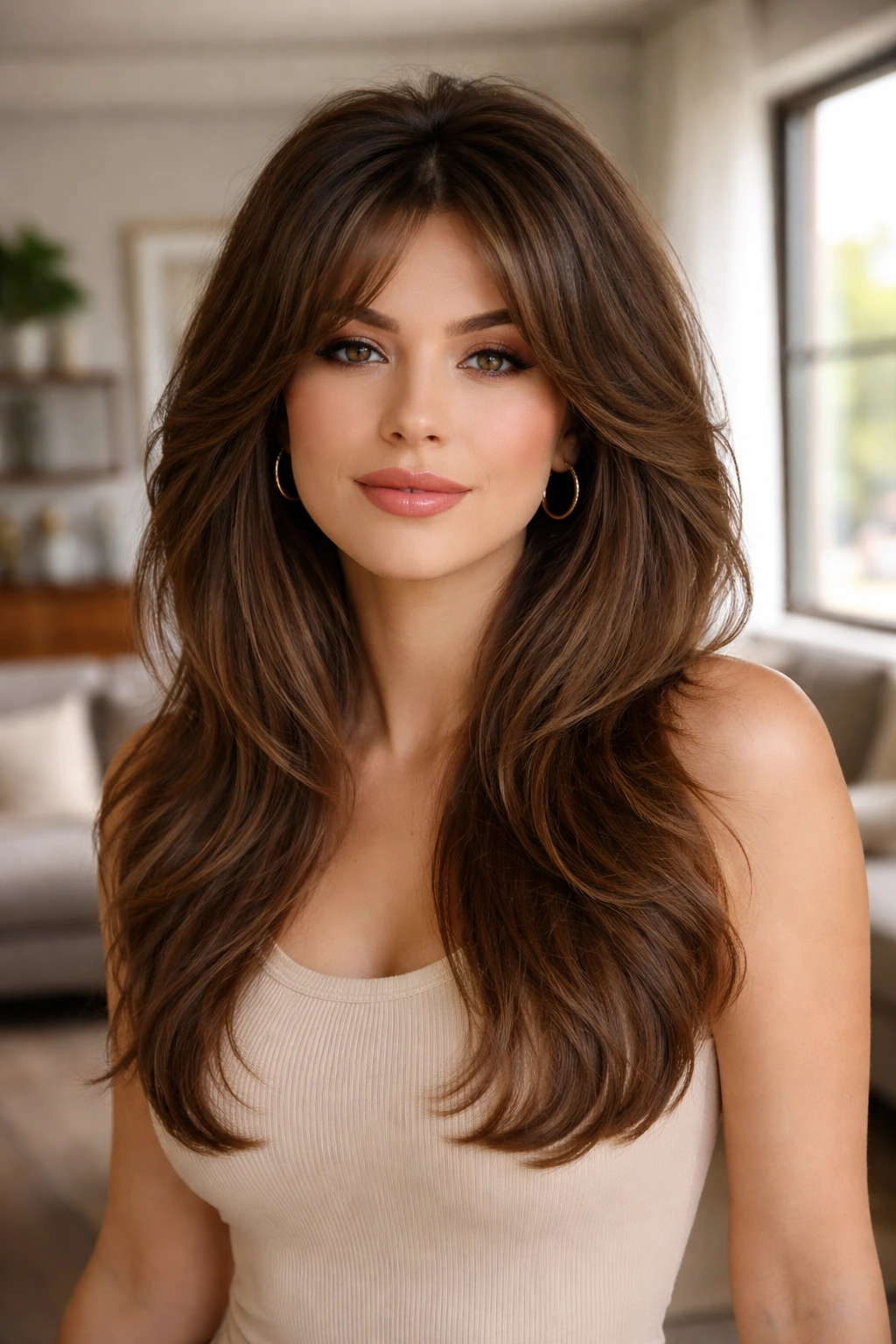
Some people want shag layers, but they still love a smooth, brushed finish. Fair enough. A blowout-style micro shag gives you the movement without the messy texture dominating the look.
The key is volume at the crown and soft curvature through the ends. On a round face, that vertical lift matters more than big width at the sides. The front layers should curve away from the cheeks and flick just under the jaw or collarbone. That makes the silhouette longer.
I’d use a medium round brush and keep the nozzle pointed downward for the last pass, so the cuticle lies down and the ends stay neat. A light smoothing cream can help, but don’t load the hair with it. Too much product kills the shape.
This version is a good fit if you like a cleaner finish and you want the shag idea to feel a little more grown-up.
18. Air-Dry Long Micro Shag

Some haircuts demand a full styling session. This one should not. A good air-dry micro shag is built so the texture does the work for you, which is useful if your mornings are not exactly generous.
On a round face, the hair should dry into movement around the crown and a soft fall around the jaw. That means the layers must be cut with enough separation to stand on their own. If the cut is too uniform, air-drying just leaves you with flat sides and no shape.
A little leave-in conditioner through the ends, a bit of mousse at the roots, and a quick scrunch is usually enough. Then stop touching it. Seriously.
If the hair is wavy or lightly curly, this version can be a dream. If it’s pin-straight, you may need a touch of texture spray after it dries or the layers can disappear.
19. Thick Coarse-Hair Micro Shag
Thick coarse hair can wear a shag better than many people expect, but only when the bulk is handled with restraint. If the haircut is too short all over, it puffs. If the layers are too choppy, it can look triangular. Neither is flattering on a round face.
The best shape keeps the perimeter long and uses internal removal to lower the weight through the middle. The crown can still rise, but the sides need to lie closer to the head. That’s the whole game with thick hair: control, not over-cutting.
Ask for point-cutting and controlled layering. Avoid too much razor work if your hair already feels wiry. It can frizz at the ends, and that makes the face look wider again.
A smoothing cream on damp hair helps, but use a small amount. Thick hair does not need much product to get heavy.
20. Fine Flat-Hair Micro Shag
Fine hair and round faces need a bit of a cheat code, and this cut provides one: shorter crown layers that create lift without taking the perimeter too short. That gives the face more length up top, which is where fine hair often needs help most.
The danger here is over-layering. Too many short pieces can make the ends look thin and scraggly, which is not the same thing as airy. You want shape, not emptiness. A careful micro shag keeps enough density through the front and bottom so the cut still feels full.
Best setup
- Use a volumizing mousse at the roots.
- Blow-dry with a small round brush.
- Finish with a dry texture spray only on the top half.
That top-half-only part matters. If you spray the ends too much, they can look stringy fast. Fine hair is honest like that.
21. Soft Mullet-Edge Micro Shag
A soft mullet edge sounds more daring than it usually is. In practice, it means a little more length in the back and a little more texture through the crown and sides. On a round face, that back length can help create the vertical line you want.
The front should stay soft, almost feathered, so the cut does not turn into a sharp statement shape. The difference between edgy and awkward is usually just the face frame. Keep the shortest front pieces long enough to graze the cheekbone or lower.
This version works best if you like some attitude in your haircut and you do not mind a bit of movement around the ears and nape. It’s less polished, more lived-in. Good hair, slightly unruly.
I would not do this with very dense fringe unless you want the face to feel boxed in. Leave air around the forehead.
22. Piecey Curtain Fringe Micro Shag
Piecey curtain fringe is a softer cousin of the heavier fringe looks, and that softness matters on a round face. The pieces separate instead of forming one large shape, which keeps the forehead open and the cheeks from feeling too framed.
The key is length. You want the shortest center pieces to sit near the brows, then slide the sides toward the cheekbones. If the fringe gets too short, it stops lengthening the face and starts shortening it. Bad trade.
What to ask for
- Thin, separated fringe pieces.
- Long side pieces that blend into the layers.
- Texture that stays movable, not stiff.
This is one of those cuts that looks better the second day, after the fringe has settled and the separation is a little less perfect. That imperfectness is the charm.
23. C-Swoop Layer Long Micro Shag
A C-swoop layer sounds small, but it changes the profile a lot. The front pieces curve out from the cheek, then fold softly back toward the shoulder, making a gentle “C” shape. That curve pulls the eye downward and away from the widest point of the face.
I like this version because it feels deliberate without looking fussy. A round face benefits from that soft diagonal, especially when the rest of the haircut stays light through the top. The layers should not stop at the cheekbone and sit there. They need to travel.
Use a large round brush or a big roller set if you want the swoop to hold. A flat finish defeats the purpose. The hair should move when you turn your head.
This one is especially nice if you want to look styled with very little actual effort. Which, honestly, is the whole point of a good haircut.
24. Tousled Root-Lift Micro Shag
Root lift is the unsung hero of round-face haircuts. Without it, the sides expand and the top goes flat. With it, the face reads longer and cleaner. That’s why a tousled root-lift micro shag can work so well.
The style starts with a little rough drying at the crown, then a light hold product to keep the height from collapsing. The ends stay loose and separated, almost as if the haircut has already been lived in a bit. That lived-in quality helps the round face because it keeps the eye moving instead of locking it on the cheeks.
I’d avoid over-brushing this cut. Once the roots are down, they stay down. Use fingers, not a paddle brush, and stop before it gets too neat.
This is the version for someone who wants movement first and polish second.
25. Grow-Out Friendly Long Micro Shag
Not every good haircut has to look perfect on week one. A grow-out friendly version is worth choosing if you do not want to be in the salon every few weeks.
The magic is blended layers. The shorter crown pieces should melt into the longer lengths instead of forming hard steps. On a round face, that keeps the shape flattering as it gets longer, because the front still frames the cheek and jaw in a soft diagonal.
Ask for the layers to be diffused, not stacked. That way, when the cut grows, it still looks like a plan and not a mistake. A lot of people chase “fresh” and then hate the grow-out. I’d rather have a haircut that behaves for months.
This is one of the most practical options in the whole list. Not the flashiest. The most sensible.
26. Glassy Straight Micro Shag
A glassy finish on a micro shag is a clean contrast to all that texture, and it can look sharp on a round face if the layers are placed well. The trick is to keep the crown lifted and the front pieces long enough that the shine does not turn into a flat helmet effect.
This version works best on hair that naturally lies smooth or can be straightened without puffing. The ends should still have some separation. If they’re too blunt, the face width comes right back. That’s the part people miss when they chase a polished finish.
Use a heat protectant, then a flat iron with a slight bend at the ends. No stick-straight line. A tiny curve is enough. It keeps the cut from feeling severe.
I’d choose this when I want my hair to look sleek but not stiff. A small distinction, and an important one.
27. Beachy Bend Micro Shag With Middle Part
A middle part with beachy bends can work on round faces if the bends fall below the cheekbone and the roots have enough lift. Without those details, the middle part can pull the eye straight across the face. Not ideal.
The bend is the story here. Loose bends starting around the lips or jaw create a longer line, and the shag layers help those bends stay separated instead of merging into a broad wave. That gives the face some structure while keeping the feel relaxed.
A wand or flat iron can create the bend, but keep the sections bigger than 1 inch if you want the result to stay soft. Tiny curls would fight the whole effect. After styling, rake your fingers through once and stop.
This one feels best when it’s not trying too hard. That’s not laziness. It’s restraint.
28. Shorter Crown, Long Perimeter Micro Shag
If I had to name one move that flatters round faces fast, it would be this: shorter at the crown, longer around the perimeter. That combination creates height without sacrificing the length that helps narrow the face visually.
The cut makes the head look more oval. That’s the goal. The crown gets lift, the sides stay light, and the longest pieces move past the jaw so the face does not end at its widest point. Simple idea. Strong result.
A clean way to ask for it
- Keep the top airy and layered.
- Leave the bottom edge long and broken.
- Make sure the front drops below the cheekbone.
This shape is useful on straight, wavy, and lightly curly hair. The styling changes, but the silhouette works across textures. I trust this one because it does not depend on one perfect finish. It works in motion.
29. Naturally Textured Long Micro Shag
Naturally textured hair has a built-in advantage here: movement. A micro shag lets that movement work for the face instead of against it, especially when the layers respect the pattern instead of fighting it.
For curls, waves, or coils, the biggest mistake is cutting everything to one visual length when dry shrinkage is at play. That tends to widen the sides or create a boxy finish. A good textured micro shag keeps the top balanced, leaves enough length in the front, and shapes the perimeter so it falls in a flattering line.
I’d ask for the cut to be tailored to how your hair actually dries, not how it looks wet. That sounds obvious, but plenty of bad haircuts come from ignoring it. Texture changes the geometry. The cut has to answer that.
A cream or gel-custard finish can keep the shape together without stripping movement. Light hands help.
30. The Best All-Around Long Micro Shag for Round Faces
If you want one version that does the most work, choose a cut that mixes collarbone length, crown lift, and cheekbone-skimming fringe. That combination checks the big boxes: it stretches the face, keeps the sides soft, and adds enough movement that the haircut does not sit like a block.
I’d keep the shortest pieces no higher than the upper cheek zone, and I’d leave the perimeter long enough to fall below the jaw. That one decision keeps the cut from widening the face in the wrong place. If you want more softness, go curtain. If you want more edge, go piecey. If you want the easiest styling life, go with blended layers and a side part.
The real test is simple. When the hair is down, does your eye move up and down, or does it stop at the widest part of the face? Good round-face shaping keeps the eye traveling. That’s the whole game.
And if you’re sitting in the chair trying to decide, remember this: length helps, but placement helps more. Put the movement in the right spots, and a long micro shag does the flattering work for you.
