



A good shag doesn’t try to hide a round face. It carves angles into it.
That’s why short side shag haircuts for round faces can look so sharp when they’re cut with intention. The side part, the sweep of the fringe, and the way the layers land around the cheekbones all matter more than most people think. A blunt chin-length cut can make the face read wider. A shag with broken texture and a little lift at the crown does the opposite.
The trick is shape, not chaos. Side movement pulls the eye diagonally, and diagonal lines are kind to soft features. So are feathered ends that stop below the widest part of the cheeks, plus a fringe that skims past the brows instead of cutting straight across the forehead. If your hair is fine, thick, curly, or stubbornly straight, the right version changes a lot.
Some shags are airy and soft. Others are choppy and edgy. A few live somewhere in between and that’s usually where the sweet spot is for round faces. Keep the words “length,” “angle,” and “lift” in your head as you look through the options below.
1. Deep Side Part Shag with Curtain Bangs for Round Faces
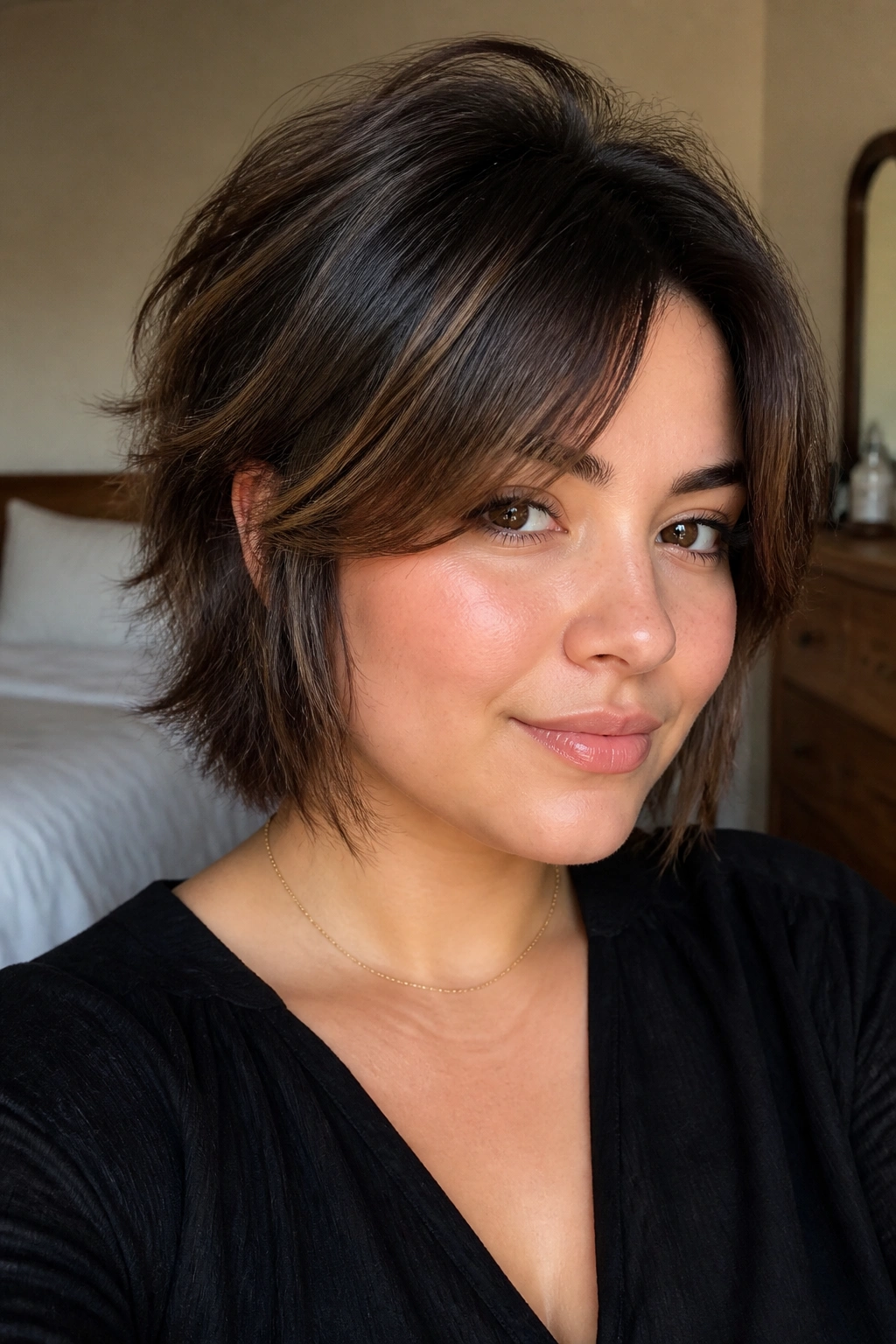
A deep side part does a lot of quiet work here. It breaks up the symmetry that can make a round face feel wider than it is, and the curtain bangs soften the whole front without sitting heavy on the cheeks. That little bend away from the face matters.
What Makes It Work
The longest pieces should land somewhere between the cheekbone and the jaw, not right at the fullest part of the face. That keeps the haircut from drawing a hard line across the width of the face. The rest of the layers can stay light and choppy so the shape still feels modern, not helmet-like.
Ask for soft, face-framing layers and a fringe that opens from the side part instead of sitting in one thick block. A stylist who understands round faces will usually keep more length around the front and remove weight underneath.
- Ask for the shortest face-framing piece to start below the cheekbone.
- Keep the crown a touch shorter so the top has lift.
- Let the ends be textured, not blunt.
- Blow-dry the fringe away from the face first, then tuck or shape the rest.
Best trick: dry the fringe before the rest of the hair gets too dry. Once it sets flat, it tends to stay flat.
2. Chin-Length Razor Shag with a Sweeping Fringe
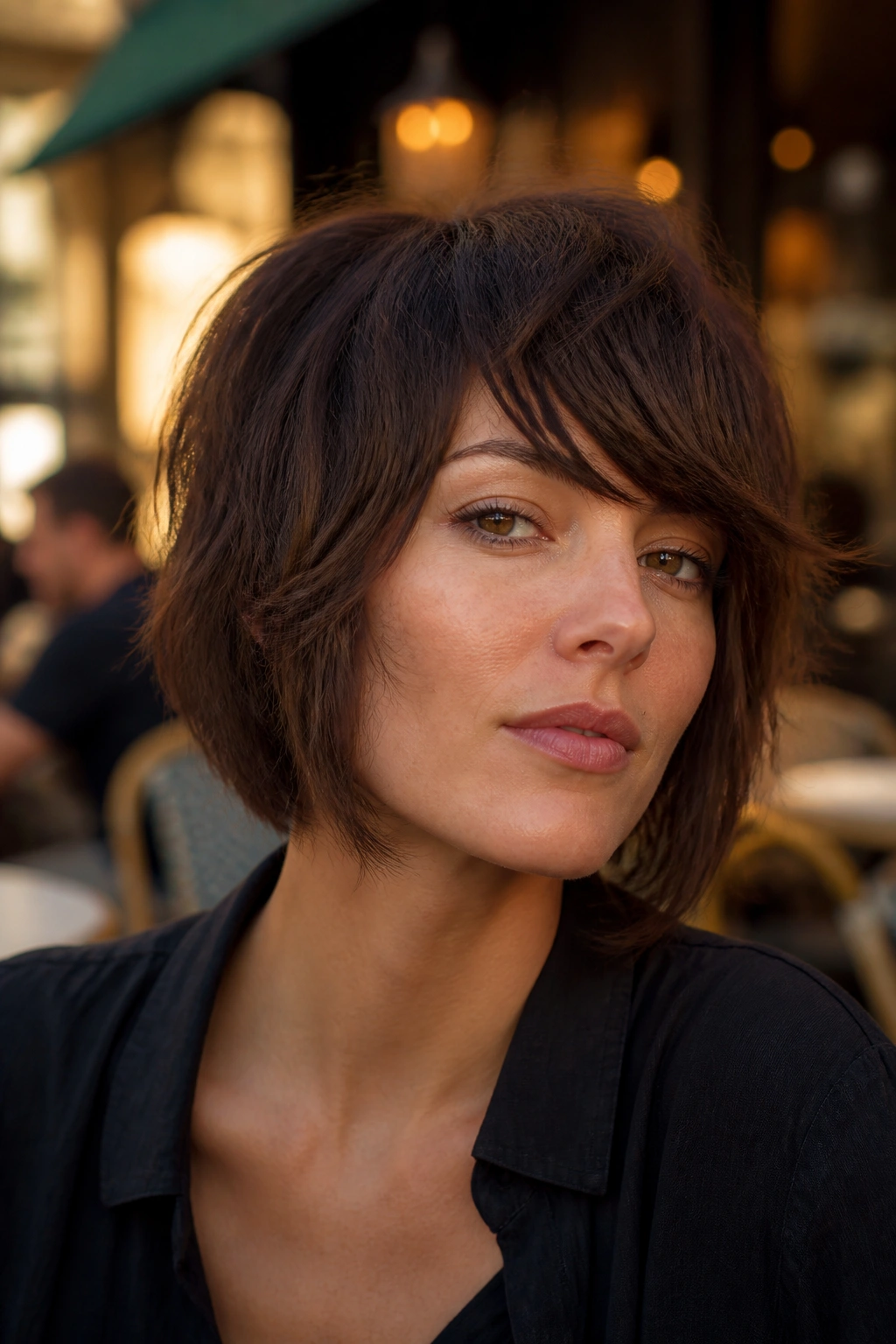
If you want the face to look narrower fast, this is one of the sharpest cuts in the pile. The razor creates soft, broken ends instead of a hard line, and that matters at chin length because chin-length cuts can get boxy in a hurry. A sweeping fringe keeps the eye moving instead of stopping dead at the forehead.
The danger is bluntness. A chin-length shag can widen the lower half of the face if the perimeter sits too straight. The fix is simple: keep the bottom edge soft and make sure the front pieces are longer than the center line.
This cut works best with a bit of bend. A flat iron wave on the last two inches of hair, or a quick wrap around a medium round brush, keeps the ends from sticking out like a shelf. If your hair naturally flips, this cut usually behaves better than people expect.
The look is clean but not stiff. That’s the whole point.
3. Pixie Shag with Long Side Fringe for Round Faces
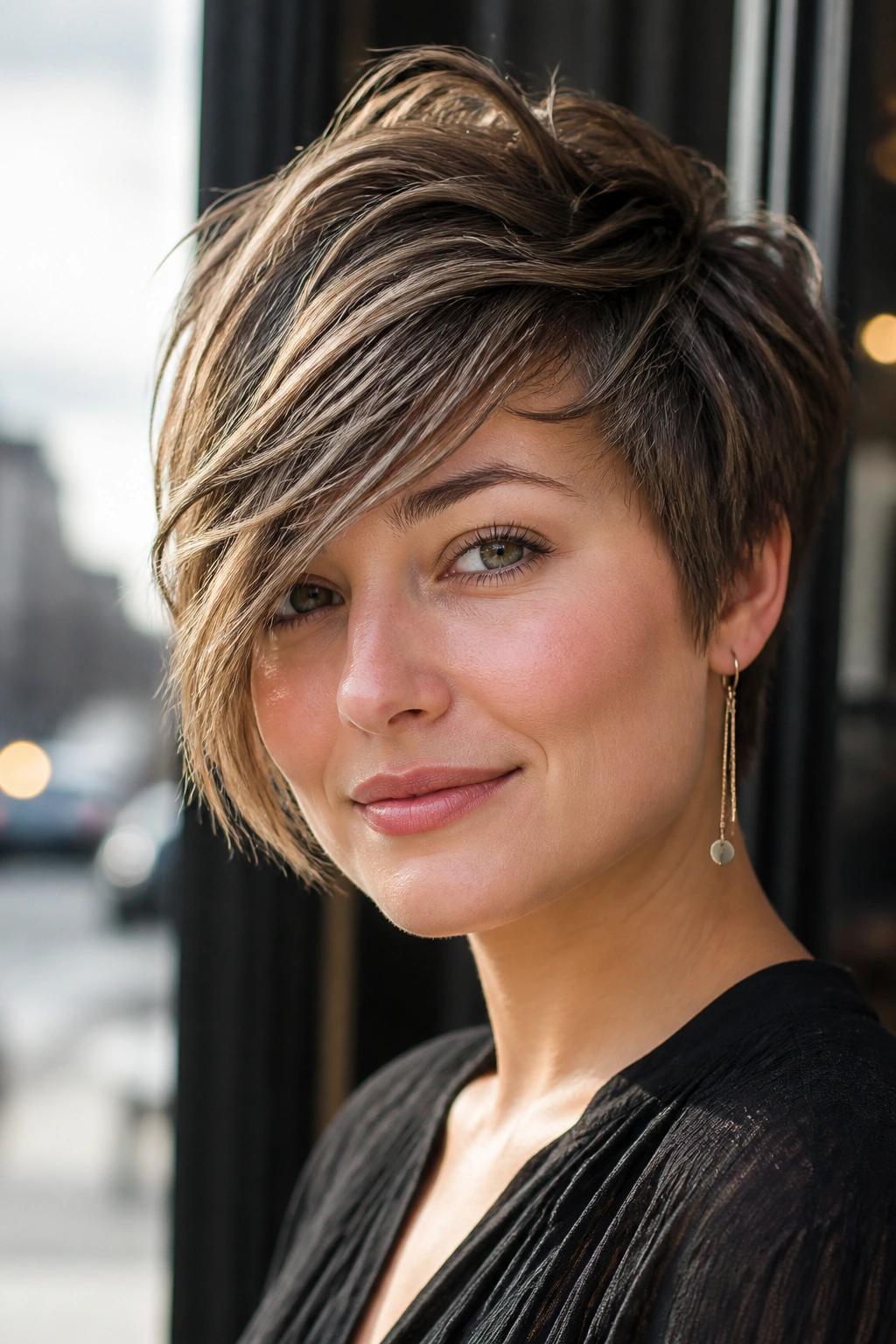
Can a pixie shag flatter a round face? Absolutely, if the fringe is long enough to cut across the width of the cheeks and the top has real texture. A too-short pixie can leave the face exposed in a way that feels harsh. A shagged pixie with a long side fringe is different. It gives you air, height, and one strong diagonal line.
How to Style It
Use a pea-sized amount of light paste or cream on damp hair, then push the top forward and slightly to the side. The crown should have a little lift, not a stiff spike. The side fringe can skim the brow or cheekbone, depending on how much face coverage you want.
- Blow-dry with fingers first, not a brush.
- Direct the fringe across the forehead, then break it up with your hands.
- Leave the sides close enough to the head so the shape stays neat.
- Skip heavy oils near the roots; they collapse the lift fast.
This is a strong cut for people who want a short style without a baby-face effect. It has bite. It also grows out better than a classic pixie, which is one of the reasons I keep coming back to it.
4. Collarbone Shag with Feathered Ends

Picture hair that brushes the collarbone, moves when you turn your head, and never hangs in one solid curtain. That’s the charm of this cut. It gives round faces enough length to slim the line from cheek to shoulder, but it stays short enough to feel light.
Feathered ends are the key here. They keep the perimeter from sitting in one blunt block, which is exactly what you do not want near the widest part of a round face. A side part makes the shape even better because it shifts volume off-center.
A collarbone shag also plays nicely with everyday styling. You can air-dry it, rough-dry it, or give the front a quick bend with a brush. If you want polish, a round brush at the ends is enough. If you want grit, a texture spray and scrunching do the job.
- Tell your stylist to keep the layers long enough to swing.
- Ask for soft internal layering instead of a choppy, stacked shape.
- Keep the front slightly longer than the back.
- Use a light mist of spray, not a heavy cream.
The best version of this cut looks easy. That ease is earned.
5. Wavy Jaw-Length Side Shag
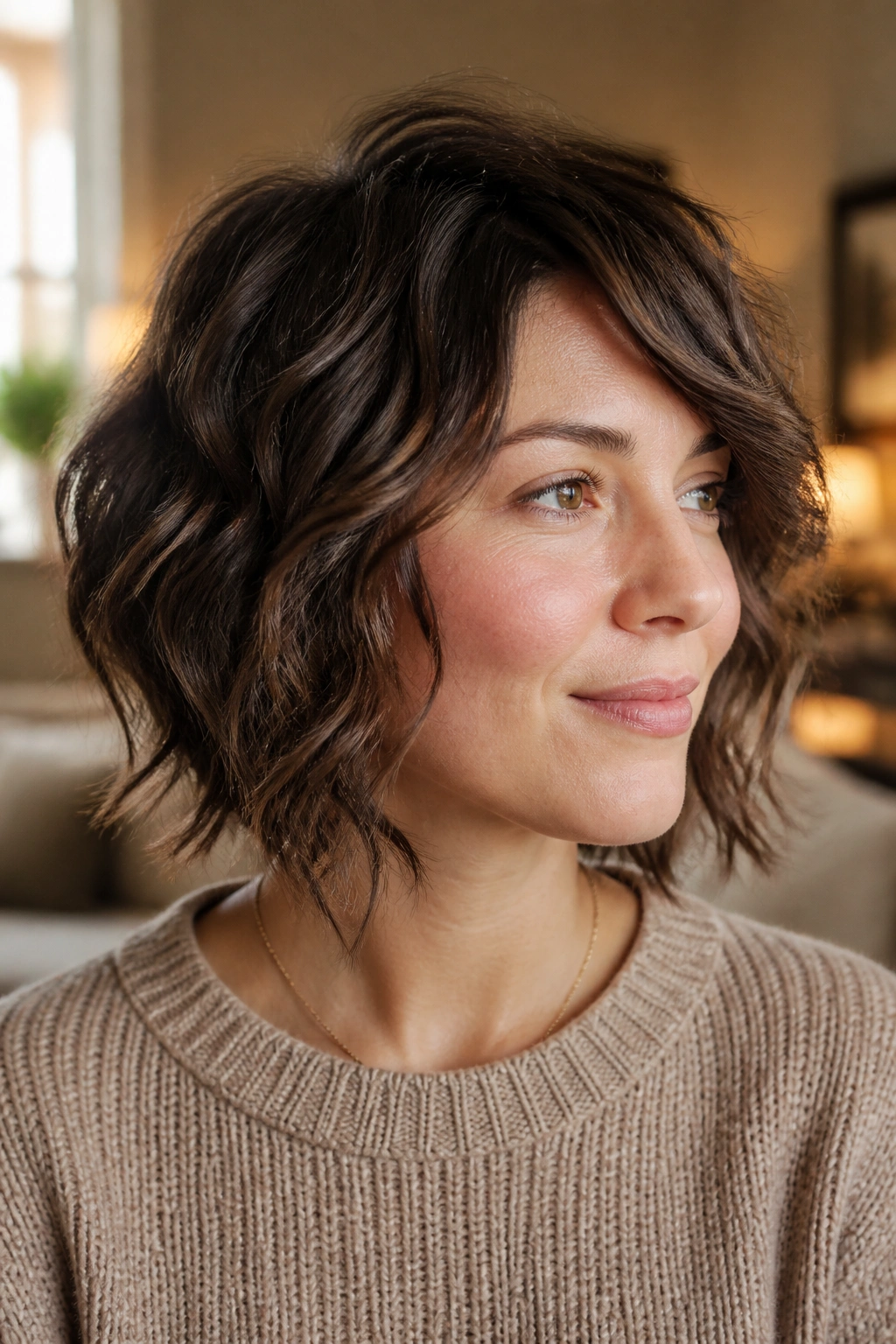
Waves and jaw length can be tricky on a round face, but not when the layers are placed well. A side shag at this length works because the movement starts before the jaw and falls past it in loose pieces, not one blunt edge. The eye reads motion first. Width comes second.
This is one of those cuts that looks better when it’s not overdone. A few imperfect bends near the front are enough. You want the sides to skim, not balloon. A diffuser helps if your waves want to puff out, while a small amount of mousse gives shape without making the hair crisp.
The biggest mistake is cutting the front too short. If the shortest pieces sit right at the cheek, they can widen the face instead of slimming it. Keep the fringe and the face frame a touch longer, and let the ends get a little jagged.
There’s a loose, lived-in feel to this shape that works well on people who hate spending twenty minutes with hot tools. Good. Leave the perfectionism for somewhere else.
6. Curly Side Shag with Lift at the Crown

Unlike a one-length curly bob, this cut lets the curls stack upward instead of spreading outward. That’s the whole game with a round face. You want height on top and space around the sides, because width at the cheek line can make the face look broader than it is. A side shag with a lifted crown does the opposite.
The layers should be cut to respect the curl pattern, not fight it. Too many short layers can make curls flare like a triangle. Too few layers can make the shape heavy and droopy. The sweet spot is a shape that removes bulk through the sides while leaving enough length for the curls to spring.
A side part helps curls fall in a more vertical line, especially if one side tends to collapse flatter than the other. A bit of root clip work while drying can also help the crown stay up. Small effort. Big payoff.
If your curls are dense, ask for internal layers and a dry cut if your stylist offers it. Wet curls can fool everyone.
7. Asymmetrical Side Shag for Round Faces
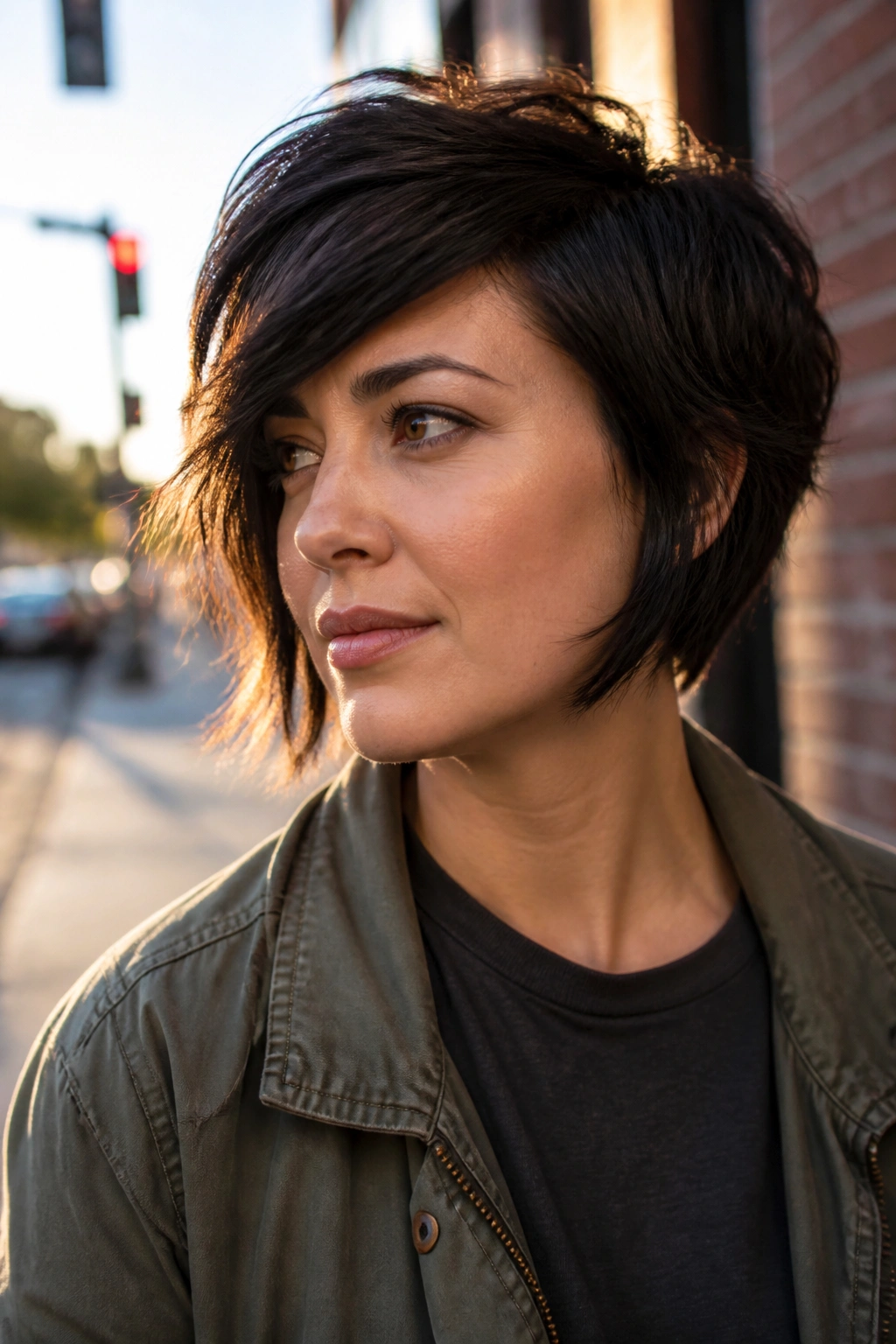
A little imbalance can be a gift. One side a touch longer than the other changes the way the face reads, and on a round face that extra line of movement can be a real advantage. The haircut feels intentional without trying too hard.
Why It Changes the Shape
The longer side draws the eye downward. The shorter side keeps the haircut from feeling heavy. Together, they create a slant that makes the face look less circular and more sculpted. That diagonal is the reason this cut lands so well on soft features.
The asymmetry does not need to be dramatic. A difference of one to two inches is enough. If the contrast gets too obvious, the cut starts to feel more costume than wearable. Keep the texture messy, not the length difference.
What to Ask For
- One side should fall just past the jaw.
- The other side can sit closer to the cheekbone.
- Keep the top piecey and lifted.
- Leave the nape tidy so the shape doesn’t feel bottom-heavy.
Pro tip: this cut looks best when the part stays in the same place for a while. Switching sides every day muddies the shape.
8. Soft Wolf Shag with Short Crown Layers
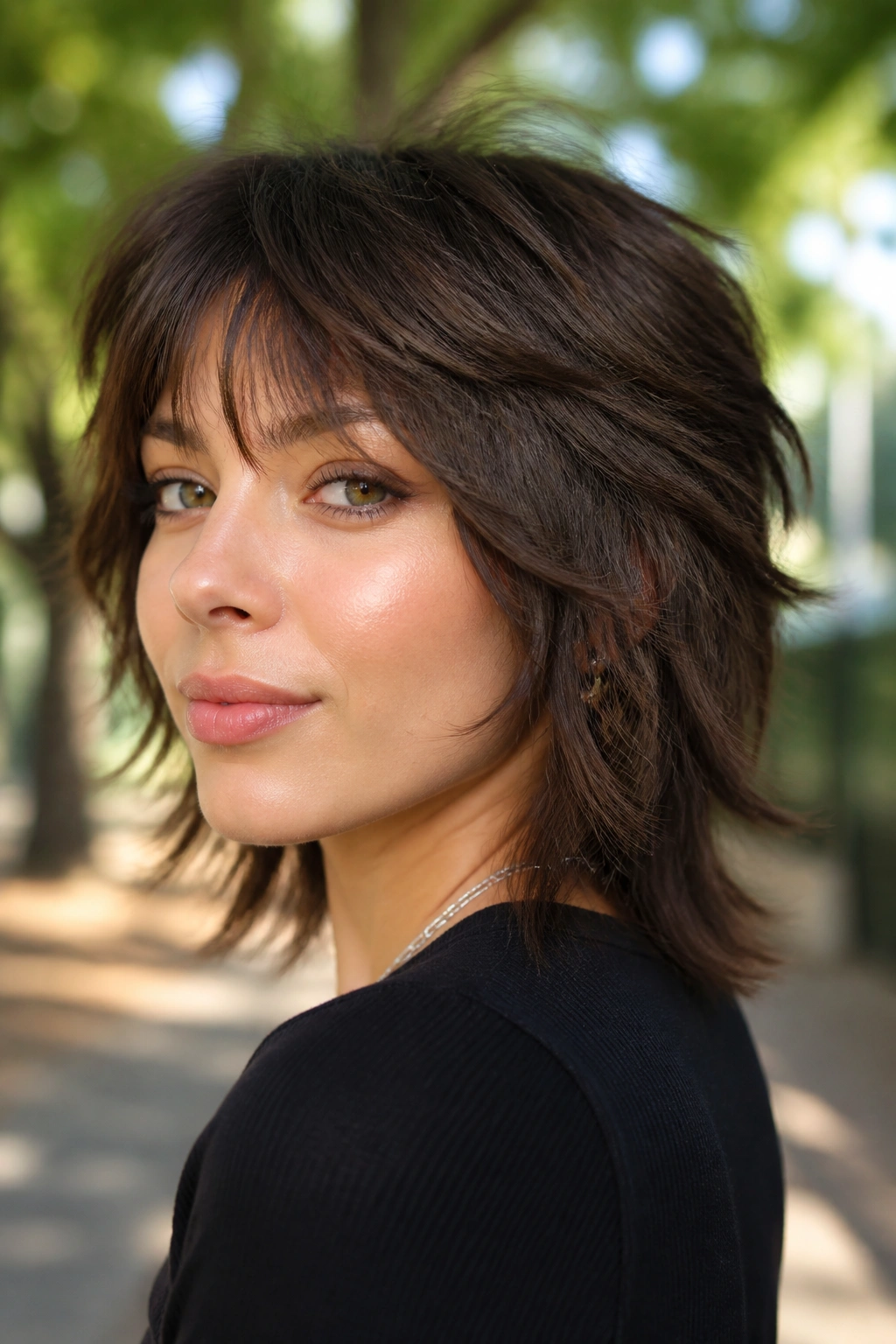
This is the version of a wolf cut that you can actually wear outside a music video. The short crown layers give you lift, but the edges stay soft enough that the cut doesn’t overwhelm a round face. You get edge without all the noise.
The reason it works is simple: volume moves upward, while the length around the jaw stays broken and airy. That creates a longer line through the face. The shag part of the cut keeps the layers from stacking too neatly, which is what gives the style its easy swing.
A soft wolf shag suits someone who likes a little attitude in the hair but still wants the face to stay open. If you already have thick hair, this shape can remove a surprising amount of bulk. If your hair is fine, be careful with over-layering. Too much removal and the whole thing can look wispy.
A rough-dry with mousse is usually enough. Let the hair do a little of the work.
9. Tousled Bob Shag with Piecey Texture
Can a bob still look soft? Yes, when the ends are broken up and the layers are placed so the sides don’t puff outward. A tousled bob shag gives a round face some structure without the severity of a blunt bob.
How to Keep It Piecey
The texture should look separated, not crunchy. Think light spray, a little finger-twisting, and maybe a few bends with a small iron if your hair is very straight. The front pieces can be longer than the back by a small amount, which helps pull the face down visually.
A clean bob line is the wrong move here. That straight edge can sit exactly where a round face is widest, and then the haircut works against you. Piecey ends solve that problem because they break the line into smaller parts.
For styling, less product is usually more. A nickel-sized amount of mousse or foam at the roots is enough for most hair types. If you pile on wax or cream, the bob loses its lift and starts to slump.
The look should feel light around the cheeks and a little messy at the ends. Not sloppy. Just soft.
10. Side-Swept Bang Shag with Flipped Ends
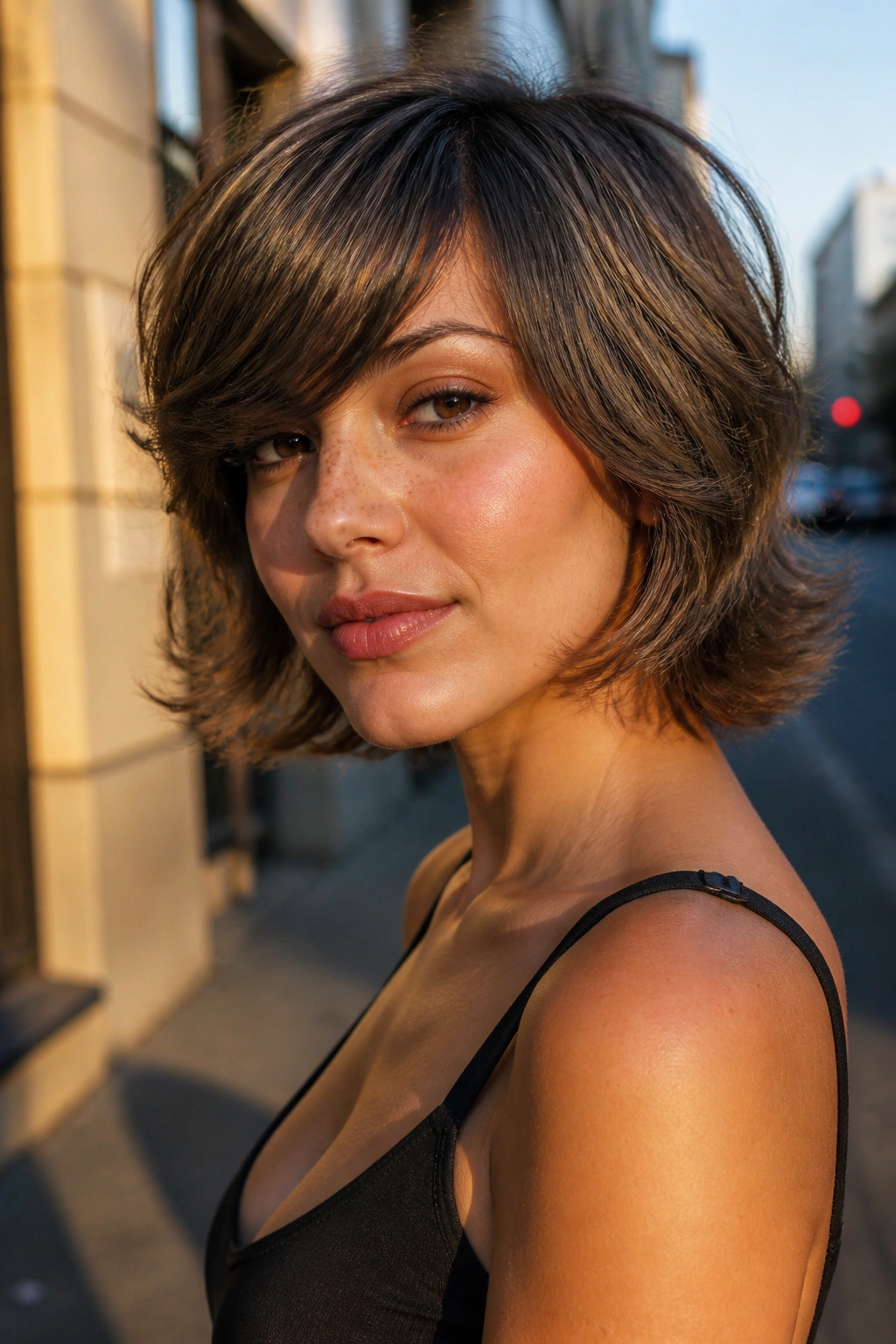
A side-swept bang can change a haircut more than a lot of people expect. It cuts across the forehead in a diagonal line, which is flattering on a round face because it interrupts the width and pulls the eye off-center. Add flipped ends, and the whole shape gets a bit of movement and bounce.
The flipped ends matter because they keep the haircut from lying flat against the neck and jaw. Hair that hugs the face too closely can make roundness more obvious. Hair that kicks outward at the ends, just a little, gives the shape some energy.
This cut is especially good if you like your hair to look styled without looking rigid. A round brush, a blow dryer, and a quick turn at the ends are enough. Don’t over-curl it. That can make the shape too busy.
A side-swept bang shag looks friendly in the best way. It’s soft, but it still has enough angle to feel deliberate.
11. Fine Hair Side Shag with Airy Layers
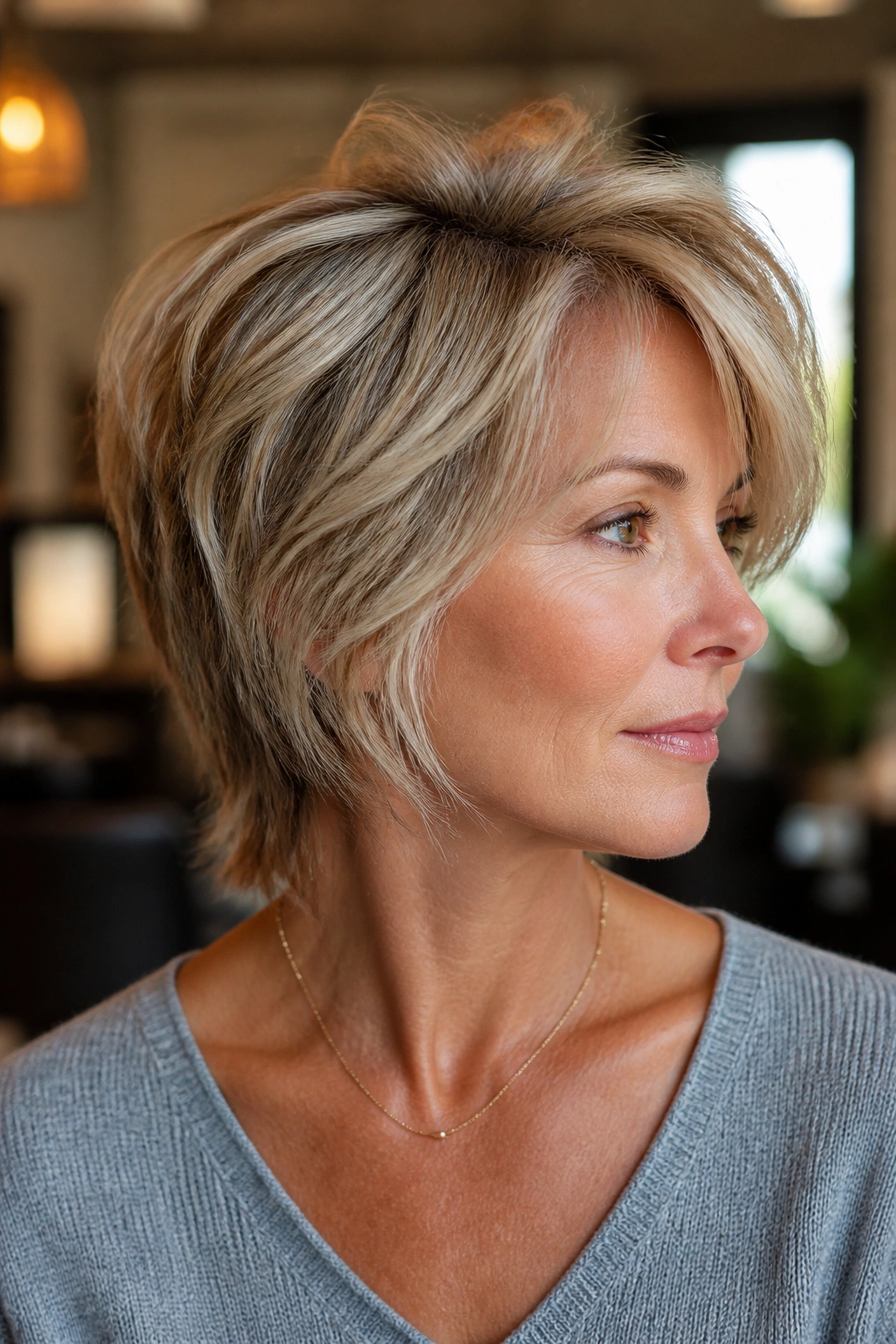
Fine hair needs a gentler hand. Too many short layers and the whole thing collapses into thin ends that stick to the head. A side shag for fine hair should feel airy, but not stripped down. The layers need room to move without losing the look of fullness.
The best version keeps most of the weight around the perimeter while adding lift near the crown and movement through the front. That gives the illusion of thicker hair where it matters most. A side part helps because it gives the roots somewhere to rise instead of lying flat in the middle.
Dry shampoo is often more useful than heavy styling cream on this kind of cut. A bit of texture powder at the roots can make the crown stand up an extra half inch, which changes the whole outline of the face. Small stuff. Big difference.
If your hair is baby-fine, be wary of razors and overly aggressive texturizing. Those can leave the ends looking see-through in a week. Ask for softness, not thinning.
12. Thick Hair Side Shag with Interior Debulking
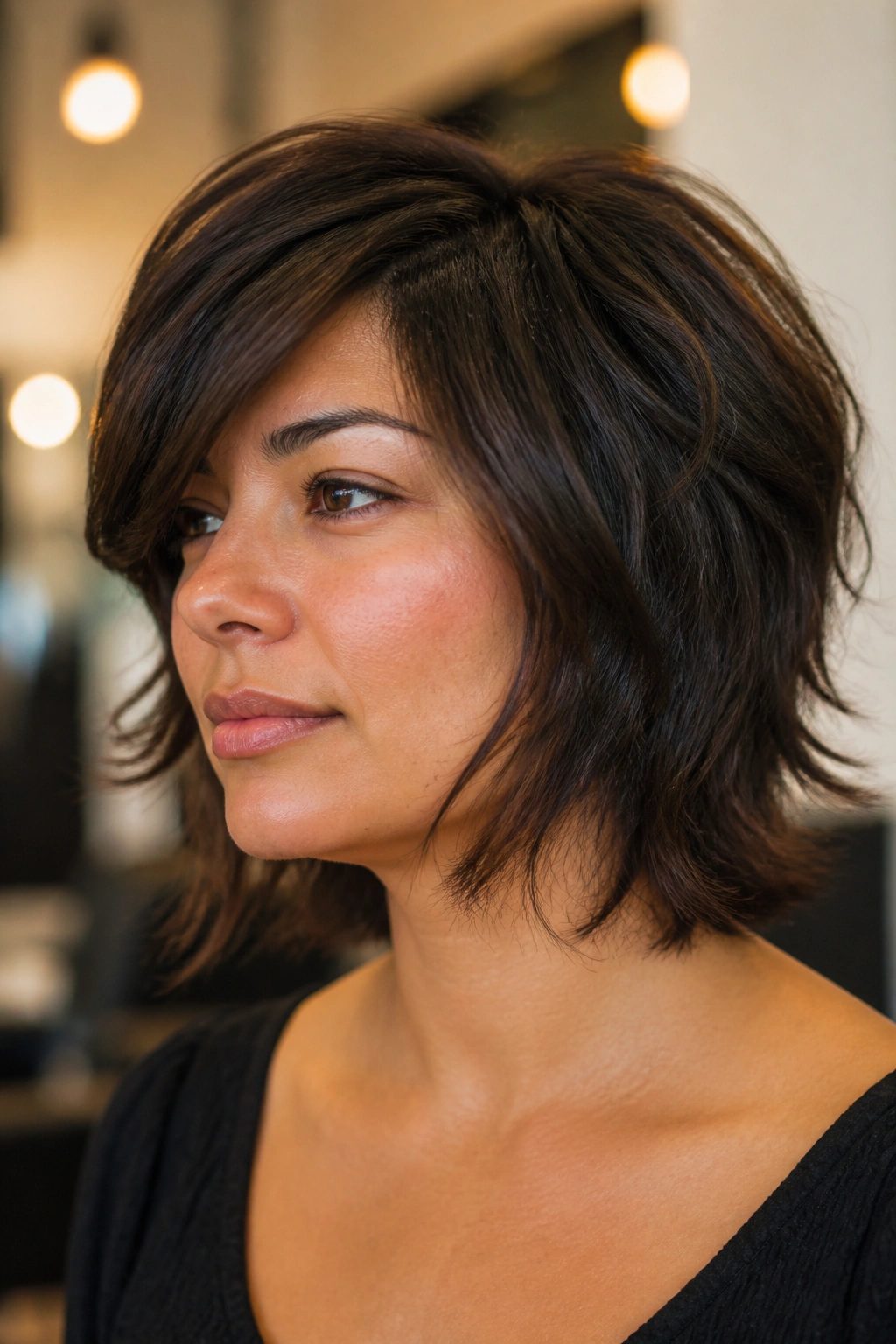
Thick hair can wear a side shag beautifully, but only if the inside gets some relief. A blunt thick cut tends to sit like a shelf, especially around the cheeks and jaw. Interior debulking removes weight from the hidden sections so the shape falls instead of flaring out.
That’s the main difference between a flattering shag and a poofy one. The visible outline should stay soft, while the inside carries less bulk. For round faces, this matters because thick hair can make the face look shorter and wider if the sides are too full.
A stylist may use slide cutting, point cutting, or gentle layering inside the shape. The exact tool matters less than the result: the ends should move, and the side sections should not jut out. If your hair is dense and straight, this cut can feel like a relief.
I like this cut best on hair that tends to sit heavy at the temples. It opens the face without making the hair look thin, which is a trick worth having.
13. Long Face-Framing Side Shag
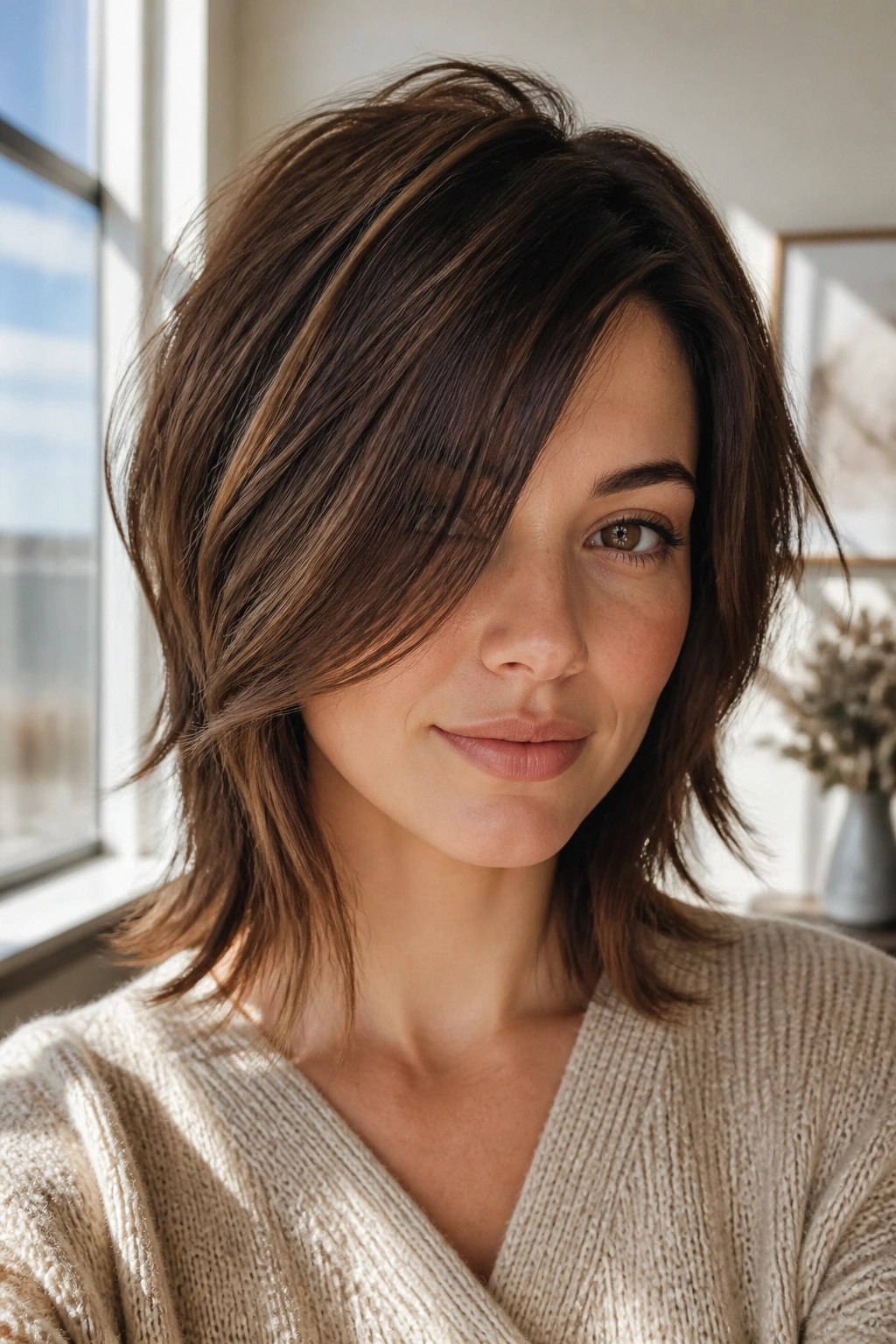
Some cuts try to fix a round face by piling on texture everywhere. Bad plan. The smarter move is to place the movement where it helps most, and that usually means longer face-framing pieces that start near the cheekbone and fall past the jaw. That line lengthens the face without screaming for attention.
Where the Framing Pieces Should Land
The longest front pieces should not stop at the widest part of the cheeks. That’s the mistake that shows up in salon chairs all the time. When the frame hits the cheek, it can widen the face instead of slimming it. Let those pieces drop lower.
The rest of the shag can stay pretty understated. You do not need a jungle of layers to get the effect. A few carefully placed ones around the front are enough if the top has a little lift and the bottom stays soft.
- Keep the front pieces at least jaw-length.
- Leave the center section longer than the sides.
- Add texture mostly through the ends.
- Style the face frame away from the cheeks.
Best move: tuck one side behind the ear after styling. It opens the face and shows off the shape without losing the side sweep.
14. Razor-Cut Side Shag with Extra Texture
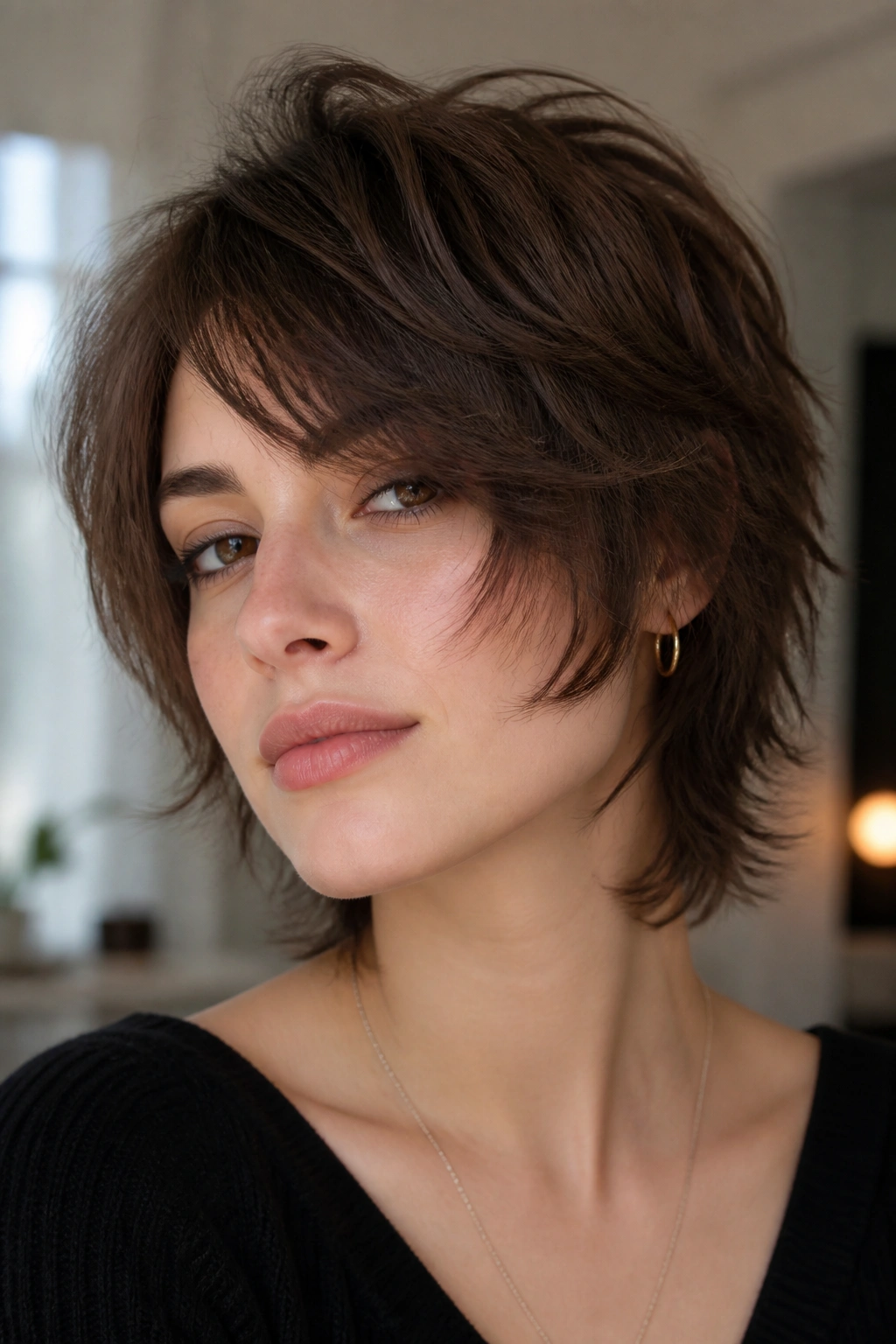
Straight hair can look flat fast, and razor cutting fixes part of that problem. The blade creates a softer edge and takes out the heavy, blocky feel that makes a side shag sit too neatly. On round faces, that extra texture breaks up the width and keeps the haircut moving.
The catch is condition. Razor cutting is rougher on fragile ends, so this is not the best choice if your hair is already dry or split. It works better on healthy straight hair, or hair with enough density to handle the texture. On the right head, though, the finish looks almost feathery.
Ask for the razor to stay off the very ends if your hair breaks easily. A lighter touch still gives you movement without chewing up the cuticle. And if your hair is naturally wavy, this shape can make the bends look more relaxed and less puffy.
A touch of salt spray can help, but use a small amount. Too much and the hair gets dry and sticky. Nobody needs that.
15. Soft Wolf Cut Shag for Round Faces
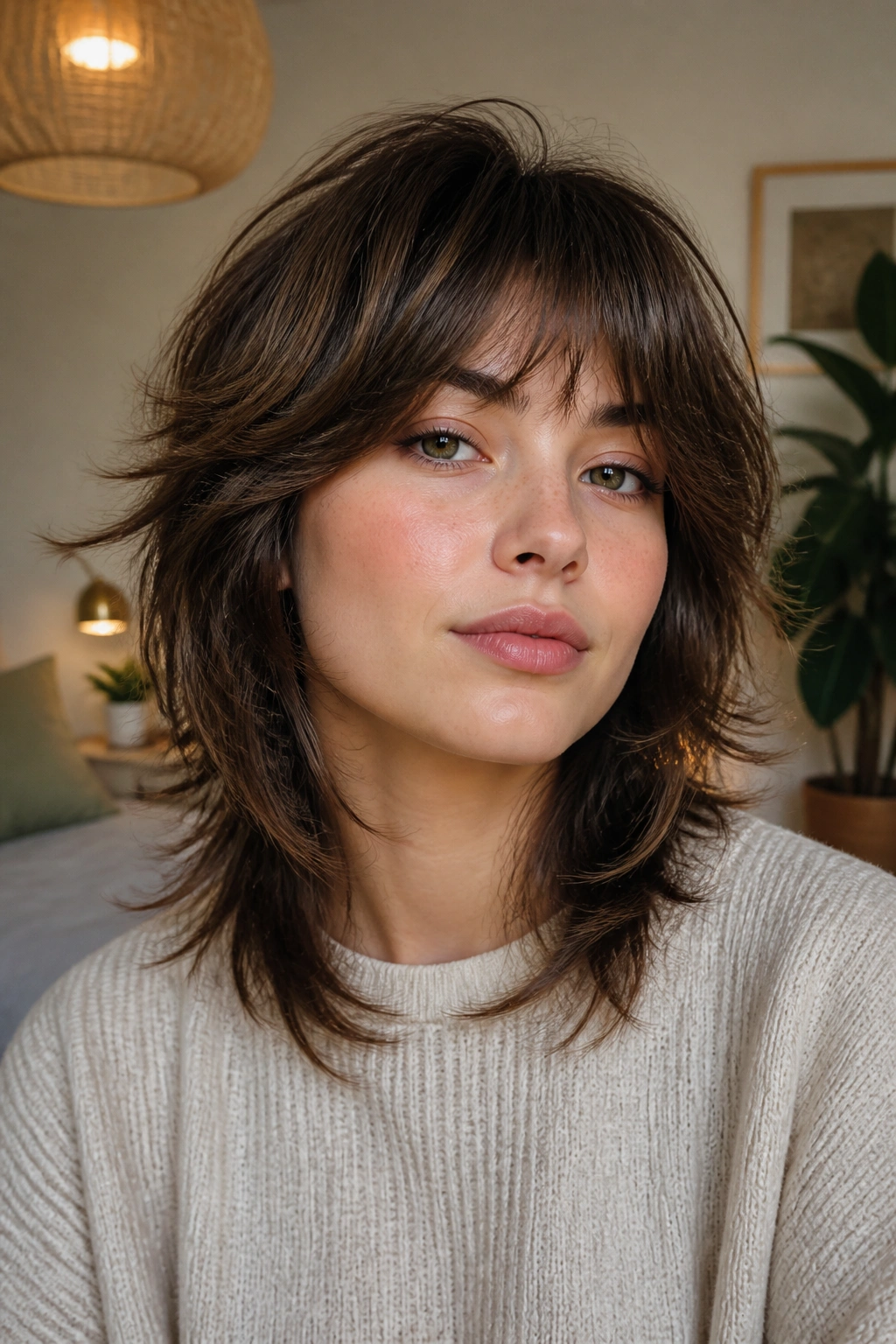
Does a wolf cut have to be loud? No. The softer version keeps the shaggy top layers and the broken ends, but it tones down the drama so the haircut actually suits a round face. You still get the lifted crown and the airy outline, just without the hard edges.
Keeping It Wearable
The top should be textured enough to stand away from the head a little, while the length below the chin stays loose. That contrast makes the face appear longer. The fringe can be side-swept or split just off-center, which gives the front some shape without cutting the forehead in half.
What I like about this version is that it grows out in a friendly way. A hard, chopped wolf cut can get awkward after a few weeks. A soft one tends to blur into a shaggy lob shape instead, which is easier to live with.
- Keep the shortest layers around the crown, not the cheeks.
- Leave enough length in front to skim the jaw.
- Use a round brush only at the roots if you want extra lift.
- Air-dry the rest to keep the texture loose.
This is a good choice if you want something with edge but not a daily styling project.
16. Glam Side Shag with Crown Volume
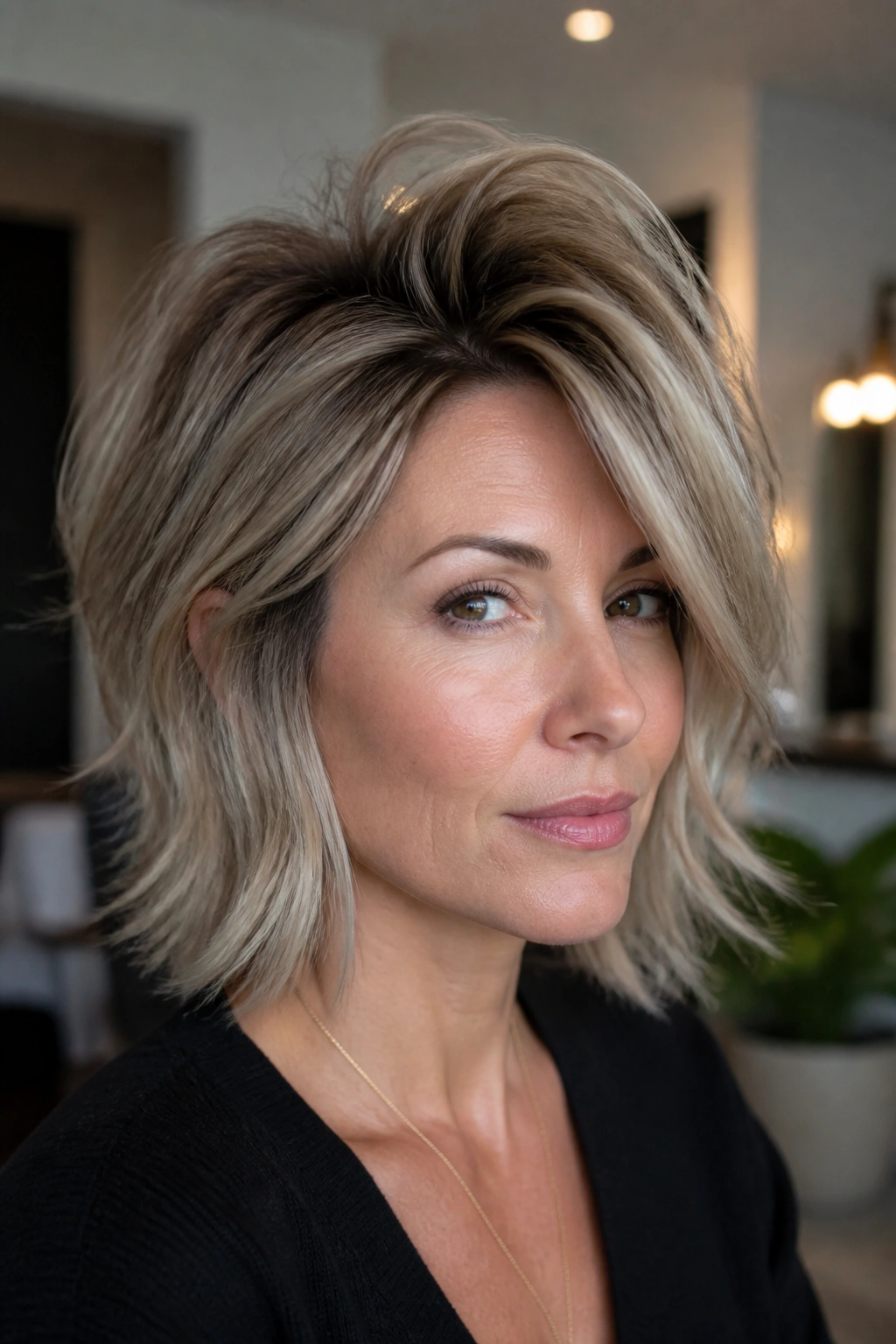
A round face often benefits from height, and this cut gives it without turning the hair into a stack of curls on top of the head. The crown has lift, the side part is deep, and the face-framing pieces move away from the cheeks. It’s polished, but it still has that shaggy softness.
Imagine a blowout with a little attitude. The roots rise, the sides stay controlled, and the ends flick just enough to keep the cut alive. That balance makes the face look longer because the eye keeps moving upward and downward instead of sitting on one horizontal line.
This style is a good fit if you like a more done look. Velcro rollers at the crown can help. So can a medium round brush and a blow dryer with a nozzle, especially if your hair collapses fast on its own.
A little shine spray on the mids and ends finishes it off nicely. Keep the roots light. Heavy product at the scalp kills the volume.
17. Low-Maintenance Side Shag with Air-Dried Texture
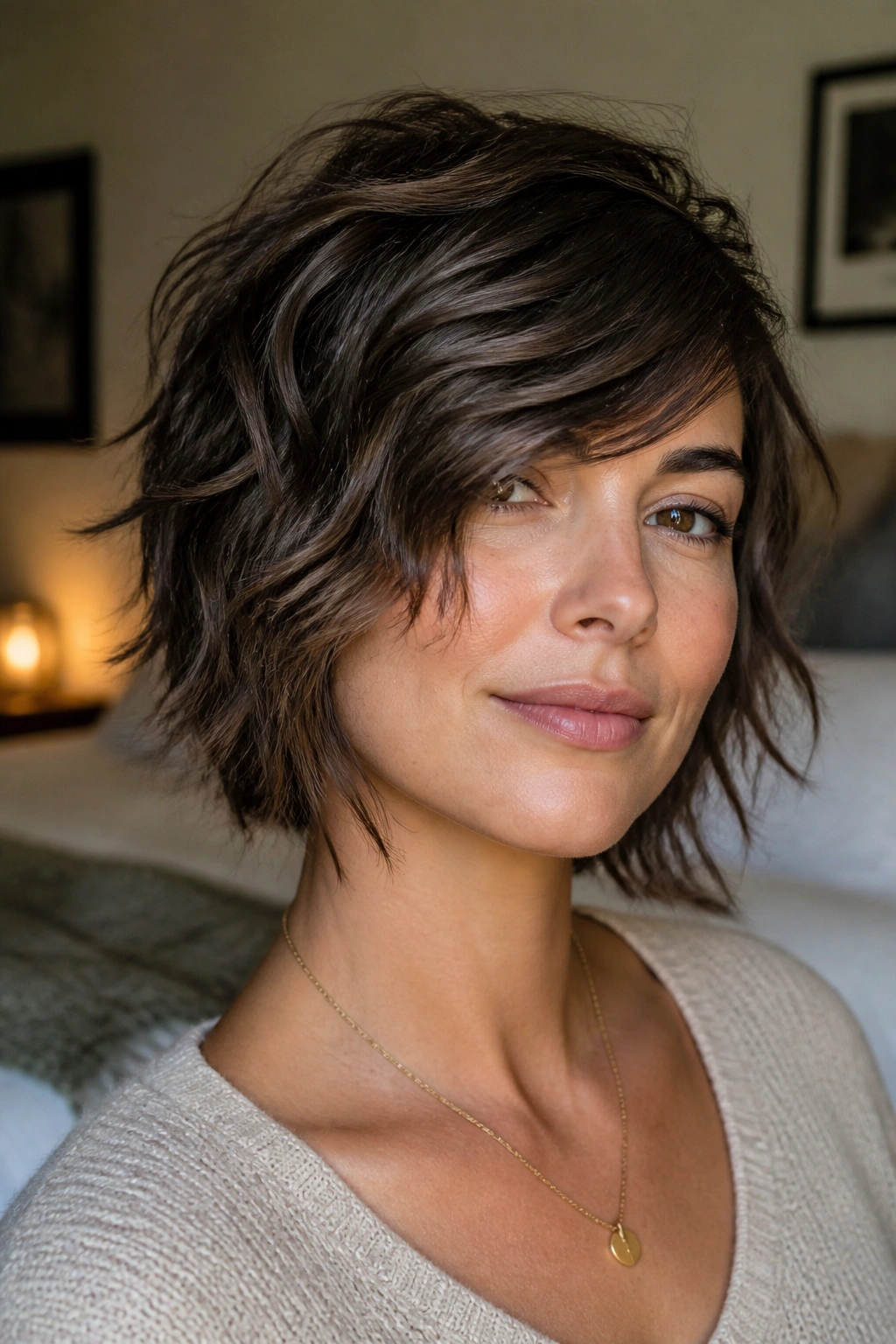
There’s a reason so many people keep coming back to this kind of shag. It works with imperfect hair. You do not need a blowout every morning, and you do not need the hair to behave like it came from a salon chair. The cut is designed to look decent when it bends a little on its own.
Air-dried texture is especially kind to round faces when the front pieces are long enough to break up the widest part of the face. A bit of natural wave or bend adds vertical movement, while the side part keeps the shape from getting too even. That unevenness is your friend here.
A lightweight curl cream or leave-in can tame frizz without flattening the shape. Scrunch the ends, push the part where you want it, and leave it alone. The less you fuss, the better it often looks by the afternoon.
This is the cut for people who like their hair to look lived-in, not perfect. And honestly, that’s the charm.
18. Side Shag with Tucked-In Nape
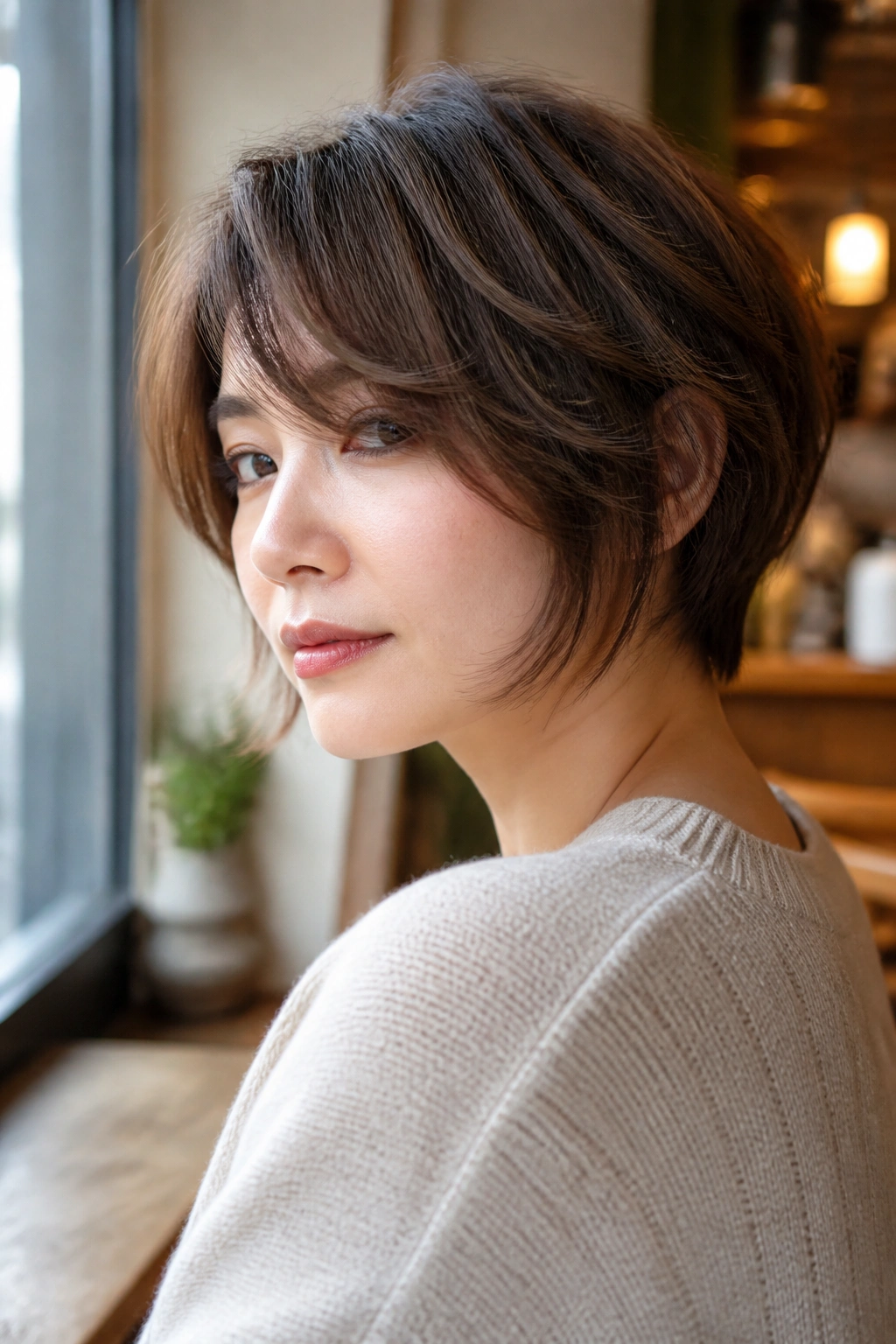
A tucked-in nape changes the mood of the whole haircut. The neck area stays neat, the front stays soft, and the face-framing pieces do the flattering work up front. For a round face, that contrast can look cleaner than a shag that ends in a puff all around the head.
Why the Shape Feels Slimmer
The short, tidy back creates a little visual control, while the longer side pieces keep the haircut from feeling severe. That makes the face look a touch longer because the silhouette narrows near the neck. The eye sees a taper, and tapering is your friend.
This cut also suits people who like wearing collars, scarves, or earrings. A bulky neckline can fight with those things. A tucked-in nape keeps the hair close enough to the head that the whole style feels easier to wear.
Who Should Try It
- If your hair grows out fast at the neckline, this keeps the shape neater between trims.
- If you want short hair but not a pixie, this gives you that middle ground.
- If your face feels widest near the cheeks, the tapered back helps balance it.
- If you hate hair brushing your collar all day, this is a relief.
The result is neat without getting stiff. That balance is harder to pull off than it looks.
Final Thoughts
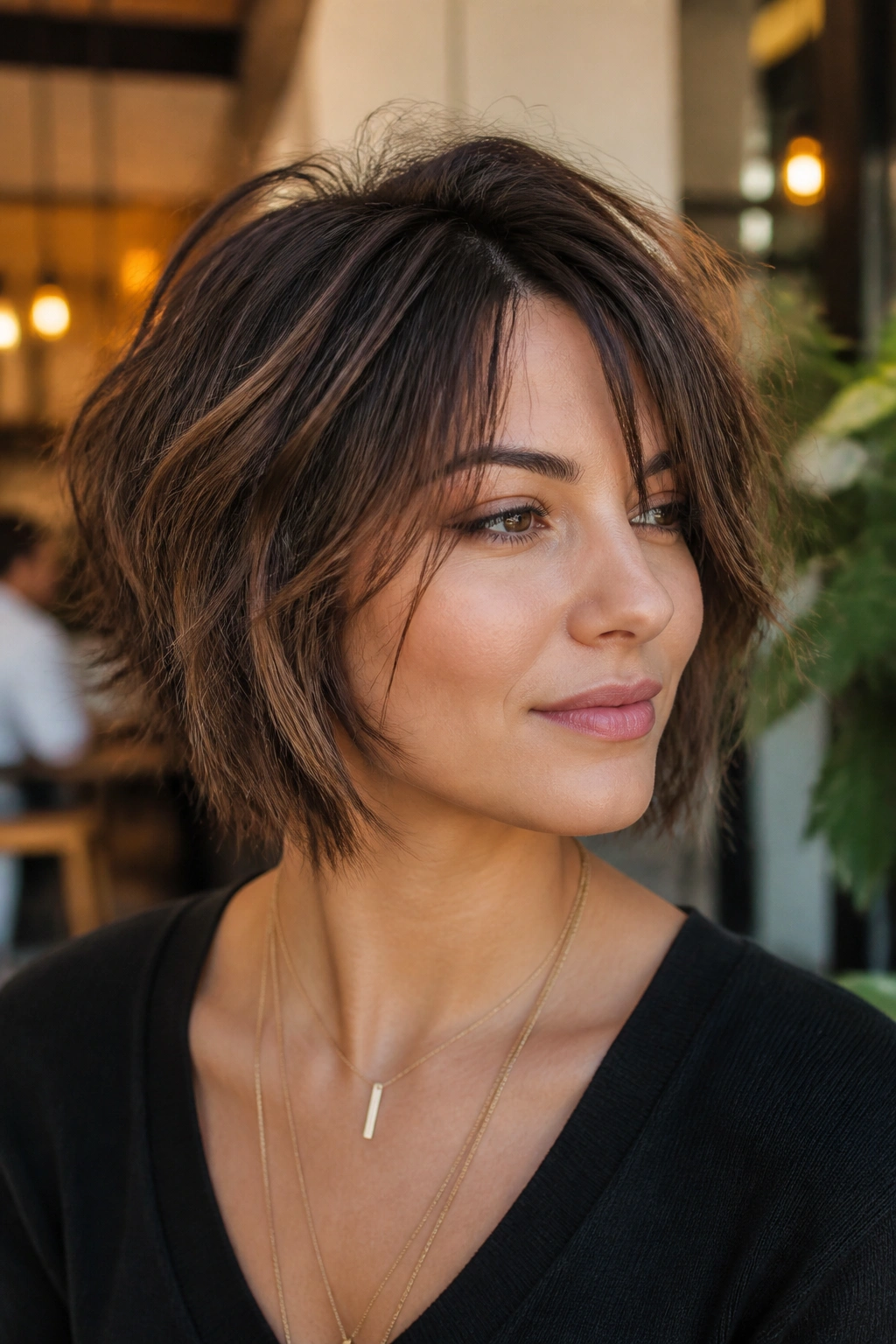
The best side shag for a round face is the one that changes the silhouette, not just the texture. A deep side part, a longer front, or a little crown lift can do more than a pile of random layers ever will.
Short shags look strongest when the sides stay soft and the widest part of the face gets a break. That usually means no blunt chin line, no heavy cheek pieces, and no flat crown. Simple rules. Easy to forget in the salon chair.
If you’re choosing between two cuts, pick the one with the cleaner diagonal. That small angle is doing more work than it seems.
