



Fine hair and a shag can be a tricky pair if the cut is too aggressive. Straight shag haircuts for fine hair work best when the layers are placed with restraint, because the wrong kind of chopping can leave the ends looking see-through fast. The sweet spot is a cut that keeps enough line to make the hair look fuller, then adds movement where the eye wants it most: around the face, through the crown, and just at the ends.
That balance matters more on straight hair than it does on wavy hair. Waves can hide a lot. Straight strands tell the truth in a hurry, which is why the best shag for finer hair is rarely the most shredded version in the room. I tend to like shags that still have a clean perimeter — you want softness, not scraps.
The other thing people miss is that fine hair does not always need more layers. It needs better layers. Too many short pieces can make the top float away from the rest of the haircut, and then the bottom looks thin even if the hair itself is healthy. The cuts below solve that problem in different ways, and the differences really matter.
1. Collarbone-Length Straight Shag for Fine Hair

This is the shag I reach for first when someone wants movement but refuses to give up the look of density. The collarbone length keeps enough weight in the outline, so the hair does not go wispy at the ends, and the layers can do their work without turning the whole shape into a halo of flyaways.
Why it works so well: the collarbone sits in that sweet middle ground where fine strands still look substantial, but the haircut can swing a little when you move. If the layers begin around the cheekbone or just below the mouth, the shape gets lift without losing the clean line at the bottom. That line is doing more work than people think.
What to ask for
- Keep the perimeter at the collarbone or just under it.
- Start the shortest face-framing pieces around the cheekbone, not the temples.
- Ask for soft internal layers, not a heavily razored shell.
- Leave enough weight at the ends so the cut still looks full when straight.
A collarbone shag is also one of the easiest versions to style with a round brush. A little mousse at the roots, a quick blow-dry with the nozzle pointed downward, and a 1.5-inch brush are enough for most people. You do not need to fight for volume all day. That is the point.
One small rule: if your hair is very fine, avoid chopping the lower layers too short. That is how a nice shag starts looking hungry at the bottom.
2. Jaw-Length Mini Shag With a Clean Edge

Jaw-length shags are sneaky good on fine straight hair. They sound bold, and they are, but the short perimeter means the hair has less distance to collapse. The result is a cut that can look thicker than a longer style, especially if your ends tend to string out by the second day after washing.
The shape is crisp around the jaw and softer through the top. That combination gives the haircut a little bite without making it feel hard. I like this version for people who want a bit of French-girl messiness but still need their hair to read as hair, not feathers.
It also frames the face fast. If your cheekbones are one of your better features, this is a smart place to stop the length. If your jaw is softer and you want more structure, the cut gives you that too.
A mini shag needs a steady hand from the stylist. Too much texturizing and the ends can fray. Too little and the shape turns into an ordinary bob with a few random bits. The best version lands right in the middle: clean edge, light movement, and enough lift at the crown to keep the silhouette from going flat.
3. Curtain-Bang Shag With Soft Face Framing
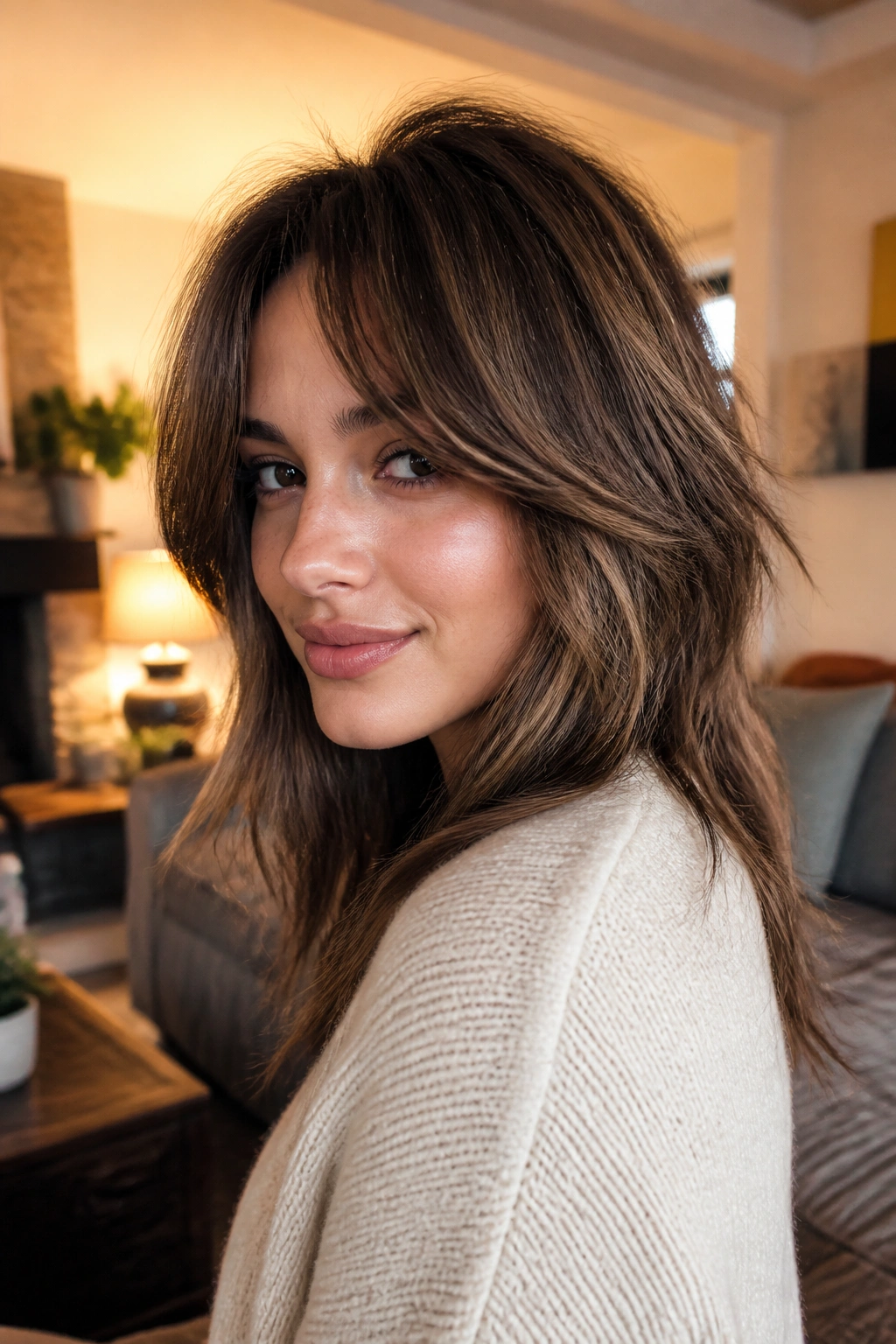
Curtain bangs change everything on fine straight hair, and not in some dramatic, overblown way. They simply give the front of the haircut a job to do. Instead of the hair lying flat from center part to ends, the bang line opens the face and helps the rest of the layers feel intentional.
The trick is not to make the bangs too short. Fine hair needs a little extra length in the front so the bang pieces do not separate and go stringy. A good curtain bang usually starts around brow to cheekbone level, then drops into the longest face-framing pieces by the lips or chin. That staggered length gives the style some movement without making the front look sparse.
The best version keeps three things in mind
- The center pieces should be long enough to split cleanly.
- The outer pieces should blend into the side layers instead of stopping abruptly.
- The bang should be light, but not so thin that it disappears when the hair is freshly washed.
This is one of those cuts that looks easy and actually takes a little thought. If the front is cut with care, the whole head reads fuller. If the front is too thin, you spend your mornings trying to coax volume out of strands that never wanted it in the first place.
A good blow-dry helps here, but not with brute force. Aim the dryer at the roots, roll the bangs away from the face with a round brush, then let them cool before you touch them. That cooling step matters more than most people realize.
4. Feathered Face-Framing Shag That Starts at the Cheekbones

Some shags look best when the movement lives near the face instead of all over the head. This is one of them. On fine straight hair, feathering around the cheekbones gives you shape where the eye notices it first, while the rest of the hair stays calm and full-looking.
The nice part is that feathering does not have to mean shredding. In a good cut, the stylist uses light point cutting or soft slicing to break up the line just enough. You still want a recognizable shape. You are not trying to erase the haircut.
If your hair tends to fall flat in the front, cheekbone-framing layers can fix that fast. They create a bend near the face, which makes the rest of the hair seem more active than it is. Small detail. Big payoff.
This is also a strong option if you wear glasses. The soft frame around the face keeps the haircut from vanishing behind the frames, which is something a lot of straight cuts do. The line stays visible, and the overall style looks finished instead of accidental.
5. Micro-Layered Bob Shag for the Least Cooperative Fine Hair
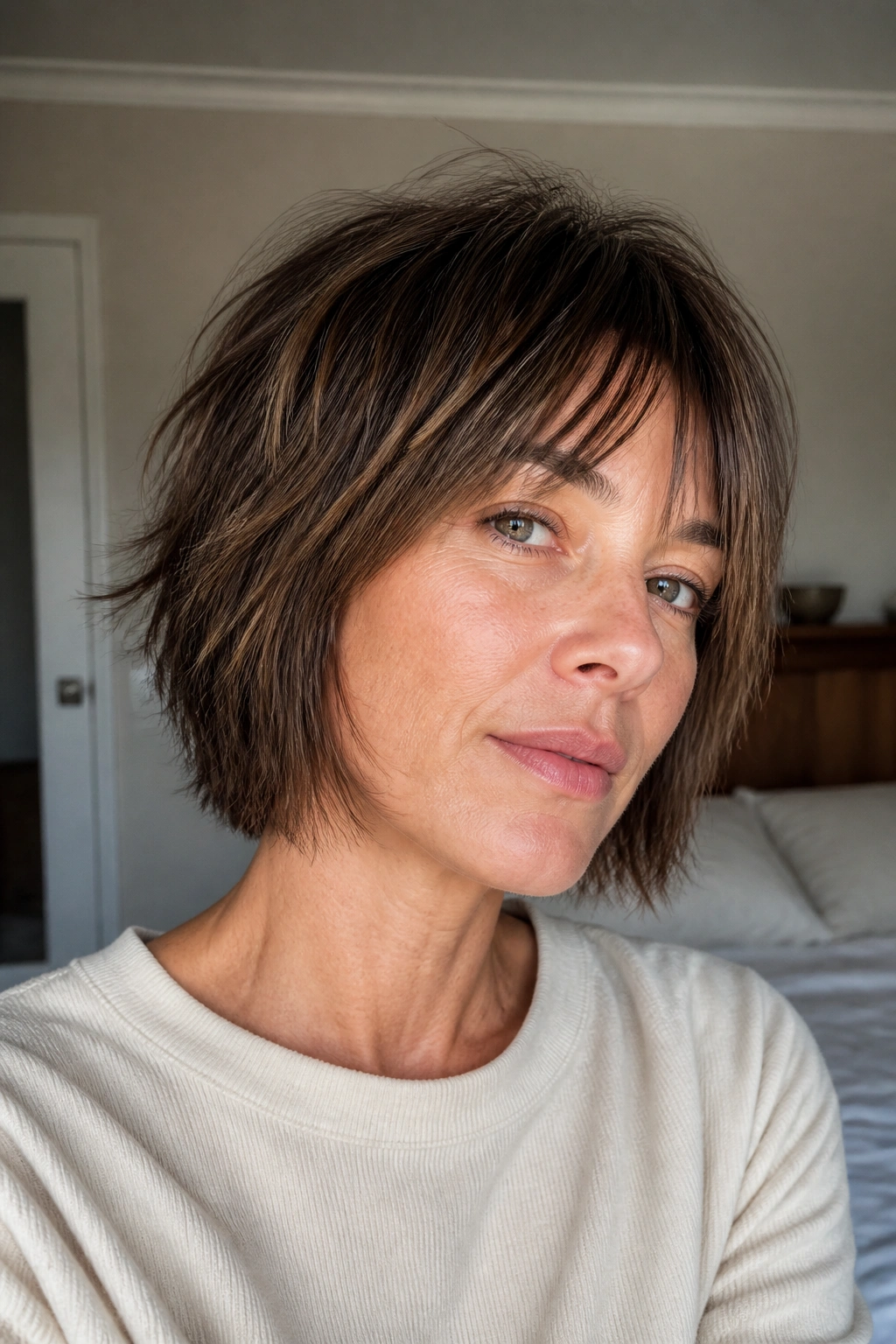
Here is the contrarian take: fine hair does not always need obvious layers. Sometimes it needs a bob with tiny internal changes that keep the cut from falling into a single flat sheet. That is where the micro-layered bob shag comes in.
It looks simple at first glance. Underneath, though, there is a lot of careful work. The perimeter stays pretty blunt, which helps the hair feel thicker, while the upper section gets light layering to keep the crown from caving in. If your hair has a habit of sticking to your head, this is a smart answer.
The cut is especially useful for straight hair that has almost no natural bend. It gives the illusion of movement without forcing the ends to look thin. And because the layers are subtle, the style grows out cleanly instead of turning messy after a few weeks.
What makes it different from a standard bob:
- The top has more lift.
- The ends stay denser.
- The face framing is softer and less boxy.
- The overall shape feels lighter without losing its outline.
I like this version for people who want low drama in the morning. A quick root lift and a touch of dry shampoo can carry it a long way. No elaborate styling session. No wrestling match.
6. Long Shag With Tapered Ends
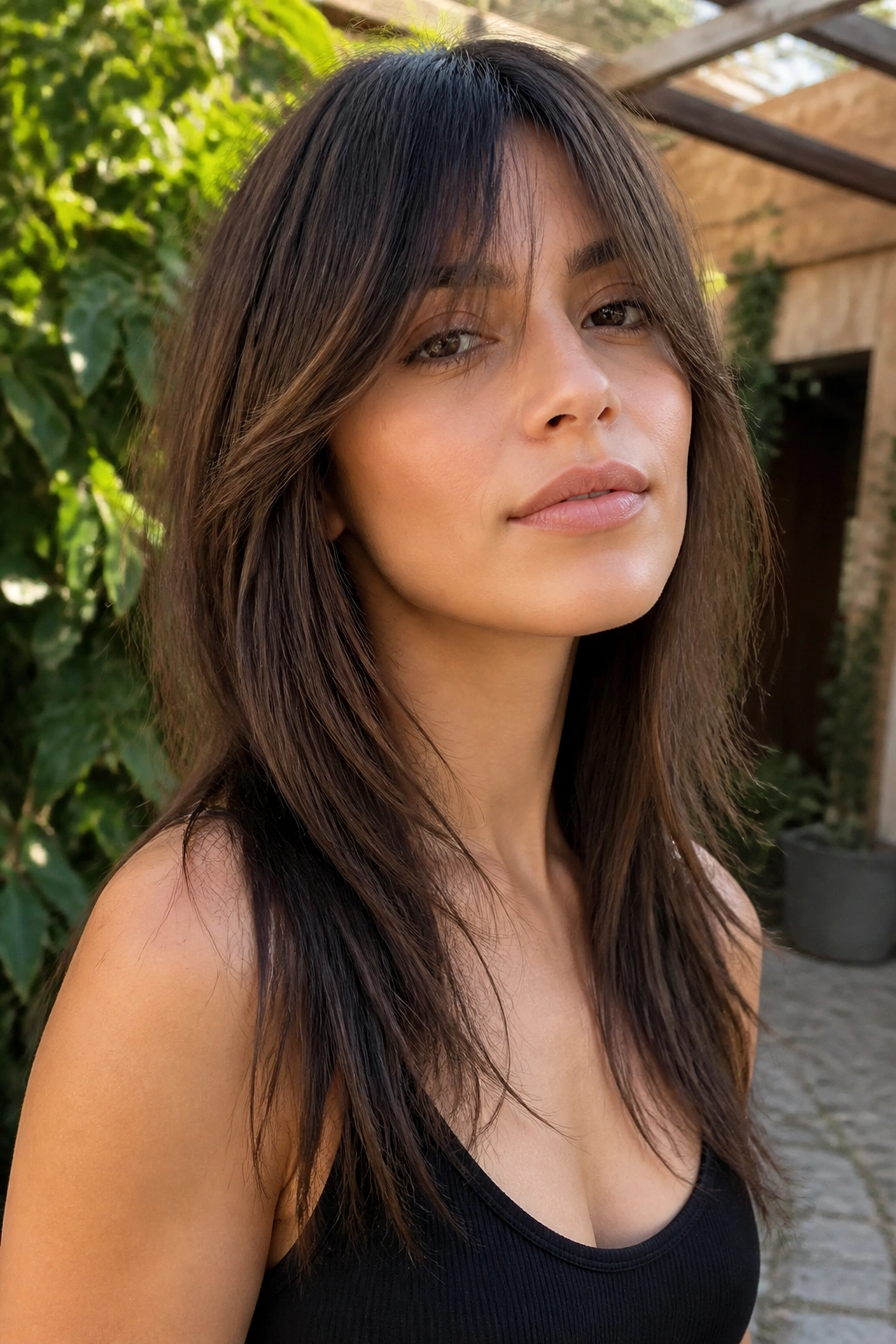
Long hair and fine strands can be a bad mix if the cut is too heavy. The hair gets weighed down, the ends look transparent, and the whole thing seems to disappear below the shoulders. A long shag with tapered ends solves that by removing weight in a controlled way.
The important word there is controlled. You do not want the stylist carving deep layers all the way through the length. That creates a kind of broken curtain effect that fine hair rarely recovers from. Instead, keep the top and mid-length layers soft, then taper the ends so the bottom line still has presence.
This works well if you like having your hair tied back, because the layers around the face stay loose while the rest of the length remains manageable. It also gives straight hair enough movement to keep from looking stiff.
Longer shags need the right styling product. Heavy cream is usually too much. A light mousse or a pea-sized bit of volumizing spray at the roots is enough, followed by a quick blow-dry. If you air-dry, scrunching won’t do much on straight hair, so the cut has to carry more of the load on its own.
7. Bottleneck Bang Shag for Straight Fine Hair
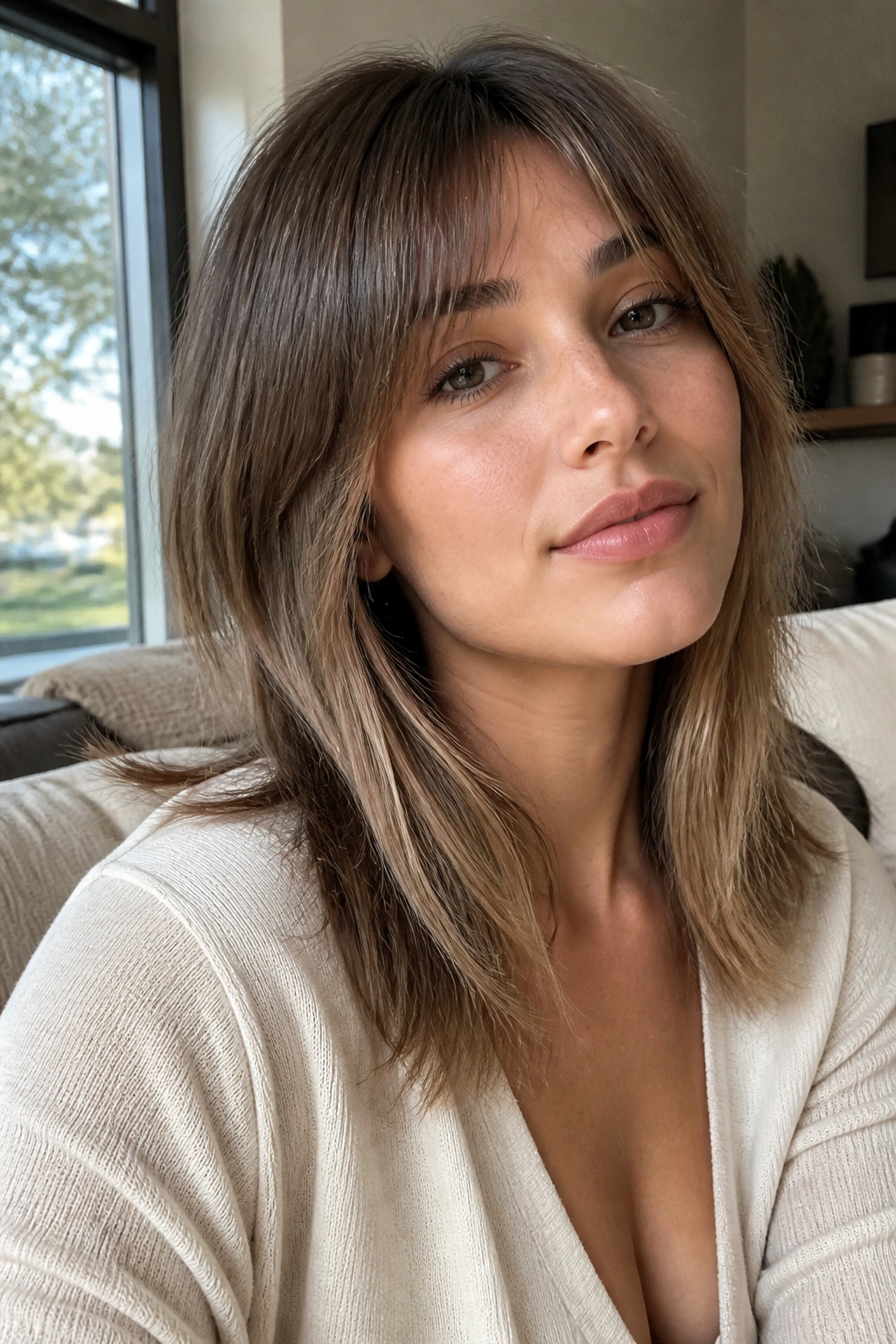
Can bangs work on fine straight hair without turning stringy? Yes — if the bangs are shaped like a bottleneck instead of cut blunt across the forehead. That softer center shape, paired with longer sides, gives the front of the haircut room to breathe.
The bottleneck bang starts narrow in the middle and opens out at the edges. On fine hair, that matters because a heavy, straight bang can split in awkward places and expose too much forehead in the wrong way. The bottleneck shape keeps the line soft while still giving the cut a clear point of interest.
How to make it work
- Keep the center short enough to matter, but not so short that it pops up.
- Blend the sides into the cheekbone layers.
- Use a light round-brush bend, not a hard curl.
- Let the bangs dry almost all the way before shaping them.
This version does a nice job of making the top of the haircut feel fuller. That is the hidden benefit. The bang area becomes the focal point, so the rest of the hair does not need to carry all the visual weight.
It is a little fussier than some of the other cuts here. Not much. Just enough to be honest about it. If you want a haircut that looks polished with almost no effort, this might not be your first choice. If you like a front section that gives the whole style personality, though, it’s a strong one.
8. Center-Part Airy Shag With Soft Internal Movement

A center part is a gamble on fine hair if the cut underneath is too thin. Done right, though, it makes the shag look balanced and modern without trying too hard. The key is keeping the layers long and airy instead of short and choppy.
This cut works because the center part lets the face-framing pieces fall symmetrically, which creates a cleaner shape. Fine straight hair often benefits from that kind of order. Too much randomness can make it look even thinner. A little structure helps.
The best center-part shag has movement in the mid-lengths, not just at the ends. That way, the hair bends when you turn your head instead of hanging straight and flat like a curtain. If the stylist leaves the perimeter a touch heavier, the style still reads full from the front.
A good test: if the haircut still looks decent when tucked behind the ears, it was cut with enough shape. If it collapses the second the hair is moved, the layers are too sparse. Simple as that.
9. Crown-Lift Shag Built for Limp Roots
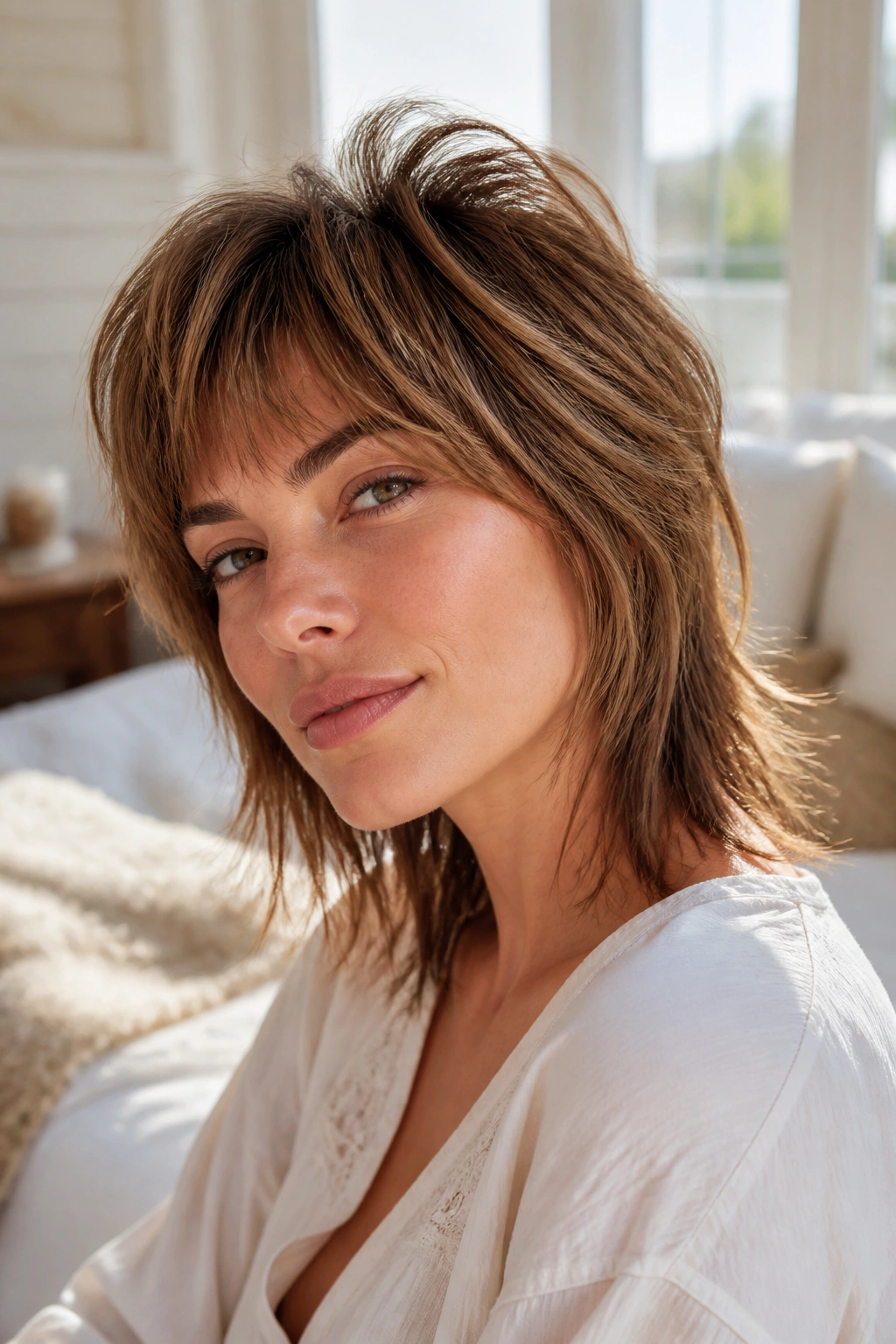
Flat roots can ruin an otherwise nice haircut. This is the shag for that problem. It puts the most important layers near the crown, where fine straight hair usually needs the help most, and it keeps the rest of the shape soft enough that the style does not look overworked.
The crown-lift version is not about volume everywhere. That would be a mistake. It is about making the top 2 to 3 inches feel alive so the haircut does not lie against the scalp all day. A little height at the root changes the whole silhouette.
Ask for these details
- Keep the crown layers light, not shredded.
- Leave the nape and lower lengths denser.
- Blend the top into the sides so the lift looks natural.
- Avoid over-thinning the interior, especially if your hair is fragile.
This style pairs well with a blow-dryer nozzle and a small round brush, around 1 to 1.25 inches. Lift the roots, direct the air upward for a moment, then roll the hair away from the scalp and let it cool. That cooling step is the part people skip. It matters.
I like this cut for anyone who hates touch-ups during the day. Once it is shaped properly, it holds up better than you’d think. Not perfectly. Hair still does hair things. But better.
10. Wispy Fringe Shag With a Soft Forehead Break

A wispy fringe can be a mess on the wrong head of hair. On the right one, it gives straight fine strands a little personality without stealing too much density from the rest of the cut. The fringe should look light, but not empty.
That line across the forehead is doing a lot of visual work. It breaks up the blank space at the top of the face, which helps the haircut feel fuller overall. If your hair tends to fall limp at the front, a soft fringe can make the whole style seem more awake.
The danger is going too sparse. That is the trap. A fringe that is too thin can separate into little pieces and make the forehead area look patchy. Keep enough width in the bang section so it reads as a real fringe, just softened at the ends.
A wispy fringe also suits people who wear their hair tucked behind the ears half the time. The front still gives you shape when it is down, and it does not fight you when you pull things back. Practical, which I always appreciate.
11. Shoulder-Grazing Razor Shag With Airy Ends
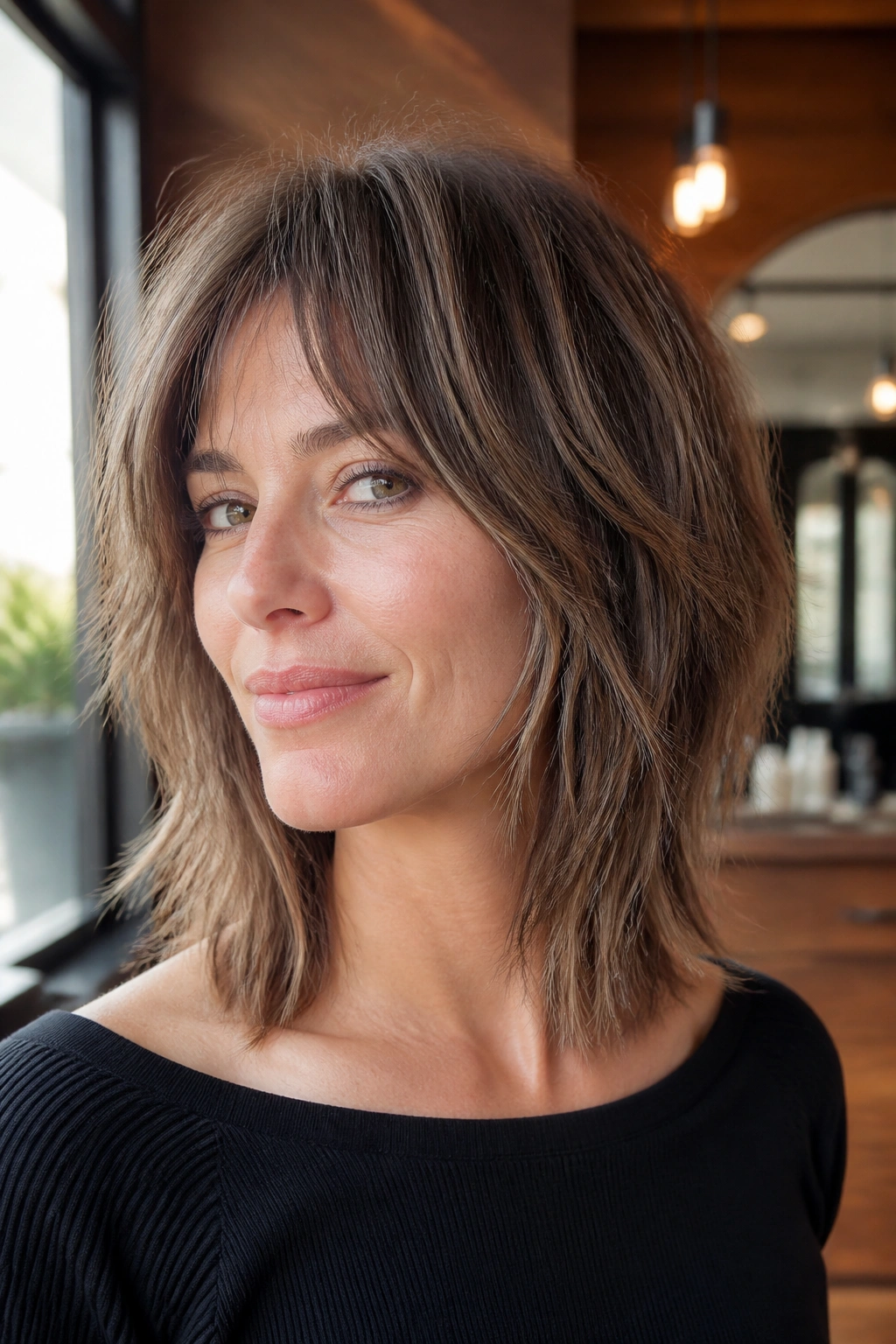
A blunt shoulder-length cut can look heavy on fine straight hair. The shoulder-grazing razor shag fixes that by softening the ends just enough to stop the shape from feeling square and stubborn.
The razor piece is where people get nervous, and I get why. Too much razor cutting can fray fine hair. But a controlled razor finish, done only through the ends and face-framing sections, can remove just enough bulk to create movement without making the haircut look broken.
This is a good option if you like hair that swings a little when you walk. The shoulder length gives the style enough body, while the airy ends keep it from sitting like a block. It’s especially good on hair that tends to puff at the sides but stays flat at the roots.
You do need a stylist who knows where to stop. That matters. Fine hair does not forgive overdone texture. If the ends start looking fuzzy right after the cut, it was taken too far.
12. Inverted Shag With Longer Front Pieces
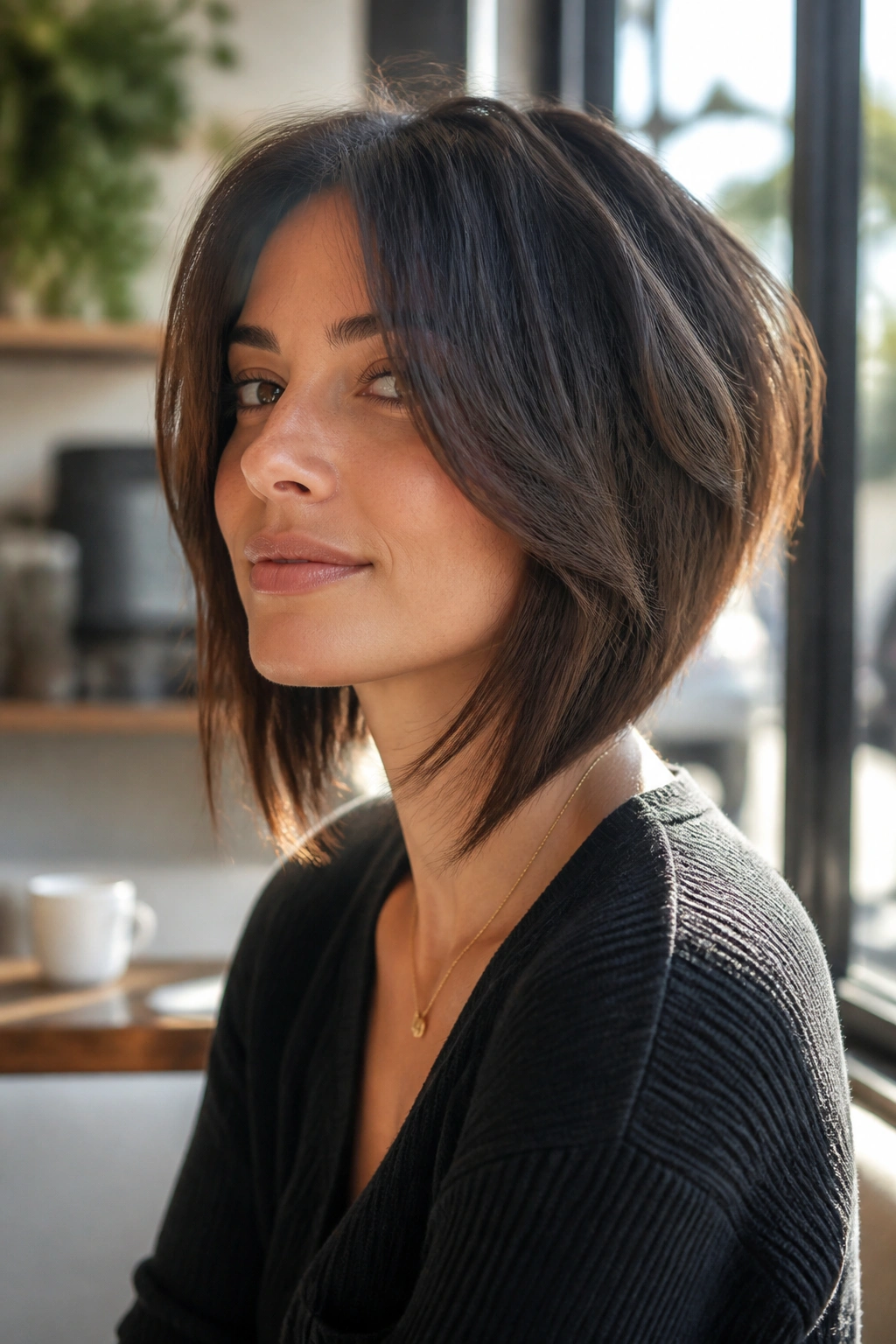
An inverted shag gives fine straight hair a little structure without making the back feel bulky. The front pieces stay longer, which helps frame the face, while the back gets just enough shortening to keep the outline from dragging down.
This shape is useful if your hair falls flat at the sides. The angled front creates the illusion of fullness because the eye follows the longer line forward. It also gives you a more obvious silhouette than a straight, even cut.
The best version is subtle. You are not looking for a dramatic inverted bob that screams from across the room. You want the front to lead, the back to support, and the layers to connect the two without hard steps. That connection is what makes the cut feel expensive in the everyday sense — neat, deliberate, not fussy.
If you tuck your hair behind one ear a lot, this is a nice choice. The front pieces still have room to move, and the cut keeps its shape even when the style gets a little imperfect. Which is most days, if we are being honest.
13. Wolf-Shag Lite for Straight Hair
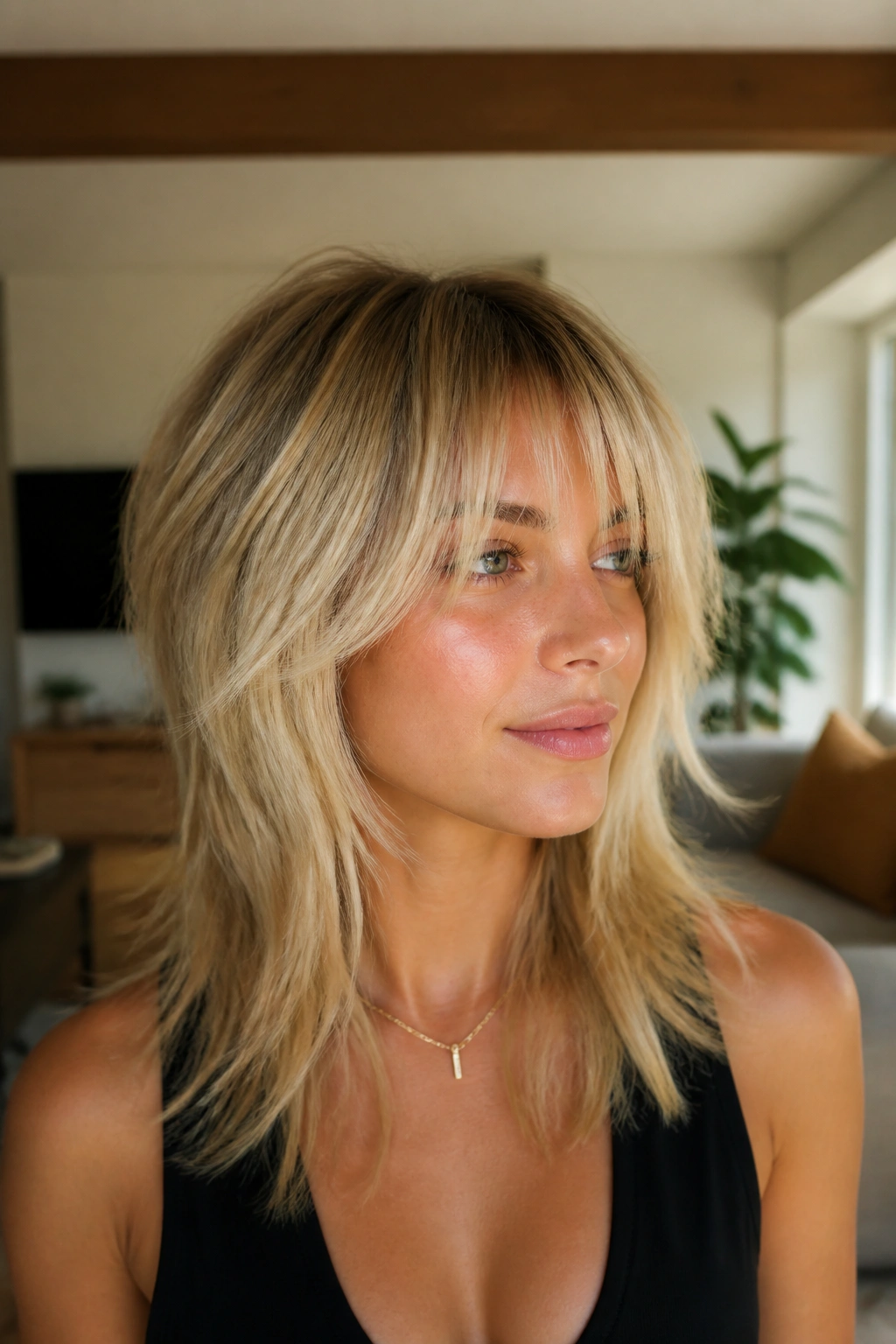
Can a wolf shag work on fine straight hair? Yes, but the full version is usually too much. The lighter take keeps the spirit of the cut — textured crown, face framing, piecey movement — without chopping the hair into a shape that looks too thin.
That lighter approach matters. Fine strands need space to look full, and the classic heavy wolf cut can remove too much of it. So the trick is to keep the top layers soft, let the face frame do the dramatic work, and leave the ends with enough weight to stay visible.
What to keep in mind
- Keep the crown layers short enough to lift, but not so short they stick out.
- Blend the fringe into the side pieces.
- Leave the bottom perimeter softer and thicker.
- Use a lightweight texturizing spray, not a gritty paste.
This cut suits people who like a little edge without committing to a high-maintenance shape. It looks especially good on hair that is naturally pin-straight but can take a bend with a brush or a flat iron. The movement feels a little undone, which is the point.
I would not recommend the heavy version for very fine hair. That ends badly more often than not. The lite version, though, has enough attitude and not so much scalp exposure.
14. Minimal-Layer Shag for Low-Maintenance Days

Not everyone wants a haircut that asks for a tutorial every morning. Some people want a shape that does the job and gets out of the way. That is what the minimal-layer shag does for fine straight hair.
It keeps the layers shallow and the lines clean, which means the hair still looks like a full head of hair. The movement is there, but it is subtle — enough to stop the style from going flat, not enough to make the ends look shredded. This is the shag for someone who likes the idea of texture more than the mess.
The cut also grows out nicely. That is a big deal. Fine hair often loses its shape quickly if the layers are too aggressive, and then you are stuck waiting for everything to catch up. A minimal-layer shag gives you a longer runway.
If you want this style to hold, the styling has to stay light too. A root spray, a quick blow-dry, and maybe one pass of a flat brush are usually enough. Heavy products will sink it. Fine hair does not need much help to get weighed down.
15. Hidden-Underlayer Shag
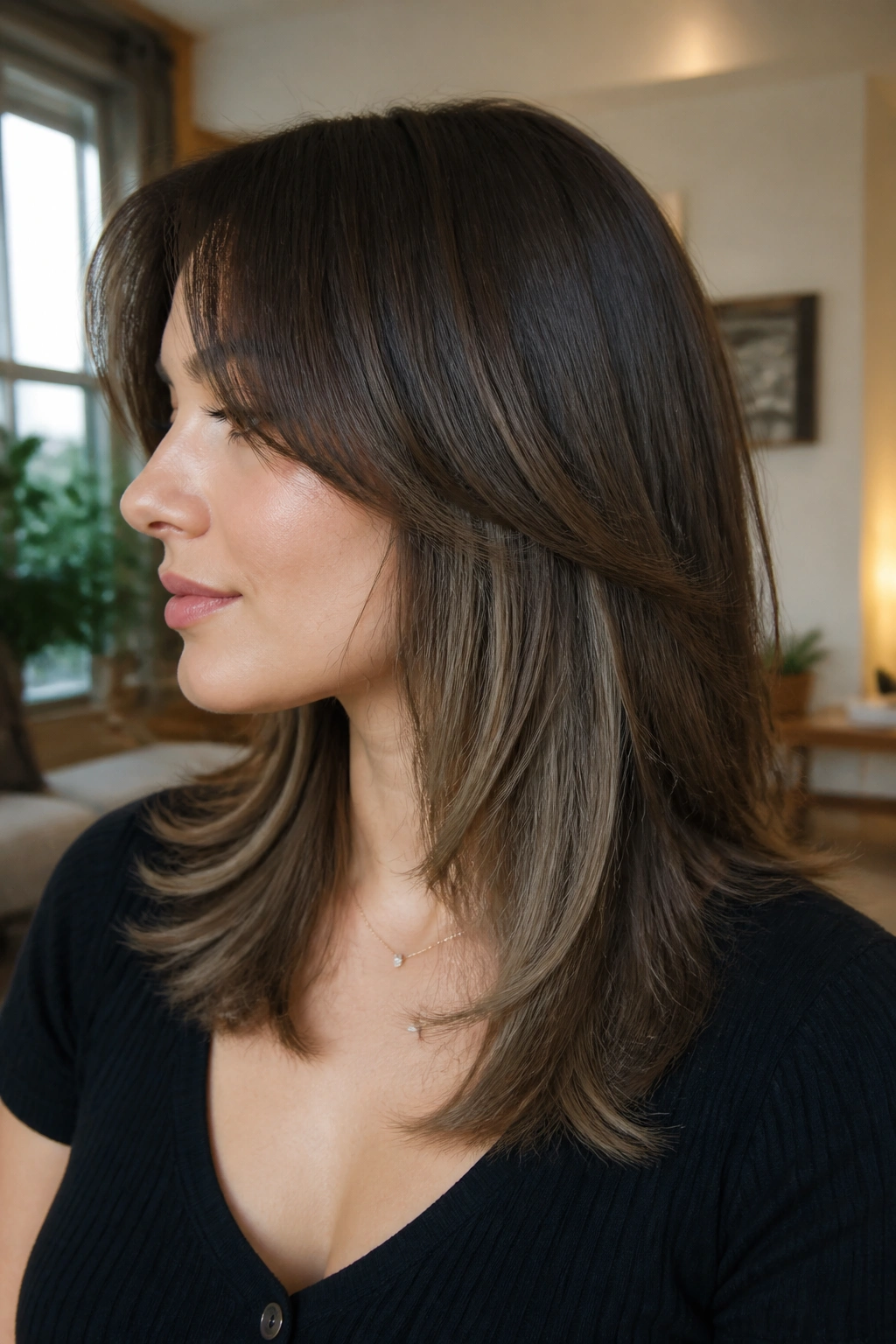
This is one of my favorite tricks for fine hair, and it’s easy to miss from the chair. The surface stays relatively smooth, while the movement happens underneath. That way the haircut looks denser from the outside but still has enough lift to avoid a helmet effect.
The hidden-underlayer shag works because the eye sees fullness first. If the top layer holds its line, the hair appears thicker even when the internal sections are soft and broken up. Fine straight hair often looks better with that kind of quiet structure than with visible choppiness.
Why it’s smart
- The outer layer protects the visual weight.
- The interior layers add motion without exposing scalp.
- The cut grows out cleanly.
- The style can be worn sleek or slightly messy.
This is especially good if your hair gets brittle at the ends. Since the surface stays more intact, you are not exposing every fragile section to the air. The result feels calmer and more controlled than a heavily layered shag.
If you like the idea of texture but hate the look of obvious layer lines, this is the one. It has a little secret built in. I always like that in a haircut.
16. Sliced-Ends Shag With Piecey Movement

Sliced ends can be a good move on fine hair when the goal is movement, not volume at all costs. The cut keeps the layers long, then uses slicing or soft point cutting near the ends to create that separated, piecey look people want from a shag.
The reason this works is simple: straight fine hair can look heavy when every end lands on the same line. Breaking up the ends lets the hair move without making it look blunt in the wrong way. The trick is to stop before the ends turn frayed.
This cut feels a little cooler than the smoother shag versions. It has more edge, but not a harsh one. If your style leans more casual and less polished, the piecey finish gives the cut some attitude without making it scream for attention.
A light cream or a touch of serum on just the last inch of hair helps here. Not much. A pea-sized amount is usually enough for fine strands. Too much and the piecey effect turns greasy fast, which is never the goal.
17. Grown-Out Shag That Still Looks Intentional

A grown-out shag is for the person who does not want to fight the haircut every six weeks. Fine straight hair can actually do well with this shape if the original cut was designed with some restraint. The layers loosen over time, but the outline still holds.
That matters because fine hair often goes awkward when a cut grows out too fast. Short layers can flip out. Heavy layers can separate. A grown-out friendly shag keeps the transitions soft enough that the shape changes slowly instead of collapsing.
This is one of the more forgiving options on the list. If you do not love constant salon visits, it gives you room. It also works for anyone who likes a haircut that feels a little more relaxed after a few weeks, when the pieces have softened and settled.
The style does not ask for much. Keep the ends trimmed before they get too thin, use a light root spray when you want lift, and resist the urge to overload it with serum. Fine hair tends to misbehave when you baby it too much.
18. Soft Straight Shag for Fine Hair That Air-Dries Well
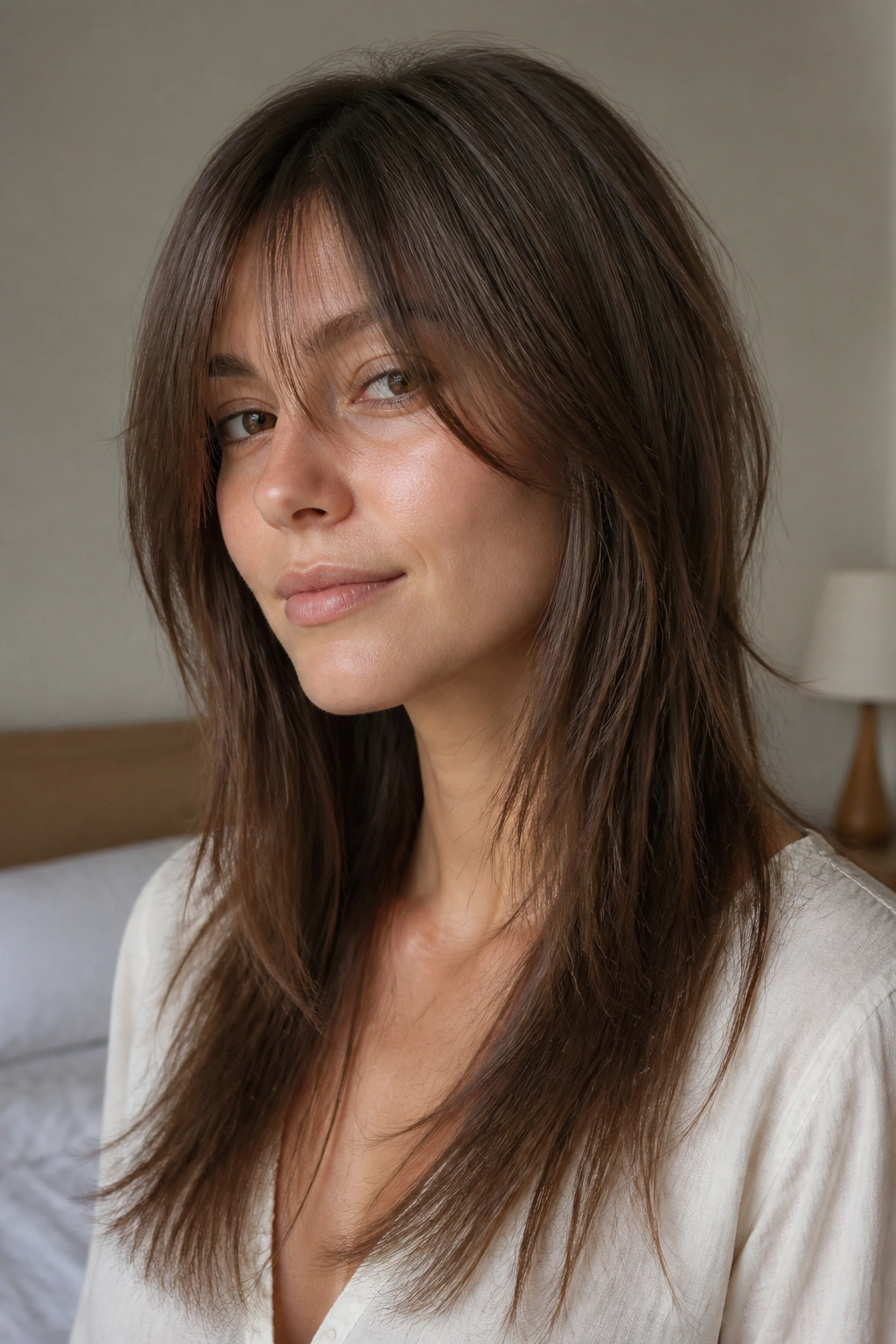
If you want one shag that can survive a lazy morning, this is the one I’d point to first. The soft straight shag for fine hair keeps the layers long enough to lie neatly when air-dried, but still gives the shape enough internal movement to keep it from turning flat and dull.
The cut should feel easy, not overworked. That means a clean perimeter, gentle face framing, and enough crown lift that the hair does not glue itself to the head after washing. You are aiming for a shape that dries into itself instead of asking you to rebuild it every time.
What makes it air-dry friendly
- The shortest layers are not too short.
- The ends keep enough weight to settle cleanly.
- The face frame bends on its own, even without a brush.
- The overall silhouette stays readable when the hair is dry.
This is also the most forgiving option for people who hate heavy products. A mist of leave-in, a tiny bit of mousse at the roots, and hands-off drying can be enough. If your hair is truly fine and straight, trying to force big texture usually backfires. A softer shag gives you movement without drama.
And that is probably the real lesson here. Fine straight hair usually looks best when the shag is edited, not demolished. Keep some line. Keep some weight. Let the layers do their job without turning the whole cut into a cloud of ends.
