



Round faces are often misunderstood in the world of hair styling. The prevailing wisdom suggests you should hide the shape, but that is rarely the best approach. Instead, you want to frame the face with intention, creating vertical lines and piecey movement that draws the eye toward the jawline or neck, rather than emphasizing the width of the cheeks. A shag cut is the perfect candidate for this. By introducing intentional layering, choppy ends, and internal texture, you stop the hair from falling flat against the face, which is usually what causes that “rounding” effect we often try to avoid.
When you add blonde tones to the mix, things get interesting. Light reflects off blonde hair differently than dark hair, making the texture more visible. This is a massive advantage when wearing a shag. You can see the layers, the soft edges, and the deliberate messiness that gives this cut its personality. The goal is to keep the length at a medium point—somewhere between the collarbone and just below the chin—to ensure you maintain enough weight to keep the hair from poofing out at the sides, while keeping it light enough to hold a wave.
Finding the right balance isn’t about chasing a specific look you saw in a magazine; it is about recognizing how the cut interacts with your bone structure. If you are ready to move away from blunt, heavy styles and want something that feels lighter, more organic, and frankly, a bit cooler, the medium blonde shag is the way to go. Forget about perfection. This style thrives on being slightly undone.
1. Classic Choppy Blonde Shag
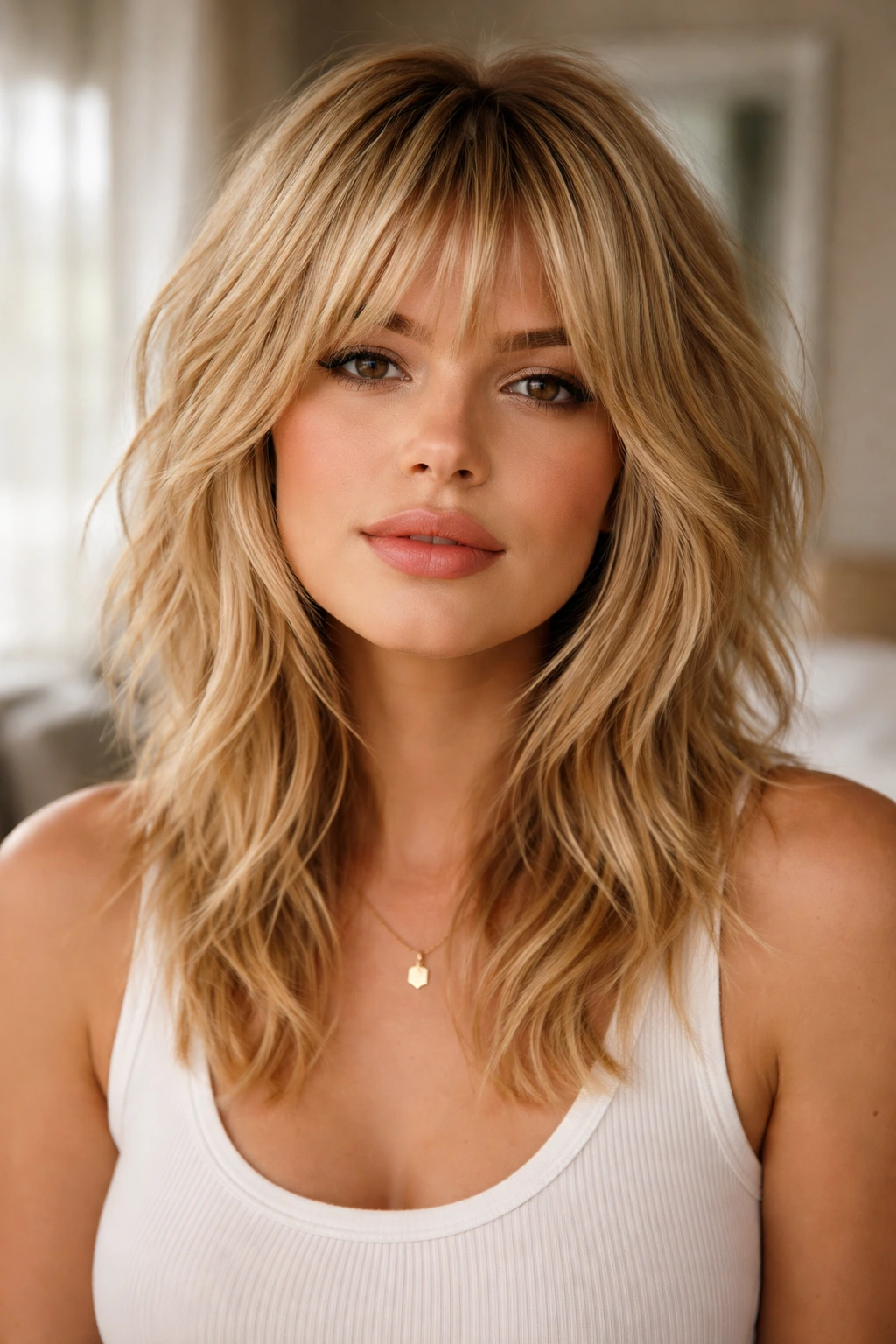
This is the standard-bearer for the category. It relies on heavy internal layering, specifically around the crown, to create volume right where you need it—on top. For a round face, you want that volume to sit higher up rather than at the ear level, as this creates the illusion of a longer face shape.
Why It Works for Round Faces
The key here is the point-cutting technique. Your stylist should not be using a razor to blunt-cut the ends; they should be using shears to point-cut, which softens the tips of your hair. When the ends are soft rather than blunt, they won’t create a horizontal line that makes your face look wider. Instead, the hair feathers out slightly, mimicking the natural movement of a shag.
Styling the Texture
- Use a sea salt spray on damp hair.
- Scrunch the ends while they air dry to encourage natural waves.
- Avoid using a round brush, which creates too much polished volume. Pro tip: If your hair is naturally straight, use a 1-inch curling iron to add a few haphazard bends, then brush them out immediately to keep it from looking too “done.”
2. Curtain Bangs with Face-Framing Layers
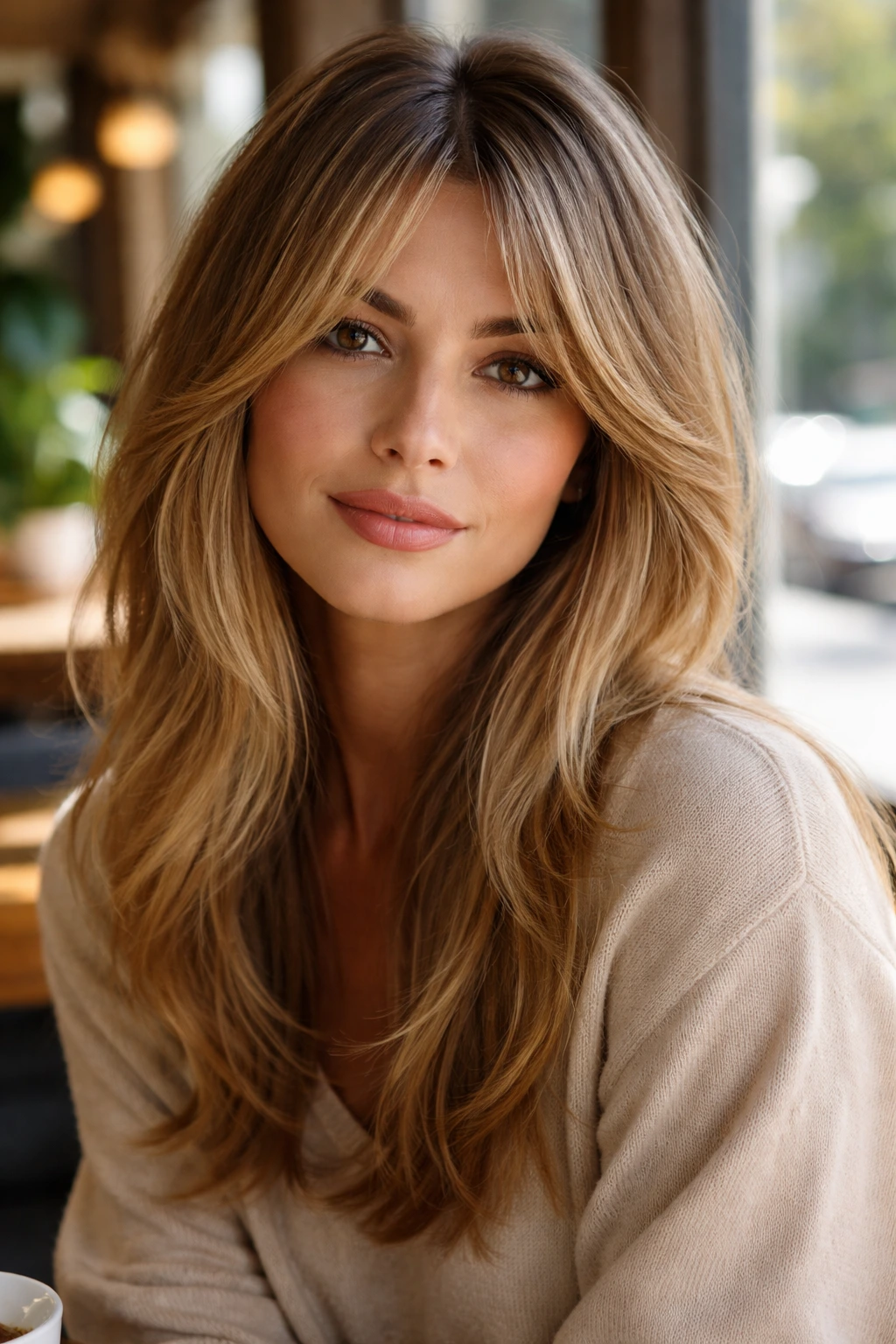
Curtain bangs are a round face’s best friend. They naturally create a curtain effect that splits the face vertically, which is a fantastic way to counteract horizontal width. When paired with a medium shag, the bangs should blend seamlessly into the rest of the layers.
Managing the Bangs
You want these bangs to hit right at the cheekbones or the bridge of the nose. If they are cut too short, they can accidentally emphasize the roundness of your cheeks. By keeping them long and wispy, you draw the eye down toward your lips and chin. The blonde color adds depth to these bangs; ask for a few lighter face-framing highlights, sometimes called money pieces, to really make the area pop.
Daily Maintenance
This cut requires a bit of morning prep. You will need to hit those bangs with a blow dryer and a medium-sized brush to get that swooping, outward shape. If you let them air dry completely, they tend to lose their shape and just look like overgrown strands, which defeats the purpose of the framing.
3. Icy Platinum Razor Shag
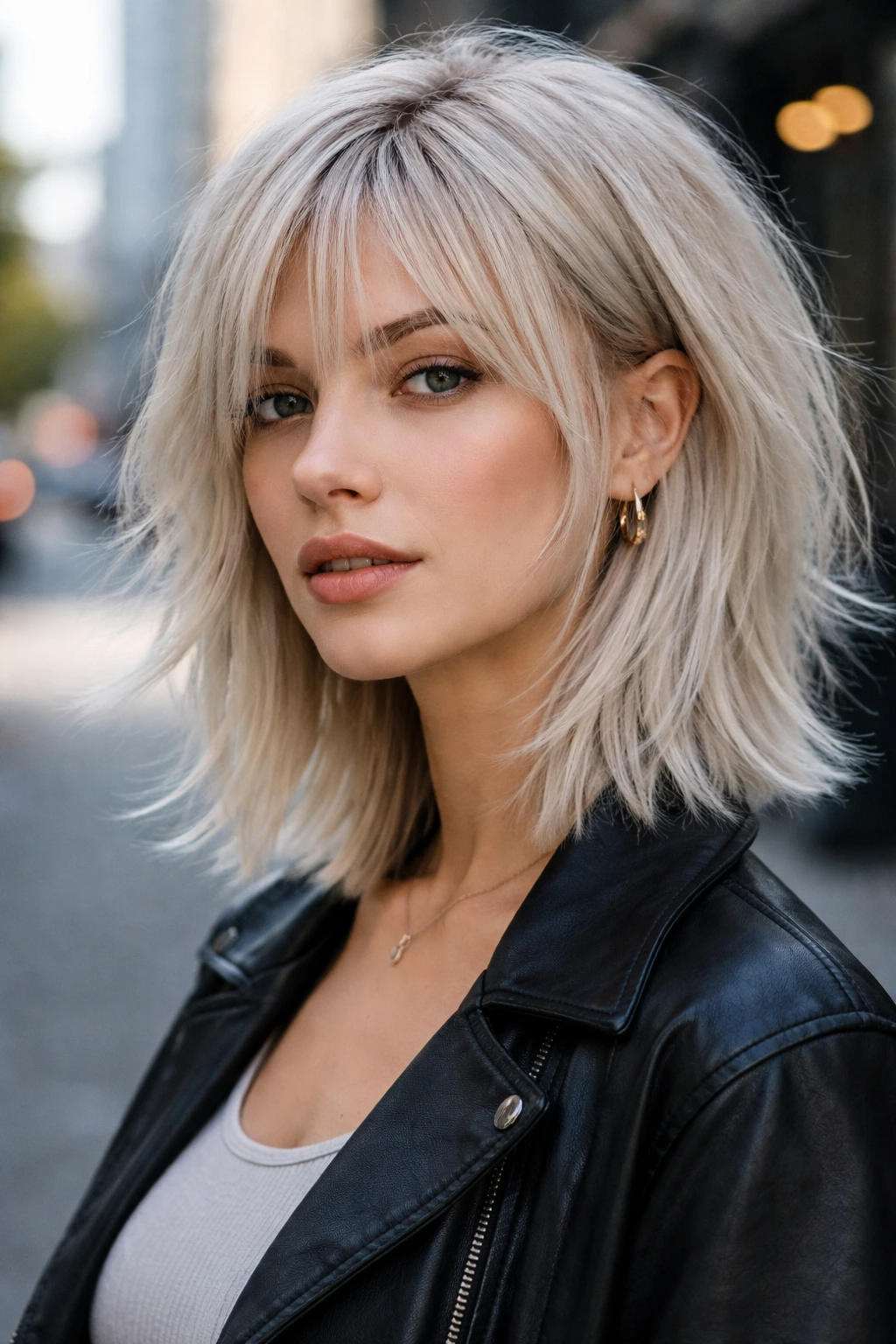
The razor cut is aggressive in the best way possible. It removes weight and creates sharp, shattered ends that look incredibly chic in platinum or icy blonde shades. This isn’t for the faint of heart, as it requires a decent amount of bleaching maintenance, but the visual payoff for a round face is substantial.
The Razor Advantage
Razors create a tapered edge that you just cannot get with scissors. These thin, tapered ends reduce the bulk around the jawline. If you have a round face, bulk is the enemy. By thinning out the ends, you keep the perimeter of your hair wispy and light, which makes the whole silhouette look airy rather than heavy.
The Color Factor
Because the cut is so sharp, you want the color to reflect that. A cool-toned, icy blonde creates a stark contrast against the skin, which can actually help define your facial features more clearly. Keep your purple shampoo nearby to ensure the brassiness doesn’t creep in, as yellow or warm tones can sometimes make the cut look a bit softer than you might intend.
4. Honey-Toned Messy Shag
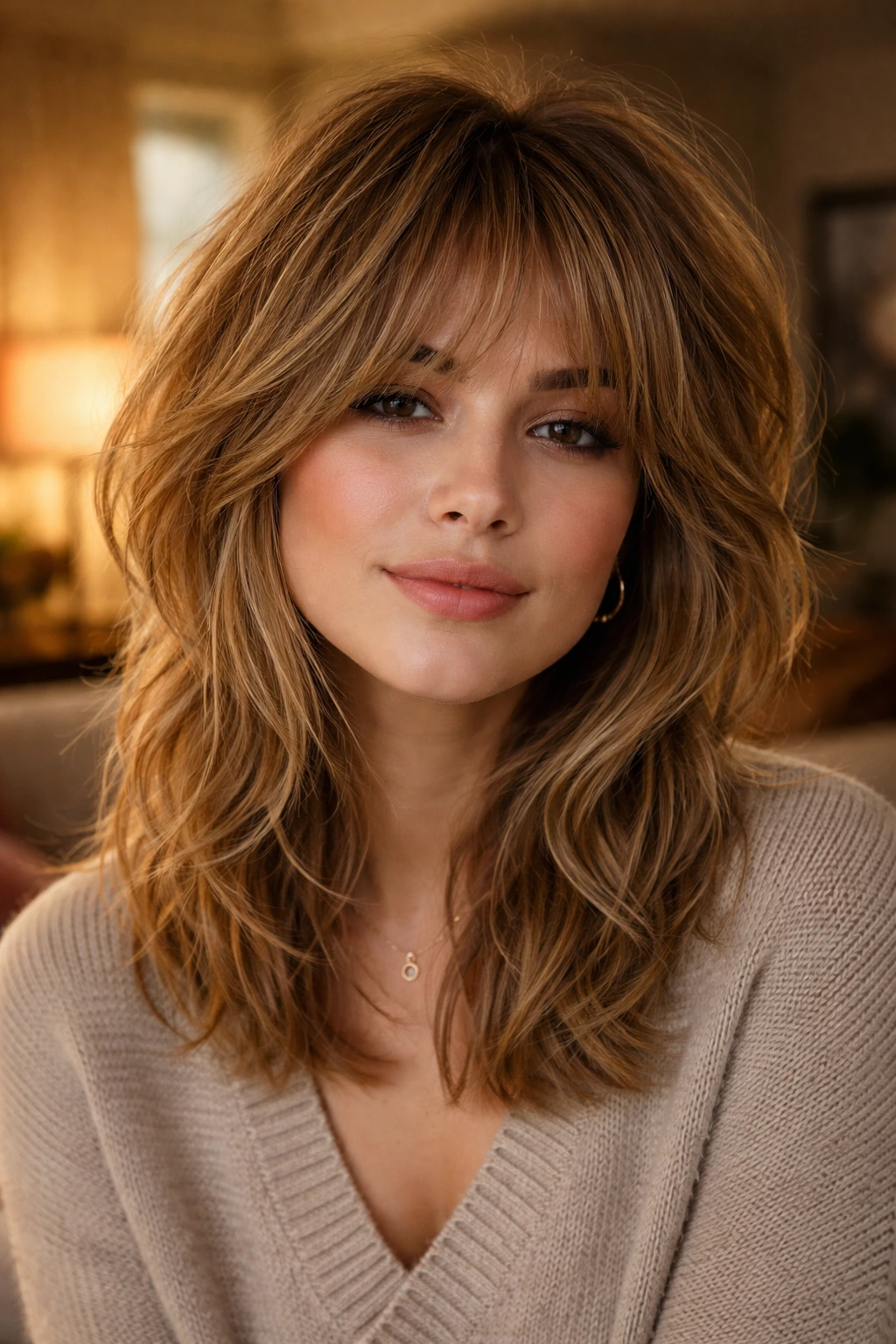
Warm honey tones are incredibly flattering, especially for those with olive or warm undertones in their skin. This cut is about embracing the “bedhead” look. It’s less about precision and more about finding a shape that works with your hair’s natural texture, whether that is slightly wavy or straight.
Building the Shape
Ask for internal layers that start near the temple. This keeps the hair from lying flat against the side of your head. When hair lies flat, it clings to the curves of the face, reinforcing the round shape. By building volume at the temples and keeping the length slightly past the shoulders, you create an elongated oval shape that is universally flattering.
Why Honey Blonde Works
Darker roots transitioning into honey-blonde ends provide a visual “weight” at the bottom of the style. This draws the eye downward, which is the exact direction you want for a round face. It prevents the style from looking like a circle surrounding your face and instead makes it feel like a cascade of color.
5. The Modern Wolf Cut Hybrid
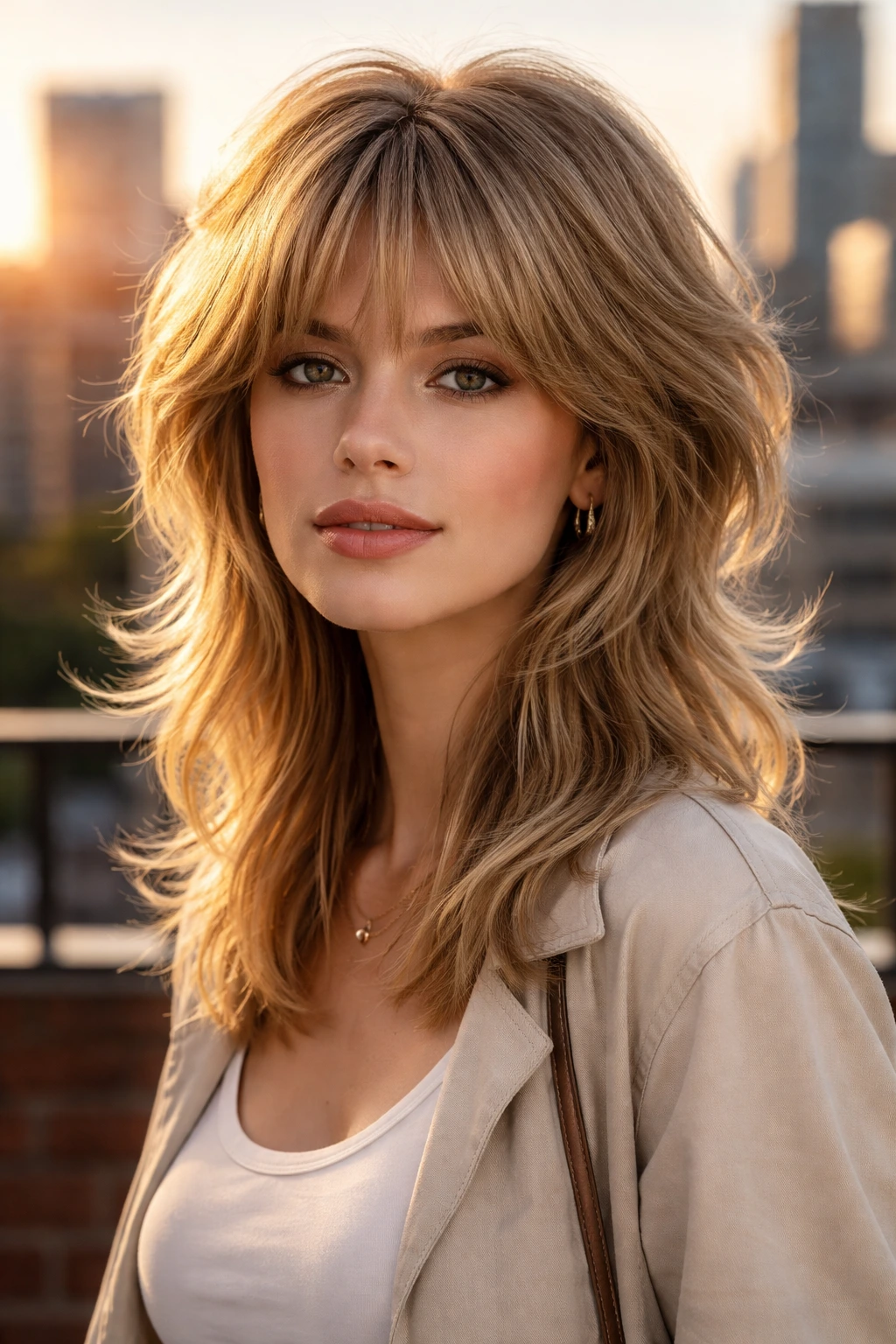
The wolf cut is essentially a shag with a mullet influence—more volume on top, more texture throughout, and a tapered, thinning length at the bottom. The hybrid version pulls back on the intensity of the mullet part while keeping the crown volume high.
Addressing the Volume
Round faces can handle a bit of volume, but it has to be positioned correctly. With the wolf cut, the highest point of volume should be at the crown, not the sides. This adds height. Anything that adds height to the top of your head is effectively elongating your appearance.
Texture and Styling
You will need a gritty texture spray for this. Clean, soft, shiny hair is not the goal here. You want it to look lived-in and slightly undone. Apply the product when the hair is about 80% dry, then let it finish drying naturally. Do not run a comb through it.
6. Soft Waves with Wispy Ends
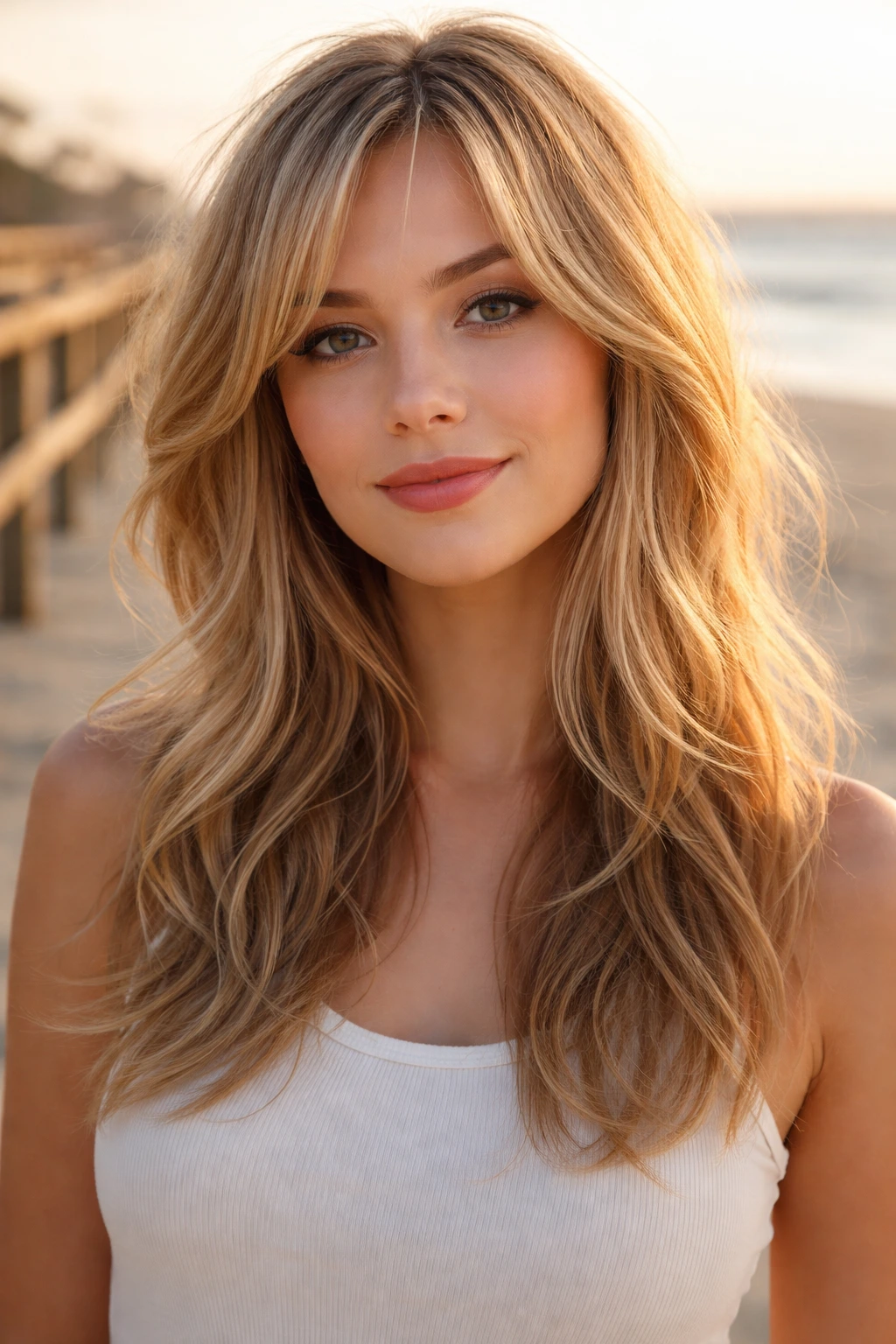
If you prefer a softer, more feminine take on the shag, this is your best option. It’s a very romantic, “California girl” style that relies on long, blended layers rather than the short, choppy layers seen in a classic shag.
The Technique
The wispy ends are created by slide-cutting—a technique where the stylist slides the shears down the hair shaft to remove weight gradually. It creates a very soft, feathery finish that doesn’t feel blocky. This is crucial for round faces because blunt ends act like a frame, highlighting the widest part of the face. Wispy ends disappear into the background.
Why Waves Matter
Waves break up the solid shape of a round face. If your hair is straight, a round face can sometimes look more pronounced because the hair mirrors the shape of your cheeks. Adding S-waves—either with a curling iron or a styling wand—creates an irregular pattern that distracts from the uniformity of the face shape.
7. Dirty Blonde Texturized Layers
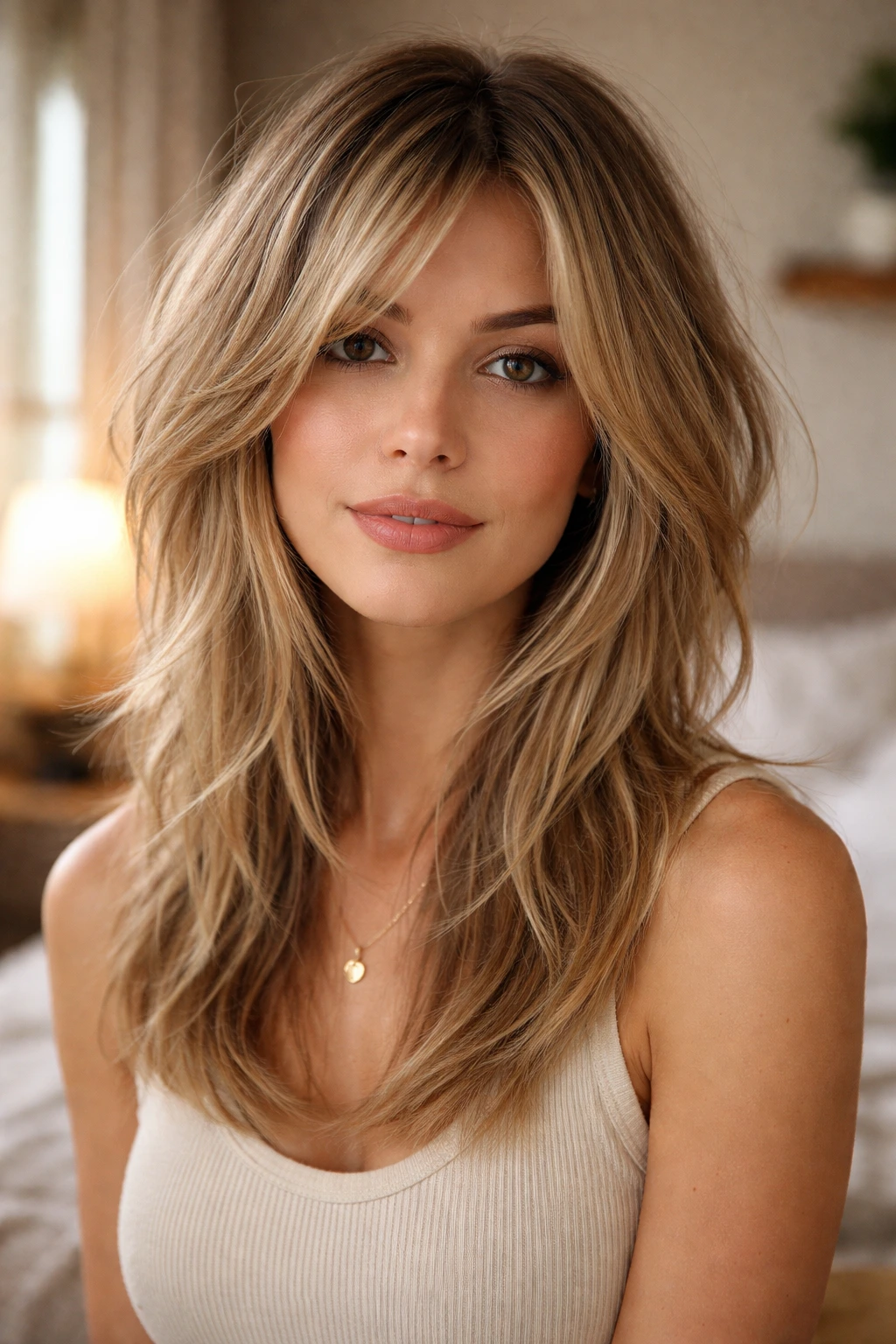
“Dirty” blonde, or dark blonde with natural-looking highlights, is a fantastic color choice because it’s low maintenance and looks very natural. When you combine this grounded color with a heavy dose of texture, you get a look that is effortlessly cool.
Depth and Dimension
Darker roots add a sense of shadow. If you place these shadows strategically—like around the temples or the jawline—you can create a subtle contouring effect. Ask your colorist for “root smudging” to ensure the transition from your natural base to the blonde is soft and hazy rather than striped.
Layering Intensity
The layers here should be concentrated toward the front. You want the hair to be shorter in the front and slightly longer in the back, but not in a severe, dated way. This gradient helps “open up” the face, making it look a bit more oval and less round.
8. The Blunt-Bang Shag
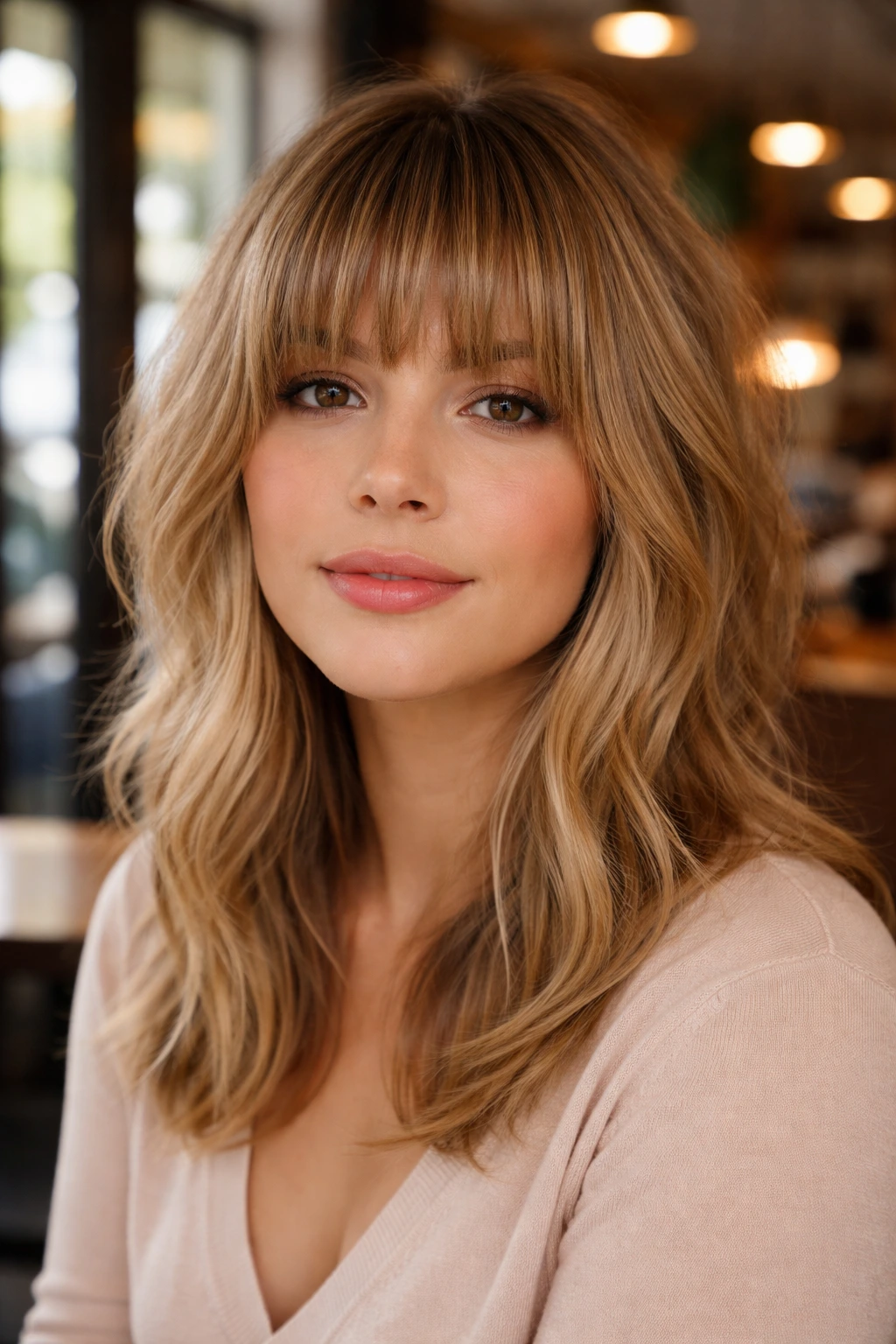
Most advice for round faces warns against blunt bangs. However, if you do them right, they can look incredible. The trick is to pair them with a shag cut that has a lot of texture, so the bangs don’t sit like a solid, heavy wall on your forehead.
Balancing the Bangs
Ask for your bangs to be cut a bit wider—meaning they should extend slightly past the corners of your eyes. This softens the edges of the forehead. The rest of the shag should be full of choppy layers that connect to the bangs at the temple area. This avoids that “mushroom” effect that short, heavy bangs can sometimes create on round faces.
The Contrast
Since the bangs provide a straight horizontal line, the rest of the hair must provide verticality. Keep the sides of your shag piecey and textured to ensure the eyes are drawn up to the bangs and then down the length of the hair, creating a long, continuous line.
9. Caramel Highlighted Shag
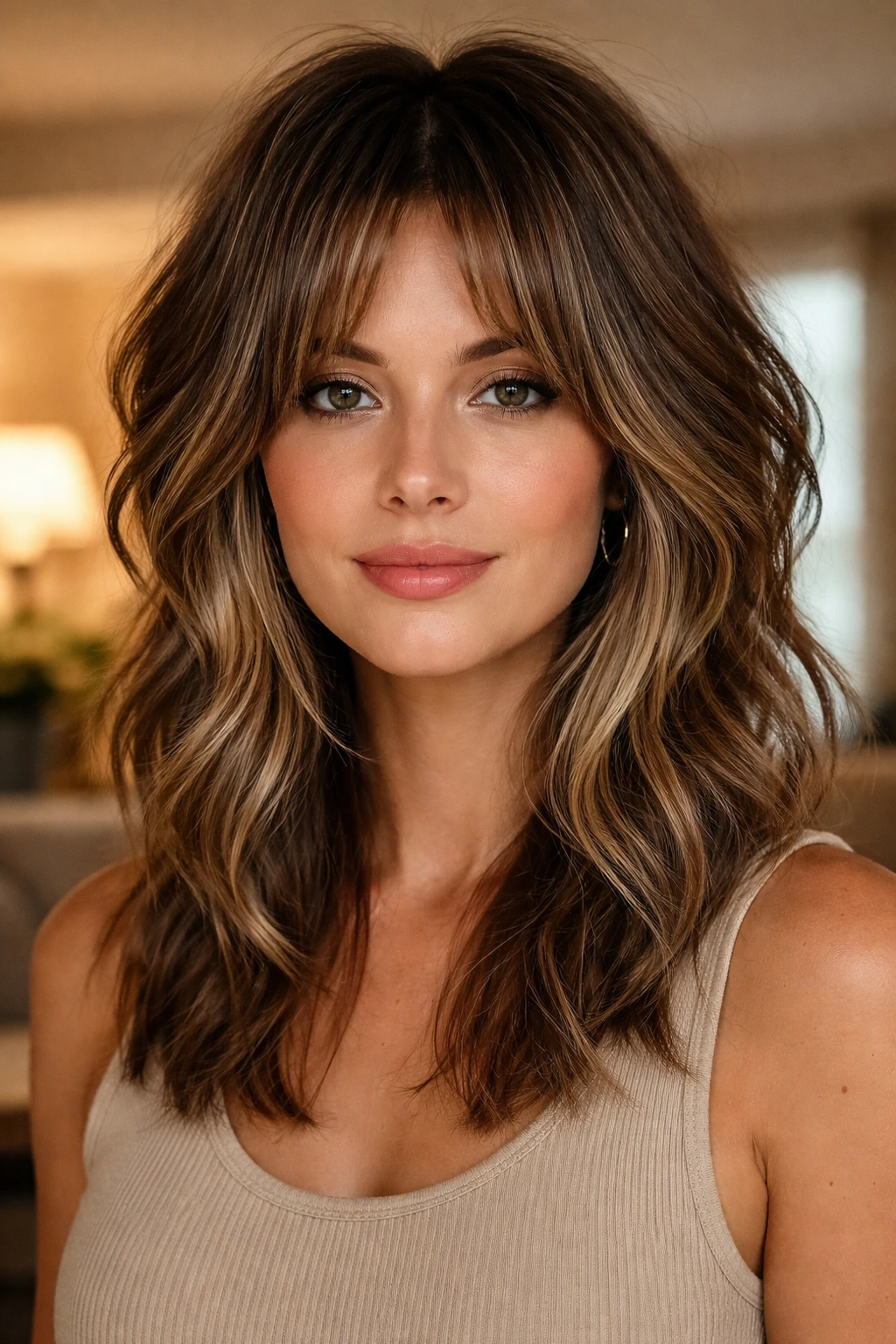
Caramel tones mixed with blonde highlights create a “lived-in” color palette that feels very warm and inviting. For a medium shag, this color depth prevents the cut from looking like a singular, flat block of hair.
The Role of Color Placement
Placement is everything. Ask for lighter blonde highlights around the face—specifically starting at the eye level and working down to the jaw. This technique brightens up the face and acts as a frame. When the area around your jaw is lighter, it draws attention there, which can actually help narrow the appearance of a round face.
Styling for Fullness
Caramel shades look best when the hair has a bit of shine. Use a light serum or a shine spray after styling. Since this cut relies on layers, make sure you aren’t using too much heavy product, as that can weigh the hair down and pull it closer to the face, which we are trying to avoid.
10. Shaggy Lob with Deep Side Part
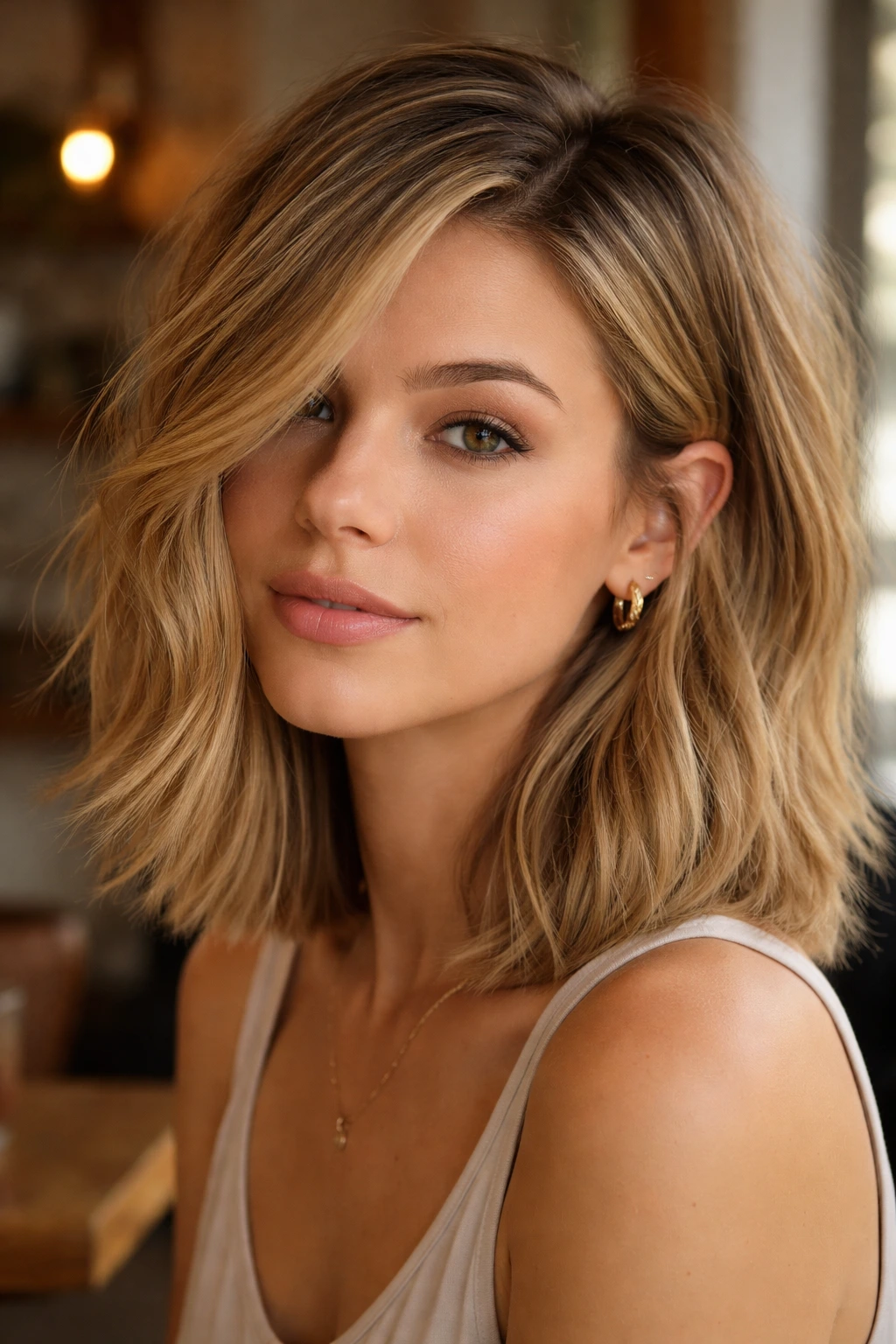
A “lob” or long bob is a great entry point into the shag. By adding shag-style layers to a lob, you get the structure of a bob with the movement of a shag. A deep side part is the secret weapon here.
Why the Side Part Works
A center part creates a perfect line down the middle of your face, highlighting symmetry. For a round face, that can sometimes emphasize the width. A deep side part breaks that symmetry, creating an asymmetrical line that draws the eye across the face rather than straight down. It’s an instant elongation trick.
The Cut
Keep the back slightly shorter than the front, but keep the ends heavily textured. You want that “choppy” feel at the bottom. This prevents the hair from just hanging like a curtain. The layers should be long enough to tuck behind your ears, which is a great way to show off your jawline and create a clean profile.
11. Asymmetrical Blonde Shag
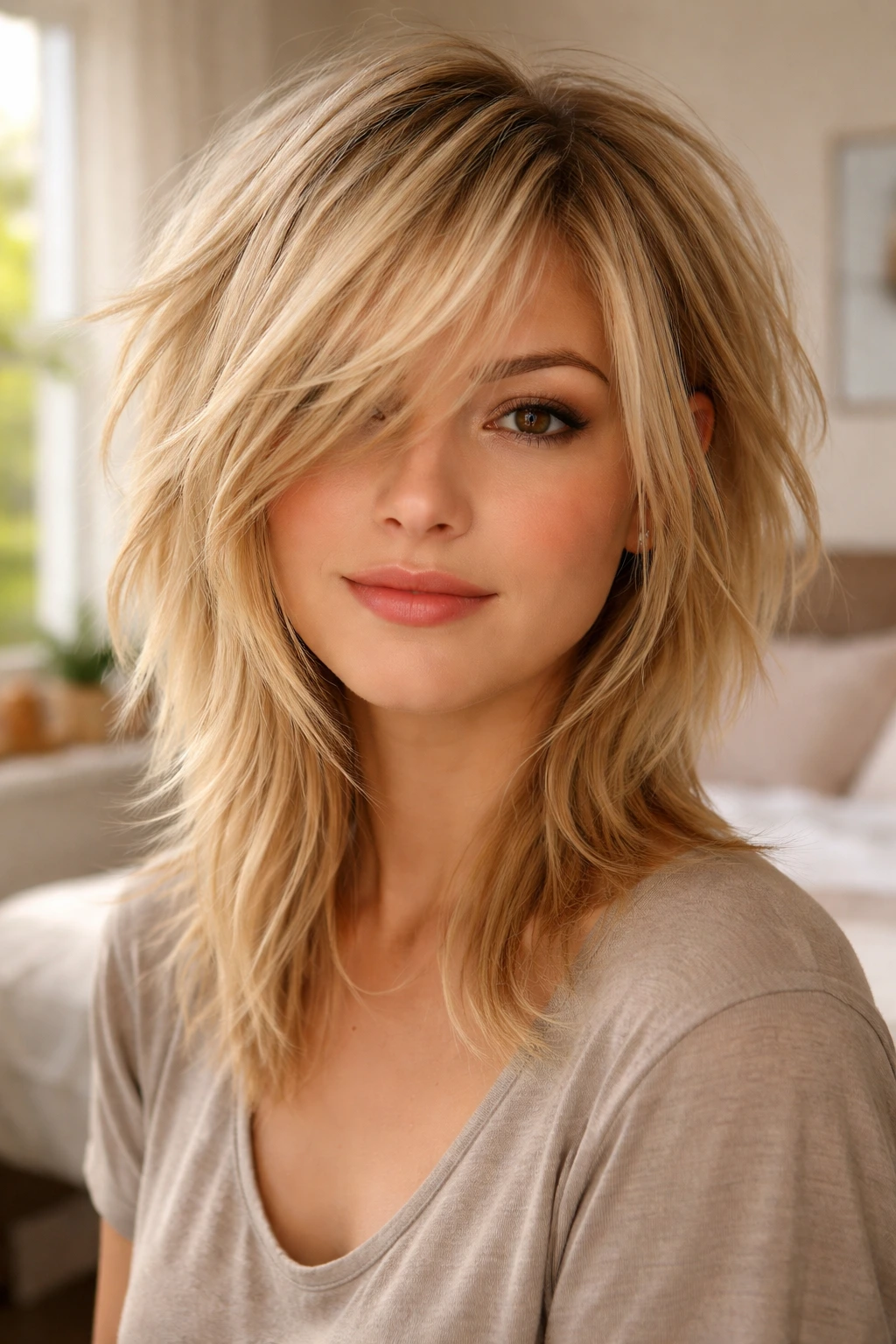
Asymmetry is inherently interesting because it disrupts the expected shape of the hair. For someone with a round face, asymmetry is a brilliant distraction. It moves the focus from the shape of the face to the shape of the hair.
The Execution
One side should be slightly longer or have more layers than the other. This doesn’t have to be drastic. It can be subtle. The goal is to keep the hair from being a mirrored image of your face. When the hair is uniform on both sides, it mirrors the roundness. When it’s uneven, it breaks the pattern.
Styling the Asymmetry
Don’t try to make both sides match perfectly when you style. That’s the point. Let one side be a bit messier, a bit wavier, or tucked behind an ear. Embrace the imperfection. This is a very artistic cut that signals a lot of confidence.
12. Beachy Texture Shag
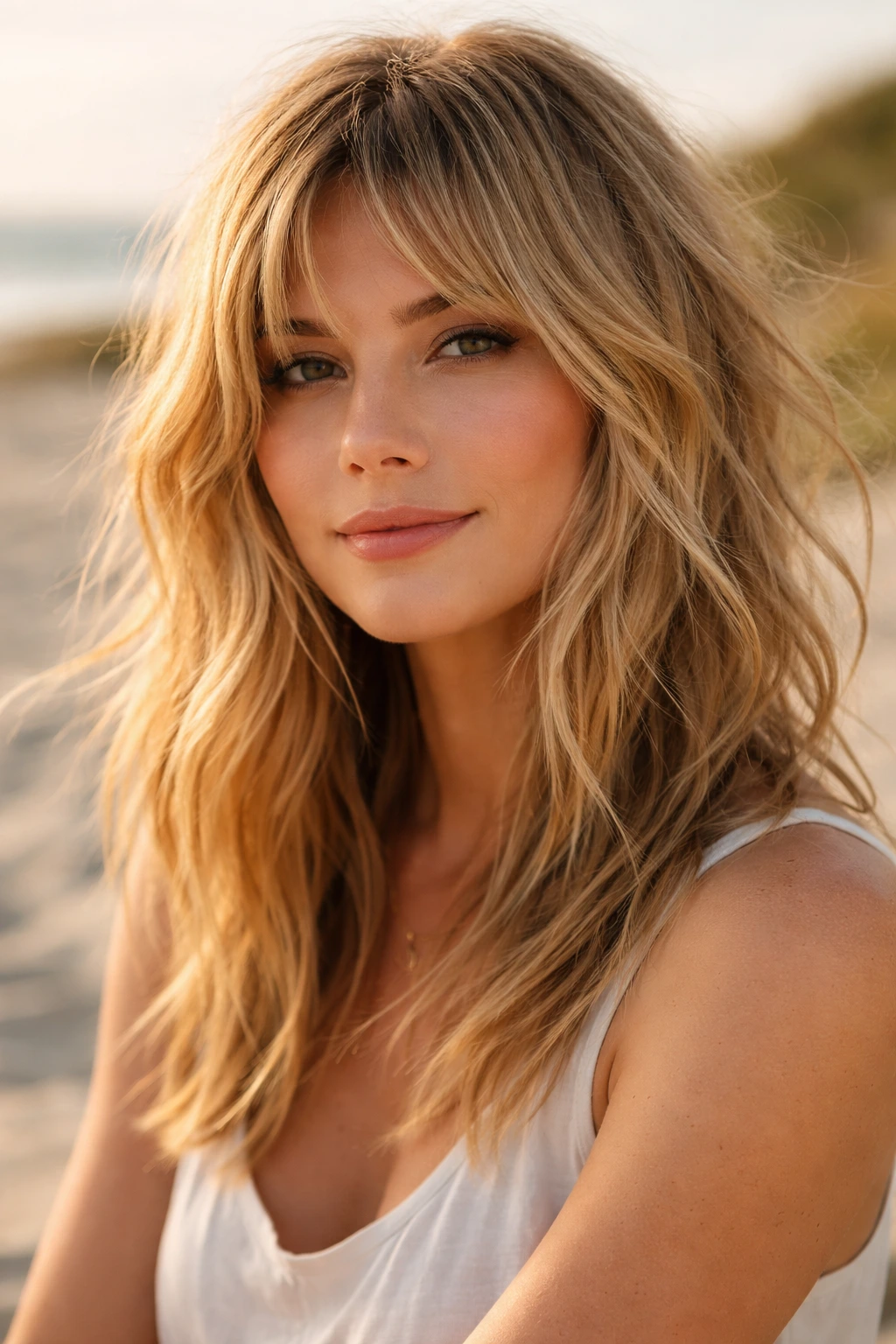
This is the ultimate low-maintenance look. It mimics the hair you get after a day at the beach: messy, salt-infused, and slightly unruly. The blonde color here is usually a mix of sand, ash, and gold, resembling natural sun-bleached hair.
The “No-Tool” Method
You don’t need a curling iron for this. After washing, apply a texturizing cream or mousse. Twist sections of your hair and let them air dry. Once dry, shake them out. This creates a very organic, irregular wave pattern that looks effortless and prevents the hair from creating a “helmet” shape around your face.
Why It Flatters
Beach texture adds a lot of “fuzz” and volume. While we usually want to avoid excess width, controlled volume that looks messy actually works well because it creates a blurry edge around the face. The eye doesn’t focus on the face shape because it’s too busy looking at the cool, textured hair.
13. Shag with Curtain Bangs and Shadow Roots
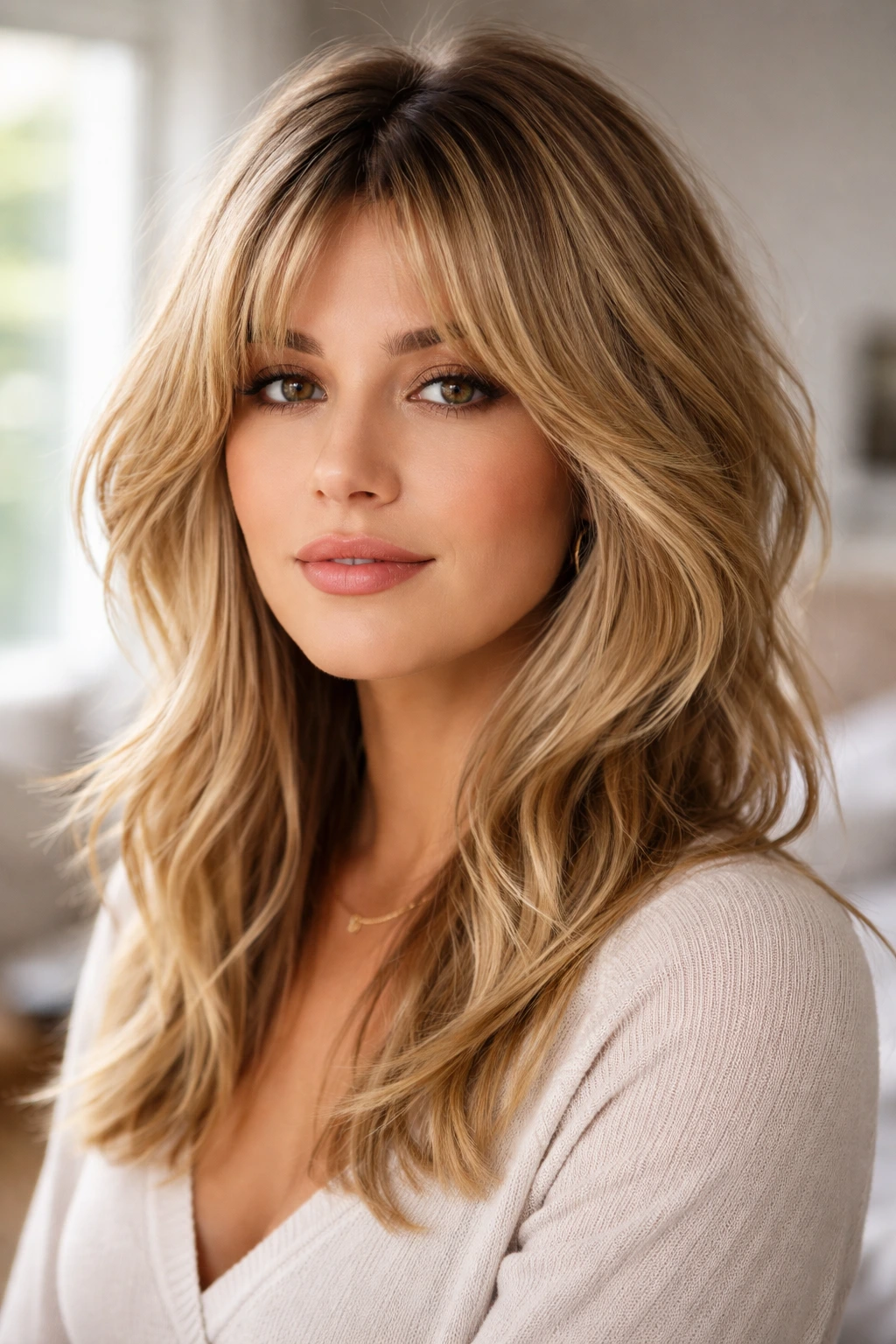
Shadow roots are a practical, stylish way to maintain blonde hair without constant touch-ups. By keeping the roots natural (or darker), you build in depth. When combined with a shag and curtain bangs, this is a very modern, “cool-girl” aesthetic.
The Shadow Root Benefit
Darker roots at the top of the head create a sense of height. It’s a subtle optical illusion: the dark color acts like a shadow, making the crown of your head look slightly higher than it actually is. This is perfect for round faces that need a little vertical boost.
Blending the Layers
The layers in this cut should be well-blended. You want a smooth transition from the bangs to the side layers. This keeps the look cohesive. Avoid having a harsh disconnection between the bangs and the rest of the hair, as that can make the face look like it’s being “cut off” in the middle.
14. The 70s Retro Inspired Shag
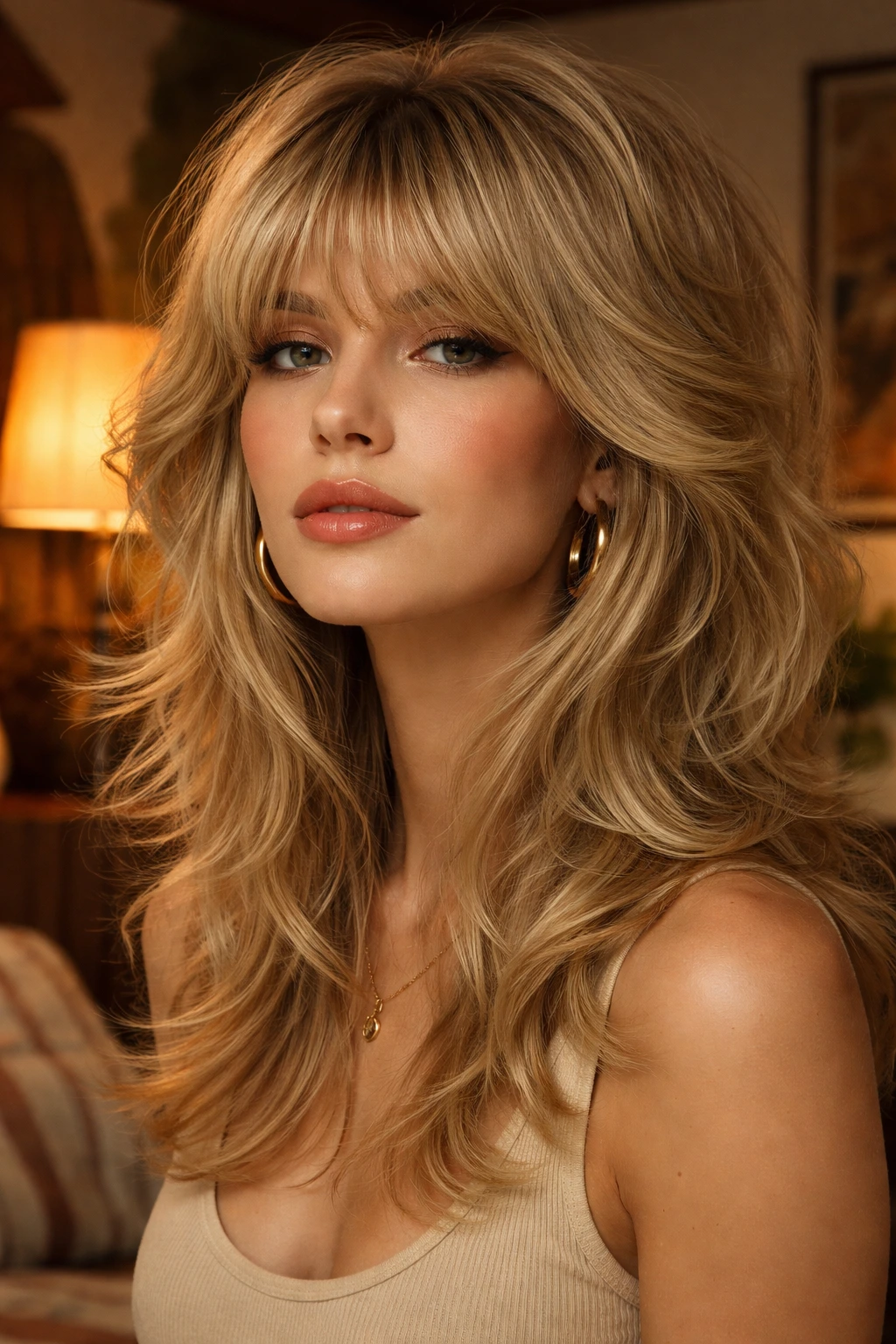
The 70s shag is making a massive comeback, and for good reason. It’s all about extreme layering and heavy fringe. This cut is much shorter on top and longer on the bottom, which is the perfect recipe for volume.
Embracing the Volume
Don’t be afraid of the volume in this cut. The 70s shag is meant to be big. The key for a round face is to keep the volume high. Use a mousse at the roots when blow-drying to lift the hair away from the scalp.
The Bang Situation
The bangs should be wispy and slightly parted in the middle. This allows just enough forehead to show, which breaks up the roundness of the face. If you cover your entire forehead with thick, heavy bangs, you risk making your face look like a circle. Keeping the bangs light and see-through is the move.
15. Strawberry Blonde Soft Shag
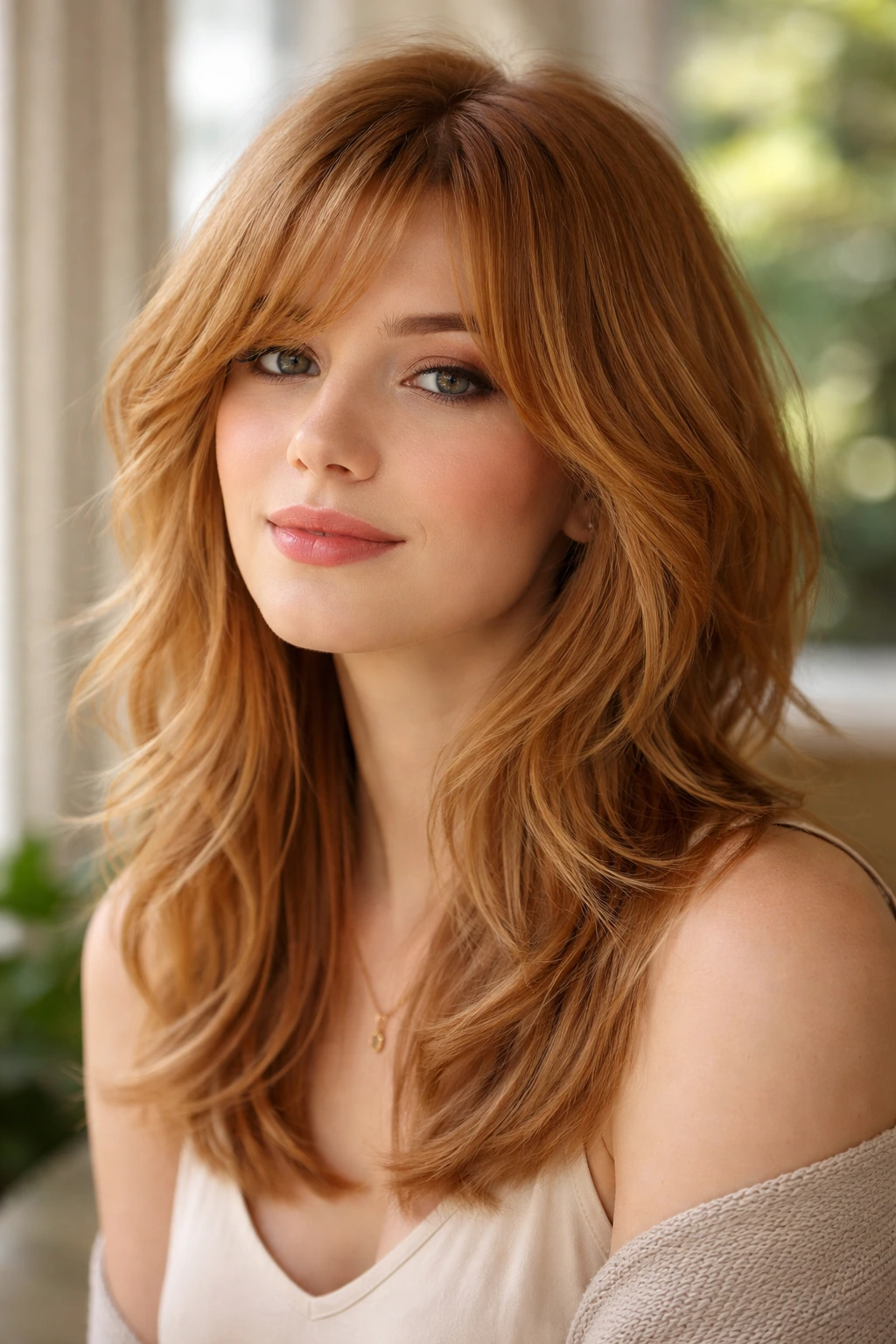
Strawberry blonde is a beautiful, underrated color. It’s warm, unique, and looks fantastic with the soft, feathered layers of a medium-length shag. This color choice is excellent for brightening up the complexion.
Softening the Features
A round face can sometimes look a bit “stiff” if the hair is too dark or too structured. Strawberry blonde is light and warm, which naturally softens the appearance of the face. It brings a glow to the skin, which is very flattering.
Cutting for Movement
Because this is a “soft” shag, the layers shouldn’t be overly aggressive. Ask for long, flowing layers that start around the chin. This highlights the jawline and creates a nice “frame” that doesn’t feel too heavy.
16. Shag with Piecey Layers
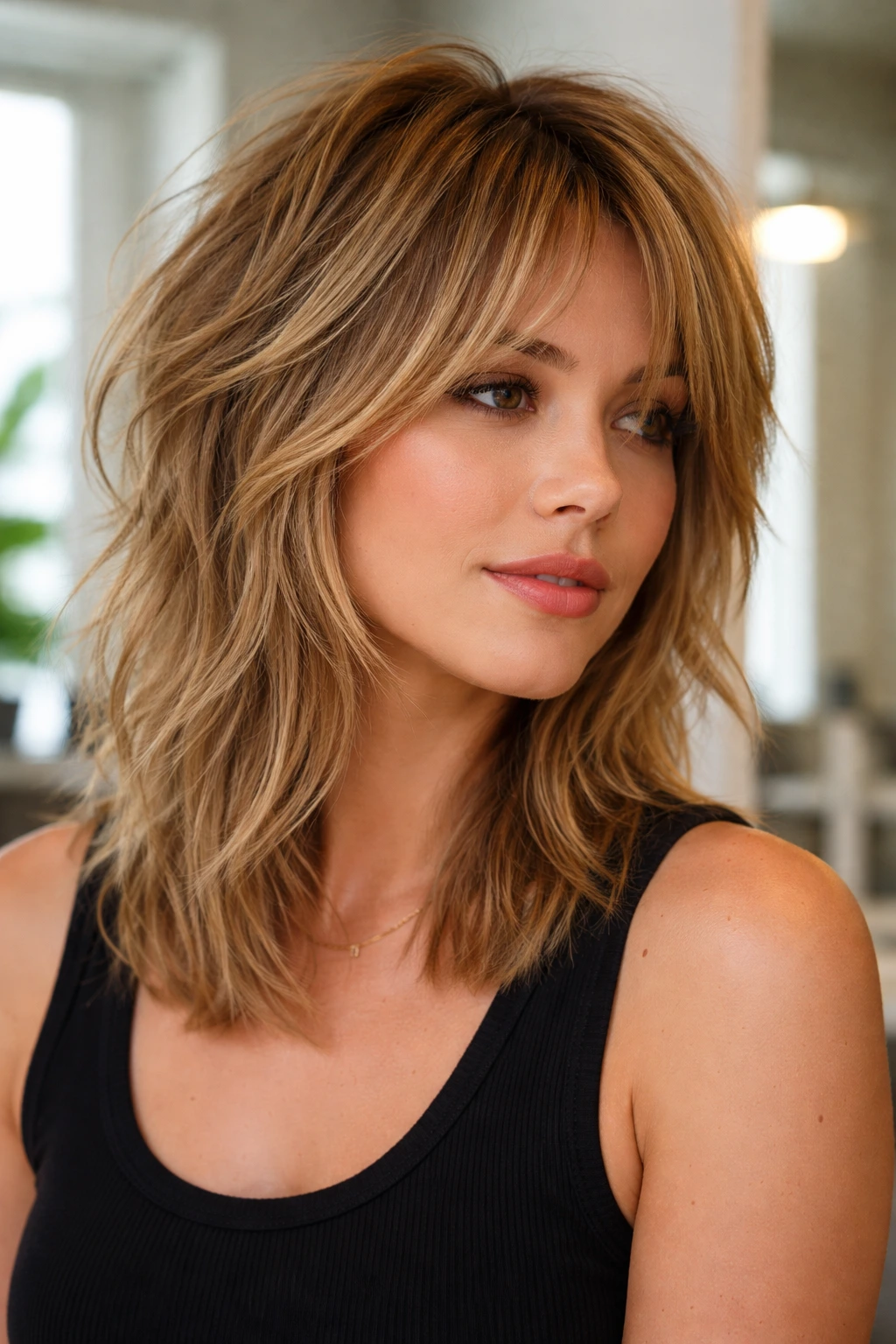
Piecey layers are the opposite of blended layers. They are distinct, separated strands of hair that look like they were styled with a wax or pomade. This is a very defined, sharp look that works well for people who like to spend a little extra time on their hair.
The Styling Technique
You need a texturizing paste or a light pomade for this. Take small sections of hair—the pieces that frame your face—and twist them with a bit of product on your fingertips. This emphasizes the layers and creates lines that draw the eye up and down, rather than side to side.
Why It Works
By making the hair look “spiky” or piecey, you are creating visual interest. Instead of the eye scanning the width of your face, it follows the lines of the hair. It’s a very smart way to break up the roundness of your features.
17. Bottleneck Bangs Blonde Shag
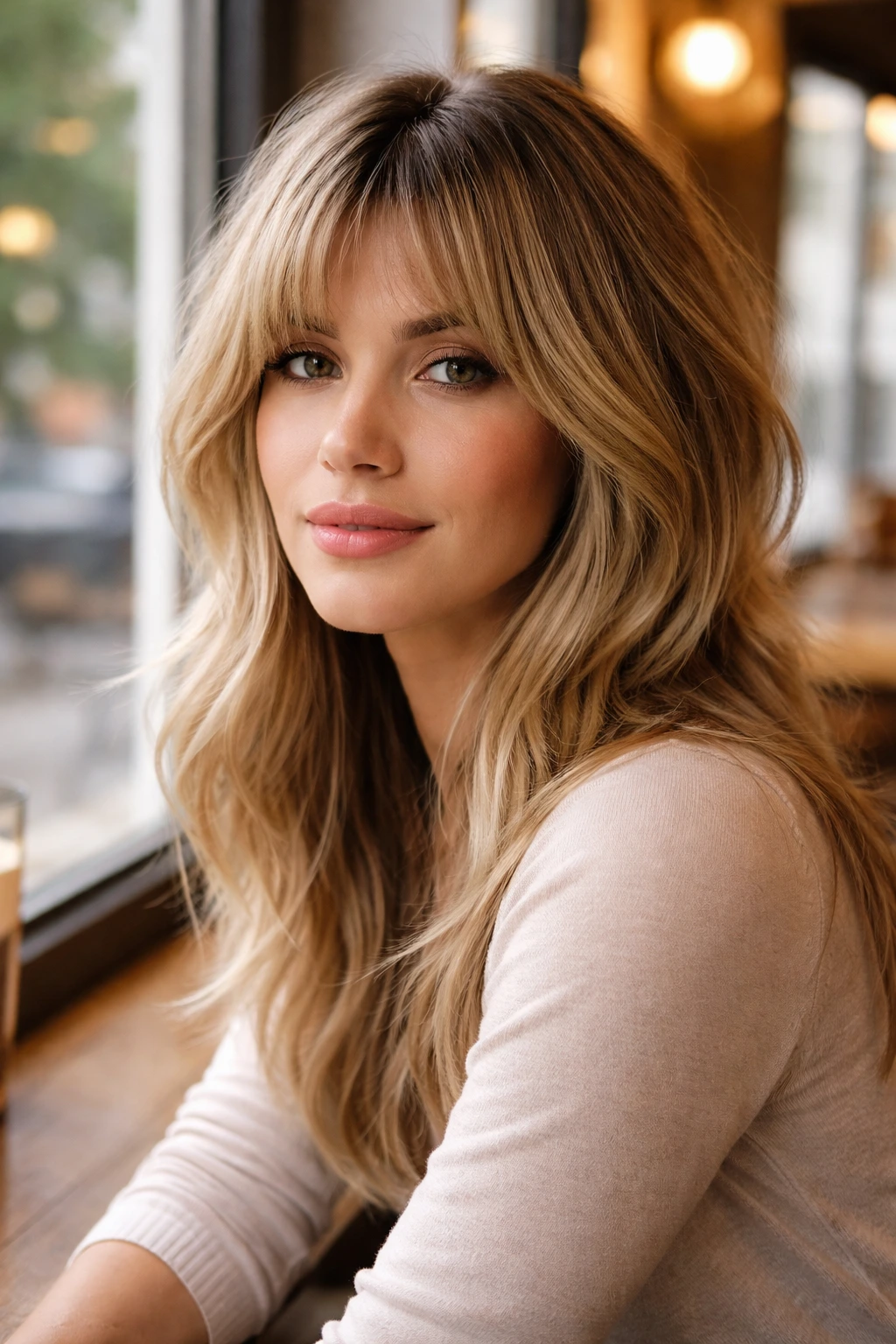
Bottleneck bangs are essentially curtain bangs that are cut slightly shorter in the middle, resembling the neck of a bottle. They are incredibly popular because they frame the face perfectly and transition beautifully into the rest of the hair.
The Transition
The reason bottleneck bangs work for round faces is the transition. They start short (right above the brows), arch over the eyes, and then get longer toward the cheekbones. This arch creates a curved line that naturally complements the curvature of a round face, rather than fighting against it.
Matching the Cut
The rest of the shag should be relatively simple. Keep the layers long and textured. Let the bangs do the heavy lifting in terms of face framing. This is a great “wash and wear” style if you have a slight natural wave to your hair.
18. Platinum Balayage Shag
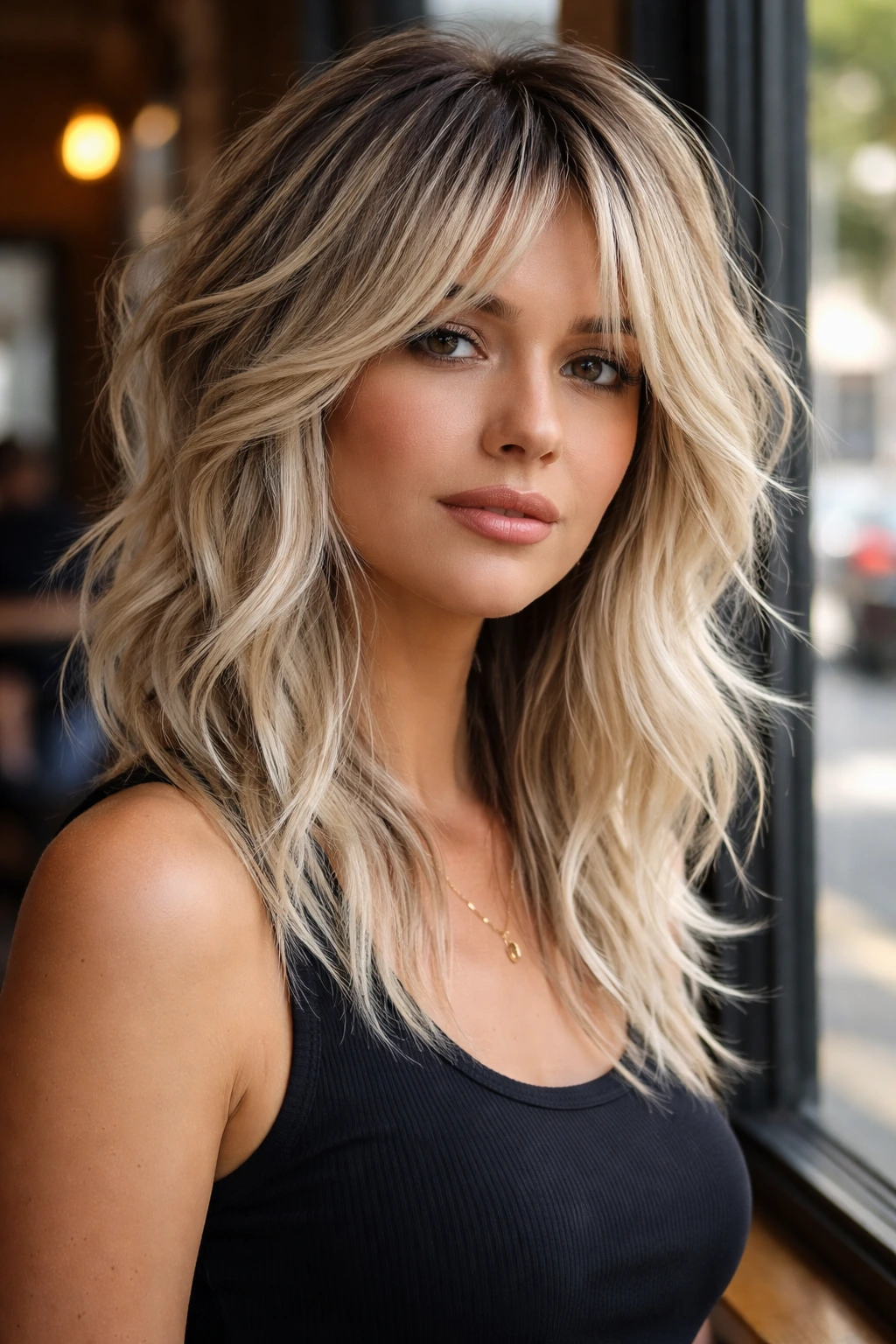
Balayage—hand-painted highlights—is the best way to get a natural, sun-kissed look. When done with platinum tones on a darker blonde base, it creates a high-contrast look that is very visually stimulating.
The Focus on Ends
In a shag, the ends of the hair are the most important part because that’s where the movement is. By concentrating the platinum color on the ends and the mid-lengths, you draw the eye down the hair. This is a subtle but effective way to elongate the look of your silhouette.
Maintenance Note
Platinum ends are fragile. Make sure you are using a deep conditioning mask at least once a week. Shag cuts look terrible if the ends are dry and frizzy, as the cut relies on those ends being healthy and bouncy to create that “shaggy” movement.
19. Layered Shag with Thinning Shears
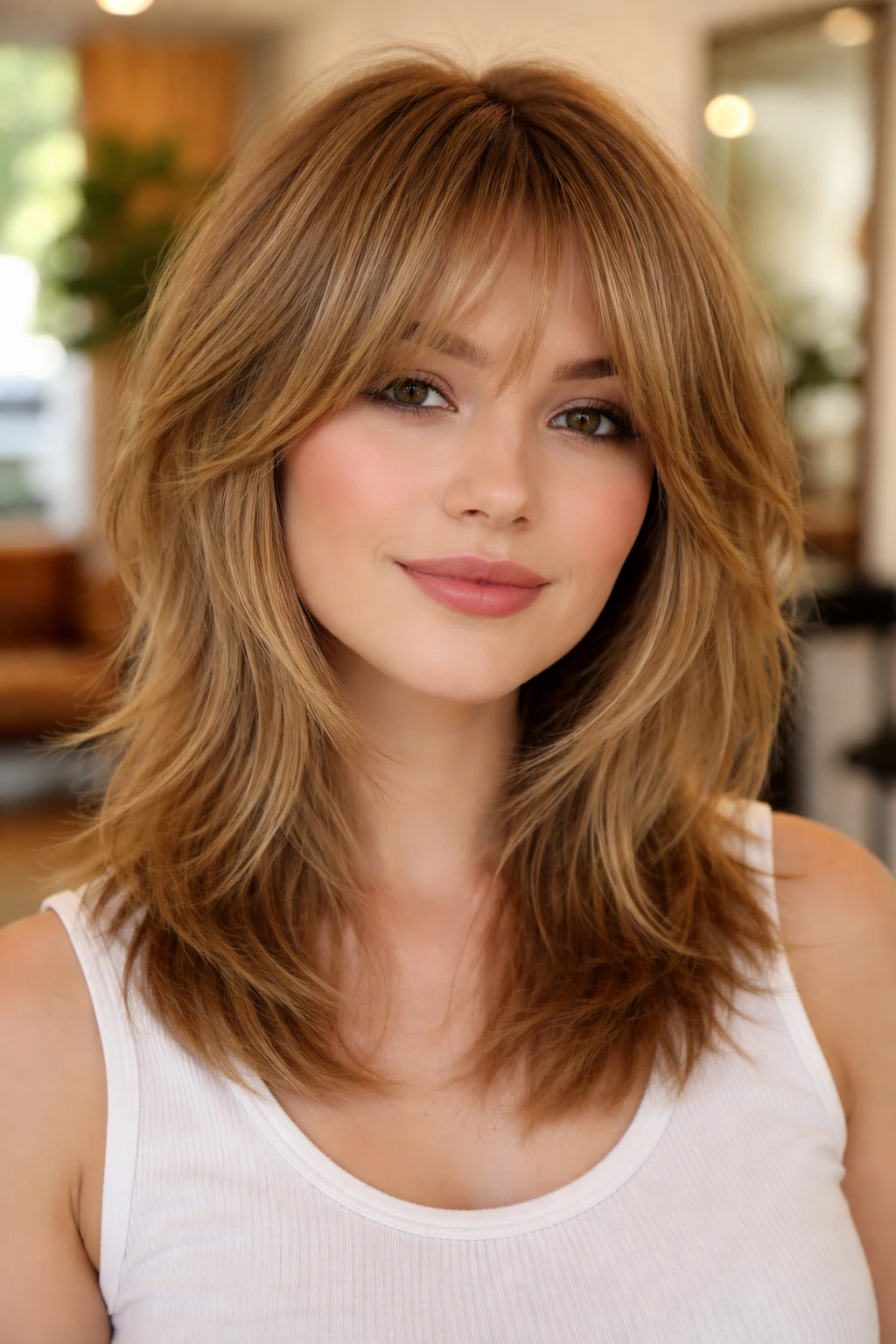
Thinning shears are a tool that can be controversial, but in the right hands, they are a godsend. For someone with thick hair and a round face, thinning shears are the only way to get the hair to “behave” without poofing out.
The Weight Removal
If your hair is thick and you have a round face, a regular shag can sometimes look like a triangle. The thinning shears remove internal weight, allowing the hair to collapse inward slightly rather than pushing outward. This “collapsing” effect is vital for narrowing the face.
The Cut
Your stylist should use these shears specifically on the mid-lengths. They shouldn’t be used at the root (which creates frizz) or at the very tips (which makes the hair look stringy). Used correctly in the middle, they create a soft, lightweight texture that makes the shag feel airy.
20. The “Bedhead” Blonde Shag
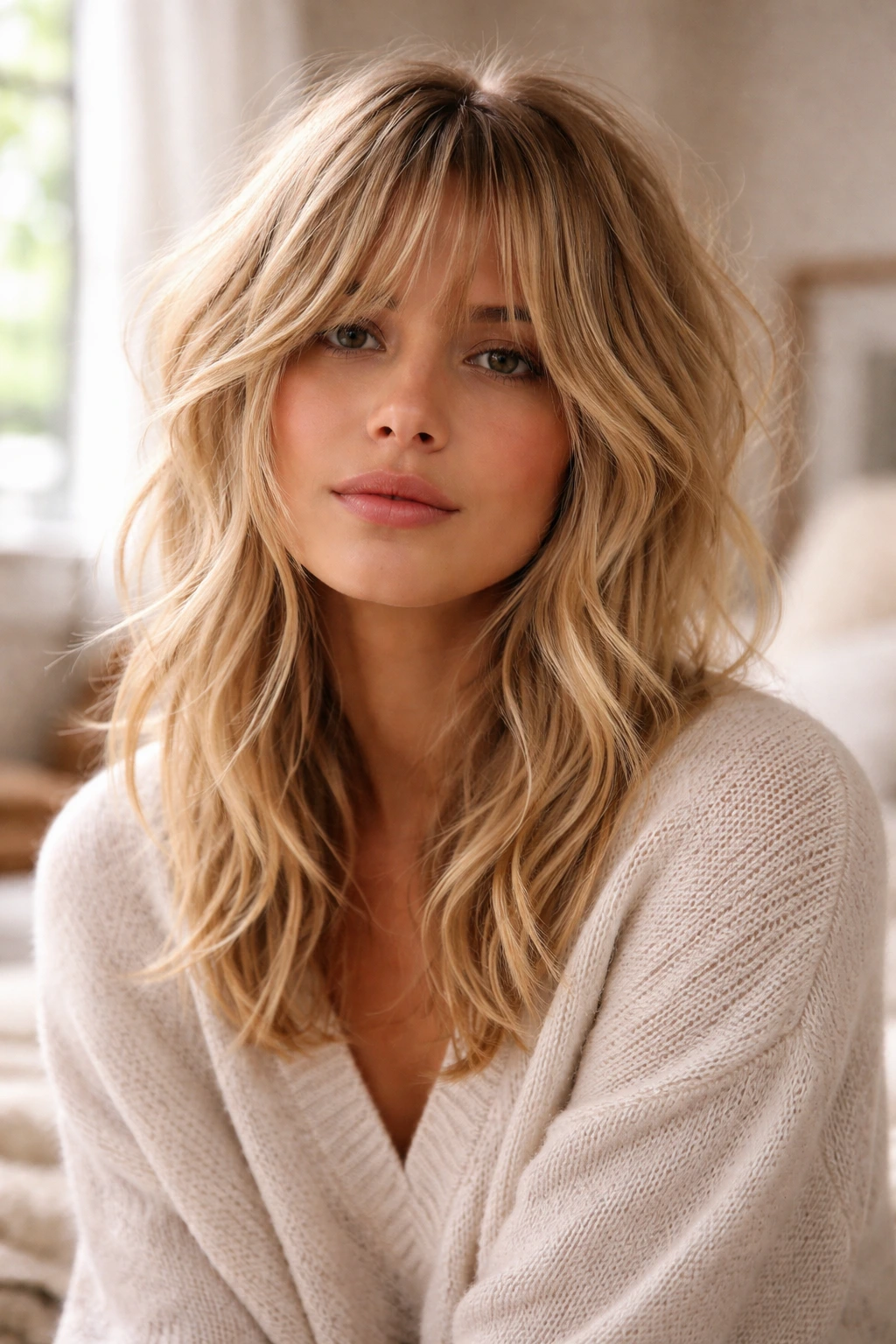
If you aren’t interested in spending thirty minutes styling your hair every morning, this is the cut for you. It’s the ultimate “I woke up like this” hairstyle. It’s messy, it’s loose, and it’s completely unbothered.
Texture is Key
The secret to this cut is a light mousse or a sea salt spray. You apply it when the hair is wet, ruffle it with your fingers, and then step away. Let it dry on its own. The more “mess” you create, the better this cut looks.
Why It Flatters
Round faces often look best with hair that has some messiness. It’s the “perfect” styles—the ones that are perfectly symmetrical and perfectly smooth—that tend to highlight a round face shape. A bedhead shag is the antithesis of perfect, and that’s why it’s so flattering. It looks intentional, not like a mistake.
21. Sleek-Textured Blonde Shag
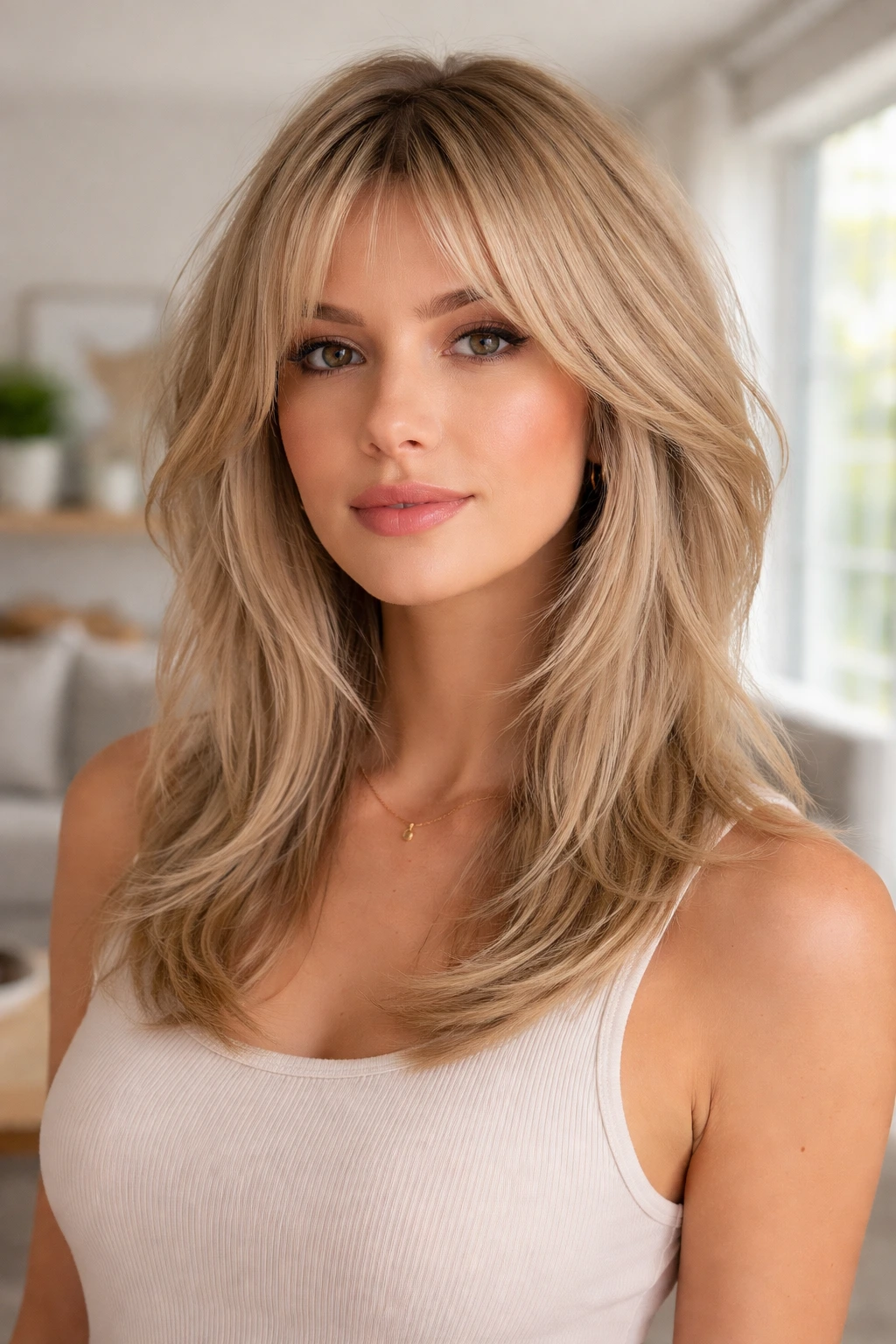
Wait, can a shag be sleek? Yes, but you have to define “sleek” carefully. In this context, it means hair that is smooth, shiny, and well-maintained, but still layered with that signature shag texture. It’s a more polished version of the cut.
The Styling Product
You need a light-hold styling cream that adds shine. Avoid waxes or pomades, which are too heavy. You want your hair to move, not sit in place. Apply the cream to the ends to give them a polished, piecey look without the crunch.
The Look
This is a great option for professional environments where a wild, messy shag might feel a bit too informal. It gives you the “cool” factor of the shag with the polish of a more traditional cut. Keep the blonde tones cool and consistent—perhaps a single-process ash blonde—to enhance that sleek effect.
22. The Low-Maintenance Shag
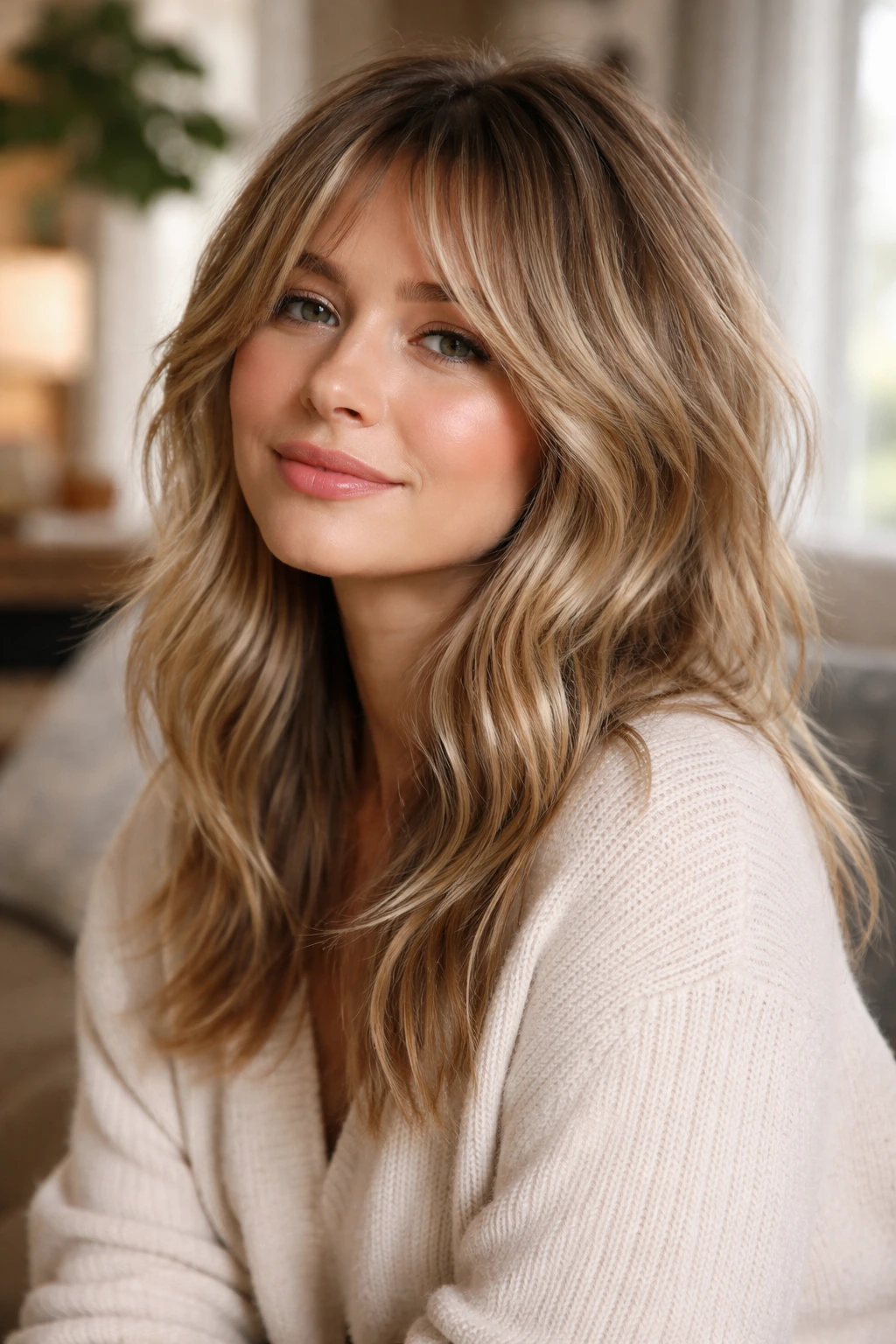
This is the “grow-out” friendly version of the cut. It’s designed to be cut once and then left alone for months. The layers are long, the fringe is minimal, and the blonde color is a natural, rooty balayage that blends well as it grows out.
Why It Lasts
Because the layers aren’t short or choppy, you don’t have to get them trimmed every six weeks to keep the shape. They grow out gracefully. If you are the type of person who forgets to book hair appointments, this is the most practical choice.
Styling Ease
Because the layers are longer, you can easily pull this hair into a low ponytail or a messy bun if you aren’t feeling the shag that day. It provides the texture and framing when it’s down, but offers the convenience of a longer cut when it’s up. It’s the perfect balance of form and function.
Final Thoughts
Choosing a medium blonde shag when you have a round face is a smart move. It moves away from the trap of trying to “fix” your face and toward the goal of enhancing your natural features. The shag gives you movement, texture, and a sense of lightness that blunt, one-length cuts often struggle to achieve.
Remember that the success of these cuts really comes down to the layers. You need that internal weight removal to stop the hair from puffing out at the sides, and you need the right fringe strategy to create vertical lines. If you feel like your hair is currently just hanging there, lifeless and heavy, a shag is exactly the reset button you need. Talk to your stylist about your texture—be honest about whether you want to spend ten minutes styling in the morning or zero minutes—and pick the version that fits your lifestyle. Hair is meant to be lived in, not just looked at.
