



Fine hair is sneaky. It can look full right after a blowout, then flatten into a sad little curtain by lunch.
That’s why blonde shag haircuts for fine hair make so much sense when they’re done with restraint. The shag shape gives movement, and the blonde shades add depth, but the whole thing falls apart if the cut is over-thinned or the color is pushed too light from root to tip. Fine hair is about strand width, not how much hair you have, and that difference matters more than people think.
The best versions keep a perimeter with some honesty to it. A blunt edge, a soft curtain fringe, a little root shadow, and layers that start where the hair can actually support them — that combination usually beats a heavily shredded cut that looks airy for ten minutes and stringy after that.
So the sweet spot is not “more layers.” It’s smarter layers. And that’s where these 20 blonde shag haircuts earn their keep.
1. Soft Collarbone Blonde Shag

This is the shag I’d hand to someone who wants movement without sacrificing the look of density. The collarbone length gives the hair a little weight, which fine strands often need, and the blonde color can stay soft and dimensional instead of flat and bleached-out.
Why It Flatters Fine Hair
The trick is in the balance. The ends stay fairly full, while the top gets just enough layering to stop the shape from collapsing. That keeps the haircut from turning wispy at the bottom, which is the problem I see most often with fine hair and aggressive shag cuts.
A beige blonde or creamy honey blonde works especially well here because the color shifts catch the eye without screaming for attention. Ask for layers that begin around the cheekbones, not all the way up near the crown.
- Keep the perimeter near the collarbone for a denser look.
- Use soft face-framing pieces, not choppy razor damage.
- Choose a root shade that is one or two levels deeper than the mids.
- Style with a light mousse at the roots and a round brush at the ends.
Best move: do not let the stylist thin out the last inch of the hair. That’s the part that keeps the whole cut looking like hair, not mist.
2. Curtain-Bang Blonde Shag
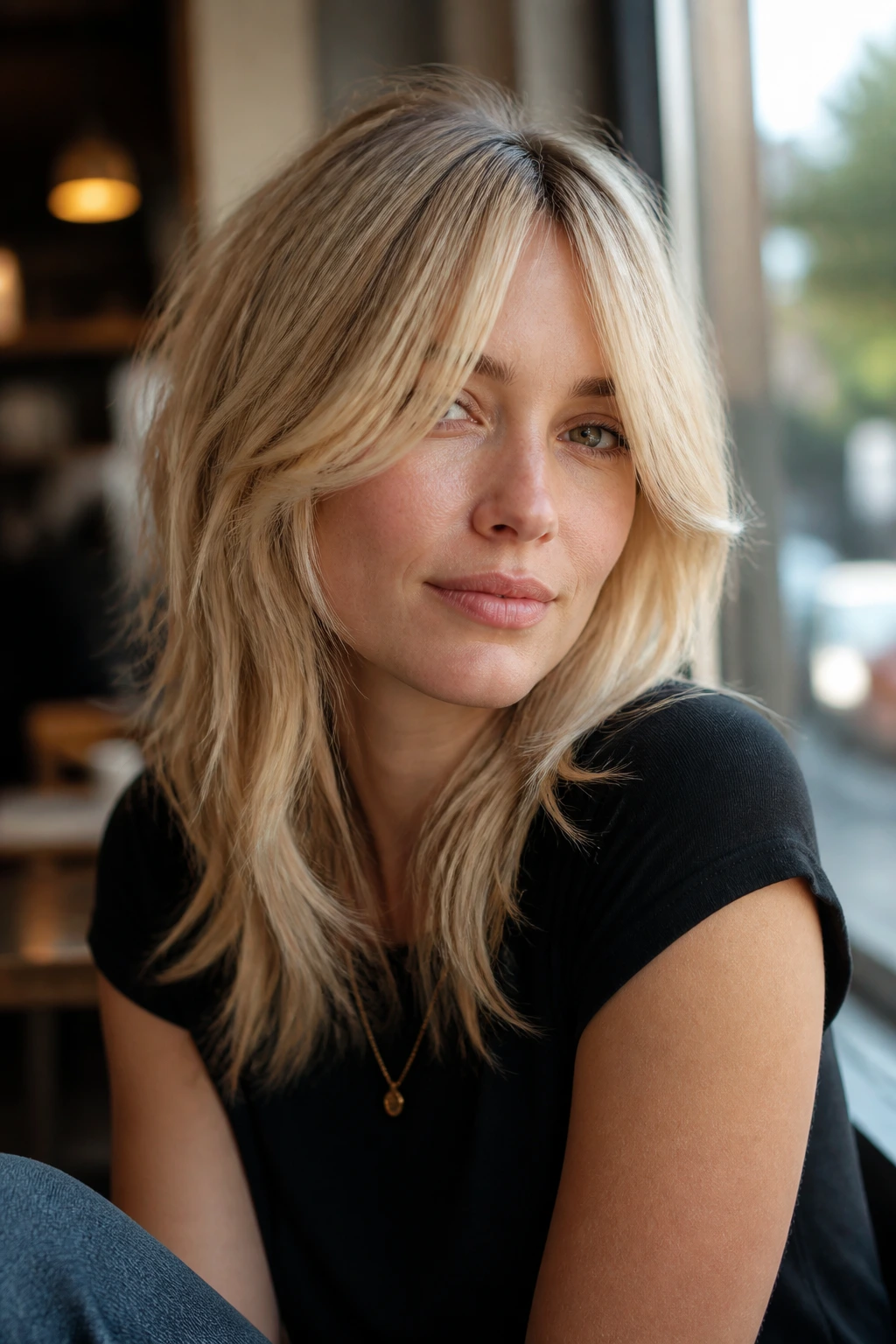
Curtain bangs are one of the smartest ways to make fine hair look fuller around the face. They create width where the eye lands first, which means you get more impact without needing a ton of bulk through the rest of the cut.
The blonde color helps, too, especially when the fringe is a shade brighter than the roots. That subtle contrast makes the front pieces stand out and gives the hair a little lift even when it’s not freshly styled. Tell your stylist you want the bangs long enough to split cleanly at the center and sweep past the cheekbones.
Wear it with a loose bend, not tight curls. A round brush and a quick pass of a flat iron at the ends is enough.
If your hair goes flat fast, this one is a strong choice. The bangs do a lot of visual work, and the rest of the shag can stay softer and less aggressive.
3. Chin-Length Choppy Blonde Shag
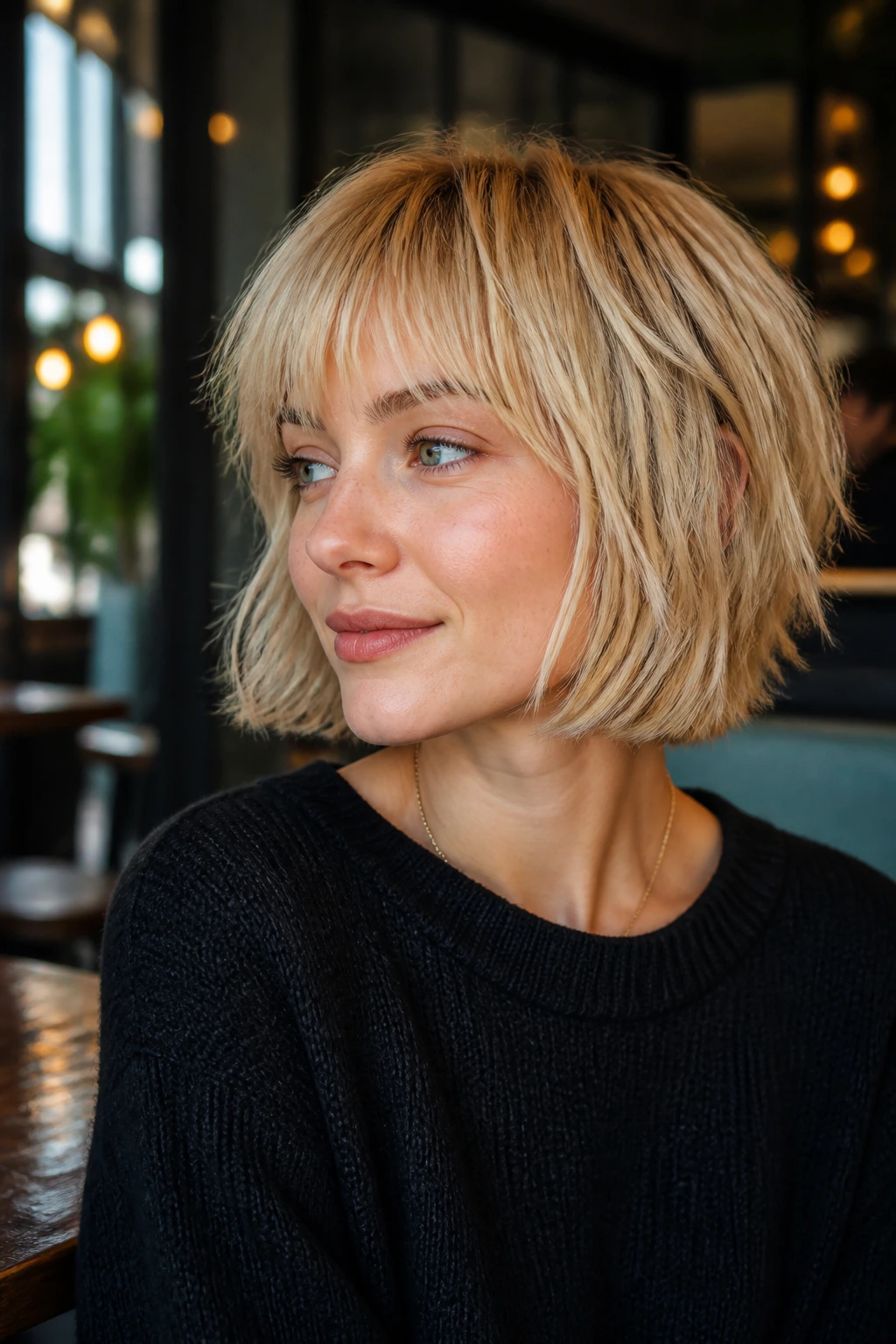
Why does a chin-length shag often look thicker than a longer one? Because the eye reads the whole shape at once, and the shorter length keeps the ends from sagging under their own weight.
That matters on fine hair. A chin-length cut can hold a little lift around the cheeks and jaw, and the blonde dimension keeps the texture from looking like one solid sheet. Ask for choppy layers through the top, but leave the outline clean enough that the haircut still has a shape.
How to Style It
Use a pea-sized amount of volumizing cream on damp hair, then rough-dry until the roots are about 80 percent dry. Finish with a small round brush or a 1-inch curling iron, bending only the top layers.
A cut like this works best if you like a slightly undone look. If you want hair that falls into place with zero effort, this is probably not your cut. But if you like something modern and a little edgy, it’s excellent.
4. Feathered Lob With Butter Blonde Ends
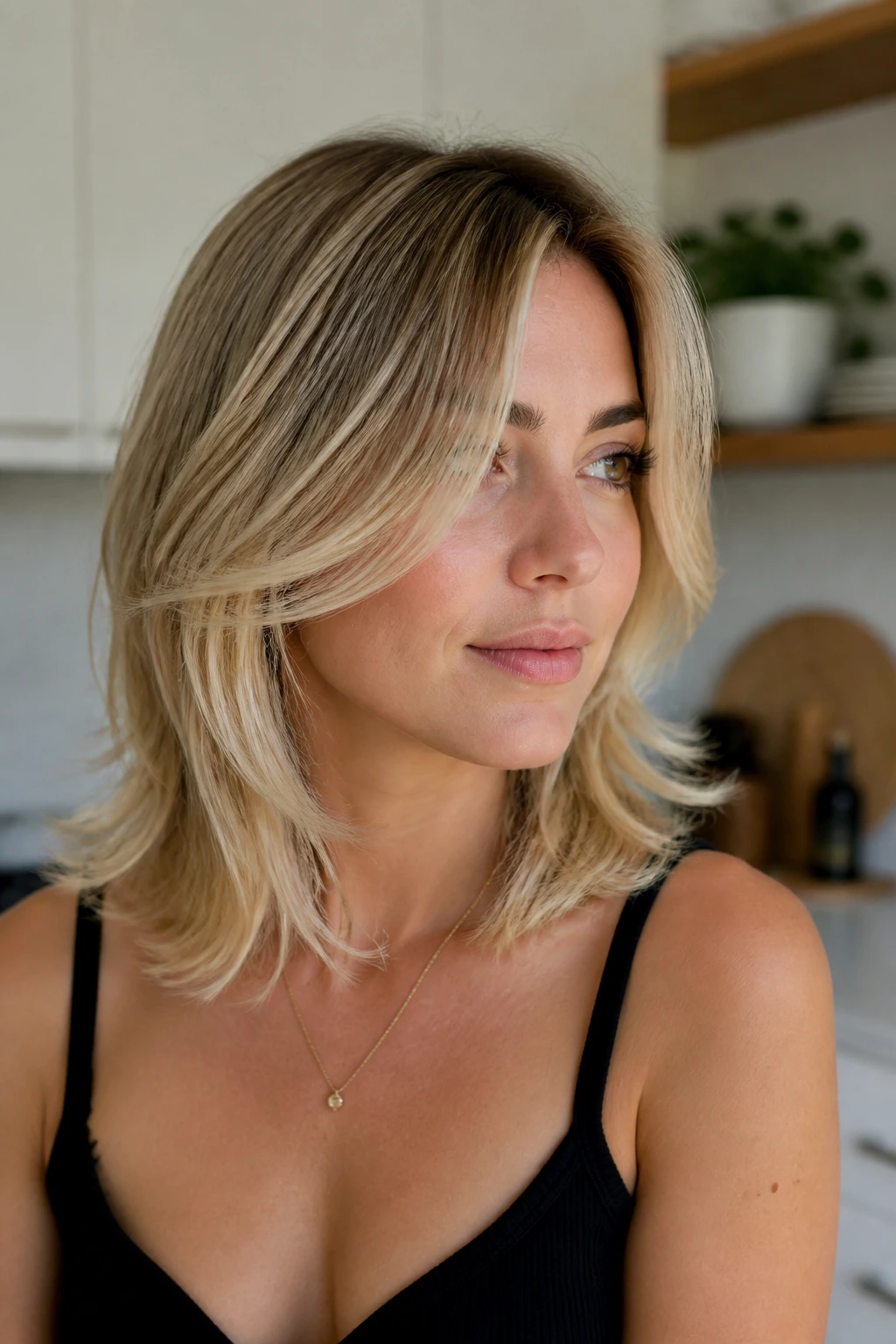
A feathered lob is the answer for anyone whose fine hair collapses the second it loses a little heat from the dryer. The length lands around the shoulders, which gives enough movement to feel light, but not so much that the hair looks sparse at the tips.
The feathering should be soft, not shredded. That distinction matters. Feathered ends create a swing when you walk, while too much razoring can make the ends look thin and ragged. Butter blonde through the mids and lighter ends gives the cut a little airiness without making the root area too stark.
- Best for straight to slightly wavy hair.
- Ask for face-framing pieces that start below the cheekbones.
- Keep the outer line blunt enough to hold density.
- Use a root-lifting spray before blow-drying.
A lob like this is the kind of cut that still looks decent on day two, which, for fine hair, counts for a lot. It’s not flashy. It just works.
5. Long Airy Blonde Shag With Invisible Layers
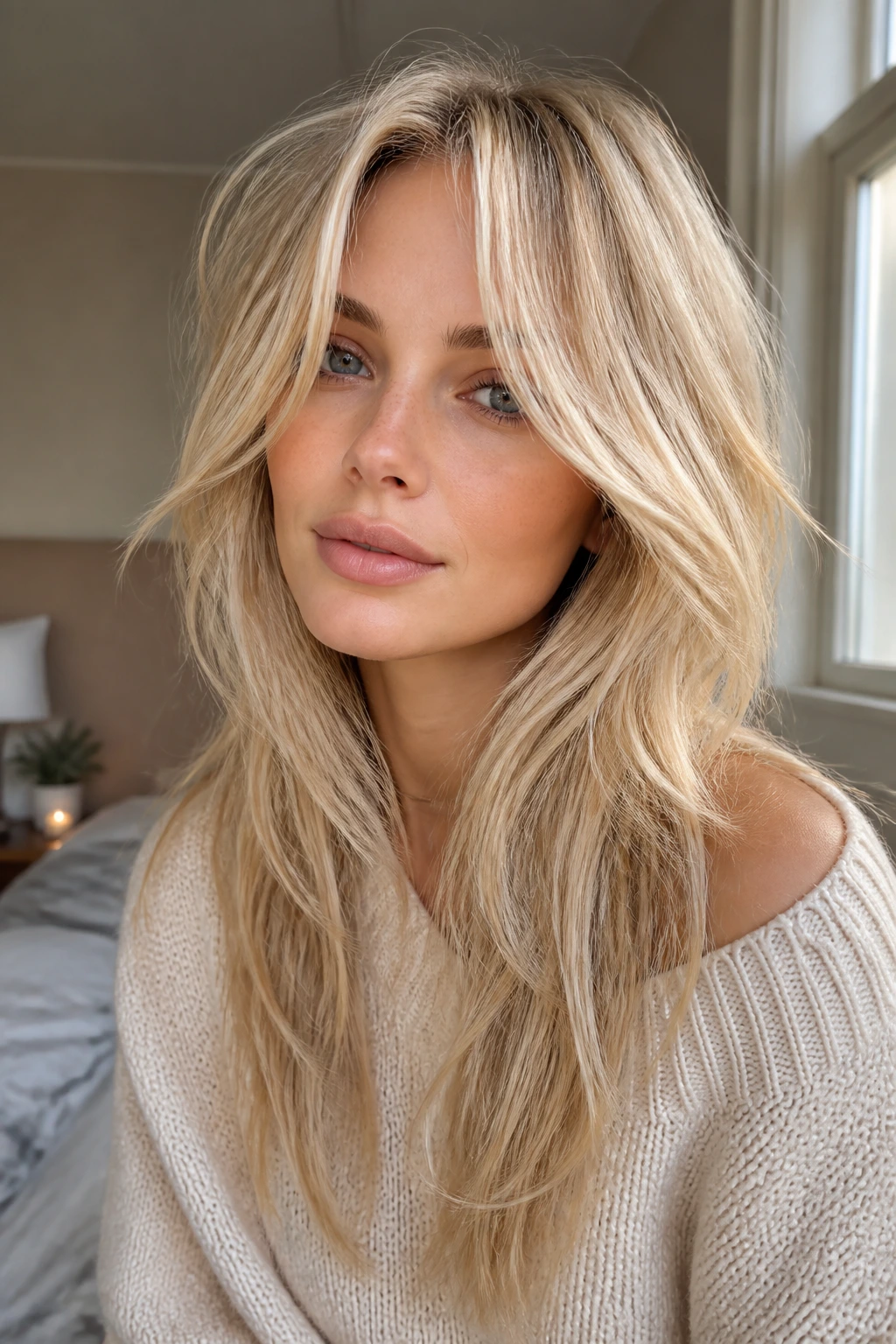
Long fine hair can look gorgeous, but only if the layering is handled with a light hand. Invisible layers are the move here — they create movement inside the shape without carving away the outline that gives the hair its body.
The blonde shade should be dimensional, not one-note. A soft balayage with a slightly deeper root gives the illusion of thicker strands because the color shifts help separate the layers. If the blonde is pushed too bright all over, the hair can start to look see-through at the ends.
I like this cut for people who refuse to go shorter. It keeps the long-hair feeling, but the face pieces and internal layers stop it from hanging like a curtain. The whole point is motion, not volume for the sake of volume.
A 2-inch curling iron used only on the mid-lengths can wake it up fast. Leave the ends a little straighter. That keeps the cut from looking overdone.
6. Rounded Blonde Shag With A Soft Face Frame

A rounded shag is a cleaner, gentler cousin of the messier shag shapes. Instead of building sharp angles everywhere, it curves around the face and then softens through the sides, which helps fine hair look fuller in a controlled way.
That roundness is useful if your face is square, long, or narrow. It keeps the haircut from pulling too hard in one direction. A soft face frame in pale blonde or beige blonde gives the style a little lightness, and the rounded silhouette makes the hair look more intentional than choppy.
Use a medium round brush and turn the ends under just slightly. You want a bend, not a curl. A dry texture spray can help at the crown, but don’t pile it on the ends or the cut starts to feel gritty.
This is one of those styles that looks calm in the best way. Not stiff. Not messy. Just balanced.
7. Bottleneck-Bang Blonde Shag
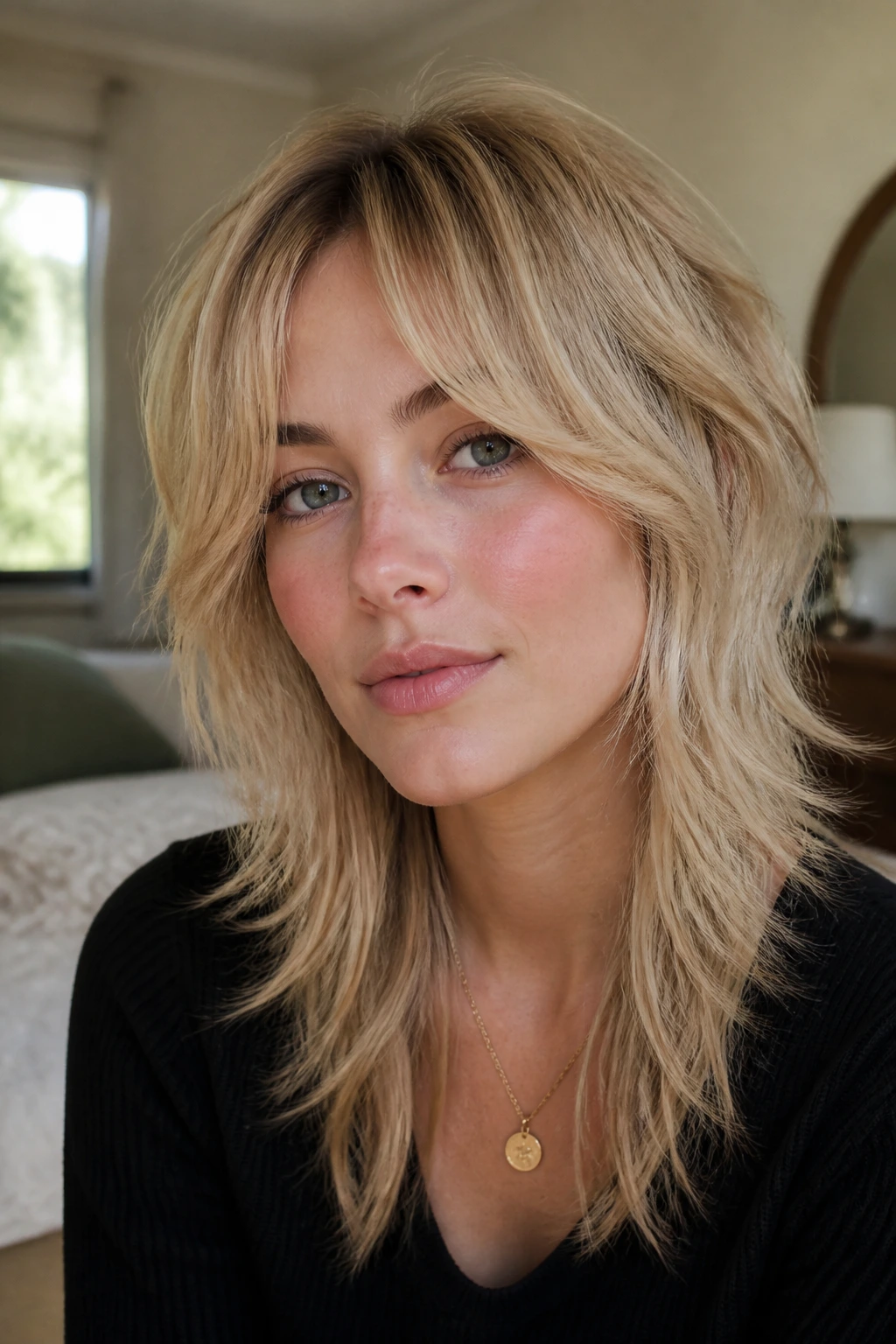
A bottleneck bang can do more for fine hair than a full fringe ever will. It starts narrow in the center, opens a little around the eyes, and then gets wider toward the cheeks, which gives the front of the haircut shape without packing too much hair into one heavy line.
The blonde should stay soft around the bangs. Bright, chunky highlights there can make the fringe look busy. A gentle golden blonde or champagne blonde keeps the focus on the silhouette instead of the color alone.
What Makes It Different
The bang shape gives movement even when the rest of the hair is understated. That means you don’t need huge layers through the body to make the cut feel interesting.
It also grows out better than a blunt fringe. Fine hair tends to show every awkward stage, and this shape buys you a little breathing room.
Styling note: blow-dry the center of the bangs forward first, then curve the side pieces away from the face with a small round brush. That tiny step keeps the shape open and light.
8. Mini Blonde Shag Bob
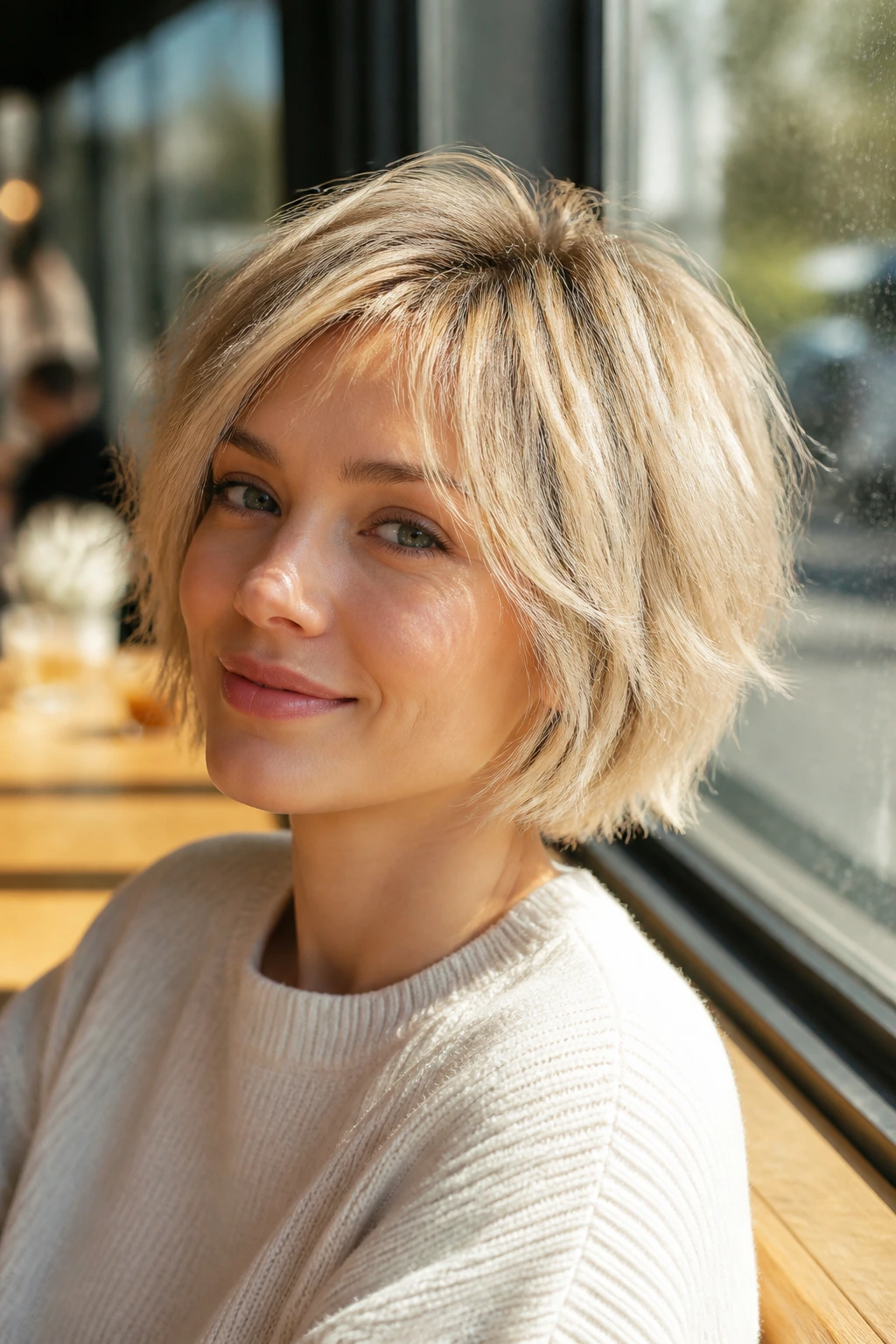
A mini shag bob is a good answer when fine hair needs a hard reset. The shorter length creates the look of more density, and the shaggy top keeps it from becoming helmet-like.
This cut usually hits between the jaw and the cheekbones. That’s short enough to lift the hair away from the neck and long enough to still play with movement. Beige blonde, soft ash blonde, or a slightly darker root all help the texture read as fuller.
A mini shag bob is especially strong on hair that falls flat at the crown. The shorter shape makes root lift easier, and the layers don’t have to work as hard to create shape.
If you want a cut that can air-dry with a little texture paste and still look finished, this one belongs on your shortlist. Keep the layers soft and the outline crisp, and it won’t feel childish or too trendy.
9. Razor-Soft Midi Blonde Shag
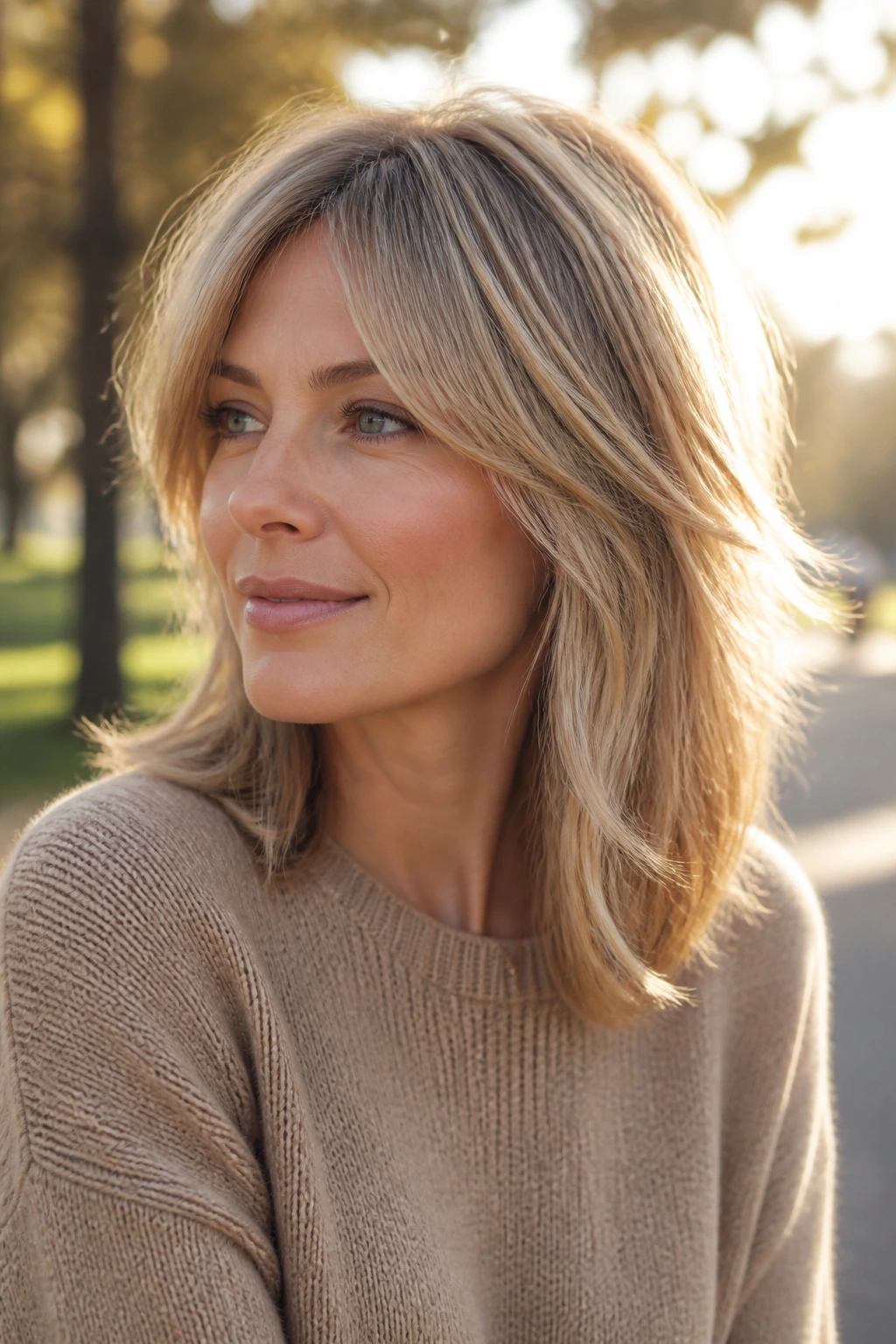
Not every shag needs to look wild. A midi shag with soft razor work can be one of the prettiest options for fine hair because it keeps the shape loose without chewing through the ends.
The important part is restraint. A razor should soften the line, not erase it. That means the cut still has enough structure to hold volume near the shoulders. Pair it with ash blonde or pearl blonde if you want a cooler finish; pair it with honey blonde if you want warmth and softness.
Fine hair can turn stringy when it’s overtexturized, so this cut should be built with care. A good stylist will remove only the weight that needs to go, usually around the interior and the front.
Let it dry with a slight bend through the ends. Straight but not flat. That’s the sweet spot. A midi shag like this feels effortless in a way that doesn’t look careless, which is harder to pull off than people think.
10. Side-Swept Bang Blonde Shag
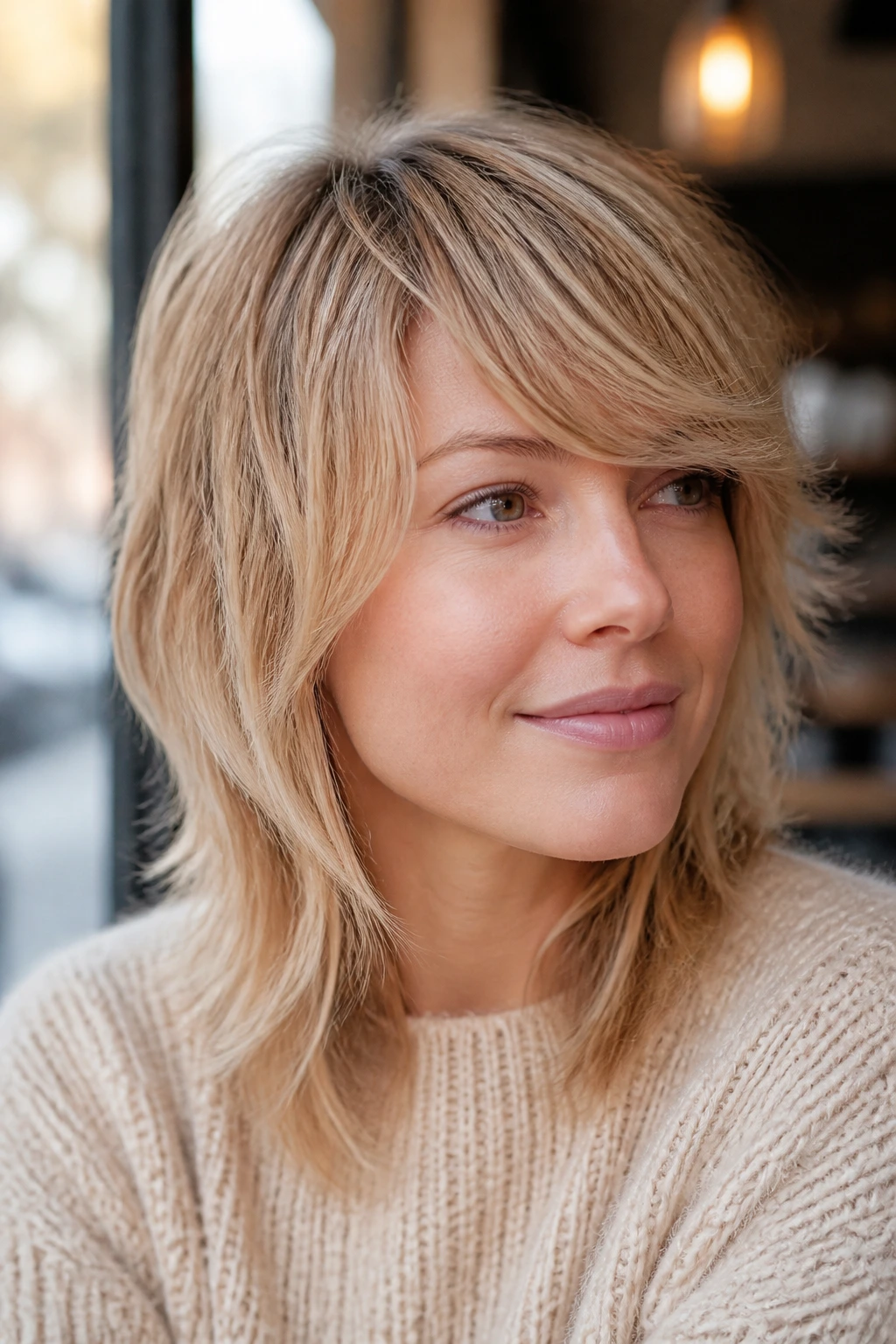
Why do side-swept bangs still work so well? Because they break up the forehead line without cutting the front into a heavy block, and that leaves fine hair room to move.
This style is useful if your hair splits strangely or if a center part makes the front feel too sparse. A side-swept fringe can hide a thin crown moment and shift the eye sideways, which gives the whole cut a little more width. Caramel blonde or warm beige blonde makes the diagonal line stand out in a soft way.
Styling Note
Blow the bangs in the opposite direction first, then sweep them across once they cool. That little reversal gives the fringe more memory.
The rest of the shag should stay light and touchable. If the layers get too short through the sides, the style can start to look uneven. Keep the fringe long enough to tuck behind the ear on one side. That flexibility matters.
11. Platinum Pixie Shag
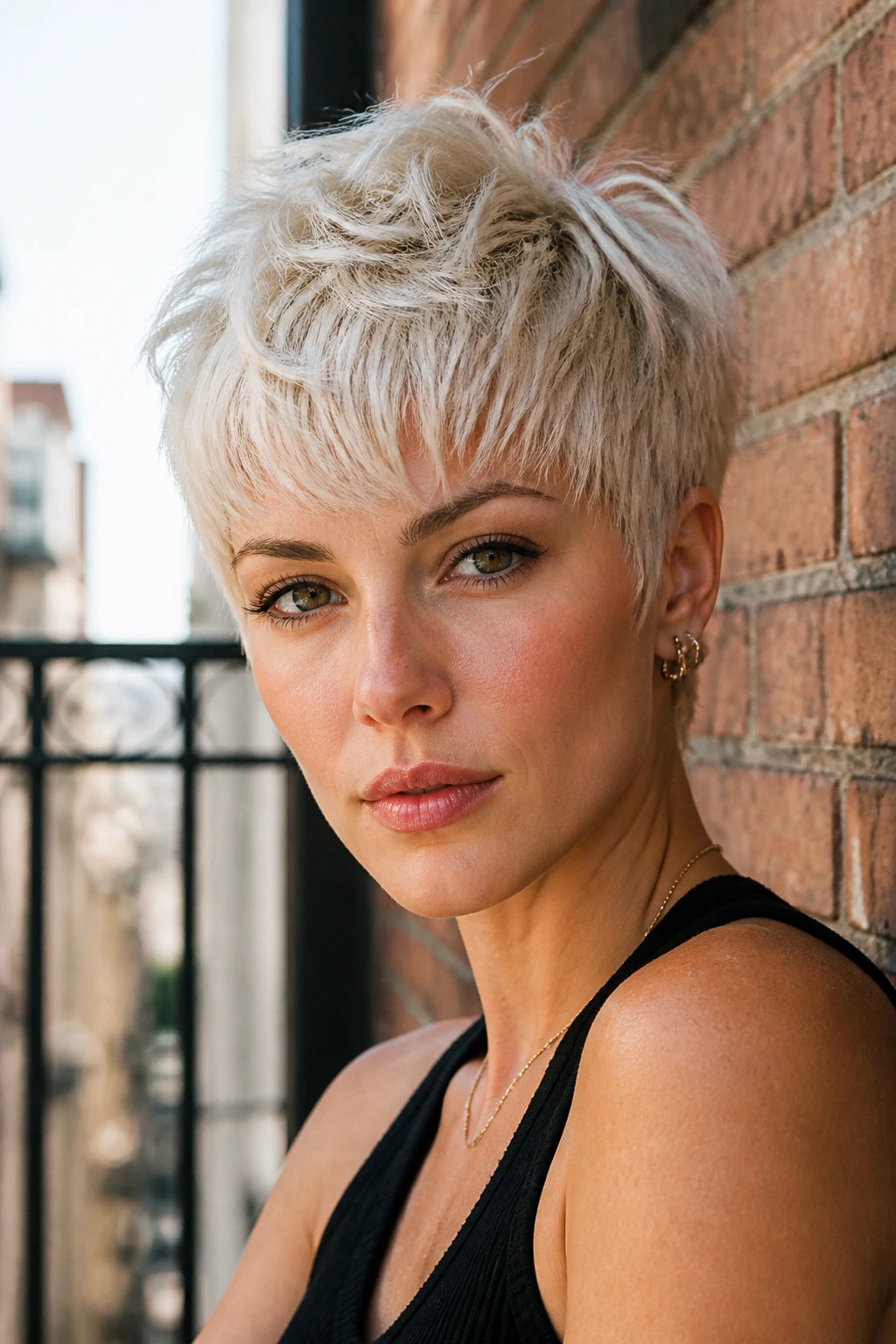
A platinum pixie shag is not for the faint of heart, and fine hair can wear it well when the cut is handled with discipline. Short hair takes weight out of the equation, which often makes the hair look thicker at the roots than it did when it was longer.
The platinum color adds its own edge, but it also shows every mistake. Dry ends, rough bleach, overcut layers — all of that is obvious here. If the hair is already fragile, this is not the first blonde I’d choose. If the texture is healthy enough to handle lift and tone, though, the result can look sharp and airy at the same time.
Keep the crown piecey, not spiked. Use a little matte paste and pinch the ends into place with your fingers.
This cut works best when it looks deliberate, not over-styled. It should feel light, but not fragile.
12. Golden 70s Blonde Shag

The 70s-inspired shag is still around because it does one thing well: it makes fine hair look like it has swing. The layers are softer and more relaxed than a sharply razored cut, and the golden blonde shade adds warmth that helps the hair catch the eye.
A round brush blowout makes this cut come alive. Roll the ends away from the face, leave the crown lifted, and let the front pieces fall just a bit longer than the rest. That combination gives you the classic feathered feel without making the hair look old-fashioned.
Unlike a sleek blunt cut, this shape wants movement. It’s a better choice if your hair has a little bend to it or if you like styling with a hot brush. The color matters too — golden blonde brings out the layering more than a flat cool blonde would.
This one is about softness. Plush, but not heavy.
13. Pearl Blonde Lob Shag
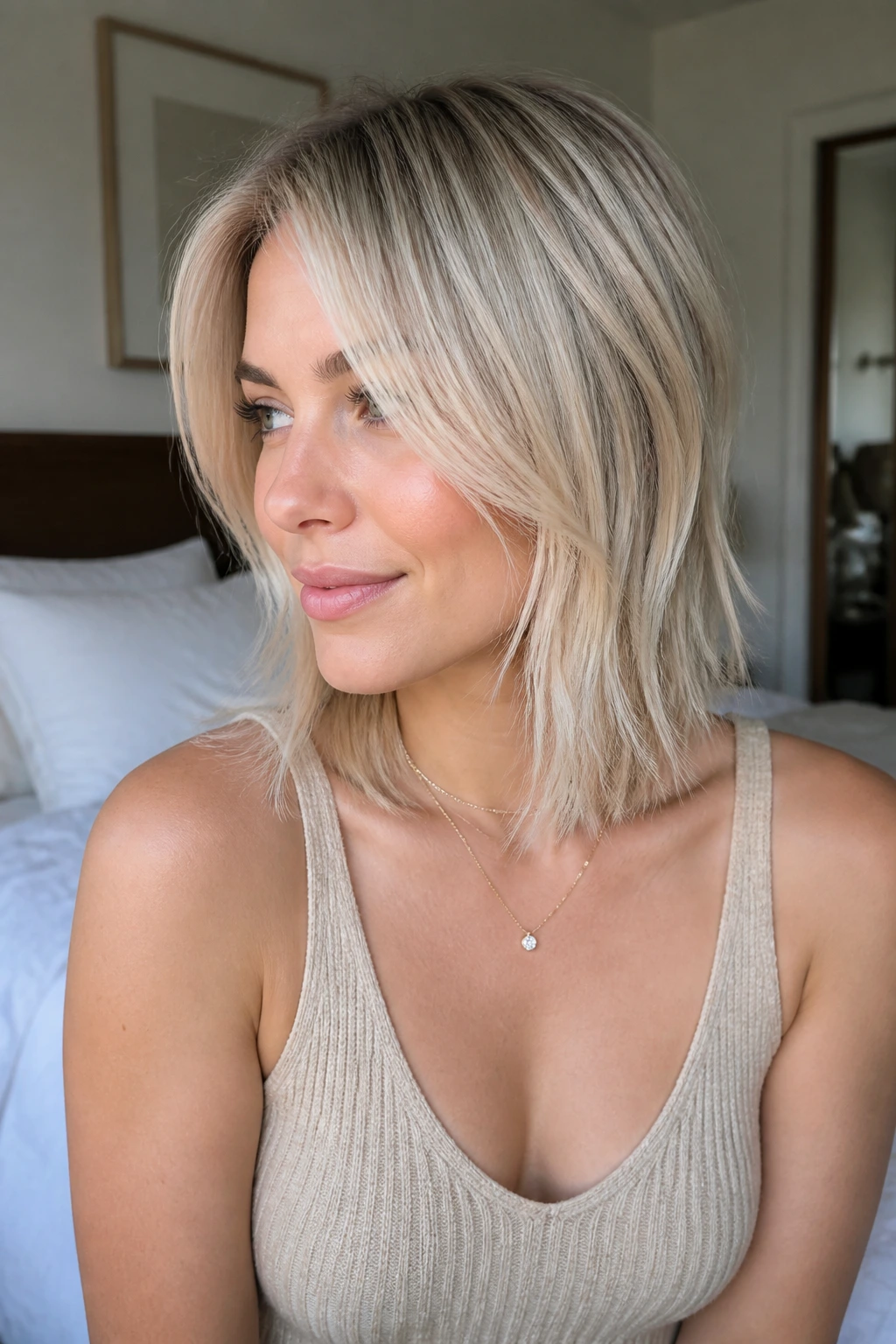
A pearl blonde lob shag feels polished right away, even when the styling is loose. The pearly tone reflects light in a softer way than a bright platinum, and that helps fine hair look smoother and a little more substantial.
The cut sits around the shoulders, which gives enough length for movement but avoids the limpness that can creep into longer fine hair. Interior layers keep the shape from falling flat, and the face frame adds a little bend without stealing density from the back.
If your hair tends to separate into skinny strands, this is a smart compromise. It has the cleaner edge of a lob and the movement of a shag, so it doesn’t feel messy.
Use a lightweight leave-in conditioner and a heat protectant before styling. Pearl blonde shows dryness fast, so the finish matters. A quick pass with a flat iron on the outer layer can make the whole cut look smoother without killing the texture underneath.
14. Wispy Wolf Blonde Shag For Fine Hair
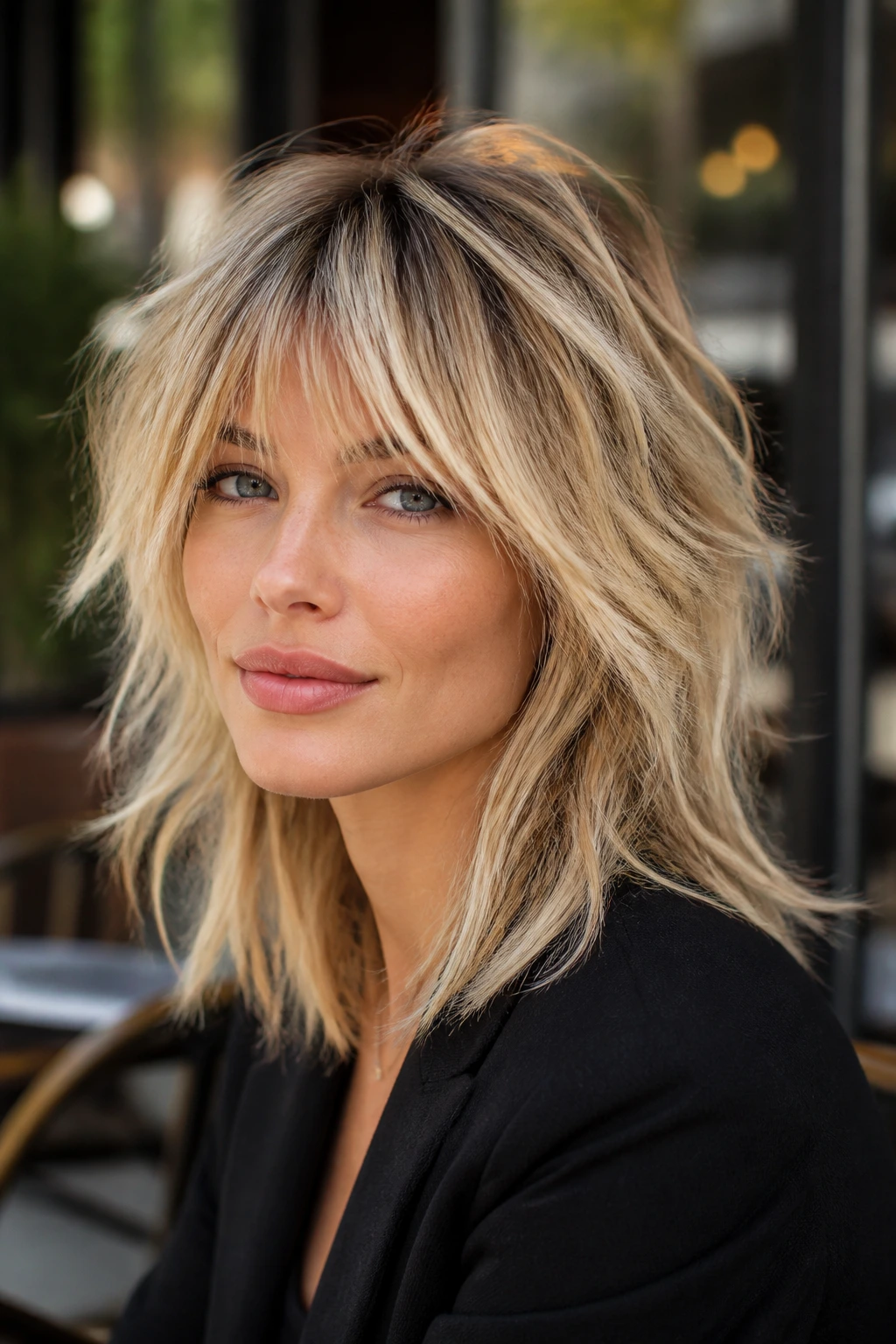
A wolf cut can work on fine hair if the top is kept softer than people expect. The mistake is to over-layer the crown until there’s nothing left to support the shape. That’s when the cut starts looking patchy instead of cool.
A wispy wolf version keeps the shag energy, but it doesn’t go too hard on the chop. Blonde highlights or a soft beige base help separate the layers, and that visual separation can make the hair look fuller than it really is. Ask for texture near the top, yes, but keep the ends with enough length to hang properly.
This is best for someone with a little wave or bend. Straight, slippery hair can make it look too stringy if the cut is too aggressive. A dry texture spray at the mid-lengths and a quick scrunch can help the shape wake up.
It’s edgy, but it still needs structure. Without that, it gets messy fast.
15. Money-Piece Blonde Shag
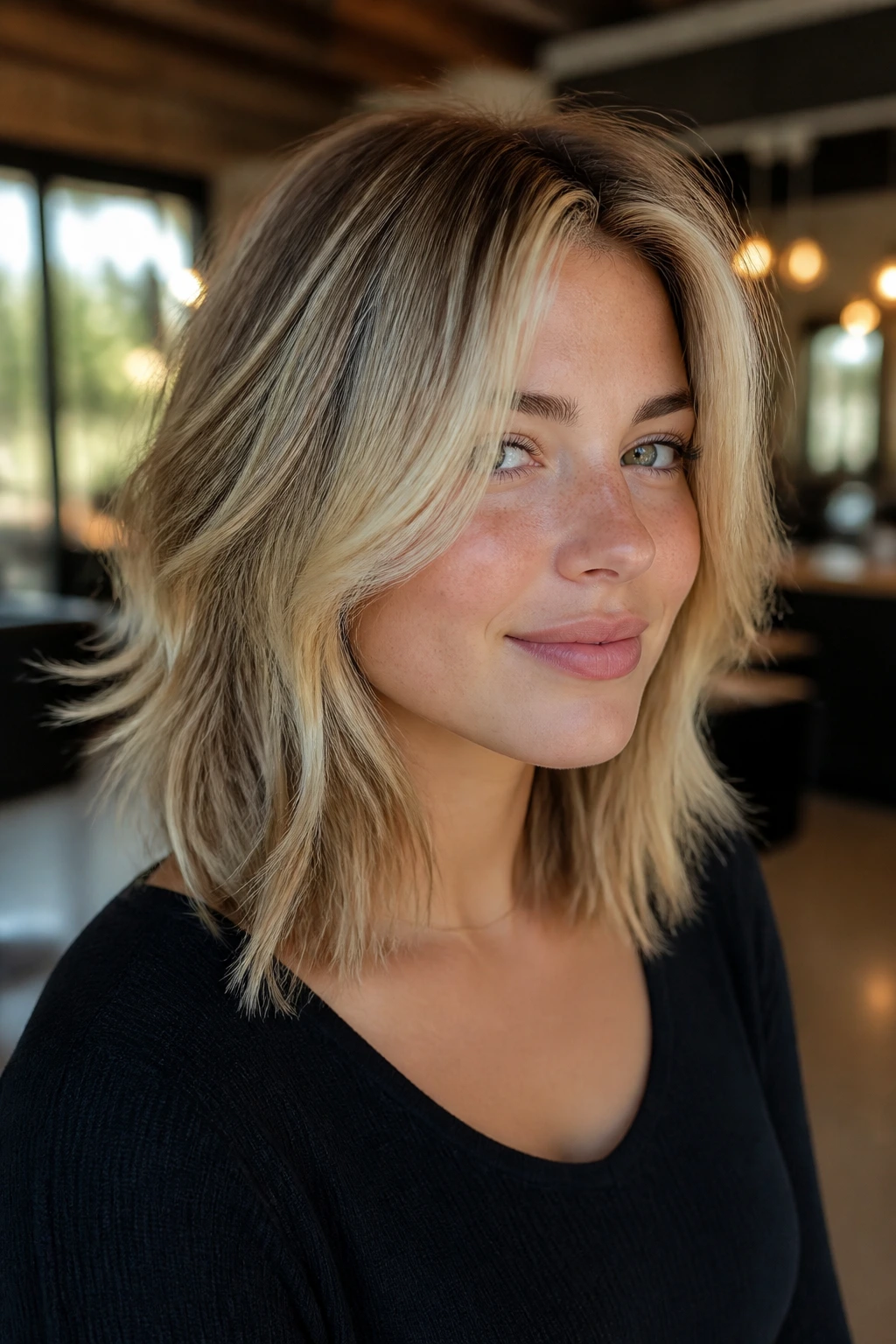
Why put brightness at the front instead of all over? Because the face frame is the first place people notice, and a stronger money piece can give fine hair the look of lift without making the whole head lighter and thinner.
That makes this shag a good option for people who want contrast. A deeper root and brighter front pieces create a bit of push-pull, which helps the hair look fuller from the hairline back. The shag layers can stay soft and understated while the color carries some of the drama.
How to Get the Most From It
Keep the brightest pieces around 1 to 2 inches away from the hairline so they blend into the shag, not sit on top of it. That detail makes the grow-out easier too.
If your hairline tends to look narrow, this style opens it up. If your hair is very fine but dense, it can also make the cut feel wider across the temples.
A money-piece shag needs regular toning if you want the blonde to stay clean. That’s the tradeoff. The payoff is a cut that looks lively even on low-effort days.
16. Air-Dried Wavy Blonde Shag
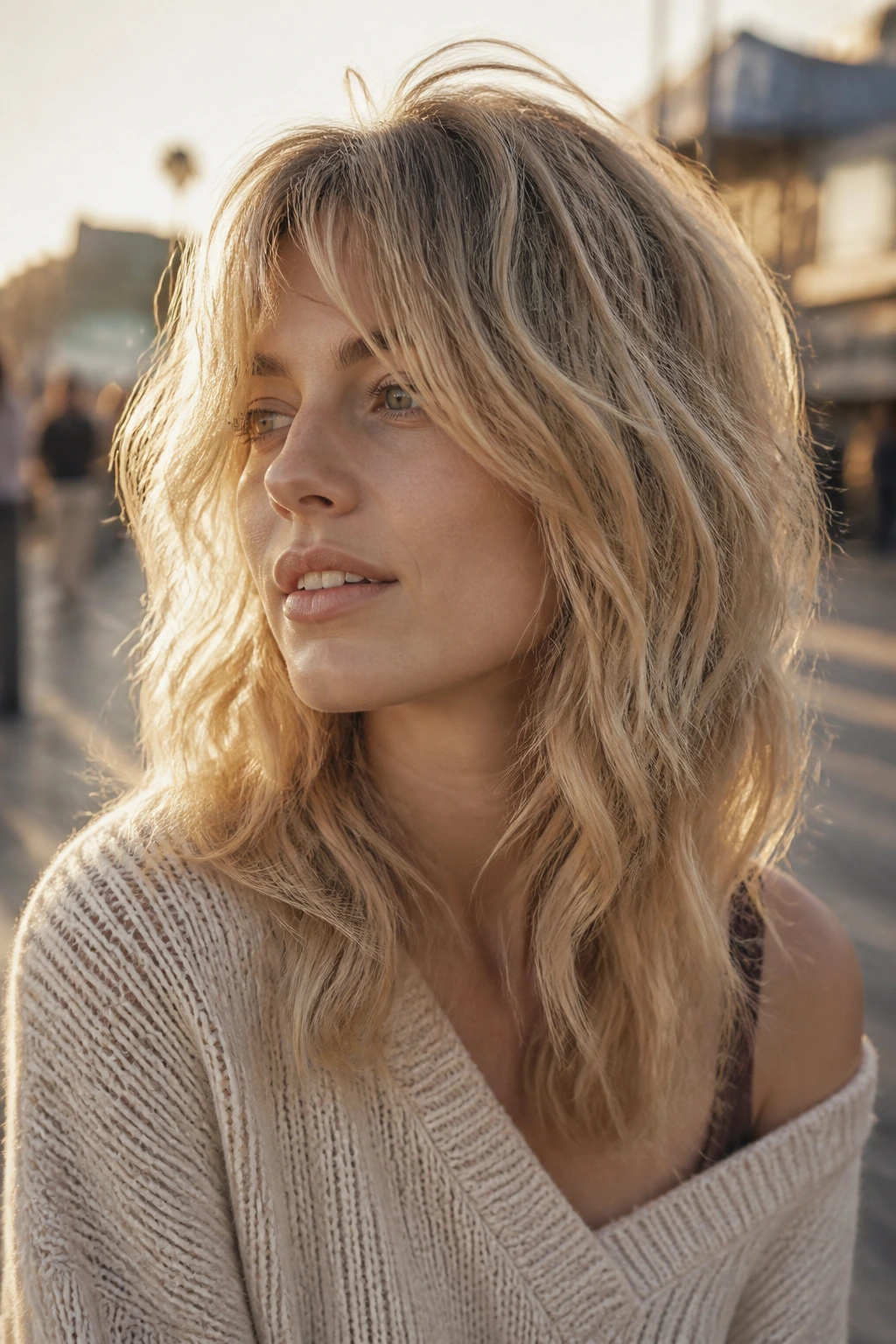
An air-dried shag is one of the few styles that can make fine wavy hair look relaxed instead of unfinished. The layers need to be placed where the wave wants to bend, not chopped randomly, and the blonde dimension helps the texture show up even when the hair is barely styled.
Use a light curl cream or wave foam on damp hair, then scrunch gently from the ends up to the roots. Don’t rake through it with a brush after it starts drying. That’s how you pull the wave apart and end up with flyaways.
The best blonde shades here are beachy and soft — sunlit beige, creamy gold, or a muted ash blonde. Harsh contrast can make air-dried texture look frayed. A little root shadow helps the wave pattern read as fuller.
This is the cut for people who want their hair to look good in motion, not only after a polished blowout. It still needs a shape, though. Air-dried doesn’t mean careless.
17. U-Shaped Long Blonde Shag
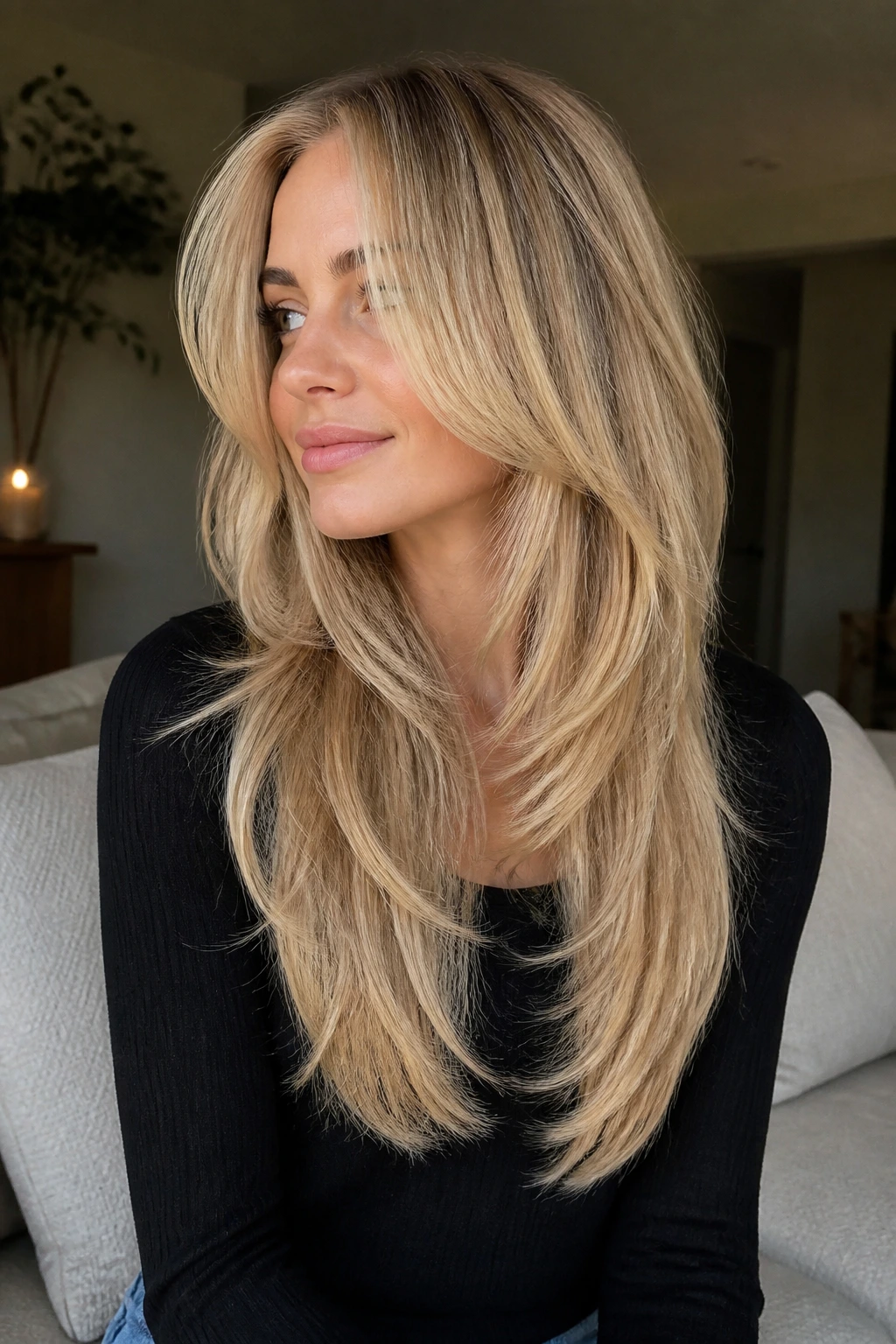
A U-shaped long shag keeps the back full while opening the front just enough to show some movement. That U outline matters on fine hair because it preserves density through the longest section instead of chopping everything to the same length.
Think of it as a gentler long shag. The face pieces can start around the chin or collarbone, then blend into longer layers through the sides. The blonde color should be dimensional, with a slightly darker base so the layers don’t disappear against one another.
Unlike a straight-across long cut, this shape avoids the heavy, curtain-like effect that fine hair often falls into. It also gives you a more forgiving grow-out. The cut still looks planned when it’s a little past its trim date.
A U-shaped shag is especially good if you love wearing your hair down. It gives you movement without asking you to give up length, which is usually the hardest compromise.
18. Internal-Volume Blonde Bob Shag
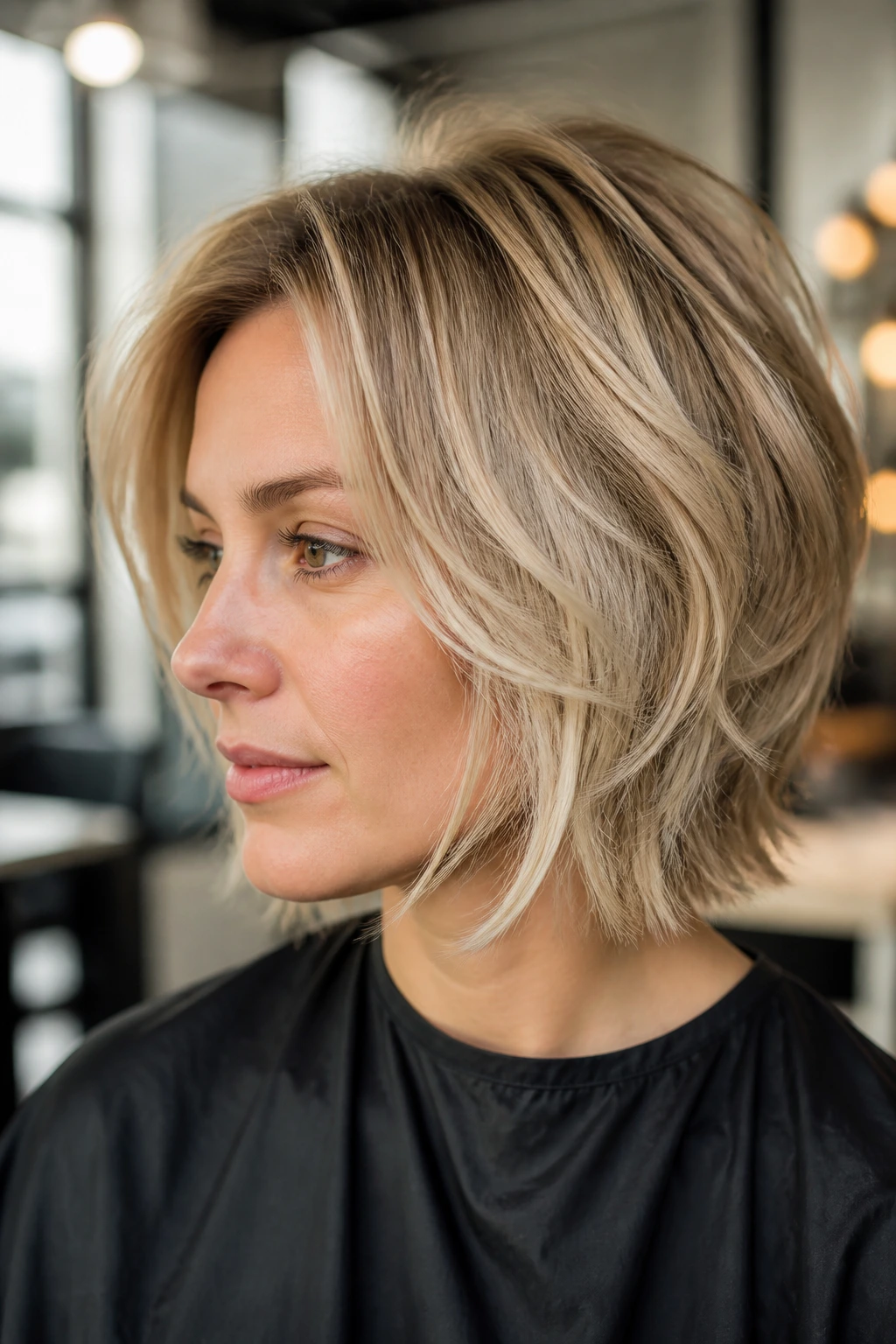
The smartest bob shag for fine hair is the one that hides its heavy lifting inside the cut. Internal layers build volume where the eye can’t see them right away, so the outside still looks clean and the bob doesn’t lose its shape.
This matters more than people think. A bob that’s been sliced too much on the outside can look thin at the jawline, even if it feels light. Internal volume keeps the perimeter solid and gives the crown a better lift. Soft blonde tones — pearl, beige, or creamy ash — make the hidden layering show up without making the cut look busy.
Use a root-lifting mousse and blow-dry the crown with a round brush. The sides can stay smoother. That contrast is what makes the shape look fuller.
If your fine hair goes flat in the back, this cut is worth a serious look. It’s tidy, but not stiff.
19. Scandinavian Blonde Shag
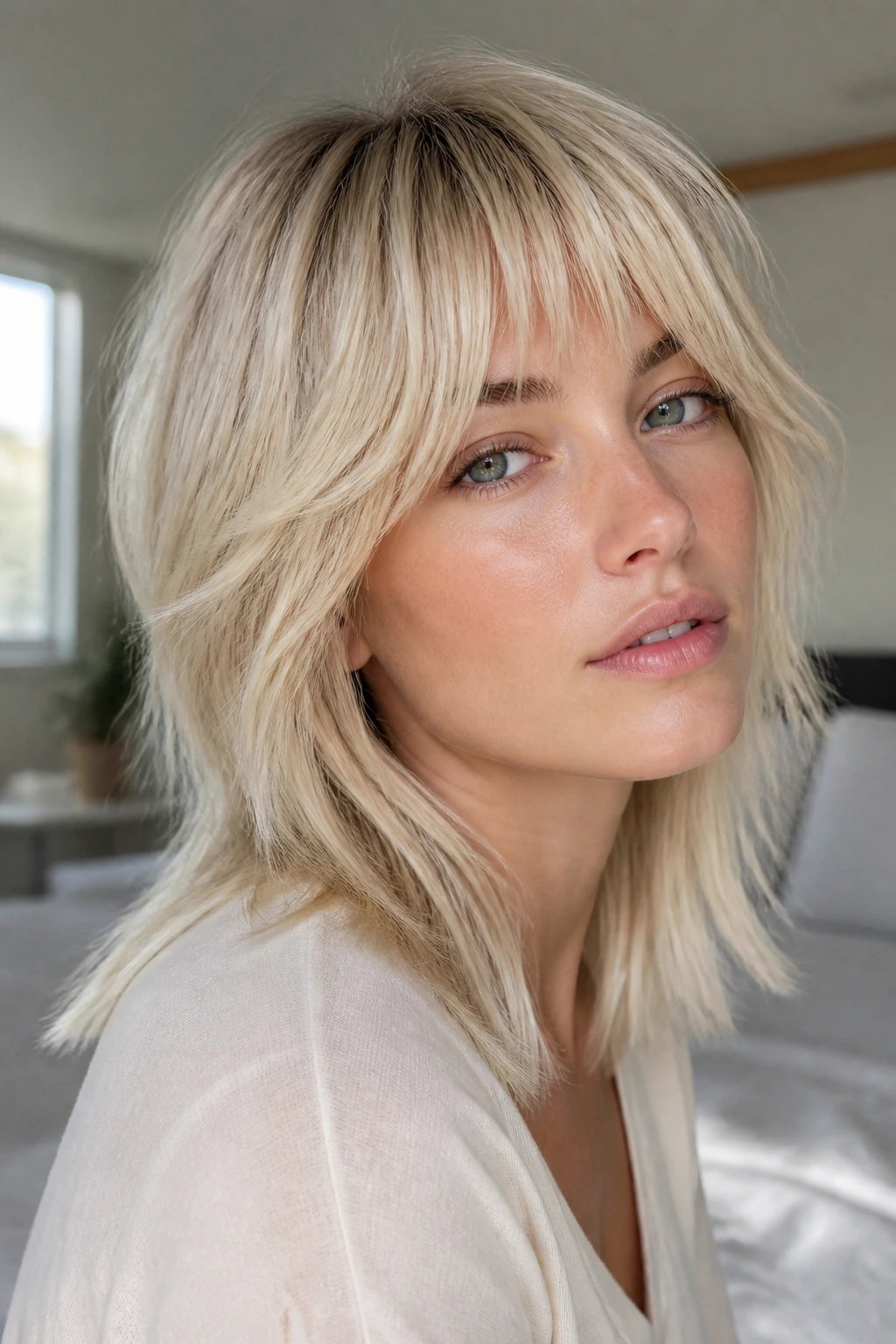
Scandinavian blonde hair has that pale, airy look people love, but on fine hair it works best when the cut is soft underneath. The color is bright enough to feel crisp, and the layers need to be gentle enough not to strip away the shape.
The appeal is in the contrast. A cool, pale blonde can make fine hair look cleaner and more reflective, while a slightly darker root gives the illusion of depth at the scalp. That little shadow matters. Without it, the whole style can read as flat.
Keep the ends blunt enough to hold the line, then add movement through the front and crown. This cut is not about choppiness for its own sake. It’s about clean lightness.
If you like a polished finish with a little edge, this is a strong option. It looks best when the texture is soft and the color is bright, but not icy to the point of dryness.
20. Micro-Shag With Dark Root Shadow
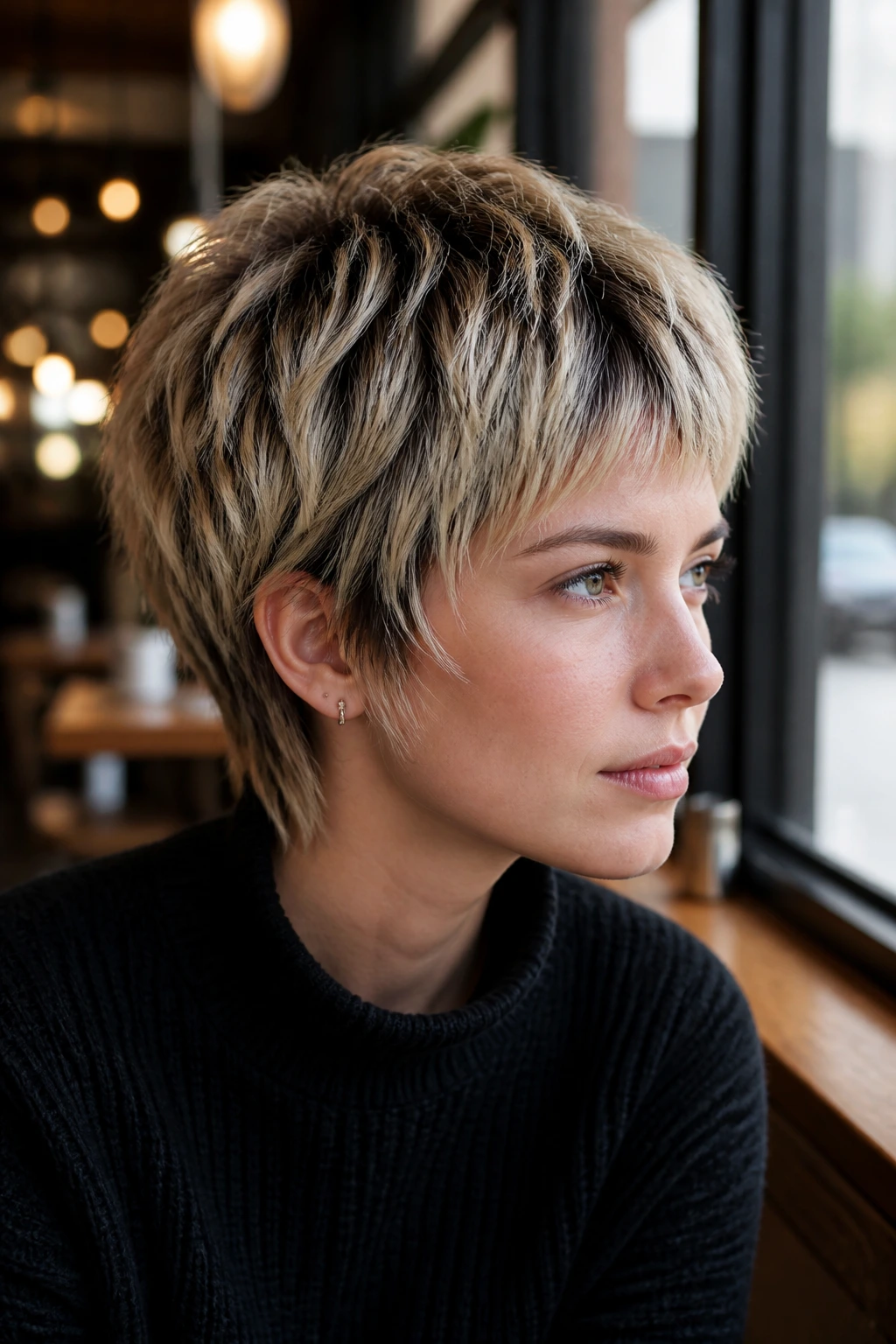
A micro-shag is the boldest version here, and the dark root shadow is what keeps it from looking like a bleach job gone too far. Fine hair can actually benefit from that deeper root because it adds the illusion of thickness right where the hair starts.
The cut stays short and textured, but the layers should be controlled. Too much piecey cutting at the top and the whole thing starts to float away from the head. Keep the shape tight near the nape and looser at the crown, then let the blonde live mostly through the surface and ends.
This one is for people who like a little attitude in their hair. It does not pretend to be sweet. It looks modern, low-fuss, and a little bit sharp, which is part of the appeal.
A trim every 4 to 6 weeks helps the shape stay clean. Let it grow much past that and the micro-shag loses the clean bite that makes it work.
Final Thoughts
The best blonde shag for fine hair usually has one job in mind: make the hair look fuller without making it feel heavy. That sounds simple, but it takes discipline. Too much thinning, too much bleaching, or too many short layers in the wrong place, and the whole thing falls apart.
Bring photos that show the front, side, and back. Then ask where the layers start and how much weight stays at the perimeter. That question alone will tell you a lot about whether the stylist understands fine hair or is just chasing texture for the sake of texture.
One last thing. If the cut you love has a bright blonde finish, make sure the hair beneath it can handle the lightening. A shag can hide a lot of things, but it cannot hide breakage.
