



Round faces and long blond shag haircuts make a better pair than most people think. The cut earns its keep by pulling the eye downward, adding height at the crown, and keeping the widest layers away from the cheeks. When the shape is right, the whole look feels lighter and longer, not puffy or boxy.
That balance matters. A shag can go wrong fast if the shortest layers land at the wrong spot, and on a round face that mistake shows up immediately. The strongest versions use soft movement near the temples, longer front pieces, and enough length below the collarbone to keep the silhouette from spreading out sideways.
Blond hair helps, too. Highlights and lowlights make layers easier to read, which is useful when the cut relies on texture instead of blunt edges. A strong toner, a little root depth, and a few face-framing pieces can change the whole mood of the haircut.
Some of these cuts lean polished. Some look a little wild. All of them can work on a round face if the shape is chosen with care, and the details matter more than the label on the salon menu. Start with the first one if you want the safest entry point.
1. Long Blond Shag with Curtain Bangs
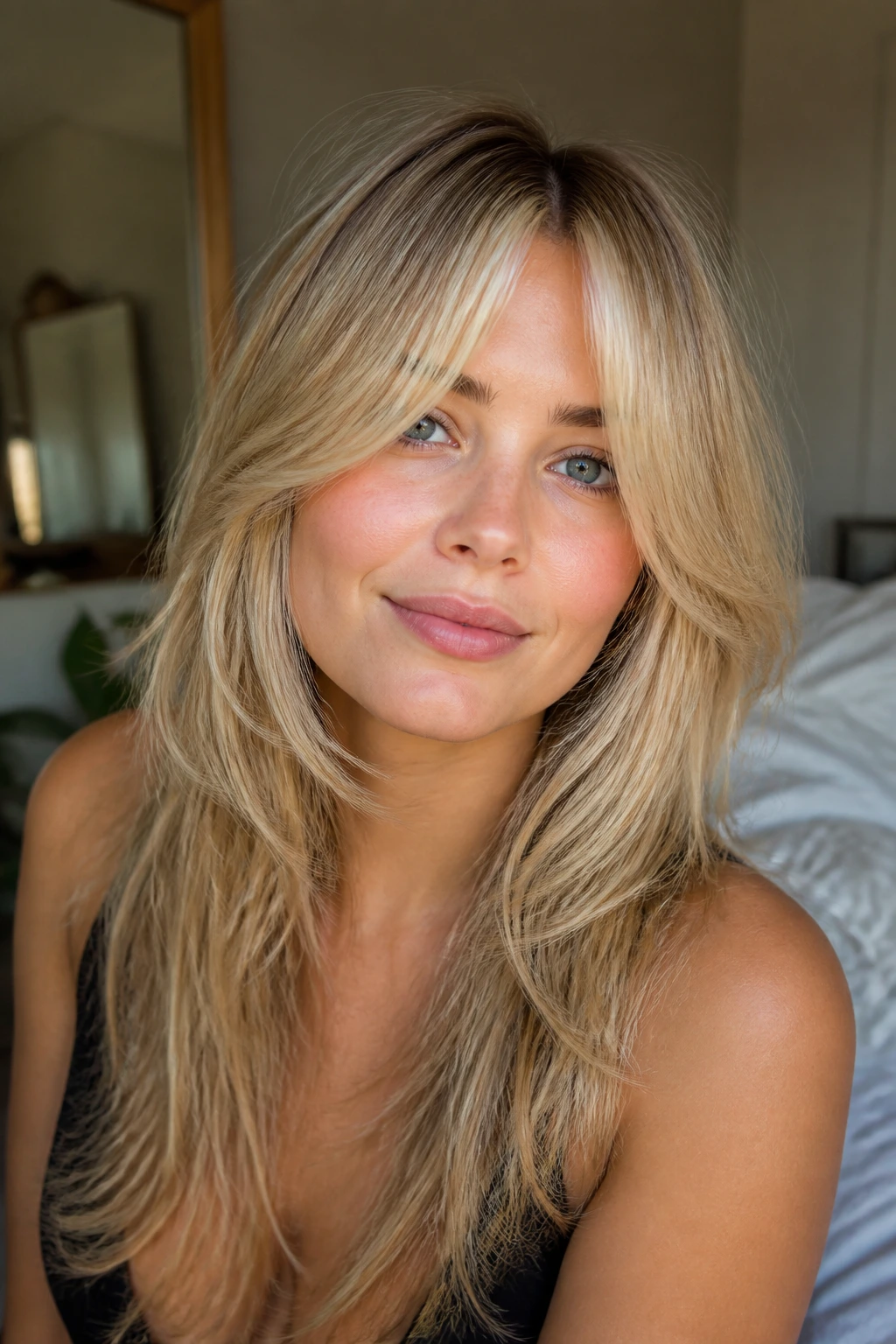
Curtain bangs do a lot of work here. They split the forehead in a way that opens the center of the face, then drift into longer layers that skim past the cheeks instead of stopping right on them. That is the whole trick. Keep the shortest pieces around brow level or a touch below, and let the front fall softly toward the collarbone.
Why It Flatters a Round Face
The shape creates a vertical line without looking stiff. That matters on a round face, because hard width at the cheek area is exactly what you do not want. Long blond shag haircuts for round faces work best when the bangs are loose enough to frame, not crowd.
- Ask for curtain bangs that start with a soft center split.
- Keep the face frame longer than the chin.
- Add airy layers through the mid-lengths, not the sides.
- Style with a round brush or a large Velcro roller for 5 to 10 minutes.
Best move: blow the bangs away from the face first, then let them fall back in. It keeps the part from collapsing flat by lunchtime.
2. Center-Parted Butterfly Shag
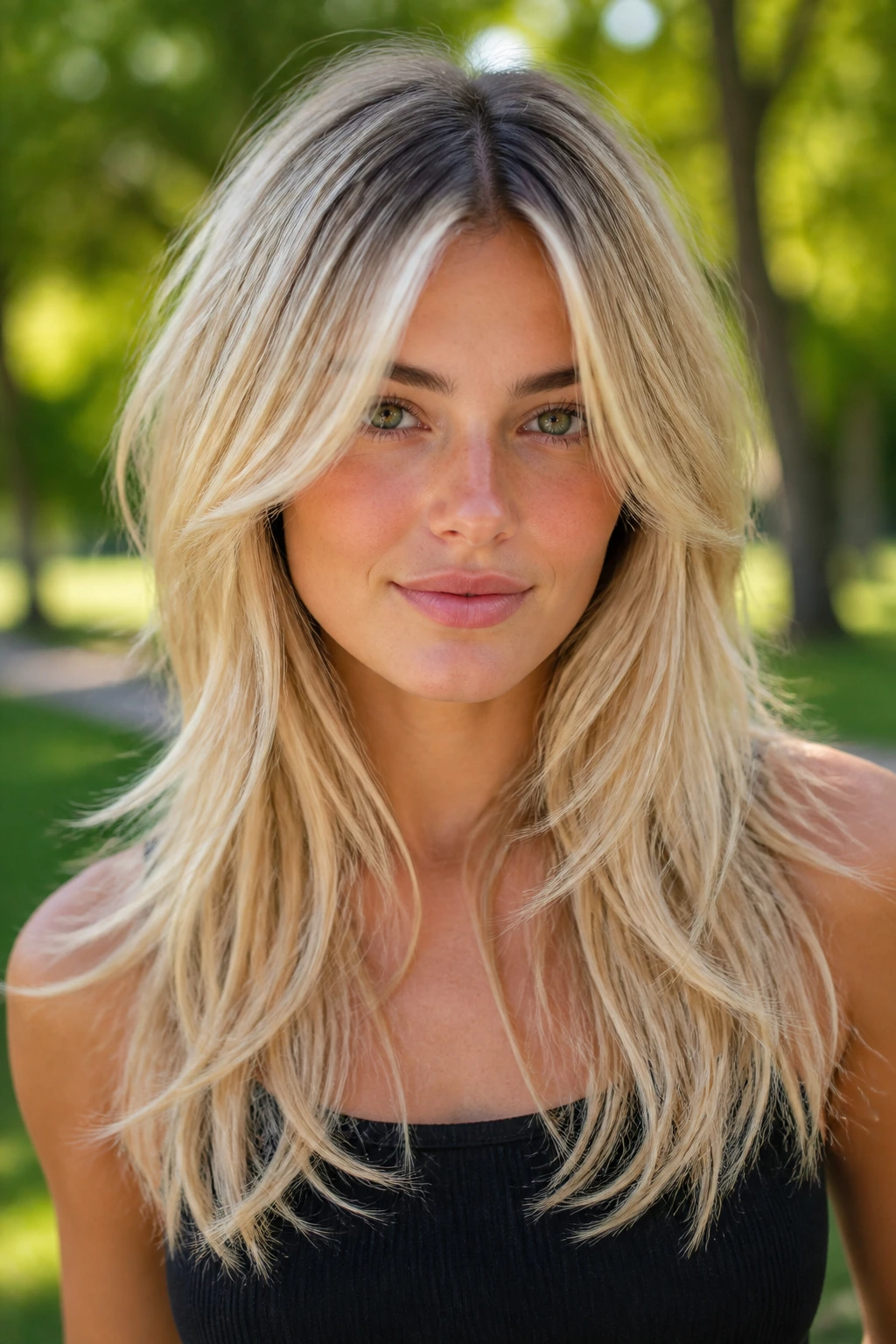
If you want lift without losing length, the butterfly shag is the cleanest trick in the book. The top layers are shorter and more active, while the lower length stays long enough to stretch the silhouette downward. On a round face, that split in the shape matters a lot.
The center part helps even out the face, and the layered crown gives height where you need it. What you do not want is volume puffing out at the ears. Ask for the shortest layers to stay up near the crown and temple area, then let everything else drop well below the jaw.
This cut looks especially good with loose bends, not tight curls. A 1.25-inch iron, wrapped away from the face, gives the right kind of swing. Too much uniform curl makes the cut look busy. A little movement is enough.
3. Bottleneck Bangs and Long Face Frames
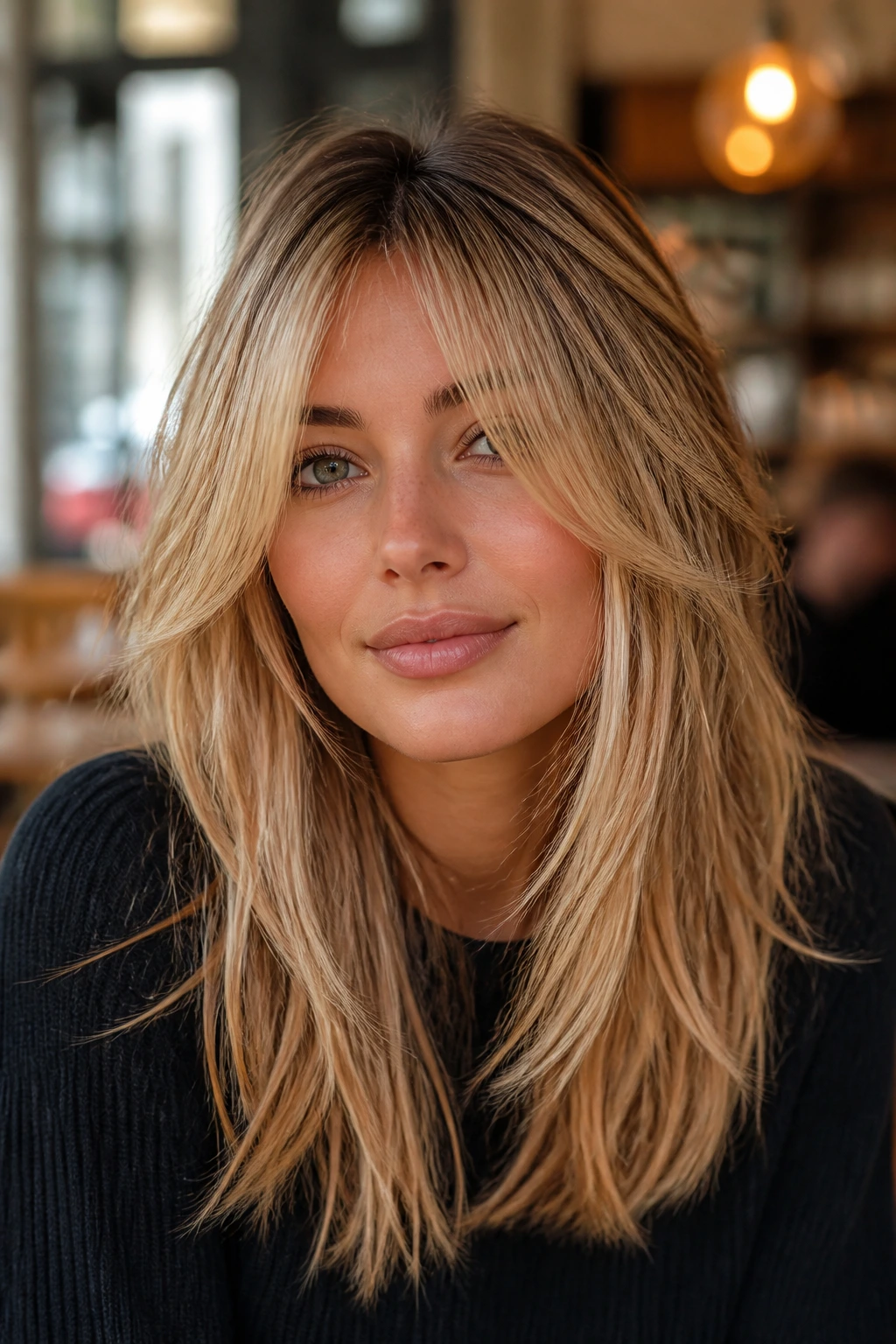
Can bangs work on a round face without making it look wider? Yes, if they taper like a bottleneck instead of sitting in one blunt strip. Bottleneck bangs start narrow at the center, open a bit through the temples, and melt into longer face-framing pieces.
That soft widening near the outer edges helps the haircut breathe. It keeps the forehead from feeling boxed in, and the longer sides draw the eye down instead of out. The front pieces should land below the cheekbone, not on top of it.
How to Ask for It at the Salon
Bring a photo with clear separation between the bang and the side layer. That part is easy to miss in words alone.
- Keep the center fringe shorter, around eyebrow level.
- Ask for the sides to open gradually toward the temples.
- Let the face frame blend into long layers below the mouth.
- Use a light styling cream so the bangs stay piecey, not sticky.
This is one of those cuts that looks expensive when it moves. Still. Only if the blend is soft.
4. Side-Swept Fringe and Soft Ends
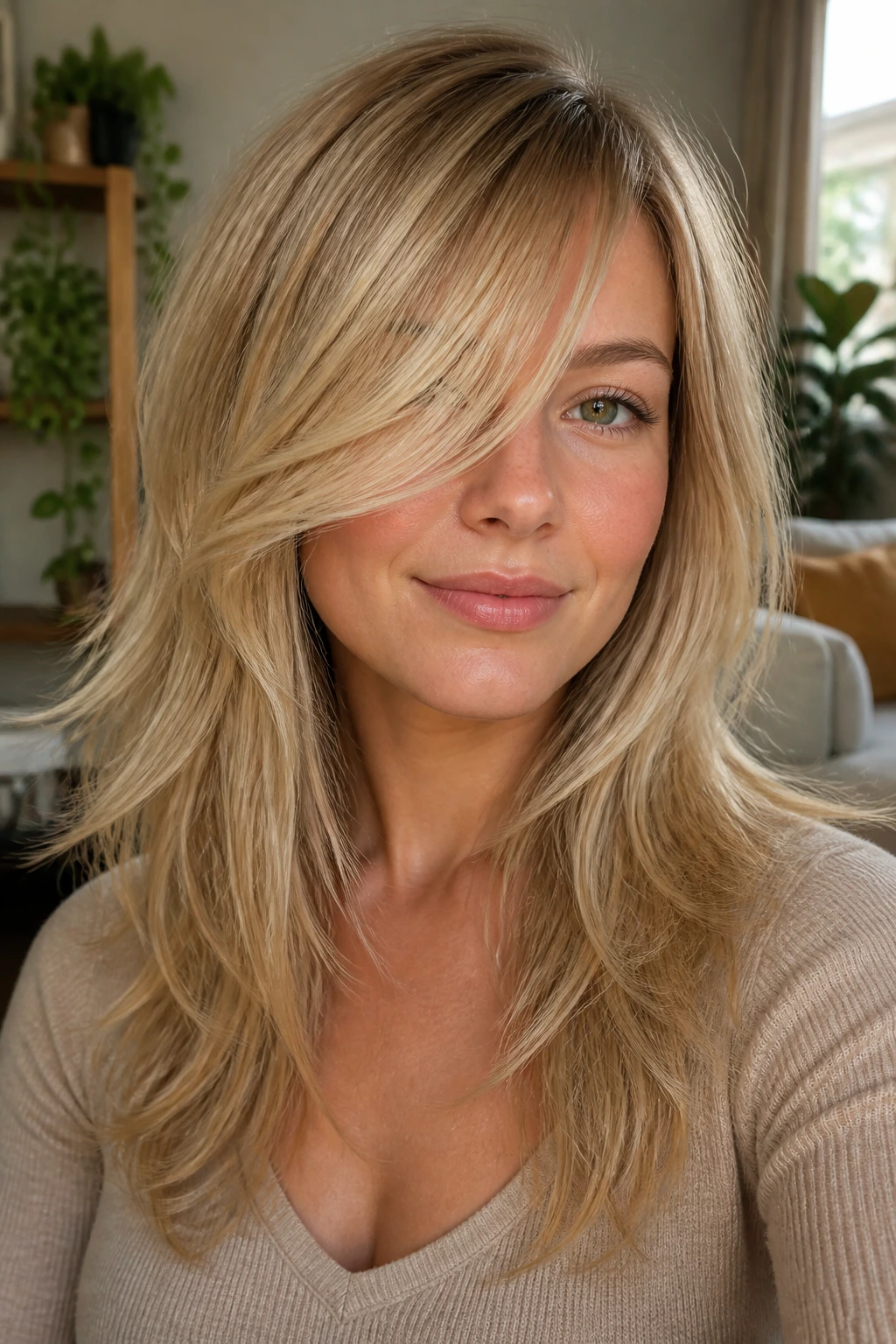
A side-swept fringe can rescue hair that falls flat at the part. It breaks the symmetry of a round face in a useful way, especially when the fringe starts deep enough to create real diagonal movement. The line should feel relaxed, not dramatic or dated.
Soft ends make the difference. If the perimeter is blunt, the haircut starts to feel heavy at the bottom. If the ends are lightly feathered, the whole shape stays open and easy. Ask for the side fringe to graze the cheekbone and slide past the jaw, not stop there.
A deep side part can be hard to keep in place on slippery blond hair, so I like a little root mousse at the base and a quick blast with the dryer in the direction you want the fringe to sit. Two minutes can change the whole front of the haircut.
5. Razor-Cut Beach Shag
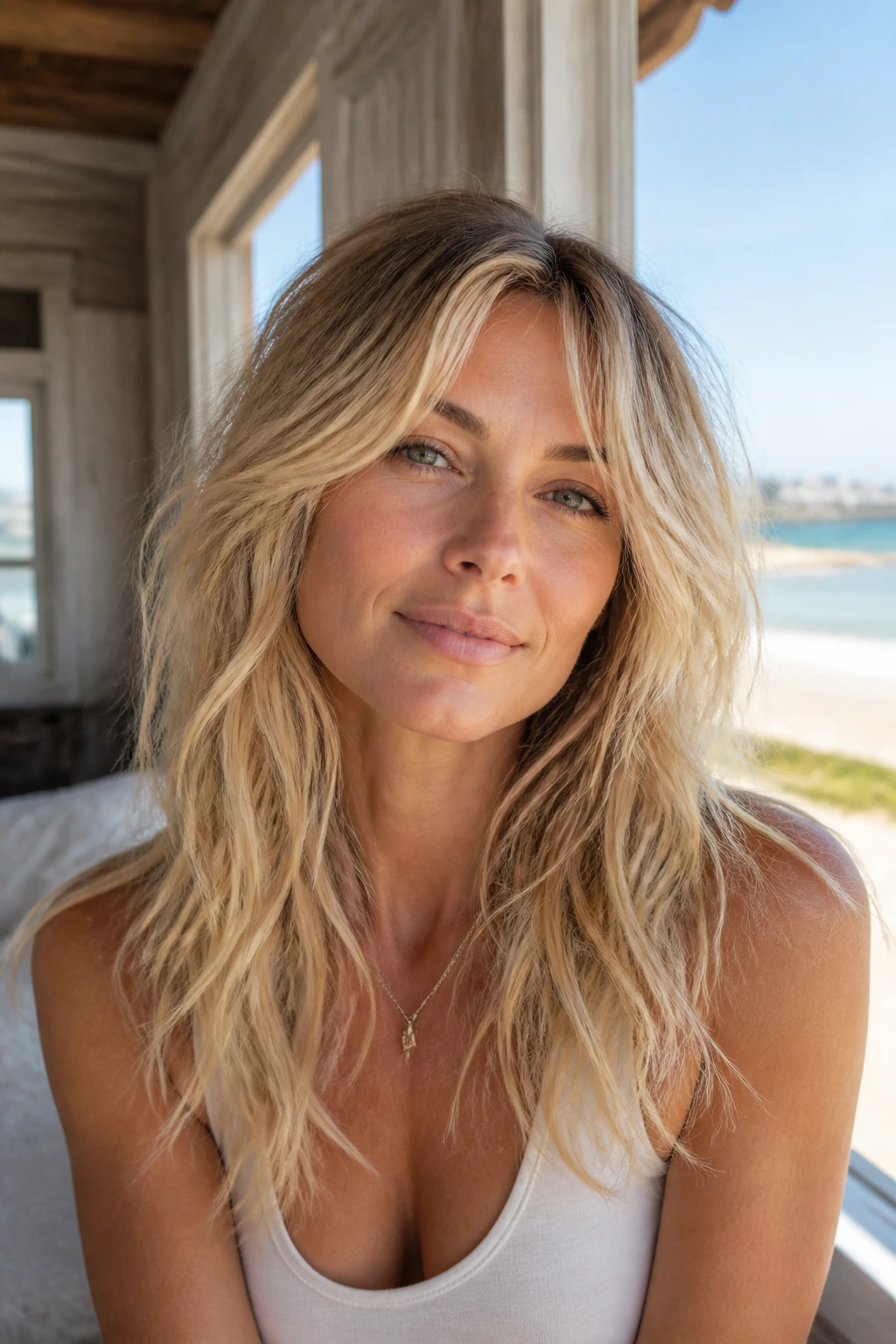
The ends should feel feather-light. Not thin. Feather-light. That is the difference between a shag that moves and a shag that looks hacked at with no plan.
A razor cut gives blond hair a soft, airy edge, which is why this version has such a good fit with a round face. The line never sits as one solid block, so the eye keeps traveling down the length. The cut works best when the longest layers fall below the shoulders, because that extra stretch helps elongate the face.
I like this shape with loose, unfinished waves and a little sea-salt spray through the mid-lengths. But there is a catch. Fine or fragile hair can frizz if the razor work gets too aggressive, so the cut needs a careful hand. The goal is movement, not shredded ends. A good stylist will remove weight where it matters and leave the rest alone.
6. Crown-Lifted Long Blond Shag
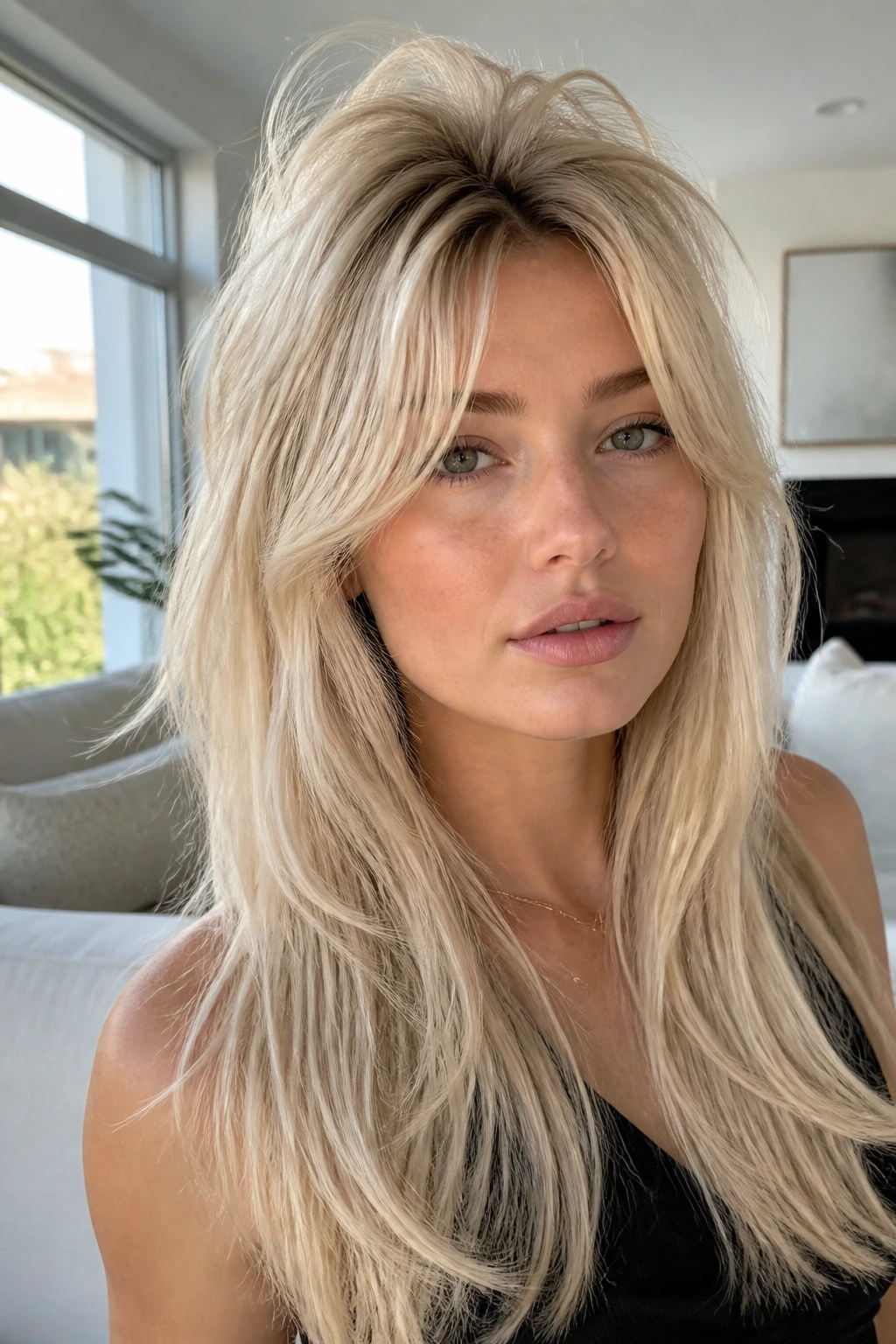
Height at the crown. That is the point of this one, and it makes a bigger difference than most people expect. A round face already carries fullness across the middle, so a little lift above the ears changes the balance fast.
Unlike a blunt long cut, this shag keeps the top layers active and the lower length calm. The result is a taller silhouette. I’d call it one of the smartest long blond shag haircuts for round faces if you wear your hair straight or with a soft bend, because the shape still reads even without heavy styling.
It is also a nice choice if your hair tends to collapse at the roots. Ask for internal layers that create support near the top rather than chunky pieces around the cheeks. If the widest layers start at chin level, skip it. You want the movement above that line, not beside it.
7. Jaw-Starting Layers That Sit Lower
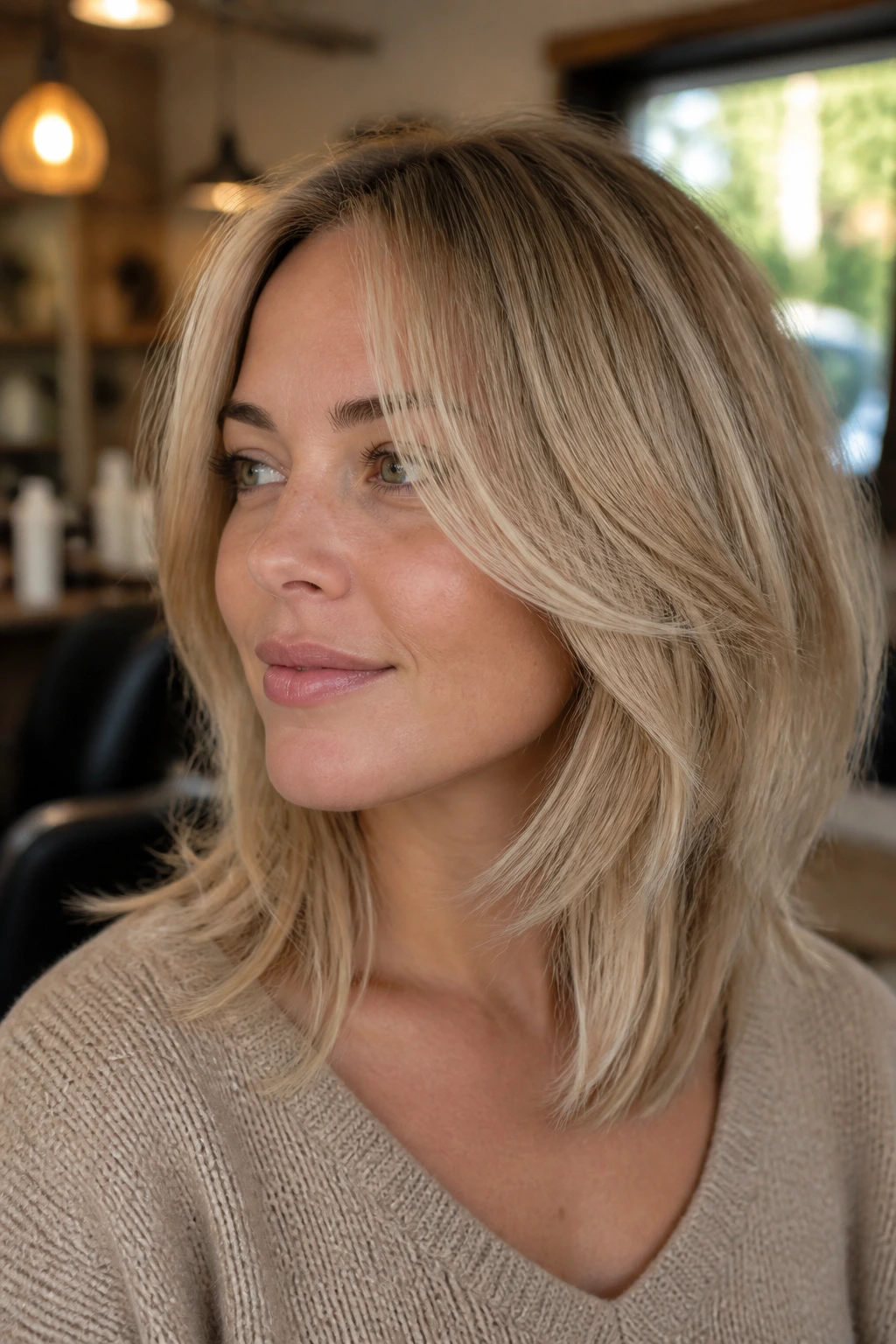
The smartest layers on a round face do not start at the cheek. They sit lower, sometimes just below the jaw, so the eye keeps dropping instead of hanging on the widest part of the face. That small shift changes the whole cut.
Why Lower Layers Help
A lot of people ask for “face-framing” and get pieces that land exactly where they should not. Lower placement fixes that. The front looks softer, the neck looks longer, and the shag keeps its shape even after a few weeks of grow-out.
- Start the shortest visible layer at or below the jawline.
- Keep the next layer long enough to blend into the chest length.
- Add subtle texturizing only through the ends.
- Style with a bend, not a curl, so the layers stay stretched.
This version is especially good if you wear glasses. The lower pieces keep the frame from fighting the haircut.
8. Root-Shadow Shag with Dimensional Blond
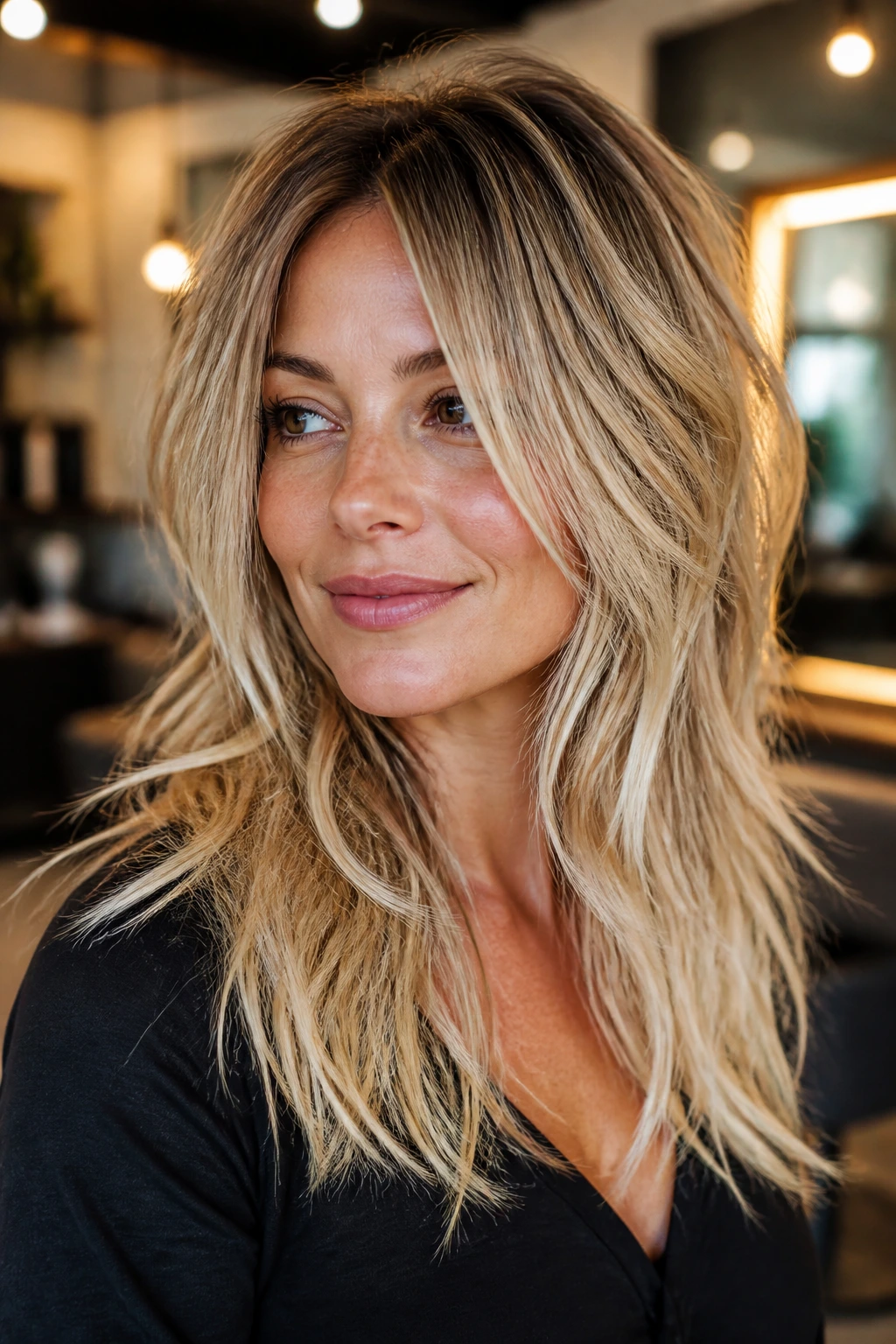
Color can shape the face almost as much as the cut. A root-shadow shag uses a slightly deeper root — usually one or two shades darker than the mids — to give the crown some depth, while the brighter blond sits through the lengths and around the face.
That contrast keeps the top from looking too wide and flat. On a round face, a flat block of pale color can make the head look broader than it is. Dimensional blond breaks that up and makes the layers easier to read.
The best part is the grow-out. You do not get a hard line every few weeks, which matters if you like a shag with some mess to it. Ask for ribbons of lightness, not one even all-over blonde. A few darker pieces under the top layer can make the cut look far more expensive than a solid color ever will.
9. U-Shaped Blonde Shag with Feathered Hem
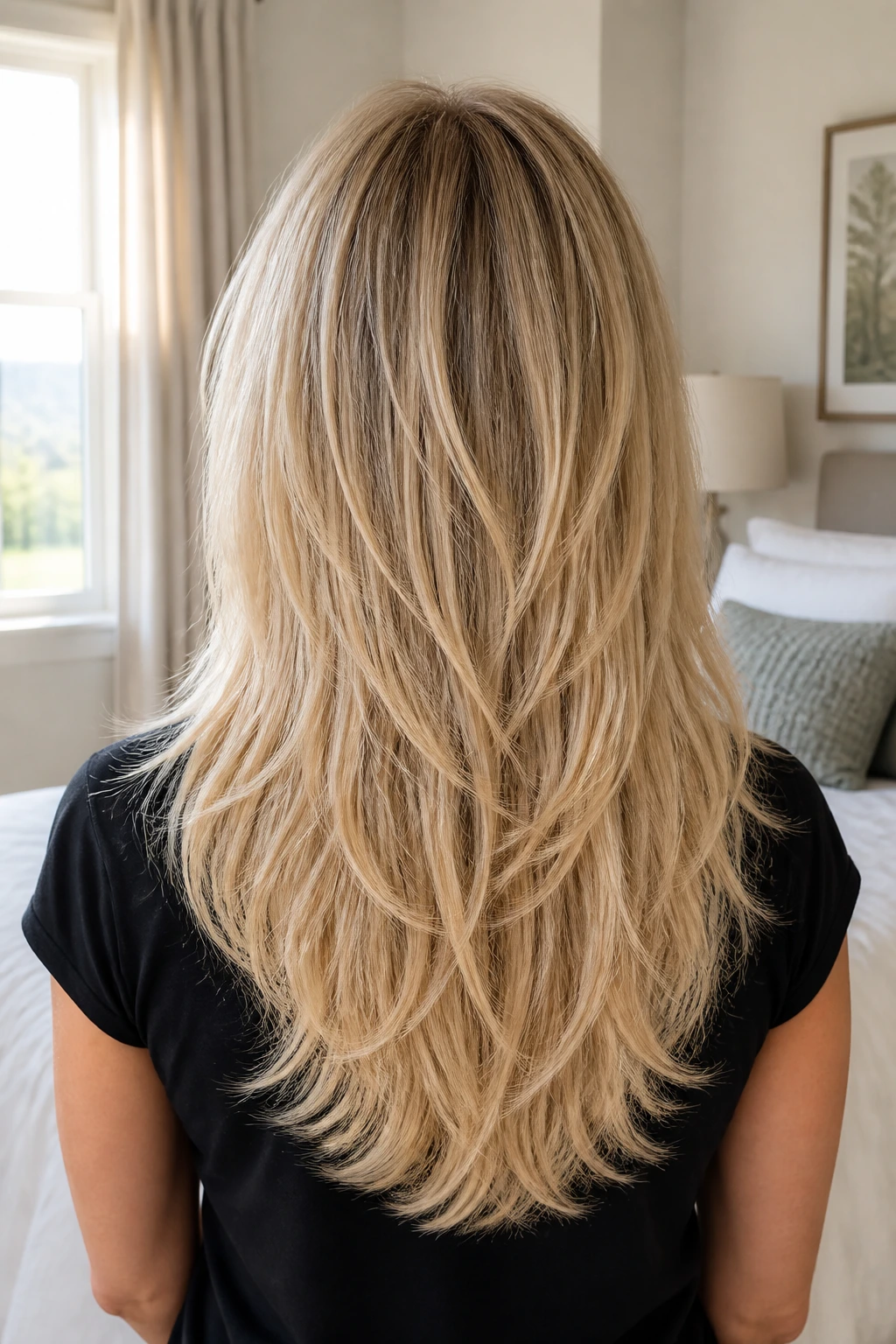
Why does a U-shape help? Because it keeps the center back longer, which draws the eye down the middle of the body and away from the widest part of the face. The sides still move, but they do not flare out in a blunt straight line.
The feathered hem keeps the outline soft. Instead of a thick, heavy wall of hair at the bottom, the ends taper and bend. That taper matters on a round face, especially if your hair is thick and wants to balloon outward.
What Makes It Work
- Keep the center back the longest point.
- Let the side lengths angle forward a little.
- Feather the ends with point cutting, not heavy thinning.
- Use a blowout brush to keep the hemline from flipping too wide.
This is a pretty forgiving shape. It grows out well, and it does not demand perfect styling to hold its line.
10. Soft Wolf-Shag
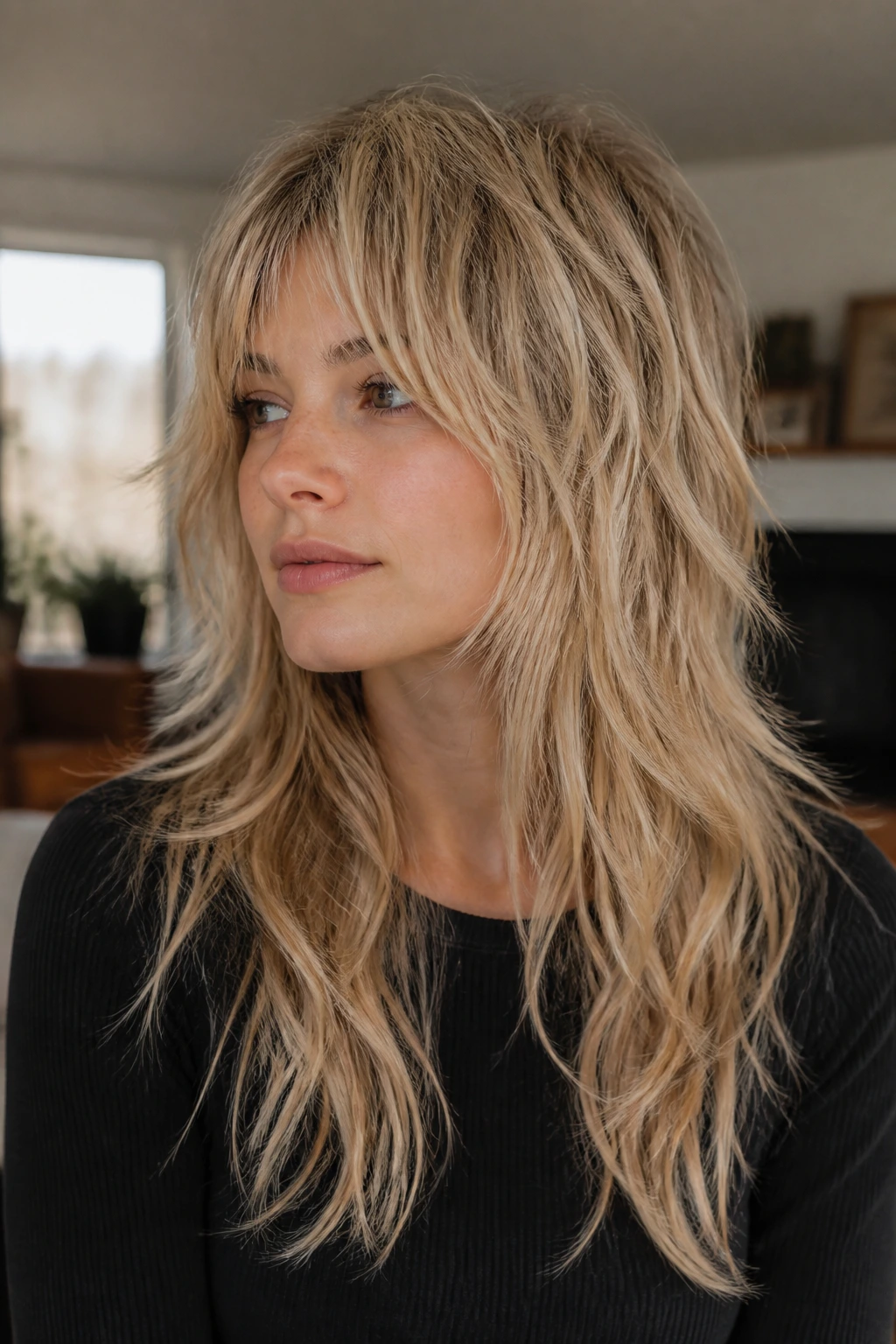
A soft wolf-shag sounds edgy, but the version that works on a round face is much gentler than the name suggests. You keep the top and crown a little shorter, then let the lengths stay long enough to keep the shape from getting too boxy. The front pieces should still be soft and mobile.
Picture a shag that borrowed a little attitude from the wolf cut but left the harsh edges behind. That is the version I trust. The sides should skim, not widen, and the layers should move in broken pieces rather than one heavy sheet.
It helps to style this one with a matte cream or a tiny bit of paste through the ends. Too much shine makes the layers clump. A bit of roughness is the point. If your hair is already thick, ask the stylist to remove bulk from the inside only.
11. Champagne Blonde Shag with Piecey Bangs
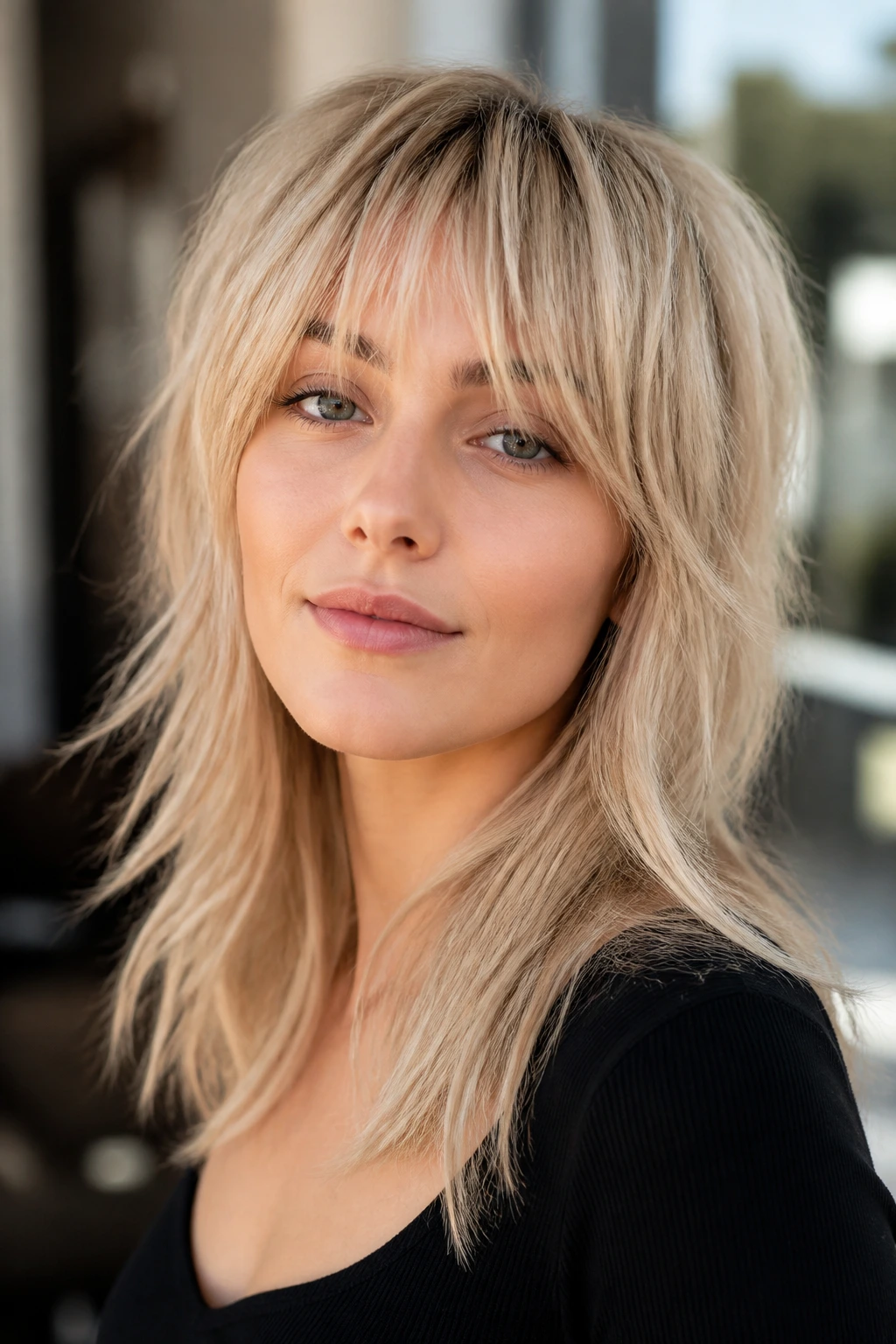
Champagne blonde gives the cut a bright, polished finish without turning it icy. That matters because piecey bangs can look sharp on their own; the softer color keeps the haircut from feeling severe. The whole look lands somewhere between laid-back and tailored.
I like this on round faces because the pieces around the forehead and temple are separated enough to create shape, not one solid curtain. The bangs should break into small sections, especially when dried with a little texture spray or mousse. That detail keeps the front from swallowing the face.
The tone also matters. Champagne blond reflects light in a gentle way, so the layers show up without the high-contrast edge you get from harsher platinum. It is a nice choice if you want the shag to look clean rather than grungy. The haircut still has movement, but it feels more lifted.
12. Off-Center Part Shag
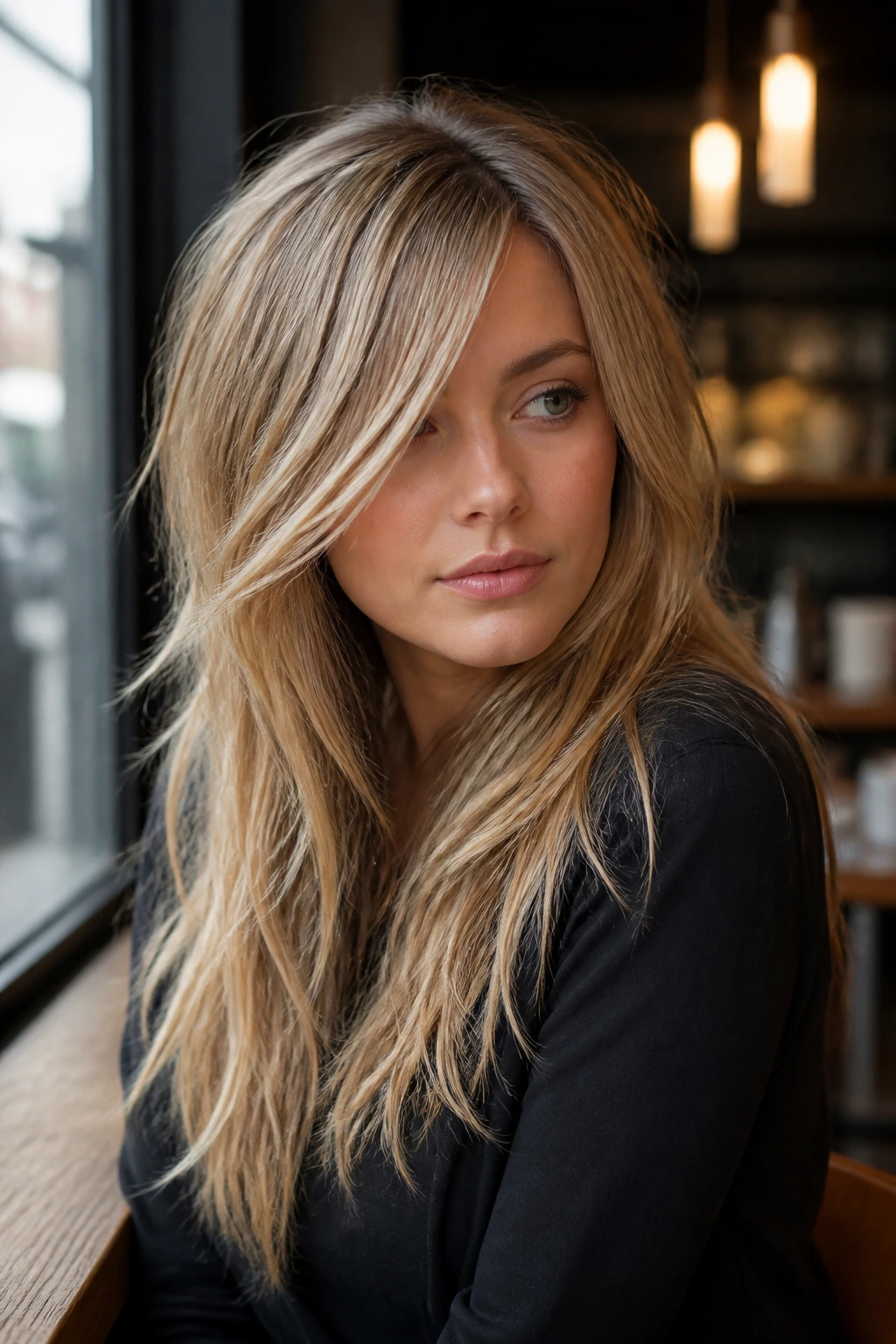
A center part is not the only answer. An off-center part can soften a round face fast, because the asymmetry creates a diagonal line across the forehead and breaks up the width of the cheeks. The change is small. The effect is not.
Compared with a dead-center split, this version usually feels a bit less symmetrical and a little more lived-in. That is the point. You are not trying to hide the face; you are redirecting it. Long front pieces on the heavier side of the part can stretch the silhouette beautifully.
This is a strong option for blond hair that refuses to hold volume at the roots. A part that sits just an inch or so off center often stays in place better than a dramatic side part. It is also easy to style on a lazy day, which matters more than people admit.
13. Long Curtain Fringe with Scissor-Soft Layers
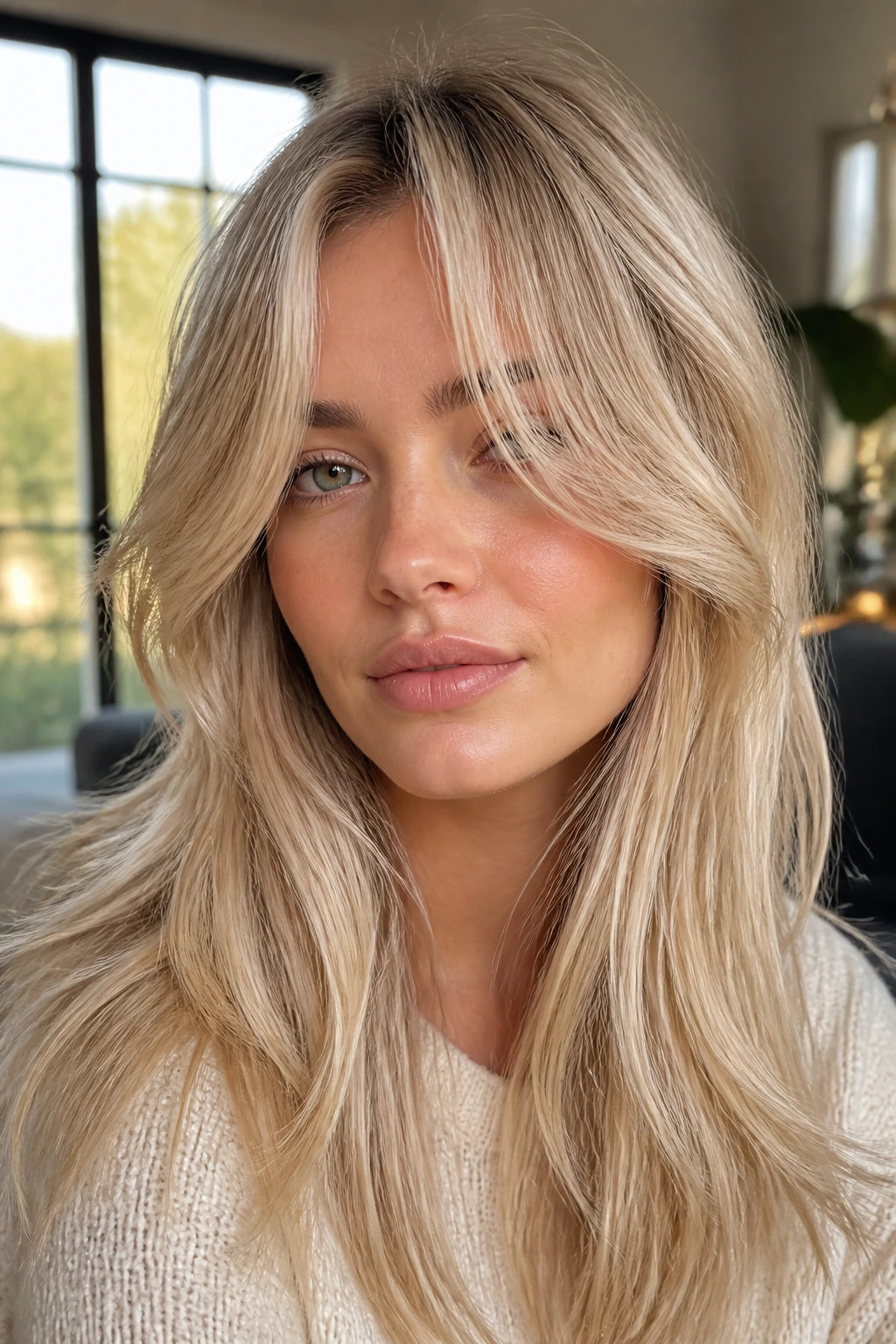
Curtain fringe gets more useful when the layers are cut with the same soft hand. Not choppy. Not over-thinned. Just broken enough to move. The whole shape feels less salon-polished and more natural, which is why it works so well on round faces.
What to Tell Your Stylist
Ask for the fringe to open from the middle and drop into long side pieces that sit below the cheekbone. That keeps the face from looking widened at its center.
- Keep the layers scissor-soft instead of razor-sharp.
- Avoid a thick, blunt bang line.
- Let the longest front pieces reach the collarbone.
- Add a little bend with a large brush or a wrap set.
This version is especially nice if you like hair that can air-dry without looking unfinished. The soft layering hides a lot.
14. Platinum Shag with Internal Layers
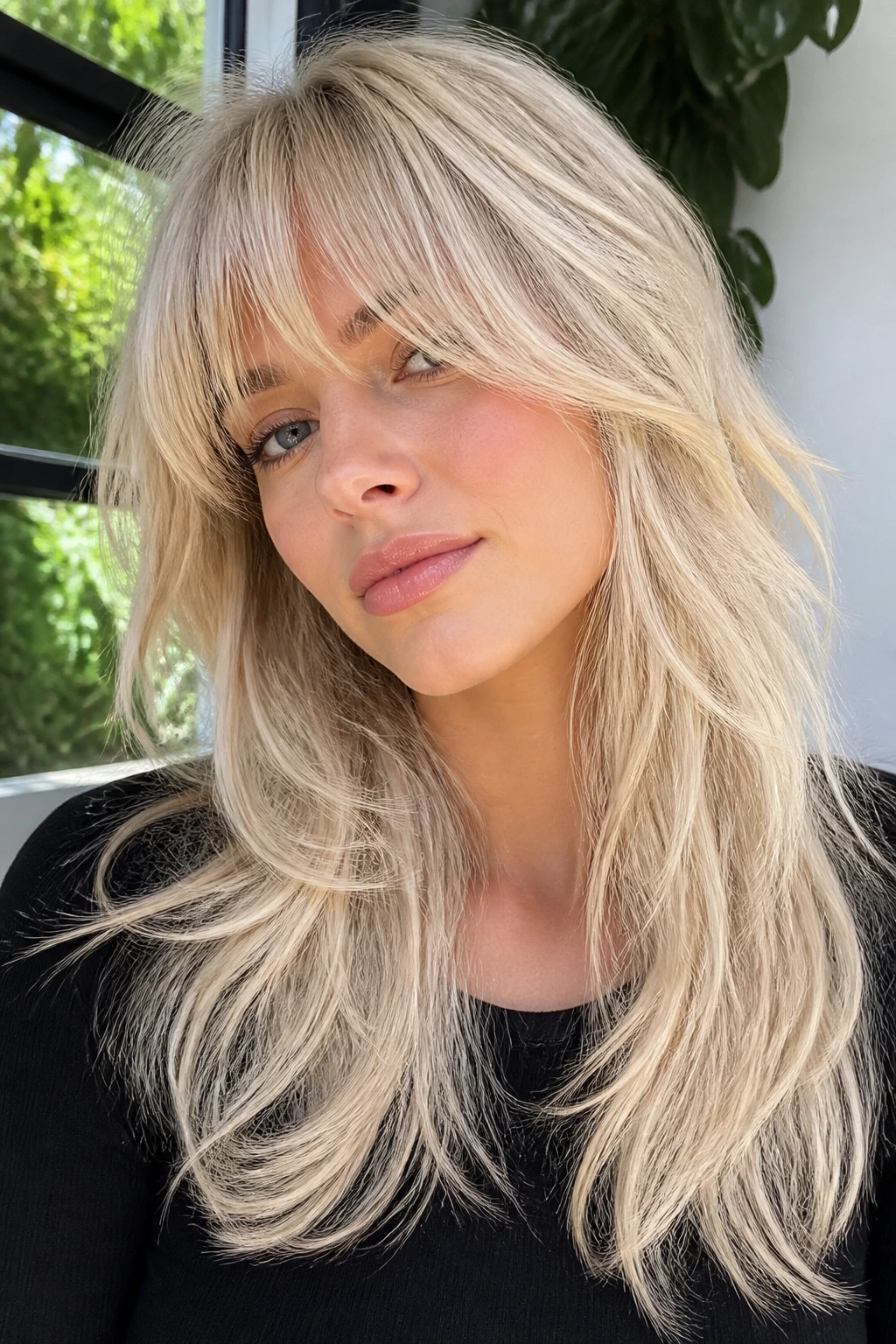
Platinum blond is unforgiving in the best way. Every layer shows. Every bend shows. If the shape is wrong, you see it instantly, which is why internal layers matter so much here.
The cut itself should stay light inside the shape while the outer edge remains smooth enough to control. That contrast keeps the hair from puffing out at the sides. Internal layers remove weight without chopping the outline apart, which is exactly what a round face needs from a stronger color like platinum.
You do have to keep the tone glossy. Pale blonde can go flat or dull fast, and dull platinum makes the haircut feel rougher than it really is. A purple shampoo once in a while is fine, but I would not overdo it. Too much can leave the hair dry and the cut brittle-looking.
15. Honey Blonde Shag with Flipped Ends
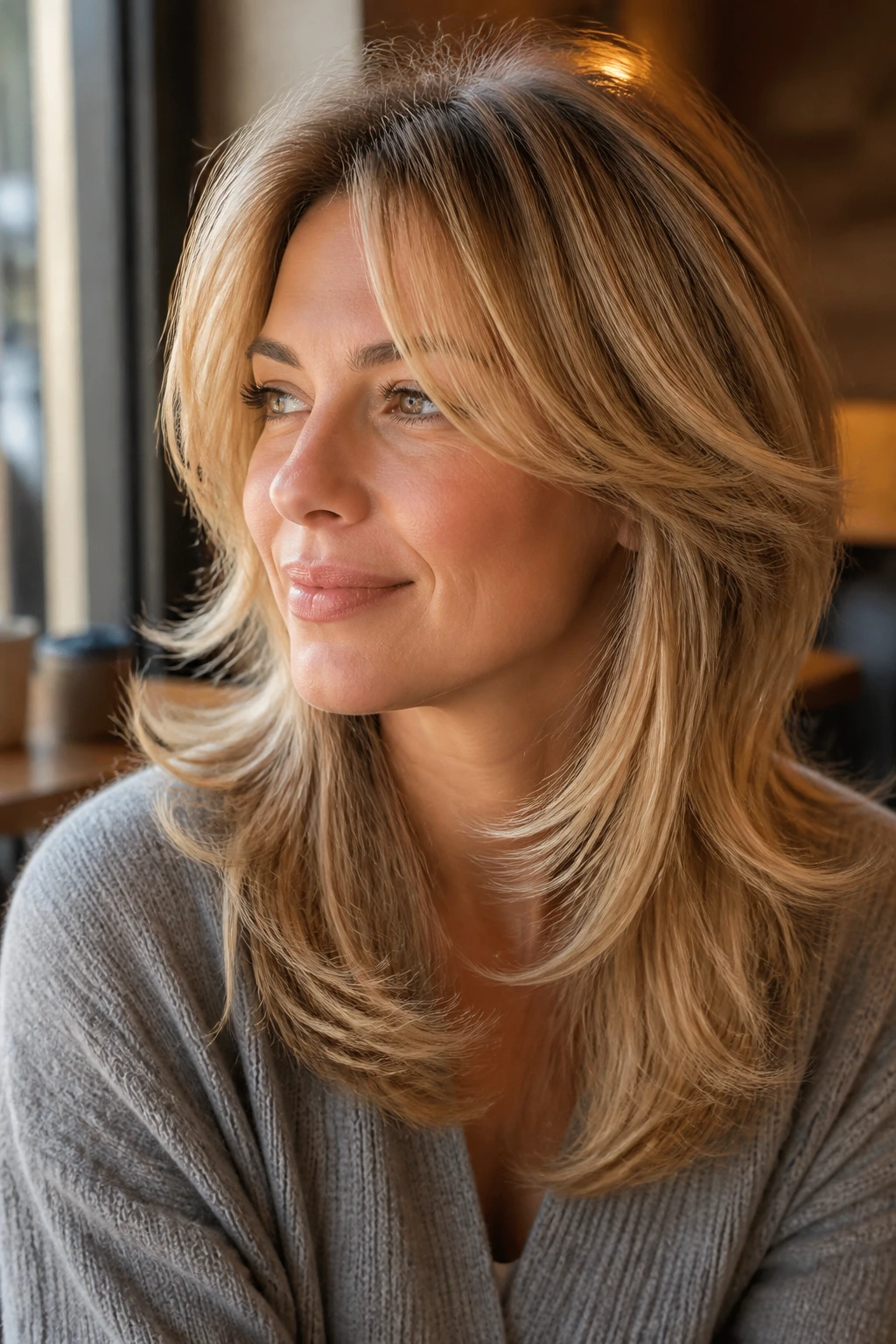
Can a shag feel a little retro and still work on a round face? Absolutely, if the flip happens at the ends and not around the cheeks. Honey blonde gives the cut warmth, and the flipped perimeter keeps the length from hanging straight down like a curtain.
The trick is in the direction of the bend. Turn the ends away from the face just enough to open the jawline. Do not make the whole cut curl outward in a wide halo, because that will add width right where you are trying to reduce it.
How to Style It
Use a medium round brush or a 1.25-inch hot tool. Wrap only the bottom inch or two of the hair, then let the rest fall loose.
- Keep the crown soft and lifted.
- Flip only the ends.
- Let the front pieces curve inward toward the collarbone.
- Finish with a light spray, not stiff hairspray.
The result feels cheerful, not fussy. I like that.
16. Soft Mullet-Inspired Long Shag
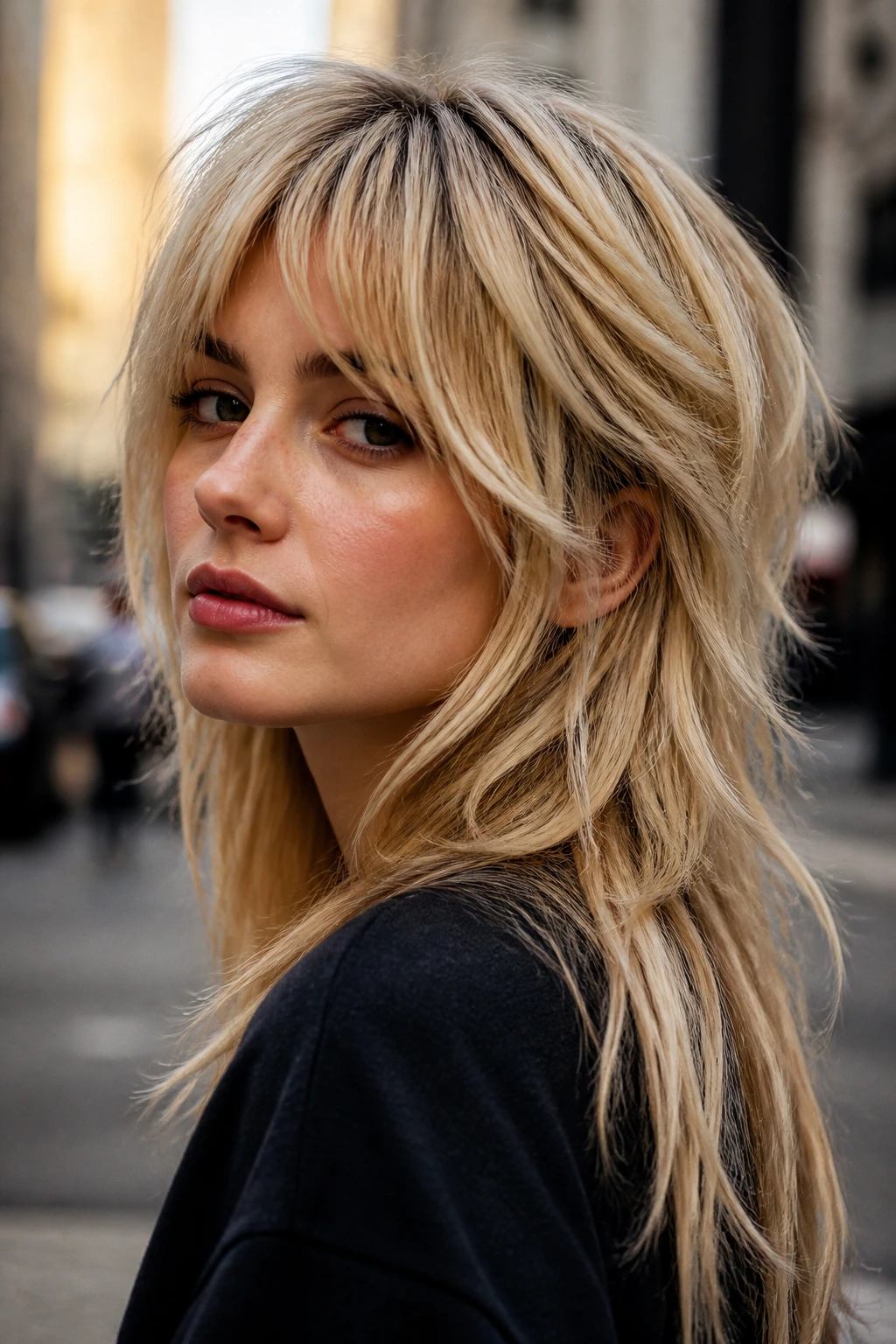
A mullet-inspired cut can be great on a round face when the edges are softened and the back stays long. The older, harsher version of the shape can make the cheeks look even fuller. The soft version does the opposite.
Picture a cut with a little shorter action near the crown, length in the back, and face-framing that falls into the shoulders. That imbalance pulls the eye lengthwise. The sides should stay slim and broken up, not puffed out with too much texture.
This one is for someone who wants shape without looking too precious. It looks better when the hair has a little grit, maybe from day-old texture or a mist of dry spray. If you wear big earrings, even better. The haircut and the jewelry end up doing a nice little dance together.
17. Money Pieces and Mid-Length Fringe
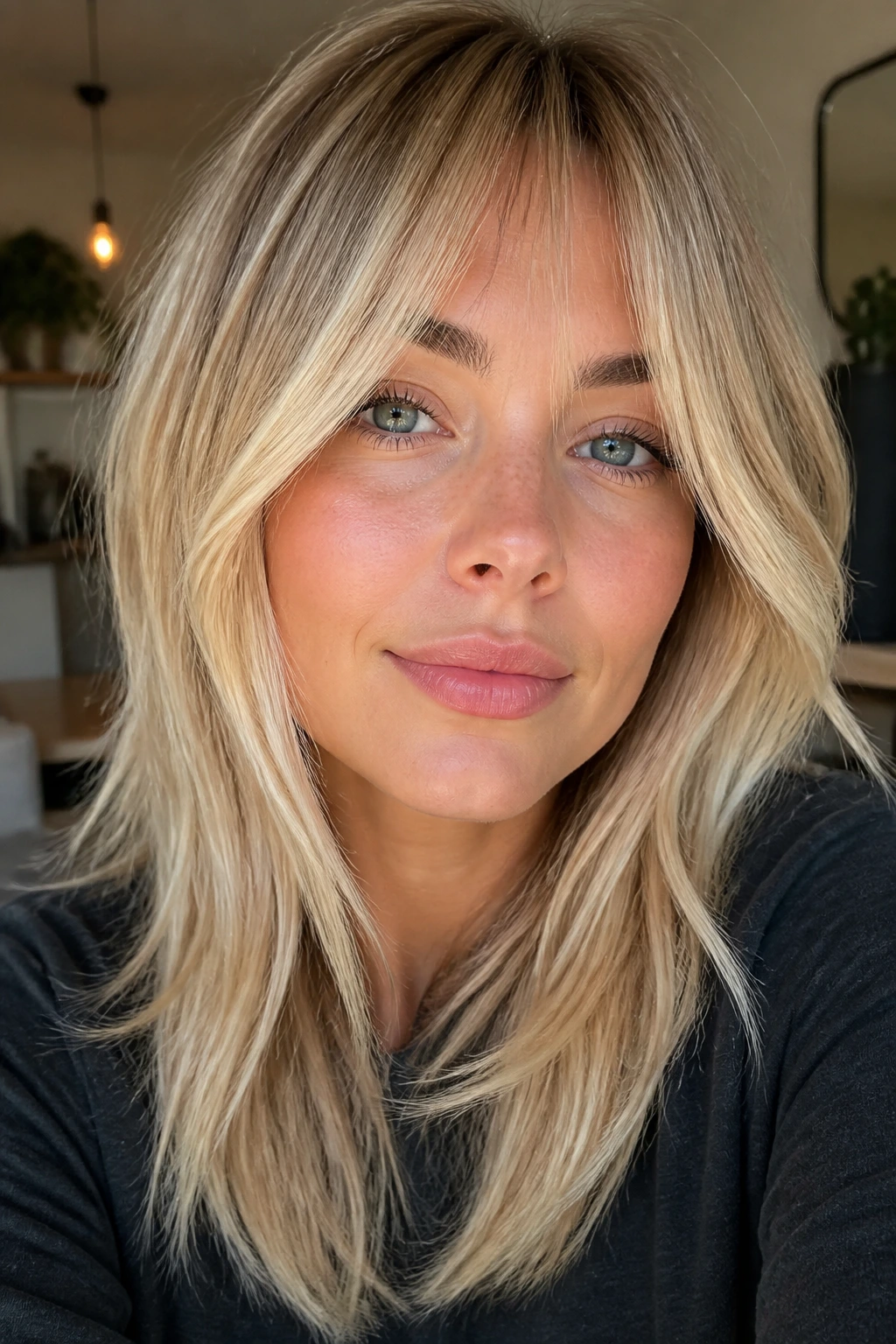
Money pieces can work on a round face when they are used like lines, not like blocks of color. Bright face-framing strands around the front can sharpen the shape, but only if they stay narrow and soft. Heavy chunks do the opposite.
A mid-length fringe gives the money pieces somewhere to melt into. That keeps the front from looking chopped off. I’d keep the brightest strands around the temple and collarbone area, because that draws attention vertically instead of spreading it across the cheeks.
This is a good cut if you like dimension in blond hair but do not want high-maintenance color every few weeks. The face frame can stay a little brighter while the rest of the blond remains blended and calm. It is a smart salon choice, not a loud one. I think that matters.
18. Boho Shag with Loose Waves
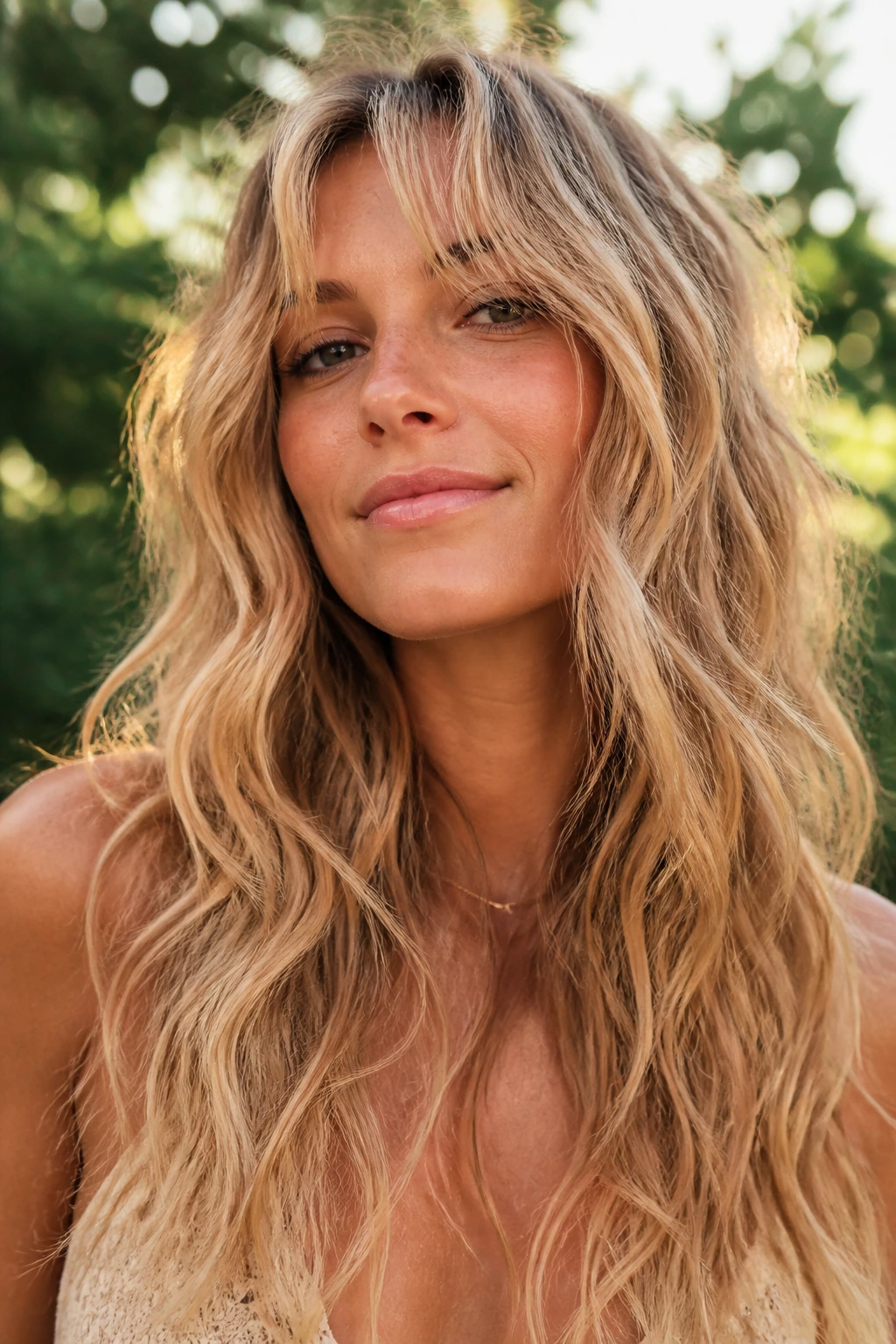
A boho shag lives or dies by texture. The waves should feel loose, almost careless, and the layers should still keep a visible shape underneath. That is the part people miss. A fuzzy mound is not a boho shag. It is just fuzzy hair.
On a round face, the benefit is all about movement. Soft, broken waves keep the face from looking widest at one single point. The length needs to stay below the shoulders, though, or the shape starts to spread out instead of stretching down.
This cut also works well if you prefer air-dried hair. A touch of mousse, a scrunch, and a few finger-twisted pieces can be enough. Tight curls can make it too round. Loose bends are the smarter move, and they age better as the haircut grows out.
19. Rounded Crown and Long Perimeter
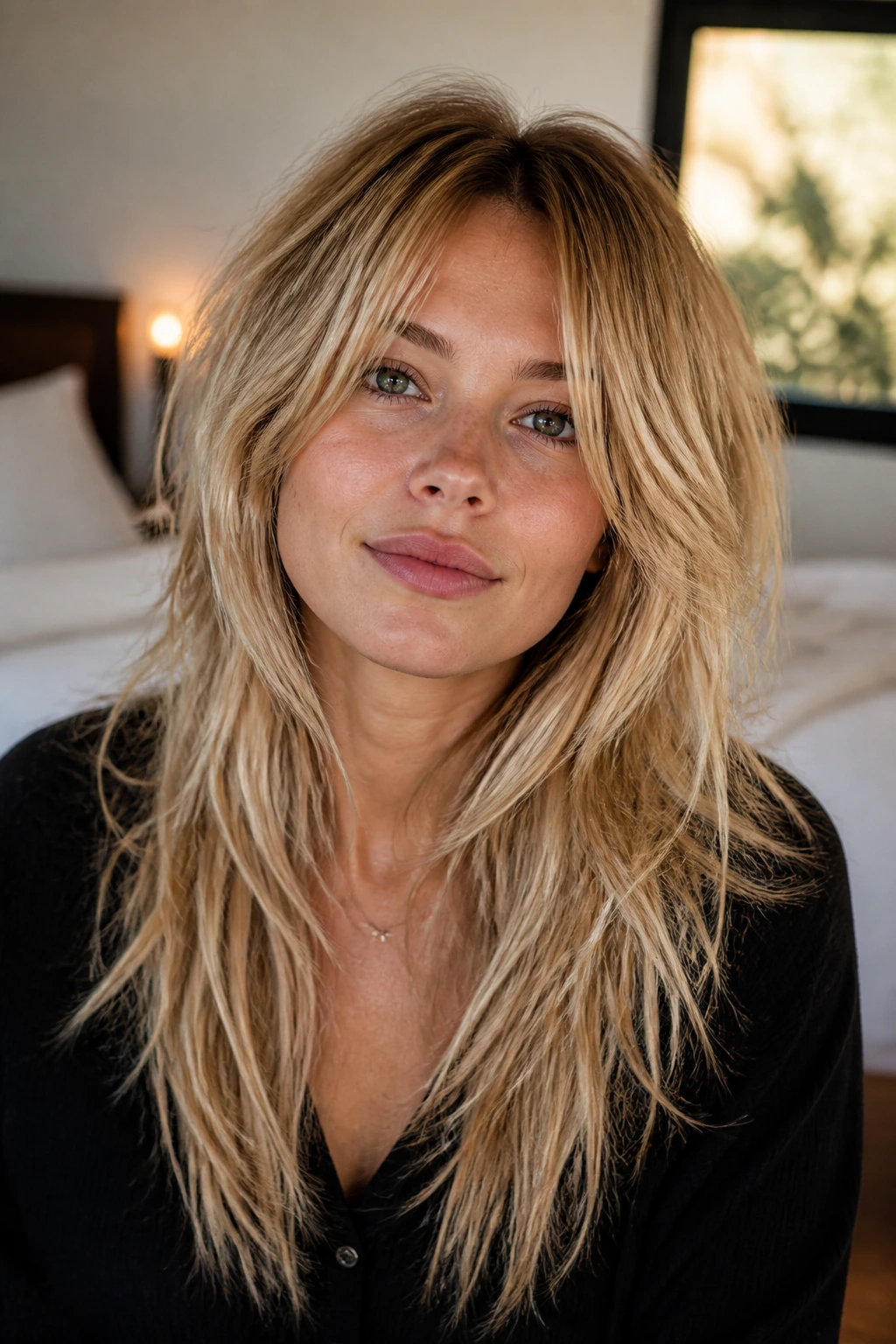
This is one of those cuts that looks simple until you study it. The crown has enough roundness to build lift, but the perimeter stays long and anchored, which stops the whole head shape from getting wider. That balance is the whole job.
Why the Shape Works
The rounded top gives the shag a bit of body where a round face needs it least expected — above the cheek line. Then the long perimeter acts like a frame that drops downward.
- Keep the crown layers soft and connected.
- Leave the bottom edge long enough to touch the upper chest.
- Add light movement only through the mid-lengths.
- Style with a root lift spray if your hair falls flat at the roots.
This cut is nice for people who like shape but do not want a wild, piecey finish every day. It reads neat, even when it is a little tousled.
20. Sunkissed Blonde Shag with Invisible Layers
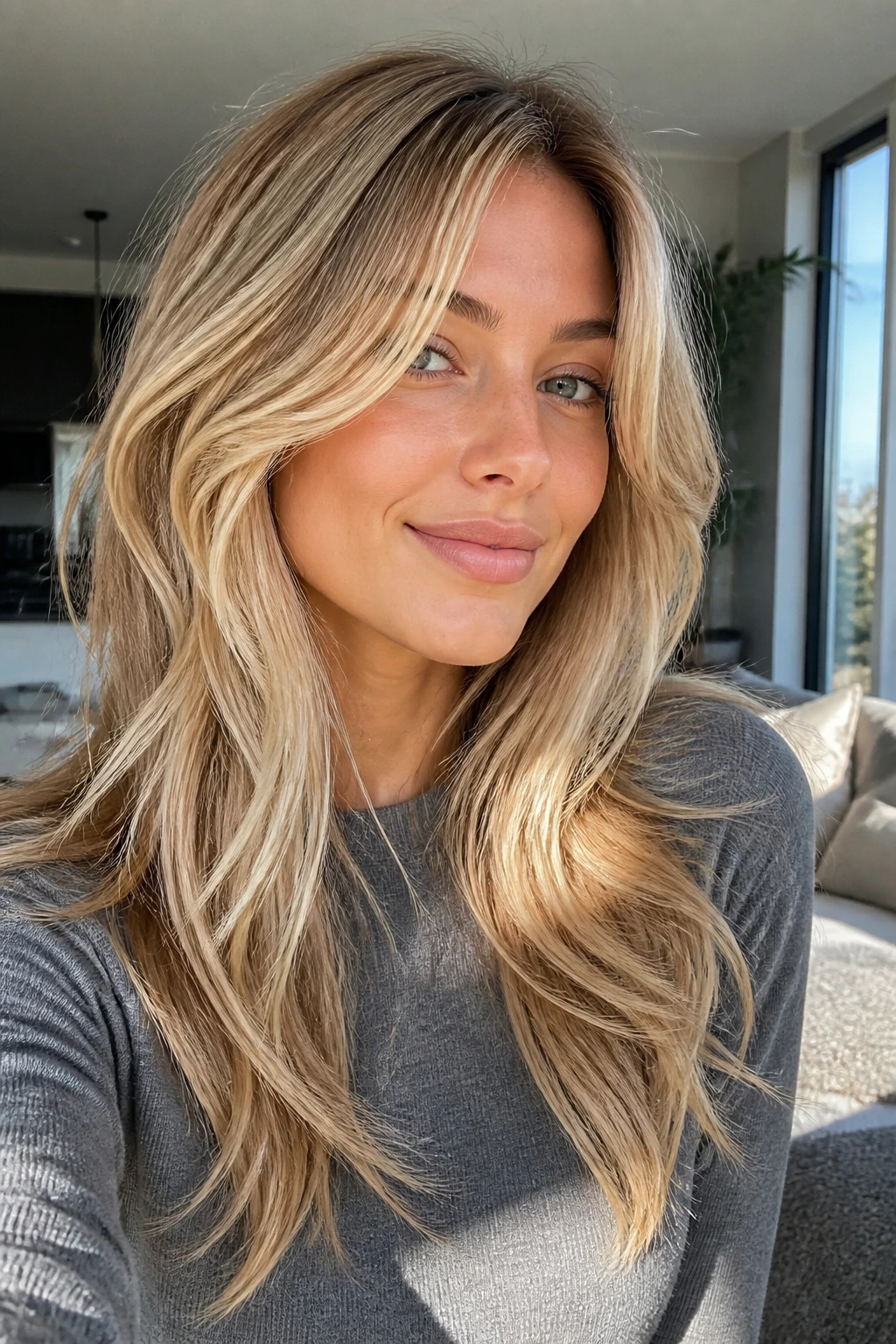
The clever thing about invisible layers is that they do their work without shouting about it. You do not see big chopped lines. You see movement when the hair swings, and that can be more flattering on a round face than a highly broken texture.
Sunkissed blonde color helps because the lighter pieces catch different parts of the cut as it moves. That shifting brightness gives the illusion of more depth through the lengths. It is a small trick, but it changes the whole haircut.
I like this version for someone who wants softness and does not want to look like they spent twenty minutes arranging the front pieces. You can air-dry it, twist a few bends into the lengths, and still get a decent shape. The layers are doing the work in the background.
21. Soft Side Sweep with Tucked Ends
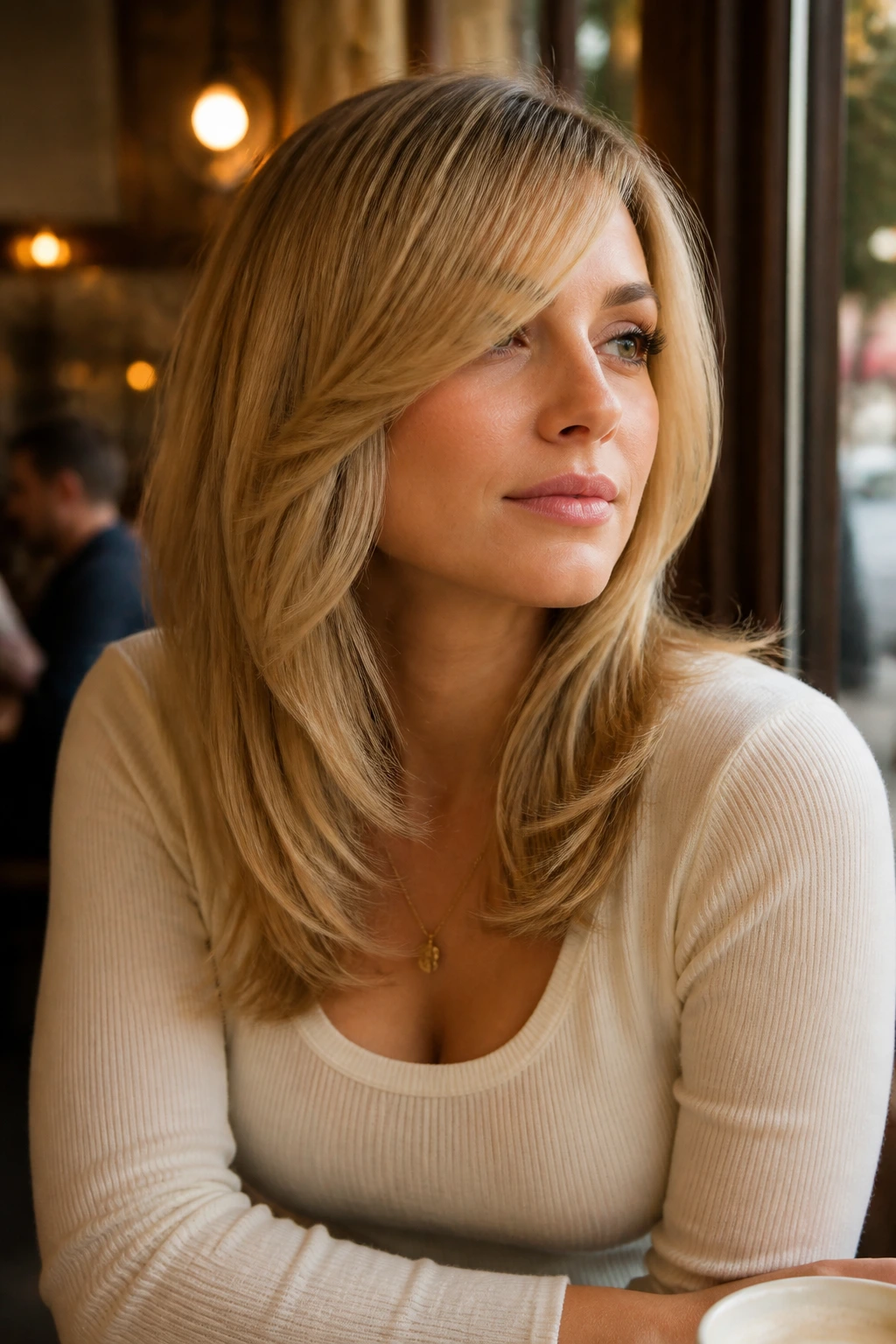
What happens if you want a little polish without losing the shag? You tuck the ends in just enough to keep the silhouette narrow, then let the front sweep to one side. It sounds minor. It is not.
The side sweep opens the forehead and breaks up the symmetry of the face, while the tucked ends keep the bottom from flaring out. That combination is useful for round faces that need a bit of length, not volume at the jaw. It also works nicely with a business-casual wardrobe, which is not nothing.
How to Wear It
Blow-dry the front across the forehead first, then roll the ends under with a brush for a softer finish. Keep the layers long enough to move, but not so choppy that they stick out.
This is one of the easier long blond shag haircuts for round faces to wear straight. The shape holds up even when you skip a full styling session.
22. Feathered Blonde Shag with Razor Texturizing
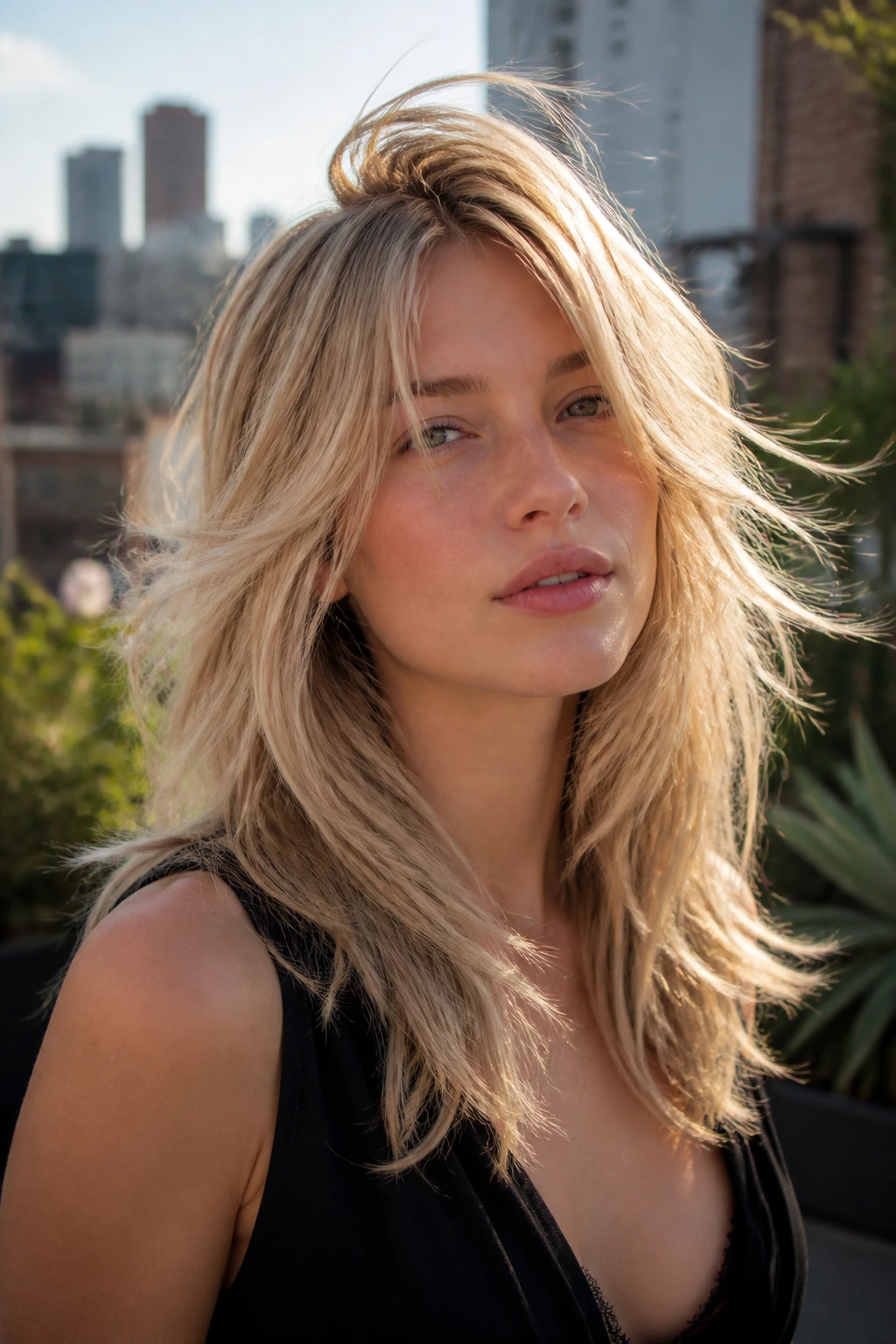
Feathering is not the same thing as thinning. Feathering keeps the shape light and directional, while thinning can leave the ends stringy if it is done too close to the surface. That difference matters more on blond hair than people think.
Razor texturizing can be lovely here, but it needs restraint. The best feathered shag has soft, flicked layers that move away from the face, not frayed pieces that look overworked. The cut should feel brushed by the wind, not attacked by it.
This version suits medium to thick hair best, since the feathering can remove enough bulk to keep the shape from ballooning at the sides. If your hair is finer, ask for less removal and more bend in the blow-dry instead. The haircut should help your hair, not make it fight for its life.
23. Long Shag for Fine Hair on a Round Face
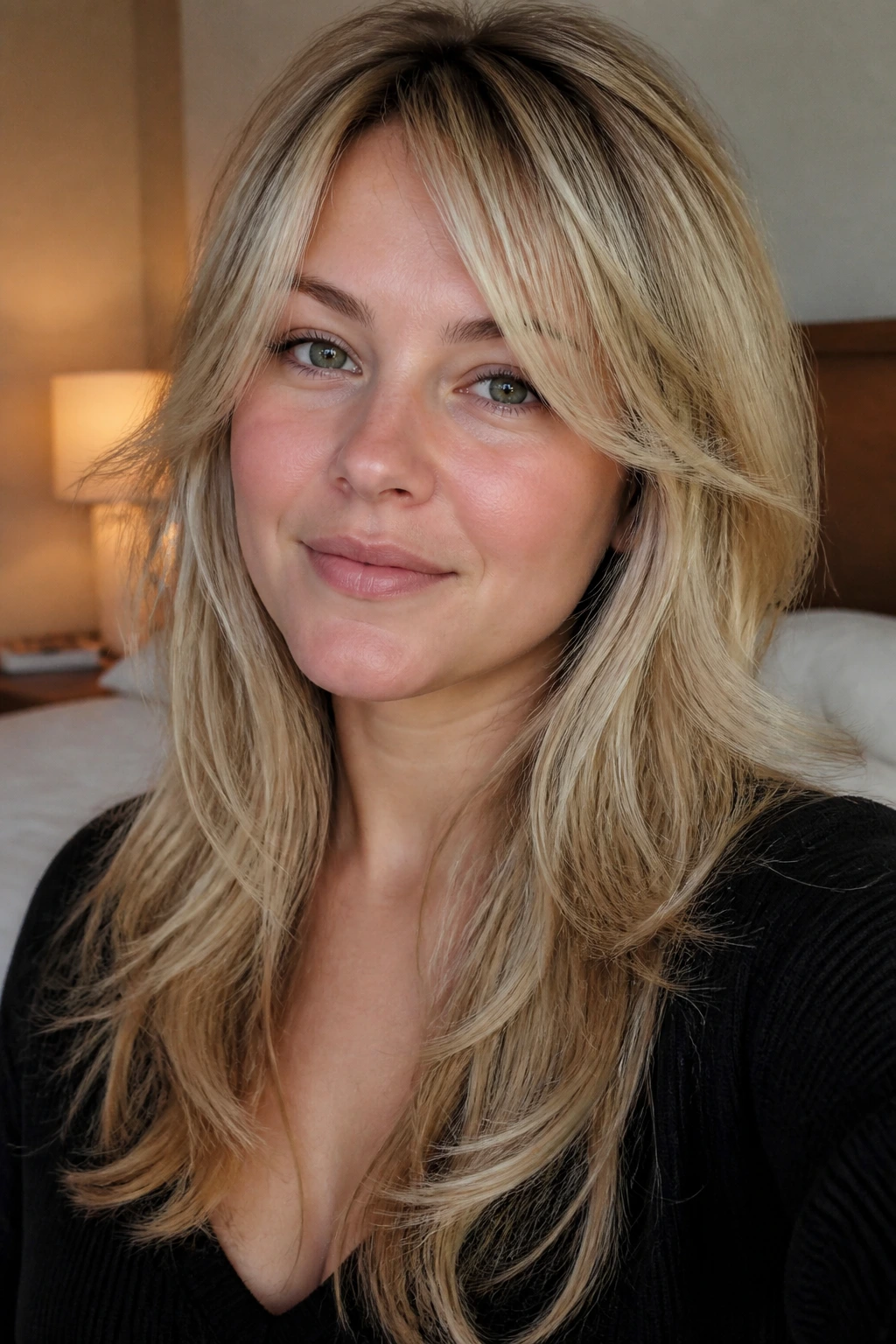
Fine hair on a round face needs a careful hand. Too many layers and the ends go sparse. Too little layering and the cut hangs flat. The sweet spot is long, blended movement with a bit of crown support and a clean perimeter.
I would keep the layers longer than most people expect. That preserves density at the bottom, which fine hair needs. The face frame should be soft, not heavy, and the texture should come from styling, not from chopping the hair into pieces.
A light mousse at the roots and a small amount of texture spray through the mids can do more than aggressive layering ever will. If the hair is especially fine, skip the razor and ask for scissor-over-comb or point cutting instead. It leaves more shape in the strands and less risk of frizz.
24. Long Shag for Thick Hair on a Round Face
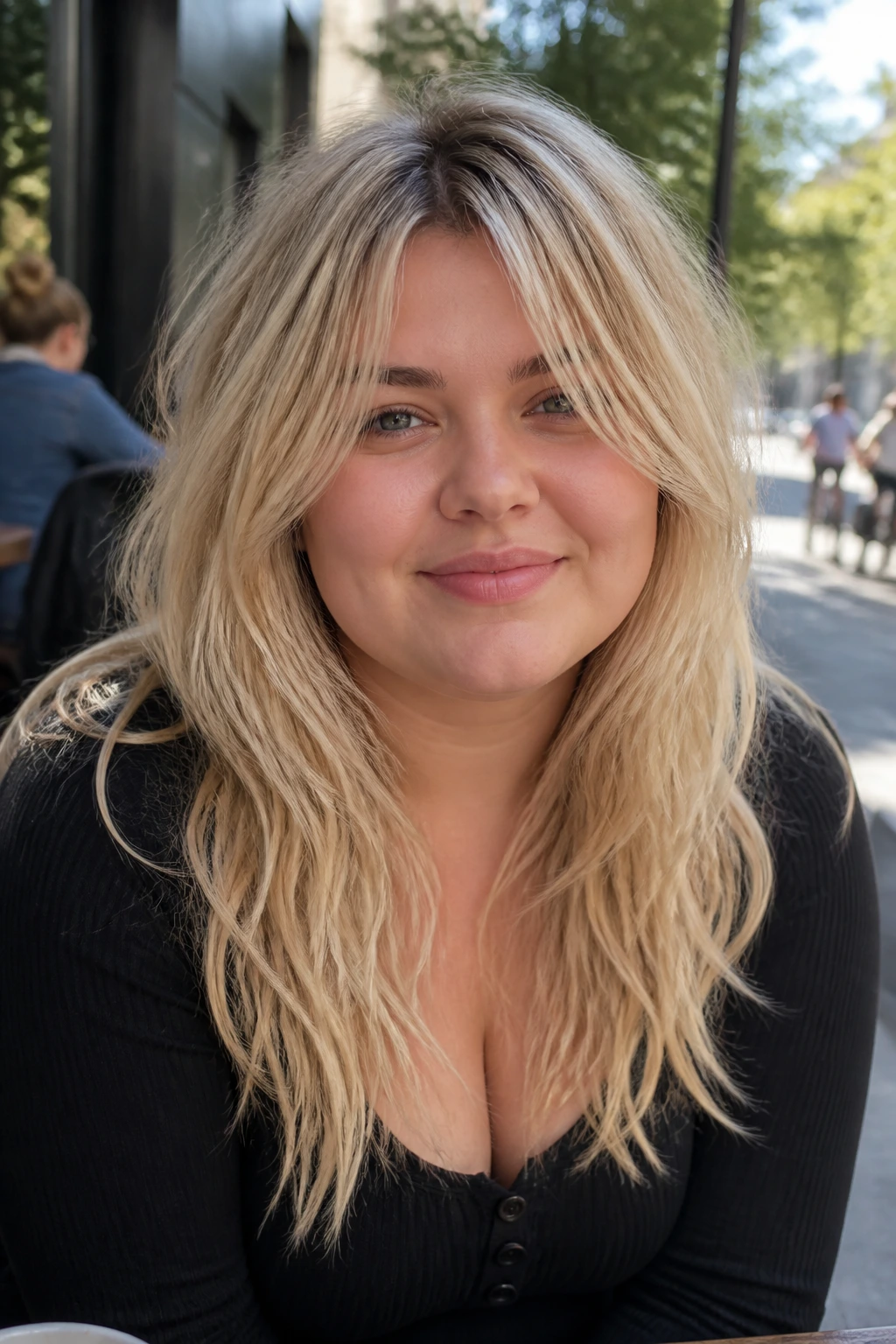
Thick hair is a different problem. There is plenty of body, sometimes too much, so the goal is to remove weight without puffing up the sides. On a round face, that means the internal structure has to be planned carefully.
Compared with the fine-hair version, this one can handle more separation and more dramatic face-framing. The layers should sit in the mid-lengths and inside the shape, not explode outward at the cheekbone. That keeps the cut from feeling wide.
Ask for debulking in the interior, especially if the hair is dense at the back of the head. Leave enough perimeter to keep the line controlled. Thick blond hair looks gorgeous in a shag when the texture is managed well, but if it is over-thinned, the ends get wispy and sad fast. Nobody needs that.
25. Grown-Out Shag with Blended Bangs
A grown-out shag is underrated. The hair has room to move, the bangs are long enough to tuck behind the ear, and the layers blend so well that the cut can survive a few missed salon visits. That makes it a strong choice for people who do not want a high-maintenance shape.
What Grows Out Well
Blended bangs are the key. They should slide into the side pieces instead of stopping as a hard fringe line.
- Keep the fringe long enough to part down the middle.
- Ask for soft graduation through the sides.
- Preserve length past the collarbone.
- Use a quick round-brush touch-up only on the front.
The reason this works on a round face is simple: as it grows, the cut gets longer, not wider. That is a gift. It is one of the few shag shapes that improves a bit as it settles.
26. Glossy Blonde Shag with Blowout Finish
A glossy blowout changes the mood of a shag fast. The texture is still there, but the finish gets smoother and more controlled, which can be flattering on a round face when you want the haircut to feel refined rather than messy.
The trick is in the bend, not the curl. A blowout with a soft S-shape keeps the layers visible while stretching the face vertically. Use a heat protectant with a little slip, then work with a medium round brush so the ends do not kick out too hard.
This version looks especially good on blond hair with dimension. Gloss shows off the different tones, and the light reflects off the bends instead of bouncing off a flat sheet of hair. It is the kind of shag you can wear to dinner and still feel like yourself.
27. Drop Layers Around the Cheekbones
Should layers sit right at the cheekbone? Usually not on a round face. Drop layers that fall a little below that point are safer, cleaner, and easier to wear. They still frame the face, but they do not make it look wider in the middle.
The drop creates a diagonal path that leads the eye downward. That is the useful part. The longest point in front should live closer to the mouth or collarbone than to the cheek, especially if your face is full through the center.
The Salon Detail That Matters
Ask for a cheekbone pass-through, not a cheekbone stop. In plain English: the layer can begin near the cheek, but it should keep going.
This is a subtle shape, and that is why I like it. It does not scream for attention. It just makes the rest of the haircut behave.
28. Collarbone-Grazing Front Pieces
A front piece that hits the collarbone has a nice effect on round faces. It draws the eye down and gives the haircut a little swing every time you turn your head. Shorter front pieces can feel too blunt. These longer ones do not.
The shape works best when the front is slightly tapered, not cut as one heavy line. That taper keeps the blond shag from feeling blocky, and it gives you room to wear the hair tucked, half-up, or loose.
If you use a curling iron, bend the pieces away from the face just at the ends. If you blow-dry, aim the brush down and out. The goal is a clean frame with a bit of movement, not a full flip. That is enough.
29. Dimensional Beige Blonde Shag
Beige blonde sits in a sweet spot. It is not too warm, not too icy, and that makes the layers look soft instead of harsh. For a round face, that softness is useful because the haircut can show shape without drawing a sharp outline around the cheeks.
Dimensional color matters here more than brightness. A few slightly deeper ribbons through the lower layers keep the blond from flattening out, and the beige tone makes the whole cut feel calm. The shag can still have edge; it just does not need a loud color to carry it.
I like this choice for people who want a grown-up version of a textured cut. It reads polished in daylight and relaxed at night. That range is hard to beat.
30. Low-Maintenance Long Blond Shag
If you want one version that does a little bit of everything, this is the one I’d hand to most people. Long length keeps the face from looking too wide, shag layers bring movement, and the blond color makes the texture easy to see even on a lazy air-dry day.
The low-maintenance part comes from restraint. The layers are there, but they are not chopped to bits. The front stays long enough to frame, and the crown gets only enough lift to stop the style from falling flat. That makes the cut forgiving between appointments.
It is a good final choice if you want a haircut that plays nicely with round cheeks, grows out cleanly, and does not ask for a salon ritual every morning. Ask your stylist for soft movement, a collarbone-friendly front, and enough texture to keep the shape alive. The rest is mostly about not overthinking it.
