



A long shag can do something a blunt cut usually won’t: it can stretch a round face without making the whole look stiff or fussy. The magic is in where the layers start. If they begin too high, the hair flares at the cheeks and the face looks wider. If they sit lower, around the collarbone or below the chin, the shape gets softer and longer in a way that feels natural.
That is why low long shag haircuts for round faces stay so useful. They keep the movement people want from a shag, but they avoid that puffy “triangle at the cheeks” effect that so many round faces fight against. The right version gives you lift at the crown, softness through the front, and length that keeps moving downward instead of spreading sideways.
There’s also a big texture factor here. A shag on straight hair reads differently than a shag on wavy or curly hair, and a good stylist does not cut them the same way. Some versions need curtain bangs. Some need almost no fringe at all. Some need weight removed inside the shape, while others need the perimeter left a little fuller so the hair doesn’t disappear. Small changes matter here. A lot.
1. Soft Curtain Fringe With Cheekbone-Skimming Layers
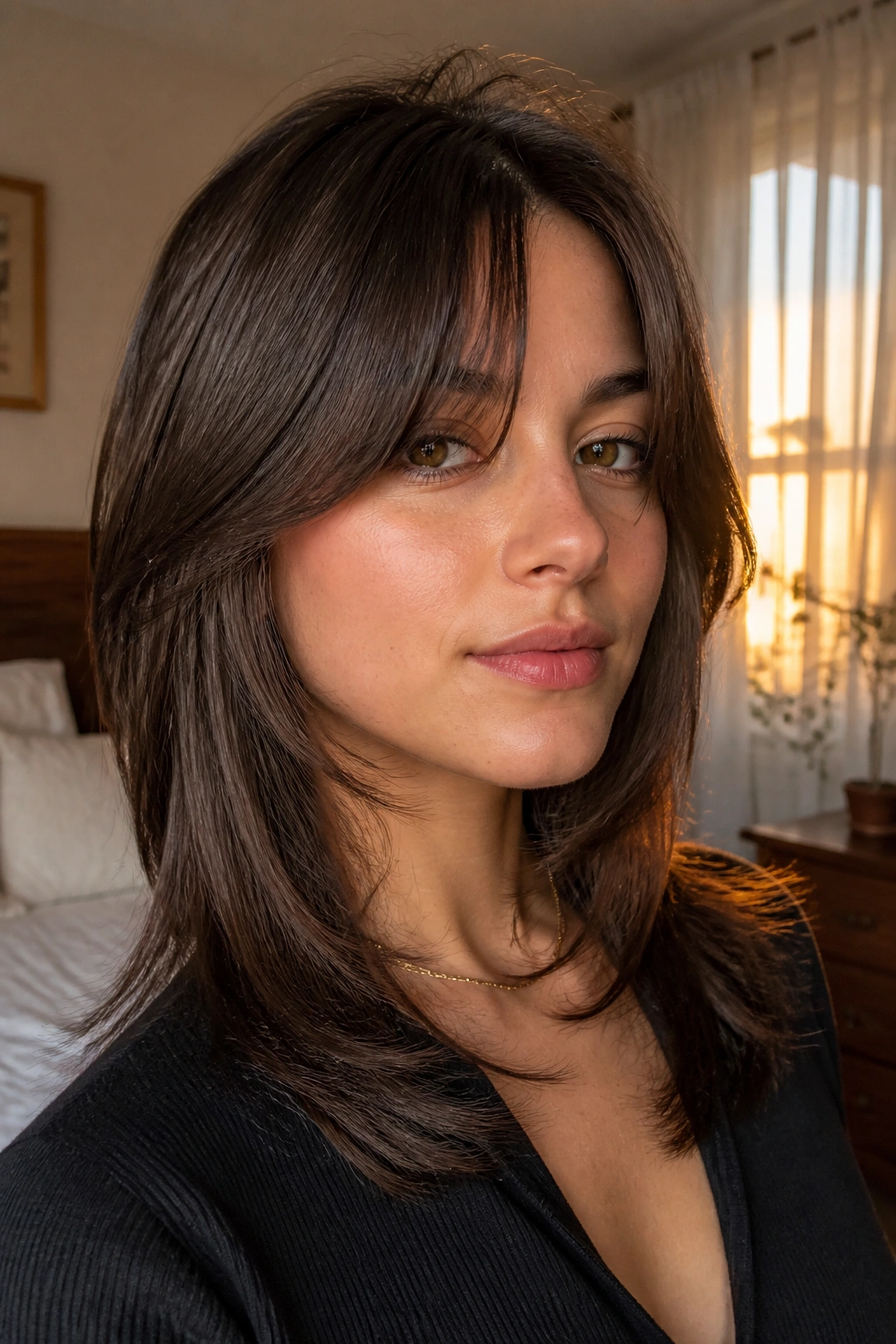
This is the safest place to start if you want a shag that feels flattering without looking too chopped up. The curtain fringe opens in the middle and bends away from the cheeks, which helps a round face look longer. The long layers should begin around the cheekbone or just below it, not right at the jaw.
Why It Flatters a Round Face
The face-framing pieces create a vertical line on each side of the face, which is the whole point. You get movement, but the movement falls downward instead of flaring outward. That tiny shift changes the whole read of the haircut.
Keep the fringe soft, not dense. If the front is too heavy, it can shorten the face. If it is too wispy, it can look unfinished and need constant fixing. The sweet spot is a fringe that splits easily, brushes the lashes, and blends into the first layer without a hard line.
Ask for:
- Long curtain bangs that start around the bridge of the nose or cheekbone
- Face-framing layers that begin below the chin
- Soft point-cut ends instead of blunt, choppy ones
- A collarbone-to-bust length, not a shoulder-jumping bob
Best styling tip: Blow the fringe away from the face with a small round brush, then let the rest of the hair fall loosely. A little bend is enough. You do not need a perfect curl.
2. Center-Part Razor Shag With Skimmy Ends
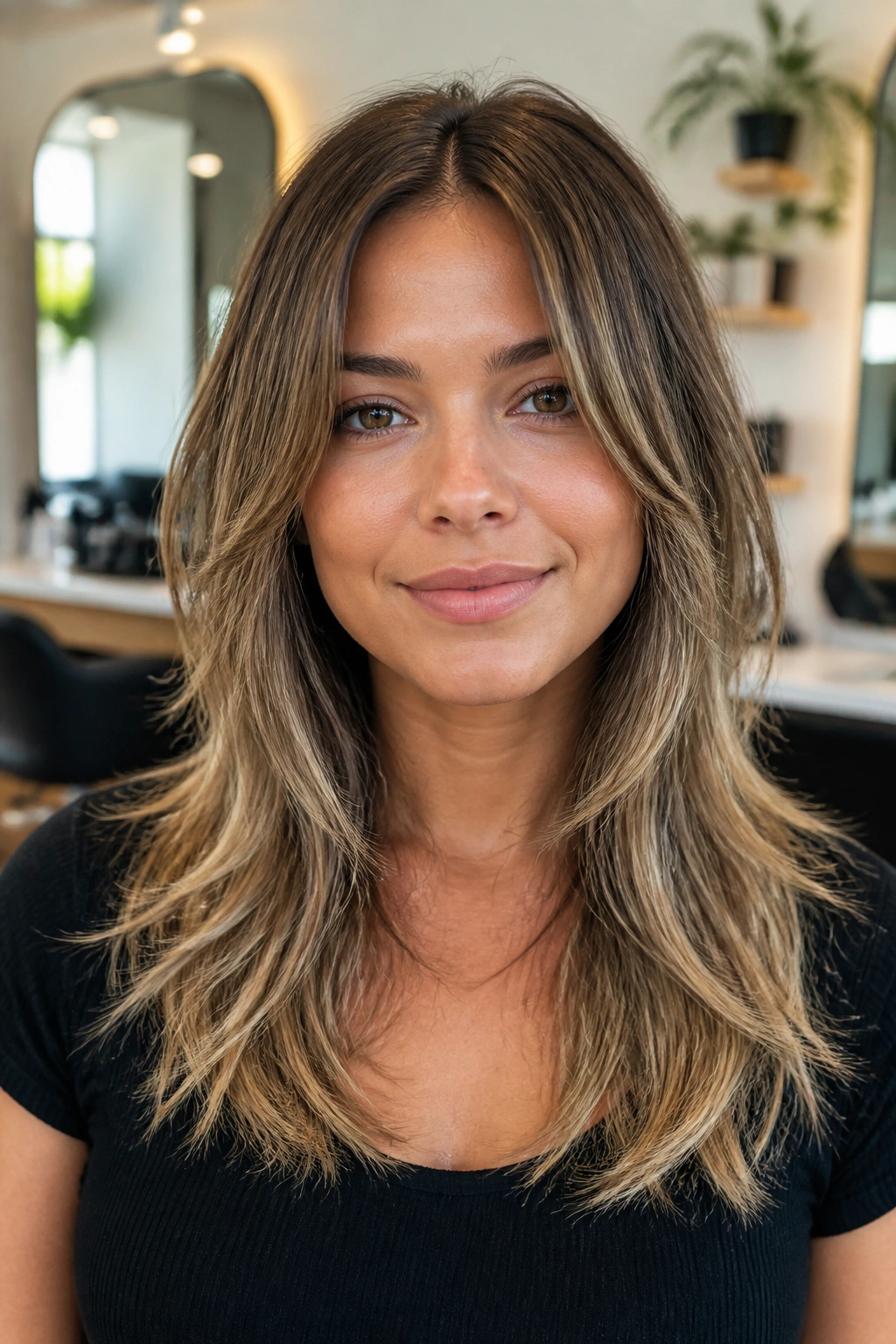
Want the cleanest way to make a round face look longer? Keep the part in the middle and let the ends stay light. A center part draws the eye straight down the face, and razor-cut ends keep the shag from feeling too bulky through the bottom.
Razor cutting gives the ends a soft, feathered finish, which helps the haircut move. It can look a little rebellious if it is pushed too far, so this version works best when the layers are long and the texturing is controlled. You want air, not shredded hair.
This cut is especially good if your hair already has some natural bend. Straight hair can wear it too, but the shape needs styling or it may fall flat around the jaw. A quick bend with a flat iron or a loose wave from a large iron keeps it from looking stringy.
Nope, this is not the shag for someone who wants blunt fullness. It is for someone who likes motion and doesn’t mind a little edge. Ask your stylist to keep the shortest pieces below the cheekbones so the width stays low, not high.
3. Loose Wave Shag That Sits On the Shoulders
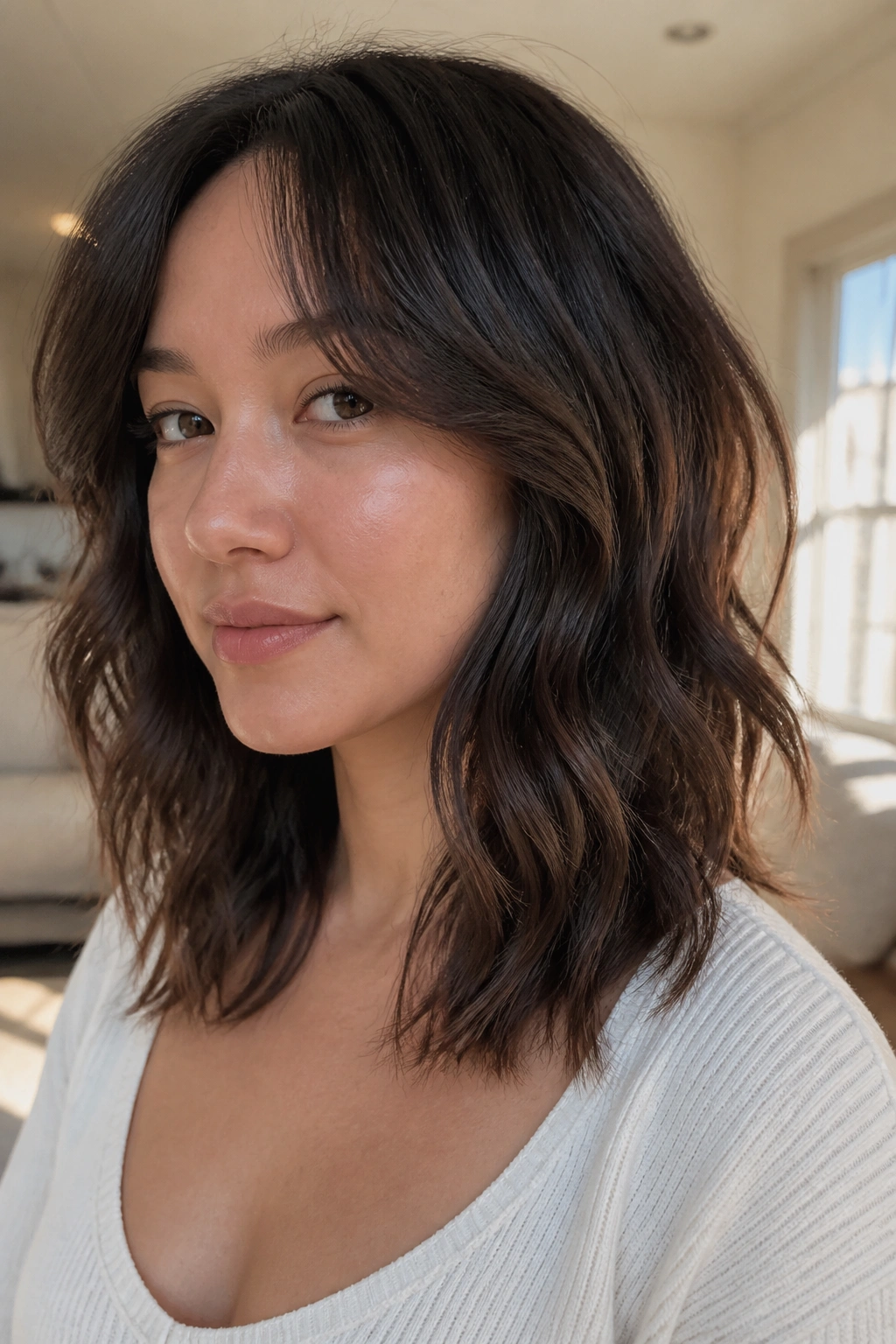
A round face and shoulder-grazing waves get along better than most people expect. The trick is making the wave pattern loose enough that it reads as length, not volume. Soft bends around the shoulders create movement while the longer length keeps the whole silhouette stretched.
Where the Movement Should Sit
Put the wave mostly in the mid-lengths and ends. If you curl from the root, the shape can puff out near the cheeks, which is not what you want here. A round face usually looks best when the fullness starts lower.
The layers in this cut should be visible, but not dramatic. A few slivers around the face, some soft bits through the back, and enough weight left at the bottom to keep the shape grounded. That balance matters more than people think.
If your hair is naturally wavy, this is one of the easiest long shag options to live with. A little leave-in cream, a quick scrunch, and you’re done. Straight hair can wear it too, but the styling takes more work.
- Use a 1-inch or 1.25-inch iron if you want loose bends
- Leave the last inch of the ends out for a softer finish
- Flip the front pieces away from the face
- Keep the wave pattern uneven so it looks relaxed, not curled by a machine
4. Deep Side-Part Shag With Long Sweep
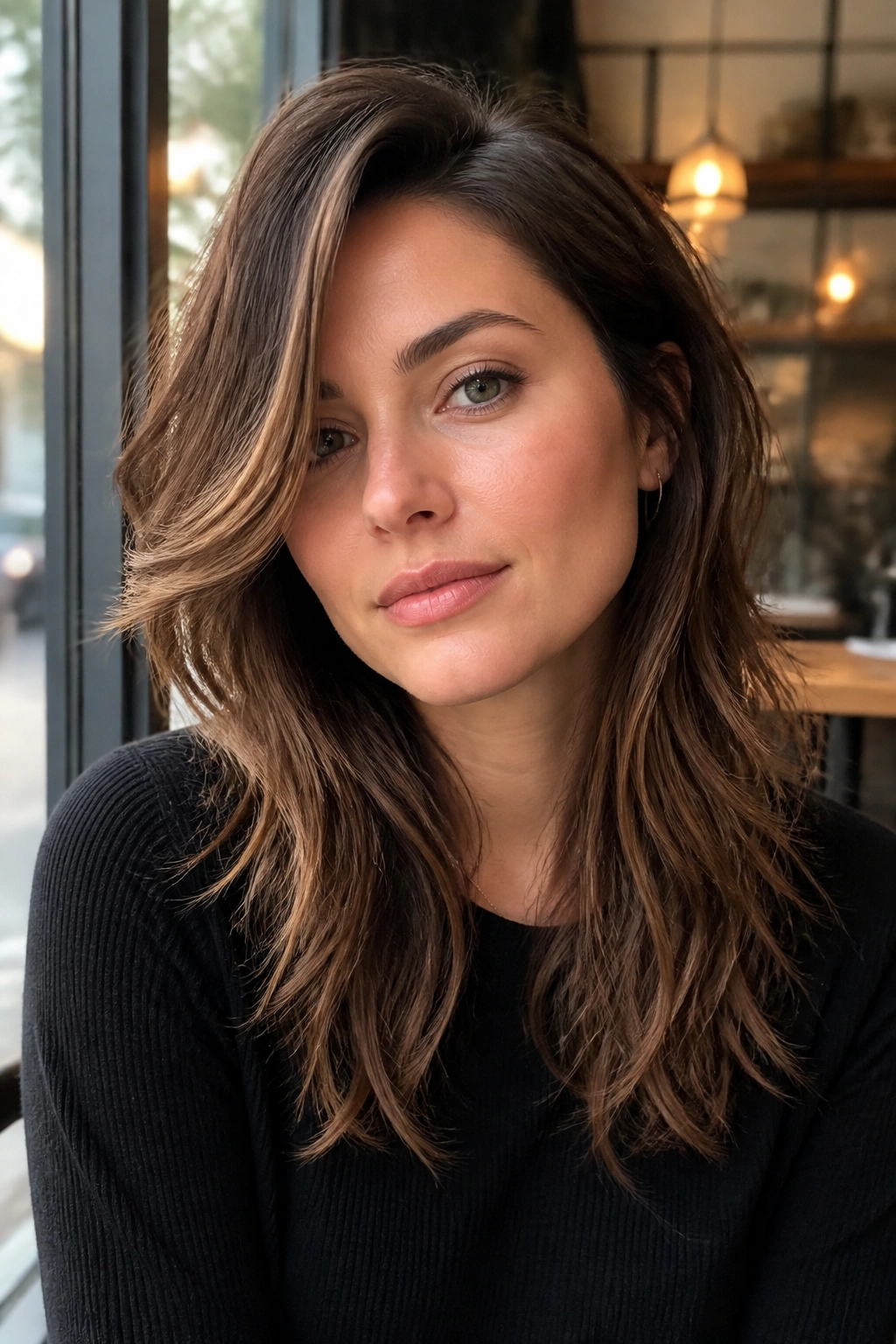
A side part is not old-fashioned here. It is one of the easiest ways to break up the symmetry that can make a round face look broader than it is. The deeper the part, the stronger the diagonal line across the forehead and cheek area.
That diagonal line matters. It cuts across the width of the face and makes the haircut feel a little sharper without needing harsh layers. If you’ve ever tried a straight-across fringe and felt it made your face look shorter, this is the cleaner fix.
The long sweep in front should start near the brow and fall into the cheekbone area, then blend into the rest of the shag. Don’t push the front too high. High root lift at the part can work against you if your hair is already full.
This one suits people who want a softer, slightly glamorous shag rather than the lived-in, rocker version. It can look polished with a blowout or undone with a bend. Either way, the side part does the heavy lifting.
5. Feathered Layers That Start Below the Chin
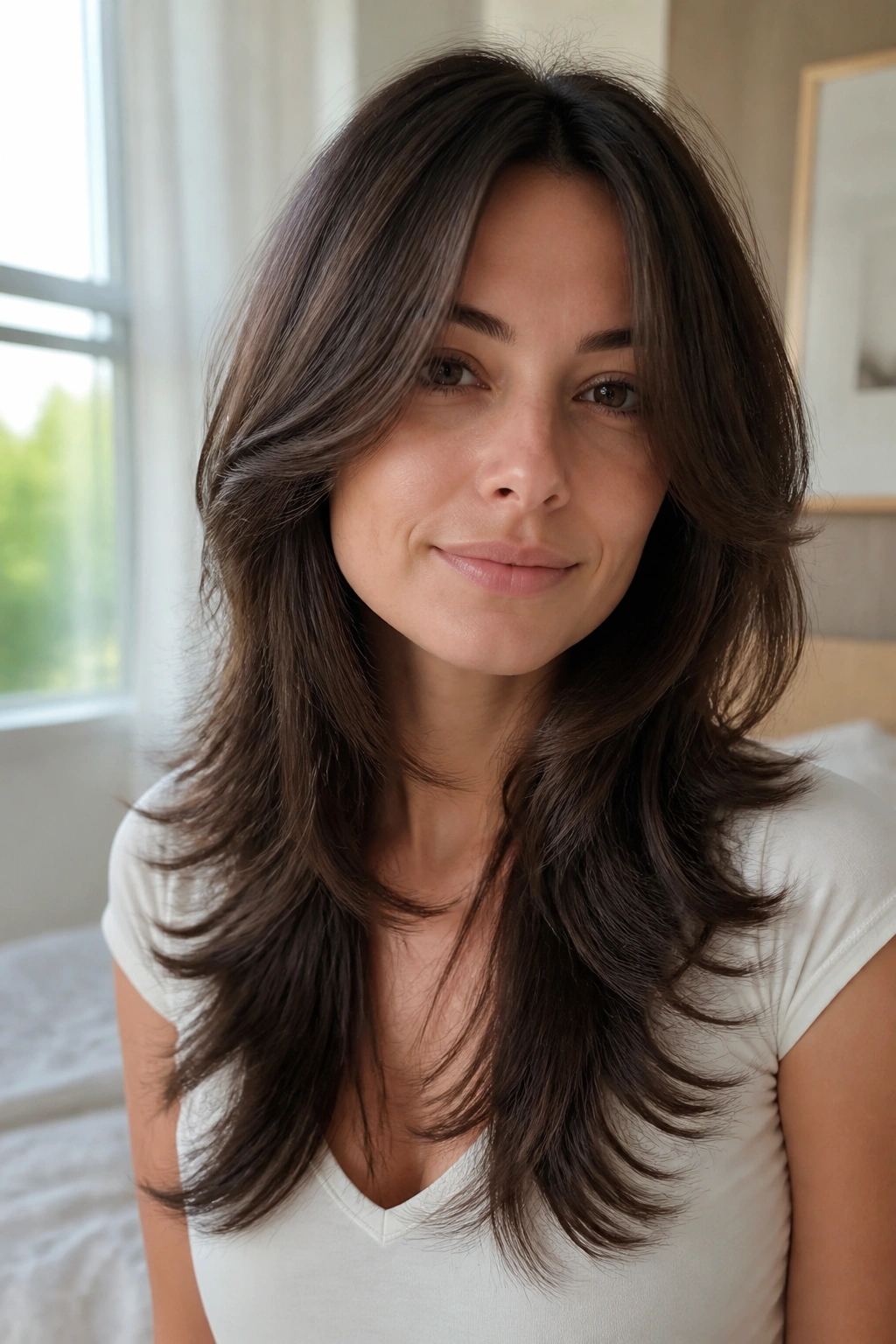
Feathered ends have a bit of an old-school feel, and I mean that in the best way. They move like air. On a round face, feathering works best when the layers start below the chin so the widest part of the face doesn’t get extra width right where you don’t want it.
The Sweet Spot
Below the chin is the key phrase here. Not at the jaw. Not right under the cheeks. Below.
That placement lets the layers skim the lower part of the face and then continue into the length. The haircut feels light, but the face still looks open and long. If the feathers start too high, the effect turns fluffy. And fluffy at cheek level is a trap.
This style is useful for hair that has enough density to hold shape but not so much that it needs major debulking. It also works nicely with a soft round brush finish, because the ends can flip under or out without looking overdone.
A good feathered shag should swing when you turn your head. If it sticks out in little shelves, the layer placement is off. That’s the main thing to watch.
6. Crown-Volume Shag With Soft Lift
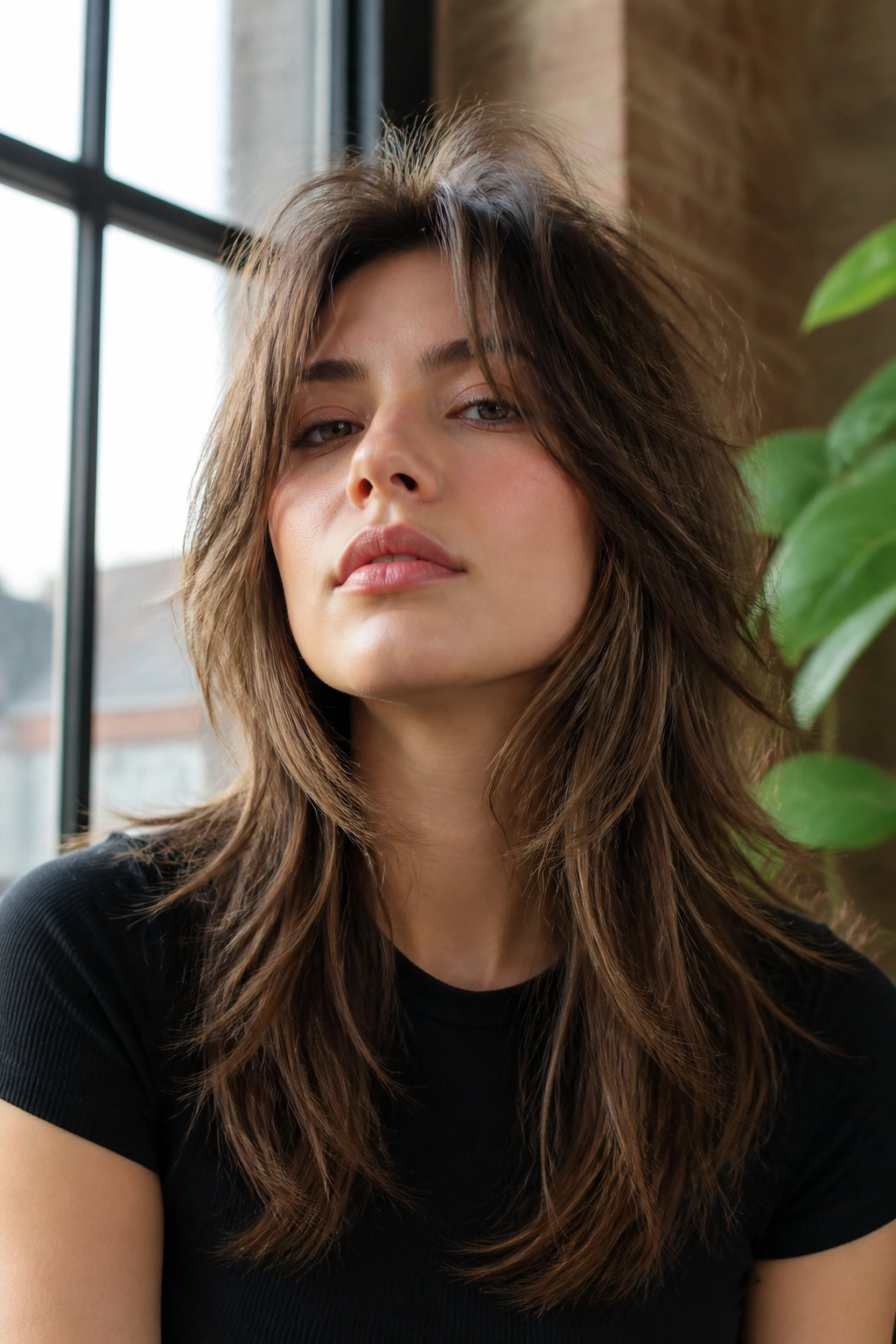
Up top. Not at the cheeks.
That’s the whole point of this version. A round face can handle volume when the lift stays near the crown and the sides remain long and loose. Think of it as height where you need it, length where you want it.
The top layers should be short enough to create lift but not so short that the cut turns into a mini mullet. The sides need to stay softer and heavier so they keep the face from widening. It sounds simple. It is, but only if the shape is controlled.
How to Style It Without Puffing the Sides
- Blow-dry the roots upward at the crown using a medium round brush
- Keep the side sections pointed downward while they dry
- Use a lightweight mousse, not a sticky paste
- Finish with a few bends through the lower half only
This is a strong choice if your hair falls flat on top. The crown lift gives the shag its attitude. Still, the style should never look like two separate haircuts fighting each other. The top should support the length, not compete with it.
7. Invisible-Layer Shag With a Blunt-Looking Outline
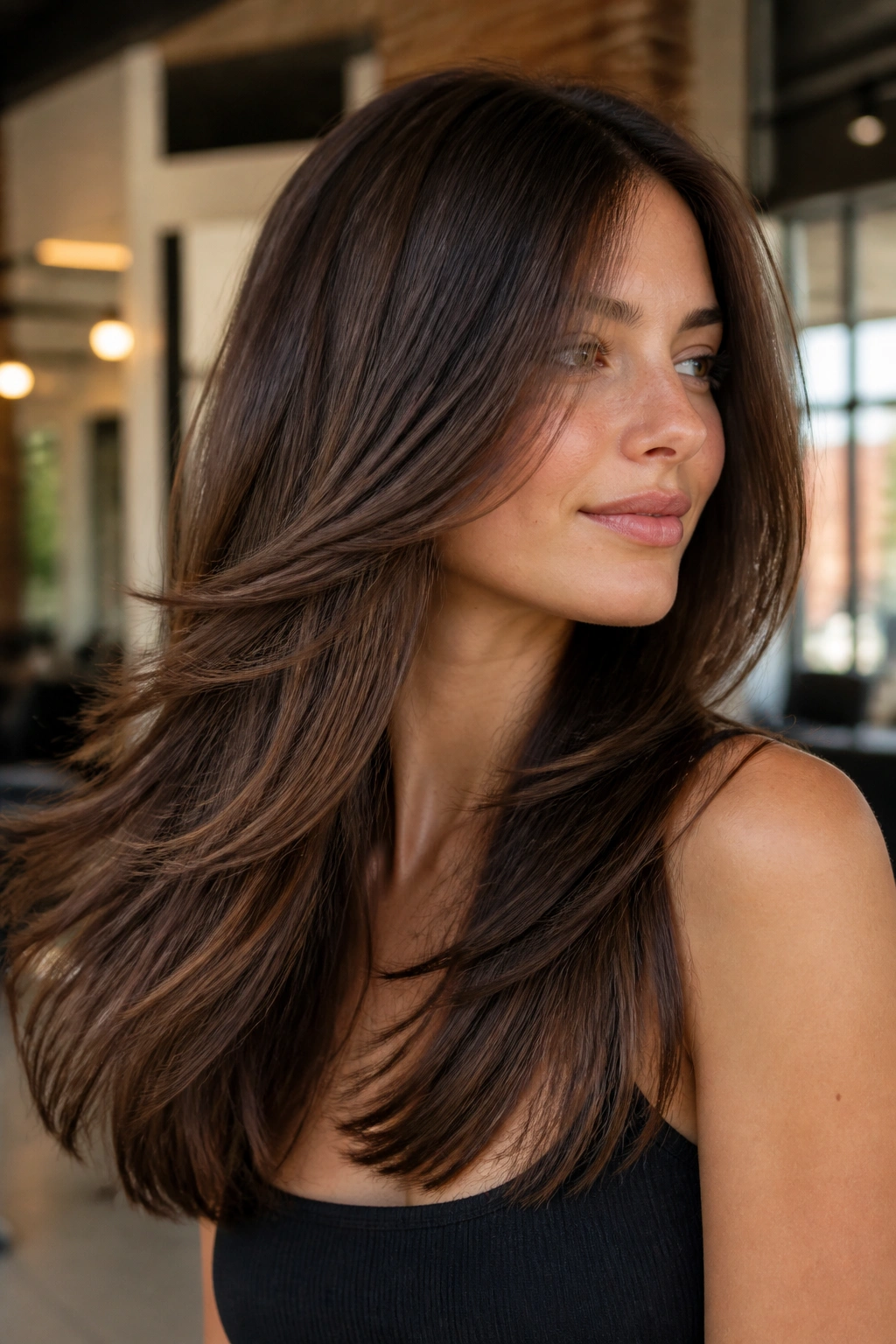
Three inches of hidden layering can change the whole haircut.
That’s the secret here. From the outside, the shape still looks full and long. Inside, the weight gets removed so the ends can move and the hair doesn’t sit like one heavy sheet. For round faces, that matters because a bulky outline can make the cheeks look wider than they are.
This version is ideal if you like long hair and do not want an obviously choppy shag. The cut stays polished from a distance, but once it moves, you get the softness and swing that make a shag worth wearing in the first place.
The mistake to avoid is over-texturizing the bottom. If too much length disappears, the haircut can get fuzzy and uneven. Ask for long internal layers, not short shards. That phrase alone will save you from a lot of bad salon outcomes.
What to Ask For
- Long internal layers that remove bulk without exposing too much scalp
- A perimeter that still looks full from the front
- Soft texturing only through the mid-lengths
- No harsh graduation at the jawline
8. Piecey Beach Shag With Air-Dried Texture

I like this version best when the hair already has a little bend in it. It does not fight natural movement; it lets it do the work. The result feels easy, a little messy, and very wearable around a round face because the pieces fall in separate lines rather than forming one wide curve.
The key is piecey separation. You want strands to live in their own little lanes. That stops the haircut from puffing out across the cheeks. A touch of mousse at the roots and a light cream through the ends are usually enough.
This style is also forgiving on busy mornings. Scrunch, diffuse a little if needed, and leave it alone. Too much touching can make the texture frizzy, especially near the face.
For a round face, keep the shortest pieces below the cheekbones and let the ends stay longer than you think you need. The extra length keeps the beachy texture from widening the middle of the face.
9. Money-Piece Shag With Bright Front Panels
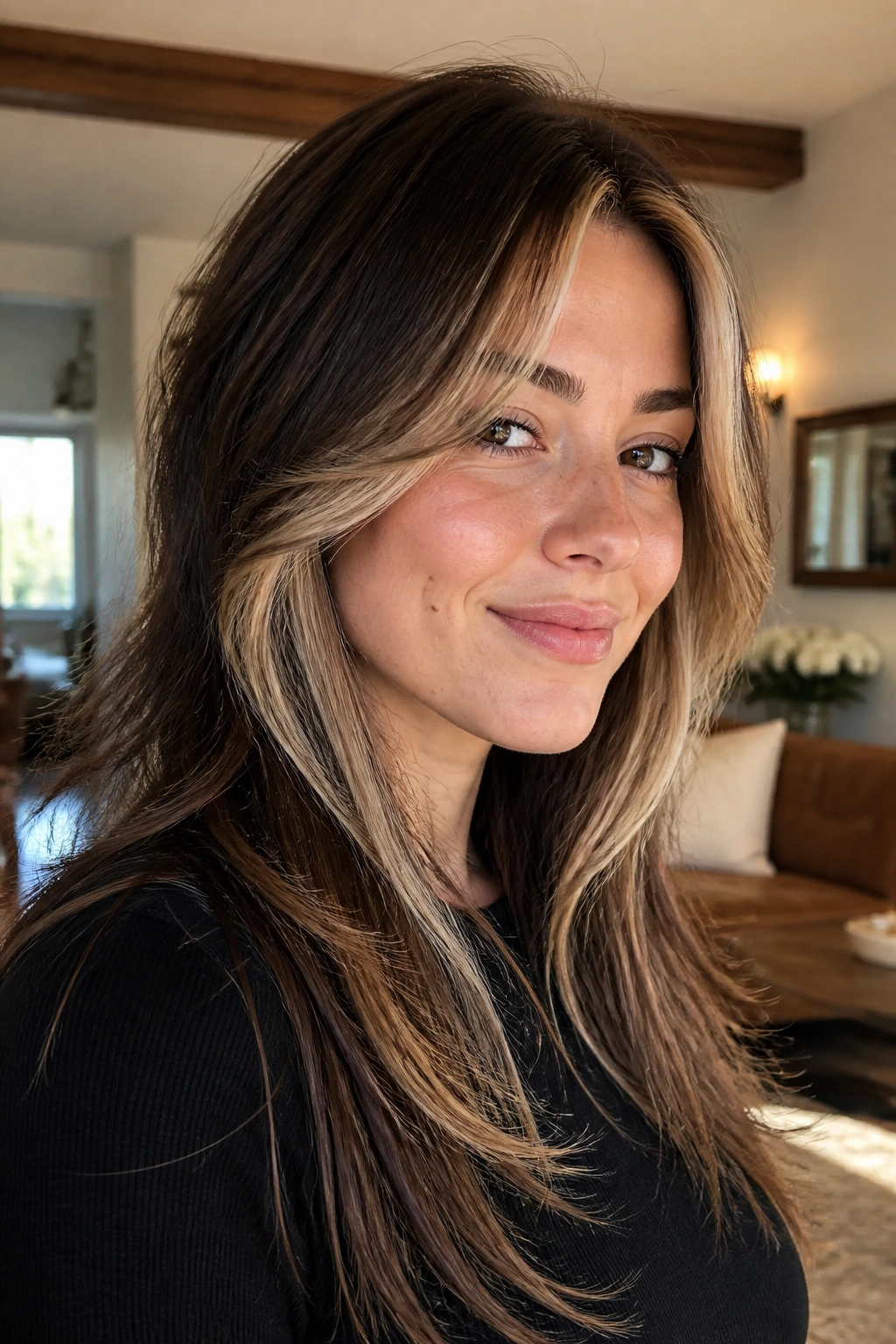
A bright front panel changes how the eye reads the face. That is why a money-piece shag can work so well on a round face. The lighter strands near the front pull attention to the vertical frame instead of the width at the cheeks.
This does not need to be blonde. It can be caramel, copper, honey, or a shade only a touch lighter than the base. What matters is the placement. The front pieces should live around the cheekbone and cheek-jaw zone, then fade into the longer layers.
If the face frame is too short, the effect can turn boxy. If it is too wide, the color highlights the width instead of softening it. Keep it long and narrow. That’s the move.
This is a sharper, more styled-looking shag, so it suits people who don’t mind a bit of maintenance. The payoff is a haircut that reads intentional even on a simple blow-dry day. The contrast does a lot of the visual work for you.
10. Sleek Straight Long Shag
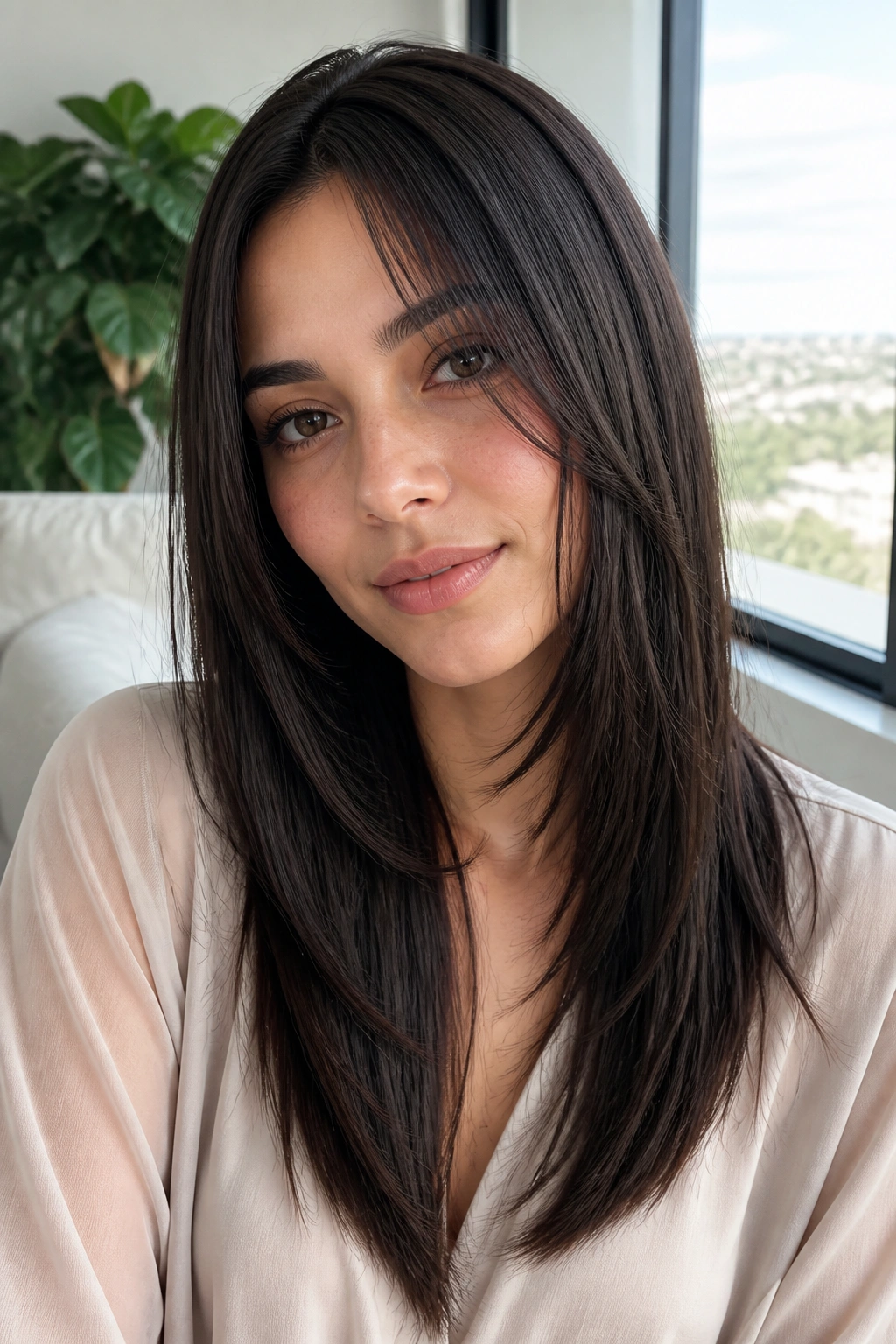
Can a shag look polished? Absolutely. It just needs long layers and a straight finish that keeps the hair moving down instead of out. For round faces, that sleekness is useful because vertical lines make the face read longer almost instantly.
The important part is not turning the cut into a blunt one-length style. You still want internal shaping and soft face-framing pieces. Otherwise, the haircut loses the shag feeling and becomes heavy at the bottom. That’s a boring place to land.
A flat iron can smooth the ends, but don’t press the whole head into perfection. Leave a slight bend near the front pieces so the shape still feels alive. Pin-straight can work, but it often looks harsher than you want on a round face.
This version is good for people who like their hair tidy. It’s also one of the best options if your work wardrobe leans clean and structured. The cut stays long, but the edges stay sharp enough to feel deliberate.
11. Thick-Hair Shag With Internal Debulking
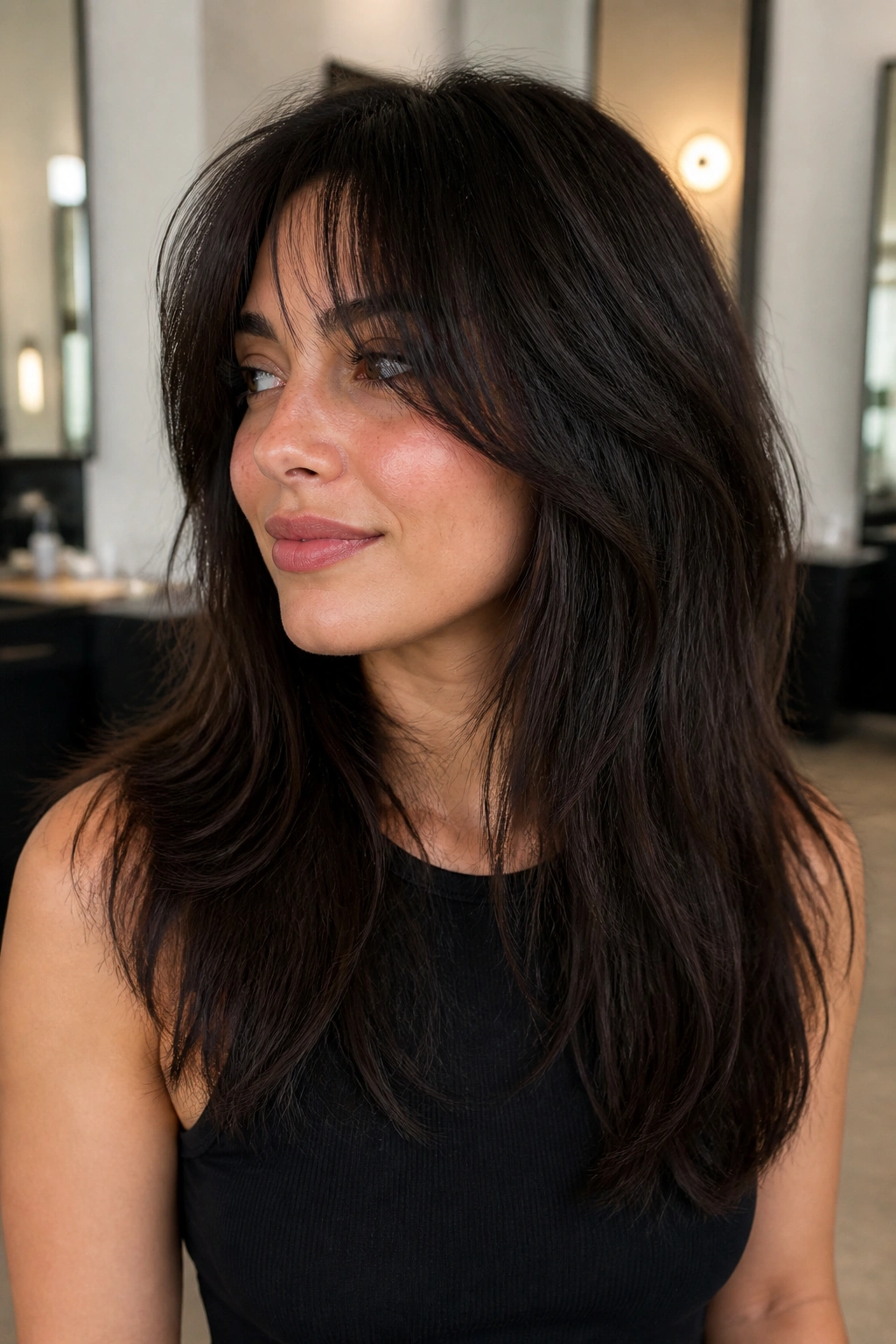
If your hair grows outward before it grows down, this cut matters.
Thick hair can make a shag look gorgeous or bloated, and the difference usually comes down to where the weight is removed. For a round face, you want the bulk taken out inside the shape, not at the perimeter. The outside line should still hang long enough to narrow the face.
What Makes It Work
The stylist should use slide cutting or controlled point cutting to remove density in the interior. That keeps the hair from mushrooming at the cheeks and jaw. Too much surface texturing, though, can leave the ends fuzzy and broken-looking. That’s not a good trade.
This version often needs more length than people expect. Thick hair springs up when it dries, so the cut should sit lower on the chest or at least past the collarbone. If you cut it too short, it may bounce right back into a wide shape.
A good thick-hair shag has movement, but it also has discipline. The layers should support the shape instead of making it explode outward. That part is nonnegotiable.
12. Fine-Hair Shag With Root Lift

Fine hair does not need a pile of tiny layers. That’s one of the biggest mistakes I see. Too many short layers make the ends look thin and leave the face looking even rounder because the hair starts to spread instead of fall.
The smarter move is a long shag with subtle layers and a little root lift at the top. Keep the perimeter full. Keep the face frame soft. Use volume where the eye wants to go upward, not around the cheeks.
A lightweight mousse or root spray works better here than heavy cream. Heavy product can collapse the cut by lunch. And once fine hair goes flat, the shape disappears fast.
This style likes a round brush or a velcro roller at the crown. Five minutes is often enough. You are not trying to build a big blowout; you are just trying to keep the top from lying on your scalp like a nap.
13. U-Shaped Long Shag With A Curved Hemline
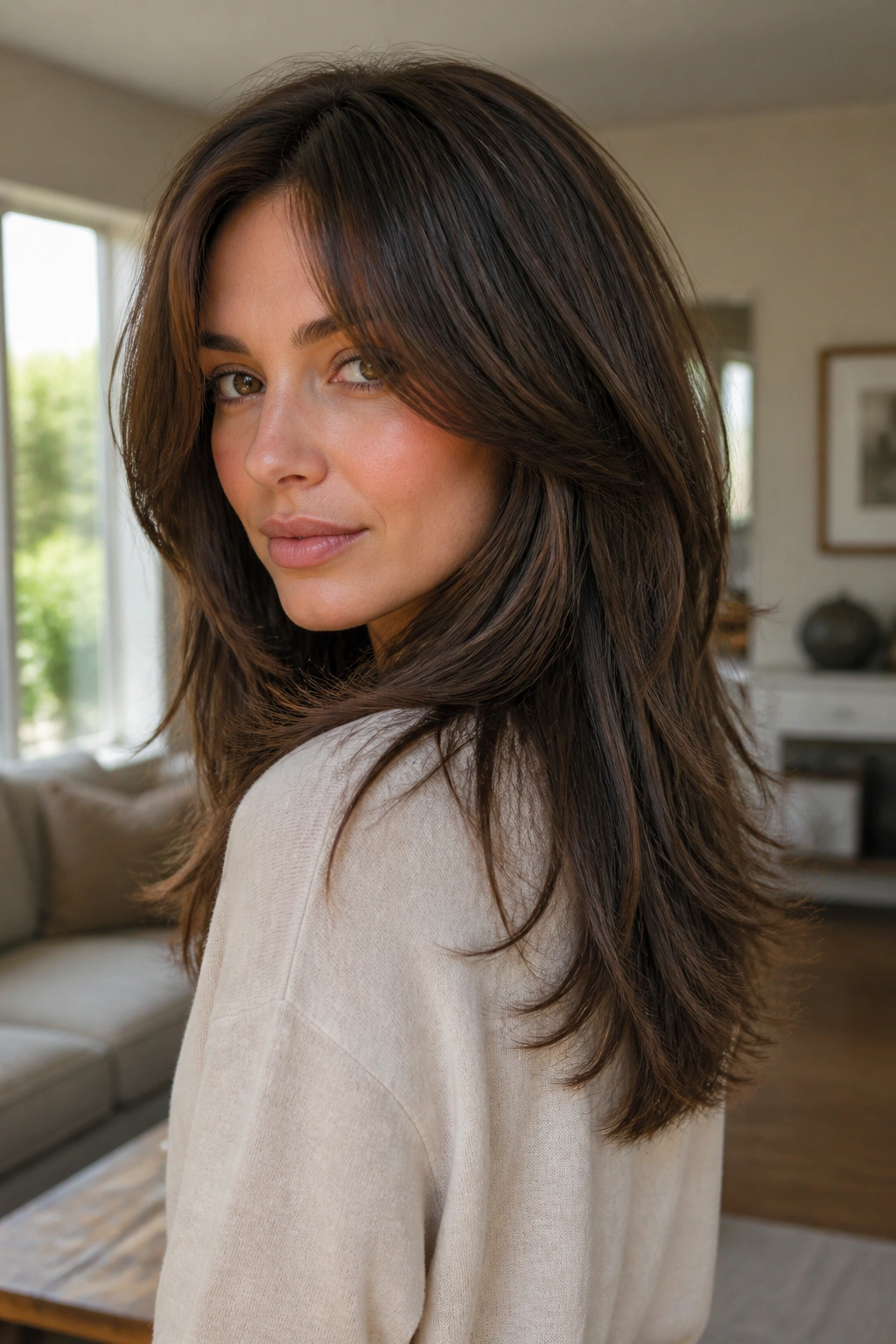
From the back, the hemline should look like a soft smile. That U-shape is part of why this haircut flatters round faces so well. It keeps the length centered and slightly longer in the middle, which draws the eye down the back and away from the widest parts of the face.
The layers sit inside that curve, not on top of it. That way the cut feels plush and long, never chopped flat. It’s a good option if you like hair that still feels feminine and smooth rather than edgy and fragmented.
Where the Curve Should Sit
The shortest front pieces should still land below the cheekbones or just at the chin, depending on your face shape and density. The back should stay longer. That difference gives the haircut its shape and helps the face look a little narrower.
This is one of the most forgiving versions for people who wear their hair half-up a lot. The U-shape still shows when the hair is pulled back, and the long front sections keep the face frame in place. Handy. Very handy.
14. Bottleneck-Bang Shag With Tapered Fringe
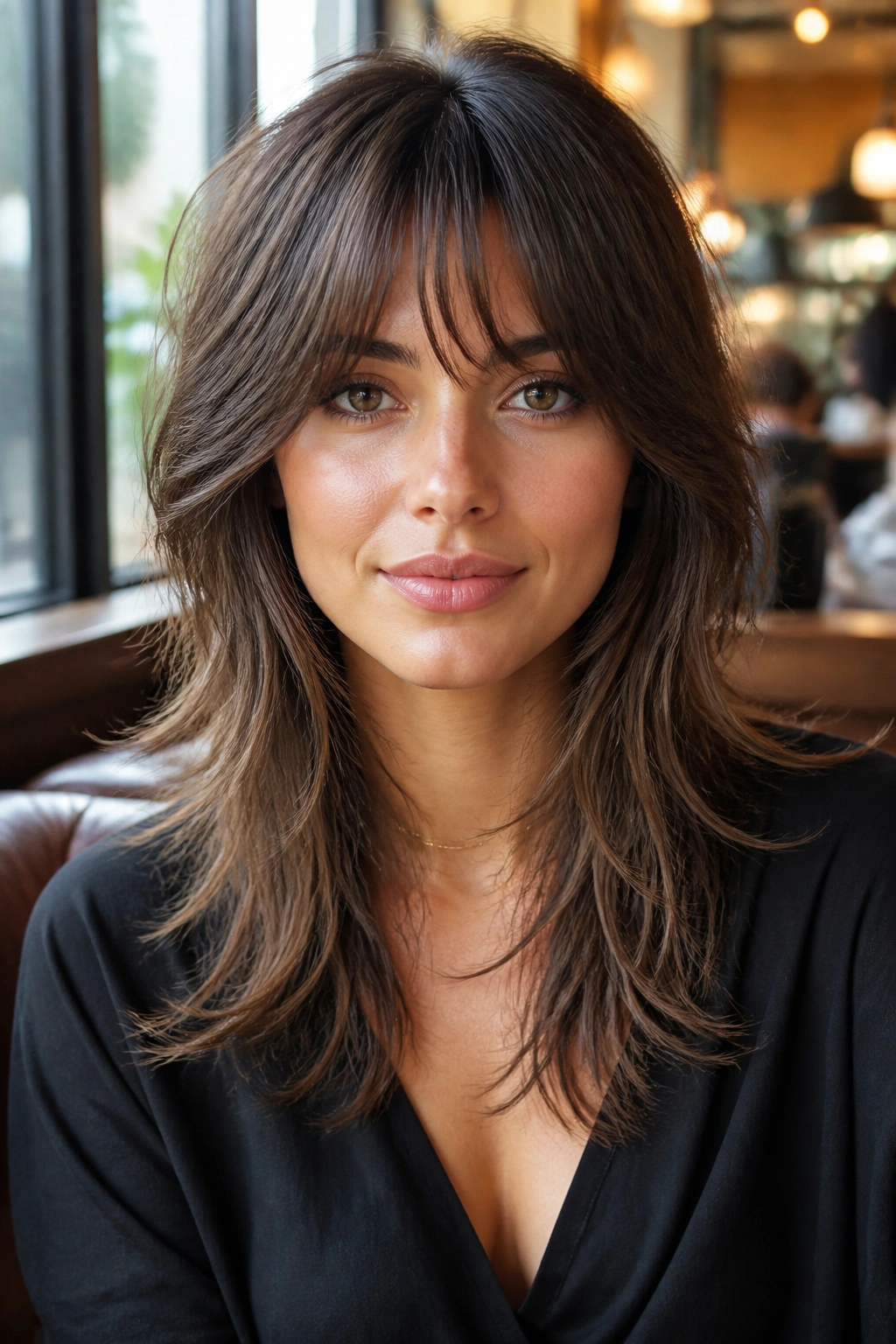
Narrow at the top. Wider at the cheeks. That’s the whole trick.
Bottleneck bangs are one of the smartest fringe choices for round faces because they start slimmer near the center of the forehead and widen as they move down toward the cheekbones. That shape helps frame the face without cutting it in half the way a straight fringe can.
The long shag around it should stay soft and layered, not too shredded. The bangs need enough length to blend into the side pieces, or they’ll look disconnected. If you wear glasses, this version can still work, but the fringe has to be cut with extra care so it doesn’t crowd the frames.
A small round brush or a quick bend with a flat iron usually gives the bangs enough shape. Keep them airy. Heavy bottleneck bangs lose the whole point of the style.
This cut is a good middle ground for people who want fringe but hate the idea of full curtain bangs.
15. Wolf-Light Shag With Softer Attitude
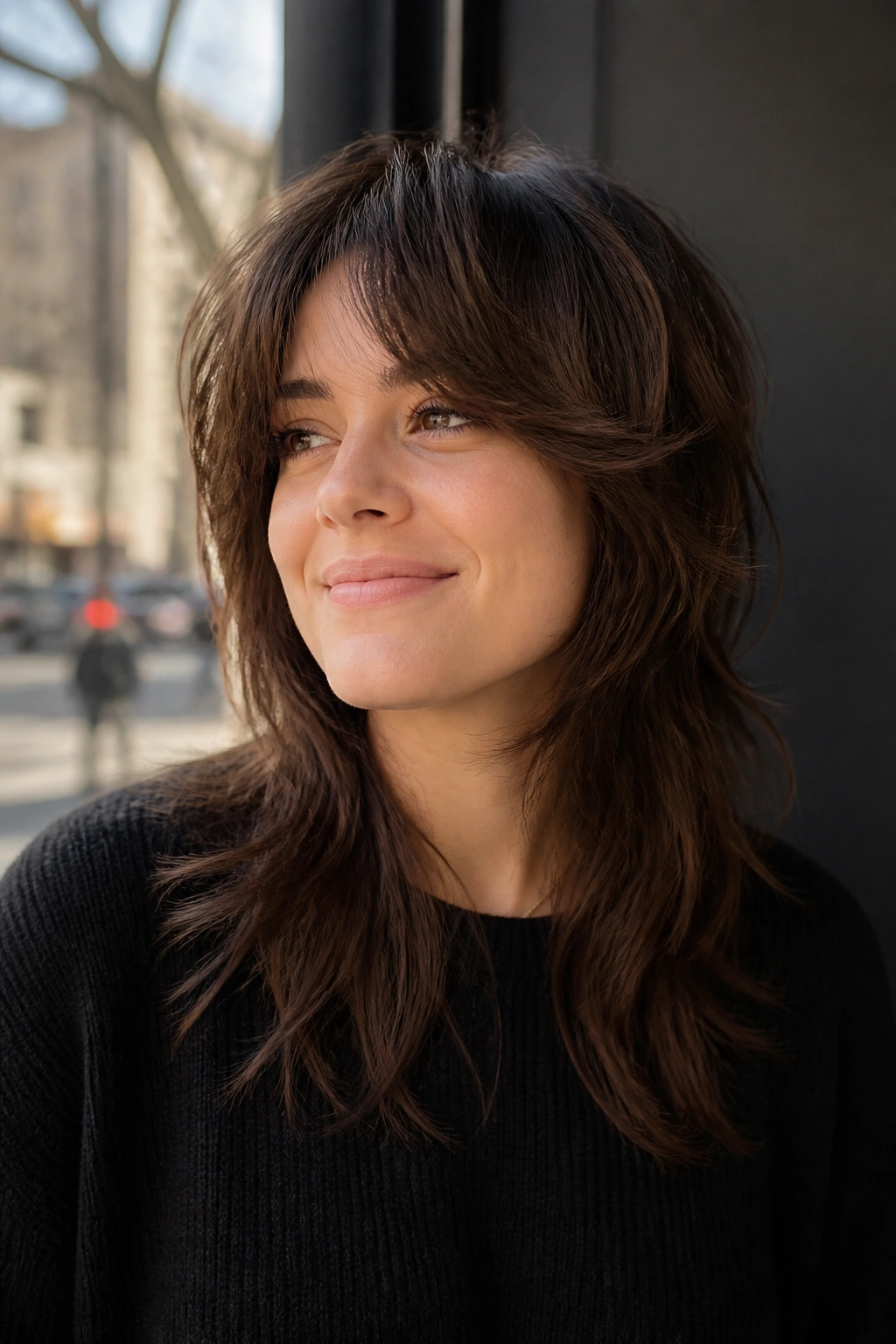
Two things make this version easier to wear: less height and longer ends.
A full wolf cut can get dramatic fast, especially on a round face. The softer version keeps the shag energy but pulls back on the extreme crown volume and the short, choppy top. That lets the face stay open while the haircut keeps its edge.
The layers should still move, but they should not start so high that the face becomes the loudest part of the cut. Long sides, soft crown, and tapered ends are the formula here. That balance stops the silhouette from turning too wide through the upper half.
This is a good choice if you like a little rock texture without looking like you raided a vintage band poster. It can be air-dried, curled, or blown out. The shape is flexible, which is part of why people keep coming back to it.
If you want more attitude without more bulk, this is the one to show your stylist.
16. Air-Dry Natural Curl Shag
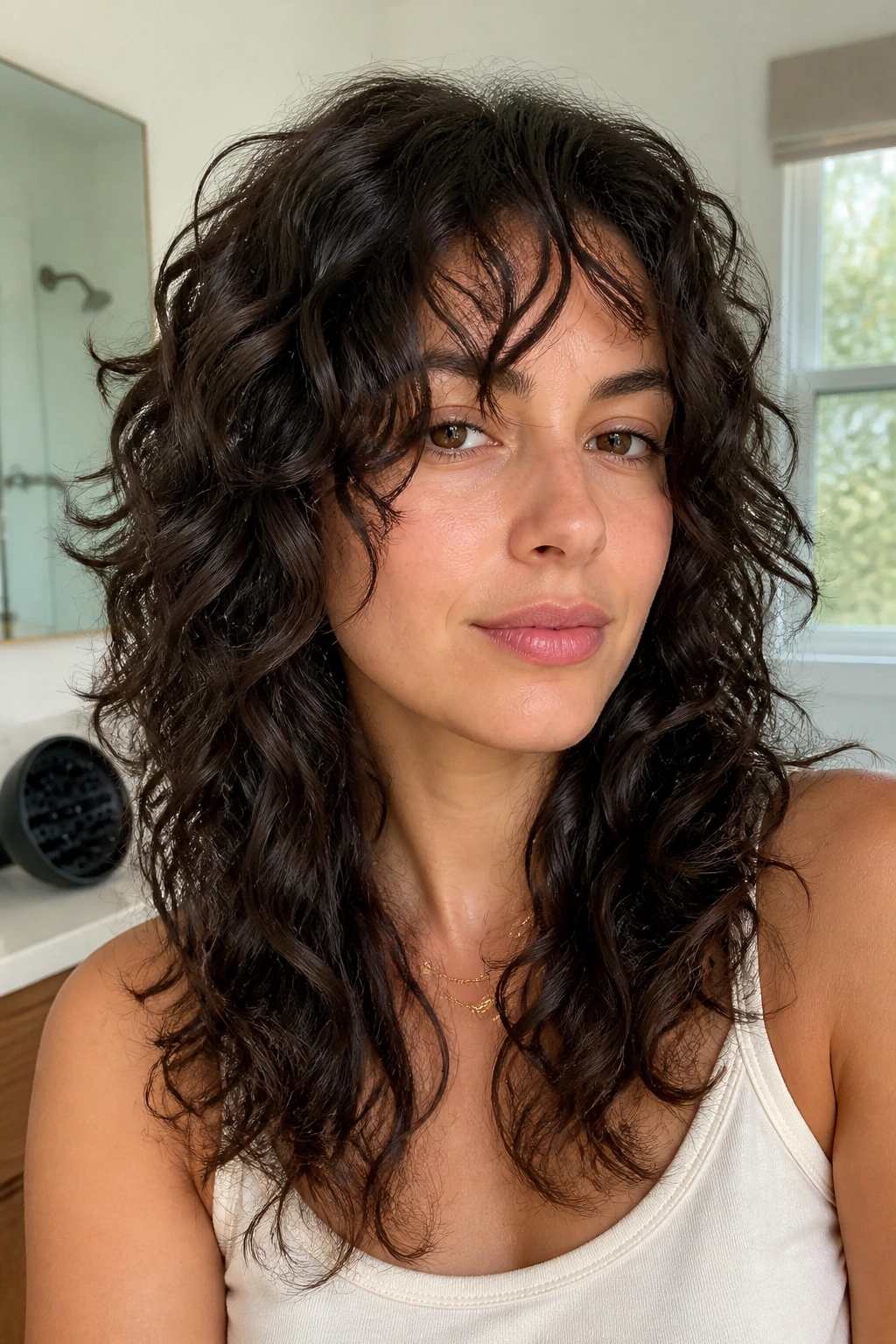
I reach for this shape when curls need room, not control. A round face can look lovely with curls in a shag cut, but the layers have to follow the curl pattern instead of fighting it. That means keeping the front pieces long enough to prevent extra width around the cheeks.
Cutting curls dry, or at least mostly dry, helps the stylist see where the hair actually lands. Wet curls lie. They shrink, spring, and sometimes do all three at once. If the cut is made too short in the front, the result can sit right at the widest point of the face. Not ideal.
The best curl shag has layers that encourage curl clumps rather than breaking them apart. A little leave-in, a cream, and a diffuser can be enough. Heavy brushing is the quickest way to ruin the shape.
This is one of the most natural-looking options on the list. It does not need to pretend to be polished. It just needs to fall in the right places.
17. Blowout Shag With Flipped Ends
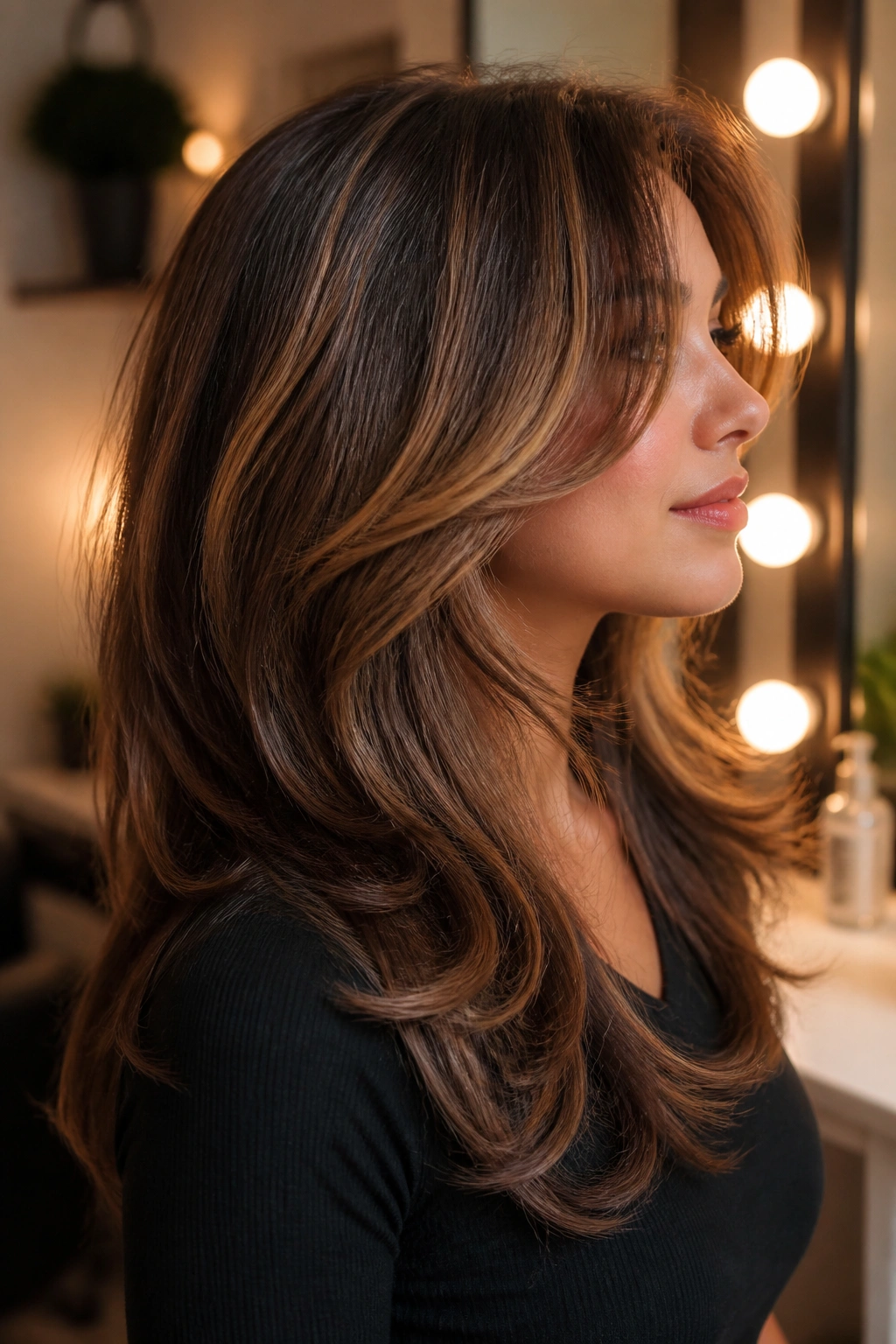
Blow-dried movement can do more than curling can.
A round brush and a decent blowout make the long shag feel soft around the face and smooth at the ends, which is useful if you want round-face slimming shape without the messier texture. The ends can turn slightly out or under, but they should stay light. That movement keeps the cut from feeling heavy.
The face frame matters a lot here. Long side pieces should start low and sweep past the cheekbone before they flick away. Shorter front layers can work, but they need to be controlled. If they sit at the cheek, the blowout may puff wider than you want.
This style looks especially good with a side part or a loose center part. It gives the shag a little salon finish while still keeping the shape relaxed. If you like hair that looks styled but not frozen, this is a strong pick.
18. Choosing the Right Low Long Shag for Your Round Face

So which version should you actually ask for? Start with your hair texture and how much time you want to spend in the mirror. That matters more than the trend label on the cut.
If you want the least fuss, the invisible-layer shag or the air-dry curl shag is the easiest road. If you want the face to look a little longer right away, go for the curtain fringe, bottleneck bangs, or a deep side part. If your hair is thick, ask for internal debulking. If it’s fine, keep the layers longer and lighter so the ends don’t look see-through.
The biggest favor you can do for a round face is keep the width low. Let the lift live at the crown or the top of the head. Let the movement fall below the cheekbones. That one rule separates a shag that flatters from a shag that turns puffy in all the wrong places.
And if you’re stuck between two versions, choose the one with more length. Hair grows, but a haircut that’s too short at the cheeks takes patience to fix.
