



Fine hair can go flat before lunch. That is exactly why boho shag haircuts for fine hair keep staying on my radar: they can add movement without turning the ends into scraps.
The trick is not “more layers” in the vague salon sense. Fine hair needs a shape that keeps enough weight at the bottom to look full, then uses soft interior layers, face framing, or a wispy fringe to make the whole cut feel lighter. If the layering gets too aggressive, the haircut starts to look see-through. I have seen that happen more times than I’d like.
There’s also a big difference between fine hair and thin hair. Fine means each strand is small in diameter. Thin means there may be fewer strands overall. A person can have dense fine hair and wear a much shaggier shape than someone whose hair is sparse and delicate. That one detail changes everything.
So the cuts that make the most sense here are the ones that keep the perimeter honest, let the crown move, and avoid that chopped-up, over-textured look that makes ends disappear. Some lean soft and bohemian. Some lean short and cheeky. A few are quietly practical, which, frankly, is where the smartest haircuts usually live.
1. Collarbone Boho Shag With Soft Ends

The collarbone is a sweet spot for fine hair. It gives the hair enough length to swing, but not so much that the ends collapse into a limp curtain by midday.
Why It Works on Fine Hair
A collarbone-length boho shag keeps the bottom line visible, which matters more than people think. Fine hair needs a shape that reads as hair, not haze.
- The length lands where the shoulders can help support movement.
- The first layer starts below the chin, so the front stays full.
- The ends are point-cut softly, not shredded into dust.
- A light mousse at the roots gives lift without stiffness.
Ask for a blunt-enough perimeter so the cut still looks thick when you wear it straight. That one detail keeps the shag from going wispy.
2. Curtain-Bang Boho Shag
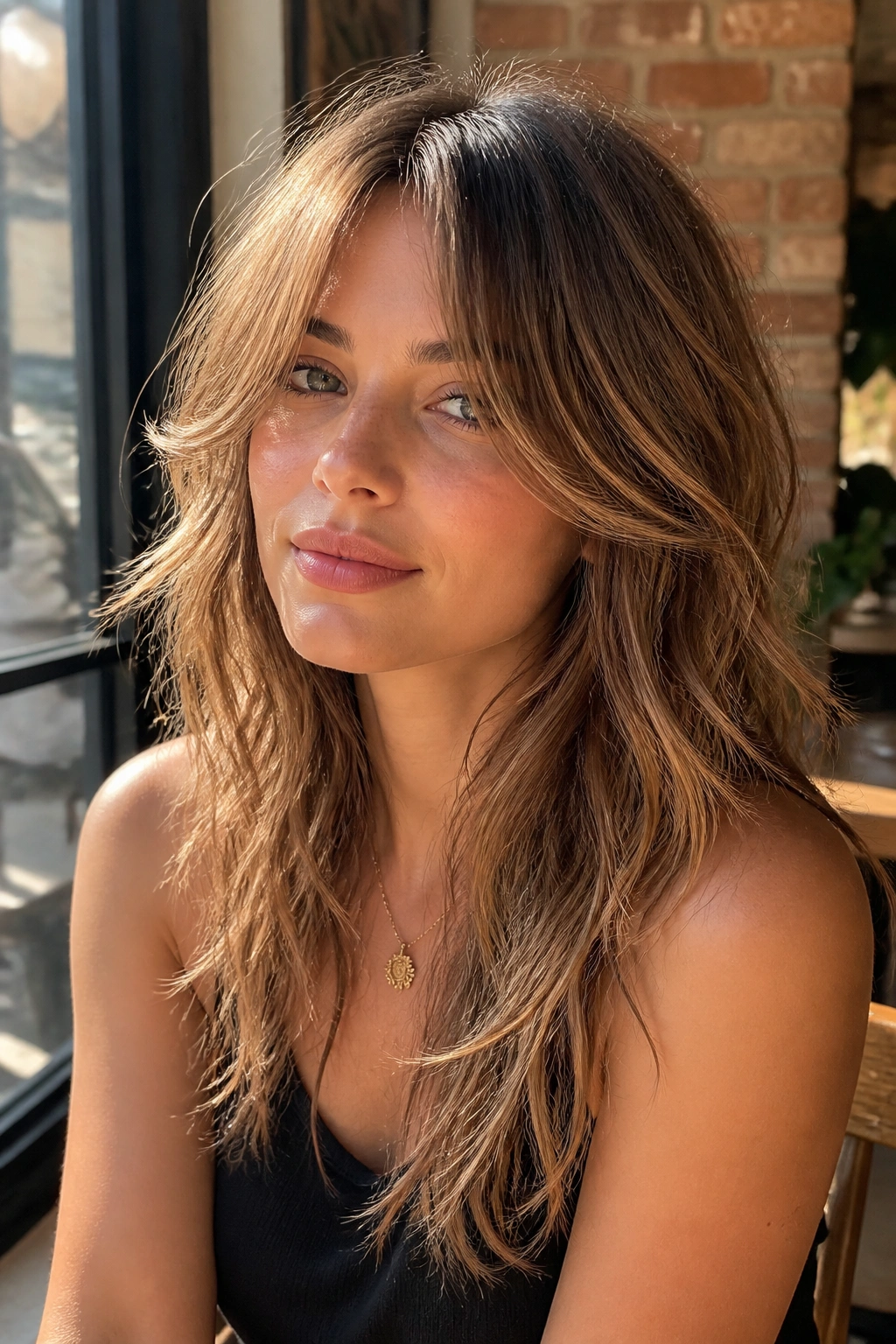
Curtain bangs are the easiest way to make a shag look soft without stripping away too much hair. They open the face, add shape around the eyes, and do a lot of the work that heavy layers would otherwise have to do.
The catch is length. On fine hair, curtain bangs that are cut too short can stick out or separate in thin little strands. I like them grazing the cheekbones or sitting just under them, with enough length to tuck behind the ears on lazy days. That gives you swing without that chopped fringe look.
Styling matters here, but not in a fussy way. Blow-dry the bangs away from the face with a round brush, then let them cool in a gentle curve. If you want a little more polish, clip them in place for five minutes while they cool. That tiny step makes the bend last longer.
3. Chin-Length Boho Shag That Lifts the Crown
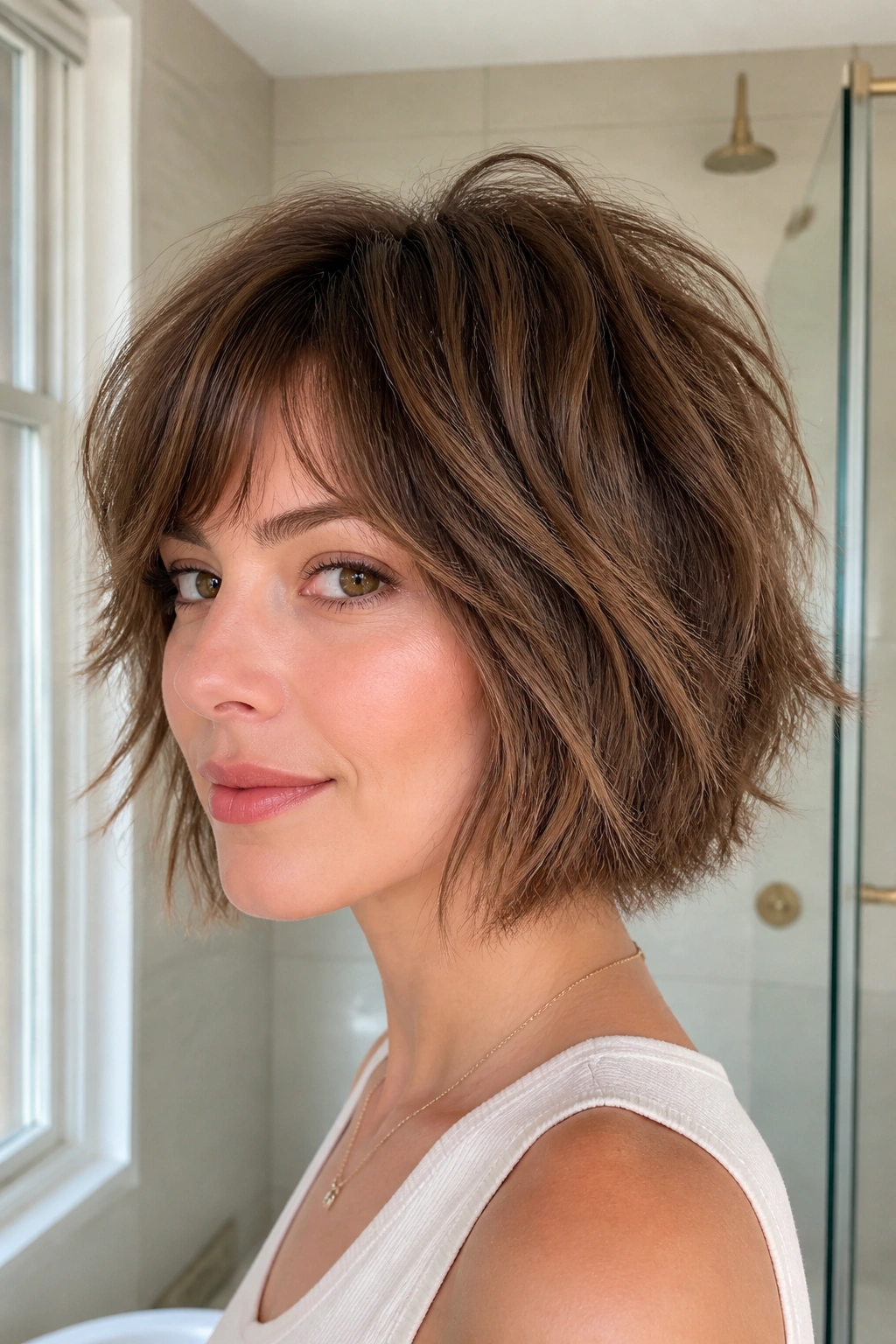
Why does chin length do so much work on fine hair? Because it creates the illusion of density where the eye lands first. The crown gets lift, the jawline gets some shape, and the ends stay thick enough to matter.
How to Wear It
A chin-length shag works especially well if your hair likes to fall flat on top and flare out at the bottom. The shorter length keeps the style from dragging.
- Ask for soft layers that start around the cheekbone.
- Keep the bottom line clean so the haircut still has structure.
- Use a root spray before blow-drying, not after.
- Finish with a small round brush bend at the ends.
This cut has a little personality. It is not shy. And that is the point.
4. Long Feathered Boho Shag
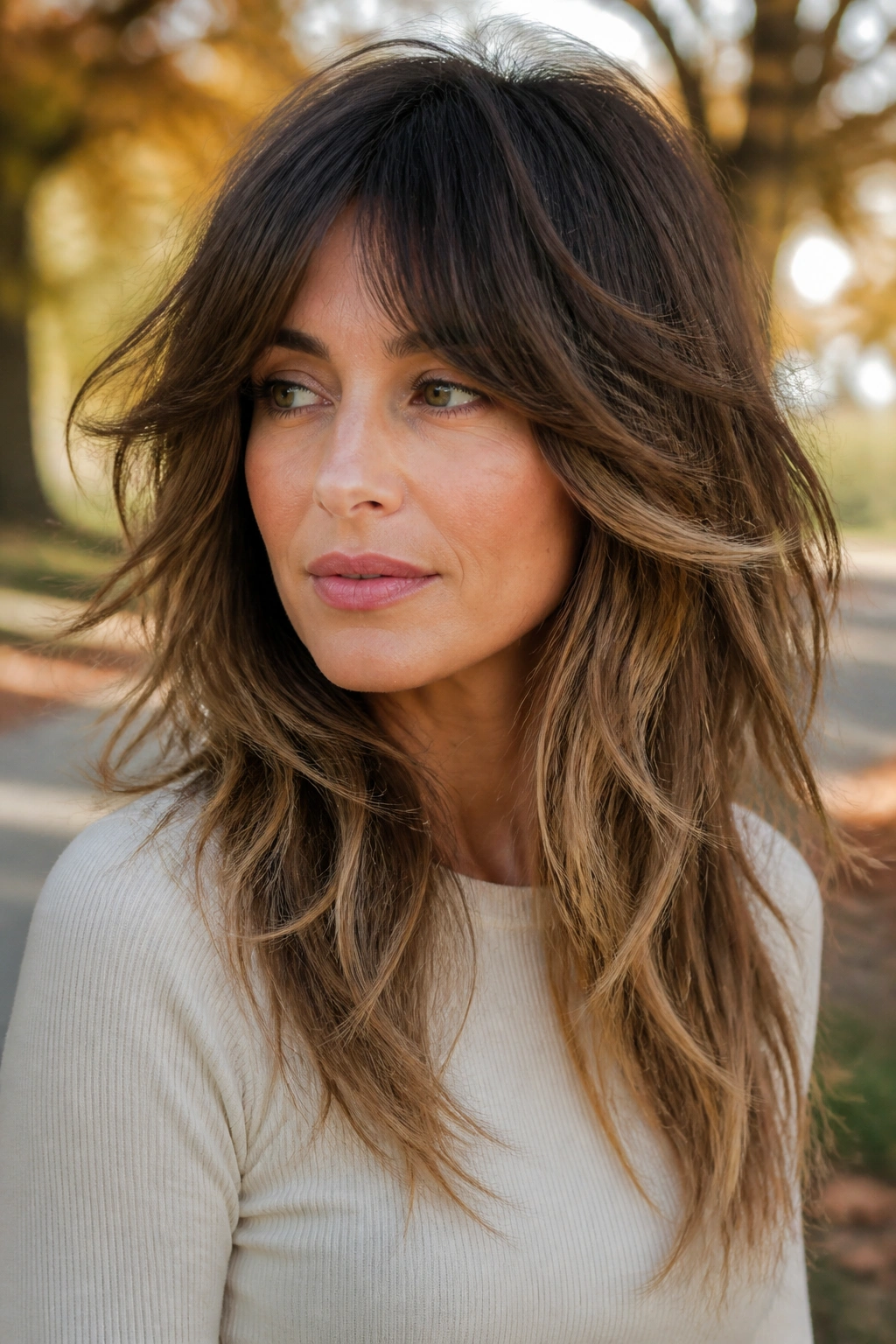
Picture a long shag that moves when you turn your head, but still keeps enough body through the ends to look like hair you can touch. That is the appeal of a feathered boho cut on fine strands.
The feathering should start with restraint. Long layers work best when they begin around the collarbone or just below it, then taper softly toward the front. If the top gets over-lifted, the whole thing can look sparse fast. I prefer a shape that lets the lower half keep some weight.
- Ask for feathering around the face, not all through the back.
- Keep the last 2 inches fairly intact.
- Use a light texturizing spray only at the mid-lengths.
- Air-dry if your wave pattern shows up naturally.
The less the ends are chewed up, the better this cut looks. That part is easy to miss.
5. Razored Shag With a Full Perimeter
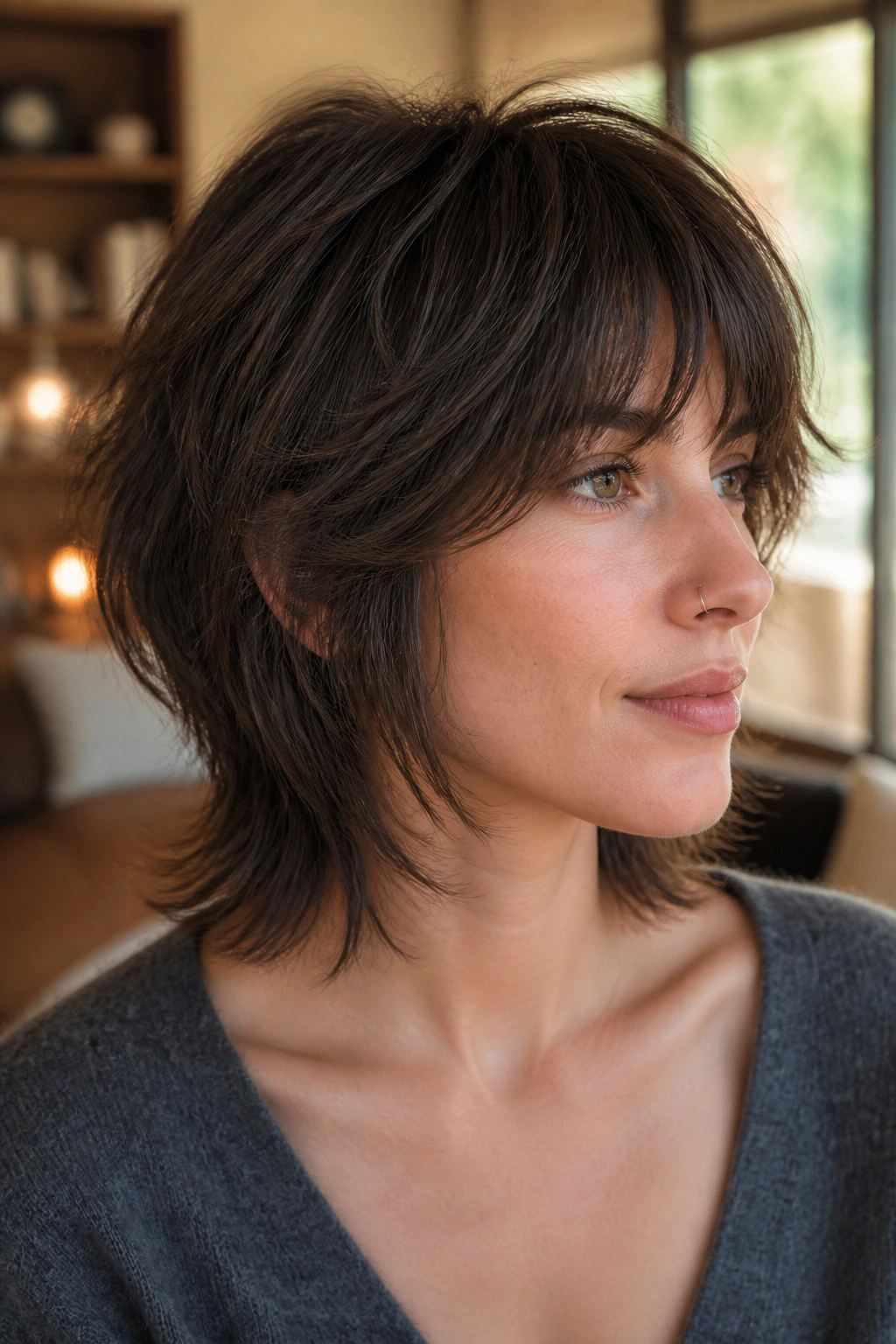
A razor cut is not a free pass to remove weight. On fine hair, that is where a lot of people get burned.
The razor can be useful if the stylist uses it with a soft hand, mainly around the face and the upper layers. What you do not want is a fully razored back and sides that leave the ends frayed. Fine hair already gives you less visual bulk than medium or coarse hair. You do not need to help it disappear.
I like this version best when the perimeter stays solid and the texture sits above it. That means the shag feels airy when it moves, but the base still looks full in a ponytail or tucked behind the ears. If your hair is pin-straight, this cut can still work, but only if you’re willing to add a little bend with a flat iron or round brush.
6. Bottleneck-Bang Boho Shag
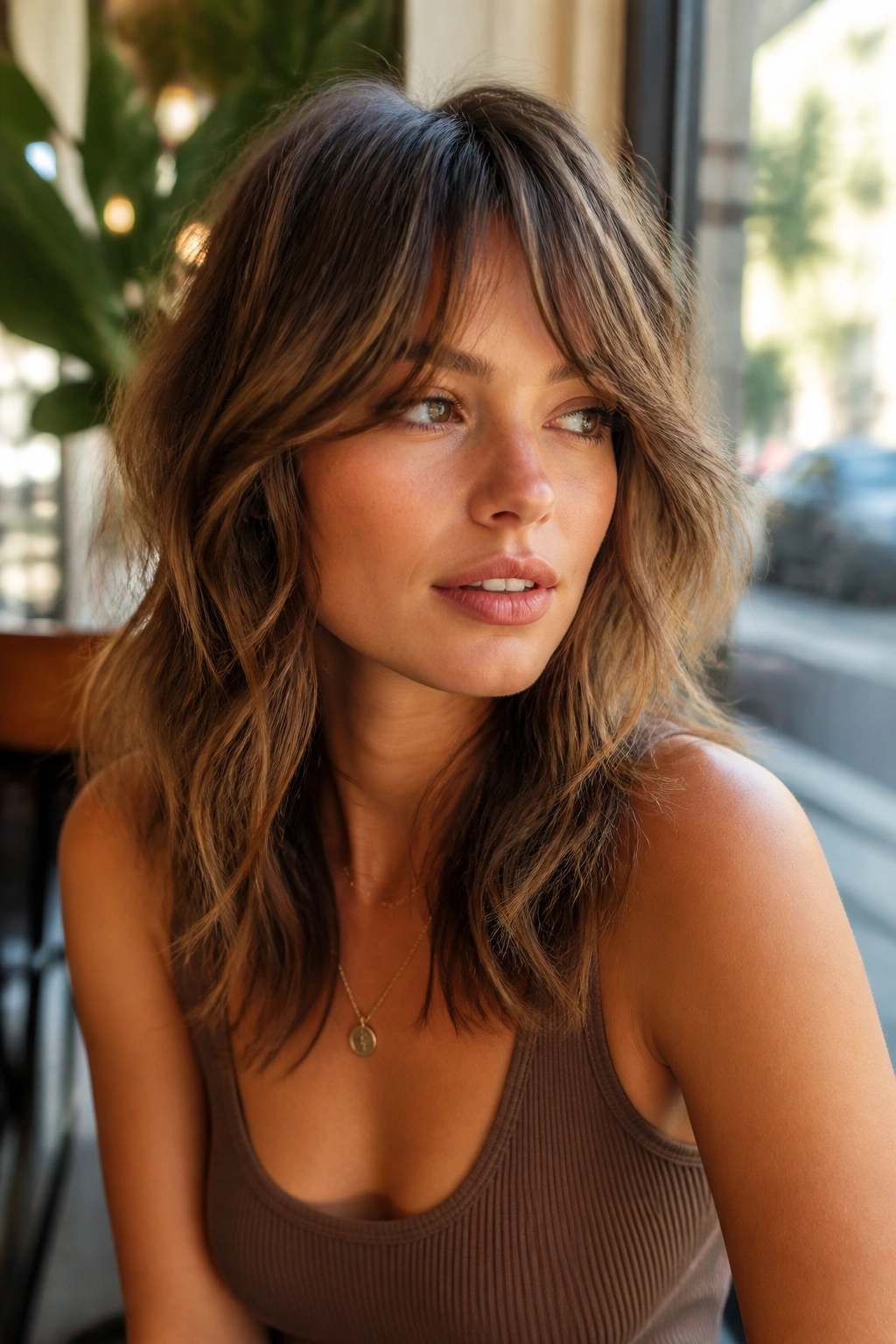
Unlike blunt bangs, bottleneck bangs leave a little breathing room around the face. That makes them easier on fine hair, because the fringe does not need a huge amount of density to look intentional.
The shape is narrow near the center, then opens wider as it moves toward the temples. That gives you the softness of curtain bangs with a bit more structure near the brow. If you have a high forehead, this is a nice compromise. If you have a shorter forehead, ask for the inner section to stay slightly longer so the bangs do not crowd your eyes.
This is also one of those cuts that looks better when it is not too polished. A slight bend, a few separated pieces, and a little movement at the roots are enough. Too much smoothing flattens the fringe and makes the layering look smaller than it is.
7. Shaggy Lob With Invisible Layers
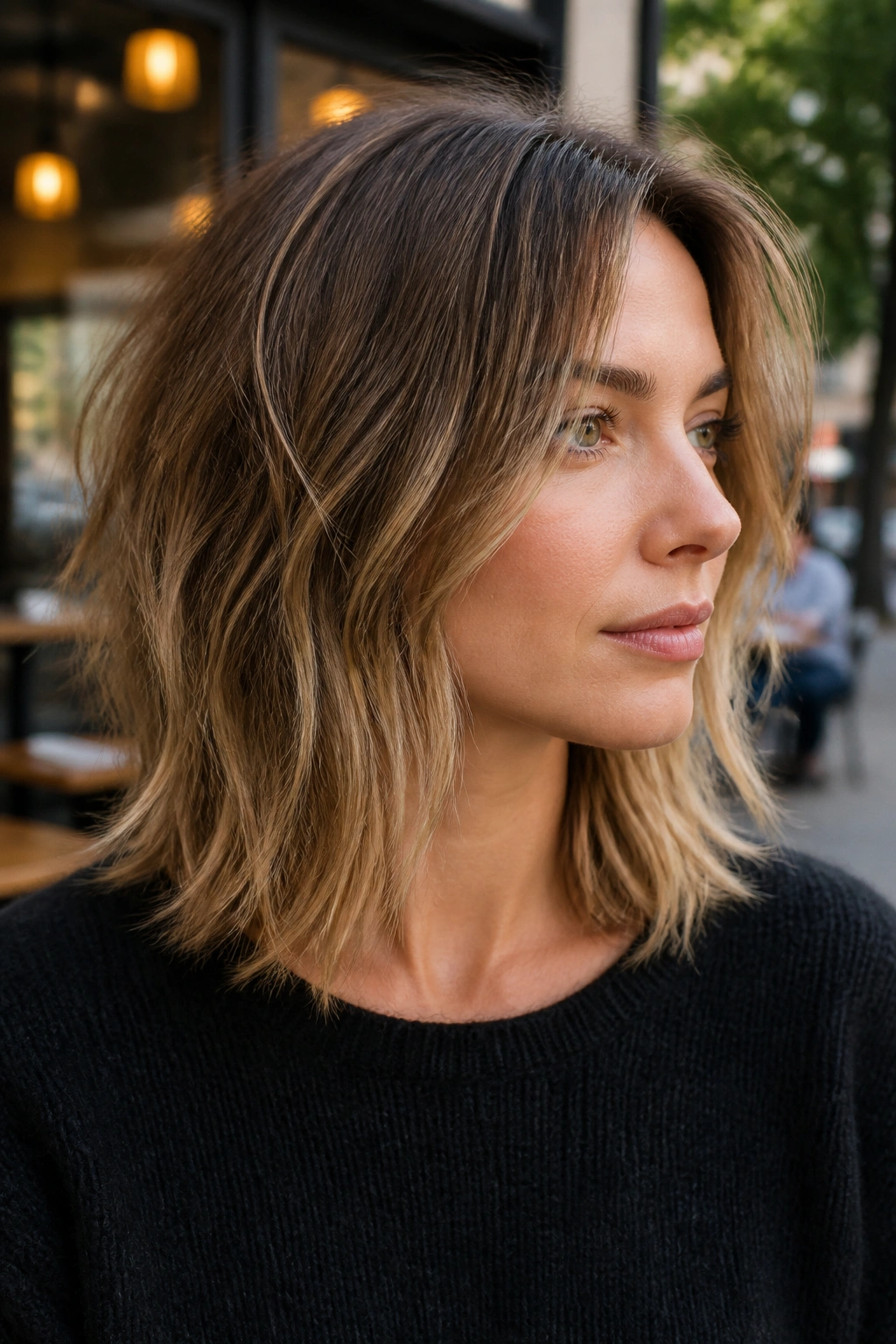
Invisible layers sit inside the haircut instead of hanging out in obvious steps. On fine hair, that matters. You get movement without those harsh shelf lines that can make the ends look thinner than they are.
What Makes It Different
A shaggy lob keeps the outline simple, which is a gift when your hair needs a little help looking full. The texture lives underneath and around the face, not all over the place.
- The length stays between the collarbone and shoulder.
- Layers are carved into the interior, not stacked at the top.
- The front pieces can be longer than the back by a small margin.
- A shine spray at the ends keeps the cut from looking dusty.
I like this shape for someone who wants a shag vibe at work but does not want a haircut that screams for attention. It behaves.
8. Wavy Boho Shag With Face-Framing Pieces
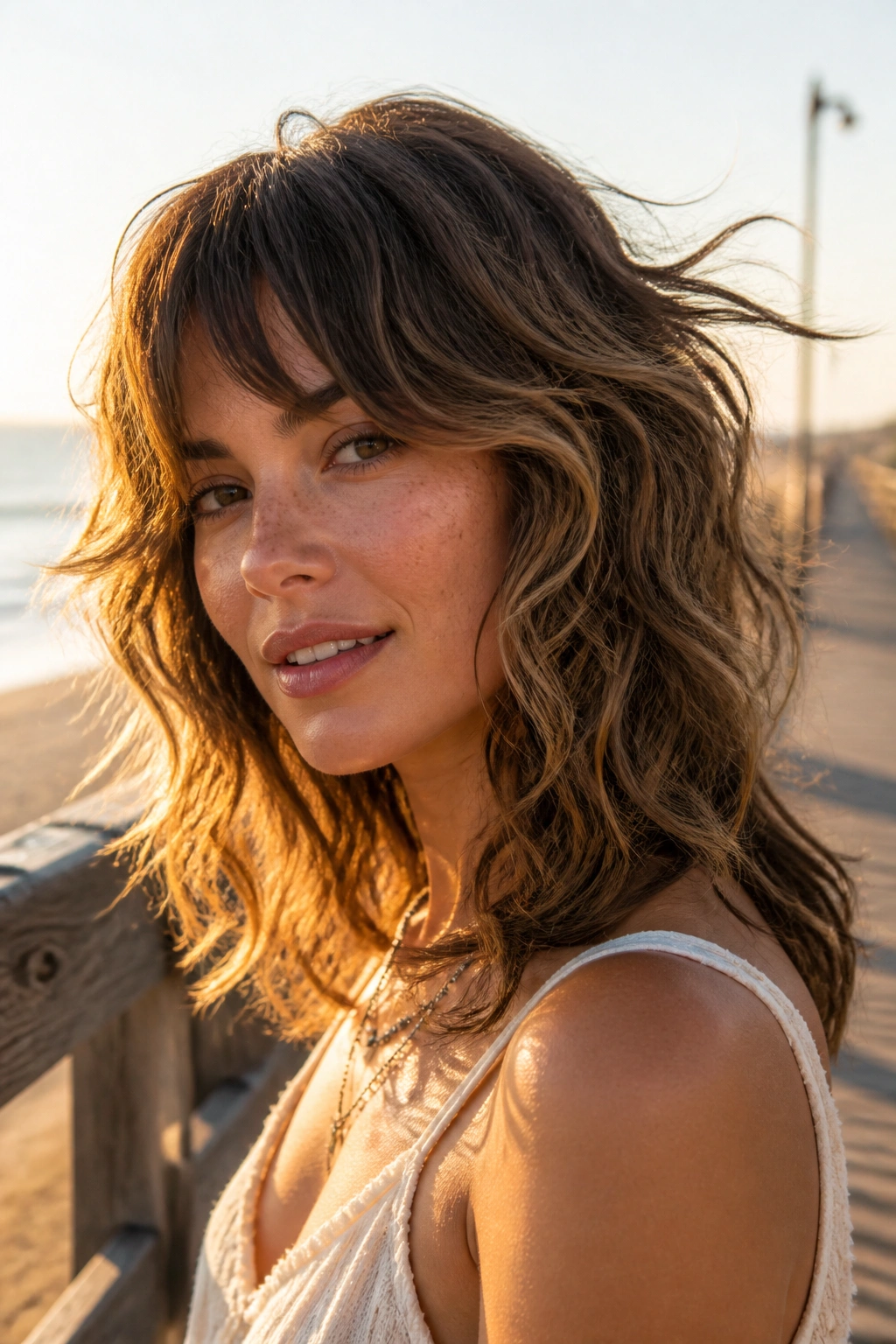
Waves do half the styling for you. If your fine hair bends on its own, this version can look alive with almost no effort, as long as the cut respects the wave pattern instead of fighting it.
The face-framing pieces should start around the cheekbone or just below the mouth, depending on face shape. Anything shorter can puff out or separate too much. Keep the layers soft through the back so the wave can travel. I also like a light curl cream on damp hair, followed by a diffuser on low speed until the roots are nearly dry.
That method keeps the wave clumped enough to look full. If you break the waves apart too early, the hair starts to look frizzy and small. A wide-tooth comb in the shower is enough. After that, hands only.
9. Micro Shag for Straight Fine Hair
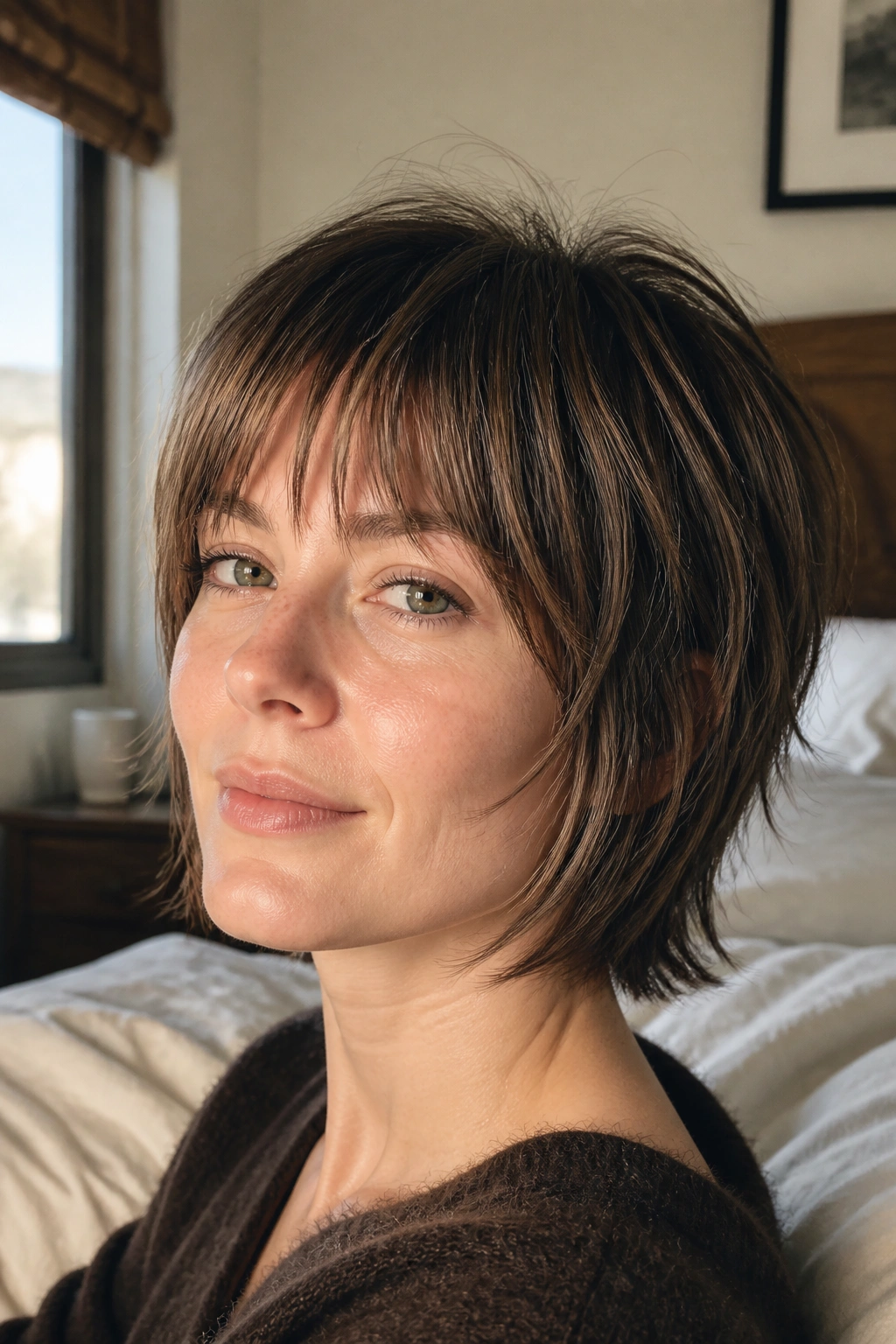
Can a tiny shag really help straight fine hair? Yes, if the cut is disciplined. A micro shag works because it changes the shape, not just the texture.
The length usually sits around the jaw or just above the shoulders, and the layers stay short enough to create lift at the crown. The key is not to overdo the thinning. Straight fine hair shows every mistake. If the top gets too shredded, the whole haircut starts to look airy in the wrong way.
How to Style It
Use a pea-size amount of lightweight cream, then blow-dry with your fingers lifting at the roots. If you want a piecey finish, twist a few front sections around your fingers while they cool. That gives the cut movement without turning it into a mess.
One more thing: this cut loves a side tuck. Easy. Done.
10. Rounded Boho Shag With a Soft Fringe
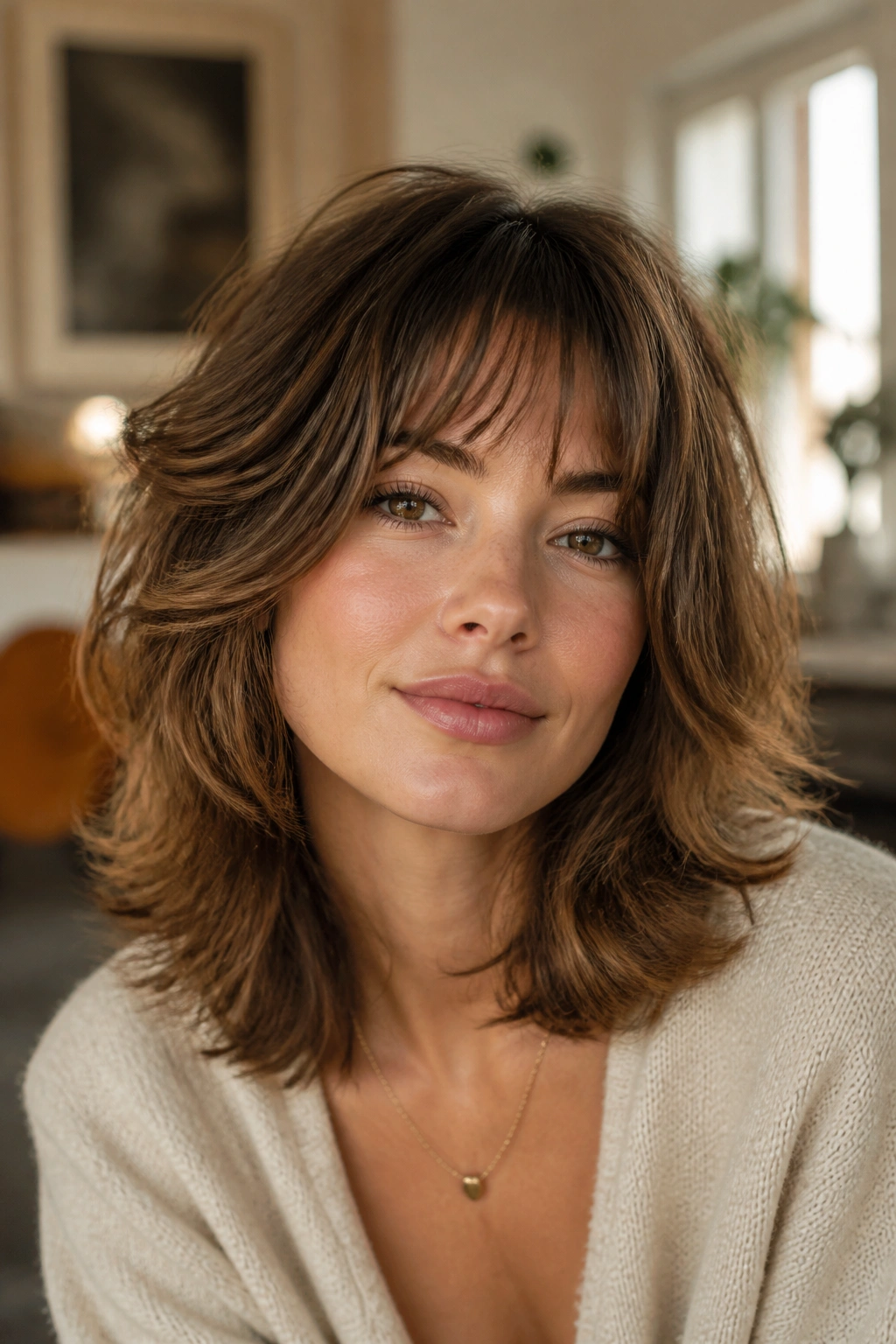
A rounded shag follows the shape of the head instead of fighting it. That is useful on fine hair because it creates the sense of fullness all the way around, not only at the front.
The fringe should stay soft and a little see-through, not heavy enough to flatten the forehead. A rounded crown gives you height without the harsh silhouette of a stacked cut. I like this shape on people with narrower faces, because the curve adds some balance. It can also soften strong cheekbones without hiding them.
- Ask for curve through the sides, not just the top.
- Keep the perimeter slightly longer than the crown.
- Use a large round brush or velcro roller at the front.
- Finish with a flexible spray, not a crunchy one.
This is one of those cuts that looks polished even when it is slightly messy. That is a good thing.
11. Curly Fine-Hair Boho Shag
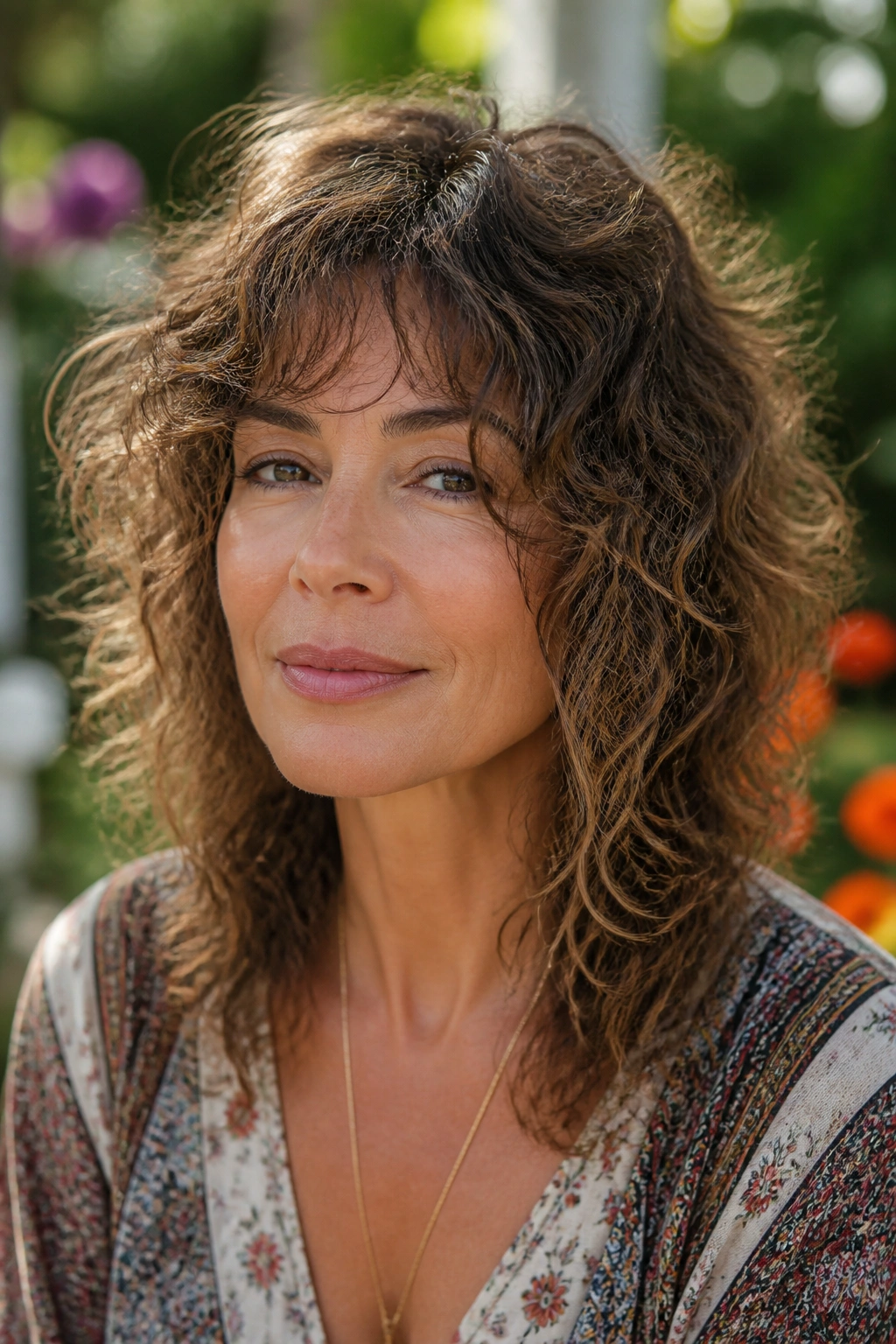
Curly fine hair needs a different kind of patience. The curls can be delicate, and if the cut gets too aggressive, the ringlets stop clumping and start looking sparse.
I prefer this version when the stylist cuts it dry, curl by curl, or at least with a strong sense of where the curl falls once it springs up. Fine curls often need more length than people expect. Shortening them too much can make the hair puff at the crown and go stringy at the ends. That is a bad trade.
A good curly shag keeps the shape around the face and lets the curls stack gently through the middle. Use a cream with slip, scrunch it in, and diffuse until the roots are set. Don’t rough it up while it’s wet. That is where the shape gets lost.
12. Low-Maintenance Grown-Out Shag
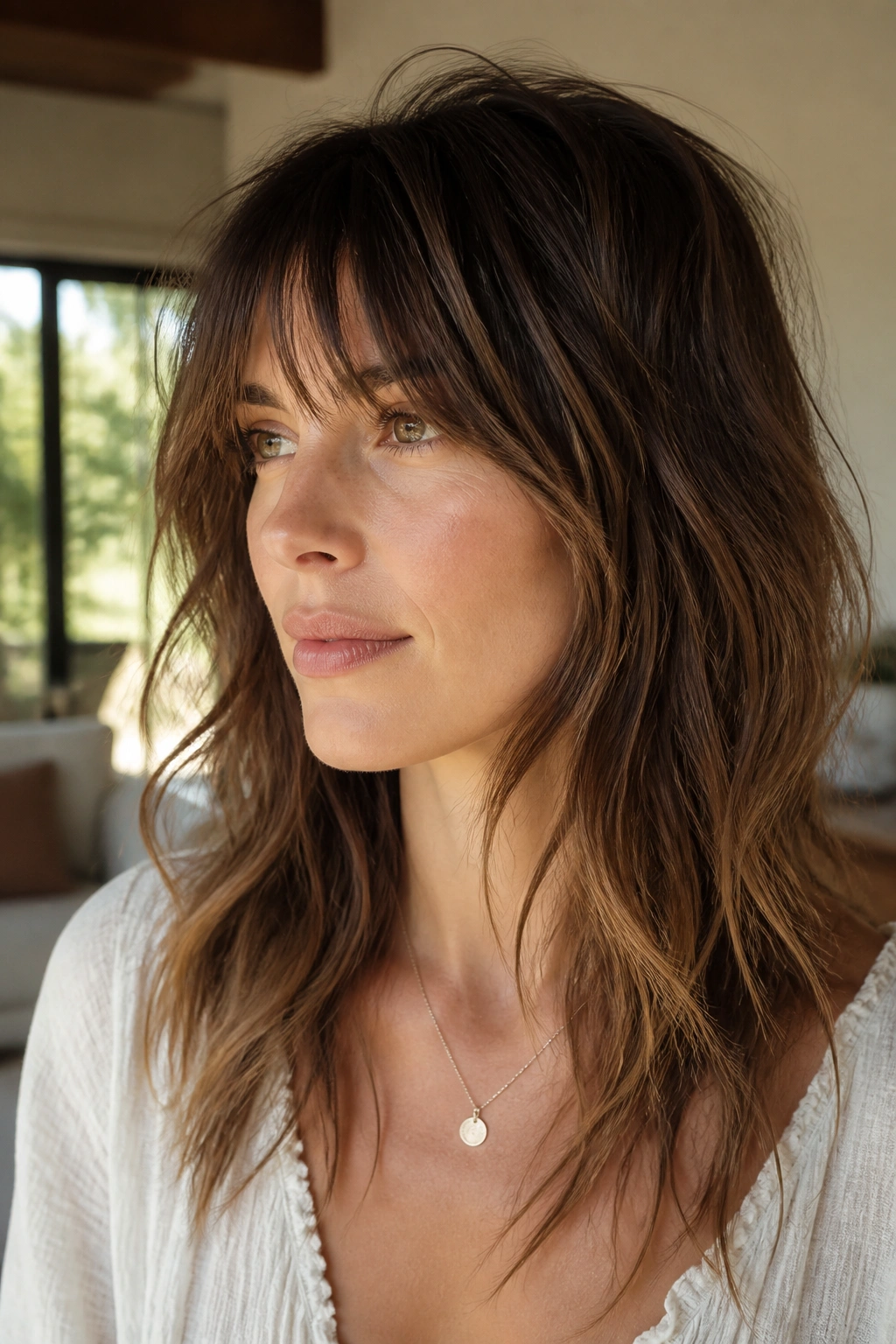
Unlike a crisp layered cut, a grown-out shag still looks intentional after a few weeks of softness. That makes it a smart choice if you do not want to live at the salon.
The best version has long layers that can stretch without changing the whole silhouette. The fringe, if you have one, stays light enough to grow into curtain pieces. The back keeps enough length to avoid that awkward triangle shape fine hair can sometimes get when it grows out. That is the whole game.
This cut also works if you like to air-dry and move on with your day. A tiny bit of mousse at the roots, a scrunch at the ends, and you are done. If you want a neater finish, bend the face frame with a brush for 30 seconds. It does not need more than that.
13. Shoulder-Grazing Shag With Chipped Ends
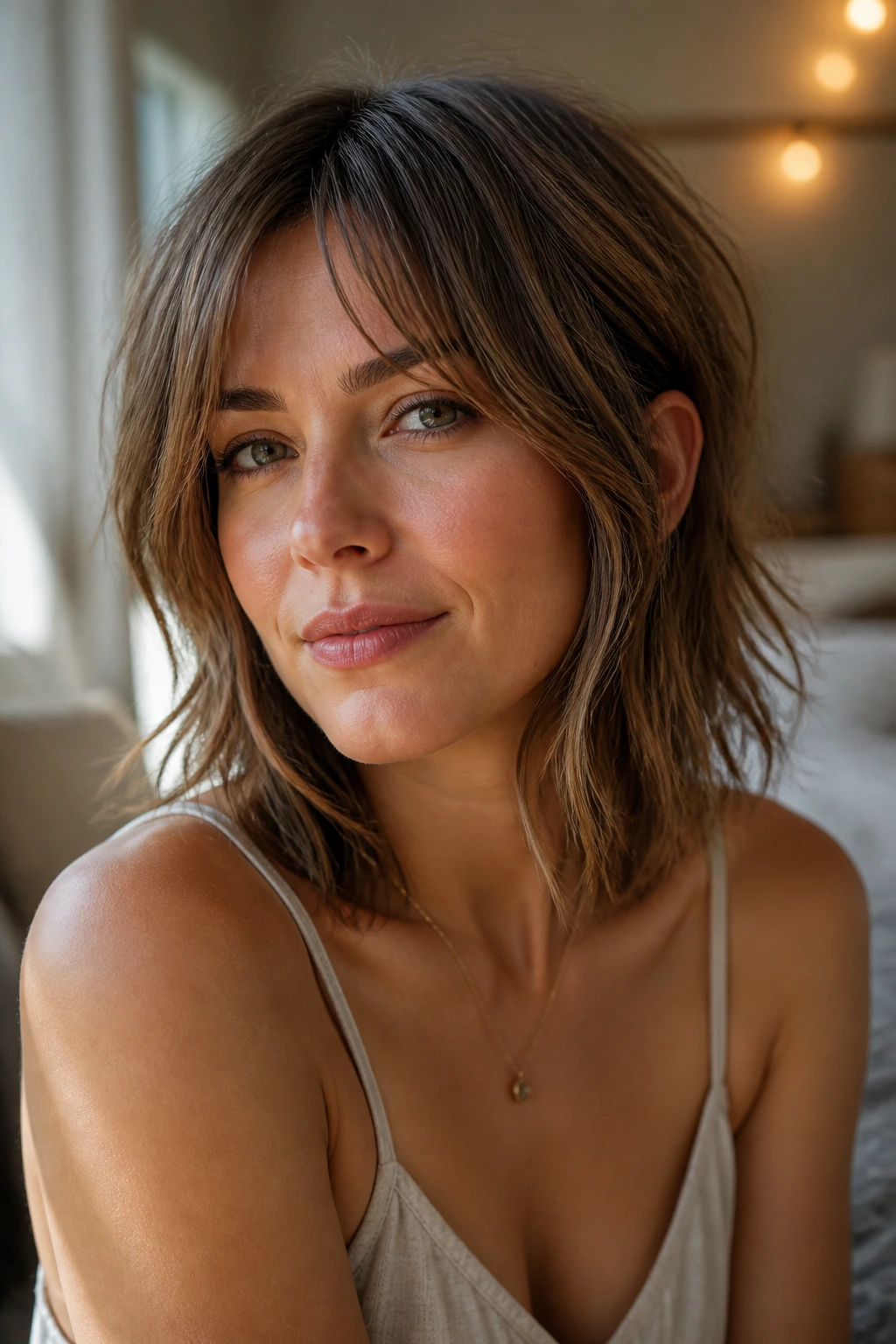
Shoulder-grazing shags can get floppy fast. A little chipping at the ends changes that, giving the cut some movement while keeping the overall length useful.
Why It Helps
The shoulder line is tricky because hair lands right where it can flip, bend, or stick out. Chipped ends break that heaviness in a controlled way.
- The length brushes the shoulders, not sits on top of them.
- The ends are softened in small, uneven sections.
- Face-framing layers stay longer than the back layers.
- A light mist of texture spray adds separation without grit.
Ask for the perimeter to stay visible. That is what stops the cut from looking ragged. The chipped details should show only when the hair moves.
14. Air-Dried Shag With a Deep Side Part
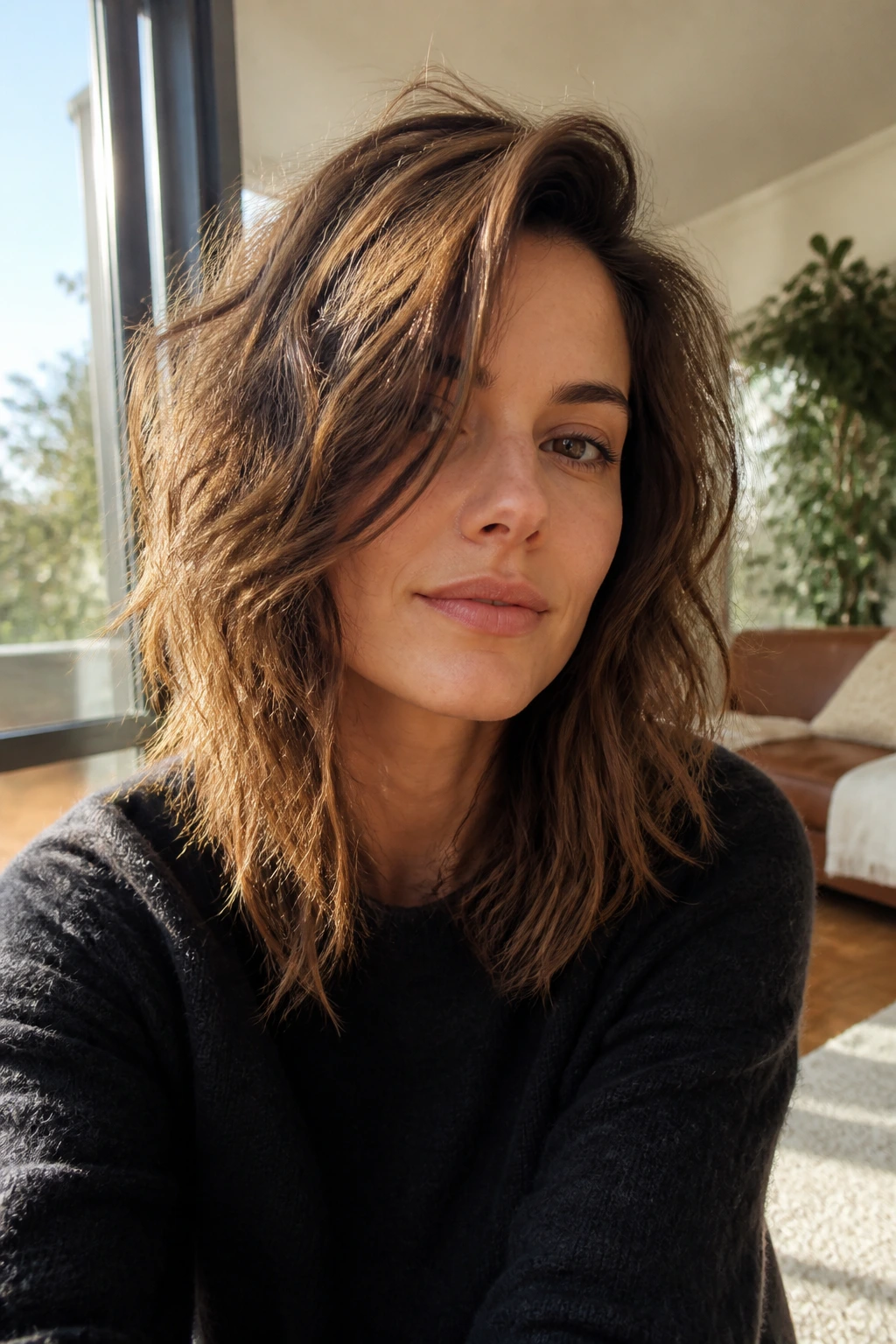
A deep side part can fake more density than another inch of layers. It pushes the roots in one direction, and that little shift gives fine hair a lift it does not get from the center part.
This works especially well when the hair wants to lie flat at the crown. A little mousse at the roots, then a side part made while the hair is still damp, can change the whole silhouette. Clip the heavier side up for ten minutes while it dries. That’s enough to train the bend.
I like this look because it does not need a perfect blowout. The shag can stay soft and piecey, and the side part gives it some shape around the face. If you tuck one side behind the ear, even better. The cut looks deliberate without looking stiff.
15. Retro 70s Boho Shag
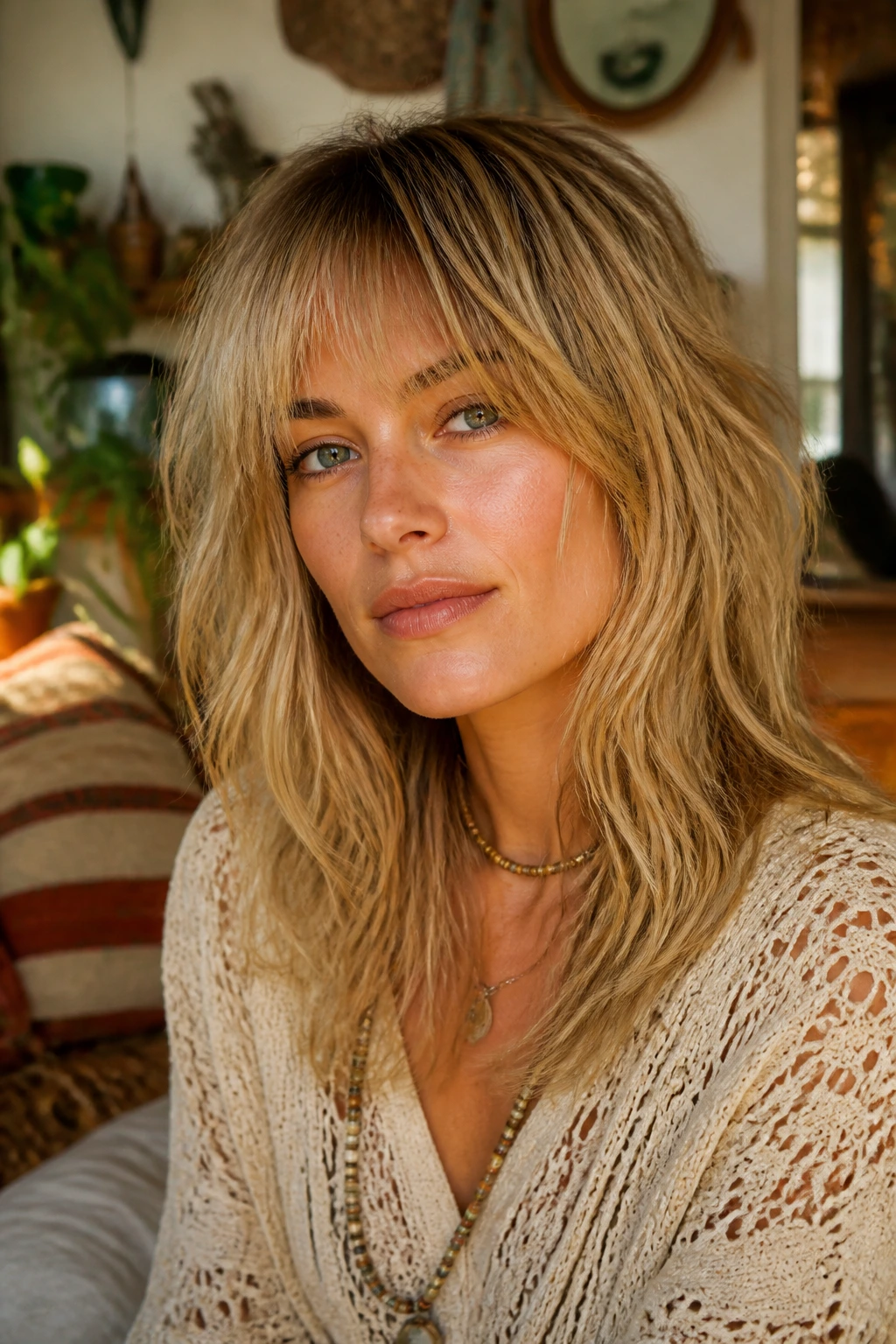
Why do 70s shags look so good on fine hair when they are done lightly? Because the shape does not rely on bulk. It relies on movement, fringe, and a little air around the face.
How to Keep It Wearable
A retro shag can go costume fast if the layers are too severe or the fringe is too heavy. The fine-hair version should feel softer and less carved.
- Keep the crown lift gentle, not high and helmet-like.
- Let the fringe skim the brows instead of cutting hard across them.
- Leave enough length through the sides to keep the ends full.
- Use a small brush to flip the front away from the face.
The whole look should feel relaxed, not theatrical. That’s the difference between a modern shag and a wiggy throwback.
16. Feathered Pixie-Shag Hybrid
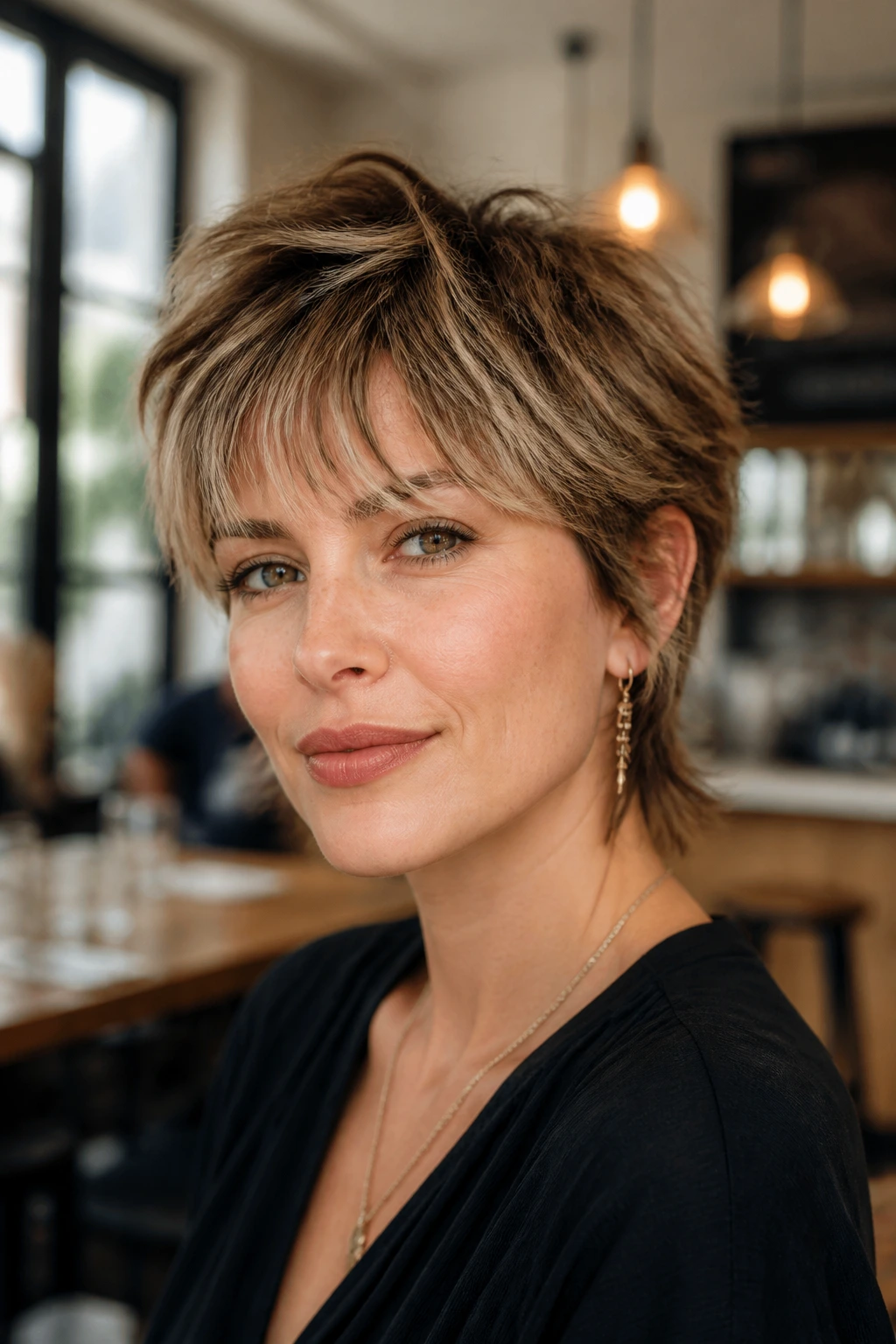
Short hair with a shag shape can feel light without looking thin. That is why the pixie-shag hybrid has such a strong following among people with fine strands.
This cut keeps a little extra length on top, usually around 2 to 4 inches, then tapers the sides and nape so the head shape stays soft. The feathering happens through the top and crown, not all over the hair. That keeps the style airy without exposing too much scalp. If the bangs are long enough to sweep to one side, even better.
- Ask for texture at the top, not the whole head.
- Keep the nape neat so the cut still has a shape.
- Use a dab of paste or cream on dry hair.
- Tousle with fingers, not a brush.
This one has attitude. It also dries fast, which is not a small thing.
17. Midi Shag With a Strong Center Part
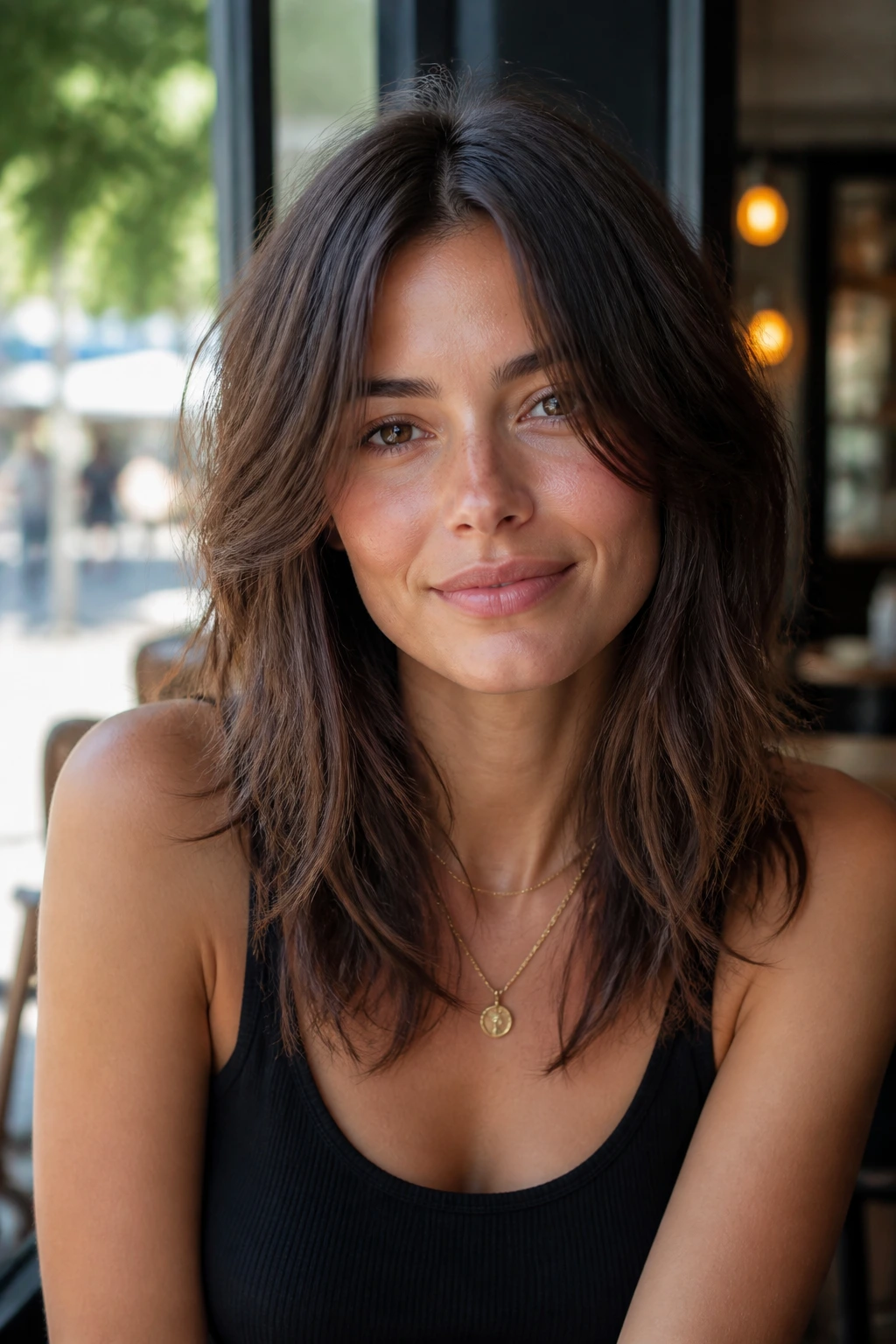
A strong center part does not have to mean flat roots. On fine hair, it can actually sharpen the face and make the layers look cleaner.
The midi length sits around the collarbone or just below it, which is enough length to keep the ends from feeling flimsy. The center part works best when the front layers are long enough to fall softly beside the cheekbones. If they are too short, the part can feel harsh. If they are too long, you lose the shape.
I like this style because it gives structure without fuss. Dry the roots up and away from the scalp for a minute or two, then let the front pieces fall where they want. A little bend through the ends is enough. You do not need a full blowout every time the hair gets washed.
18. Soft Wolf-Shag for Fine Hair
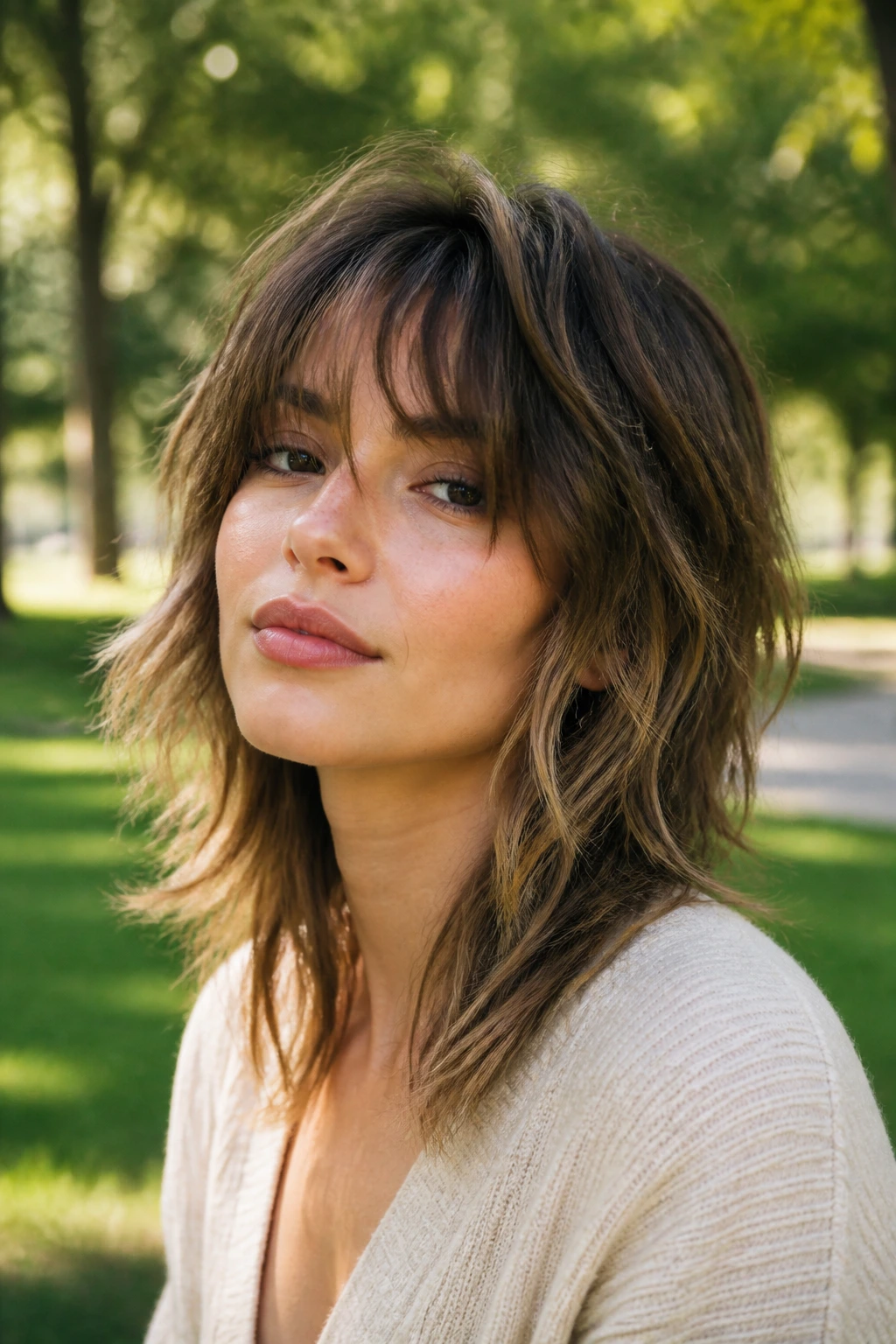
A soft wolf-shag is what happens when you borrow the attitude of a wolf cut but keep the ends sane. That makes it a better fit for fine hair than the heavy, choppy version you see online.
The trick is keeping the disconnection mild. The crown can still feel airy, but the lower half should hold together. On fine hair, that balance matters. If the back gets too stripped out, the cut starts looking stringy when it settles.
This style suits people who want a bit of edge without turning their hair into a project. It pairs well with natural wave and a little piecey styling cream. I would ask for long crown layers, a soft face frame, and a perimeter that stays visible. The result looks lived-in, not shredded.
19. Shag With Curtain Bangs and Longer Sides
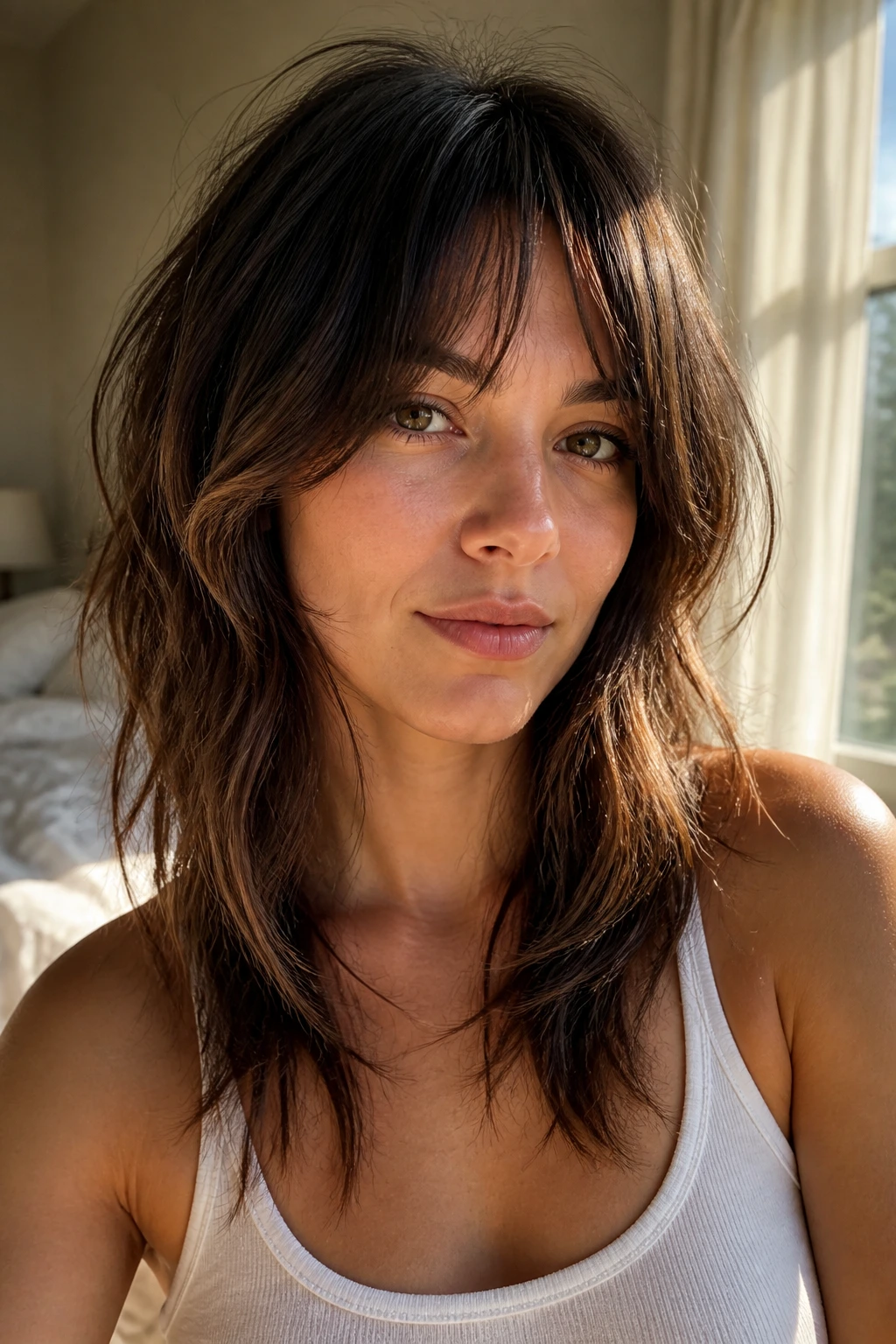
Curtain bangs only work on fine hair when they stay long enough to fold back into the haircut. That is why the longer sides matter here. They keep the fringe from taking over.
What to Ask For
The bang should open in the middle, then taper softly into the face frame. If the stylist cuts too much off the front, the fringe can look thin within a week. Better to leave it a touch longer and trim it later.
- Keep the inner bang section below the brow line.
- Let the outer pieces fall to the cheekbone or lip.
- Ask for the sides to blend slowly, not in one hard step.
- Use a round brush only at the front for shape.
This version is flattering on a lot of faces because it softens the middle without losing length where it counts.
20. Piecey Shag for Fine, Dense-Wavy Hair
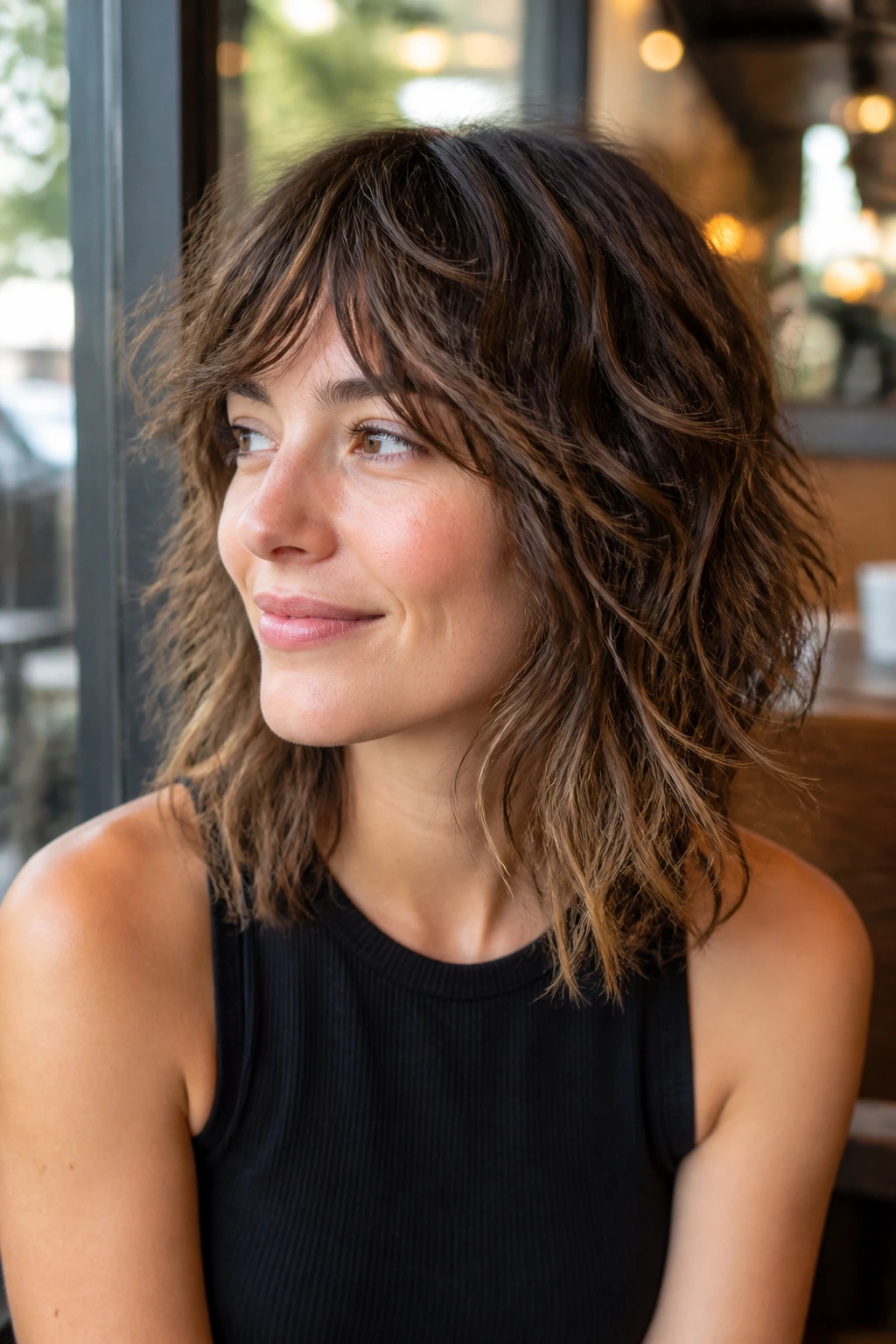
Fine, dense-wavy hair is its own animal. You may not need more volume. You may need better control over where the volume goes.
That is why a piecey shag can work so well here. The waves create movement on their own, while the cut removes just enough bulk from the right spots. If the layers are too short, the hair puffs. If they are too heavy, the shape gets square. The sweet spot sits in the middle.
A finger-dried finish works better than overbrushing. Scrunch in a lightweight cream, then separate only a few ends once the hair is nearly dry. The result should look soft and a little undone. Not frizzy. Not polished to death. Somewhere in between.
21. Blunt-Lined Boho Shag
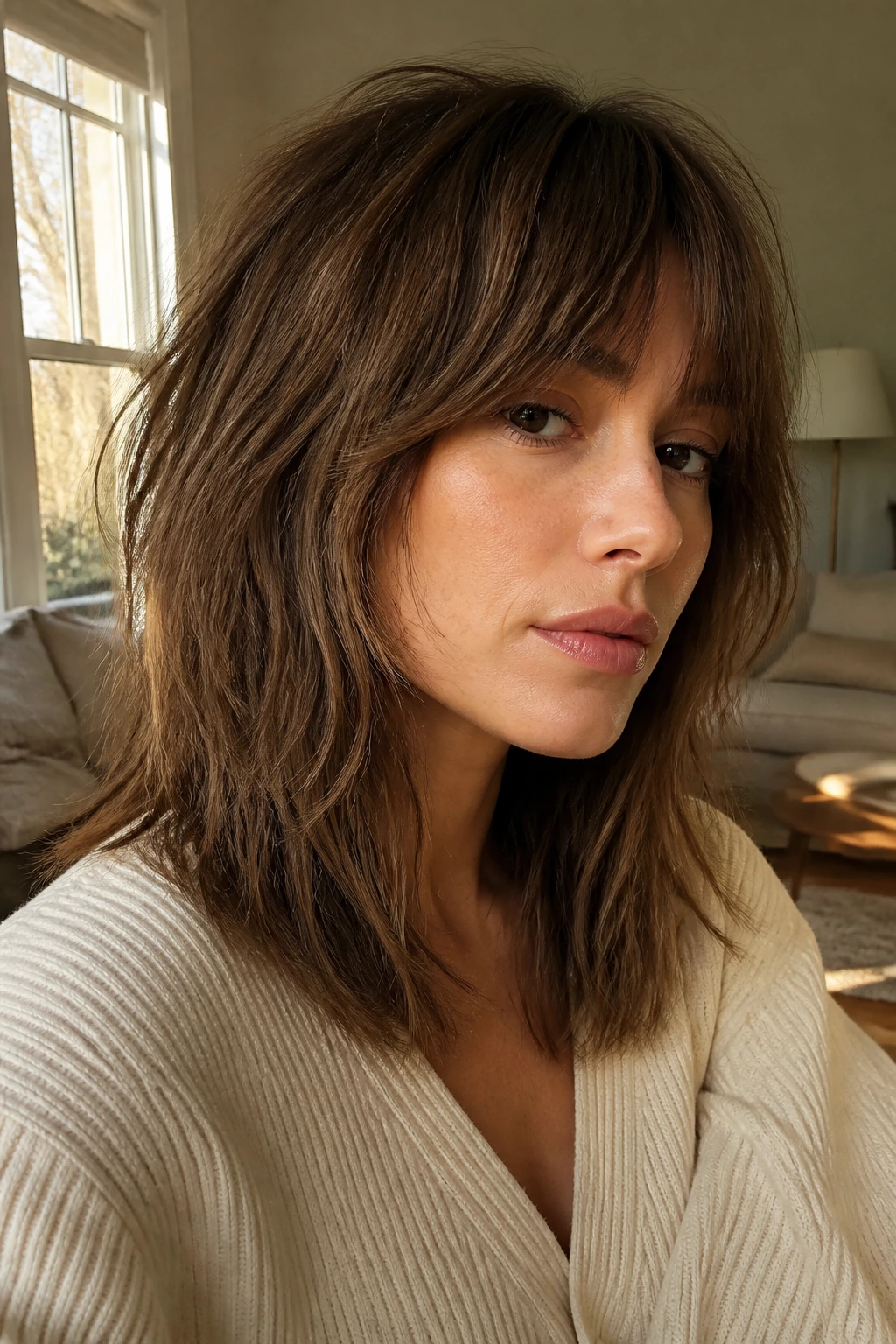
A blunt line at the bottom is often the secret weapon on fine hair. It gives the shag something solid to stand on, which helps the whole cut look thicker.
How to Ask for It
Tell the stylist you want softness through the top but a cleaner perimeter. That way the layers add movement while the base stays full. If the whole haircut is textured equally from top to bottom, the ends may look too airy.
The bluntness does not have to be harsh. A gentle, soft blunt line still reads as thick. That is the version I like most. It works on straight hair, wavy hair, and even loose curls if the perimeter is left intact enough to hold shape. The shag lives above that line. The line keeps it honest.
22. Shag With Side-Swept Fringe
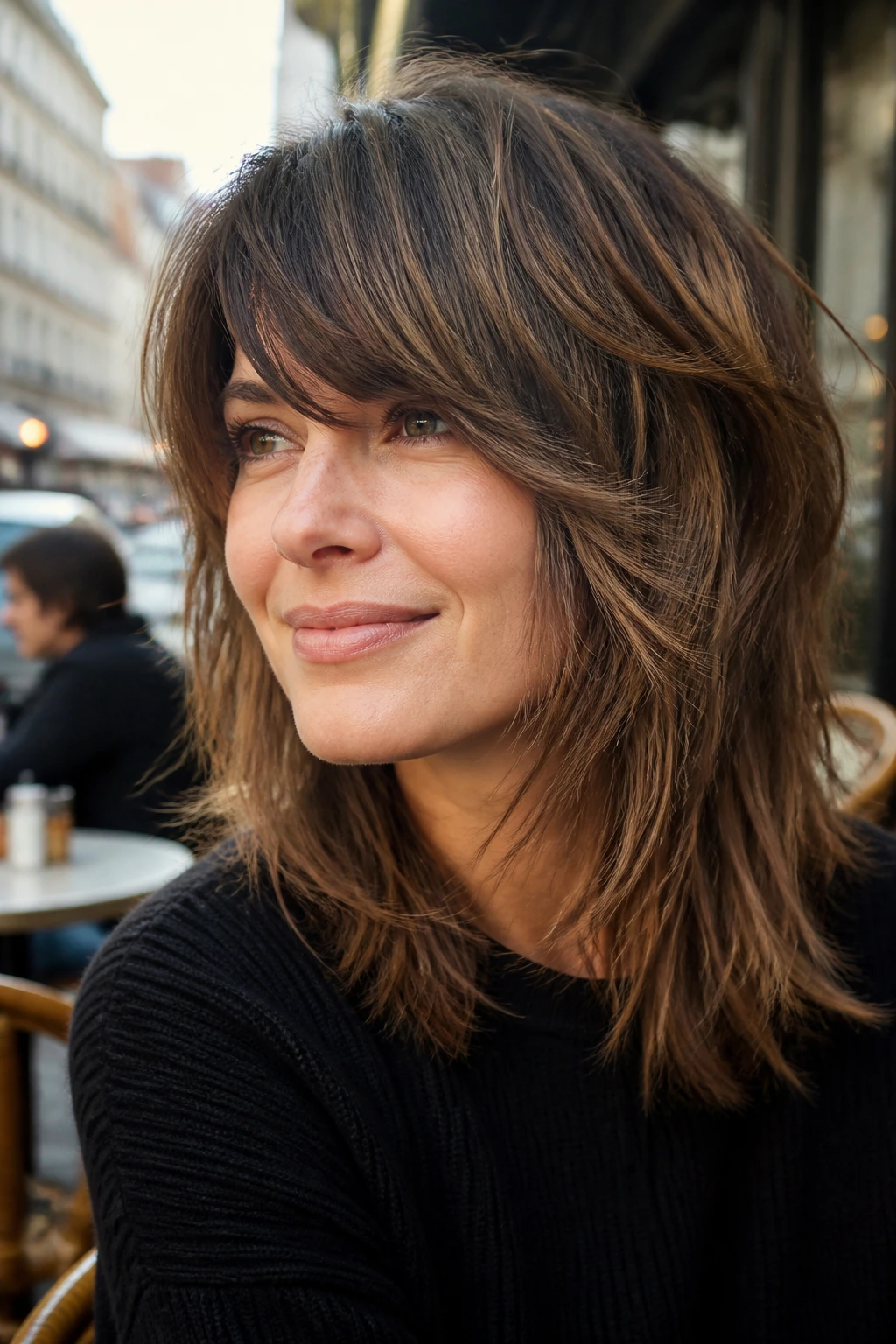
A side-swept fringe is old-school for a reason. It gives the front of fine hair some diagonal movement, and diagonal lines almost always feel fuller than straight ones.
This cut works nicely if you hate the feeling of hair hanging in your eyes. The fringe can be brushed over with a bit of root lift, then left to fall naturally. The rest of the shag stays soft around the shoulders and jaw. It is an easy shape to wear on days when you do not want to think about your hair very much.
- Ask for the fringe to start near the arch of the brow.
- Keep the longest piece near the cheekbone.
- Use a lightweight spray before brushing it sideways.
- Tuck the heavier side behind one ear for an easy lift.
That little angle does more than people expect.
23. Airy Lob Shag With Long Layers
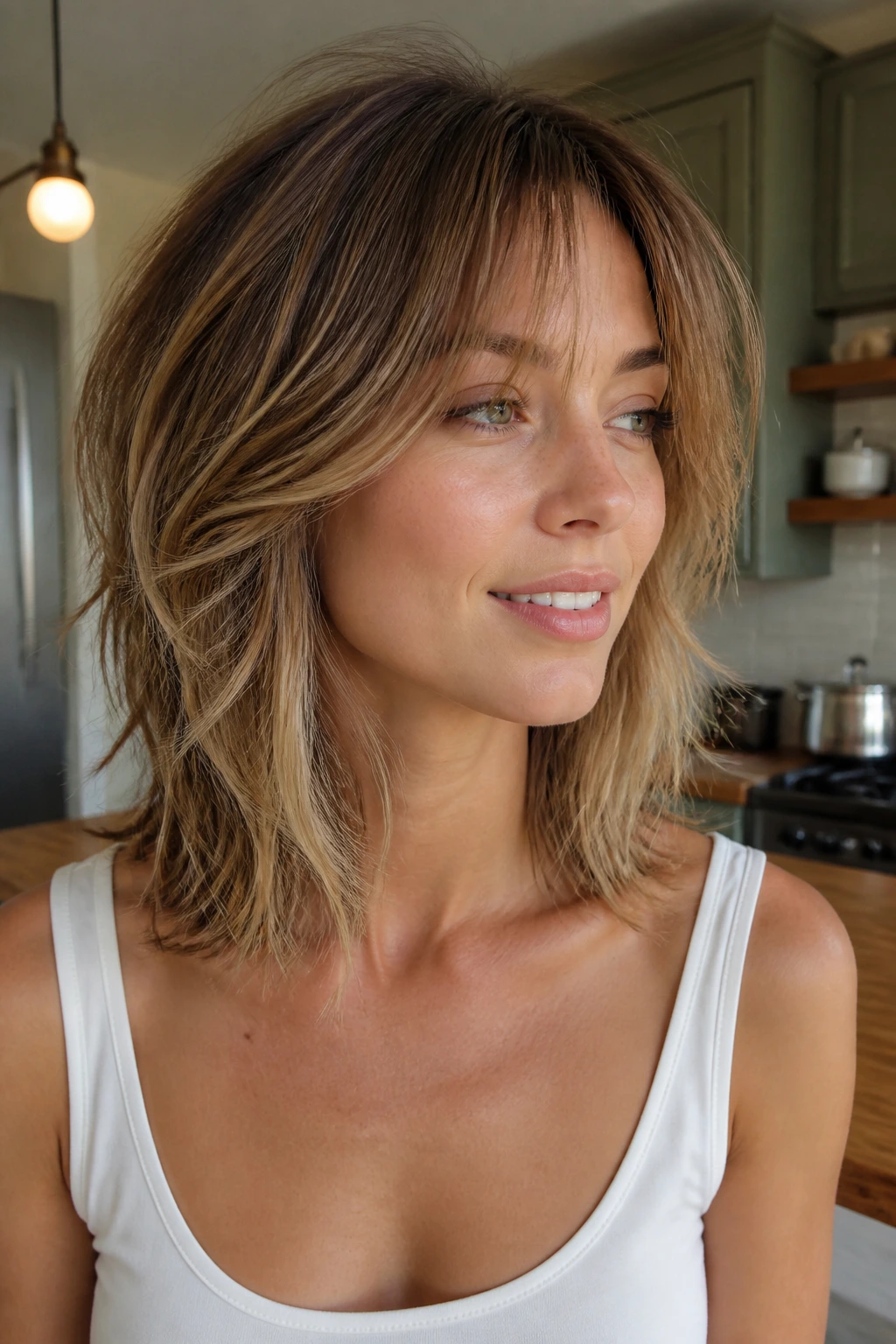
An airy lob shag sits in a practical sweet spot. It is long enough to pull back, short enough to keep fine hair from collapsing under its own weight.
The long layers do the movement work while the lob length keeps the ends looking substantial. I like this shape for people who want a haircut that can move from casual to neat without a big styling battle. A quick round-brush bend through the front gives it polish. Air-drying with a touch of cream gives it softness. It does both.
If your hair has a little wave, let it show. If it is straighter, do not try to fake too much texture. A hint is enough. The best version is the one that looks like your hair, only better arranged.
24. Disconnected Boho Shag
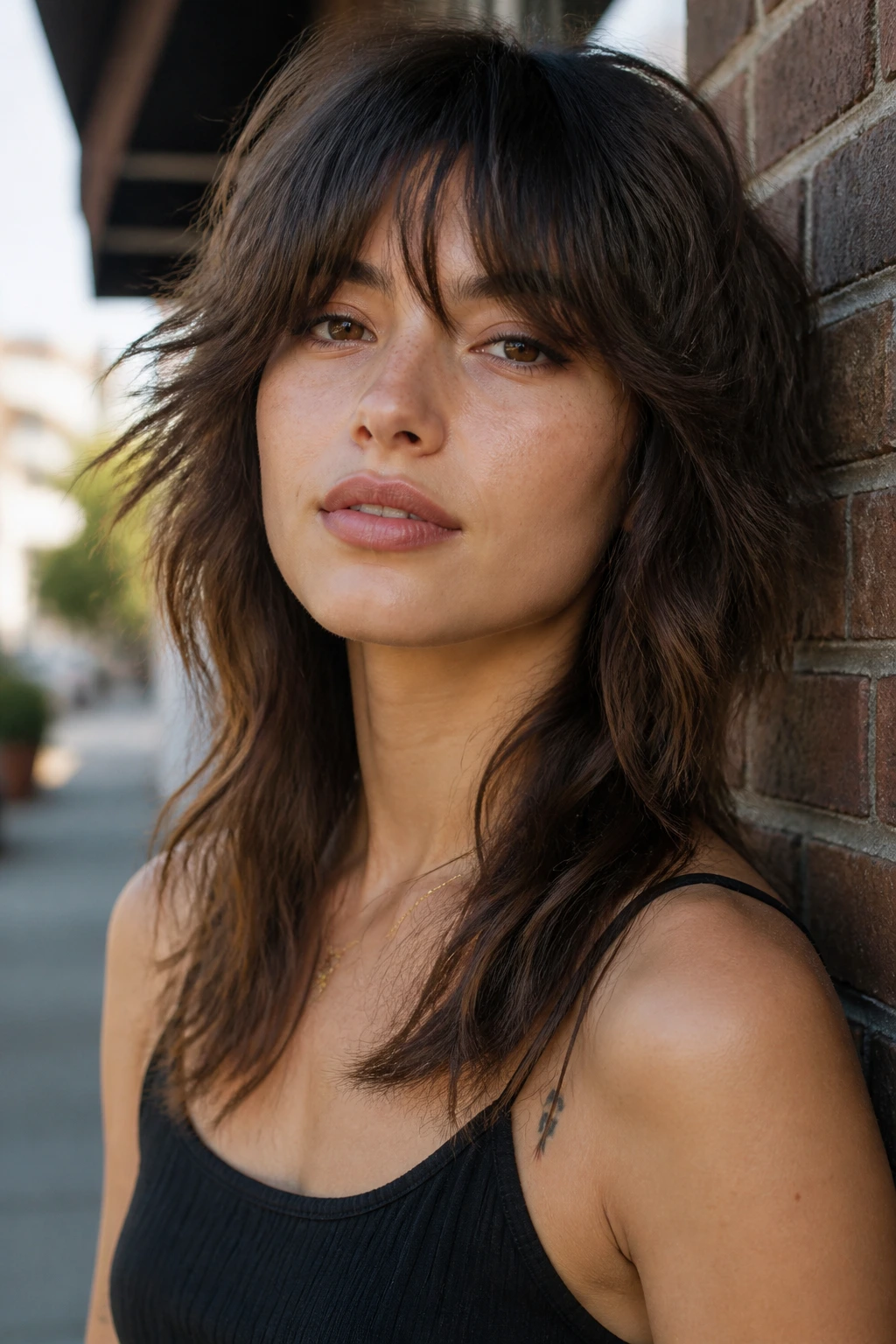
Unlike blended layers, a disconnected shag keeps the jumps between lengths visible. That can look sharp on fine hair, as long as the perimeter stays full.
This is not the cut for someone who wants everything to melt together. It is for someone who likes the shape to have a little bite. Fine hair can actually benefit from that clarity, because the eye reads the separate lengths as design instead of thinness. The key is stopping short of over-texturizing the ends.
I’d steer this one toward straight or softly wavy hair, not ultra-frizzy strands. It looks strongest when the bottom section still has enough weight to anchor the whole thing. Think contrast, not chaos.
25. Shag With Crown Volume and Slim Ends
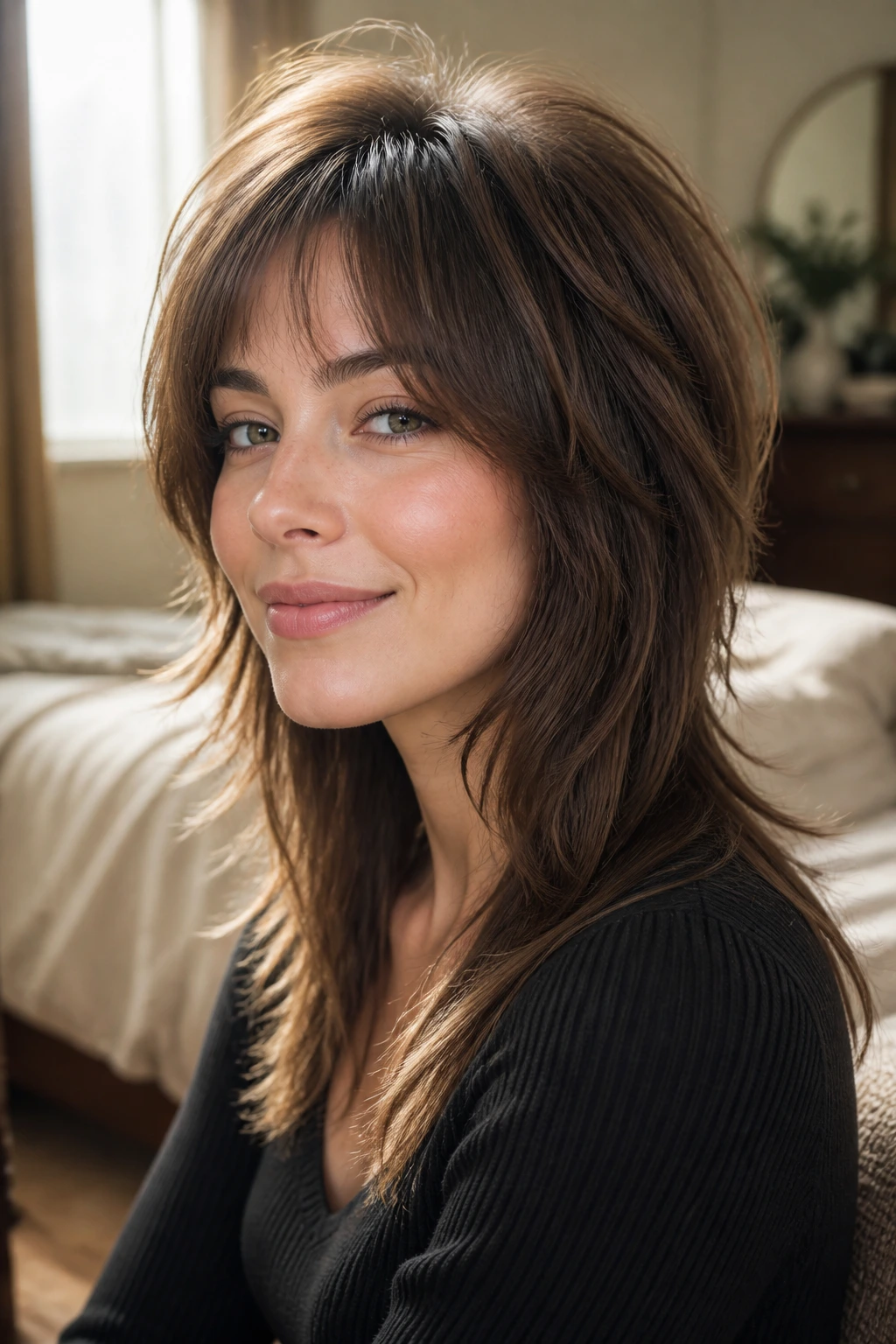
Crown volume matters more than a lot of people think. Fine hair often falls flat at the top, and if the roots do not lift, the rest of the haircut never gets a chance.
What to Request
This version keeps the top airy and the ends lighter, but not stripped out. That balance is what gives the shape its movement.
- Ask for lift through the crown, not harsh stacking.
- Keep the face frame soft and slightly longer.
- Let the ends taper, but stop before they get see-through.
- Use a clip at the roots while the hair cools after blow-drying.
I like this cut because it makes the head shape look fuller from every angle. That is hard to fake with styling alone.
26. Beachy Shag With Soft Bends

Beachy hair does not have to look salty or stiff. On fine hair, that would be a mistake anyway. A softer bend gives the same relaxed feeling without drying the hair into straw.
The easiest way to wear this cut is with a 1-inch or 1.25-inch iron, alternating the direction of the bends and leaving the last inch straight. That keeps the ends looking lighter and more natural. Once the curls cool, shake them out with your fingers and mist a light texture spray through the mid-lengths only.
This style looks especially good when the face frame catches a little movement. You do not need perfect waves. You need a suggestion of them. That is enough.
27. Cheekbone-Bang Boho Shag
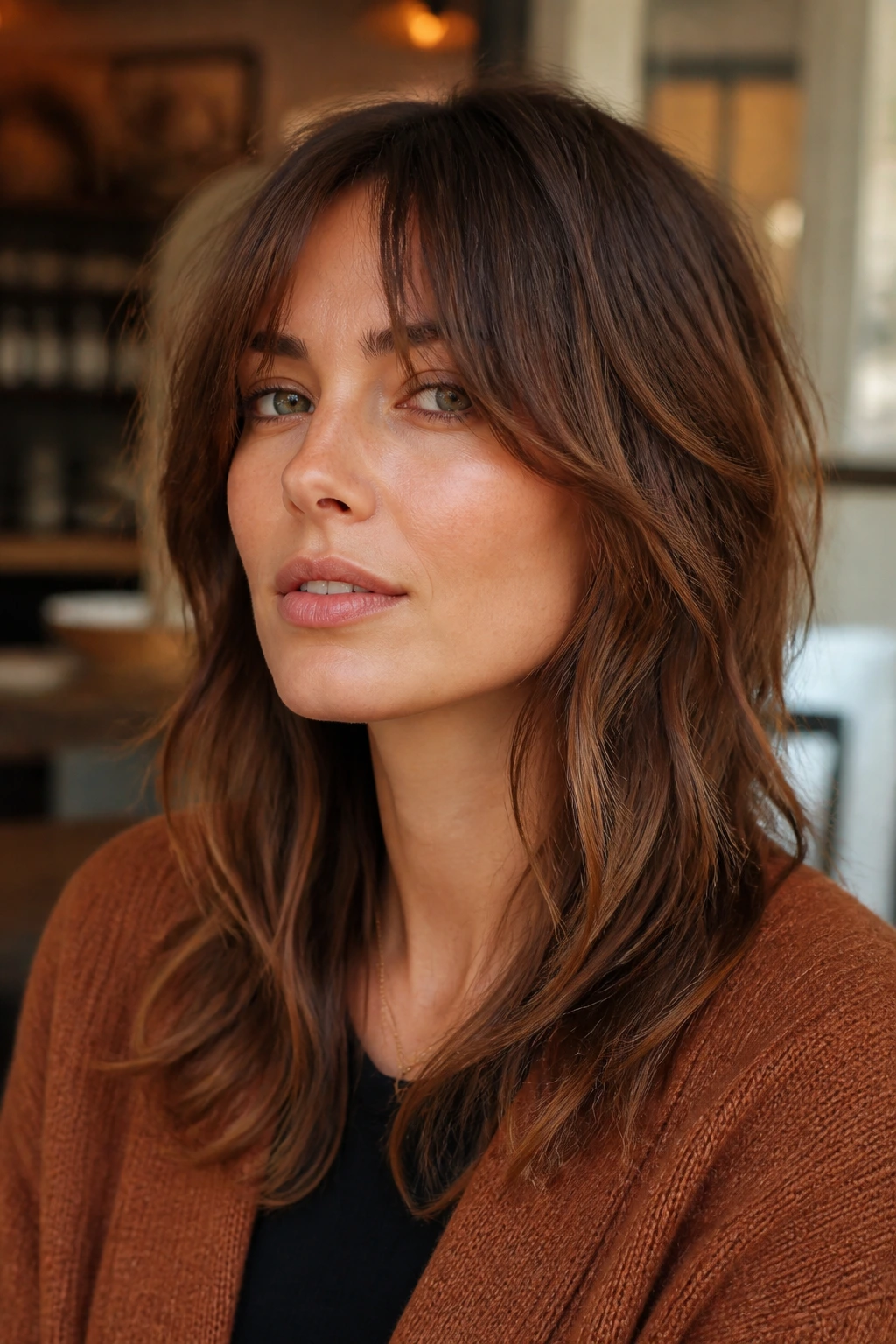
Cheekbone bangs can rescue a face-framing shape that feels too long or too heavy. On fine hair, that placement also helps the front look fuller because the bang lands where the eye wants structure.
How to Get the Length Right
The sweet spot is usually somewhere between the outer corner of the eye and the cheekbone, depending on your face shape and how much wave your hair has. If the bangs end too high, they separate too quickly. If they go too long, they can disappear into the rest of the haircut.
Ask for a soft taper into the sides. That keeps the fringe from looking chopped off. A little bend with a brush or flat iron makes the line sit better, but the styling should stay easy. This is a detail cut, not a high-maintenance one.
28. Soft, Grown-In Boho Shag
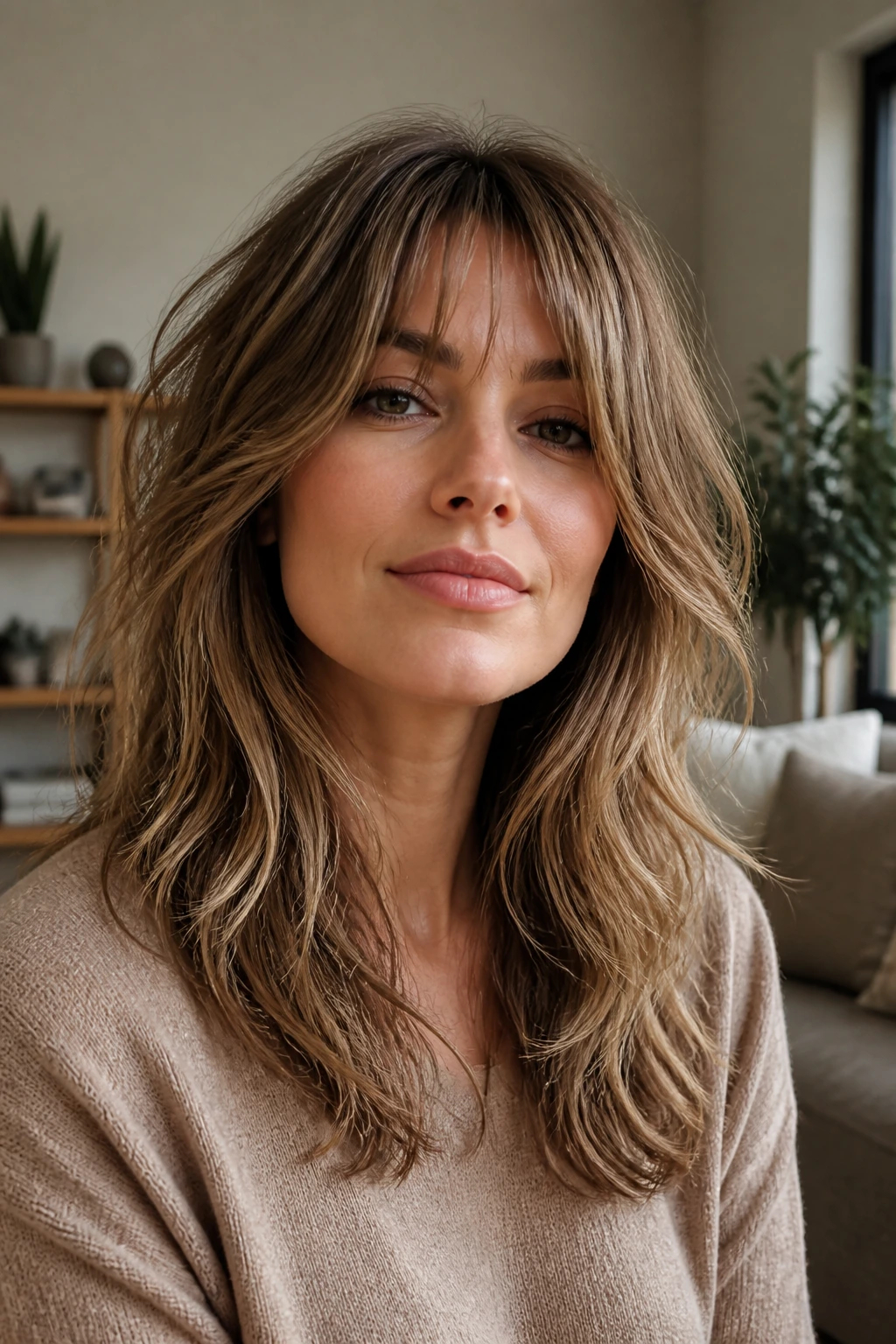
The softest version of a boho shag is often the smartest one. It lets fine hair move without making you babysit every strand.
This version keeps the layers long, the fringe light, and the perimeter visible. Nothing feels over-cut. That matters because fine hair can only take so much. If the haircut is too eager, it starts looking tired fast. A grown-in shag does the opposite. It stays readable even when it has a little length on it.
I like this one for people who want a style that settles nicely between salon visits. A touch of cream, a loose bend at the front, and a clean part are enough. You do not need to chase perfect texture every day. The shape does the work.
The best shag on fine hair is not the one with the most layers. It is the one that keeps enough body where the eye wants it and enough softness where the hair needs it. That balance is what makes the cut look lived-in instead of skimpy.
